Taipa住宅,里约热内卢 / Studio Leandro Neves
本项目由Leandro Neves工作室的创意总监和建筑师Leandro Neves,领导着一支由多学科专业人士组成的团队设计完成。“通过对故事的解读,我们与建筑和设计进行对话,将其回归到最纯粹的本质,重新诠释我们看待世界的方式。”建筑创作是一段旅程。Leandro Neves工作室在这条道路上已经走了11年,期间作品多次在巴西市场的知名杂志上刊登,也被葡萄牙、俄罗斯等欧洲媒体关注。
Leading the studio that bears his name, Leandro Neves, creative director and architect, commands the team composed of multidisciplinary professionals who assist in the projects developed. “Through the interpretation of stories, we dialogue with architecture and design to their pure essence, reinterpreting the way we see.” Architectural work is a journey to be taken. With 11 years on this path, STUDIO LEANDRO NEVES has been featured in numerous publications in major Brazilian market magazines and also in European media, such as Portugal and Russia.
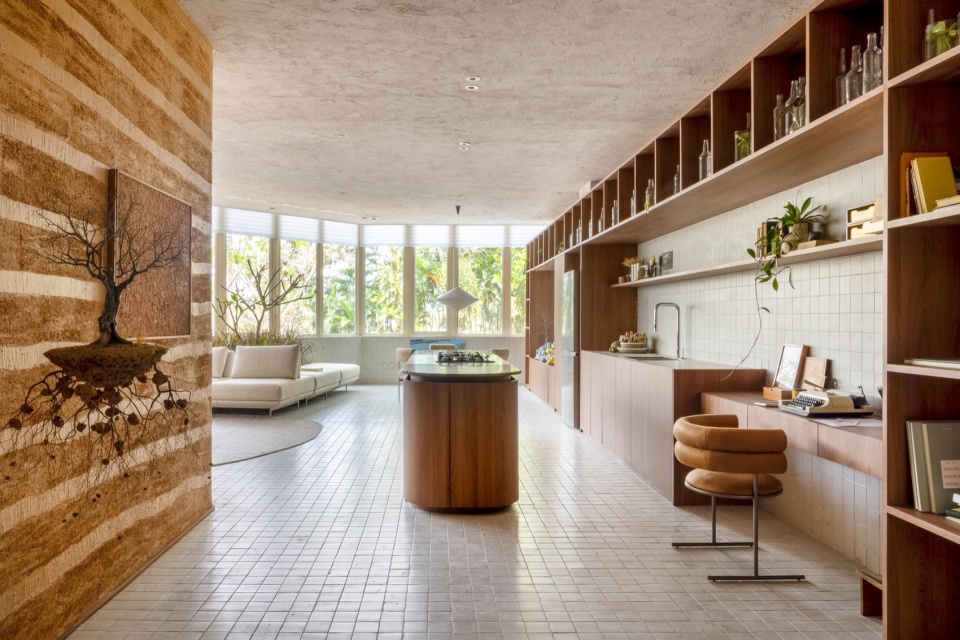
▼室内概览,overall of the house
2017年,Leandro Neves参与了巴西最具影响力的展览《Casa Cor Rio de Janeiro》,并于2018年获得了“Expressão Portinari”大赛的最佳项目奖,该奖项为来自巴西各地的五位获奖者提供了前往巴黎的旅行和丰富的经历。如今,Leandro Neves工作室不仅在他的家乡(巴西里约热内卢)有项目,还在巴西其他地区以及法国和美国等海外有项目。Leandro Neves工作室的核心理念始终是通过强调室内建筑和居住者的生活体验来设计空间,空间应当从内到外进行对话。这一理念如今不仅适用于室内设计,还拓展到了建筑的立面和公共区域。
In 2017, he participated in Casa Cor Rio de Janeiro, the most recognized exhibition in Brazil, and in 2018, he won the best project award in the Expressão Portinari competition, which recognized the five winners from all over Brazil with a trip and rich experience in Paris. Today, the studio has projects not only in his hometown (Rio de Janeiro – Brazil) but also in other Brazilian territories and abroad, such as France and the United States. With projects nationally and internationally, always emphasizing interior architecture and the experiences of those who inhabit the spaces, STUDIO LEANDRO NEVES’s central premise is that spaces dialogue from the inside out. This movement today is no longer applied only to interior architecture and takes on new form, also focusing on facades and common areas of buildings.
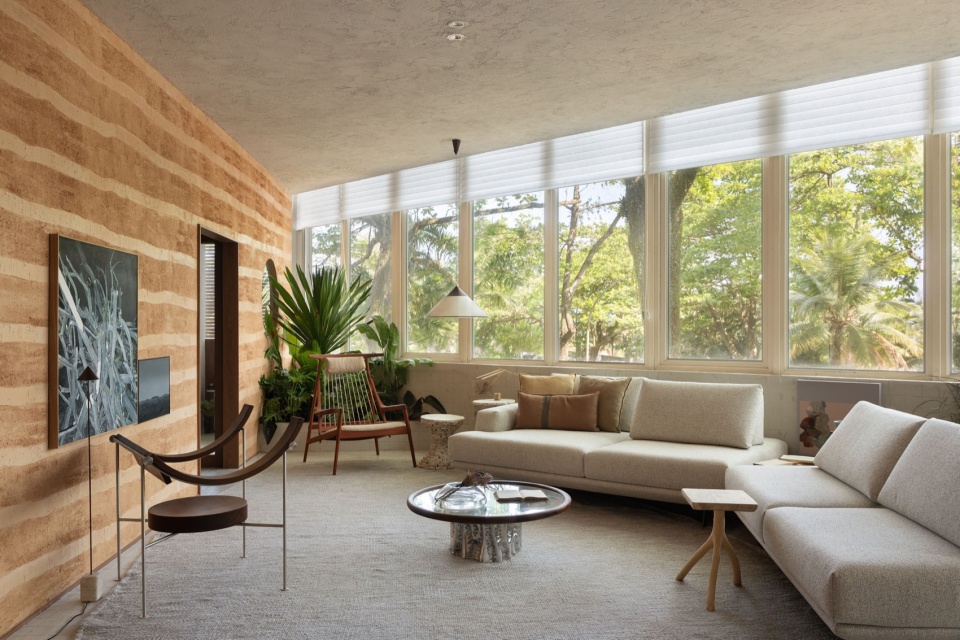
▼客厅,living room
项目灵感Project Inspiration
“与当代建筑的合作意味着唤起和传达我们今天所经历的对话,回顾过去,展望未来。” 关于可持续性的话题已经被广泛讨论,而今天我们看到这一主题与我们的行为方式息息相关,因为通过这种方式,我们能够内化出自己如何为未来构建做出贡献。就像艺术所使用的一种工具一样,探讨这一主题是对变革的挑衅,使变化更容易感知,将项目的概念直接内化到我们如何消费建筑的方式中。因此,我们在整个项目中采用了一种与大地紧密相连的土色调,自动将使用的颜色与我们最珍贵的资源——土地紧密相联。
“Working with contemporary architecture means evoking and translating the dialogues we experience today, looking to the past and projecting the future.” Much has been said about sustainability, and today we see this theme related to the way we behave, because, in this way, we can internalize what we can do to build the future. Like a tool that art uses, approaching this subject is a provocation for changes to be more perceptible, directly internalizing the concept of the project in the way we consume architecture. For this, we have defined the entire project base with an earthy palette strongly connected to those who experience the project, automatically linking the colors used to our most precious asset, the earth.
▼舒适明亮的氛围,bright and delight ambiance
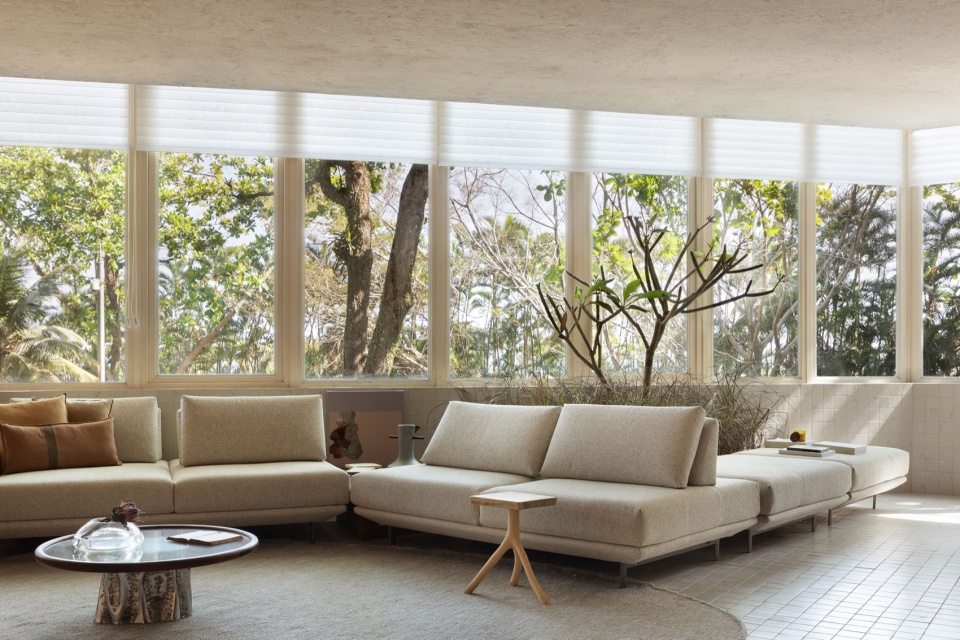
设计宣言Manifest
该项目的概念是强调土地的价值。所有使用的元素都围绕这一主题展开,开辟了对环境影响及其反思的讨论空间。我们以巴西南部Porto Alegre的灾难为代表,呈现强烈的变革需求及我们如何应对气候问题。尽管这些问题并非孤立存在,它们常常被遗忘,就像我们在巴西和全球范围内所见的那样。
The project’s concept is the valorization of earth. All the elements used revolve around this theme, opening space for the approach to environmental impact and its reflections. In a contemporary way, we work with the catastrophe of Porto Alegre to represent the strong need for change and how we face climate problems. Although they are not isolated, they usually fall into oblivion, as we saw happen in Brazil and around the world.
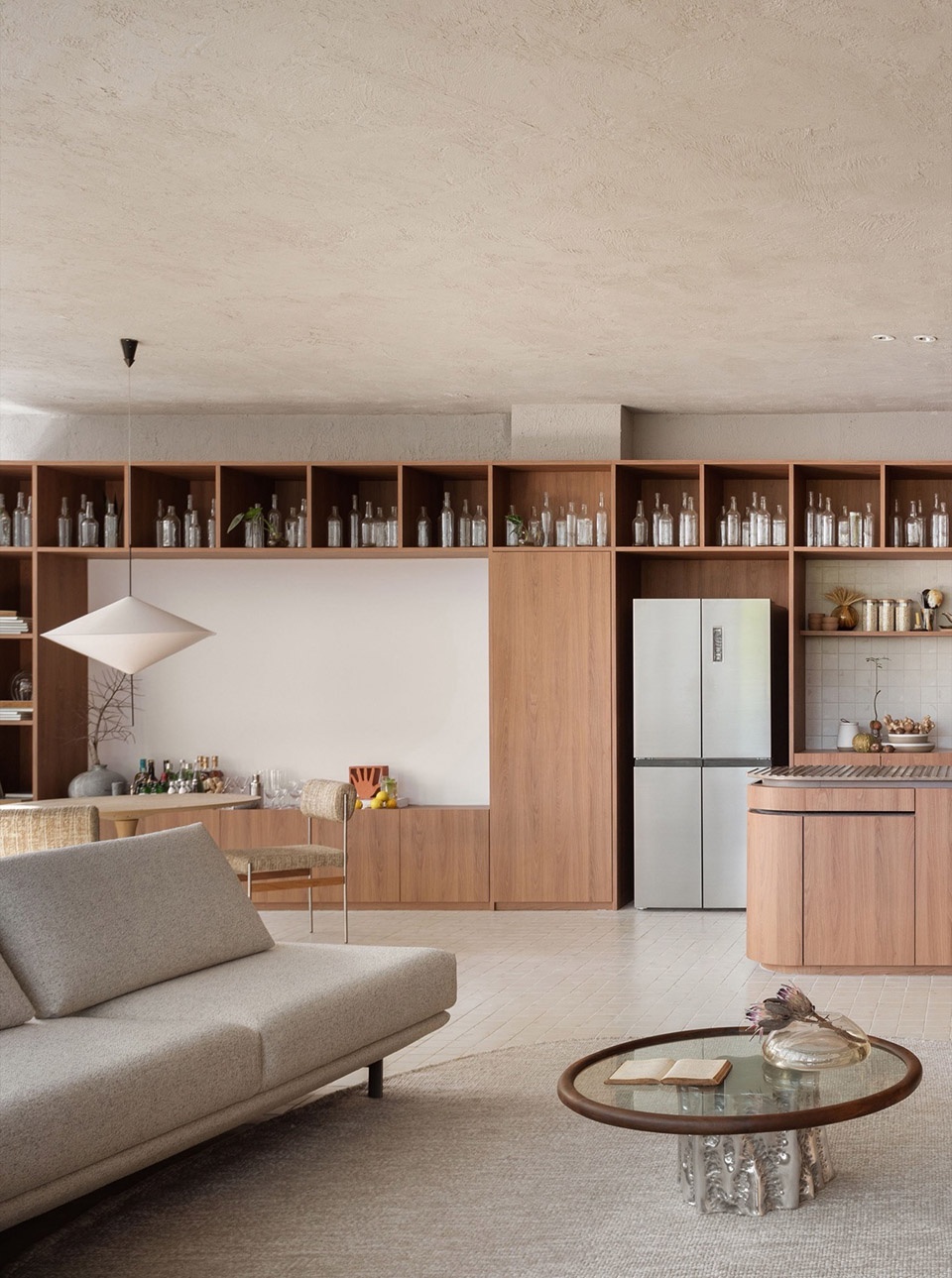
▼沙发,sofa
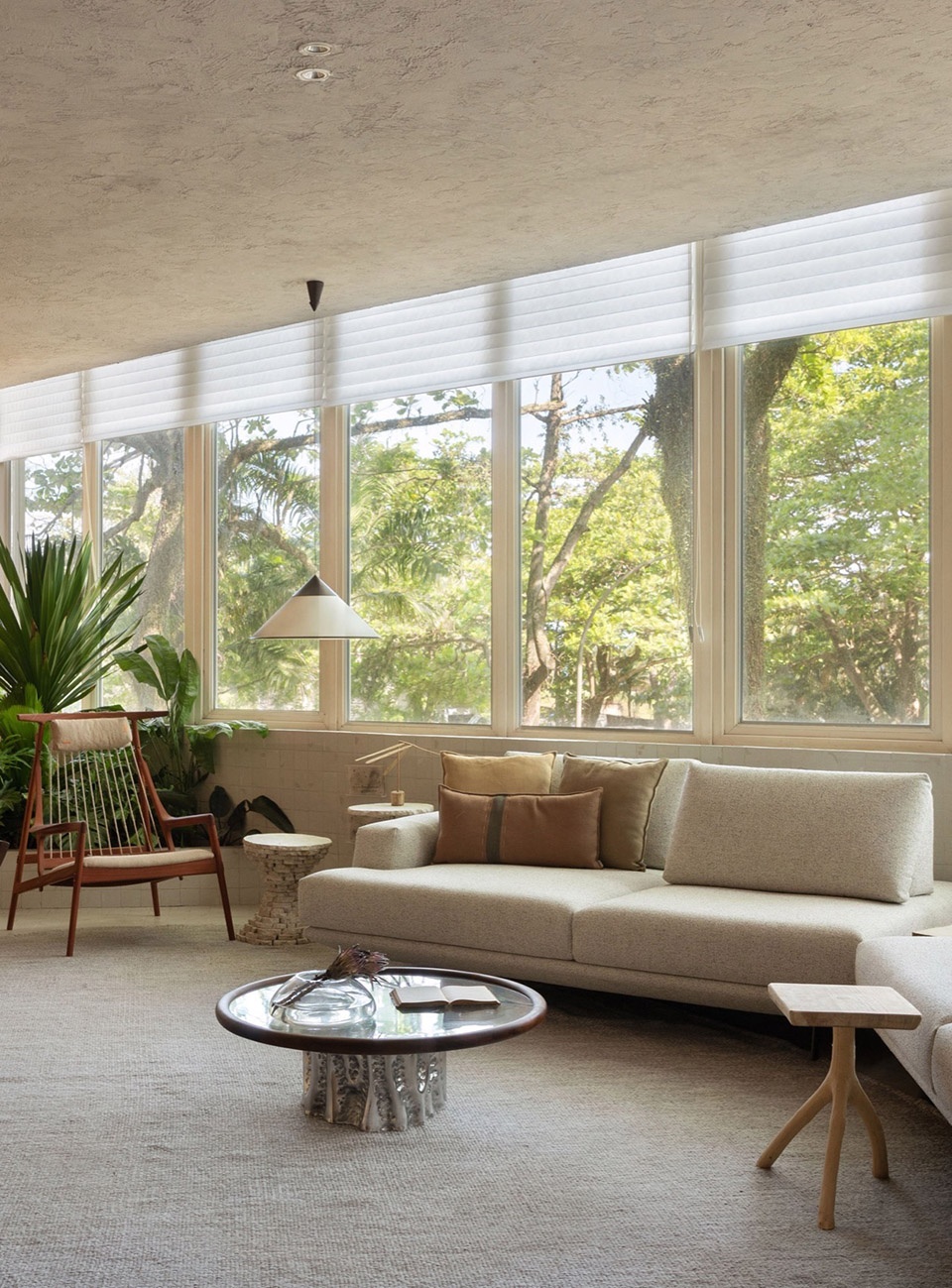
▼客厅一角,corner of the living room
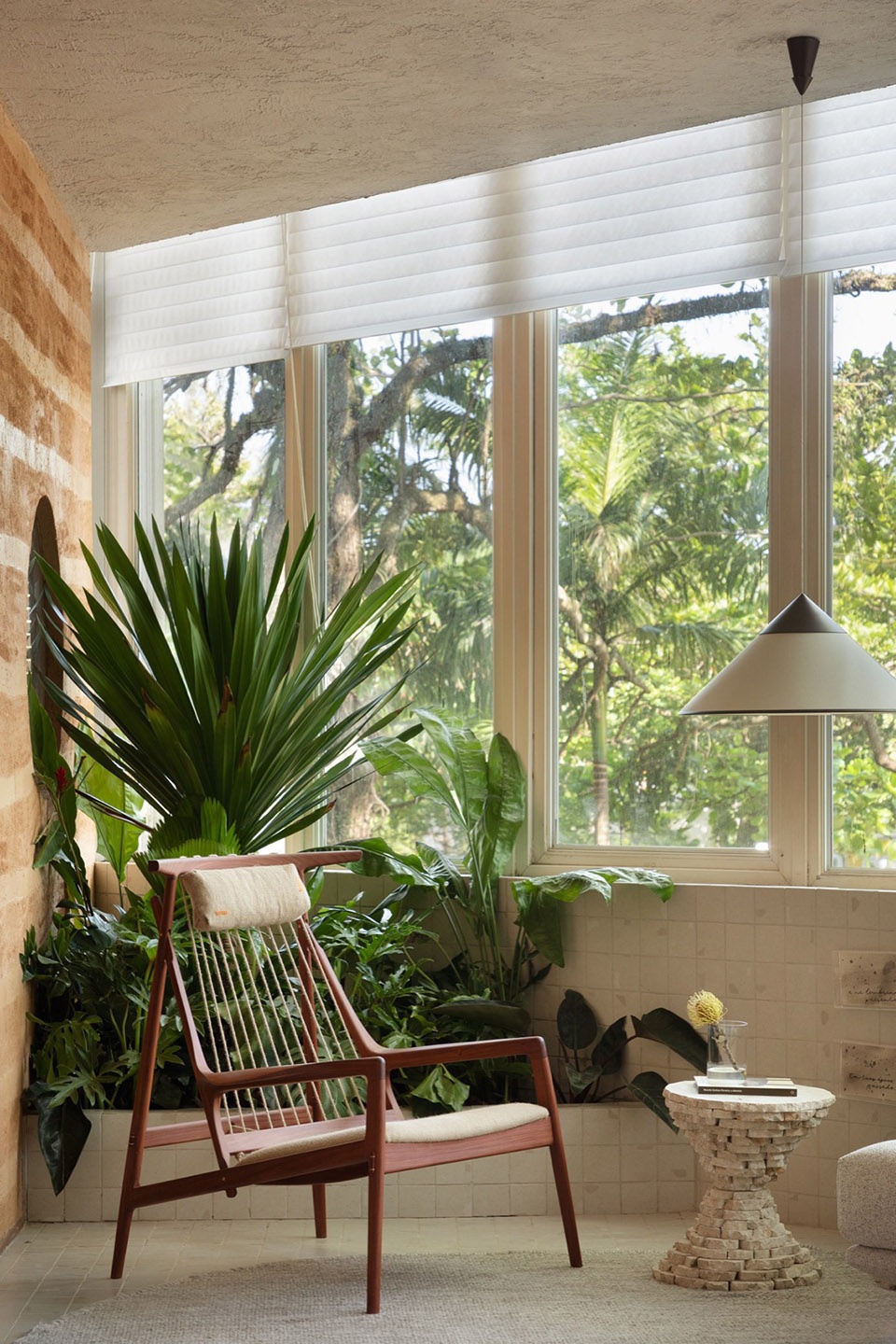
当今世界的需求What the world needs now
当下,作为核心视角,变革就是运动。Porto Alegre的灾难是另一个例子,表明我们已经过了传达环境紧急性的时候。该项目试图唤起自然元素,比如覆盖唯一弯曲墙面的自然土壤涂层。历史上,土坯墙象征着低社会地位,而在我们的项目中,这是一种强烈的诉求,并作为奢华的重新诠释。毕竟,重视手工劳动以及我们如何处理原材料是整个空间设计的指导思想。
Present, the Now, brings us the central perspective that Change is movement. The catastrophe of Porto Alegre is another example that the time has passed to communicate the urgency of how we see the Environment. The project seeks to evoke natural elements such as the natural earth coating that covers the only curved wall that divides the main spaces. Historically, taipa walls were synonymous with low status. In our project, it is a strong appeal and appears as a reinterpretation of what luxury is, after all, the valorization of manual work and the way we manipulate raw materials is the guiding perspective for the whole space.
▼由客厅看厨房,viewing the open kitchen from the living room
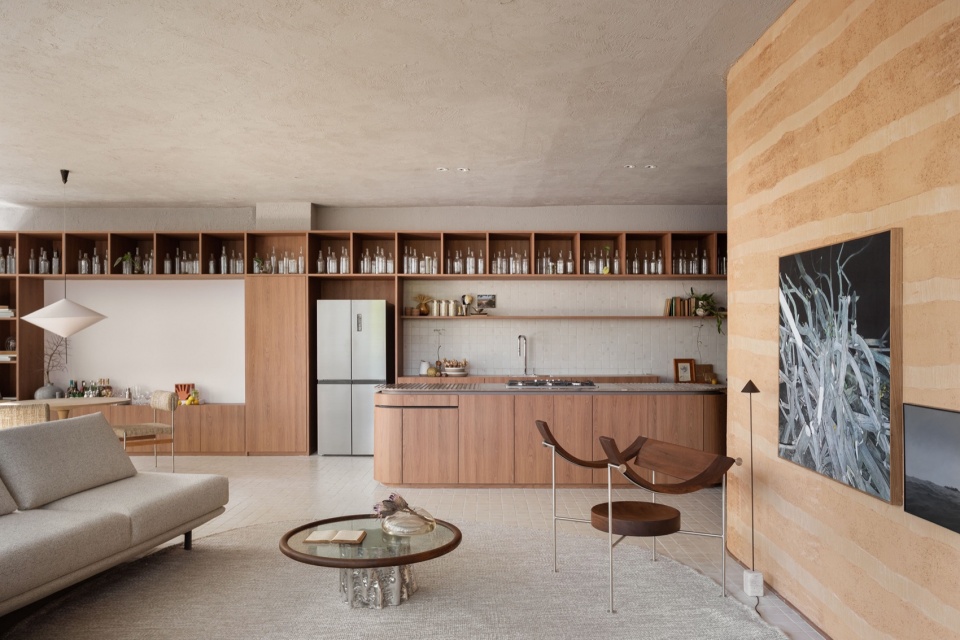
▼厨房与餐厅,kitchen and dining
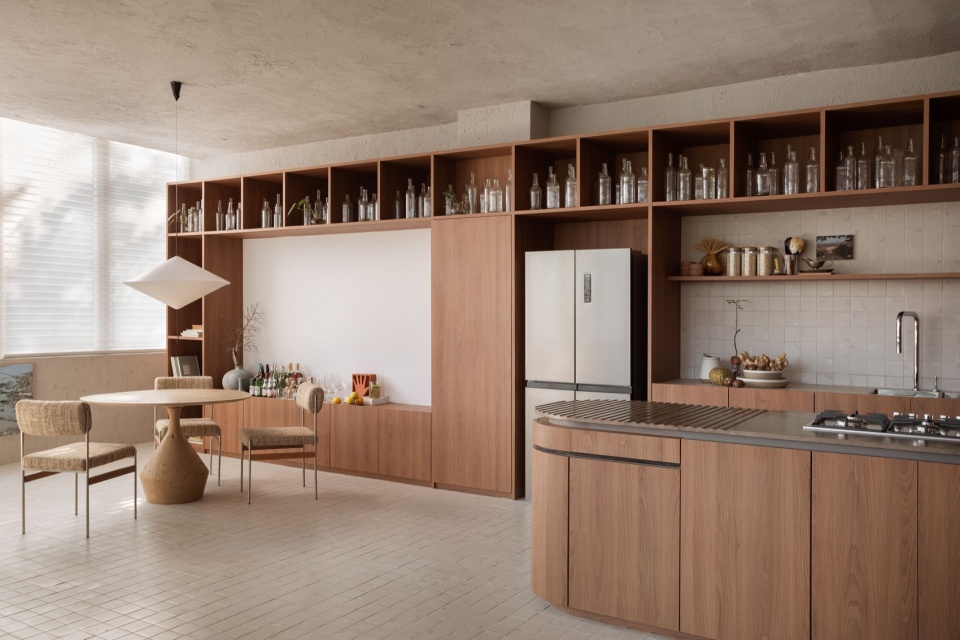
同样,家具的选择突出展示了小型生产者和由里约热内卢艺术家和工匠手工制作的作品,充分考虑了每种木材和制作过程对环境的影响。这一工作指导了材料的选择,有时甚至会排除某些材料,以追求保护和可持续发展。我们并不否定工业和工业过程,但我们希望重新连接我们的家园,使其由人、故事,尤其是由人类之手塑造,形成与大工厂及其机器人的反向流动。我们在不完美中寻求美,并尊重过程,因为这就是生活。
Similarly, the choice of furniture sought to highlight the design of small producers and handcrafted pieces by Carioca artists and artisans, where there is extensive research on the environmental impact of each type of wood and processes. This work directs the choice of materials and, sometimes, even leads to the exclusion of some of them, aiming at preservation and sustainability. We do not deny industry and the industrial process, but we seek to reconnect our homes to be shaped by people, by stories and, mainly, by human hands following a counterflow to large factories and their robots. We seek beauty in imperfection and respect for processes, because that’s how life is.
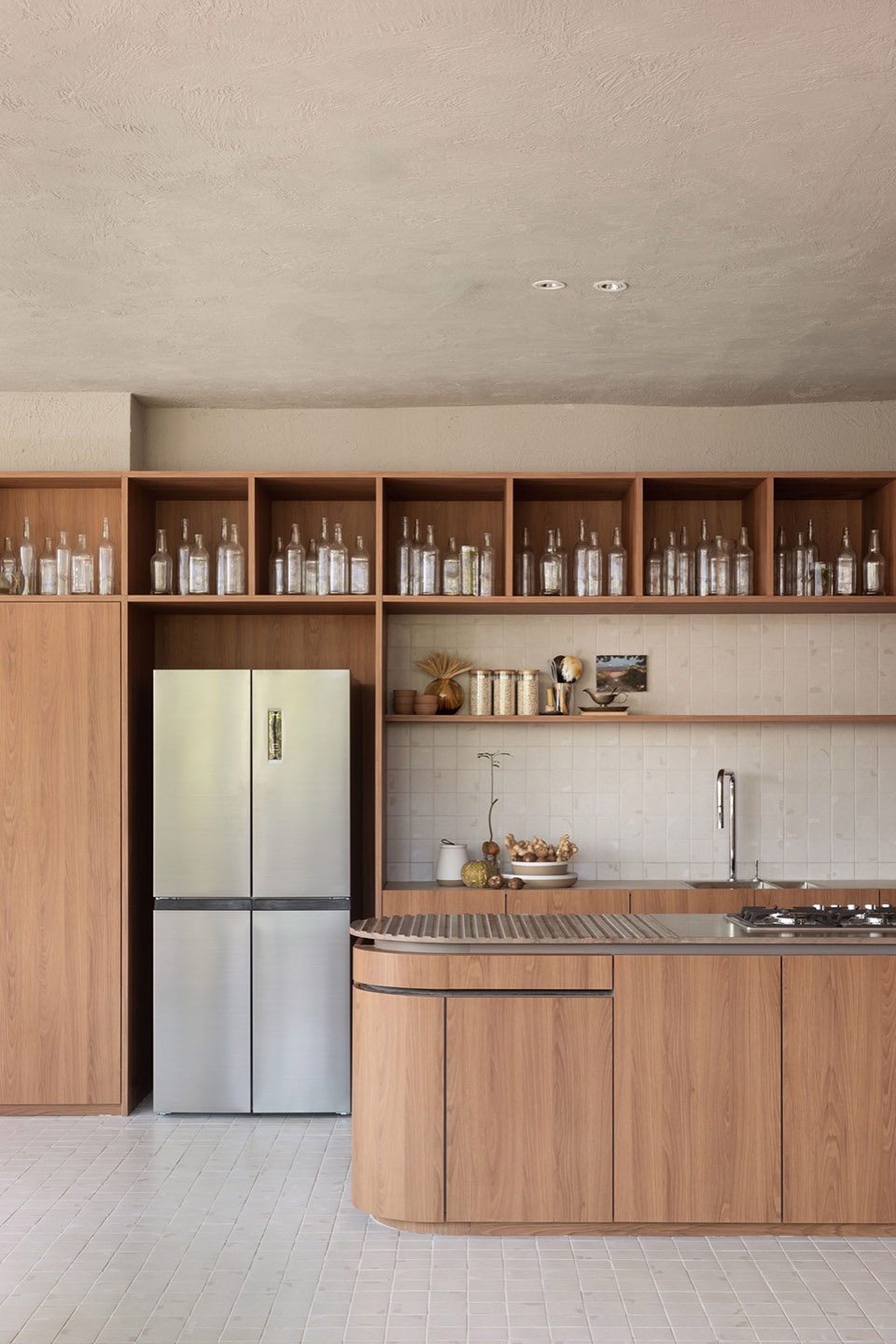
▼开放式厨房,open kitchen
建筑作为思想的表达,而非趋势的追随Architecture an expression of thought and not of trends
讨论趋势不是我们的核心视角;我们将精力集中在当代行为和人类运动的观察上。也许我们项目的关键词“趋势”是土地的重视、可持续性、手工制作、与小生产者的重新连接、对过程的关注以及减少人类对这一切过程的伤害。这是一次反思的邀请,是习惯改变的呼吁。项目的特点:每个设计的精心搜寻与研究。精心策划的里约热内卢设计师和艺术家,他们的作品包括尊重非工业材料与工艺,使用艺术家自制的天然涂料、精心选择木材种类和材料回收,始终专注于减少对自然的影响。与此相对应,项目中不使用进口产品,重新强调了我们土地和我们文化遗产所创造的价值。设计师包括Gustavo Bittencourt、Felipe Madeira、Pedro Galaso、Ricardo Graham(OEbanista)、Vinícius Schmidt(Estúdio Simbiose)、Waldir Junior和Campana等。
Talking about trends is something that does not revolve around our central perspective; we put this force into looking contemporarily at behaviors and the movements of humanity. Perhaps the keywords of our project “trend” are the valorization of earth, sustainability, handmade, reconnection with small producers, a look at processes and a reduction in how much man is harming this whole process. It is an invitation to reflection and a change of habits. The project’s differentials: The meticulous search and research in each design presented in the furniture of the spaces. A curation of Carioca designers and artists whose work includes respect for and the insertion of non-industrial materials and processes for the manufacture of their products, such as natural paints produced by the artists themselves, meticulous choice of wood species and recycling of materials, always focusing on reducing the impact on nature. Following the same line of reasoning, another differential is the non-use of imported products in the project, which reaffirms the valorization of our land and what is created by us as a cultural heritage. Among the designers are Gustavo Bittencourt, Felipe Madeira, Pedro Galaso, and Ricardo Graham (OEbanista), Vinícius Schmidt (Estúdio Simbiose), Waldir Junior, and Campana.
▼餐厅,dining room
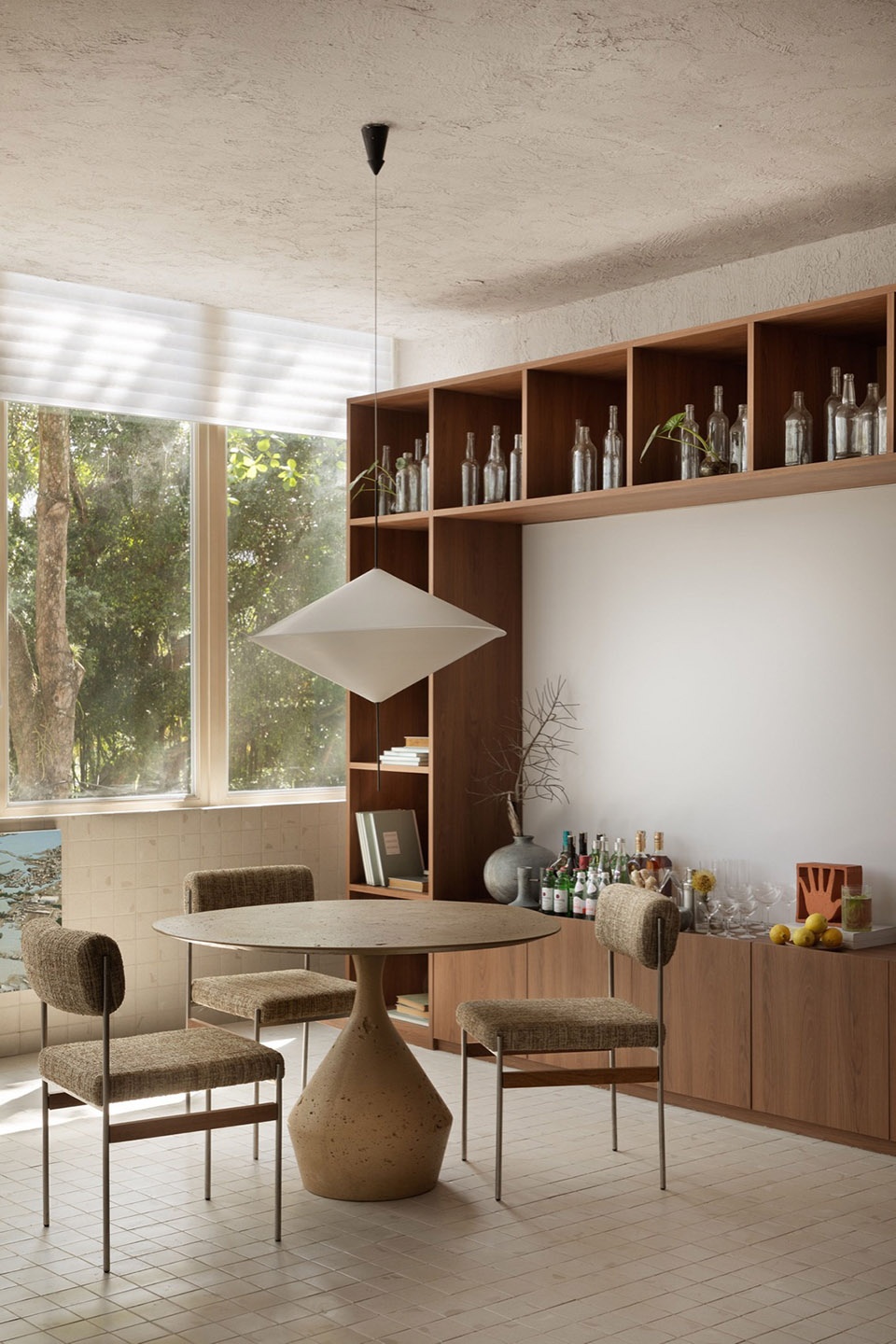
▼细部,details
项目材料Project materials
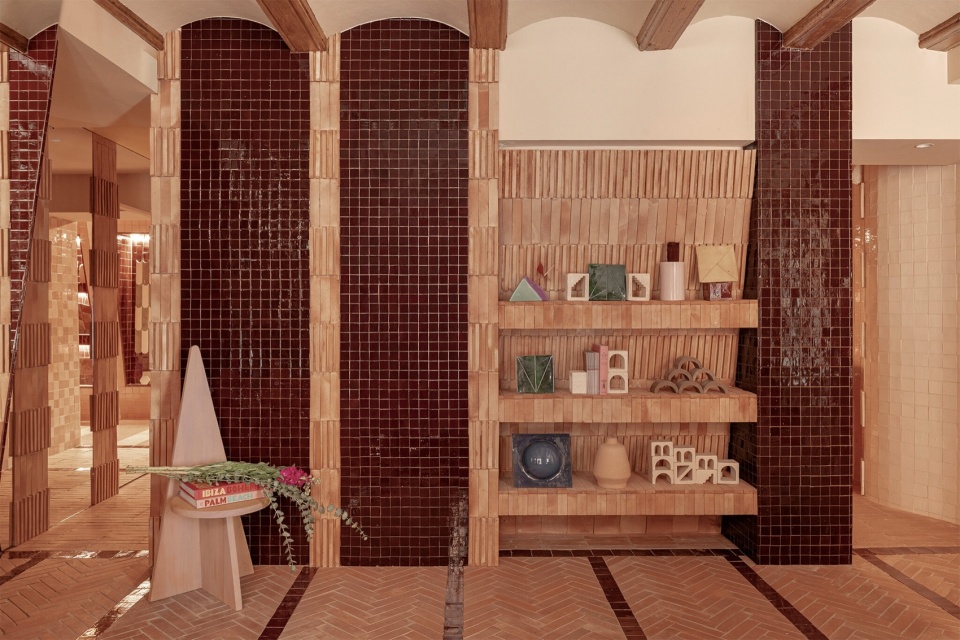
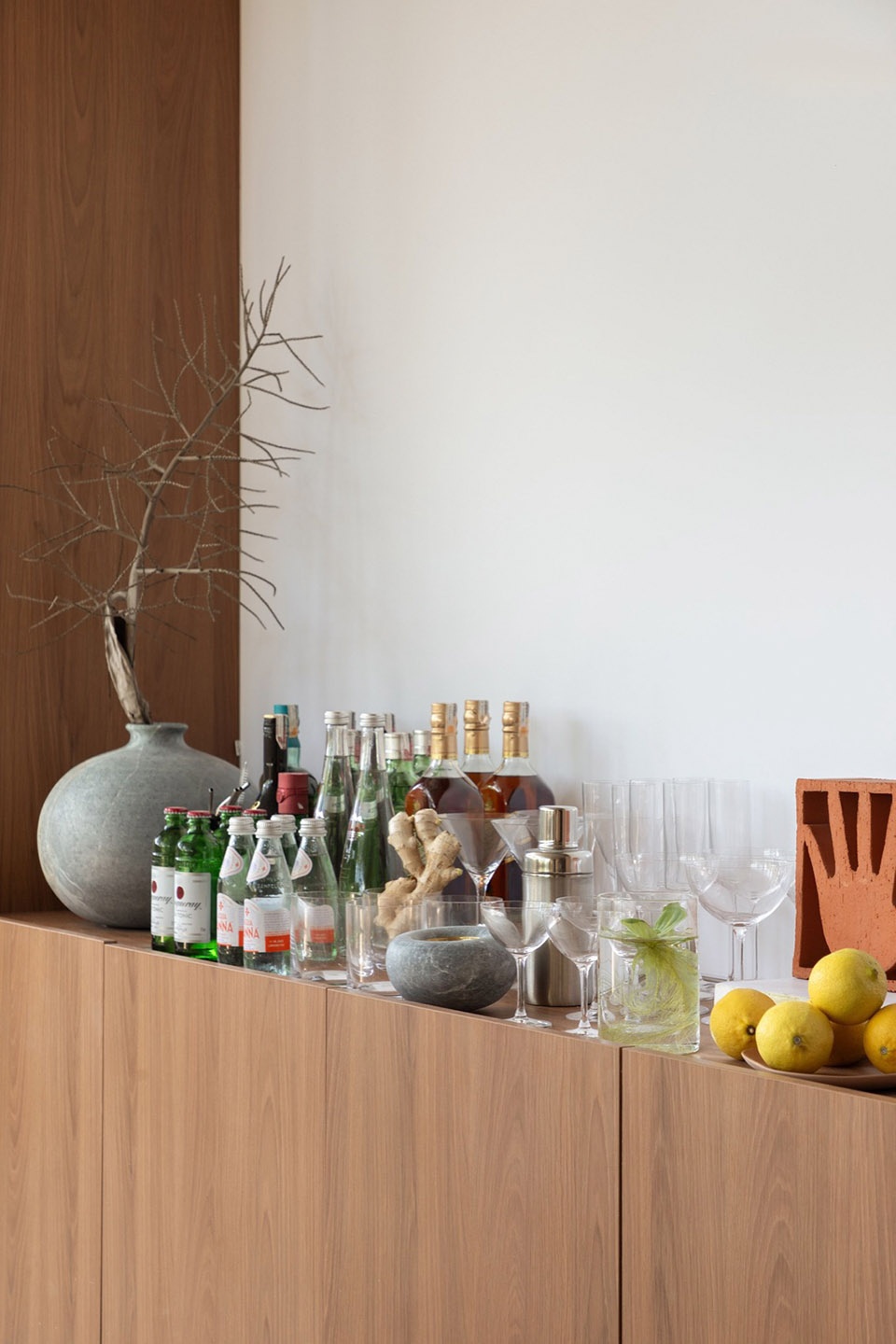
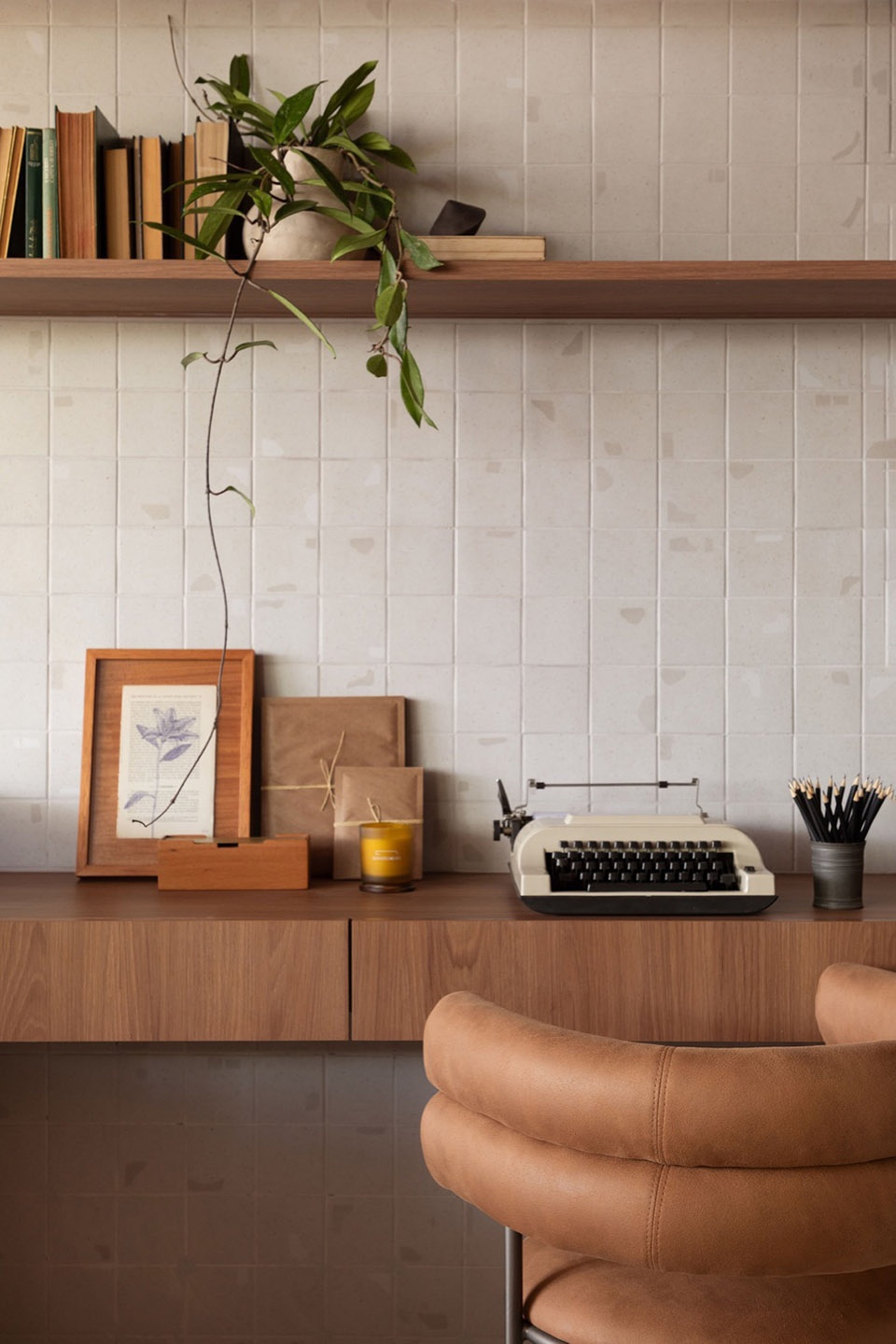
由于该项目将木工作为主角,Sequoia图案由Casttini独家定制,这是一种带有土色和红色调的木材,生长在巴西南部的Canela原始森林中。该图案的定义旨在为空间增添温暖,唤起触感和质感。在选择瓷砖涂层时,我们同样寻找能够直接与我们的理念对话并强化巴西特色的材料。我们选择了Portinari的Maracangalha,这一系列的创作灵感来自巴西巴伊亚州的元素,如五颜六色的房屋、殖民风格的瓷砖、石铺的街道和桑巴音乐。该图案采用小型格式,覆盖了整个地面和一些墙面,营造出统一且独特的图案。作为对陶艺瓷砖的重新诠释,材料具有实用性、易清洁性以及Portinari提供的耐用性。
Because it is a project where we have woodwork as the protagonist, the Sequoia pattern was made exclusively by Casttini, a wood with earthy and reddish tones embedded in the native forest of Canela, in Serra Gaúcha. The definition of this pattern seeks to warm the space and awaken touch and texture. For the selection of the porcelain coating we also looked for one that directly conversed with our concept and reinforced our Brazilianness. Our choice was Portinari’s Maracangalha, whose creation had as its central theme of inspiration elements abundant in the Bahia state, such as the colorful houses, the colonial tiles, the stone pavements and the samba. The pattern, in small format, covers the entire floor and some walls, generating unity and a unique graphic pattern. Being a reinterpretation of pottery ceramics, the material adds practicality, easy cleaning and the durability that Portinari provides.
▼定制木质家具,custom wood furniture
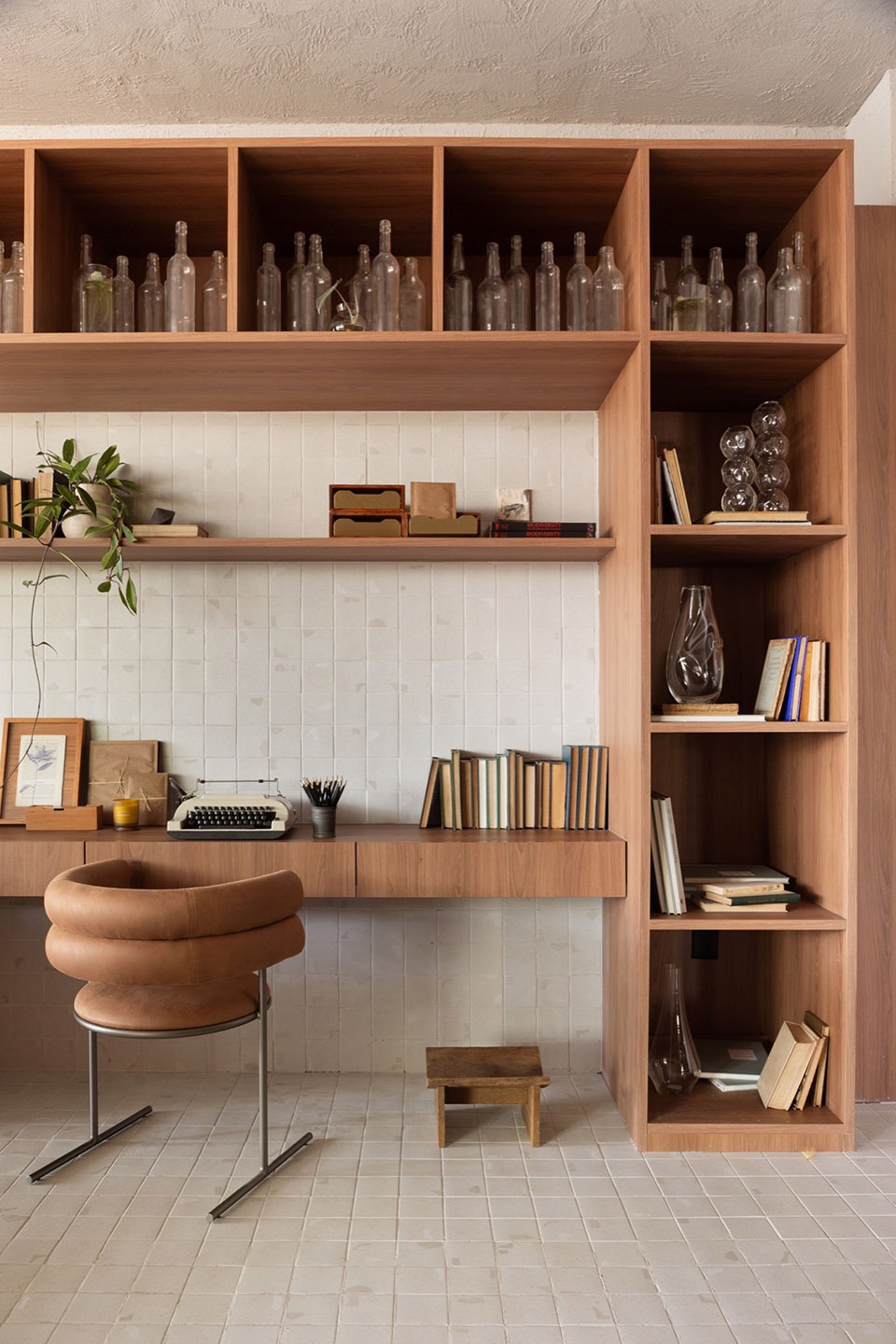
▼背景瓷砖,background tile
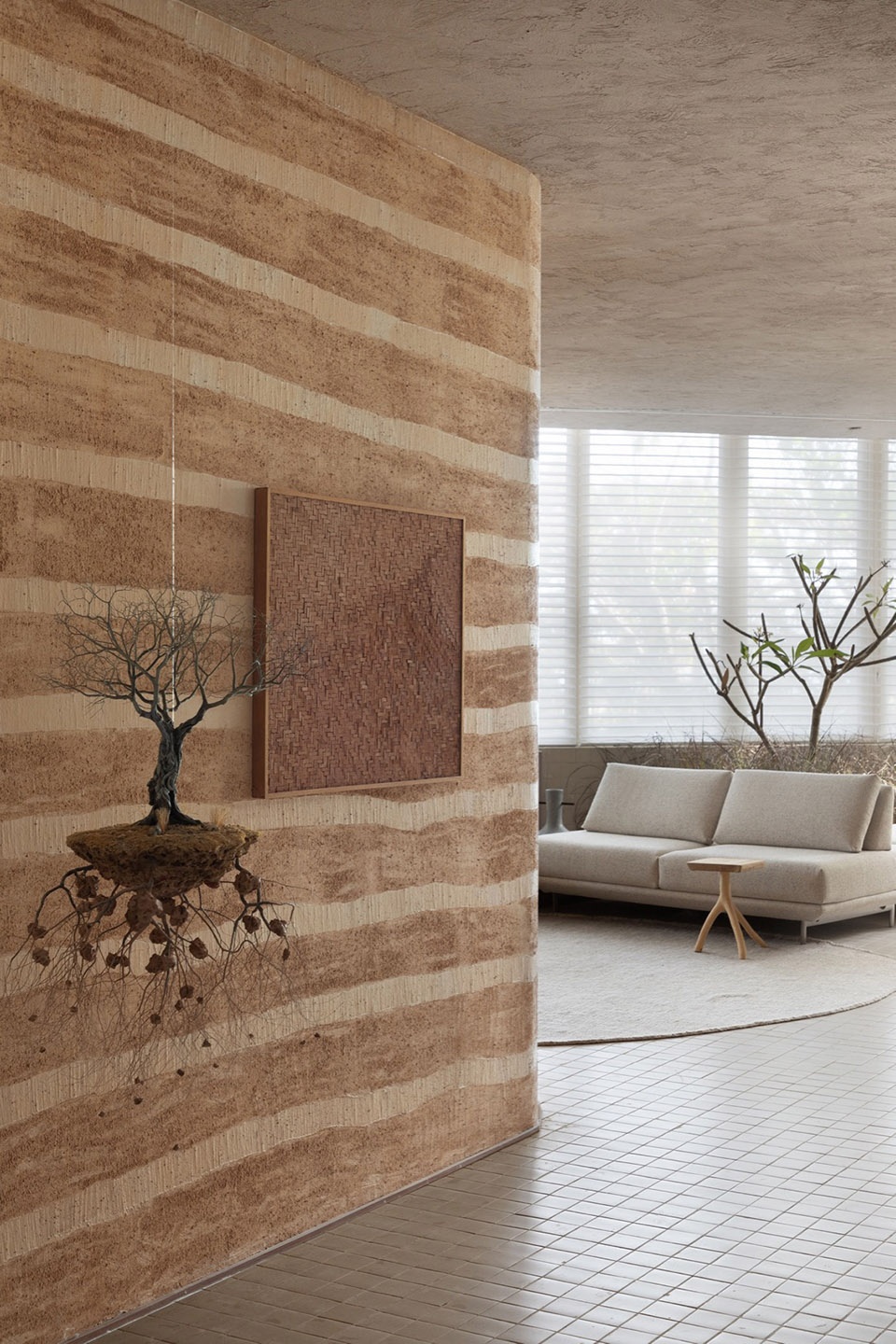
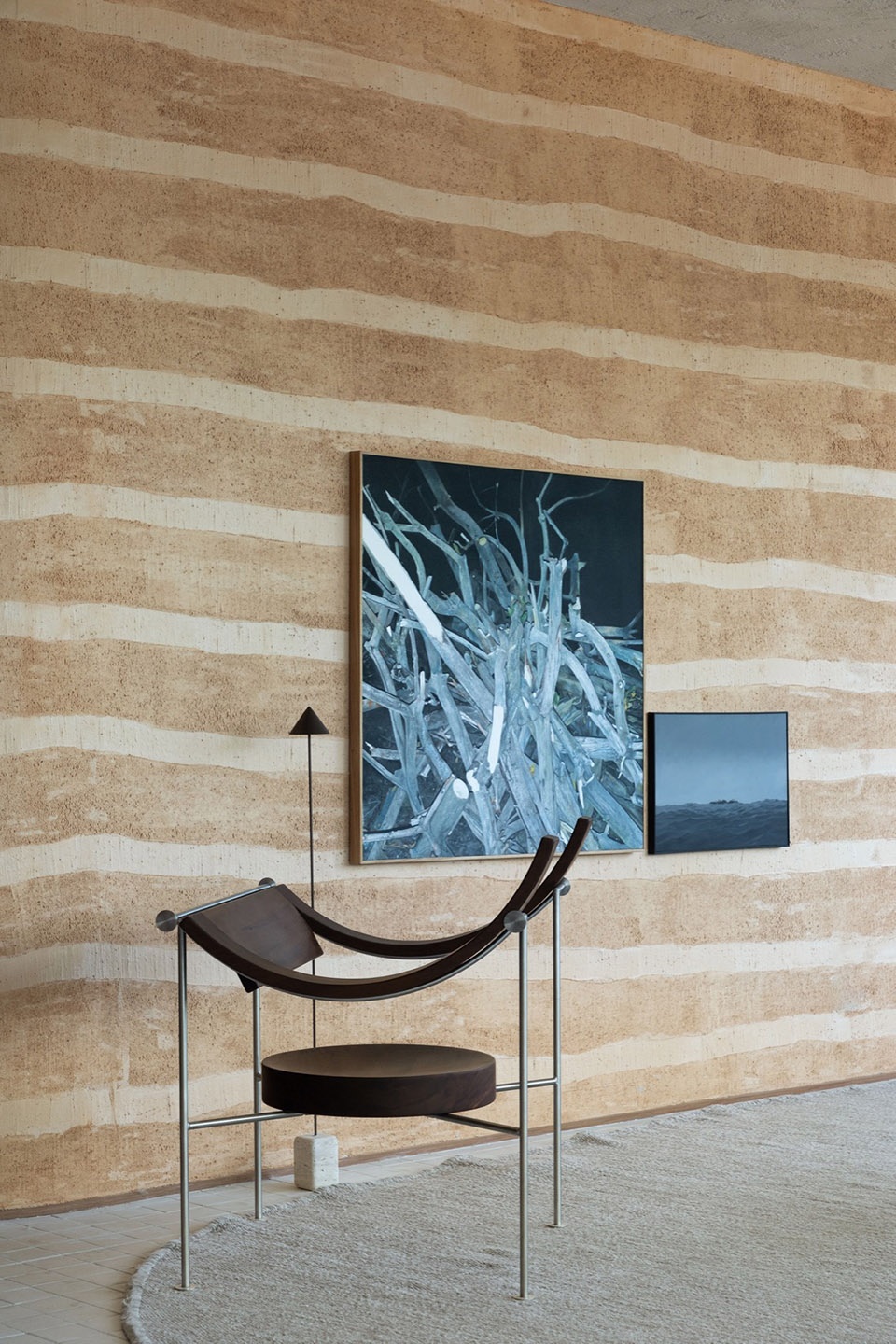
另一重要元素是土壤涂层的墙面,源自对手工艺流程的重视,保持了我们的历史和丰富的文化。该作品由Matéria Base事务所(Fernando Minto、Rafael Fogel和Felipe Lorga)设计,创建了背景,同时再次强调了我们的项目理念。 最后,我们选择了能够直接应用于室内或外部表面的天然效果,颜色选择了石灰石色,这是一种温暖的中性色,创造了一个温馨的环境,灵感来自于赋予其名称的天然岩石。
Another key element was the earth-coated wall, from research that focuses on valuing artisanal processes and, above all, keeps our history and rich culture alive. The work was seen as a large artistic panel executed by Matéria Base, an office of architects Fernando Minto, Rafael Fogel, and Felipe Lorga, creating a background and, again, reaffirming our concept for the project. Finally, we opted for a rustic effect can be applied directly to any interior or exterior surface. The color chosen was Limestone, a warm neutral color that created a cozy environment with inspirations in the natural rock that gave it its name.
▼土壤涂层的墙面,earth-coated wall
艺术收藏与家具Art Collection & Furniture
艺术收藏及家具展示了当地艺术家的作品,目的是通过作品和艺术家的个性连接这一理念。 Ivory扶手椅 – Gustavo Bittencourt
Estrado餐桌 – Gustavo Bittencourt
Calo餐桌 – Gustavo Bittencourt
Verga餐桌 – Felipe Madeira
Dio扶手椅 – Felipe Madeira
Lina椅子 – Felipe Madeira
Recordar扶手椅 – Ricardo Graham(OEbanista)
Rack Maestro衣架 – Estúdio Simbiose
Pipa椅子 – Estúdio Simbiose
Fragmento餐桌 – Pedro Galaso
Jorge椅子 – Pedro Galaso
沙发与餐桌 – Ovoo
The art collection, as well as the furniture, evoke local artists with the aim of connecting the concept and representing each work and artist in their individuality.
Ivory Armchair – Gustavo Bittencourt
Estrado Table – Gustavo Bittencourt
Calo Table – Gustavo Bittencourt
Verga Table – Felipe Madeira
Dio Armchair – Felipe Madeira
Lina Chair – Felipe Madeira
Recordar Armchair – Ricardo Graham (OEbanista)
Rack Maestro Coat Rack – Estúdio Simbiose
Pipa Chair – Estúdio Simbiose
Fragmento Table – Pedro Galaso
Jorge Chair – Pedro Galaso
Sofa and Dining Table – Ovoo
▼艺术收藏与家具,art collection & furniture
项目的功能性与实用性Functionality and practicality of the project
我们追求的是一个具有强烈理性主义影响的项目,旨在其布局中寻找真实公寓的舒适感。所展示的每一部分都不仅仅是一个摆设,而是通过与人们的生活方式和需求产生连接,使其成为他们家中可体验的空间。在实用性方面,我们运用了极简主义风格,材料和涂层都很少。我们认为,景观设计作为舒适和便利的建设,是提供功能性福祉的吸引力之一。
We sought a project with a strong rationalist influence that seeks in its layout the comfort of a real apartment. Everything that will be presented does not have the sole character of being a setting, but of easily connecting people with the idea that it can also be experienced in their homes. In terms of practicality, we apply minimalism with few materials and coatings. One appeal that we believe provides functionality of well-being is the use of landscaping as a construction of comfort and convenience.
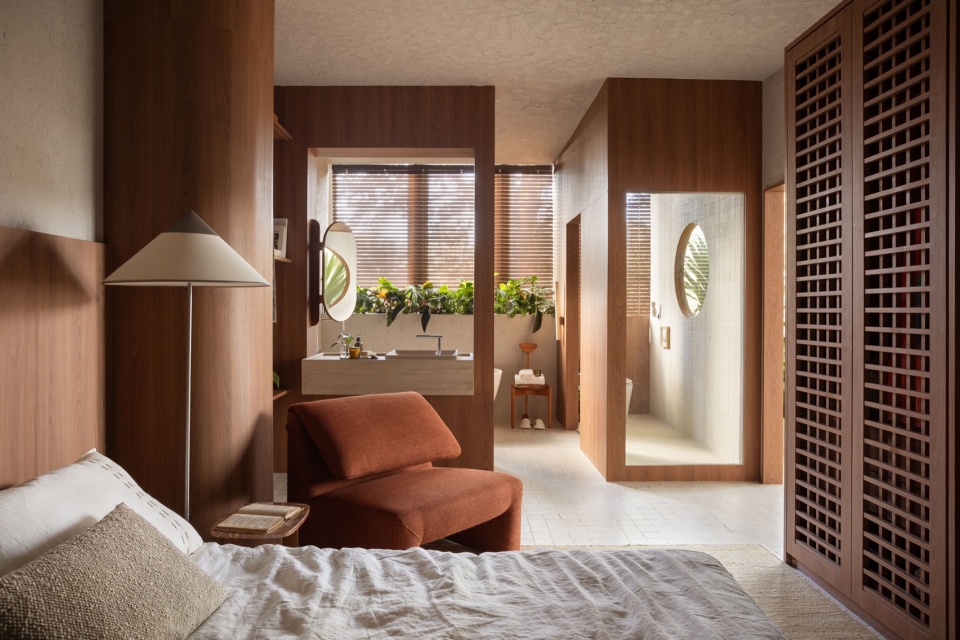
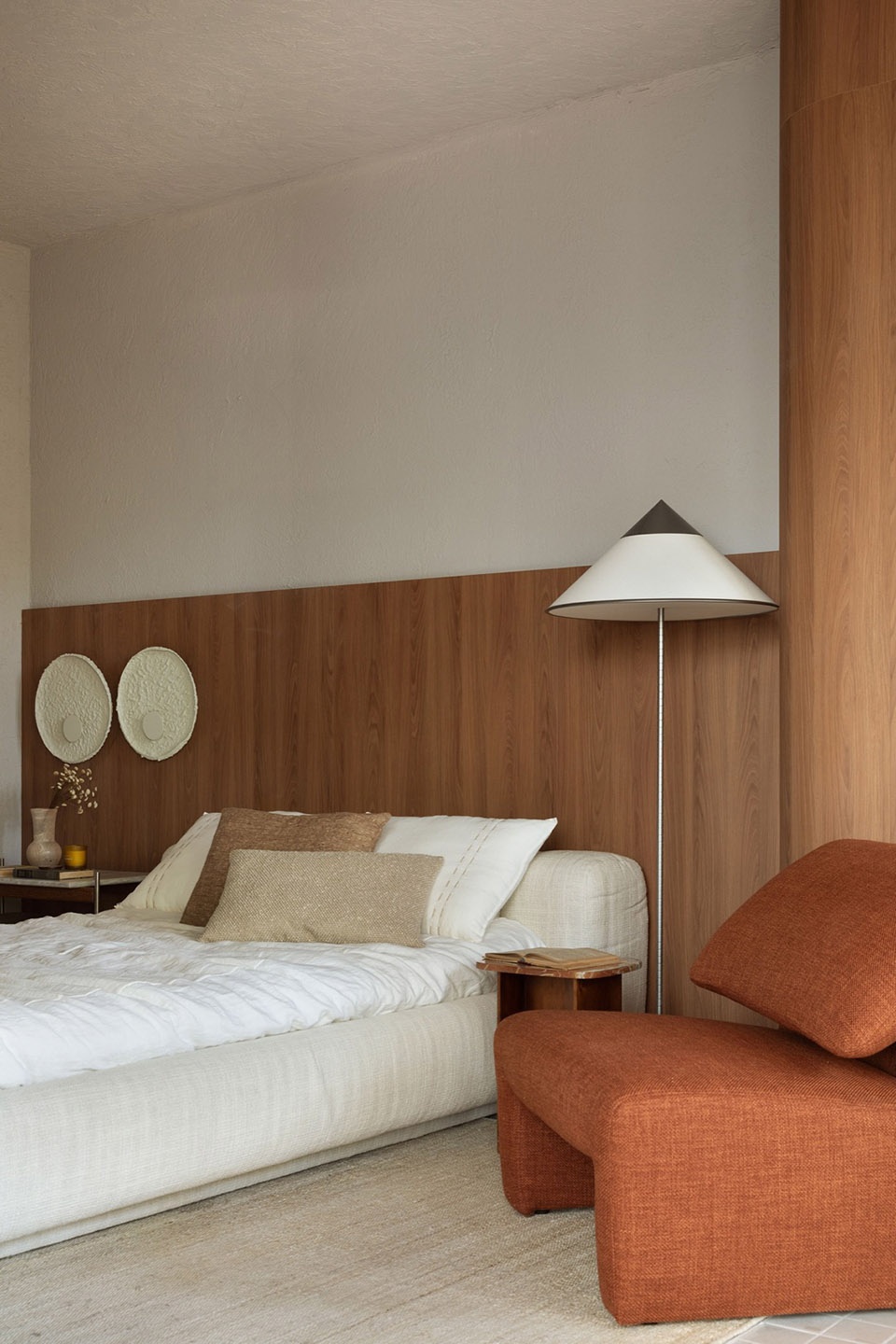
▼卧室,bedroom
设计计划是建立在组织关系基础上的,我们定义了空间的流动:玄关(Chegar):感官环境,插入由艺术家Jorge Mayet创作的装置艺术,从诗意的角度对人与自然的关系进行对话。照明设计为进入家门提供一个更加宁静、欢迎的氛围,激发人们的感官。工作、烹饪、祝酒(Trabalhar, Cozinhar, Brindar e Jantar):木工设计在办公室里精心打造,以整合环境的多功能布局。一个大型收纳架覆盖了整个墙面,展示了Casttini在改善人们生活方面的力量,创新项目展示了品牌的新产品。
The plan is defined within an organizational relationship where we describe the flows: Arrival (Chegar): Sensory environment with the insertion of an installation by the artist Jorge Mayet that, in a poetic way, dialogues about the importance of man and nature. The lighting provides a calmer and more welcoming setting to sharpen the senses of deceleration upon entering the home. Work, cook, and toast (Trabalhar, Cozinhar, Brindar e Jantar) : The woodwork was a careful design in the office to incorporate a new lifestyle of integrated environments. A single box covers the entire wall as a kind of shelf that shows Casttini’s strength in promoting improvement in people’s lives with an innovative project and presenting the brand’s new products.
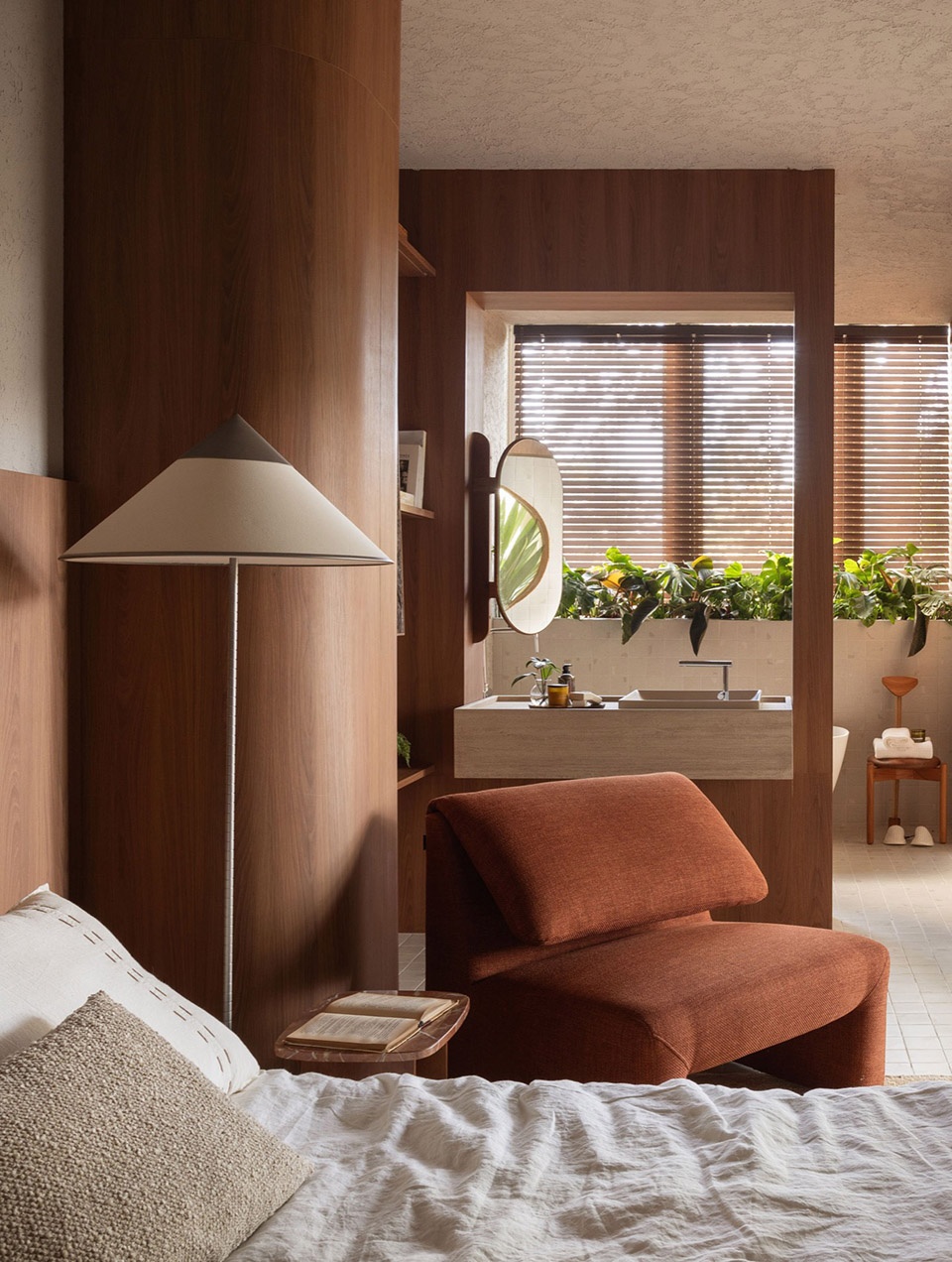
▼卧室细部,details of the bedroom
▼衣柜,wardrobe
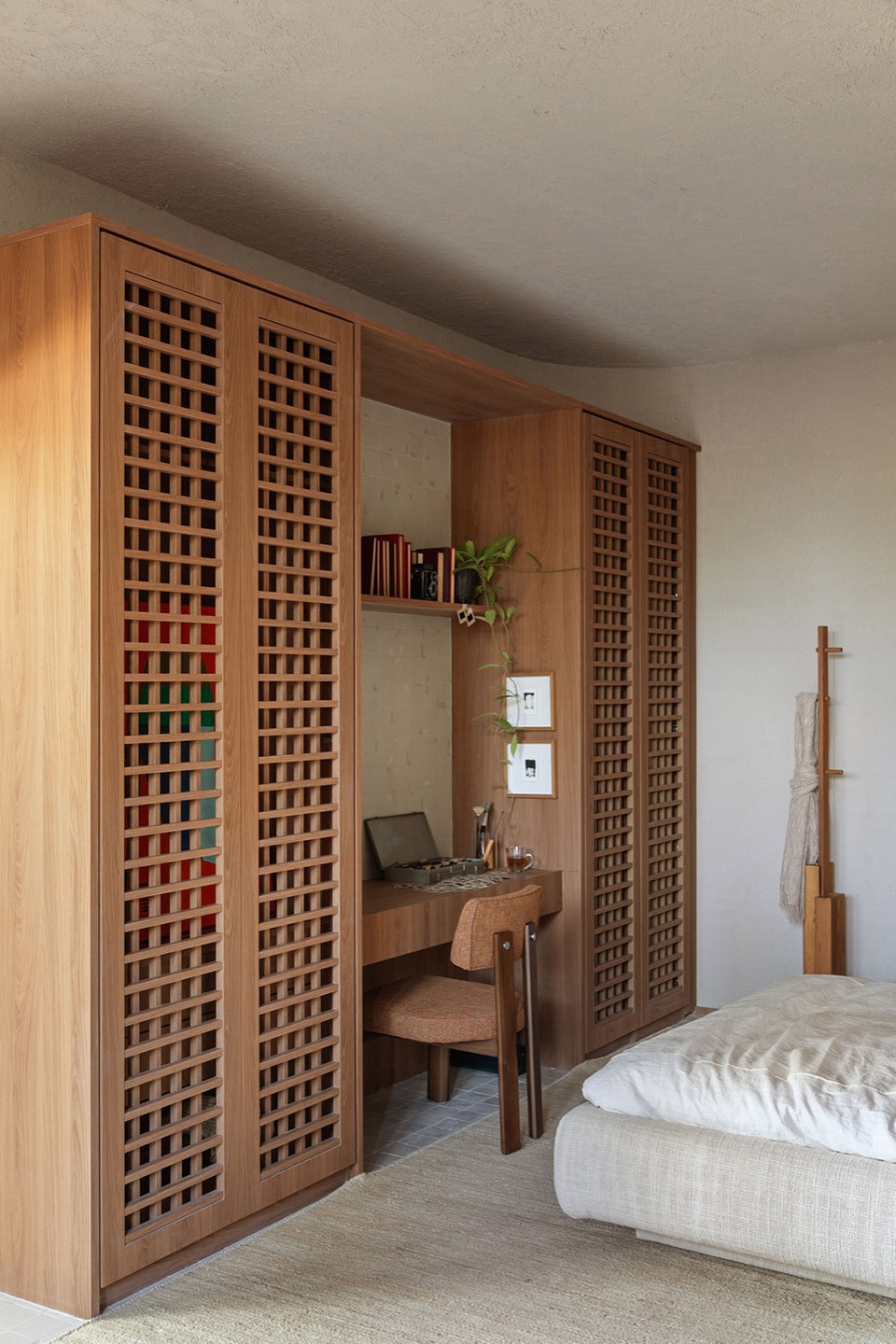
在这个多功能架子中,我们讲述了工作、烹饪和放松时光的故事。所有部分都被细小的凹槽包围,其中存放着居民的回忆和特别的时刻,讲述着他们的生活故事。生活区(Jantar):一张大型沙发将整个空间融为一体,精心挑选的本地艺术家和设计师的作品展示了不依赖于工厂生产过程的独特作品,手工制作的艺术品,并尊重良好的木工制作工艺。梦想区(Sonhar):一个邀请放松的房间,没有过多的奢华,反映了停下时间进行自我关怀的重要性,连接人们与他们内心的自我。一张大型的软垫床和一把舒适的阅读扶手椅,均置于一块丰富的天然纤维地毯上,营造出温馨感,柔和的间接照明来自落地灯,配合直射光照亮艺术作品,增强了空间的舒适氛围。沐浴区(Banhar):一个小型水疗区与卧室相连,激发嗅觉感官,并以景观设计和福祉为边界。浴缸是放松的邀请,作为空间的核心元素,配有由知名设计师签名的Deca配件和金属材质。为了空间的功能区分,我们特别设计了一个私密的淋浴环境。
In this multifunctional shelf, we narrate work activities, the daily life of cooking and the importance of moments of relaxation. All are surrounded by niches where we find the memories and special moments of connection that tell the stories of those who inhabit it. In front of this monumental woodwork, an island with rounded corners allows you to expand the work area and creates a connection with the dining space, meetings, and quick meals. Living (Jantar): A large sofa embraces the integrated space with a careful selection of local artists and designers who present signature works from studios that are not within a factory process, handmade pieces and with respect for the processes of good woodworking practice. Dreaming (Sonhar): A room inviting relaxation and without excesses, reflecting the importance of stopping time for self-care, connecting people to their own inner self. A large, upholstered bed and a comfortable reading armchair, both on a rich natural fiber rug, create a coziness that is reinforced by soft, indirect lighting from the floor lamp, allowing direct lighting to highlight the artworks. Bathing (Banhar): A small spa integrated into the bedroom works the olfactory senses bordered by landscaping and well-being. The bathtub, an invitation to relax, is a central piece of the space that has Deca fixtures and metals signed by great designers. For the sectorization we were careful to create a private environment for the shower.
▼梳妆台,dresser
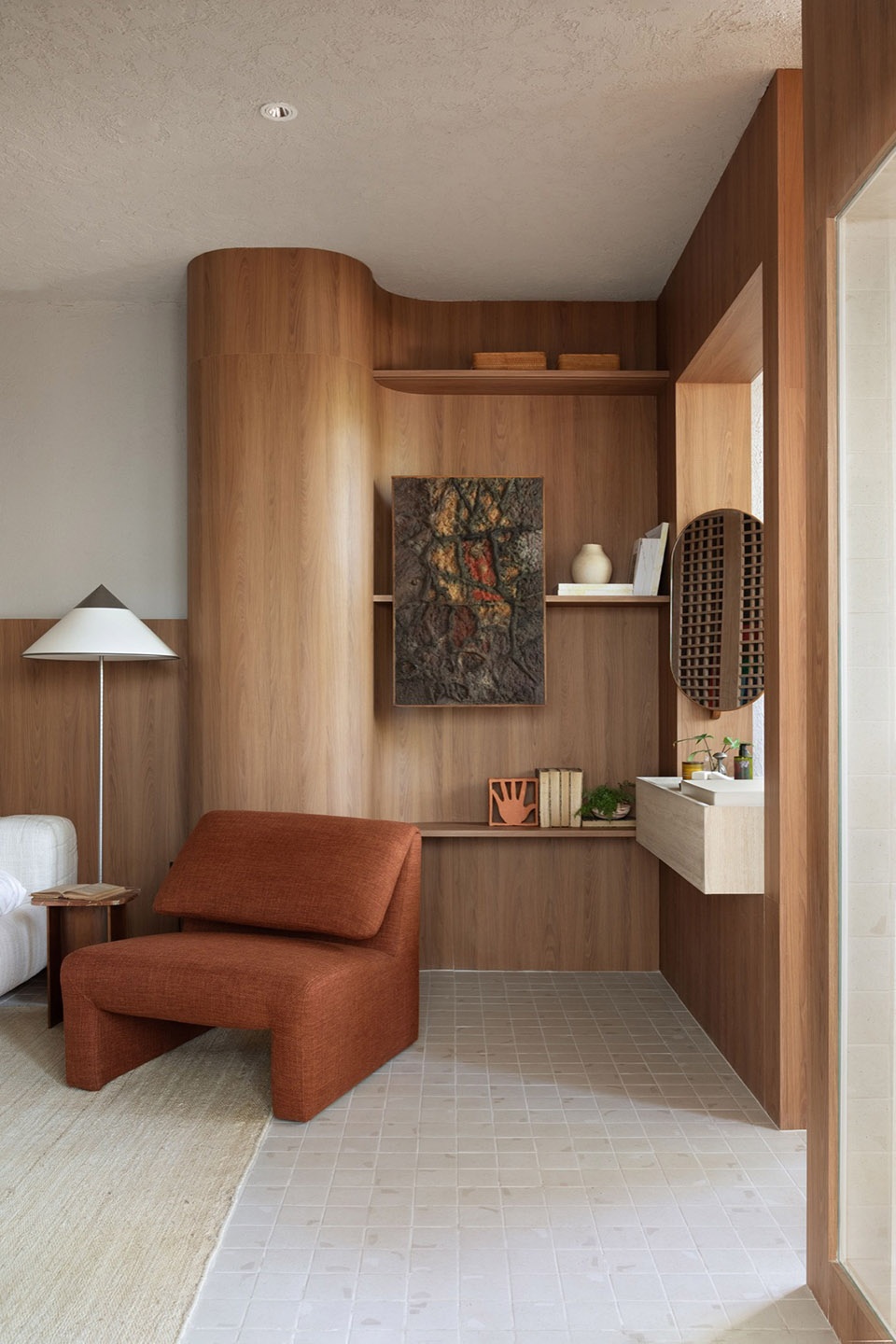
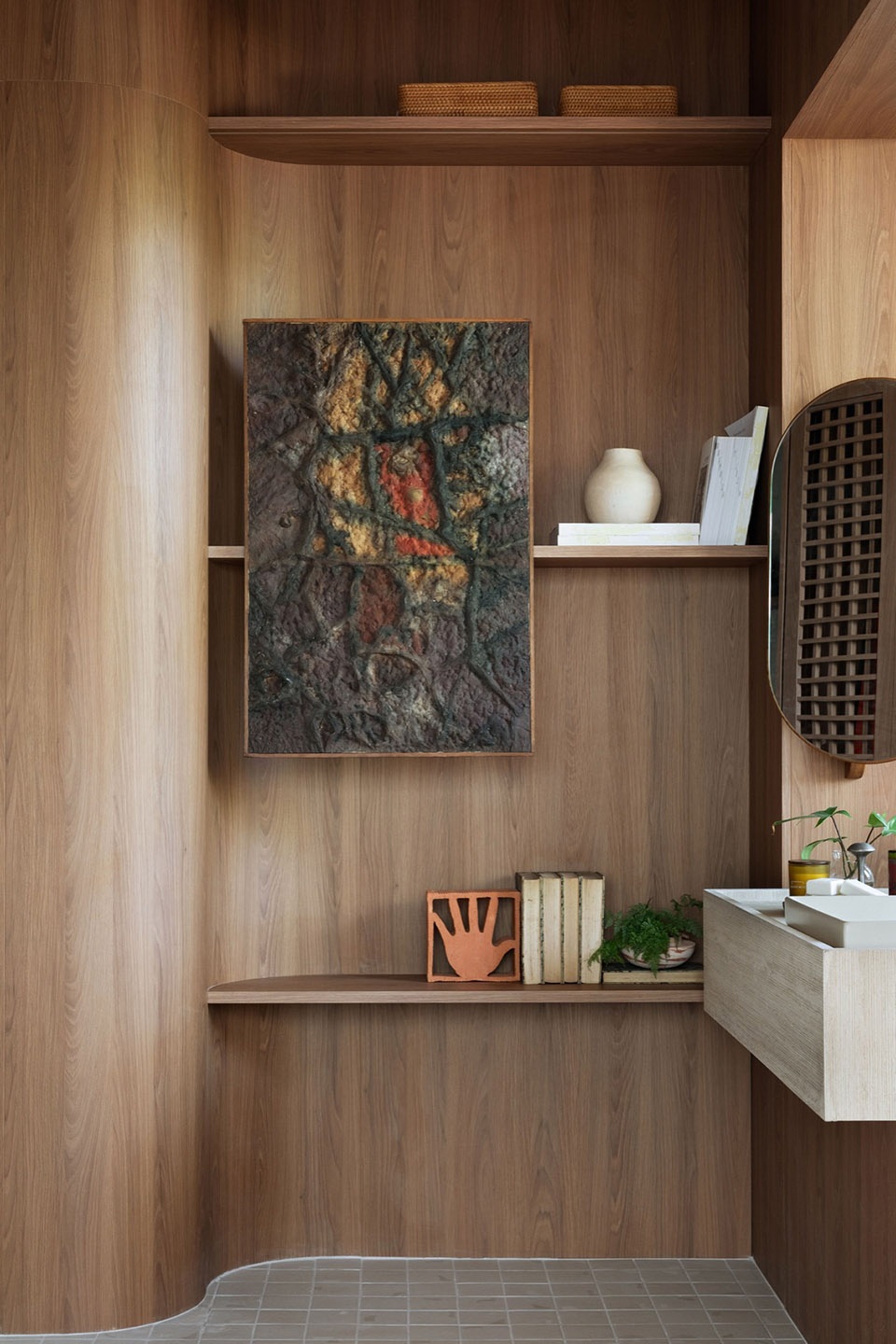
▼浴室,bathroom
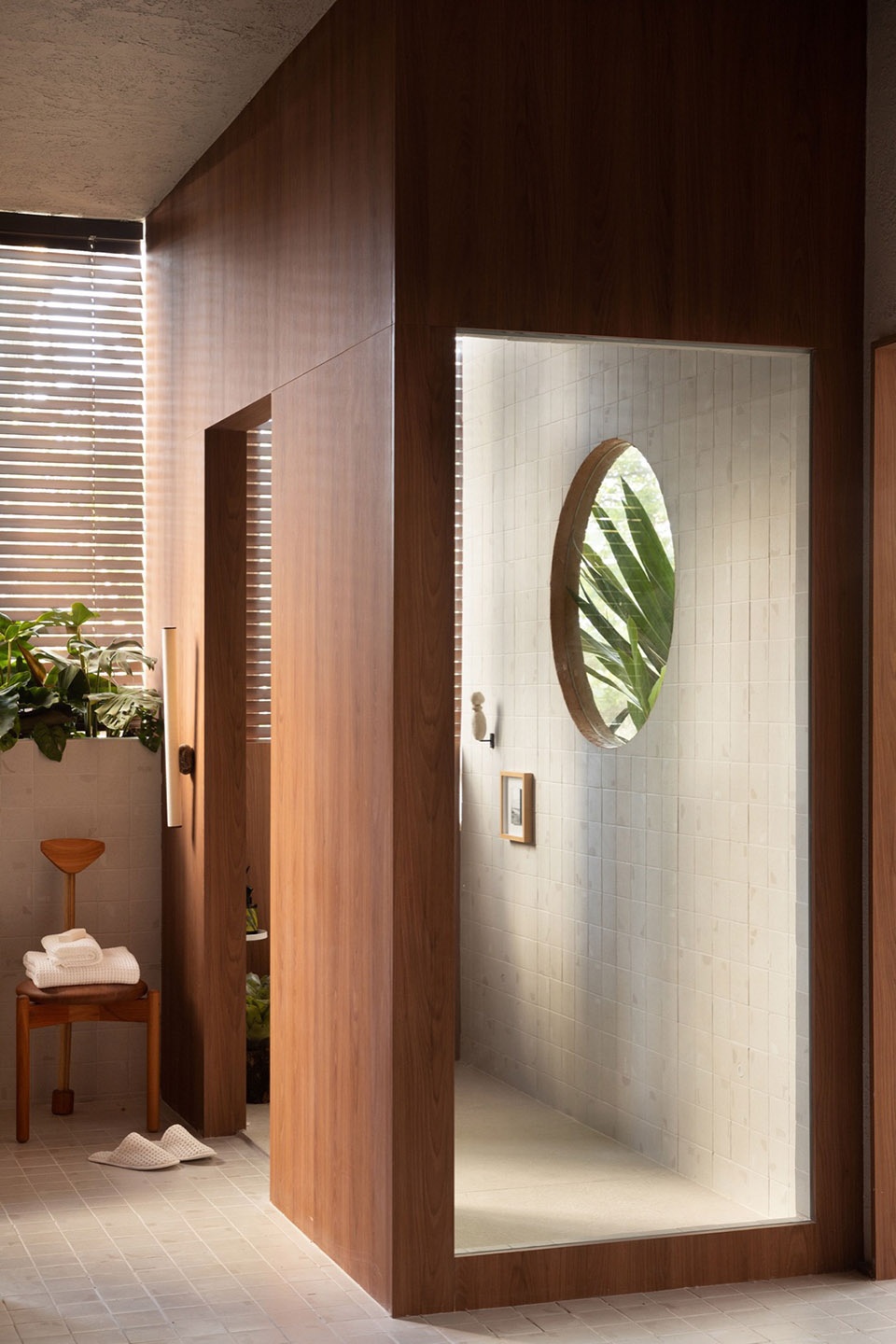
Name of Professional: Leandro Neves
Name to be used in all publicity materials, including the yearbook: Studio Leandro Neves, architect Leandro Neves
Name of the Project: Casa Taipa (Taipa House)
Sponsor: Casttini
Size: 110m²
Email: contato@studioleandroneves.com
Contact Number: +55 21 981878817
Instagram Profile: @studioleandroneves
Photographer: Denilson Machado MCA
Visual Production: Studio Jefferson Stunner
Location : São Conrado, Rio de Janeiro – Brazil