Davos学校扩建,瑞士 / CURA Architekten
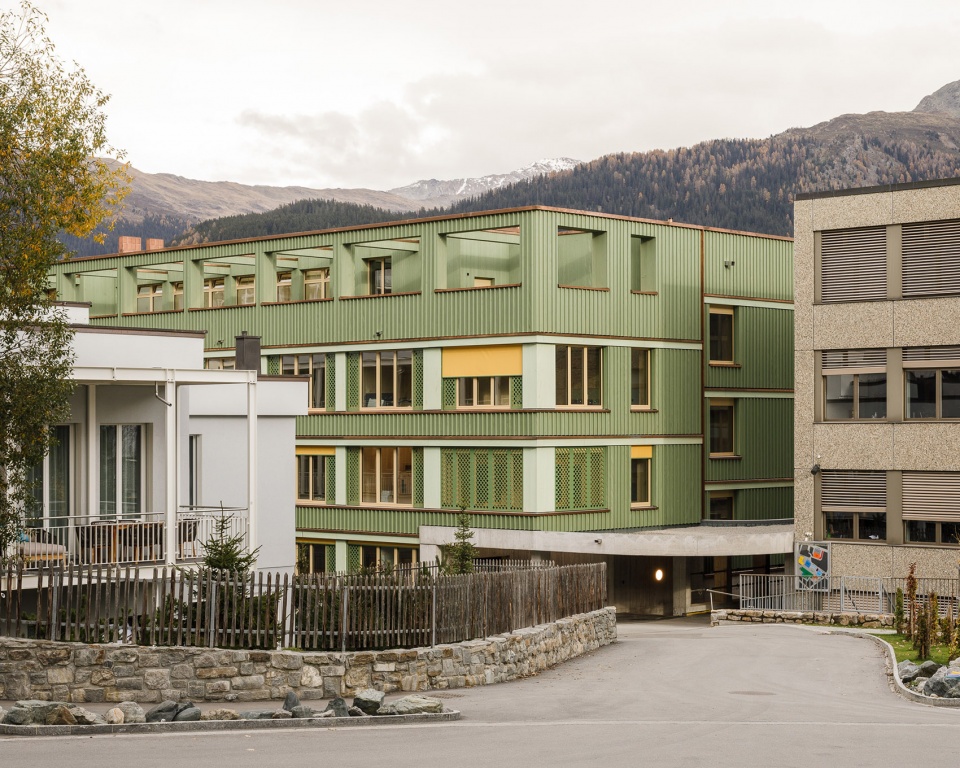
位于Davos Platz的学校综合体正在转型为托儿所结构,因此需要更多的空间来设置礼堂、食堂、行政办公室和额外的教室。因此,原本建于1960年代的现有建筑计划被拆除,取而代之的是一座新的生态建筑。为了保留建筑的固有能量,提出了一种与现有建筑结合的整合性解决方案。该方案在现有结构的两侧进行扩展,并在顶部加建了一层,以满足日益增长的使用需求。
The school complex in Davos Platz is converting its operations to a daycare structure and therefore requires additional space for an assembly hall, cafeteria, administration and extra classrooms. For that reason the existing building from the 1960s was to be demolished in favor of a new ecological building. In order to preserve the embodied energy, an integrative solution with the existing building was proposed instead, in which the old structure is extended on the long sides and a storey is added to meet the growing requirements of the program.
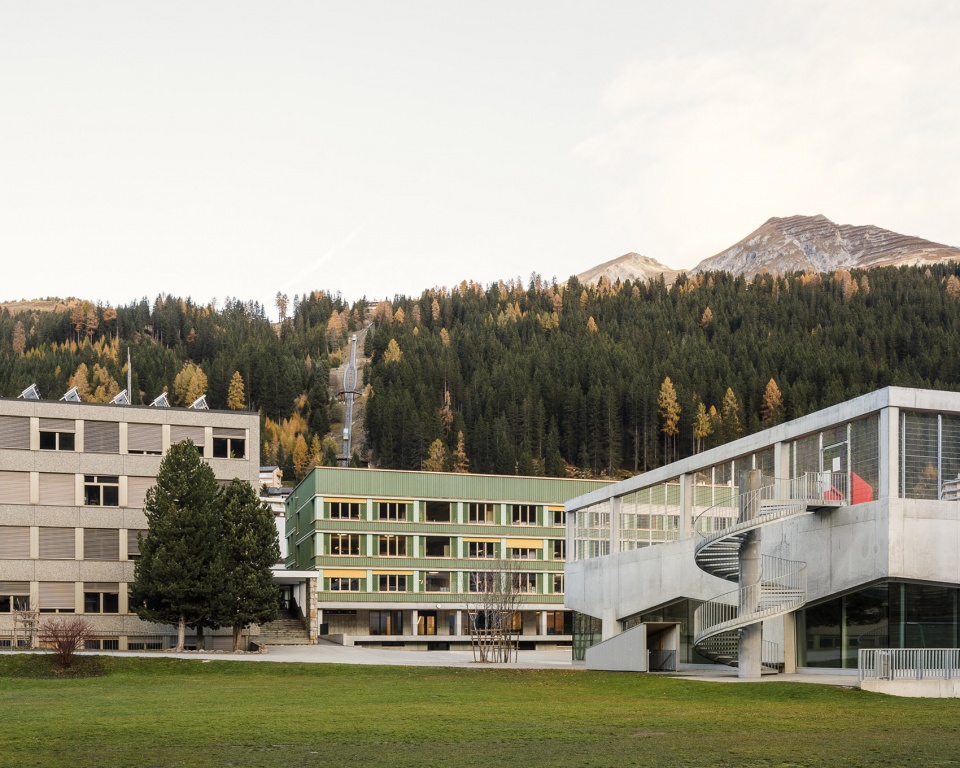
▼校园概览,overview of the campus
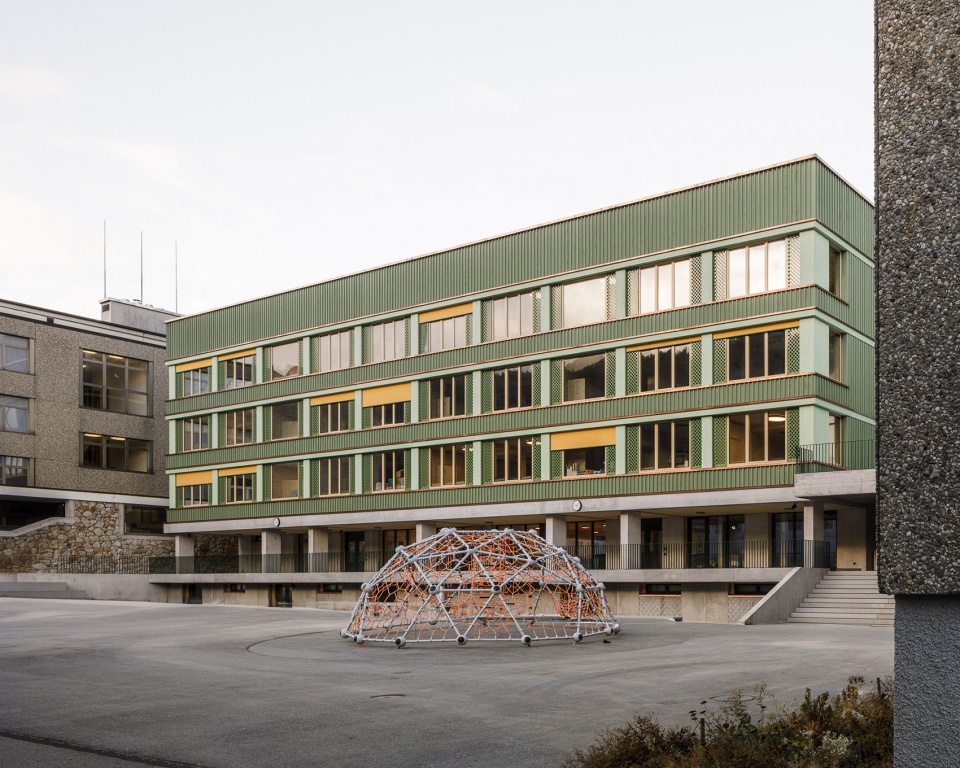
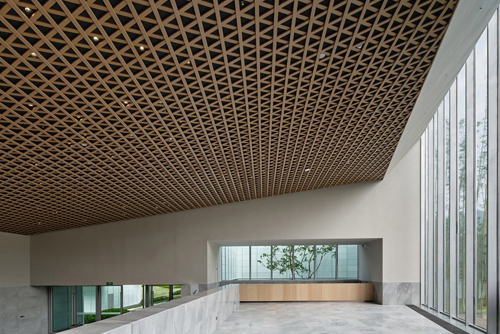
为此,在整个现有建筑上方建起了新的结构,完全将其包裹在新的外壳中。这个外壳不仅满足了热能需求,还展现出全新的美学标准。从外部看,这座混合建筑呈现为一座新建筑,但实际上,它的40%体积仍由原有结构构成。扩建部分采用高效的木质网格结构,基于现有建筑的墙体轴线。新增的三层通过侧面扩展支撑,避免了对原有建筑结构施加额外负荷。
To do so, a new structure is placed over the entire existing building and completely encloses it with a new shell, which both meets the thermal requirements and pursues a new aesthetic standard. From the outside this hybrid appears to be a new building, while actually 40% of its volume consists of the existing structure. The extensions are constructed from an efficient timber grid, which is based on the wall axes of the existing building. The third floor, which has been added on top of the old roof, is carried off via the lateral extensions, which means that no additional load is placed on the existing structure.
▼木质网格结构,an efficient timber grid structure
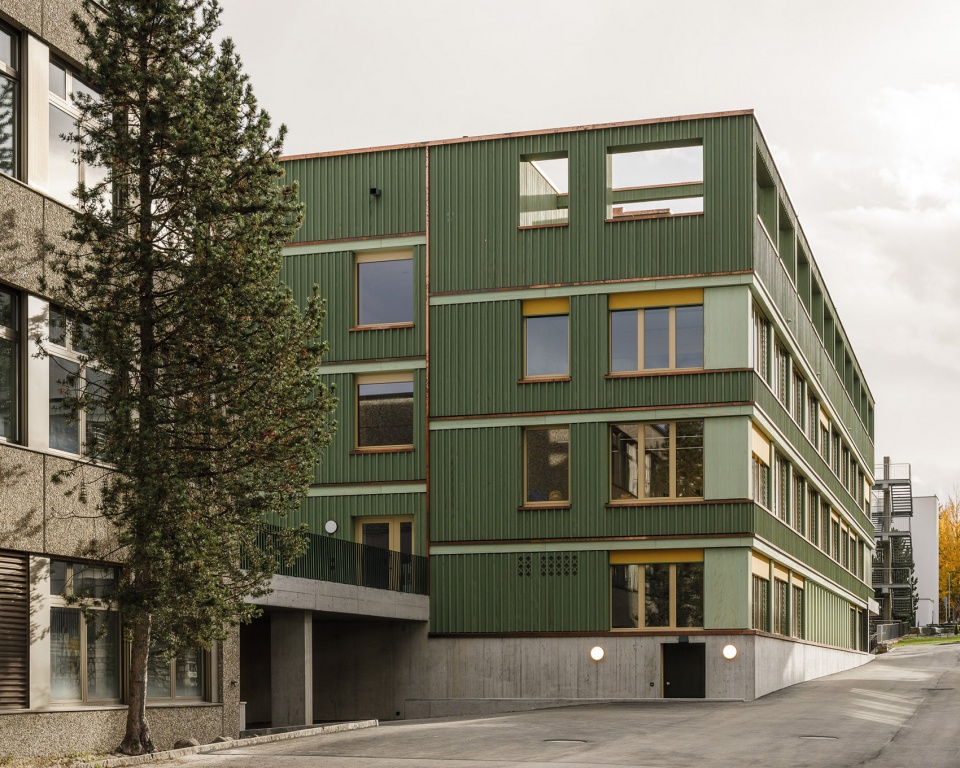
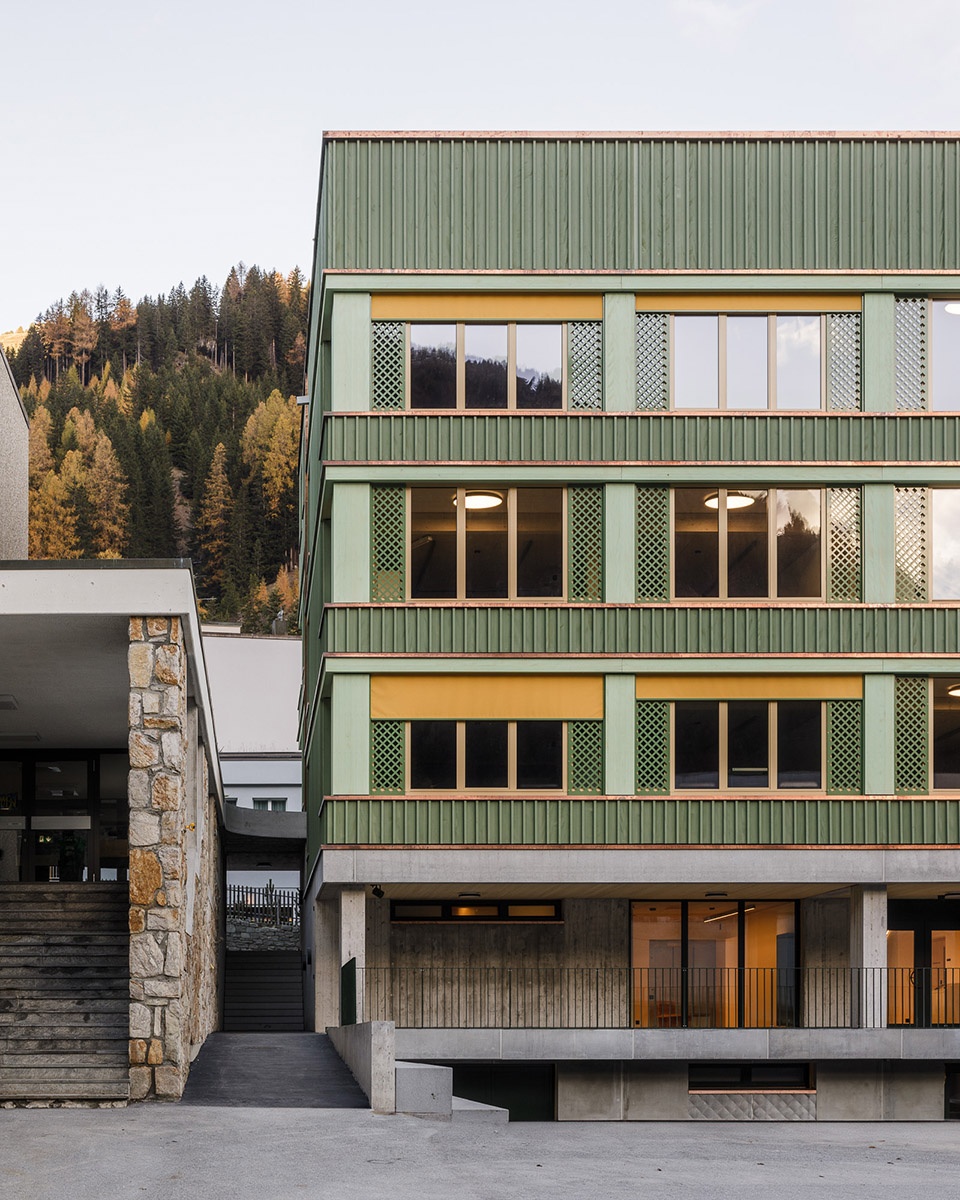
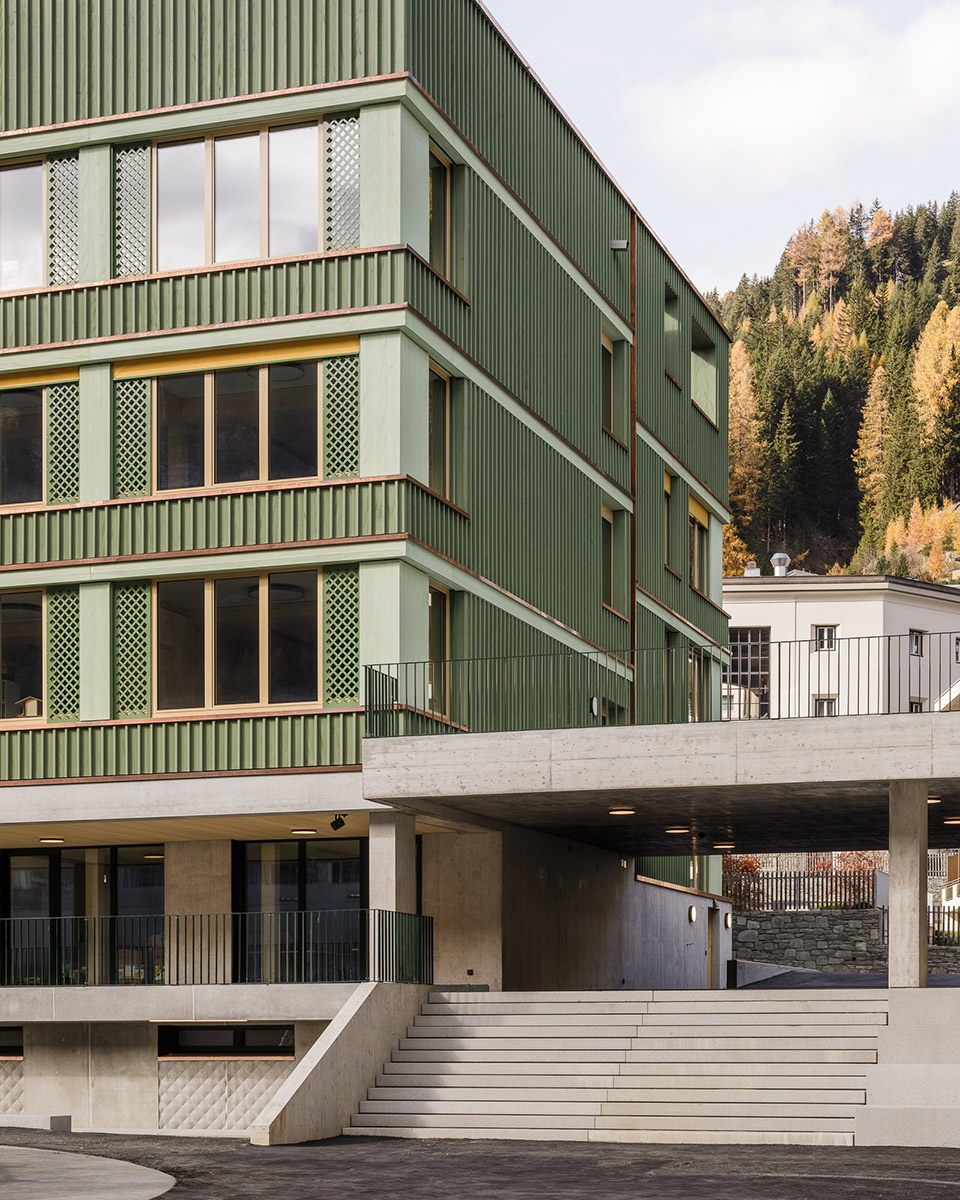
公共楼层面向有顶的学校庭院,而上层的教室和办公室则围绕一个中央的互动中庭布置。结合灵活的走廊空间,这为个性化的学习和休息提供了多种选择,丰富了传统学校运营的多样性。面向“Schulstrasse”的新建筑部分与现有楼梯平台相连,因此新旧建筑在每个楼层之间错开了半层。面向学校庭院的扩展使得教室可以远离核心区,从而在建筑内部形成一个环形通道,允许人在不同的夹层楼层之间自如地切换。
While the public first floor is oriented towards the covered schoolyard, the classrooms and offices on the upper floors are arranged around a central communicative atrium. Together with the versatile corridor areas, this offers a variety of individual learning and retreat options, which enrich the traditional school operations in many different ways. The new part facing “Schulstrasse” is connected to the existing staircase landings, which means that the new and old buildings are each offset by a half storey. The extension towards the schoolyard allows to shift the classrooms away from the cores, resulting central circular route inside the building, where you can playfully switch between the existing and new building on each mezzanine floor.
▼校园庭院,courtyard
可持续概念Sustainability Concept
目前,建筑行业约占全球二氧化碳排放的四分之一,因此每一座新建筑都面临着确保资源节约和节能运营的挑战。尽管1960年代建造的现有学校建筑在功能和结构上已经不再适用,但它在城市规划上具有优越位置,并且结构坚固且灵活。因此,保留现有建筑部分,并以此为基础进行扩建,是一种合乎逻辑的选择。
▼剖透视,perspective section
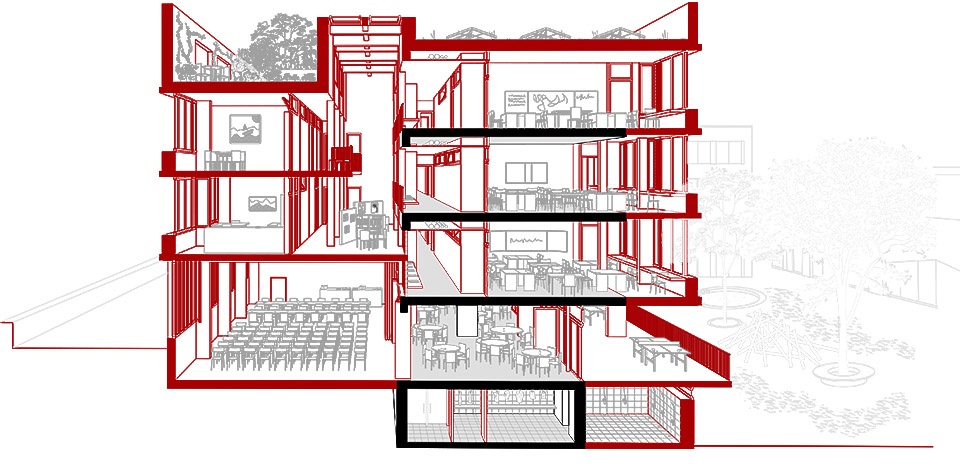
While a quarter of all CO2 emissions currently come from the building sector, every new building is faced with the task of ensuring resource-saving construction and energy-saving operation. Although the existing school building from the 1960s was no longer functional or structurally viable, it was well positioned in terms of urban planning and had a solid and flexible structure. It was therefore a matter of course to retain the existing building components and use them to design a concept for an extension.
▼中庭,atrium
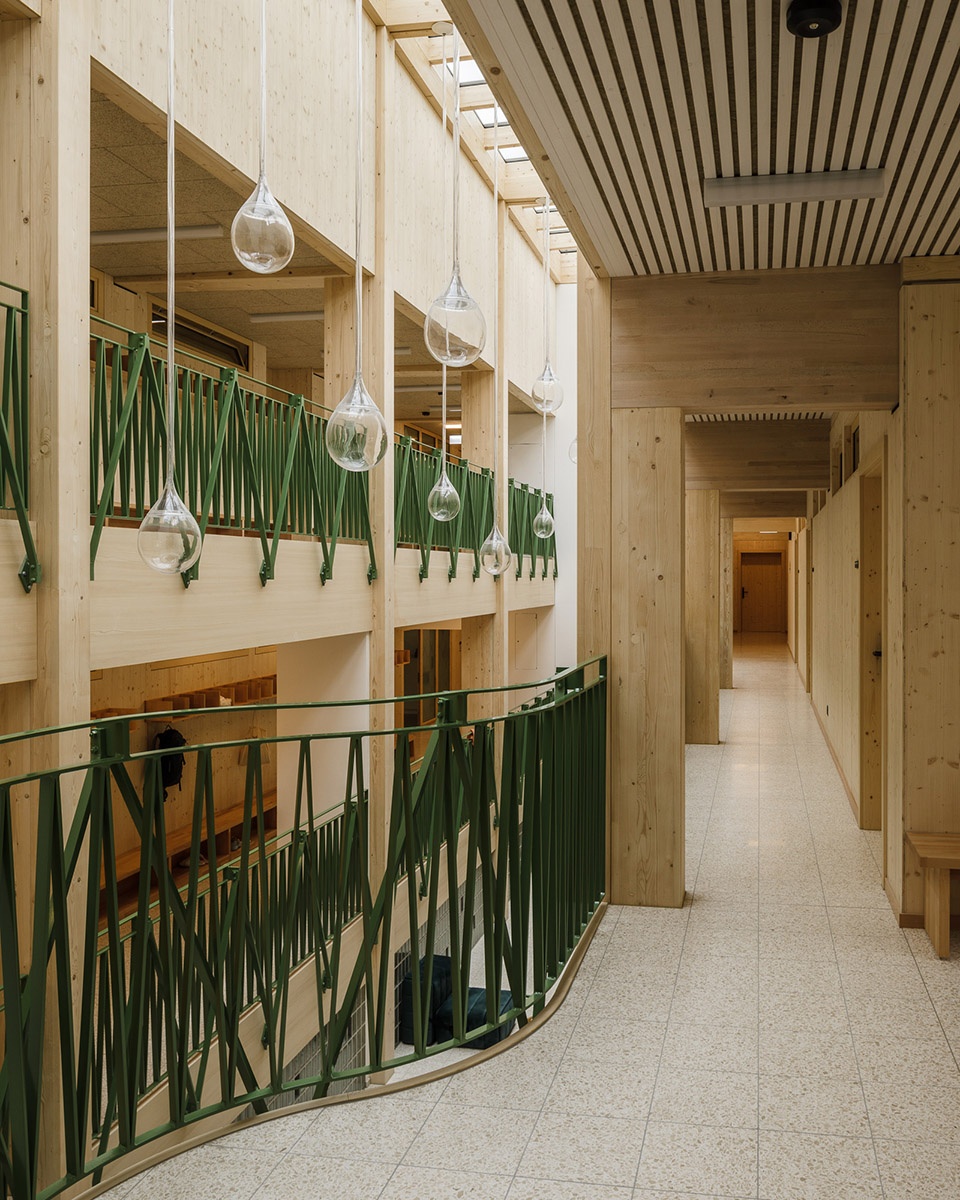
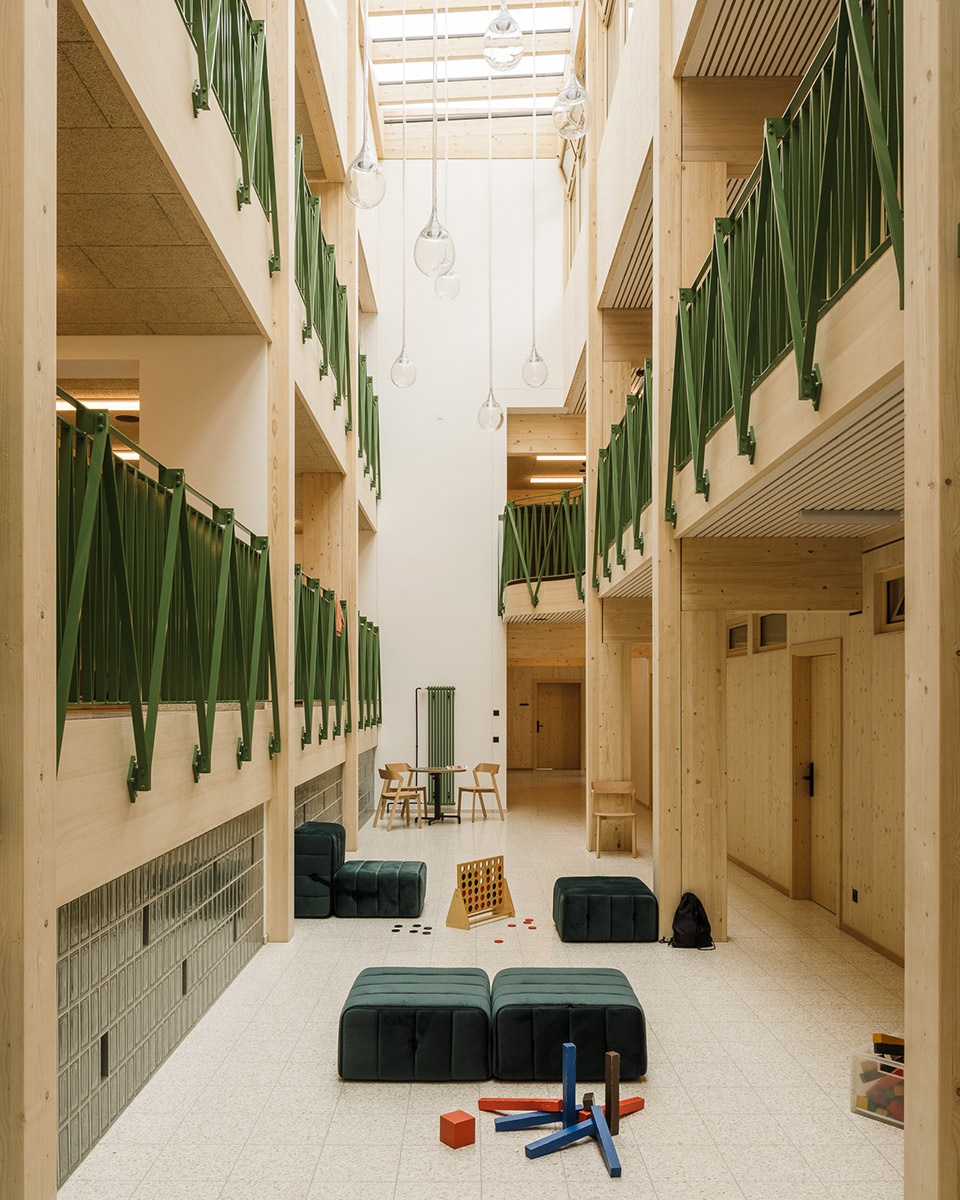
几乎40%的承重结构和楼梯得以保留,这在很大程度上减少了资源消耗和二氧化碳排放。所有新增部分都采用了木材建造,这使得建筑在长期内成为二氧化碳储存库。由于原有结构具有足够的热质量,新的轻质结构中的热存储问题也能得到有效解决。
This meant that almost 40% of the load-bearing structure in the new building and the staircases could be saved, which has a significant impact on resource consumption and CO2 emissions.All new extensions were built in timber, which means that the building functions as a long-term CO2 store. As the solid existing structure has sufficient thermal mass, an efficient heat storage in the new lightweight construction is unproblematic.
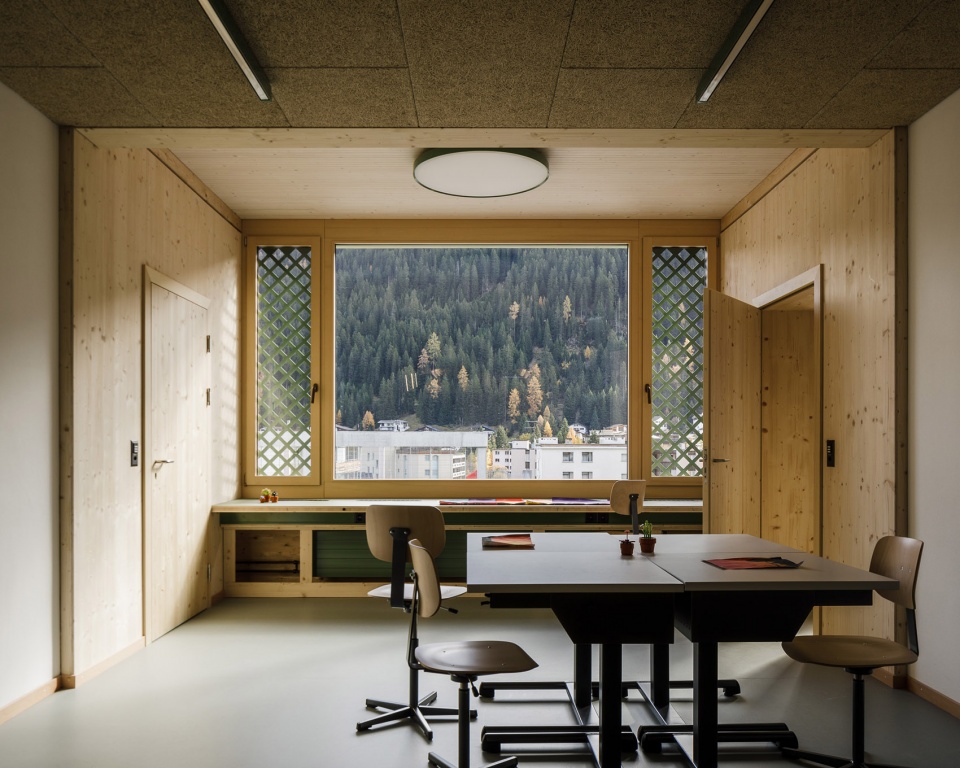
▼可灵活调整的教室空间,adjustable classroom
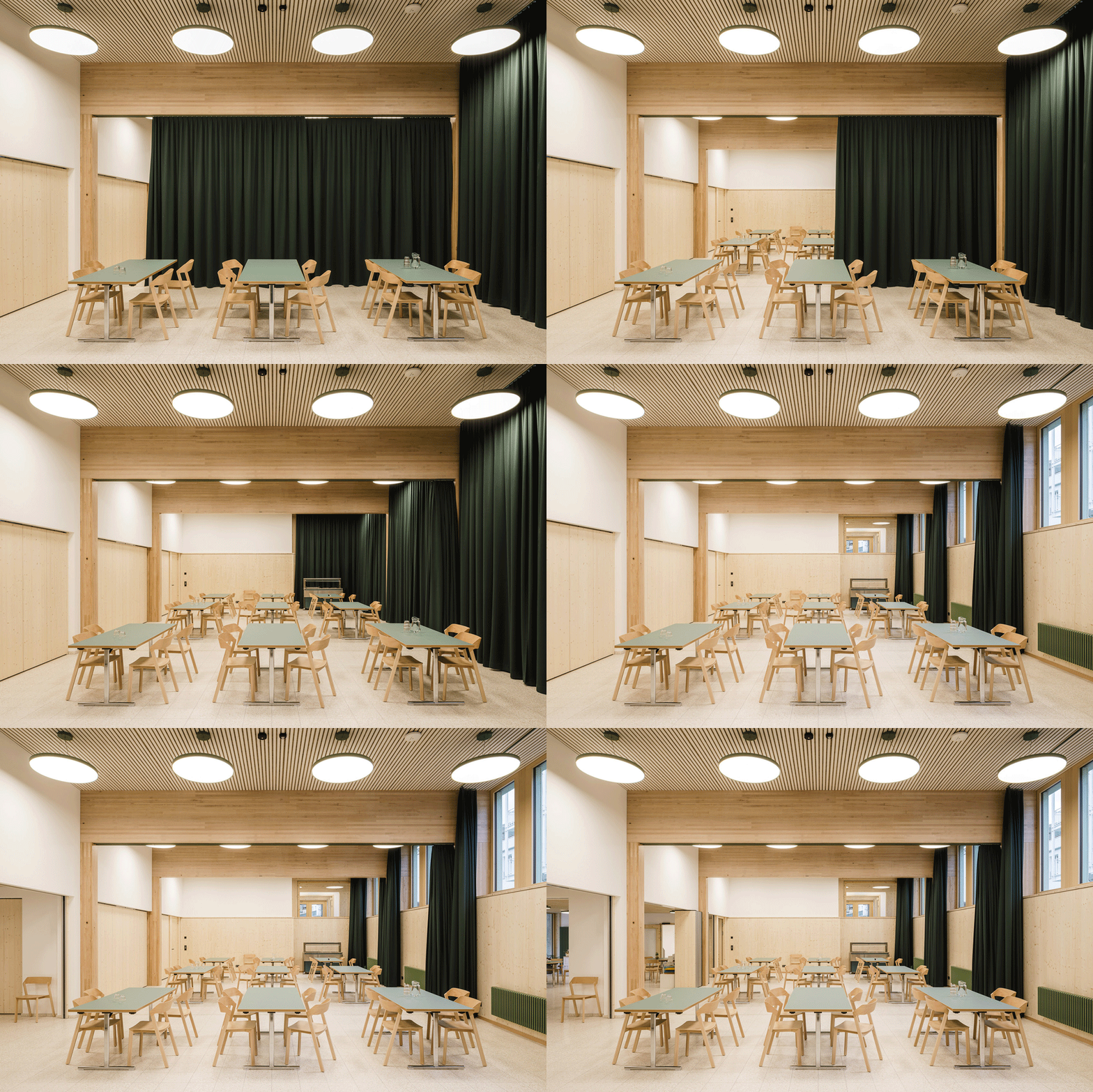
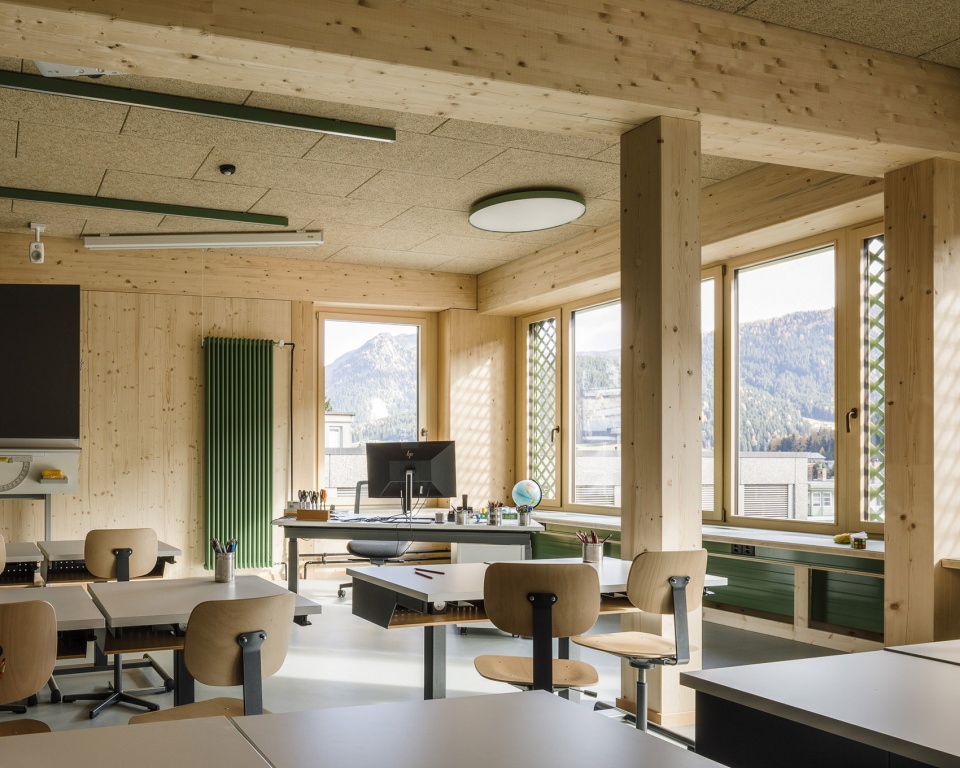
▼教室空间,classroom
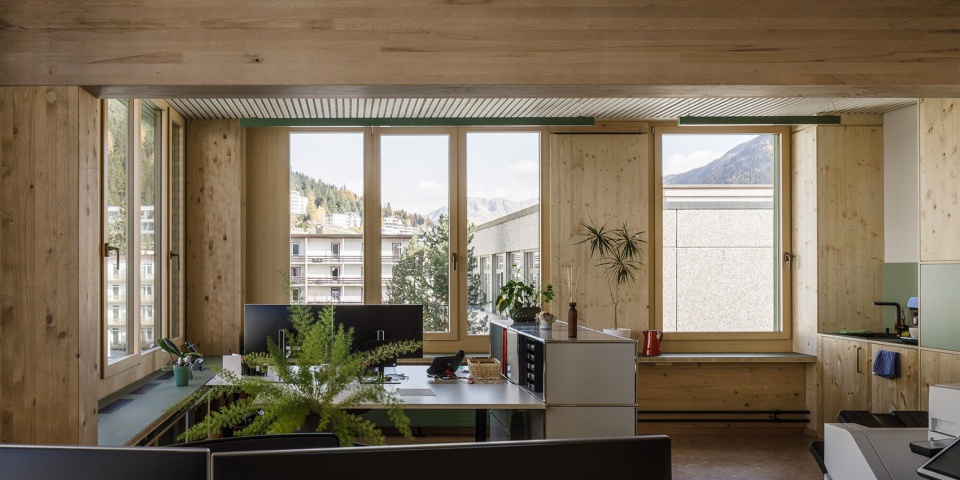
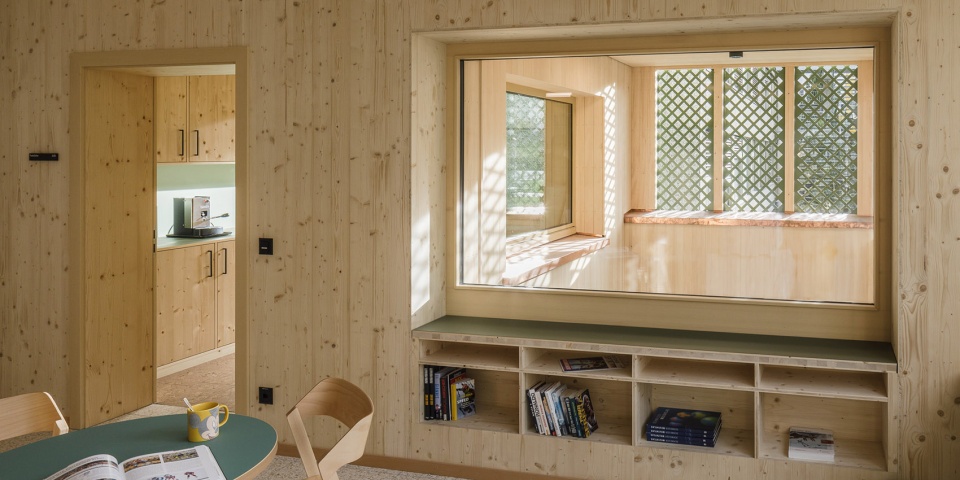
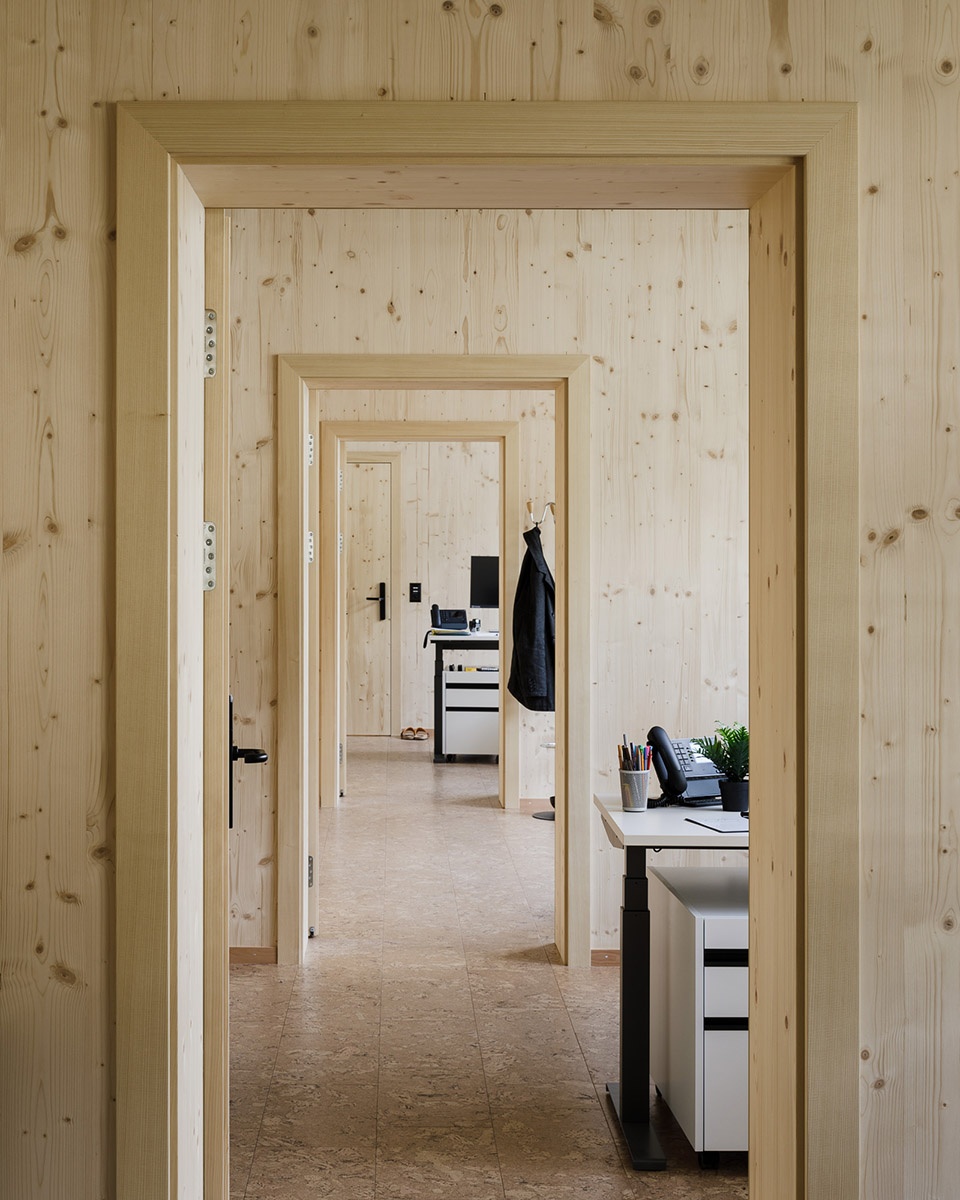
▼办公空间,office space
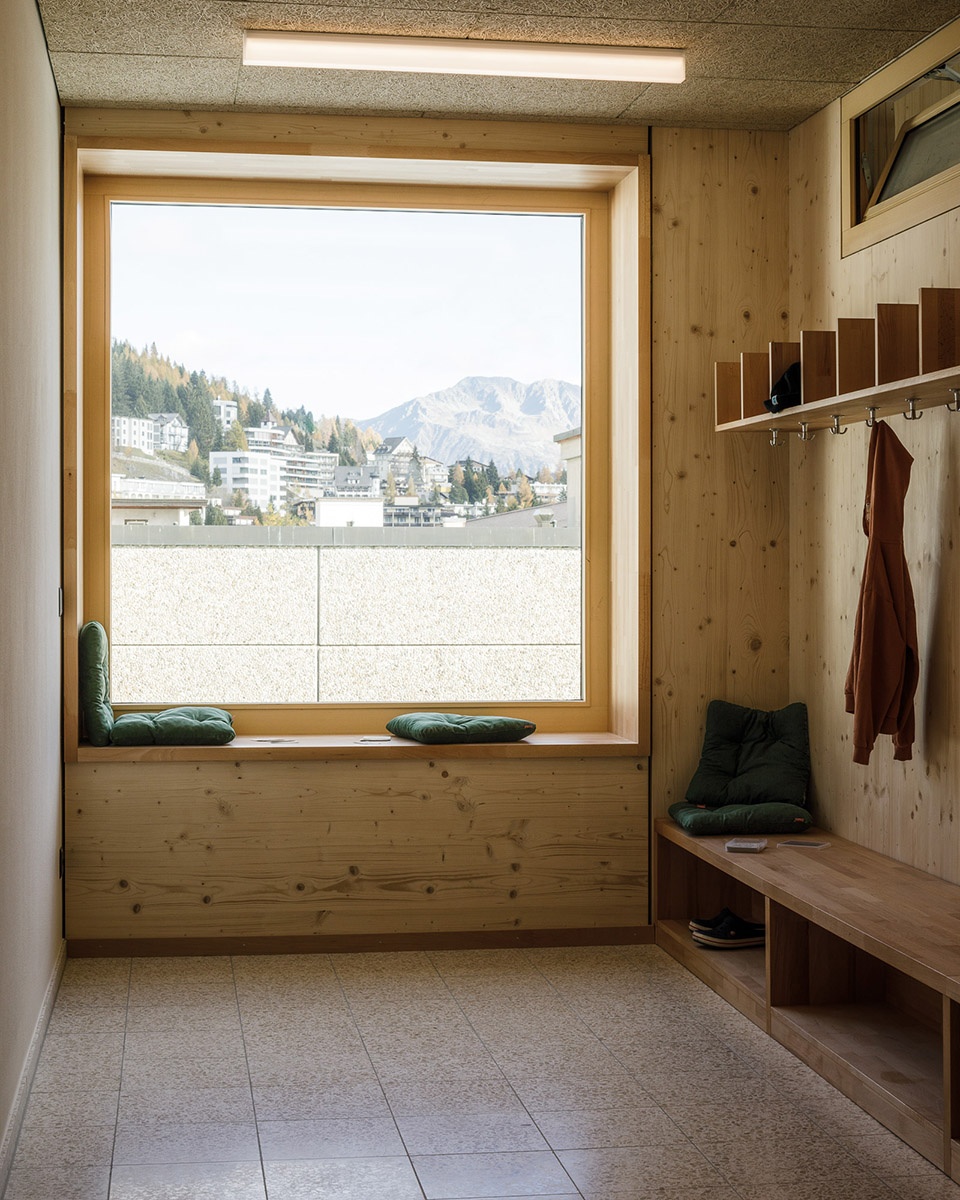
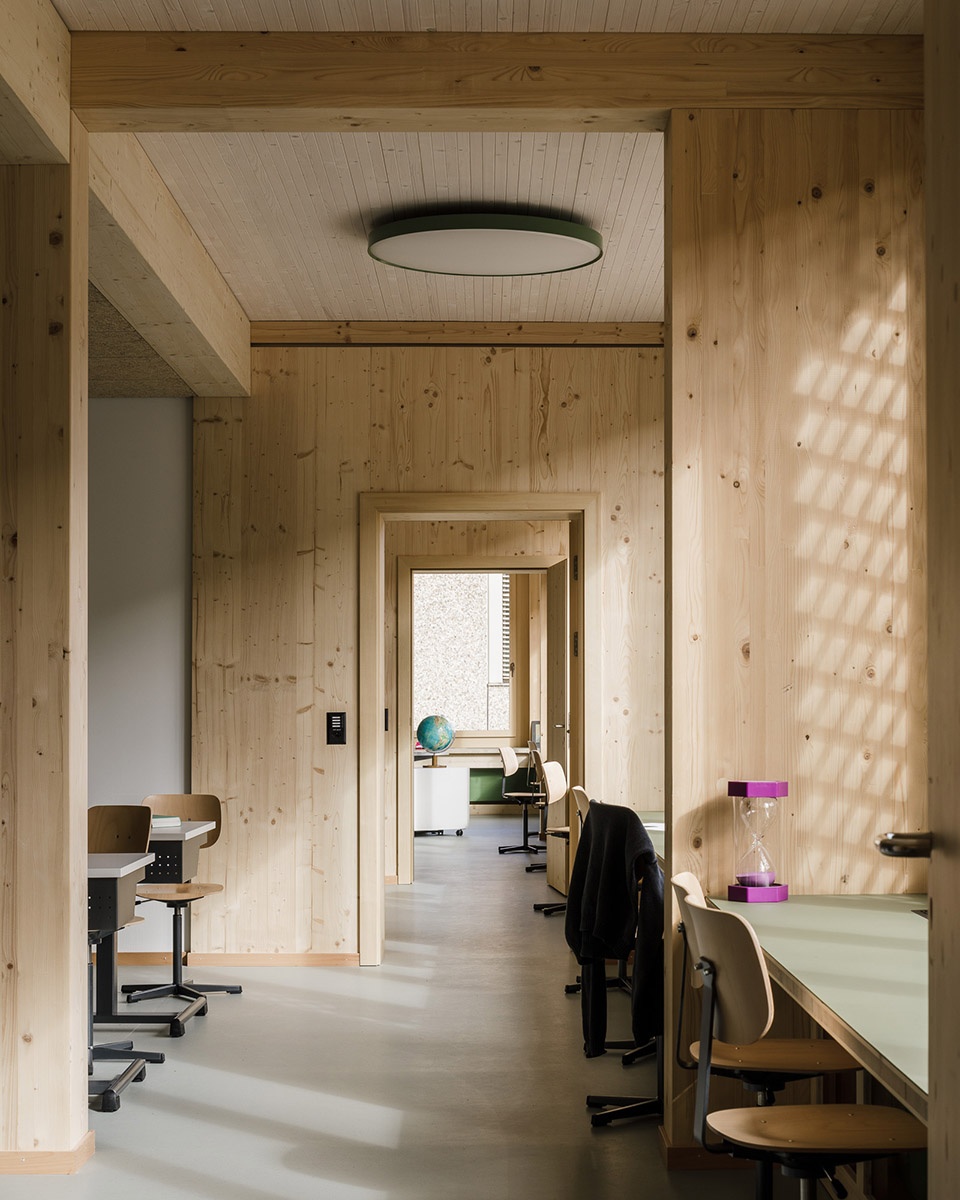
所有新建部分都使用了本地和可再生建筑材料。开放的木质结构、带有羊毛隔音效果的实木天花板以及软木地板,营造了温馨的氛围,并与现有建筑的混凝土结构形成鲜明对比。因此,设计上有意识地区分了新旧建筑部分,让学生能够清晰地看到改造过程。
For all newly constructed parts of the building, the focus was on using regional and renewable building materials. The open timber structure, the massive wood ceilings with sheep’s wool acoustics and the cork floorings create a cozy atmosphere and form a counterpart to the massive concrete structures of the existing building. Therefore, a conscious distinction was made between old and new components so that the conversion process remains visible to the students.
▼开放的木质结构,the open timber structure
整个低技术概念使得不需要控制通风系统。所有学习和工作区都可以通过打开外窗和中央中庭的窗户进行交叉通风。这个九米高的空间可以完全打开,与屋顶花园相连,形成自然的烟囱效应。建筑的能源需求由地热系统和光伏模块提供。
The integral low-tech concept makes it possible to avoid controlled ventilation. All learning and working areas can be cross-ventilated by opening both the windows to the outside and to the central atrium. This nine-meter-high room can be opened up to the roof garden and acts as a kind of natural chimney. The building’s own energy requirements are covered by a geothermal system and PV modules.
▼地下一层平面,basement plan
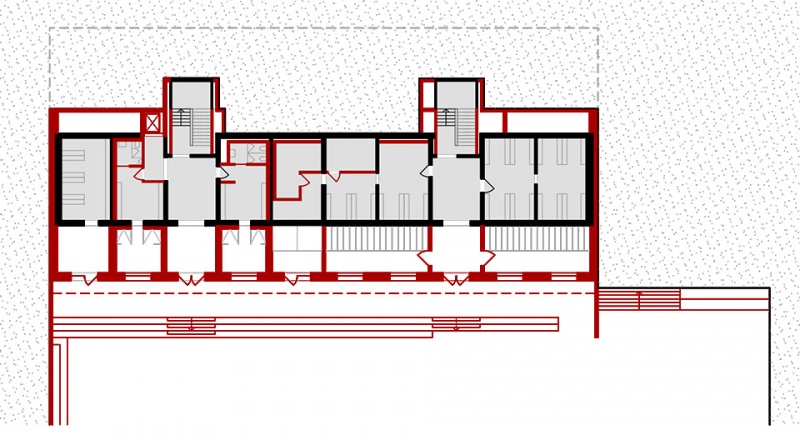
▼一层平面,ground floor plan
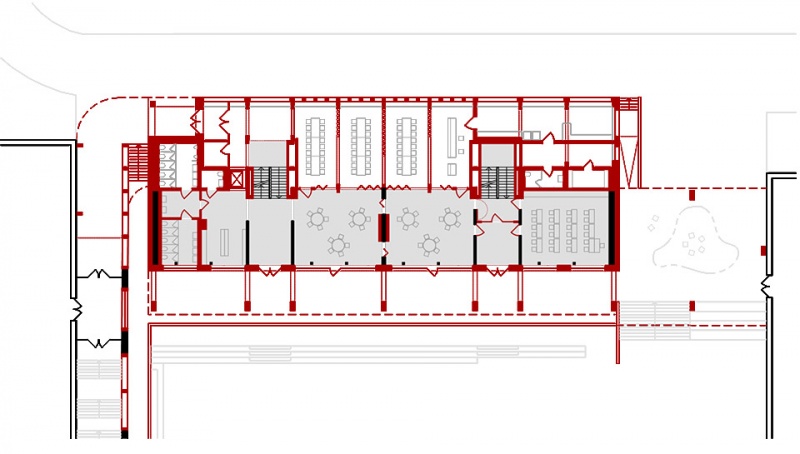
▼二层平面,first floor plan
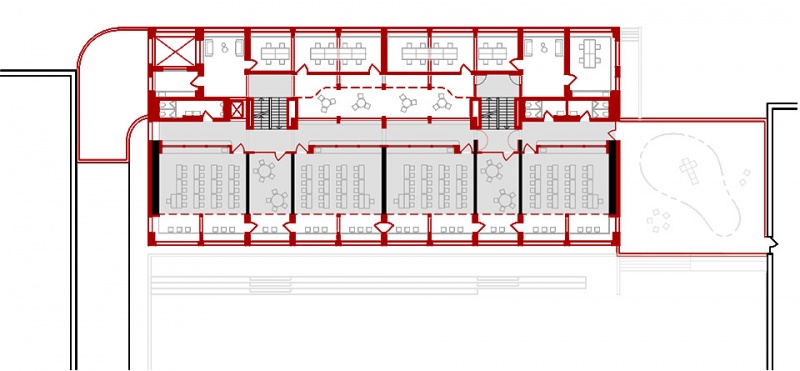
▼三层平面,second floor plan
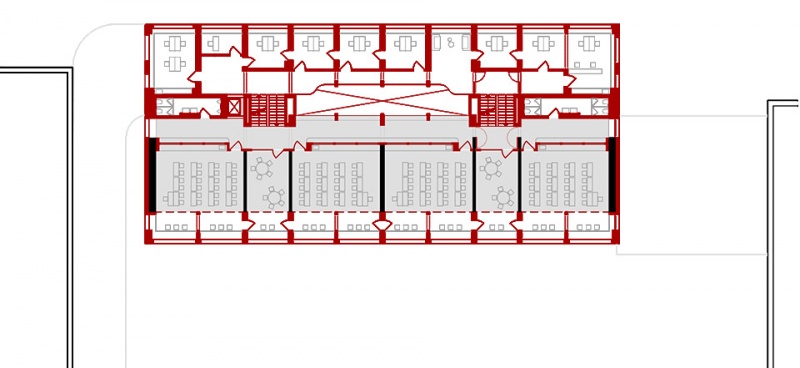
▼四层平面,fourth floor plan
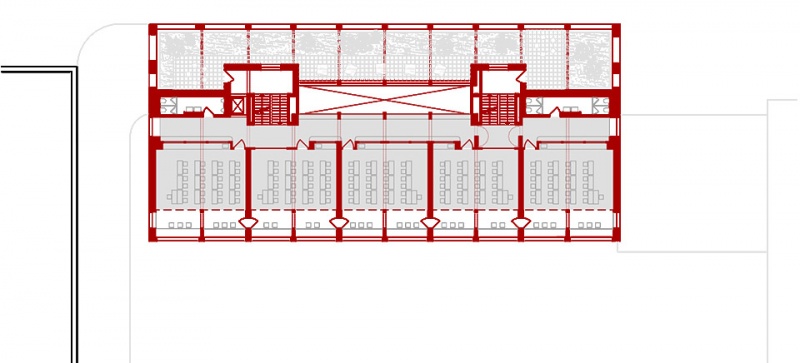
▼立面,elevation
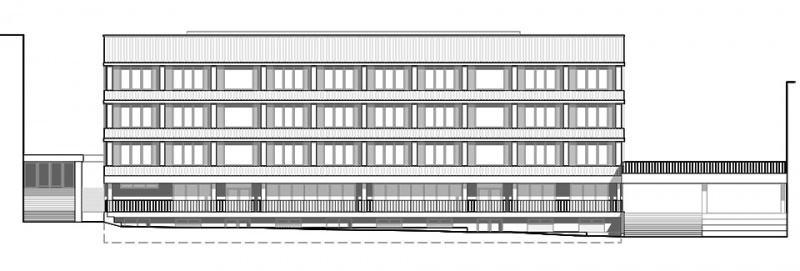
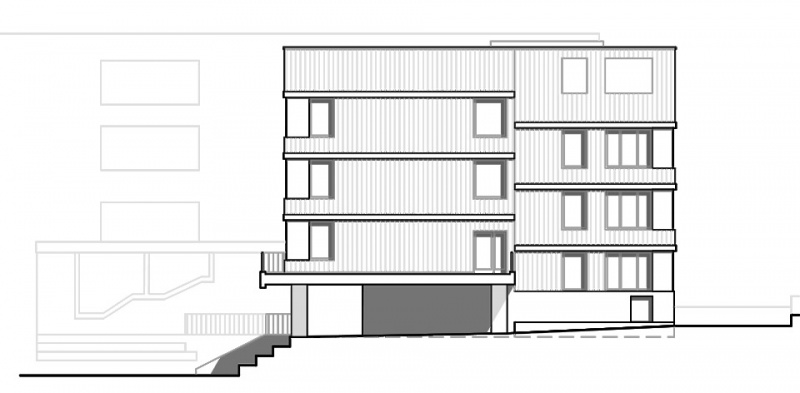
▼剖面,section
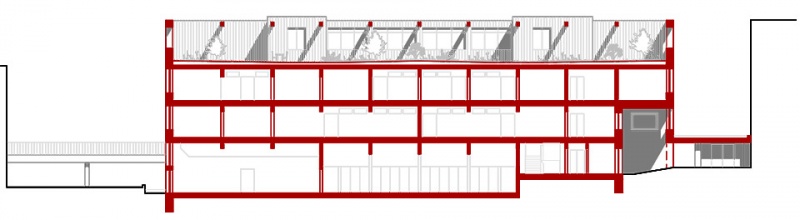
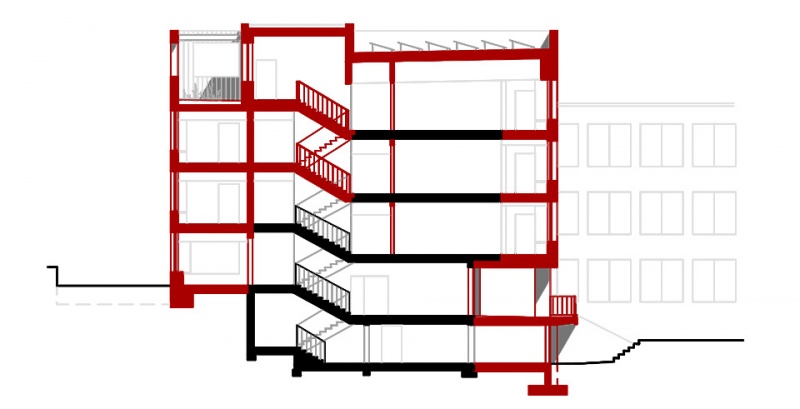
Architects: CURA Architekten GmbH
Customer: Municipality of Davos, Switzerland
Floor Area: 3.725 m2
Total cost | cost of construction: 18 mio CHF | 14.5 mio CHF
Delivery date: October 2024
Fotos: Daisuke Hirabayashi