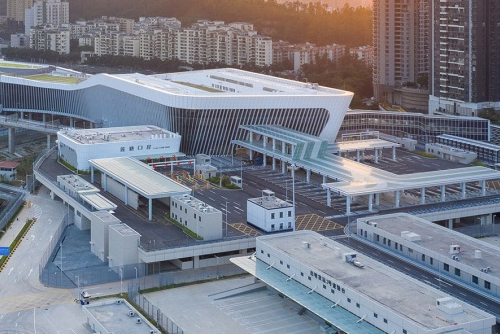
UH INFONAVIT Iztacalco住宅综合体公共空间,墨西哥城 / AMASA Estudio
自20世纪中叶以来,墨西哥城通过住宅综合体的开发,形成了集体住房建设的坚实传统。如今,该市近一半的人口居住在公寓式住宅中。墨西哥城约有一万个住宅综合体——这些多户住宅共享城市基础设施、公共空间、管理服务,甚至邮政编码。其中,近三分之一由INFONAVIT(墨西哥国家工人住房基金会,Instituto del Fondo Nacional de la Vivienda para los Trabajadores)建造,负责工人住房的国家机构。
Since the mid-20th century, Mexico City has developed a strong tradition of collective housing construction through the development of residential complexes. Today, nearly half of the city’s population lives in condominium-style housing. The city has approximately ten thousand housing complexes—multifamily developments that share urban infrastructure, communal spaces, management services, and even postal codes. Of these, nearly one-third were built by INFONAVIT (Instituto del Fondo Nacional de la Vivienda para los Trabajadores), the state agency responsible for housing for workers.
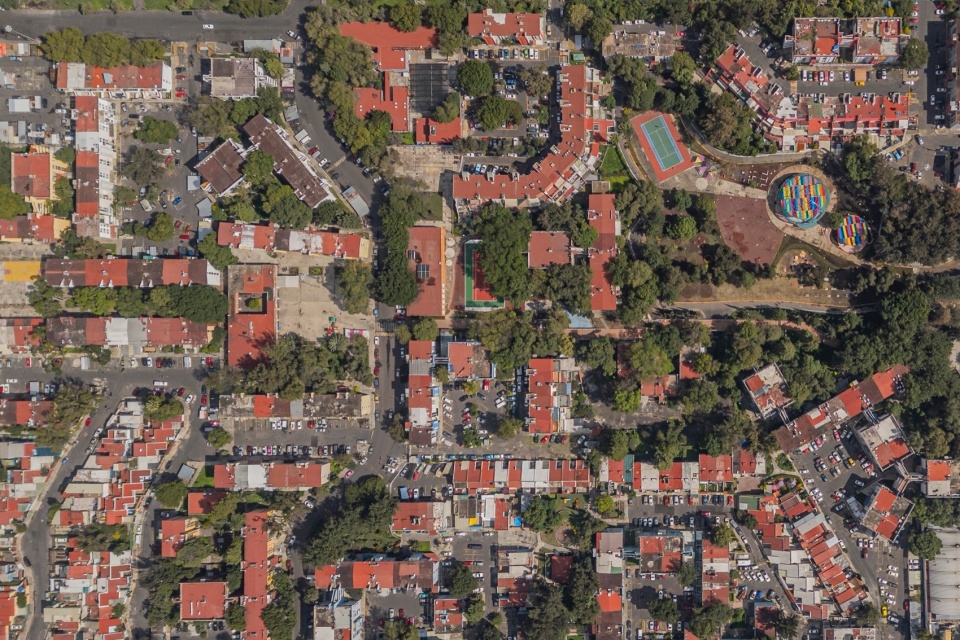
▼场地顶视图,top view of the site
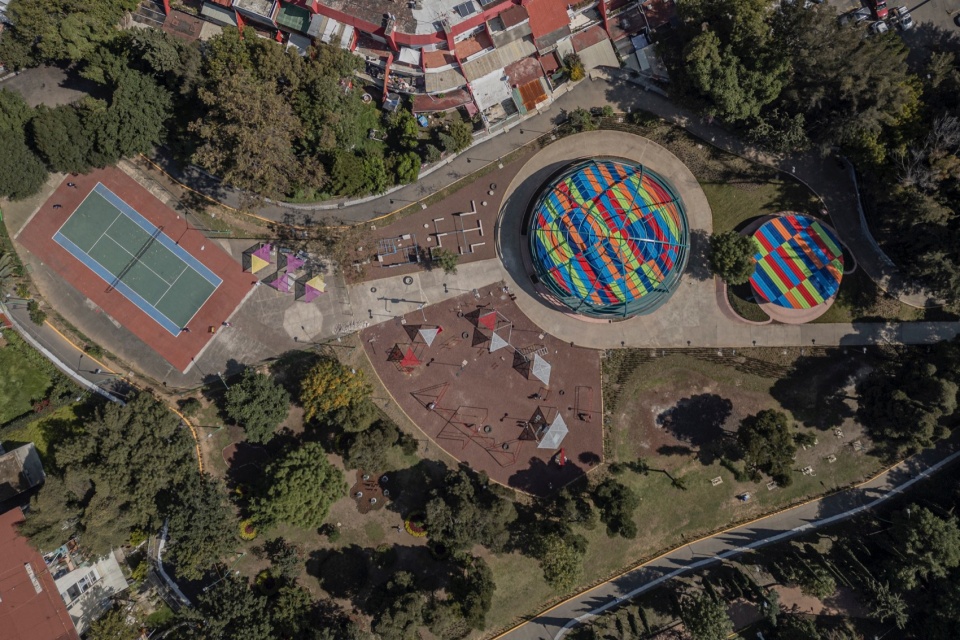
▼鸟瞰,aerial view
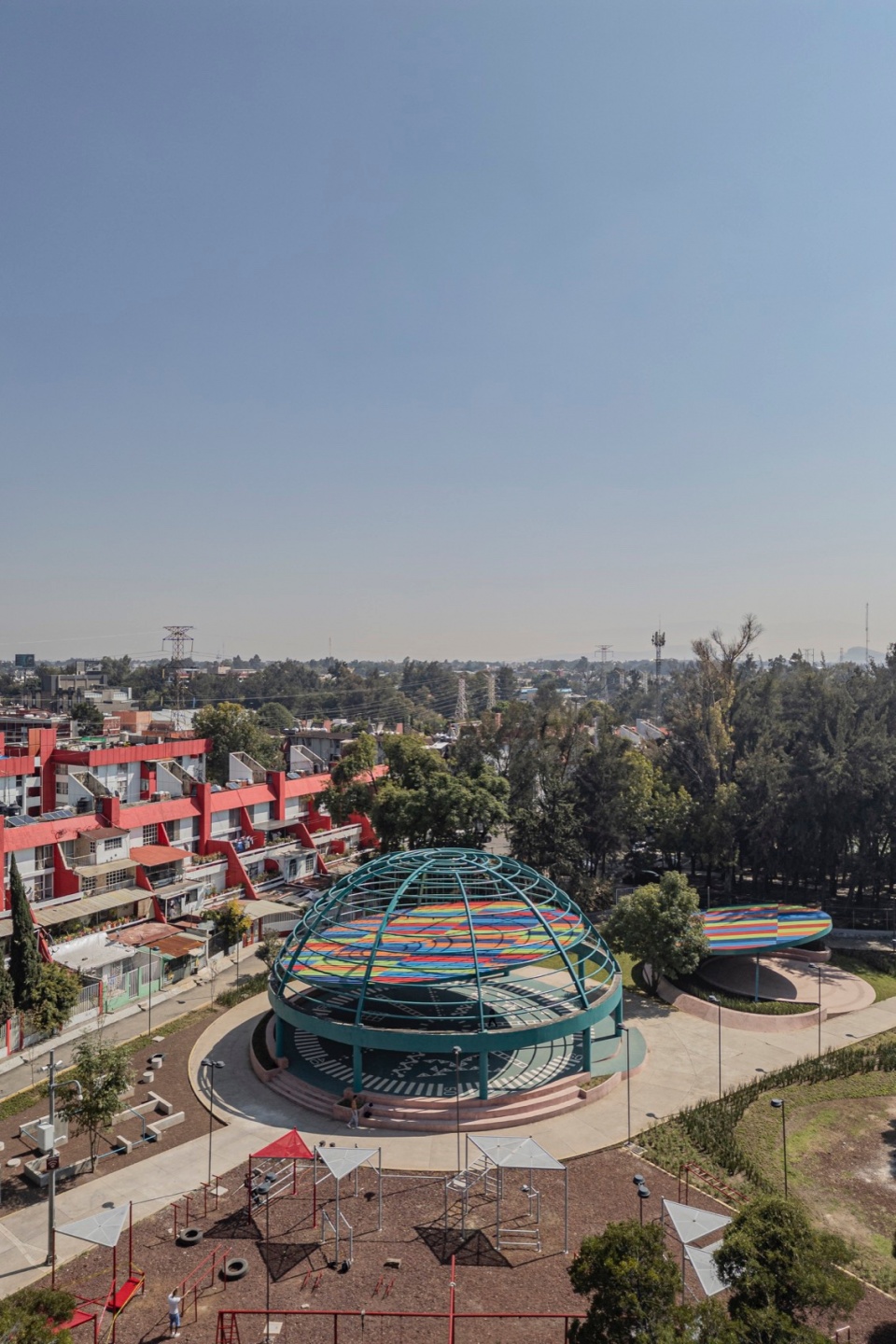
如今,距离首个多户住宅项目建成已超过75年,由于长期缺乏维护和政府忽视,相关问题日益凸显。然而,尽管全国范围内在基础设施和公共服务方面投入了大量资金,墨西哥城及其都会区的住宅综合体长期被忽视,直到最近情况才有所改观。
Now, m ore than 75 years after the first multifamily housing project was built, issues stemming from a lack of maintenance and government neglect have become increasingly evident. However, despite significant public investment in infrastructure and services across the country, housing complexes in Mexico City and its metropolitan area had remained largely overlooked—until recently.
▼项目概览,overall of the project
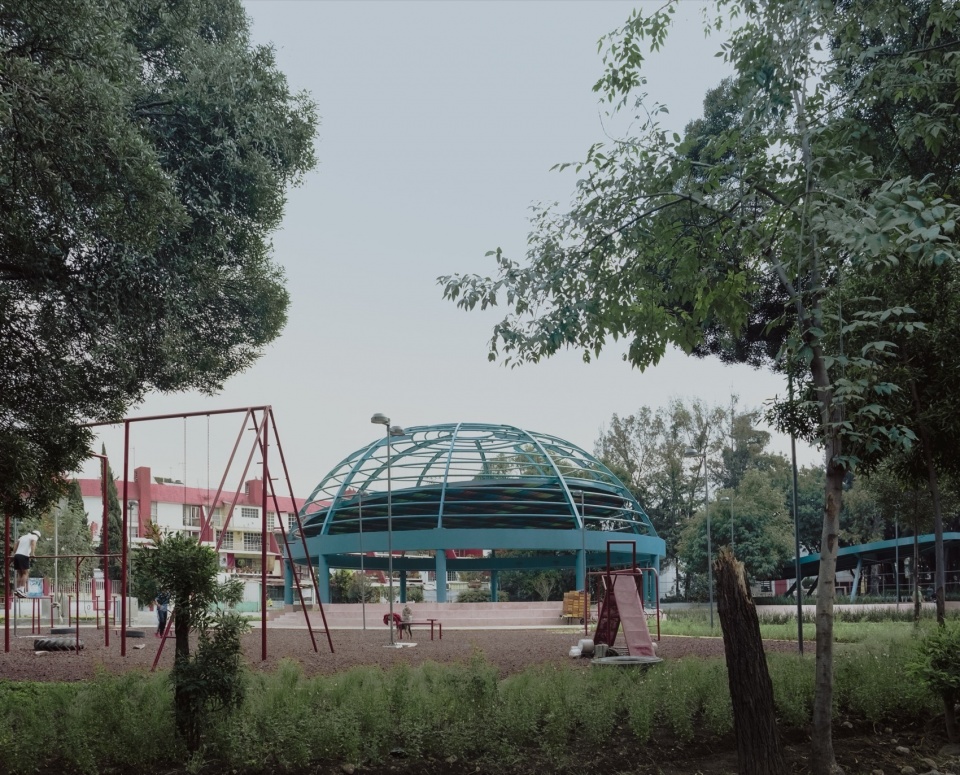
▼彩色的凉亭之下,under the colorful pavilion
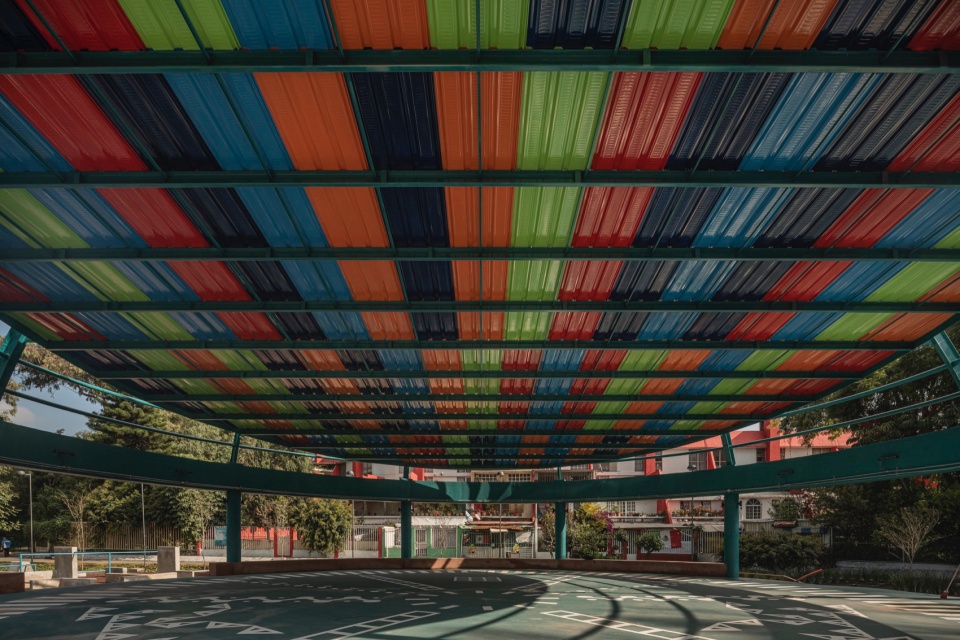
▼活动场景,event scenario
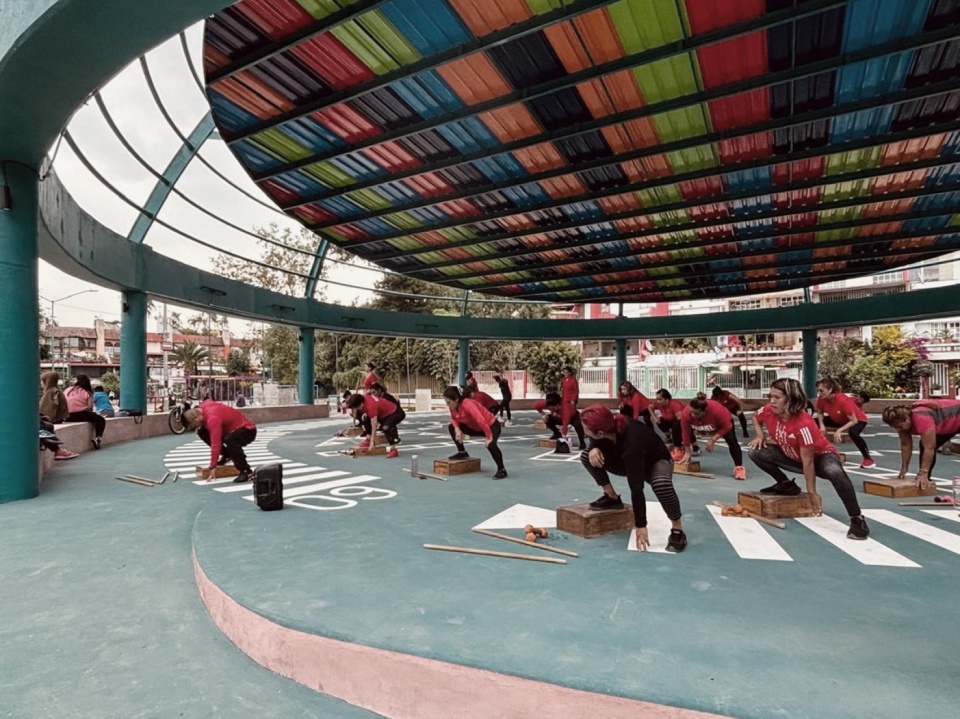
由Andrea López和Agustín Pereyra(AMASA Estudio)主导的项目,专注于在墨西哥城四个最具代表性的INFONAVIT住宅综合体(伊斯塔卡尔科Iztacalco、圣塔菲Santa Fe、库尔瓦坎Culhuacán El Rosario和伊格纳西奥·查韦斯Ignacio Chávez)的公共空间内实施全面改善策略。鉴于时间和预算的限制,这四个初步设计在获得INFONAVIT举办的竞赛奖项后,仅用不到两个月就完成。评审标准不仅考虑设计的质量,还关注其可行性、管理方式及成本效益。
The project, developed by Andrea López and Agustín Pereyra (AMASA Estudio), focused on a comprehensive improvement strategy implemented within the communal areas of four of INFONAVIT’s most representative housing complexes in Mexico City: Iztacalco, Santa Fe, Culhuacán El Rosario, and Ignacio Chávez. Given time and budget constraints, the four preliminary designs were developed in less than two months after being awarded through a competition organized by INFONAVIT. The evaluation criteria considered not only the design of the interventions but also their feasibility, management, and cost-efficiency.
▼半球形凉亭结构,hemispherical pavilion structure
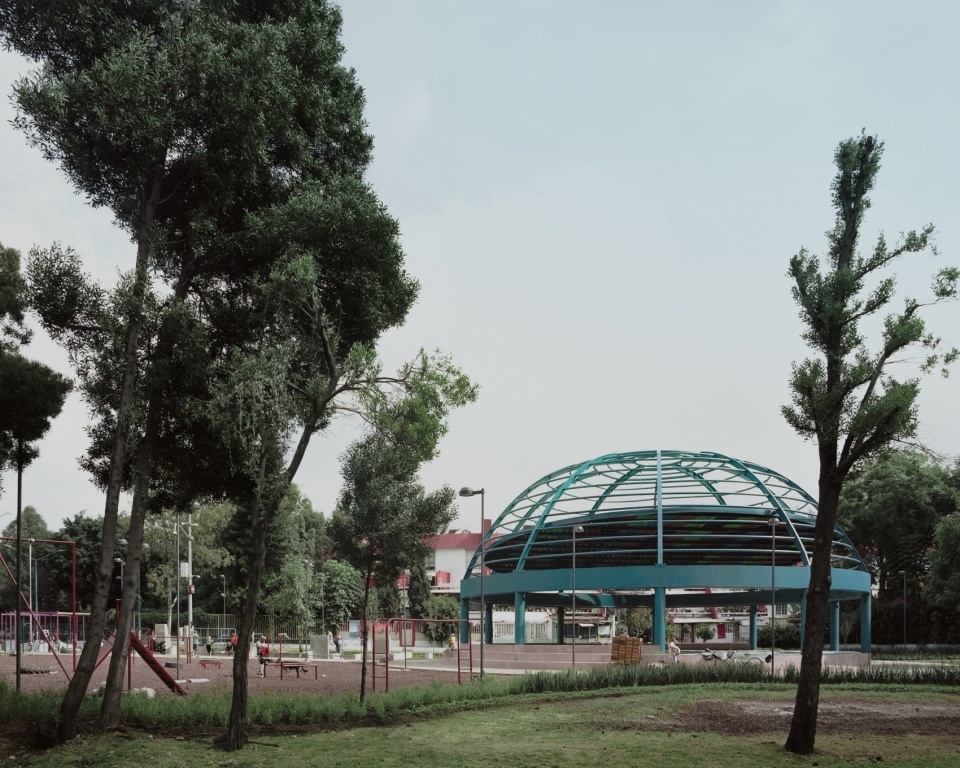
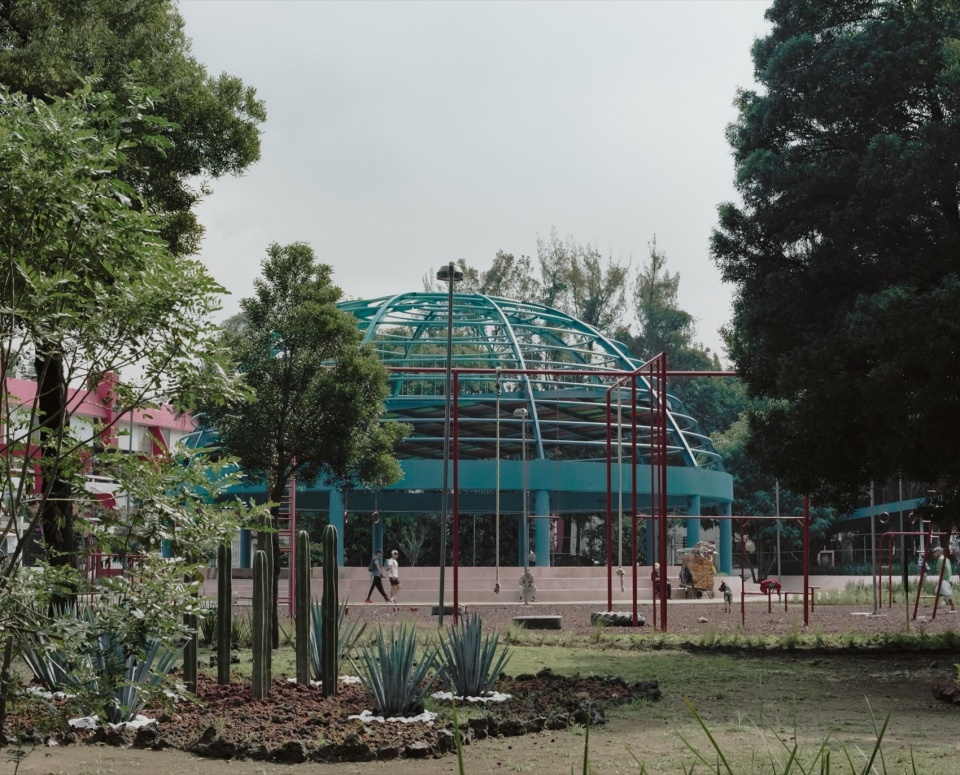
▼半球形凉亭结构近景,closer view of the hemispherical pavilion structure
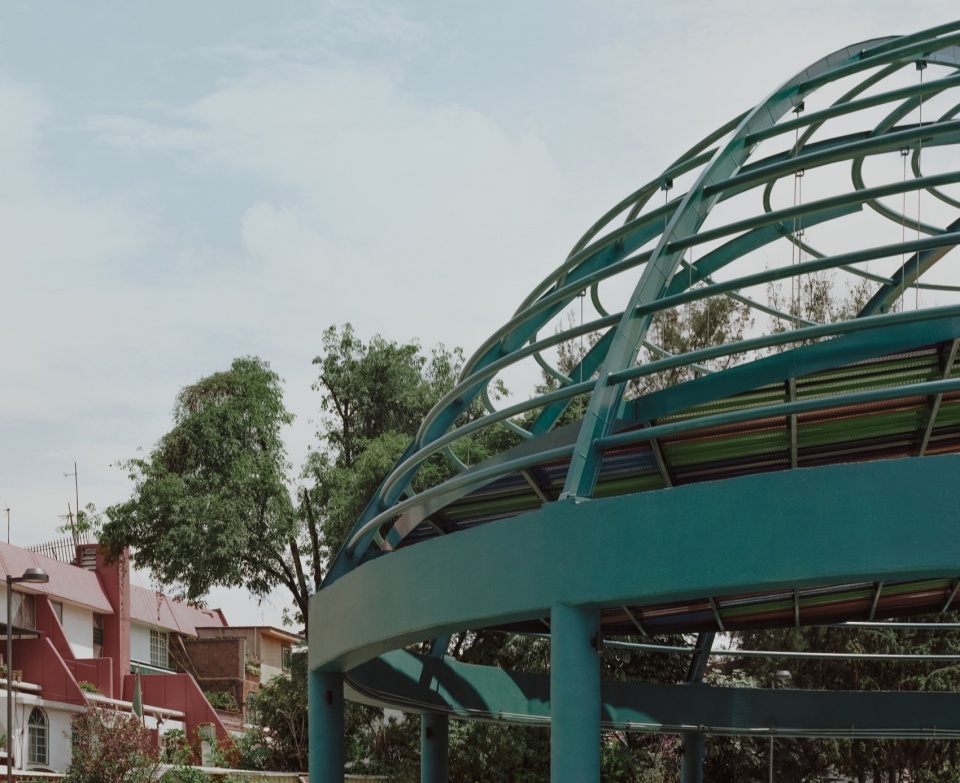
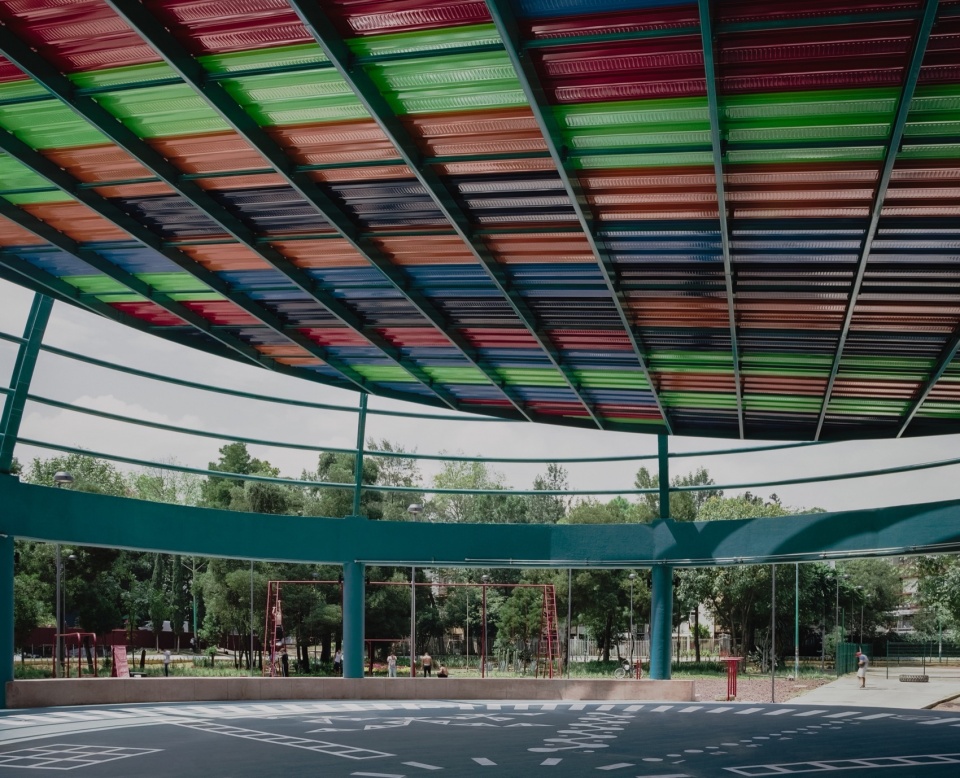
AMASA Estudio项目的成功主要归功于两个关键方面。首先,团队进行了深入的场地分析,基于具体情况制定了四个量身定制的社区改善方案,同时在有限预算内高效运作。其次,该项目的管理模式尤为出色,需要AMASA Estudio与施工方、项目管理团队之间的紧密协作。这种协调成功吸引了多个政府机构的参与,包括INFONAVIT、社会检察院(Procuraduría Social)、地方政府,以及最重要的居民委员会。居民委员会通过社区参与过程积极介入,确保干预措施具有广泛的参与度、有效性和可复制性。
The success of AMASA Estudio’s work lies in two key aspects. First, the strategy involved an in-depth site analysis, leading to the development of four tailored neighborhood improvement projects, each responding to its specific conditions while working within limited budgets. Second, the project’s management was particularly noteworthy, requiring collaboration between AMASA Estudio, the construction firm, and the project management team. This coordination successfully engaged multiple government agencies—including INFONAVIT, the Social Prosecutor’s Office (Procuraduría Social), local governments, and, most importantly, the residents’ committees. These committees were actively involved through neighborhood engagement processes, ensuring that the interventions were participatory, effective, and replicable.
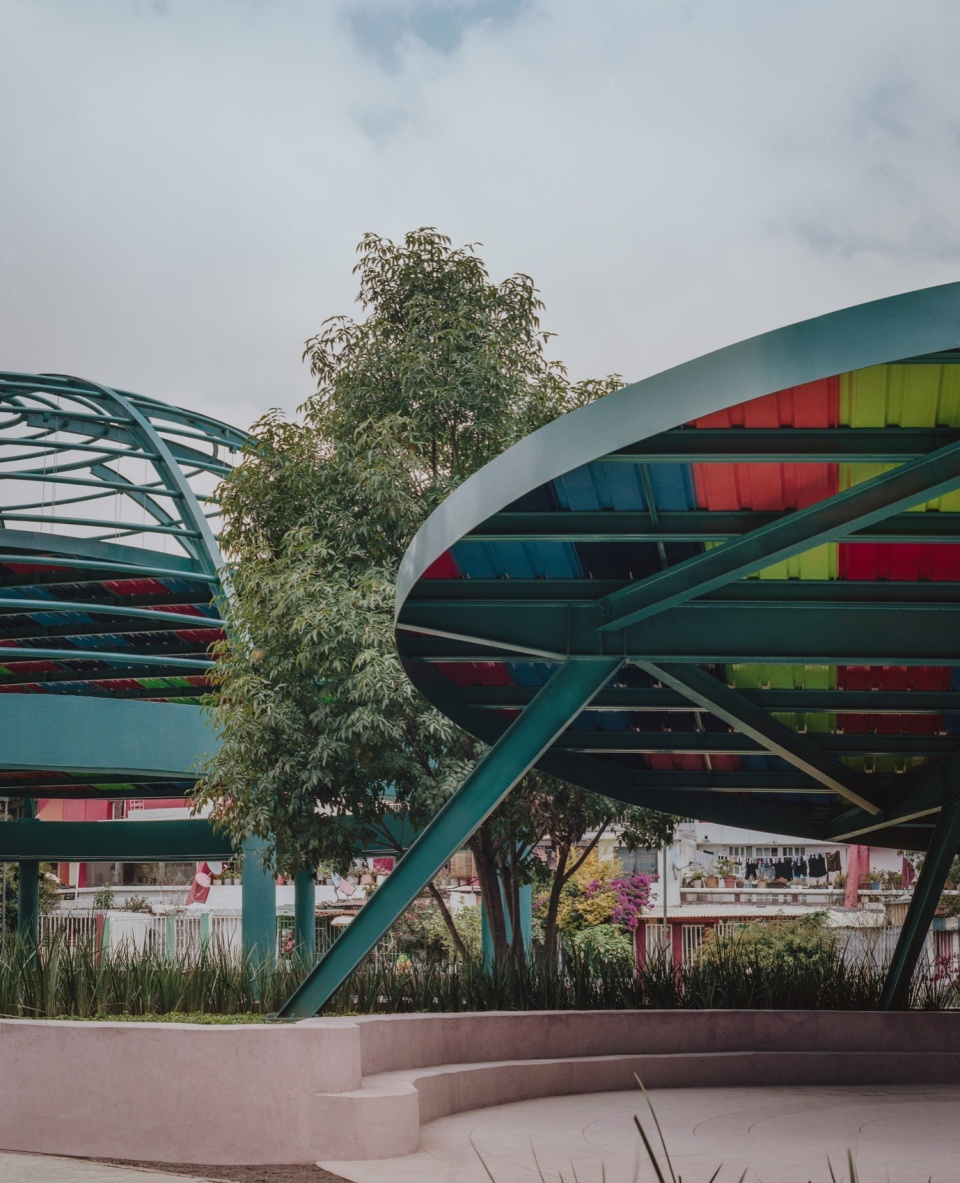
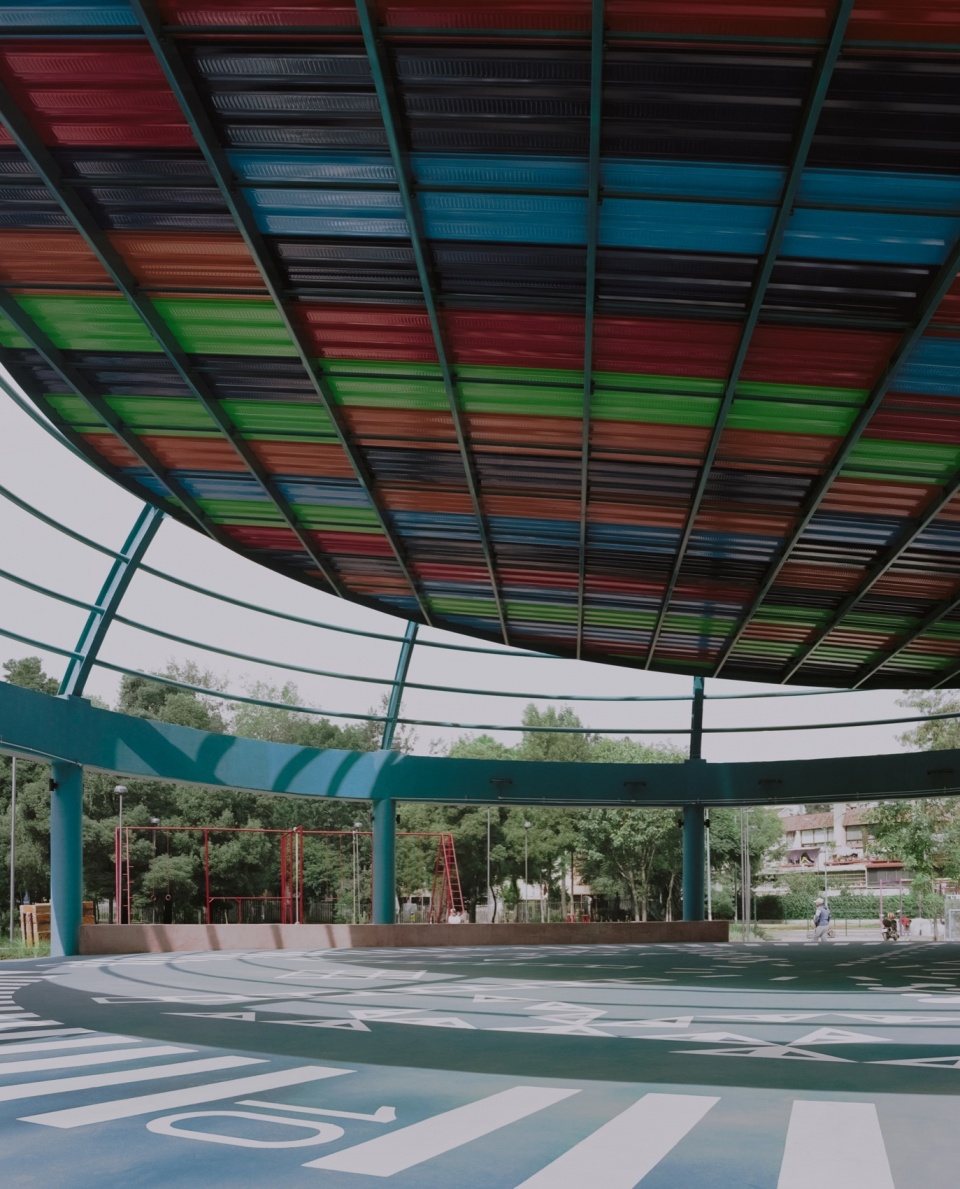
▼青绿色的钢结构与彩色屋顶,turquoise steel structure and colorful roof
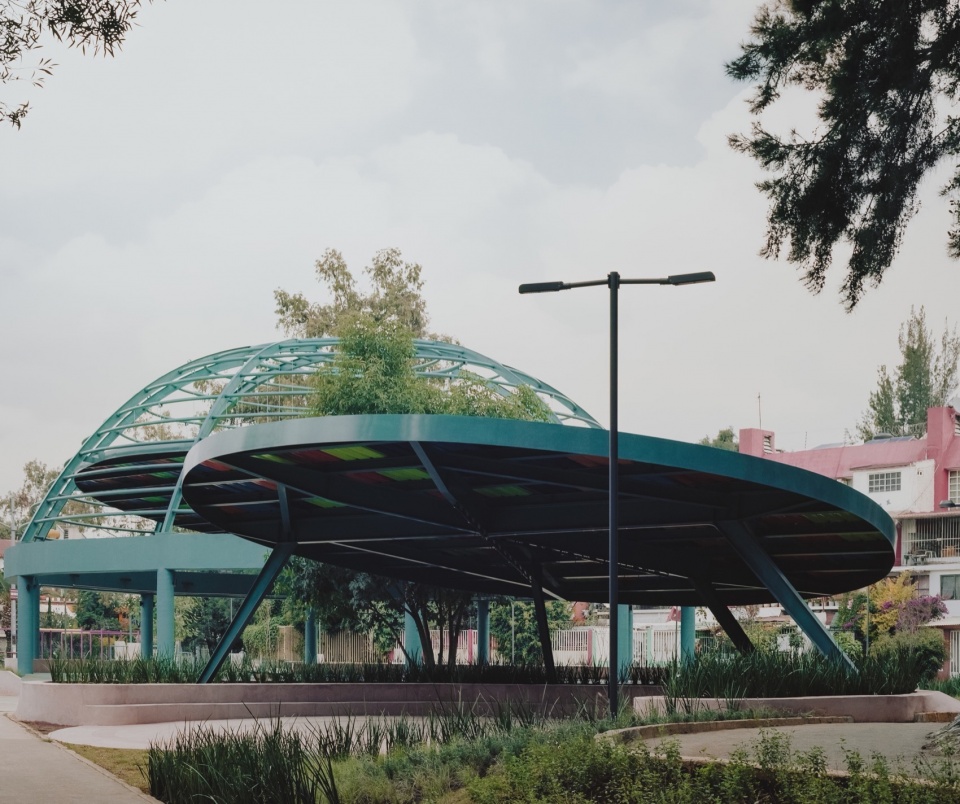
该项目面临的最大挑战之一,是在公共空间内进行施工——这些空间在功能上属于公共场所,但在法律上却是私人财产。这种“无主地带”状况,即土地所有权与监管框架的交汇,使得干预措施的成功与否极大地取决于如何应对这些复杂性。
One of the greatest challenges of these projects was navigating the complexities of working within communal spaces—areas that function as public spaces but are legally private property. This “no man’s land” scenario, where land tenure and regulatory frameworks intersect, played a crucial role in determining the success of the interventions.
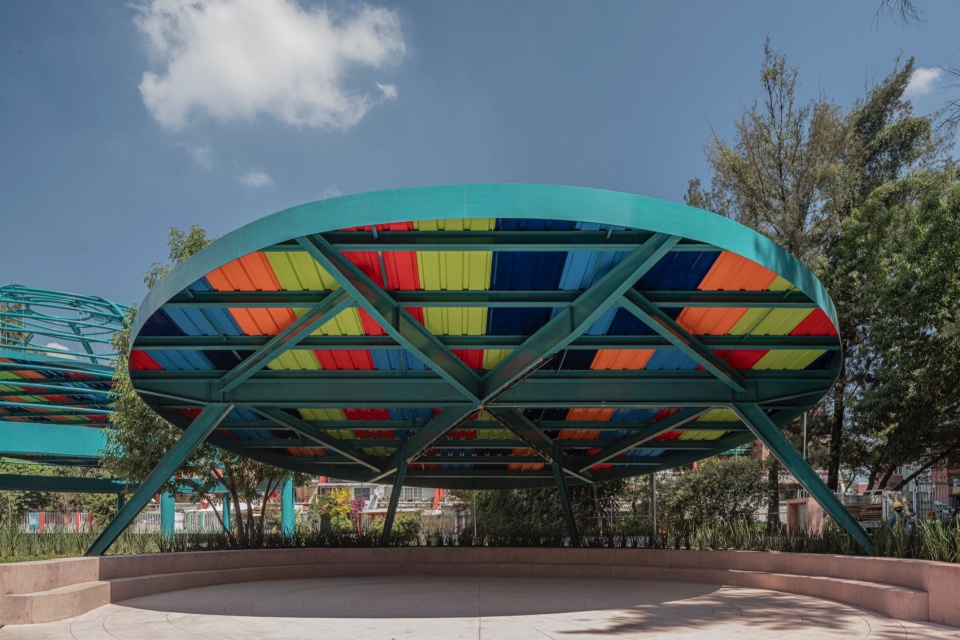
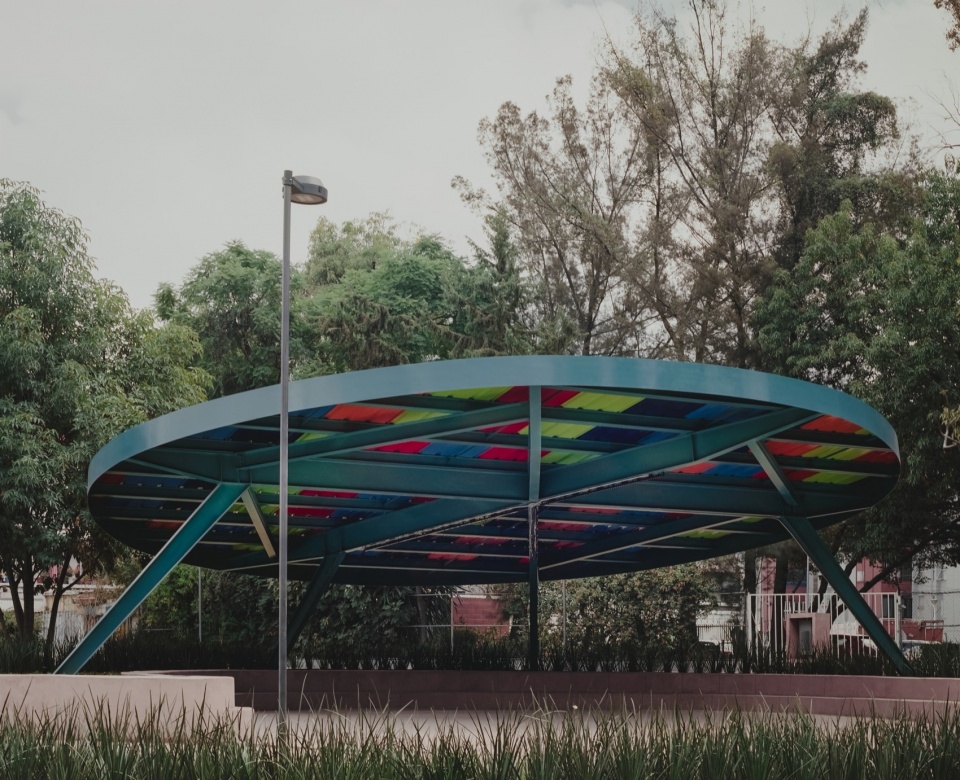
▼260平方米的遮蔽活动广场,260 square meters of sheltered event square
UH INFONAVIT Iztacalco住宅综合体UH INFONAVIT Iztacalco
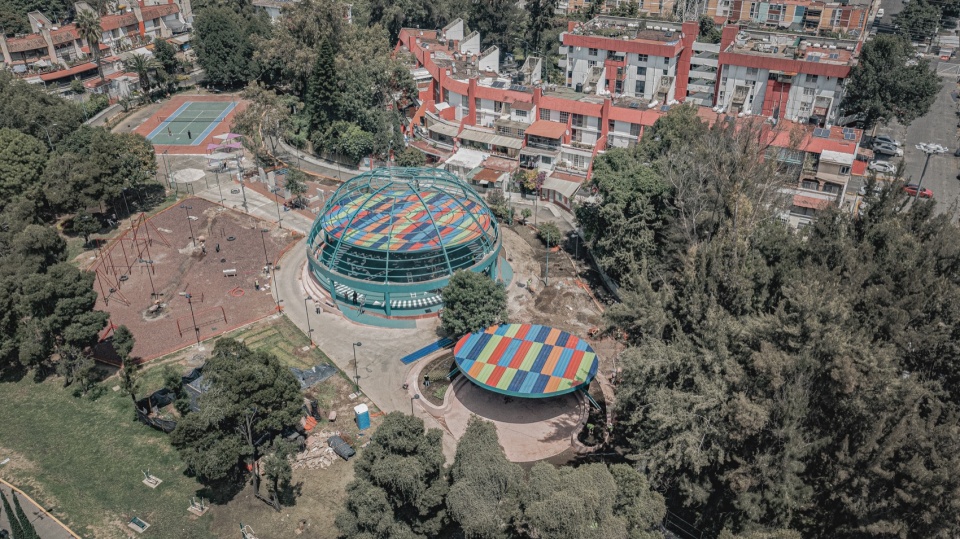
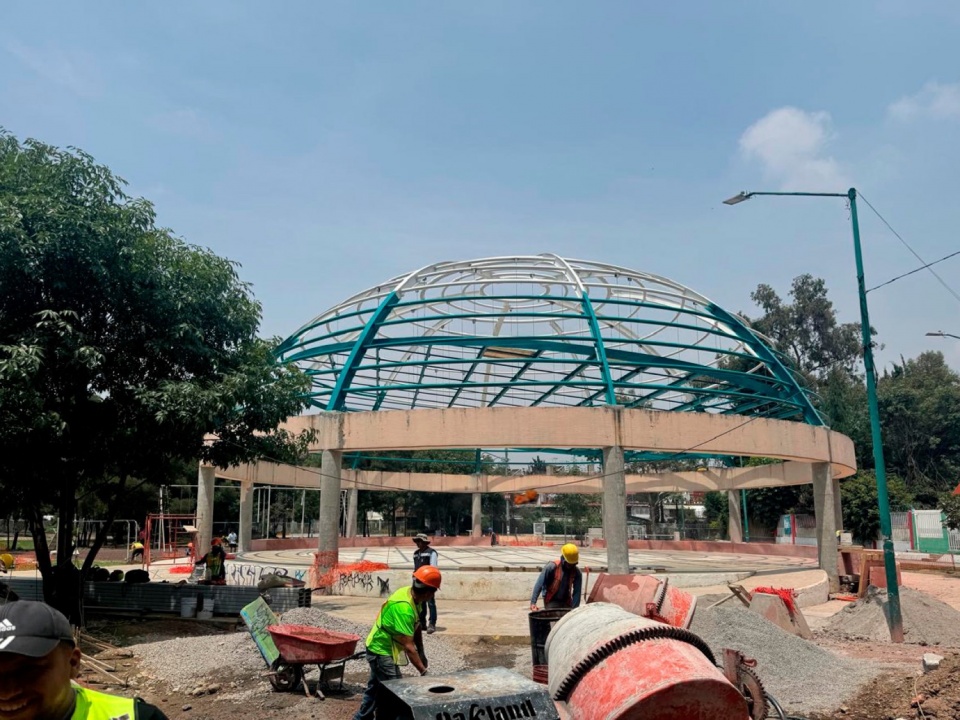
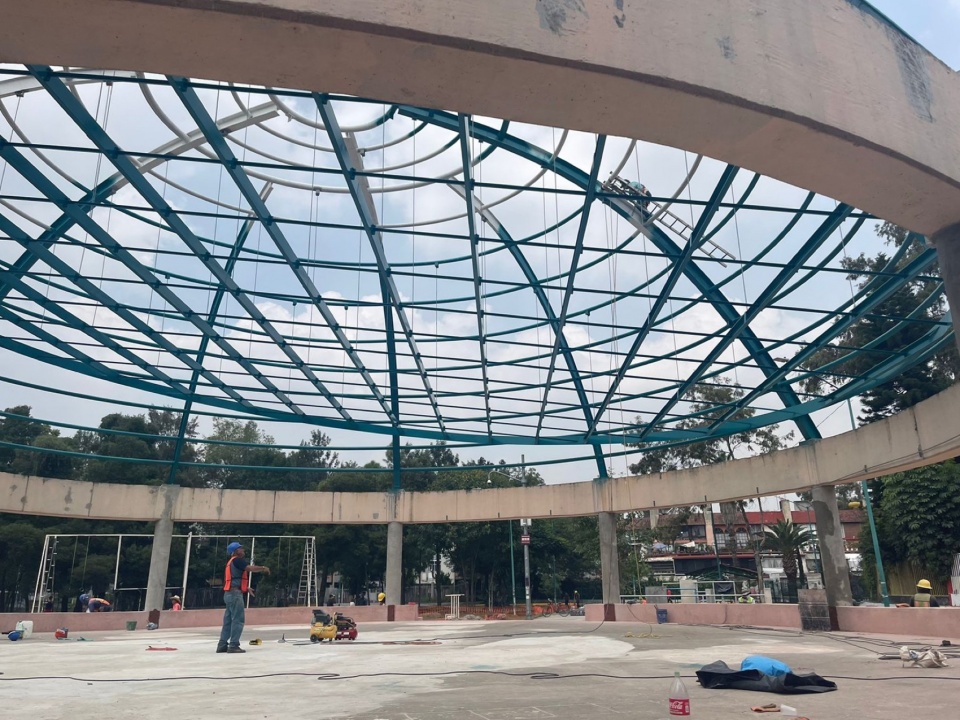
UH INFONAVIT Iztacalco住宅综合体是该机构于1972年建造的首个住房项目,位于墨西哥城东部的伊斯塔卡尔科(Iztacalco),该地区已有700年历史。最初,该住宅围绕一座人工湖展开,但1979年地震导致土壤裂缝破坏了湖泊,最终被排干。25年后,市政府在原址上改造建成了“Parque del Lago”公园,其中包括一个由混凝土柱支撑的半球形钢结构,跨度约500平方米。然而,由于施工质量问题,该结构的不规则几何形态导致部分区域存在结构安全隐患,最终未能完工。随着时间推移,该场地被废弃,混凝土平台和裸露的钢架在风雨侵蚀下 deteriorated,荒废了20多年。
The UH INFONAVIT Iztacalco Complex was the first housing development built by the institute in 1972. Located in Iztacalco, in the eastern sector of Mexico City—an area that celebrates 700 years since its founding—it originally centered around an artificial lake. However, after the 1979 earthquake, soil fissures compromised the lake, leading to its drainage. Twenty-five years later, the city government transformed the site into what is now “Parque del Lago”, featuring a central structure composed of concrete columns supporting a semi-spherical steel framework spanning approximately 500 m². Due to construction deficiencies, the irregular geometry of the structure resulted in sections that compromised its structural integrity, leaving the dome incomplete. Over time, the site was abandoned, and both the concrete platform and the exposed steel framework deteriorated under the elements for two decades.
▼公共空间,public space
▼凉亭结构,pavilion structure
▼顶视图,top view
▼结构细部,details of the structure
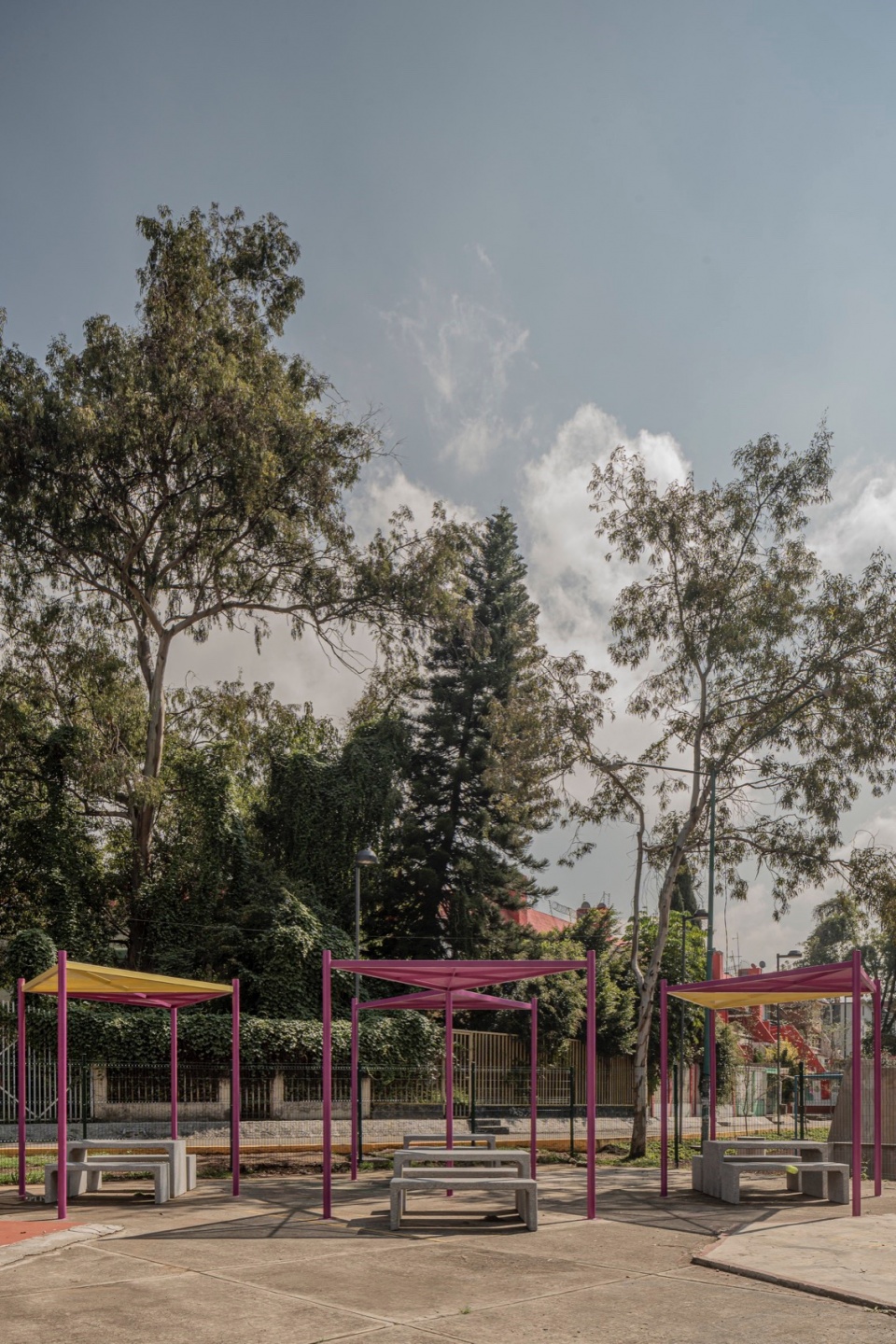
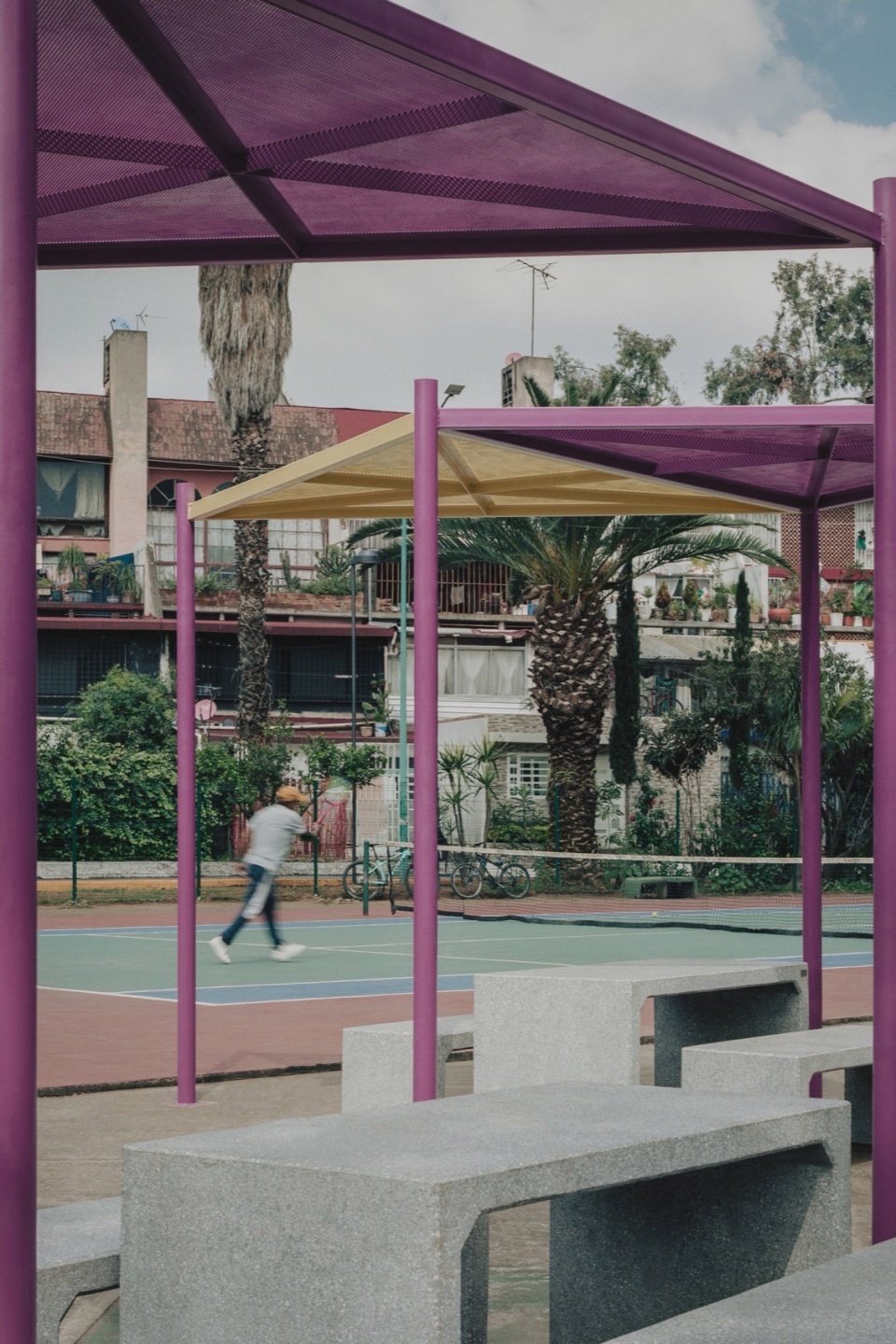
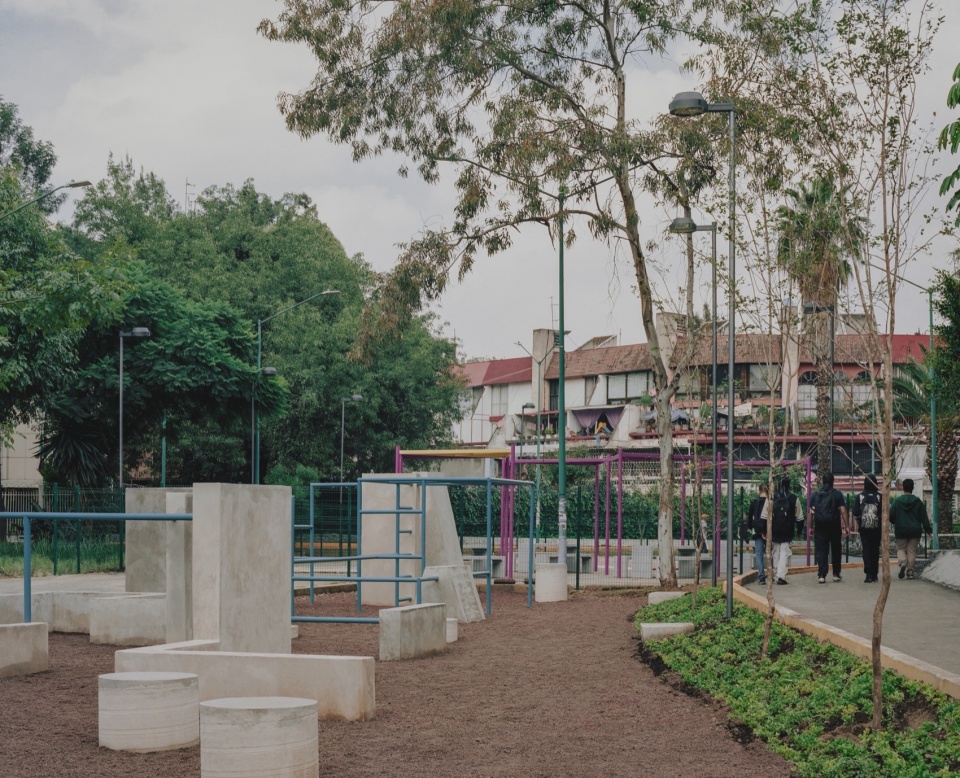
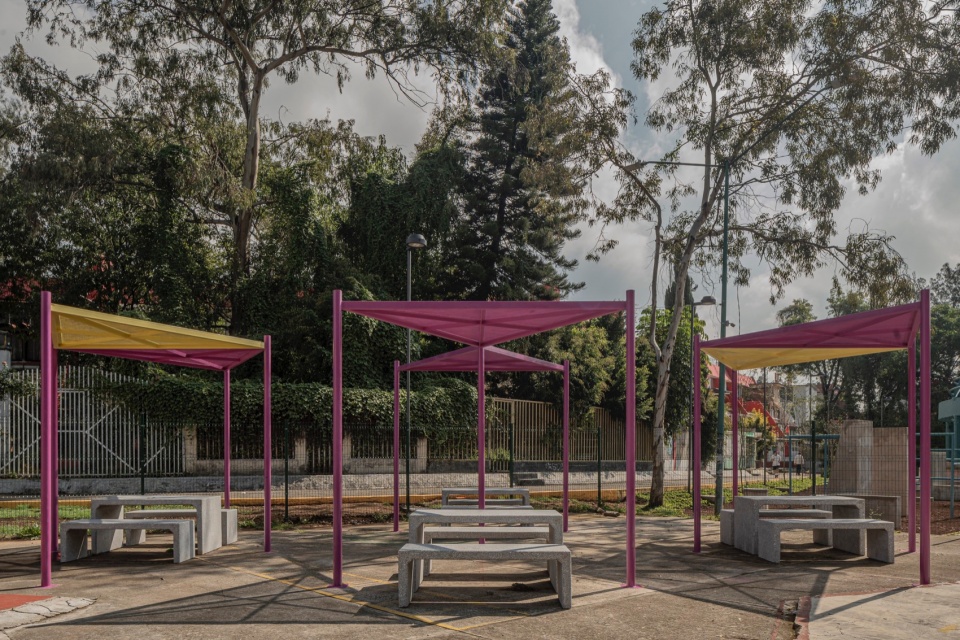
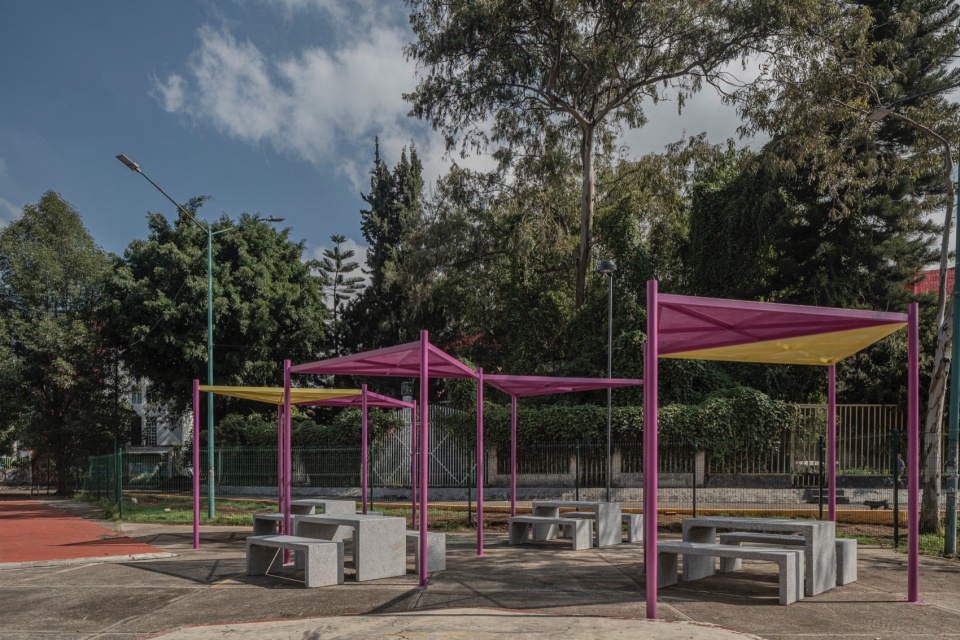
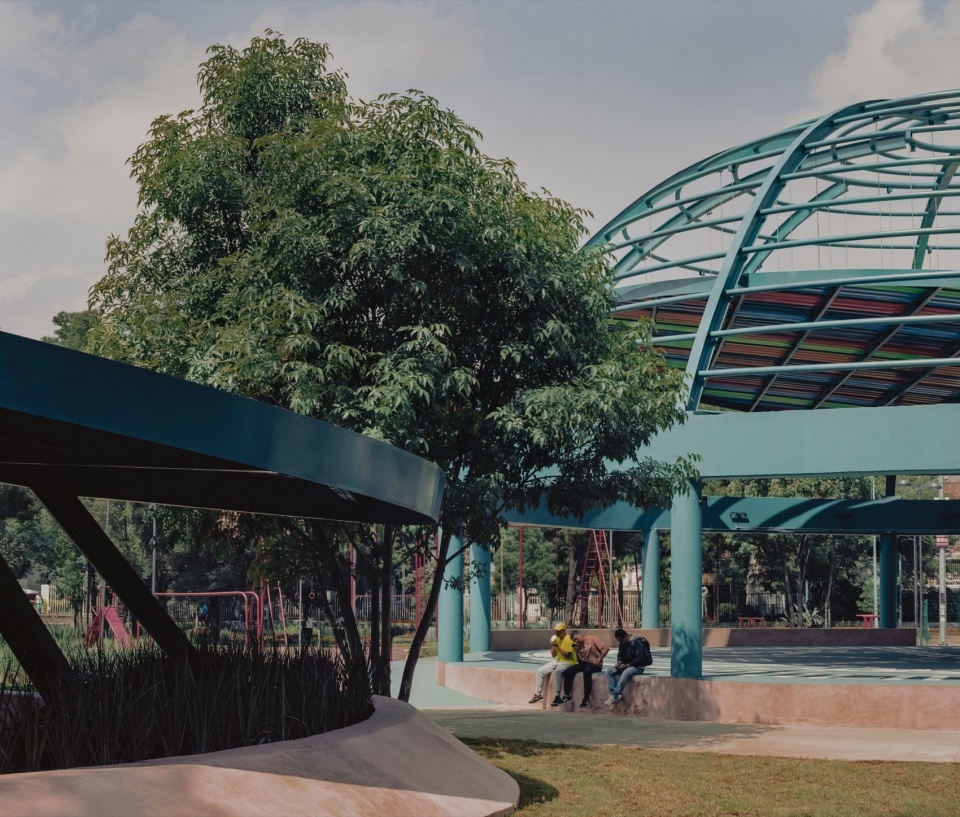
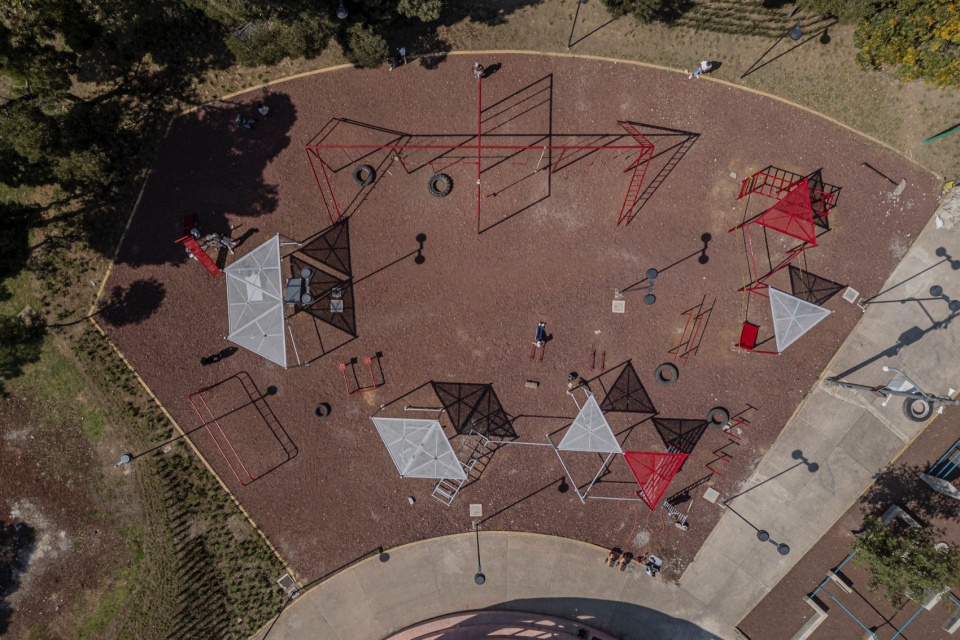
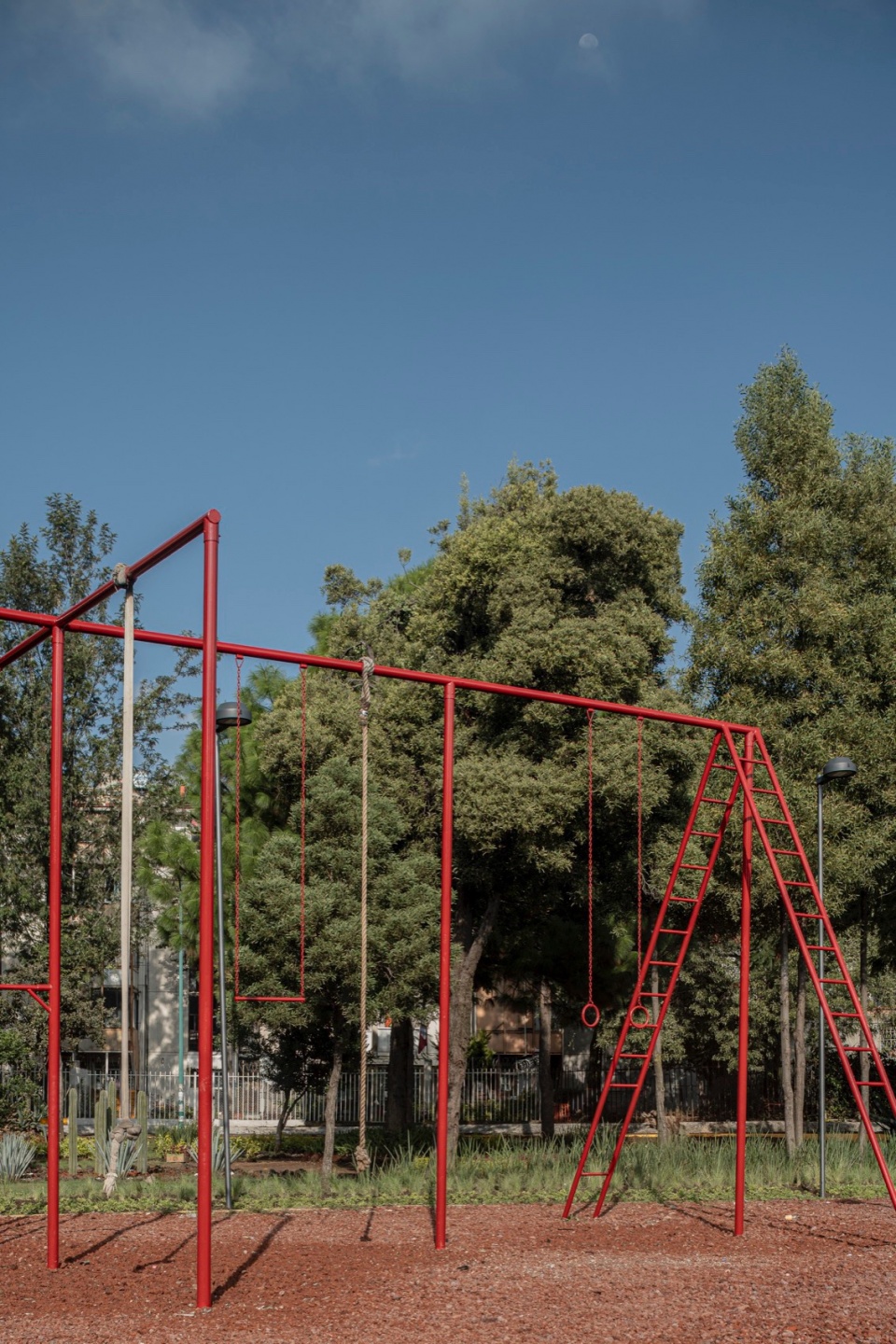
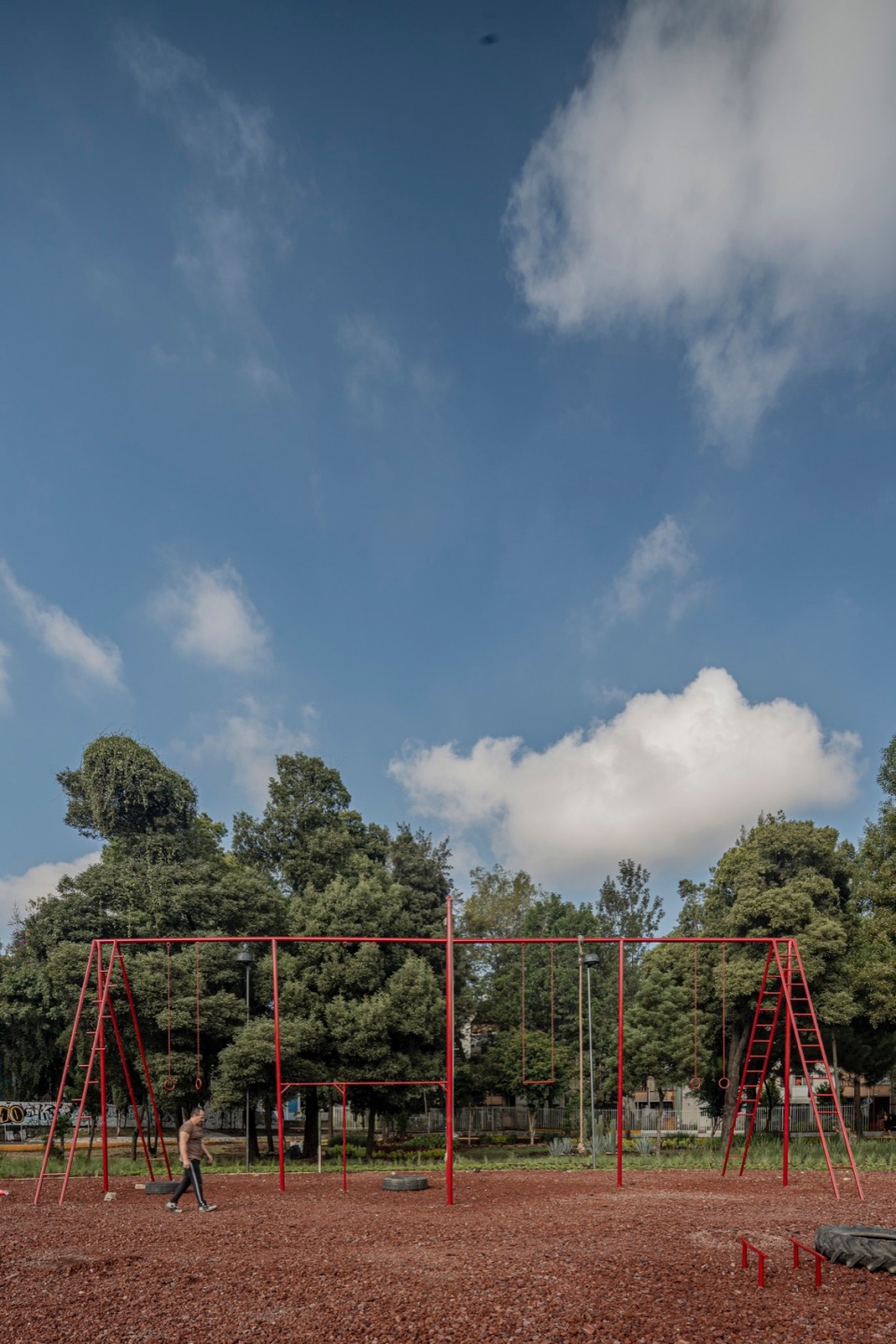
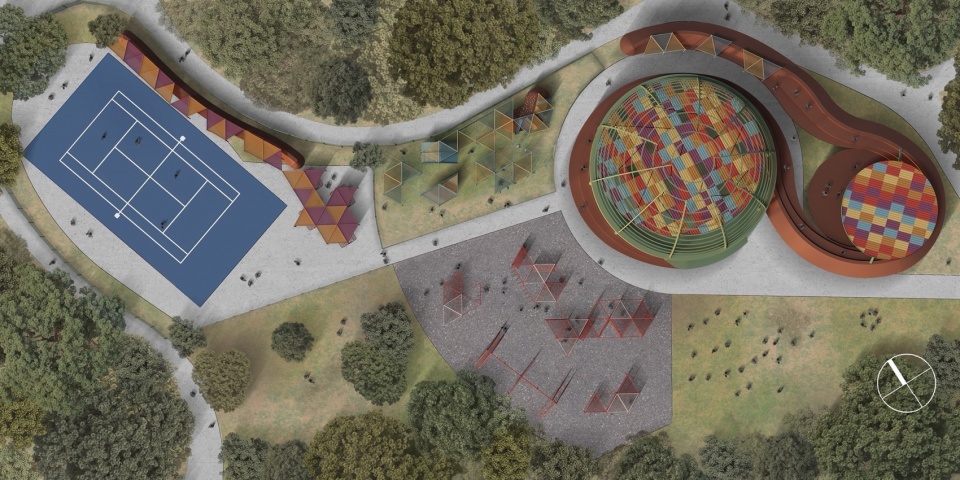
2024年,INFONAVIT发起了一项公开竞赛,征集关于该住宅综合体中心公共空间的设计、管理及改造方案。其中最具挑战性的要求之一,是为半球形结构增设围护系统,以提供遮阳避雨功能。AMASA Estudio团队赢得竞赛后,启动了一个复杂的协调过程,涉及多个政府机构的合作。最终,该项目投入约800万比索,并在四个月内完成施工,展现了极高的资源管理效率。如今,这座半球形结构已具备实用的屋顶,并且伊斯塔卡尔科住宅综合体的核心区域也通过景观、色彩及材料等干预措施焕然一新。新的公共空间包括一个260平方米的遮蔽活动广场、供社交和休闲的座位区、专门的跑酷训练区域,以及广受欢迎的街头健身区。
In 2024, INFONAVIT launched an open-call competition for a design, management, and intervention proposal aimed at revitalizing the central common area of the housing complex. One of the most challenging requirements was to enclose the semi-sphere to protect the space beneath from sun and rain. Upon winning the competition, the team initiated a complex coordination process involving multiple government agencies. After an investment of approximately eight million pesos and four months of construction—a testament to the project’s efficient resource management—the semi-sphere now has a functional roof. Additionally, the heart of the UH INFONAVIT Iztacalco Complex has been revitalized with landscape, chromatic, and tectonic interventions. The new public space includes a 260 m² covered forum, tables for socializing and relaxation, a designated parkour area, and a popular calisthenics workout zone.
▼改造后的社区公共空间,the community public space after renovation
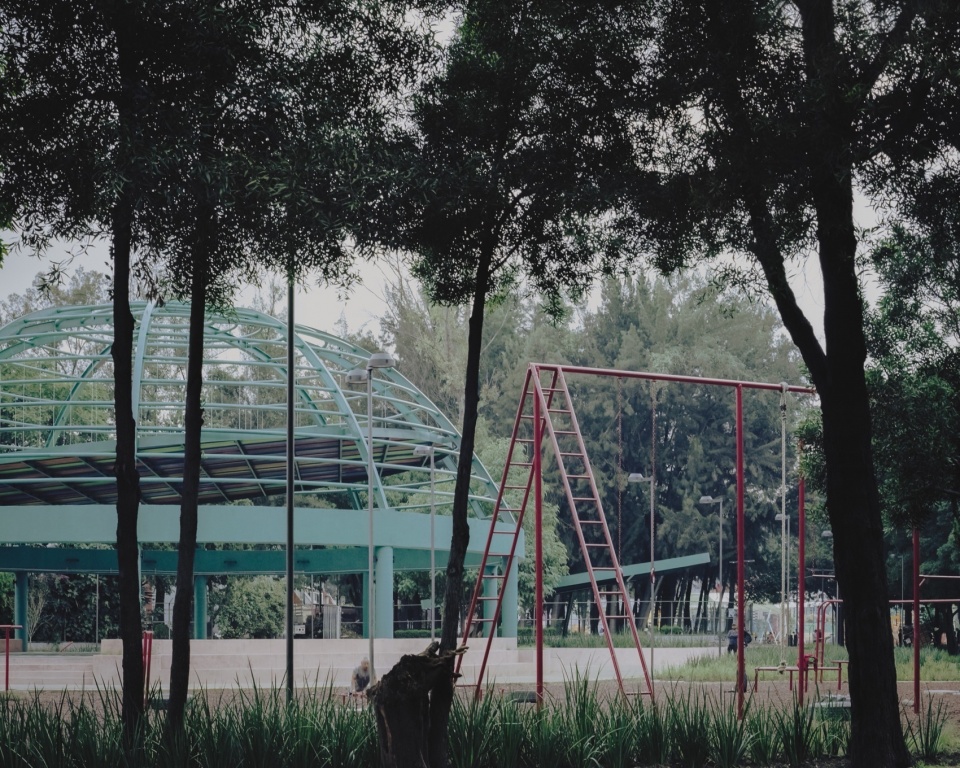
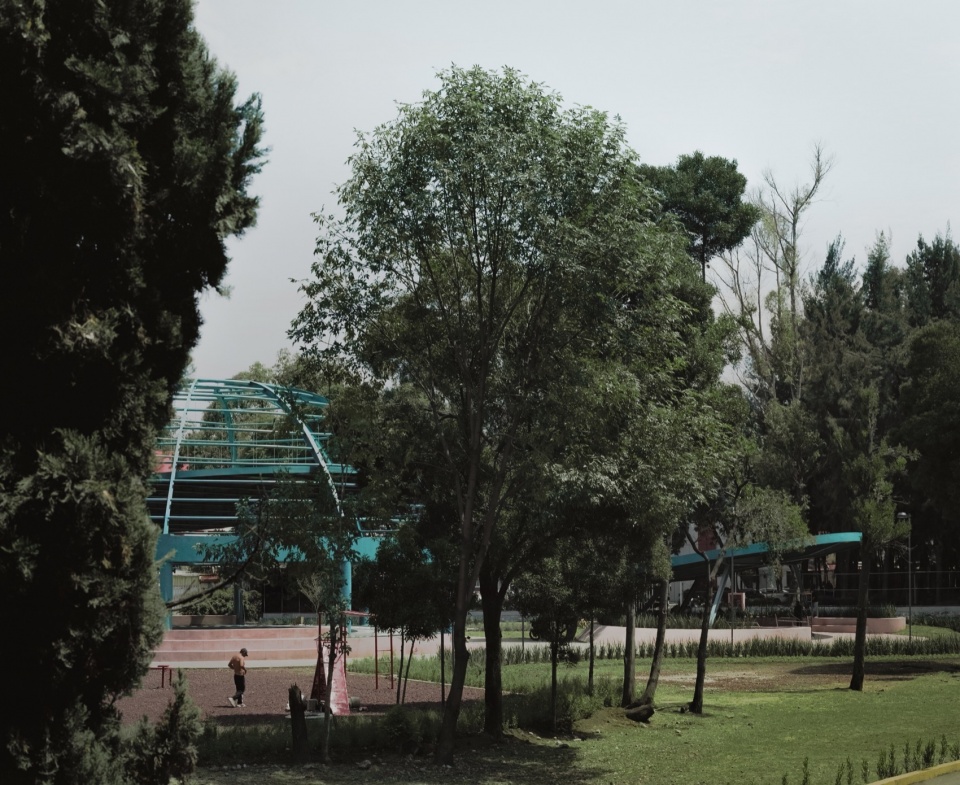
▼近景,closer view
▼日常景象,daily life
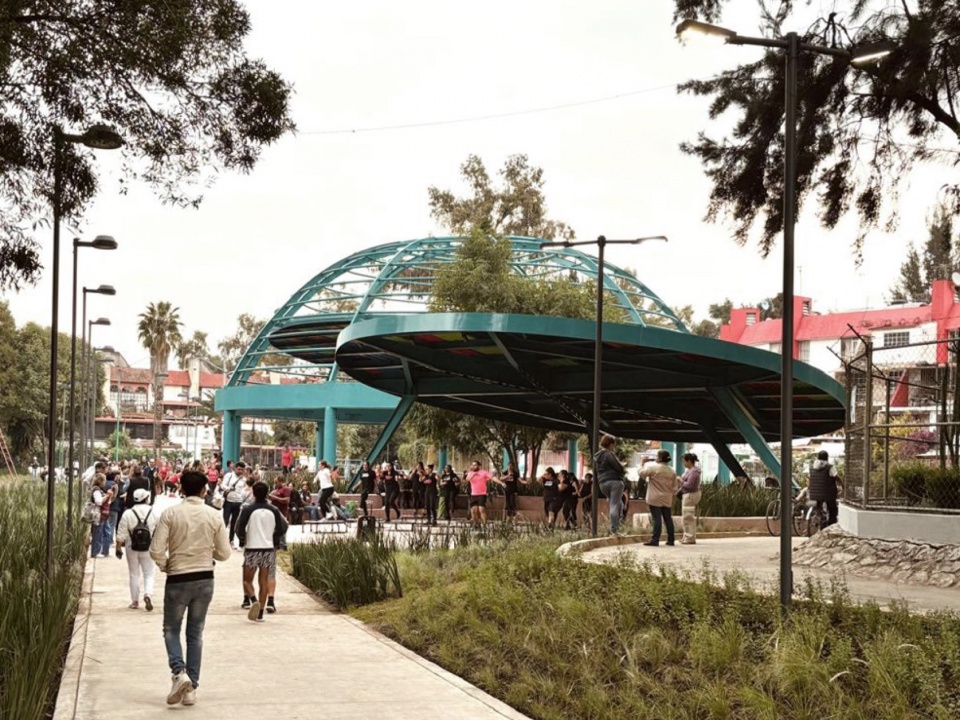
在这些新增功能的核心,12米高的半球形结构成为了全新屋顶系统的焦点,提供更好的遮阳条件,适合社区聚会。此次改造特别强调了色彩的敏感运用,通过鲜艳的色调对比,以打破原先单调的灰色混凝土。新建的广场及加固后的穹顶结构采用了暖色调的色彩混凝土,而青绿色的钢结构则支撑着波纹金属板,形成富有动感的多色饰面。
At the center of these new activities, the 12-meter-high semi-sphere became the focal point for a strategic new roofing system, designed to provide enhanced shade for community gatherings. The intervention also integrates a sensitive approach to color, with vibrant hues contrasting against the previously dominant gray concrete. The new forum and reinforced dome structure feature pigmented concrete in warm tones, while turquoise-green steel structures support corrugated metal panels in a dynamic, polychromatic finish.
▼游戏活动广场,playground
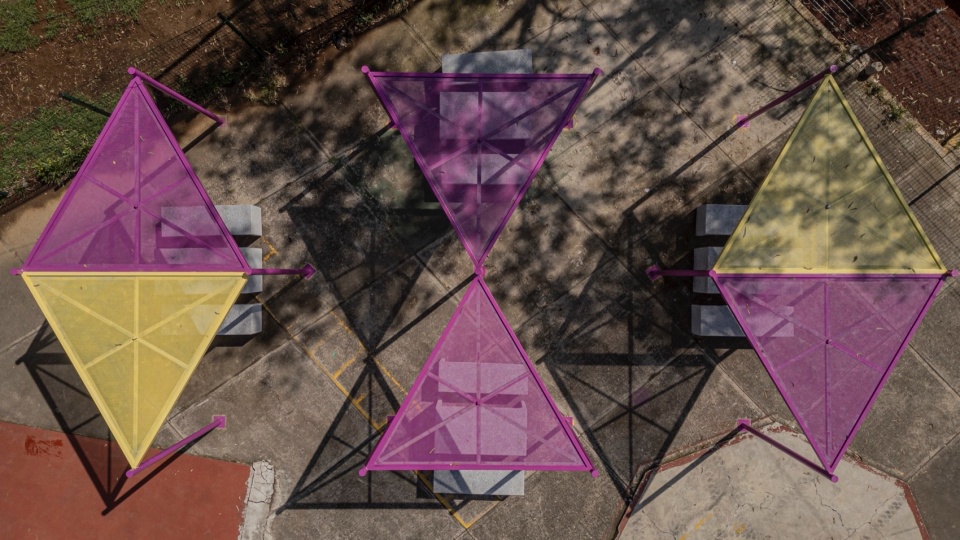
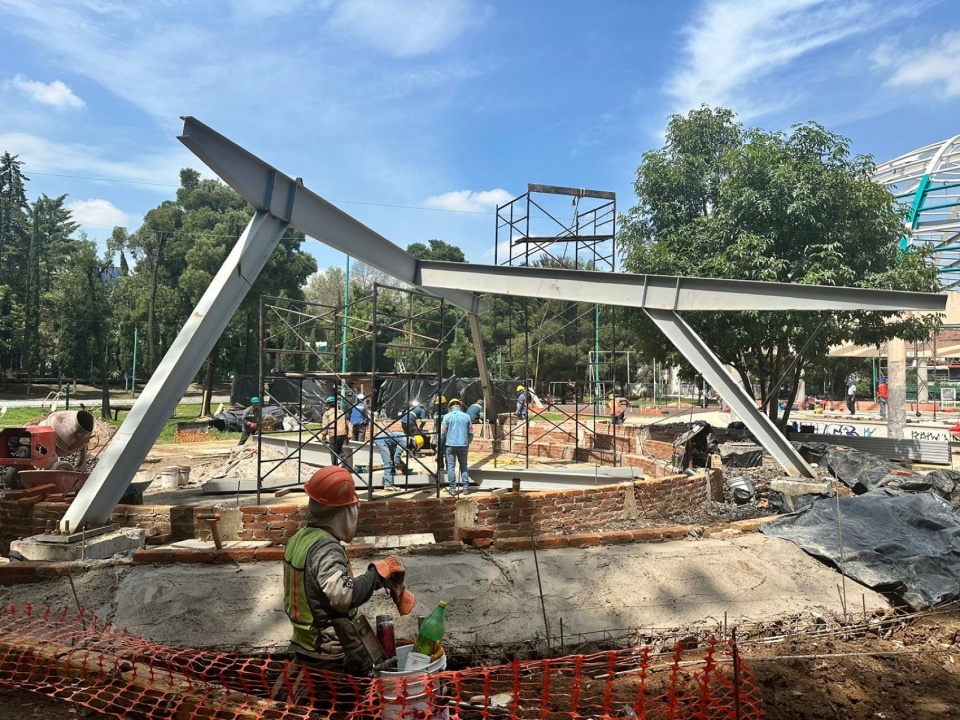
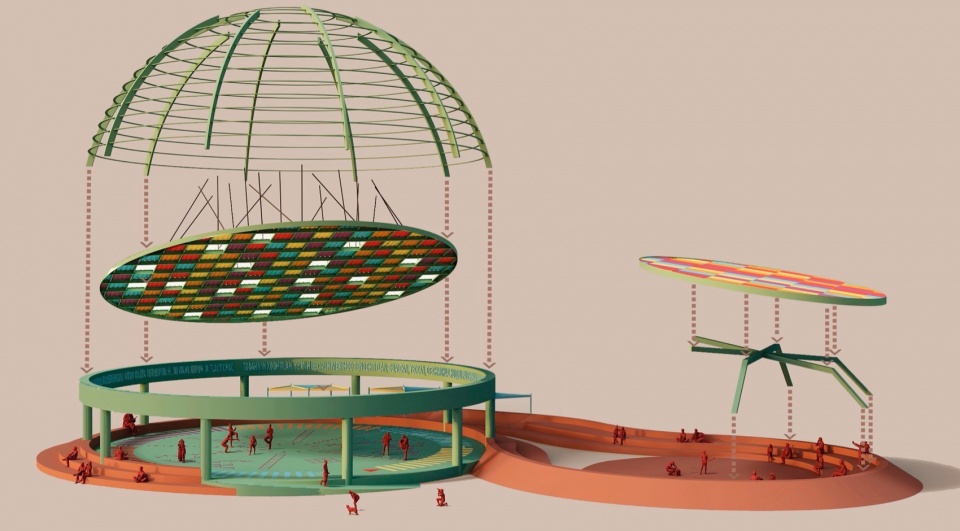
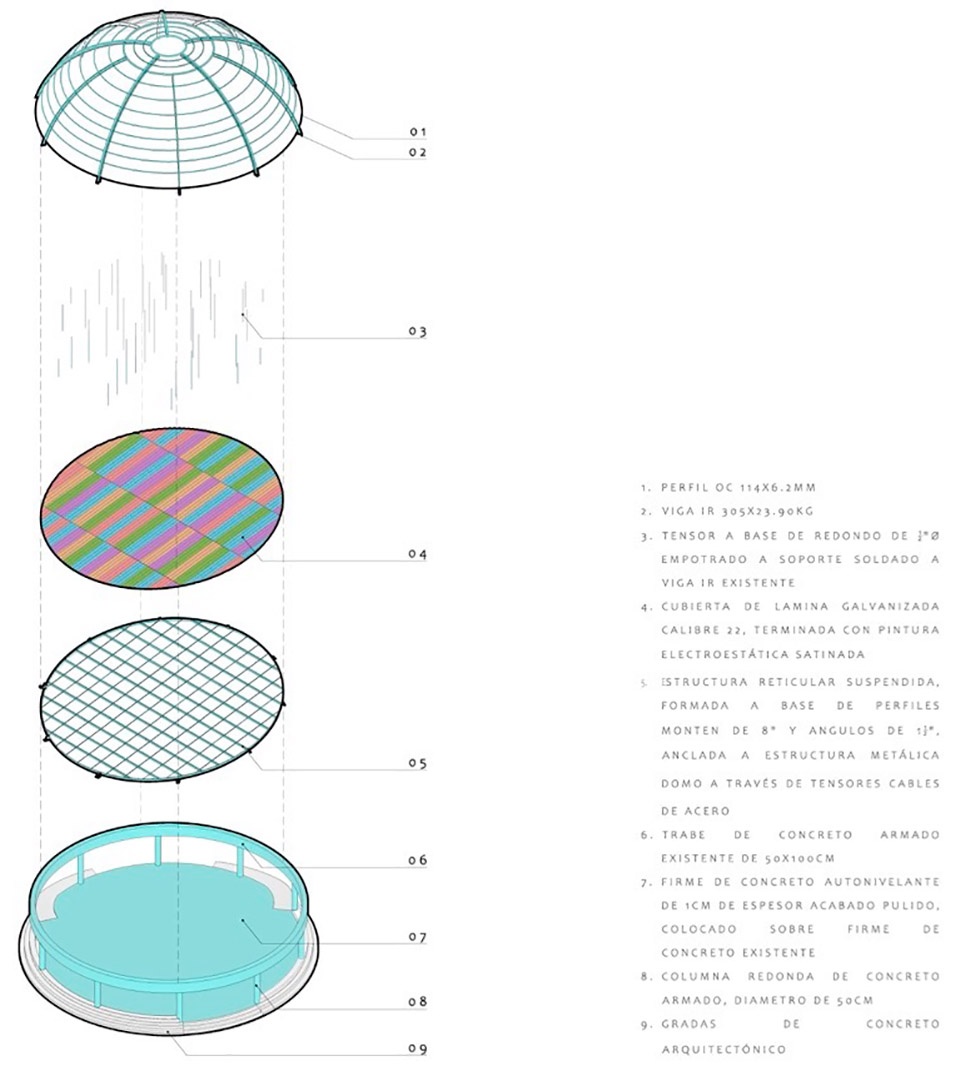
为了满足竞赛要求的遮盖方案,团队在柱基和钢接头处进行结构加固,并设计了一个悬挂式倾斜屋面系统。该屋面由钢网格和轻质金属板构成,并通过钢索拉紧固定。这一解决方案在最小化材料使用的同时,实现了最大的视觉与功能效果,不仅符合INFONAVIT的目标,还提升了场地的建筑特色。
To address the competition’s requirement of covering the semi-sphere, the proposal included structural reinforcements at the column bases and steel joints. A suspended, inclined roof system—formed by a steel grid and lightweight metal sheets—was secured with tensile steel cables. This solution optimized resources by covering the space with minimal material yet maximum impact, successfully meeting INFONAVIT’s objectives while enhancing the site’s architectural character.
▼项目鸟瞰,aerial view of the project
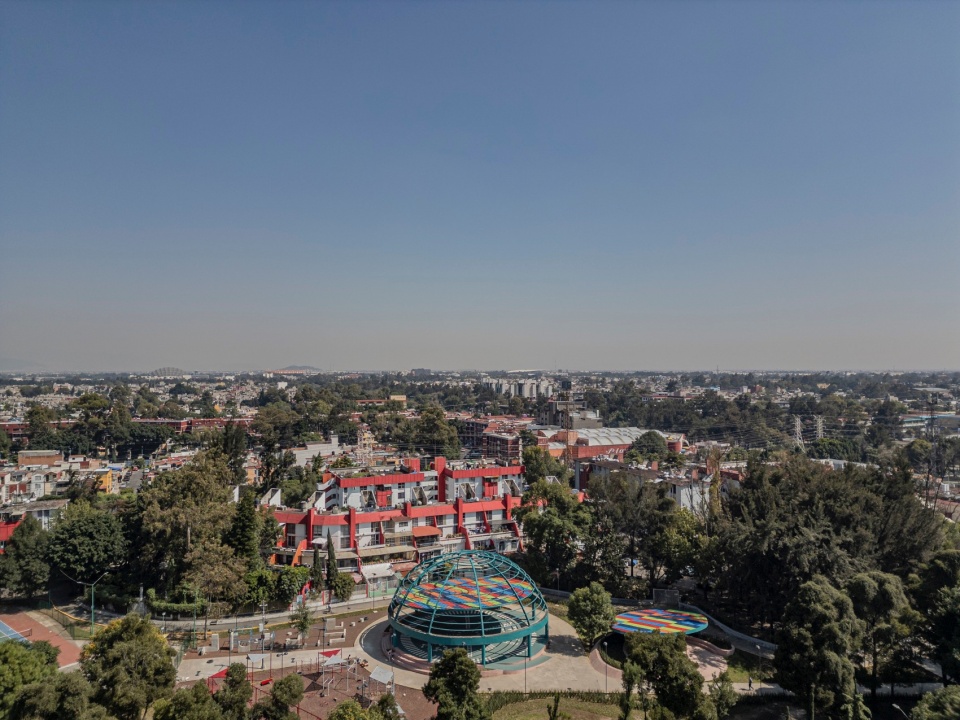
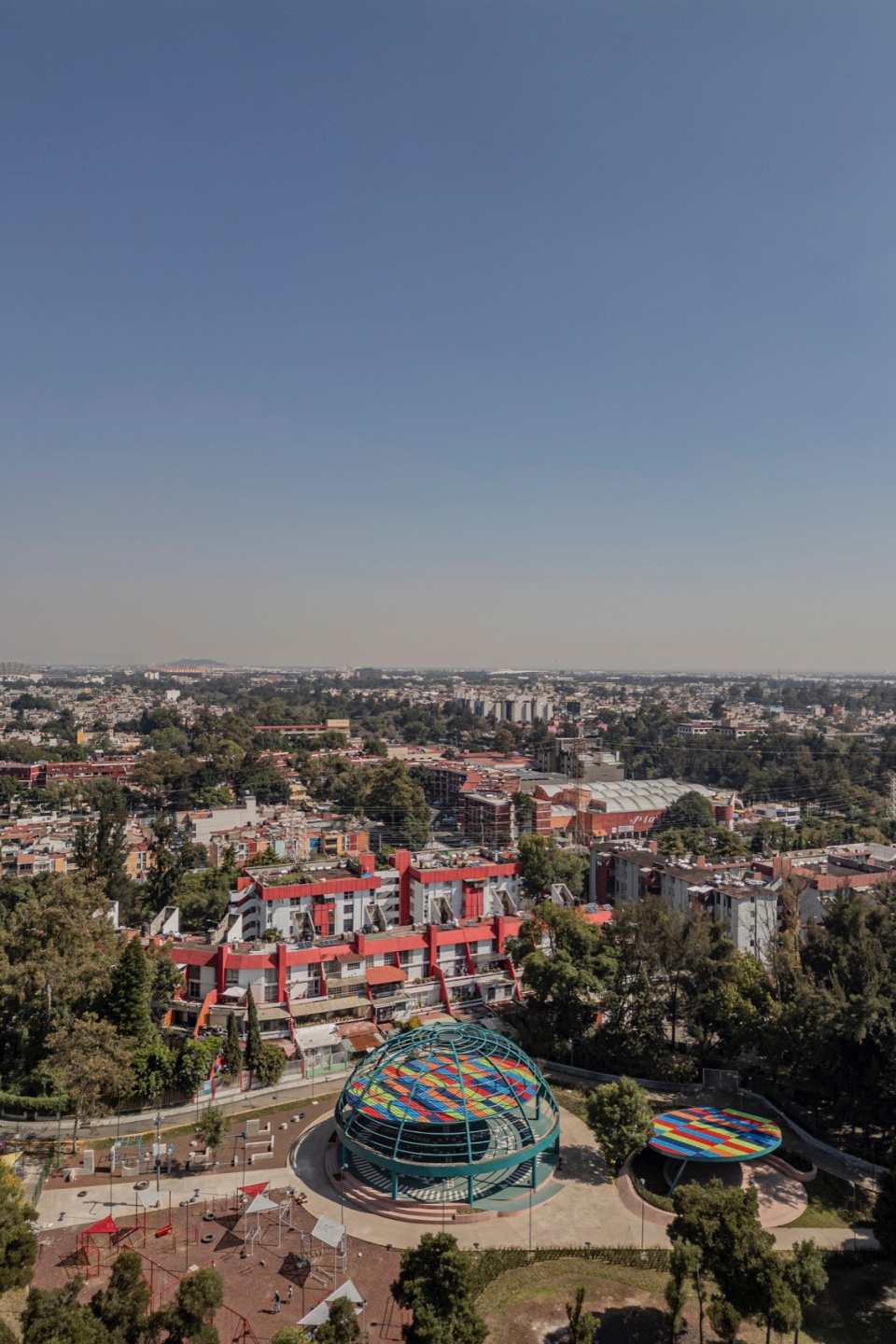
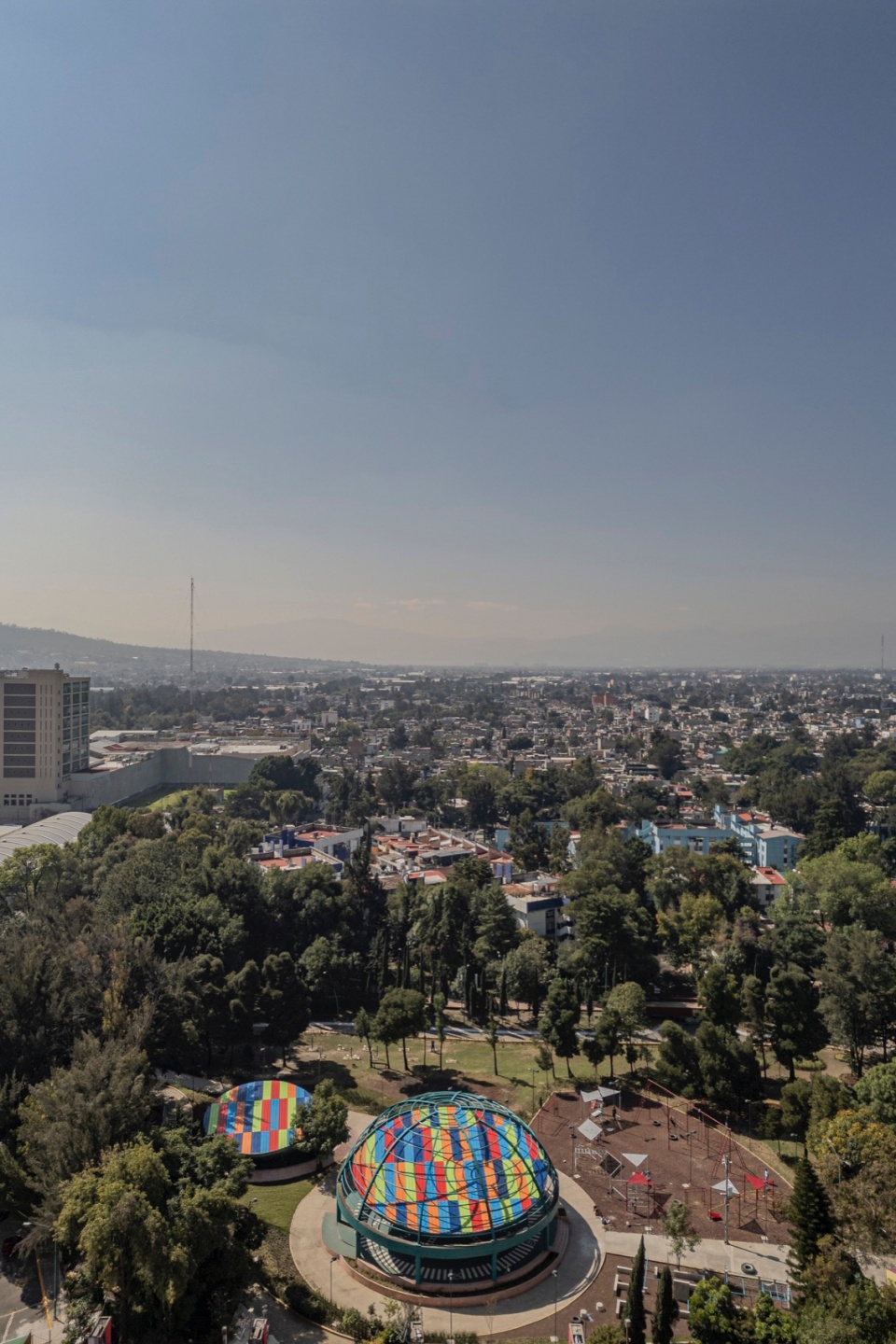
该项目充分展示了公共投资在墨西哥城住宅综合体中的变革潜力。精心设计的干预措施,在资源高效利用与战略规划的基础上,能够重新激活公共空间,使其成为集聚、休闲、学习和社区互动的场所。这些改善为居民提供了锻炼与社交的机会,促进了社区归属感和社会凝聚力。最终,该项目证明了——并不一定需要庞大的预算,最重要的是有一个经过精心规划、精细管理且设计合理的公共投资策略,以此赋予公共空间新的生命,并加强墨西哥城住宅社区的社会纽带。
This project exemplifies the transformative potential of public investment in Mexico City’s housing complexes. Thoughtfully designed interventions, rooted in resource efficiency and strategic planning, can revitalize common areas—turning them into spaces for gathering, recreation, learning, and community engagement. These improvements provide residents with opportunities for exercise and neighborhood interaction, fostering a sense of belonging and social cohesion. Ultimately, this project demonstrates that large budgets are not always necessary—what matters most is a well-planned, well-managed, and well-designed public investment strategy that breathes new life into communal spaces and strengthens the social fabric of Mexico City’s housing communities.
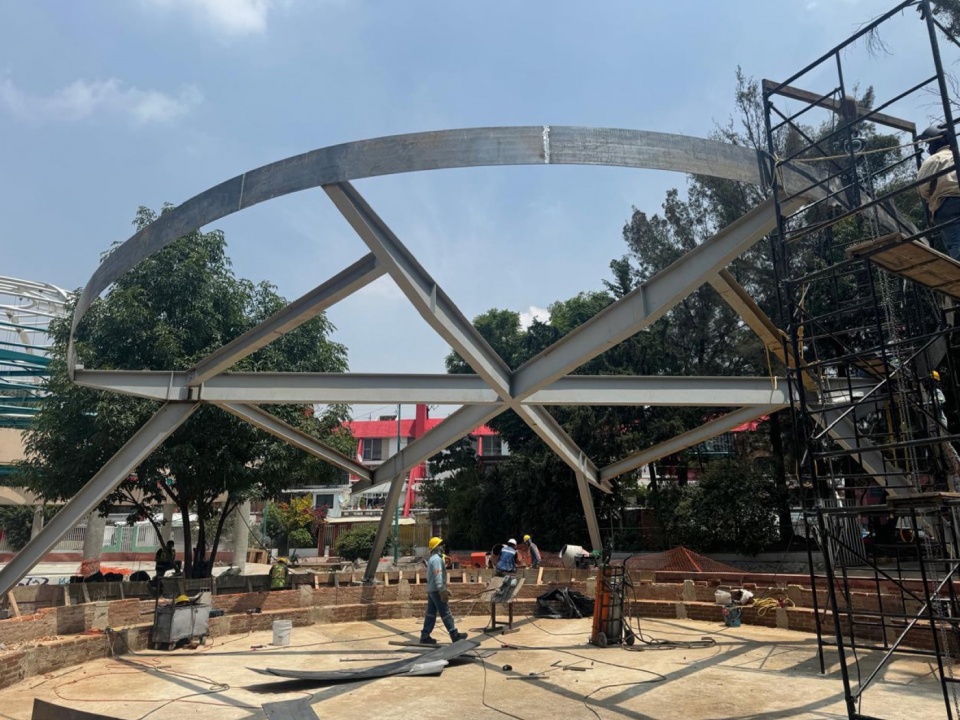
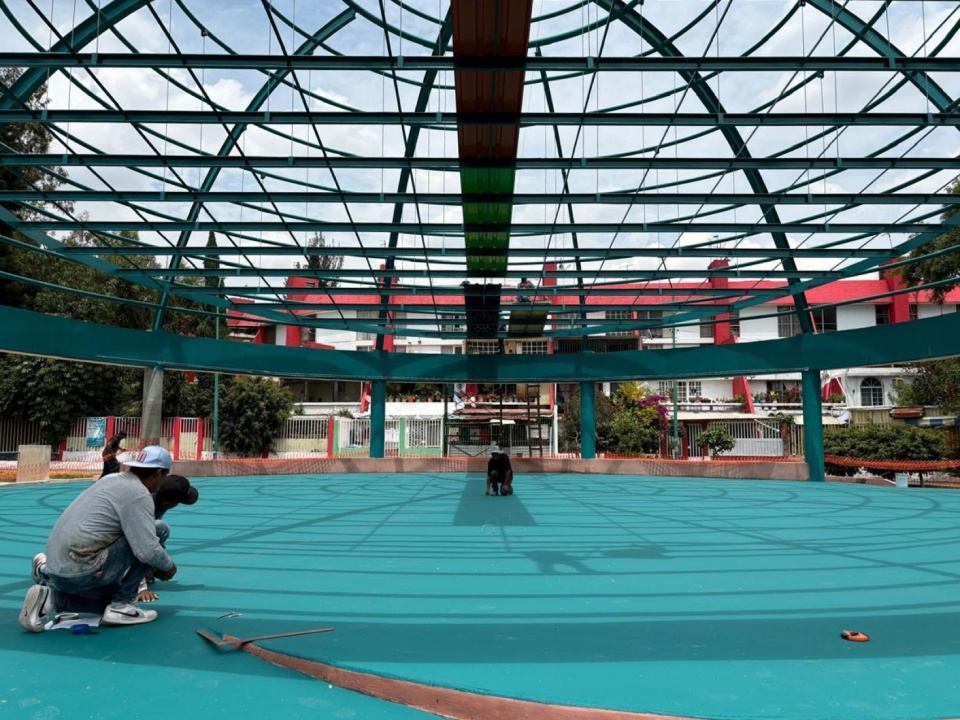
▼施工过程,construction process
▼3d模型,3d model
▼彩色平面图,colorful master plan
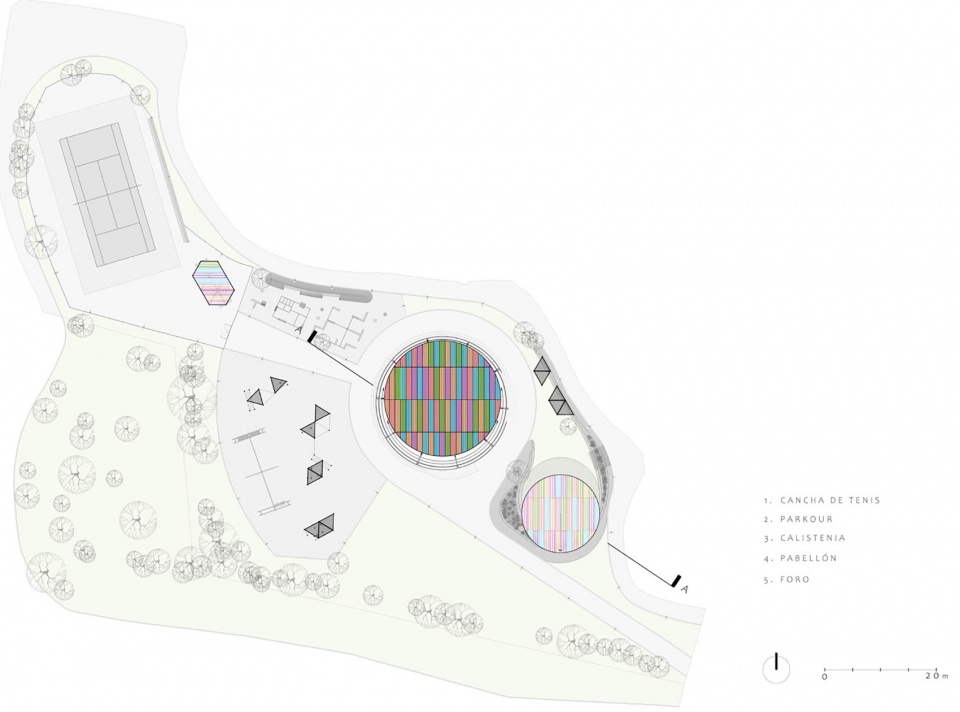
▼总平面图,master plan
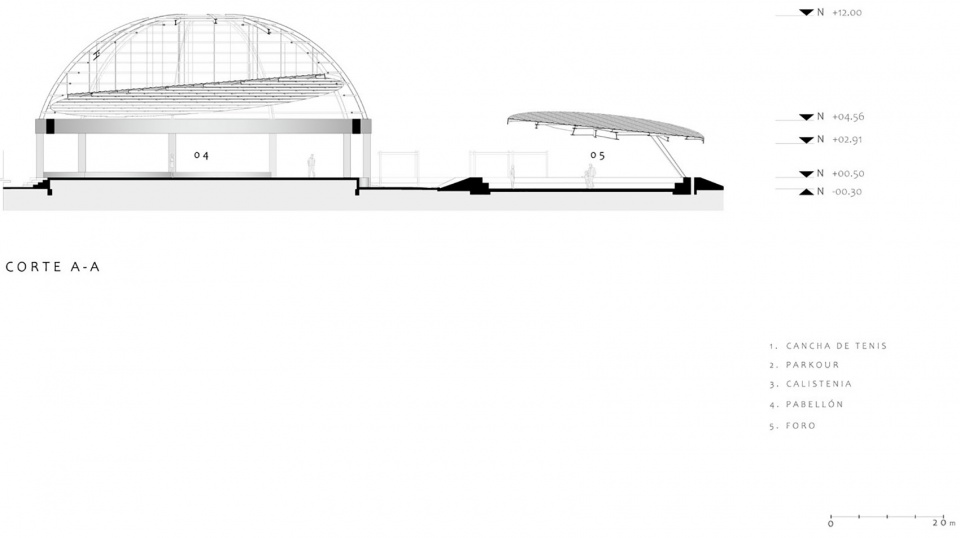
▼剖面图,section
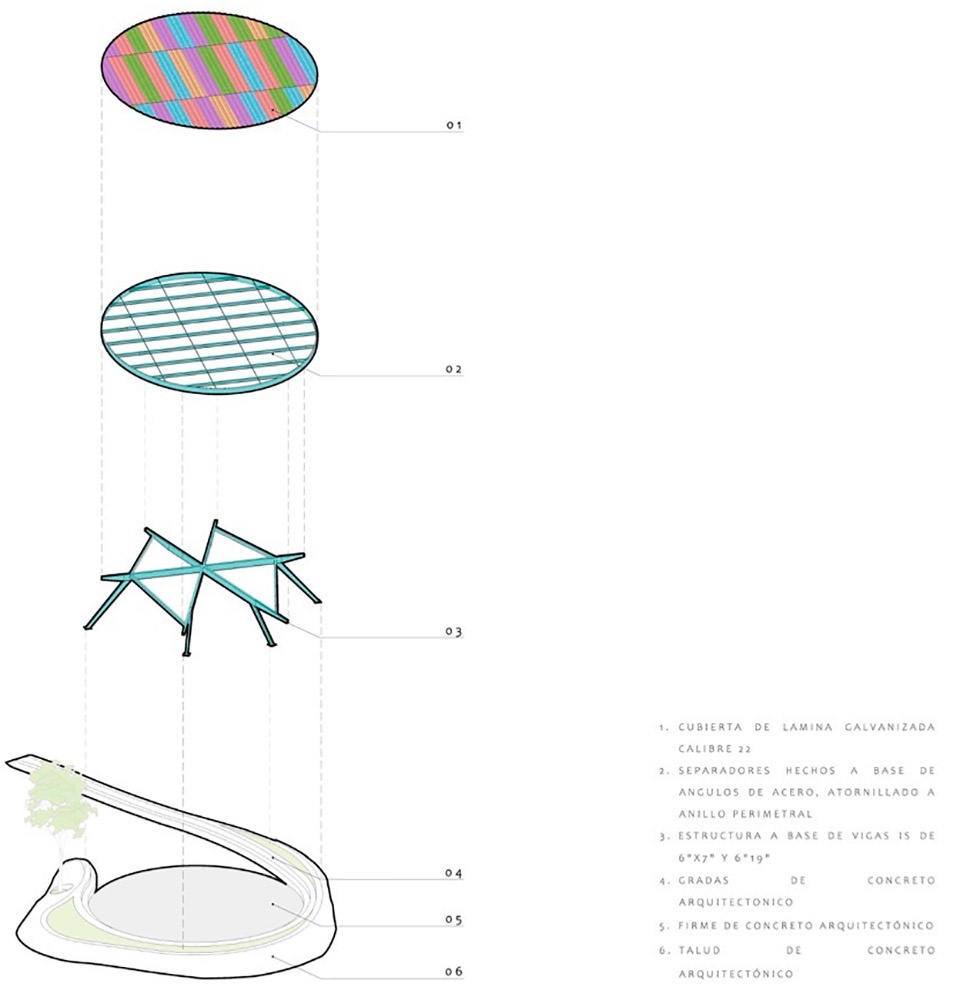
▼分析图,analysis diagrams
Project Name: UH INFONAVIT Iztacalco
Architecture office: AMASA Estudio, Andrea López + Agustín Pereyra
Use: Public
Area: 1200 M2
Location: Ciudad de México, México
Status: Built
Year : 2024
Architects: Andrea López, Agustín Pereyra
Client: INFONAVIT
Construction: Desarrolladora de Ideas y espacios, Alberto Cejudo
Structural Engineer: Juan Felipe Heredia
Collaborators: Roxana León, David Rivera, Luis Flores, Gerardo Reyes, Yanahi Flaviel.
Photographer: Zaickz Moz, Andres Cedillo