Nomura-Sanko办公室,日本 / note architects
这家本地建筑公司的办公室,位于一条充满怀旧氛围的商店街附近。
The office of a locally-based construction company is located near a shopping street with a nostalgic atmosphere.
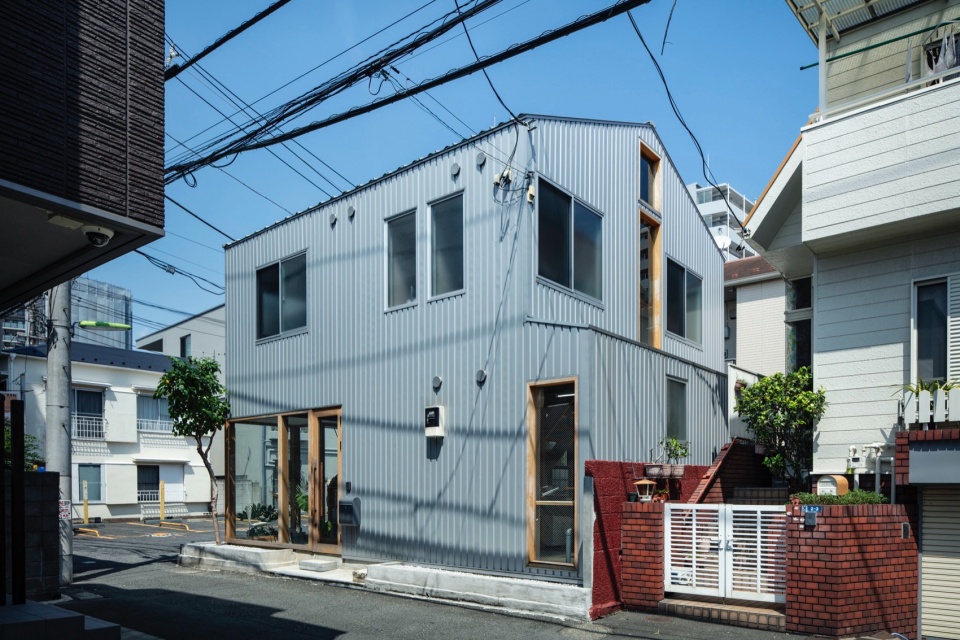
▼外观概览,Exterior view
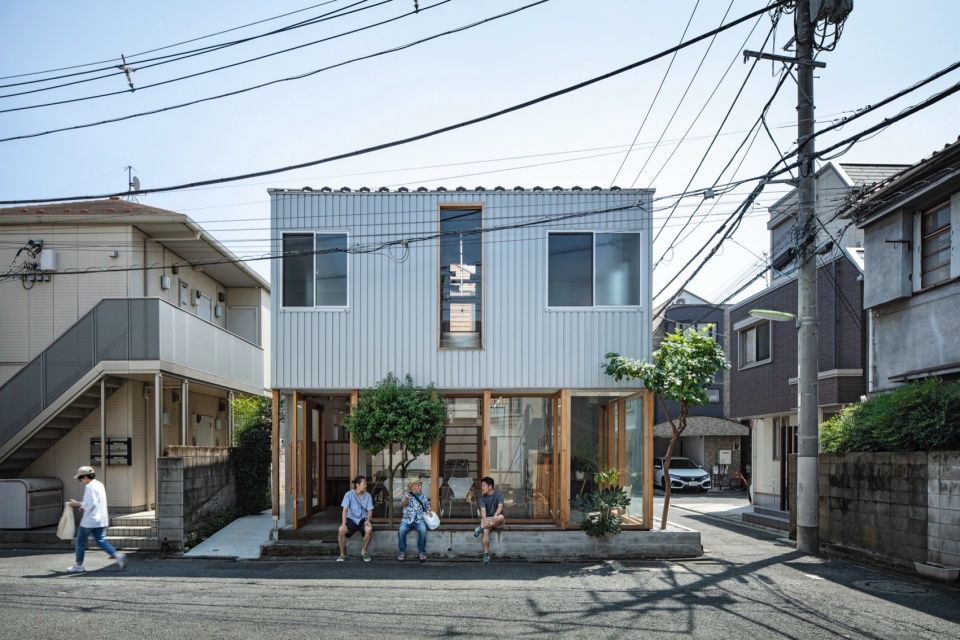
在项目策划初期,业主希望这间办公室能够与当地社区建立联系,例如对社区开放、营造一种轻松自在、人人都能感受到欢迎的氛围。
In planning, client hoped that the office would have relationship with the local community, such as being open to the local community and creating a casual atmosphere that everyone feel welcome.
▼街道侧视角,Street view
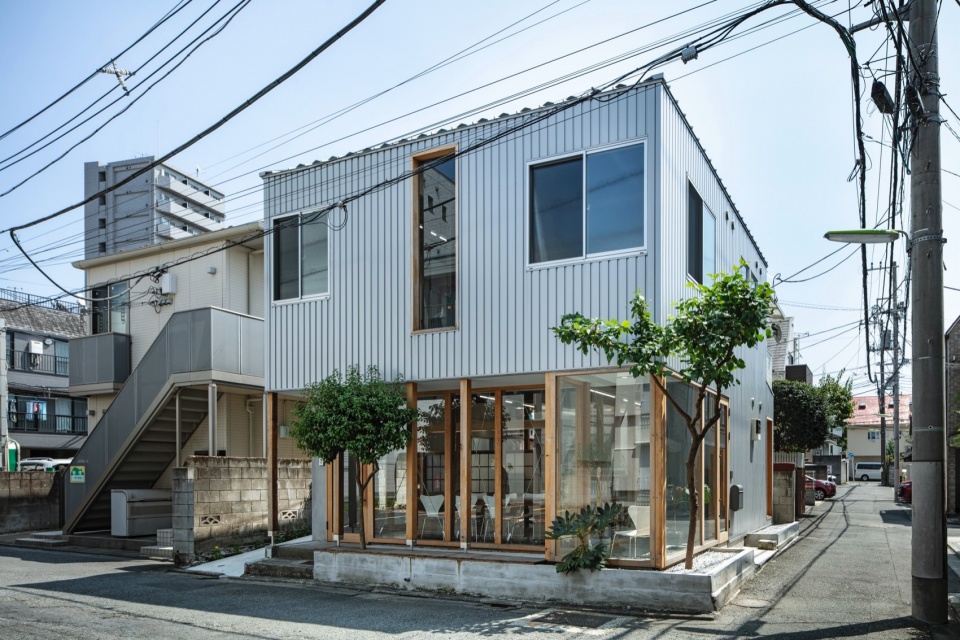
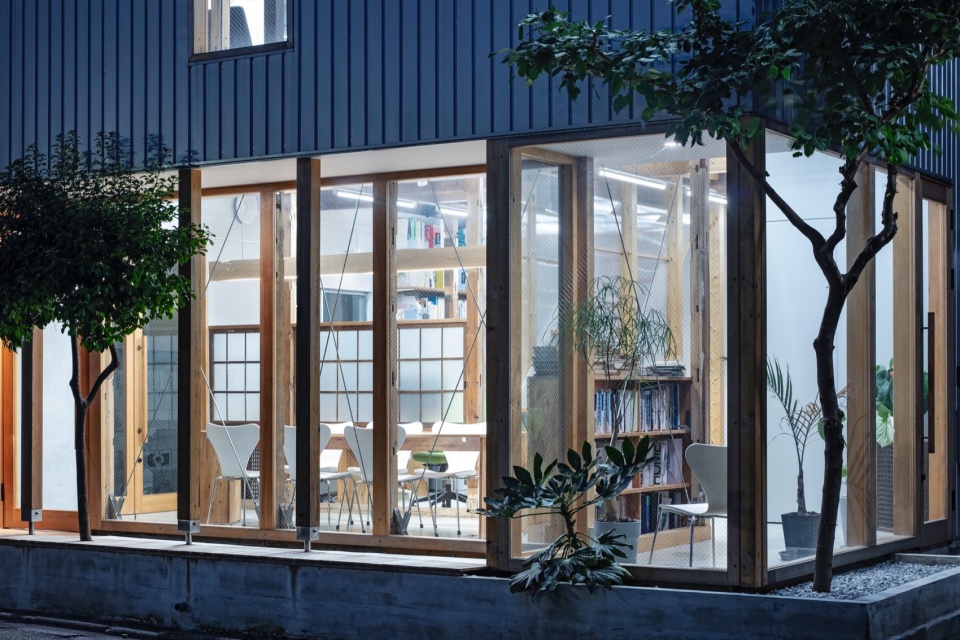
▼立面近景,Facade close view
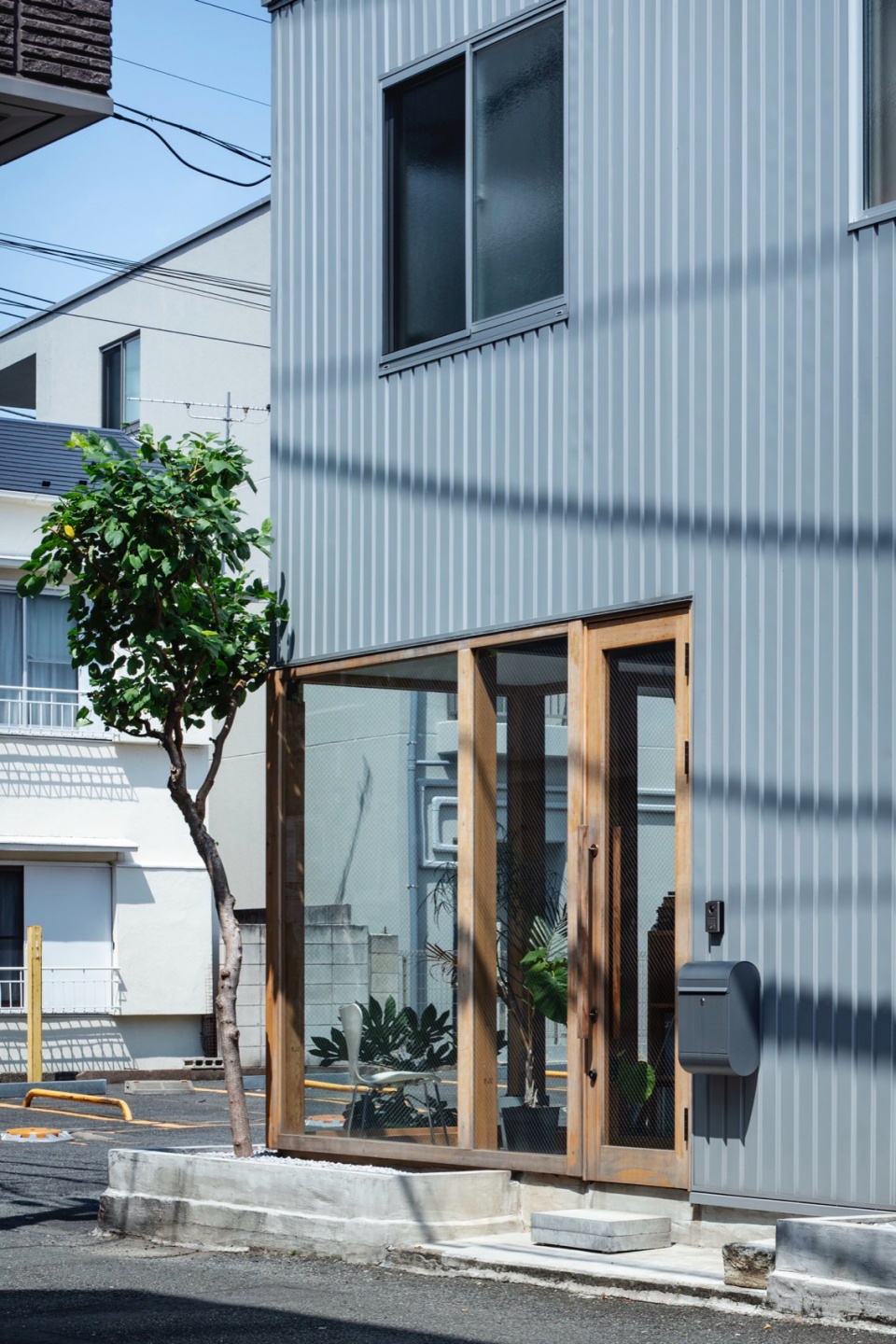
▼入口处,Entrance
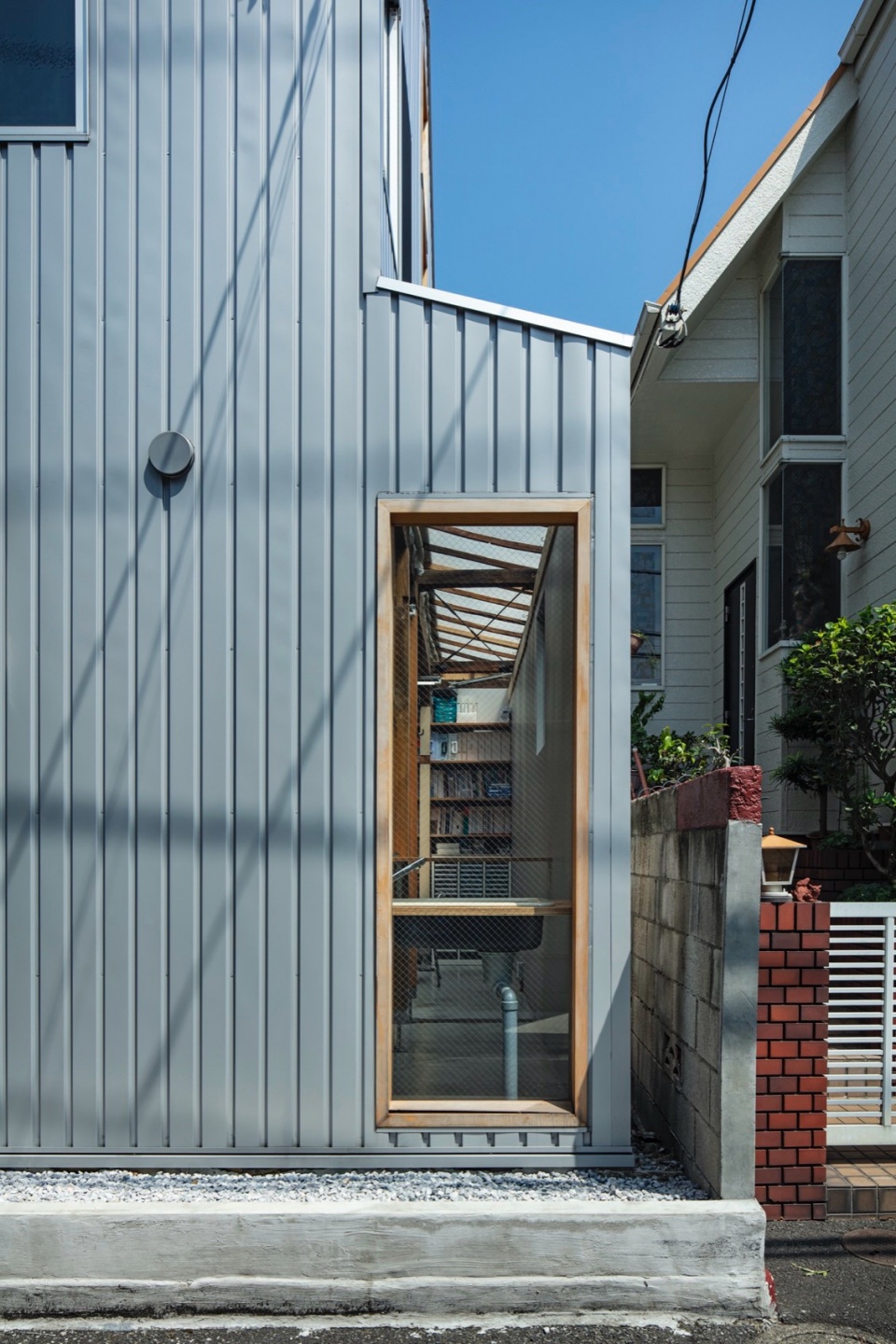
▼廊下空间,Corridor space
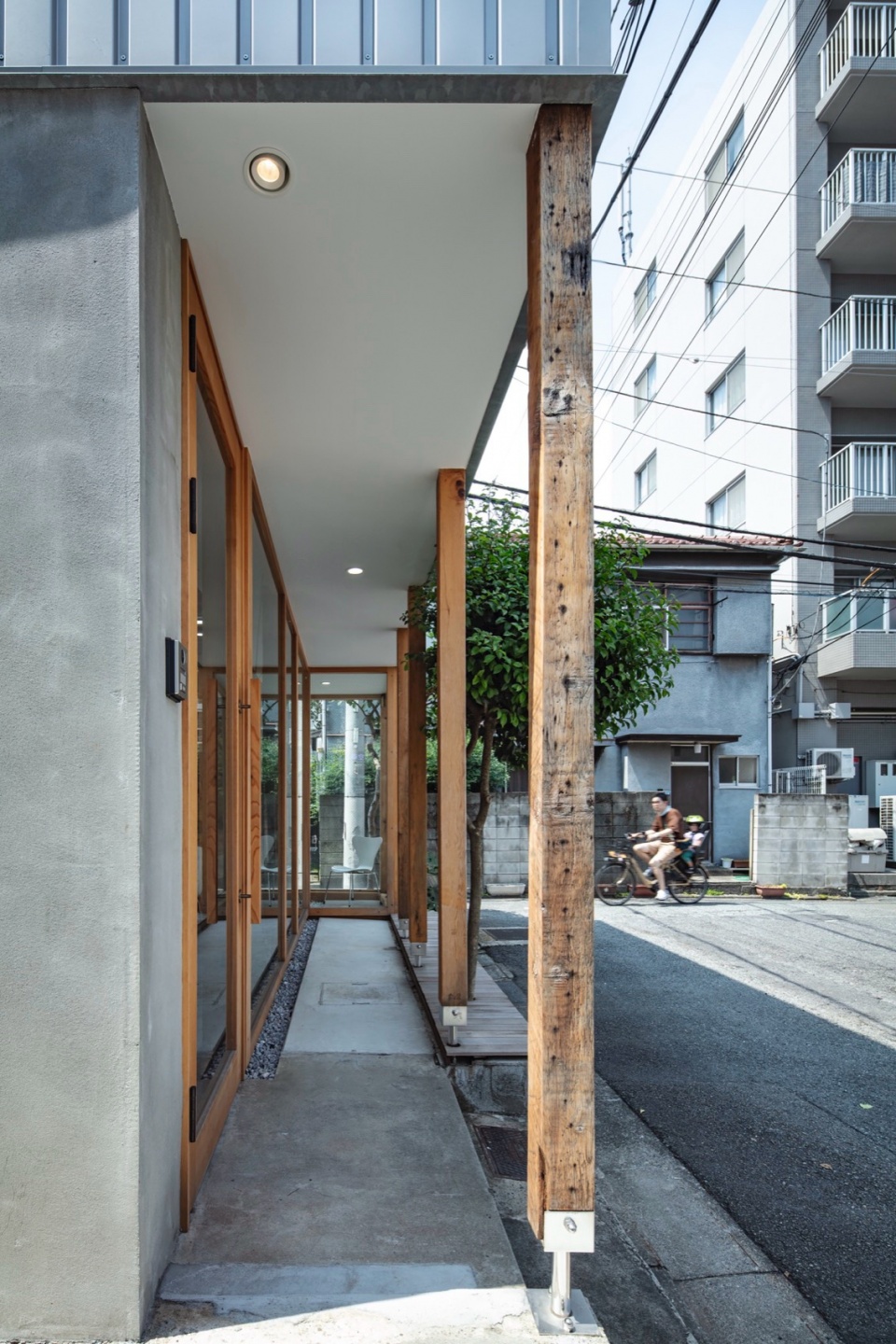
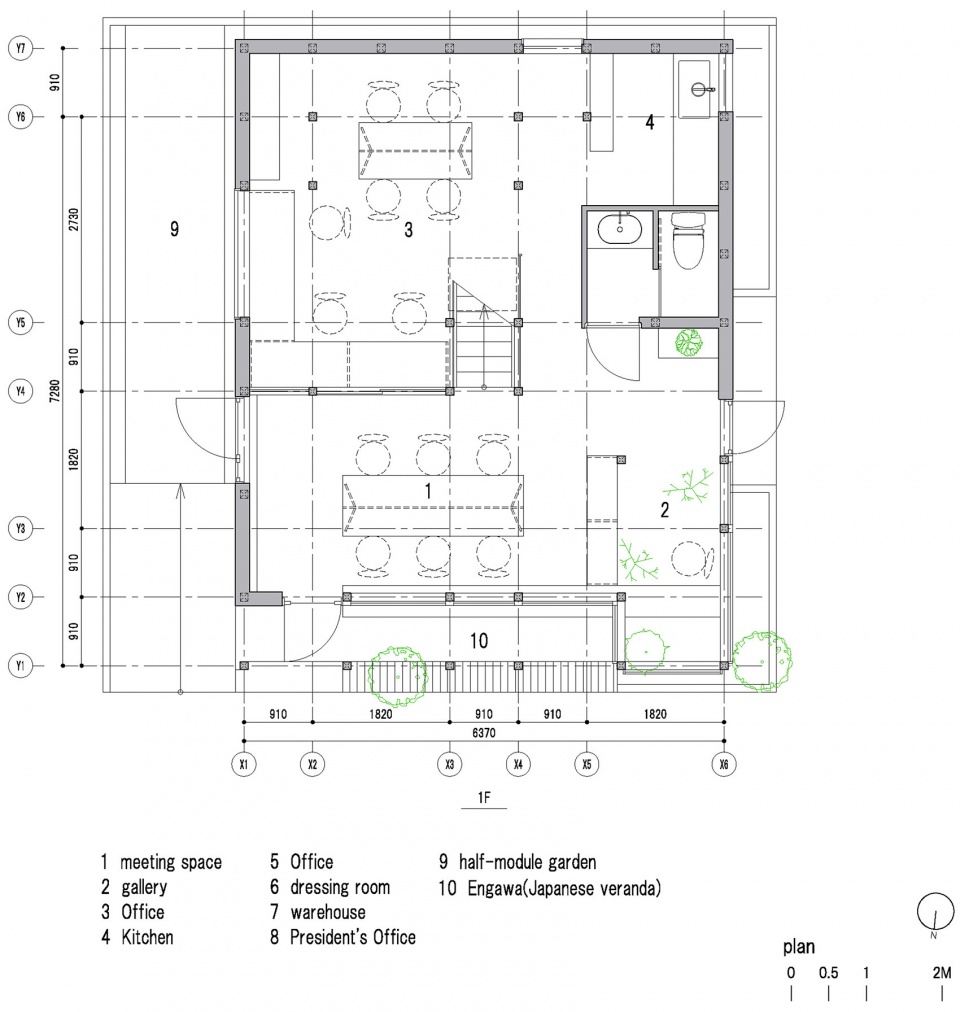
原有出租住宅的二层退进了910毫米(相当于日本模数的一半,称为“半间”)。此外,通过对建筑结构的调查发现,建筑内部如走廊、壁橱等区域存在一些贯通空间,柱子以910毫米的宽度排列。我们将这一“910毫米宽的空间”(称为“半间空间”)设计为一条“切线”,将其与城市连接起来,并期望通过它与这个充满变化的城市建立起多样的关系。
▼轴测分析图,axon
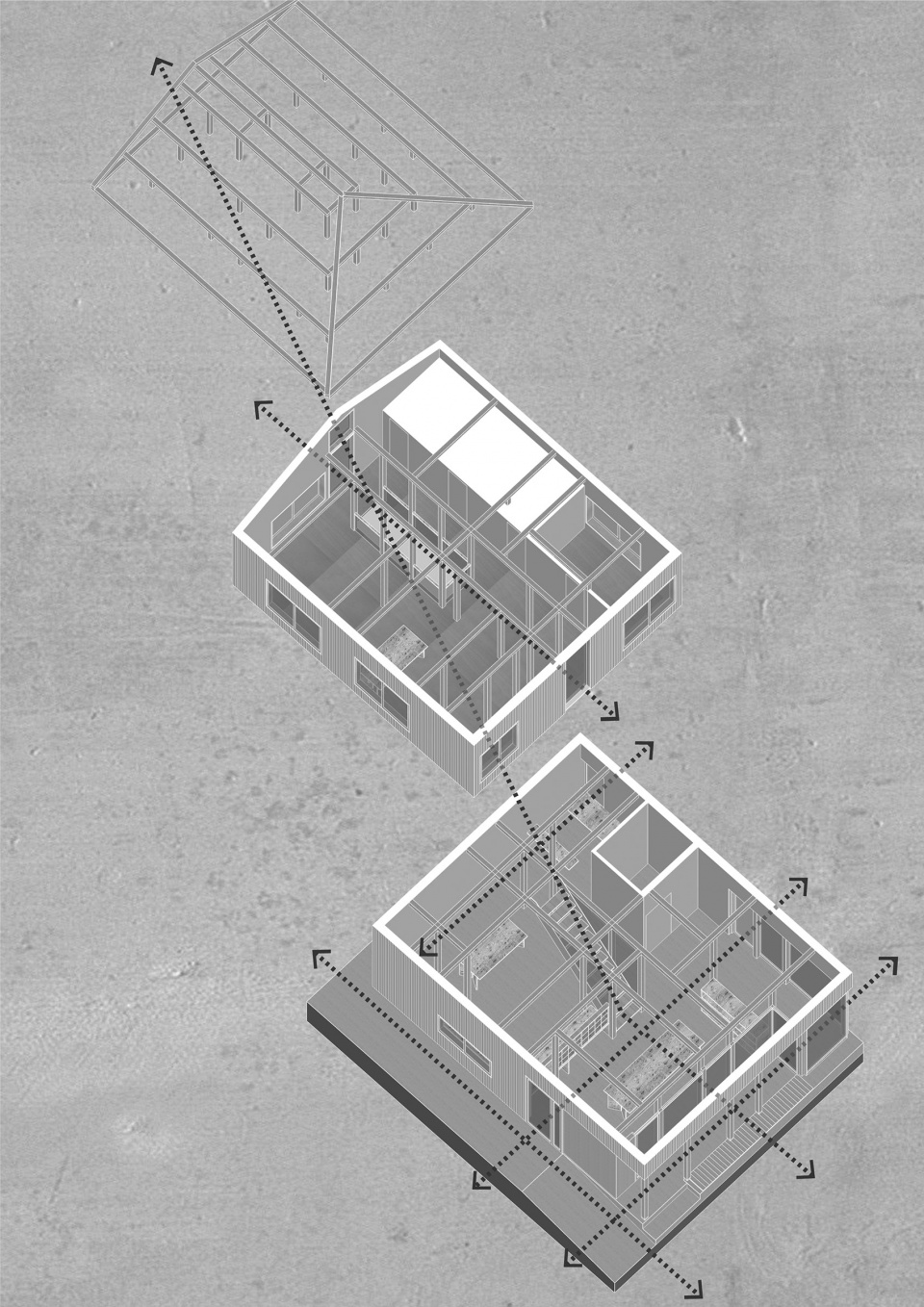
The second floor of the existing rental housing was set back by 910mm (half of the Japanese module = Hangen). In addition, an investigation of the building’s frame revealed that there were some spaces penetrating the building, such as hallways and closets, where columns were lined up 910mm wide. We designed this “910mm wide space (called “Hangen space”)” as a “tangent line’’ that connects to the city and planned to build diverse relationships with the city full of change.
▼窗户看向室内,Looking at interior space through the window
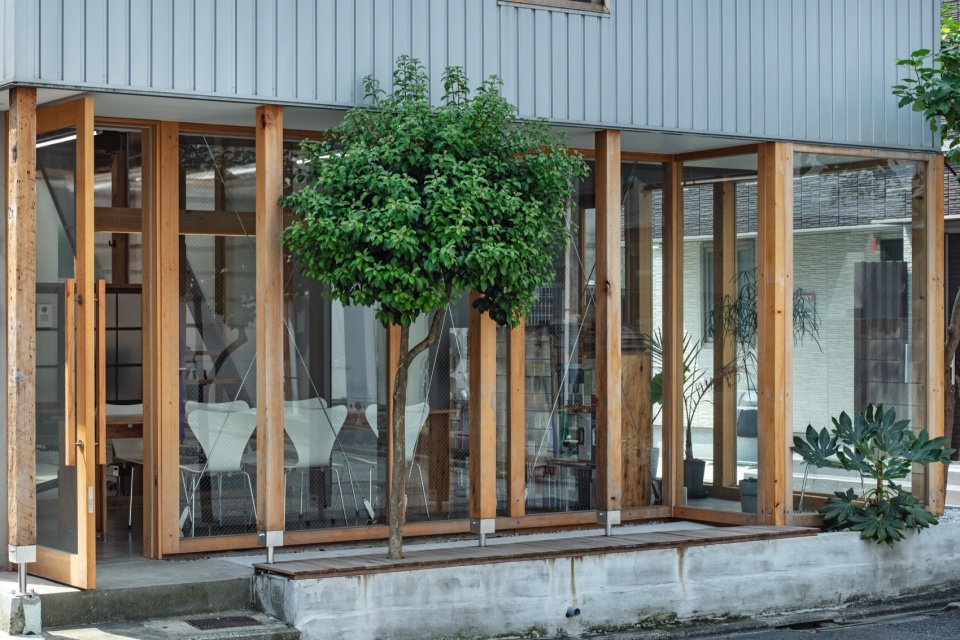
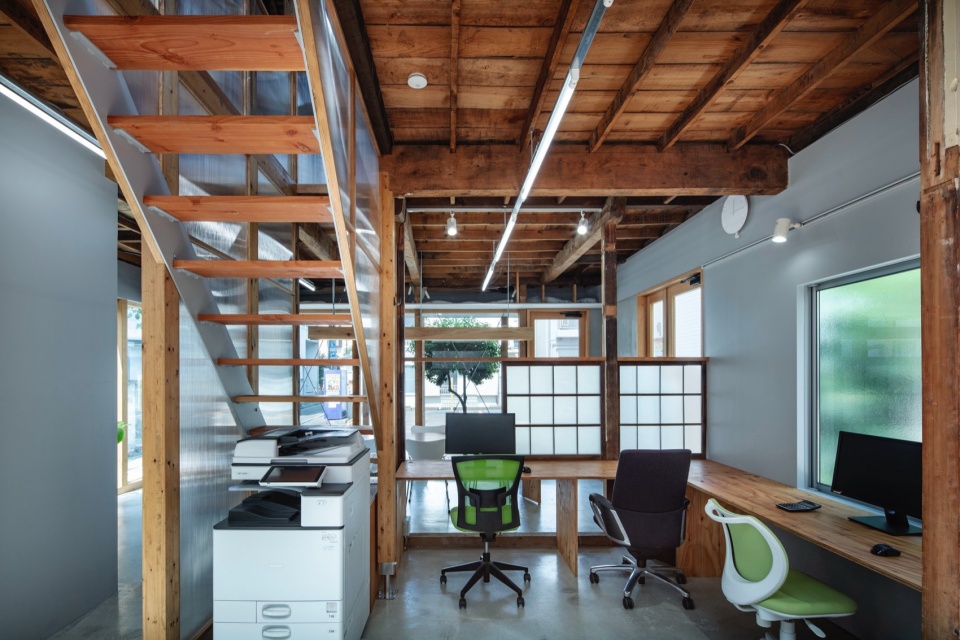
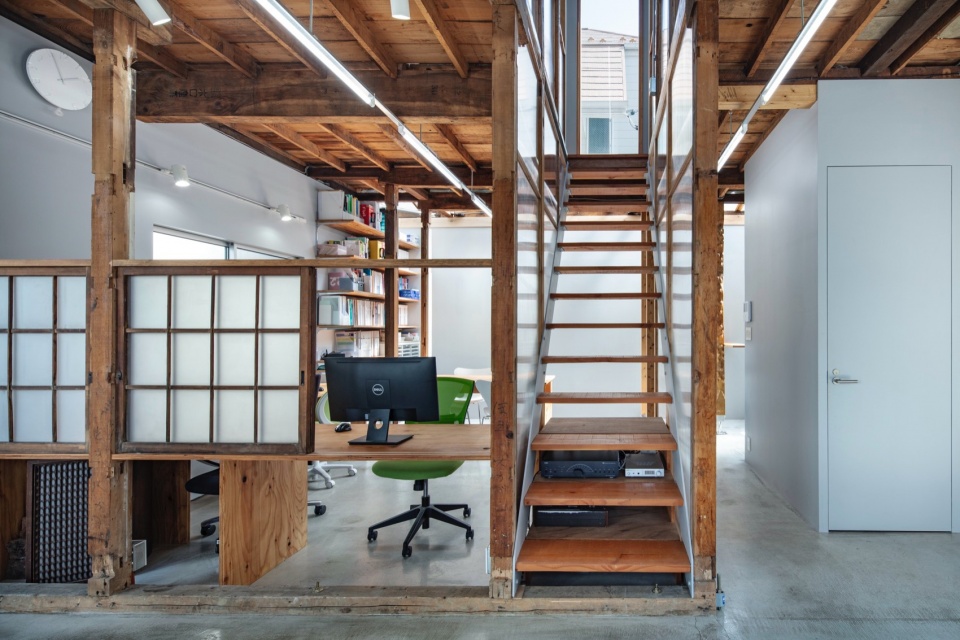
▼首层主要办公空间,Main office space
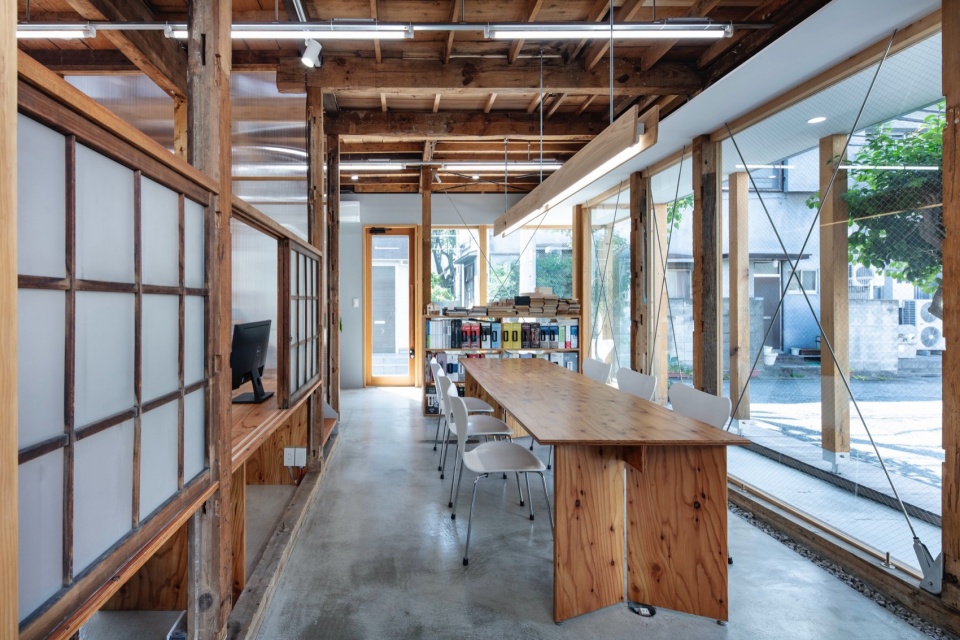
▼引入自然天光,Bring in natural light
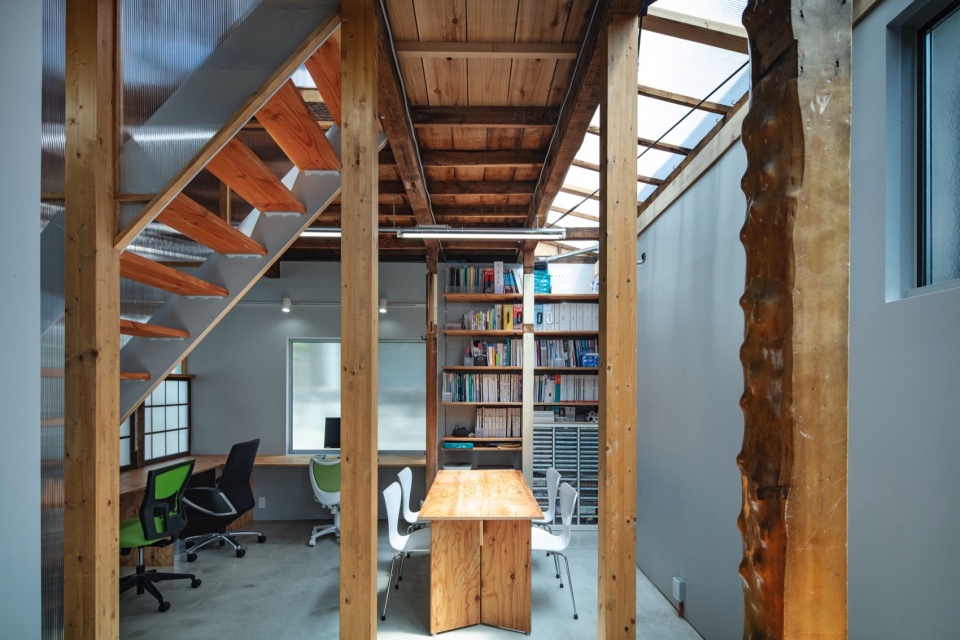
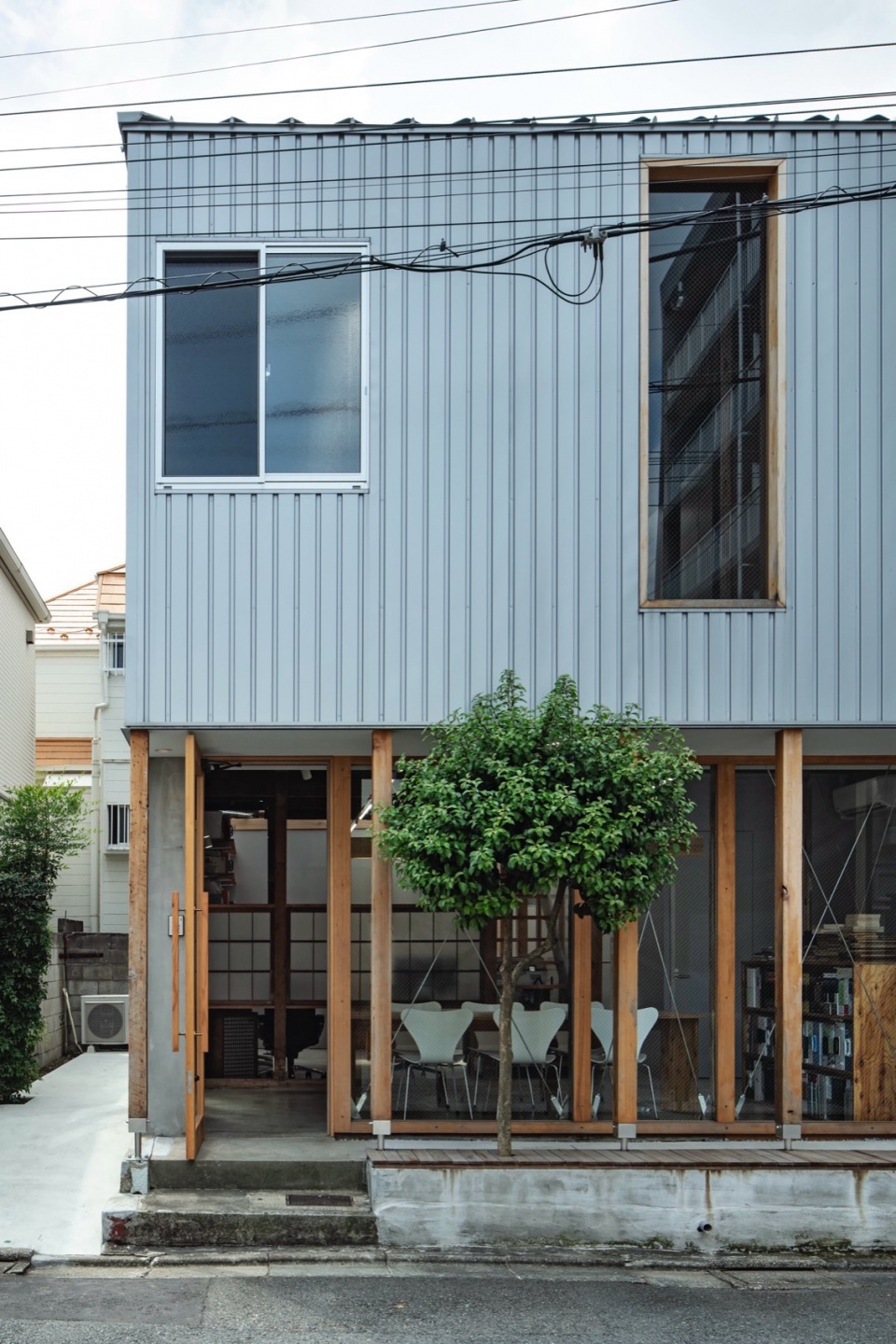
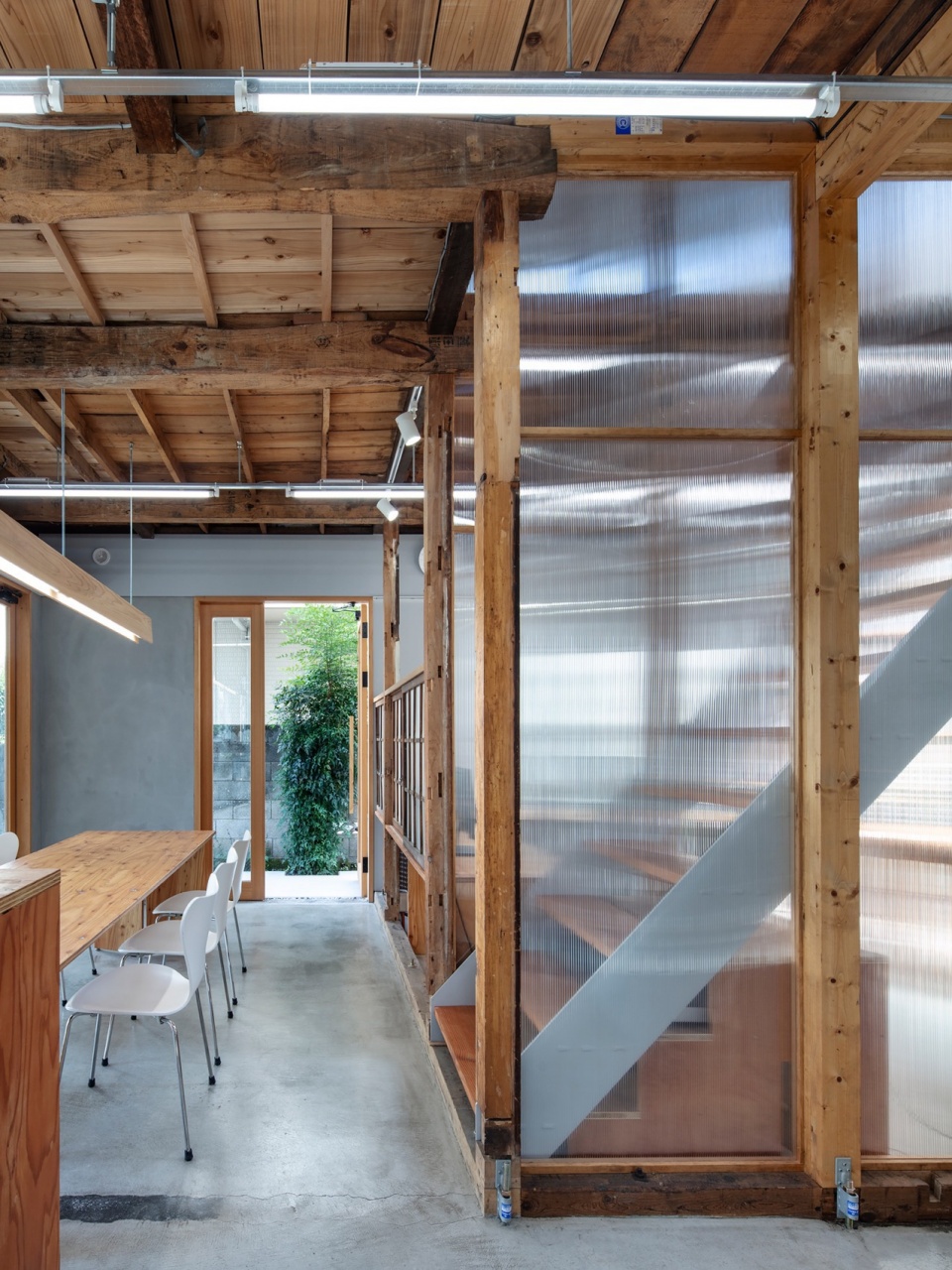
这条“半间切线”可以根据与城市的关系自由地改变形态。当它与道路接触时,会变成如同“缘侧”(日本传统木平台)一般的中介空间。坐在缘侧上,视线高度与会议座位、画廊空间不同,每个人都能以自己的方式自在地度过时间。办公室后方通过聚碳酸酯天窗引入自然光,人们透过窗户可以望见城市。员工们在这条“半间切线”中休息,就像是在户外一样。在这个建筑密集的市中心,“半间切线”楼梯顶部能望见天空的体验,显得格外珍贵。原本建筑延伸出的910毫米宽的部分被拆除,留下的空地被命名为“半间庭院”。
The “Hangen tangent” can change its shape freely depending on its relationship with the city. If it is in contact with a road, it becomes an intermediate area such as a Engawa (Japanese wood deck). When you sit the engawa, the viewing height is different from the meeting seats and gallery, allowing each person to spend time freely. Light is brought in from the polycarbonate top lights at the back of the office space, and the city can be seen out through the windows. Workers spend their break time in this “Hangen tangent” like outside. In a central city where buildings are densely packed, it is felt special the experience of being able to see the sky at the top of the “Hangen tangent” stairs. The part of the building that had been extended by 910mm width was dismantled, and the resulting garden was named the “Hangen garden”.
▼首层结构近景,Close-up of the first floor structure
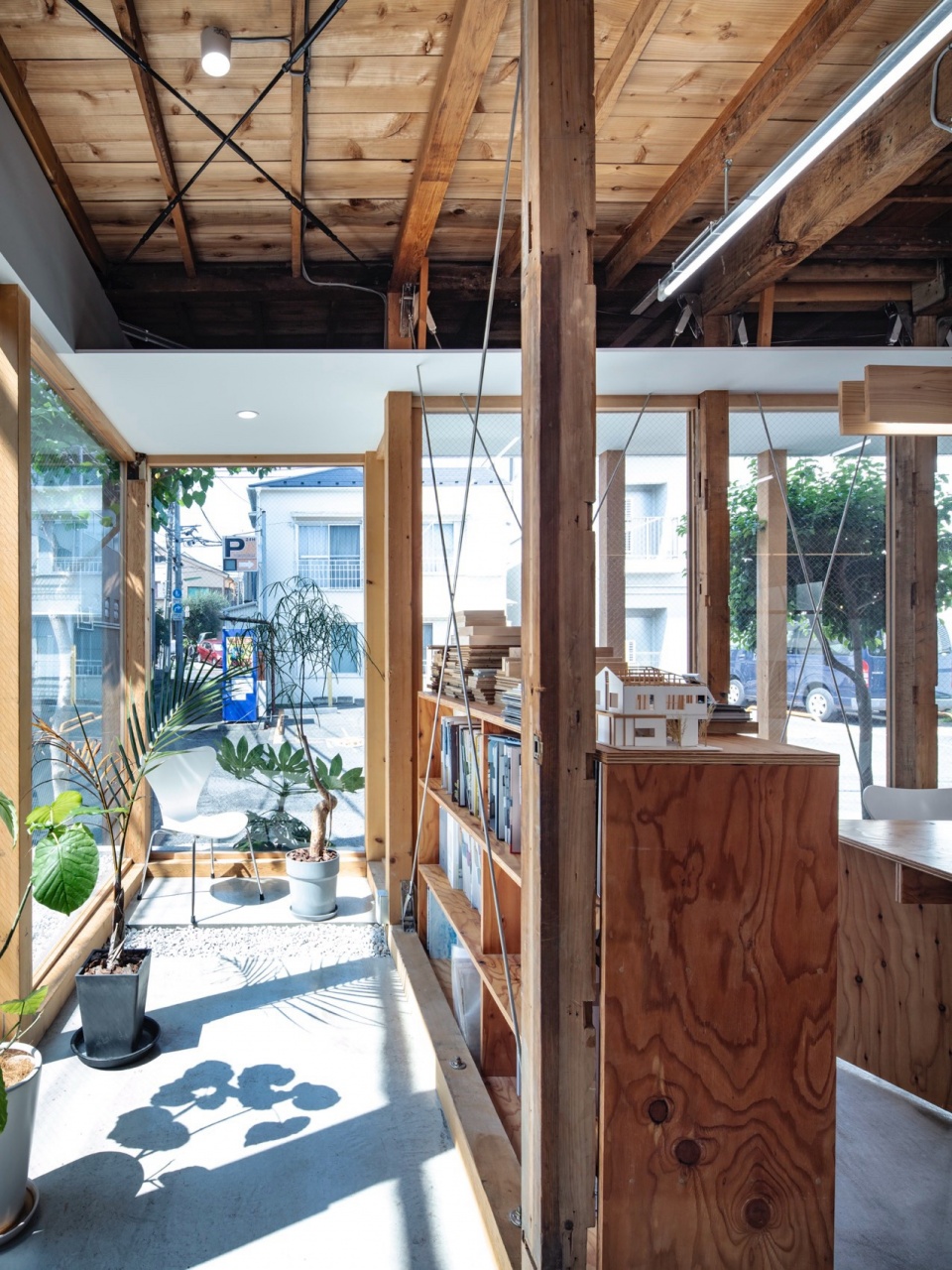
▼天窗,Skylight
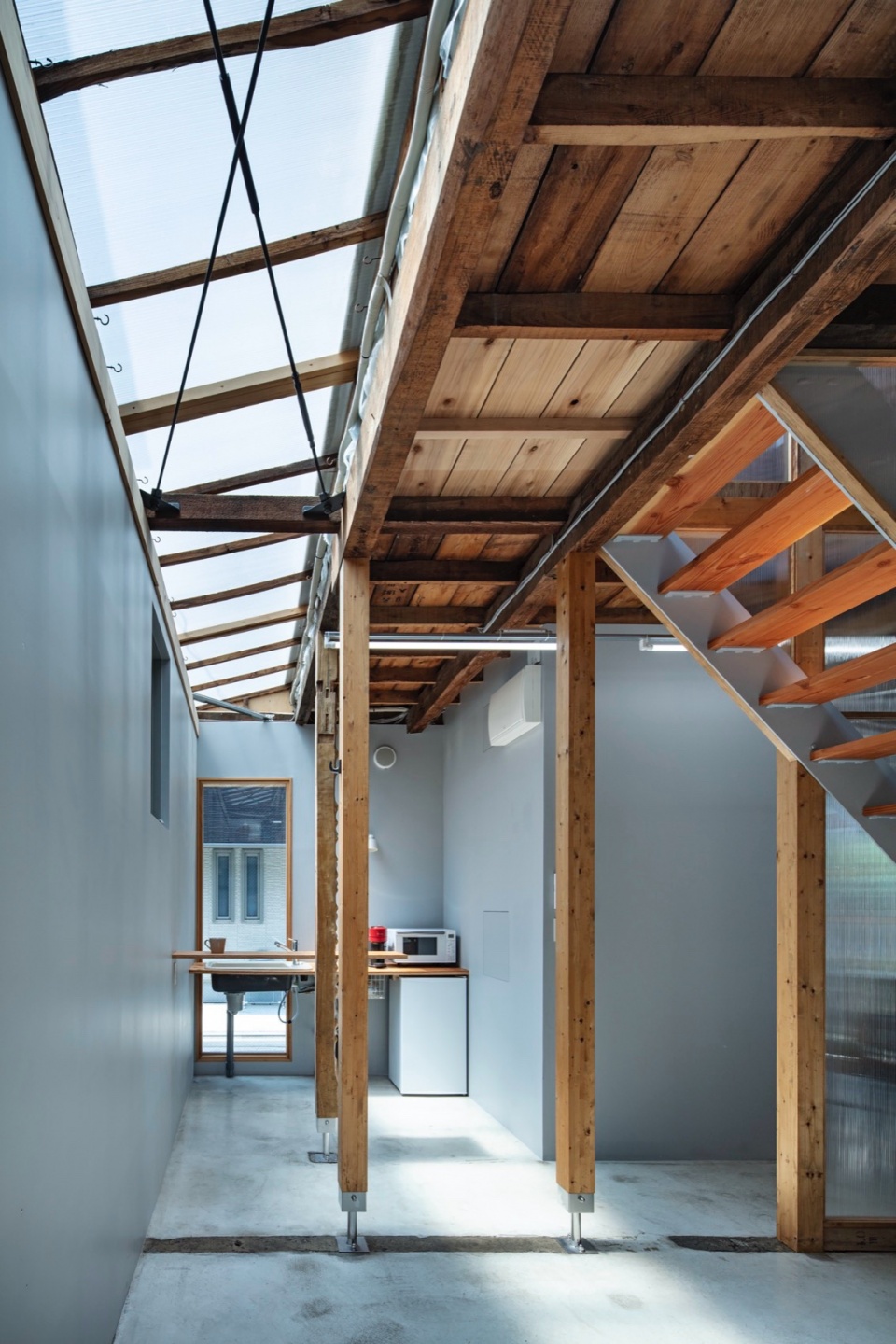
▼休闲空间,Leisure space
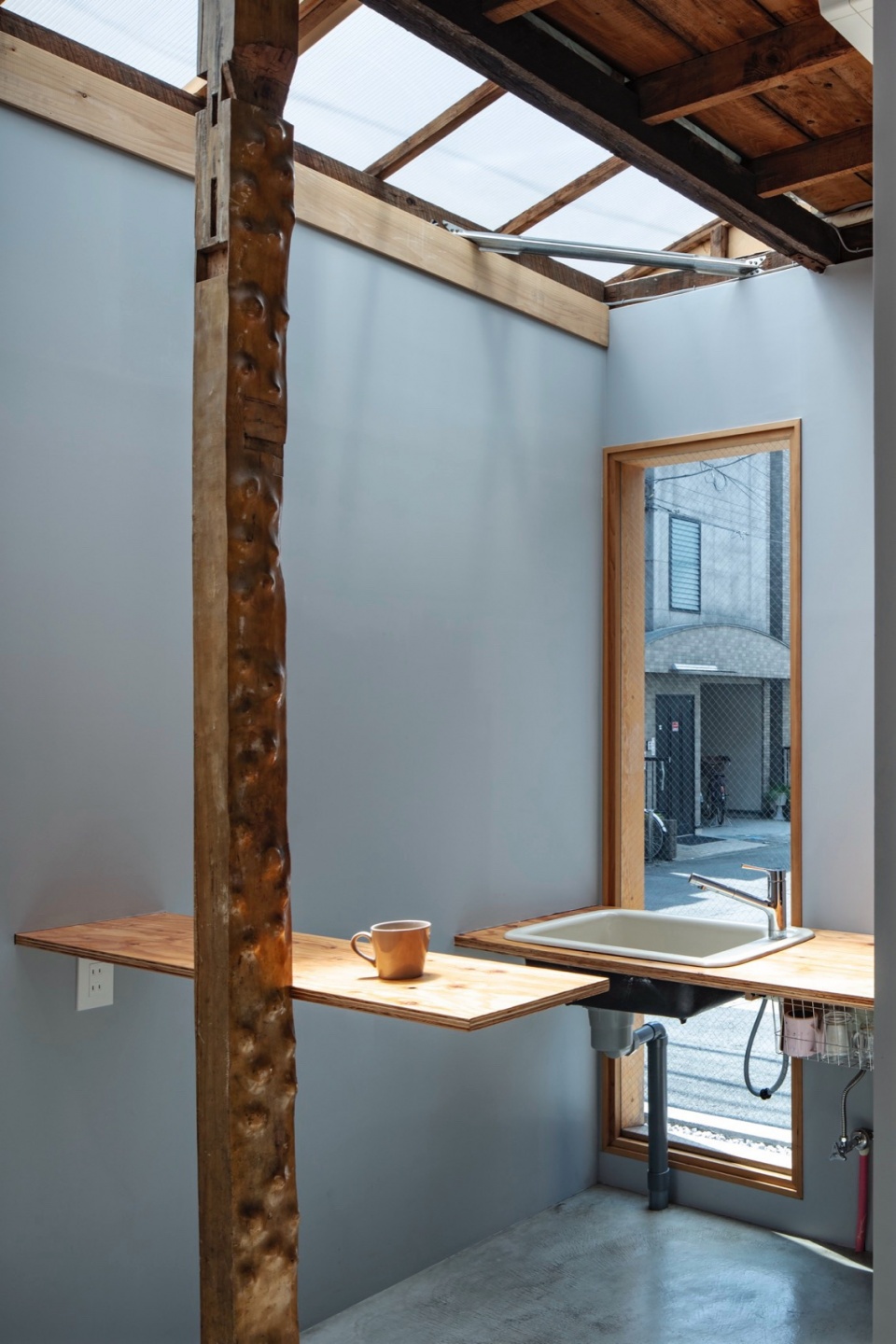
我们在空间的两侧设置了窗户,让外部景观得以穿透进入,尤其是在会议区域和共享办公空间的中央。即使在工作时,人们的思绪也会不经意地飘向城市。
Windows were installed on both sides of the space so that the outside could penetrate through near the meeting seats and the center of the co-working space. Even when you’re working, your mind suddenly drifts to the city.
▼二层空间,Second floor space
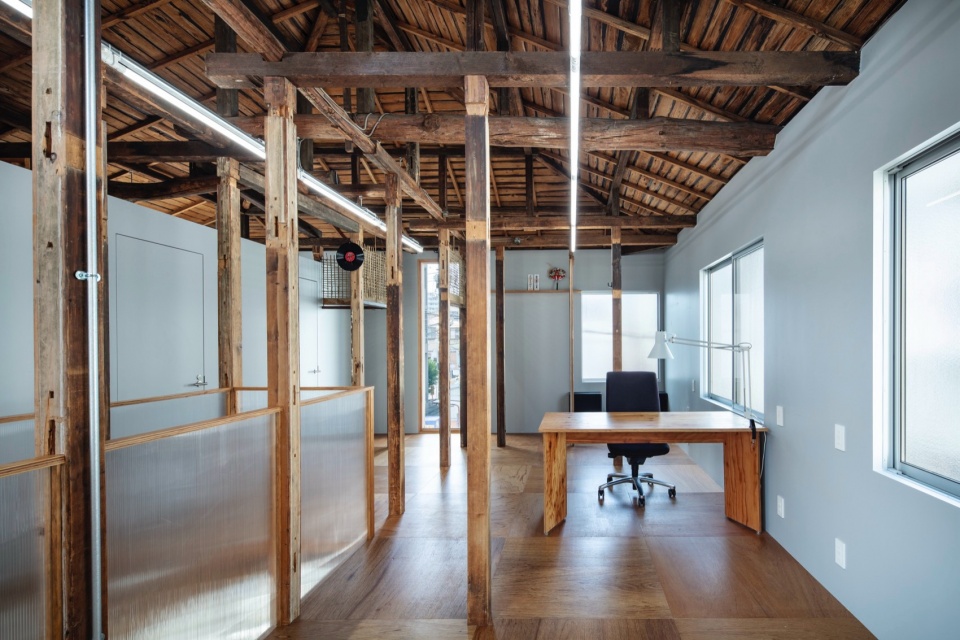
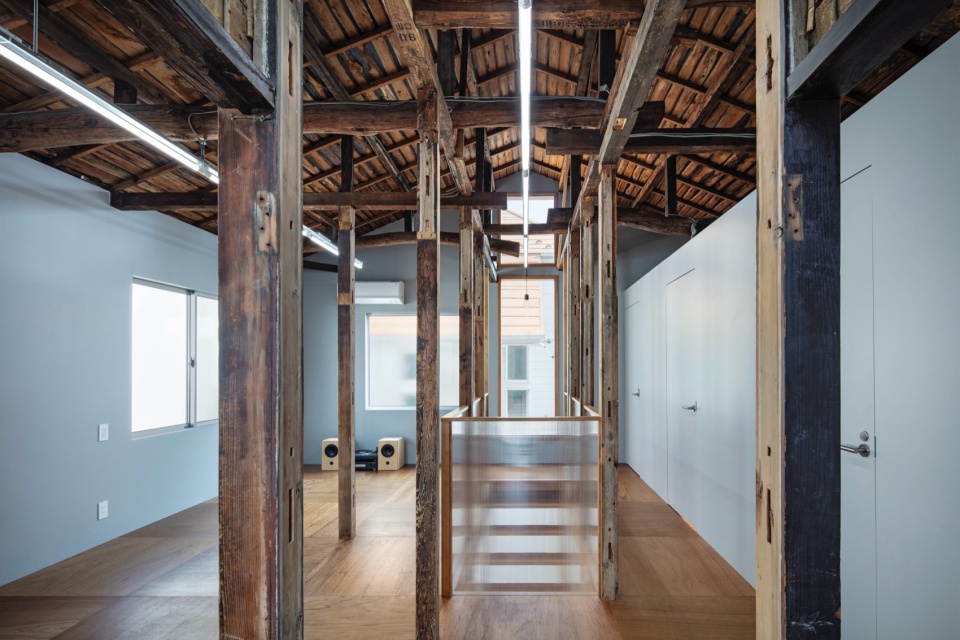
▼二层的支撑柱,Second floor support column
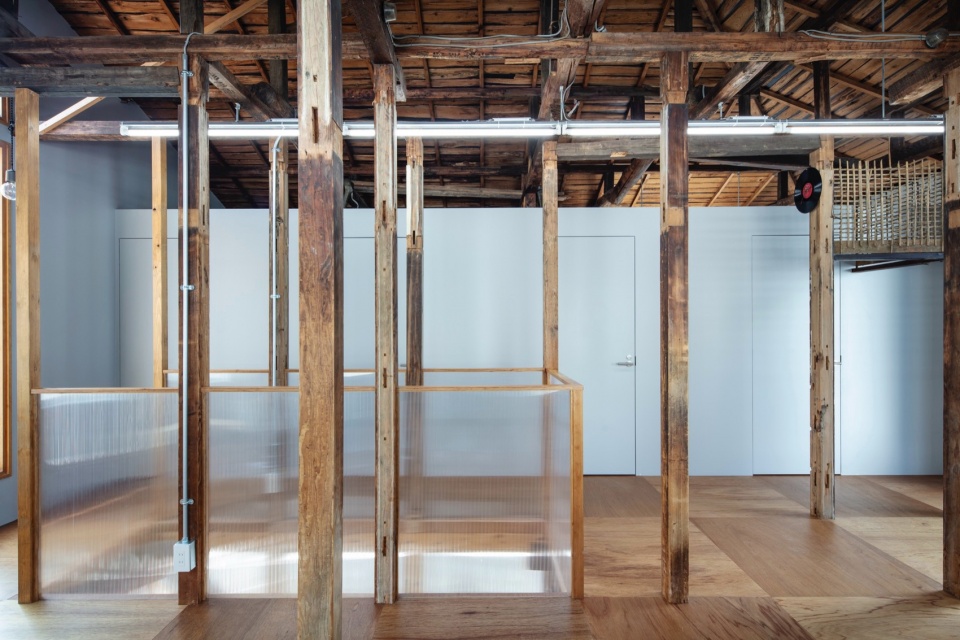
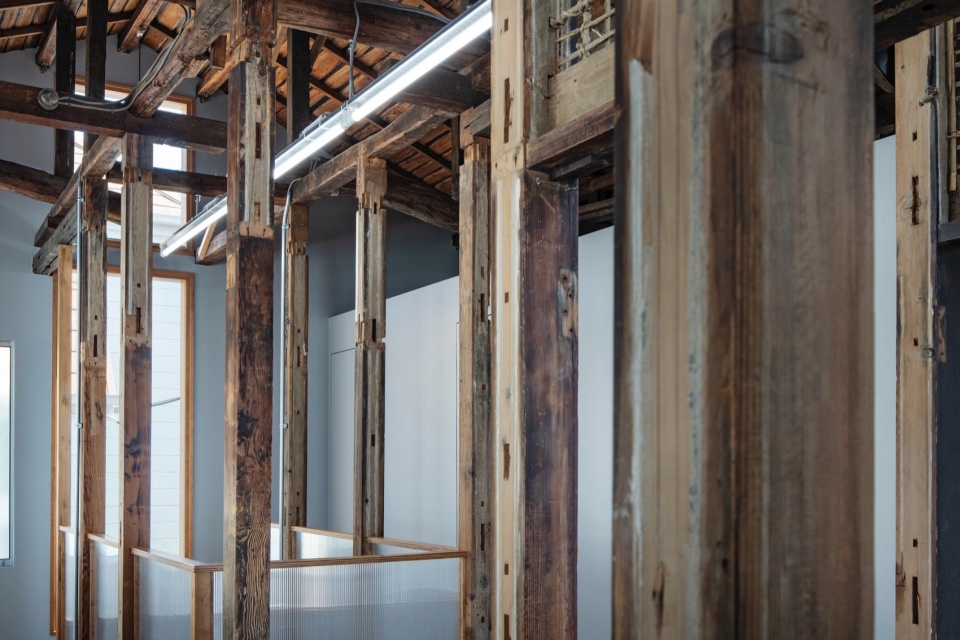
长期以来,我们通过“切线”的方式与他人建立连接。缘侧与暖帘(日本传统门帘)也可以被视为一种传统的“切线”形态。我们通过拆解原本功能性强的“半间空间”,重新构建为高度灵活的“半间切线”,由此与他人之间建立起新的关系。
For a long time, we have built connections with others by drawing tangents. Engawa and Noren (Japanese curtains) can also be considered traditional tangent shapes. A relationship with others was created by dismantling the functional “Hangen space” and reconstructing it as a highly flexible “Hangen tangent”.
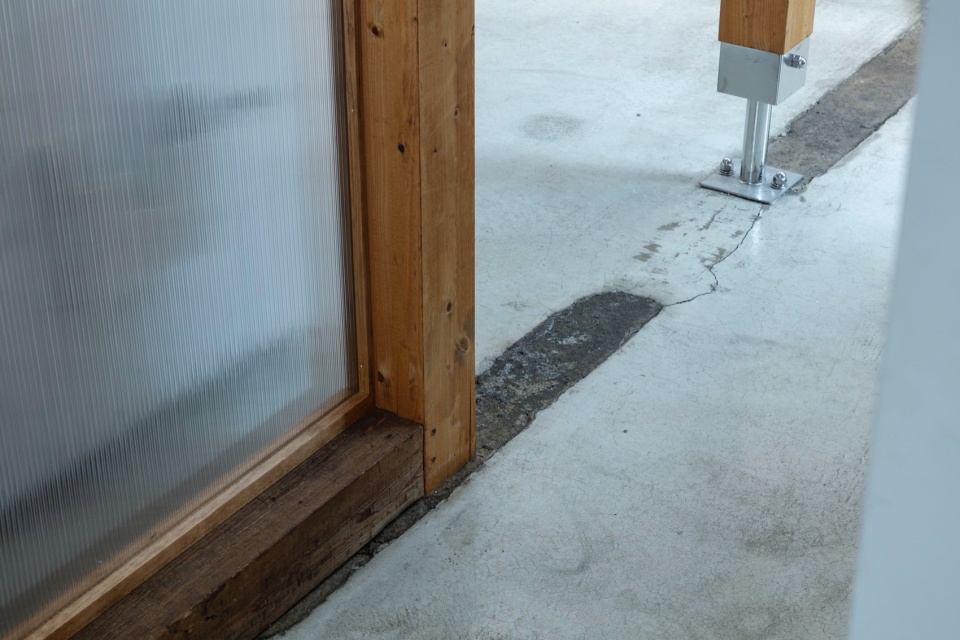
▼结构细部,Structure details
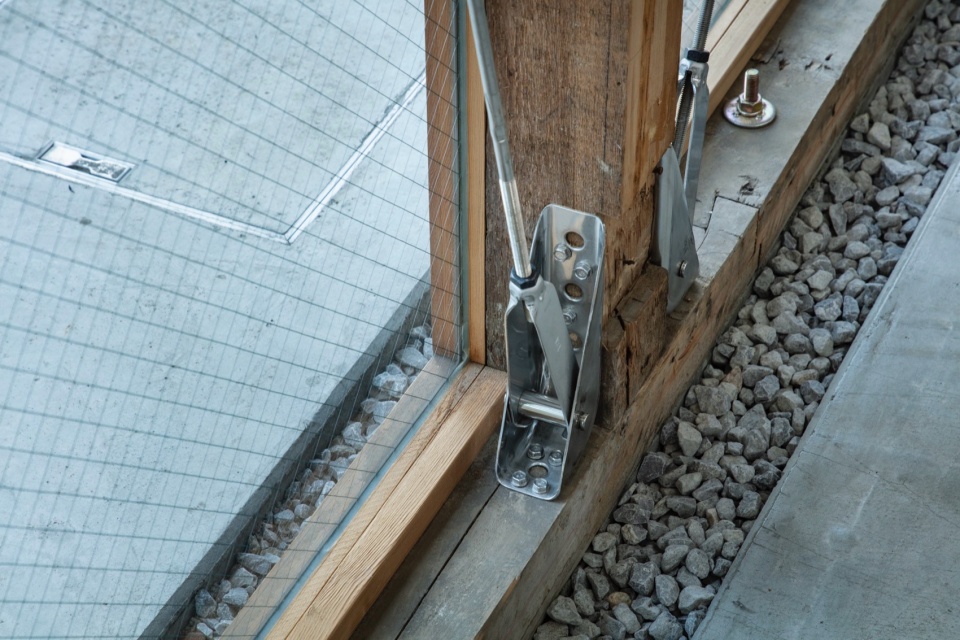
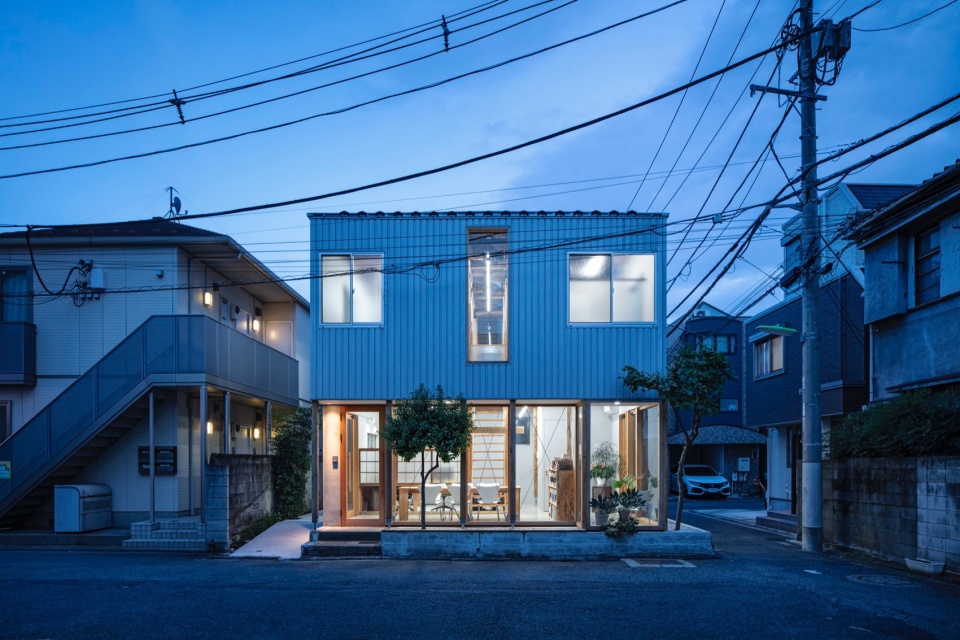
▼夜览,Night view
我们也可以通过完全打开的门体,或诸如咖啡馆等运营内容来实现空间的开放。在这座仍保留着怀旧气息的城市里,我觉得,或许更适合一种“轻触即开”的开放方式——就像一位散步归来的老人,坐在缘侧上,虽与办公空间无关,却也自然而然地与之相连。
There may also be ways to open the door physically by it full opening, or through a program such as a cafe. In this town where nostalgia still lingers, I feel it’s appropriate to open to just touching, like an old man sitting on the Engawa after a walk, unrelated to the workers.
▼平面图,plan line
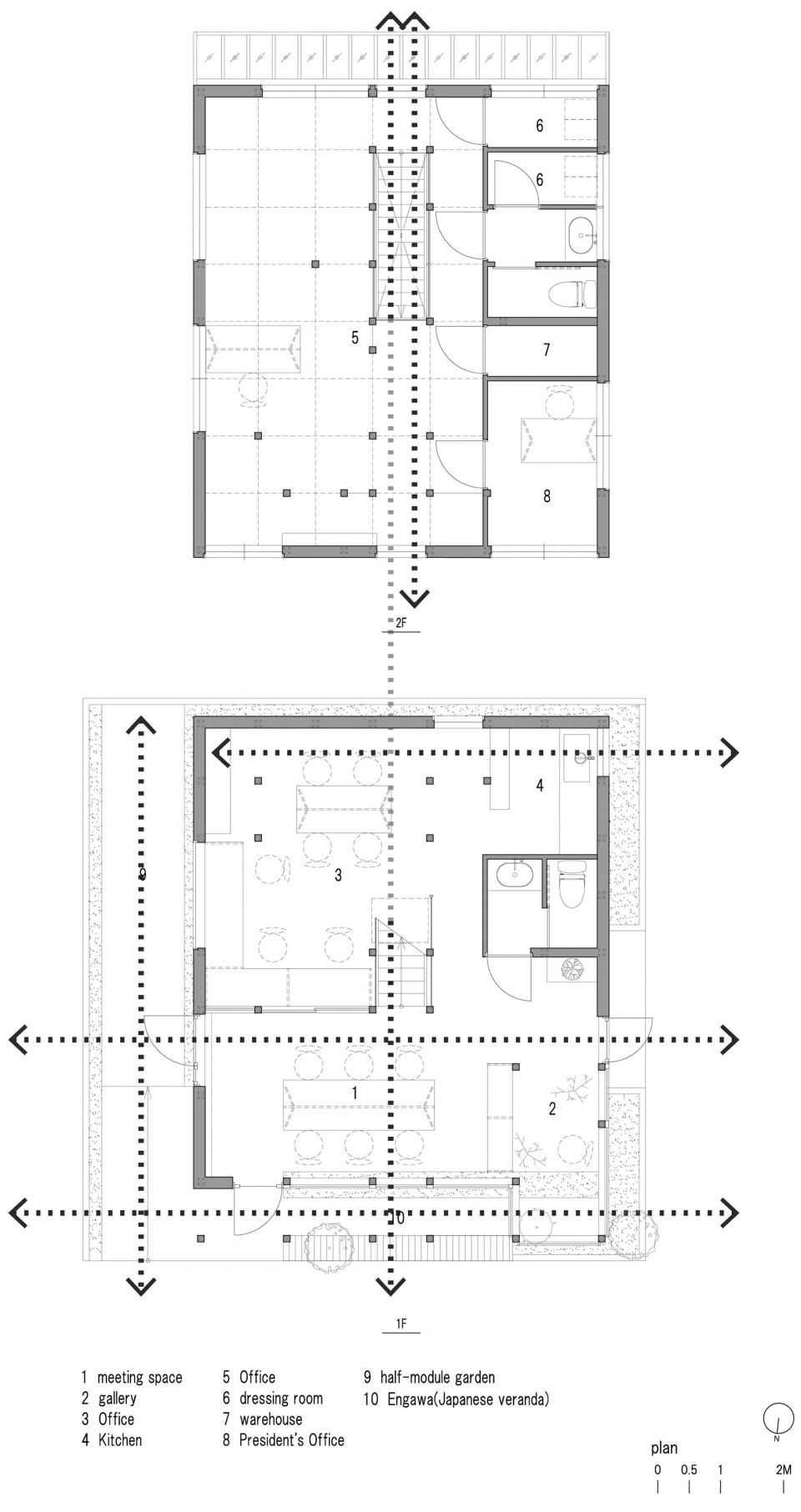
▼首层平面图,first floor plan
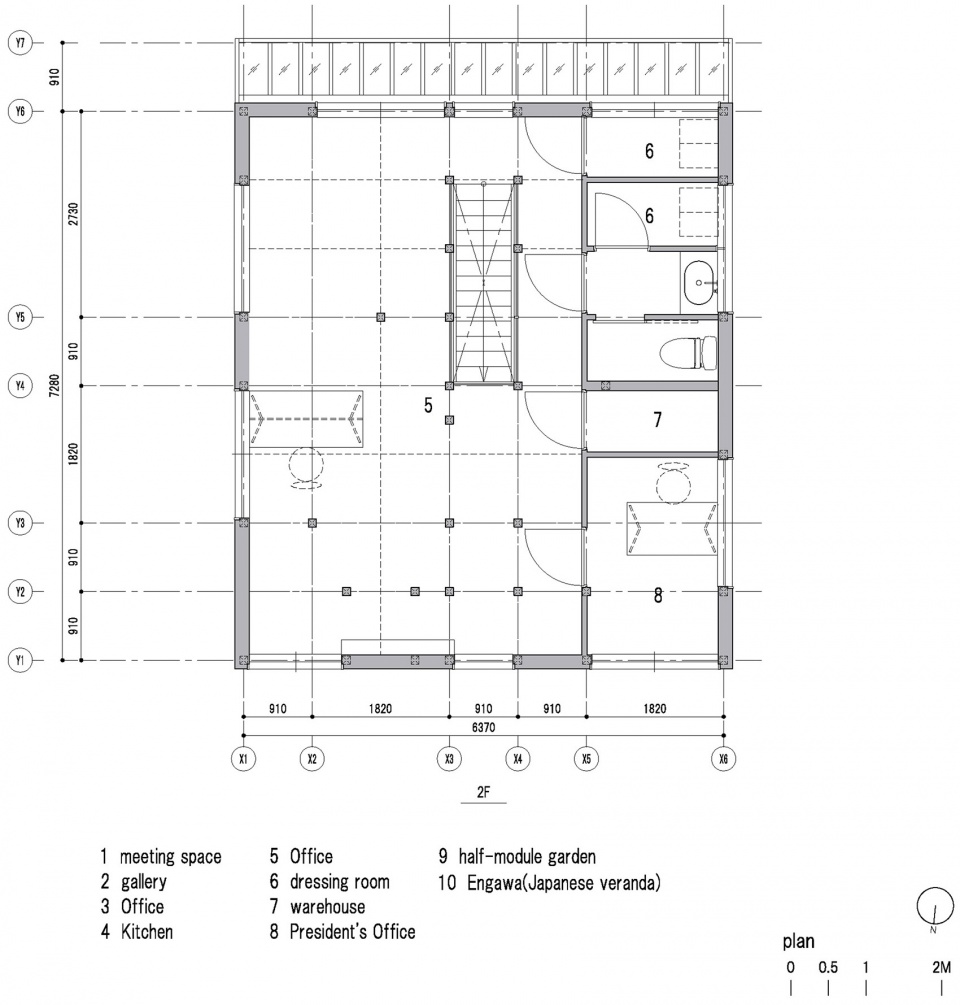
▼二层平面图,second floor plan
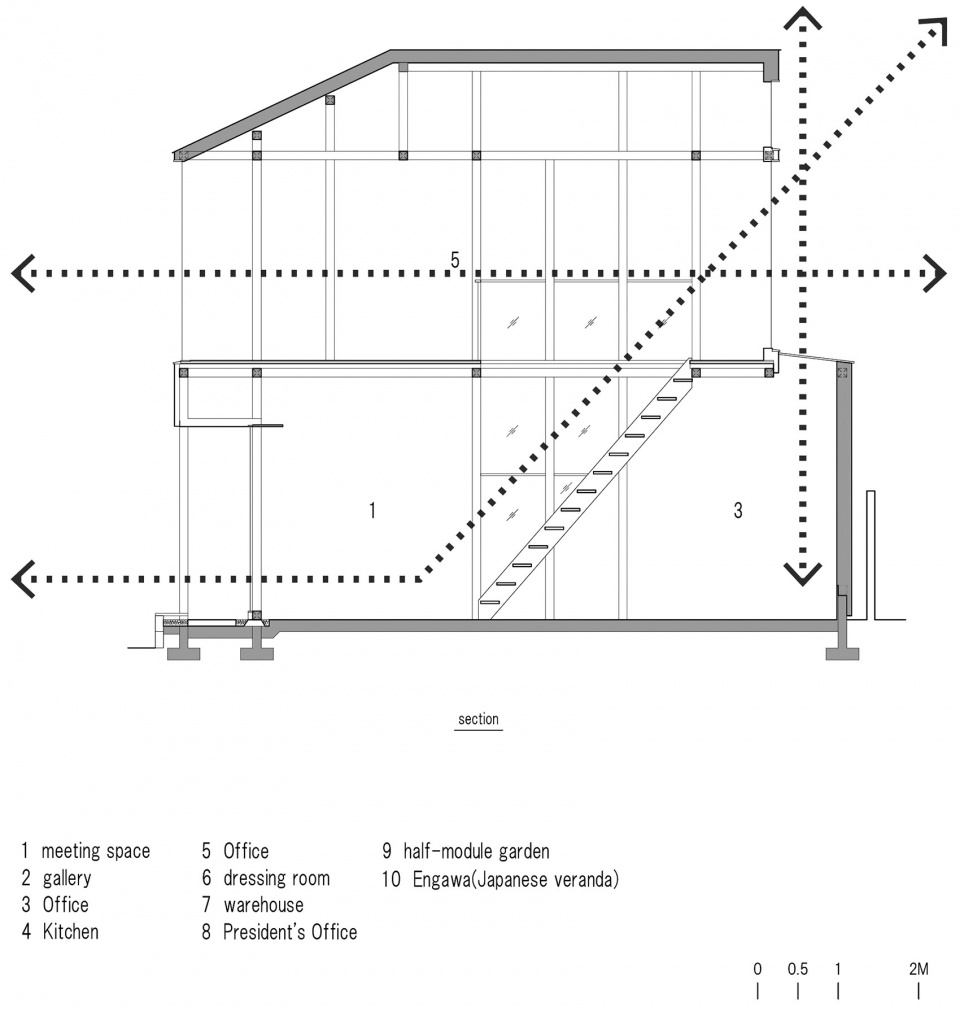
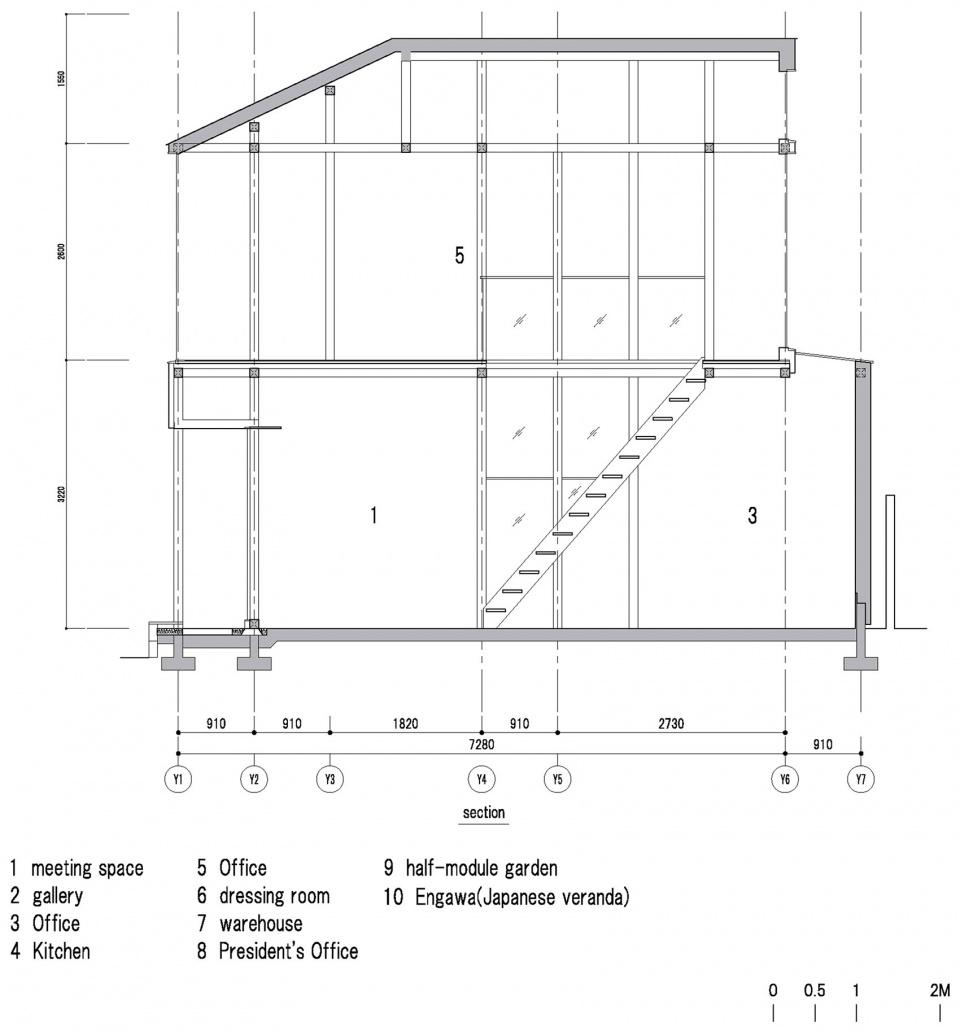
▼剖面图,section
Project Name: Office Nomura-Sanko
Office Name: note architects
Office Website: http://note-arch.com/
Social Media Accounts: https://www.instagram.com/notearchitects/
Contact email: info@note-arch.com
Firm Location: Koto-ku Tokyo Japan
Completion Year:2023
Gross Built Area (m2/ ft2):94㎡/1010 ft2
Project Location: Shinagawa-ku Tokyo Japan
Program / Use / Building Function: office
Lead Architects: note architects
Lead Architects e-mail: info@note-arch.com
Photo Credits: Kenta Hasegawa
Photographer’s Website: http://o-f-p.jp/
Photographer’s e-mail: info@o-f-p.jp