2025年威尼斯建筑双年展主展区特别项目 & 循环手册 / PILLS工作室
第19届威尼斯国际建筑双年展于2025年5月10日至11月23日举办,本届主题为“智能、自然、人工、集体”(Intelligens. Natural. Artificial. Collective.),提出了一个关乎全球生态未来的关键命题:我们如何通过设计,让自然、人工与集体智慧共生共构?在总策展人卡洛·拉蒂(Carlo Ratti)的《循环经济宣言》(Circular Economy Manifesto)引领下,本届双年展致力成为首个达成“零废弃”的展览,实现展览的可持续模式,呼吁全行业重新定义“建筑展览”这一临时性空间的存在方式。
The 19th International Architecture Exhibition – La Biennale di Venezia is scheduled to take place from May 10 to November 23, 2025. This year’s theme, “Intelligens: Natural, Artificial, Collective”, presents a critical proposition for our ecological future: How can design enable the natural, artificial, and collective intelligence thrive together?Under the guidance of Chief Curator Carlo Ratti and his Circular Economy Manifesto, the Biennale aims to become the first to achieve a “zero-waste” exhibition, redefining the very notion of the architectural exhibition as a temporary space through a sustainable lens.
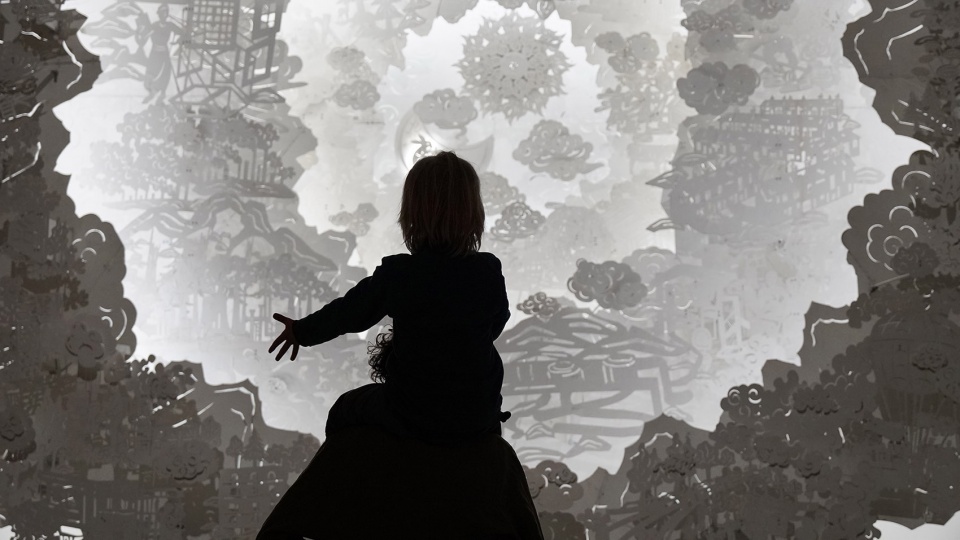
▼《循环手册》装置实景照片,The Circularity Handbook
▼《循环手册》装置实景照片,The Circularity Handbook
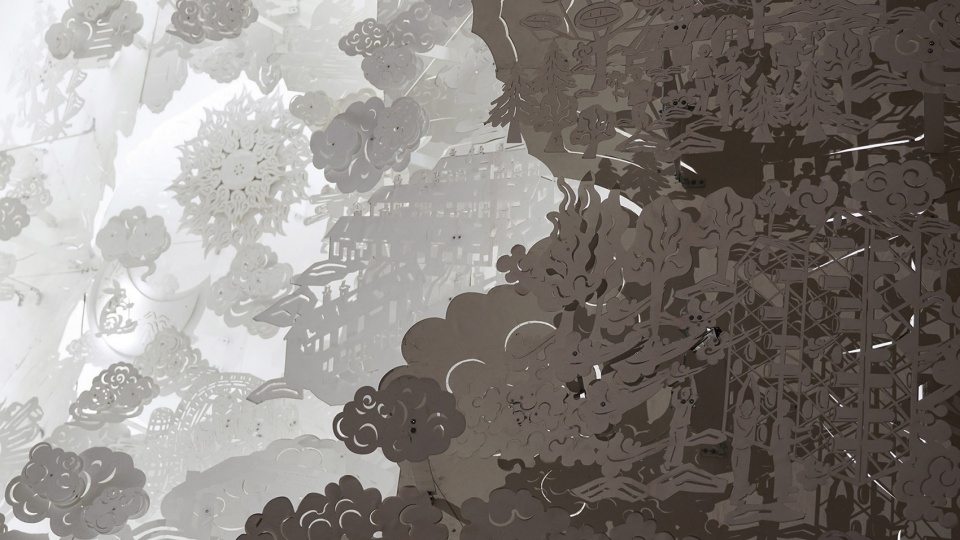
PILLS受总策展人卡洛·拉蒂(Carlo Ratti)邀请,参与主展区特别项目“循环手册”的研究编写及装置设计。作品位于军械库(Arsenale)主展区的核心区域,包含两个组成部分:其一为《循环手册》(Circularity Handbook),一本为所有参展者编写的可持续展览指南;其二为一组衍生自手册内容的空间装置——一座可循环拆卸的构筑物,将文本转化为可感知的视觉体验。两者相辅相成,共同构建出一个框架,探索展览全生命周期中的可持续路径。
Invited by Carlo Ratti, PILLS is participating in the main exhibit’s Special Project with the research, writing, and design of the Circularity Handbook and its Spatial Installation. Positioned in the core area of the Arsenale, the work comprises two main components: The Circularity Handbook — a sustainability guide tailored for all participants of the Biennale; A spatial installation derived from the handbook — a modular, demountable structure that translates text into a tangible, immersive experience. Together, the two parts form a cohesive framework, exploring sustainable pathways across the full lifecycle of an exhibition.
▼《循环手册》装置实景照片,The Circularity Handbook
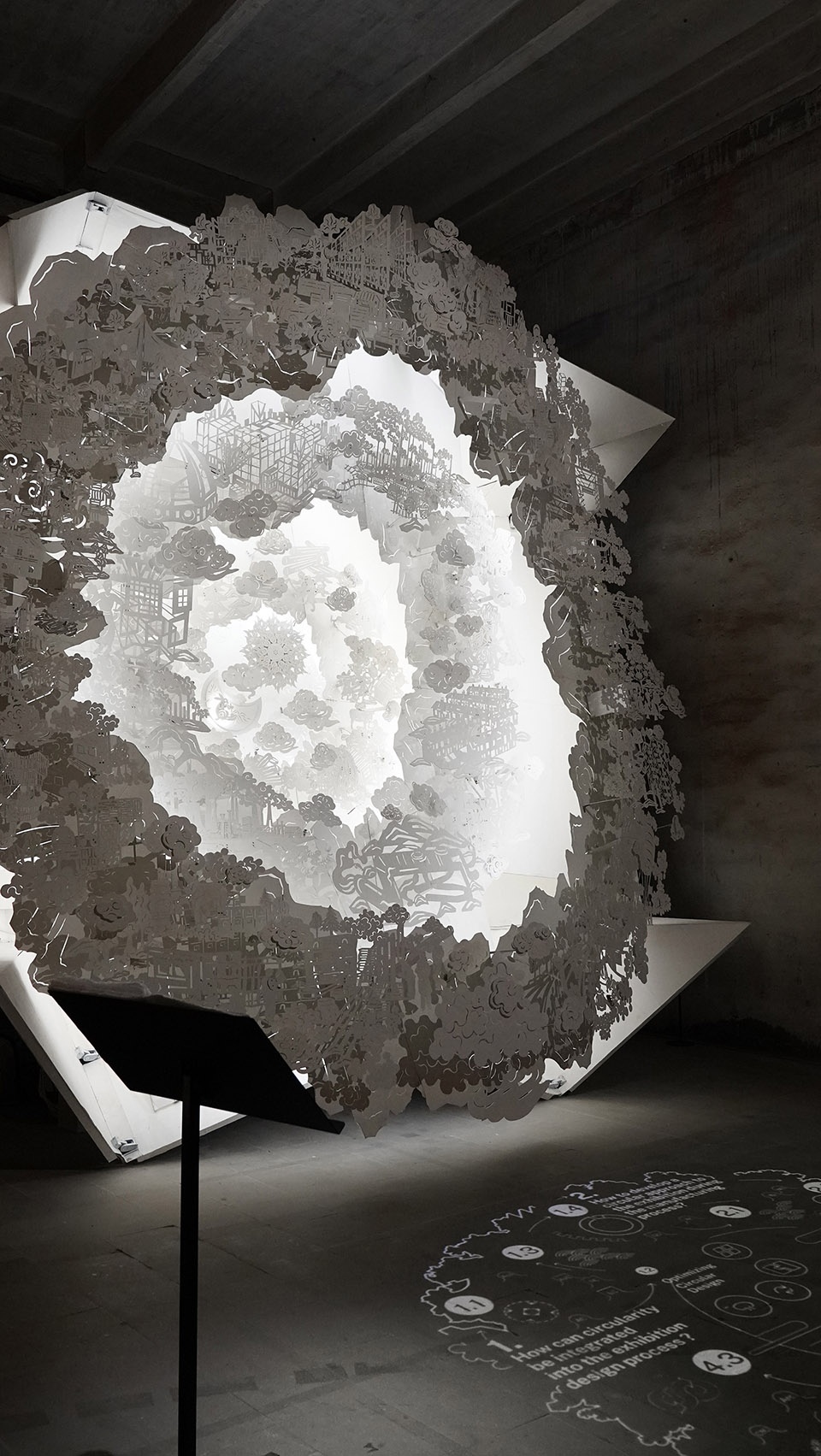
作为一项聚焦建筑展览的可持续转向的研究工作,《循环手册》集合了PILLS与意大利威尼斯建筑大学(Università Iuav di Venezia)的研究成果,并融合纸艺艺术家、平面设计师、机械装置设计师、交互设计师等多个学科背景团队,回应本届双年展对“系统性转型”与“知识共享”的呼吁。
As a research project focused on the sustainable transformation of architectural exhibitions, “The Circularity Handbook” brings together the collaborative outcomes of PILLS and the Università Iuav di Venezia. It integrates contributions from a diverse group of professionals—including paper artists, graphic designers, mechanical installation designers, and interaction designers—responding to the Biennale’s call for “systemic transformation” and “knowledge sharing.”
▼《循环手册》实体手册照片,Photo of the Handbook
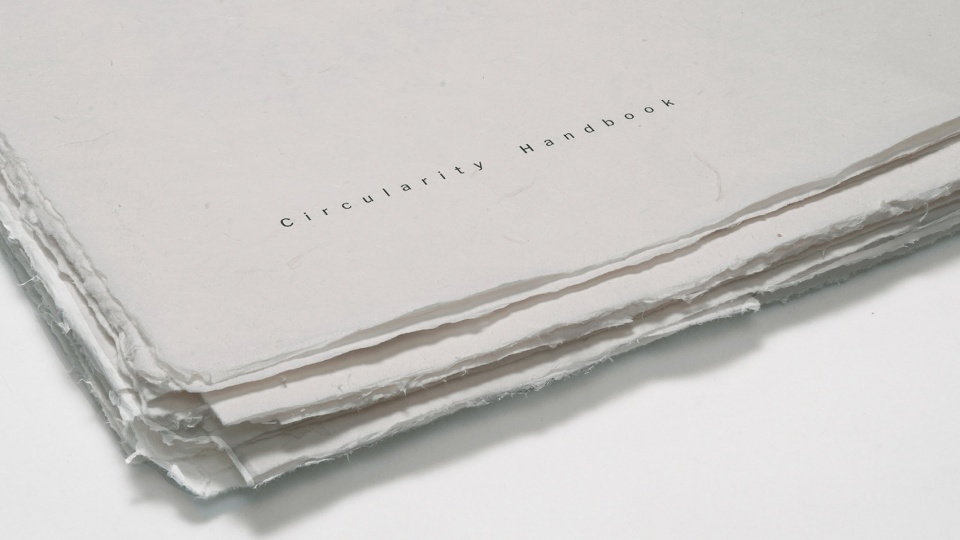
一、知识共享:循环展览的实践方法和开源共创I. Shared Knowledge: Practices of Circular Exhibition and Open-Source Collaboration
▼《循环手册》实体手册照片,Photo of the Handbook
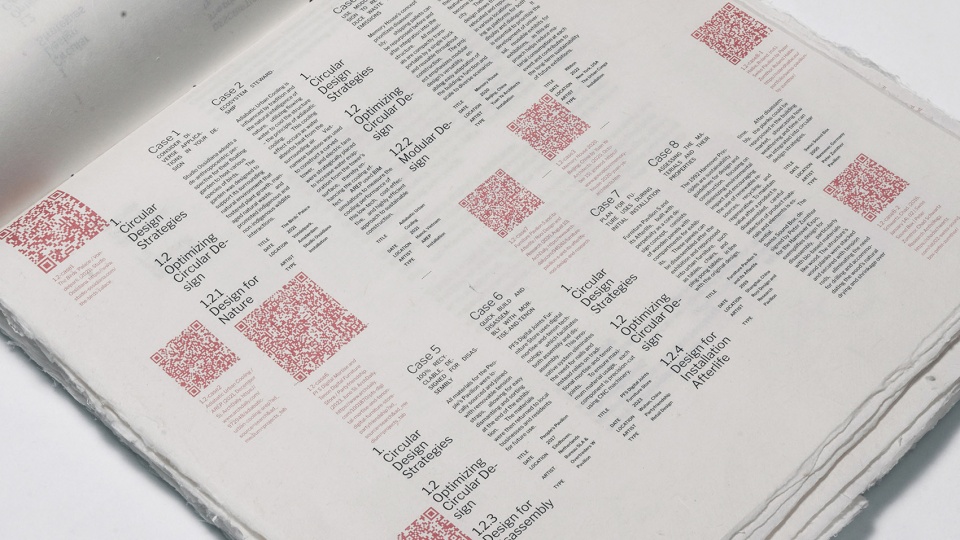
《循环手册》(Circularity Handbook)由PILLS与威尼斯建筑大学联合编写,平面设计由typo_d完成,策展团队负责校对与审阅。手册旨在提供一套可实际操作、贴合威尼斯本地实践的“零废弃展览”方法论与案例研究。它不仅是一份指南,更是一个可持续更新、开放参与的系统性框架,呼应本届双年展的愿景。
The Circularity Handbook was co-written by PILLS and Università Iuav di Venezia, with graphic design by typo_d, reviewed and edited by the curatorial team. The handbook proposes a set of actionable, locally grounded strategies for achieving zero-waste exhibitions in the context of Venice. More than just a guide, it is an evolving, participatory framework aligned with the Biennale’s vision of systemic change.
▼《循环手册》实体手册照片,Photo of the Handbook
手册围绕展览生命周期的四个阶段——设计、建造、展览期间与展后管理——提出具有针对性的策略与行动指引,涵盖材料选择、模块化设计、可回收装配、低碳运维等多个维度,并辅以实际案例作参考。通过收集与整理建筑展览领域的可持续实践,手册系统性地展望了可循环理念在展览全生命周期中的深度融入与实践方法。
Focusing on the four life stages of an exhibition — design, construction, operation, and post-exhibition management — the handbook outlines targeted strategies on topics such as material selection, modular design, recyclable assembly, and low-carbon operations. Supplemented with case studies, it provides a systematic outlook on embedding circularity throughout the exhibition lifecycle.
▼《循环手册》实体手册照片,Photo of the Handbook
1.1流动的知识平台A Flowing Platform for Knowledge
除了正文内容,《循环手册》附有两个重要的开源附录,提供知识共享的基础设施。
附录A:由威尼斯建筑大学(IUAV)维护的本地可持续资源数据库,汇集了威尼托(Veneto)地区的材料供应商、回收商与再生合作方,未来可以持续更新,服务于威尼斯双年展;
附录B:碳排放记录平台,该线上数据表格鼓励每位参展者记录其展品的碳足迹,共同建设一个透明的环境评估数据池。
这种“手册—平台—社区”的结构,使手册从一本工具书,逐渐演化为一个流动的节点,为建筑展览行业的绿色转型提供动力。
Beyond the main content, the handbook includes two key open-source appendices as shared knowledge infrastructures:
Appendix A: A local sustainable resource database, maintained by IUAV, mapping material suppliers, recyclers, and regeneration partners across the Veneto region. It serves as a growing resource for future Biennale editions.
Appendix B: A carbon footprint tracking platform encouraging participants to record and share the emissions data of their exhibits, contributing to a transparent environmental data pool.
This “Handbook–Platform–Community” structure transforms the handbook from a static guide into a dynamic hub, empowering the green transition of architectural exhibitions.
▼《循环手册》电子手册节选,Excerpt From the Digital Handbook
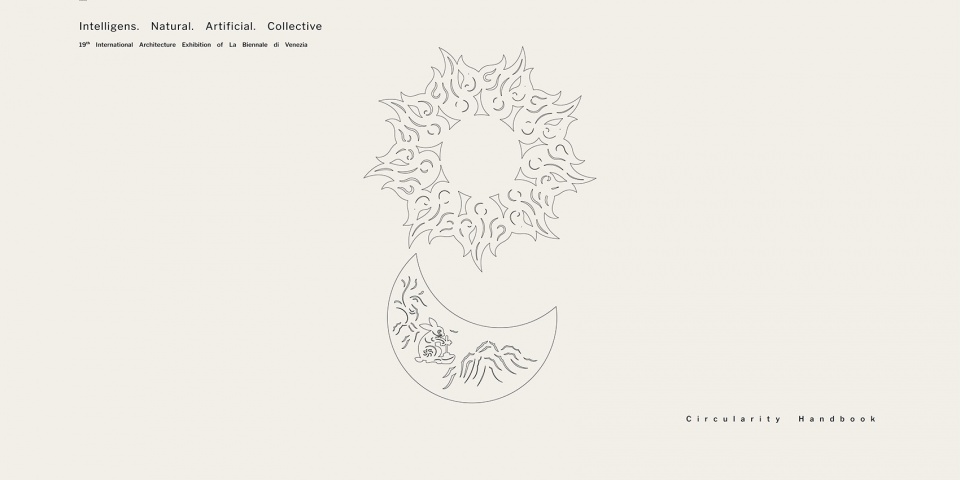
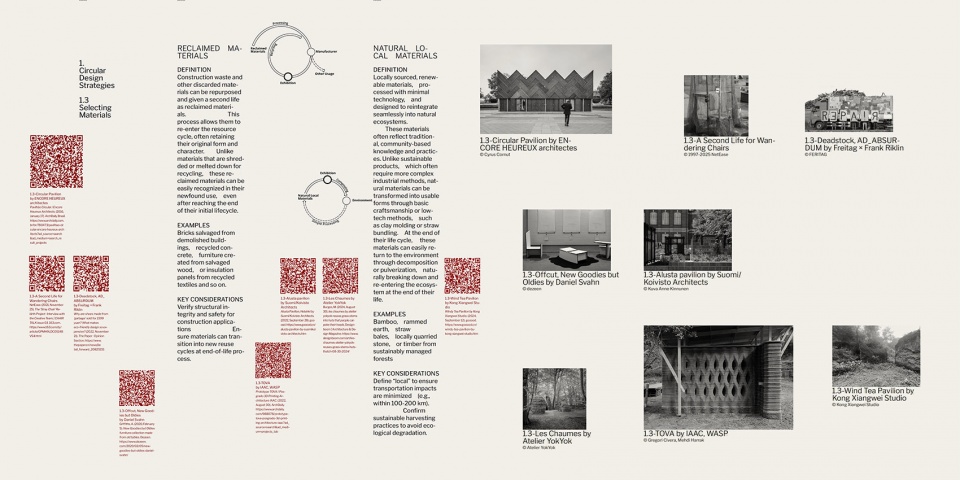
1.2传统的全新演绎A New Interpretation of Tradition
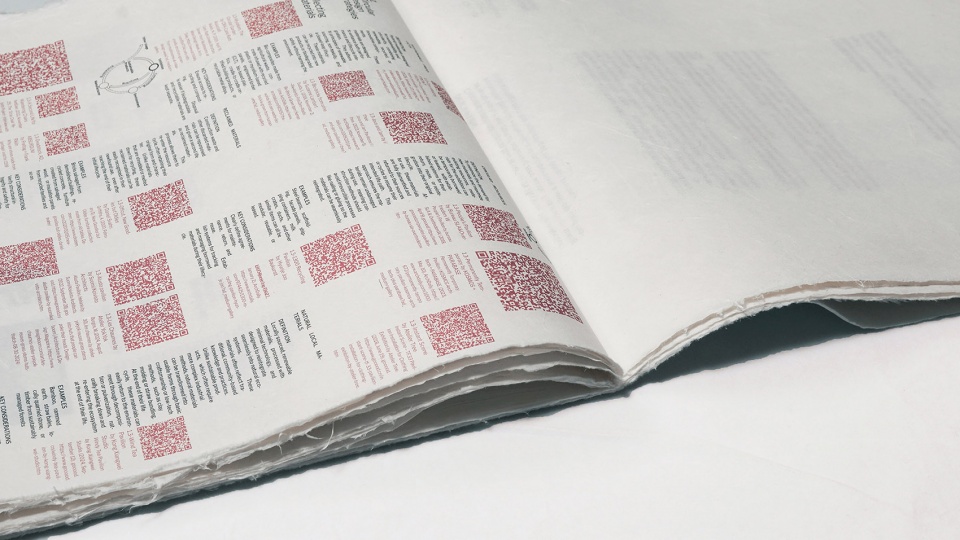
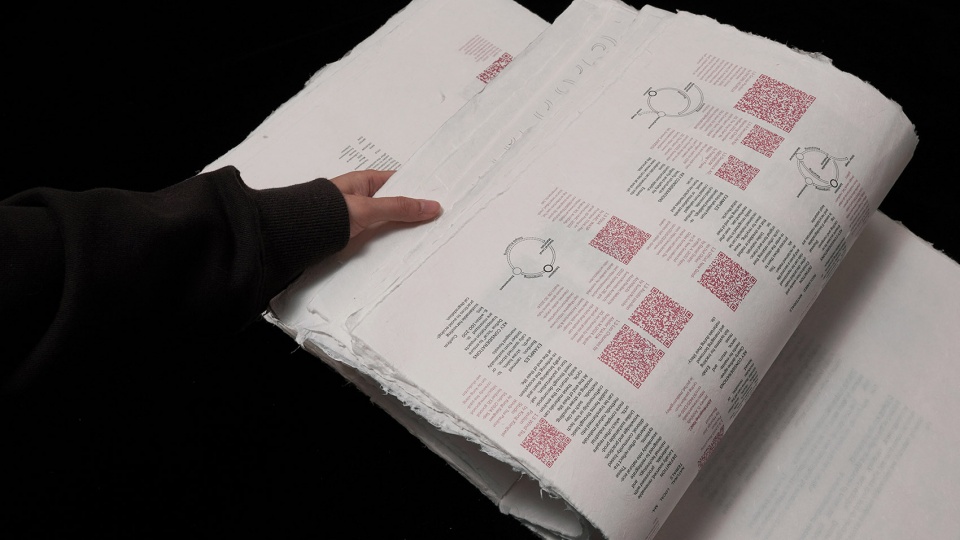
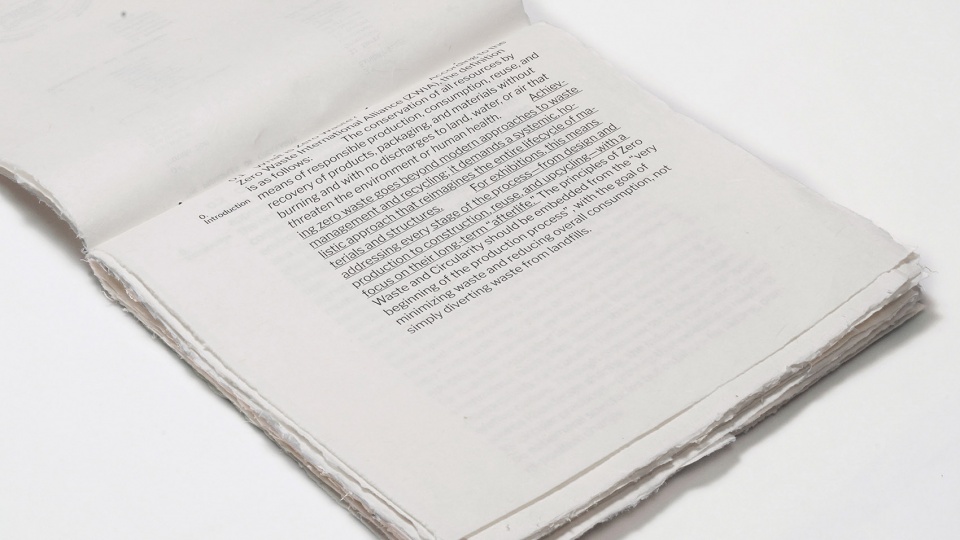
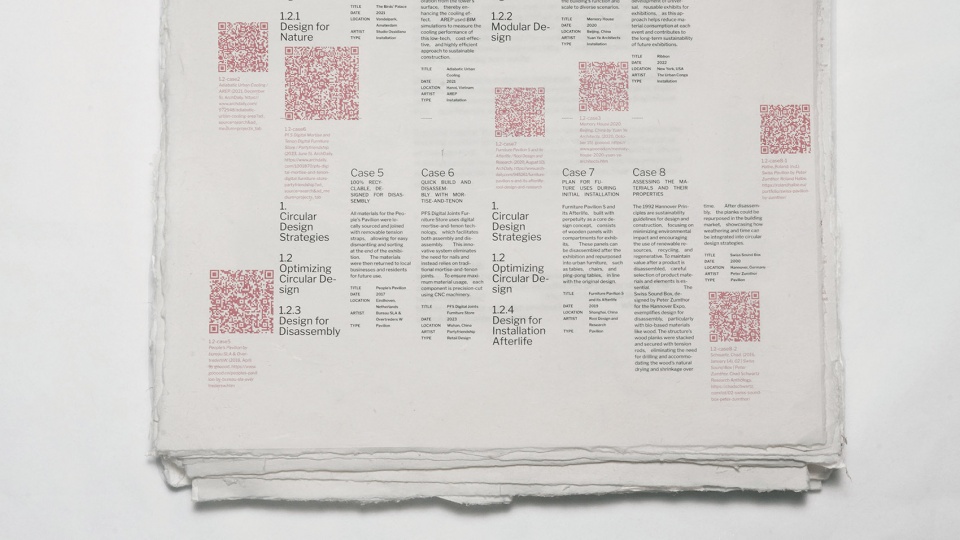
在形式上,实体手册以中国古代卷轴与书法作品为灵感,借用纵向书写(Vertical writing)的版式,将东西方的文字内容进行结构性融合。能够索引到各案例的链接仿佛传统书法中的印章,以二维码的形式钤印其间。实体书选用古代图书典籍常用的宣纸,并在书页中嵌入种子,当展览结束后,书籍可以分解回土壤,孕育新生,展现了从知识建构到材料感知的全维度对循环主题的回应。
Formally, the printed handbook draws inspiration from traditional Chinese scrolls and calligraphy. Its vertical layout merges Eastern and Western content structures. Case study links appear as digital seals — QR codes embedded like red stamps in classical manuscripts. The book is printed on xuan paper, historically used for ancient Chinese texts, and embedded with seeds. After the exhibition, the book can decompose into the soil, symbolizing a full-circle return from knowledge to nature — a material response to the circular theme.
▼《循环手册》实体手册照片,Photos of the Handbook
二、异体同构:循环手册的空间转译与时间哲学II. Isomorphic Translation: From Handbook to Space, From Text to Time
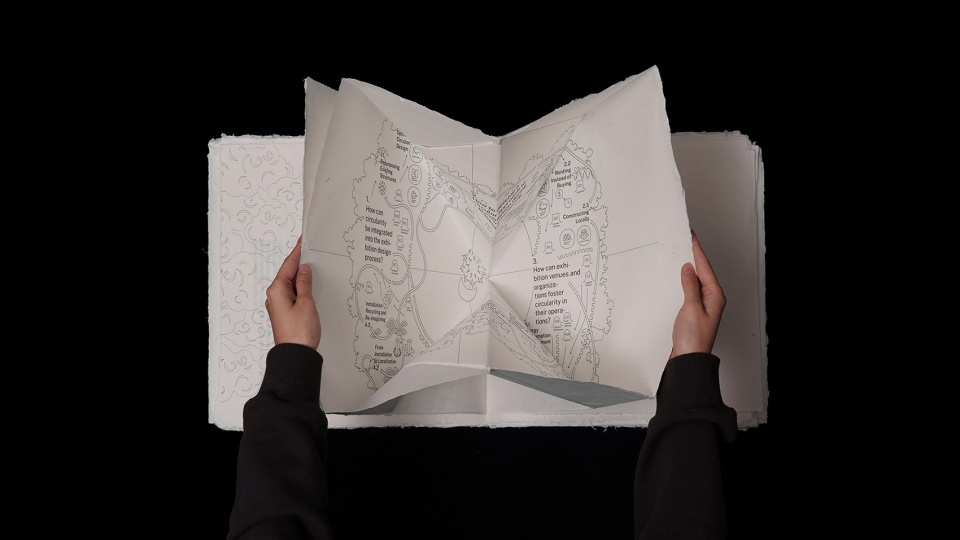
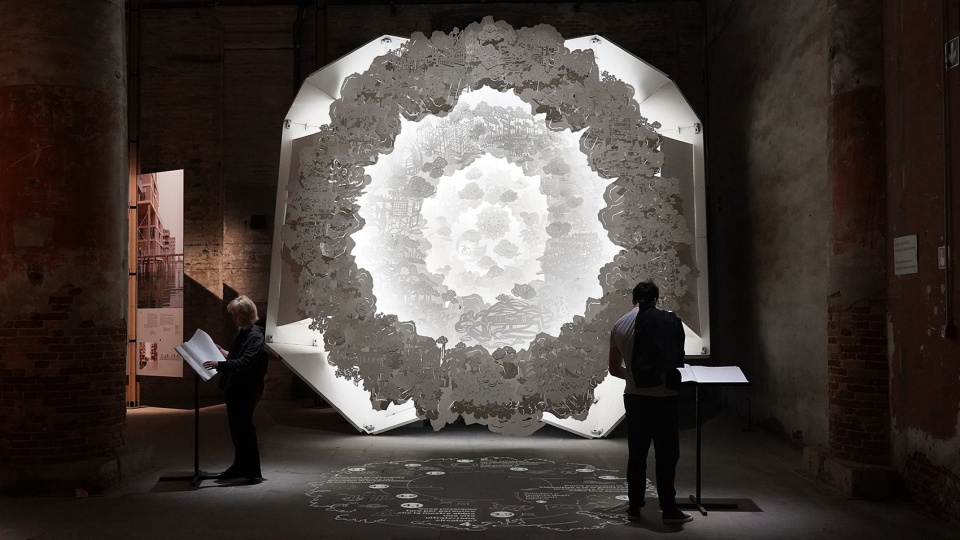
在此次双年展中,PILLS通过衍生空间装置,将手册文本转译为可互动、可参与的空间叙事。装置是一本可开合的巨型立体书,承载时间、文明与生态循环的多重语义。装置原型取自折叠立体书与中国传统纸艺,轻量化尺度庞大的结构,实现装置的重复利用,以呼应双年展的零废弃目标。
For this Biennale, PILLS developed a spatial installation as an embodied, participatory translation of the handbook. The installation takes the form of a giant pop-up book, carrying layered meanings of time, civilization, and ecological cycles. Inspired by folding books and traditional Chinese paper art, the structure is lightweight yet large-scale, ensuring reusability and aligning with the Biennale’s zero-waste goal.
▼《循环手册》装置实景照片,Photos of the Installation
2.1可循环建造的折纸书II.1 A Foldable Book for Circular Construction
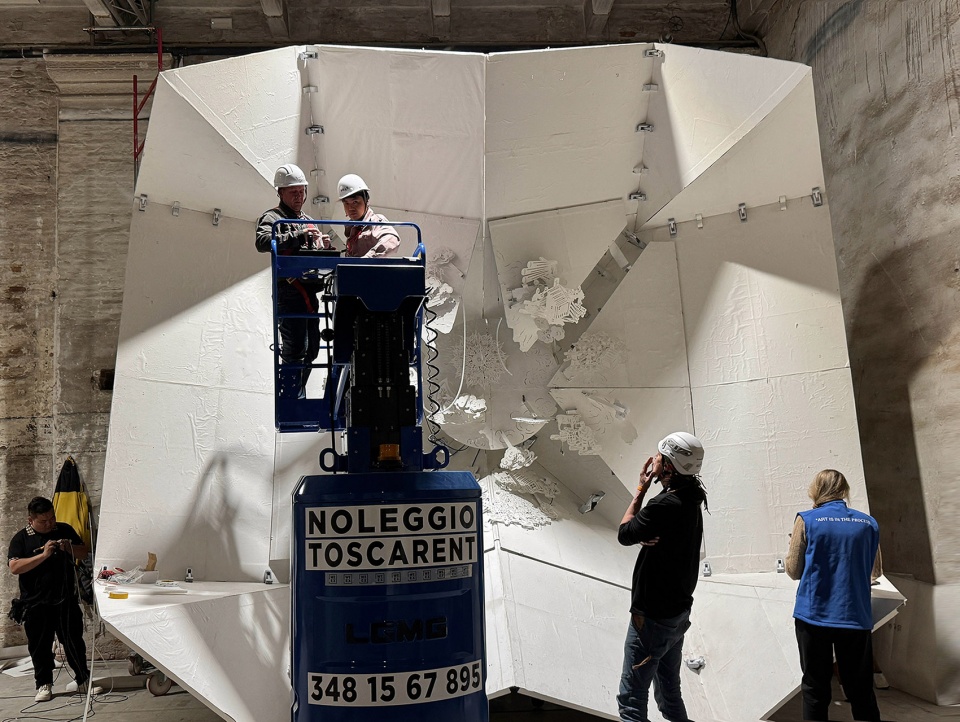
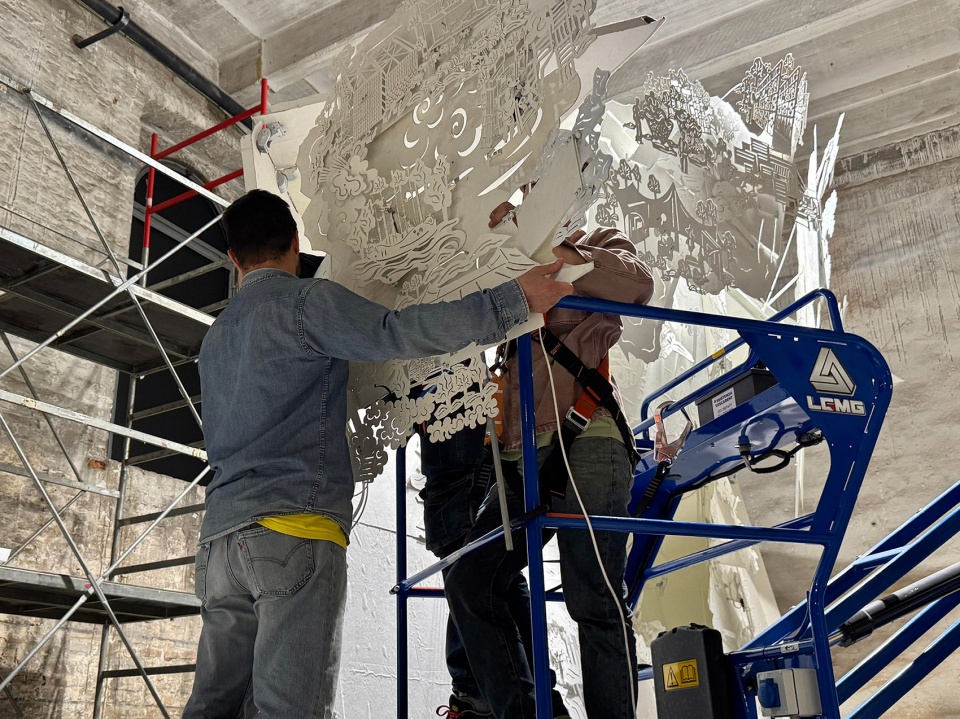
装置采用“模块化预组件”(subassembly)与“可拆卸设计”(design for disassembly)相结合的构造方式,确保展后可高效拆卸、运输与重复利用。 经过在工厂阶段反复测试转轴精度、结构稳定性与纸铝贴合性能,并通过高精度纸艺模切工艺,装置如同书一般能够展开合上,收缩成展开体积的1/3。在运输环节收起来,能最大限度减少体积、运输成本与碳排放。
The installation combines modular subassemblies with a design-for-disassembly approach, allowing it to be easily dismantled, transported, and reused post-exhibition. After rigorous testing in the factory, from hinge precision and structural stability to paper-aluminum adhesion, and with high-precision paper-cutting techniques, the structure behaves like a book: it unfolds and collapses to one-third of its open volume. This compactibility minimizes shipping volume, cost, and carbon emissions.
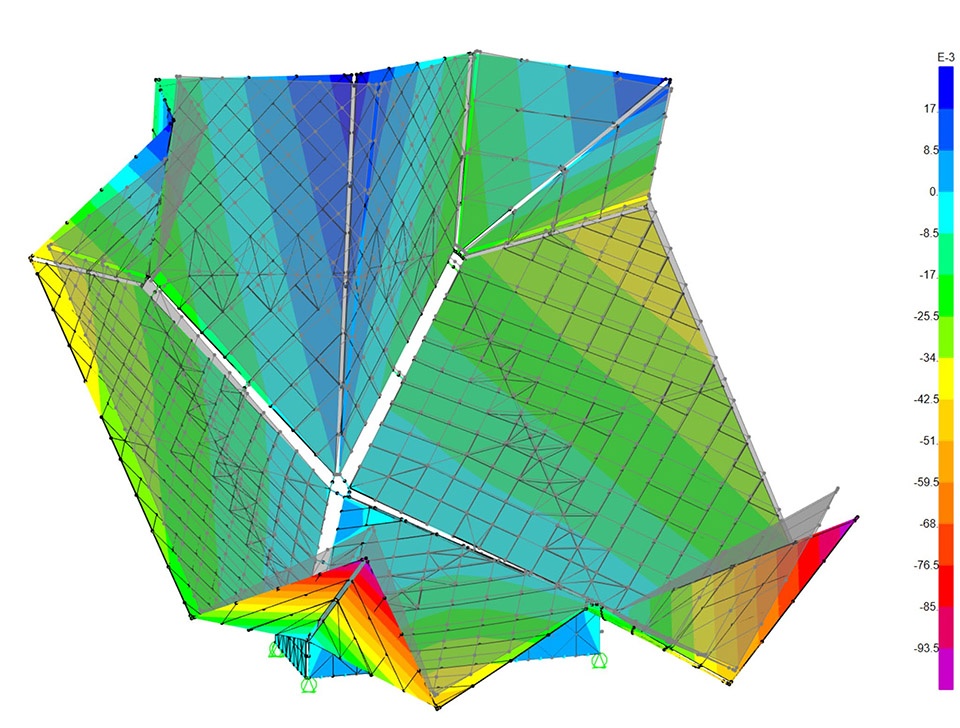
▼《循环手册》装置结构计算,Structural Calculation of the Installation
▼《循环手册》装置主结构示意,Main Structure of the Installation
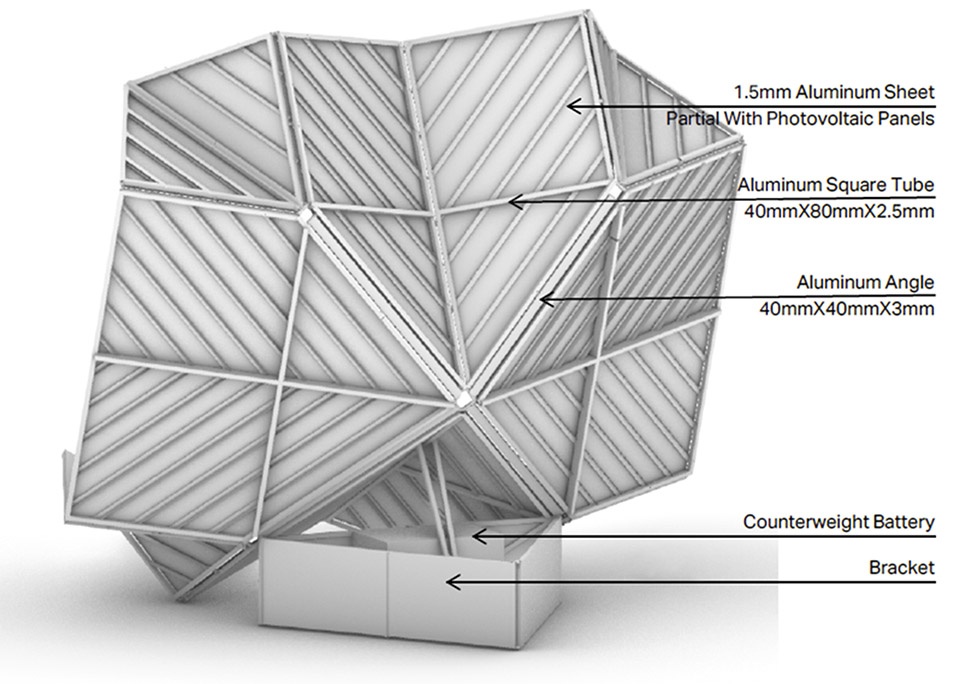
材料方面融合铝、纸张与光伏板:核心结构由铝构成,外覆传统古籍常用的皮纸,呼应“立体书”所强调的质感与肌理。背部嵌有光伏板,为剪纸发光元件与电机系统提供清洁能源,构建起“自我供能”的独立系统,实现能源的内部循环。
Material-wise, the installation fuses aluminum, paper, and photovoltaic panels: the core frame is aluminum, wrapped in traditional Chinese paper (pi zhi), echoing the texture of ancient texts and the tactile logic of pop-up books. Solar panels are embedded on the reverse side, powering the lighting and motor system for the paper-cut components — a self-sufficient energy loop supporting internal sustainability.
▼《循环手册》装置背部照片,Back View Photo of the Installation
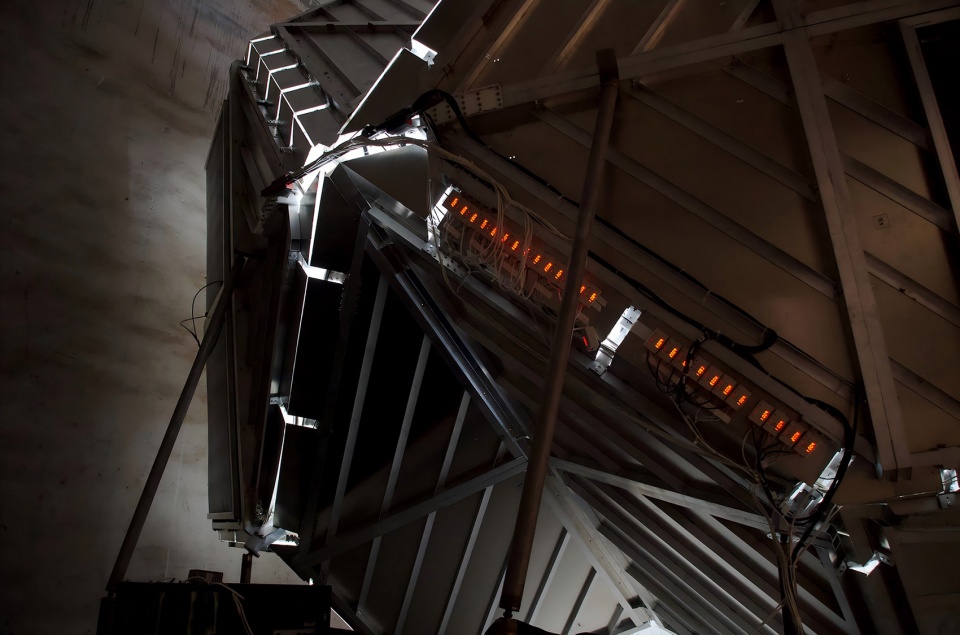
2.2时空嵌套的循环寓言II.2 A Nested Allegory of Time and Civilization
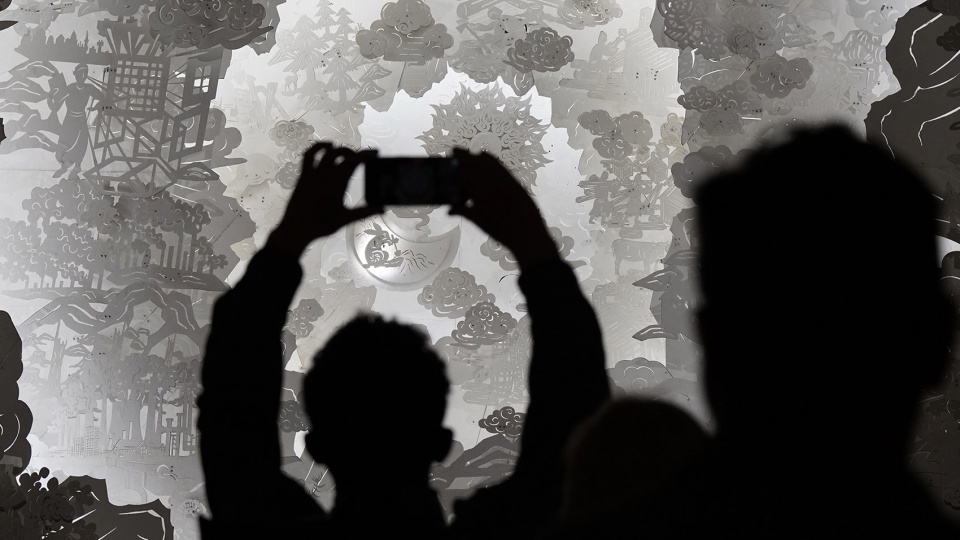
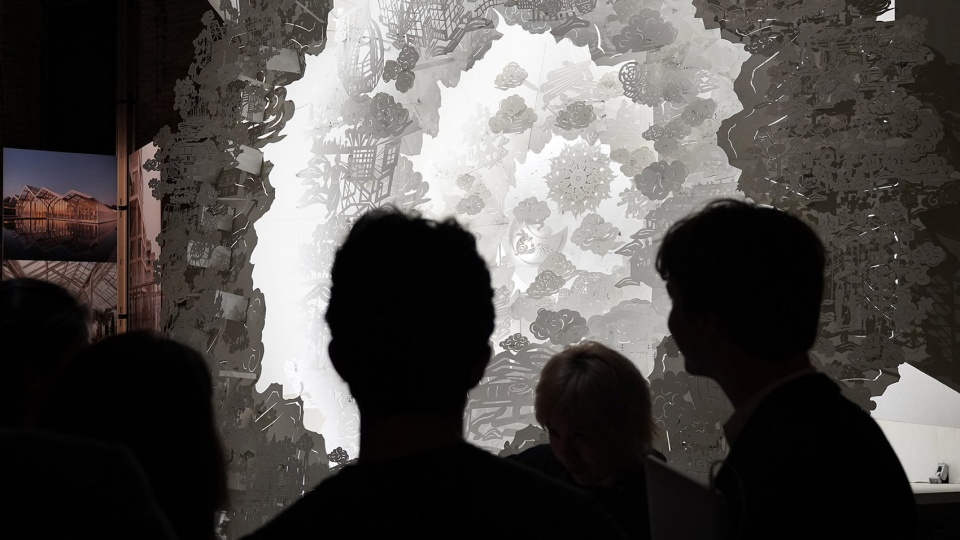
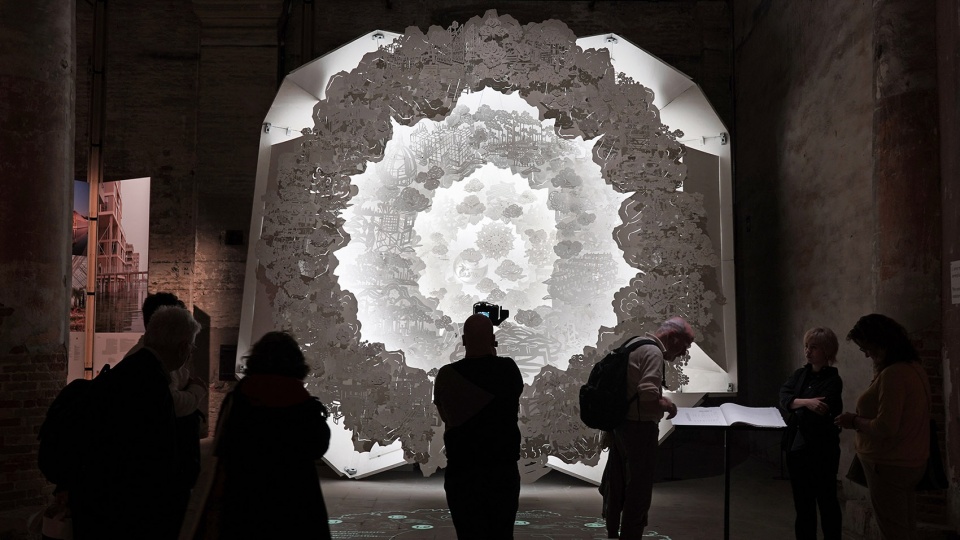
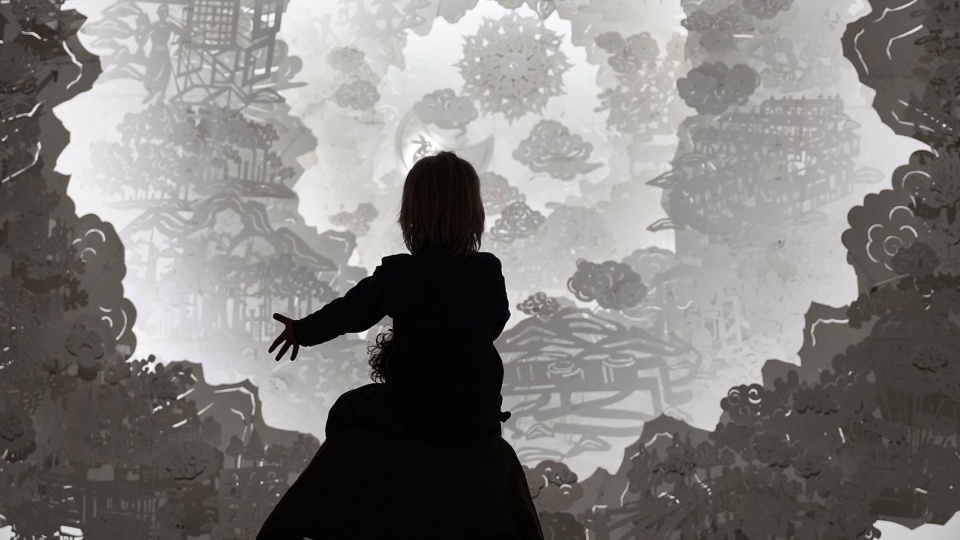
装置的叙事结构由三重同心圆嵌套构成,象征农耕文明、工业文明与生态文明的时空演进。其环状构型回应“道生一,一生二,二生三,三生万物”的宇宙观。中心的日月图腾标示着日月更替的自然循环,自内向外展开,装置讲述了人与建造环境之间不断演化的关系:从最初的适应,到主动改造,最终回归共生。最外层为《循环手册》的叙事镜像,将其四大章节转译为对应的四个象限,构建出叙事与画面的层层嵌套。图样设计从汉代画像砖和剪纸艺术中汲取造型灵感。
The installation’s narrative is structured through three concentric rings, symbolizing the temporal evolution from agrarian to industrial to ecological civilizations. Its circular form echoes the Daoist cosmology: “The Dao gives birth to One, One gives birth to Two, Two gives birth to Three, and Three gives birth to all things.”
▼《循环手册》装置实景照片,Photos of the Installation
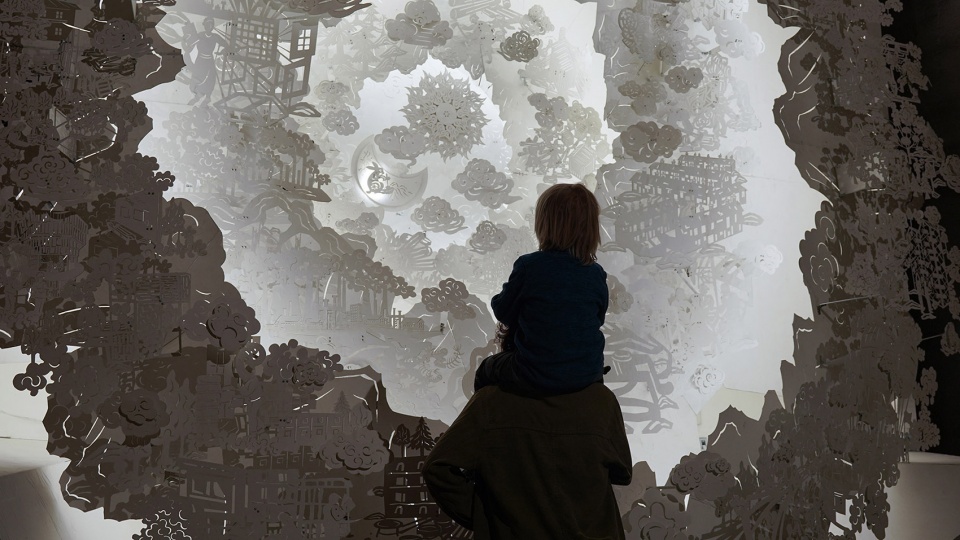
装置的整体设计灵感源自中国传统的时间观。不同于现代所熟悉的“钟表时间”,东方哲学更关注时间在自然中的流动——季节更替、昼夜轮转、万物生长与衰退,皆体现出一种“循环”而非“线性”的时间理解。“顺应自然节奏”的思想构成了装置的设计基础:它试图将时间转化为一种可“看见”、可“走进”的空间形态,在观者的行走中体认古代的循环理念,并与当代的循环愿景建立联结。
The installation’s conceptual foundation lies in Chinese philosophies of time. In contrast to modern “clock time,” Eastern thought emphasizes time’s cyclical flow in nature — seasons, day and night, growth and decay — forming a non-linear understanding of time. This idea of “attuning to natural rhythms” forms the basis of the design: time becomes a visible, walkable space through which the audience can experience ancient notions of cyclical temporality and connect them to contemporary visions of sustainability.
▼《循环手册》装置实景照片,Photos of the Installation
2.3异体同构的叙事闭环II.3 A Narrative Loop of Isomorphic Elements
在双年展现场,装置与《循环手册》之间的地面设置了一幅投影动画,该互动投影由中央美术学院设计学院教授费俊设计,将循环图解转化为动态媒介。该图解参考中国古代城邦地图与哲学中的“轮回观”,以目录式的视觉结构,连接手册内容与空间装置,成为场域中的核心视觉枢纽。
At the Biennale site, a projected animation is installed on the ground between the handbook and the spatial installation. This circular diagram, referencing ancient city maps and cosmological “cycle” concepts, serves as a visual index linking the handbook’s content to the spatial design.
▼地面交互投影,Interactive Ground Projection
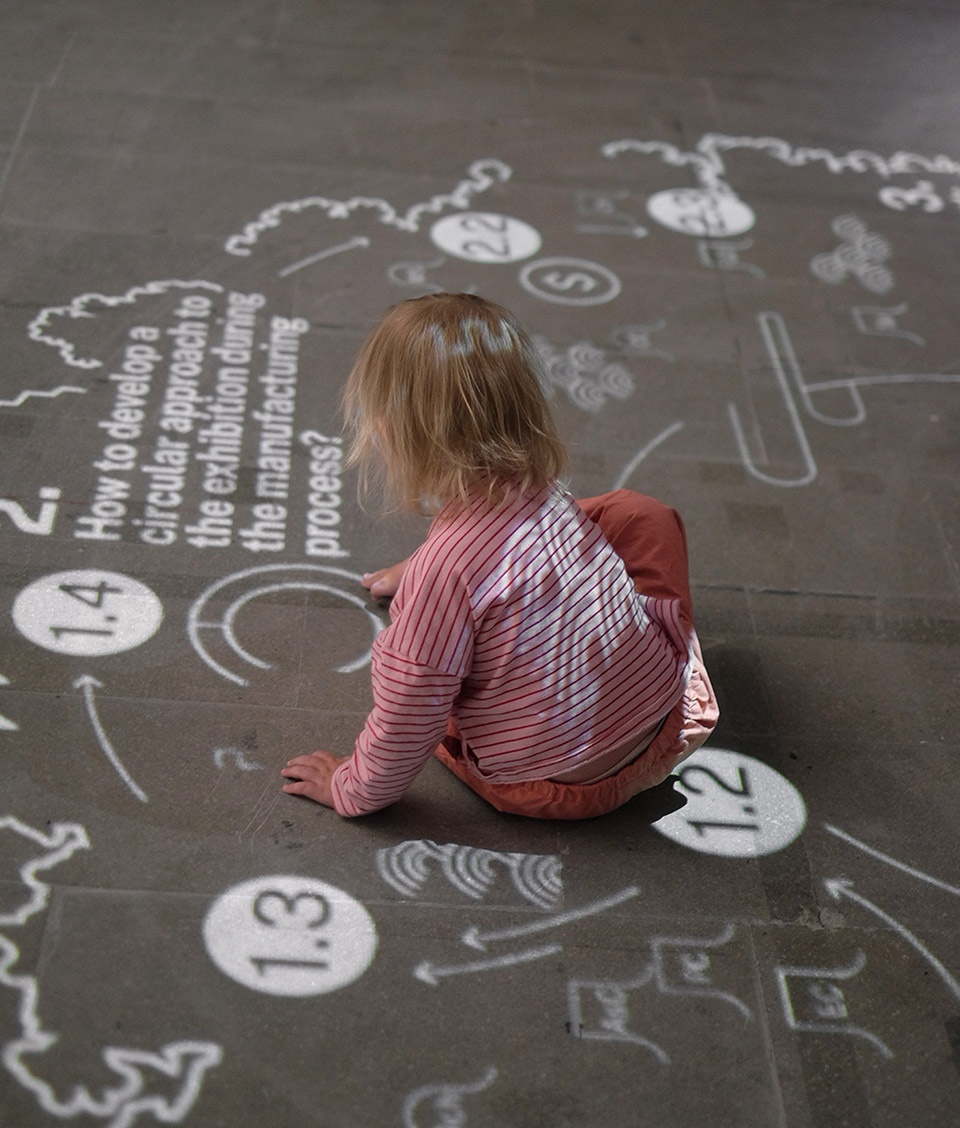
四象限构成的图解在投影中依序展开各章节图标,触发相应的多媒体信息:小节标题、动画图解与材料说明同步弹出,使空间本身转化为一个可感知、可互动的叙事界面。图像、文字与动态内容的融合,使《循环手册》、立体书装置与投影三者构成一个结构互映的叙事闭环——异体同构、彼此回应,共同构建出一个多维的循环叙事系统。
As the four-quadrant diagram unfolds in the animation, each chapter icon triggers corresponding multimedia content — including subtitles, animated diagrams, and material descriptions. The exhibition space itself becomes an interactive narrative interface. The fusion of image, text, and motion completes a narrative loop across the handbook, spatial installation, and projection — distinct in form but structurally aligned. Together, they construct a multi-dimensional storytelling system of circularity.
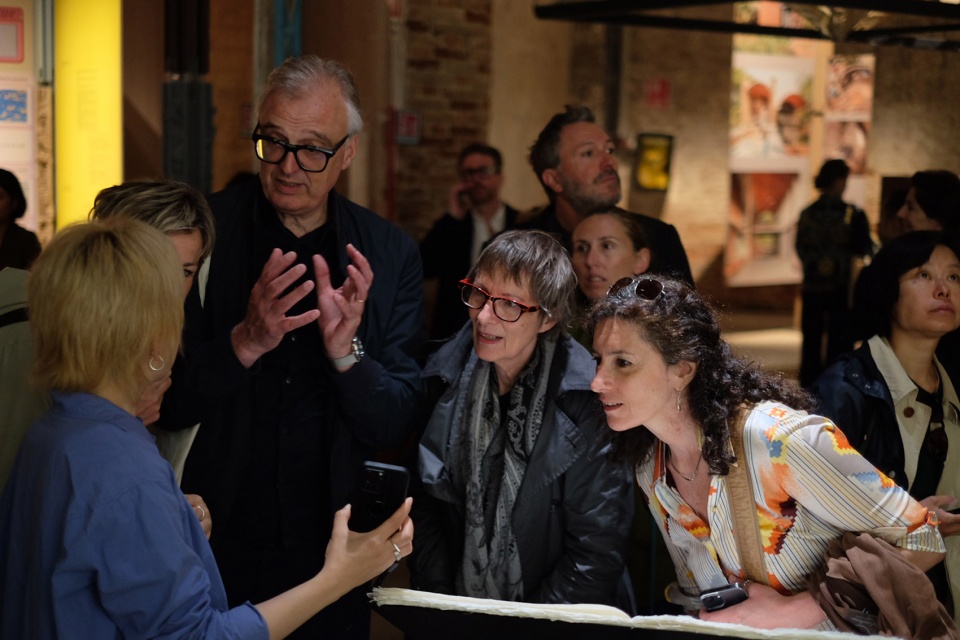
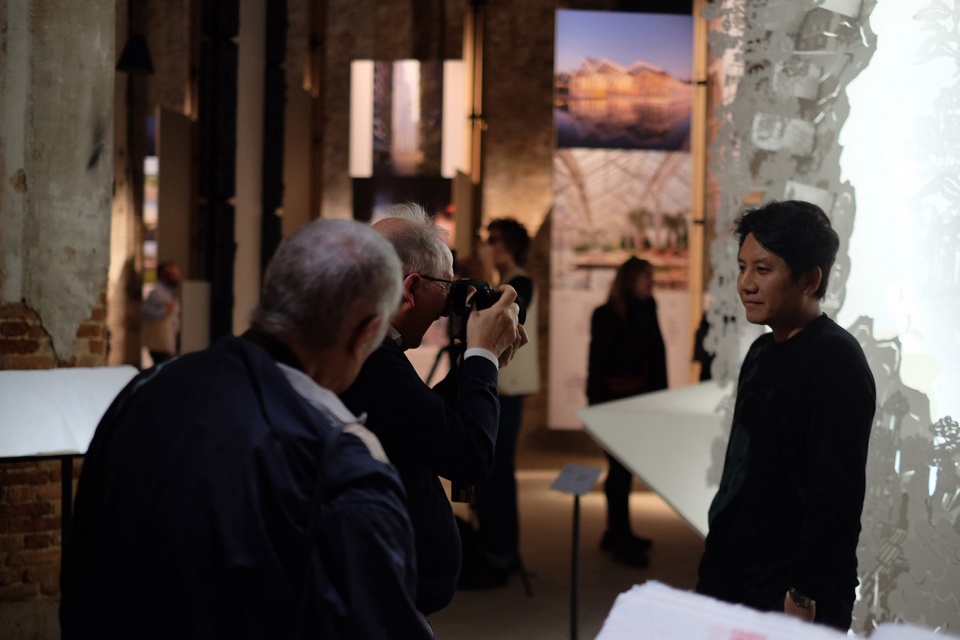
▼展览现场照片,On-site Photos
三、从手册到系统,构建一个“循环的展览”III. From Handbook to System: Constructing a Circular Exhibition
从知识手册到空间装置,从视觉隐喻到材料实践,PILLS在2025年威尼斯建筑双年展的特别项目中,搭建了一座横跨学科、媒介与语义的桥梁。该项目不仅是关于建筑展览可持续转型的试验,也是围绕“循环智慧”在设计、构造、传播与再生层面的系统性探索。《循环手册》及其空间装置共同构成一个完整的叙事,探索循环展览的可能路径与范式。
From research and writing to spatial design, from visual metaphor to material practice, PILLS’ special project at the Biennale Architettura 2025 builds a cross-disciplinary, cross-media, and cross-semantic bridge. This work is not only a prototype for the sustainable transformation of architectural exhibitions but also a systemic exploration of “circular intelligence” across design, construction, communication, and regeneration. Together, the Circularity Handbook and its Spatial Installation form an integrated narrative — probing the possibilities and paradigms of a truly circular exhibition.
▼《循环手册》装置实景照片,Photos of the Installation
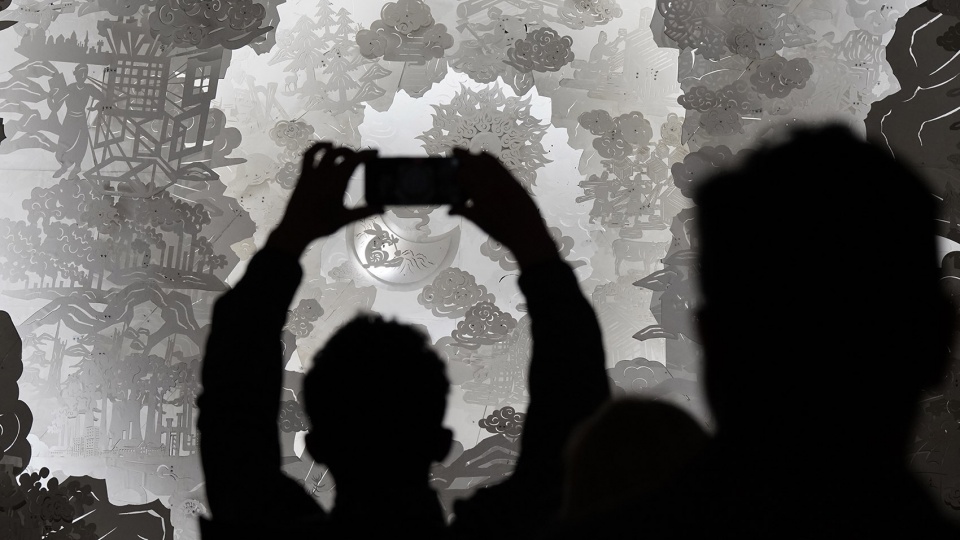
3.1循环语境下的跨域协同与知识共创III.1 Co-Creating Konwledge Across Disciplines in a Circular Framework
《循环手册》项目不仅是一次空间呈现,更是一项以建筑展览可持续转型为核心的跨学科研究实践。手册集合了多方研究成果,并由平面设计团队形成图文与思想并置的知识工具。同时,空间装置则汇聚了纸艺艺术家、机械装置设计师与交互设计师等多个团队的力量,在材料策略与机械语言中回应循环理念,构建了一个融合设计、艺术与可持续思想的协作平台。
The Circularity Handbook is not only a spatial presentation but also an interdisciplinary research practice centered on the sustainable transformation of architectural exhibitions. The handbook brings together diverse research findings, shaped by a graphic design team into a knowledge tool that juxtaposes visuals and ideas. Meanwhile, the spatial installation integrates the efforts of paper artists, mechanical installation designers, and interaction designers, responding to the concept of circularity through material strategies and mechanical language. Together, they create a collaborative platform that merges design, art, and sustainable thinking.
▼《循环手册》装置实景照片,Photos of the Installation
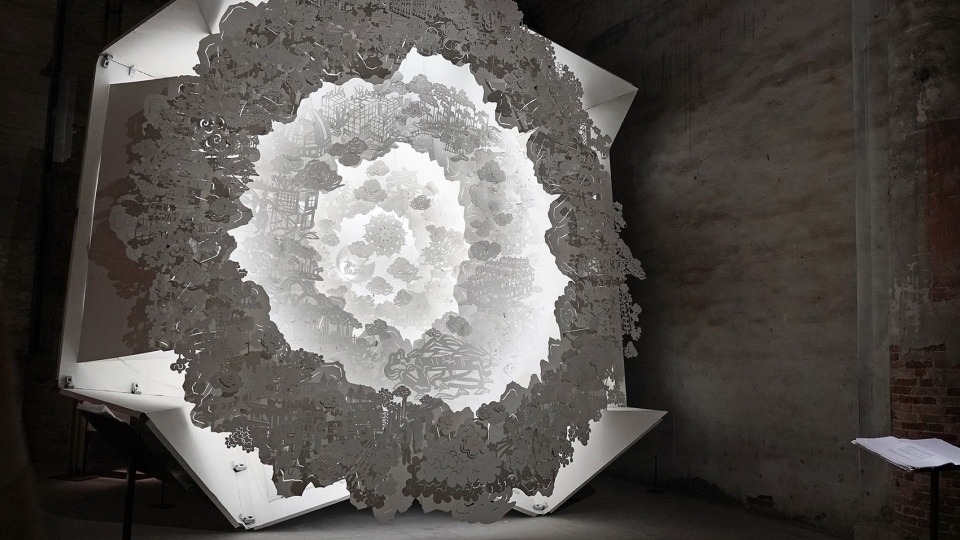
《循环手册》及其空间装置共同构成一个完整的叙事,以此回应本届双年展对“系统性转型”与“知识共享”的呼吁,探索循环展览的可能路径与范式。
The Circularity Handbook and its spatial installation together form a cohesive narrative, responding to the Biennale’s call for “systemic transformation” and “knowledge sharing.” Through this, the project explores possible pathways and paradigms for circular exhibitions.
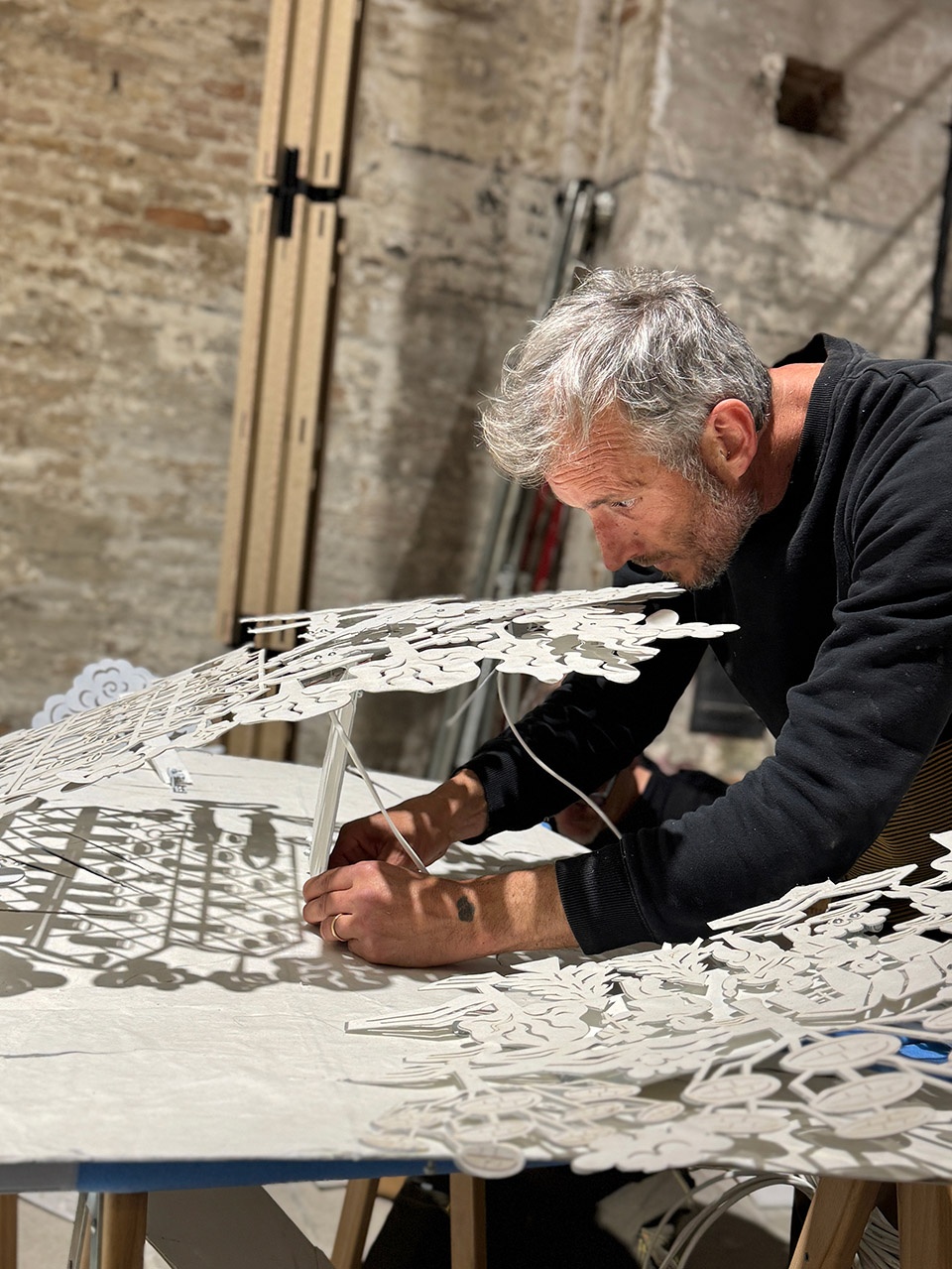
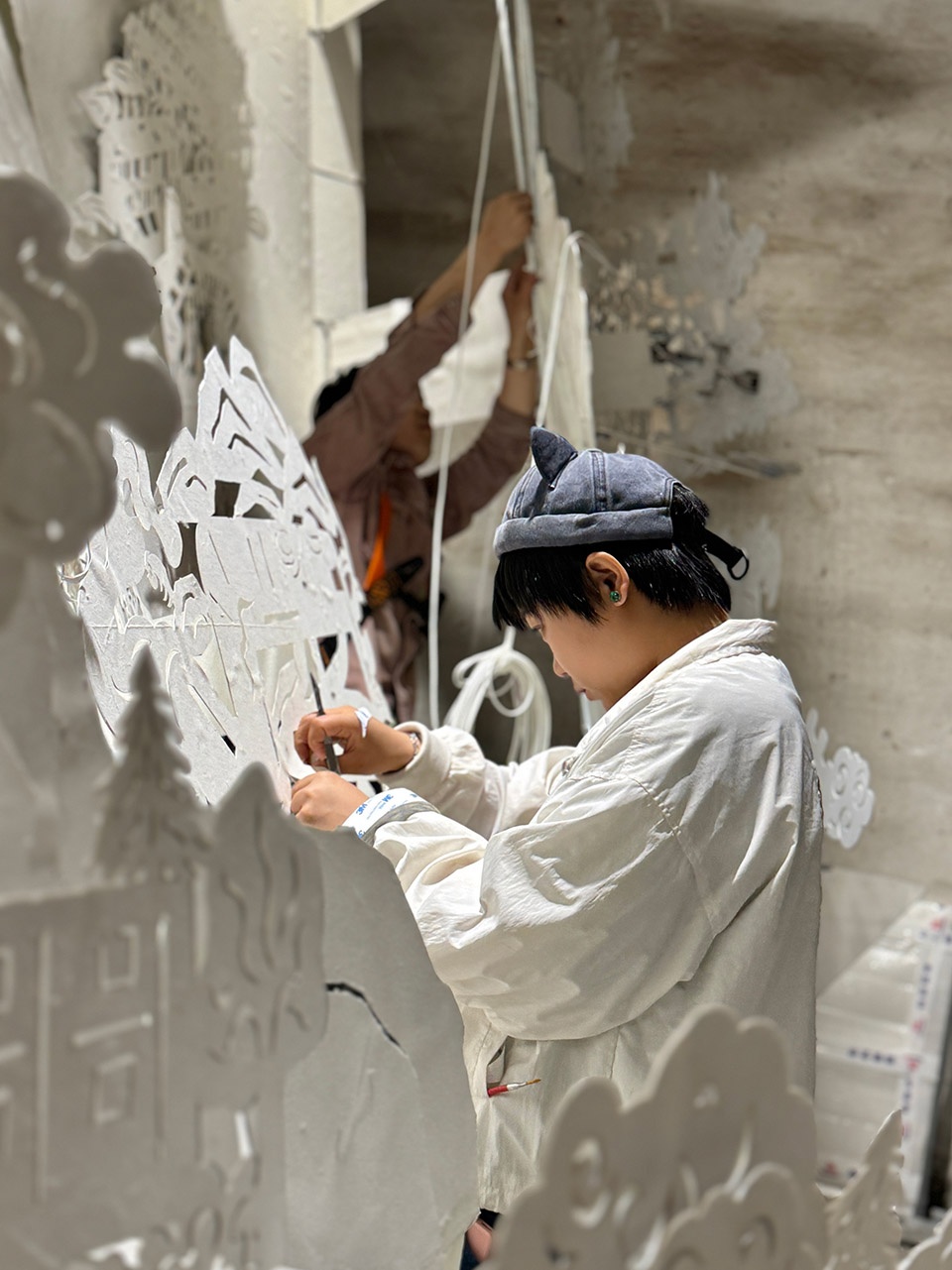
▼现场搭建过程照片,Construction Progress
Project Title: Circularity Handbook
Coordinator & Principal Designer: Zigeng Wang
Project Manager: Canqi Mu
Business Coordinator: Silvia Yuan
Exhibition Period: May 10 – November 23, 2025
Venue: Arsenale, Biennale Architettura 2025, Venice
Circularity Handbook
Research & Writing: PILLS / Zigeng Wang, Canqi Mu, Xianming Zhou, Jing Yuan, Yuxin Yi
Content Contributors: Università Iuav di Venezia / Valeria Tatano, Massimiliano Condotta, Martina Bortolotti, Chiara Scanagatta, Elisa Zatta
Book Design: typo_d / Shirui Ma, Liping Zang, Zhongze Lu, Xiuchen Jin
Circularity Installation
Installation Design: PILLS / Zigeng Wang, Canqi Mu, Yuqing Ren
Installation Production: JIN Arts / Jin Xiao, Xian Zhu, Shuang Lü, Zhifeng Wang, Xiaowen Song, Nan Chen, Xiaoyan Cui, Wenyu Sun, Yaqian Lü, Shaobo Lü, Jiming Guo, Lingli Cai, Qichao Chen, Lin Li, Gang Chen, Yuhui Wang, Jianzhuang Feng, Shuai Lü, Junhong Chen, Jiaping Zou, Pengchang Yang, Shiguang Hao
Pattern Design: Xiaoqing Cui, Zhengwei Tang
Structural Design: Archi-Neering-Design (AND Office) / Zhun Zhang
Interactive Multimedia Design: MOUJITI ART+TECH / Jun Fei, Sihan Liu, Meiqi Shao, Zizhao Wang
Lighting Design: HDA Shenzhen Handu Lighting Design Consultant Co. / Huan Tian, Yankai Hu, Xin Jia, Rufeng Lin, Zhongqing Chen
Materials Consulting: Róng Design Library / Lei Zhang, Christoph John, Jovana Zhang, Jingyi Lu, Xingze Wang
Construction: We Exhibit S.r.l. / Lili Xu, Nicolas D’Oronzio, Laura Valentino, Elena Pagliaricci, Grazia Sechi, Olympia Simpopoulou
Transportation: Trojans Art Services Co., Ltd / Run Zhang, Zhenzi Chen, Jie Gao
Supporters (listed in alphabetical order)
Artron Art Group, COLORS, Guangdong Dongpeng Holdings Co., Ltd, JIN ARTS, SHIEHUR, SHYLON Optoelectronic Technology, Trojan Art Services Co., Ltd, LTD, Vanke Foundation
Advisors
Xiaohui Xie, Xuesong Liu, Ning Xu, Yuxi Lei, Wanli Mo, Jia Weng
Acknowledgements
Yan Qi, Jie Wei, Hua Qian, Dan Cao, Yang You, Rui Guan, Lili Xu, Lisa Li, Kam Zhang