Tres Patis住宅,西班牙 / Twobo Arquitectura
▼住宅概览,overview of the house
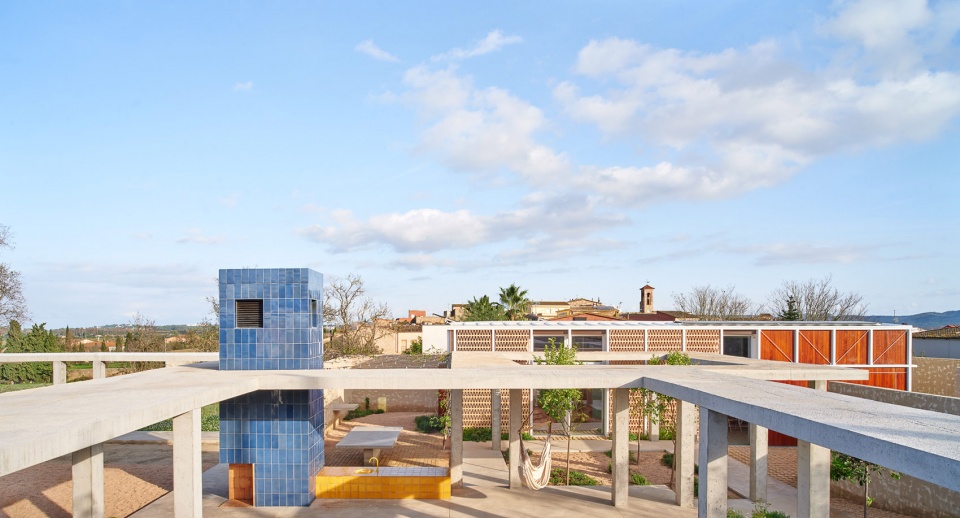
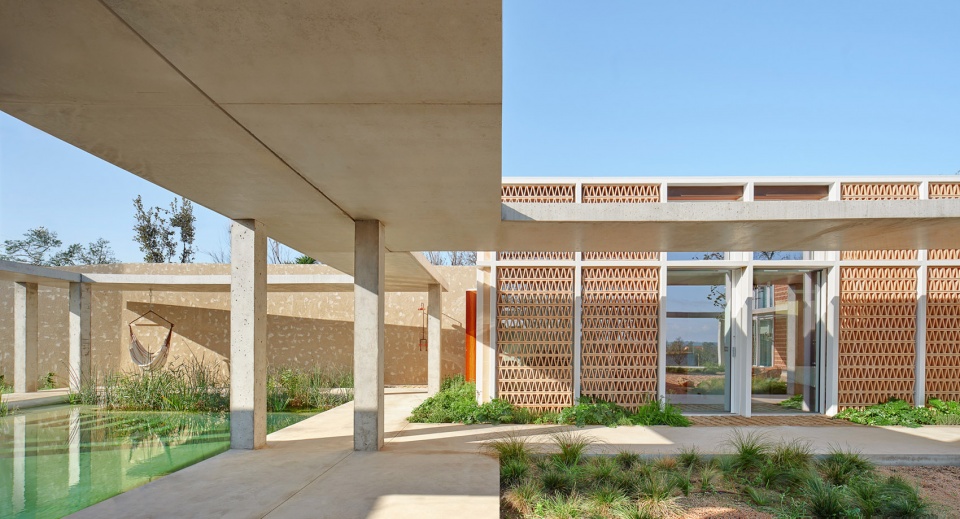
这座位于西班牙北部赫罗纳省阿尔邦斯(Albons)的住宅建筑面积为300平方米,灵感来源于邻近恩普里埃斯(Empúries)古典别墅的建筑传统,致敬地中海住宅中那种富有时间感的经典空间类型:围合式的院墙、中央采光天井,以及围绕庭院组织的房间布局。
Inspired by the classical villas of nearby Empúries, this 300m house in Albons, Girona (northern Spain) pays tribute to a timeless Mediterranean typology of a house with an enclosing wall, a central sky-lit patio, and rooms organized around this central feature.
▼围合式的院墙,a house with an enclosing wall
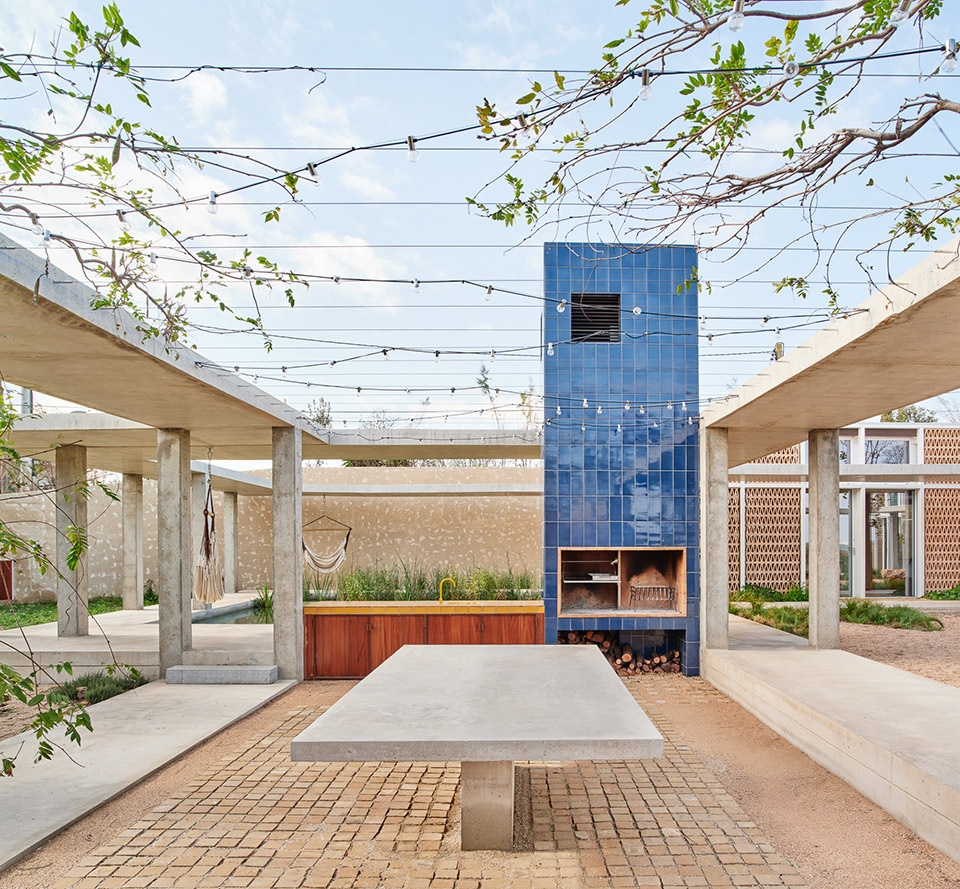
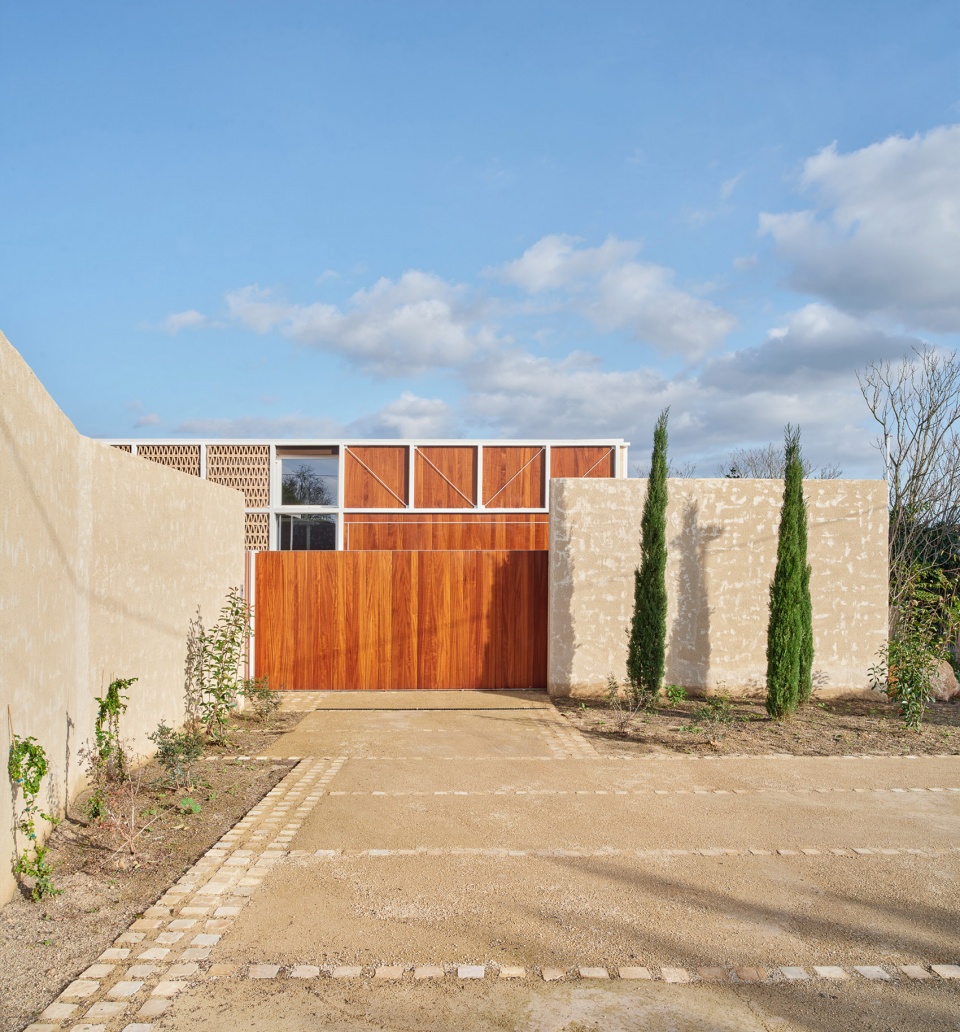
两堵粗犷抹灰的墙体环绕整个场地,既抵御了来自北方的强风,也隔绝了外部视线。然而,这两堵墙的朝向在内部却创造了通透开放的体验,使居住者得以享受被框取的景观、遮蔽感与室内外之间和谐流动的空间关系。墙体上的开口和视线穿透的设计,进一步丰富了内部空间的层次与交流,建筑师将其视为对勒·柯布西耶(Le Corbusier)与西古德·勒维伦茨(Sigurd Lewerentz)——两位对窗、框景与开口极为执着的建筑师——的致敬。
Two roughly plastered walls embrace the entire plot, protecting the house from the harsh northern winds and shielding it from views from the outside. Yet, the orientation of these walls invites openness from within, allowing residents to enjoy framed views, a sense of shelter, and a harmonious flow between indoor and outdoor spaces. Indeed, within the enclosing wall are voids encouraging lines of sight throughout the property. According to the architects, this inclusion is a tribute to Le Corbusier and Sigurd Lewerentz – architects known for their obsession with windows, frames and apertures.
▼围绕庭院组织的房间布局,rooms organized around this central feature
▼植被为庭院带来自然生机与阴影,vegetation brings natural vitality and shade to the courtyard
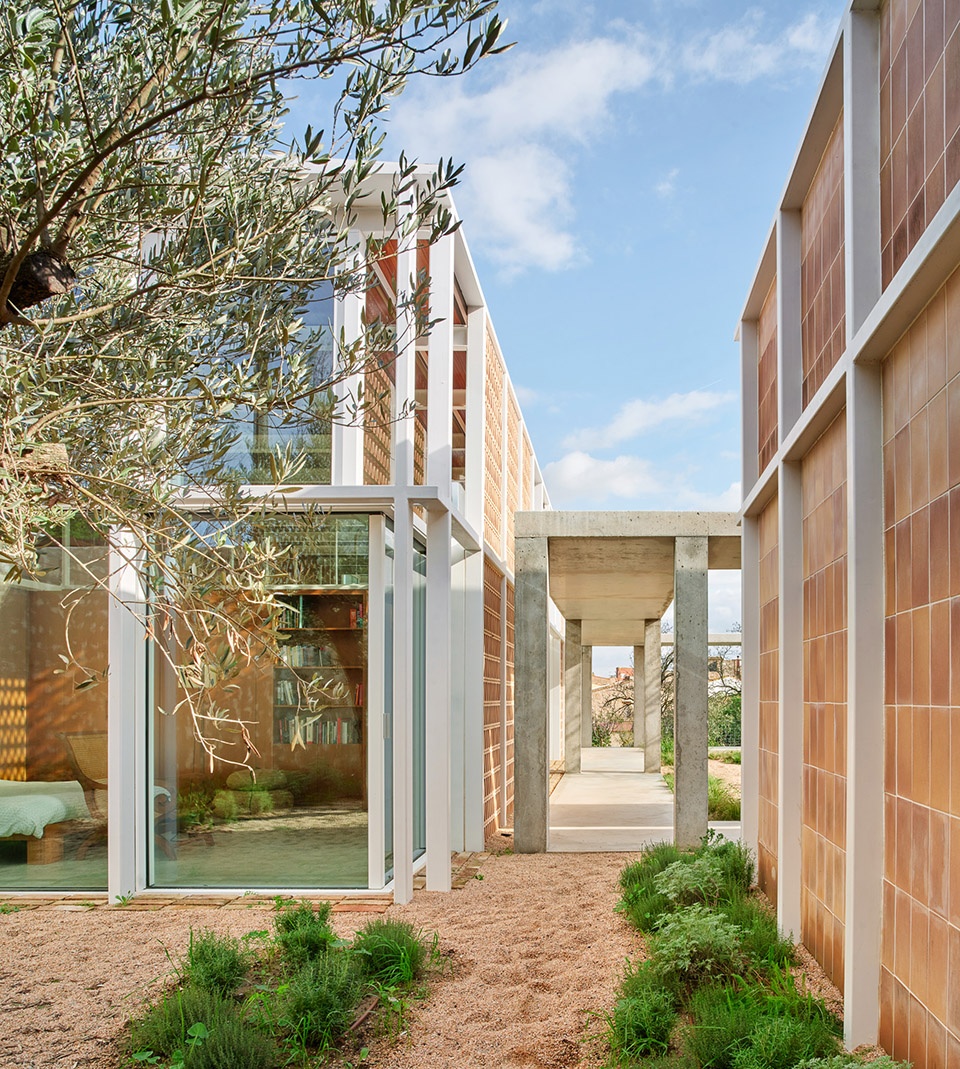
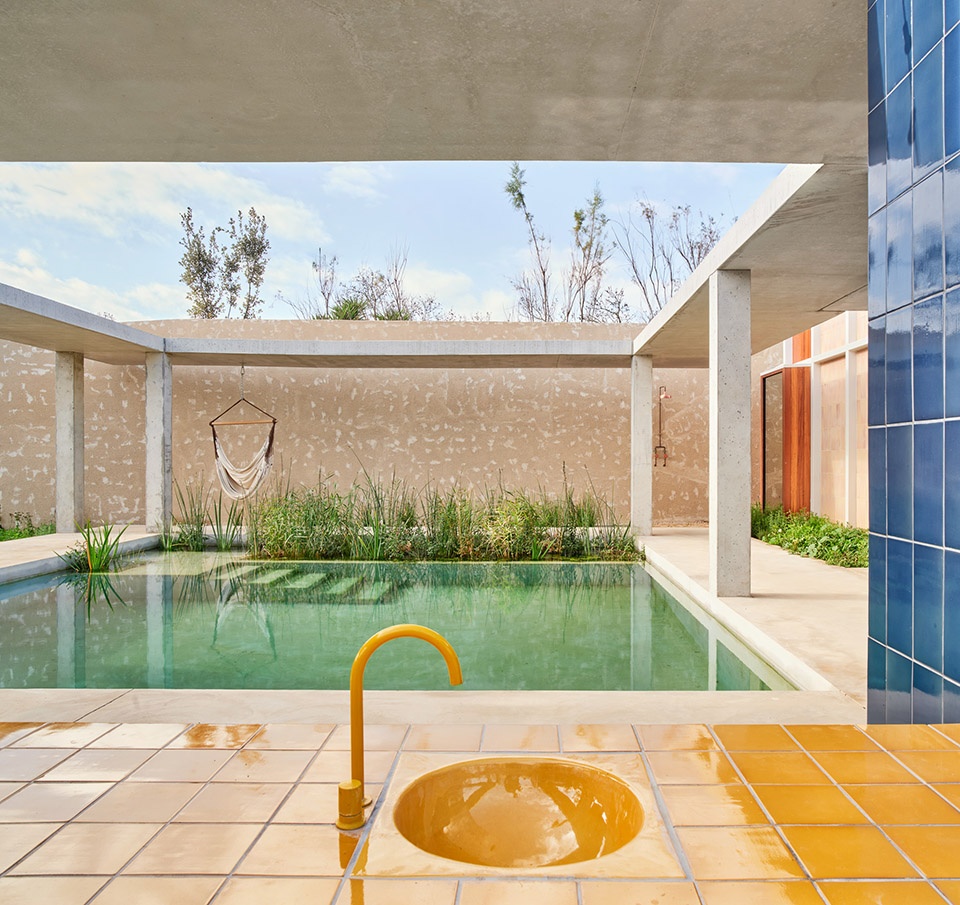
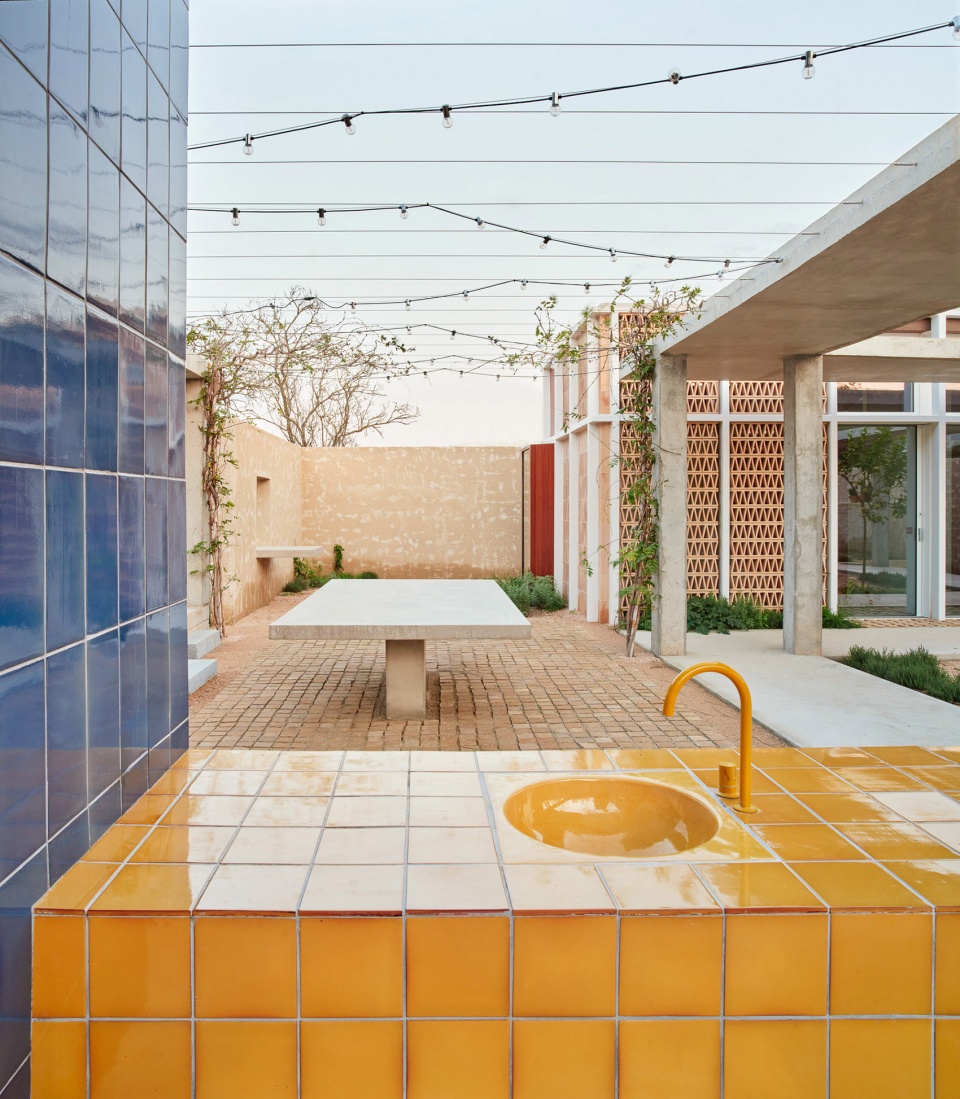
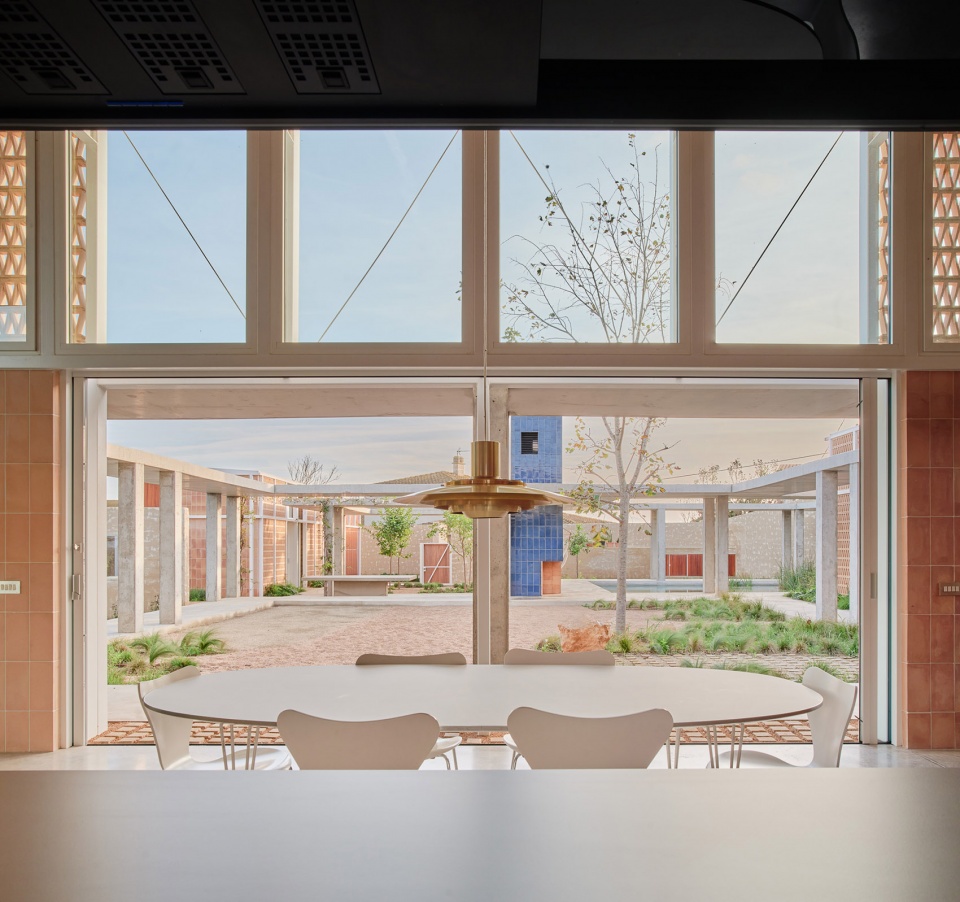
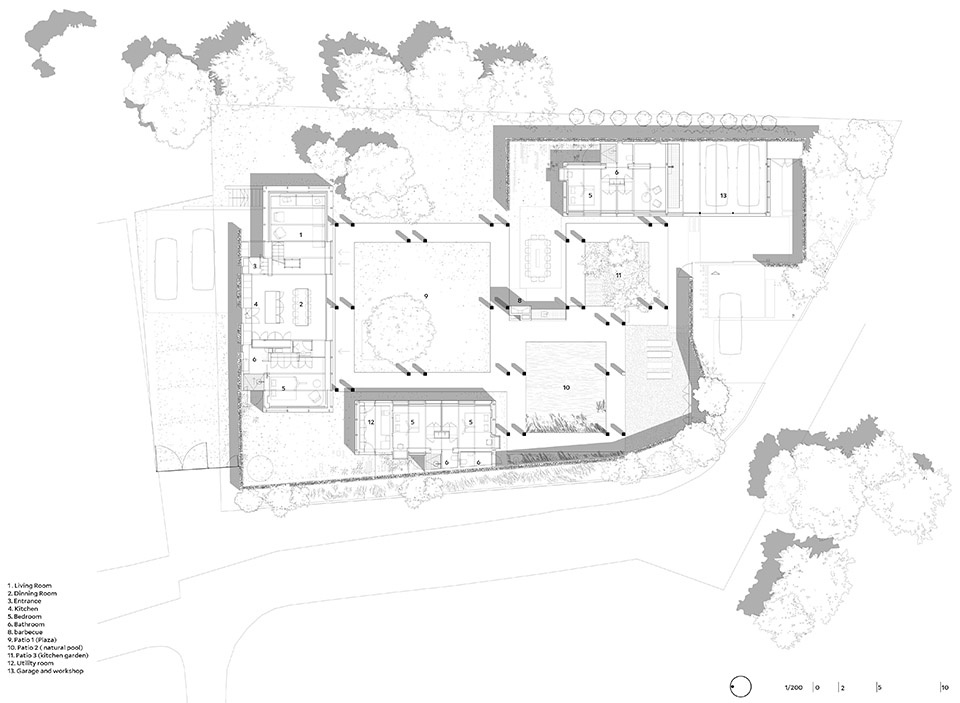
三组庭院唤起了古罗马别墅的精神意象。第一个庭院如同一个村落广场,一棵树为其带来自然生机与阴影。第二个庭院内设有水池,如一方倒影池,池边环绕植被,其原型是古罗马住宅中的集雨池(impluvium),用于收集雨水与调节室内气候。第三个庭院是一座香草花园,宛如修道院的回廊庭院,种植着各类芳香植物。
The three patios evoke the spirit of a Roman villa. The first, like a village square, is shaded by a tree which gives it a natural vitality. In the second is a pool. Resembling a reflective pond, it is also surrounded by vegetation, and is intended to reference the impluvium of a Roman domus – a shallow pond utilized to collect rainwater and regulate the climate within the home. The third patio is a fragrant garden, reminiscent of a monastic cloister, filled with aromatic plants.
▼庭院内设有水池,pool in the courtyard
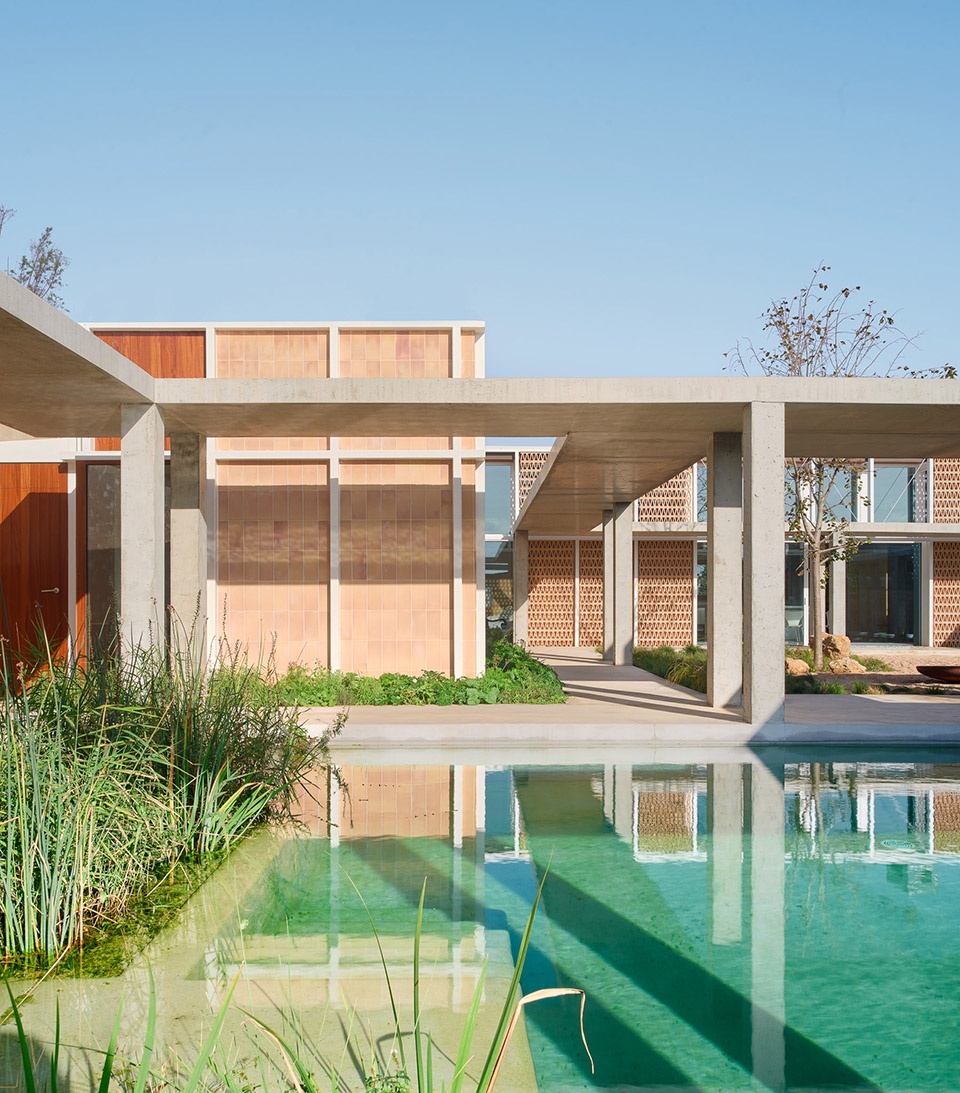
▼用于收集雨水与调节室内气候,pool in the courtyard
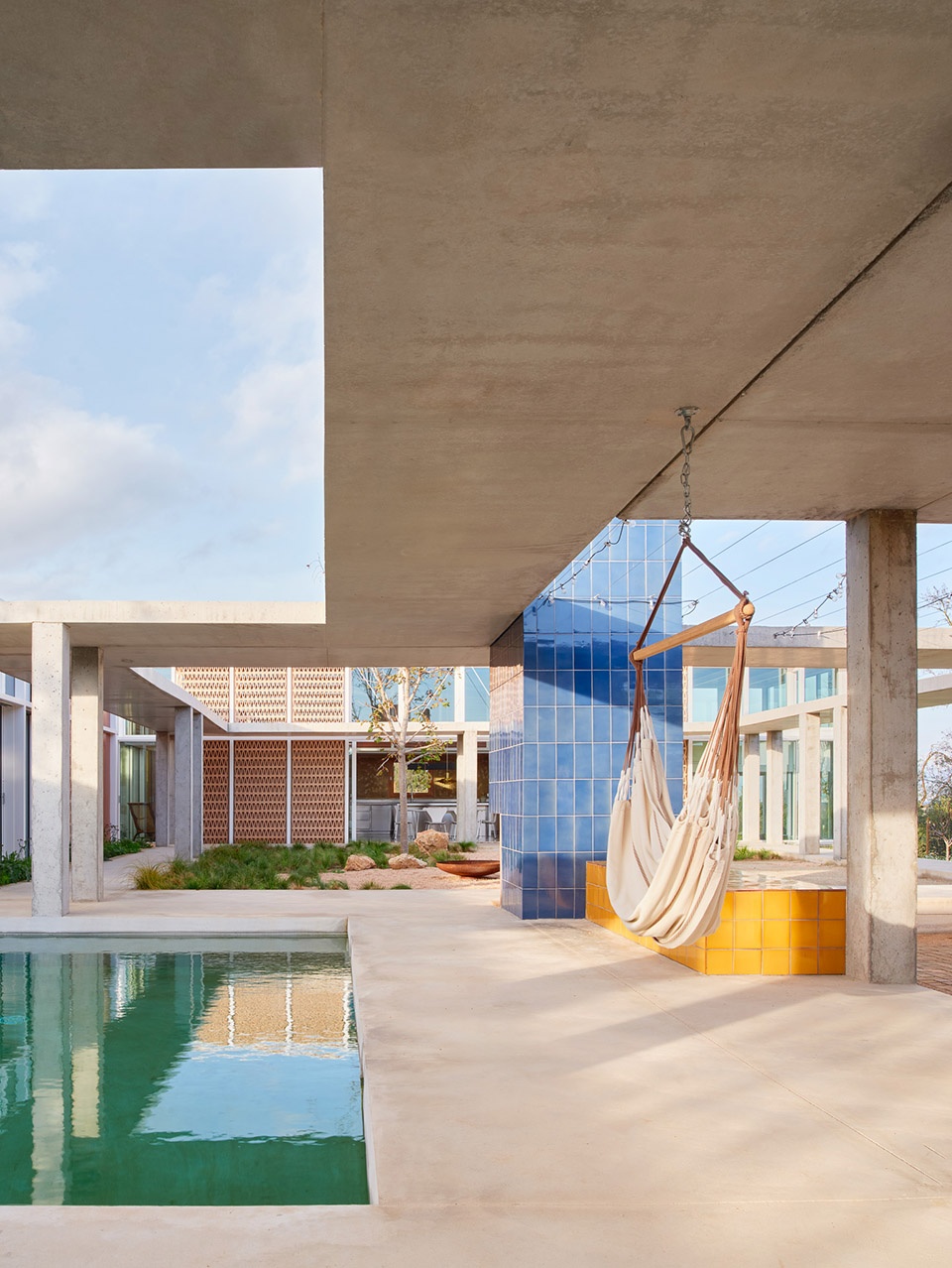
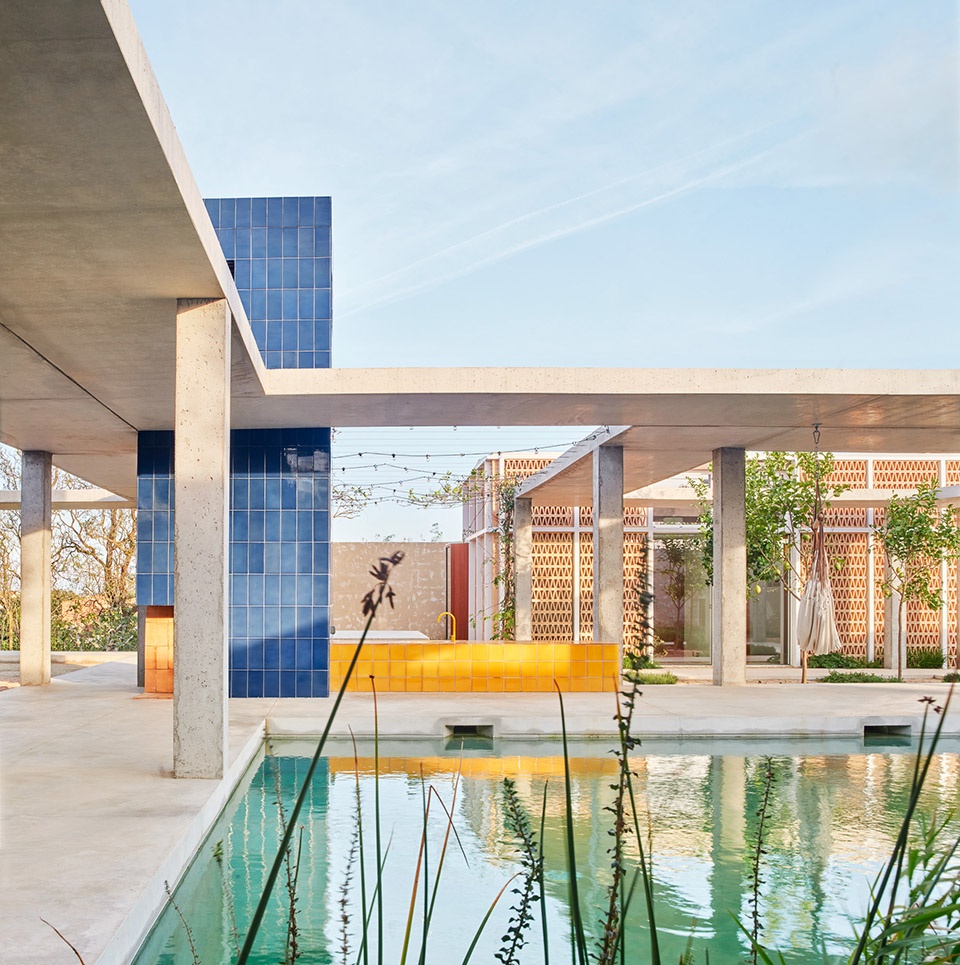
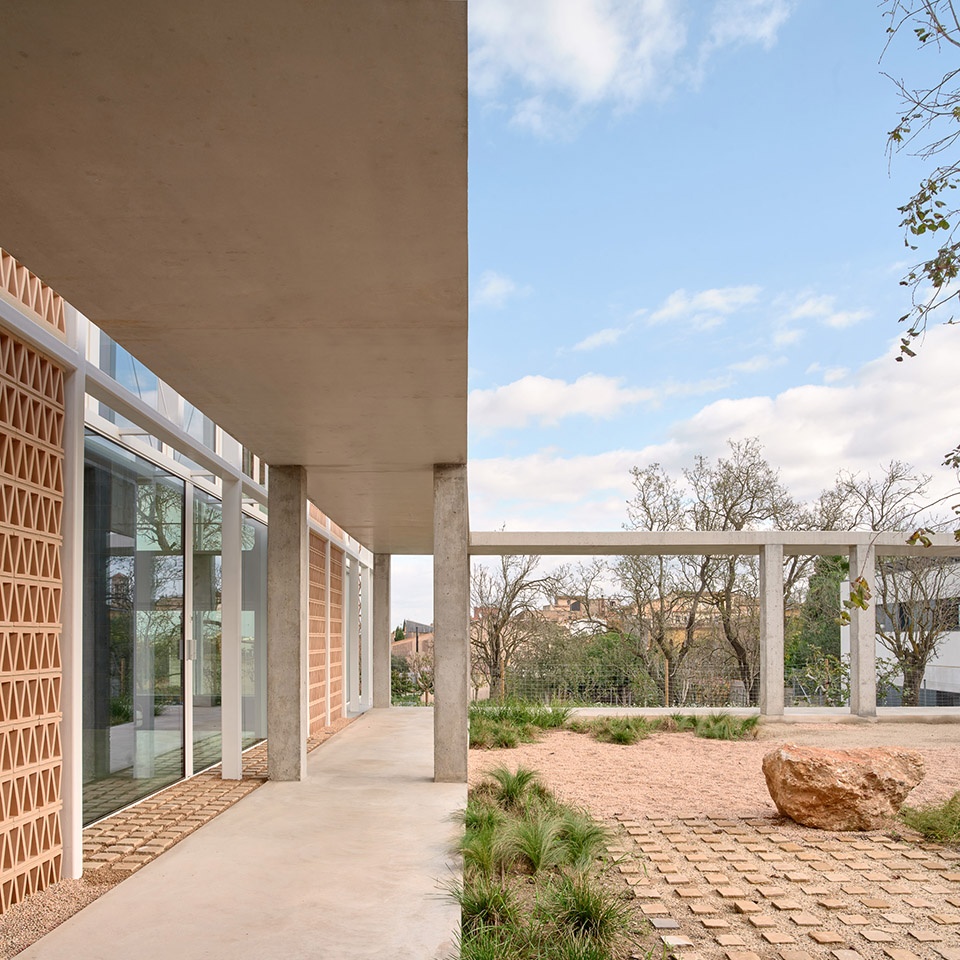
围墙、庭院及其空间组织,共同营造出一种愉悦、亲密又安定的居住氛围。建筑主体以混凝土为主材,传递出坚固与持久的意象,而用于庭院柱廊的混凝土柱体,则悄然唤起人们对古代遗迹的联想。
Together, the walls, patios, and their spatial arrangement create a joyful and intimate environment, alongside a sense of grounded tranquility. The use of concrete as the primary building material conveys ideas of endurance, and its use in the pillars of the colonnades delineating the patios, silently hints at the presence of ancient ruins.
▼营造出一种愉悦、亲密又安定的居住氛围,create a joyful and intimate environment
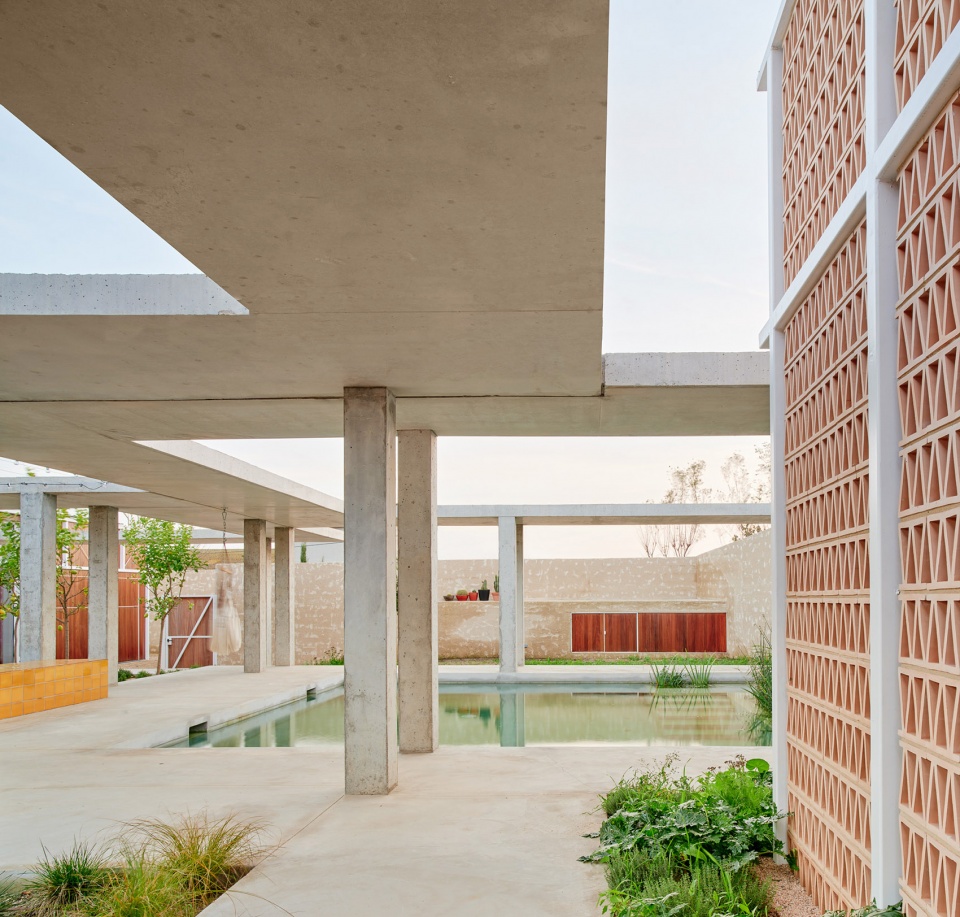
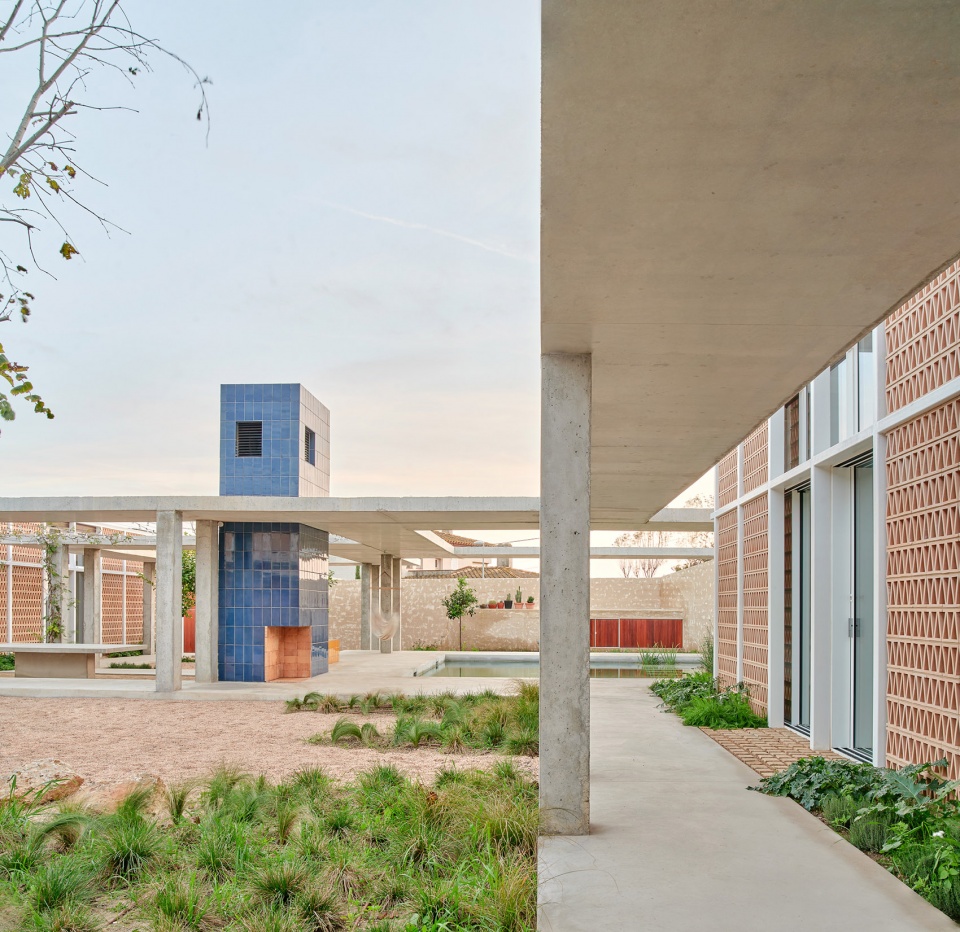
▼庭院柱廊的混凝土柱体,the pillars of the colonnades delineating the patios
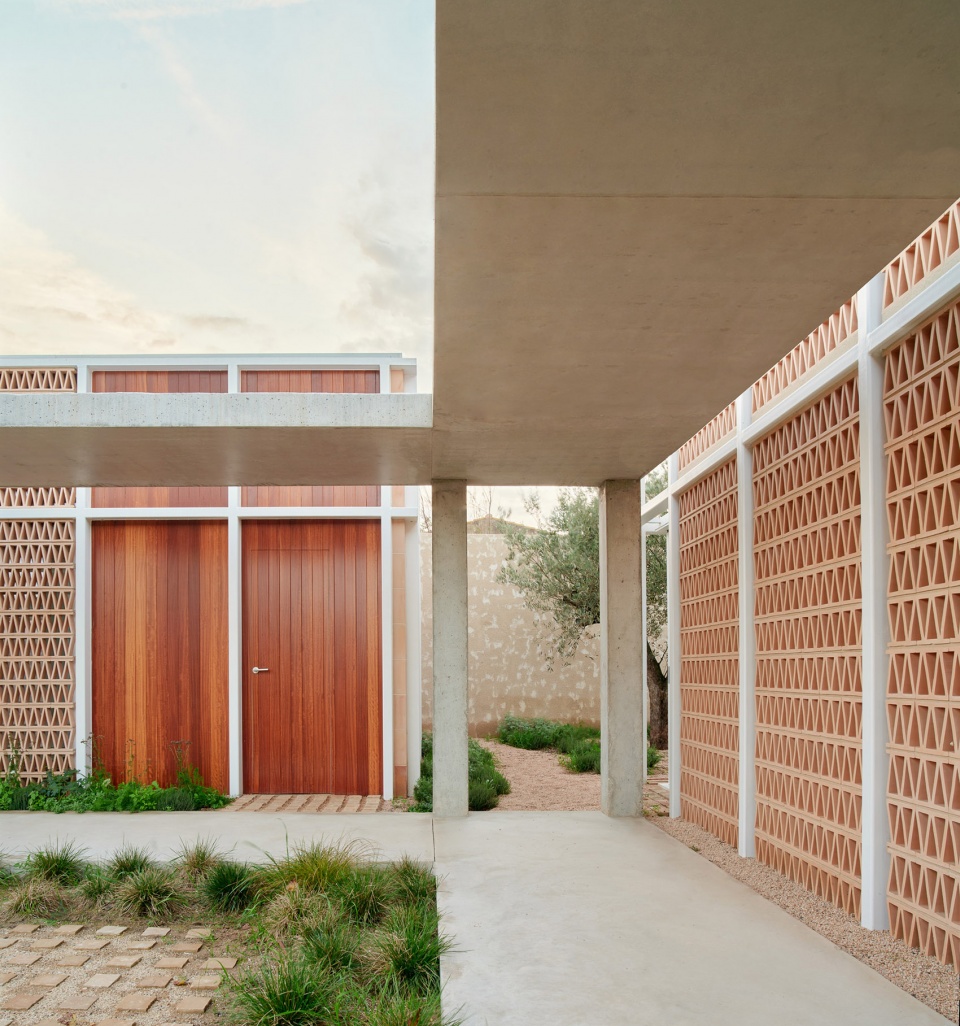
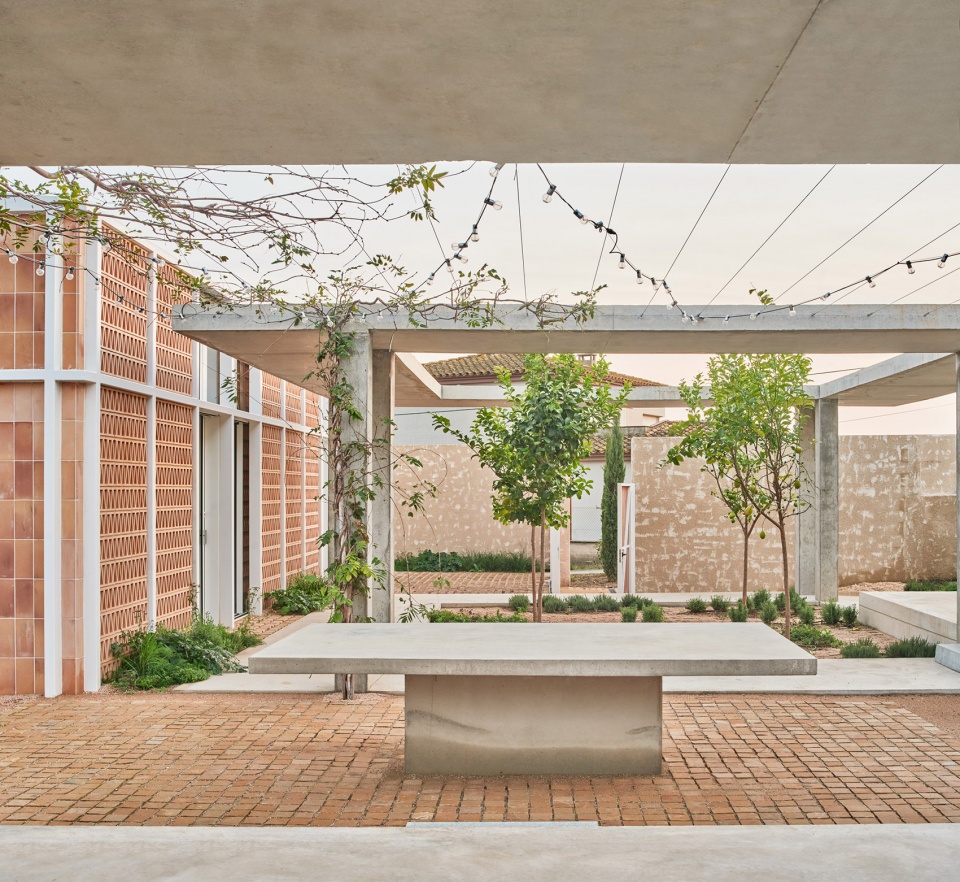
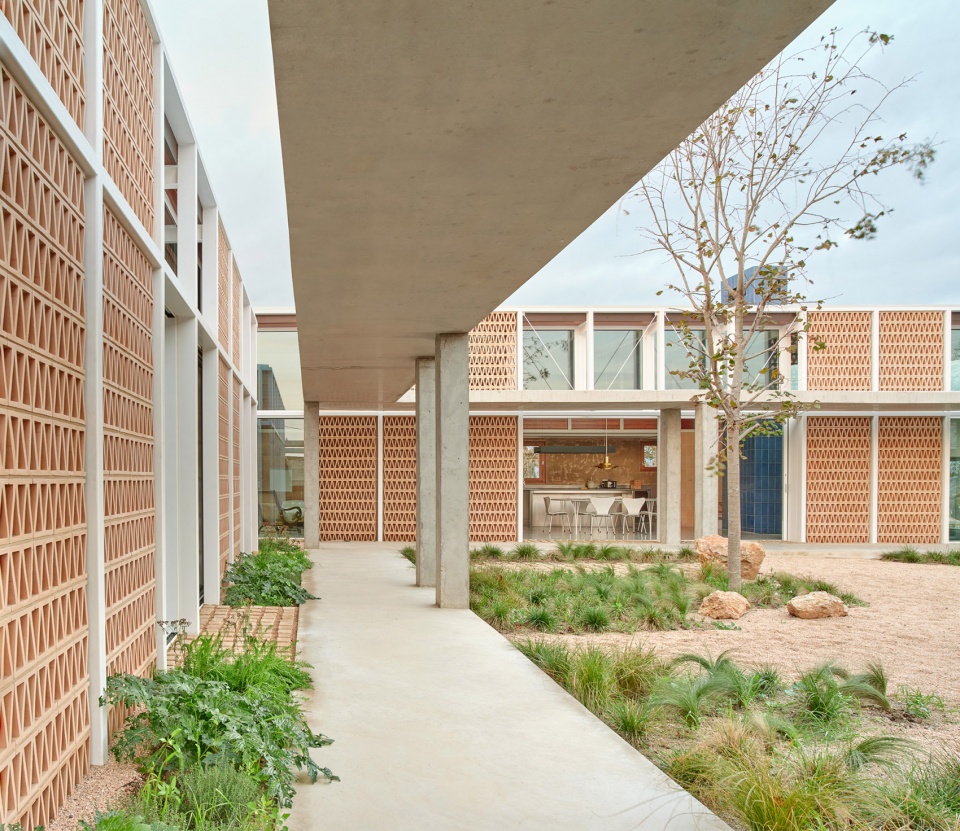
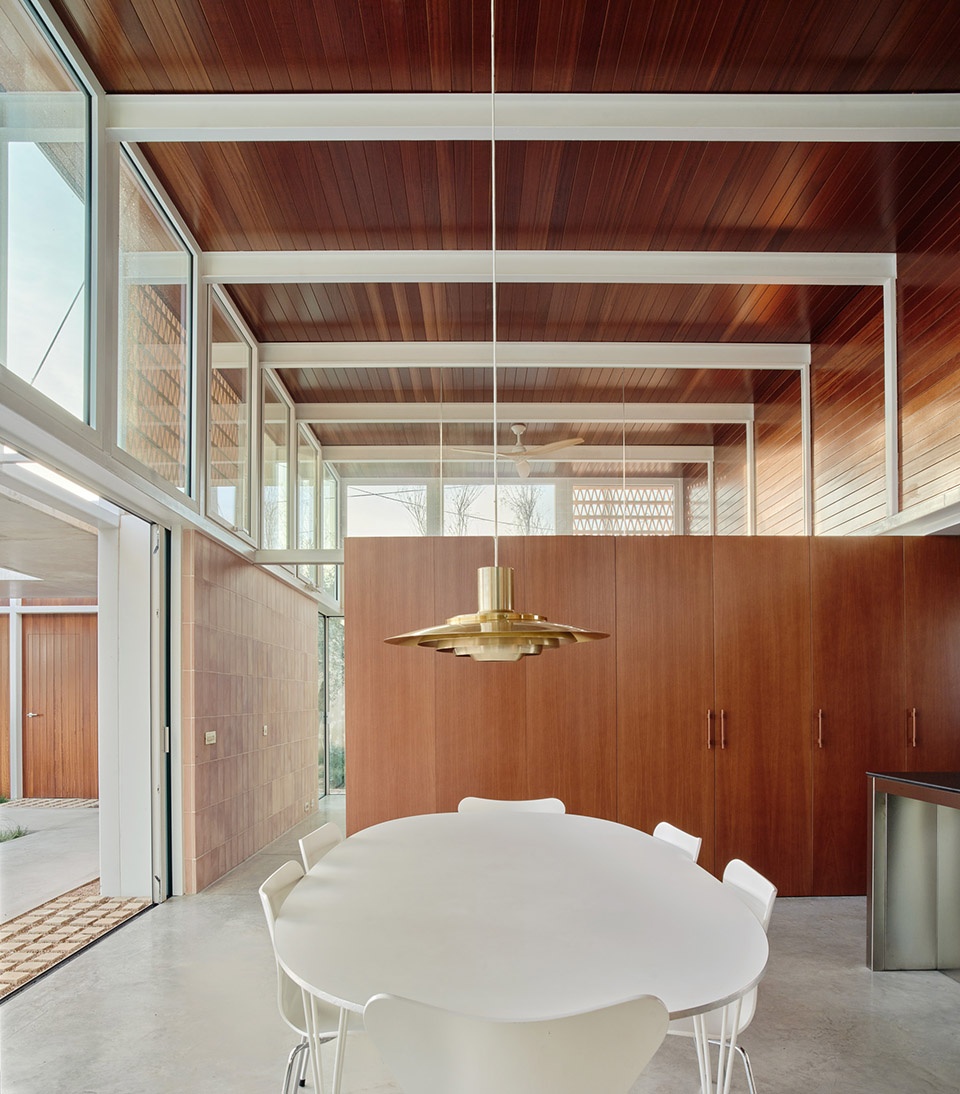
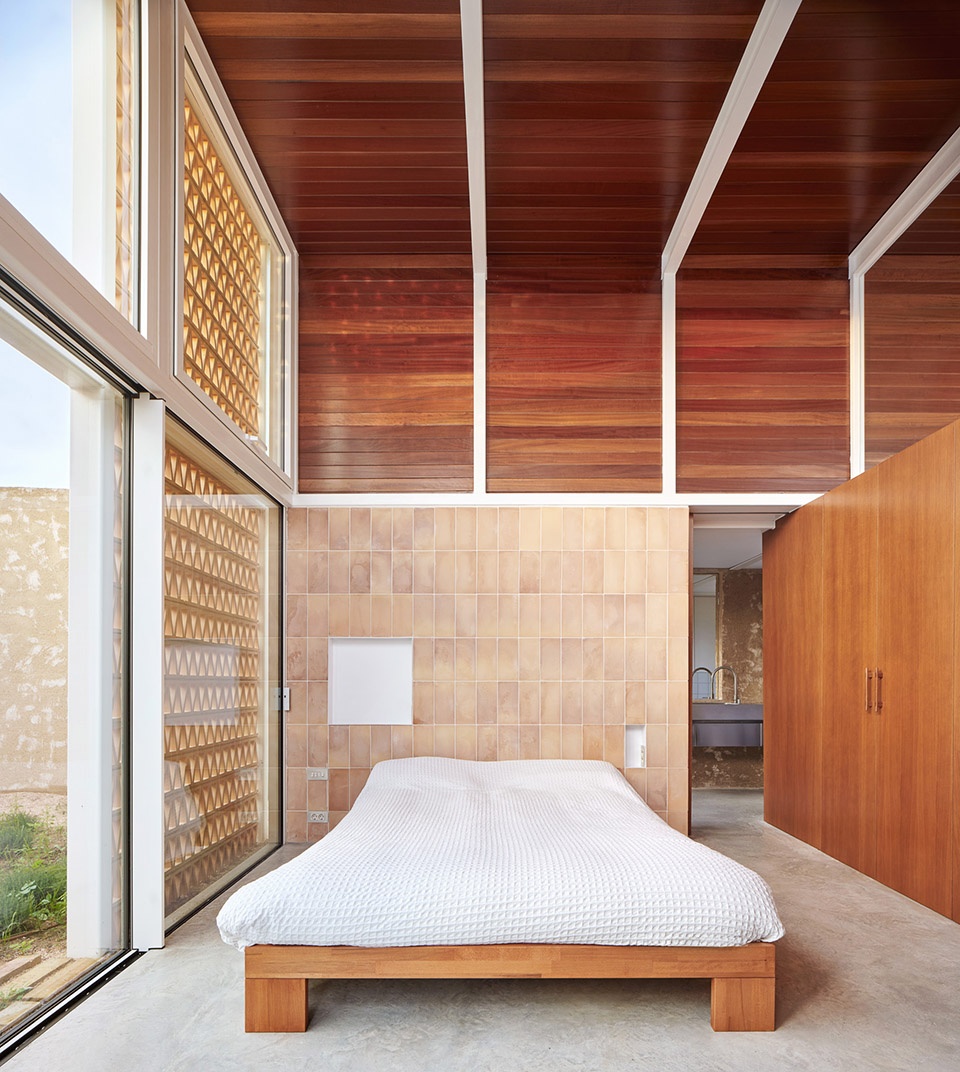
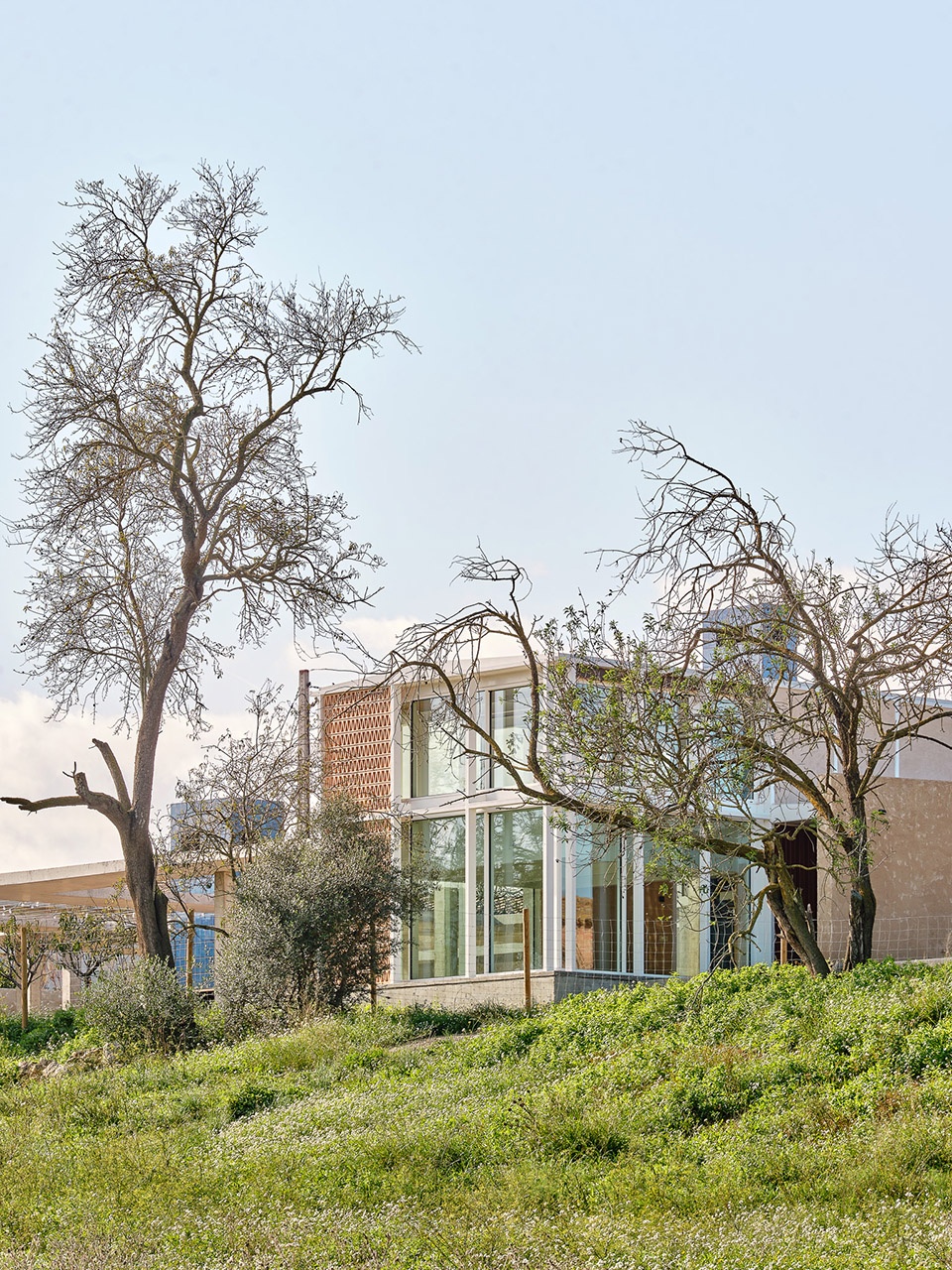
房间围绕庭院分布于三个相对独立的亭式体量之中,体态轻盈、通透,并与自然世界对话。建筑师称这种建筑带有一种“游牧”精神,回应着生活本身的节奏。内部空间中还可见现代主义的影响:家具、灯具的选择,天花与部分墙面上的木饰面,以及开放式踏步楼梯。亭体简洁的线条与半裸露结构进一步强化了这种现代感,同时通过强调材料本身的自然属性来展现建筑之美。
The rooms are arranged around the patios in three independent pavilions which are intended to be light, open, and in dialogue with the natural world. According to the architects, the architecture has a “nomadic” spirit, echoing the rhythms of life itself. On the interior, modernist influences can further be identified in the choice of furniture, light fittings, wooden paneling on ceilings and certain walls, and an open tread staircase. The pavilions’ clean lines and semi-exposed structure also contribute to this modernist appearance, as does an approach that celebrates the inherent properties of the chosen materials.
▼庭院中的家具水池,furniture in the courtyard
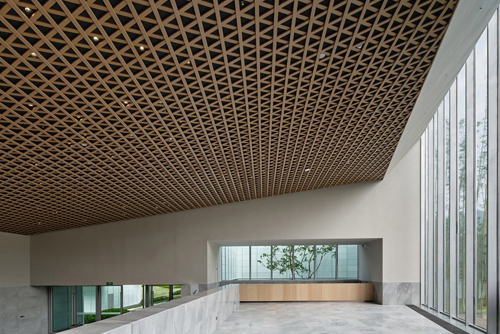
▼天花与部分墙面上的木饰面,wooden paneling on ceilings and certain walls
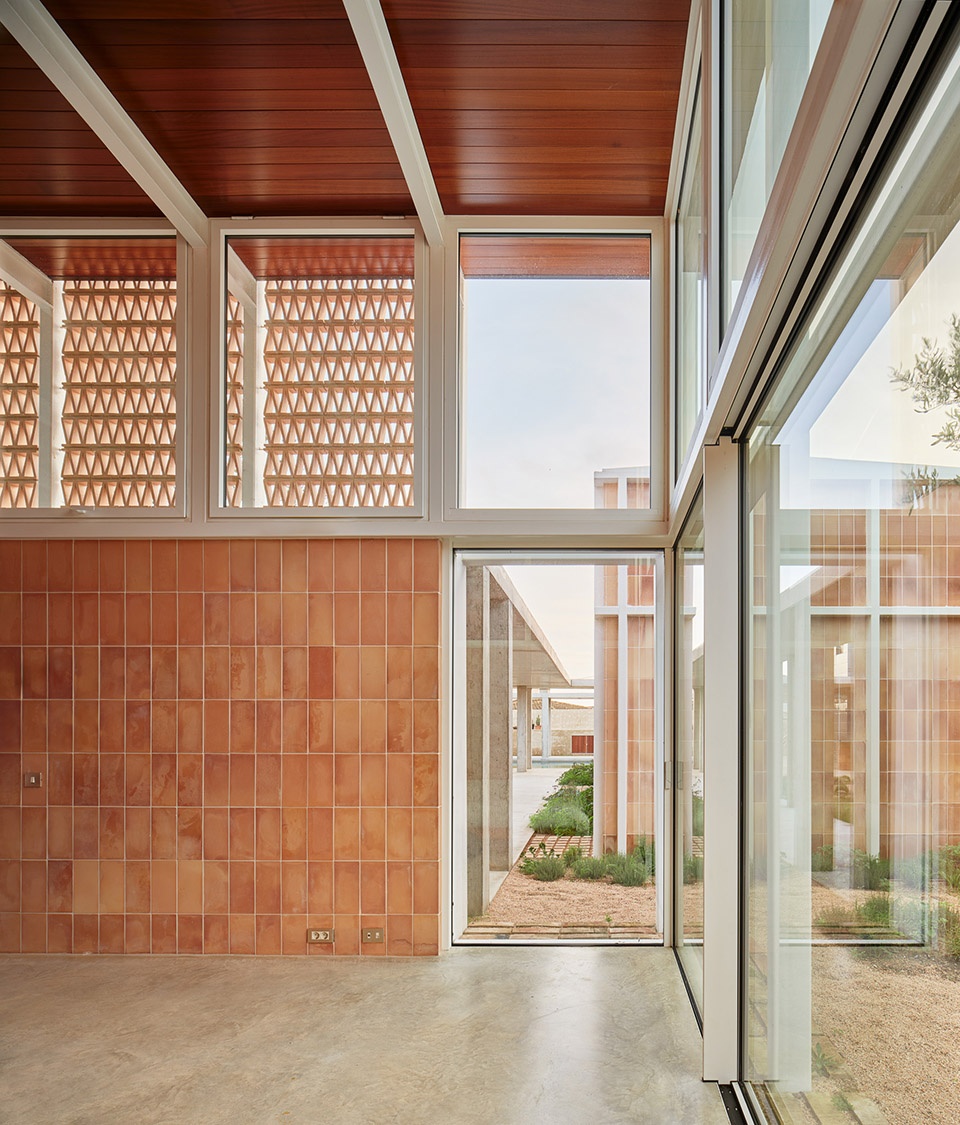
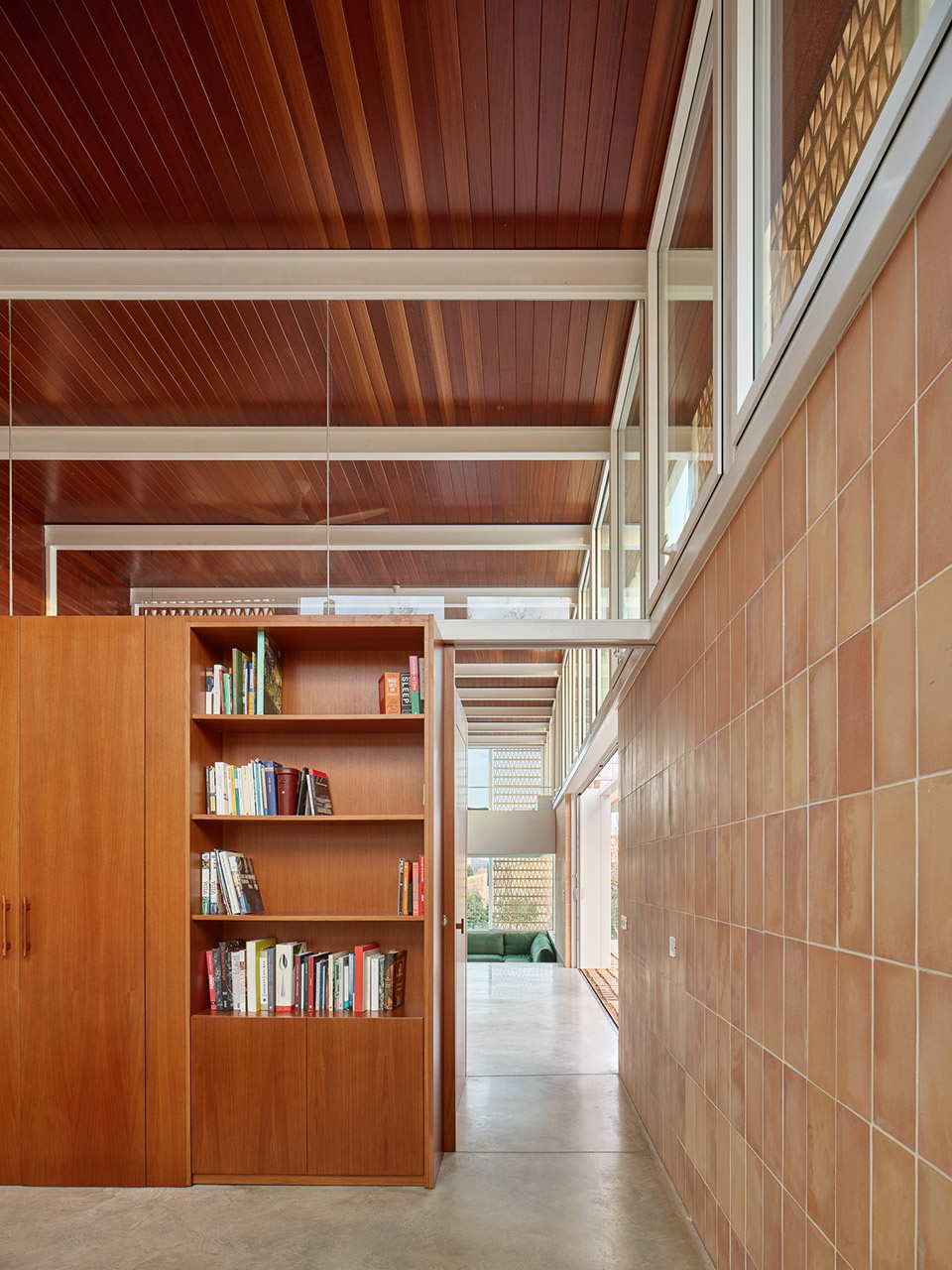
▼强化现代感的材料选择,material enhancing modernity
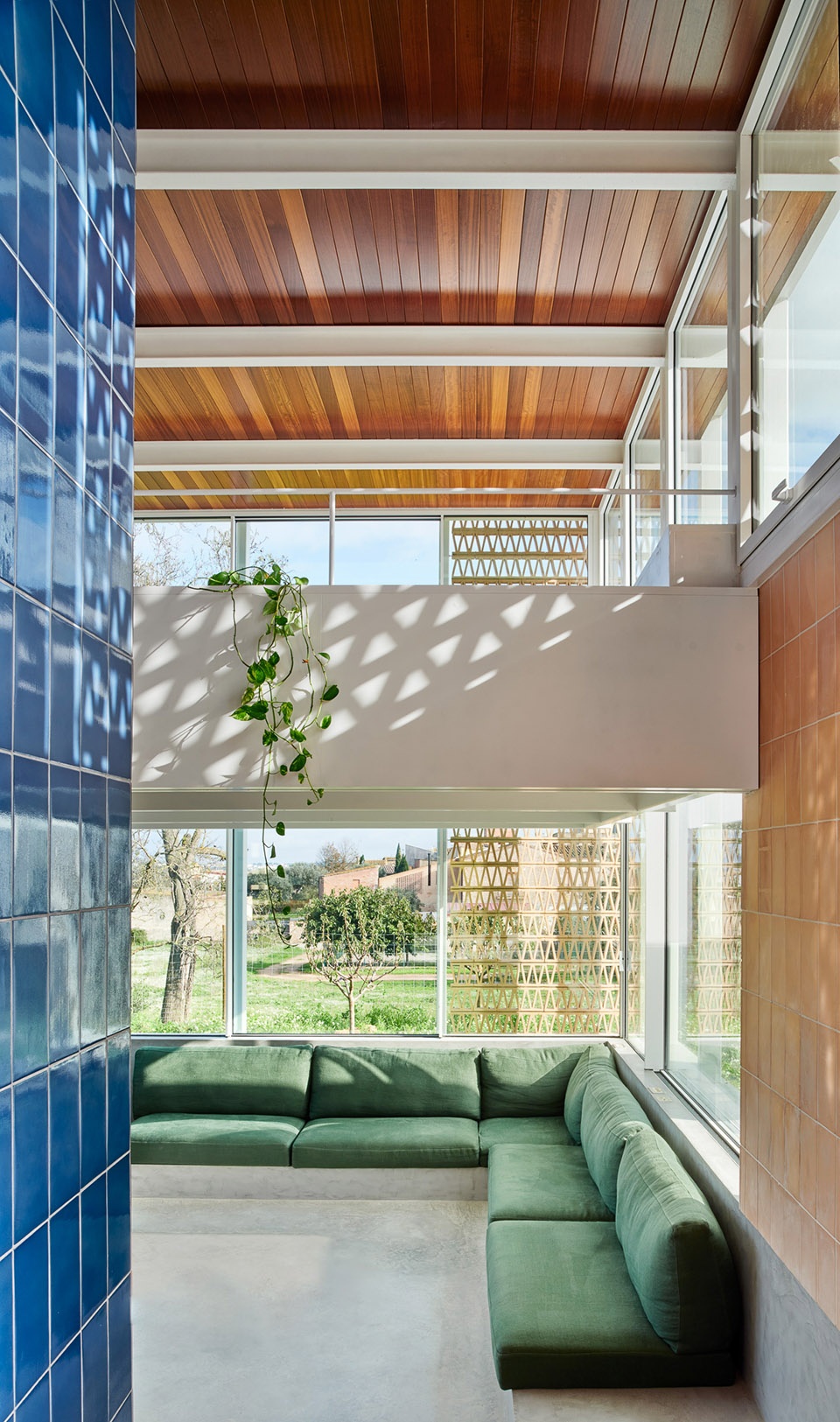
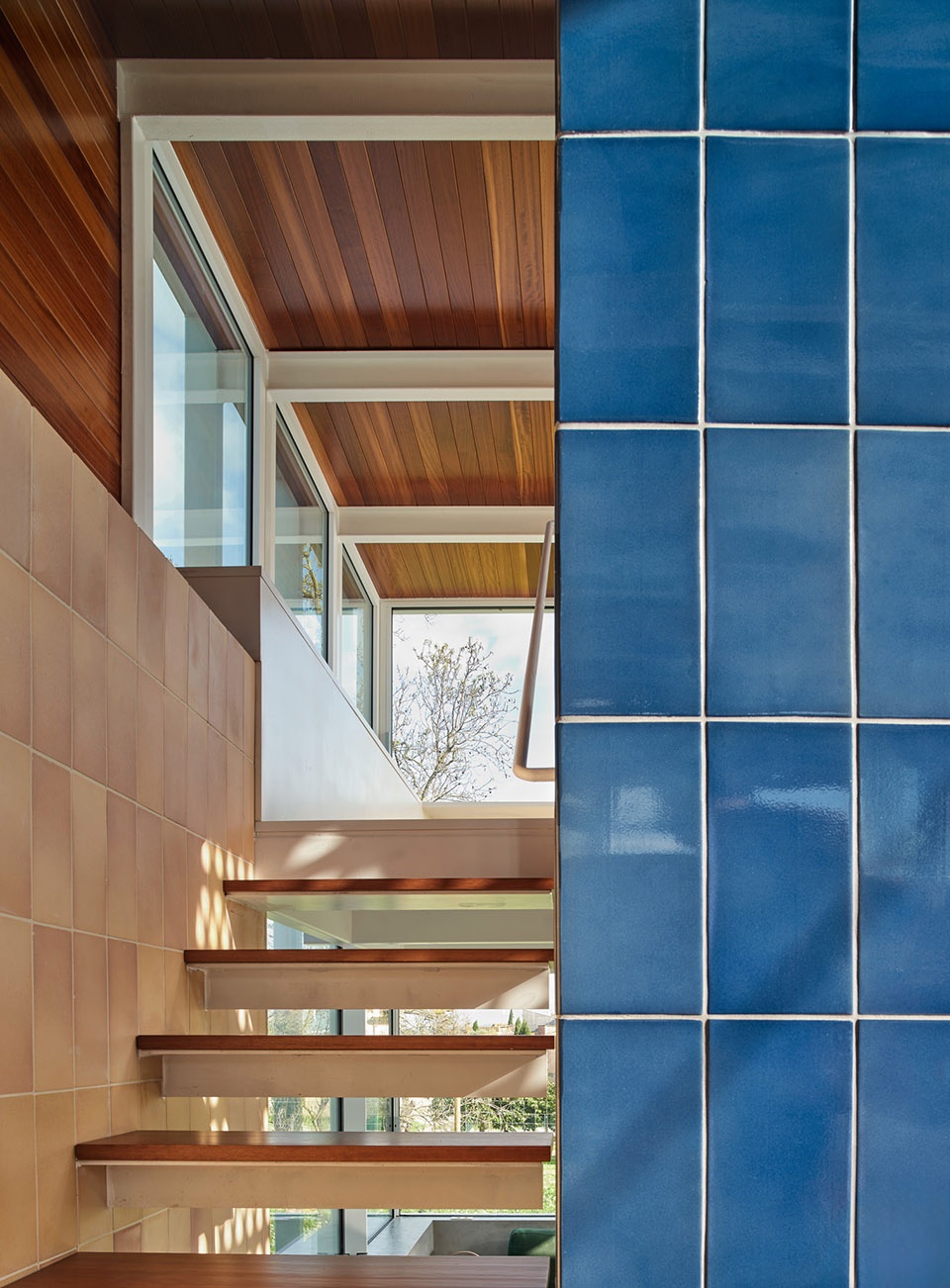
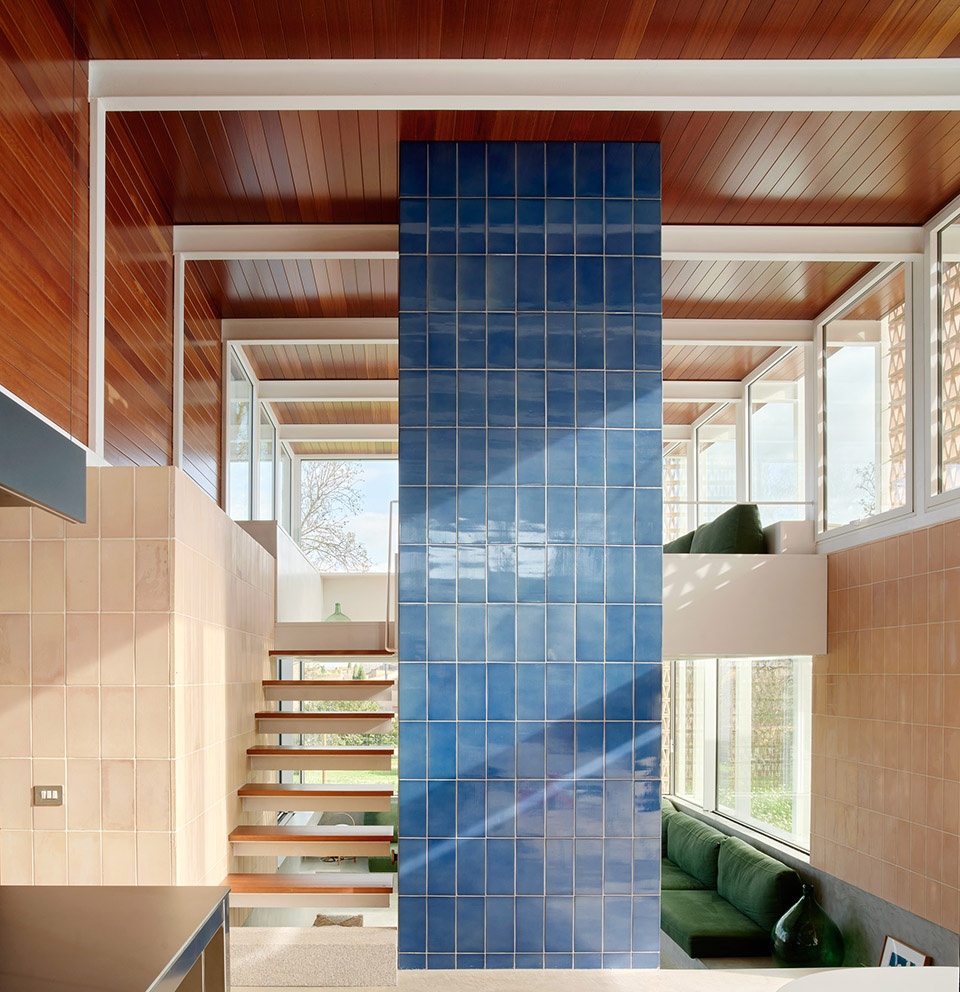
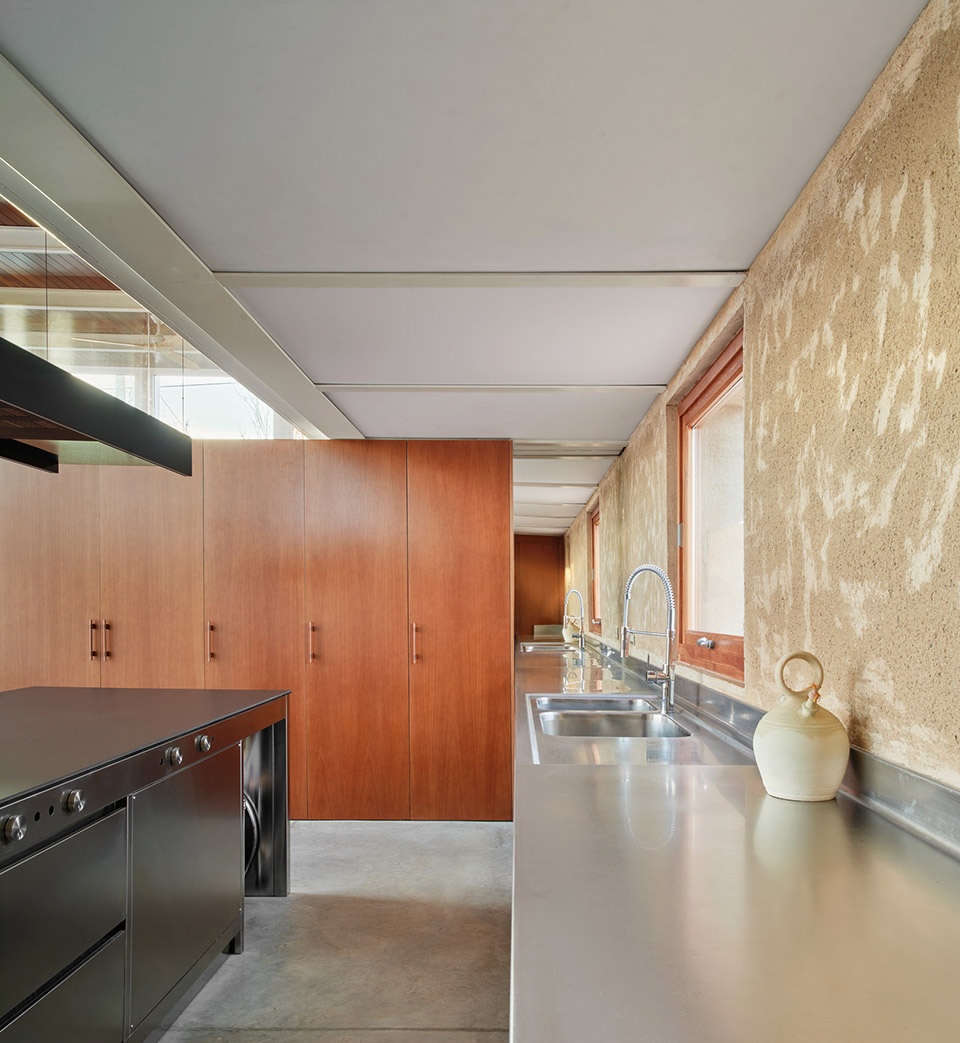
▼厨房,kitchen
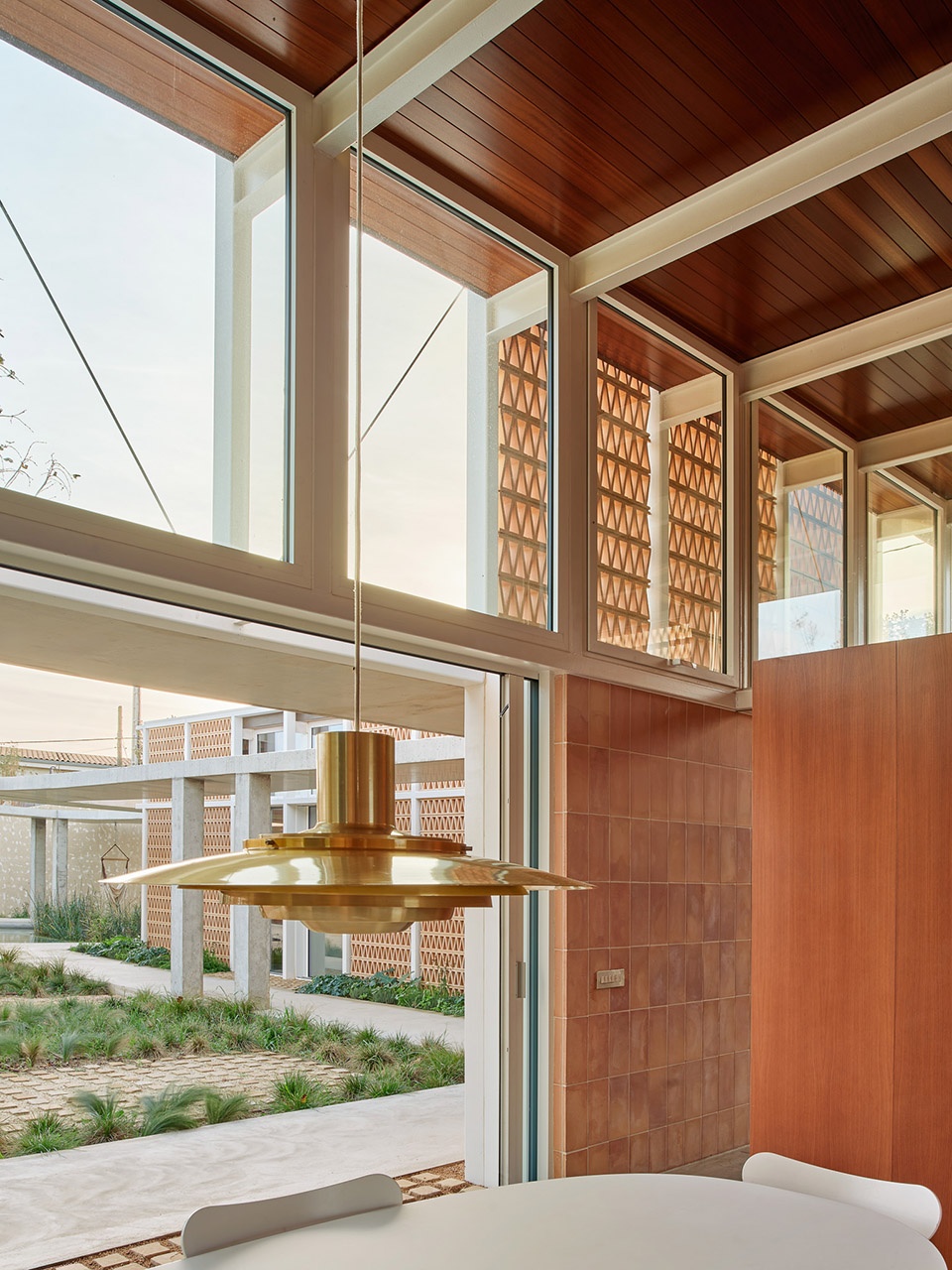
▼餐厅,dining area
▼卧室空间,bedroom space
▼浴室空间,bathroom
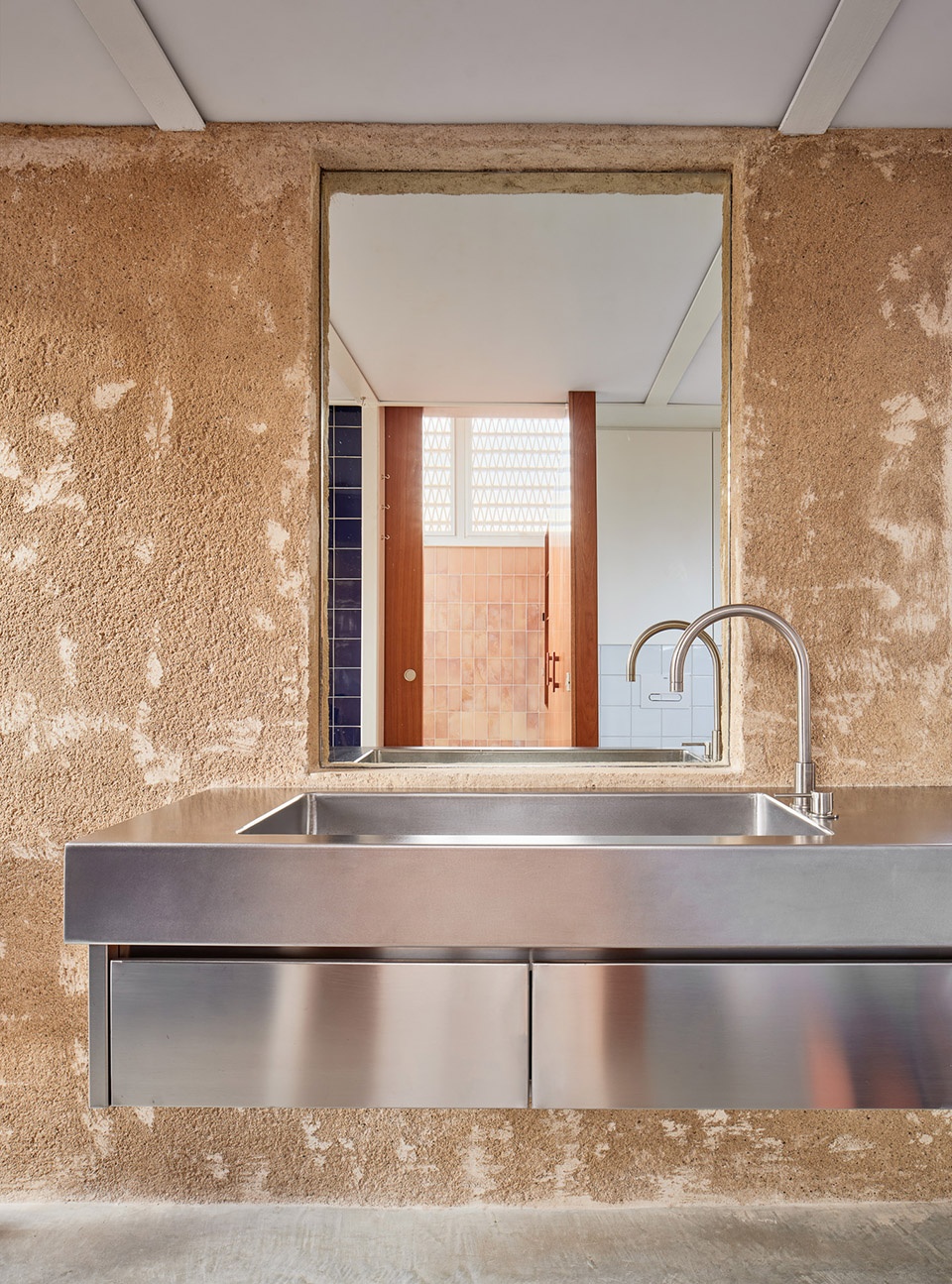
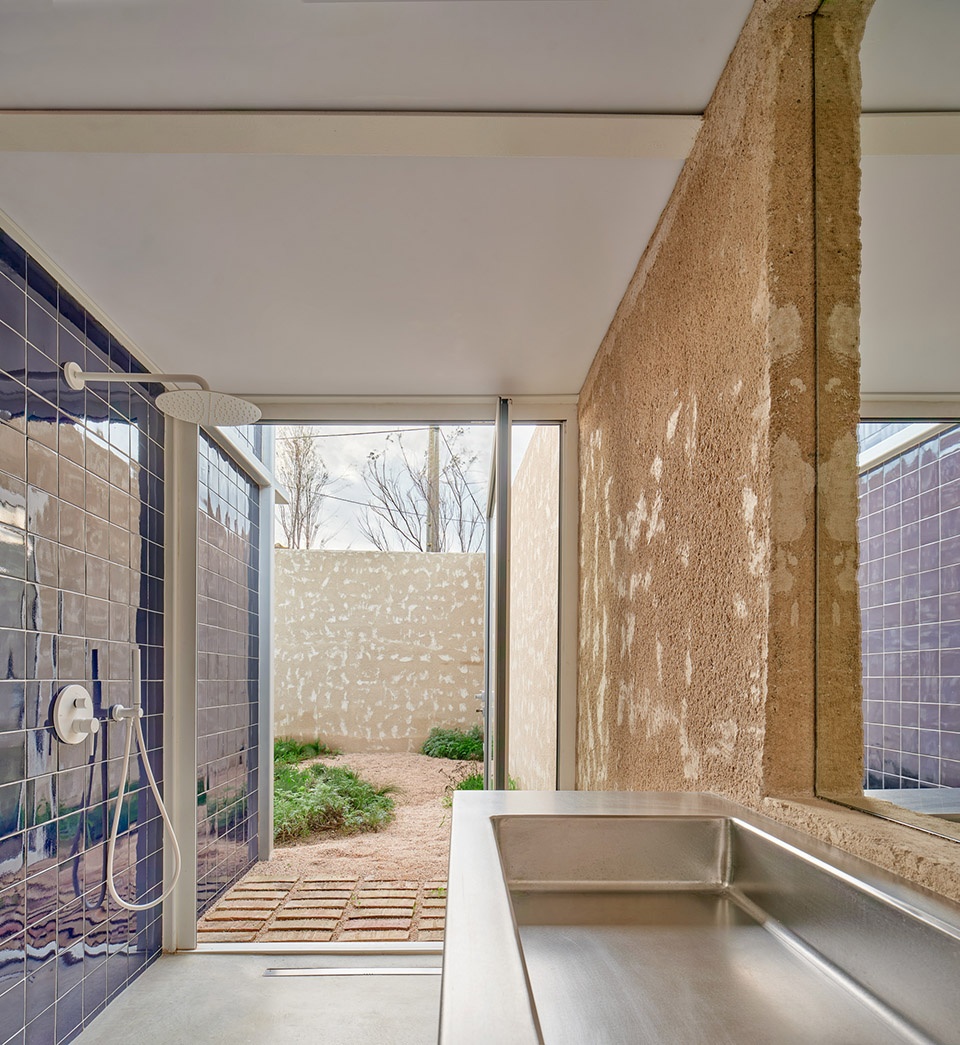
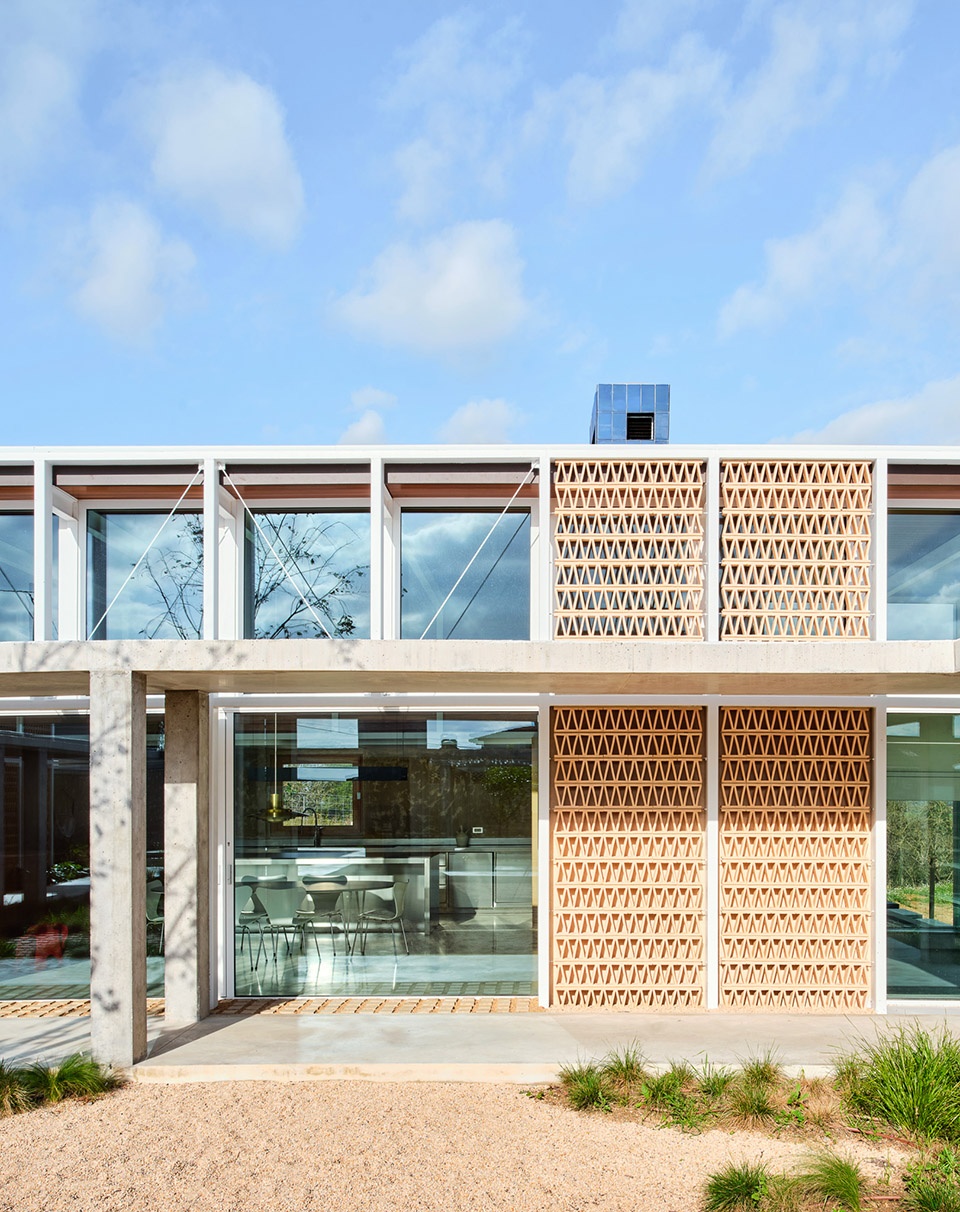
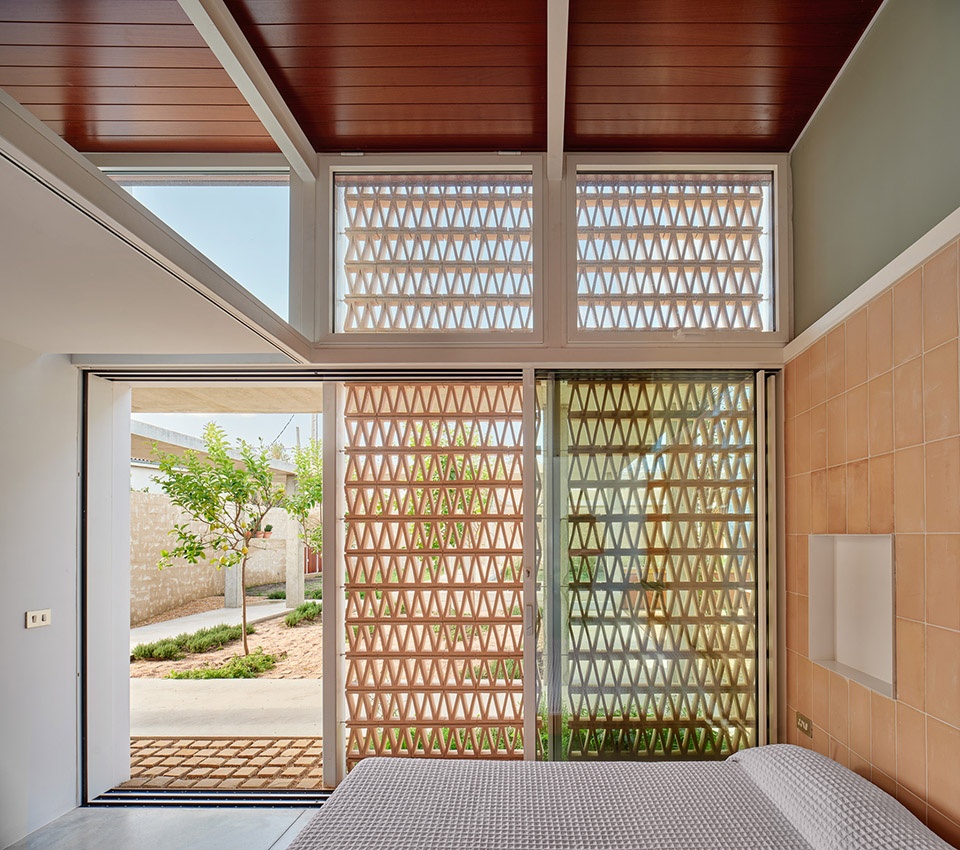
住宅由陶砖格栅、玻璃、钢材与木材等通透的轻质材料构成,使微风、光线、阴影与笑声可以自由穿梭于建筑之间,仿佛这栋建筑更像是由“空气”构成的,而非由实在的物质所建。
The house is composed of permeable, diaphanous elements such as ceramic latticework, glass, steel, and wood; these allow breezes, light, shadows and laughter to move freely through the property, such that the building could be said to be built more of air than of matter.
▼住宅外观,exterior of the house
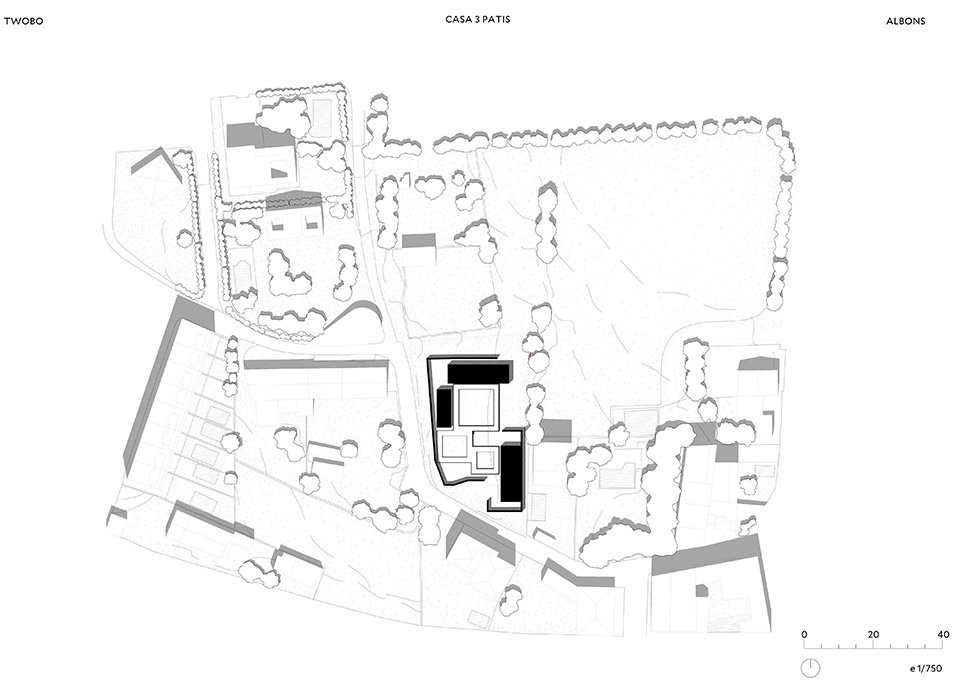
▼场地平面,site plan
▼一层平面,ground floor plan
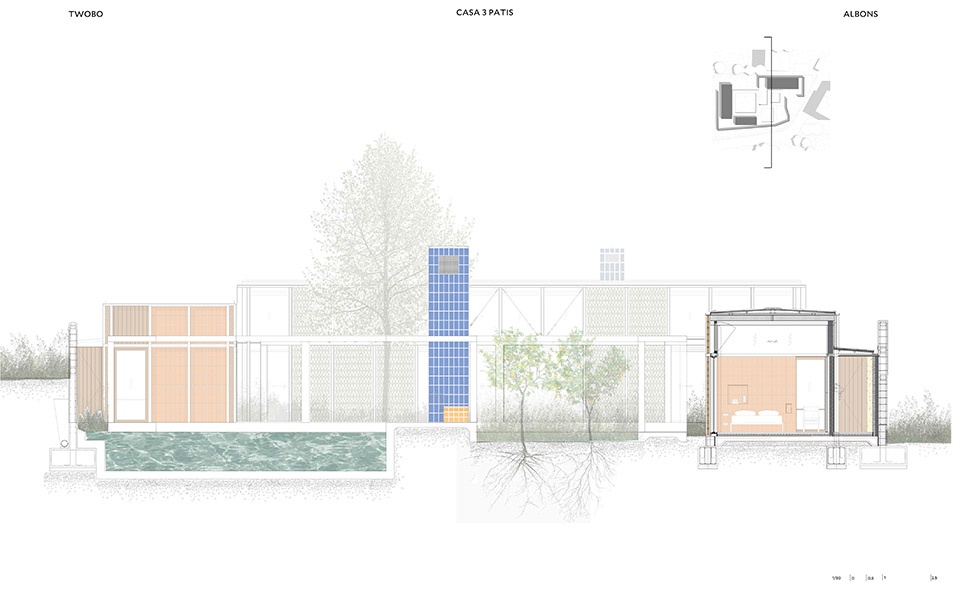
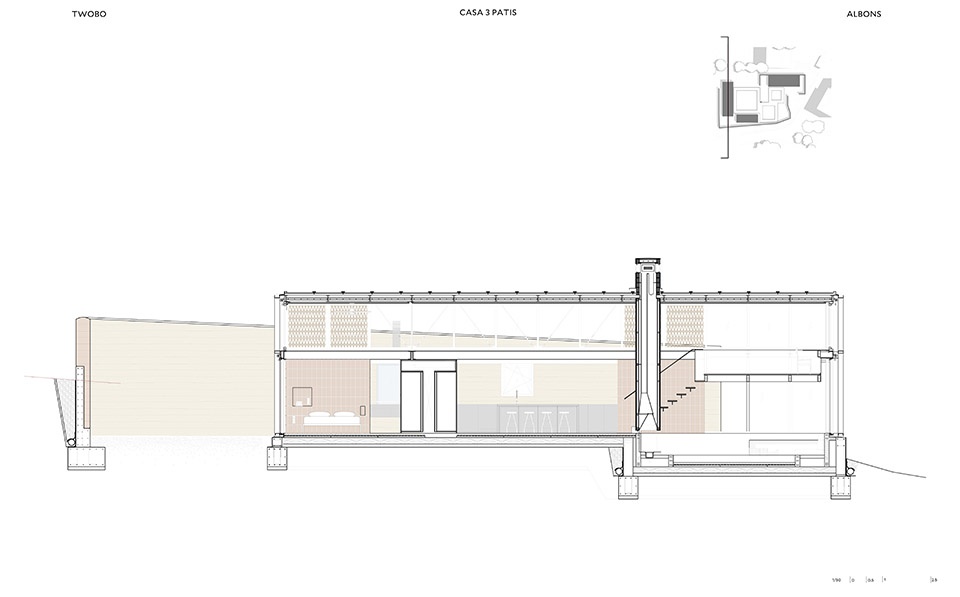
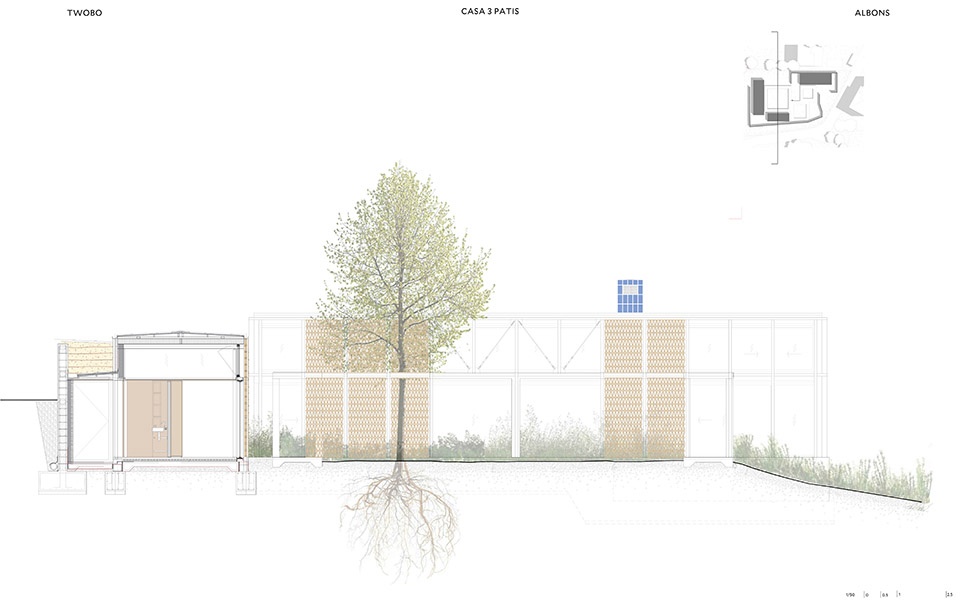
▼剖面,section
Project: Casa Tres Patis
Location: Province of Girona, Catalunya, Spain
Architect: Twobo Arquitectura
Project team: María Pancorbo, Alberto Twose, Pablo Twose
Collaborators: Claudia Canalda, Víctor Díaz-Asensio, Ourania Chamilaki
Structural engineer: Jordi Granada
Equipmental, Mechanical, Electrical engineer: Albert Colomer
Lighting engineer: Com led
Landscape architect: DACH(Ourania Chamilaki, Víctor Díaz-Asensio)
Contractor: ARTYCO
Use: single-family house
Site area: 1,600m2
Bldg. area: 250m2
Gross floor area: 280m2
Bldg. coverage ratio: 15.6%
Gross floor ratio: 17.5 %
Bldg. scale: one story below ground and a mezzanine
Exterior finishing: Iroko wood, ceramic latticework, glass-frame carpentry, SATE system with lime-based mortar, vitrified tiles, sandwich panel roofing
Interior finishing: Polished concrete flooring, ceramic or vitrified tile walls, iroko wood ceilings, built-in wooden furniture
Materials: Iroko wood, terracotta latticework, glass, lime-based mortar, vitrified tiles, polished concrete, ceramic tiles, sandwich panels, steel
Design: 2021~2022
Construction: 2023~2024
Completion: 2023.7
Photograph: ⓒJosé Hevia(courtesy of the architect)