YMK住宅,轻井泽 / Takeshi Hirobe Architects
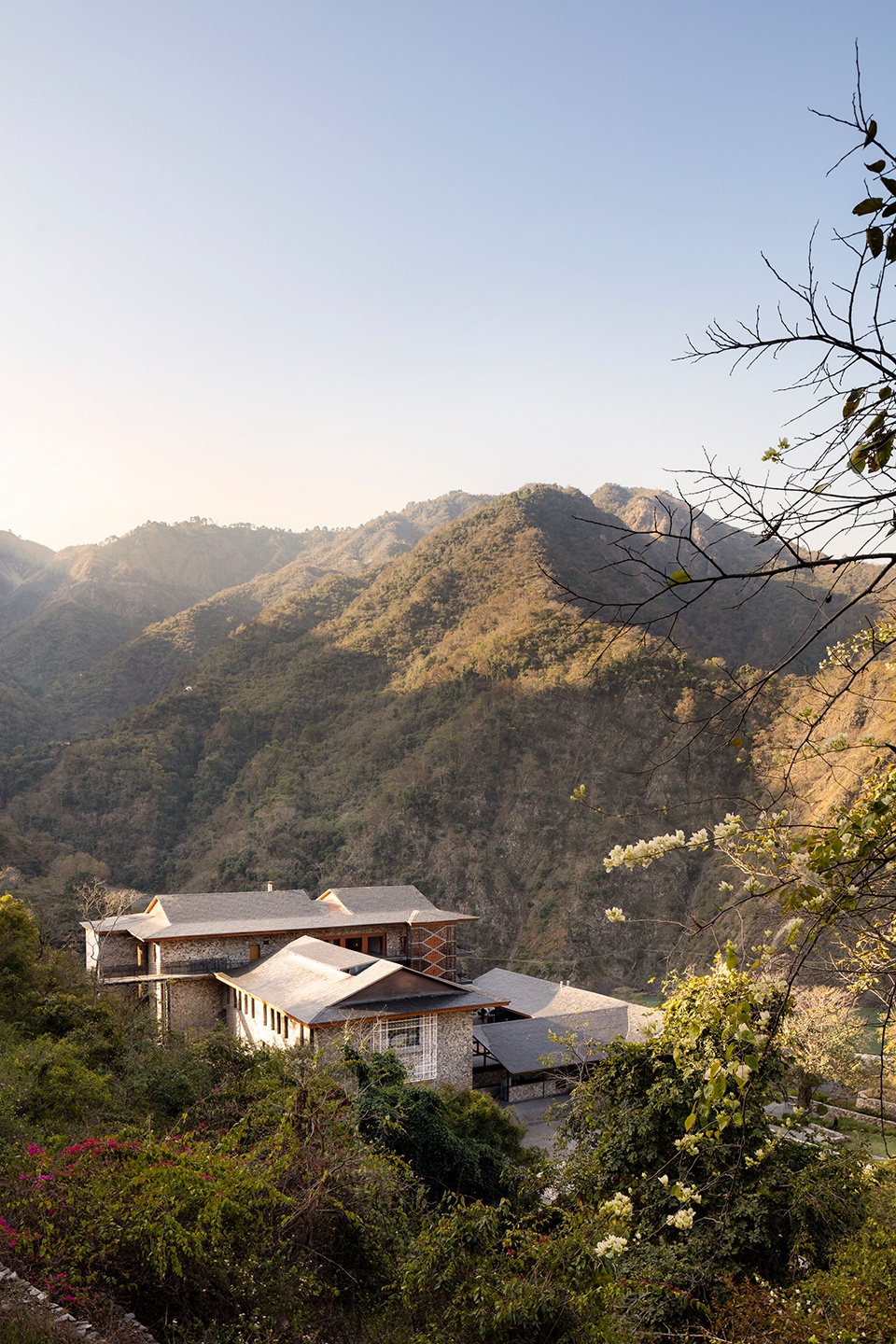
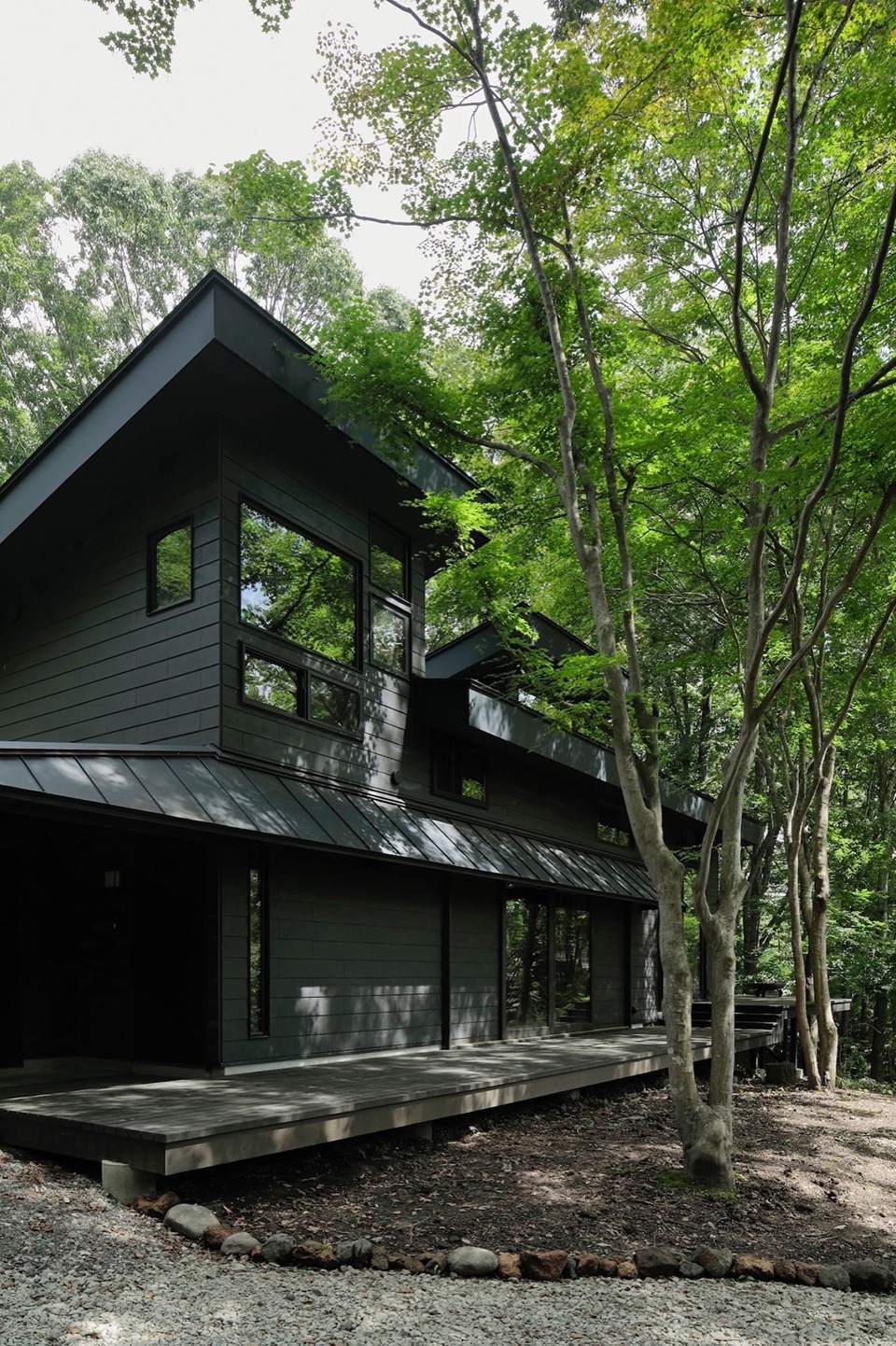
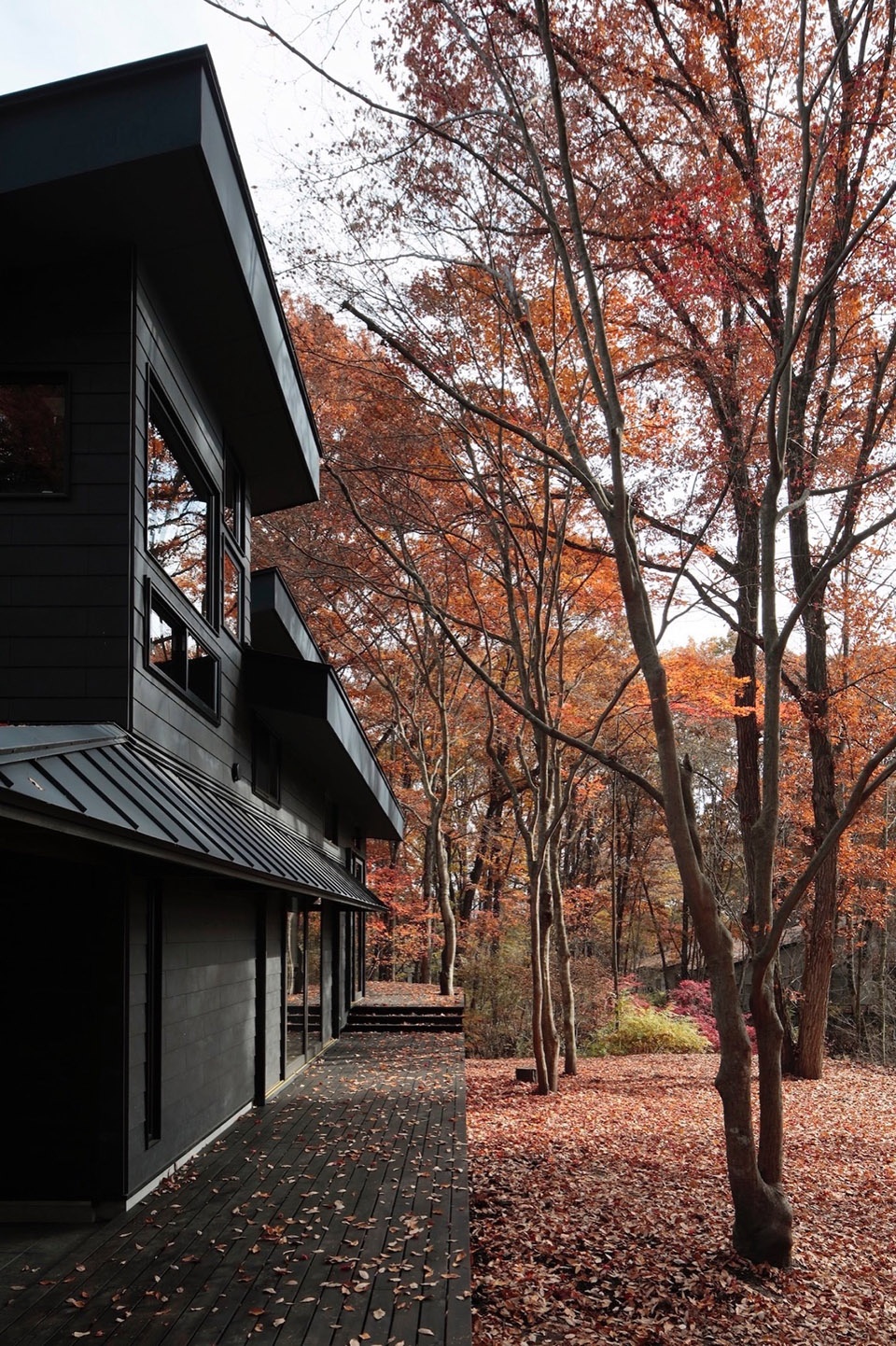
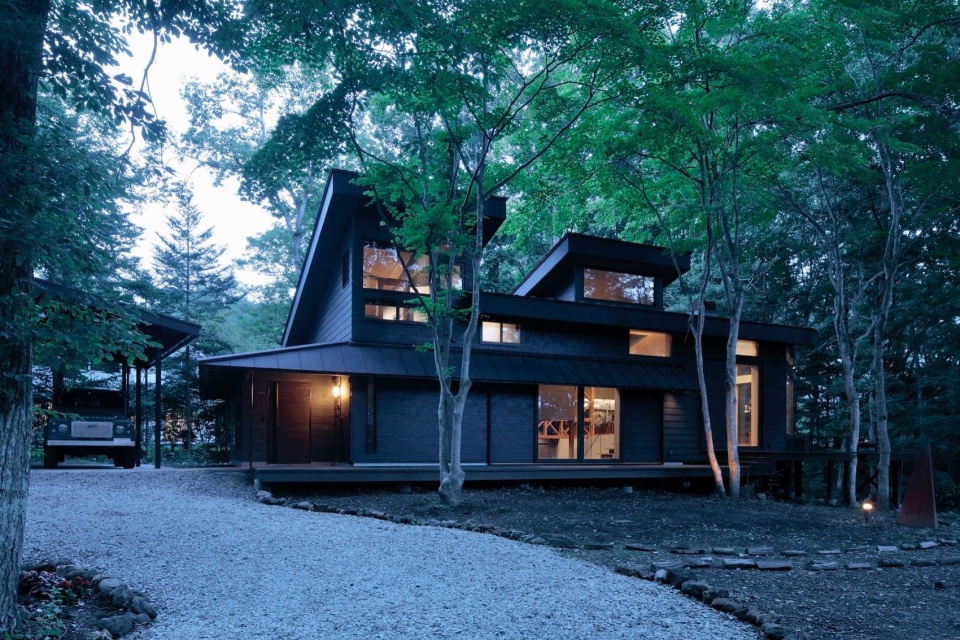
这座住宅为一位从城市搬迁至乡村高地、计划远程工作的业主而设计。基地地形自面向道路的西侧缓缓倾斜至东侧后突然陡降,下方是一条潺潺小溪,形成了一个小型山谷。住宅与最近的一栋房屋隔着山谷,距离较远,东南侧的景观则由层层叠叠的树木构成。为最大程度地利用这一环境,住宅东南角设置了一扇大型景观窗。
This residence was designed for a client who relocated from the city to a rural highland area with the intention to work remotely. The site is characterized by a gentle slope that runs from the west side, which faces a road, to the east before dropping sharply. A small stream flows below, forming a modest valley. As a result, there is a significant distance between the residence and the nearest house, located across the valley, and the view on this side is marked by trees that cascade down the slope in a dense, layered arrangement. To make the most of these surroundings, the southeast corner of the residence was designed to accommodate a large picture window.
▼住宅外观,exterior view
▼秋景,autumn view
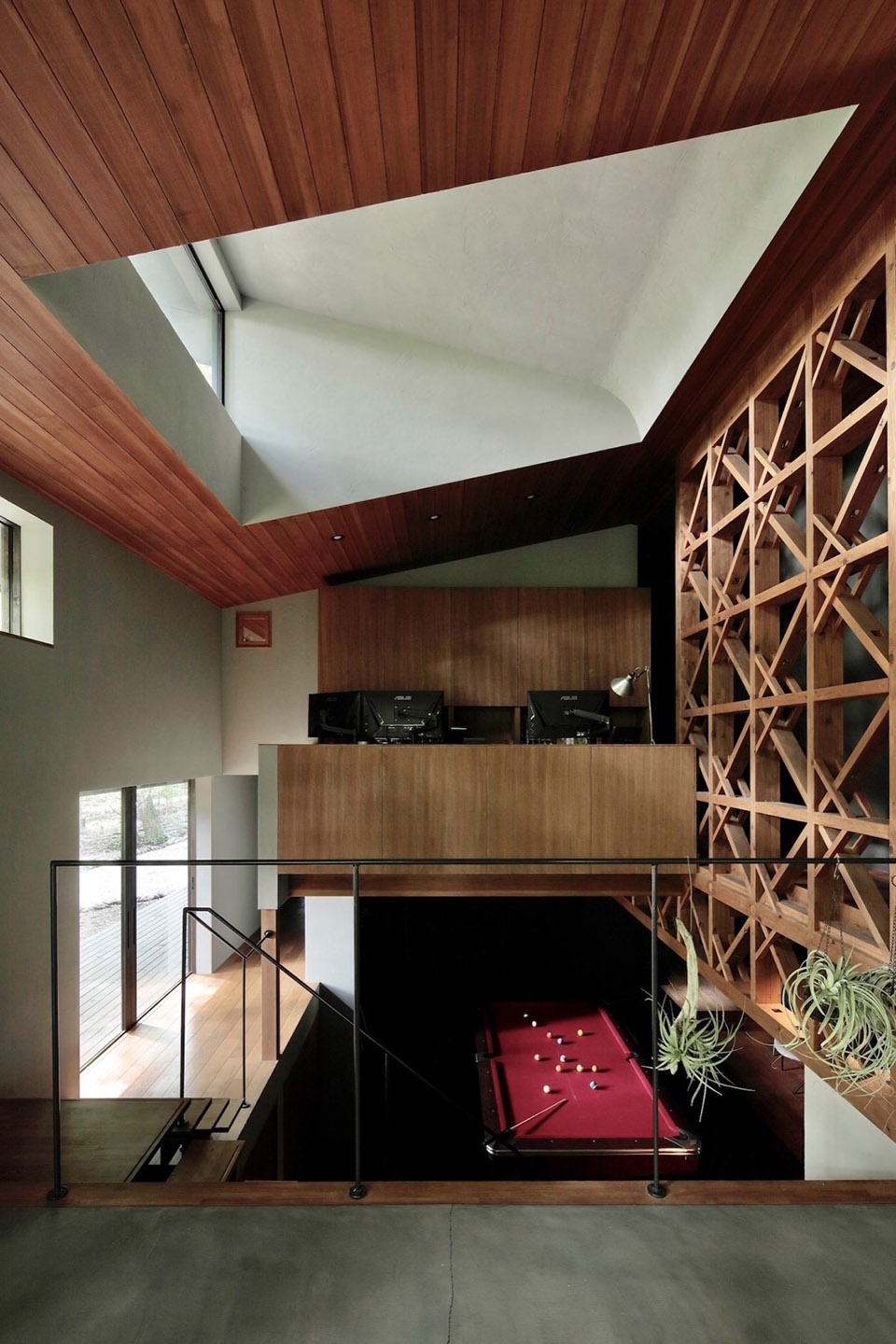
轻井泽镇夏季凉爽宜人,但冬季严寒,气温可降至零下10°C以下。因此,当地住宅的地基必须打在冻土层以下。尽管有时地基与上部结构分开设置,但本案的主体结构同样位于冻土层以下。应业主要求,地下空间被有效利用,设有一张标准尺寸的台球桌,并作为住宅整体设计的一部分,增添了生活的趣味性和价值。
The town of Karuizawa is known for its cool and refreshing summers, but the winters can be harsh, with temperatures dropping below -10°C. Because of this, the foundations of homes here must be built below the frost depth. While parts of home foundations here are sometimes dug independently from their main structures, the structure itself, in this case, also lies below the frost depth, and this portion of the house was utilized effectively: at the request of the client, a full-size billiard table was installed in this belowground section, which was incorporated into the design of the residence as a value-adding enhancement.
▼室内概览,overall of interior
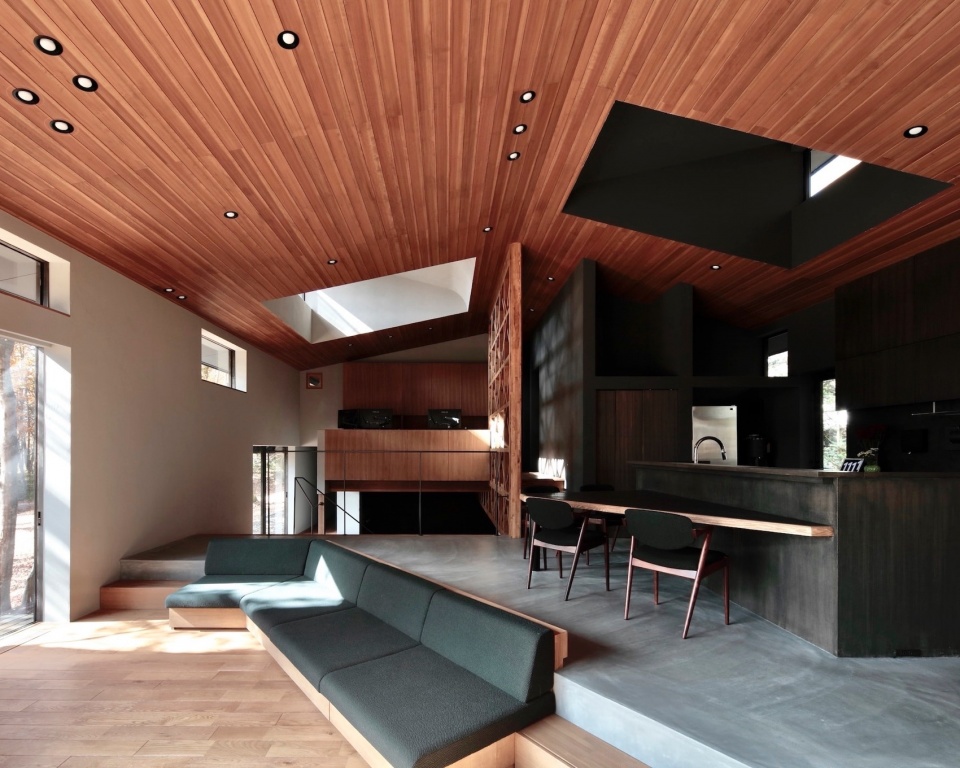
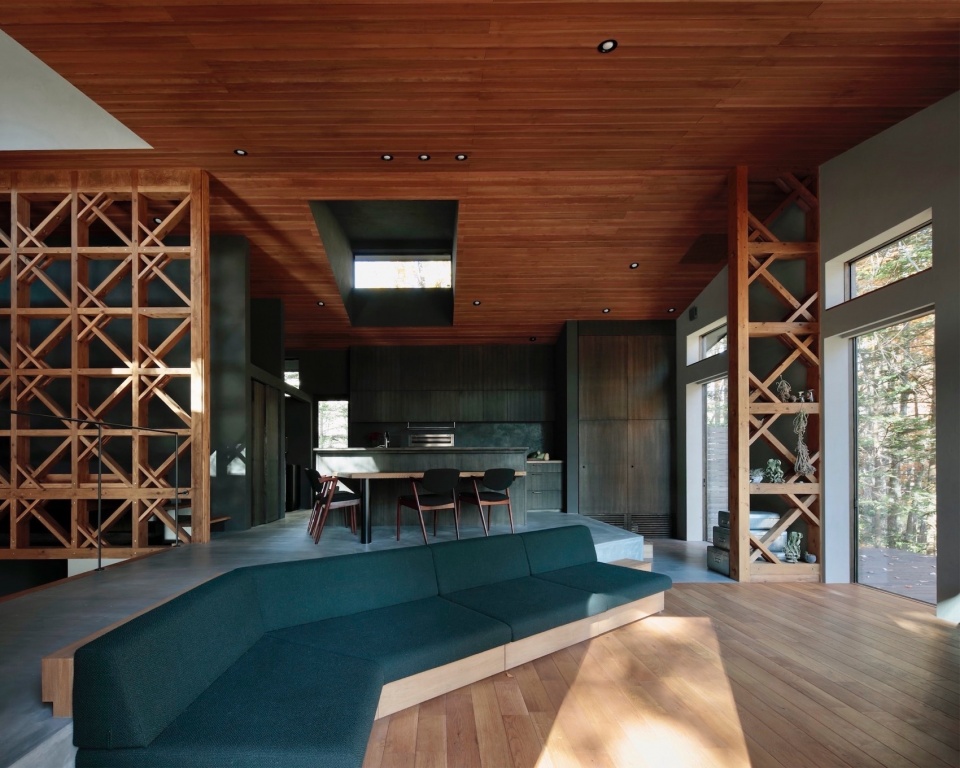
▼生活区,living space
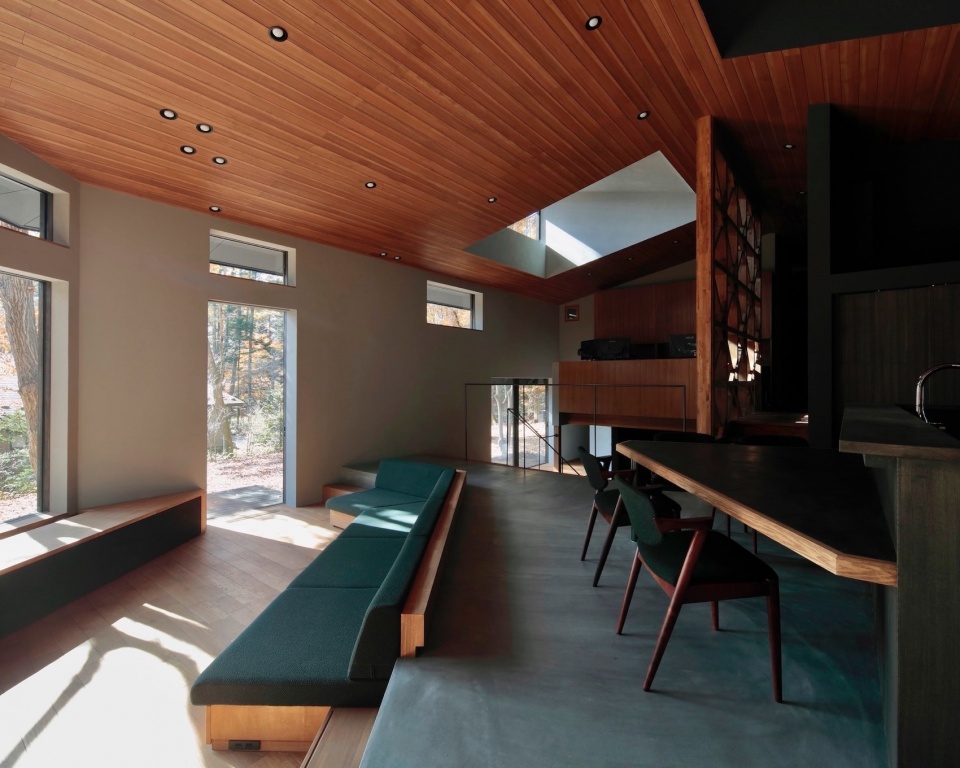
为应对冬季寒冷,住宅地面下方配备了一套水基热能储存系统。该系统吸收日间温差,使室内热环境保持稳定。同时,两台热泵空调系统提供全天候的气候控制。住宅还配有一台木柴炉作为辅助热源。而在适合引入外部空气的时段,热储系统可单独运作以调节温度波动。此外,前述位于冻土层以下的基础部分,也被纳入该热能储存系统的一环。
To combat the winter cold, the house features a water-based thermal-energy storage system beneath the floor. This system absorbs temperature changes throughout the day, creating thermal stability, while two heat pump air conditioners ensure 24-hour climate control. There is also a wood-burning stove for use as a heat source, and at times when letting in outside air is the most comfortable option, the thermal storage system is used solely for regulating temperature fluctuations. The foundation below the frost depth (as explained above) also functions as part of the thermal storage system.
▼“人造地形”的空间语言, new “terrain” within the architecture
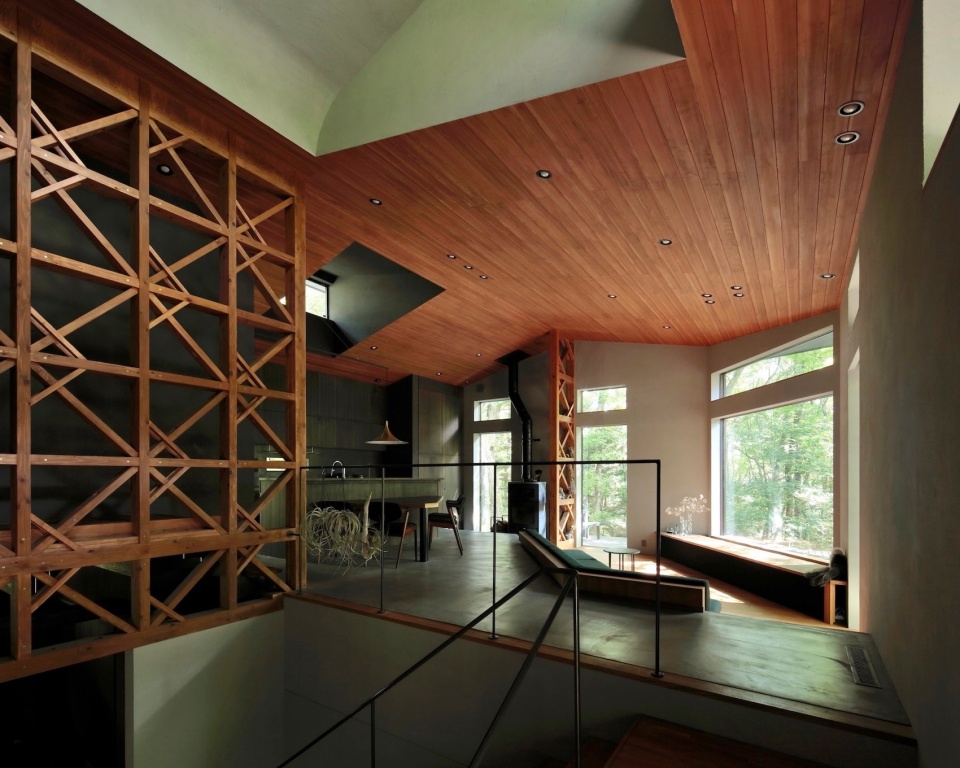
▼景观的画框,frame views
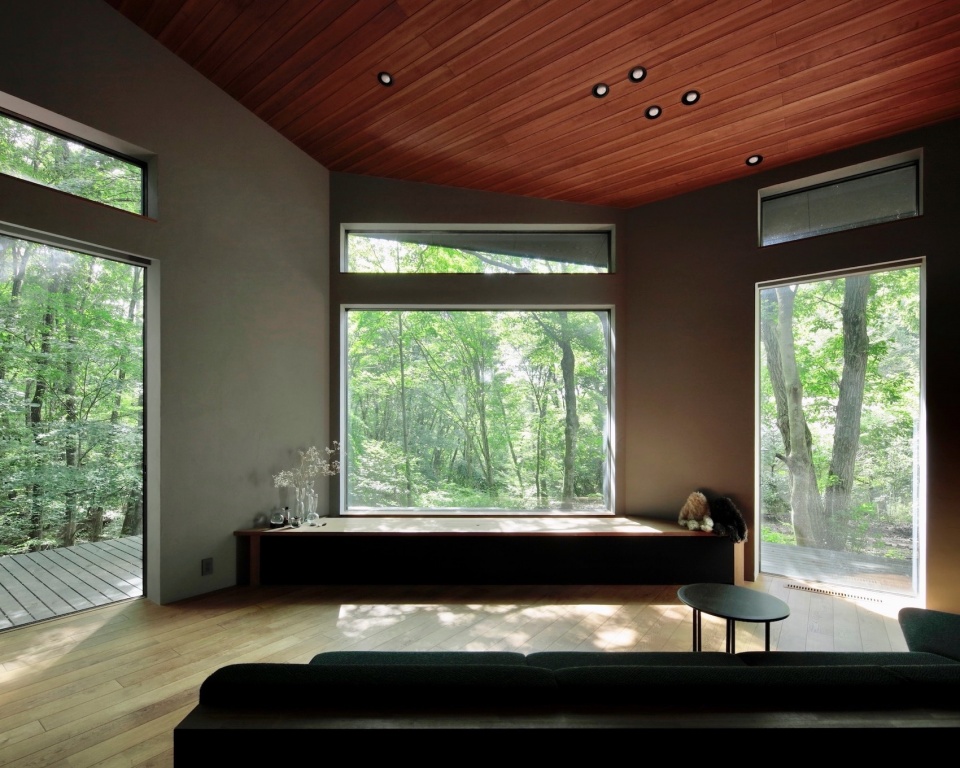
▼细部,details
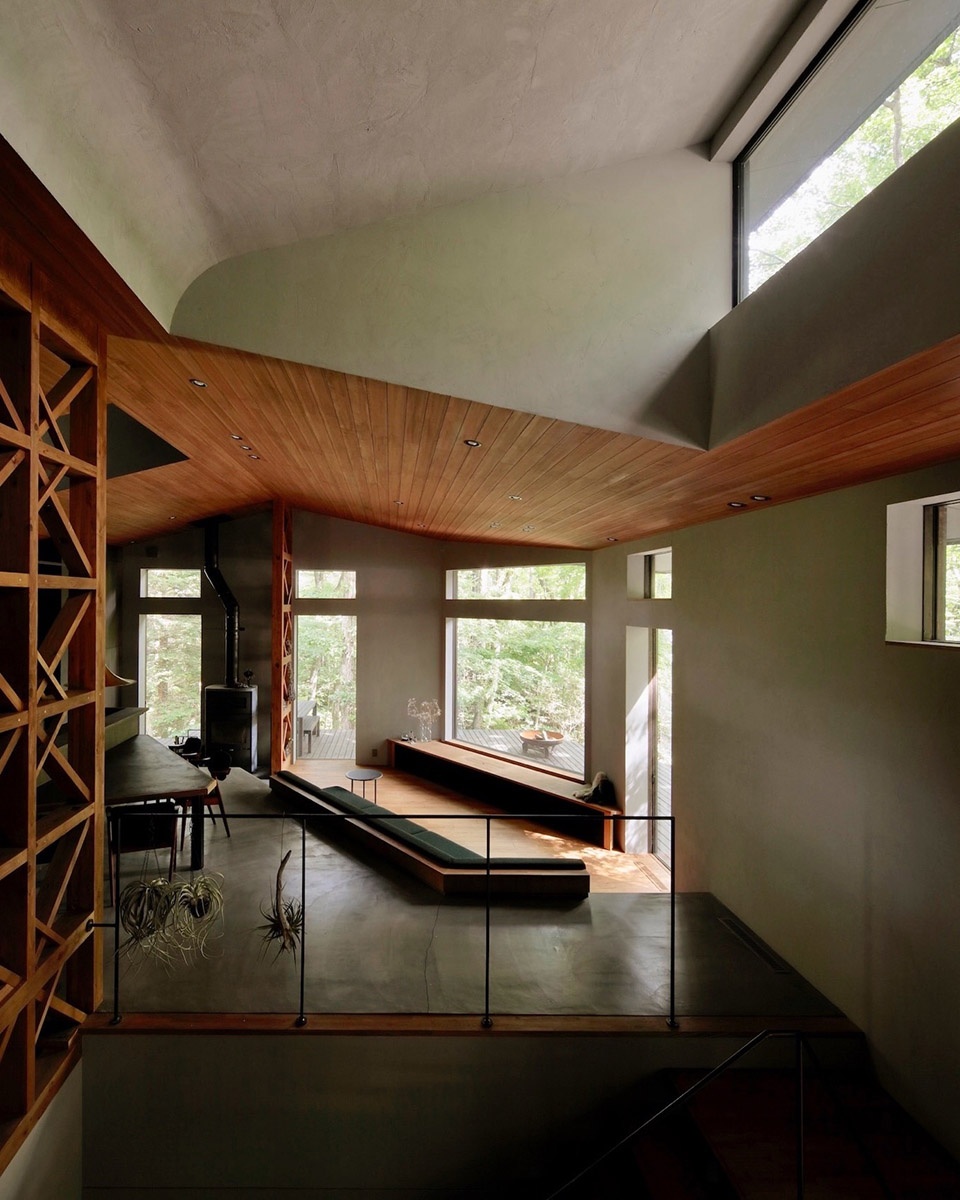
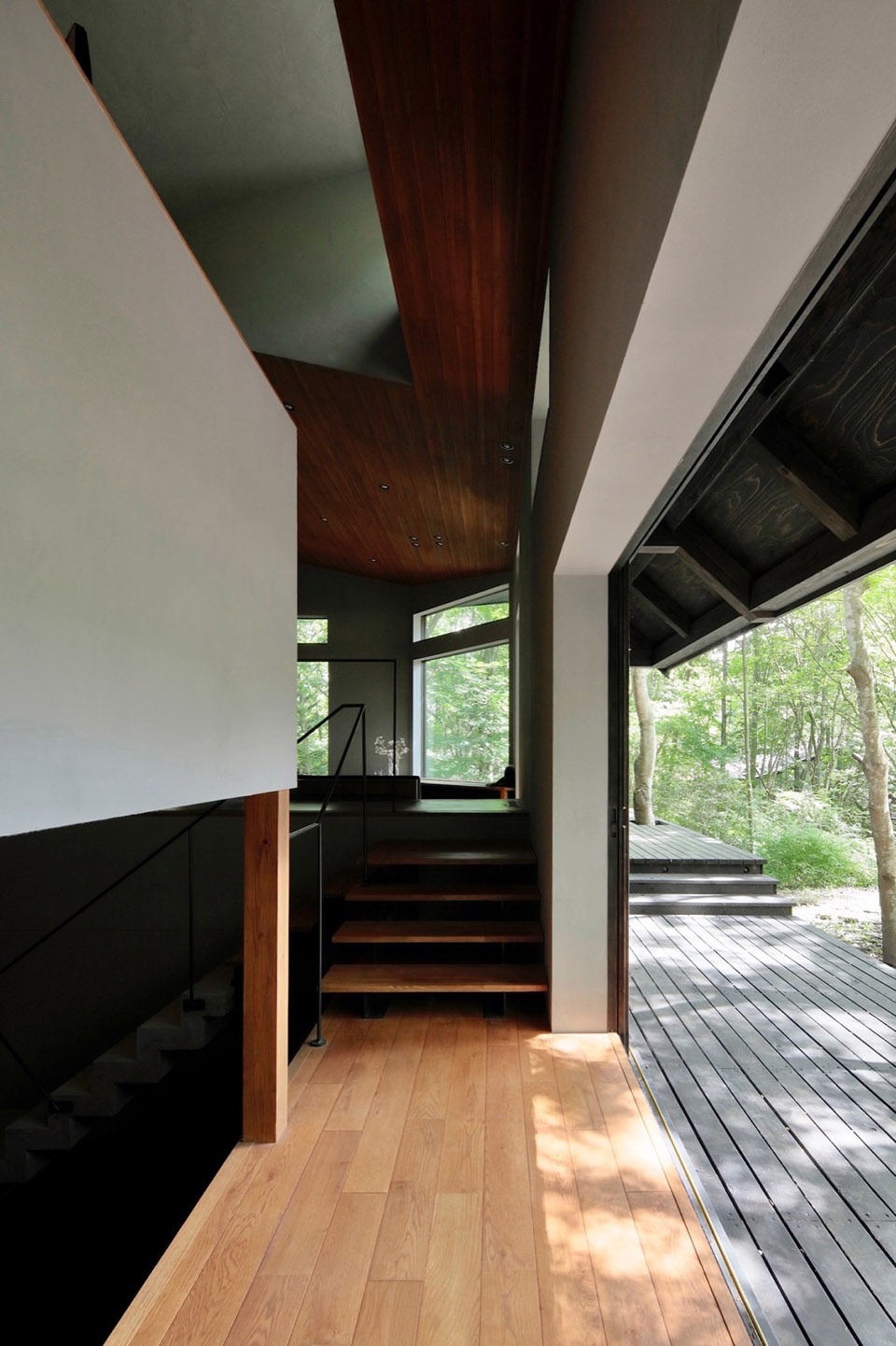
▼走廊与楼梯,corridor and stairs
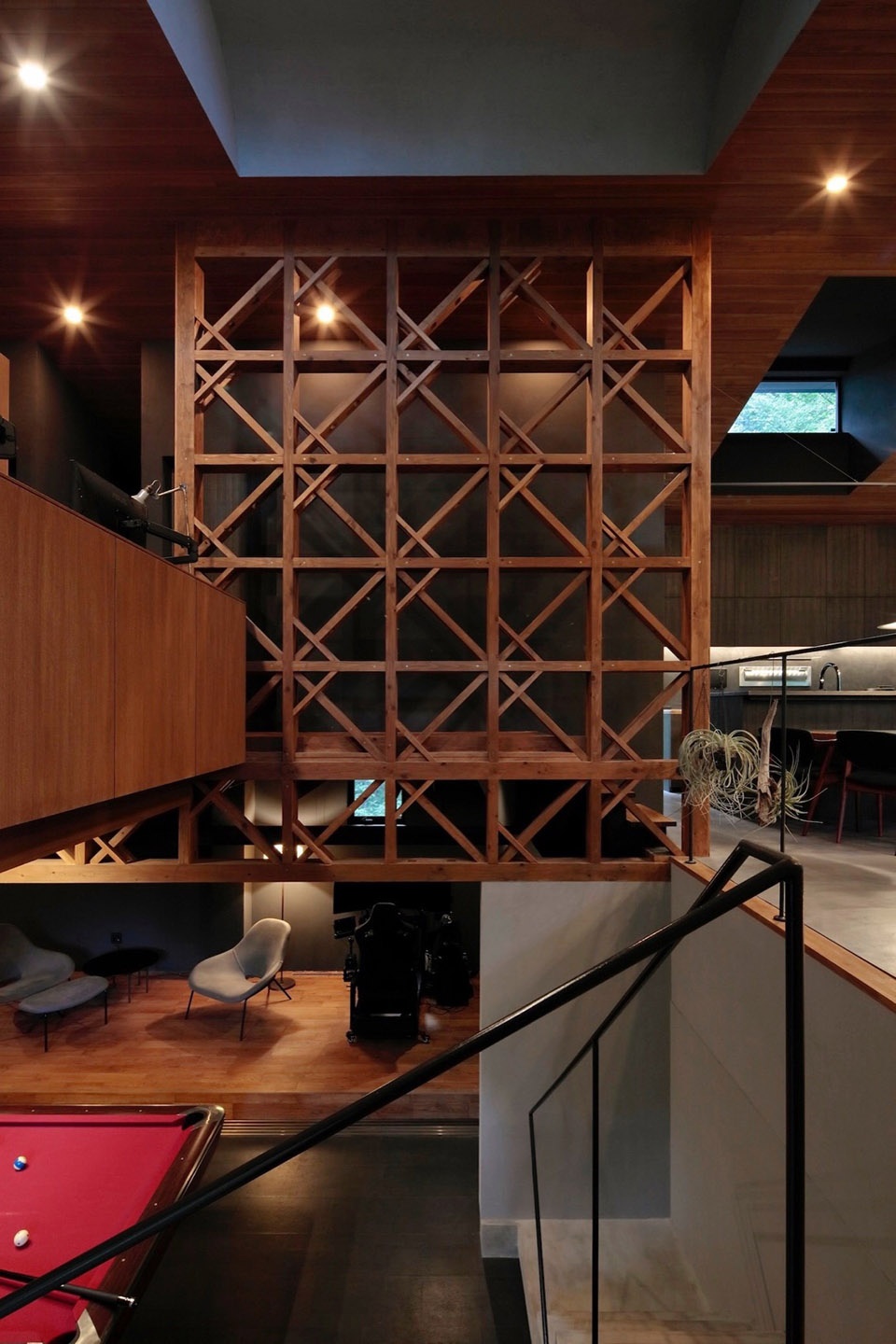
建筑中央设有一面木桁架剪力墙,由60毫米厚的构件构成立方网格,并辅以45毫米的斜向构件增强水平荷载的抵抗能力,再由30毫米的次斜撑进一步加固,层层递进的结构提高了整体的屈曲强度。这一结构不仅具备功能性,也在视觉上巧妙地影响了空间的尺度感,为室内营造出一种动感且精致的氛围。
Near the center of the building is a wood-truss shear wall, created using 60-millimeter-thick material laid out on a square grid and reinforced by 45-millimeter diagonal members. These diagonal members also function as bracing for horizontal loads and are further reinforced by smaller 30-millimeter diagonal members. This progressive reinforcement enhances the wall’s buckling strength. In addition to serving a functional role, this structural element makes a subtle yet dynamic contribution to the interior aesthetic by influencing the perception of scale within the space.
▼台球桌,the billiard table
▼书房,study
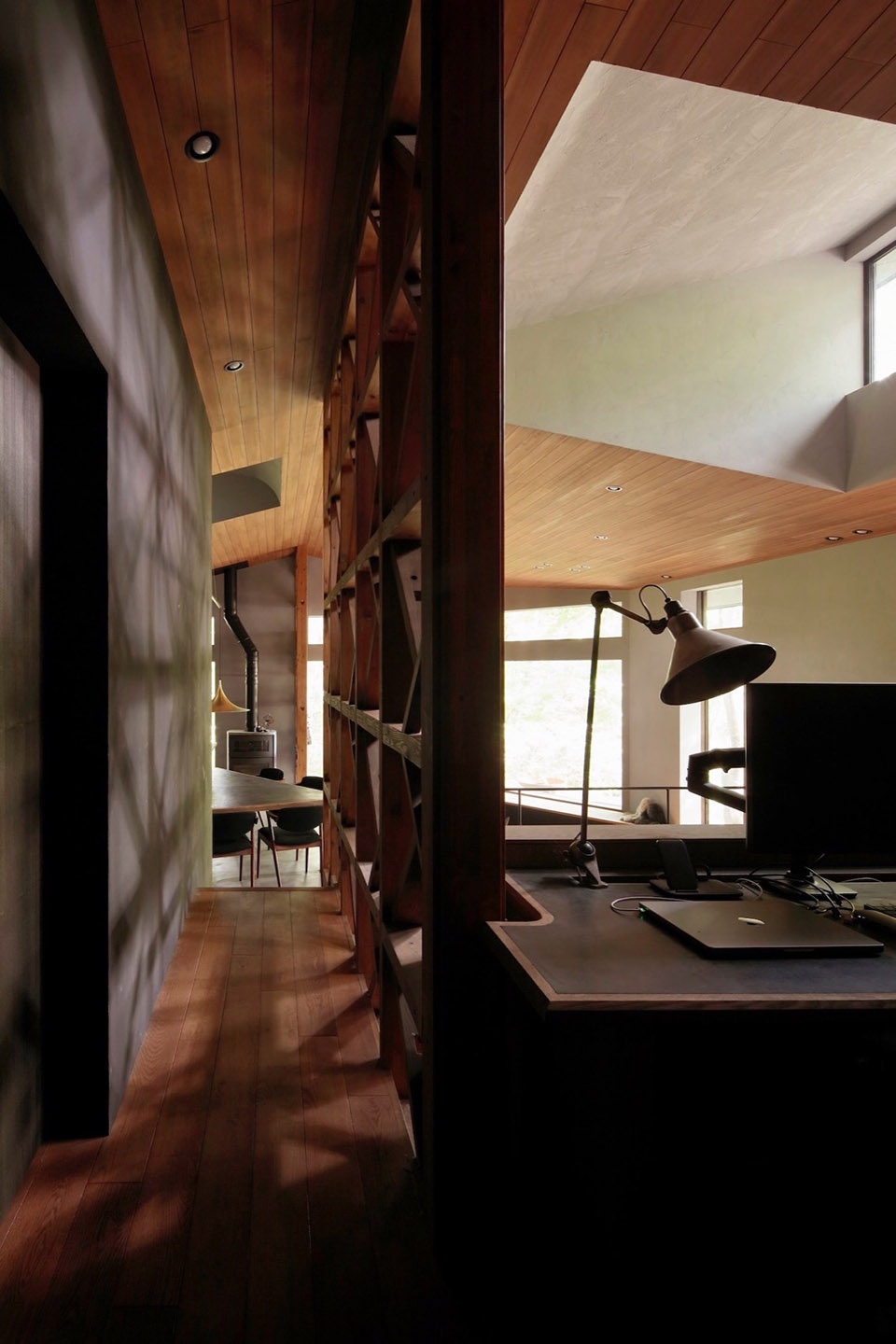
▼细部,details
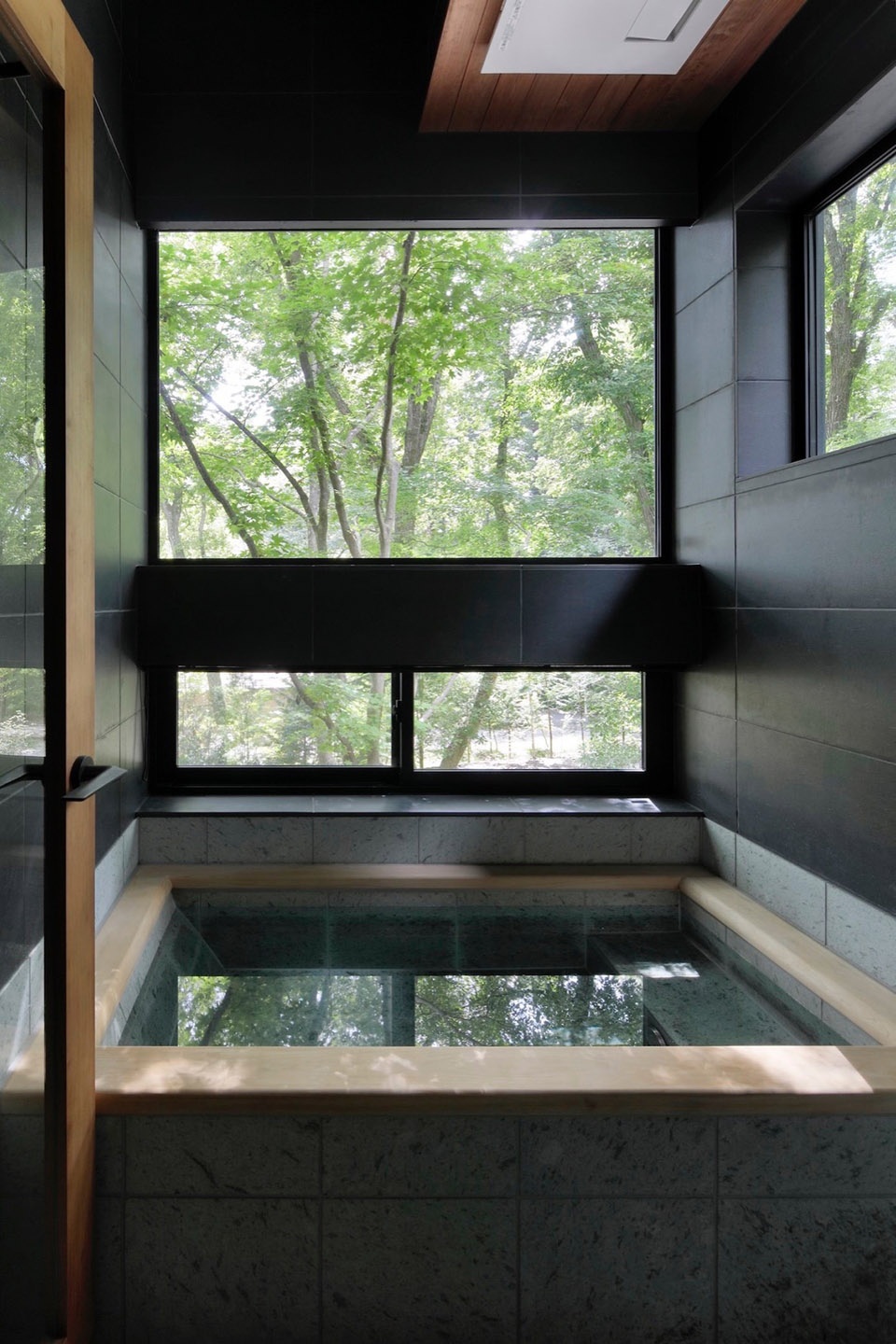
▼浴室,bathroom
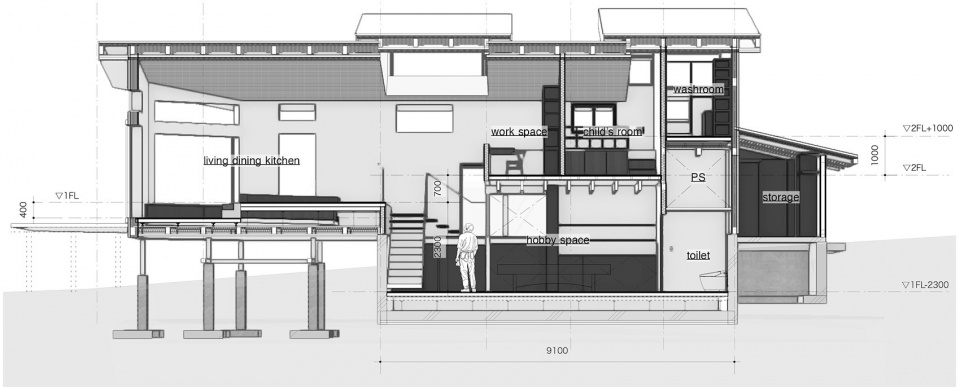
住宅的断面构成相当复杂。虽然从技术上讲它是一座两层建筑,但其内部空间被划分为多个错层区域,同时整体上又维持了空间的连贯性。这种空间平衡通过六个精心设计的楼层高差实现,每一个楼层都根据其功能量身打造。设计不仅回应了地形的自然高差,还在建筑内部创造了一种“人造地形”的空间语言,形成了具有独特层次感的居住体验。
The cross-sectional composition of the residence is quite complex. Although it is technically a two-story building, the design divides the space into multiple distinct levels while at the same time maintaining a unified feel throughout the whole interior. This spatial balance is supported by six carefully defined floor levels, each tailored to the needs specific to each area. In this way, the design process involved not only responding to the land’s topography but also creating a distinctive new “terrain” within the architecture itself.
▼夜景,night view
▼剖面图,section
Credit Information
Architect : Takeshi Hirobe Architects
Photography : Koichi Torimura
Project Outline
Project name : YMK
Location : Karuizawa City, Nagano
Date of completion : 09/2022
Principal use : House
Structure : Wood
Site area : 1841.74 m2
Total floor Area : 205.53 m2
Design period : 09/2020 – 10/2021
Construction period : 10/2021 – 09/2022
Project team: Takeshi Hirobe, Risa Makino
Structural engineer : Mika Araki / Mika Araki Structural Engineers
General contractor: Happiadesign
Main finish
External wall:Ceramic flat slate
Internal wall:Diatomaceous earth
Ceiling:Cedar plank
Floor:Oak flooring, Cork tiles