San Carlos de Apoquindo体育场改造,智利 / IDOM
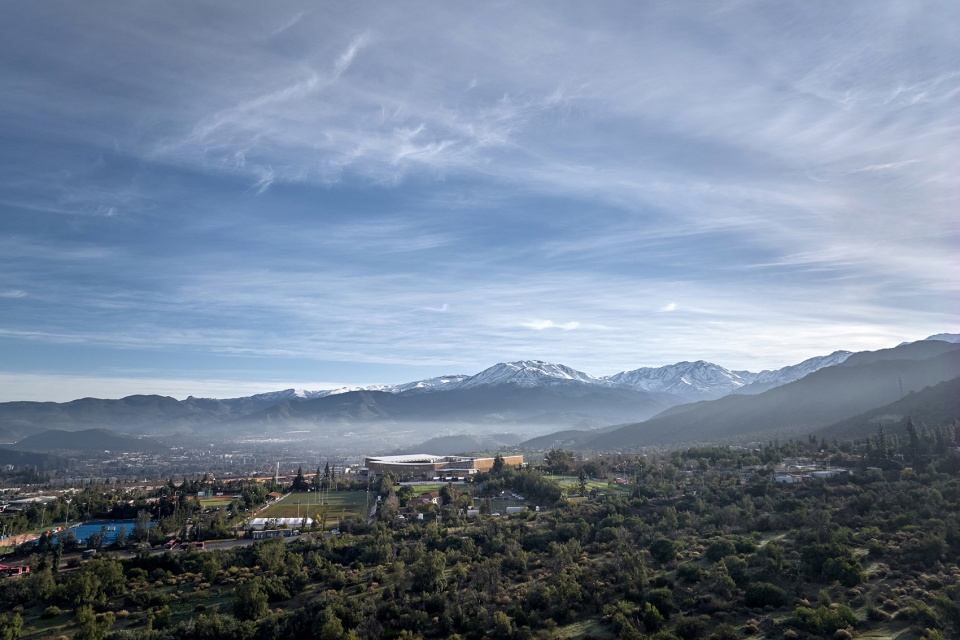
圣卡洛斯·德·阿波金多体育场,现名克拉罗体育场,于1988年9月4日正式启用。该体育场位于智利圣地亚哥的拉斯孔德斯区,坐落在面向城市的山坡上,位于山脉和曼奎埃山之间。最初的设计部分为地下结构,东侧和西侧有独立的入口。
The San Carlos de Apoquindo Stadium, currently known as the Claro Arena, was inaugurated on September 4, 1988. It is located in the Las Condes district of Santiago, Chile, on a slope facing the city between the mountains and Manquehue Hill. The original design was partially underground, with separate entrances on the east and west sides.
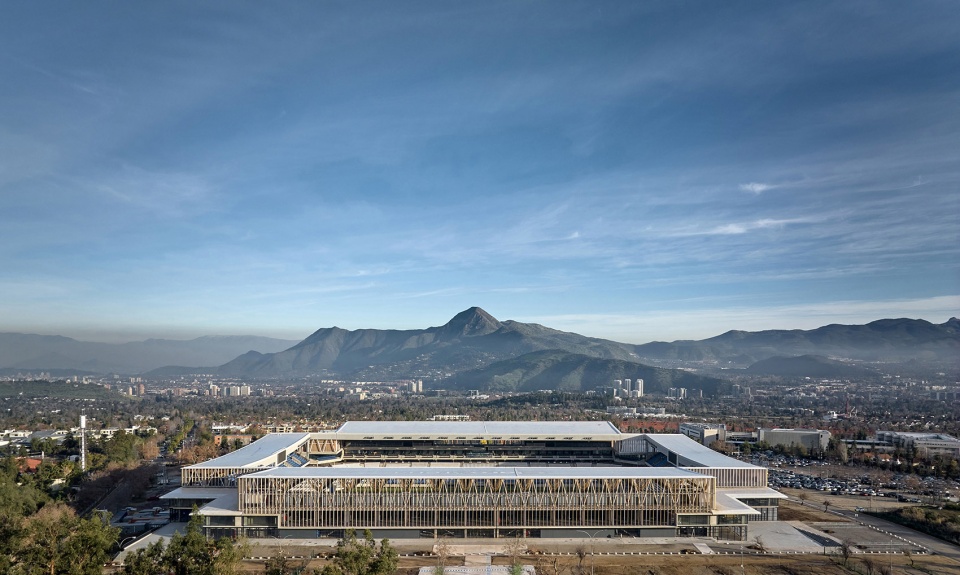
▼项目鸟瞰,aerial view of the project
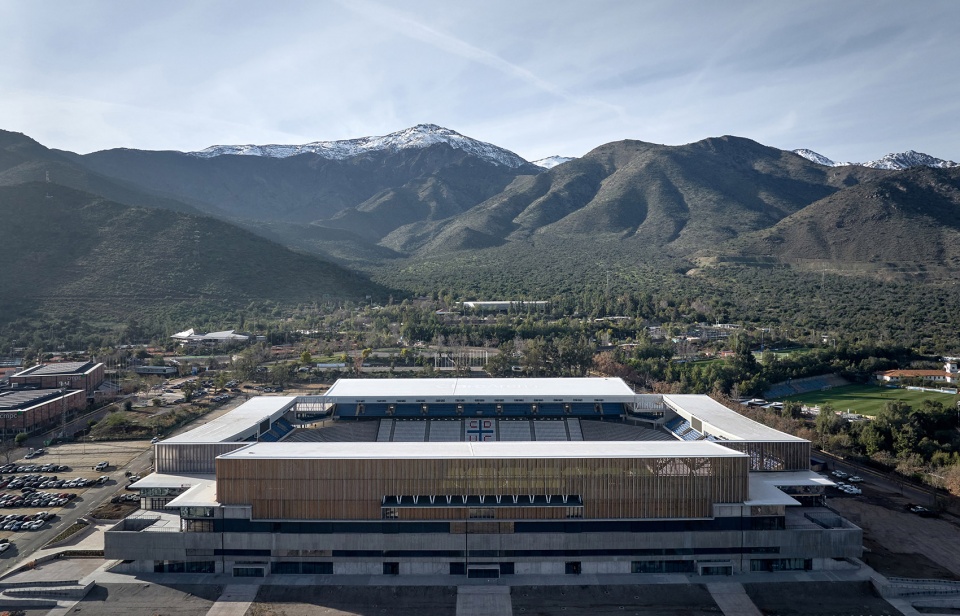
为了将观众容量从12,000人扩展到20,000人并对基础设施进行现代化改造,俱乐部启动了重新设计体育场的比赛,以符合现代足球标准。新的设计必须满足技术、可持续性、舒适性和接待要求,并且能够在比赛之外持续使用,将体育场转变为多功能建筑。
In order to expand the capacity from 12,000 to 20,000 spectators and modernize the infrastructure, the club launched a competition to redesign the stadium according to contemporary soccer standards. The new design had to meet technological, sustainability, comfort, and hospitality requirements and allow for continuous use beyond matches, turning the stadium into a multipurpose building.
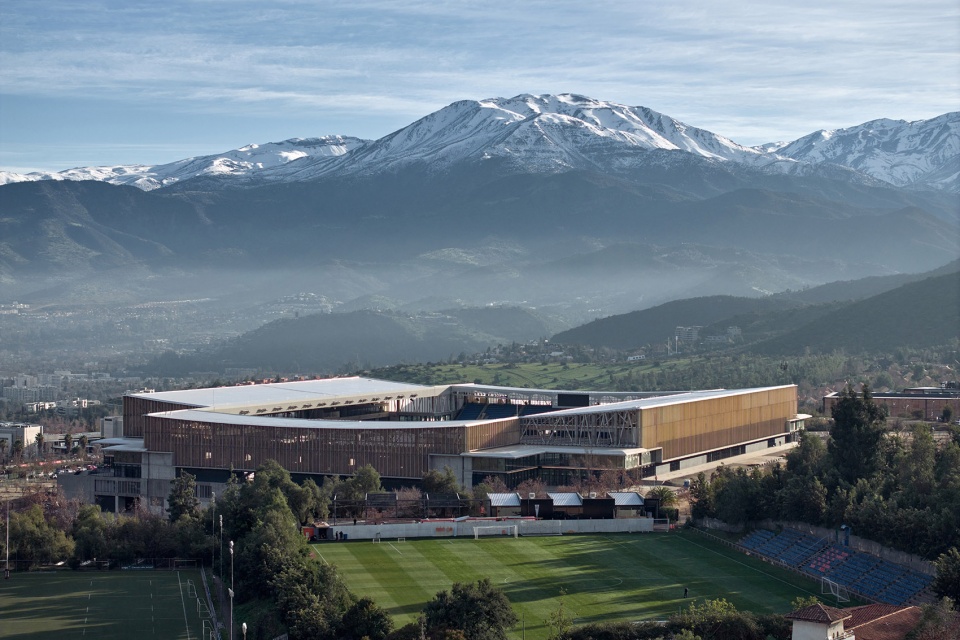
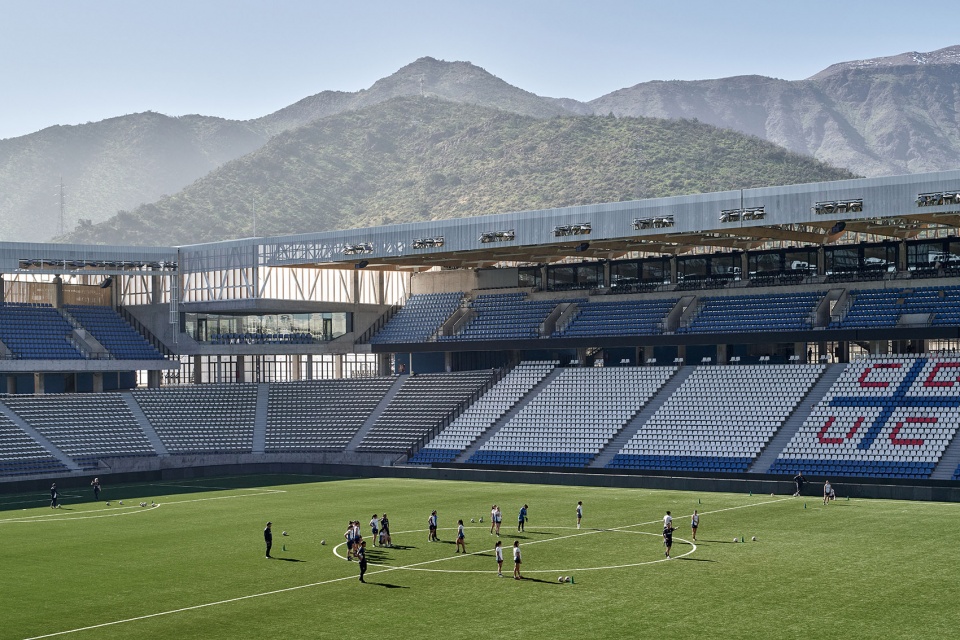
▼改造后的体育场,the stadium after renovation
该项目由IDOM公司开发,提出了一种合理、高效且可持续的体育场设计,考虑到气候、能源和舒适性。原有的看台几乎保持不变。在其上方,在Fouilloux层级建造了一条环绕的街道,将所有区域连接起来。旧体育场位于这条街道下方,而轻盈且透气的结构则在其上方竖立,用于容纳扩展部分。
This project, developed by IDOM, proposes a rational, efficient, and sustainable stadium that considers climate, energy, and comfort. The original stands remain almost intact. On top of them, a perimeter boulevard is built at Fouilloux level to connect all areas. The old stadium remains under this boulevard, while a light and permeable structure that houses the extension rises above it.
▼在原有看台上新增一条环形通道,a perimeter boulevard is built at Fouilloux level on top of the original stands
矩形的平面图优化了视野和功能性。角落变成了独特的空间,作为入口,并提供具有景观和场地视野的多功能房间。这些房间既可用于比赛,也可用于其他活动。
▼轴测图,axonometric
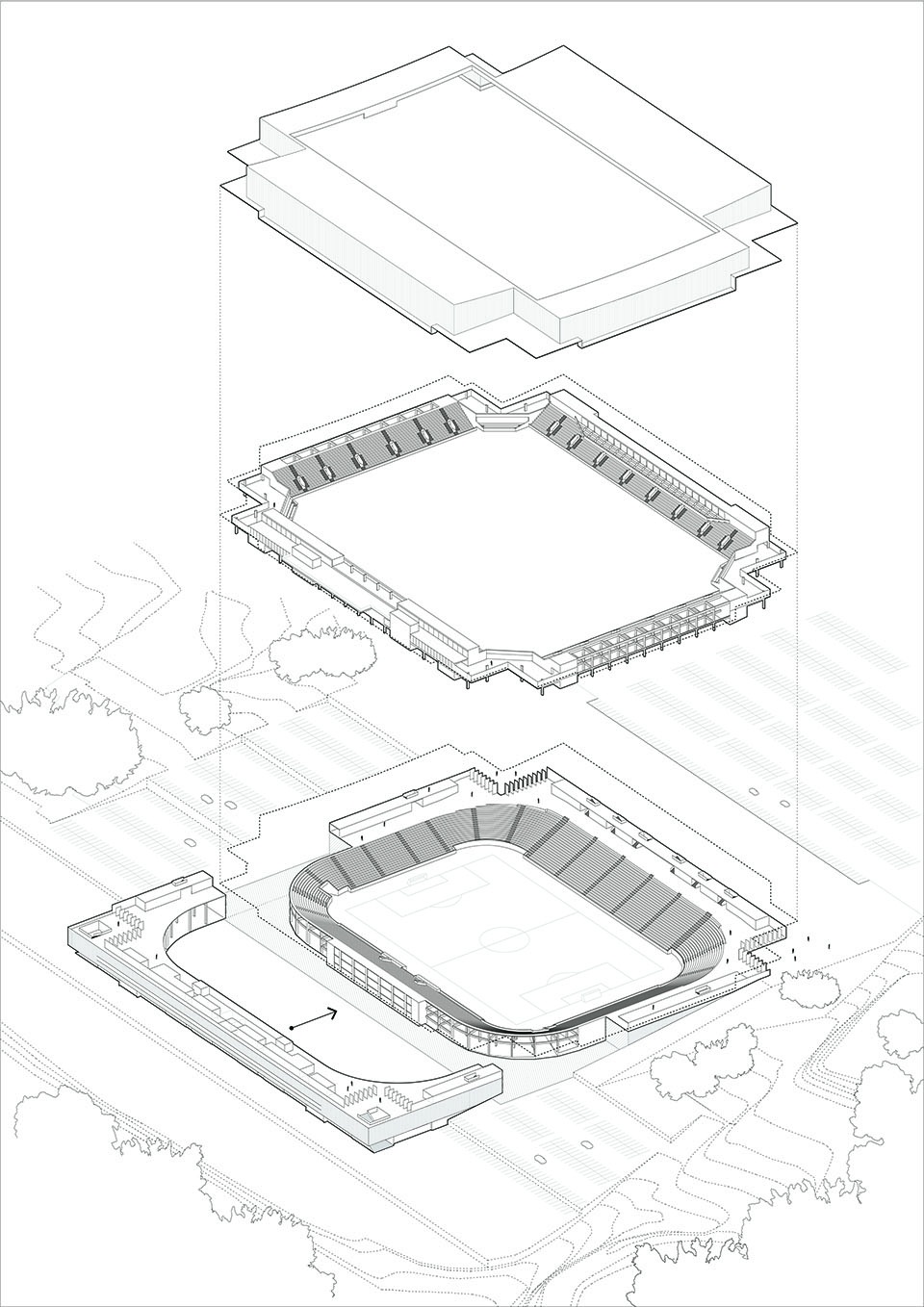
The rectangular floor plan optimizes views and functionality. The corners become unique spaces that serve as entrances and offer multipurpose rooms with views of the landscape and field. These rooms can be used for matches and other events.
▼角落处提供具有景观和场地视野的多功能房间,The corners offer multipurpose rooms
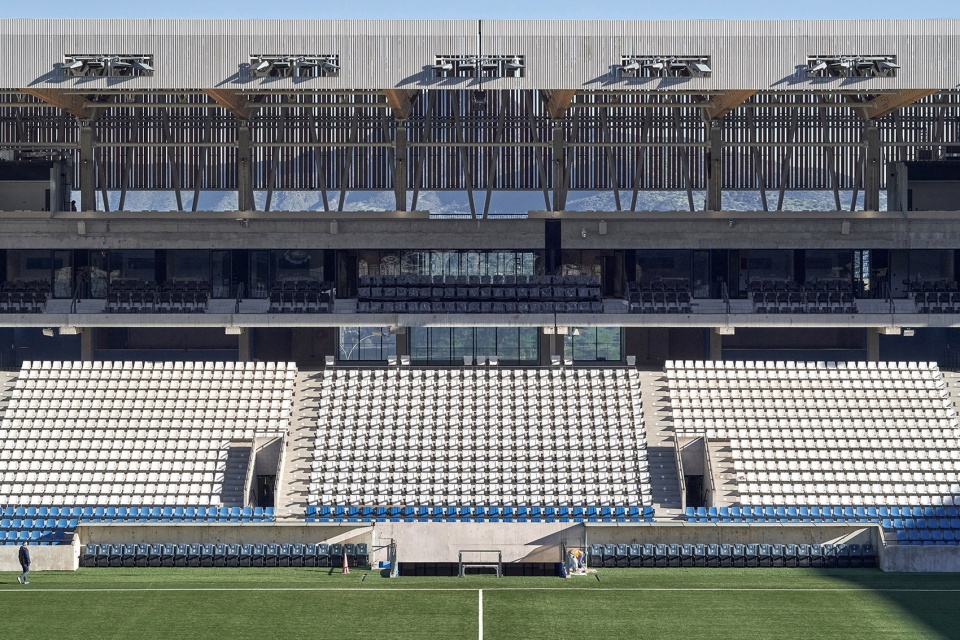
原有的看台仍保留了95%的视野。新的公共观众席和包厢位于其上方。在Livingstone部分,扩展工程既在街道下方进行,也在上方进行,项目将整合更衣室、新闻室、技术区、高端接待区和媒体区。
▼剖透视,perspective section

The original grandstand still offers 95% of its original views. New galleries for the general public and boxes are located above it. In Livingstone, the expansion is taking place below and above the boulevard. It will integrate dressing rooms, press rooms, technical areas, premium hospitality spaces, and media spaces.
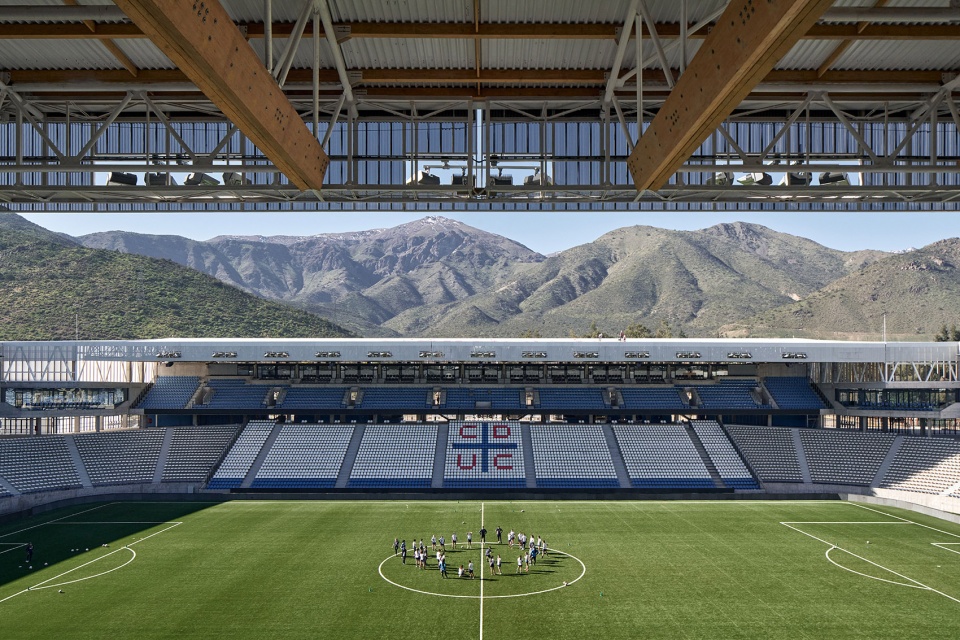
▼从看台望向球场,Looking at the stadium from the stands
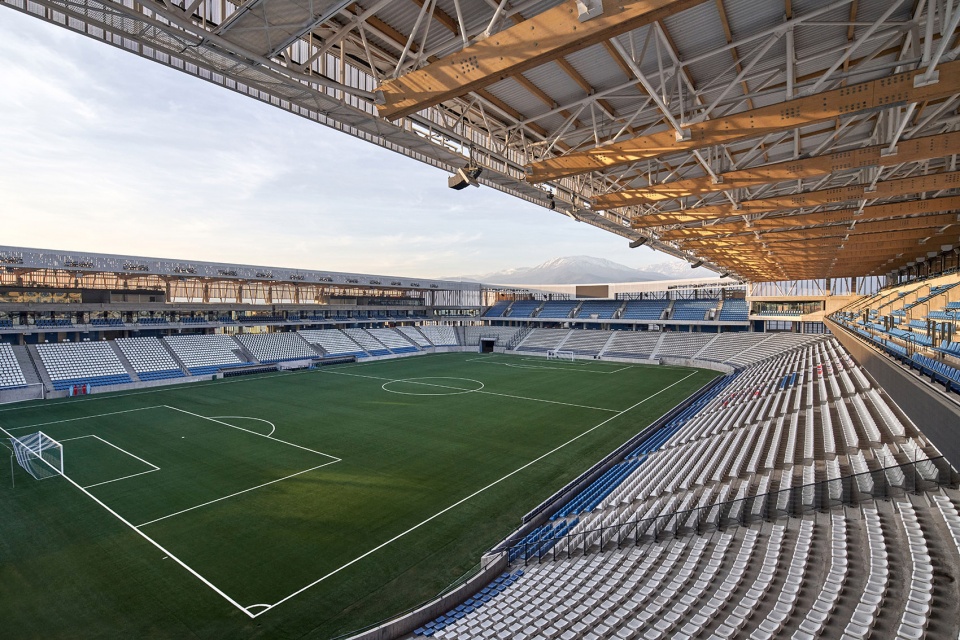
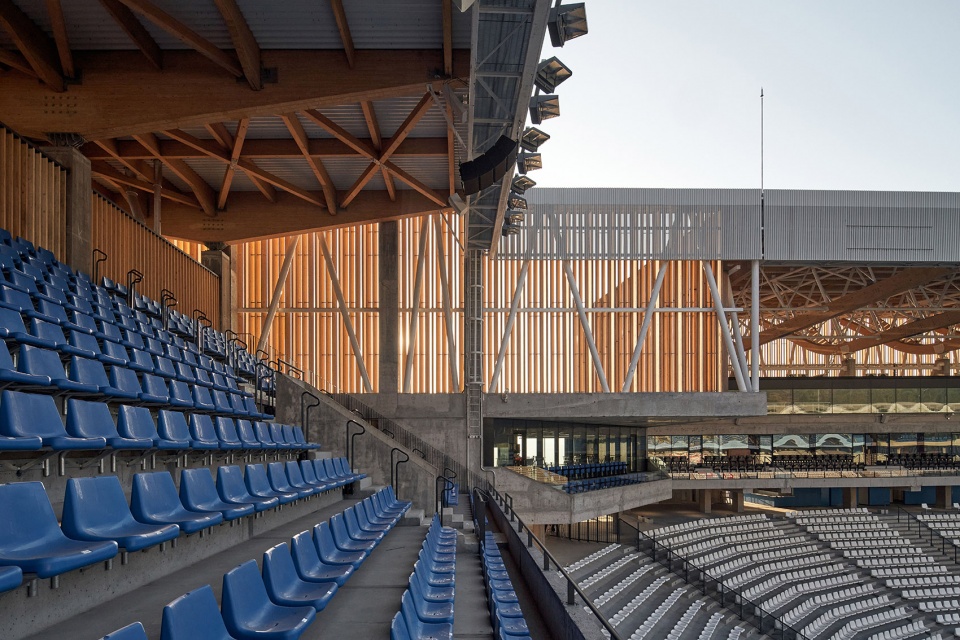
该结构保留了原有的混凝土,既坚固又实用,最大限度地减少了干预的需求。扩展部分围绕现有的观众席使用混凝土梁和柱建设。角落部分结合了混凝土和倒置钢结构,以优化应力并符合规定的高度要求。
The structure retains the original concrete, which is sound and functional, thereby minimizing the need for interventions. The extension is built around the existing bowl with concrete beams and pillars. The corners incorporate mixed concrete and inverted steel structures to optimize stress and comply with regulatory height requirements.
▼结构保留了原有的混凝土,The structure retains the original concrete
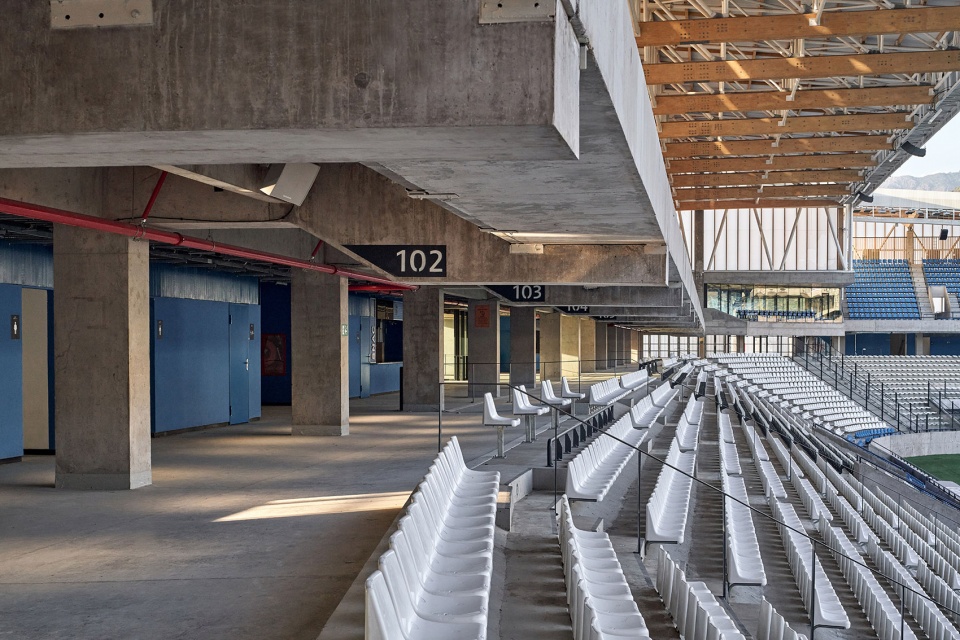
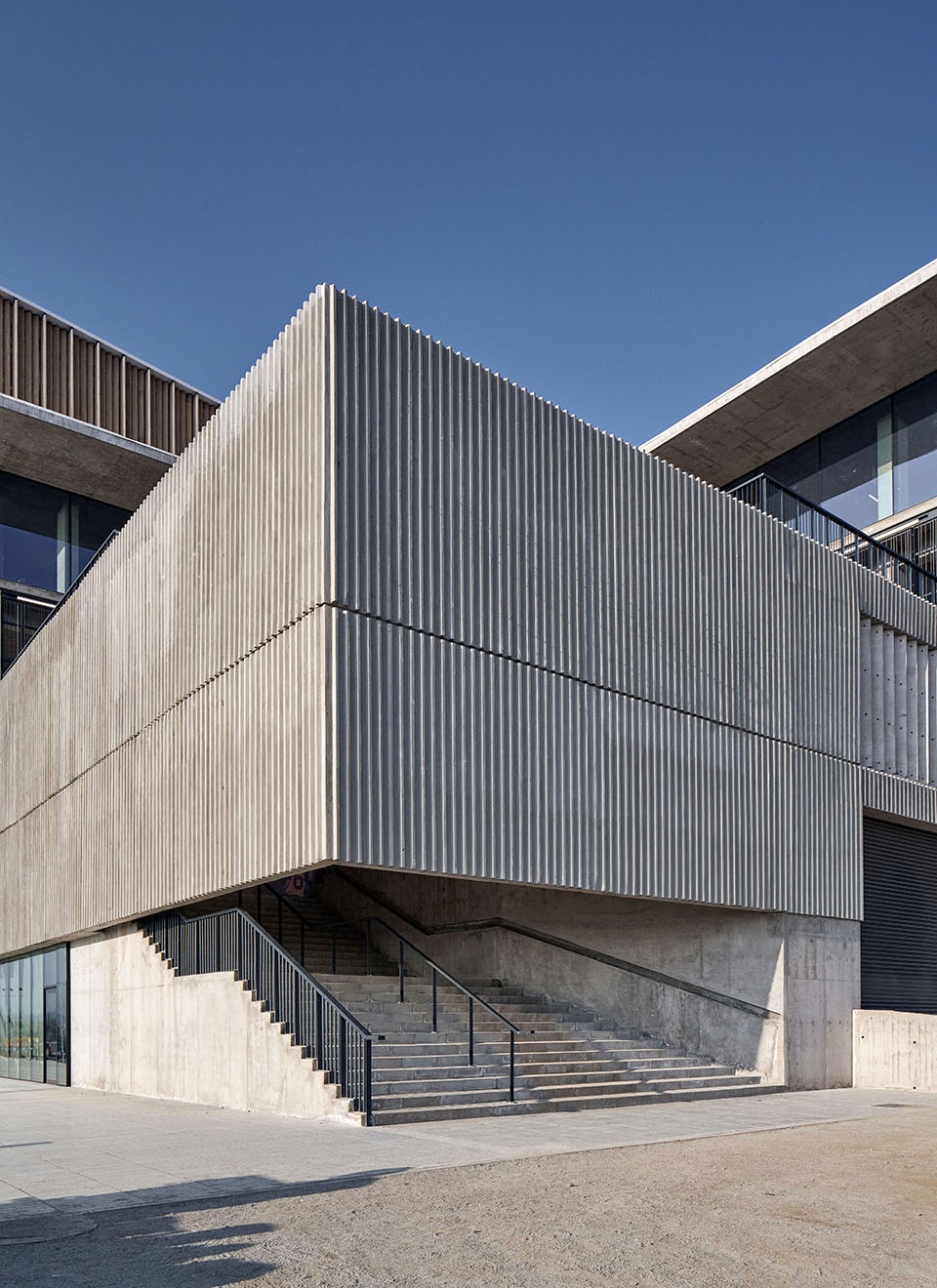
▼混凝土立面,The concrete facade
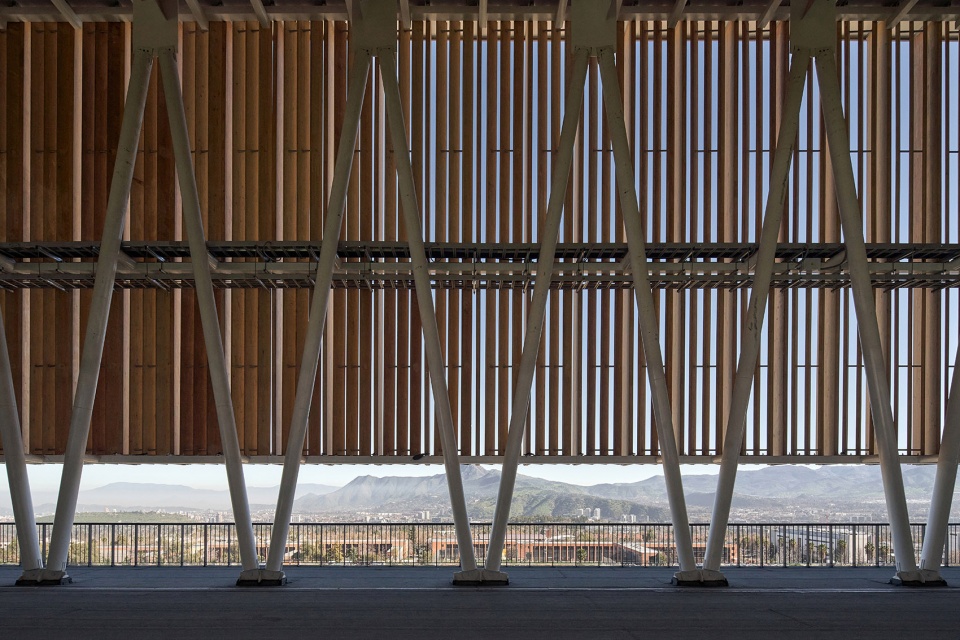
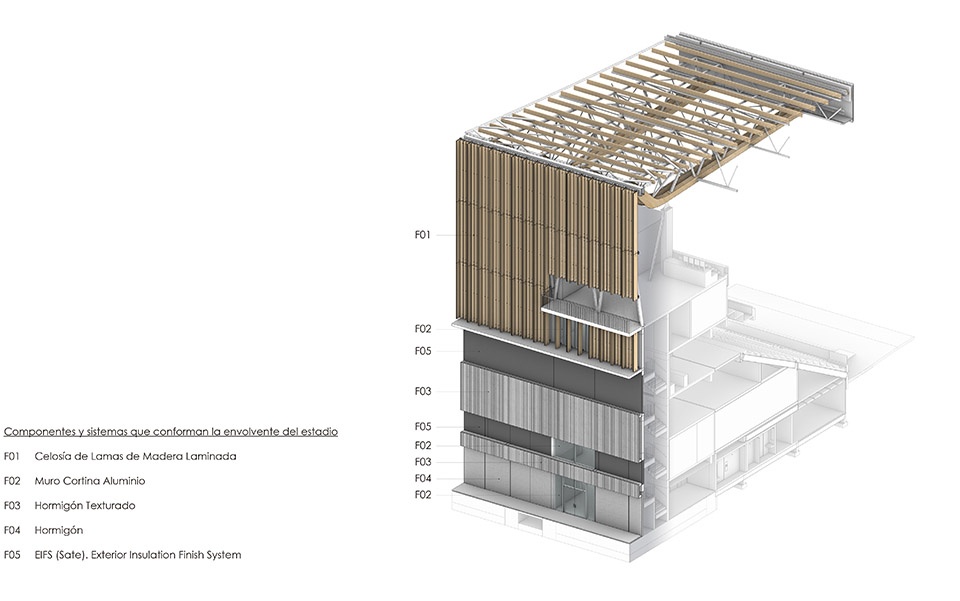
体育场的设计在开放且未经过调节的空间中提升了环境舒适度。在扩展部分,从街道层到屋顶,使用智利辐射松胶合木垂直条板,间隔为一米,并与LED照明相结合。根据朝向,空间要么保持开放以促进通风,要么整合太阳能框架和声学面板。一条混凝土带标志着立面的开始,并作为完工的装饰。
The stadium’s design improves environmental comfort in an open, unconditioned space. In the stadium extension, from the boulevard level to the roof, vertical slats of Chilean radiata pine laminated wood are spaced one meter apart and integrated with LED lighting. Depending on the orientation, the space is either left open to facilitate ventilation or incorporates solar frames and acoustic panels. A concrete strip marks the beginning of the façade and serves as a finishing touch.
▼立面采用胶合木垂直条板,vertical slats of Chilean radiate pine laminated wood are spaced
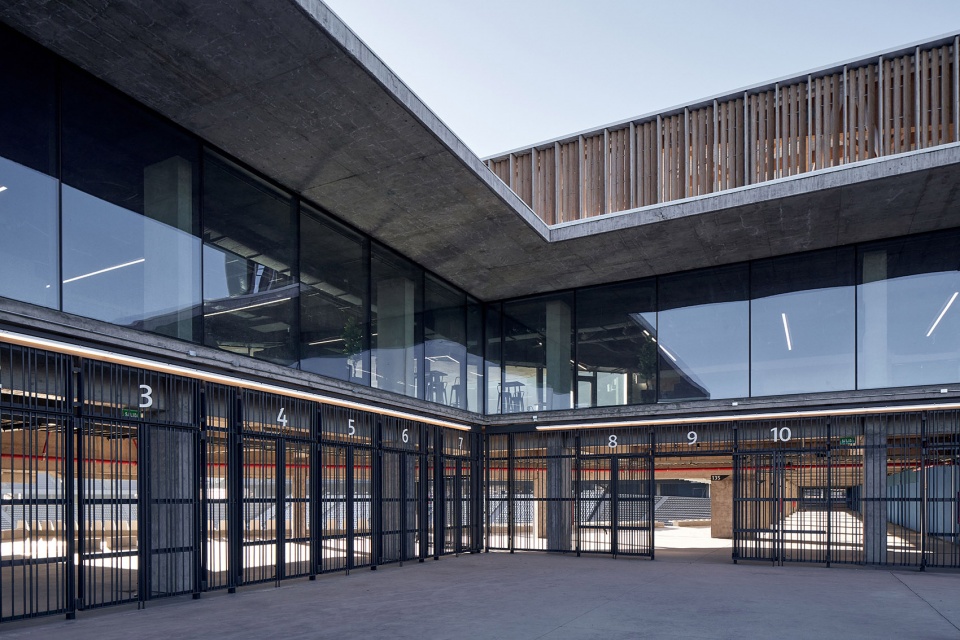
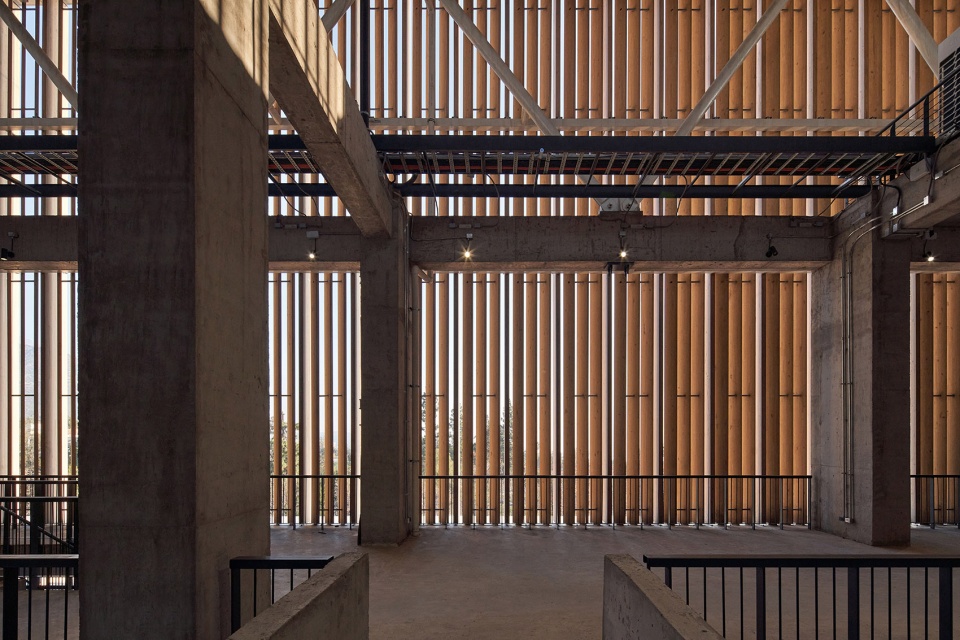
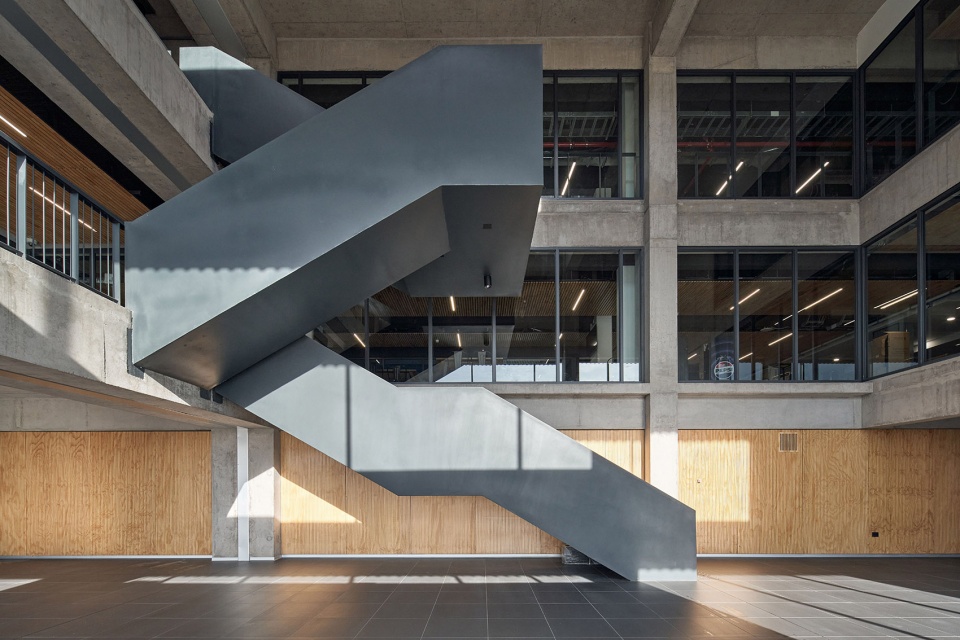
▼中庭楼梯空间,the central staircase space
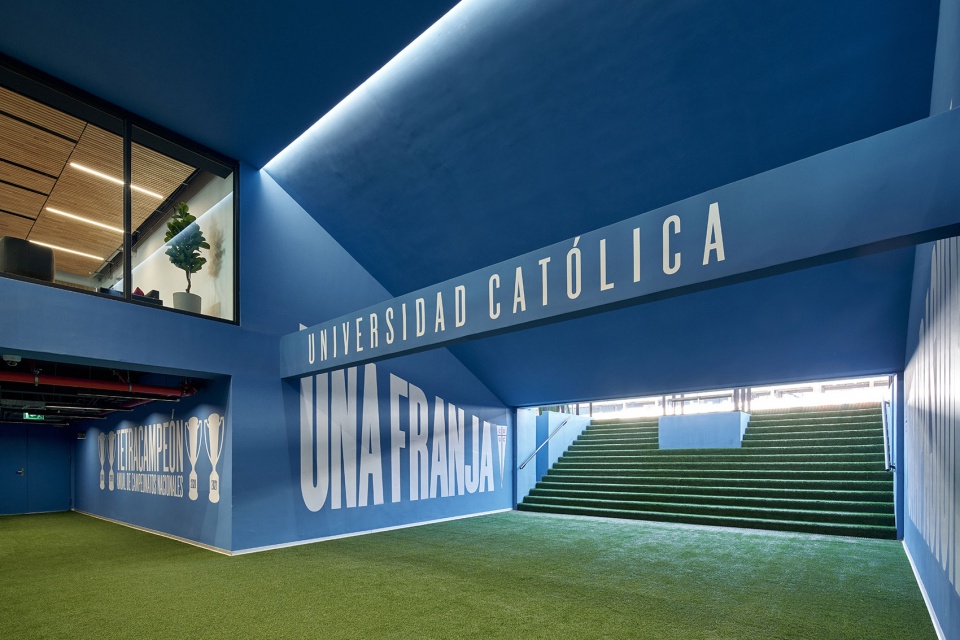
▼球员进场入口,Player entrance
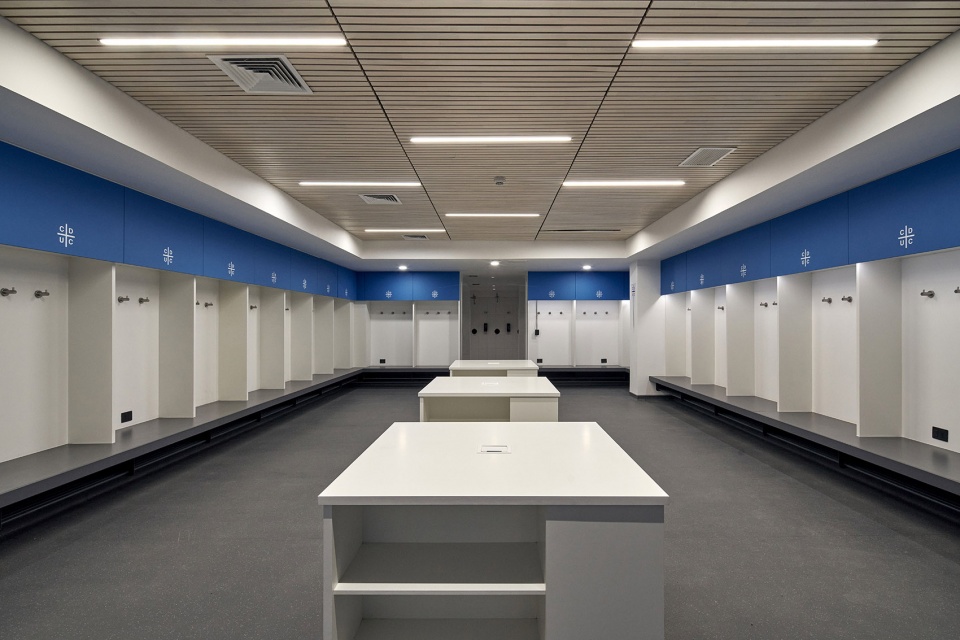
▼更衣室,changing room
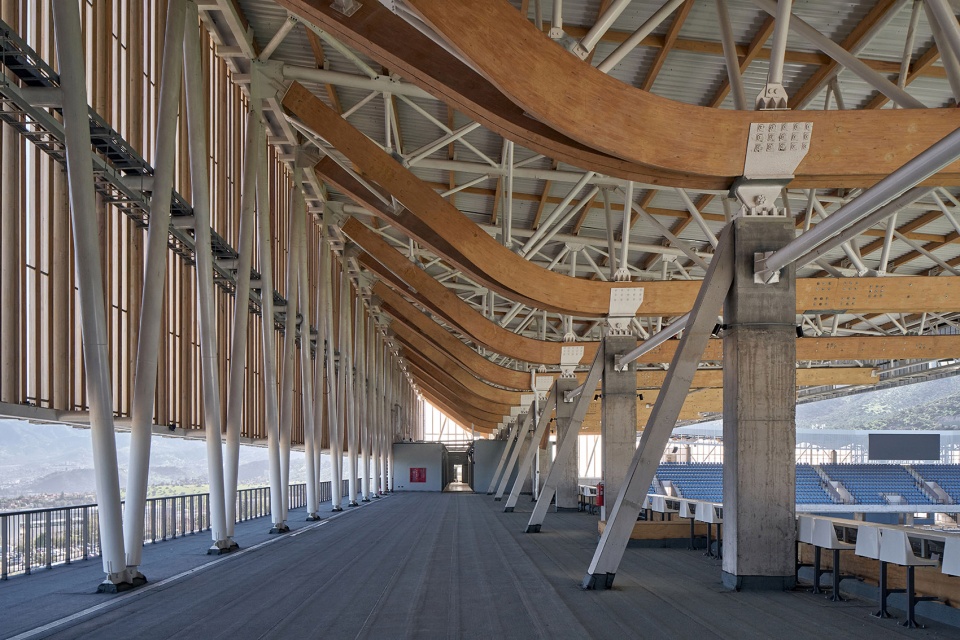
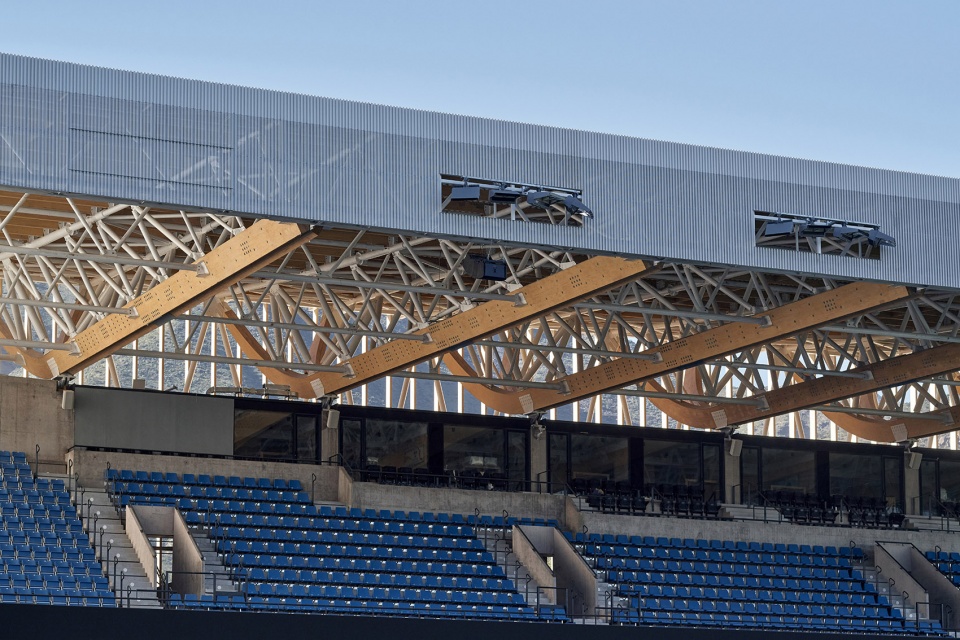
屋顶设计能够承受地震条件,采用混合木材和钢结构。胶合木梁在两端跨度达到17米,三维结构在两侧跨度可达31米。这一结构设计通过利用木材的弯曲性能来传递力并减少钢连接,优化了木材的使用。屋顶采用轻质金属板和TPO防水层覆盖。
▼屋顶结构轴测图,roof structure axonometric
The roof is designed to withstand seismic conditions and uses a mixed wood and steel structure. Laminated wood beams span 17 meters at the ends and three-dimensional structures span up to 31 meters at the sides. This structural design optimizes the use of wood by taking advantage of its bending properties to transmit forces and minimize steel connections. The roof is finished with lightweight sheet metal and TPO waterproofing.
▼屋顶结构,roof structure
在可持续性方面,该项目通过与钢铁、塑料、木材和能源领域的工业合作伙伴的合作,实施了横向策略。通过减少建筑面积、优化能源和水的消耗、重新利用现有的混凝土结构以及回收材料(如旧屋顶的钢材和座椅的塑料),应用了减少、再利用和回收的原则。此外,项目使用了1,600立方米的智利胶合木,这些木材能够捕捉超过1,500吨的二氧化碳,同时促进当地工业发展和循环经济。
In terms of sustainability, the project is underpinned by cross-cutting strategies involving industrial partners from the steel, plastic, wood, and energy sectors. The principles of reduction, reuse, and recycling are applied by minimizing the built area, optimizing energy and water consumption, reusing the existing concrete structure, and recycling materials such as steel from the old roof and plastic from the seats. Additionally, 1,600 cubic meters of Chilean laminated wood are used, which captures more than 1,500 tons of CO₂ while promoting local industrial development and circularity.
▼项目鸟瞰,aerial view of the project
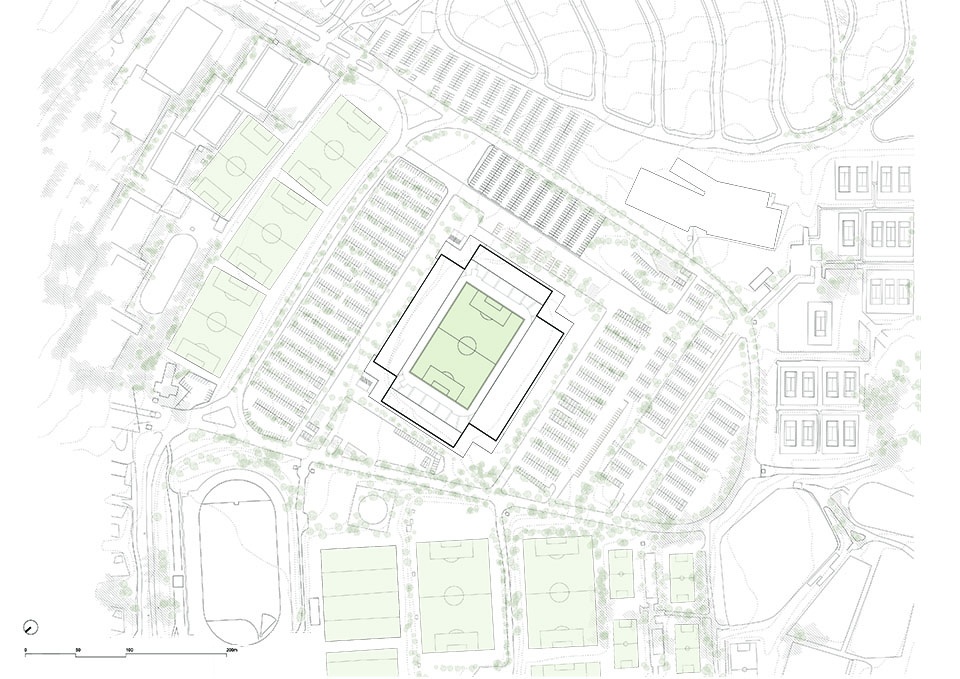
▼场地平面,site plan
▼一层平面,ground floor plan
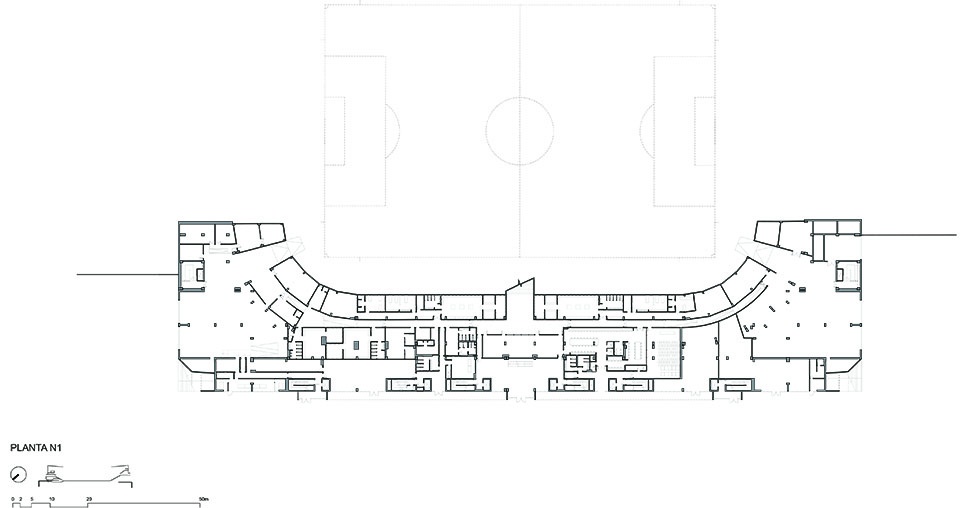
▼二层平面,first floor plan
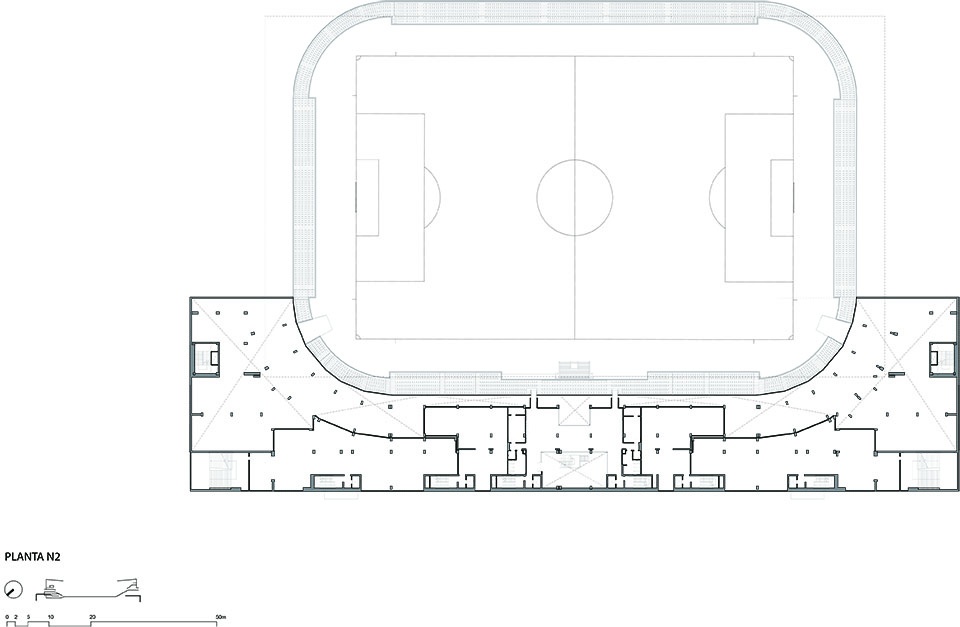
▼三层平面,third floor plan
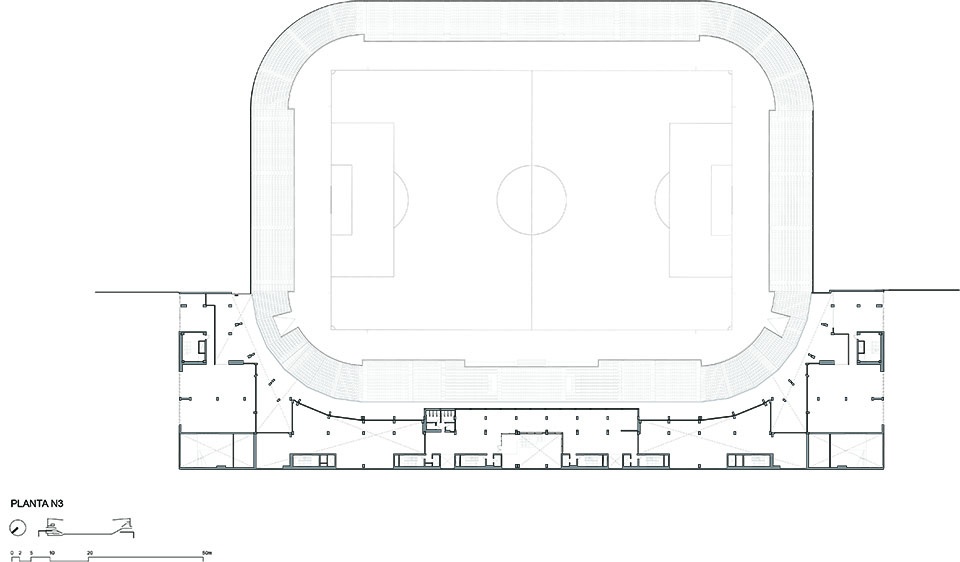
▼四层平面,fourth floor plan
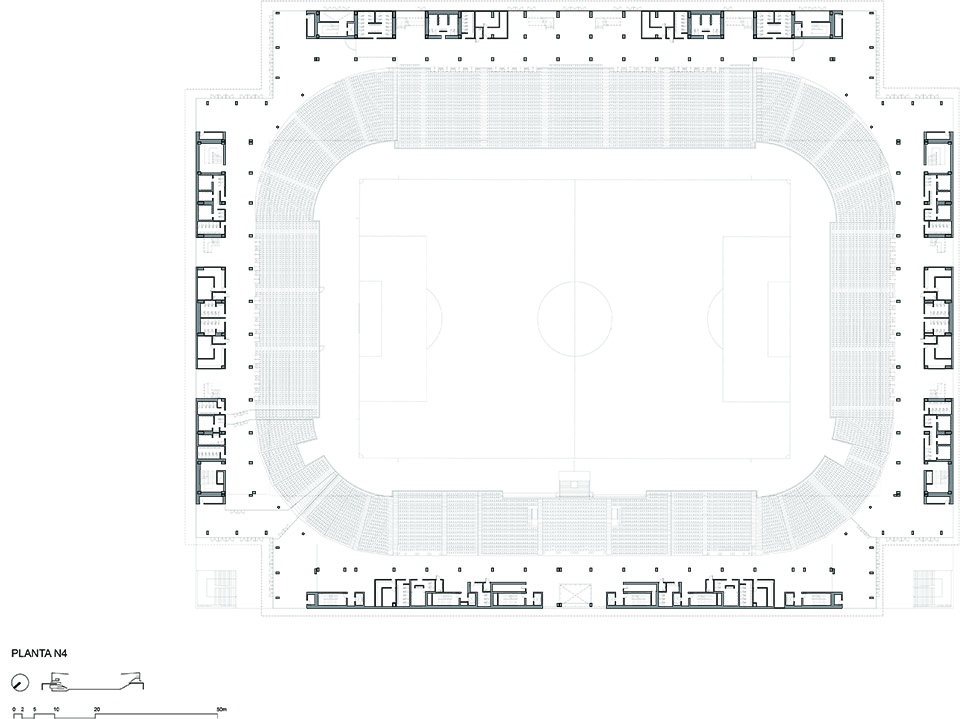
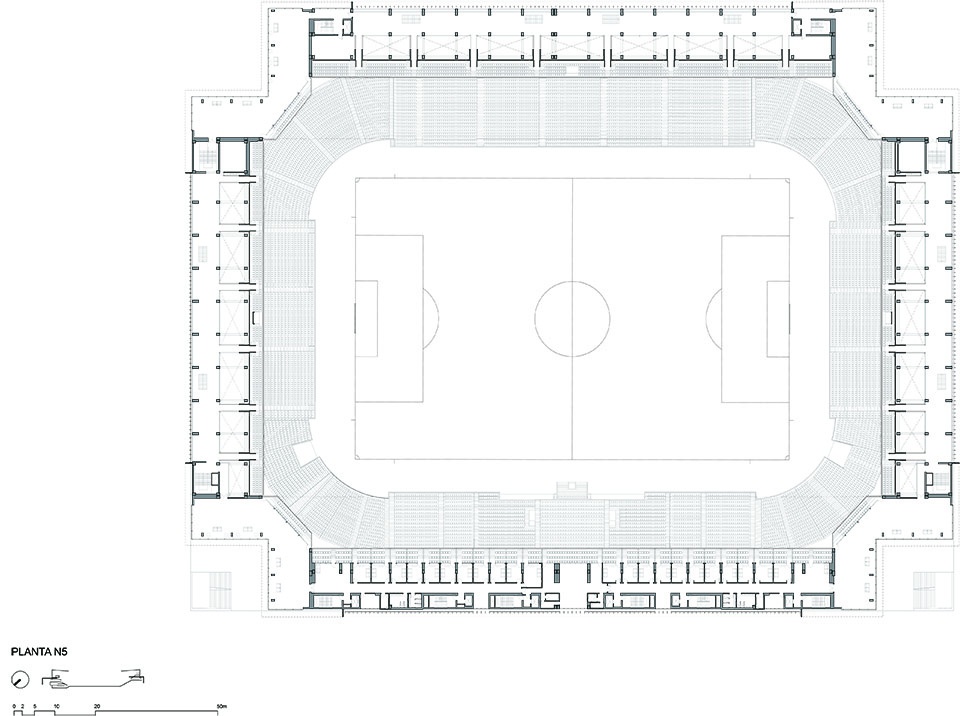
▼五层平面,fifth floor plan
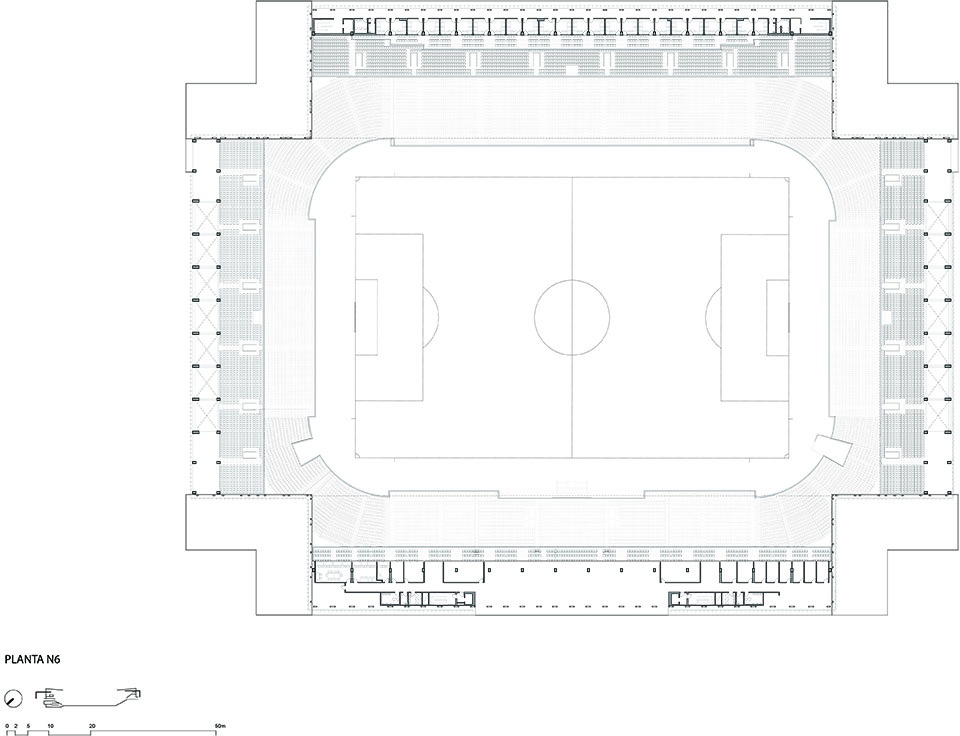
▼六层平面,sixth floor plan
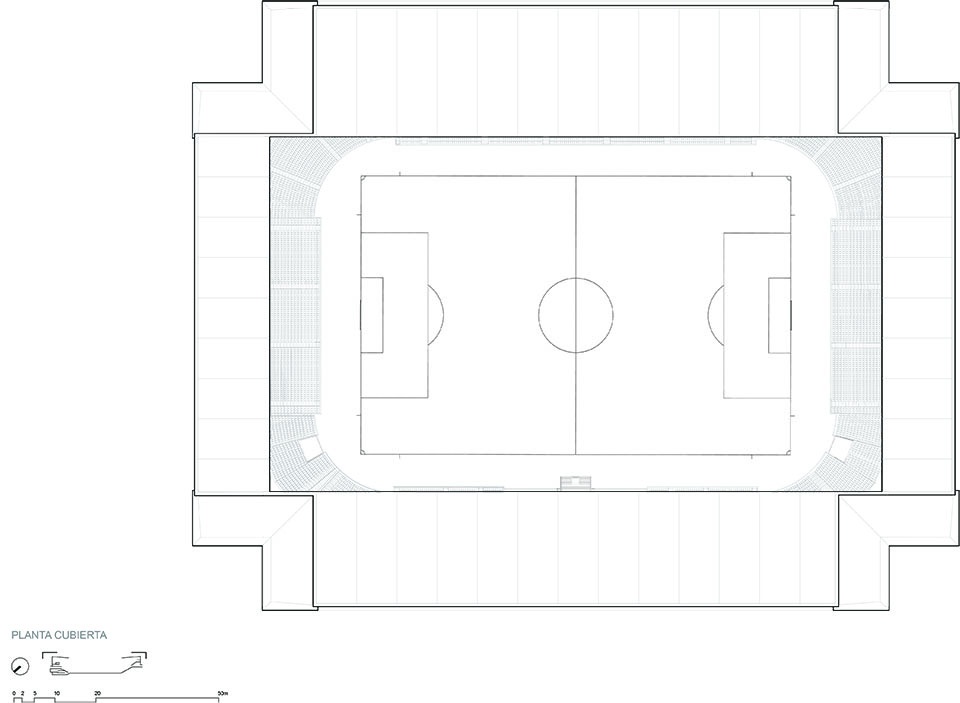
▼屋顶平面,roof floor plan
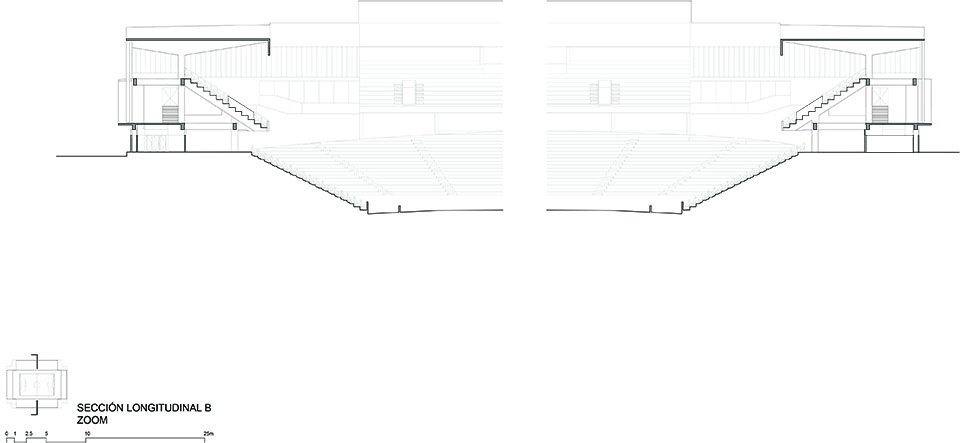
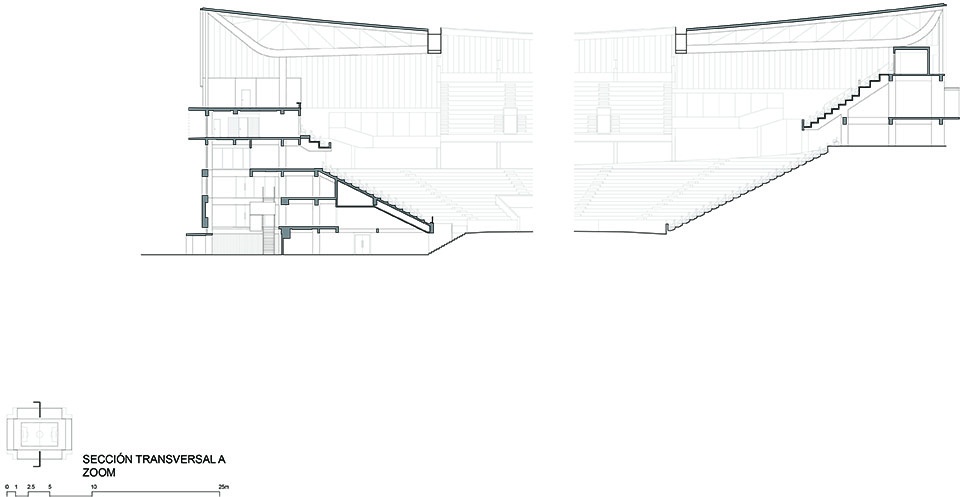
▼剖面图,section
Project: Modernization Project of Universidad Católica Stadium
Location: Cv Las Flores 13000, Las Condes, Región Metropolitana, Chile
Project architects: Universidad Católica
Client:Universidad Católica
Office: IDOM
Architects: IDOM:
Borja Gómez: arquitecto principal/dirección de proyecto/asistencia en obra; Lead Architect / Project Direction / Site Assistance
César Azcárate: arquitecto principal/ Lead Architect
Collaborators: IDOM: Carlos Jose Vial Larraín, Cristian Lange, Francisco Javier Ruiz de Prada, Javier Dávila, Laudis Acosta, Rosaina Ivelisse, Carlos Castañón, Antonio Villanueva, Sergio Arús, Clara Guzman, Julio Fernández, Mario Torices, Felipe Gaona Moreno
Consultants:Acústica/Acoustics: IDOM; Ingenierías/Engineering: WSP; Project Management: WSP; Fachadas/Facades: IDOM-MIA; Revisor independiente de arquitectura/ Independent Architecture Reviewer: ARQUIGESTIÓN; Revisor independiente de estructuras/ Independent Structural Reviewer: SPOERER Ingenieros.
Builder: Cerro Apoquindo 4
Budget:50.000.000€
Area:39.592 m2
Year:2025
Photographer: Cristóbal Palma