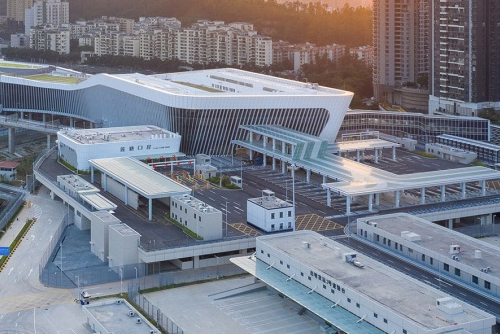
沈阳材料科学国家研究中心生长之园,辽宁 / 日本鹿岛建设株式会社 + 中国中建设计集团有限公司
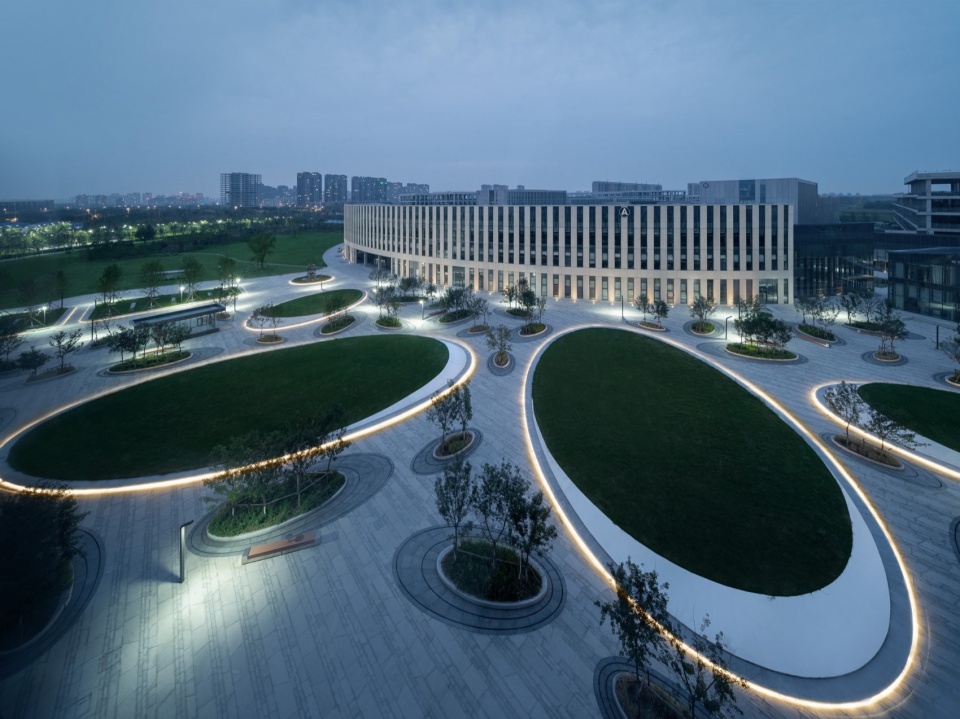
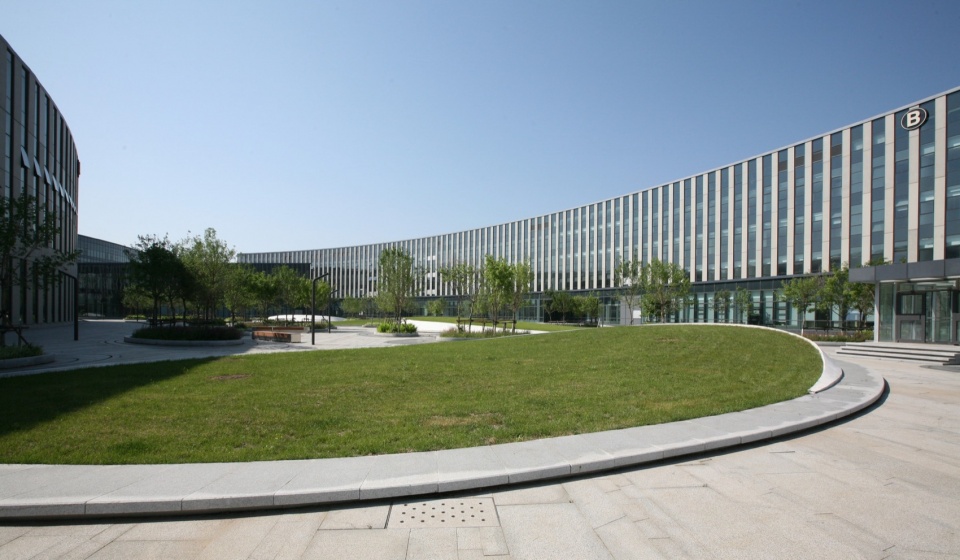
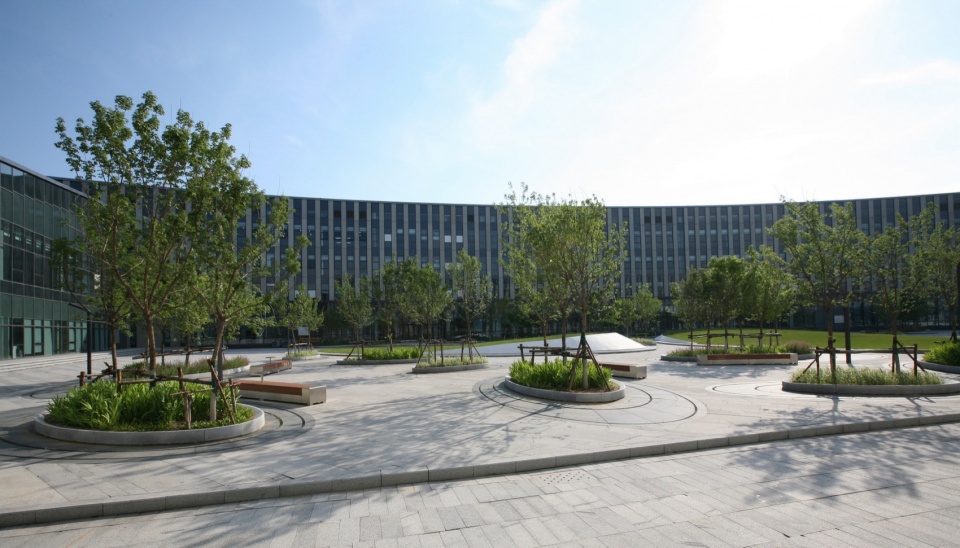
生长之园位于园区西半部两组圆弧型建筑围合的户外内庭,称之为庭,实际尺度比一般认知的庭要大,由西入口道路轴线将其再分成南北两个对称的部分,北侧先行开工。由于东西侧的圆弧形建筑的尺度与内庭的宽度比例适中,我们将建筑立面的弧线特征直接延续到场地的设计元素中。
The Garden of Growth is located in the outdoor inner courtyard enclosed by two arc-shaped building clusters in the western half of the park. Referred to as a “courtyard,” its actual scale is significantly larger than that of a conventional courtyard. A west–east entrance road axis further divides the space into two symmetrical parts—north and south—with the northern section developed first. As the scale of the arc-shaped buildings on the east and west sides is well proportioned to the width of the inner courtyard, we extended the curved geometry of the building façades directly into the design elements of the landscape.
▼项目鸟瞰,Aerial-view of the project
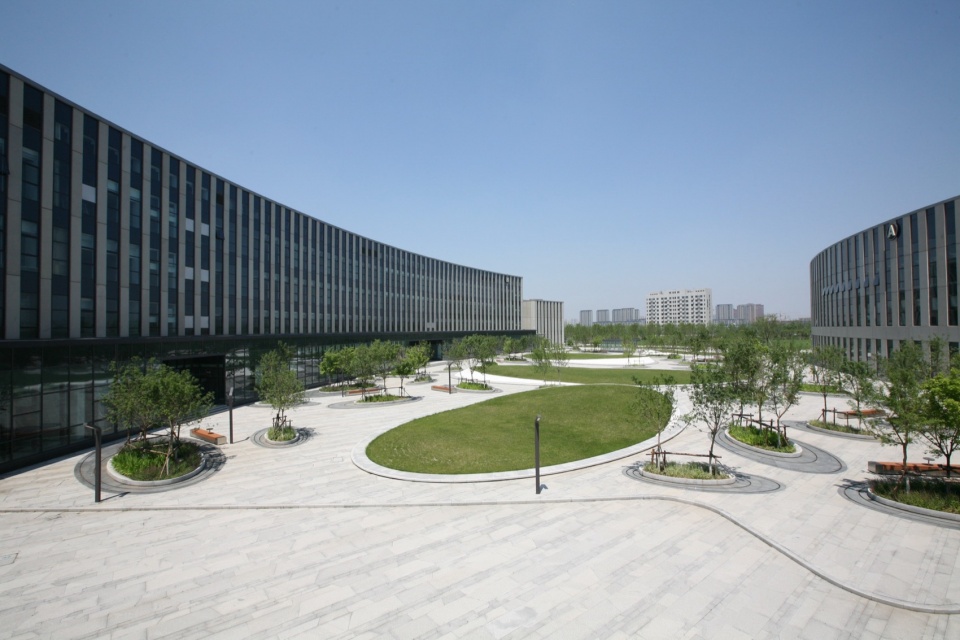
▼西入口景观,West entrance landscape
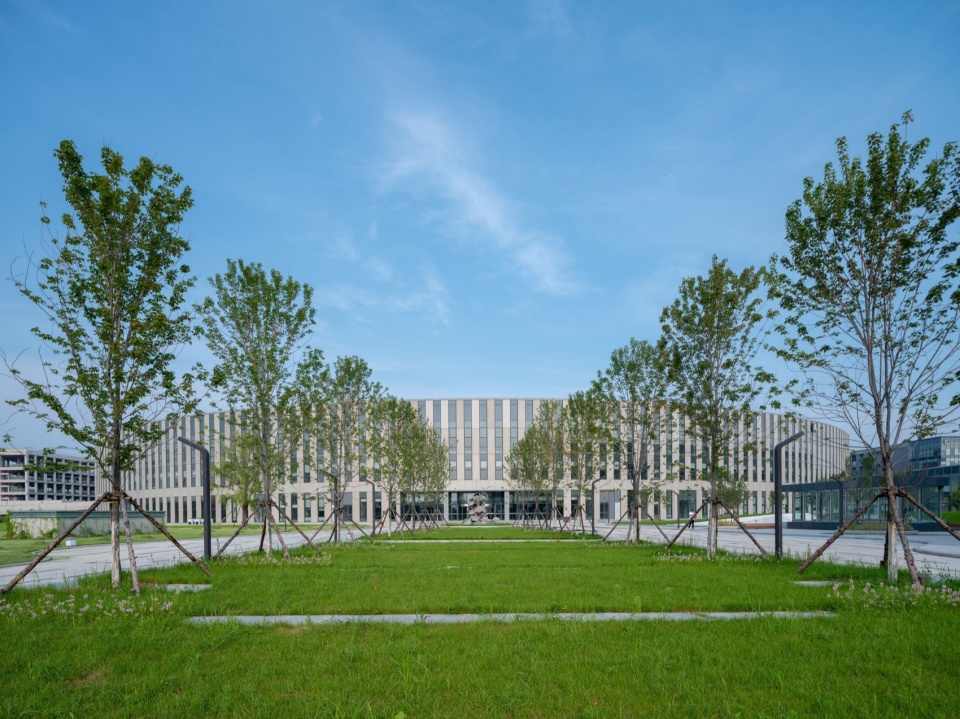
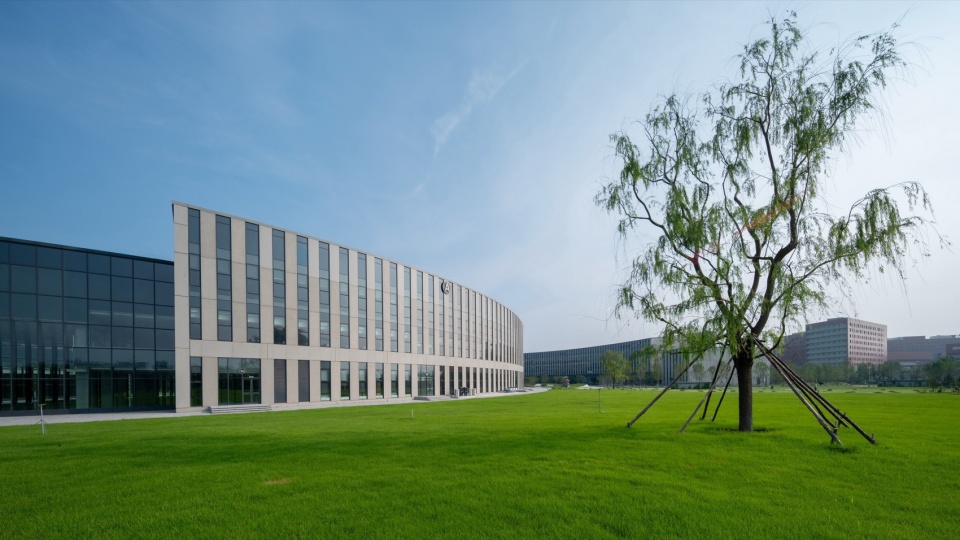
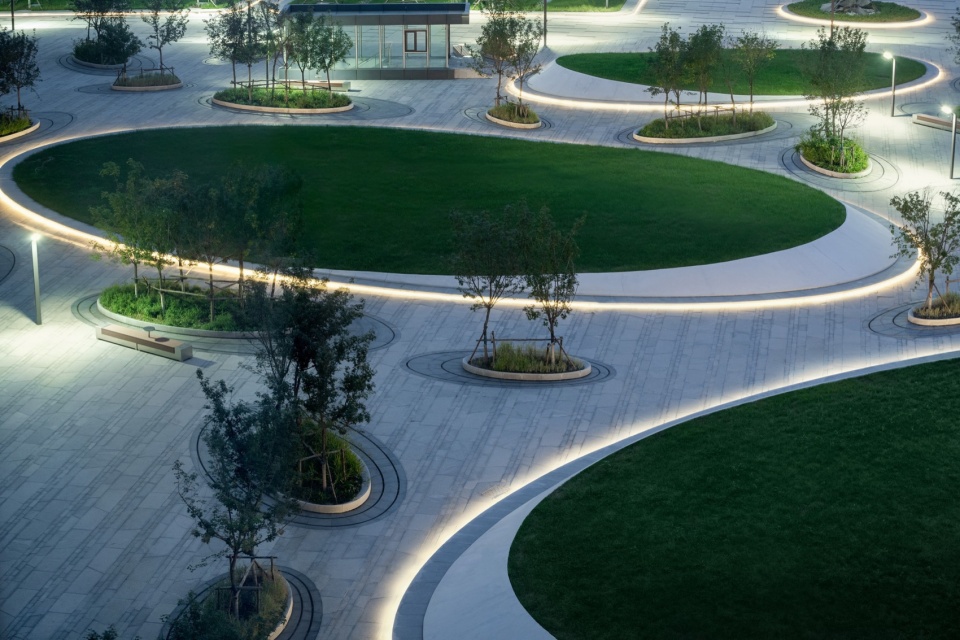
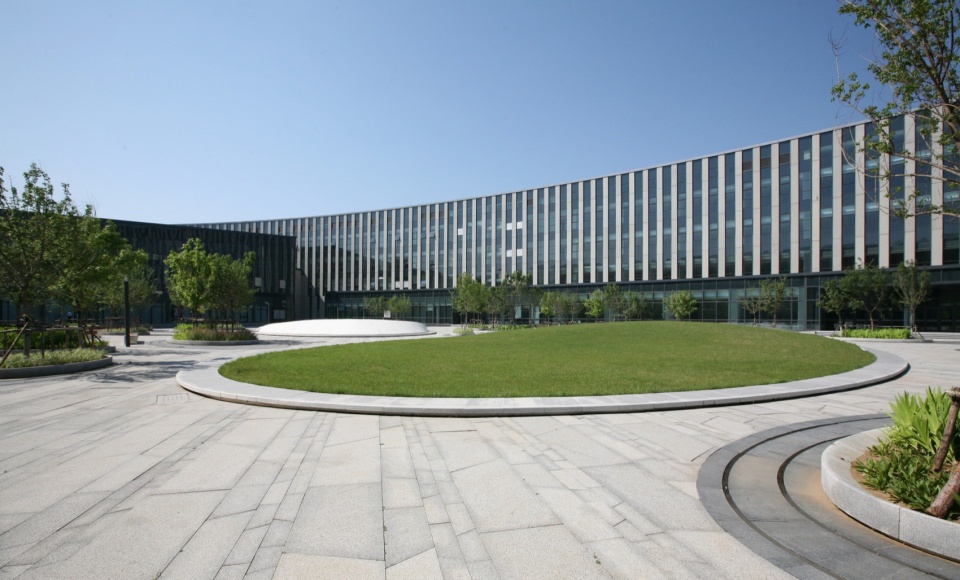
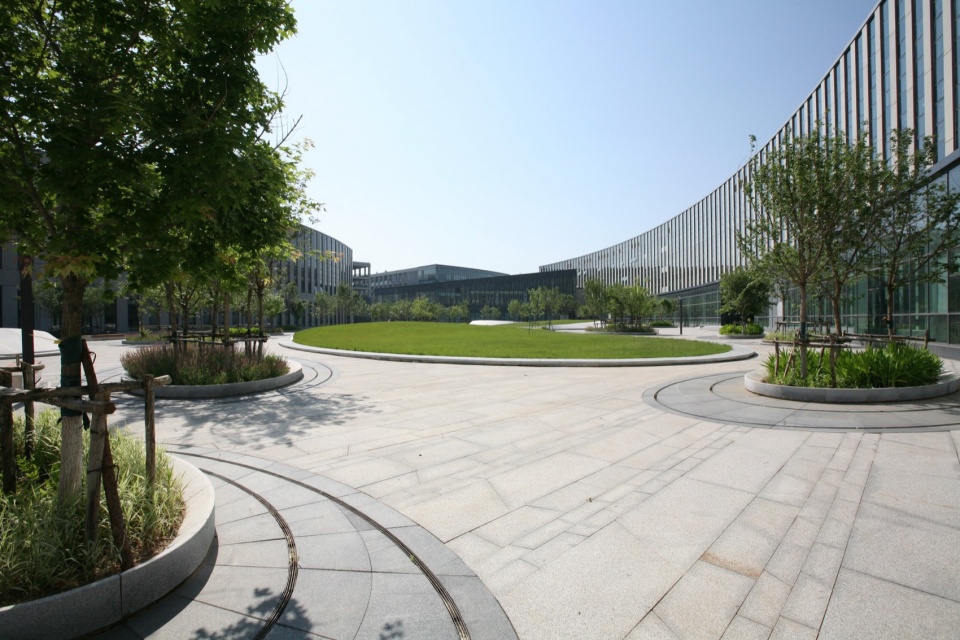
首先在平面构成上均采用椭圆形的曲线,特别是4处开阔草坪的端头做隆起的弧形地平,起伏的边缘线与建筑立面的天际线交相呼应,构成了场所的形体韵律和空间骨架。其中的乔木高度、体量仅是点缀而非决定性因素。60m间距的看与被看成为无需因私密性而去遮挡的适度距离,开放通透给此围合空间创造了与纵向天空连为一体的无限遐想。在这里希望建筑成为内庭景观的一部分而非景观迎合建筑。
Firstly, elliptical curves are used throughout the layout, with the ends of the four expansive lawns designed as raised, curved ground forms. The undulating edge lines echo the skyline of the building’s façade, creating a rhythmic form and spatial framework for the site. The height and volume of the trees serve as accents rather than defining elements. The 60 meter spacing allows for unobstructed views without the need for privacy barriers, fostering an openness that connects the enclosed space seamlessly with the vertical sky, evoking infinite imagination. Here, the intent is for the architecture to become part of the courtyard landscape, rather than the landscape catering to the architecture.
▼场所的形体韵律和空间骨架,A rhythmic form and spatial framework for the site
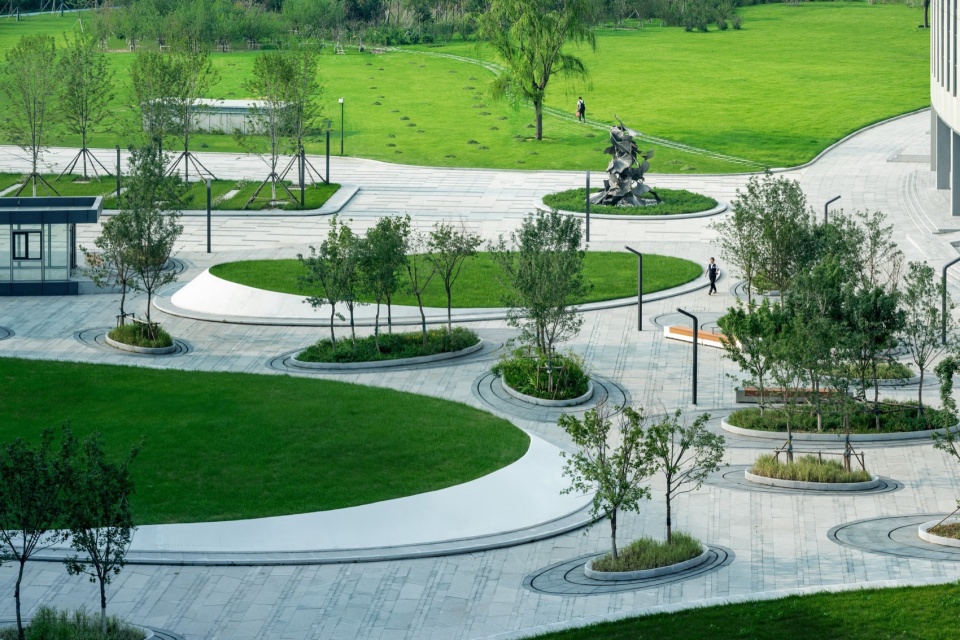
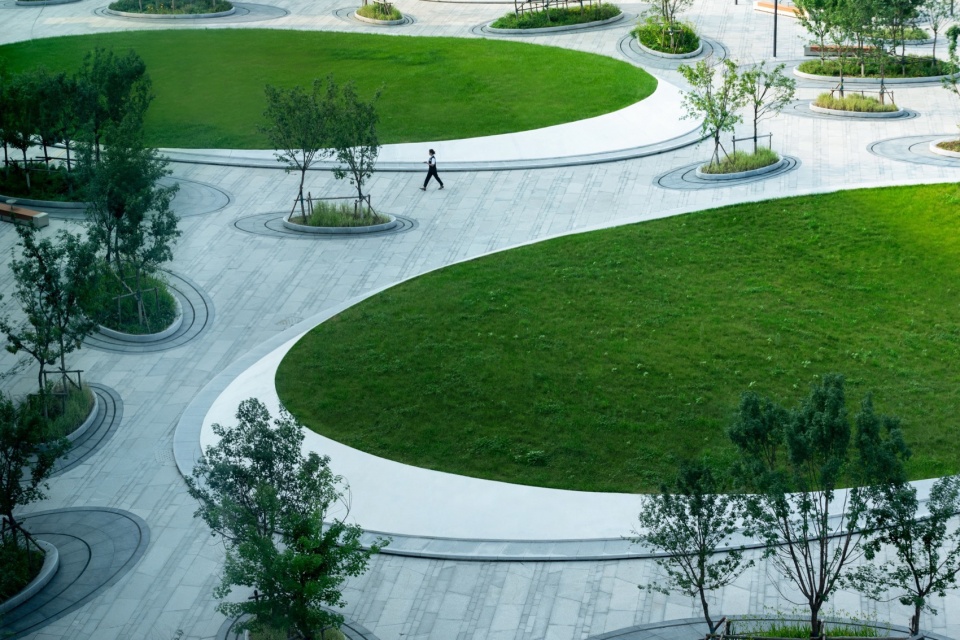
▼建筑成为内庭景观的一部分,The architecture to become part of the courtyard landscape
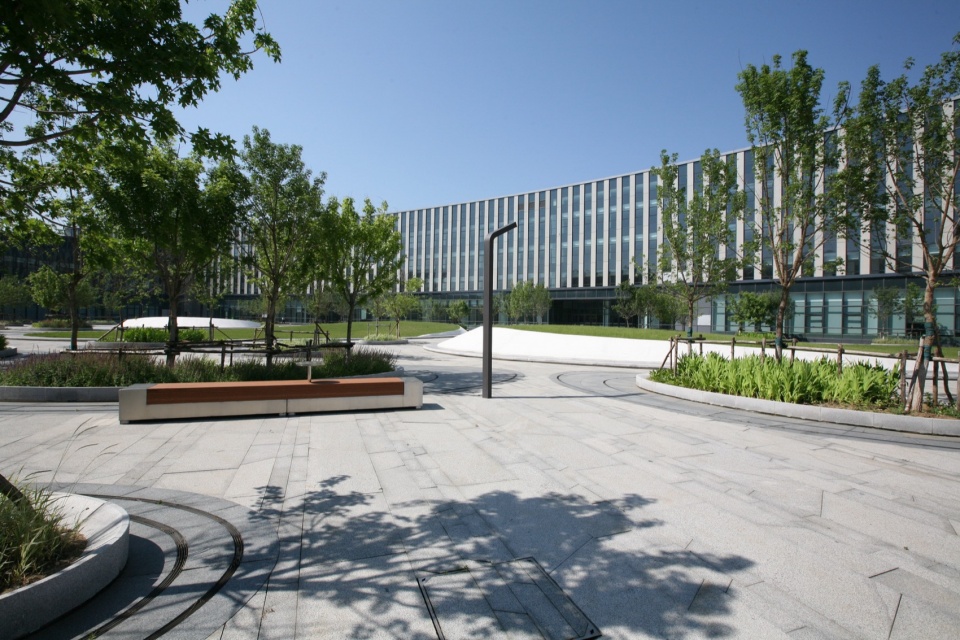
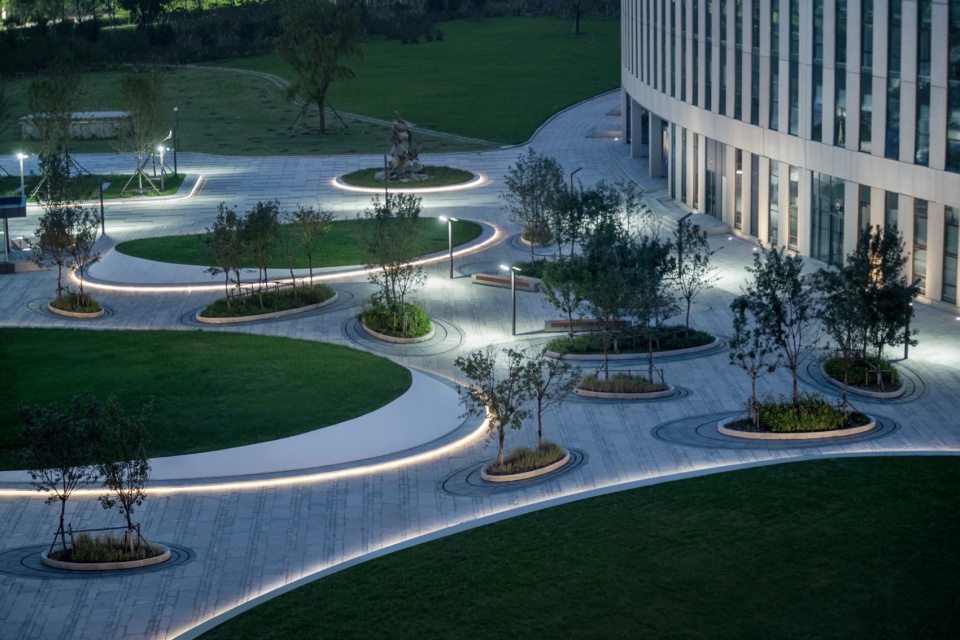
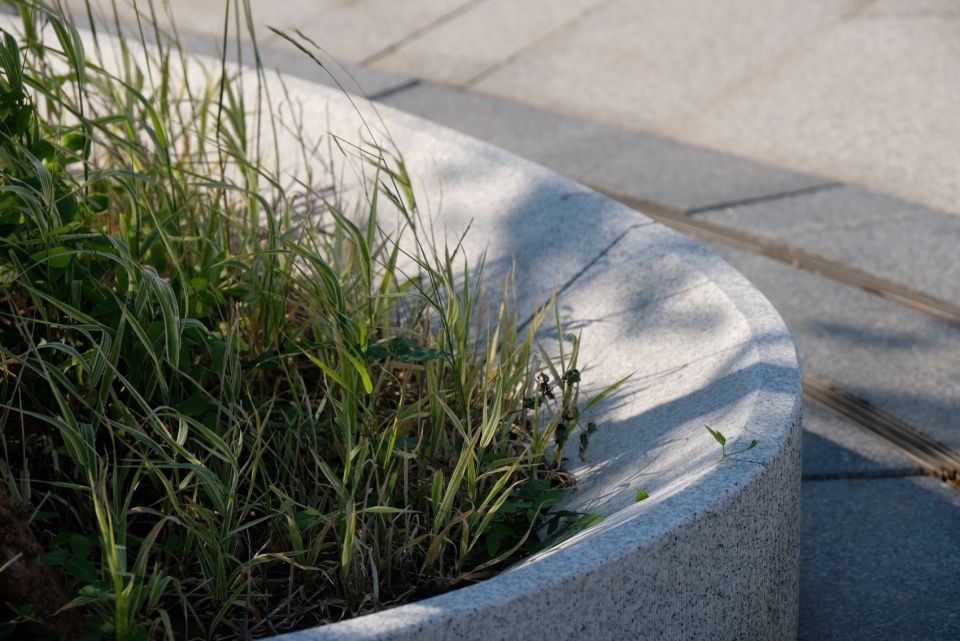
其次,分布在其间的椭圆形树池采用传统元宝造型,并将周边的铺装也做成渐渐向外扩散的椭圆形,让平面构成的弧线更自然的融入场地之中。在这里所有的植被都被明确的界定,最大限度的确保空间构成的可控性,同时也让树池成为空间造型的一部分。此外,场地铺装采用相对小尺度的石材拼装,尽可能的回避因造型加工而出现的高额造价,营造整体单一局部变化而略显繁琐的大小组合的大效果。
Secondly, the elliptical tree pools scattered throughout the site adopt the traditional shape of Chinese sycees, with surrounding pavements designed in a gradually outward-expanding elliptical form, allowing the curved lines of the layout to blend naturally into the site. All vegetation is clearly delineated, ensuring maximum spatial control while also making the tree pools an integral part of the spatial form. Additionally, the site uses relatively small-scale stone paving to avoid high costs associated with complex shapes, creating a large-scale effect of simple overall design with intricate local variations.
▼元宝造型树池,Chinese sycees shape tree pools
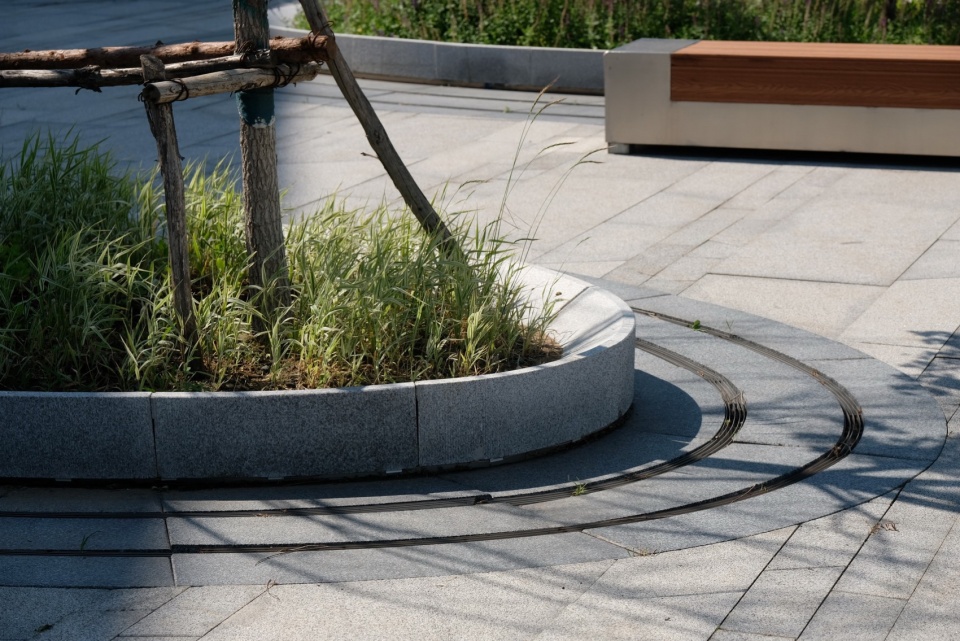
▼场地铺装,The site paving
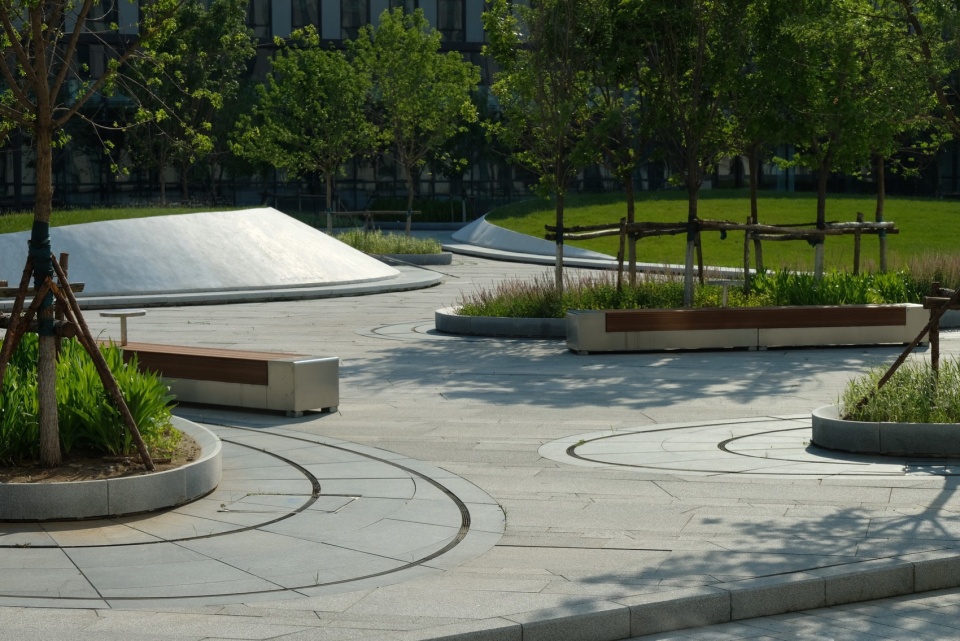
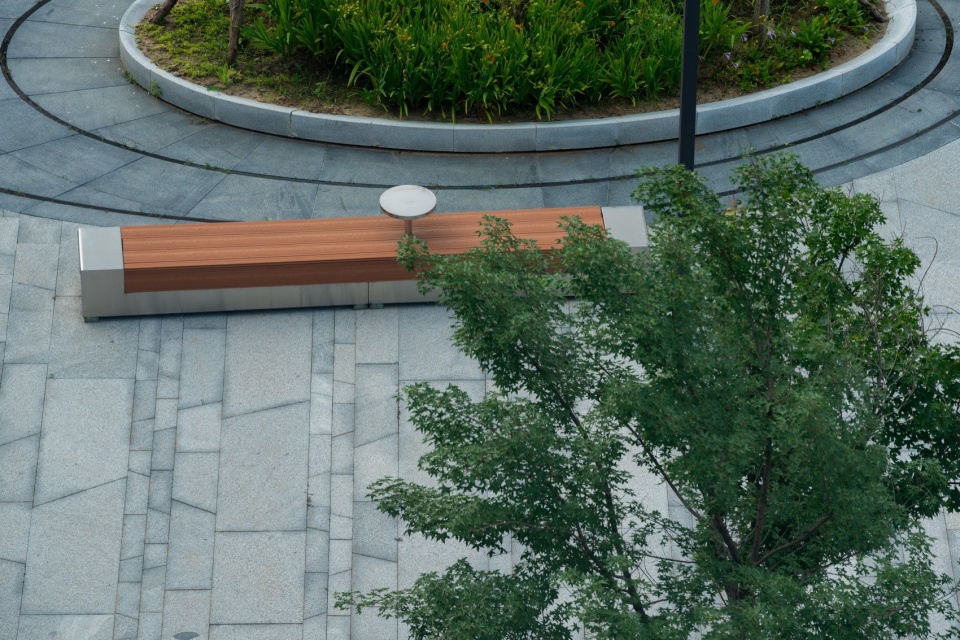
最后,设置了长条状的成品座椅,与之前不同的是每个长条座椅都有一个象征性的圆盘桌,尝试为在此工作的科研人员提供一种家常亲民的归属之感和自由、轻松的环境氛围,有时候呼醒利用者的日常生活场景显得尤为重要。
Finally, long, prefabricated benches are installed, each equipped with a symbolic round tabletop, providing a sense of homely belonging and a free, relaxed atmosphere for the researchers working here. Sometimes, evoking scenes from daily life for the users is particularly important.
▼户外休憩区,Outdoor seating area
▼长条状的座椅,Long benches
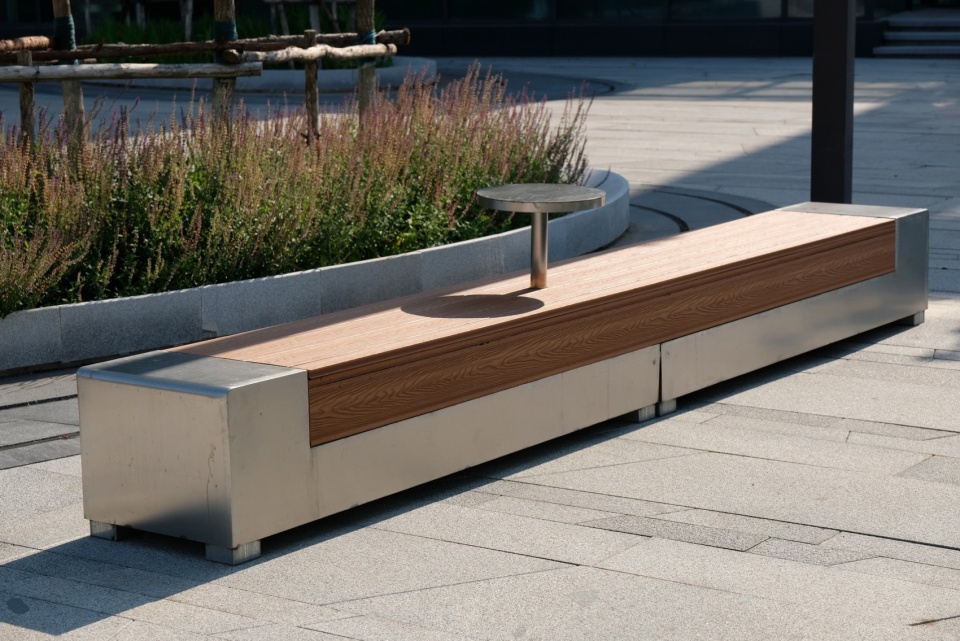
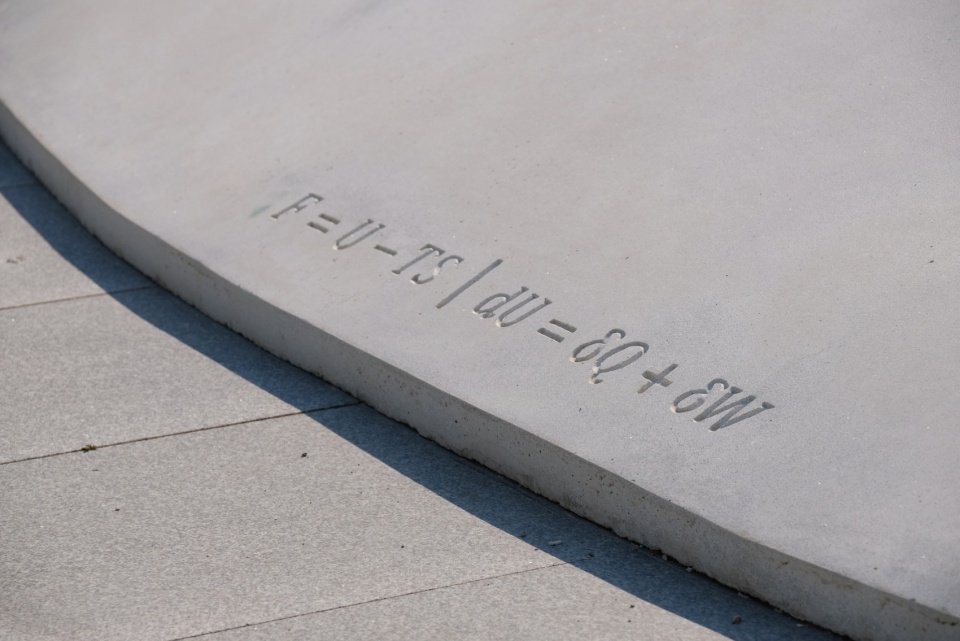
▼细部,Details
在这里功能成就于造型,设计的每个部分都力争独立明确,但又相互贯通连接。整体中有变化的个体,围合反衬开放的无限宽广。你中有我我中有你的尝试——建筑“融于”景观。
In this design, function is realized through form. Each part of the design strives to be independent and distinct while maintaining connectivity and integration. There is variety within the whole and the enclosed space contrasts with the infinite openness. It is an experiment of mutual inclusion—the architecture “merging” with the landscape.
▼夜览,Nightview