卢萨达多式联运枢纽,葡萄牙 / Spaceworkers
项目位于卢萨达北部区域,这是一个正在发展的片区,规划中将引入新的居住组团、文化空间以及扩展的道路系统,以更好地与既有基础设施相衔接。项目基地本身具有鲜明的文化活力,其支撑来自音乐学院,以及近年落成的罗马风格艺术解说中心。新的文化设施为区域注入了活力,推动了片区更新,也促进了卢萨达向北拓展,进一步强化了其作为重要文化片区的身份。
The planned intervention is located in the northern area of Lousada, a growing zone where new residential clusters, cultural spaces, and an expanded road network are being proposed to integrate with existing infrastructure. The intervention site has a strong cultural dynamic, supported by the Music Conservatory and, more recently, the opening of the Romanesque Interpretation Center. This new cultural hub has contributed to the revitalization of the area and to Lousada’s northern expansion, reinforcing its identity as a key cultural district.
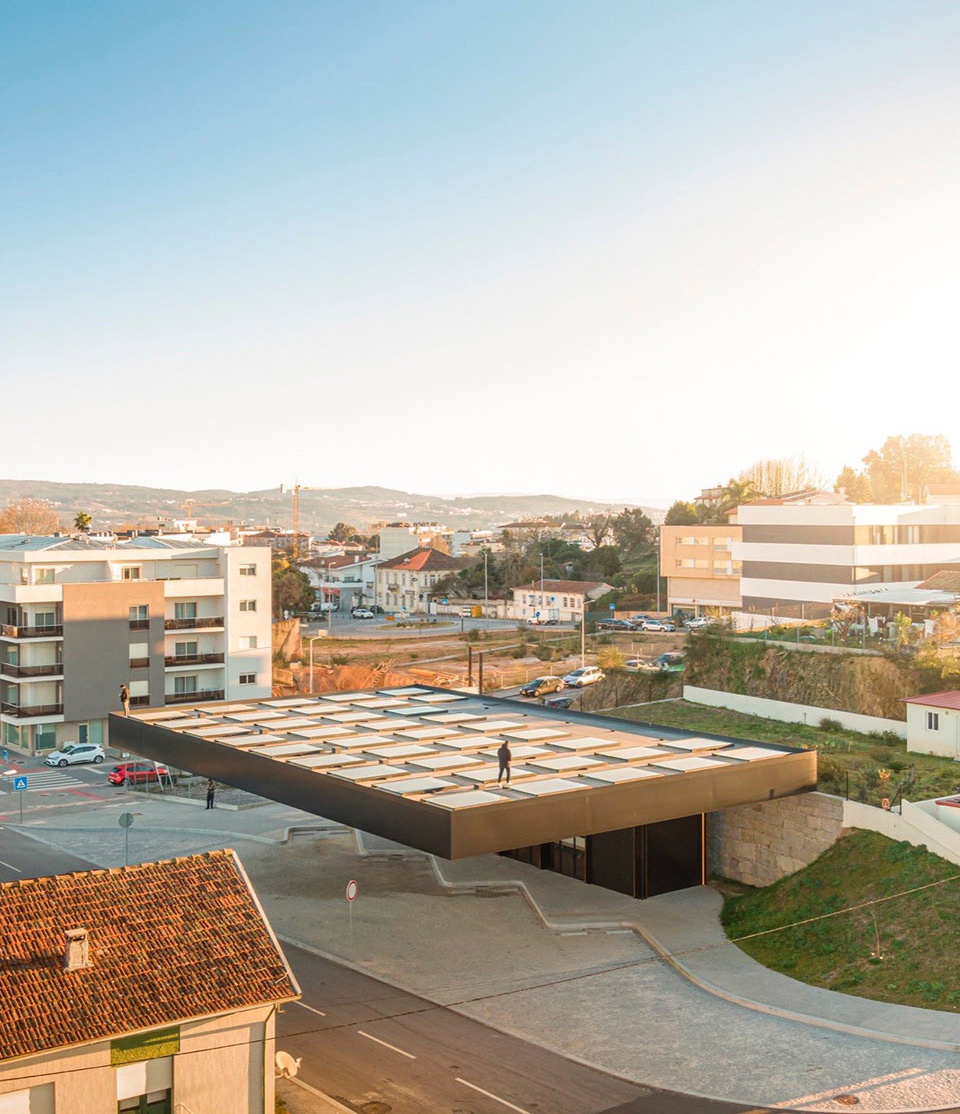
▼项目远景,viewing the project at distance
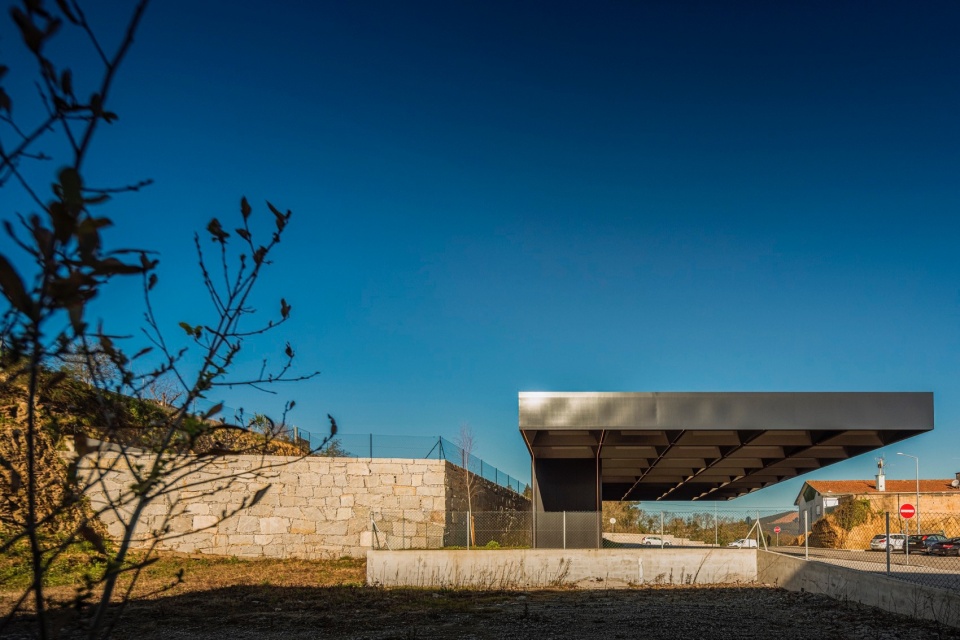
▼外观,exterior view
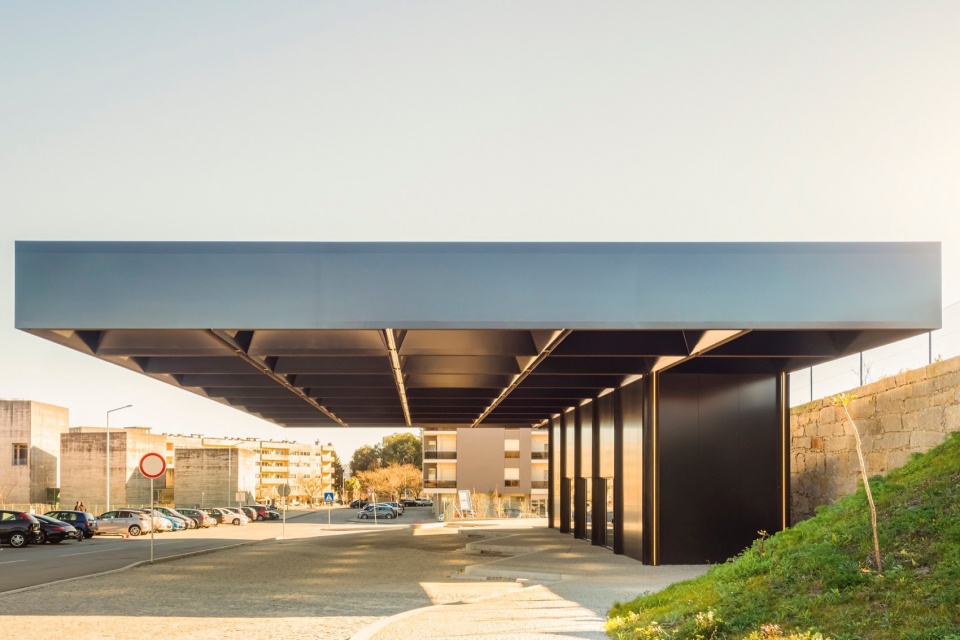
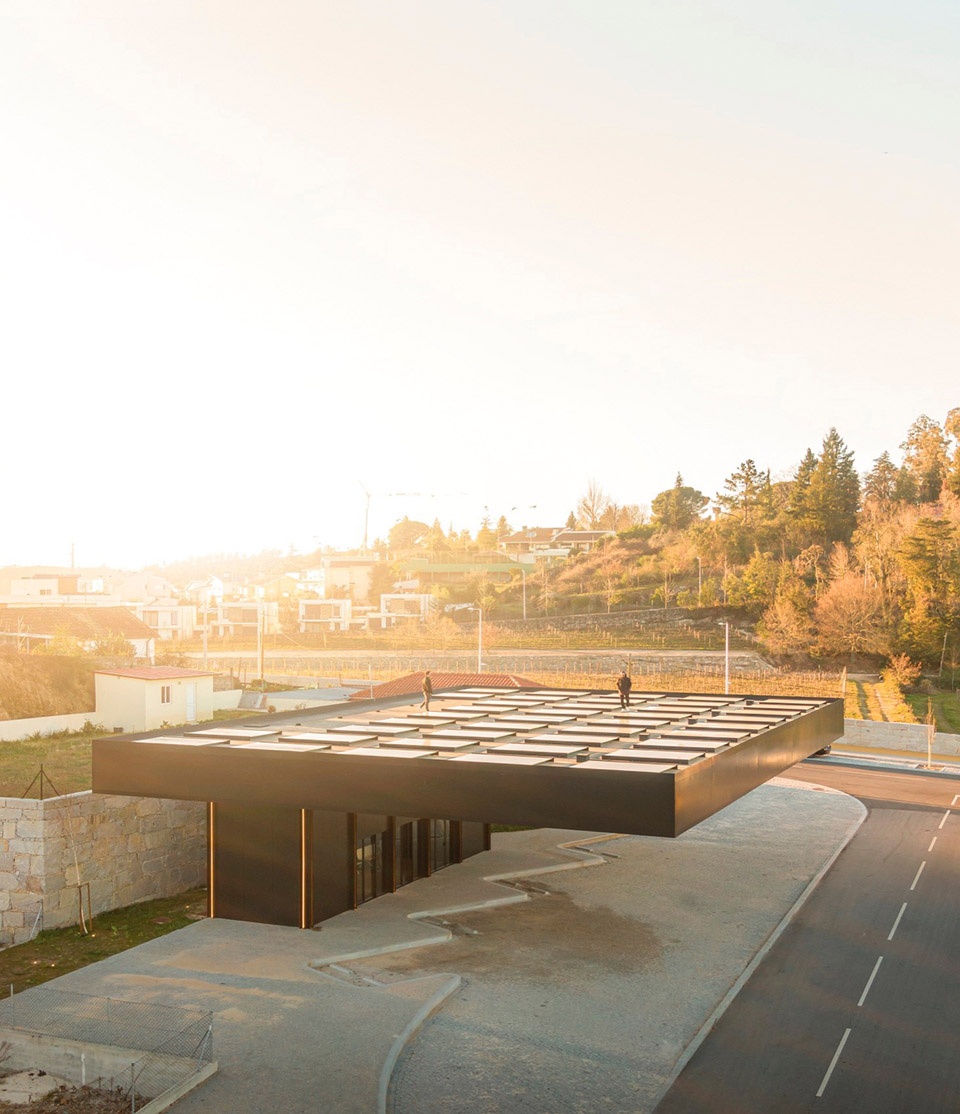
▼巨大的悬挑结构,huge cantilevered structure
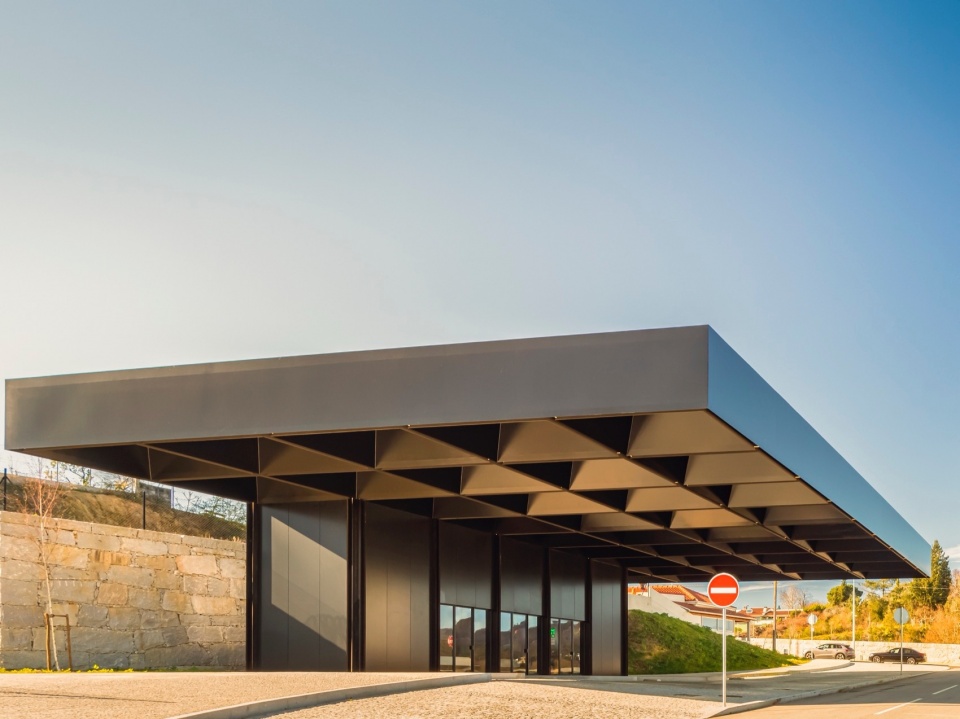
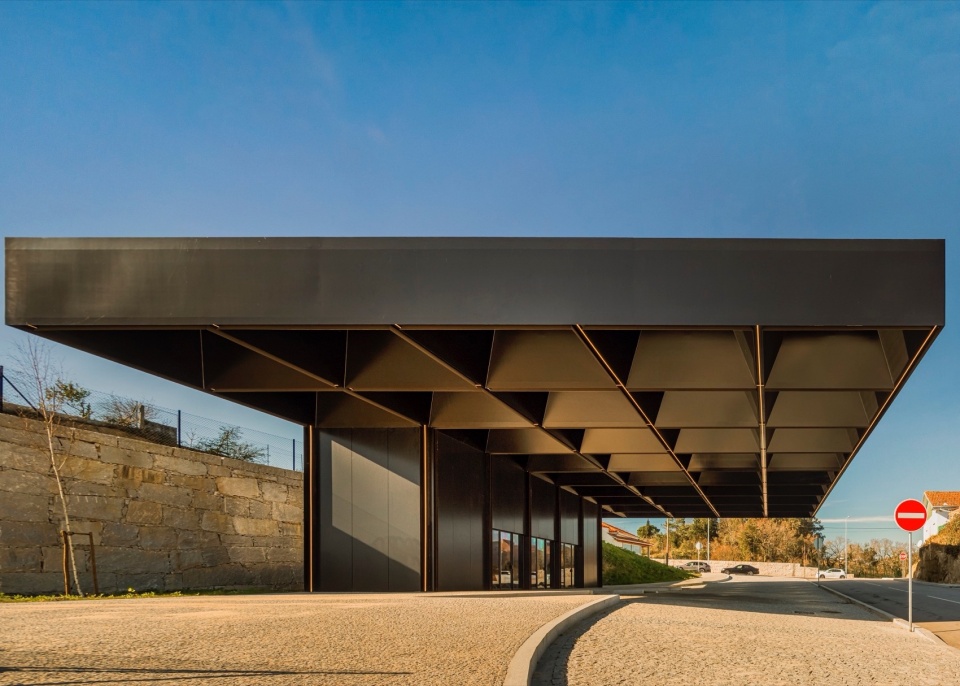
依托这一文化地标的存在,以及未来将于罗马风格艺术解说中心后方建设的“罗马式广场”,该地段逐渐显现为建设城市新多式联运交通枢纽的理想选址。项目旨在提升城市交通机动性,同时保持城镇一贯的宁静气质与真实风貌。
Building on the presence of this cultural landmark and the future Romanesque Square, which is set to be developed behind the Romanesque Interpretation Center, this location emerges as the ideal site for the town’s new intermodal transport hub. The goal is to improve urban mobility while preserving the town’s peaceful and authentic character.
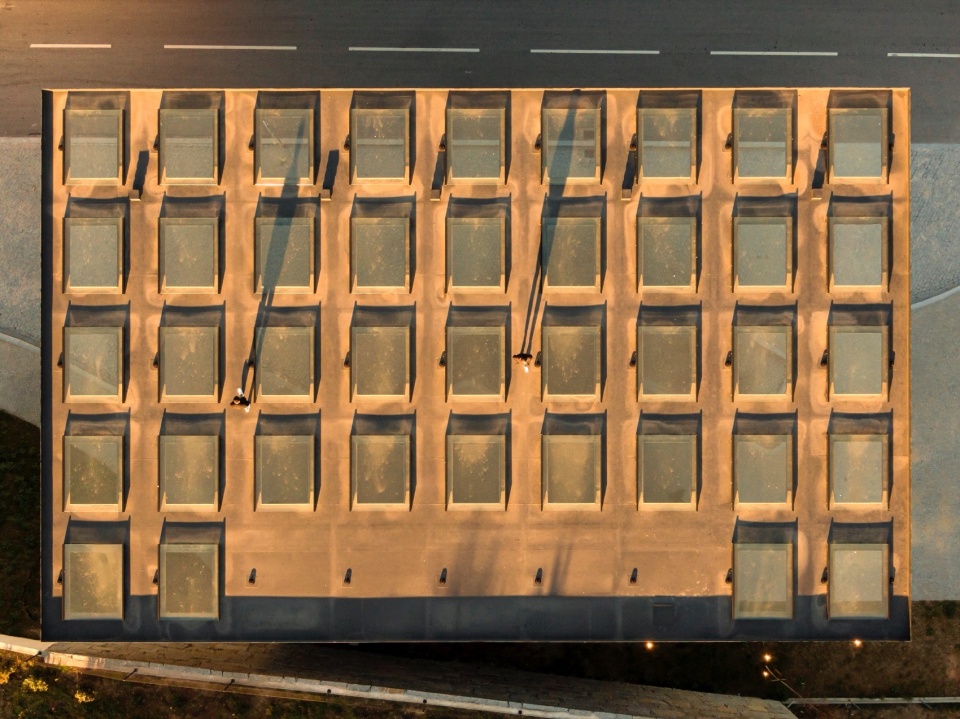
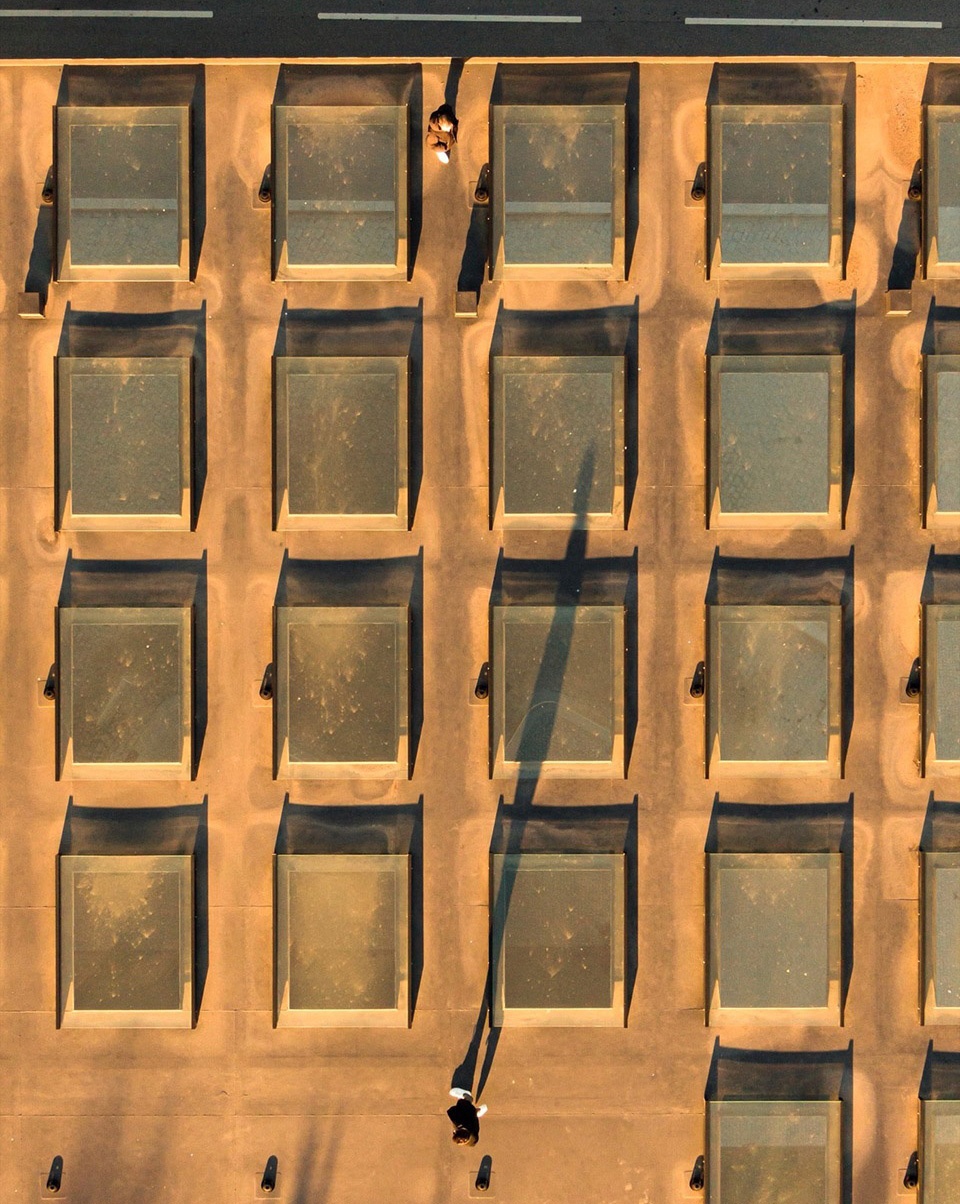
▼场地顶视图,top view of the site
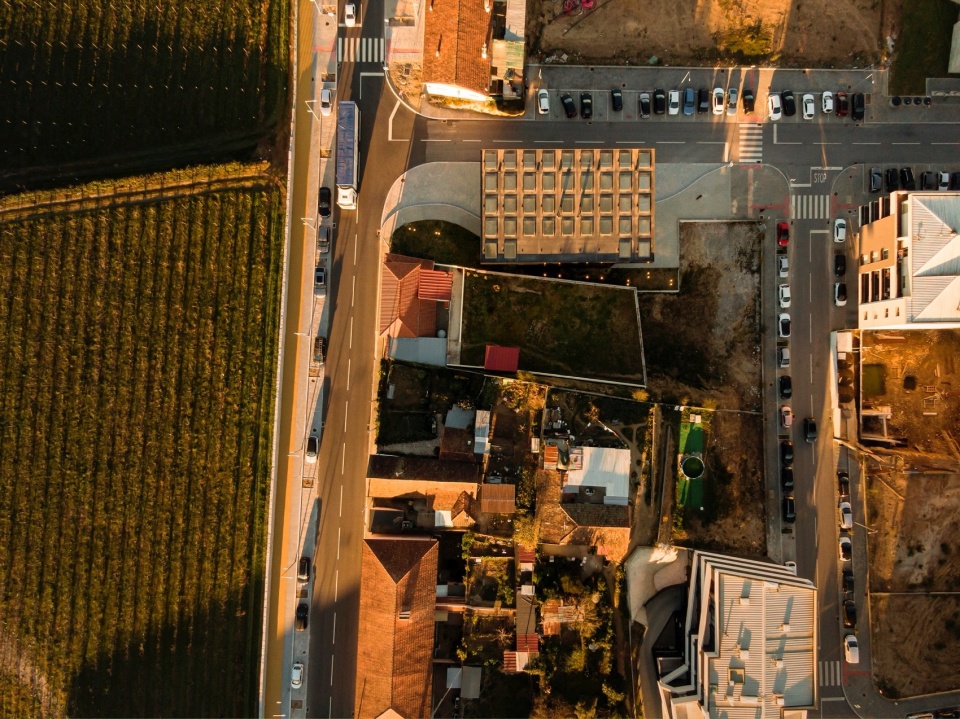
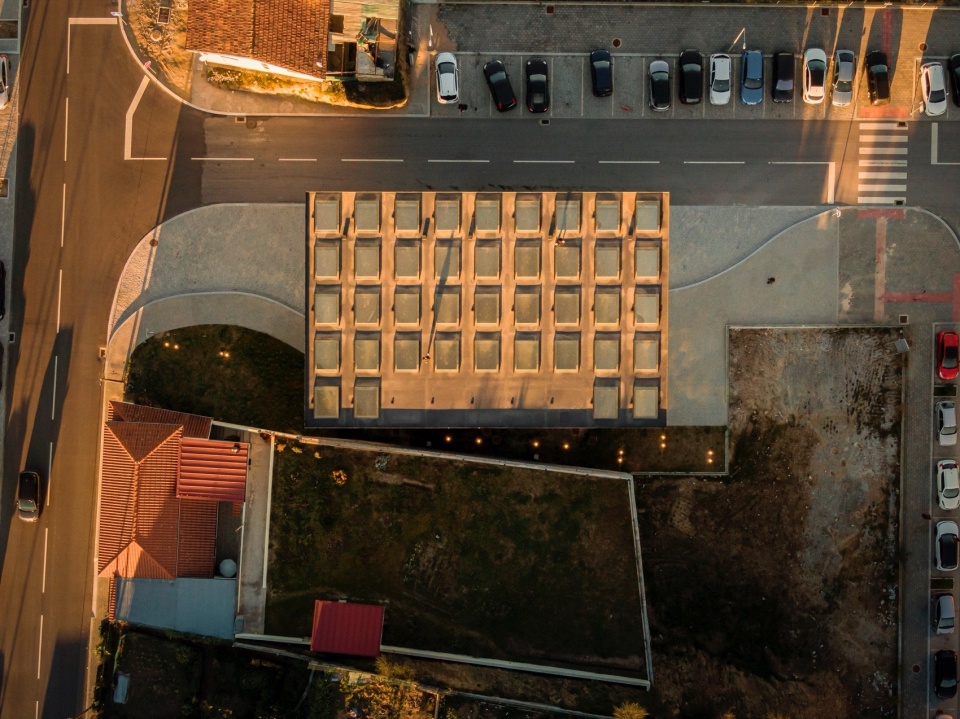
▼鸟瞰,aerial view
▼顶视图,top view
建筑被设想为卢萨达的一位“安静的居住者”——并非隐匿无形,而是在确保自身存在感的同时,不干扰城镇的交通秩序,无论是行人还是车辆。其选址策略使其既贴近城市中心而不侵入其中,又毗邻连接卢萨达与周边市镇的重要道路,从而避免公交车流进入并拥堵历史城区。随着交通枢纽的引入,这一新的城市轴线无疑将成为卢萨达的重要地标,促进公共交通流线的顺畅运行,加强与周边市镇的联系,并最终提升城市在区域层面的竞争力。
The proposed building is designed to be a “silent inhabitant” of Lousada—not to go unnoticed, but to ensure its presence does not disrupt the town’s mobility, whether for pedestrians or vehicles. Strategically positioned, it remains close to the center without intruding upon it, while also maintaining proximity to key roads linking Lousada to neighboring municipalities, thereby preventing bus traffic from congesting the town’s historic core. This new axis, enhanced by the transport hub, will undoubtedly become a significant landmark in Lousada, facilitating public transportation flow and strengthening connections with surrounding municipalities, ultimately increasing the town’s regional competitiveness.
▼有遮蔽的候车空间,shaded waiting area
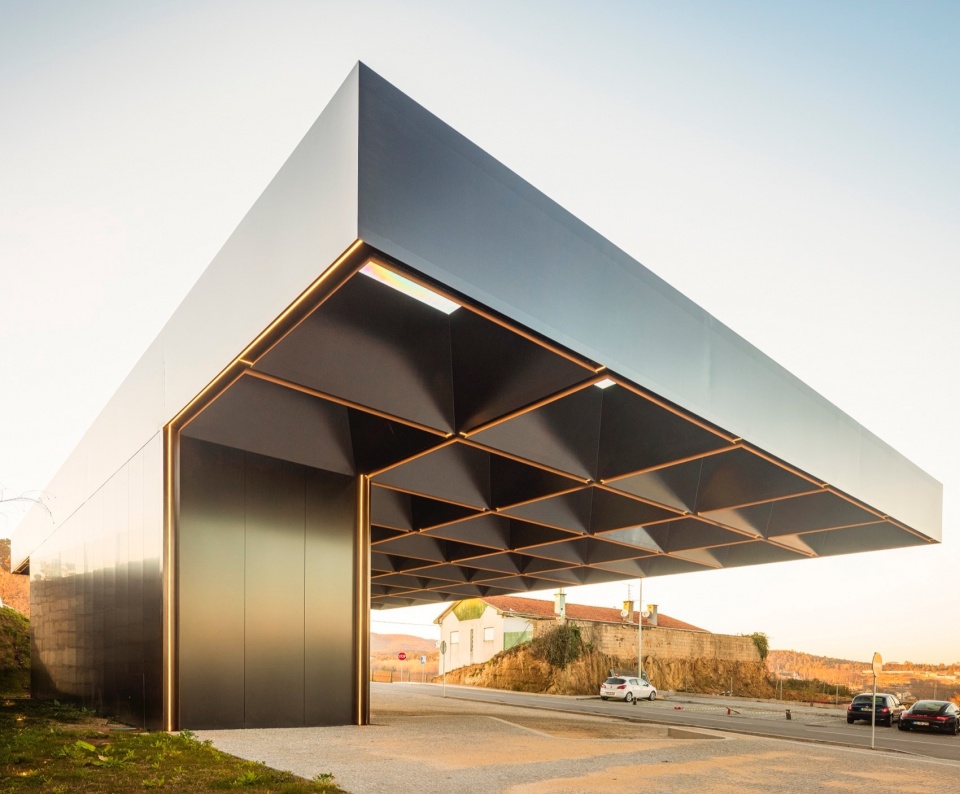
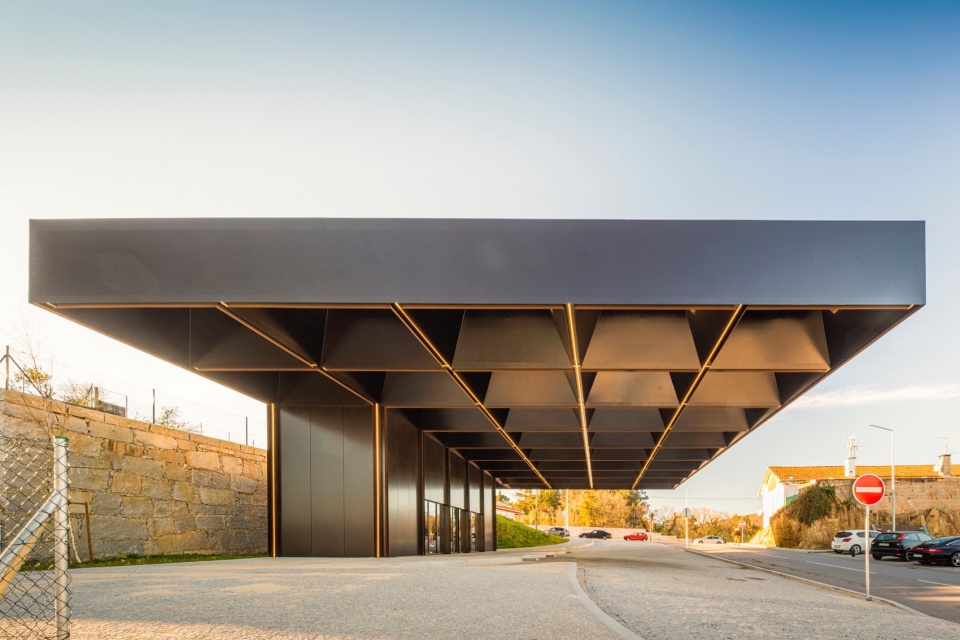
▼城市新地标,new landmark of the city
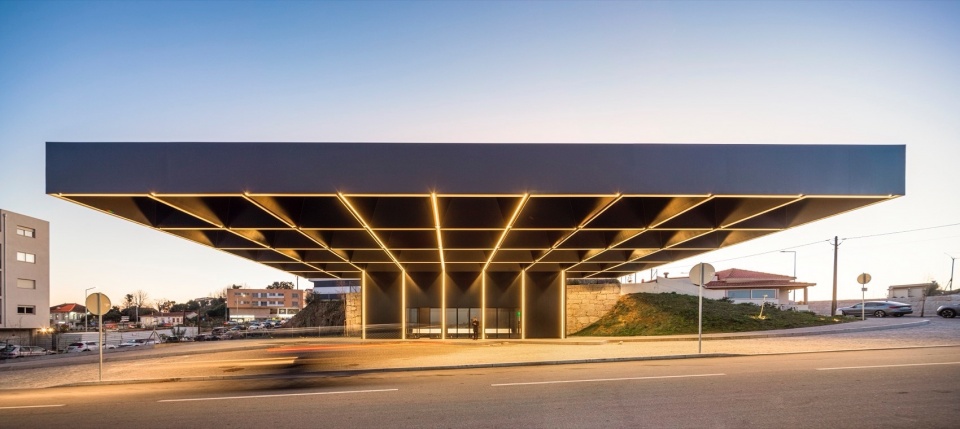
▼屋面之下,under the roof
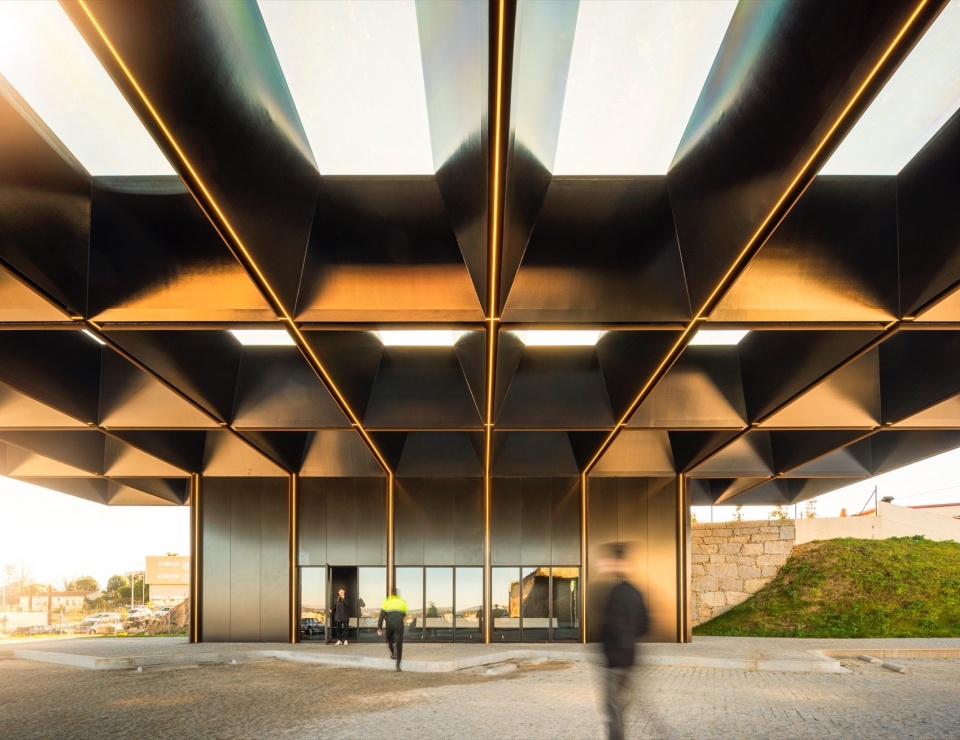
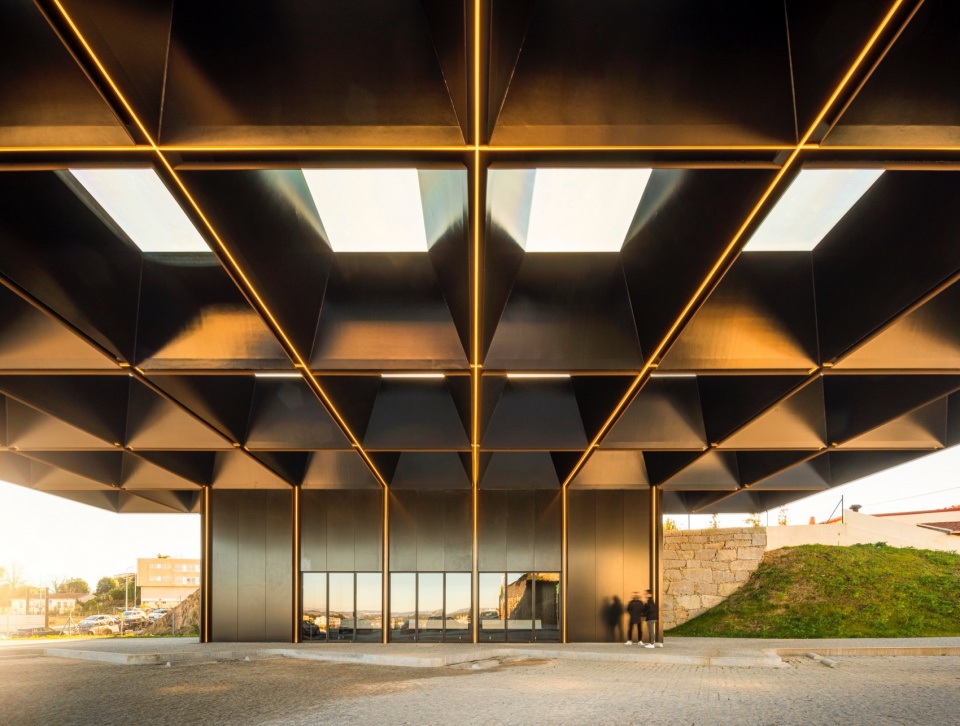
▼细部,details
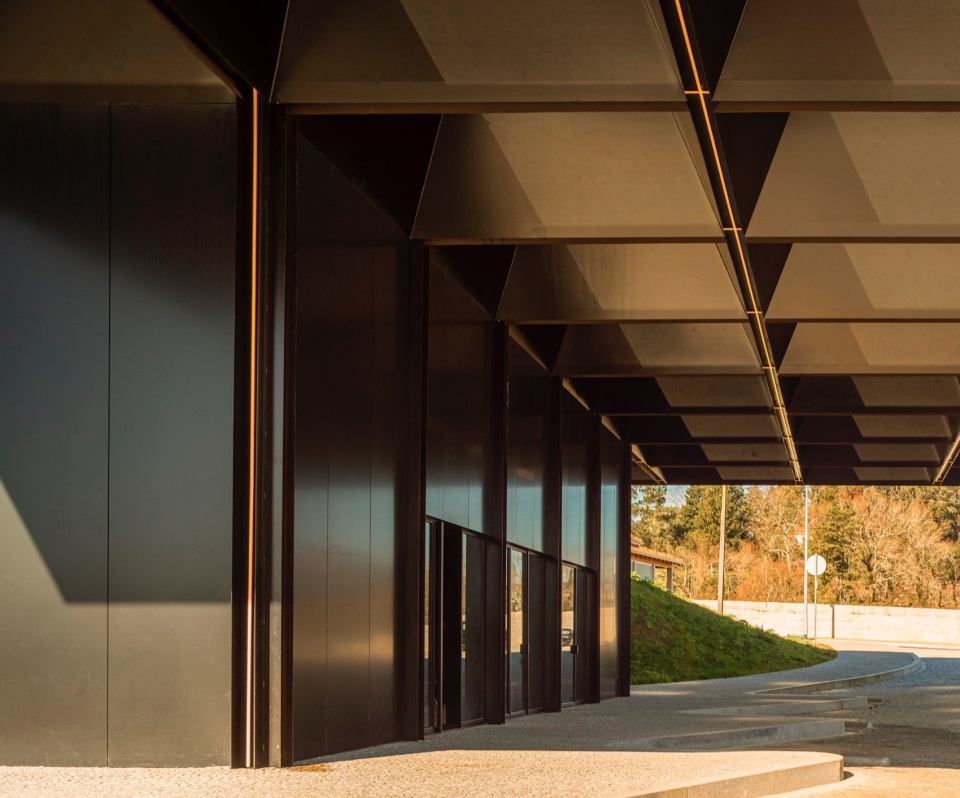
设计遵循“形式追随功能”的原则,对其核心用途作出清晰而高效的回应:为乘客提供有遮蔽的候车空间,同时确保上下车过程的顺畅进行,并且不对周边道路网络造成干扰。尽管体量不小,设计仍力求降低对城市环境的影响,维持既有的城市活力,并保持多条街道在这一新城市节点处的行人连通性。
The proposed structure follows the “form follows function” principle, providing a clear and efficient response to its intended purpose: offering passengers a sheltered waiting area while ensuring smooth boarding and disembarking, all without disrupting the surrounding road network. Despite its size, the design seeks to minimize its impact, preserving urban dynamics and maintaining pedestrian connectivity between the various streets that intersect this new urban node.
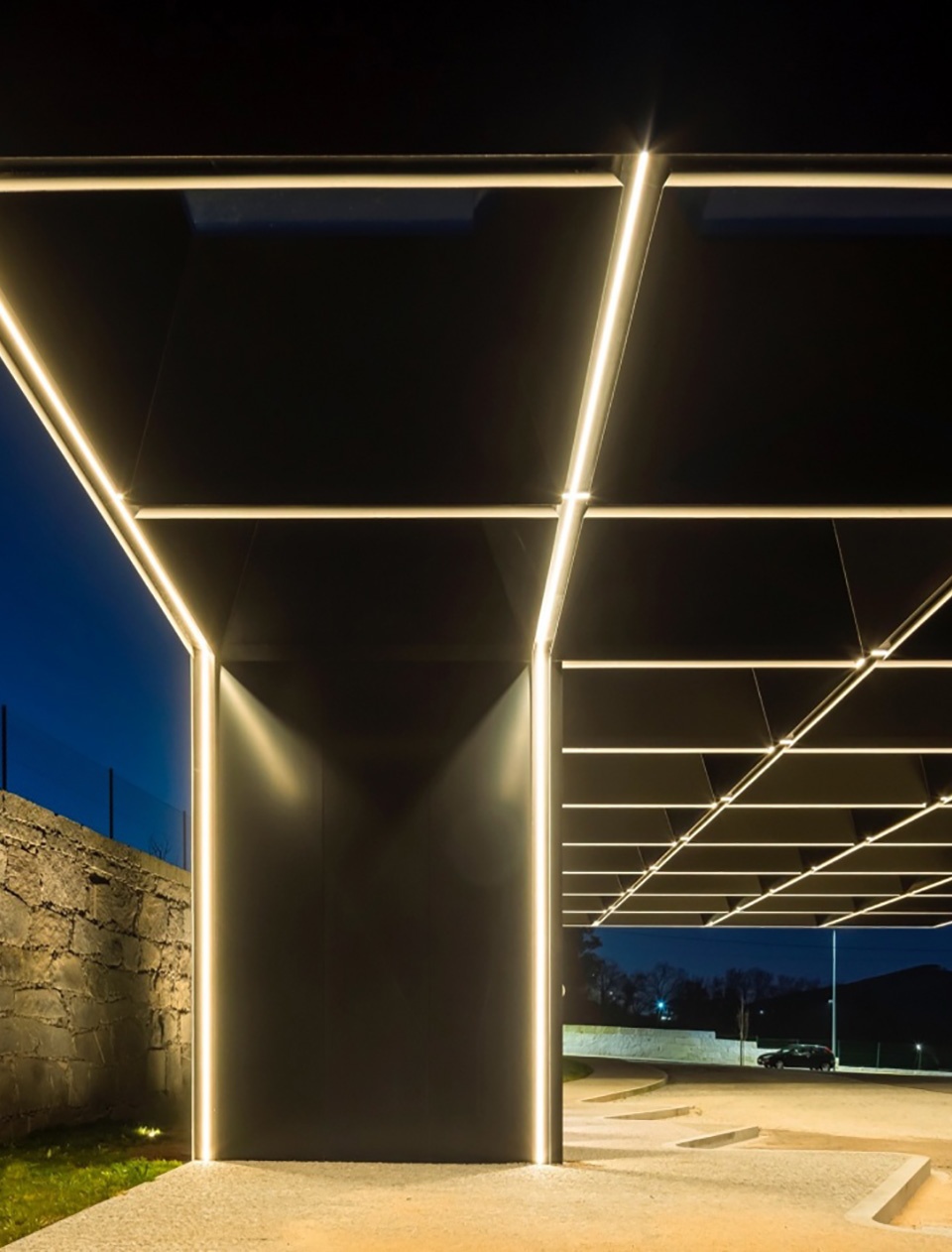
▼建筑的灯光设计,lighting design of the project
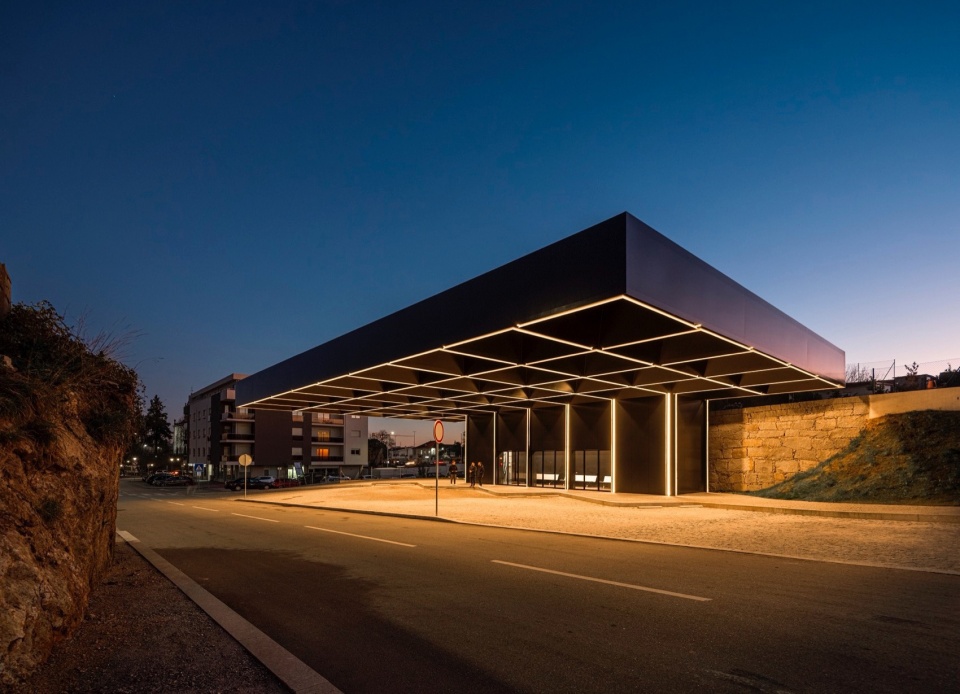
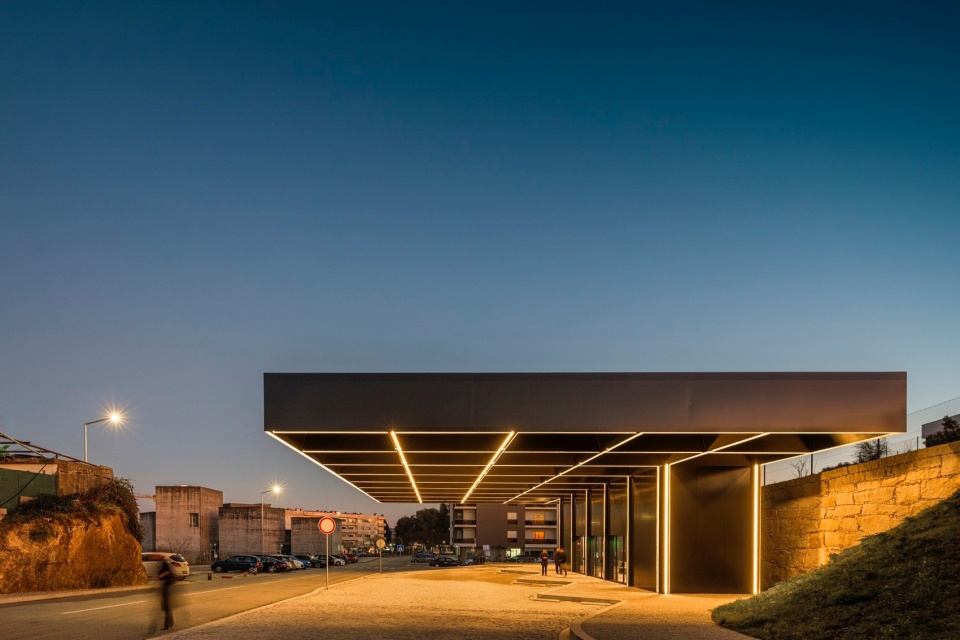
▼具有科技感的灯光氛围,a futuristic lighting atmosphere
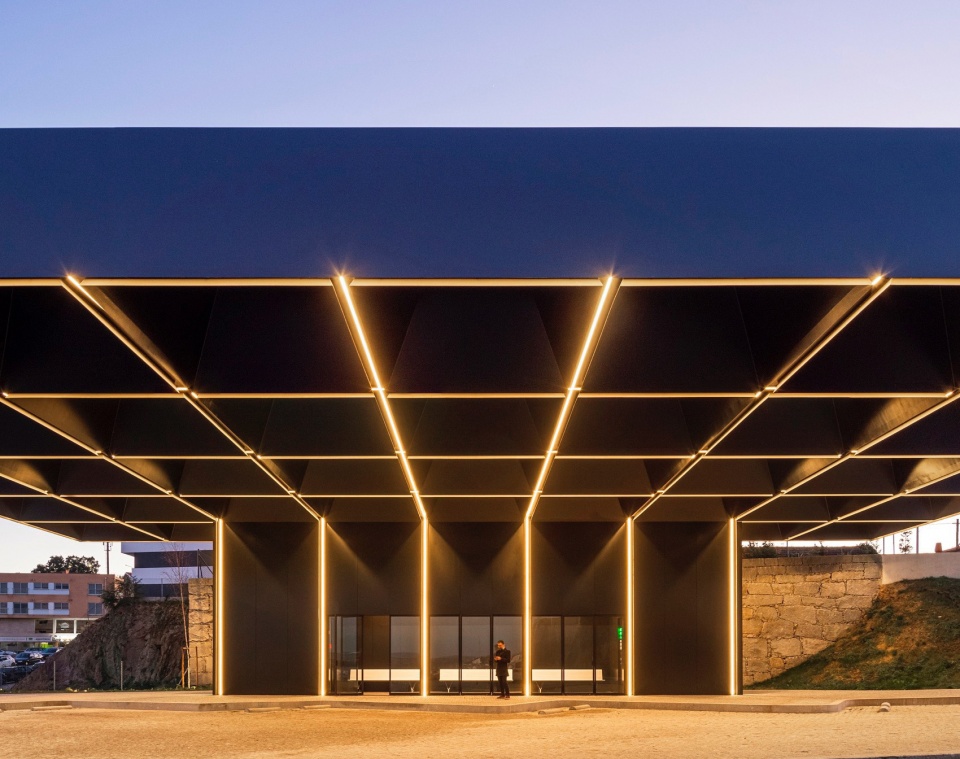
▼近景,closer views
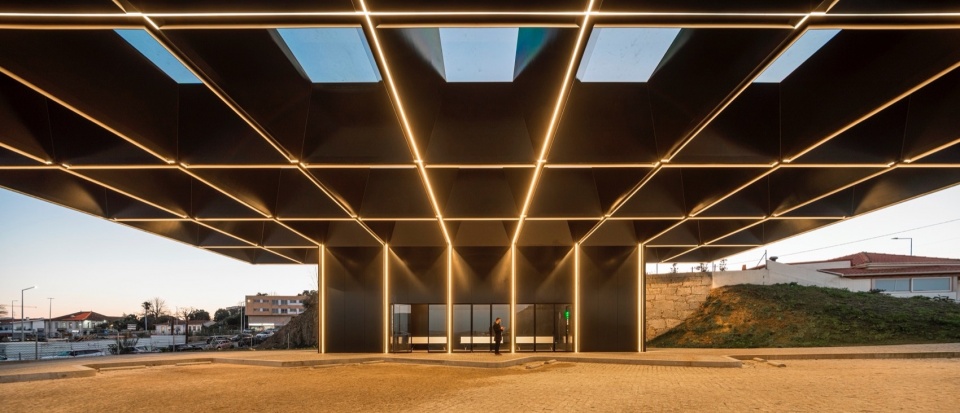
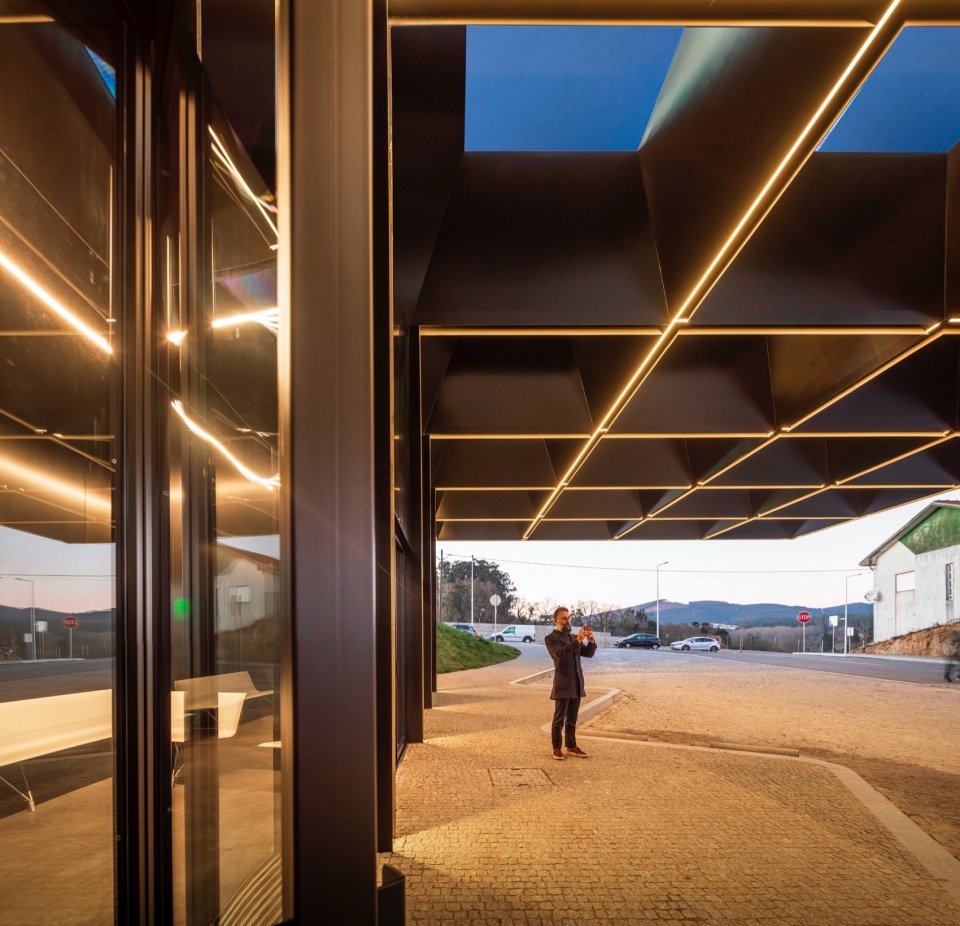
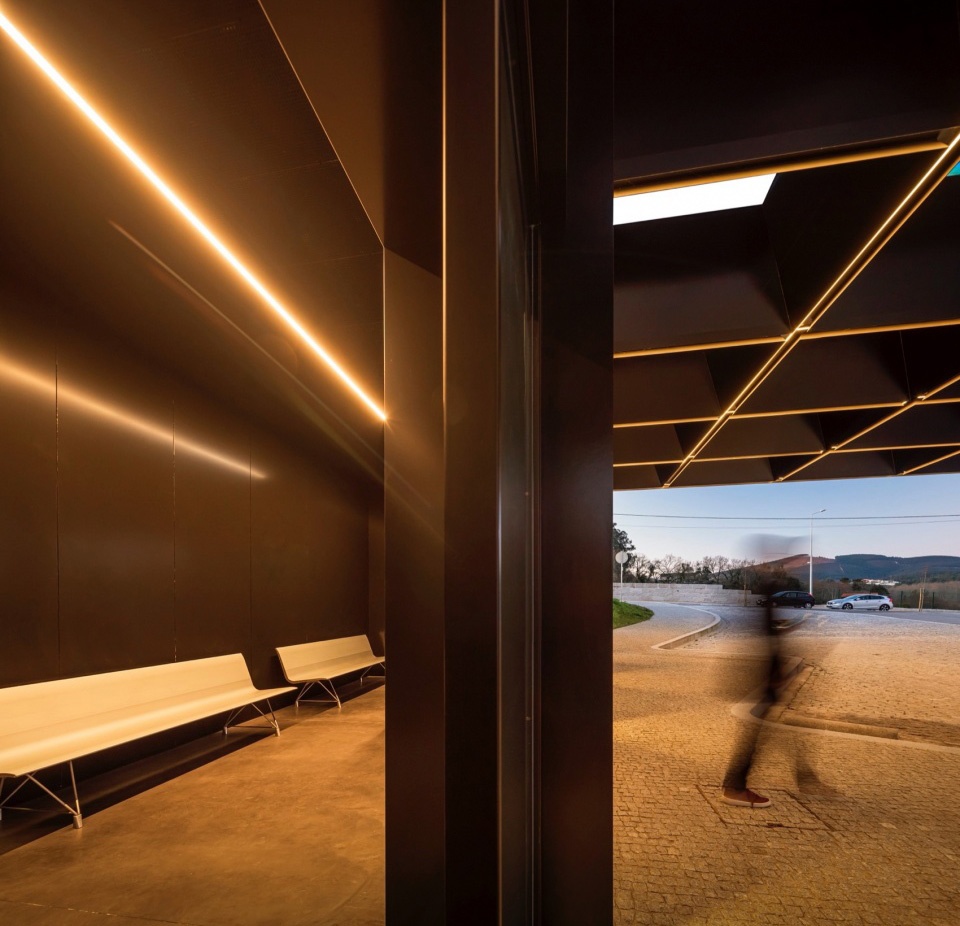
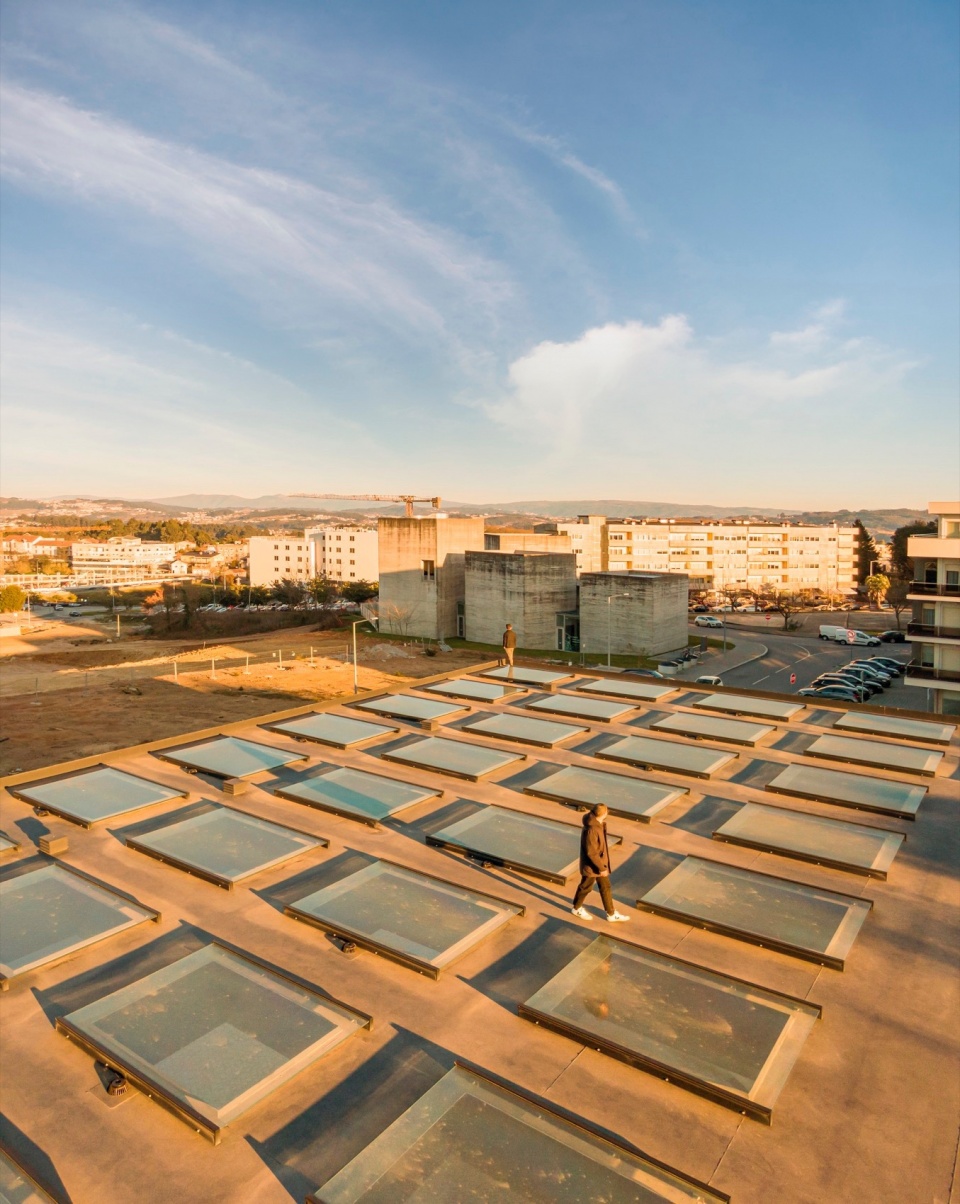
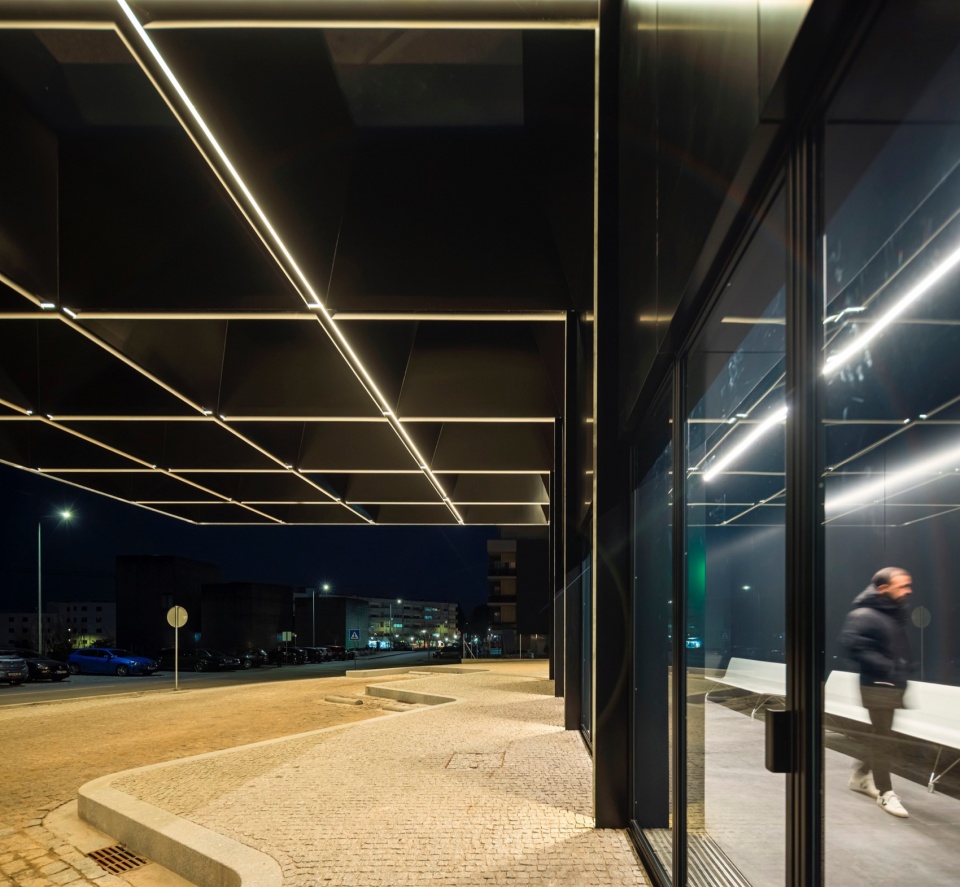
为此,结构仅以单一点与地面接触,最大限度缩小占地面积,在物理与视觉层面释放其余空间。屋顶作为视觉上最为突出的元素,被精心设计,其中约35%的面积采用玻璃材质,以确保通透性,从而实现所期望的城市渗透感。
To achieve this, the structure is designed with only a single point of contact with the ground, reducing its footprint and physically and visually freeing up the remaining space. The roof, the most visually dominant element, was carefully designed with approximately 35% of its surface in glass, ensuring transparency and, consequently, the desired sense of urban permeability.
▼夜景,night views
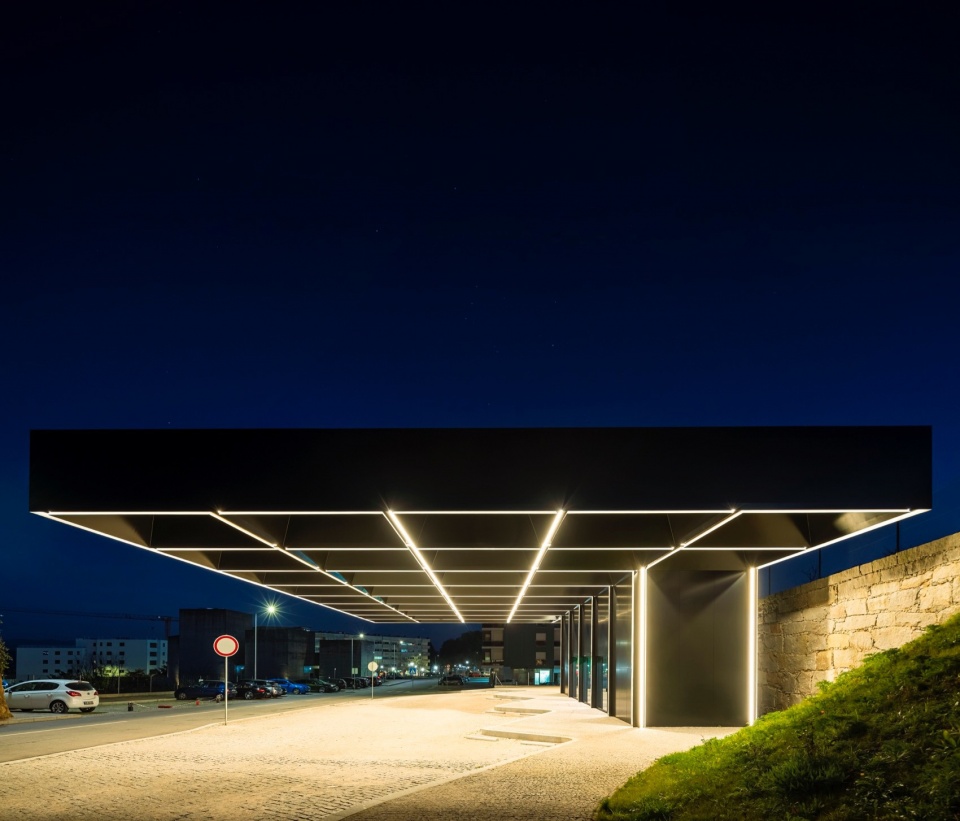
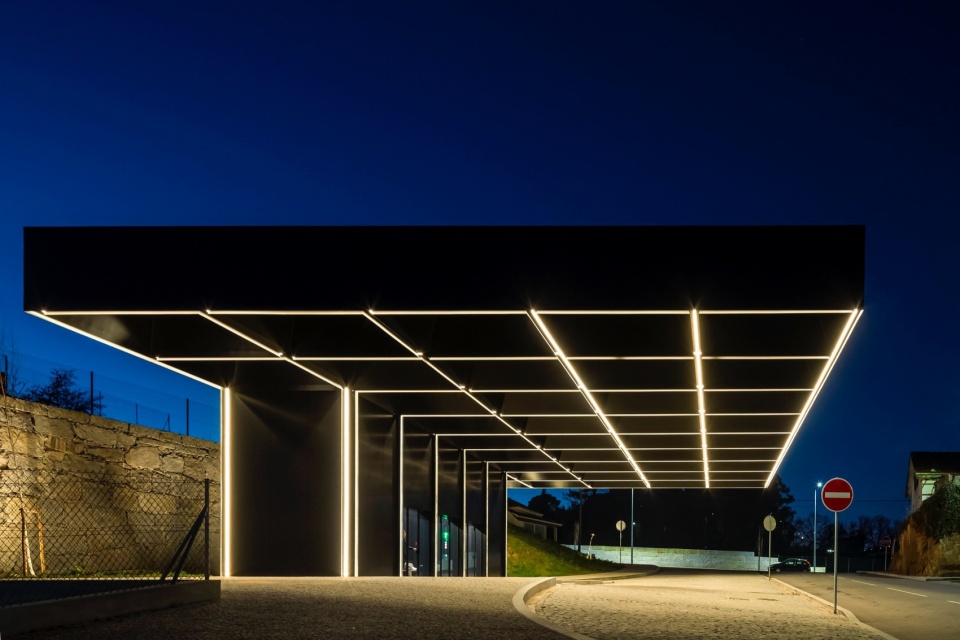
▼室外候车空间夜景,night view the outdoor waiting area
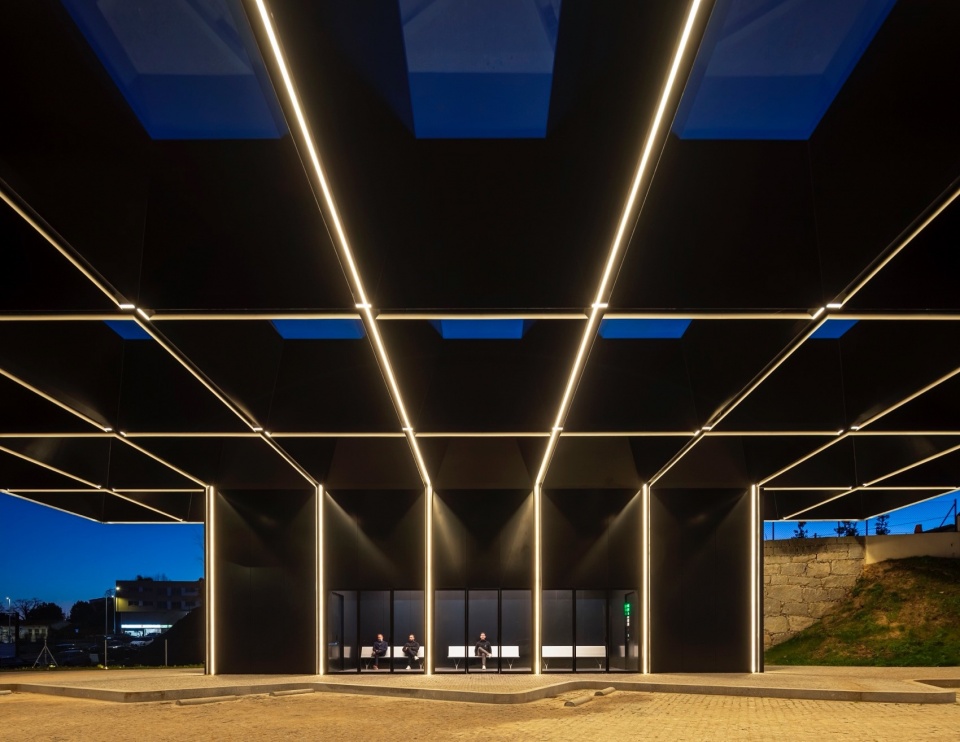
▼细部,details
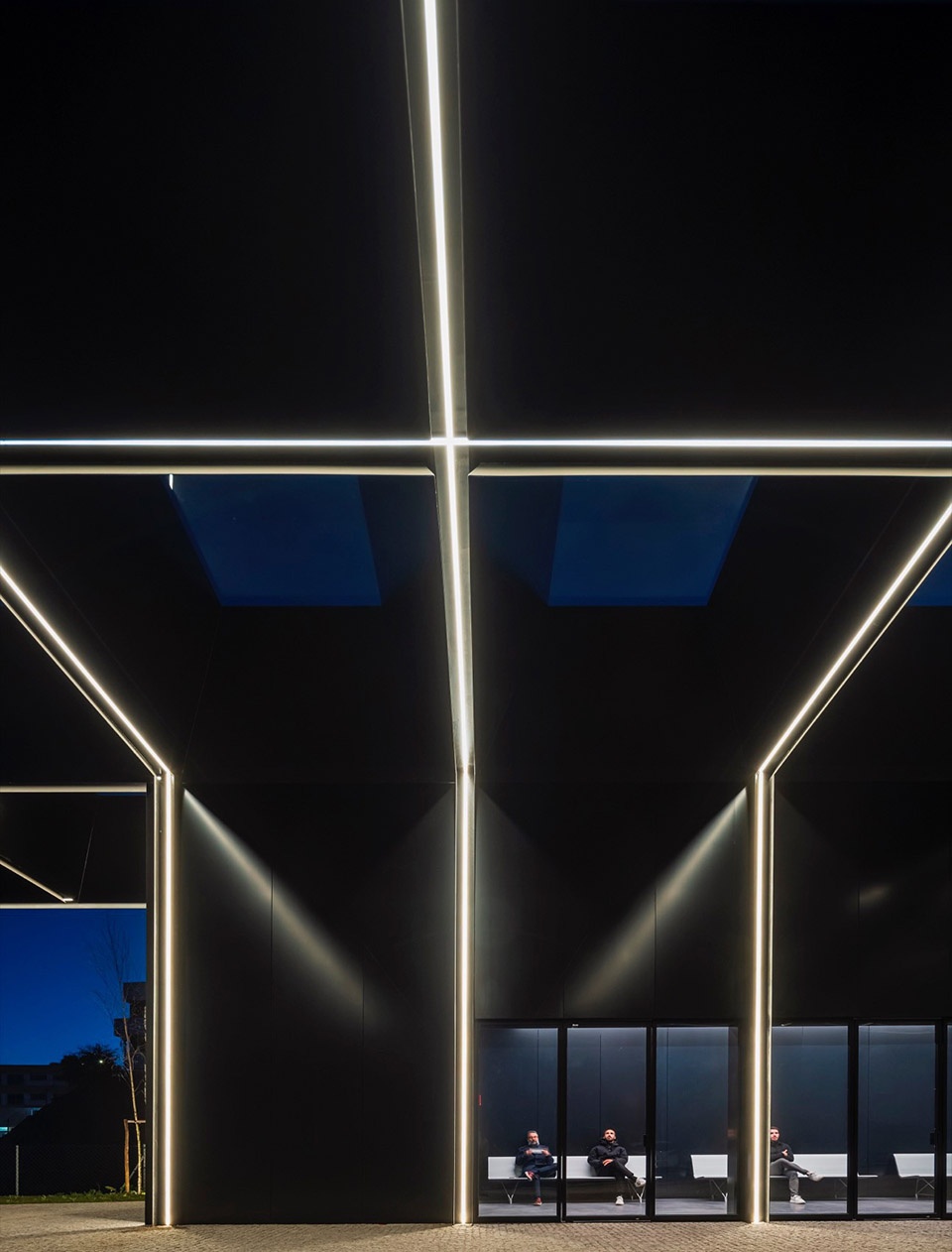
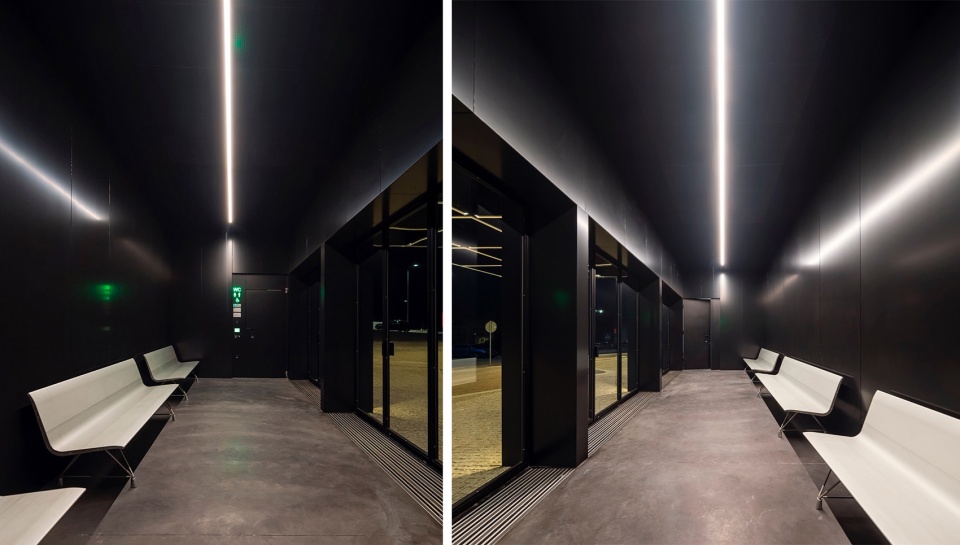
支撑屋顶的结构内部空间被划分为三个基本区域:候车区、储藏空间和卫生设施。约30平方米的候车区内设置了铝制座椅以提升舒适度,并配有墙面信息屏,用于显示必要的出行信息。该空间可直接通往受限使用的储藏区以及公共卫生间,后者配备自清洁自动系统。
The internal program of the structure supporting the roof is divided into three essential functional areas: a waiting area, storage space, and sanitary facilities. The waiting area, approximately 30m², is equipped with aluminum benches for added comfort, as well as wall-mounted screens displaying essential travel information. This space provides direct access to a restricted storage area and a public restroom, which features a self-cleaning automatic system.
▼夜景,night view
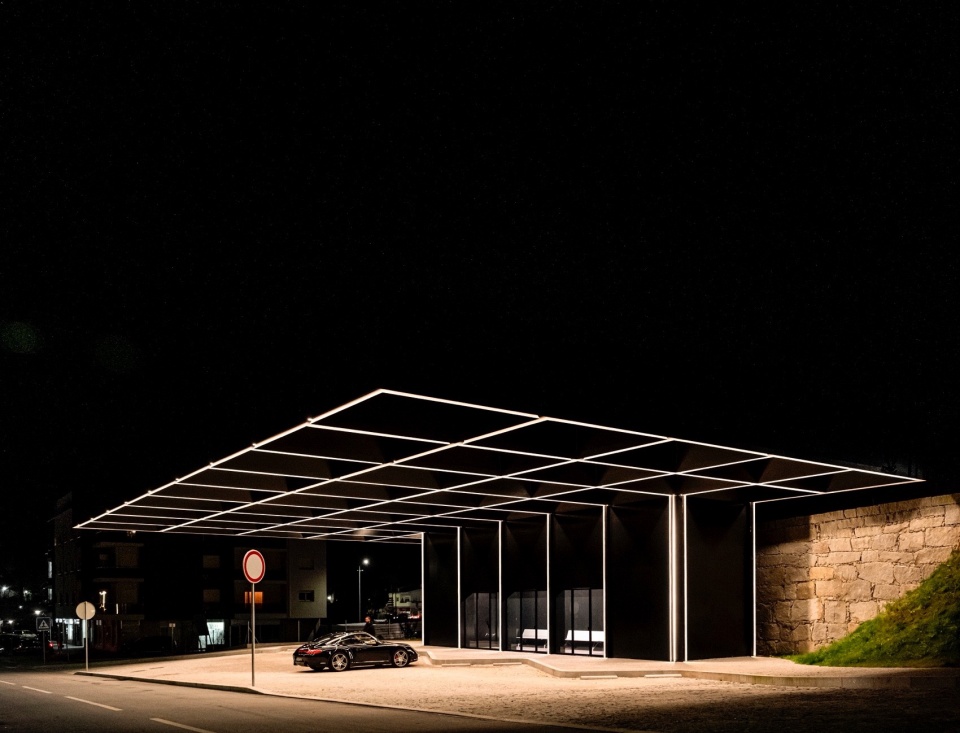
▼使用场景,using scenario
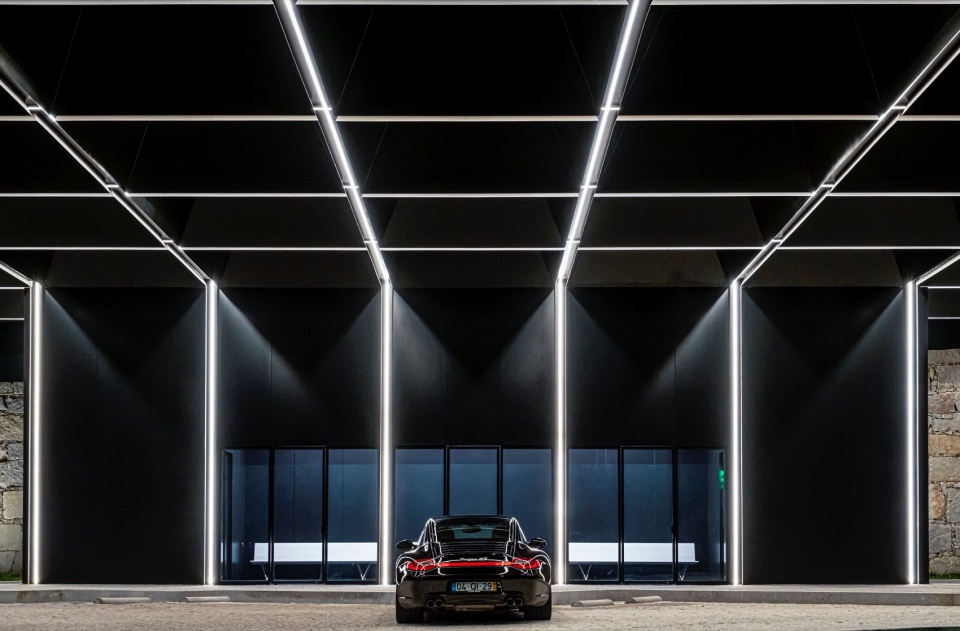
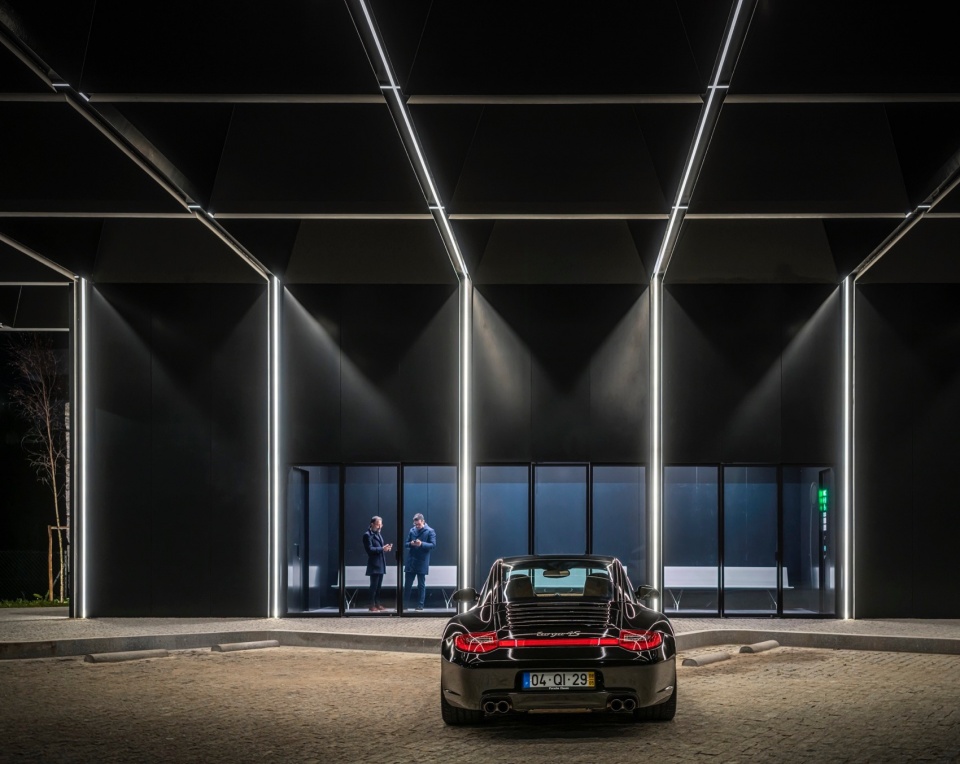
▼近景,closer views at night
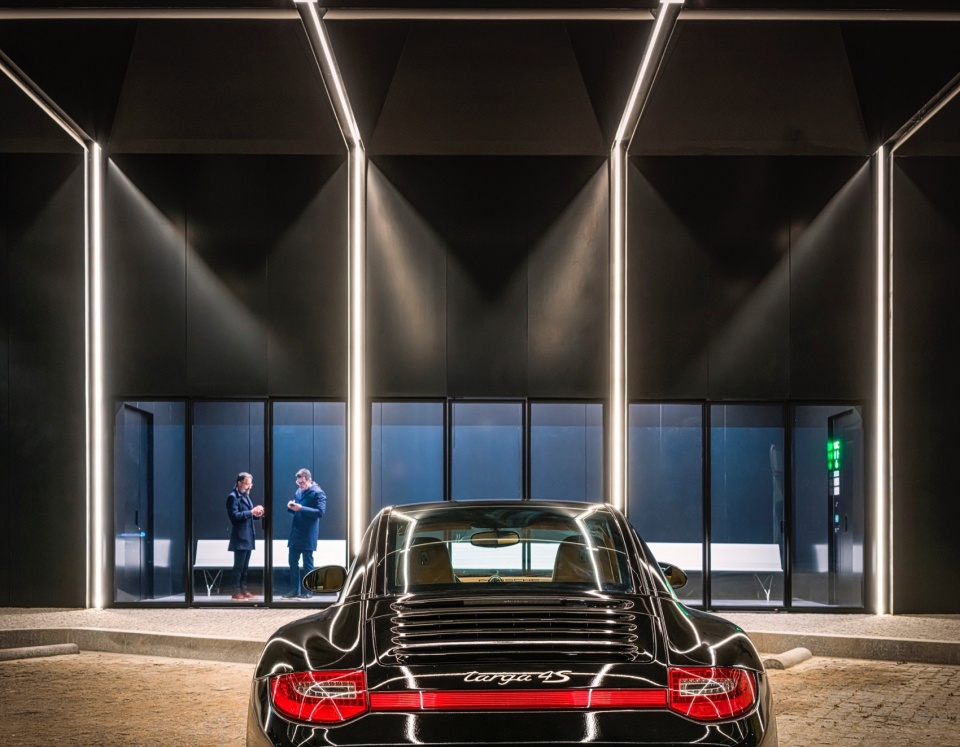
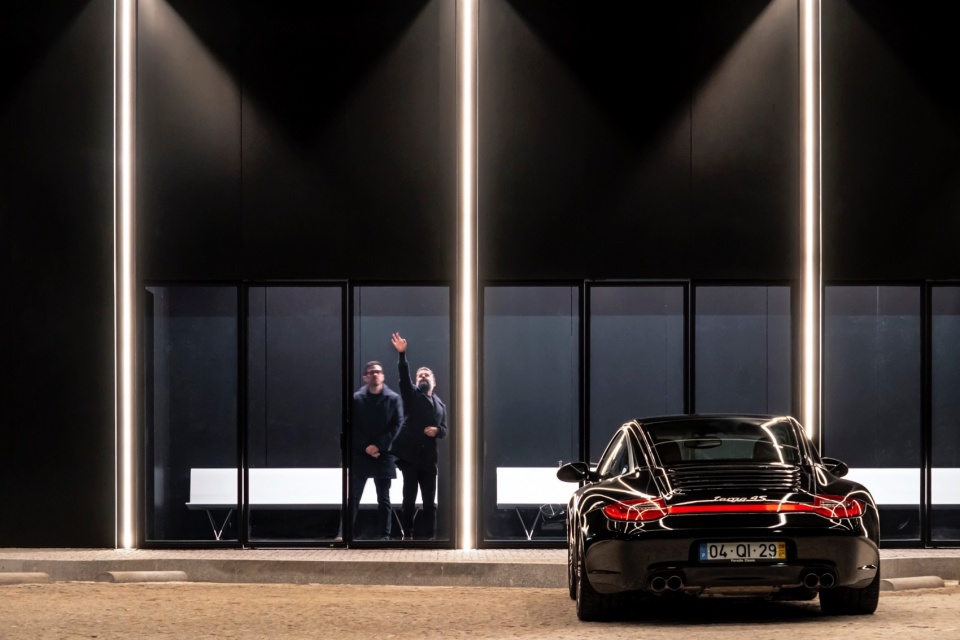
▼富有当代气质的建筑语言,architectural language with contemporary style
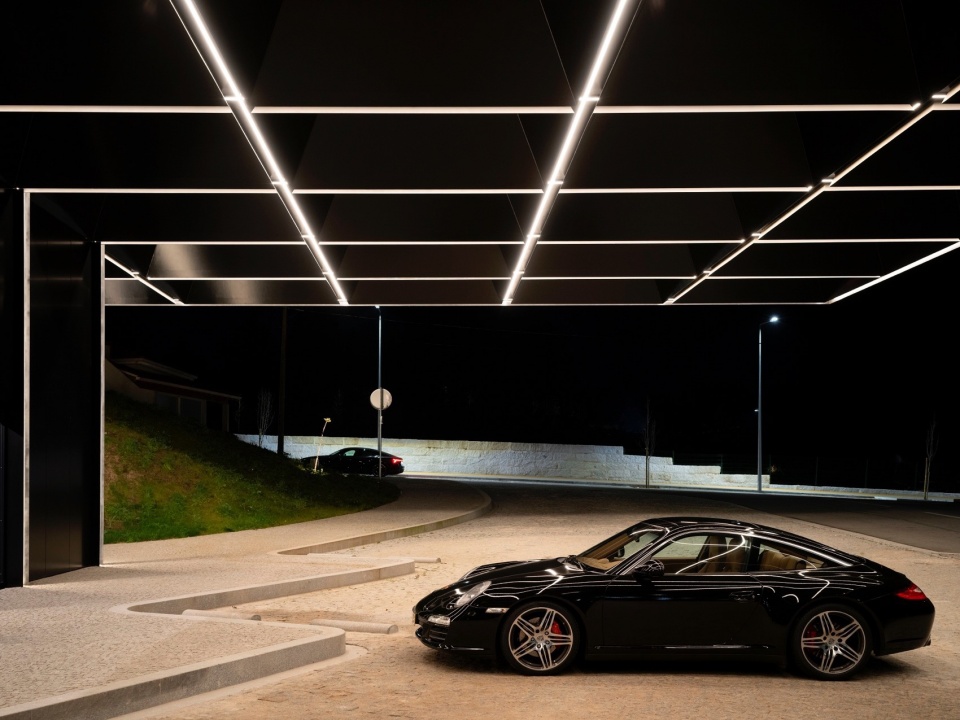
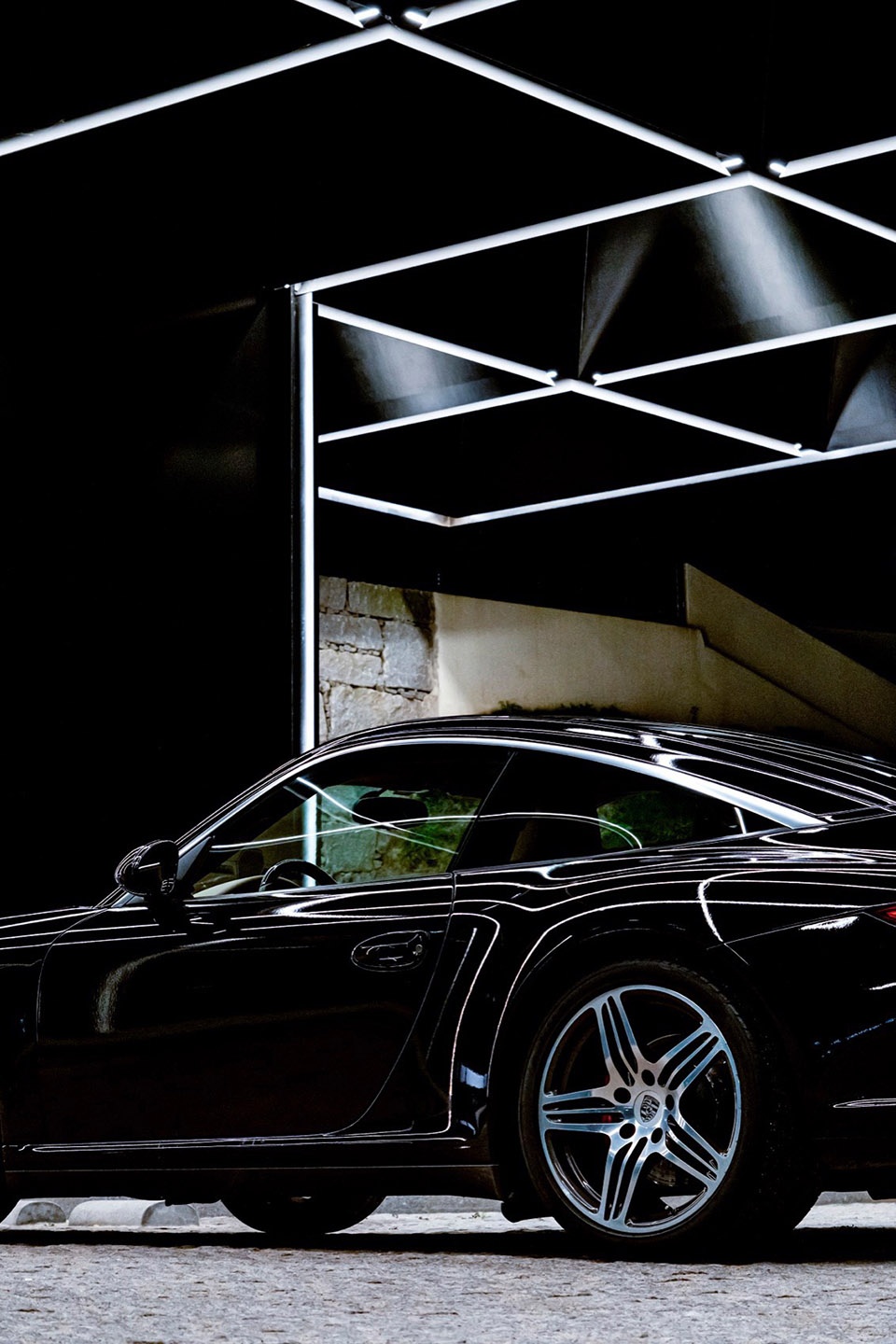
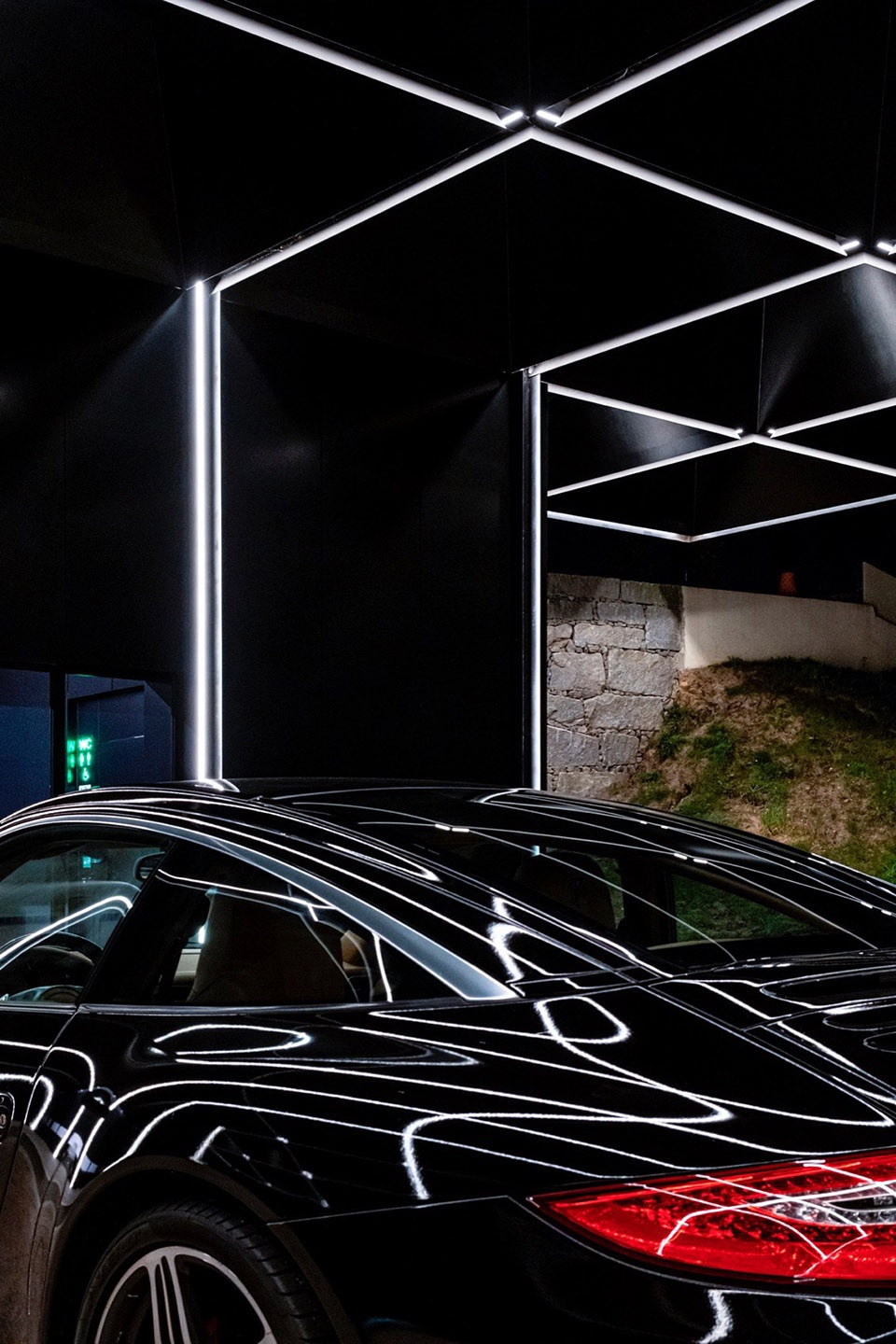
整体方案聚焦于“必要性”,仅保留多式联运枢纽运行所需的核心功能空间,同时通过建筑性的表达提升场地品质。借助其体量与设计语言,这座建筑力图为区域注入一种更新、更当代的气质,并确立自身作为卢萨达城市结构中关键地标的角色。
The proposal is limited to the essentials, focusing on the functional spaces necessary for the intermodal hub’s operation while incorporating an architectural approach that enhances the site. Through its volume and design, the building aims to bring a renewed and contemporary character to the area, establishing itself as a key landmark within Lousada.
▼内部空间概览,overall of interior
▼总平面图,master plan
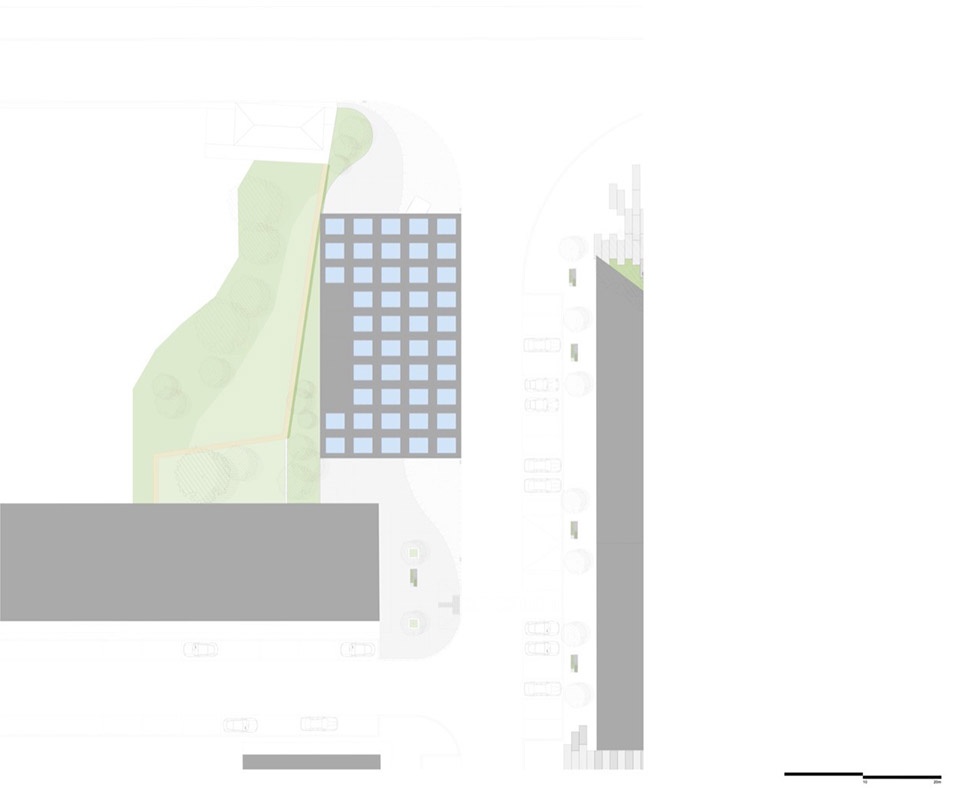
▼平面图,plan
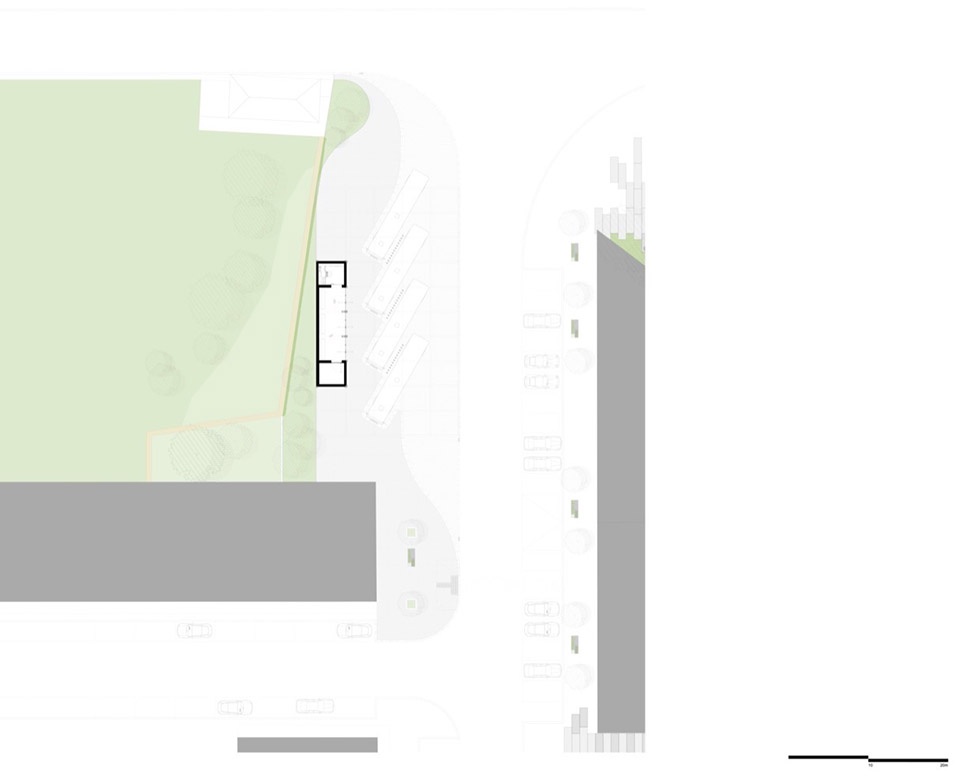
▼立面图,elevations
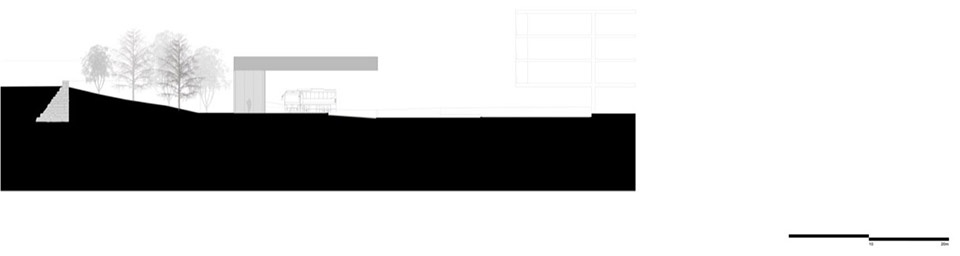
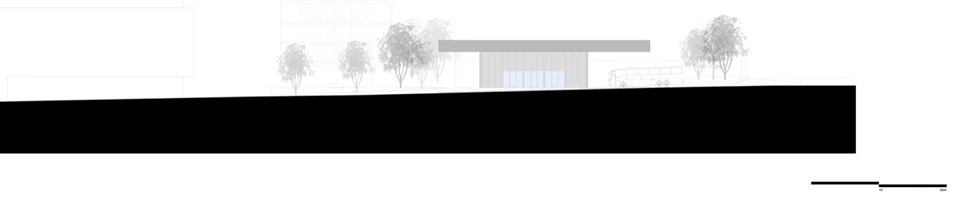
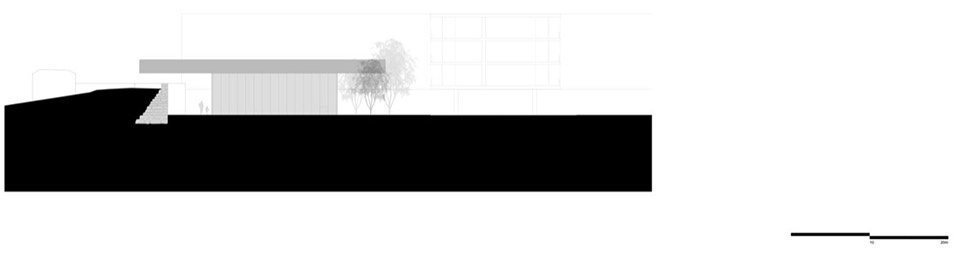
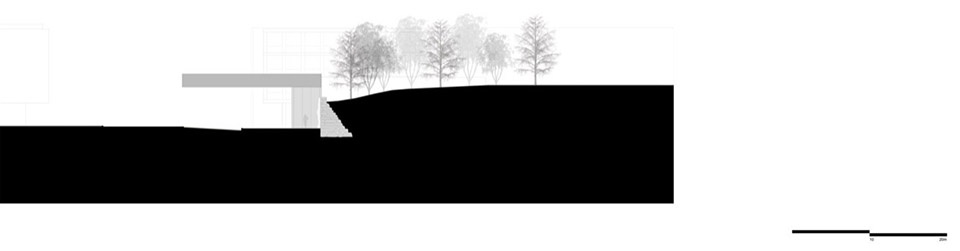
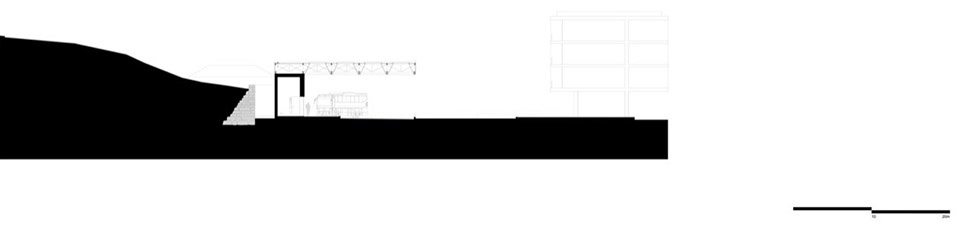
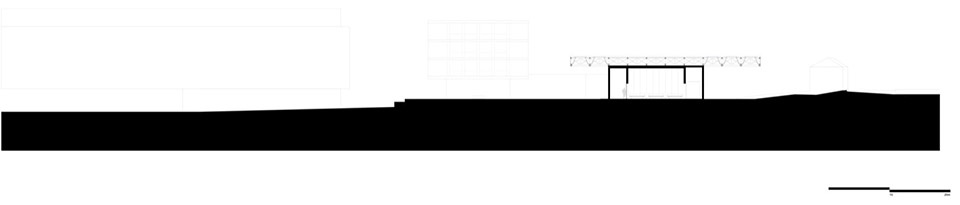
▼剖面图,sections
Project name: Intermodal Hub of Lousada
Studio name: Spaceworkers
Location: Lousada
Área: 43,82m2
Built area: 59,66m2
Project start year: 2018
Year of completion of the work: 2024
Author(s) of the architectural project and names of team members:
Rui Dinis | Principal Architect, Henrique Marques | Principal Architect.
Collaborators: Adriana Pacheco | Architect , Fred Delgado | Architect,
Joana Leitão | Architect, João Ortigão | Architect, Marco Santos | Architect, Tiago Maciel | Architect
Names of complementary designers and consultants
Builder: Peni
Photographer: Fernando Guerra (FG+SG | Architectural Photography)
Visualization: Tools used: C4D + Vectorworks + Rhinoceros
Landscaping: Spaceworkers
Civil Engineer: CTJX – Consulting Engineers
Structural Engineer: CTJX – Consulting Engineers
Customer: Private
Electricity: CTJX – Consulting Engineers