安妮·弗兰克中学改造更新,法国 / MARS Architectes
安妮·弗兰克中学位于法国安东尼市(Antony),是建筑师Jean Nouvel早期的重要作品之一。该项目在某种意义上见证了贯穿其建筑生涯的核心关注:对世界的批判性观察、对建筑时间性的思考,以及对时代与环境语境的持续质疑。它更像是一件“总体作品”(total work):整体构图与细部设计紧密交织于同一建筑理念之中,一切均经过严密推敲,没有偶然,只为服务于建筑本身的思想与表达。
The project for the Anne Frank Middle School in Antony, one of architect Jean Nouvel’s early works, bears witness in its own way to the preoccupations that were to occupy much of his work and career. More than ever, it bears witness to the architect’s critical eye on the world, on the temporality of a building, on his era, constantly questioning the context. More than ever, it is a total work, where overall composition and detail are interwoven in an architectural concept. Nothing is left to chance, everything is thought through, to serve the cause…
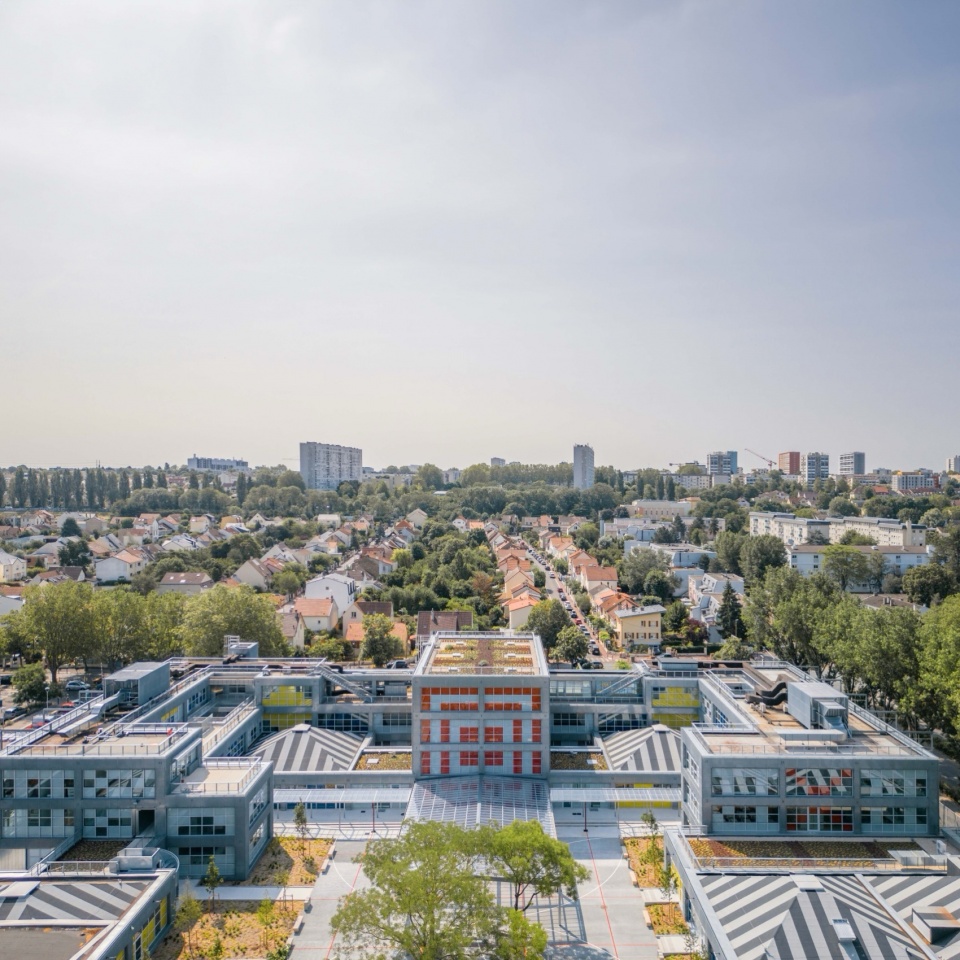
▼项目鸟瞰,aerial view of the project
策略 – 批判功能的再激活Strategy – Re-actualization of the critical function
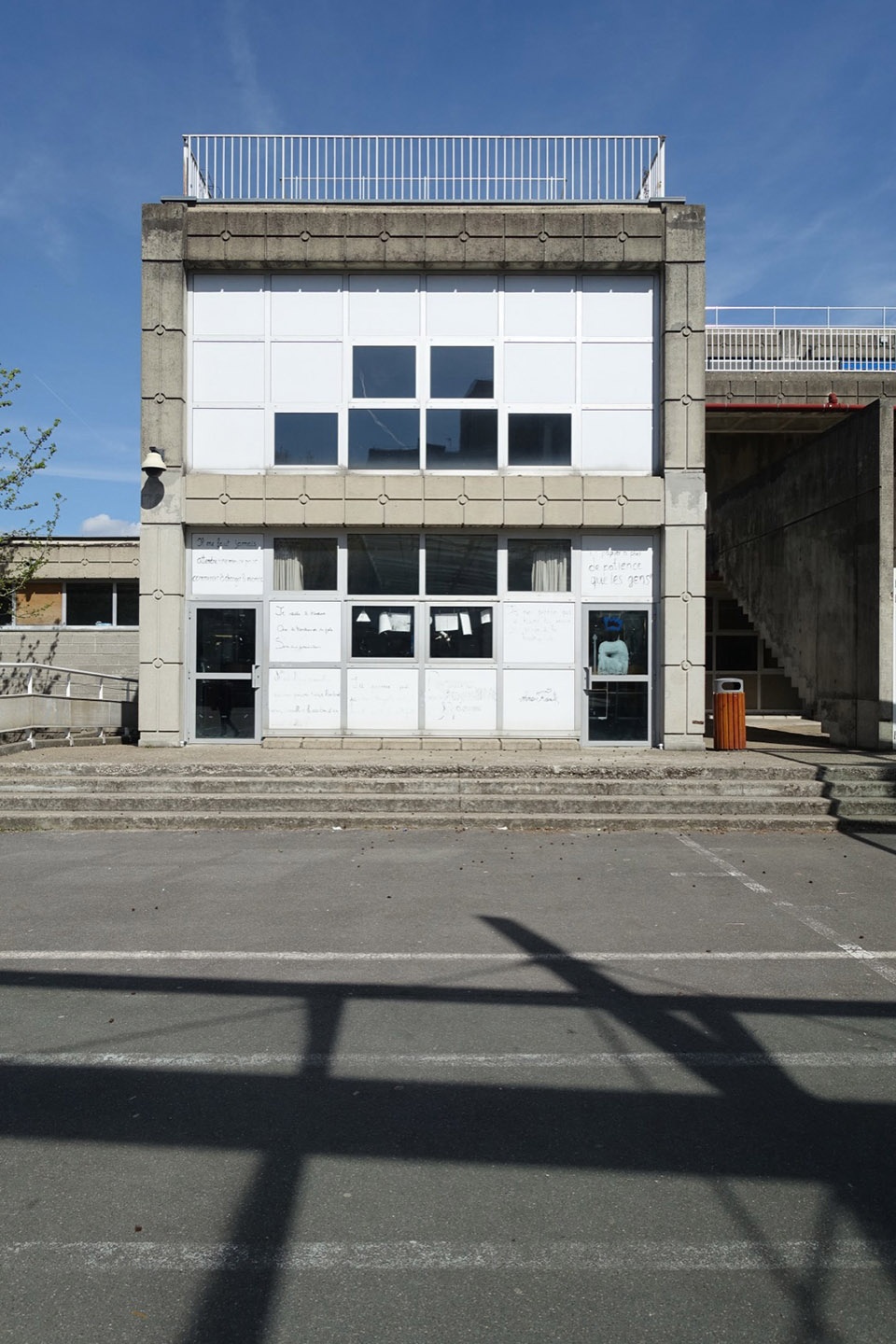
在建筑最初建成之时,建造与建筑学层面的思考曾被边缘化,取而代之的是一种以经济理性与工期优化为导向的工程逻辑——通过一种“预设系统”来组织建造过程。正如前文所述,Jean Nouvel的建筑实践正是对这种“目录式建筑”的批评,通过对既有体系的重新挪用,将其转化为独特的建筑表达。如今,对该建筑进行热工更新改造,再一次提出了关于建造与时代的问题。事实上,外保温是提升立面热阻性能的唯一有效方式,但这一措施往往会抹平甚至间接消解建筑原有的厚度层次,以及支配其构图规则的建筑秩序——包括承重结构、填充构件以及室内构造等要素之间的关系。
If, at the time of the creation of the building, constructive and architectural thought was sidelined in favor of engineering based on economic rationalization and optimization of deadlines via a “pre-thought” system; and if, as we have seen, Jean Nouvel’s work is in fact a critique of these catalog constructions, where lies the reappropriation of the latter to make a unique architecture; the thermal rehabilitation of the building once again raises the question of construction and our times. Indeed, external insulation, the only effective means of improving the thermal resistance of facades, would tend to smooth out, or even indirectly erase, the thickness of yesteryear and the architectural order that governs the rules of composition: reading of load-bearing elements, infills, interior works….
▼改造后的建筑立面,facade after renovation
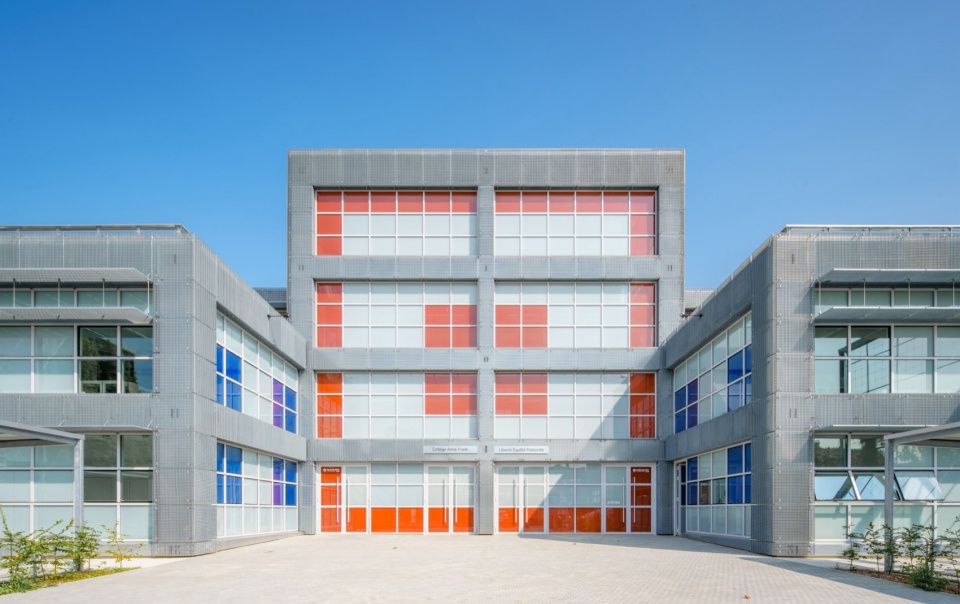
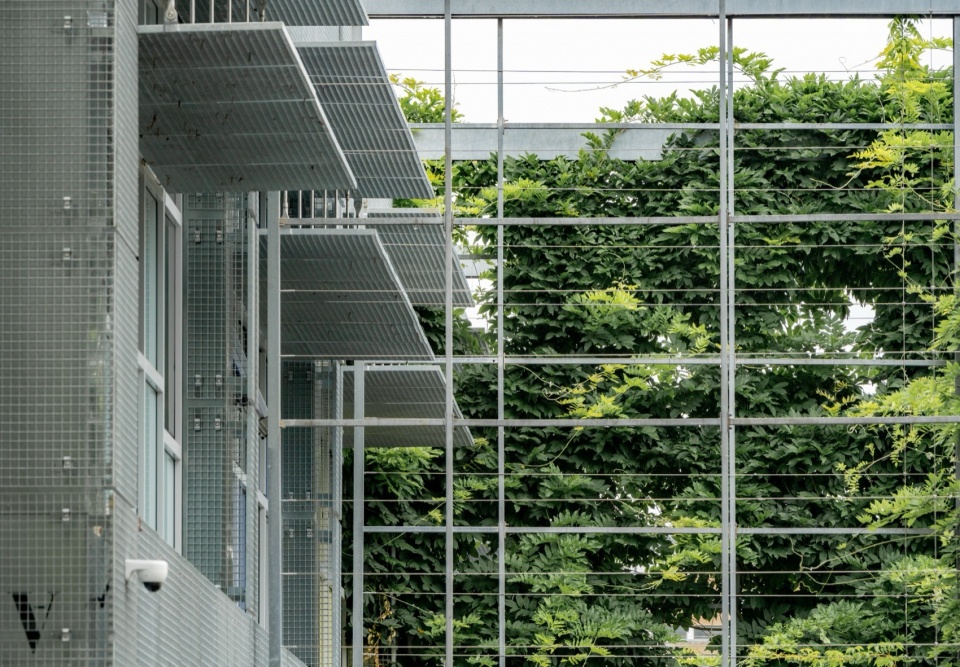
在最初的设计中,混凝土“Domino”结构构成了建筑的度量单位,是安妮·弗兰克中学的“模度体系”。而在今天,我们提出以钢格栅作为新的度量单位。这是一种工业材料,它以外部表皮的形式存在,同时具有耐久、轻盈与多孔的特性,并在某种程度上暗示它只是多层构造体系中的第一层表皮。接受这种非结构性的轻盈、这种非密闭性的孔隙、以及这种极具工业化特征的重复性,本质上是对当代建筑保温系统所带来的“包裹式”建造逻辑的一种批判性更新。1987年,Jean Nouvel在AMC杂志中写道:“对我而言,建筑就是把文化价值、文明与感性引入建成环境之中:建成环境与我们的文明之间究竟意味着什么?”
At the time, the concrete “Domino” structure represented the unit of measurement of the building, the Modulor of the Anne Frank Middle School, but today we propose steel grating as a new unit of measurement. An industrial material that assumes its status as an outer skin, at once perennial, light and porous, and in a way suggesting that it is only the first skin of a multi-layered complex. Assuming this non-structural lightness, this non-watertight porosity, this very “industrial” repetition, is ultimately to fully assume the “packaging” aspect induced by contemporary thermal insulation systems: a kind of critical updating. In 1987, Jean Nouvel wrote in AMC: “For me, architecture is the introduction of cultural values, civilization and sensibility into the built environment: what does the built environment mean in relation to our civilization?
▼色彩的运用,the use of colors
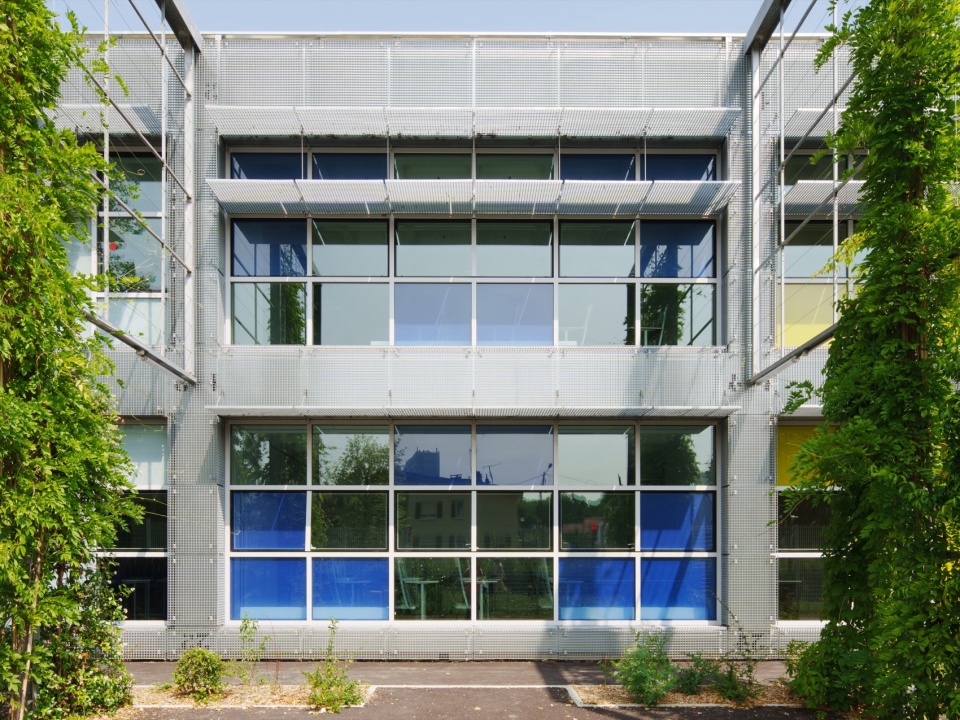
通过对这一工业材料的重新转译,我们为这座建筑提出了一个新的生命阶段。这是一种批判性的再评估,与最初的设计一样,它强调挪用的乐趣、形式的可塑性、色彩的运用、多样化的构成与符号——所有这些都使建筑超越纯粹功能。对许多人来说,中学是迈向成年与独立的第一步。在这个阶段,人们学习如何观察世界、如何独立分析问题——这是视觉与批判性思维的训练过程。本次提出的建筑策略正延续了四十年前Jean Nouvel所开启的这一思路:一种能够以自身方式表达时间与建造的建筑。在这里,理性与尺度成为诗意的伙伴,共同支撑一个正当的愿望——让孩子们的记忆更加美好。
By diverting this industrial material, we propose a new stage in the life of this building. A critical reappraisal that, like the initial project, plays on the pleasure of misappropriation, plasticity, the use of colors, varied compositions, signs… everything that allows us to go beyond function. For many people, middle school is the first step towards adulthood and independence. It is a time when you learn to see, to analyze for yourself: it is the apprenticeship of the eye and of critical thinking. The proposed architecture is fully in line with this approach, initiated forty years ago by Jean Nouvel. An architecture that speaks in its own way of time and its edification: here, reason and measure become the friends of poetry to justify a legitimate ambition: to embellish the memories of our children.
▼钢格栅作为以外部表皮,steel grating is used as an external covering
策略 – 立面:外保温系统(ITE)Strategies – Facades . ITE
对这座建筑进行更新必然引出一个问题:如何介入?在这样一座从整体到细部都具有高度完整性的建筑中进行改造,是极具挑战的。从某种意义上说,这项工作甚至难以简单地被视为“修复”,因为该项目的遗产价值更多体现在观念层面而非实体层面。因此,需要被保留的首先是其意义与精神状态——即一种“批判性意识”。建筑的新阶段应当延续原有精神,但并不意味着对1980年建成状态的怀旧式复原。从建造与技术的角度来看,如果不从外部介入并全面更新立面系统,就无法有效改善学校的热工与通风性能。因此,我们将这次介入视为一种重写的文本(palimpsest)——在原有文本之上叠加新的书写,使昨日与今日之间形成互补关系,而不是简单的复原或新旧对立。
Bringing this building up to date raises the question of the intervention. How do you intervene in a building where everything counts, from the general to the detail? In a way, it is impossible to think of this work as a rehabilitation, because the “heritage” value of this project is much more conceptual than real. It is above all the meaning and state of mind that must be preserved: the “critical” sense. This new stage in the life of the building must continue on the lines of the original spirit, but in no way on a nostalgia for the building built and delivered in 1980. Secondly, in a constructive and pragmatic way, it was impossible to intervene on the thermal and ventilation systems of the college in an efficient way, without an intervention from the outside and therefore without a complete overhaul of the facade systems. As a result, we considered this intervention as a palimpsest, i.e. as a new writing added to the original, playing more on the complementarity between yesterday and today than on the restitution or dichotomy between the old and the new.
▼场地入口,entrance of the site
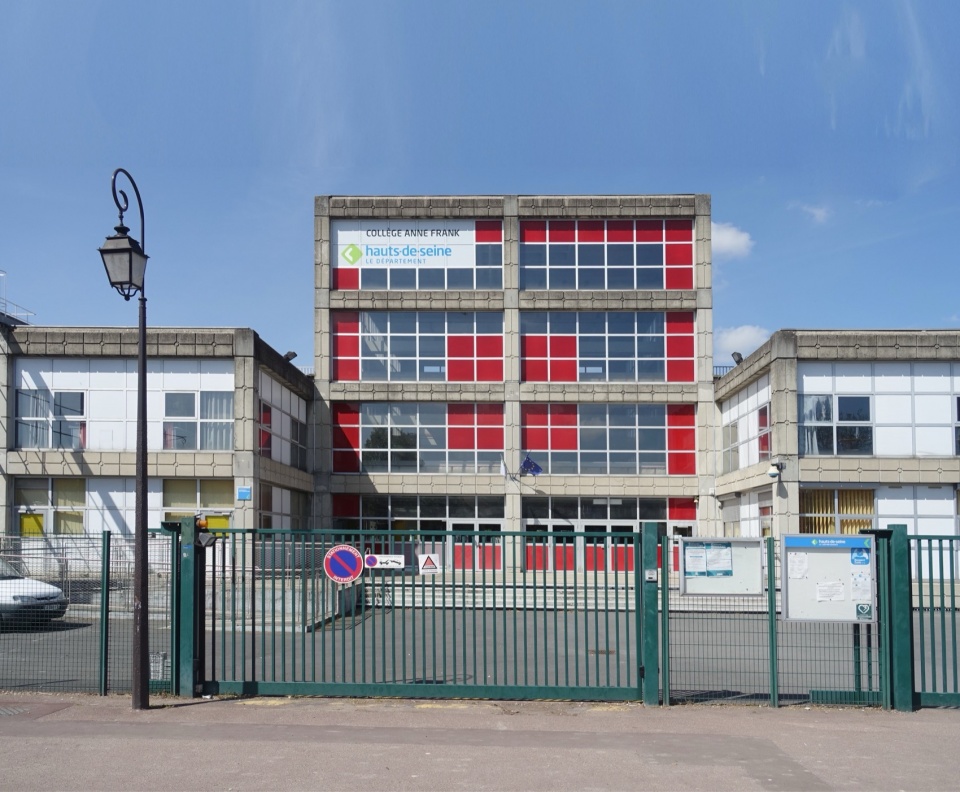
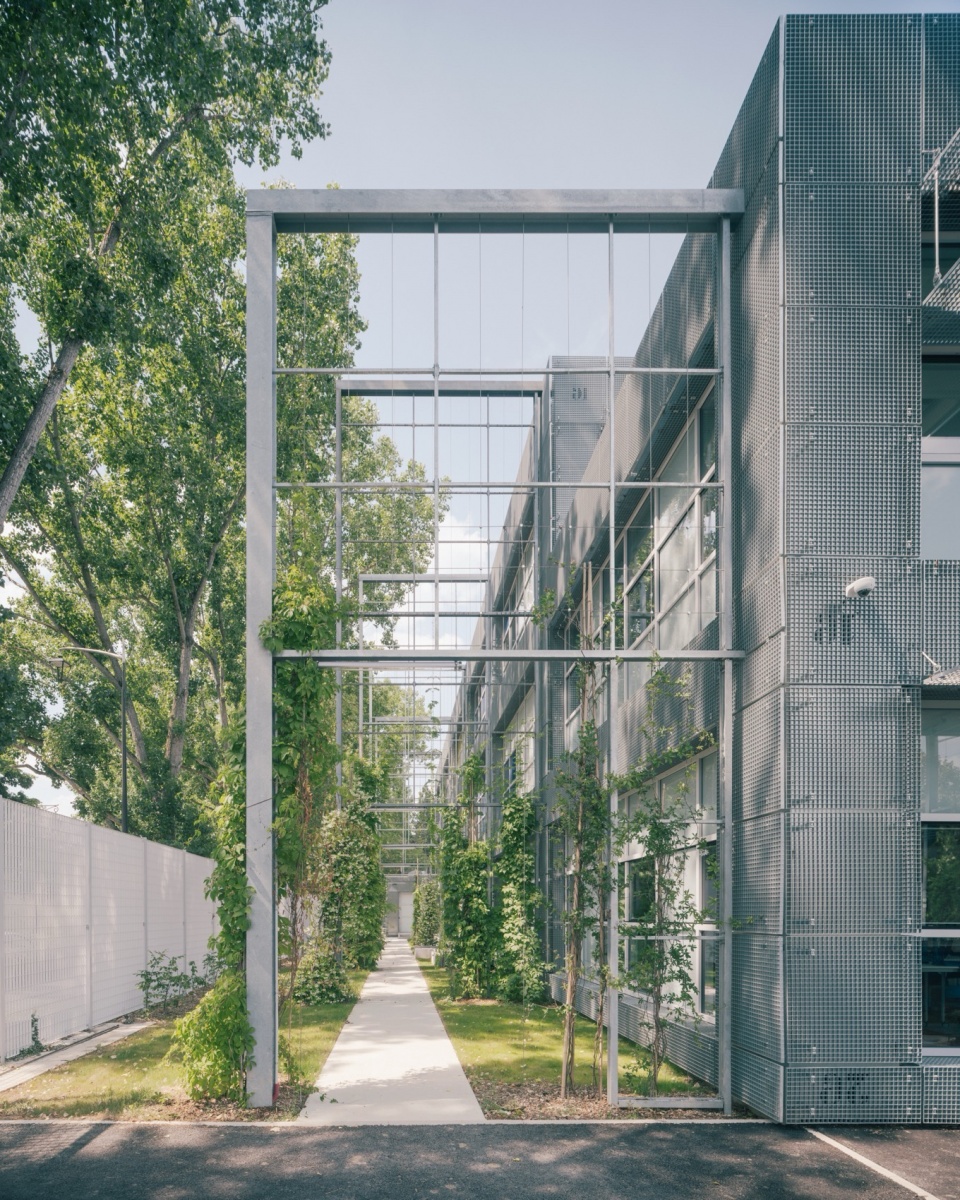
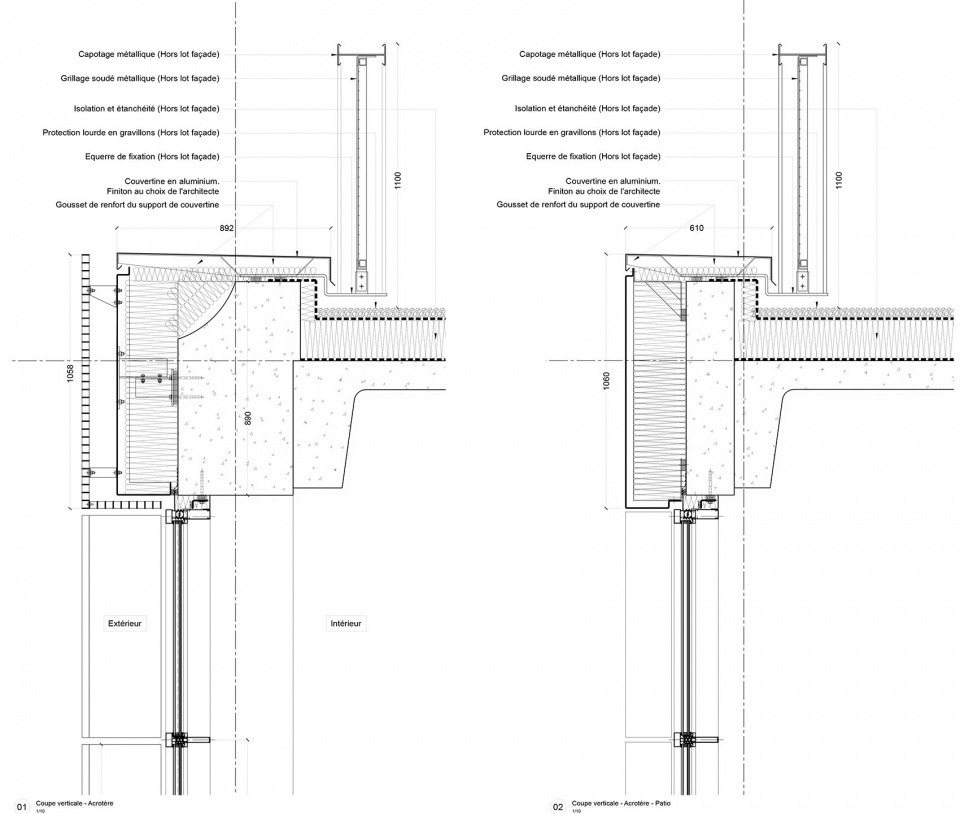
经过诊断与分析,我们决定采用外保温系统(ITE,Isolation Thermique par l’Extérieur)对立面和屋顶进行保温,这是唯一能够切断建筑全部热桥的有效方式:原有的柱梁结构在室内与室外之间形成了大量热桥。当保温层覆盖整个“Domino”结构后,新的立面材料及其与原有立面的关系问题随之产生。为此,我们提出在外保温层之外增加一层钢格栅表皮,其网格体系与原有混凝土结构保持一致。
Diagnosis and analysis prompted us to consider insulating the facades and roofs with I.T.E (‘’Isolation Thermique par l’Extérieur’’, or ‘’External thermal insulation’’ in french), the only effective solution for cutting all the thermal bridges of the building: the existing post-and-beam system created a large number of thermal bridges between the inside and outside. With the insulation covering all the “Domino” structures, the question of the material and meaning of these new facades, in relation to the existing ones, inevitably arose. To this end, we proposed a steel grating skin patterned on the same structural grid as the existing concrete facades, to protect the exterior insulation.
▼外立面,exterior facade
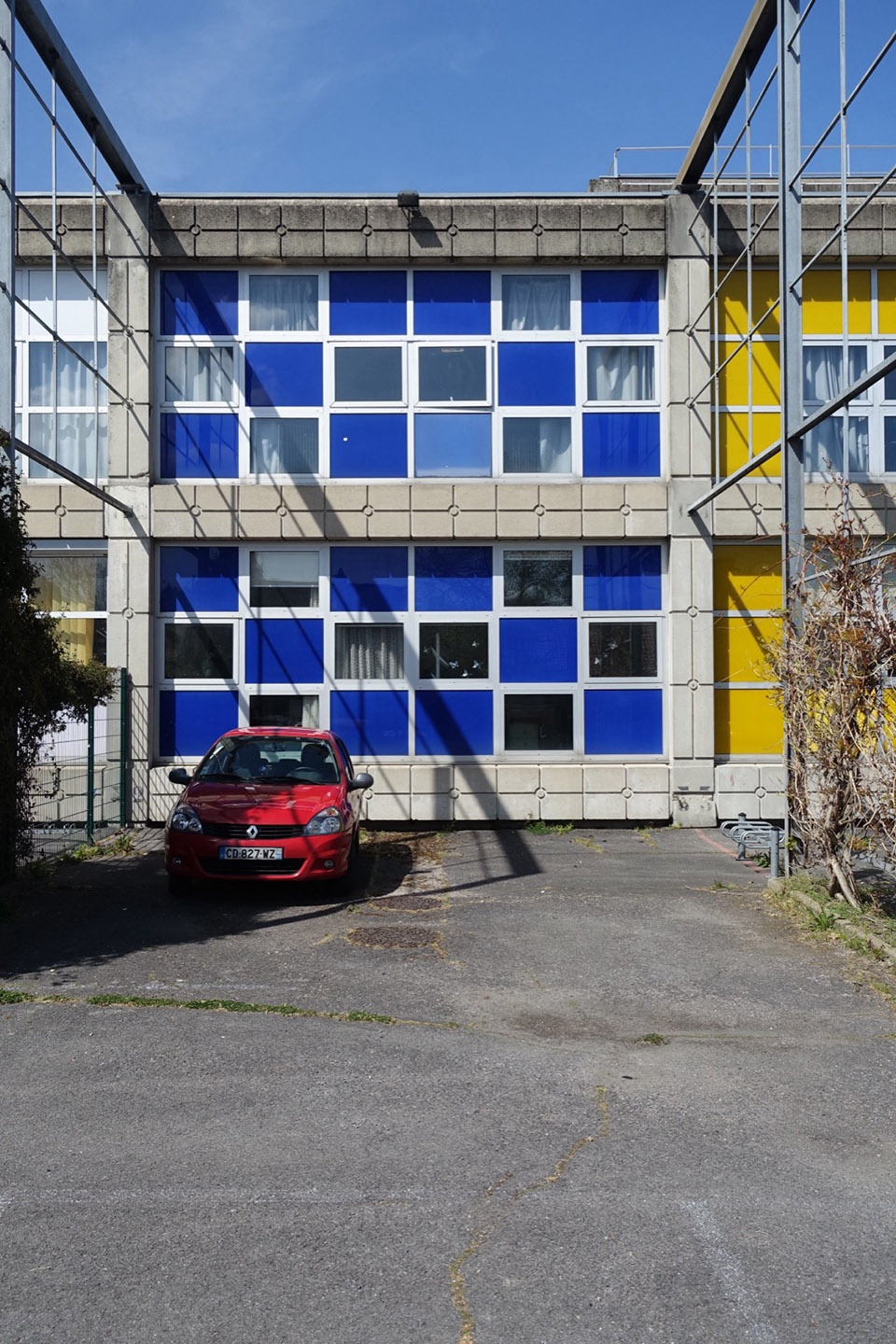
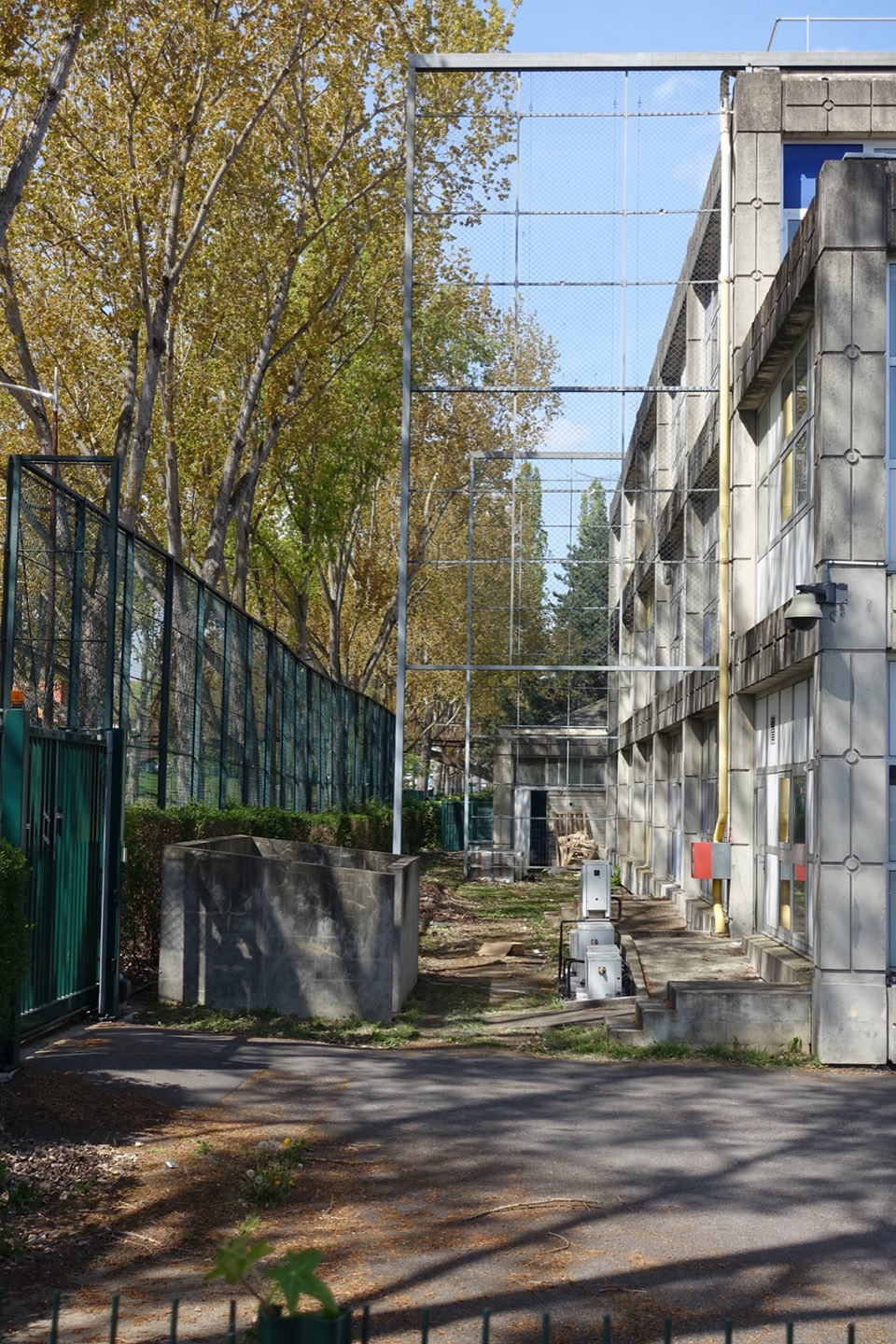
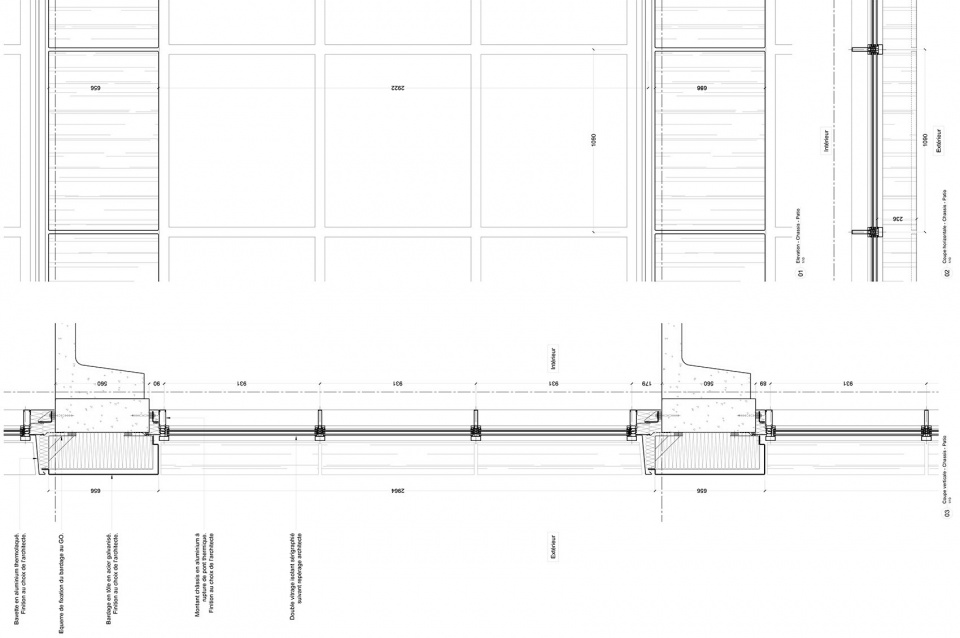
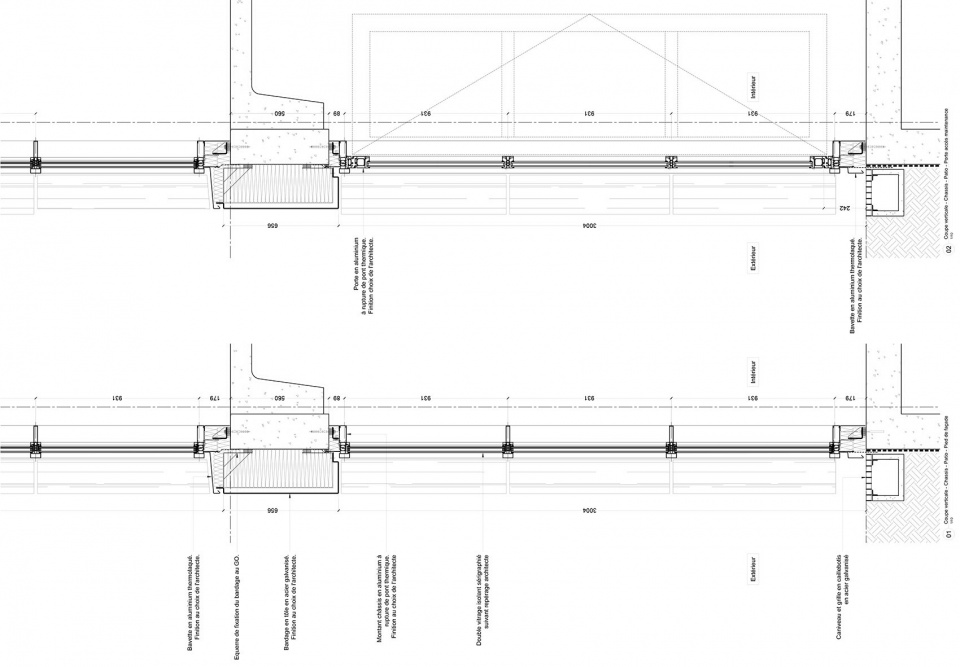
这种材料同时承载水平与垂直方向的网格,与原项目的网格逻辑相呼应。原有混凝土结构以米为尺度,而这一新的表皮则以厘米为尺度。作为一种可以无限复制的工业材料,它与建筑的建造逻辑和概念逻辑高度契合。此外,这种材料能够过滤光线并保持视线通透,同时在使用与安装上具有极高的灵活性:立面覆层、隐私屏风、遮阳构件、栏杆、通风格栅。我们还提出将混凝土结构之间原有的幕墙系统替换为双层系统:一层为全玻璃幕墙(再现原立面彩色图案),另一层为前置的钢格栅表皮。
It is a material that carries the grid, both horizontal and vertical, and is in line with the grid logic of the original project. While existing concrete structures are on a meter scale, this one is on a centimeter scale. It is an industrial material that can be duplicated ad infinitum, so it fits perfectly into the constructive and conceptual logic of the building. It is also a material that filters light and lets the view through. It offers great versatility of use and installation: facade cladding, privacy screens, sunbreakers, railings, ventilation grids…
▼外立面,exterior facade
这一系统能够提供更加均匀、充足的自然采光,同时保留立面丰富的色彩图案与构图,并提高空间布置的灵活性。借助这一材料,我们得以在实现新型保温立面的同时延续原项目的精神:通过挪用一种普通工业材料创造独特的美学表达。因此,这不仅是一次简单的外保温更新,而是一种兼具治疗性与美学意义的介入。
We are also proposing that the existing curtain walls between the concrete structures be replaced by a double-layer system consisting of a fully glazed curtain wall (which will reproduce the colored patterns of the original facades) and a steel grating skin in front. This arrangement provides greater and more uniform natural light, while retaining the colorful graphic play of the facades and a flexibility of layout. Thanks to this material, we are able to offer a new insulating facade, while retaining the spirit of the initial project: diverting a common industrial product to achieve a particular aesthetic; rather than simply installing an External Thermal Insulation, we are proposing a Therapeutic and Aesthetic Intervention.
▼庭院,courtyard
策略 – 使用与功能的再组织Strategies – Revisited uses and functions
入口大厅|The entrance hall
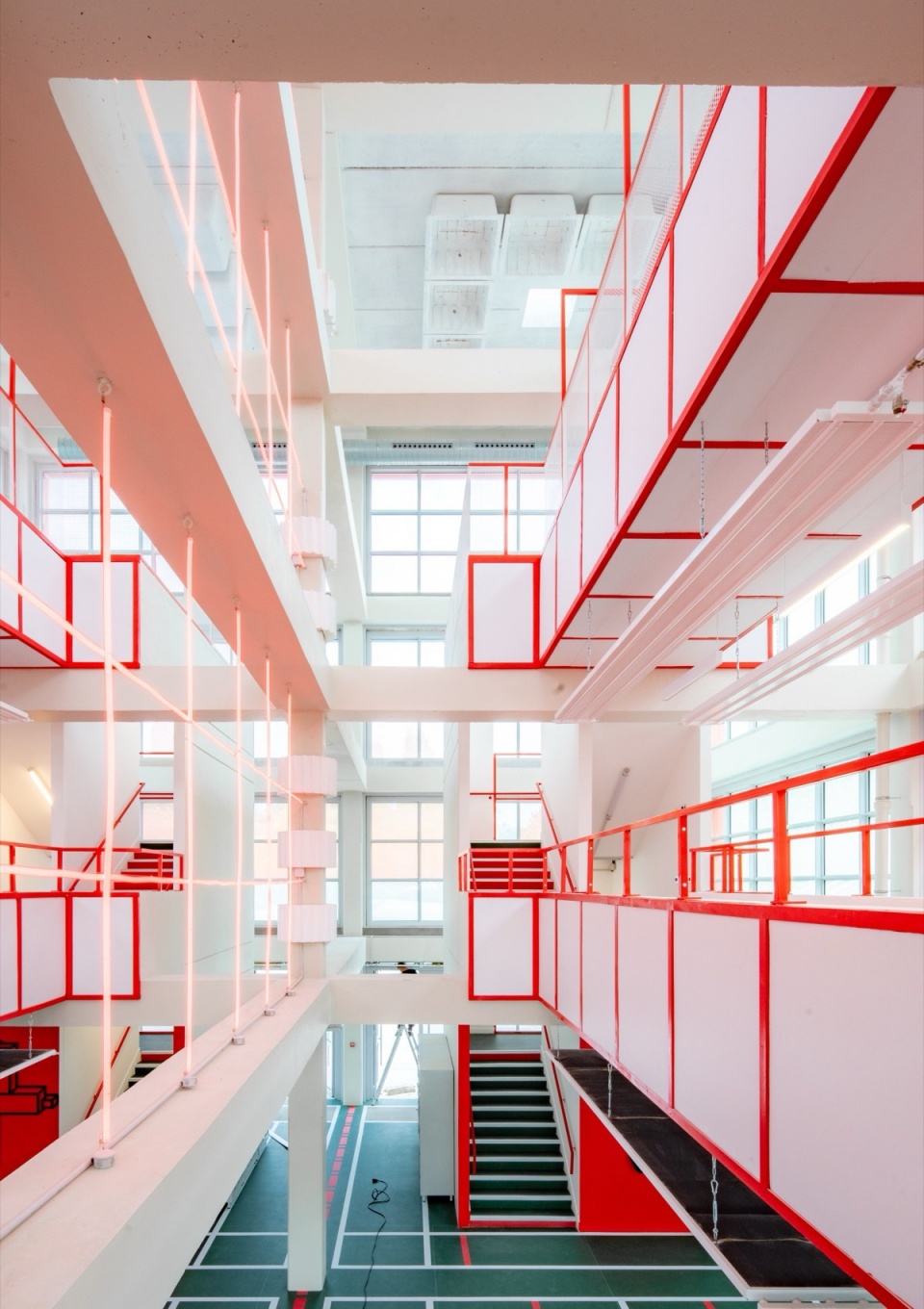
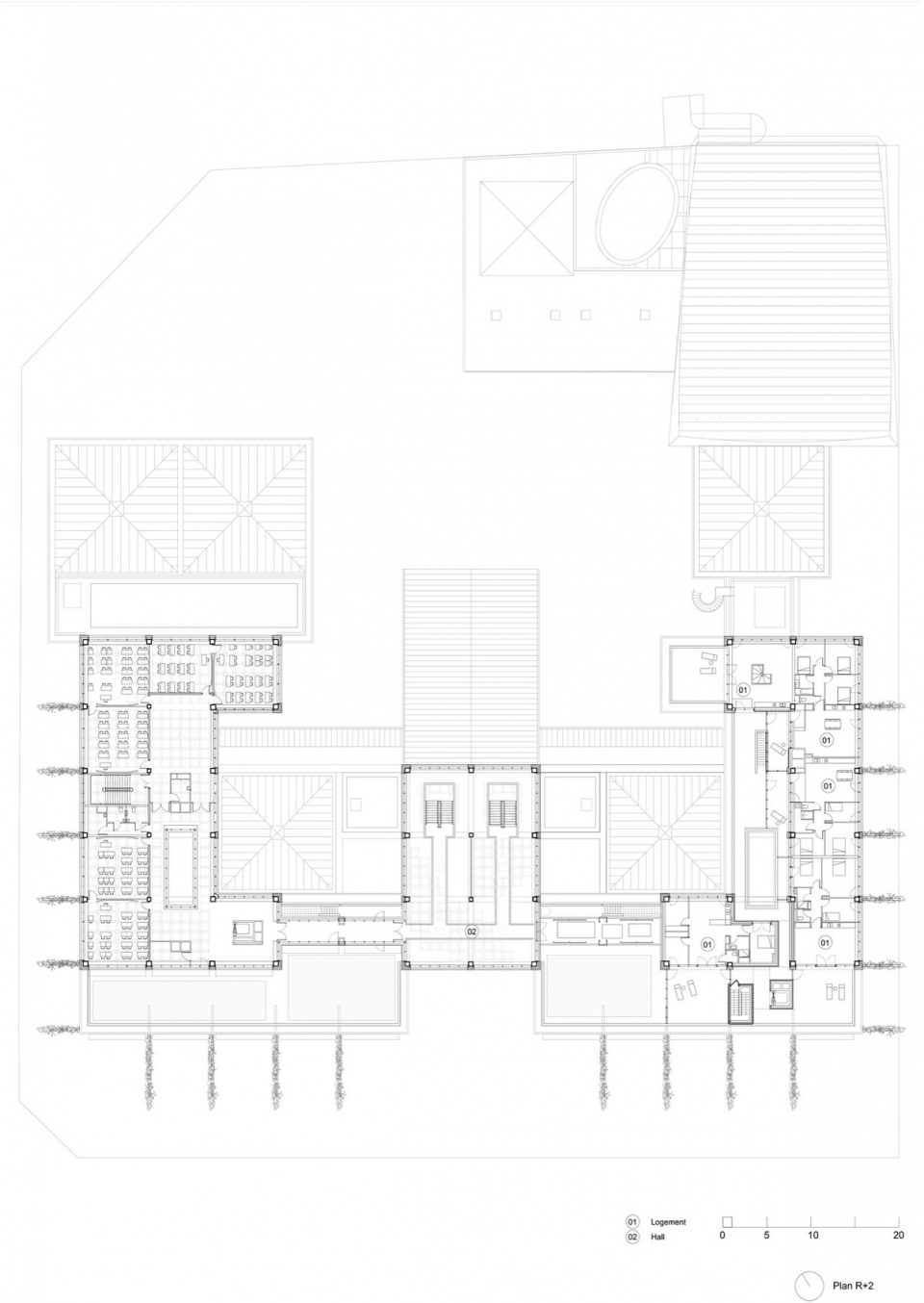
改造重新激活了大厅两侧原有的庭院,使首层向外开放,并为自习室(东南金字塔)和图书馆(西北金字塔)引入更多自然光。同时,卫生间围绕大厅对称布置:右侧为女生区,左侧为男生区。校长办公室及相关功能空间被移至远离大厅喧闹的位置,同时仍可俯瞰整个校园(大厅、庭院、餐厅等)。所有连桥被重新启用,并延伸至三层,通过新建的通道连接整个西北翼(教室与过渡课程区);东南翼的教职工宿舍也通过门禁系统获得相同的连通方式。这些连桥在一、二层设置了加高栏杆以确保安全。供暖与声学系统的整合也延续了原设计精神。
The rehabilitation reactivates the original patios on either side of the hall, opening up the ground floor to the outside, while providing additional natural light for the study room (south-east pyramid) and the school library (northwest pyramid). Similarly, the toilet blocks are arranged symmetrically around the hall, with girls on the right and boys on the left. The school director’s offices and related programs have been moved to a position a little further away from the hustle and bustle of the main hall, while maintaining a view of the whole college (hall, courtyard, school restaurant, etc.). All footbridges have been reactivated up to the third floor, providing access via a newly-created passageway to the entire north-west wing (classrooms and bridging classes); the same applies to the staff accommodation in the southeast wing, via an access control system. These walkways are secured by over-height railings on the first and second floors. Heating and acoustics are integrated in the spirit of the original design.
▼入口大厅,the entrance hall
学校餐厅|The school restaurant
虽然原有餐厅功能良好,但其在建筑中的位置影响了整体交通流线:它阻断了首层通往西北翼的通道,同时其技术与后勤空间占据了建筑的主要立面。因此,改造将整个餐厅迁至西北翼尽端两间空置的工作坊中,面向庭院,以一种相对独立的“卫星式”布局存在,环境更加安静并结合景观设计。新的布局使建筑内部流线更加顺畅:在所有楼层形成大厅楼梯与西北翼楼梯之间的循环交通。餐厅厨房设于一个金字塔体量中,用餐区设于另一个金字塔体量中。厨房通过George Suant街一侧更加隐蔽的卸货区进行补给。为满足餐厅需求,连接三层的楼梯在结构网格内移动了一个跨距。
Although the school restaurant served its purpose well, its position in the building was problematic in terms of the overall circulation pattern within the college, as it cut off all access to the north-west wing on the ground floor of the building, and meant that all its technical and support facilities were located on the main facade of the building. As a result, the refurbishment transfers the whole of the school restaurant to the two unoccupied workshops at the end of the north-west wing, overlooking the courtyard, in a satellite position in relation to the school, with a calm atmosphere and landscaped areas. This layout allows for a more fluid flow within the building, with a loop between the hall staircase and the north-west wing staircase at all levels. The new kitchens occupy one pyramid and the dining room the second. The kitchens are supplied by a much more discreet delivery zone from rue George Suant. To meet the needs of the school restaurant, the staircase linking the three levels is moved by one frame.
▼校园内流线,circulation of the campus
餐厅迁移后释放出的西南角空间将用于设置音乐教室,并在金字塔下方布置图书馆。建筑与George Suant街之间的绿化带将改造为教育花园,与其中一间教室直接相连。区域供热、高低压配电和供水等技术机房设置在西北立面教室与餐厅之间,既可从外部进入,又更加隐蔽。
By freeing up the south-western corner of the school, the school restaurant will enable the music room to be set up on the ground floor, and the school library to be set up under the pyramid. An educational garden will be laid out in the landscaped strip between the building and rue George Suant, in direct connection with one of the classrooms.The technical rooms, including the district heating, High Voltage/Low Voltage and water rooms, are located on the north-west façade between the classrooms and the school restaurant, accessible from the outside but at the same time more discreet.
▼改造后的庭院,courtyard after renovation
交通空间|Circulation Spaces
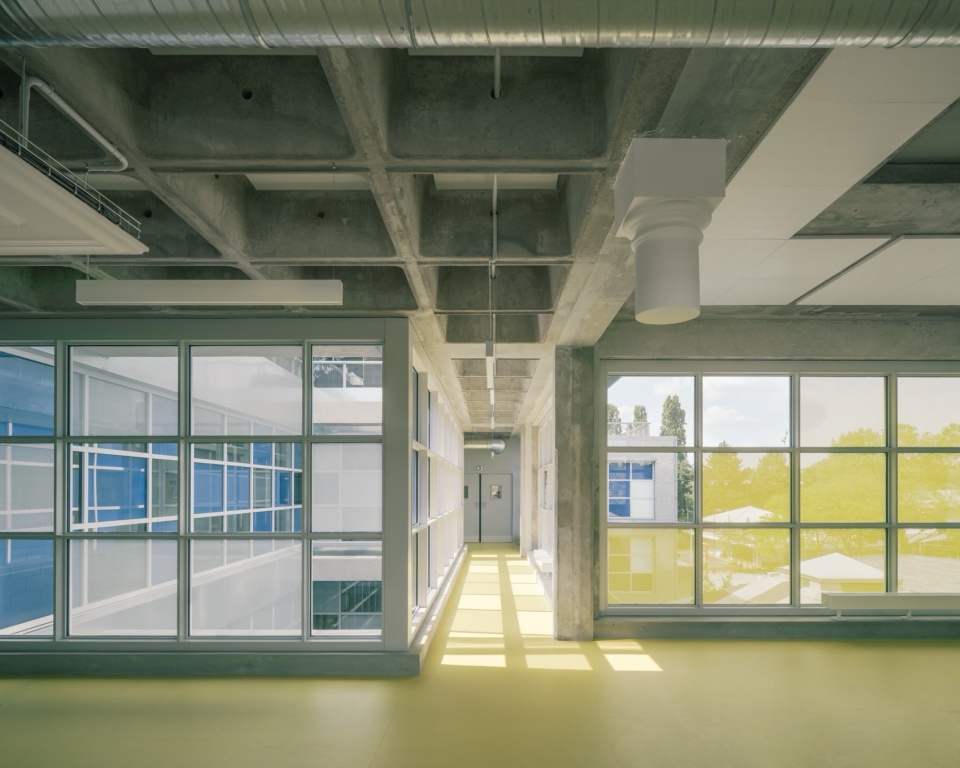
改造对交通空间进行了全面更新:拆除东北庭院一侧的教室,改为更宽敞并拥有自然采光的走廊,使其与连桥系统自然衔接,同时也为教室提供更大的面积以满足当代教学标准。更宽的走廊有助于学生在课间更顺畅地流动。原本因多次改造而被吊顶遮蔽的混凝土格状天花被重新显露出来,以其最朴素的形式回归空间。原有装饰元素与艺术介入的精神被尽可能保留。当代技术系统(管线等)则通过新的装饰方式融入其中:线脚与通风管道在格状天花下方穿行,形成新的构图,呼应最初设计的语言。技术使不同年代叠加,但建筑精神保持一致。
The refurbishment involves a complete overhaul, with the removal of the classrooms on the north-east courtyard facade, in favor of wider, naturally-lit corridors that follow on naturally from the passageways, and larger teaching rooms adapted to today’s standards. The extra-width of the corridors ensures a smoother flow of students between classes. The ceilings – more precisely, the concrete coffered ceilings in their most elementary aesthetics, which had partially disappeared with the multiple alterations that distorted the initial project, camouflaged by false technical ceilings – are revealed. The spirit of the original decorative elements and artistic interventions is preserved as much as possible. The intrusion of contemporary technology (fluids) is the subject of an adaptation of this decoration. Cornices and ventilation ducts cross below the coffered ceiling, forming a new composition inspired by the codes originally imagined. Through the use of technology, the eras are superimposed, but the spirit remains.
▼走廊,hallway
覆盖庭院|The covered courtyard
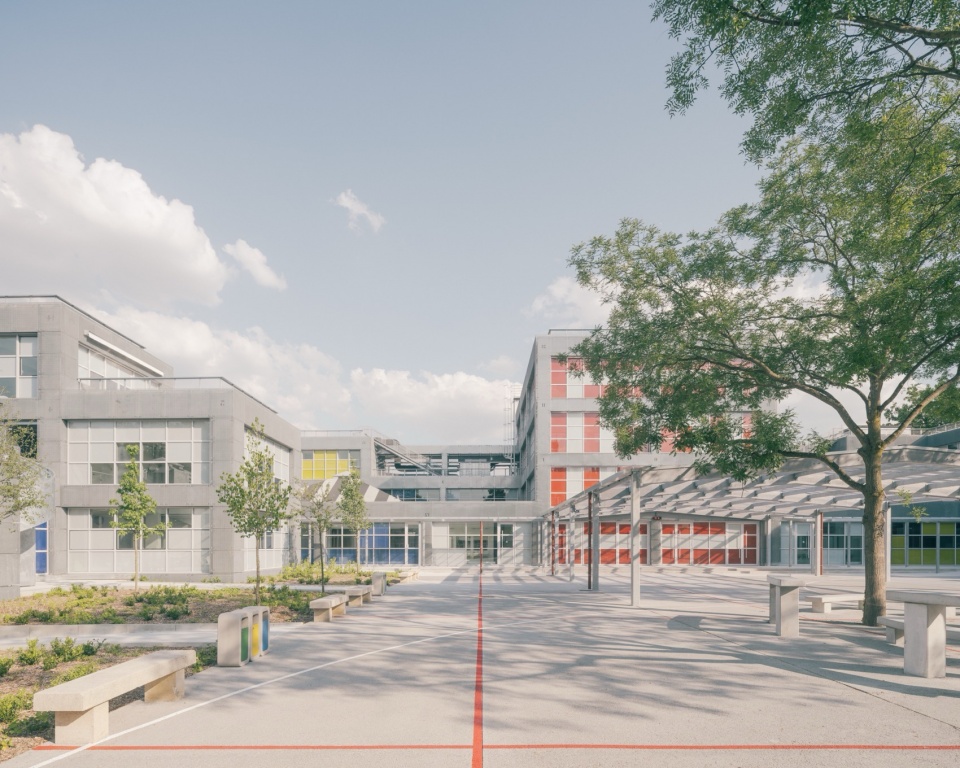
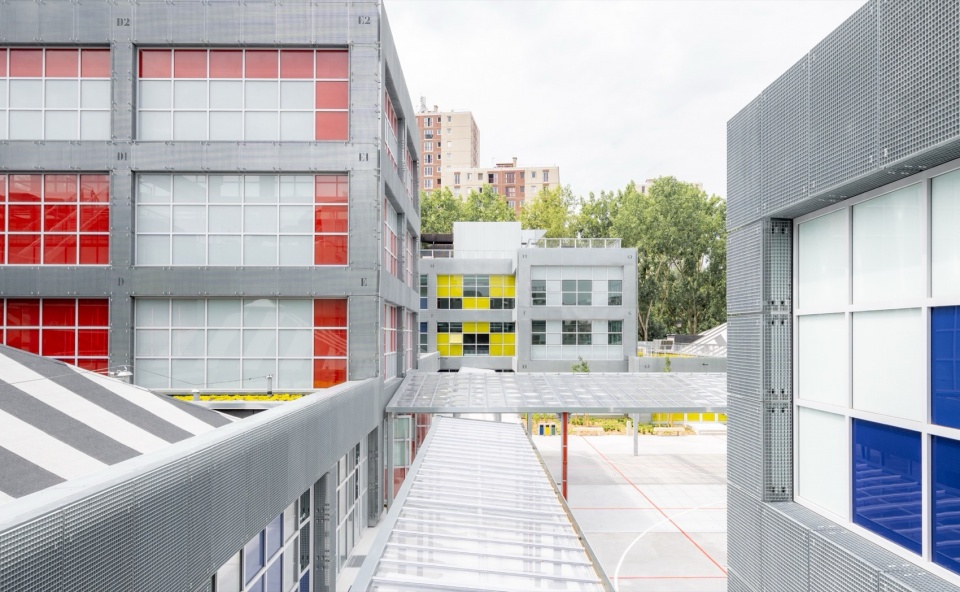
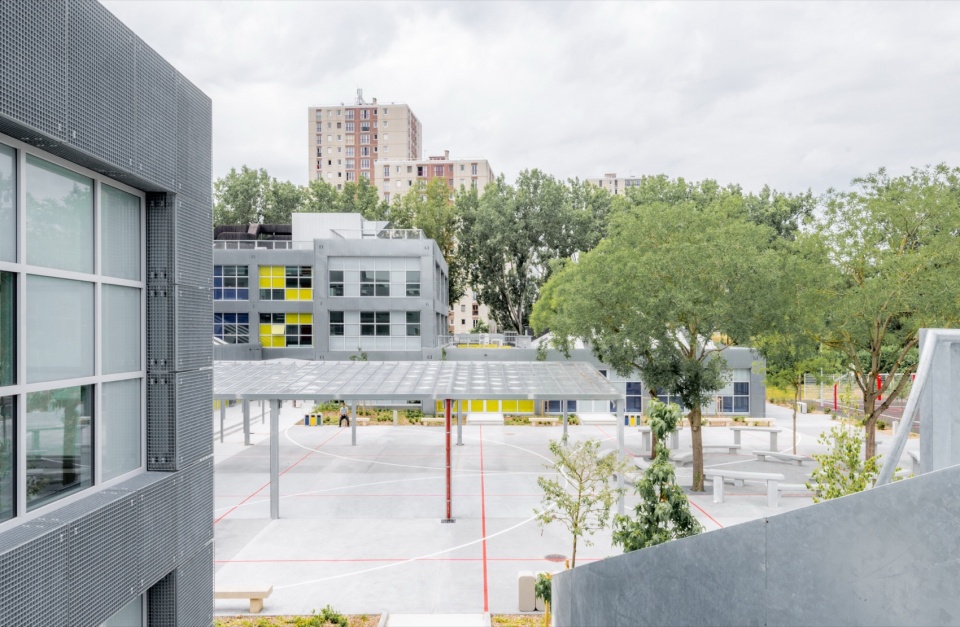
原有庭院屋顶结构在整体构图中形成问题,尤其破坏了以入口大厅为中心建立的轴线对称秩序。为此,改造在东北立面新增一条外廊,与建筑整体构图建立联系。这条外廊连接学校餐厅、大厅以及校长办公室与自习室,并提供宽敞的遮蔽空间。新的布局形成一个更清晰、功能更明确的庭院空间,并通过更强的植物景观组织整体环境。相比原有复杂的流线,新布局使校园内外交通更加顺畅与清晰。
The original structure covering the courtyard posed a challenge for the overall composition of the middle school, and in particular for the axial symmetry established around the volume of the entrance hall. In fact, it was off-centre and disrupted the original order. As a result, a gallery was created on the north-east façade, in a relationship with the composition of the building. This gallery connects the two wings of the school from the outside: school restaurant, hall and director’s office/study room, while providing a generous sheltered area. The layout also provides a large courtyard in line with the original spirit, with a clear, functional design that enhances the building. A stronger plant presence accompanies this redevelopment as part of an overall composition. While the previous layout was complex to navigate, the new layout makes for a much smoother, clearer flow of traffic both inside and outside the school.
▼覆盖庭院,the covered courtyard
教室|The classrooms
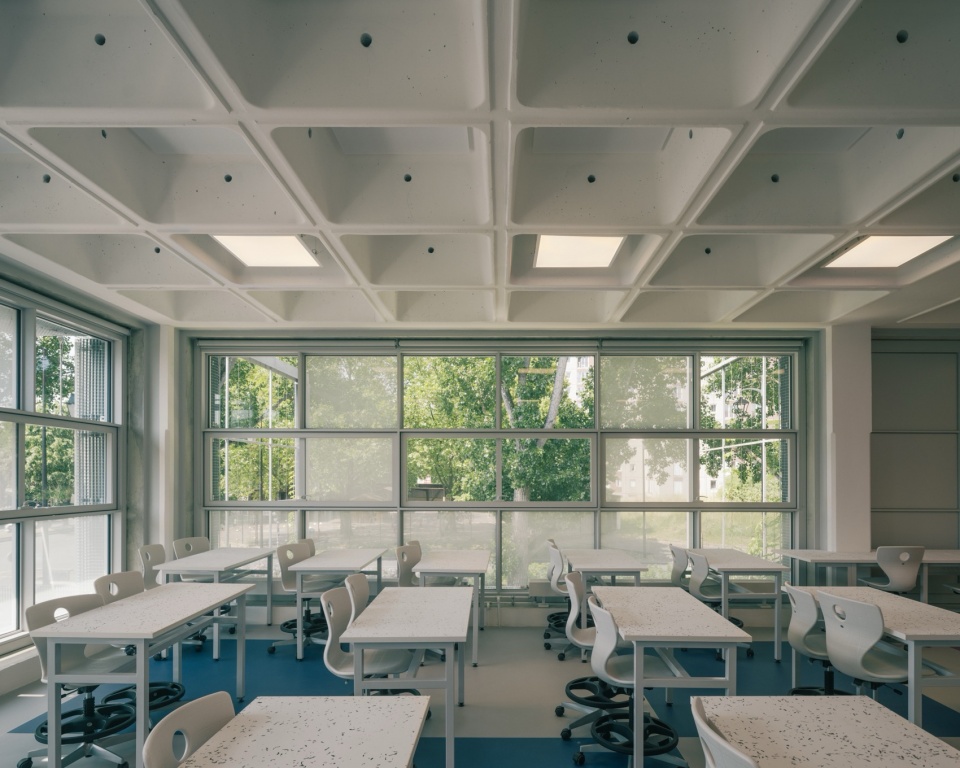
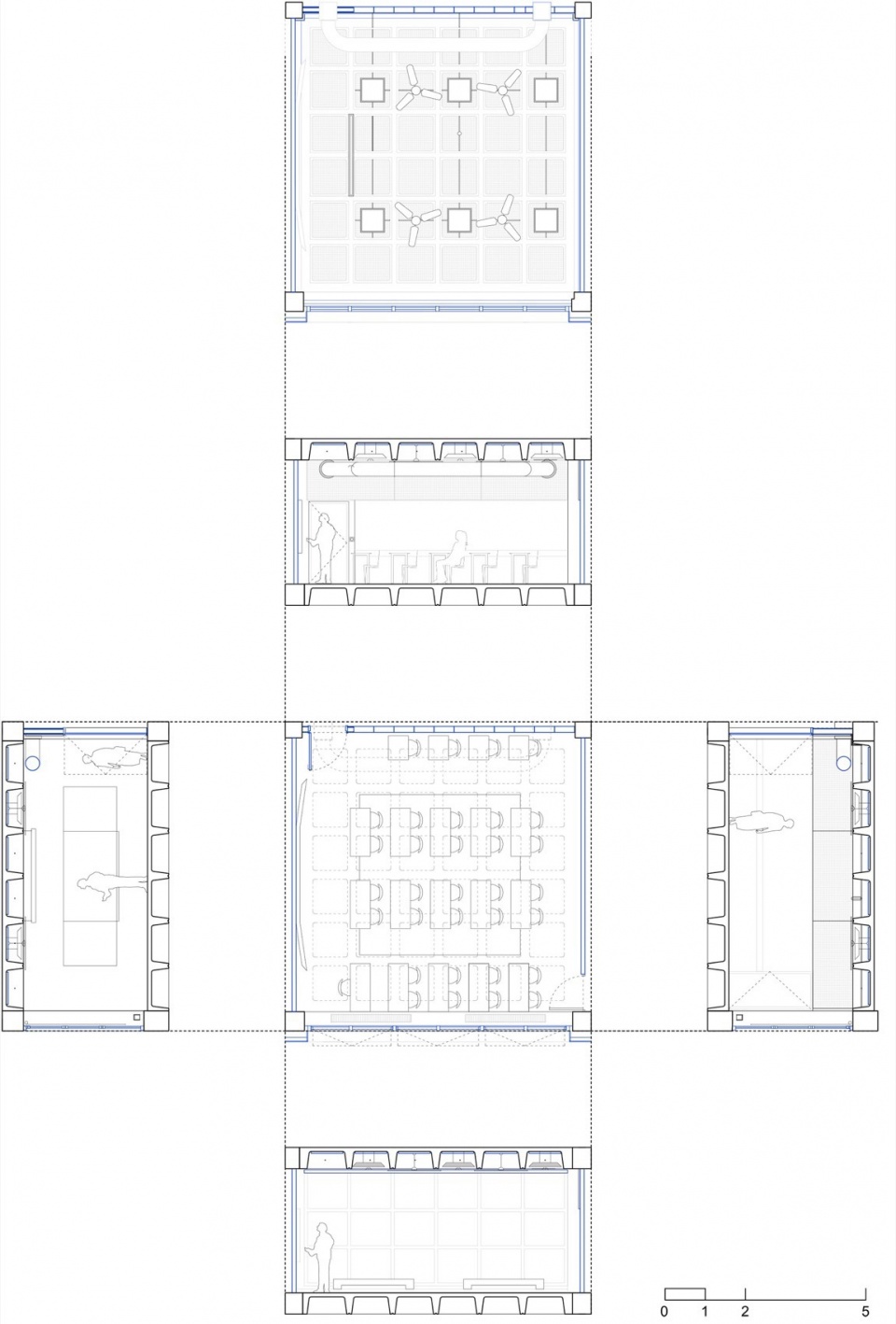
在对现状进行分析后,我们提出一种既延续建筑精神又符合当代需求的更新策略。教室从首层到二层按照既有结构网格布置。混凝土格状天花被重新显露,因为它在空间、声学和技术方面都具有巨大潜力。其高度和尺度使教室空间高度接近3.5米,为学习与专注创造一种重要的空间深度。天花的凹格结构结合底部吸声装置,可满足声学舒适需求。照明系统嵌入格网结构中,通过原有的结构通道进行供电与固定。
Following an analysis of the existing building, we propose a redevelopment that is both anchored in the spirit of the building but updated to today’s needs, and based on a forward-looking and creative reappraisal. The classrooms, arranged from ground floor to second floor, follow the existing grid of structures and facades. We are proposing that the concrete coffered ceilings be exposed again, as they offer real spatial, acoustic and technical potential. In fact, the volume and breadth of the coffered ceilings allow the classrooms to be expanded to a height of almost 3.5m, giving the spaces a kind of depth, which we feel is extremely important in places devoted to concentration and learning. Their relief, coupled with an acoustic absorber at the bottom of them, meets the acoustic requirements and comfort of these spaces. Similarly, the lighting in the rooms is integrated into the grid of the caissons, and is supplied and fixed via a network passing through the existing passages from caisson to caisson.
▼入口大厅,the entrance hall
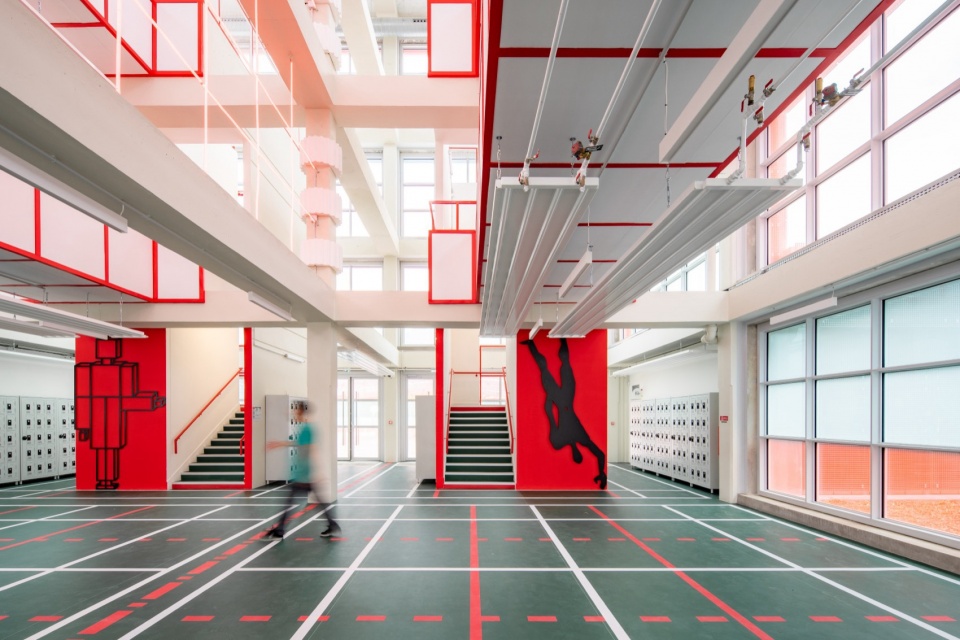
所有技术与声学装置都被整合在格状结构的厚度之中,与建筑形成自然统一。恢复这一结构体系,也是重新阅读安妮·弗兰克中学建筑逻辑的重要一步。地面与天花采用相同的网格逻辑,并在水平面上呼应立面图案。墙体统一进行声学处理,并适用于展示与悬挂。双流通风系统整合在教室与走廊之间的墙体中:新风从入口处送入,从教室后部回风,从而避免管道穿越教室天花。走廊的处理原则与教室相同:裸露格状天花与声学装置整合其中;照明、电缆桥架以及双流通风管道则位于天花下方并被明确表达。电缆桥架将按照传统灰泥线脚的逻辑进行恢复或重建,仿佛悬浮于空间之中。
All the technical and acoustic devices are thus integrated into the thickness of the caissons in a way that is both obvious and inclusive of the architecture. Last but not least, bringing these caisson ceilings back into the picture is for us a return to an original and essential reading of the Anne Frank Middle School. The caissons are, in fact, part of the constitutive elements of the project, marking the generative grid in the ceiling. The floors are treated as slabs identical to the ceiling grid, and will echo the patterns of the vertical facades in the horizontal. All walls have been homogenized with acoustic treatment, and are suitable for displaying and hanging. Double-flow ventilation is integrated into the wall separating the classrooms from the corridors: supply at the entrance and return at the back of the classroom, with no ducts interrupting the classroom ceilings. The corridors are treated according to the same principles as the classrooms: exposed coffered ceilings, acoustic devices integrated into them; however, lighting, cable trays (HV/LV) and double-flux ducts are placed below the coffered ceilings and assumed as such. Cable trays will be either restored or rebuilt following the principle of classic stucco cornices and mouldings floating in the space.
▼教室,classroom
屋顶与金字塔|Roofs and pyramids
金字塔体量被完全重建(包括结构、保温和防水),采用带保温层的钢板系统,并延续原有的黑白条纹图案。室内天花则以微穿孔织物再现这一图案,并结合必要的吸声材料。悬挂照明通过几何图案回应建筑的网格结构。这些黑白条纹在室内外“正反呼应”,帮助识别学校餐厅、图书馆、自习室以及多功能厅等不同功能。屋顶也被重新利用与改造,以增强保温性能并容纳双流通风系统。所有新增元素都在尊重原有体系与精神的前提下进行整合。大部分平屋顶将覆盖轻型绿化,其设计延续建筑的结构框架。砾石屋顶同样通过不同种类或颜色的景天植物及不同质地的砾石标示轴线,从而在建筑尺度上形成新的图案。处理新风系统的空气处理机组被纳入专门设计的体量之中,这些体量被视为加入建筑语言体系的新型建筑元素。
The pyramids were completely rebuilt (structure, insulation and waterproofing) using a system of insulated steel trays with alternating black and white stripes, in line with the original spirit. These are reproduced on the interior ceiling in micro-perforated textile incorporating the necessary acoustic absorbers. Suspended lighting in the space plays on geometric patterns linked to the constituent grid of the project. These stripes, which can be found “heads or tails”, inside and out, help to identify the specific programs of the school restaurant, the school library, the study room and the multi-purpose room. The roofs have been reinvested and redeveloped to improve insulation and accommodate the double-flow ventilation systems. The integration of all these elements respects the system and spirit of the original project. A system of light vegetation is planned to cover a large proportion of the flat roofs, with a design that continues the constructive framework of the building. The same applies to the gravel roofs: the axes are marked either by a sedum of a different nature and color, or by gravel of different aspects, creating a design on the scale of the building. The air handling units, handling the new double-flow ventilation, are included in volumes designed and conceived as new architectural typologies added to the language of the project.
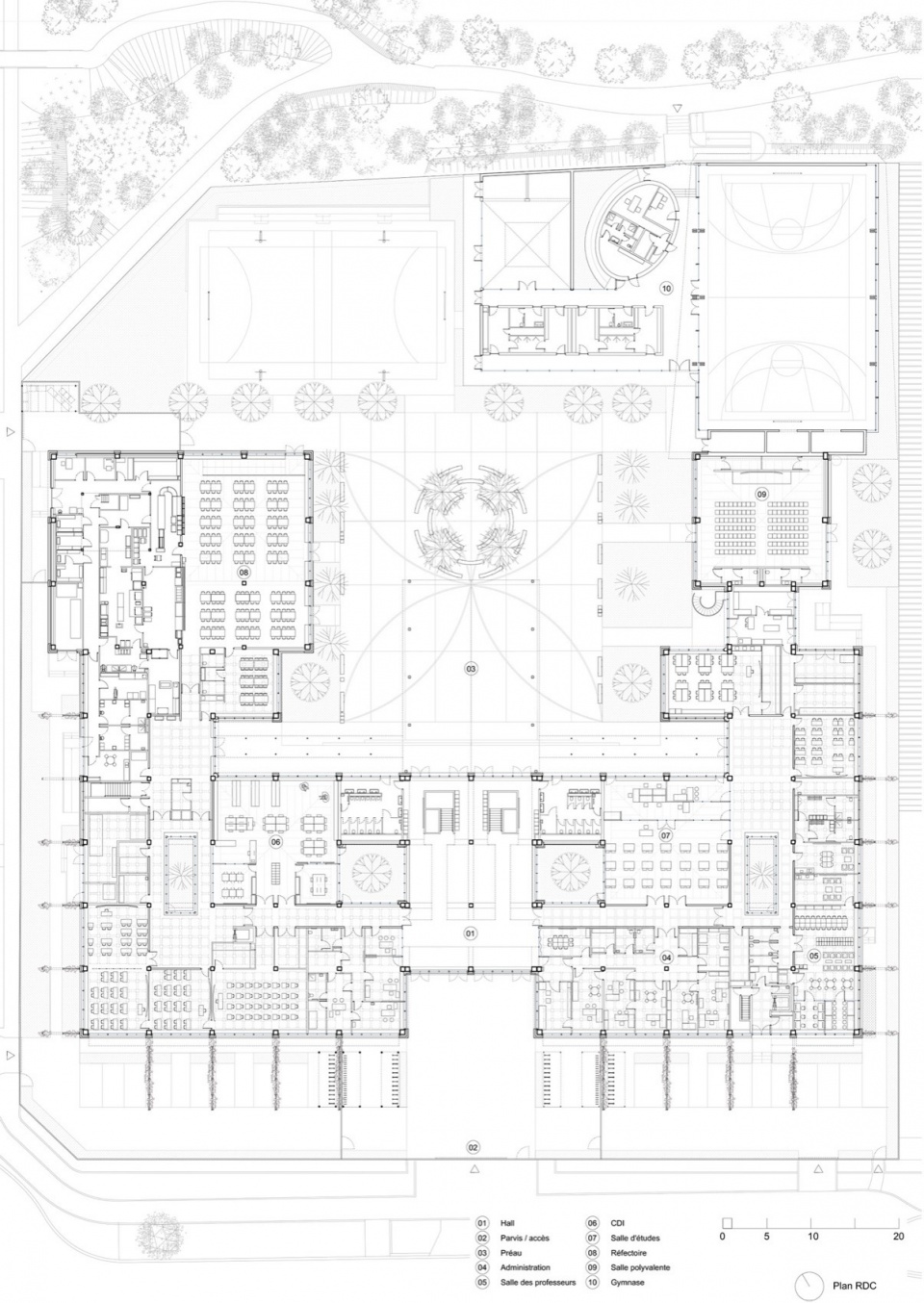
▼底层平面图,ground floor plan
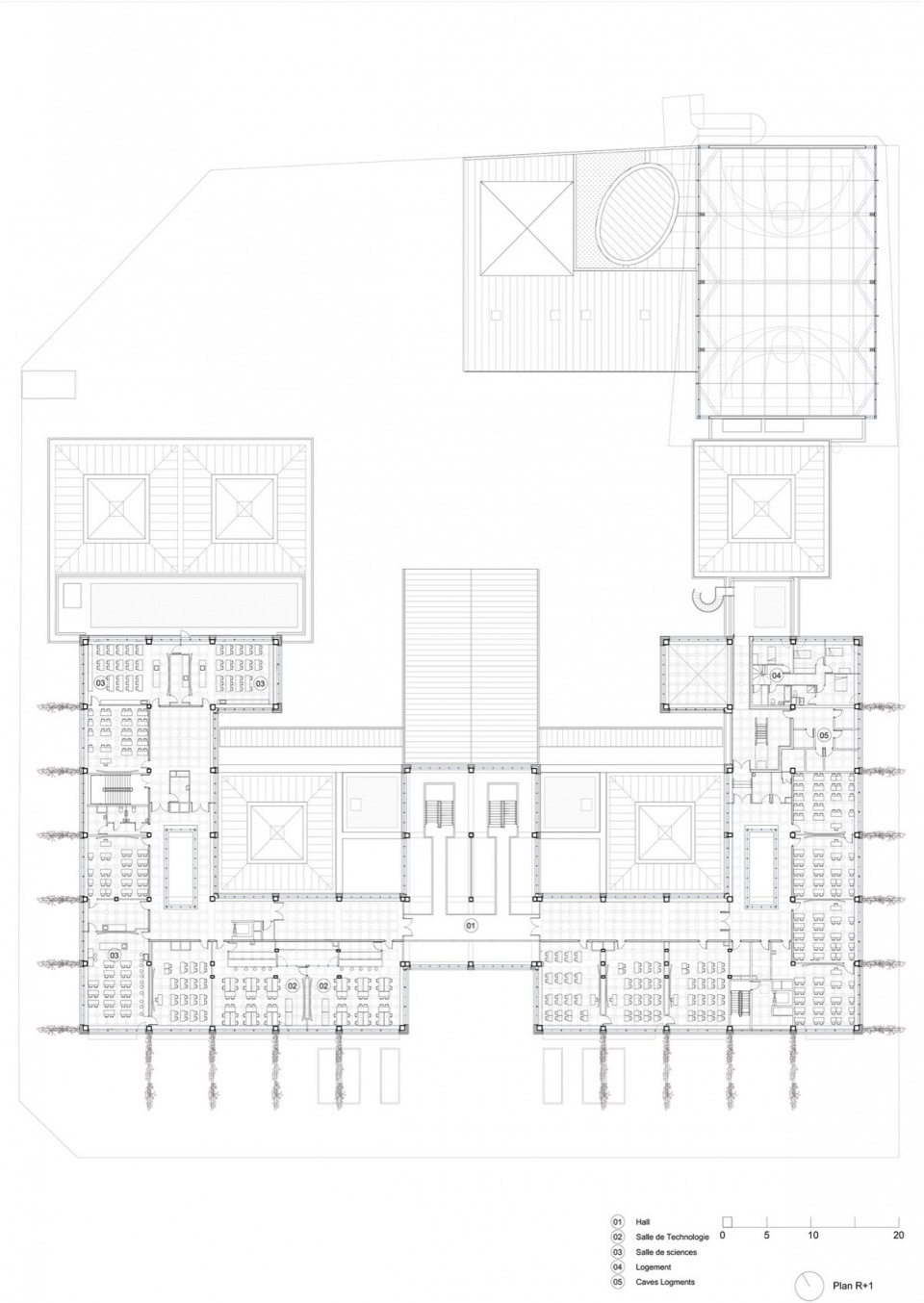
▼二层平面图,first floor plan
▼三层平面图,second floor plan
▼教室图纸,drawings of the classroom
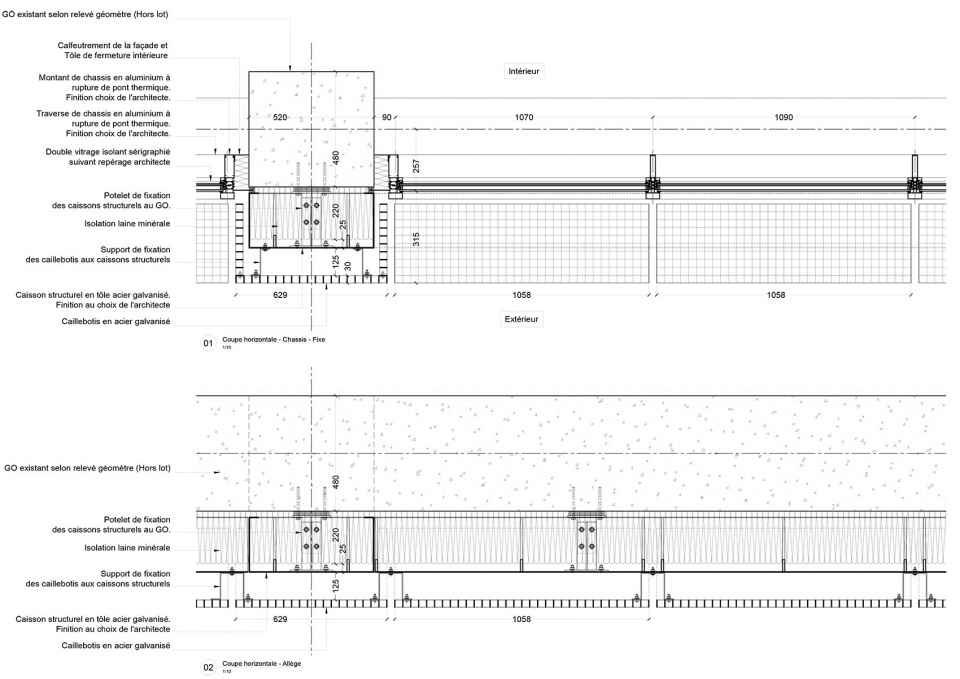
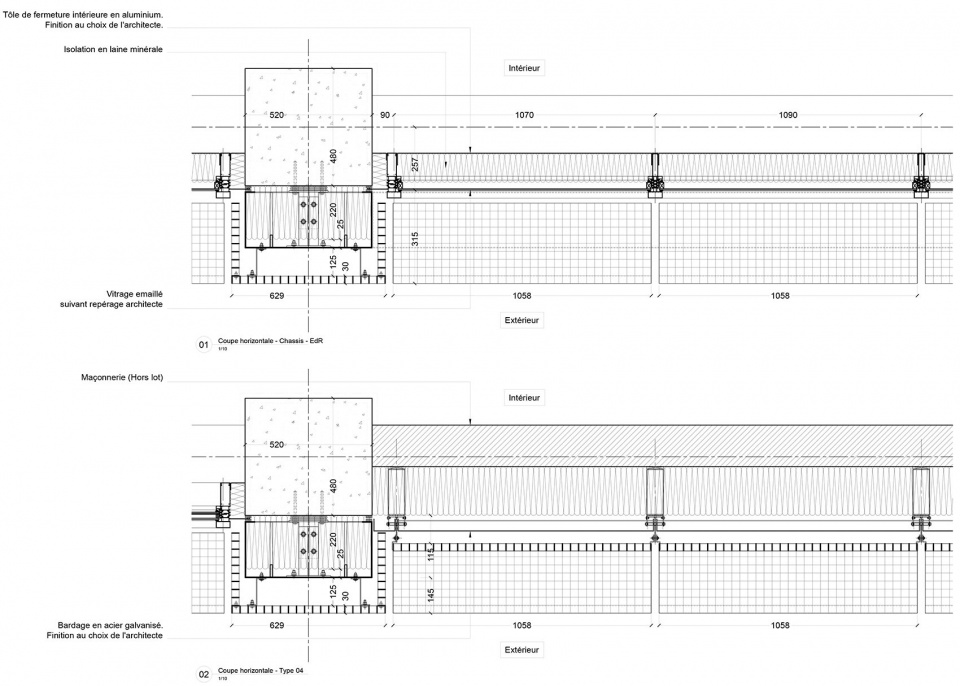
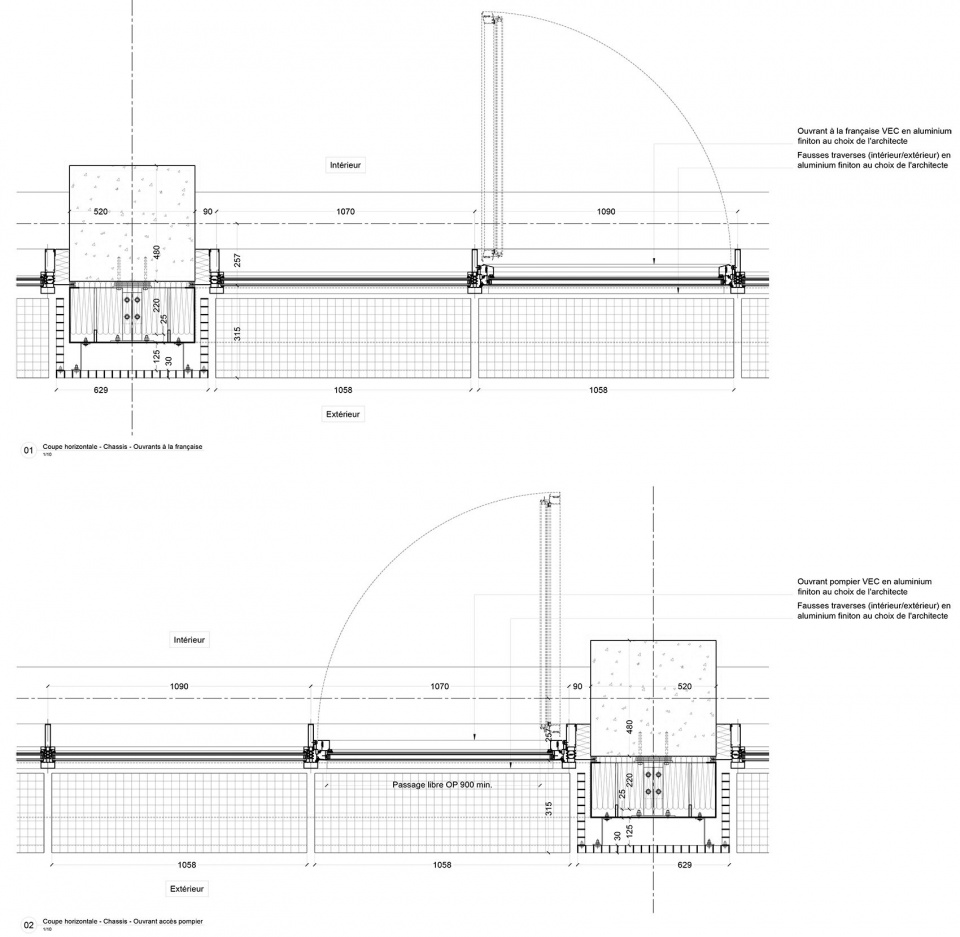
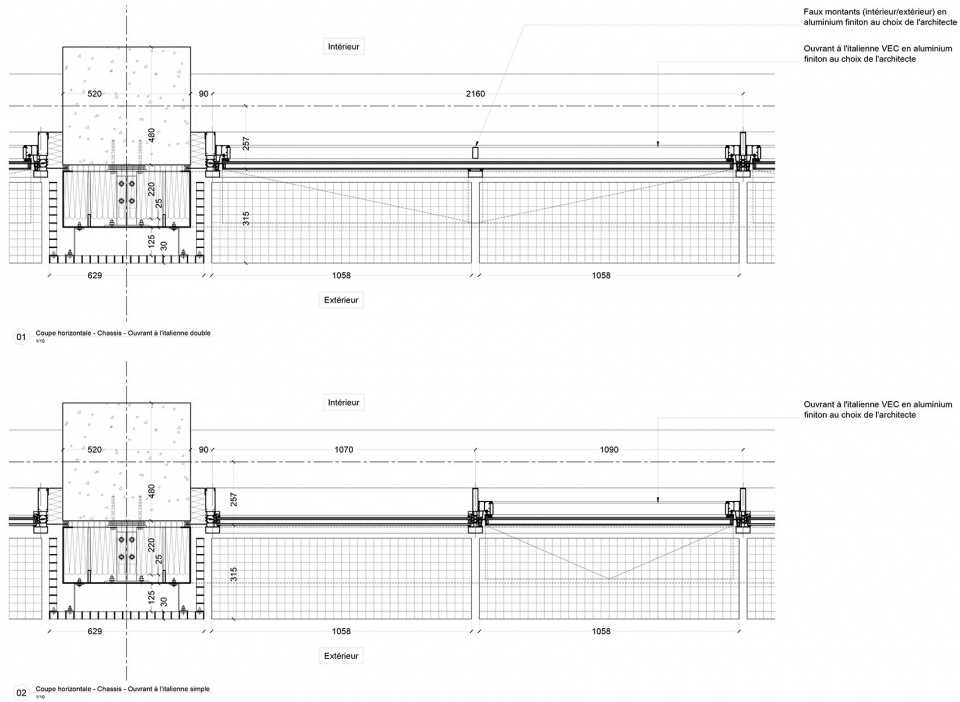
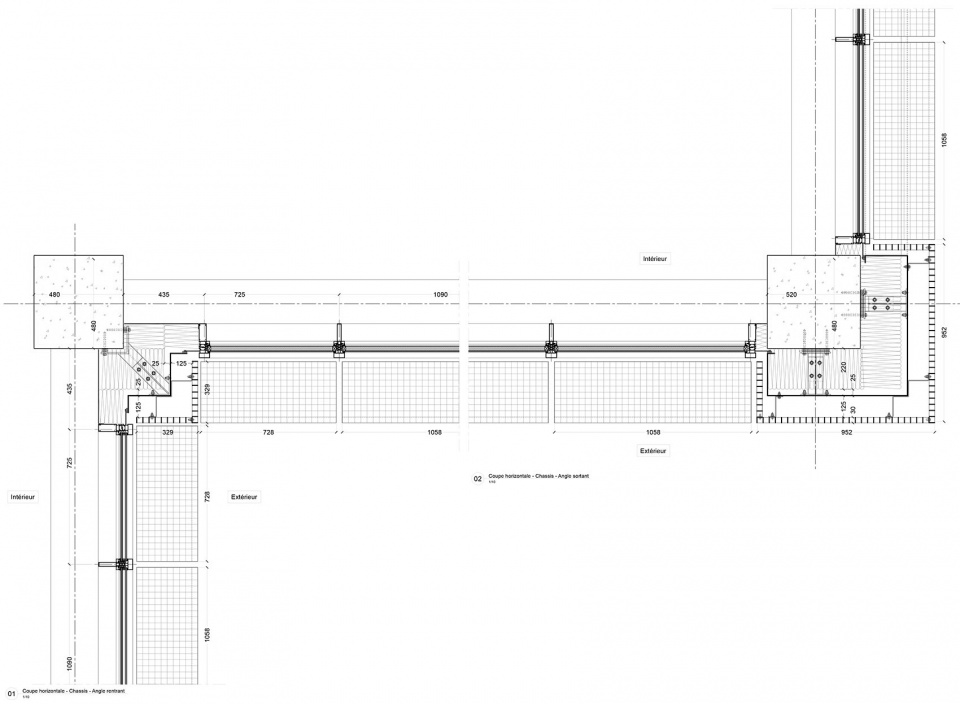
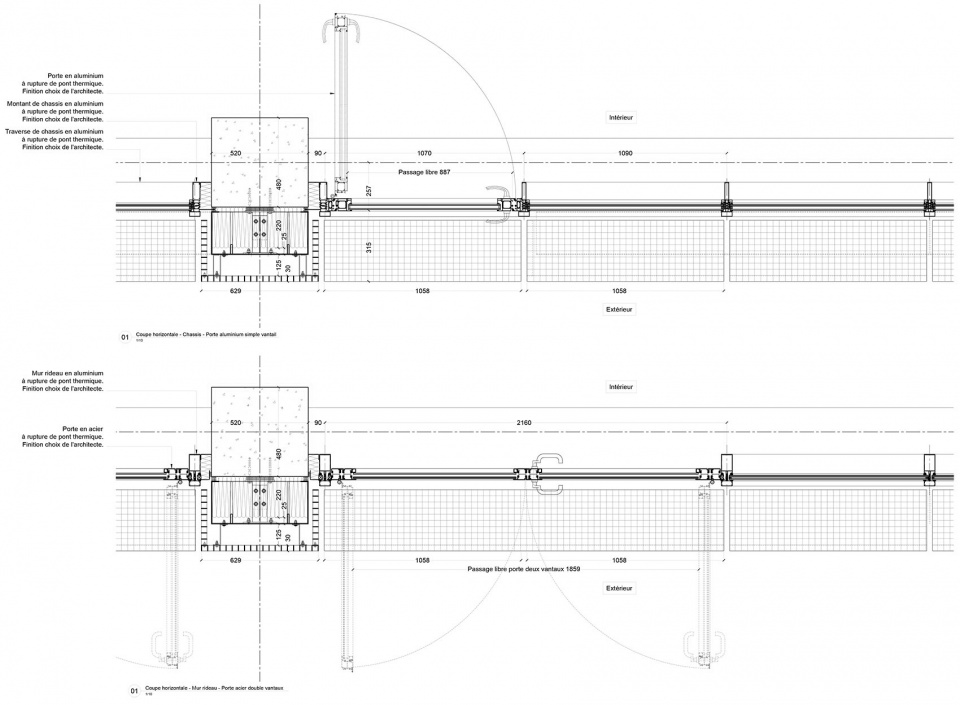
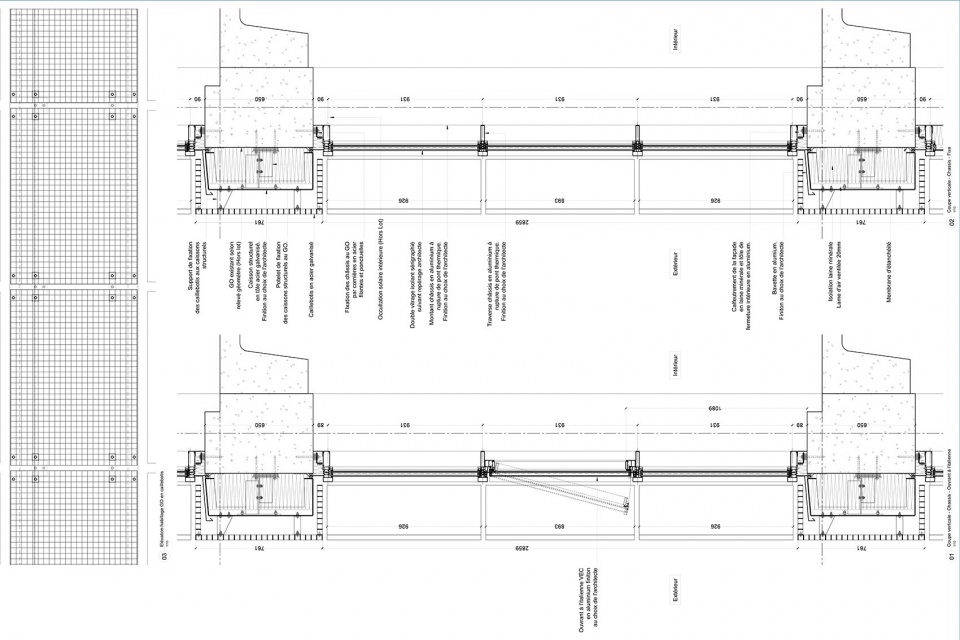
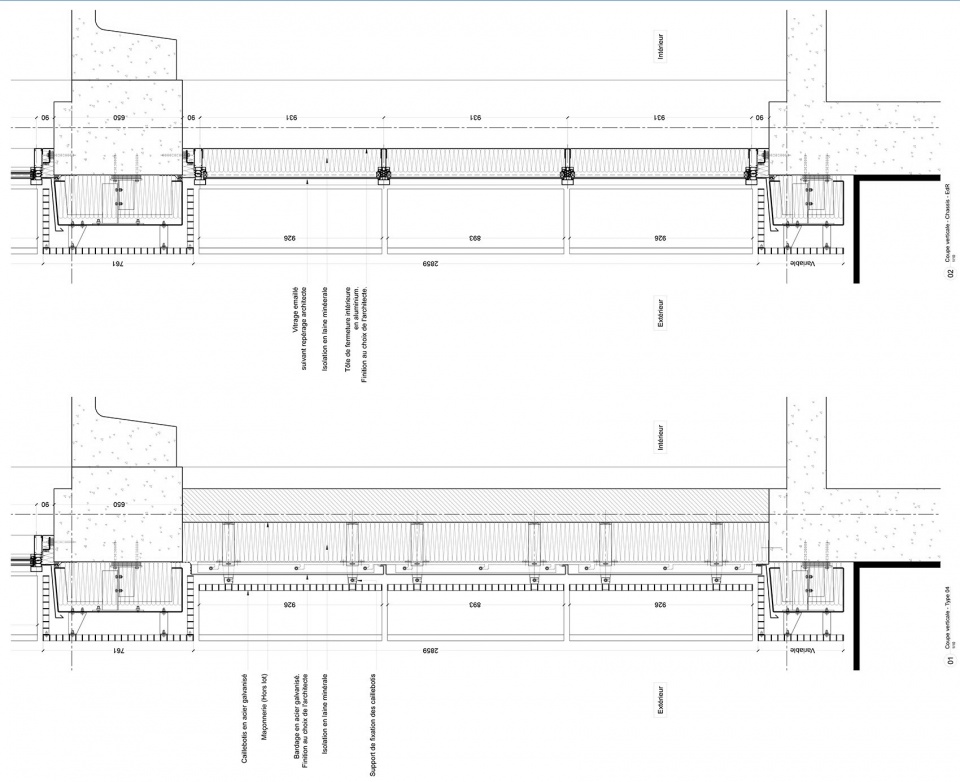
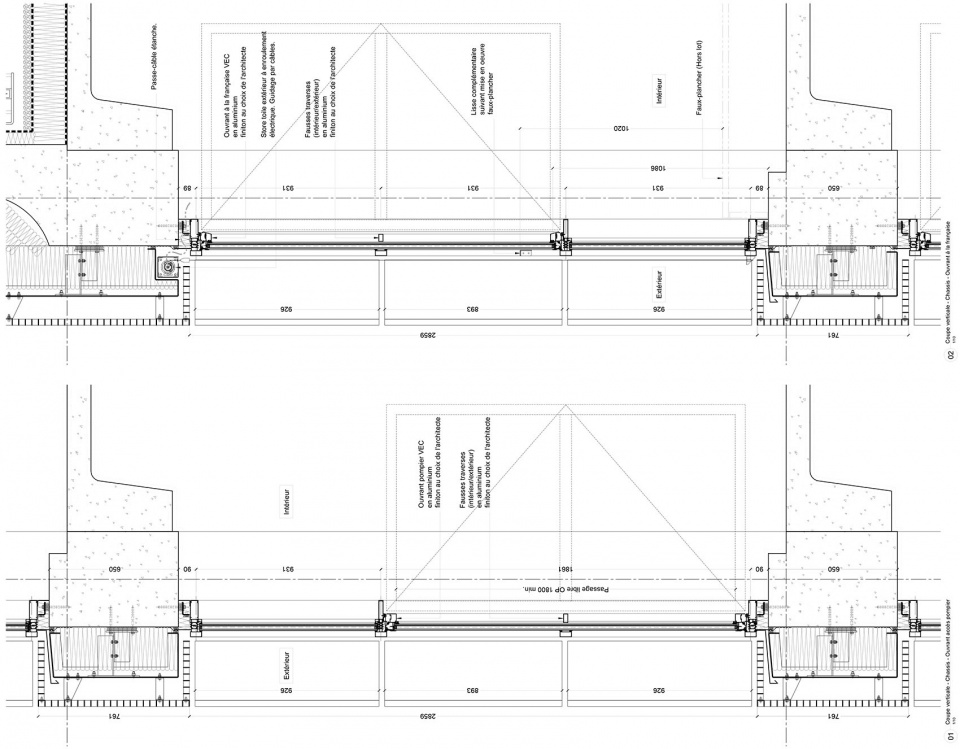
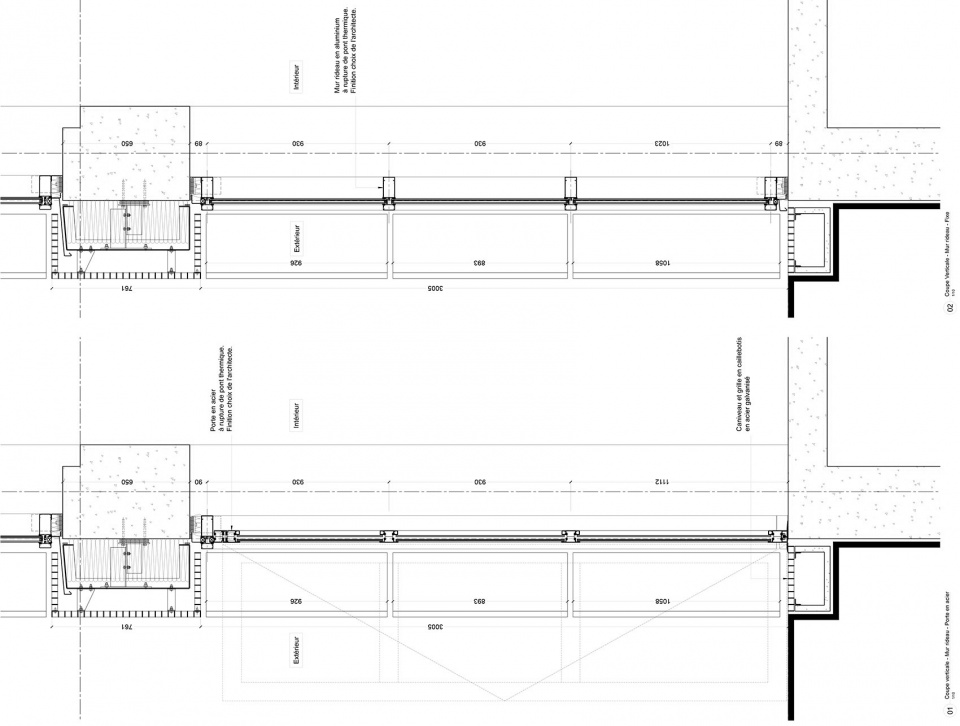
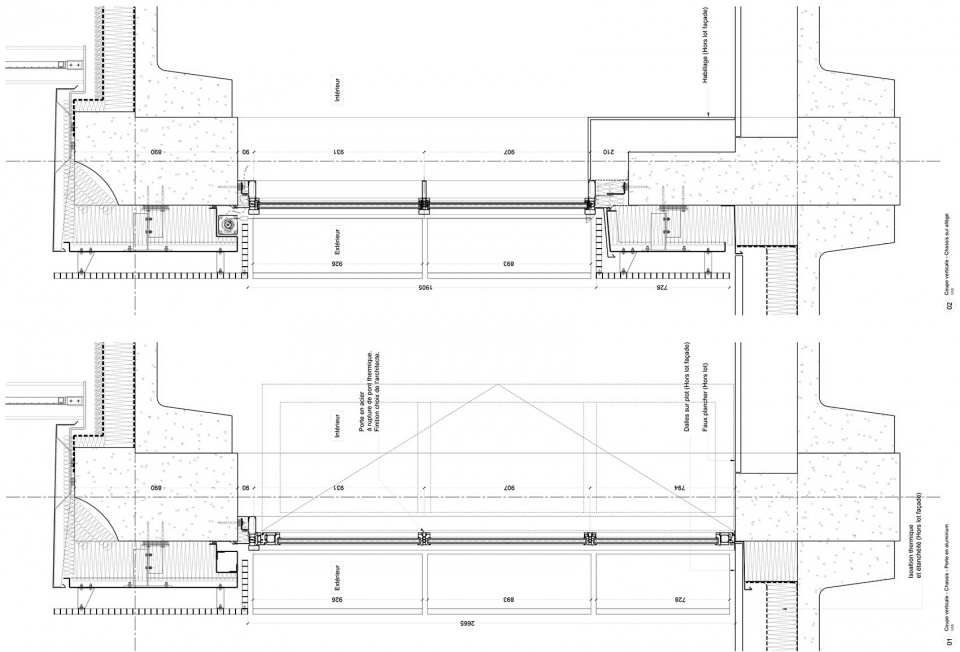
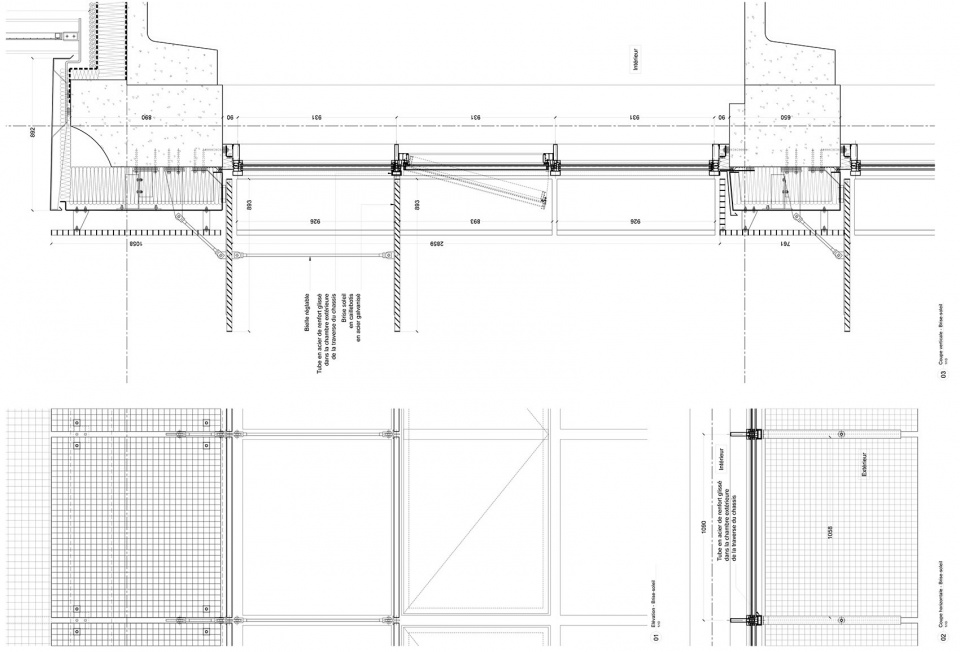
▼细部,details
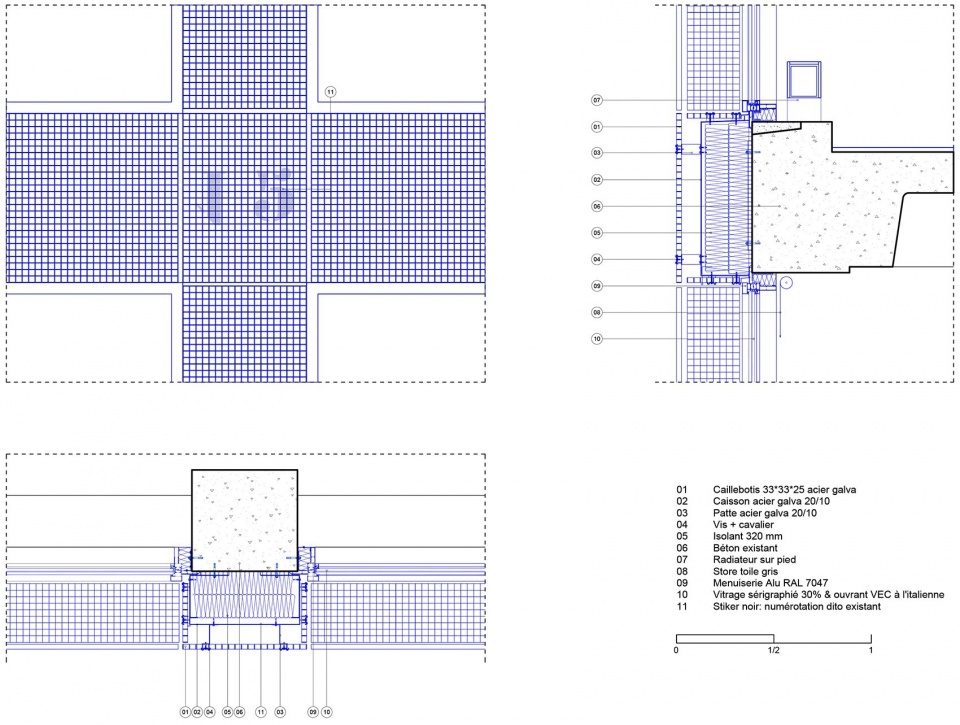
▼剖面图,section
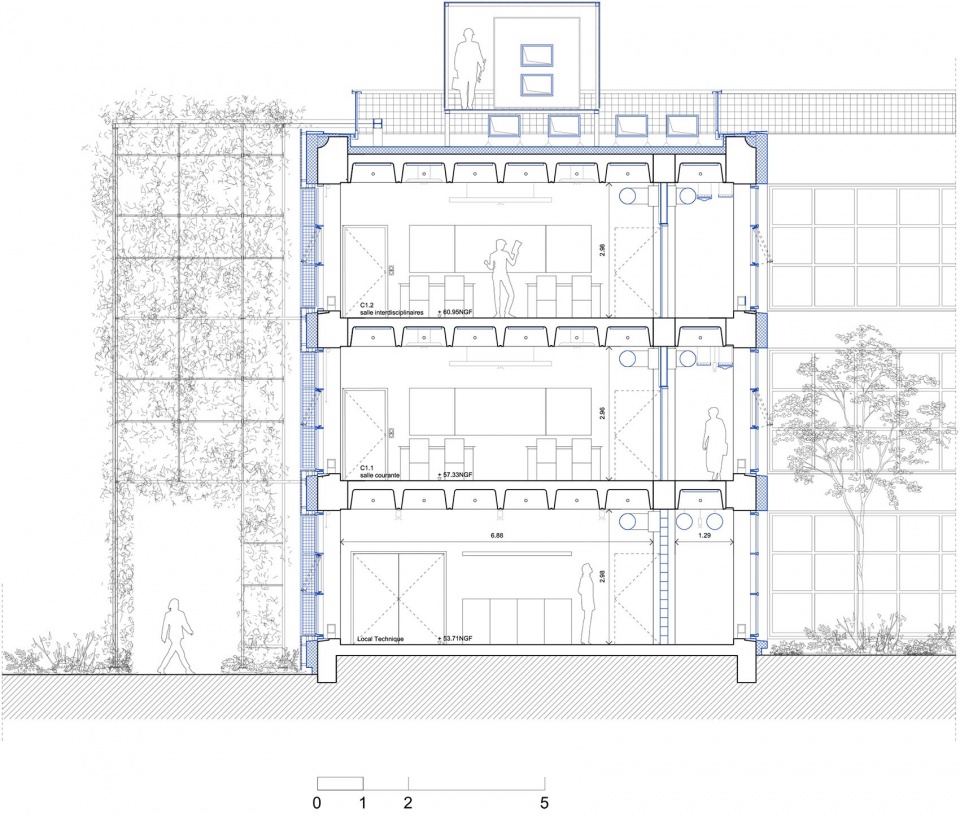
▼细部详图,detailed constriction drawings
Project Name: Anne Frank Middle School Rehabilitation
Location: Antony, France
Timeline: 2019–2023 (Delivered in 2023)
Client: Conseil Départemental des Hauts de Seine
Lead Architect: MARS Architectes
Original Designer: Jean Nouvel (one of his early iconic works, built in 1980)
Surface area7572 m²
Cost22 M€
Environmental goal38% energy consumption decrease
Façade Engineer: RFR
Structure Engineer: Batiserf
Fluids/Electricity Engineer: BET Choulet
Cooking Equipment Engineer: OMNIS
Economist: BMF
Signage: Travaux pratiques
Landscaper: Bassinet Turquin
General Contractor: Bouygues Batiments IDF
Façade Contractors: Jean Rossi (cladding); Kapeci (exterior joinery)
Maintenance: Engie, EDEIS
Photography: Charly Broyez, Nicolas Grosmond