Pointe住宅楼,悉尼 / Luigi Rosselli Architects
Pointe住宅楼位于悉尼铁路网络的一处地下车站与一条通往海港与东部海滩的繁忙干道之间,是一座九层公寓建筑。项目被构想为一种“混合型住宅”范式:在提供接近独立住宅尺度与舒适度的同时,又具备公寓生活的便利性,尤其适合有“缩小居住规模”(downsizing)需求的人群。
Set between an underground station on Sydney’s rail network, and a busy thoroughfare that connects the city to the harbourside suburbs and beaches to the east, Pointe Living is a nine-storey apartment development designed as a model of hybrid housing that provides comfortably appointed accommodation with the scale benefits of a single residential dwelling, but with a level of convenience that would appeal, in particular, to downsizers.
▼项目概览,overall of the project
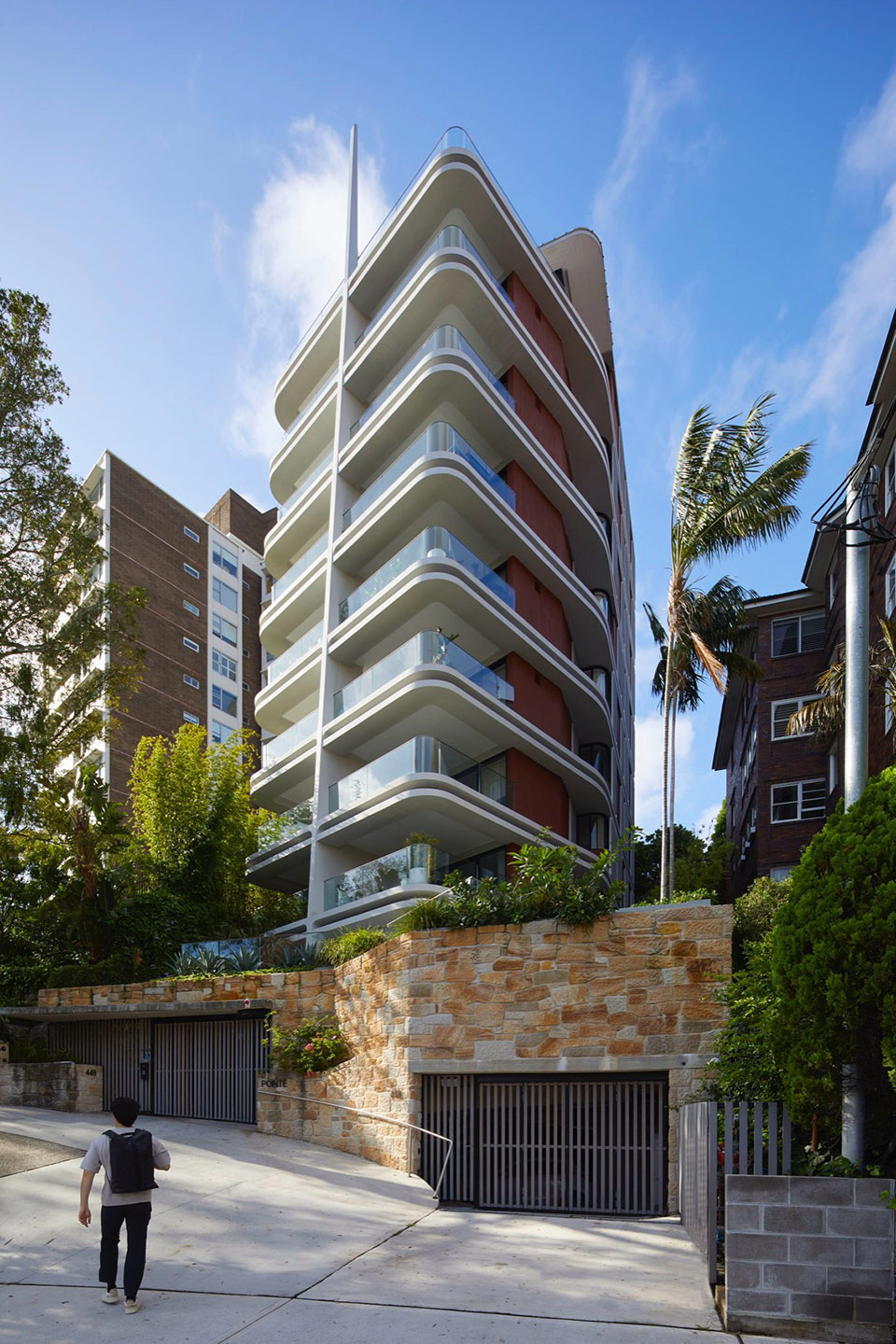
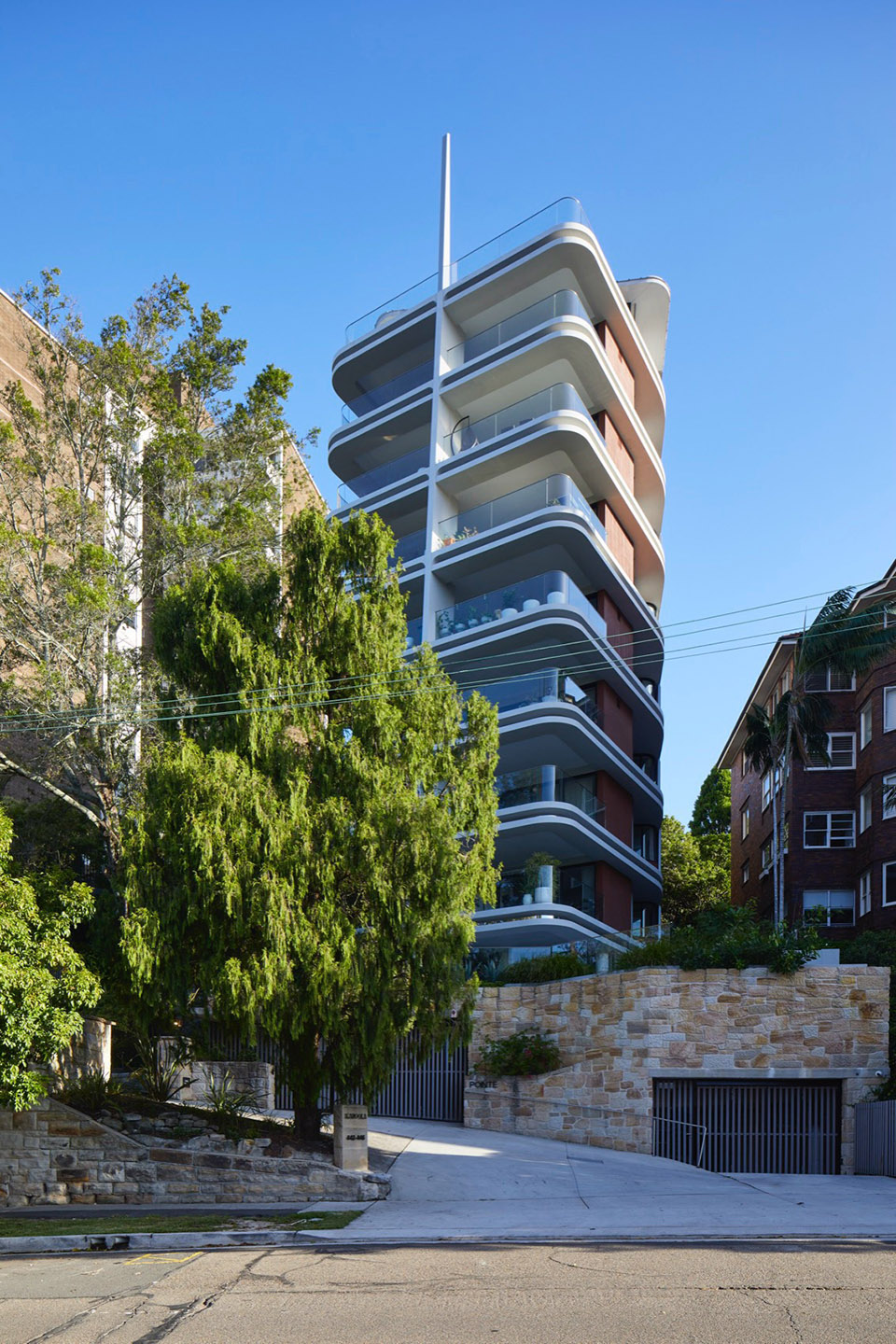
▼由周围环境看建筑,
viewing the residence from surrounding environment
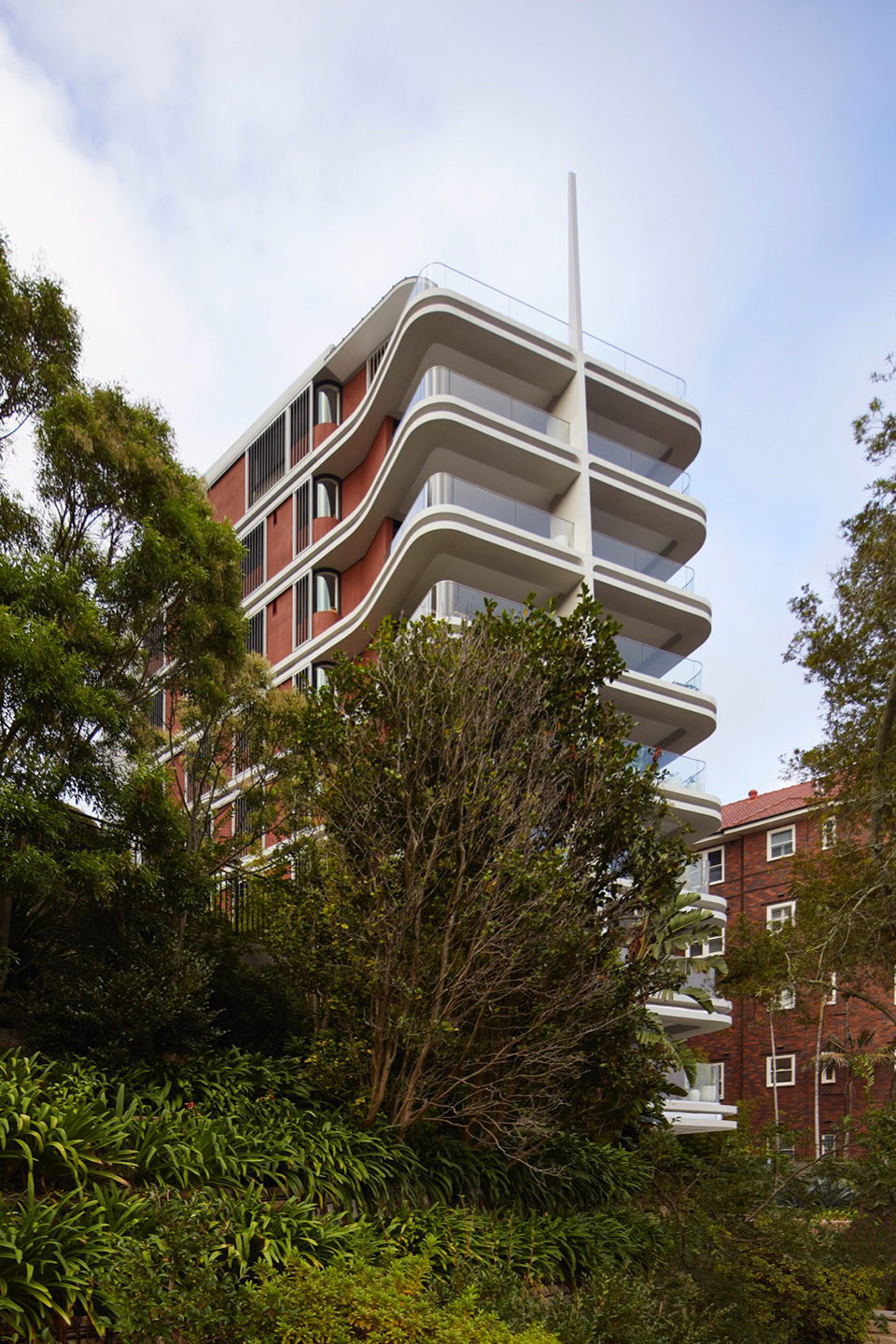
该项目取代了一栋独立住宅,通过提供10套新住宅单元,迈向更高密度的城市居住模式,以回应不仅在本地,也在全球范围内日益严峻的住房问题。
Replacing a single home, the ten new residencies this building provides are a step towards the sort of denser urban environment required to begin to tackle a housing crisis that is not only having an impact locally, but also nationally and globally.
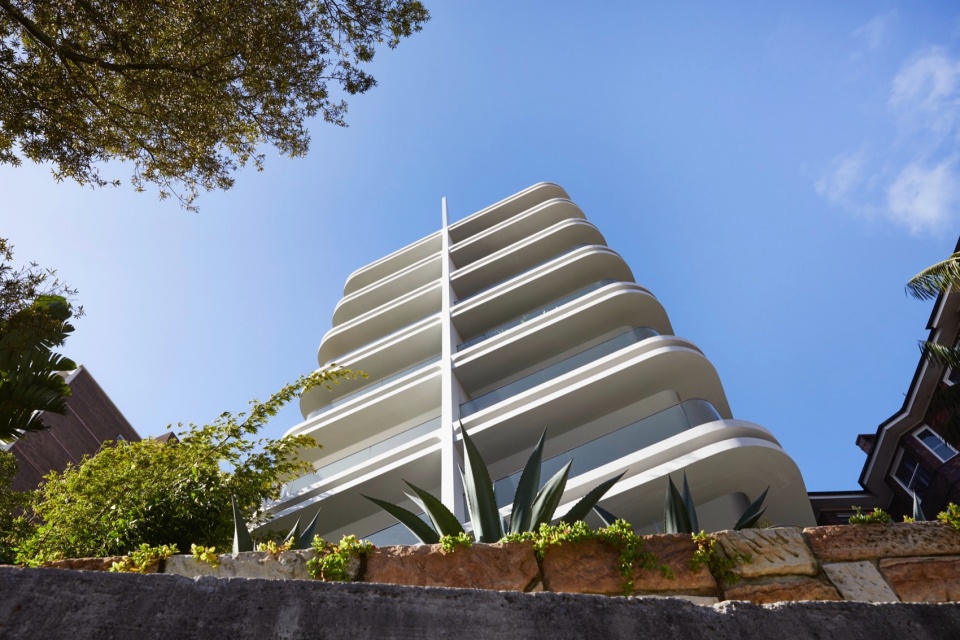
▼塔楼与基座,tower and the basel
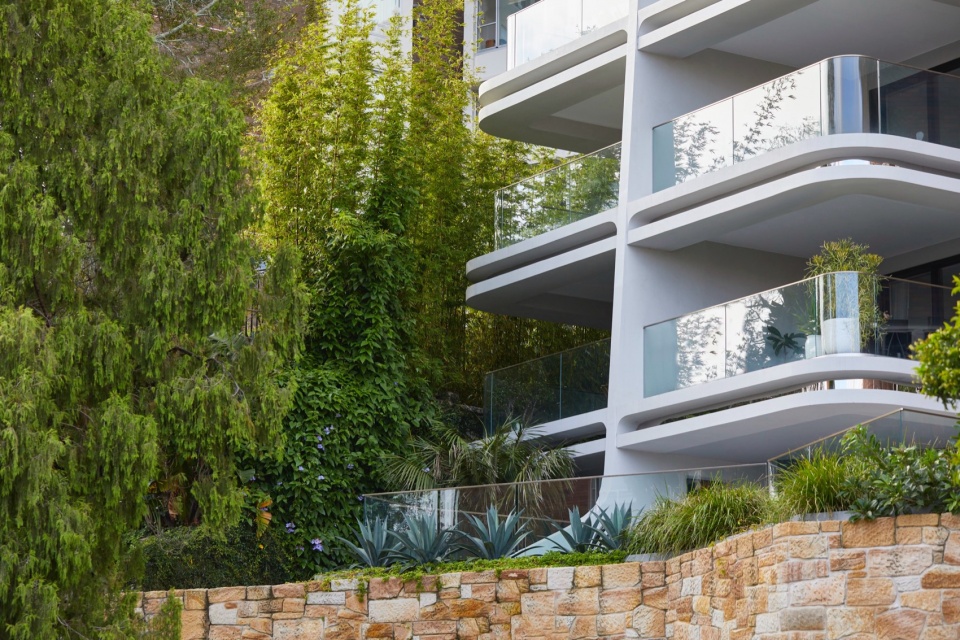
▼细部,details
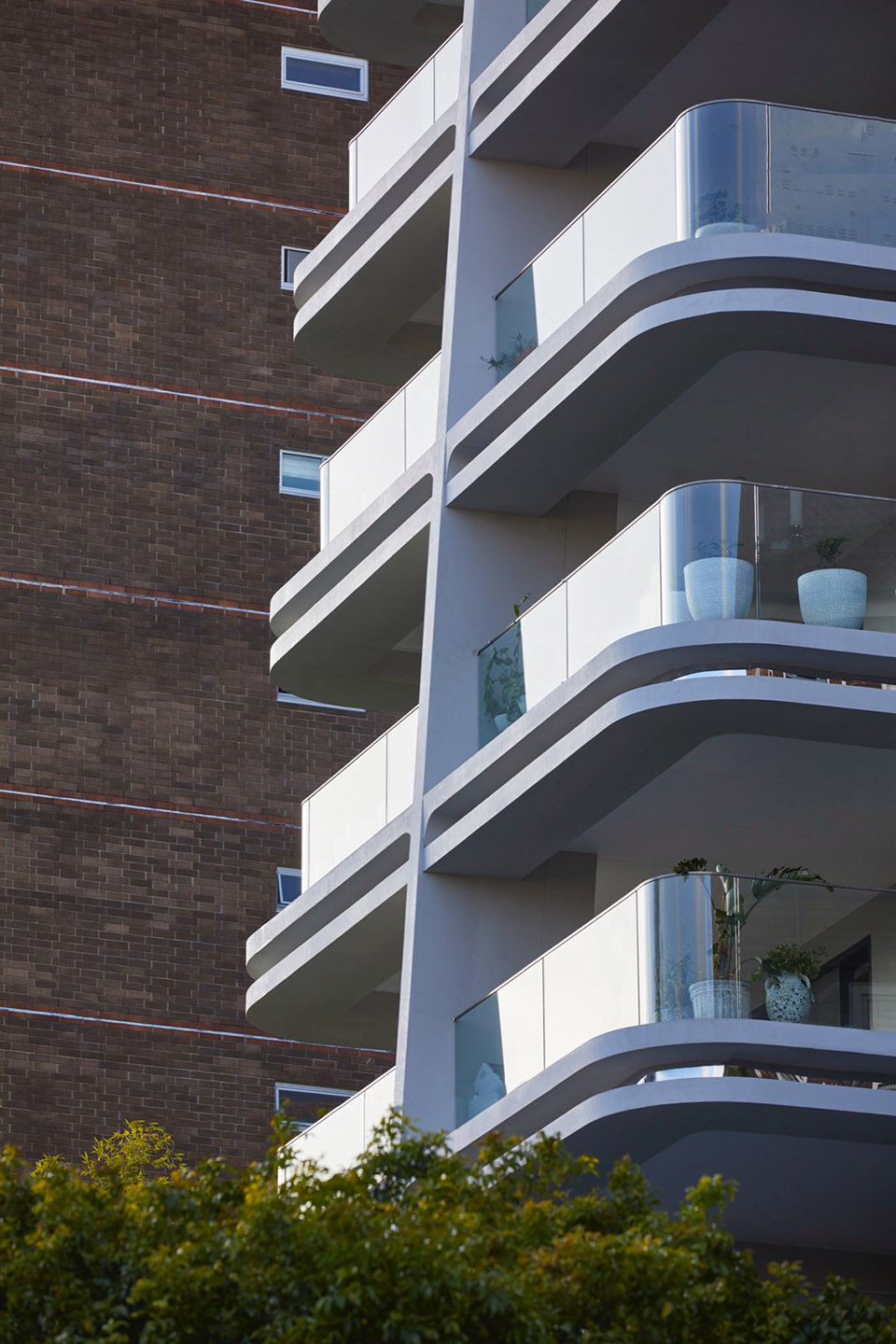
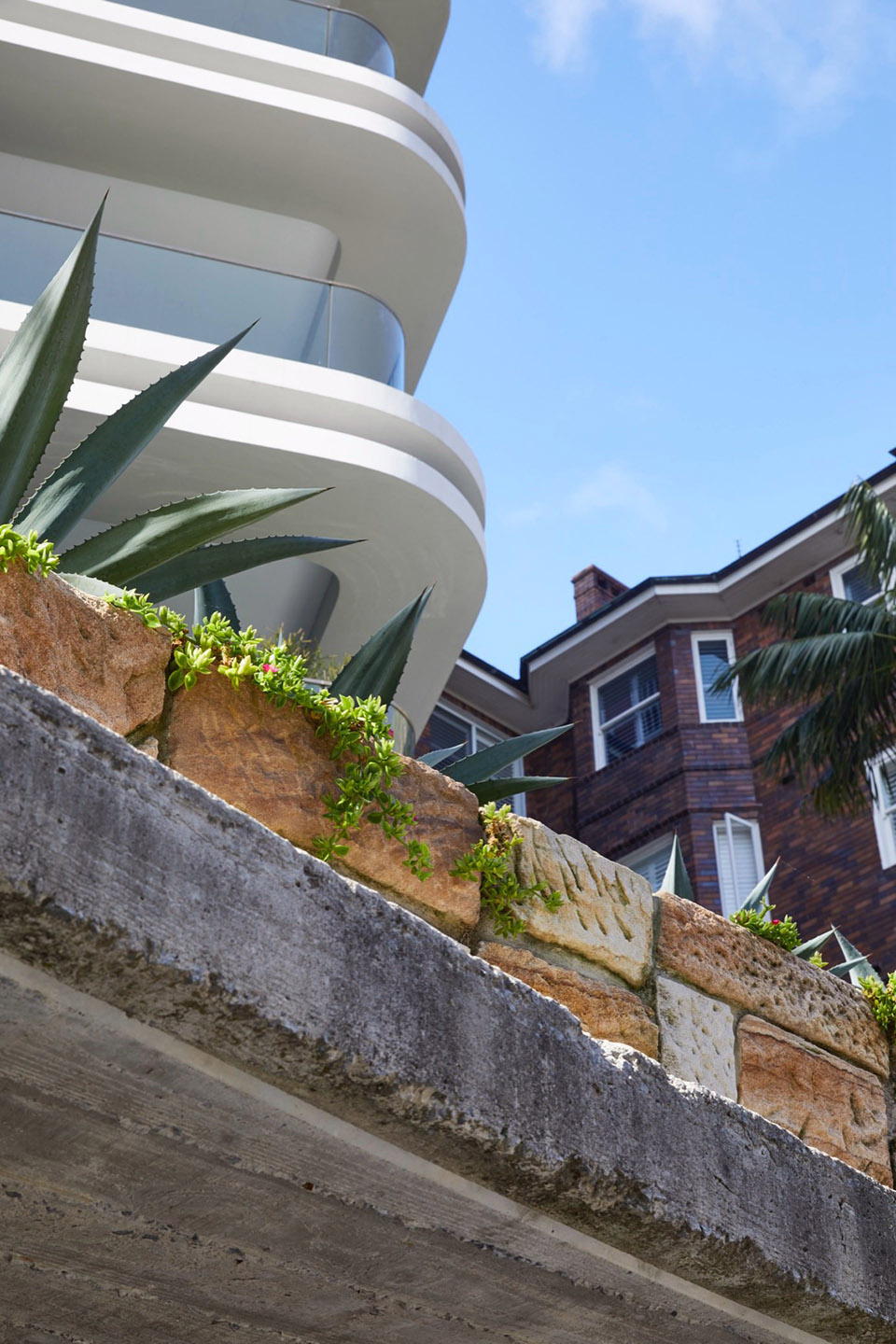
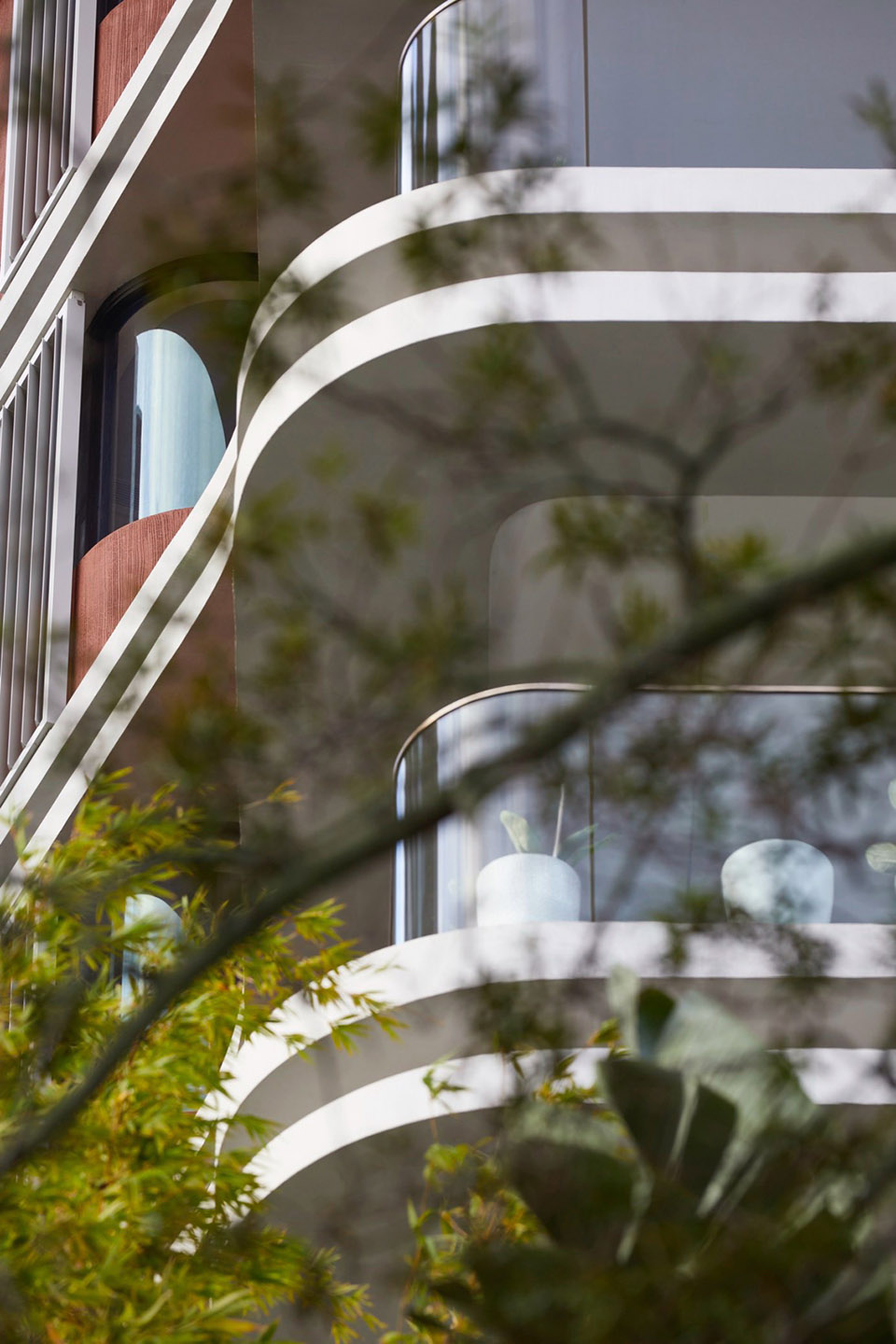
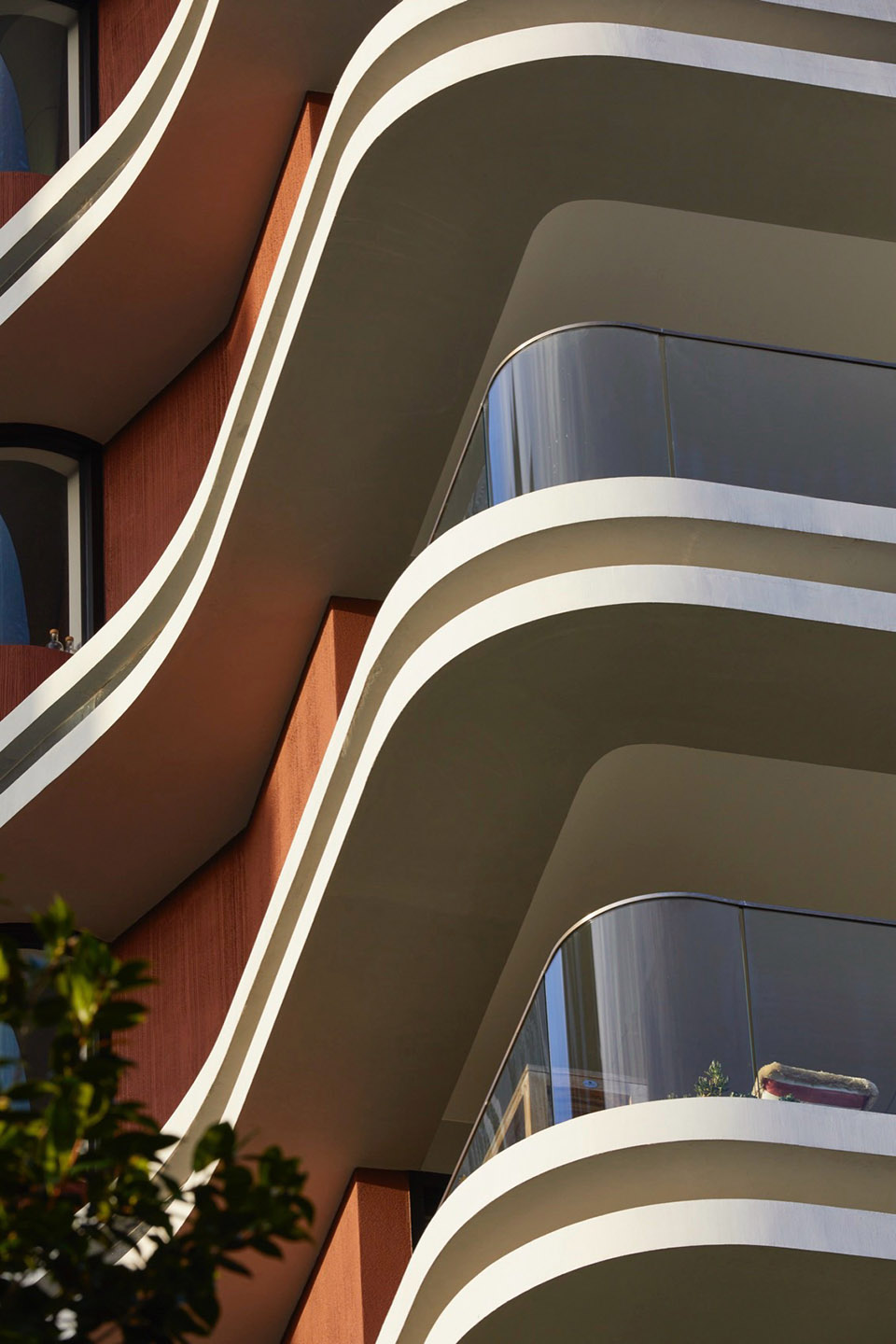
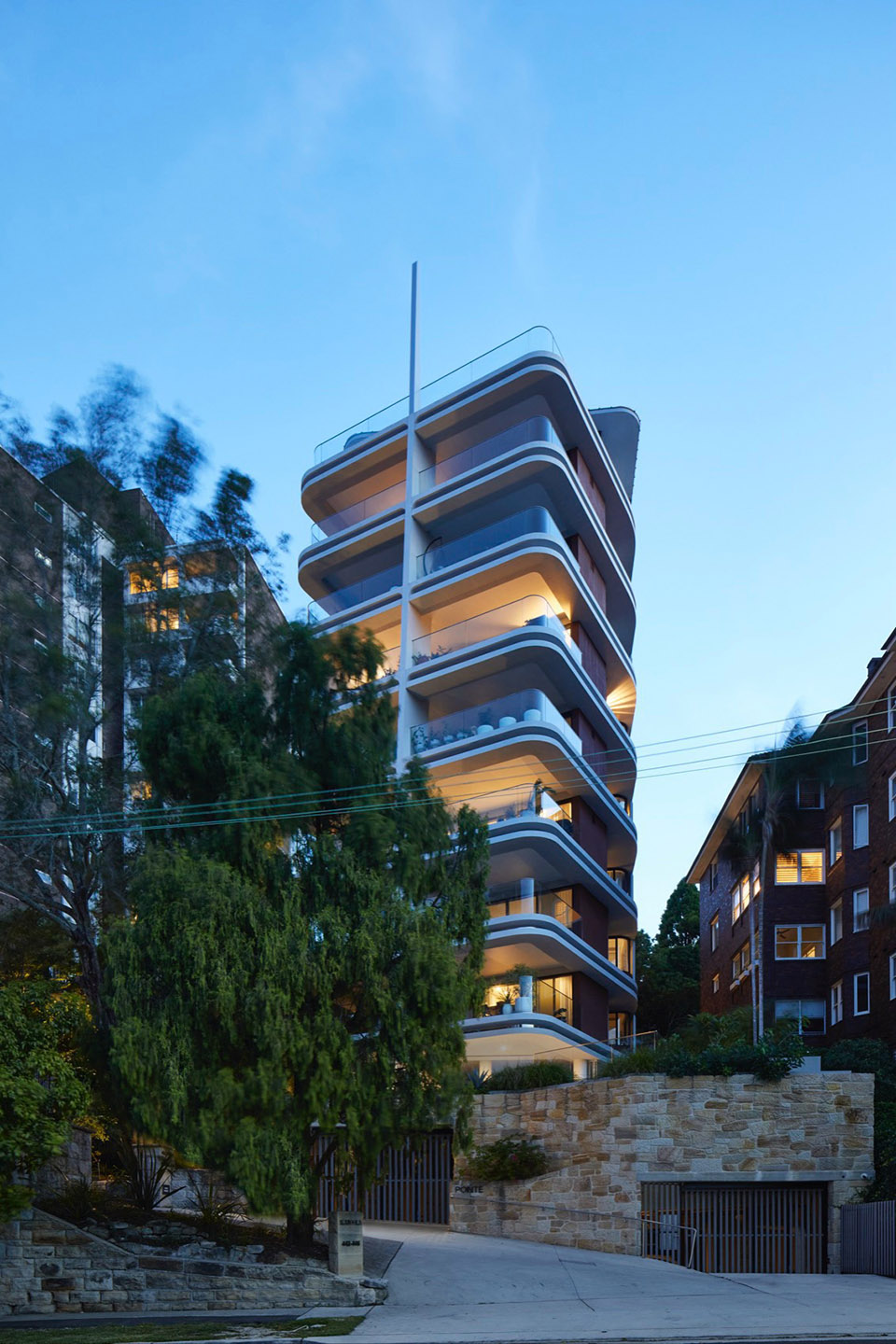
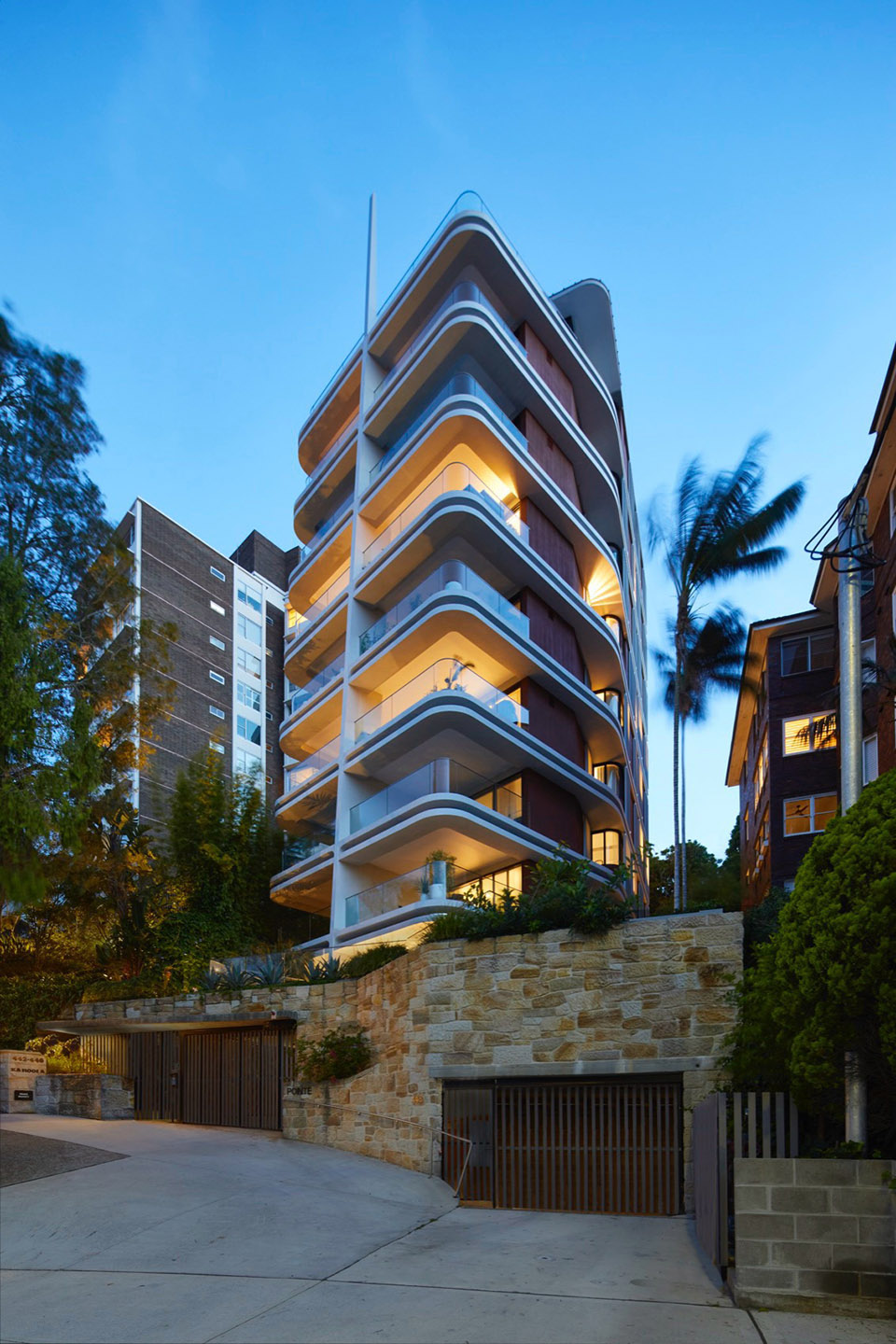
在一个受限场地上建造,东西两侧均有相邻建筑,该项目以一种纤细的填充式体量出现,高度上尊重周边尺度与城市语境。其形态如同一根中央“脊柱”,向外延展出类似“肋骨”的混凝土梁结构,形成富有辨识度的街道界面。体量在邻近建筑之间逐渐收窄并轻微扭转,既确保隐私,又最大化每一套住宅朝北阳台的日照条件。
Constructed on a constrained site, with apartments to the west and east, the building is designed as a slender infill at a height that respects the scale and context of its neighbours. Its form, appearing as a central spine with a ribcage of concrete beams radiating outwards from it, provides an eye-catching street presence that tapers and twists away from the adjoining buildings, ensuring privacy and maximum solar access to each of the ten apartments’ north facing balcony ‘ribs’.
▼阳台,balconies
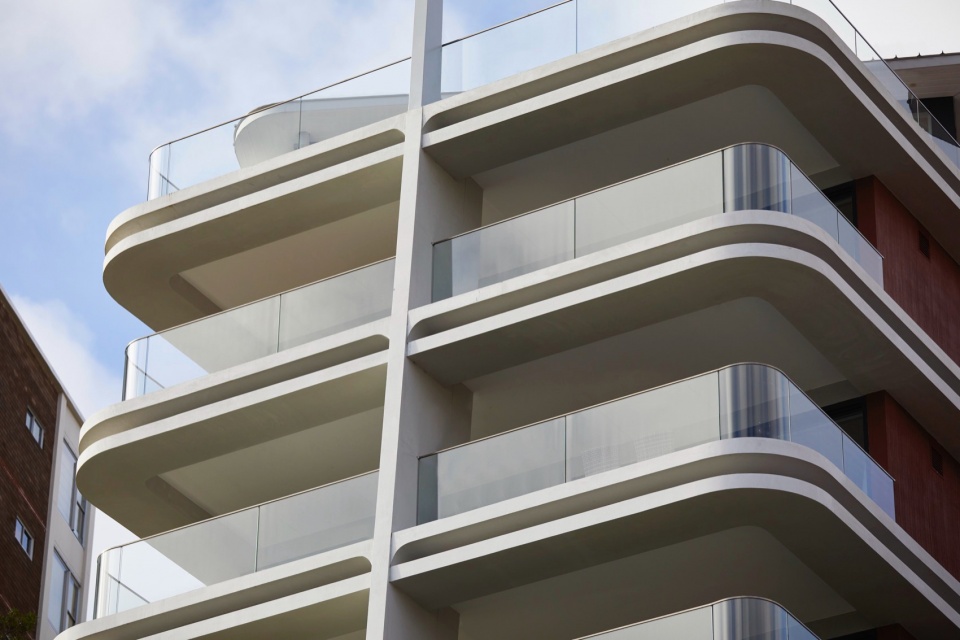
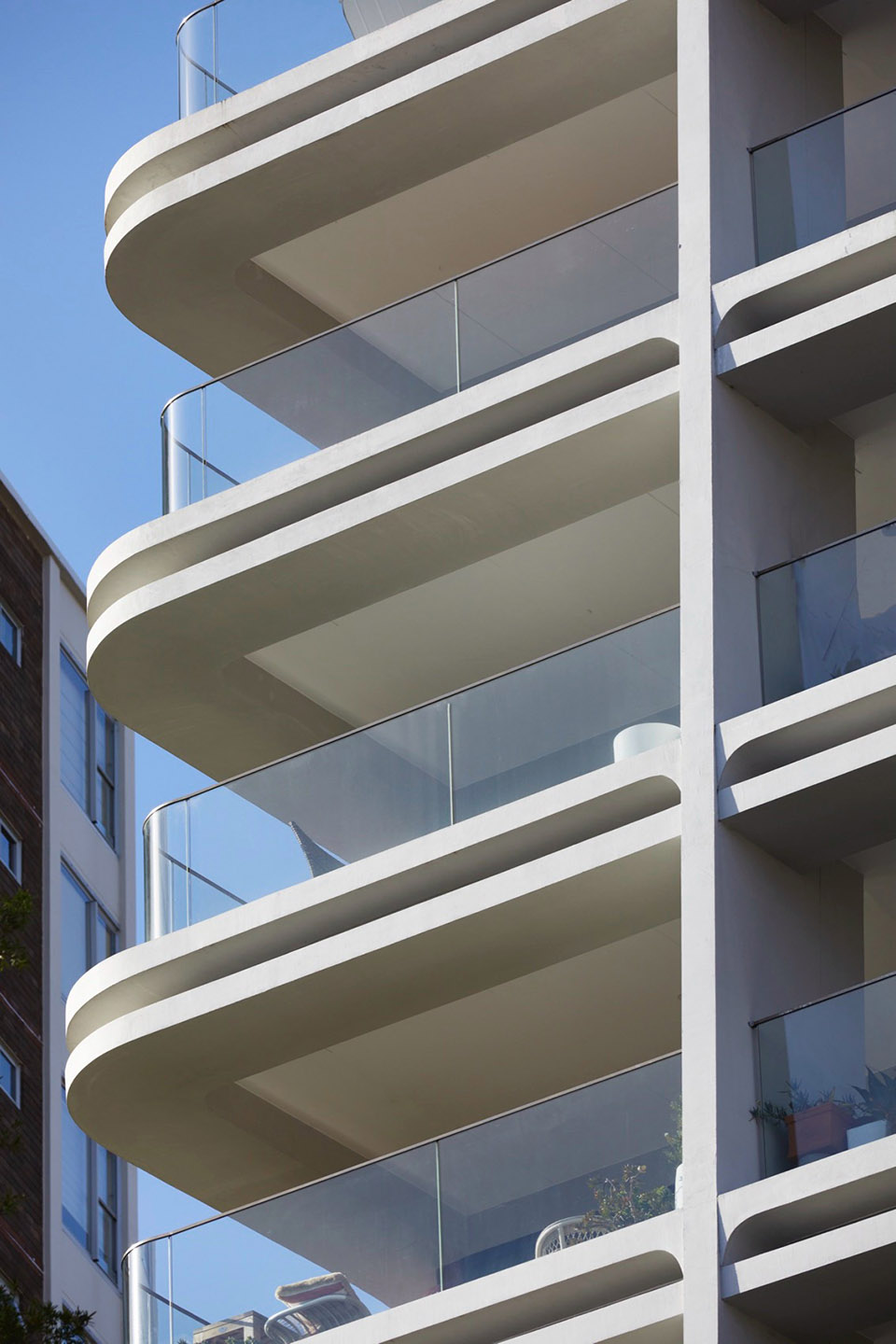
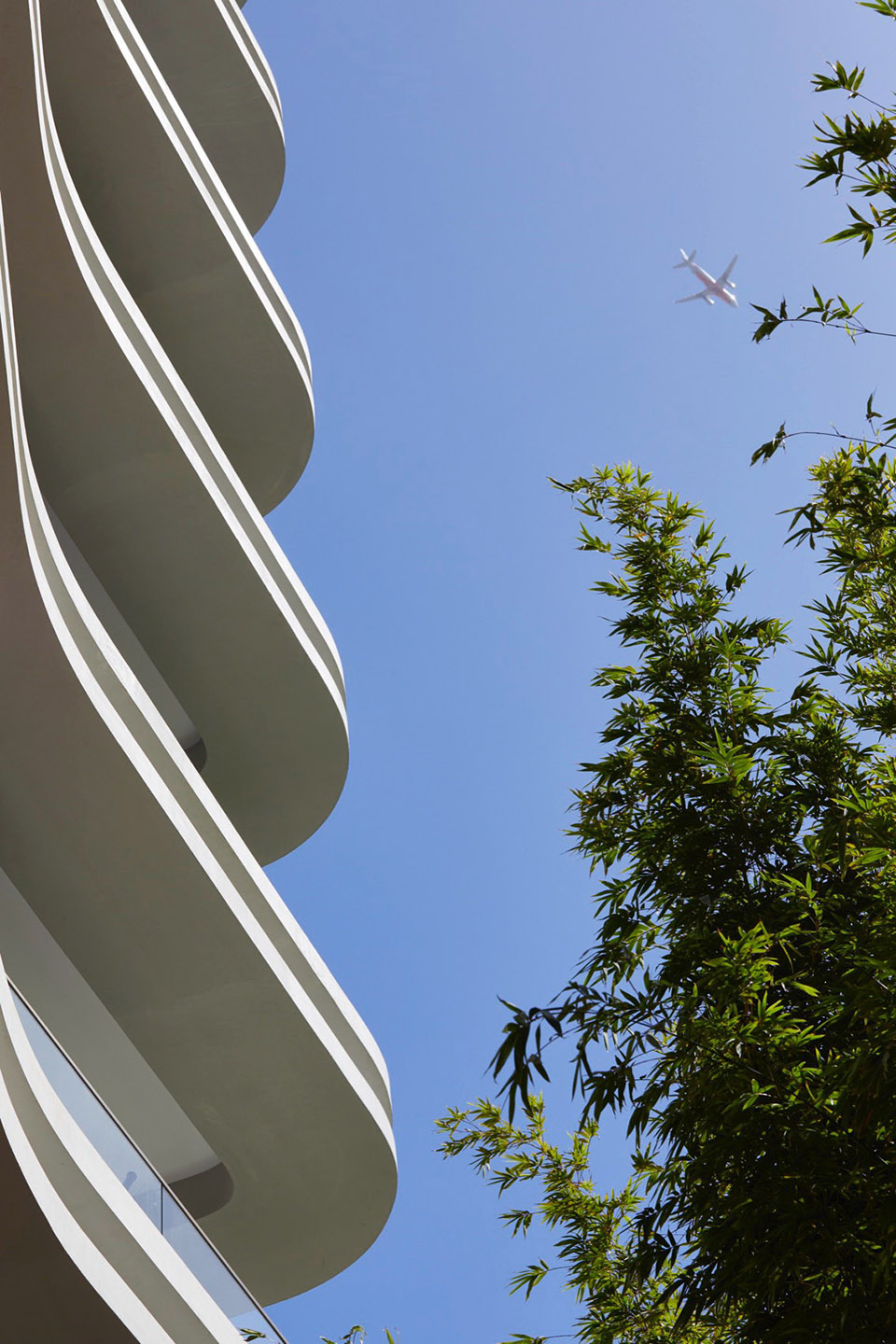
▼外观细部,details of the exterior
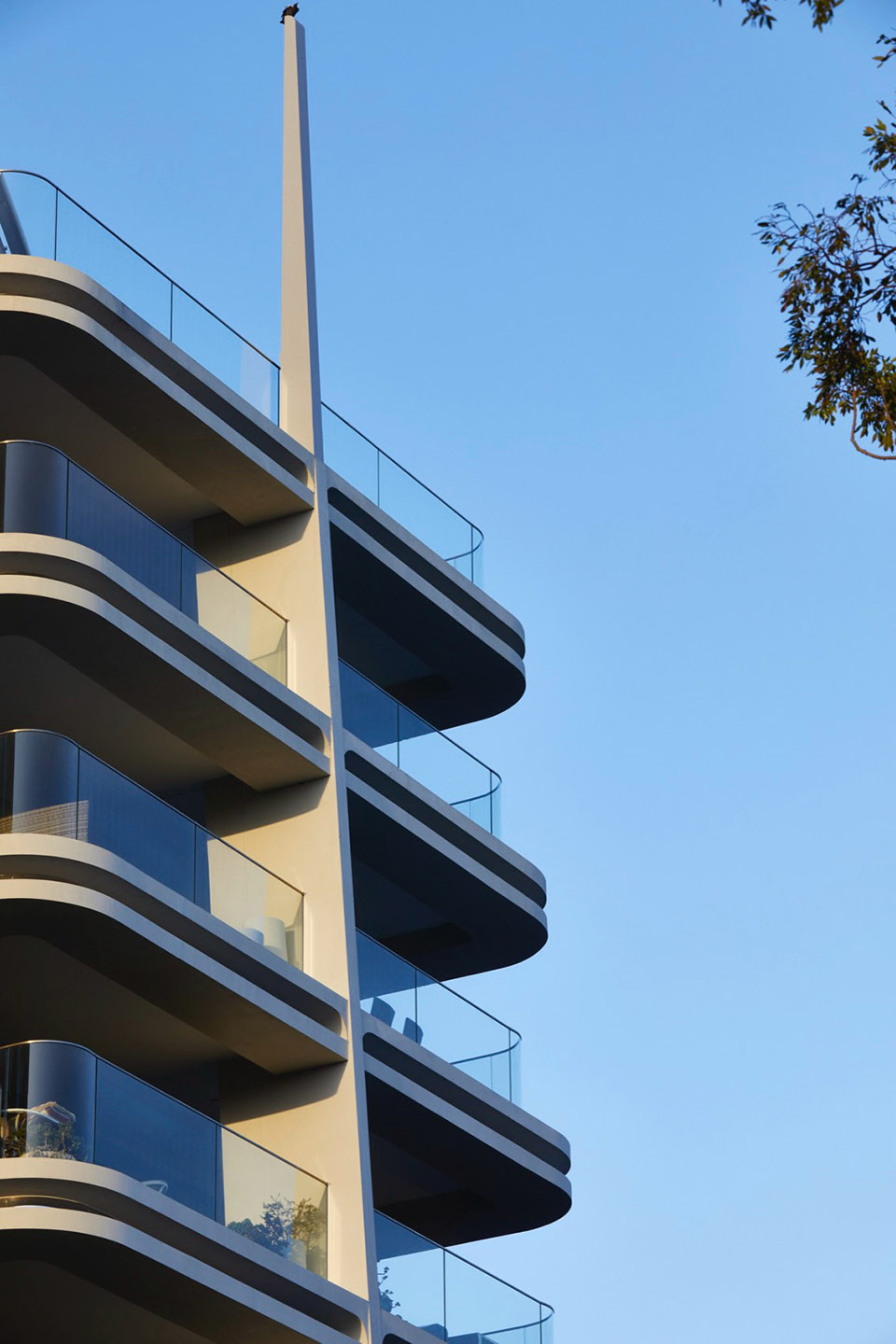
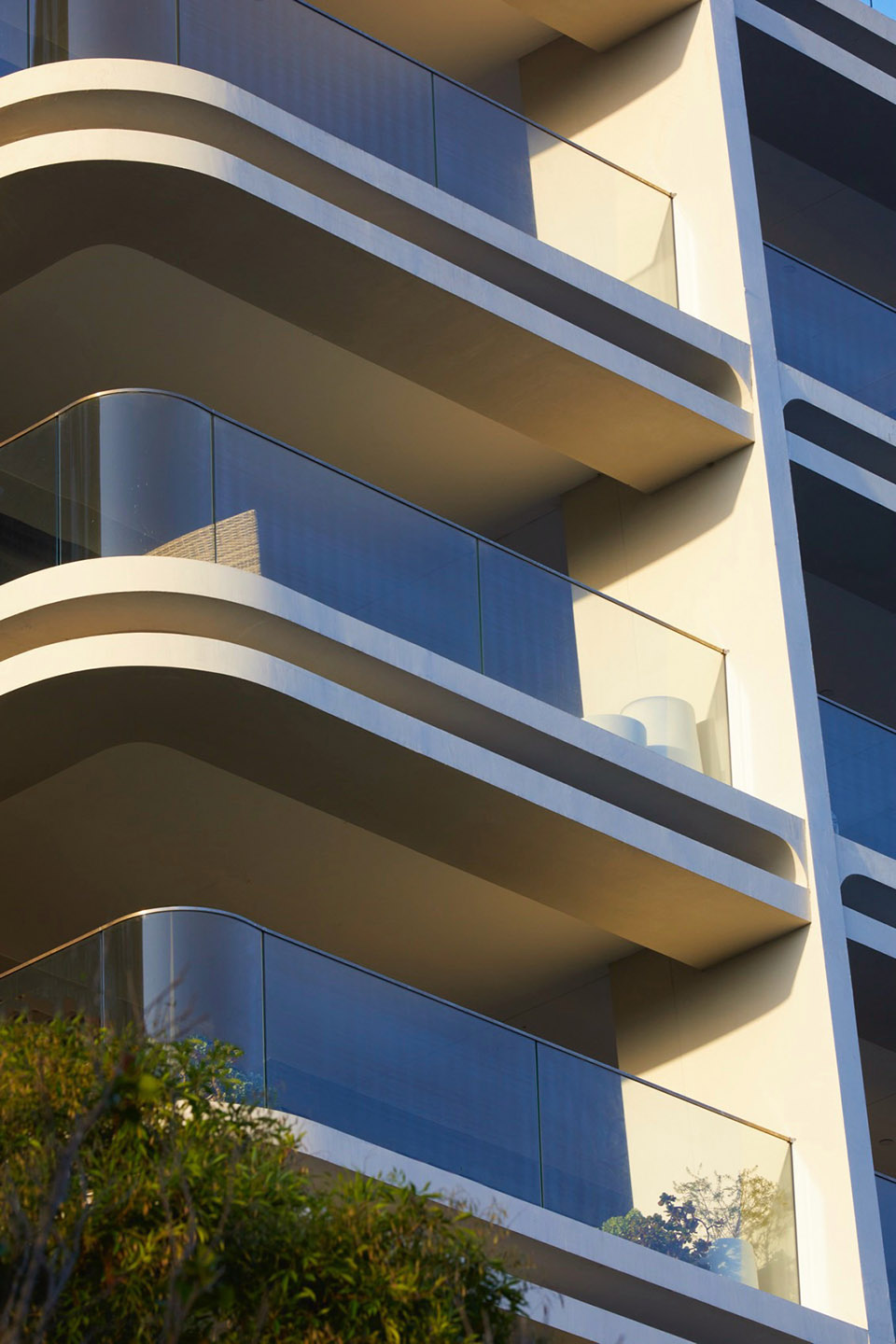
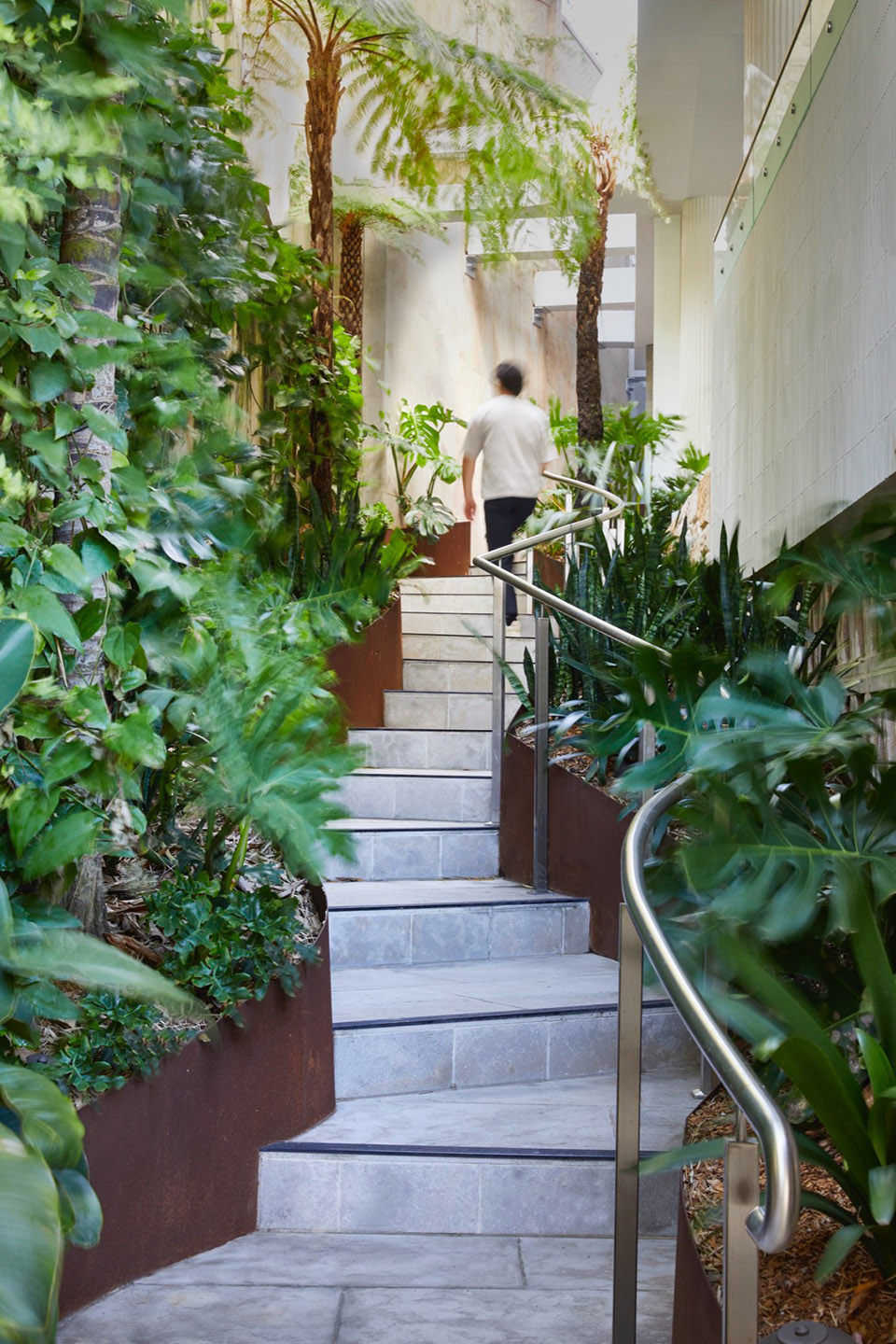
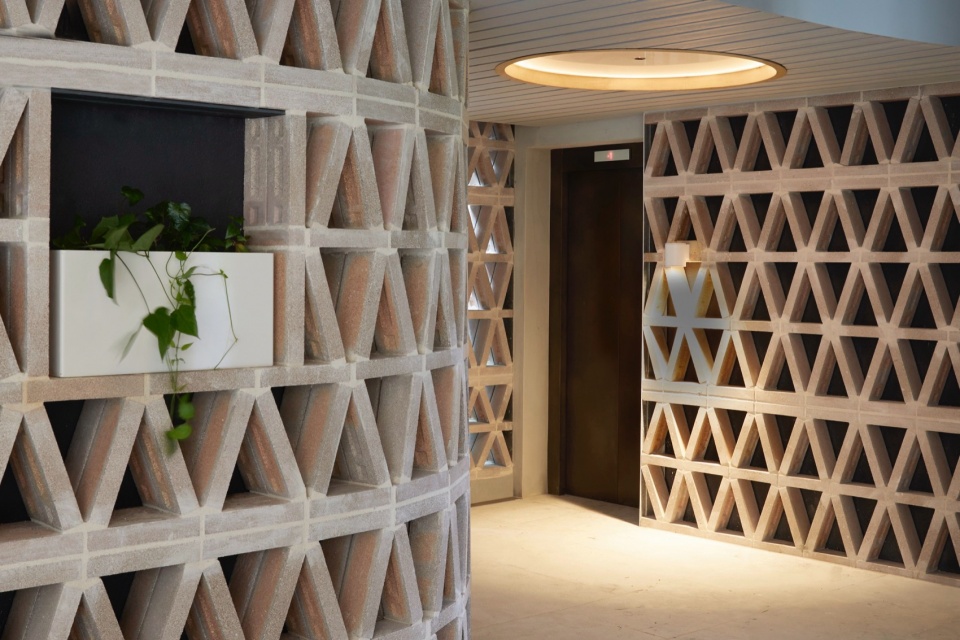
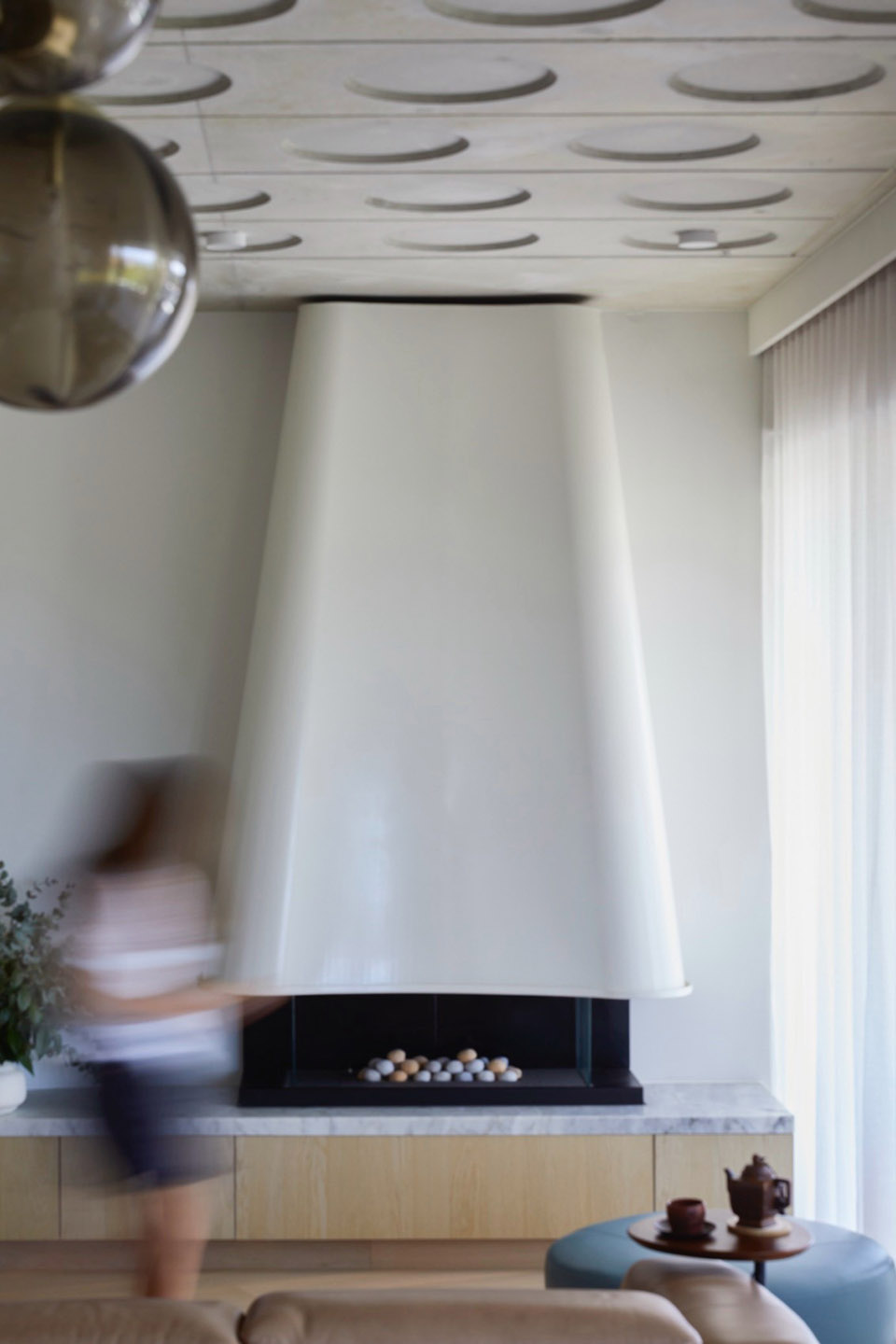
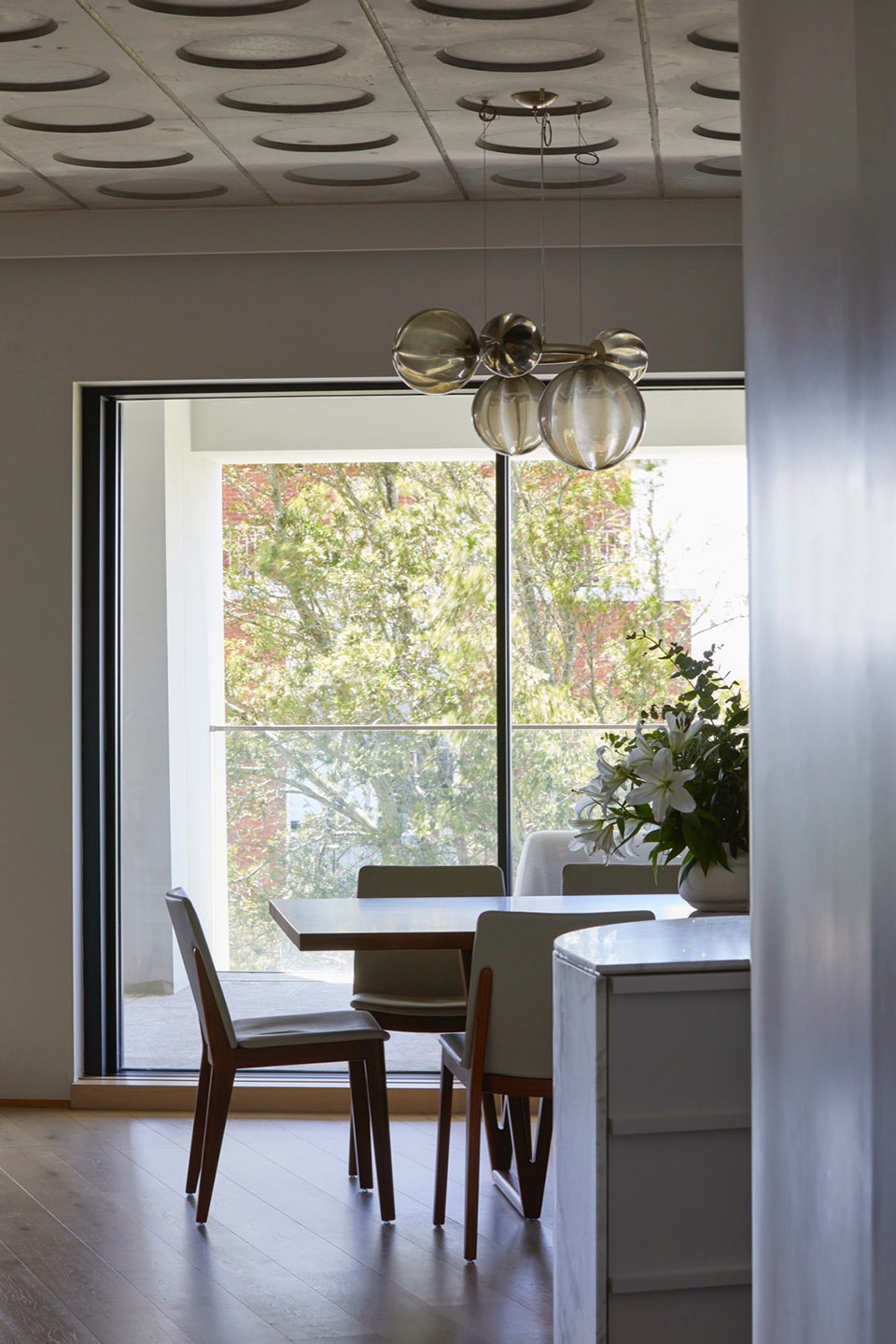
无论在室内还是外部,平面布局、细部与材料选择均有意突破中大型公寓项目常见的标准化重复模式。各楼层平面在细微处有所变化,同时根据不同居住者的生活方式进行个性化调整。粗梳理纹理的抹灰墙面、外露模板混凝土天花、弧形玻璃栏板以及嵌有镜面元素的双边混凝土梁,共同构成一种细节丰富的建筑语言,使人联想到当地两次世界大战之间时期的公寓建筑特征。建筑入口通过一条蜿蜒的景观路径,从厚重的砂岩基座进入,抵达由三角形叠砌曲面砖墙围合而成的开放式公共门厅。室内则配备由当地艺术家Oliver Tanner手工制作的黄铜灯具,以及由室内设计师Romaine Alwill(Atelier Alwill)精选的涂料、石材与定制木作细节。
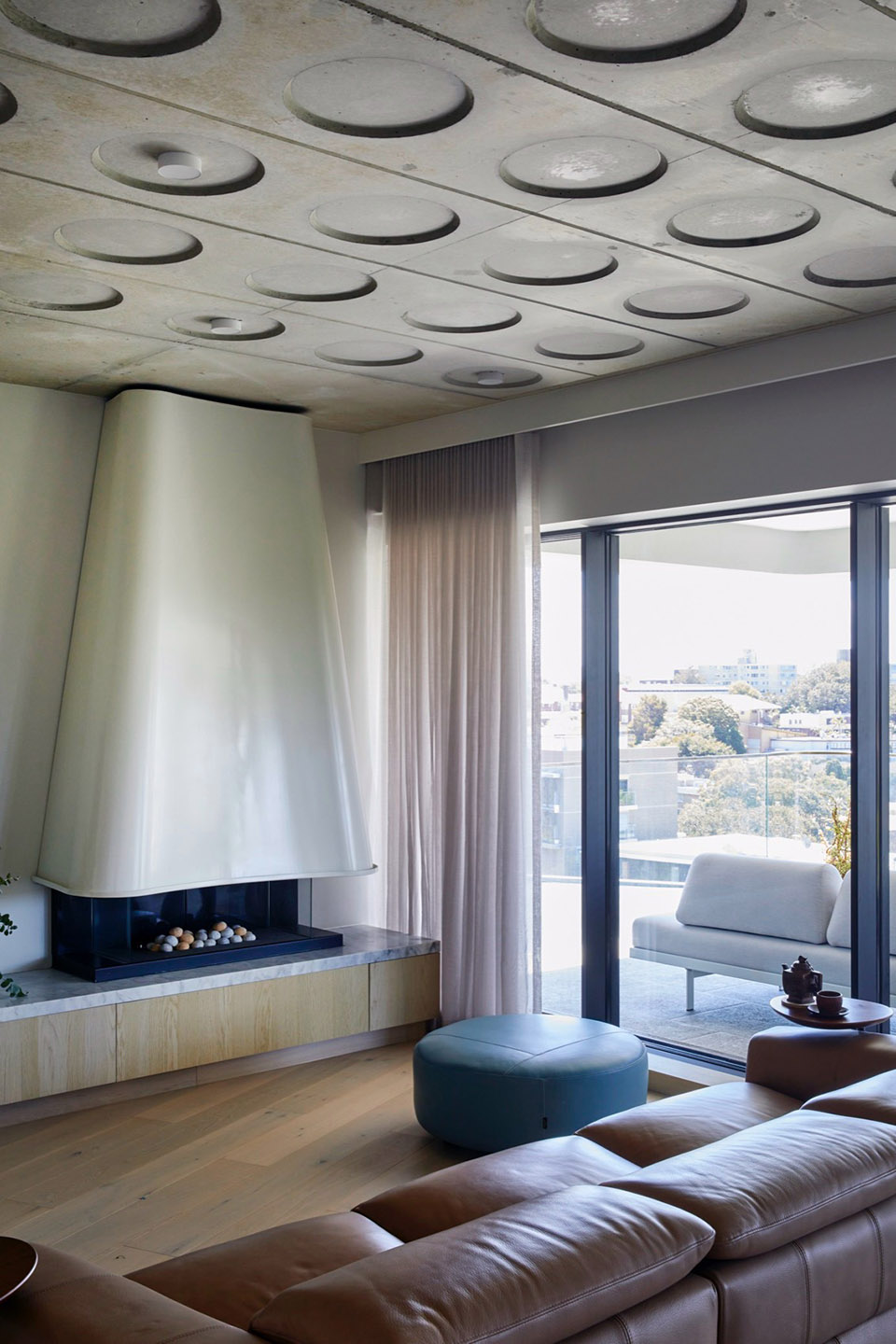
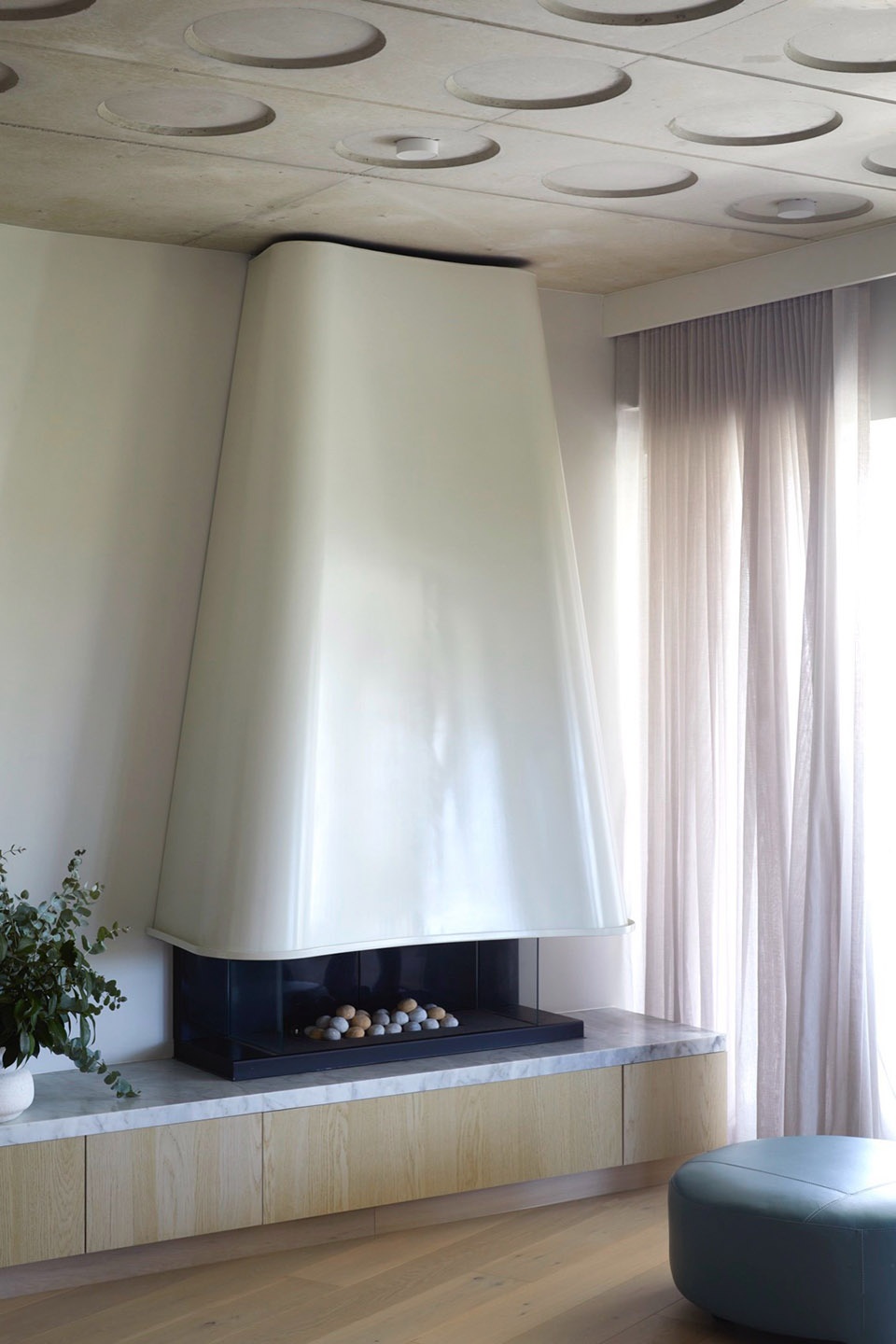
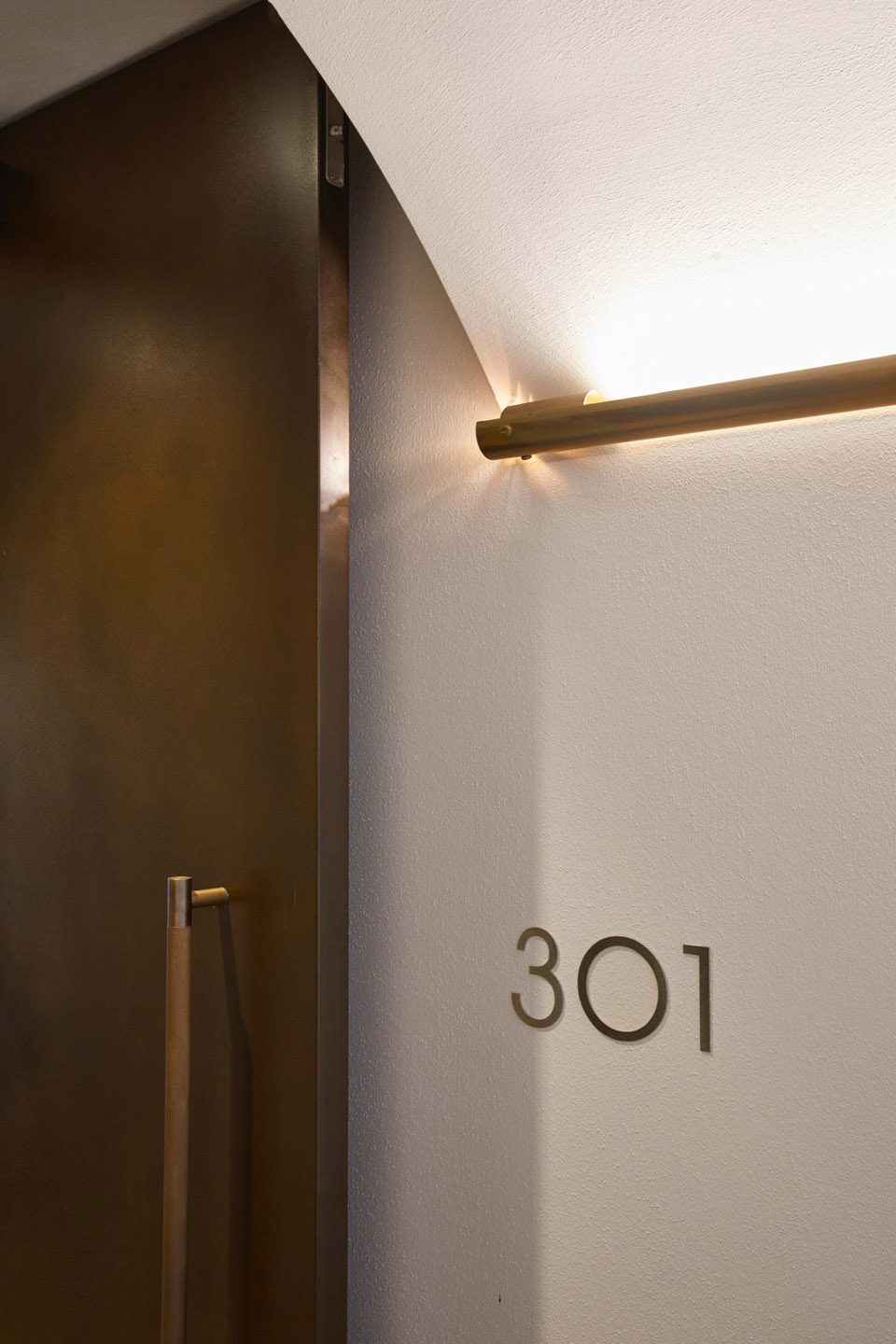
Internally and externally the layouts, details and material selections seek to challenge the repetitious nature of the standardised plans that often characterise medium to large scale apartment developments, instead employing floorplans with subtle variations between floors, and details and materials customised to the tastes and lifestyles of each of the apartments’ inhabitants. Elements such as rough combed finish rendered walls, stylised exposed off form concrete ceilings, curved glass balustrades and double edge concrete beams with mirrored inserts contribute to a development with a level of detail reminiscent of the interwar apartment buildings that characterise the locality. Within the building, residents and guests enter from its strong sandstone base via a serpentine landscaped path, reaching a communal open lobby formed with a curved brick screen stacked in a triangular format. Within the apartments, each features handmade brass lighting by a local artist, Oliver tanner, and other architectural touches including specialist paint finishes, stone and joinery curated by Interior Designer Romaine Alwill of Atelier Alwill.
▼楼梯,staircase
▼由三角形叠砌曲面砖墙围合而成的开放式公共门厅,
communal open lobby formed with a curved brick screen stacked in a triangular format
除隐私性、个性化与日照条件外,设计还回应了多户住宅中常被忽视的高质量户外空间问题。除了每户宽敞的阳台外,项目还提供共享花园与公共设施,包括烧烤区、用餐空间以及一处带顶棚的泳池,在环境与社交层面增强住户之间的联系。
In addition to this consideration for privacy, uniqueness, and practical solar access often sorely lacking in many multi-residential developments, the design also addresses a common concern of many when contemplating apartment living; equitable access to high quality outdoor environments. In addition to the generous balconies common to each unit, shared communal gardens and facilities including BBQs, dining areas and an undercover swimming pool provide environmental and social benefits that foster a sense of cohesion between residents.
▼泳池,pool
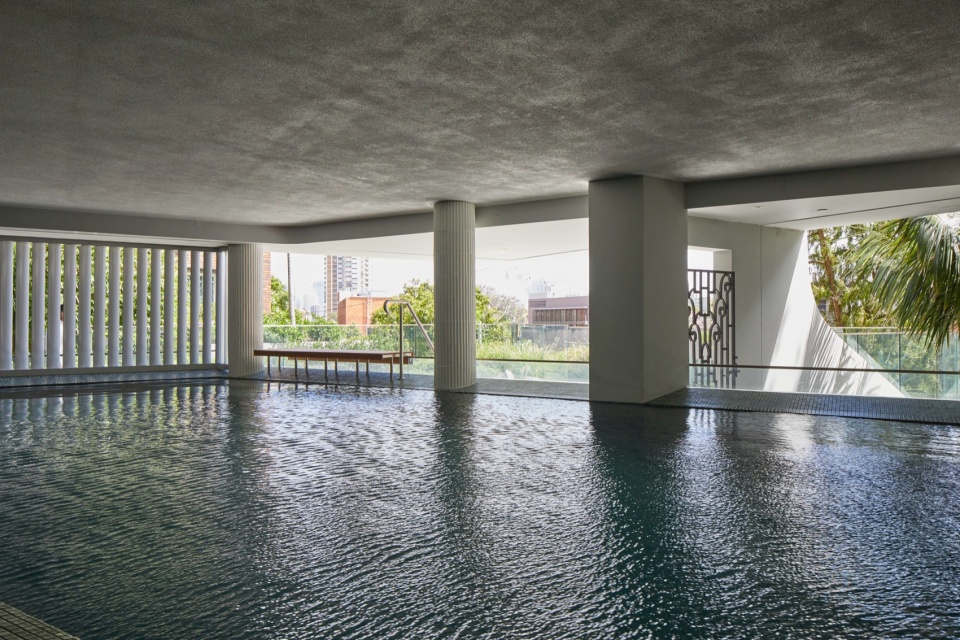
▼泳池细部,details of the pool
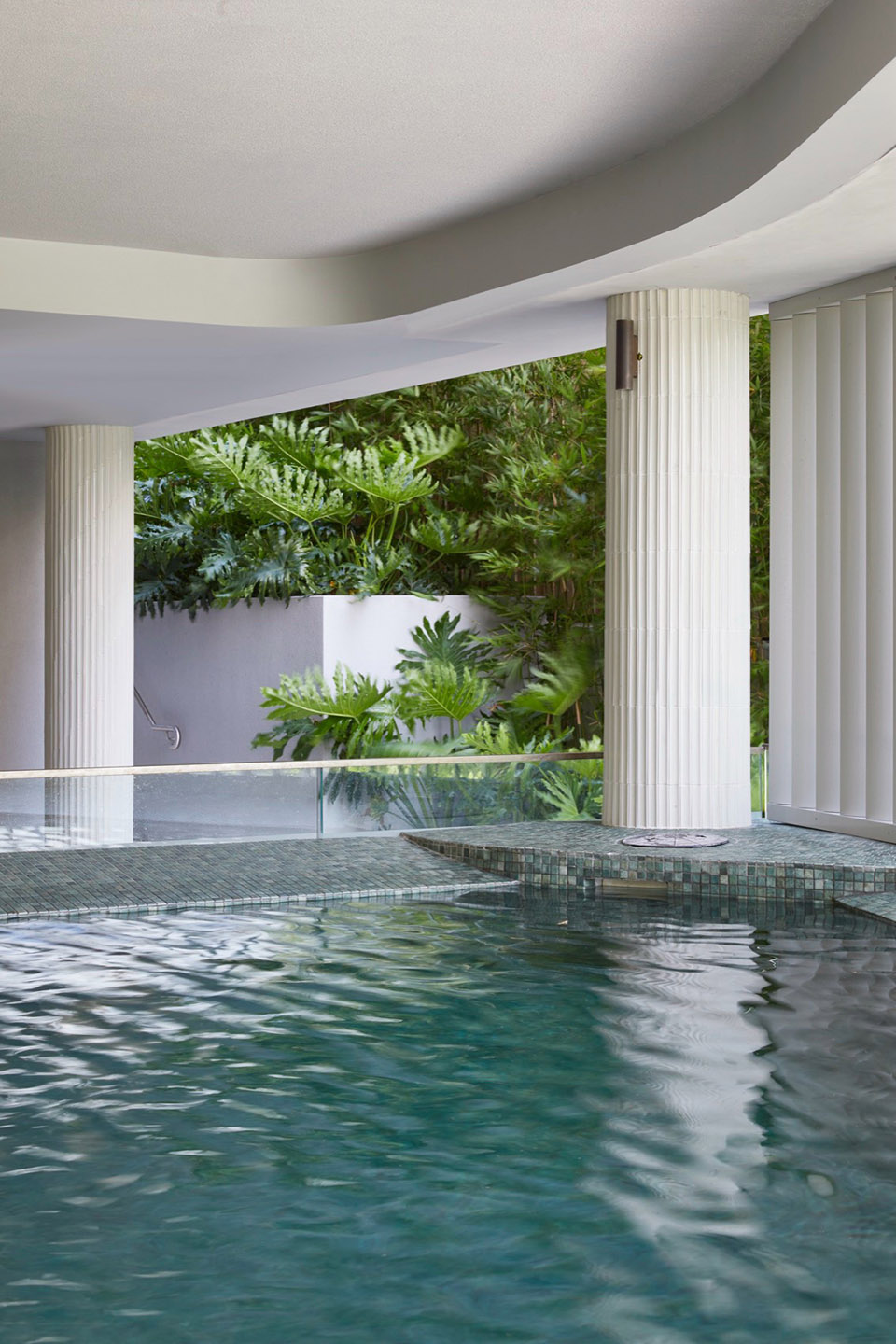
▼泳池细部,details of the pool
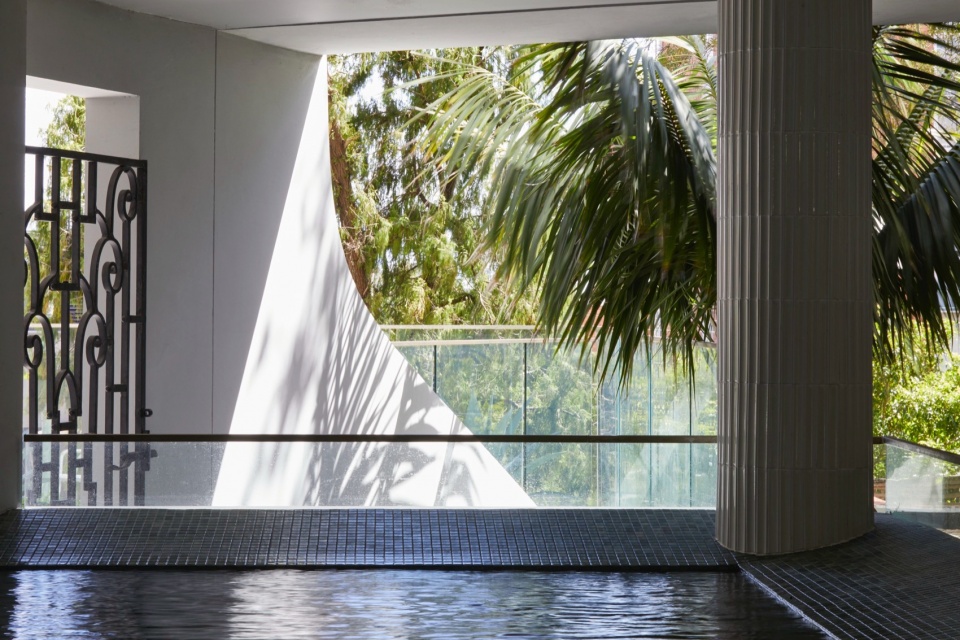
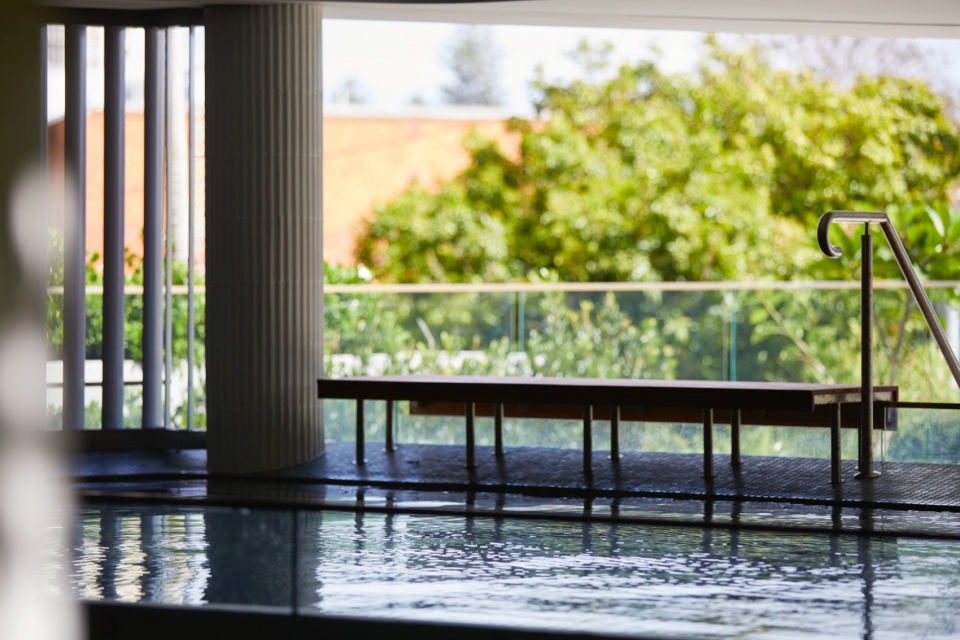
可持续性原则同样贯穿设计。公寓与泳池区域均朝北布置,以在冬季最大限度引入自然光;而大尺度遮蔽阳台与百叶窗则在夏季阻挡强烈日照。每套公寓至少拥有三个朝向立面,配备可开启的大面积窗户,并通过开放式走廊与通向室外的入口空间实现自然穿堂通风。屋顶设置的66块太阳能板为建筑提供可再生能源。
Environmentally sustainable principles are also at the forefront of the design. Both the apartments and the pool area are oriented northwards to give much access as possible to natural light for the living spaces during the winter months, while large covered balconies and louvered windows protect the building from the harsh sun during the summer. All apartments have at least three exposed facades with large operable windows, as well as open central hallways that flow out to open air entry lobbies, offering natural cross ventilation to every apartment. An array of sixty-six solar panels installed on the roof provides renewable energy.
▼室内,interior
▼壁炉,fireplace
▼餐厅,dining area
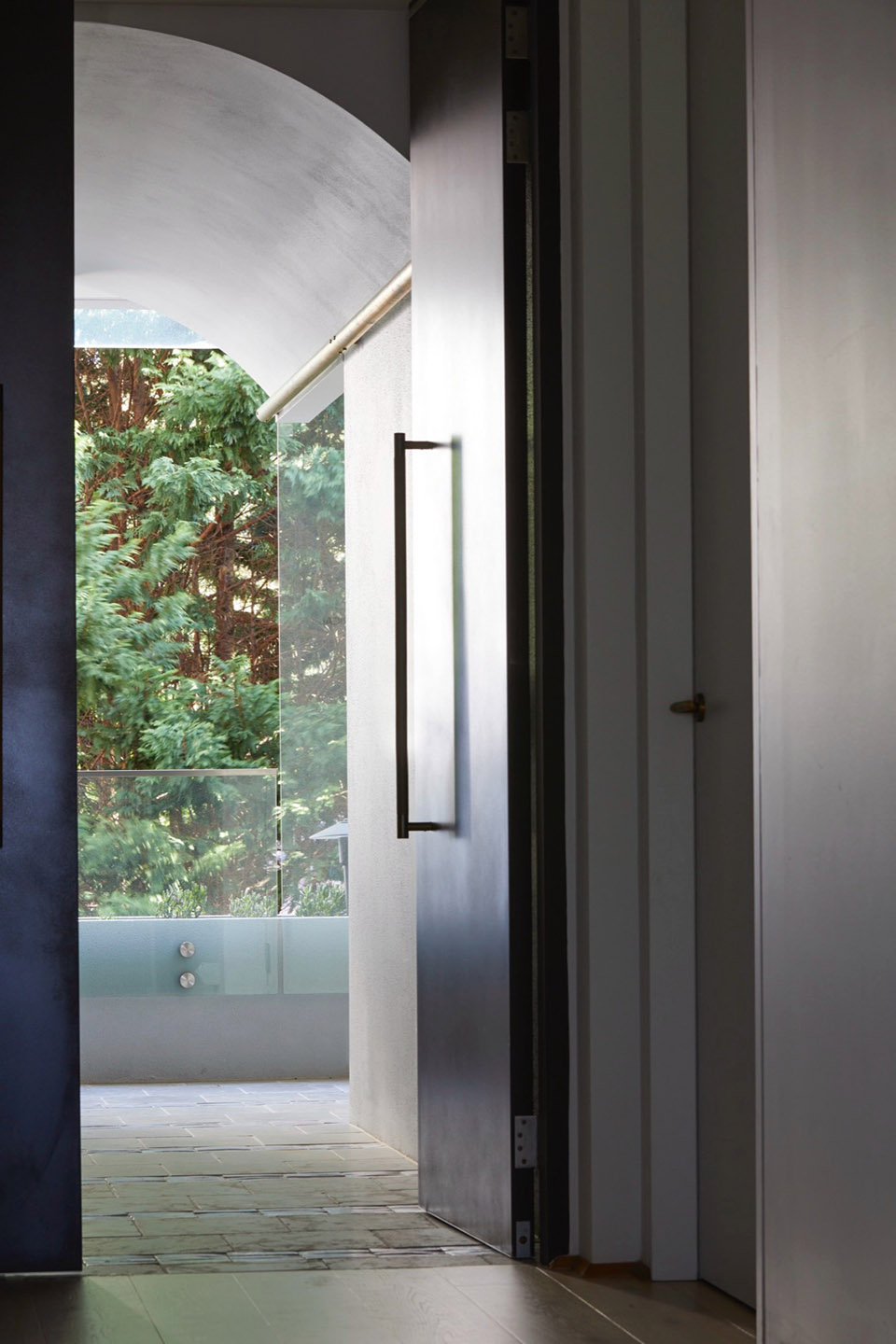
▼玄关,entrance
▼细部,details
项目还广泛采用再利用与循环策略:原有泳池被改造为储水设施;旧住宅保留的砂岩块以及地下车库开挖所得石材共同构成新的建筑基座;原有大门亦被保留并重新安装于公共空间中,成为对场地近期历史的延续与记忆。
Reuse and recycling was also widely employed, with the existing swimming pool on site repurposed as a water tank, and sandstone blocks retained from the old home and cut from the basement carpark excavation forming the building’s solid base. The gate from the former dwelling was also saved and reinstalled in the communal area as a memory of the site’s recent history.
▼外观夜景,night view of exterior
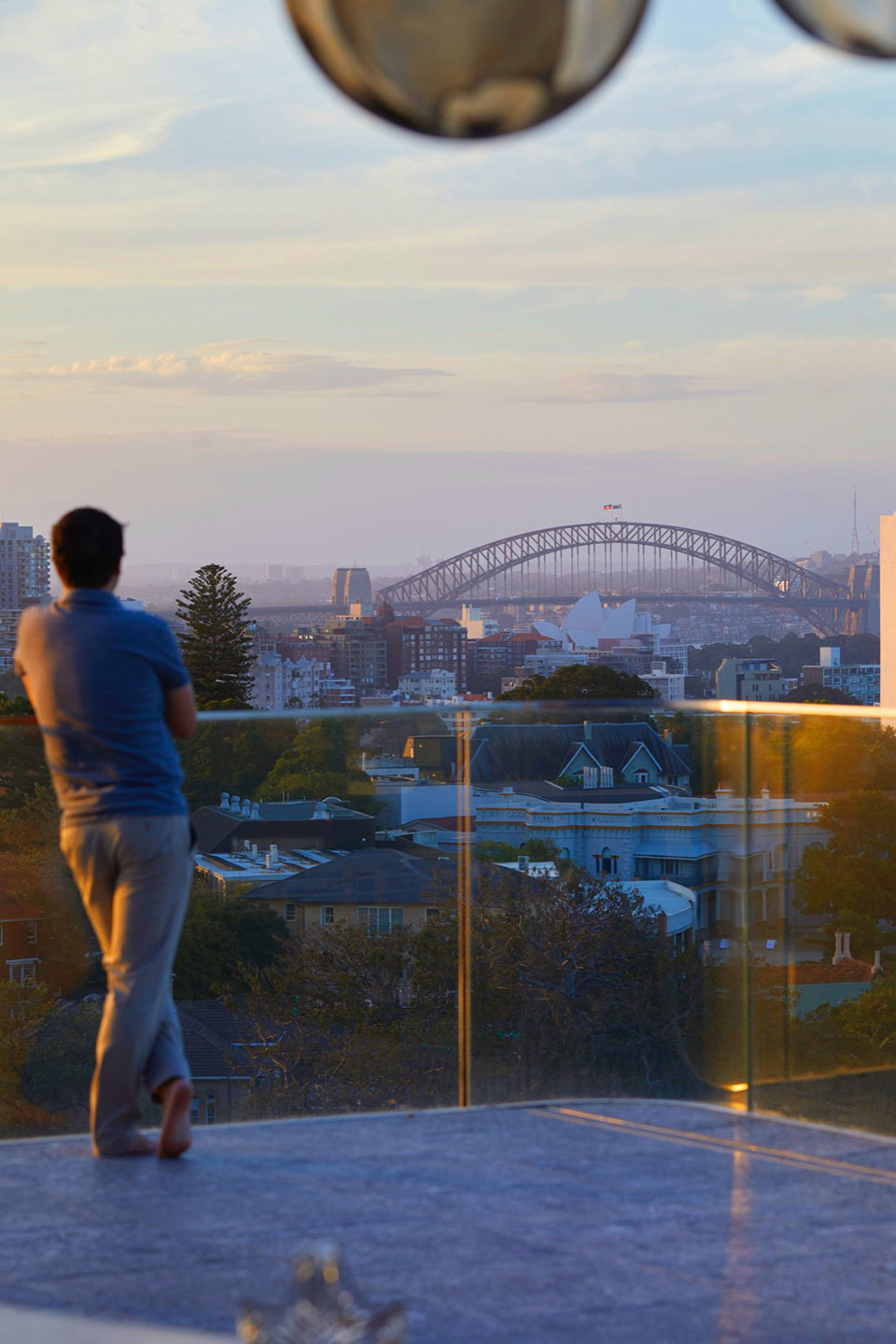
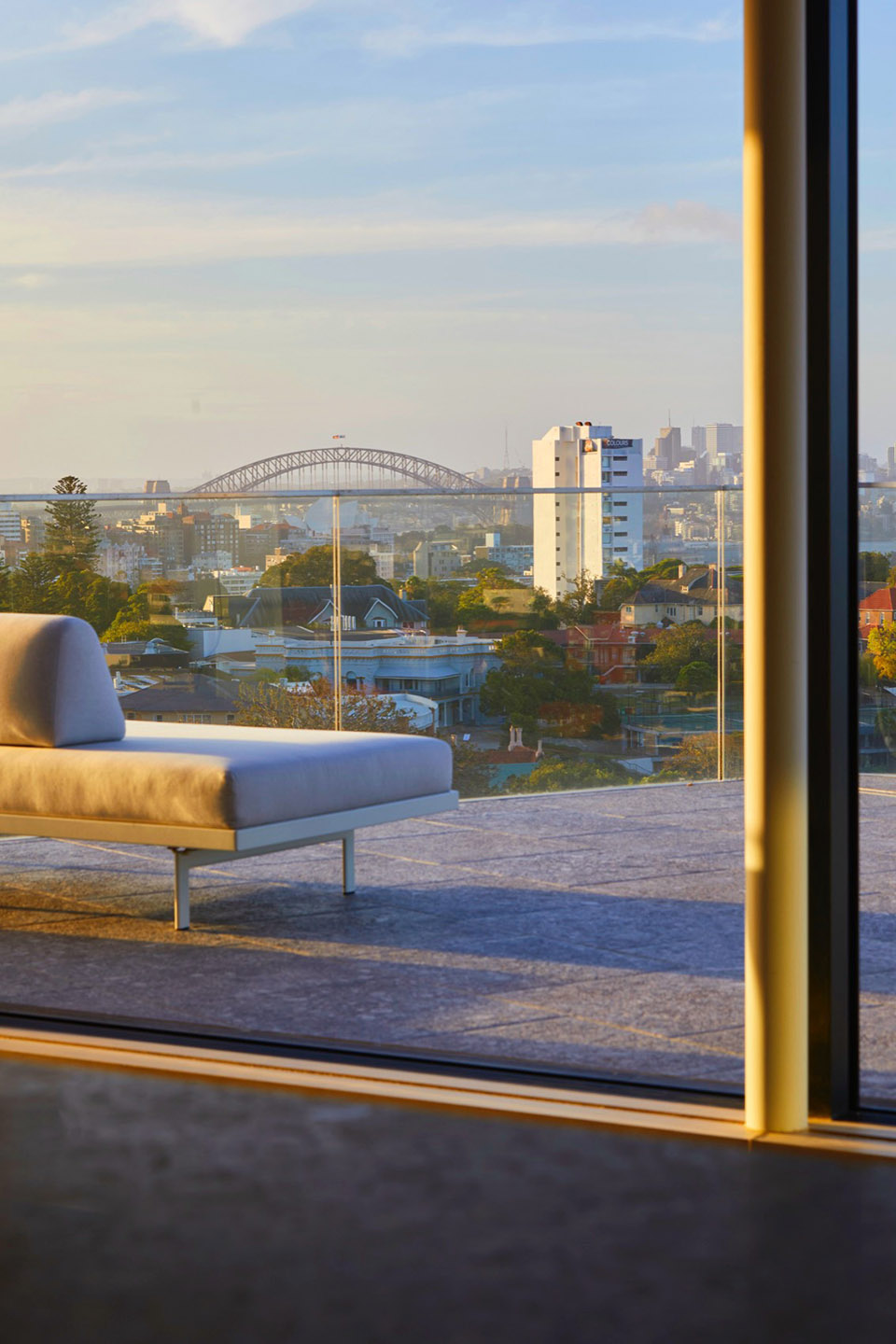
▼景观视野,views from the balcony
Location: Edgecliff
Council: Woollahra Council
Design Architect: Luigi Rosselli
Project Architects: Edward Birch, Kristina Sahlestrom, Simon Hassall, Jeffrey Blewett
Landscape Design: Dangar Barin Smith
Landscape Contractor: Precision Landscapes
Interior Design: Atelier Alwill
Structural Engineer: Partridge Engineering Consultants
Developer: Primo Development Sydney
Decorative Brass Lighting: Oliver Tanner Art & Design
Photographer: Martin Mischkulnig