希音咖啡·感官研究社,云南保山 / 拾号建筑
云南保山已是当今咖啡旅游的火热城市,希音是本地相当专业的咖啡机构,他们的业务涵盖种植、加工、处理、研发以及教学和培训。感官研究社是希音咖啡的新门店,他们期待咖啡风味带来的感官体验可以和新店建筑浑然一体。
As an emerging hub for coffee tourism, Baoshan in Yunnan boasts a mature local coffee ecosystem. Voiceless Coffee is a professional local coffee institution that covers the full industrial chain, including coffee cultivation, primary processing, post-harvest treatment, product research and development, as well as professional coffee education and training. Its new outlet, the Sensory Lab, is designed to integrate multi-dimensional flavour sensory experiences with architectural spatial design.
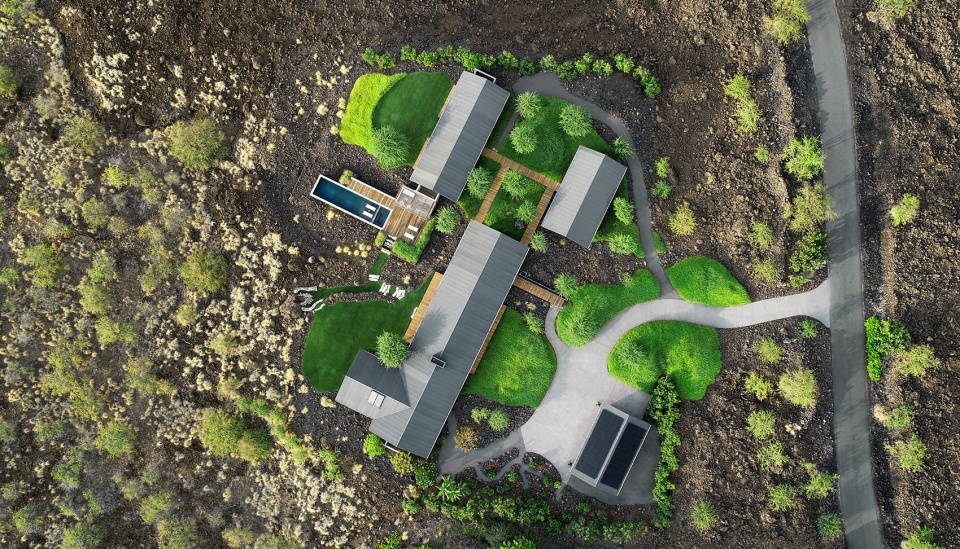
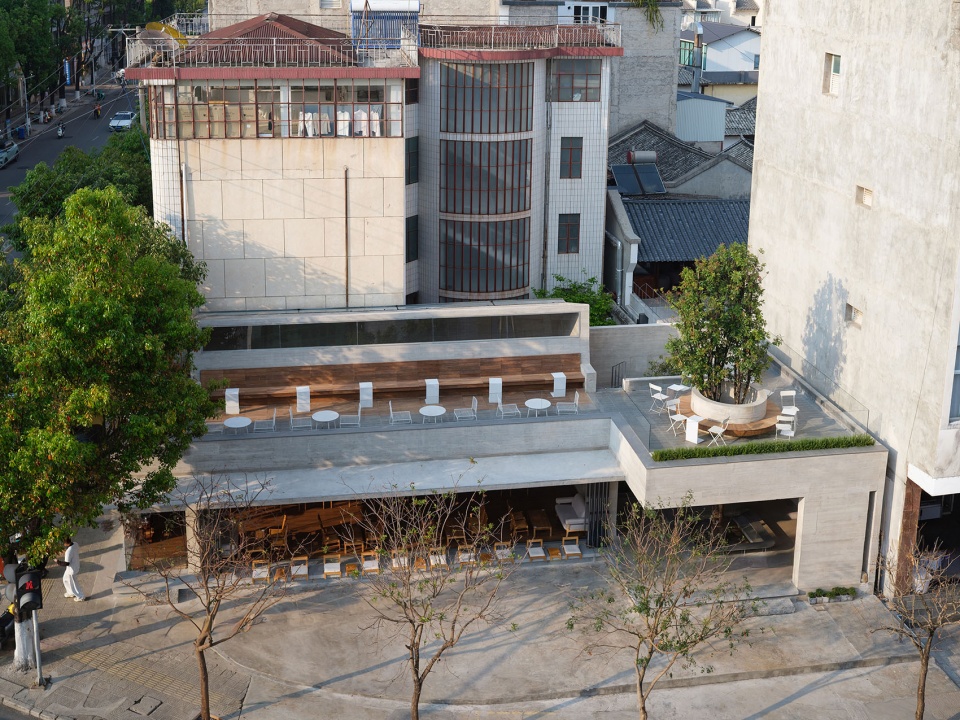
▼项目鸟瞰,Aerial view of the project
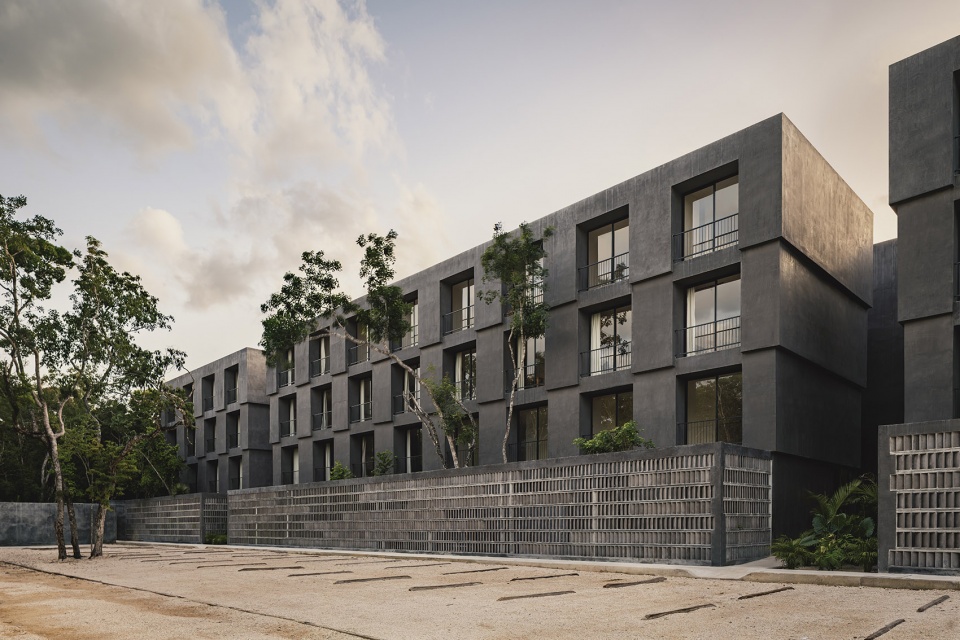
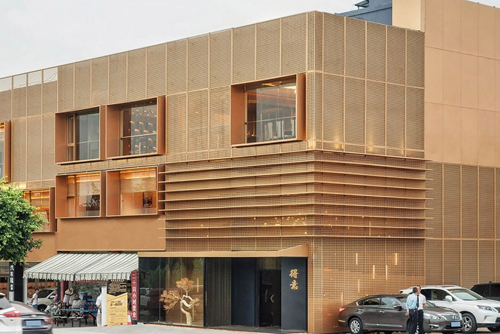
▼街道界面,Street frontage
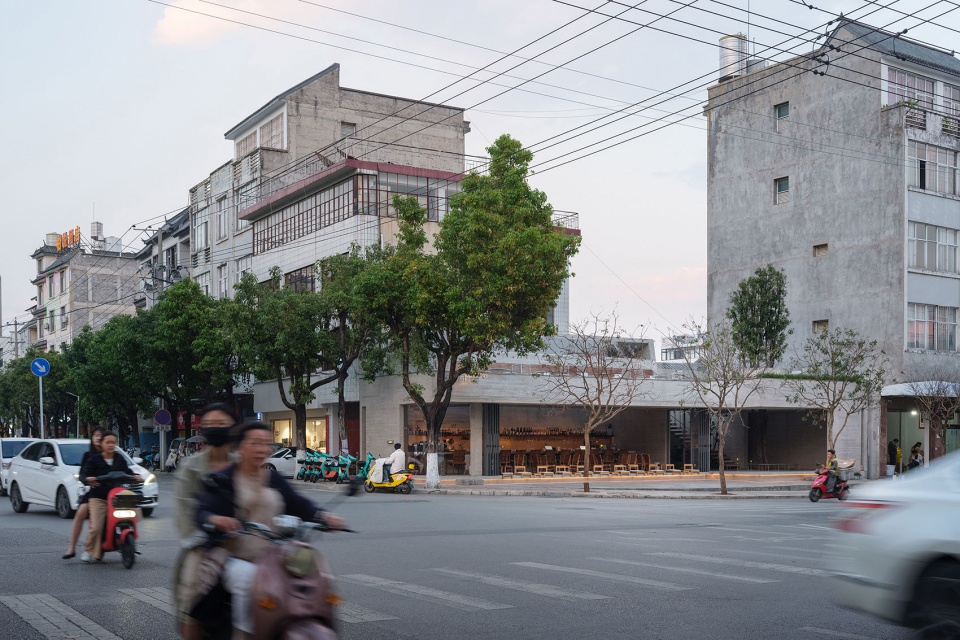
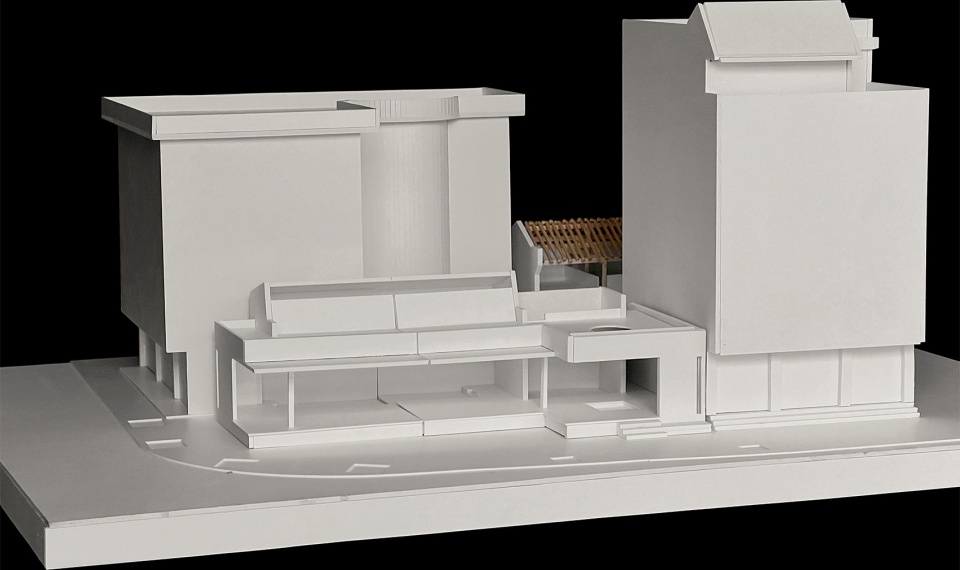
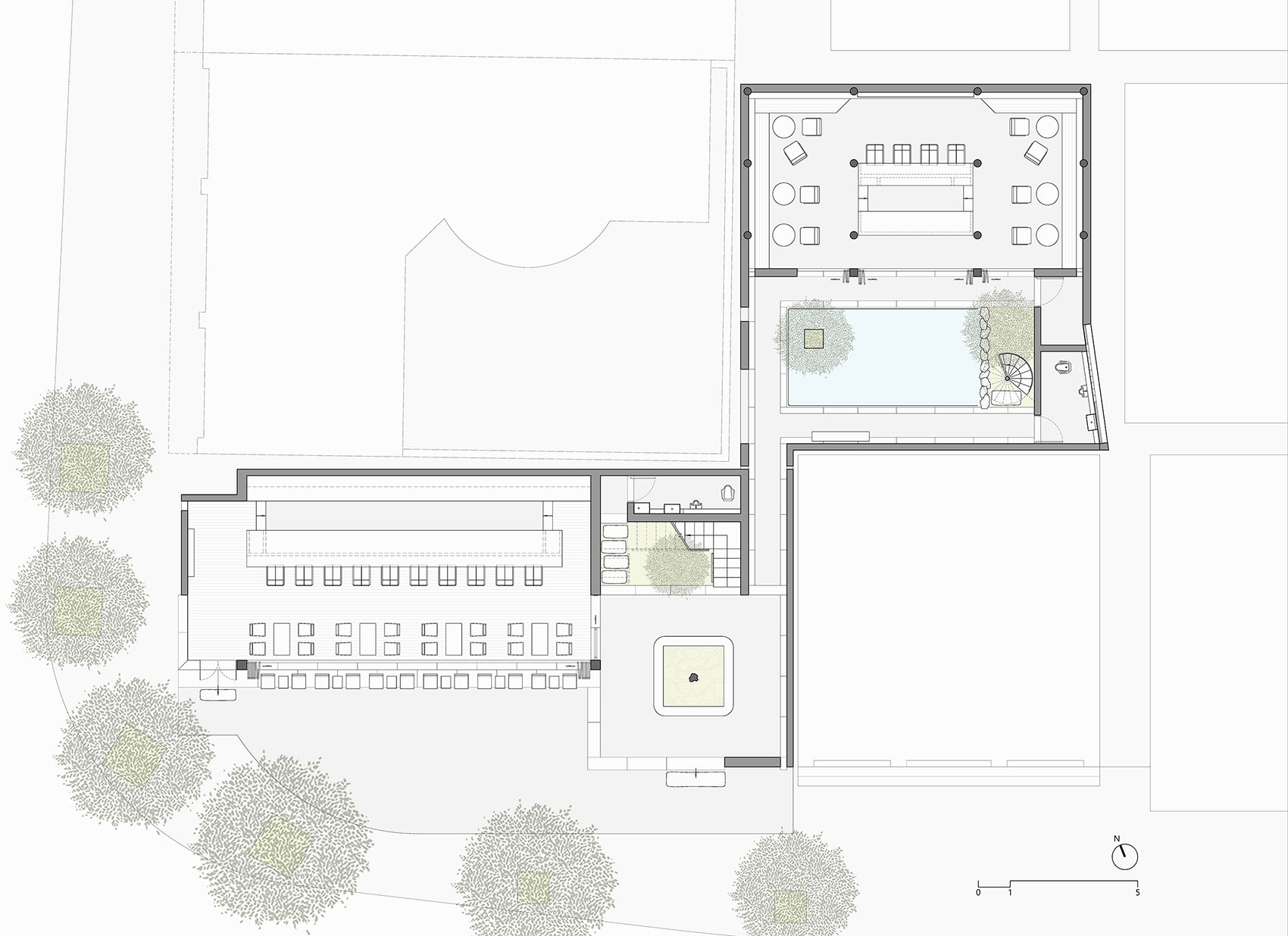
项目选址于市区内的一段十字路东北角,用地分为内外两块场地,外场地紧邻街道,东西20米面宽,南北最小处进深为7米,占地150平方米;内场地为一栋坐北朝南的二层砖木民居和它的一方小院,占地120平方米;一条开口仅为2米的通道连接着两块不同状态的场地。
▼手工模型,Physical model
▼模型剖切示意,Sectional model diagram
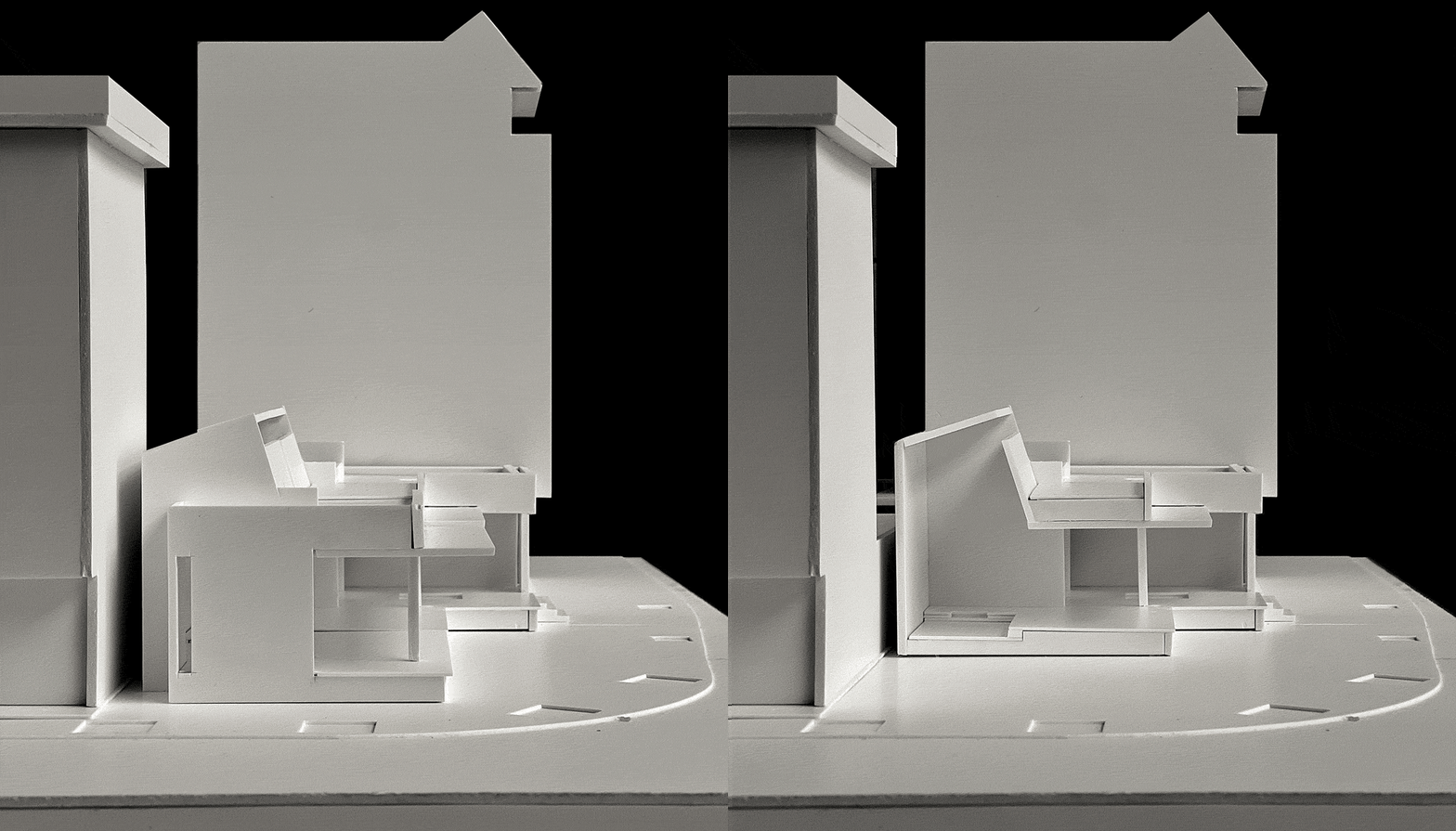
The project is located at the northeast corner of a crossroad in central Baoshan, consisting of two independent yet connected plots. The outer plot adjoins urban streets, with a 20-metre east-west width and a minimum north-south depth of 7 metres, covering a site area of 150 square metres. The inner plot comprises a south-facing two-storey brick-and-wood traditional residence and its private courtyard, spanning 120 square metres. A 2-metre narrow passage serves as the only connection between the two spatially differentiated sites.
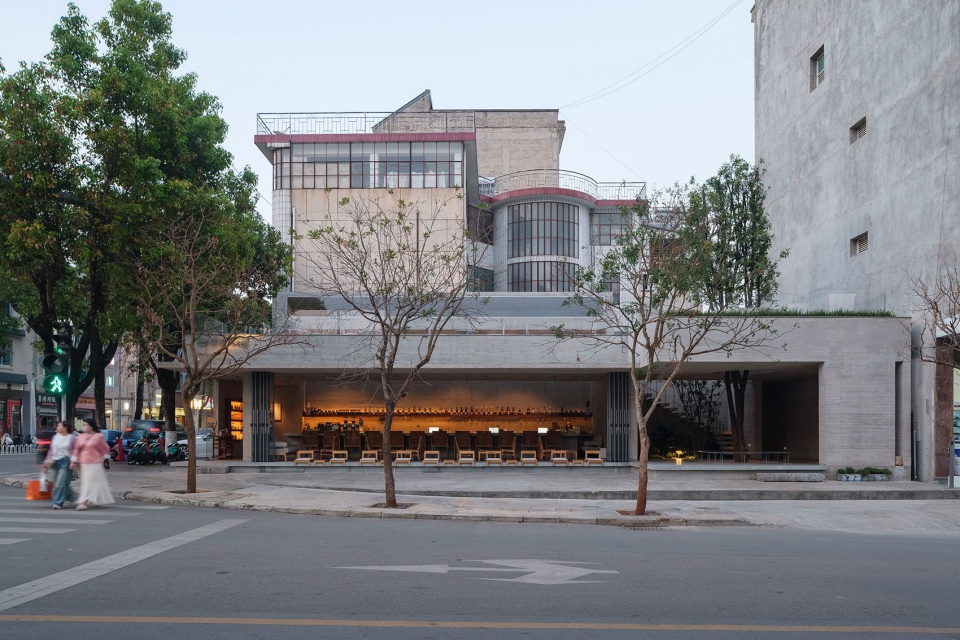
▼沿街立面,Street facade
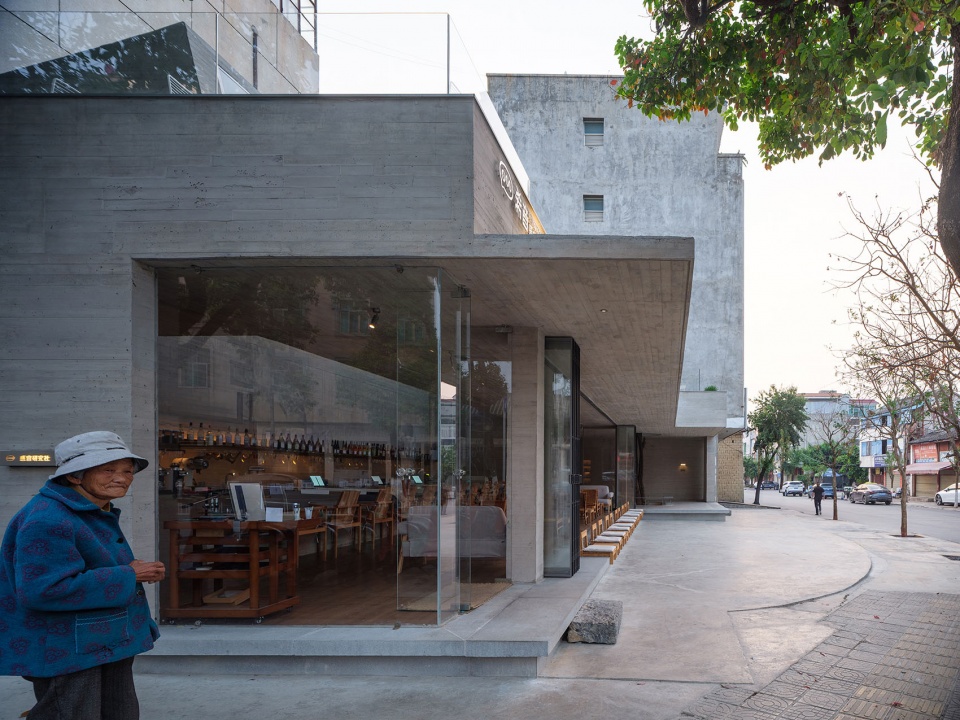
▼西侧人行道视角,Street-side view
场地策略 Site Strategy
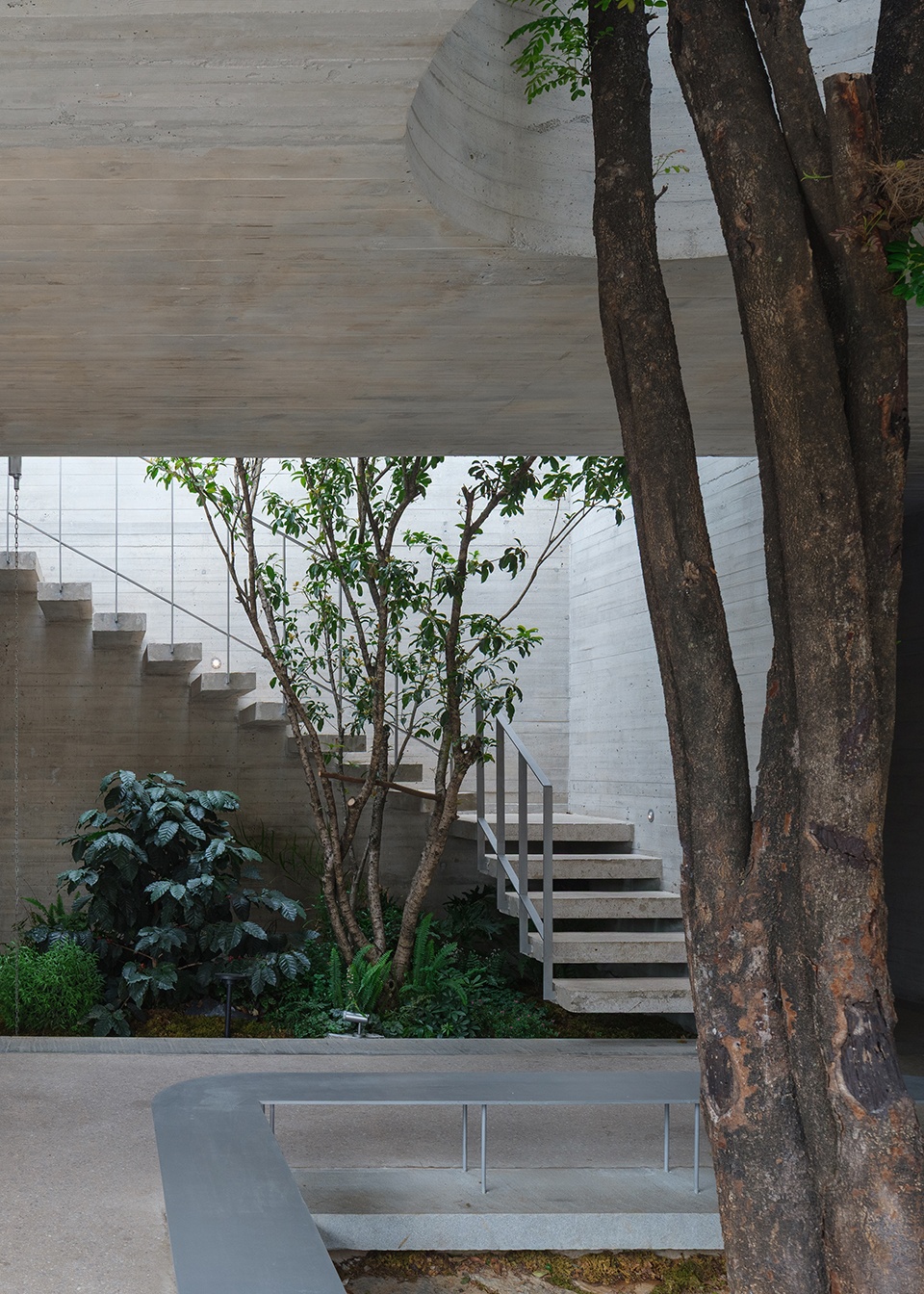
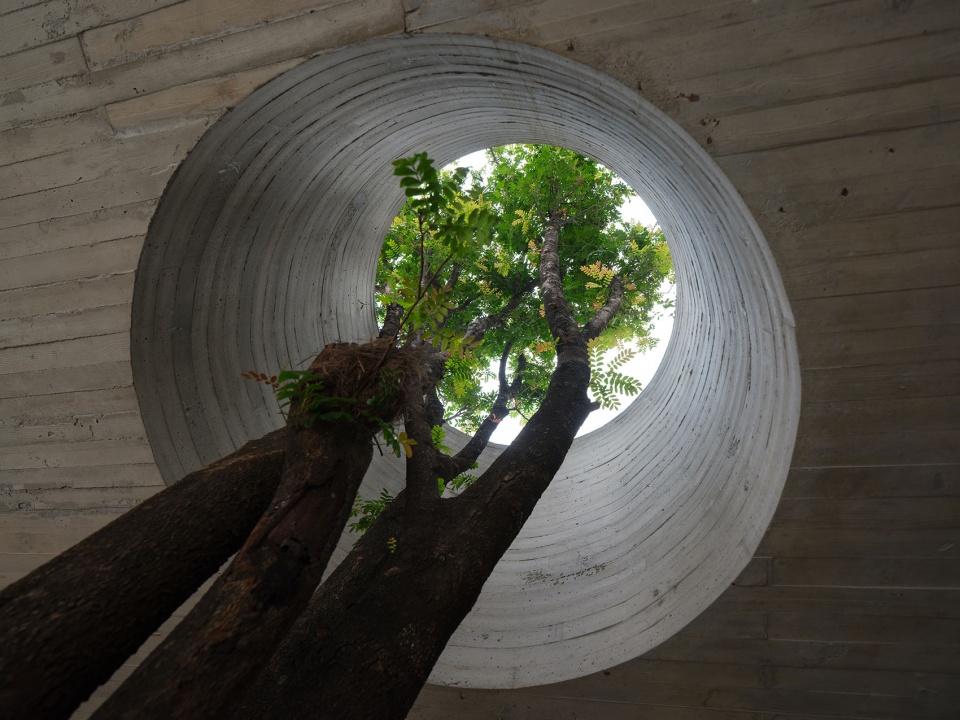
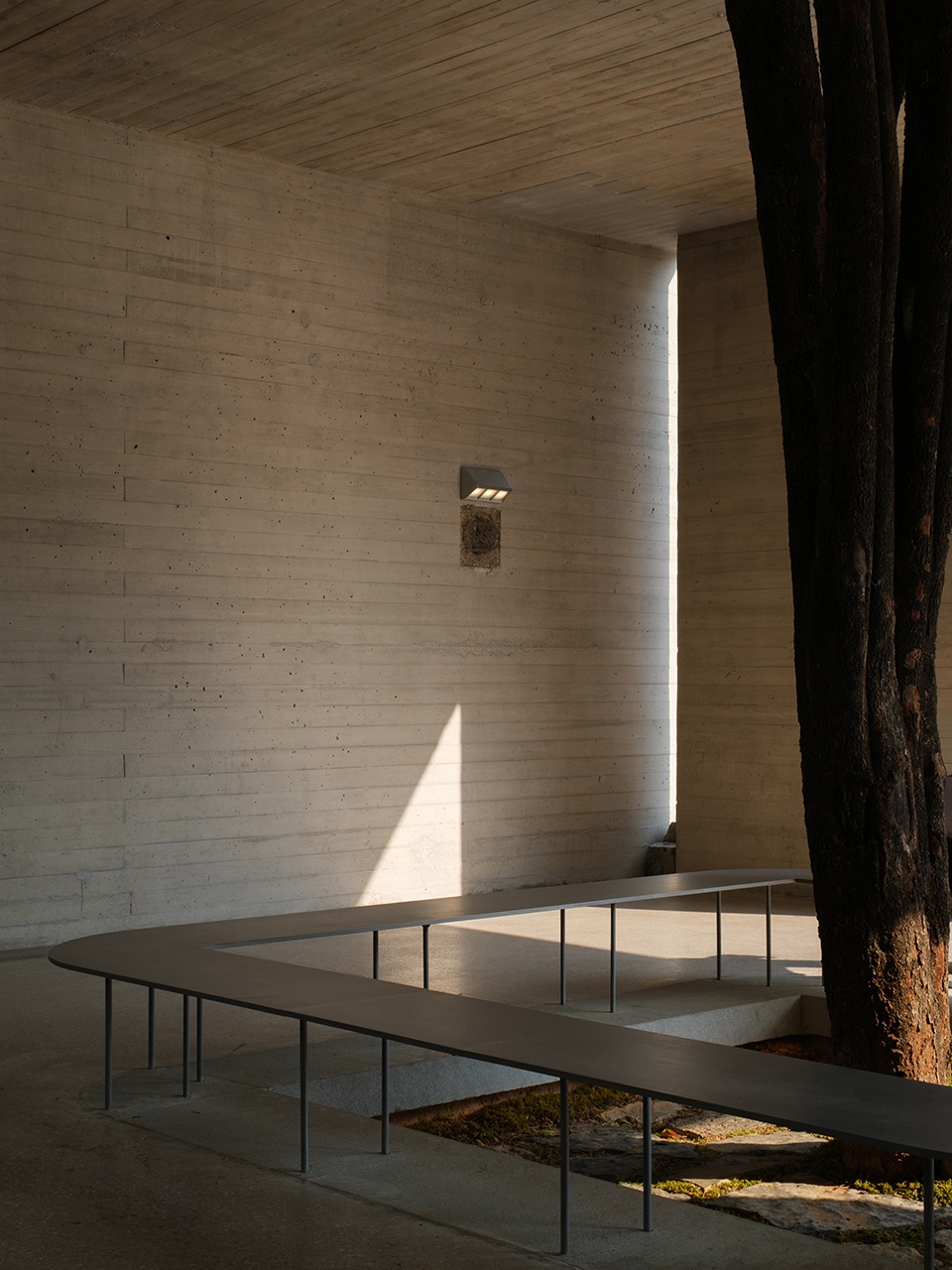
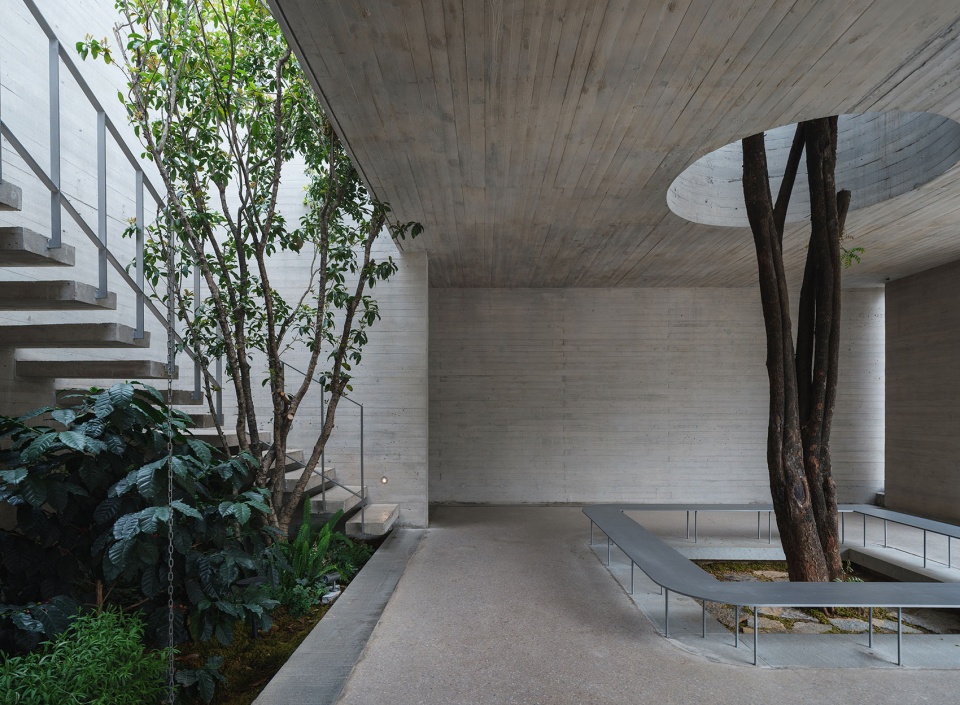
由于位置和围合的关系,内外两块场地天然呈现出两种不同的氛围:外场热闹、喧哗,内场平静、祥和,建筑的空间氛围也应当顺势而为。但为了不让两种氛围体验转换得过于直白,我们在外场东侧设计了6米见方的灰空间作为过渡区,过渡区中部挖一口天井,种一棵树,便划分出回字型流线衔接内外场域,接着将过渡区南移至用地边界,既增加出楼梯院落和卫生间等功能空间,也顺利将进入内场的通道拉长,增加了过渡体验的转换。
Due to geographical conditions and peripheral enclosures, the outer and inner plots feature distinct ambient attributes: the outer area presents a bustling urban atmosphere, while the inner courtyard delivers a quiet and secluded vibe. The architectural spatial design follows such inherent site characteristics. To avoid abrupt sensory transitions between the two scenarios, a 6-metre-square transitional grey space is deployed on the east side of the outer plot. A courtyard patio with a single tree at its centre is embedded in the transitional zone, forming a looped pedestrian circulation to link the outer and inner spaces. The entire transitional structure is shifted southward to the site boundary, which accommodates auxiliary functional spaces including staircase courtyards and restrooms, while extending the entry passage to the inner courtyard and enriching the layered spatial transition experience.
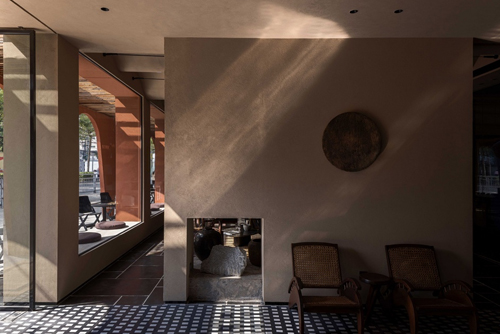
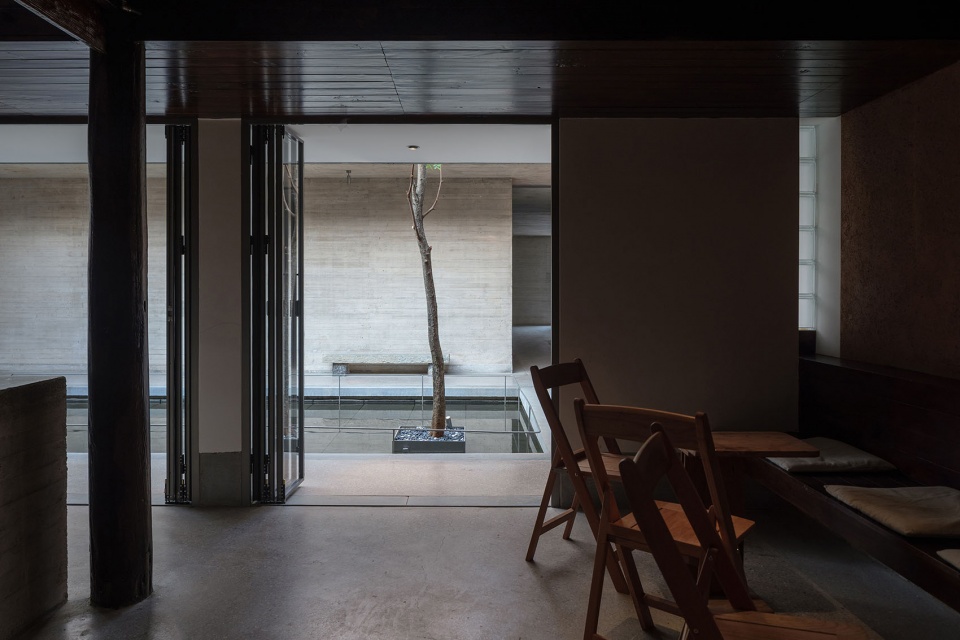
▼内外场之间的过渡空间,Transition space between outer and inner zones
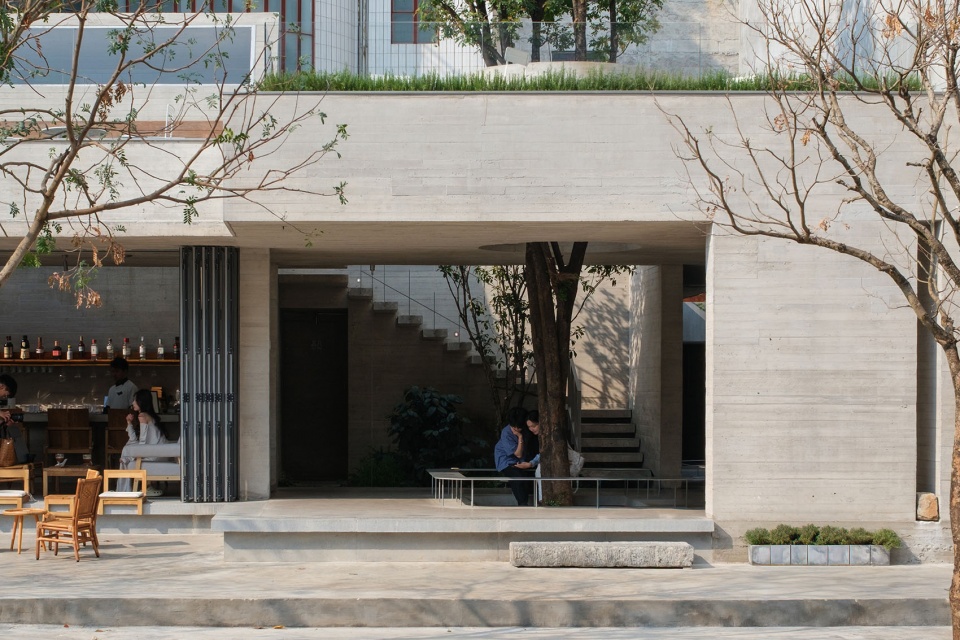
▼过渡空间小院,Transitional courtyard
▼天井,Lightwell space
▼过渡空间一角,Corner of the transition space
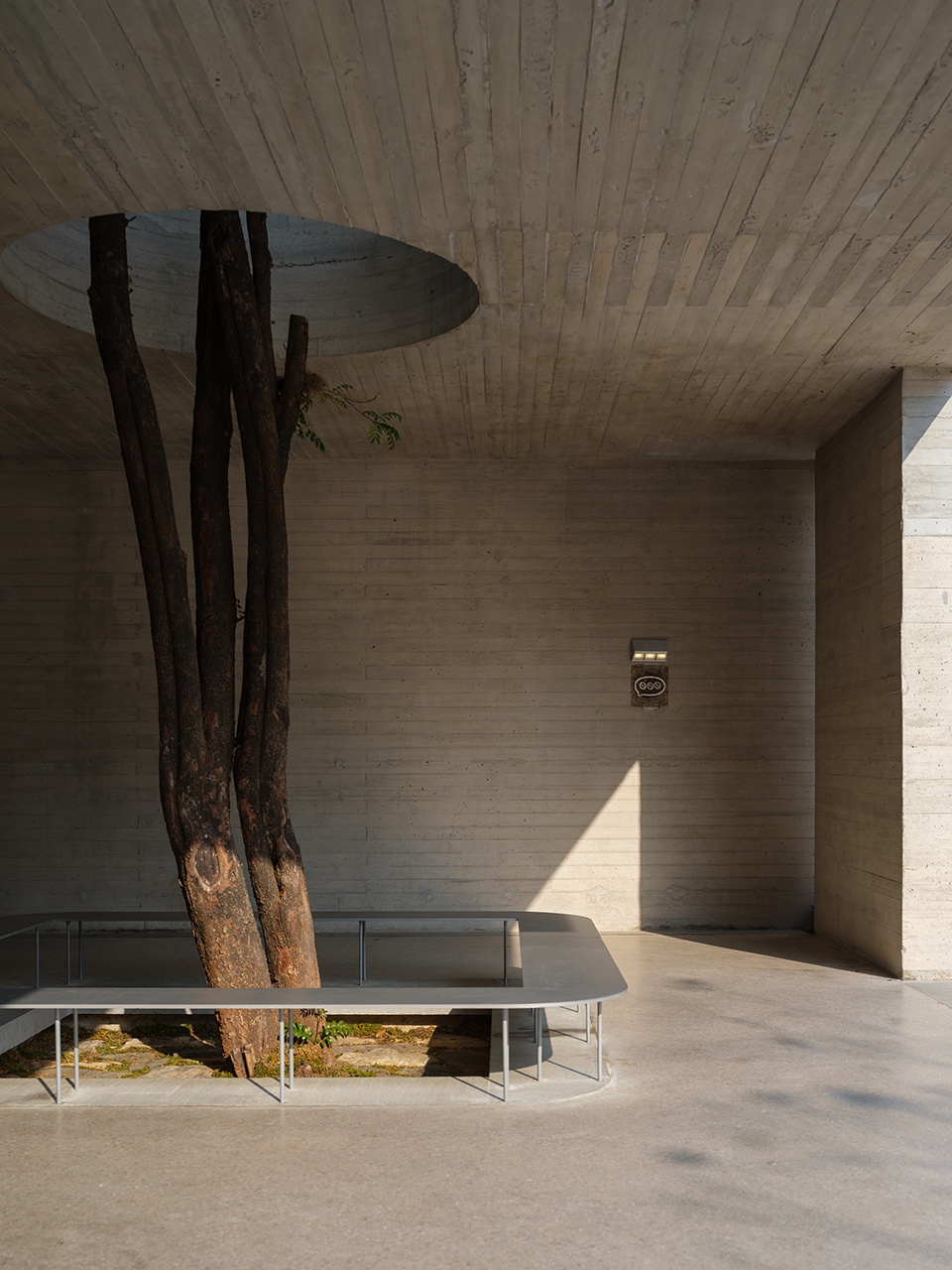
▼过渡空间望向外场,View toward the outer area from the transition space
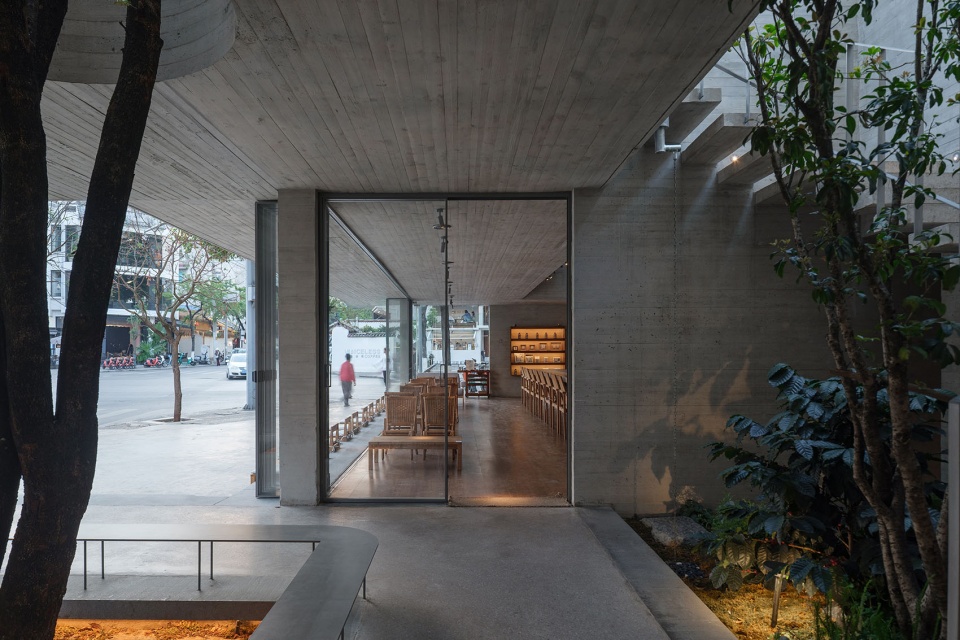
▼进入内场的廊道,Corridor leading to the inner courtyard
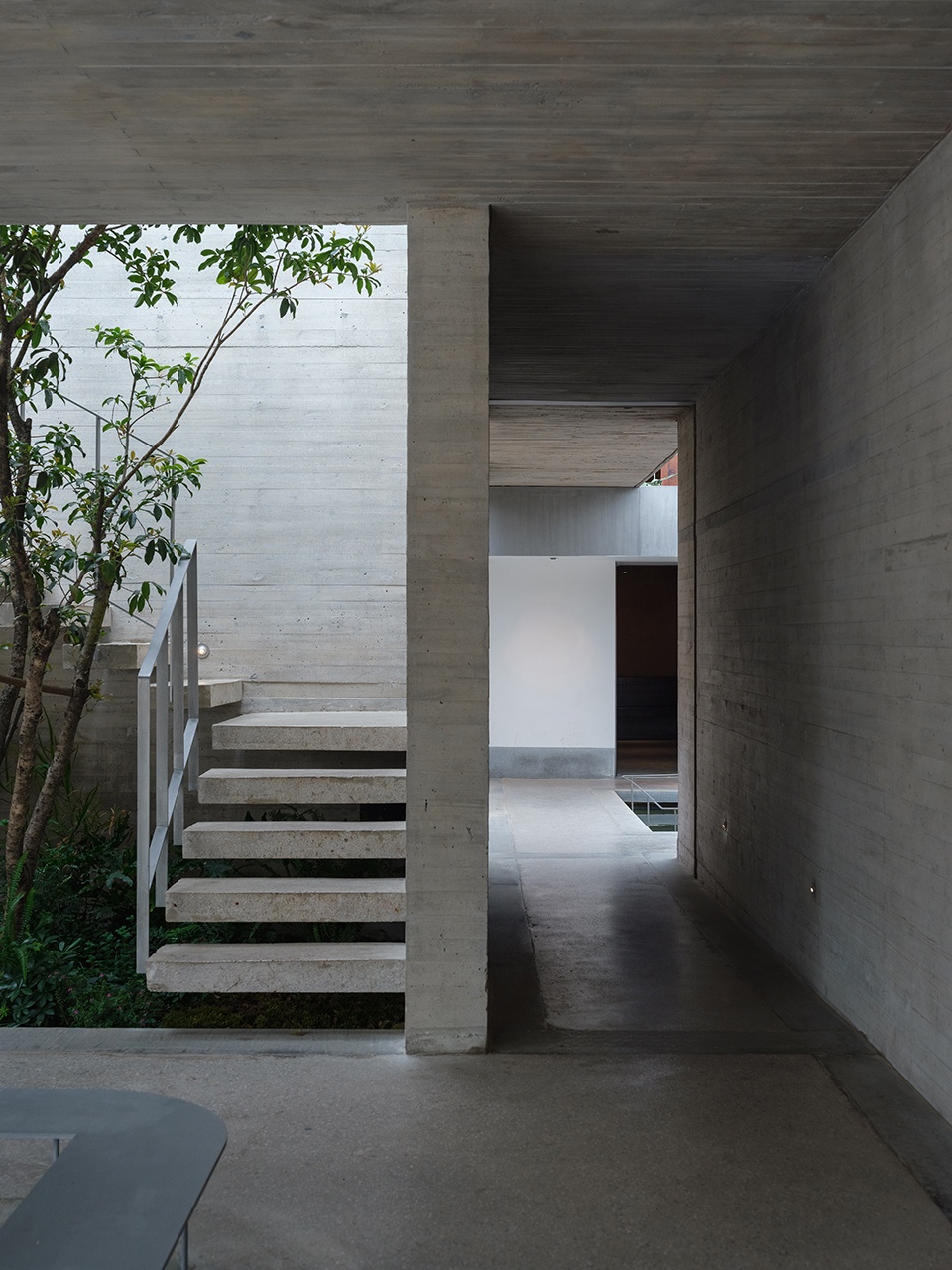
▼悬挂楼梯,Suspended staircase
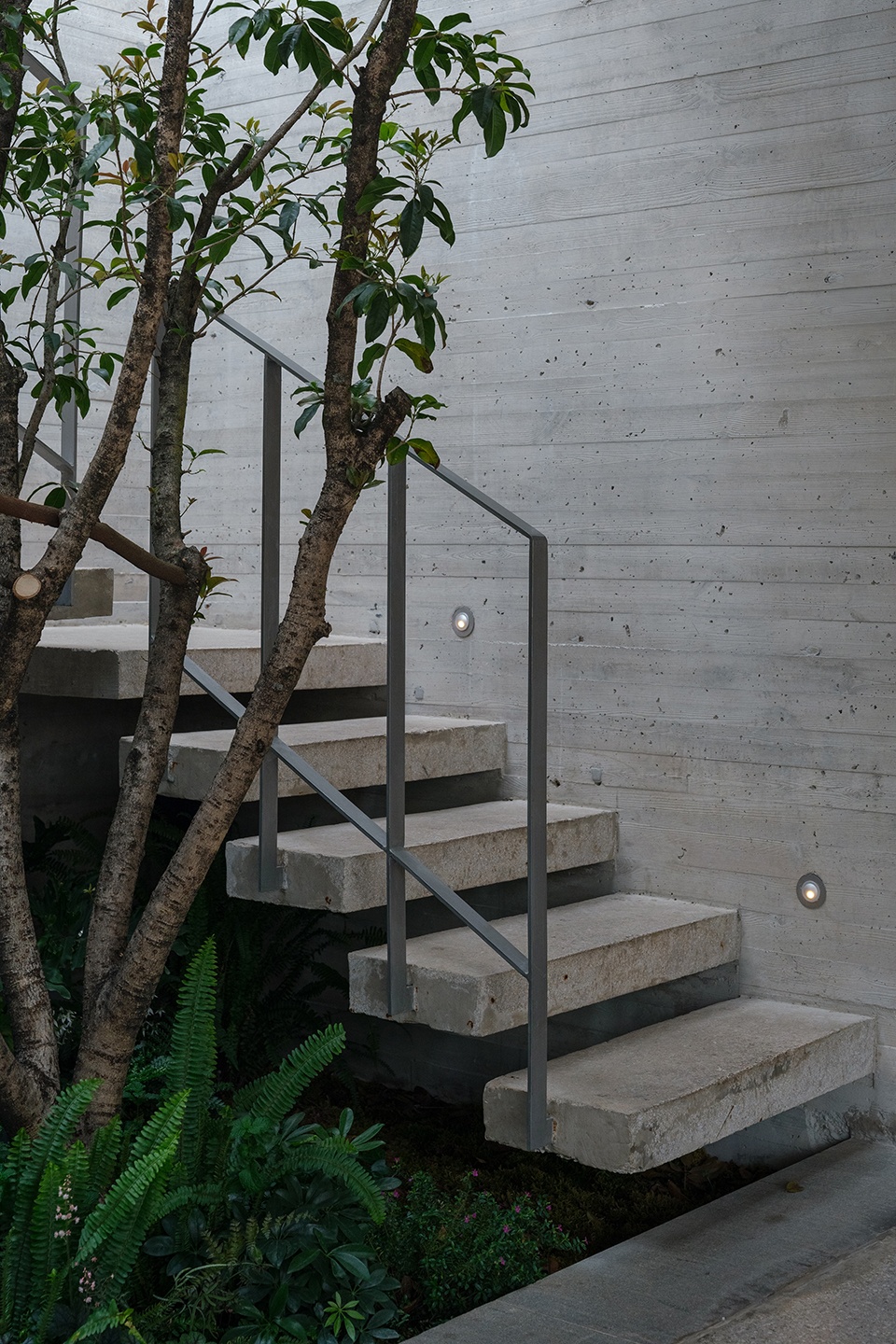
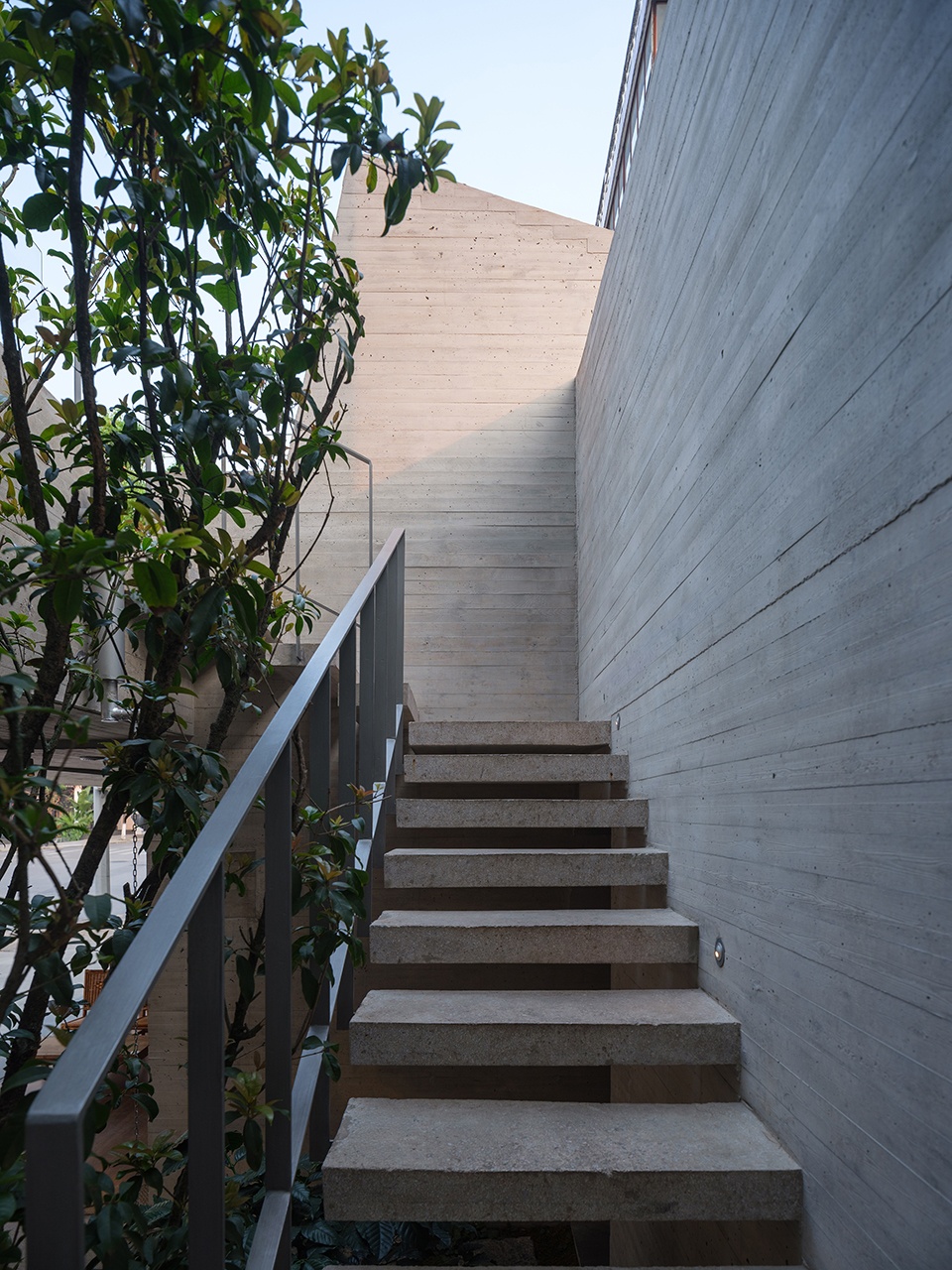
▼拾级而上至屋面露台,Path leading to the rooftop terrace
外场 Outer Plot
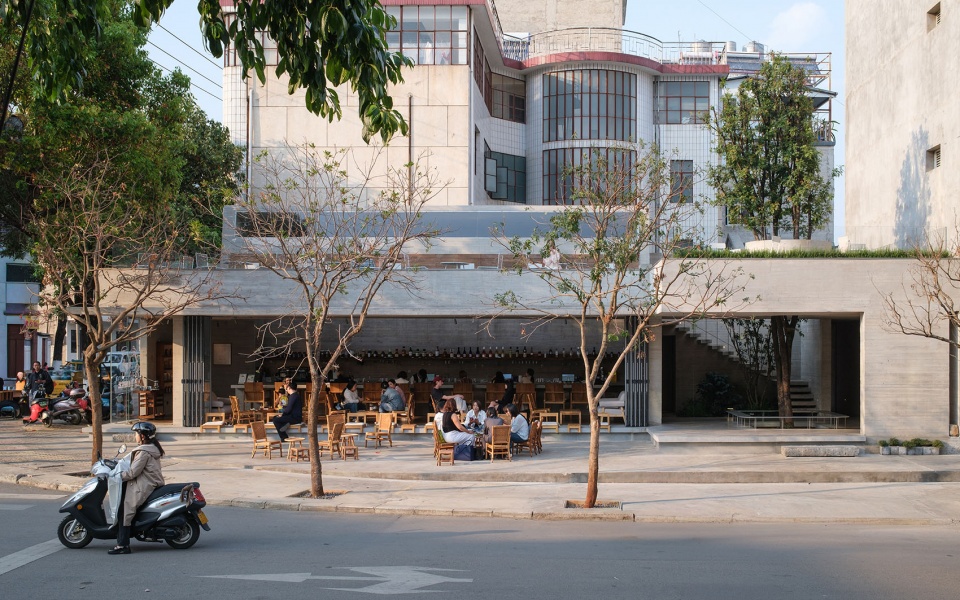
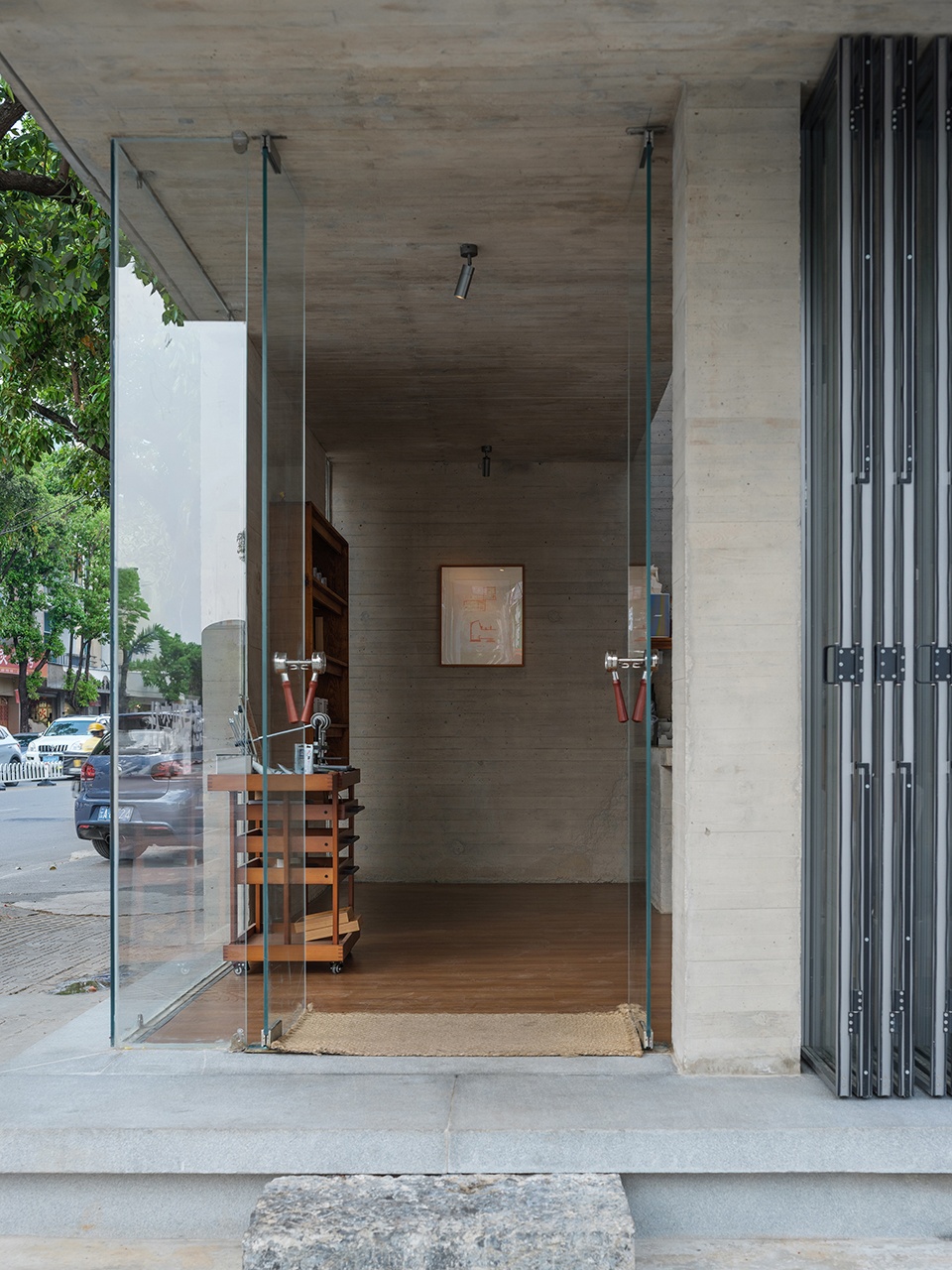
由于外场用地的尺寸规格和层数的限制,建筑体量会横向卧倒在城市中,我们觉得简洁的形体关系和丰富的横向脉络会是这个建筑最合适的姿态。
Restricted by site dimensions and architectural height regulations, the building adopts a horizontal layout along the urban interface. A concise architectural volume paired with layered horizontal spatial textures constitutes the core design of the outer venue.
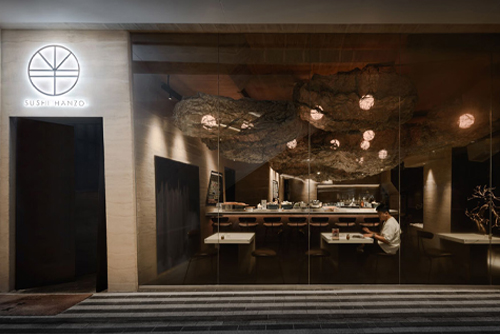
▼开放的外场,Open outer seating area
▼外场入口,Entrance to the outer area
▼外场内部东视角,East-facing view of the outer area
▼外场内部西视角,West-facing view of the outer area
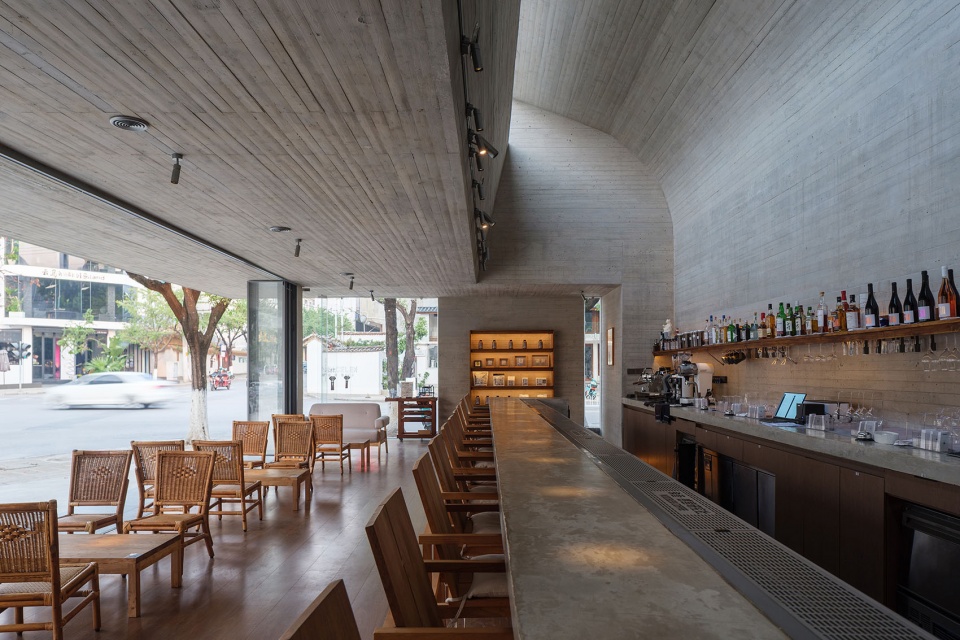
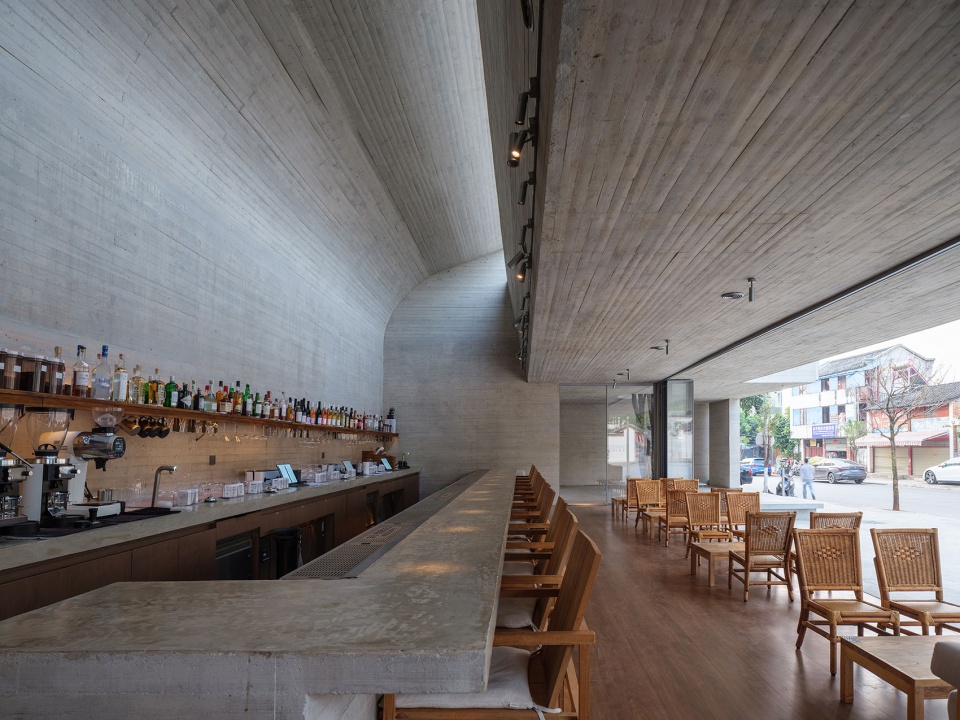
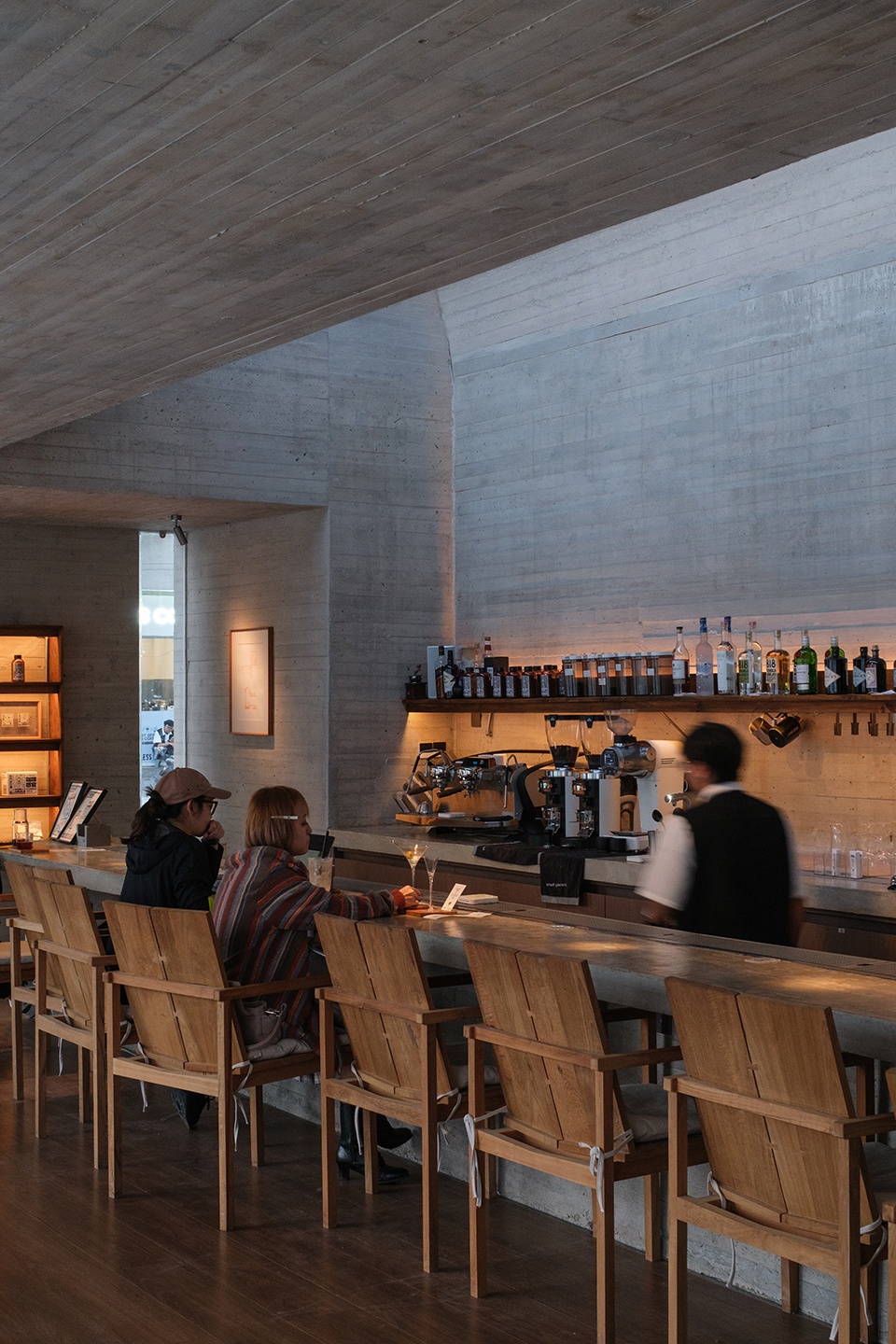
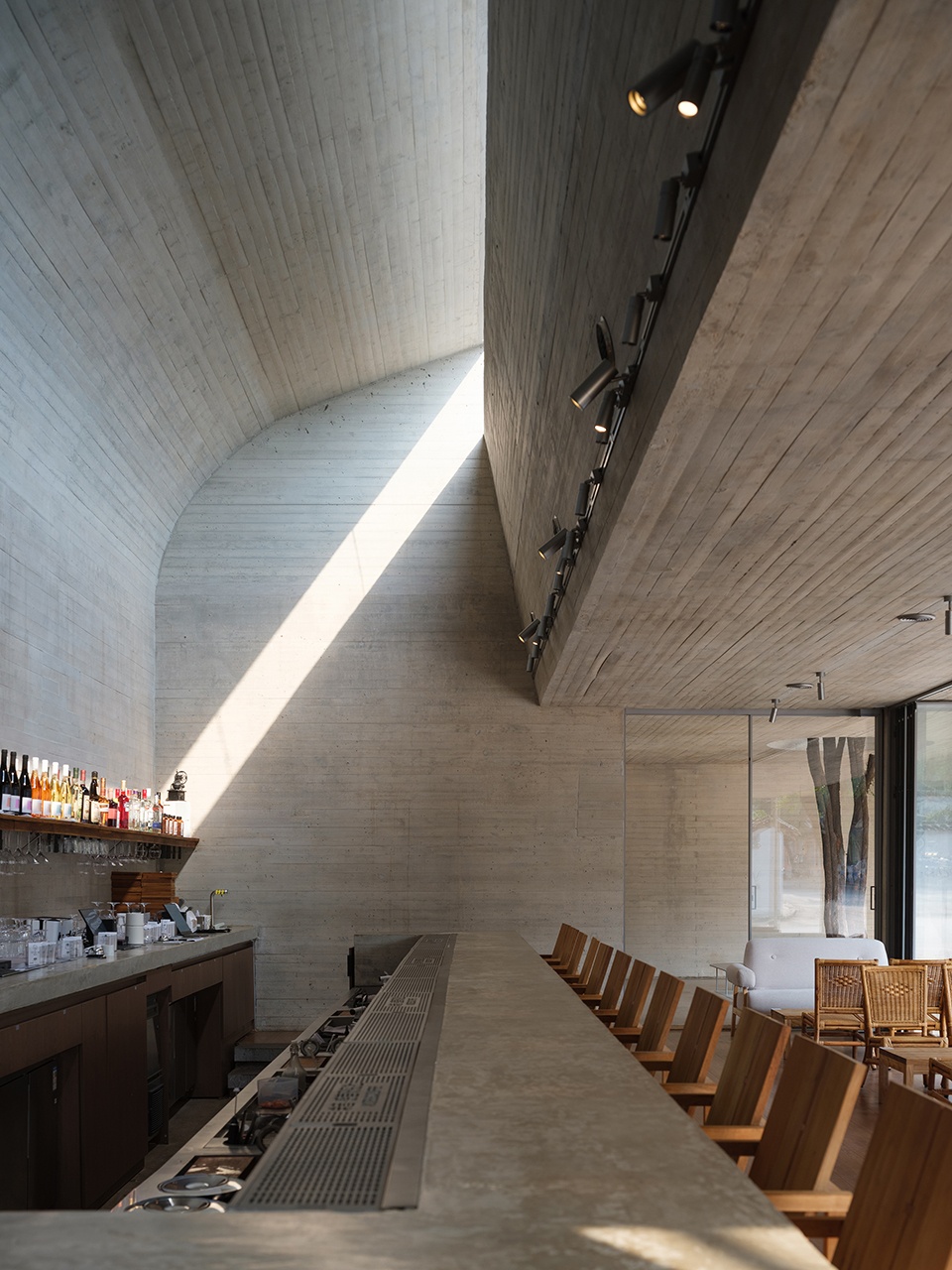
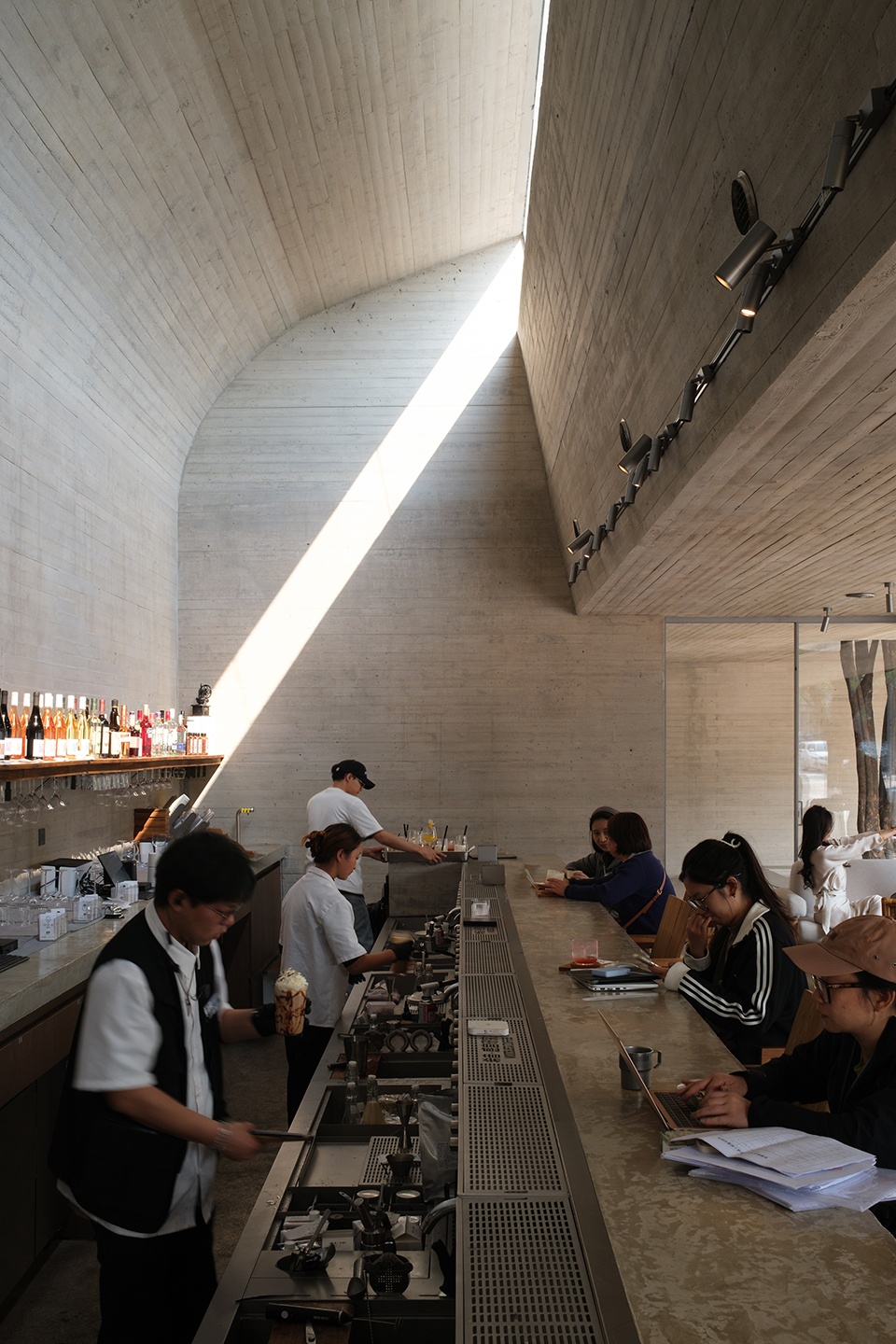
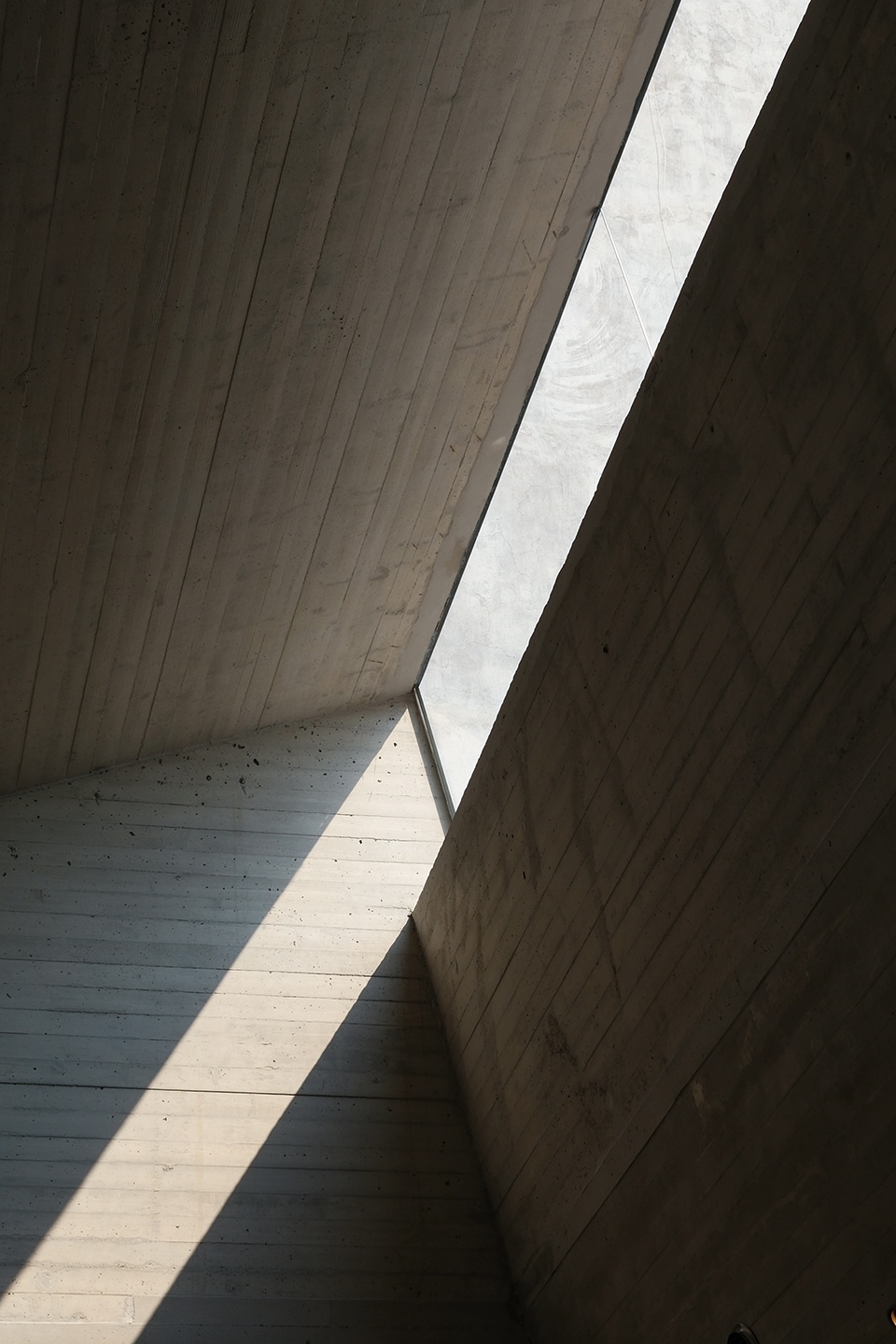
首先,在内侧布置了一条横向长吧台,接着将吧台上空做挑高处理,最后通过弧面和斜面切出一条和吧台同长的高侧窗。朝南的高侧窗不仅能满足吧台全天的自然采光需求,而且可以将不同时间段的光线表情映射到建筑内部,挑高空间冒出屋面的斜墙也成为了上部露台非常舒适的倚靠背板。
A full-length horizontal bar counter is installed on the inner side of the space, with a double-height overhead structure. Curved and inclined facades form a long clerestory window aligned with the bar counter. The south-oriented clerestory guarantees sufficient all-day natural lighting for the bar area, and introduces dynamic daylight variations to the interior space across different time periods. The inclined wall protruding above the double-height volume also functions as a stable and comfortable backdrop for the rooftop terrace.
▼长吧台空间,Long bar counter
▼挑高空间,Double-height space
▼高侧窗引入自然光,Clerestory window bringing in daylight
▼屋面露台客座区,Rooftop terrace seating area
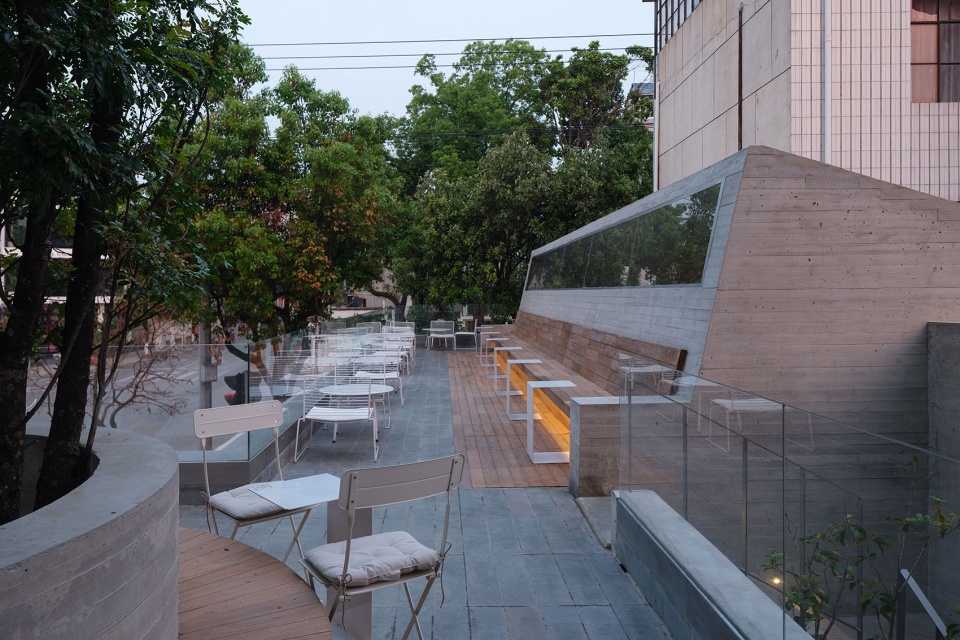
▼屋檐上下的空间体验,Spatial experience above and below the eaves
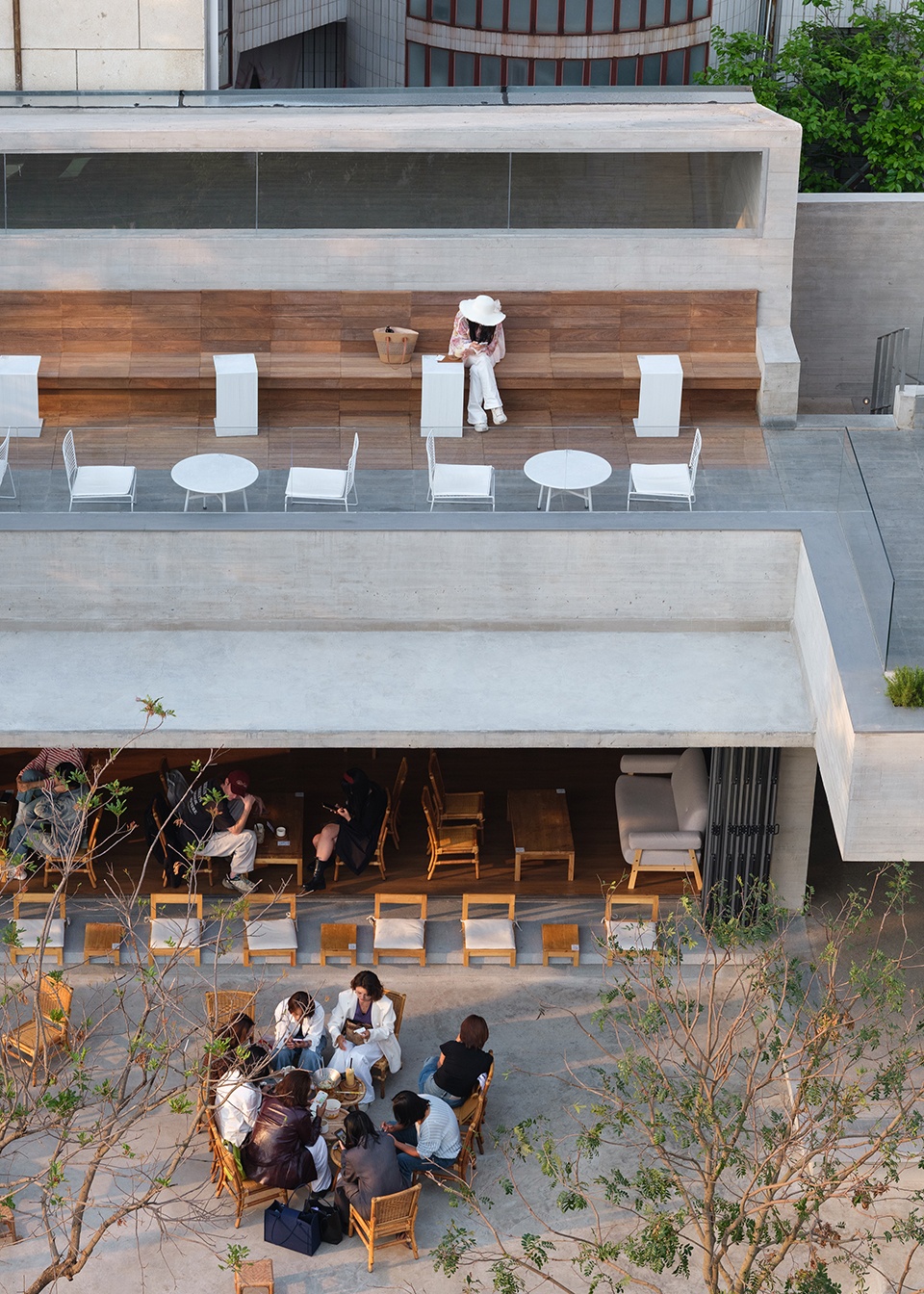
无论是横向的吧台和高侧窗,还是家具的摆放以及墙顶面的木纹混凝土,建筑中不同的内容和材料都在以不同的尺度呼应着它的姿态关系。
Multiple design elements, including the horizontal bar counter, extended clerestory window, custom furniture layout, and wood-grain concrete finishes on all building surfaces, collectively unify the horizontal spatial temperament of the architecture.
▼不同的客座体验,Various seating settings
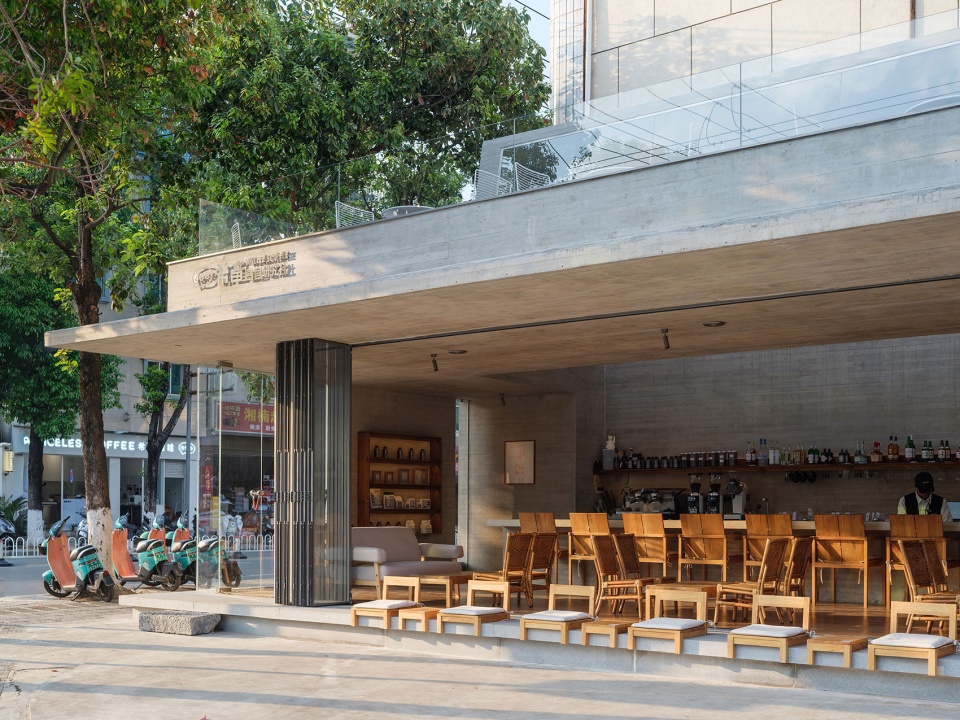
▼外场空间层次,Spatial layers in the outer area
▼木纹清水混凝土墙面,Wood-grain fair-faced concrete wall
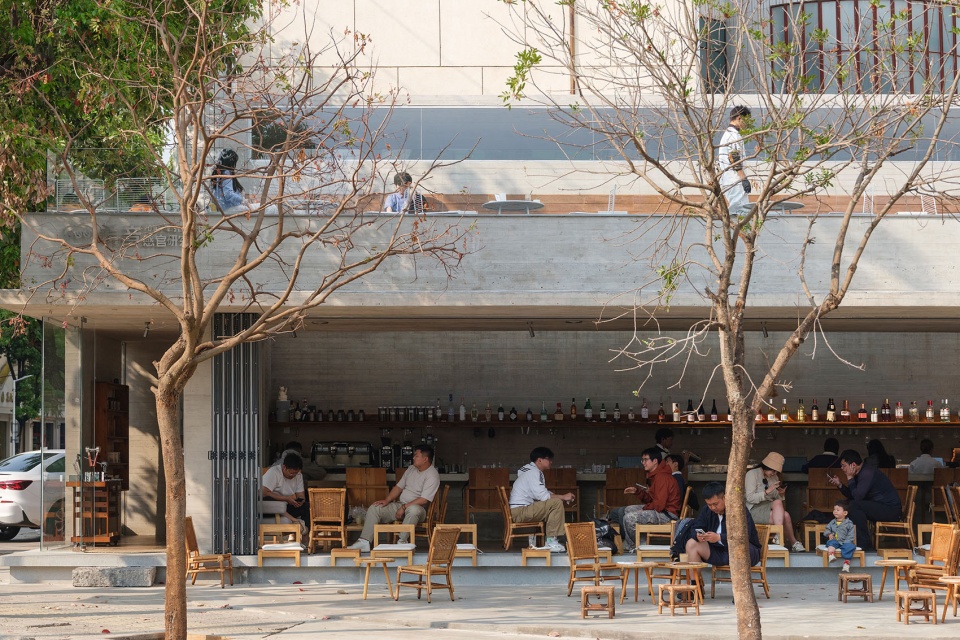
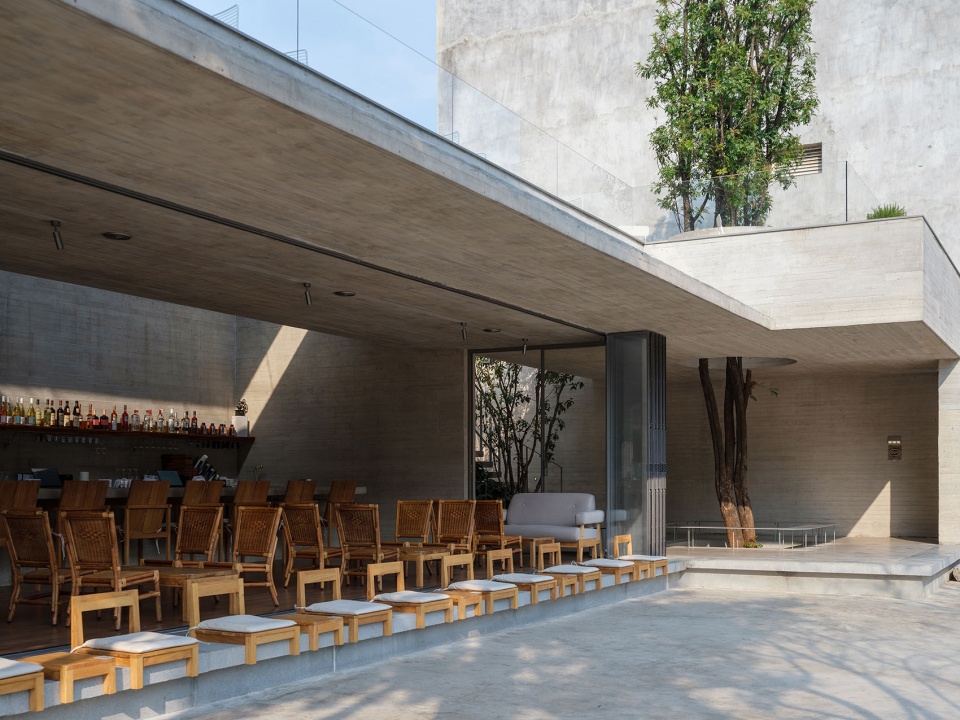
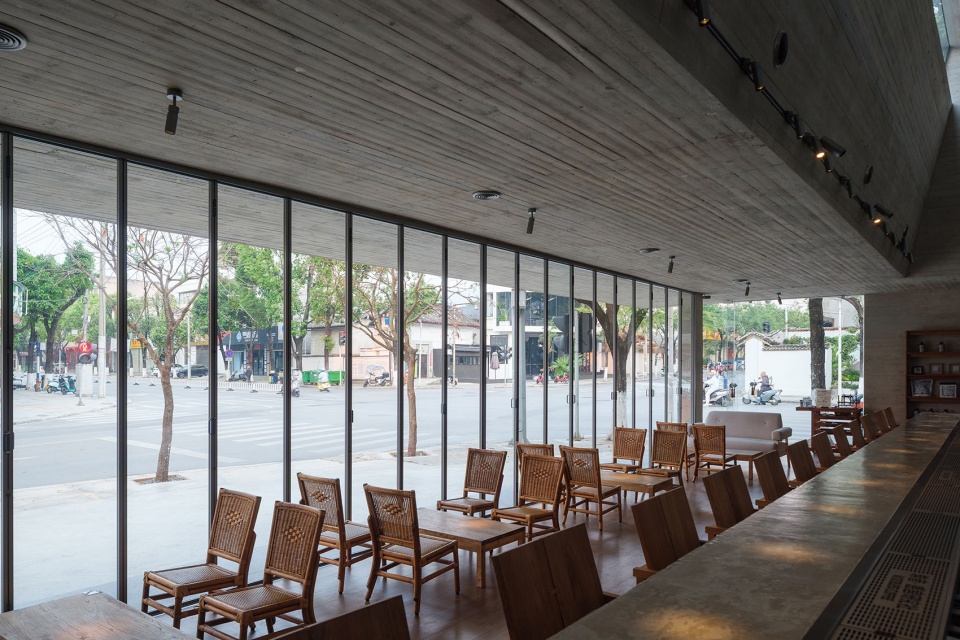
通过结构与空间的精妙配合,我们实现了建筑沿街面的最大打开,加上保山四季如春的气候,舒适且开放的氛围始终贯穿着建筑的室内外空间。
Optimized structural and spatial design maximizes the openness of the street-facing facade. Combined with Baoshan’s perennial mild climate, the indoor and outdoor spaces maintain a consistent open and comfortable spatial atmosphere.
▼外场经营打开状态,Outer area in open mode
▼外场关闭状态,Outer area in closed mode
内场 Inner Plot
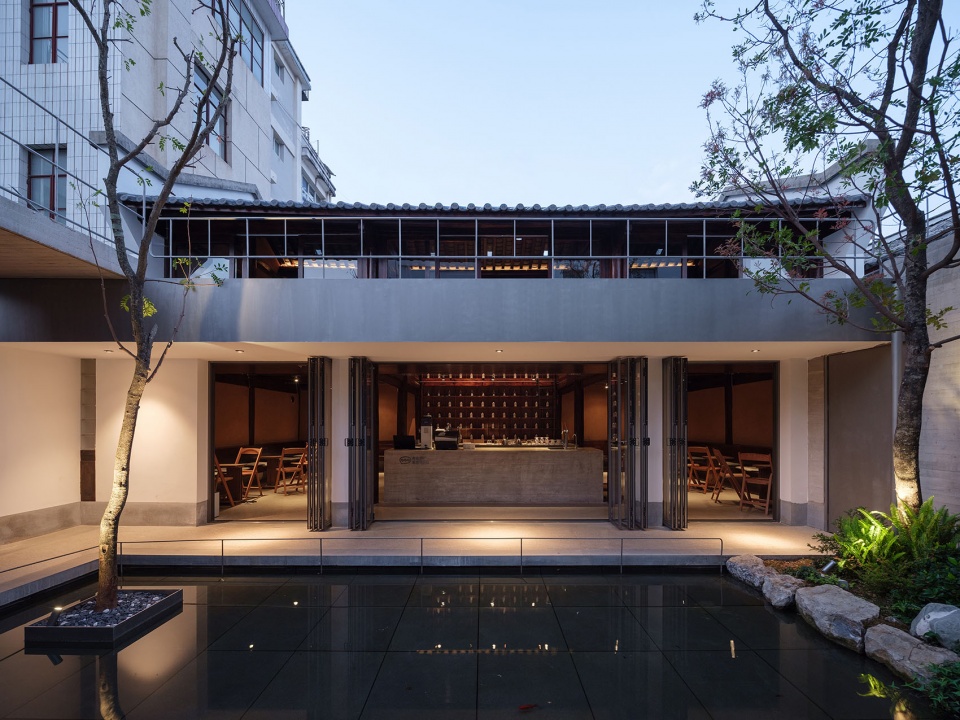
被周边建筑围合的内场院落虽有避世的安静,但原先四周的环境还是过于杂乱,新加入的L型混凝土连廊和东侧卫生间用房形成院落新的围合,也一并构建了新的规整界面。
Surrounded by adjacent buildings, the inner courtyard features a secluded and tranquil ambiance, though the original peripheral landscape lacked uniformity and order. A newly constructed L-shaped concrete corridor and the east-side restroom structure reorganize the courtyard’s enclosure boundary, forming standardized and orderly spatial interfaces.
▼内场院落,Inner courtyard
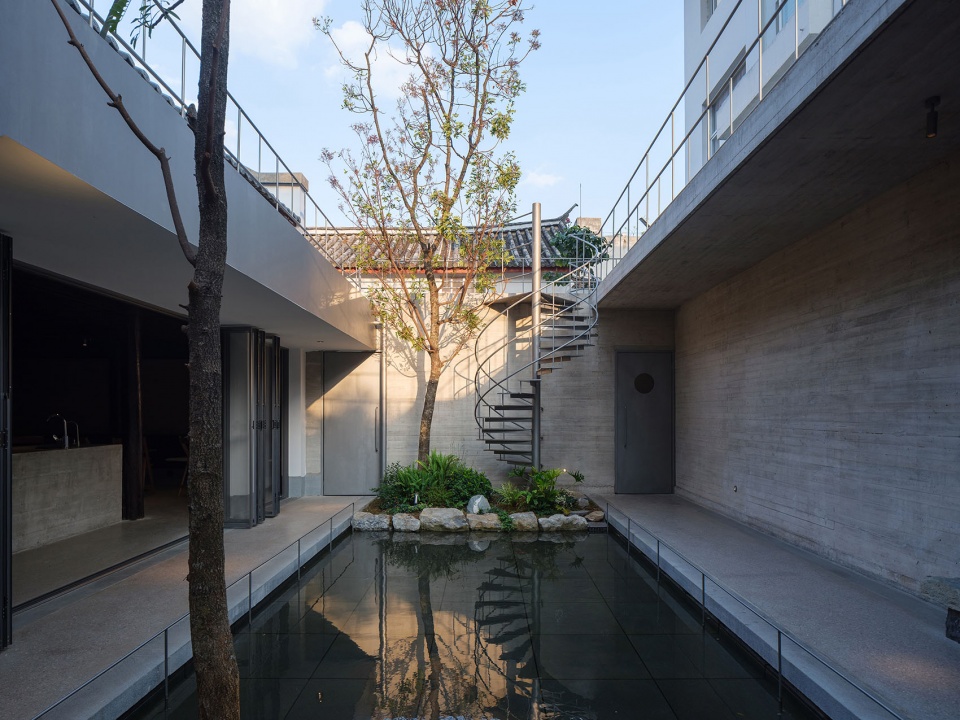
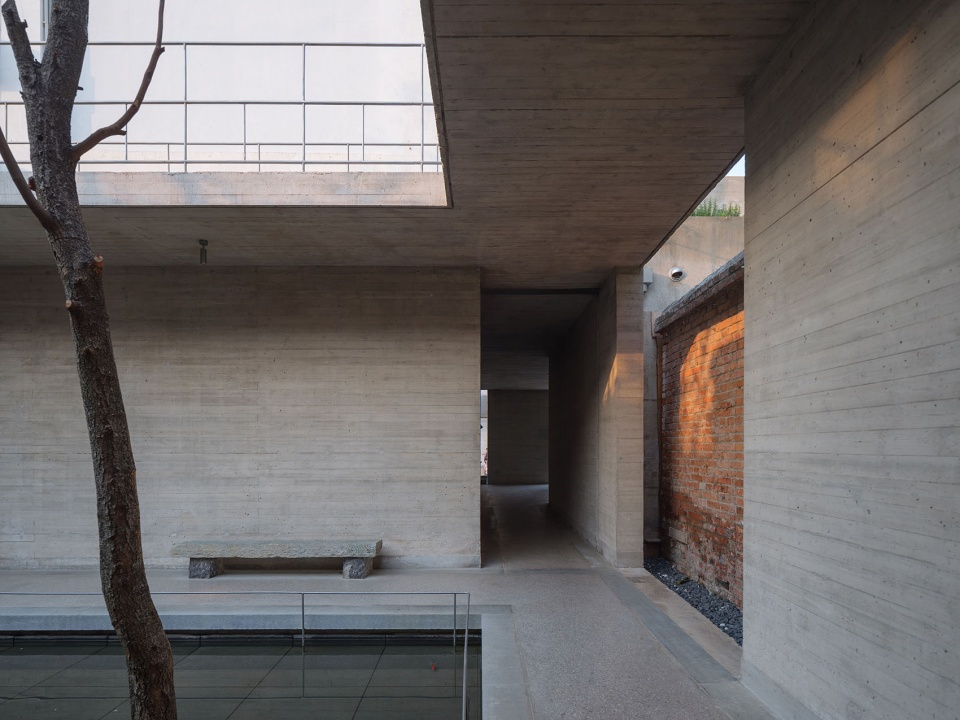
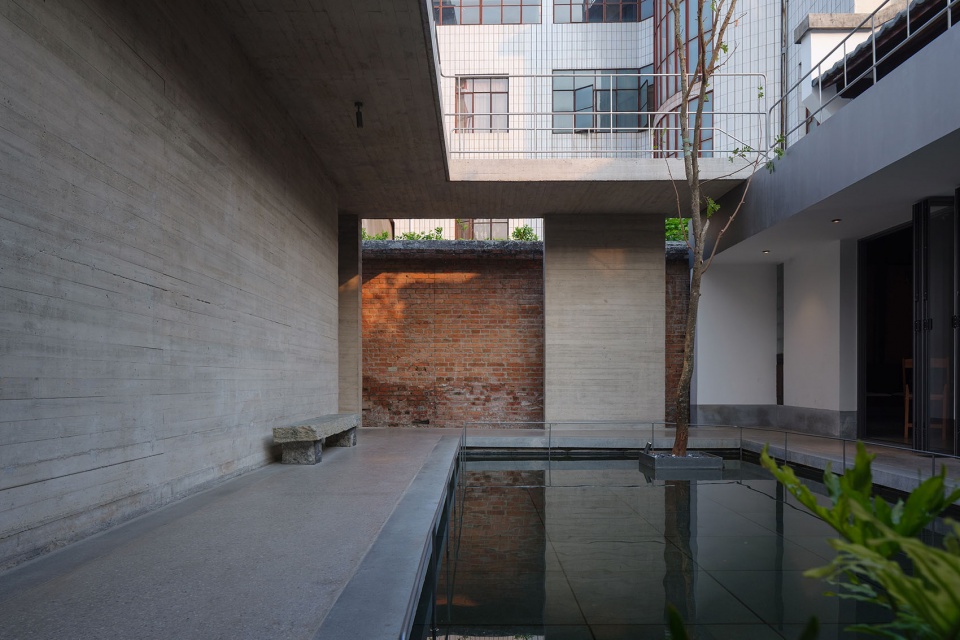
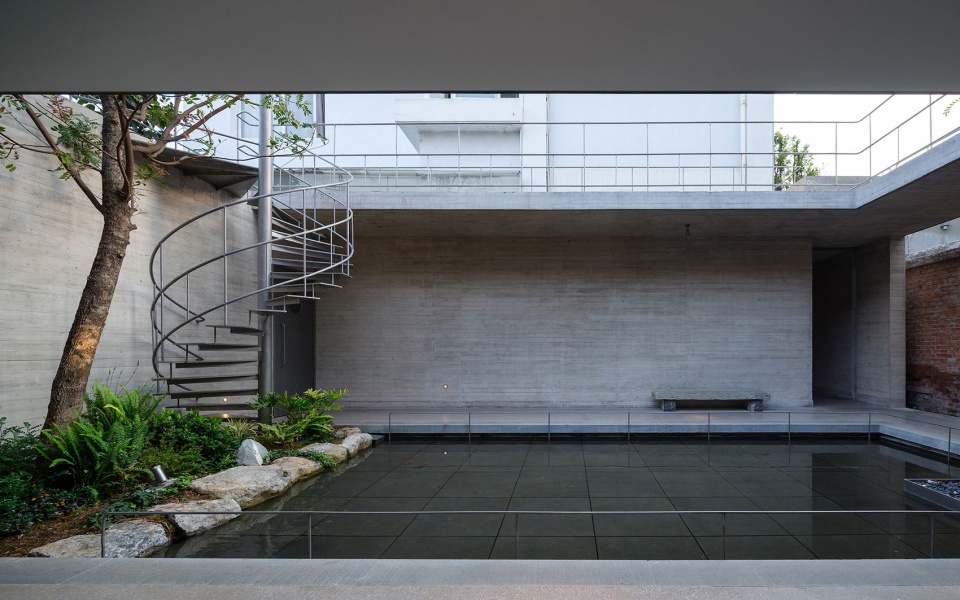
▼内场院落一角,Corner of the inner courtyard
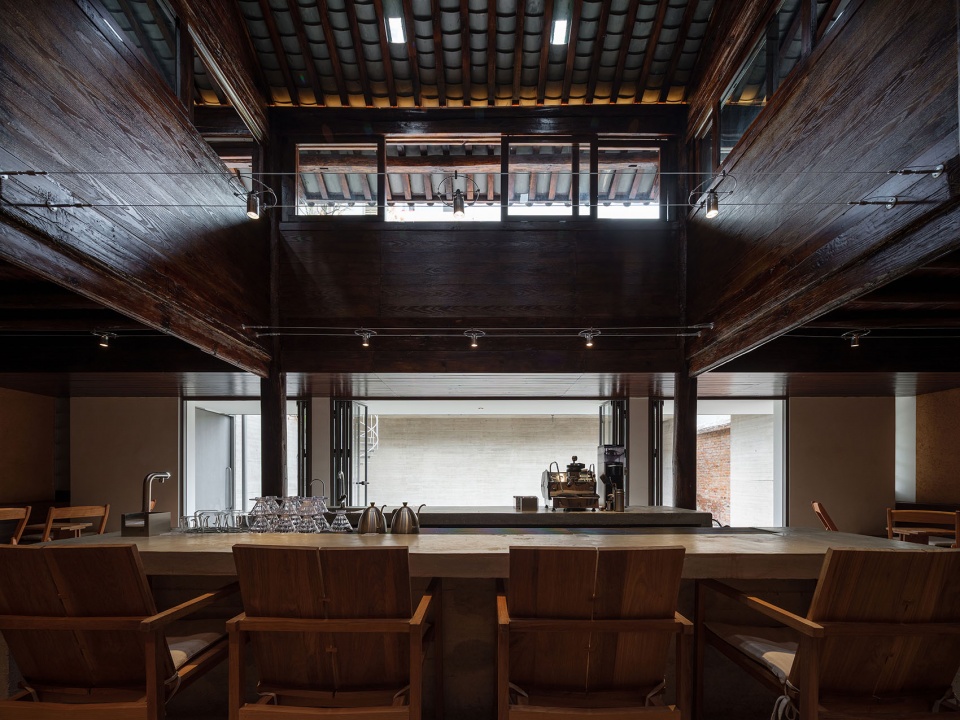
老民居为横向三开间,我们取走中间跨的楼板,将内场吧台设置于挑高空间下,以便得到更加开阔的内部体验。为了让咖啡师与顾客有更舒服地平视交互,操作区同外场一致,都保持了下沉的设计。
The traditional residence adopts a three-bay horizontal layout. The floor slab of the middle bay is removed to create an open double-height volume, where the inner bar is positioned to deliver a spacious indoor experience. Consistent with the design logic of the outer plot, the service counter adopts a sunken structure to facilitate natural eye-level communication and interaction between baristas and customers.
▼内场挑高空间,Double-height space in the inner area
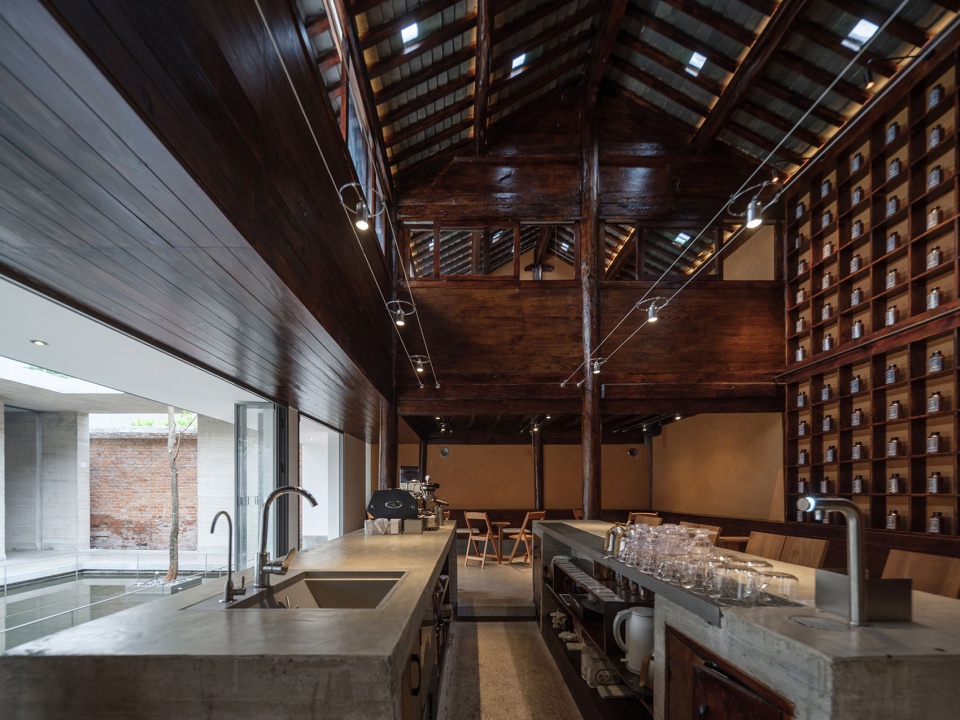
▼内场手冲吧台,Pour-over coffee bar
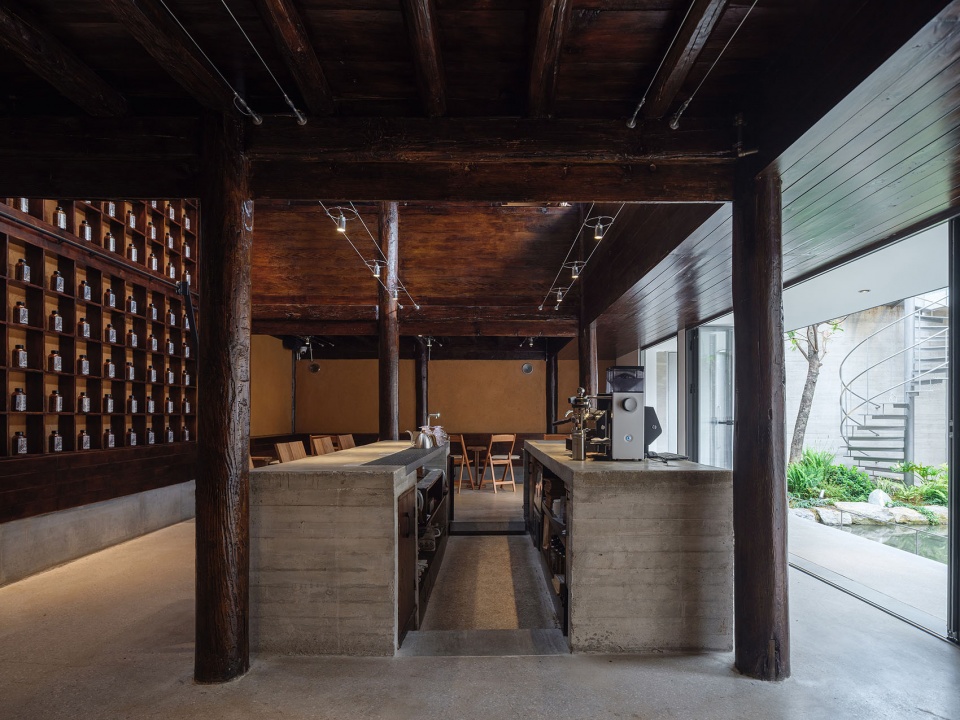
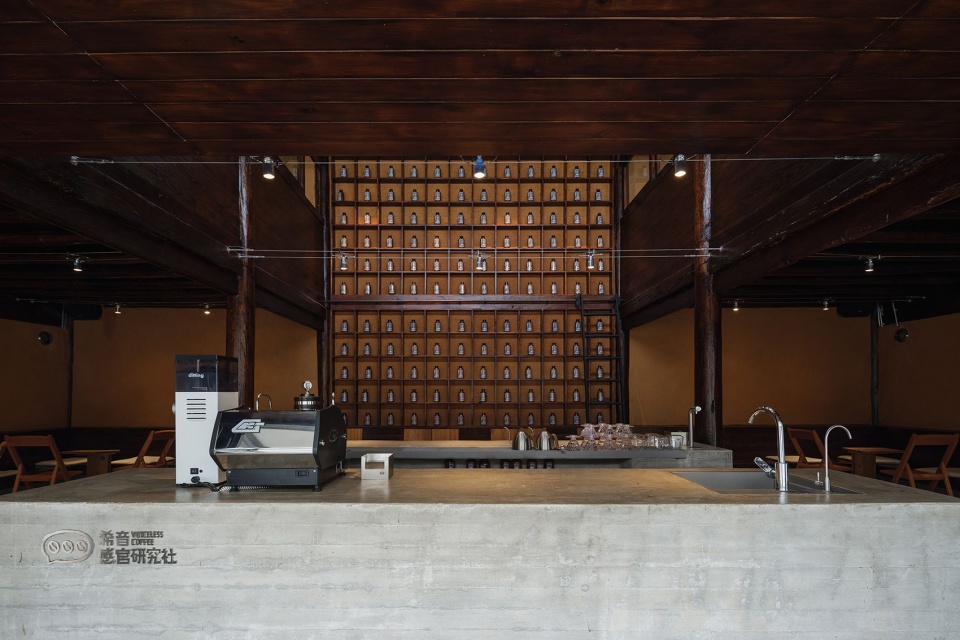
▼内场客座区,Inner seating area
▼内场吧台客座区,Inner bar seating area
后记 Postscript
完成几个咖啡馆后很多人问我咖啡馆的设计重点是什么?让人们仅仅花费一杯咖啡的钱,就能沉浸地享受到考究的空间尺度、舒适的材质触感以及精心雕琢的场所氛围,在如今经济下行的时代中,这种让人以低成本拥抱高品质的体验,恰恰就是一份宝贵的美好。希音同样也在咖啡本身追求和守护这份美好,所以才有了保山的感官研究社。
Upon the completion of multiple café design projects, I am frequently consulted on the core principle of café spatial design. In the current economic environment, a qualified café space should enable visitors to access refined spatial proportions, premium tactile experiences and well-polished ambient atmosphere at a low consumption cost. This accessible high-quality spatial experience represents a valuable urban warmth. Adhering to consistent craftsmanship in coffee production and experience presentation, Voiceless Coffee founded the Sensory Lab in Baoshan to interpret and preserve such unique urban and culinary beauty.
▼内场夜景,Night view of the inner area
▼一层平面图,Ground floor plan
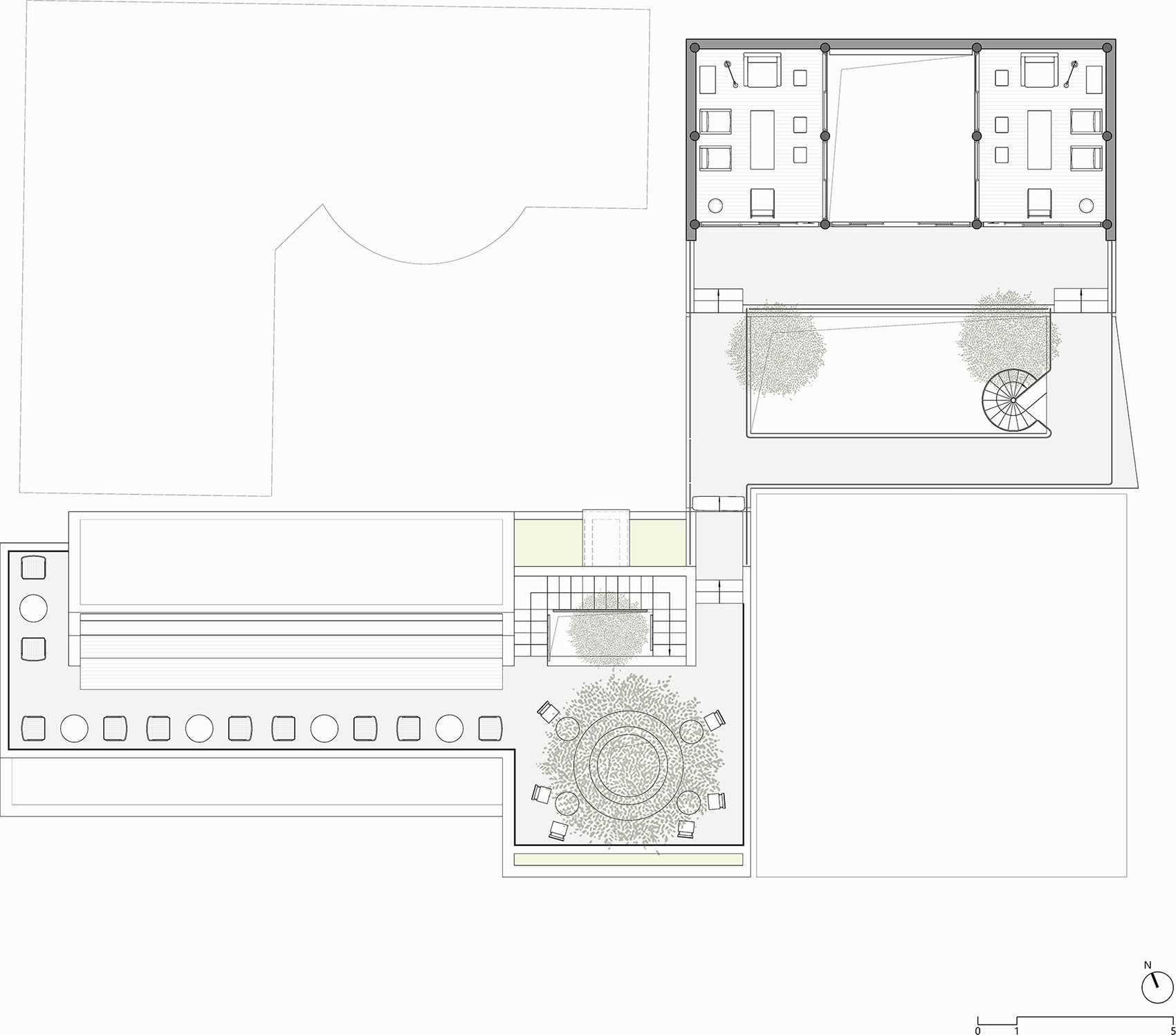
▼二层平面图,Second floor plan
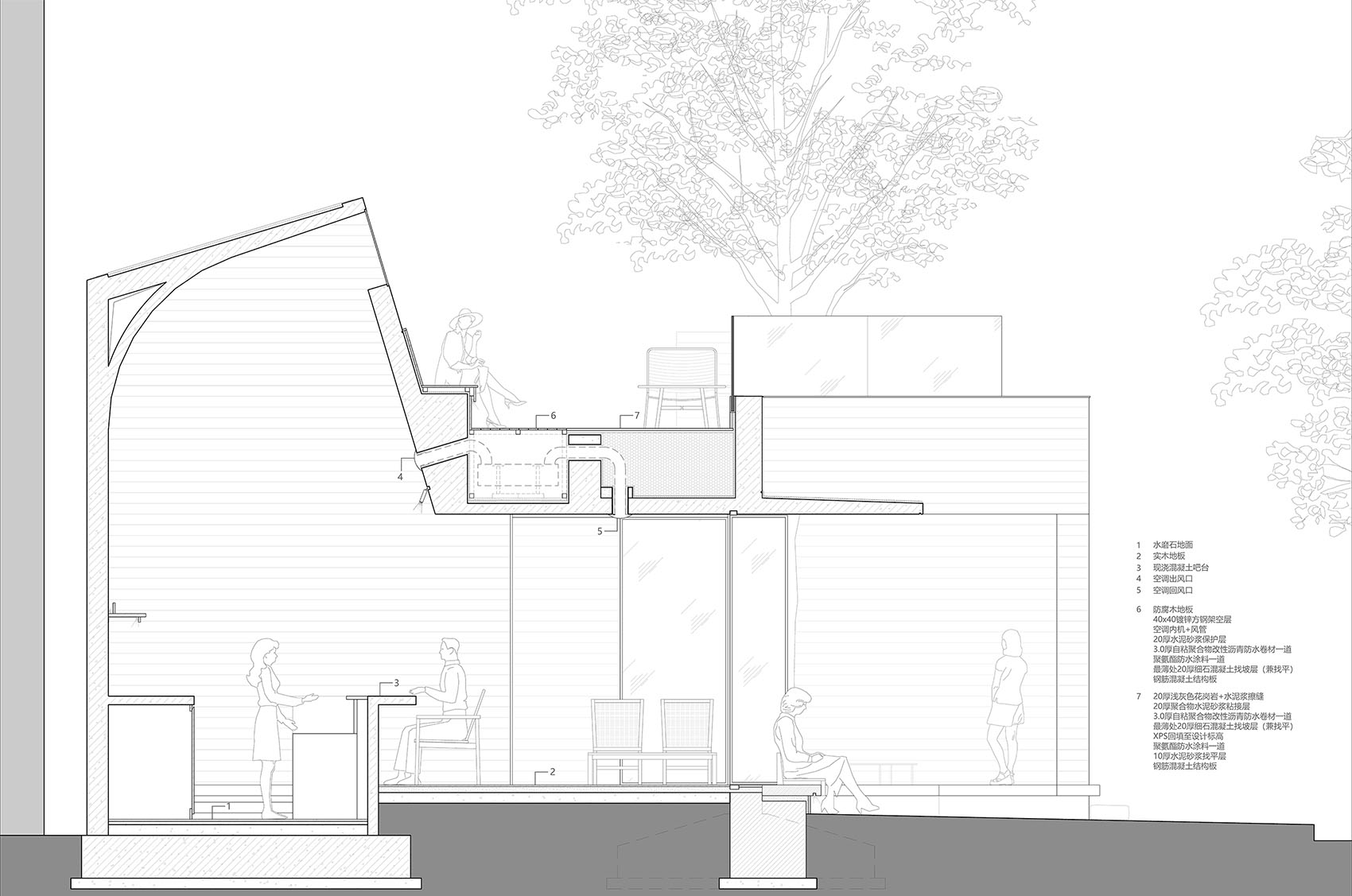
▼剖面图,Section
Project Name: Voiceless Coffee · Sensory Lab
Design Company: No10-Architects
Website: https://www.no10-architects.com/
Design Team: Zhou Shihao, Wu Yutong, Li Jinhang
Resident Architect: Wu Yutong
Construction Team: Dong Kunhui Construction Studio
Location: Heping Road, Longyang District, Baoshan City, Yunnan Province, China
Area: 260 sqm
Design Time: 2025.02 – 2025.07
Complete Time: 2026.02
Photo credit:Wang Ce