一门社工作间,四川成都 / 一门社
工作室成立第八年,我们决定重新改造自己的空间。
In the eighth year of our studio, we decided to renovate our own workspace.
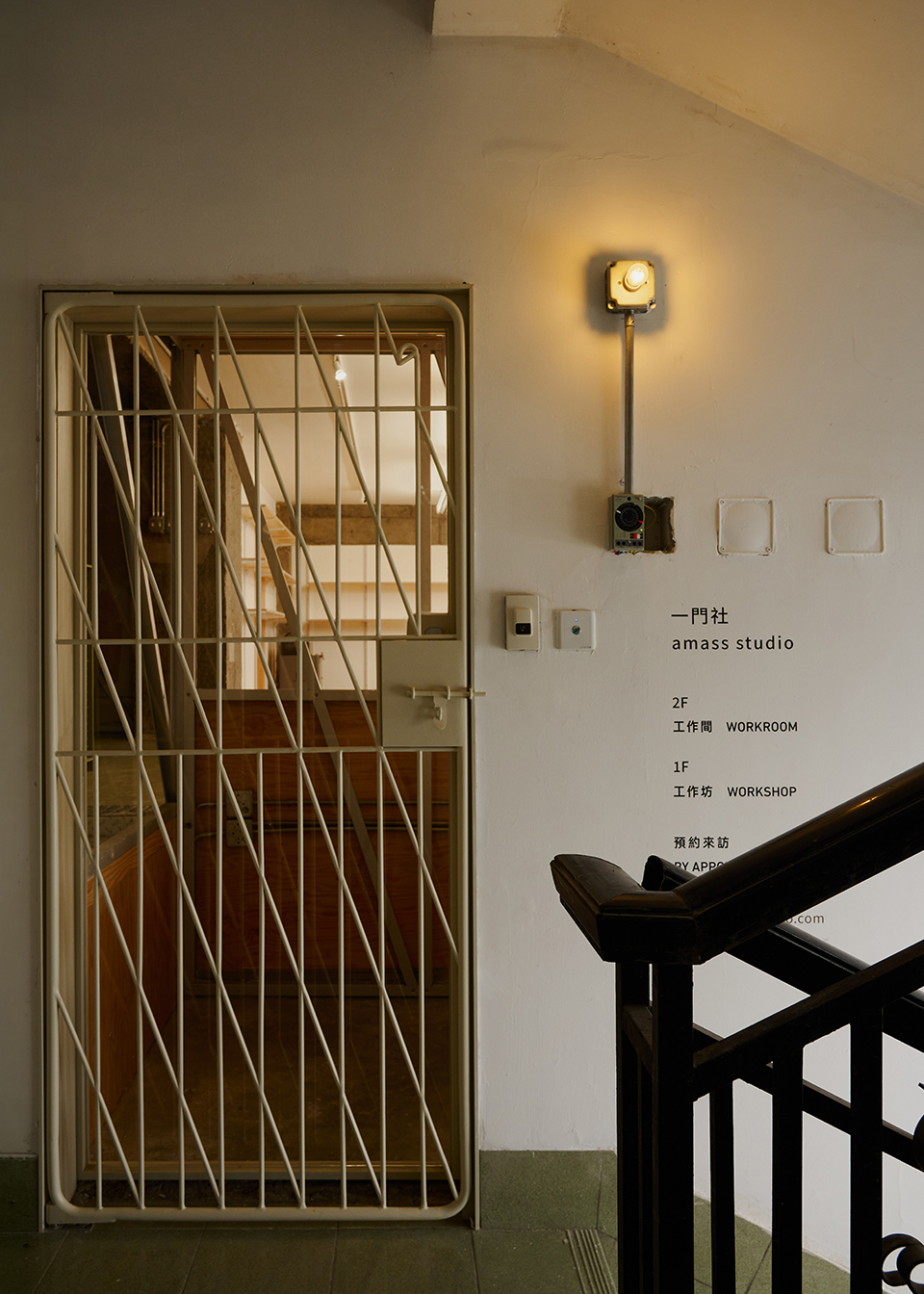
▼工作间入口,Workrom entrance
起因其实很小。去年冬天,我们只是感叹,如果这里有地暖就好了。后来事情慢慢变大:从地暖,到地面,到墙体,到整个空间的重新整理。一个原本只是为了更舒服一点的念头,最后变成了一次把自己空间重新想一遍的机会。
The reason was actually quite small. Last winter, we found ourselves saying, “It would be nice if there were underfloor heating here.” Then the idea slowly grew—from heating, to flooring, to walls, and eventually to a complete rethinking of the space. What began as a simple desire to be a little more comfortable became an opportunity to reconsider how we wanted to work.
▼室内空间概览,Interior overview
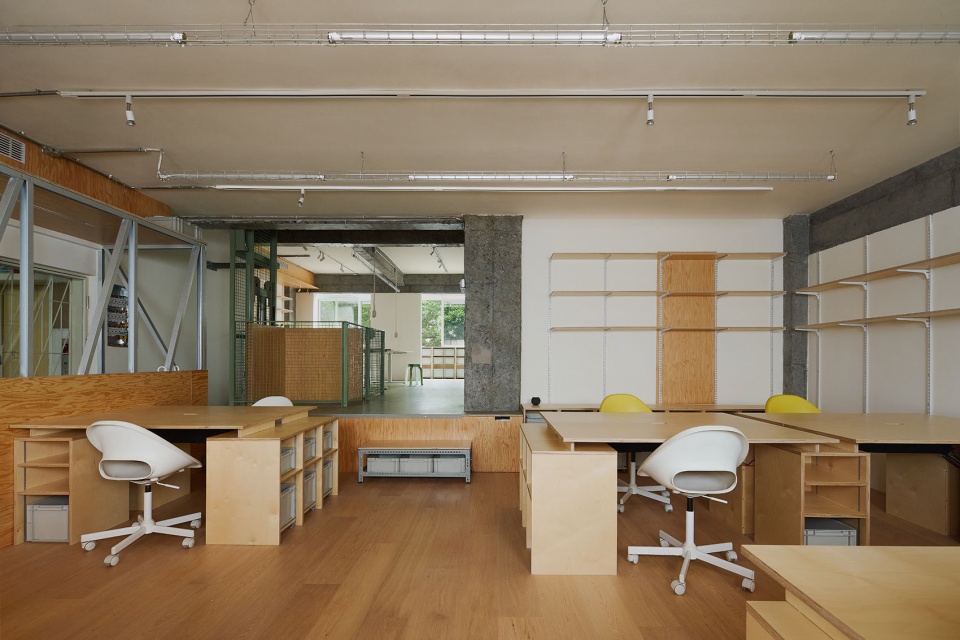
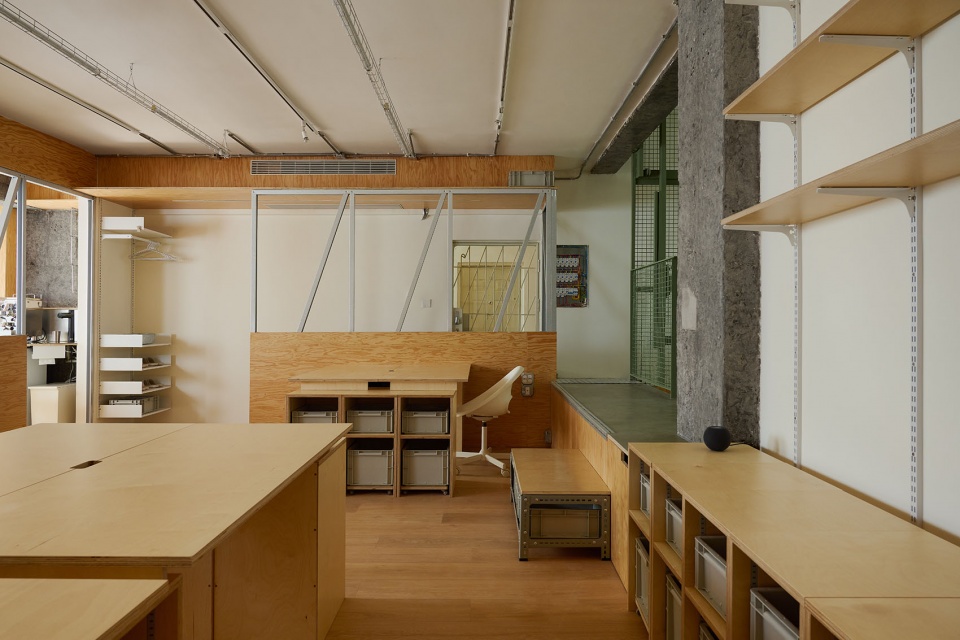
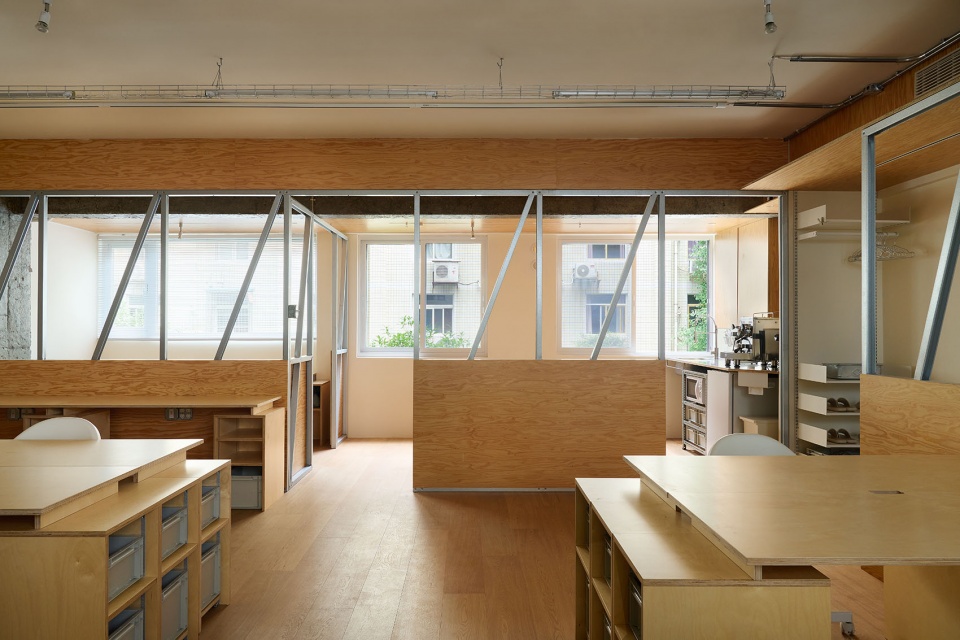
我们的工作室位于一个住家小区里,户型也原本是普通住宅,框架结构让大部分隔墙都可以被拆除。其实早在这次改造之前,我们已经拆掉过一些墙;这一次,则拆得更彻底。拆除之后,空间先回到空白的状态,基调也在这个时候被确定下来:先做减法,再谨慎地增加。增加的部分并不多,但都希望有继续变化的可能。
Our studio is located in a residential compound, in what was originally a typical apartment. The frame structure meant that most of the internal walls could be removed. In fact, we had already taken down some partitions over the years; this time, we went much further. Once the demolition was complete, the space returned to a blank state. It was at that moment that the direction of the project became clear: remove first, then add back carefully. What we added was relatively little, but each intervention was intended to remain open to future change.
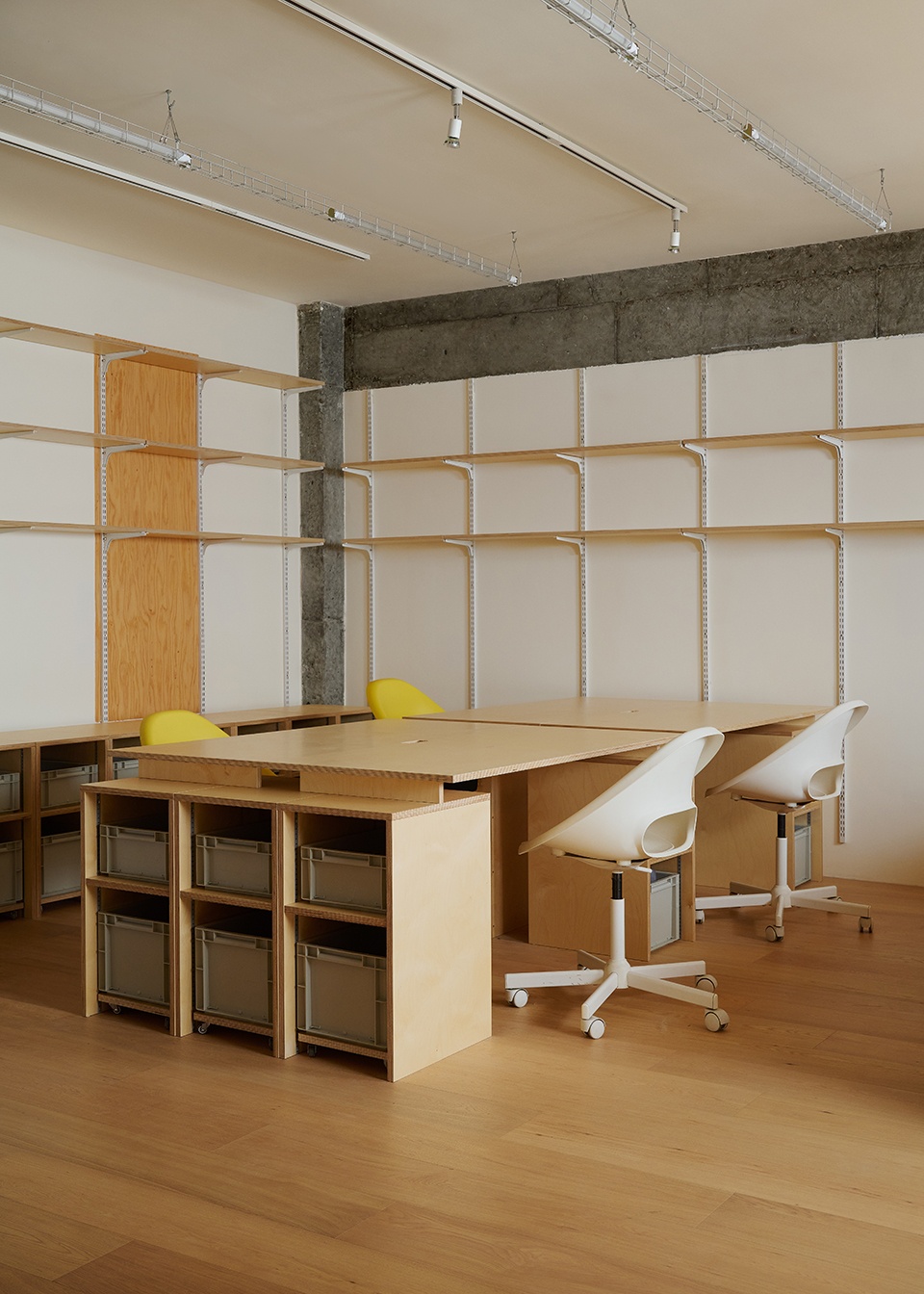
▼共享工作区,Shared workspace
▼共享工作区局部,Shared workspace
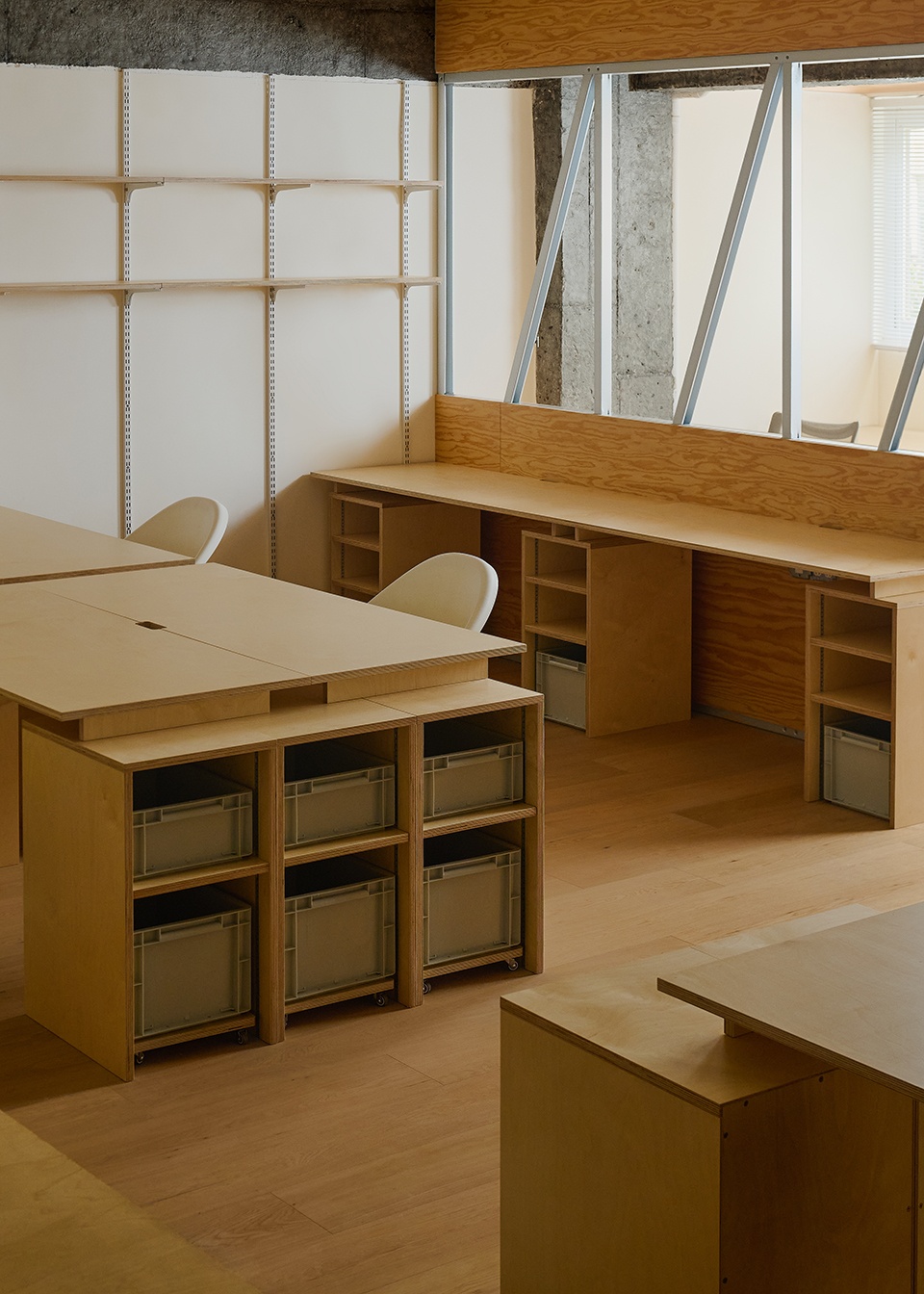
▼窗边工位,Window-side workstation
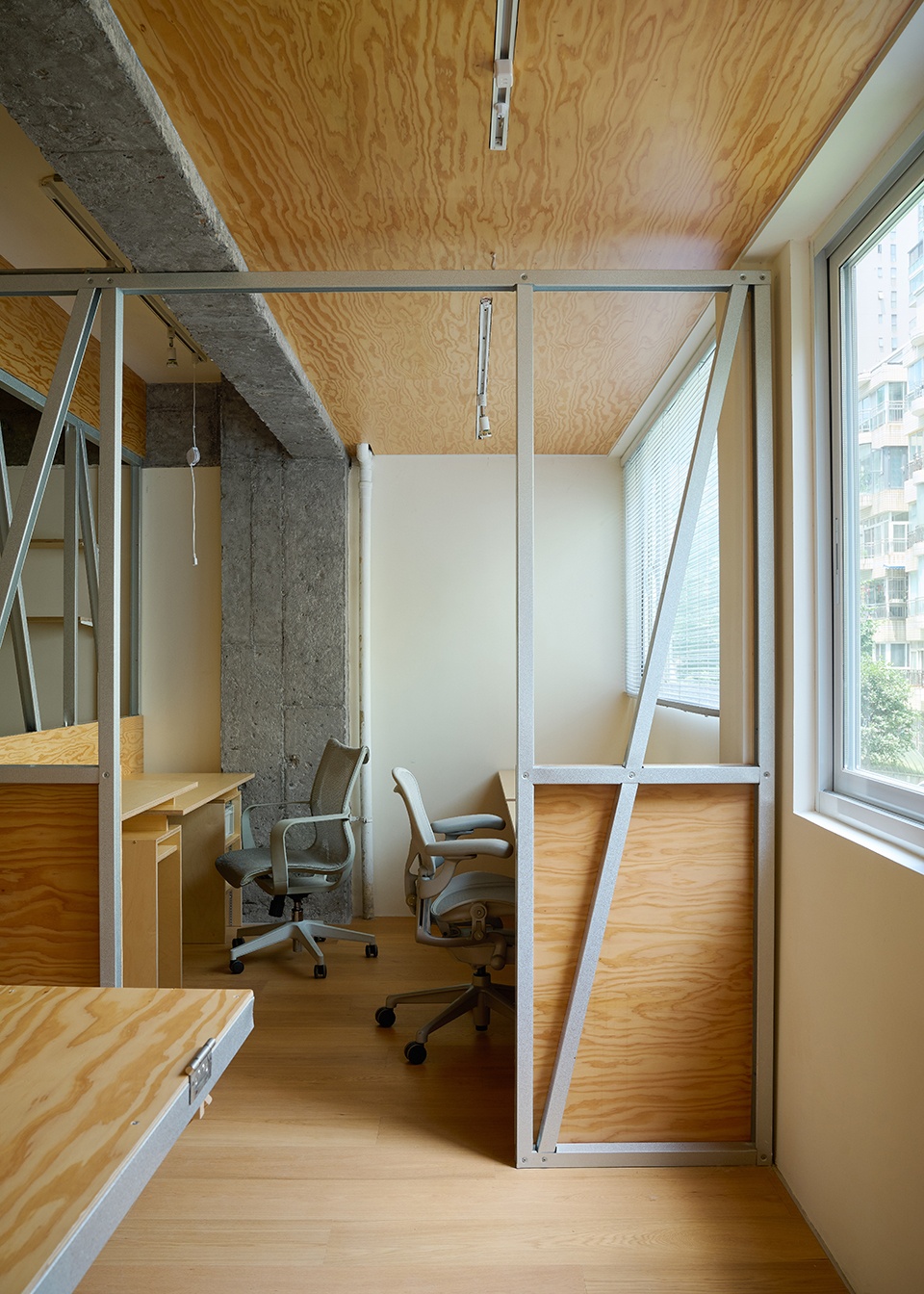
轻钢龙骨隔墙用来分区,也保持视线的通透;最关键它不是一堵墙永久性的墙,是以后可以被拆下、移动,甚至连根拔起的构件。龙骨本身带有磁吸功能,图纸、样品、工具、灯具,甚至临时想到的东西(比如强磁竟然可以拿来拴狗!),都可以直接挂上去。墙体也就成为了一种持续生长的界面。
Light-gauge steel partitions divide the space while keeping sightlines open. More importantly, they are not permanent walls. They can be dismantled, relocated, or removed entirely in the future. The steel framing is magnetic, allowing drawings, samples, tools, lights, and even unexpected things to be attached directly to it. (At one point, we discovered that a strong magnet could even be used to tie up a dog.) The wall becomes less of a boundary and more of an evolving interface.
▼工作区看向共享空间,Studio viewing towards common space
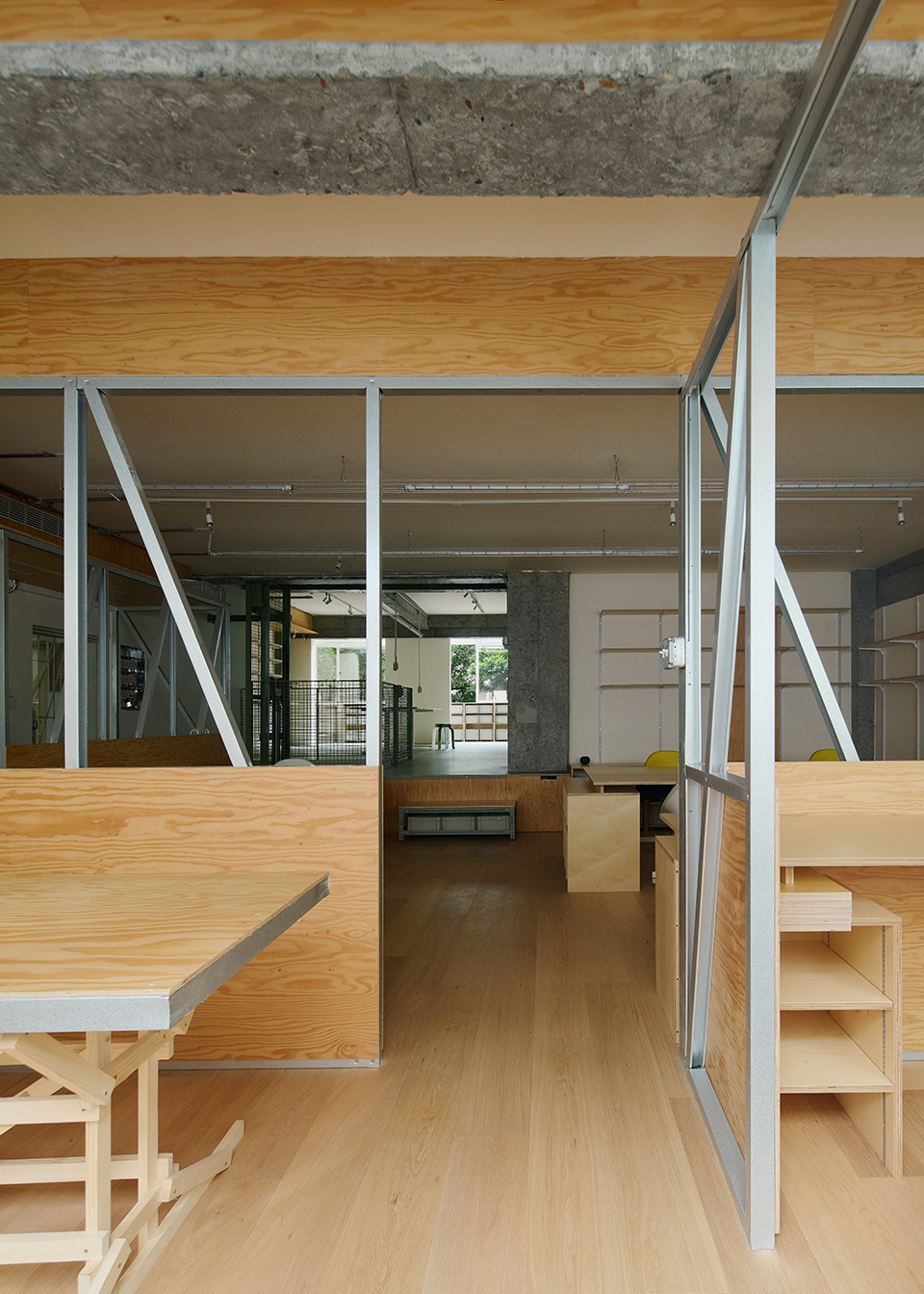
▼开放共享空间,Open common space
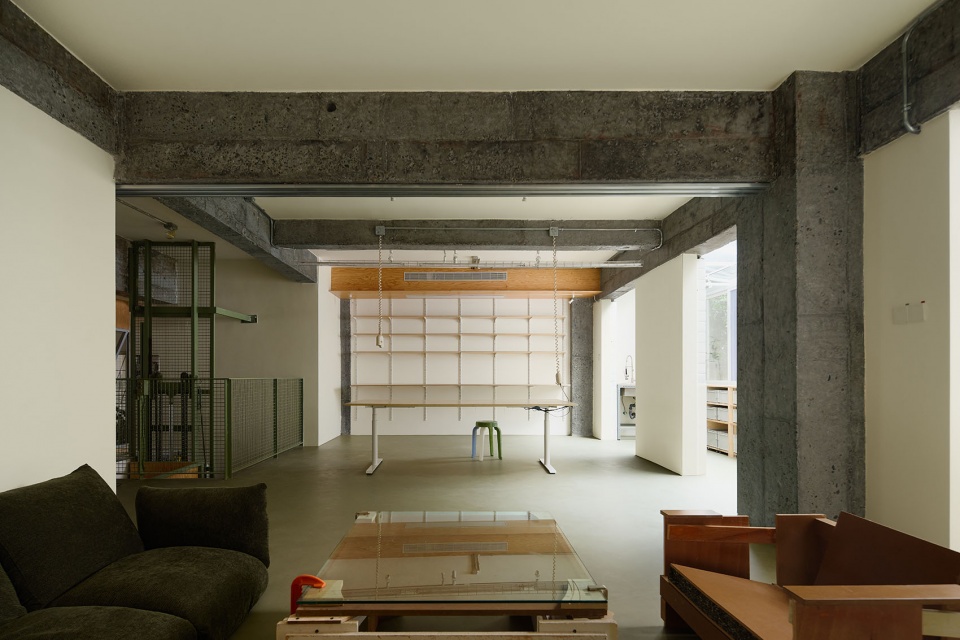
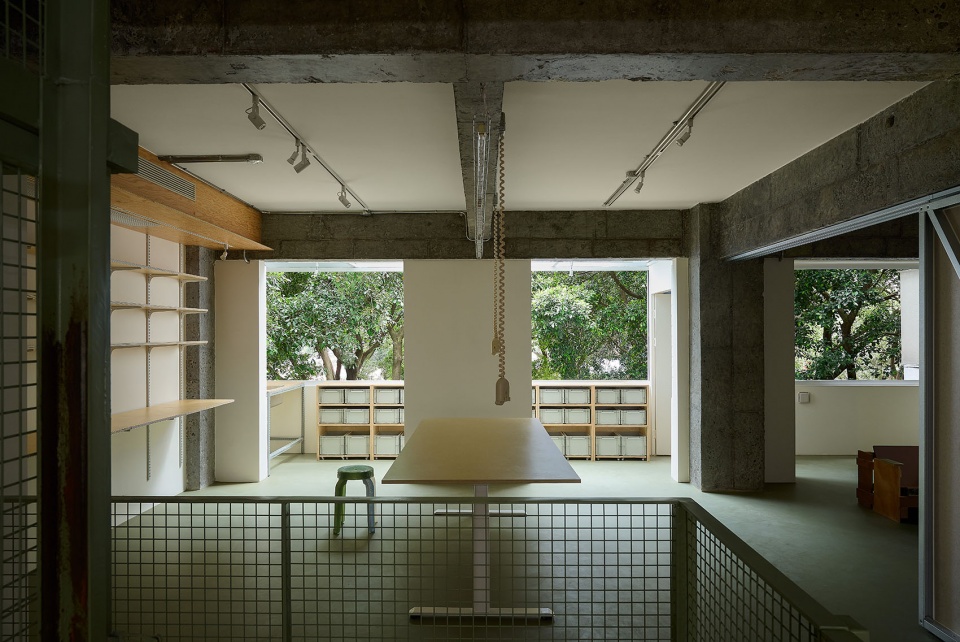
▼共享空间近景,Common space close view
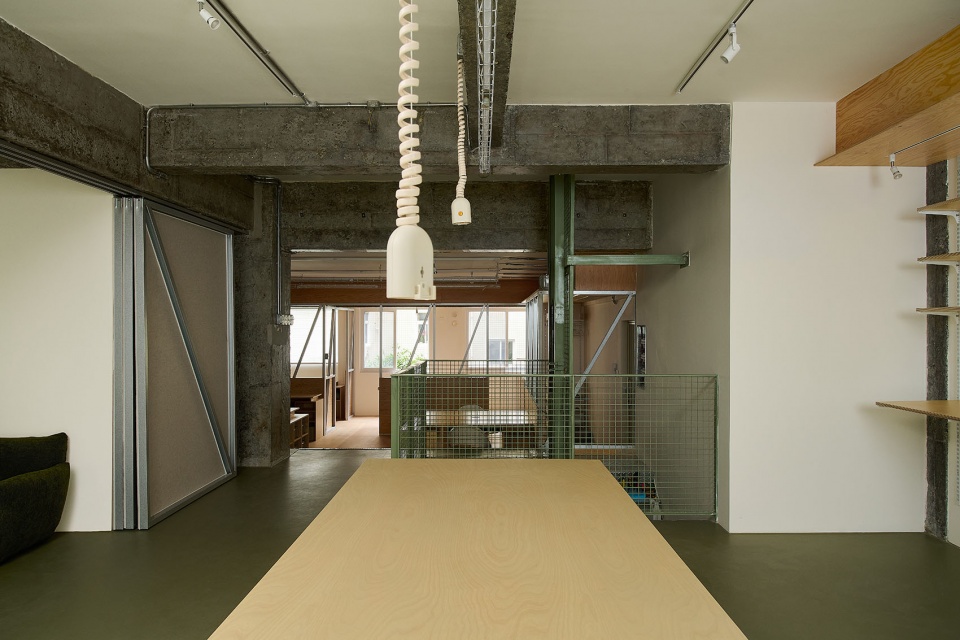
▼共享空间一角,Corner of common space
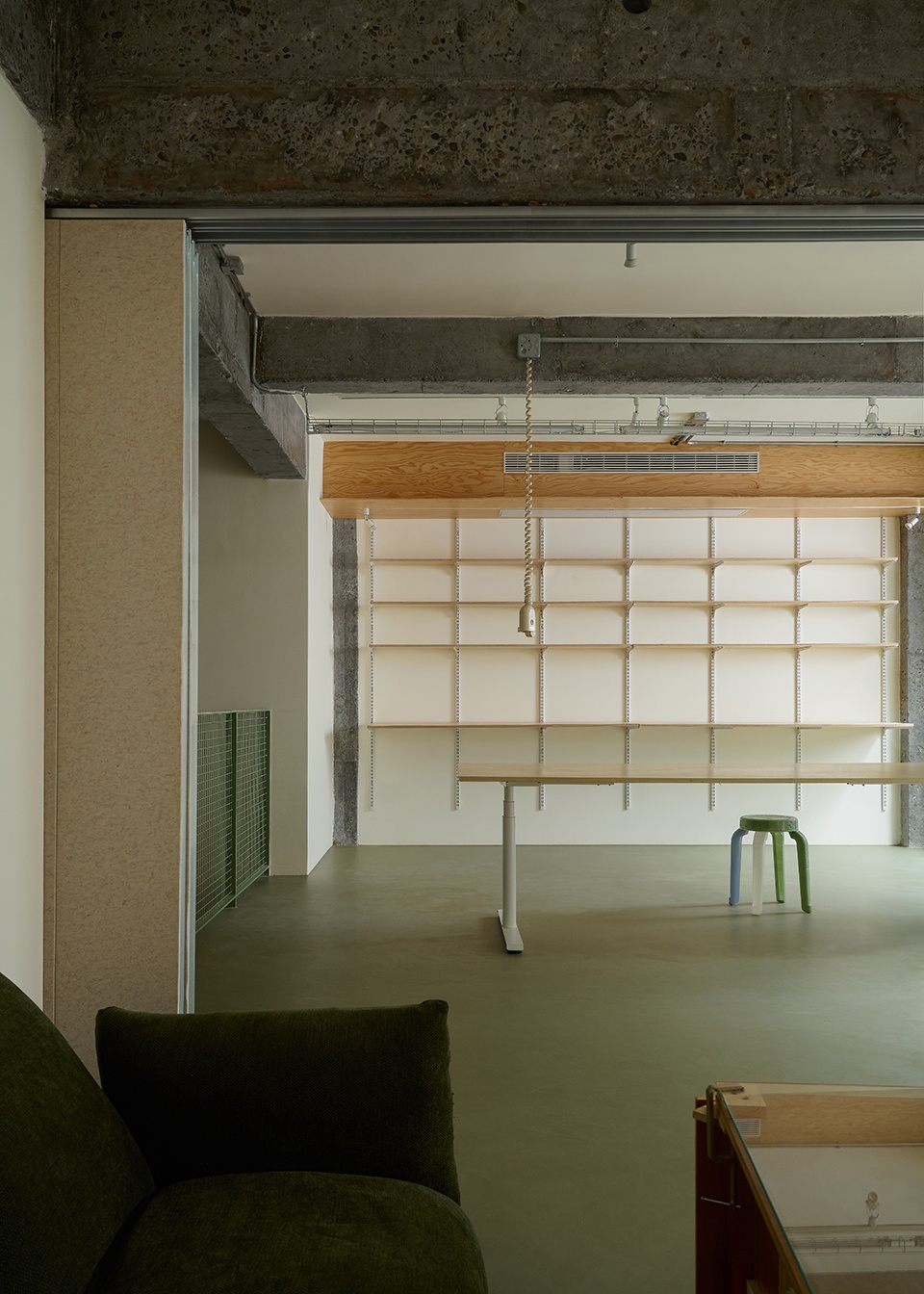
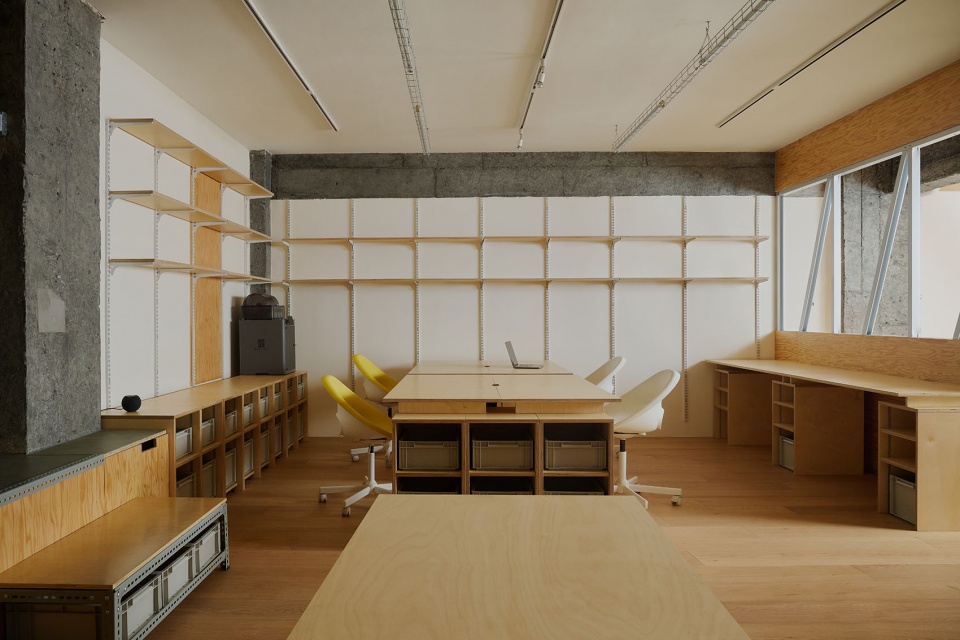
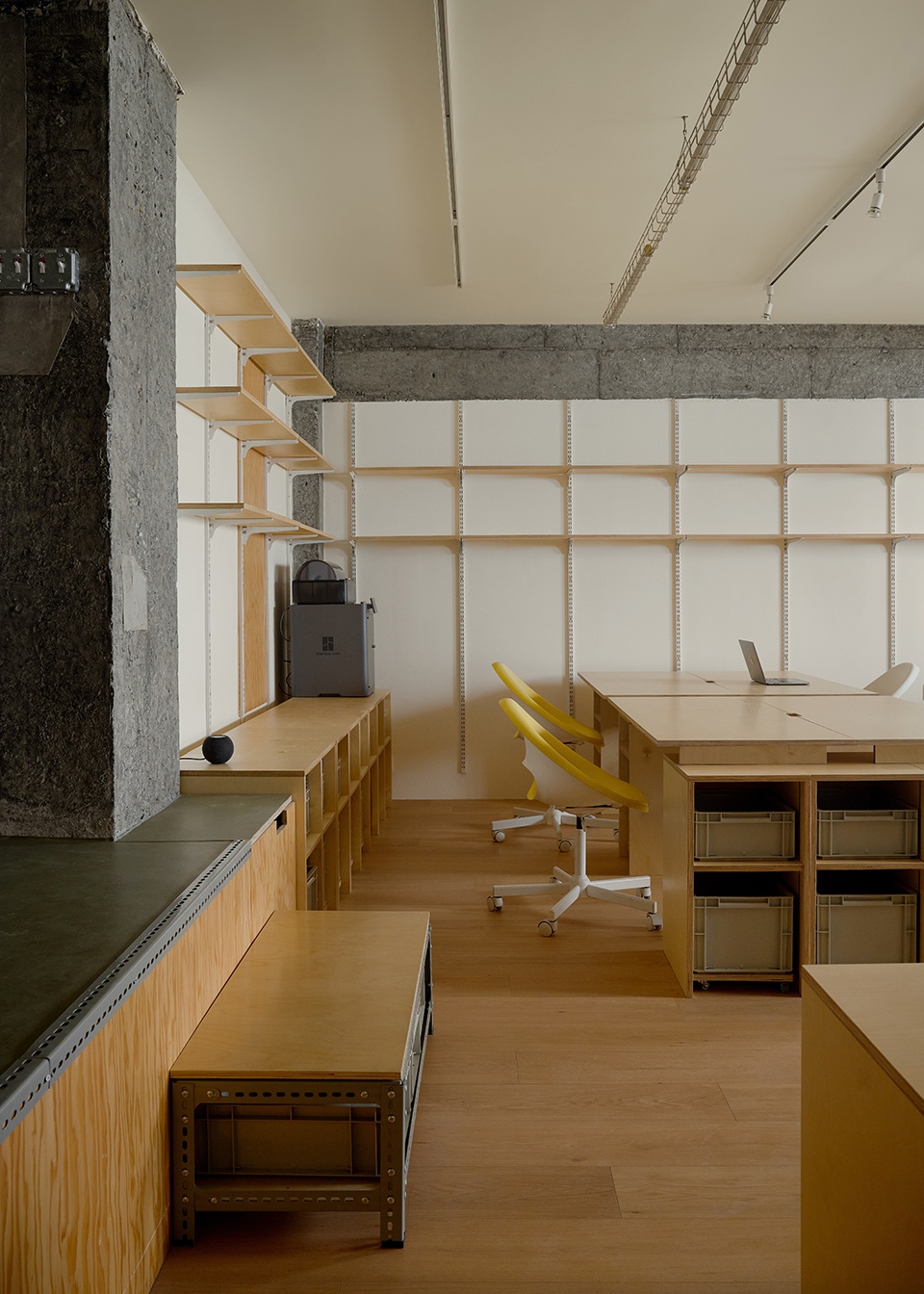
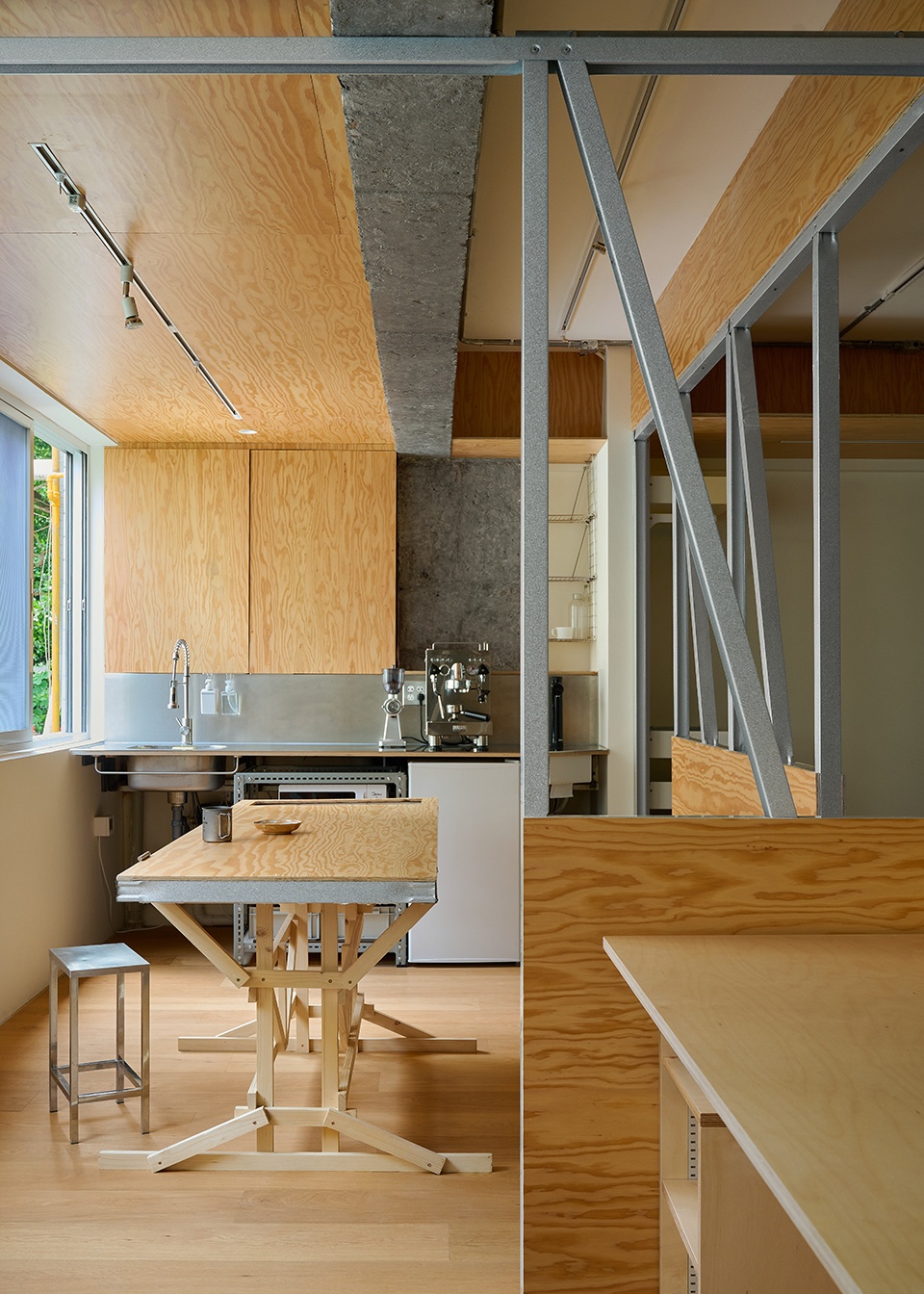
茶水间只保留最必要的台面和支撑,不做多余的门板隔板,让清洁维护和日后的调整都更容易。办公桌也不是完整定制的家具,而是由小木柜作为桌腿,托起长桌面。桌面不被固定,反而在使用中证明了它的稳定,同时也给每个人留下了专属的收纳位置。空间里还有一处来自老户型的抬高区域。我们顺着这个遗留的高差,把它变成开放的二层使用空间。它可以是会议室、材料间,也可以只是一个临时坐下来、摊开东西、甚至练瑜伽的地方。地面铺设了有脚感的地胶,让这个能够放松下来,这个区域不太是一个被定义完整的房间,好像也确实没有必要这么做。
The pantry retains only the most essential work surfaces and supports, avoiding unnecessary doors and cabinetry so that cleaning, maintenance, and future adjustments remain straightforward. The desks are not fully custom-made furniture either. Small timber cabinets act as table legs, supporting long tabletops above. The tabletops are intentionally left unfixed, proving surprisingly stable in daily use while giving each person their own dedicated storage. The space also contains a raised area inherited from the original apartment layout. We chose to work with this existing level change, transforming it into an open elevated platform. It can function as a meeting space, a materials room, a place to spread things out and work, or simply somewhere to sit for a while. On occasion, it even becomes a place for yoga. A resilient flooring surface softens the experience and encourages more relaxed use. It is not a room with a clearly defined purpose, and perhaps it does not need to be.
▼茶水间,Pantry
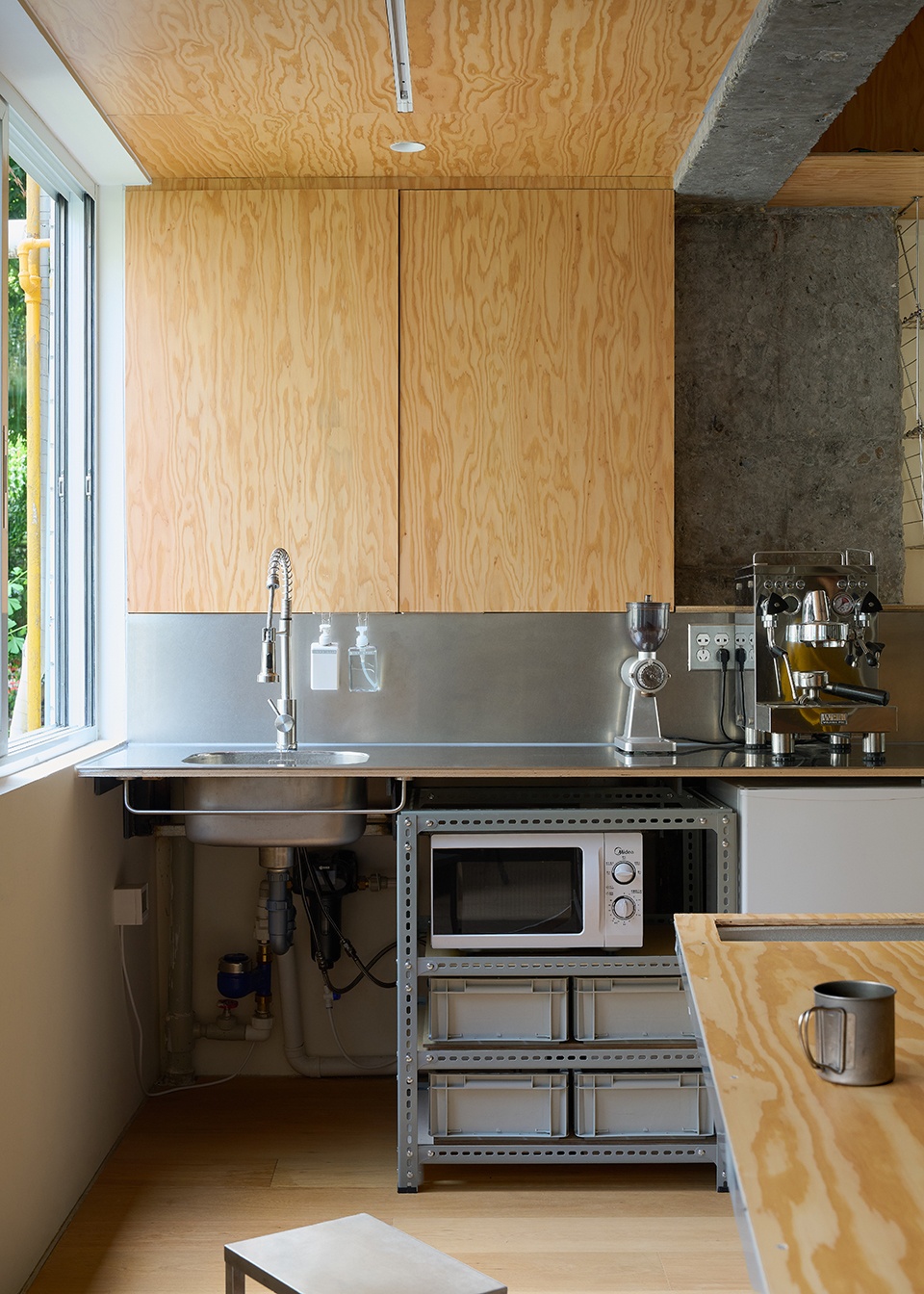
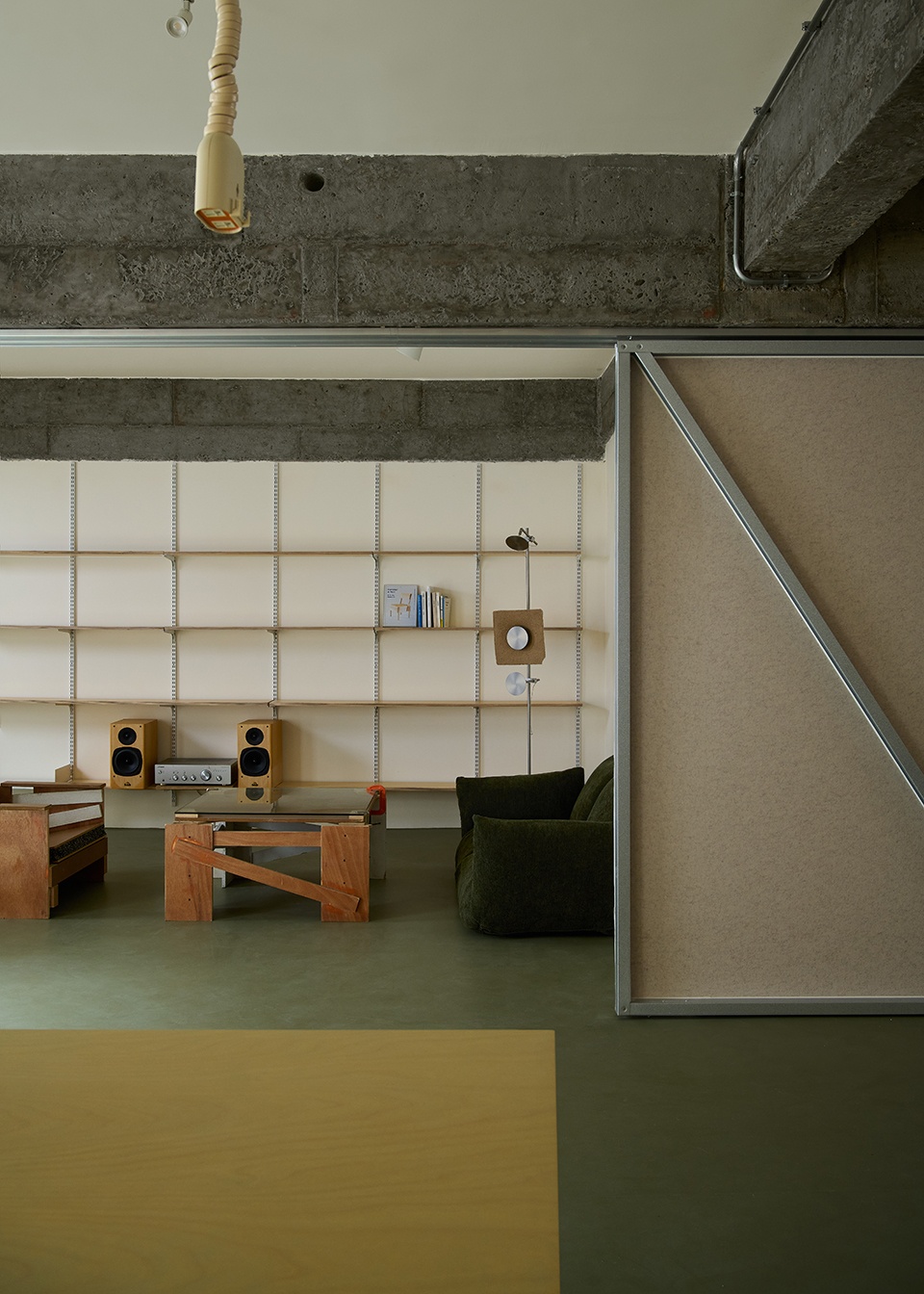
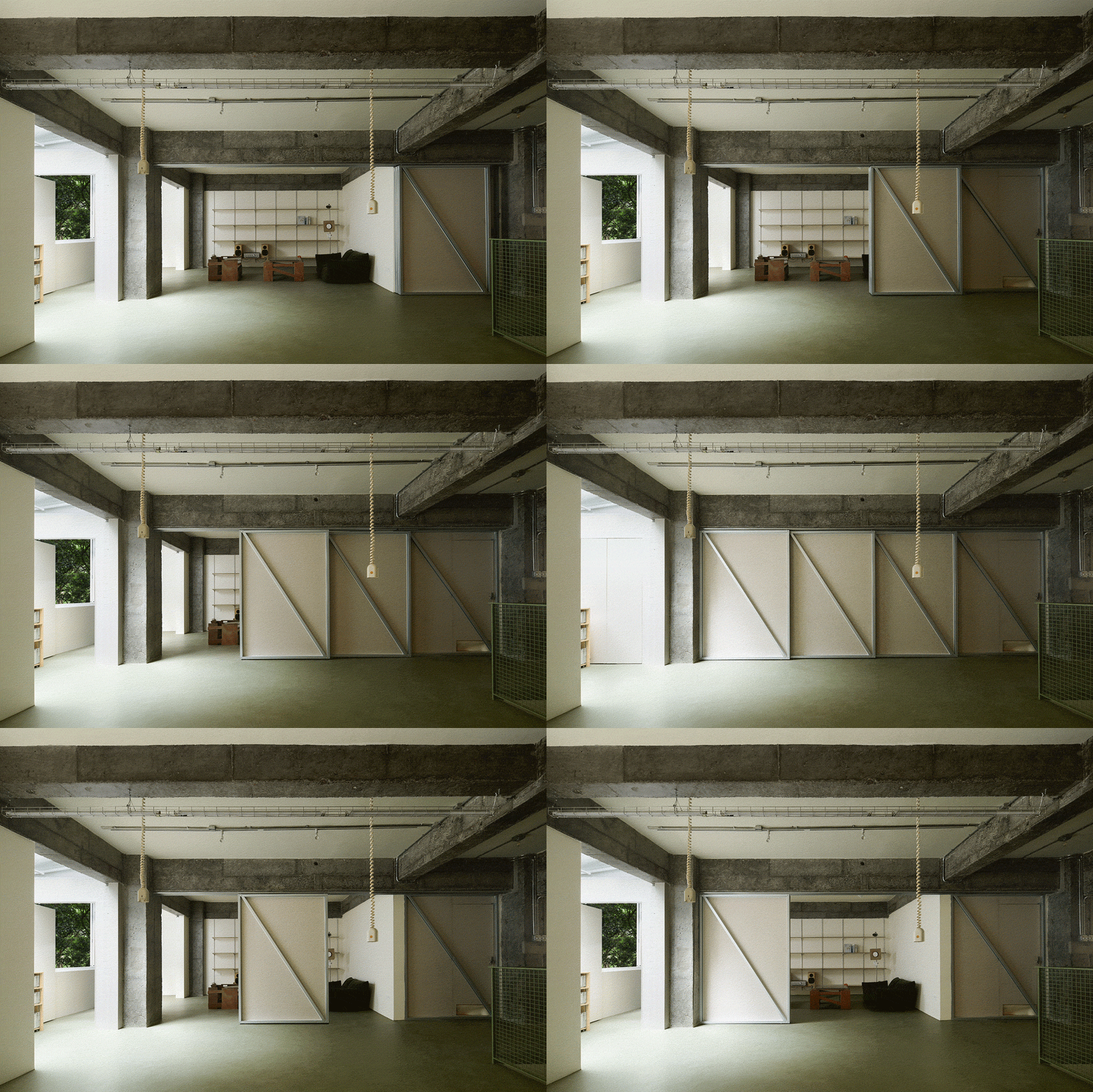
一些实验也发生在这次的改造里。四扇大滑门由轻钢龙骨制作门框,再覆以隔音毛毡。它们粗糙、轻便,也带着某种未完成感。角钢架子既是收纳架,也是水盆台,甚至成为上到二层的梯步。同一种海洋板小柜,在材料间是柜子,在办公区又成为桌腿。A柱系统、轻钢龙骨+花旗松饰面、角钢和板材,被反复使用在不同位置,让材料和结构在不同功能之间来回转换。灯光系统也延续了同样的思路。日光灯管通过间接照明的方式朝天花反射,让光线尽量均匀地铺开。安装射灯的灯轨被当作一条开放的基础设施来使用,除了灯具之外,监控、音响、投影仪、电源接口等设备都可以被不断添加和调整。
A number of small experiments emerged during the renovation. Four large sliding doors were built from light-gauge steel frames clad with acoustic felt. They are rough, lightweight, and carry a certain sense of incompletion. Angle-steel structures serve simultaneously as storage shelves, washbasin supports, and steps leading up to the platform. The same marine plywood cabinet appears throughout the space, acting as storage in one area and as a desk support in another. AA-column systems, steel framing with Douglas fir cladding, angle steel, and sheet materials are repeatedly reused, allowing materials and structures to shift between different functions. The lighting strategy follows a similar logic. Fluorescent tubes are used as indirect lighting, reflecting light off the ceiling to create an even illumination throughout the workspace. Track systems originally intended for spotlights are treated as an open infrastructure. Beyond lighting, they can accommodate surveillance cameras, speakers, projectors, power outlets, and other equipment as needs evolve.
▼可变工作界面,Adaptable workspace interface
正因为这次是我们自己的空间,所以很多决定都变得更诚实。打拆的时候毫不手软,增加的时候却斤斤计较。它是一次关于工作室自身的整理:什么是必要的,什么可以暂时不要;什么应该被固定,什么最好保持松动。八年之后,空间装修并没有变得更“完整”,但变得更清楚,也更有余地。
Perhaps because this was our own space, many decisions became more honest. We were ruthless when removing things, but careful and selective when adding them back. The renovation became a way of organizing our own priorities: what is necessary, what can wait, what should remain fixed, and what should stay flexible. Eight years on, the studio has not become more “finished.” But it has become clearer, and more capable of accommodating what comes next.
▼共享空间看向材料归档间,Common space towards material archive
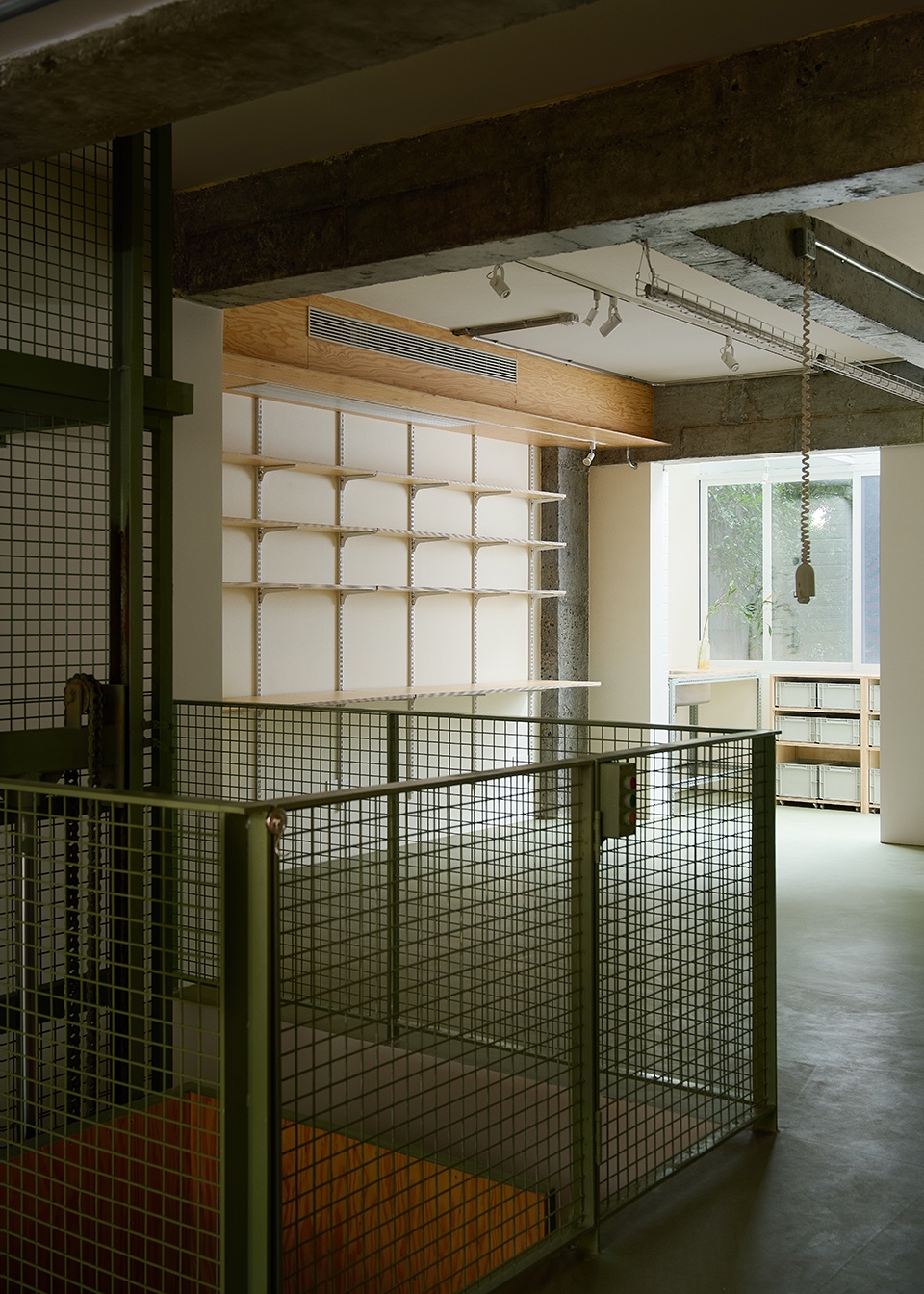
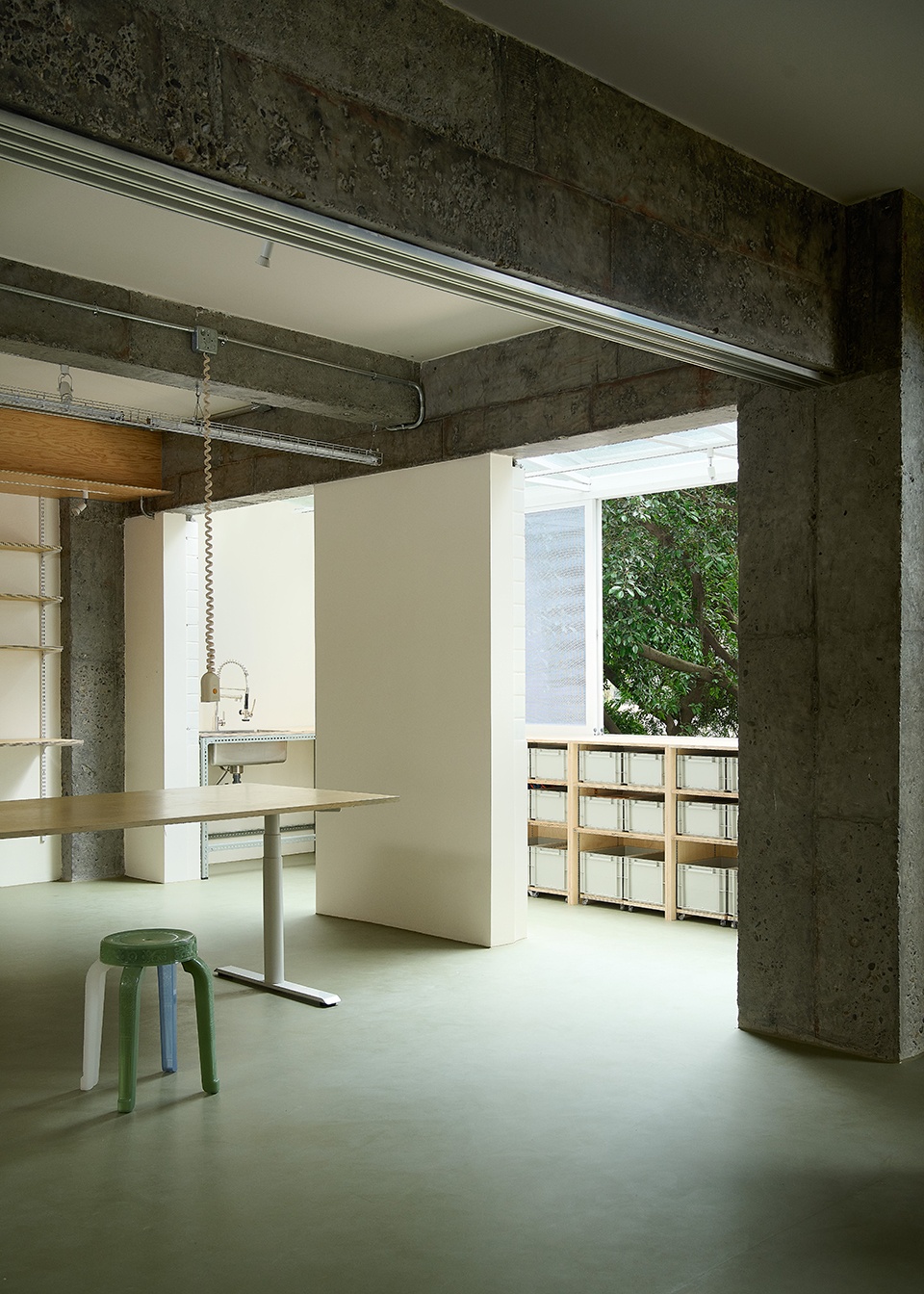
▼材料归档间,Material archive
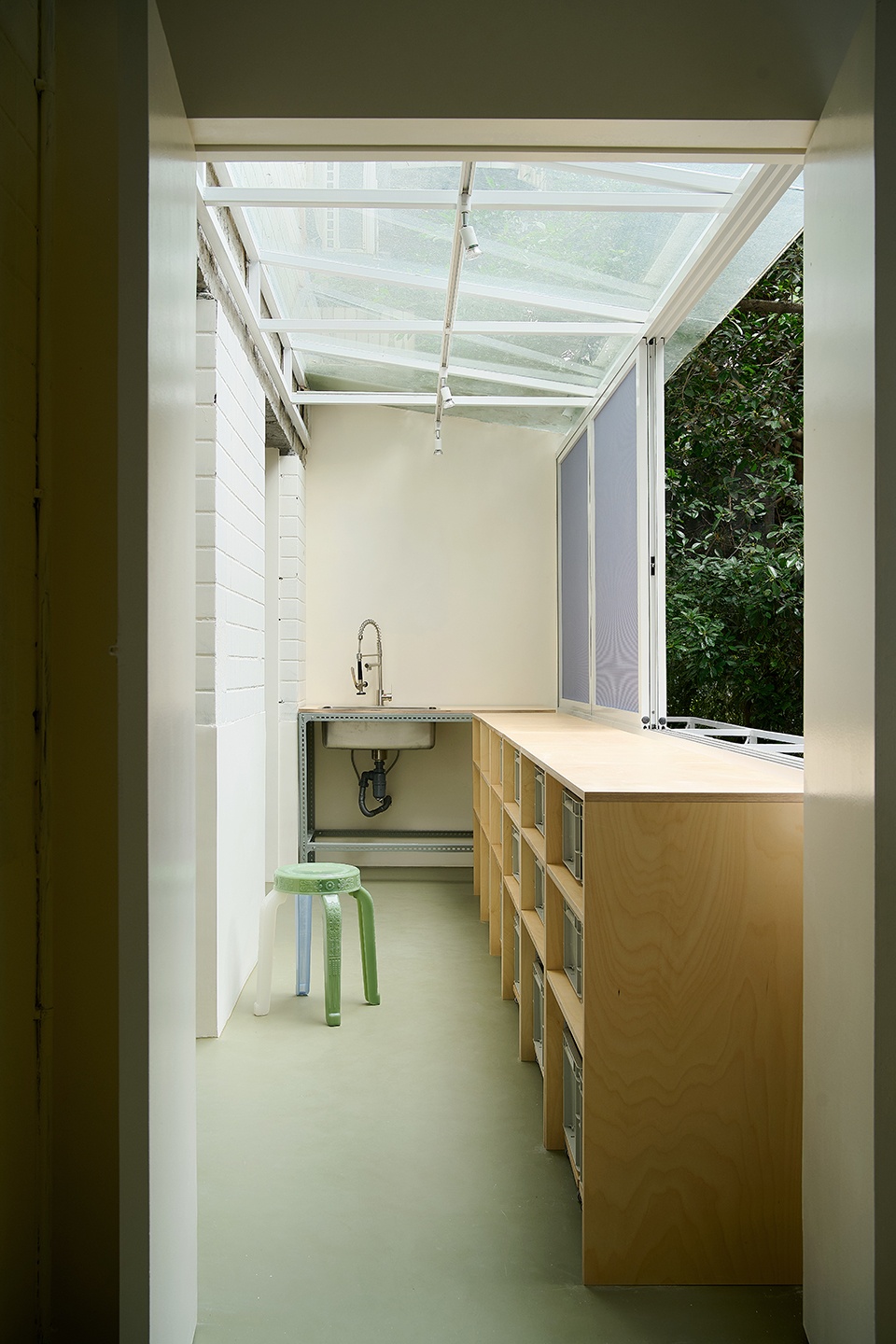
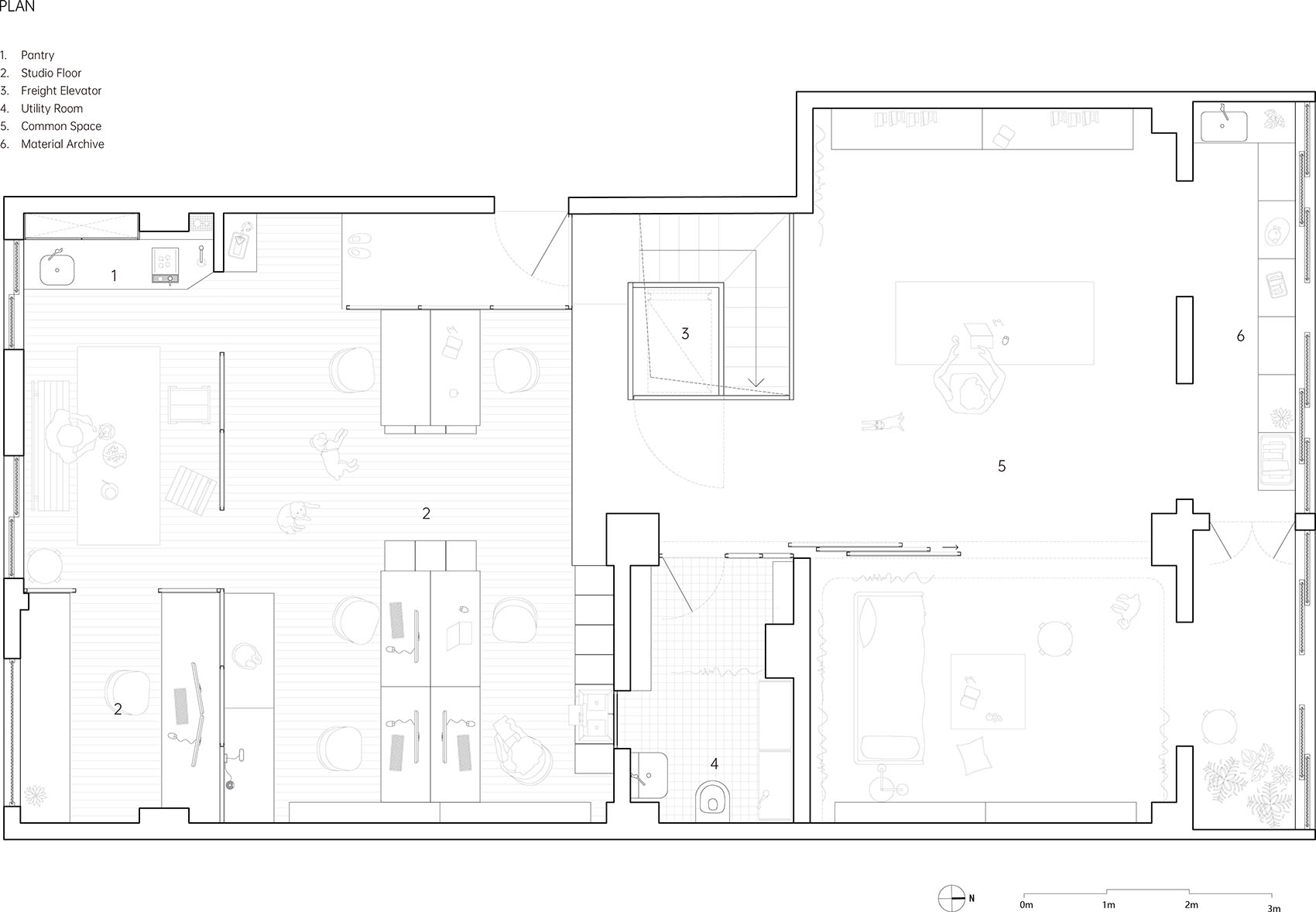
▼平面图,Plan
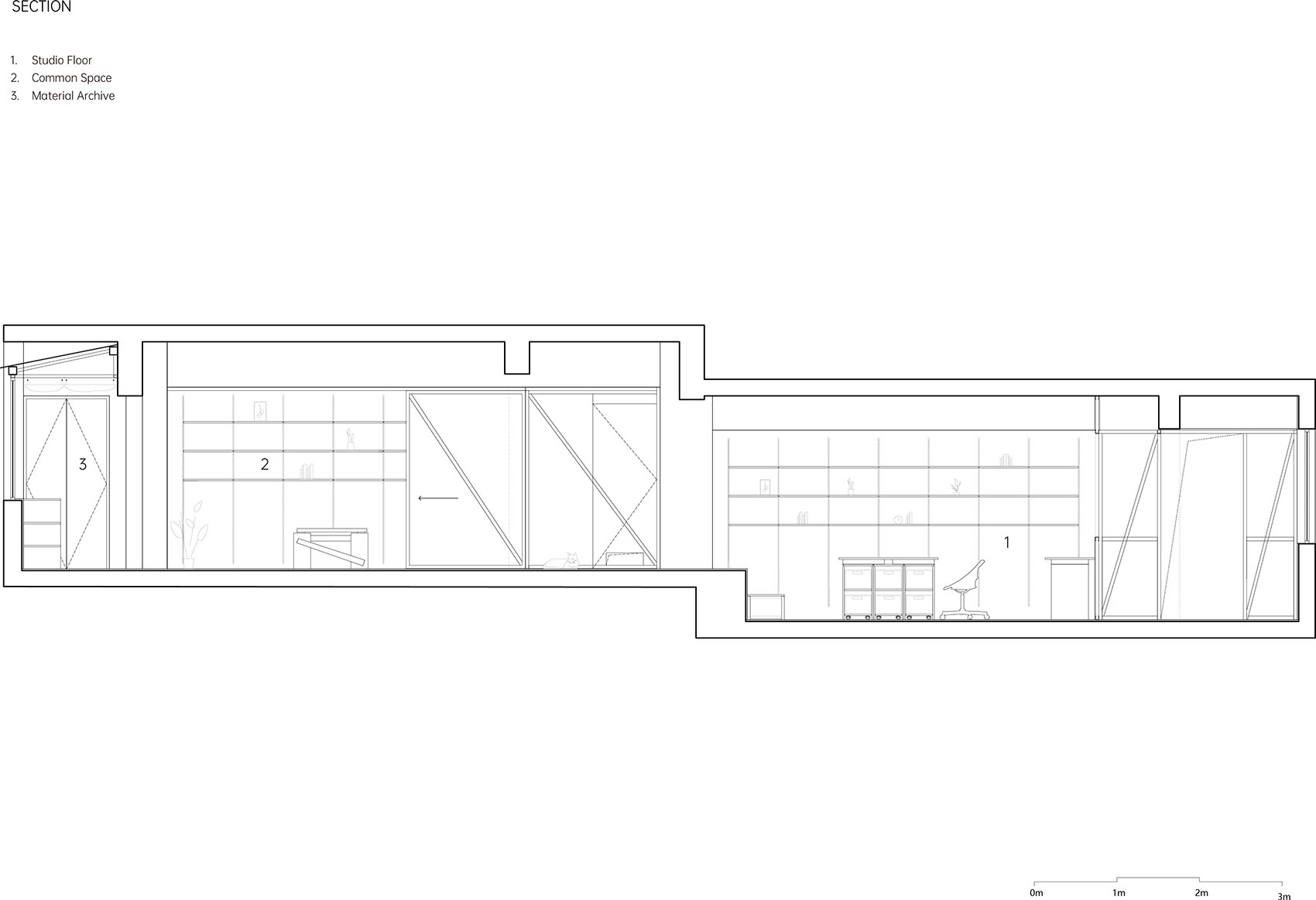
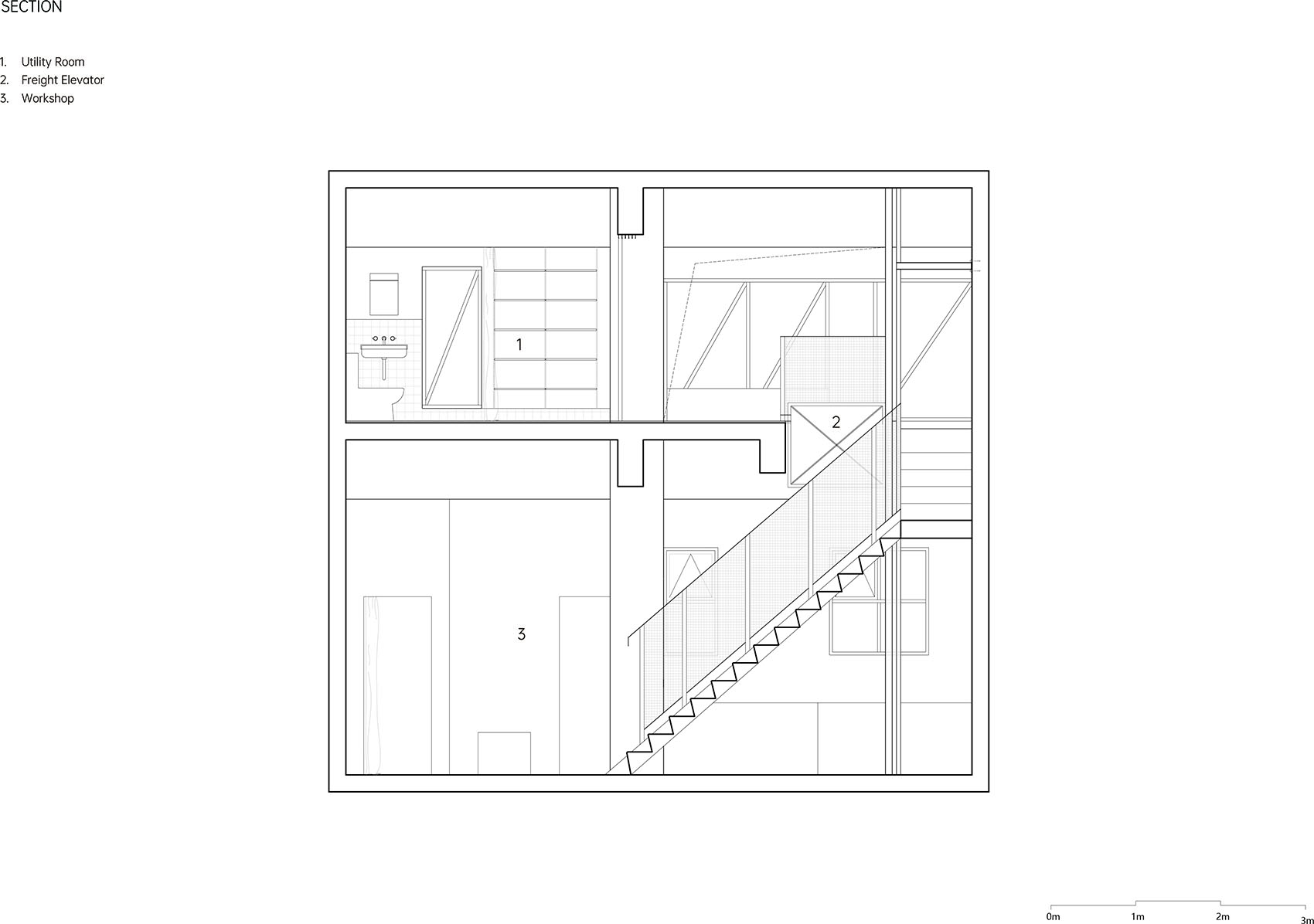
▼剖面图,Sections
项目:一门社工作间 2026
设计:一门社
地址:成都
类型:办公室
面积:118㎡
年份:2026
摄影:李斌
Title: amass workroom 2026
Architect: amass
Location: Chengdu
Usage: Office
Area: 118㎡
Year of completion: 2026
Photographer: Li Bin