
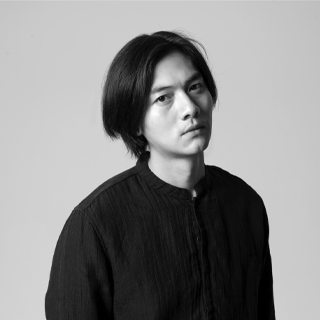
庄子玉
********
********
北京市北京市朝阳区
未来我希望设计依然是我们的主体,这是一种非常好的和社会以及世界交互的方式。把这件事情继续好好干下去,是我唯一的计划。
林盘行馆,成都 / 建筑
成都市下属崇州市历史悠久、文化底蕴深厚,滋养了陆游、杜甫、王勃等文人墨客的璀璨诗篇,传承着川西古风、古韵和古貌。林盘,作为一种川西地区由来已久的居住空间形态,融合了本地的气候特征、人文特质,以及本地人群的居住习惯和生活方式等诸多元素。本项目旨在将林盘原型与中国画的散点透视阅读方式在空间层面进行一系列叠合重组,以期在建筑的内外体验中获得更丰富的空间变化和叙事可能。
The Cropland Loop Resort is a high end hotel in the county of Chongzhou in Chengdu, China. Its shape is defined by a large dominant roof that shelters a variety of functions, each of them housed in an individual volume.
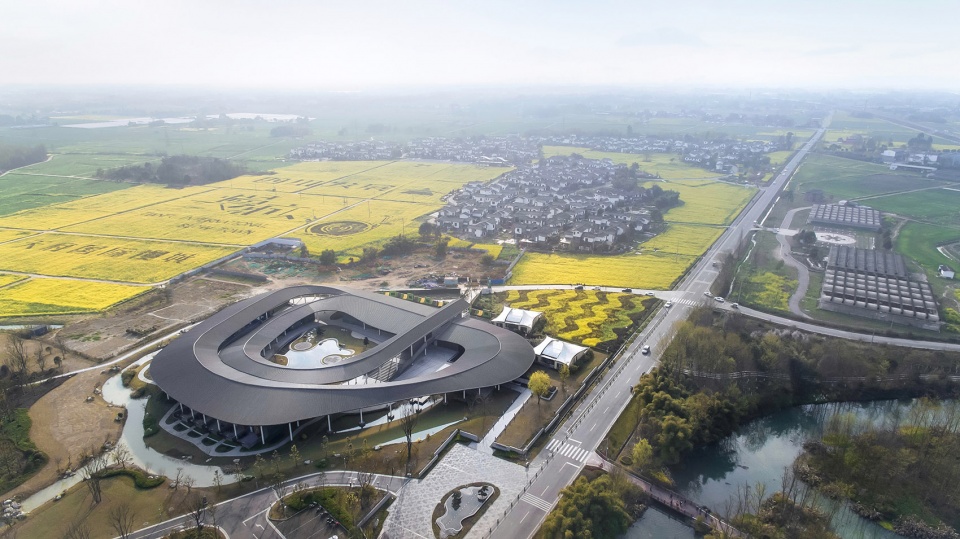
项目地处崇州市白头镇石滚堰,基地北邻桤木河湿地公园,东临公园接待中心,周边农田遍布,环境优美,气候宜人。项目在基本条件上具备了独一无二的优势。
基于这样的环境意向,建筑方案设计以大量针对川西民居的研究为起始,在这个传统原型中,有屋、有院、有林、有水、有田……它满足了一切人们对传统生活居所需求的想象,甚至是当代都市人群田园生活的样本。
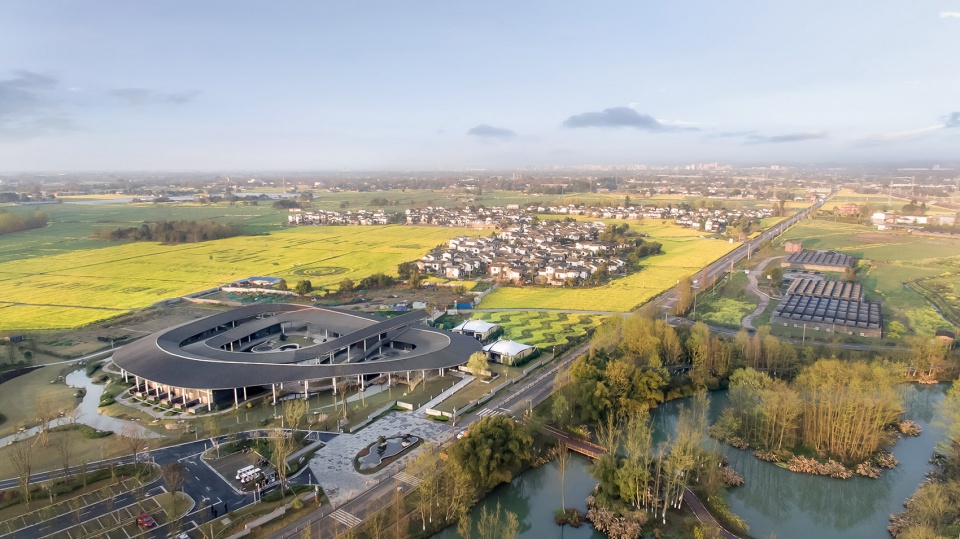
One of the main challenges of the design was to set a large scale building in the middle of a rural cropland. In search of an answer to this, our focus shifted to the direct surroundings of the project site, where several groups of small houses have defined the regions character for generations. Farming crops has a long tradition in the area, and the local residents erected small clusters, each consisting of a pond, trees, crops and the peoples dwellings. This has been forming a pleasant microclimate, offering shade and a cool breeze in a particularly hot area.
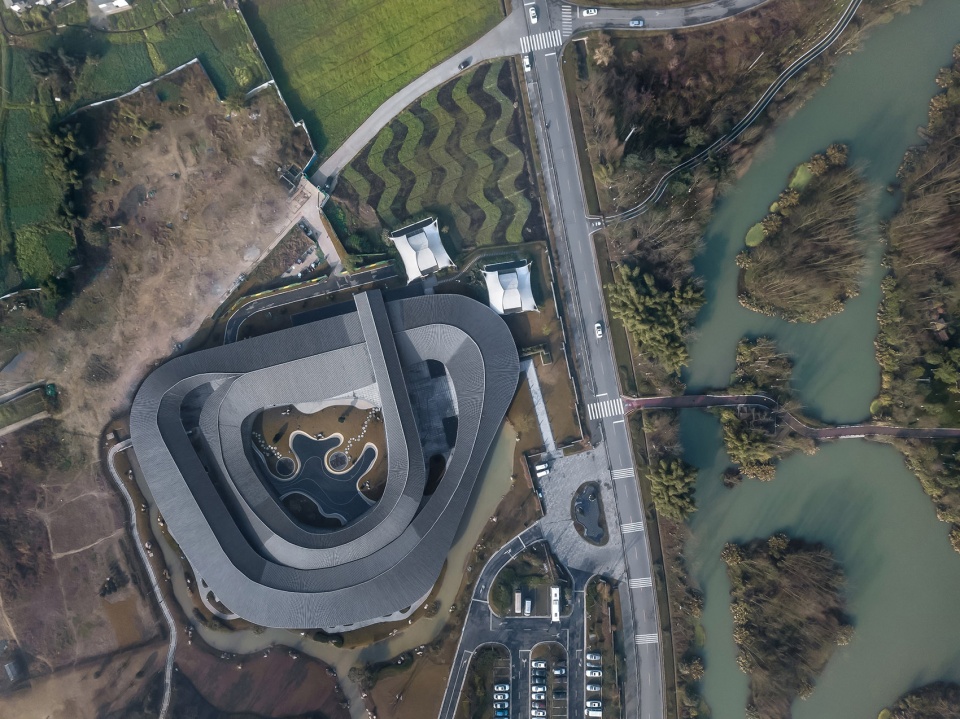
据此我们从类型学分析的角度确定了方案中应该存在的“屋+院”、“屋+树”、“屋+屋”、“屋+田”、“屋+檐”、“屋+水” 等几种原型组合方式,并在之后的设计中加以拓展和转译。
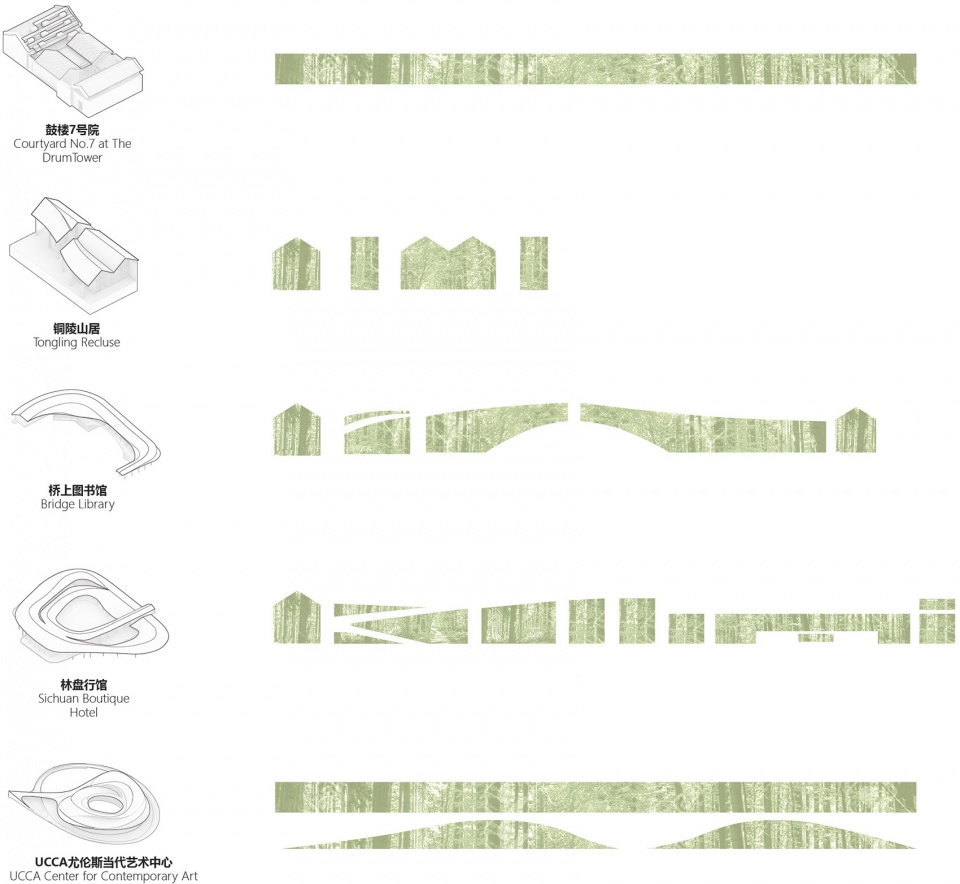
另一方面,中国山水长卷中对于景观与空间流动感的营造,以及对于上述林盘空间类型样本的重组,是我们在本案中尝试的另一种空间可能。传统山水长卷中的散点透视画法,在一幅画作中展示了多重空间叙事叠合的可能性。这与当下项目开发所面临的多元需求、多重场景的运营诉求不谋而合。在一个长轴的空间上,许多的故事与生活如画卷般徐徐展开。
This cluster serves as the designs prototype: A building with yard and trees, cropland around it, plentiful water to cool the air, and cantilevering roofs to provide shelter from the sun.

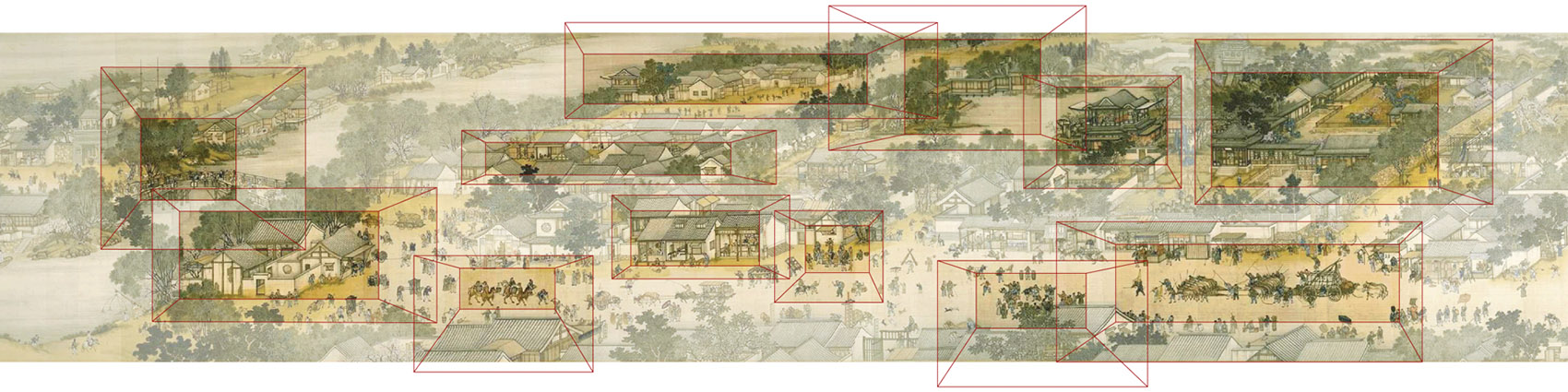
我们在之前的项目铜陵山居中,对类似的叙事结构与空间组织方式有过尝试。檐下空间与山体的呼应、卧室交叠的外墙、中断二分的屋脊与庭院、入口挑高的铜门、末端飞檐与山体的对话,这一个个独立的故事线索成为一个在横向关系里连续的画面。
The above mentioned roof is the first image an observer sees from afar. Its distinct shape serves as an eyecatcher and transforms the Chinese traditional architecture of long horizontal buildings into a modern shape. Based on this starting-point we used our experience from a previous project, the Tongling Recluse, to create a building that is defined by intimate views, as opposed to a monolithic appearance. The result resembles a Chinese scroll painting. A unified image that wraps around the building, but when given a close up look it dissolves into individual scenes and moments.
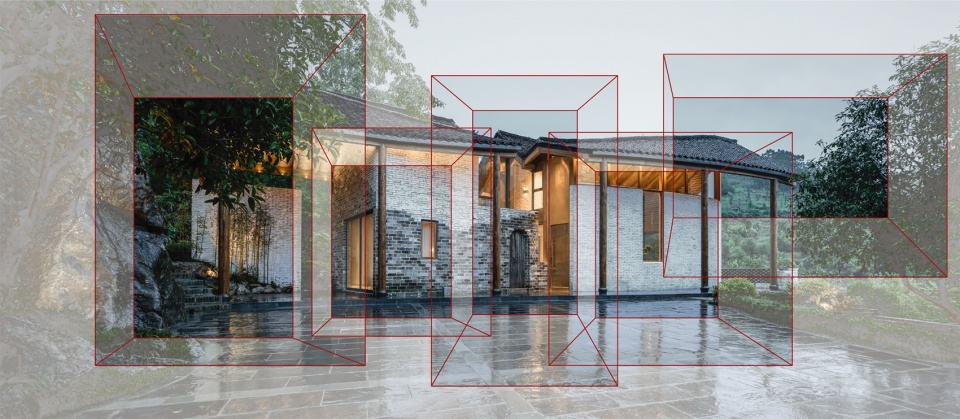
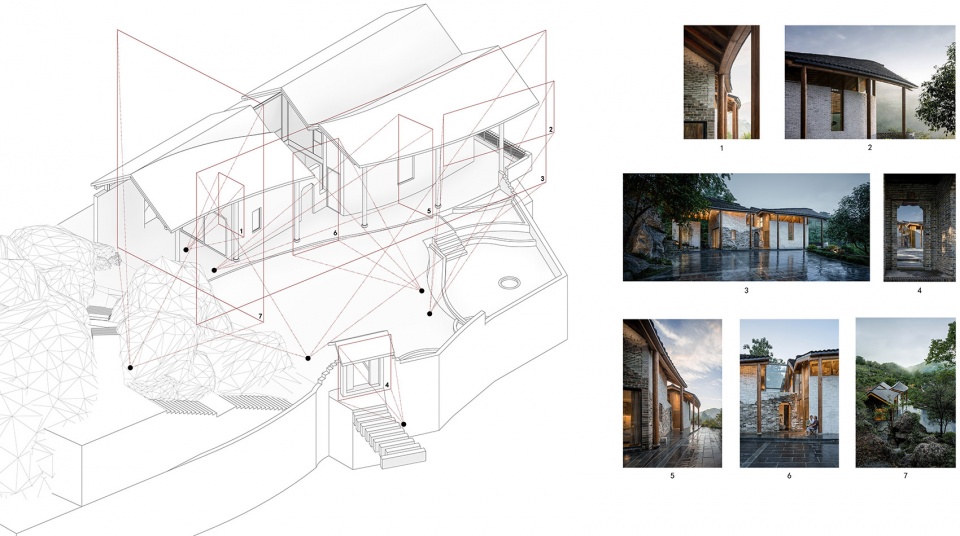
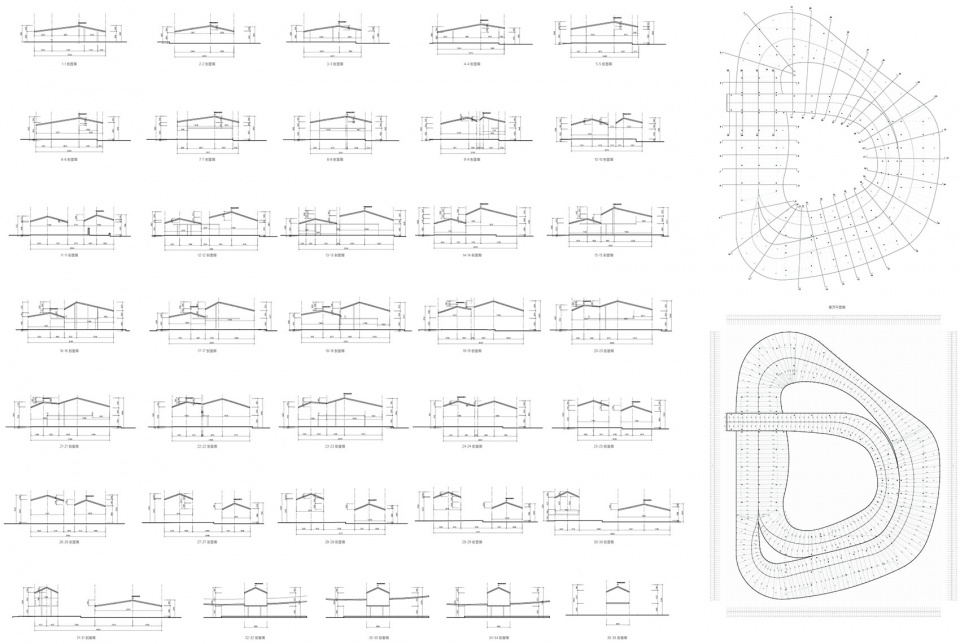
作为叙事的载体,铜陵山居的展开面显然十分有限,林盘行馆作为建筑体量几十倍于铜陵山居且功能形式更为丰富多样的酒店业态,其“画卷”俨然需要更宽广的纵深。于是我们在设计之初,结合地块的基本功能划分和排布,设计一套与功能体块相对应的“功能长卷立面”,这其后是不同功能所对应的空间叙事体系。
Despite the complexity of the images created, the different functions of the compound follow a regular grid, allowing the construction cost to stay within a reasonable frame. It is the illusion of complexity, that defines the project.


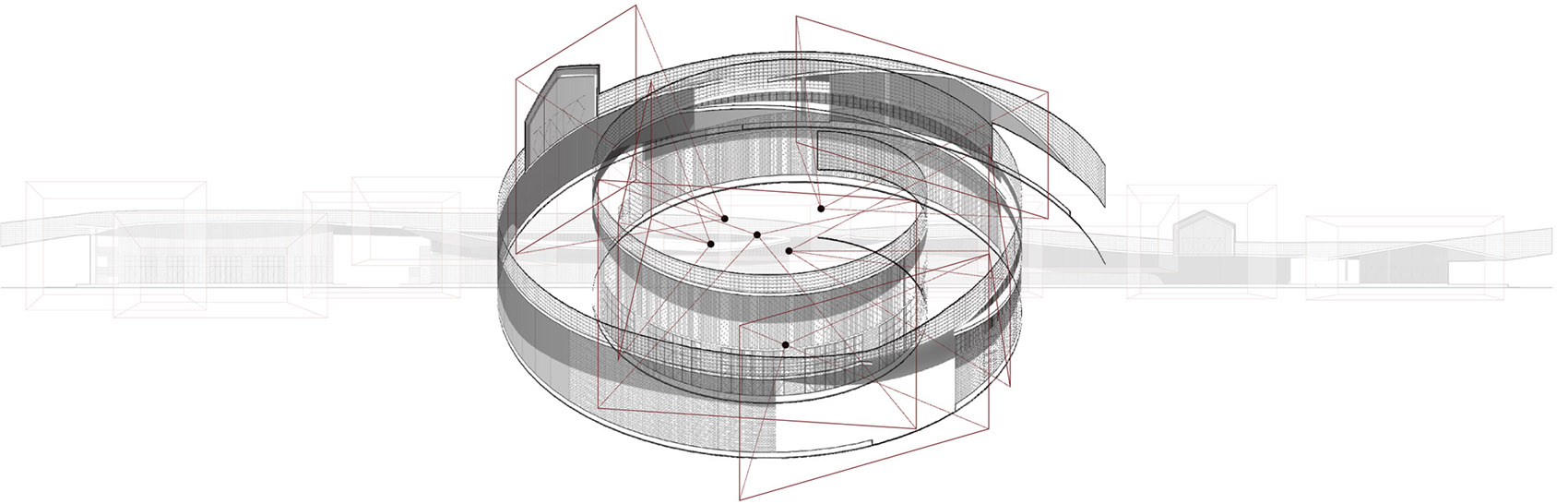
屋檐作为一个重要的空间整合要素,将二维化的“功能长卷立面”在三维空间上进行多向的延展。在这一系列的空间交叠关系中,传统林盘背山望水,林木其间,屋院融合的空间特质得以再现,同时丰富的空间变化又给建筑带来了非常当代的空间体验与全新的空间类型。
As an important spatial integration element, the eave extends the two-dimensional "functional scroll facade" in multi-directional in three-dimensional space. In this series of spatial overlapping relationships, the traditional forest is backed by mountains and water, and the spatial characteristics of the integration of houses and courtyards are reappeared. At the same time, the rich spatial changes bring a very contemporary space experience and a new type of space to the building.
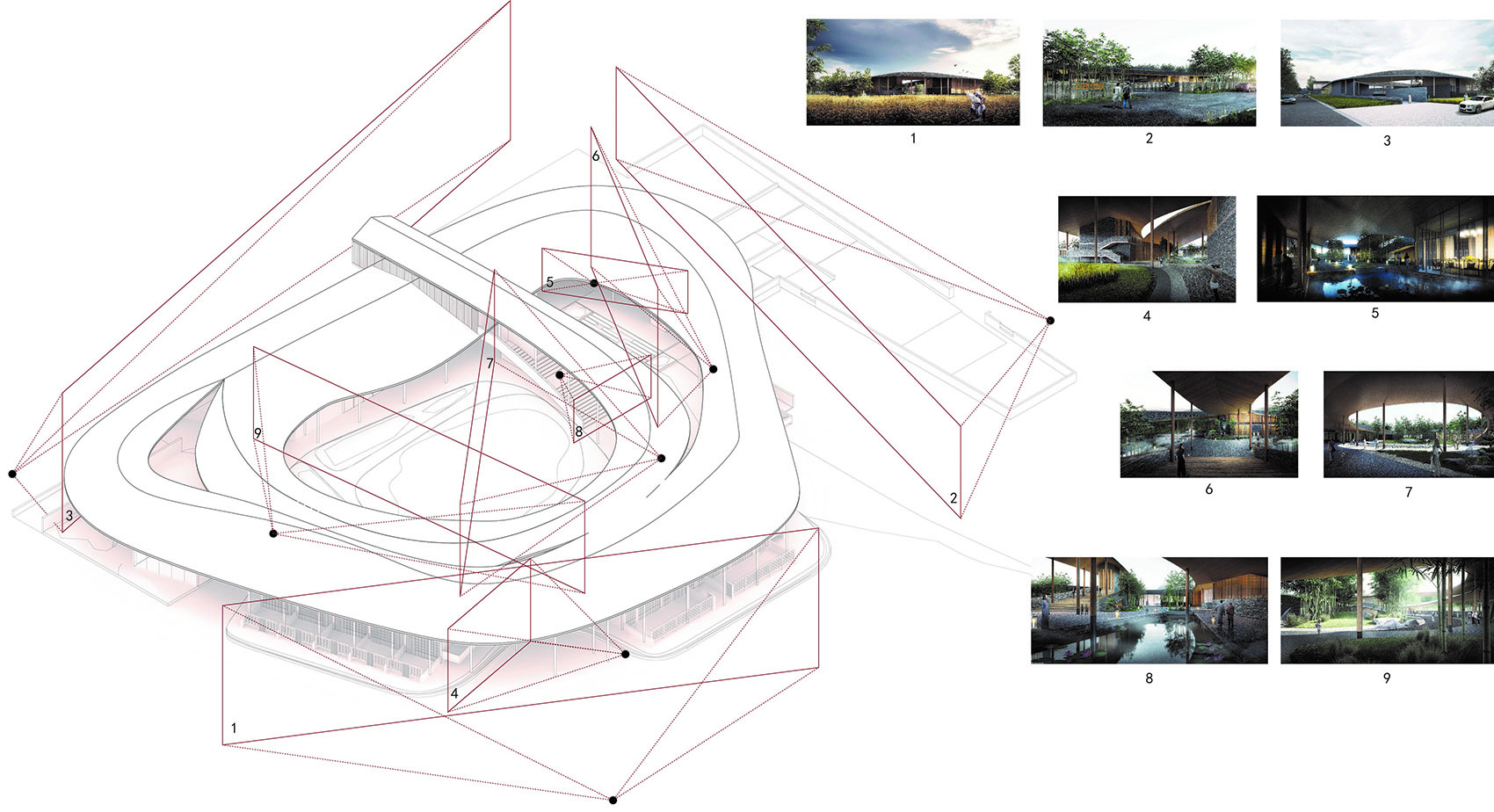
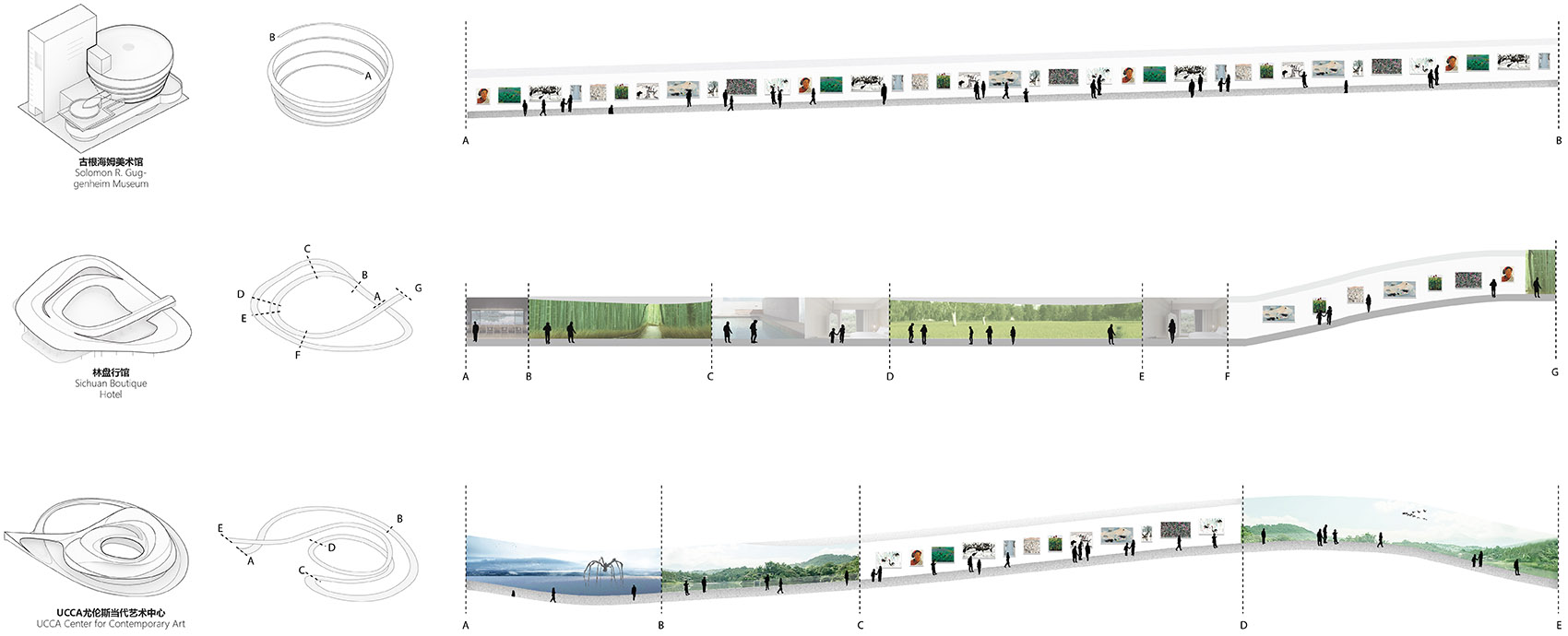
在其中,屋、檐、田、水、树以及人,都变成了这卷曲长卷中流动的元素与意向。建筑的体验者与建筑元素,自然元素在此融为一体。
Among them, houses, eaves, fields, water, trees and people have all become the flowing elements and intentions in this curly scroll. The experience of architecture, architectural elements and natural elements are integrated here.
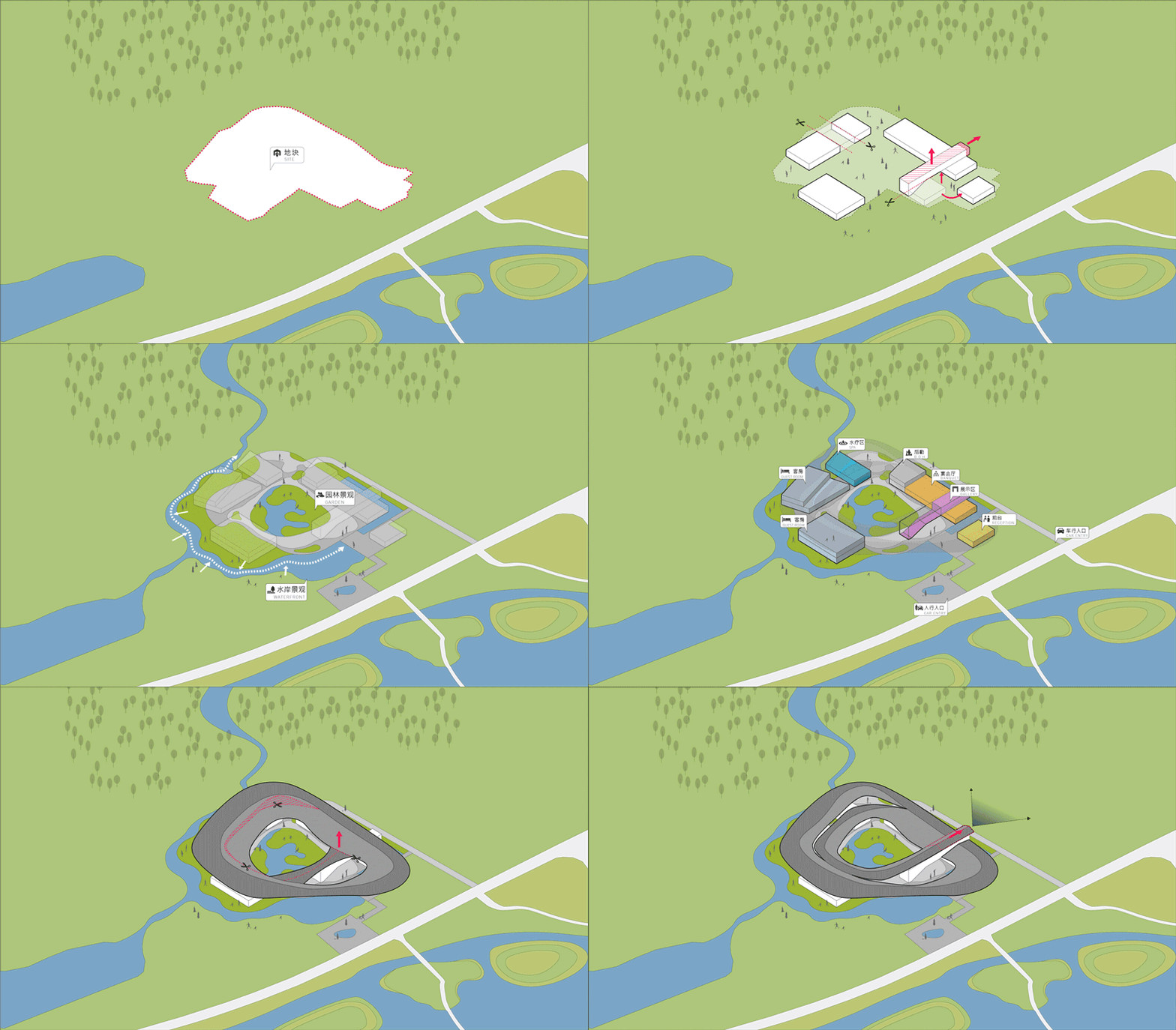
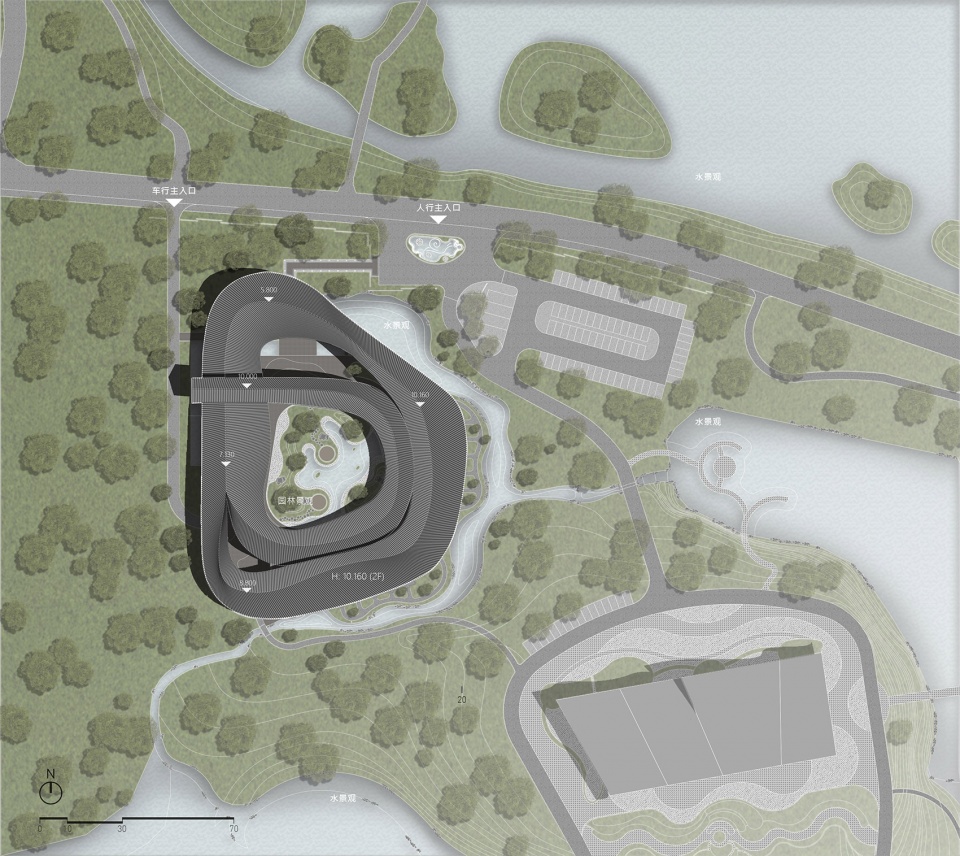
项目的主要功能由接待、住宿、休闲、餐饮、文化等几大部分构成,并通过类环形的流线设置形成明确的功能分区。方案最大化利用了红线内的土地资源,在满足退线和必要的交通空间要求后形成最大化的建筑基底,基于传统川西林盘体系中的空间模式来组织功能体块,鳞次栉比,绿树其间,水系环绕。
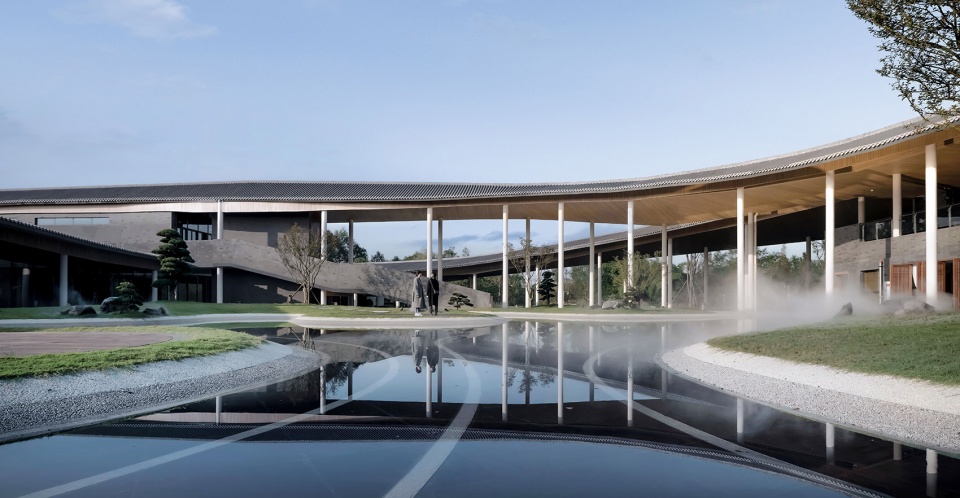
The dimension of the roof and the enclosed yards allows different functions to be in line of sight of each other, but spread out to allow a clear separation. The resulting loop allows for a sheltered walk along bars and restaurants, passing the lobby and ultimately leading to the hotel rooms. The position of each function creates a pattern of volumes and voids, that draw the surrounding croplands visually into the heart of the building. Emphasizing this connection of inside and outside are water features, which blur the boundaries even further.
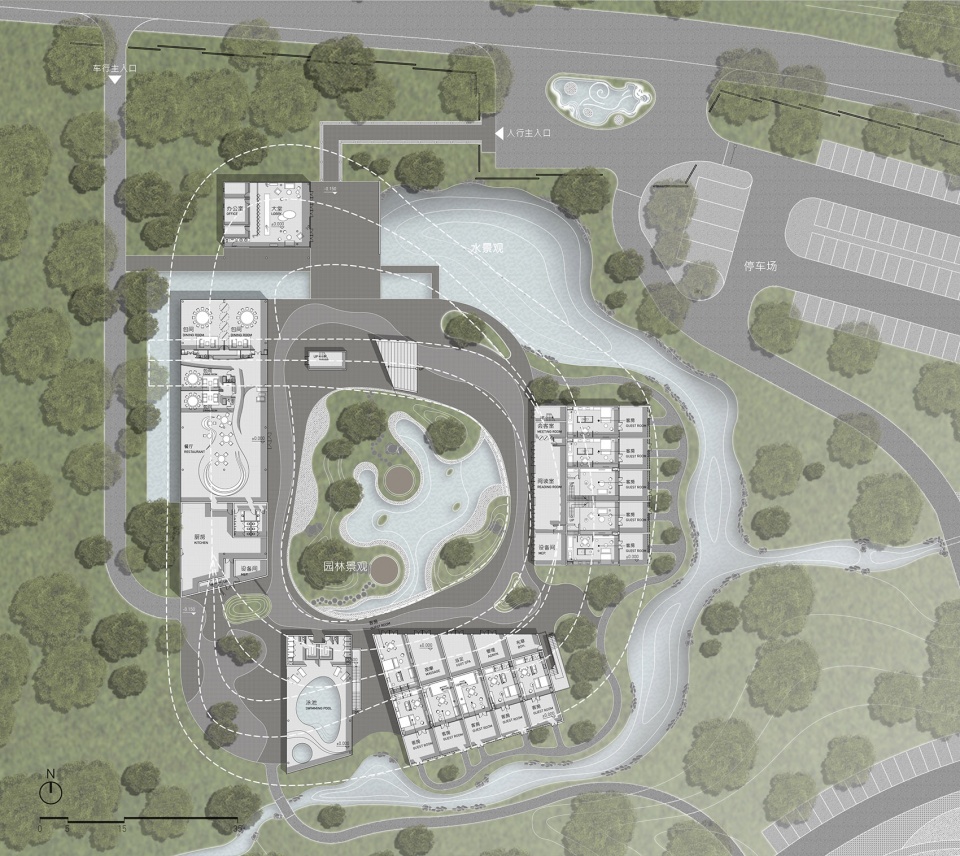
在城市里之中又有乡村的气质的概念中,建筑里的边界概念是被模糊的,能看到我们对具体功能的定位是一个多维化的发散结构。这种形式给建筑本身带来了流动性以及不同的功能及边界之间转换的可能。这种转换不仅体现在对于功能流线上的定位,在整个建筑看到的空间状态上,也呈现出若隐若现的空间渗透感和透明性。
In the concept of rural temperament in the city, the boundary concept in the building is blurred. We can see that our positioning of specific functions is a multidimensional divergent structure. This form brings mobility and the possibility of conversion between different functions and boundaries to the building itself. This transformation is not only reflected in the positioning of the functional streamline, but also in the space state seen in the whole building, and also shows a vague sense of space penetration and transparency.
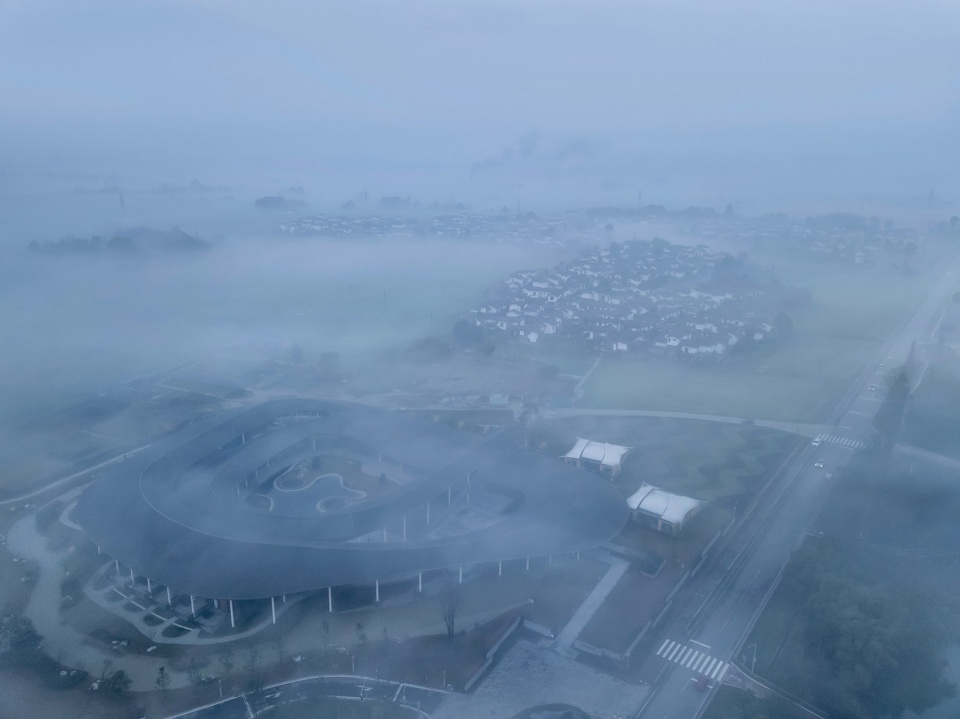
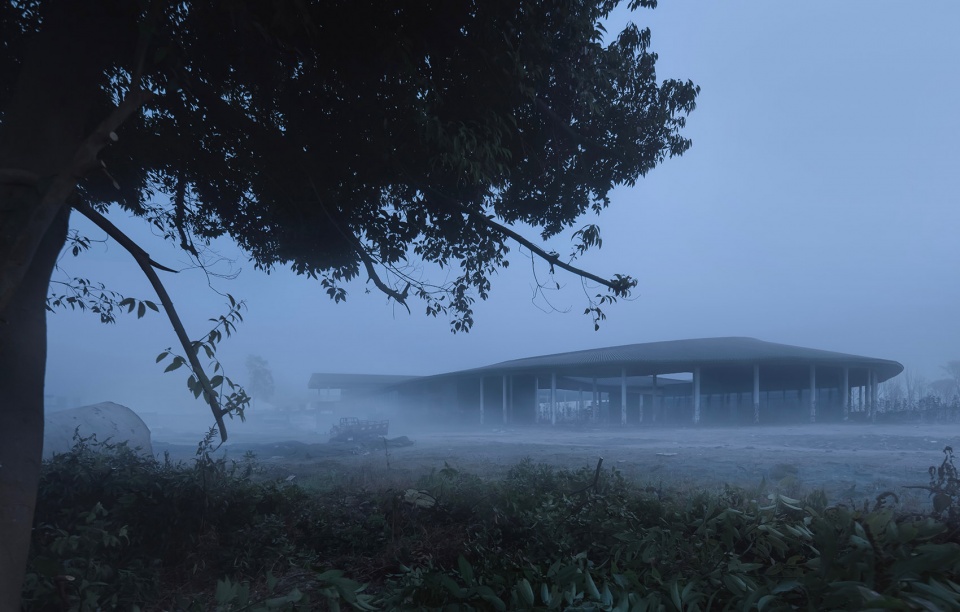
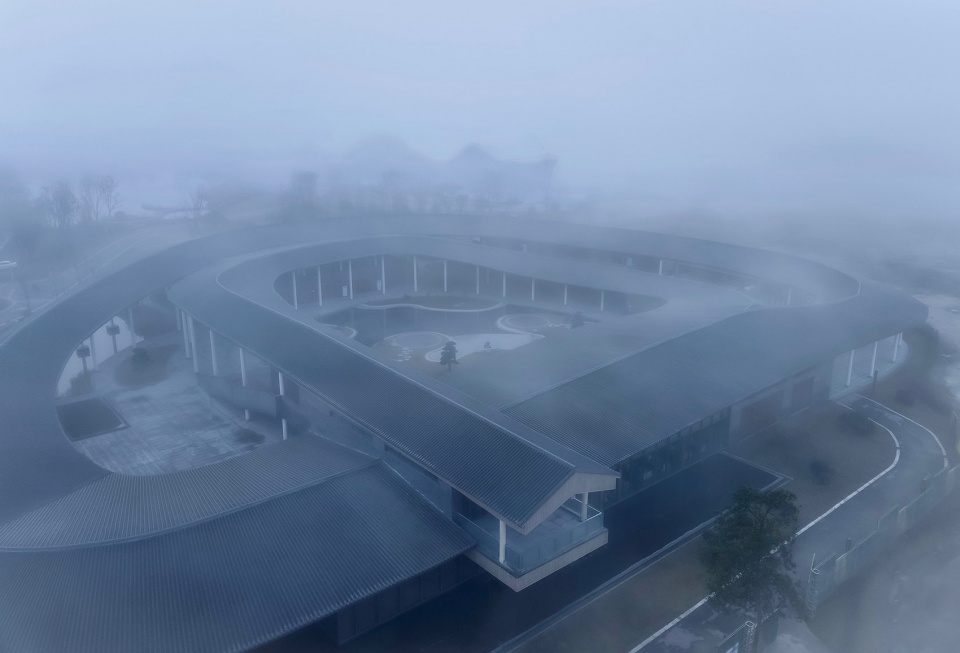
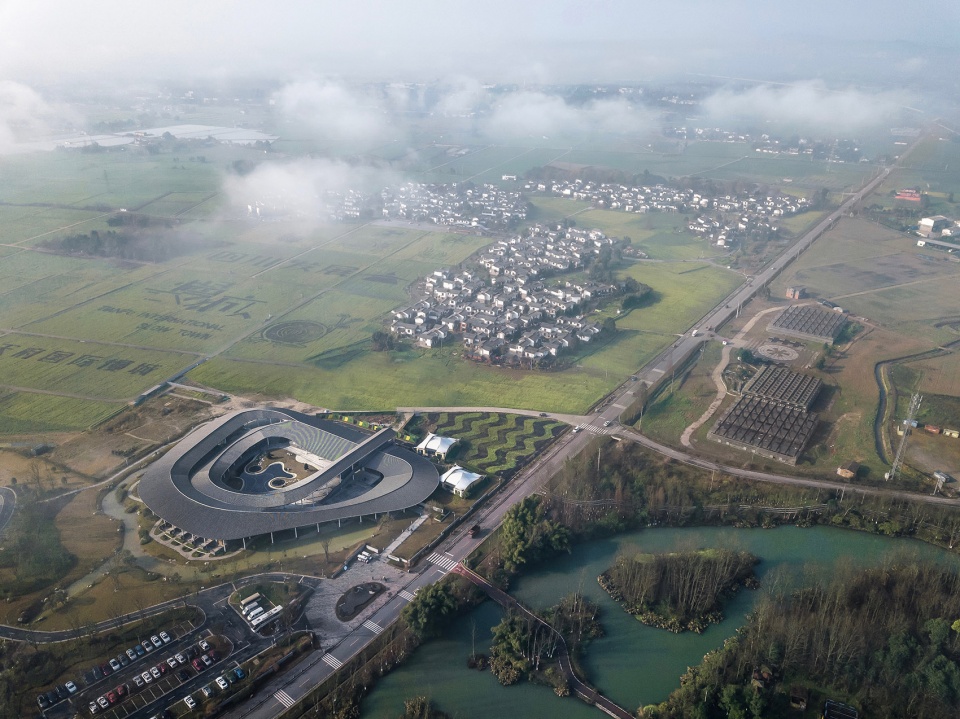
建筑在不同的环境的气氛下的视觉呈现非常丰富,比如在有雾气的时候,川西林盘这种地貌是一种清晨的状态,建筑的这种流动感,若隐若现的感觉使得体验感更为丰富。
The visual presentation of buildings in different environments and atmospheres is very rich. For example, when there is fog, the landscape of West Sichuan Linpan is a kind of early morning state. The flow of the building and the faint feeling make the experience more rich.
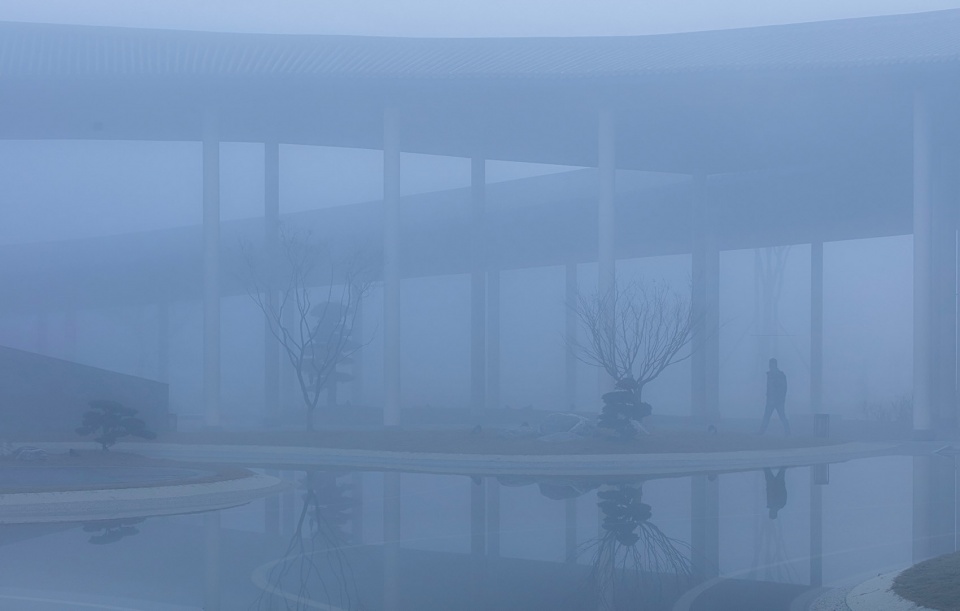
在屋面本身的这种特质关系里面,我们能看到林盘行馆相对周边建筑的体量较大。作为一个公建体量,我们需要去平衡它跟周围小建筑的关系,设计出建筑自身的散点功能性关系,同时要平衡工业化气质并具有仪式感的空间。
In this special relationship of the roof itself, we can see that the Linpan Xingguan is relatively large compared with the surrounding buildings. As a public building volume, we need to balance the relationship between it and the surrounding small buildings, design the scattered functional relationship of the building itself, and balance the industrial temperament and ritual space.
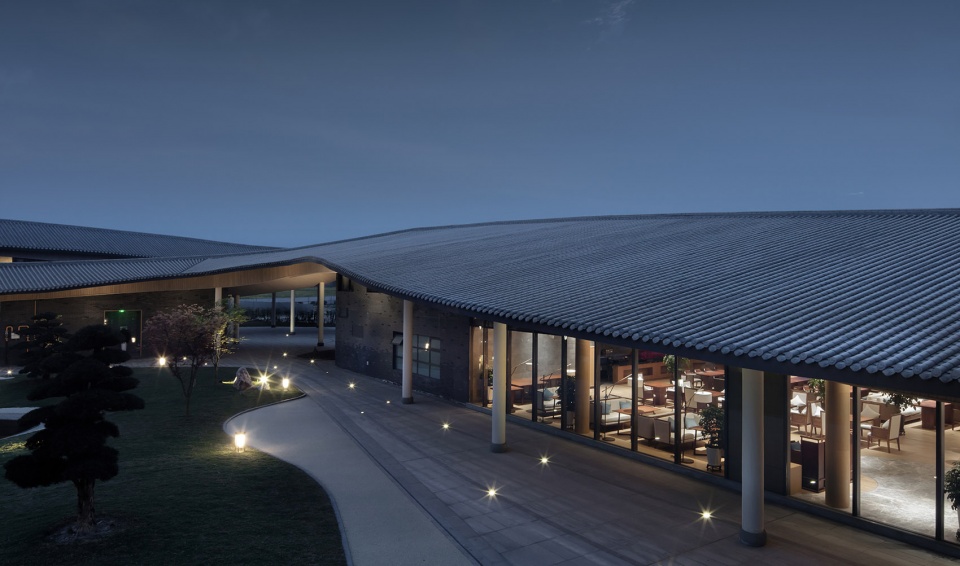
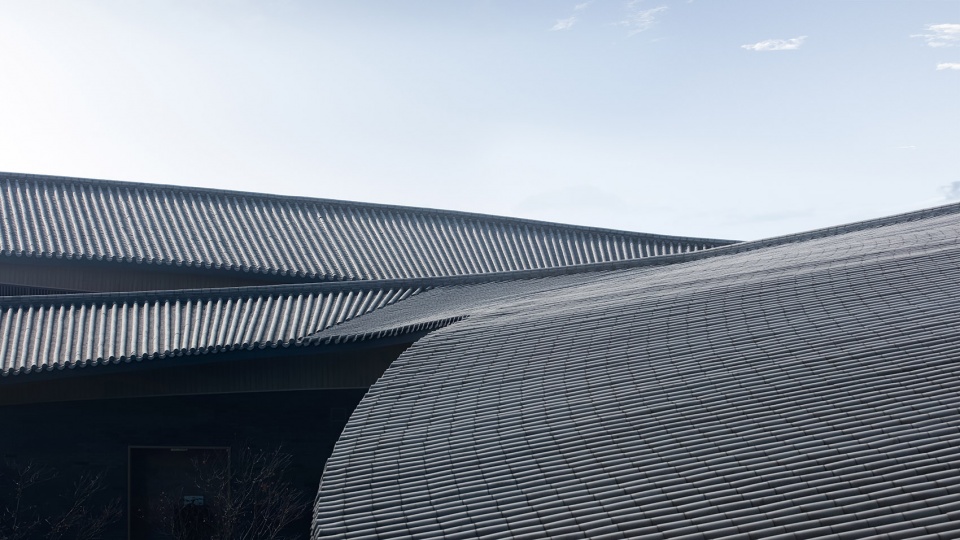


在这里面我们能看到不同尺度和不同功能之间的一系列转换,这也是我们希望在建筑里呈现的,既是建筑化的状态,同时又是一种园林化甚至城市化的状态。
Here we can see a series of transformations between different scales and different functions, which is also what we hope to present in the architecture. It is not only the state of architecture, but also the state of gardening and even urbanization.
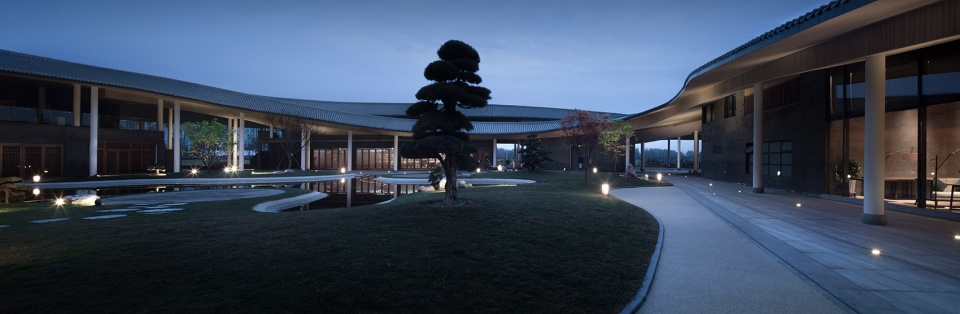
在建筑之上,不同的角度可以看到不同的画面。比如建筑本身有不同的标高,包括建筑的端头挑出去的部分,可以远眺远处的雪山。在这样一个流线的状态下,从不同的角度、不同的标高以及不同的框景关系之中,可以获得完全不同的空间体验。
At the heart of the building lies a multifunction room, which is elevated above the loop itself. It offers a special space, emphasized in its importance by its location and the stairs leading up to it. Beyond that it serves as a viewfinder, focussing on the snow mountain in Chengdu, reaching above 5000m height. Its top is covered by snow for large parts of the year, despite the regional climate.The result of this process is a building aware of its vernacular tradition. At the same time it does not hide its ambitions and the era it is built in.


不光是建筑自身在平面上的边界感和体验感,在内外的交织关系里,甚至建筑后面的关系,很难去定义这种内外和上下的变化。我们希望是非常融合式的体验,一种没有边界无边界性的具有流动感的体验方式。
It is not only the sense of boundary and experience of the building itself on the plane, but also the interwoven relationship between the inside and outside, and even the relationship behind the building. It is difficult to define such changes in the inside and outside and up and down. We hope that it is a very integrated experience, a kind of experience with no boundary and no boundary and a sense of flow.
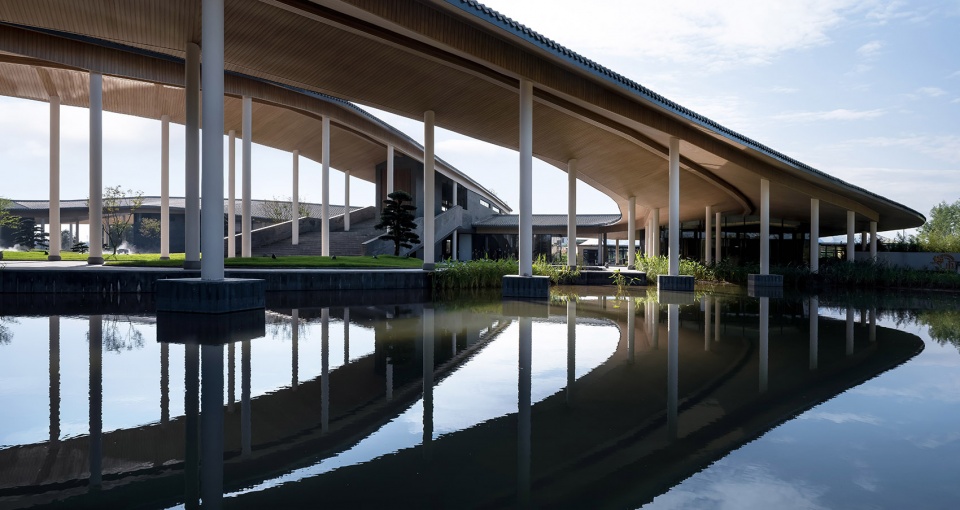
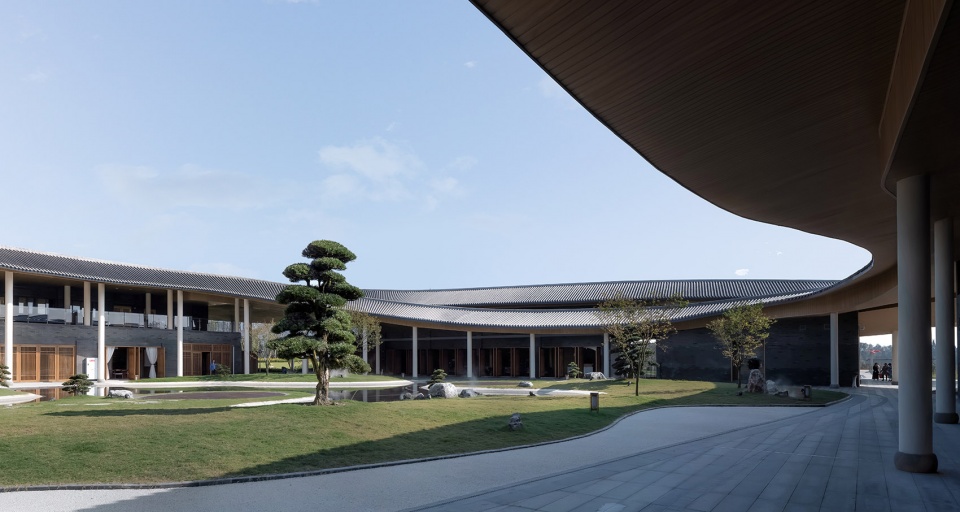
从入口处将功能设定为由公共性至私密性环绕排布,并通过中庭空间的景观处理形成相对的公私区域划分;功能分布同时回应场地不同方向的环境因素:面向西岭雪山出挑的展厅,面向稻田景观展开的客房,面向街面展开的入口庭院,面向内庭院形成的内檐游廊与活动大台阶。
From the entrance, the function is set to be arranged from public to private, and the public and private areas are divided by the landscape treatment of the atrium space; The functional distribution also responds to the environmental factors in different directions of the site: the exhibition hall facing the Xiling Snow Mountain, the guest rooms facing the paddy field landscape, the entrance courtyard facing the street, and the eaves veranda and activity steps facing the inner courtyard.
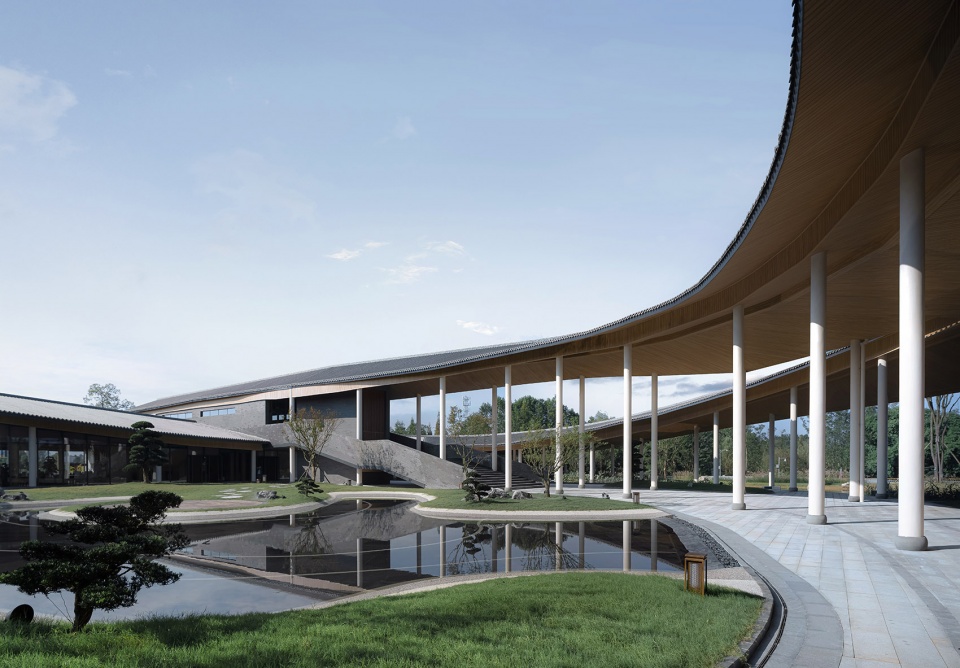
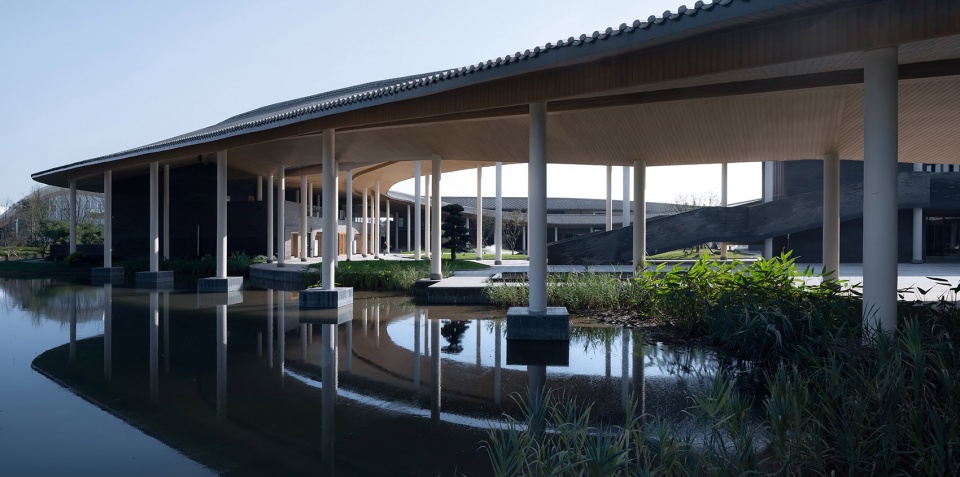
建筑与景观穿插交互,不同功能相互独立而又互为呼应,和林盘原型中的空间形式类似而又更具当代的空间品质感。连续的屋面体系如游龙穿梭,传承了川西建筑的灵魂。建筑在平面和剖面上相互重叠、穿插,形成丰富的室内和室外空间。同时,由于内部卷曲的檐口和功能流线,传统矩形进院体系的院落空间也得以异化成为多个具有独特空间属性的分属小庭院。
The architecture and landscape interact with each other, and the different functions are independent and echo each other, which is similar to the space form in the prototype of the forest plate, but has a more contemporary sense of space quality. The continuous roof system is like a dragon shuttle, inheriting the soul of western Sichuan architecture. The buildings overlap and intersect each other on the plane and section, forming a rich indoor and outdoor space. At the same time, due to the internal curly cornice and functional streamline, the courtyard space of the traditional rectangular entrance system has also been alienated into a number of small courtyards with unique spatial attributes.
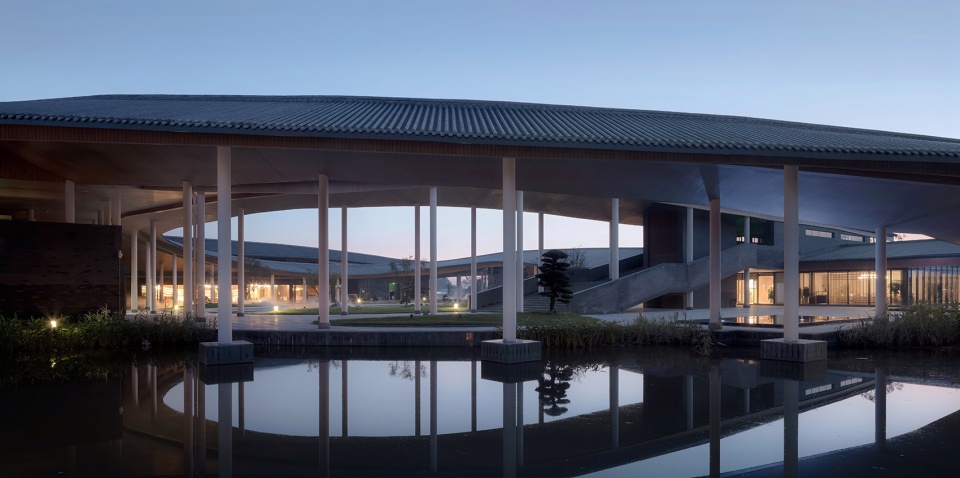
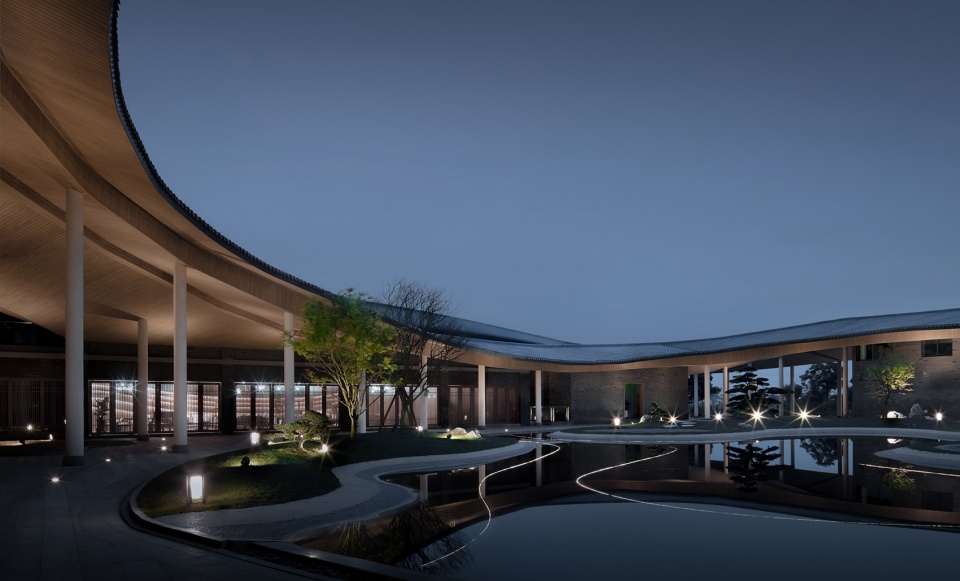
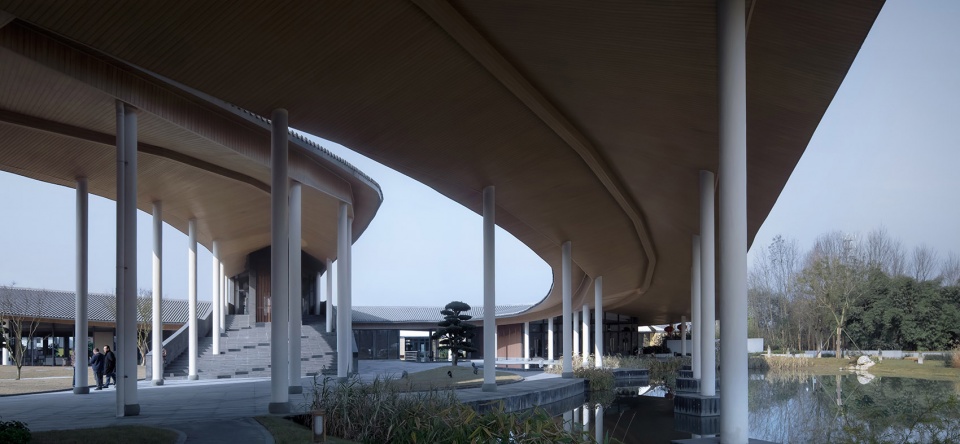
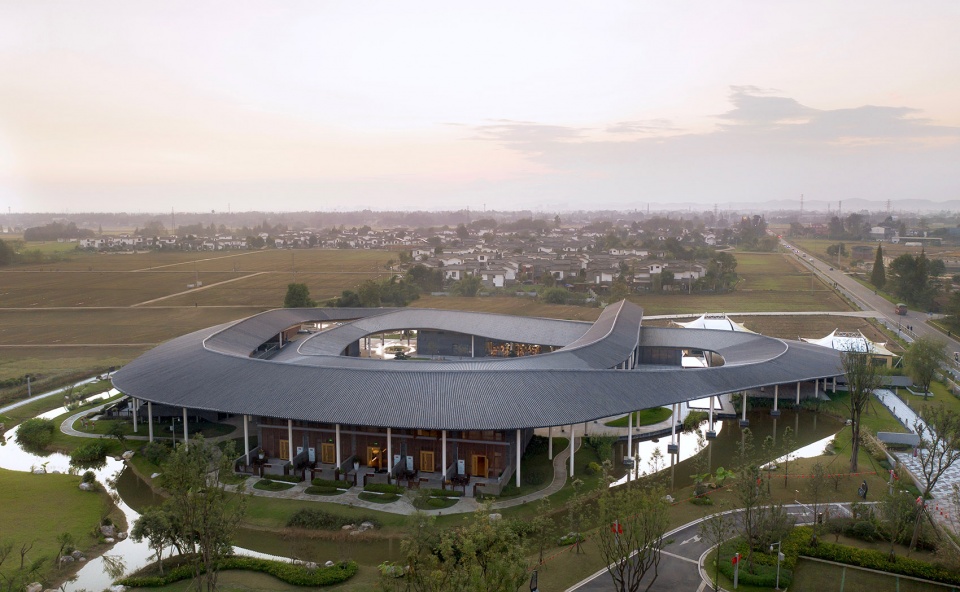
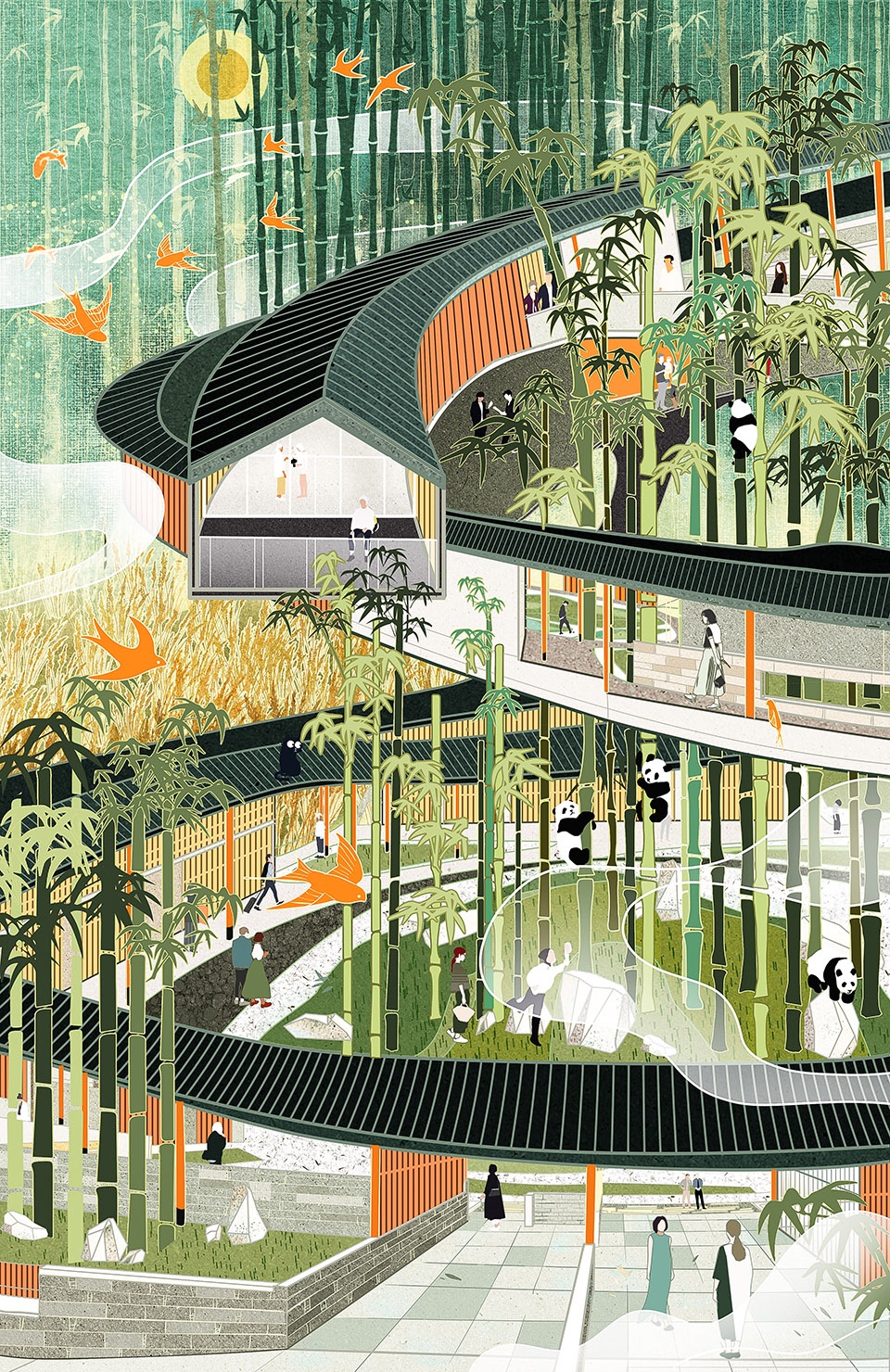
竹林、小型造景、建筑外层的稻田和穿插于建筑的水面共同构成了建筑群的景观基底,形成了林中有屋、屋间有林、屋旁有田,田中有林的多层次景观空间。最大程度地通过设计方案将川西林盘的景观体系浓缩在基地中。在满足功能需求的同时,得到了屋院结合的人文自然建筑空间。
The bamboo forest, small landscape, the rice field in the outer layer of the building and the water surface interspersed in the building form the landscape base of the building group, forming a multi-level landscape space with houses in the forest, forests between houses, fields beside houses, and forests in the fields. The landscape system of West Sichuan Forest Park is concentrated in the base through the design scheme to the greatest extent. While meeting the functional requirements, it has obtained the humanistic and natural architectural space combined with housing and courtyard.
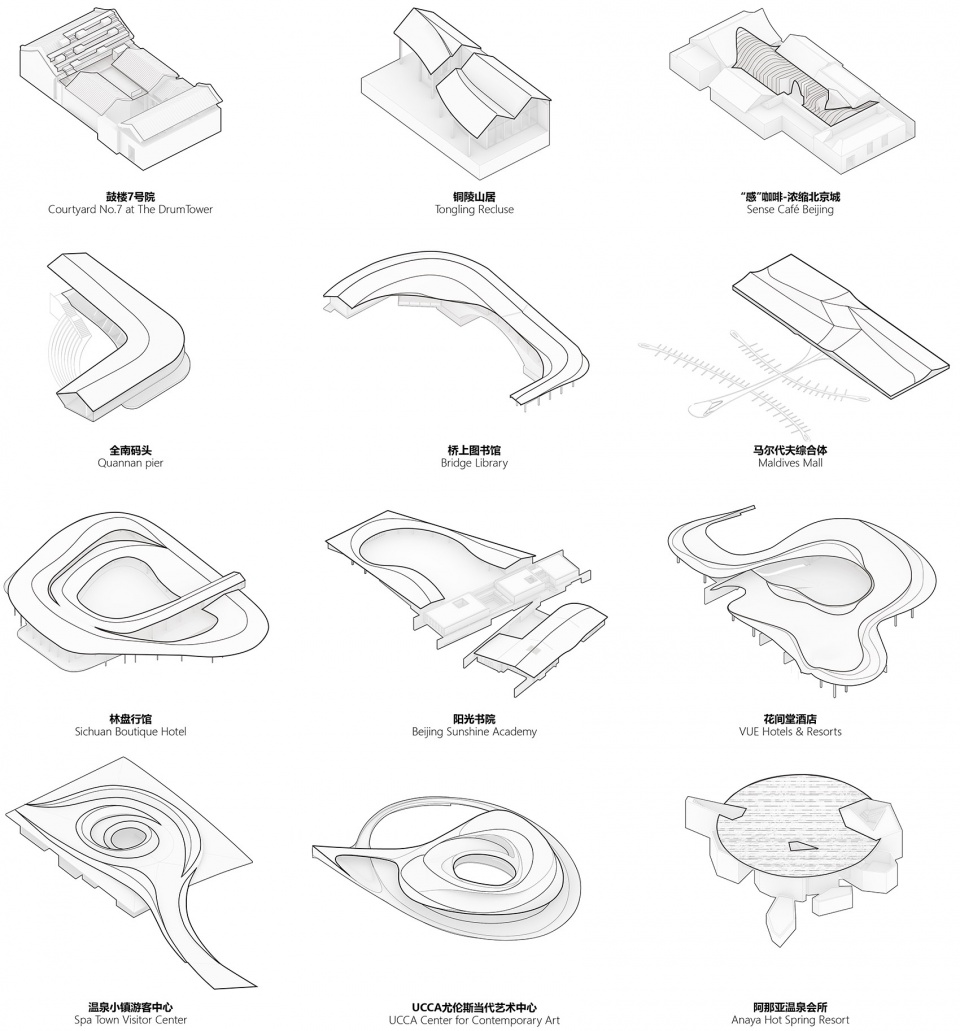
林盘行馆作为庄子玉工作室一系列当代空间原型探索的开始。从项目迭代图示也可以看到相互间的连续性。这些迭代图示是项目在形式层面的反馈,而大多数人最后体验到的其实也是形式,阅读到的是关于建筑的语汇,其实它们都只是表象,呈现的端口可以是多样的,但背后的许多观念是延续的。
Linpan Xingguan is the beginning of a series of contemporary space prototype exploration of Zhuang Ziyu Studio. The continuity of each other can also be seen from the project iteration diagram. These iterative diagrams are the feedback of the project at the formal level, and what most people finally experience is also the form. What they read is the vocabulary about architecture. In fact, they are only the representation. The ports of presentation can be diverse, but many of the concepts behind are continuous.
项目地点:成都崇州
项目类型:酒店设计
建筑面积:5134 平方米
设计时间:2018 年
业主单位:四川国弘崇展现代服务业投资有限责任公司
业主代表:吴亚平
业主项目管理:王昭希,李从波,黄锦江,涂成昱,丁世东
建筑及室内设计主创团队:RSAA/庄子玉工作室
项目主创:庄子玉
建筑设计部分:任中琦,喻凡石,魏熙,陈俊刚,刘力源,叶子辰
室内设计部分:李娜,赵欣,谢欣慧,靳若兮,范宏宇,星梦钊,郭振荣,汪宁(实习生),张雪楠(实习生)
EPC建设单位:华西六建
项目总负责:王立平
技术负责人:王勇
建筑施工图配合团队:四川省建筑设计研究院
项目总负责:白今,王保磊 ;建筑专业:江玉林;结构专业:王保磊,钟睿,王兴华;给排水专业:袁希;强电专业:肖飞;暖通专业:姚盼
室内施工图配合团队:亚厦西南设计研究院
项目总负责:冷茂;施工图:张瑞,马祯骅,王朔华,黄文,王昌宇,魏莱希
钢结构施工及配合团队:北新钢构
负责人:段凌潇,苟泽彬,黄永超,聂渊
摄影:存在建筑-建筑摄影
Project Information
Project Location: Chongzhou, Chengdu
Type: Hotel Design
Floor Area: 5134 ㎡
Design Time: 2018
Owner: Sichuan Guohong Chongzhan Modern Service Industry & Investment Co., Ltd.
Owner Representative: Yaping Wu
Owner Project Management: Zhaoxi Wang, Congbo Li, Jinjiang Huang, Chengyu Tu, Shidong Ding
Architectural and Interior Design Team: RSAA/Büro Ziyu Zhuang
Lead Architect: Ziyu Zhuang
Architectural Design: Zhongqi Ren, Fanshi Yu, Xi Wei, Jungang Chen, Liyuan Liu, Zichen Ye
Interior Design: Na Li, Xin Zhao, Xinhui Xie, Ruoxi Jin, Hongyu Fan, Mengzhao Xing, Zhenrong Guo, Ning Wang (intern), Xuenan Zhuang (intern)
EPC Construction Unit: Sichuan Huaxi No. 6 Constrution Group Co., Ltd.
Project Manager: Liping Wang
Technical Person in charge: Yong Wang
Architectural Drawings Cooperation Team: Sichuan Architectural Design & Research Institute
Project Manager: Jin Bai, Baolei Wang ; Architect: Yulin Jiang; Structure: Baolei Wang, Rui Zhong, Xinghua Wang;
Water Supply and Drainage: Xi Yuan; Strong Power: Fei Xiao; HVAC: Pan Yao
Indoor Construction Drawing Team: Yasha Southwest Design & Research Institute
Project Manager: Mao Leng; Construction Drawings: Rui Zhang, Zhenhua Ma, Shuohua Wang, Wen Huang, Changyu Wang, Laixi Wei
Steel Structure Construction and Coordination Team: Beijing New Building Material (Group) Co., Ltd. (BNBM Group)
Person in charge: Lingxiao Duan, Zebin Gou, Yongchao Huang, Yuan Nie
Photo credits: Arch-Exist Photography