
刘家琨
********
********
四川省成都市武侯区
建筑不仅仅是为了“看”,建筑中有许多东西需要用心或有一定的专业知识才能感知,还有一些部分确实不可见,但强烈影响人的感受和行为。而细部自有其作用,专业人也明白。我希望我的建筑有全方位的建筑学品质,继续努力吧。
爆竹塔 | 2024糖舍艺文祭核心燃烧装置,广西/建筑
竹塔位于阳朔糖舍江畔露台之上,临水连山,是2024-2025年度“跨年艺文祭”核心燃烧装置。与家琨建筑以往的建筑项目不同,此次装置以“燃烧”为题,颠覆了长期以来建筑师与“燃烧”的对峙关系——建筑师往往力图构建避免火灾、防止燃烧的安全场所。
The Bamboo Burst Tower is located on the terrace of the Yangshuo Sugar House, overlooking both the water and the mountains. It serves as the central burning installation for the 2024-2025 "Bonfire Festival." Unlike Jiakun Architects' previous architectural projects, this installation takes "burning" as its theme, subverting the long-standing opposition between architects and "burning"—as architects typically strive to create safe spaces that prevent fires and avoid combustion.
竹塔临水连山,延续漓江两岸竹林,将在地元素归纳到糖舍的场域之中。场地中的混凝土框架结构作为景框,竹塔为前景,漓江风景和绵延山峰为背景,层层构景,形成自然协调的画面,融入桂林山水之中。
The Bamboo Burst Tower is situated by the water, extending the bamboo forests along both banks of the Lijiang River, integrating local elements into the Yangshuo Sugar House site. The concrete frame structure on the site serves as a scenic frame, with the Bamboo Burst Tower in the foreground, the Lijiang River scenery, and the continuous mountain peaks in the background. This layered composition creates a naturally harmonious scene, blending seamlessly into the picturesque landscape of Guilin.
▼燃烧之前,Before the Burning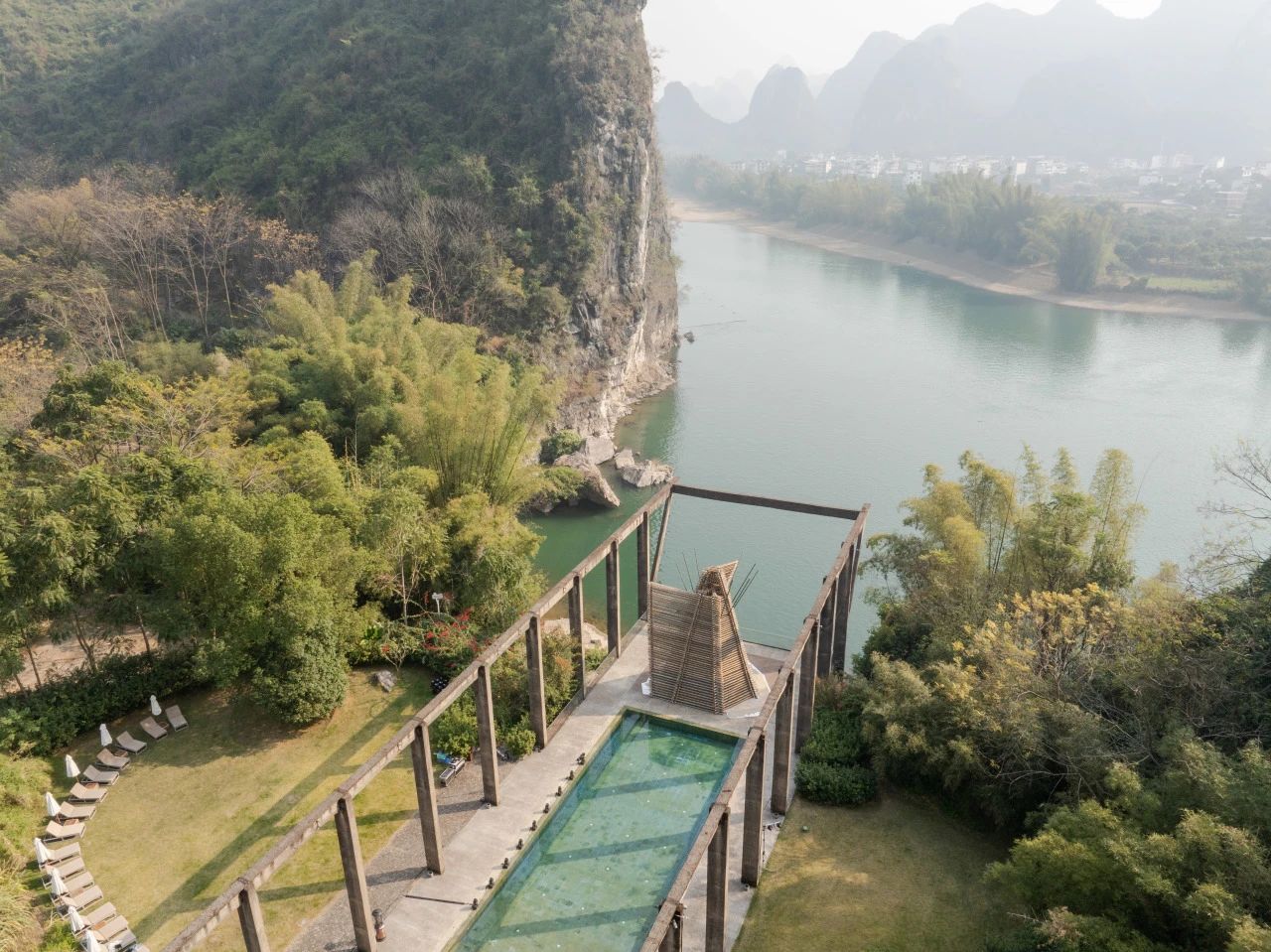
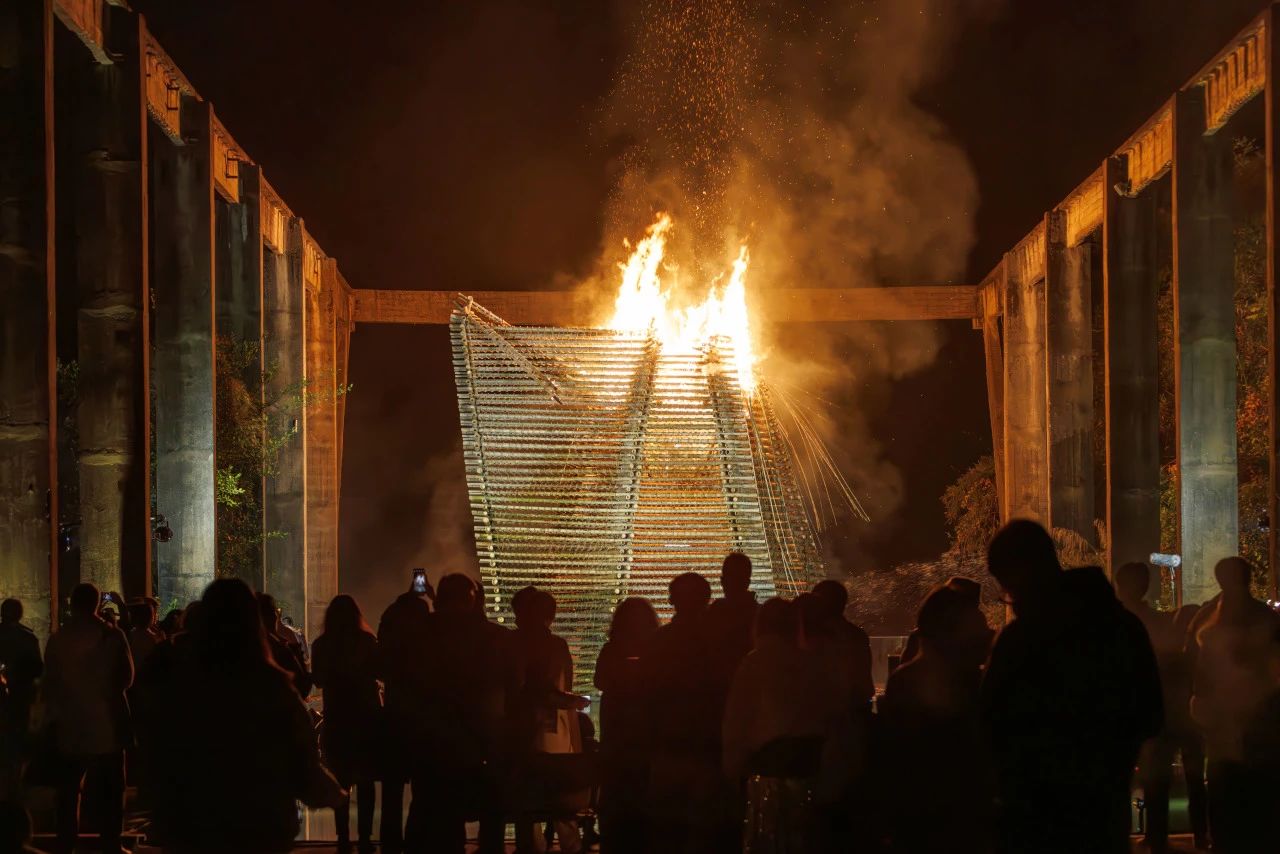
▼燃烧之时,During the Burning
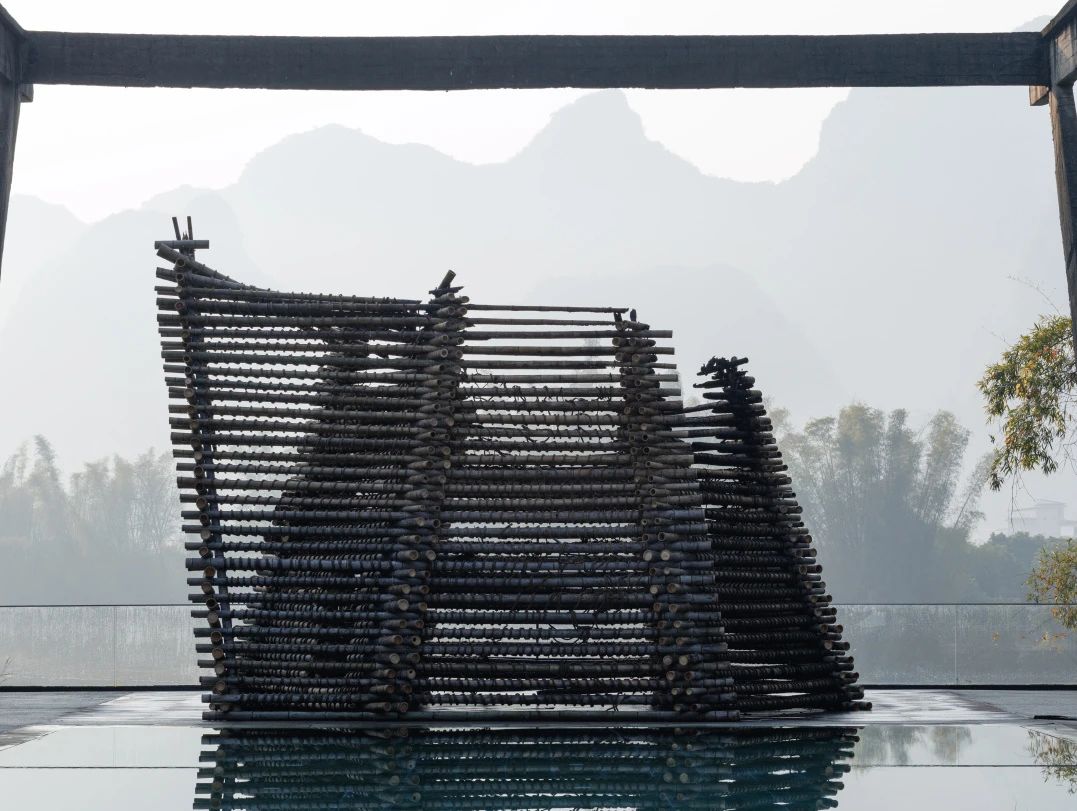
▼燃烧之后,After the Burning
设计理念
Design Concept
▼刘家琨设计草图,Sketchs by Liu Jiakun
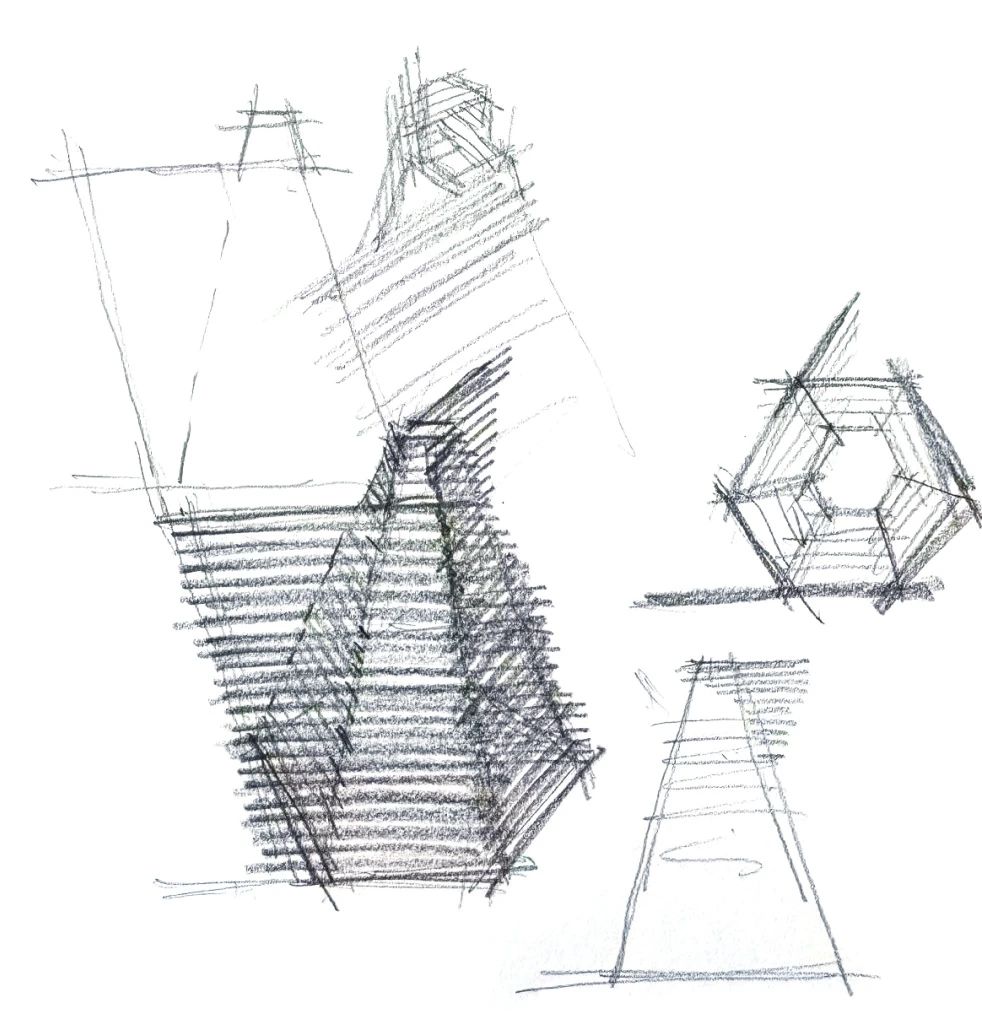
“就地取材,就地取形,逢岁取喻,就材取声”
"Source locally, shape contextually, draw seasonal meaning, derive material sound"
广西盛产竹子,竹子以速生、易得、廉价著称,既是本土环保材料,也是东方文化象征。竹塔的形态取自耸立的桂林山峰。因本地每年频遭洪灾,亦使用造型抽象表现河神意象,点燃竹塔“祭祀河神”。
Guangxi is known for its abundance of bamboo, which is celebrated for its fast growth, availability, and low cost. It serves as both a local eco-friendly material and a symbol of Eastern culture. The shape of the Bamboo Burst Tower is inspired by the towering peaks of Guilin’s mountains. Given that the region frequently experiences annual floods, the design also abstractly represents the image of the River God, with the act of lighting the bamboo tower symbolizing a ritual to honor the River God.
▼就地取材,Source locally
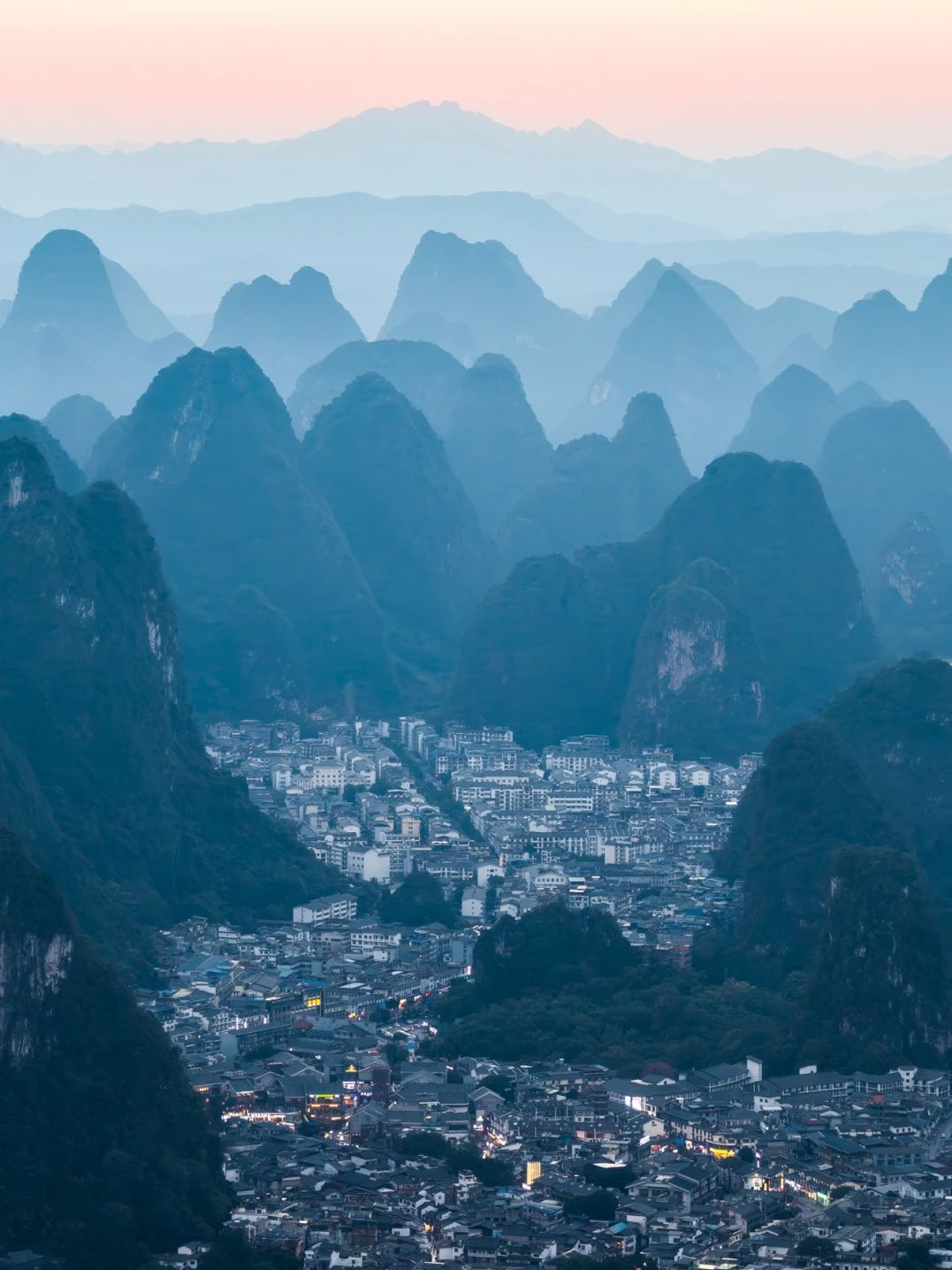
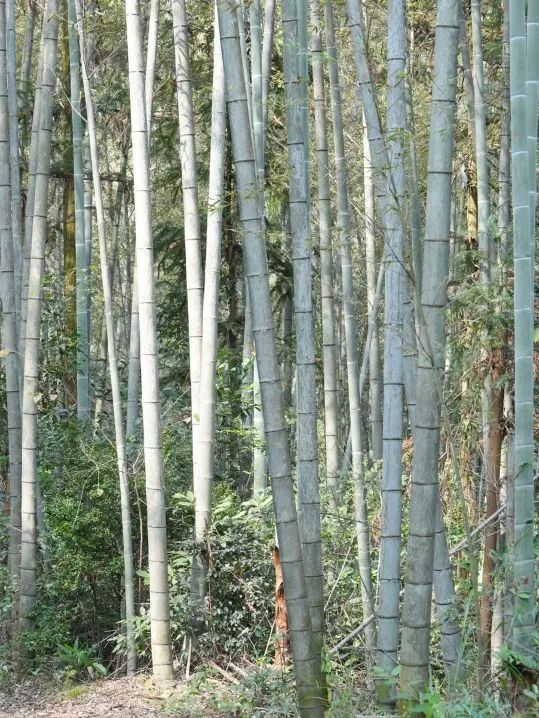
选用竹子作为燃烧装置的主要材料,除了因其自身的材料特性,更是因为竹子燃烧时会爆炸的特质:在火药发明前,逢岁即燃烧竹子,竹节间的空气受热膨胀,竹子炸裂发出巨大响声,是谓“爆竹”。
Bamboo was chosen as the primary material for the burning installation not only because of its material properties but also because of its unique characteristic when burned: before the invention of gunpowder, bamboo was burned during the New Year as part of a tradition. The air trapped in the bamboo joints would expand when heated, causing the bamboo to crack and emit a loud sound, which is the origin of the term "firecracker."
竹塔表面看是材料构筑物,本质上却是个动作声音装置, “爆竹”的“爆”字其实是个动词。
On the surface, the bamboo tower appears to be a structure made of materials, but at its core, it is an action and sound installation. The word "爆" (bao), which is part of "爆竹" (firecracker), is actually a verb.
燃烧之前
Before the Burning
▼竹塔搭建,Construction
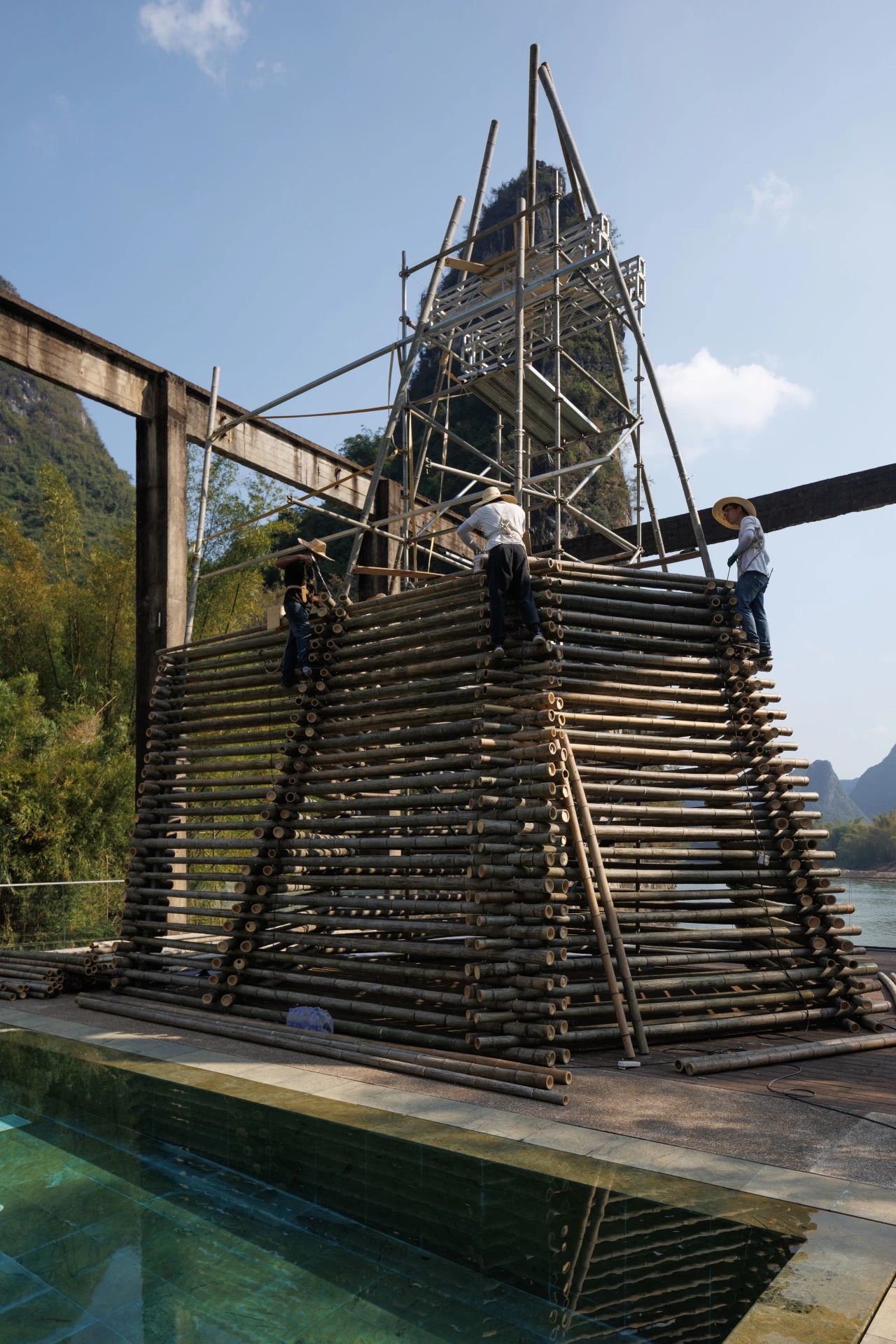
竹塔主体以正六棱锥为基本型,采用竹子逐层堆叠搭接;竹塔最长处约8.6 米,宽约6.6 米,高10 米,立面倾斜角度约73.3°。
The main structure of the Bamboo Burst Tower is based on a regular hexagonal pyramid shape, with bamboo stacked and interwoven layer by layer. The tower measures approximately 8.6 meters at its longest point, 6.6 meters in width, and 10 meters in height, with a facade inclined at an angle of about 73.3°.
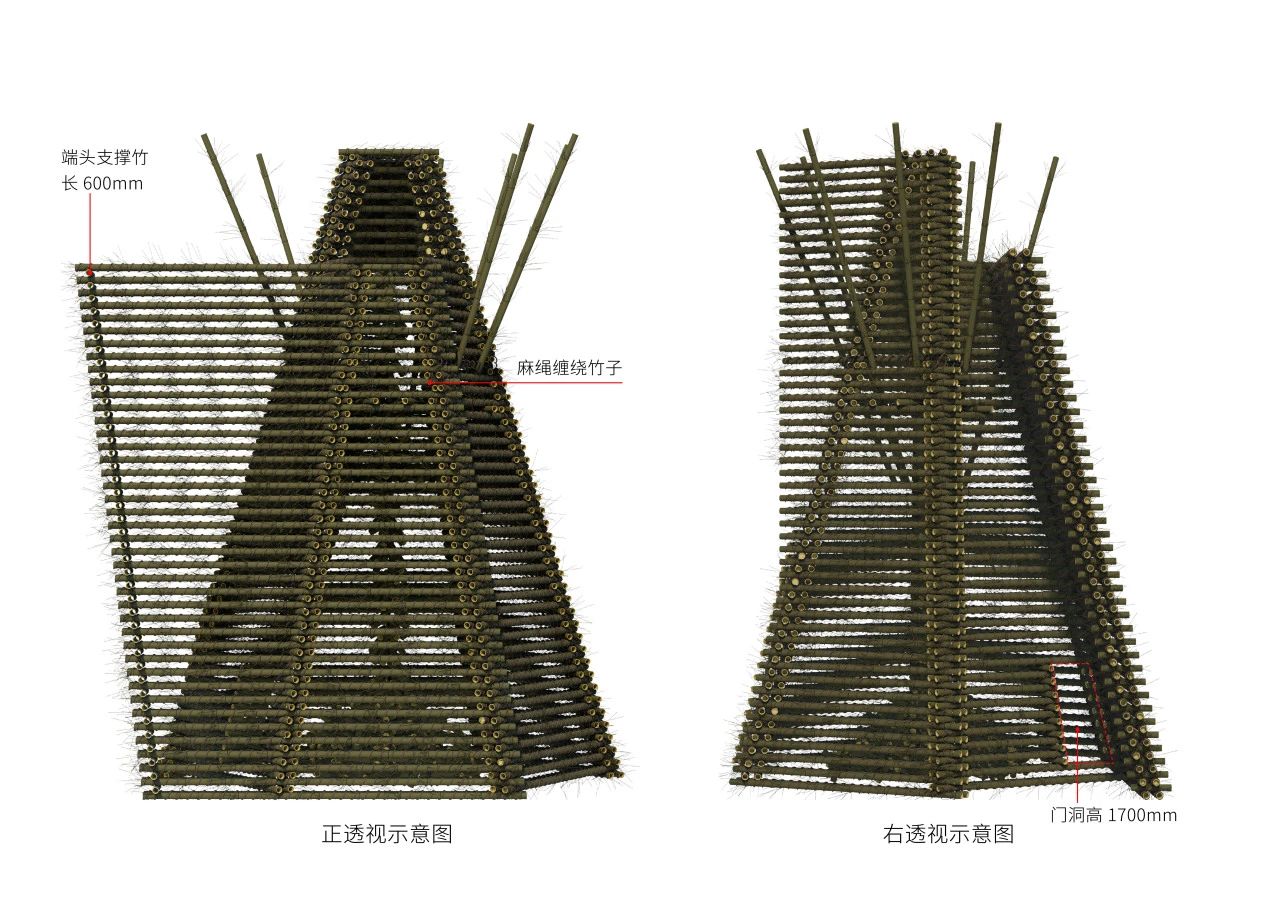
竹子的正面和侧面进行了变异伸出,打破塔身静止的形象,赋予竹塔动作性,并遮挡了内部空间入口。 根据竹子本身的强度和搭接选择,并重点考虑燃爆效果。经实验,最终选用了当地毛竹。
The front and sides of the bamboo are extended and distorted, breaking the stillness of the tower and giving it a sense of motion, while also blocking the entrance to the interior space. The choice of bamboo for the structure was based on its strength and the desired interlocking pattern, with a primary focus on achieving the desired explosive effect. After experimentation, local moso Bamboo was ultimately selected for its suitability.
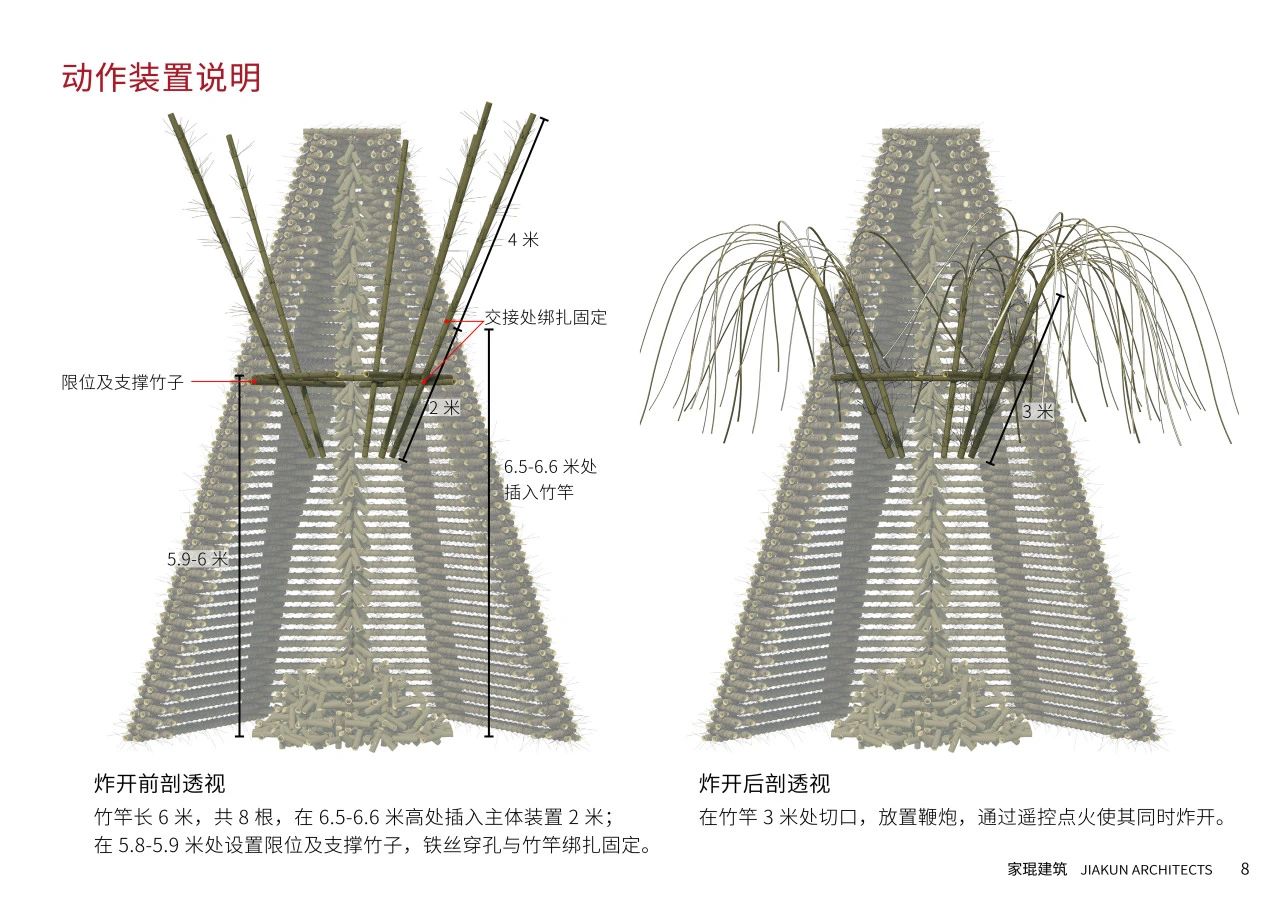
竹塔上部插入8根竹竿,设置限位及支撑竹子,铁丝穿孔与竹竿绑扎固定。在竹竿3米处切口,放置鞭炮,通过遥控点火使其同时炸开,“破竹”作为竹塔燃烧开场。
Eight bamboo poles are inserted into the upper part of the bamboo tower to provide support and limit the movement of the bamboo. Wire is used to bind and secure the poles. At a height of 3 meters on each pole, a cut is made to place firecrackers, which are ignited remotely to explode simultaneously, marking the start of the bamboo tower's burning, called "breaking the bamboo."
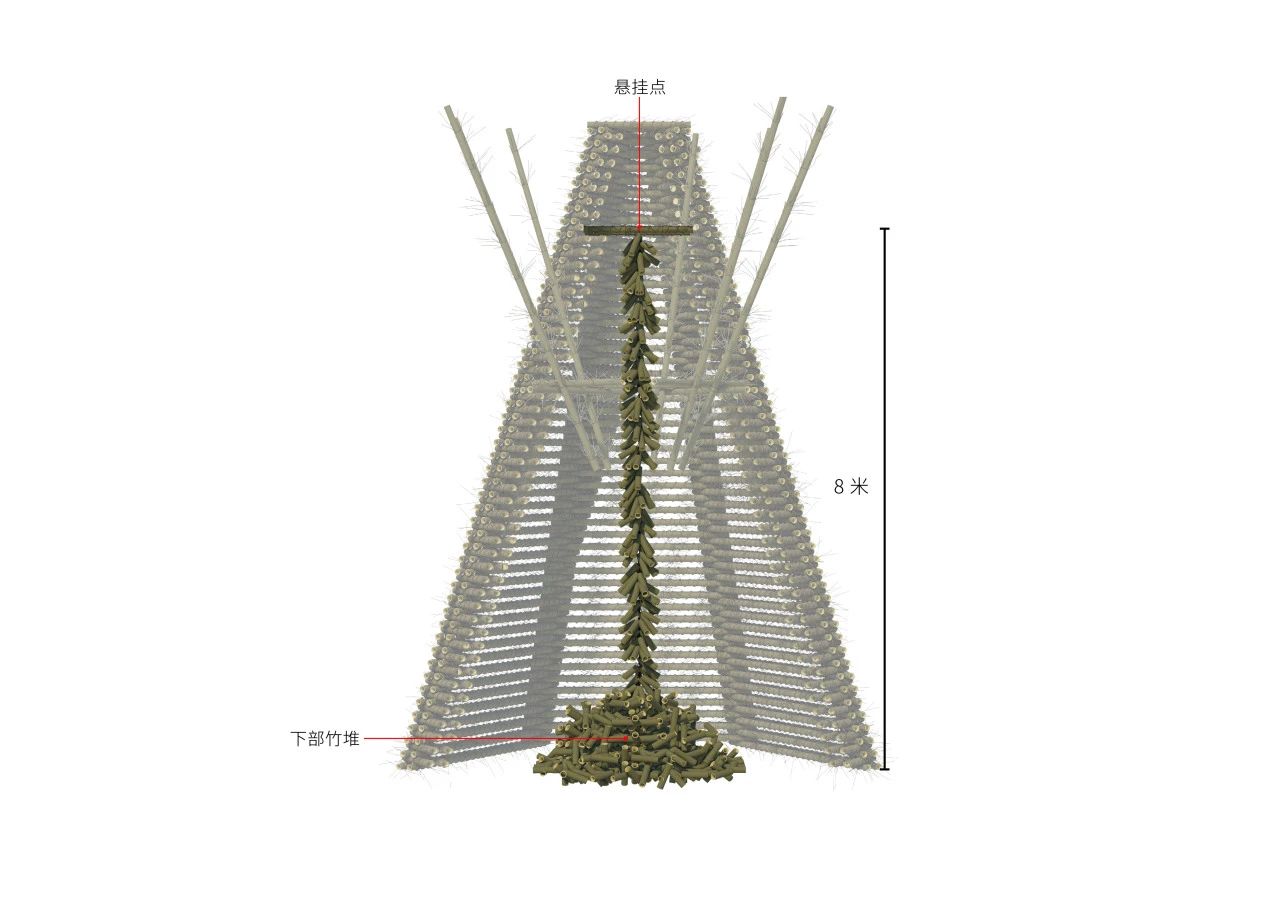
内部垂挂的“竹鞭炮”是竹塔的点火装置。“竹鞭炮”高约8 米,由铁丝连接竹筒构成,垂至下部,堆叠成竹堆,从下部点燃,向上燃烧至主体装置顶部,然后主体装置从上向下燃烧。
Hanging inside the tower is the "bamboo firecracker," the ignition device for the bamboo tower. The "bamboo firecracker" is about 8 meters tall and made from bamboo tubes connected by wire. It hangs down, stacked into a bamboo pile. It is lit from the bottom and burns upwards to the top of the main structure, after which the tower burns downward from the top.
▼点燃装置,Ignition Device 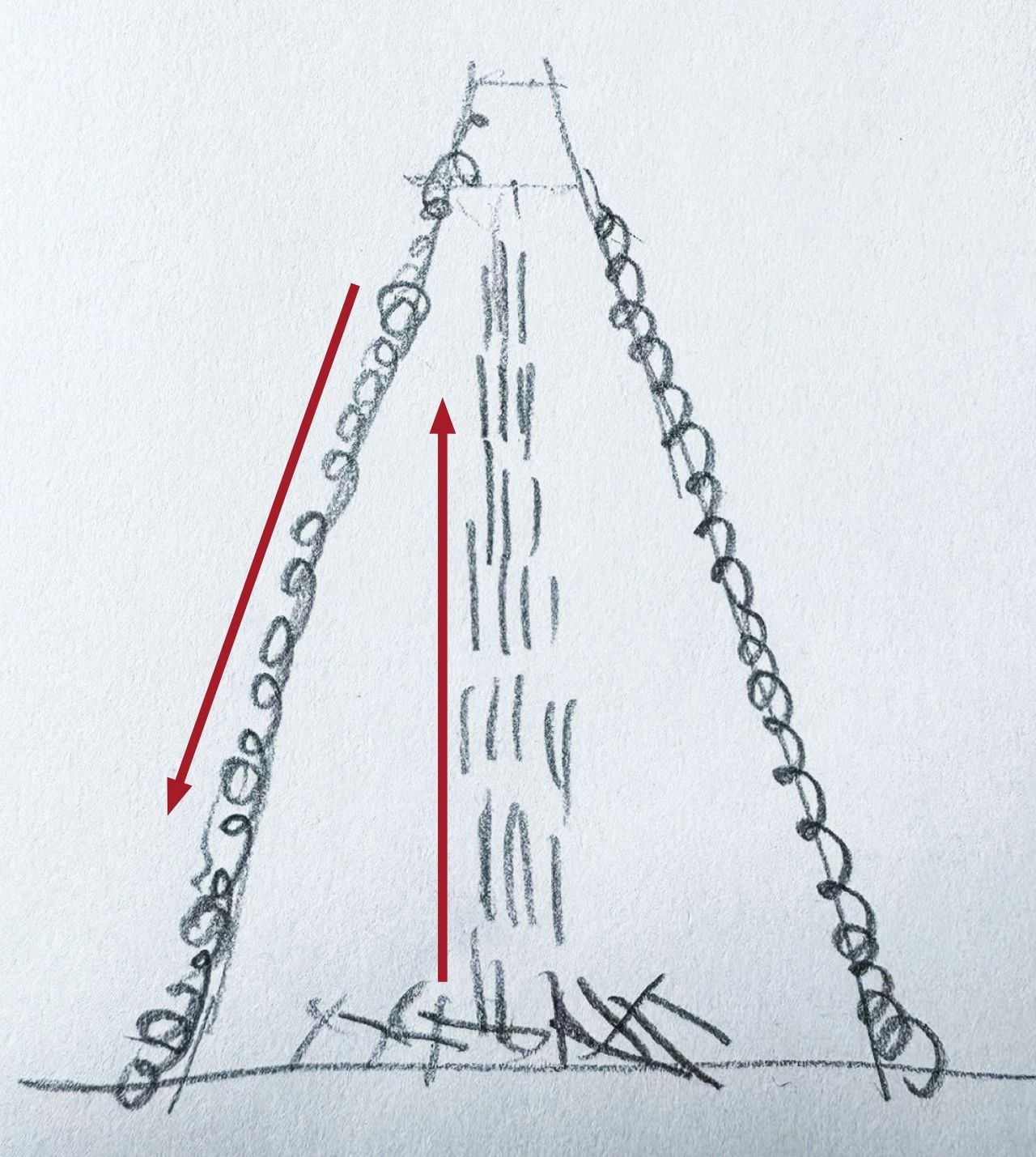
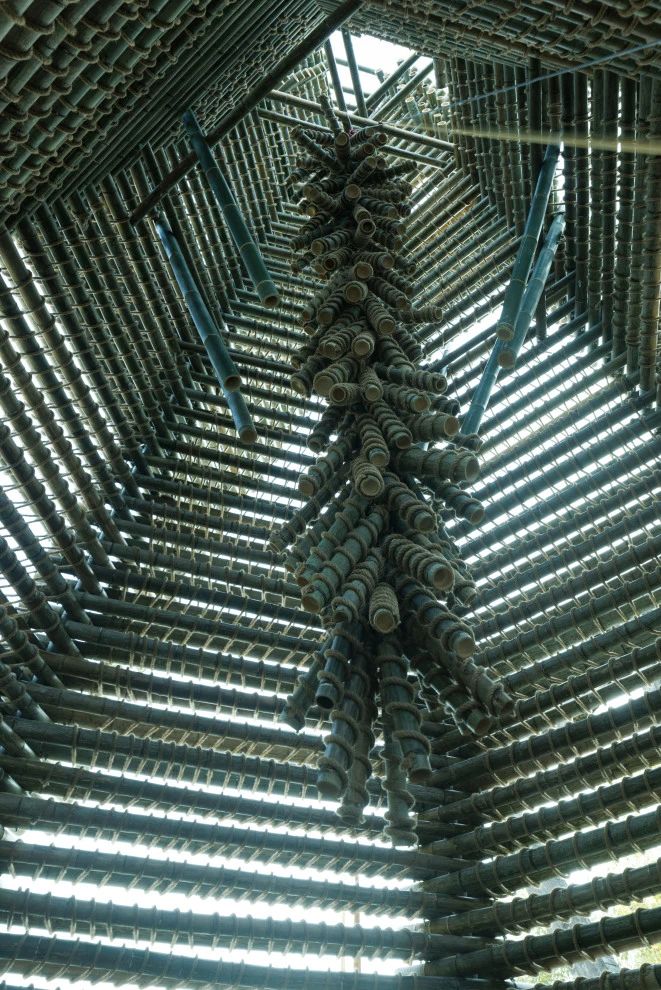
毛竹直径100mm,竹子尽可能粗细均匀、主干平直;表面不进行打磨,保留其本身的粗野质感。
The moso bamboo has a diameter of 100mm, with the bamboo selected to be as evenly thick as possible and with straight main stems. The surface is left unpolished to preserve its natural, rough texture.
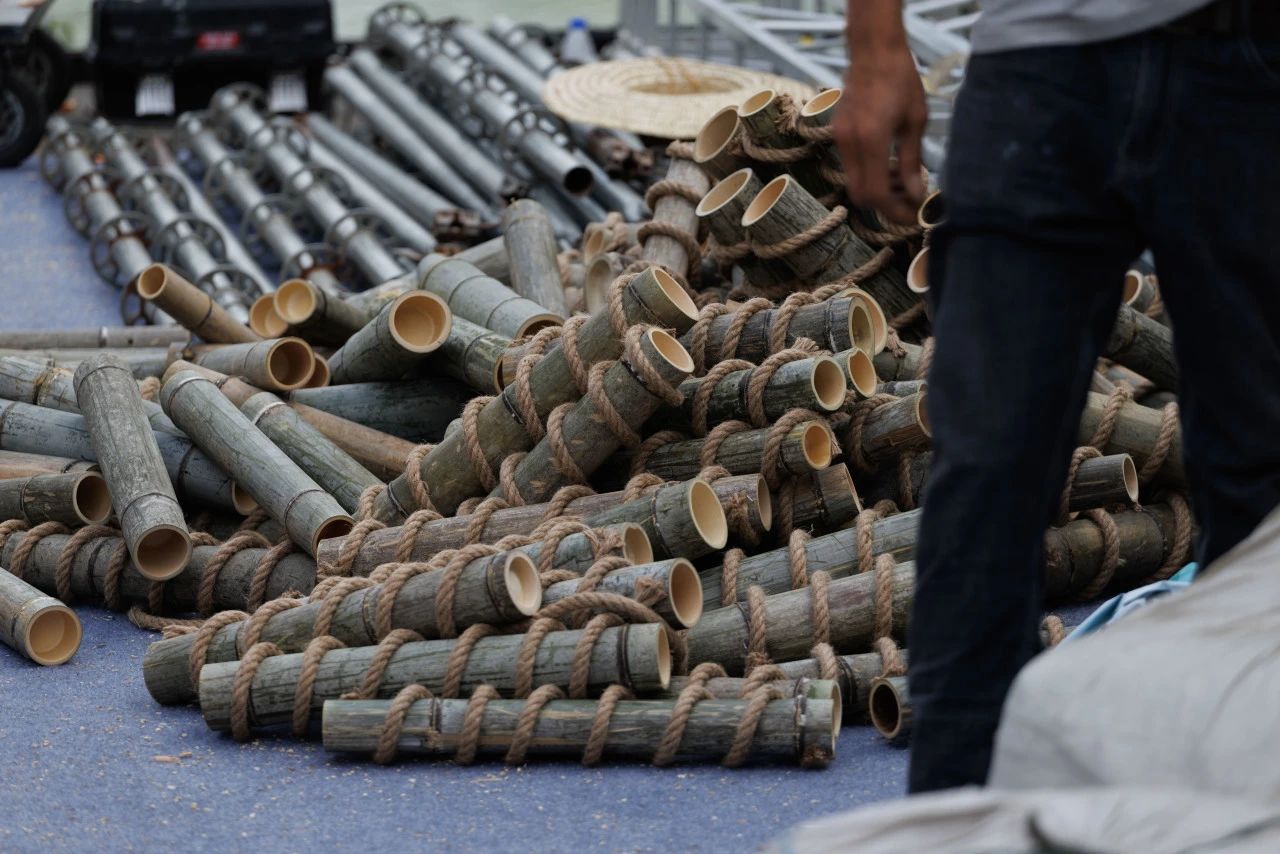
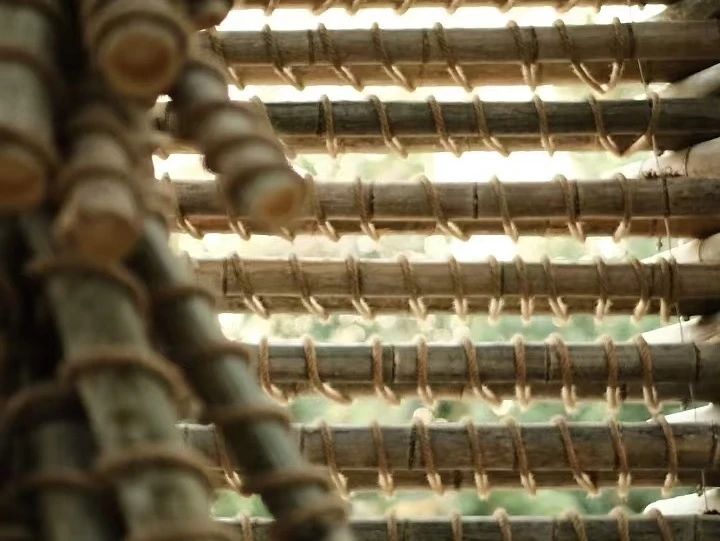
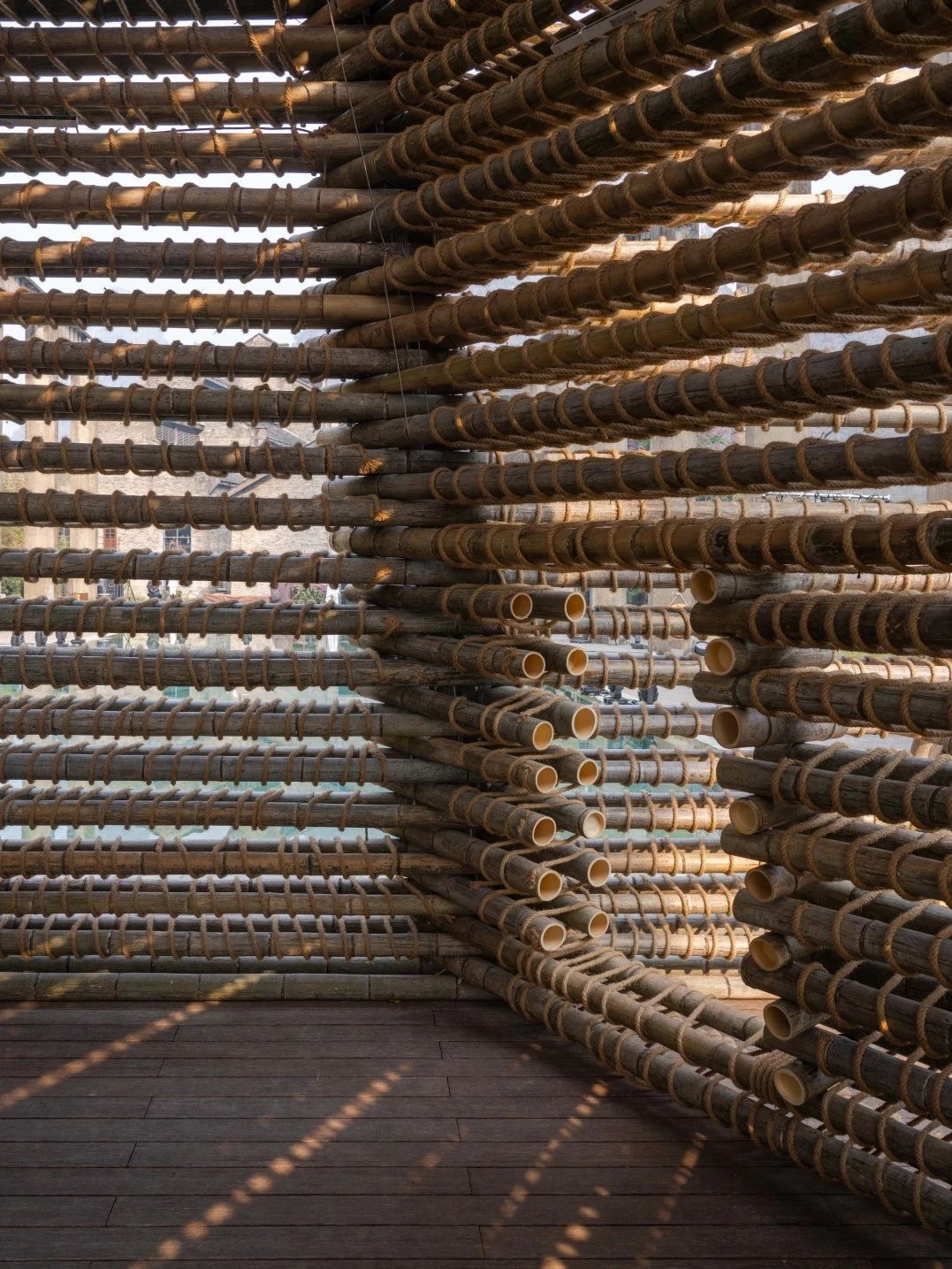
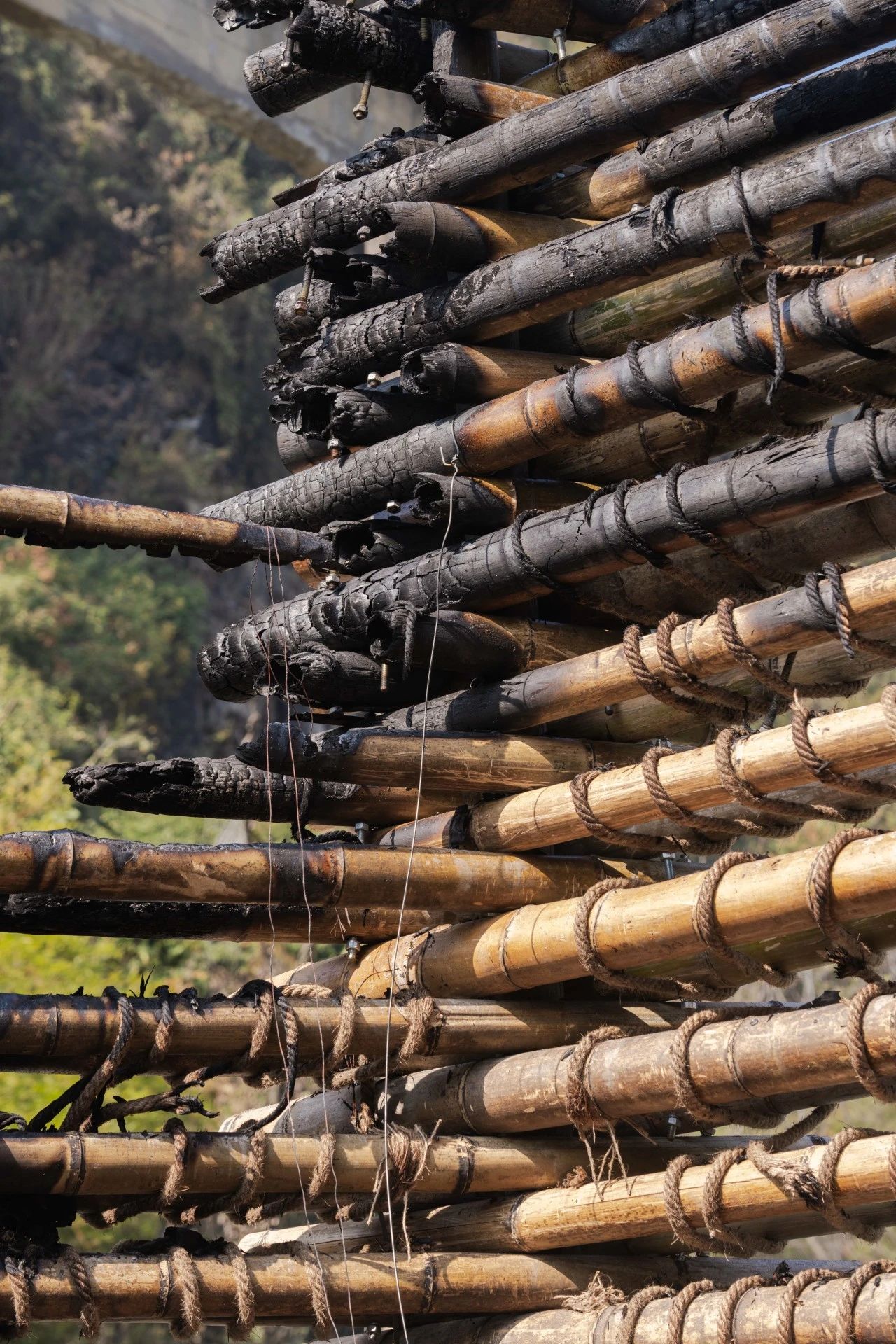
竹子本身难燃,且放置在外易淋雨受潮,将麻绳缠绕在竹子上,作为助燃加固材料。
Bamboo itself is difficult to ignite, and being placed outdoors makes it susceptible to rain and moisture. To address this, hemp rope is wrapped around the bamboo as both an accelerant and reinforcing material.
▼麻绳缠绕,Hemp rope wrapping
燃烧前,在2024年糖舍跨年艺文祭的进程中,每晚竹塔会亮起灯光,“竹鞭炮”下悬挂篝火,供糖舍的宾客聚集于竹塔内部取暖谈笑,开展艺文活动。
Before the burning, during the 2024 Yangshuo Sugar House Bonfire Festival, the Bamboo Burst Tower will light up each night. Below the "bamboo firecracker," a bonfire will hang, allowing guests of the Yangshuo Sugar House to gather inside the tower for warmth and conversation, while engaging in cultural activities.
竹塔逐层堆叠,呈现序列化的结构美感。
The Bamboo Tower is constructed by stacking layers, showcasing a serialized structural beauty.
▼竹塔内部,Inside
燃烧之时
During the Burning
▼竹塔燃烧,Burning
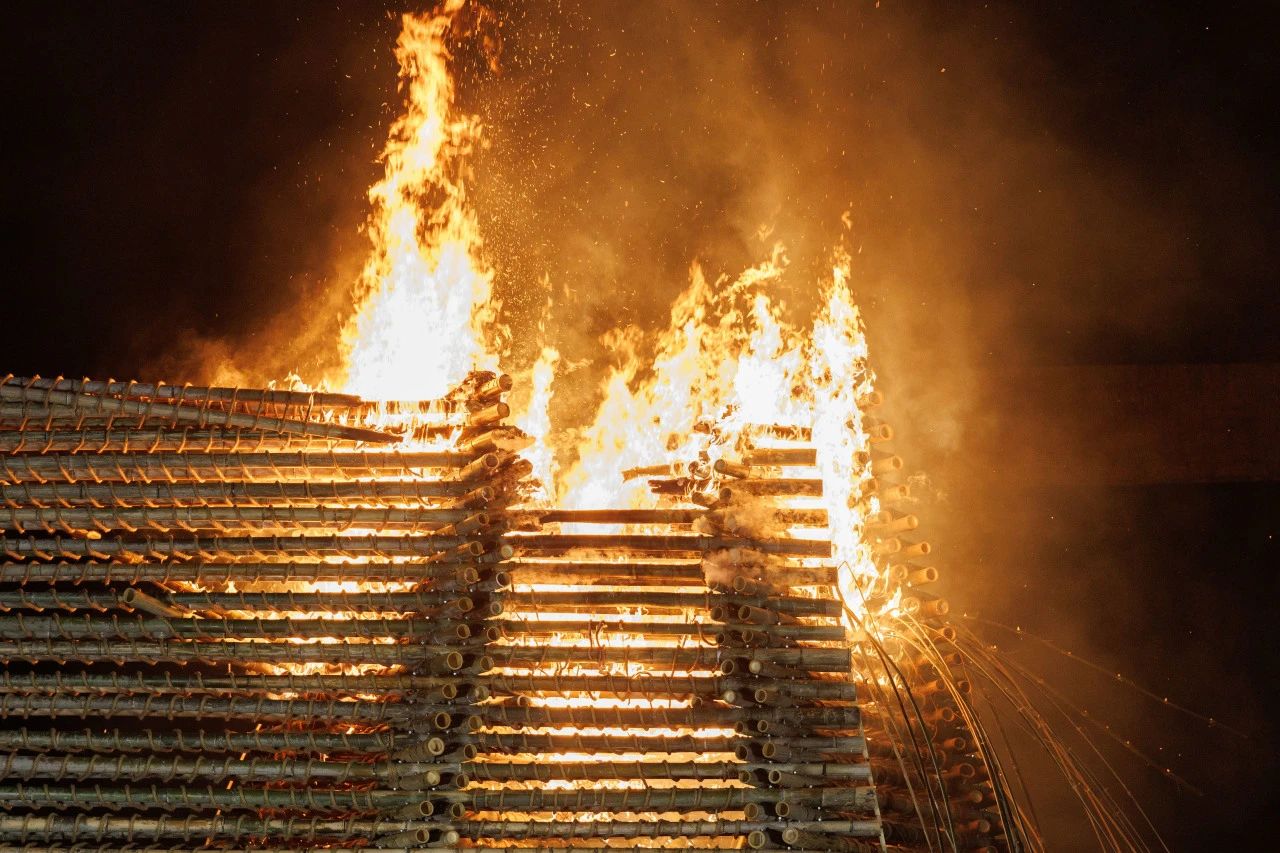
插竿炸开花,作为开场的戏剧化仪式——这源于乡村少年的游戏。插竿像戏装的“靠旗”,形象更有戏剧性。中心的挂串为引火源,同时也是一串竹鞭炮,燃烧时可以比竹塔本身的爆响更密集。
The insertion of rods, which explode like fireworks, serves as a dramatic opening ceremony—this idea is inspired by a traditional game played by rural youths. The rods resemble "flagpoles" in theatrical costumes, adding a more dramatic flair. The hanging string in the center serves as both the ignition source and a series of bamboo firecrackers, whose explosions will be even more intense than the sound of the bamboo tower itself.
2024年12月31日当晚,竹塔在跨年钟声响起时被点燃,伴随着漓江之畔的漫天烟火燃烧炸裂,燃塔除旧,爆竹迎新。
On the evening of December 31st, 2024, as the New Year bells tolled, the bamboo tower was ignited. Accompanied by fireworks over the Lijiang River, the tower burned and exploded, symbolizing burning away the old with the tower and welcoming the new with firecrackers, marking the passage of time.
燃烧之后
After the Burning
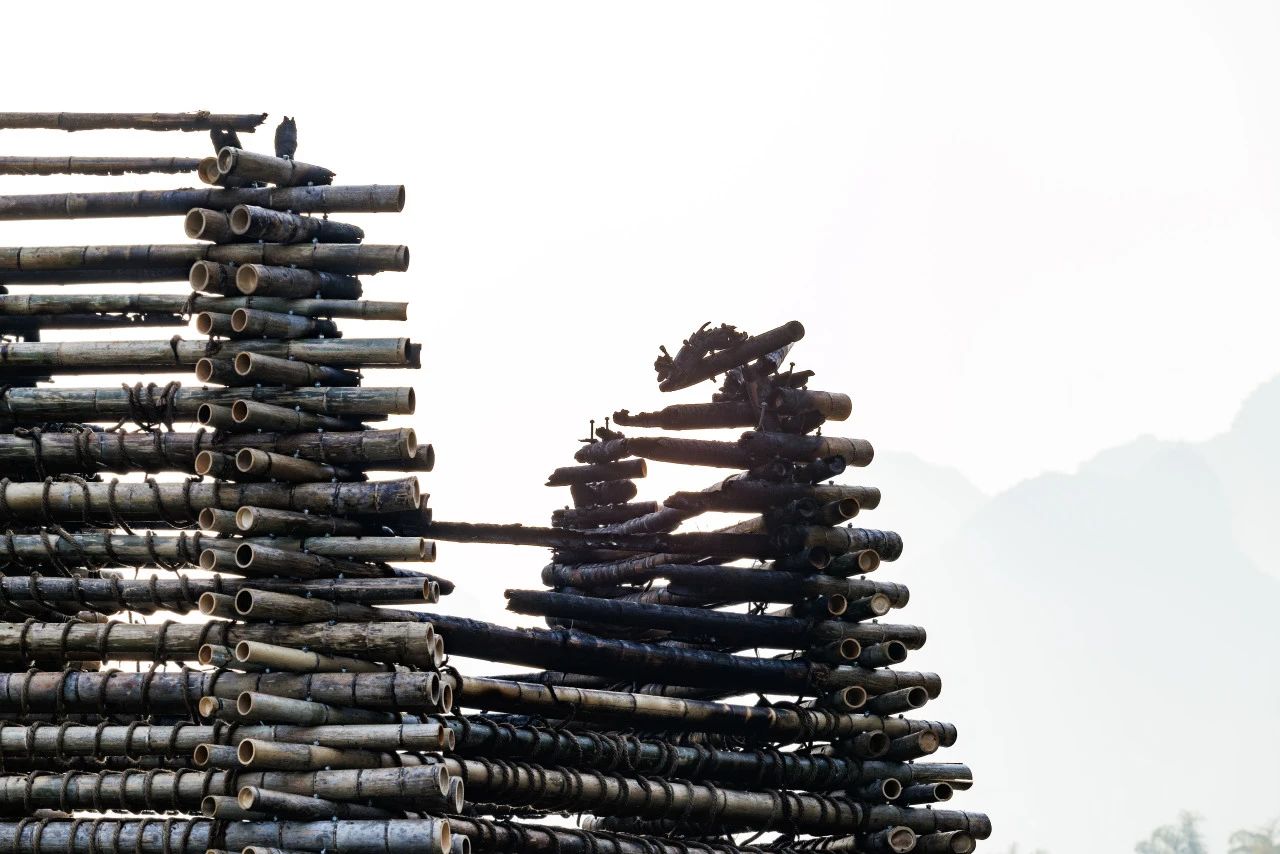
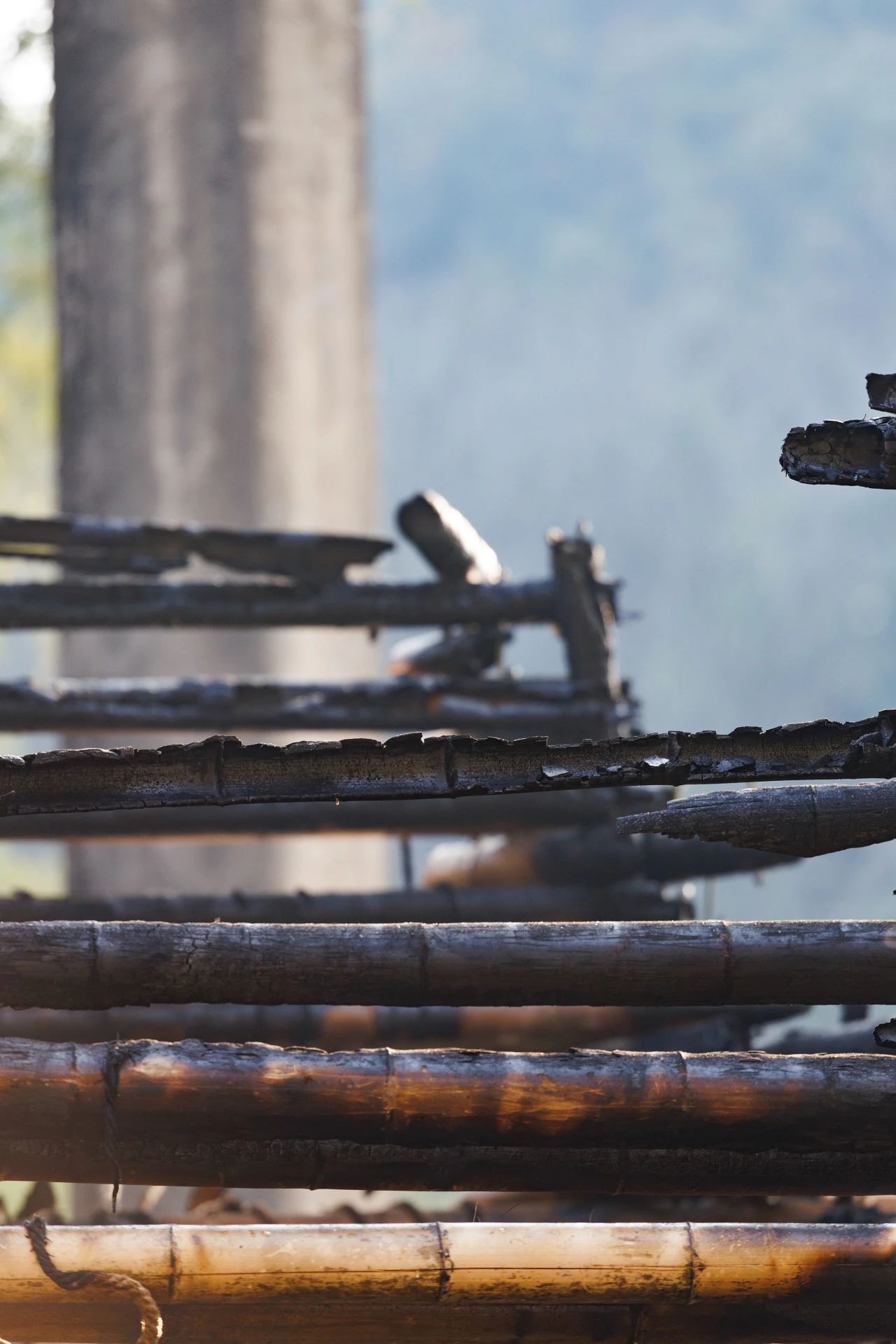
未燃尽的竹塔被作为“遗迹”保留,承载着燃烧后的痕迹,伫立于江畔,延续着庆典的记忆。
The partially burned bamboo tower stands as a 'relic' marked by the traces of the flames. Positioned by the river, it endures as a symbol, preserving the memory of the celebration long after the fire has faded.
▼竹塔“遗迹”,Relic
装置图纸
Drawings
▼平面 立面 透视图,Plan, Elevation, Perspective drawings 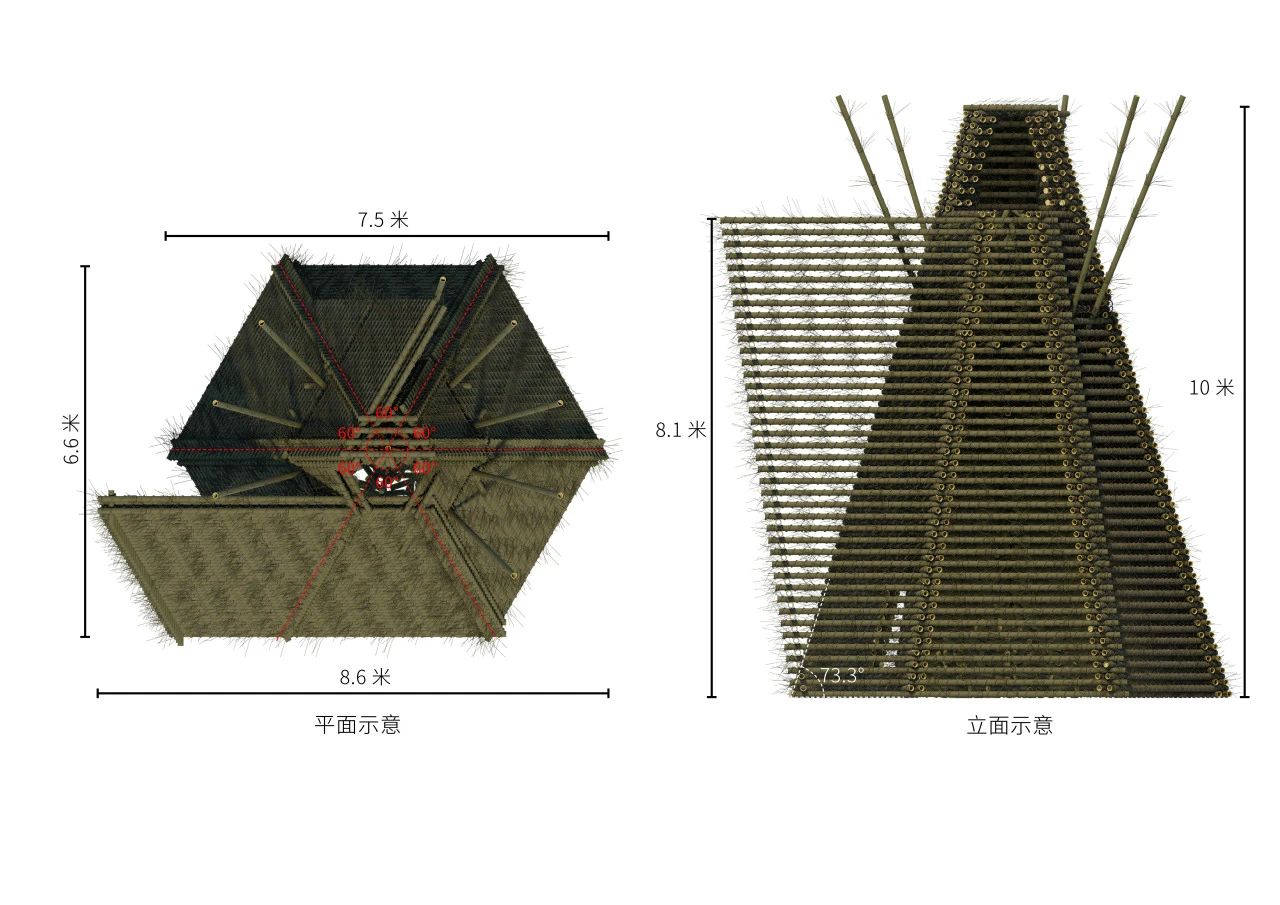
▼动作装置,Action Device
▼点火装置,Ignition Device
地点:广西桂林阳朔糖舍酒店
时间:2024/2025
委托方:阳朔糖舍酒店
设计事务所:成都市家琨建筑设计事务所
主持建筑师:刘家琨
团队成员:魏之铭,刘速,温峰,陈玥在,文珺泽,齐祺格,王潇雪,郭雨汇,晏嘉訢,屈羡,胡义枫,侯玥舟,丁度元
材料顾问:魏源
合作单位:
驻场顾问:郭廖辉工作室
搭建团队:阳朔糖舍工程部,桂林铭锌会展有限公司
摄影:阳朔糖舍,存在建筑,DONG 建筑影像,李福慧
音乐/剪辑:刘竣梁
Location: Yangshuo Sugar House, Guilin, Guangxi
Time: 2024/2025
Client: Yangshuo Sugar House
Design: Jiakun Architects
Principle Architect: Liu Jiakun
Design Team: Wei Zhiming, Liu Su, Wen Feng, Chen Yuezai, Wen Junze, Qi Qige, Wang Xiaoxue, Guo Yuhui, Yan Jiaxin, Qu Xian, Hu Yifeng, Hou Yuezhou, Ding Duyuan
Material Consultant: Wei Yuan
Partner Organizations:
On-Site Consultant: Atelier Guo
Construction Team: Yangshuo Sugar House Construction Dept., Guilin Mingxin Exhibition Co., Ltd.
Photography: Arch-Exist, DONG Image, Yangshuo Sugar House, Li Fuhui
Music/Video Editor: Martin Liu