成都非物质文化遗产公园兰溪庭,成都/建筑
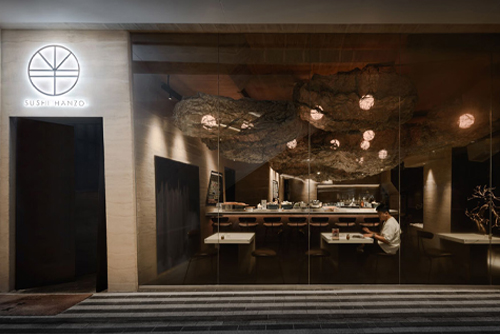
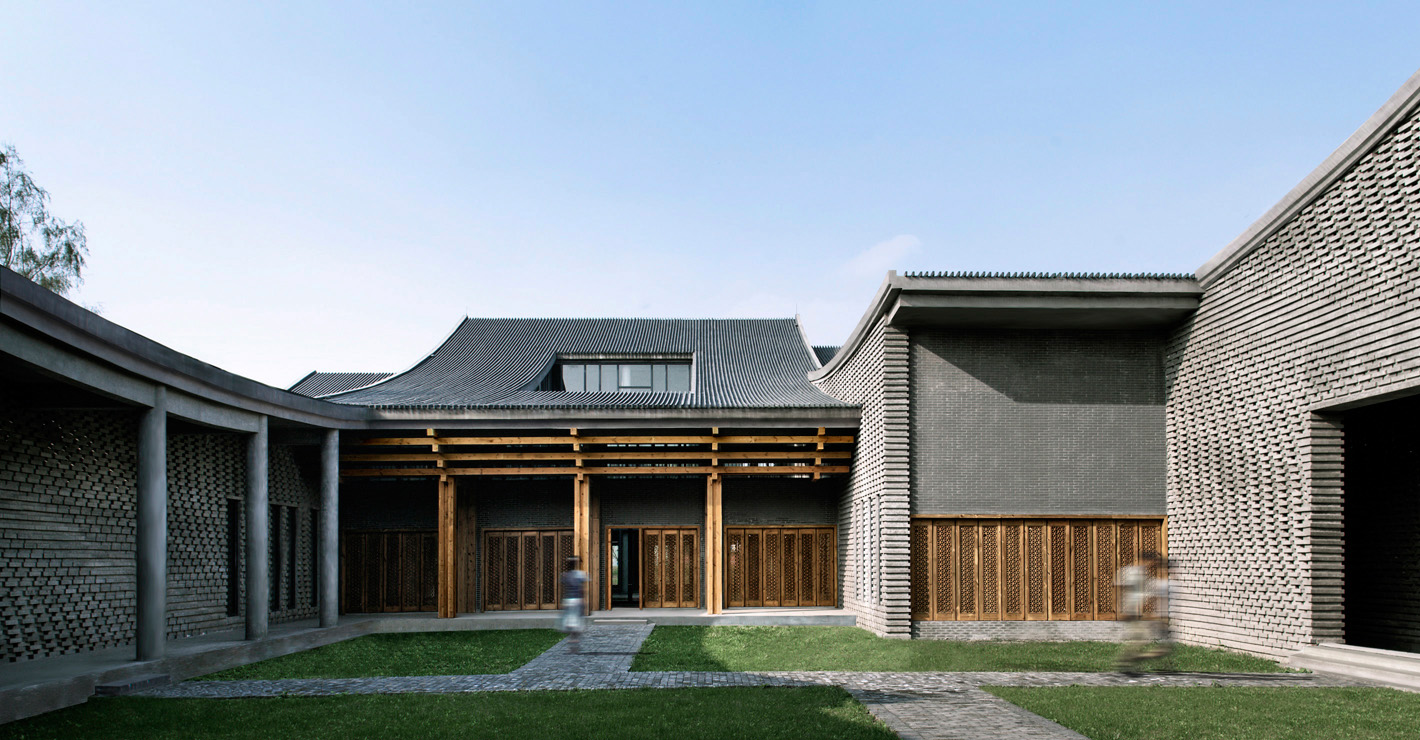
兰溪庭坐落在成都非物质文化遗产公园(www.gjfybly.com)内,由三进院落空间构成,它们分别承担了餐饮、内院和私人会所的功能。在设计上,如何使建筑成为传承非物质遗产文化的载体,如何在当代性与传统性之间寻求新的突破是我们首先考虑的要素。
Lanxiting is located in Chengdu Intangible Cultural Heritage Park (www.gjfybly.com) and consists of three courtyard spaces, which respectively undertake the functions of catering, inner courtyard and private club. In terms of design, how to make architecture become the carrier of inheriting intangible heritage culture, and how to seek new breakthroughs between modernity and tradition are our first consideration.
传承:中国非物质文化遗产的当代载体
四川的传统民居从早期的干栏式建筑到明清时期的单门独户的四合院模式,都保有了两面坡式的冷摊瓦屋顶,这种轻盈灵动的形式配以古朴的青砖,构成了其独特的文化符号。
Inheritance: the contemporary carrier of China's intangible cultural heritage
The traditional folk houses in Sichuan, from the early dry fence style architecture to the single door single family quadrangle model in the Ming and Qing Dynasties, all retain the cold tile roof with two slopes. This light and flexible form, coupled with simple green bricks, constitutes its unique cultural symbol.
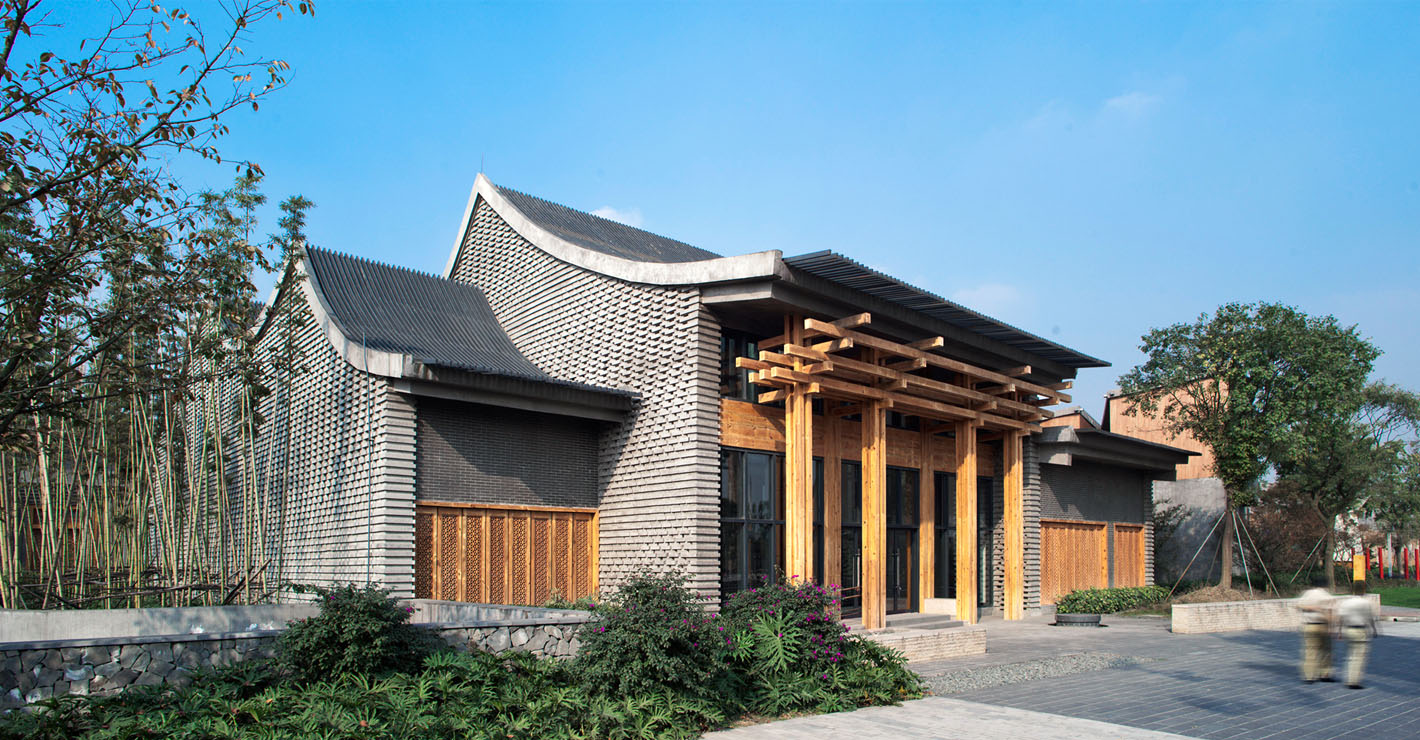
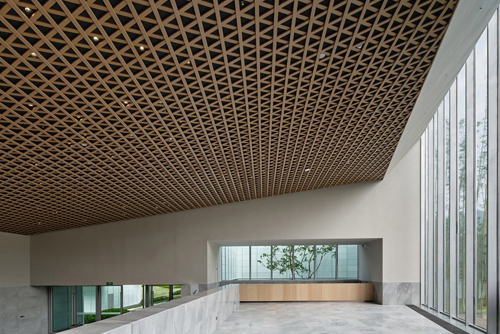
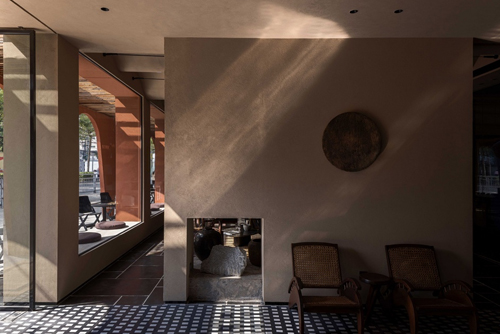
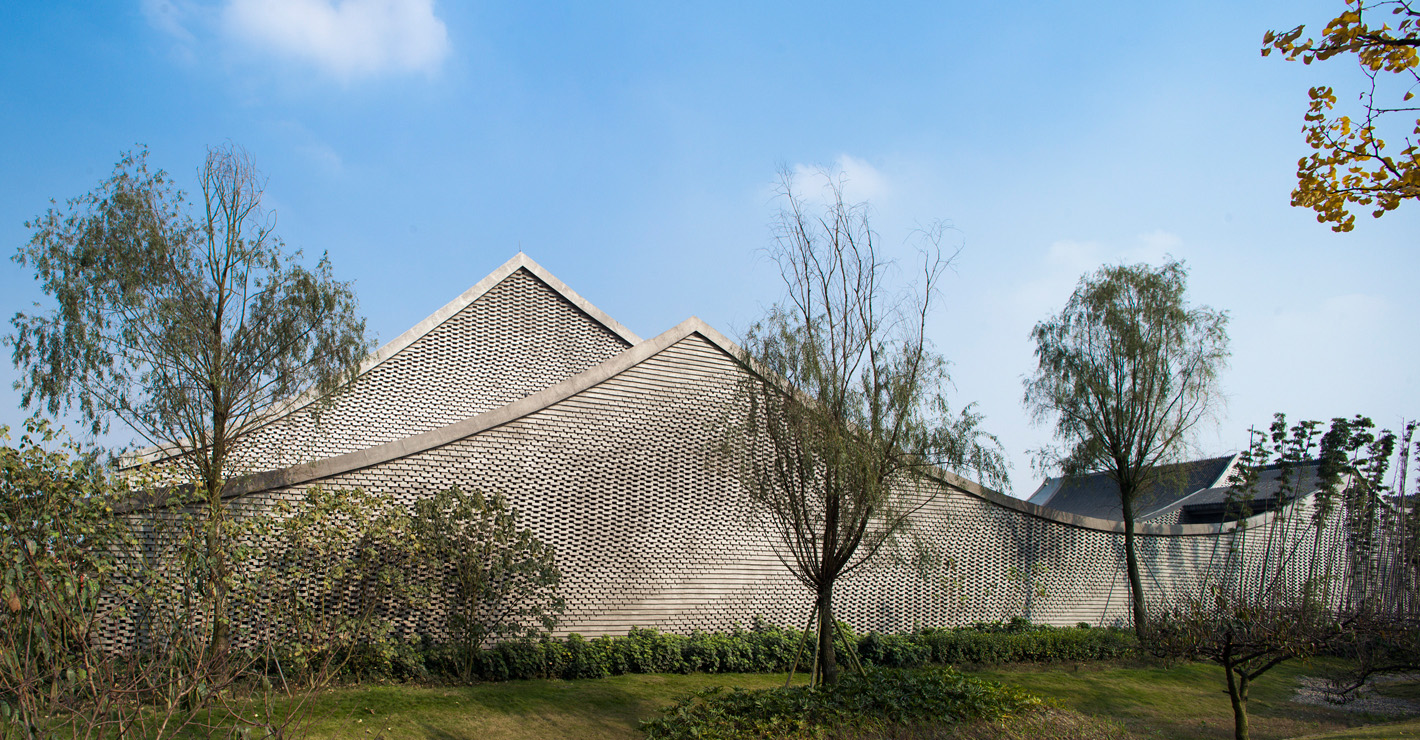
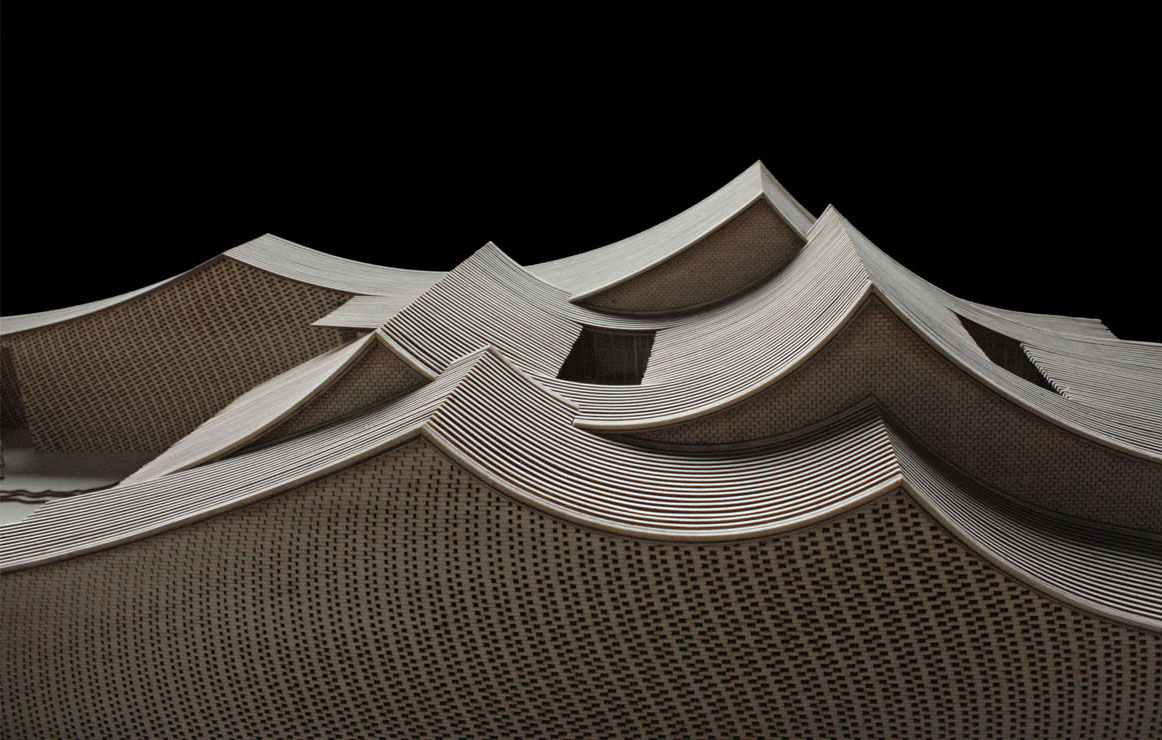
在这项目的设计中,我们在空间组织、建筑形式和材料的运用上保留了四川传统民居的特点,纵深方向居所与院落的多重组合布局表达了传统园林中的空间层次性和多维性,而对山水意向的绵延起伏也由建筑屋顶的高低起伏和变化形象加以表达,相连的院落与中央的庭院景观和周围的环境相呼应,是对林盘模式的全新演绎。
In the design of this project, we have retained the characteristics of Sichuan Traditional Dwellings in terms of spatial organization, architectural form and material application. The multiple combination layout of dwellings and courtyards in depth expresses the spatial hierarchy and multidimensional nature of traditional gardens. The continuous fluctuation of landscape intention is also expressed by the ups and downs of building roofs and changing images. The connected courtyards echo the central courtyard landscape and the surrounding environment, It is a new interpretation of the forest disk model.
突破:砖的数字化建构
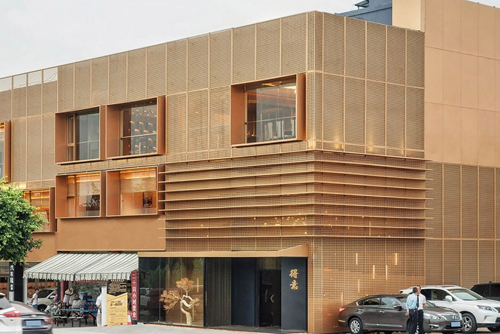
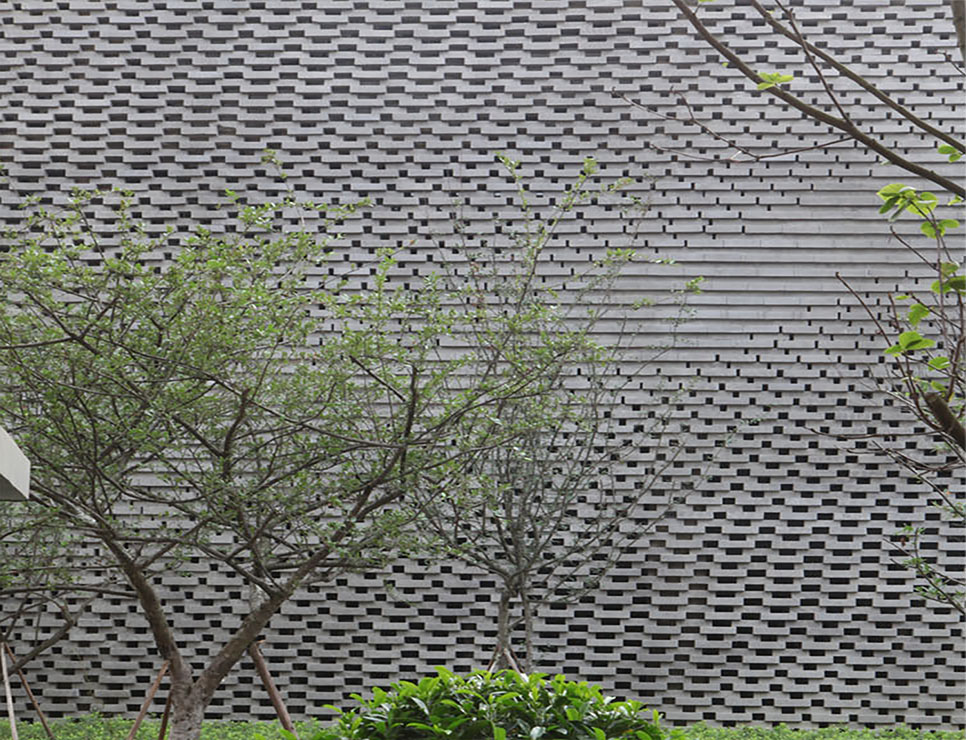
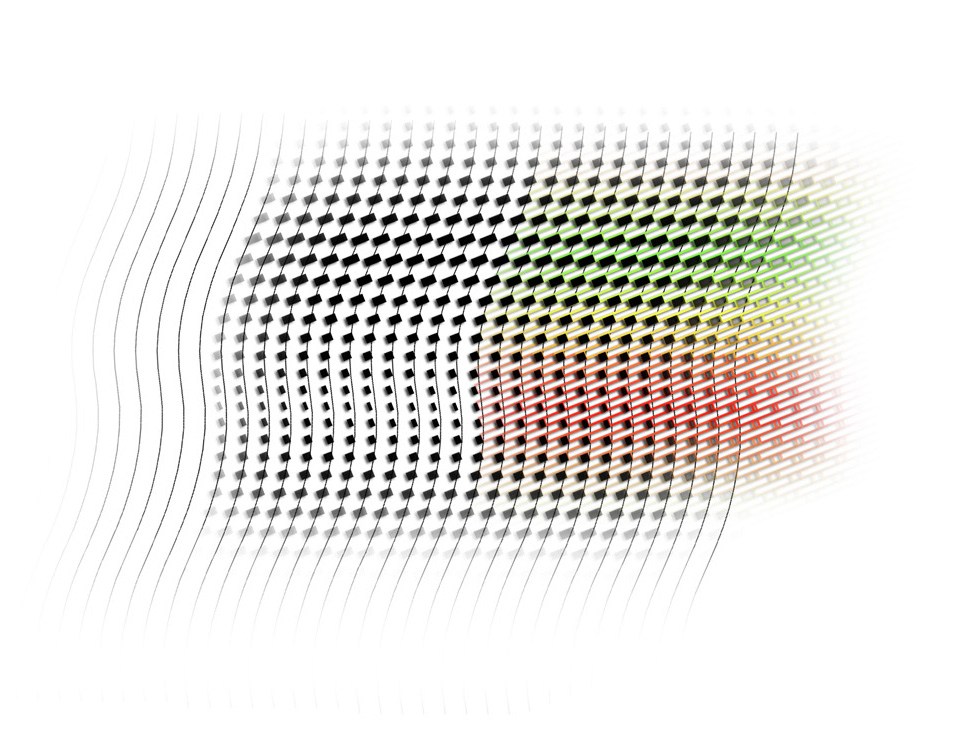
运用数字化的建造方式来打造传统的民居形式,是对该项目当代性的诠释。在建筑墙体的设计上,为了延续屋顶与院落的山水意象的表达,我们将水——这一灵动的自然意境作为砖墙表皮期望表达的意向。这一设计出发点促成了“水墙”这一设计的产生。首先,我们运用算法捕捉水在时间维度上趋于静止时的瞬间状态,将其抽象为矢量路径,运用数字化手段在矢量图形和砖的排列逻辑间建立几何联系,将矢量路径对砖的排列进行干扰,从而完成水纹到实体建筑语言的转译。最终,青砖这一在中国传统建筑中普遍使用的建筑材料和极其常见的错缝砌筑法成为我们转译的媒介,特殊的空缝砌筑形式在厚重的墙体中实现了轻盈通透的流水视觉效果。在“水墙”的设计阶段我们便直接对砖与砖之间的空缝尺寸进行了拟合,最终拟合为5 种错缝尺寸,并也同样预先制作了5 种模板,通过这5种模板数值的排列实现砖墙肌理的变化,从而达到预期的水纹效果。
Breakthrough: digital construction of brick
The use of digital construction methods to create traditional residential forms is an interpretation of the modernity of the project. In the design of the building wall, in order to continue the expression of the landscape image of the roof and courtyard, we take the flexible natural artistic conception of water as the intention of the brick wall skin. This design starting point contributed to the emergence of the "water wall" design. First, we use the algorithm to capture the instantaneous state of water when it tends to be static in the time dimension, abstract it as a vector path, use digital means to establish a geometric connection between the vector graphics and the arrangement logic of bricks, and use the vector path to interfere with the arrangement of bricks, so as to complete the translation from water pattern to entity architectural language. Finally, the green brick, a building material commonly used in traditional Chinese architecture, and the extremely common staggered joint masonry method have become the media of our translation. The special hollow joint masonry form has realized the light and transparent flowing water visual effect in the thick wall. At the design stage of "water wall", we directly fitted the size of the gap between bricks, and finally fitted it to five staggered joint sizes, and also made five kinds of templates in advance. Through the arrangement of the values of these five templates, the texture of the brick wall can be changed, so as to achieve the expected water texture effect.
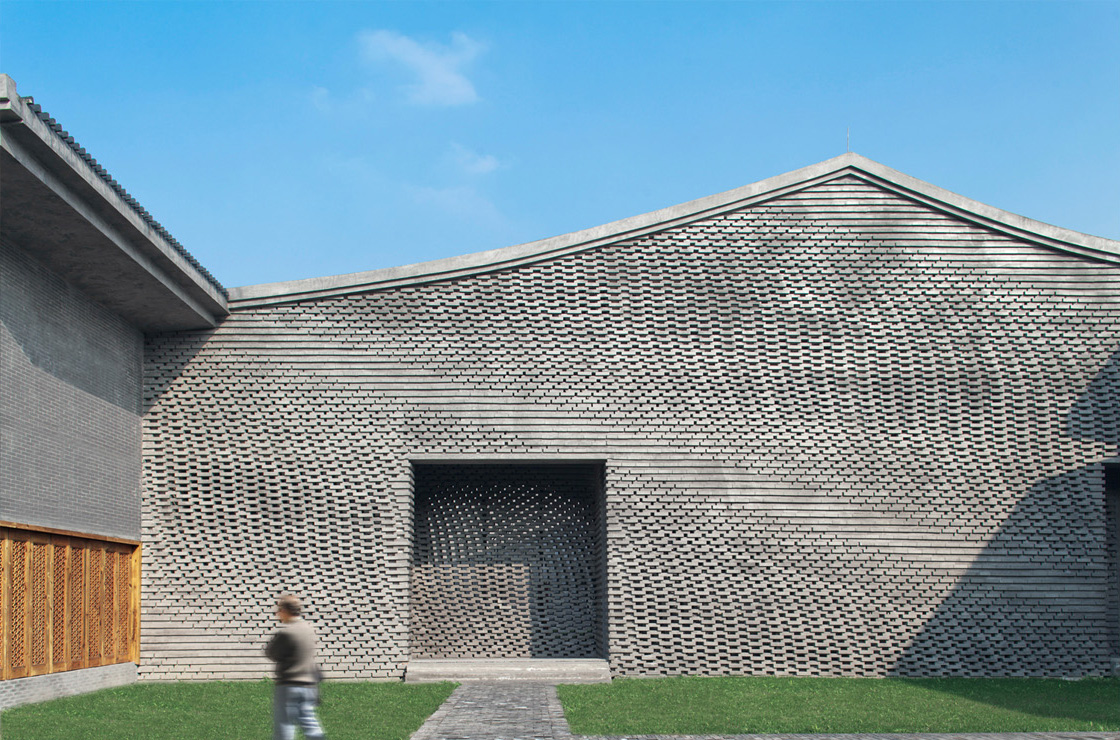
该项目的建成是我们对砖的数字化建构的研究成果,我们用数字化的设计与建造手法重新诠释了当代中国新的优雅建筑。
The completion of the project is our research result on the digital construction of bricks. We reinterpret the new elegant architecture in contemporary China with digital design and construction techniques.
项目地点:四川成都非物质文化遗产公园内
业主:成都青羊城乡置业有限公司
项目规模:约4000平方米
设计时间:2008年6月-2009年3月
建造时间:2010年4月-2011年10月
建筑师:袁烽 / 创盟国际
设计团队:吕东旭、孟媛、韩力
摄影:沈忠海
Project location: Chengdu Intangible Cultural Heritage Park, Sichuan
Owner: Chengdu Qingyang urban and rural real estate Co., Ltd
Project scale: about 4000 square meters
Design time: June, 2008 March, 2009
Construction time: April, 2010 October, 2011
Architect: Yuanfeng / chuangmeng International
Design team: lvdongxu, Mengyuan, Han Li
Photographer: shenzhonghai