松江名企艺术产业园区,上海/建筑
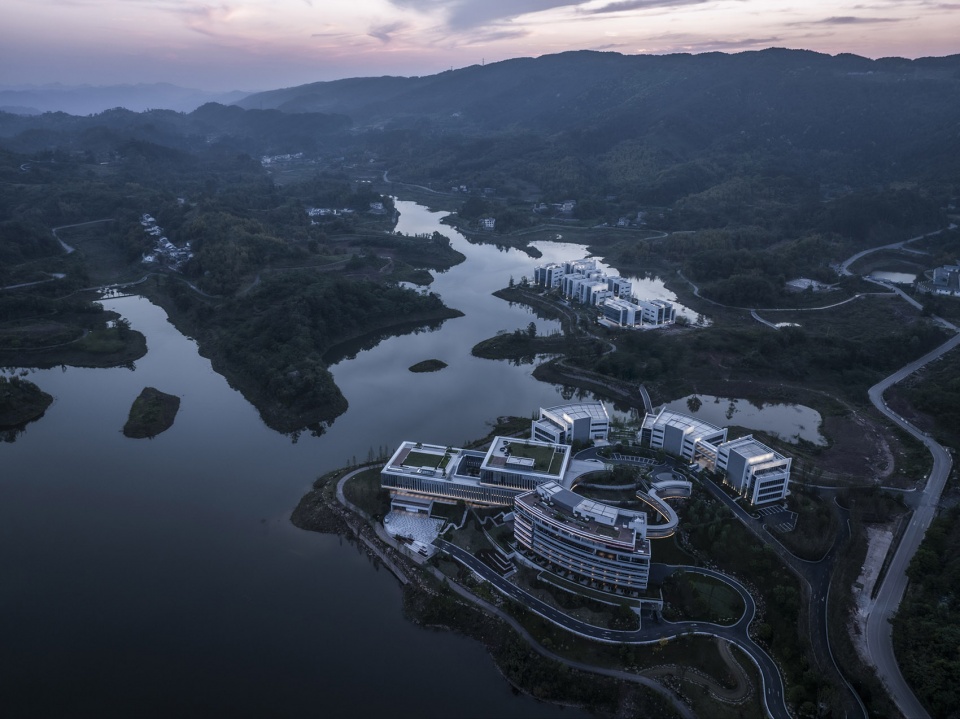
项目地处上海市郊的松江区新桥镇,如何回应地方性文化特色以及塑造新的城市空间特色成为构思的起点。松江作为上海历史文化的发源地,如今却因过速发展而呈现了文化真空状态,大规模的无序开发、均质无效的公共空间和缺乏特色的公园绿地……
The project is located in Xinqiao Town, Songjiang District, the suburb of Shanghai. How to respond to local cultural characteristics and create new urban spatial characteristics become the starting point of the idea. Songjiang, as the birthplace of Shanghai's history and culture, is now in a cultural vacuum due to its rapid development, large-scale disordered development, homogeneous and ineffective public space and lack of characteristic park green space
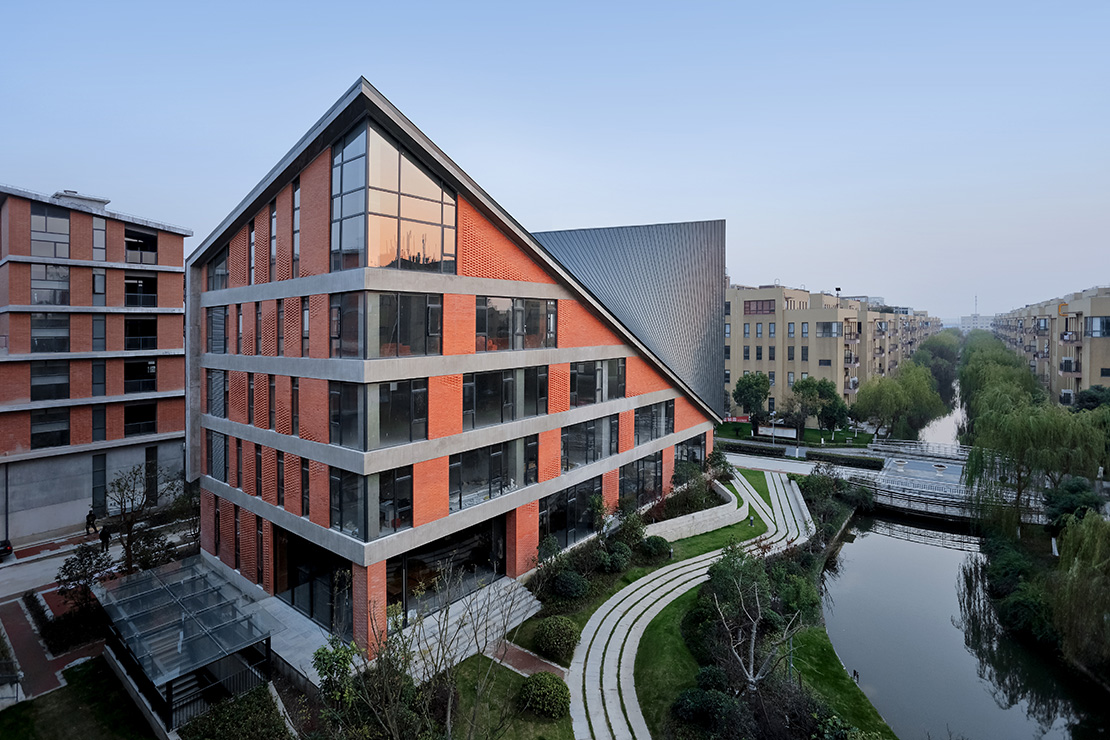
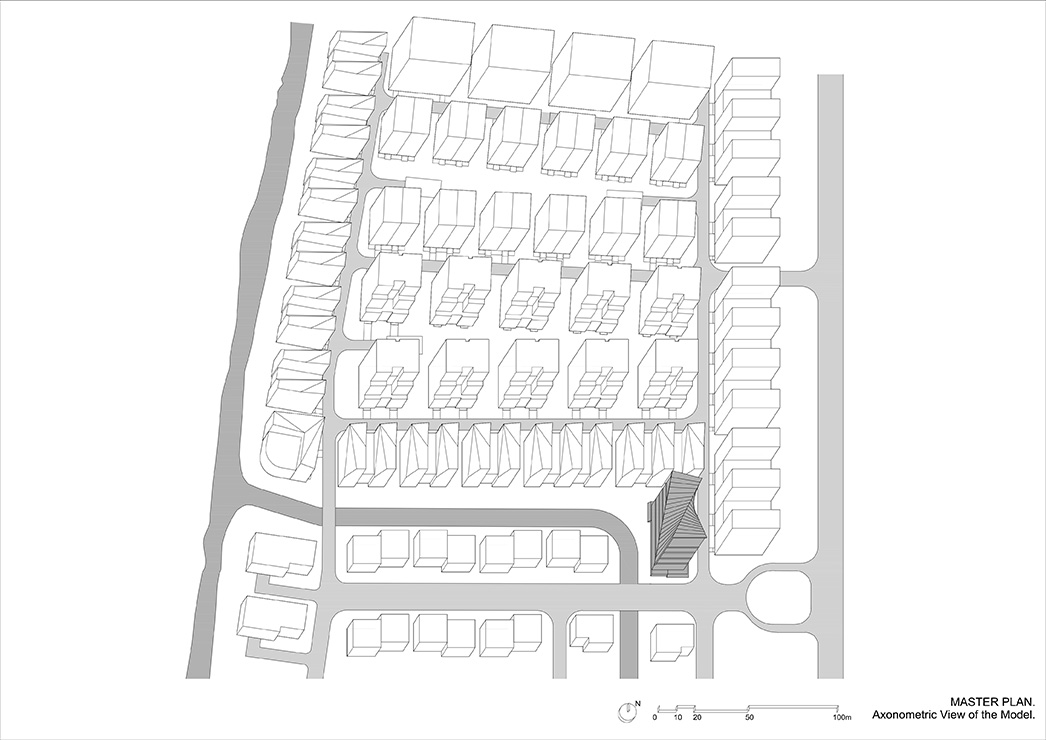
名企艺术产业园区的构思试图通过创造步行街区与均质绿化体系的系统融合,整理空间布局关系。紧凑式的道路布局可以实现亲近的空间布局与邻里关系;同时,组团绿化编织了场地的基底,我们尤其注重发掘场地上现有河流与场地的对望关系,塑造水景、绿化与建筑相互交融的新场所精神。景观系统作为整个项目稀缺但又重要的元素,被我们作为基础设施来系统化地思考整个项目。景观基础设施将交通、景观、服务实施相互串联,创造出了不同单体建筑的独特价值,实现了“水景”、“园景”、“街景”等多重的景观意义。
The concept of famous enterprise Art Industrial Park attempts to sort out the spatial layout relationship by creating a systematic integration of pedestrian blocks and homogeneous greening system. Compact road layout can realize close spatial layout and neighborhood relationship; At the same time, the group greening weaves the base of the site. We pay particular attention to exploring the relationship between the existing rivers on the site and the site, and shaping the spirit of a new site where waterscape, greening and architecture blend with each other. As a scarce but important element of the whole project, the landscape system is considered systematically as an infrastructure. The landscape infrastructure connects transportation, landscape and service implementation, creates the unique value of different individual buildings, and realizes the multiple landscape meanings of "waterscape", "garden view" and "street view".
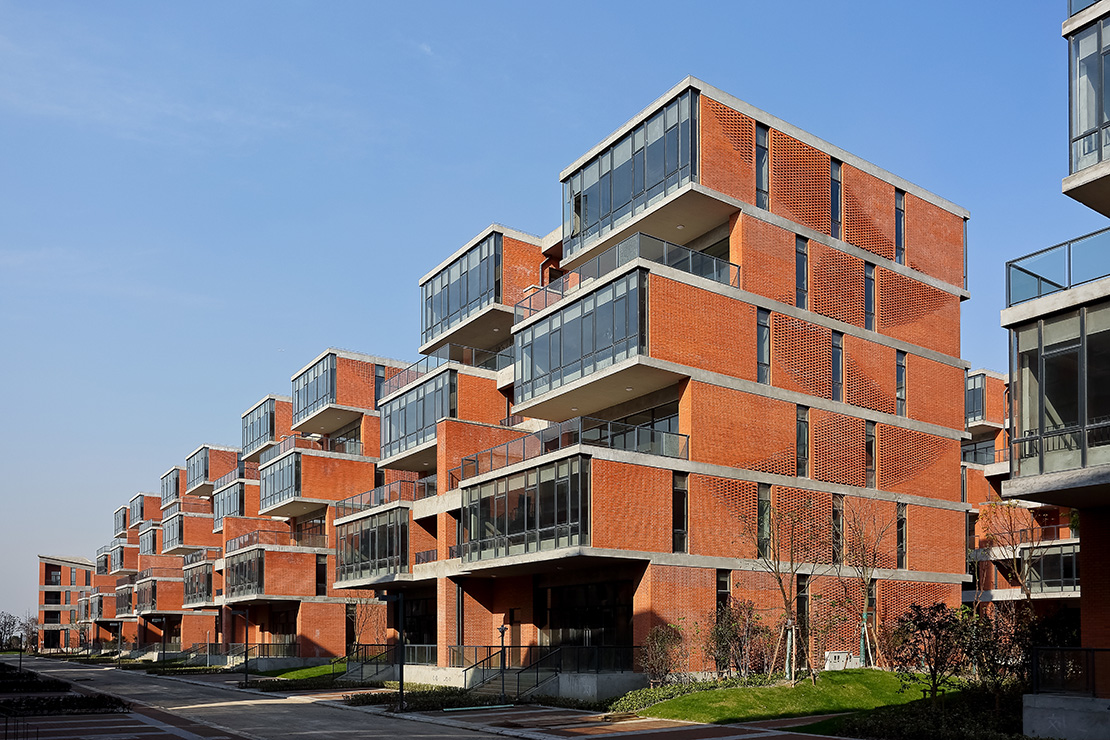
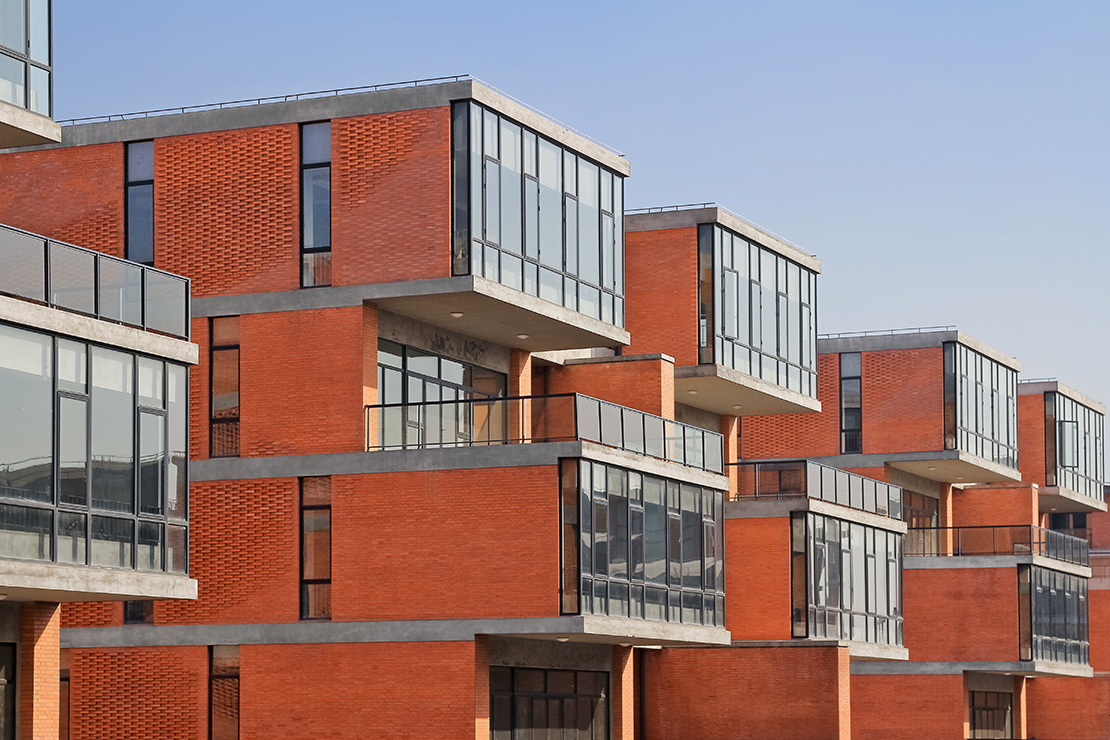
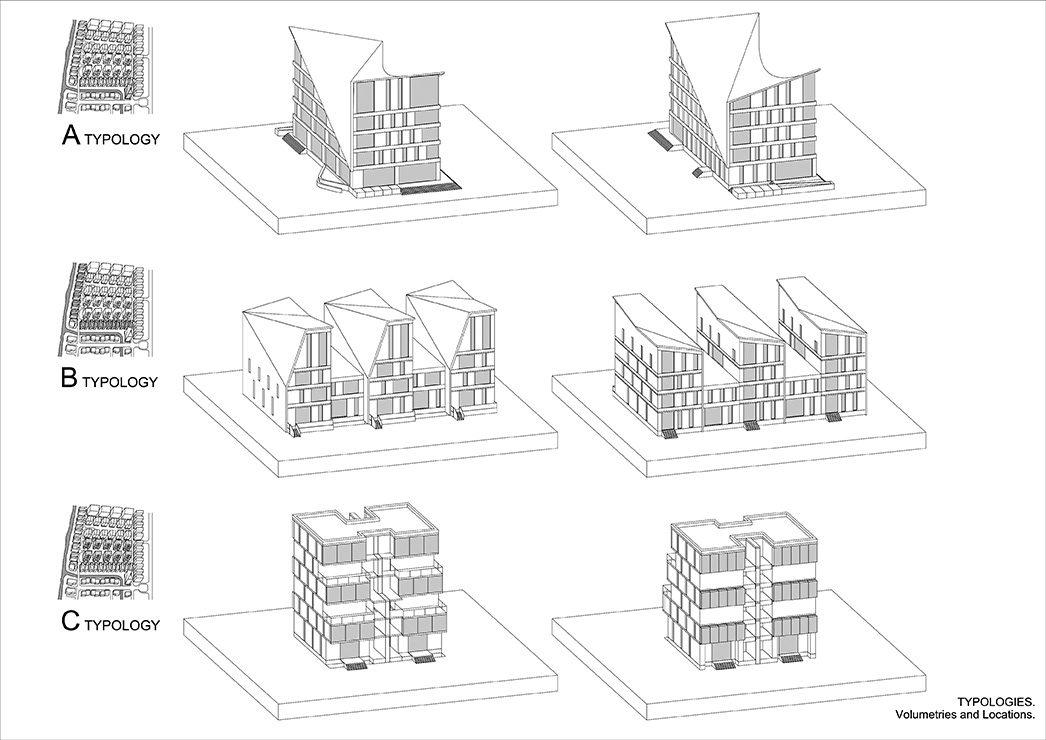
整个项目地处上海,必须回应的是高密度和高容积率的问题。建筑单体的设计尝试创造多层高密度的混合型产业园区。在项目开发初期,甲方并未明确园区的具体功能。我们通过概念策划将办公、艺术家工作室、艺术交流等功能组拼成一个具有一定混合度的社区。一方面,设计通过单元体空间原型的创建,在基本空间柱网的控制下创造了灵活组合的可能,益于邻里交流的复合空间体实质是建立在非常基本的空间原型上的;另一方面,园区内规划沿街商业空间提供相关服务、收藏、交易等多元化商业功能,形成了园区对外的窗口。各个单体又具有各自的独特意趣,露台花园、退台景观和独门院落等各种不同的空间与景观结合的方式既提升了各个艺术单元自身的魅力,同时也使得艺术家进驻时各取所需,为其艺术活动提供不同类型的空间支持。这样通过基础功能空间的原型组合和空间规划,实现了产业园区产业链的有益组合,为今后的发展提供内在的可能。
The whole project is located in Shanghai and must respond to the problems of high density and high plot ratio. The design of individual buildings tries to create a multi-storey and high-density mixed industrial park. At the initial stage of project development, Party A did not specify the specific functions of the park. Through concept planning, we have integrated office, artist studio, art exchange and other functional groups into a community with a certain degree of mixing. On the one hand, the design creates the possibility of flexible combination under the control of the basic spatial column network through the creation of the unit space prototype. The essence of the compound space body beneficial to the neighborhood communication is based on the very basic space prototype; On the other hand, the planned commercial space along the street in the park provides diversified commercial functions such as related services, collections and transactions, forming an external window of the park. Each single building also has its own unique interests. The combination of various spaces and landscapes, such as terrace garden, backyard landscape and single door courtyard, not only enhances the charm of each art unit, but also enables artists to take what they need when they enter, providing different types of space support for their artistic activities. In this way, through the prototype combination and spatial planning of the basic function space, the beneficial combination of the industrial chain of the industrial park is realized, which provides an inherent possibility for the future development.
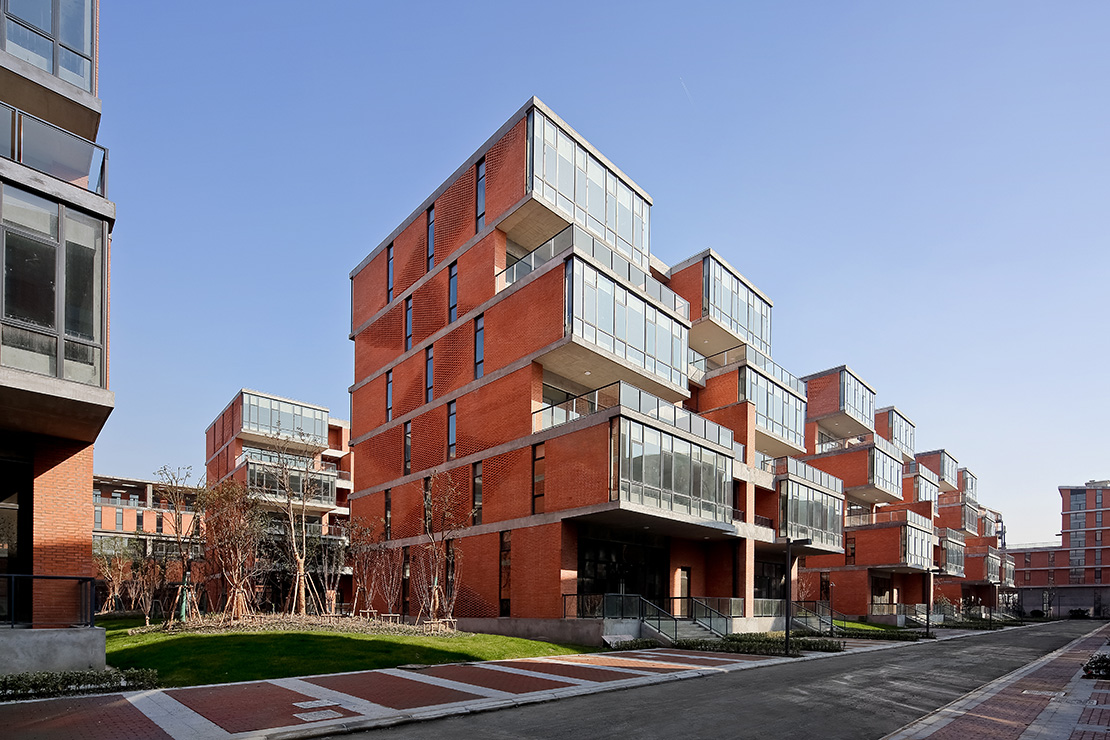
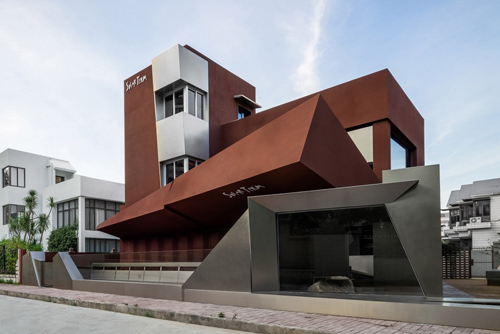
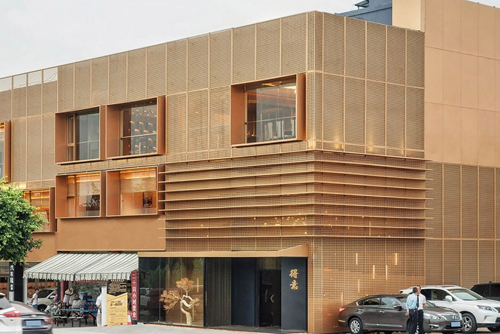
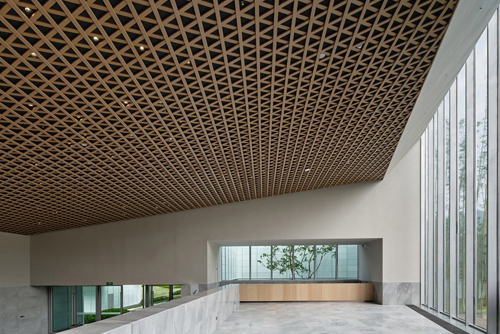
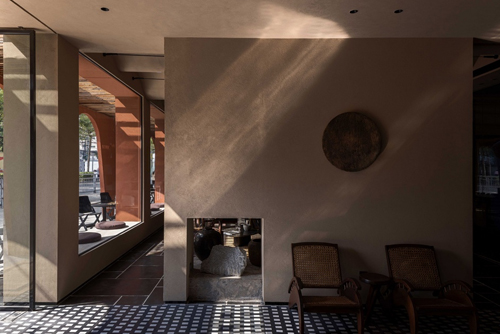
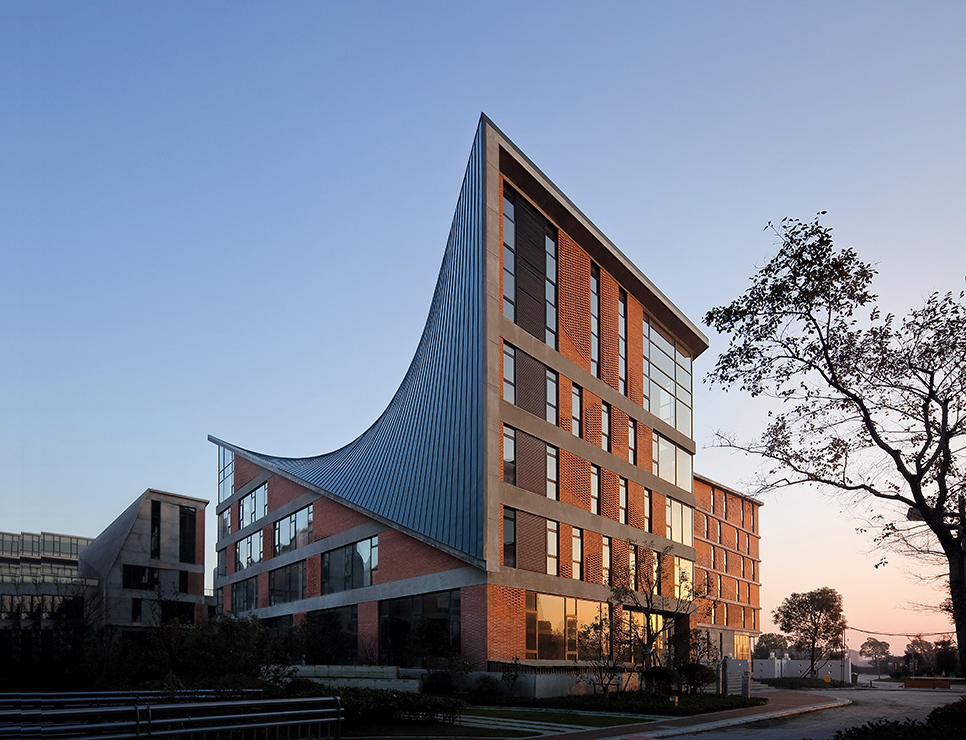
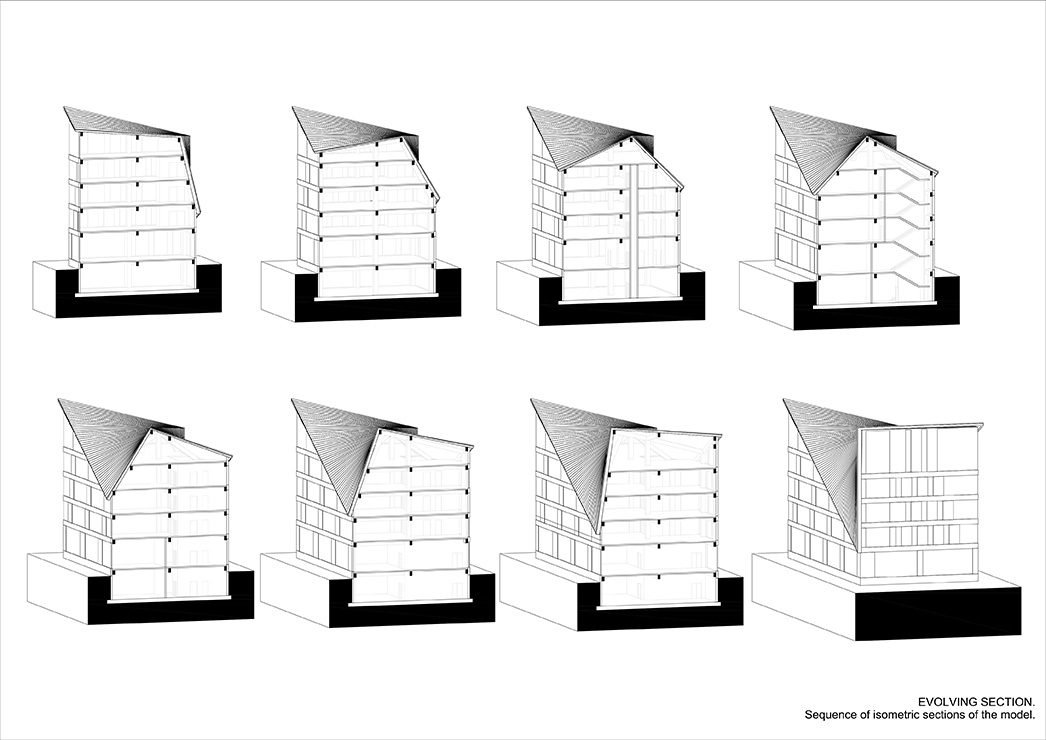
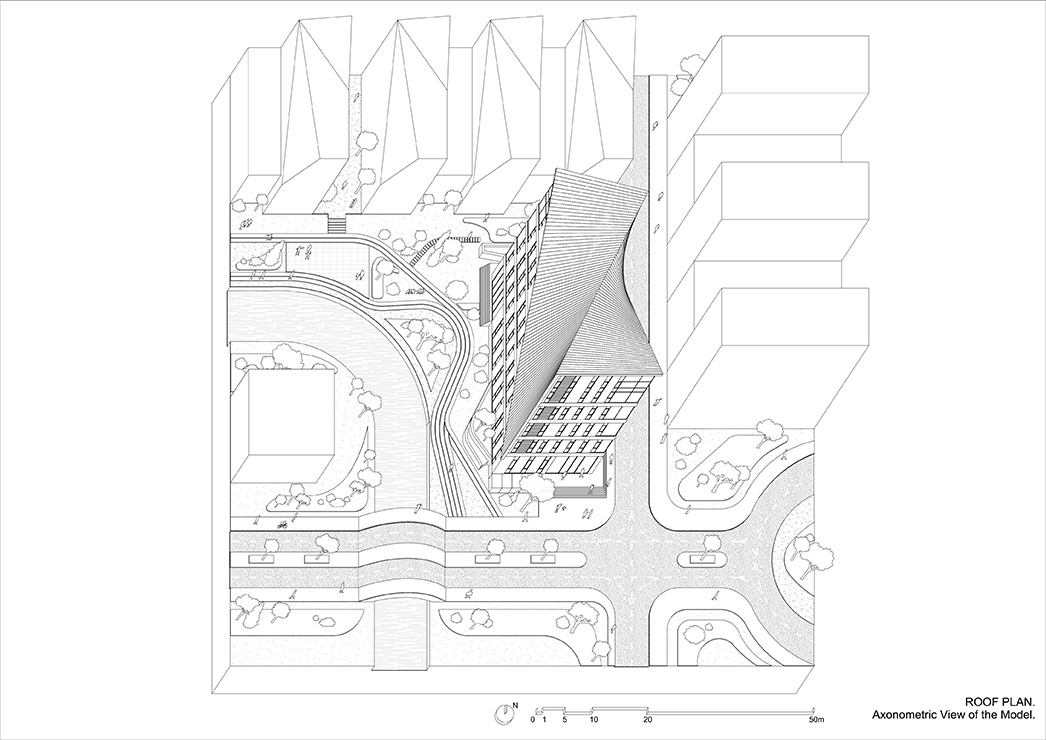
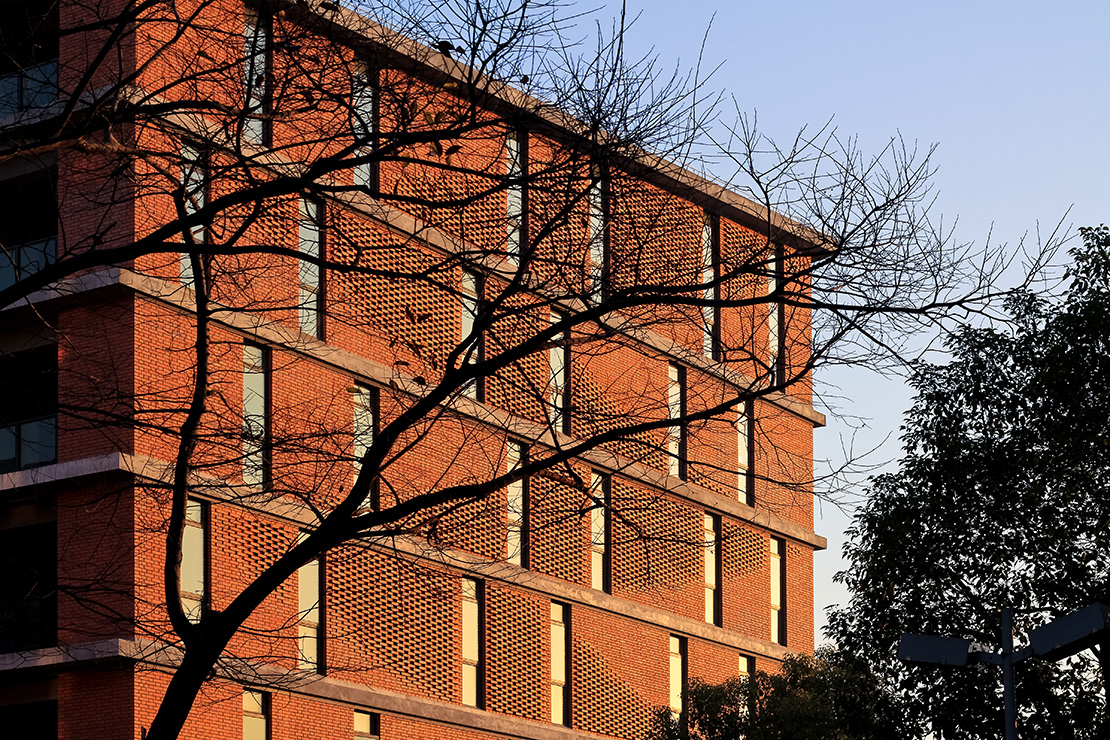
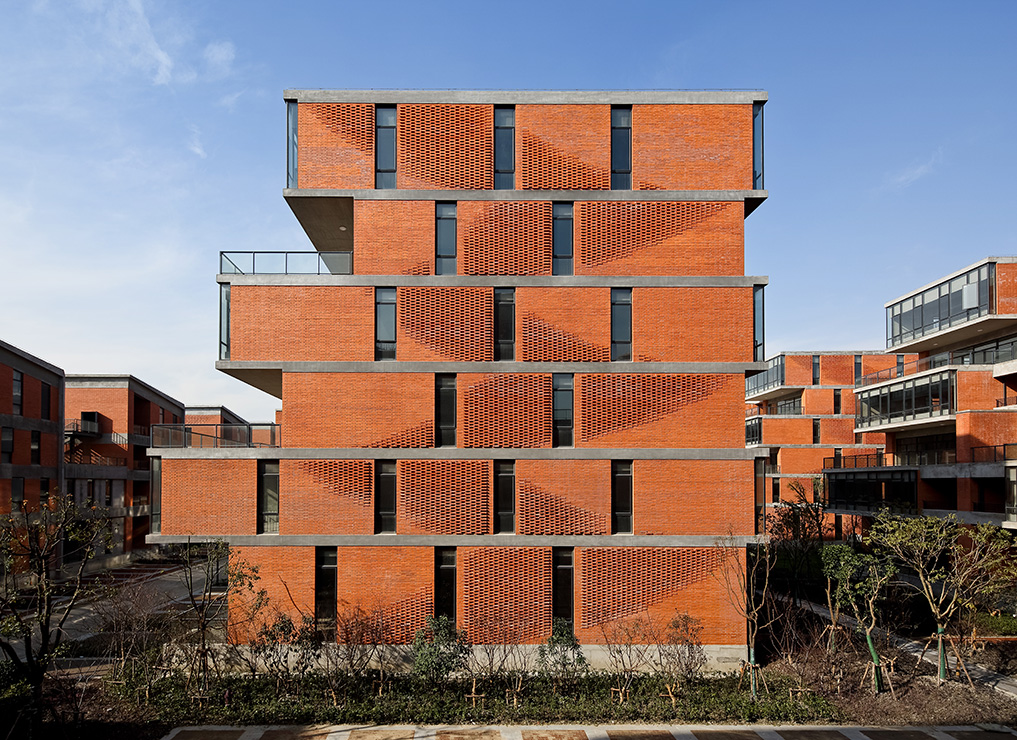
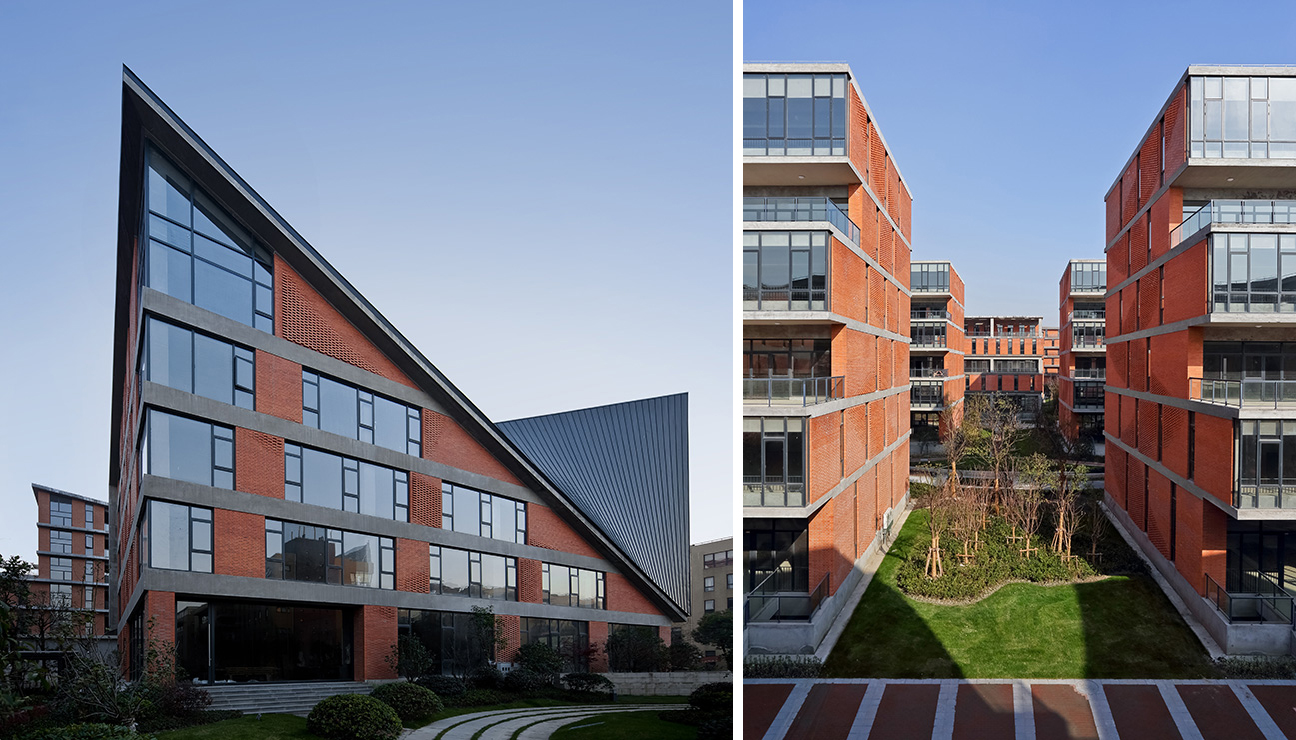
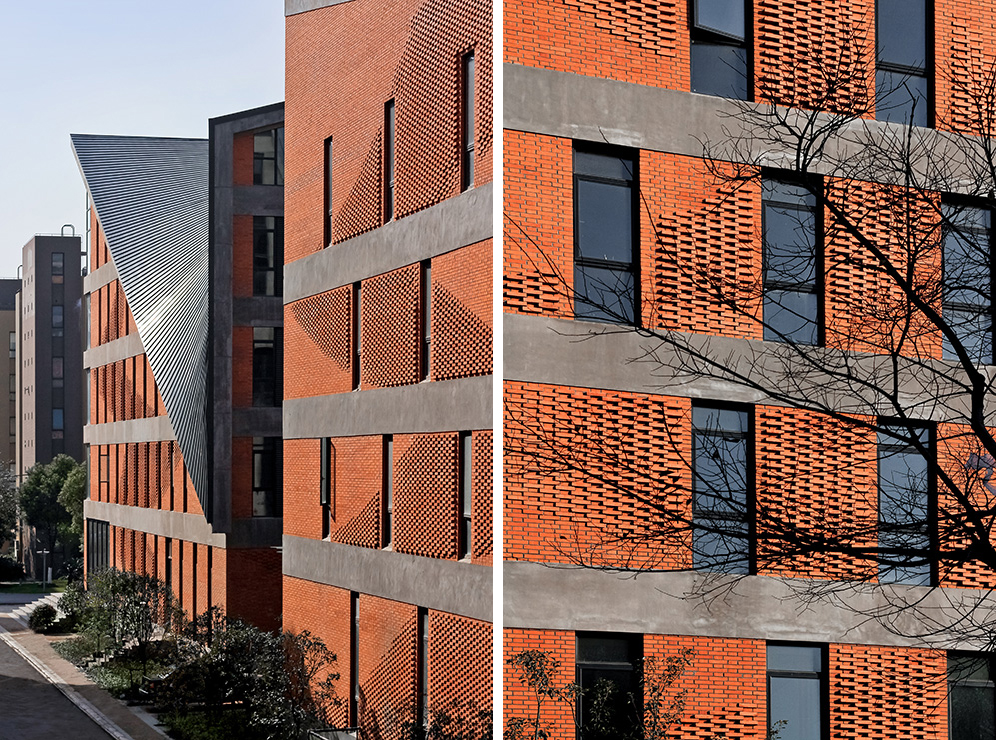
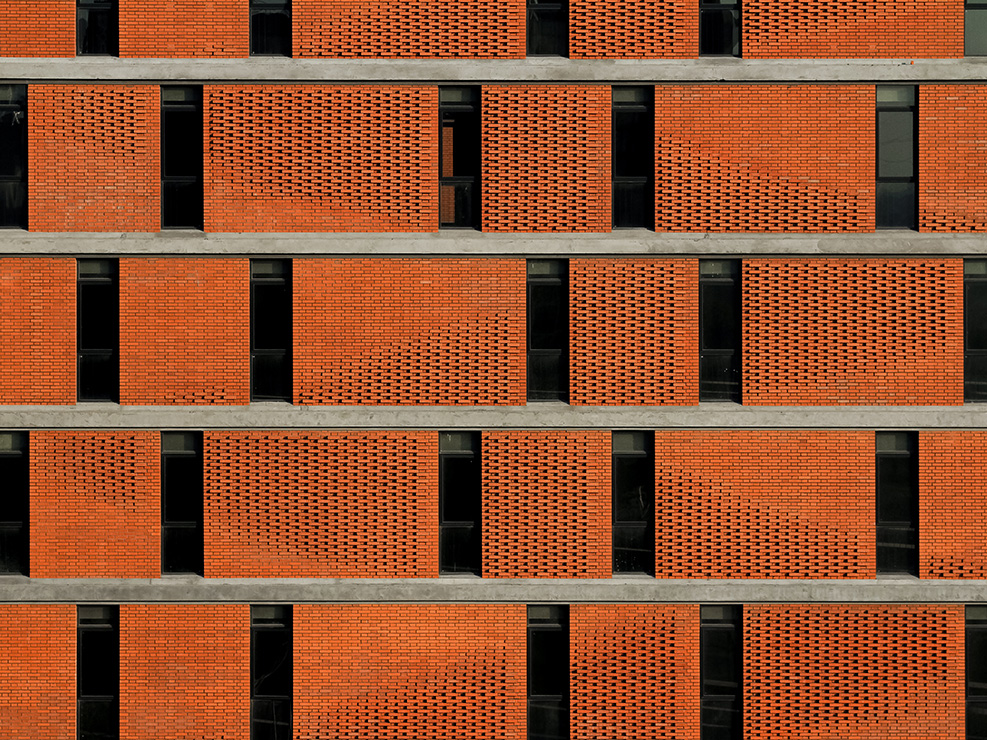
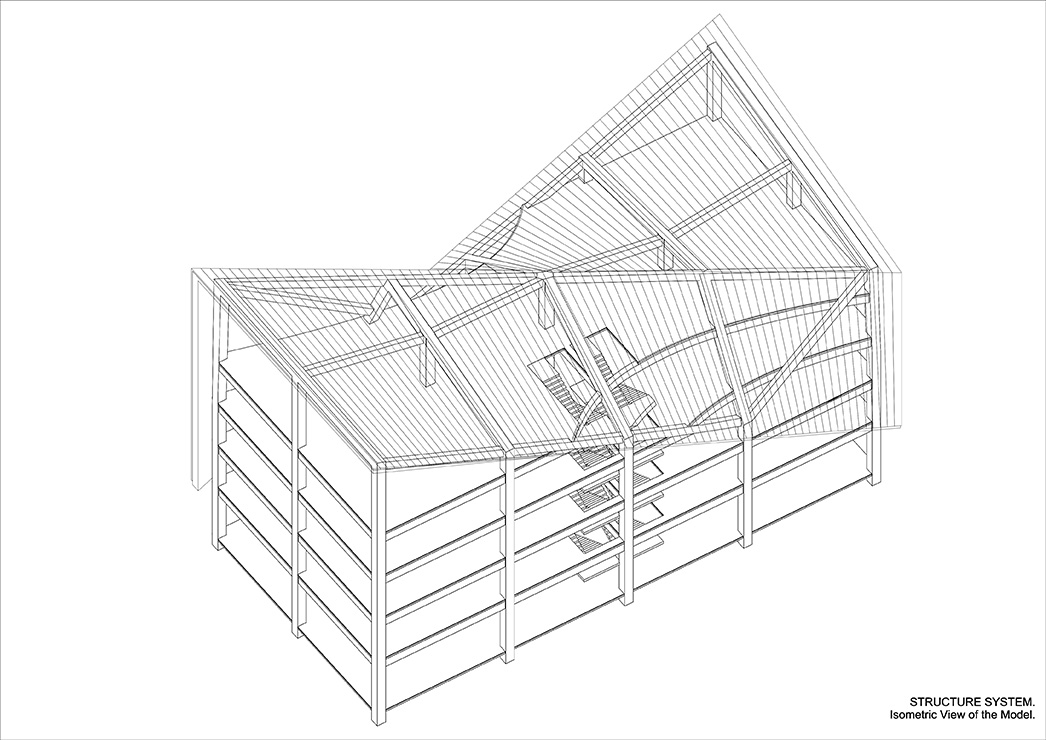
在单体建造方面,我们重点考虑的是降低成本材料及如何与数字化设计相结合。因此我们在设计中采用了直白的几何逻辑理性,通过简洁的构造方式,实现了传统材料的当代价值。通过对梁、柱、板等基本建筑元素的细节化处理,让结构直接呈现出建筑的本真之美。红色页岩砖、玻璃和混凝土等材料彼此真实反映了建造关系,营造出了一种朴素和简洁的整体性氛围。通过数字化设计手段重新使得传统的红砖砌筑焕发出新的魅力,传统的“丁-顺”砌法通过非线性的逻辑而加以重构,简单的定位与控制方式让工人通过简单的学习就可以加以营造,这也进一步控制了项目成本。入口会所屋顶利用有力的几何逻辑创造出了独特的空间景观效果,屋顶朝着人们接近园区的方向扭转与翘曲,反宇向阳,随着不同的观察位置,屋顶的翘曲与天空的关系也不断变化,同时直纹曲面的几何关系也使得钛锌板的铺设实现了精确的操作。
In terms of single building, we focus on reducing the cost of materials and how to combine them with digital design. Therefore, we adopted the straightforward geometric logic rationality in the design, and realized the contemporary value of traditional materials through the concise construction method. Through the detailed treatment of basic architectural elements such as beams, columns and slabs, the structure directly presents the true beauty of the building. Red shale brick, glass, concrete and other materials truly reflect the construction relationship with each other, creating a simple and concise overall atmosphere. By means of digital design, the traditional red brick masonry is renewed with new charm. The traditional "Ding Shun" masonry method is reconstructed through non-linear logic. The simple positioning and control mode allows workers to create it through simple learning, which further controls the project cost. The entrance clubhouse roof uses powerful geometric logic to create a unique spatial landscape effect. The roof twists and warps towards the direction that people approach the park. The relationship between the roof warping and the sky is also changing with different observation positions. At the same time, the geometric relationship of the ruled surface also enables the precise operation of the laying of titanium zinc plate.
项目地点:上海市松江区泗砖南路
业主:上海万居德实业有限公司
项目规模:15万平方米
设计/建成时间:2009/2015
建筑师:袁烽
设计团队:上海创盟国际建筑设计有限公司
建筑:韩力、孟浩、 顾红兵、 孔祥平、 王欧、 张向军
结构:李俊民、刘宇宏、周军
给排水:时荣伟
暖通:陆仁瑞
机电:张新华
摄影:苏圣亮
Project location: siban South Road, Songjiang District, Shanghai
Owner: Shanghai wanjude Industrial Co., Ltd
Project scale: 150000 square meters
Design / completion time: 2009/2015
Architect: Yuanfeng
Design team: Shanghai chuangmeng International Architectural Design Co., Ltd
Architecture: Han Li, Meng Hao, guhongbing, kongxiangping, Wang ou, zhangxiangjun
Structure: lijunmin, liuyuhong, Zhou Jun
Water supply and drainage: Shi Rongwei
HVAC: lurenrui
Electromechanical: zhangxinhua
Photographer: sushengliang