美舍河凤翔公园,海南/景观
几十年来,中国海口市的母亲河一直受到污水和无点城市和郊区径流的污染。这位景观设计师率先实施了基于自然的解决方案,将灰色混凝土河流改造成富有弹性的绿色基础设施,并将污水处理过程整合到一个生态系统中,使河流充满活力,拥有清洁的水、丰富的生活、郁郁葱葱的美丽和社会活力。
The mother river of China’s Haikou City has suffered water pollution for decades caused by sewage and no-point urban and suburban runoffs. The landscape architect took lead in implementing nature-based solutions to in transform the gray concrete river into a resilient green infrastructure and integrated the sewage treat process into an ecological system that return the river alive with clean water, rich lives, lush beauty and social vitalities.
海口是中国南部热带地区的一座旅游城市,属季风气候。在过去的四十年里,这个城市正处于一种疯狂的状态,人口增长了十倍,从25万增长到230万。与不断涌现的摩天大楼相比,在季风气候下,对城市至关重要的自然水系和城市供水基础设施关注甚少。梅河水,在当地语言中的字面意思是“美丽的母亲河”,流经已建成区,已成为城市的噩梦。几十年来,这条河一直是污水场。单一的采矿反洪控制墙将河流变成了混凝土渠道。它已经失去了生命,人们回过头来看它。多年来,零碎的解决方案,如建造墙壁和船闸,以控制洪水和海潮,河床疏浚,种花和在河岸放置法律;锁定提供了受污染的支流等,但所有这些一心一意、各自为政的解决方案只会使情况恶化。中国中央电视台在全国范围内播放了黑水、死鱼和混凝土防洪墙的画面。对于一个海滨旅游城市来说,这是一个巨大的耻辱。
Haikou is a tourist city in South China’s tropical area with a monsoon climate. In the past four decades, the city is in a frenzy with ten-time growth in population from a quarter million to 2.3 million. Compared to the ever sprouting skyscrapers, little attention was paid upon the natural water system and the urban water infrastructure which are critical for a city under monsoon climate. The Meishe River, literally meaning the “beautiful mother river” in local language, which runs through the built up area had become a nightmare for the city. For decades, the river had been the sewage dump. The single-mined counter flooding control walls had turned the river into a concrete channel. It had become lifeless and people turn back at it. For many years, piece meal solutions such as building walls and locks to control floods and sea tides, river bed dredging, growing flowers and putting laws at the river bank; locking offer the polluted tributaries, etc. But all these single-minded and disintegrated solutions only worsen the situation. Images of black water, dead fishes and concrete flood walls that were broadcasted nationwide at the China’s Central Television. For a tourist beach city, this is a big shame.
2016年,海口市政府决定做出改变,这一次是以整体和系统的方式进行的。这位景观设计师受命负责完成恢复母亲河的系统和整体任务。这里介绍的项目占地80公顷(约200英亩),是在景观设计师的领导下规划和设计的整个绿色基础设施的一个主要试点项目。
In 2016, the Haikou government decided to make a change, and this time in an holistic and systematic way. And the landscape architect was commissioned to lead the systematic and holistic mission of recovering the mother river. The presented project here, 80 hectares (about 200 Acres) in size, is one major pilot project of a whole green infrastructure that was planned and designed under the lead of the landscape architect.
▼项目概览
project preview
项目简介
Project Statement
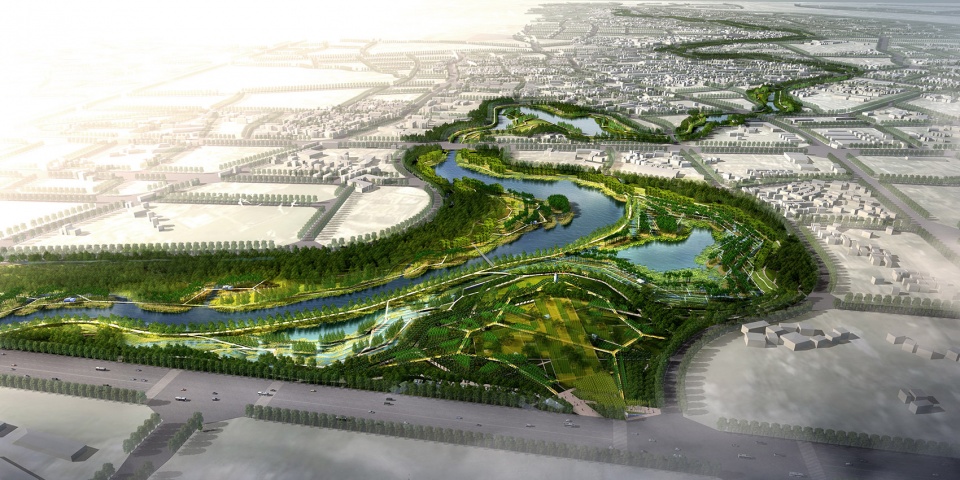
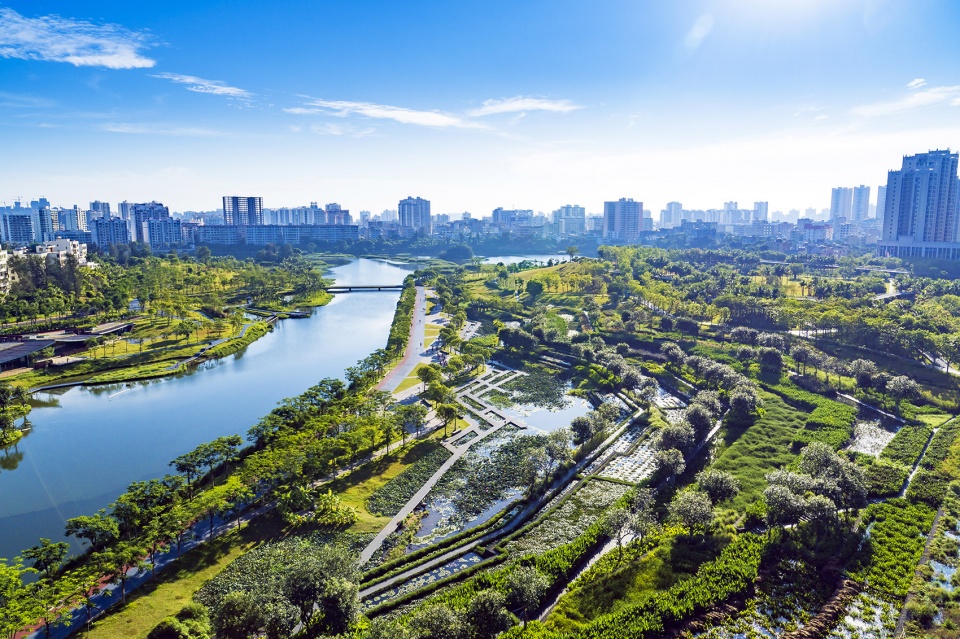
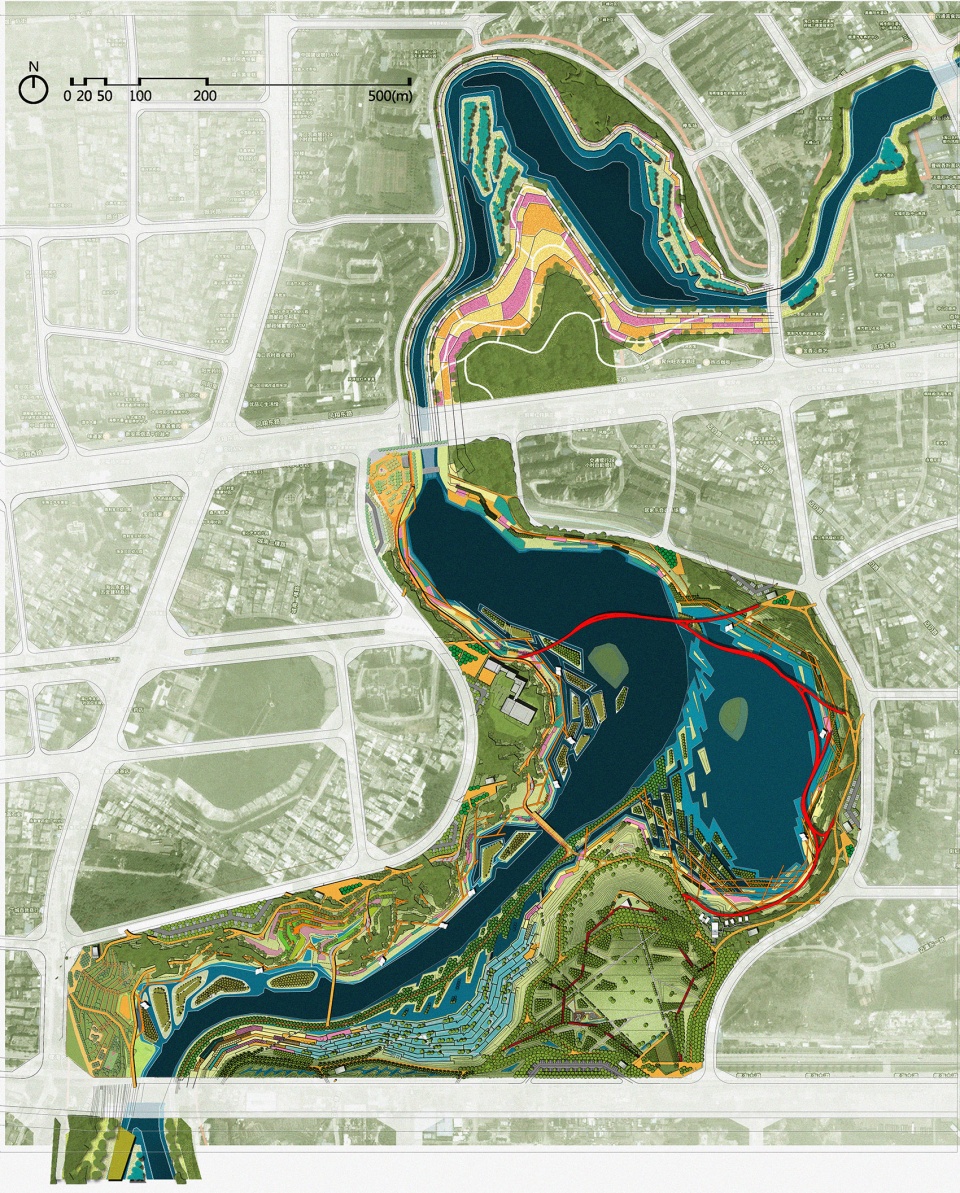
本场地位于美舍河中游,是美舍河最重要最大的景观节点,是美舍河海绵城市展示的窗口,场地设计面积为78.52公顷(包含水域面积)。设计上,运用台田、密林、果园、湿地岛链等大地景观的手法展示凤翔公园自然之美;生态上,通过人工潜流、表流湿地最大限度解决水质污染问题的同时,以乾坤湖为核心营造白鹭生境;城市休闲方面,充分考虑城市综合公园的需求,提供满足市民休闲的活动场地及慢行步道。最终将凤翔公园打造成展示海绵理念、满足市民休闲需求、展示海口景观特色的综合性生态城市湿地公园。
Located in the middle reaches of the Meishe River, this site is the most important and largest landscape node of the Meishe River and the window for the exhibition of the sponge city of the Meishe river. The design area of the site is 78.52 hectares (including the water area). In terms of design, the natural beauty of Fengxiang park is displayed by means of Taitian, dense forests, orchards, wetland island chains and other land landscapes; Ecologically, while solving the problem of water pollution to the greatest extent through artificial subsurface flow and surface flow wetlands, we should take Qiankun Lake as the core to create egret habitat; In terms of urban leisure, fully consider the needs of urban comprehensive parks, and provide activity venues and slow walking trails to meet the leisure needs of citizens. Finally, Fengxiang park will be built into a comprehensive ecological urban wetland park that displays the concept of sponge, meets the leisure needs of citizens, and shows the landscape characteristics of Haikou.
▼平面图
plan
目标与挑战
Site and Challenges
设计师提出河流污染治理的核心是要雨污分流,第一是截污,第二是根据海绵城市的理念布置海绵设施(缓坡草地、雨水边沟、生态驳岸挡墙、台田湿地)来达到雨水的蓄、滞、渗、净、用、排,同时也营造了河流密林、湿地、浅滩的河流生境;第三将现状游步道高差降低,让人们可以直接亲水,同时设置自行车道路,来满足不同人群的体验需求。
The designer proposed that the core of river pollution control is to divert rainwater and sewage. The first is to intercept sewage. The second is to arrange sponge facilities (gentle slope grassland, rainwater side ditch, ecological revetment retaining wall, and Taitian wetland) according to the concept of sponge city to achieve the storage, detention, infiltration, purification, use, and drainage of rainwater. At the same time, it also creates a river habitat of dense forests, wetlands, and shoals; Third, reduce the height difference of the existing footpath, so that people can directly get water, and set up bicycle roads to meet the experience needs of different groups.
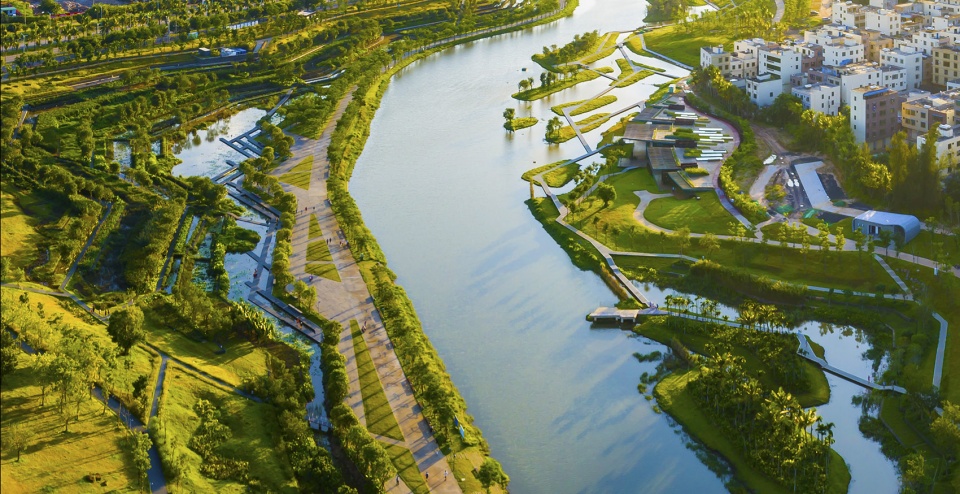
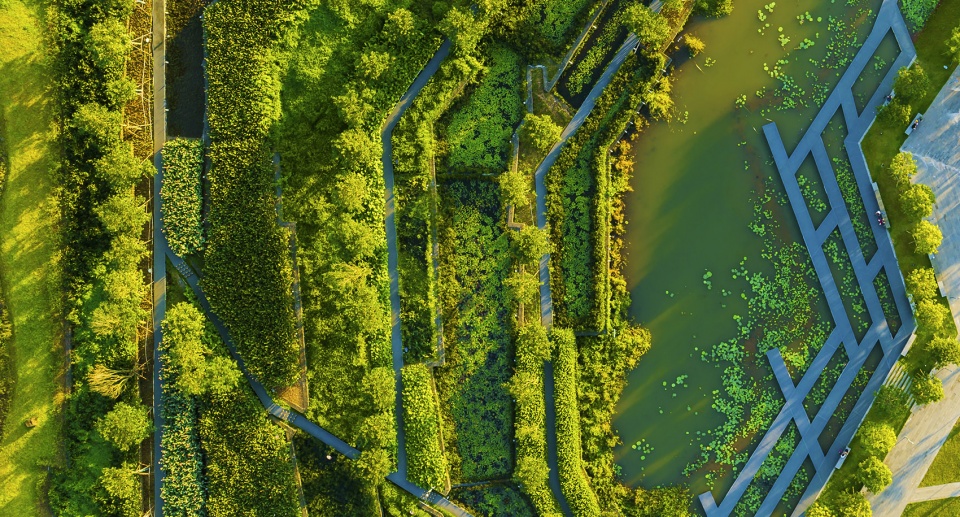
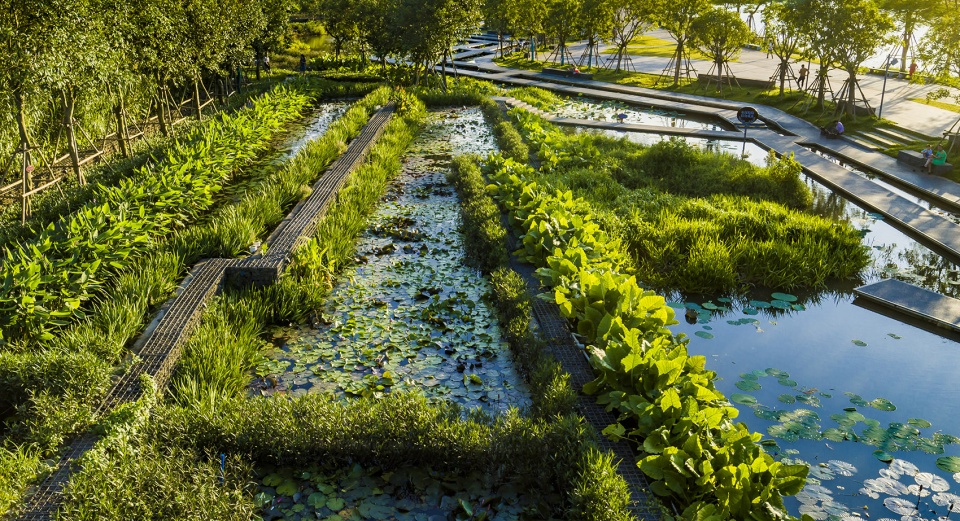
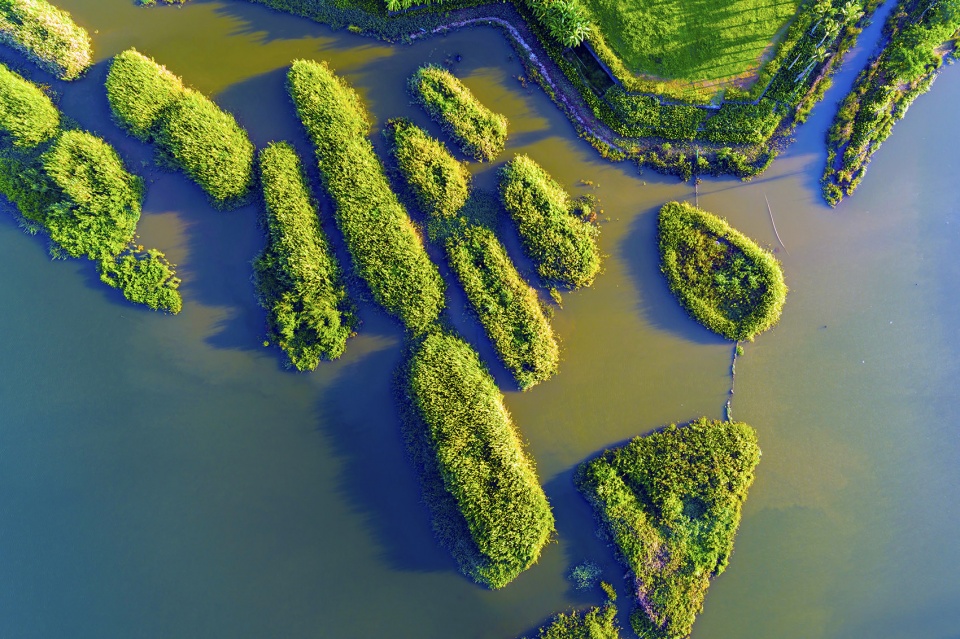
▼运用台田、密林、果园、湿地岛链等大地景观的手法展示凤翔公园自然之美
The natural beauty of Fengxiang Park is shown by the use of terrestrial landscapes such as terraces, dense forests, orchards and a chain of marsh islands
设计策略
Objectives and design Strategies
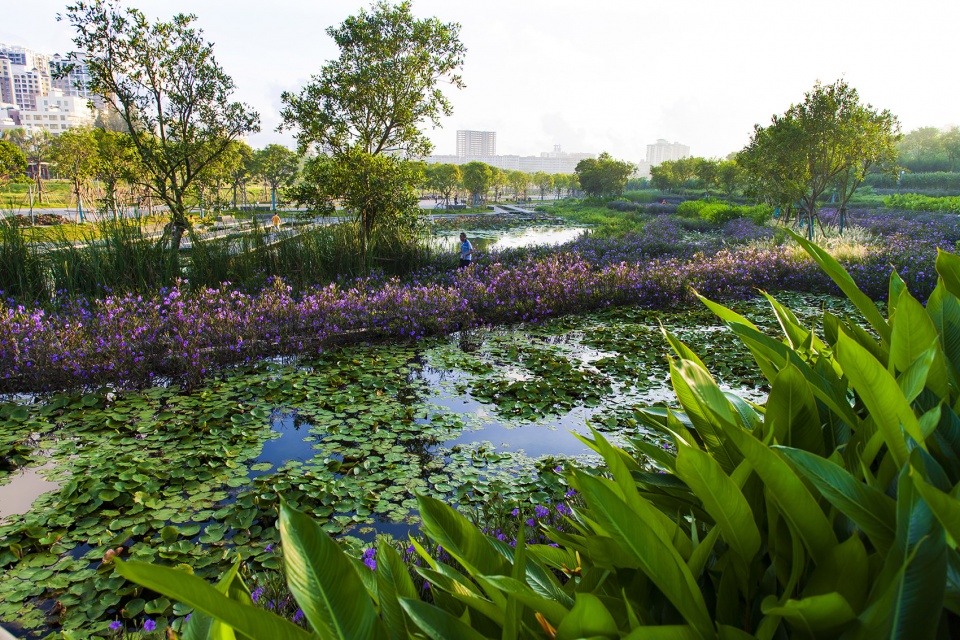
一个可净化的湿地:河道水质为劣五类水源,与乾坤湖水体不联通,同时湿地还要处理污水站每天3500吨的生活污水,设计在基于20年一遇的防洪需求的条件下,通过打破驳岸边界营造更多的自然湿地生境,同时为了处理3500吨的生活污水设置人工潜流湿地来达到水净化的目标,未来的建筑位置初步选在人工潜流湿地上。
A purifying wetland: the water quality of the river is inferior to that of five categories of water sources, which is not connected with the water body of Qiankun lake. At the same time, the wetland also needs to treat 3500 tons of domestic sewage from the sewage station every day. Under the condition of flood control demand with a return period of 20 years, it is designed to create more natural wetland habitats by breaking the boundary of the revetment, and at the same time, artificial subsurface flow wetlands are set up to treat 3500 tons of domestic sewage to achieve the goal of water purification, The future building location is preliminarily selected on the artificial subsurface flow wetland.
▼通过打破驳岸边界营造更多自然湿地生境
more space is given to the water and the concrete flood walls are removed and replaced with eco-friendly river bank
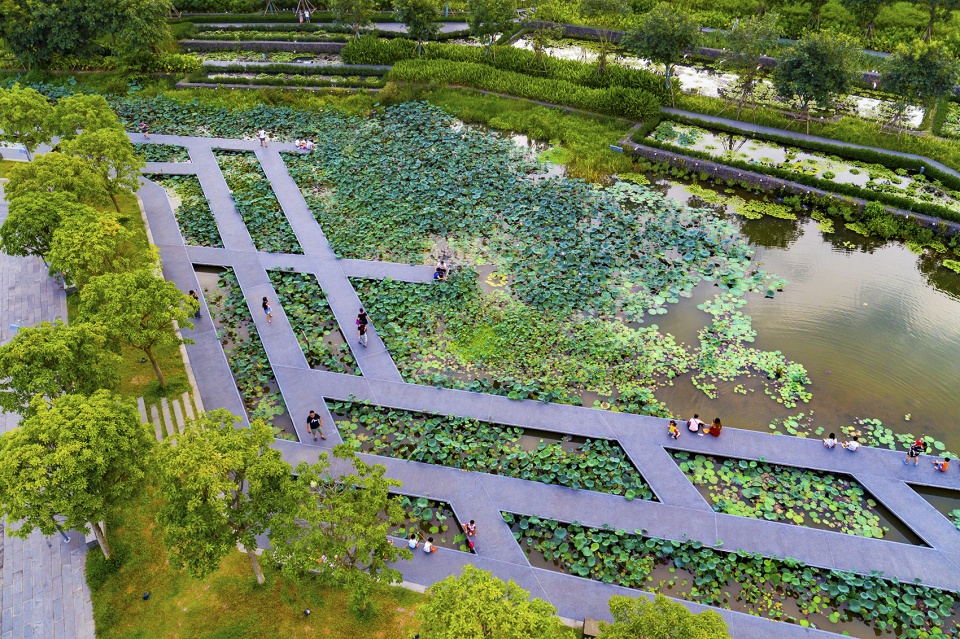
景观设计师将土木工程、水利工程和环境工程相结合,将河流廊道设计为一个综合生态基础设施,以全面解决洪水和污染问题,恢复生物多样性栖息地,创造愉快的娱乐机会并使其美丽。
By integrating the works of civil engineering, hydro-engineering, and environmental engineering, the landscape architect design the river corridor was as an comprehensive ecological infrastructure to holistically solve the problems flood and pollution, recover habitats for biodiversity, and creae pleasant recreation opportunities and make it beautiful.
采取了四种策略:
Four strategies are taken:
规划灰色污水排放系统:在土木工程规划师的帮助下,规划了一个污水管道和处理厂系统,将收集点源的污水,并切断一些主要污染源进入河流。
Planning a gray sewage drainage system: With the help of civil engineering planners, a system of sewage pipes and treatment plants was planned that will collect the sewage of the point sources, and cut off some major pollution sources into the river.
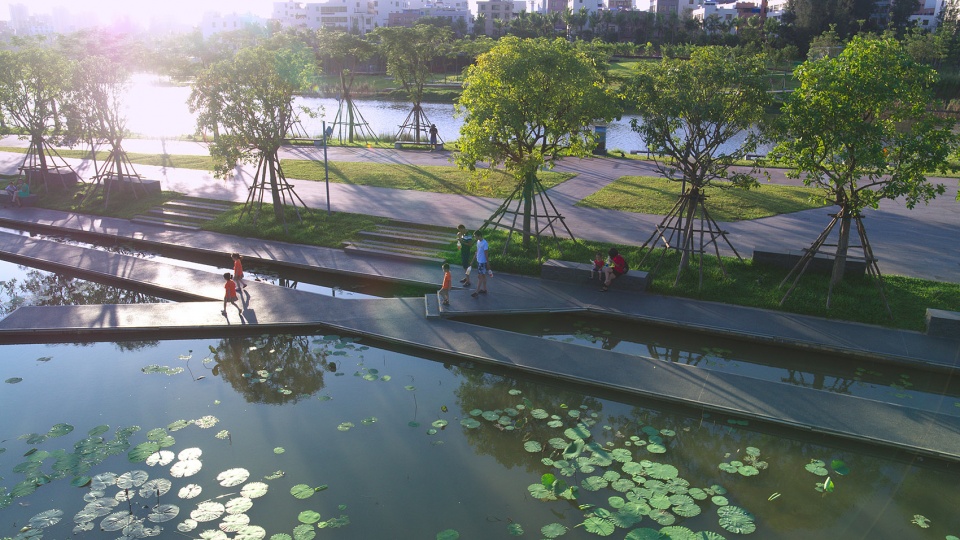
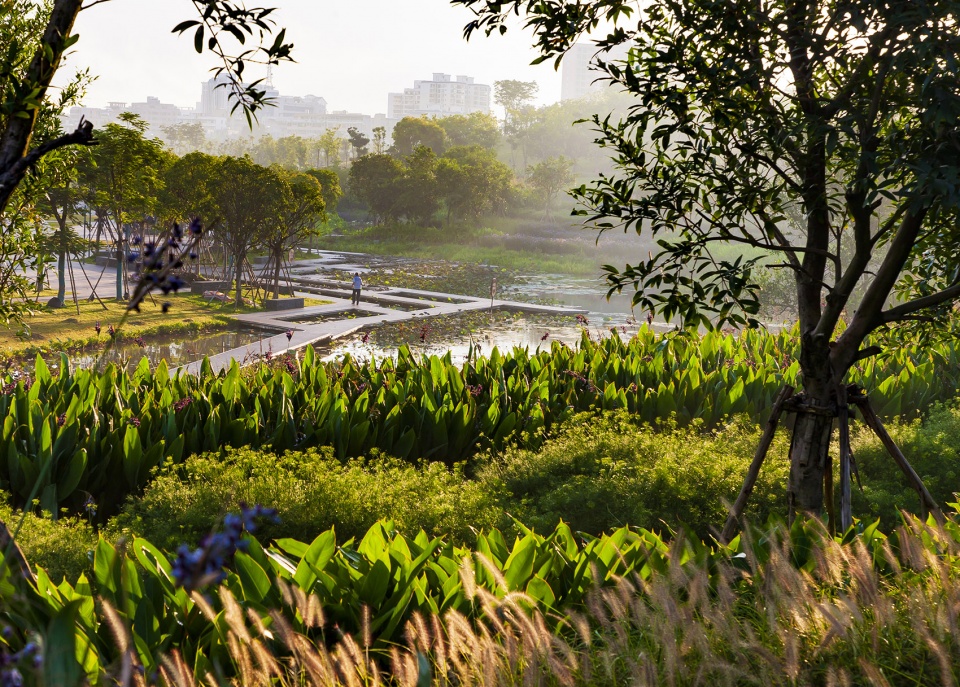
可多层次体验的湿地公园:场地在设计前基本无法进入,以荒地、菜地为主,设计中设置三个一级功能节点、15个二级功能节点来满足市民休闲的需求,其中有三个功能节点,分别为科普教育湿地、市民演绎舞台、综合活动场地,其中建筑的初步选址靠近主入口区的综合市民活动场地,同时通过选取当地植物营造密林、台地、湿地、岛屿的河道生境来展示凤翔公园的大地景观之美,再在此基础上构建精致而具细节的景观构筑物设施,提神公园整体形象。多层次的亲水体验设计,使游步道系统能够应对不同雨洪条件下人的亲水需求。
Planning an ecological infrastructure: Based on terrain, land use, and hydrological process, a stormwater drainage-centered green system, namely the green sponge, was planned to separate the stormwater from the sewage, which integrate the river and all its tributaries, wetland and all built and potential green spaces. The green sponge is also integrated with an inter-connected pedestrian and creational network.
将灰色融入绿色和梯田湿地公园:沿着河岸建造相互连接的人工潜流湿地梯田,以前由混凝土防洪墙和垃圾场占据。露台被设计成水净化设施。两种类型的水被引入湿地进行净化:携带丰富营养的无点径流和目前无法通过集中污水处理系统处理的当地城市村庄的污水。在前一种情况下,湿地每天可清理6000吨城市径流,从五级到三级,是可游泳的;在后一种情况下,经测试,每天可将3500吨生活污水净化至相同质量。在这种情况下,在将灰水引入湿地之前,在湿地入口处安装一个移动预处理设备,以去除可能导致公共健康风险的气味和病原体。这两种流量可以根据需要交替切换或组合。湿地的生物量被定期收获并分解成肥料,用于景观。
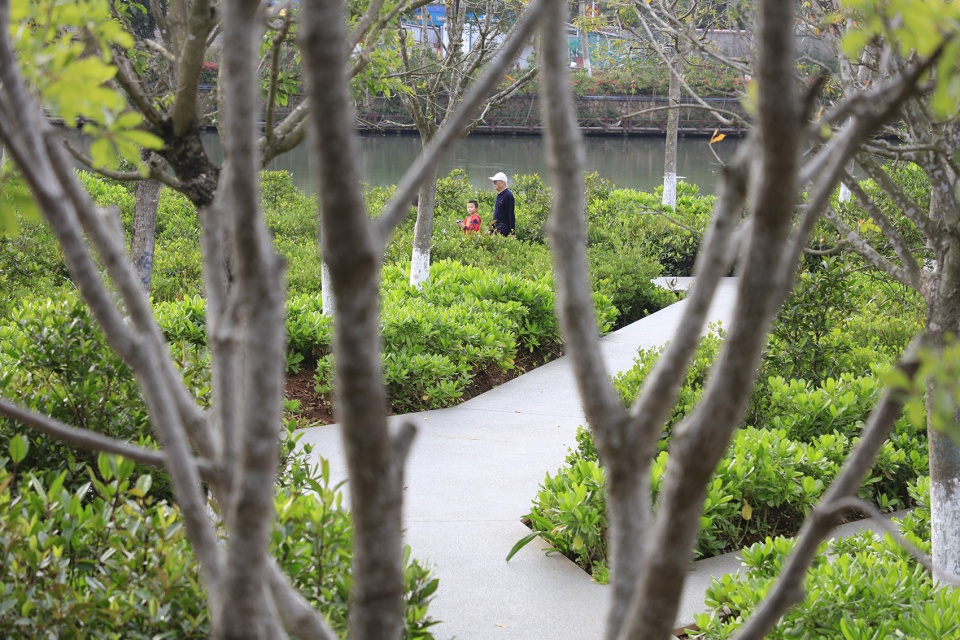
Transforming grey into green: where ever possible, more space is given to the water and the concrete flood walls are removed and replaced with eco-friendly river bank. The locked water way is reconnected to the ocean to allow tides come into the city again; Wetlands and sallow shores along the river were reconstructed for mangrove to rehabilitate. Continuous pedestrian paths that are detached from the ground are designed to create water front access.
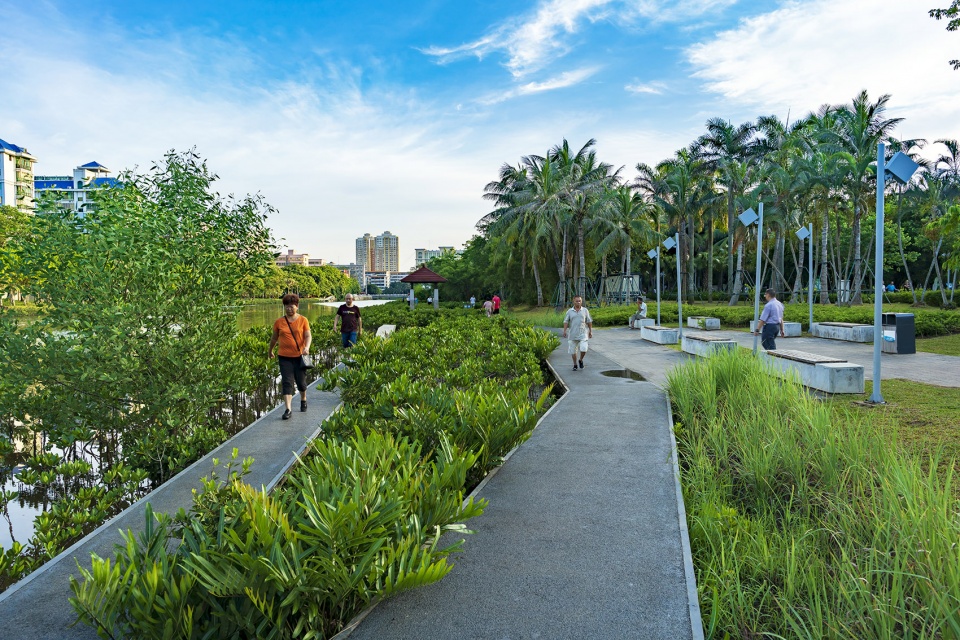
▼游步道系统
pedestrian network
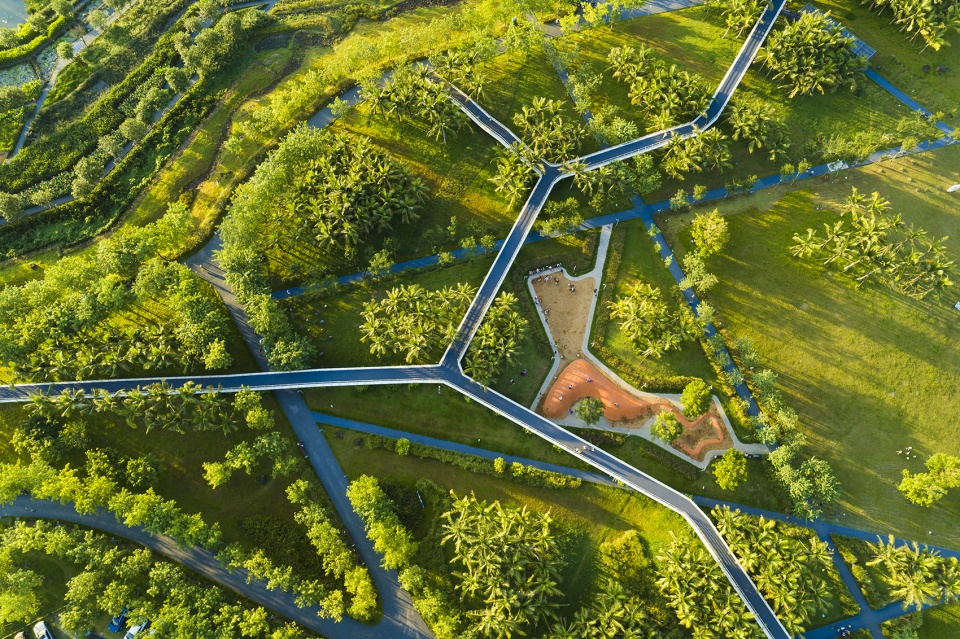
在这一设计的弹性水生态系统中,设计了一个环境解读系统和休息场所,用于享受景观服务,让游客对设计的生态系统有独特的体验。
Integrated in this designed ecologies of resilient water, an environmental interpretation system and resting places for enjoying the landscape services are designed that allow visitors to have an unique experience of the designed ecologies.
▼公共活动空间
public activity spaces
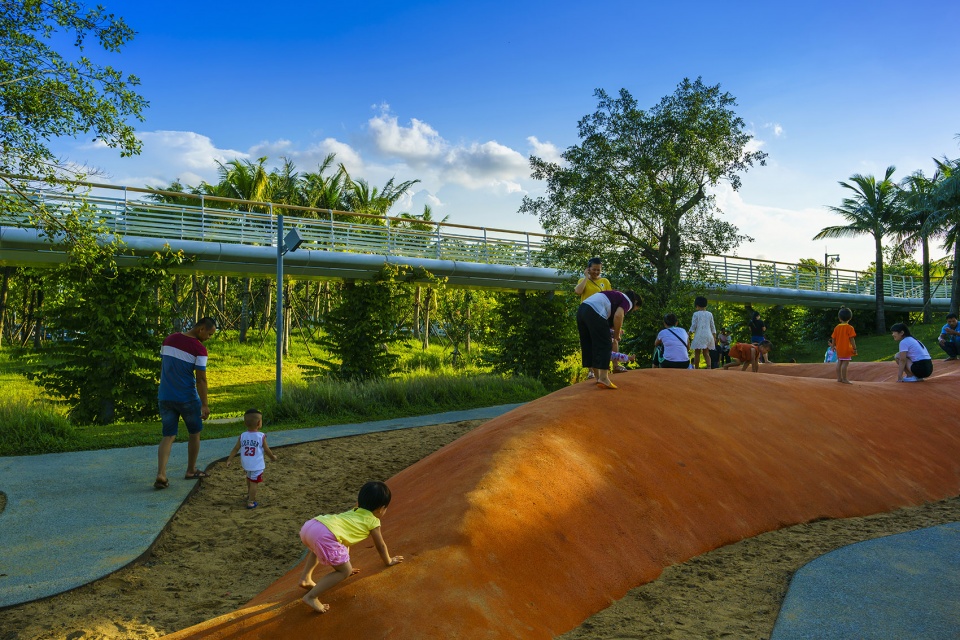
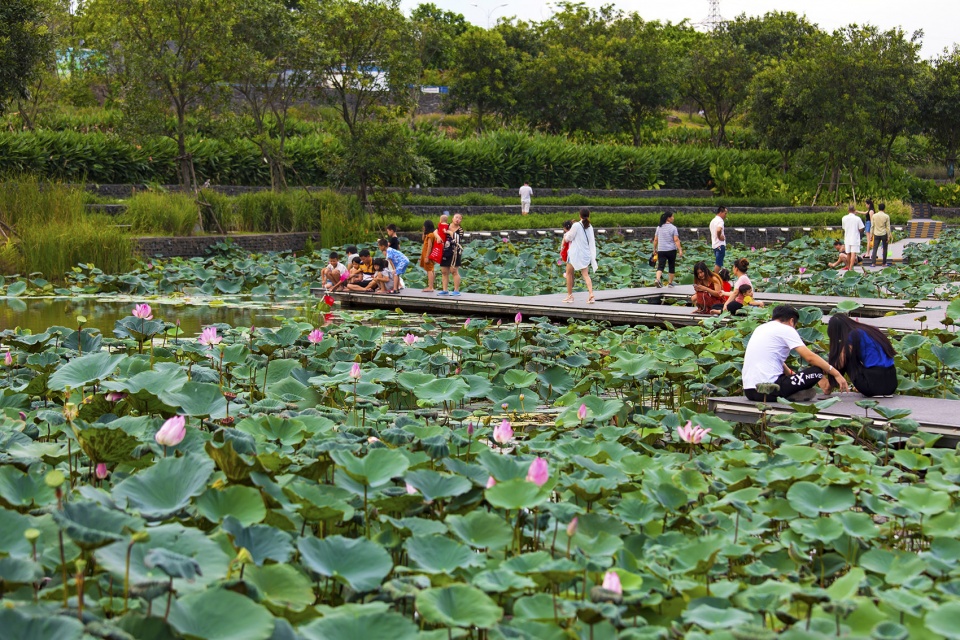
▼多层次的亲水体验设计
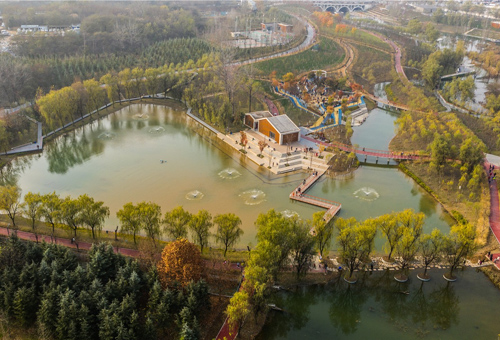
the multi-level design for waterfront experience
结论
Conclusion
通过这些景观设计策略,原先持续恶化的河道和亲水性极差的城市边缘地带,已成功改造成一个集雨水净化、生境营造、满足市民休闲功能于一体的海绵公园 。
Through these landscape design strategies, the previously deteriorating river course and the urban fringe with extremely poor hydrophilicity have been successfully transformed into a sponge park integrating rainwater purification, habitat construction and meeting the leisure functions of citizens.
该项目已被证明是一个巨大的成功,河水已变得干净,鱼类和鸟类已经回来,红树林生长良好,进入城市中心的水道;设计的景观吸引了成千上万的游客。2018年,海口被《拉姆萨尔公约》缔约方评为18个国际湿地城市之一,这是海口市为纪念几十年前老居民而恢复美丽母亲河的一次盛大庆典。
The project has been proven to be a great success, the water of the river has becomes clean again, fishes and birds have come back, mangrove are growing well into the water way in the city heart; tens of thousands of visitor are attracted to the designed landscape. And as a great celebration of the recovery of the beauty of its mother river which was in memory of old residents decades ago, Haikou was honored as one of the 18 International Wetland Cities by the Contracting Parties to the Ramsar Convention in 2018.
但在这种情况下,更重要的是,本项目中展示的基于自然的解决方案是可复制的,并由测试数据支持。从全球来看,城市地区(主要是发展中国家)85%以上的污水未经处理就流入了自然水系统,污染了河流、湖泊和海洋,严重影响了水资源短缺的局面。仅在中国,就有75%的地表水受到污染,主要是由非点源污染引起的,包括城市和郊区的径流,以及来自农田的化学物质。虽然集中式污水处理系统在经济上不适用于城市村庄和郊区居民点,但基于自然的解决方案在修复水质和洪水以及创造提供文化和社会服务的公共空间方面发挥着重要作用。这也为景观设计专业的实践和教育开辟了一个全新的领域,值得进一步探索。
But what is more significant for this case is that the nature based solutions showcased in this project are replicable supported by tested data. Globalwise, over 85% of sewage in the urban area, mainly in the developing countries, is untreated before running into the natural water system, which polluted rivers, lakes and ocean, and has severed the water shortage situation. 75%of the surface water is polluted in China alone, manly caused by no-point source pollution including urban and suburban run offs, and chemicals from the agricultural fields. While centralized sewage treatment system is economically unfeasible for the urban villages and suburban settlements, nature based solutions play important roles in remediating the water quality and floods, as well as creating public spaces that provide cultural and social services. This also indicates a whole new territory for the profession landscape architecture practice and education worthy future exploration.
▼湿地岛链
the chain of marsh islands
▼鸟瞰(凤翔)
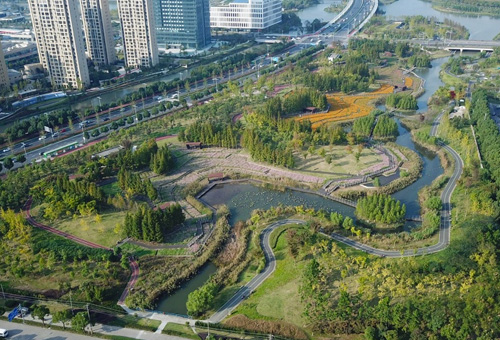
aerial view – Fengxiang Park
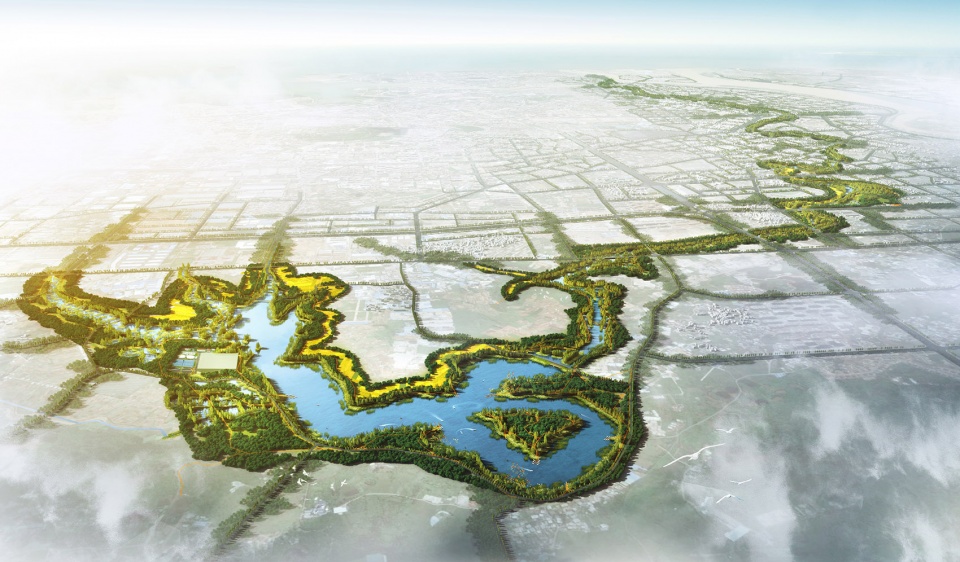
▼鸟瞰(沙坡 – 美舍河)
aerial view – The Meishe River