潏河樊川公园,西安/景观
项目简介
Project introduction
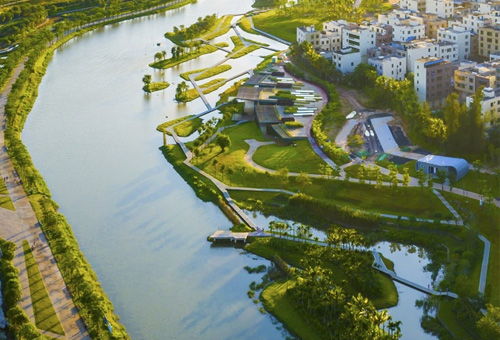
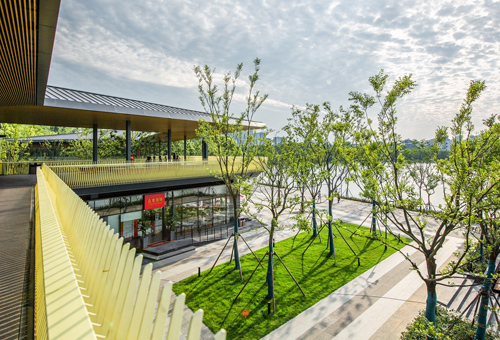
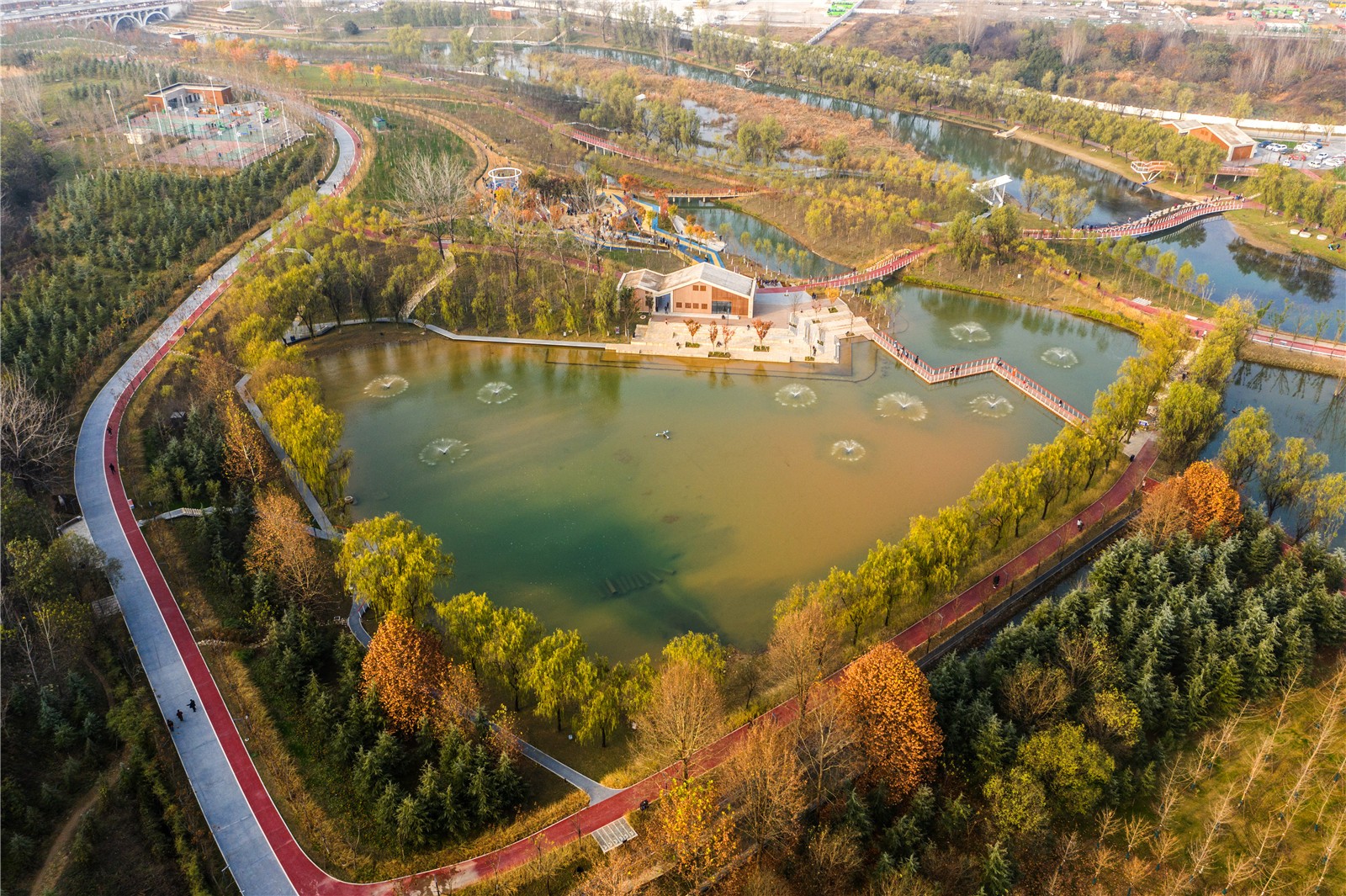
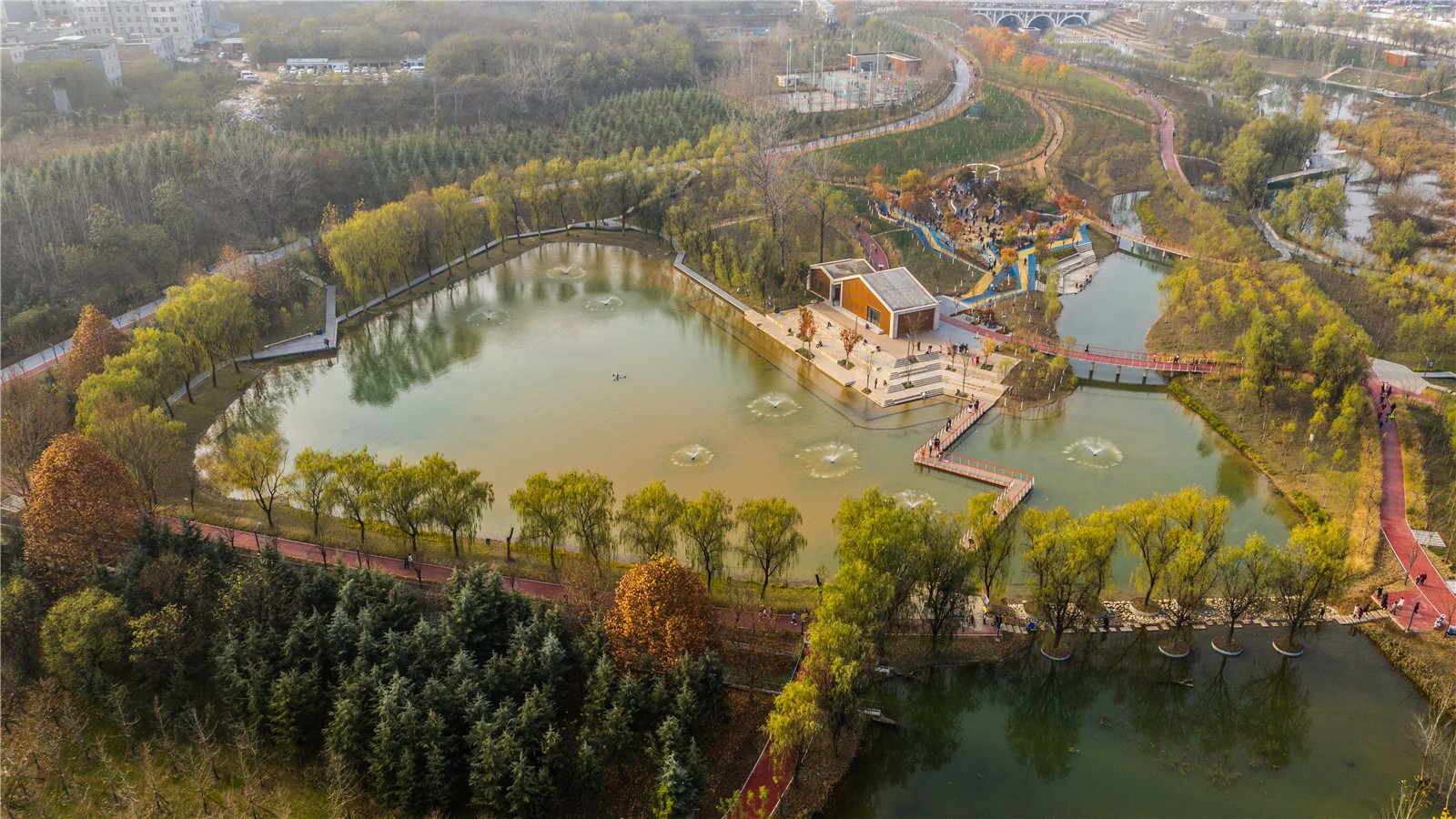
潏河属于长安八水中较窄、较短的一支,长度约64.2km。樊川湖项目毗邻潏河的中段,常宁新区的东北角。场地占地16.7公顷。西安近年来的高速发展带来的大建设产生了大量的城市建筑垃圾,西北的黄土高坡可堆土的区域较少,地势较低的西安八条生命河流慢慢的沦落为堆土的首选地,八水绕长安的城市美景也慢慢的变了质,本次项目的潏河两岸也遭遇了此灾难。设计师根据项目的现状情况,对潏河周边的自然风貌进行了规划和定位,建成以生态修复、自然观光、休闲娱乐、人文体验为一体的城市湿地公园。
Juehe River is a narrow and short branch of Chang'an’s Eight Rivers, with a length of about 64.2km. The Fanchuan Lake project is adjacent to the middle section of Juehe River and the northeast corner of Changning new district. The site covers an area of 16.7 hectares. In recent years, the rapid development of Xi'an has brought about a large number of urban construction waste. The loess high slope in the northwest has few areas to pile up soil. The eight rivers of life in low-lying Xi'an have gradually become the preferred place to pile up soil. The beautiful scenery of Chang'an city surrounded by eight rivers has gradually changed. The two sides of the Juehe River of this project have also suffered this disaster. According to the current situation of the project, the designer planned and positioned the natural landscape around the Juehe River to build an urban wetland park integrating ecological restoration, natural sightseeing, leisure and entertainment, and humanistic experience.
目标与挑战
Objectives and challenges
设计的目标:将公园打造为以生态修复、自然观光、休闲娱乐、人文体验为一体的城市郊野公园。
The goal of the design is to build the park into an urban country park integrating ecological restoration, natural sightseeing, leisure and entertainment, and humanistic experience.
本项目主要面临三大挑战:
1.场地堆土问题的解决:场地由原有的低洼肥沃的农田被垃圾堆土慢慢的堆砌起来,河道被挤压,两侧地形较陡,建筑垃圾形成的土壤使植物难以生长。如何解决河道两侧堆土,如何利用建筑垃圾作为景观的基底,变废为宝是设计的第一项挑战。
2.河道的疏通:建筑垃圾的倾倒,部分进入了河道内部,使原有的河道流线改变,河道贯通性不佳。如何疏通现有河道,使其具备自然的流线,丰富其植物净化系统是设计的第二项挑战。
3.人群活动与自然环境的融合:场地内垃圾土壤的乱堆乱放使场地道路流线无序组织。疏通场地流线,植入场地游憩功能及休憩节点,能让市民在感受自然环境的基础上,停留休憩是设计的第三个难点。
The project faces three major challenges:
1. Solution to the problem of piling soil on the site: the original low-lying fertile farmland is slowly piled up by garbage, the river is squeezed, the terrain on both sides is steep, and the soil formed by construction waste makes it difficult for plants to grow. How to solve the problem of piling soil on both sides of the river, how to use construction waste as the base of landscape, and how to turn waste into treasure are the first challenges of design.
2. Channel dredging: the dumping of construction waste, part of which goes into the river, changes the original river streamline and makes the river poor connectivity. How to dredge the existing river, make it have natural streamline and enrich the plant purification system is the second challenge of the design.
3. The integration of crowd activities and natural environment: the disorderly stacking of waste soil in the site makes the site road streamline disorderly organized. The third difficulty of the design is to dredge the streamline of the site and implant the recreational function and node of the site, so that the public can stay and rest on the basis of feeling the natural environment.
设计策略
Design Strategies
针对上述问题与挑战,本案例中尝试了栈桥式亲水湖岸的设计。具体做法有三点:
In view of the above problems and challenges, this case attempts to design the trestle type hydrophilic lake shore.
There are three specific strategies:
策略一:土方平衡,物尽其用
场地中从岸上到河床最大高差处约有将近15米高差,首先对河道边的陡坡进行消弱,改为平缓的缓坡,设计1:3以下的安全坡度,以满足植物种植及人群安全,同时也给河道留有可伸缩的河水流动空间,让其具有弹性,当雨季来临时拥有足够的空间储存雨水,缓解下游径流压力;削掉的建筑垃圾土壤进行景观化处理,在道路两边堆土成为景观地形,垃圾土壤作为地形下的景观土壤基础,上部覆种植用土壤;其中少部分的生活垃圾埋入土中经过长时间的分解,在冬天可以在地下分解产生热量,可升高植物根系的温度,对植物的冬季生长环境提供帮助。
Strategy 1: Balance the earthwork and make the best use of the left materials
Weaken the steep slope of the river side and change it into a gentle slope to meet the plant planting and the safety of the population. At the same time, it also leaves a scalable flow space for the river to make it elastic. Landscaping the construction waste soil, let the soil piled on both sides of the road become landscape terrain, and the upper part is covered with planting soil.
策略二:强化潏河生态通廊
场地原有潏河河道与樊川湖被建筑垃圾相隔,樊川湖的水成了死水,常年无流动,水质得不到应有的净化。项目先打通场地阻隔潏河和樊川湖的土壤,通过一条内河连接樊川湖与潏河。利用海绵系统设计,在道路边设置雨水收集沟,除地表自然径流流入水系外,雨水收集沟也系统地将雨水引导收集并排入河道中作为景观用水。
另外在场地东南角位置,有一个自来水厂的尾水出口水渠,通过与相关负责人沟通得到数据显示,最高拥有10个流量,且水质较为干净。设计中将此处尾水出口引入到樊川湖之中,以带动湖中的水流动。让流动的水通过开挖的的内河流入潏河下游。通过两条线路的打通,还给河道一个完整的流线,同时也联通了樊川湖,流动的水进入后将净化湖中的死水,并且带去多样化的动植物,恢复水中生态环境。
Strategy 2: Strengthening ecological corridor of Juehe river
The soil of Juehe river and lake Fan Chuan is blocked by the site, and the Fan Chuan lake and the Juehe River are connected through an internal river. The sponge system is used to design and collect rainwater and discharge it into the river as landscape water. The water supply outlet in the southeast corner of the site is connected with the inland river to provide a complete streamline for the river, and restore the water ecological environment.
策略三:人性化设计,满足各方需求
土方的整理以及河道的疏通完成之后,给场地带来了一个生态的基底。之后,开始在生态的基底之上建立以人为本的活动节点。
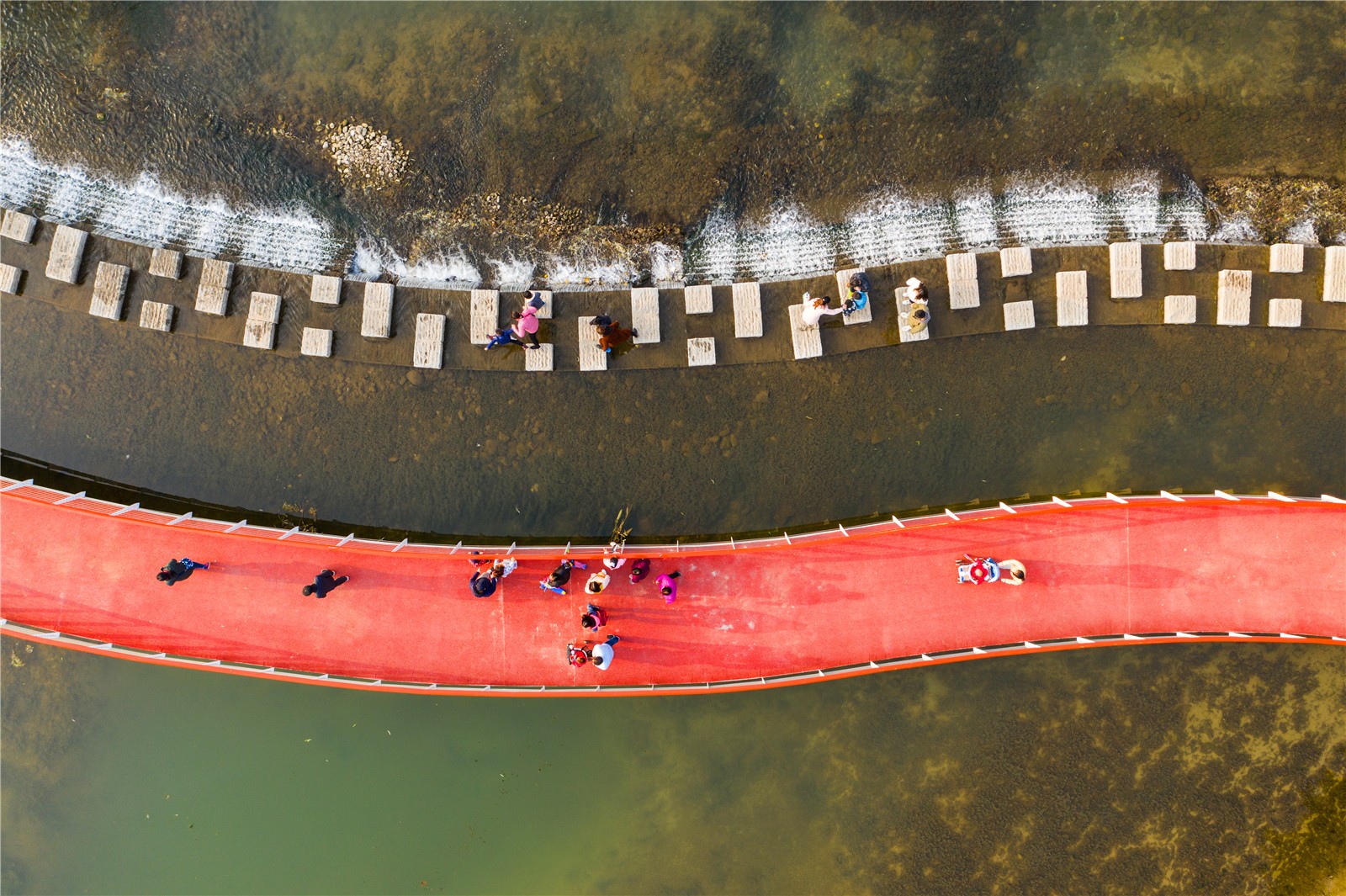
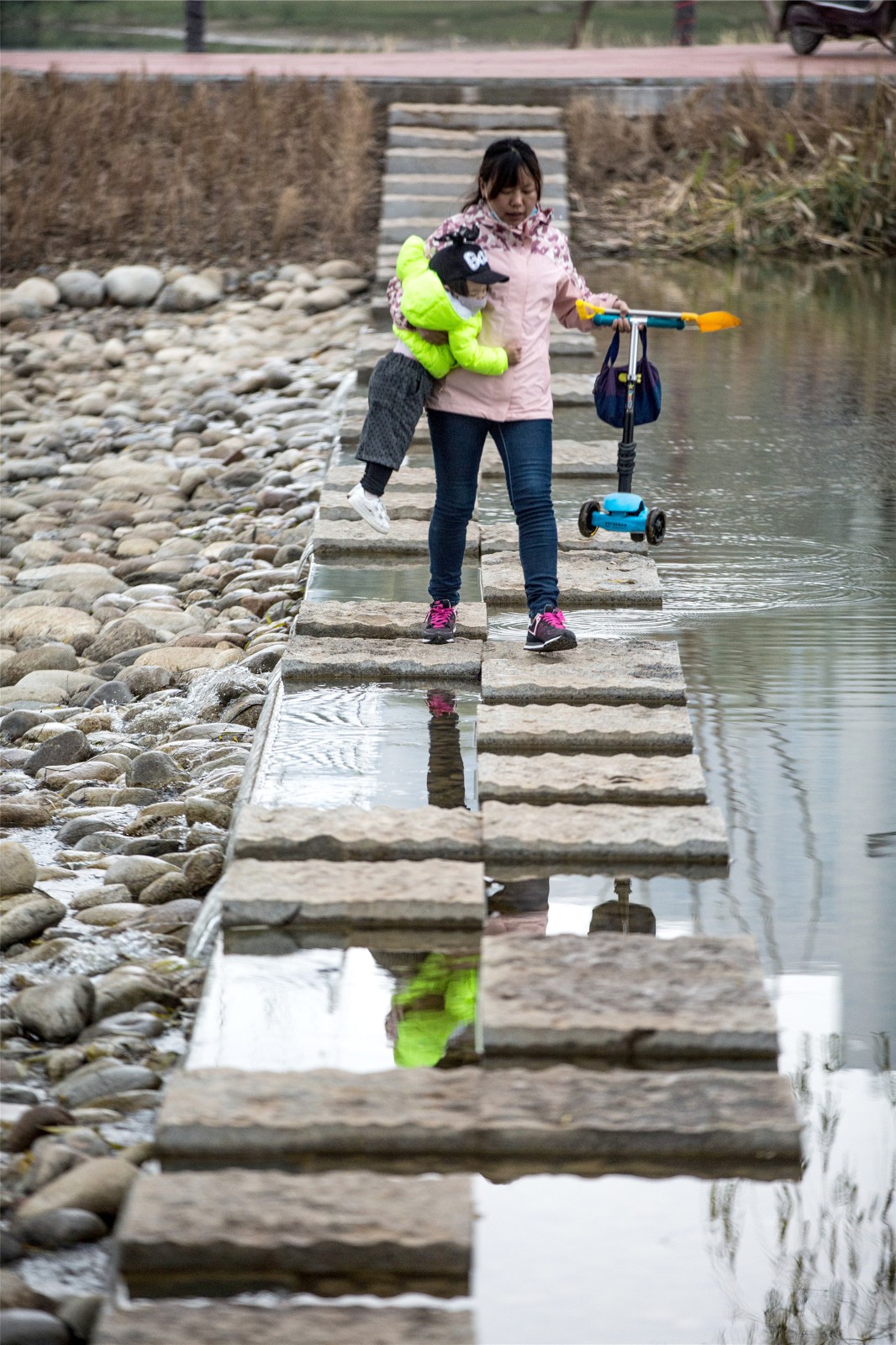
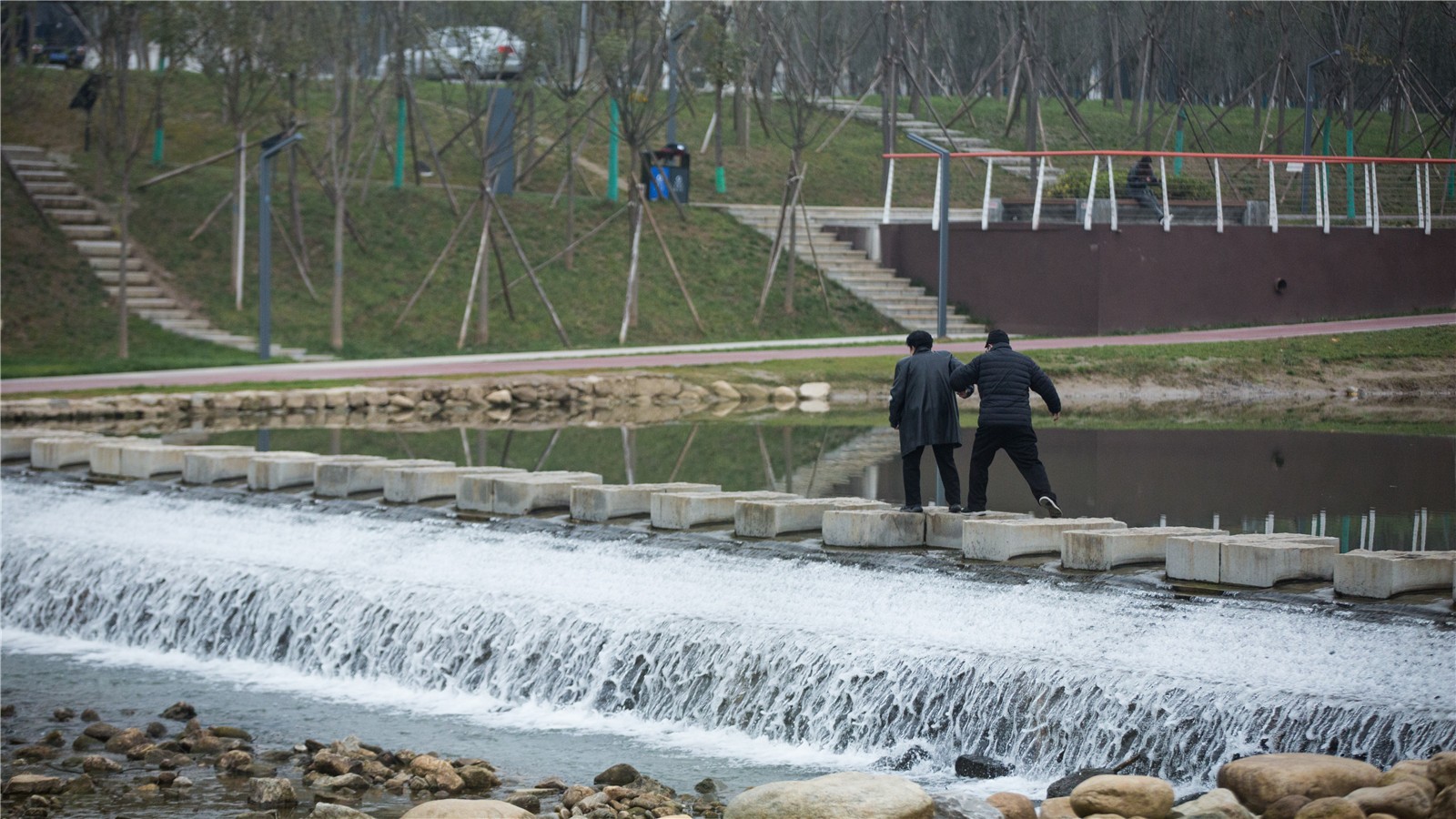
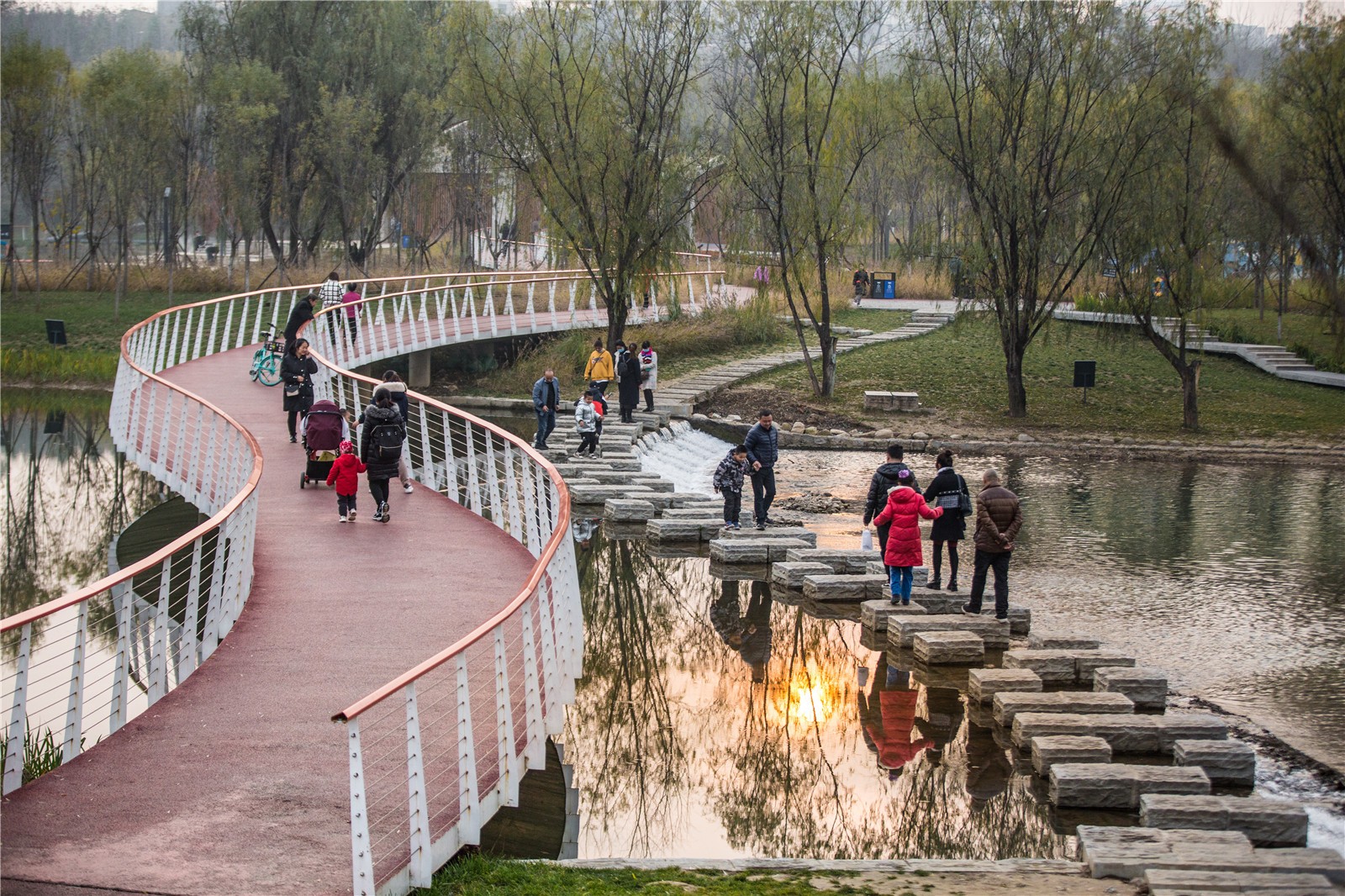
1)梳理道路流线:根据场地中原有踩出的道路流线基础上进行设计,通过自行车道,人行步道,过水栈桥以及满足偶尔通车的防汛通道,组织丰富的交通系统,满足各个方面的人群需求,让原本孤立的河道两岸,联通在一起,相互呼应;合理布置机动车道和停车空间;集中停车位约100个,满足日常的基本停车需求;以慢行系统串连各个功能区域,营造慢跑、散步、穿行在内的多种游憩体验。道路路面大部分采用可透水铺装,避免雨水堆积。沿途铺设雨水收集设施,缓解瞬时雨洪压力。
2)增加人群活动节点:场地土方的整理及水系的贯通给景观场地提供了生态的基础,道路的贯通让场地四通八达。设计师再交通网络和景观视角优秀处设计出城市缓冲区、活力运动区、滨水休闲区三个设计节点。
a.城市缓冲区:在场地设计南北两侧设置主次入口作为城市缓冲区域,连接城市空间,引入人群。满足人群进入公园后能及时提供休憩服务。保留原有构筑物建筑作为休憩使用。
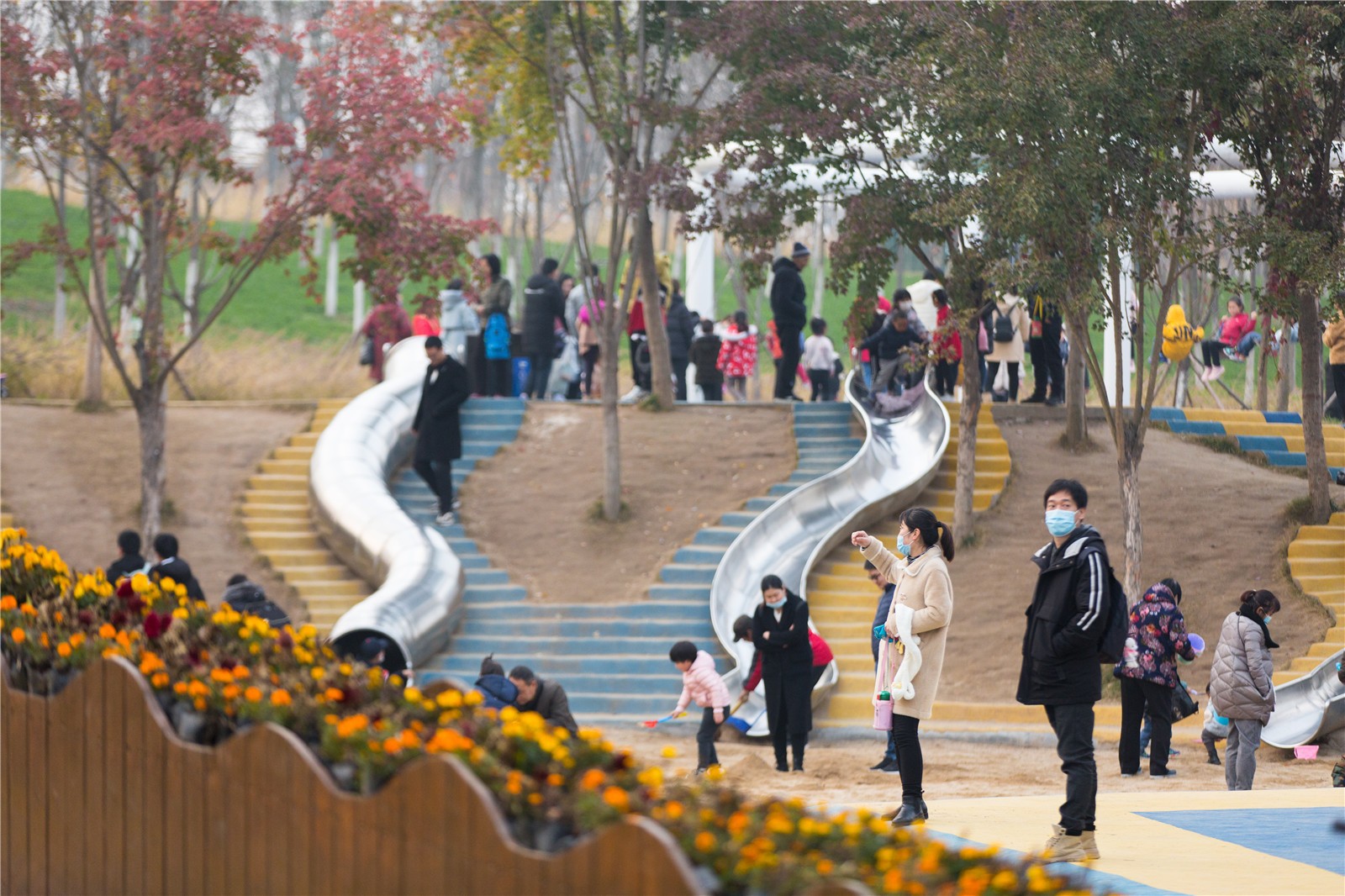
b.活力运动区:在河道南岸设置运动场,儿童活动区域以及草坪休闲区域。运动场设置篮球场羽毛球场乒乓球场等一些比较常规适合大众的运动休闲项目,利用清理出来的建筑垃圾的堆坡,做景观地形给运动的人有一个独立的活动空间,并配置服务建筑满足正常的需要。儿童活动场地利用场地原有地形高差,配置滑滑梯,秋千,攀岩等项目,在场地中做沙坑满足孩子的玩耍需求。同时考虑家长的休闲,在儿童活动场地边也设置座椅等观景的活动场地。另外在南岸腹地位置留出大面积的草坡,开拓视野,满足人群休闲活动,可组织户外露营,烧烤,小型音乐会等多方面的活动,满足各类人群需求。
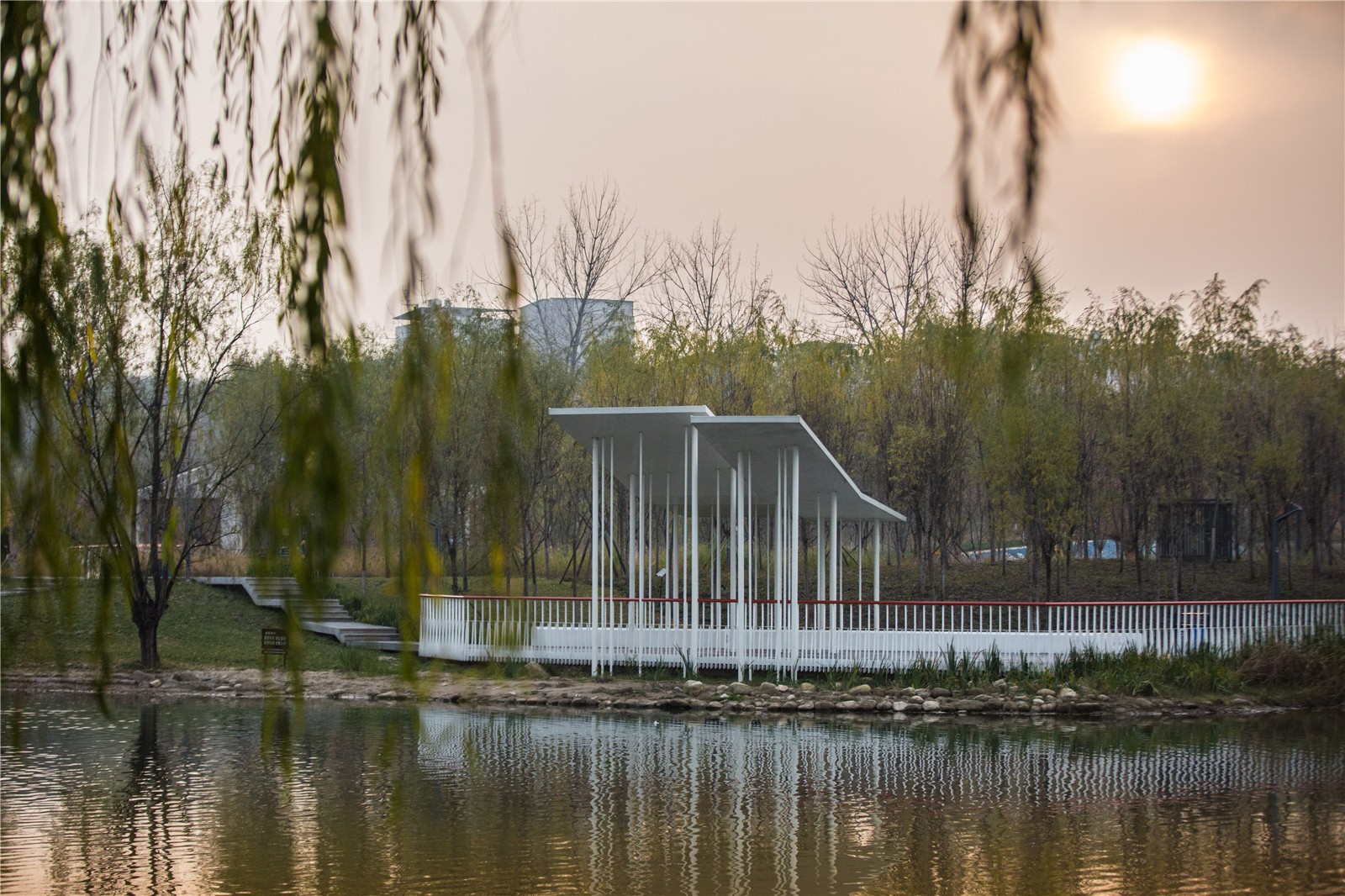
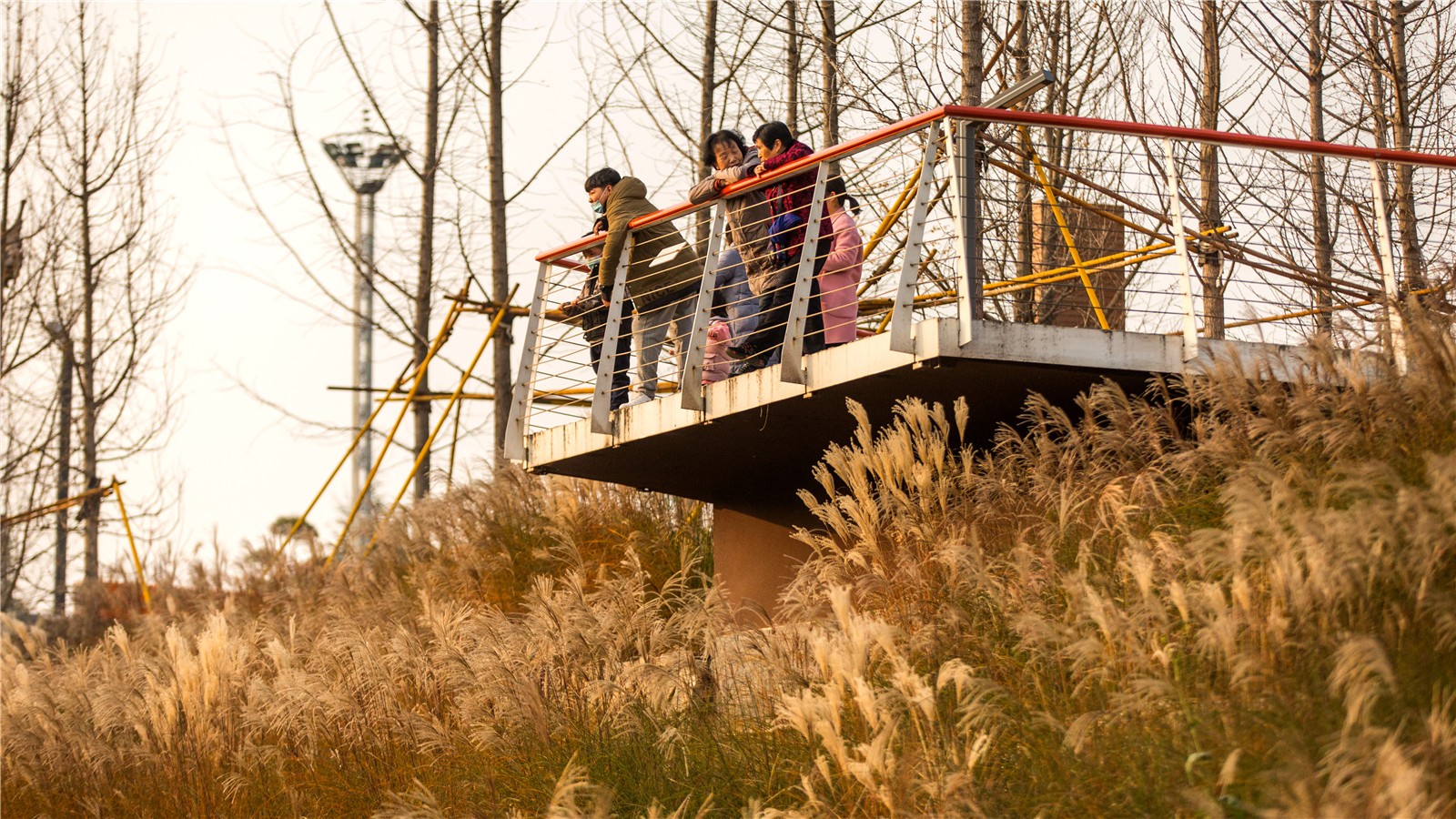
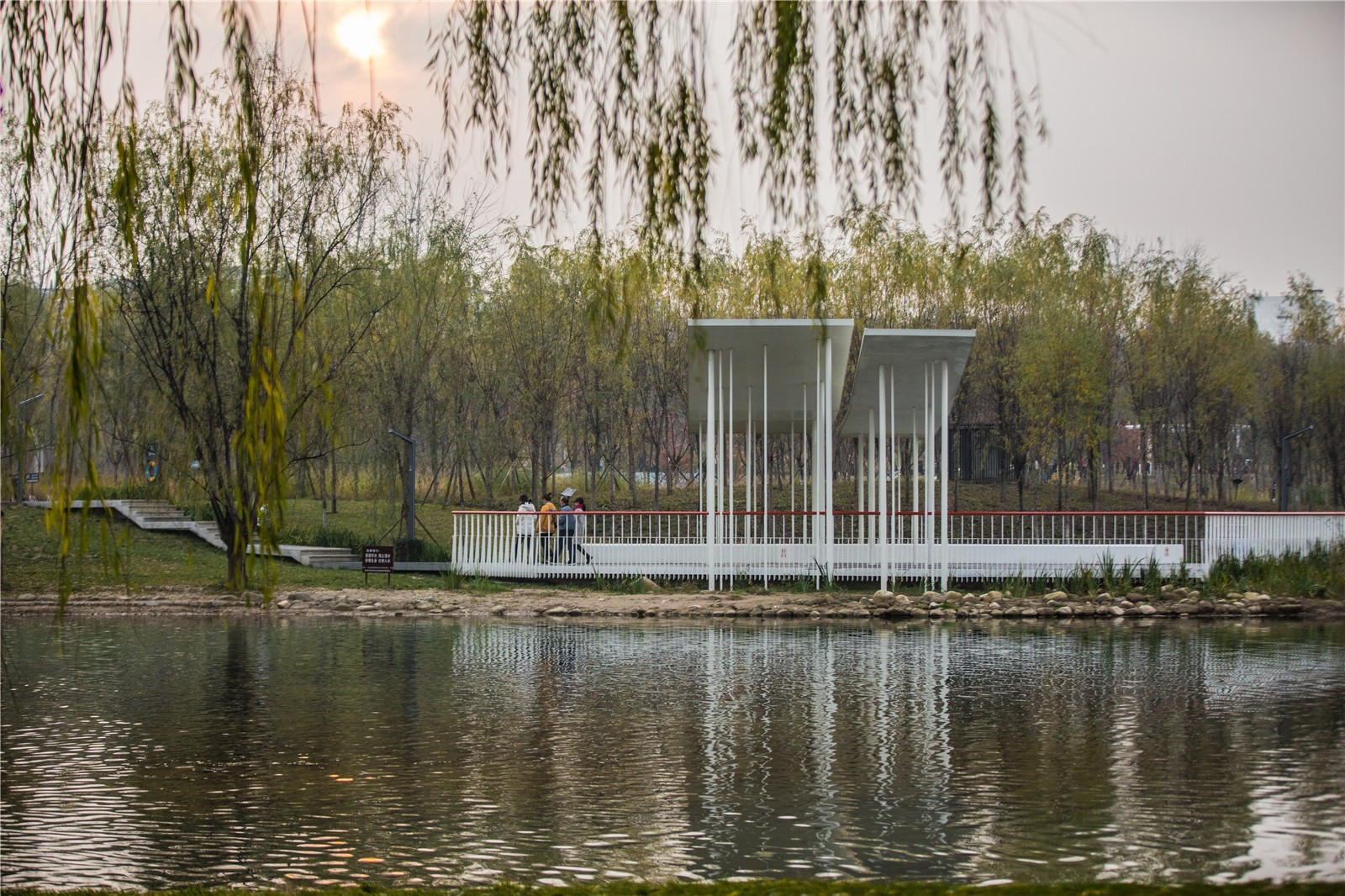
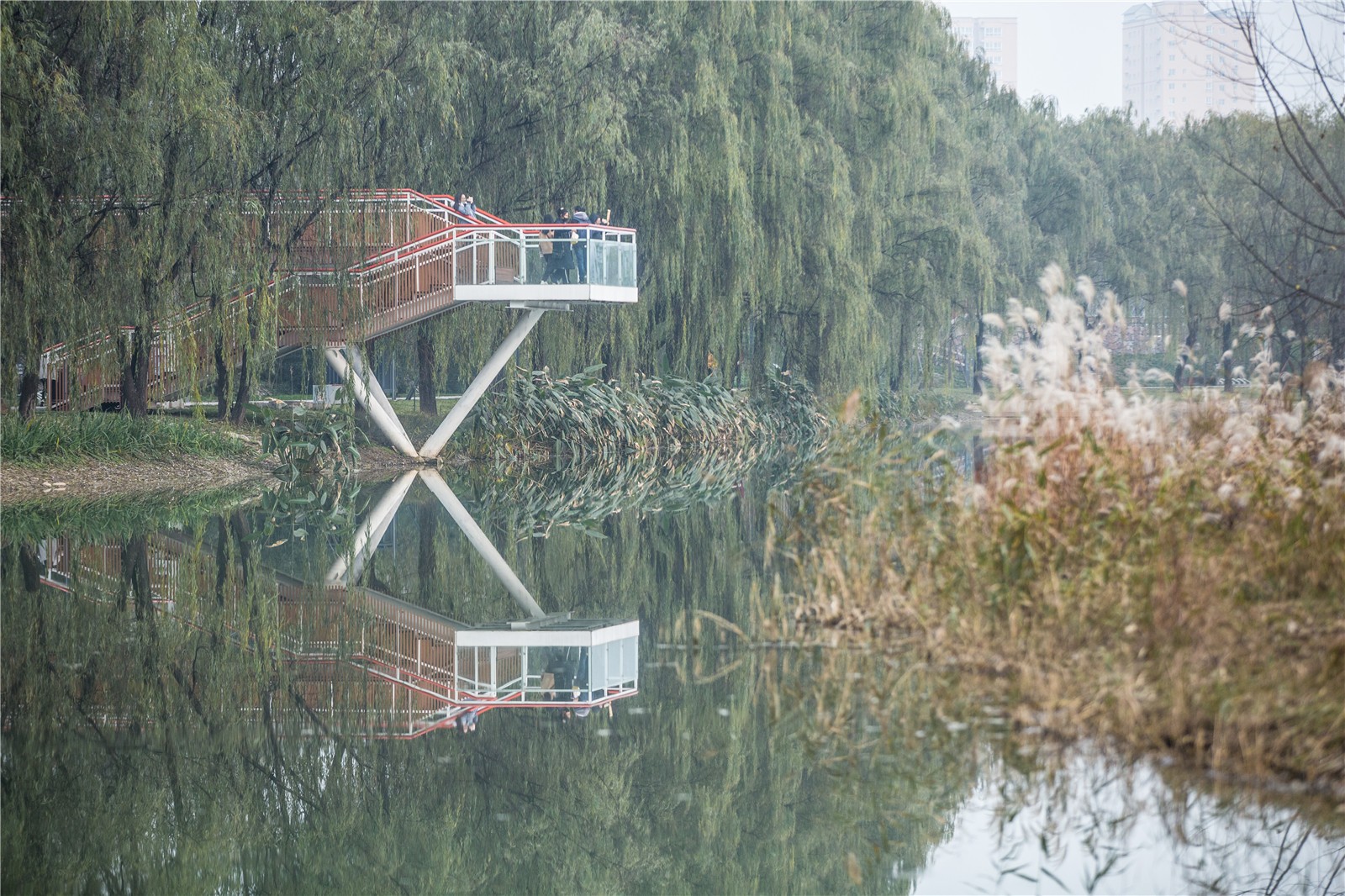
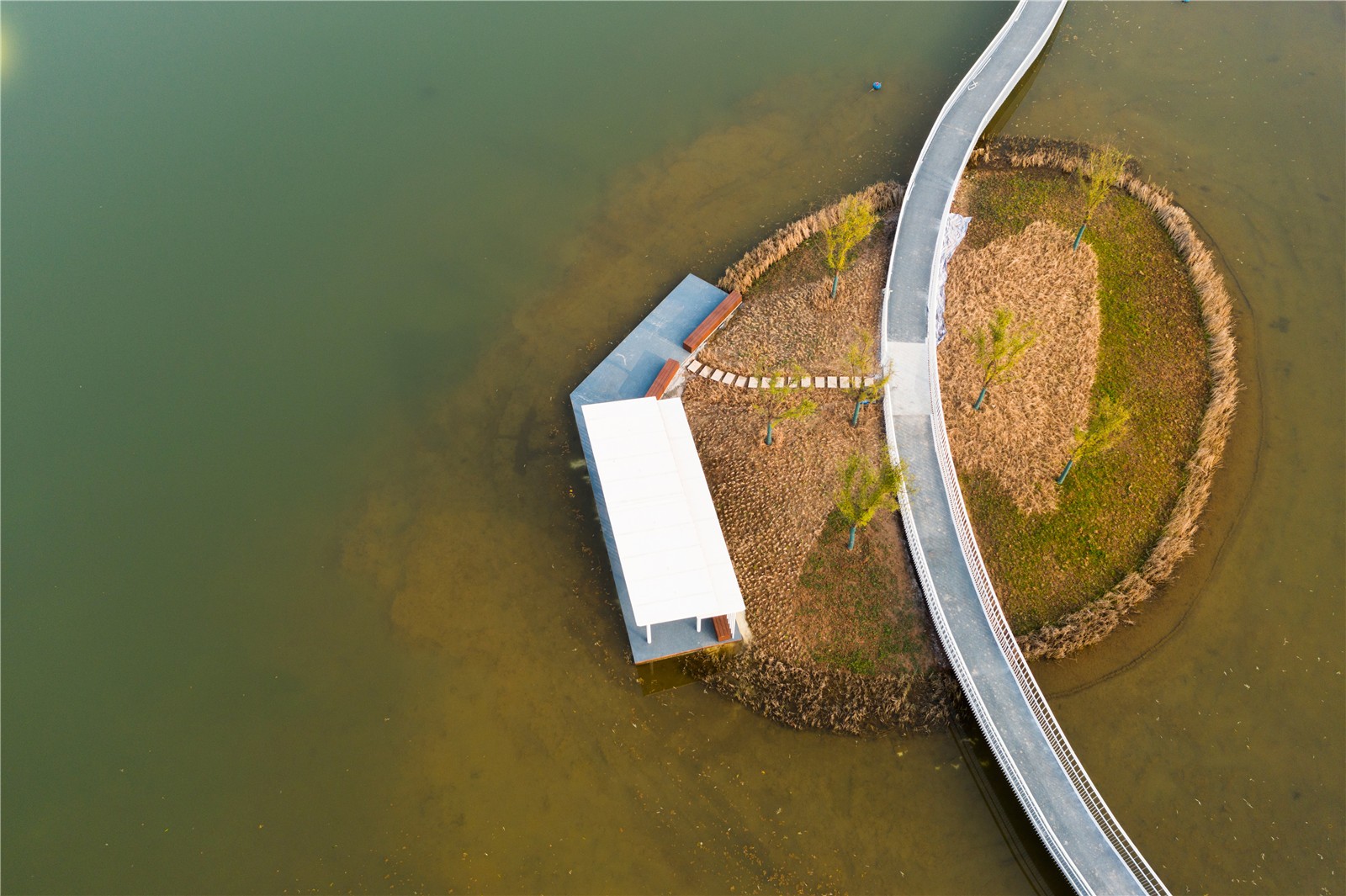
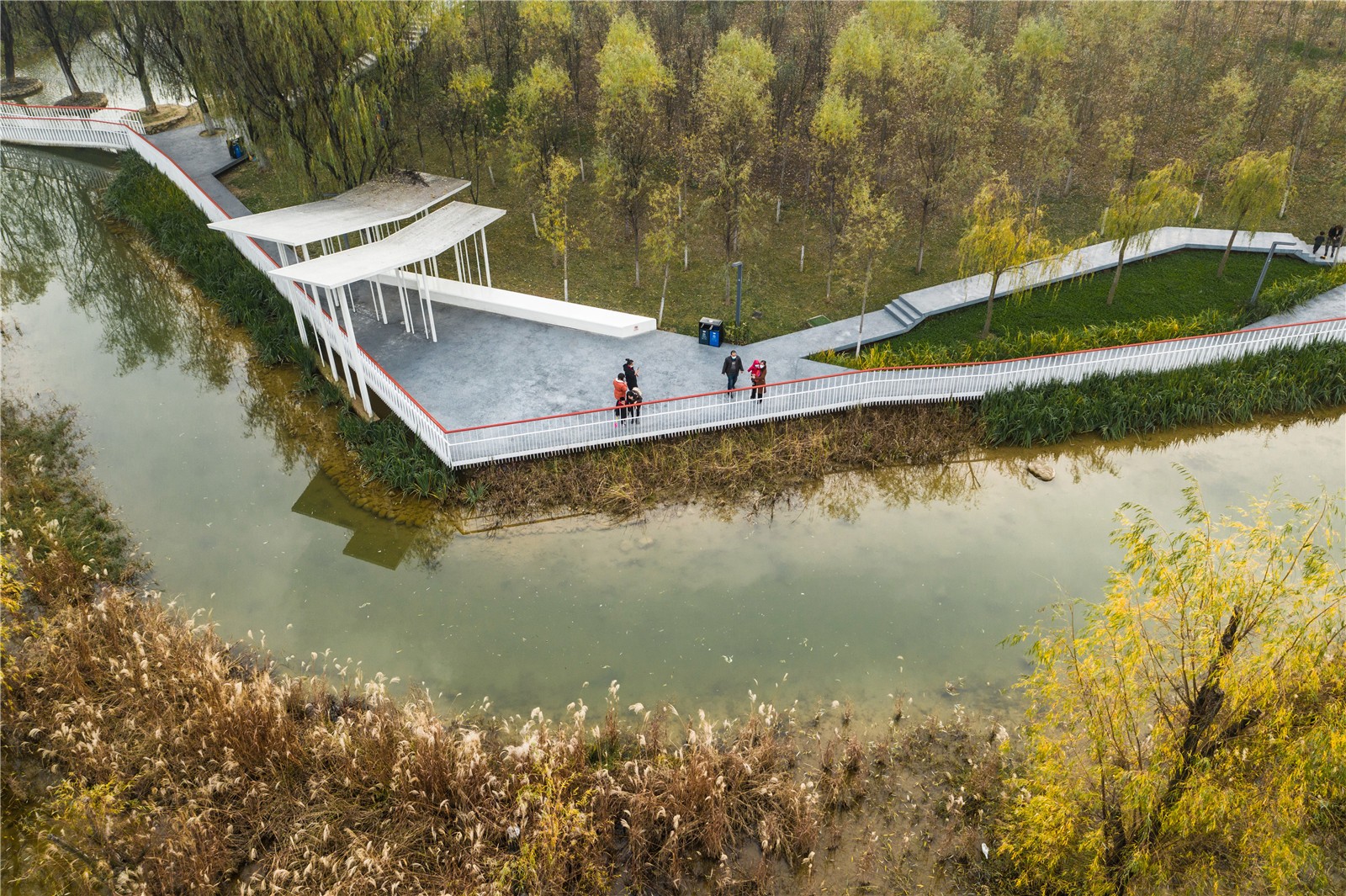
c.滨水休闲区:场地潏河和樊川湖边经过土方和水系的梳理后形成良好的景观界面,可作为优质的休闲场所,设计根据场地特征,在景观较好的界面设计了景观休闲节点,其中包括潏河边的滨水景观栈道,樊川湖边的景观滨水广场,北岸的滨水挑台以及一些小型的滨水临时停留空间。让人群在休闲中可以享受亲水的乐趣。
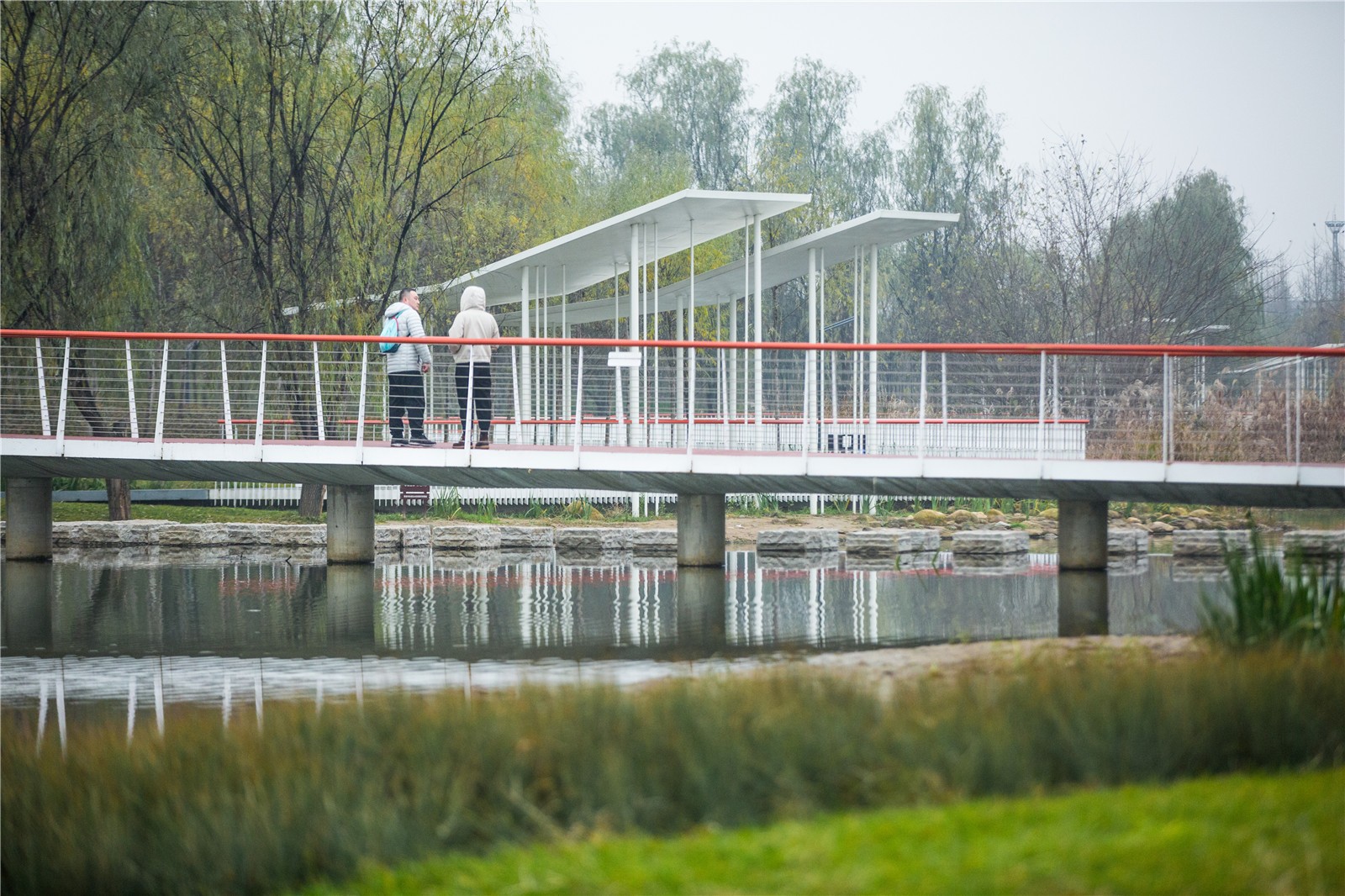
3)添置构筑物:场地中构筑物包括景观休闲廊架,景观步行桥,通过空间的变化营造不同的观景效果。在材料使用上多使用钢结构基础,施工方便快捷。部分使用玻璃钢材料,玻璃钢材料有着通体性的特征,使廊架整体结构统一,一体成型。另外在构筑物的铺装方面使用了竹木铺装以及透水混凝土铺装。竹木使较为新型的材料,竹木的快速生长繁殖的特性,给景观材料带来了较为生态环保的可行性。
4)植物修复,生态保育
植物设计利用场地的河岸边的优势,对植物种植进行梳理研究,采用适应性、经济性、生态型原则对场地植物进行生态化修复。
选用乡土树种或已再本地成长环境较为适应,且不会对其他物种造成侵害的外来树种;保留现状长势良好的植物,新增乔木与地被植物选用成本较低、成长较快、且容易管理的品种;绿地低于道路,有效收集道路积水,结合绿地中的坡度和收水设施,经各种植物的净化、吸收和蓄存,构建相对稳定的植物群落,为水净化蓄存和生物保育提供良好的自然条件,从而形成可持续发展的生态绿地。
Strategy 3: humanized design to meet the needs of all parties
After finishing the earthwork and dredging the river, it brings an ecological base to the site. After that, we began to establish a people-oriented activity node on the basis of ecology.
1) Sort out the road streamline: Design Based on the original road streamline on the site. Through bicycle lanes, pedestrian footpaths, water trestles and flood control channels that meet the occasional traffic, organize a rich transportation system to meet the needs of people in all aspects, so that the two banks of the originally isolated River can be connected and echo each other; Reasonably arrange motorway and parking space; There are about 100 centralized parking spaces to meet the daily basic parking needs; Connect various functional areas with a slow walking system to create a variety of recreational experiences including jogging, walking and walking. Most of the road surface is paved with permeable pavement to avoid rainwater accumulation. Rainwater collection facilities are laid along the way to alleviate the pressure of instantaneous rain and flood.
2) Increase crowd activity nodes: the consolidation of the site earthwork and the connection of the water system provide an ecological foundation for the landscape site, and the connection of the roads makes the site accessible in all directions. The designer designed three design nodes: Urban buffer zone, dynamic sports zone and waterfront leisure zone from the excellent perspective of transportation network and landscape.
a. Urban buffer zone: primary and secondary entrances are set on the north and south sides of the site design as urban buffer zones to connect urban space and introduce people. Meet the need to provide recreational services in time after people enter the park. Keep the original structures and buildings for rest.
b. Energetic sports area: set up a sports ground, children's activity area and lawn leisure area on the South Bank of the river. Basketball court, badminton court, table tennis court and other regular sports and leisure projects suitable for the public are set up in the sports ground. The slope of cleared construction waste is used to make landscape terrain to provide an independent activity space for sports people, and service buildings are configured to meet normal needs. The children's activity site takes advantage of the original terrain elevation difference of the site, and is equipped with slides, swings, rock climbing and other projects. Sand pits are made in the site to meet the children's playing needs. At the same time, considering the leisure of parents, seats and other scenic activity venues are also set beside the children's activity venues. In addition, a large area of grass slope is reserved in the hinterland of the south bank to expand horizons, meet the leisure activities of the crowd, and organize outdoor camping, barbecue, small concerts and other activities to meet the needs of all kinds of people.
c. Waterfront leisure area: the site Fuhe River and Fanchuan lake have formed a good landscape interface after combing the earthwork and water system, which can be used as a high-quality leisure place. According to the site characteristics, landscape leisure nodes are designed in the interface with good landscape, including the waterfront view plank road by Fuhe River, the landscape waterfront square by Fanchuan lake, the waterfront platform on the north bank and some small waterfront temporary residence spaces. So that people can enjoy the fun of water in leisure.
3) Additional structures: the structures in the site include landscape leisure racks and landscape pedestrian bridges, which create different viewing effects through spatial changes. Steel structure foundation is often used in the use of materials, which makes the construction convenient and fast. Some of them are made of glass fiber reinforced plastic, which has the characteristics of integrity, so that the overall structure of the corridor is unified and formed as a whole. In addition, bamboo wood pavement and permeable concrete pavement are used in the pavement of structures. Bamboo and wood are relatively new materials. The rapid growth and reproduction of bamboo and wood brings the feasibility of more ecological and environmental protection to landscape materials.
4) Phytoremediation, ecological conservation
The plant design uses the advantages of the riverside of the site to sort out and study the plant planting, and adopts the principles of adaptability, economy and Ecotype to carry out ecological restoration of the site plants.
Select native trees or exotic trees that are more suitable for the local growth environment and will not cause damage to other species; Retain the plants with good growth status, and select the varieties with low cost, fast growth and easy management for the new trees and ground cover plants; The green space is lower than the road, and the road ponding is effectively collected. Combined with the slope and water collection facilities in the green space, through the purification, absorption and storage of various plants, a relatively stable plant community is constructed to provide good natural conditions for water purification, storage and biological conservation, so as to form a sustainable ecological green space.
结论
Conclusion
西安的八大水系守护着几千年来的西安文明。快速发展的城市化进程产生了大量的建筑垃圾及生活垃圾,八水绕长安的城市美景也在这场城市化运动中也遭受了大量的破坏。通过本次的项目研究,希望能给西安地区的相似场地建筑垃圾的景观化处理以及水系的生态化处理带来一定的参考。樊川公园建成后为当地居民带来了一条新生的河流,成为周边居民休闲娱乐、周末带娃的备选地之一,一个个美好的画面成为西安老百姓日常生活的真实写照。
The eight water systems in Xi'an protected the civilization of Xi'an for thousands of years. The rapid development of urbanization has produced a large number of construction waste and domestic waste. The beautiful city sceneries of eight rivers around Chang'an has also suffered a lot of damage in this urbanization movement. Through this project research, we hope to bring some reference to the landscape treatment of construction waste in similar sites in Xi'an and the ecological treatment of water system. After the completion of Fanchuan Park, it has brought a new river to the local residents and become one of the alternative places for the surrounding residents to have leisure and entertainment and take their children on weekends. The beautiful pictures have become a true portrayal of the daily life of the people in Xi'an.