衢州体育场,衢州/建筑
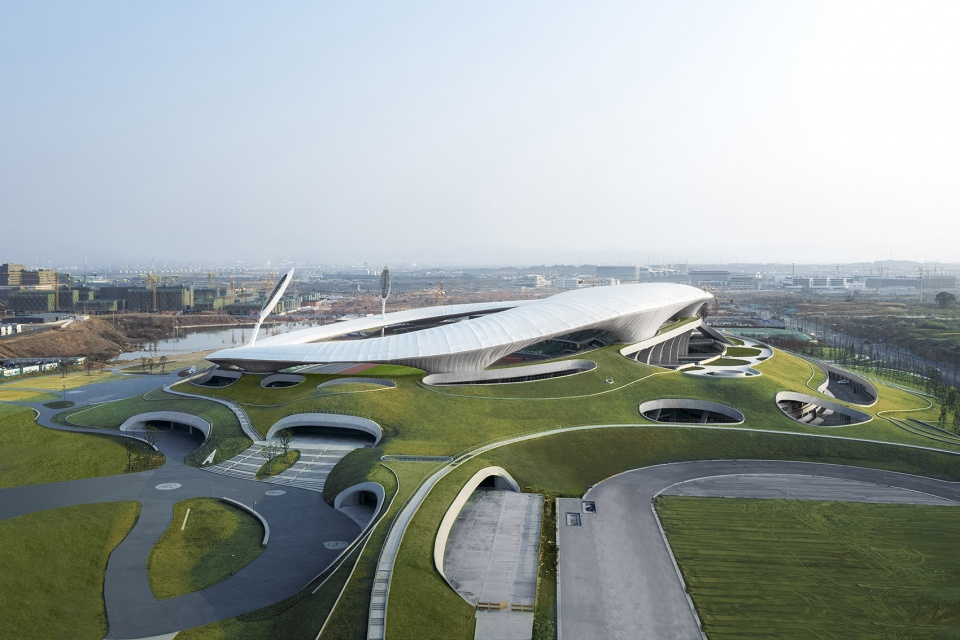
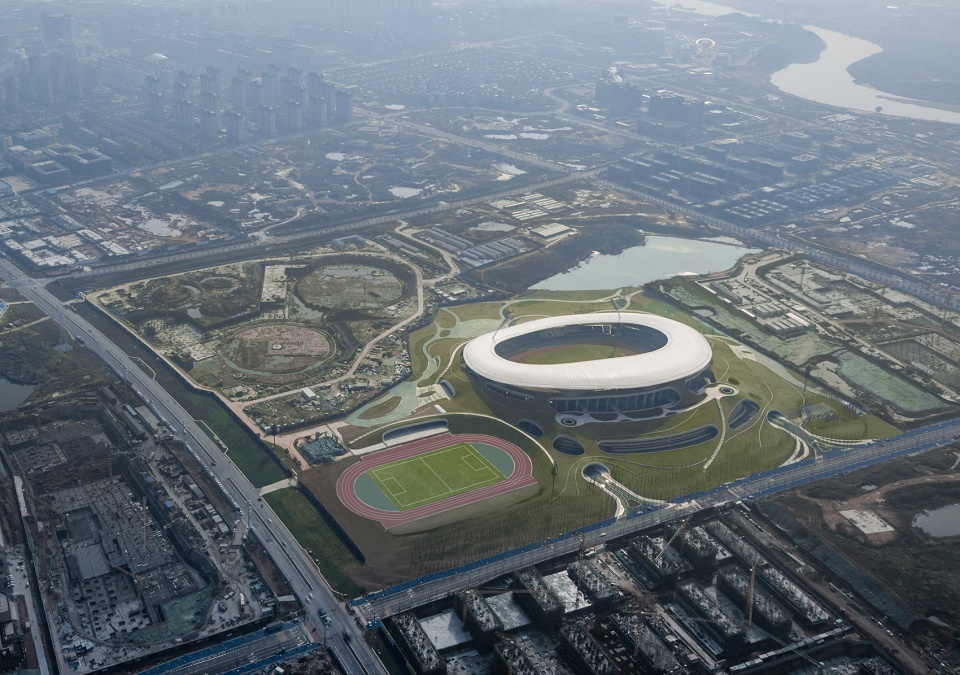
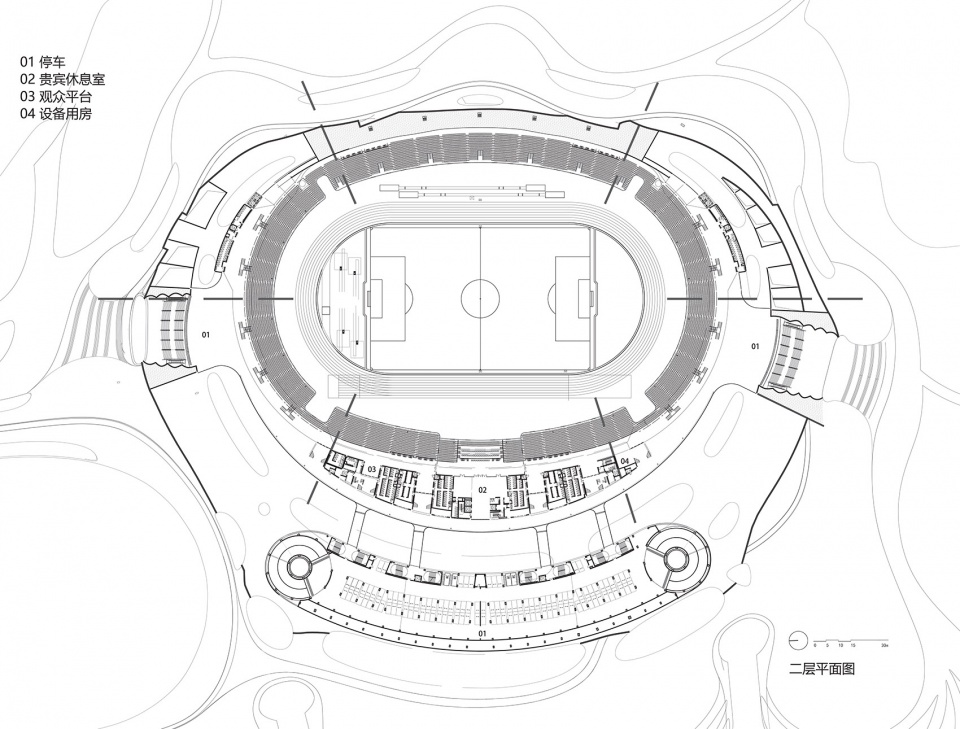
2018年,MAD建筑事务所公布衢州体育公园设计。2021年,作为体育公园重要组成部分、可容纳三万人的“消失的体育场”率先建成并投入使用。
In 2018, MAD Architecture Firm announced the design of Quzhou Sports Park. In 2021, as an important part of the sports park, the "disappeared stadium", which can accommodate 30000 people, will be built and put into use for the first time.
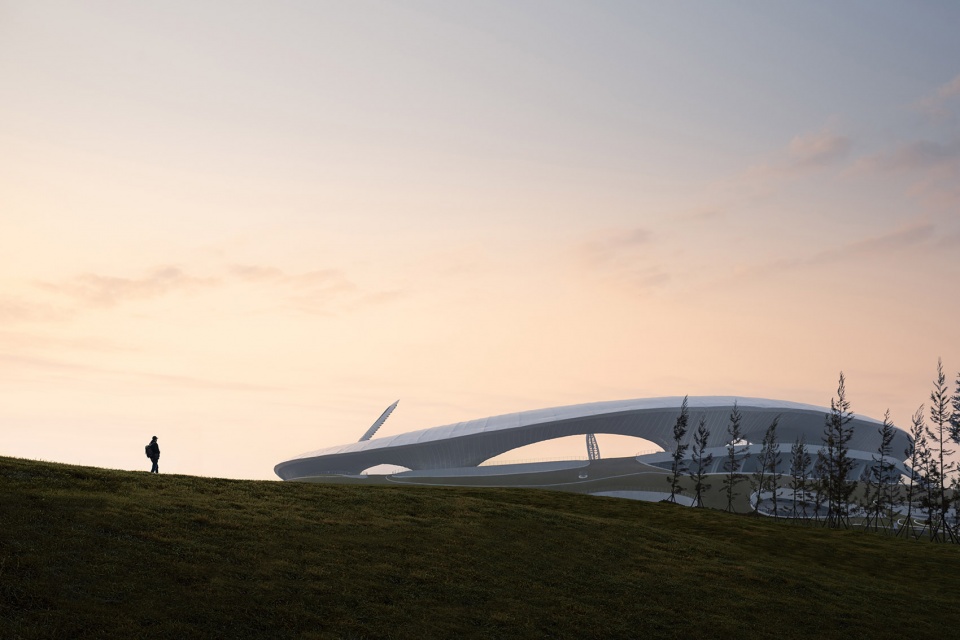
MAD认为,城市公共空间和体育建筑属性如叠合,应把体育竞技和百姓生活的日常运动带到同一界面。首先,场地是与自然相接、开放、共享、属于市民的城市公共空间。而“竞技场”本身隐喻的竞争和力量,则可通过建筑自身和建造技艺“消隐”于大地景观。
MAD believes that if the attributes of urban public space and sports buildings overlap, sports competition and daily sports of people's life should be brought to the same interface. First of all, the site is an urban public space connected with nature, open, shared and belonging to citizens. The competition and power implied by the "arena" itself can be "hidden" from the landscape through the architecture itself and construction techniques.
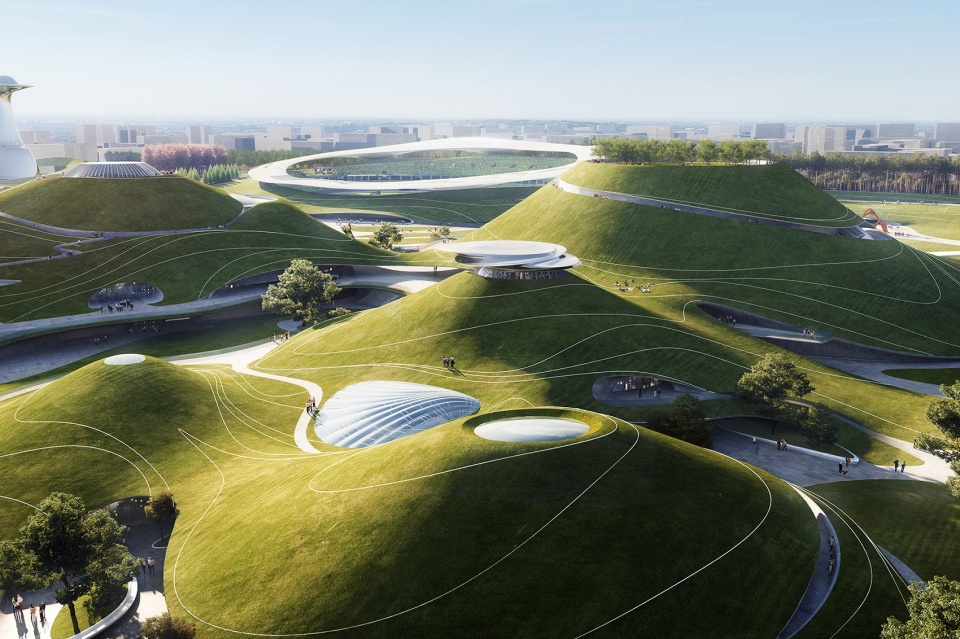
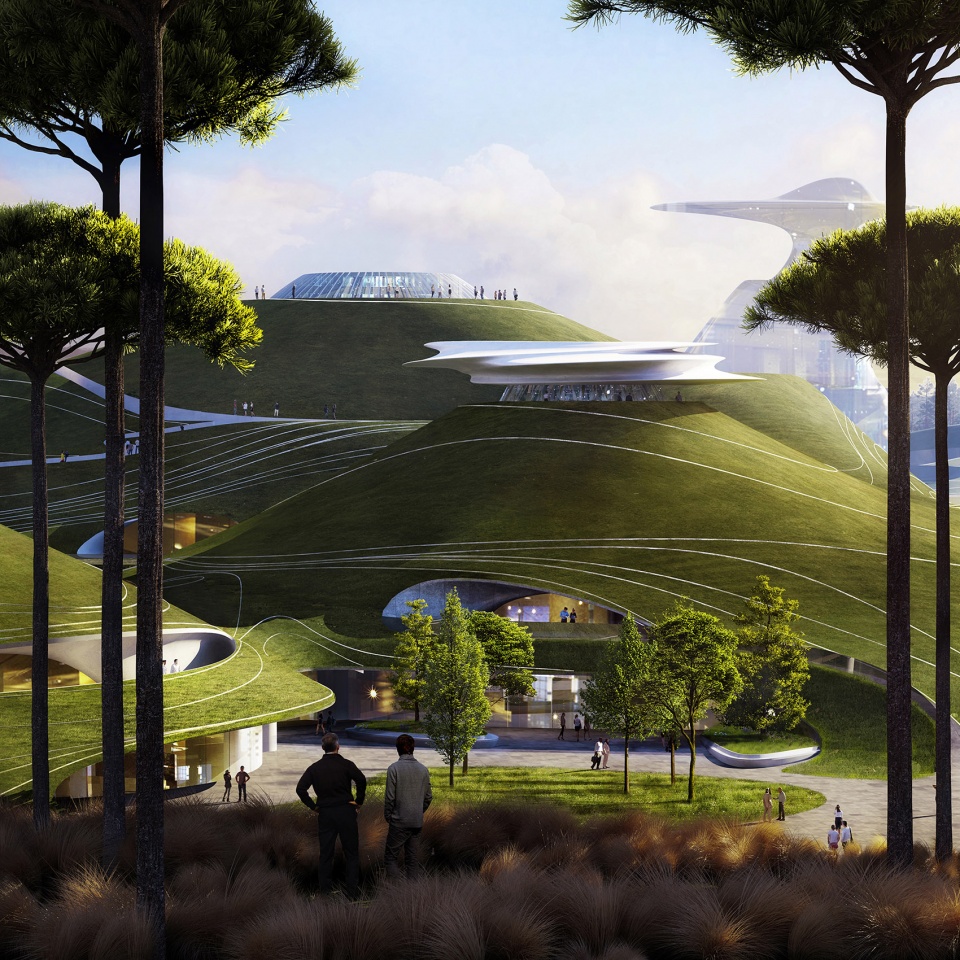
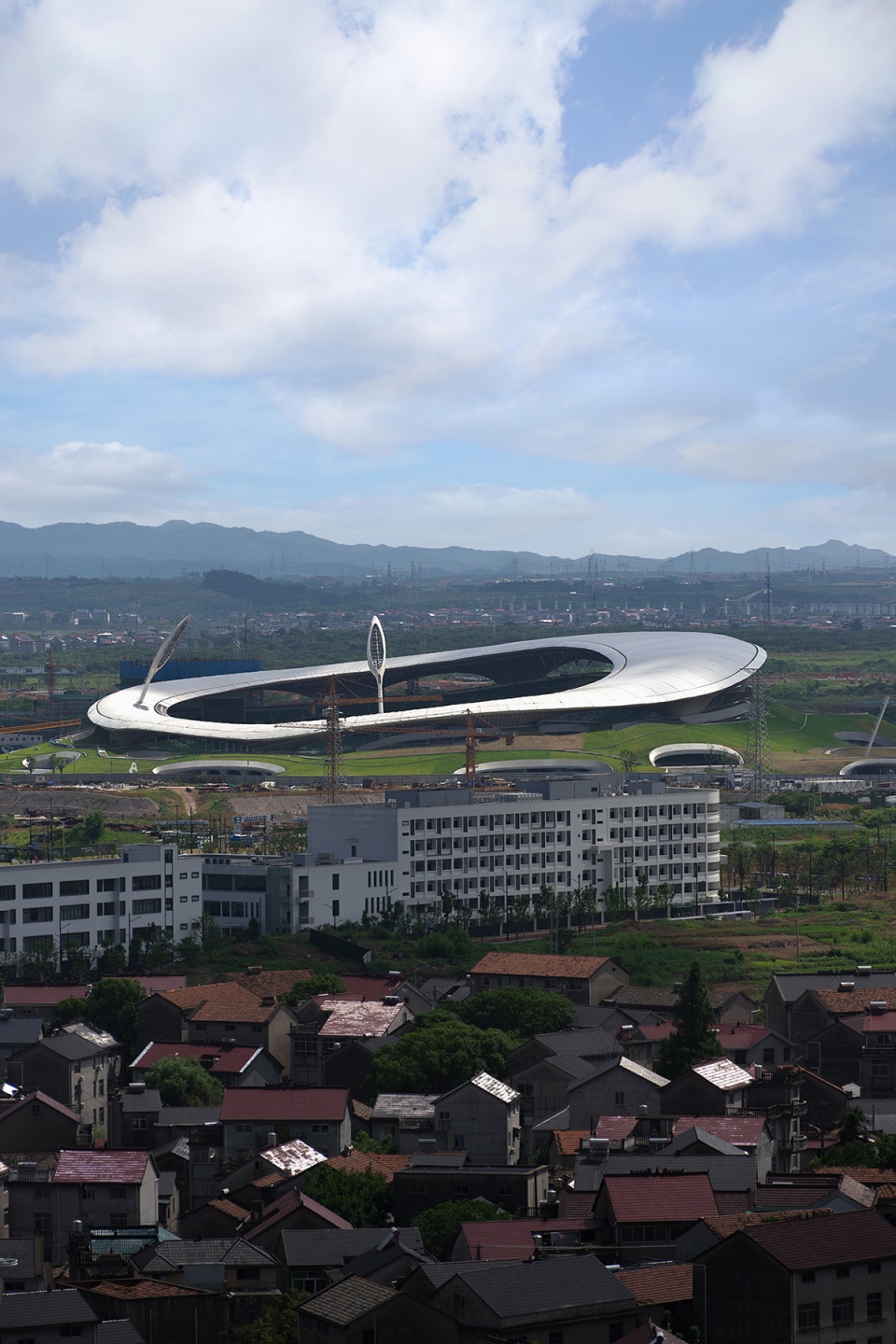
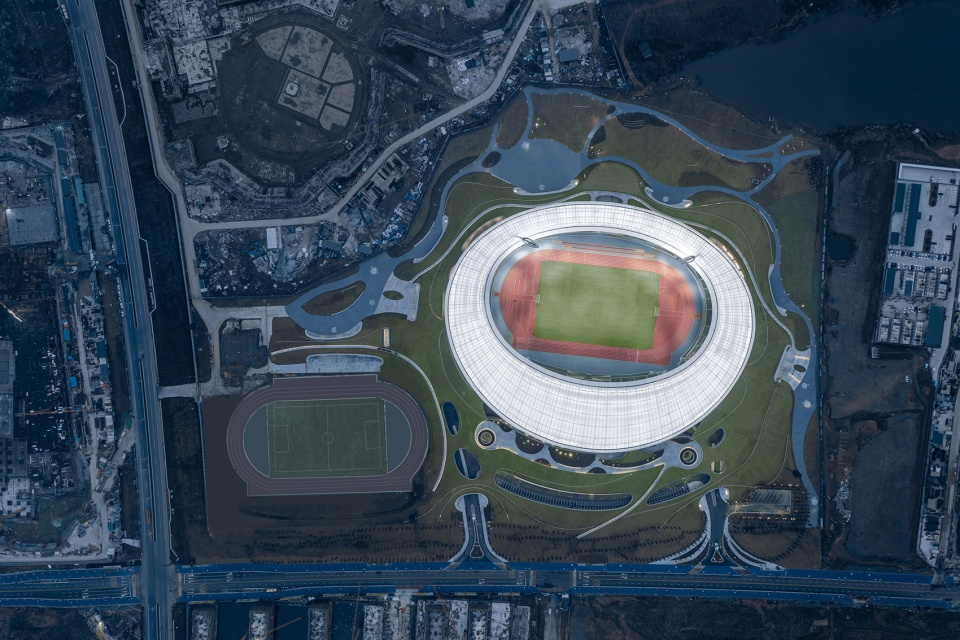
MAD的设计将体育场馆功能与自然地景相结合,在城市中心营造了形似火山群、镜湖的大地艺术景观。公园中的建筑打破传统体育场凸显结构力量的方式,而将其转化为一种更内在、含蓄的美。建筑内外处处与自然相接,身处其中的人们沉浸于自然之中,感受天地意境驱动的精神追求。整体建成后,衢州体育公园将成为世界上最大的覆土建筑群。
The MAD design combines the functions of the stadium with the natural landscape, creating a land art landscape in the center of the city that looks like a volcanic group and a mirror lake. The buildings in the park break the traditional way of highlighting the structural strength of the stadium and transform it into a more internal and implicit beauty. The interior and exterior of the building are connected with nature everywhere. People in the building are immersed in nature and feel the spiritual pursuit driven by heaven and earth artistic conception. Upon completion, Quzhou Sports Park will become the largest earth covered building group in the world.
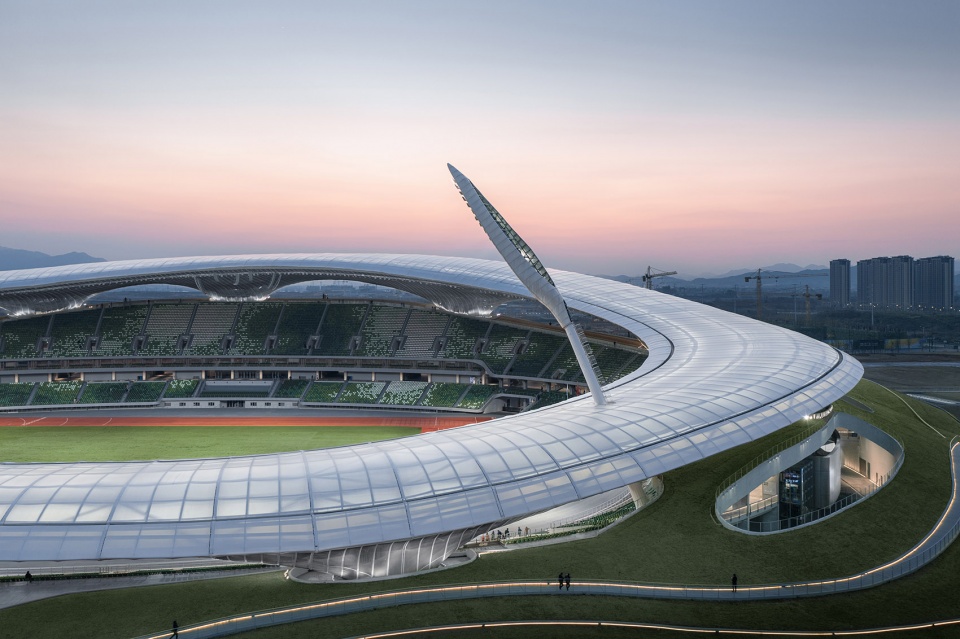
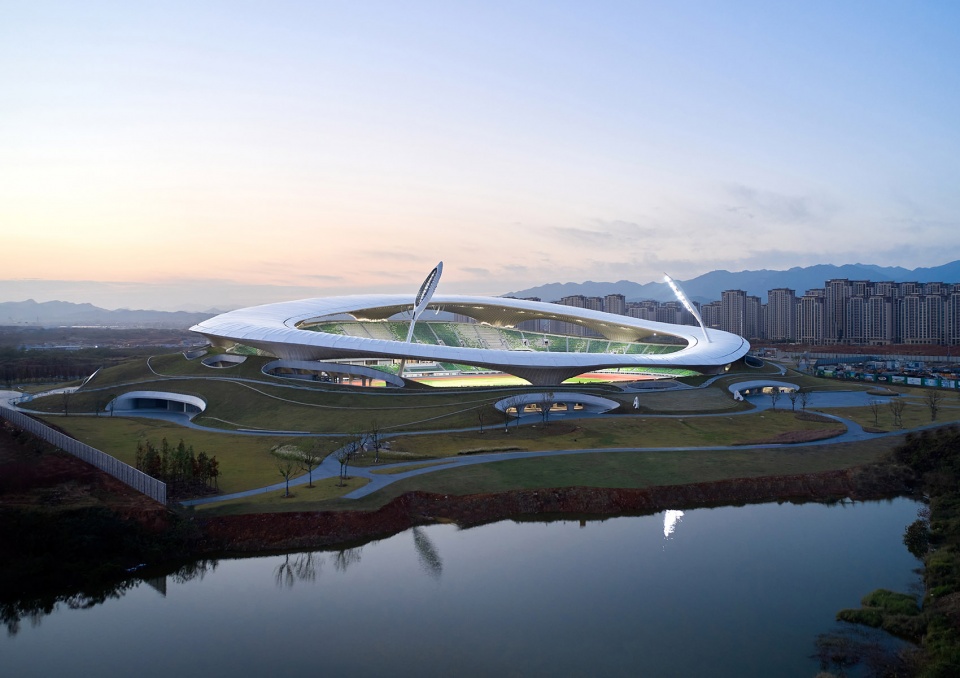
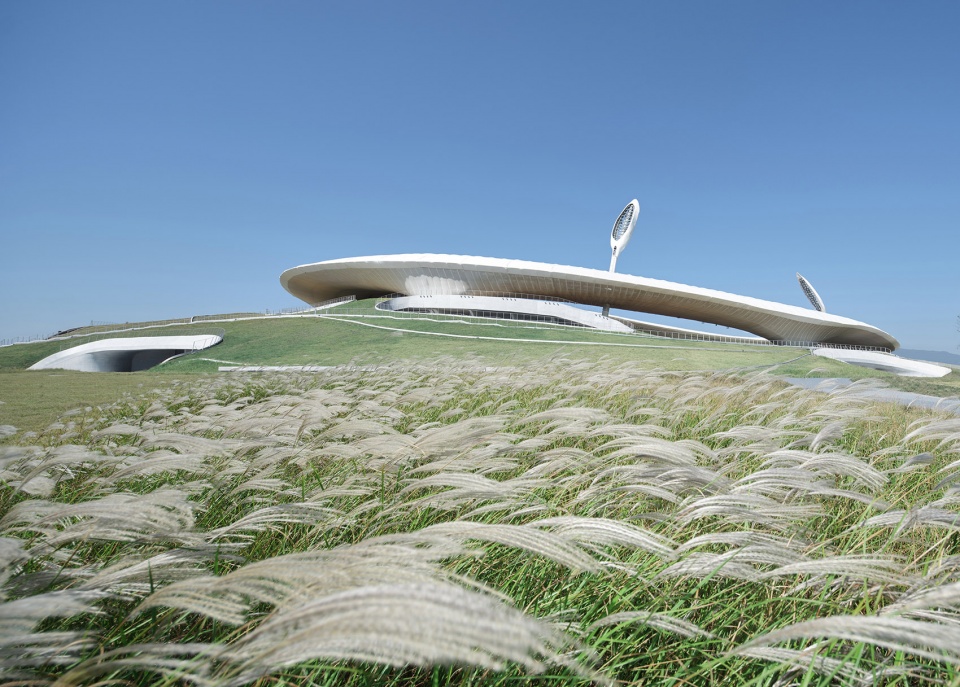
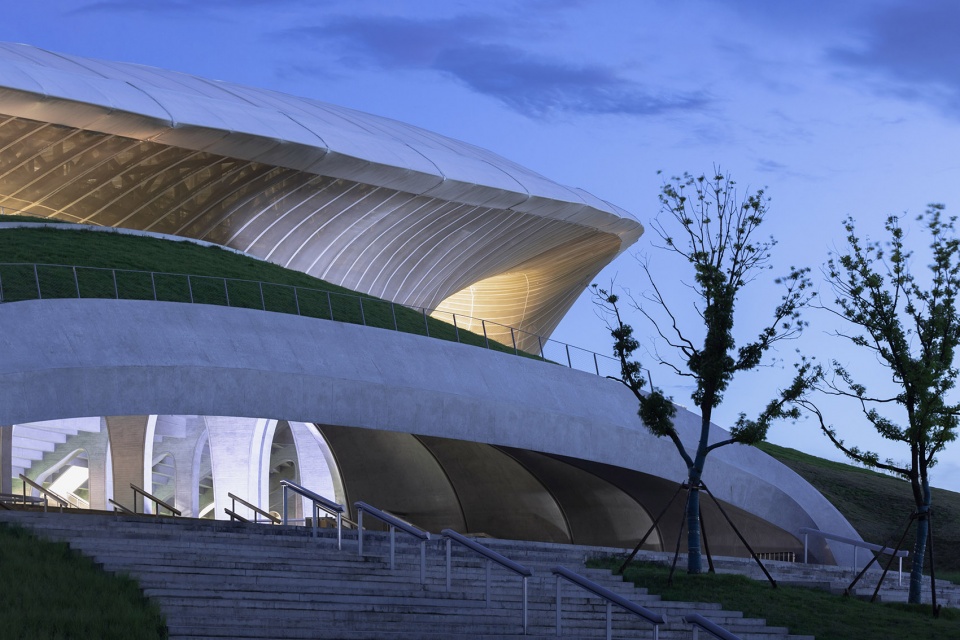
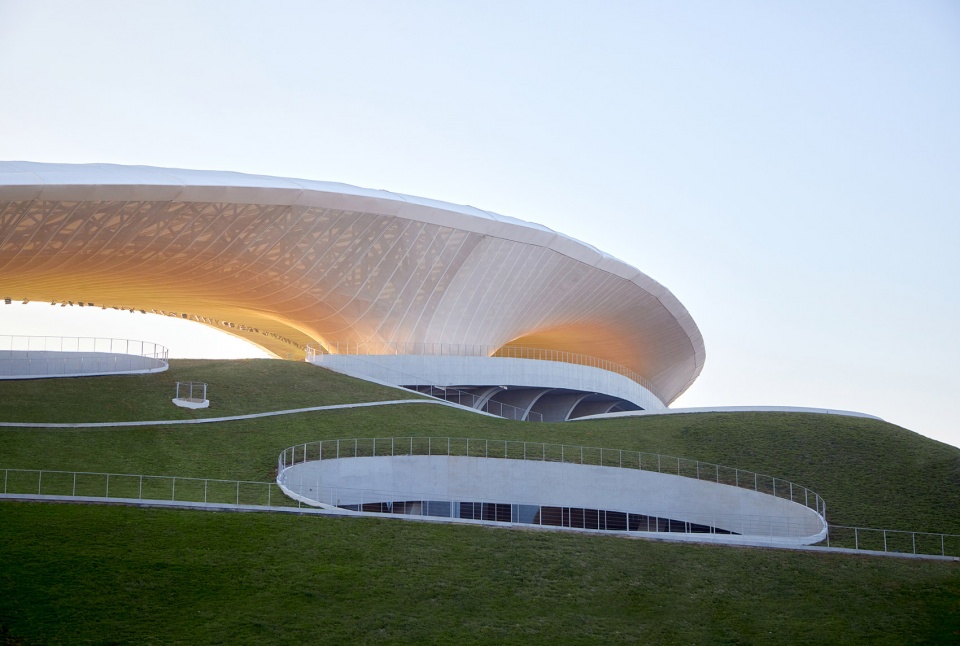
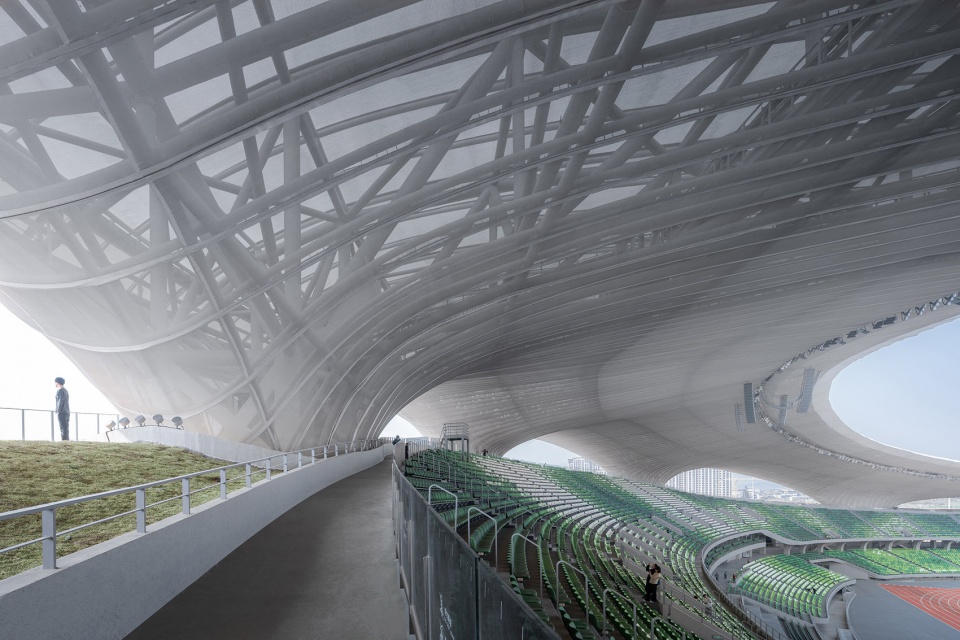
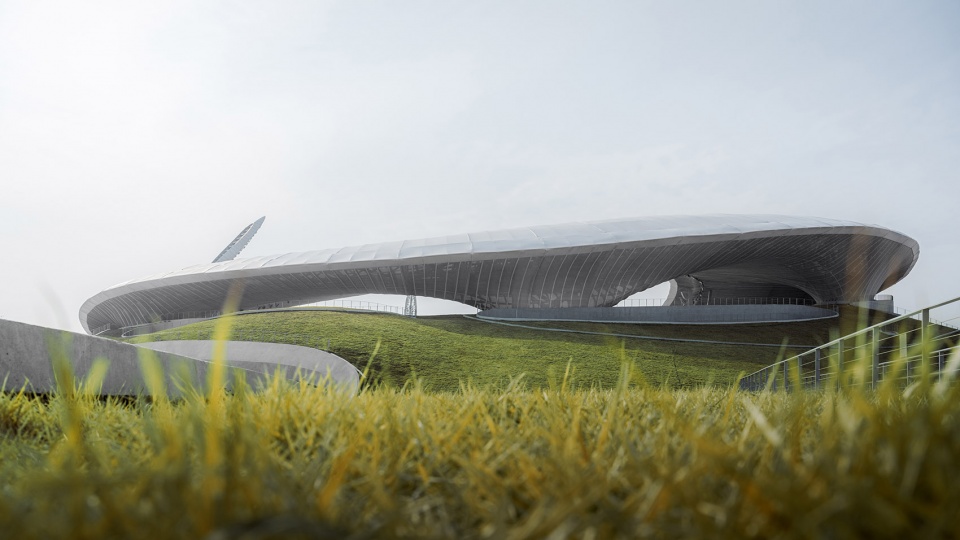
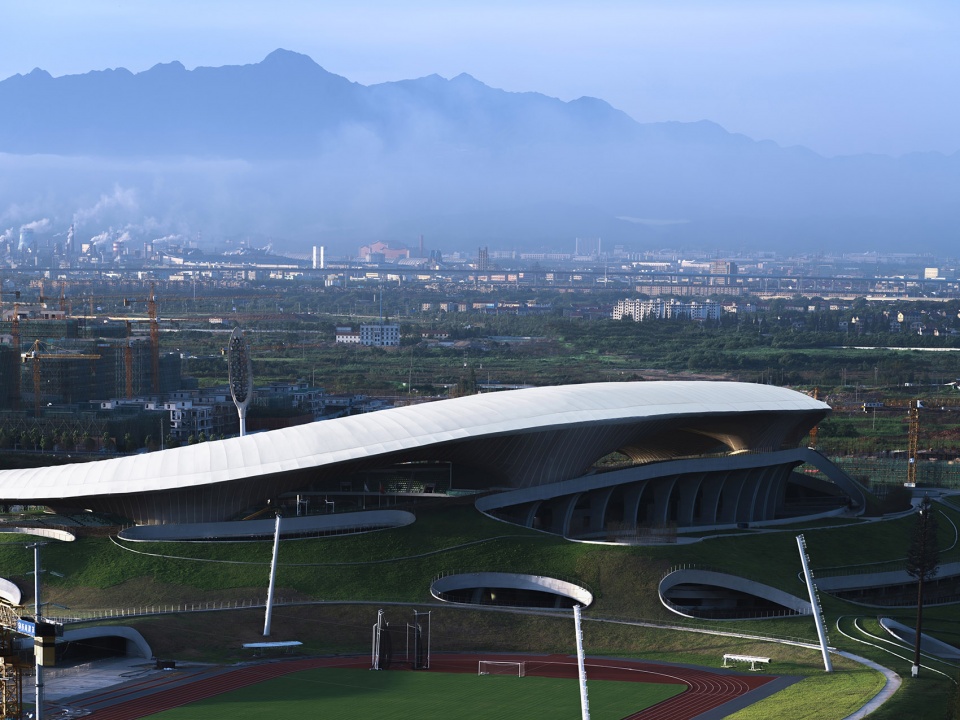
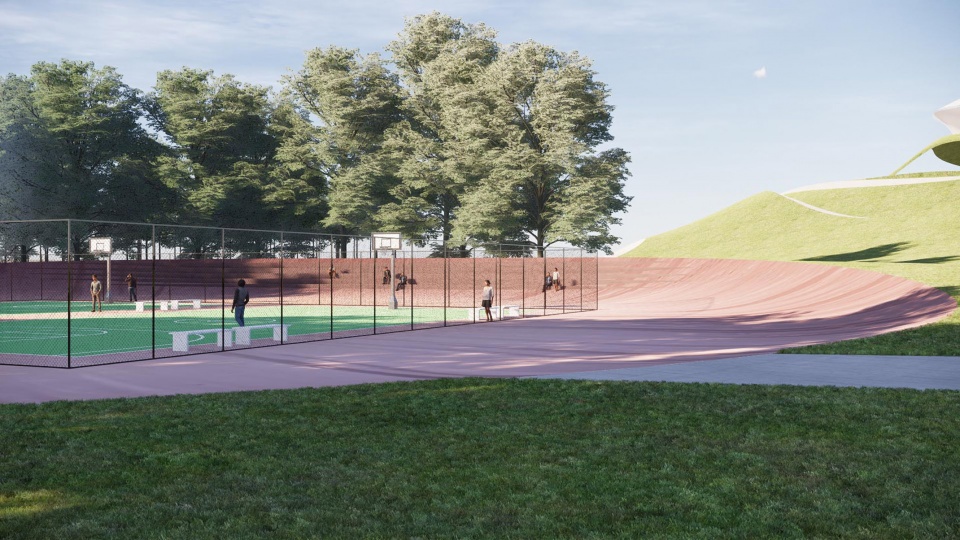
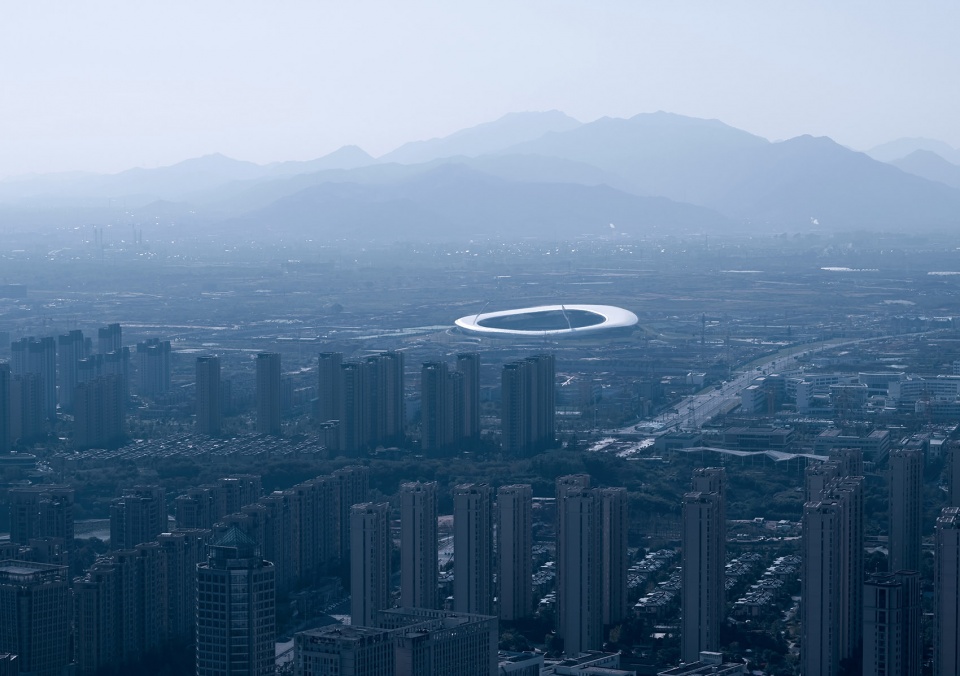
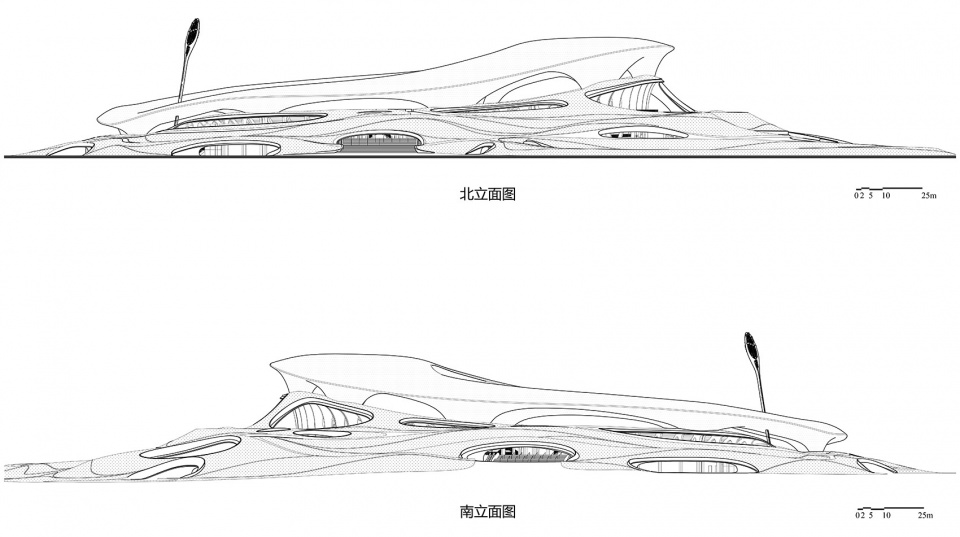
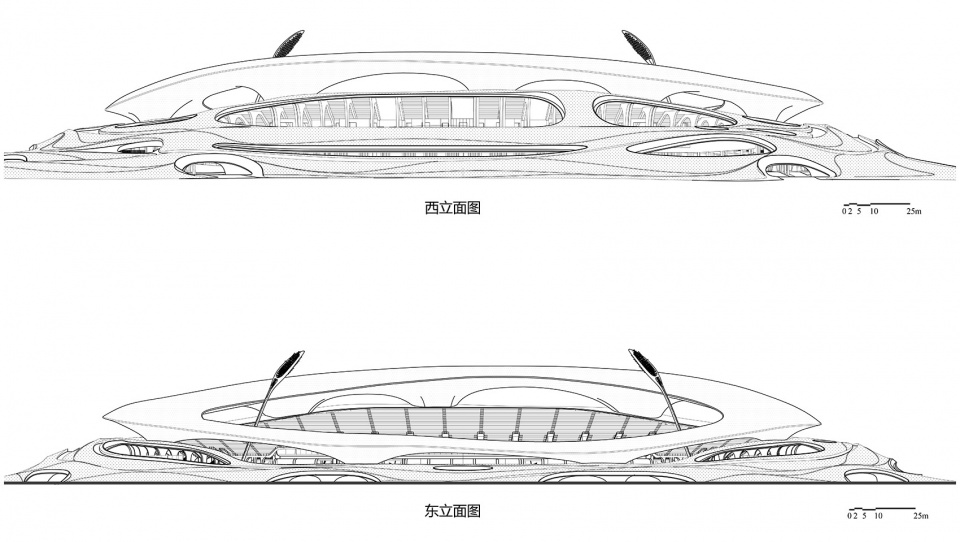
大地艺术般的城市公共空间#形似陨石坑的三万人体育场匍匐在大地上,巨大看台结构被隐藏,建筑体量消失。立面被绿植所覆盖,成为景观本身。白色线条雕刻出新的曲线,其中一部分实际承载着人行步道功能。立面坡度恰好成为市民运动、攀爬、登高的新场所;缓坡处的草坪也可以是人们运动之余休憩的地方。
Art like urban public space of the earth # The 30000 people stadium in the shape of a meteorite crater crawls on the earth, the huge grandstand structure is hidden, and the building volume disappears. The facade is covered by green plants and becomes the landscape itself. The white lines carve new curves, some of which actually bear the function of footpath. The elevation slope just becomes a new place for citizens to exercise, climb and climb; The lawn on the gentle slope can also be a place for people to rest after sports.
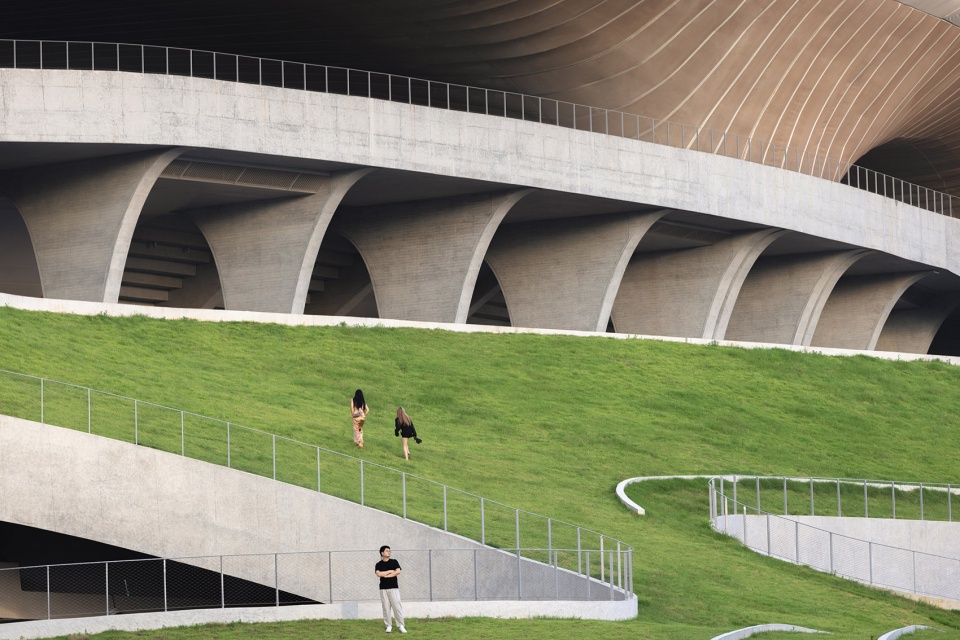
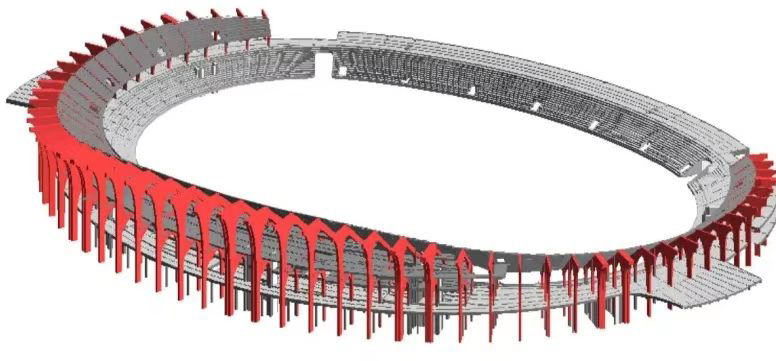
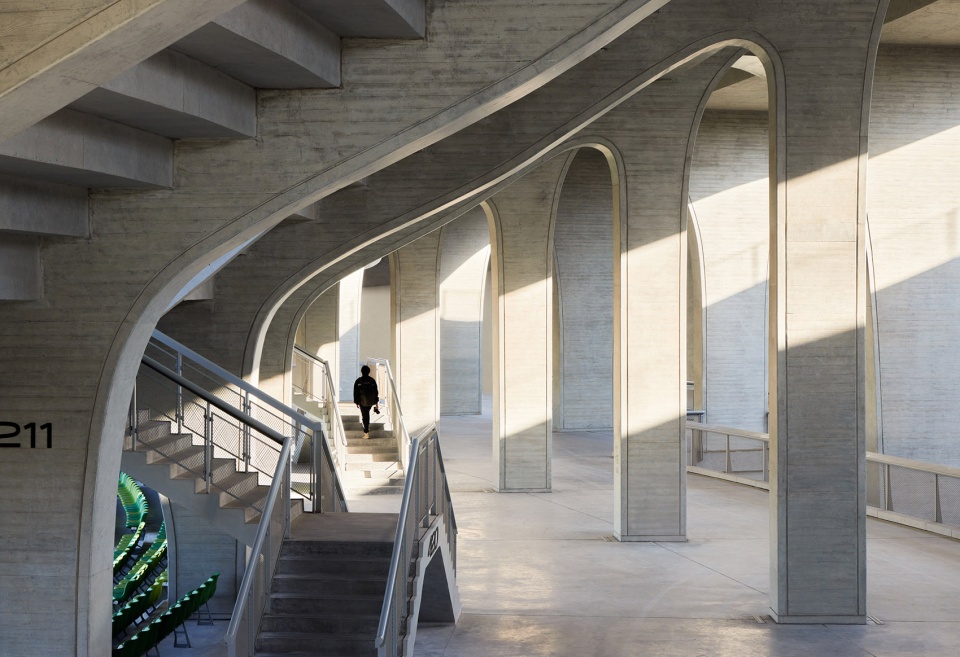
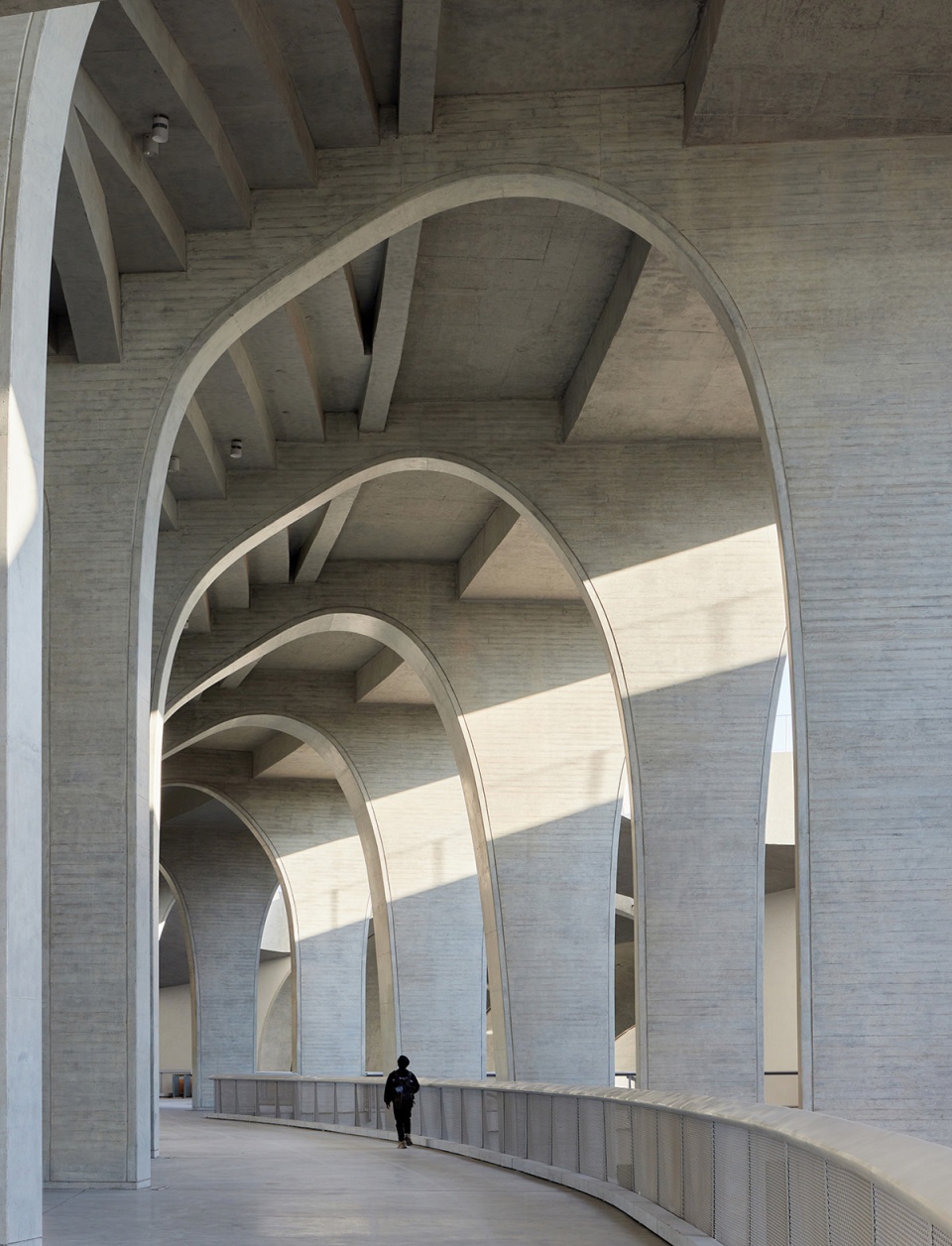
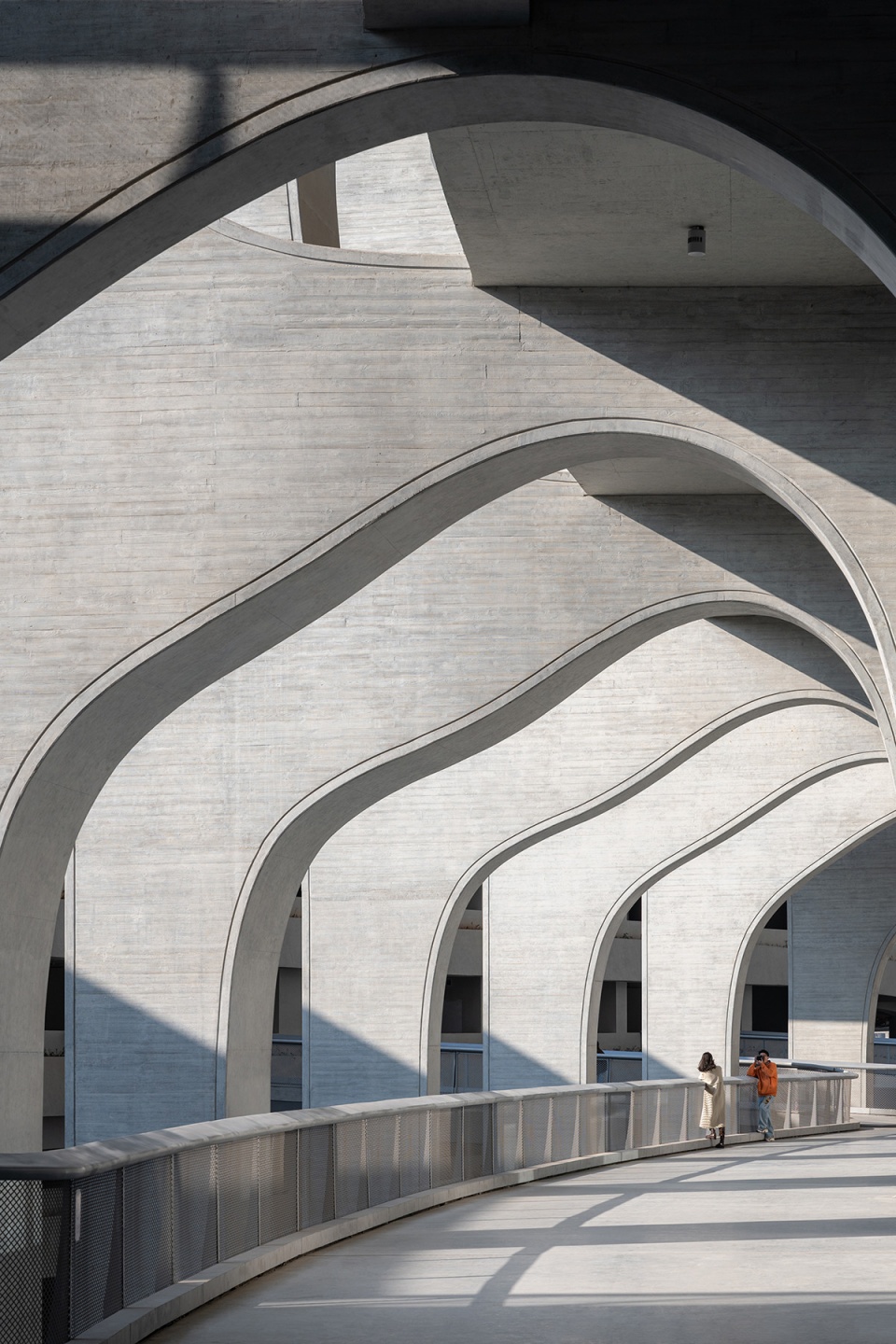
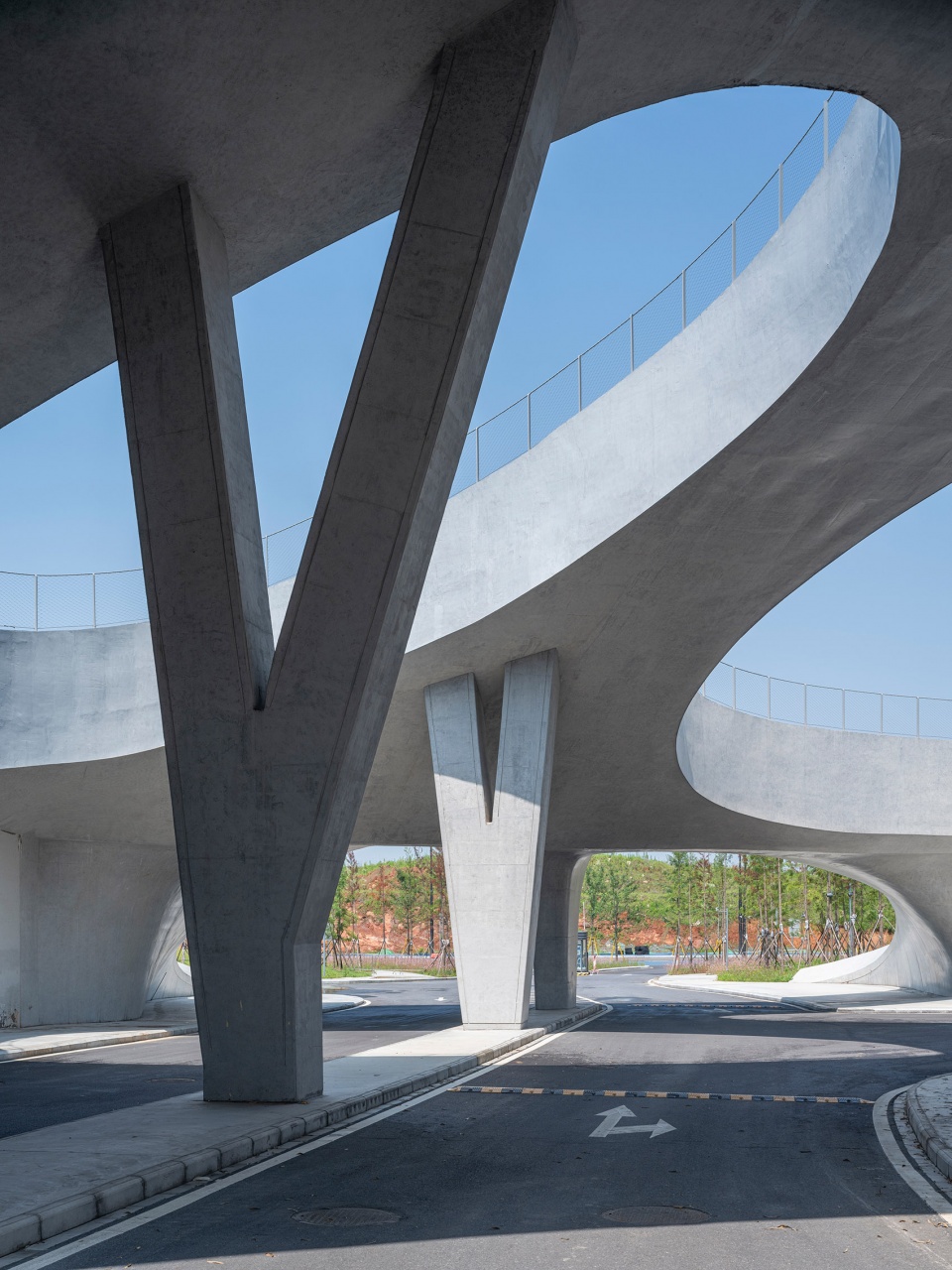
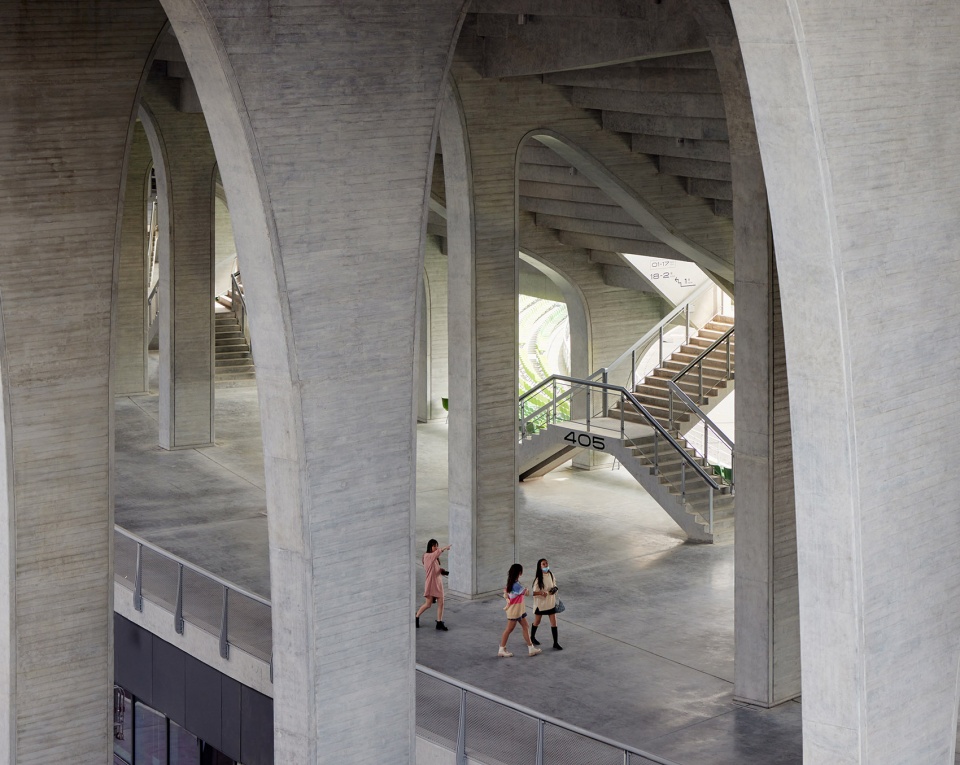
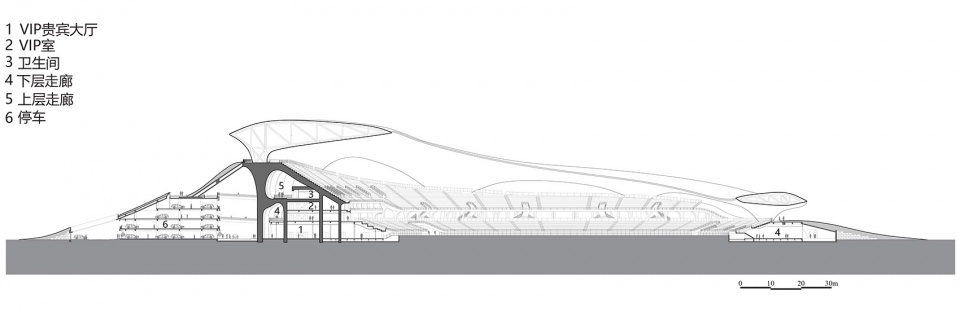
质朴混凝土#60组混凝土柱墙支撑起了整个体育场。裸露的木纹清水混凝土片墙摒弃了内外装饰层,既是结构,又是建筑本身。
The plain concrete # 60 concrete column wall supports the entire stadium. The exposed wood grain plain concrete sheet wall discards the interior and exterior decoration layers, which is both the structure and the building itself.
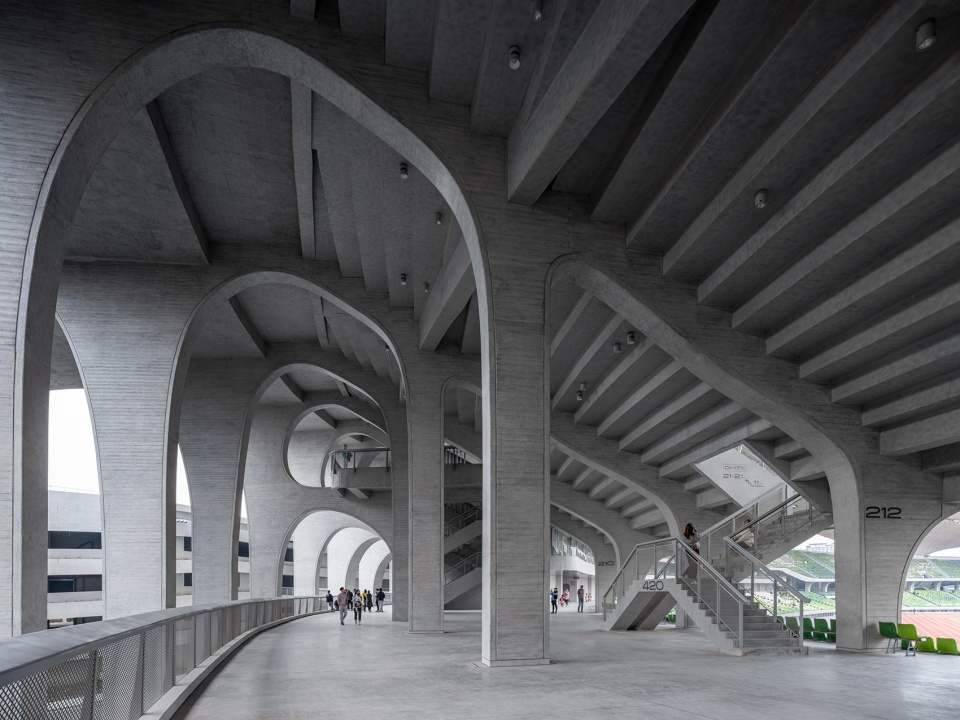
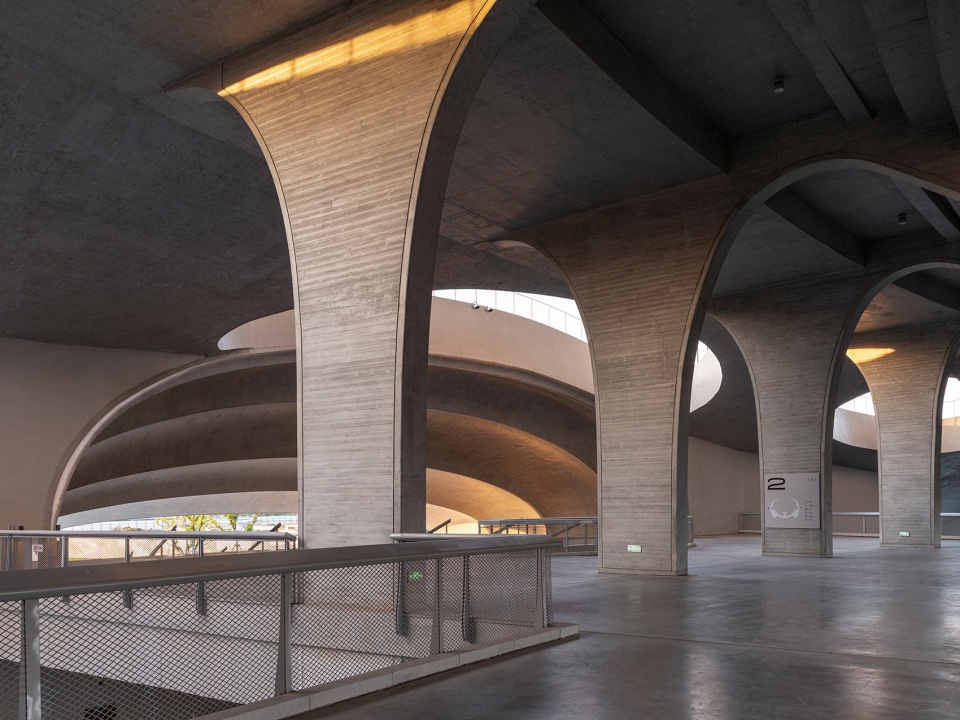
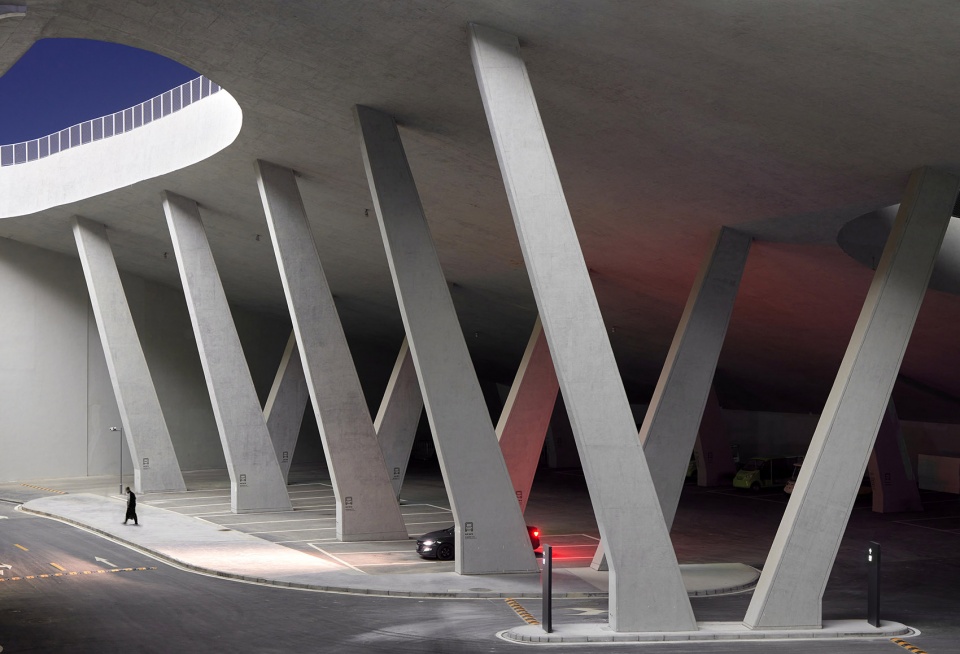
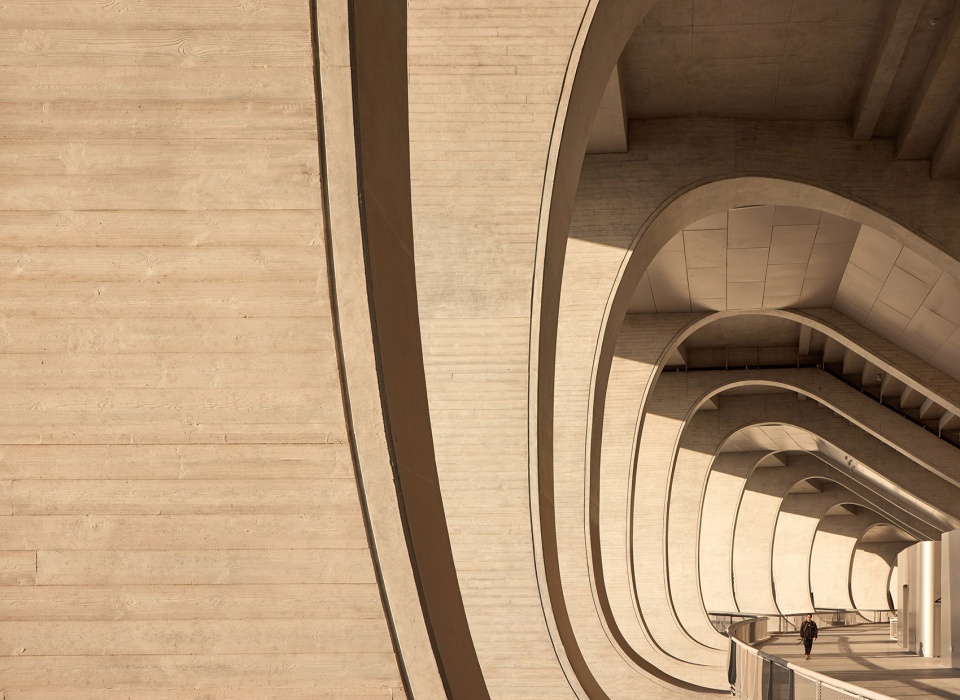
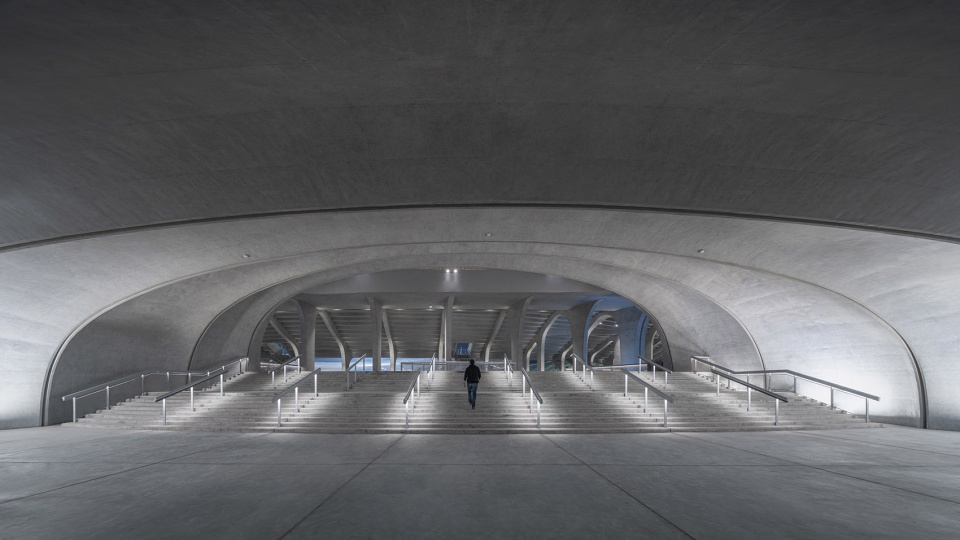
异形双曲面混凝土塑造了场馆的出入口,其中南北主要出入口由一圈一圈的拱形叠加秩序排列而成,最大跨度近40米。混凝土材料本身的纯粹与质朴、设计的细节处理柔化了体育场的体量感,同时创造出极具节奏感的空间韵律。
The special-shaped hyperboloid concrete shapes the entrance and exit of the stadium, of which the main entrances and exits in the north and south are arranged in an orderly manner by a circle of arches, with a maximum span of nearly 40 meters. The purity and simplicity of the concrete material itself and the details of the design soften the sense of volume of the stadium, while creating a very rhythmic spatial rhythm.
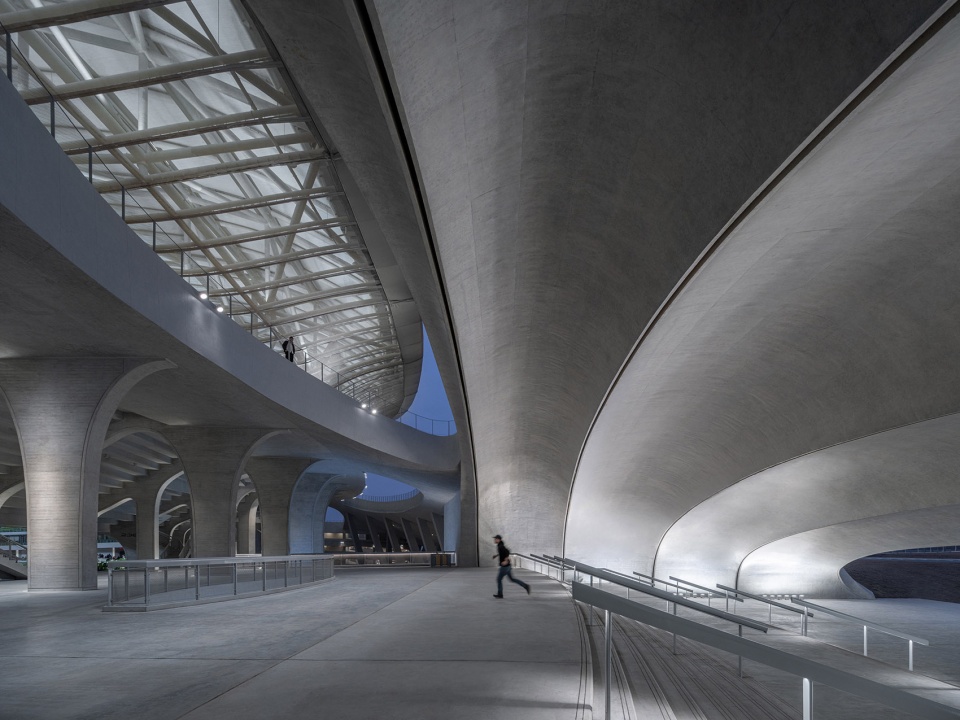
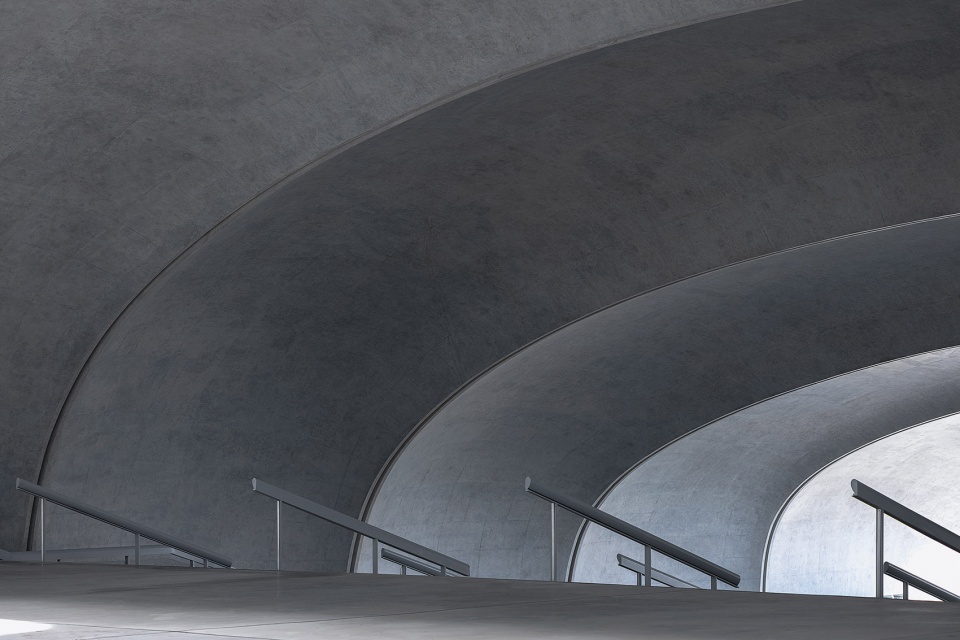
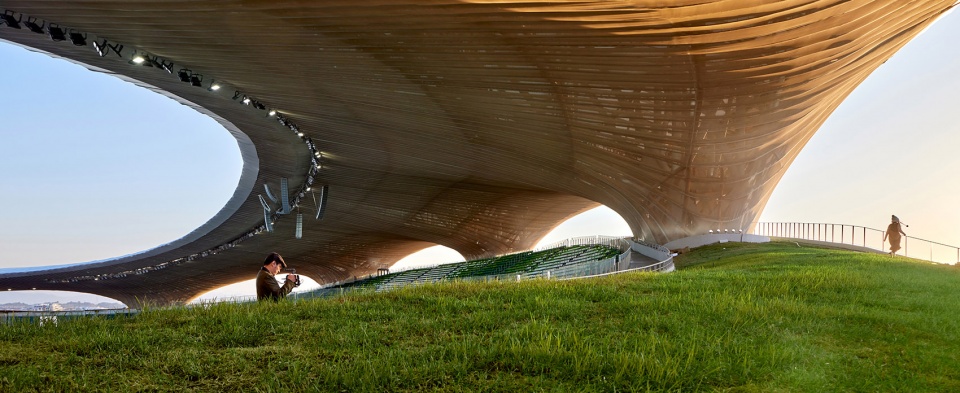
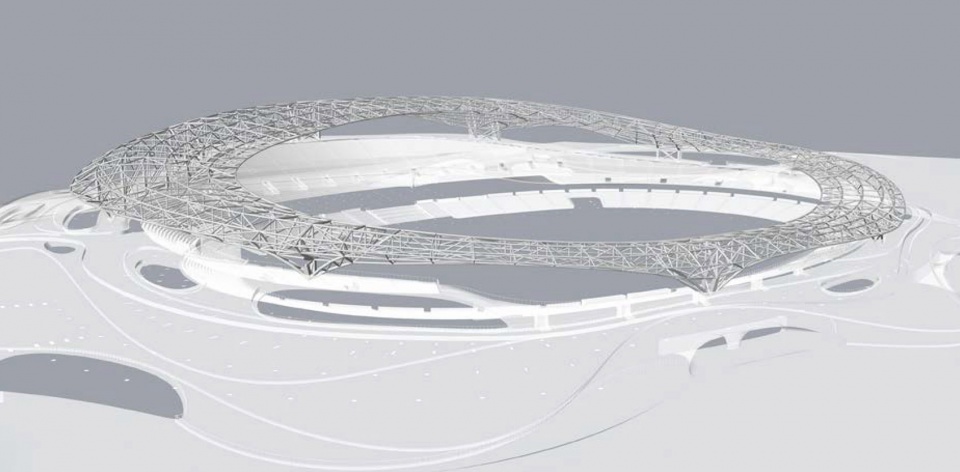
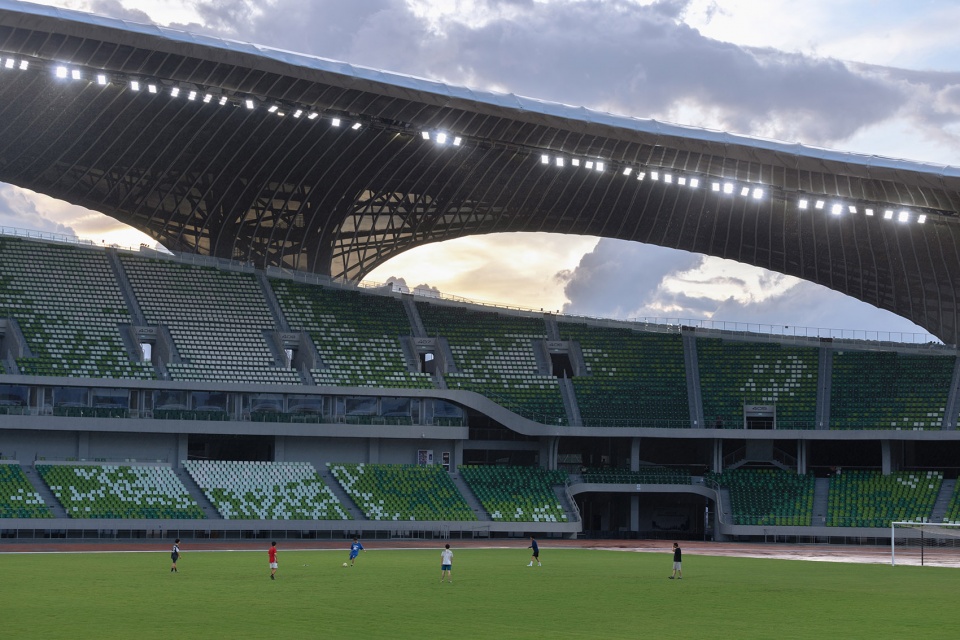
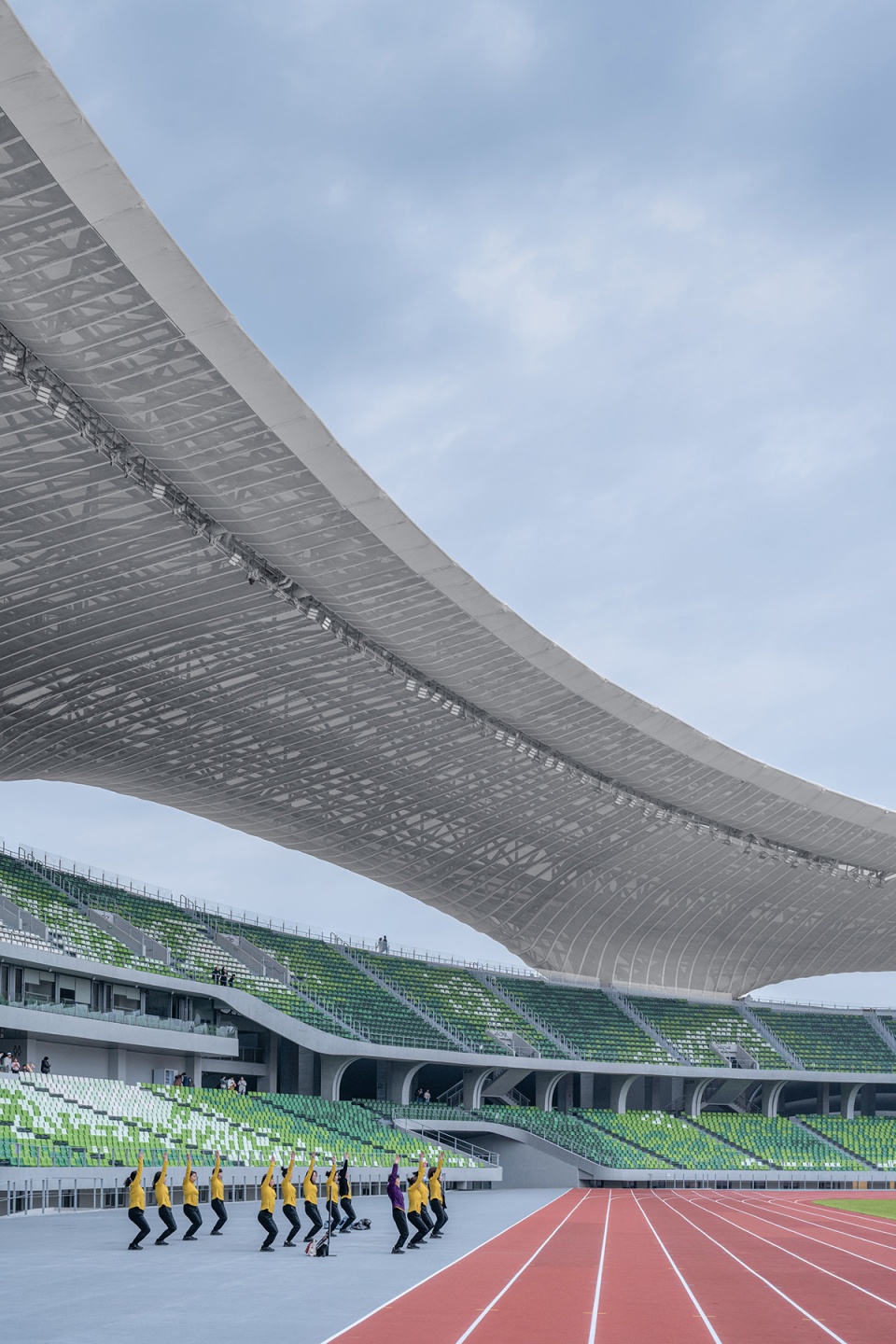
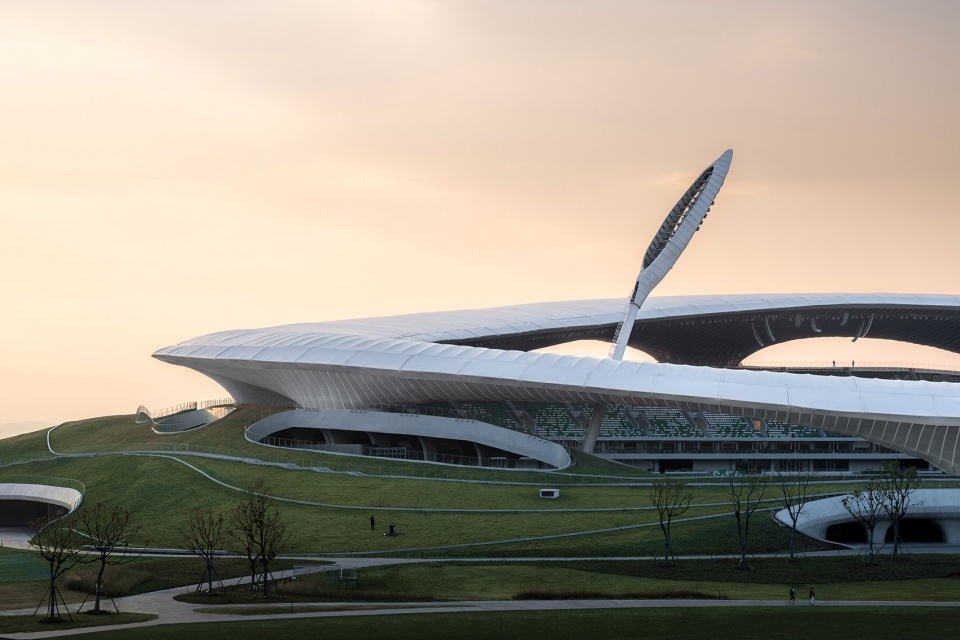
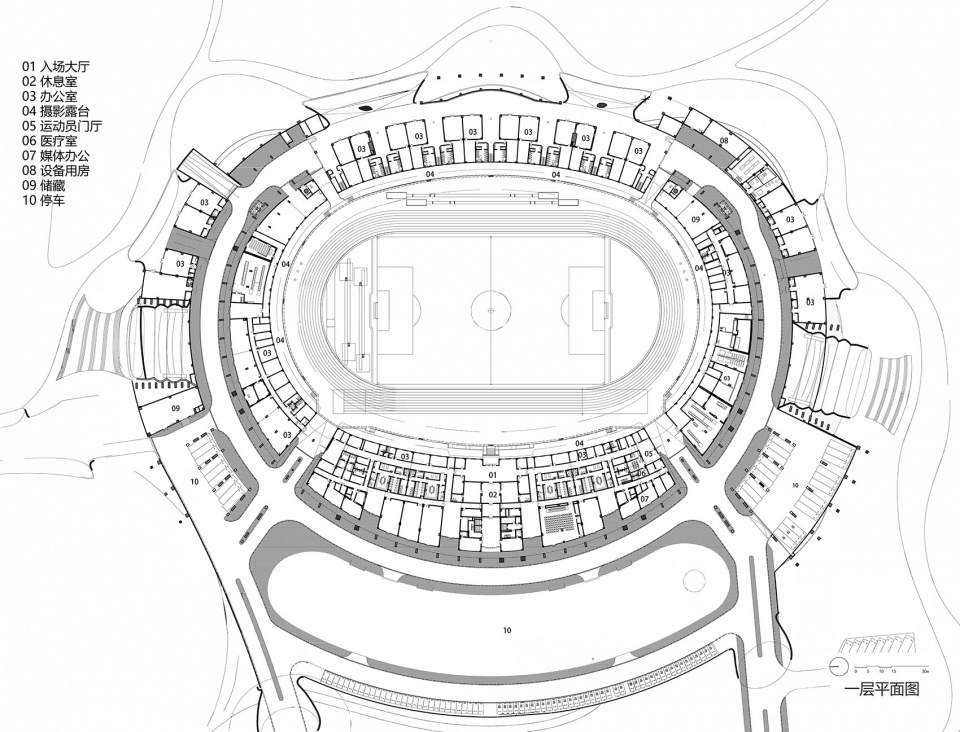
飘浮的光冕混凝土结构之上是由钢结构支撑的“光冕”风雨罩。风雨罩仅由9个落点支撑于看台之上,落点之间的最大跨度达到95米,让视线可贯穿体育场内外,空间显得更加通透开阔。
Floating light crown The concrete structure is supported by the steel structure of the "light crown" weather shield. The weather shield is only supported on the stands by 9 impact points, and the maximum span between the impact points is 95 meters, which allows the view to penetrate the stadium and make the space more transparent and open.
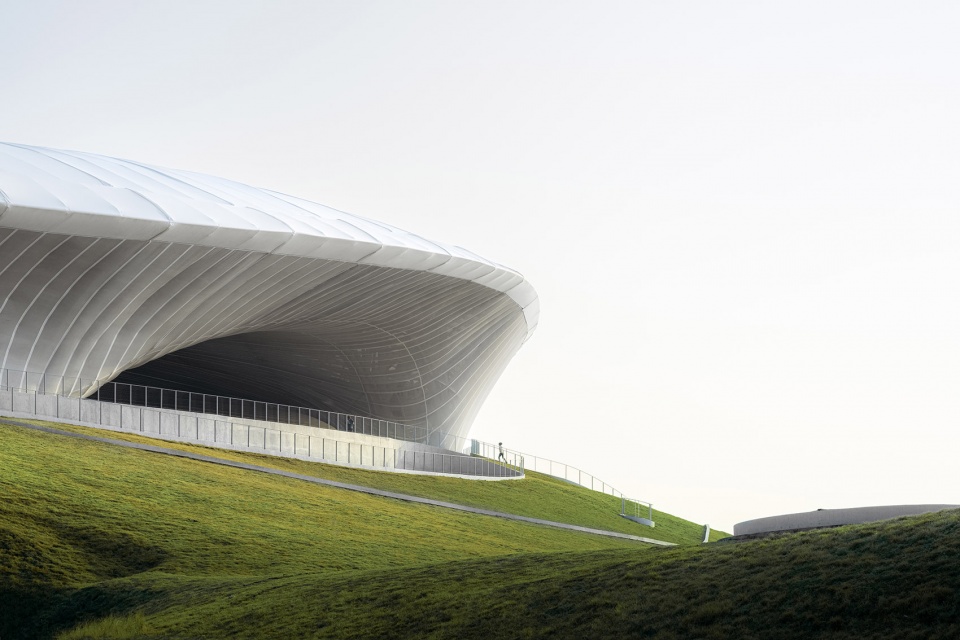
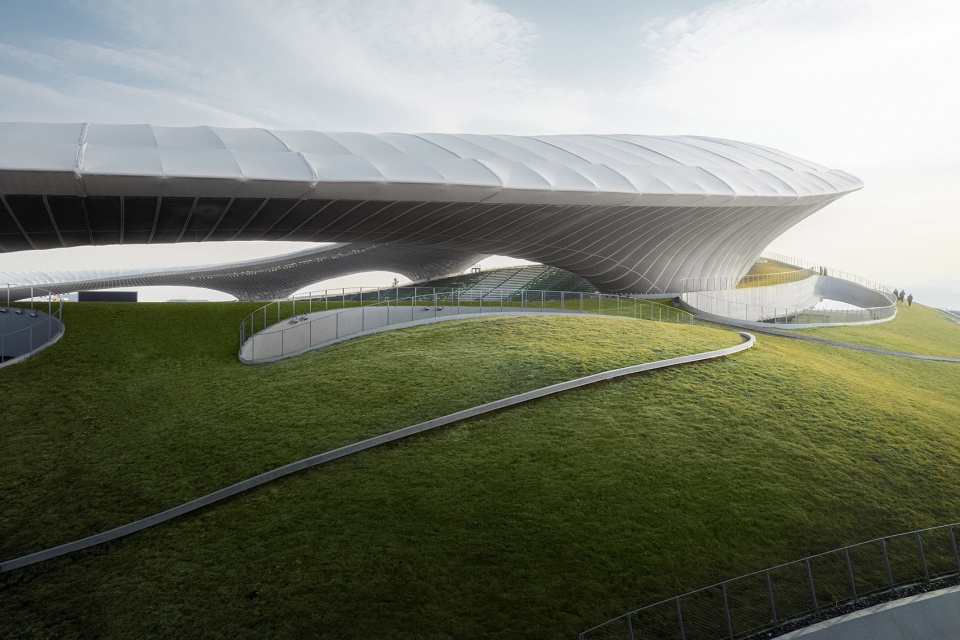
区别于传统雨棚的设计手法,透光的膜材料包裹在钢结构悬挑空间桁架之外,让风雨罩如云朵飘动在大地之上。形态赋能的艺术性与功能的融合在这里得到实现。体育场罩棚的上表面采用半透光的PTFE膜结构,下表面采用了带有微孔的PTFE,这样的构造设计和材料选择增强了罩棚的降噪性能。
Different from the traditional design method of the canopy, the transparent membrane material is wrapped outside the steel structure cantilever space truss, allowing the weather shield to float on the ground like clouds. The combination of artistry and function of form empowerment is realized here. The upper surface of the stadium canopy is made of semi transparent PTFE membrane structure, and the lower surface is made of PTFE with micropores. Such structural design and material selection enhance the noise reduction performance of the canopy.
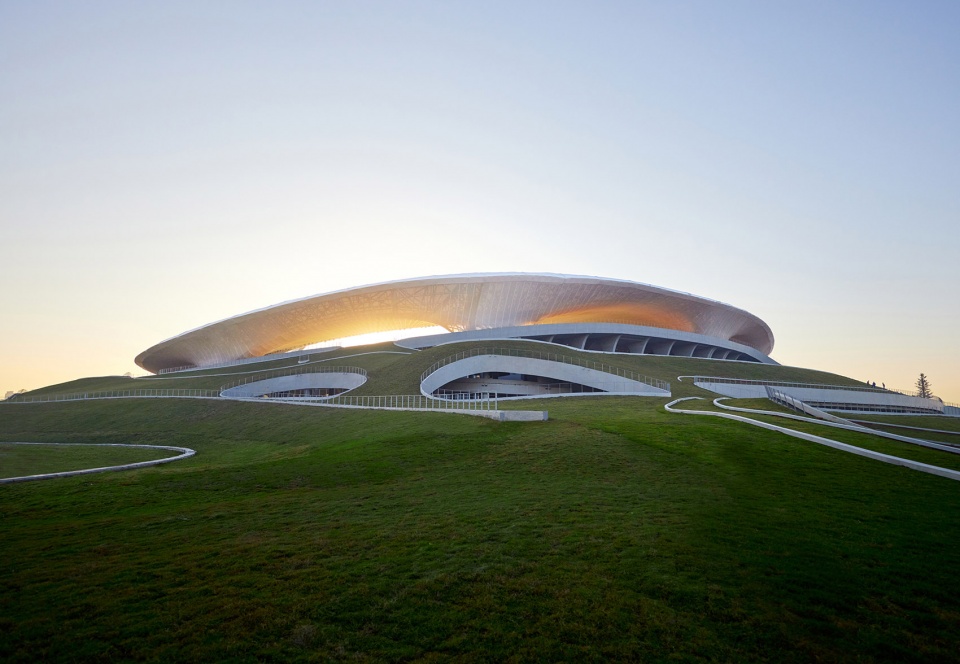
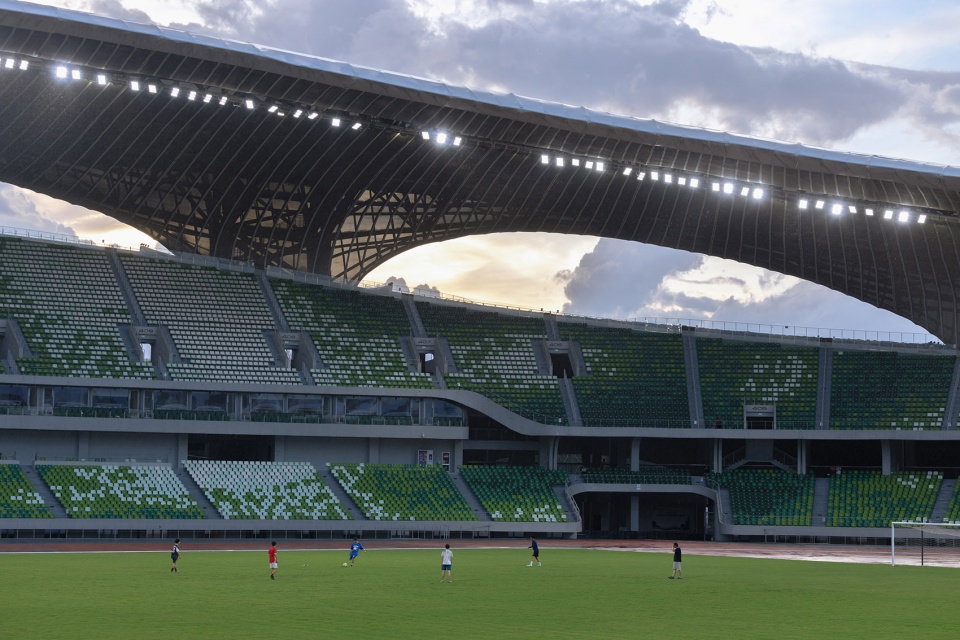
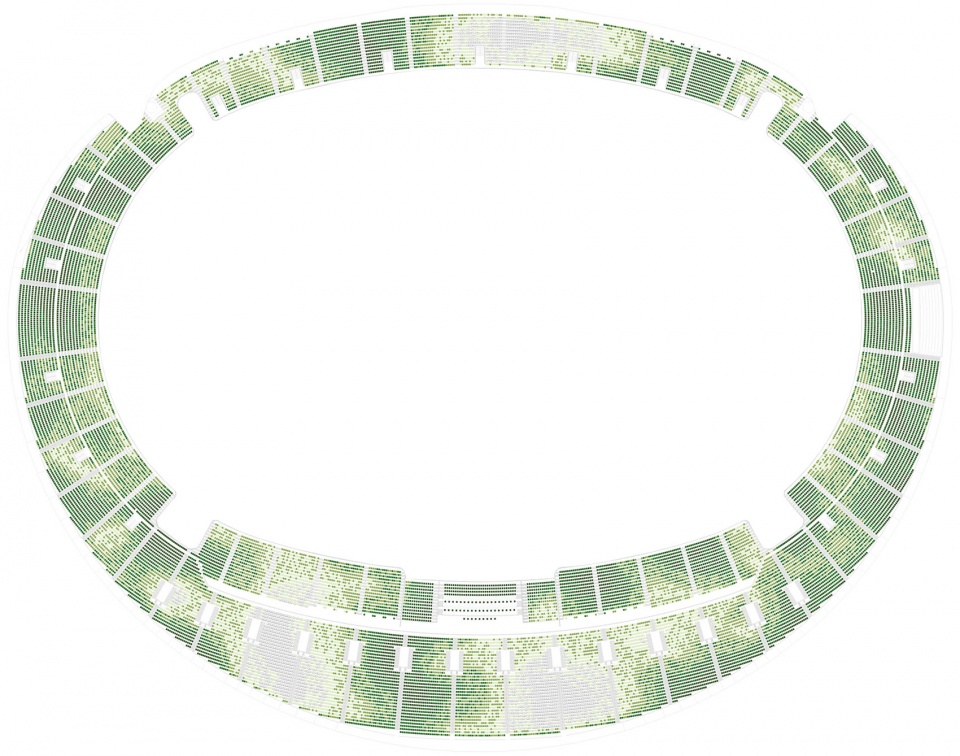
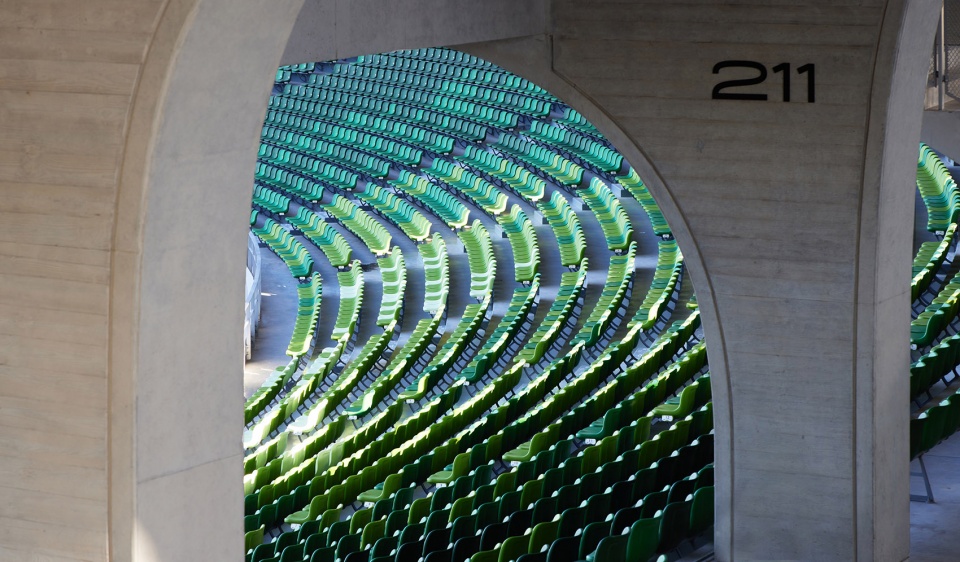
自然有机的视觉效果#体育场的标识系统由MAD与原研哉团队共同设计。看台区座椅没有采取传统的直线区域划分,而是紧扣“大地景观”的整体设计概念,以“从树叶空隙照进来的阳光”为主题,通过五种渐变层次的颜色进行有机划分。三万个深浅不一的绿色座位均匀地布置在马鞍形的看台之上,创造出清新而连续的视觉效果。
户外标识系统并不使用立牌或看板,而是将石材和金属标识以镶嵌的方式嵌入地面,与体育场本身融为一体,呼应了 “消失的体育场”的概念。
The outdoor sign system does not use signboards or billboards, but embeds stone and metal signs into the ground in a mosaic way, which is integrated with the stadium itself, echoing the concept of "disappeared stadium".
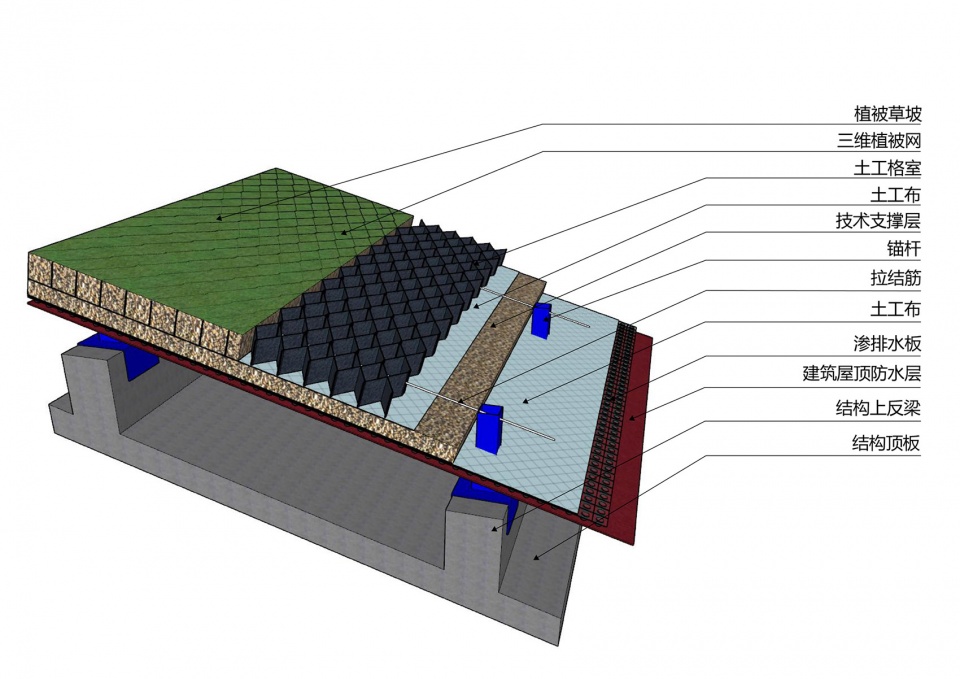
可持续应用除看台及内场外,体育场其他功能空间均位于覆土景观地面之下。MAD和景观设计师特意为衢州选择了更匹配当地的适合多季节、低维护和节水的草种。得益于表层覆盖的种植层,建筑室内空间的温度波动减小。同时,覆土也有利于建筑与海绵城市的景观一体化设计,下雨时吸水、蓄水、渗水、净水,需要时将蓄存的水释放并加以利用,在适应环境变化和应对雨水带来的自然灾害等方面具有良好的弹性。
Sustainable application Except for the grandstand and infield, other functional spaces of the stadium are located under the earth covered landscape ground. MAD and landscape designers specially selected grass species that are more suitable for multi season, low maintenance and water-saving in Quzhou. Thanks to the planting layer covered by the surface layer, the temperature fluctuation in the interior space of the building is reduced. At the same time, covering soil is also conducive to the integrated landscape design of buildings and sponge cities. When it rains, it absorbs, stores, seeps, and purifies water. When necessary, it releases and uses the stored water. It has good flexibility in adapting to environmental changes and dealing with natural disasters caused by rain.
体育场使用的混凝土材料均为本地生产,最大程度减少了施工过程中外地钢材和其他装饰材料的运输。2021年10月,浙江省第四届体育大会开幕式在衢州体育场举行,标志着体育场正式投入使用。体育场既可承办全国性赛事,也可作为面向市民的大型文艺表演场地。在承办活动之外,场地也对市民日常开放,市民可自由至此参观、停留或进行日常运动。
The concrete materials used in the stadium are produced locally, which minimizes the transportation of steel and other decorative materials from other places during the construction process. In October 2021, the opening ceremony of the fourth Zhejiang Provincial Sports Conference will be held in Quzhou Stadium, marking the official use of the stadium. The stadium can not only host national events, but also serve as a large theatrical performance venue for citizens. In addition to undertaking activities, the venue is also open to the public on a daily basis, and the public can freely visit, stay or carry out daily sports here.
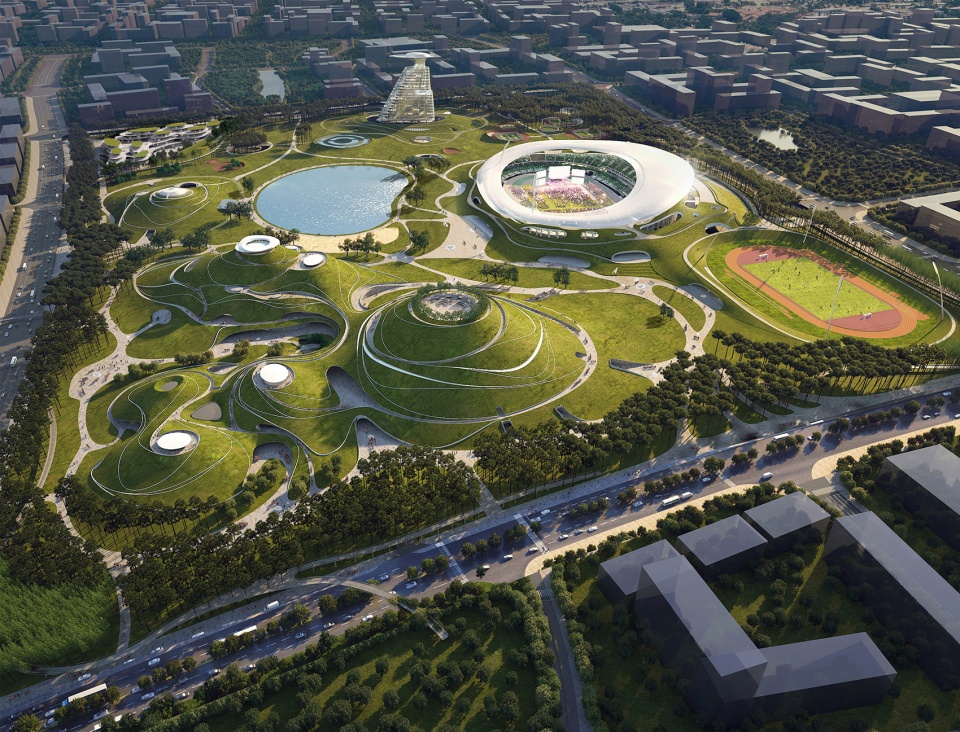
衢州体育公园衢州体育公园占地约70万平方米,一期二期总建筑面积约34万平方米,包含可容纳三万人的体育场、万人体育馆、游泳馆、全民体育综合馆、室外运动场地、科技馆、青少年宫、酒店、商业等。
Quzhou Sports Park Quzhou Sports Park covers an area of about 700000 square meters. The total construction area of Phase I and Phase II is about 340000 square meters, including a stadium that can accommodate 30000 people, a 10000 people stadium, a swimming pool, a sports complex for all, an outdoor sports venue, a science and technology museum, a youth palace, a wine shop, and a business.
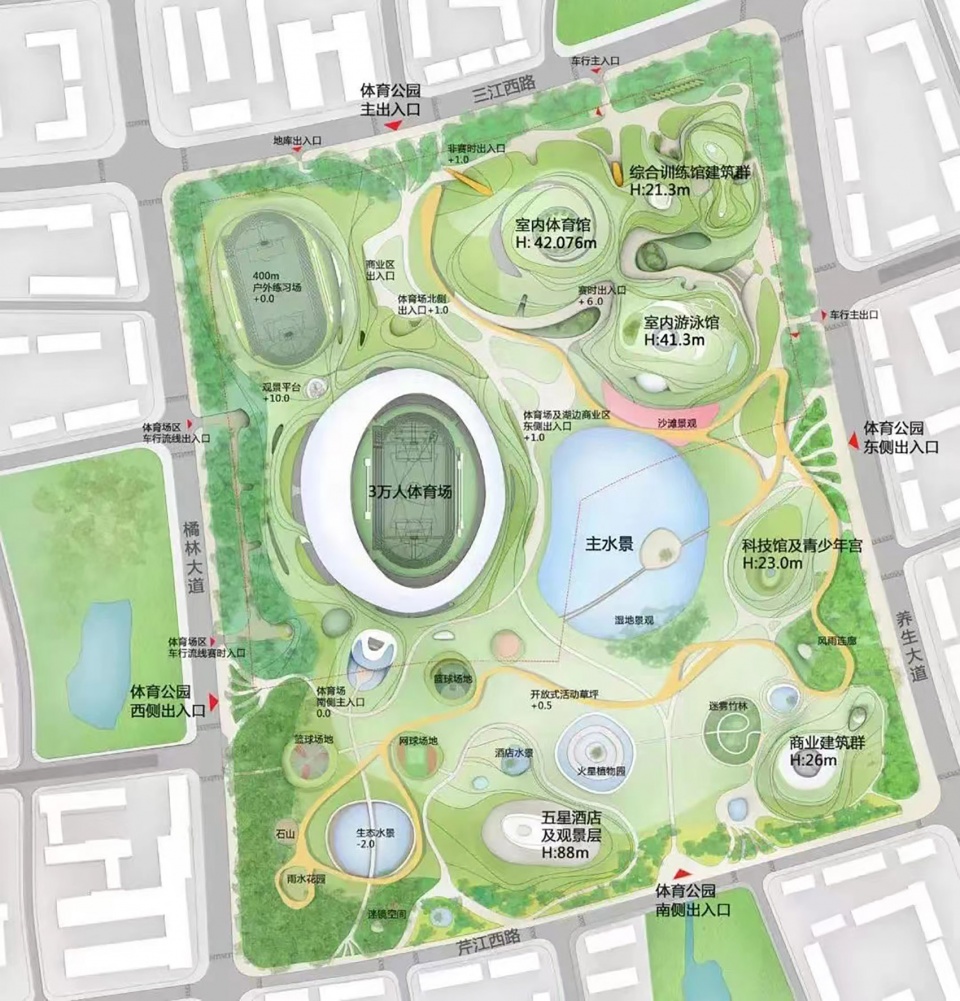
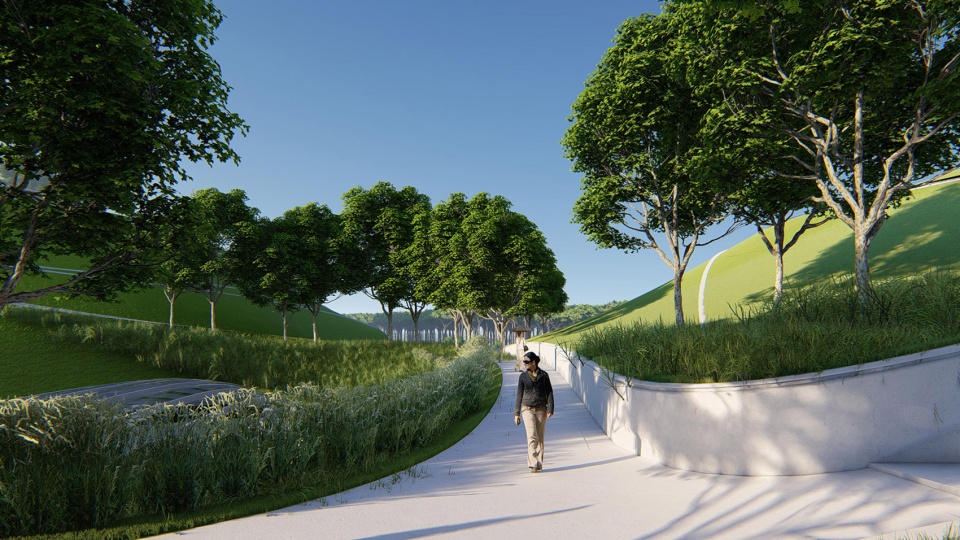
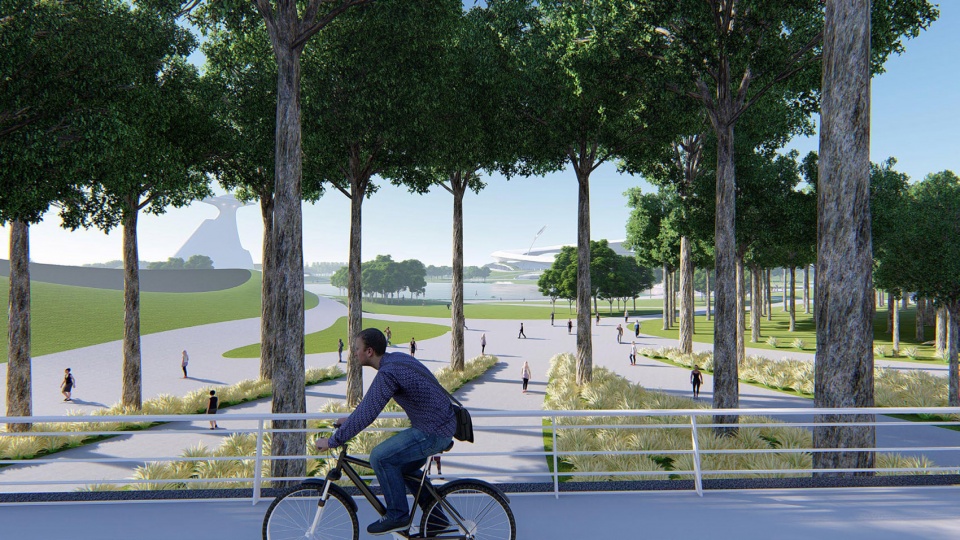
万人体育馆、游泳馆、全民体育综合馆(三馆)相邻,位于公园的东北侧,均位于地面覆土之下。地面之上是起伏的“山体”,交错相通的白色人行步道沿山体表面蜿蜒。人们行走其中,视线或开阔或狭窄,步移景异,在不经意间与环境互动对话。“山顶”与“山脚”处的大型天窗将自然光线引入空间内部,实现节能的同时加深了内外环境之间的联系。
The ten thousand people gymnasium, natatorium and national sports complex (three gymnasiums) are adjacent to each other and located in the northeast of the park, all under the ground cover. Above the ground is the undulating "mountain", and the white footpaths crisscross along the mountain surface. When people walk in it, their sight may be wide or narrow, and their steps may be different. They may inadvertently interact with the environment. The large skylights at the "top" and "foot" of the mountain introduce natural light into the interior of the space, realizing energy conservation and deepening the connection between the internal and external environment.
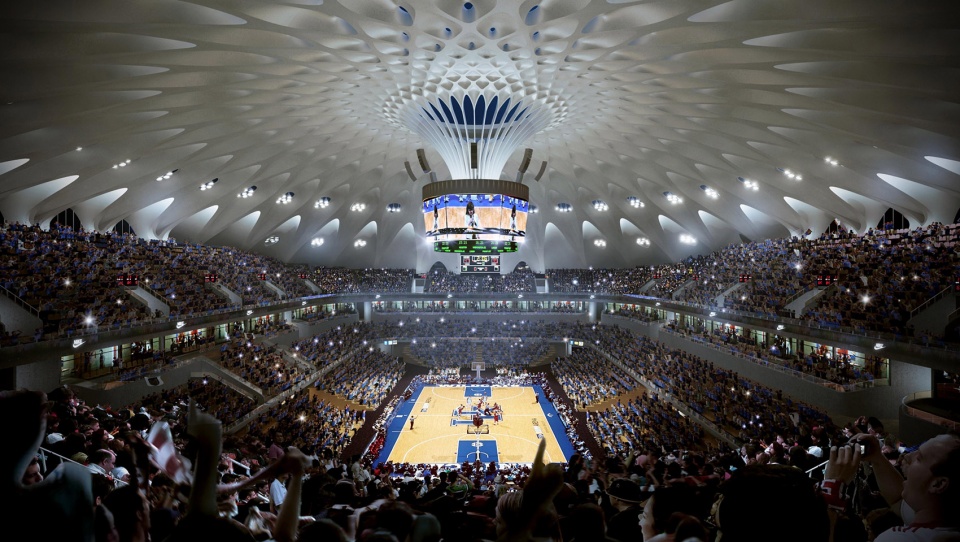
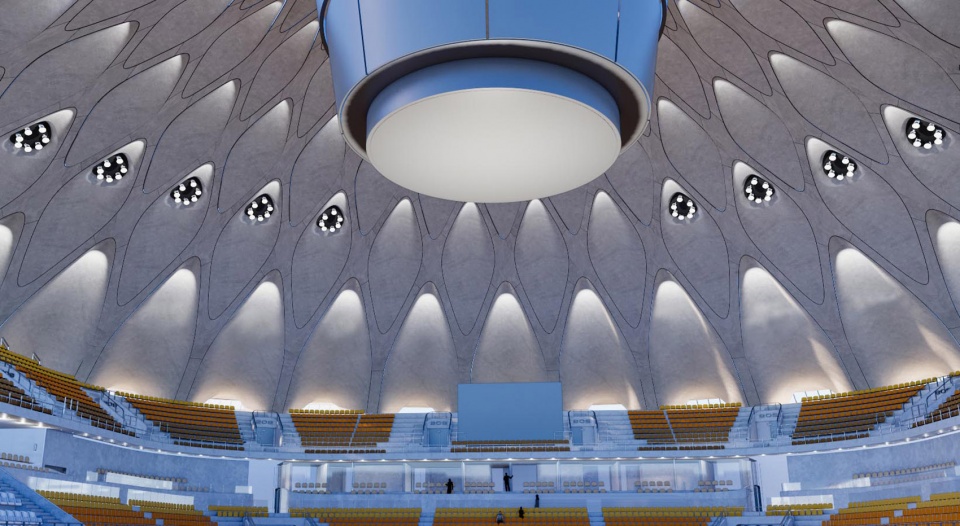
万人体育馆内部的棚顶采用混凝土拱壳结构,跨度130米,场馆内体育照明全部融合和镶嵌在吊顶结构里,最大程度保证了结构美本身简单而完整的表现。
The roof of the 10000 people stadium is a concrete arch shell structure with a span of 130 meters. All the sports lighting in the stadium is integrated and embedded in the suspended ceiling structure, which ensures the simple and complete performance of the structural beauty to the greatest extent.
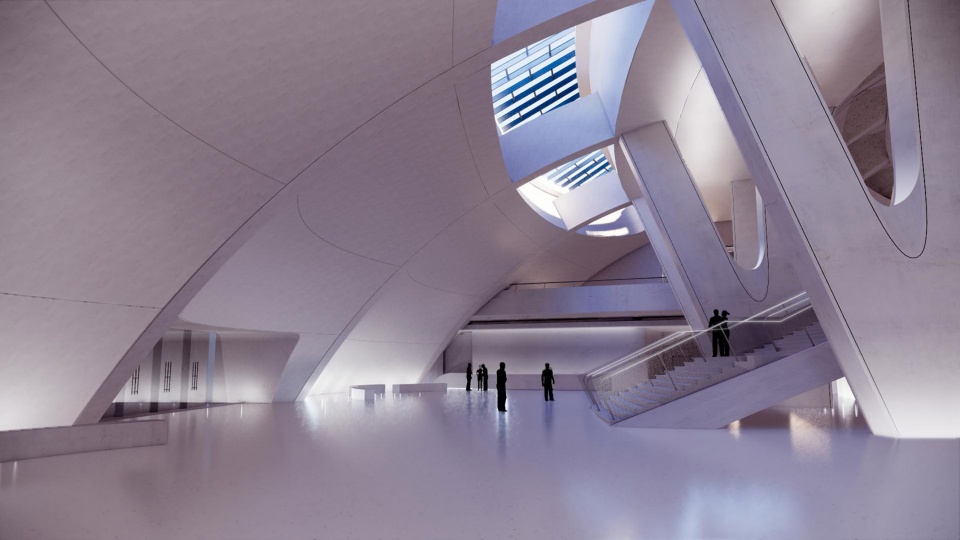
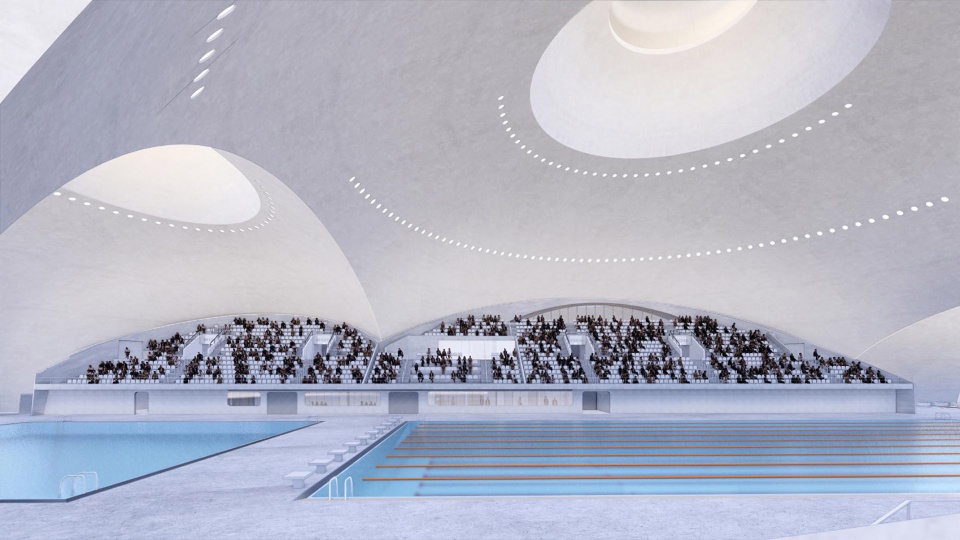
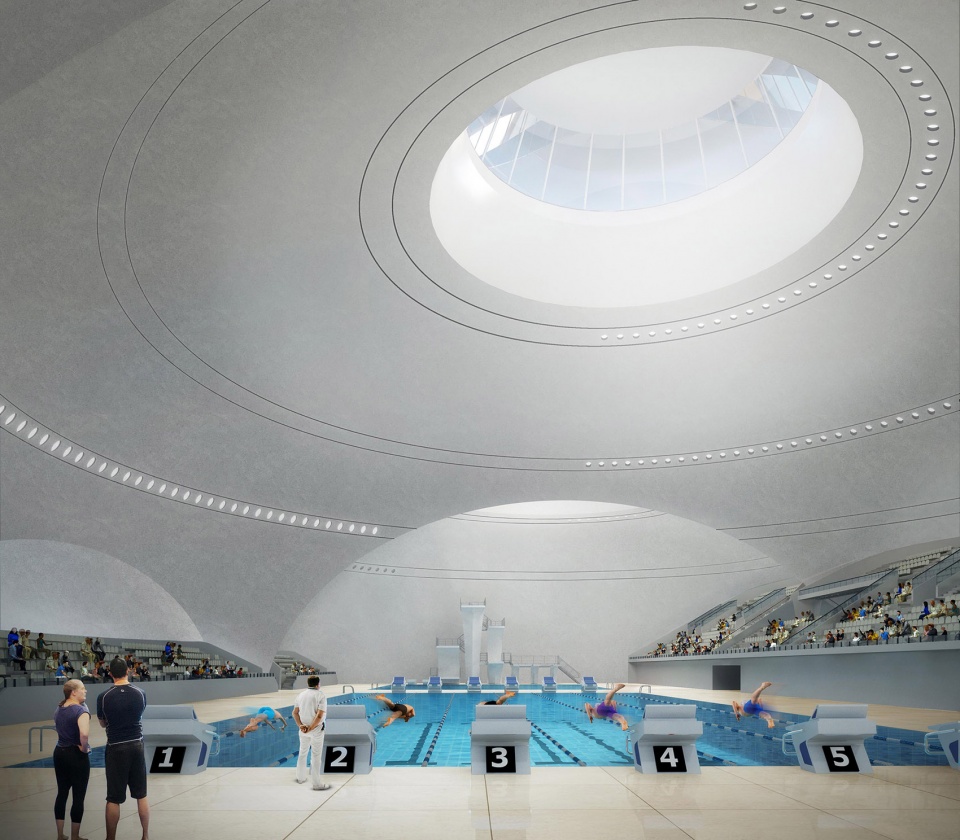
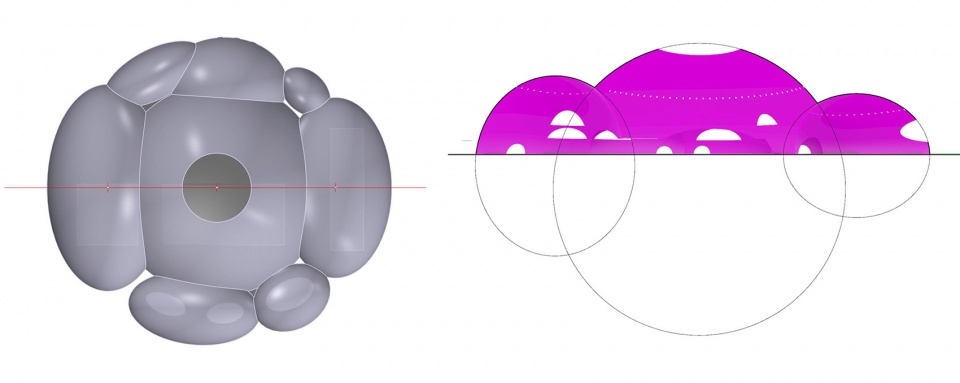
游泳馆包含了多个“泡泡”形状的主要功能空间。“泡泡”球体形成了整个建筑的空间和结构;顶部多处“洞口”充分引入自然光。
The natatorium contains several "bubble" shaped main functional spaces. The "bubble" sphere forms the space and structure of the whole building; Many "openings" at the top fully introduce natural light.
衢州体育公园一期的体育场已建成并投入使用;三馆地下部分已建成,地上部分正有序施工中;二期的整体规划及不同功能的建筑正在深化设计中。
The stadium of Quzhou Sports Park Phase I has been completed and put into use; The underground part of the Third Hall has been completed, and the above ground part is under orderly construction; The overall planning of the second phase and the buildings with different functions are being further designed.
衢州体育场
中国衢州
2018 – 2022体育场基地面积:33,731 平方米
体育场建筑面积:58,565 平方米
体育公园基地面积:610,556平方米(一期 327,370平方米;二期283,186平方米)
体育公园建筑面积:390,074平方米(一期 269,474平方米;二期120,600平方米)主持合伙人:马岩松, 党群, 早野洋介
主持副合伙人:刘会英, 李健, 傅昌瑞
设计团队:徐琛, 李存浩, 李广崇, 李刚, 练懿霆, Kyung Eun Na, 马寅, Thoufeeq Ahmed, Alessandro Fisalli, 里慧, Tian Jin, 张凯, 马悦, Melanie Weitz, 周海萌, 肖钰晗, Yuki Ishigami, Luis Torres, 苏乐, 康文钊, Pittayapa Suriyapee, 俞琳, Neeraj Mahajan, 张博, Connor Hymes, 张羽飞, 汪琪, 宋敏哲, 曹溪, 刘海伦, 张笑梅, 郑康成业主:衢州市西区开发建设管理委员会, 衢州宝冶体育运营有限公司
甲级设计院:悉地国际设计顾问(深圳)有限公司
景观规划设计:PWP Landscape Architecture, EADG泛亚国际 , 北京云海天成景观设计咨询有限公司
结构顾问:Schlaich Bergermann Partner
机电顾问:SC Consultant Limited
幕墙顾问:RFR Asia
照明顾问:北京宁之境照明设计有限公司标识设计:原研哉(日本设计中心)
摄影(按首字母排序):奥观建筑视觉, CreatAR Images, 存在建筑, 田方方
动图拍摄:Blackstation黑像素
Quzhou Stadium
Quzhou, China
2018 – 2022 Stadium Base Area: 33731 square meters
Stadium building area: 58565 square meters
Area of sports park base: 610556 square meters (327370 square meters in Phase I; 283186 square meters in Phase II)
Building area of the sports park: 390074 square meters (269474 square meters in Phase I; 120600 square meters in Phase II) Presiding partner: Ma Yansong, the party and the masses, and Yosuke Okano
Deputy partners in charge: Liu Huiying, Li Jian, Fu Changrui
Design team: Xu Chen, Li Cunhao, Li Guangchong, Li Gang, Lian Yiting, Kyung Eun Na, Ma Yin, Thoufeeq Ahmed, Alessandro Fisalli, Li Hui, Tian Jin, Zhang Kai, Ma Yue, Melanie Weitz, Zhou Haimeng, Xiao Yuhan, Yuki Ishigami, Luis Torres, Su Le, Kang Wenzhao, Pittyapa Suriyapee, Yu Lin, Neeraj Mahajan, Zhang Bo, Connor Hymes, Zhang Yufei, Wang Qi, Song Minzhe, Cao Xi, Liu Hailun, Zhang Xiaomei, Zheng Kangcheng Owner: Quzhou West District Development and Construction Management Committee, Quzhou Baoye Sports Operation Co., Ltd
Class A design institute: Zidi International Design Consultants (Shenzhen) Co., Ltd
Landscape planning and design: PWP Landscape Architecture, EADG Pan Asia International, Beijing Yunhai Tiancheng Landscape Design Consulting Co., Ltd
Structural Consultant: Schlaich Bergermann Partner
M&E consultant: SC Consultant Limited
Curtain wall consultant: RFR Asia
Lighting consultant: Beijing Ningzhijing Lighting Design Co., Ltd. Logo designer: Yuanyanzai (Japan Design Center)
Photography (in alphabetical order): Austrian architecture vision, CreatAR Images, Existential architecture, Tian Fangfang
Motion picture shooting: Blackstation black pixels