Claudine Hermann学校,法国 / Sam architecture
场地整合Site Integration
该学校综合体以受控的形式和材质二重性出现在景观中:
The school complex appears in the landscape with a controlled formal and material duality:
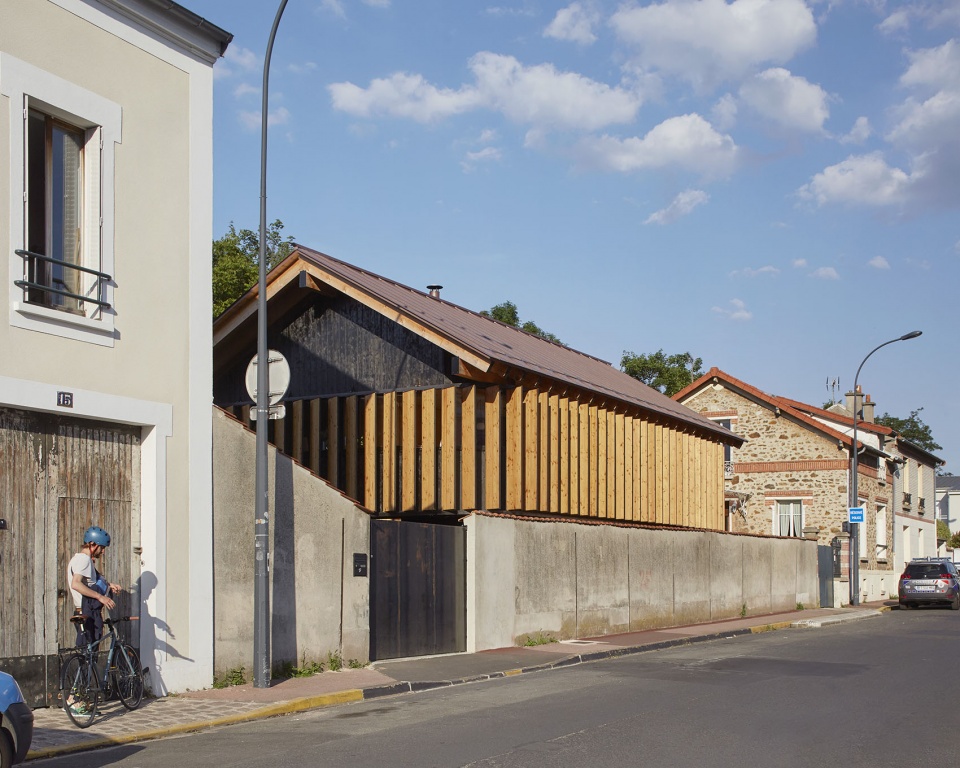
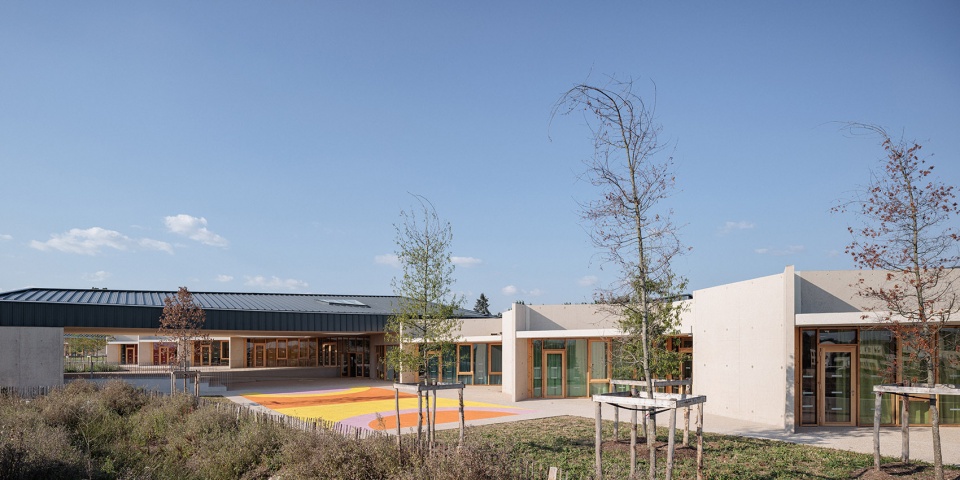
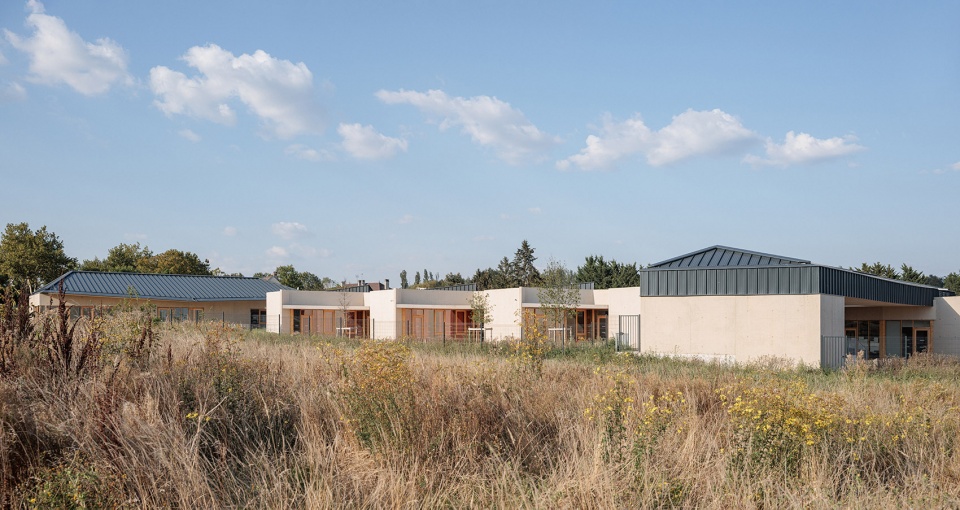
▼学校外观,exterior of the school
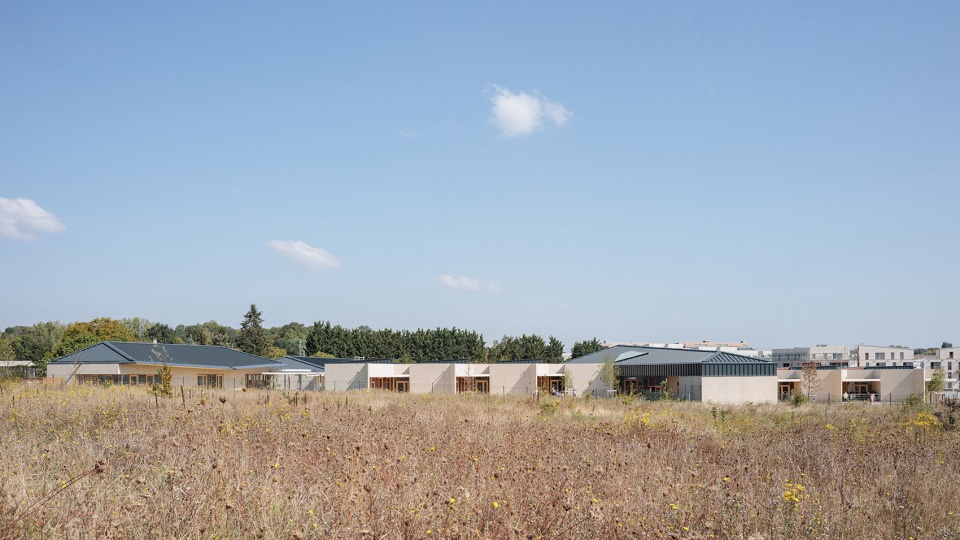
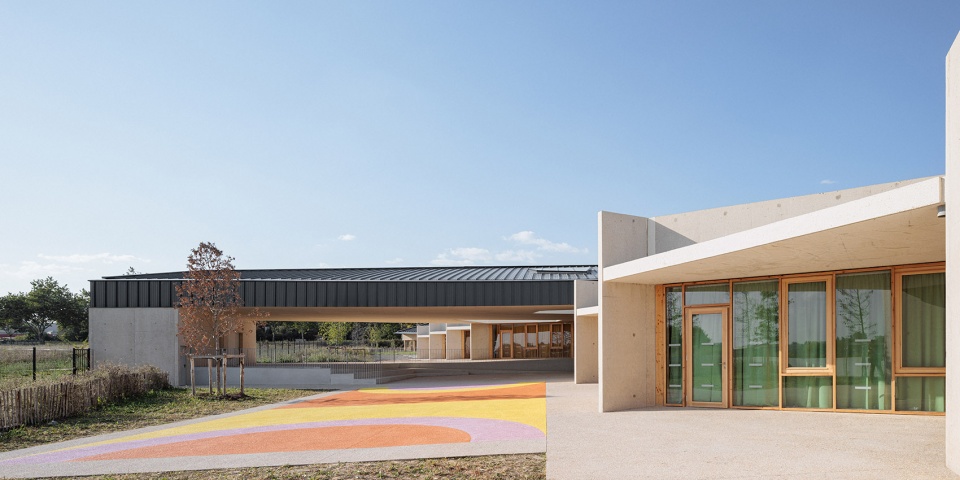
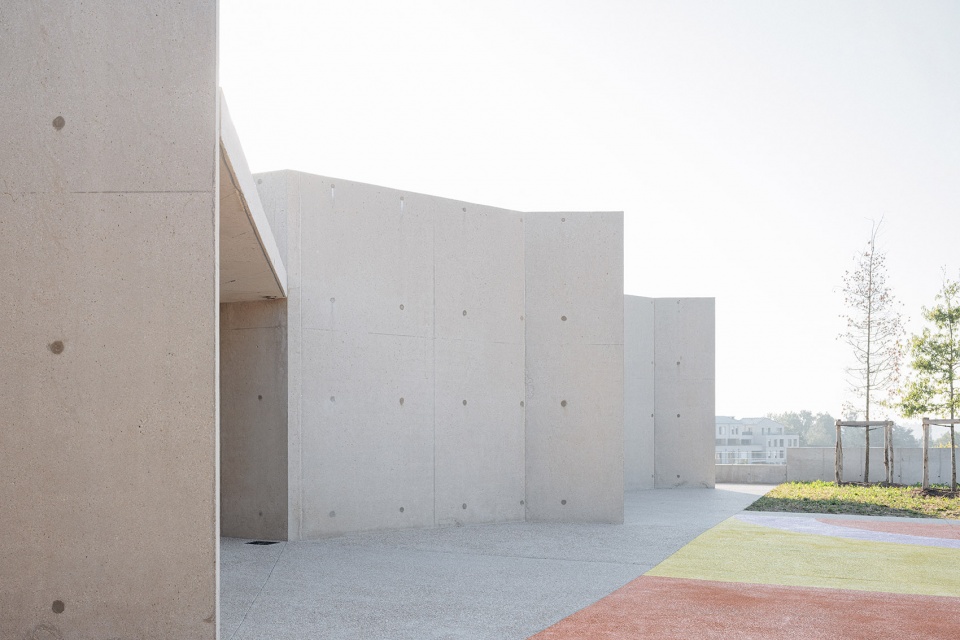
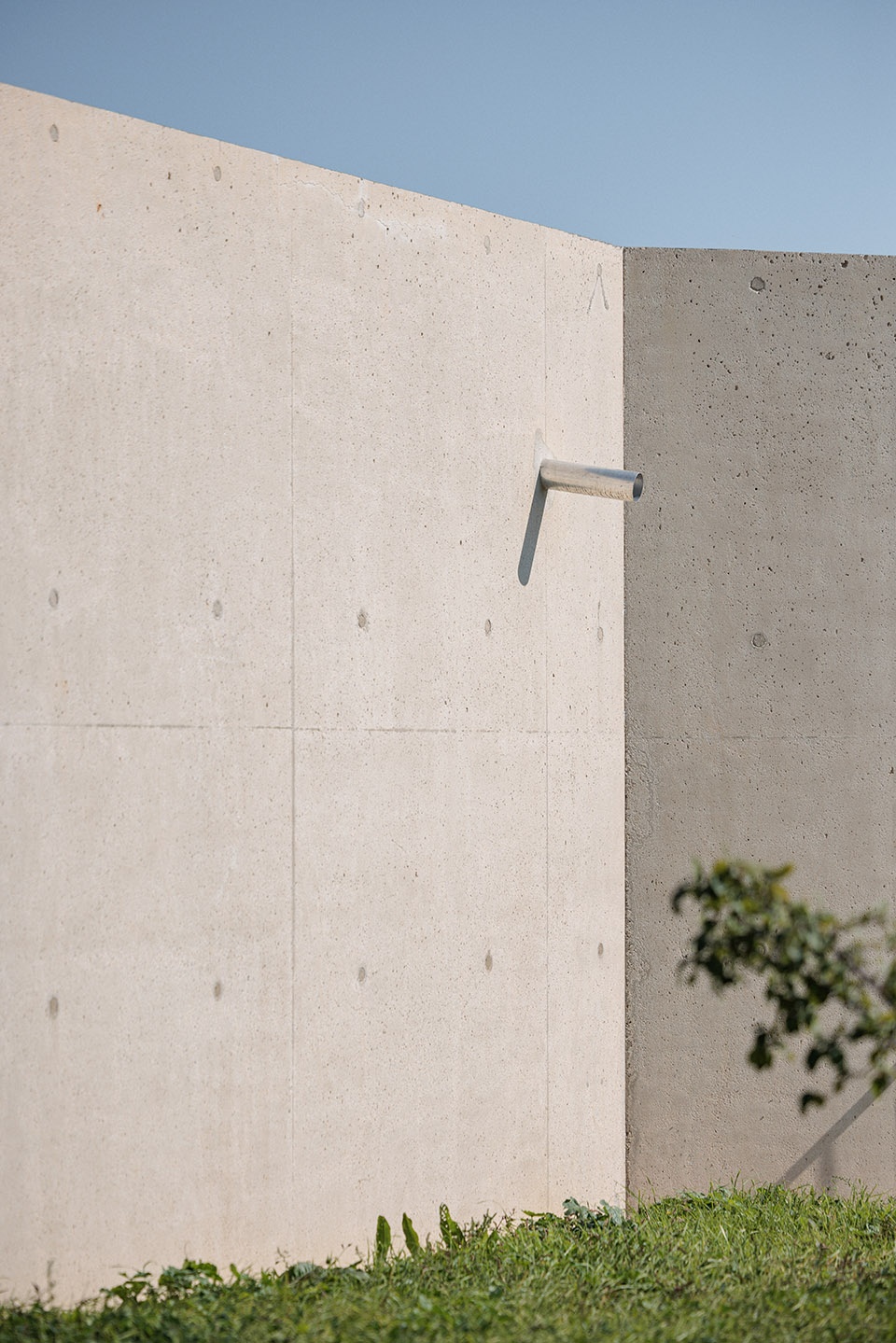
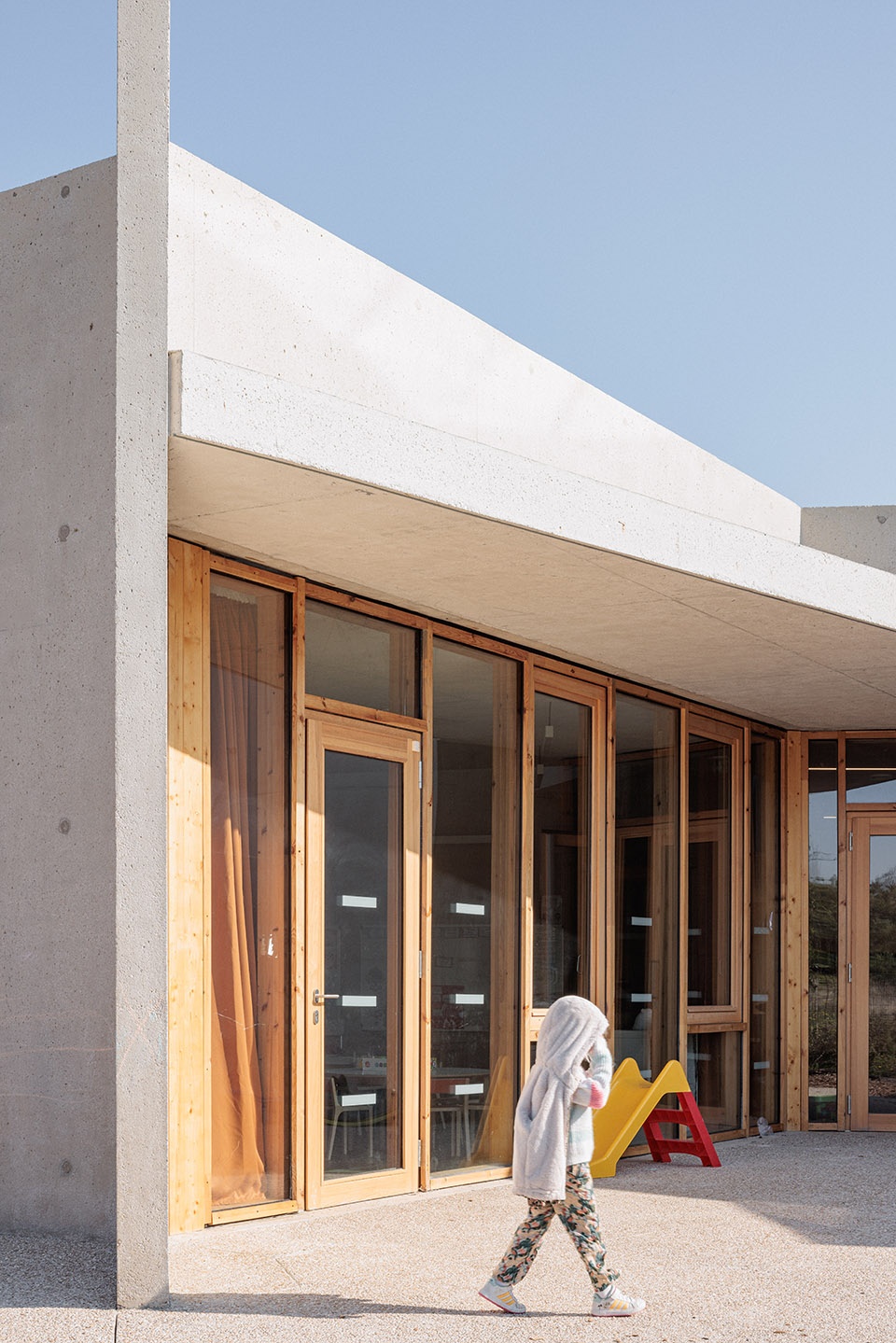
教室以单体式亭阁的形式出现,以富有节奏感的立面逐步塑造景观,既充满动感又富有系统性,从每个视角看呈现不同的面貌,有时显得沉稳,有时则显得透明。立面采用现场浇筑的有色混凝土,呈现出温暖和迎接的外观,在浇筑后通过喷砂处理暴露出骨料,从而在某些地方控制最终的质量。这些亭阁教室仿佛从地面中升起,如同岩石般——原始、高贵、永恒。
The classrooms appear in the form of monolithic pavilions that rhythmically shape the landscape with a sequential façade, both dynamic and systematic, offering a different appearance from every viewpoint, sometimes massive, sometimes transparent. The facades, made of in-situ tinted concrete that gives off a warm and welcoming appearance, are then sandblasted after pouring to expose aggregates, in certain places, thus controlling the final quality. The pavilion classrooms emerge from the ground like rocks–raw, noble and timeless.
▼学校外观及周围环境,exterior of the school and surroundings
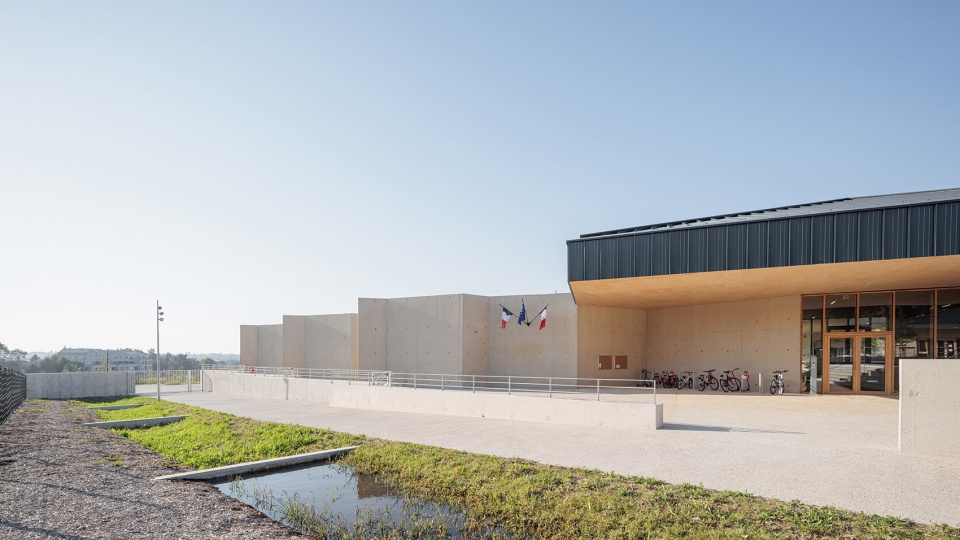
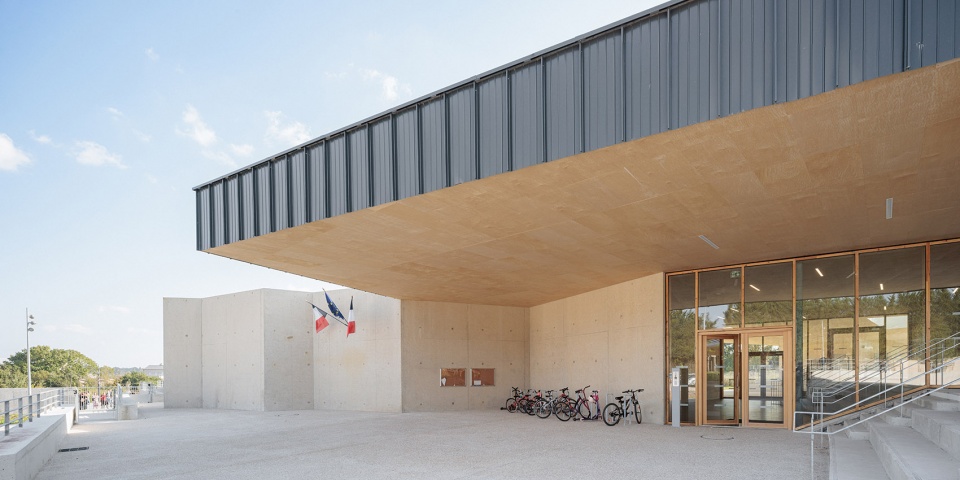
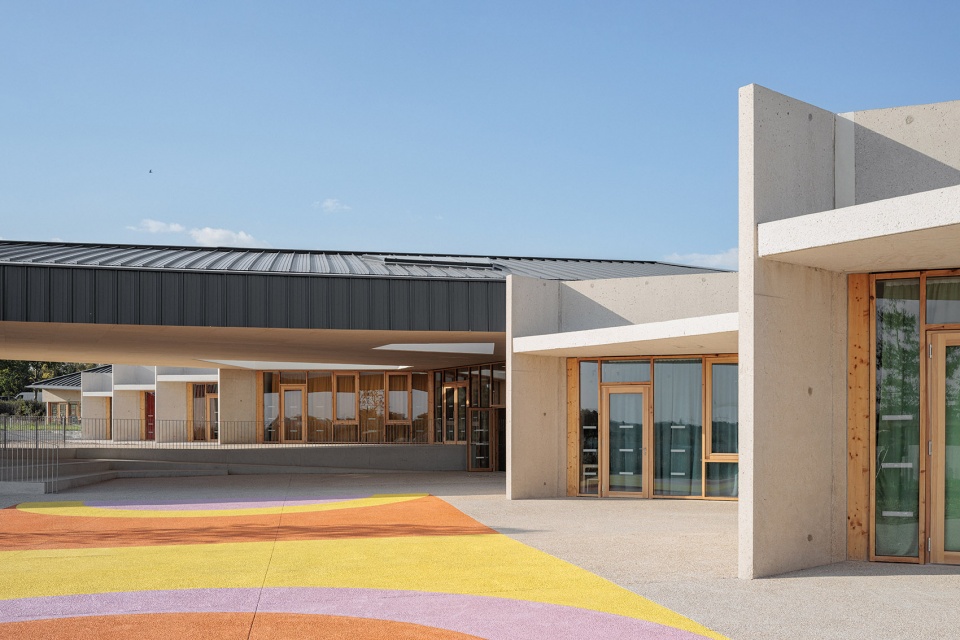
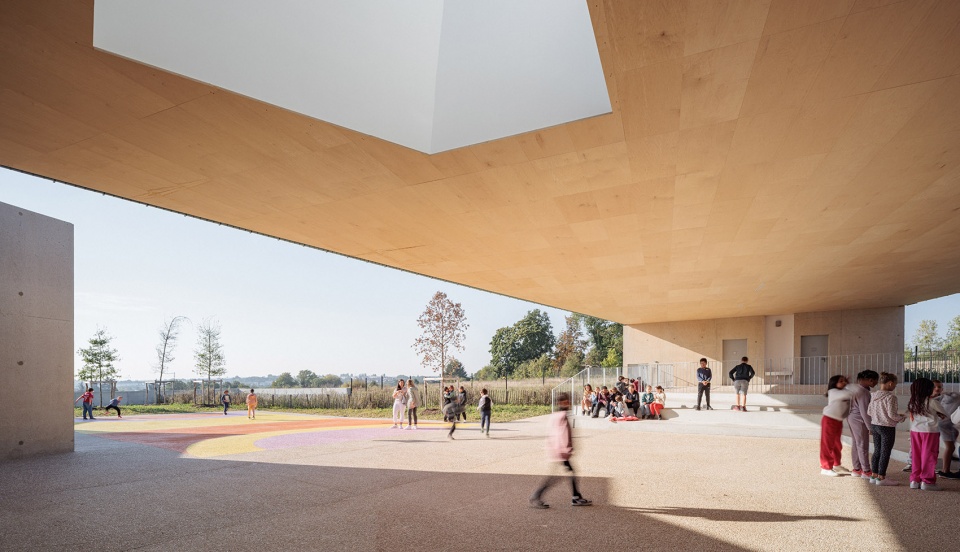
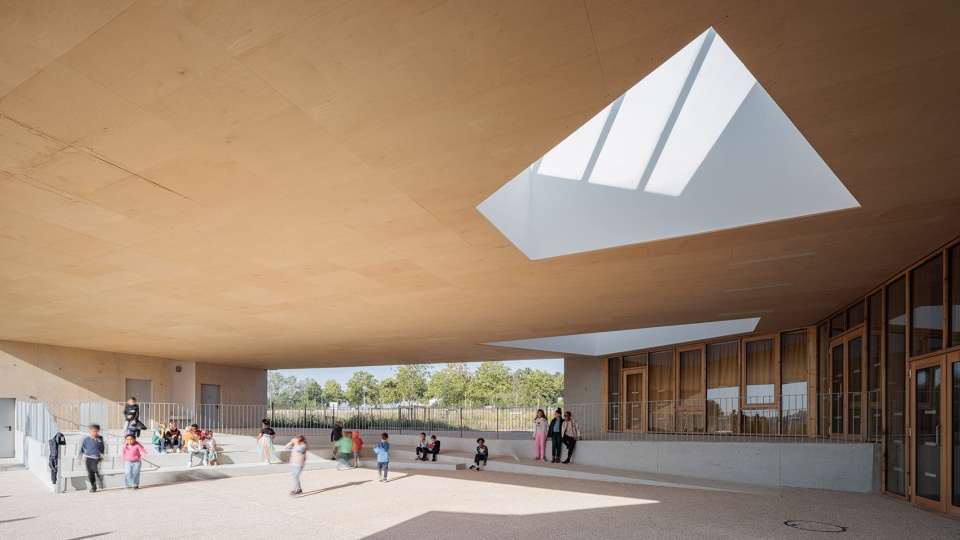
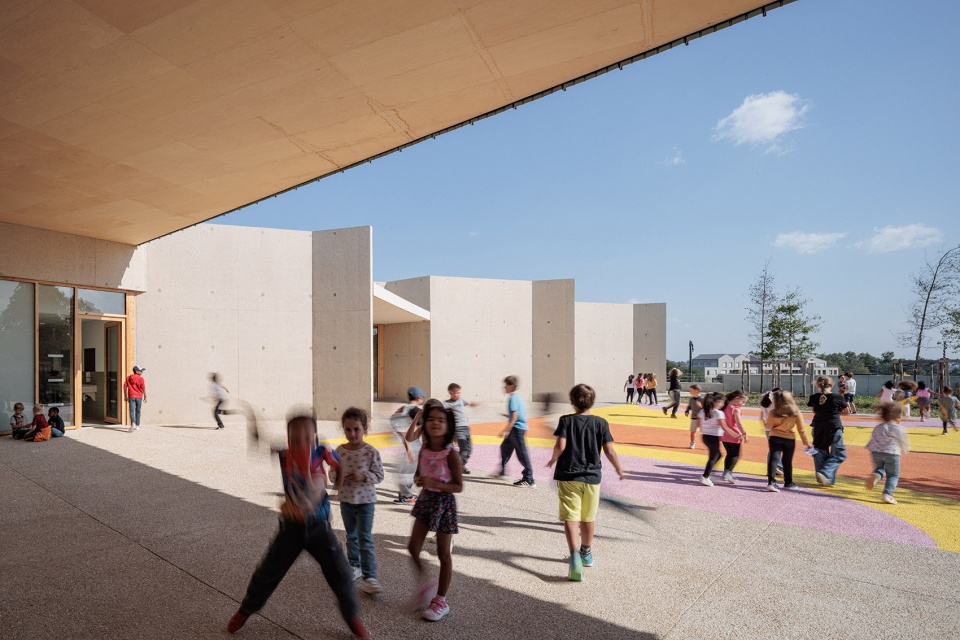
共享空间,包括课后活动中心、餐厅以及学校综合体的主大厅,都在显眼的铝制屋顶下呈现,屋顶引导着访客朝向入口。
Shared spaces, including the after-school center, the restaurant, and the main hall of the school complex, are revealed under significant aluminum roofs that guide the visitor towards the entrances.
▼显眼的铝制屋顶,significant aluminum roof
▼铝制屋顶下的活动空间,activity space under the significant aluminum roof
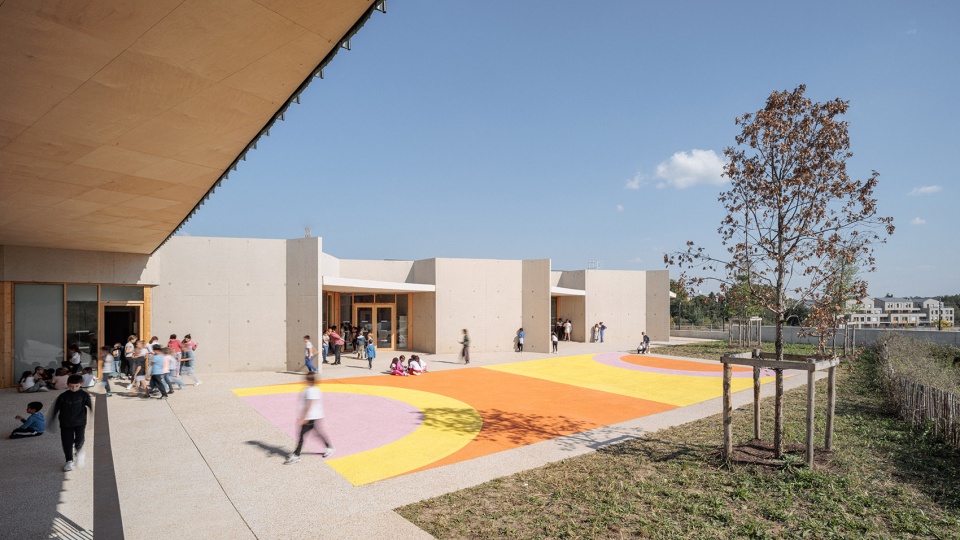
因此,所提议的建筑设计对于不同体量的建筑进行了区分,专门用于学习的封闭空间与供所有社区居民共享的多功能空间之间的界限分明。从这个意义上说,它遵循了所有人皆知并易于辨识的城市层级结构,在这个结构中,公共设施在私用建筑群体的统一体量中点缀着城市景观。
Thus, the proposed architecture for the different volumes distinguishes between reserved spaces dedicated exclusively to learning and shared, multi-purpose spaces intended for all neighborhood residents. In this sense, it respects the urban hierarchy known and recognisable to all, in which public facilities punctuate the urban landscape within a uniform mass of buildings for private use.
▼专门用于学习的封闭空间与供所有社区居民共享的多功能空间之间的界限分明,
different volumes distinguishes between reserved spaces dedicated exclusively to learning and shared
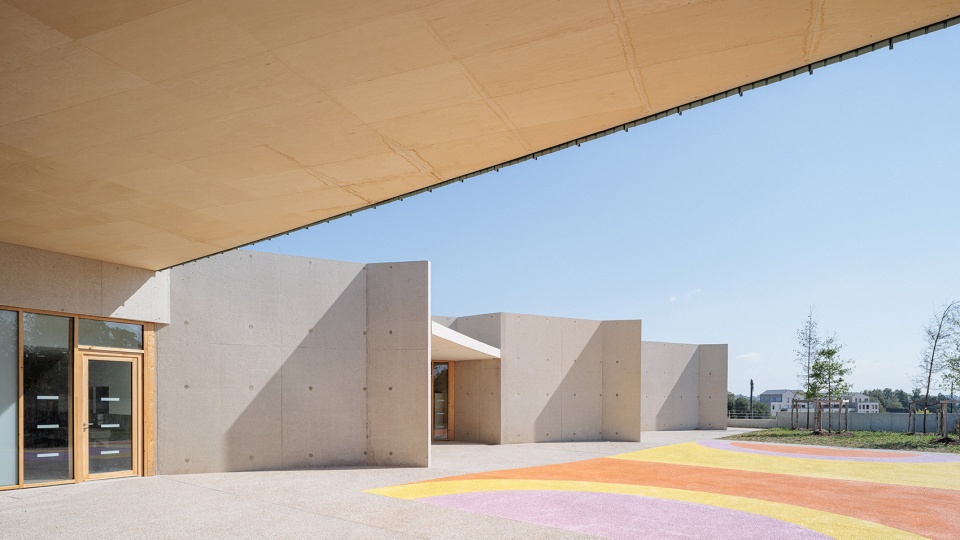
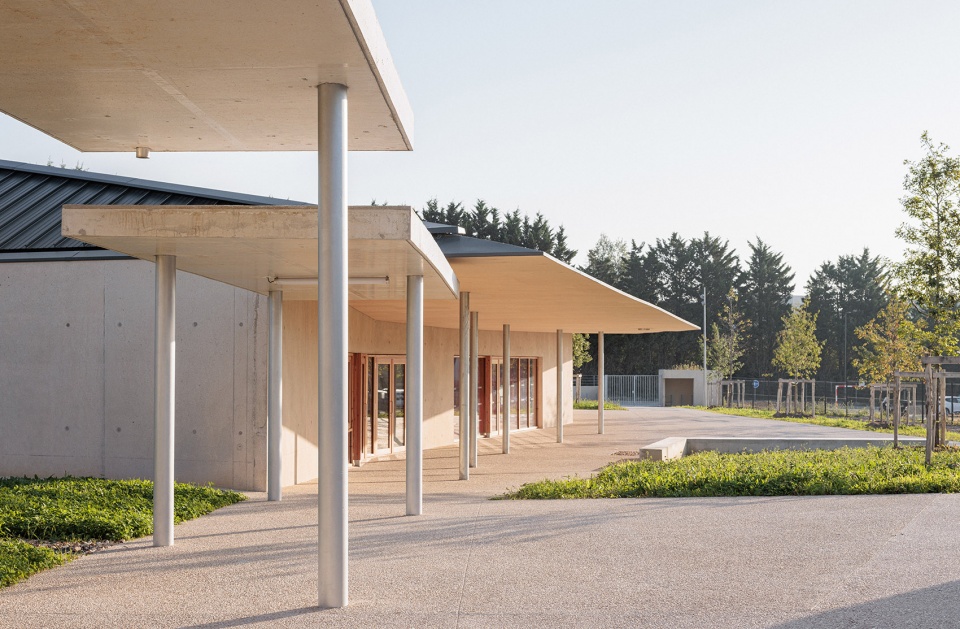
可见材料Visible Materials
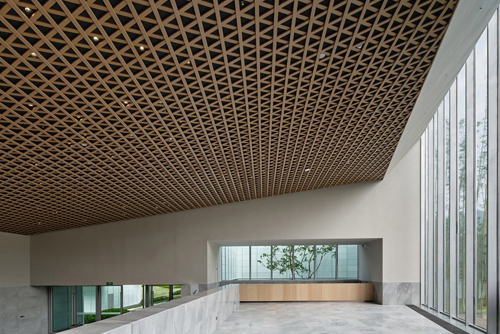
墙面使用混凝土;屋顶使用铝材;木材用于细木工。这些材料因其强大的技术性和价值而被选中:它们耐用、地方性强且传统,具有良好的老化特性。
Concrete for walls. Aluminum for roofs. Wood for joinery These materials are chosen for their strong technical and identity value: they are durable, local, and traditional, with well-controlled aging properties.
▼屋顶使用的铝材,Aluminum for roofs
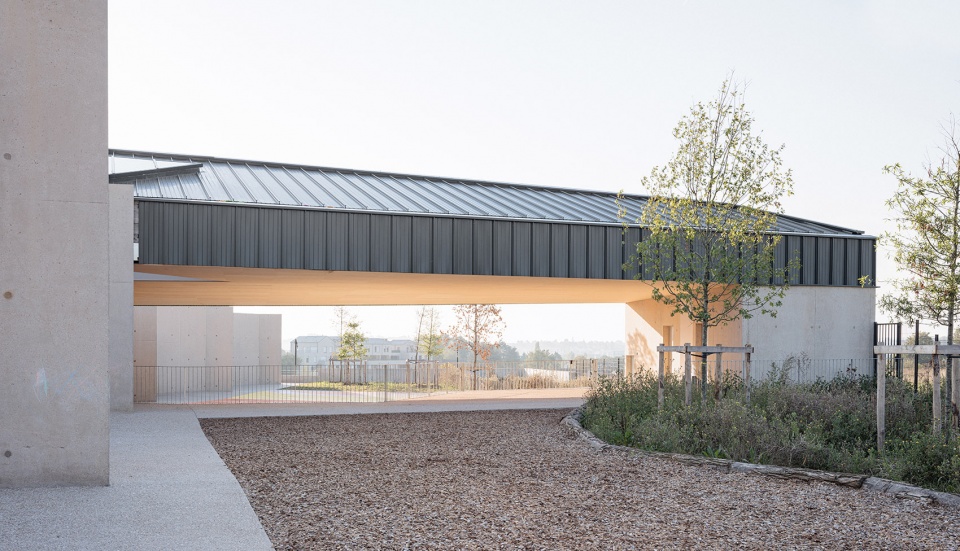
▼屋顶底面使用的木材,wood used for roof underneath surface
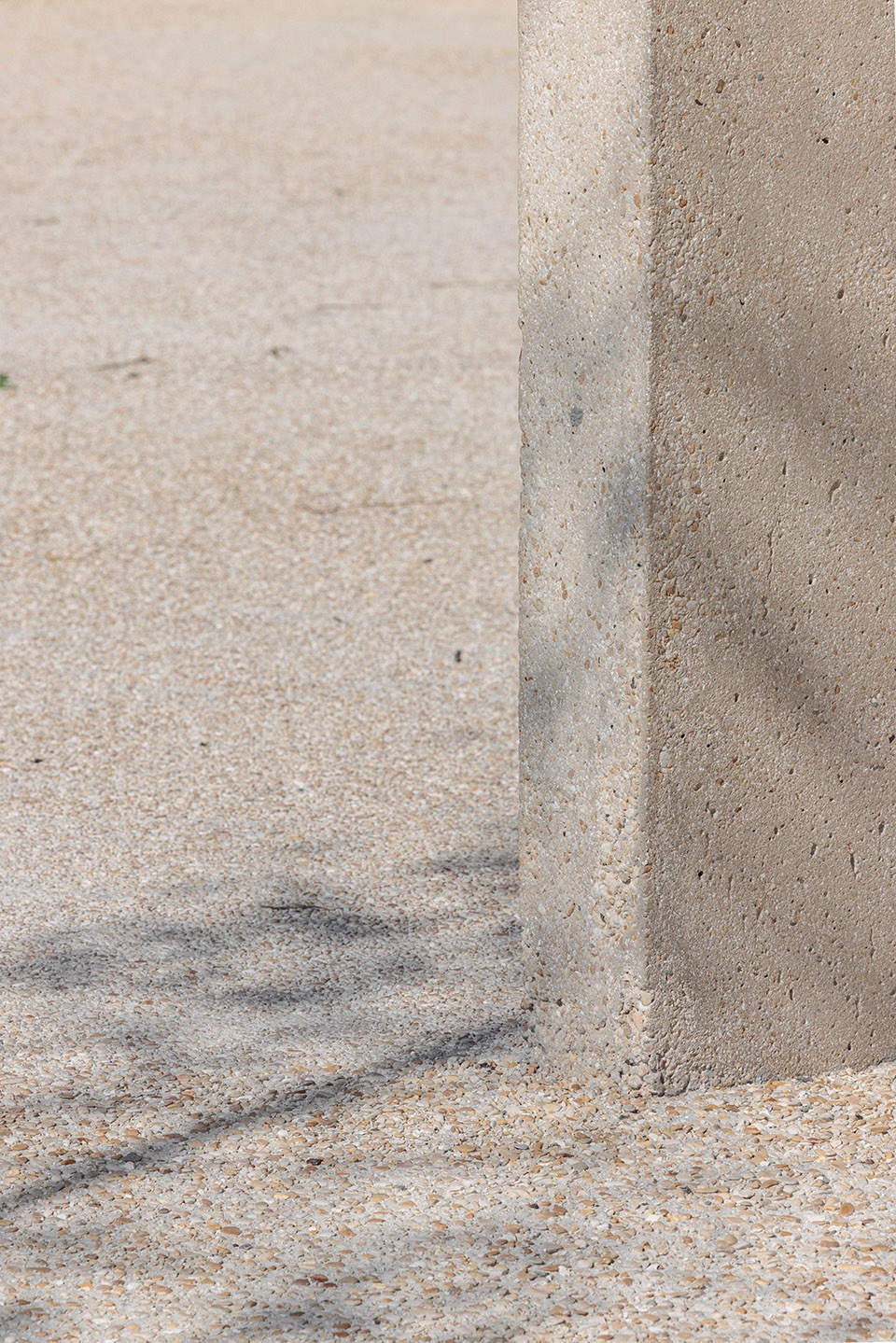
▼墙面使用混凝土,concrete used for the walls
▼混凝土细部,concrete detail
学校综合体传递出一种安定的宁静感,这种宁静将持续数百年。在达到所需的技术和环境性能的同时,它无缝地整合了技术系统(如隔热、技术设备等),并预见到它们在未来更换时不会改变建筑的形象。设计的目标是一座符合当前需求的现代建筑,同时与自然和建成环境和谐融合,形成一个连贯且可持续的整体。
The school complex conveys a reassuring serenity that will be preserved over centuries. While achieving the required technical and environmental performance, it integrates the technical systems seamlessly (insulation, technical equipment, etc.), anticipating their eventual replacement over time without altering the building’s image. The goal is to propose contemporary architecture, adapted to current needs, yet designed to harmonize with the natural and built environment, complementing it in a coherent and sustainable ensemble.
▼自然和建成环境和谐融合,harmonize with the natural and built environment
总体构成Overall Composition
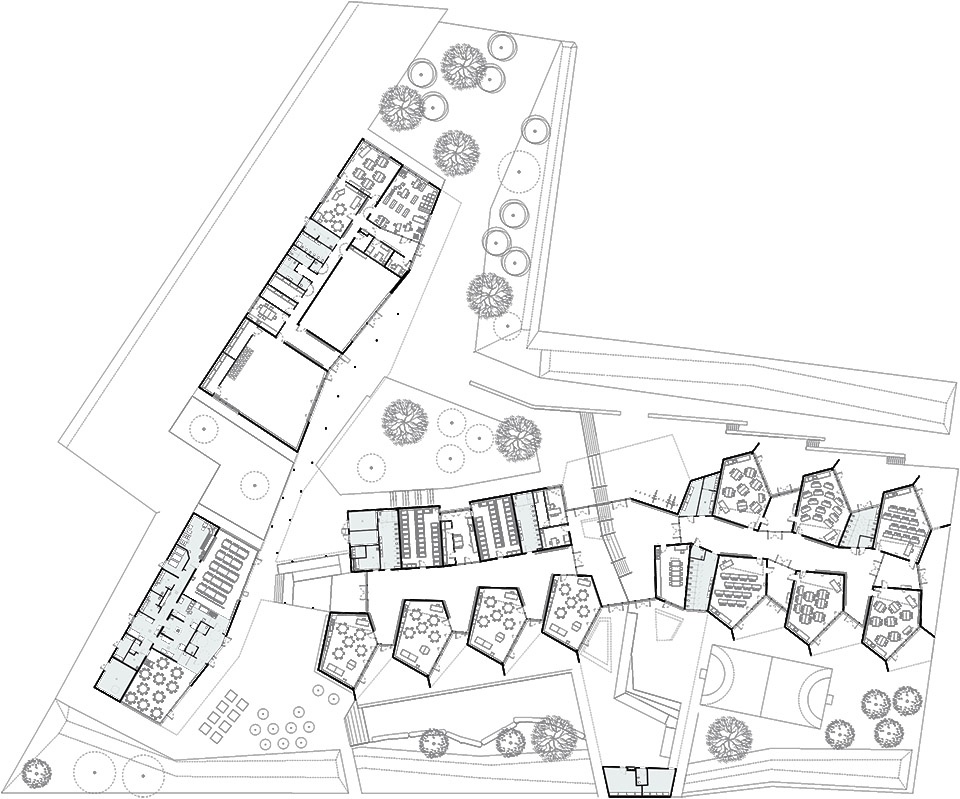
学校综合体通过位于未来体育馆北侧和南侧的两个入口进行连接。这些入口通向学校的庭院,庭院呈L形,环绕体育馆,并连接通向苏弗莱街(rue du Soufflet)和东南侧公共广场的两个入口。
Access to the school complex is provided by two entrances located at the north and south corners of the future gymnasium. These entrances lead to the school’s courtyard, which, in an L-shape, wraps around the gymnasium and connects the two entrances opening onto rue du Soufflet and the public courtyard to the southeast.
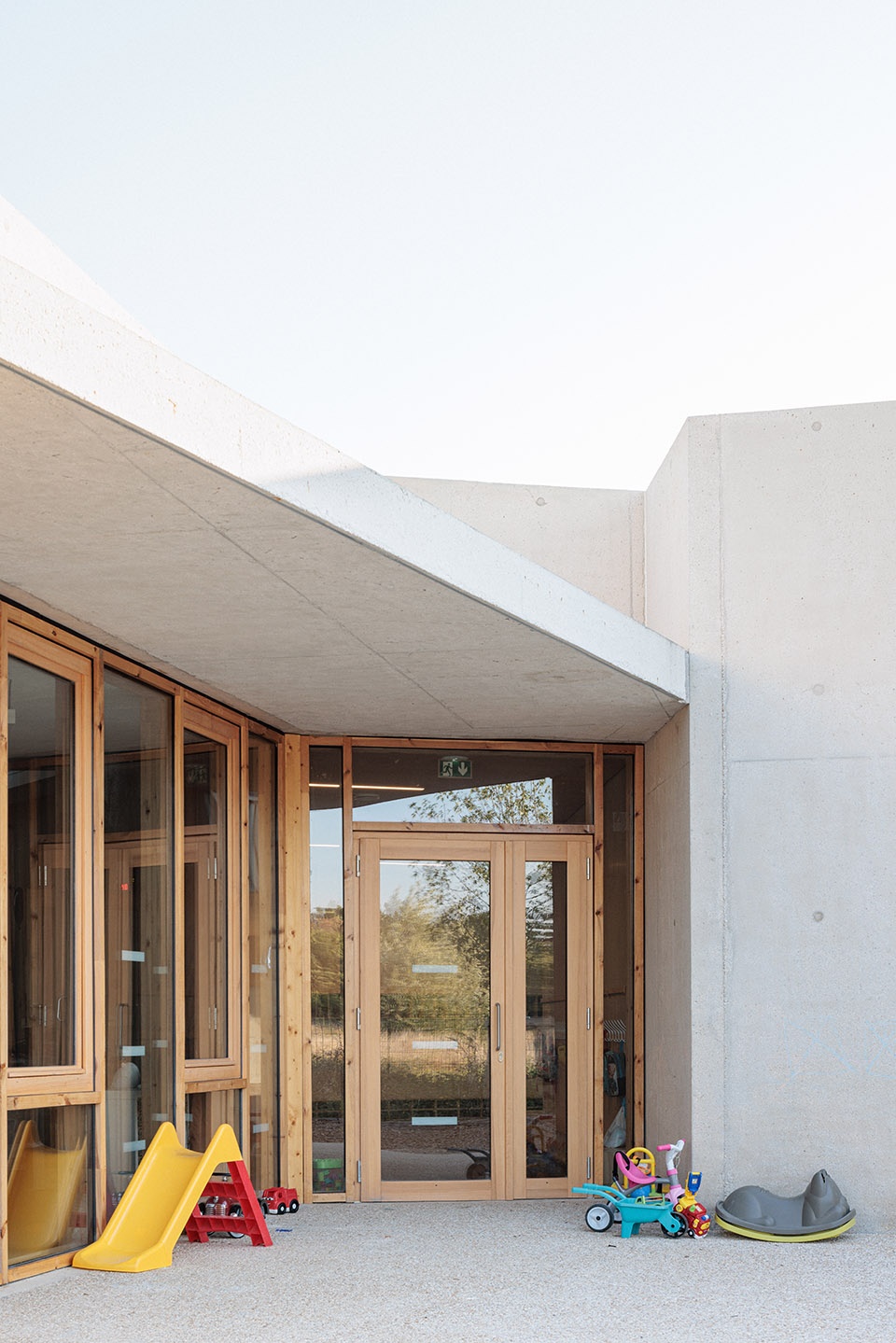
▼学校入口,school entrance
▼建筑入口,building entrance
学校综合体由三座建筑组成:
北侧是一座典型的乡村“长屋”形式的建筑,容纳接待和交流空间以及课后活动中心。
西北侧是学校餐厅,位于物流交货区与花园之间。
餐厅南侧是学前班,餐厅更南侧则是小学,面向公共庭院。
The school complex consists of three buildings:
To the north, a building in the form of a ‘’longère’’, a linear structure typical of rural areas, houses the reception and interface spaces as well as the after-school activity hub.
To the northwest, the school restaurant is located between the delivery area and the garden.
South of the restaurant is the preschool, and further south, opening onto the public courtyard, is the elementary school.
▼公共空间,public space
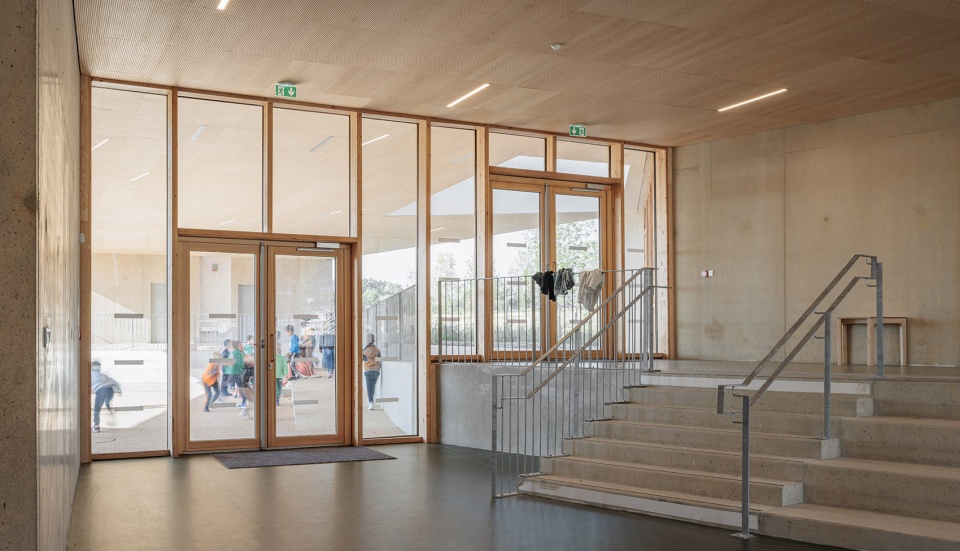
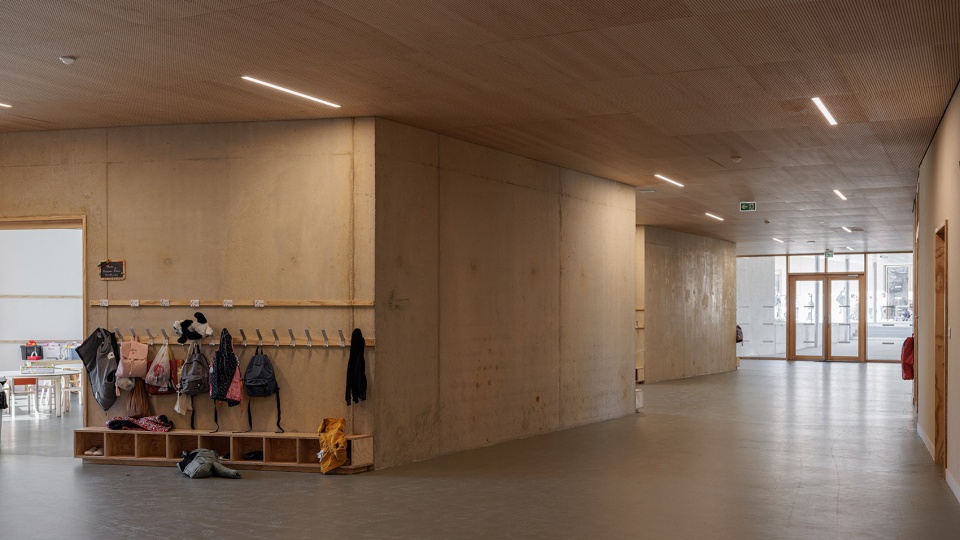
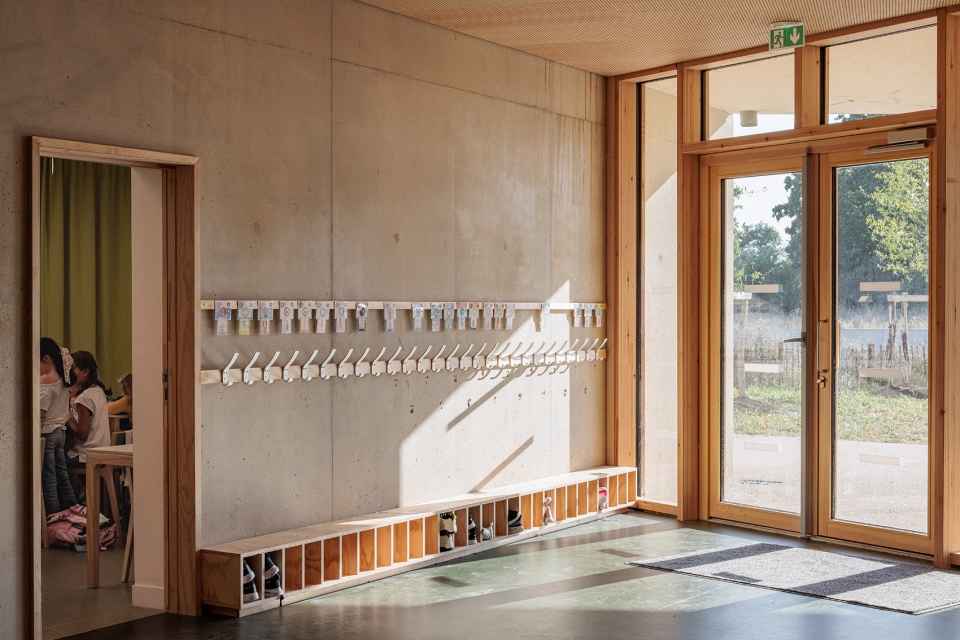
▼走廊区域,corridor area
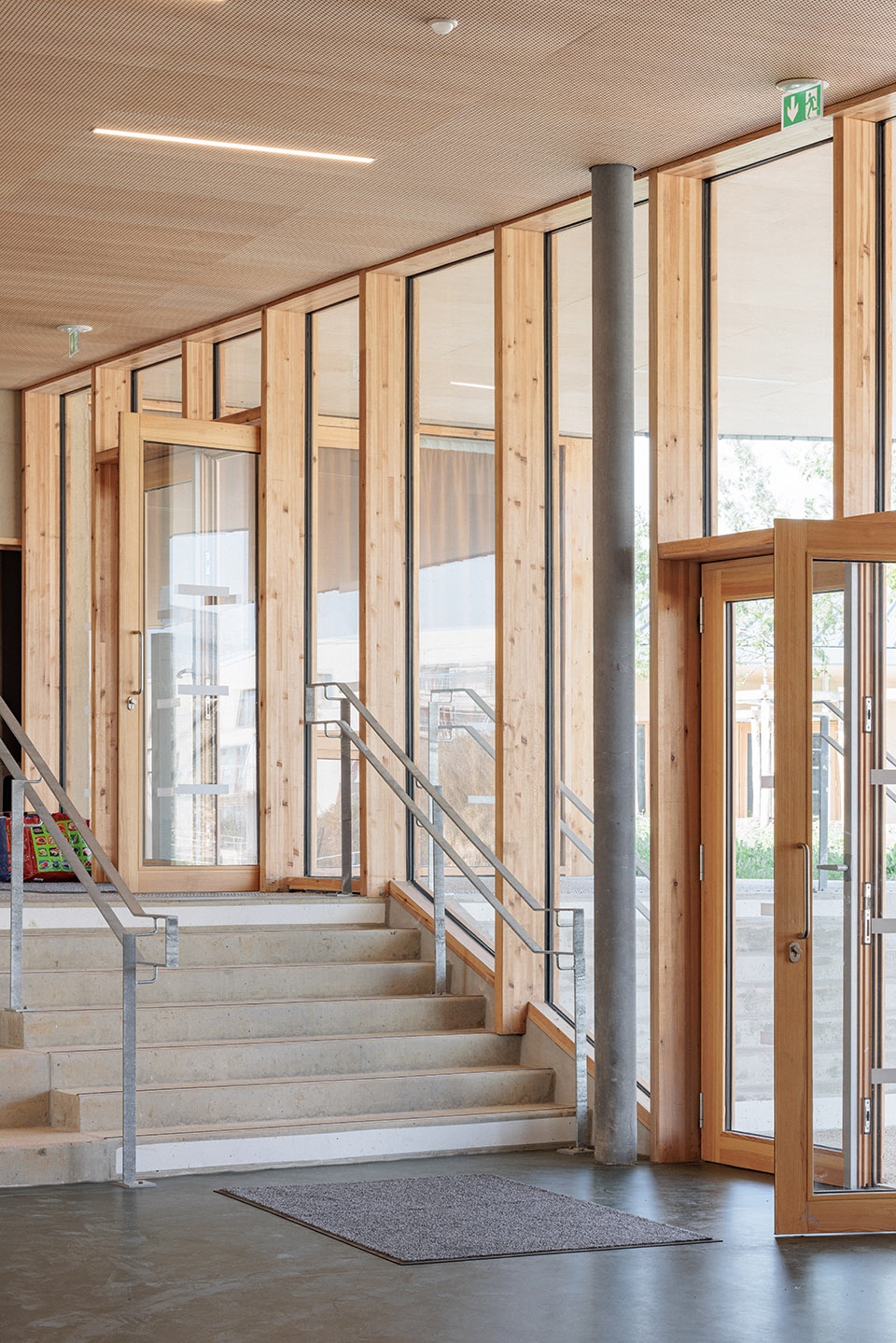
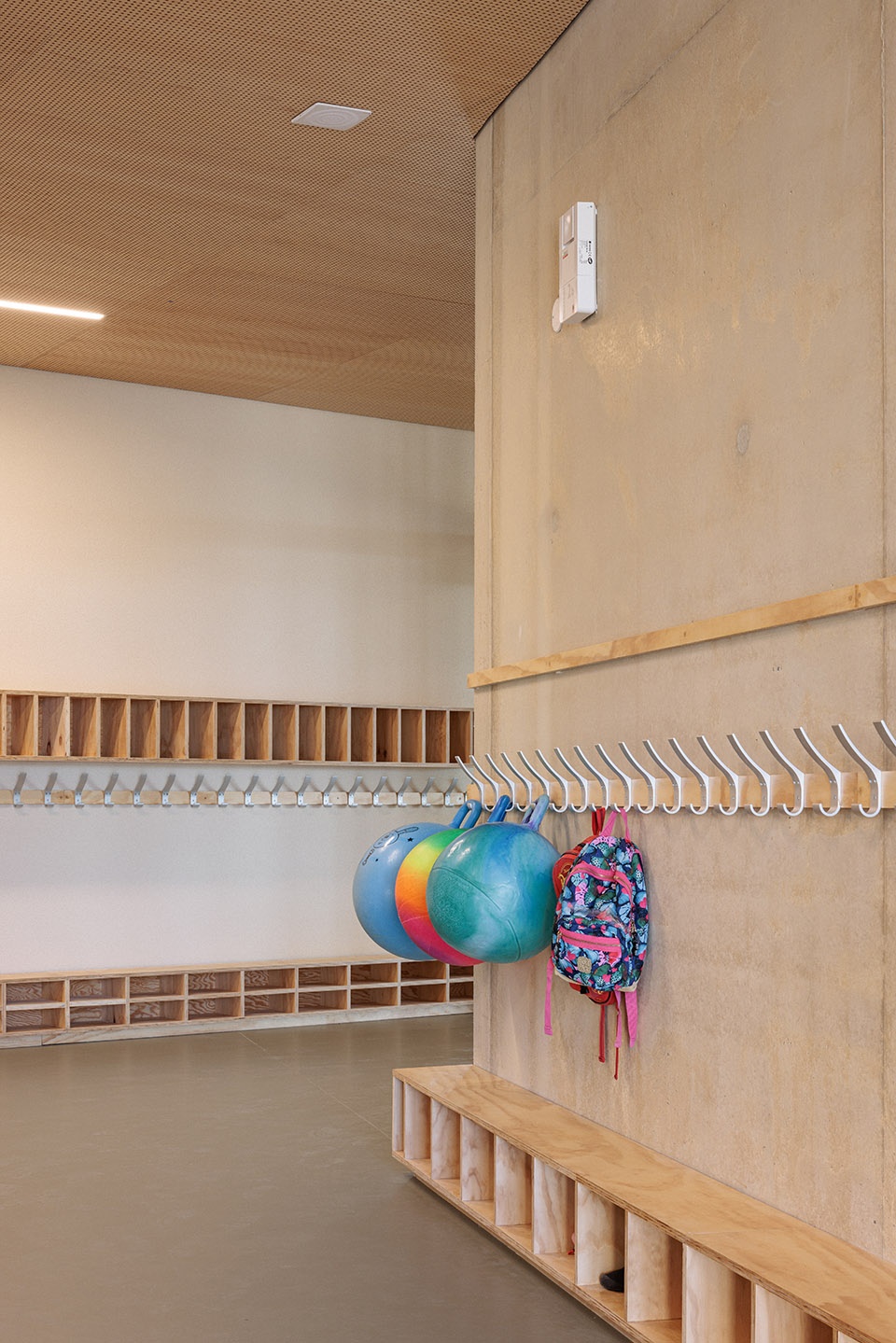
这种布局具有以下优势:
所有共享空间,如图书馆、多功能室、活动室和餐厅,都围绕公共广场集中,从而形成了村落的核心。
学前班也位于靠近中央广场的地方,缩短了年幼孩子全天活动的距离。
较大的学生群体(他们需要更多的活动并且较为吵闹)则被安置在场地的南端。
This layout offers the following advantages:
– All shared spaces, such as the library, multipurpose room, activity room and restaurant, are grouped around the public square, thus forming the heart of the village.
– The preschool is also located near the central plaza, which shortens travel for the youngest children throughout the day.
– Older students, who need more activity and are noisier, are located at the southern end of the site.
▼共享区域,shared area
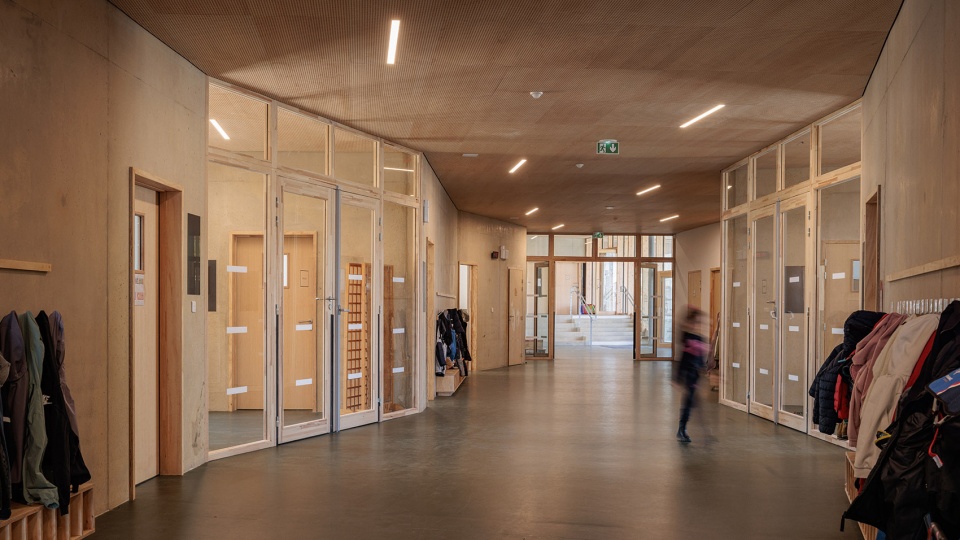
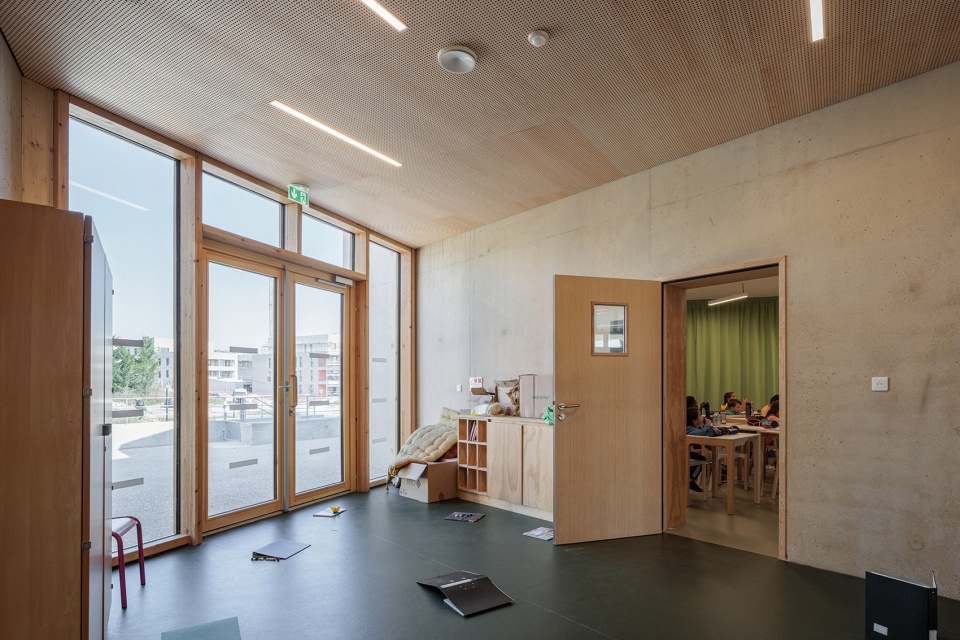
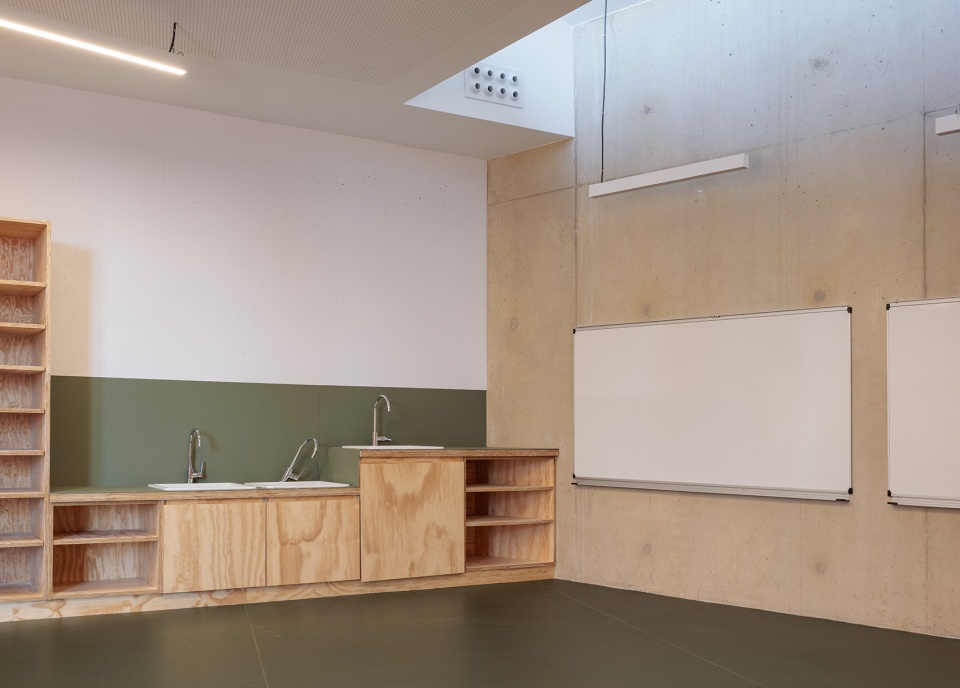
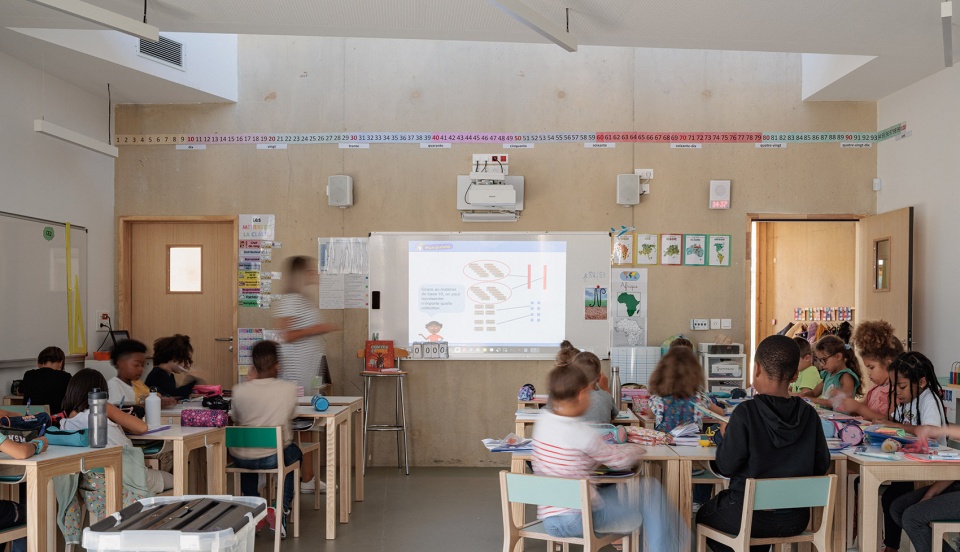
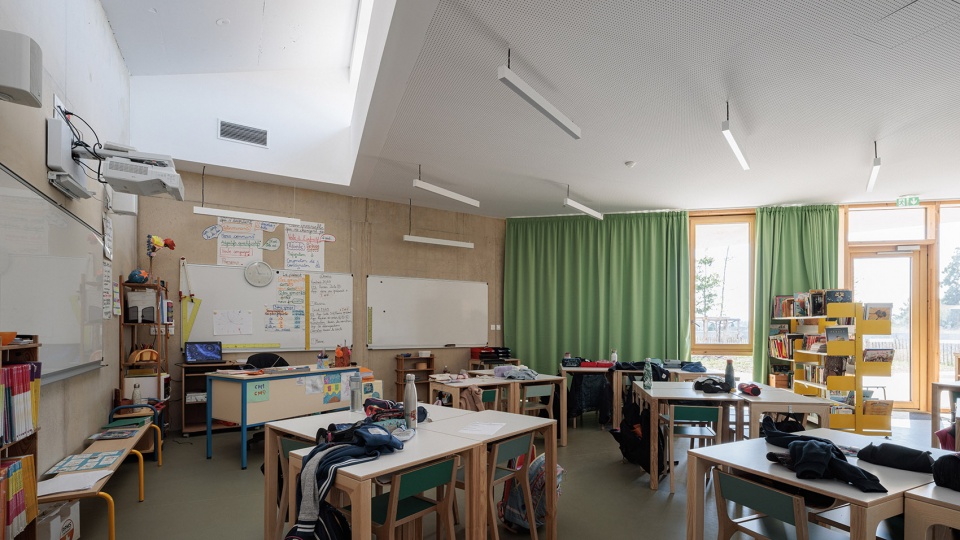
▼教室,classroom
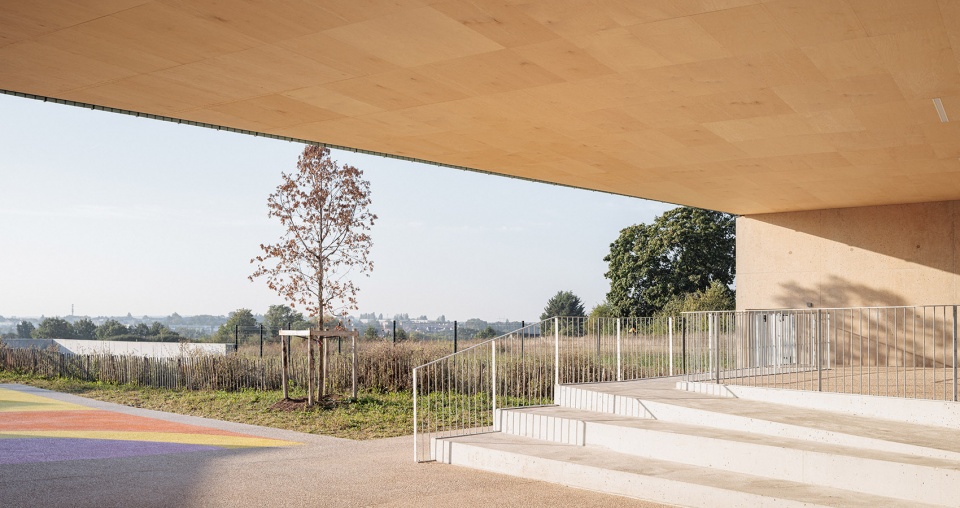
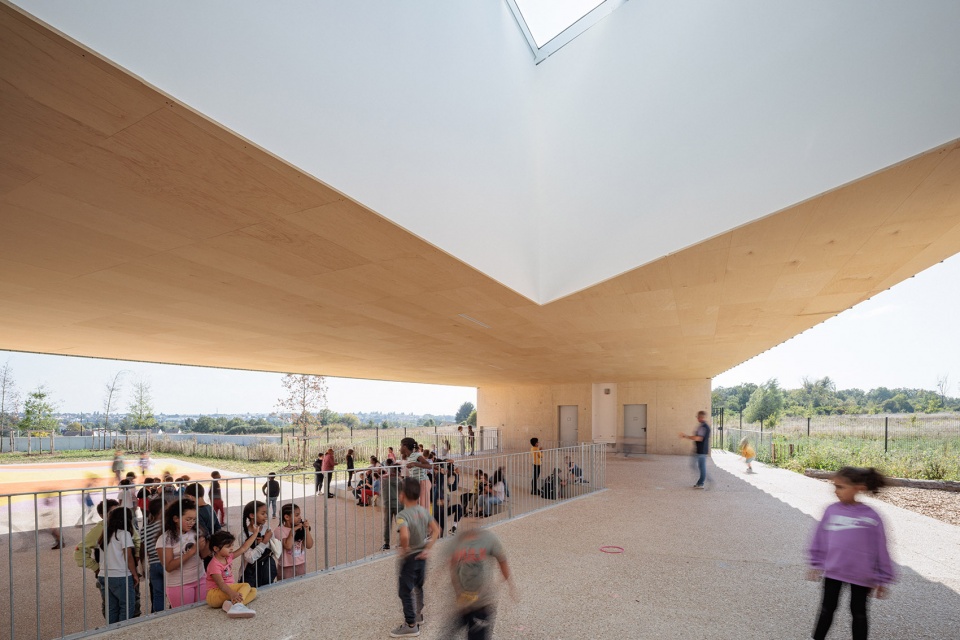
在保护入口的大型悬挑屋顶下,很容易辨认出不同区域的入口。
The entrances to the different areas are easily identifiable under large overhanging roofs that protect the entrances.
▼大型悬挑屋顶下的入口,entrance under the large overhanging roofs
公共空间Public Spaces
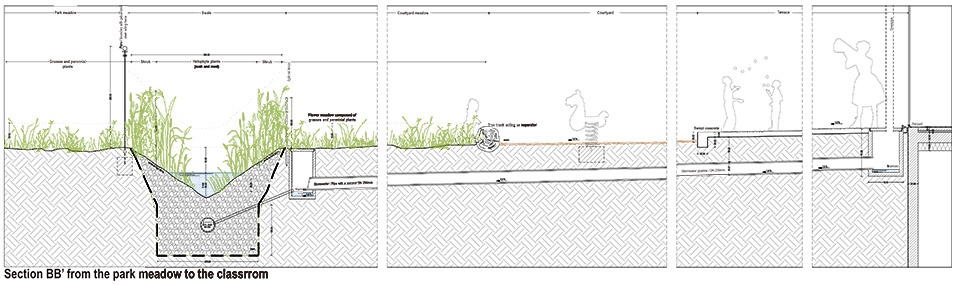
学校的庭院位于苏弗莱街(rue du Soufflet)入口与南侧公共庭院之间,配合软交通道形成一条围绕未来体育馆的连续道路网络。地形的坡度约为3%,有利于公共空间和建筑体量的精细区分,建筑体量分布在三个不同的高度水平上,每个水平错开1.5厘米。
The school’s courtyard, created between the access on rue du Soufflet and the public courtyard to the south, completes with a soft-traffic lane a continuous road network around the future gymnasium. The terrain’s slope, approximately 3%, is conducive to a fine differentiation of public spaces and built volumes, which are set on three different levels, staggered by 1.5cm.
▼缓坡的地形,gently sloping terrain
这种坡度有助于界定学校庭院与小学教室私人露台之间的边界。早晨,庭院被学生和家长活跃使用,而露台则保持私密,面向东侧。这些与每个小学和学前班教室相关联的私人露台作为前花园,并作为公私空间之间的缓冲区。这些露台使学生能够更好地使用他们的学校空间,例如,组织户外工作坊、临时或半永久性建筑以及与自然元素(阳光、雨水、风等)进行各种实验,或仅仅在天气良好时举办户外课堂,营造积极的氛围。
This slope helps define the boundary between the school’s courtyard and the private terraces of the elementary classrooms. In the morning, the courtyard is actively used by students and parents, while the terraces remain private and oriented to the east. These private terraces, associated with each elementary and preschool classroom, acting as a front garden and a buffer to ensure privacy between public and private spaces. These terraces allow students to take greater ownership of their school, organizing for example, outdoor workshops, temporary or semi-permanent constructions, and various experiments with the elements (sun, rain, wind,) or simply having outdoor classes in good weather with a positive atmosphere.
▼学校庭院,school courtyard
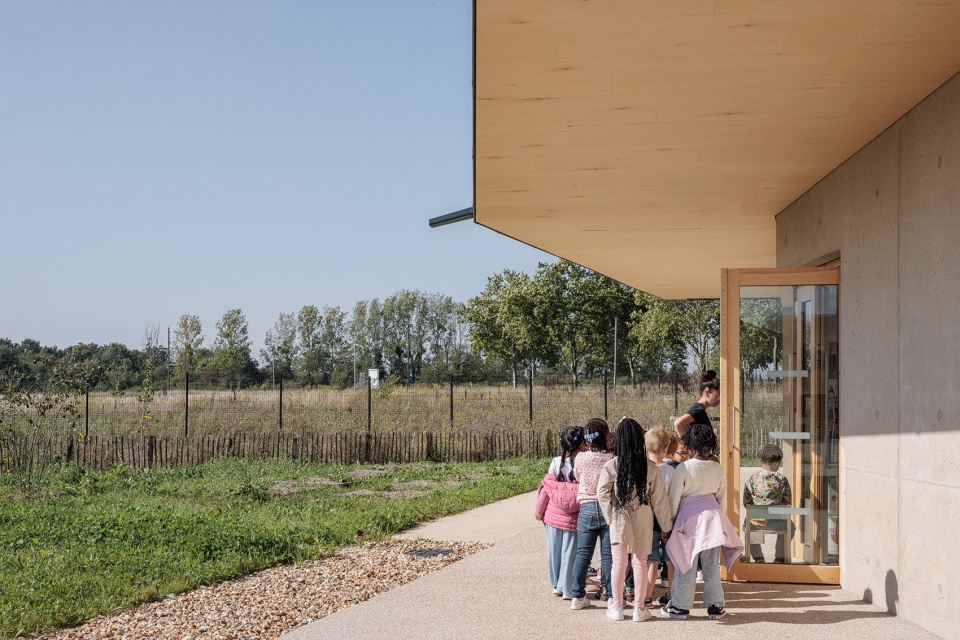
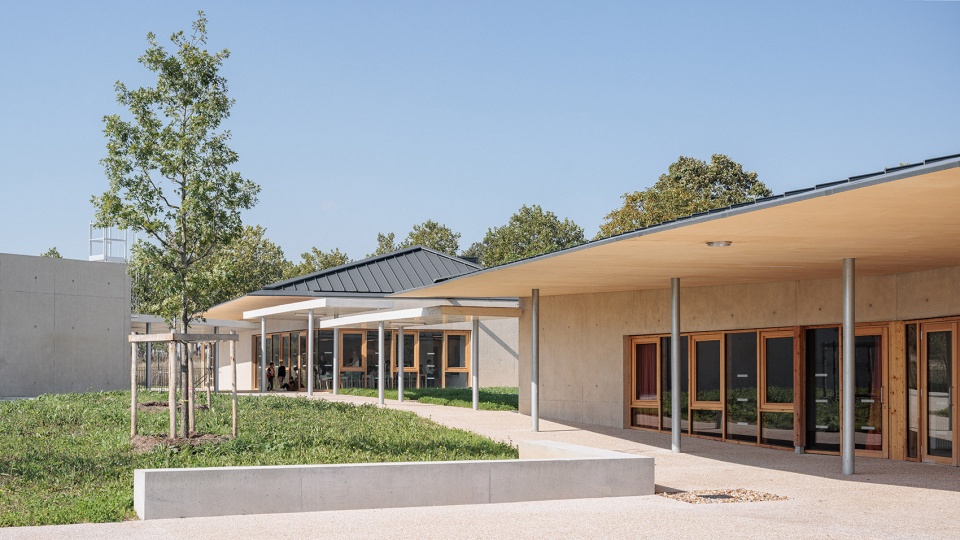
▼在天气良好时举办户外课堂,simply having outdoor classes in good weather
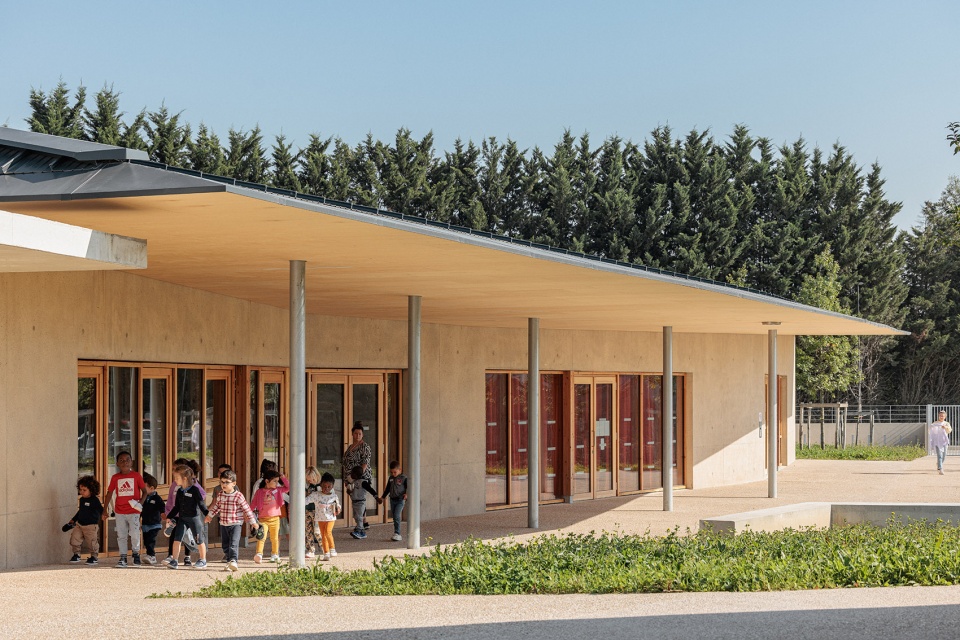
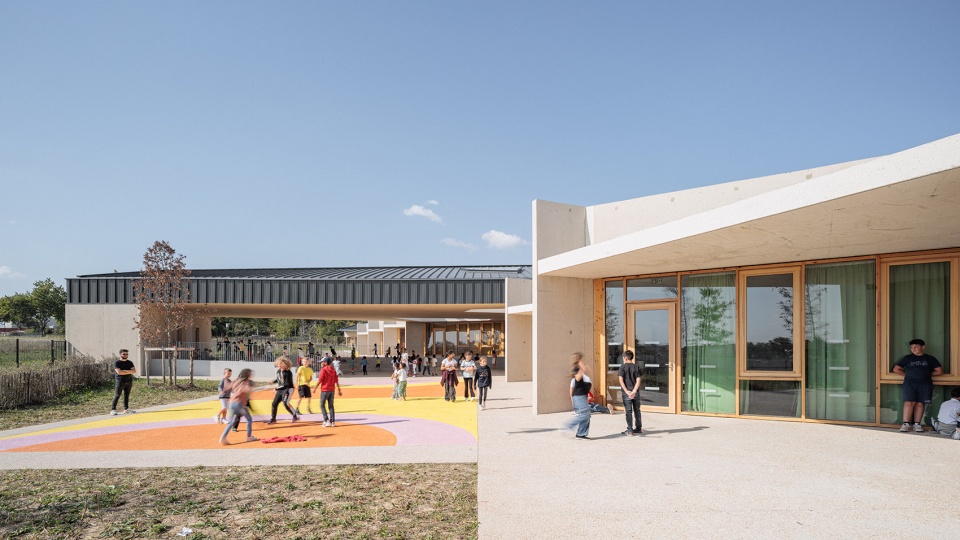
▼营造积极的氛围,creating positive atmosphere
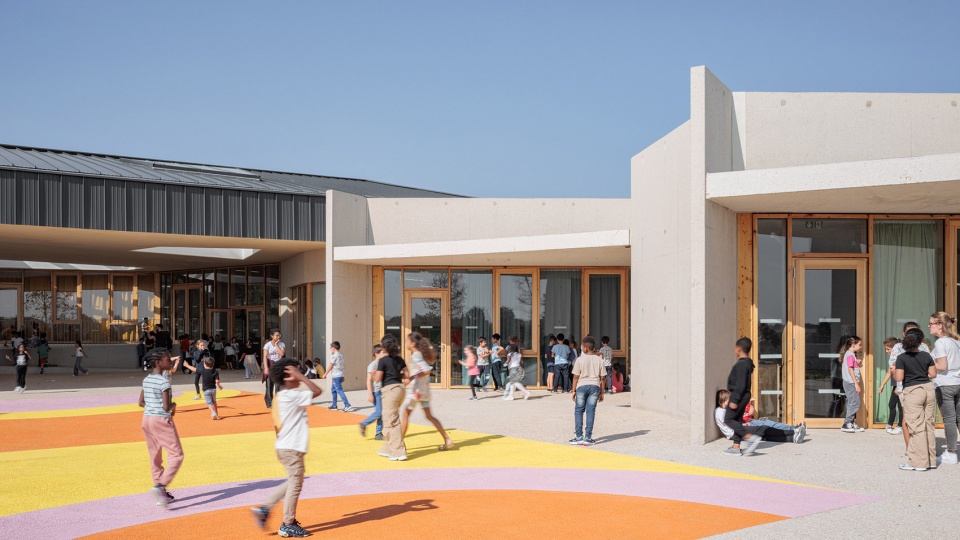
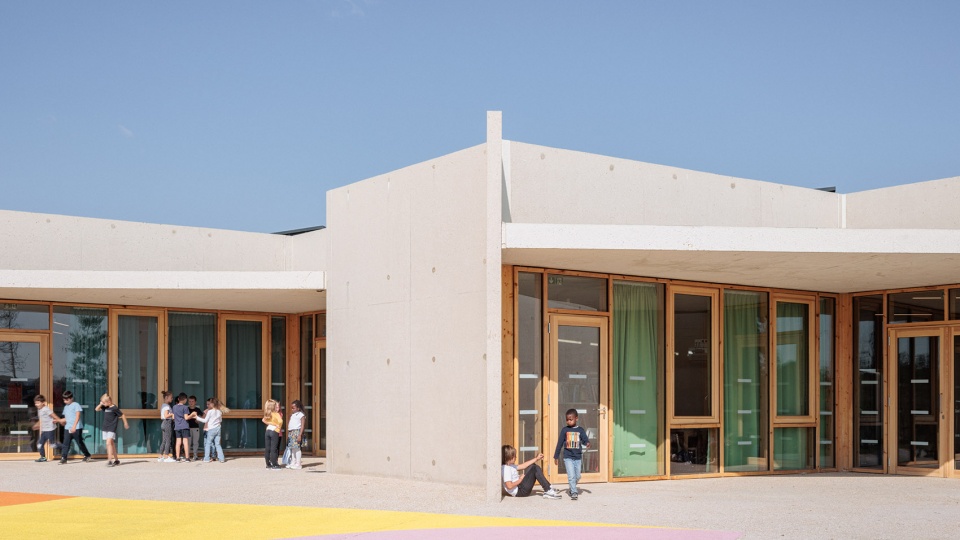
连接不同楼层的楼梯和台阶构成了聚会、休闲或自发的活动空间。该项目旨在为社区提供一个真正的村落广场,位于不同功能区之间,凭借其文化和体育活动以及城市和建筑品质赋予其生气。
The stairs connecting the different levels within and outside the school, often associated with steps, constitute meeting, relaxation, or spontaneous spaces.This project aims to offer the neighborhood a true village square, located centrally among the different programmatic hubs, brought to life by its cultural and sports offerings, and its urban and architectural qualities.
▼构成了聚会、休闲或自发的活动空间,constitute meeting, relaxation, or spontaneous spaces
教学理念与开放空间Pedagogy and open spaces
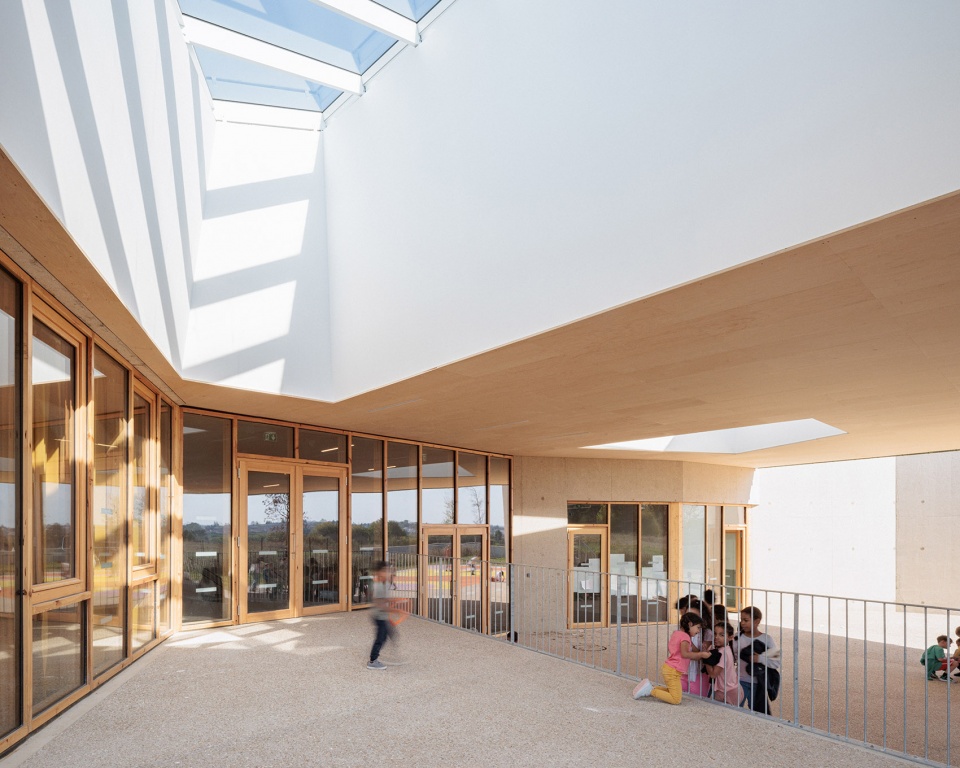
Arpajon的Claudine Hermann 学校建筑群项目体现了当代教学方法,强调开放、灵活和激发创意的空间。流通区域成为了活跃的空间,促进互动和多样化使用,而壁龛、看台和私人露台将教学活动延伸至教室外。这些空间鼓励学生的自主性和创造力,与户外和自然保持不断的接触。建筑被设计为“儿童尺度上的村落”,设有广场、多功能区域以及室内外之间和谐的过渡,为学生提供了一个丰富和沉浸式的教育环境。
The project for the Claudine Hermann school group in Arpajon reflects a contemporary approach to teaching, with the emphasis on open, flexible and stimulating spaces. The circulation areas become active spaces, conducive to interactions and versatile uses, while the alcoves, bleachers, and private terraces extend pedagogical activities beyond the classrooms. These spaces encourage students’ autonomy and creativity, in constant contact with the outdoors and nature. Designed as a ‘village on a child’s scale’, the building features plazas, multi-purpose areas and harmonious transitions between indoors and outdoors, providing an enriching and immersive educational environment.
▼教室空间,classroom
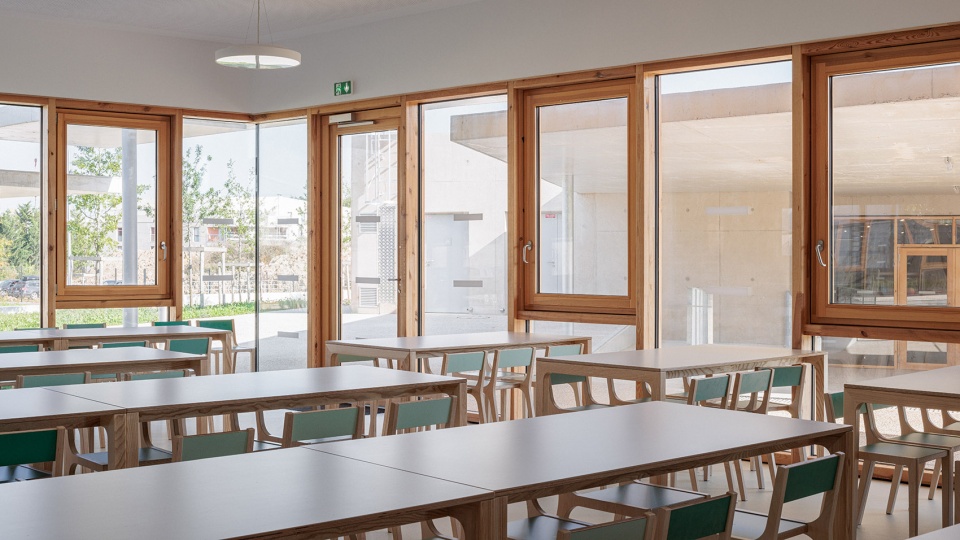
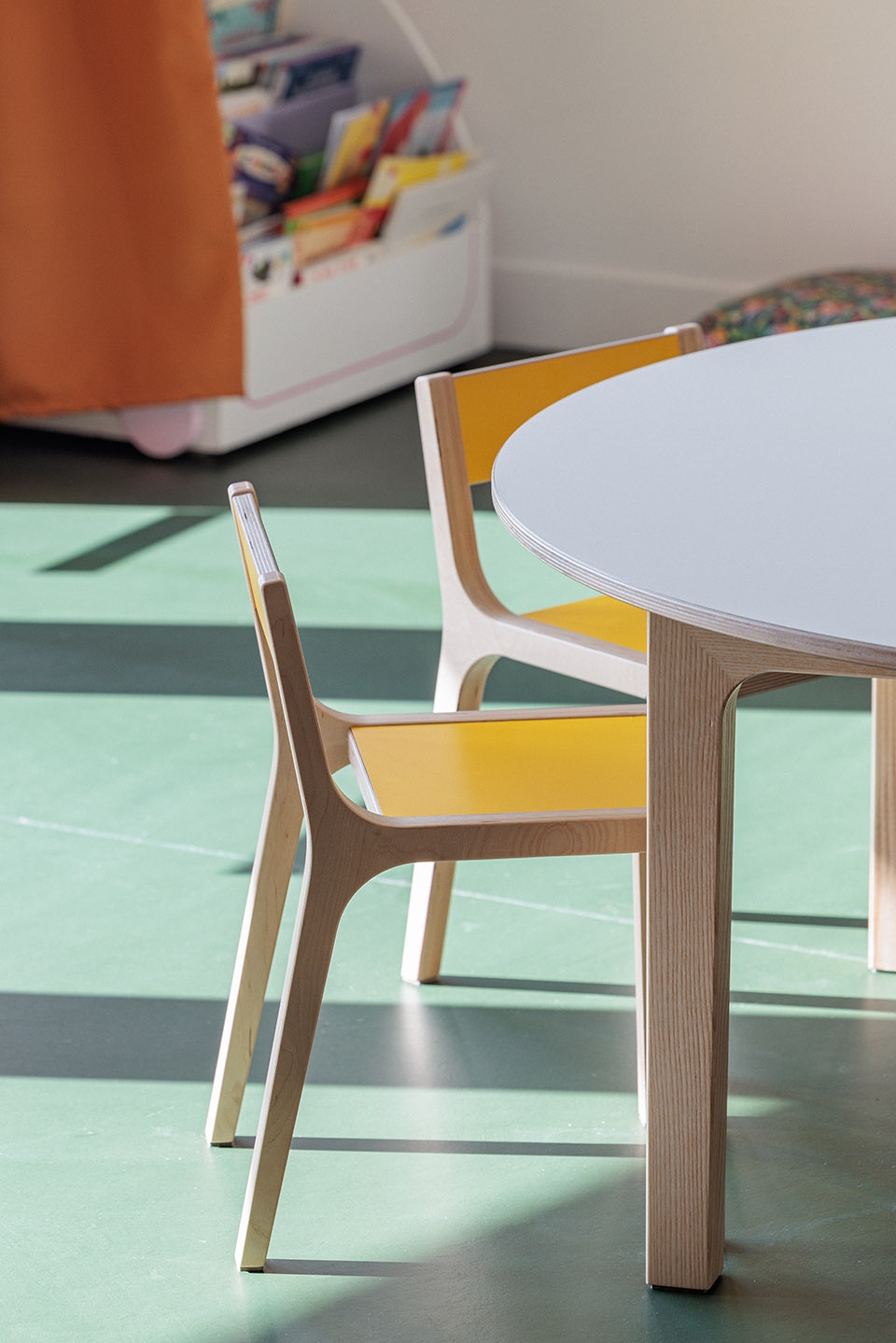
▼教室细部,classroom detail
▼平面图,plan
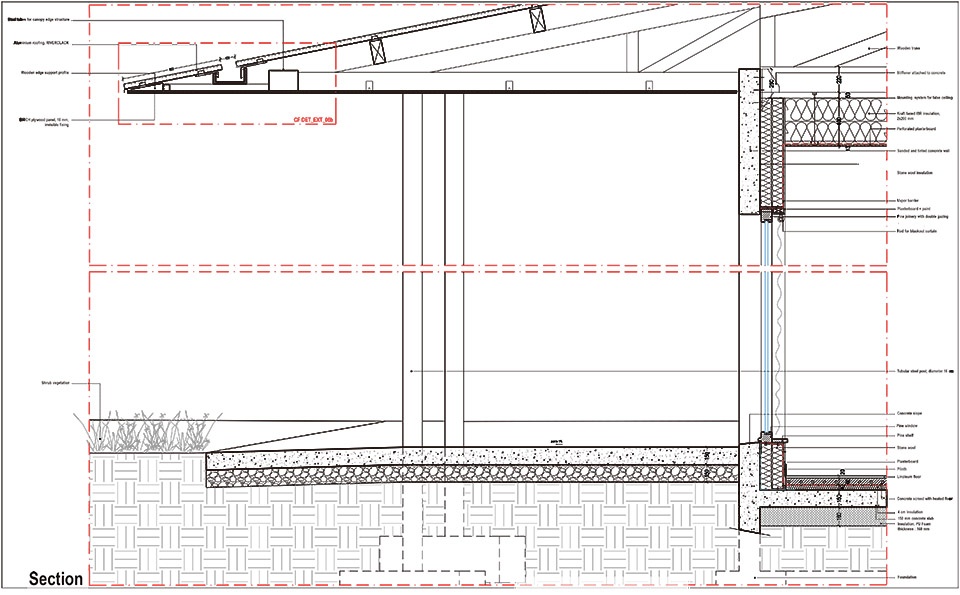
▼庭院剖面,section from the park meadow to the classroom
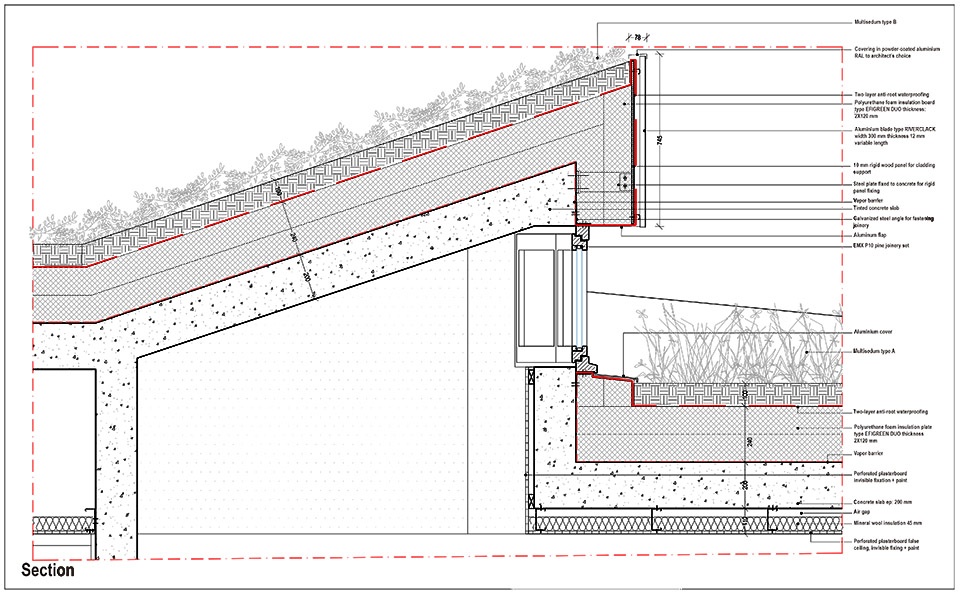
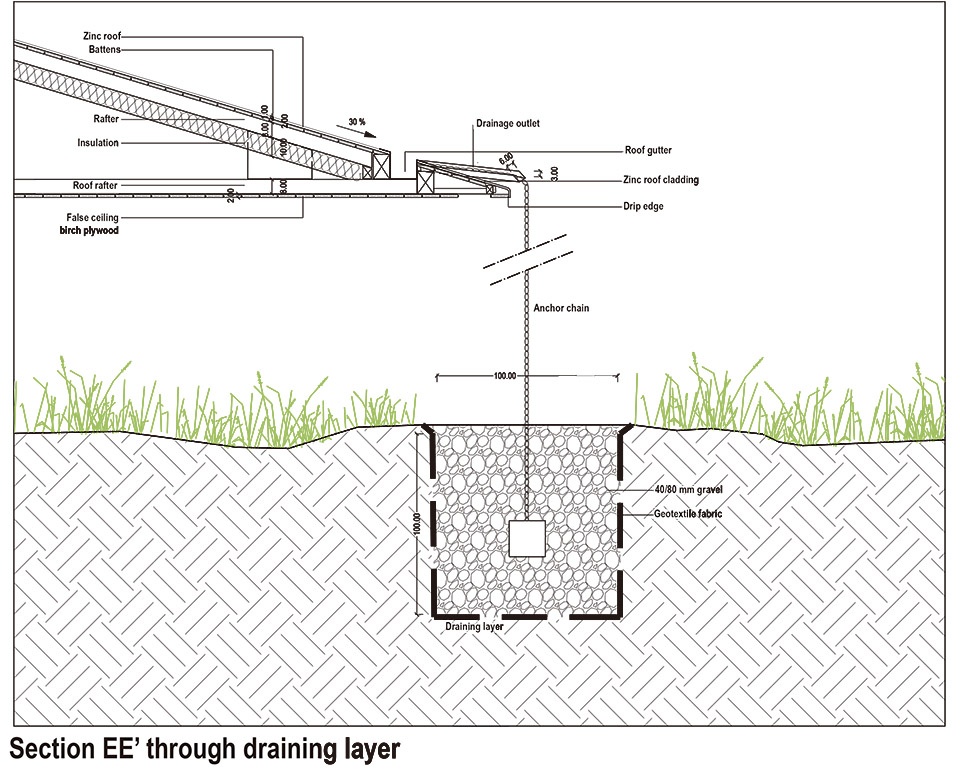
▼细部,detail
Program
School complex with 10 classes (preschool and elementary), including an after-school program and a restaurant with a dining hall.
Address:4 rue du Dessous du Parc 91340 Ollainville
Client:SORGEM
Project Management
Sam architecture (Lead architect)
Bollinger + Grohmann (Structural engineering)
Loizillon Ingénierie (Cost consultant)
Emma Blanc (Landscape architect)
BET Choulet (MEP engineering)
Altia (Acoustic)
Contractors
CRB (Structural Works)
Girard Ouvrages Bois (Timber Framing)
Sarmates (Roofing/Waterproofing)
DH Rénovation (Exterior Joinery)
Feldis et Leviaux (Partitions and Wall Linings/Suspended Ceilings)
Bati Inov Concept (Interior Joinery)
Feldis et Leviaux (Flooring)
Marchais (Metalwork)
Bati Inov Concept (Furniture)
EITP (HVAC)
ETRELEC (Electrical/Low Current/Fire Safety)
IDFC (Kitchen Equipment)
EUROVIA (Roads and Networks)
IDVERDE (Landscaping)
Total construction cost :€8,010,318 (excluding VAT)
Floor area:2,516 m²
Timeline:Competition 2017 – Delivery 2024
SAM Project Team
Boris Schneider (Competition and supervision)
Floriant Guérant (Design development)
Floriane Fauvel (Design development)
Olivier Duffé (Site management)