宝鸡市渭滨第一学校,陕西 / c+d设计中心
1.“寻学之山”The Mountain of Learning
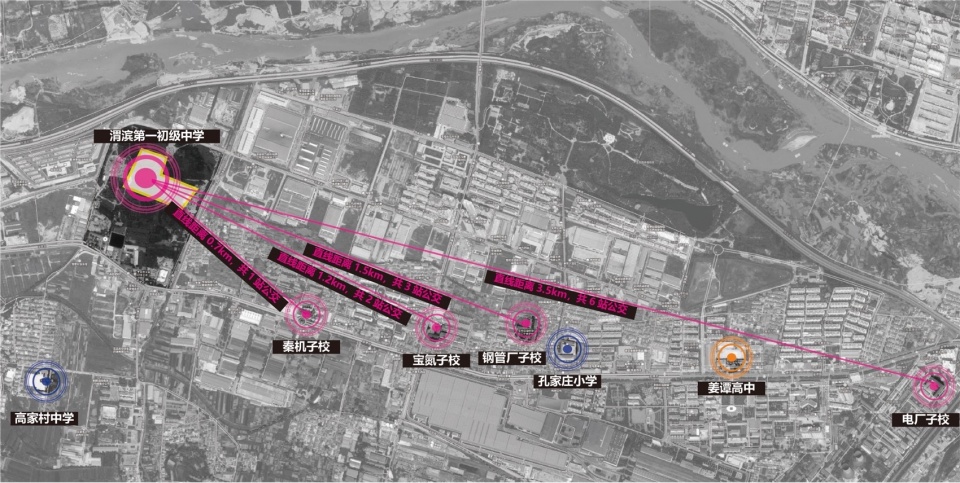
基地位于宝鸡市渭滨区,是宝鸡市的传统工业区,周边分布了大量的子弟学校。本案就是当地教育部门计划将附近的秦机子校、宝氮子校、钢管厂子校以及电子子校四所学校的初中部进行撤销合并的结果。
The site is located in the Weibin District of Baoji City, a traditional industrial area of the city, surrounded by numerous affiliated schools. This project is the result of the local education department’s plan to merge and close the junior high sections of four nearby schools: Qinji Affiliated School, Baodan Affiliated School, Steel Pipe Factory Affiliated School, and Electronics Affiliated School.
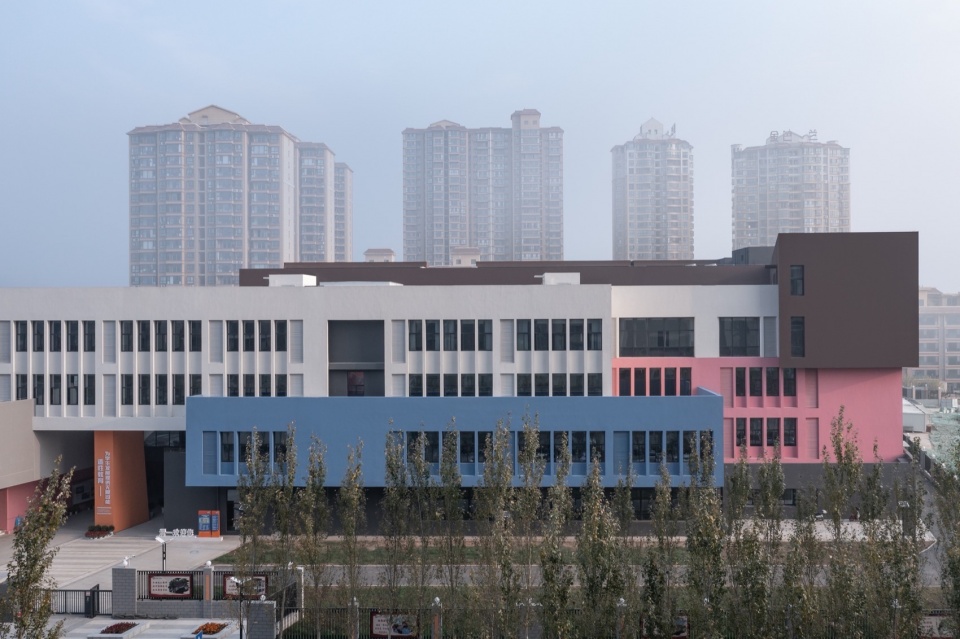
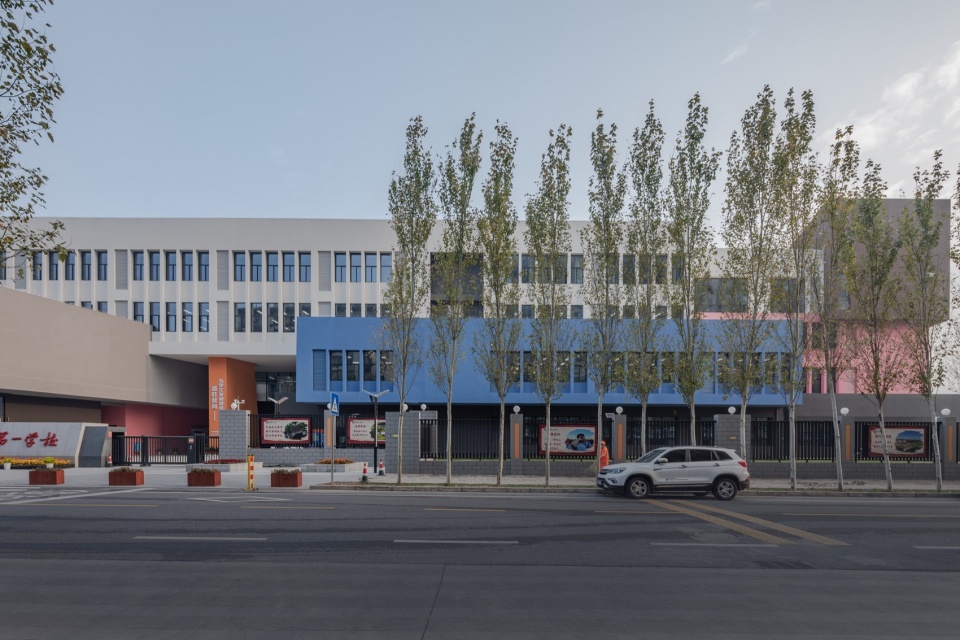
▼沿街立面,street elevation
场地为不规则L形,大致呈东西走向,南北向最宽处约168m,最窄处约112m,东西长约317m,周边被已建和在建的住宅小区所包围,仅东侧和南侧临路。要求建设18班小学、30班中学以及12班幼儿园(未建设)。经常做学校的都知道,在目前的场地中,400m操场只能放在L形场地的短边位置,于是仅挨着操场只能设置中小学,幼儿园自然而然的设置于场地东侧,有独立出入口。
▼周边学校,schools around
▼基地环境,site environment
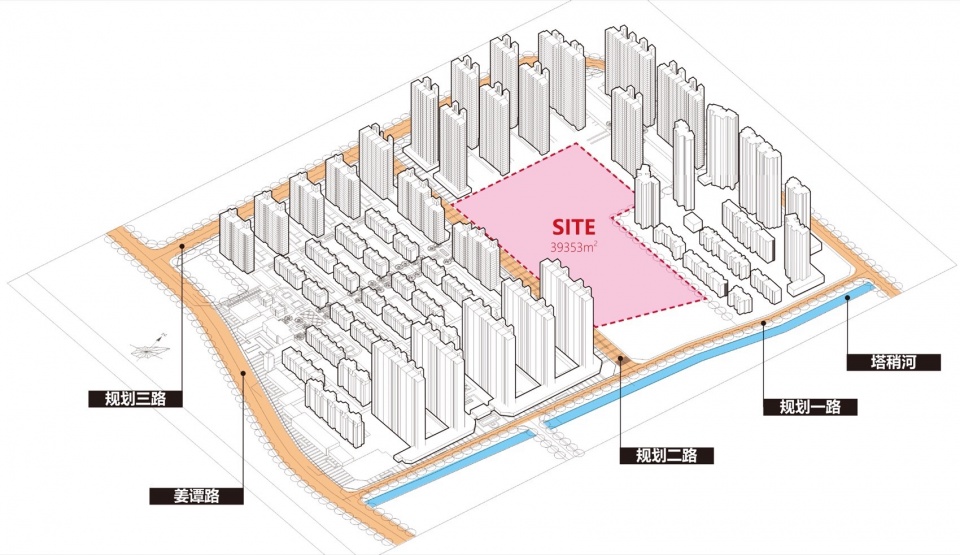
▼场地规划,site planning
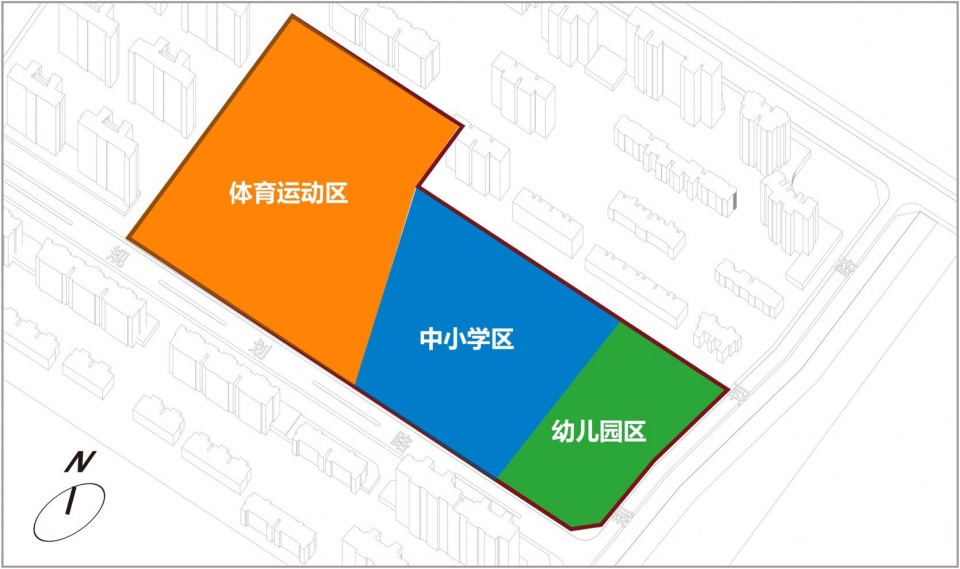
The site is an irregular L-shape, roughly oriented east-west, with a maximum north-south width of about 168 meters and a minimum of 112 meters, and an east-west length of approximately 317 meters. It is surrounded by existing and under-construction residential districts, with only the eastern and southern sides facing roads. The project requires the construction of an 18-class primary school, a 30-class middle school, and a 12-class kindergarten (not yet built). As everyone who is familiar with school design knows, a 400-meter track can only be placed on the shorter side of the L-shaped site, so the primary and middle schools are naturally positioned adjacent to the track, while the kindergarten is placed on the eastern side with its own independent entrance.
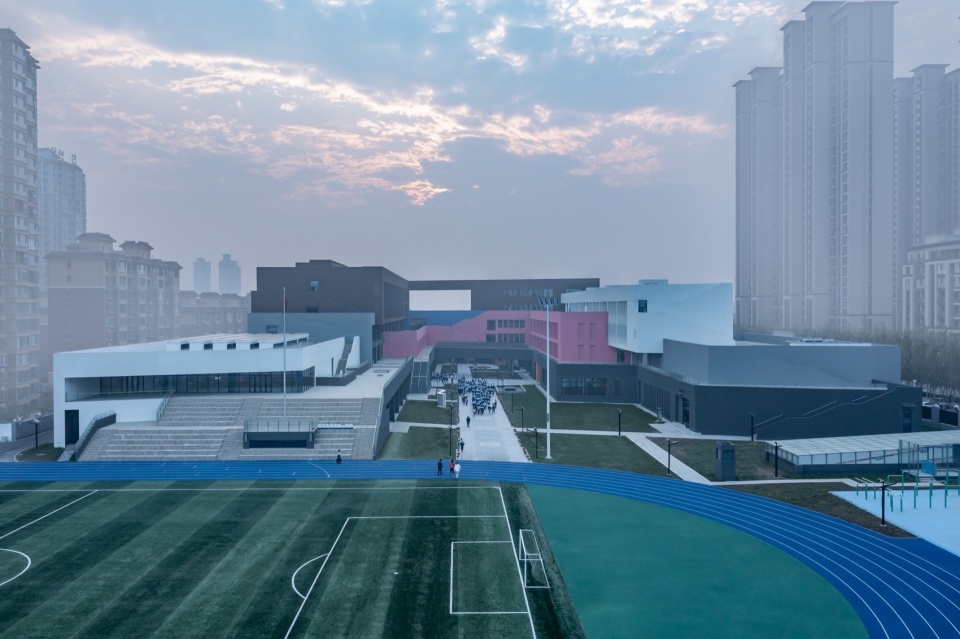
▼城市鸟瞰,bird’s eye view of the city
提到宝鸡,我首先想到的是古陈仓,是绵延八百里的中国地理南北分界线——秦岭;提到秦岭,则又不自觉地联想到需以勤为径的“书山”。于是索性就非常主观地选择以“山”作为设计的出发点,借以满足形式和空间创作的私欲。
▼设计灵感,design inspiration
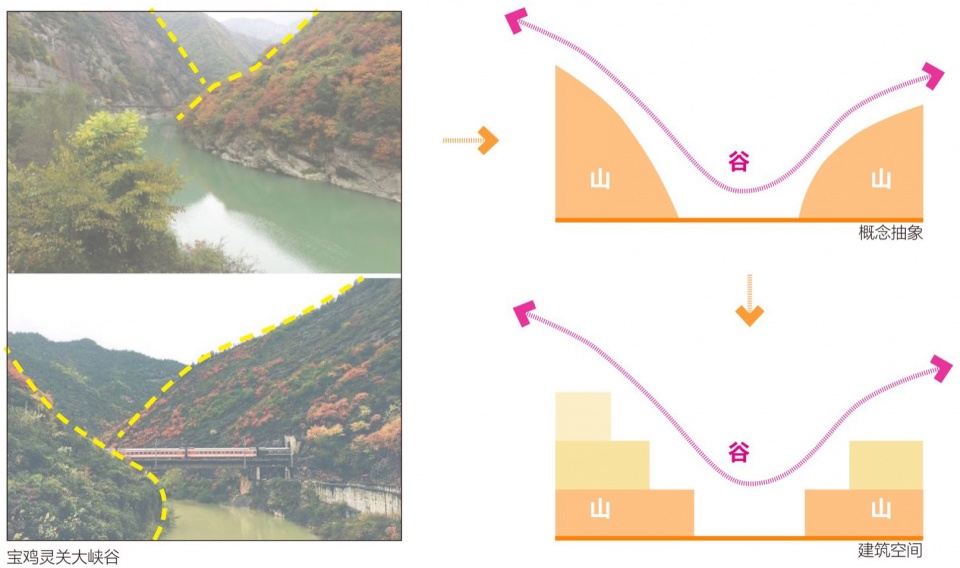
▼设计概念,design concept
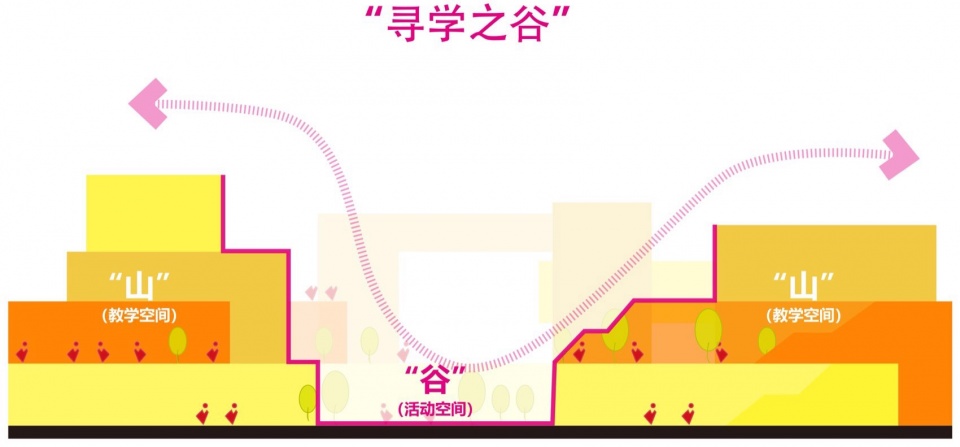
When we think of Baoji, the first thing that comes to mind is the ancient city of Chencang and the Qinling Mountains, the 800-mile-long geographical dividing line between north and south China. Thinking of the Qinling Mountains, we are reminded of the “mountain of books” that requires diligence to climb. Thus, we subjectively chose “mountain” as the design’s starting point, satisfying both formal and spatial creative desires.
▼“谷中望山”,perspective from the courtyard
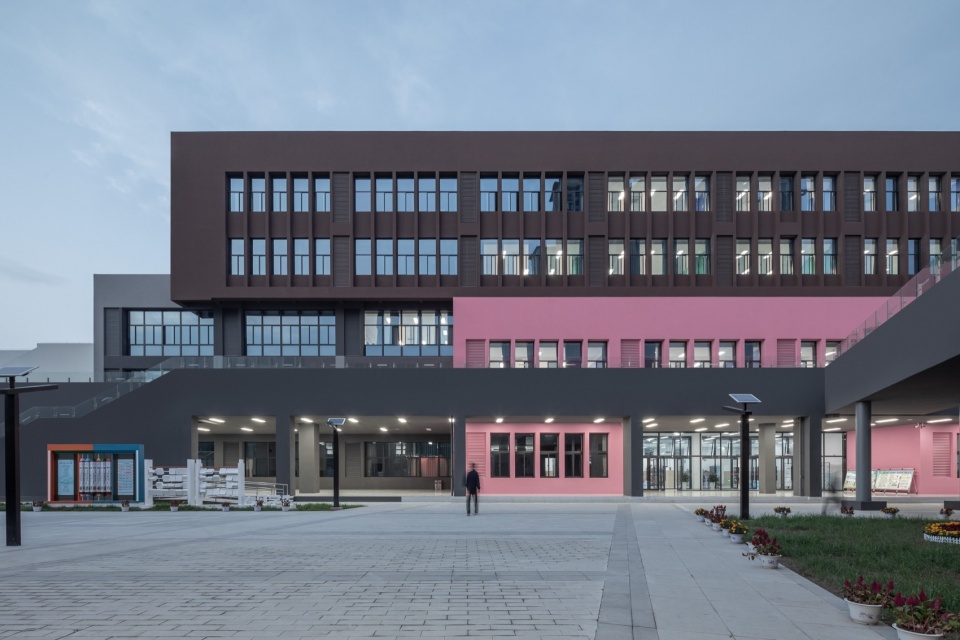
2.“叠石为山”Stacked Stones as Mountains
建筑采用U字形半围合式布局,南侧为小学部,北侧为初中部,东侧一条则是图书馆及教师办公室,起联系和服务的作用,同时也加强了对中小学管理的便利性。
The building adopts a U-shaped semi-enclosed layout, with the primary school on the south side, the middle school on the north side, and a library and teachers’ offices on the eastern side, serving as a connecting and functional element while also enhancing the management efficiency of the schools.
▼城市鸟瞰,bird’s eye view of the city
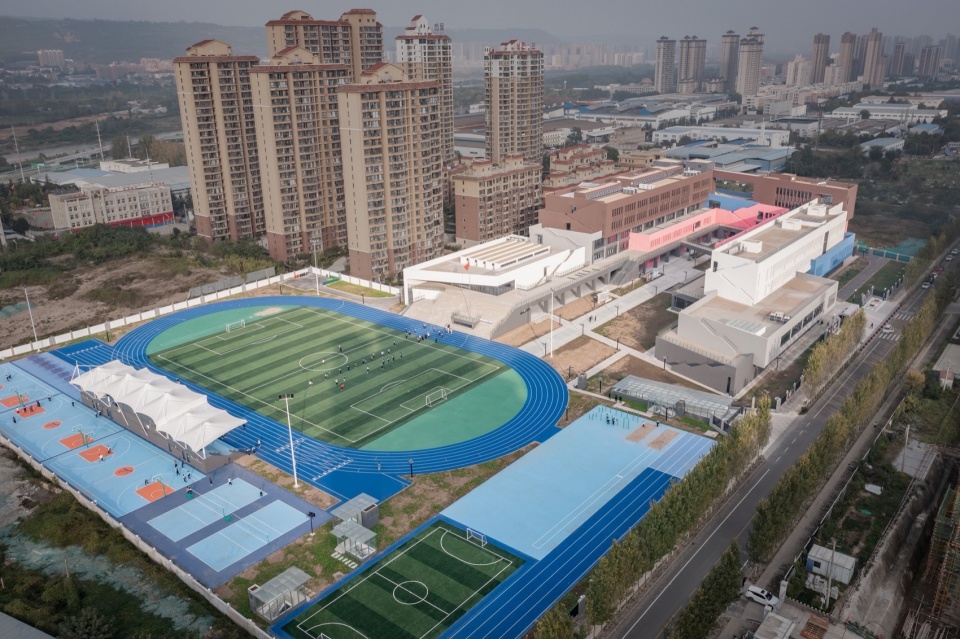
▼城市鸟瞰,bird’s eye view of the city
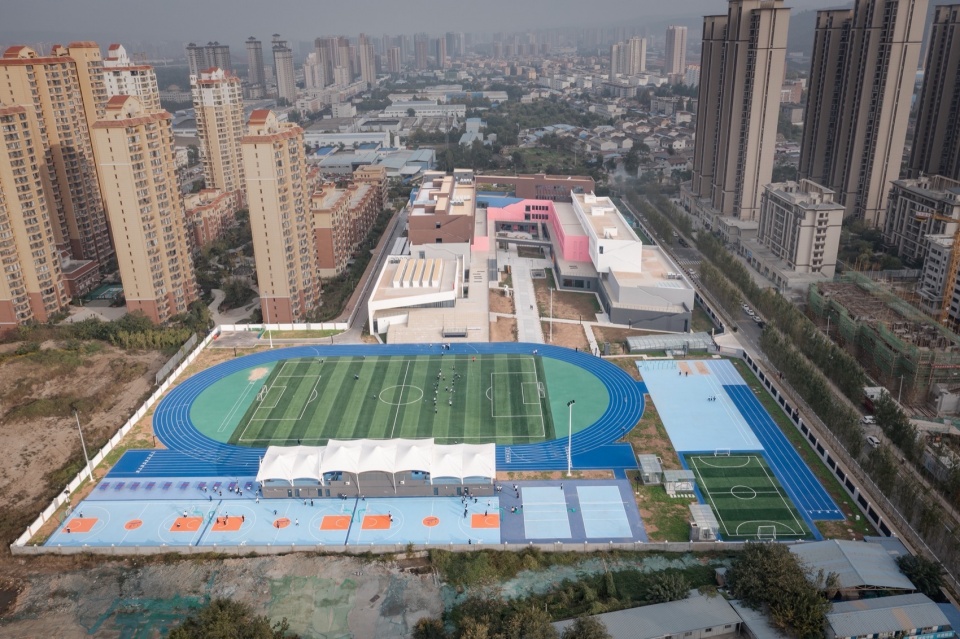
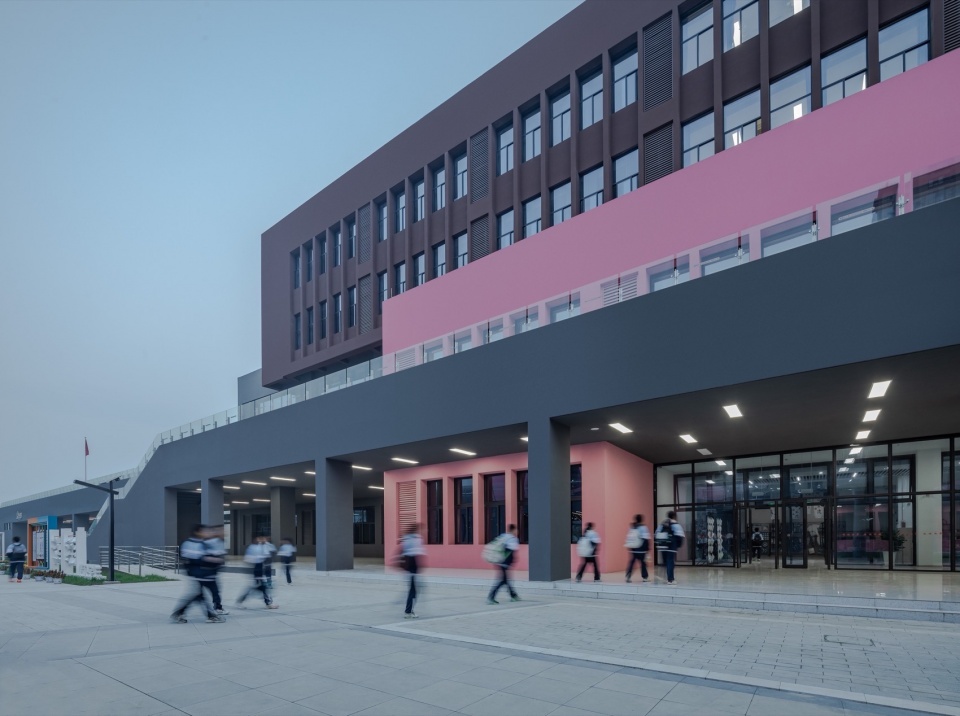
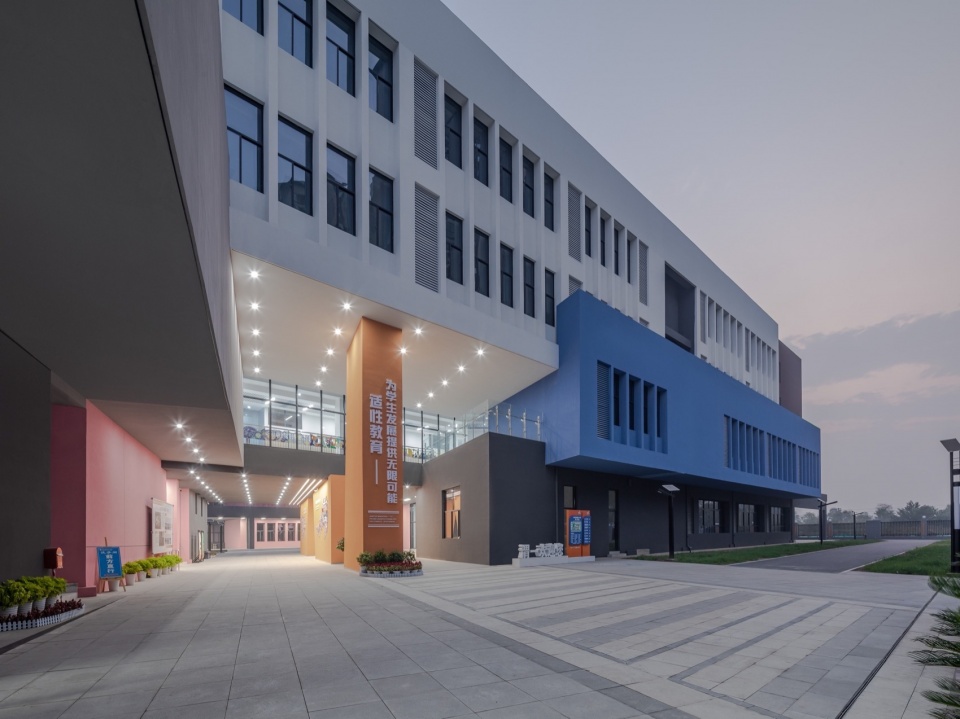
在概念的驱动下,建筑的外观采用了大块面的体量,每一个建筑体块更是犹如山上的巨石,以进退、错动,咬合等方式进行设计,仿佛手握如椽大笔,以斧劈之法皴擦出似北方巍峨大山的建筑体量关系。小学、初中各成一山,西端头设置曲折的盘山小径联系各层室外露台,并面向操场设大台阶,可作为看台使用。两山之间为山谷,我们曾建议在山谷中种满大树,夏日蔚然成林,更具山意。但可惜,在景观设计上,建筑师无法过多置喙,终成憾事。
Driven by the concept, the building’s exterior features large, block-like volumes. Each architectural block resembles a massive stone on a mountain, designed with advances, retreats, interlocking forms, and overlaps, as if wielding a giant brush to carve out the majestic mountain-like massing of northern landscapes. The primary and middle school each form their own “mountain,” with a winding mountain path at the western end connecting outdoor terraces on each floor. Large steps are set facing the sports field which can also be used as spectators stand. Between the two “mountains” lies a valley, where we initially proposed planting numerous trees to create a lush forest in summer, enhancing the mountainous atmosphere. Unfortunately, as architects, we had limited influence over the landscape design, and this vision remains unfulfilled.
▼教学楼入口,entrance of classroom building
▼校园入口,entrance of school
3.“山型剖面” Mountain-like Section
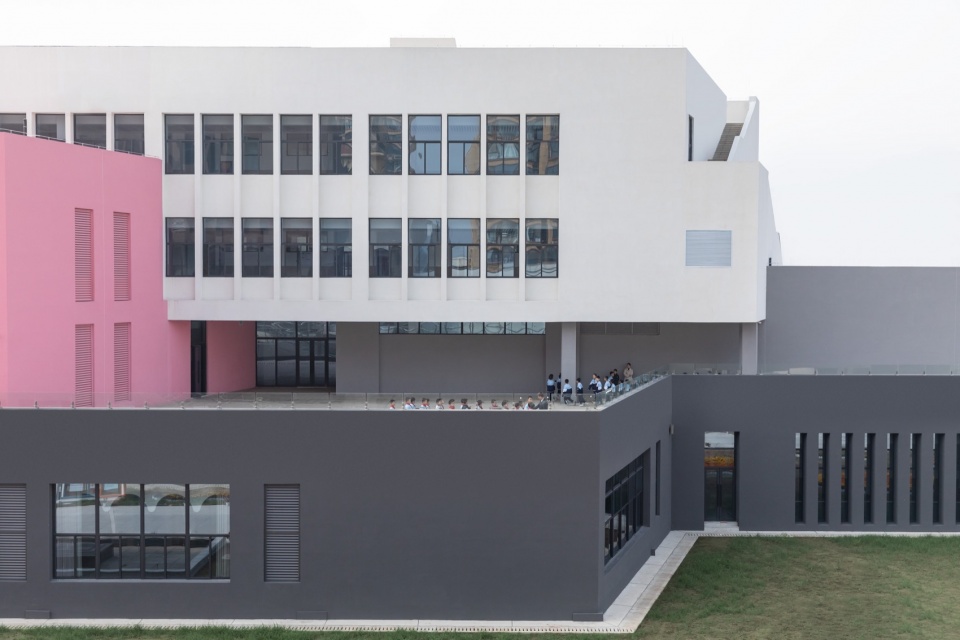
宝鸡地处北方,冬季寒冷。与南方学校不同,北方学校需要明确的气候边界,因此在设计中采用了内廊式设计。但这就面临一个问题:外廊式设计,学生下课时尚可在走廊上呼吸一下新鲜空气,顺便看一看校园中正在发生的事情,而常规的3m宽内廊,几乎只能作为交通空间使用,短短的课间10分钟,在较高楼层上课的学生,几乎没有到室外进行活动的可能性,这对处在高压学习环境下的学生来说是极为残忍的。因此在设计中,借用“山”的概念,我们对建筑的剖面进行了一个简单的操作:自下而上,将每一层的建筑体量向外推出一定的距离,形成“山型剖面“——内部空间有如洞穴,底层有中庭,中间有更加宽敞的内廊,顶层则有独特的桥式入户体验,屋顶设有天窗,让阳光照进来,整个空间内充满探索的趣味。建筑外部则如山坡上的梯田,每一层的教室都能相应的获得一个巨大的室外活动平台,下课铃响时,学生在半分钟内就可以从自己的座位跑到室外露台上,或放松或聊天,甚至于,某些以班级为单位的小型活动都可以在露台上完成,不需要再到操场去。
▼山型剖面,mountain-like section
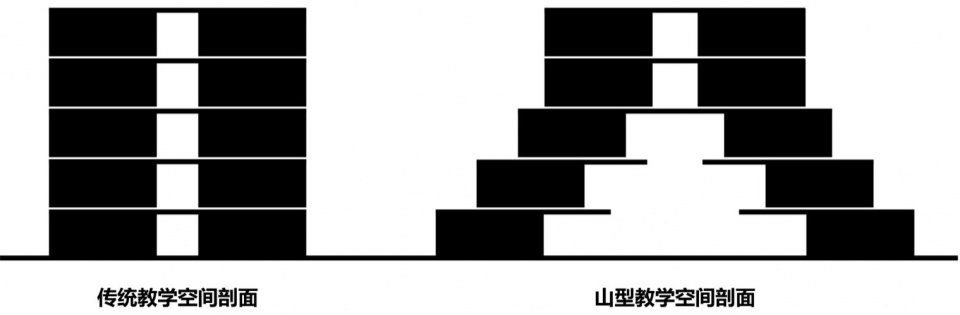
Baoji is located in northern China, where winters are cold. Unlike schools in the south, northern schools require clear climatic boundaries, so an internal corridor design was adopted. However, this posed a challenge: while external corridors allow students to breathe fresh air and observe campus activities during breaks, the conventional 3-meter-wide internal corridors are primarily functional spaces. During the short 10-minute breaks, students on higher floors have almost no opportunity to go outside, which is particularly harsh for those under intense academic pressure. To address this, we borrowed the “mountain” concept to manipulate the building’s section: each floor’s volume is progressively pushed outward, creating a “mountain-like section.” The interior spaces resemble caves, with a central atrium at the bottom, wider internal corridors in the middle, and a unique bridge-like entrance experience at the top. Skylights on the roof allow sunlight to flood in, creating an exploratory atmosphere. Externally, the building resembles terraced fields on a mountainside, with each classroom floor gaining a large outdoor activity platform. When the bell rings, students can reach the outdoor terrace within half a minute, where they can relax, chat, or even hold small class activities without needing to go to the sports field.
▼“半山平台”,platform formed by retreats
4.“四时山色”The Colors of the Mountain Through the Seasons
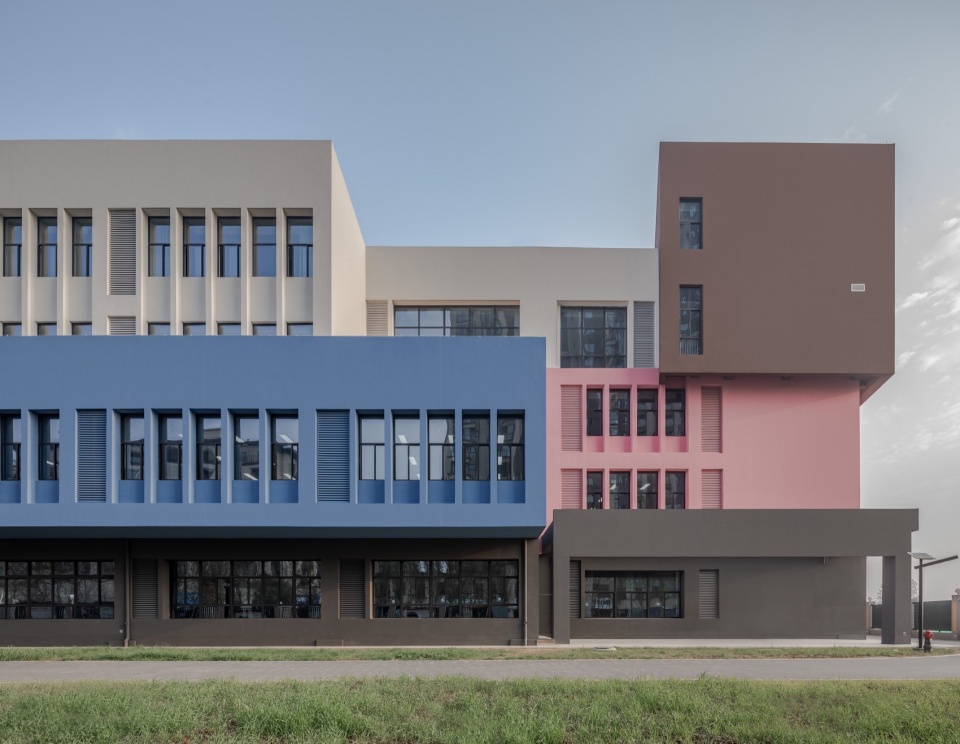
山有四季。鹅黄草绿,姹紫嫣红,山的颜色不断变化。在宝鸡灰蒙蒙的环境中,设计进一步延续“山”的概念和主题,从四时山色出发,在灰色的基底下,又施以雪白、花青、绛红、茶褐四种颜色,希望借此可以给学校带来更多的活力和不一样的特色。设计时,学校北侧的住宅小区尚在建设中,因属不同的开发商,我们并不知道其主体色彩。当学校建成时,小区也早已完工,其配色竟与学校上部体量的褐色格外搭配,远看浑然一体。
Mountains change colors with the seasons, from pale yellow and grass green to vibrant purples and reds. In Baoji’s often gray environment, the design further extends the “mountain” concept, drawing inspiration from the seasonal colors of the mountain. Against a gray base, we applied four colors: snow white, cornflower blue, deep red, and tea brown, aiming to infuse the school with vitality and distinctive character. During the design phase, the residential district to the north of the school was still under construction. Since it was developed by a different company, we were unaware of its primary color scheme. By the time the school was completed, the residential district had also been finished, and its color scheme surprisingly complemented the brown tones of the school’s upper volumes, creating a harmonious visual unity from a distance.
▼沿街立面,street elevation
▼“四时山色”,colorful elevation
5.“山中幽穴”Hidden Caves in the Mountain
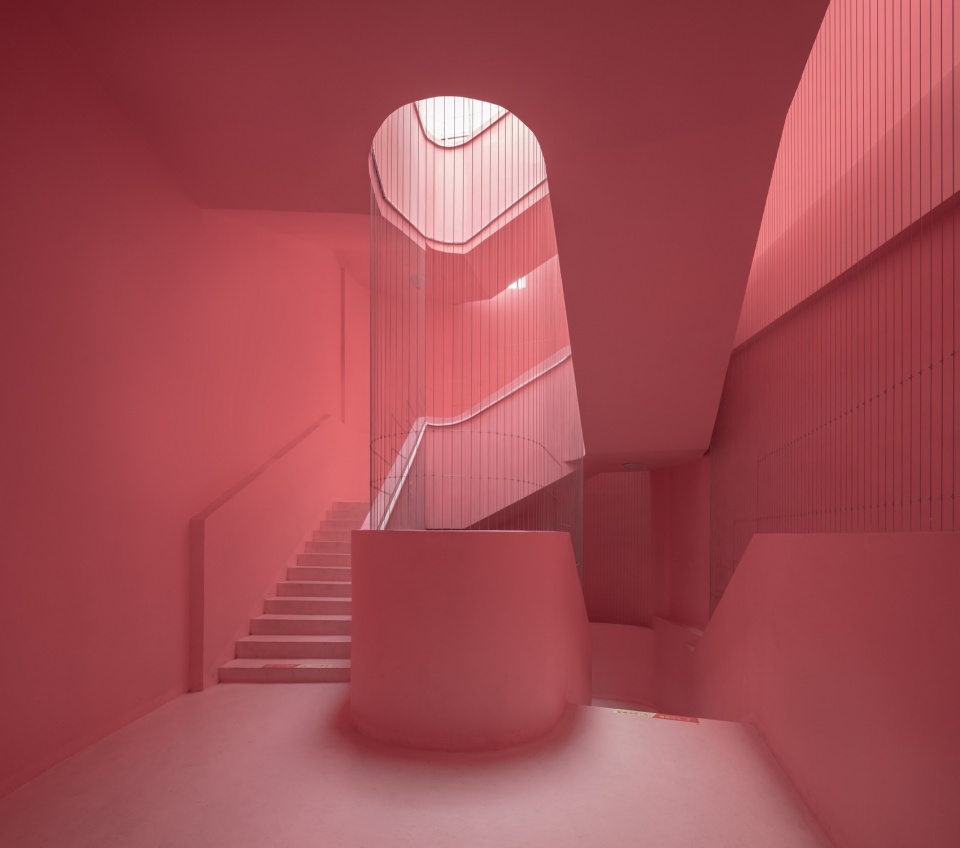
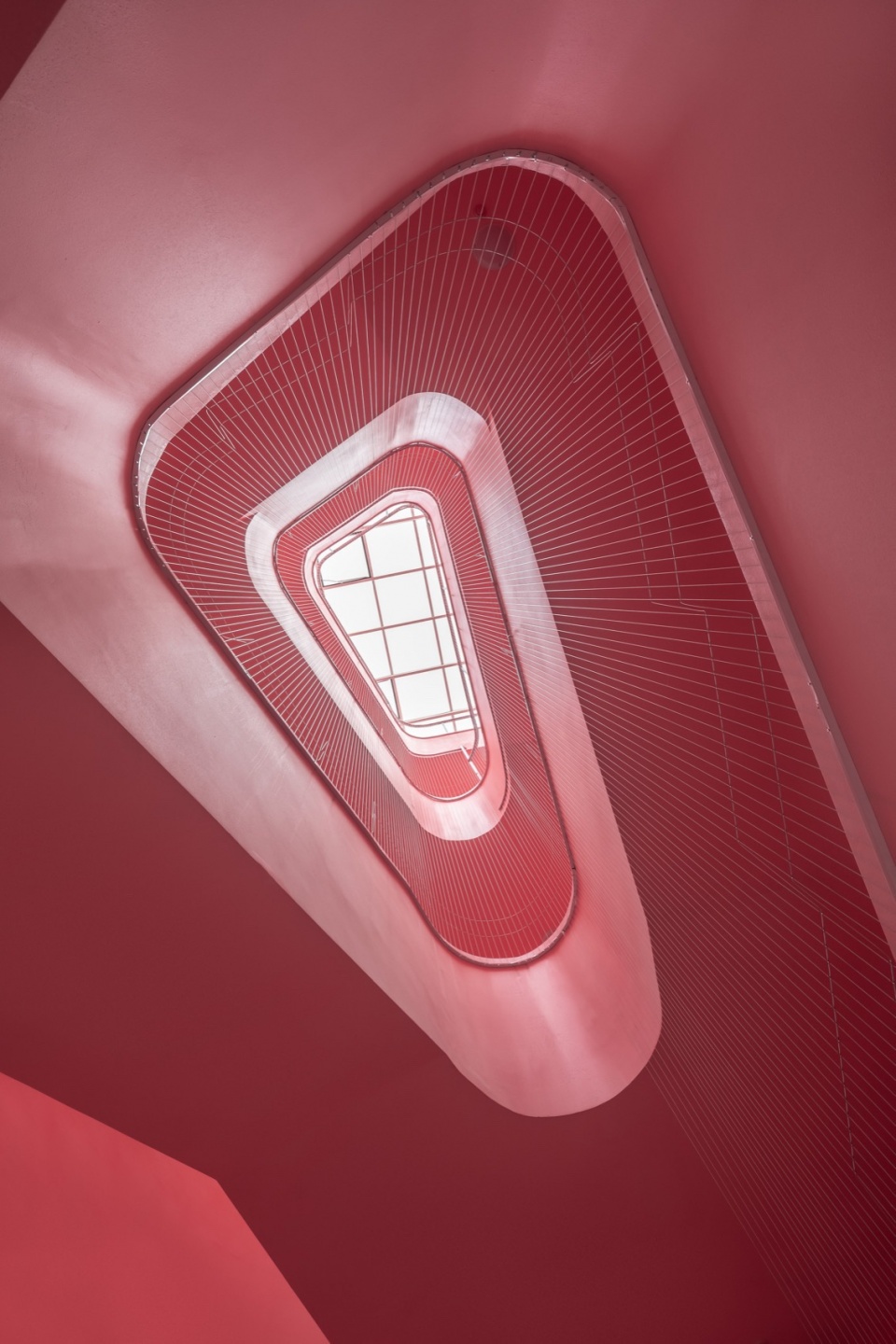
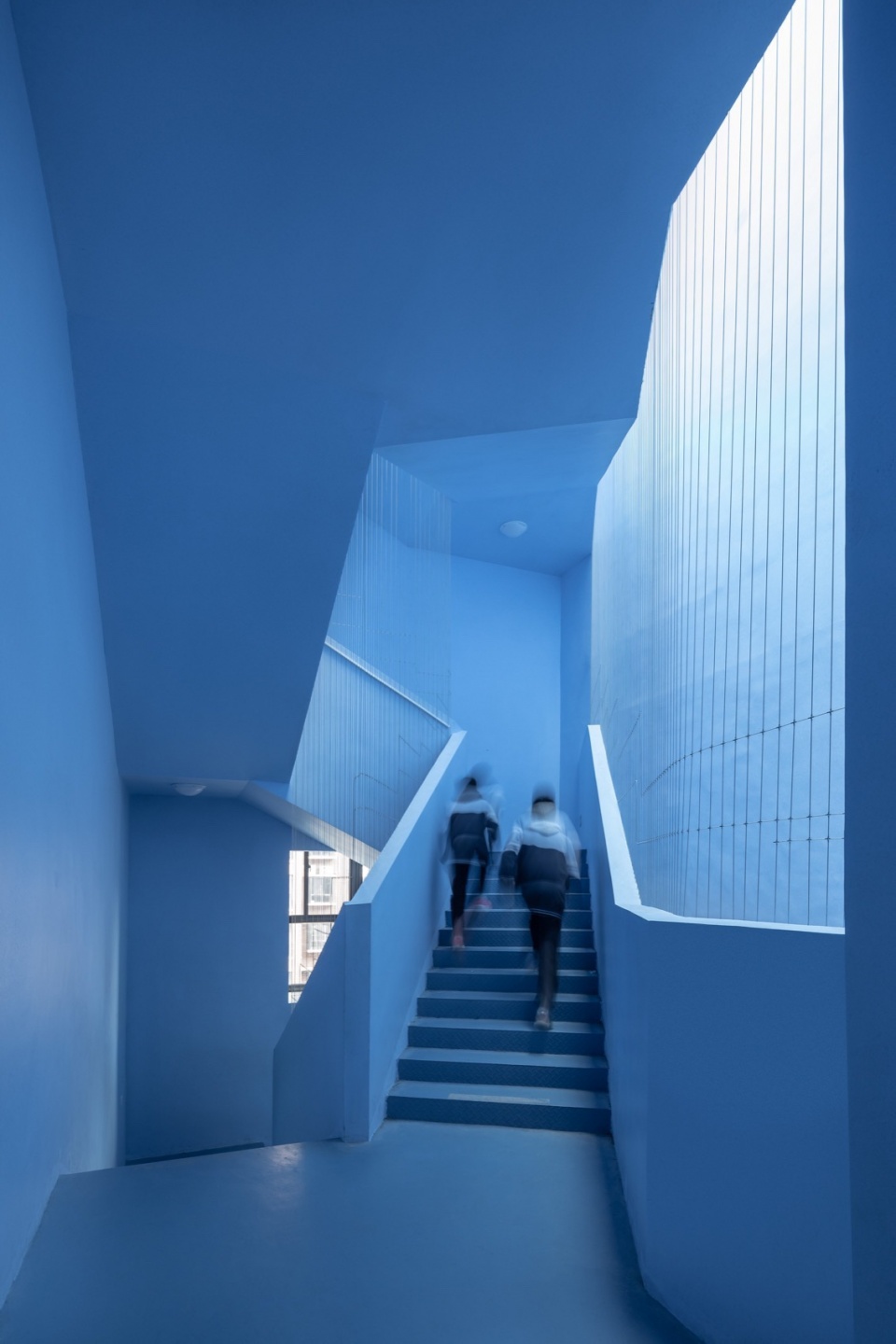
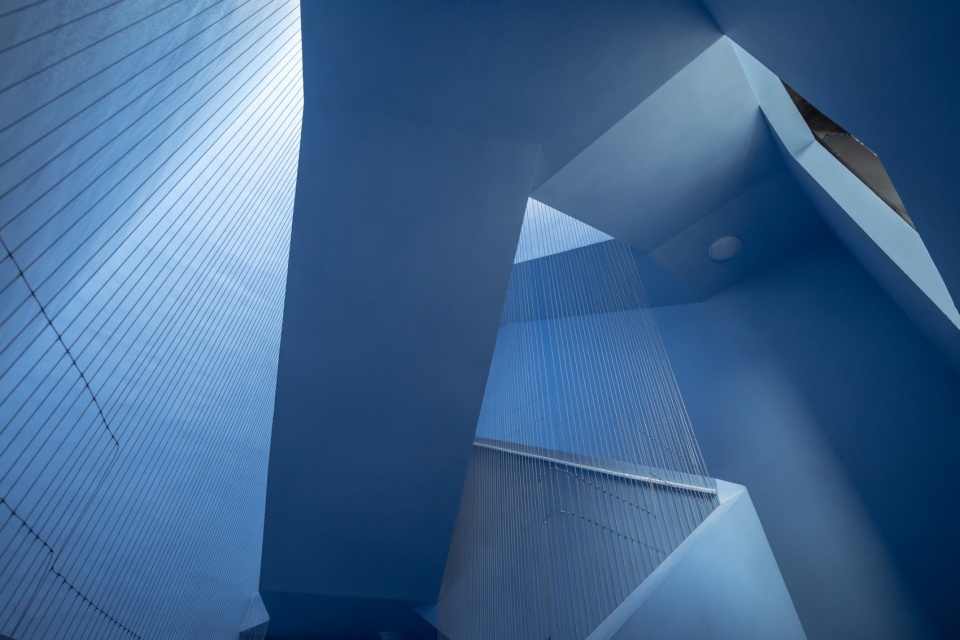
其实在设计中还偷偷藏了两个彩蛋。学生从进入校门开始,走进教学楼,然后通过楼梯到达自己所在的班级,在这个过程中,心情是逐步变得紧张压抑的。我们希望,至少在学生上楼的过程中,其所面对的不再是冰冷严肃的双跑楼梯。所以,我们分别将小学和中学的一部主要垂直交通楼梯设计成更加自由的形态,二者被四周的墙体紧紧包裹有如洞穴,一蓝一粉,一刚一柔,顶部均设有天窗,阳光倾泻而下,向上行走时,逐渐豁然开朗。
In the design, we secretly embedded two “Easter eggs”. From the moment students enter the school gate, walk through the building, and ascend the stairs to their classrooms, their mood usually would gradually become tense and depressed. We hoped that, at least during the ascent part, students would not face the cold, rigid double-flight staircases. Therefore, we designed one of the main vertical circulation staircases in both the primary and middle schools in a form with more free style. These two staircases are tightly enveloped by surrounding walls, resembling caves—one in blue, the other in pink; one strong, the other soft. Both are topped with skylights, allowing sunlight to pour down. As students ascend, the space gradually opens up, creating a sense of being enlightened.
▼粉色洞穴,cave in pink
▼顶部天窗,top skylight
▼蓝色洞穴,cave in blue
▼柔和漫射,sunlight diffusion
6.结语Conclusion
设计开始于2018年,至2024年方才落成开学,历时近6年。期间经历了不断地修改、调整,而“山“的概念始终保持并贯彻了下来。我始终认为,一个好的概念,不论是从感性出发的还是从理性出发的,都需要有统筹解决形式、空间、功能甚至细部等多重设计问题的潜力。此外,建筑师自身的设计思想也在不断发展成熟,在这个过程中,建筑师在保持设计概念和基本框架不变的前提下,每次修改都尽可能地将新的想法融合进来,以期设计能更加完美的呈现。最终虽仍有不少遗憾,但足以自慰。
The design process began in 2018, and the school officially opened in 2024, spanning nearly six years. Throughout this period, the design underwent continuous revisions and adjustments, yet the “mountain” concept remained steadfast and consistently implemented. We firmly believe that a strong concept, whether born from perceptual experience or rational thinking, must have the potential to solve multiple design problems such as form, space, functions, and even details in a more overall-planning and comprehensive way. Moreover, the architect’s design philosophy evolves and matures over time during this process, maintaining the core concept and framework as well as trying to incorporate new ideas in each revision, striving for a more perfect realization of the design. Although there still remain some regrets, the final outcome is worth self-consolation.
▼一层平面图, the ground floor plan
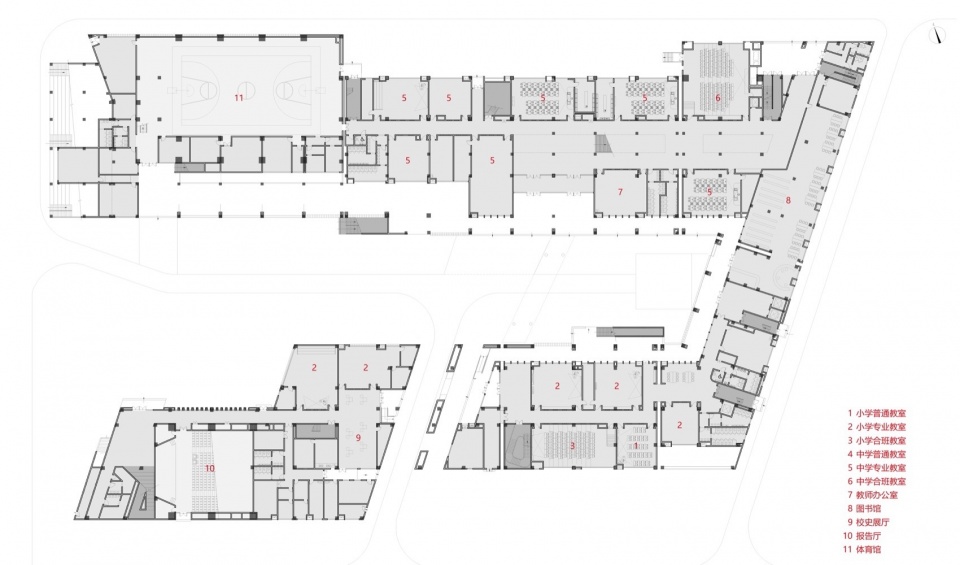
▼二层平面图,the second floor plan
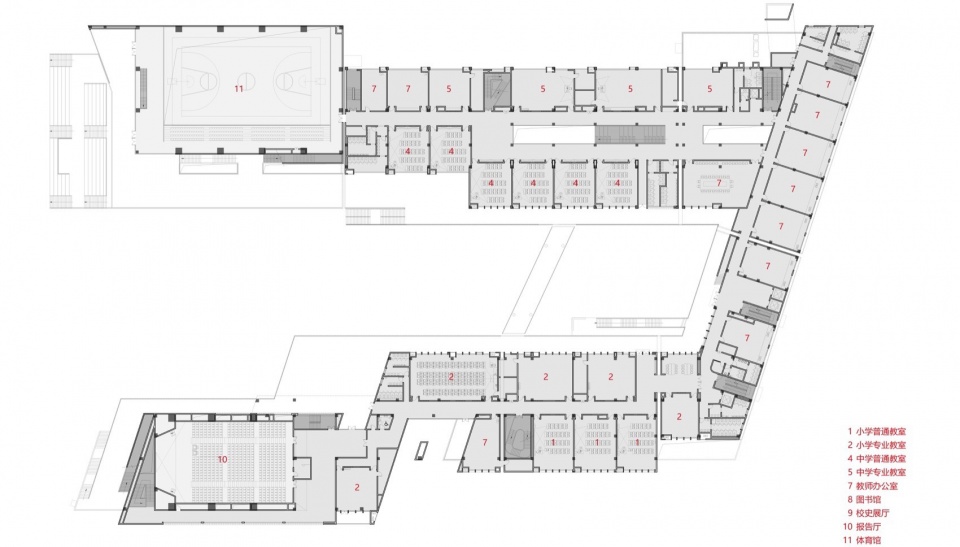
▼三层平面图,the third floor plan
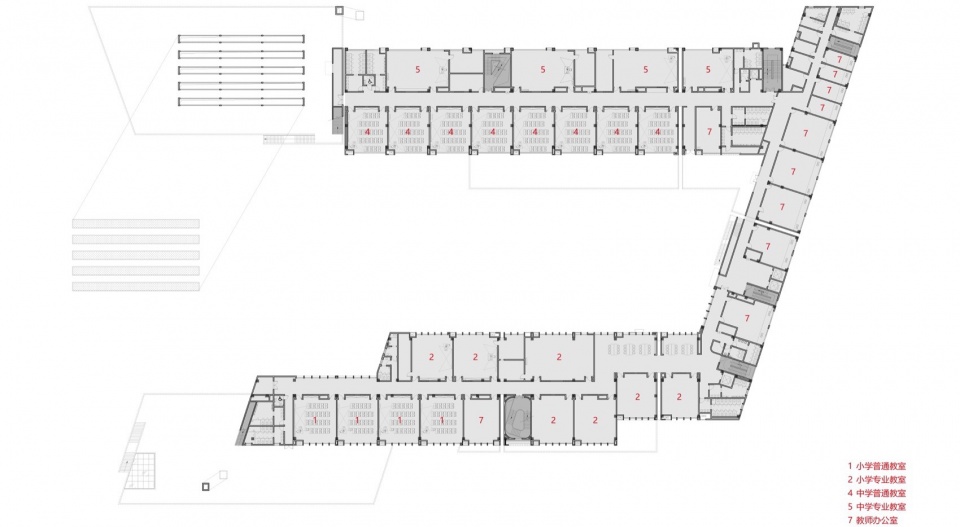
▼四层平面图,the fourth floor plan
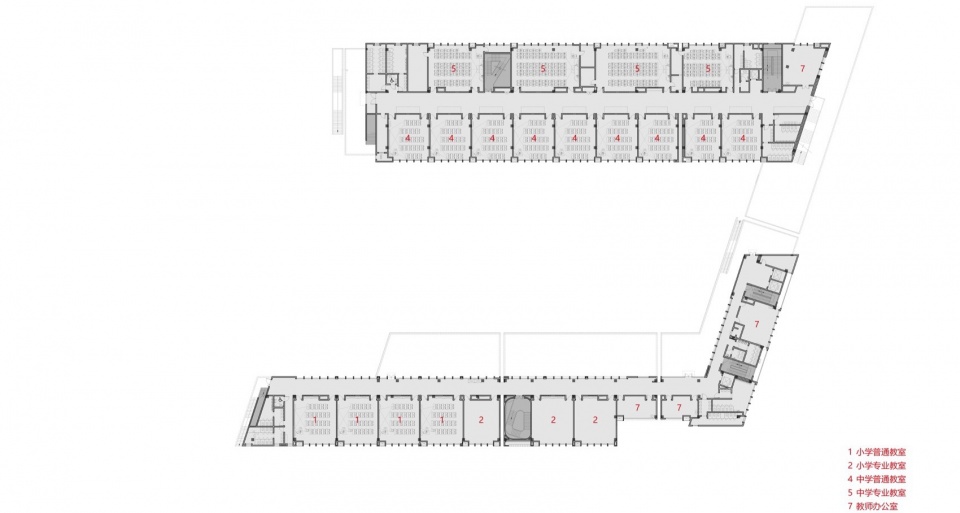
▼五层平面图,the fifth floor plan
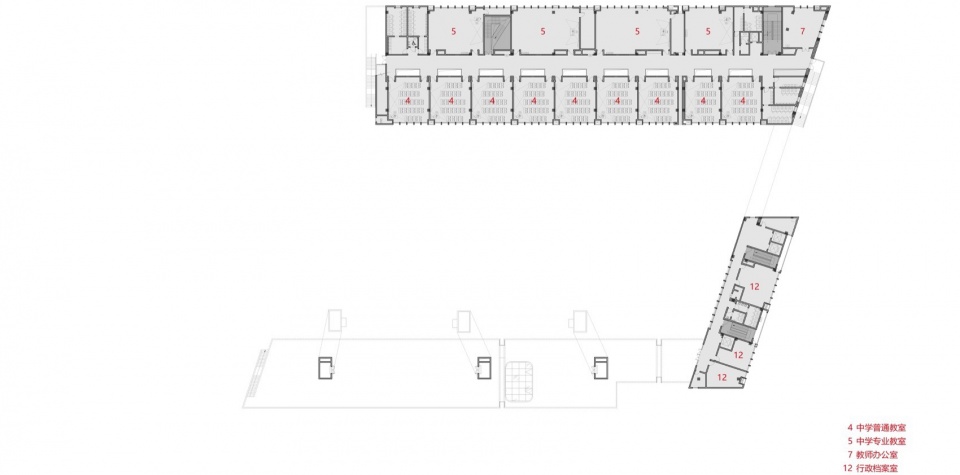
▼南北向剖面,north-south section
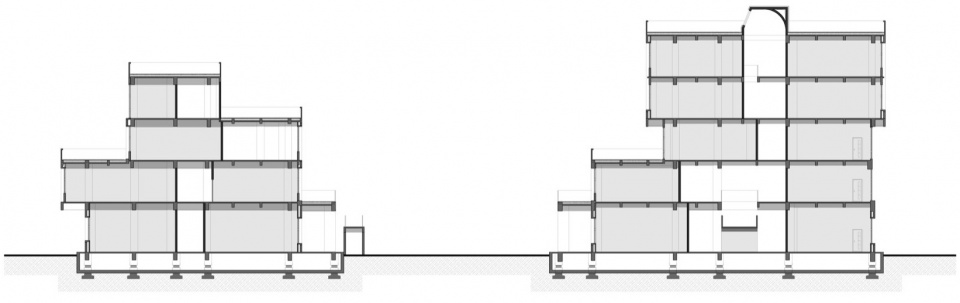
▼东西向剖面,east-west section

Project name: Baoji Weibin No.1 School
Design: c+d Design Center
Website: http://www.dccd.com.cn/
Contact e-mail: branding@dccd.com.cn
Design year & Completion Year: 2018.08-2024.07
Leader designer & Team
Lead Architect: Yi Dong
Design Team: Chunwei Zhang,Wenwen Liu,Wei Zhang, Yuan Gao, Shuo Li
Project location to the south of Jufu Road, Weibin District, Baoji, Shanxi Province
Gross Built Area: 38321.9 sqm
Photo credits: DC Alliance
Partners: Fangyuan Engineering Design(Construction drawing)
Clients: Education and Sports Bureau of Weibin District