0 Club共享办公空间,日本 / DDAA
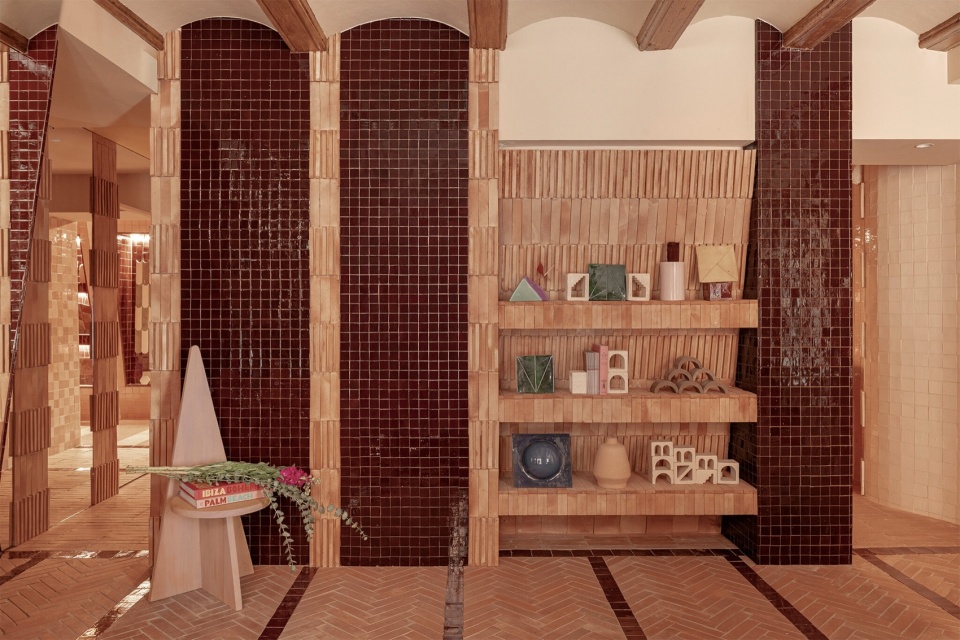
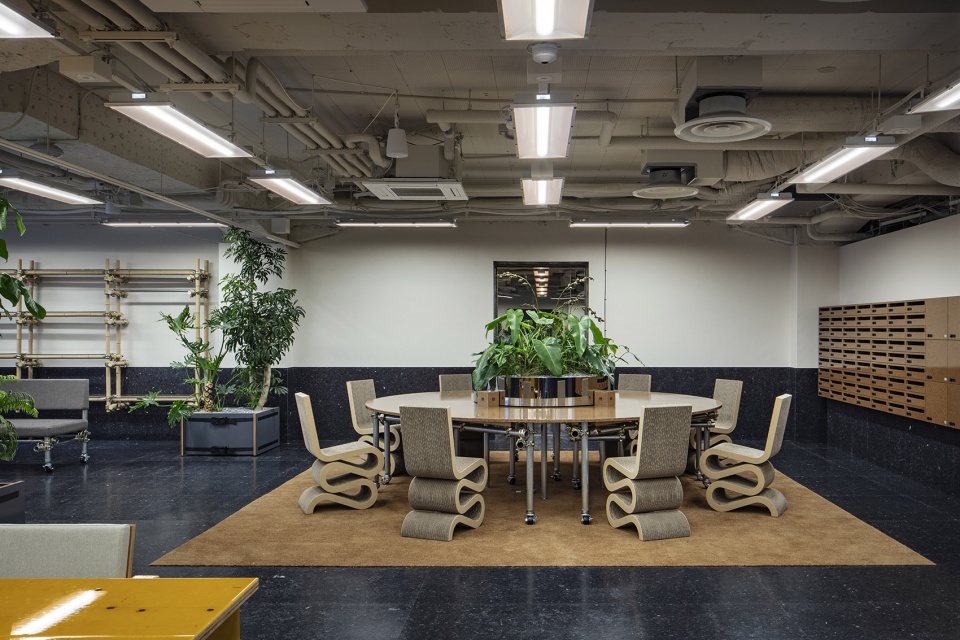
许多人或许还不熟悉“气候科技(Climate Tech)”这一技术领域。它指的是专注于减少二氧化碳排放或应对全球变暖影响的一类技术。在日本及全球,许多初创企业正致力于推动商业领域的去碳化,同时探索可持续盈利的商业模式。DDAA负责设计的“0 Club”即是一处为这些专注于气候科技及其相关产业的初创公司、风投机构和学者打造的共享办公空间。“气候科技”涵盖了一系列实现碳中和目标的路径,包括开发替代石油的清洁能源、减少水泥与钢铁等建筑材料在生产过程中产生的大量二氧化碳和有害物质、推广环境负荷低的再生与升级再造材料、以及降低食物浪费等手段。“0 Club”正是为活跃在这些领域的公司提供一个聚集交流的空间。
Many people might not be familiar with the technology area called Climate Tech. This term refers to a technology often discussed that focuses on reducing CO2 emissions or dealing with the effects of global warming. Many startups in Japan and overseas are addressing the issue of decarbonization in the business world while also pursuing profitable business ventures. DDAA designed the interior of the 0 Club, a co-working space for startups, VCs, and academics specializing in Climate Tech and related businesses. The term “Climate Tech” covers a wide range of approaches to the goal of carbon neutrality, including the development of alternative and clean energy sources to replace petroleum, measures to address construction materials such as concrete and steel that emit large amounts of CO2 and toxic substances during the production process, the development of upcycled and recycled materials with low environmental impact, and measures to reduce food loss. The 0 Club was created as a place for companies in this field to come together.
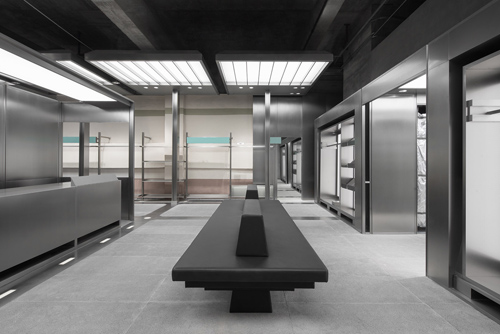
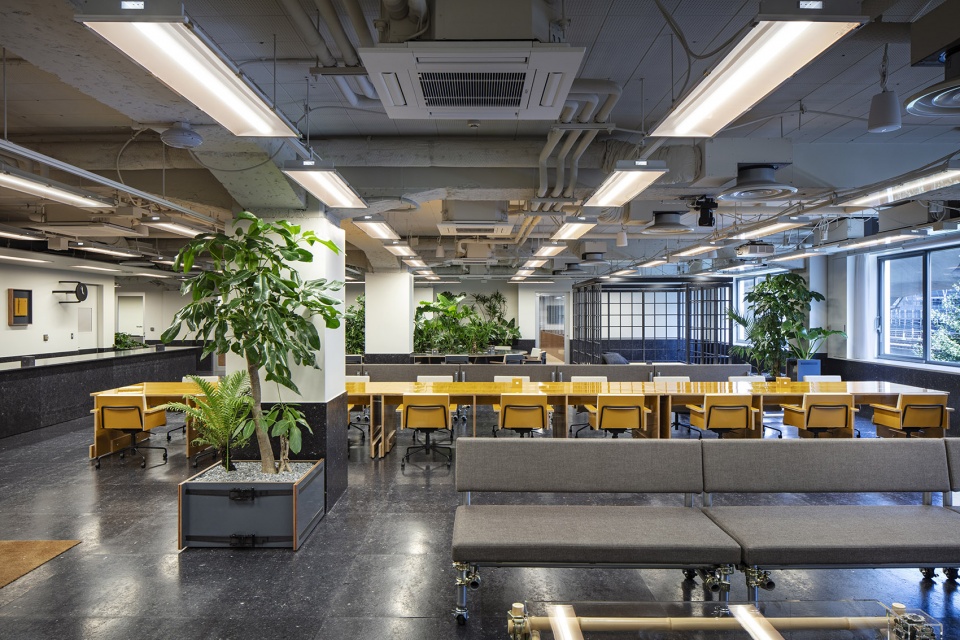
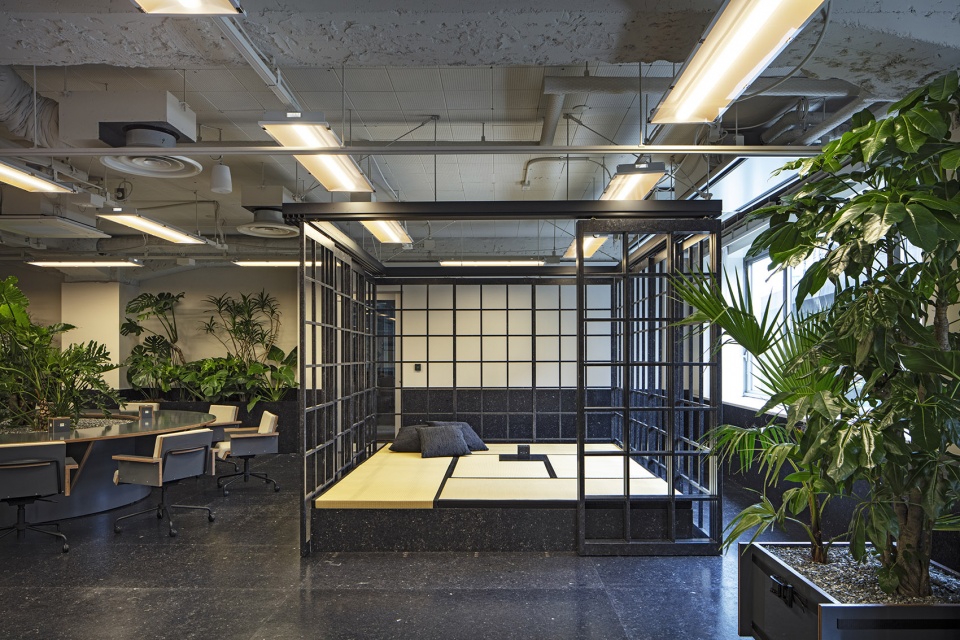
▼办公空间概览,overview of the office space
面对人类不断追求便捷生活的渴望,世界正日益被各种便利产品和服务所充斥,支撑现代生活方式的基础设施也在不断扩大,但由此带来的环境与社会体系失衡亦日益加剧。如果我们一味追求便利而忽视其代价,发展中国家将首当其冲,而发达国家也终将受影响。然而,恢复生态平衡势必会在日常生活中带来某种“不方便”,而已习惯于现代生活便利的人们,很难做出这种自我牺牲式的改变。如果单从环境角度考虑,最理想的做法或许是“停止制造”,但这也意味着否定社会进步与既有成果。如果我们不再追求更好的状态,人类将愈发保守,所有知识更新也将停滞。这种“我们真的还需要创造更多吗?”与“我想让世界变得更好”这两种矛盾心理并存的状态,或许正是当代制造的基本前提。
Responding to humanity’s ceaseless efforts and desires, our world is increasingly flooded with ever-more convenient products and services. The scale of the infrastructure supporting a well-organized and convenient lifestyle is rapidly increasing, and the balance of the global environment and the entire social system is becoming distorted. If we continue to pursue convenience without considering the consequences, developing countries will suffer first, and developed countries will be affected. However, because restoring the balance would involve some inconvenience in people’s daily lives, those of us who have already become accustomed to the convenience of modern life cannot bring ourselves to make such a drastic change. If we consider only the environment, the best option would be to stop making things, but that would mean denying social progress and past achievements. If we stop aiming for a better state of affairs, we will become increasingly conservative, and all intellectual renewal will come to a halt. This ambivalent state, where two contradictory thoughts – “Do we really need more?” and “I want to make the world a better place” – coexist, is probably the premise of modern manufacturing.
▼办公空间概览,overview of the office space
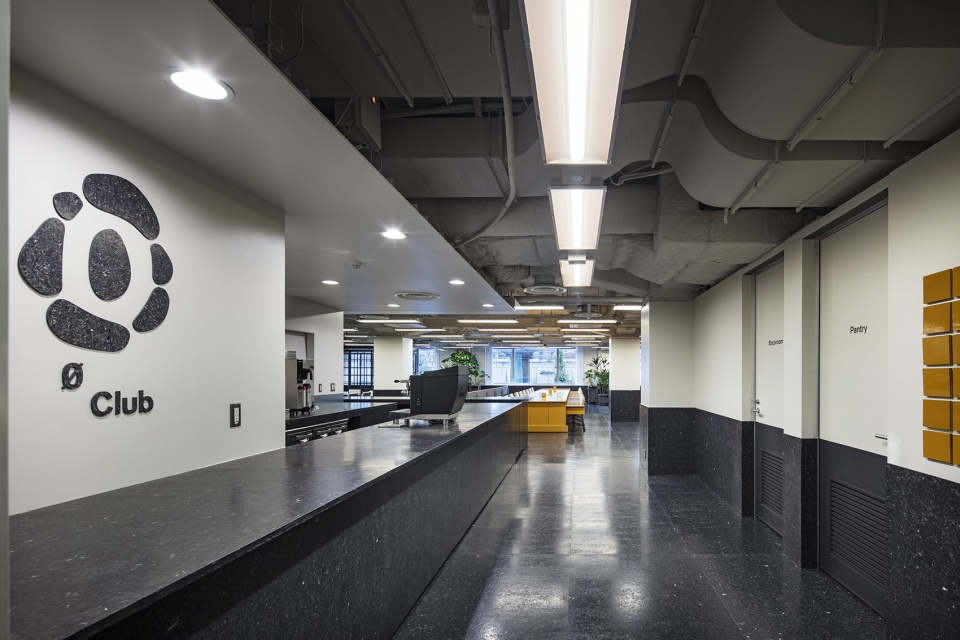
既然如此,我们也许可以尝试享受这种矛盾,将限制和规范视作激发创造力的契机,拥抱“不便”所带来的可能性。例如,在1920年代的美国禁酒令时期,为了伪装酒精饮品,非法酒吧创造了大量鸡尾酒配方;又如江户时代,平民被禁止享用奢侈之物,仅允许穿着棕色、灰色与灰棕色,于是人们便发展出“四色棕百种灰”的染色技艺,探索同色系中的丰富变化。由此可见,面对限制,与其原封不动地接受,不如提升创造力的“分辨率”,将其视作乐趣与表达的工具。游戏与体育恰恰是基于这类“限制规则”发展起来的体系。足球是一项全球广泛共享的游戏,其核心限制——“不能用手”——简单明了,跨越语言障碍。正是这种看似荒谬的限制催生了精妙绝伦的比赛、激发了公众热情、推动了经济发展,甚至促进了世界杯期间的城市基础设施建设。足球运动装备的研发也带动了化学、物理、医学与人体工学的发展。那么,我们是否也能借助类似足球的机制,探索一种在“限制”中创造的设计方法?
If that is the case, we may try to enjoy this contradiction, consider ways to use the restrictions and regulations as triggers for creativity, and embrace the inconvenience. For example, during the Prohibition era of the 1920s, a large number of cocktail recipes were invented to disguise alcoholic drinks as non-alcoholic drinks in illegal speakeasies. During the Edo period, when the commoners were prohibited from enjoying luxuries and only allowed to wear brown, grey, and greyish-brown, a variation of dyeing called “48 browns and 100 greys” was created, which produced multiple shades of these colors. In this way, rather than just seeing restrictions as they are, we should raise the resolution of our creativity and reinterpret them as tools to have fun. Games and sports have developed as platforms to enjoy such “prohibition rules.” Soccer is a game that shares the straightforward restriction everyone understands: Do not use your hands. The simple rule prohibiting one of the most important aspects of being human – the hands – is easy to share across language barriers. Through trial and error, brilliant plays are born, people get excited, it drives the economy, stadiums are built, and urban infrastructure gets upgraded for the World Cup. The research and development of soccer uniforms and shoes to support more effective play and further the development of soccer are naturally related to chemistry and physics and contribute to the development of medicine and ergonomics. Using soccer as an example, can we design a methodology for creating something while enjoying the constraints and inconveniences?
▼办公空间概览,overview of the office space
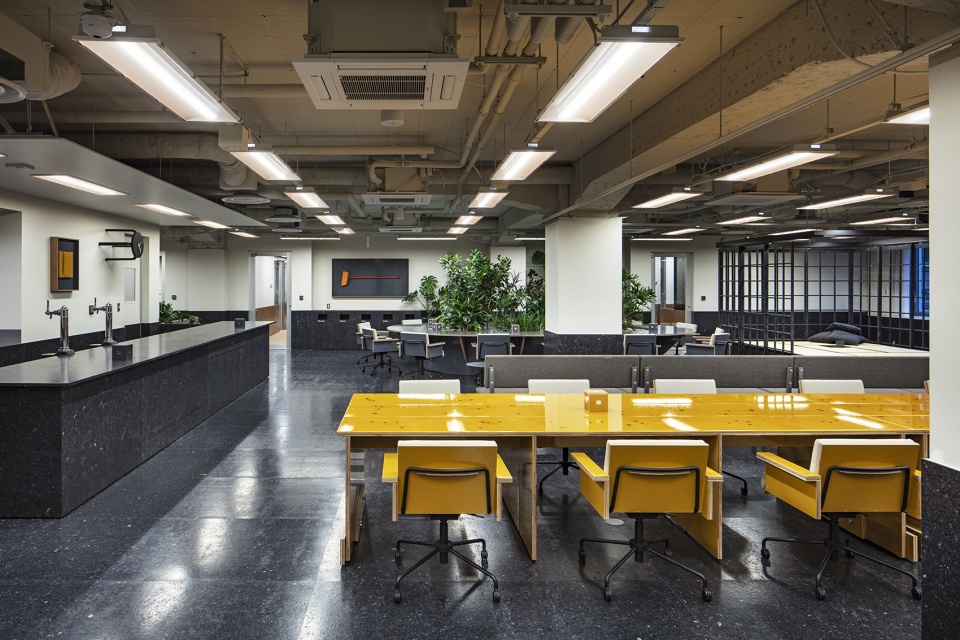
本项目以“不妥协的可持续性”与“尽可能不创造的创造”为核心理念,在选材上优先使用低环境负荷的自然材料与可获取资源,在每一步中都不断审视与反思,尽可能充分利用现有材料。虽然这意味着更多的时间与思考,甚至提高成本,但若将这种“细致”重新理解为“匠心”,便是在提升质量,而不仅仅是满足功能,就如同反复上漆的漆器或精致织物中的每一根线。“思考可持续性”或许也正是在思考“当代手工设计”。世间万物,不止建筑或室内设计,都是由材料与工艺组成的,本项目则以“低环境负荷”为前缀,在两者之间进行探讨。
Under the themes of “sustainability without compromise” and “create without creating as much as possible,” this project uses materials with low environmental impact, natural materials, and things that are readily available while stopping to investigate and reflect on each step and making the most of existing things as much as possible. This inevitably requires more time and careful thought, leading to increased costs. If we reinterpret “carefulness” as “craftsmanship,” it is about improving quality rather than simply fulfilling functionality. It is similar to paying meticulous attention to the details of a kimono’s weave or applying multiple layers of urushi lacquer. Thinking about ways to achieve sustainability may also lead to thinking about it as a modern craft design. All things, not just architecture and interior design, are made by combining materials and production methods. This time, we decided to consider both aspects using the phrase “low environmental impact” as a prefix.
▼可持续性的办公空间,sustainable office space
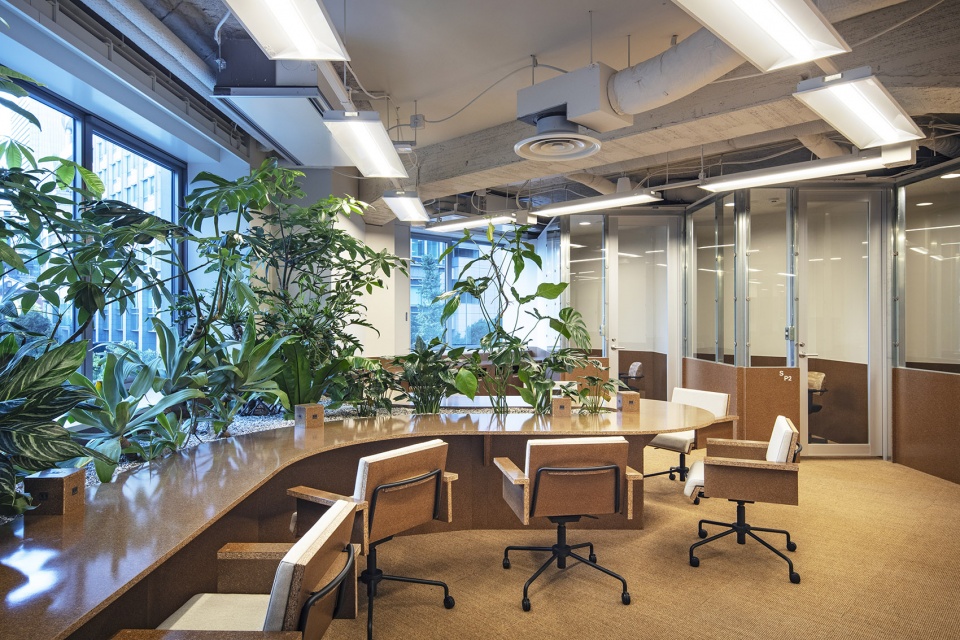
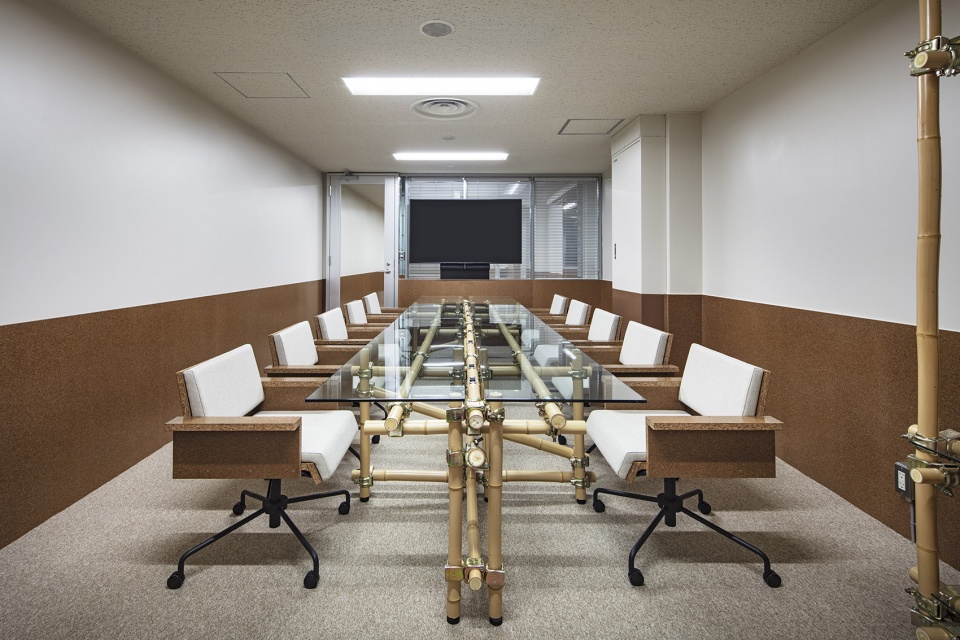
广义而言,环保材料是指回收利用率高、制造过程中碳排放尽量少的材料。然而深入了解后就会发现问题远不止于“怎么制造”,更包括“使用了多少”。基础材料的环境影响巨大,而日常可见与可感的材料同样不容忽视。钢材与混凝土是现代建筑中最基本的两种材料,而水泥与钢铁工业在制造过程中都释放出大量二氧化碳。因此,对“绿色钢材”与“低碳混凝土”的研究正在进行,同时也有不少回收二氧化碳的尝试。
Broadly speaking, “environmentally friendly” materials have high recycling and upcycling rates and minimize CO2 emissions in the manufacturing process as much as possible. However, the more you learn about them, the more you realize this is not as simple as it seems. This is because problems exist not only in how materials are produced but also in how much they are used. The environmental impact of fundamental materials is significant when considering the overall impact, but the materials we see and use in our daily lives should not be ignored either. Two fundamental materials used in modern architecture are steel and concrete, and the cement and steel industries are known to produce a substantial amount of CO2 emissions. The more fundamental the material, the more efficient its production needs to be. The word “efficient” is tricky because it means centralization, so naturally, CO2 emissions are concentrated in a specific area. Given this, research into green steel and alternative concrete, which emit less CO2 during production, is underway, as are efforts to recycle CO2 emissions.
▼可持续性的办公空间,sustainable office space
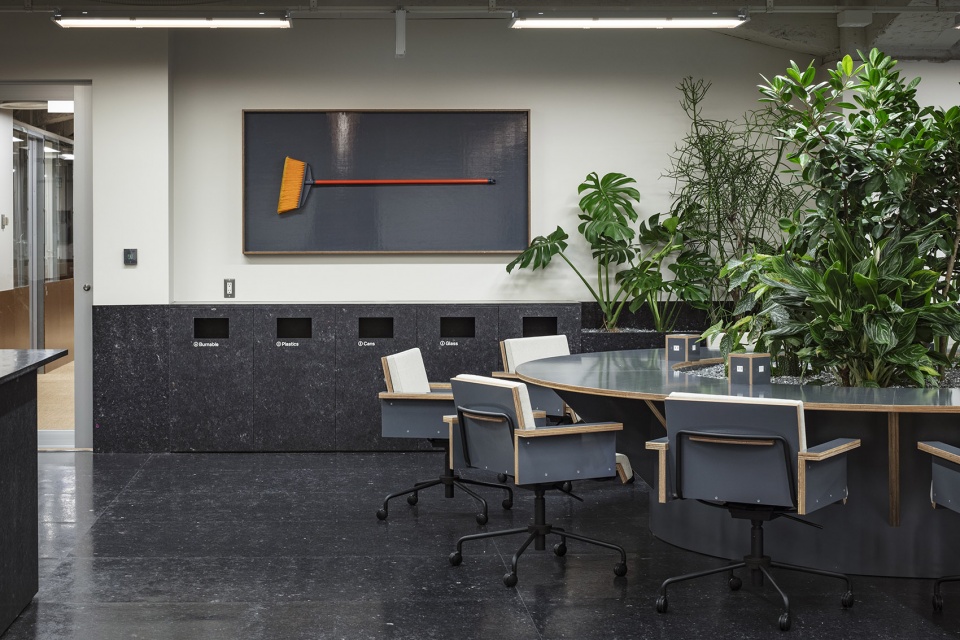
那么,对于现有的回收材料呢?虽然许多厂商在致力于开发环保材料,但回收过程必然涉及“打碎—重造”的步骤,往往造成颜色不一致,难以获得均质的材料。而收集过程也带来额外成本。同样的情况也适用于竹材、软木等自然材料,因其未知因素较多,常被认为难以控制且成本较高。这些都让我们意识到,人类正是借助“无需太多努力即可使用”的便利品不断进化的。评估一项产品的环境影响需要可视化其碳排放,这是一场在“努力”与“效果”之间寻求平衡的探索。
Then, what about already existing recycled materials? While manufacturers are putting a lot of effort into developing materials with low environmental impact, recycling inevitably involves breaking down and remaking the material, resulting in color irregularities and making it difficult to create a homogeneous material. In addition, because it involves an extra step of collection, the cost is often relatively high. The same applies to environmentally friendly natural materials such as bamboo and cork, which have many unknown factors and are often costly and challenging to handle. It makes us realize how humans have evolved by developing convenient things requiring little effort. To begin with, determining a product’s environmental impact requires much effort to visualize CO2 emissions, which means balancing effort and effectiveness is crucial.
▼回收材料制作的室内装饰,indoor decoration using recycled material
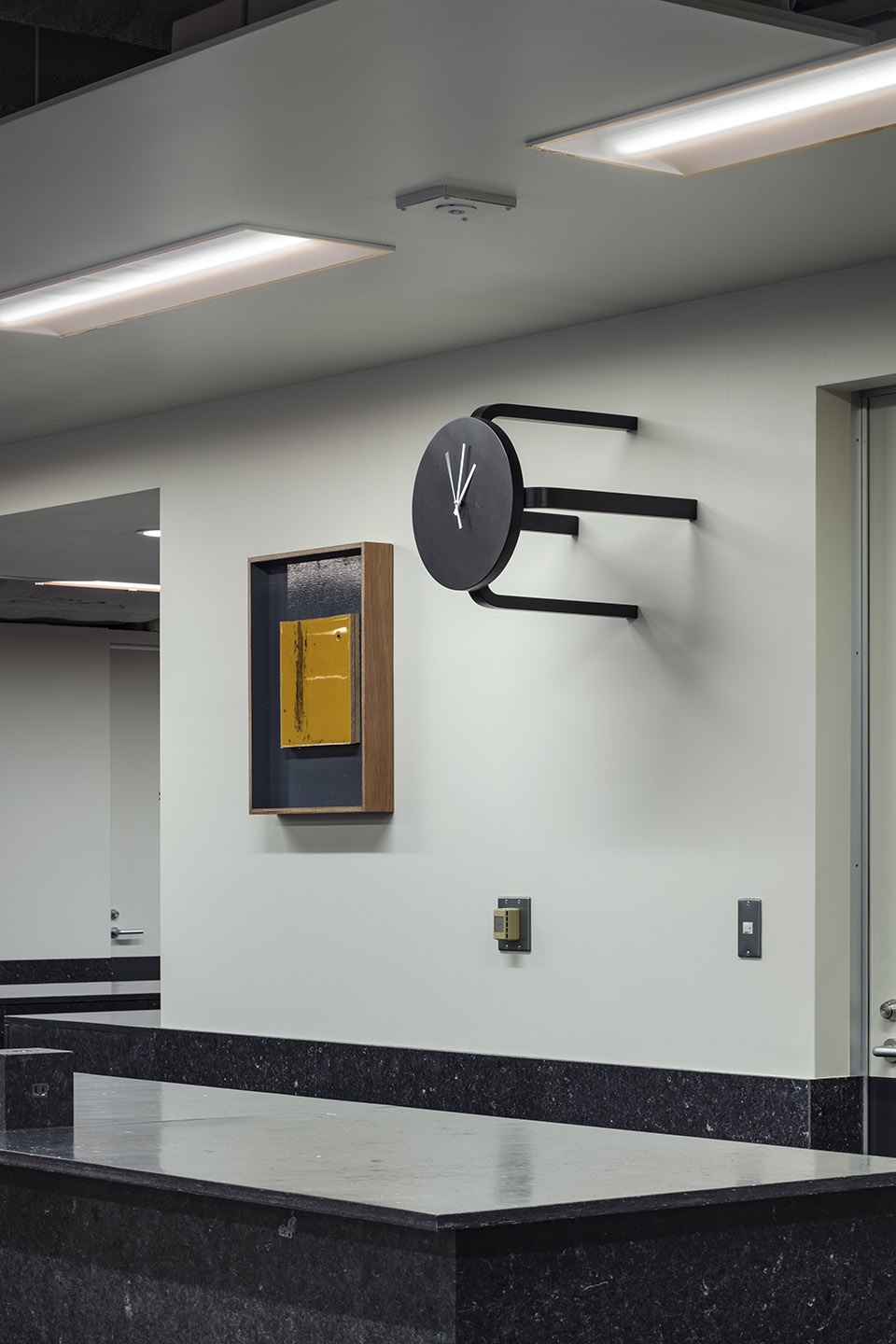
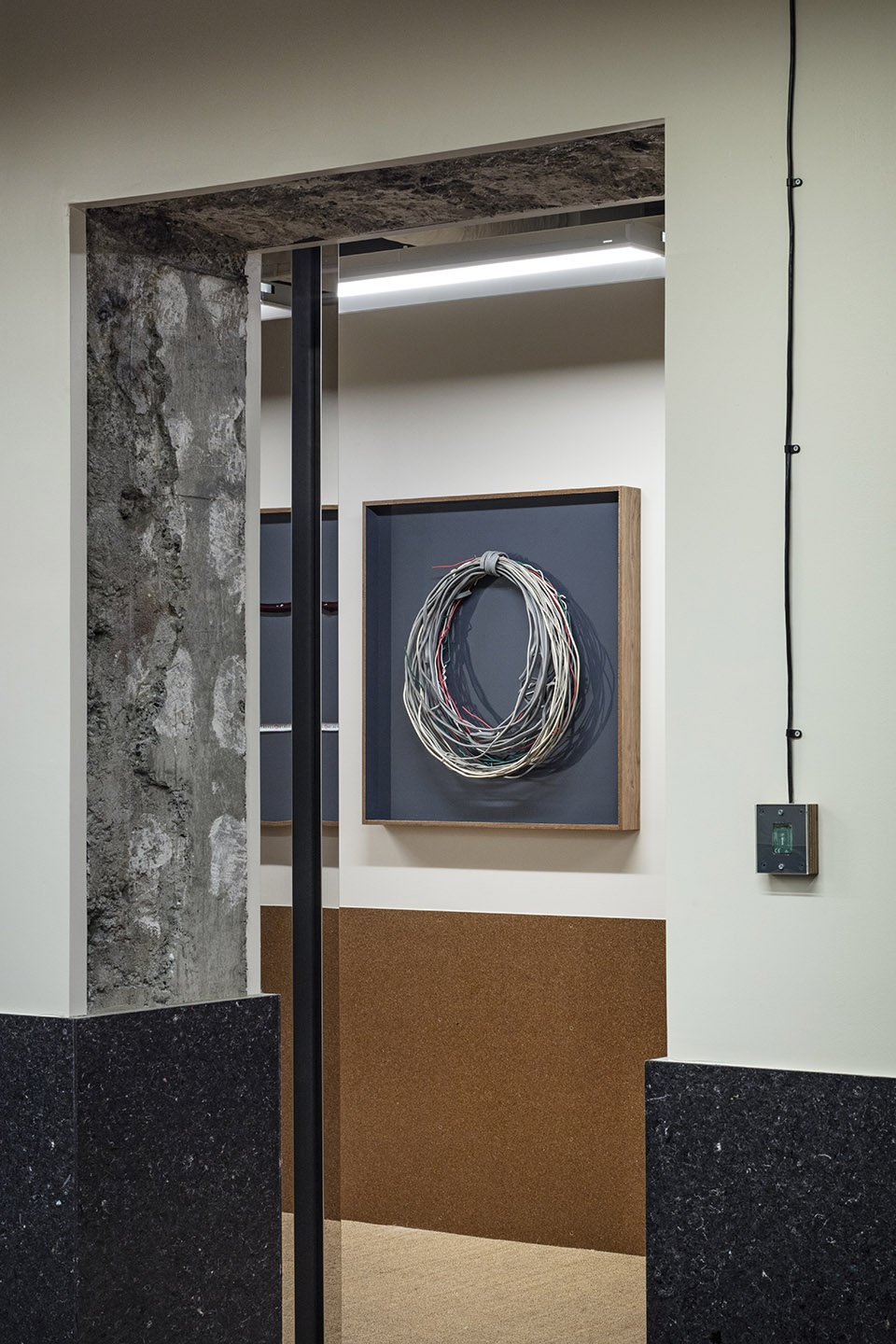
建筑构成大致可分为“建筑”、“内装”与“家具”。建筑是为了长期存在而建,家具则具有“vintage”概念,如今仍可购得上世纪三十年代的家具。然而,室内设计往往10~20年就会更新一次,以适应租户更替与电力、空调、低压设备等系统更新。因此本次设计决定尽量减少“内装”,将空间表达集中于家具与装置上,延续“尽可能不创造”的理念。现有空间尽量保留,材料也尽量选用本地可得之物,如办公室到货纸箱、项目中使用的复印纸,乃至客户在同一栋建筑进行抗震加固所用的模板。
A building’s composition can be roughly divided into architecture, interior, and furniture. Buildings are made to last longer and continue to exist for a long time. The concept of “vintage” applies to furniture, meaning one can still obtain pieces made in the 1930s. However, the interior is often renewed every 10 to 20 years, rather than every 100 years, because it has to keep up with tenant turnover and the renewal of electrical, air conditioning, and low-voltage equipment. Given this, we concluded that it would be better to keep the interior work to a minimum this time and concentrate on the furniture and fixtures to compose the space. We will use as much of the existing interior as possible and “create without creating as much as possible.” In addition, transportation to procure materials can also impact the environment. So, we decided to proactively use materials sourced locally, such as the cardboard boxes that arrive at our office, the photocopy paper used in this project, and the formwork that our client used in the seismic retrofitting work on the same building.
▼使用低环境负荷的环保材料制作的家具,furniture using low-impact, environmentally friendly materials
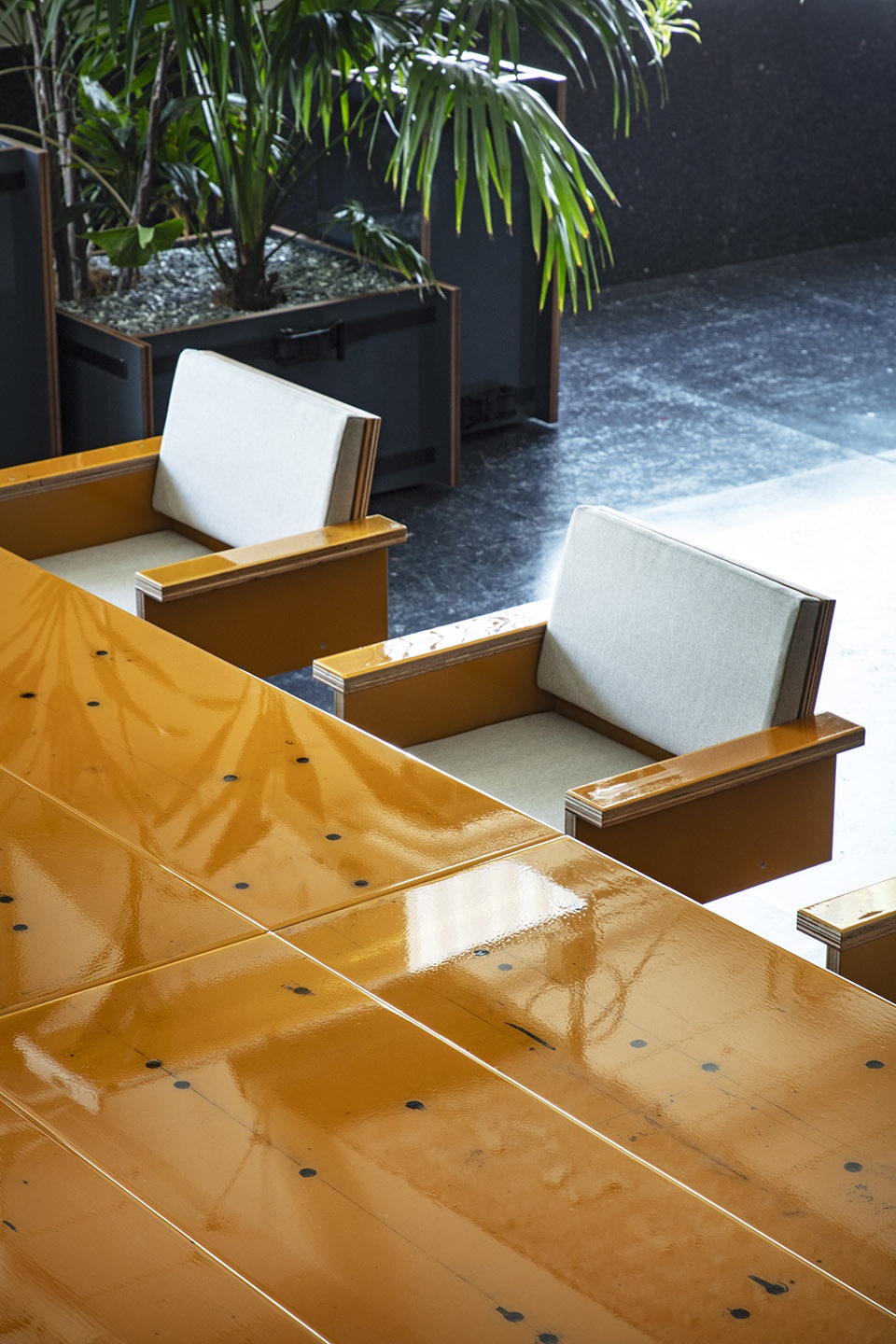
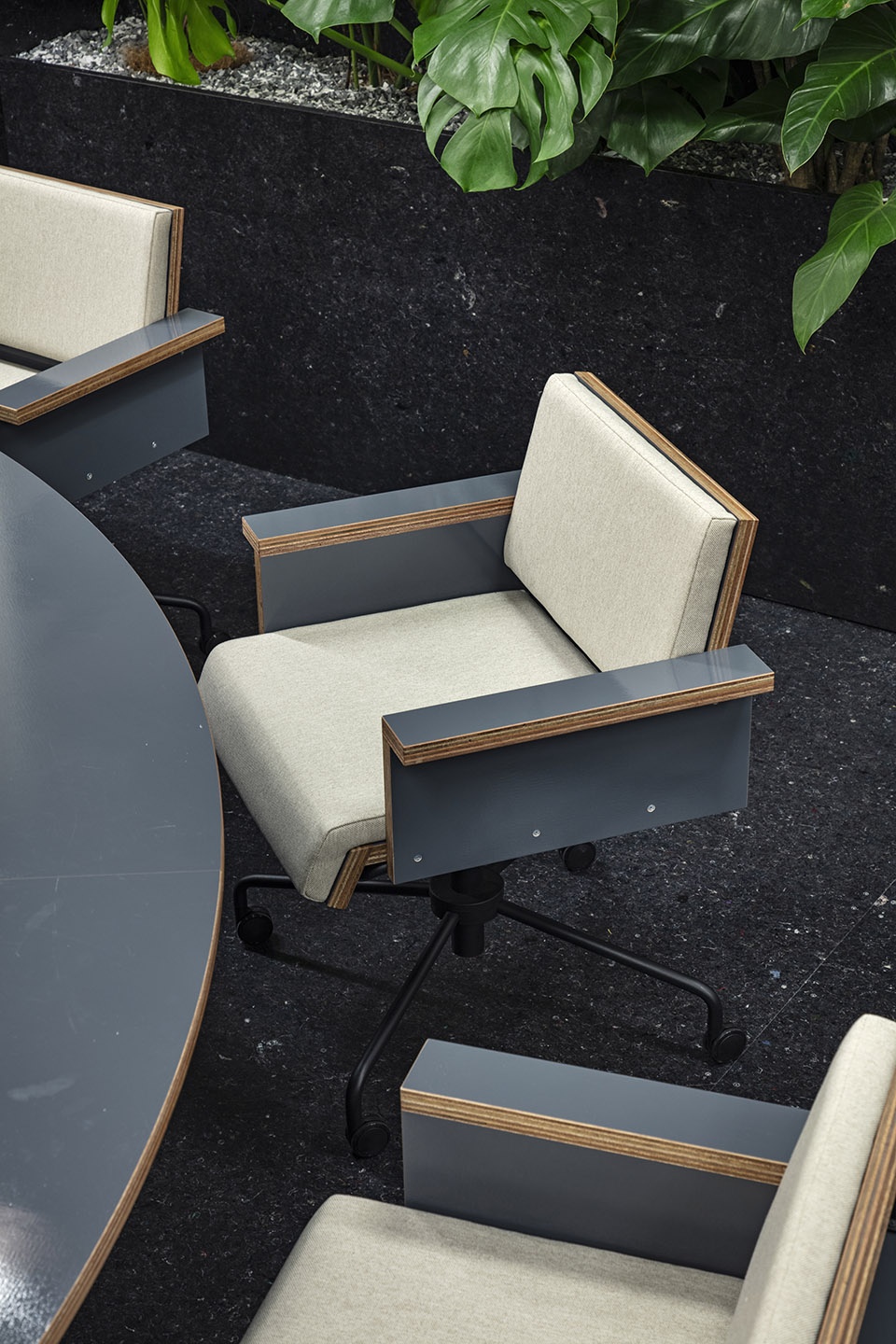
本项目最终制定的设计与施工原则如下:尽可能保留既有室内空间,不做新增施工;若不得不施工,仅使用低环境负荷的环保材料。制作过程中尽可能简化工艺、减少用料,并考虑未来的再回收或再利用。能以家具替代的构件尽量以家具形式呈现,以便未来持续使用。尽量减少材料运输,最大程度利用施工废料。
The production rules that were ultimately adopted for this project are summarized as follows: The existing interior should be reused as much as possible without new construction. For areas where construction is unavoidable, only low-impact, environmentally friendly materials are used. In addition, when making things, it is essential to simplify the production process as much as possible, use fewer materials, and consider ways to make it easier to recycle or upcycle in the future. Items that can be substituted with furniture should be made as furniture as much as possible so they can be continuously used in the future. We should reduce the transport of goods and reuse waste materials from the construction as much as possible.
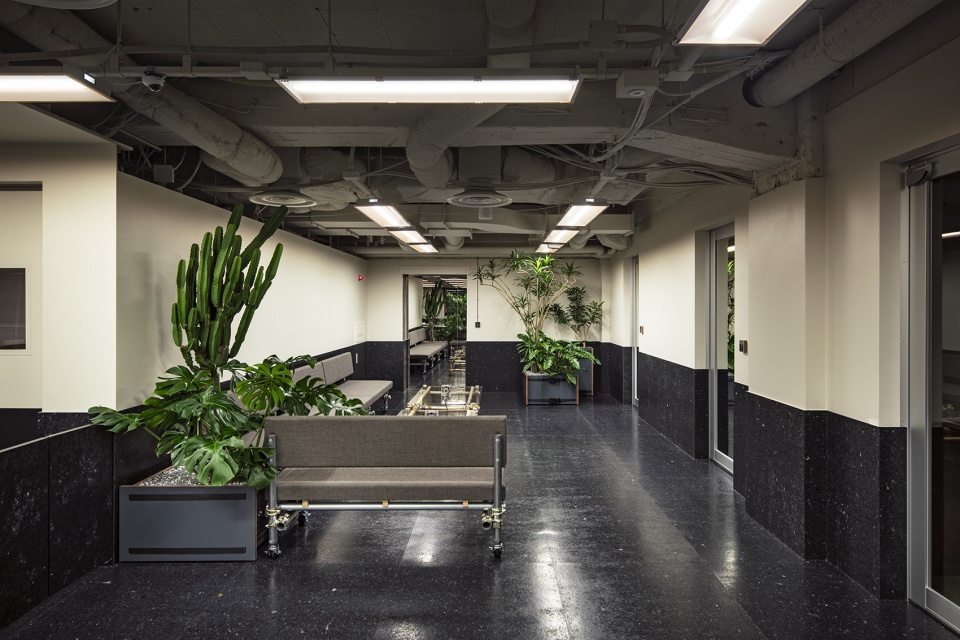
▼休息区域,lounge area
地面处理Floor项目复原了原有OA地板(办公室常用的架空布线地板)。公区铺设了再生材料“Rifmo”,私区则使用刨花板,铺设高度仅至不受防火材料规范限制的范围,从而避免使用不可燃材料。
The OA floor system is an office floor system under which wiring can be routed. This system is used in most office buildings. This project reused the existing OA floor as much as possible. The common areas were finished with a recycled material called Rifmo, and the private areas were finished with particle board, up to the height not subject to the restriction on interior material use, eliminating the need to use non-combustible materials.
▼公区复原了原有OA地板,this project reused the existing OA floor
▼私区则使用刨花板,the private areas were finished with particle board
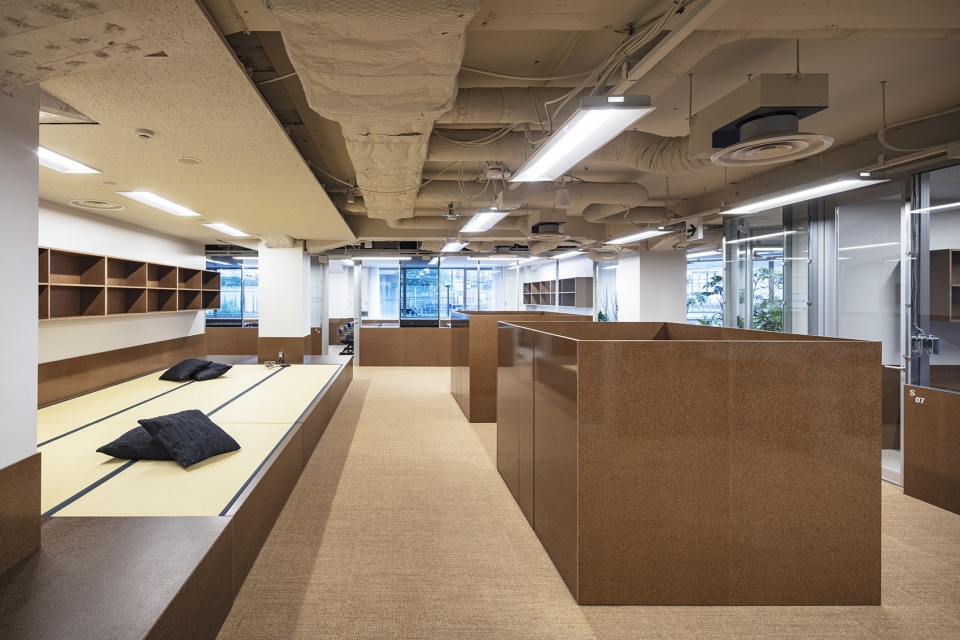
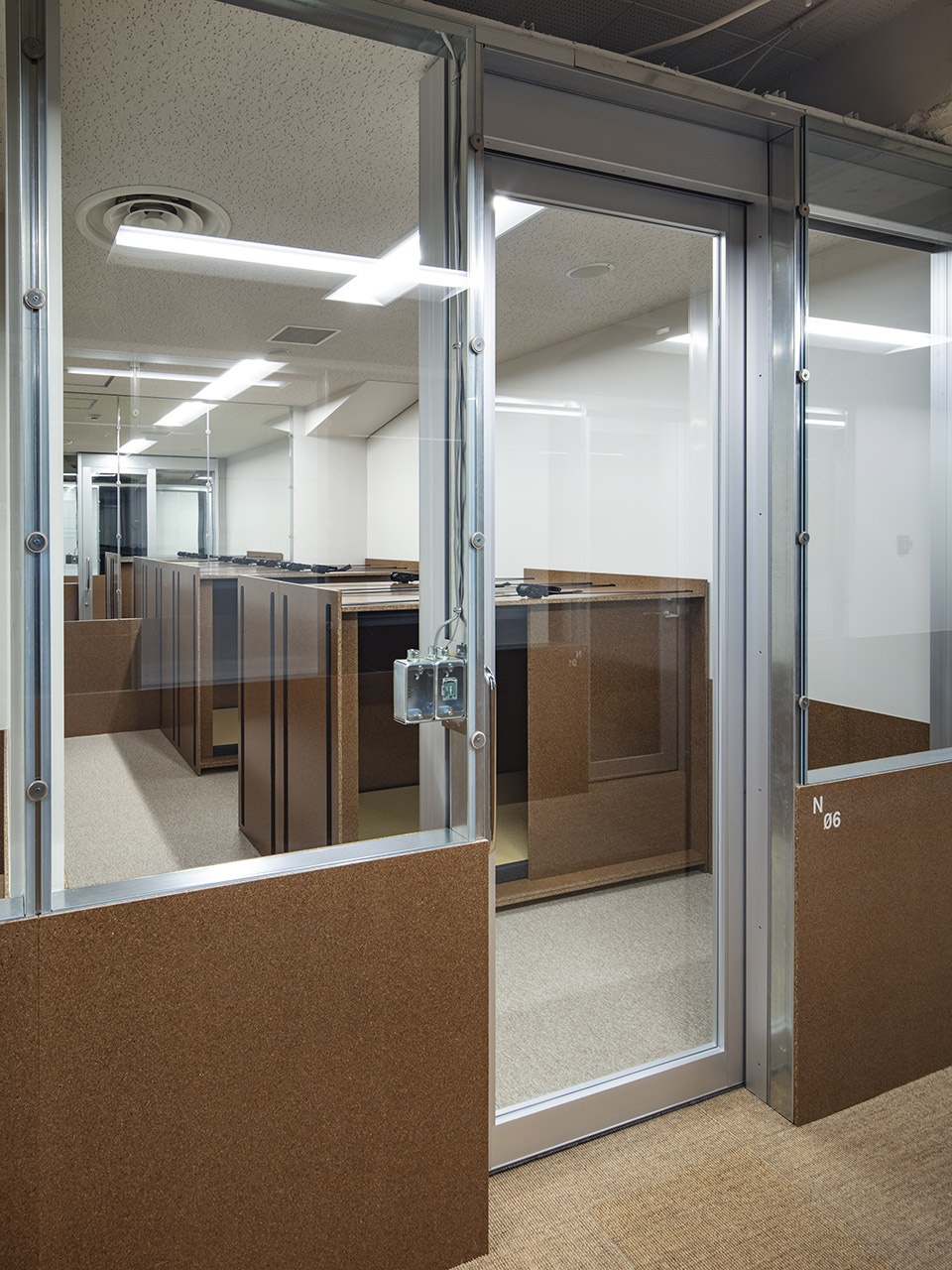
墙体处理Wall墙面是本次施工中最大的挑战,尤其是在满足耐火规范的前提下。因为市面上尚无合适环保材料可以替代LGS轻钢龙骨与玻璃(这或许是创业机会)。因此本次仍采用传统LGS结构。依据使用限制,公区选用刨花板,私区则用Rifmo饰面,墙面高度仅至腰部位置。刨花板是以废木粉碎而成的基材,是唯一一种使用废木原料的纤维板(包括OSB与MDF)。墙上半部的玻璃则通过螺丝直接固定于LGS龙骨上,最大限度减少框架材料使用,无需胶水,从而方便回收再利用。玻璃细节也便于拆卸。所用石膏板皆为循环再生产品。
The walls were the most challenging part of the interior construction while ensuring the non-combustibility of the interior. This was because we could not find environment-friendly materials that could replace conventional LGS (light gauge steel substrates) and glass (from a startup perspective, this may be a business opportunity.) For this reason, we used conventional LGS. Due to the restriction on interior material use, we chose particleboard for the common areas and Rifumo for the private areas and finished the walls up to waist height. Particleboard is made by crushing waste wood and used as a substrate. It is the only type among fiberboard materials (including OSB and MDF) that uses crushed waste wood. The glass on the upper half of the wall is attached directly to the LGS using screws, minimizing the amount of framing material used. No sealant is used, eliminating the need for sorting when upcycling. The glass details are designed for easy removal. All the plasterboard is made from upcycled circular plasterboard.
▼墙面处理,the wall treatment
▼私密区域使用刨花板,the private area using fiberboard materials
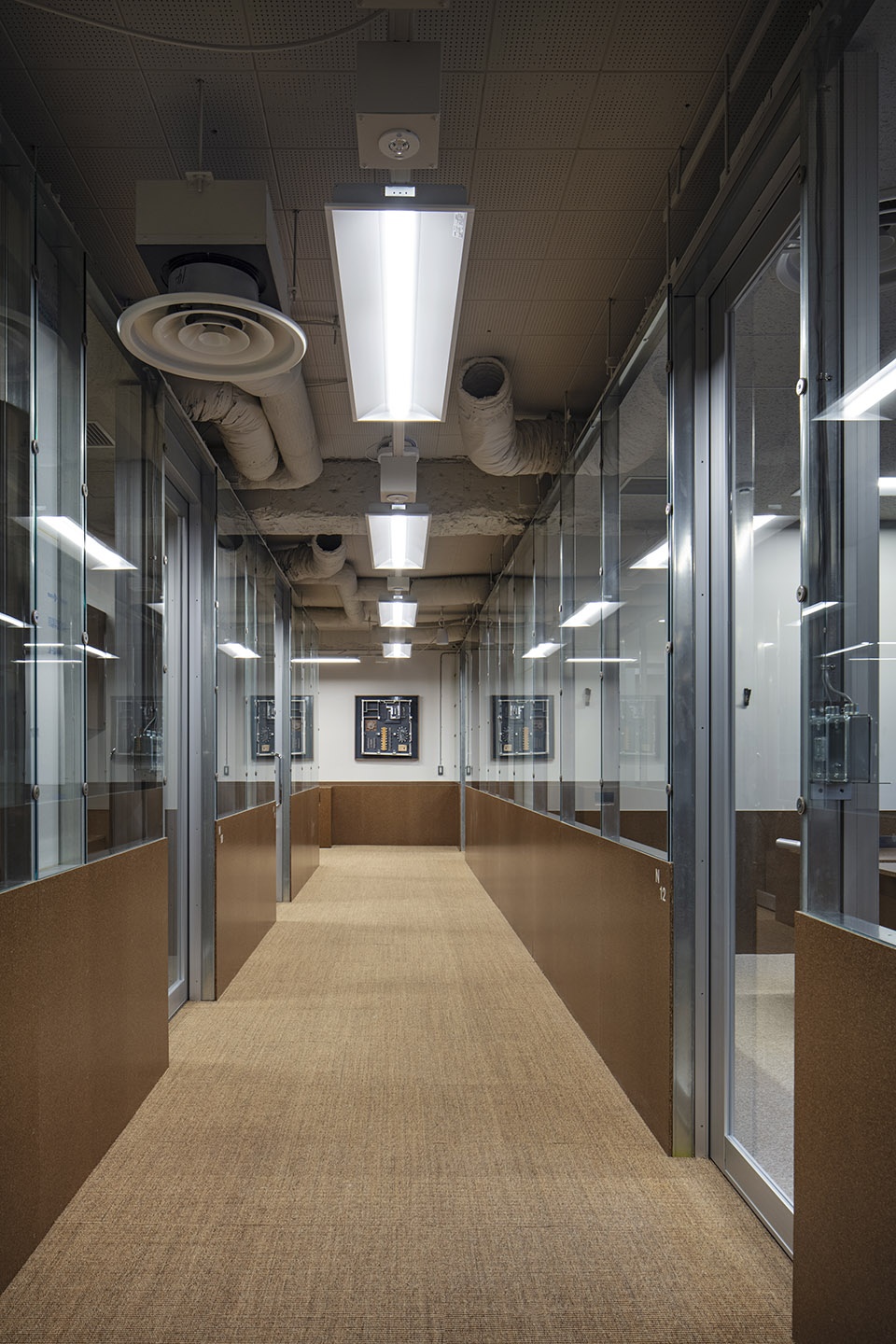
吊顶 / 灯光 / 空调Ceiling/lighting/air-conditioning公区拆除了吊顶以提高层高,私区则保留原吊顶,减少独立包间施工量。可再利用的空调与照明设备尽量调整位置重用。灯光色温则通过夹纸夹固定的彩色薄膜或亚克力板进行调整,既节省施工费用,又便于后续维护。
The ceilings in the common areas were dismantled to increase the ceiling height. In contrast, the ceilings in the private areas were reused without dismantling, reducing the work required to install the ceiling fixtures when constructing the private rooms. Things that can be reused, such as air conditioning and lighting, were adjusted and repositioned without additional work. The color temperature of the existing lighting was adjusted by simply attaching film and acrylic using paper clips known as “double clips.” This reduced the cost of the B construction and made removing the film easier in the future, facilitating maintenance and warranty work.
▼照明设备和空调系统,lighting and air-conditioning
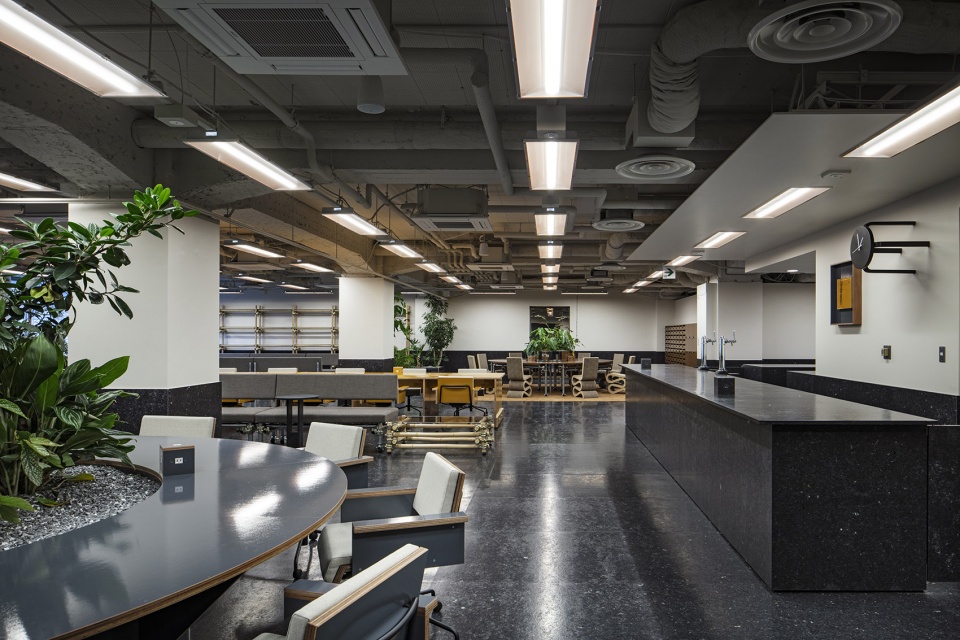
▼通过夹纸夹固定的彩色薄膜或亚克力板进行调整灯光色温,
The color temperature of the existing lighting was adjusted by simply attaching film and acrylic using paper clips
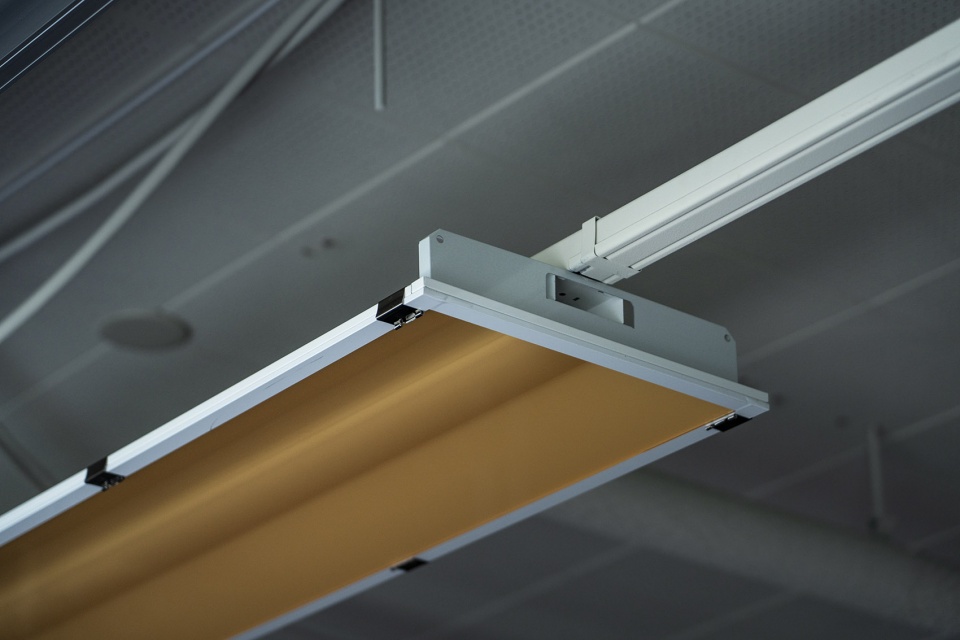
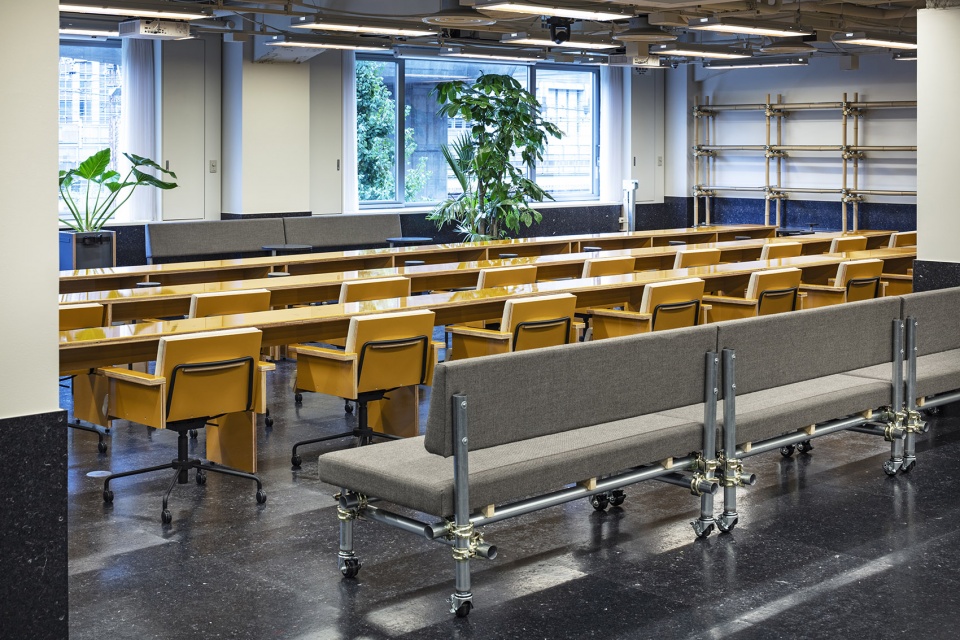
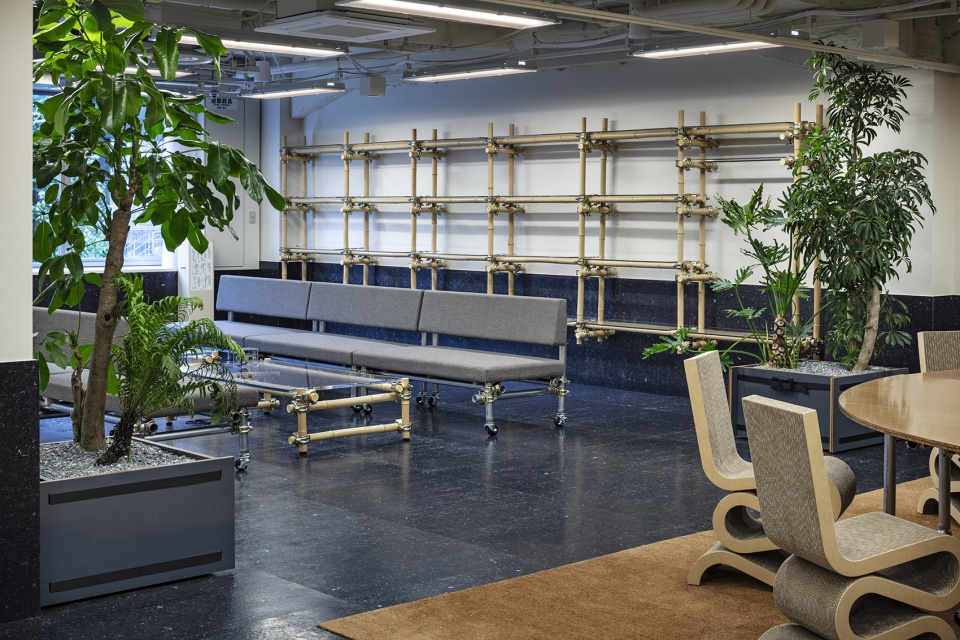
家具与布局Furniture layout作为聚焦特定领域的共享办公空间,布局鼓励在整栋楼内自由移动。独立办公间围绕中央休息区呈放射状排列,午休间、电话亭等功能区分布其间,自然暴露在周边资讯之中。中央休息区可通过帘幕进行分隔,适配多种活动场景,如百人会议或小组研讨。希望打造一个“家具即话题”的空间,每一件装置都留下对环境影响的深思痕迹。
Given that this office is for a community specializing in a specific field, the layout is designed to allow people to walk around the entire facility. Private rooms are arranged in a radial pattern around the central lounge, and nap rooms, phone booths, etc., are dispersed between the private rooms so that they are automatically exposed to information from surrounding areas. The lounge can be divided into separate areas by curtains and used for various events. This room has a flexible layout, with several layout patterns in mind, such as a conference for about 100 people or group work. We aimed to create a space where the furniture and design could be used as a starting point for conversation, with traces of thought given to the environmental impact in all fixtures.
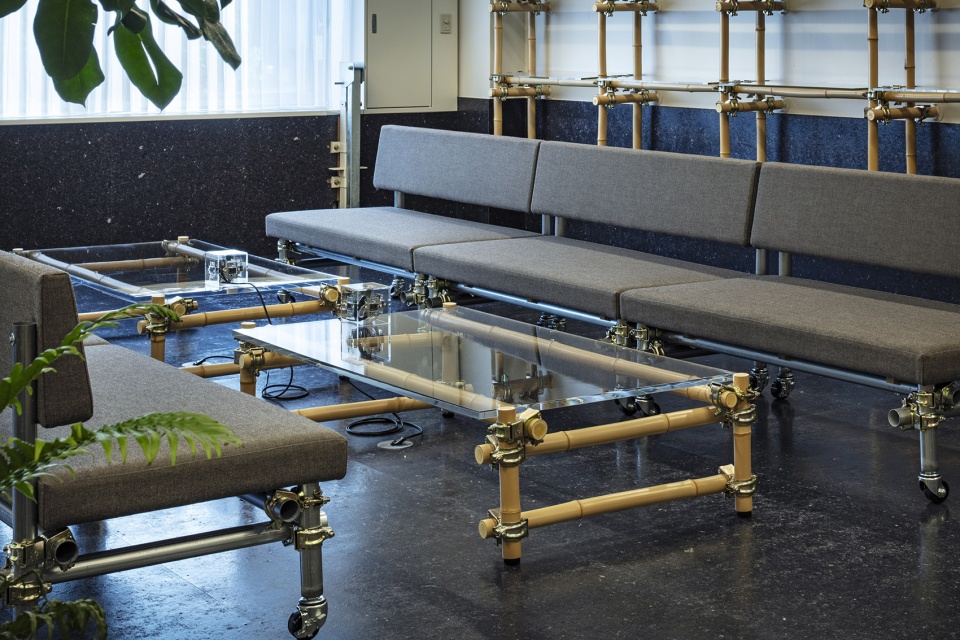
▼鼓励自由移动的家具,furniture allows people to walk around
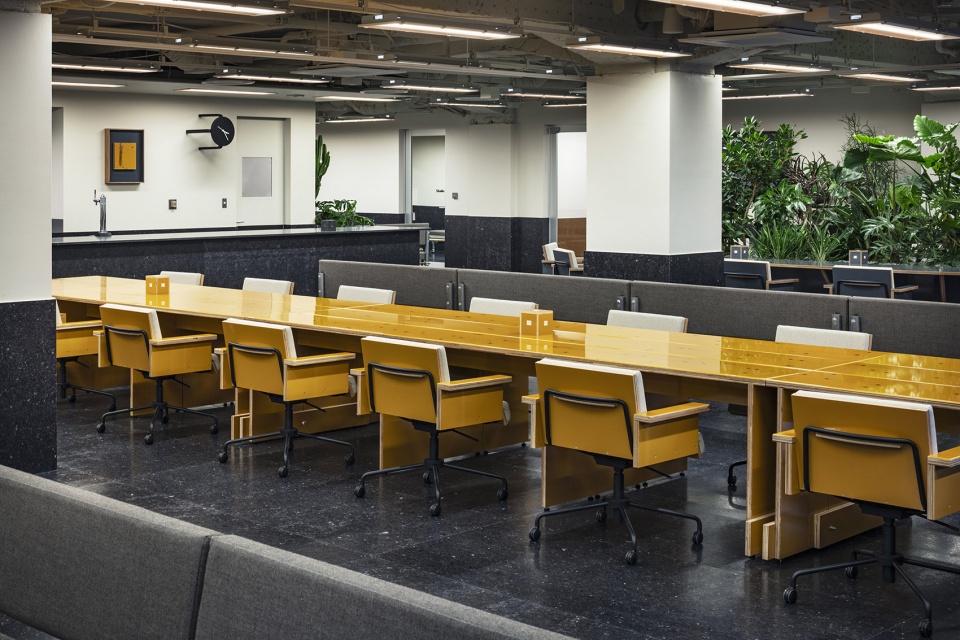
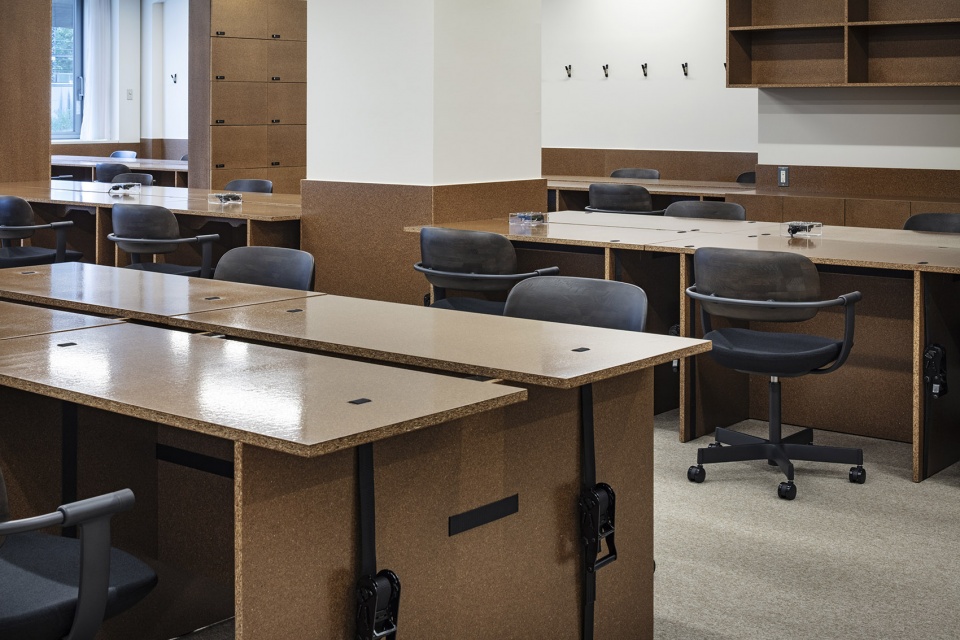
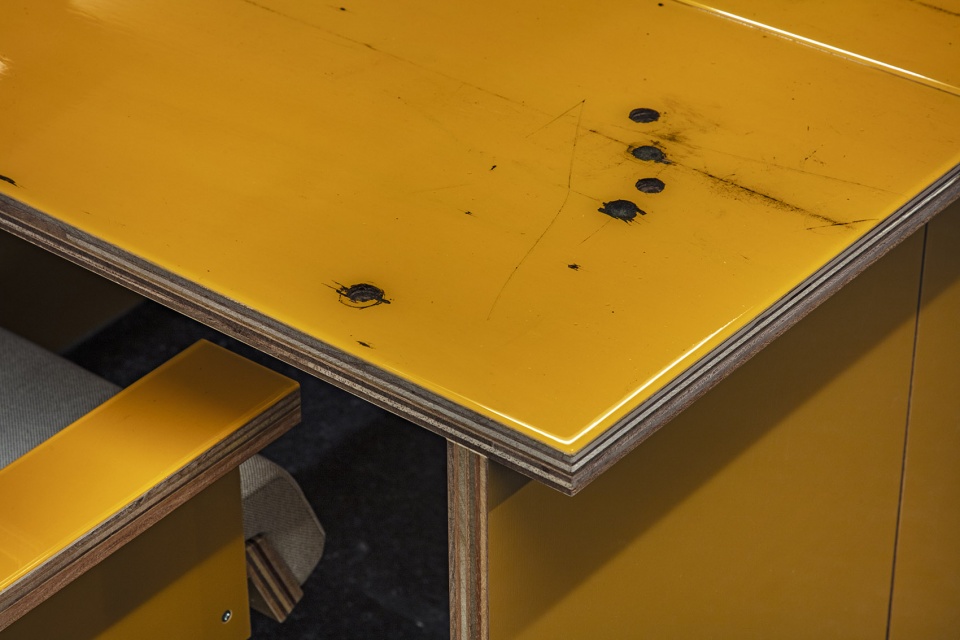
▼家具细部,furniture detail
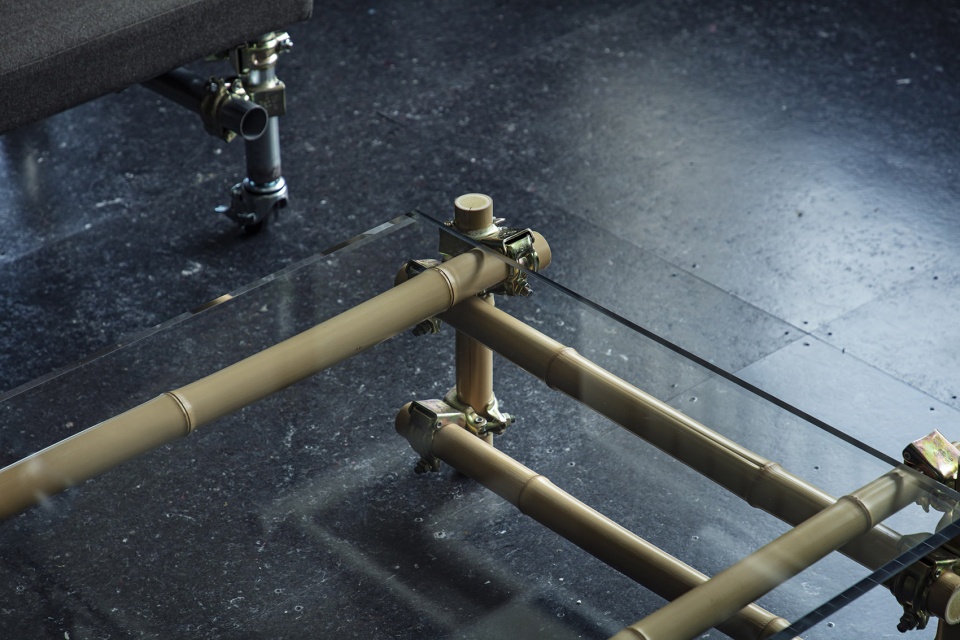
▼竹材家具细部,bamboo furniture detail
Client: MITSUBISHI ESTATE / 0 Club
Location: Chiyoda-ku, Tokyo
Usage: Office
Structure: Steel Reinforced Concrete
Total site area: 1,742m²
Date of completion: September / 2024
Architects: DDAA
Project Team: Daisuke Motogi / Riku Murai / Yuhei Yagi
Project Management: duux
Construction: Shimizu Corporation / SPACE
VI Design: Takahiro Yasuda (CEKAI)
Lighting Design: Filaments
Planting Design: Oryza
Photo: Kenta Hasegawa
Editor/Writing Supervisor: Soyoka Tsuji
Translator: Kazuko Sakamoto