Sutton住宅,魁北克 / Pelletier de Fontenay
本项目隐藏在魁北克东部乡镇(Eastern Townships)如画的自然风光中,是对一座20世纪早期石头住宅的全面改造与扩建。这栋房屋最初建于1908年,在1950年代曾有过小幅扩建,但自那之后几乎未曾变化。厚重的墙体、笨拙的体量和超大尺寸的烟囱,使其更像一座小型庄园,而非传统乡村住宅。内部,小窗户和异样的布局让空间显得局促而狭窄;外部,风格不一的石墙通过显眼的灰色水泥砂浆连接在一起,削弱了石材本身的自然美感。
Tucked away within the picturesque landscape of Quebec’s Eastern Townships, Sutton House stands as a complete overhaul and extension of an early 20th century stone house. Originally built in 1908 and modestly expanded in the 1950s, the house had remained largely unaltered since. With its heavy walls, hulking geometry, and oversized chimneys, it bore the characteristics of a smallish manor rather than a traditional country home. Inside, the small windows and the unusual layout made the space feel awkward and narrow, while outside, the mismatched stone walls were held together by a conspicuous grey cement mortar, which took away from the natural appeal of the stone.
▼项目概览,overview of the project
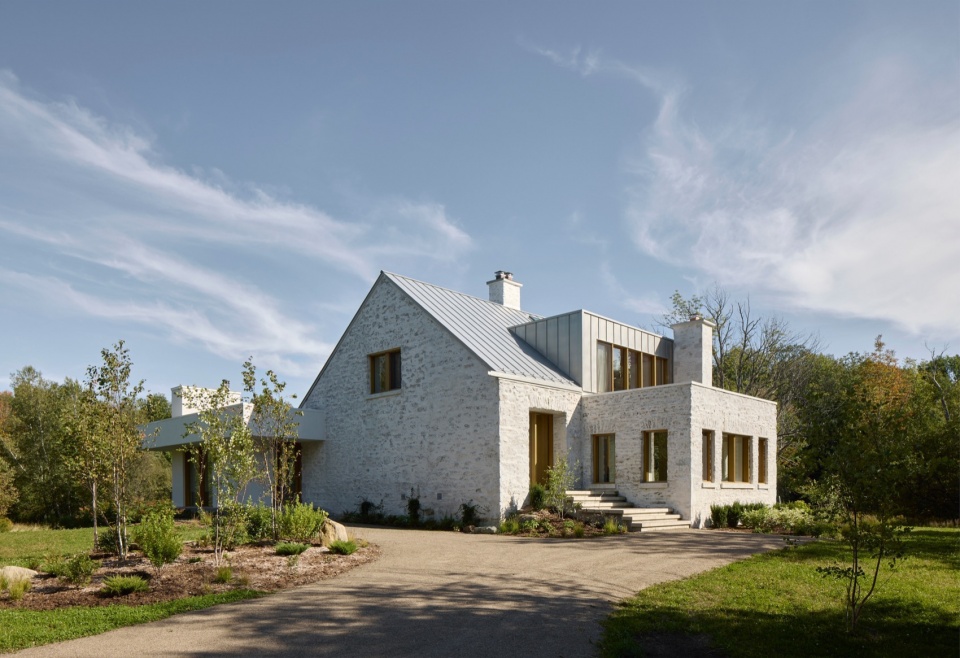
设计任务十分明确:在尽可能保留原有建筑与结构的基础上,彻底重组室内布局,提升热效能,并扩建一层空间,以更好地与周围自然景观建立联系。项目设计的核心理念是将三个不同时期的建筑结构融合为一个统一整体。与其采用鲜明对比的新旧语言,或试图模仿原建筑,设计团队更倾向于通过模糊而有机的对话,将新旧结合,借鉴原建筑的架构语言,塑造出既独特又连贯的建筑形式。项目通过在延续原有风格的同时引入清晰的当代元素,重新诠释了原建筑强烈的表达特质。
The brief was clear: conserve as much of the original building and structure as possible, while entirely reorganizing the inside, improving thermal efficiency, and expanding the ground floor to generate strong new connections with the surrounding landscape. Central to the design is the idea of merging three distinct construction periods into a cohesive whole. Rather than creating a contrasting language with its new additions, or trying to mimic the existing building, the project offers a more ambiguous dialogue between old and new, drawing upon the original house’s architectural language to establish a distinctive yet coherent architectural form. The project reinterprets the strong expression of the existing by adding new forms that are both in continuity with the old and unmistakably contemporary.
▼住宅外观,exterior view of the house
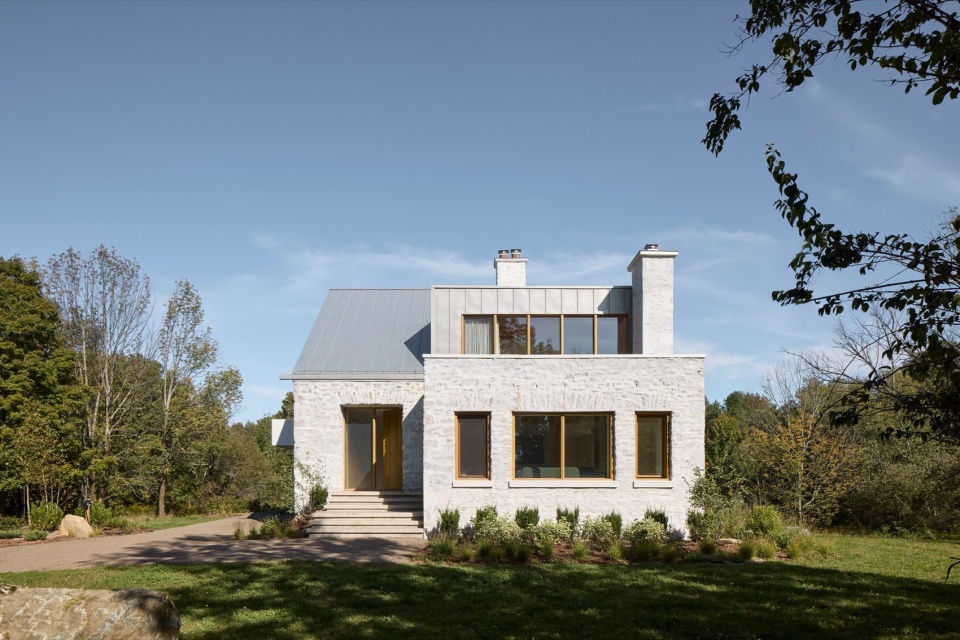
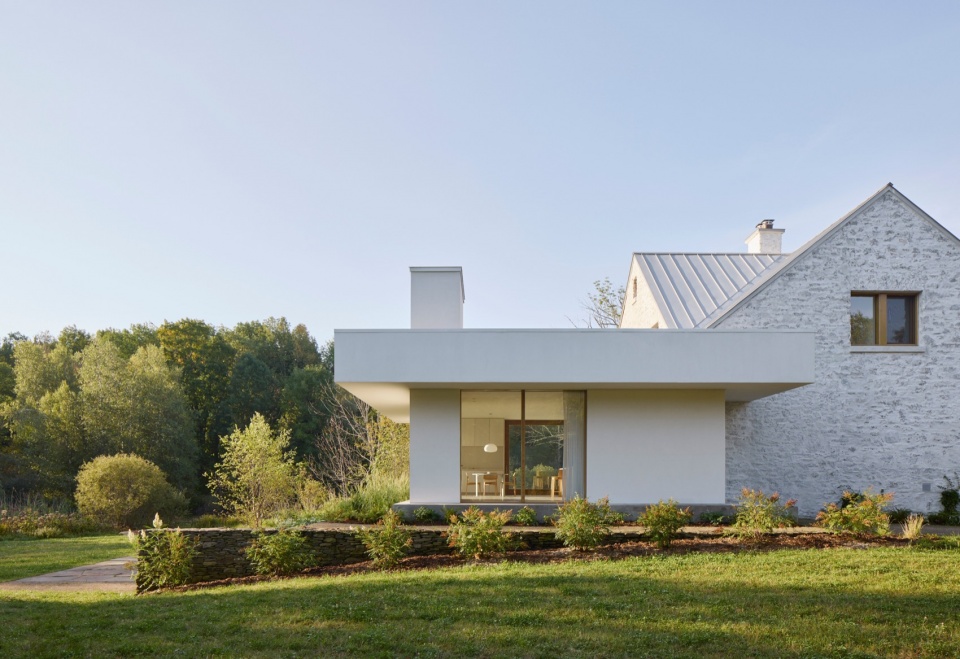
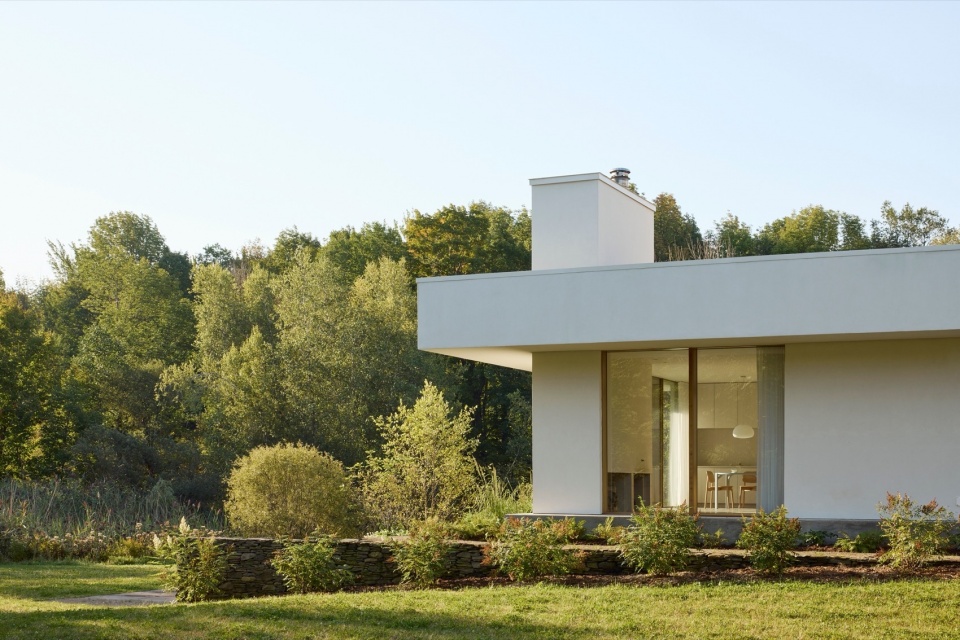
扩建部分的一层墙体和屋顶同样厚重深邃,呼应了原建筑原始、厚重的特征。三组独立的体块内设有储藏空间与壁炉,同时框景式地引入周边自然景色,并支撑起一片大尺度悬挑屋顶,将室内生活区自然延伸至多个露台、小径与花园。扩建部分低矮水平的轮廓线,确保了原有坡屋顶的完整性和清晰辨识度。在上层空间,一座全玻璃屋顶老虎窗打开于原有扩建之上,成为当代介入与内部彻底变革的明确标志。房屋后侧,新建的高大烟囱突破屋顶线,呼应原建筑中两座分别代表不同建筑时期的烟囱,进一步强化了整体叙事的连贯性。
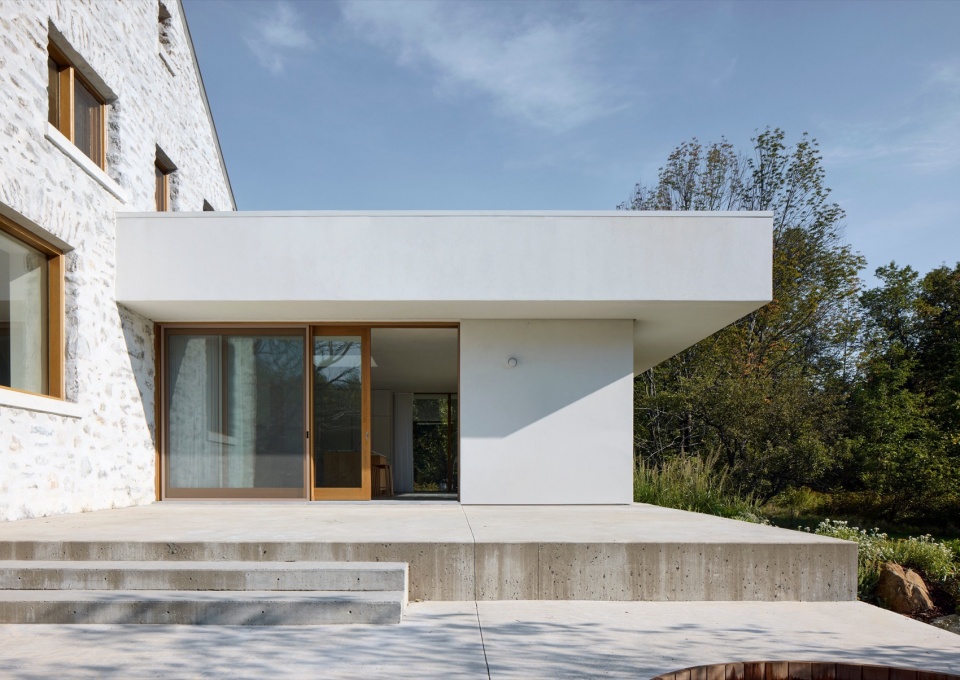
The walls and roof of the ground floor addition are deep and thick, closely echoing the primitive, heavy character of the existing structure. Three distinct blocks containing storage and a fireplace frame wide views of the surrounding landscape and support a large overhanging roof, which extends the living spaces outwards onto a series of terraces, pathways, and gardens. The low horizontal profile of the addition allows the existing pitched roofs to remain intact and clearly legible. On the upper floor, a fully glazed roof dormer opens up above the original addition, signaling the presence of the contemporary extension and the radical transformation inside. Behind the house, the new chimney extends vertically well above the roof, reinforcing the interconnection with the two other existing tall chimneys, each one characterizing a different architectural period.
▼扩建部分外观,exterior view of the extension part
修复与可持续性Restoration and sustainability
材料语言是设计的另一关键方面。为了让整座建筑形成统一的视觉语言,设计团队开发了一种定制的白色水泥矿物涂层,覆盖在新旧外墙及室内墙面之上。这种混合了石灰与水泥的涂层与当地工匠密切合作完成,既统一了各区域的视觉效果,又让背后的材质质感若隐若现。这种细腻、富有触感的表面处理会随着时间推移自然风化,夏季时,亮白的外墙在郁郁葱葱的绿意中格外醒目;而到了冬季,建筑则仿佛消融于雪白的单色风景中,呈现出一种近乎虚幻的存在感。
Another key aspect of the design is materiality. To produce a cohesive visual language throughout the house, the firm developed custom white cementitious coatings that cover all facades, both old and new, as well as all the walls inside the house. These assorted white mineral finishes unify the different areas of the house, while still allowing the material texture behind to come through. These lime and cement coatings, developed in close collaboration with local artisans, provide a subtle, tactile finish that will continue to patina over time. They also give the house a very different expression depending on the season: in the summer, the bright white facades stand out against the lush greenery that surrounds the house, while in winter, the house fades into the snowy monochromatic landscape in an almost evanescent way.
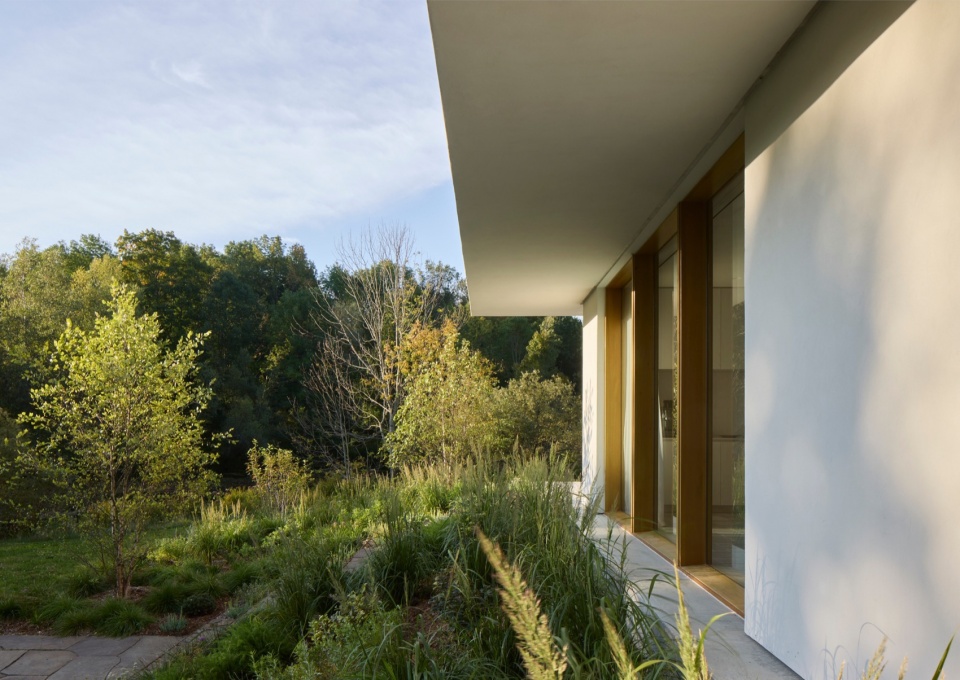
▼檐下空间,under eaves
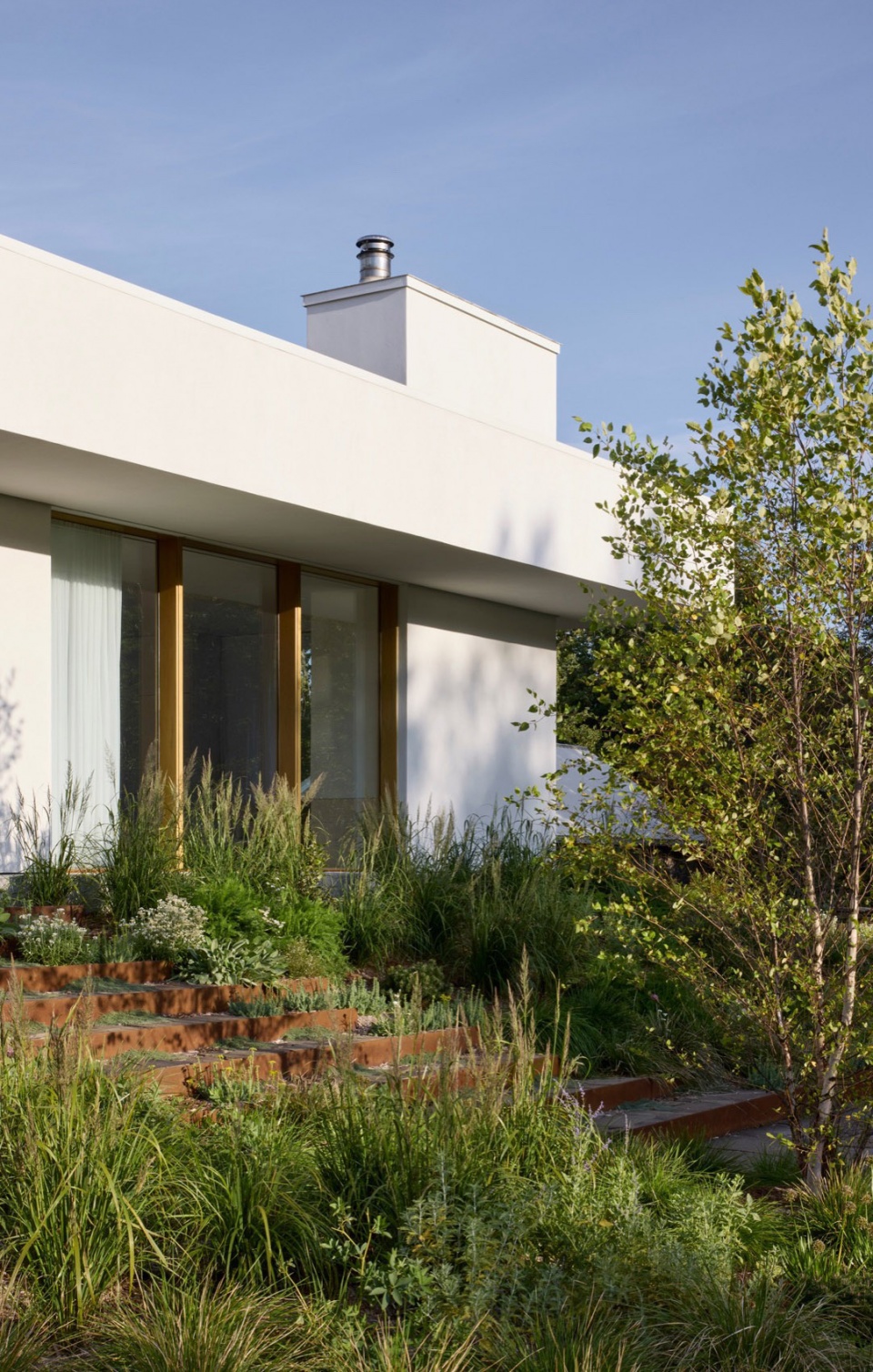
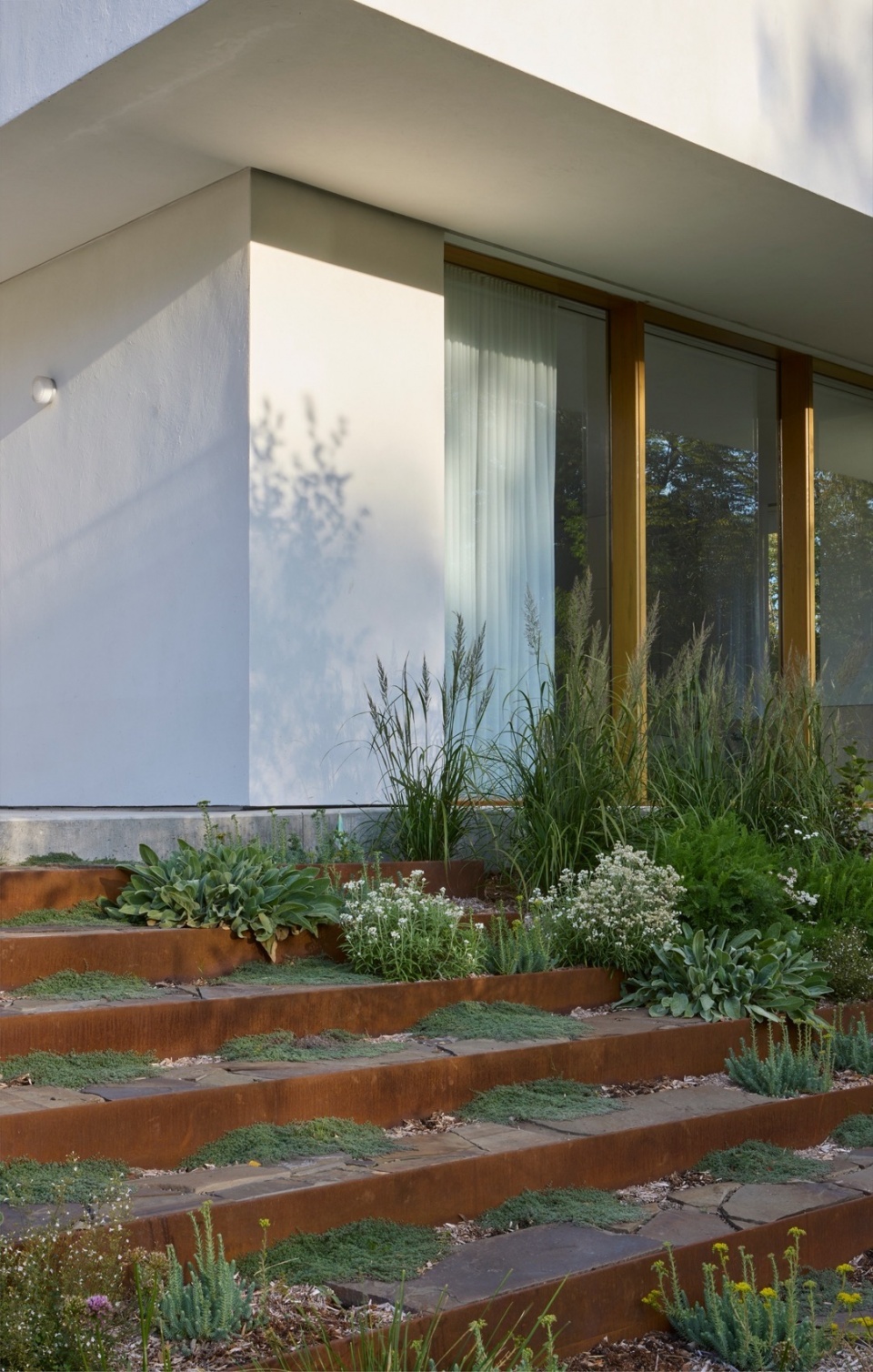
▼台阶,steps
▼入口,entrance
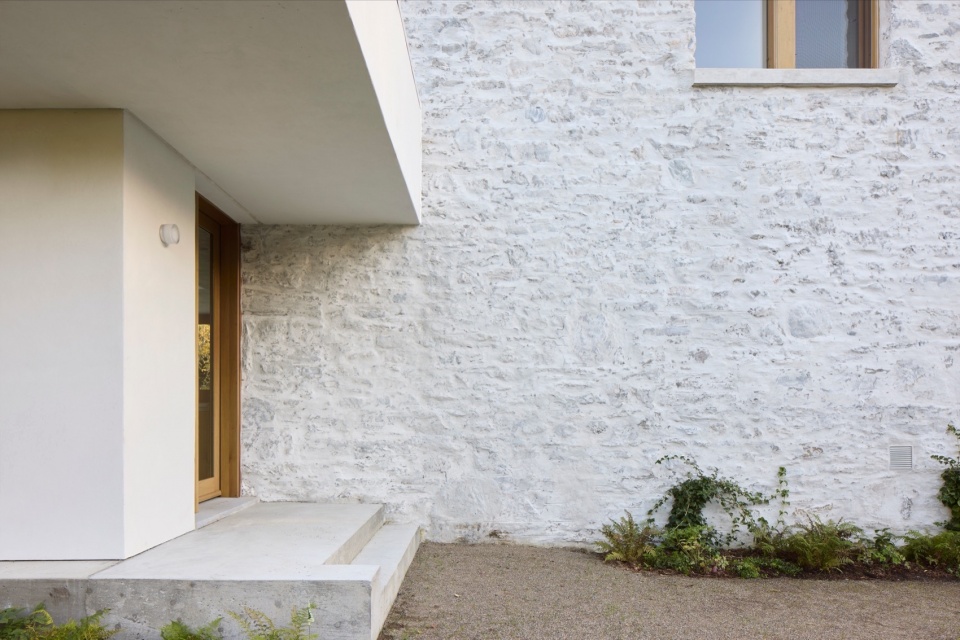
在保护原有建筑结构与特质的同时,提升外墙围护热性能也是本项目面临的重要挑战。为了保留墙体整体感并保护石材免于因内外彻底分隔而加速劣化,设计采用了生物基材料——内部填充新型的麻质隔热层(hemp insulation),这种材料具有良好的透气性、隔热性和湿度调节能力。室内墙体辅以智能防潮层,并以天然石灰抹面,兼顾自然呼吸与高效气密控制及保温性能。
Preserving the house’s existing structure and character while entirely revamping the envelope’s thermal performance was another major focus of the design challenge. In order to preserve the monolithic aspect of the walls and protect the stone from possible decay often caused by fully separating it from the inside, the entire house and addition were insulated from the inside with a new hemp layer, a bio-sourced material known for its breathability, good R-value, and humidity control. Inside, the interior walls were lined with an intelligent vapor barrier and parged with a natural lime finish, allowing the walls to breathe naturally, while still achieving good air and vapor control and high R-value.
▼入口空间与壁炉,entrance area and fireplace
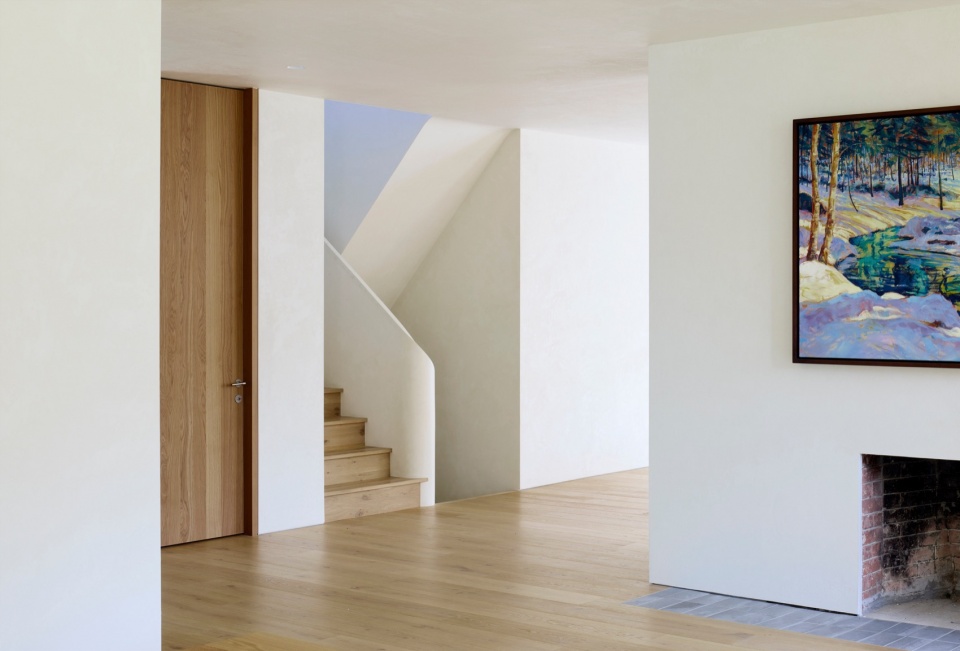
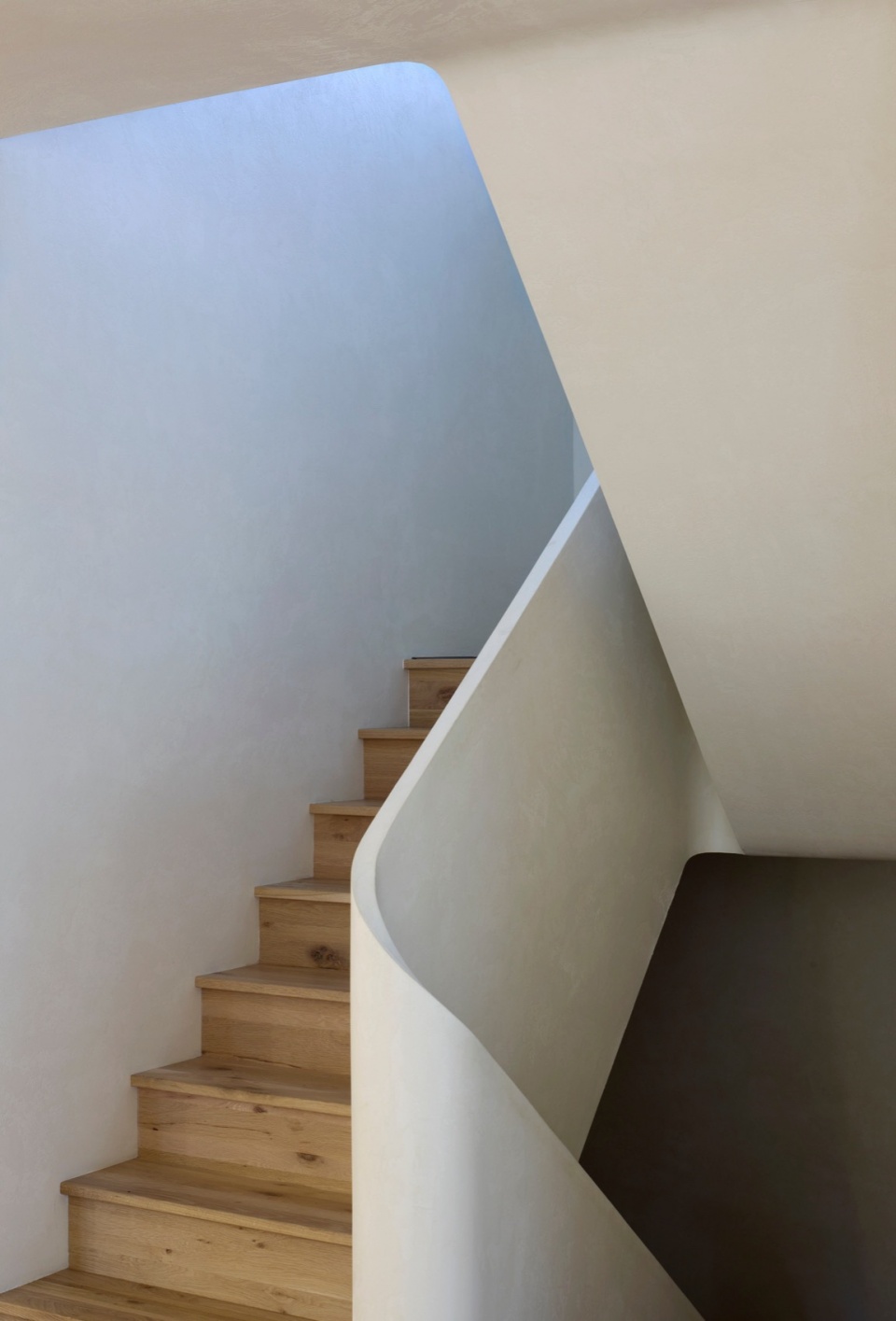
▼楼梯,staircase
项目同时修复了历史砌体,并将所有破损的门窗替换为高性能木质窗,配合新的隔热层标准。原有壁炉也在与当地石匠的合作下全面翻修,满足现行建筑规范。尽可能地采用当地采购的天然材料,并重用原有构件,不仅保留了建筑的历史韵味,也有效降低了碳足迹。例如,主客厅内保留并再利用了部分原有的木梁;扩建区与主入口区域地面则铺设了本地圣马克石灰岩(St-Marc limestone);户外景观则使用了开挖过程中出土的田间石材以及本地采石场的石板。在整个项目中,所选材料都力求保持原始、质朴,与建筑本身的性格保持一致。
Together with the restoration of the historic masonry, the team also replaced all the deteriorated doors and windows with new high-performance wood windows in line with the new insulated layer. A complete refurbishment of the original fireplaces was also done in collaboration with local masons to meet new building standards. Wherever possible, the team favored locally-sourced natural materials and repurposed original components to keep as much of the house’s original character, as well as to minimize the project’s carbon footprint. In the main living room, some of the original timber beams were preserved and repurposed. In the extension and main entrance, local St-Marc limestone was used for the flooring. Outside the house, fieldstones unearthed during excavation, and flagstones sourced from a local quarry, were incorporated into the landscape design. Throughout the house, the selected materials were kept raw, modest, and in line with the character of the original architecture.
▼由改造部分看扩建部分,viewing the extension part from the renovation part
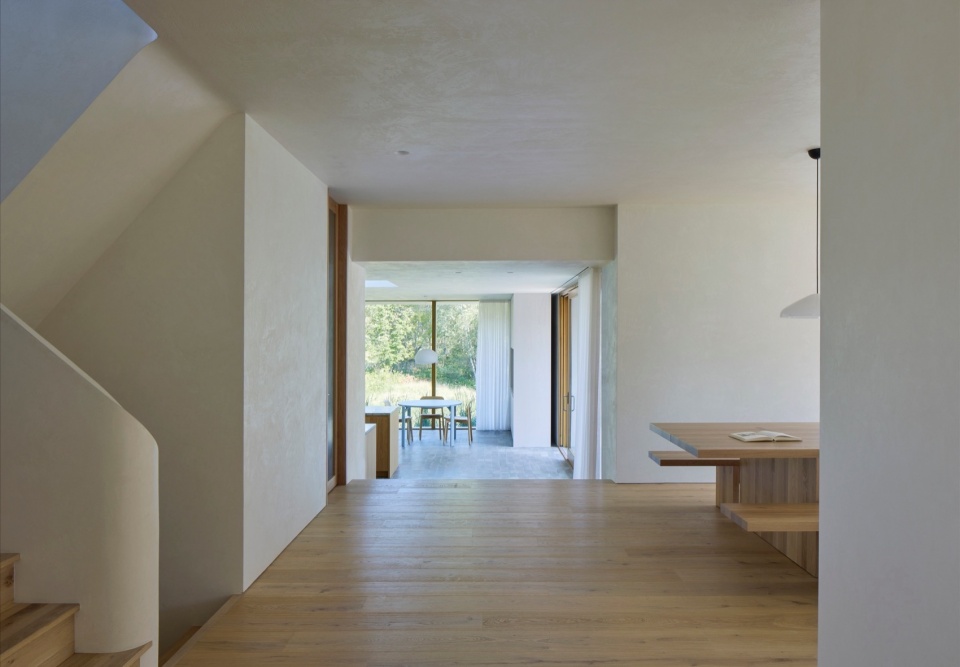
▼室内高差,indoor height difference
▼细部,details
被动式设计策略Passive strategies
住宅通过一系列简单的被动式策略来降低能耗,并在全年保持舒适的室内气候。原本大部分裸露在地面的地下室,随着扩建部分的加入而大部分“下沉”至地面以下。周边地形也通过缓坡处理,减少了挖土量,降低了地下室外墙的暴露程度,同时也使建筑更自然地融入环境。地面层的阶梯式布局不仅缩小了建筑整体占地面积,还形成了自然向上的气流通道。夏季时,这种布局有助于自然通风;冬季则通过高效热回收系统,将温暖空气回收再分配到各个空间。
The house relies on simple passive strategies to reduce its energy consumption and maintain a comfortable interior climate throughout the year. Originally, mostly exposed above ground, the existing basement was largely “sunken” below ground following the addition of the new extension. A gentle berm was also added to the landscape around the house to minimize the amount of required excavation, to lower the quantity of exposed exterior basement walls, as well as to help blend the house with the landscape. The stepped configuration of the ground floor also helped lower the building’s overall footprint, while creating a natural airflow between the spaces towards the upper level. In the summer, this helps to naturally ventilate the common spaces, while in winter, the warm air is captured and redistributed through the house via the high-efficiency heat recovery mechanical system.
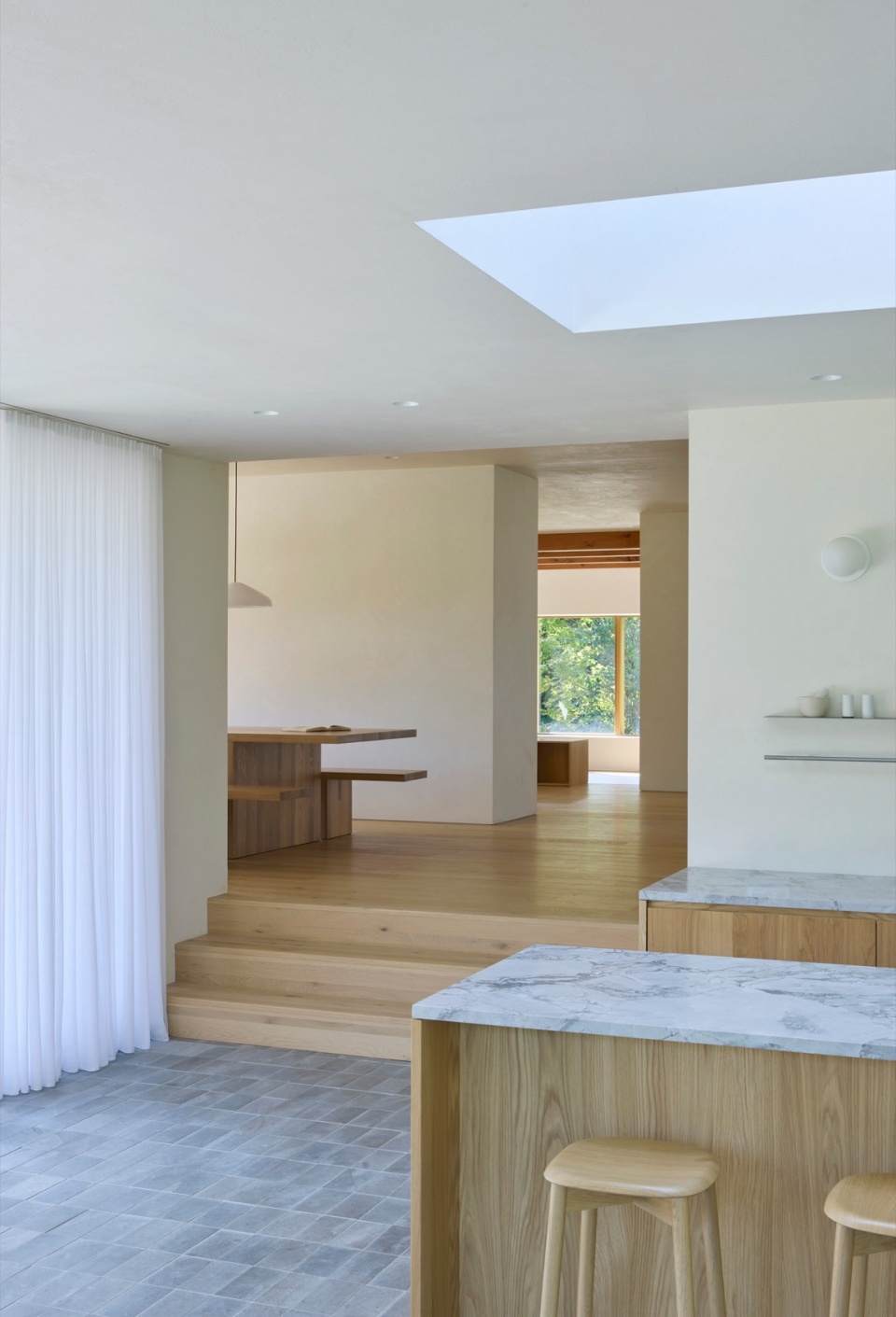
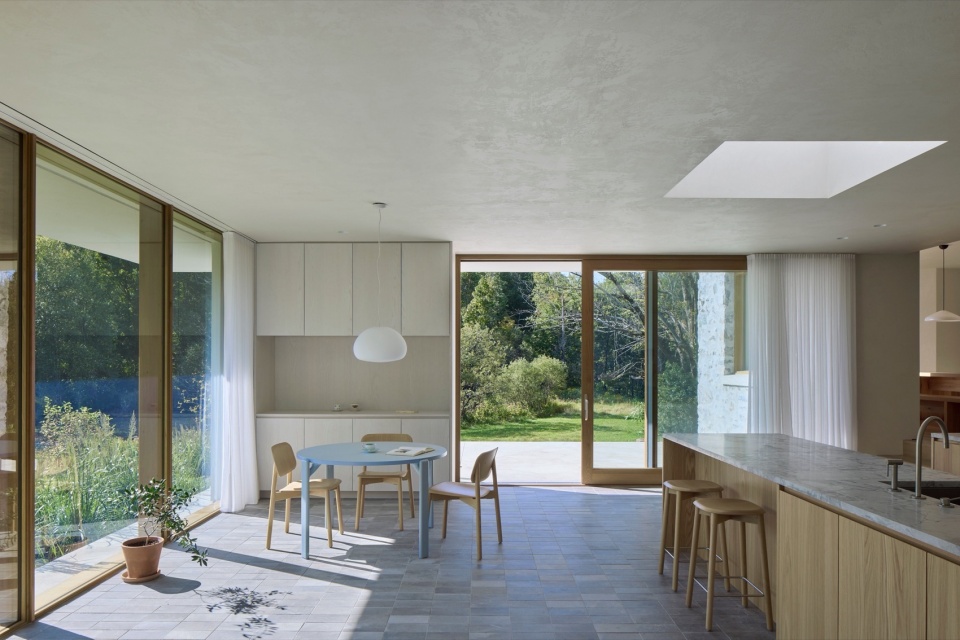
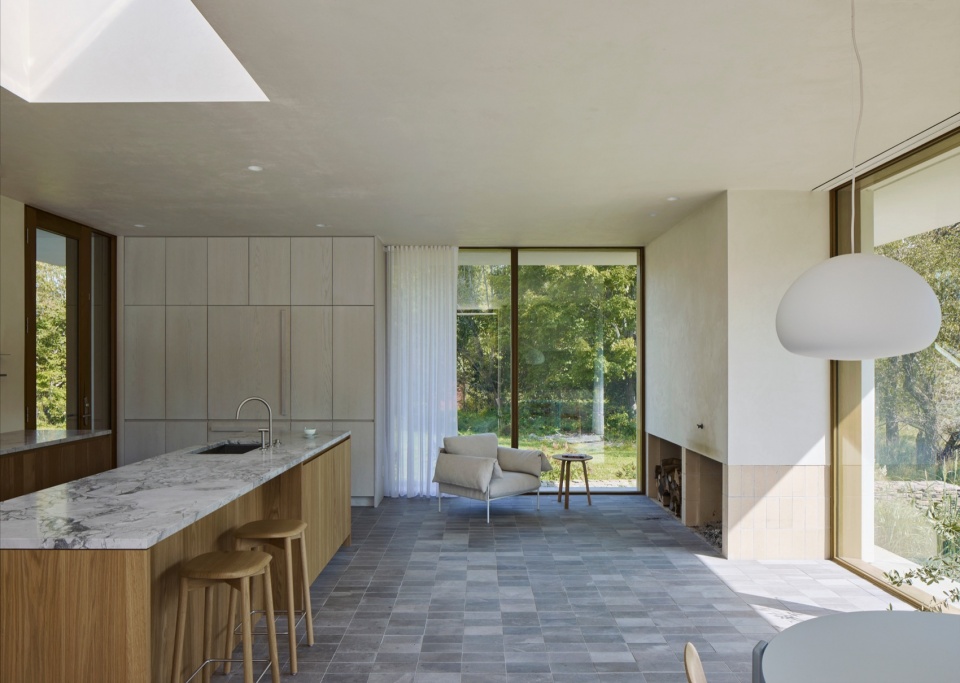
▼扩建的厨房与餐厅,kitchen and dining area in the extension part
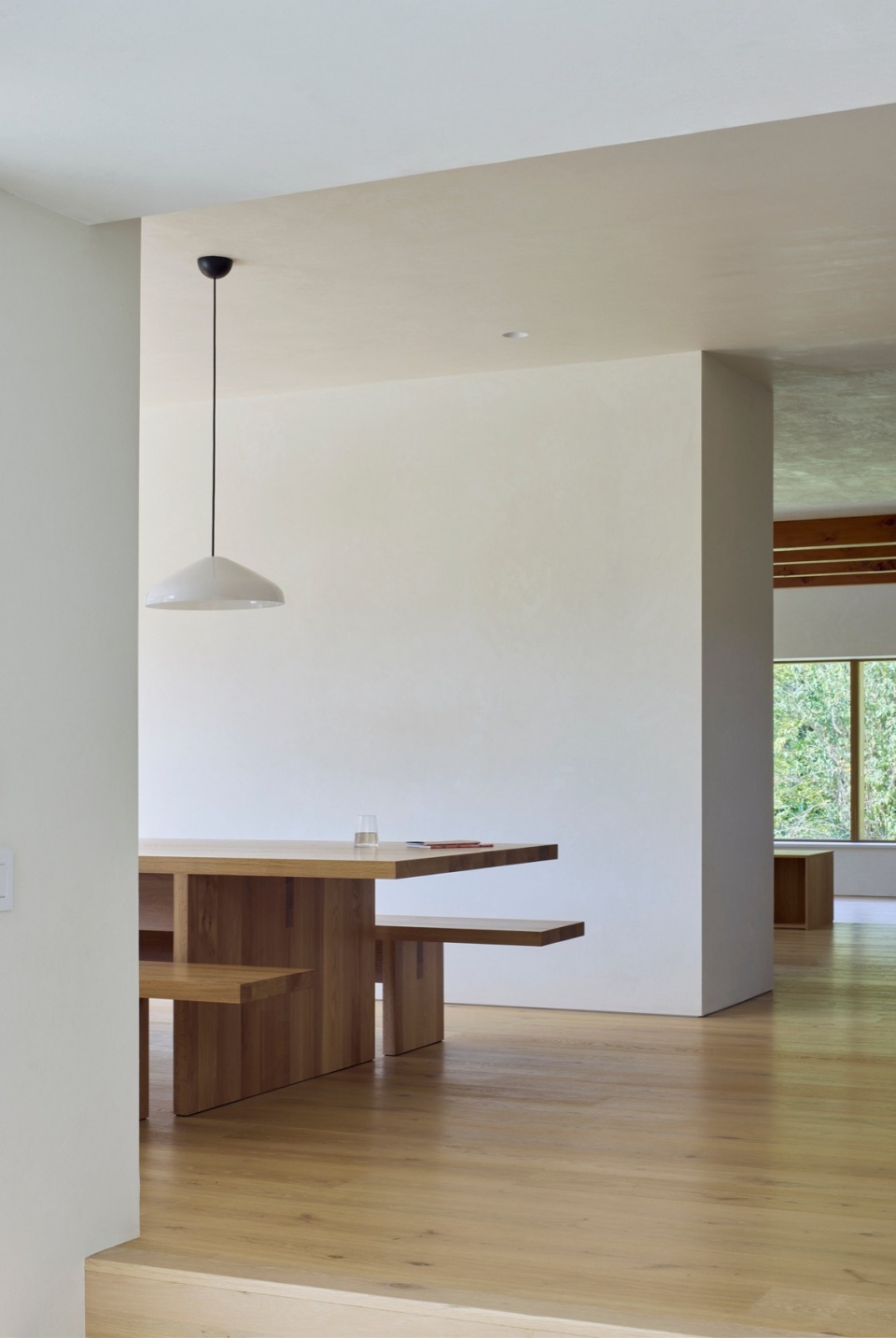
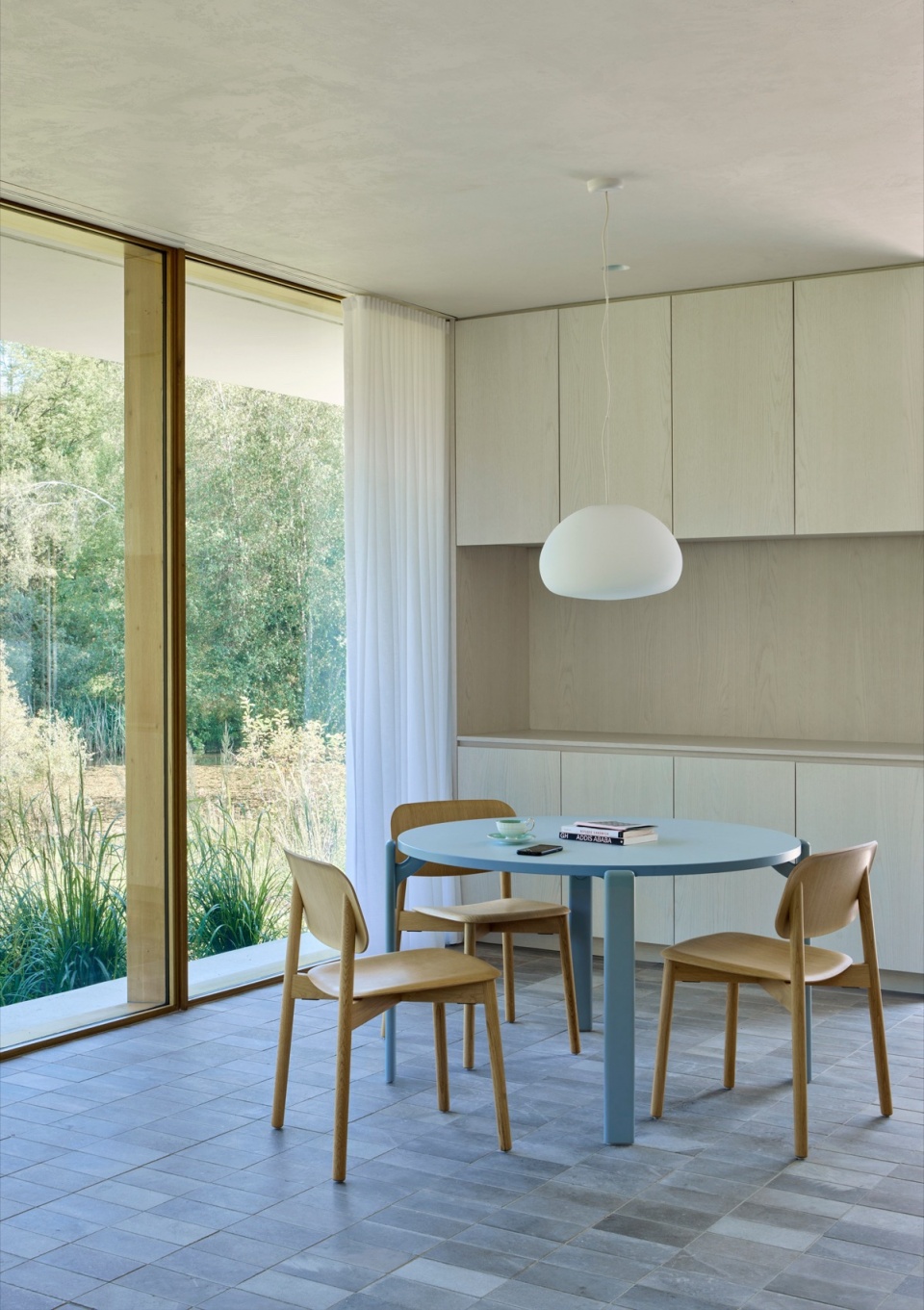
▼小餐桌,round dining table
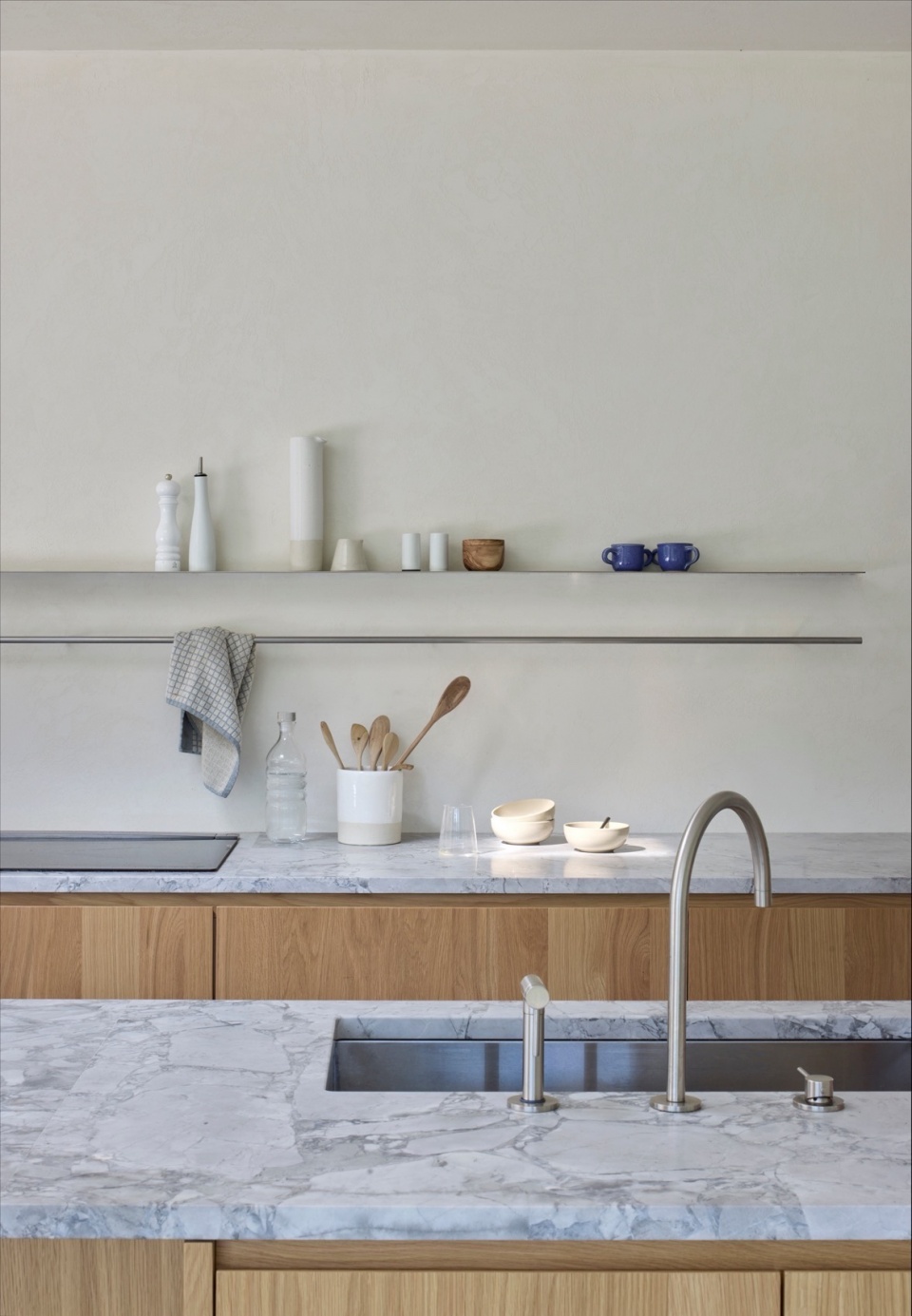
▼厨房细部,details of the kitchen
外立面的设计同样辅助了季节性的气候调节。深厚的石墙与大尺度屋檐不仅有效保护了新开窗洞口与墙体免受恶劣天气侵蚀,也在夏季减少了过热现象。冬季时,大面积朝南的玻璃立面与具有热容量的石材地面则捕捉并储存太阳热能,降低机械采暖的需求。原有壁炉同样作为被动供暖策略的一部分,通过厚重的砌体核心辐射出持久的热量。通过这一系列措施,项目在降低对大型机械系统和过度保温需求的同时,达成了出色的节能效果。
The façades were also designed to help regulate the climate according to the season. The deep stone walls and the expansive roof overhang of the addition not only help protect the new windows and walls from harsh weather, but also help to reduce thermal gains during hot summer months. In the winter, the largely glazed south-facing façades and radiant stone floors help capture and store passive solar gains, reducing the need for mechanical heating. The existing fireplaces also further contribute to the passive heating strategy by using the massive masonry core as a heat sink that radiates warmth throughout the home. Together, these measures helped lower the need for large mechanical systems and over-insulation.
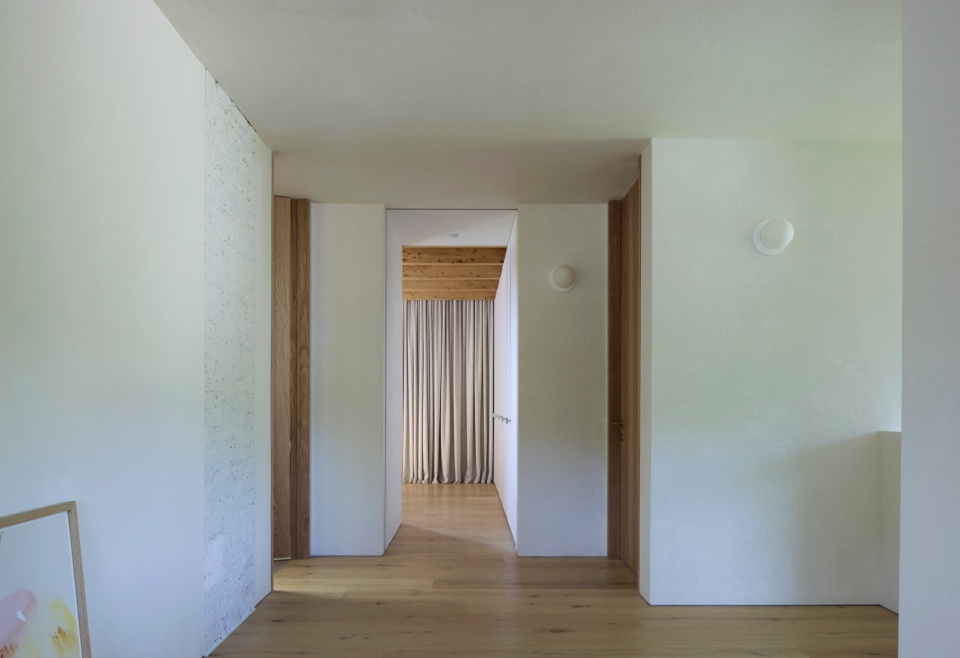
▼二层空间,upper floor space
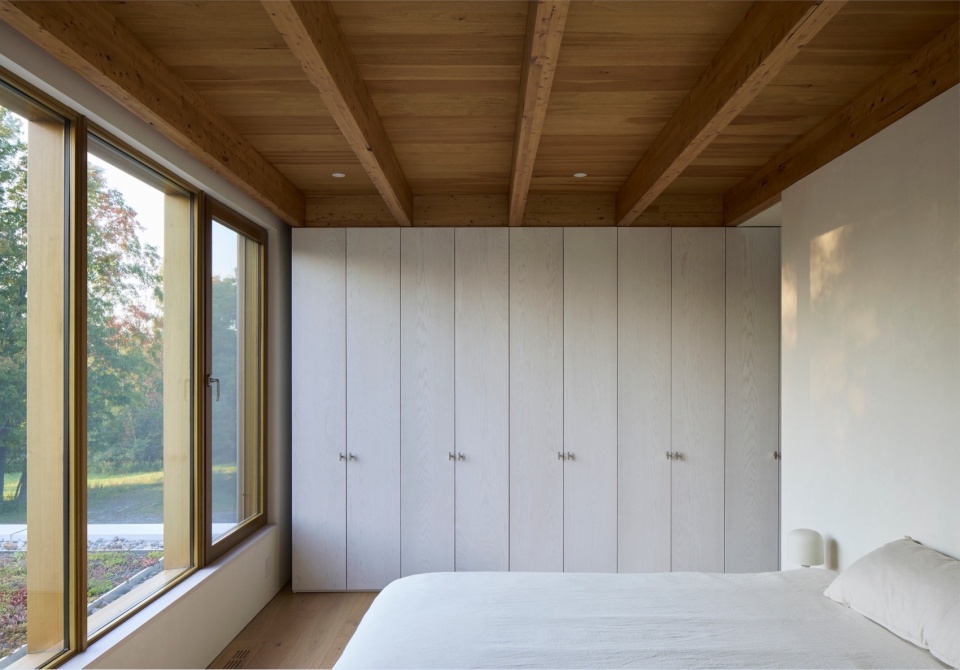
▼卧室与景观视野,bedroom and framed view
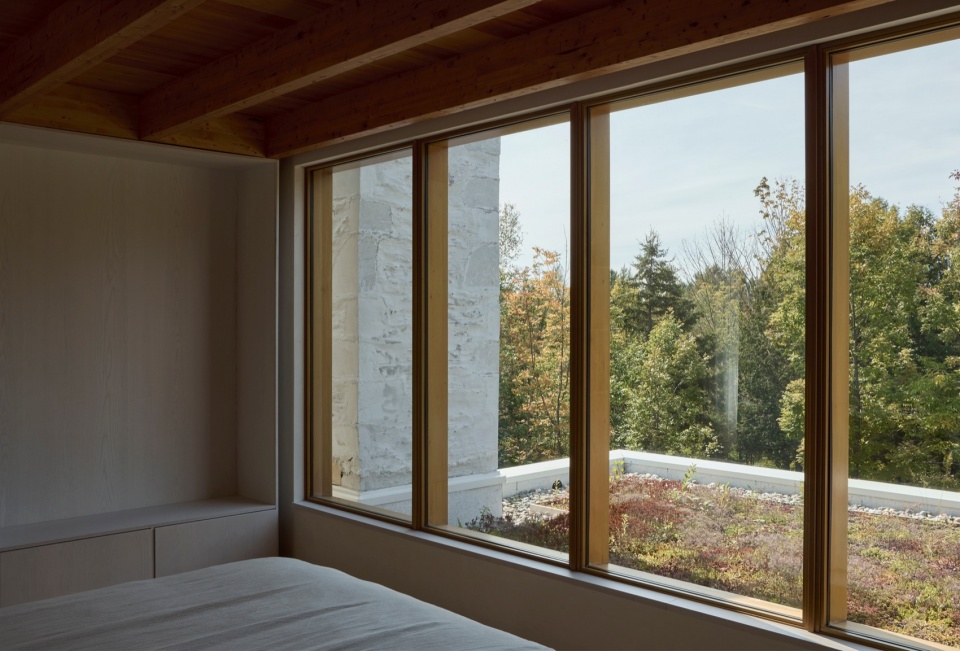
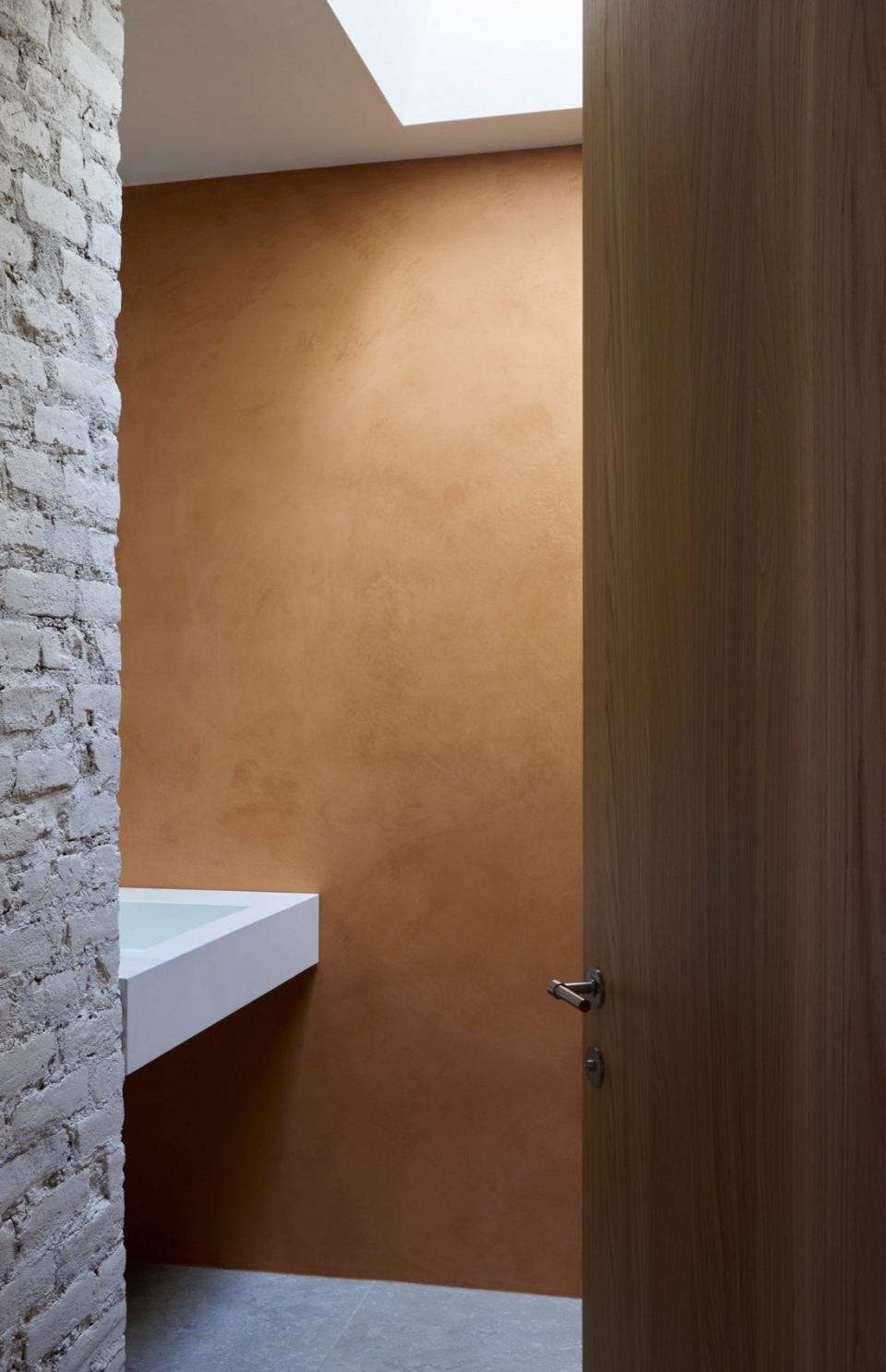
▼浴室,bathroom
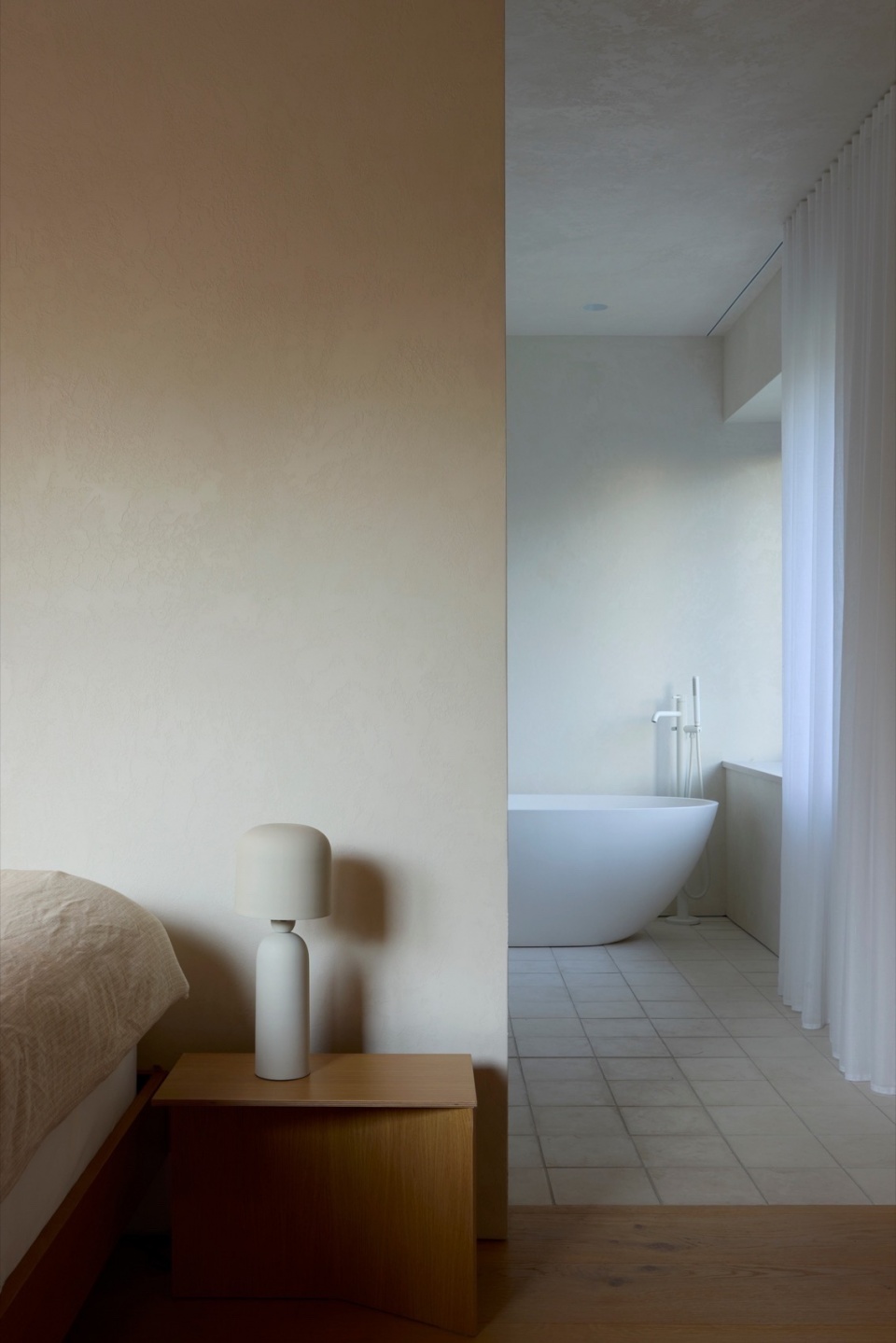
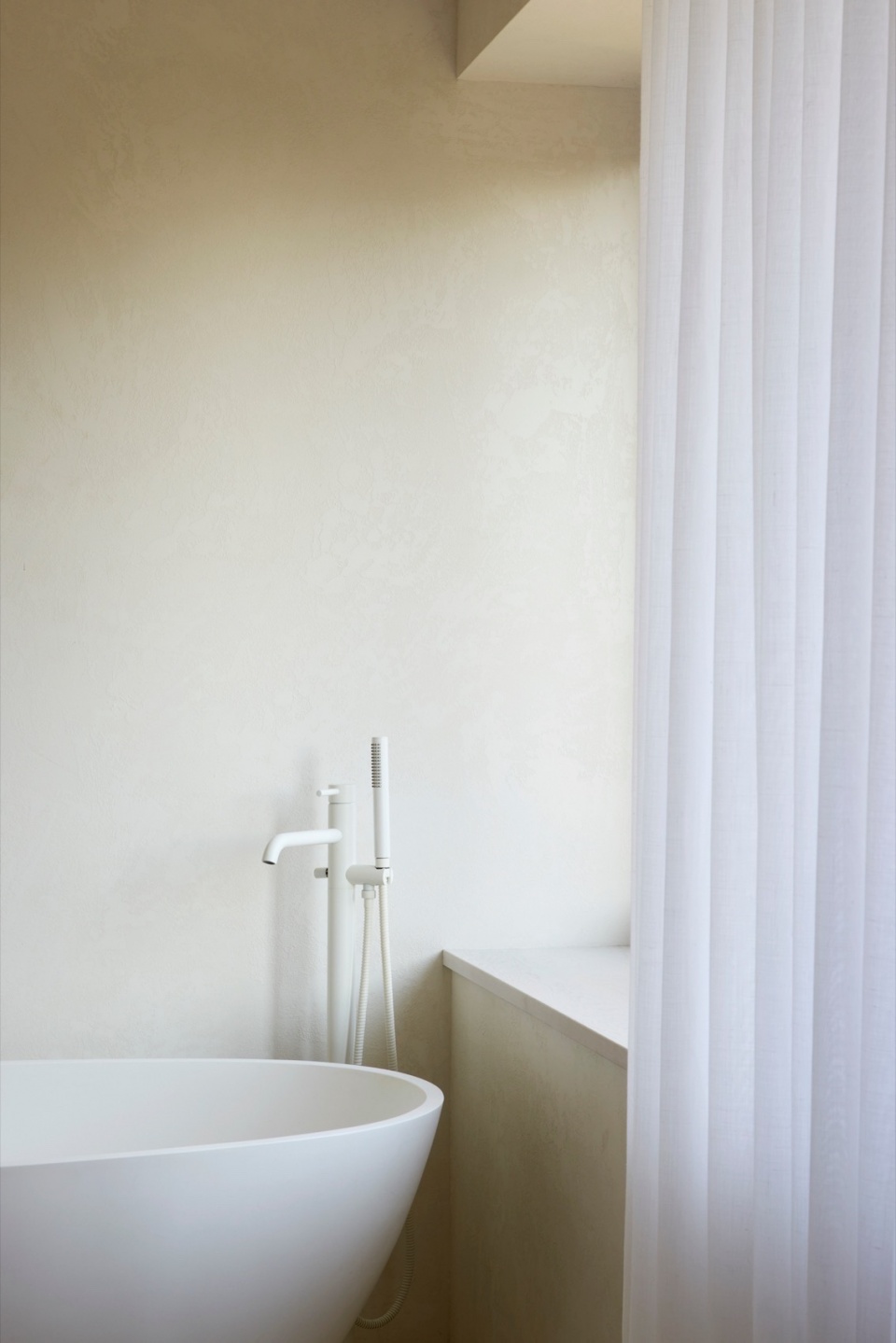
▼浴室细部,details of the bathroom
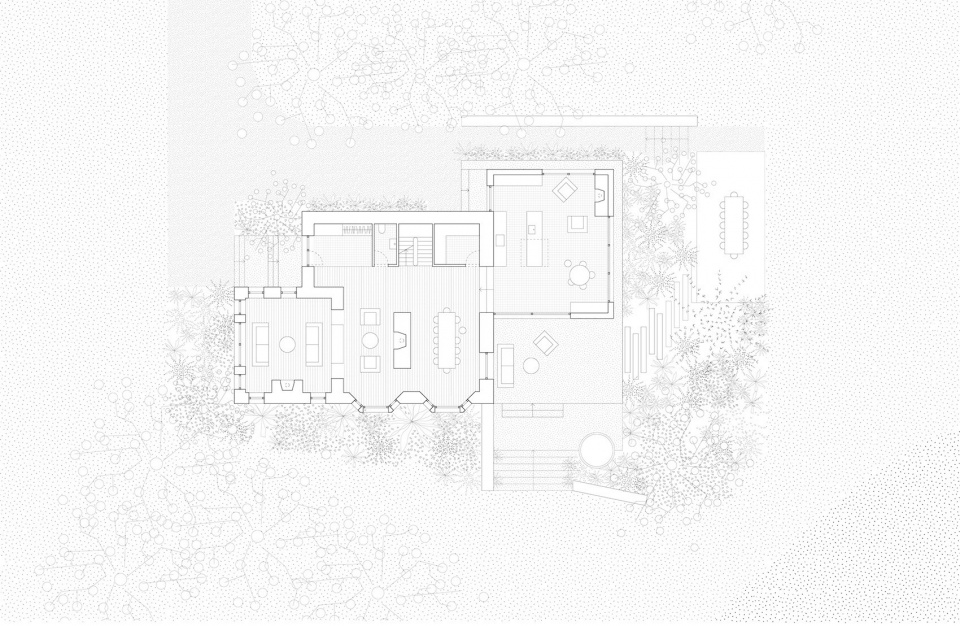
▼总平面图,site plan
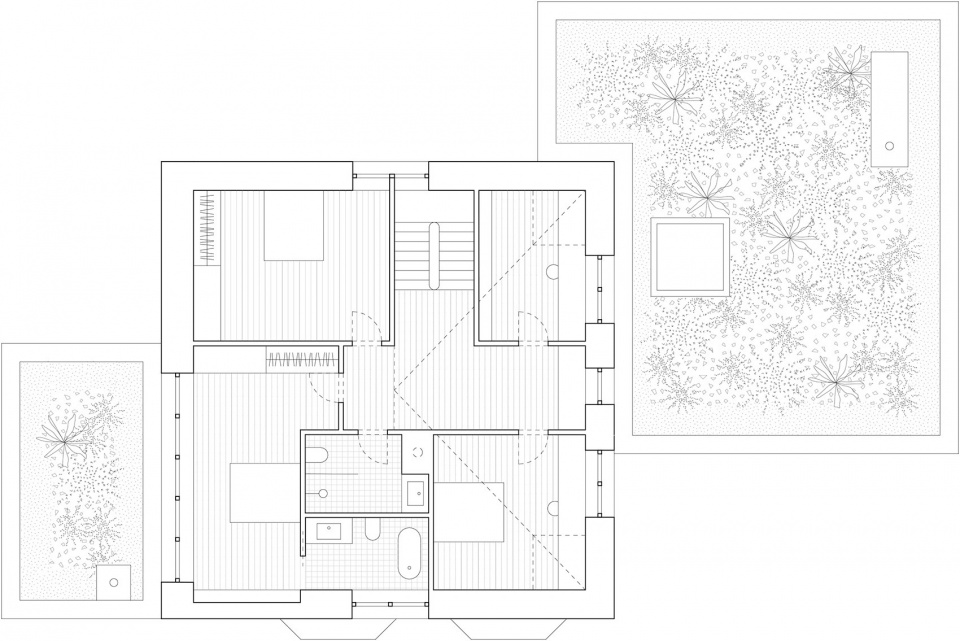
▼平面图,plan
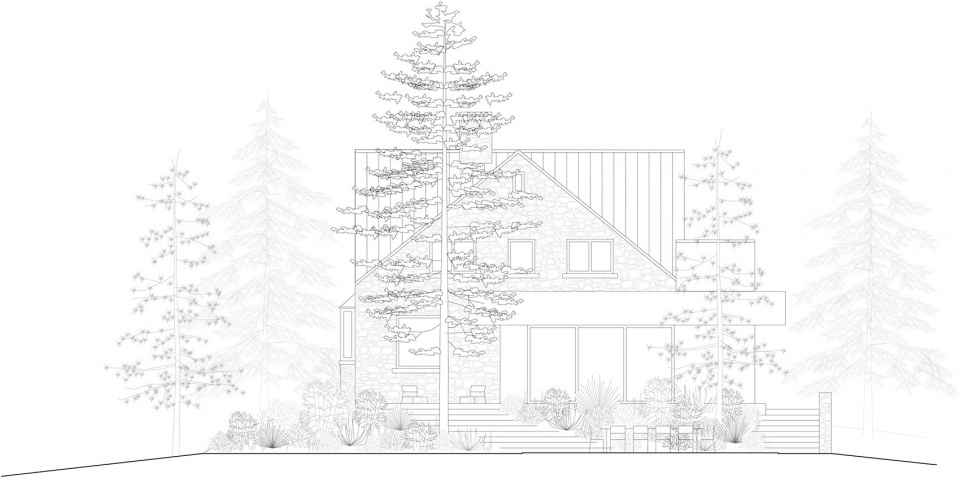
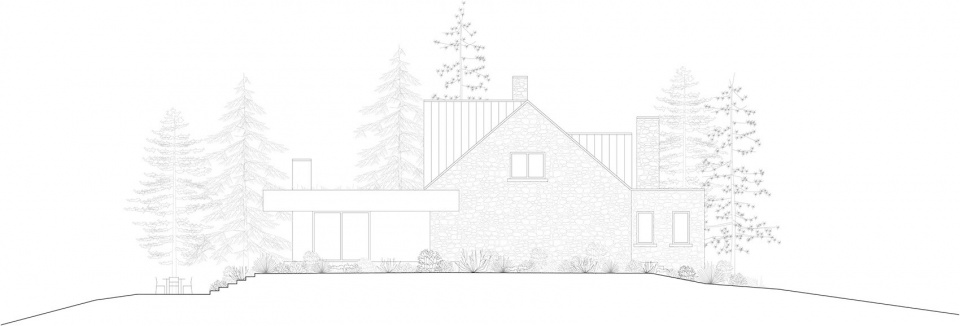
▼立面图,elevations
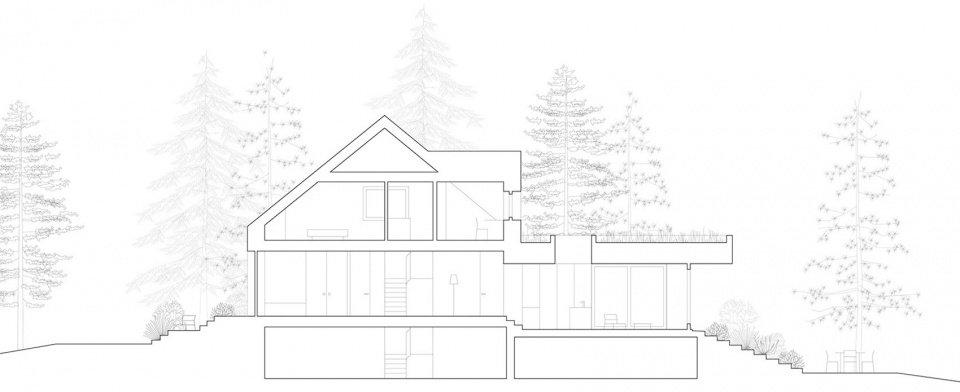
▼剖面图,section
Technical sheet
Project name: Sutton House
Project lead: Yves de Fontenay
Design Team: Yves de Fontenay, Hubert Pelletier, Yann Gay-Crosier, Laurence Gaudette, Raphaëe Gendron, Mikaele Fol
Location: Sutton, Québec, Canada
Completion date: 2024
Area: 500 m2
Architecture: Pelletier de Fontenay
Landscape Design: Friche Atelier
General Contractor: Menuiserie Simon Fortin
Photo credit: James Brittain