2025大阪世博会荷兰馆 / RAU Architects
地球上的访客
Guests on Earth
荷兰馆以“地球上的访客”为核心理念,呈现了面向未来的哲学:将能源、循环性以及人类对地球的责任置于展馆叙事的中心。地球是一个封闭系统,不能凭空增加任何新物质,一切不可再生的资源都是有限的。与55年前1970年大阪世博会相比,我们如今面临两大关键挑战:摆脱对化石能源的依赖,以及应对材料浪费问题。对此,荷兰馆提出了两项根本性应对策略——不是优化当前系统,而是彻底变革它:一种循环的材料利用方式,以及使用取之不尽、零排放的能源。
The Dutch pavilion in Osaka embodies a future- oriented philosophy in which energy, circularity, and our responsibility as “guests on Earth” are central. Our planet is a closed system, nothing new is added. Everything that doesn’t grow is limited. We face two fundamental challenges today that are different from 55 years ago at the Expo ‘70 Osaka: breaking free from the dependence on fossil energy and combating material waste. For this, the Dutch pavilion presents two fundamental solutions—not solutions that optimize the system, but that change it: a circular approach to materials and the utilization of inexhaustible, emission-free energy.
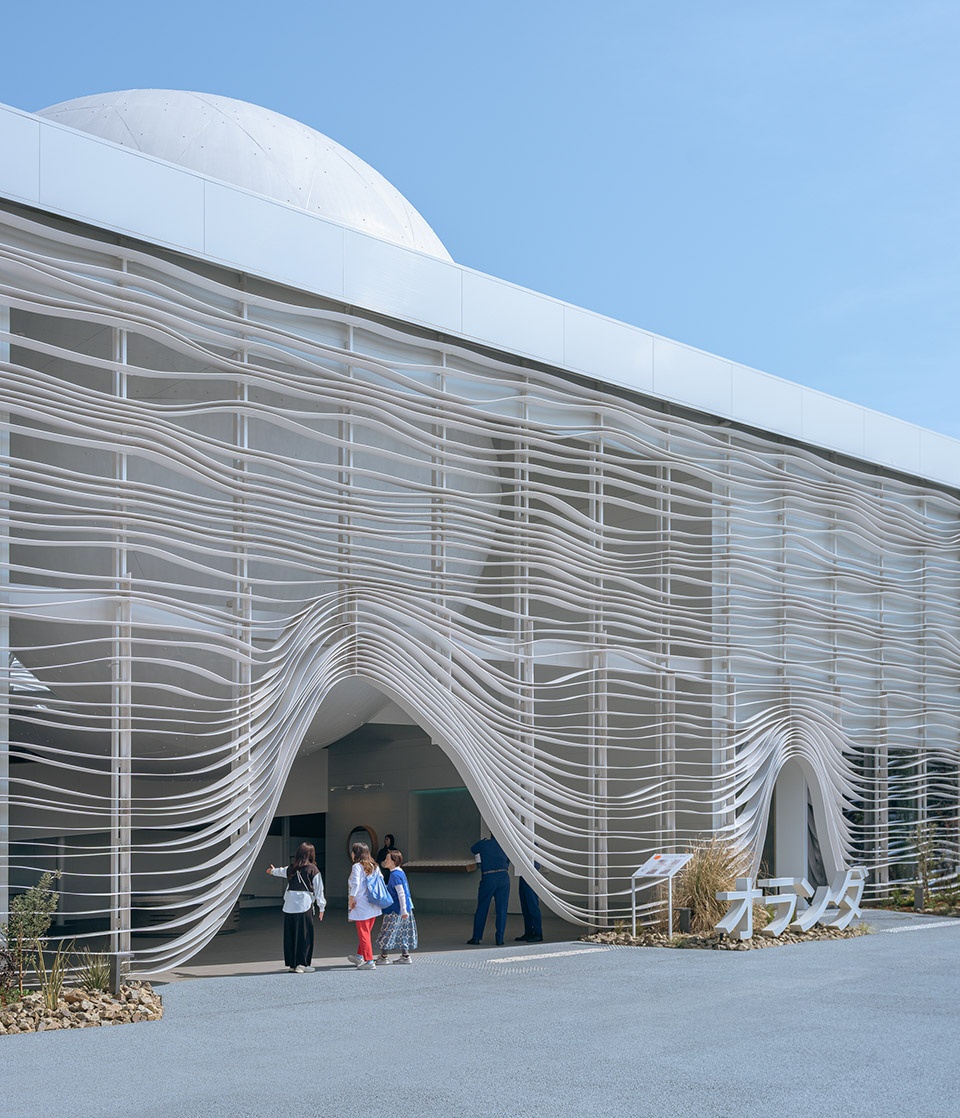
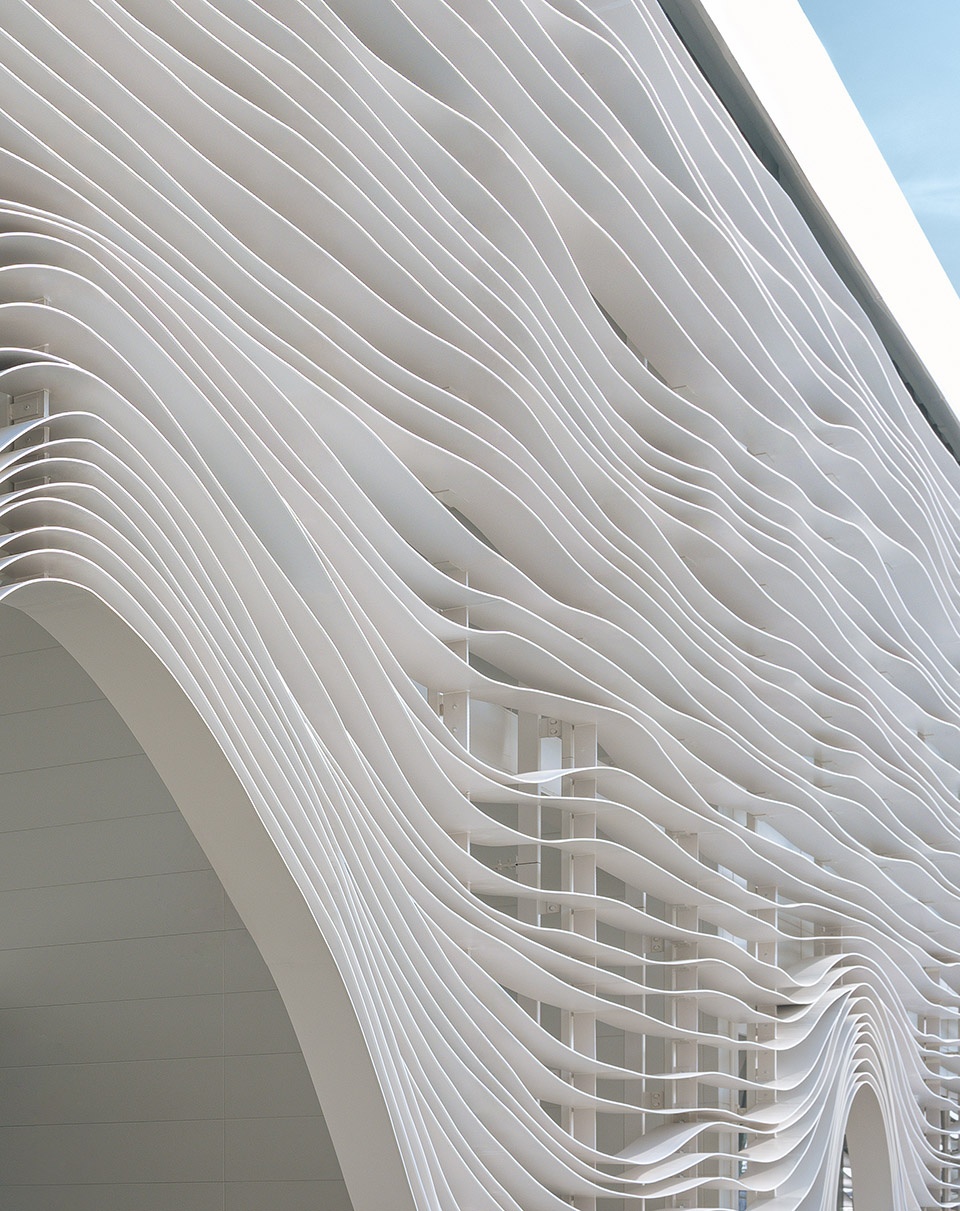
▼展馆外观,exterior of the pavilion
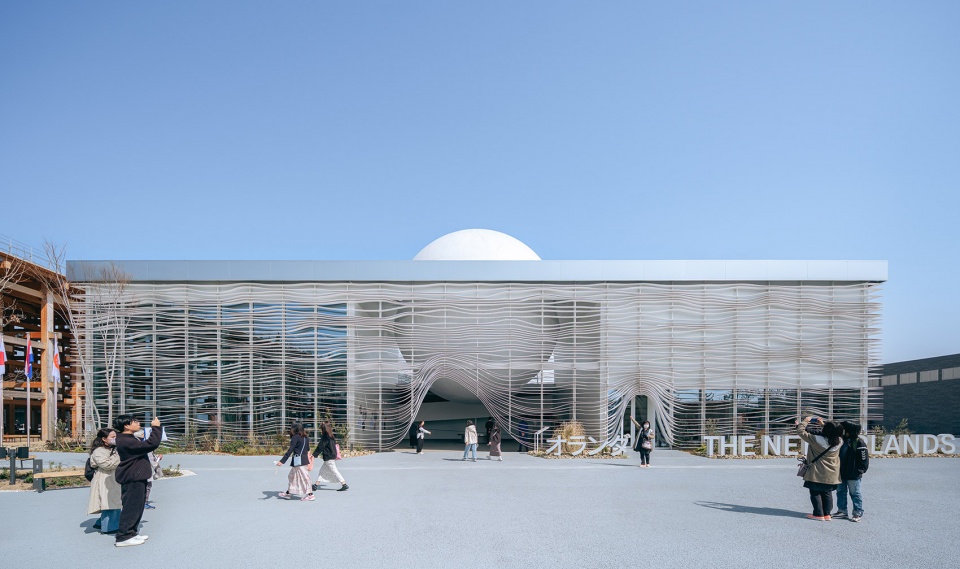
▼展馆外观,exterior of the pavilion
当今,我们在应对全球性挑战中找到了共同立场,这些挑战正影响着地球的健康与福祉。而这不是任何一个国家可以单独应对的问题。要构建健康与幸福的社会,我们必须携手合作,汇聚视角、思想与专业知识。
Today, we find our common ground in tackling the global challenges that are impacting the health and wellbeing of our planet. These are challenges that no country can solve alone. To create healthy and happy societies, we need to work together and unite our perspectives, ideas, and expertise.
共同立场
Common Ground
“共同立场”是荷兰参与2025年大阪世博会的核心主题。这是一种根植于集体问题解决的思维方式,源于荷兰人几个世纪以来为抵御海水侵蚀、保护低地所建立的协作精神。如今,面对全球挑战,我们仍需这种思维,彼此分享理念、专业与创新。这一主题也呼应了日荷425年的友好关系——早在四个多世纪前,荷兰就已与日本建立了“共同立场”。
“Common ground” is the core concept of the Dutch participation at Expo 2025. It is a mindset rooted in collective problem-solving. This approach traces back centuries, born out of the necessity to protect the “lowlands” from the threat of rising waters. Today, we need this mindset to tackle global challenges, to work together to share ideas, expertise, and innovations. This theme also celebrates 425 years of Japanese-Dutch relations. It was more than four centuries ago when the Netherlands found common ground with Japan.
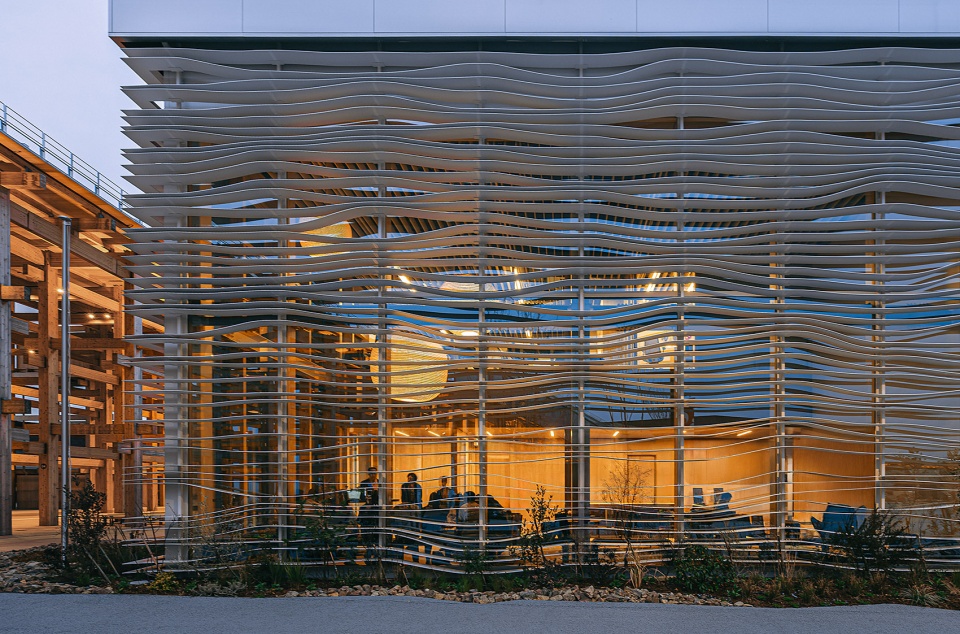
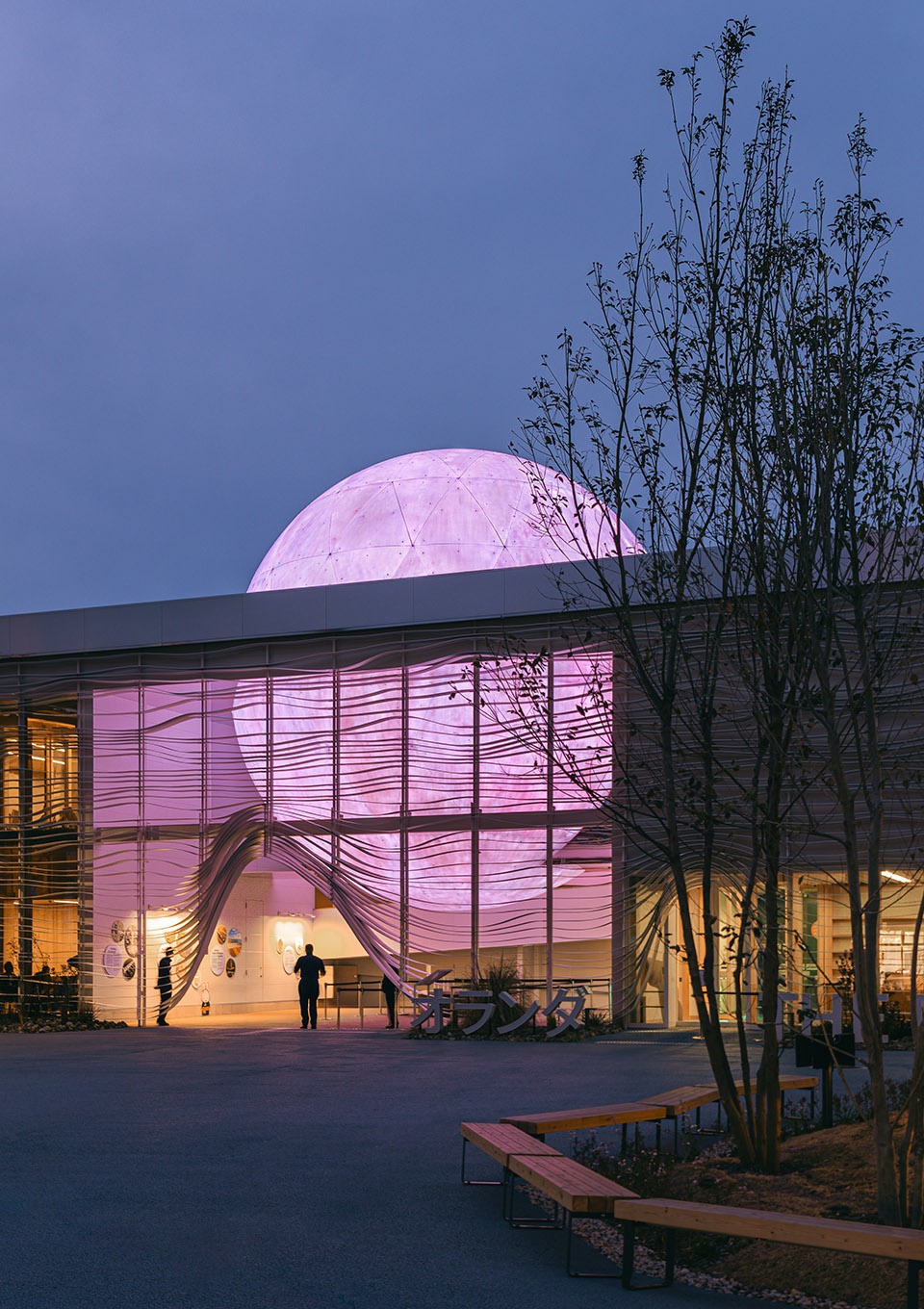
▼展馆夜景,night view of the pavilion
新的曙光
A New Dawn
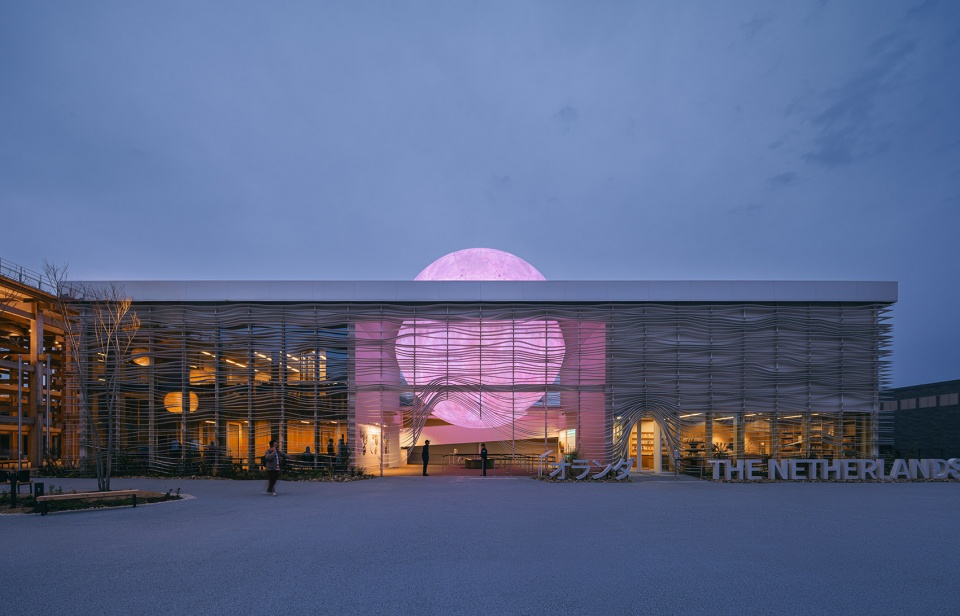
由日本艺术家冈本太郎(Tarō Okamoto,1911–1996)为1970年大阪世博会设计的雕塑《太阳之塔》对RAU建筑事务所的设计产生了深远影响。这座雕塑象征着自然的力量,以及太阳所赋予地球万物的永恒能量。雕塑包含三个太阳:背面的是“过去”;正面底部的是“现在”;顶部金色的太阳象征“未来”。这件作品充满力量,传达了1970年世博会对进步与未来的乐观信念。荷兰馆中心的球体,其尺寸与《太阳之塔》中的“未来之日”完全相同:直径10.6米。
The “Tower of the Sun”, a sculpture designed by Japanese artist Tarō Okamoto (1911–1996) for Expo 1970 Osaka, was a major inspiration to RAU architects. It symbolizes the power of nature and the never ending energy radiated by the sun that feeds all life on earth. The sculpture features three suns: the one on the backside symbolizes the past; of the two suns on the front the bottom one represents the present, while golden sun at the top of the Tower depicts the future. It is a striking art piece that shows Expo 1970’s belief in progress and optimism for the future. The sphere that forms the centerpiece of the Netherlands pavilion has the same measurements as Okamoto’s future sun: 10.6m diameter.
▼展馆中心的球体,the sphere that forms the centerpiece of the Netherlands pavilion
展馆设计
The pavilion
荷兰馆由两个体量构成:一侧是活动空间,另一侧则包含展览、商店与咖啡区,这两个部分共同支撑着屋顶与球体结构,呼应“共同立场”的主题。
The pavilion consists of two volumes: the event space on one side, and the experience, shop and café on the other, that together support the sphere and the roof. This refers to the “common ground” concept of the pavilion.
▼屋顶与球体结构鸟瞰,aerial view of the sphere and the roof
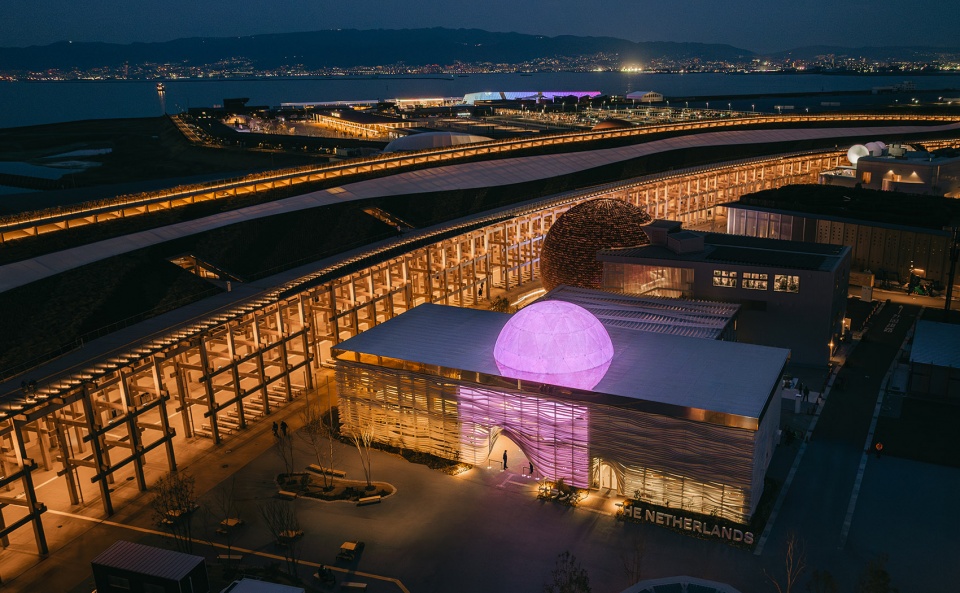
展馆主体结构采用钢材建造,总重达1620吨。为满足日本的抗震与抗台风建筑规范,所用钢材数量几乎是若在欧洲建造时的两倍。屋顶上覆盖着一张抛光不锈钢板(尺寸为15×40米),如同一面巨大镜面,使漫步在世博会场环形木道上的访客无论何时都能看到一个完整的球体,同时映射周围的水面景色。馆内也通过镜面天花的设计,实现从内部看见完整球体的视觉体验。
The main structure of the Netherlands pavilion is made of steel and weighs 1620 tons. To meet Japanese regulations, we have used almost double the amount of steel that would be used if the building were erected in Europe. This is to withstand earthquakes and typhoons. A polished RVS sheet is placed on top of the roof (like a 15x40m mirror) to allow visitors walking on the wooden ring that surrounds the Expo site to see a full sphere at all times, simultaneously mirroring reflections on water. Thanks to a mirroring ceiling a full sphere is also visible from the inside.
▼天花设计,ceiling design
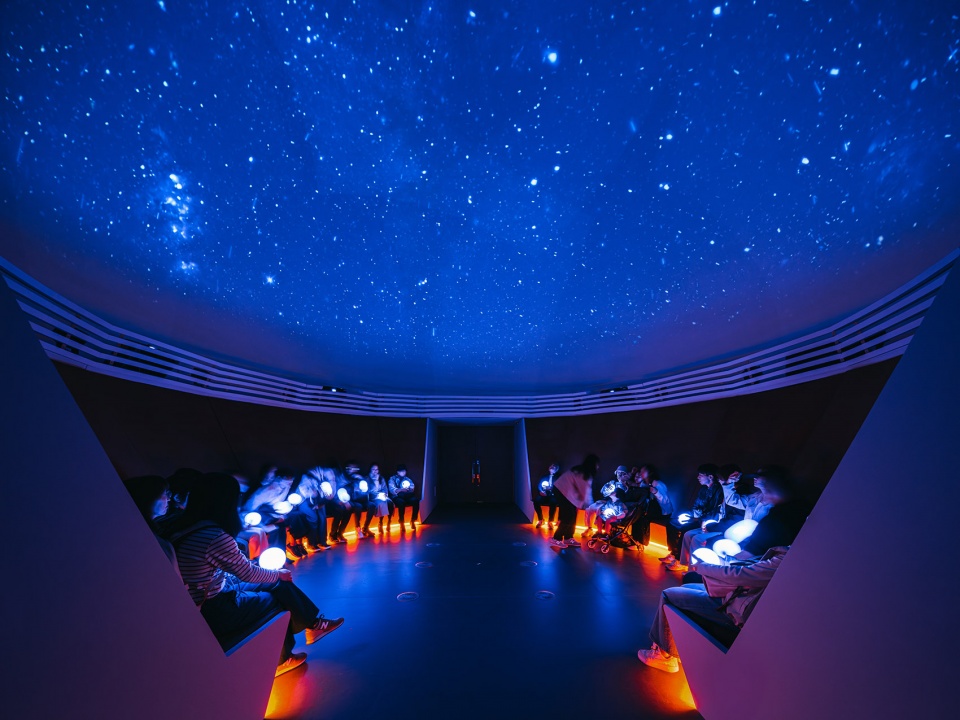
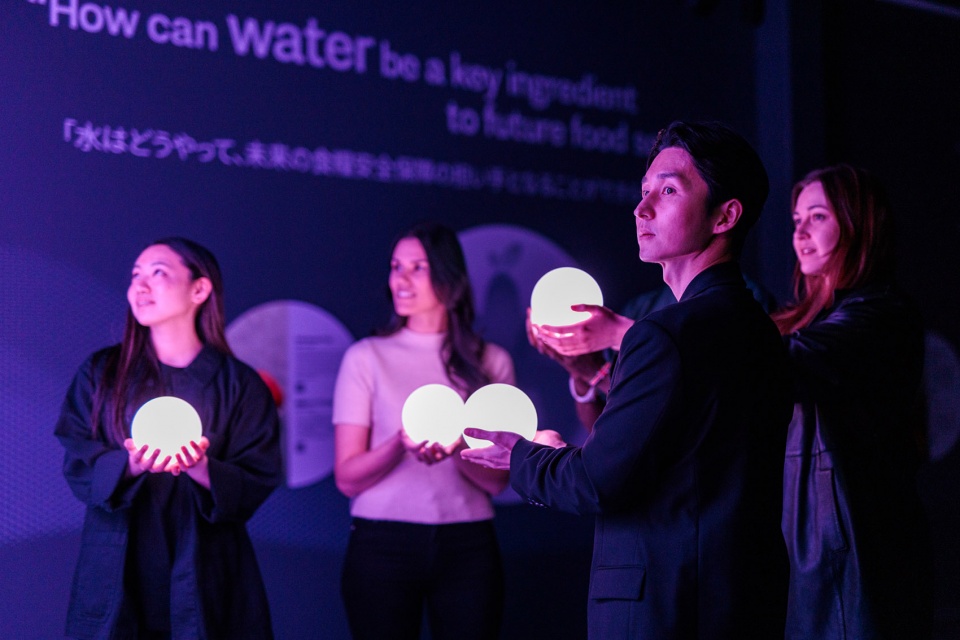
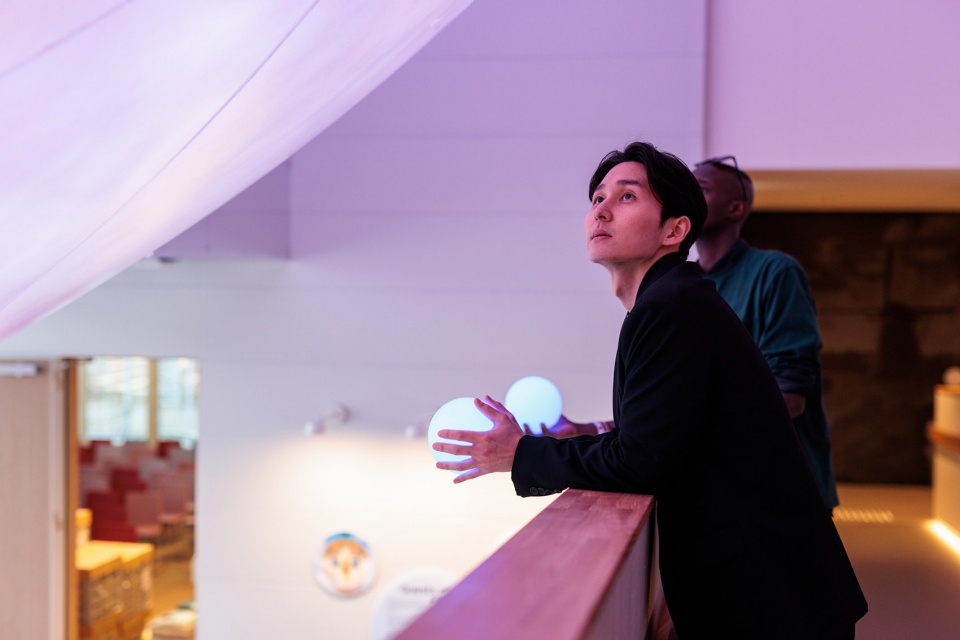
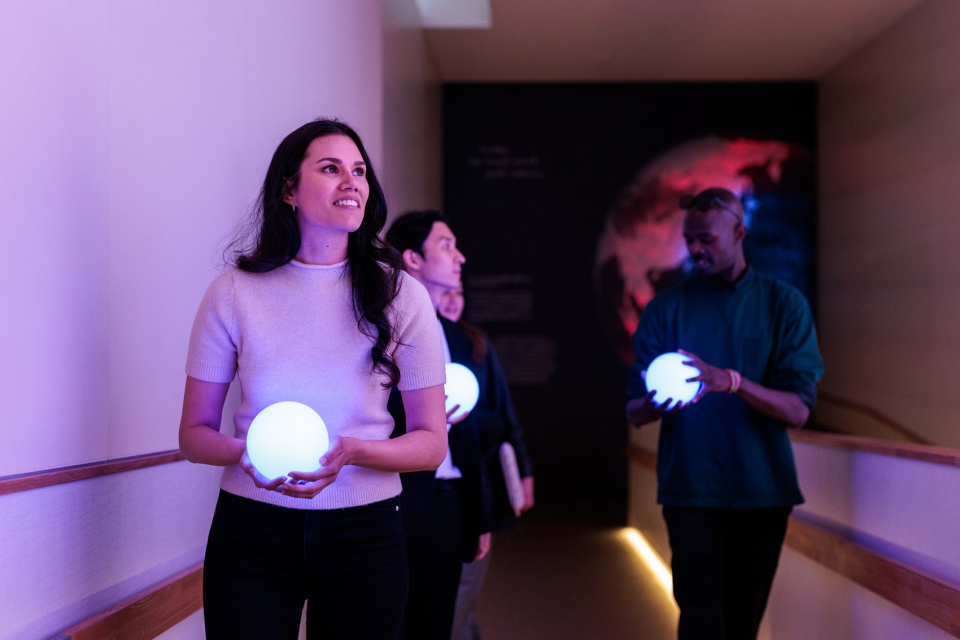
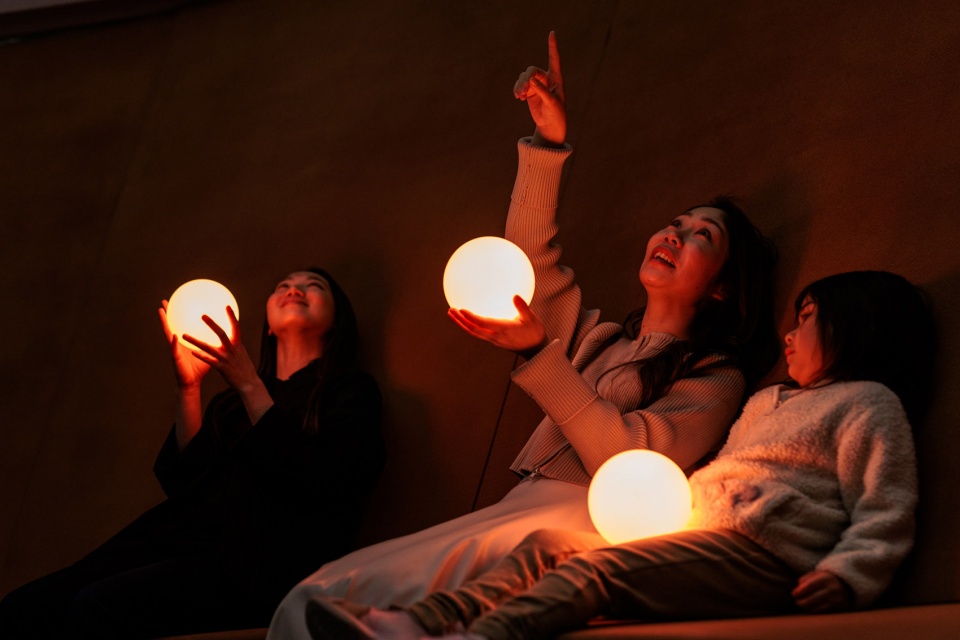
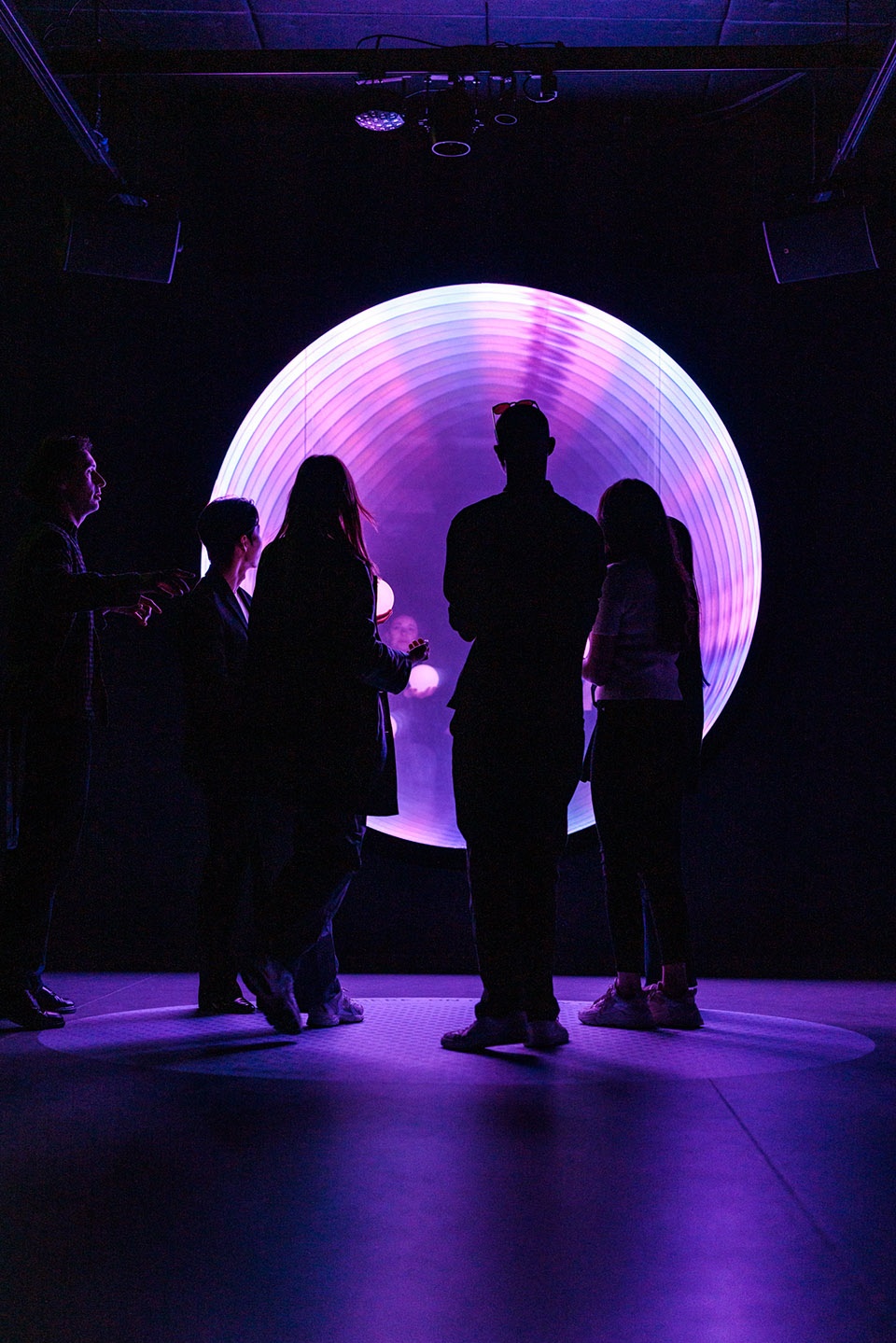
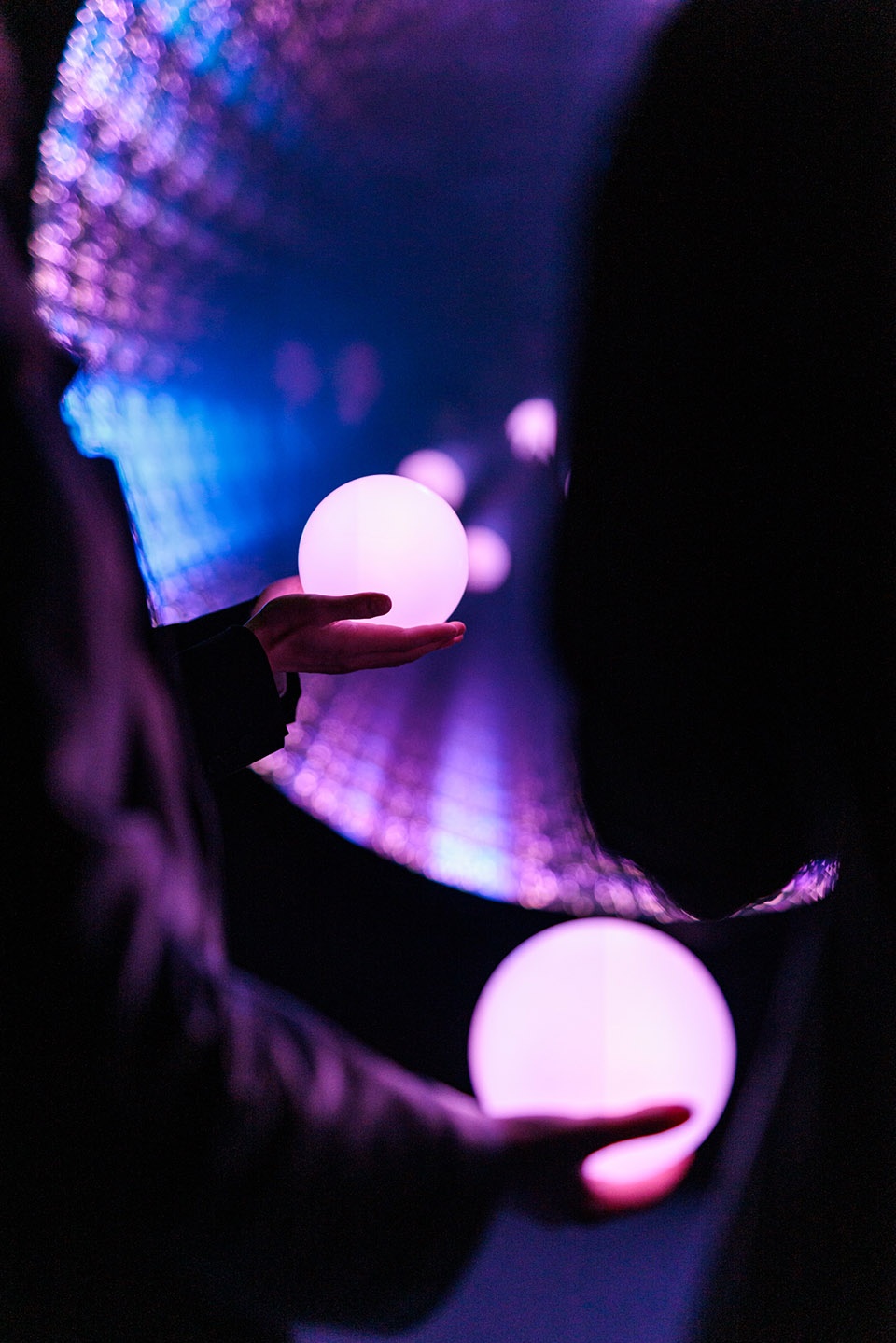
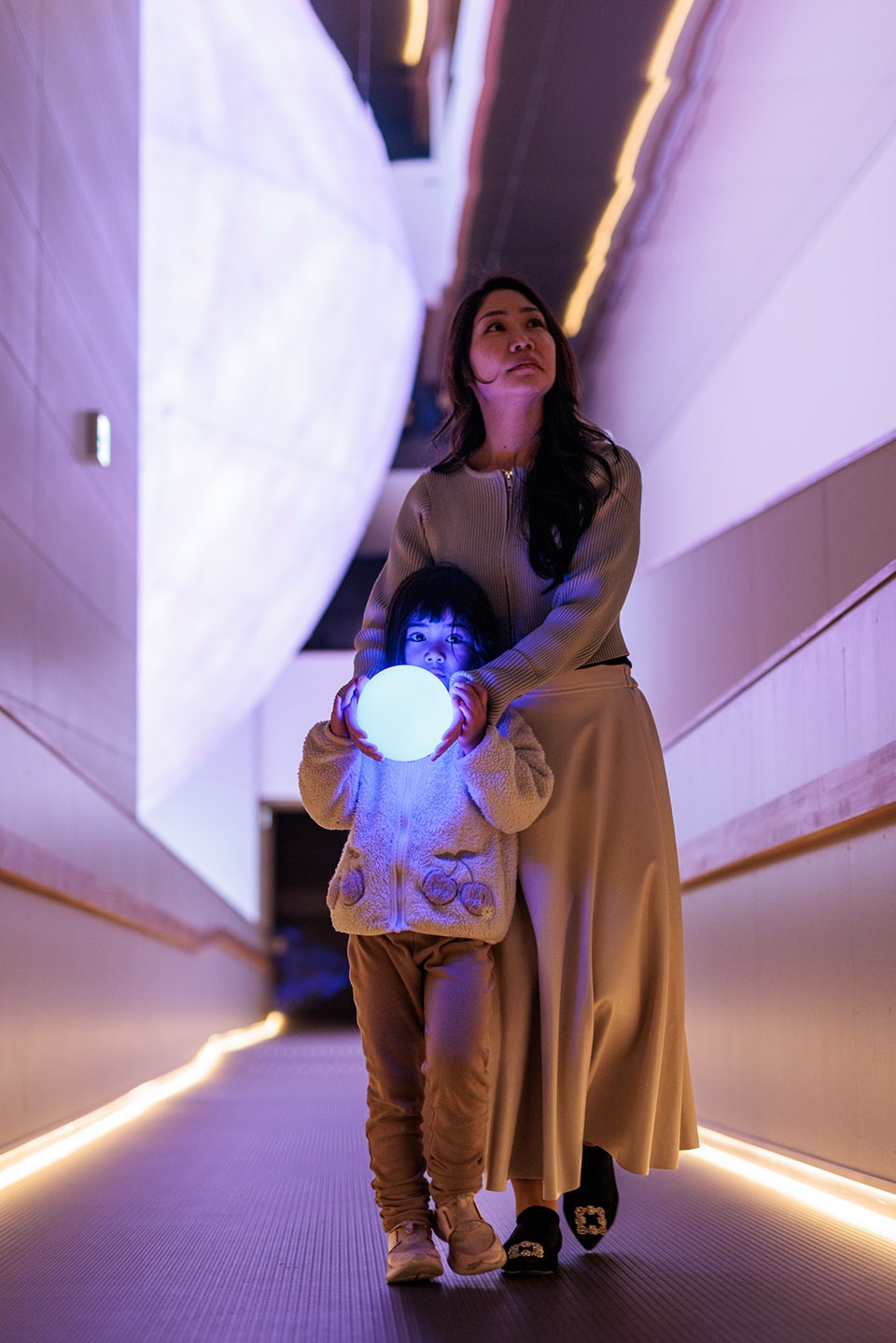
一进入展馆,参观者就会收到一个发光的小球,这个小球会与展馆各处的装置互动。这些装置引导游客了解荷兰和日本的共同历史,以及荷兰与水的斗争。参观的亮点是中央发光球体,游客可以在这里体验世界上首部人工智能生成的 360 度球幕电影。最后,参观者还可以通过互动艺术作品分享自己对未来的梦想和想法。
Upon entering the pavilion, visitors receive a small glowing orb that interacts with the installations placed throughout the space. These installations guide them through the shared history of the Netherlands and Japan, as well as the Dutch battle against water. The highlight of the visit is the central glowing sphere, where guests can experience the world’s first AI- generated 360-degree dome film. Finally, visitors are invited to share their own dreams and ideas for the future through an interactive art piece.
▼发光的小球与展馆各处的装置互动,a small glowing orb that interacts with the installations placed throughout the space
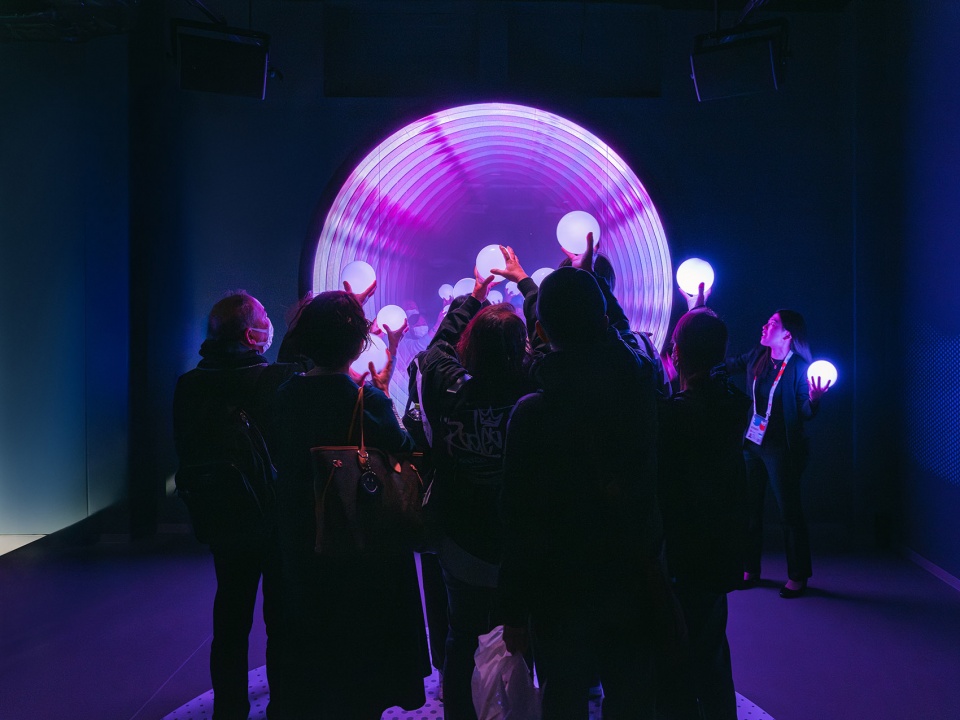
▼发光的小球与展馆各处的装置互动,a small glowing orb that interacts with the installations placed throughout the space
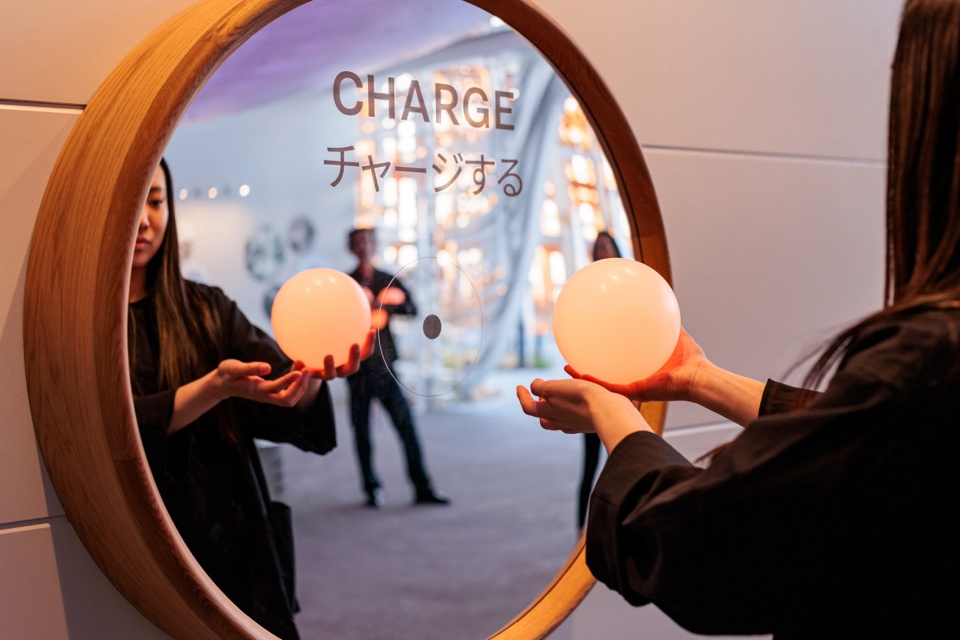
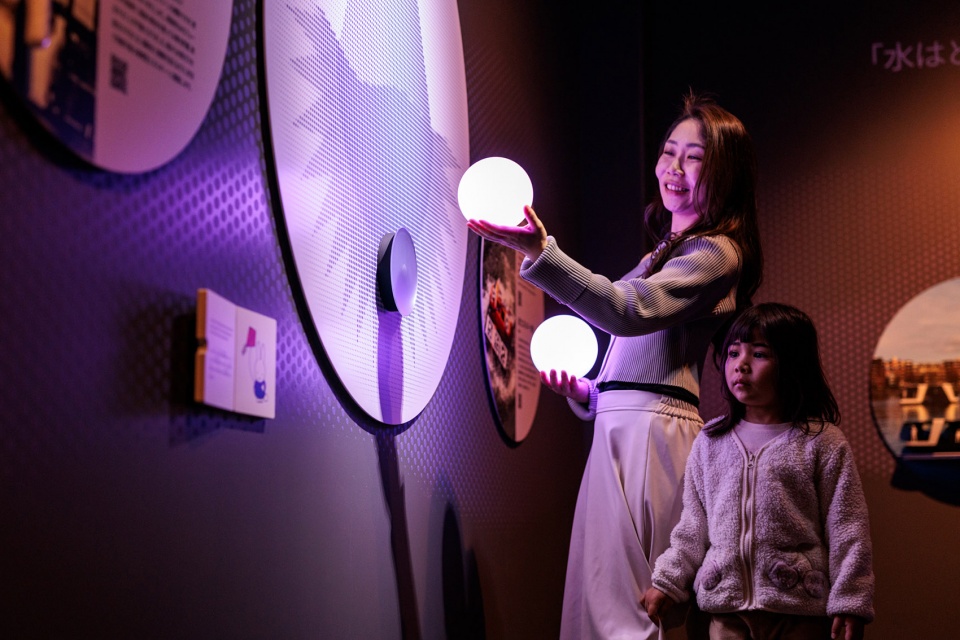
▼引导游客了解荷兰和日本的共同历史,guide them through the shared history of the Netherlands and Japan
▼通过互动艺术作品分享自己对未来的梦想和想法,share their own dreams and ideas for the future through an interactive art piece
▼中央发光球体,the central glowing sphere
材料仓库
Material depot
世博会展馆通常为临时性建筑,荷兰馆也不例外,展期六个月后将被拆除。而在循环经济中,最高目标是不抛弃、不浪费任何既有结构。考虑到临时性质,荷兰馆从设计之初就考虑到“可迁移性”。整个结构、承重系统、外立面及所有内装均可拆解,所有连接件与螺丝都是可视的。每一组件都被记录在 Madaster 材料护照中。展会结束后,展馆将被拆卸、装入集装箱,搬迁至新址,并赋予其新的功能。
A pavilion at an Expo is temporary. The Dutch pavilion, too, must be dismantled after six months. The highest goal in the circular economy is not to discard or remove an existing object. Given the temporary nature of the Expo, it is necessary to relocate the pavilion. The entire structure, the main load-bearing construction, facade, and all finishing are designed to be dismantled. All used elements and materials are connected in such a way that they can be taken apart, with all joints and screws visible. Each element has a specific identity recorded in the Madaster material passport. After the Expo, the pavilion will be disassembled and stored in shipping containers. It will then be relocated to a new site and given a new purpose.
▼中央发光球体,the central glowing sphere
循环与“江户经济学”
Circularity and the Edonomy
200年前,由于闭关锁国政策,江户(今东京)被迫发展成为一个“零浪费城市”。在这个高效的封闭系统中,所有资源都被重复利用、修复与再生:从金属与木材残片,到纸张和树皮纤维都被充分回收。而这一体系还辅以重建生态的政策,大规模植树造林。这种“江户经济学”是循环经济原则下最早、最成熟的大型闭环系统之一,为当今世界提供了宝贵的启示。荷兰馆延续这一理念,通过完全循环设计,重用材料,创新性地利用能源。正如江户时期一样,展馆鼓励参观者思考自身角色,并共同迎接一个“无废未来”。在“江户经济学”的精神感召下,荷兰馆不仅满足当下的使用需求,更守护着子孙后代的未来遗产。
200 years ago, Edo, modern-day Tokyo, was forced to become a city without waste due to the government’s policy of not trading with foreign countries. Materials were reused, repaired, and recycled in an efficient closed system. Everything was utilized: from used metals and wood scraps to the reuse of paper and even tree bark fibers. This approach was reinforced by a renewed reforestation policy, planting millions of trees to restore the ecosystem. The Edonomy became one of the first well- documented large closed systems according to the principles of the circular economy. This Japanese approach offers valuable lessons for the world today. The Netherlands pavilion continues this principle, with a fully circular design that reuses materials and utilizes energy in innovative ways. Just as in the Edo period, the pavilion invites visitors to reflect on their own role in embracing a future where waste is a thing of the past. In the spirit of the Edonomy, this pavilion is a manifesto for a world that not only serves our own needs but also protects the legacy of future generations.
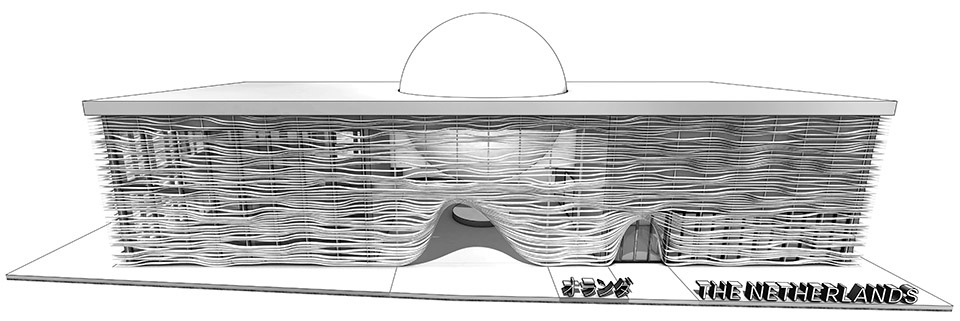
▼透视图,perspective
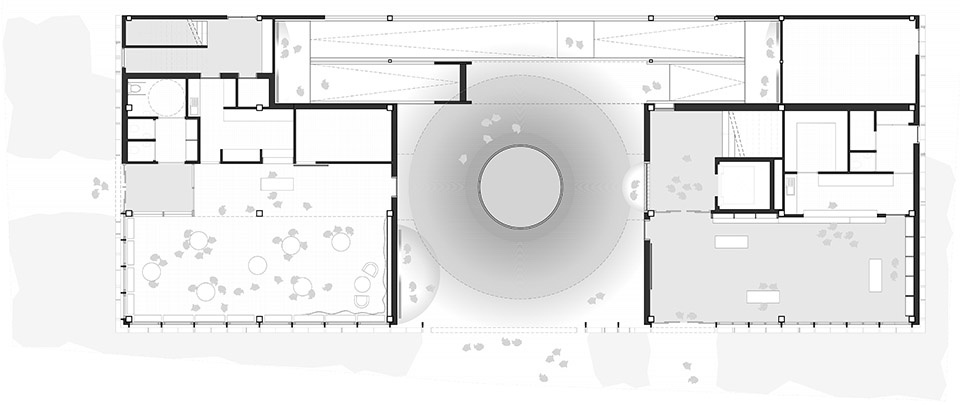
▼一层平面图,ground floor plan
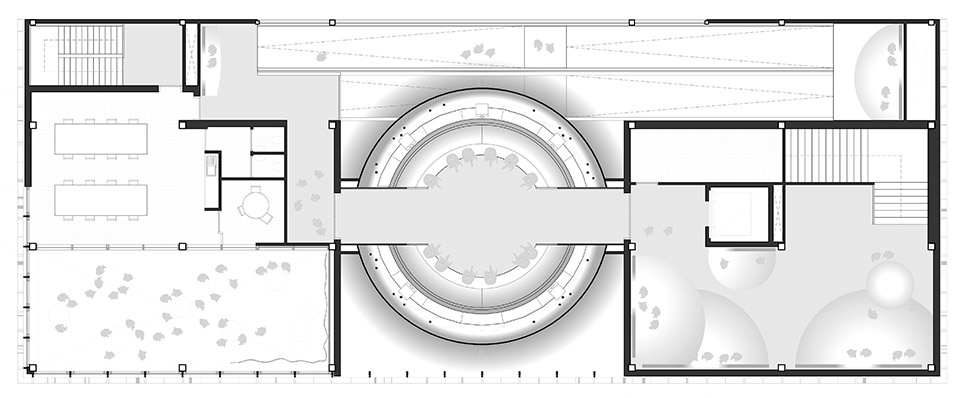
▼二层平面图,first floor plan
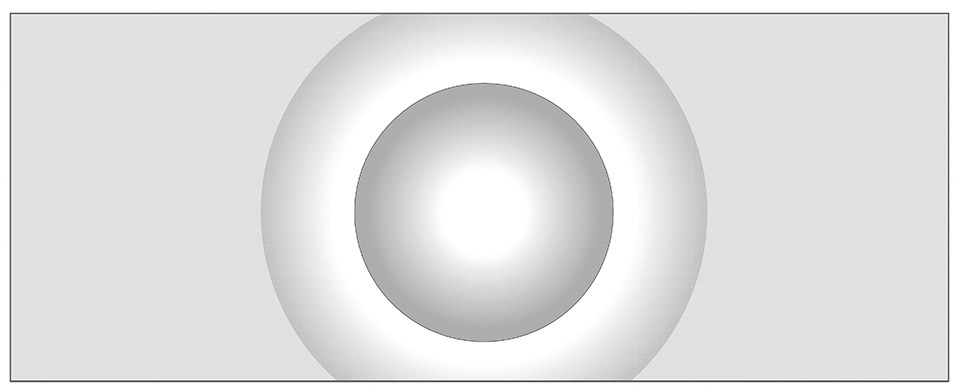
▼屋顶平面图,roof plan
▼东西立面,west & east elevation
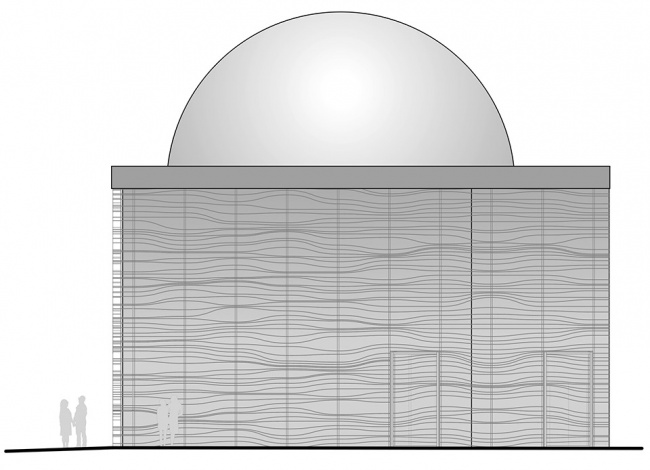
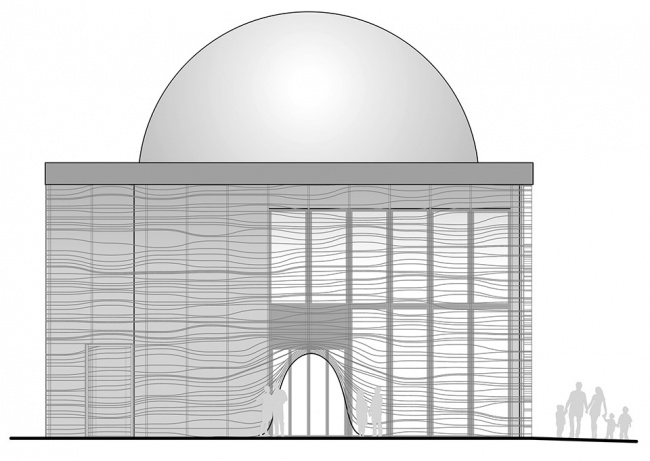
▼南立面,south elevation
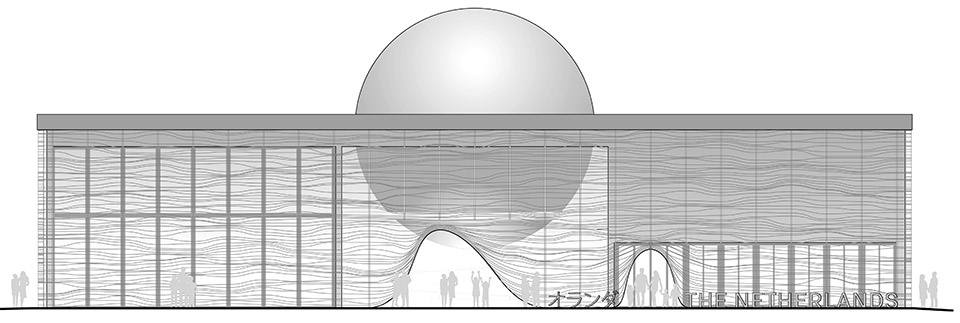
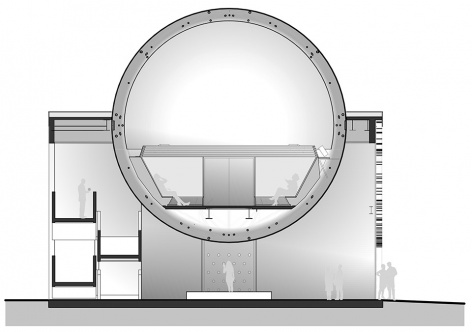
▼剖面,section
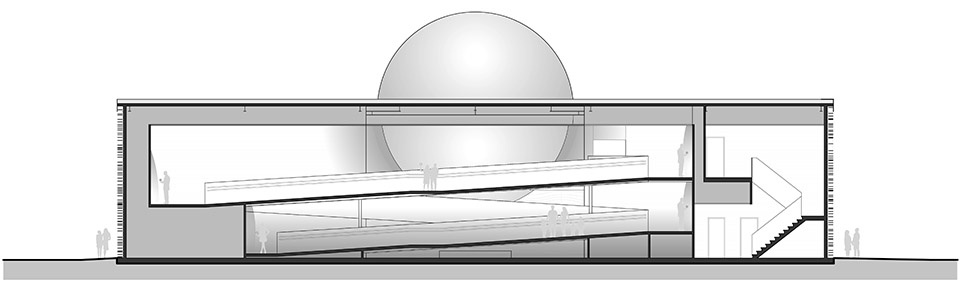
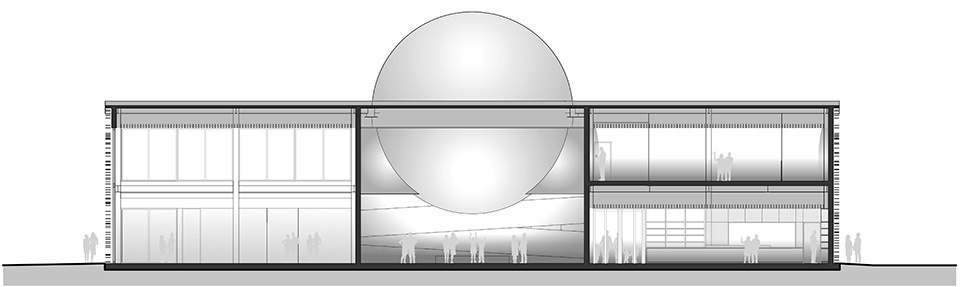
▼剖面,section
Location
Osaka, Kansai, Japan
Client
The Ministry of Foreign Affairs
Timeline
2023–2025
GFA
1.157 m2
Team RAU
Thomas Rau, Thomas Dill,
Marta Roy, Dennis Grootenboer,
Esteban Serrano, Katarzyna Kędziorczyk
Contractor
Asanuma Corp.
Engineer
DGMR
Experience designer
Tellart
Photographer
Zhu Yumeng