LaPaz住宅,墨西哥 / Ludwig Godefroy Architecture
本项目将传统的住宅模式颠倒过来,颠覆“房子配花园”的常见范式,旨在创造一种“花园配房子”的新方式。通过将外部元素作为居住空间的有机组成部分,房屋与花园不再是两个彼此分离的实体,而是融合为一个统一的整体。这种内外空间的融合,带来了居住空间感的延展。
To invert the traditional house model, flipping its common scheme of a house with a garden, in order to create : a garden with its house.By making the external element an integral part of the living space, the house and its garden cease to be two distinct entities and merge into a single unified element. The fusion of the interior and the exterior generates a sense of expansiveness of the habitable space of the house.
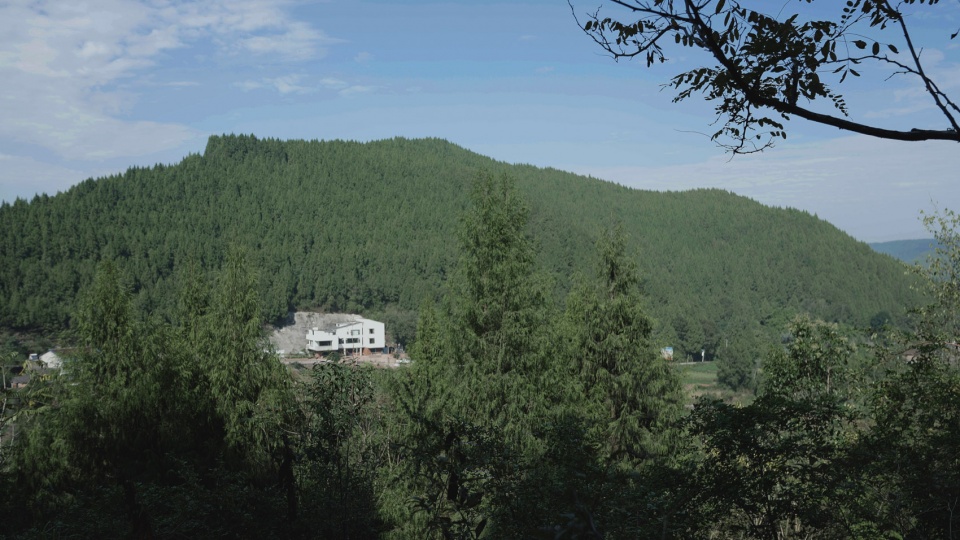
▼项目远景,viewing the project at distance
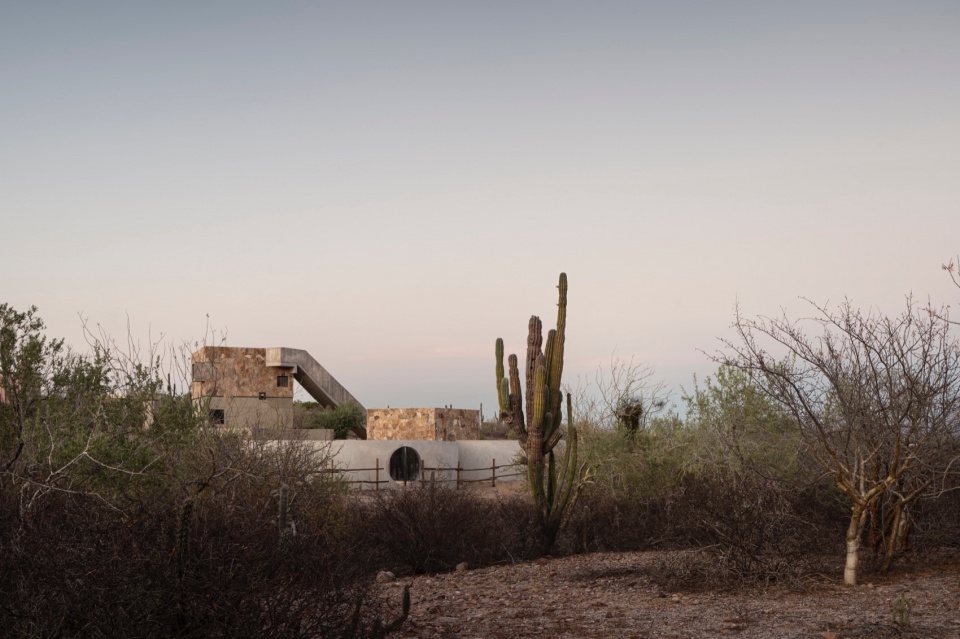
花园与住宅之间新建立的通透关系,打破了传统内外分明的边界,促成了一个独特的“可居住的花园”的诞生。为了实现“花园/住宅”这一理念,关键在于保留并利用土地原有的本质和地形特征,确保它的身份可以被延续并转化为住宅的一部分。但问题在于:在不破坏土地的前提下,如何将土地的身份转移到建筑之中?
This new permeability between the garden and the house erases the classic hermetic border between in and out, leading to the creation of a unique habitable garden. To realize this idea of a garden/house, the key was to preserve and work with the original essence of the land and its topography, ensuring its identity would be preserved and transferred to the house itself. But how can the land identity be transferred to the house without destroying it during construction?
▼住宅外观,exterior view of the project
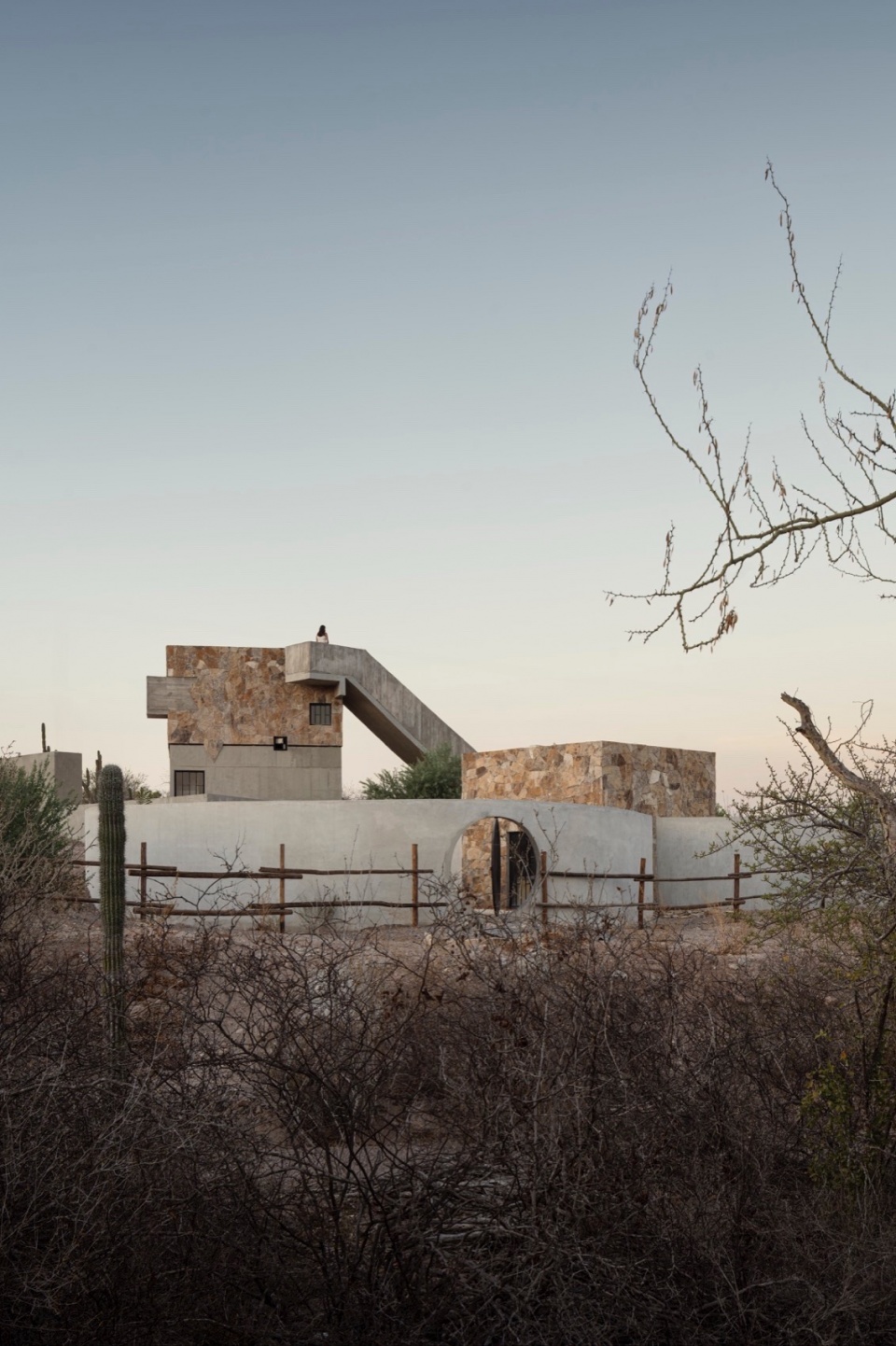
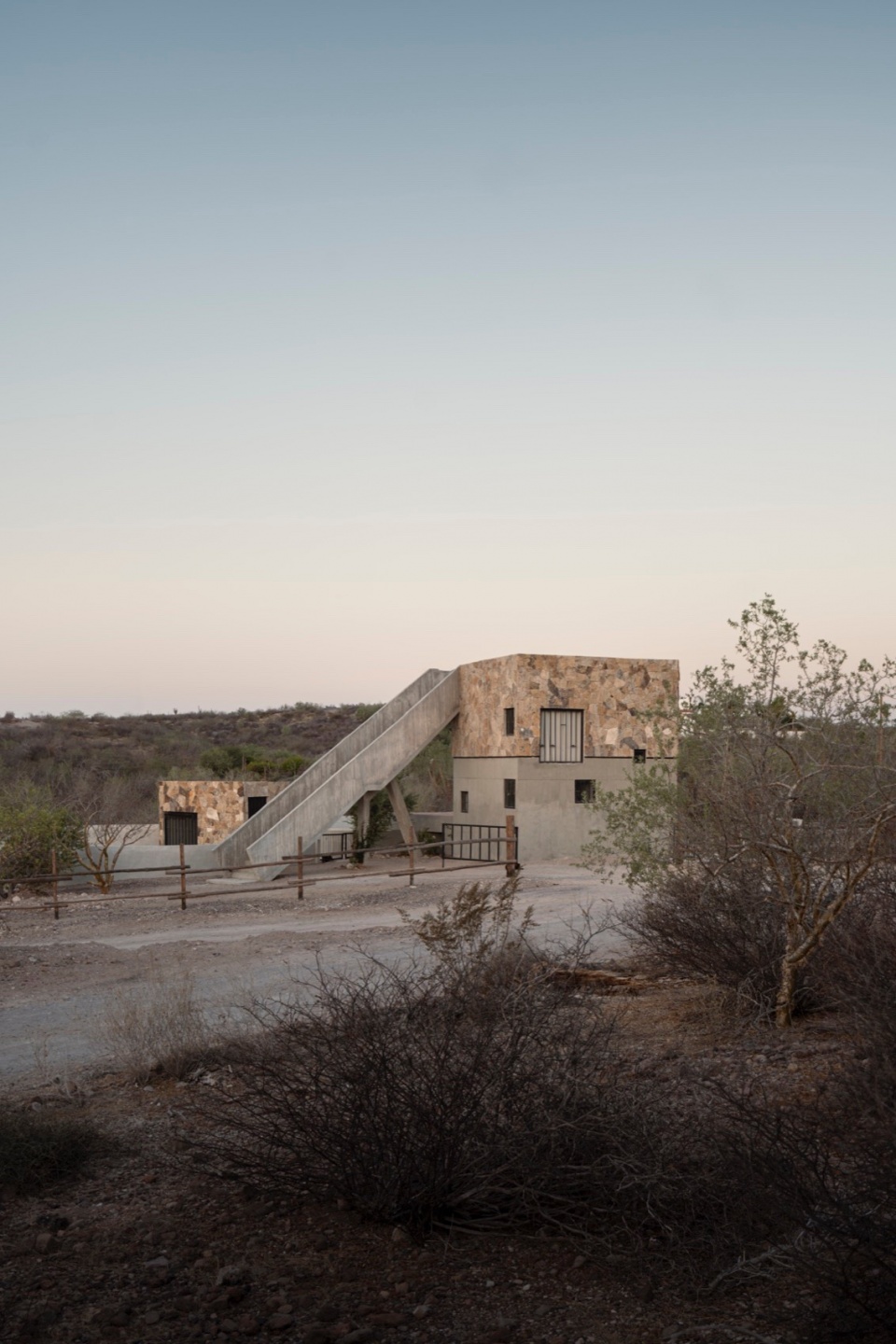
场地原本与南侧的一条干涸溪沟之间,存在着一种微妙的自然联系,两者相互交融。项目的挑战在于:在不破坏这种原生关系的前提下,将房子嵌入地形之中。恰恰在这里,破坏与保留之间的平衡必须被谨慎拿捏。住宅必须允许土地“进入”,项目本身必须具备通透性,永远不阻断地形的自然走势。
There was a subtle preexisting relationship between the land and a dry creek on the south side, where both were merging. The challenge of the project was to integrate the house into the topography of the land without disrupting this preexisting connection between the land and its creek. It is precisely at this point that the balance between destruction and preservation had to be found. The house had to allow the land to enter, the project had to become permeable, never interrupting the topography.
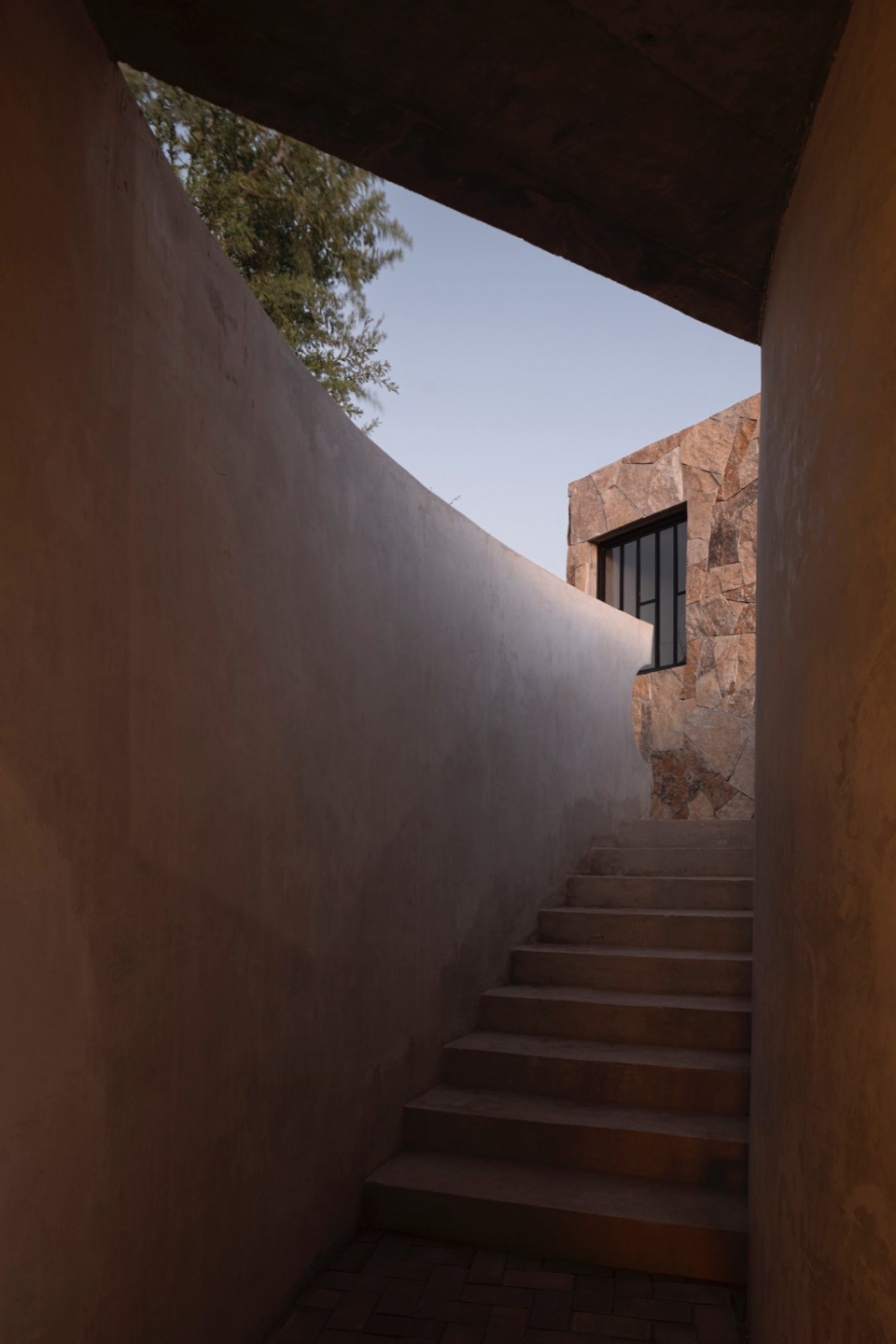
▼连接二层与地面的楼梯,the staircase connecting the second floor and the ground floor
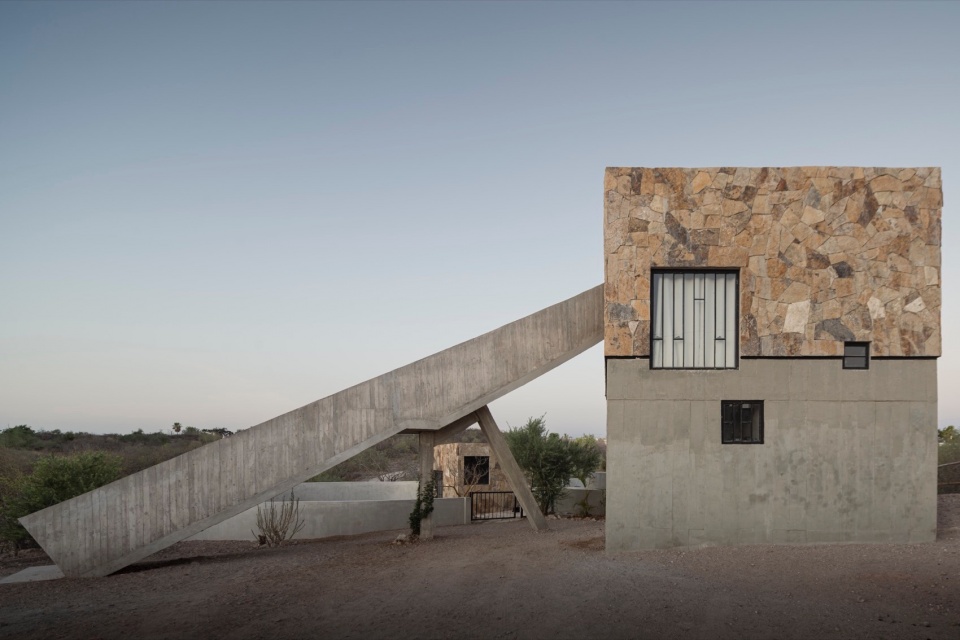
▼外观近景,closer view of exterior
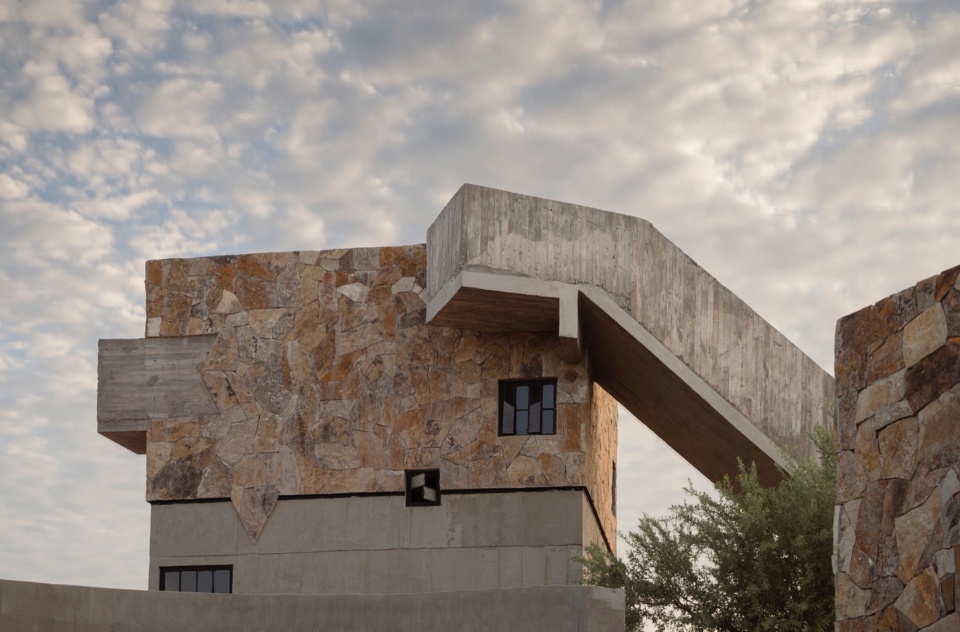
以此方式,土地得以继续表达自身、持续演变,从与溪流的原有关系中过渡到一种新的状态,即包括了住宅在内的关系;住宅位于土地与溪流之间,却并不试图征服或驯服它们任何一方。LaPaz住宅项目通过尊重和拥抱地形,使其得以保留,力图保存人们第一次踏足这片原始土地时所感受到的那种自然氛围。
In this way, the land could continue to express itself and evolve, moving from its relationship with the creek into a new relationship that includes the house ; placing the house in between those two original elements, without trying to tame either the land or the creek. Casa LaPaz project, by embracing the topography and allowing it to remain, seeks to preserve the feeling that existed when walking the untouched land for the first time.
▼房屋呈现为一组组亭式体块,
the house is presented in groups of pavilion-like blocks
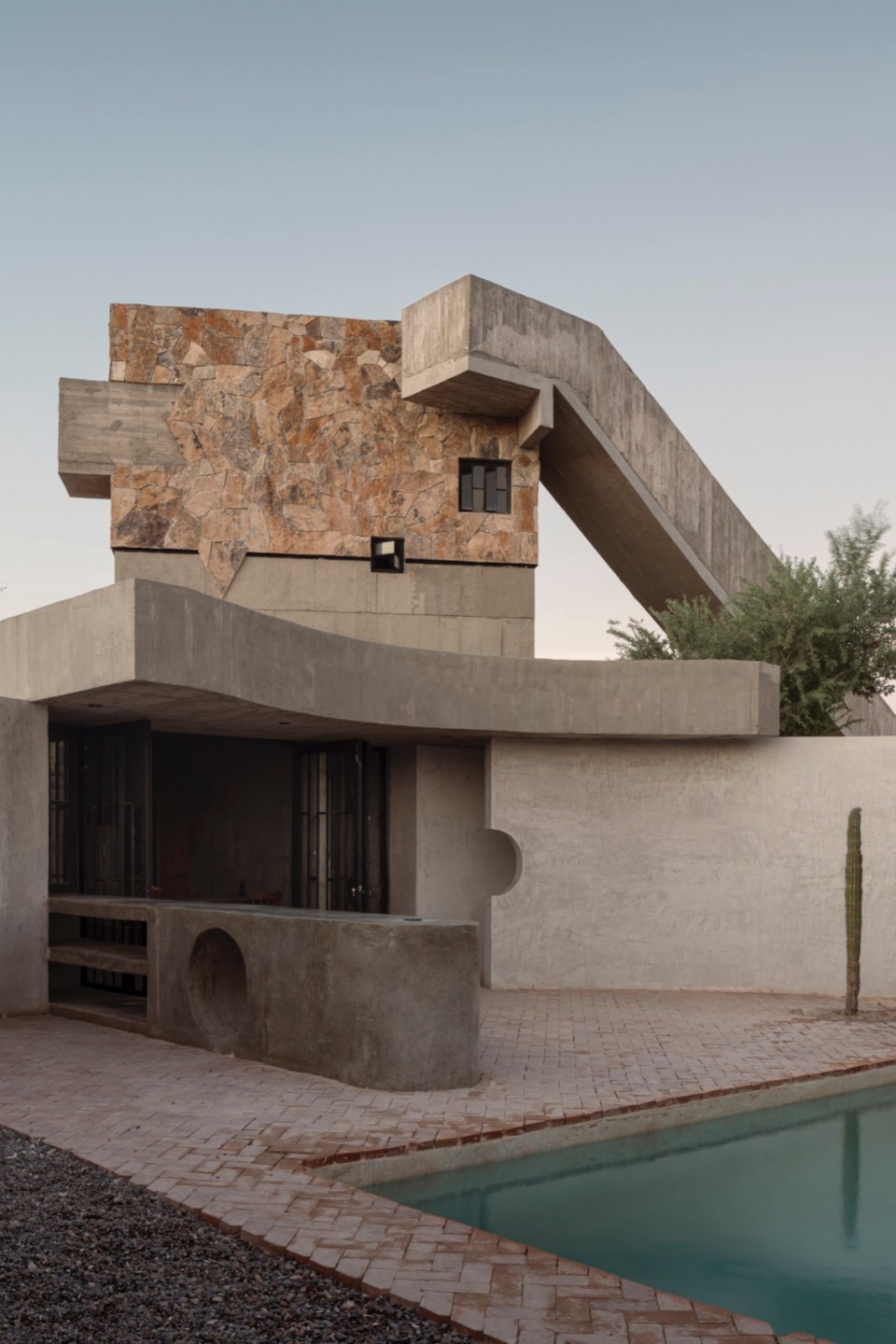
▼体块关系,relationship of the volume
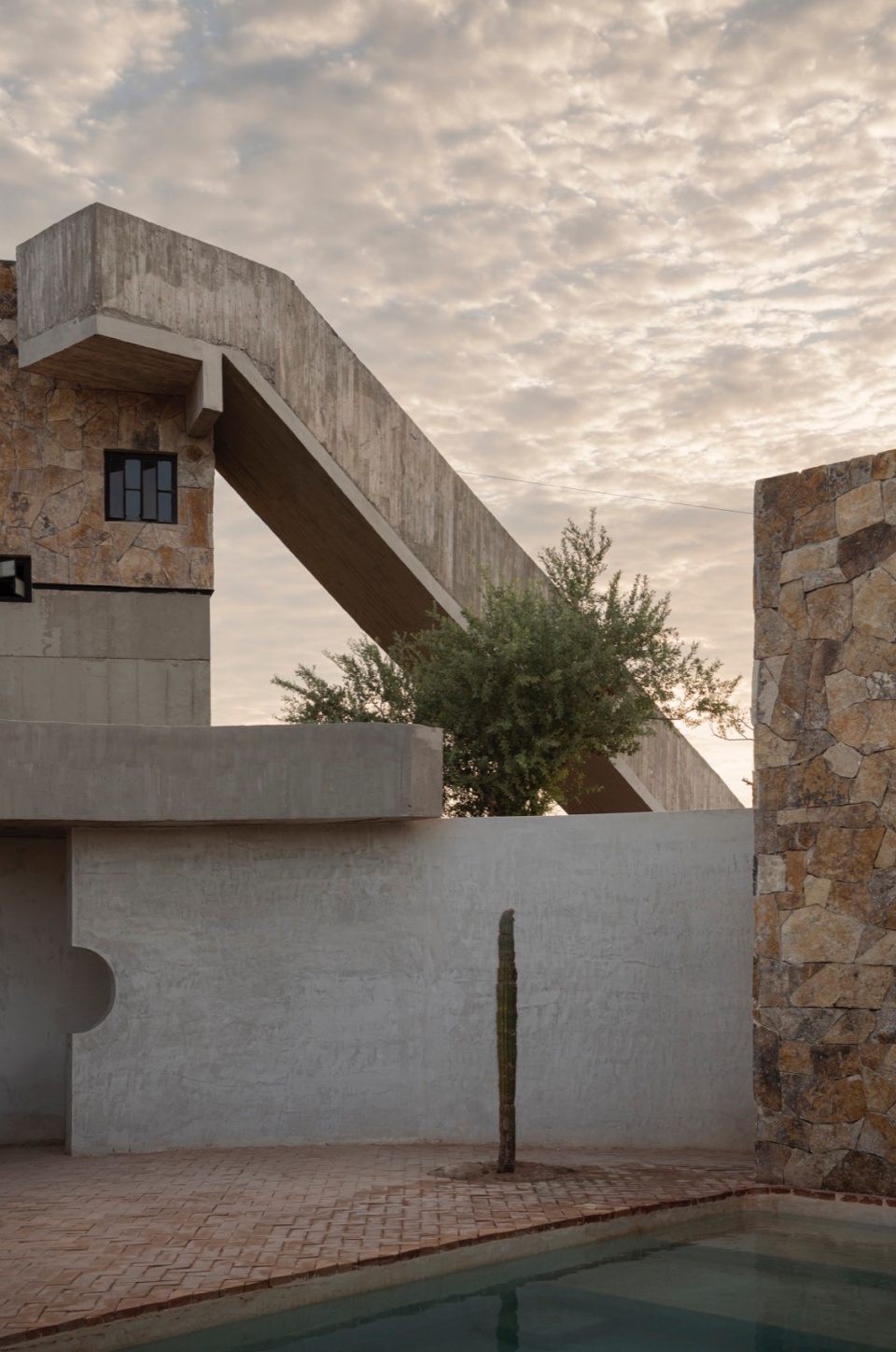
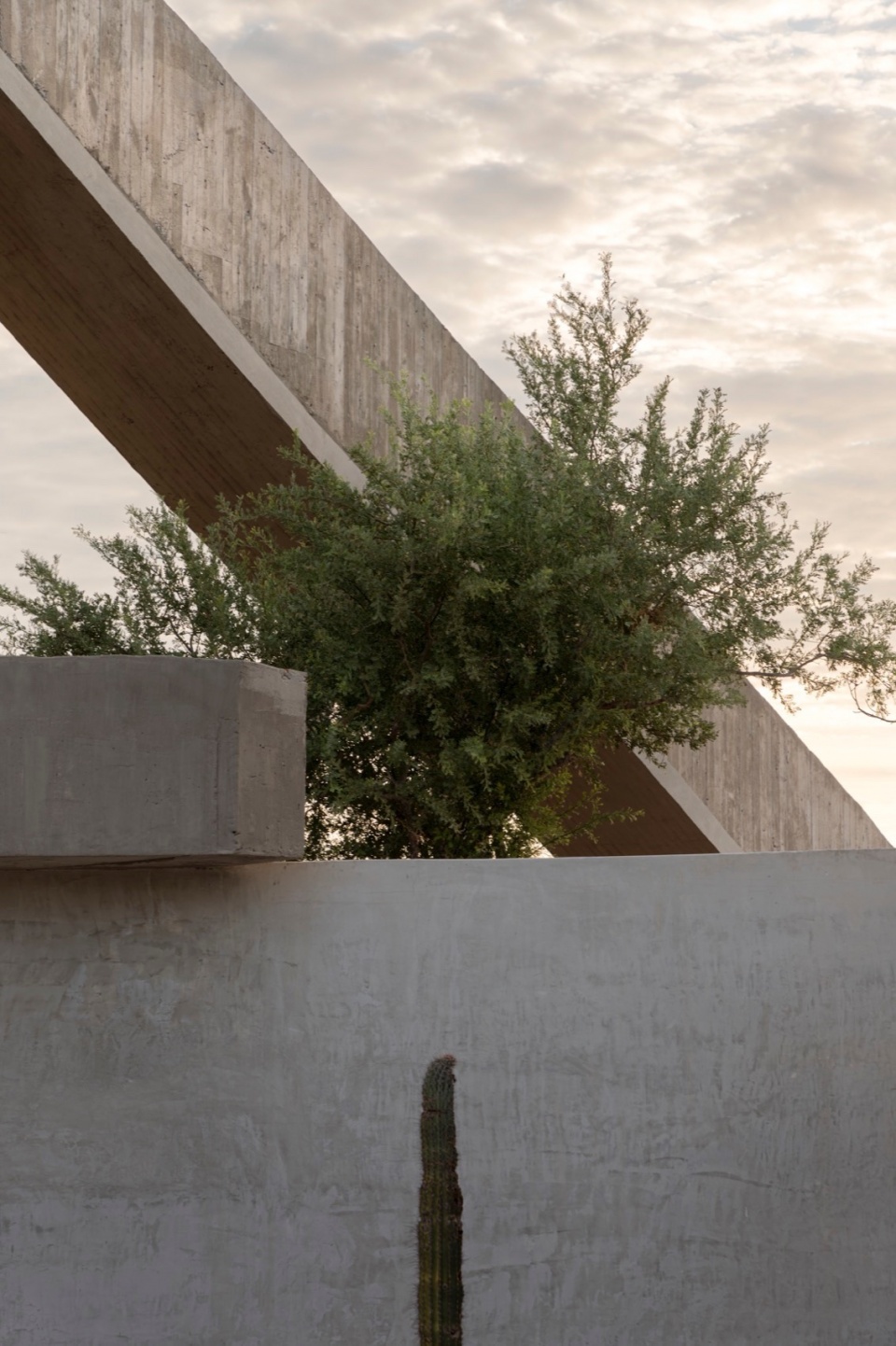
▼楼梯细部,details of the staircase
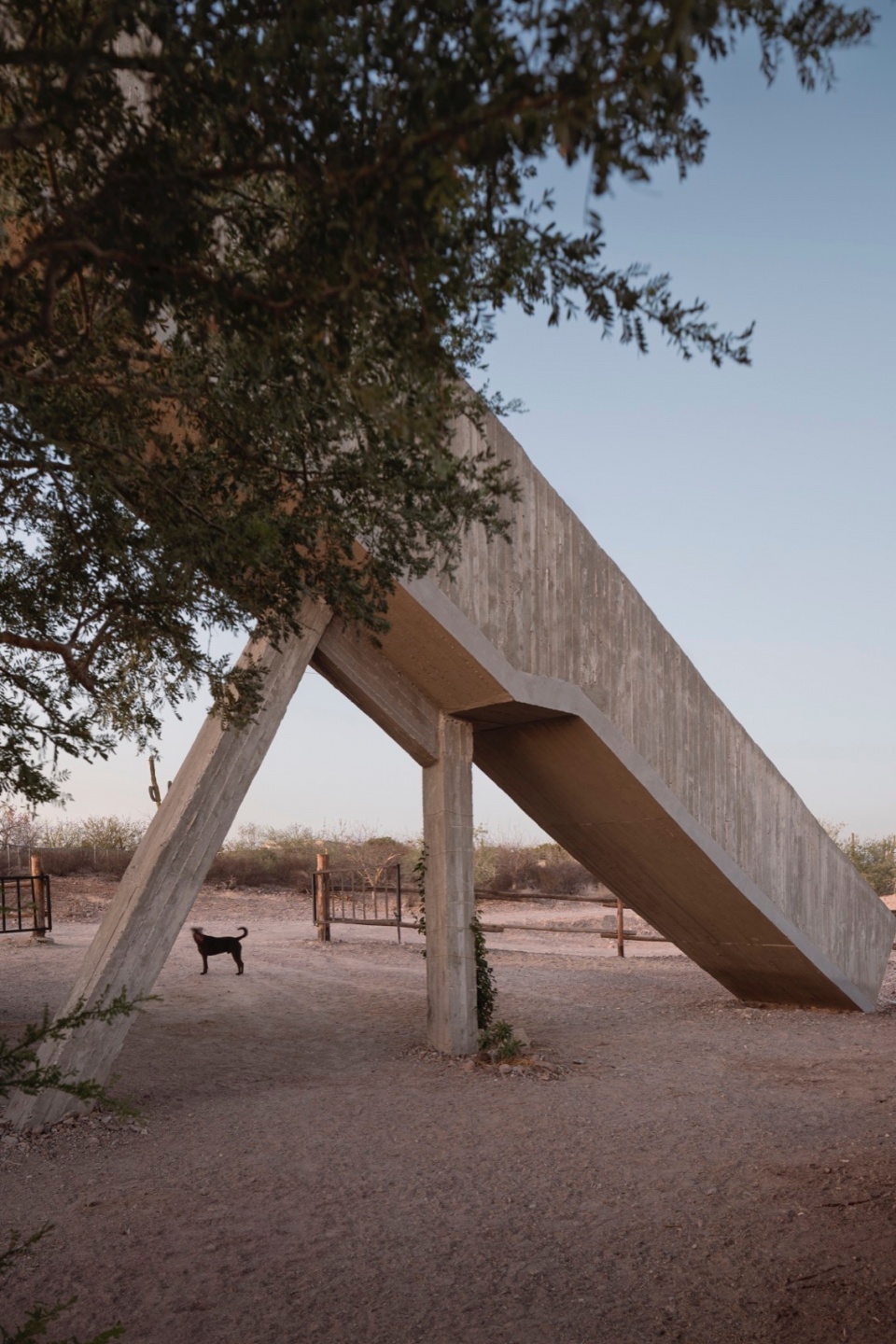
LaPaz住宅的设计如同在土地上散步的体验,也因此成为了穿越住宅的方式。它并非一栋静止的建筑,而是邀请人们在其中移动、探索,感受日光变换下的大地之美。房屋呈现为一组组亭式体块,营造出多个角落,也带来了多重氛围。这是一座小型住宅,但由多个空间构成,使居住者可以共处一地而又不必时时察觉彼此的存在。
Casa LaPaz project is designed like a walk through the land and by extension, through the house. The house isn’t static; it invites people to move, to explore, and the enjoy the land as it changes throughout the day, under the action of the successive lights. The house appears as a collection of pavilions, creating multiple corners and, thus, multiple atmospheres. It’s a small house, but made of multiples spaces where people can coexist in the same place without always being aware of each other presence.
▼泳池,pool
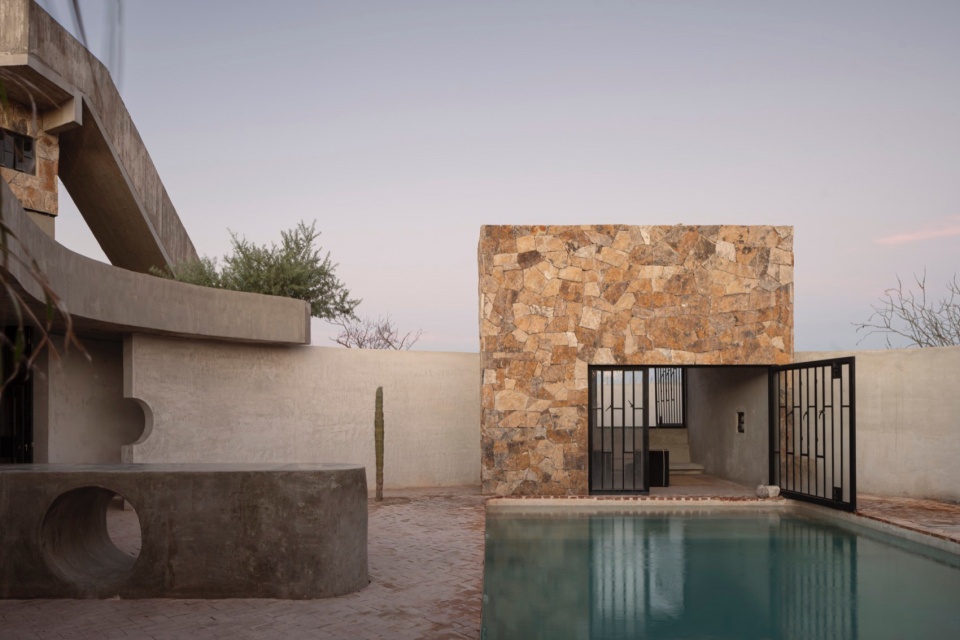
▼庭院,courtyard
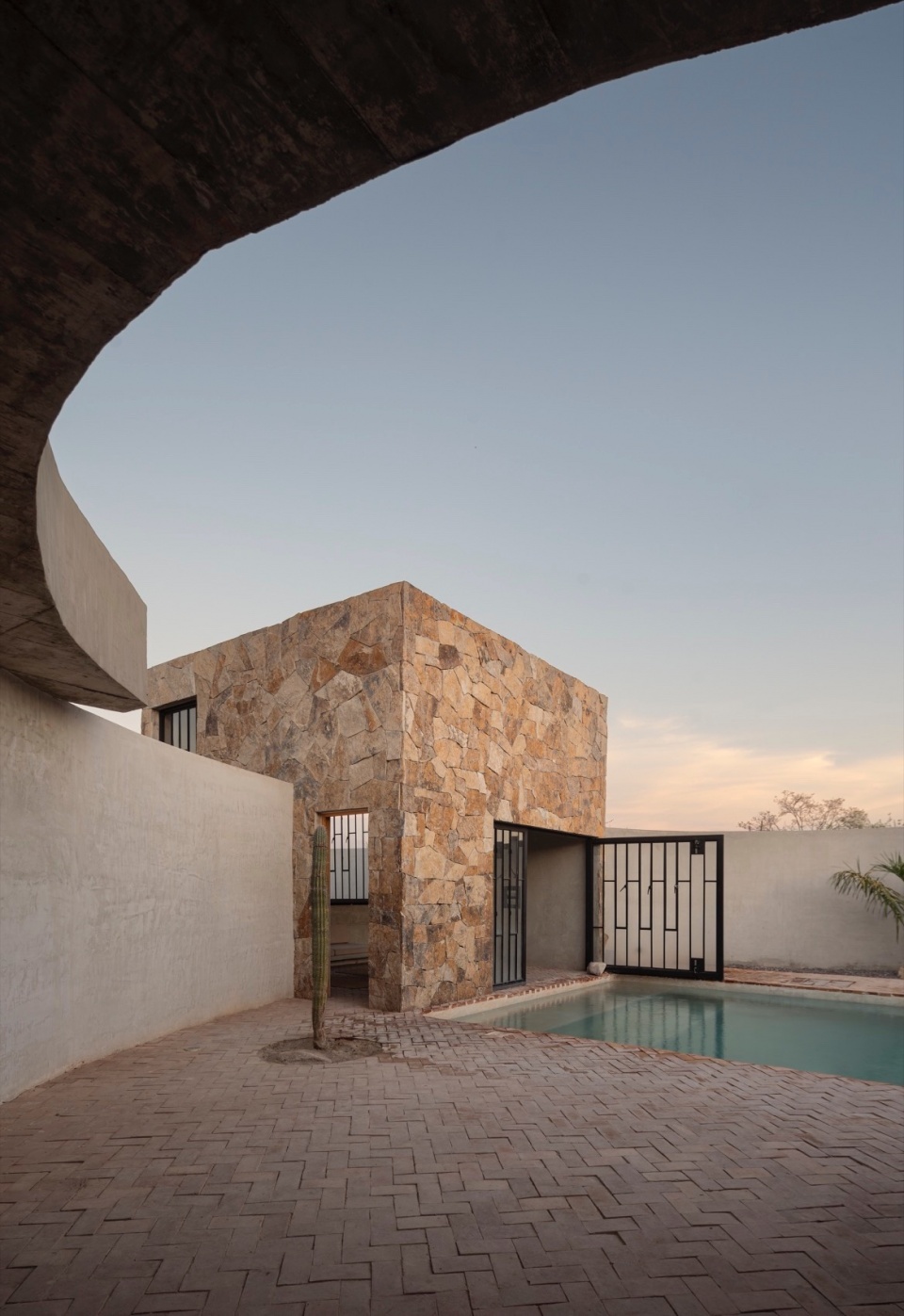
▼住宅邀请人们在其中移动、探索,the house invite people to move and explore within them
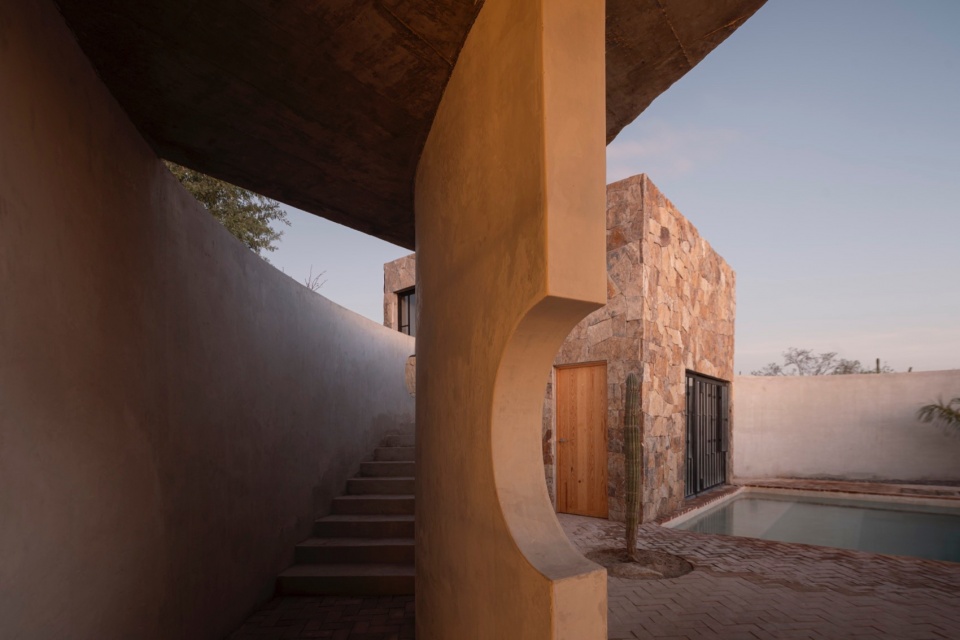
▼楼梯,staircase
项目鼓励人们在户外生活,因此彻底摒弃了建筑中最基本的元素之一——立面。它提出一种围绕一个巨大中庭组织起来的住宅方案,不设立面,不构成围合。住宅始终是开放且通风的,同时也满足居民对于保护与隐私的基本需求。LaPaz住宅是一座从“负空间”出发构思而成的房子。
The project encourages living outdoors, thereby it eliminates the fundamental architectural element of the façade. The project proposes to build a house organized around a large void, without façade, which does not create an enclosure. The house is permanently open and ventilated, but still meets the basic needs for protection and privacy of its inhabitants. Casa LaPaz is a house conceived from its negative space.
▼厨房餐厅,kitchen and dining
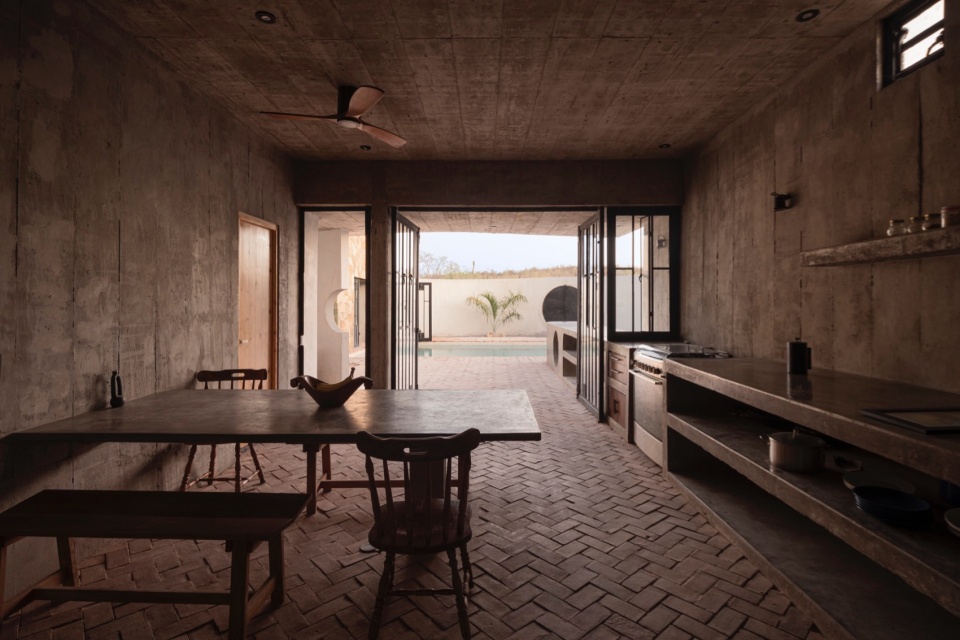
▼室内细部,details of interior
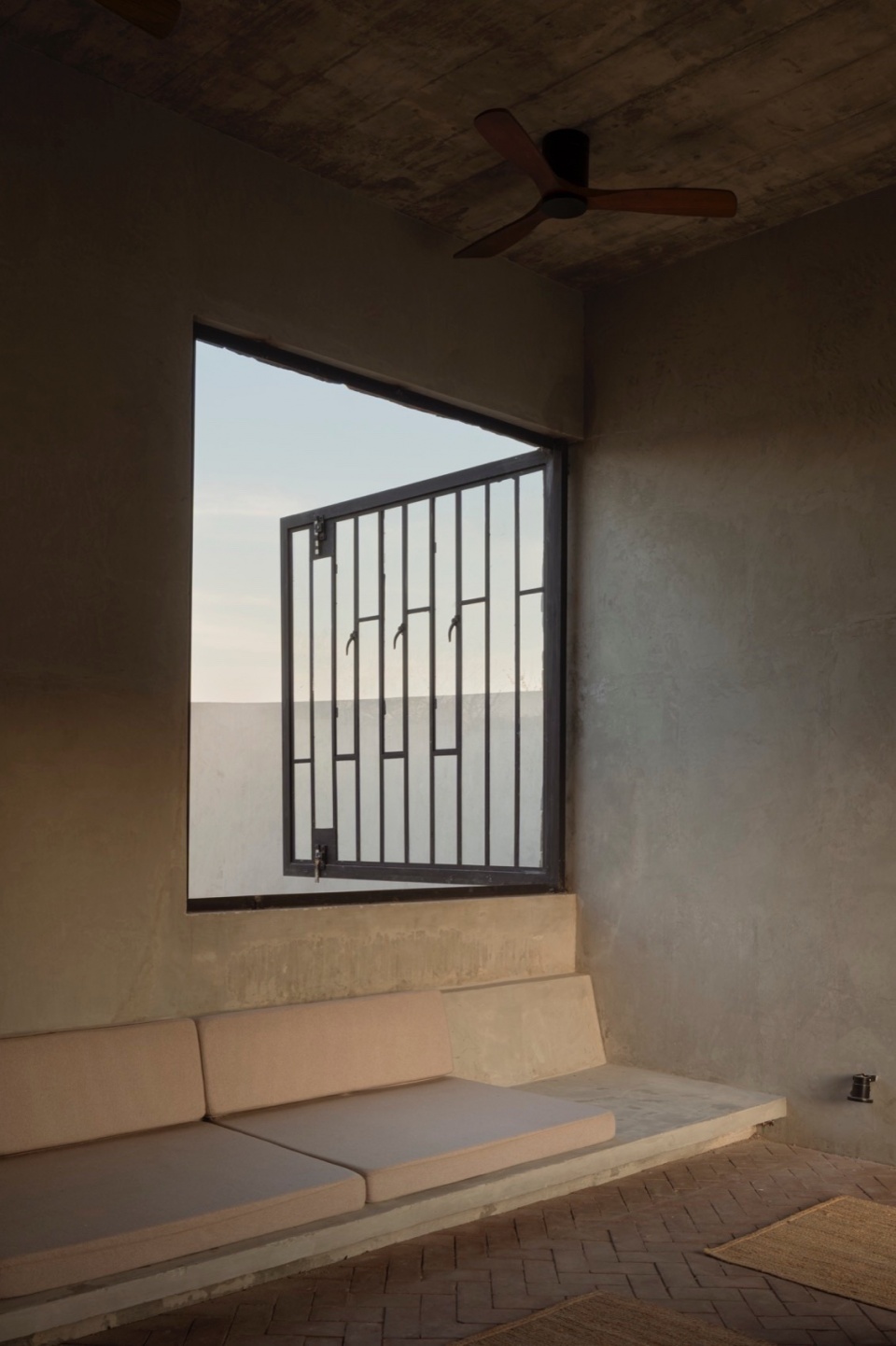
这个项目并不是从住宅的“实空间”——即建筑部分的功能布局开始设计,而是反向操作,从定义花园的“空白”空间出发进行构思。这个空旷的花园空间是整栋房子的核心,它既保护了住宅本体及内部空间,又成为住宅、街道与周围环境之间的缓冲带。这个巨大的“空”空间调节了来自邻近住宅的视线,使住宅得以向外敞开,同时在花园中生成一种强烈的“内向性”。住宅的每个空间都被高耸的柱状仙人掌、厚重的象牙树和缠绕的沙漠灌木所包围,氤氲着宁静与舒适的氛围。
Rather than starting from the design of the built living spaces – the positive space of the house – the project was conceived in reverse, beginning with this void that defines the garden. This empty space of the garden is the crucial element that protects the house and all of its interior spaces, serving as a buffer between the house, the street and its surrounding. These large void controls the view from the neighbors properties, allows the house to open up, and generates a strong sense of interiority outside in the garden. A sense of well-being envelops each space of the house, which is nestled among the tall organ pipe cactus, thick elephant trees and twisted desert bushes.
▼夕阳景观,dusk views
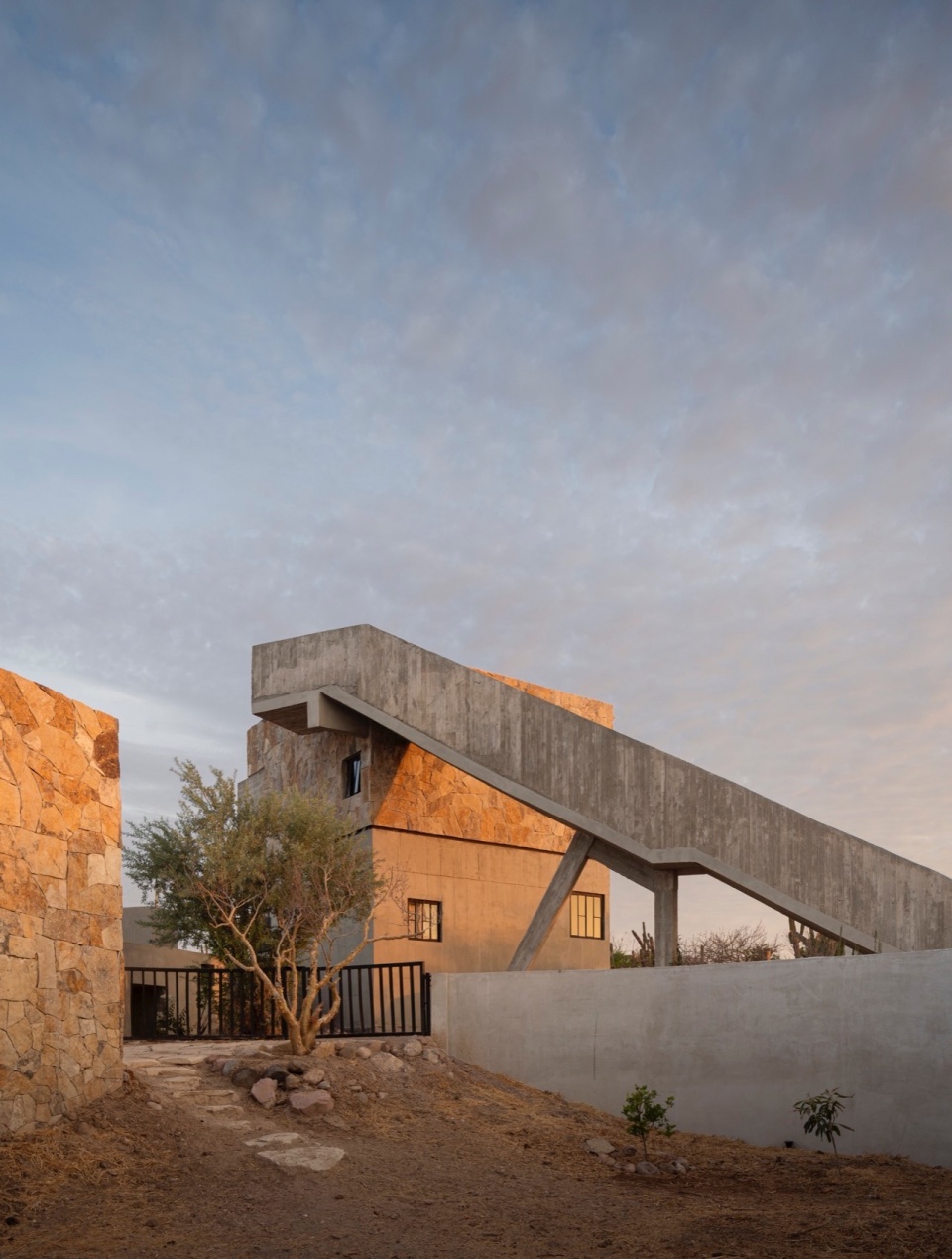
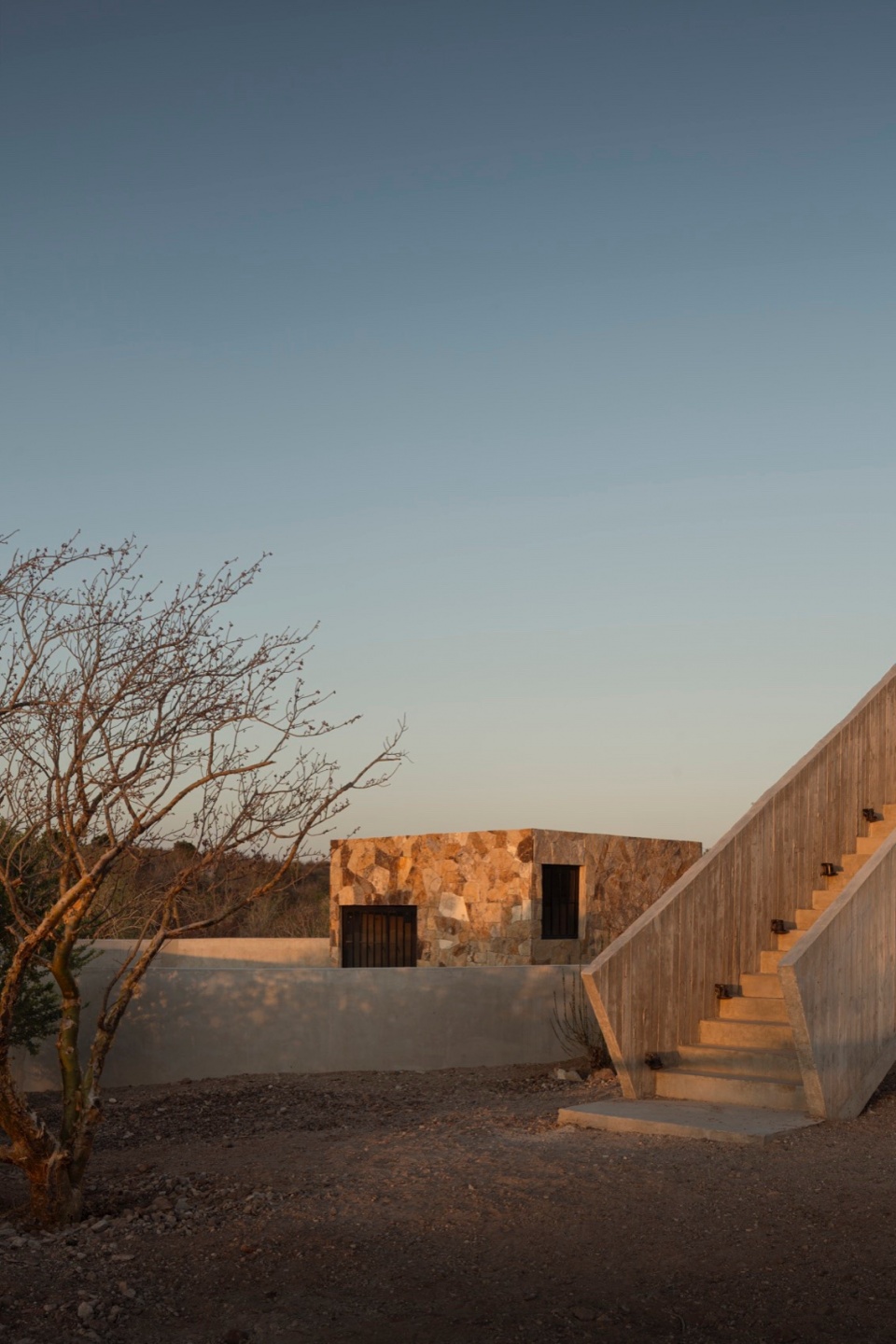
▼楼梯,staircase
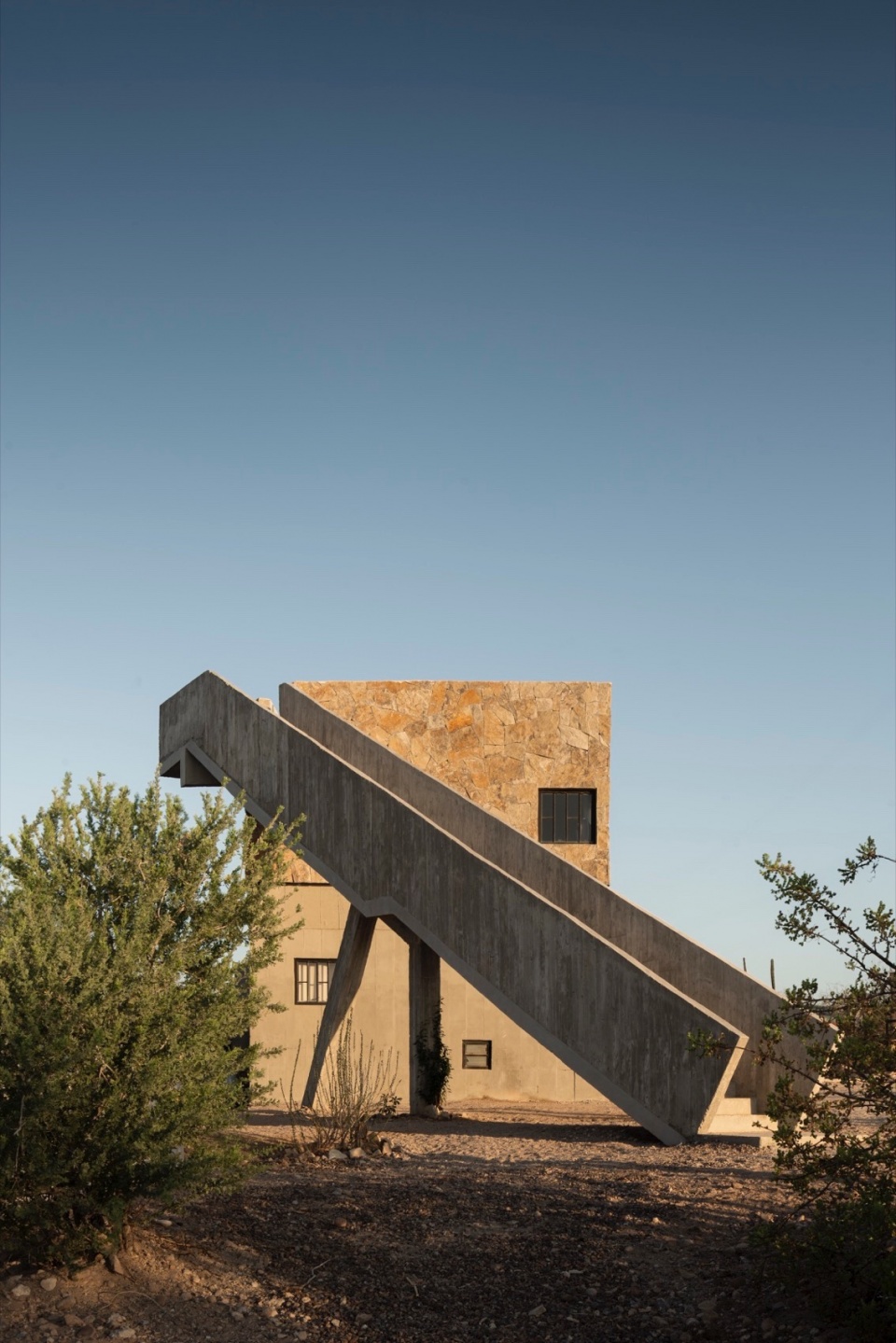
正因如此,传统的“客厅”概念被重新定义。整座住宅的一层、其花园以及每一棵树木,共同构成一个开放的巨大生活空间。内与外不再有界限。花园即是客厅、厨房和餐厅,一体而成。LaPaz住宅彻底颠覆了“住宅配花园”的传统结构,创造了一个“花园配住宅”的全新建筑模式。
By responding this way to the reality of the land, the conventional idea of what would normally be a living room has been redefined. The entire ground floor, its garden, and every single tree became one large open living area. There is no longer any distinction between interior and exterior. The garden becomes the living room, kitchen and dining room, in their entirety. Casa LaPaz inverts the traditional scheme of a house with its garden to create a garden with its house.
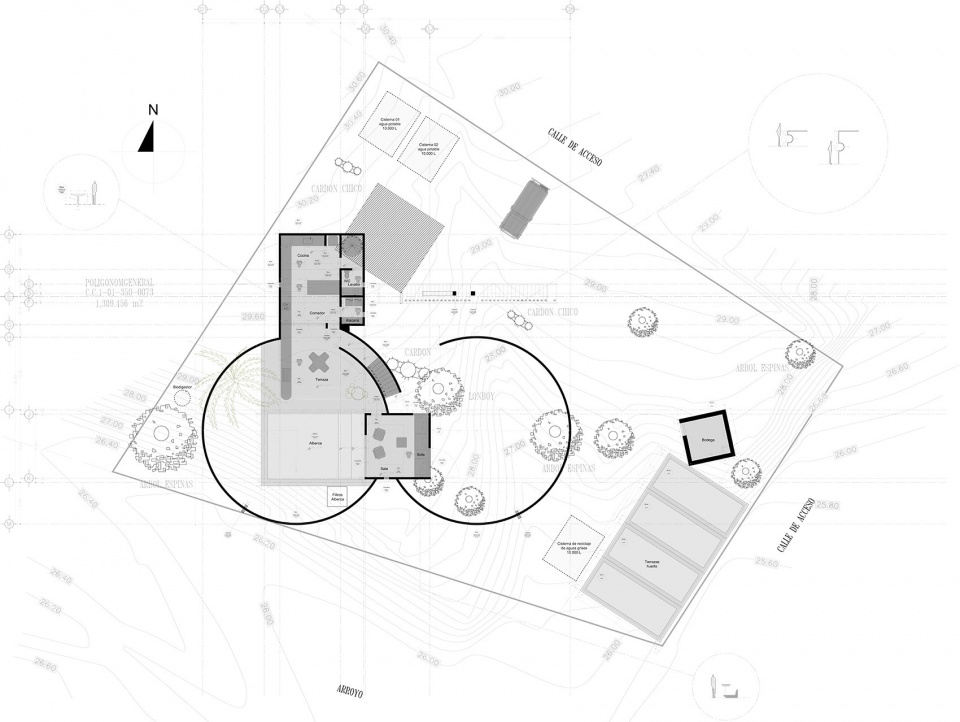
▼底层平面图,ground floor plan
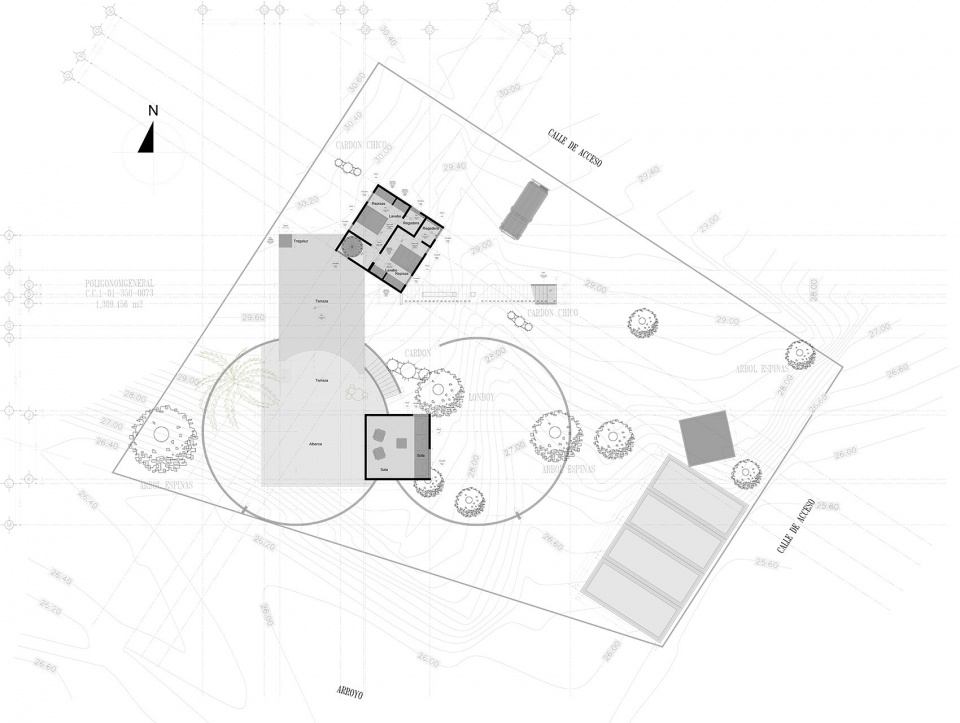
▼二层平面图,first floor plan
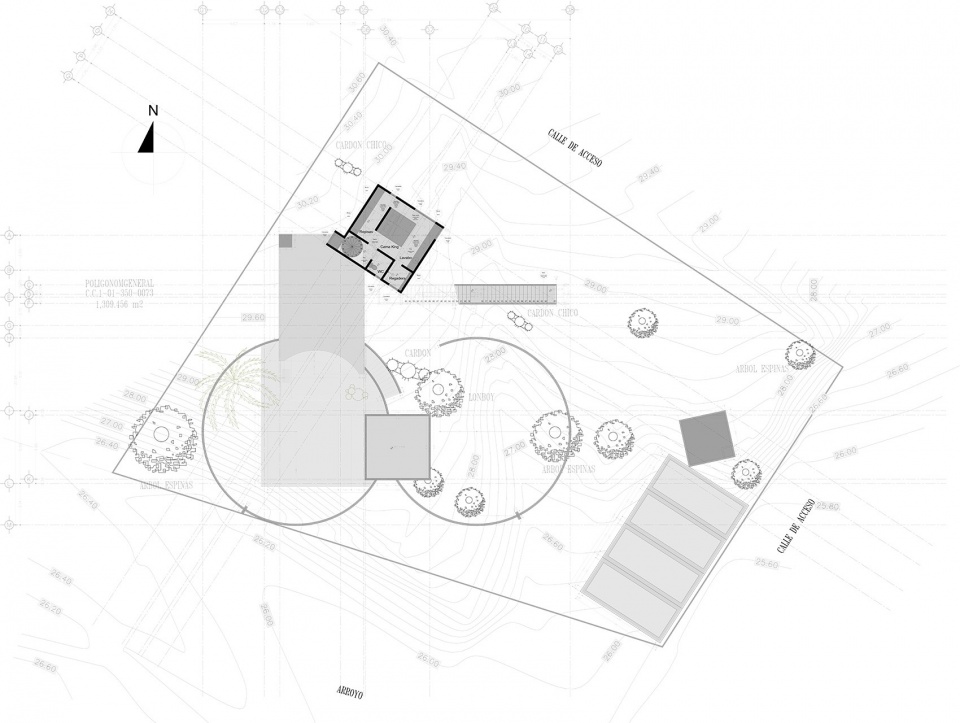
▼三层平面图,second floor plan
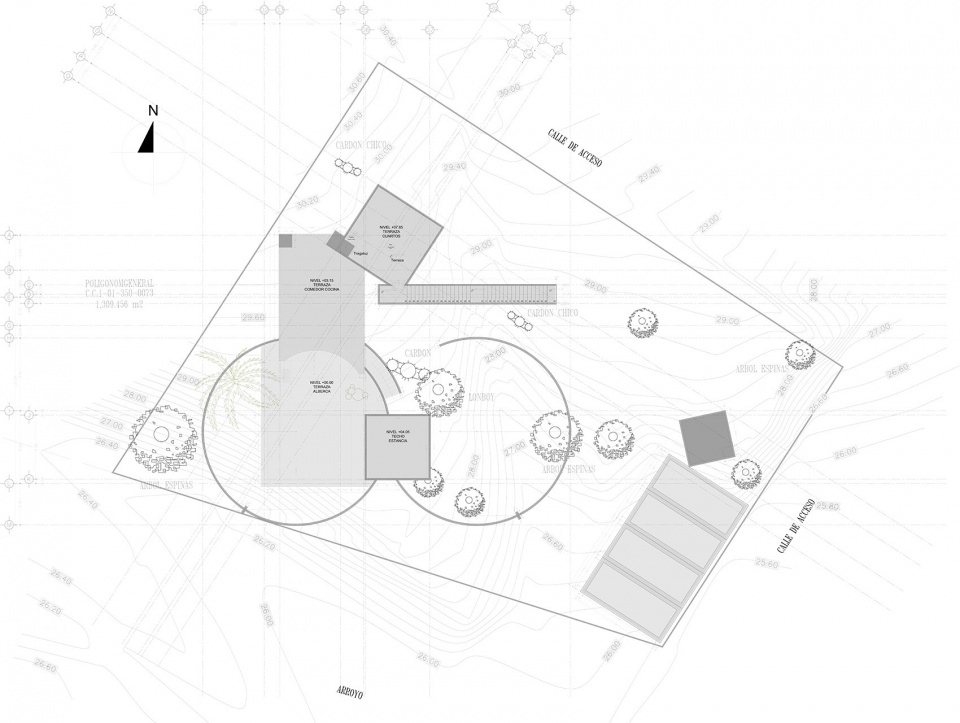
▼屋顶平面图,roof plan
▼立面图,elevation
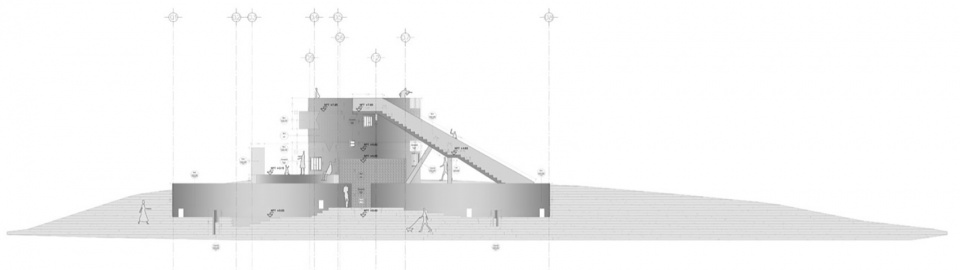
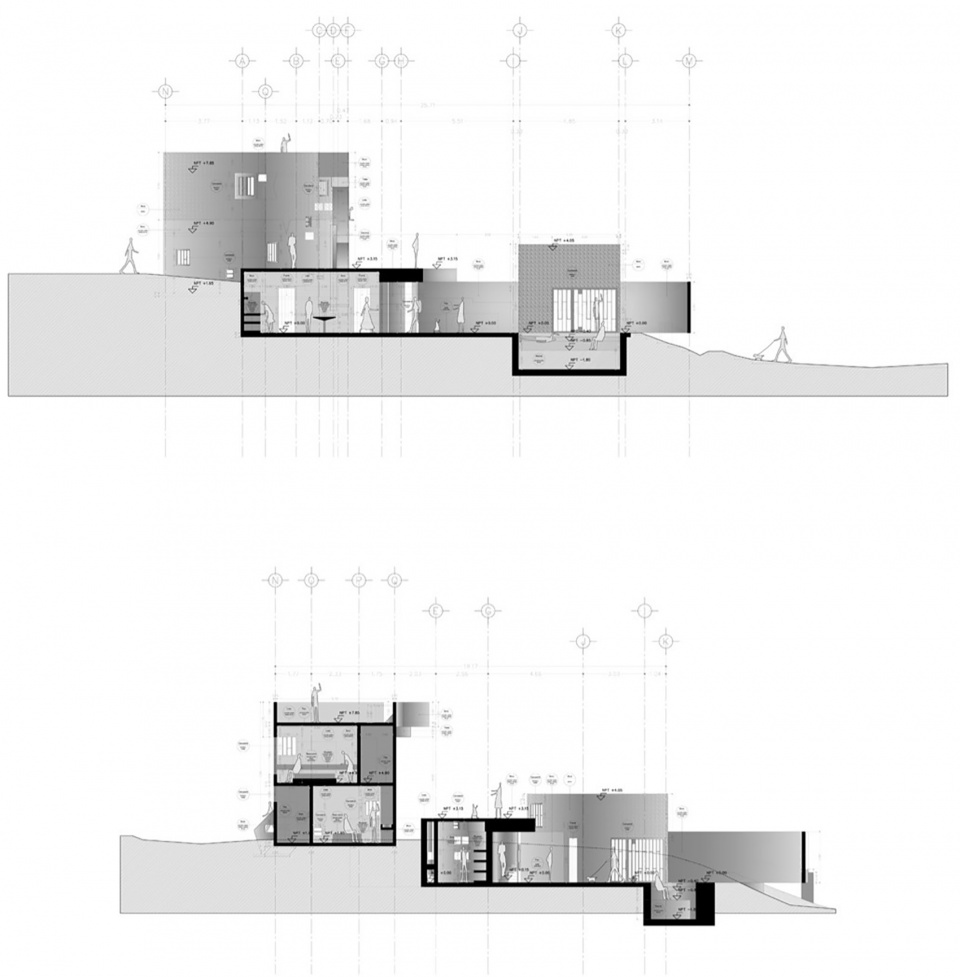
▼剖面图,sections