修道院中的盒子,意大利 / Dario Castellino Architetto
在玛伊拉山谷壮丽的自然景观中,坐落于普拉佐市(Prazzo, Cuneo)马达莱娜(Maddalena)村——一个汇聚奥克西塔尼亚文化、古老农耕实践与多重历史遗产的交汇之地——建筑师Dario Castellino完成了一项精致而创新的建筑再利用项目。
Set within the striking landscape of the Maira Valley, in the hamlet of Maddalena (municipality of Prazzo, Cuneo)—a crossroads of Occitan culture, ancient agrarian practices, and layered history—architect Dario Castellino has completed a delicate and innovative adaptive reuse project.
▼修道院外观,exterior of the monastery
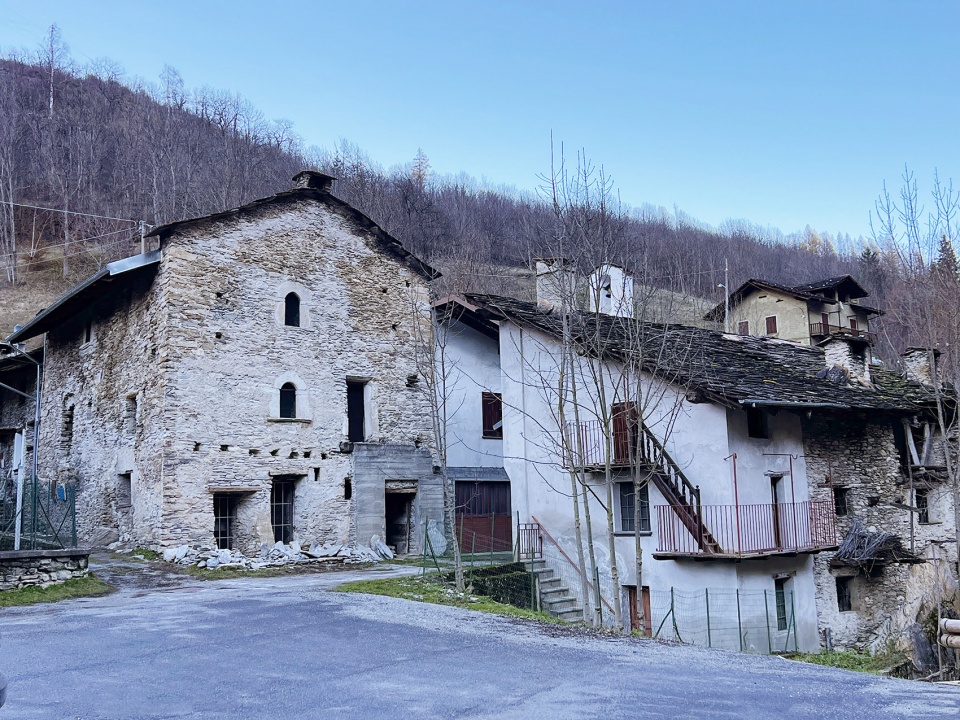
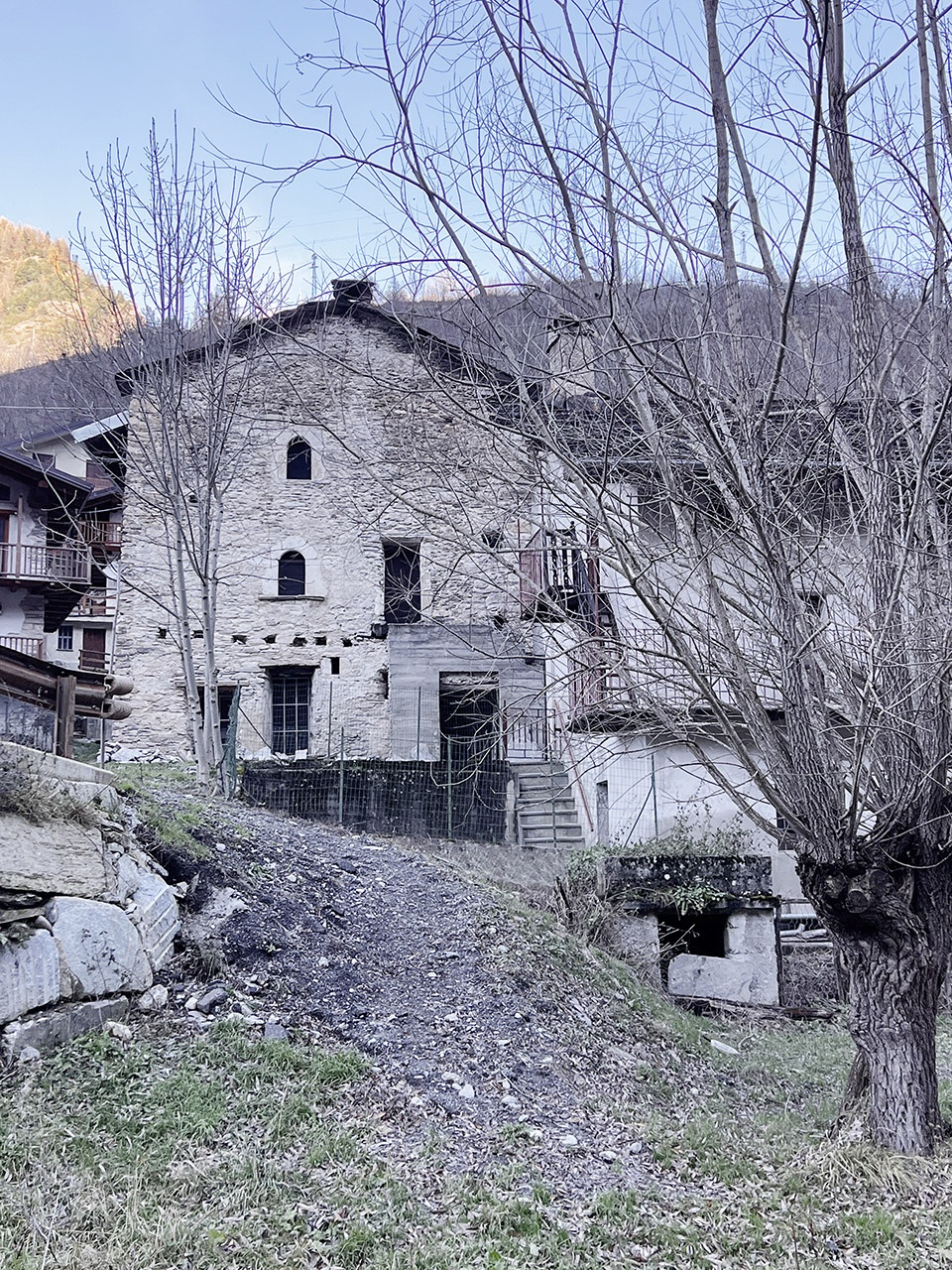
此次改造的核心建筑为一座可追溯至15至16世纪的中世纪结构,极有可能曾是Capuchin修道院。尽管历史文献有限,但其建筑特征——包括高起的山墙立面、本地干砌石墙、内凹窗台下的狭窄拱形窗、精雕细琢的石材门廊——均表明该建筑在山谷中曾作为宗教与公共空间存在。随着岁月更迭,建筑逐步被转用于农业功能,内部结构也被改造成牲畜圈舍与干草储藏空间。
The building at the heart of this transformation is a medieval structure dating back to the 15th–16th century, likely once a Capuchin monastery. Though historical documentation is limited, its architecture—marked by a large raised gabled façade, local dry-stone masonry, narrow arched windows with deep internal sills, and finely carved stone portals—attests to its original religious and communal role in the valley. Over time, the building had been converted for agricultural use, its interiors altered to accommodate livestock and hay storage.
▼可追溯到中世纪的修道院,a medieval structure
项目介入时,建筑已处于部分废弃状态:楼板塌陷,呈现出一个贯穿上下的巨大空间体量;仅存的隔墙遗迹与后墙上的巨大石砌壁炉,依稀可见建筑过往用途的印记。尽管干砌石墙已风化多年,却依然保有本地传统建构的质朴张力。
By the time of intervention, the structure was in a state of partial abandonment: the internal floors had collapsed, revealing a dramatic full-height volume. Vestiges of original partitions and a towering stone fireplace along the rear wall hinted at the building’s layered past. The dry-stone walls, though weathered, retained the expressive force of local vernacular construction.
▼仅存的隔墙遗迹,vestiges of original partitions
此次改造起始于一对年轻夫妇的愿望——希望将这处原本体量庞大的空间转变为一间朴素的第二居所。面对建筑的历史价值与预算的严苛限制,Castellino选择了一种极简、非侵入式的改造路径:完整保留了原始的石墙外壳、历史开窗和标志性的石板屋顶,使场所记忆得以延续。
The project originated from the desire of a young couple to transform the oversized space into a modest second home. Faced with the building’s historical value and a limited budget, Castellino adopted a minimalist, non-invasive approach. The entire external shell—including the stone walls, the original fenestration, and the characteristic stone-slab roof—was preserved, maintaining a tangible link to the site’s memory.
▼将空间转变为居住场所,transform the space into a second home
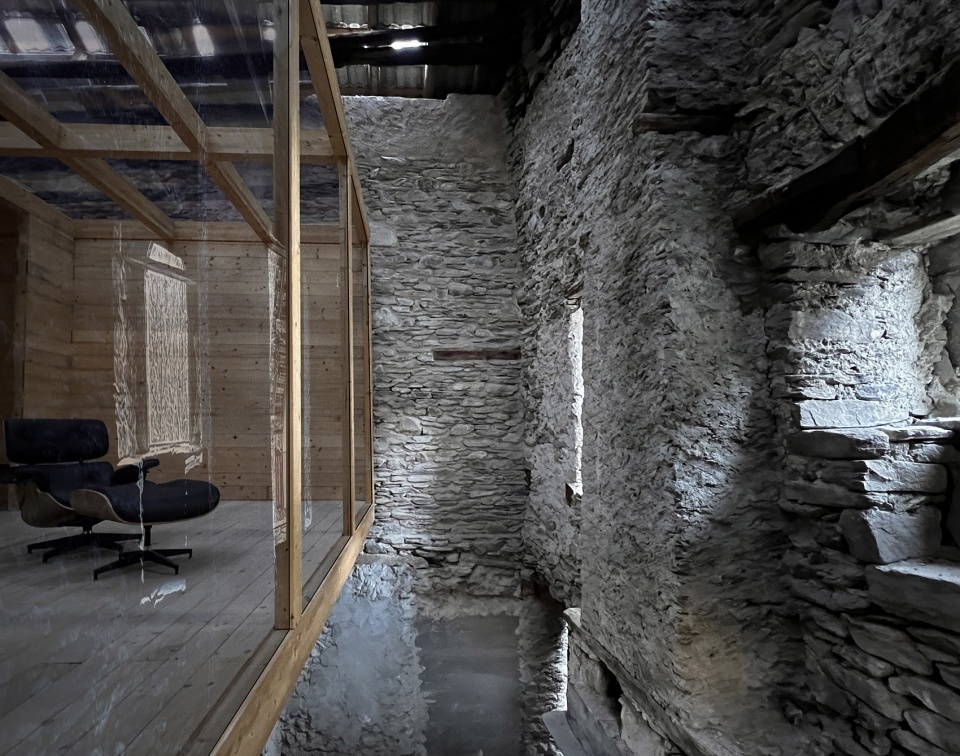
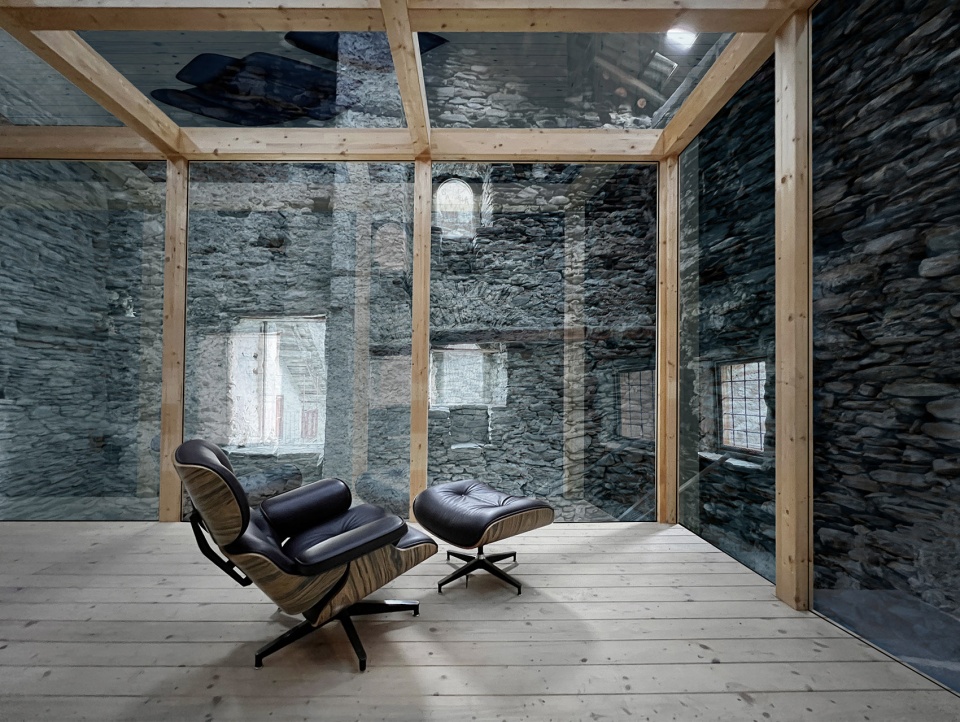
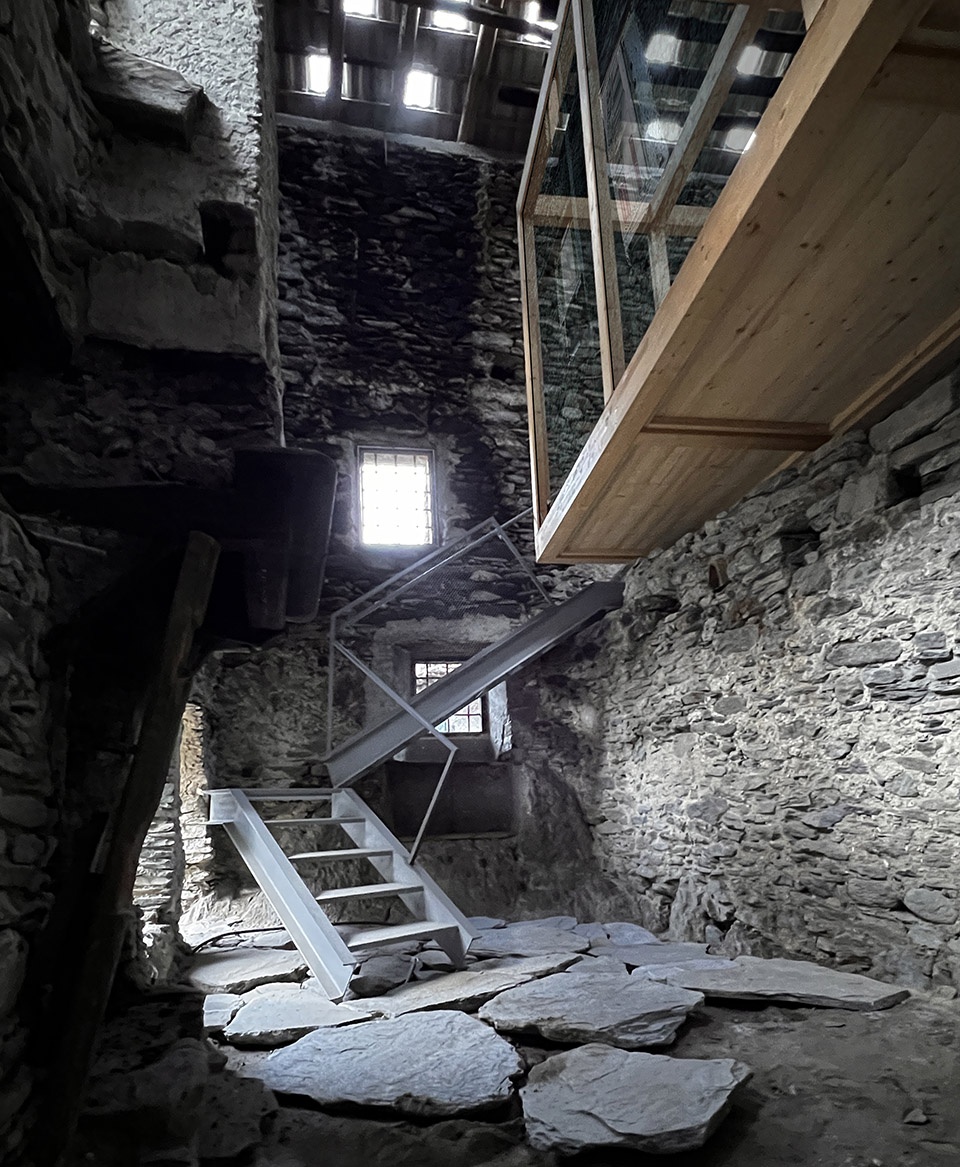
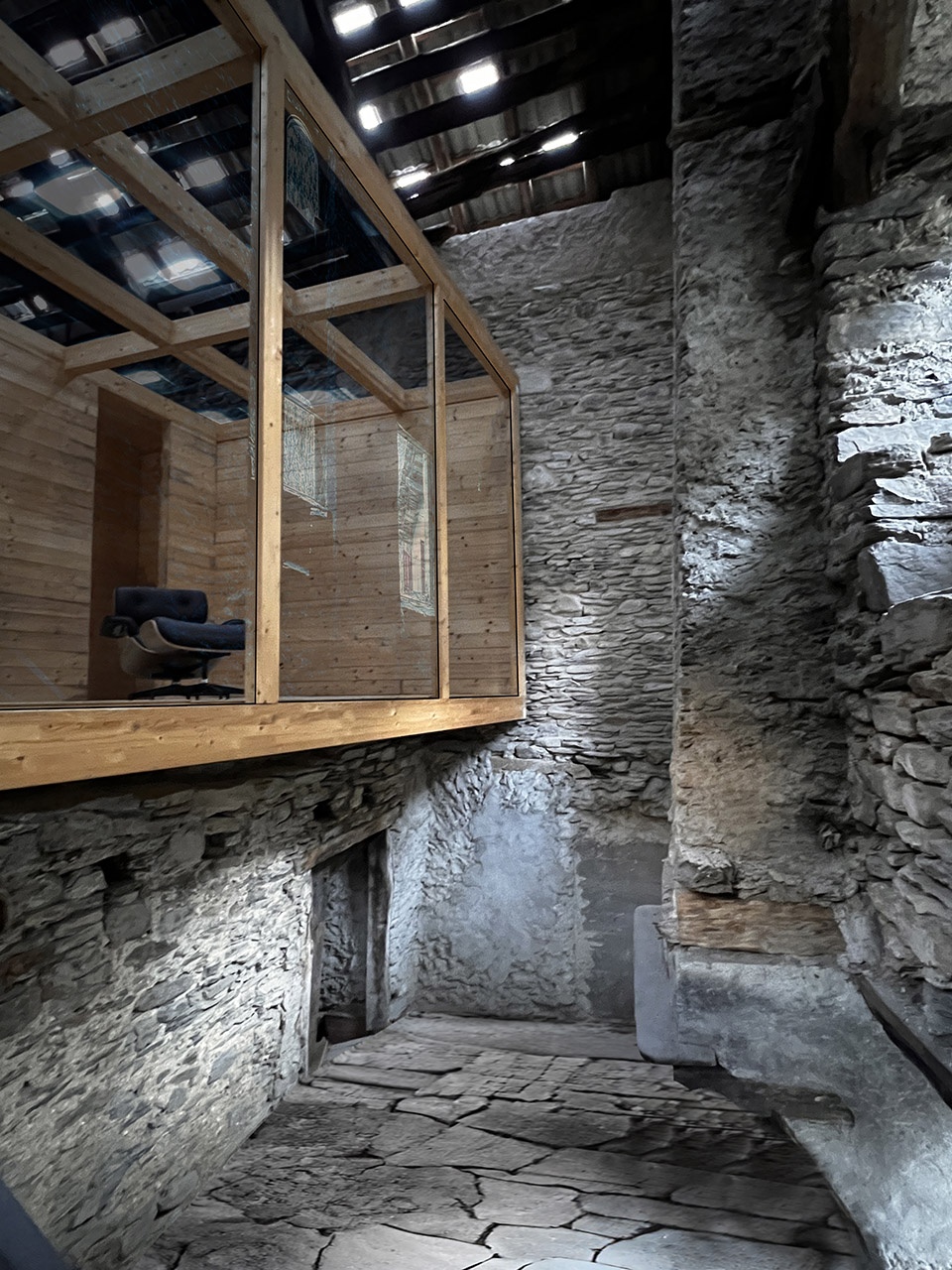
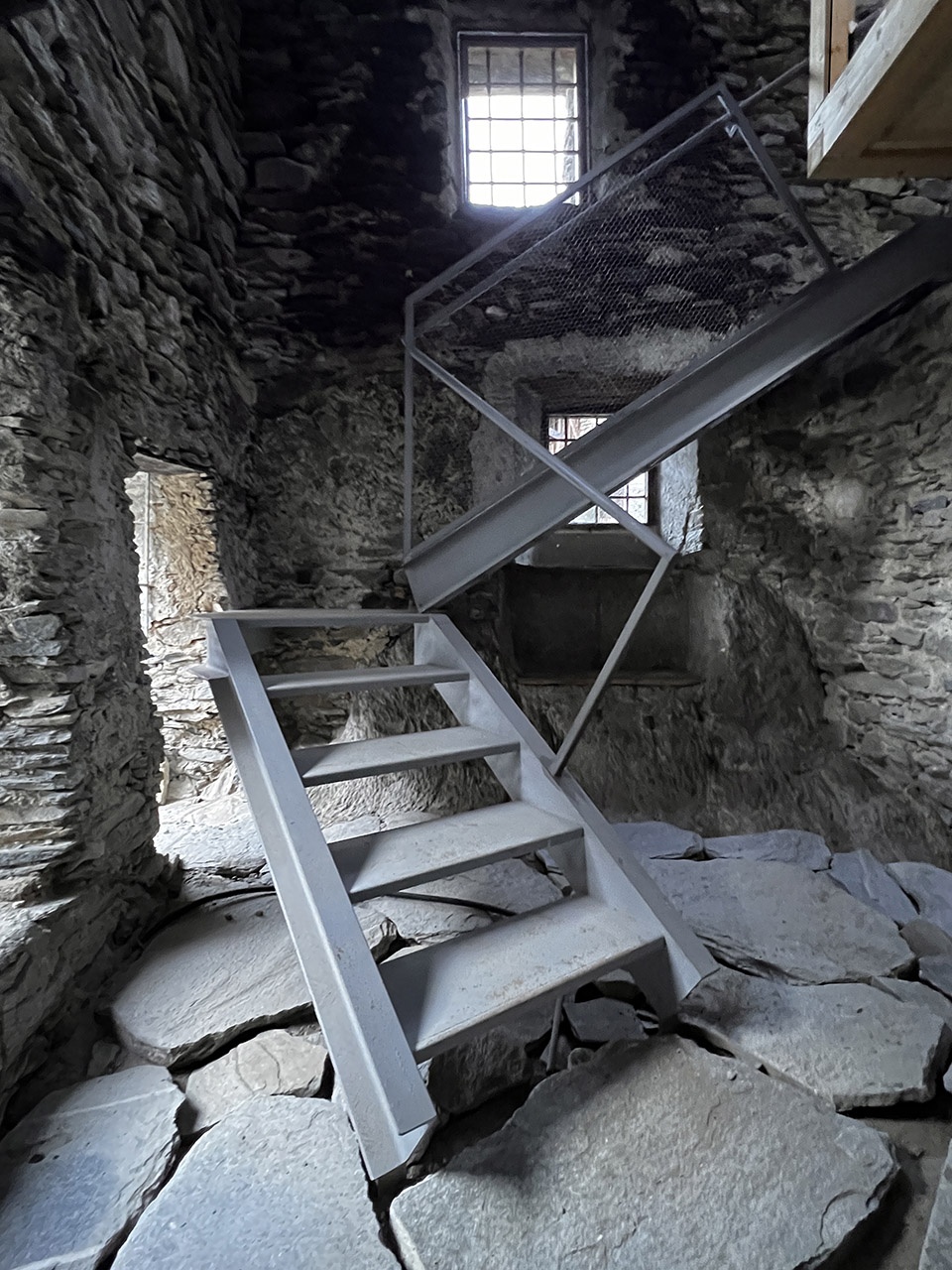
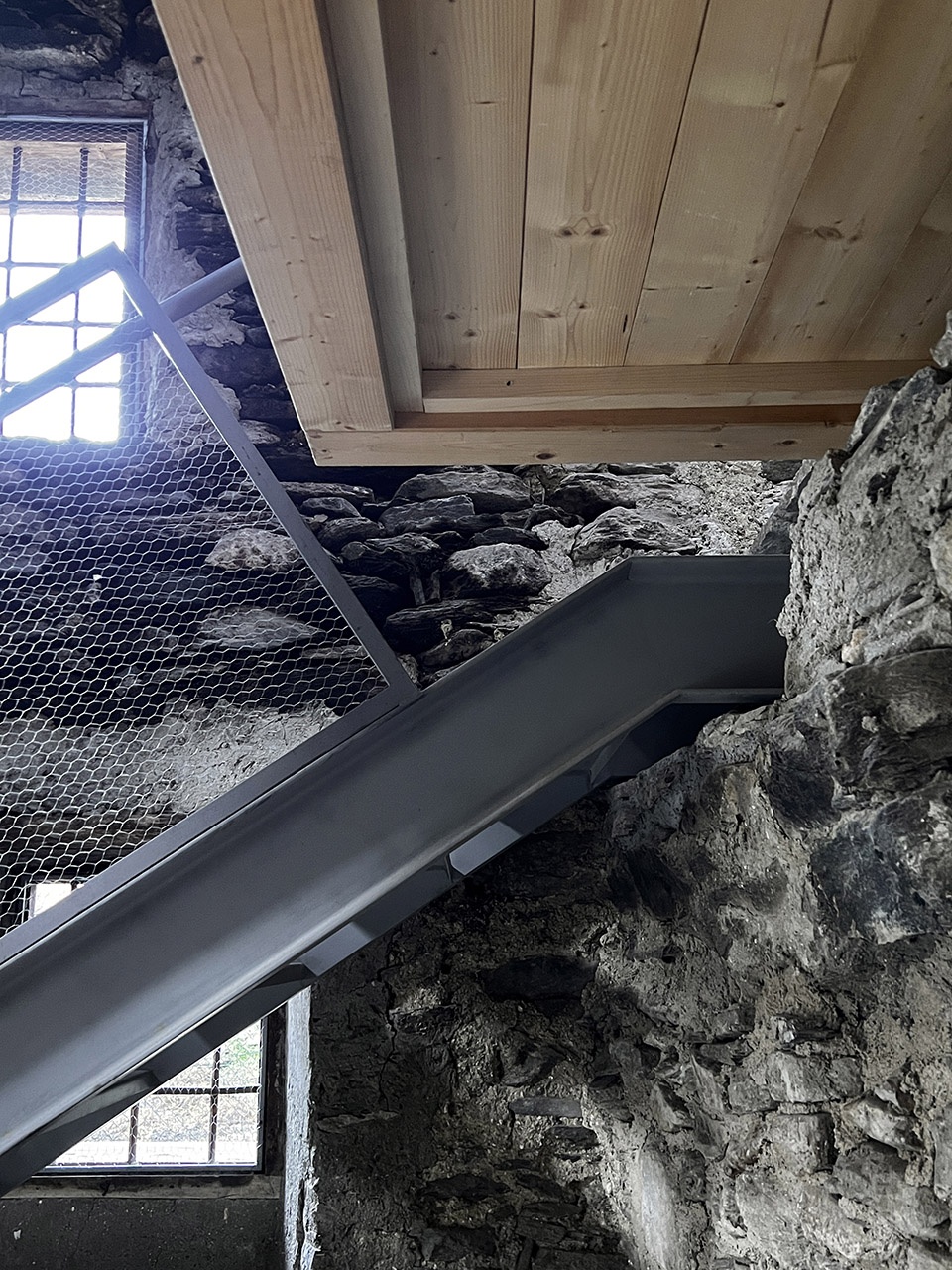
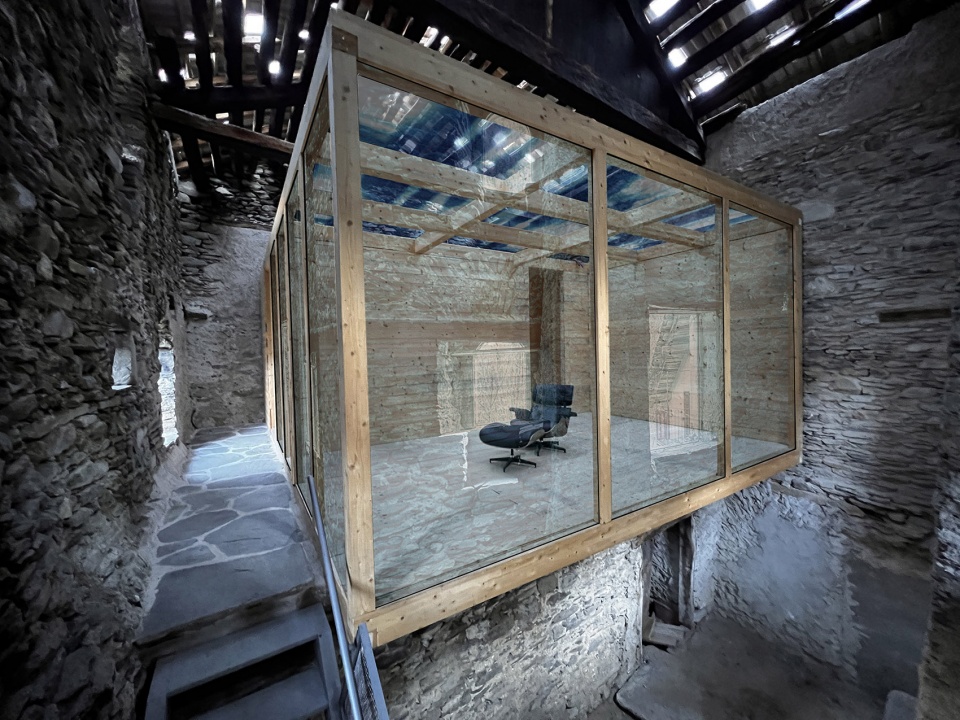
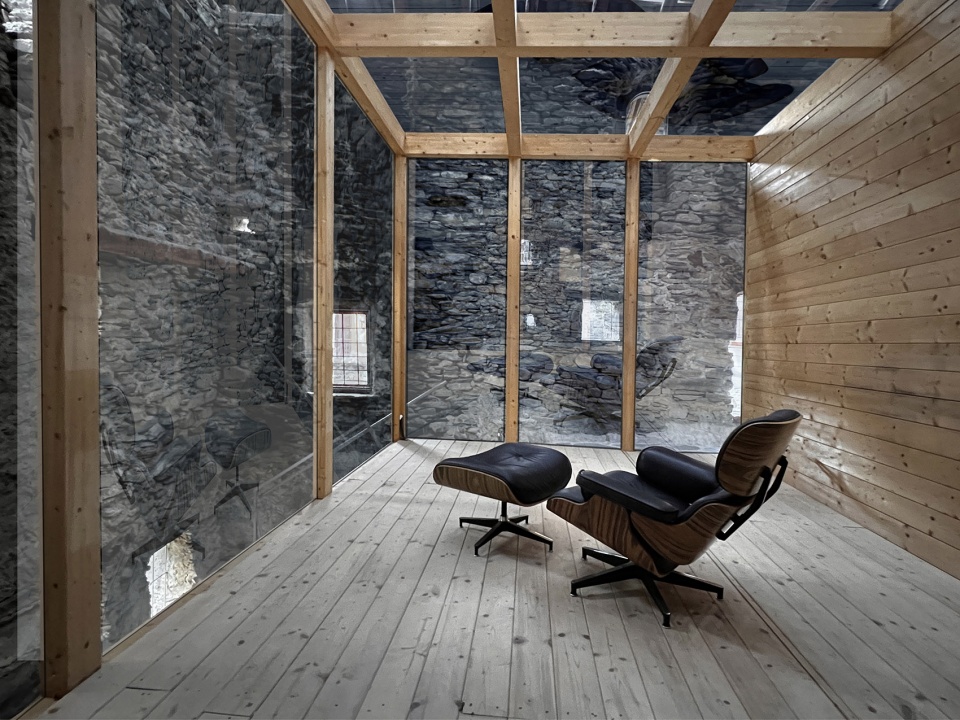
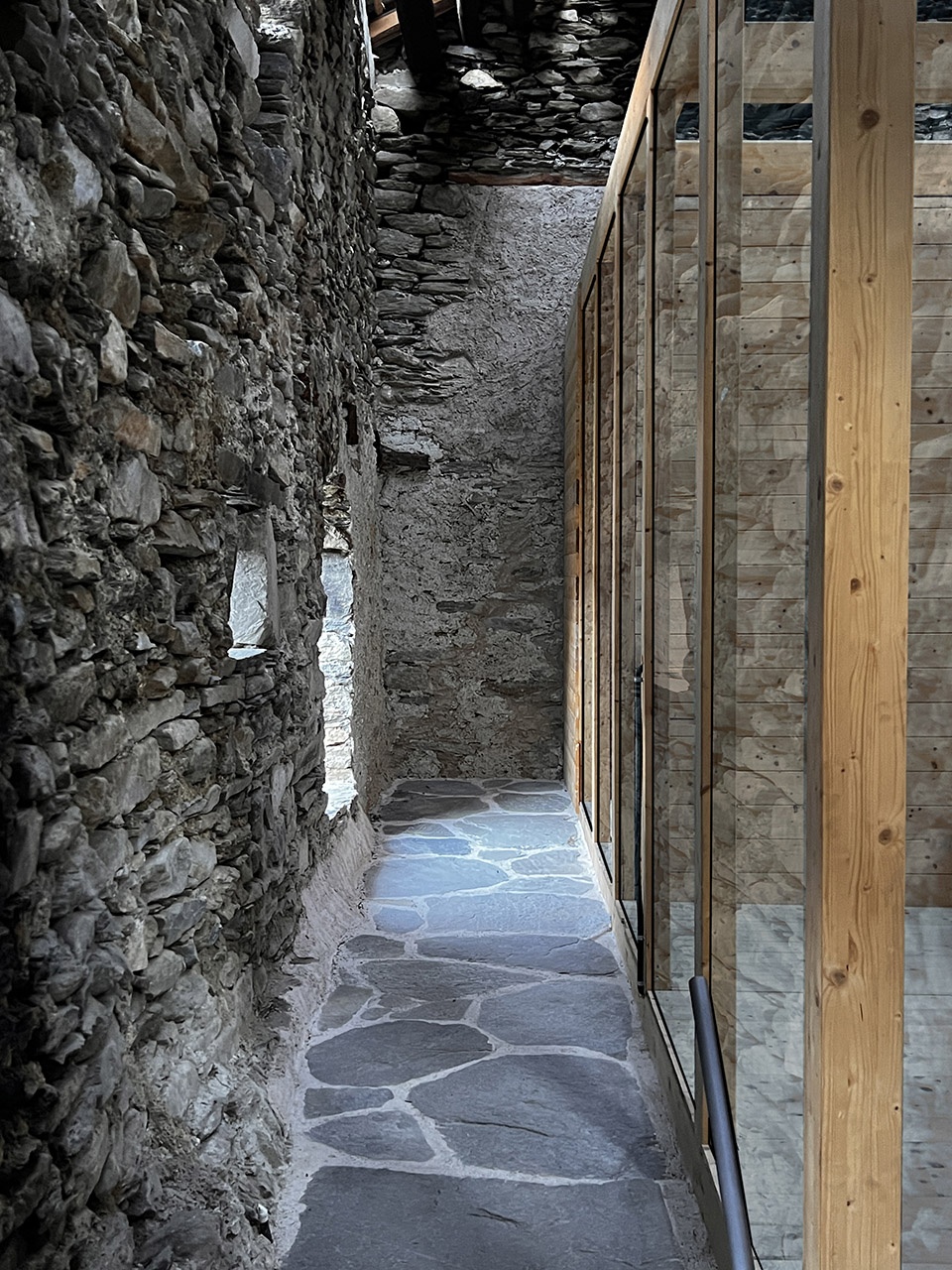
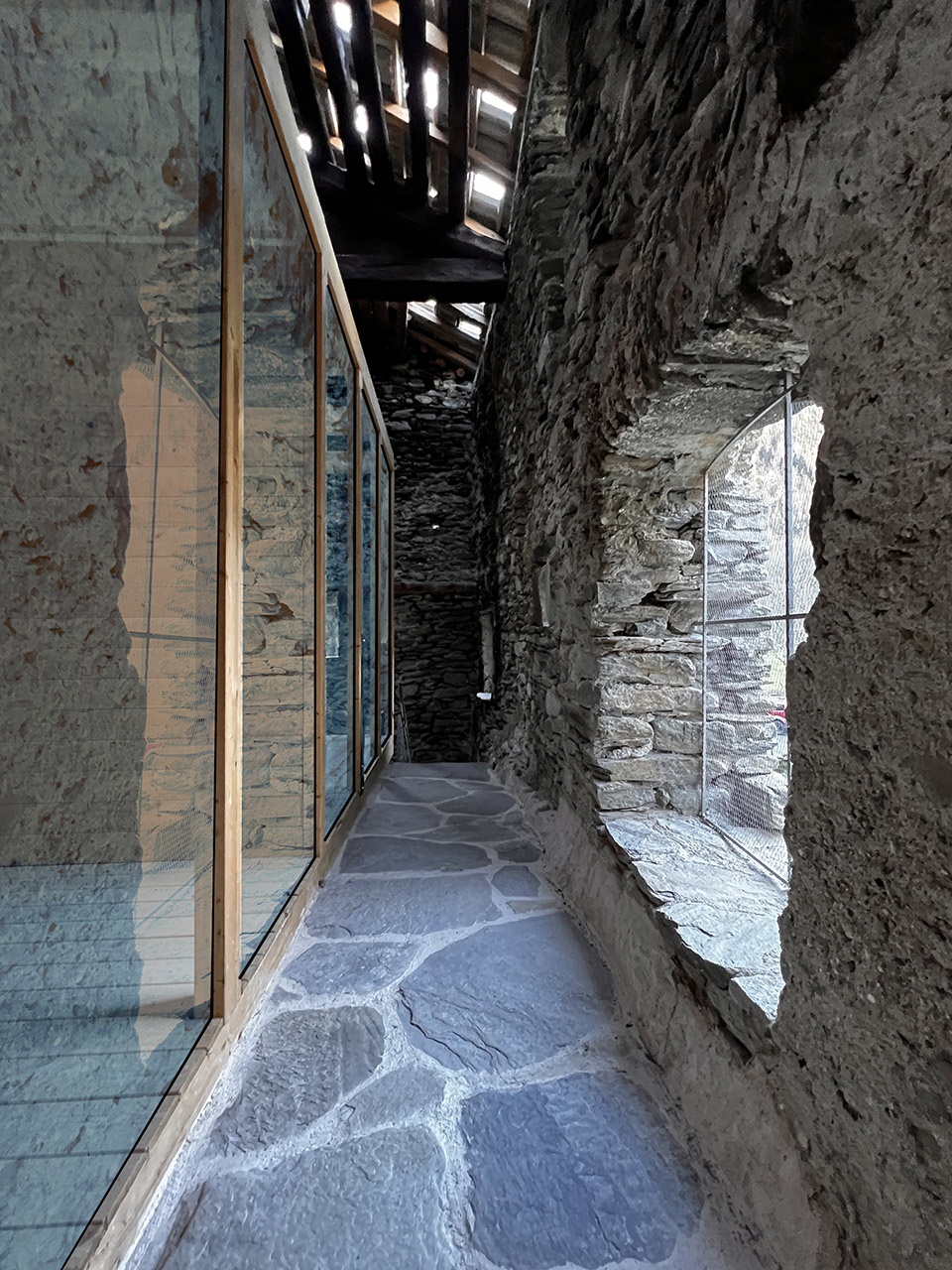
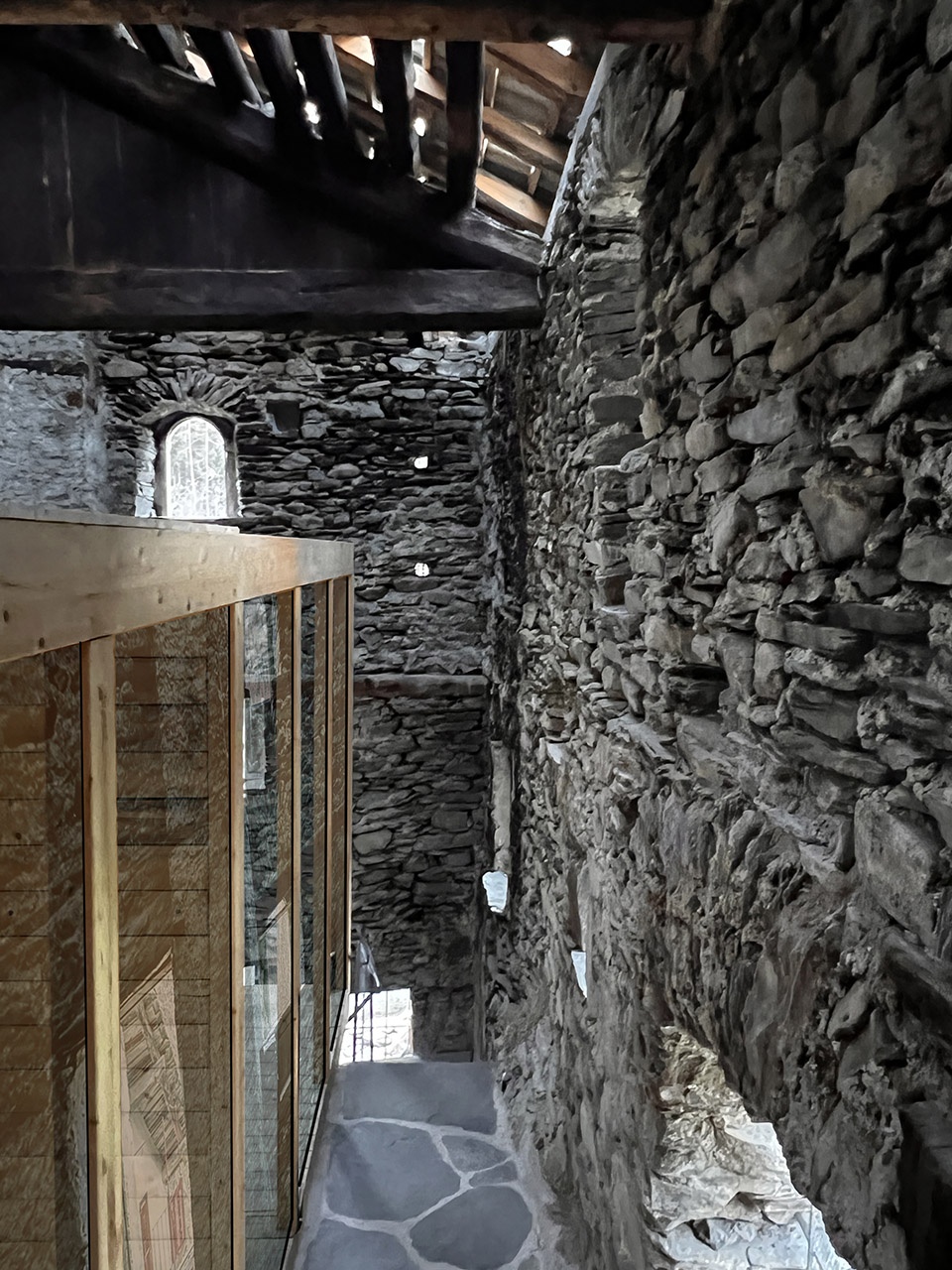
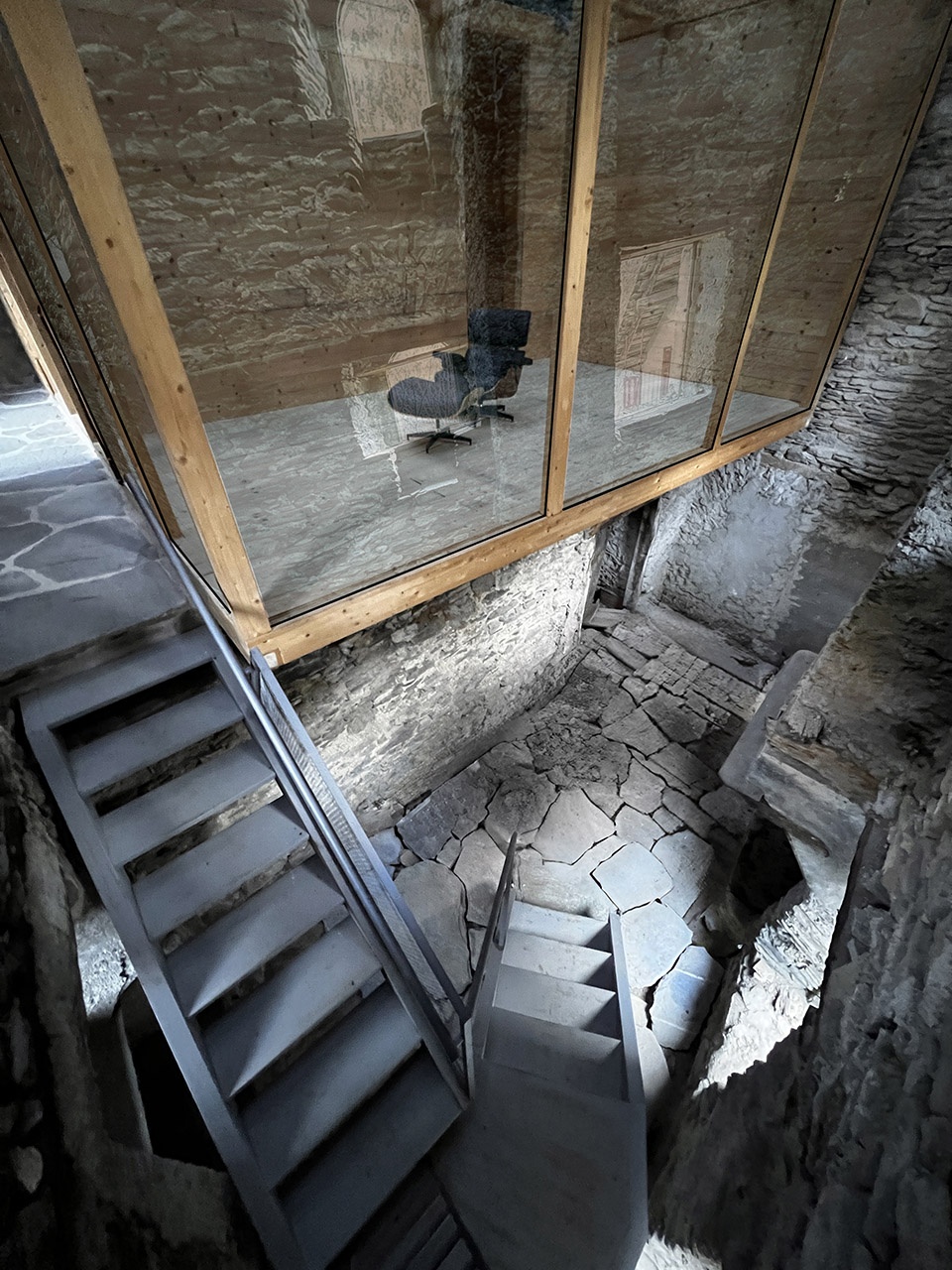
在这层保留的“壳体”内部,一个自主的新体量被插入其中:一个由胶合层积木与玻璃构成的悬空生活舱体轻盈地“漂浮”在地面之上,并略有悬挑。舱体通过一座轻质金属楼梯连接,楼梯本身设计为视觉上可“隐退”。虽然该生活舱在结构上独立,却与历史墙体之间形成了一种微妙的对话——材料上的对比被空间与使用意图上的连续性所调和。
Inside this preserved shell, a new autonomous volume was inserted: a suspended living capsule built of glulam and glass, hovering just above the ground and slightly cantilevered. It is accessible via a light metal staircase, conceived to be visually retractable. Though structurally independent, the capsule engages in a subtle dialogue with the existing shell—its material contrast offset by a continuity of space and intention.
▼轻质金属楼梯,a light metal staircase
▼由胶合木与玻璃构成的悬空生活舱,
a suspended living capsule built of glulam and glass
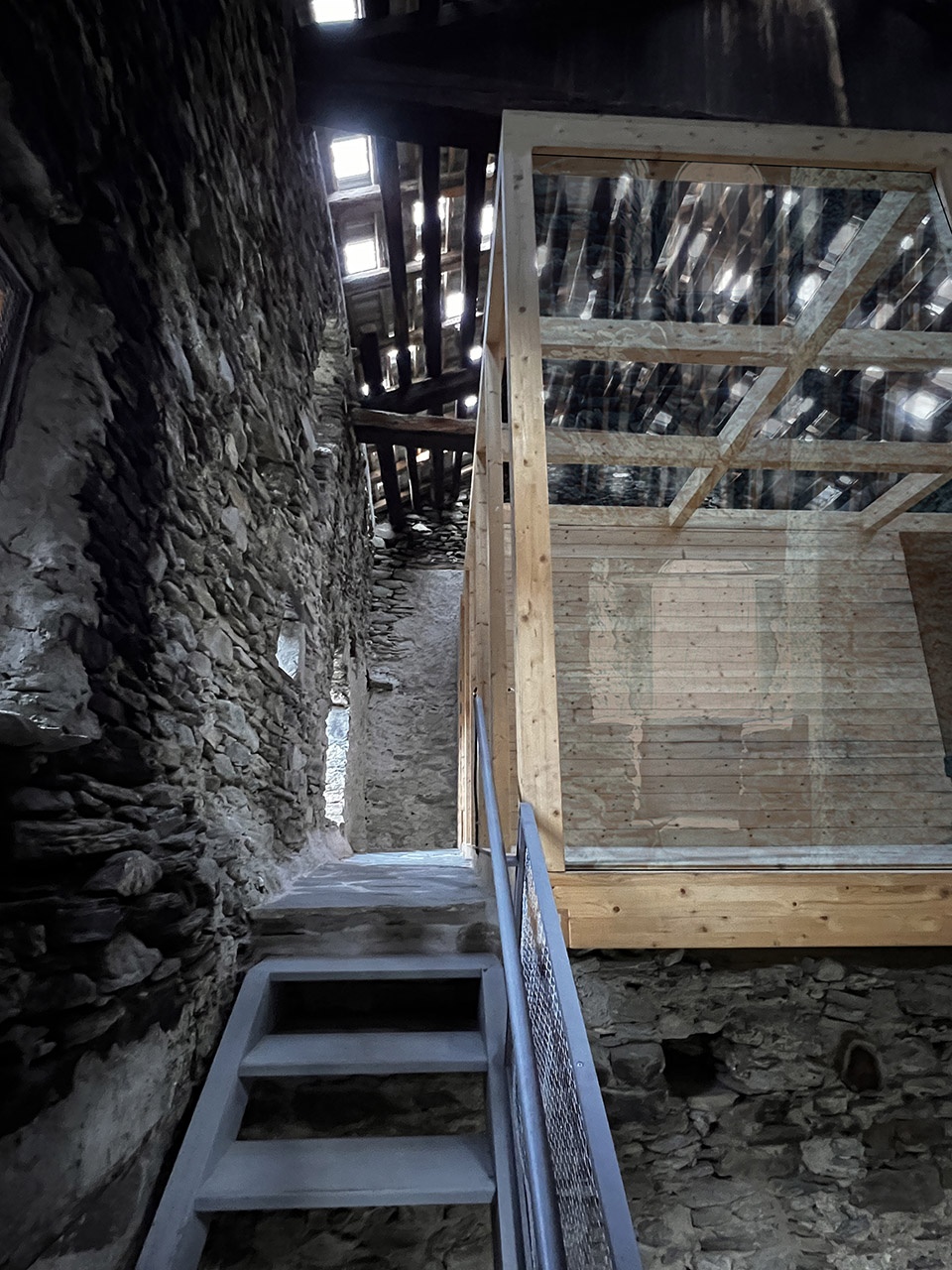
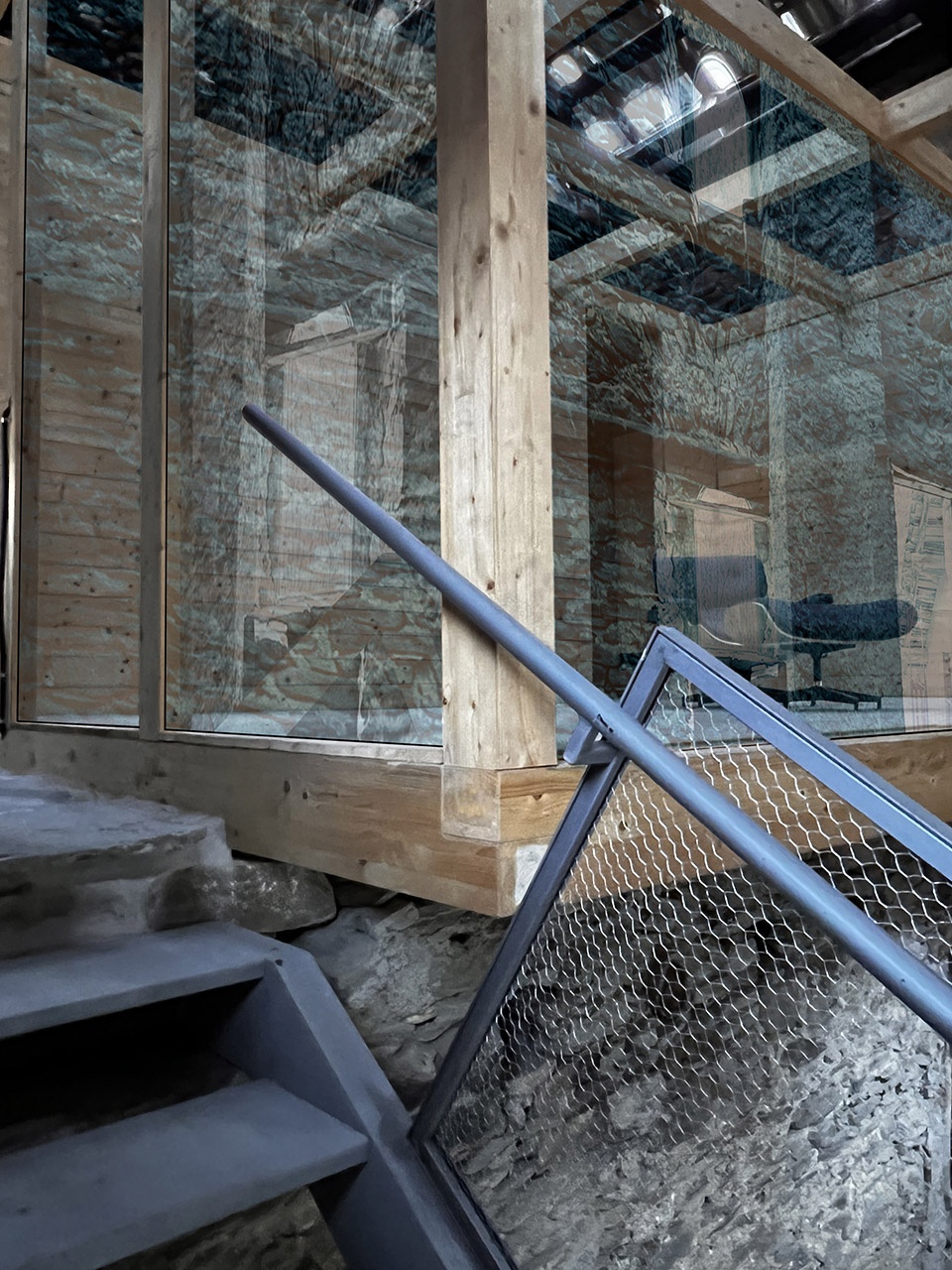
▼由胶合木与玻璃构成的悬空生活舱,a suspended living capsule built of glulam and glass
▼与历史墙体之间形成了一种微妙的对话,
a subtle dialogue with the existing shell
材料选择强调可持续性与本地性:隔热材料选用Piasco石灰岩与Carmagnola亚麻混合而成,体现出环境责任与区域建造传统的结合。
Material choices reflect a commitment to local sourcing and sustainability: insulation is made from lime from Piasco combined with hemp from Carmagnola—blending environmental responsibility with regional construction techniques.
▼强调可持续性与本地性的材料,material focus on local sourcing and sustainability
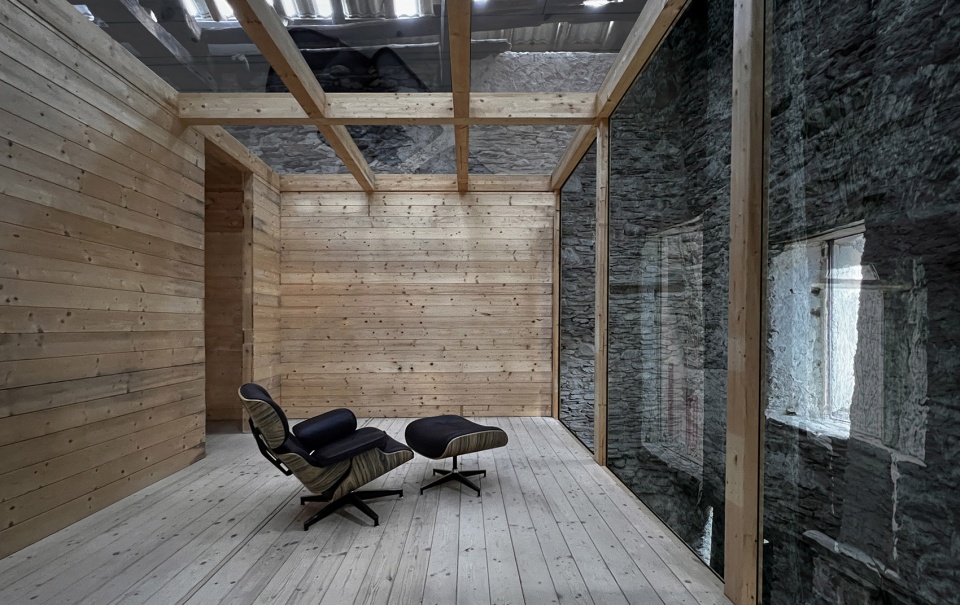
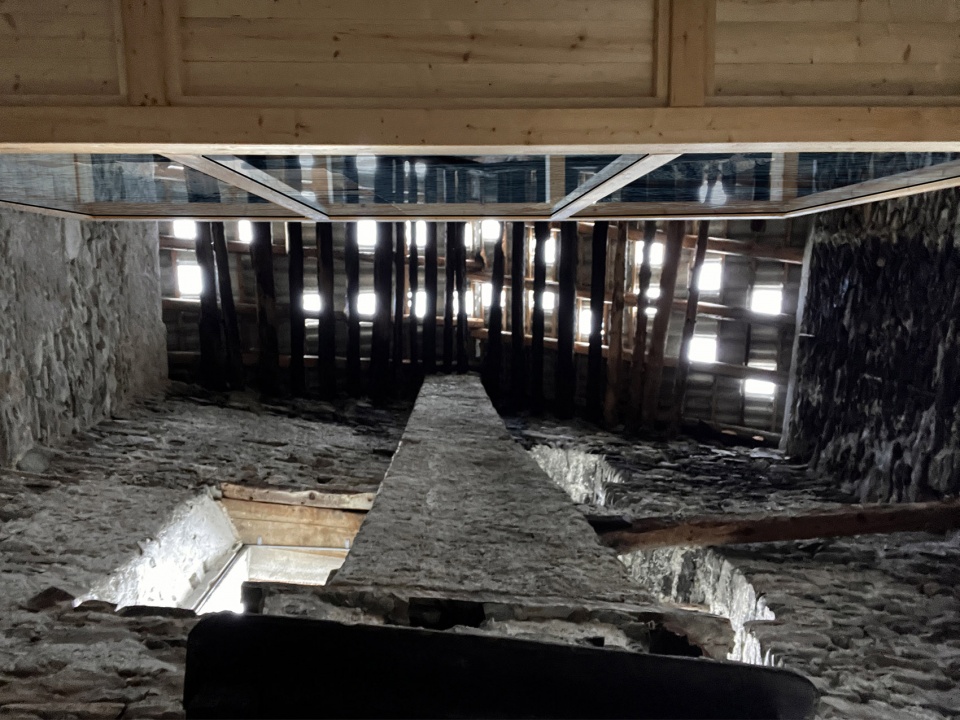
这一项目为边缘山区提供了一种富有启发性的建筑再生模式,展示了如何通过小尺度介入,在保留遗产的同时实现现代生活的嵌合。修道院中的盒子正是这一敏感再利用策略的范例,不仅为既有建筑注入新生命,也合理利用资源,激发社区更新,证明了“主动性保护”与“建筑设计”在可持续发展中的重要作用。
The result is a compelling model of architectural regeneration—especially pertinent to marginal and mountainous areas—demonstrating how small-scale interventions can reconcile preservation with contemporary living. The Box in the Convent exemplifies a sensitive reuse strategy, breathing new life into the existing built fabric while optimizing resources and catalyzing community evolution. It affirms the role of active conservation and architectural design as tools for sustainable development.
▼小尺度介入,small-scale interventions
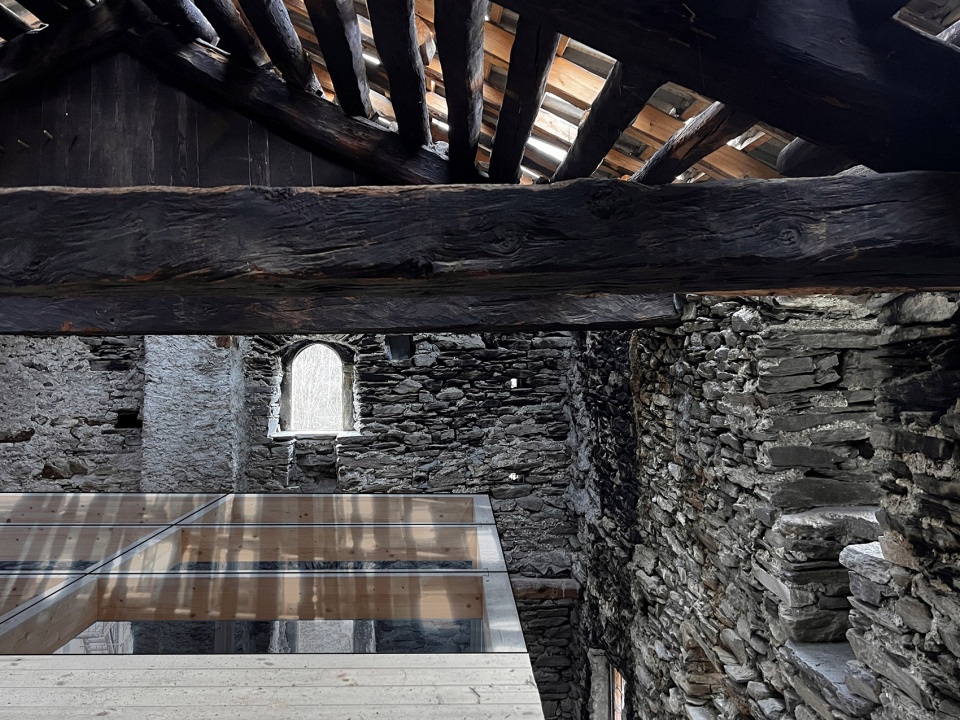
▼保留遗产的同时实现现代生活的嵌合,
reconcile preservation with contemporary living
作为一项提升地域文化与空间特质的“极简建筑”佳作,该项目荣获“山地极简生活”竞赛中的“极简室内建筑奖”。该奖项于2025年4月4日至12日举行的“山之上建筑节”(Festival all’insù. Architecture in the Mountains)期间颁发。该节日由瓦尔卡莫尼卡山区联盟主办,隶属意大利文化部当代创意总局发起的全国性“建筑节”框架之下。
As a refined instance of “minimal architecture” that enhances the cultural and spatial identity of place, the project was awarded the prize for “Minimal Interior Architecture” as part of the Living Minimally in the Mountains competition. The recognition was granted during the Festival all’insù. Architecture in the Mountains (April 4–12, 2025), an initiative by the Valle Camonica Mountain Community, under the umbrella of the Architecture Festival promoted by the Directorate-General for Contemporary Creativity of the Italian Ministry of Culture.
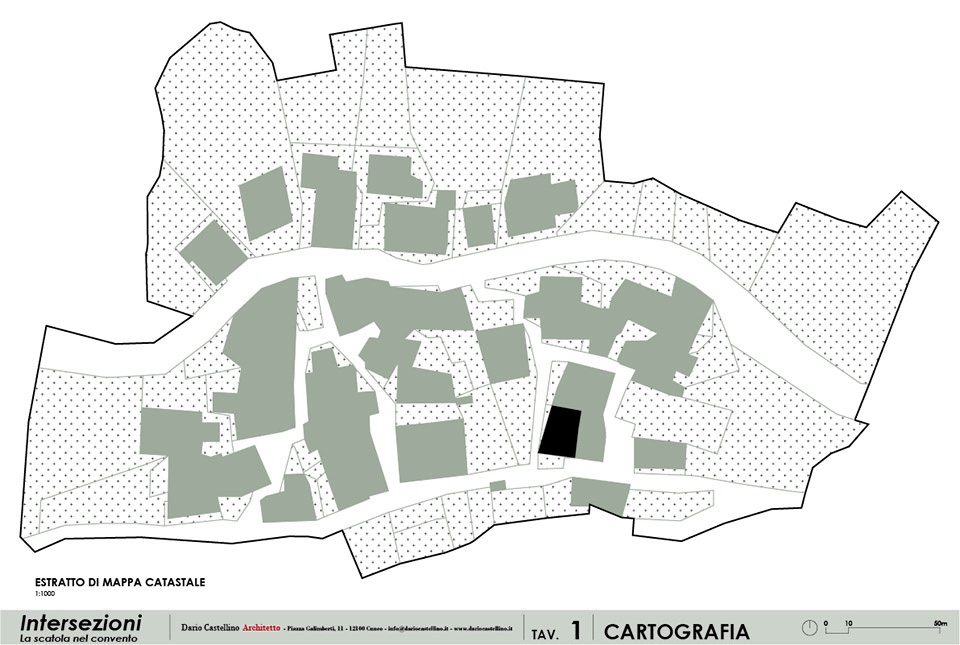
▼场地平面,site plan
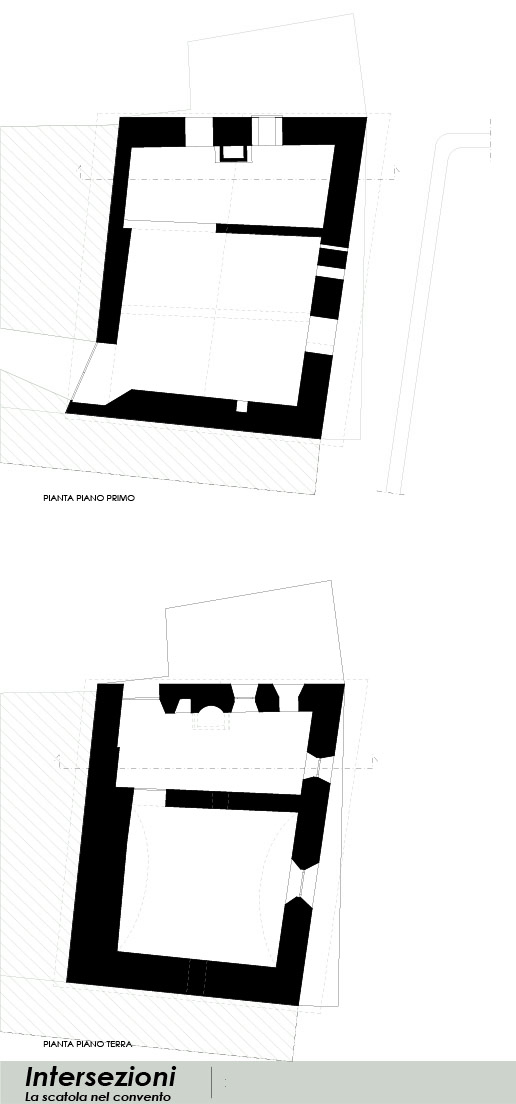
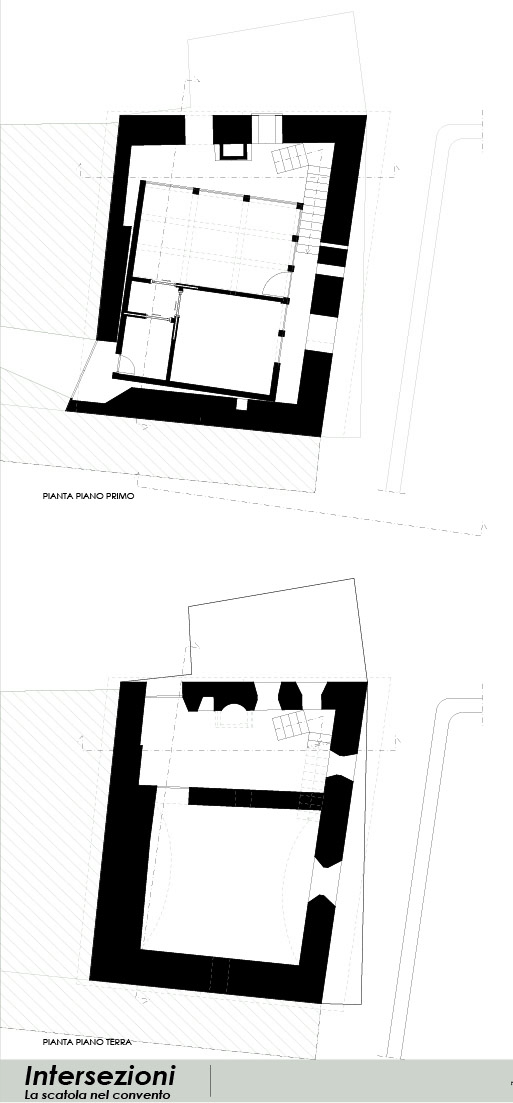
▼改造前后平面,plan before and after renovation
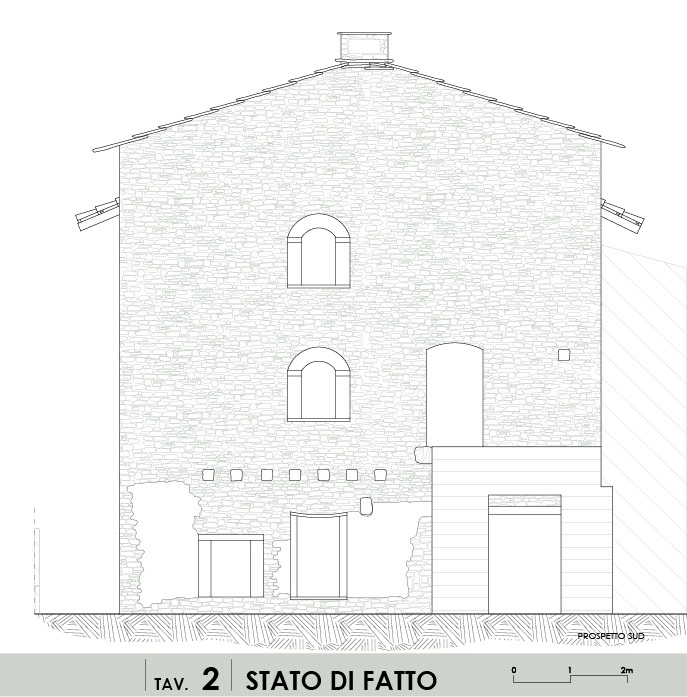
▼立面,elevation
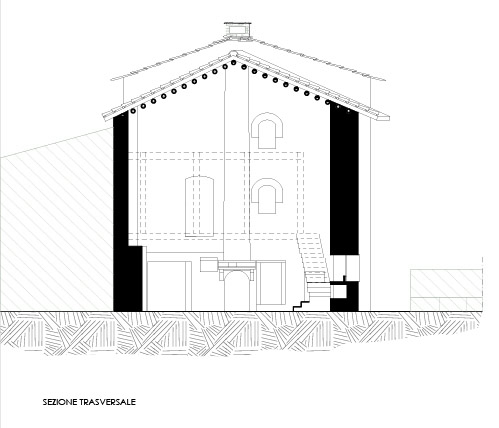
▼改造前后剖面,section before and after renovation
Architectural design: Dario Castellino Architetto, Piazza Galimberti 11, 12100 Cuneo (CN)
Structural engineering: Eretika s.t.p. s.r.l., Ivano Menso (engineer), Nadia Frullo (architect), via Lovera 39, 12011 Borgo San Dalmazzo (CN)
Systems design: Tecnolusso Ingegneria e Architettura, Alice Lusso (architect), Emanuele Dutto (engineer), via Fossano 2b, 12100 Cuneo (CN)
Timber structures: Segheria Pedona, Frazione Beguda, 12011 Borgo San Dalmazzo (CN)
Timber installation: Ghiedil di Ghio Ugo, Strada Alvernia, 12020 Roccabruna (CN) & Cometto Riccardo, Matteo Cometto (engineer), via Merlat 12, 12012 Boves (CN)
Construction: Casear di Adriano Pasero, via Lantermino 9, 12025 Dronero (CN)
Electrical systems: Einaudi impianti e automazioni s.a.s., Strada 104, Brigata Garibaldi 7, 12020 Roccabruna (CN)
Plumbing systems: Golé Bruno e Figlio, Via Fontana Oro 85 bis, 12023 Caraglio (CN)
Metal staircase: Colombero Andrea Fabbro, via Bisalta, 12016 Peveragno (CN)
Metalwork: Termoigienica s.r.l., corso Italia 41, 12030 Cavallermaggiore (CN)
Glasswork: Tecnovetro Macario di Macario Luigi & Figli S.n.c., via XI Settembre 35, 12011 Borgo San Dalmazzo (CN)