京都VMG别墅酒店,日本 / 森吉直刚事务所
这是一座由京都传统数寄屋风格建筑改造而成的酒店。原建筑建于1920年,由一位擅长在祇园一带建造茶室的匠人施工,业主则是一位茶人。据当时的茶会记录记载,该建筑曾被用作举办茶会的场所。
This is a hotel renovated from a Sukiya-style building in Kyoto. The existing building was built in 1920, and the carpenter was a man who built many teahouses around Gion area in Kyoto, and the owner was recorded as a tea master. Records of tea ceremonies from that time, there was a description of this building as a place to hold tea ceremonies.
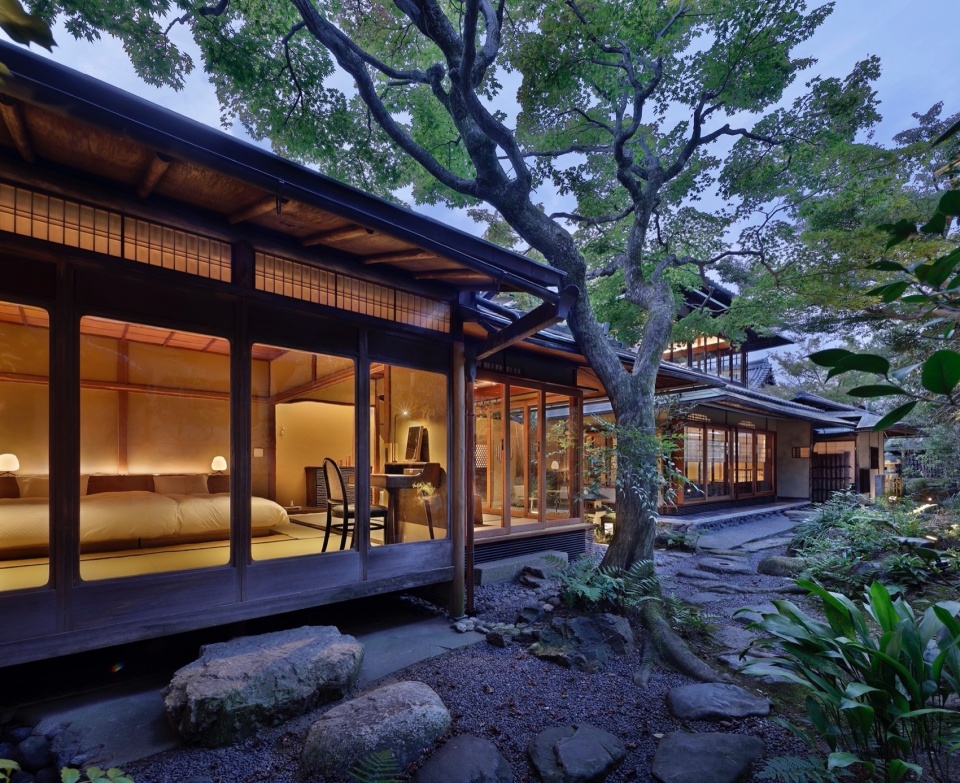
▼建筑外观概览,overview of the building
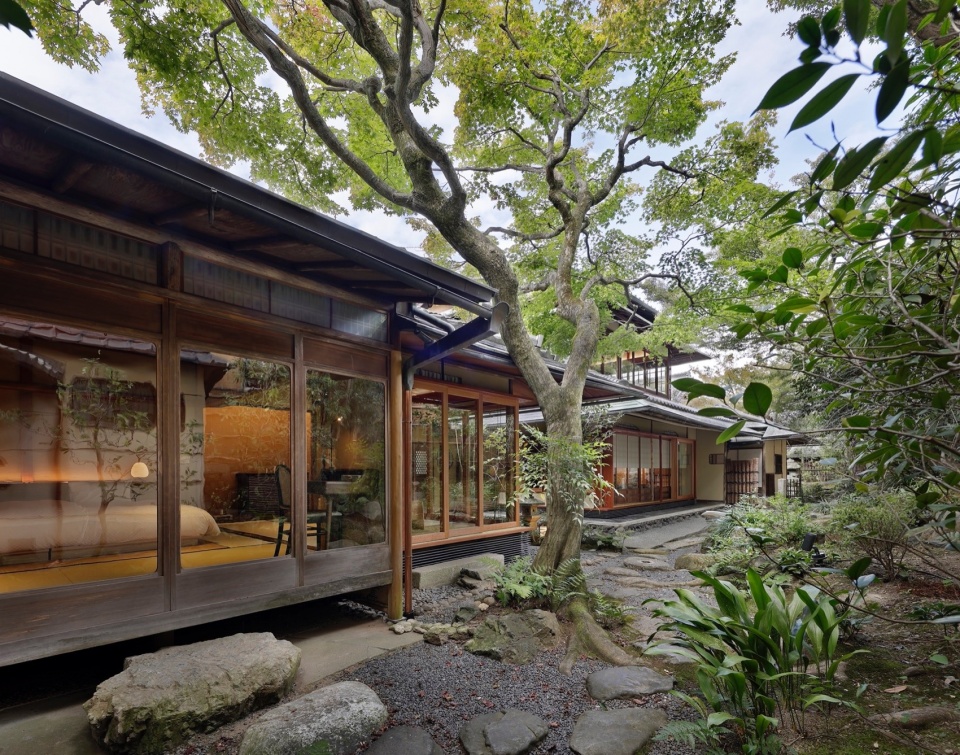
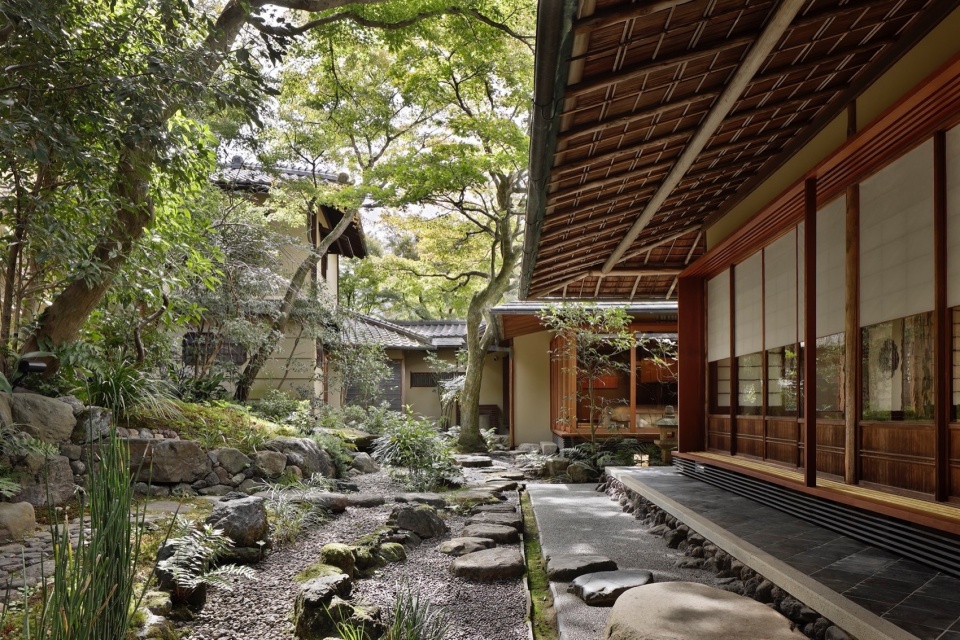
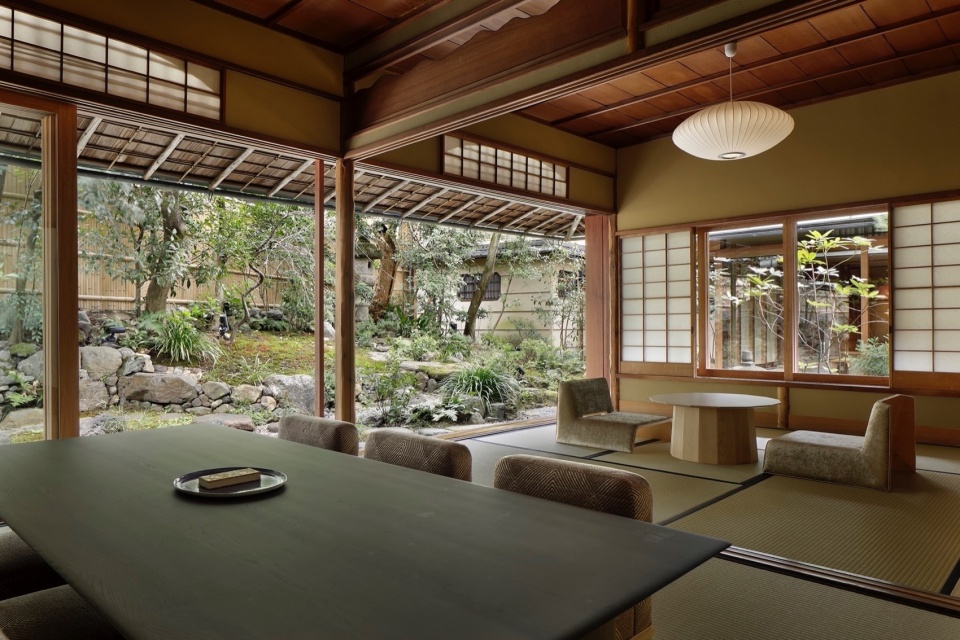
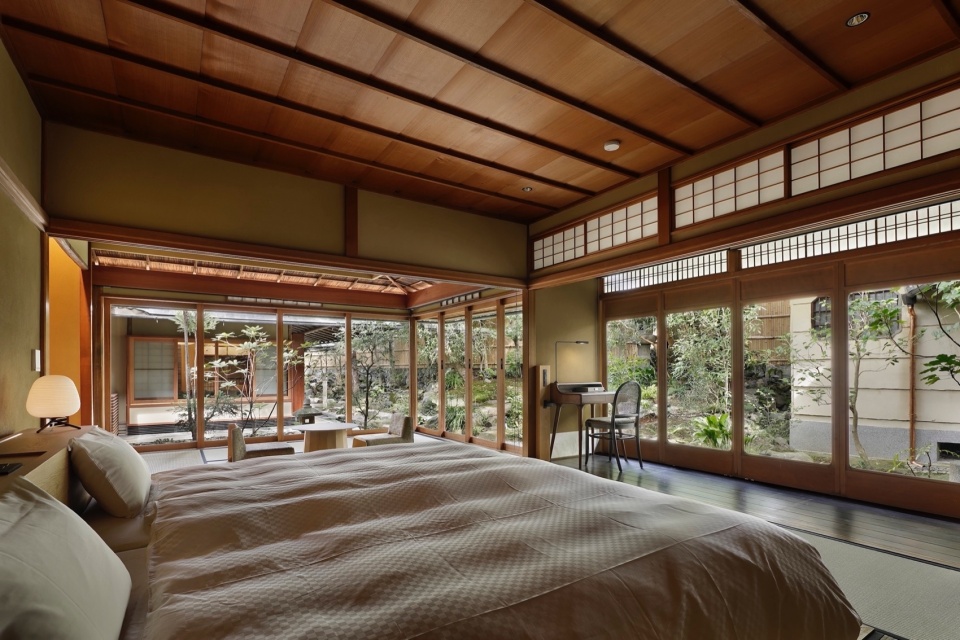
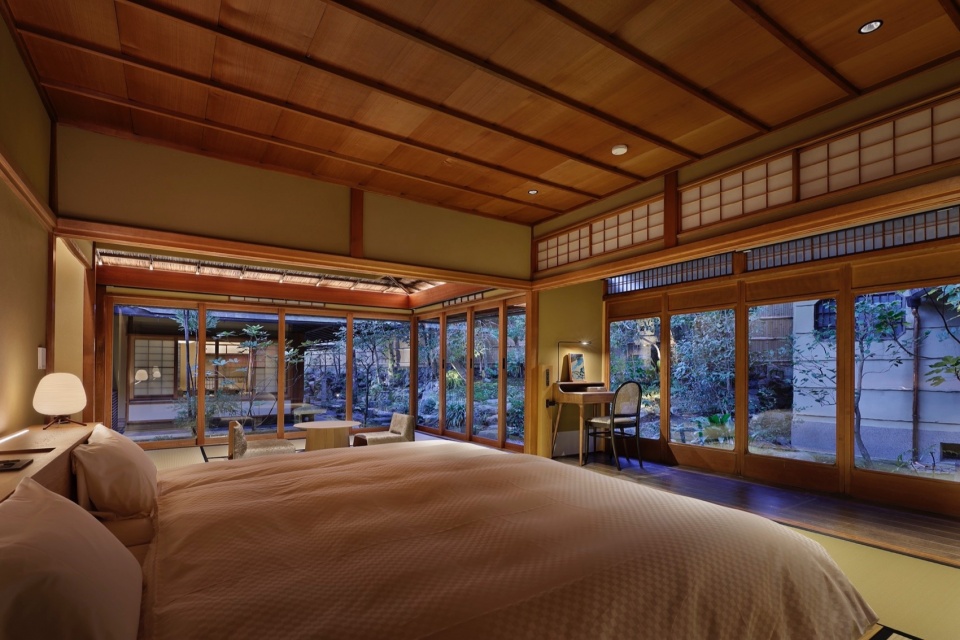
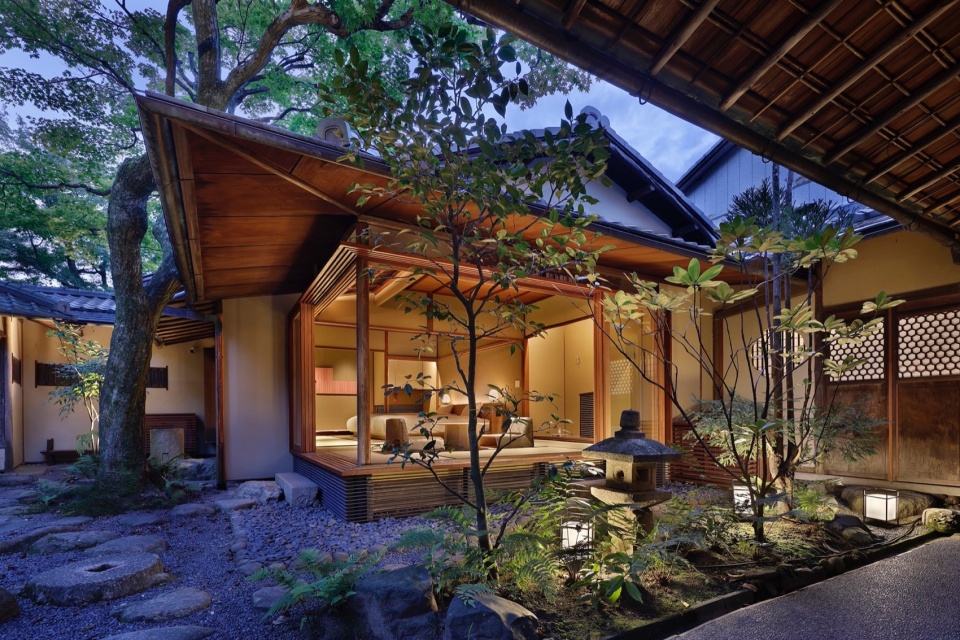
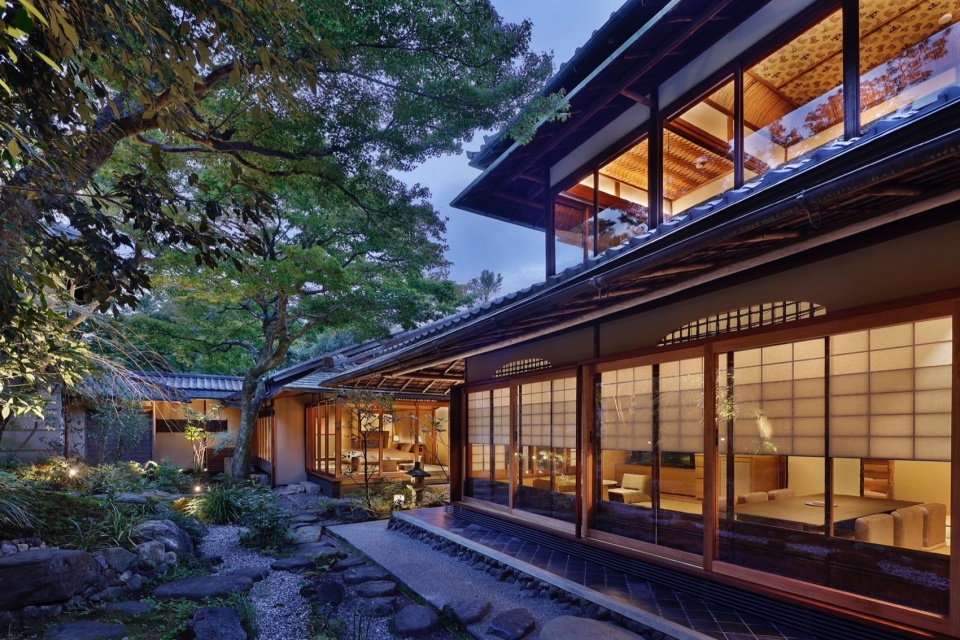
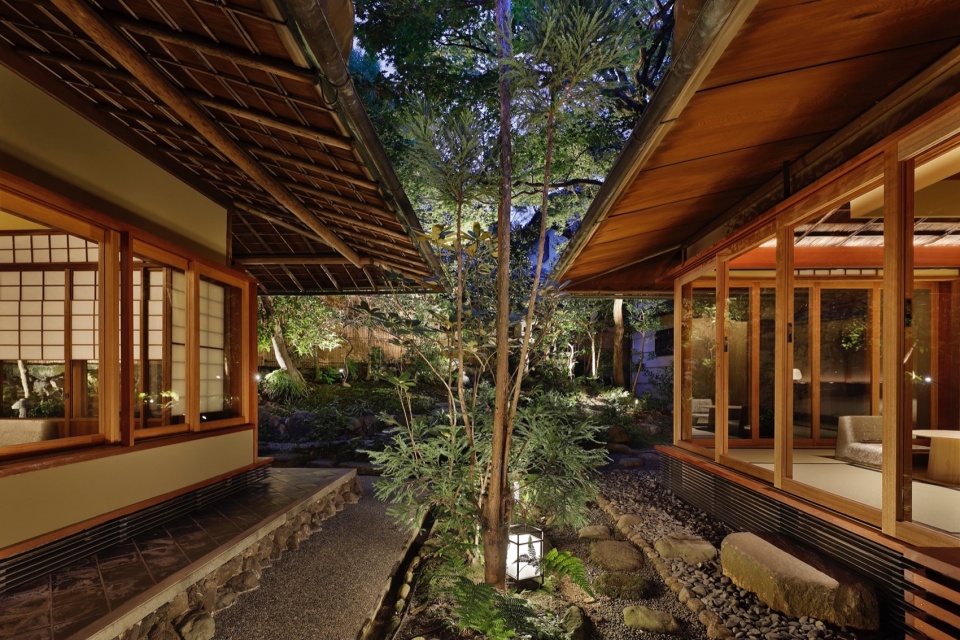
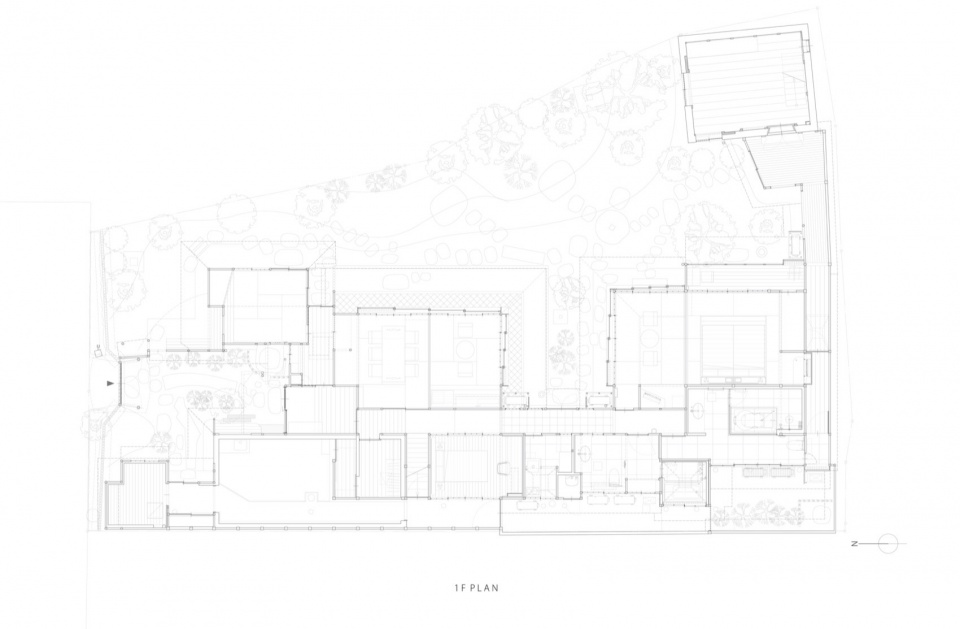
基地呈南北向狭长格局,建筑位于西侧,东侧为庭院。每间客房都设有面向庭院的大开口,可远眺园景。数寄屋建筑特有的不规则平面布局使建筑空间与庭院形成了一体化的空间构成。
The site is long from north to south, the building is arranged on the west side of the site and garden on the east side. Each room has a large opening from which the garden can be viewed. The uneaven floor plan, unique to sukiya-style architecture, makes the building a spatial composition that is integrated with the garden.
▼室内概览,overall of interior
▼卷帘门,rolling shutter door
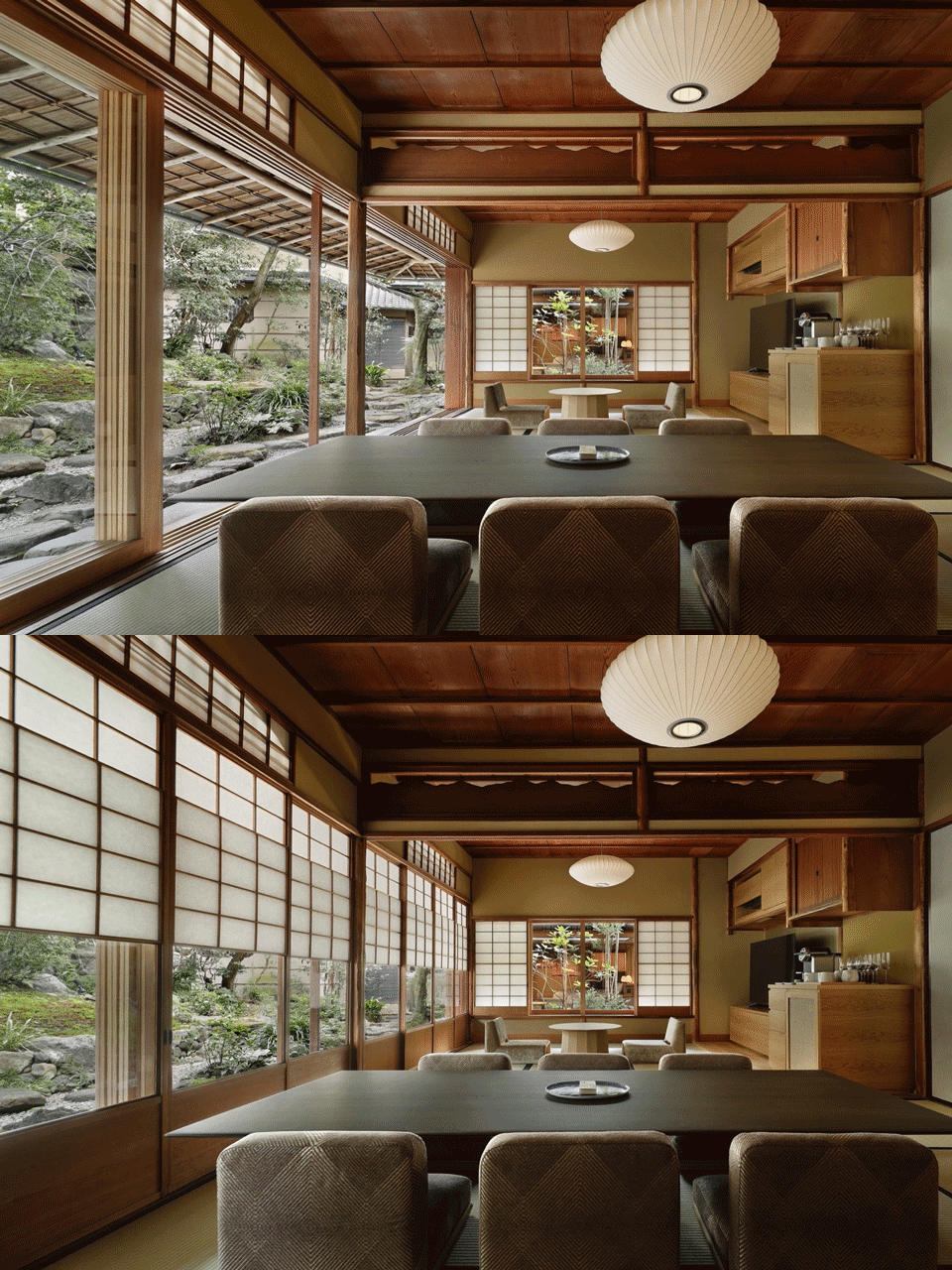
考虑到这座建筑应尽可能地加以保存,同时又必须满足酒店所需的现代化设备。通常做法是更换天花板以便布置照明、空调及消防设施,但在数寄屋建筑中,天花板本身便是设计的一部分,其独特性决定了如若更换,将严重削弱其原有价值。
This architecture should be preserved as much as possible, but it is necessary to install equipment as a hotel. Generally, ceilings would be replaced to accommodate lighting, air conditioning, and firefighting equipment, but in the case of sukiya-style architecture, the ceiling design is unique, and replacing it would likely diminish its value.
▼室内灯光设计,interior light design
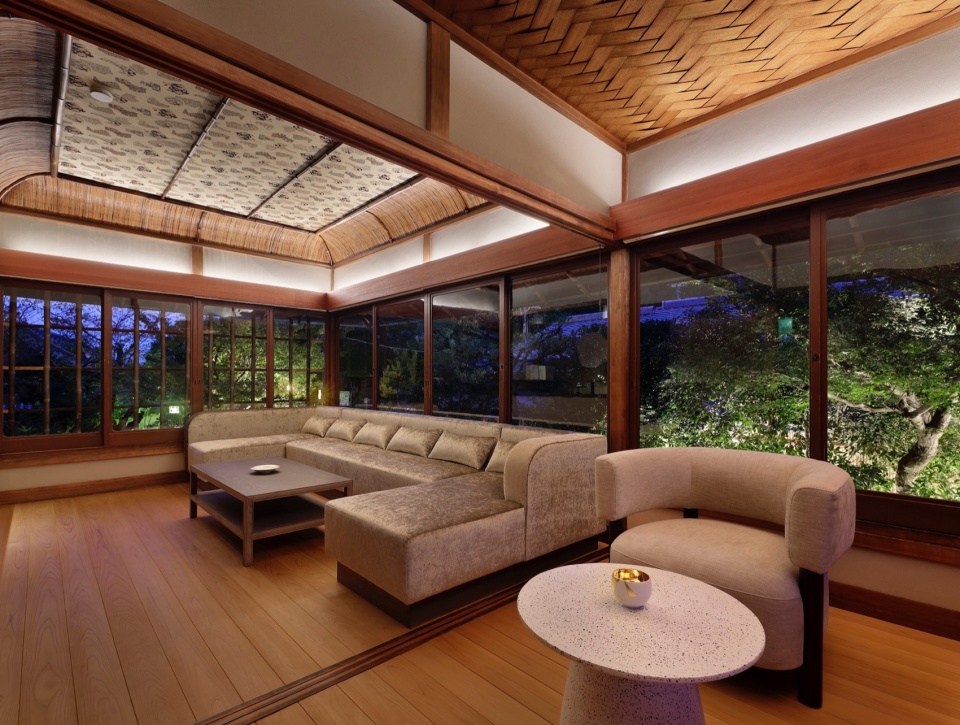
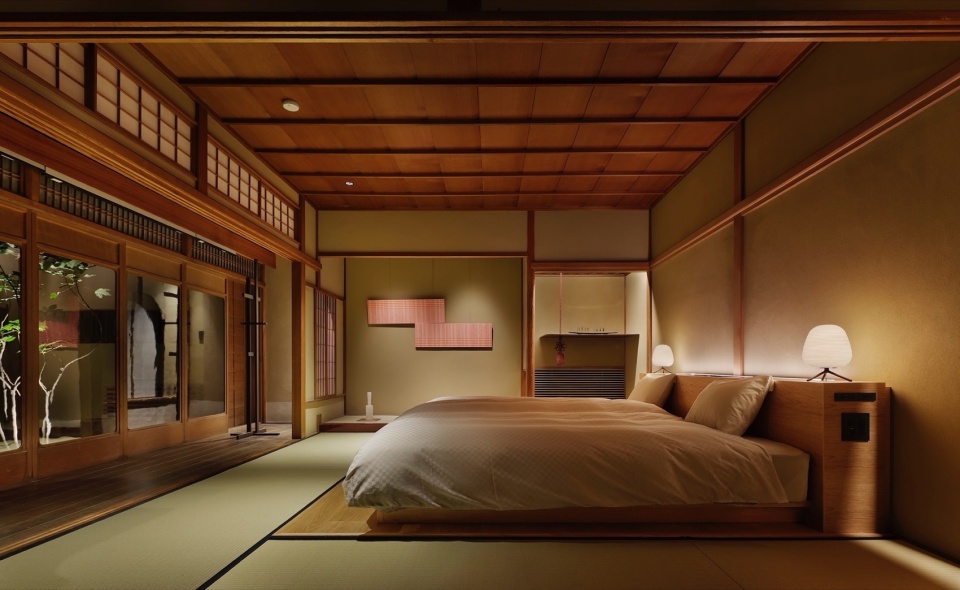
因此,本案在照明方面未对天花板进行改动,仅在最小范围内更换了原有灯具并增设了嵌入式筒灯,同时通过以下方法在地面家具及开口位置设置间接照明来确保照度。空调设备亦未嵌入天花板,而是采用落地式及壁挂式空调机,并将通风设备以嵌入家具的方式巧妙融入空间。
Therefore, the ceiling was not modified for lighting, and existing lighting was replaced and new downlights were installed to a minimum, and the illuminance was ensured by installing indirect lighting in the floor furniture and openings using a method described below. Air conditioning was also not installed in the ceiling, but floor-mounted and wall-mounted air conditioners, and a ventilation fan was also installed as a built-in piece of furniture to blend in with the space.
▼客房卧室,guest room
▼客房内的茶室空间,tearoom area in the guest room
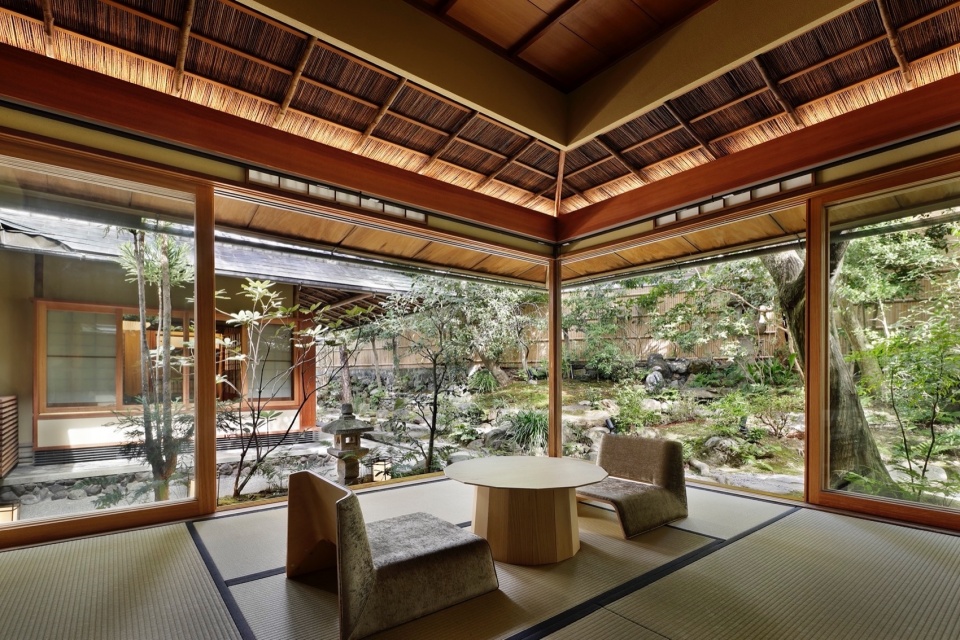
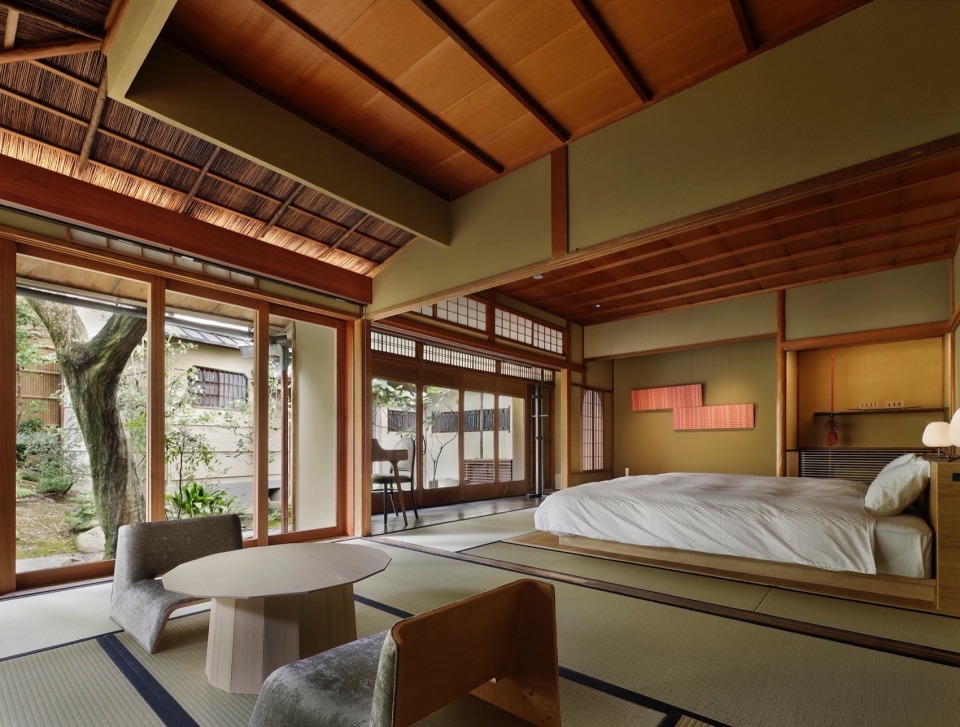
不仅仅是“保存”,设计还致力于使原有设计更具魅力。由于窗户需要加设卷帘,于是在卷帘盒上方的天花板边缘加入间接照明,以照亮原有天花板,让其设计更为凸显。
Not only preserving, but efforts were also made to make the existing design look better. Blinds were required for the windows, so indirect lighting was installed on the ceiling side where the blind boxes were installed, lighting up the existing ceiling.
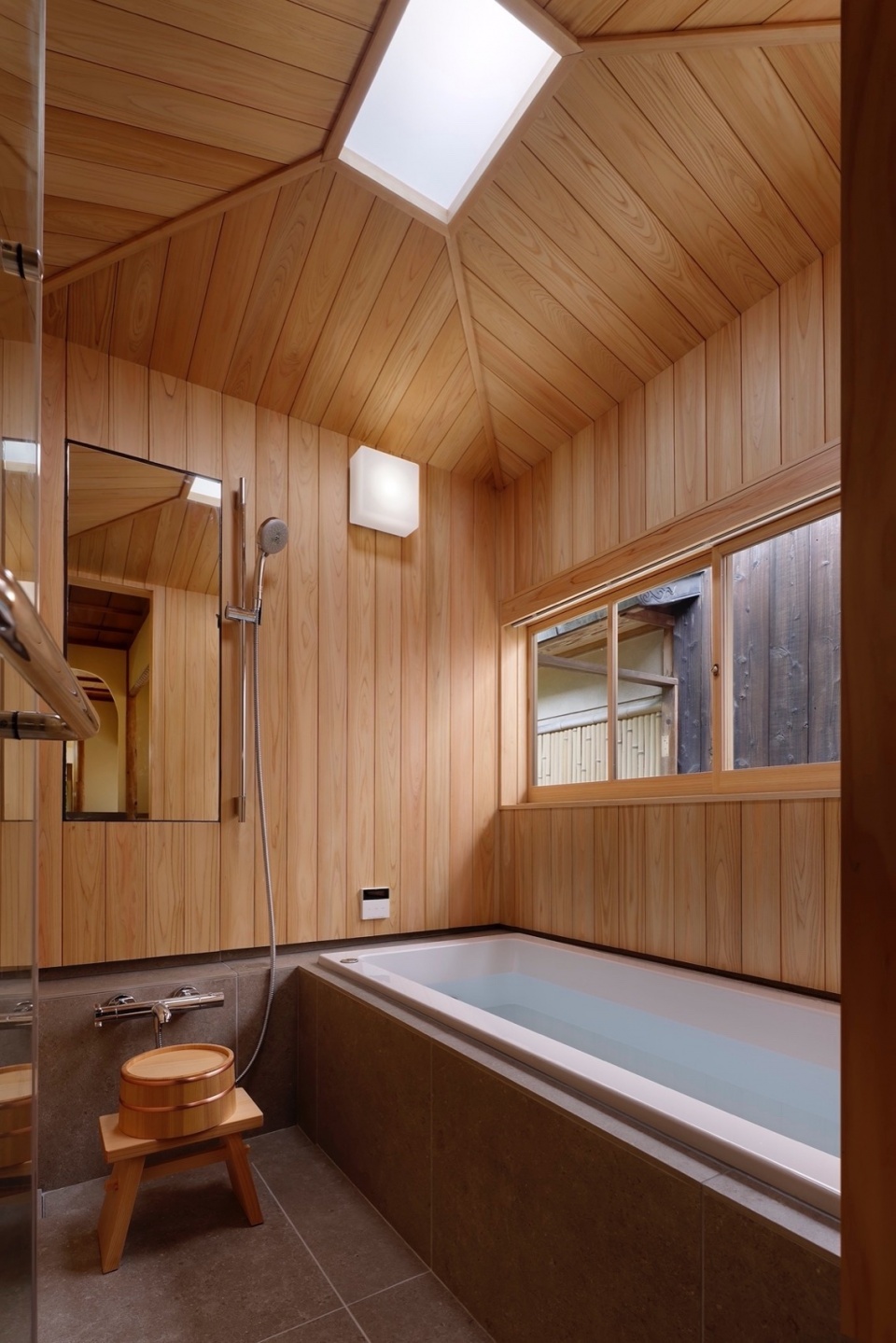
▼浴室,bathroom
▼浴缸,bathtub
▼浴室细部,details of the bathroom
▼走廊,hallway
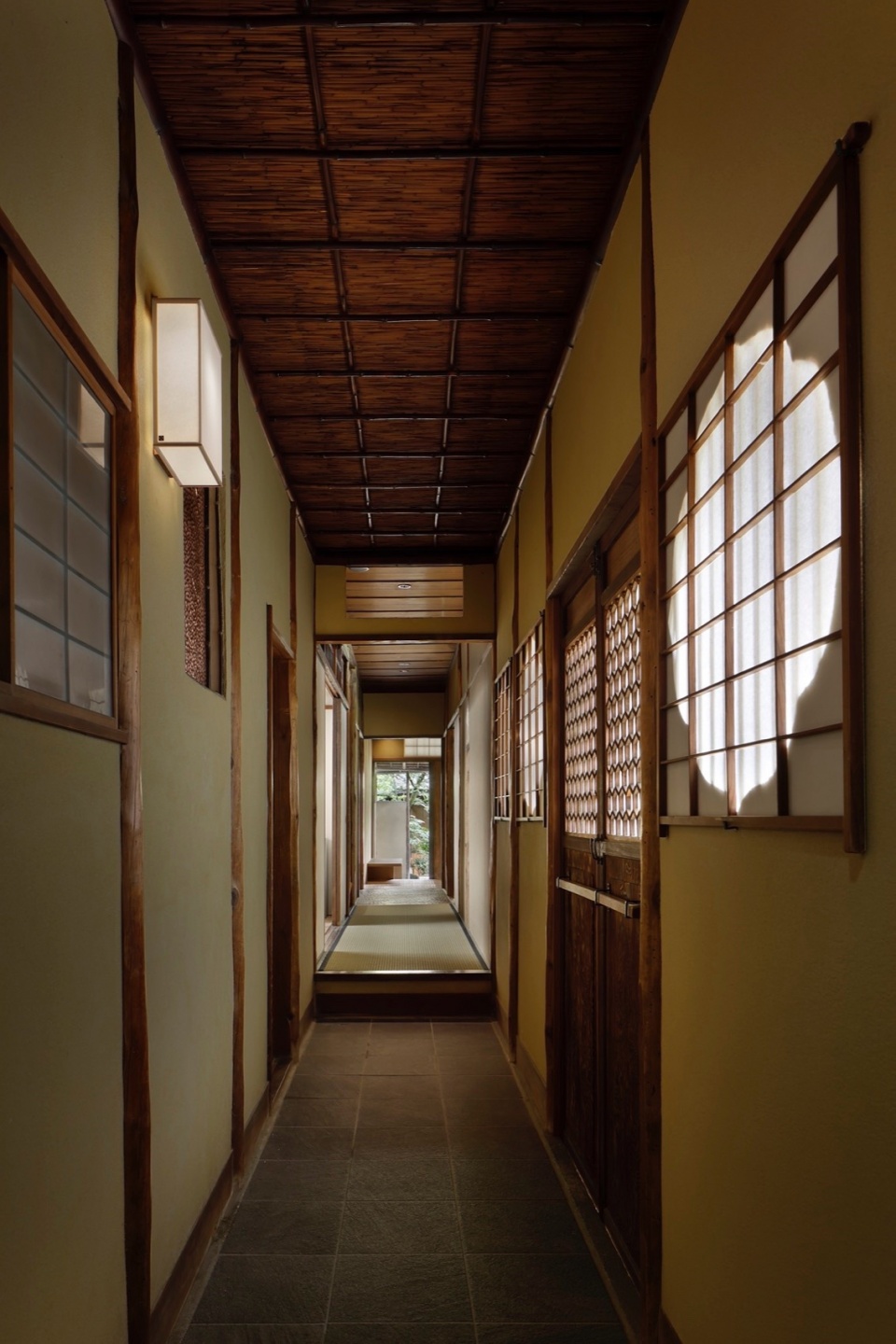
大部分地面为榻榻米铺设,通常布设于天花板中的电线被改至地板下方走线。开关与地暖控制面板则以家具柱的形式设于必要位置,以此尽可能保留原有的土墙。
As most of the floor was covered with tatami mats, the electrical wiring that usually runs through the ceiling was moved to under the floor, and switches and floor heating controls were installed in necessary places as furniture-like pillars, preserving the earthen walls.
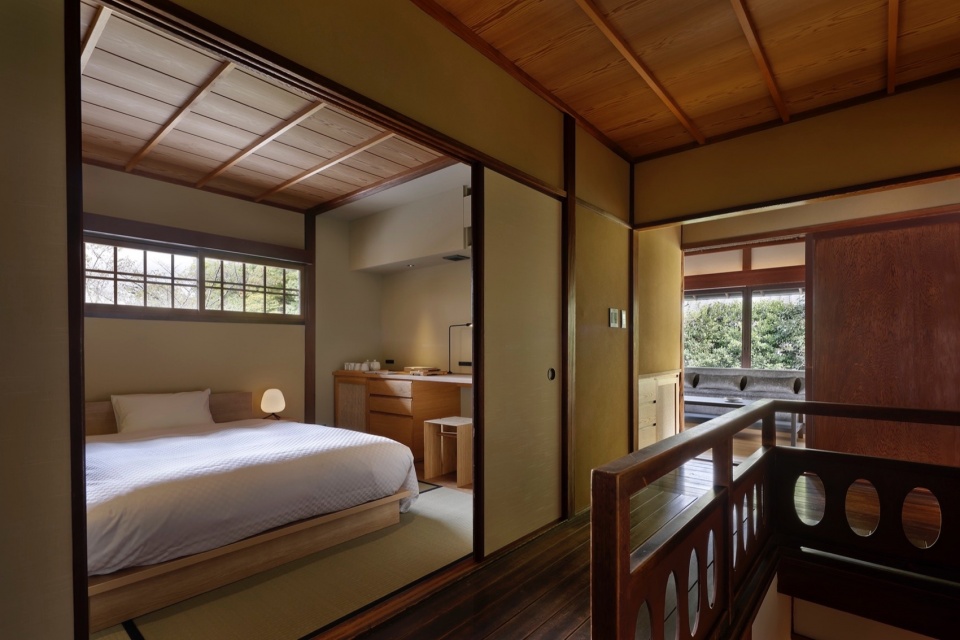
▼二层客房,guest room on the upper floor
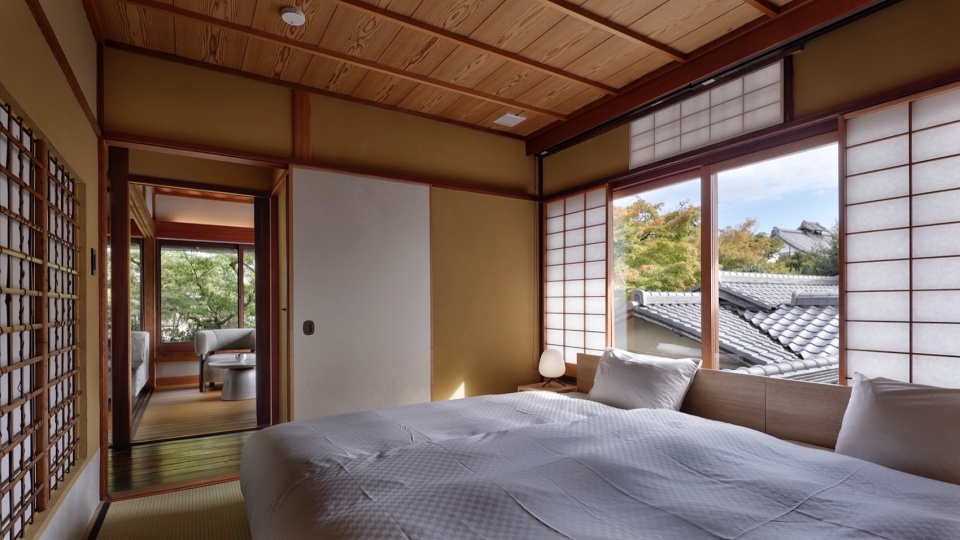
▼二层客厅,living room on the upper floor
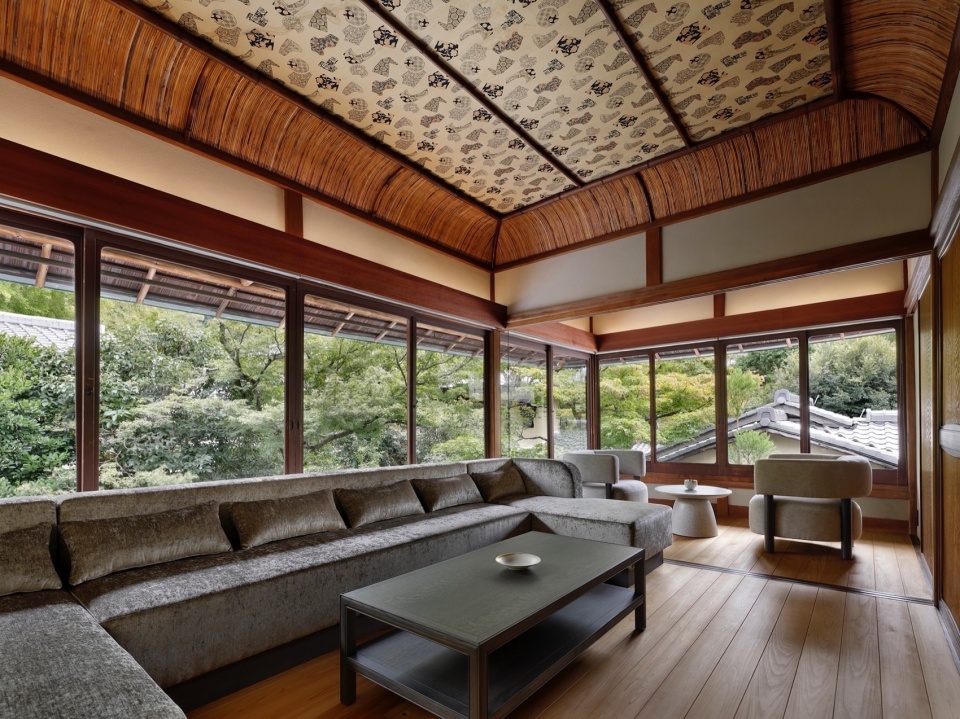
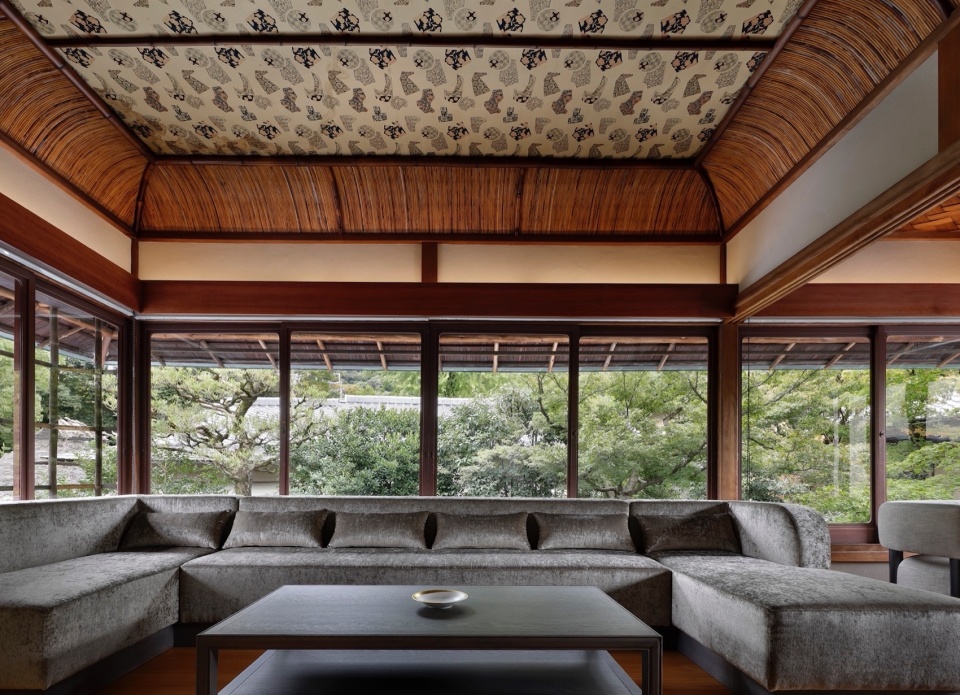
▼日式房间,Japanese room
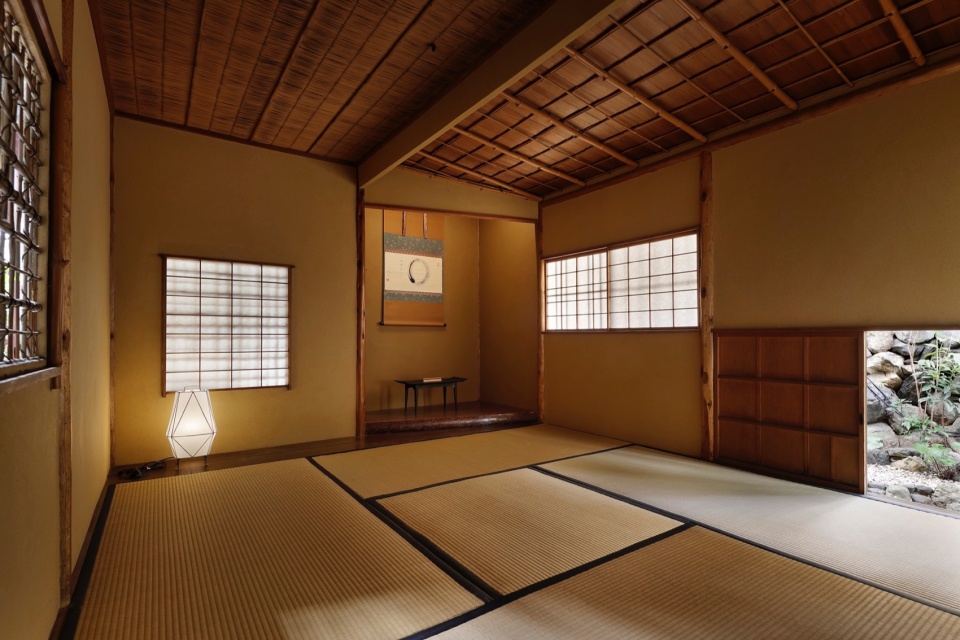
此外,虽然新添了家具,但在材质与颜色上选用了与原有部分不同的橡木材质,令新旧关系在视觉上可辨,意在强化整体空间的清洁感与层次感,让入住者能直观感受到其间的关系。
In addition, new furniture was installed, but these were made of oak, which is different in material and color from the existing ones, so that it was possible to notice that new furniture had been added, and the relationship between the old and the new was visualized, and the aim was to give guests an impression of cleanliness.
▼室内夜景,night view of interior
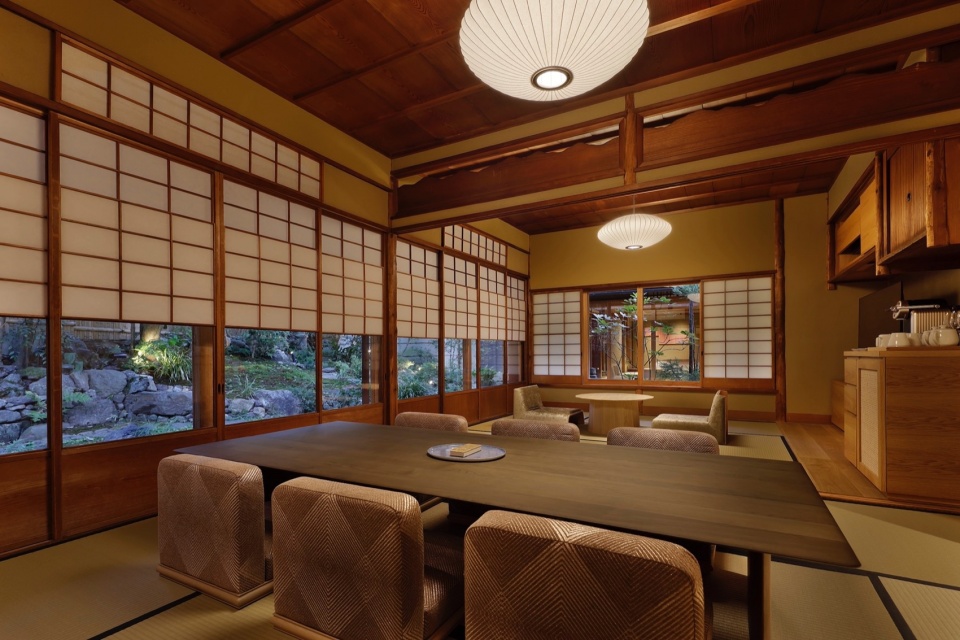
▼客房夜景,night view of the guest room
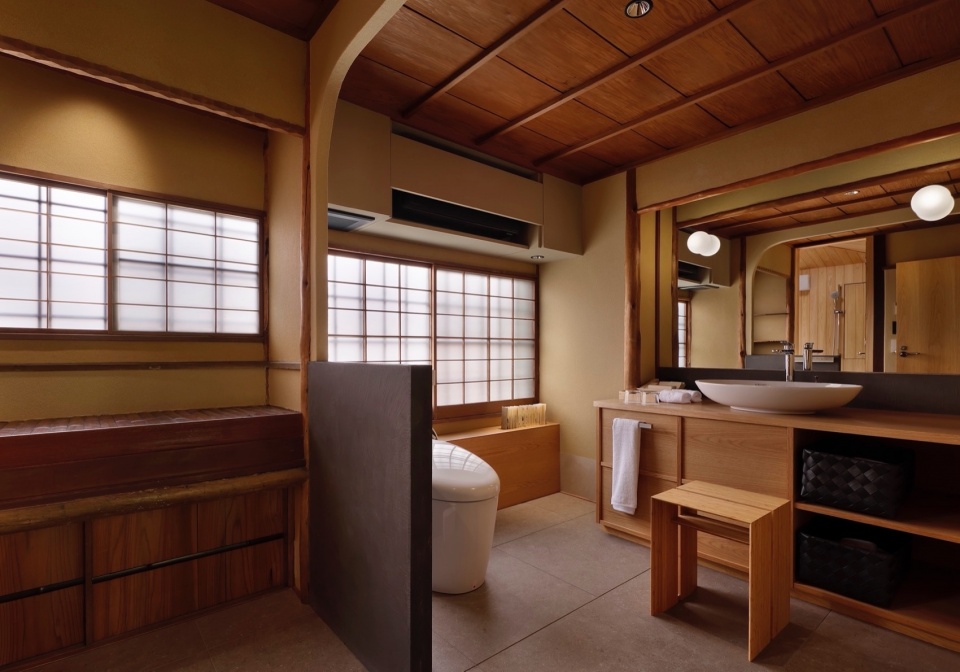
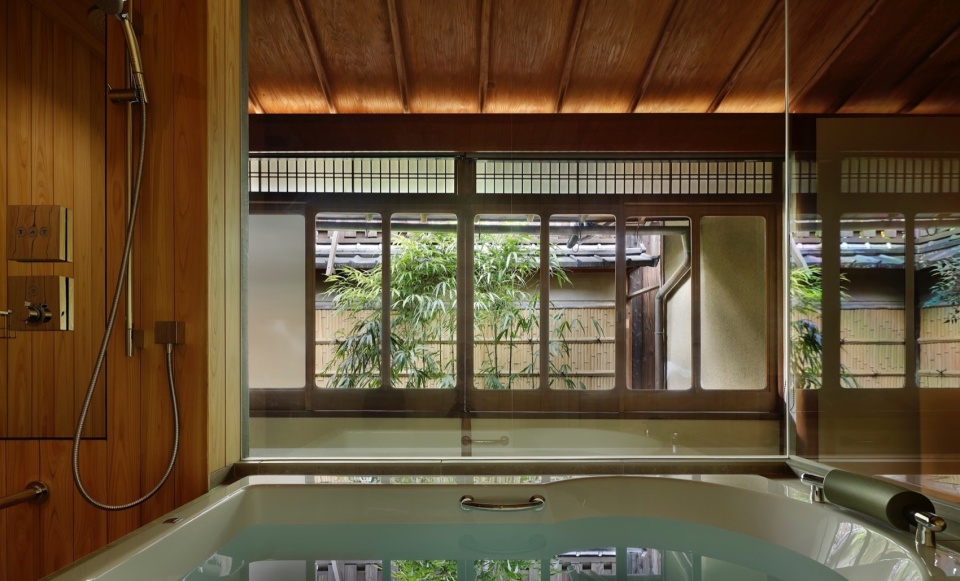
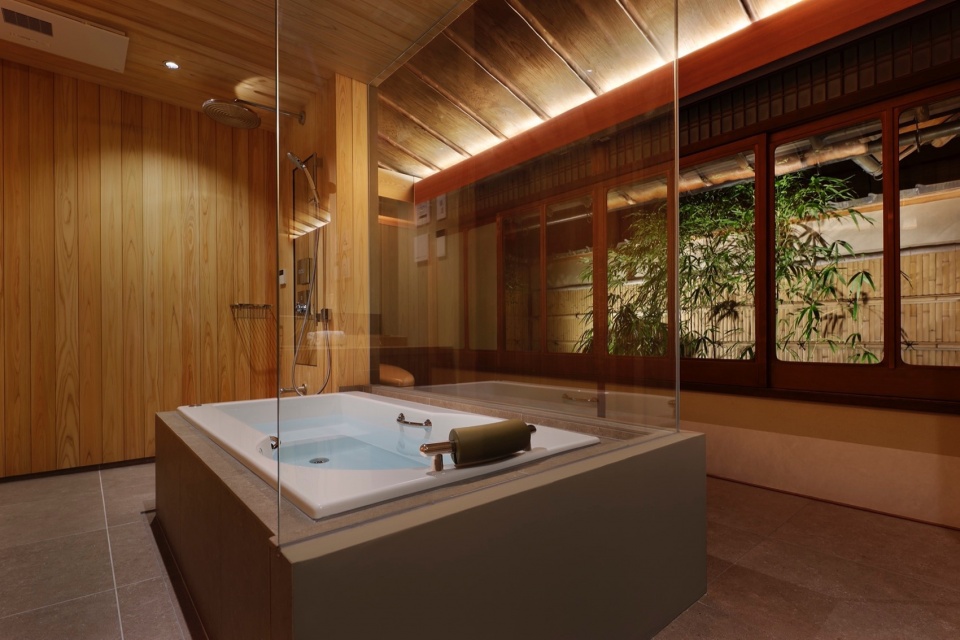
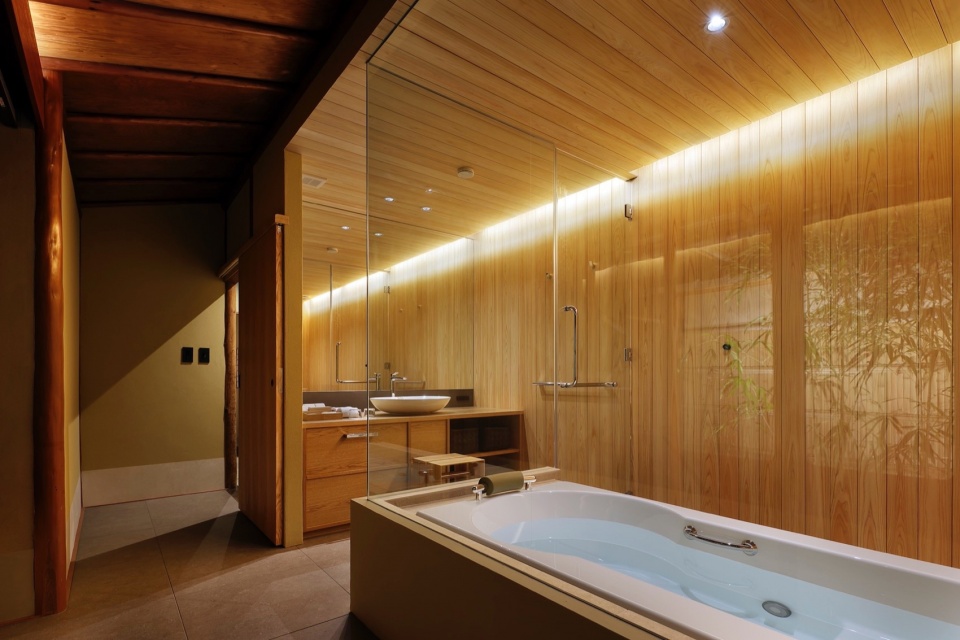
浴室与洗手间的设计延续这一思路,采用橡木家具、桧木墙壁与天花板,并配以加固玻璃窗。主浴缸所在空间可透过玻璃窗眺望西侧的小型庭院。
The bathroom and washroom were designed with the same idea, with oak furniture, Japanese cypress walls and ceilings, and reinforced glass openings. From the main bathtub, a glass window allows a view of the small courtyard garden to the west.
▼浴室夜景,night view of the bathroom
在结构方面,通过结构计算,尽可能保留了主要房间的土墙,并在部分位置增设减震金属构件和耐震土墙面板,以柔性方式增强建筑整体的耐震性能。
Structurally, calculations determined that as much of the earthen walls of the main rooms as possible were retained, while damper metal fittings and earthquake-resistant earthen wall panels were added to softly reinforce the structure.
▼建筑外观夜景,night view of exterior
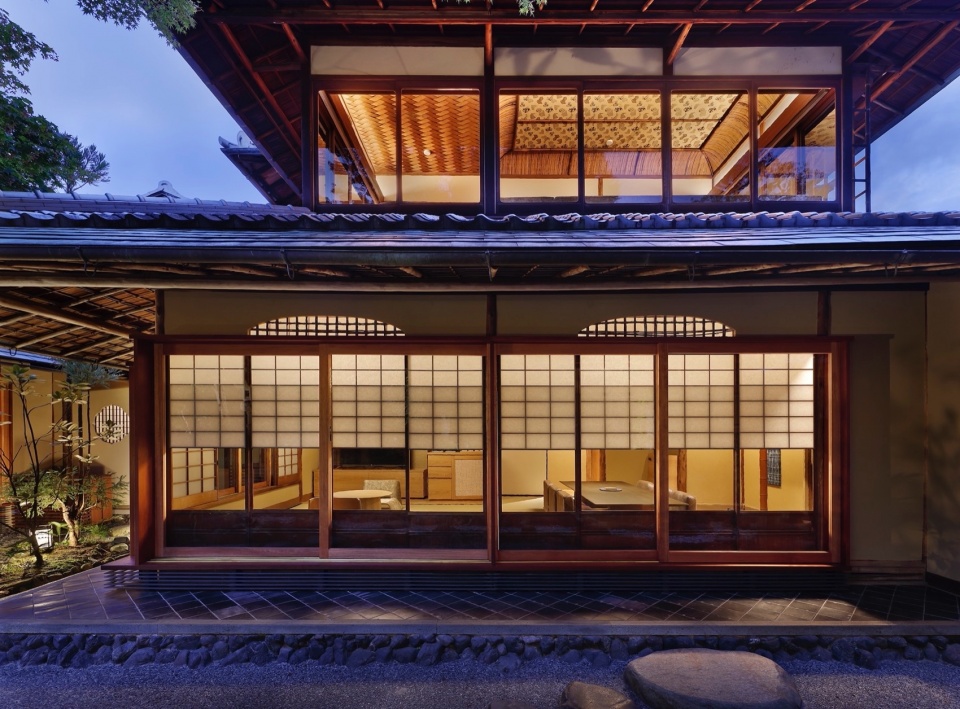
本案从头到尾始终秉持对原建筑的尊重,施工过程中对颜色搭配与细部质感都进行了细致确认与决策。通过保留原有要素,或以低调的手法进行融合性的增补,最终实现了一种既维持原有空间构成与设计,又具有现代舒适性的全新住宿空间。
In this way, the design was carried out with respect for the existing building from start to finish, and the color scheme and texture of the finer details were carefully confirmed and decided during construction. By preserving the existing elements as it was, or making modest additions that blend in with it, the existing spatial composition and design remain unchanged, resulting in a new comfortable accommodation.
▼庭院夜景,night view of courtyards
▼一层平面图,1F plan
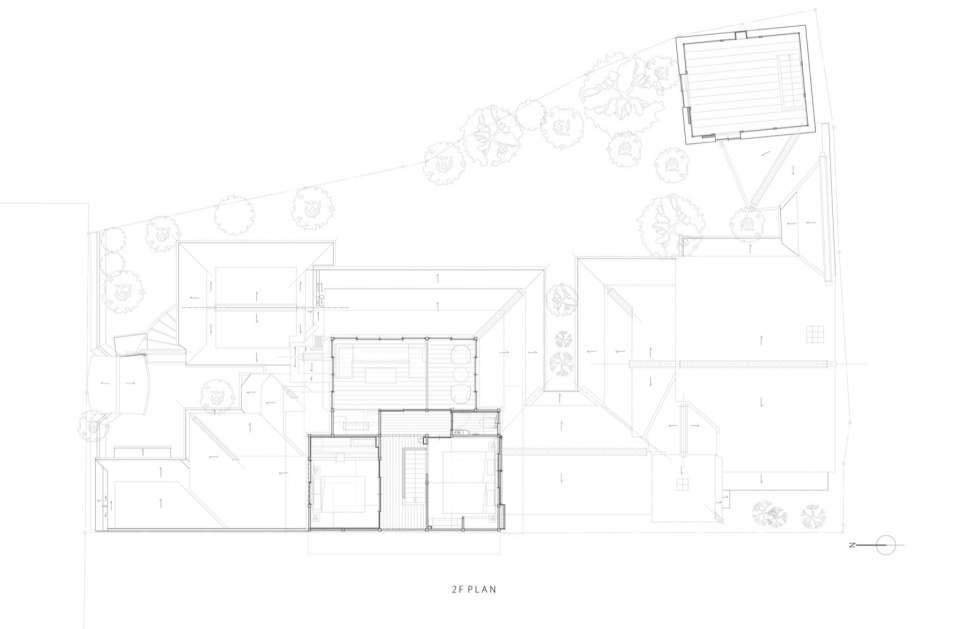
▼二层平面图,2F plan
Design: Moriyoshi Naotake Atelier
Location: Japan
Type: Architecture
Materials: Wood
Tags: Kyoto
Category: Hotels, Historical architecture renovation
All Photographs have credit to Satoshi Shigeta
All drawings have credit to Naotake Moriyoshi