O Plant-based通德谭街店,越南 / xưởng xép
在建筑实践中,我们常常习惯于“加法”——一个新的结构作为人类存在的印记,嵌入自然之中。然而,在这个项目中,我们选择了一种不同的方式:不是添加,而是有意识地减少人为干预。
In architecture, we are often accustomed to adding—a new structure emerging as a mark of human presence imprinted on nature. However, for this project, we chose a different approach: instead of adding, we deliberately subtracted artificial interventions.
▼首层入口小院,Entrance courtyard
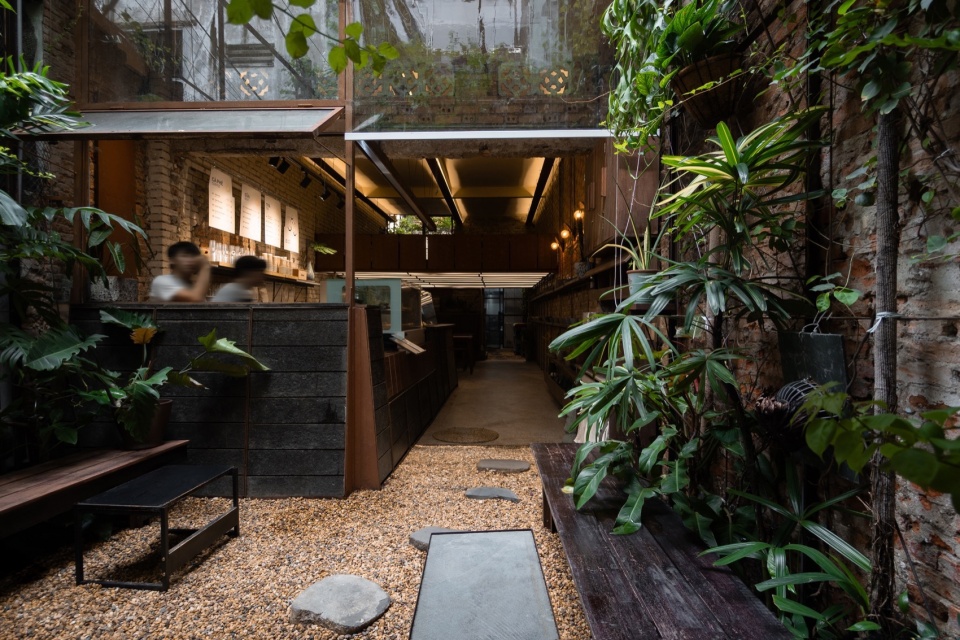
▼小院细部,Courtyard details
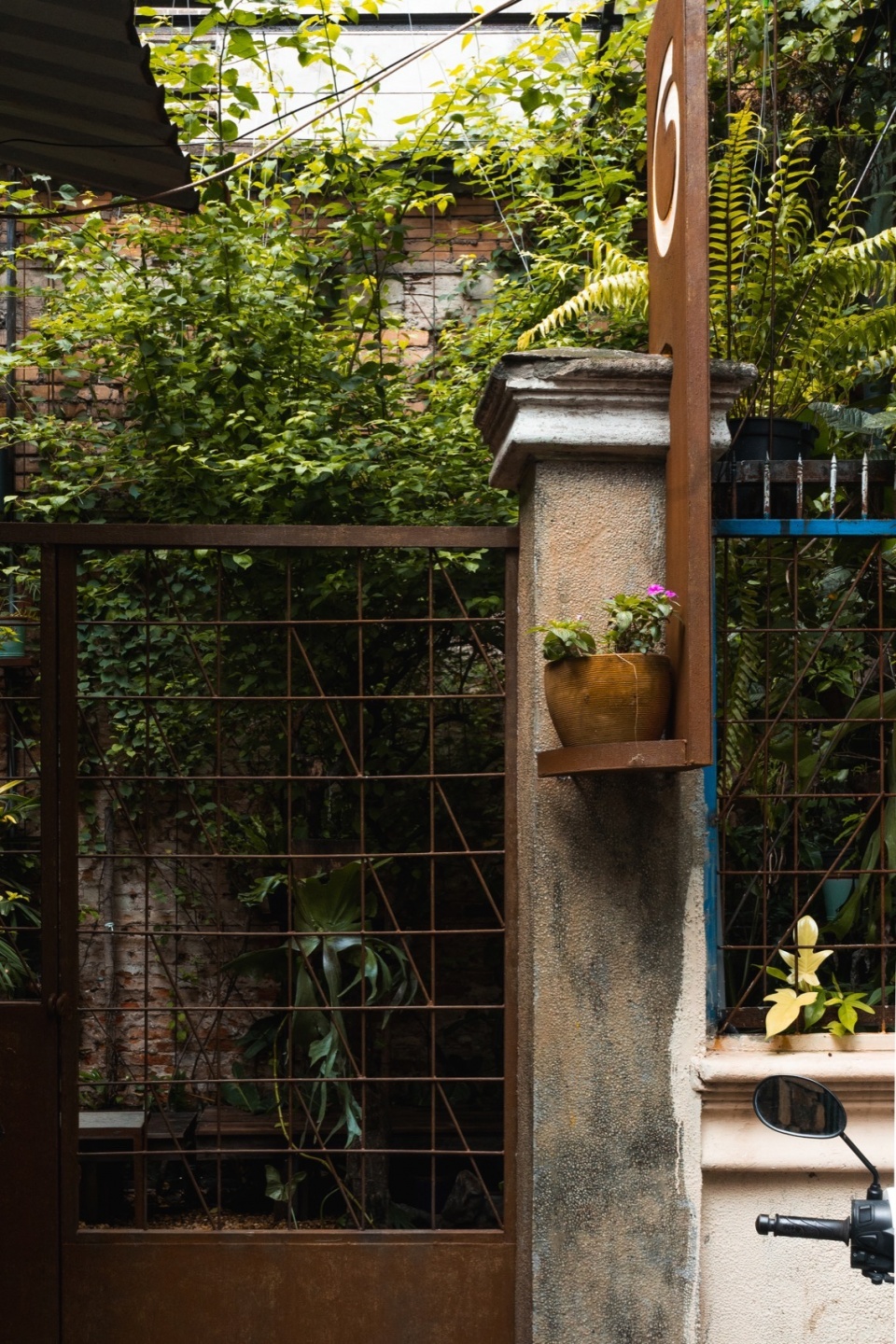
▼从小院看向建筑,Looking towards the building from the courtyard
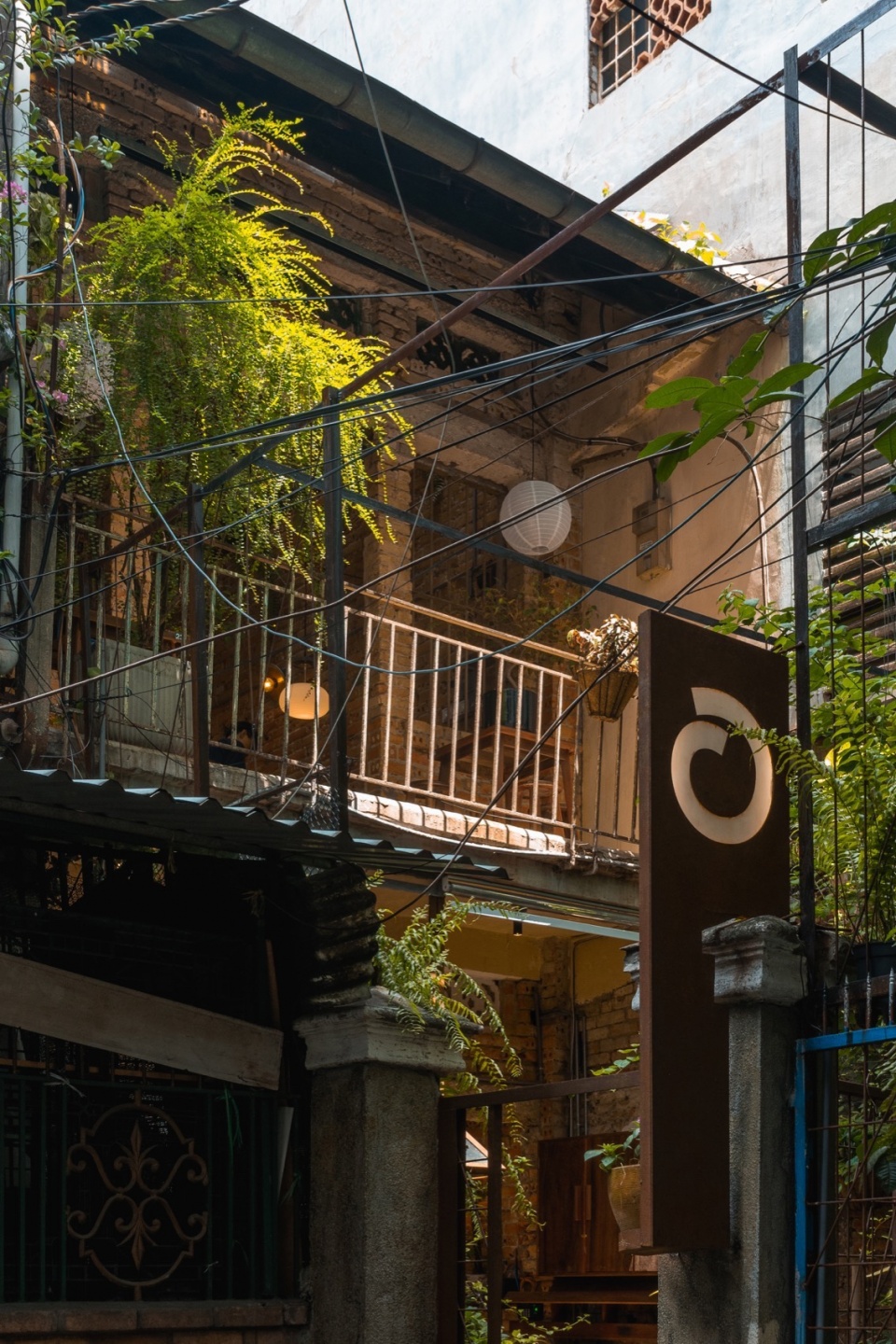
▼小院外摆区,Swing area
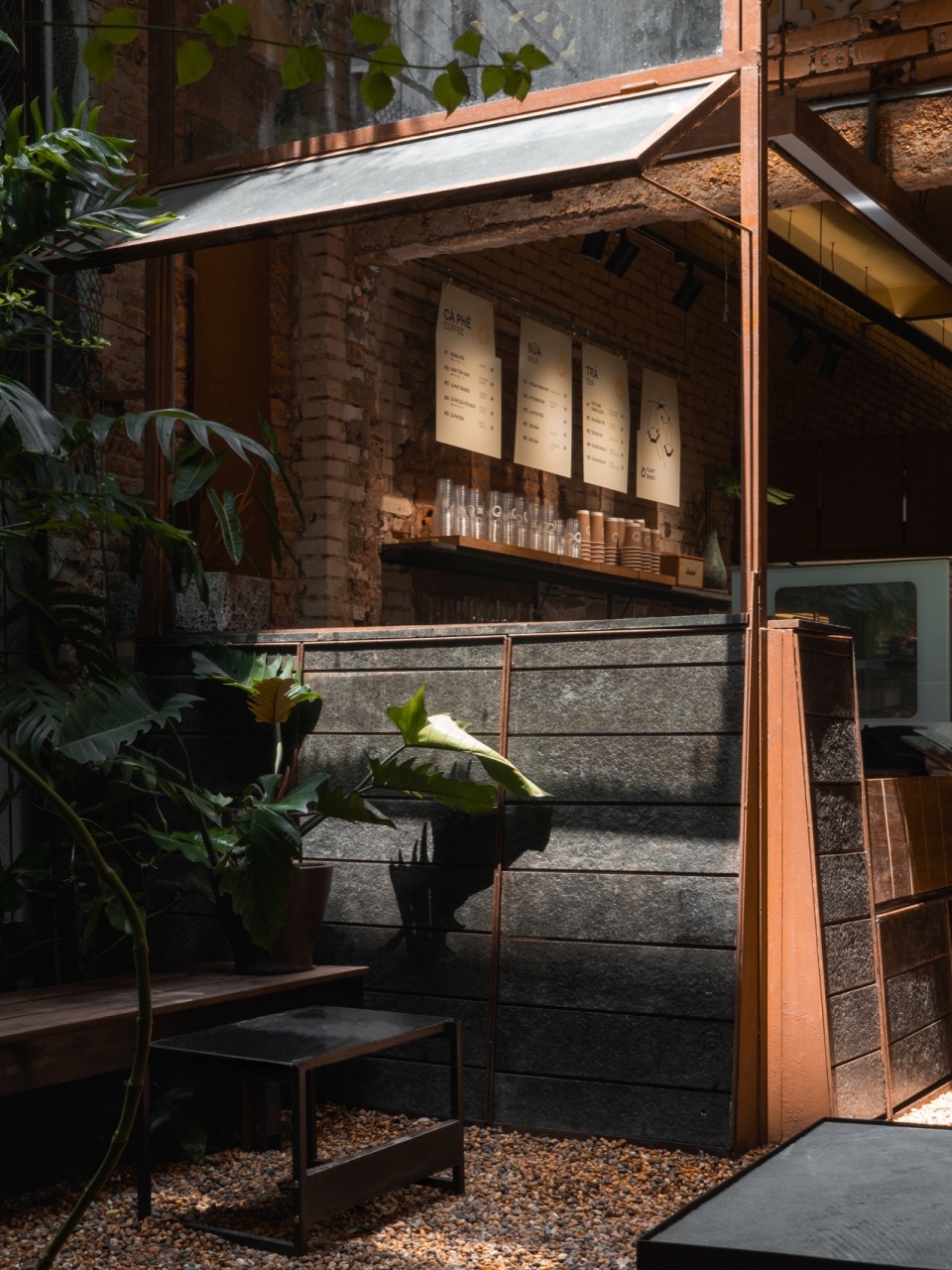
场地原本是一座老宅附属的小花园,如今被改造为一家提供植物基食物与饮品的咖啡馆。我们不希望建筑的存在削弱花园本身的价值。如何让这座花园既是老宅的一部分,同时又成为咖啡馆不可分割的一部分?我们选择了一种极简的方式,尽可能保留场地的本真,仅进行细微的调整,在不打破原有平衡的前提下,塑造出新的空间。
The site was originally a small garden attached to an old house, now repurposed into a café serving plant-based food and beverages. We did not want the presence of architecture to diminish the inherent value of the garden. How could the garden remain part of the house while simultaneously becoming an inseparable part of the café? We opted for a minimalist approach, preserving the essence of the site, making only subtle adjustments to shape a new space without disrupting its existing balance.
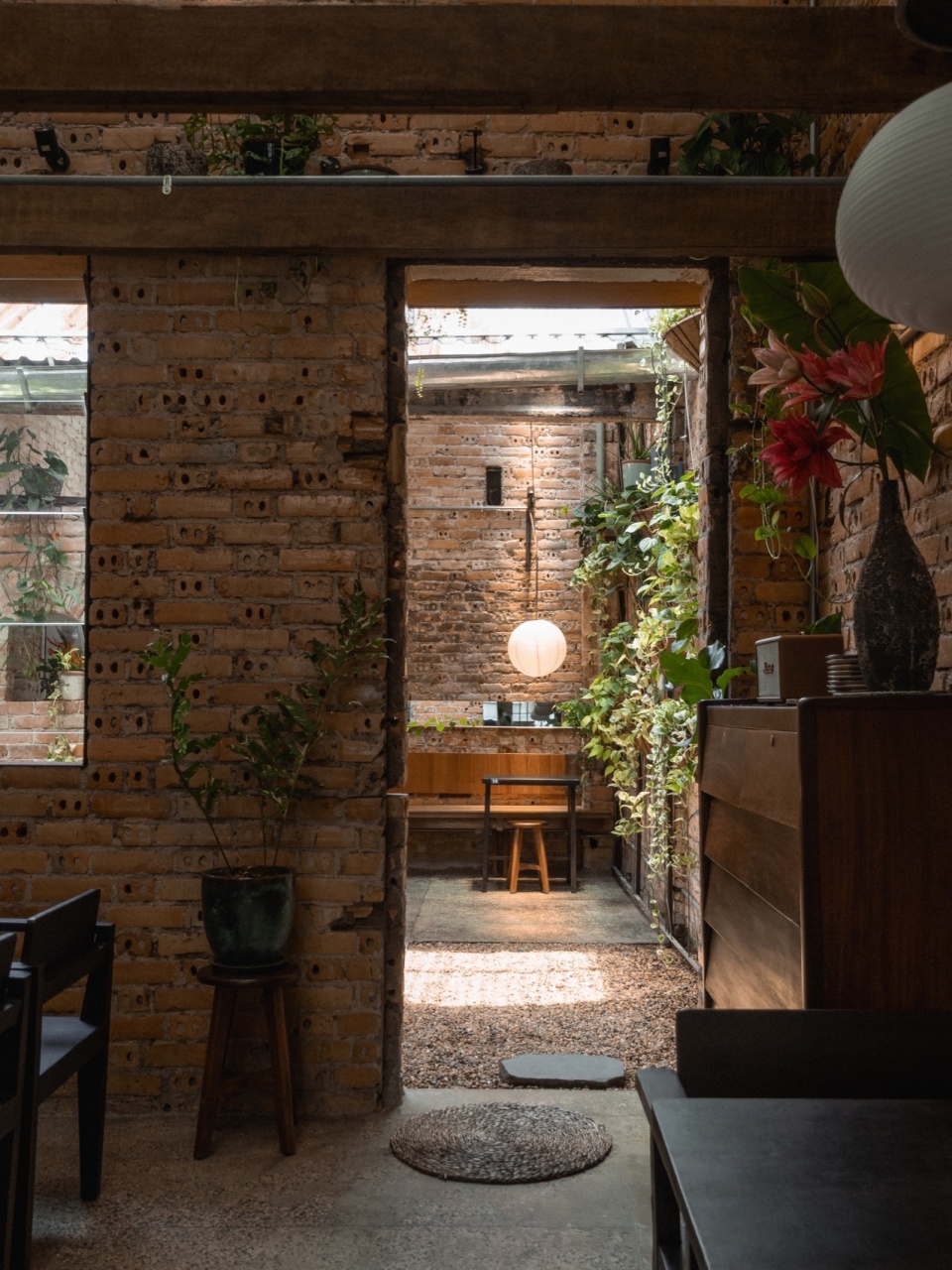
▼入口处,Entrance
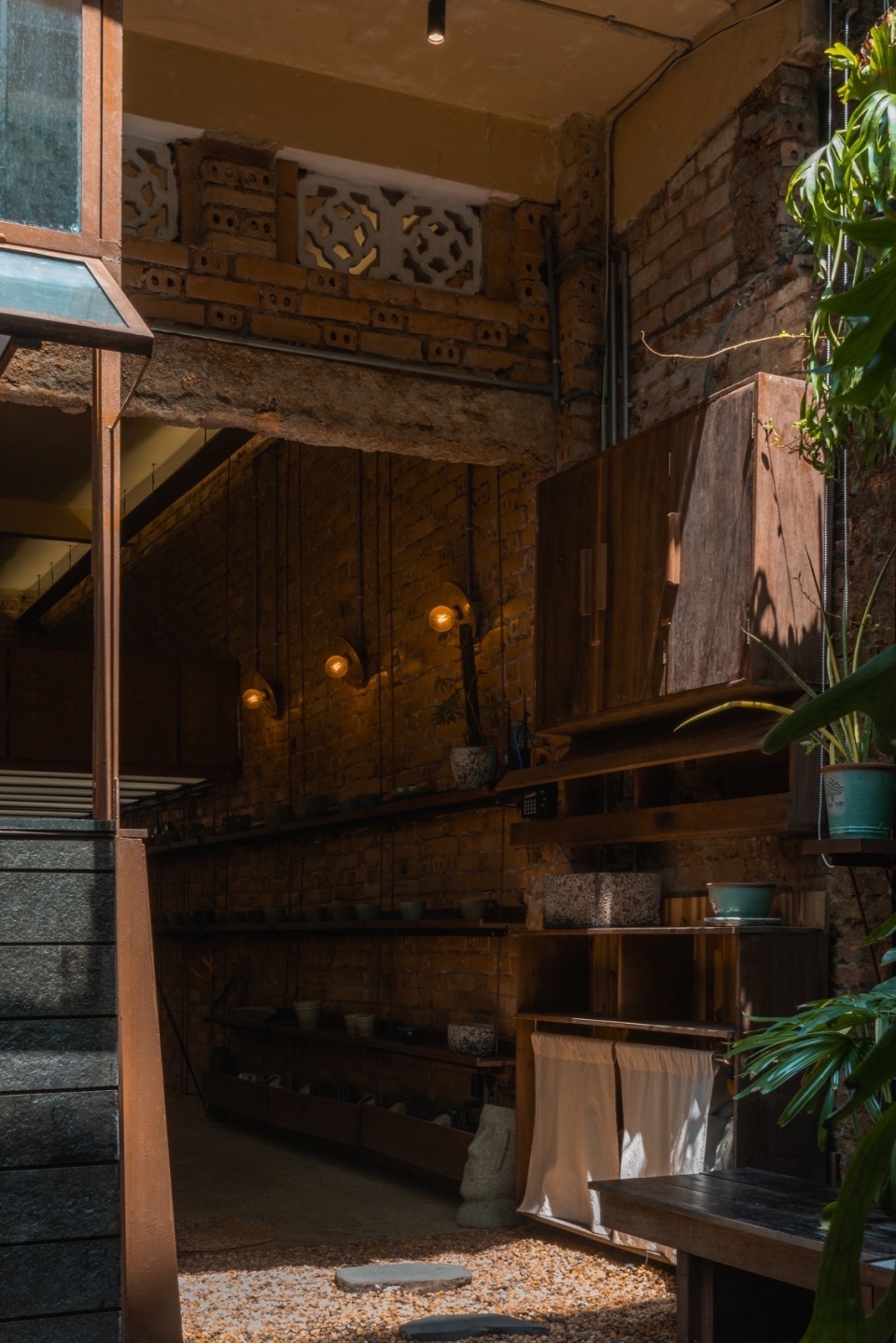
▼入口处的柜台,Entrance counter
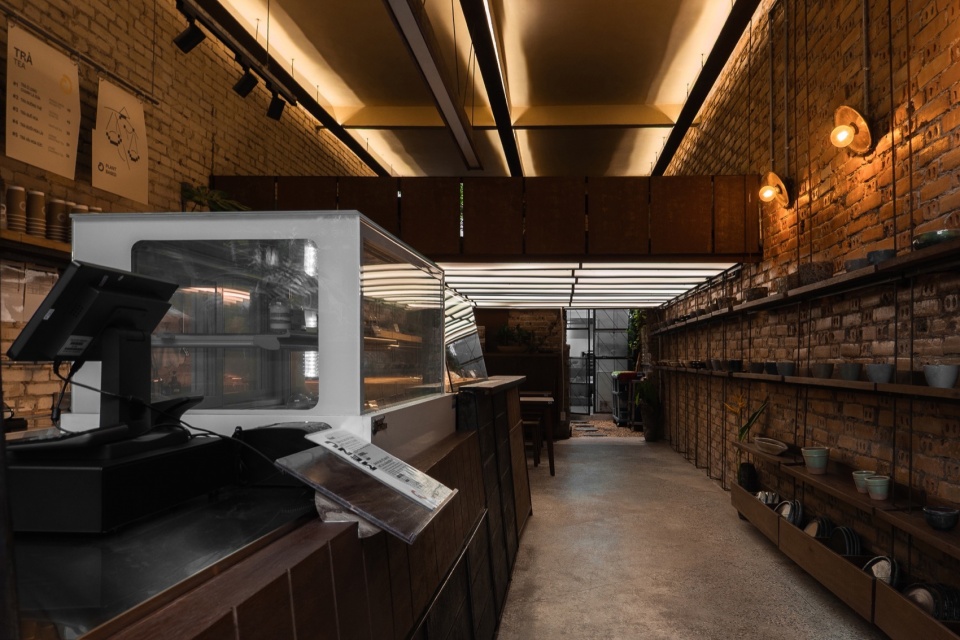
▼入口处回望小院,Looking back at the courtyard from the entrance
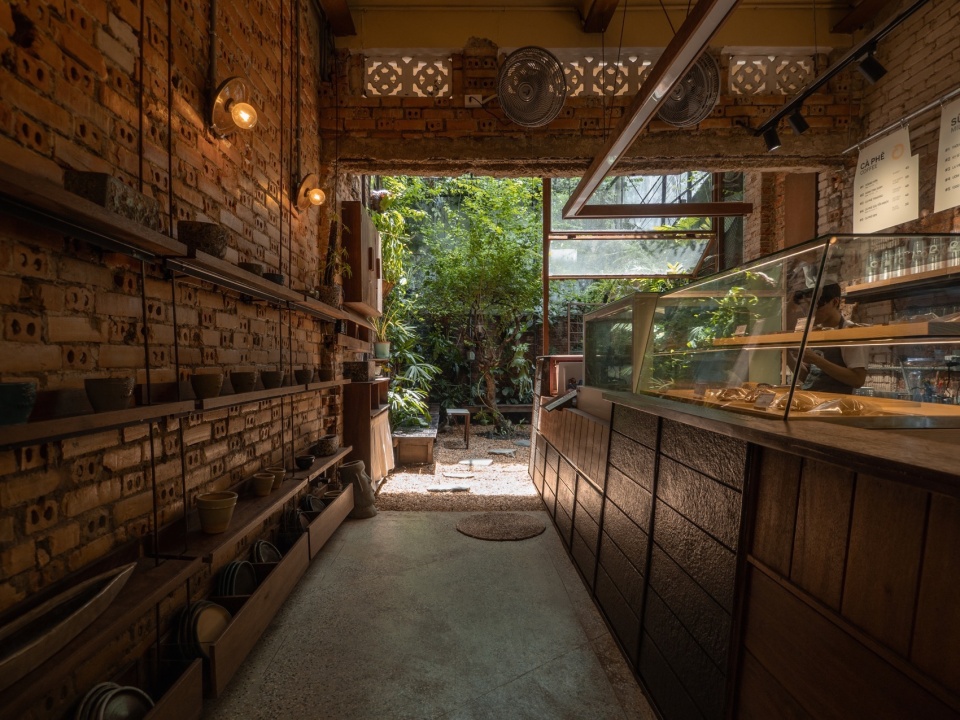
我们引入了柔性的、隐性的隔断方式,在空间中划分出不同的功能区域,但并非以明确的边界,而是通过流动的转换。这些元素自然地划定功能区,既保证了私密性,又维持了与花园的紧密联系。如今,这片绿地同时服务于老宅与咖啡馆,使它们以一种全新的方式共享这份自然的价值。
Soft, implied partitions were introduced to define the space in a way that allows for fluid transitions rather than rigid boundaries. These elements establish functional zones naturally, ensuring privacy while maintaining a strong connection to the garden. The same green space now serves both the house and the café, allowing them to coexist and share its value in a new way.
▼室内主要空间概览,Interior space overall view
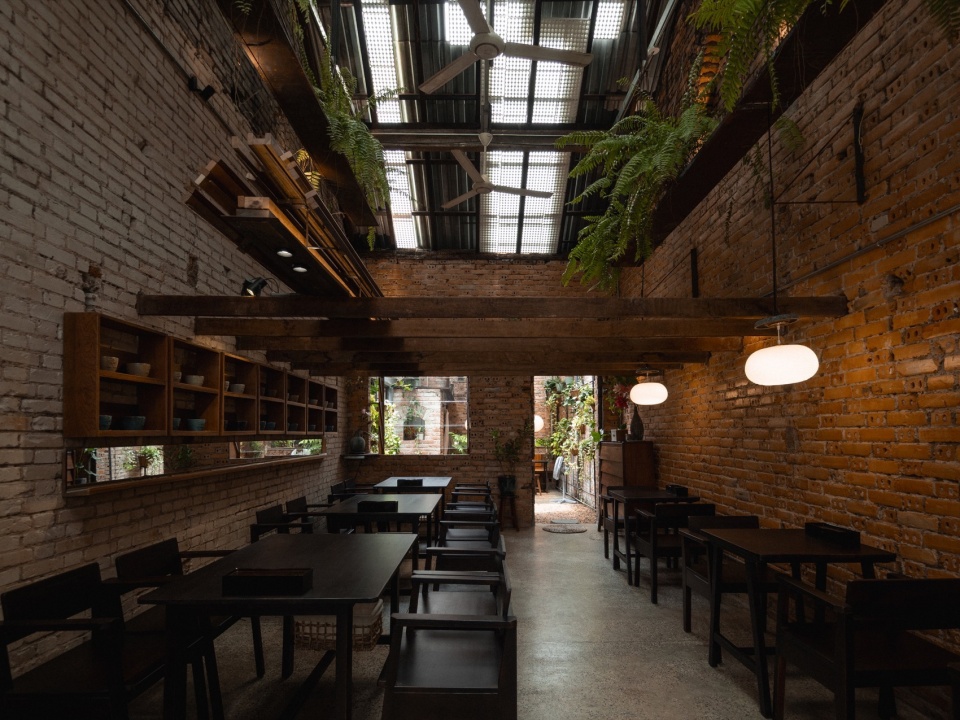
▼通高的空间,Full height space
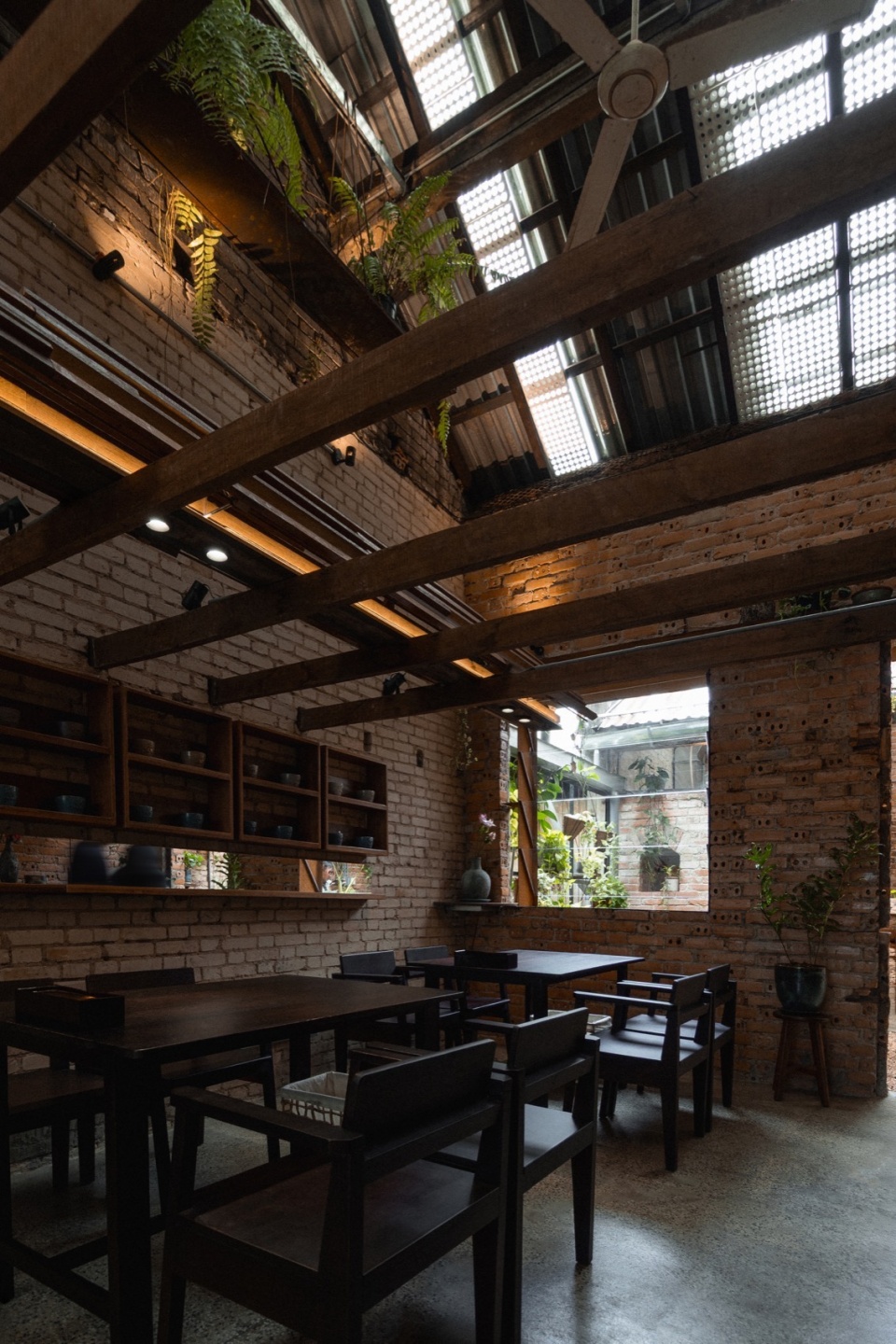
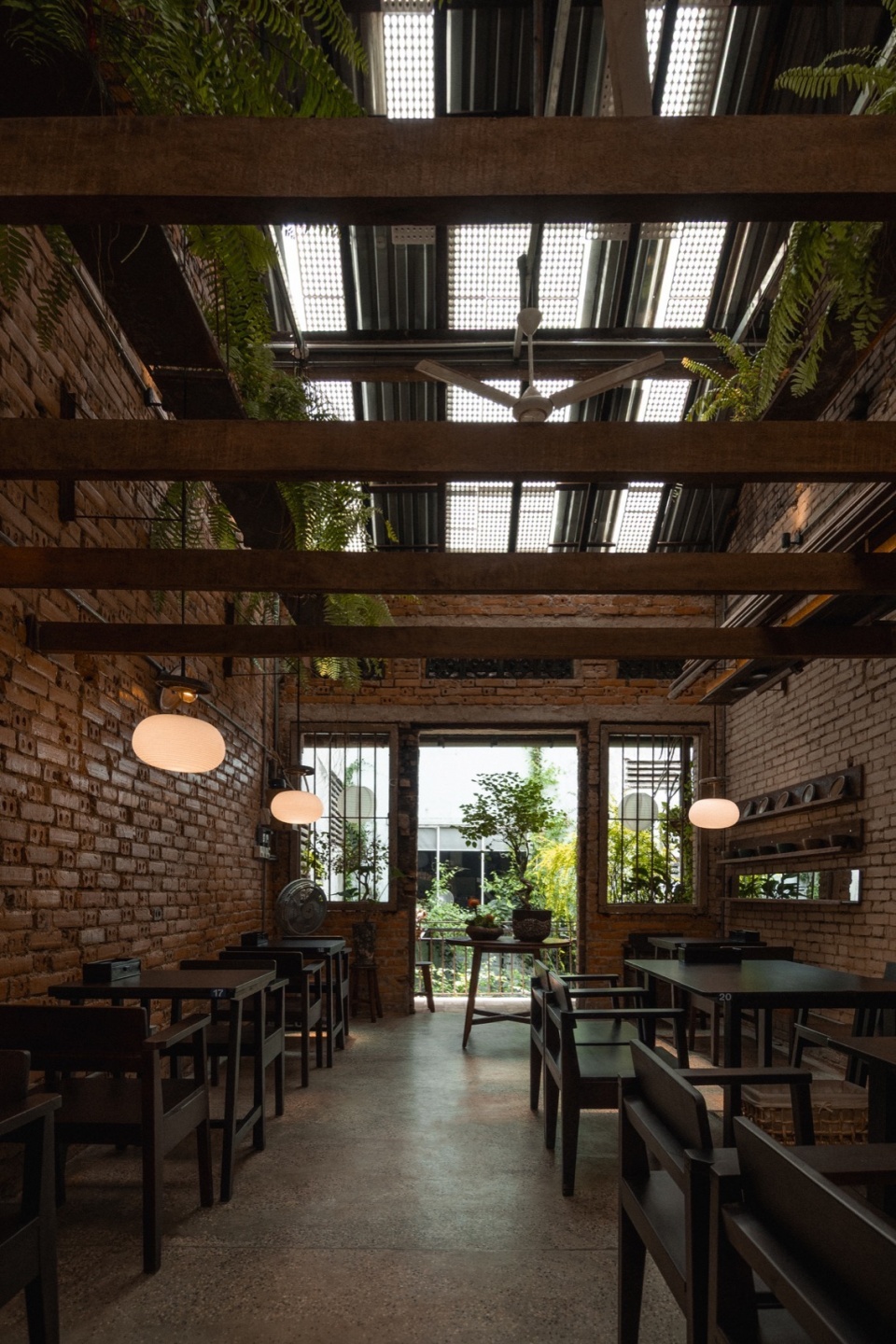
▼从首层看向内部小花园,Looking towards the small inner garden from the first floor
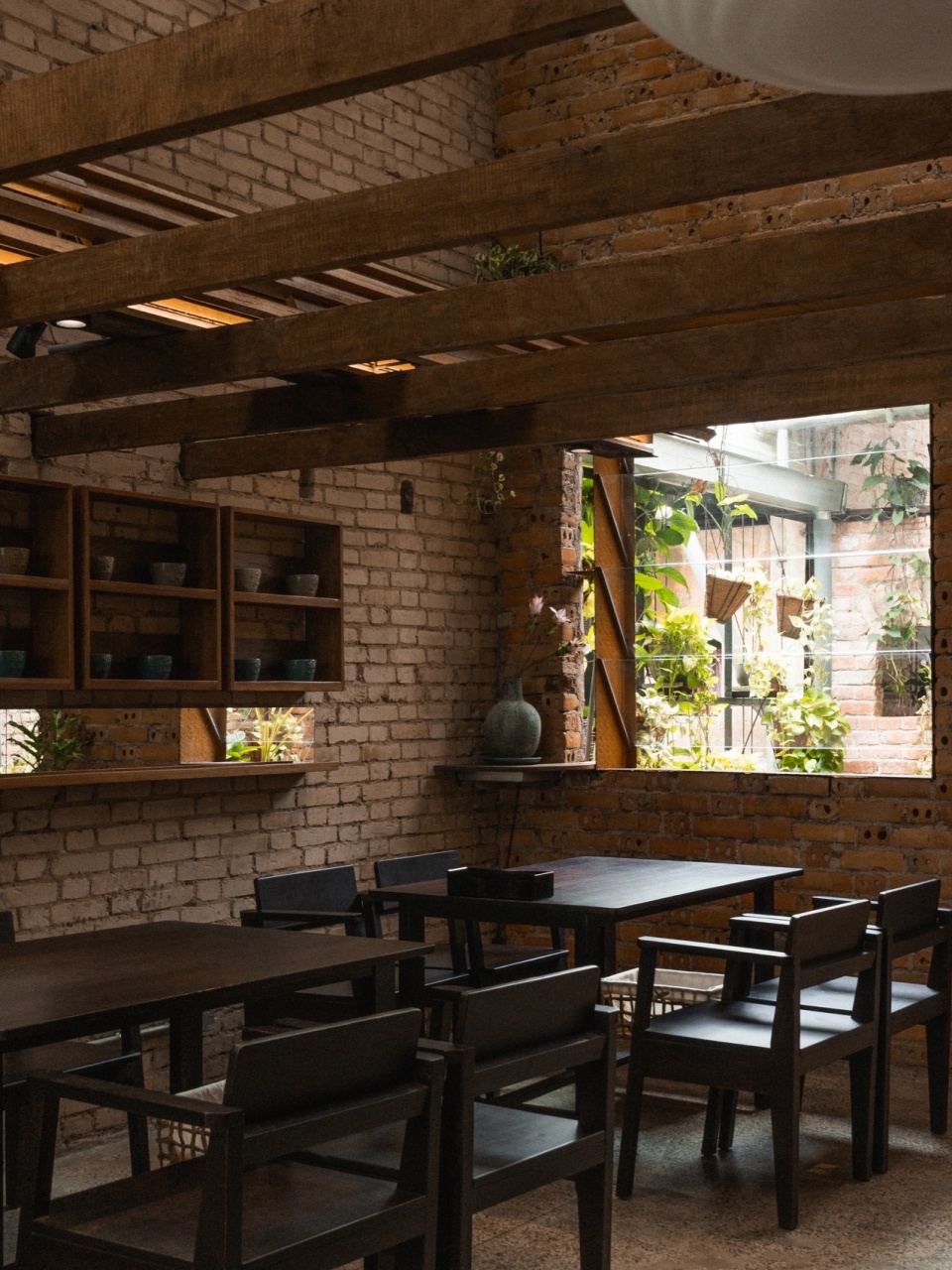
我们从体量研究入手,经过多轮推敲与反复设计,逐步剔除多余的部分,最终使空间趋于纯粹。在这个过程中,仿佛场地本身在与我们对话:它不需要更多,而是需要更少——一种更轻盈、更克制的方式。因此,我们开启了一场“减法”过程,移除不必要的边界,使建筑更加开放,得以与自然更和谐地对话。
Beginning with volumetric studies, we refined the design through multiple iterations, gradually eliminating unnecessary elements until the space reached its purest form. Throughout this process, it felt as though the site itself was engaging in a dialogue with us: it did not need more; it needed less—an approach that was lighter, more restrained. And so, we began a process of subtraction—removing unnecessary boundaries to make the architecture more open, allowing it to converse more harmoniously with nature.
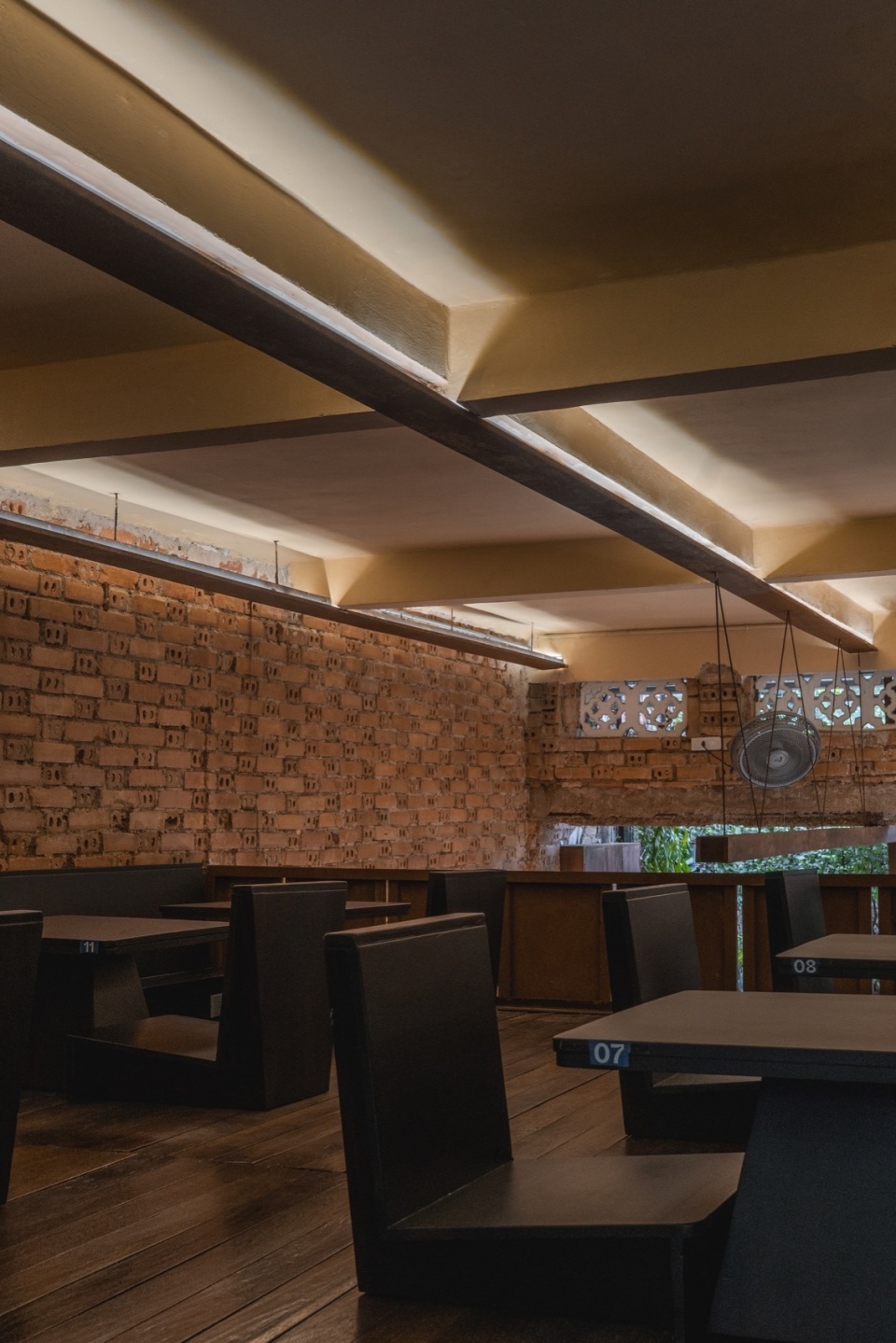
▼二层空间概览,Second floor guest seating
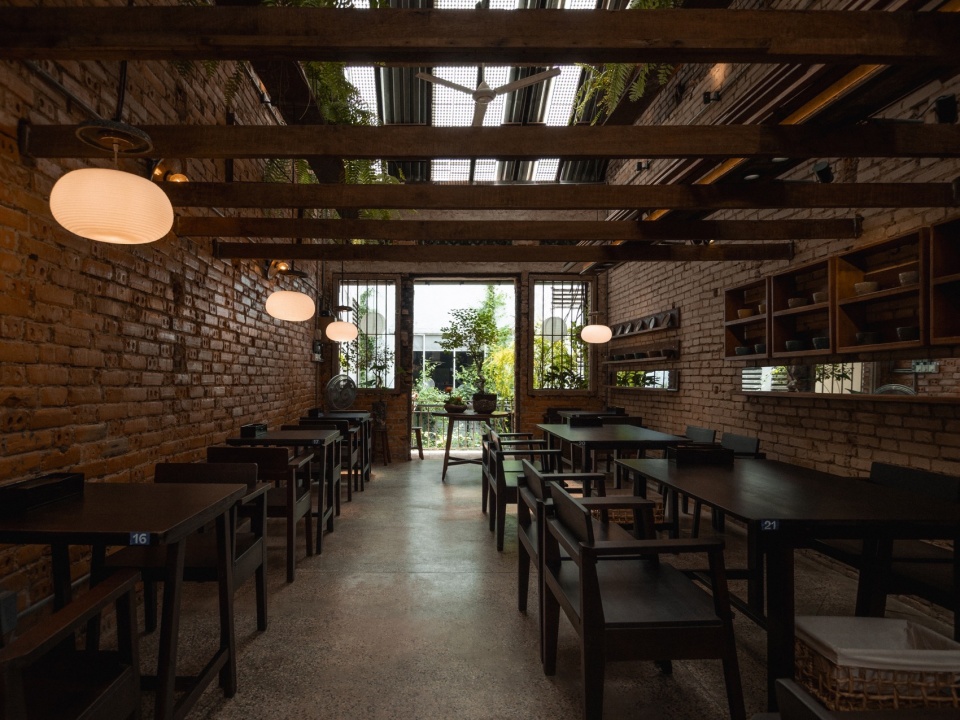
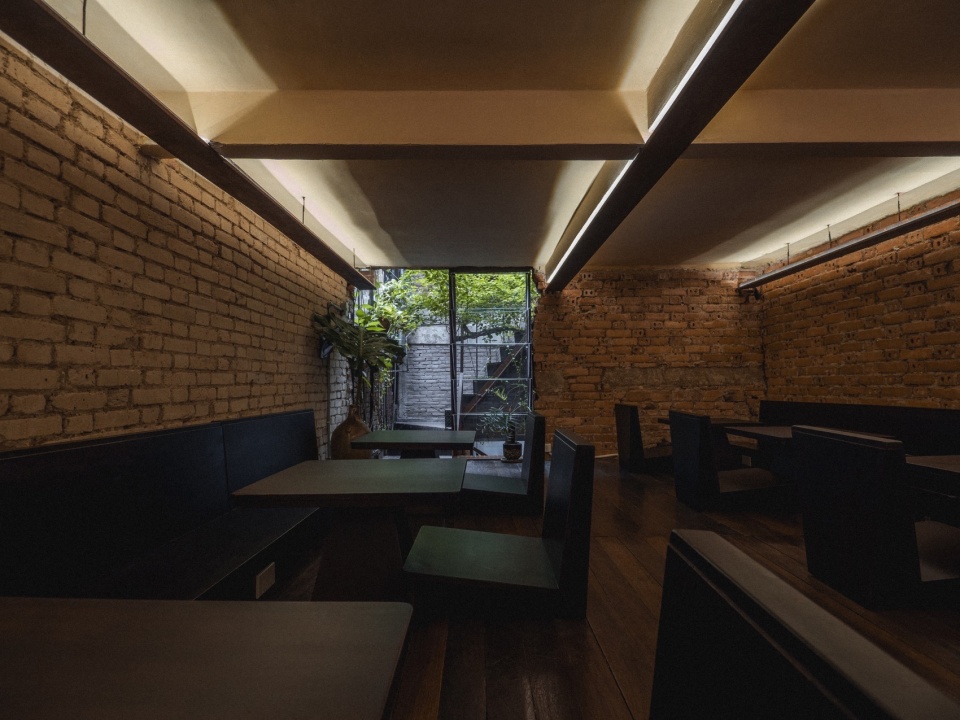
▼二层客坐近景,Second floor guest seating close view
▼二层户外客坐区,Outdoor seating area on second floor
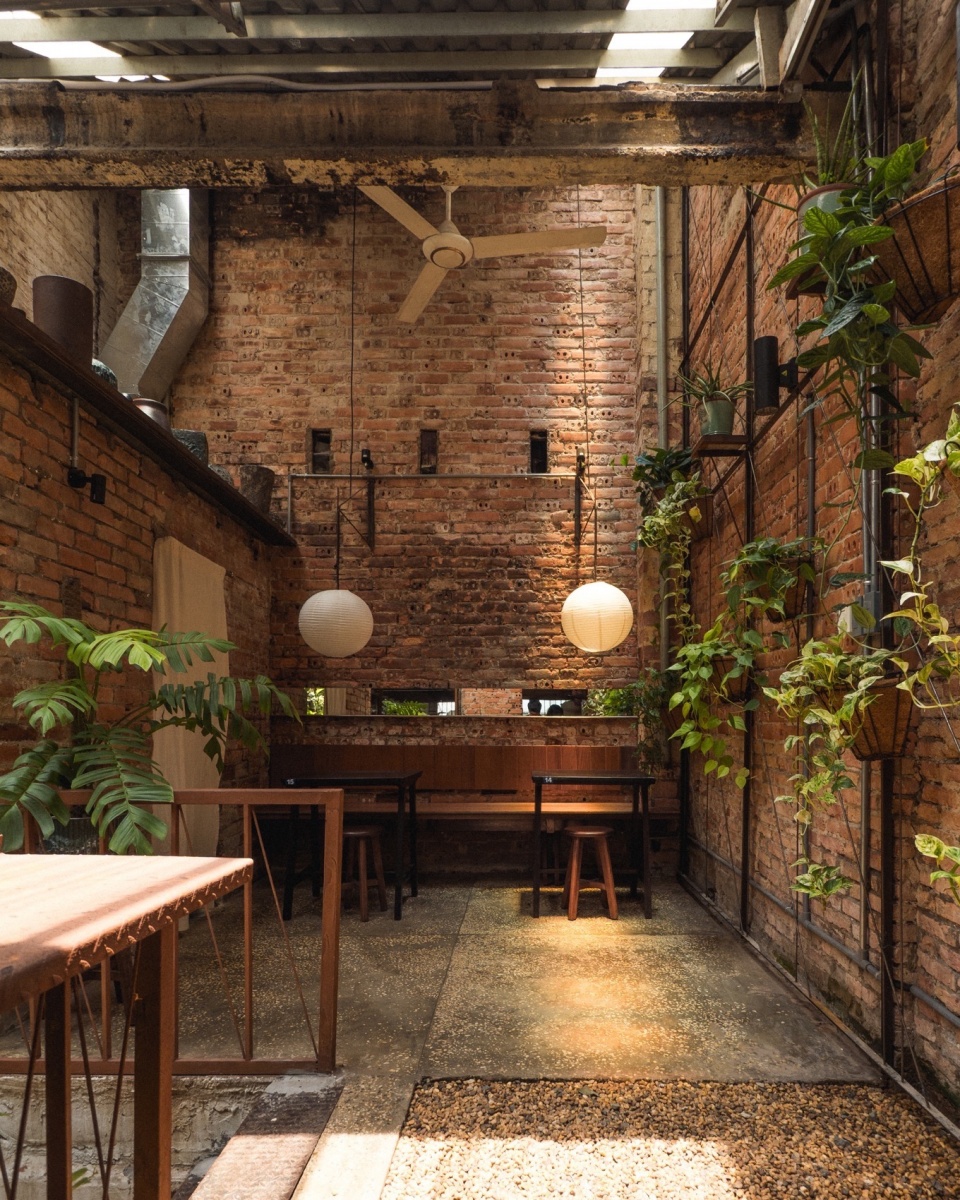
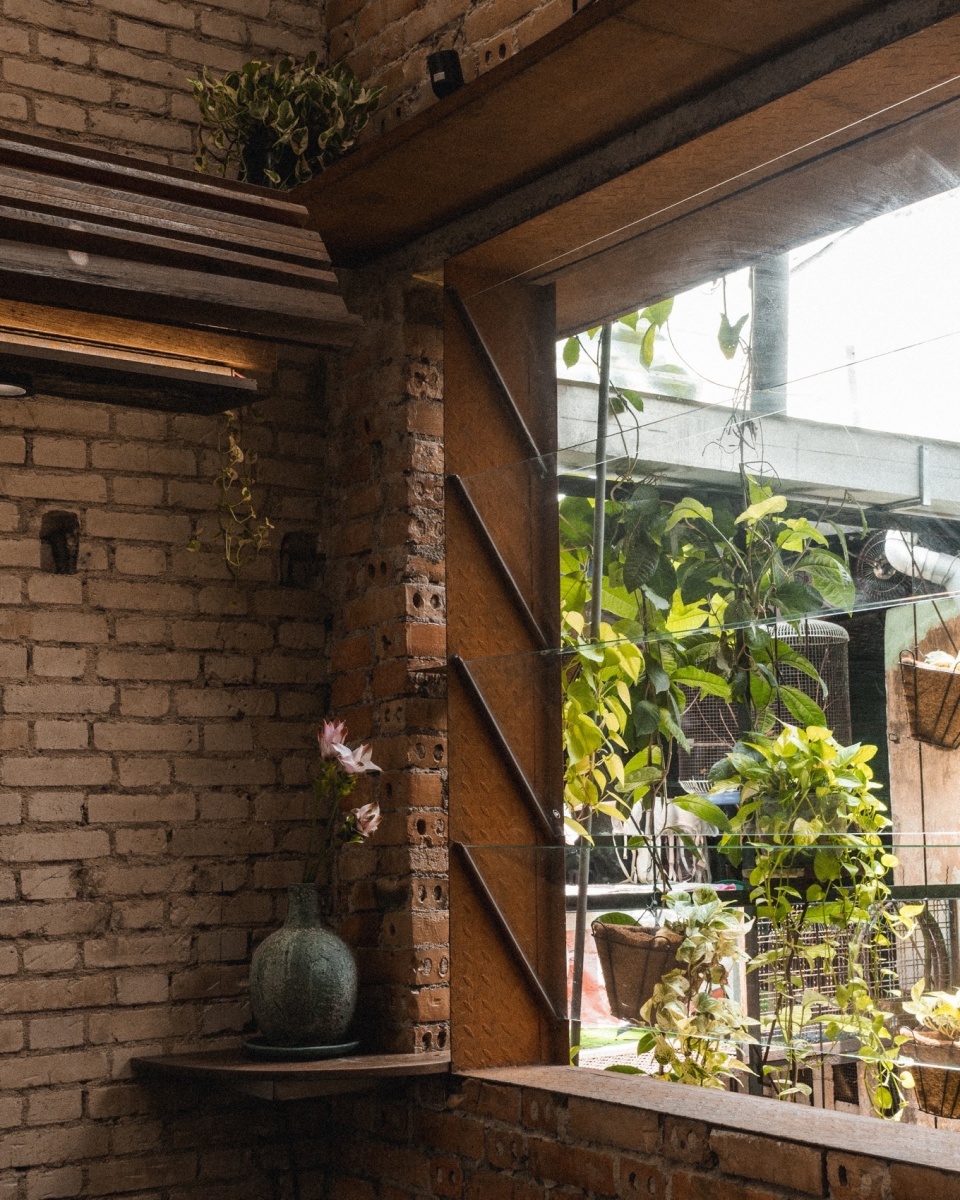
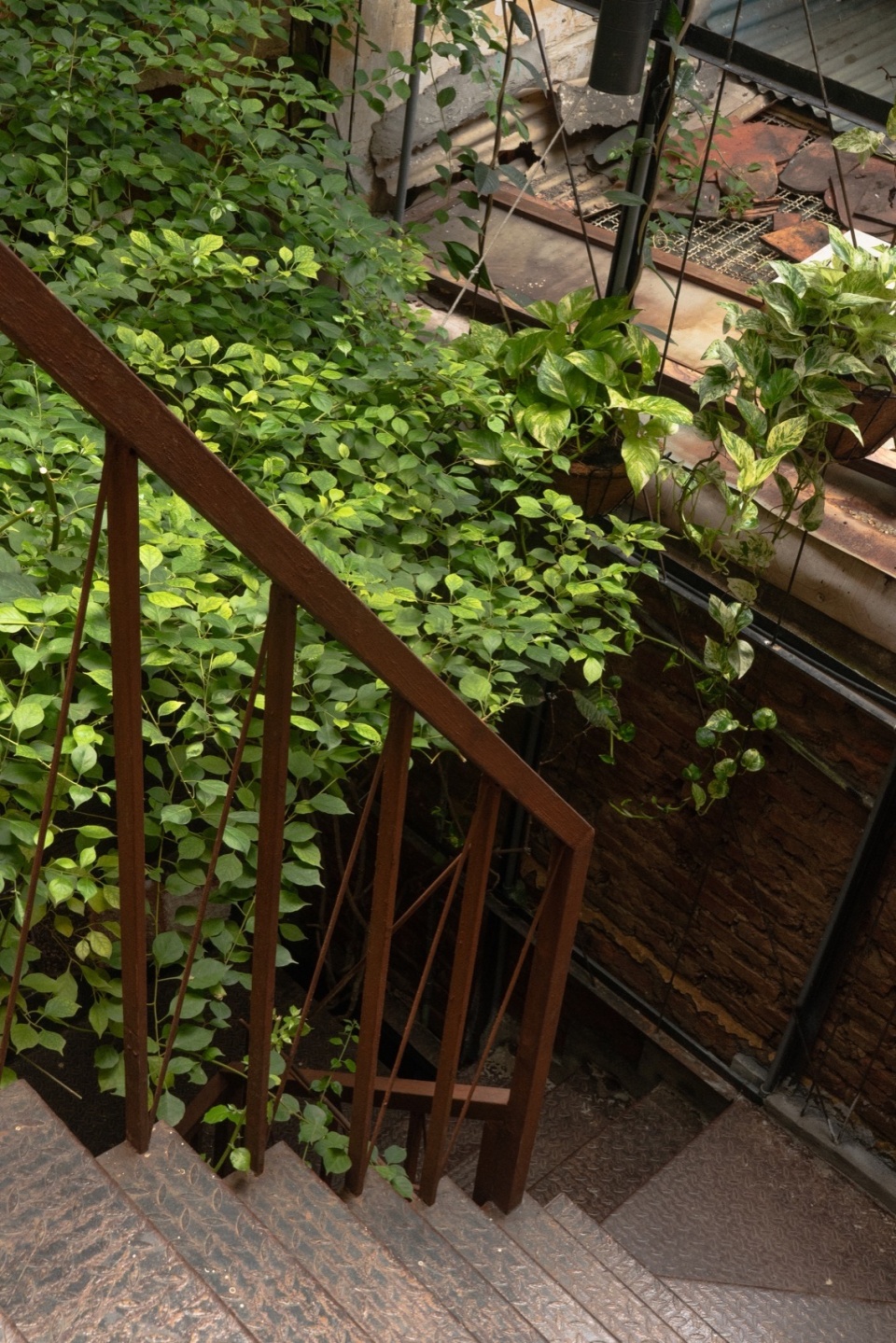
结构系统遵循极简却高效的原则。柱体、屋面与排水构件都经过精细打磨,每一个元素都仅承担必要的功能,无任何多余之处。在材料方面,我们选择了与环境自然互动的轻质材料。屋面如同漂浮的云层,是一层轻柔而起伏的覆盖,提供遮蔽的同时不过度阻挡自然光。隔断由3毫米厚的耐候钢板“量身定制”而成,边缘折弯以增强结构,同时唤起人们对老屋木梁温润质感的记忆。立面采用编织钢网,降低了建筑的视觉体量,使其更自然地融入周围绿意之中。
The structural system follows a minimalist yet effective principle. Columns, roofing, and gutters were all carefully refined so that each element serves a clear purpose, with nothing in excess. In terms of materials, we selected lightweight solutions that interact naturally with the surroundings. The roofing system is designed as a delicate, undulating layer—like a drifting cloud—providing shade without completely blocking natural light. The partitions are “tailor-made” from 3mm weathered steel sheets, their edges bent for reinforcement, evoking the warmth of aged wooden beams. The façade, woven from steel mesh, helps reduce the visual mass of the structure while fostering a seamless integration between architecture and greenery.
▼天花板,Ceiling
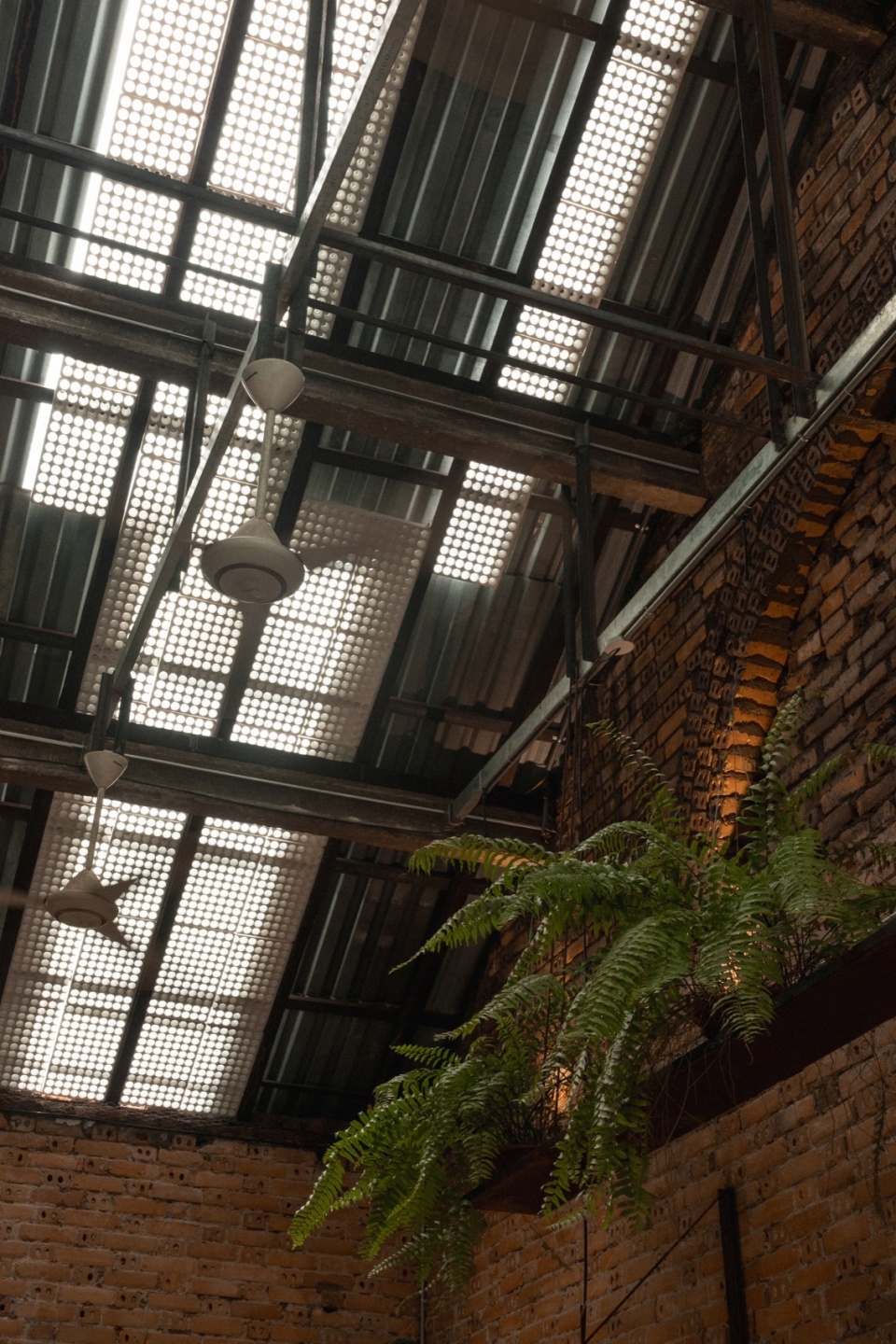
▼户外楼梯,Exterior stairs
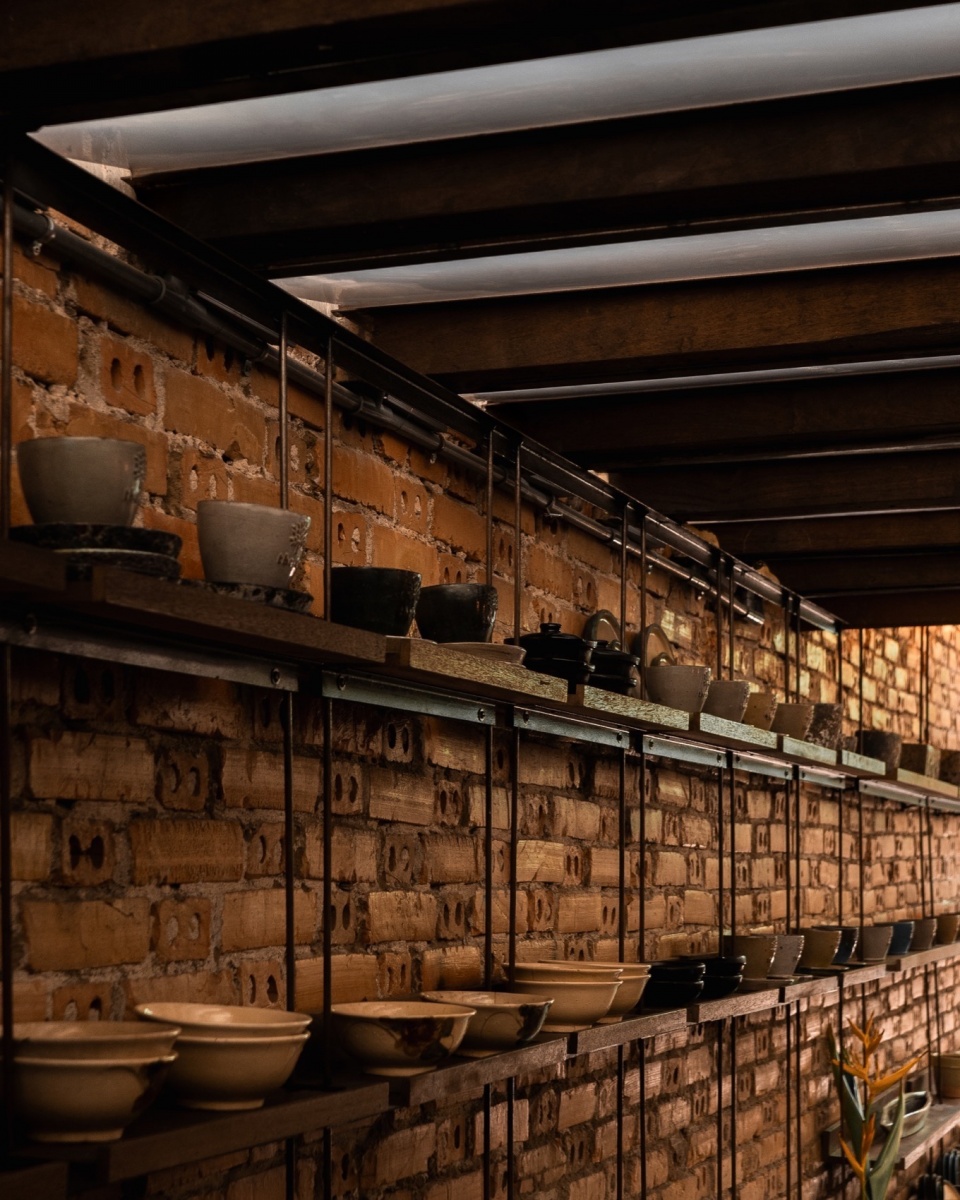
▼杯架,Cup rack
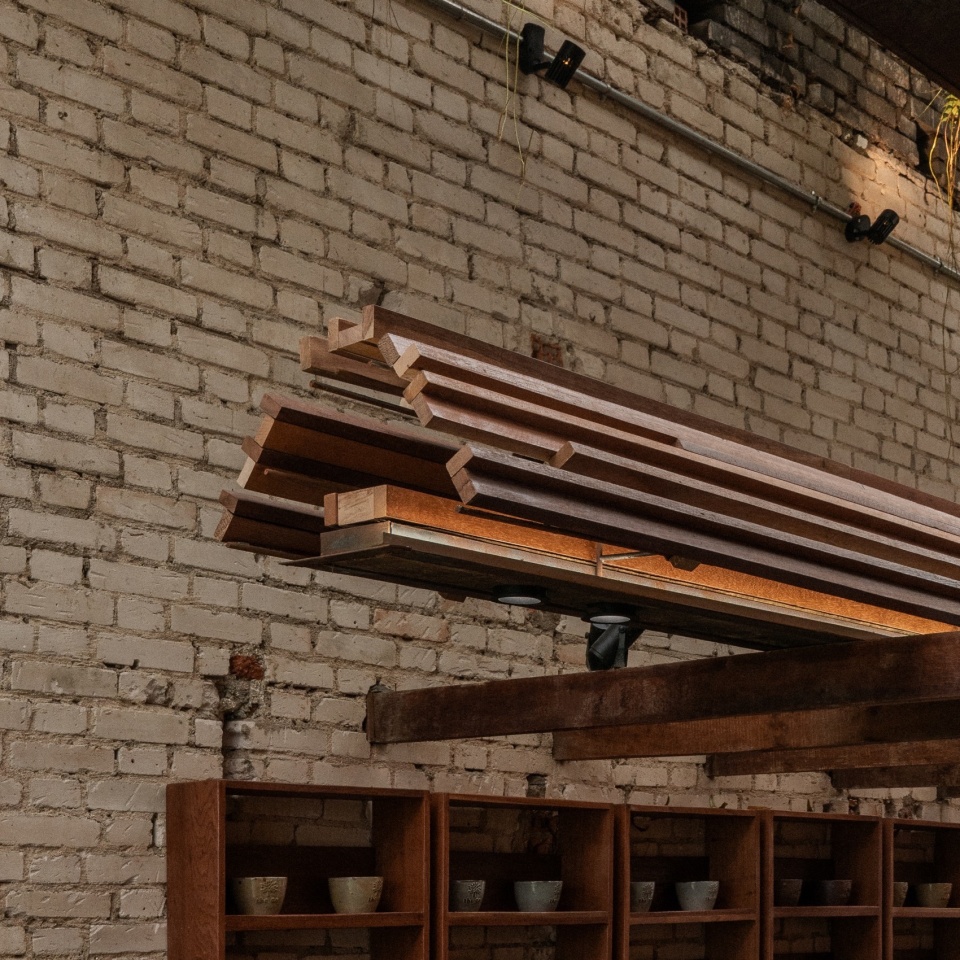
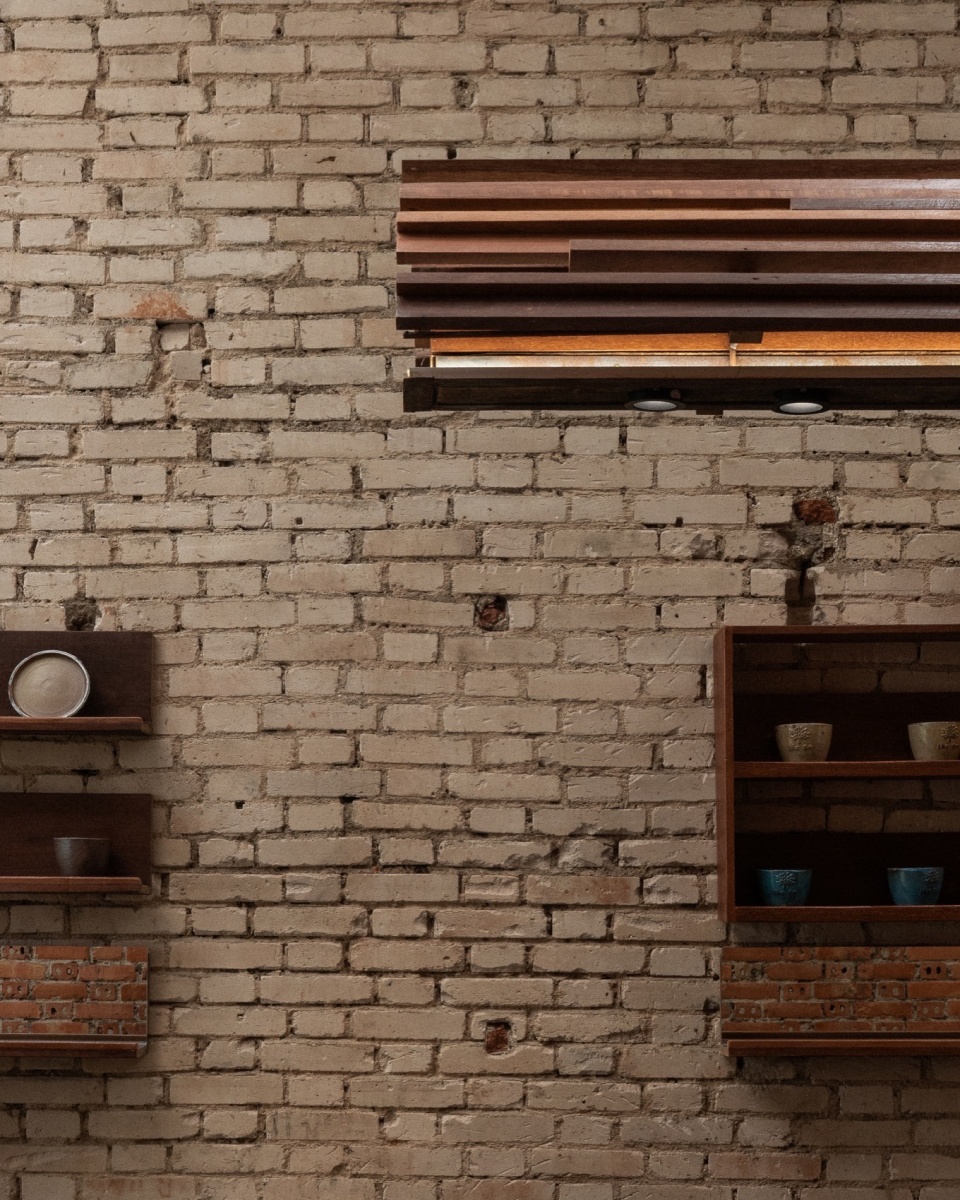
▼室内设计细部,Design details
通过这样的设计方式,建筑不再是对场所的主导或占据,而是一种微妙的介入,去强化并提升已有的存在。花园依然是花园,但它已不再只是老宅的附属,而成为一个共享的公共空间的重要组成——人与自然之间、旧与新之间、当下与未来之间的自然过渡。
With this approach, architecture does not impose itself upon the space but instead acts as a subtle intervention that enhances what already exists. The garden remains a garden, but now, it is no longer just part of the old house—it has become an integral part of a shared communal space—a natural transition between people and landscape, between old and new, between the present and future possibilities.
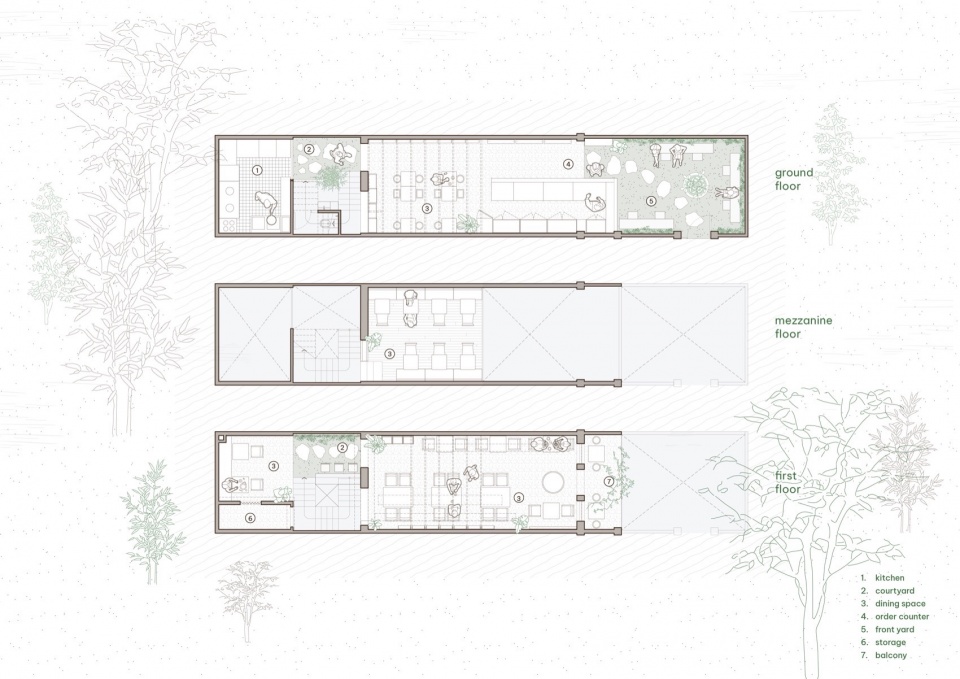
▼平面图,plan
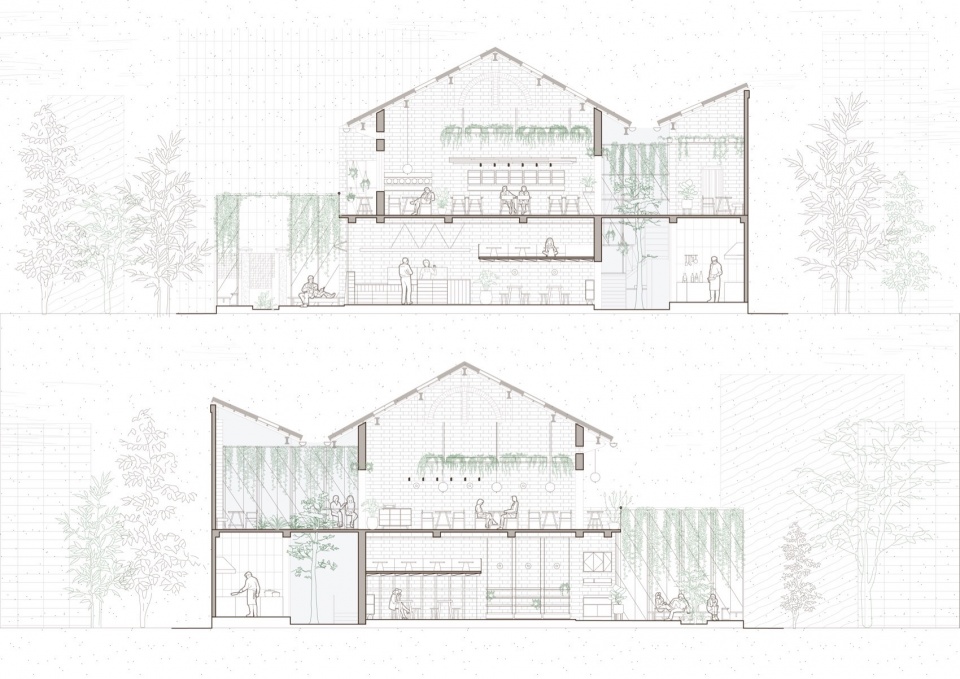
▼剖面图,section
Title: O Plant-based Ton That Dam
Office Name: xuong xep
Contact email: office@xuongxep.com
Firm Location: Ho Chi Minh city, Vietnam
Completion Year: 2024
Category: Architecture, Furniture
Gross Built Area (m2): 160m2
Project Location: Ton That Dam, Nguyen Thai Binh, Dist.1, HCMC, Vietnam
Usage: F&B
Construction: Local craftsman
Furniture: Mr.Viet, Mr.Trung, Mr.Hao
Design team: Lam Bao, Nguyen Anh Dung, khongphainhan, Trong Nhan, Devon, Kim Nhat Thanh, Nai, Chau Thao Vy
Drawings: Devon
Photography: xuong xep