兰亭,墨西哥 / CCA|Bernardo Quinzaños
兰亭(The Orchid Pavilion)由CCA|Bernardo Quinzaños为Casa Wabi基金会设计,位于墨西哥埃斯孔迪多港(Puerto Escondido)郊外,地处海洋与山脉之间。它是一座永久性、可持续且轻质的木结构建筑,致力于保护瓦哈卡地区的兰花物种,彰显这片土地上生物多样性与文化多样性的深层关联。
The Orchid Pavilion, designed for Casa Wabi, is located on the outskirts of Puerto Escondido, between the sea and the mountains. It is a wooden structure—permanent, sustainable, and lightweight—dedicated to the conservation of orchids in the Oaxaca region, celebrating the strong interplay between the biological and cultural diversity of the landscape.
▼场地鸟瞰,aerial view of the site
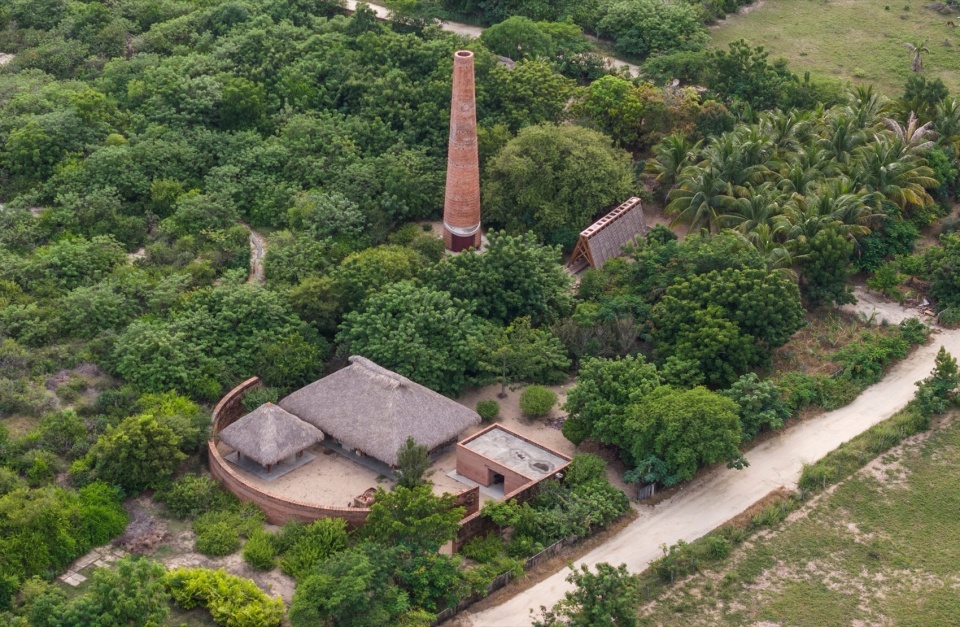
▼兰亭,pavilion of orchid
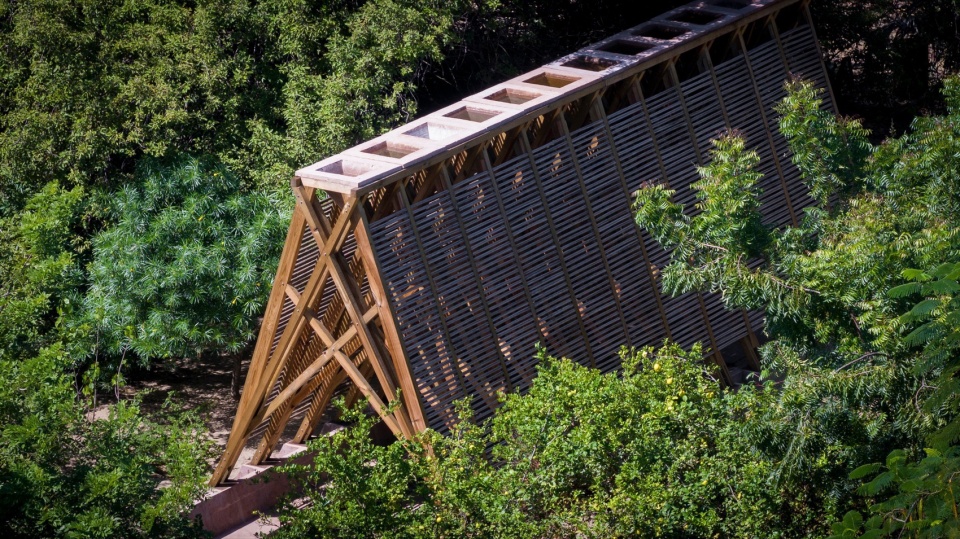
▼顶视图,top views
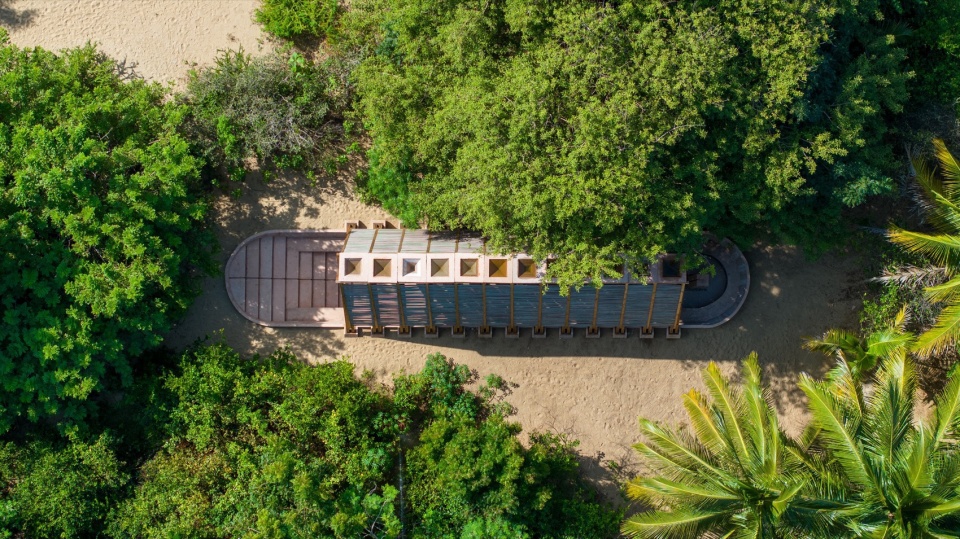
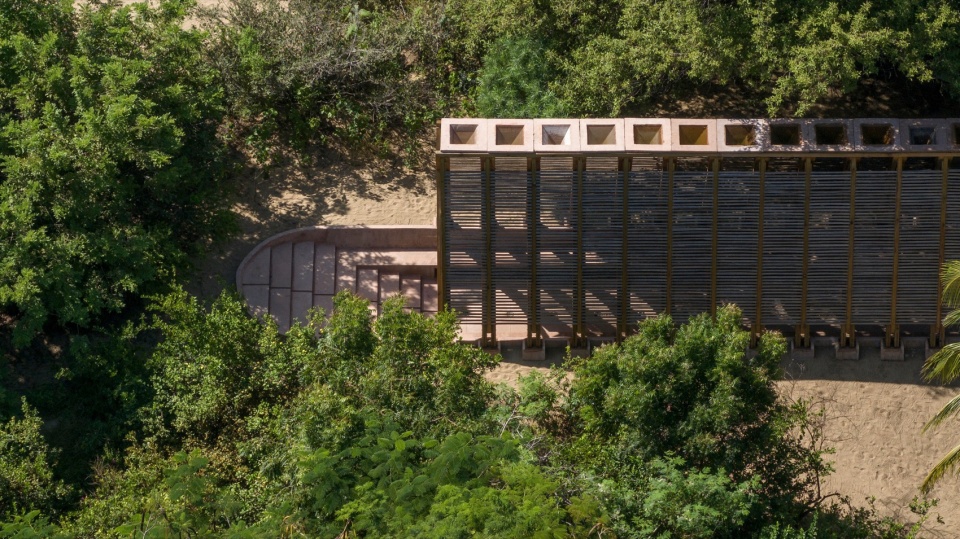
▼顶视图近景,closer view from the top
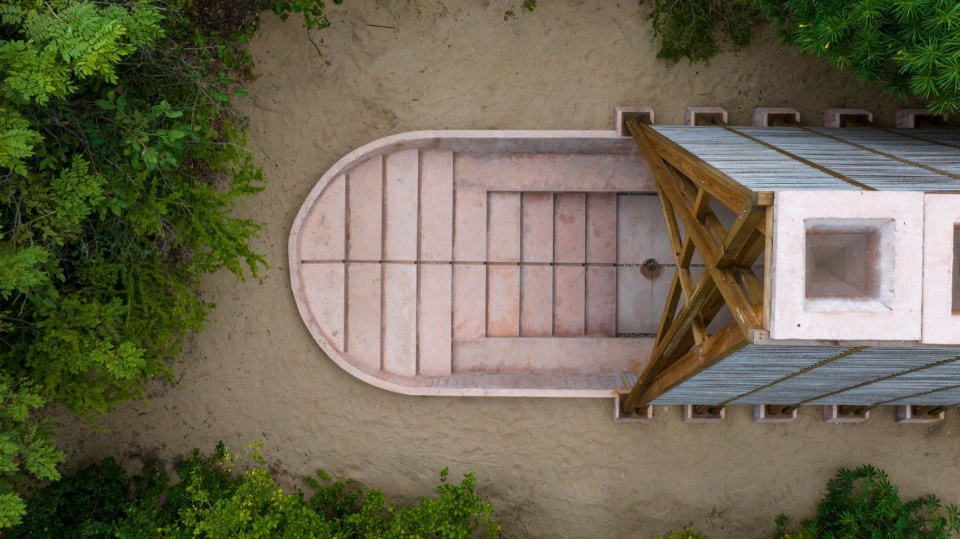
在设计兰亭的过程中,设计团队首先研究了兰花适宜生长的环境条件:湿润、半遮阴且通风良好。据此,他们提出一套确保功能性的技术策略。然而,项目更深层的灵感来源于日本“侘寂”(Wabi-Sabi)哲学与瓦哈卡海岸丰富传统之间的联系。侘寂提倡在简单、不完美和不对称中发现美与和谐,这种精神与当地材料、地域建造传统和非凡工艺形成自然共鸣。这一理念构成了设计的核心思想,进而引出一个出人意料的灵感概念:日语中的“生き甲斐”(Ikigai)。
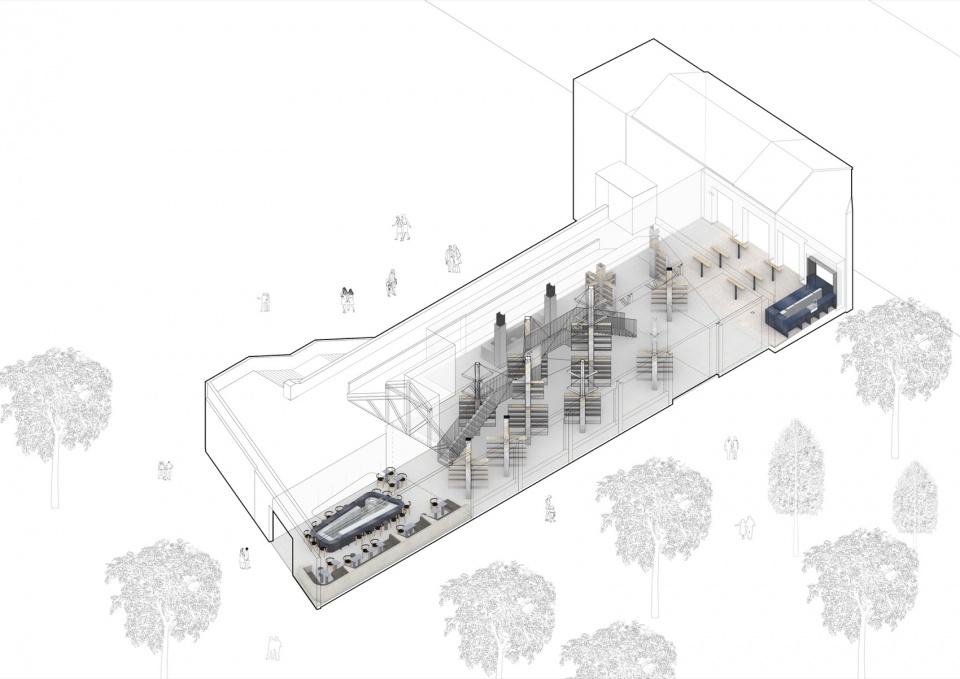
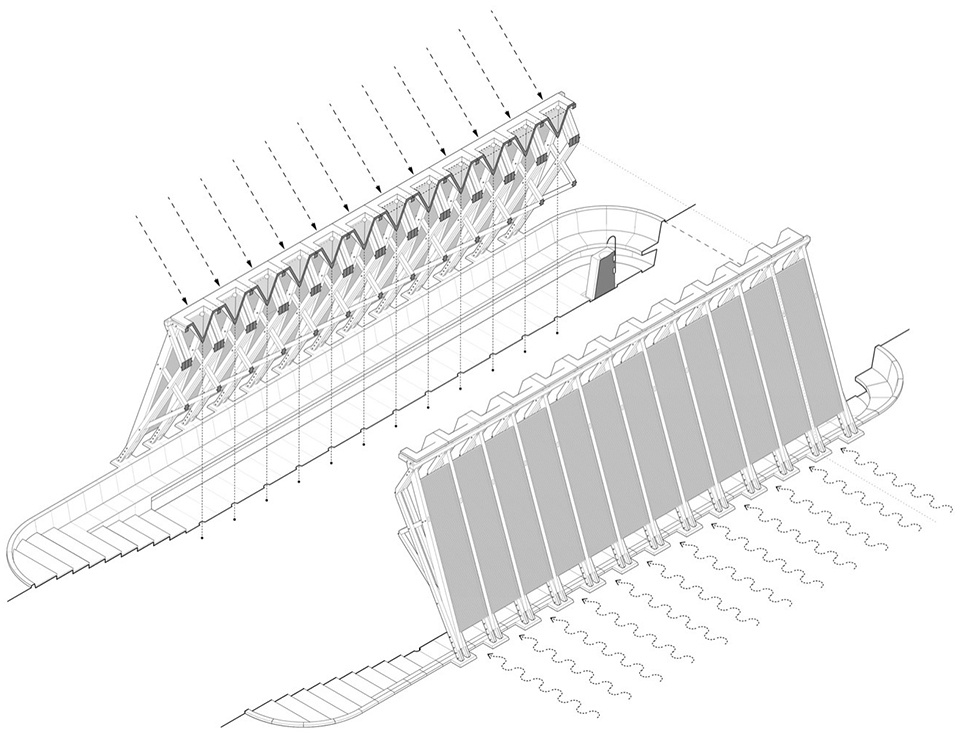
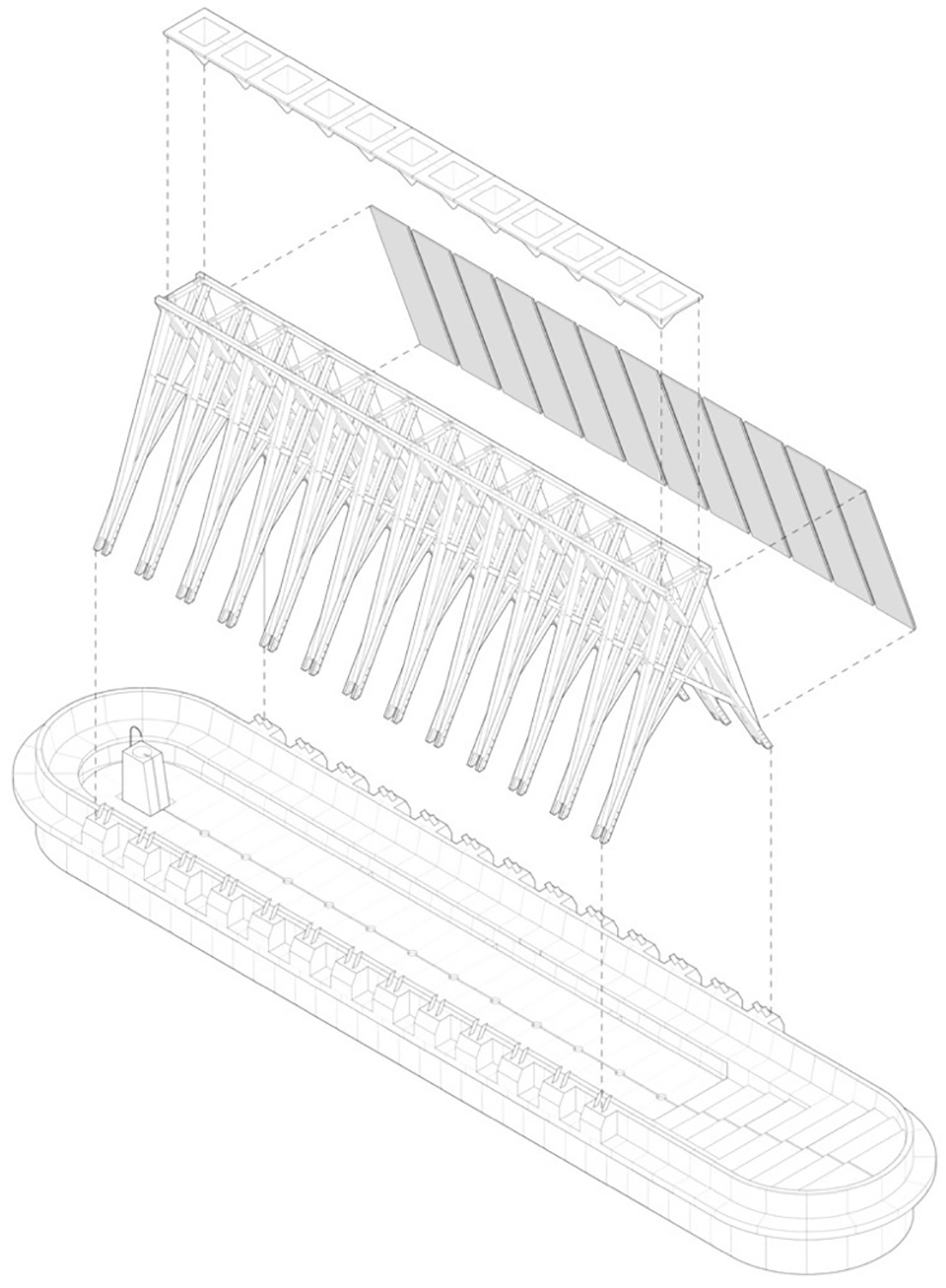
▼轴测图。axonometric drawing
As the firm approached the design of the Orchid Pavilion, their research pointed toward creating optimal conditions for orchids to thrive: a humid, partially shaded, and well-ventilated environment. This led to the development of clear technical features that ensure the pavilion’s functionality. However, the deeper inspiration for the project came from exploring the relationship between the Japanese philosophy of Wabi-Sabi and the rich traditions of the Oaxacan coast. Wabi-Sabi—which finds beauty and harmony in simplicity, imperfection, and unconventionality—resonates with the region’s vernacular, locally sourced materials, and the exceptional craftsmanship of its artisans. This connection became the foundation of CCA | Bernardo Quinzaños’ design approach, along with an unexpected guiding concept: the Japanese word Ikigai.
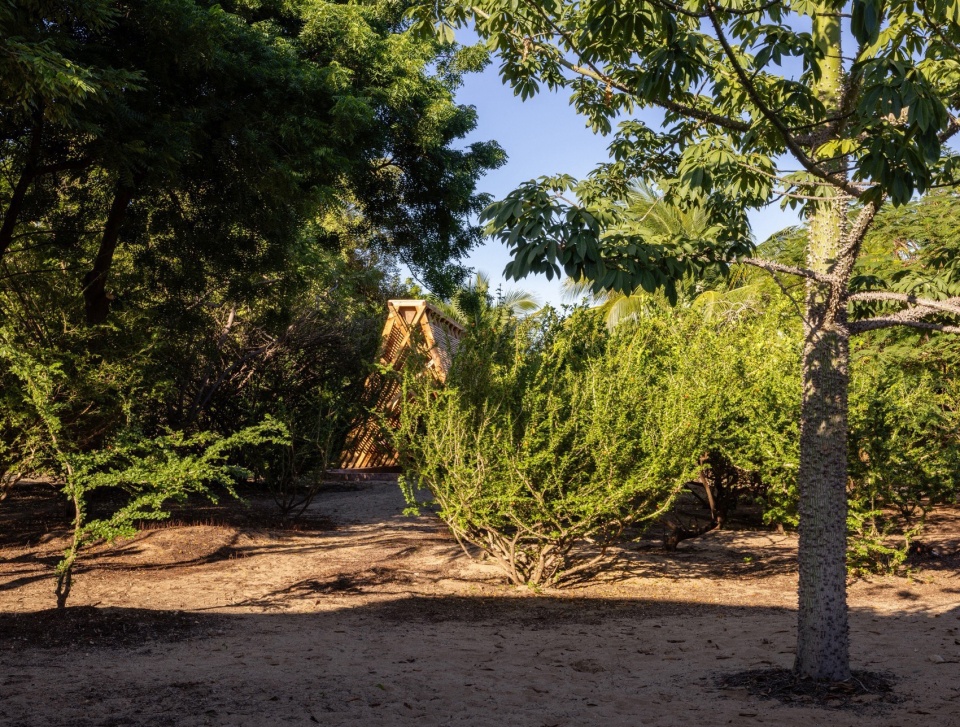
▼远观,viewing the pavilion at distance
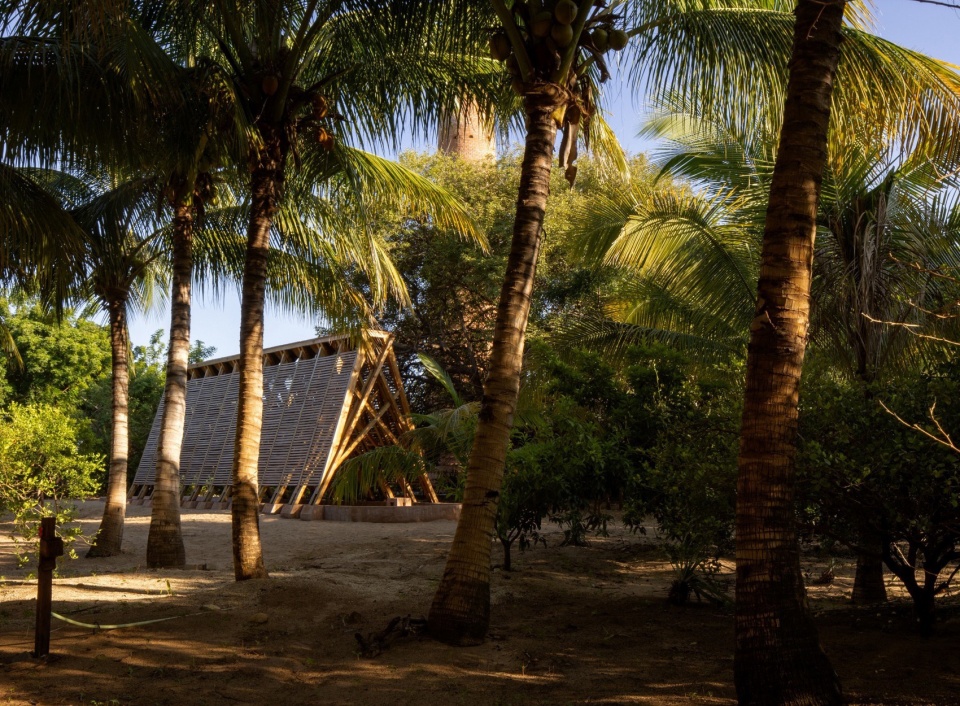
▼侧立面,side facade
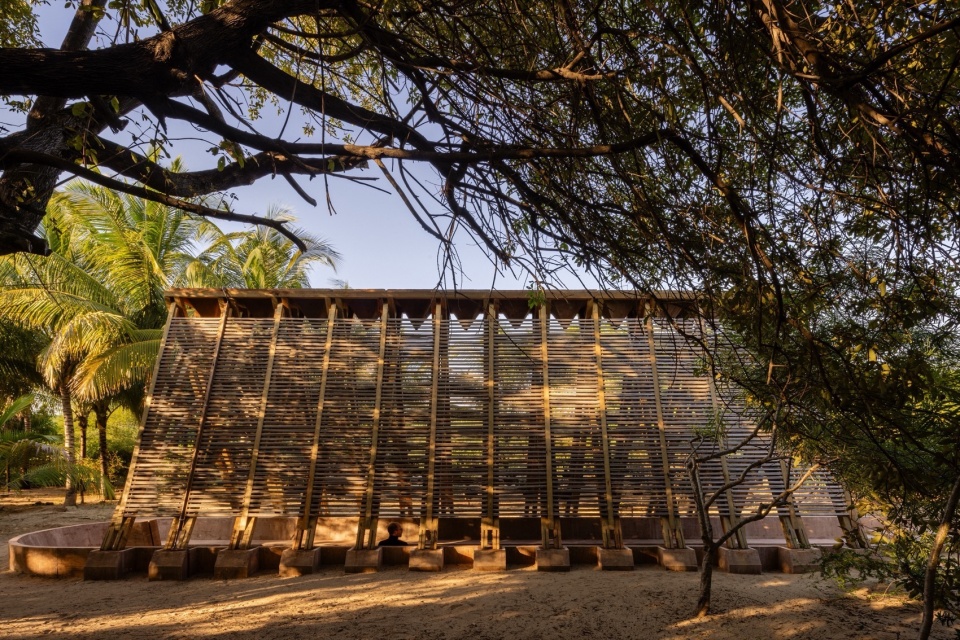
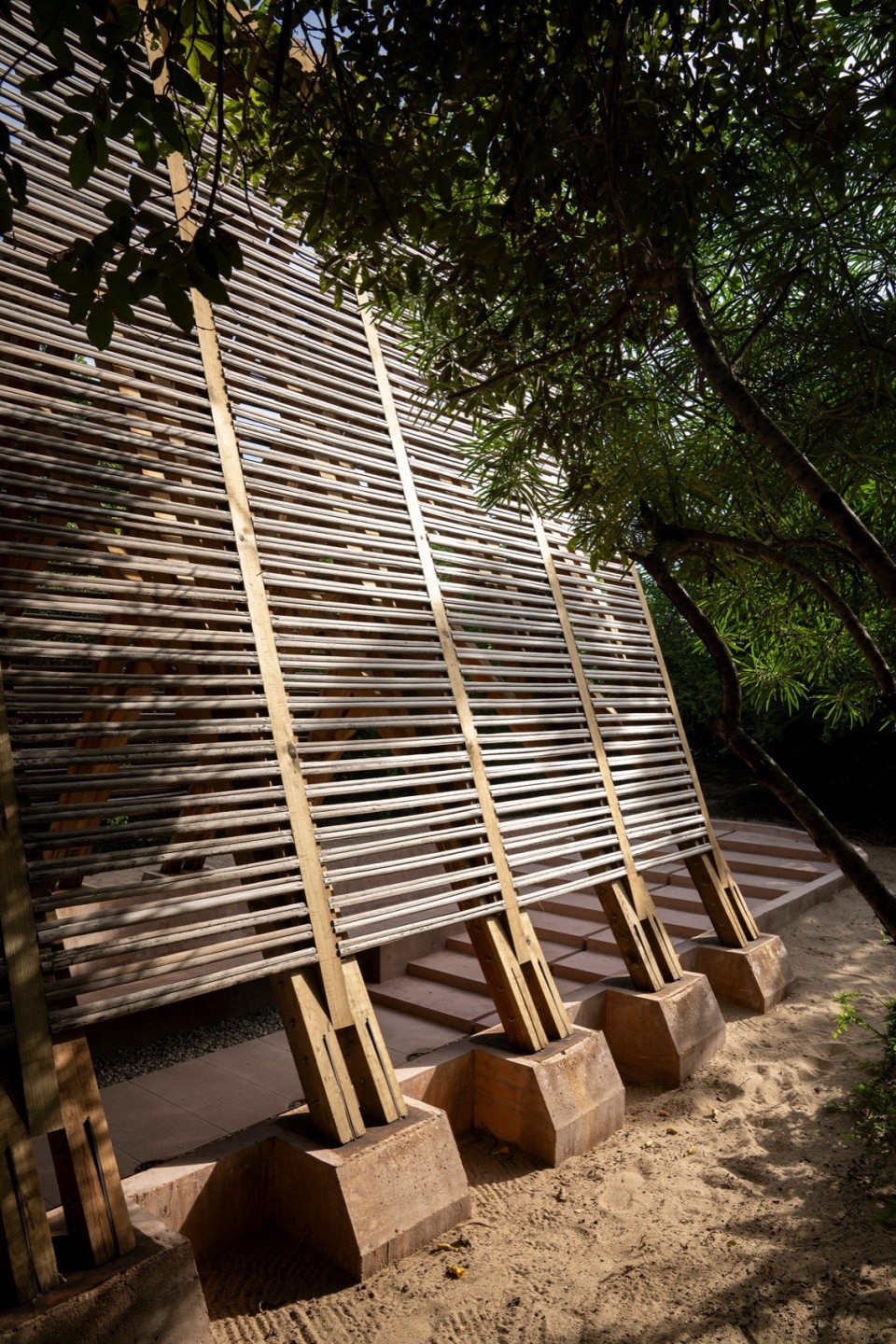
▼外观,exterior view
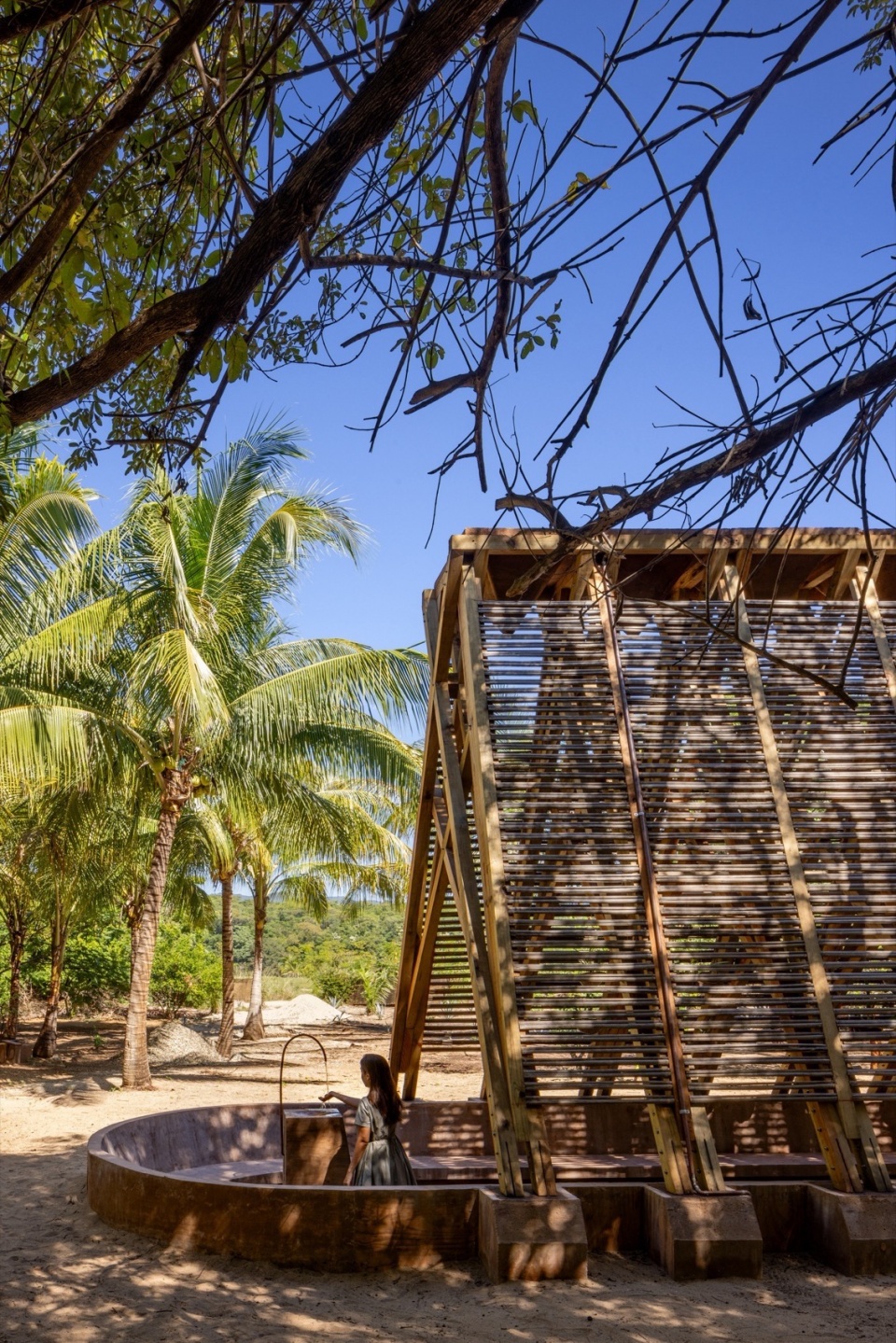
▼外观细部,details of exterior
“生き甲斐”(Ikigai,意为“生之意义”)强调人们在有目的的行动中获得幸福。该词由“生き”(iki,生命、活着)与“甲斐”(kai,成果、价值、果实)组成。这种以“目的性”为核心的哲学,与兰亭营造的冥想与和谐空间的愿景高度契合。兰亭希望通过营造一个体现Ikigai精神的空间,引导访客在自然的宁静之中重新连接自身的生命意义。
▼分析图,analysis diagram
Ikigai (生き甲早, ‘a reason for being‘) can be translated as the happiness derived from living with purpose. The term combines iki (生き, meaning ‘life’ or ‘alive’) and kai (甲早, meaning ‘effect, result, fruit, or worth’). This philosophy—centered on finding joy in purposeful activity—aligned perfectly with the pavilion’s goals of fostering a meditative, harmonious space for both orchids and visitors. By creating a space that embodies Ikigai, the pavilion invites guests to reconnect with their own sense of purpose amidst the serenity of nature.
▼兰亭底部为混凝土基座,
the bottom of the pavilion is the concrete base
▼木制结构,wooden structure
设计聚焦于三个核心要素:
1.功能简洁性:建筑配备十二个混凝土重力加湿器,持续制造湿润环境,使来自瓦哈卡海岸的兰花无需人工灌溉便可健康生长。
2.可持续材料:建筑采用本地采购木材与高温窑烧的定制混凝土陶瓷构件,不仅延续地域传统,也符合当代可持续发展标准。
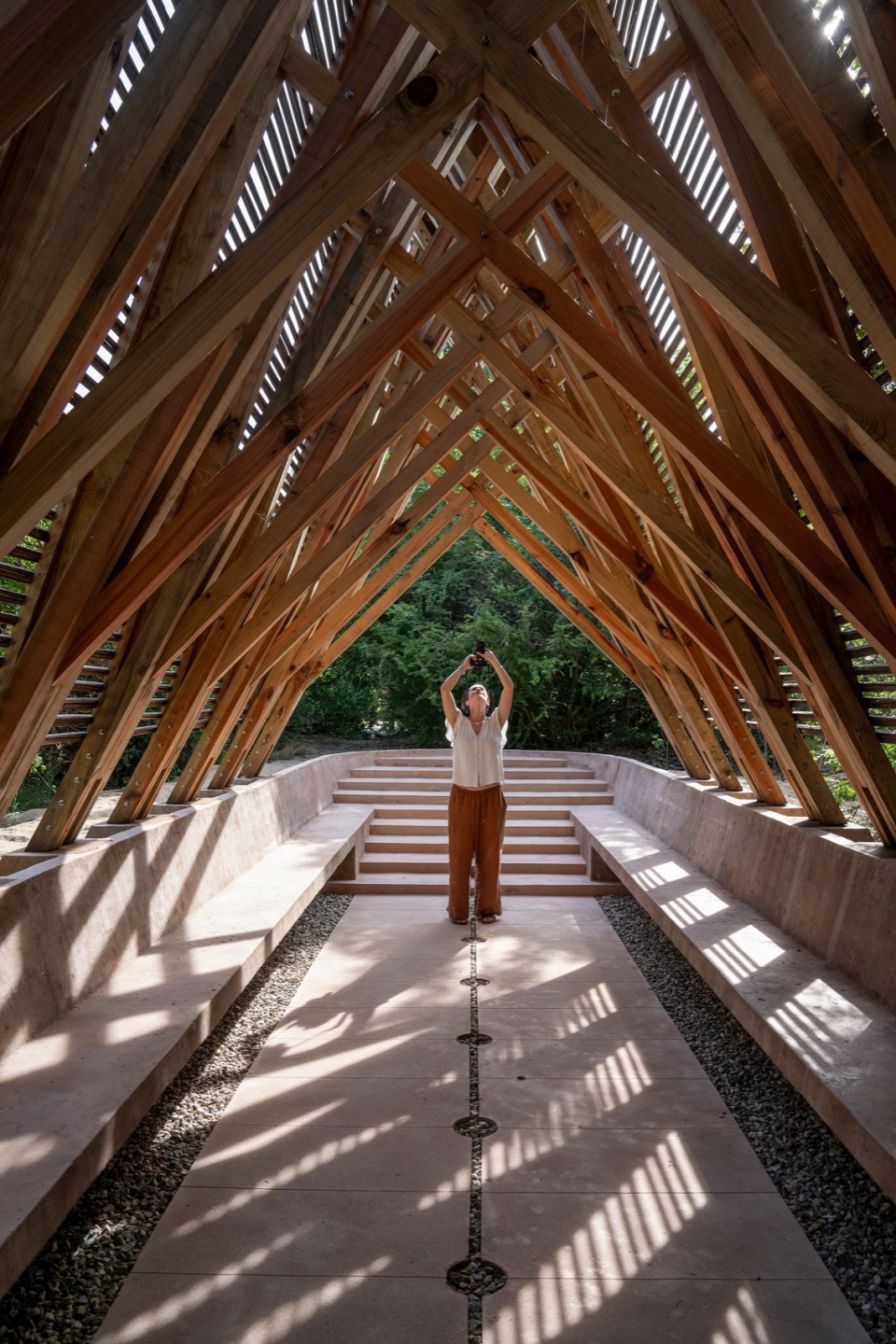
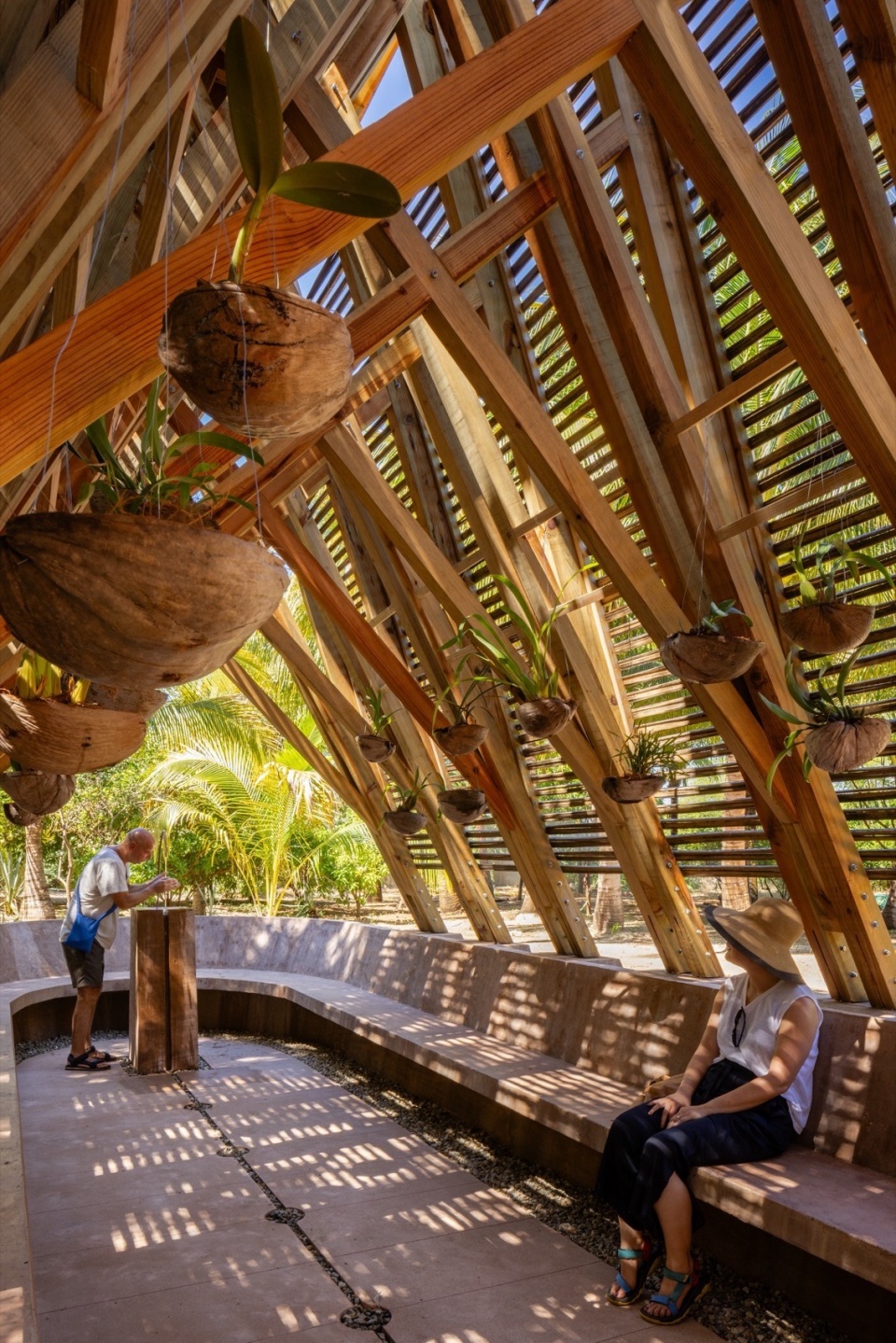
3.沉思之所:除了满足技术功能,兰亭更期望带来一种唤醒Ikigai的空间体验。访客步入其间,感受潮湿的空气、聆听水滴声响与交错微风,在感官层面唤起内心的平静与省思。
The design prioritizes three main elements:
1. Functional simplicity: Twelve concrete-based humidifiers, utilizing gravity, create a controlled humid environment ideal for orchids from the Oaxacan coast. This system ensures the orchids thrive without manual watering.
2. Sustainable materials: Locally sourced wood and custom-made concrete ceramic pieces, fired in high-temperature kilns, form the structure. These materials echo the vernacular traditions of the region, while adhering to sustainable practices.
3. A sanctuary for reflection: Beyond its technical role, the pavilion aims to evoke a profound sense of Ikigai in its visitors. Entering the space, one breathes in the humidity, hears the gentle drops of water, and feels the crossing winds—a sensory experience that fosters introspection and harmony.
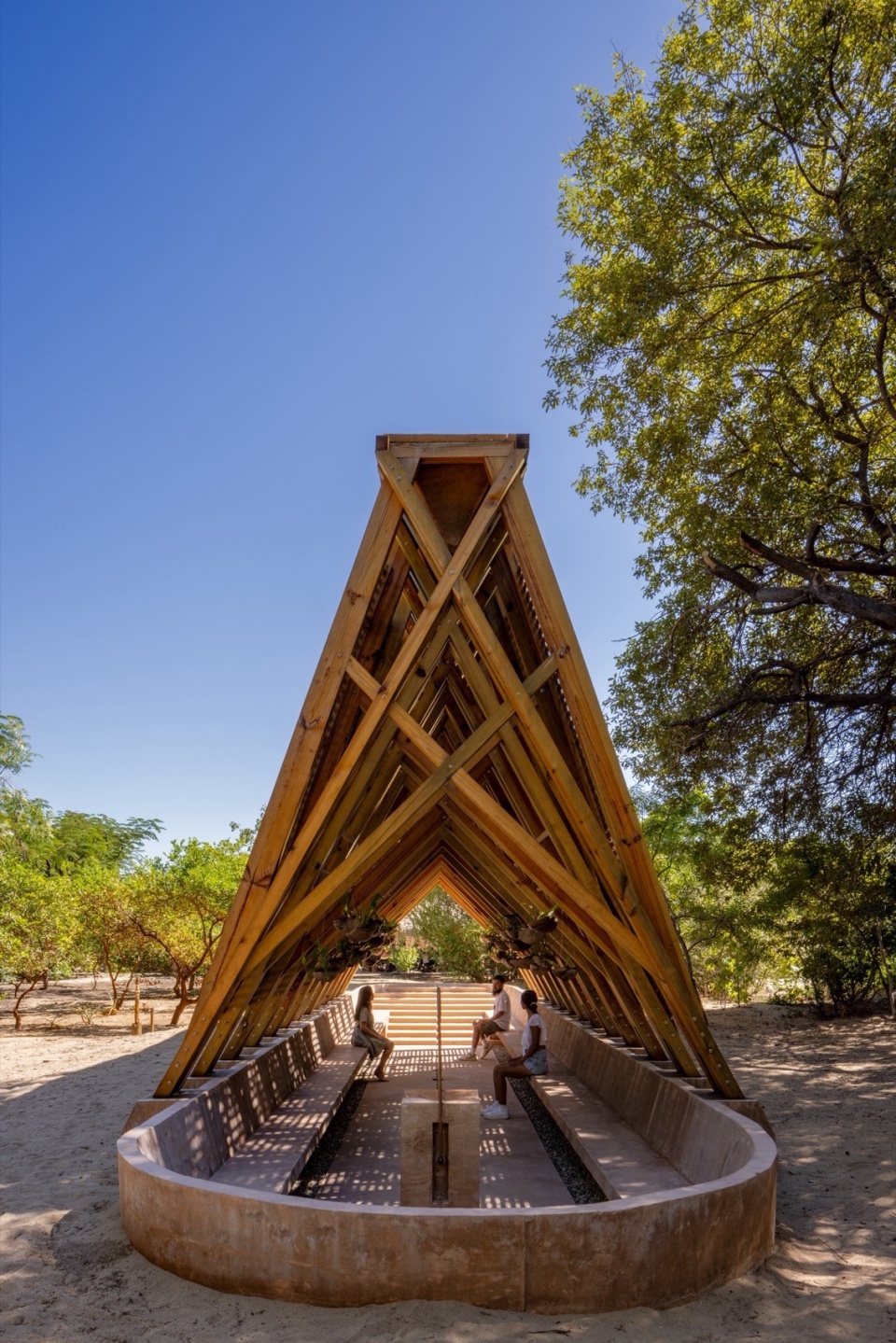
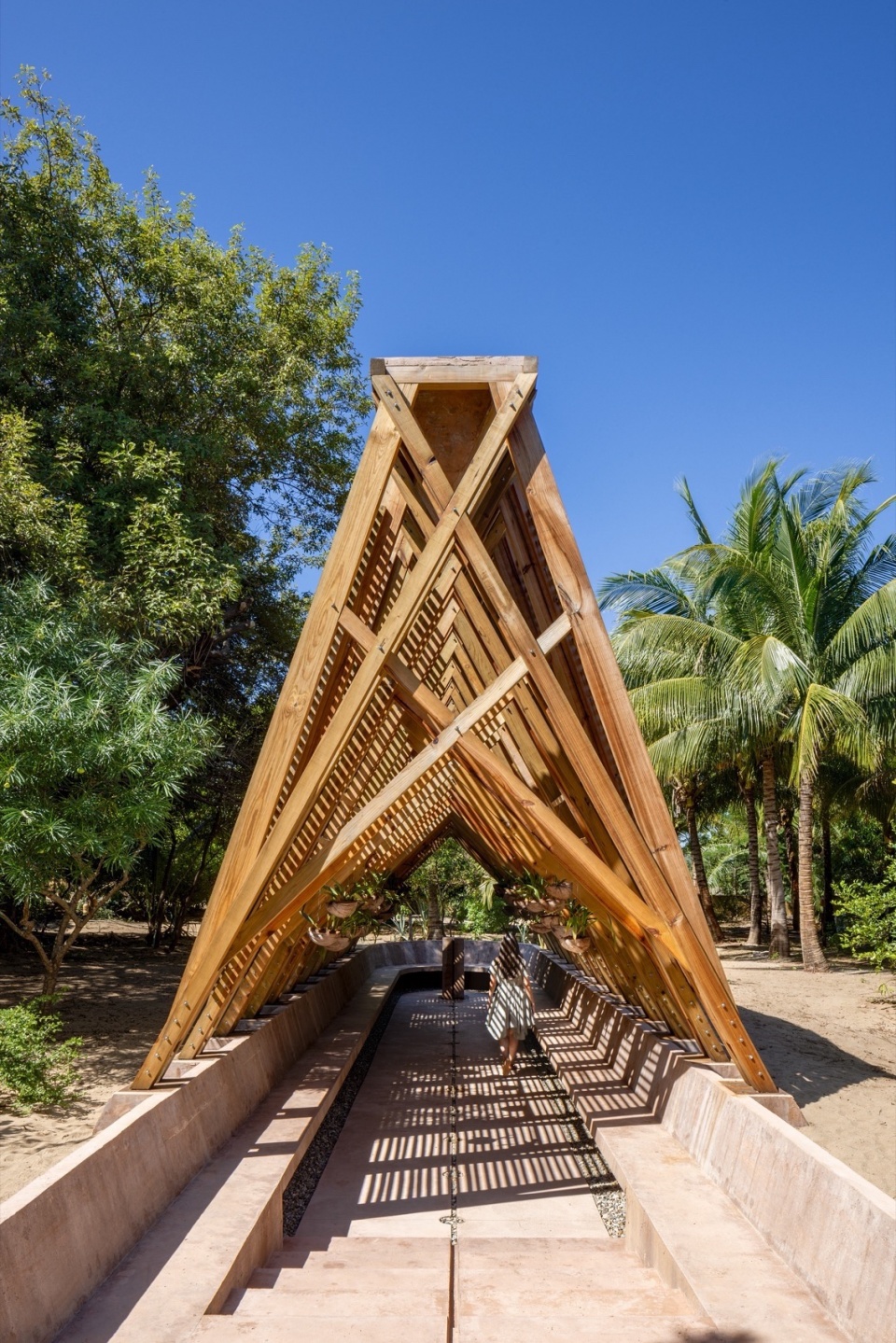
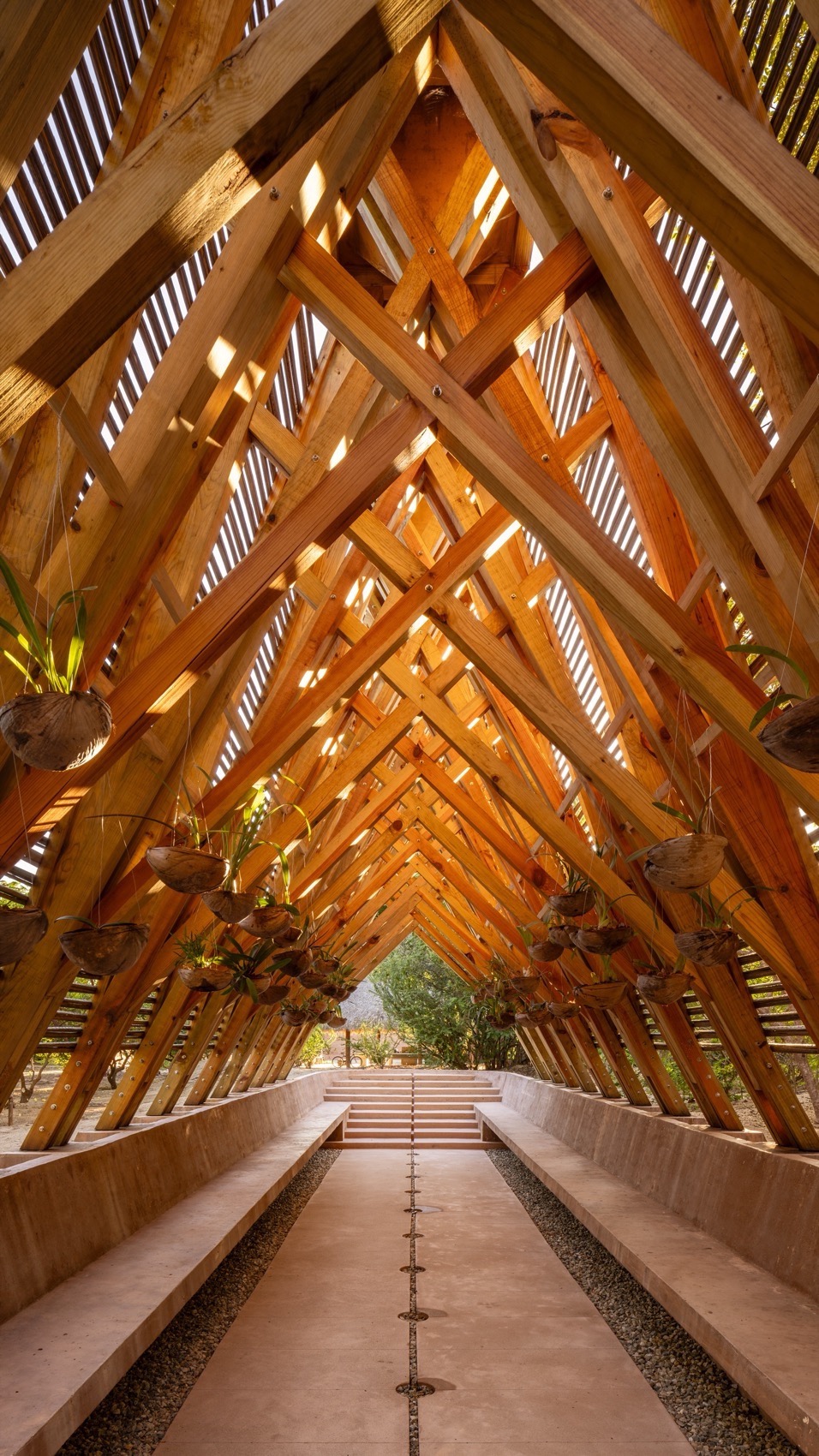
▼兰亭内部,interior view of the pavilion
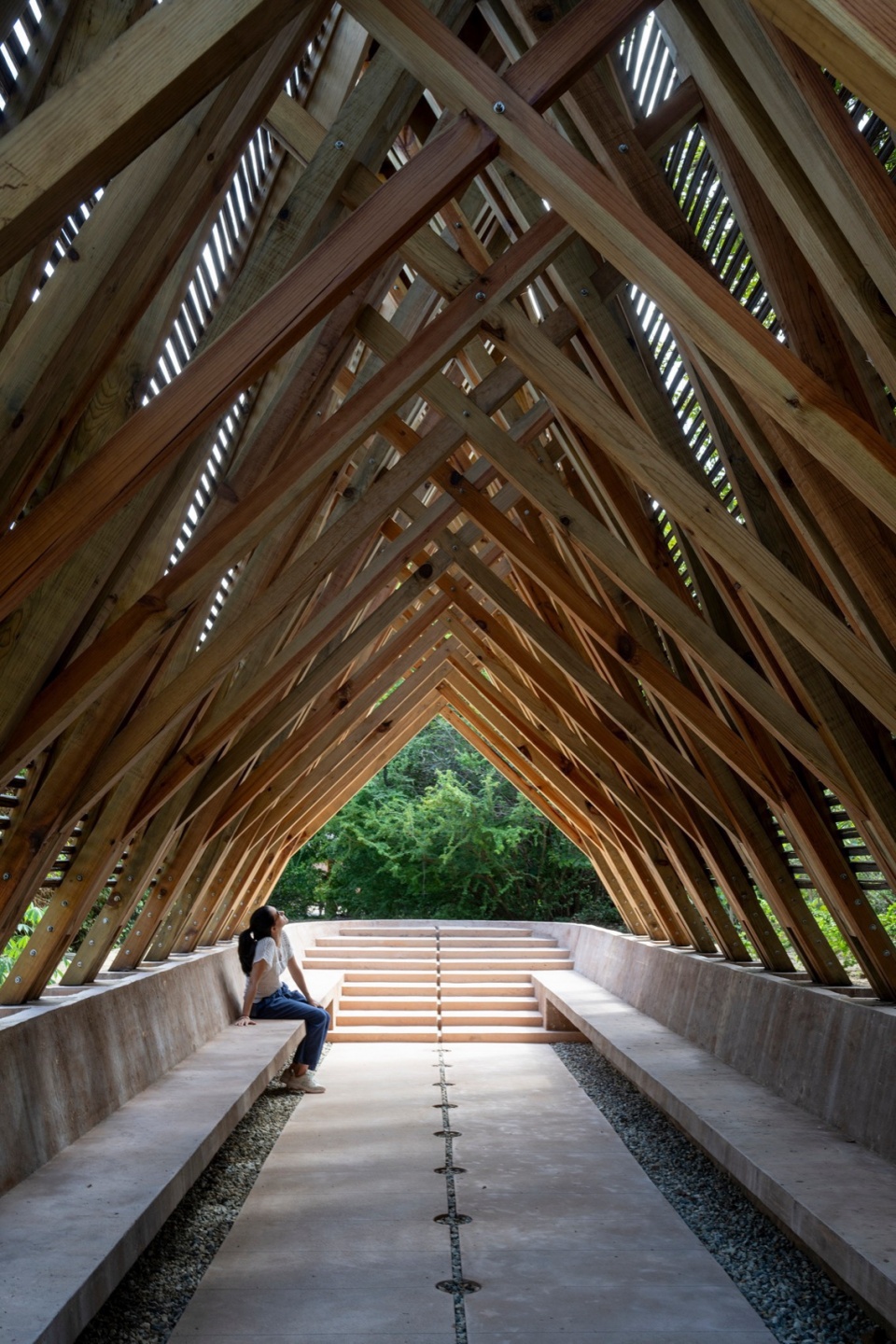
▼座位区,seating area
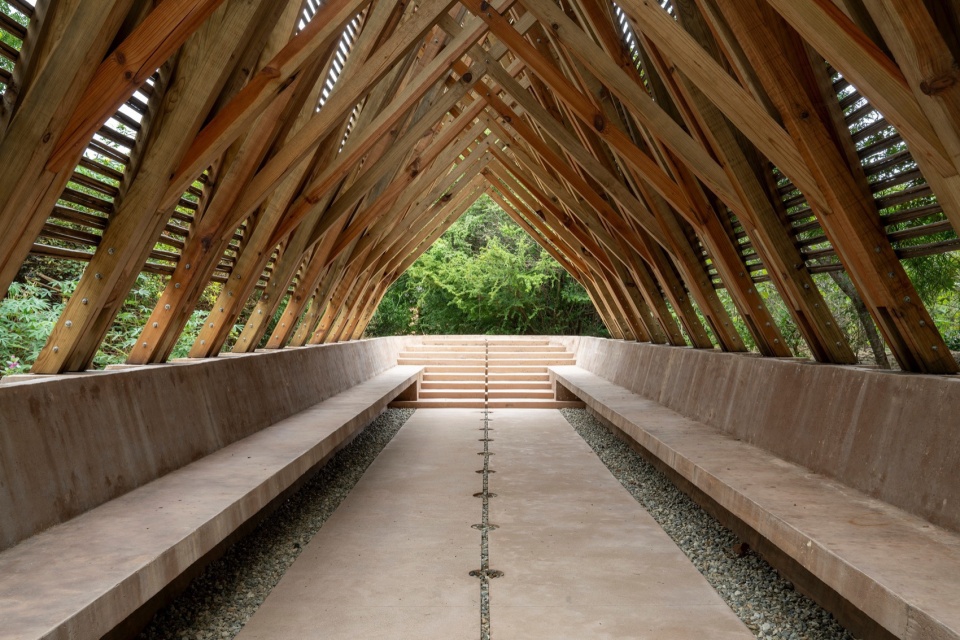
▼细部,details
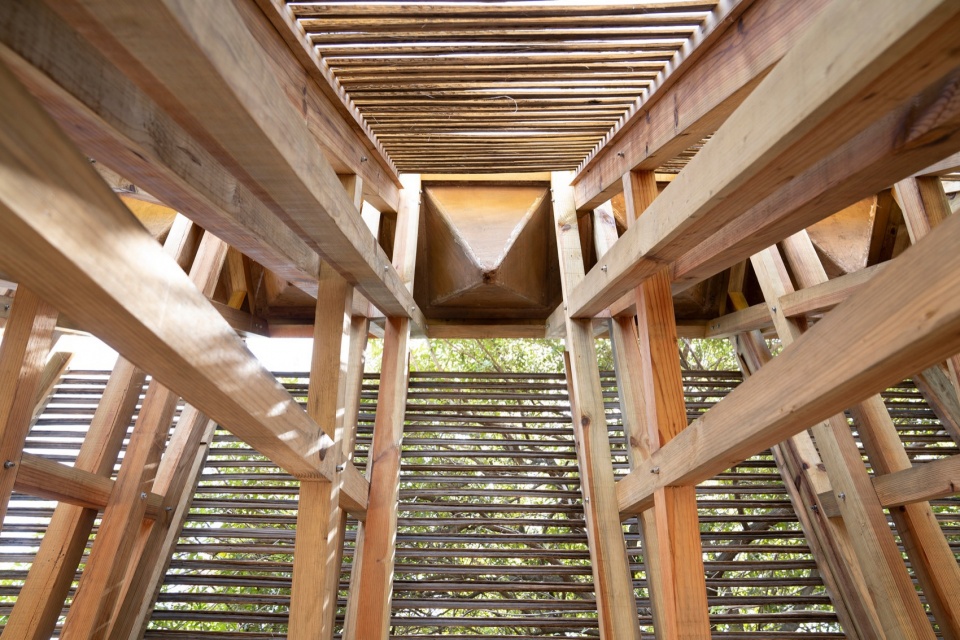
兰亭营造湿润环境的关键装置,是置于屋顶的金字塔形蓄水混凝土容器。这些容器缓缓释放细小水滴,滴落至下方的湿润混凝土托盘,形成自然的湿润循环。无需人工灌溉,兰花便可像在自然栖息地中一样,从空气与表面吸取水分,获得所需水汽。对Casa Wabi的访客而言,兰亭是一处穿越长途步行后的静谧庇护所。在这里,人类与兰花共享的水源成为人与自然联结的隐喻。水滴声与自然节奏和人类行为交织共鸣,营造出一段指引访客重新回归生命本质的沉思旅程。
▼剖面图,section
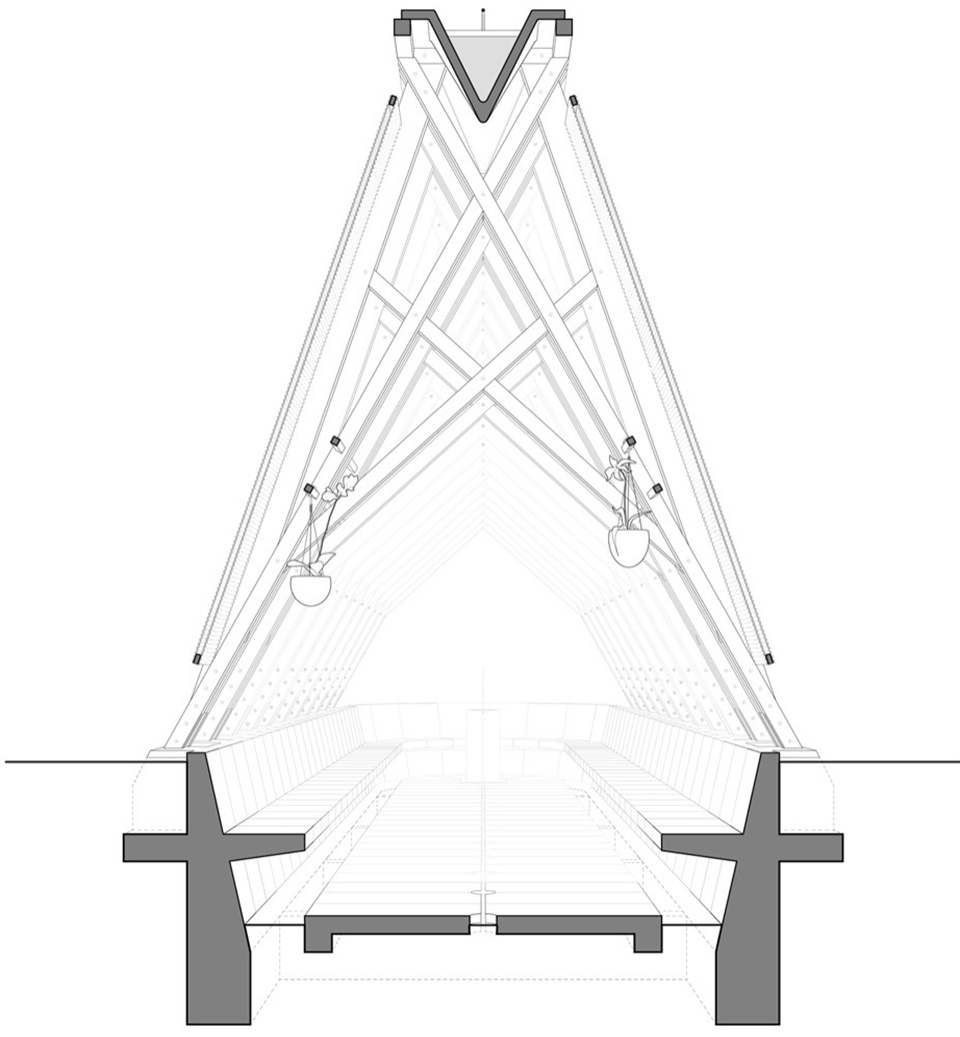
The central element supporting orchid growth is the carefully maintained humid environment. Pyramid-shaped, water-filled concrete basins crown the wooden structure, releasing tiny droplets that drip to the ground, where they are collected by permanently humid concrete trays. This process not only sustains the orchids, but also eliminates the need for manual irrigation. The breeze and warmth allow the plants to absorb moisture directly from the air and surfaces, mimicking their natural habitat. For guests of Casa Wabi, the Orchid Pavilion offers a tranquil refuge after a long walk. The shared water—consumed by both people and orchids—becomes a metaphor for humanity’s connection to nature. The sound of dripping water resonates with natural cycles and human activity, creating a contemplative journey that reorients visitors to the humble root of life.
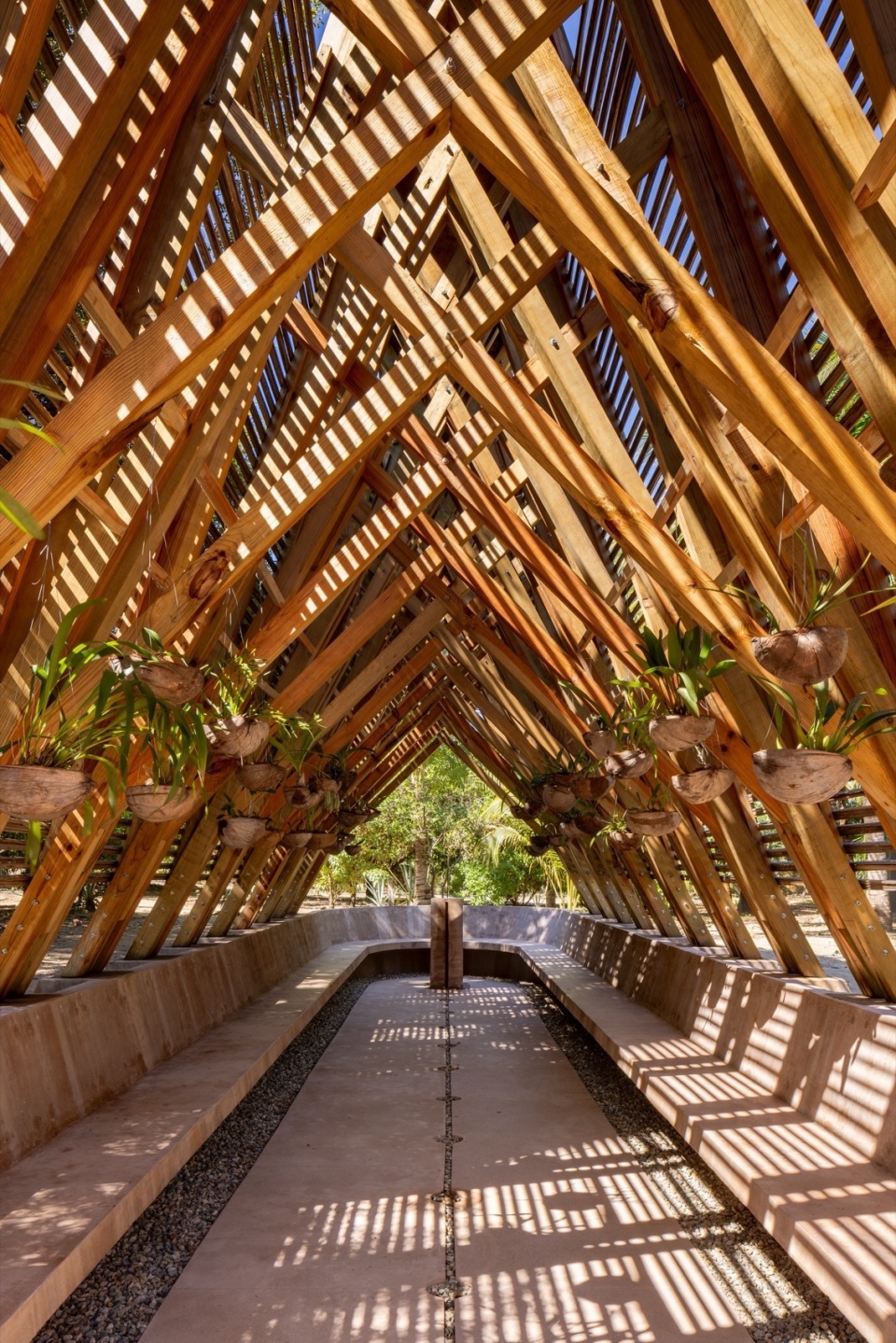
▼内部光影,interior light and shadow
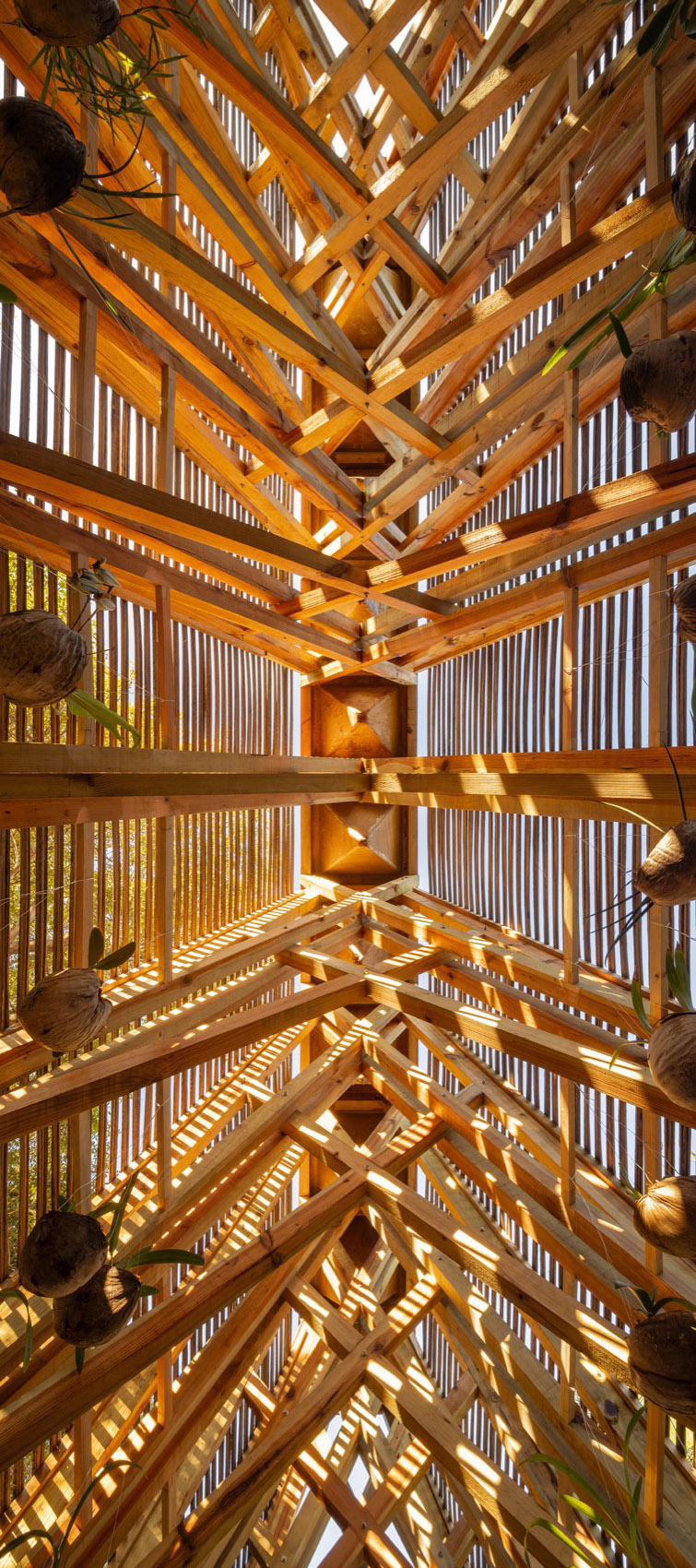
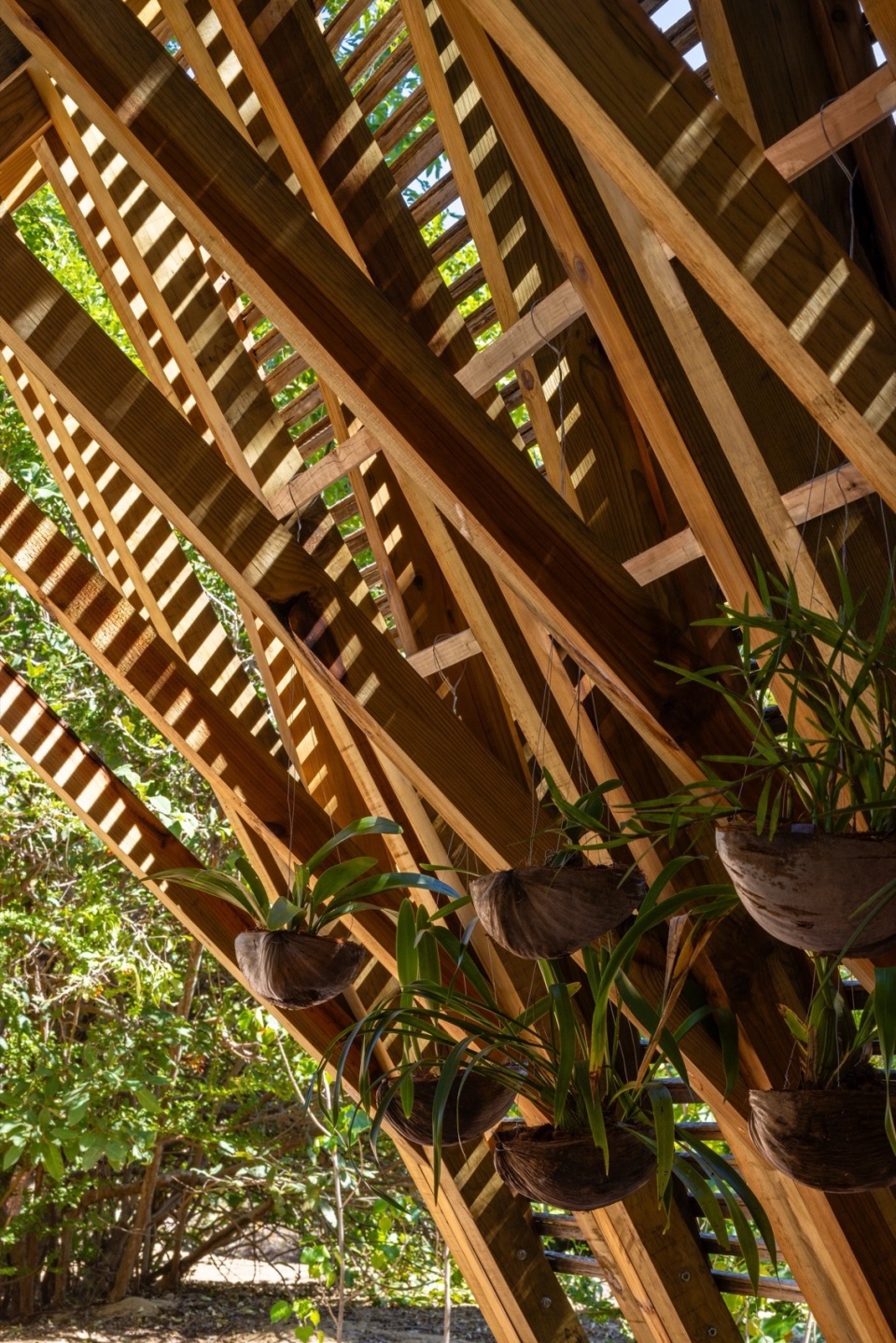
▼仰视屋顶,looking up to the ceiling
▼悬吊在空中的兰花,the suspended orchid
▼细部,details
Casa Wabi基金会是一家非营利机构,在墨西哥埃斯孔迪多港、墨西哥城与东京设有据点,致力于通过艺术与当地社区之间的对话促进社会发展。其使命根植于日本“侘寂”哲学,围绕五大核心项目展开:艺术驻留、展览、陶艺、电影放映与移动图书馆。近年来,基金会已落成多项建筑项目,包括葡萄牙建筑师阿尔瓦罗·西扎(Álvaro Siza,1992年普利兹克奖得主)设计的陶艺馆、墨西哥建筑事务所Ambrosi Etchegaray设计的黄檀亭、日本建筑师隈研吾设计的鸡舍、巴拉圭建筑师Solano Benítez与Gloria Cabral设计的堆肥亭,以及墨西哥建筑师Alberto Kalach近期完成的高温陶窑与花园。这些建筑不仅服务于基金会的各类项目,也见证了艺术、建筑与社区之间的融合共生。
Fundación Casa Wabi is a non-profit organization that fosters dialogue between contemporary art and local communities across its locations in Puerto Escondido, Mexico City, and Tokyo. Rooted in the Japanese philosophy of Wabi-Sabi, the foundation’s mission is to promote social development through art via five core programs: residencies, exhibitions, pottery, film, and a mobile library. In recent years, the foundation has inaugurated several notable projects, including a Ceramic Pavilion by Portuguese architect Álvaro Siza (Pritzker, 1992), a Guayacán Pavilion by Mexican studio Ambrosi Etchegaray, a Henhouse by Japanese architect Kengo Kuma, a Compost Pavilion by Paraguayan architects Solano Benítez and Gloria Cabral, and, more recently, a high-temperature oven and gardens by Mexican architect Alberto Kalach. Each of these pavilions provides functional spaces that support the foundation’s programs, while celebrating the convergence of art, architecture, and community.
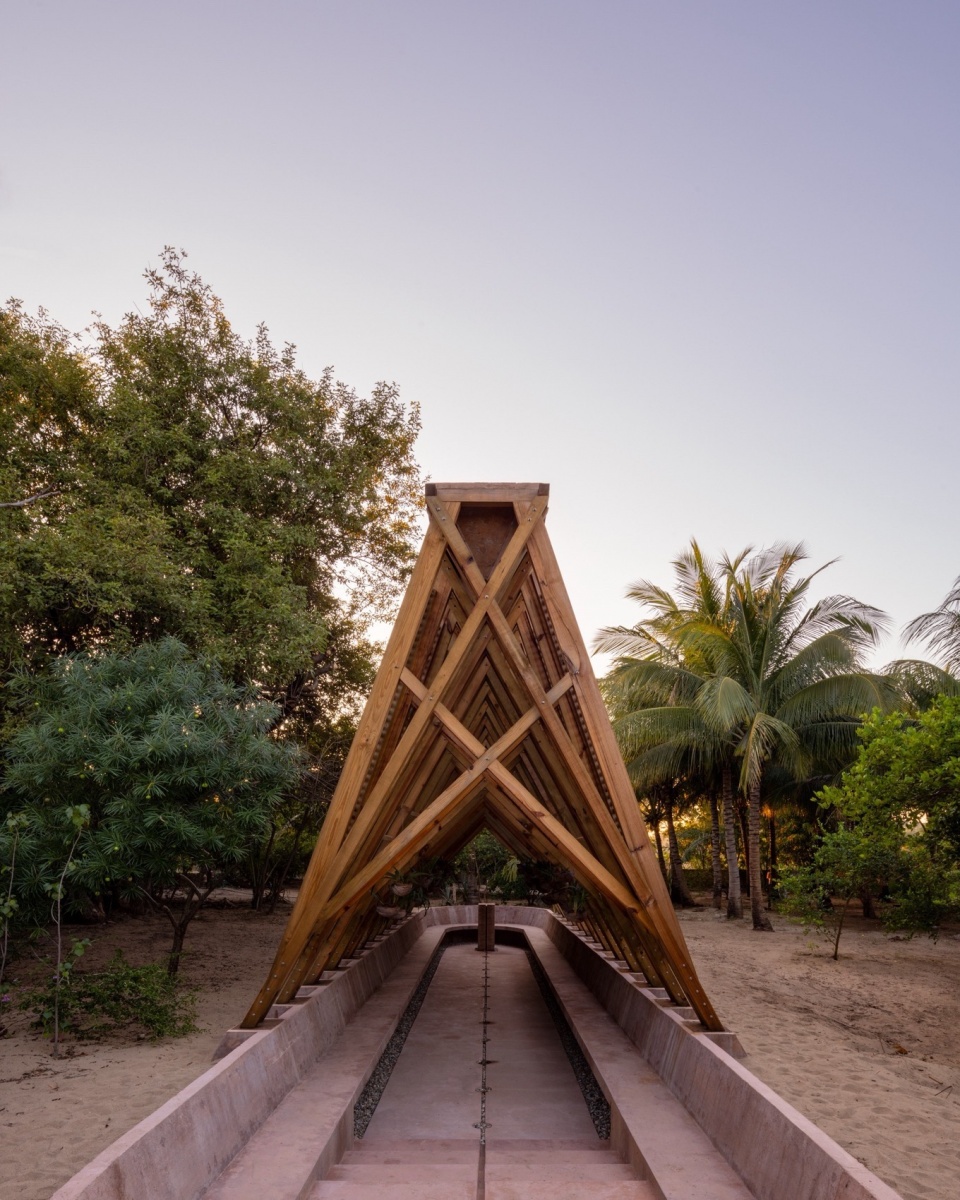
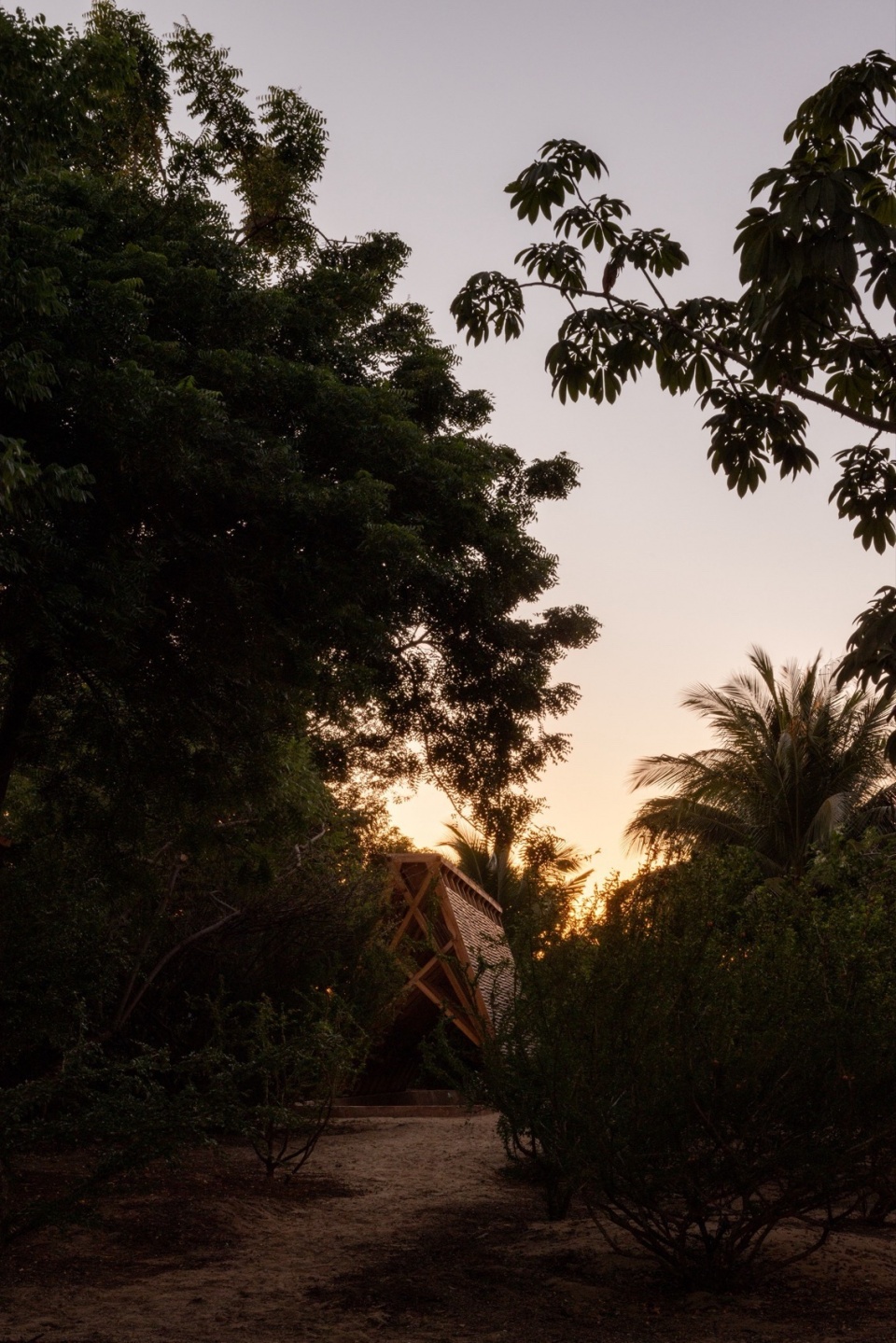
▼夕阳景观,dusk view
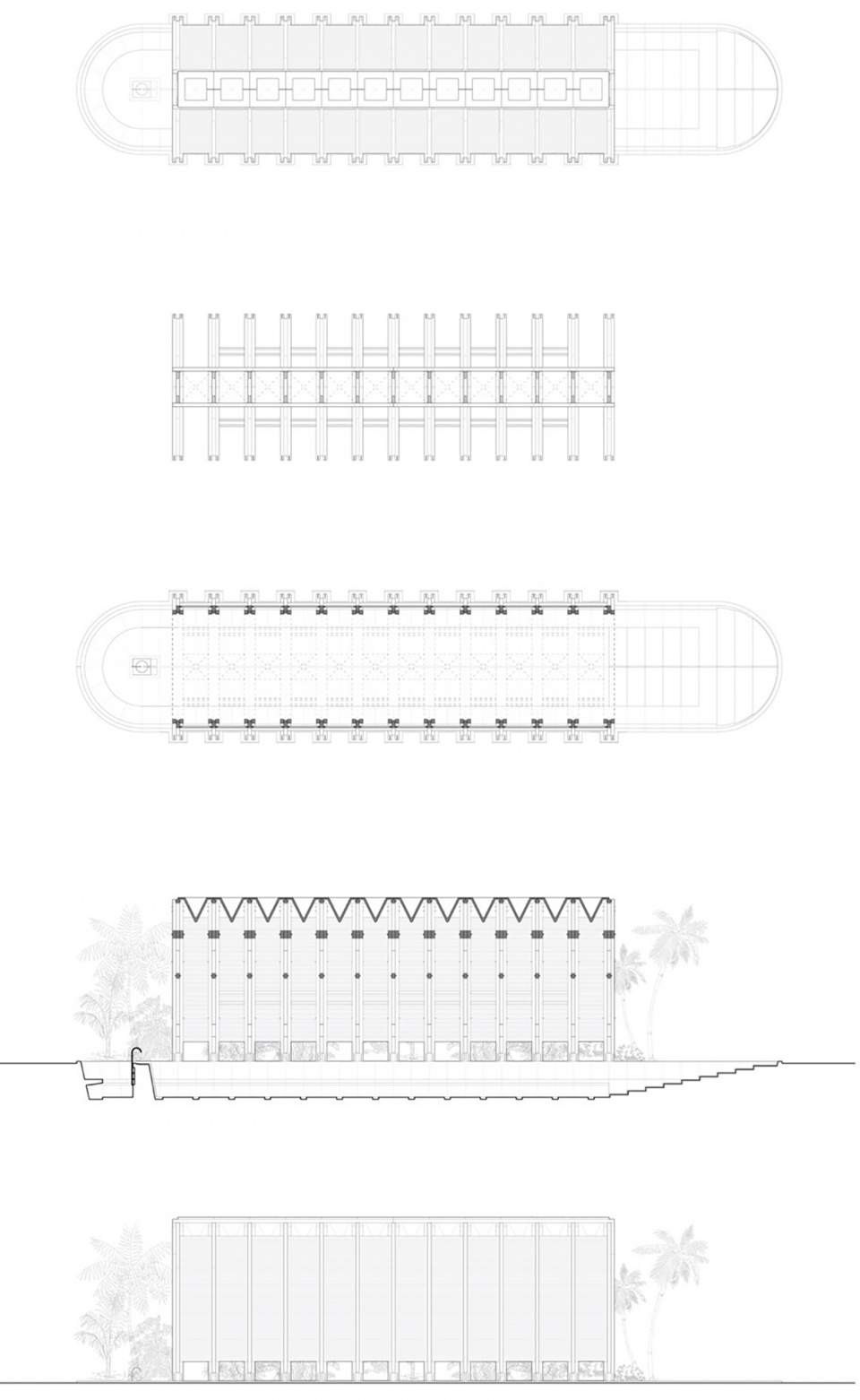
▼项目图纸,drawings
Technical sheet
Project Name: Orchid Pavilion
Location: Puerto Escondido, Oaxaca, México
Client: Fundación Casa Wabi
Office: CCA | Bernardo Quinzaños
Architects: Bernardo Quinzaños
Design Team: Santiago Vélez, Begoña Manzano, Andrés Suárez, Miguel Izaguirre, Florencio de Diego, Carlos Cruz Ay, Javier Castillo, Carlos Molina, Cristian Nieves, Abigail Zavaleta, Fernanda Ventura
Project Completion Date: February 2024
Photographer: Rafael Gamo, Jaime Navarro
Model Photography: Vanessa Nieves, Arturo Arrieta, CCA Centro de Colaboración Arquitectónica