少即是足——2024滇池风土艺术季入口“大棚”,昆明 / 几样工作室
背景Backgrounds
2023年7月,在新冠疫情结束的第二年,筹备已久的“滇池风土艺术季”进入设计和实施阶段。疫情迫使大家重拾对地方性和理想家园的思考,而首届滇池风土艺术季则以 “家园与未来”为主题,通过艺术家、建筑师与当地社区居民的共同合作,完成一次对地方文化的回溯,呼唤关注自然生态,并想象与滇池共栖的未来。几样工作室有幸应邀负责其中一个点位的改造设计。
In July 2023, the second year after the end of the COVID-19 pandemic, the long-awaited “Dianchi Art Season” entered its design and implementation phase. The relationship between locality and ideal home is recalled during the pandemic, and the first Dianchi Art Season, themed “Home and Future,” brought together artists, architects, and the local community to reflect on the local culture of Kunming, to raise awareness about natural ecology, and to envision a future of coexistence with Lake Dian. Someyoung Architects was honored to be invited to take responsibility for one of the projects.
▼海晏村航拍,aerial view of Haiyan Village
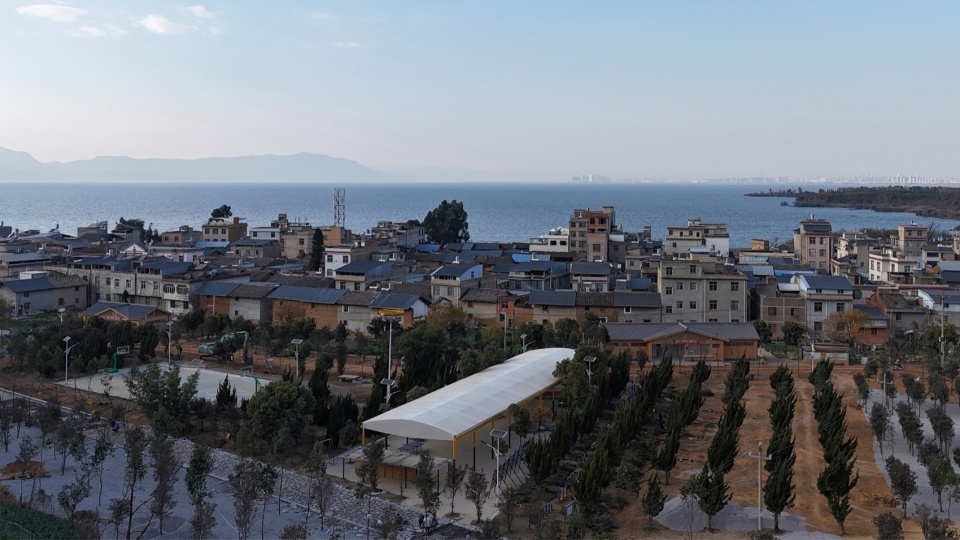
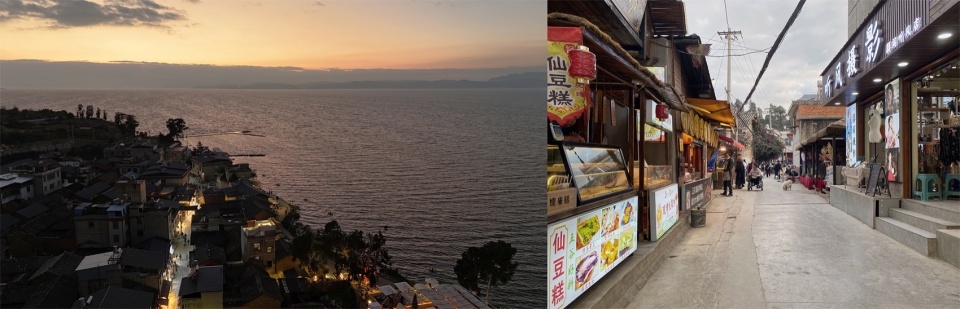
该点位归属滇池国家旅游度假区海晏村,位于露天停车场与主街的接口附近。近年,海晏村以“滇池日落打卡点”的身份爆火后,通往码头的街道及滇池沿岸几乎完全被旅游商业占据,整个村落在城市边界扩展、旅游、环保、乡村振兴、互联网传播和外来资本等多方力量冲击下快速蜕变,村民的活动区域不断受到挤压,而他们记忆中的“家园”也日渐难以辨别。改造前该点位即作为自发的半室外“村民活动中心”被使用,是少数几个为他们自留的公共空间“孤岛”之一。
The site locates near the intersection of the open-air parking lot and the main street of Haiyan Village, Dianchi National Tourist Resort. In recent years, after Haiyan Village gained popularity as a “Lake Dian Sunset Snapshot Spot,” the streets leading to the pier and the Lake Dian coastline have been almost entirely overtaken by tourist commerce. The entire village has undergone rapid transformation beneath the influence of expanding urban boundaries, tourism, environmental protection, rural revitalization, internet dissemination, and foreign investment. As a result, the villagers’ activity spaces have been increasingly squeezed, and their memories of “home” have become harder to recognize. Before the renovation, the site was used as a spontaneous semi-outdoor “villagers’ activity center,” one of the few “public space islands” reserved for them.
▼海晏村及公共空间关系总平面图,general plan of Haiyan Village and its public spaces
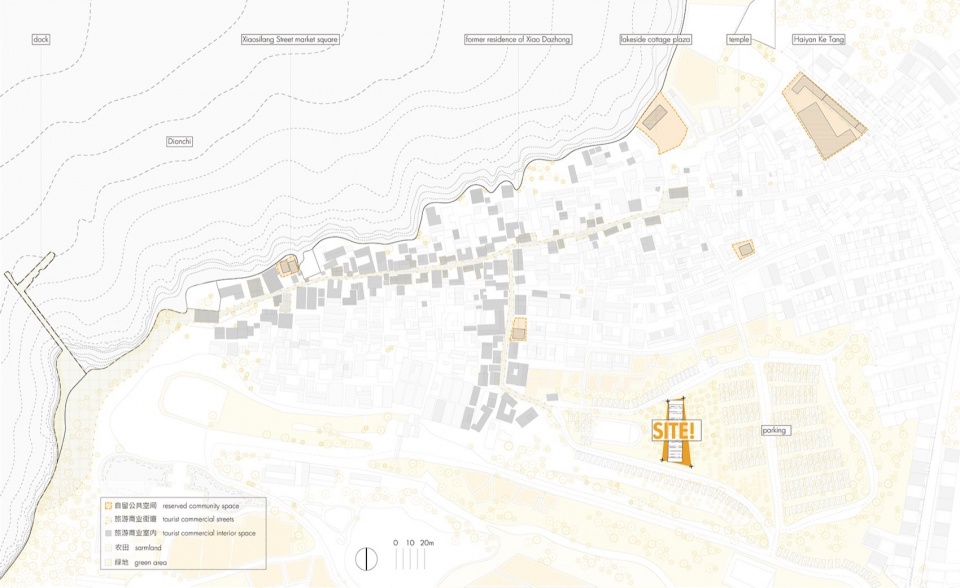
场地隐藏在停车场中,周围被密集的刺柏包裹,自然地与熙攘的游客领地相区隔。原有建筑是村子为临时菜场搭建的简易大棚,主体为10榀10m(跨距)*5.28m(脊高)的弧形桁架结构,榀距4m。除水泥硬化地面、钢柱、弧形桁架、已破损的单层彩钢顶以外,没有其余空间限定构件。村内小学停办后,学龄儿童需乘坐校车上学,因此又在大棚前后两端各新增一个双坡彩钢瓦顶小棚,作校车等候区使用。
The site is tucked away within the parking lot, surrounded by dense cypress trees, naturally separating it from the bustling tourist areas. The original structure was a simple shed erected by the village for a temporary market. Its main body consisted of 10 bays of 10-meter (span) × 5.28-meter (ridge height) curved truss structure, with a 4-meter spacing between bays. Apart from the cement floor, steel columns, curved trusses, and the damaged single-layer colored steel roof, there were no other spatial enclosing elements. After the closure of the village’s elementary school, children had to take buses to attend their new school. As a result, two new double-slope colored steel roof pavilions were added at both the front and the rear of the shed to serve as a waiting area for school buses.
▼左图-海晏村与滇池日落;右图-海晏村旅游商业,left – Haiyan Village and Dianchi sunset; right – tourist commerce in Haiyan Village
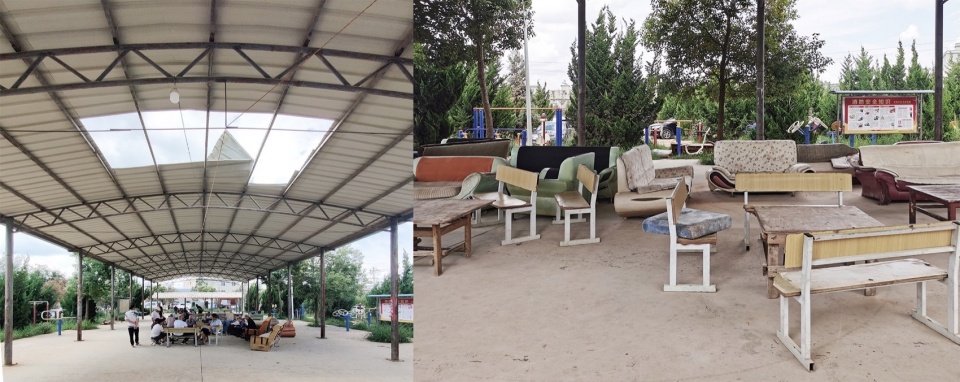
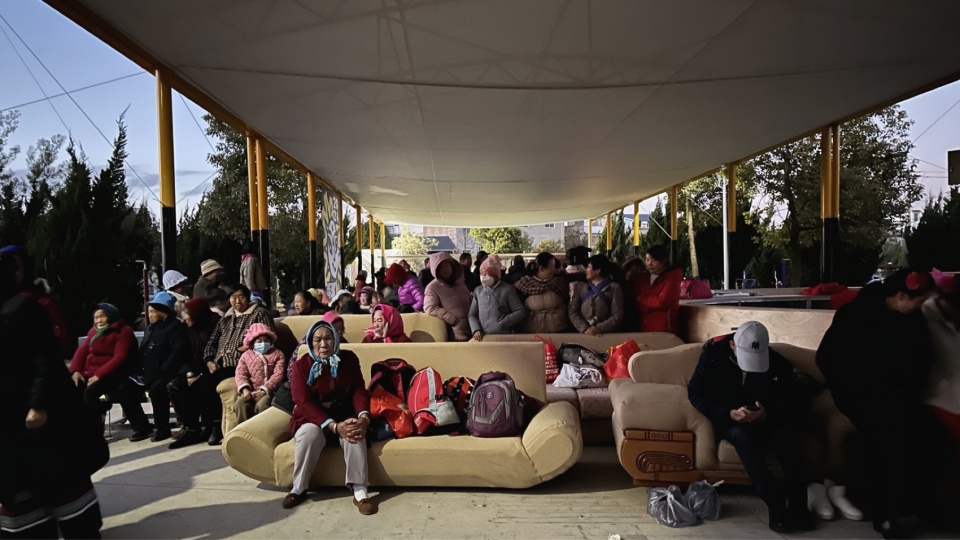
初次到访时, 我们就注意到场地中散布着各式老旧家具:有村民自家淘汰的破旧沙发、有小学停办后被搬出来的课桌椅、有搭建大棚时工人师傅留下的临时餐桌……村民们将这些原本或私有、或公共的家具转移到这里,并对它们做了一些改造(如在临时餐桌上刻上棋盘),以满足他们日常在此休息、聊天、打牌、下棋等活动的需求。每件家具并非由固定的人所占有,而是作为活动组团的一部分被相对自由地分配,并在不同时段由不同的人群所共享。每天的聚集结束后,它们被遗留在此,成为空间中固定的展品,等待第二天的重新组合。由此,这些家具既非公共的、也非私人的,而是介于两者之间,成为了犬吠工作室所说的“共有的”物件。这些物件和村民使用它们的方式是他们面对活动空间日益孤岛化的本能措施,是轻松的对抗,是值得被看见的原生艺术。因此从一开始,我们就希望这次改造要尽可能保护这种场所关系,保护原生艺术生发的土壤。
During our first visit to the site, we noticed various pieces of old furniture scattered around: worn-out sofas discarded by the villagers, desks and chairs removed from the elementary school after its closure, and temporary dining tables left behind by workers during the last construction of the shed. The villagers had relocated these originally private or public furniture items to the site and made some modifications (such as carving a chessboard on the temporary dining table) to meet their daily needs for resting, chatting, playing cards, chess, and other activities. Rather than being owned by specific individuals, each piece of furniture was distributed relatively freely as part of activity clusters and shared by different groups of people at different times of the day. At the end of each day’s gathering, the furniture was left behind as static exhibits in the space, waiting to be rearranged the next day. In this way, the furniture was neither entirely public nor private but something in between, becoming what Atelier Bow-Wow refers to as “common” objects. These objects and the way villagers use them represent an instinctive response to the increasing isolation of their activity spaces—a light resistance and a type of indigenous art which deserves perception. Therefore, from the very beginning, we aimed to preserve this spatial relationship as much as possible and protect the fertile ground from which indigenous creativity springs.
▼左图-改造前的“大棚”;右图-“共有”的家具,left – the “marquee shed” before remodeling; right – “common” furniture
按照组委会的计划,在艺术季期间这个空间将作为海晏村艺术板块的游客信息中心并为一些小型活动提供场地。因此在理论上,除了一个问询台和一个小舞台以外,无需增加其它实用配置,似乎可以将更多精力投入在如何使该空间变成“艺术季展示”的一部分。然而有一个问题始终萦绕:艺术季中的建筑作品,到底是“展品”本身,还是为展品或艺术季服务的“背景”?很多时候这个任务是混沌的,导致有些建筑师扮演着自己所不擅长的“艺术家”角色,耗费了比制作一般艺术装置更多的资源,以牺牲实用性为代价,得到的建成品却在艺术表现力上不尽如人意。
According to the committee’s plan, this place will be used as a visitor information center for the Haiyan Village art section during the art season and provide space for small events. Theoretically, except for an information desk and a small stage, there is no need to add other practical configurations. It seems that we can concentrate more on configuring the space part of the “Art Season Showcase”. However, there is one question that always lingers: is the architectural work in the art season the “exhibit” itself, or the “background” that serves the exhibit or the art season? Often, this task is mixed, resulting in that some architects playing the role of “artist”, which they are not suited for, and spending more resources than in the production of general art installations, at the expense of sacrificing practicality, but the finished work is not that satisfactory neither in terms of artistic expression.
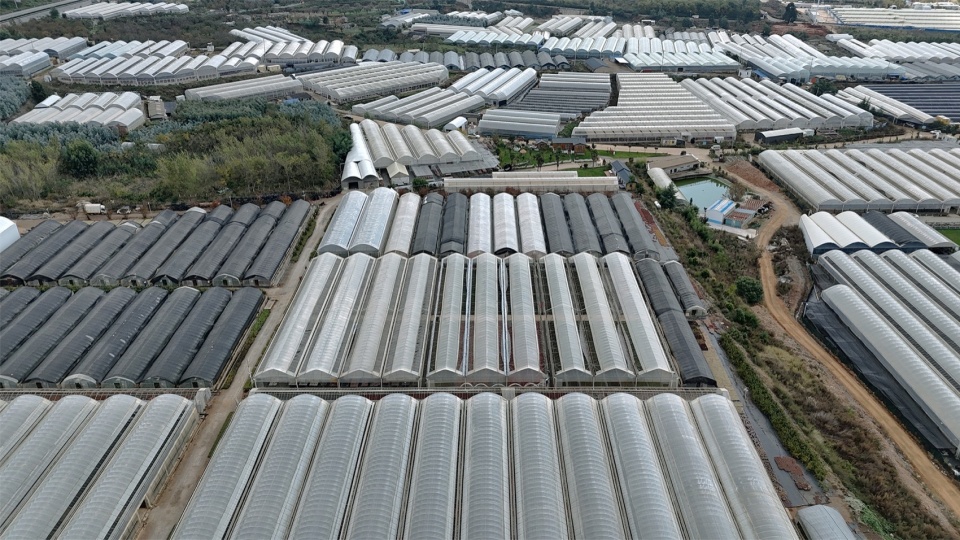
▼由于功能主导、低造价、轻质化等共同的特性,滇池边近年来成片兴建的农业温室大棚成为此次屋面改造的原型,due to the function-oriented, low cost, lightweight and other common characteristics, the agricultural greenhouses built in recent years by the side of Lake Dian have become the prototype of this roofing transformation
因此,我们需要同时回应四个问题:
1.海晏村公共活动空间孤岛化现象;
2.艺术季功能需求;
3.如何保护场地关系,展示原生艺术;
4.是否及如何将场所作为一个整体艺术呈现。
Therefore, we need to respond to four issues at the same time:
1. the phenomenon of insularity of public activity space in Haiyan Village;
2. the functional needs of the art season;
3. how to protect the site and show the indigenous creativity;
4. whether and how to present the place as a holistic art form.
策略Strategy
在对上述几个问题进行思考后,我们排除了在建筑尺度上做装置艺术创作的可能性,决定以直接的方式面对实际问题,将目光聚焦在如何改善现有客观条件以保护场地原有活力这一点上,并争取在改善的手段上做出一定的创新。我们希望村民、“共有”的家具、村民活动、活动场地、改造后的空间之间能形成一种张力纽带,成为艺术季其中一个可被观看、感知和思考的现象。
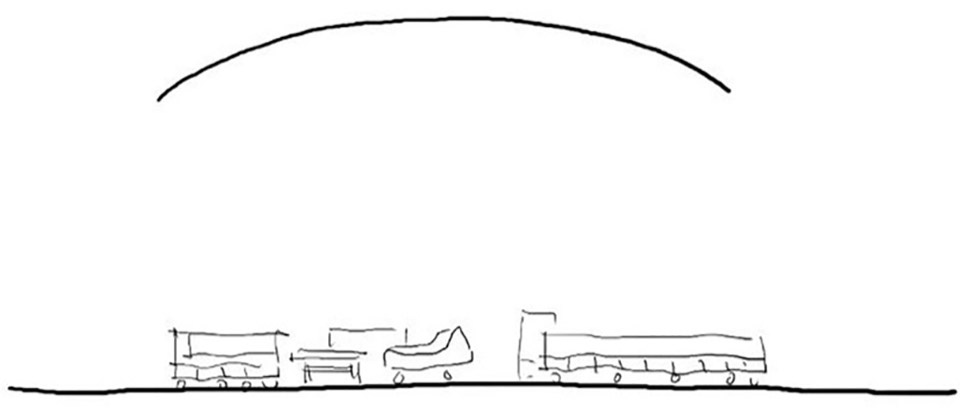
在具体策略上,由于造价的限制,我们放弃了新增墙体或任何竖向围合构件的尝试,保持其四面开放的流动状态,将大部分精力和资源投入在顶棚与地面这两个水平界面的改善处理上——这两个界面是场所得以成立、活动得以展开所不必可少的元素,是建筑减无可减的最基本构成。为此,我们必须抛弃“沉重”的专业表达包袱,克制已成为习惯的平面操作,放弃“立柱”、“砌墙”、 “分割空间”等基本建筑学手法,以轻松的心态拥抱开放的现状,并直面真正的问题。
出于对效率和简洁性的追求,我们希望每个改造动作是多义的,是可以同时解决多个问题的,并由此产生具有超越性的整体。
▼草图:顶棚与地面,sketch: roof and floor
After considering the above issues, we ruled out the possibility of creating installation art on an architectural scale and decided to address practical problems directly, focusing on how to improve the existing conditions to protect the site’s original vitality, while striving to innovate the methods of the improvement. We hope that a dynamic connection can be formed among the villagers, the “common” furniture, the villagers’ activities, the activity site, and the renovated space, becoming a phenomenon that can be observed, perceived, and reflected upon during the art season.
In terms of specific strategies, due to cost constraints, we abandoned the attempt to add new walls or any vertical enclosing elements, maintaining the openness on all sides, and invested most of our resources in improving the two horizontal interfaces — the ceiling and the floor, which are essential elements for establishing a place and enabling activities— the most fundamental components of a building that cannot be further reduced. For this reason, we must discard the “heavy” burden of professional expression, restrain the habitual operations of layout plans, and abandon basic architectural techniques such as “constructing walls,” and “dividing space,” embracing the openness with a relaxed mindset and confronting the real problems head-on.
In pursuit of efficiency and simplicity, we hope that every architectural action is polysemous, capable of solving multiple problems at once, and thereby engendering a transcendent whole.
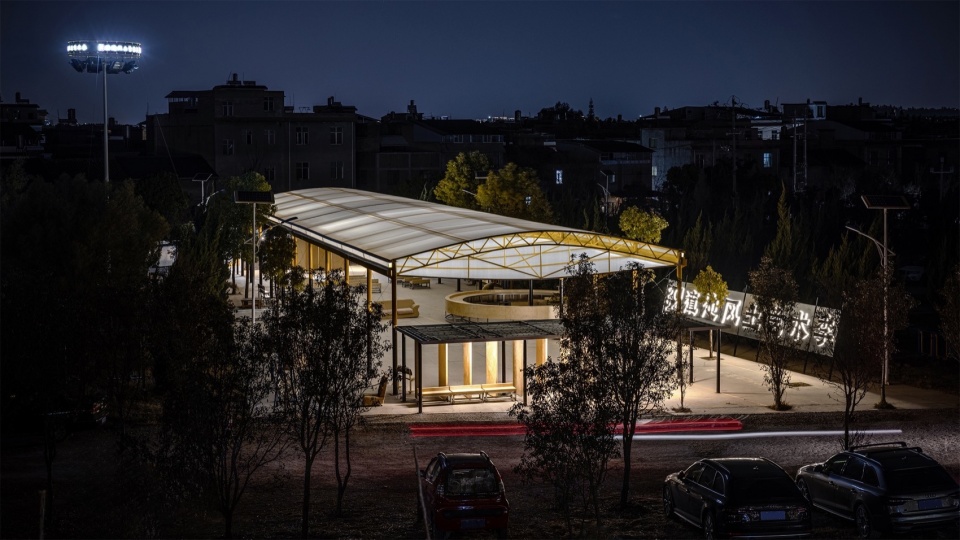
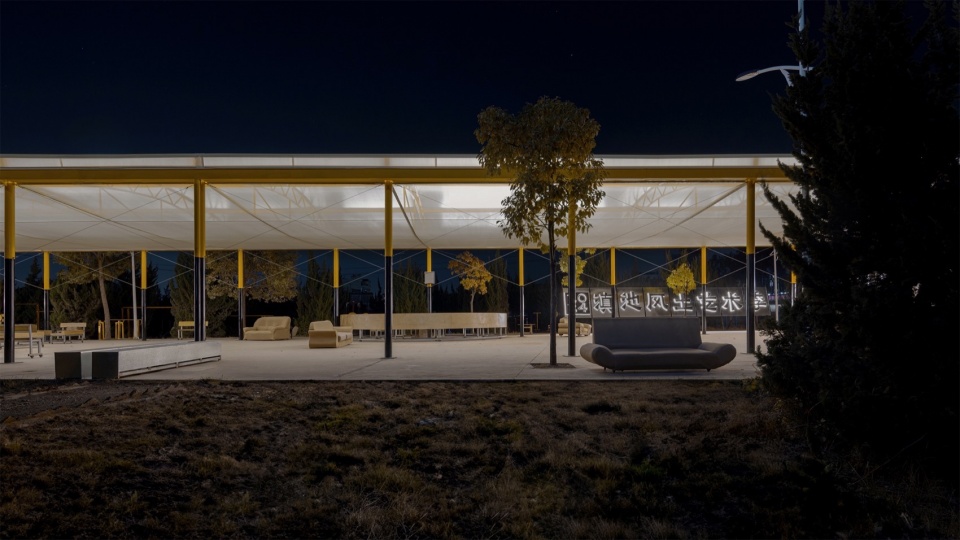
▼“大棚”夜景,night view of the “the marquee shed”
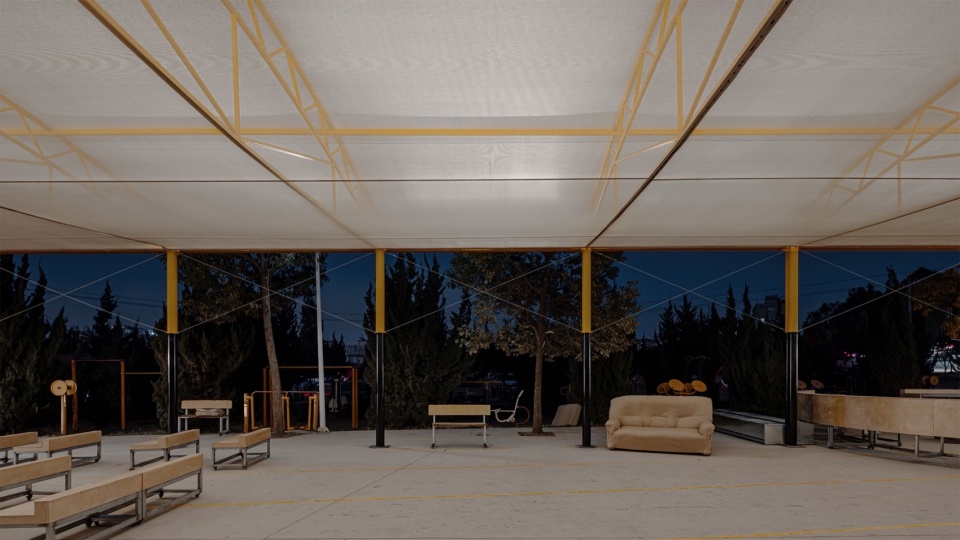
▼夜间“大棚”内部照明,lighting of the interior “marquee” at night
措施Method
1-漂浮的“云”顶|1-Floating “cloud” top
原有彩钢瓦顶已多处破损,所以屋面材料是必须进行替换的。替换后的屋面需要是轻质的(不增加过多荷载)、隔热的、利于排水的、有一定自洁能力的。为临时菜场而搭建的原有框架随意且不规范,改造后的顶棚最好能在有限的条件下对整体结构起到强化的作用。对于现在以坐、卧为主要行为姿势的村民活动来说,5.28m的空间显得有些过高;同时,偶尔举办的公共活动和艺术季的性质又指望它在必要时成为一个高大的场所。另外,热工性能的改善是长时间停留在此的使用者们最能切身感受到的变化之一,也是应当被重点考虑的需求。最后,夜间活动的展开对顶棚提出了整合照明的要求。我们需要用一个精确的操作同时回应这些复杂的、甚至看起来互相矛盾的需求:
The original steel roof was severely damaged in multiple areas, necessitating a replacement. The new roofing material must be lightweight (without adding excessive load), thermally insulating, conducive to water drainage, and possess some self-cleaning capabilities. The original frame, constructed for a temporary market, was irregular and nonstandard, thus, the redesigned roof should ideally strengthen the overall structure under limited conditions. For villagers whose primary activities involve sitting and lying down, the 5.28m height feels excessive; however, occasional public events and the art season require the space to function as a tall venue when needed. Additionally, improving thermal performance is one of the most noticeable and significant changes for users who spend extended periods here, making it a critical consideration. Finally, nighttime activities necessitate integrated lighting for the roof. We must address these complex and seemingly contradictory demands with a precise and cohesive approach:
▼左图-剖面图;右图-剖面模型,left – section; right – section model
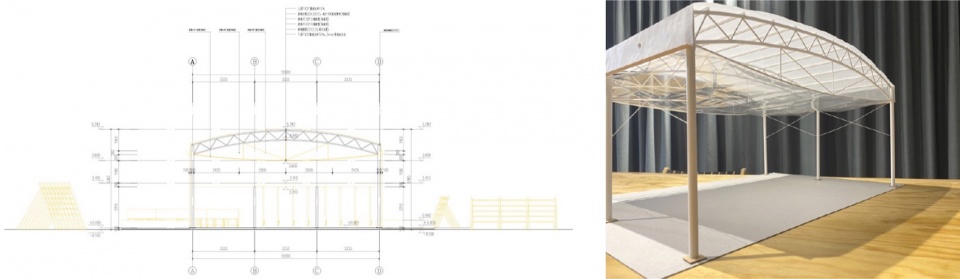
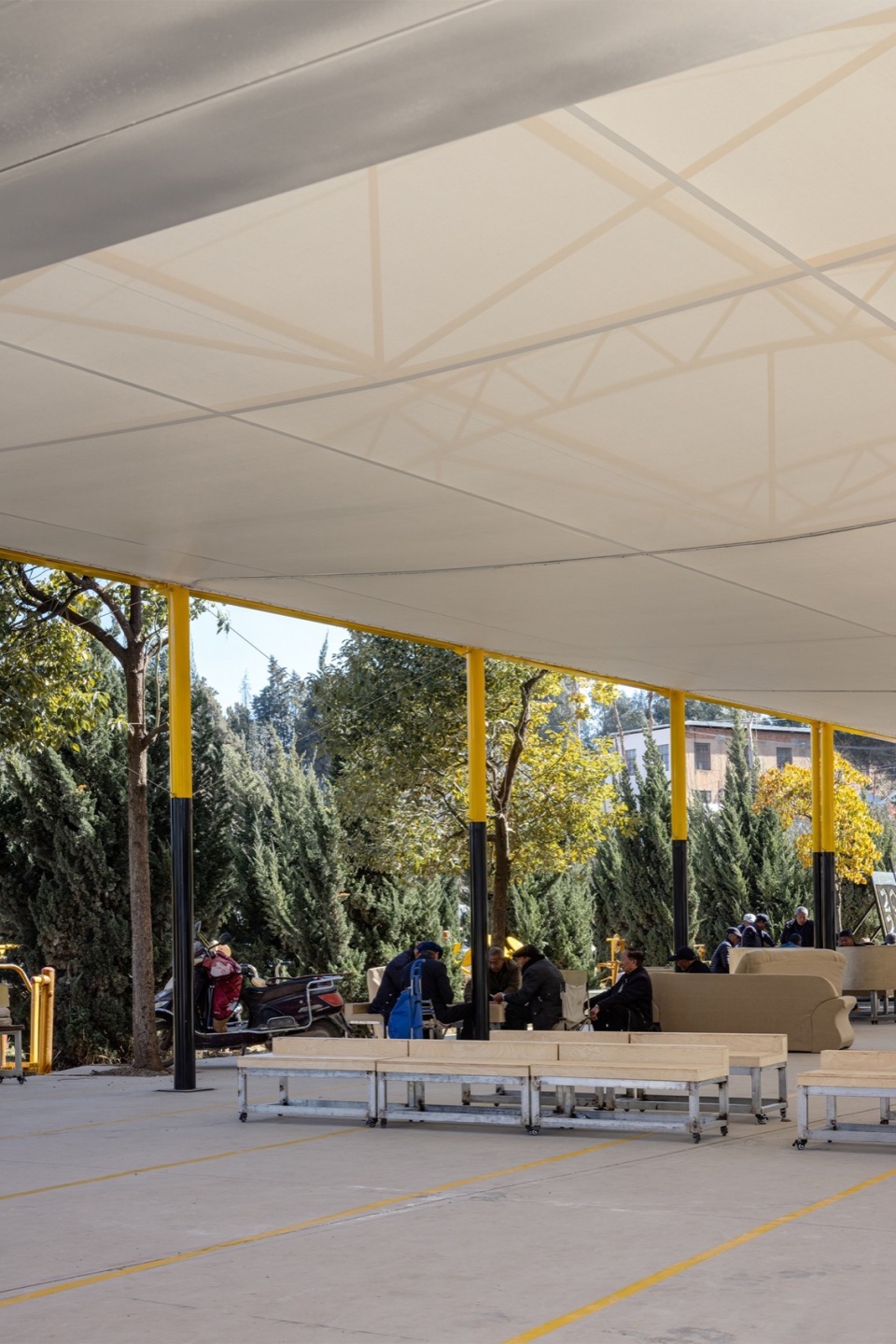
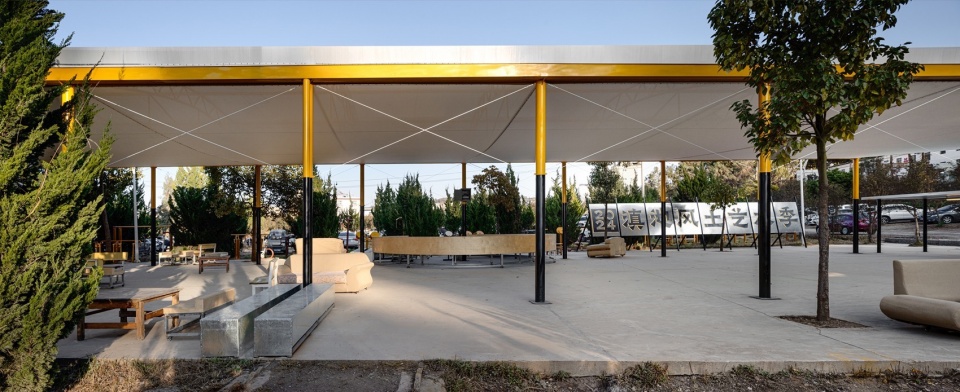
首先,我们在每跨桁架下方增加下弦弧钢方管,并用几根圆管将上下弦联系在一起,形成一个更大的整体桁架。这样一来,新的整体桁架成为一种类张弦结构,一定程度上减小屋面荷载对柱子的侧推力。将顶部檩条进行替换以后,我们在屋面结构的上下弦外侧均绷上一层张拉膜,上层为白色不透明PVDF,主要起到遮阳、排水的作用;下层为白色半透明PVDF,将整个屋架包裹起来,成为一个模糊的、可按需求调节存在感的实体:使用者既可以下层膜最低点(3.6m)为限定,将“大棚”视作一个反弧顶空间,也可以越过半透明的下层膜和桁架结构,以原始顶高(5.28m)为限定,将“大棚”视作一个正弧顶空间。从而,该空间的感知高度是有弹性的,可以在坐、卧的“共有”尺度与站立、流动的公共尺度之间切换。下层及侧口的半透明多孔膜材是透风的,因此能形成一个流动的空气夹心层,提高单层膜结构薄弱的隔热性能。在两层膜的接口处,我们把内外盖板压条分别设计为檐沟和内置式洗墙灯背板,让每一个构件都尽可能扮演多重角色。各跨钢柱之间以交叉拉索的方式再次加强抵抗侧向变形的能力,并以此对柱子进行分段,上部喷黄色氟碳漆以归入顶棚钢构整体,下部喷黑色氟碳漆以试图消隐于深色刺柏背景中,从而使顶棚“漂浮”起来。
First, we added lower chord arc steel tubes below original truss and connected the upper and lower chords with several round tubes to form a larger integrated truss. This transformed the new truss into a tensile chord-like structure, reducing the lateral thrust of the roof load on the columns to some extent. After replacing the top purlins, we stretched a layer of tensile membrane over both the upper and lower chords of the roof structure. The upper layer, made of white opaque PVDF, primarily functions to provide shade and drainage, while the lower layer, made of white semi-transparent PVDF, envelops the entire roof frame, creating a flexible entity whose presence can be adjusted as needed: users can define the space by the lowest point of the lower membrane (3.6m), viewing the “marquee shed” as a reverse-arc roof space, or perceive it as a positive-arc roof space based on the original roof height (5.28m) with an insight through the semi-transparent lower membrane and truss structure to. This results in a flexible perceived height of the space, which can be transitioned between the “common” scale of sitting and lying to the public scale of standing and moving. The semi-transparent porous membrane at the lower layer and both sides allows air permeability, forming a flowing air sandwich that enhances the thermal insulation of the structure. At the interface of the two membrane layers, we designed the inner and outer cover strips to serve as light backplates and gutters, respectively, enabling each component to fulfill multiple roles. Cross ties between the steel columns further reinforced lateral deformation resistance, and the columns were segmented accordingly, with the upper sections sprayed yellow fluorocarbon paint to integrate with the roof structure, and the lower sections sprayed black fluorocarbon paint to blended into the dark juniper background, giving the roof a “floating” effect.
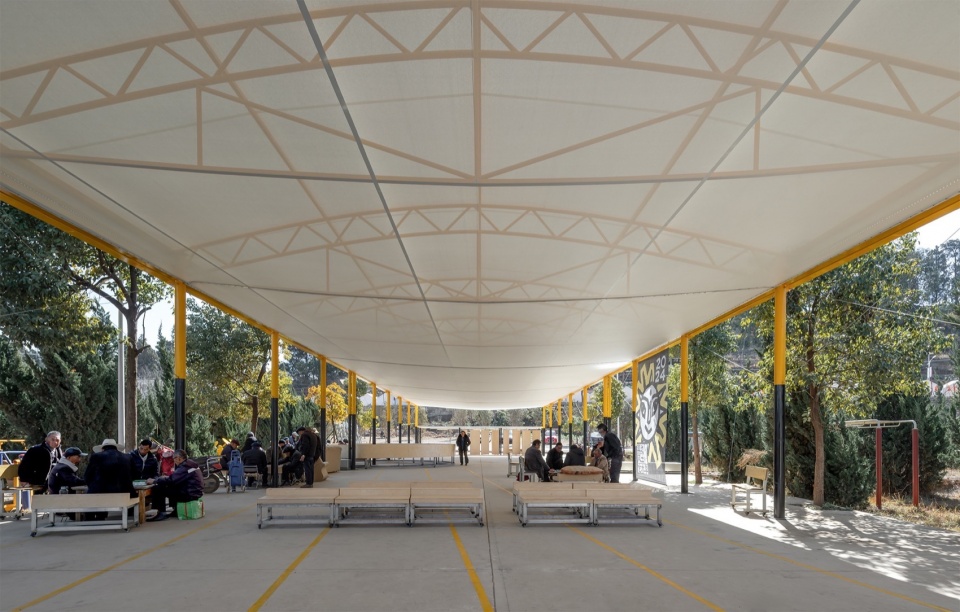
▼改造后的“大棚”双层屋面,the reformed double-skin roof of the “marquee shed”
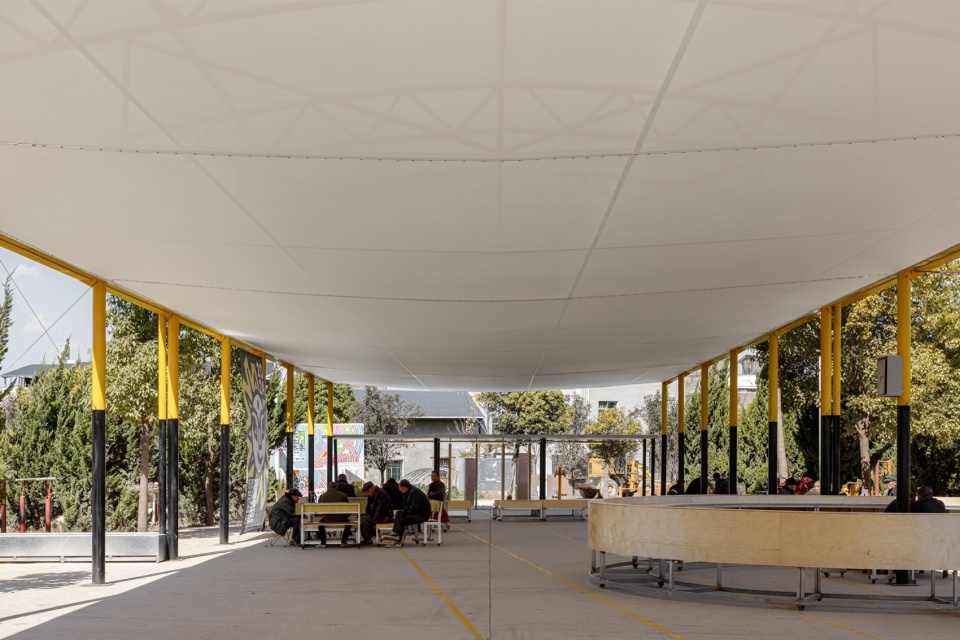
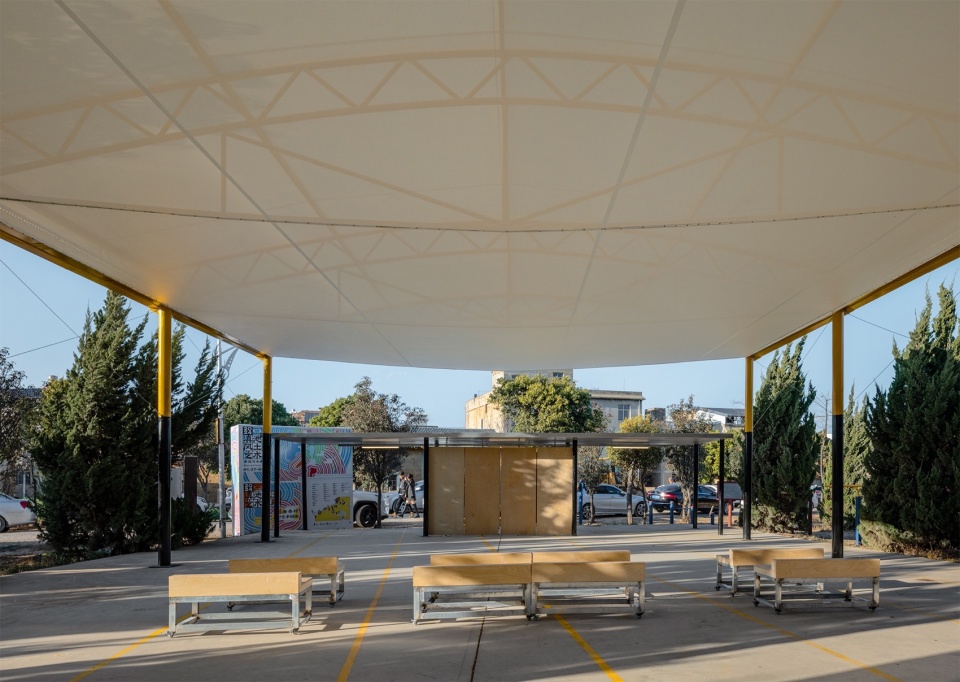
通过这一系列调节,新的顶棚不再是一层薄片,而是一块上下微弧的厚约1.6m的发光腔体。它用渐变的透明性虚化了屋顶的重量感,以微妙的弧度与地平线拉开了具有张力的对话。它回应了我们对庇护所的期许。
Through this series of adjustments, the new roof is no longer a thin sheet but a luminous chamber approximately 1.6 meters thick, with slight curves at the top and bottom. It softens the perceived weight of the roof through gradual transparency and engages in a subtle yet dynamic dialogue with the horizon through its gentle curvature. It fulfills our aspiration for a shelter.
▼双层屋面之下的居民活动,
residents’ activities under the double-skin roof
2-再创造空间的工具|2-Tools to recreate space
某种意义上,被“抛弃”在这片场地上的各色家具们各有残缺,失去了它们在原有情境(客厅、教室、工地)中的功能,失去了它们的归属,是无“价值”的。然而如Pier Vittorio Aureli 在《Less is Enough》一文中对修道院制度的描述那样,正是在这个空间中,比起拥有,村民们更倾向于使用这些物品。对他们而言,使用与拥有物品的经济价值不同。使用是个体对物品暂时性的占用,也是一种分享物品的行为,是共同生活的体现。
In a sense, the various pieces of furniture that have been “abandoned” on the site are all flawed in their own way, having lost their function in their original contexts. They have lost their belonging and thus deemed “valueless.” However, as Pier Vittorio Aureli describes the monastic system in Less is Enough, it is precisely in this space that the villagers prefer to use these objects rather than own them. For them, the act of using differs from owning their economic value. Using is a temporary appropriation of objects by individuals, but it is also an act of sharing, and a manifestation of communal life.
▼改造后家具的创造性使用,creative use of reformed furniture
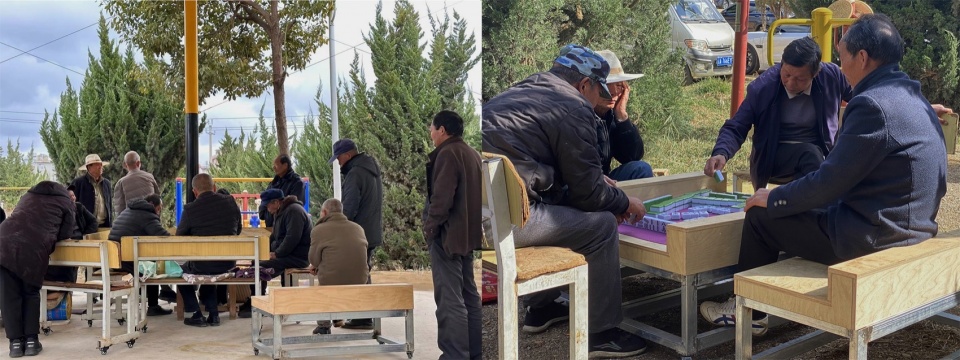
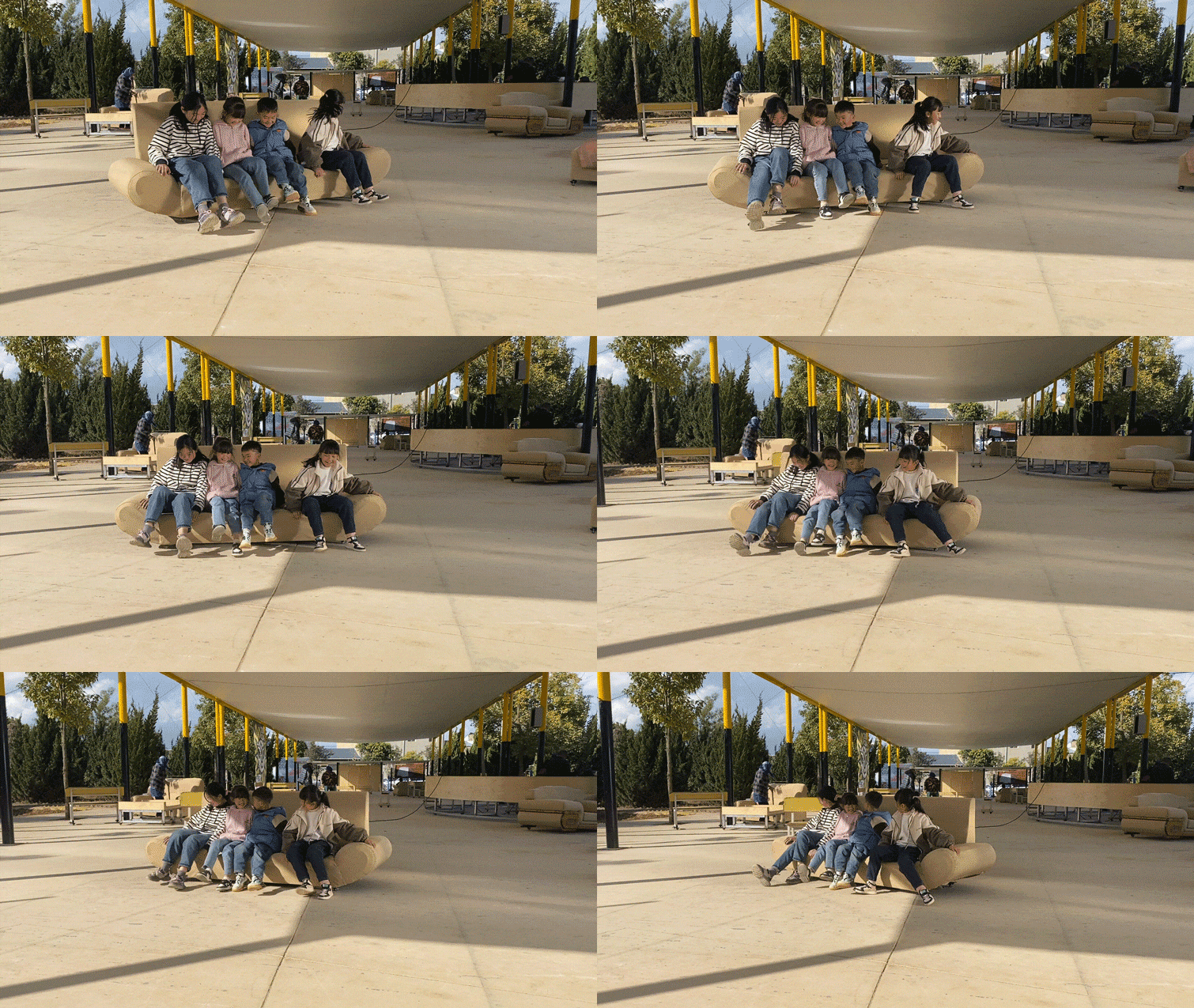
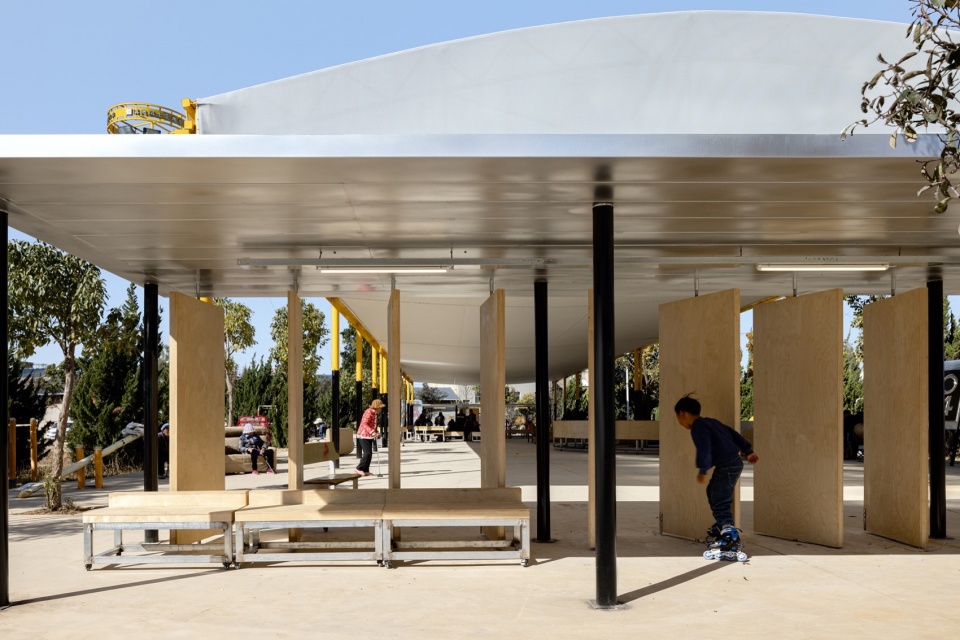
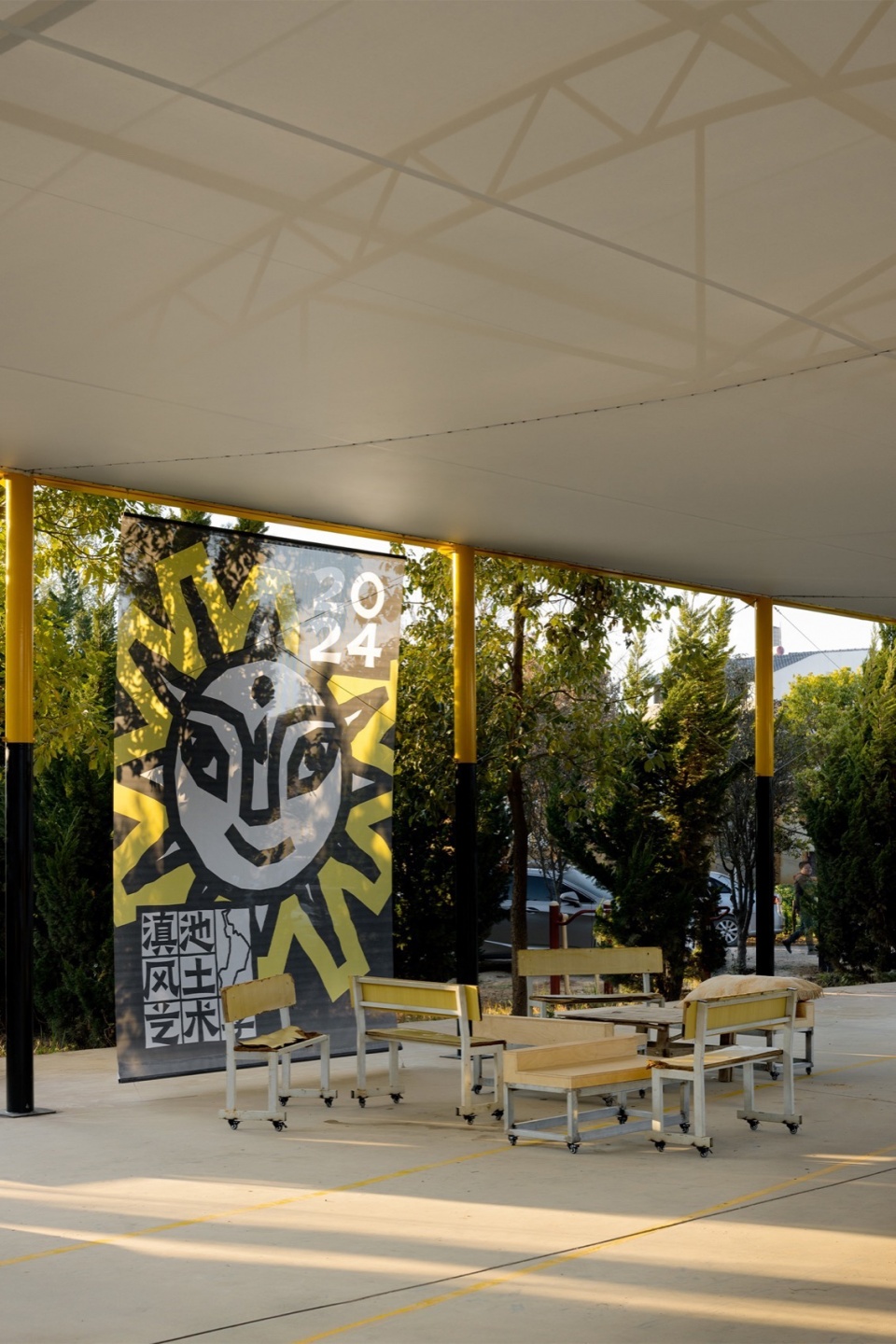
对地坪界面的处理最终集中在了家具的修复和再造上。一方面,我们对场地上破损的沙发和教室课椅进行了局部翻新;另一方面,我们新设计制作了44张条凳,以供校车站、演出观众席和村民日常补充使用。为了鼓励和方便村民继续像以前那样通过灵活组合家具来创造不同的空间使用模式,在此次修复和新制作的家具上统一加装了可开闭的万向轮。这一动作带来了意外的效果:在新的“大棚”下,经常可以看到小朋友们把这些家具改造成了玩具,以各种方式互相游戏。棋牌小组在轮子的加持下可以更加方便地逐阳光而居,与光影的边界同步移动。两张条凳拼出来的带“挡板”的麻将桌、沙发椅子和排水沟组合的“洽谈小组”、作为旱冰“表演”器材的舞台中轴旋转门……简单而灵活的道具顺应了人的创造力。在这里,他们既是空间的使用者,也是持续的改造者。
The treatment of the floor interface ultimately focused on the restoration and reconstruction of furniture. On the one hand, we partially refurbished the damaged sofas and classroom chairs on-site; on the other hand, we designed and produced 44 new benches for use at the school bus stop, performance stage, and villagers’ daily activities. To encourage and facilitate the villagers to continue creatively rearranging furniture for different spatial uses, we installed universal wheels on both the restored and newly made furniture. This led to an unexpected outcome: under the new “marquee shed”, children often transformed the furniture into toys, playing together in various ways. With the help of the wheels, the chess group could more easily follow the sunlight, moving in sync with the shifting boundaries of light and shadow. A mahjong table with a “barrier” made from two benches, a “meeting group” composed of sofas, chairs, and gutters, and a revolving door at the stage used as a skating “performance” device — these simple yet flexible props adapt to people’s creativity. Here, they are both users of the space and its ongoing transformers.
▼小朋友在玩沙发,children playing with the sofa
▼小朋友在玩旋转门,children playing with the revolving door
▼完工后的第一天傍晚,村民在等待看花灯表演,villagers waiting to see the lantern show on the first night after the completion of the work
3-其它装置|3-Other devices
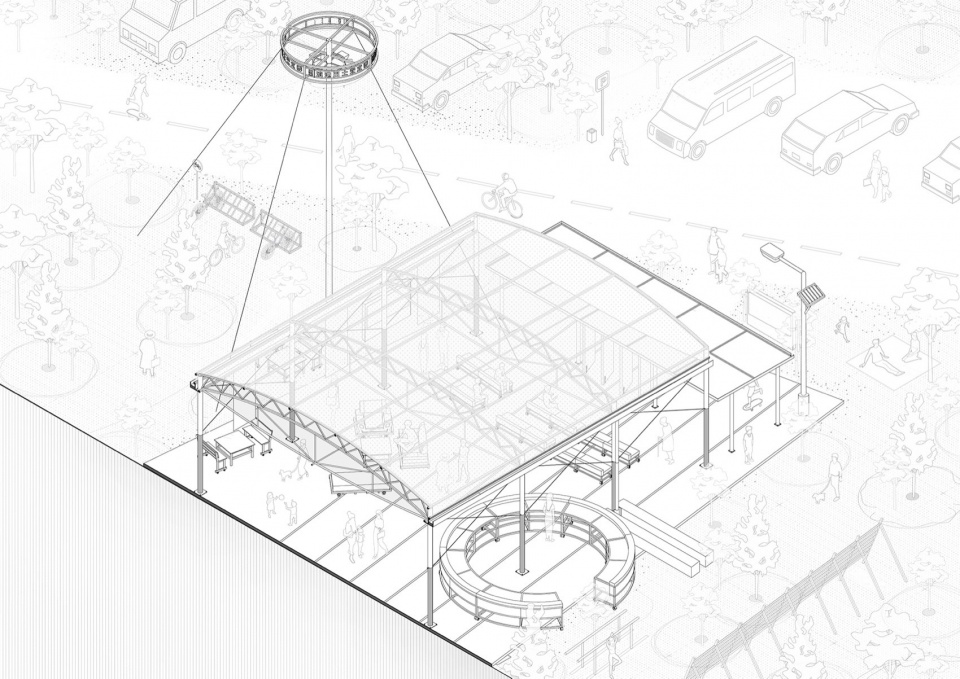
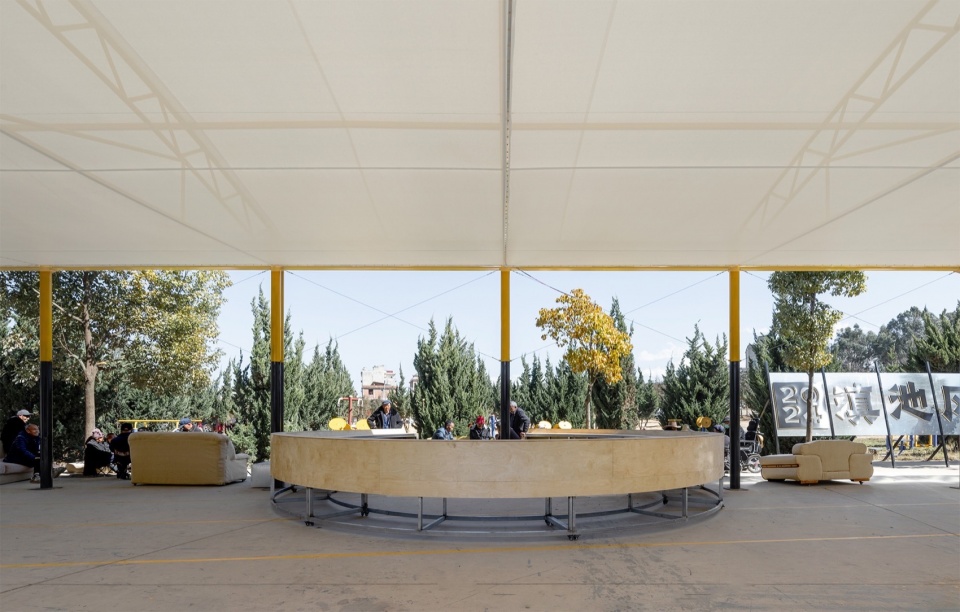
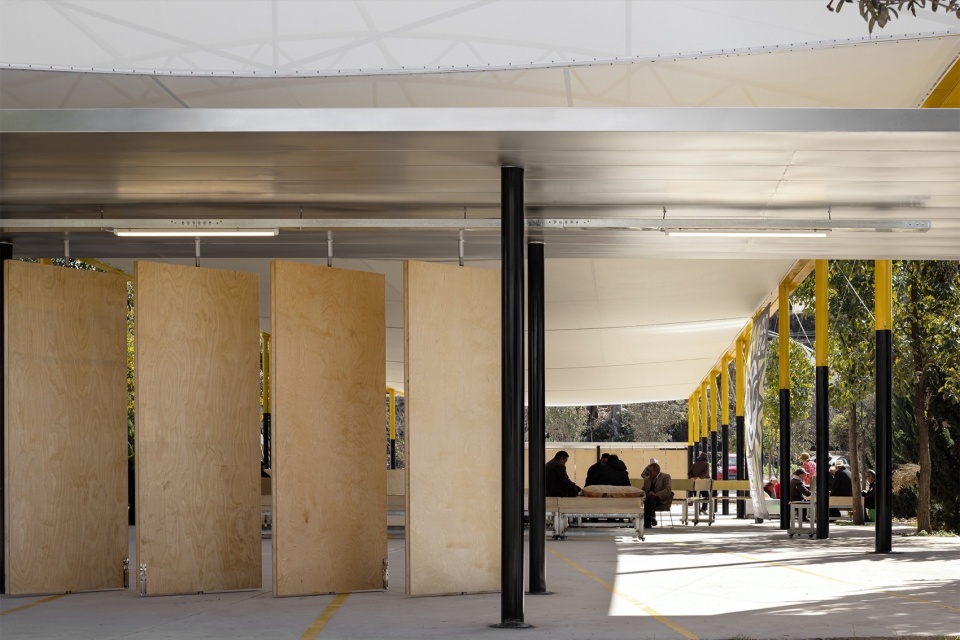
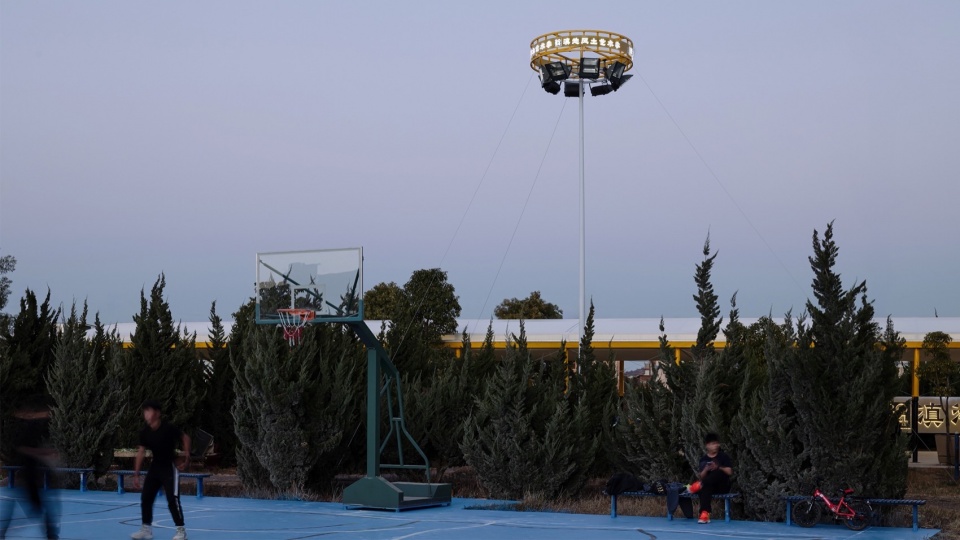
作为艺术季海晏村展区的入口点位,“大棚”需要提供一定的标示性。除建筑本身之外,我们设计了几个装置类构件:1)以滇西北青稞架“冉薪”为原型的艺术季入口招牌;2)在场地高杆灯上增设的高位招示架;3)结合排水渠和座凳功能的镀锌钢方块;4)可拆合的圆形问询台;5)“大棚”两端的舞台和校车等候站。为各自功能服务而独立设计的装置被统合在同一个屋顶之下,创造出一个不同人群得以相遇和交往的场所。
As the entrance of the Art Season at Haiyan Village, the “marquee shed” needed to provide a distinct sense of identity. In addition to the building itself, we designed several installation components: 1) an entrance sign for the art season inspired by the “Ranxin” barley racks of northwestern Yunnan; 2) a high-level signage frame added to the site’s tall light pole; 3) galvanized steel cubes integrating the functions of drainage channels and benches; 4) a detachable circular information desk; 5) a stage and a school bus waiting station at both ends of the “marquee shed”. These independently designed installations, each serving its own purpose, were unified under the same roof, offering a space where different groups of people could meet and interact.
▼剖轴测图,sectioned axonometry
▼问询接待台,reception desk
▼雨落管排水渠座椅,rainfall drainage channel seat
▼小舞台和可移动座位,stage and movable seats
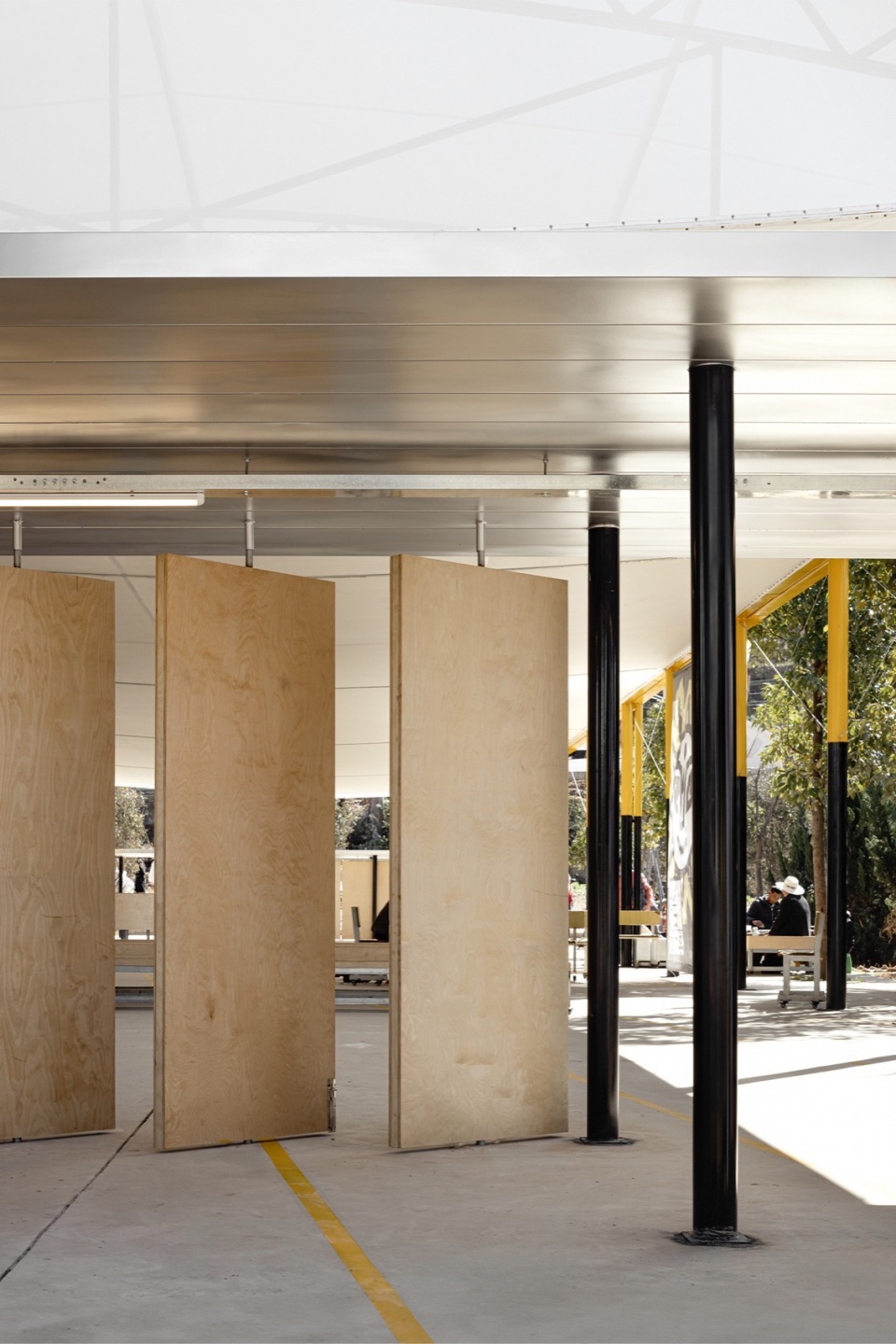
▼舞台翻转门,stage pivot door
▼滇池风土艺术季招示灯,signage light for Dianchi Art Season
▼“大棚”夜景,night view of “the marquee shed”
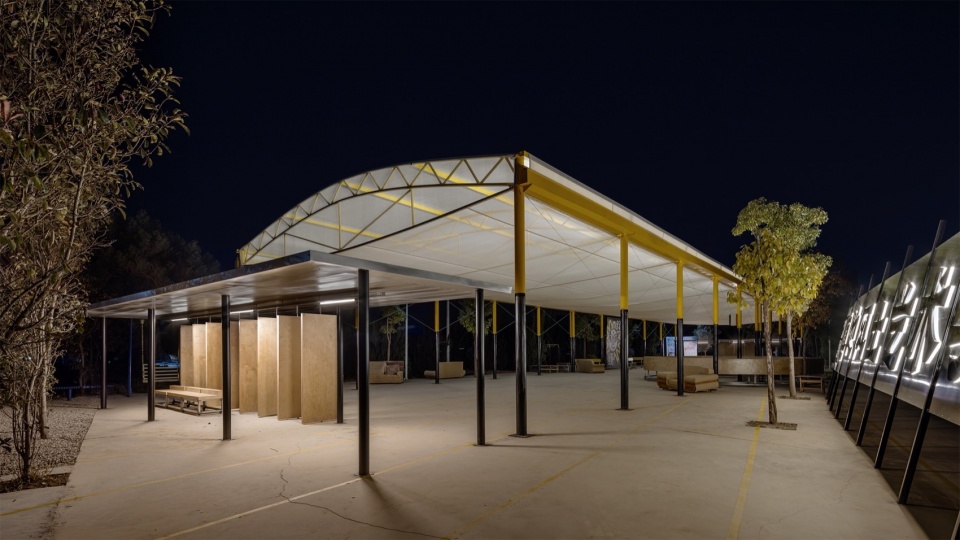
▼“大棚”夜景,night view of “the marquee shed”
回到背景Back to the background
毫无疑问,我们已经来到了一个建筑资源降级的时代。从社会层面上来说,我们已不太可能像过去几十年那样集中如此多的人力、物力于实体空间的建造上。由于对未来发展的谨慎态度、存量建筑的冗余、社会矛盾的转移等原因,很多时候人们即便仍有建造的动力,却失去了清晰的空间需求和如以往一般强烈的信心,转而在数个看起来漂浮的、碎片的、互联网化的诱惑间摇摆不定。
There is no doubt that we have entered an era when architectural resources downgrade. On the societal level, it is no longer possible to concentrate the same amount of human and material resources on the construction of physical spaces as we did in previous decades. Due to cautious attitudes toward future development, the redundancy of existing construction and shifts in social conflicts, many people, even those still motivated to build, have lost their clear spatial needs and the strong confidence they once had. Instead, they find themselves oscillating between seemingly floating, fragmented, and internet-driven temptations.
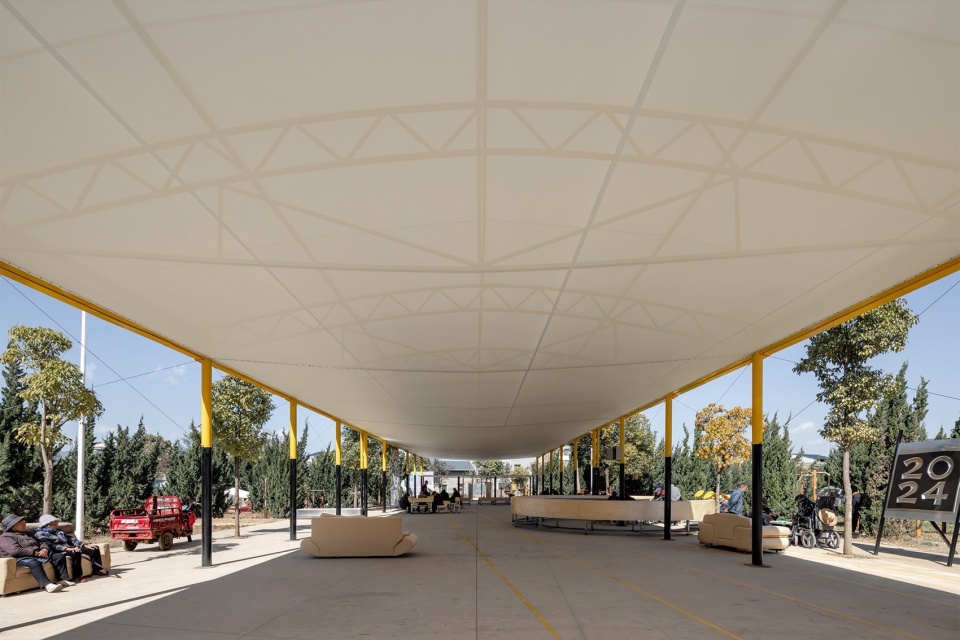
▼舞台看向校车站,stage looking toward the school bus stop
在这样的情况下,依然挣扎着的建筑师们出现了分化:有的在日益缩小的精英业主圈的支持下守卫着经典建筑学;有的归附于互联网的图像传播法则;有的选择追求尽可能极致的专业效应,诉诸于更具有门槛的学院式话语。我们认为,如果我们拥有直面现状的勇气,则首先要帮助人们厘清当前条件下真实的空间需求,而后给予直接有效的策略和方案。
In such circumstances, architects who are still struggling have become divided: some defend classical architecture with the support of elite clients; others adhere to the rules of image dissemination on the internet; and still others strive for the most extreme professional effects, resorting to more exclusive academic discourse. We believe that if we have the courage to face the current situation, we must first help people clarify their real spatial needs under existing conditions, and then provide them with direct and effective strategies and solutions.
▼校车站看向舞台,school bus stop looking toward the stage
即便没有我们的介入,村民们依然会以低标准的方式使用这块场地。改造“大棚”的空间需求是被创造出来的,艺术季作为有效手段,让我们得以用外部视角审视正在海晏村进行的经济模式和社会关系变革。乡村在快速更新,混乱且充满活力;游客、商户和居民的空间互相挤压,村民在作为乡村振兴既得利益者的同时也让渡了一大部分自己的空间权利。建筑师群体在此阶段适当介入的意义,除了传递艺术季的共同价值理念,也许就在于切入乡村空间的剧烈嬗变进程中,思考能够缓解矛盾的切实可行的办法。
Even without our intervention, the villagers would still use the site in substandard ways. The spatial demand for reforming the “marquee shed” was created, and the art season served as an effective tool, allowing us to examine the ongoing changes in the economic model and social relations in Haiyan Village from an external perspective. The village is undergoing rapid renewal, chaotic but vibrant; spaces for tourists, merchants, and residents are squeezing each other, and the villagers, while benefited from rural revitalization, have also relinquished a significant portion of their spatial right. The significance of the appropriate intervention of architects at this stage lies not only in conveying the shared values of the art season but also in engaging with the dramatic transformation of rural spaces and considering practical ways to mitigate conflicts.
▼改造后的校车站,reformed school bus stop
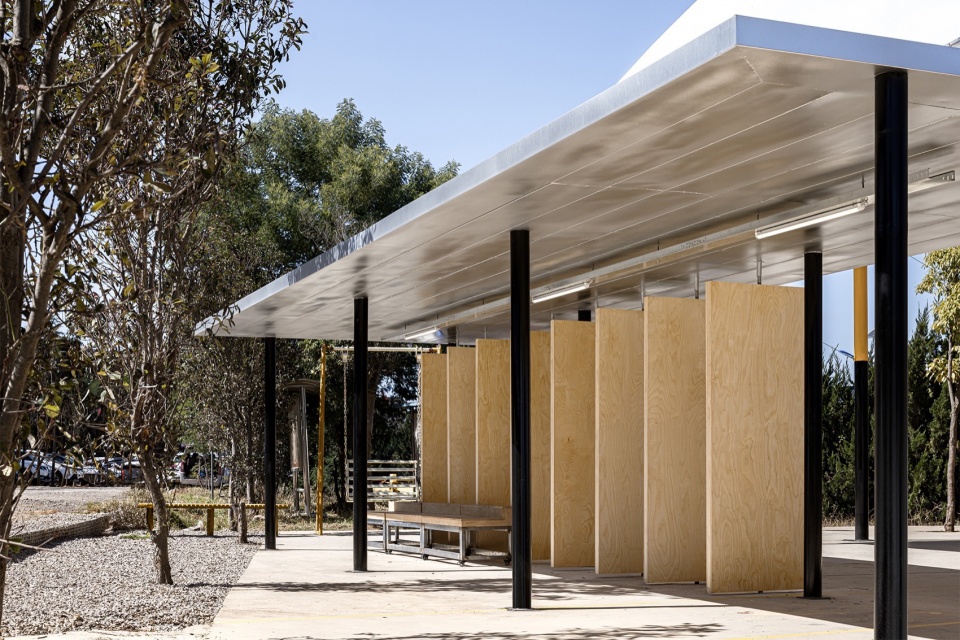
▼校车站翻转门关闭,pivot door of school bus stop, close
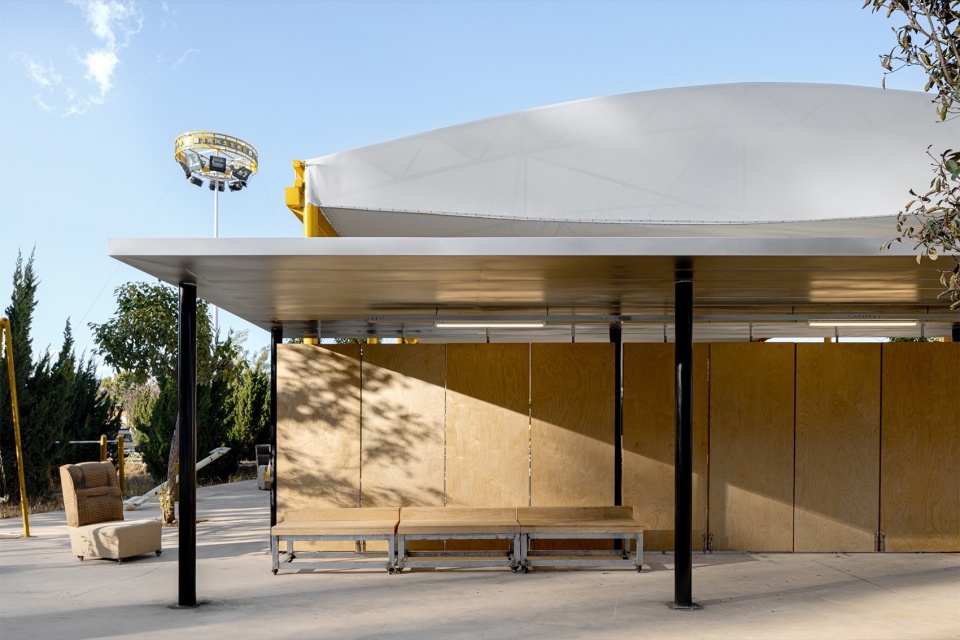
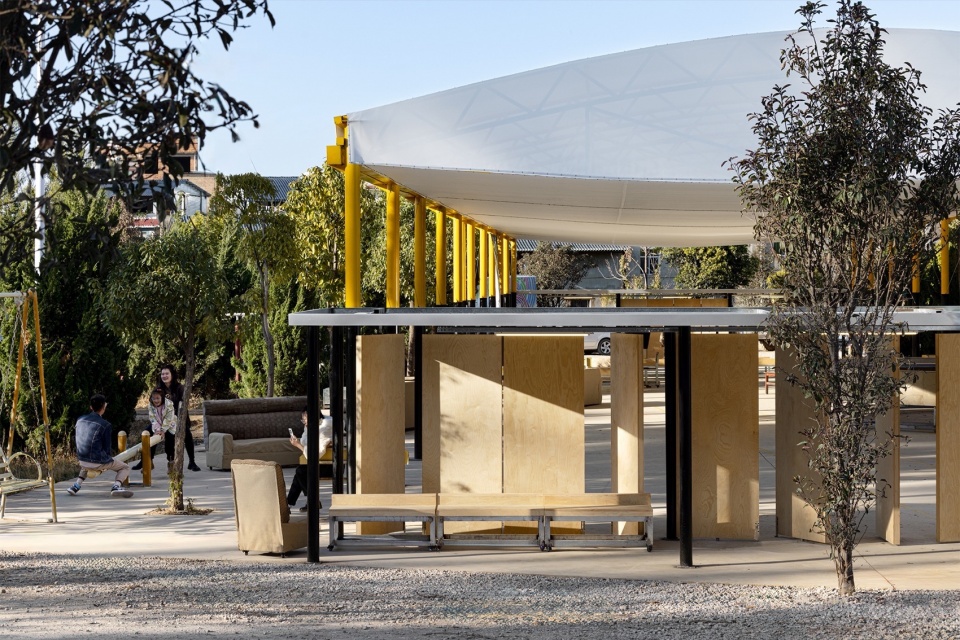
在这样的局面下,我们必须抛弃多余的幻想、去除理论矫饰、删减不必要的需求(例如用形式的办法创造400平方米尺度的空间艺术装置)。我们希望在充分的考量后给出精准的策略和简化的建造操作。集中资源改善“大棚”顶、地两个界面的动作即出于此。
In such a context, we must discard unnecessary fantasies, eliminate theoretical pretensions, and reduce superfluous demands (such as creating a 400-square-meter spatial art installation through formal methods). After thorough consideration, we aim to provide precise strategies and simplified construction operations. This is why we focused our resources on improving the roof and floor interfaces of the “marquee shed”.
▼校车站翻转门开启可通过,pivot door of school bus stop, open
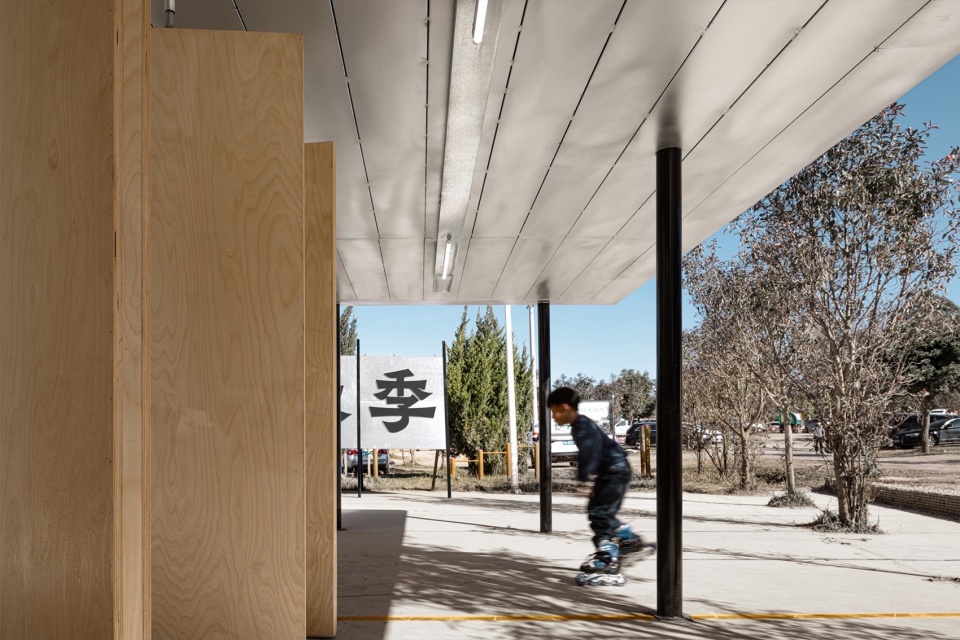
▼轮滑少年通过翻转门,roller boy passing through the pivot door
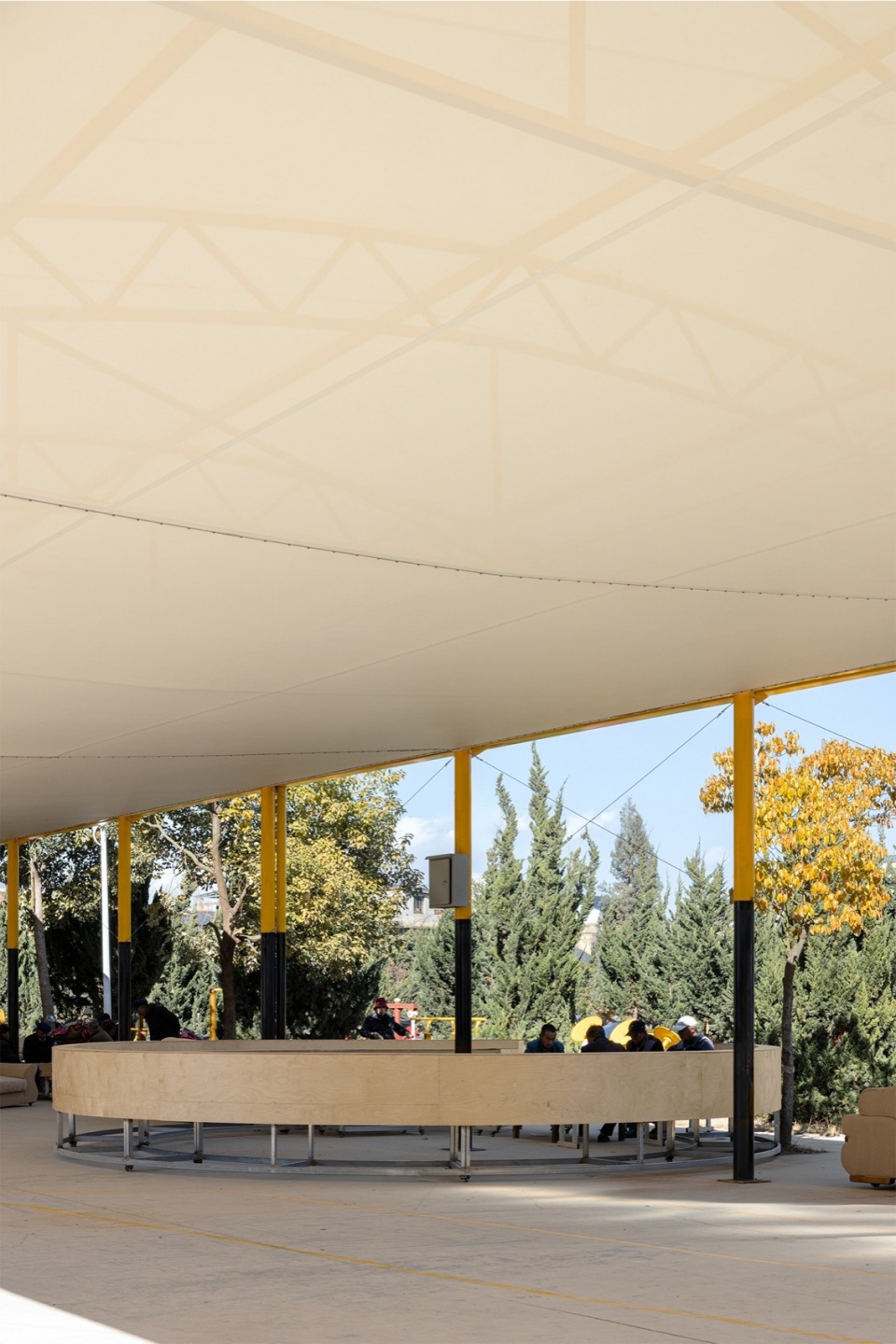
通过这种简化后的设计和建造表达,我们得到的与其说是“少即是多”的美学成果,不如说是Aureli“少即是足”(less is enough)的意识形态。这种意识形态意味着经济考虑成为了重要而迫切的前提,也意味着我们开始对美好生活进行重新定义。
Through this simplified approach to design and construction, what we achieved is not so much the aesthetic outcome of “less is more” but rather Aureli’s ideology of “less is enough.” This ideology signifies that economic considerations have become an essential and urgent priority, and it also means we are beginning to redefine what constitutes a good life.
▼问询台细部,details of the information desk
▼翻转门细部,details of pivot doors
▼新旧家具的组合使用,mixed use of old and new furniture
也许我们可以用直接而放松的方式面对建筑,让它以一种坚固的临时状态屹立在这个持久的临时现实中。
Perhaps we can confront architecture in a direct and light way, allowing it to stand in a solid temporary state facing this enduring temporary reality.
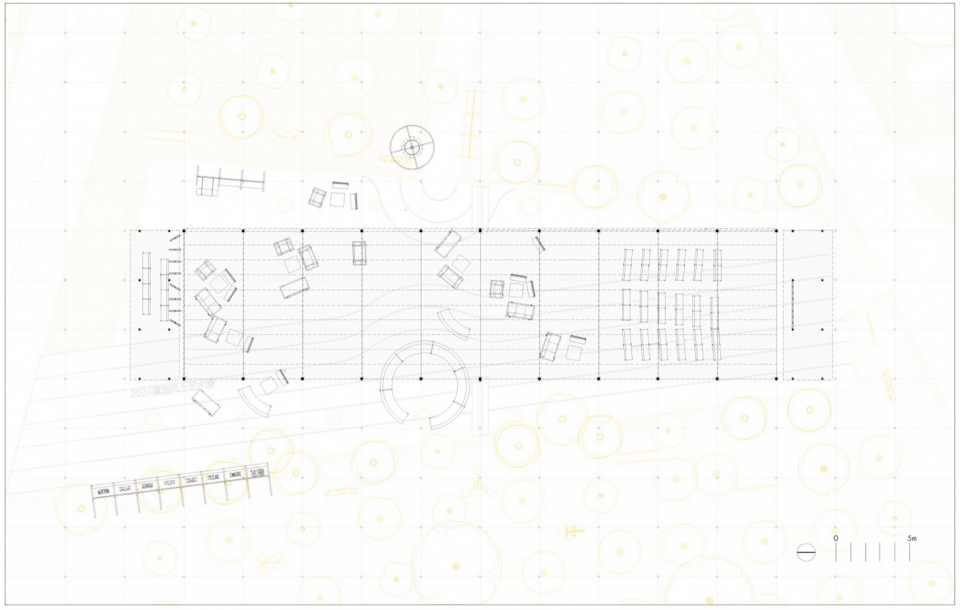
▼平面图,plan
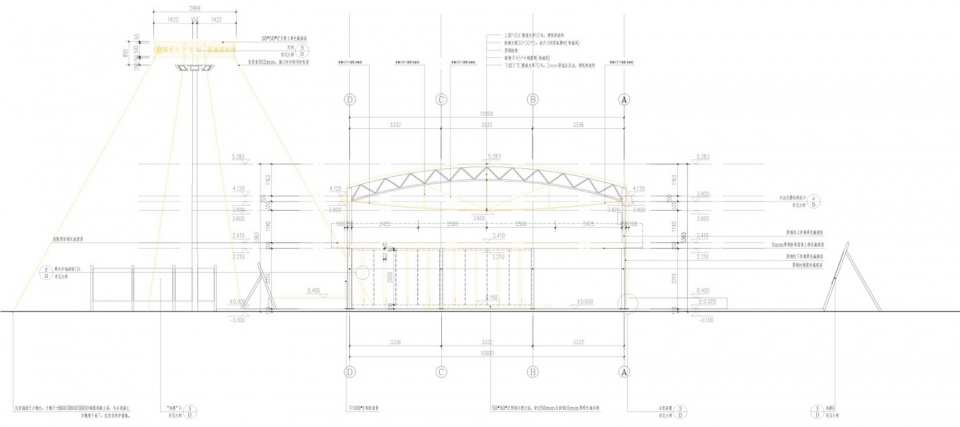
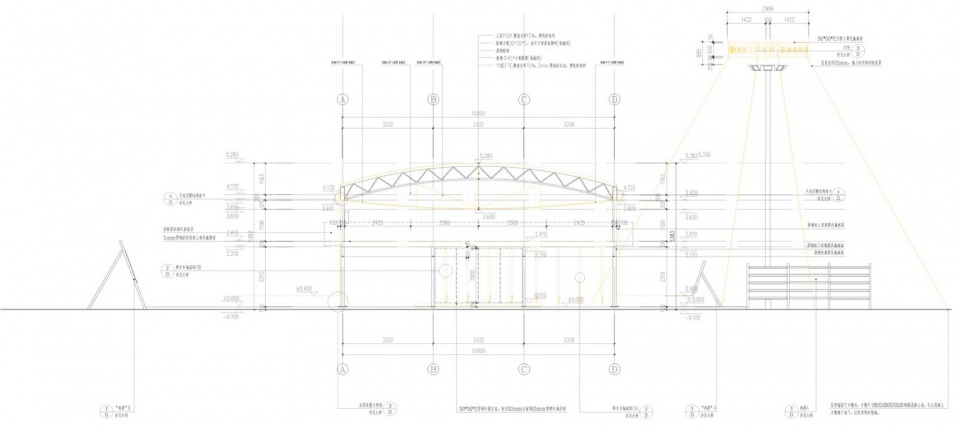
▼D-A立面图,elevation D-A
▼A-D立面图,elevation A-D
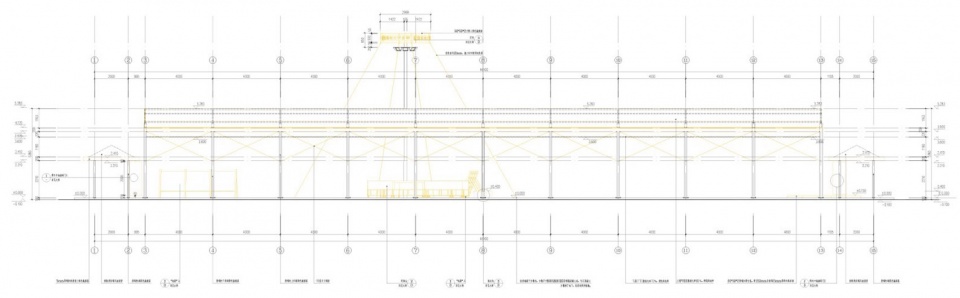
▼1-15立面图,elevation 1-15
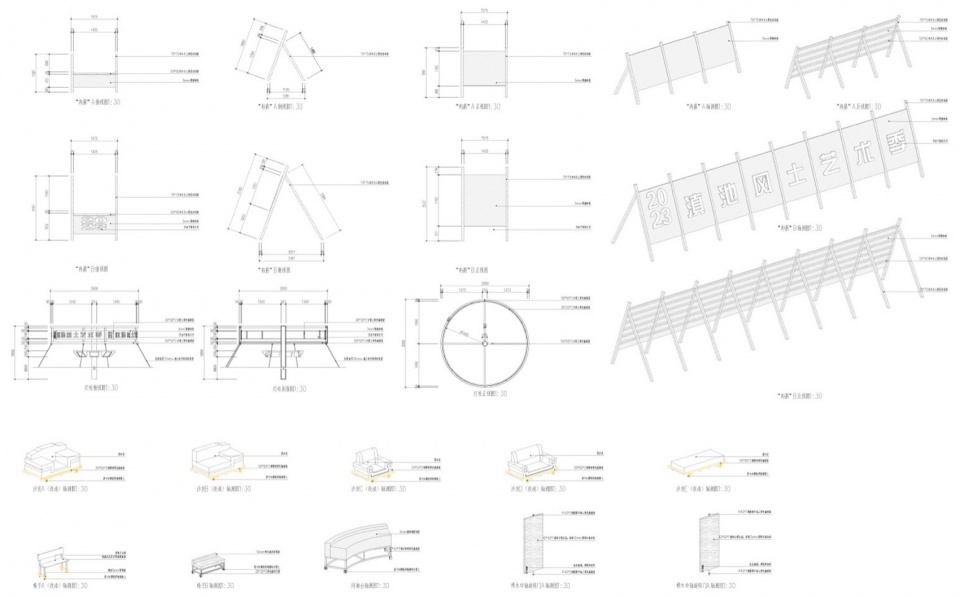
▼家具及装置大样图,detail drawing of furniture and devices
Project name: The “marquee shed” of the 2024 Dianchi Art Season
Project type: rehabilitation of public architecture
Design: Someyoung Architects
Website: http://someyoungarchitects.com/
Contact e-mail: zzy@someyoungarchitects.com
Design year: 2023
Completion Year: 2024
Leader designer & Team: Zhang Ziyang, Li Huijuan, Yu Haowen, Shao Yuanxian, Zeng Hairong, Xiao Peng
Project location: Haiyan Village, Dayu Subdistrict, Dianchi National Tourist Resort, Kunming
Gross built area: 424㎡
Photo credit: Xu Junwei, Someyoung Architects
Partner: Kunming Xinzhengdongyang Architectural Engineering Design Co., Ltd.
Clients: Management Committee of Dianchi National Tourist Resort, Kunming
Materials: Yunnan Yixinhang Construction Engineering Co., Ltd.