济宁邹城铁合金1971工业遗址公园(一期) / 笛东规划设计(北京)股份有限公司
综述
Overview
铁合金1971工业遗址公园位于前山东邹城鲁南铁合金厂旧址。项目不仅让当地居民和游客重新站在铁合金厂极具标志性的工业遗迹脚下,更为当地居民提供了高质量的城市生态绿地和休闲娱乐空间。项目尊重场地的历史和完整性,为邹城这座千年文化古镇注入工业时代的文化元素,提升并完善了邹城的整体品位和文化价值,为带动周边区域协同发展贡献卓越力量,实现区域振兴。
The Ferroalloy 1971 Industrial Heritage Park is located on the site of the former Lunan Ferroalloy Factory in Zoucheng, Shandong Province. The project has not only allowed local residents and tourists to once again stand at the foot of the factory’s iconic industrial heritage, but also provided high-quality and recreational urban green space. Respecting the site’s history and integrity, the project infuses industrial-era cultural elements into Zoucheng, the millennia-old cultural town. This project enhances and enriches the city’s overall quality and cultural value, contributing to the coordinated development of surrounding areas and achieving regional revitalization significantly.
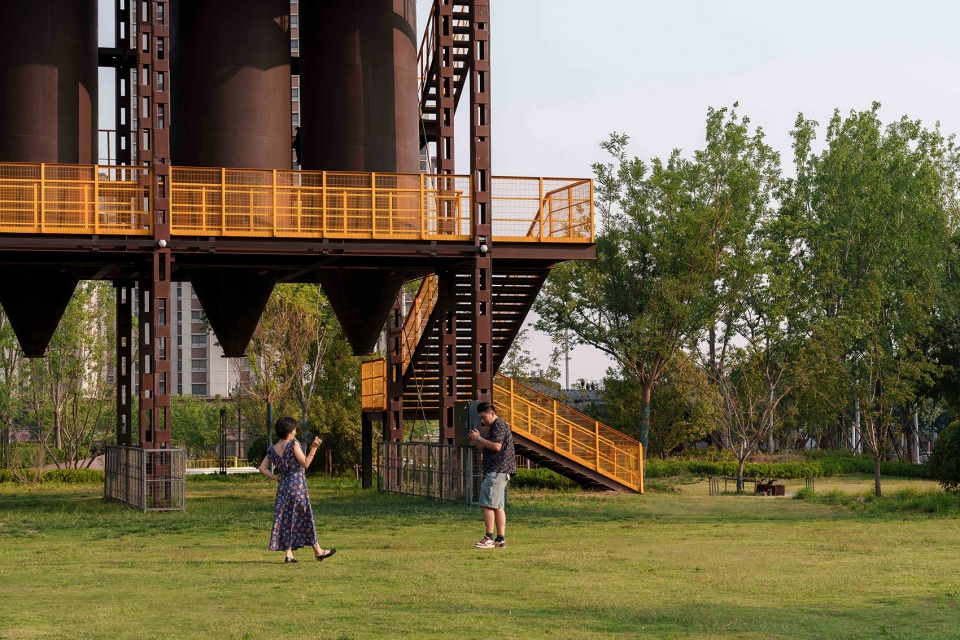
▼遗址公园成为新的城市文化地标,The heritage park has become a new urban cultural landmark
概况
Introduction
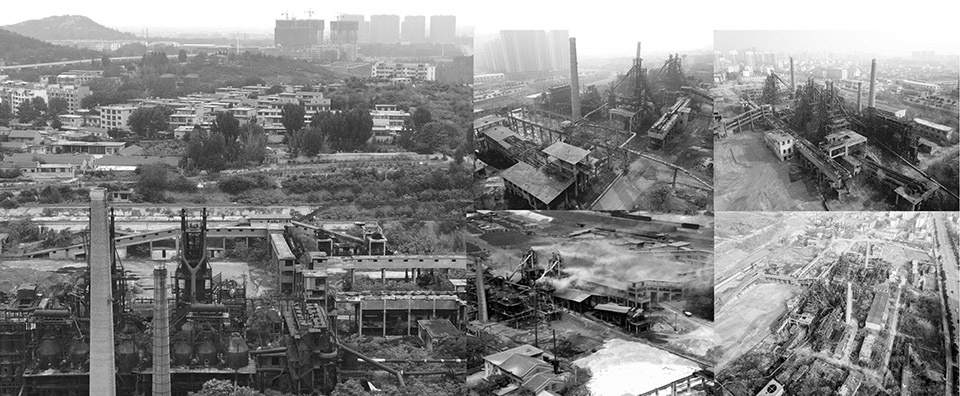
鲁南铁合金厂于1971年建厂,作为国家一级计量单位,为当地经济发展做出了突出贡献,2005年起历经转型而后没落。2017年邹城市委、市政府成立铁合金片区开发专班,与社会资本联合启动该片区更新策略,规划建设铁合金1971工业遗址公园,治理厂区污染土壤,完成生态修复过程,为公园建设打好生态环境基底。
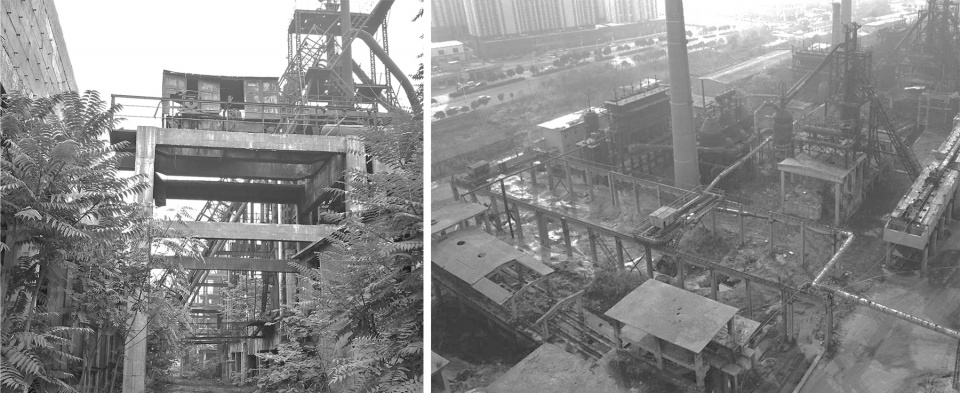
▼鲁南铁合金厂改造前场地状况,Site conditions of Lunan Ferroalloy Plant before renovation
As the national first-class metrology unit, the Lunan Ferroalloy Plant was established in 1971, and it has made significant contributions to local economic development. In 2005, it went declined with difficulty on transformation. In 2017, the Zoucheng Municipal Party Committee and Municipal Government established a special task force for the development of the Ferroalloy District in collaboration with private capital. Together they initiated a regeneration strategy for the district, planning the construction of the Ferroalloy 1971 Industrial Heritage Park, remediating contaminated soil within the factory area, and planned and finished the ecological restoration, laying a solid foundation for the park’s construction.
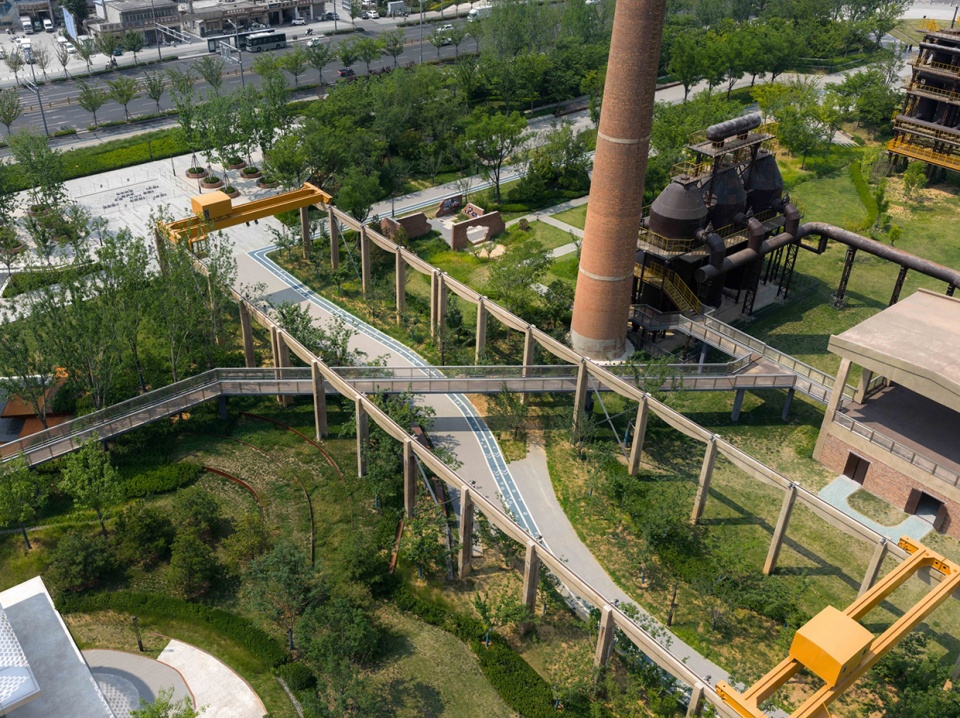
▼铁合金1971公园一期实景鸟瞰图,Aerial view of the first phase of Ferroalloy 1971 Park
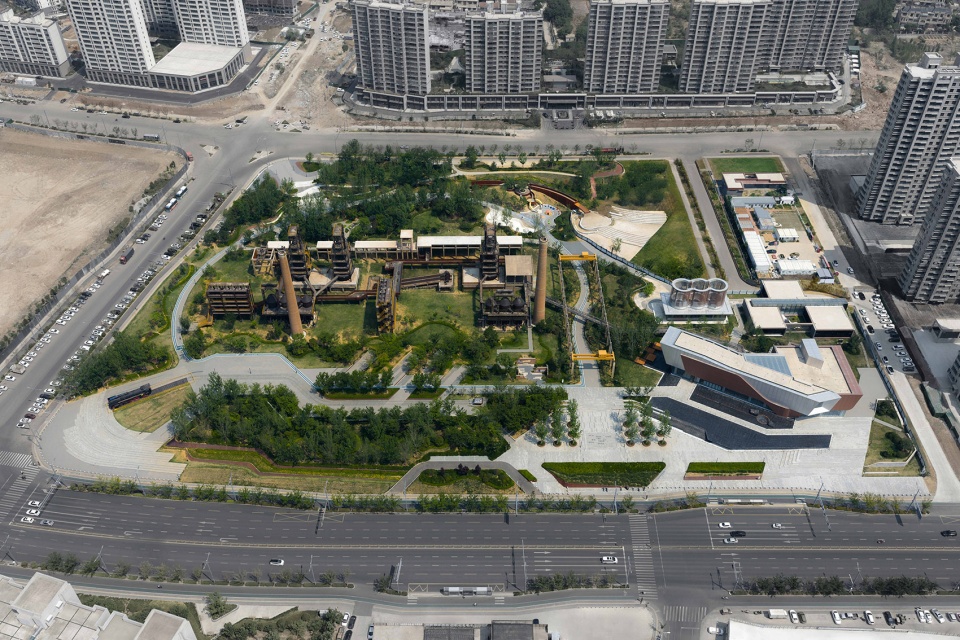
公园总用地面积6.1万平方米,绿地面积4.5万平方米。设计挖掘文化,通过场地工业原有遗址的利用与设计再演绎,不断探寻工业遗产与城市公共空间的供应策略。深度挖掘铁合金历史、场地内的工业符号记忆与城市活力共营空间体系的内在联系;营造多维的自然艺术与人文美学场景。
▼总平面图,Site plan
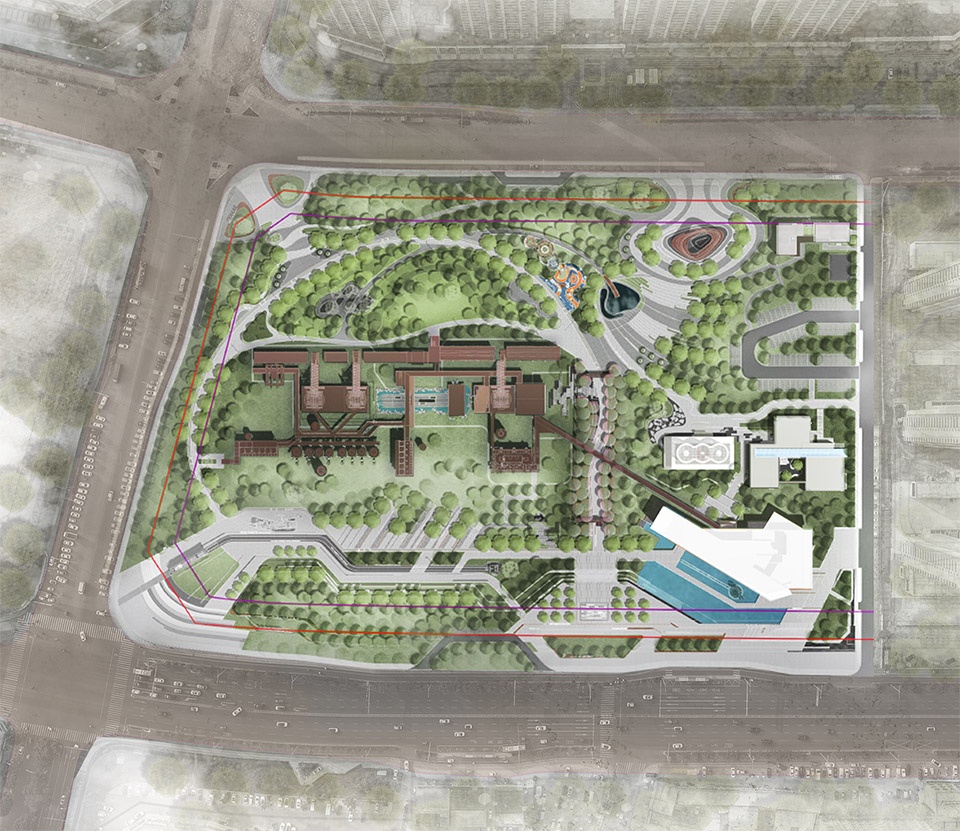
The park covers a total area of 61,000 square meters, with 45,000 square meters of green space. By utilizing the cultural heritage and reinterpretation of the site’s original industrial heritage, the design explored strategies for bridging the gaps between industrial heritage and urban public space. The design fully translated the inherent connections between the ferroalloy factory history, the site’s phsical symbolic memories, and the vibrant urban space system; and created a multi-dimensional landscape of natural art and humanistic aesthetics.
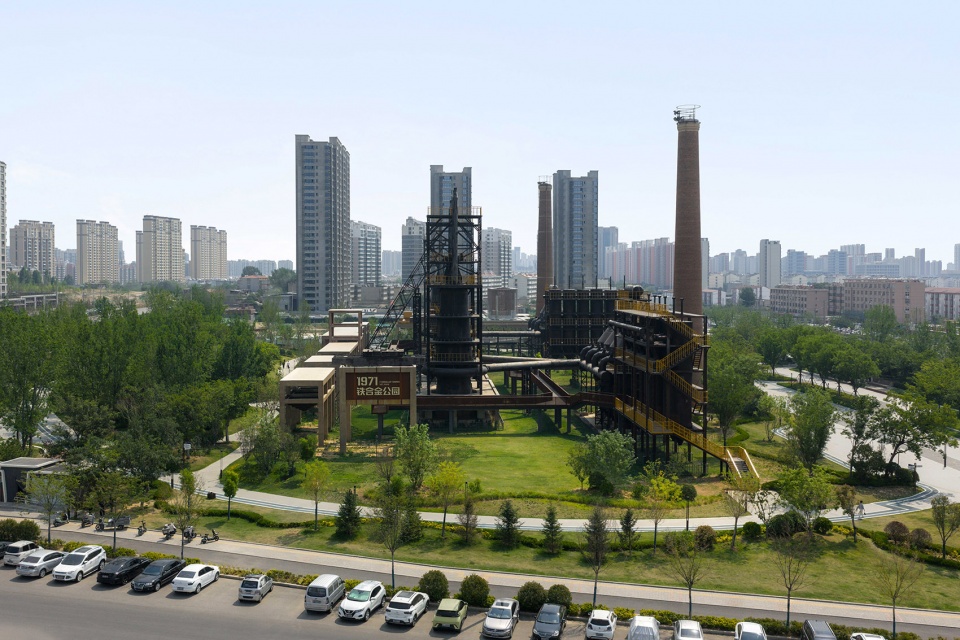
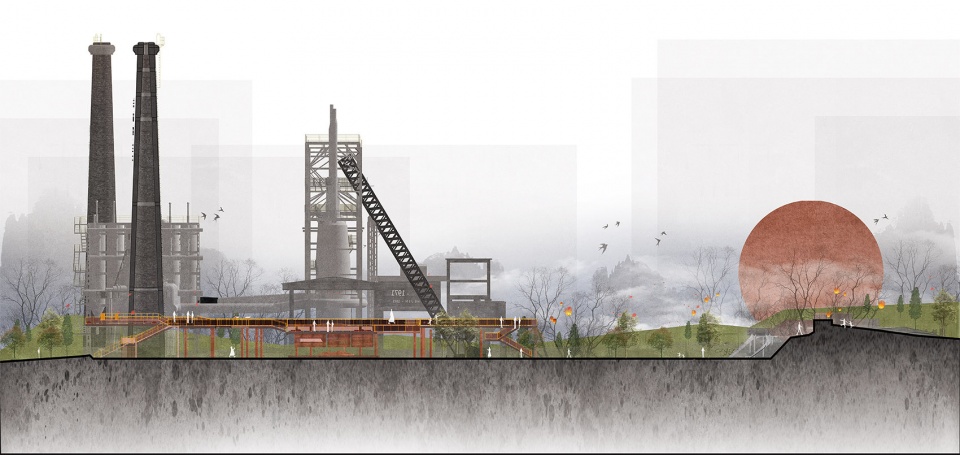
▼遗址核心区天际线轮廓,Skyline of the core area of the ruins
1.传承与体验 – 核心遗迹区工业文化体验
Heritage and Experience – Industrial Cultural Experience in the Core Heritage Area
经过多方共同商议,工业遗迹部分以生产工艺为主线,保留全流程工艺所需的炼铁高炉、热风炉、布袋除尘、料仓等典型生产设备作为工业遗迹核心展示要素。设计依托核心工业遗存作为园区空间整体制高点,为塑造场所精神的出发点,并构建了公园整体天际线轮廓,与周边城市天际线遥相呼应。
▼遗址核心区剖面1,Section 1 of the core area of the ruins
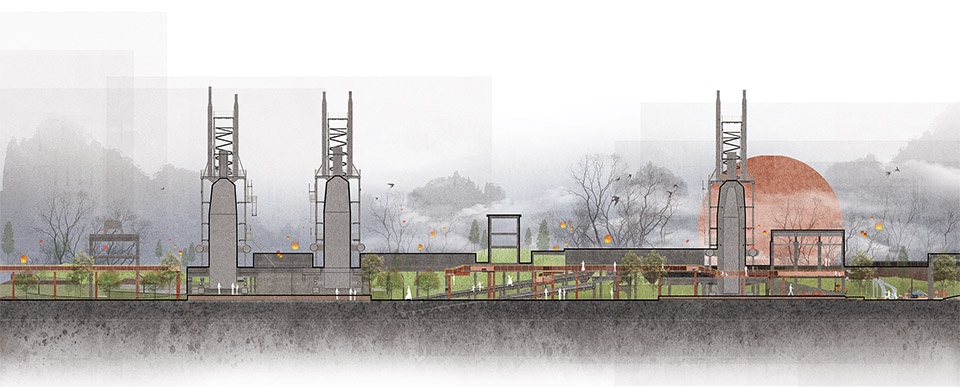
Through extensive consultation, the industrial heritage section focused on the critical production processes. By retaining typical production equipment required throughout the entire process, including blast furnaces, hot blast furnaces, bag filters, and silos, as core elements of the exhibition, the design leverages this core industrial heritage as the commanding heights of the park’s overall spatial landscape. The core area of heritage also served as the starting point for shaping the spirit of the place and shaping the park’s overall skyline, which echoes the surrounding city skyline in the distance.
▼遗址核心区鸟瞰图,Bird’s-eye view of the core area of the site
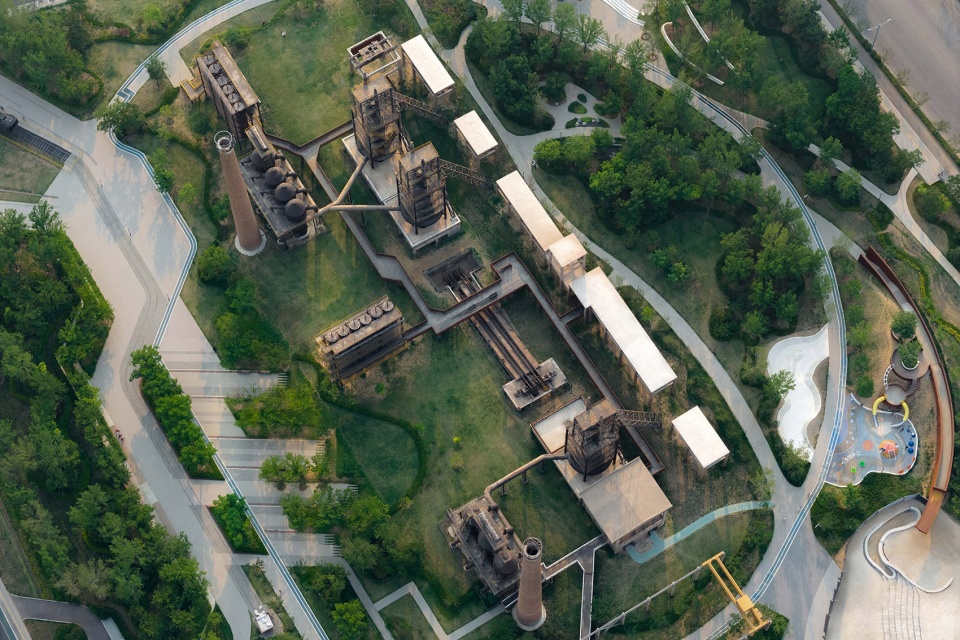
▼使用者进入园区各处均感受核心遗迹,Users can experience the core heritage throughout the park
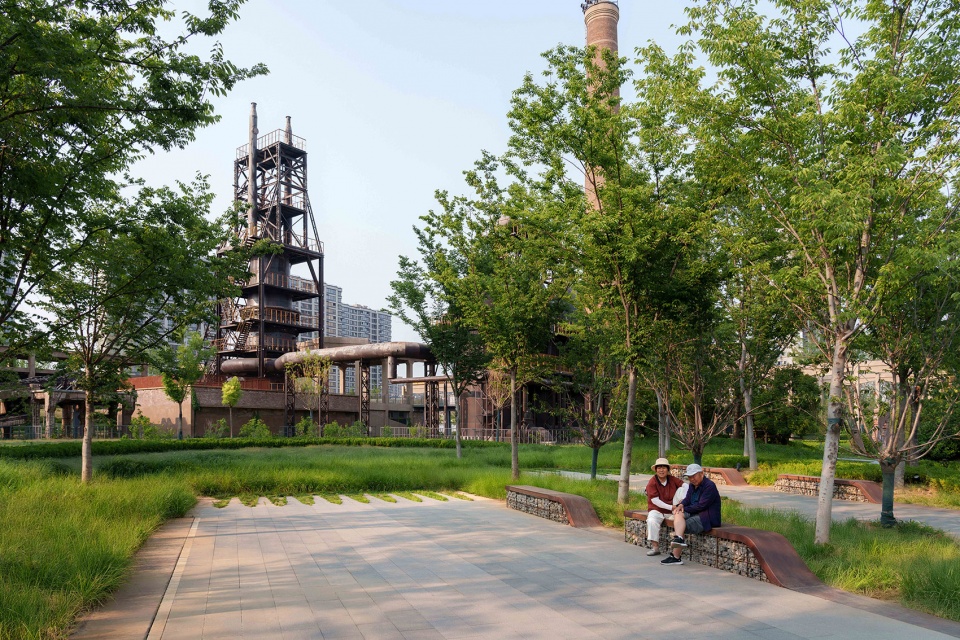
基于国际达成高度共识的工业遗迹再利用策略,设计秉持“最小干预原则”(minimal intervention principle)介入工业遗迹核心区场地。以粗旷的工业美感与细腻柔和的自然绿意直接碰撞,形成园区后工业遗迹无可替代的独特景致。设计赋予对工业与自然在核心区的绝对价值,使得使用者可以以最直接的方式感受工业时代技术、文化、美学等方面并获得丰富体验。
Based on the internationally recognized principle of industrial heritage reuse, the design adheres to the “minimal intervention” principle within the core industrial heritage site. The striking contrast between the rugged industrial aesthetic and the delicate, soft natural greenery creates a unique and irreplaceable landscape within the park’s post-industrial heritage. The design prioritizes the absolute value of both industry and nature within the core area, allowing users to experience the technological, cultural, and aesthetic aspects of the industrial era and gain a rich experience.
▼核心遗址区前后对比照片顶视图,Top view of the core site area before and after comparison photos
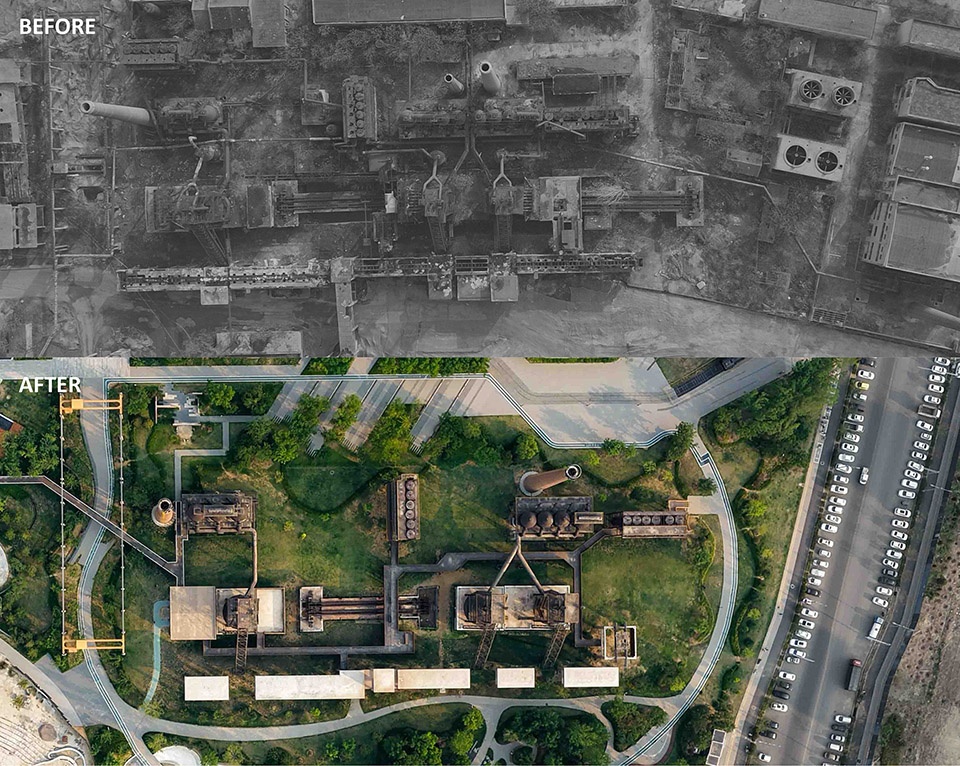
▼遗址核心区改造前,Comparison of the core area of the site before renovation
▼遗址核心区改造后,Comparison of the core area of the site after renovation
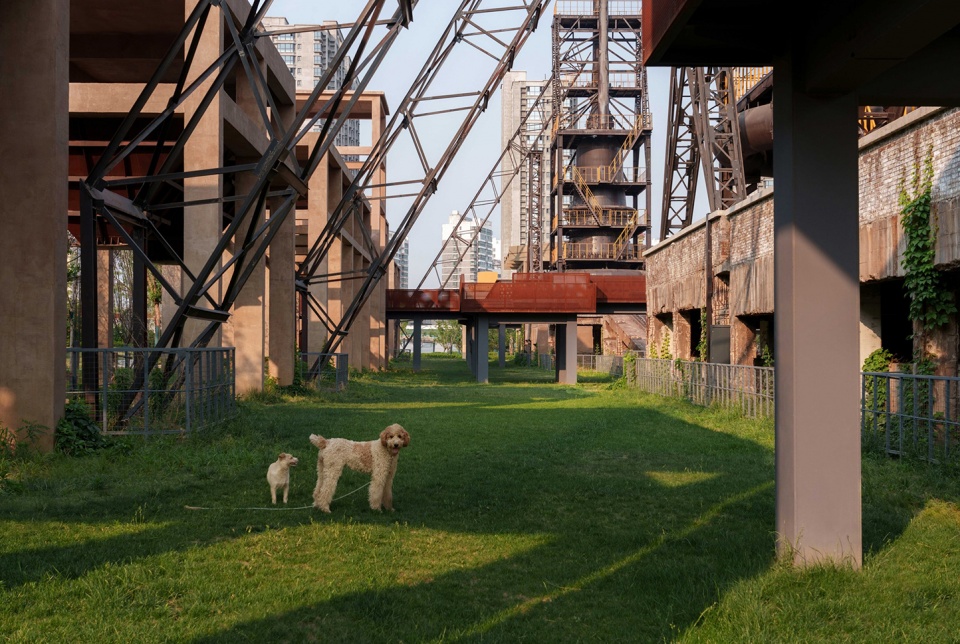
The core structure of the ruins area before and after the renovation of the ground space
▼遗迹区核心架构底层空间改造前后对比,The core structure of the ruins area before and after the renovation of the ground space
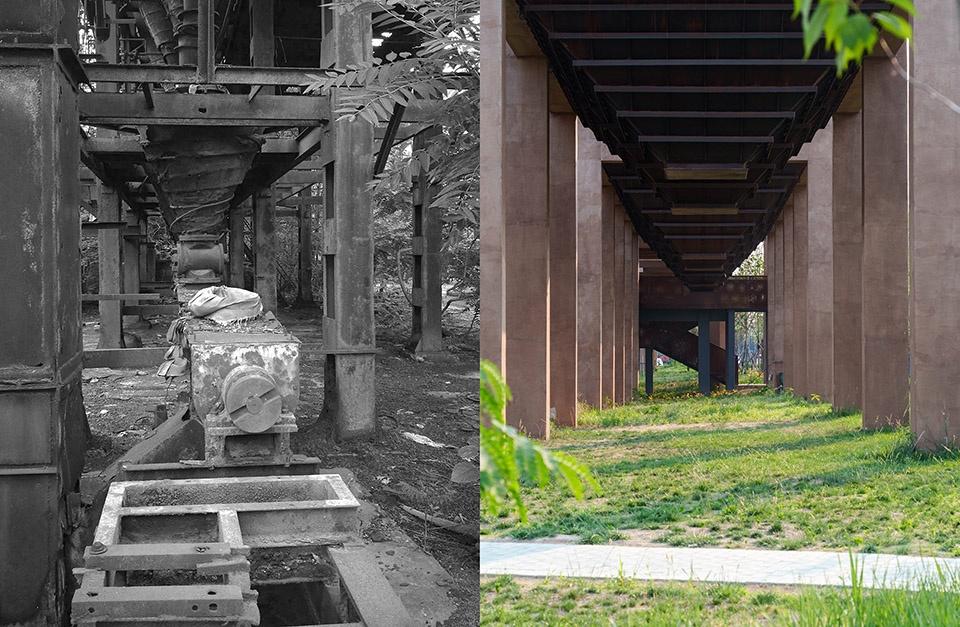
▼核心遗迹区改造对比,Comparison of the core ruins area renovation
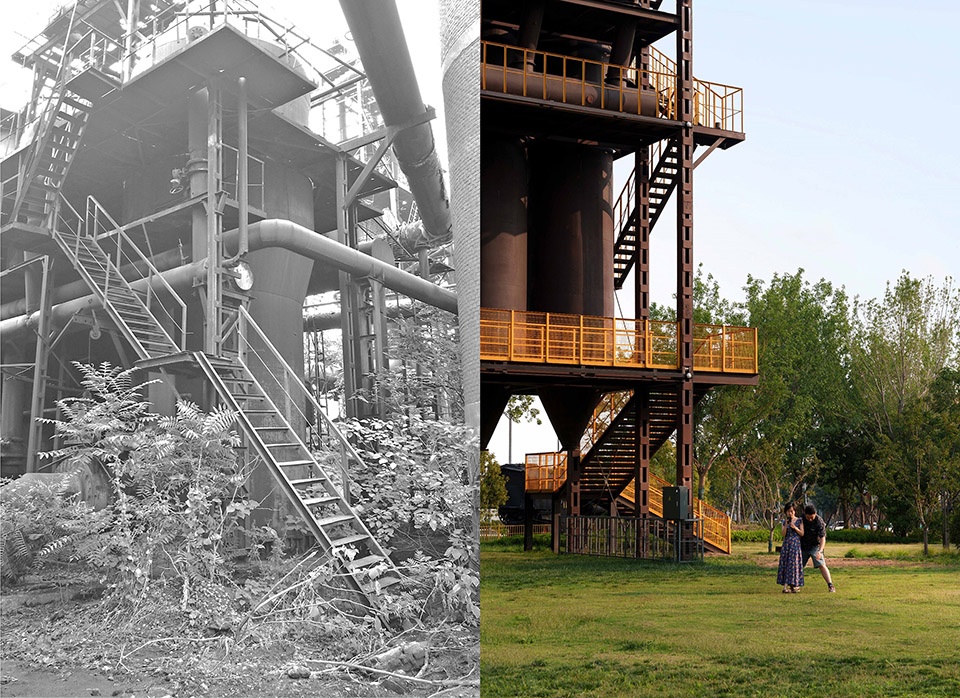
▼保留构筑物及标志性鱼腹柱廊改造前,the iconic Fish Belly Colonnade and the preservation of the structure before renovation
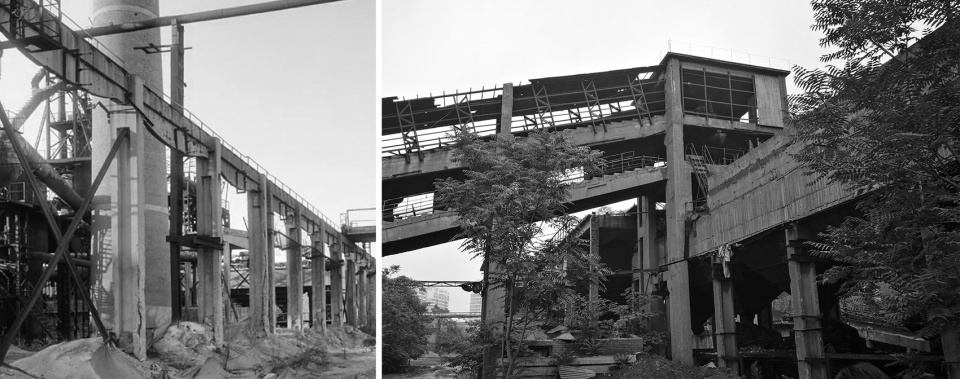
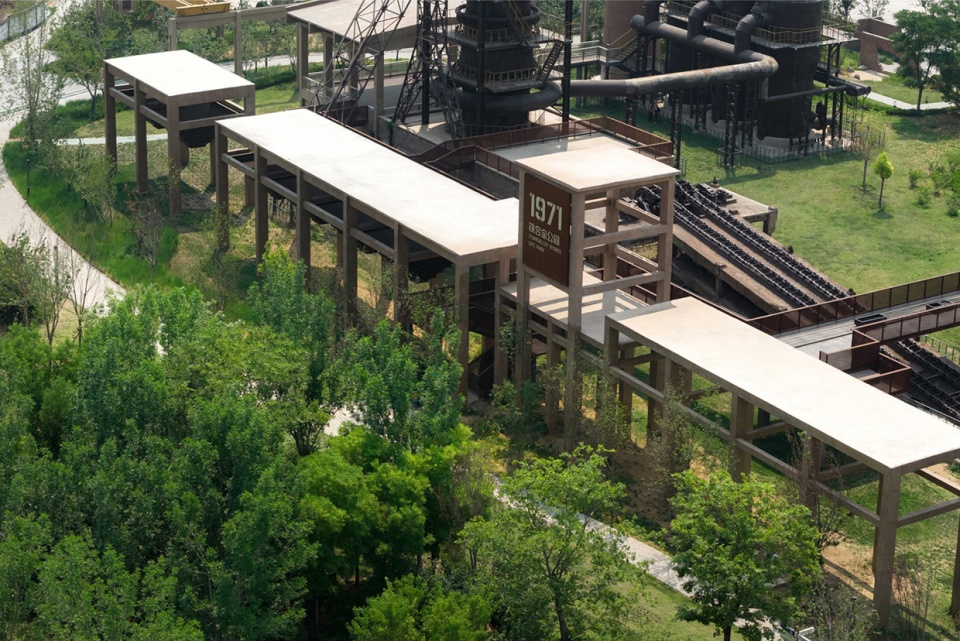
▼保留构筑物改造后,the preservation of the structure after renovation
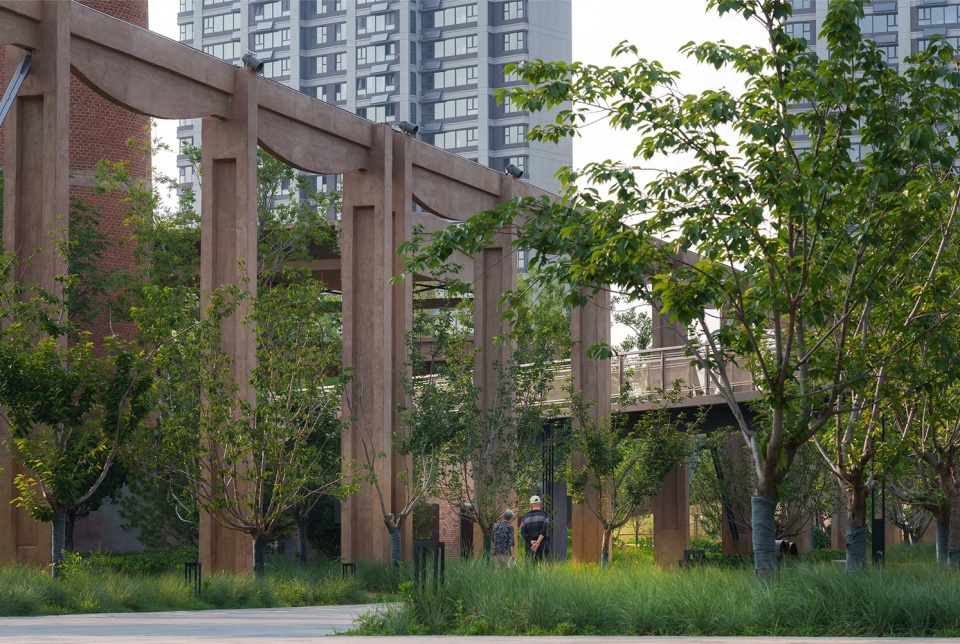
▼标志性鱼腹柱廊改造后,the iconic Fish Belly Colonnade after renovation
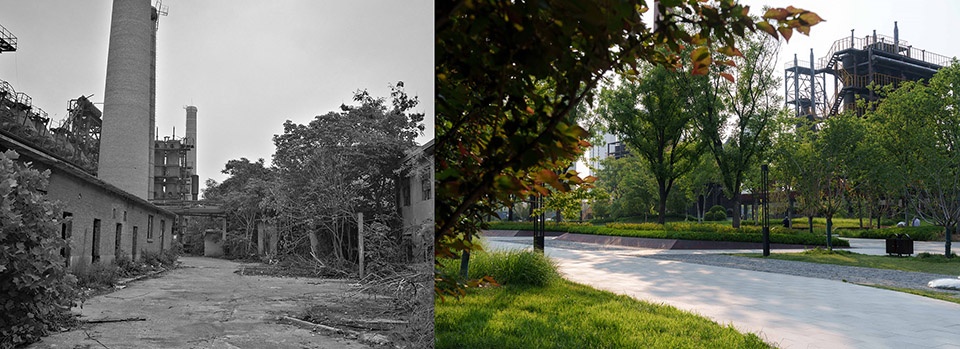
▼厂区环境改造前后对比,Comparison of the factory environment before and after renovation
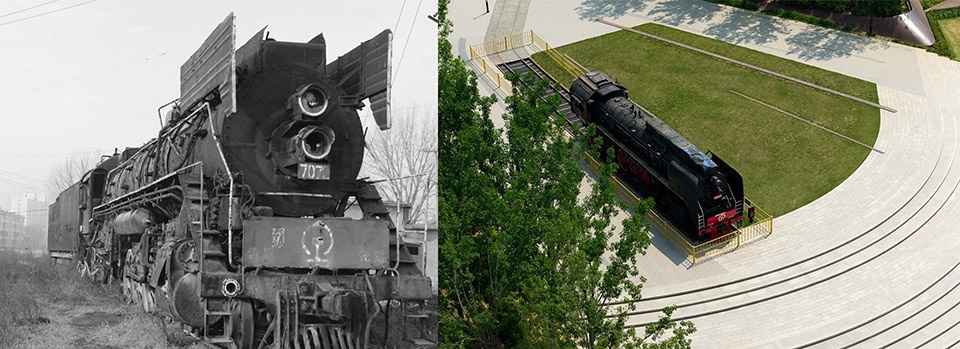
▼标志性火车头遗迹元素改造前后对比,Comparison of the iconic locomotive relic elements before and after the renovation
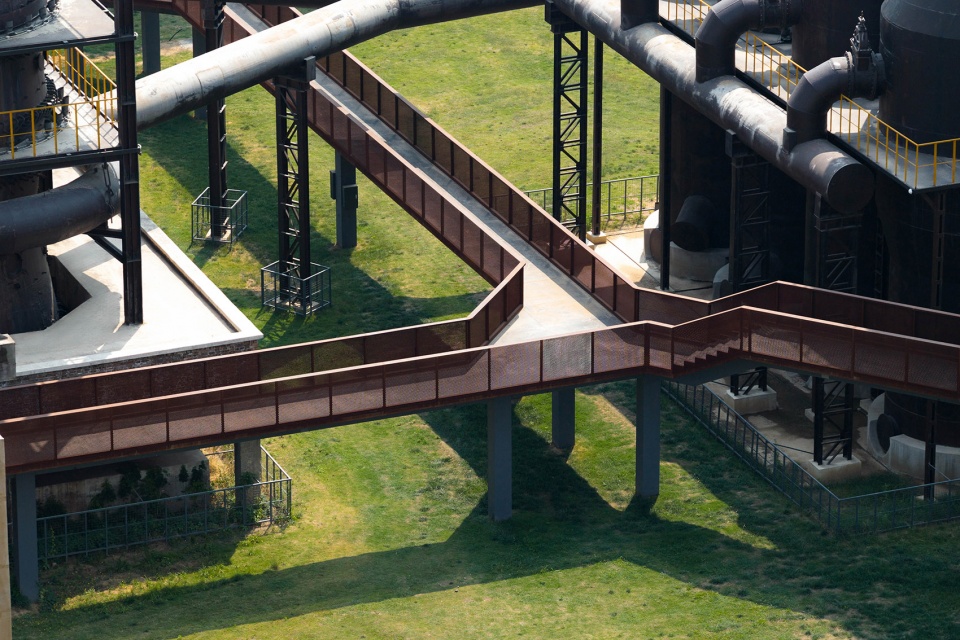
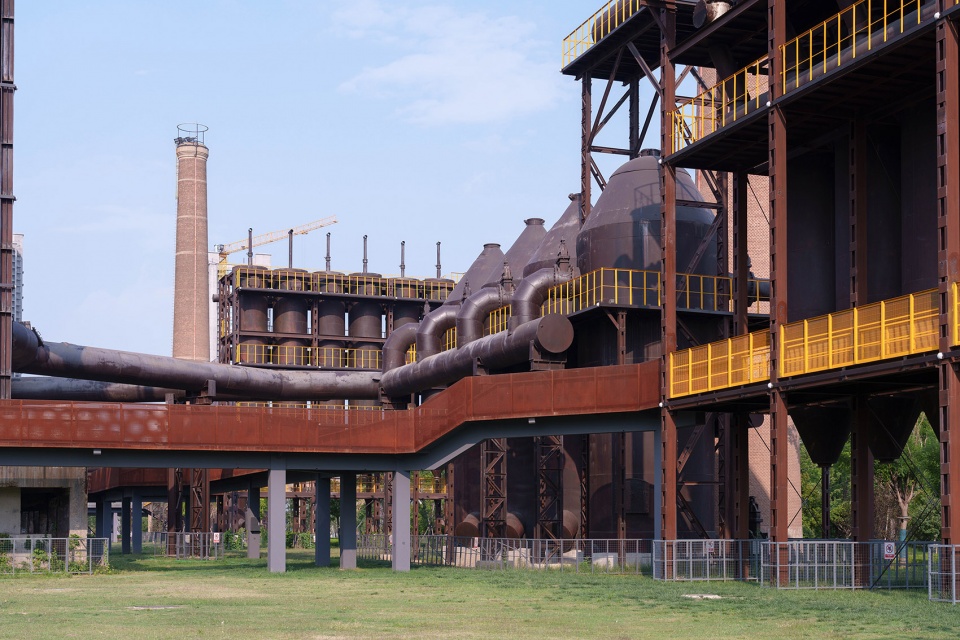
项目独具特色一点在于建筑、景观、结构及工业遗迹修复团队多专业联合,对保留下来的遗迹工业建筑进行“二次交通织补”,确保一条能走进核心工业建筑的空中走廊,同时结合释放的节点空间提升游览的趣味性。市民不仅可以远观公园核心遗迹区的全景视野,更可以利用廊道体系走进遗址,为游客带来丰富的空间体验的同时,也能深度接触工业文化和厂区历史。
▼参观连廊剖面关系示意图,Schematic diagram of the corridor section
A unique feature of this project lies in the collaboration of multidisciplinary teams including architecture, landscape, structure, and industrial heritage restoration. This collaborative effort has resulted in a “secondary circulation” approach to the remaining industrial buildings, ensuring a direct access to the core industrial area which combined with the release of new nodal spaces, enhances the experience of the visitor experience. Citizens can not only enjoy panoramic views of the park’s core heritage area from afar, but also access the site through this corridor system, providing visitors with a rich spatial experience while also immersing themselves in the industrial culture and history of the factory.
▼新建工业风参观连廊,Newly built industrial-style viewing corridor
▼参观连廊与工业核心区效果,View of the corridor and the industrial core area
2.秩序与自然 – 环遗址区的公共空间营造 Order and Nature – Public Space Creation Around the Heritage Site
公园非核心遗址区的空间营造,从两个区域、两种思路出发。遗址区南侧区域临近城市主干路,有着昭示工业文化,展示公园风貌的属性需求。设计尊重原有厂区原生保留的植被,从空间入手,强调工业风严格的整体性及秩序感,采用克制的设计手法,以原有厂区清晰、简洁的形式结构与绿色之间的鲜明对比形成场地空间结构特色。减少元素和材料的类别,提升游客活动空间的同时强调城市界面的昭示感,使封闭的工业场所向开放的公共空间转变,增强园区体验感。
The spatial design of the park’s non-core heritage area was based on two areas and two approaches. The southern area of the heritage site, adjacent to the city’s main road, has the potential to showcase park’s industrial culture and character. The design respects the preserved vegetation of the original factory area. Starting with the space itself, the design emphasized the strict integrity and sense of order of the industrial style. A restrained design approach is employed with the clear and concise formal structure of the original factory area which sharply contrasted with the greenery to create a distinctive spatial structure. By reducing the number of elements and materials, the visitor activity space is enhanced while highlighting the urban interface, transforming the enclosed industrial site into an open public space.
▼城市公园城市展的生态边界,Ecological Boundaries of Urban Parks and Urban Exhibitions
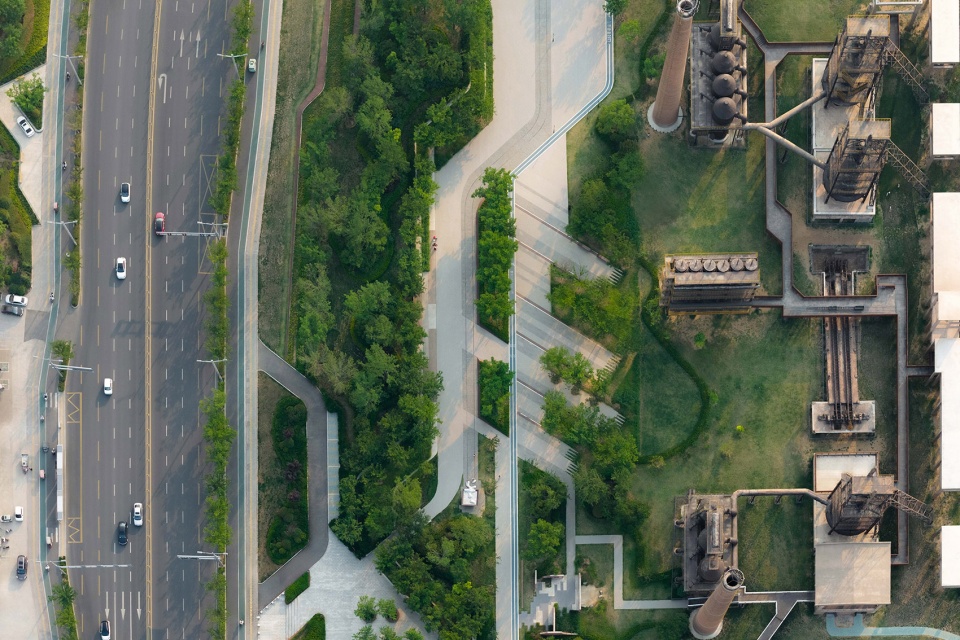
▼极富韵律与秩序感的空间肌理,A spatial texture rich in rhythm and order
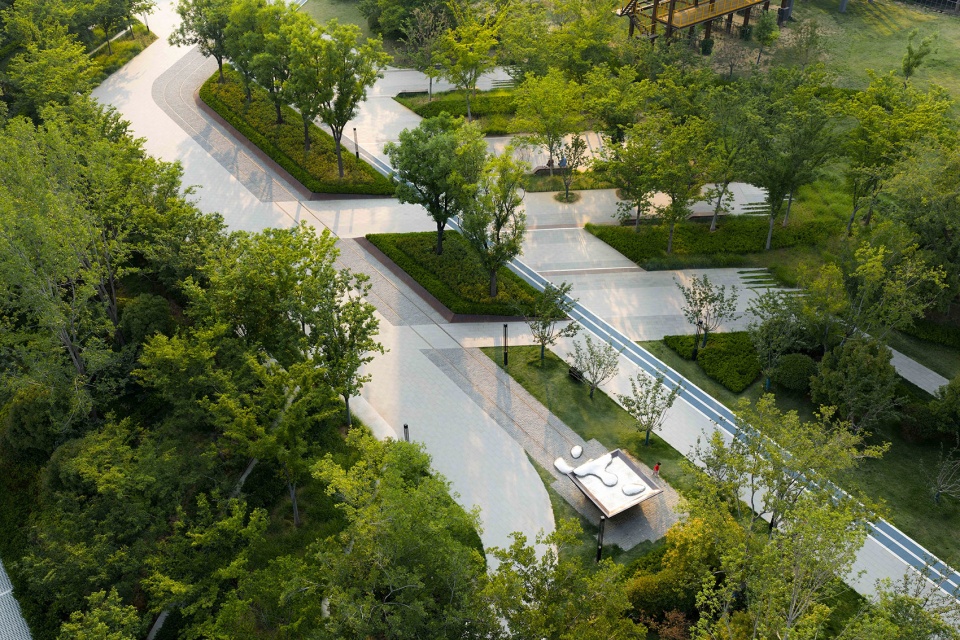
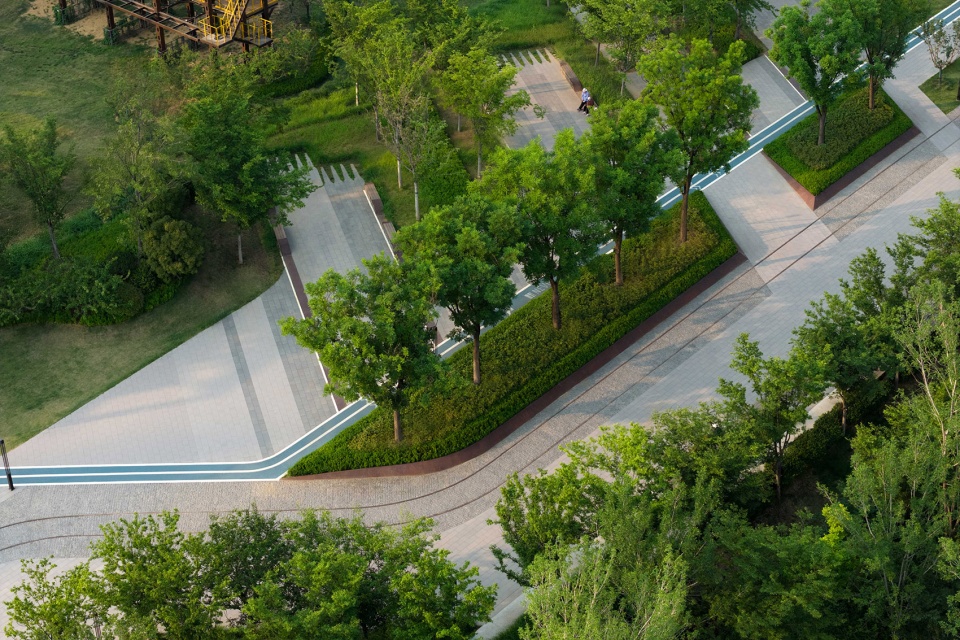
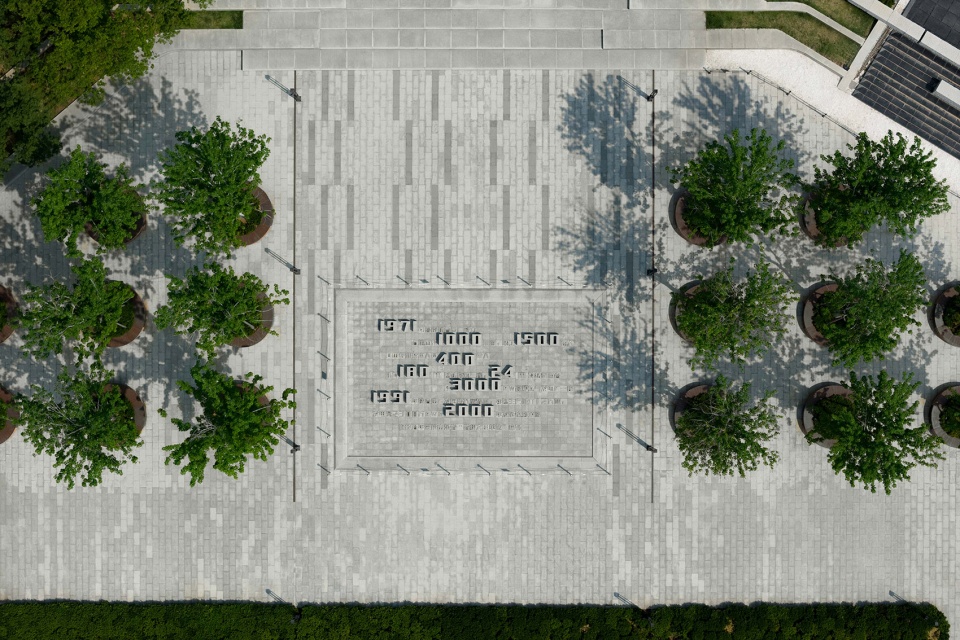
▼厂区历史时间广场作为开放式入口之一,The factory’s historical time square serves as one of the open entrances
相对的,遗址区北侧临近次级城市道路,作为服务周边居民的重要绿色公共空间,设计上采用了相对流动生动的曲线造型,结合充沛的绿量,形成与遗迹核心区己截然不同的独特体验。场地通过绿化平台的手法层层铺开,消化场地固有高差的同时,设置了多处尺度宜人,空间舒适的景观空间。附近居民及游客可以透过绿意中远观工业遗迹的风貌,也可聚焦眼前实现各种社交活动,各得其所有互不干扰。
Conversely, the northern side of the site, facing the secondary urban road is positioned as a vital green public space for the surrounding residents. The is area incorporates relatively fluid and dynamic curves design language, combined with abundant greenery, created a distinct experience that different from the core area of the site. Layered through the site’s inherent height differences, the green platform provides a variety of pleasantly scaled and comfortable landscape spaces. Residents and visitors can admire the industrial heritage from afar through the greenery, while also focusing on the immediate surroundings for various social activities, ensuring everyone’s own perspective without interfering with others.
▼公园南侧入口,South entrance of the park
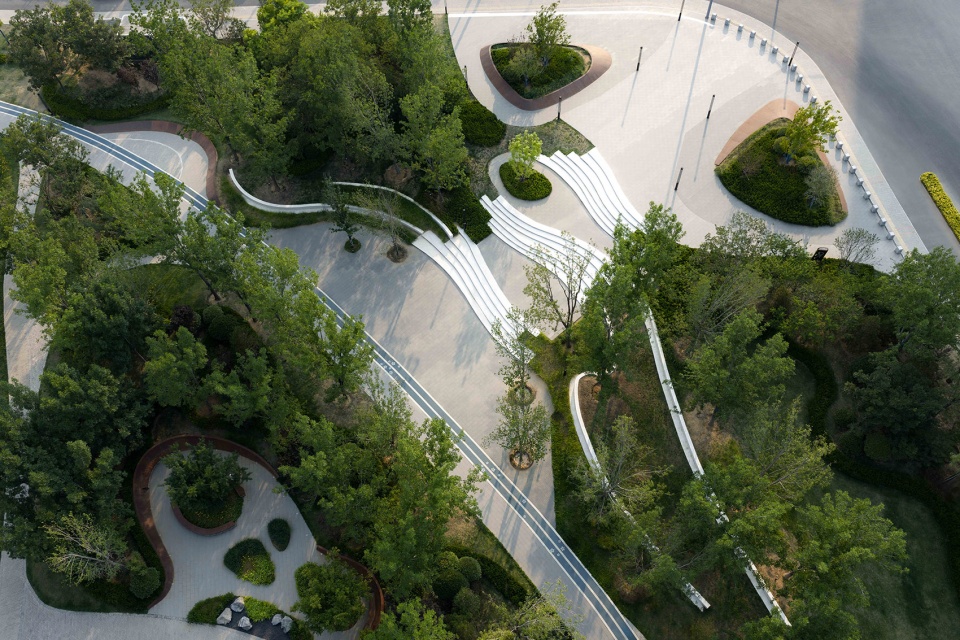
▼台地处理地形的雨水花园,Rainwater garden on terraced terrain
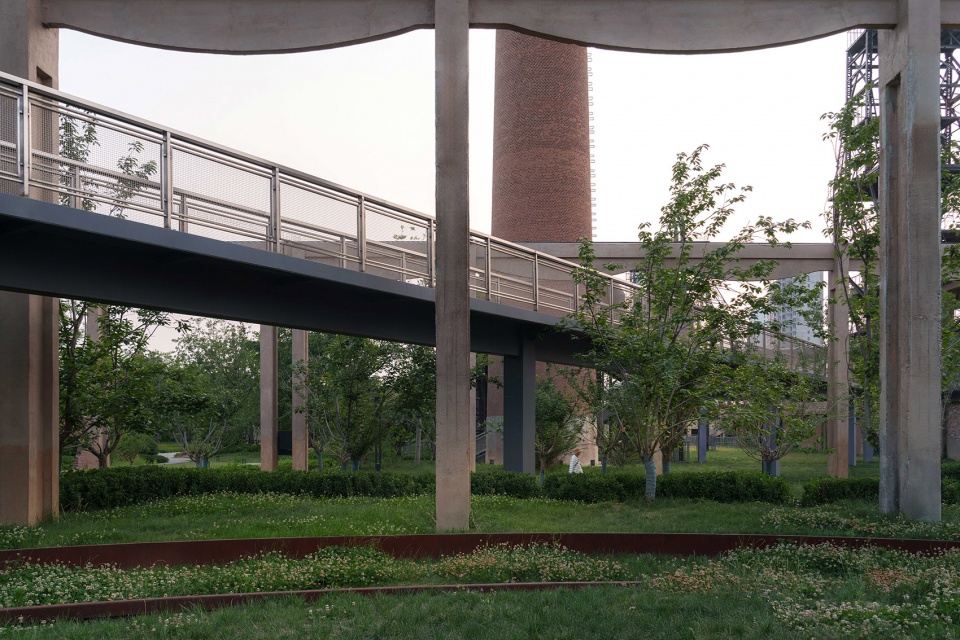
▼小尺度生态休闲空间,Small-scale ecological leisure space
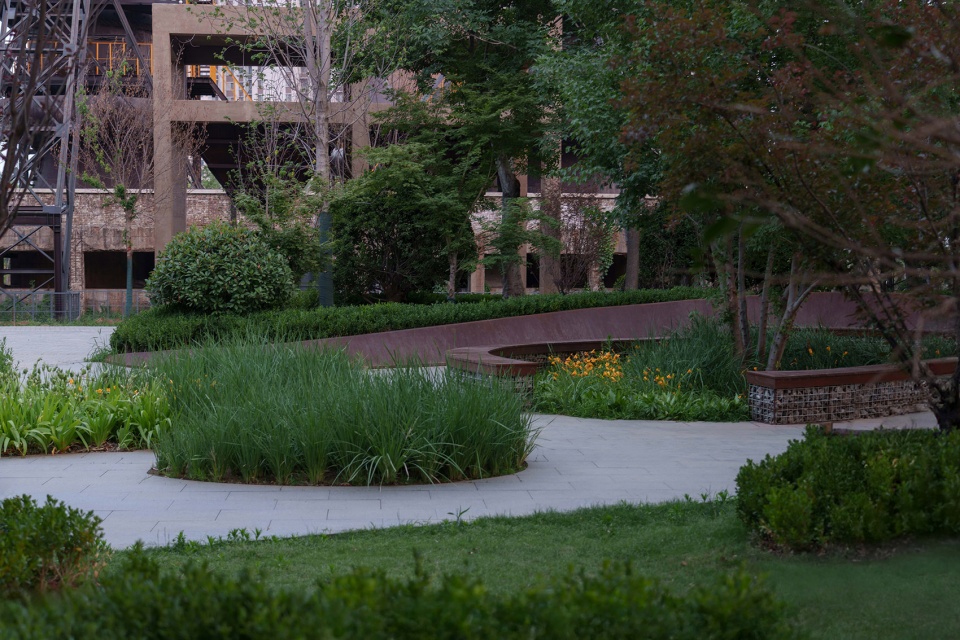
▼工业元素座椅与生态种植,Industrial element seats and ecological planting
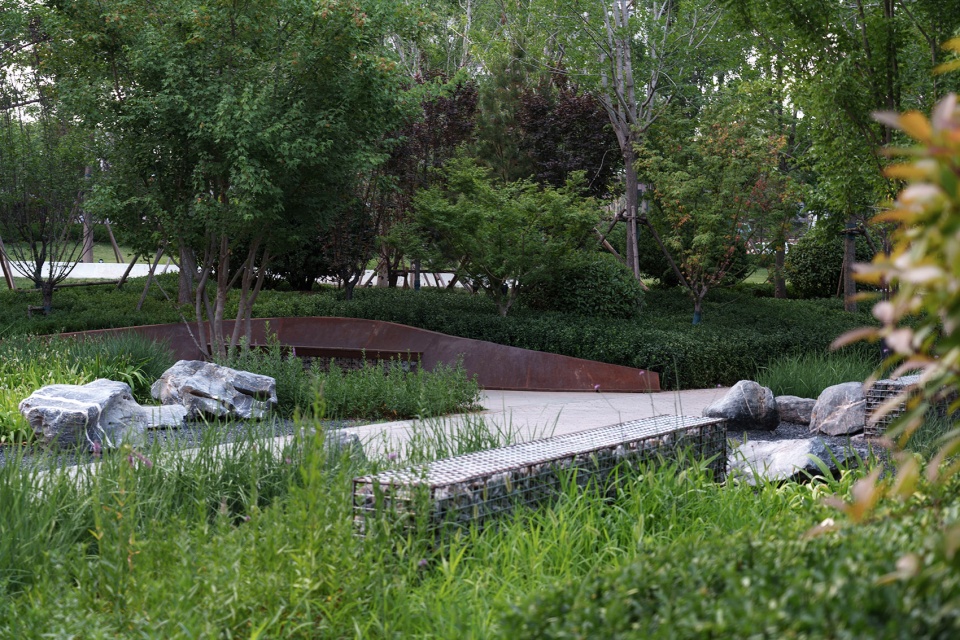
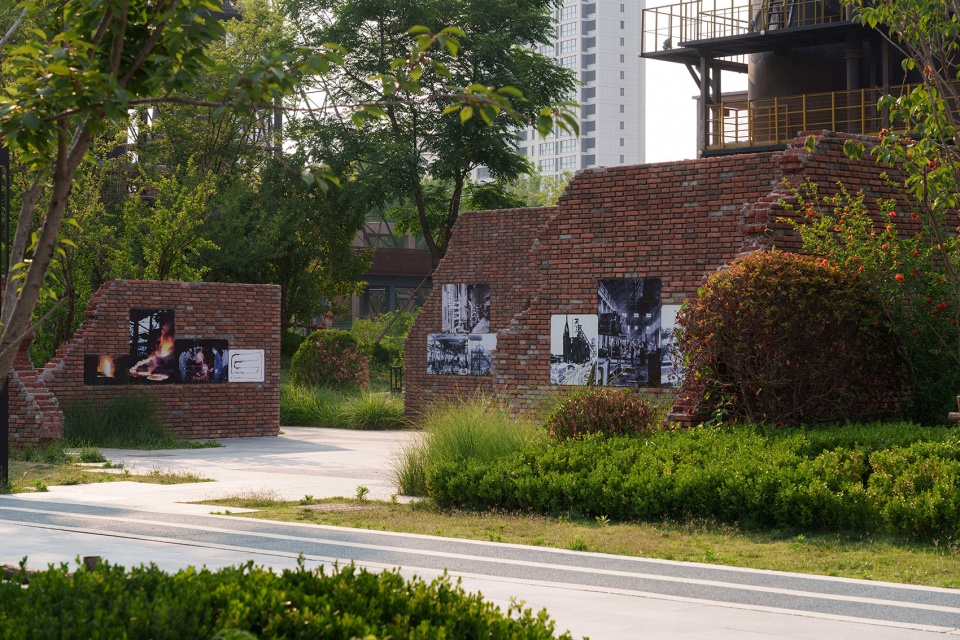
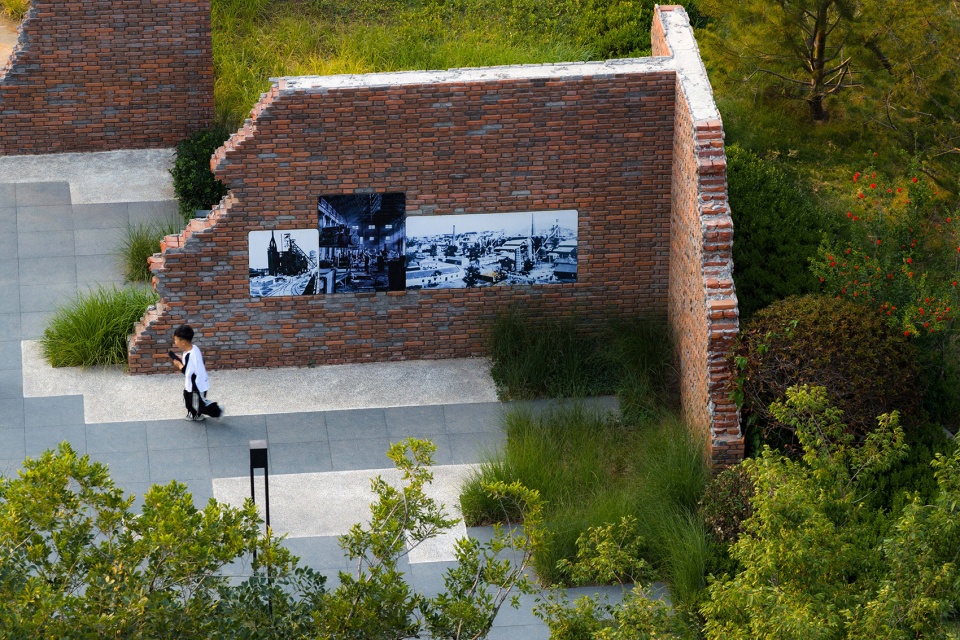
▼遗迹文化墙节点,Node of the cultural wall of the ruins
3.文化与细节 – 品质空间服务百姓生活
Culture and Details – Quality Spaces Serve the People’s Lives
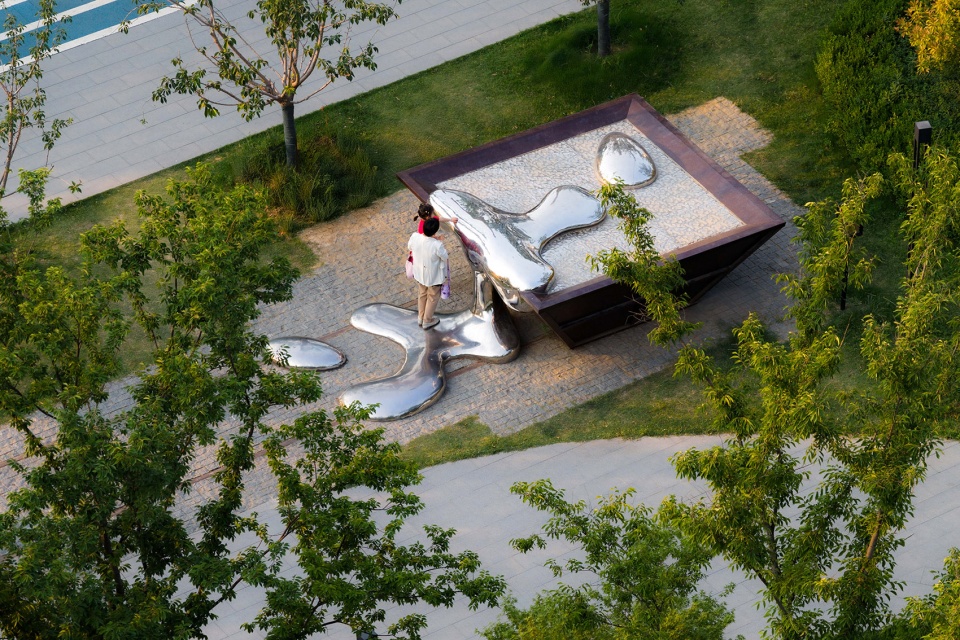
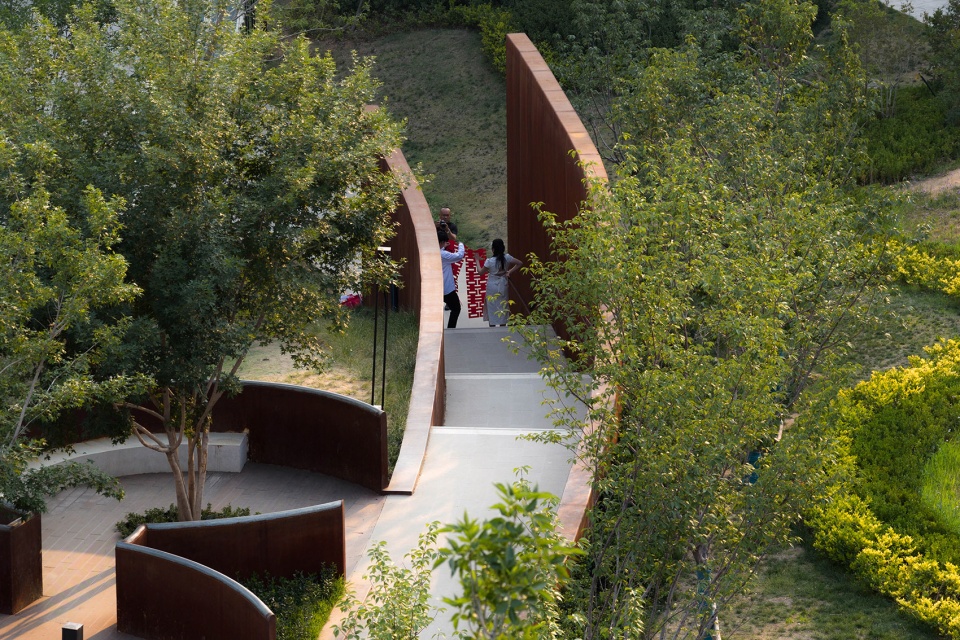
在工业遗迹的高炉等设备成为全园引人注目的焦点和大尺度空间背景的同时,项目新设的节点空间则为游客提供了细致的文化与功能空间,将人们的视线收回专注于眼前。以厂区历史和工业文化为主题的节点设计坐落于园区多处,提供了文化纪念空间。设计以舒适的尺度,精致的细节,自然的风貌,提供了极具品质的公共空间,服务百姓日常生活。
Besides the blast furnaces and other industrial relics serve as the park’s focal point and grand spatial background, the project’s newly created nodes also offer visitors detailed cultural and functional spaces, drawing attention back to the present moment. These nodes, with themes of the factory’s history and industrial culture, are located throughout the park, providing the cultural commemorations. With a comfortable scale, refined details, and a natural feeling, the design provides high-quality public spaces that serve the daily lives of the public.
▼遗迹文化墙节点,Node of the cultural wall of the ruins
▼工业主题雕塑节点,Industrial theme sculpture node
▼婚纱照的热门选点,Popular wedding photo spots
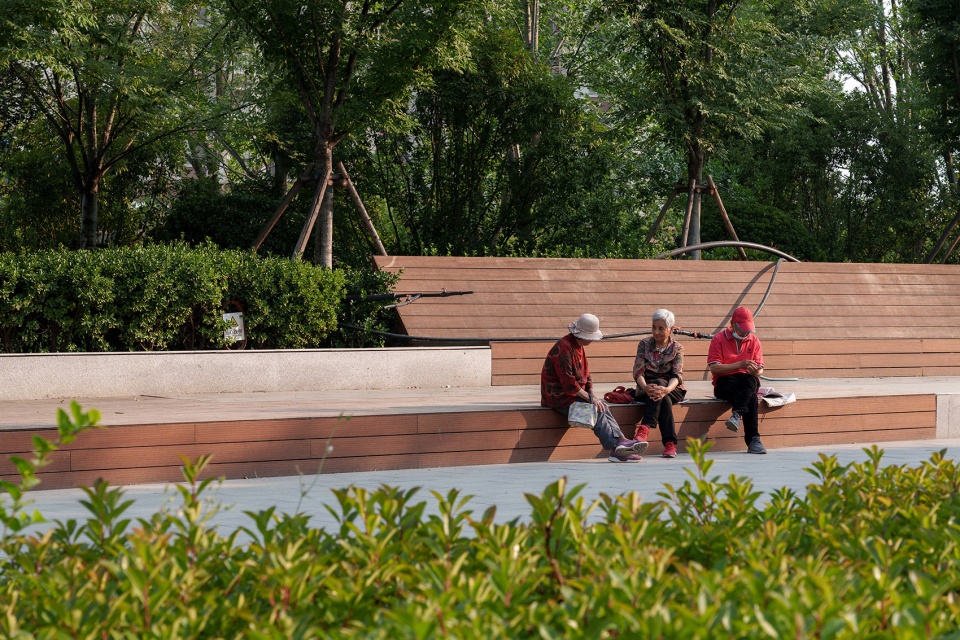
▼座椅休闲区,Seating and leisure area
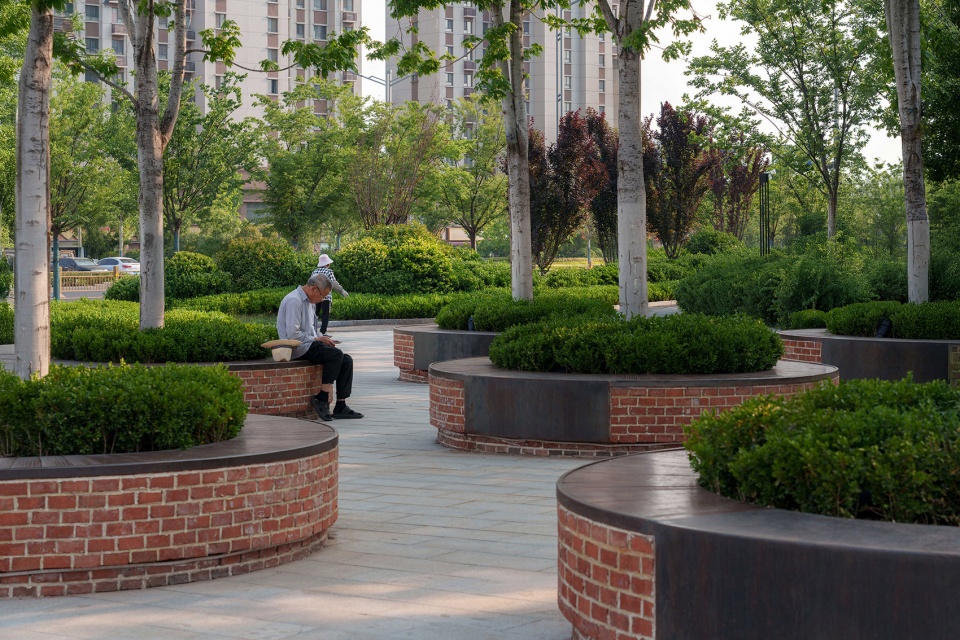
▼入口广场树池座椅区,Entrance plaza tree pond seating area
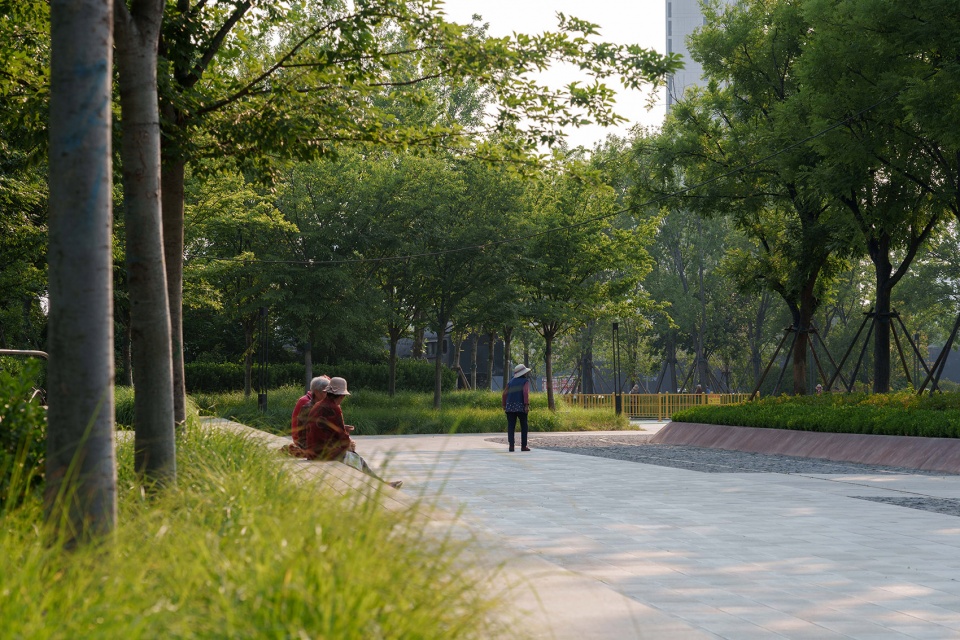
▼服务百姓的公共空间,Public space serving the people
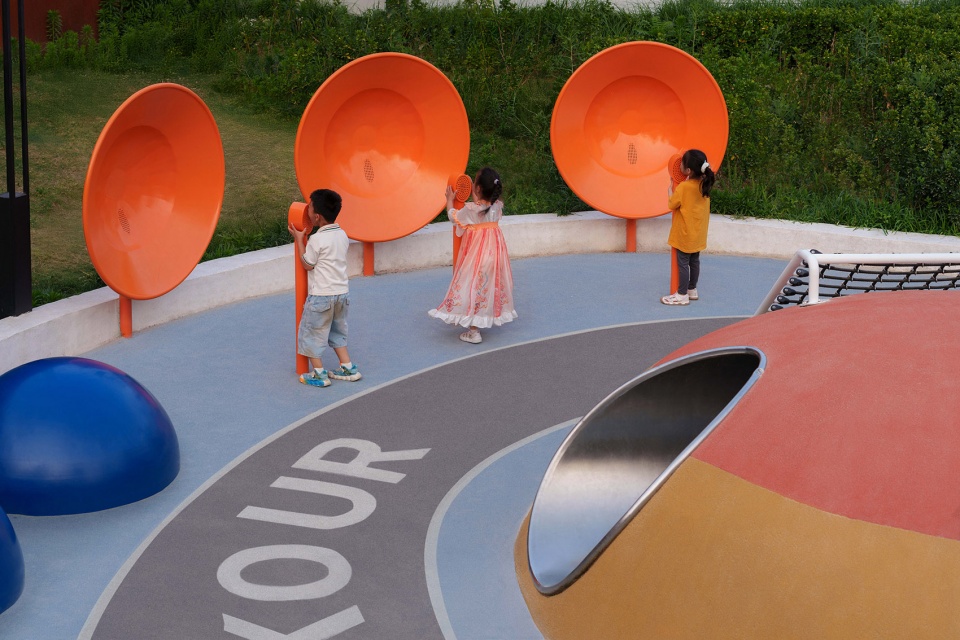
▼儿童活动区无动力游乐场,Children’s activity area, non-powered playground
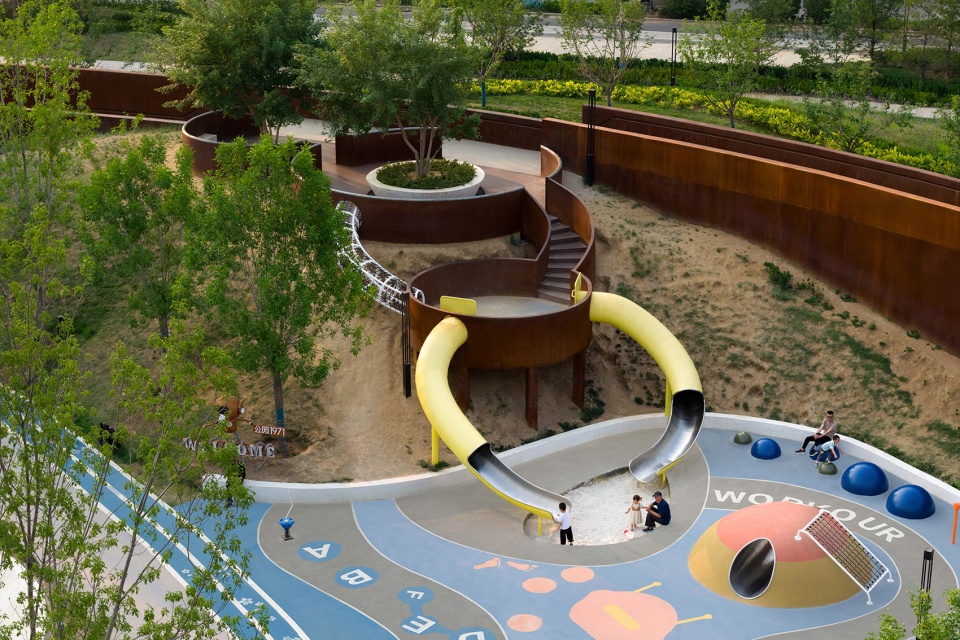
▼儿童活动设施,Children’s activity facilities
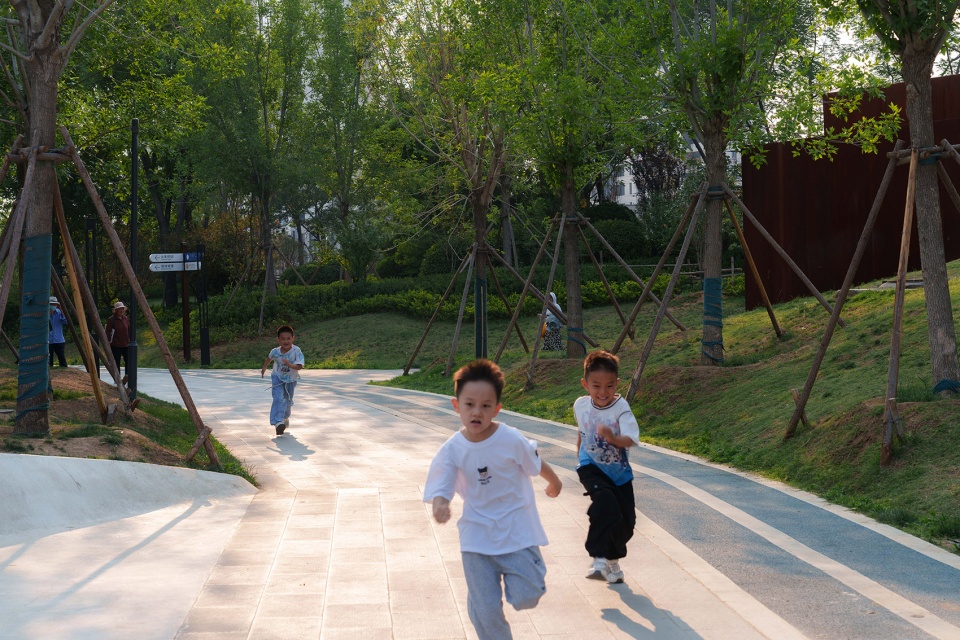
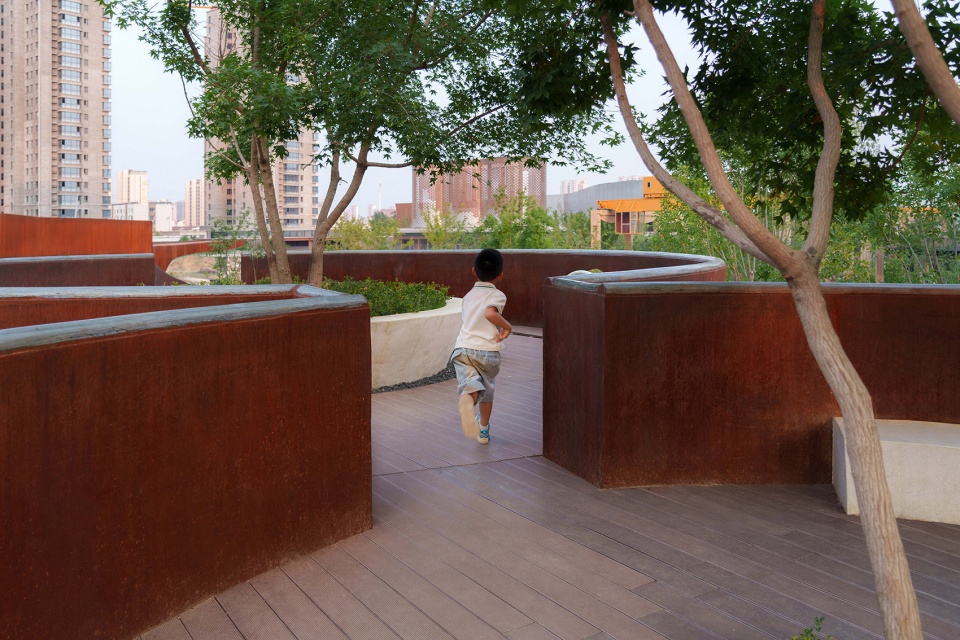
▼儿童在公园内玩耍奔跑,Children playing and running in the park
结语
Summary
铁合金1971工业遗址公园通过工业遗迹选择性保留与立体空间连廊,使到访者体验到极富后工业特色的公园空间,结合整体南北两侧不同功能与形态的空间经营,全面提升了遗址公园工业、生态、文化氛围,全面提升城市形象和吸引力公园的建设过程中广大市民极为关注,建成后更是在社交媒体上引发打卡热潮。铁合金1971工业遗址公园的建设不仅能够提供城市绿地和休闲娱乐空间,也将作为市内重要的社会资源、公共文化中心进一步综合服务于市民文化生活,作为工业文化旅游品牌的核心力量,协同带动周边区域宜居、宜业、宜游的综合功能属性。
The Ferroalloy 1971 Industrial Heritage Park, through the selective preservation of industrial relics and the creation of three-dimensional corridors, allows visitors to experience a park space rich in post-industrial characteristics. Combined with the spatial management of the north and south sides, the park’s industrial, ecological, and cultural atmosphere is comprehensively enhanced boosting the city’s image and appeal. During its construction, the park attracted significant public attention, and after its completion, it sparked a wave of check-in posts on social media. The Ferroalloy 1971 Industrial Heritage Park provides urban green space and leisure and entertainment space, while also serve as a vital social resource and public cultural center within the city which further enhance the cultural life of residents. As the core force of the industrial cultural tourism brand, it synergistically promotes the surrounding area’s comprehensive functions as a place suitable for living, working, and tourism.
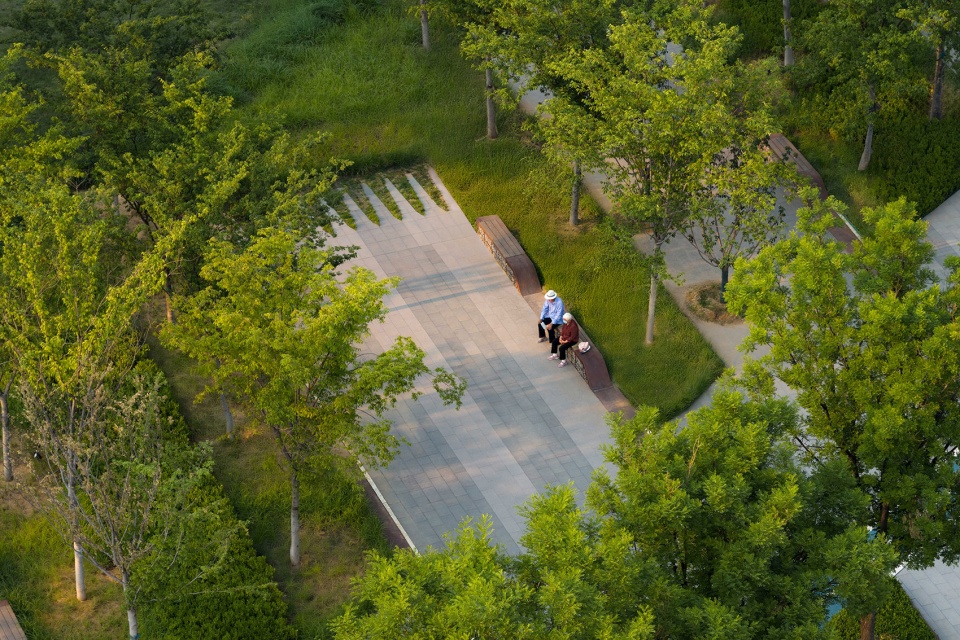
▼小型广场活动及休闲区,Small square activity and leisure area
Project name:Jining Zoucheng Ferroalloy 1971 Industrial Heritage Park (Phase I)
Project type: Urban renewal and industrial heritage site transformation
Design: DDON Planning & Design Co., Ltd
Website: http://www.ddonplan.com/
Contact e-mail: resaerch@ddonplan.com
Design year:2021
Completion Year:2024
Leader designer & Team: Si Hongshun, Nie Changxin, Lin Qi, Guo Liying, Wang Li, Zhu Huizhuang, Ji Xiaochong, Sun Kairui, Wang Jing, Liu Zifeng, Qiu Baoyi, and Lü Zhe
Project Location: Laiguangying Township, Chaoyang District, Beijing
Project Area:61019㎡
Photo credit: DDON; Chill Shine
Partner: Planning: Shanghai Hope Architectural Design Office Co., Ltd.;
Blast Furnace Repair: Beijing Shougang International Engineering Technology Co., Ltd.
Clients:Jining Guangren Real Estate Co., Ltd.