椰林之家,墨西哥 / Ludwig Godefroy Office
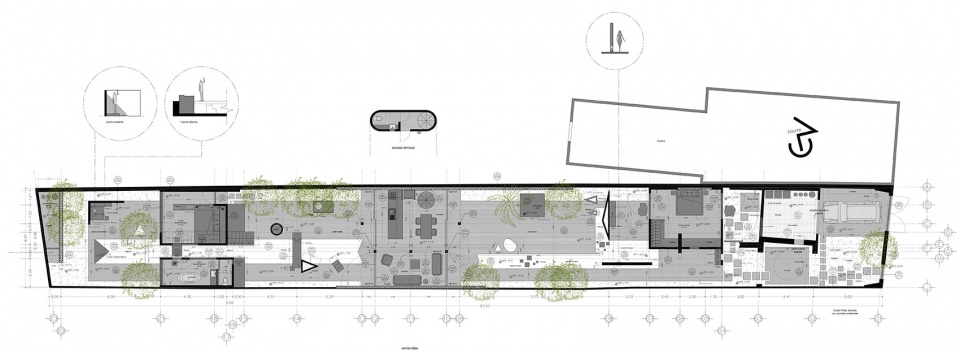
椰林之家位于墨西哥尤卡坦州梅里达历史中心的南部。项目的设计源于基地自身的比例——长70米、宽8米。
Casa en los Cocos is located in the south of the historic center of Mérida – Yucatán, in Mexico. The design of the project comes from the proportion of the land itself, 70mts long x 8mts wide.
▼项目远景,viewing the project at distance
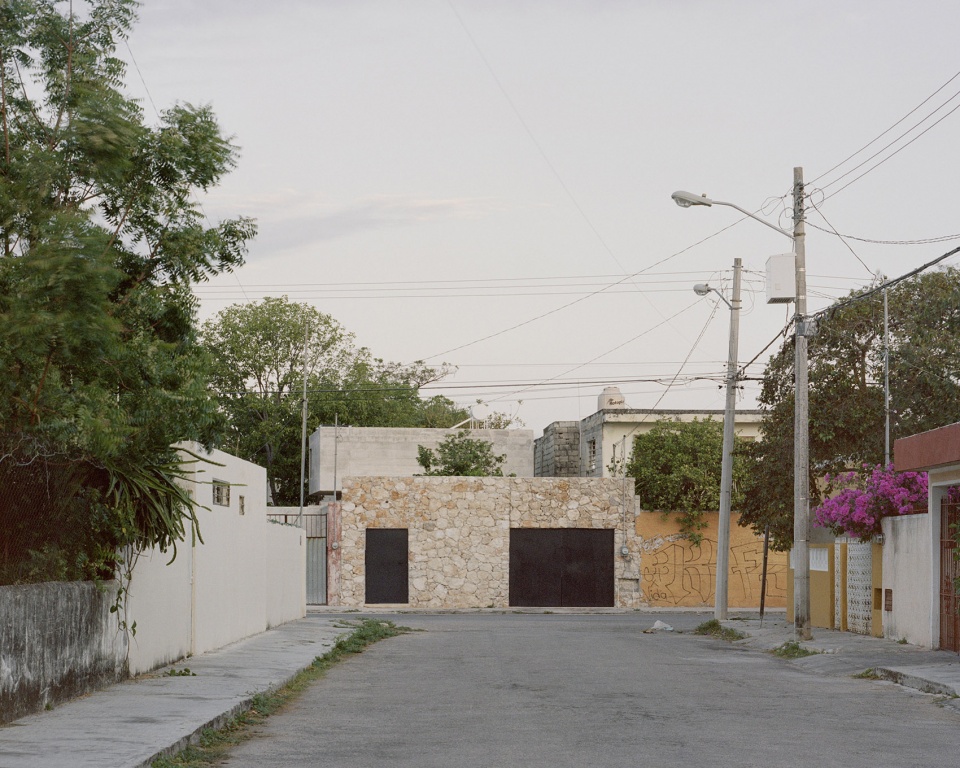
▼住宅外观,exterior view of the project
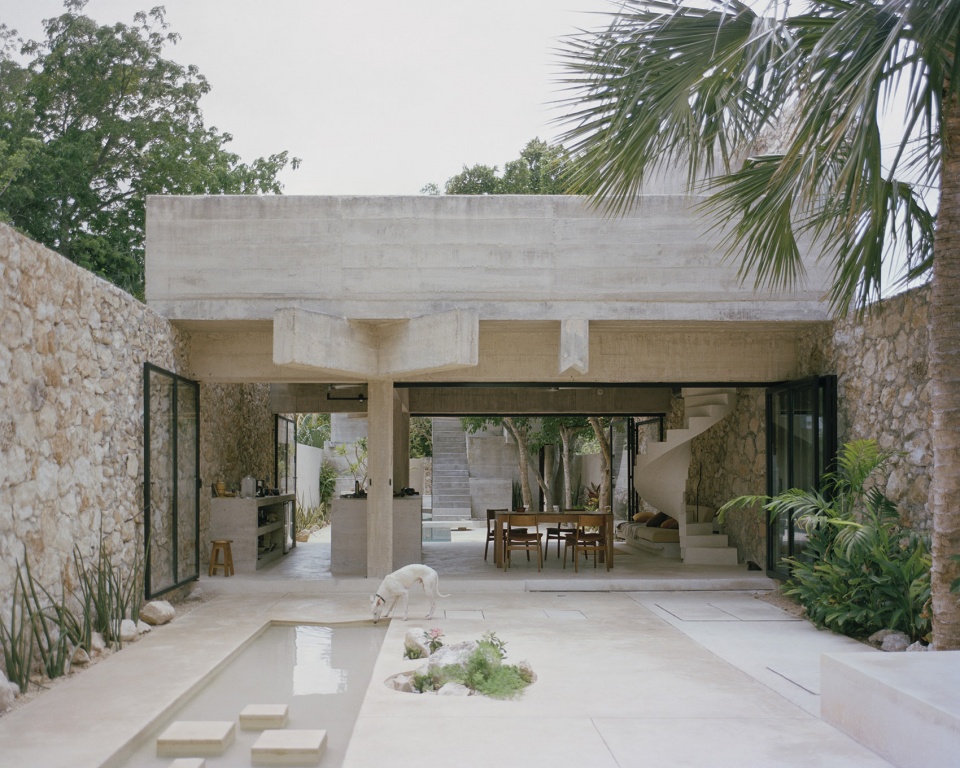
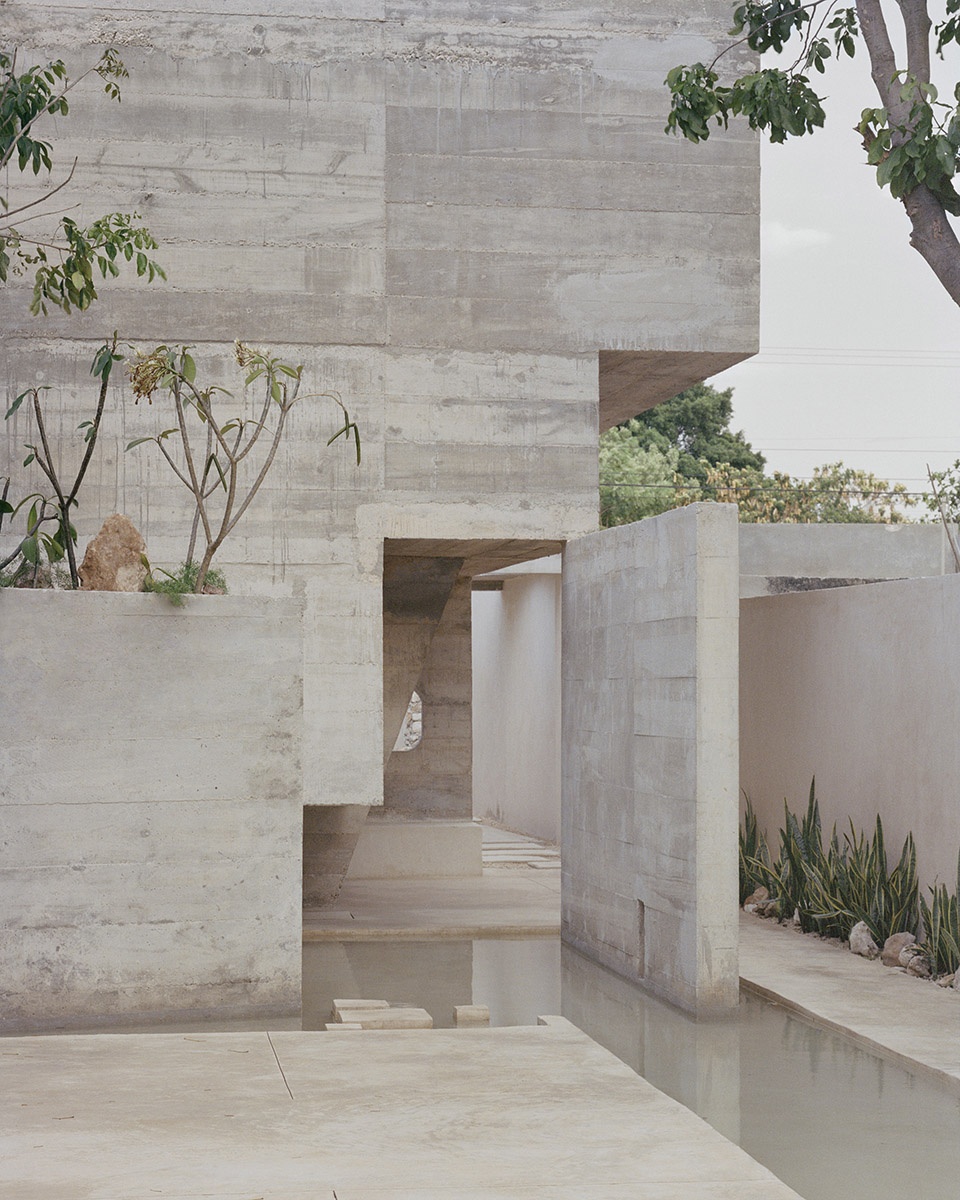
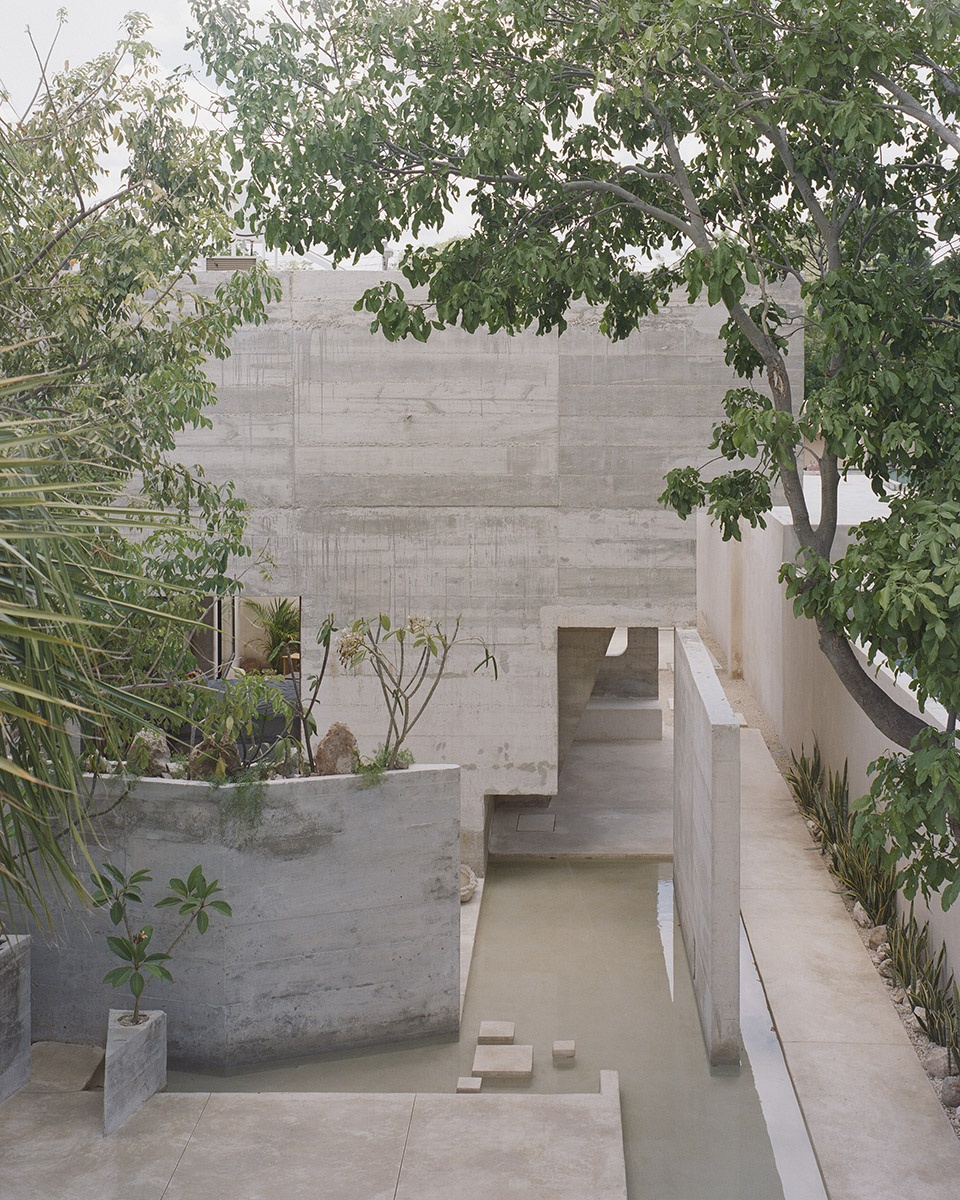
土地狭长的比例在进入场地时形成了强烈的消失点效果。项目的设计回应了这种透视关系,从一侧贯穿到另一侧,通过贯穿整栋住宅的水体来将这种视线具象化。
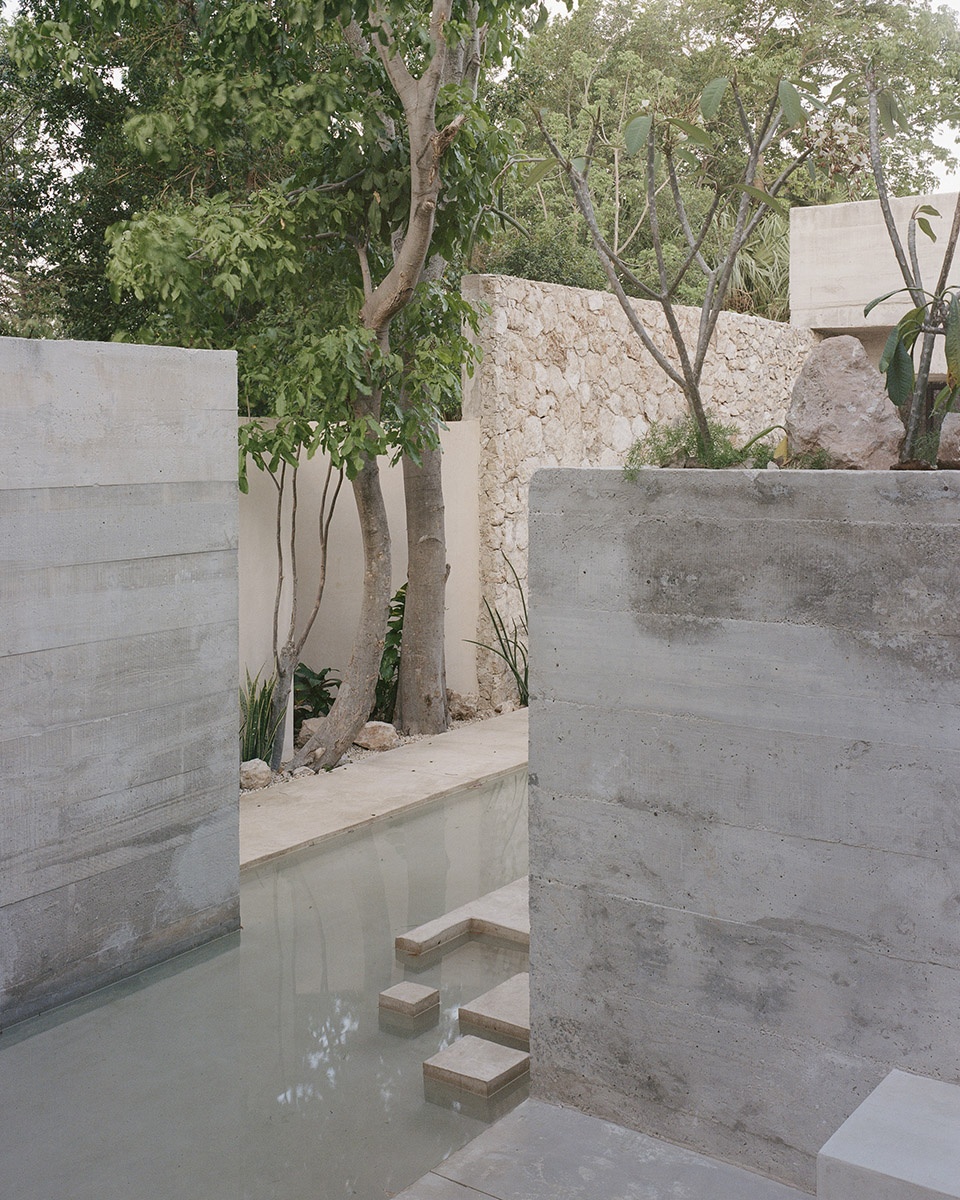
The narrow proportion of the land creates a strong vanishing point effect entering the site. The project responds to this perspective crossing from side to side, materializing it with water guiding everywhere through the whole house.
▼贯穿整栋住宅的水体,water guiding everywhere through the whole house
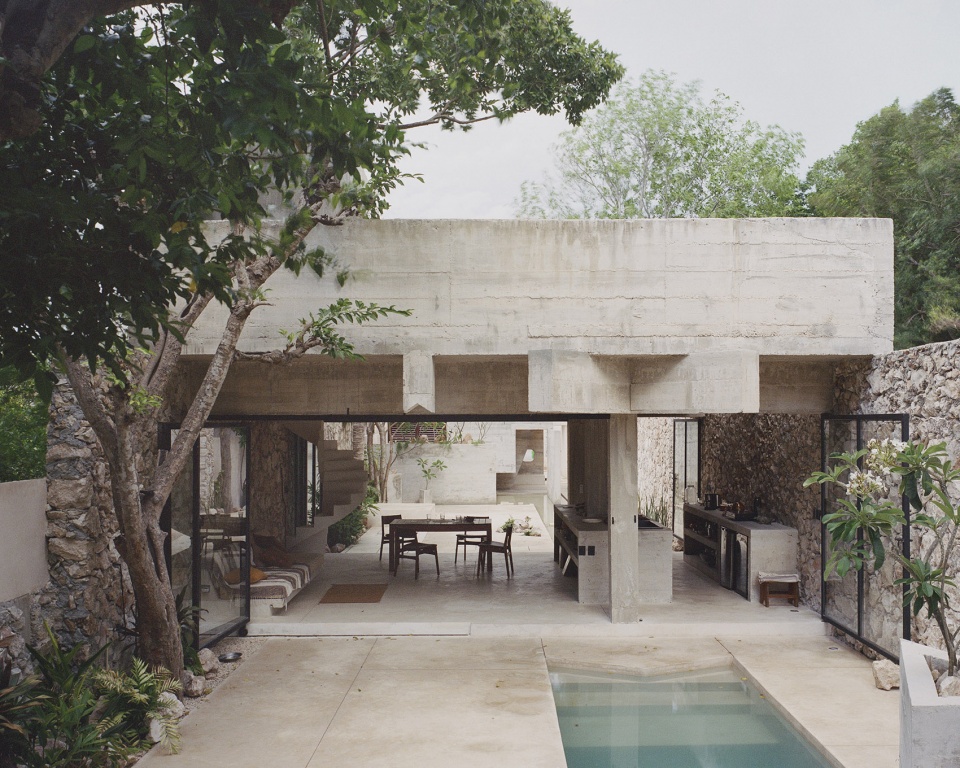
▼巨大的中庭空间,a big protected void
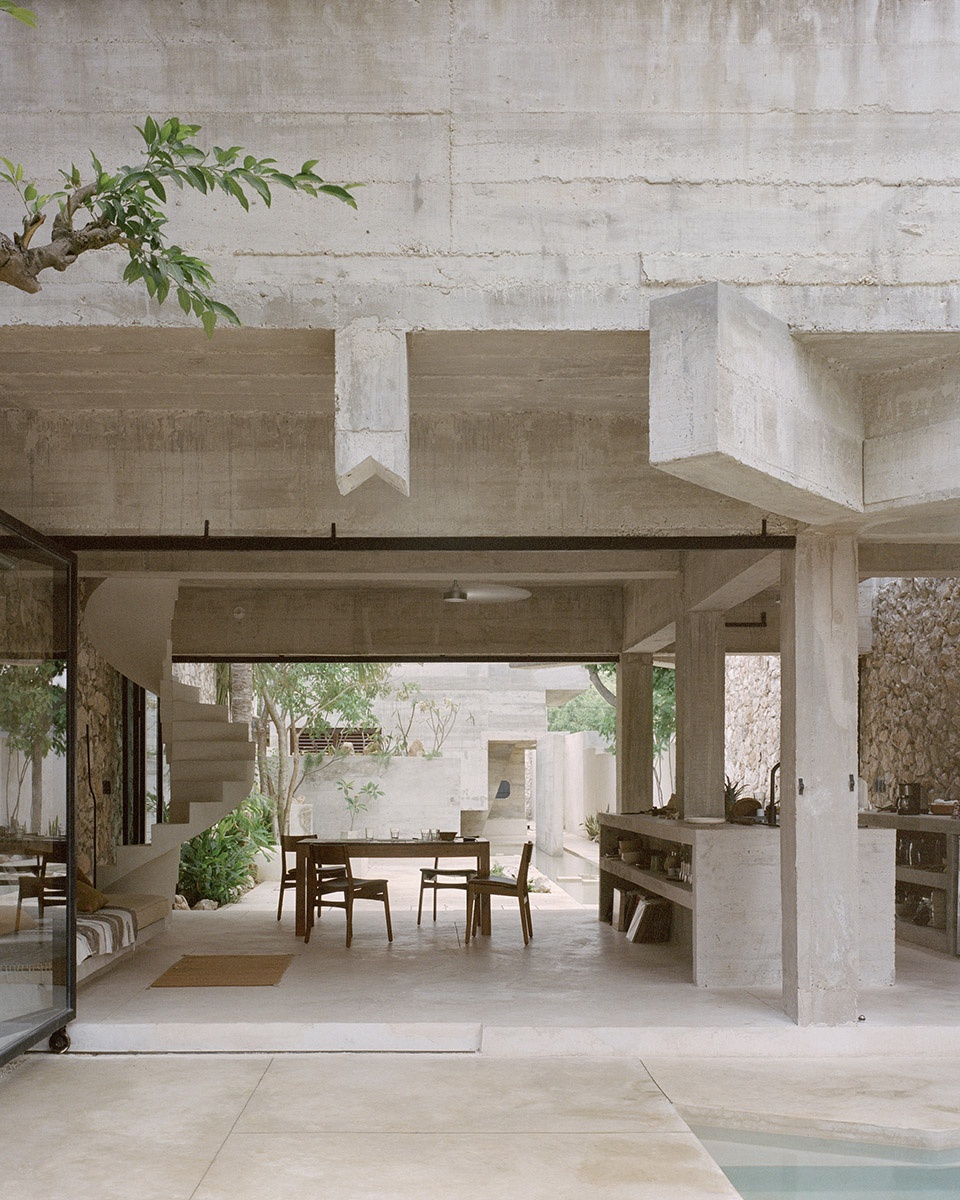
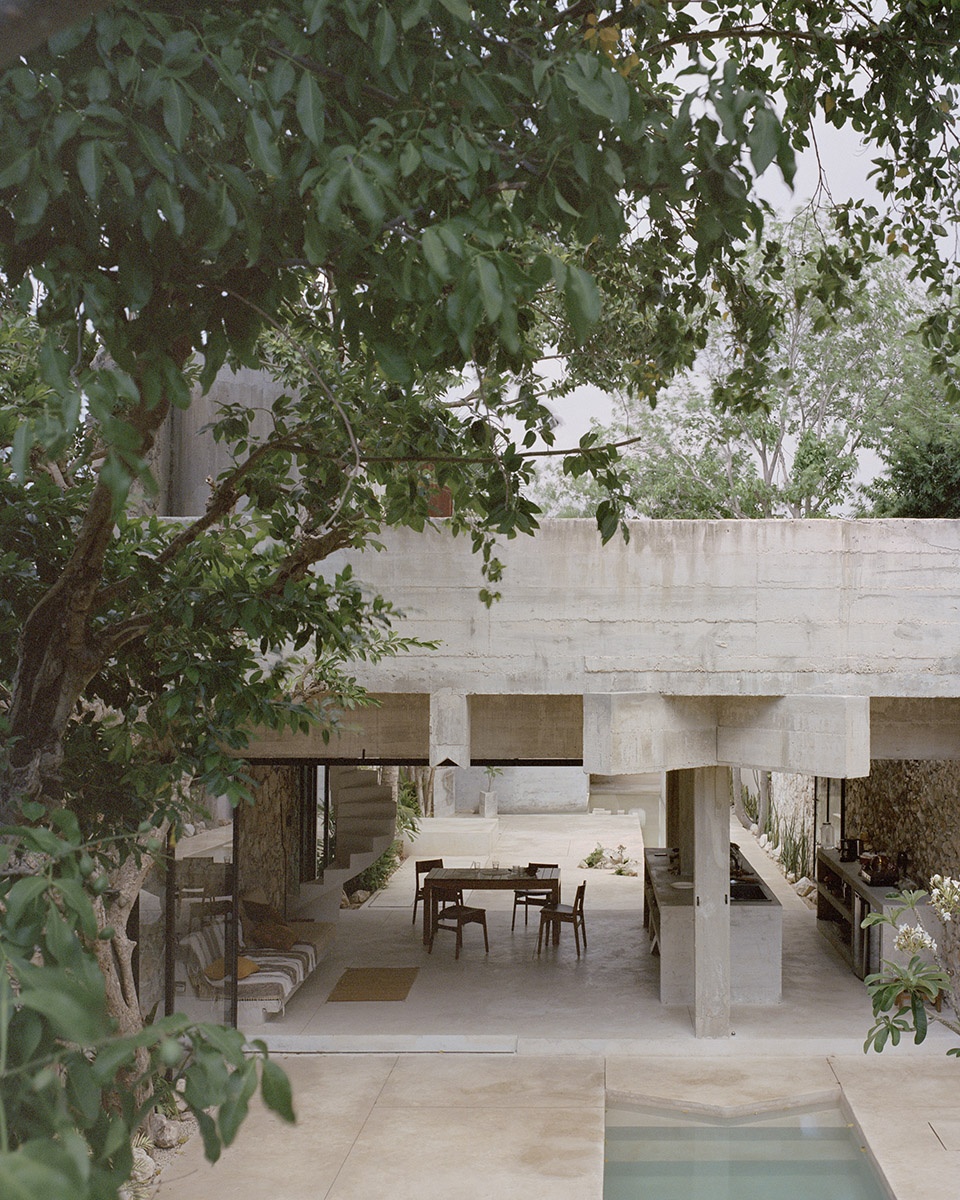
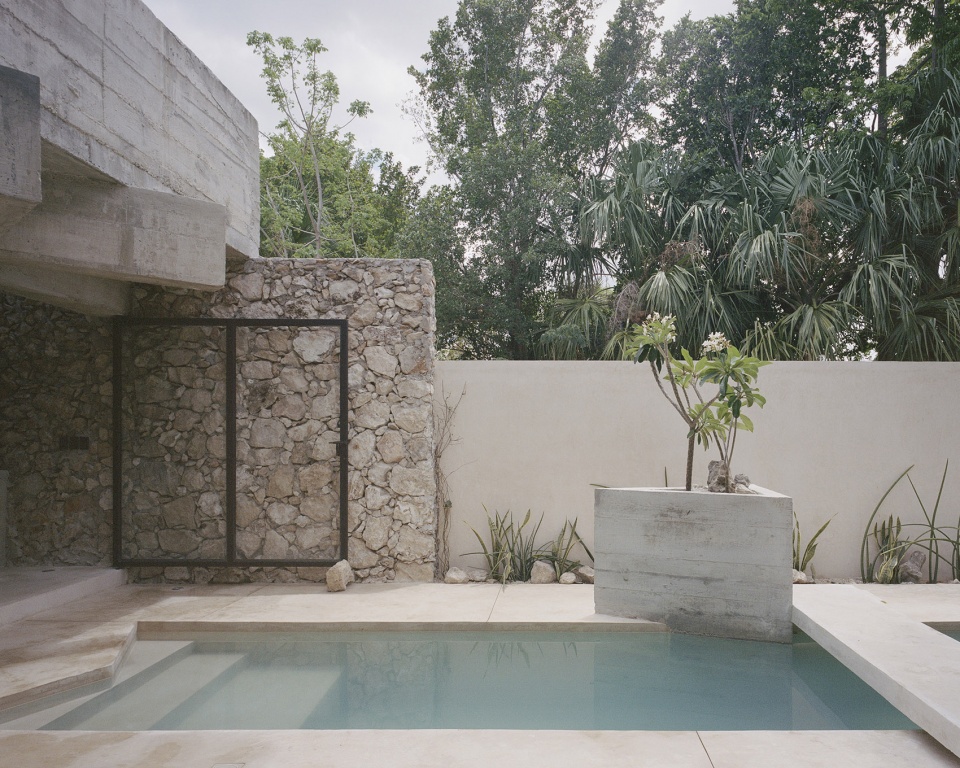
该项目由一系列碎片化的亭阁组成,灵感来自前西班牙殖民时期的建筑,并围绕一个水镜与泳池展开。两个带有私家庭院的卧室亭阁被布置在视线轴线的两侧,从而在中央形成一个被保护的巨大中庭空间。
The project consists in a serie of fragmented pavilions, inspired by prehispanic architecture and organized around a water mirror and a swimming pool. Two bedrooms pavilions with its private gardens are placed on both side of this perspective, in order to create a big protected void at the very center.
▼混凝土体量,Concrete mass
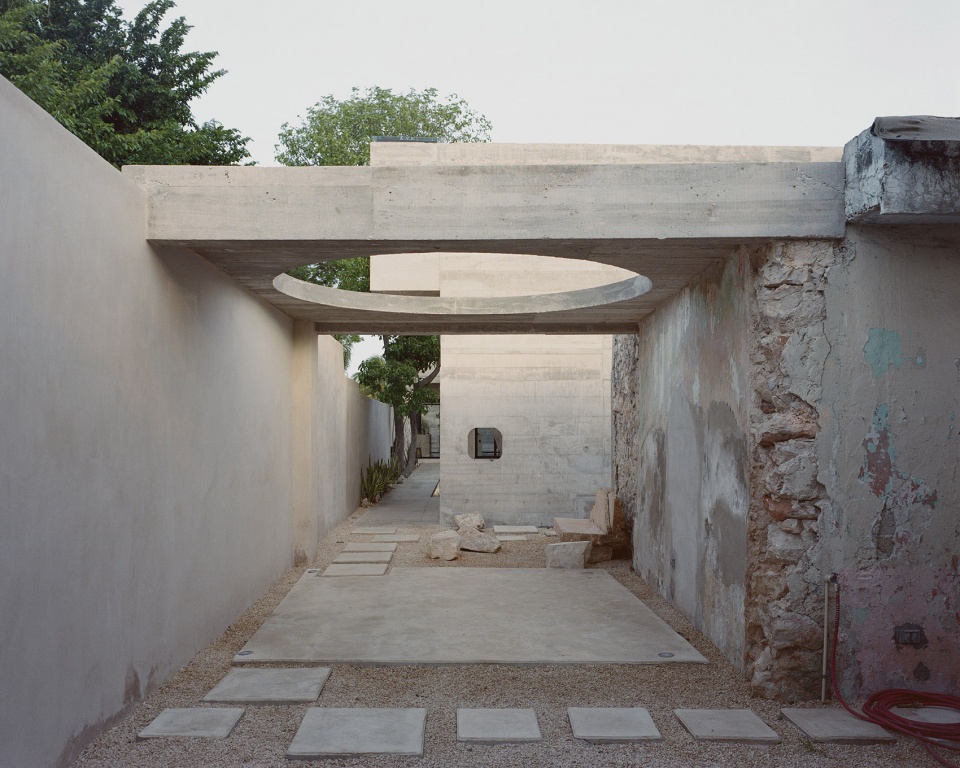
▼庭院圆形挑空,Courtyard circular void
椰林之家追求一种“室外的内在感”,让花园环抱人们与建筑的每一个空间。中央起居亭阁——房屋的社交核心——漂浮于花园之上,四面通透,让微风自由穿行。
Casa en los Cocos is looking for a strong sensation of interiority on the outdoor, to let the garden embrace people and each spaces of the project. The central living area pavilion, social part of the house floats above this garden, widely open, letting the air breeze crosses.
▼水镜,water mirror
▼泳池,pool
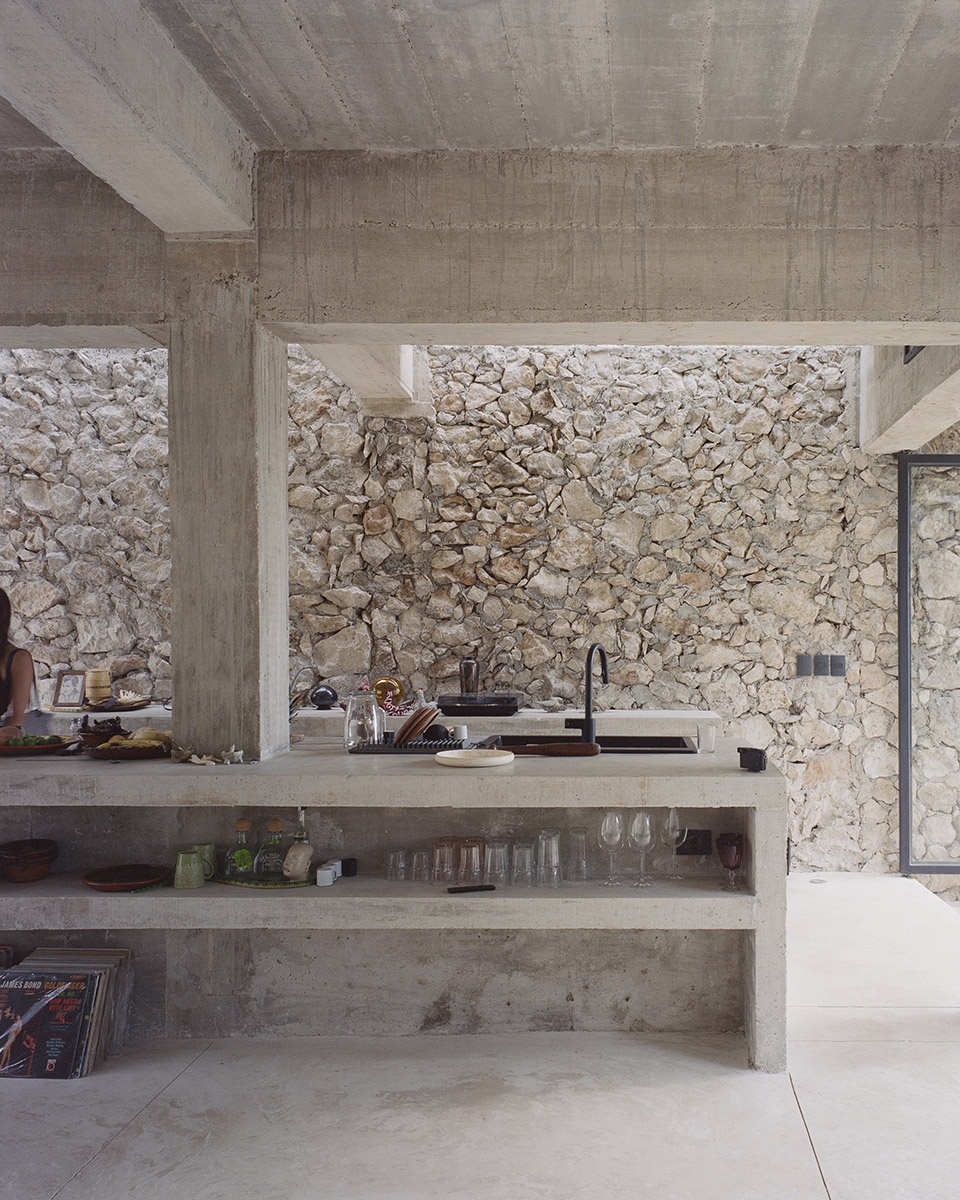
椰林之家以“负空间”为结构核心,这些空白区域与实体亭阁同样重要。开与合的对比也定义了公共与私密的边界,住宅如同一个开放的中央广场(agora),将各个私密空间串联起来——这是社交生活汇聚的心脏所在。
Casa en los Cocos is structured around its negative void space, which is becoming as important as its positive pavilions built space. The contrast between open and closed defines also the border between public and private areas, a house as an open central agora connecting all the private spaces together. This is the heart of the project where social life converges.
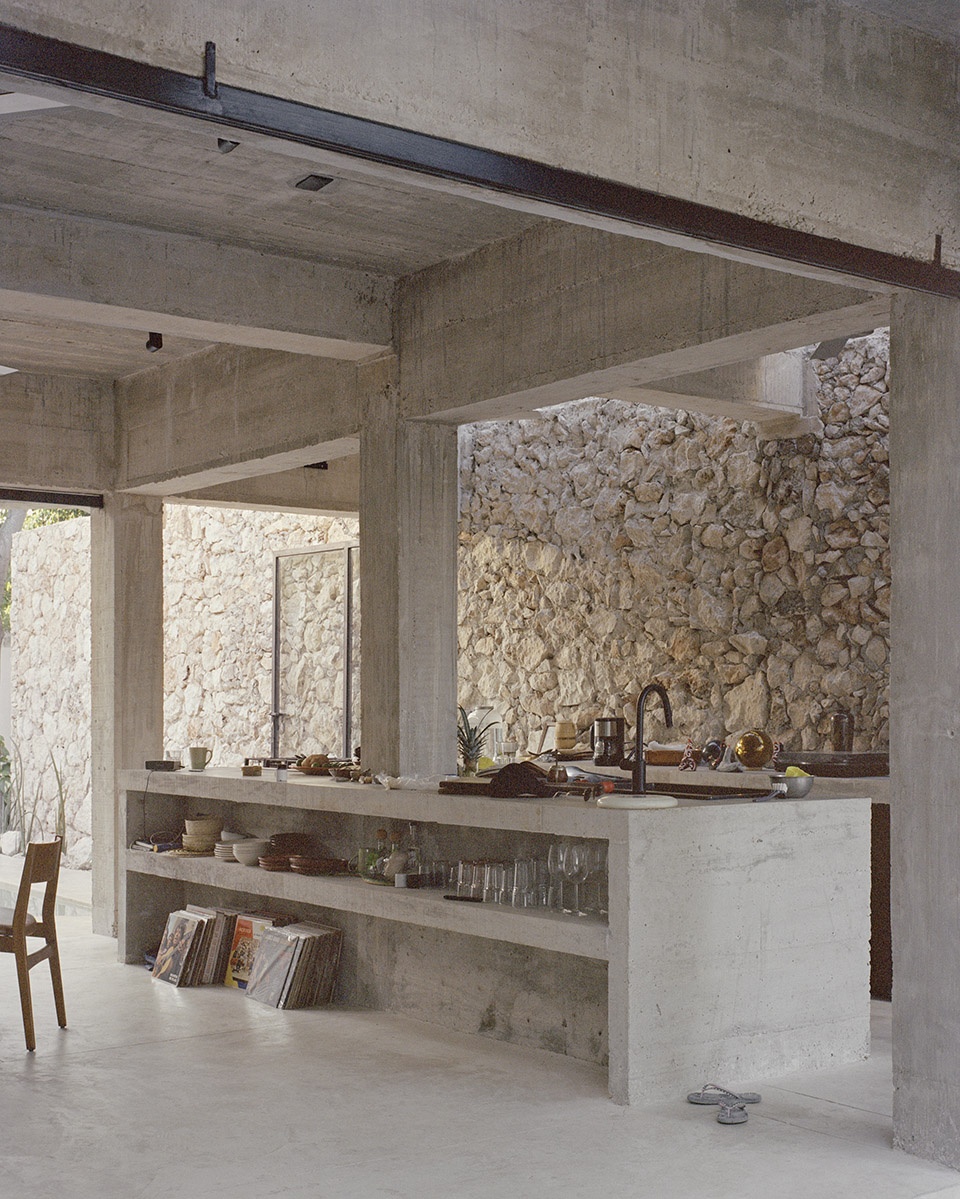
▼开放的厨房,open kitchen
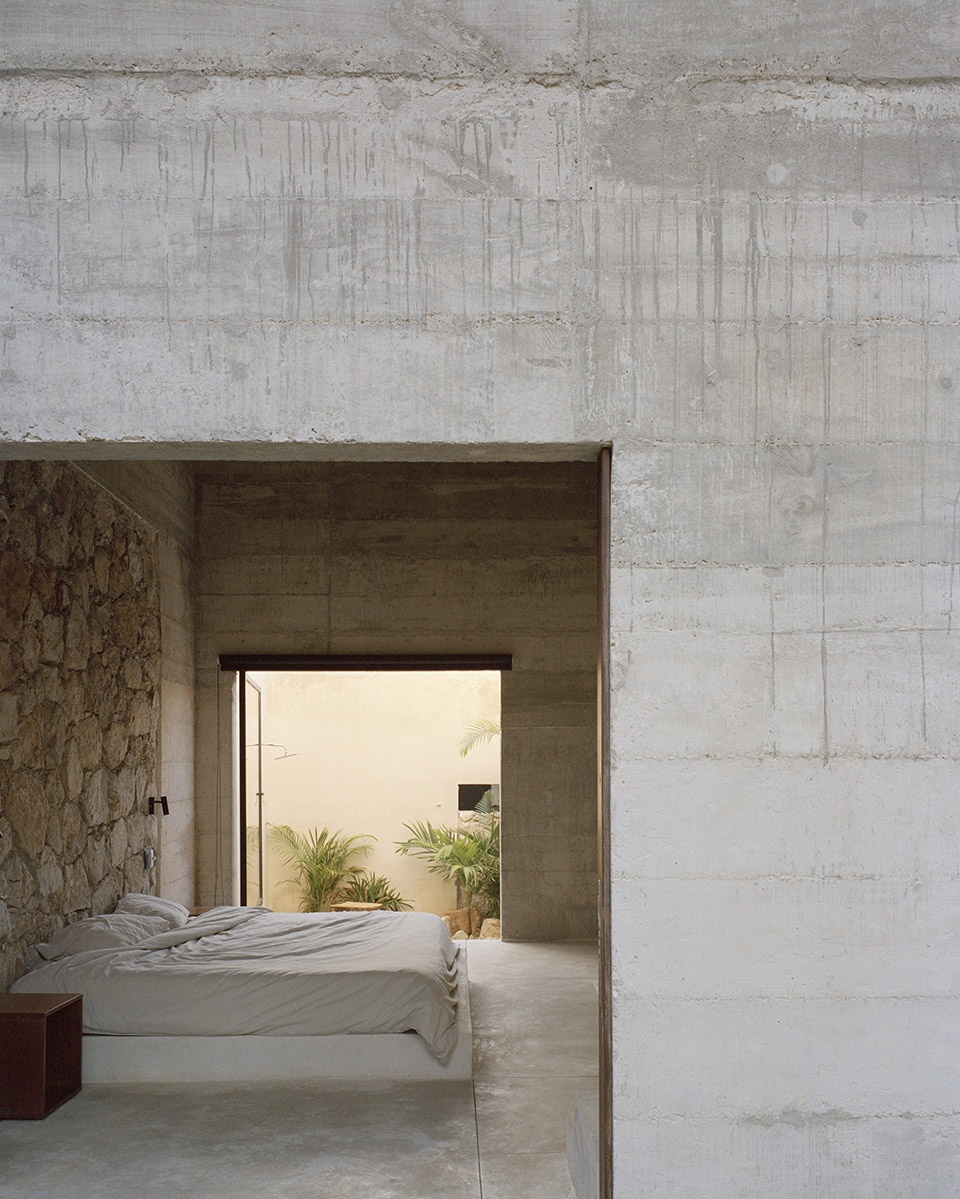
▼卧室,bedroom
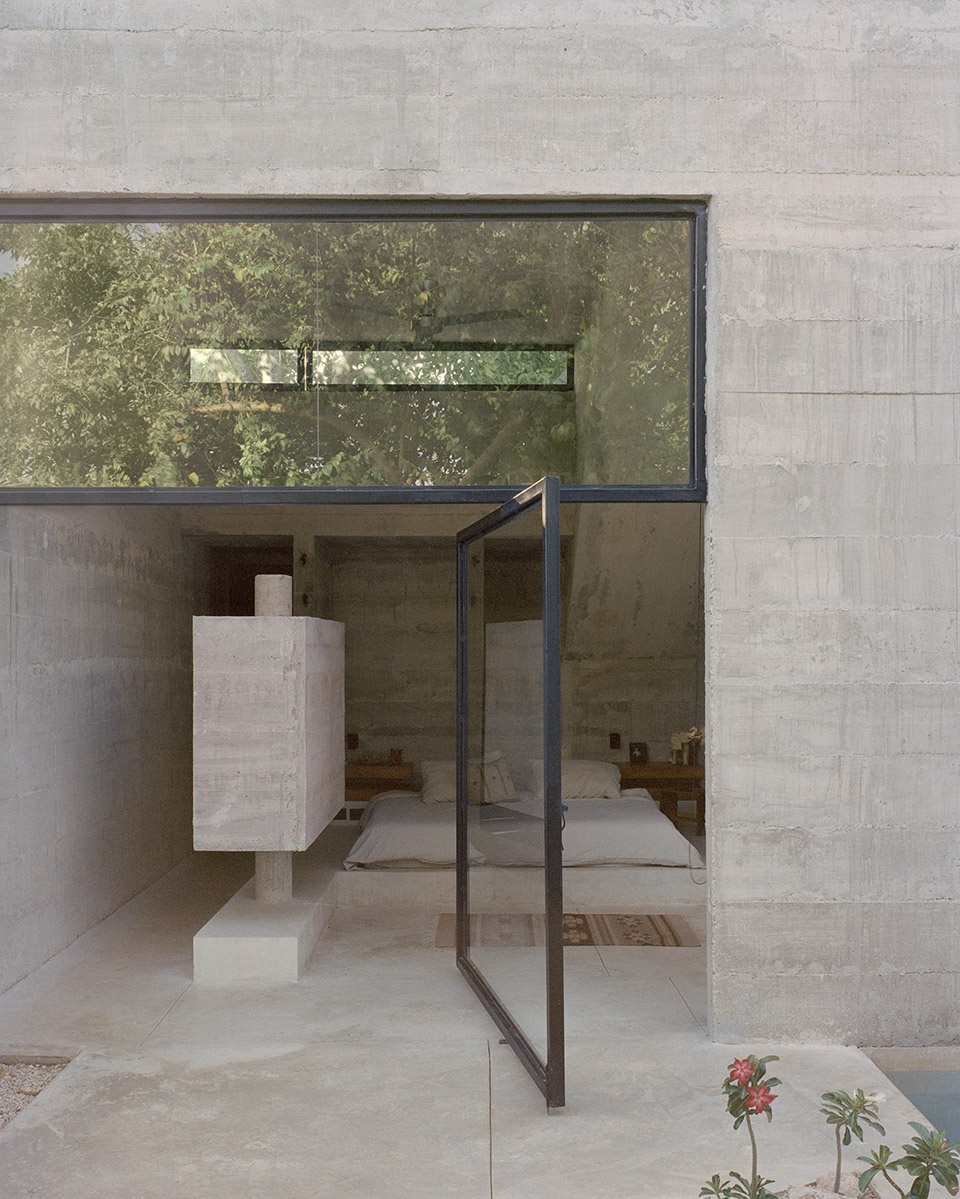
以基地比例为设计起点,并通过营造这个亲密的中央广场,整层底层连同花园共同构成了一个宽阔的漫步空间。此时建筑已不再需要立面——花园本身即是生活空间,邀请人们在其中冥想与行走。
Taking the land proportion as a starting point for the design, and creating this intimate central agora, the whole ground floor with its garden are becoming a large strolling area. Facade isn’t needed anymore. The garden is the living area, inviting people to a meditation walk through.
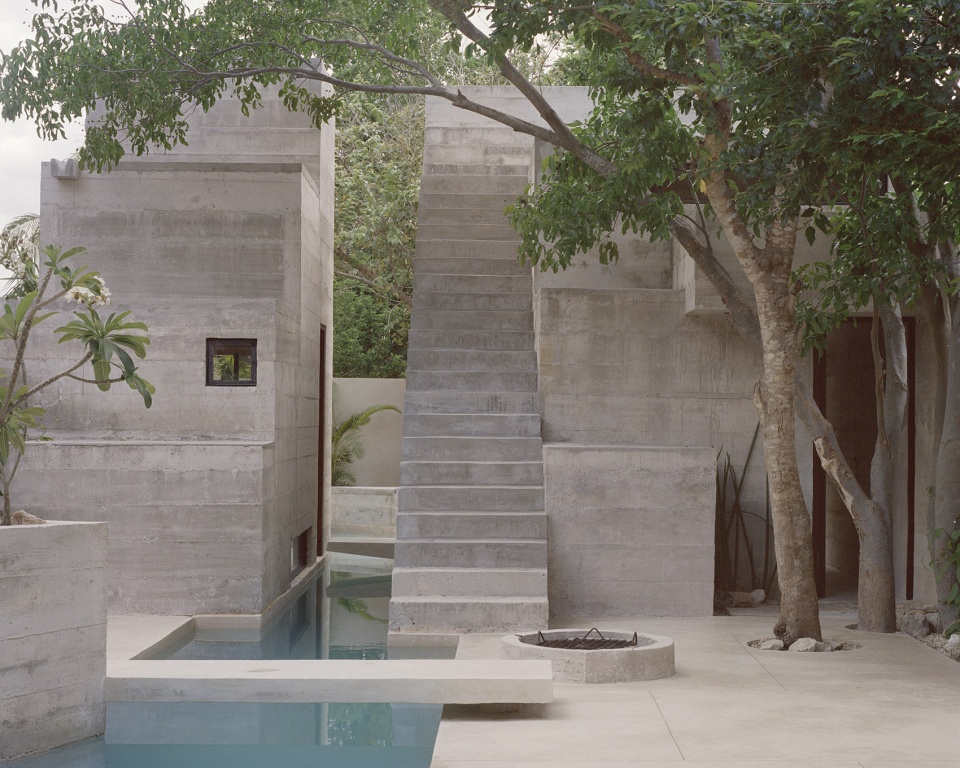
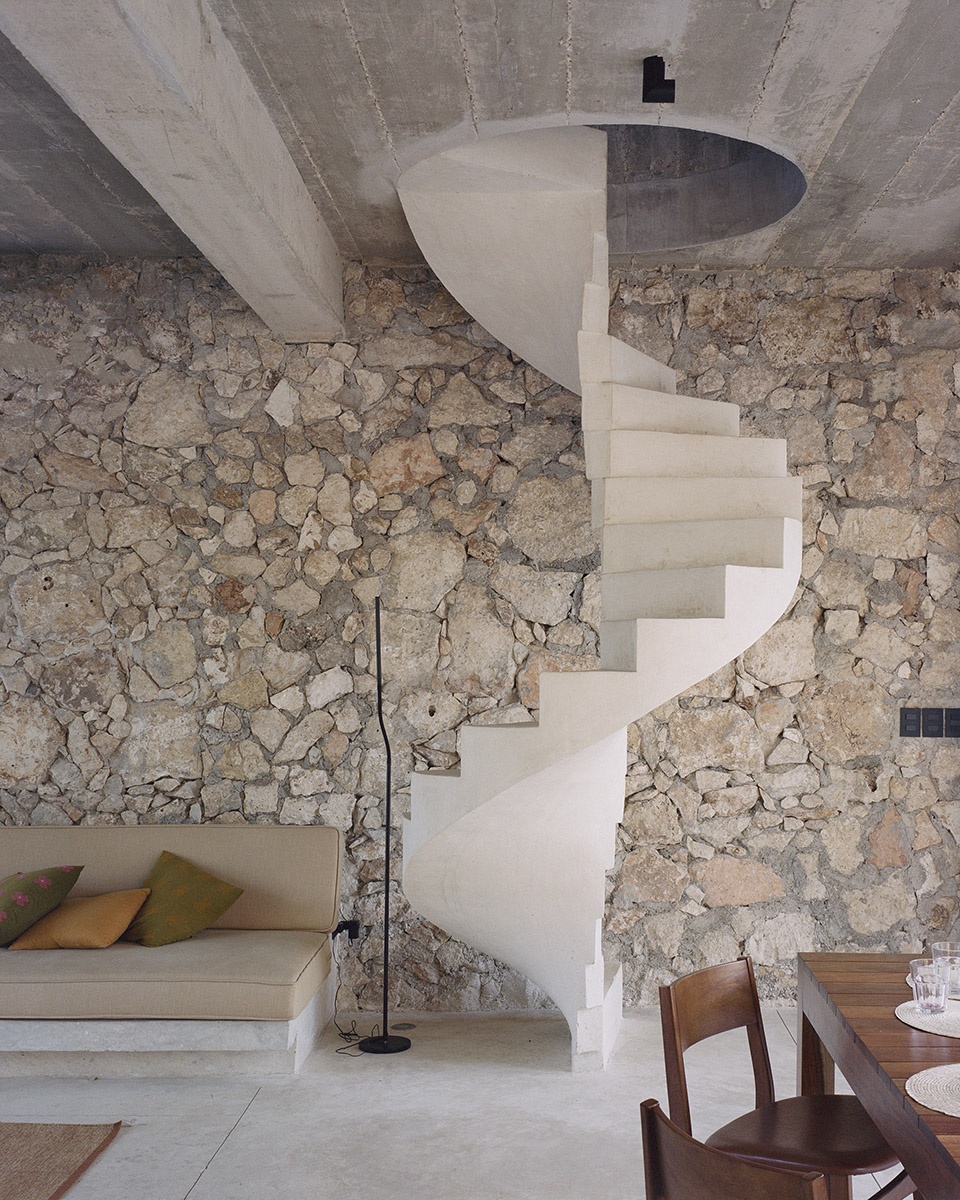
▼螺旋楼梯与石砌墙面,Spiral staircase and stone wall
▼卧室的交通台阶,Stairs in the bedroom
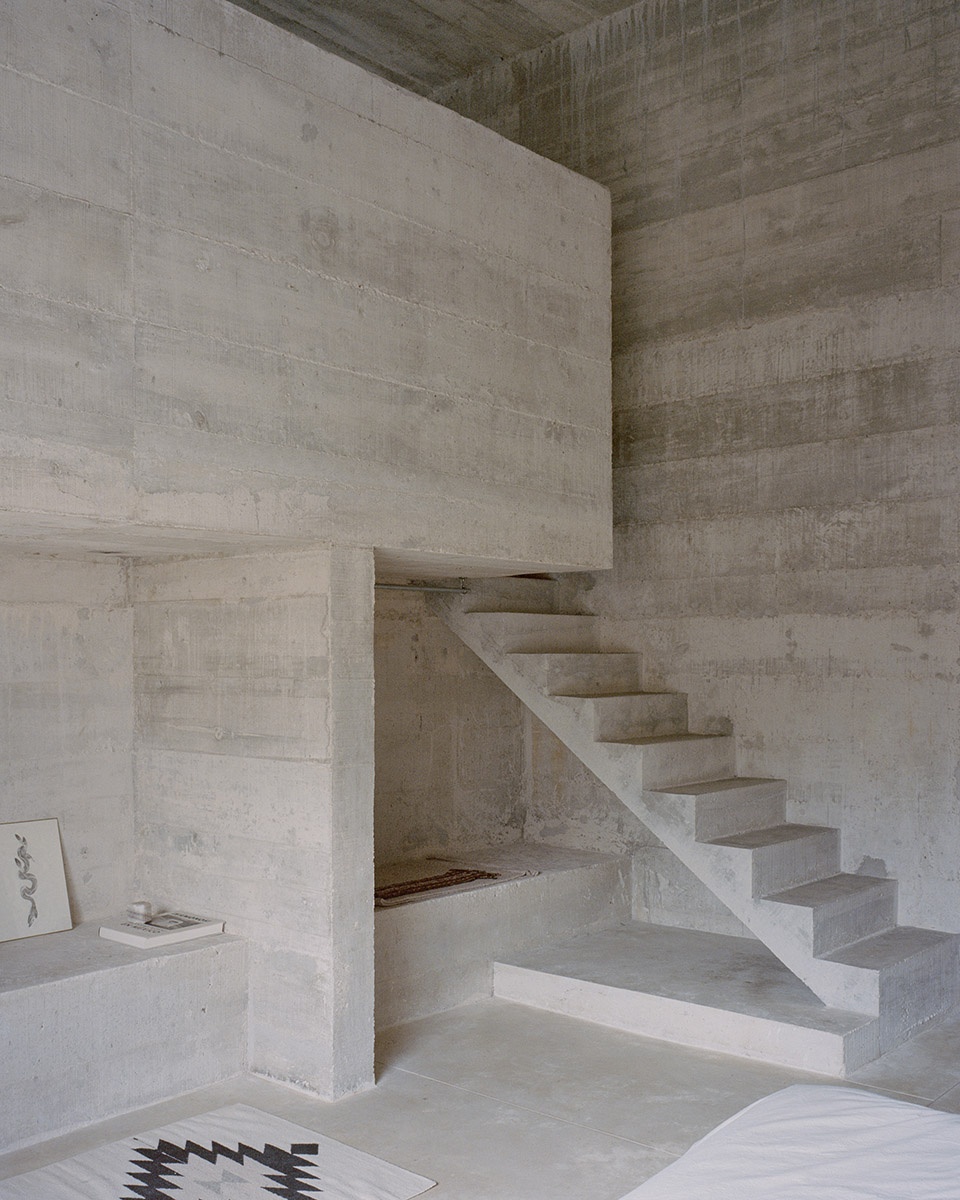
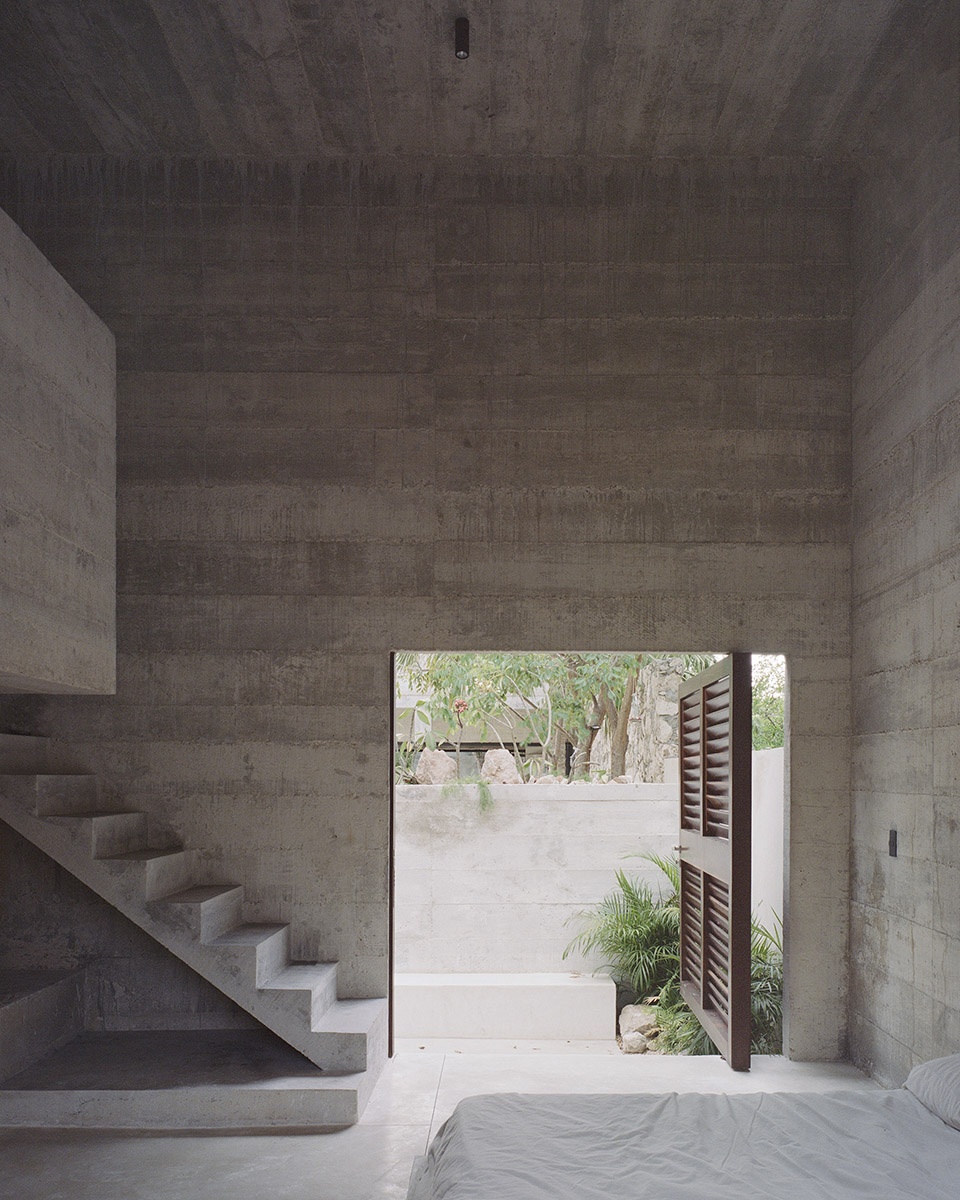
项目去除了一切不必要的元素,专注于最本质的建筑构成,追求极致的简洁。这种简洁的探索引导出一种纯净、抽象的建筑语言,完全由混凝土、木材与石材等实体材料构成。这些材料能在时间的作用下愈加美丽,而非被磨损。
The project is getting rid of the unnecessary to focus exclusively on elemental elements, towards simplicity. This research of simplicity is leading the design to a clean and abstract architecture, composed entirely of massive materials such as concrete, wood and stone. All those materials are able to get old and better looking under the action of time, rather than getting damaged.
▼追求极致的简洁,a clean and abstract architecture
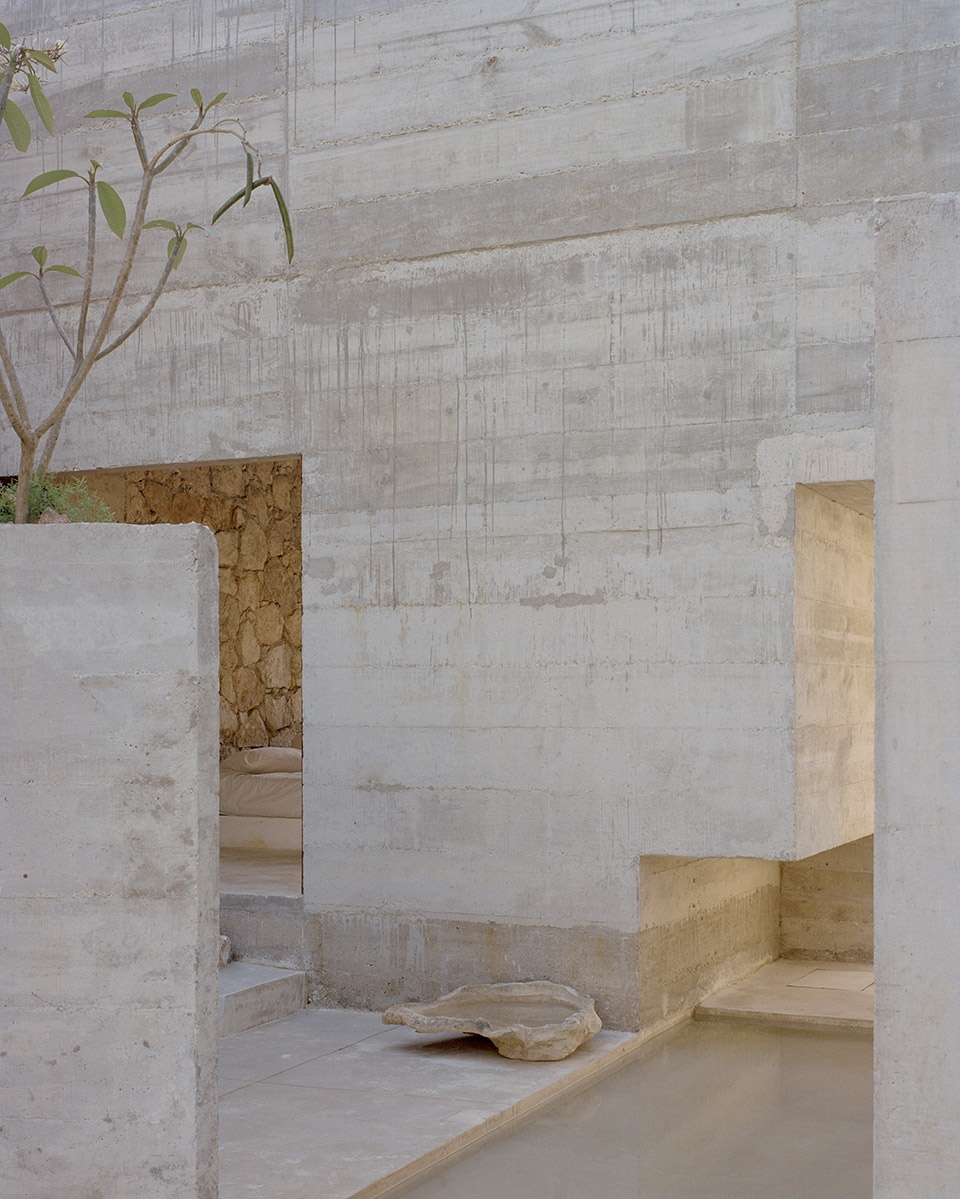
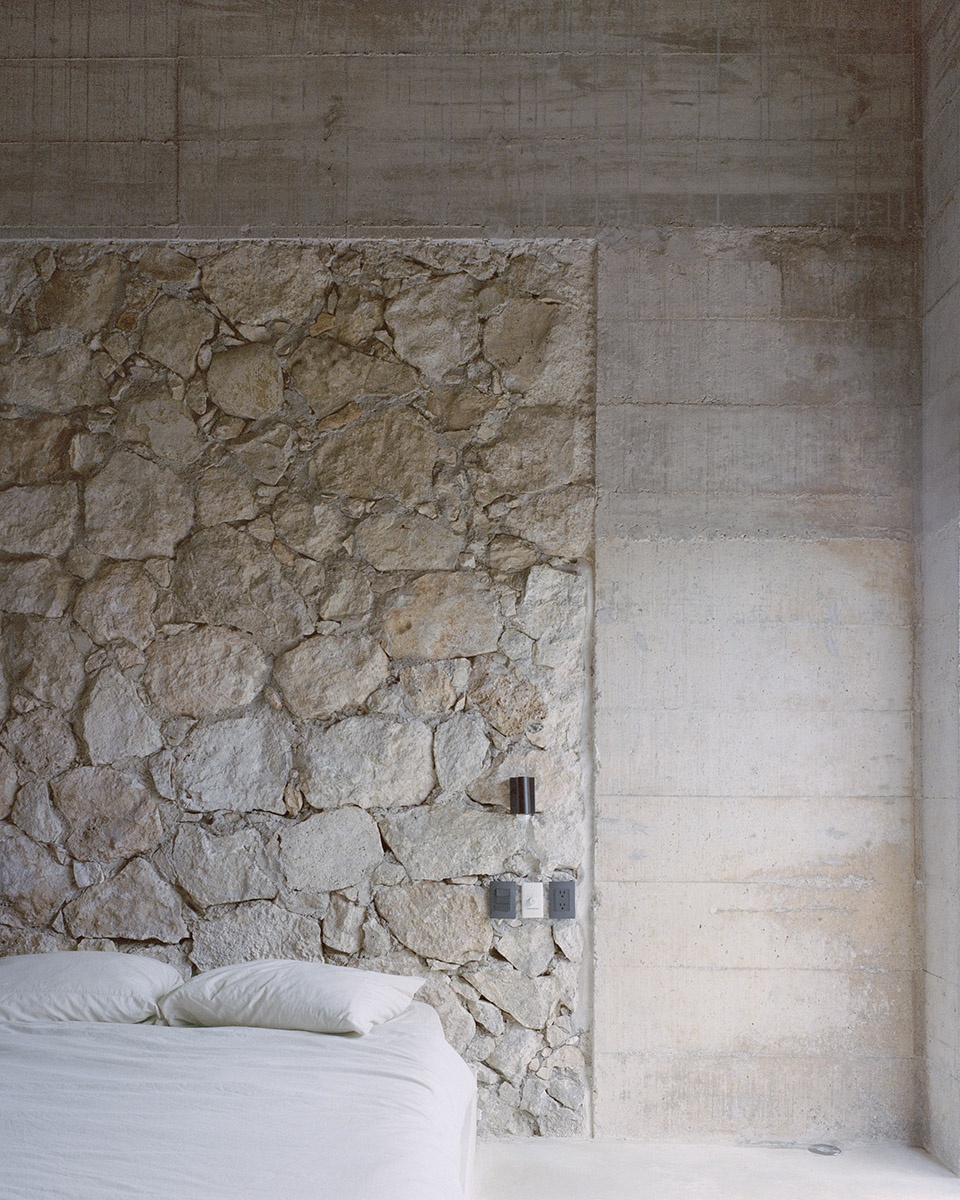
▼细节,details
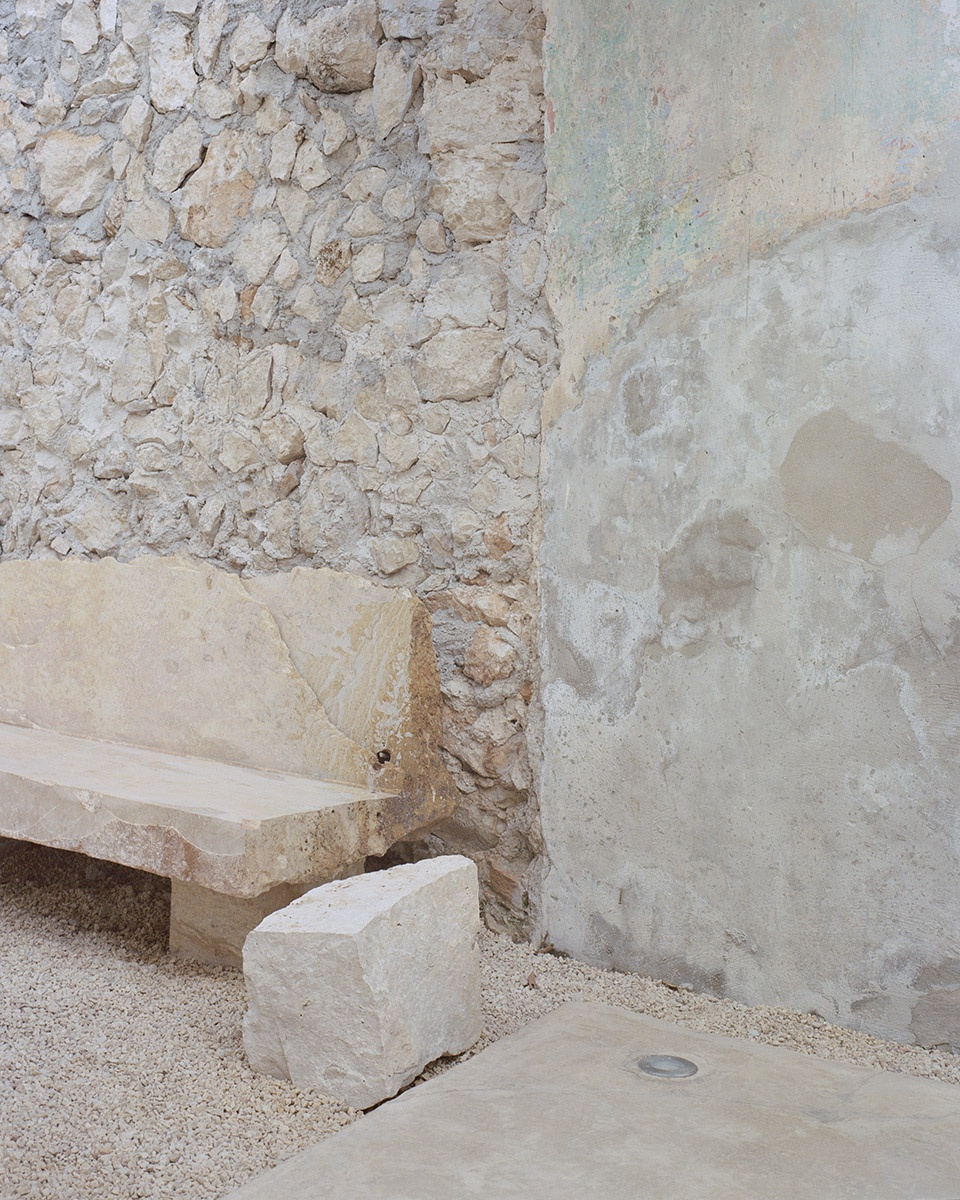
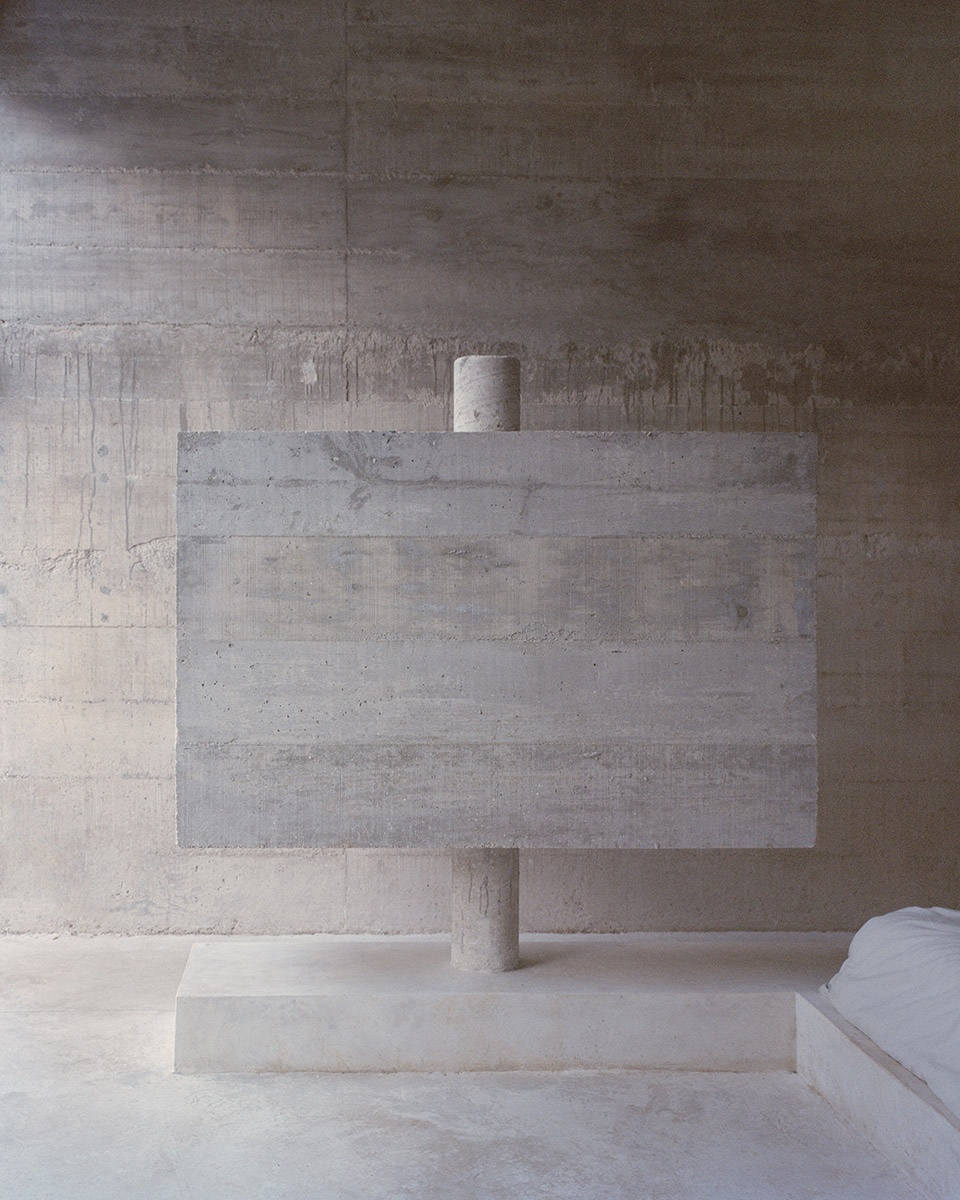
“时间”的概念被纳入建筑的一部分,仿佛它本身就是一种材料。设计旨在回归古老而朴素的理念,让“时间的光泽”成为建筑的一部分。
The concept of time is becoming part of the architecture. The time as if it would be a material, following the purpose of stepping back to this old and simple idea to let the “patina of time” be part of the project.
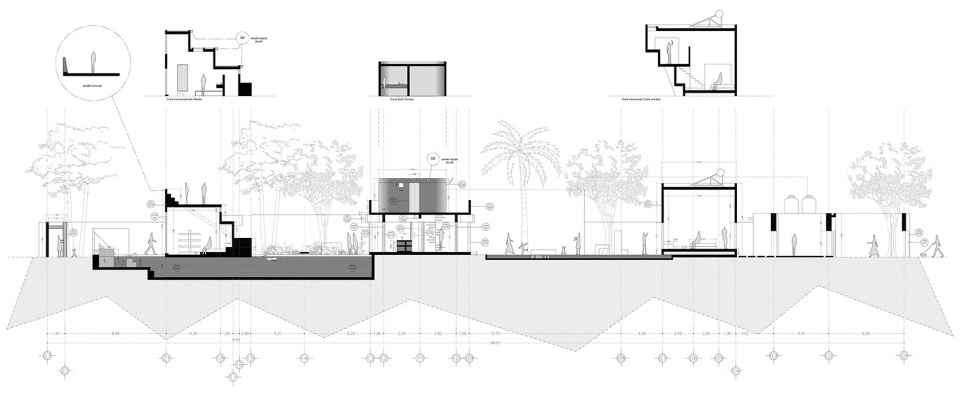
▼平面图,plan
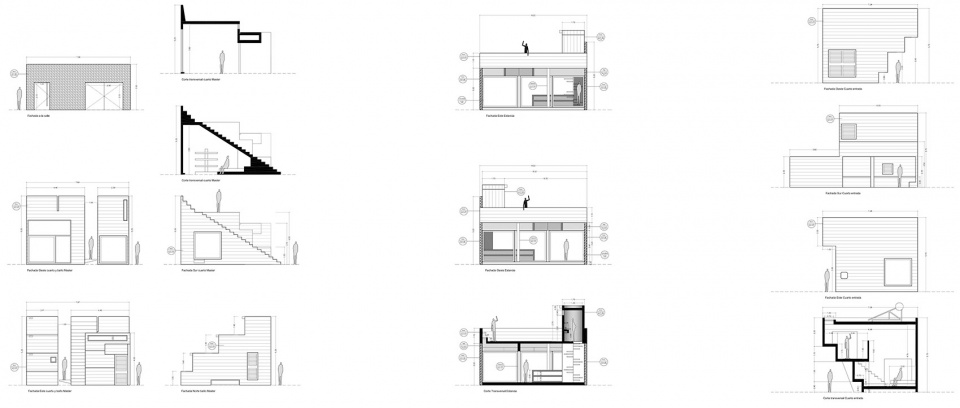
▼剖面图,section