Stefan Żeromski剧院改造,波兰 / WXCA
由欧盟与米斯·凡·德·罗基金会(Fundació Mies van der Rohe)共同颁发的奖项,数十年来一直在表彰当代建筑领域的杰出成就。波兰建筑事务所WXCA第三次获得这一享有盛誉的提名。本次,评审团肯定了他们在基尔采(Kielce)历史悠久的斯特凡·热罗姆斯基剧院(Stefan Żeromski Theatre)复兴项目中展现的卓越工艺。这座波兰最古老的剧院之一不仅重现了昔日的辉煌,还在舞台技术上实现了具有欧洲领先水平的创新。
Presented by the European Union and the Fundació Mies van der Rohe, the award has for decades recognized outstanding achievements in contemporary architecture. For the third time, the prestigious nomination has gone to the architects of the WXCA studio. This time, the jury acknowledged the craftsmanship behind the revitalization of the historic Stefan Żeromski Theatre in Kielce. One of Poland’s oldest theatrical venues has not only regained its former splendour but has also gained staging capabilities unique on a European scale.
▼项目外观,exterior of the project
一段蕴含爱情故事的剧院A Theatre with a Love Story in Its History
斯特凡·热罗姆斯基剧院是波兰历史最悠久的戏剧机构之一。建筑始建于1877年,首场演出于1879年举行。一个浪漫的地方传说至今流传:富有的实业家路德维克·施图姆夫(Ludwik Stumpf)为一位来自华沙的女演员建造了这座剧院,可惜她的名字已无从考证。为了表达爱意,他委托建筑师弗朗齐歇克·克萨维里·科瓦尔斯基(Franciszek Ksawery Kowalski)设计了这座建筑。科瓦尔斯基是著名建筑师亨利克·马尔科尼(Henryk Marconi)的学生,后者是19世纪波兰建筑的代表人物。
The Stefan Żeromski Theatre in Kielce is one of the oldest theatre institutions in Poland. Its inaugural performance took place in 1879, two years after construction began. A romantic local legend still surrounds its origins: a wealthy industrialist, Ludwik Stumpf, is said to have built it for an actress from Warsaw whose name, unfortunately, remains unknown. As an expression of his affection, he commissioned the design from Franciszek Ksawery Kowalski – a respected architect and pupil of Henryk Marconi, a master of 19th-century Polish architecture.
▼剧院外观,exterior of the theater
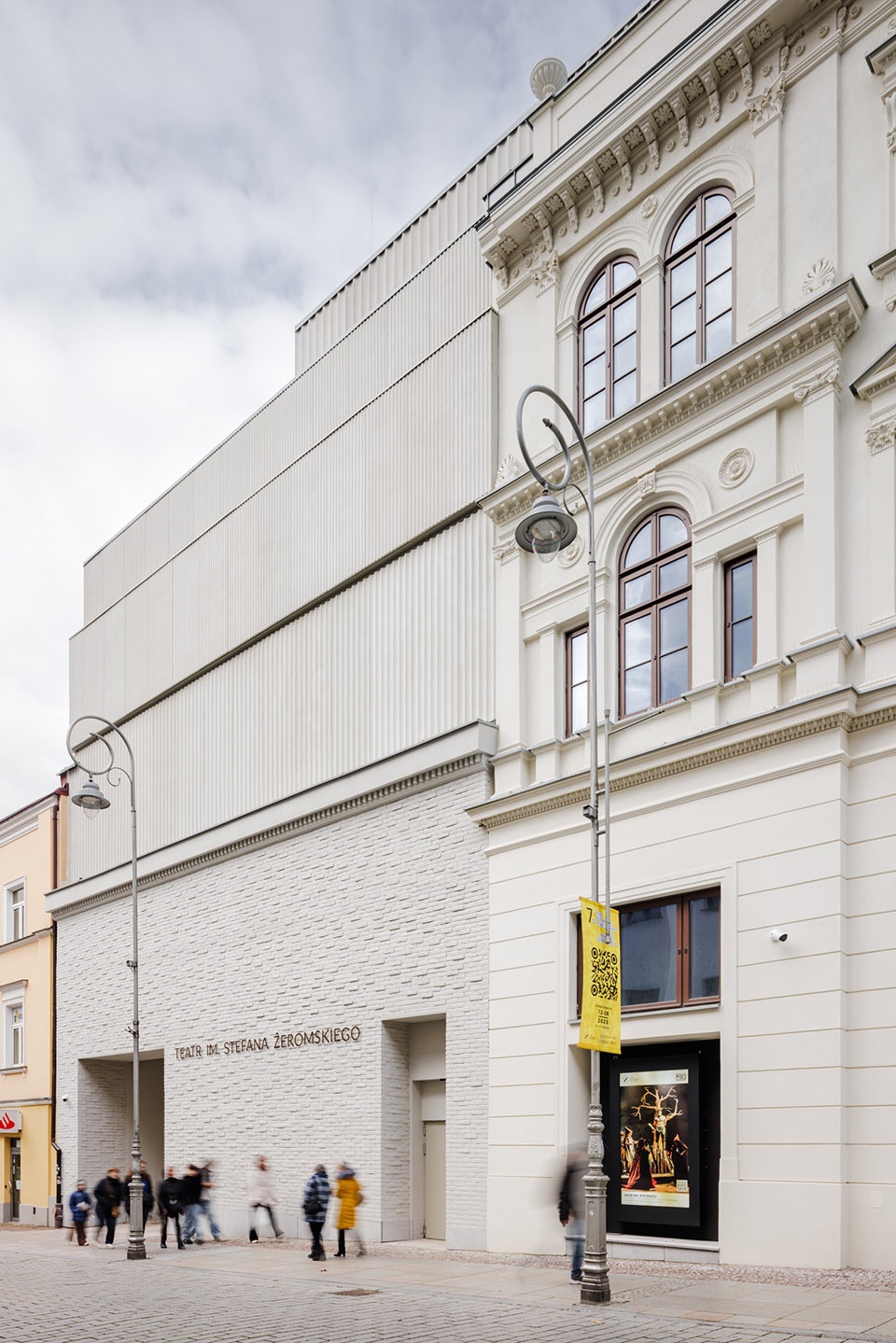
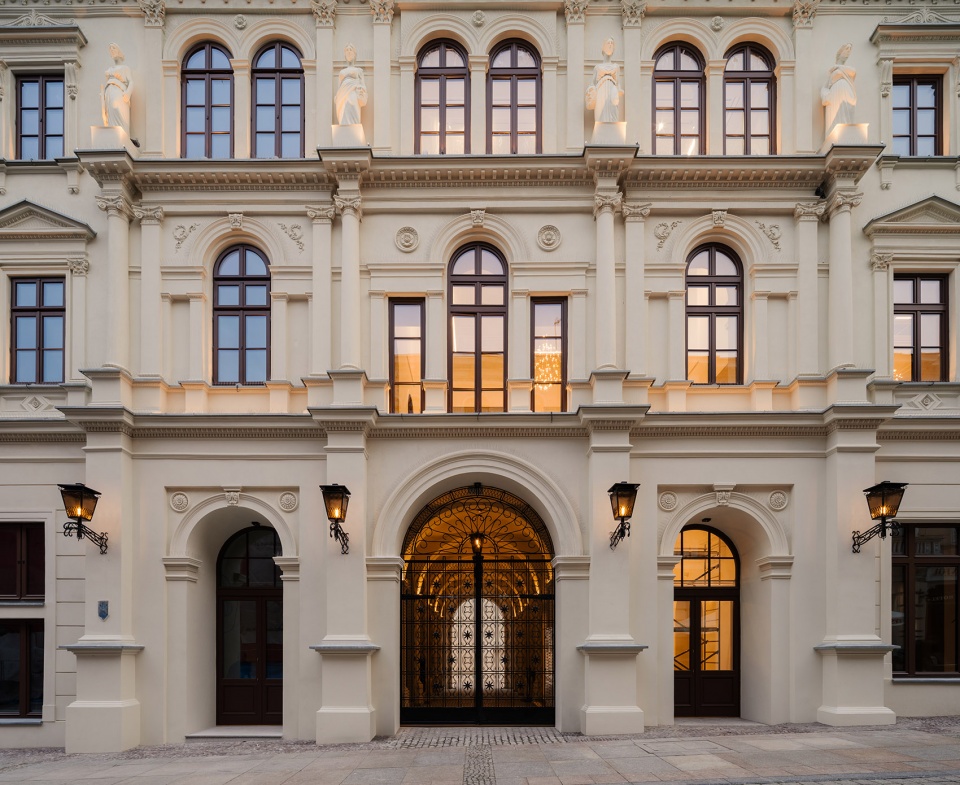
剧院位于基尔采市中心的主干道上,外立面采用折衷主义风格,装饰有四尊戏剧缪斯女神雕像。据当时的《基尔采公报》(Gazeta Kielecka)报道,剧院的开幕是一场盛大的文化与社会事件,吸引了约800名观众前来观看。
Located in the very centre of Kielce, along one of the city’s main streets, the building featured an eclectic façade adorned with four statues of theatrical muses. According to the Gazeta Kielecka newspaper of the time, the opening of the theatre was a true cultural and social event, attended by an audience of around 800 people.
▼剧院外观,exterior of the theater
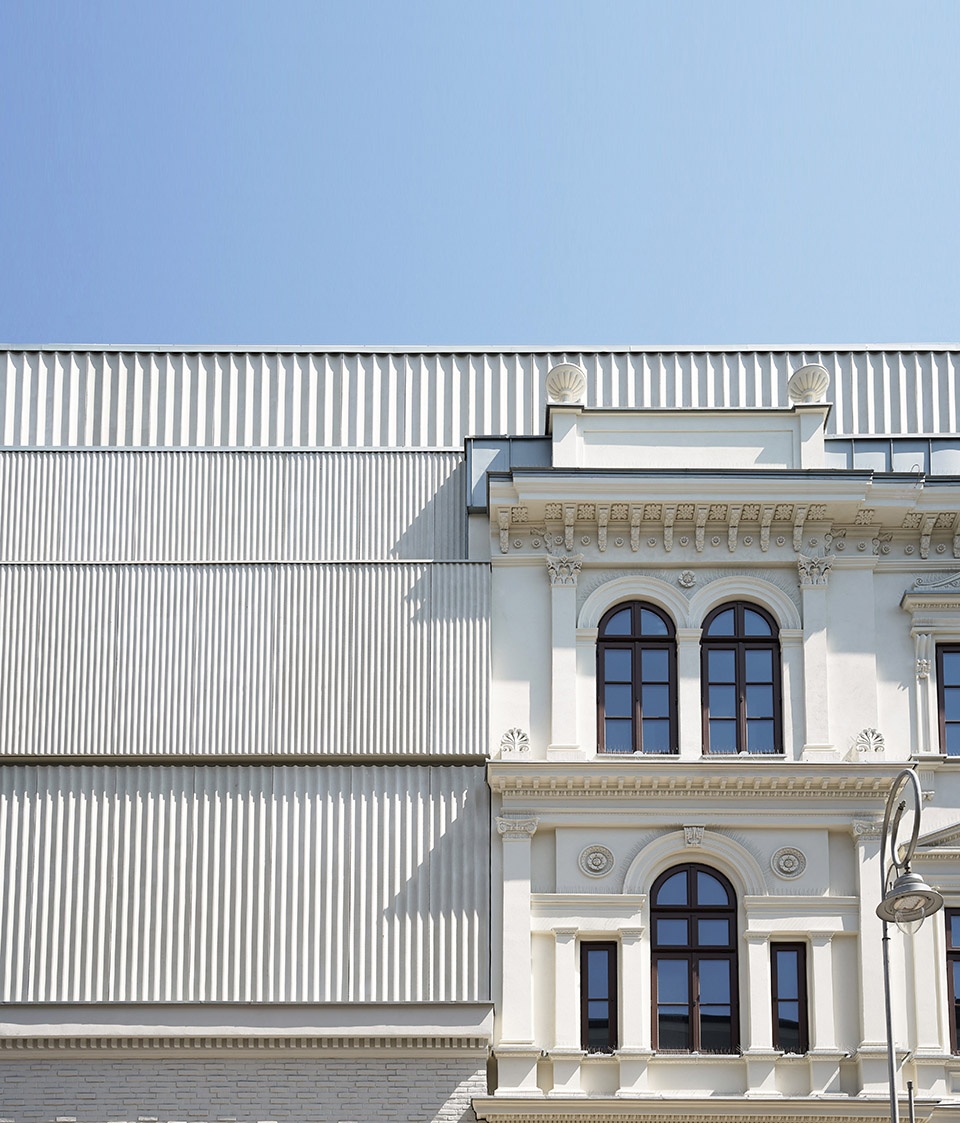
剧院的新生A New Life of the Theatre
数十年来,建筑的技术状况不断恶化,严重限制了其功能与使用潜力。2017年,基尔采市政府发起了一场关于剧院重建与扩建的建筑竞赛。项目目标是在修复历史建筑的同时,引入满足当代文化机构需求的现代化功能。WXCA 的获奖方案在保留剧院建筑美学特征的同时,引入了先进的舞台技术,使这座剧院不仅在波兰国内独树一帜,也在欧洲范围内脱颖而出。
Over the decades, the technical condition of the building had deteriorated, severely limiting its functional and programmatic potential. An architectural competition for its reconstruction and extension was announced in 2017. The aim of the investment was to combine the restoration of the historic structure with a modernization that meets the needs of a contemporary cultural institution.
The winning concept by WXCA sought to highlight the architectural qualities of the theatre while introducing a new level of functionality through advanced stage technology. This technology now distinguishes the Żeromski Theatre not only in Poland but also internationally.
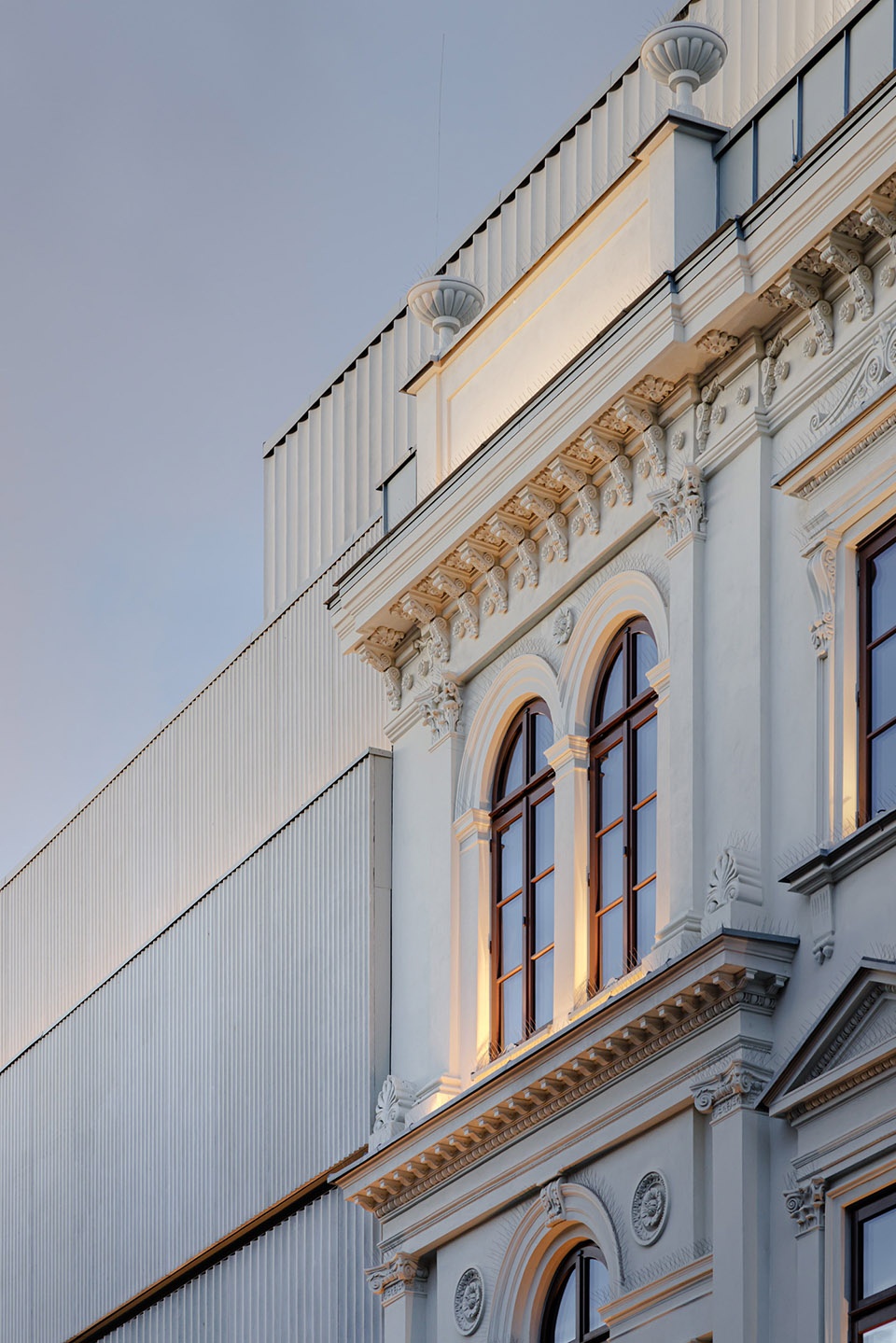
▼剧院外观细部,facade detail of the theater
缪斯、女像柱与文学肖像Muses, Caryatids, and Literary Figures
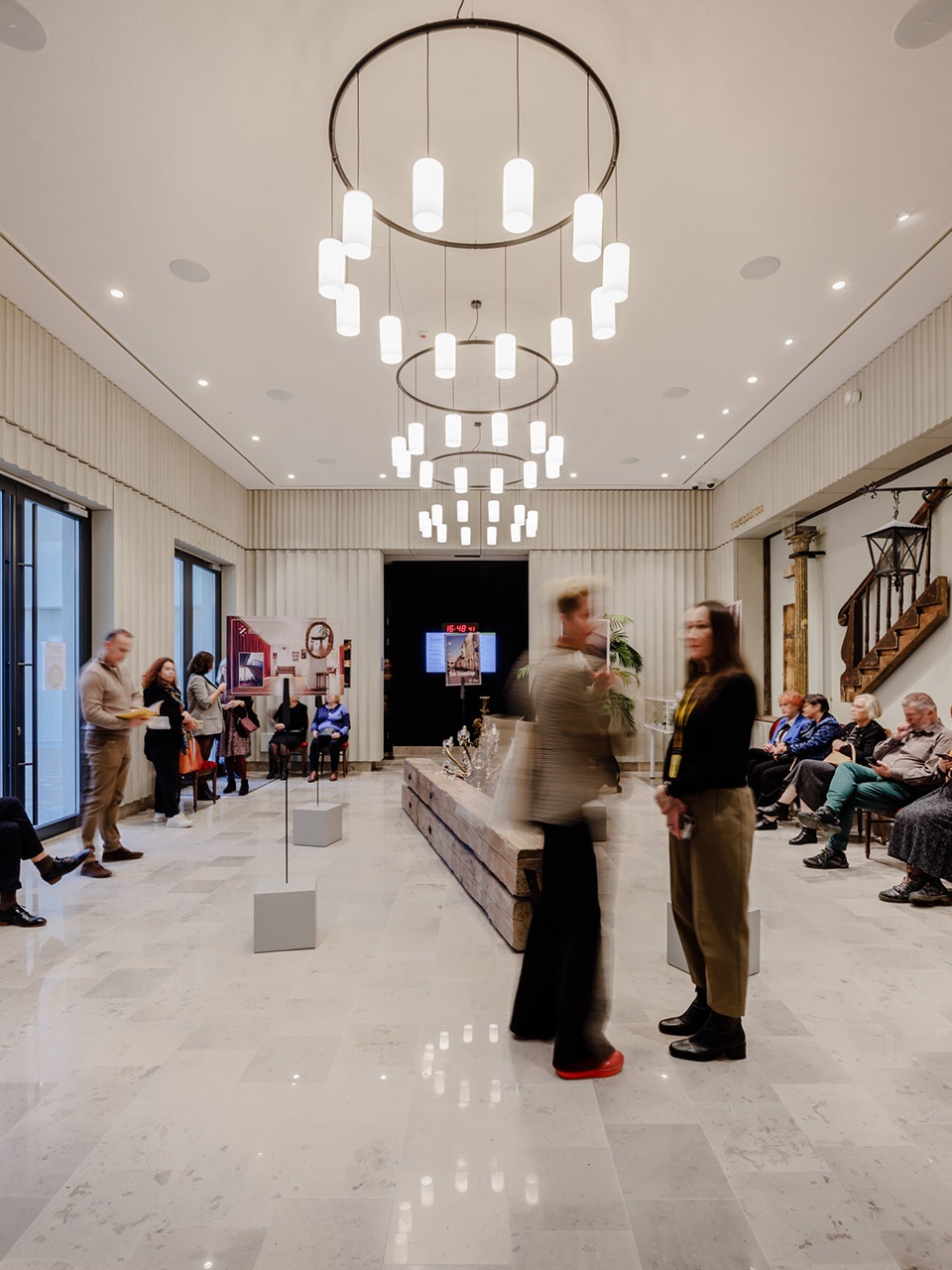
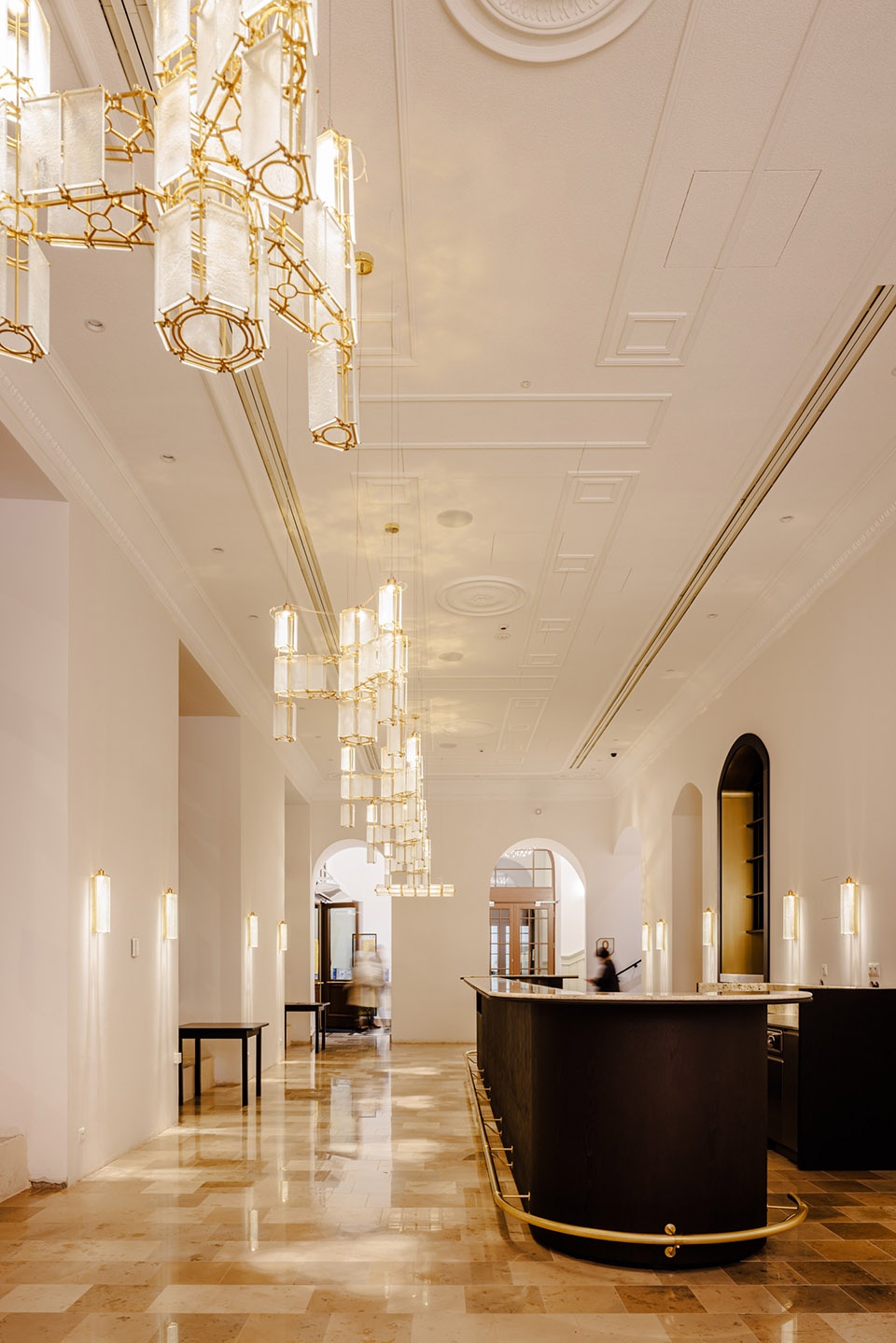
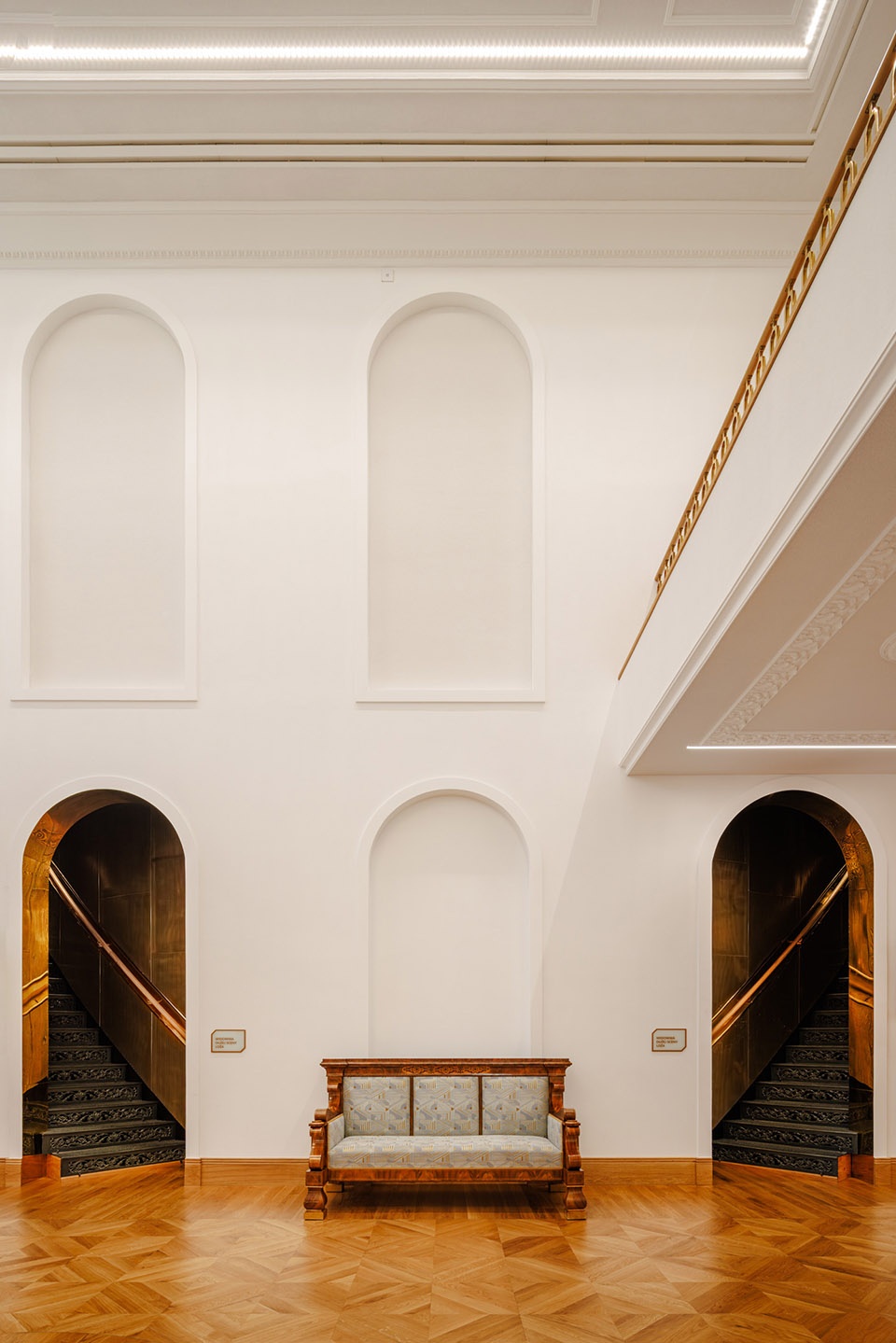
修复工作重点在于保护剧院的历史内部空间——修复保留的建筑细节,并重建早已消失的装饰。19世纪的立面经过精细修复,四尊缪斯女神雕像在消失六十多年后重新归位。剧院的门厅与楼梯间也恢复了昔日的典雅,形成一个逐渐将访客引入“文化殿堂”的空间序列。
The conservation programme included the restoration of the theatre’s historical interiors by renovating surviving architectural details and reconstructing those that had been lost. The 19th-century façade was meticulously restored, with the four muses returning to their place after more than sixty years. The representative foyer and staircases regained their former splendour, creating a spatial sequence that gradually immerses visitors in the solemn atmosphere of this “temple of culture.”
▼剧院门厅,The representative foyer
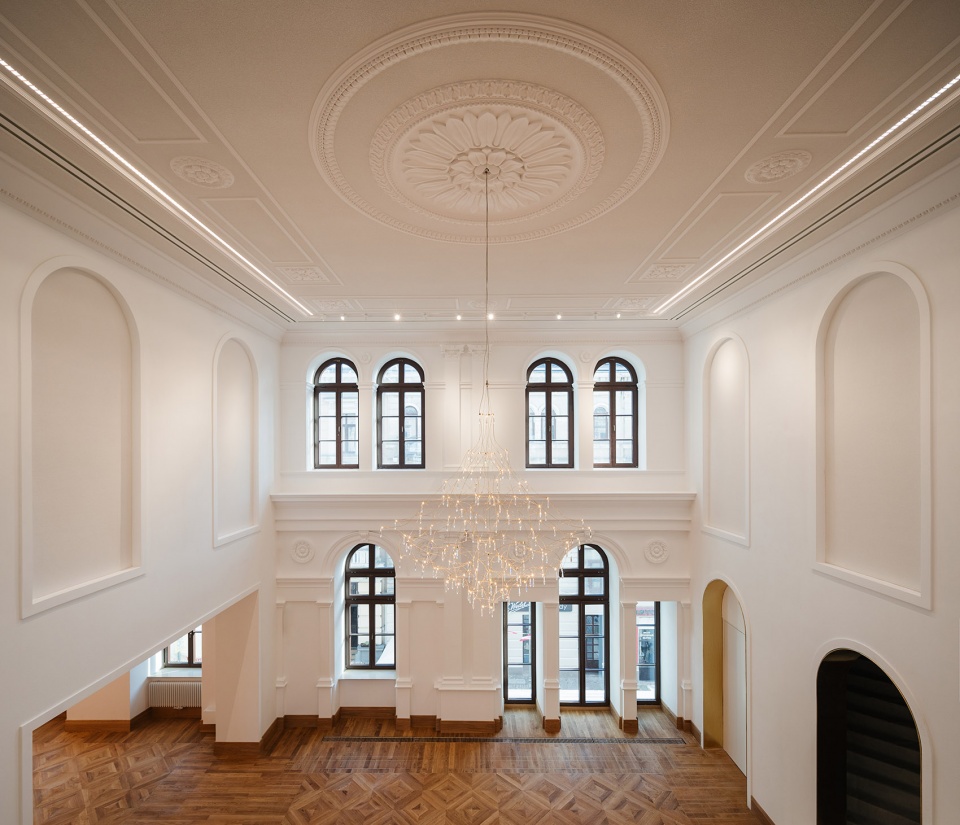
▼剧院门厅,the foyer
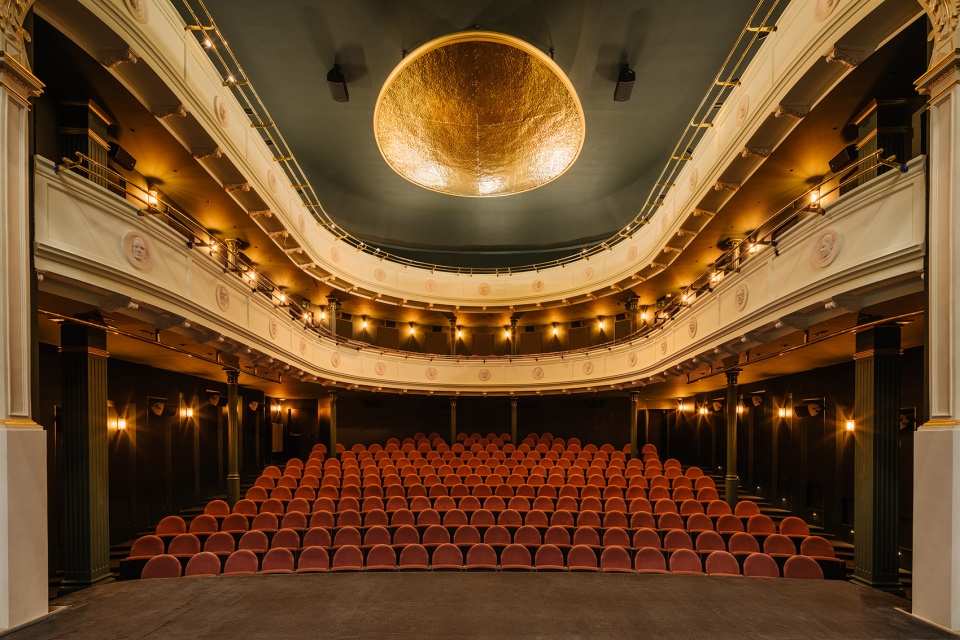
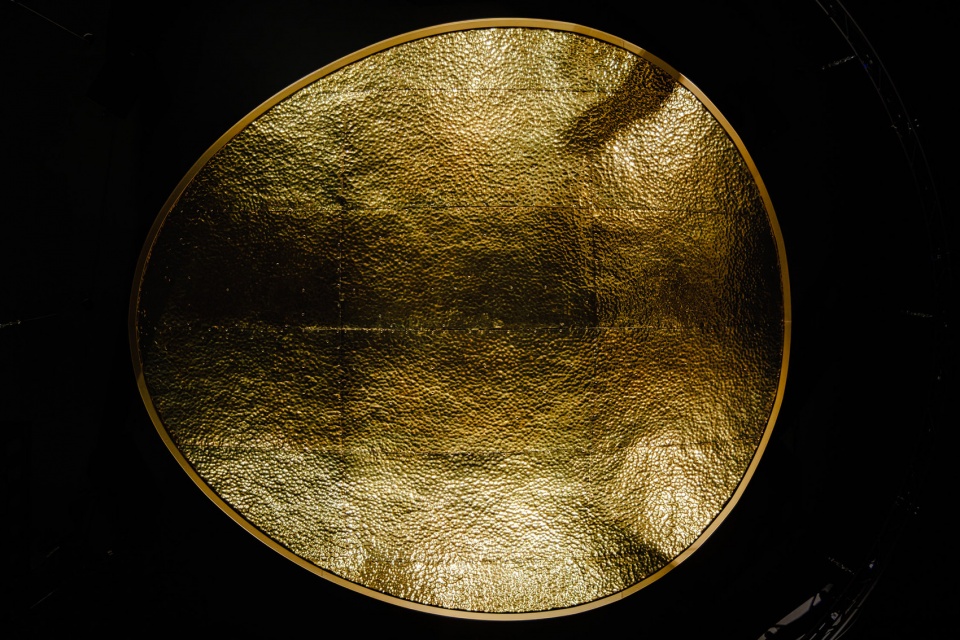
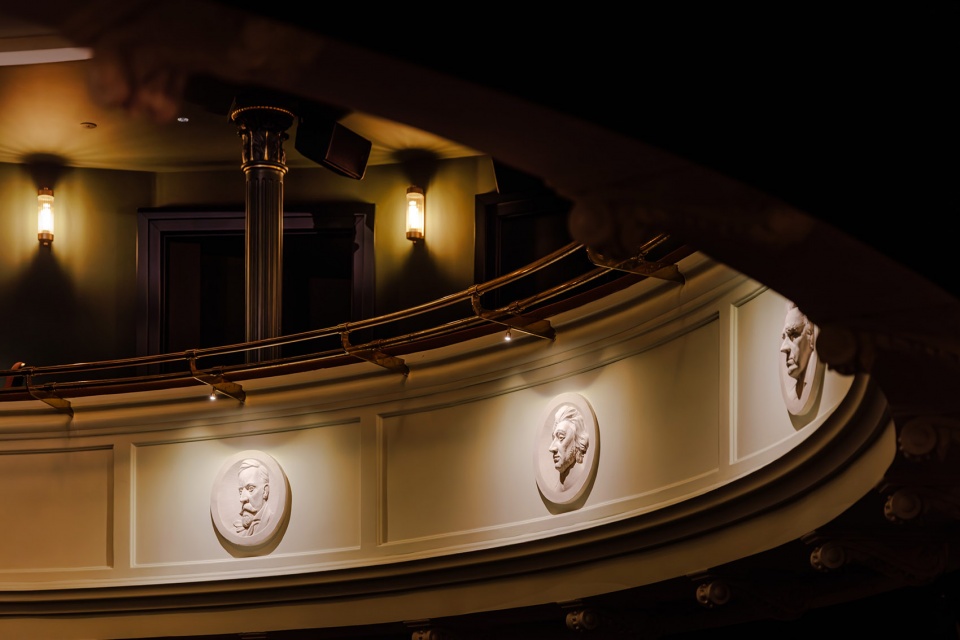
进入主舞台空间时,这一体验达到高潮。修复工作包括修复舞台窗框两侧的女像柱,并重建下层阳台上的文学浮雕肖像。原本有15位文学家肖像,建筑师提议在上层阳台增加描绘当代文学人物的浮雕。雕塑家皮奥特·马什兰卡(Piotr Maślanka)负责这些新旧浮雕的创作。主舞台上方新增了一处手工锤制的镀金黄铜天花装饰,既具装饰性,又改善了声学效果。金色、粉色与深浅绿色的色彩组合灵感来自剧院原始的世纪末室内装饰风格。
▼手工锤制的镀金黄铜天花装饰,gilded brass ceiling feature
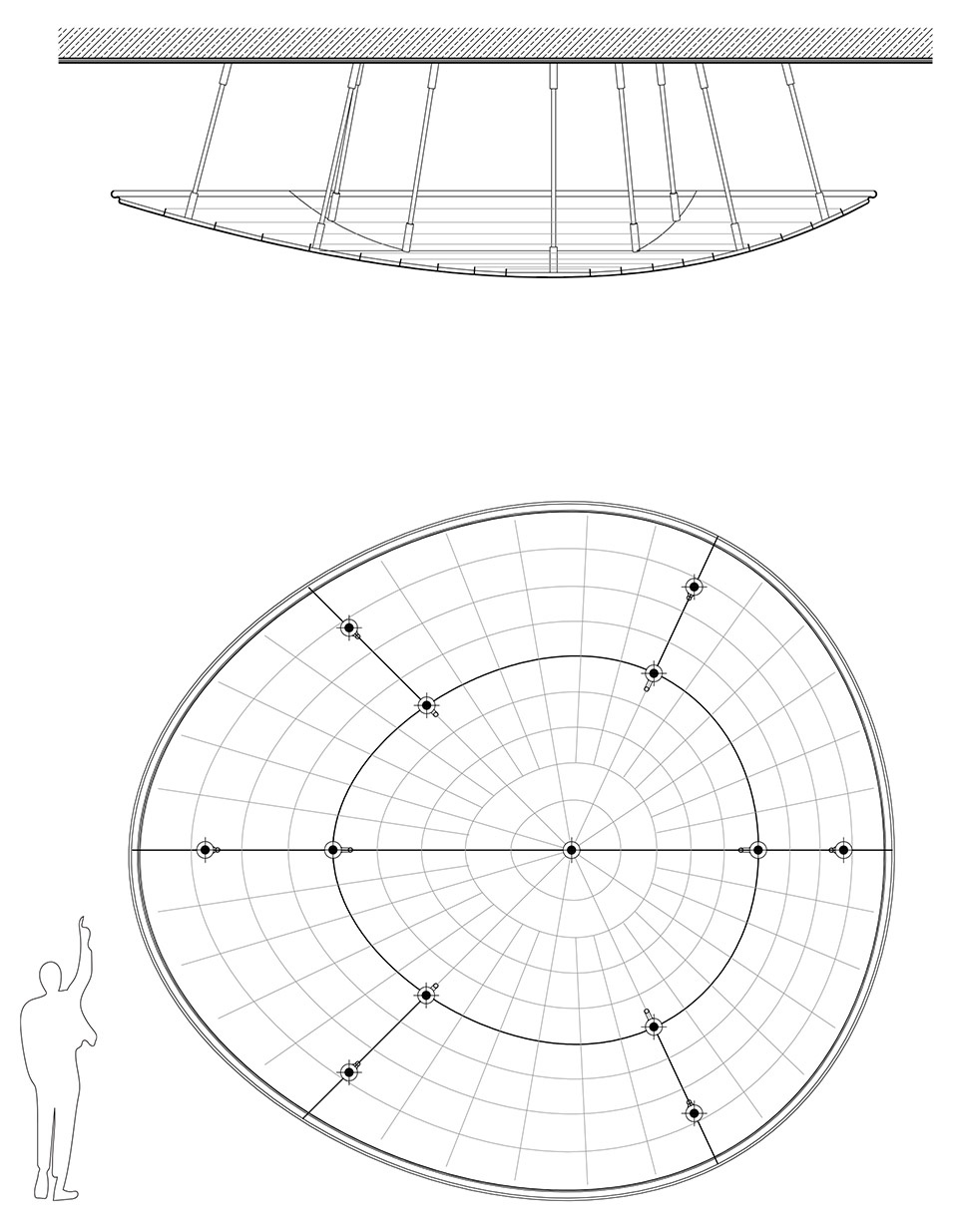
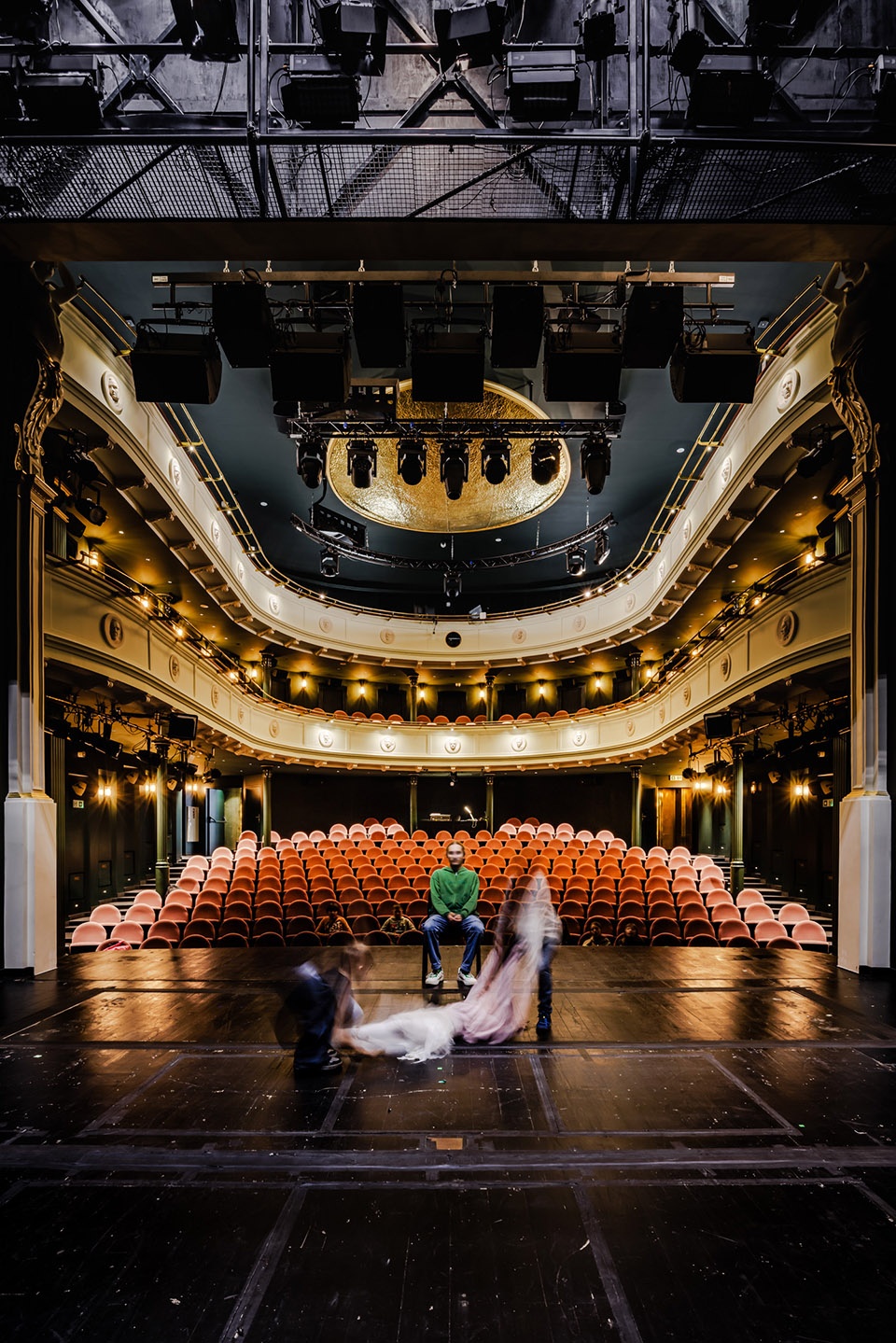
The culmination of this experience occurs upon entering the Main Stage. The restoration works included the renovation of the caryatids framing the stage window, while reconstructed decorations feature medallions with portraits of writers that once adorned the lower balcony. Originally there were fifteen. At the architects’ initiative, the gallery was expanded with medallions depicting contemporary literary figures on the upper balcony. The sculptor Piotr Maślanka was responsible for these bas-reliefs. A striking contemporary accent is the hand-hammered, gilded brass ceiling feature above the Main Stage, serving both decorative and acoustic functions. The applied colour palette – gold, pastel pink, and light and dark greens – draws inspiration from the original fin-de-siècle interior design of the Żeromski Theatre.
▼主舞台空间,the Main Stage
▼天花装饰细部,the ceiling decoration detail
波兰最先进的剧院舞台The Most Technologically Advanced Theatre Stage in Poland
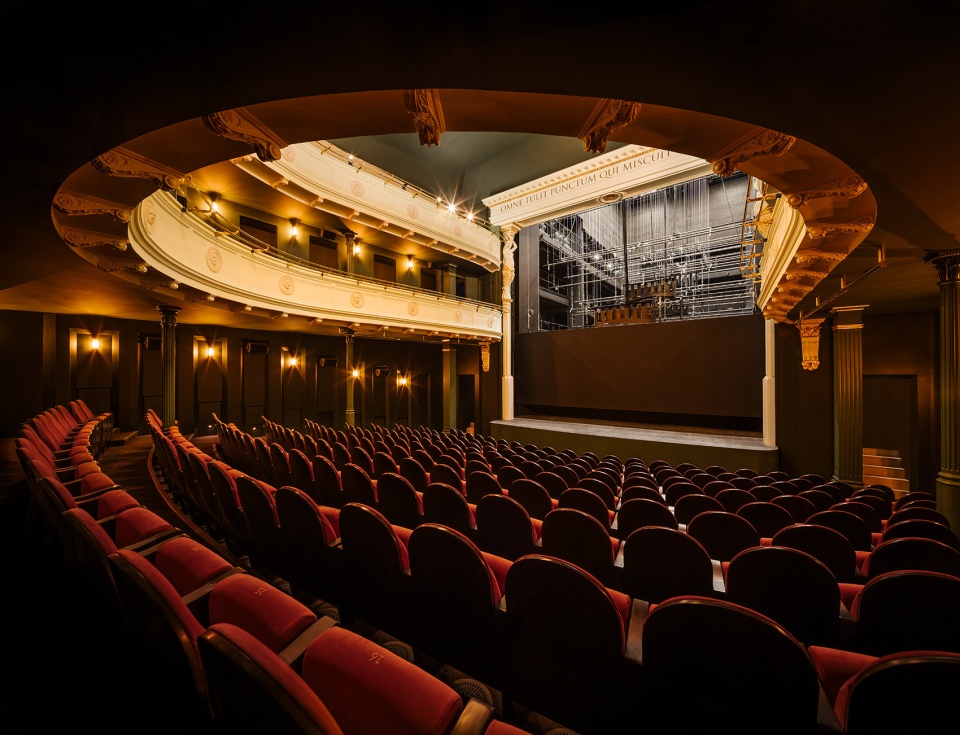
此次现代化改造不仅是修复,更是一次技术上的重生。项目的目标是将历史剧院转变为能够承载最复杂舞台制作的现代场所。修复后的主舞台拥有最先进的舞台机械系统:6米直径的旋转舞台、可移动观众席以及六个双层陷阱门。这一系统允许快速场景转换(包括360°旋转),并可实现三面布景演出,使该剧院成为欧洲技术最先进的剧院之一。
▼最先进的舞台机械系统,The renovated stage now features cutting-edge technologies
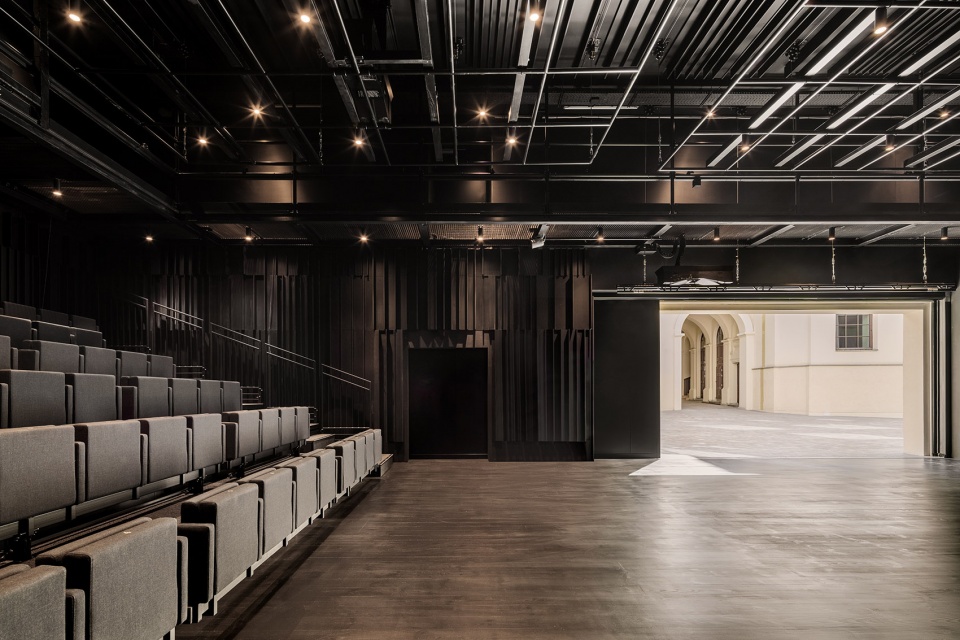
The modernization went far beyond conservation. The investment aimed to transform the historic theatre into a state-of-the-art venue capable of accommodating the most demanding productions. The renovated stage now features cutting-edge technologies: a six-metre revolving stage, mobile auditoriums, and six double-level trapdoors. This system allows for rapid scene changes (including 360-degree rotation) and enables performances to be staged in three directions. Such technical solutions make the theatre one of the most advanced of its kind in Europe.
▼最先进的舞台机械系统,The renovated stage now features cutting-edge technologies
▼舞台视角,main stage view
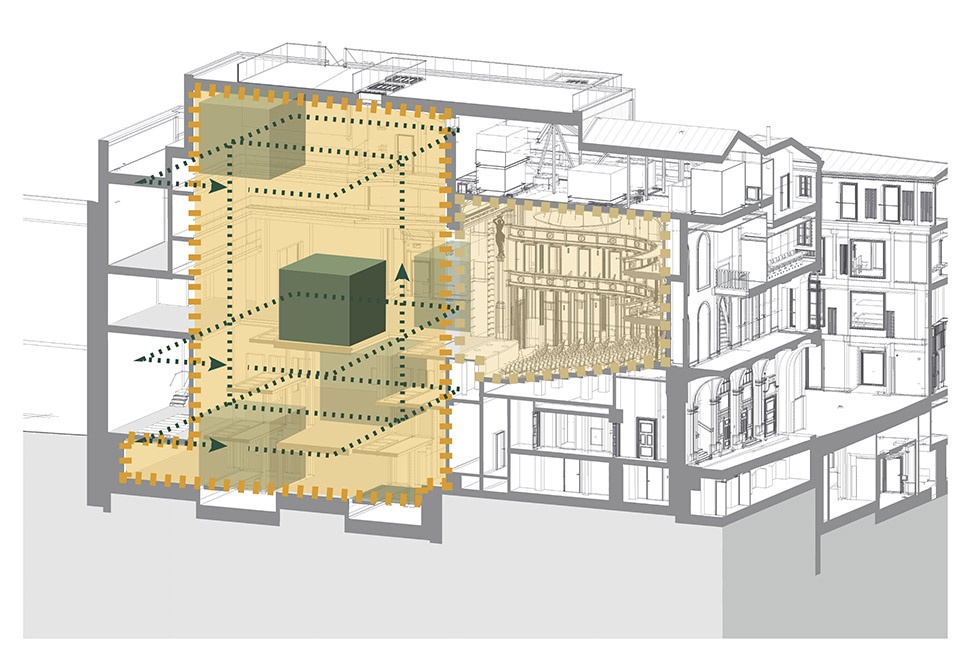
通过对相邻建筑的扩建与改造,主舞台区域面积增加了一倍以上,同时保留了原有观众席位置。剧院还新增了一个现代化的副舞台、两间排练厅、一间录音棚、舞美工作坊、地下储藏与技术空间,以及艺术家宿舍与化妆间。建筑师的首要任务是优化空间与流线布局,确保剧院的功能性与舒适的工作环境。
▼改造策略,renovation strategy
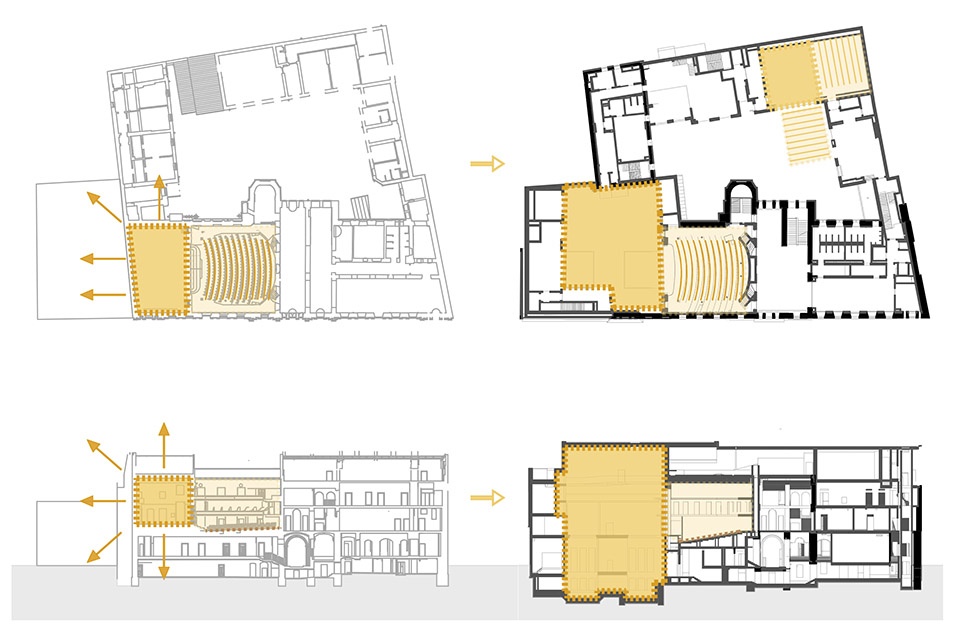
Through the expansion and adaptation of the adjacent building—the Main Stage area was more than doubled while retaining the auditorium in its original position. The theatre also gained a second, modern stage, two rehearsal rooms, a recording studio, set design workshops, underground storage and technical facilities, as well as artists’ residencies and renovated dressing rooms. For the architects, a key priority was to optimise the spatial and communication layout to ensure functionality and comfortable working conditions for everyone involved in the productions.
▼排练厅,rehearsal rooms
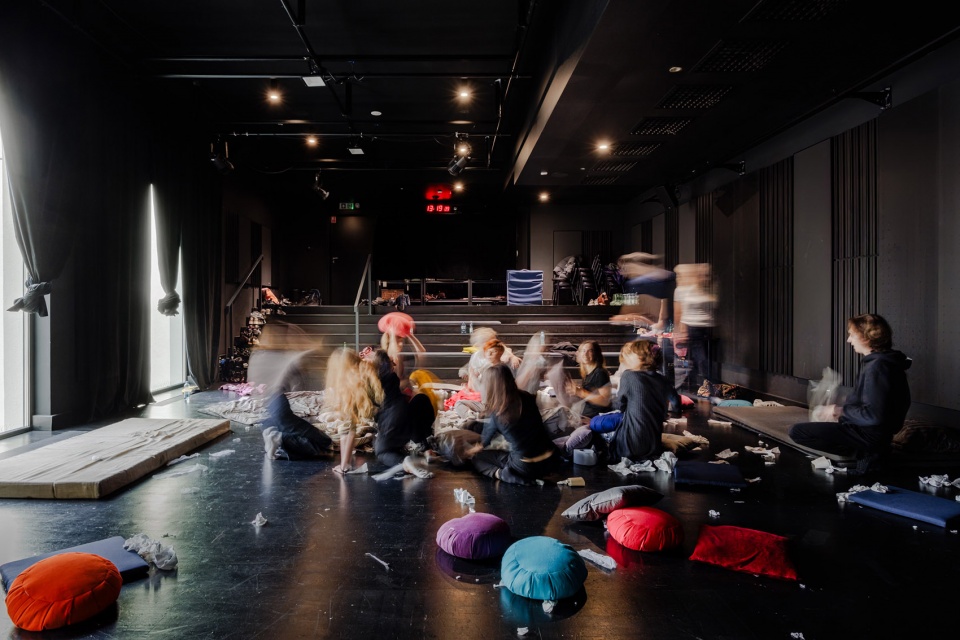
▼排练厅,rehearsal rooms
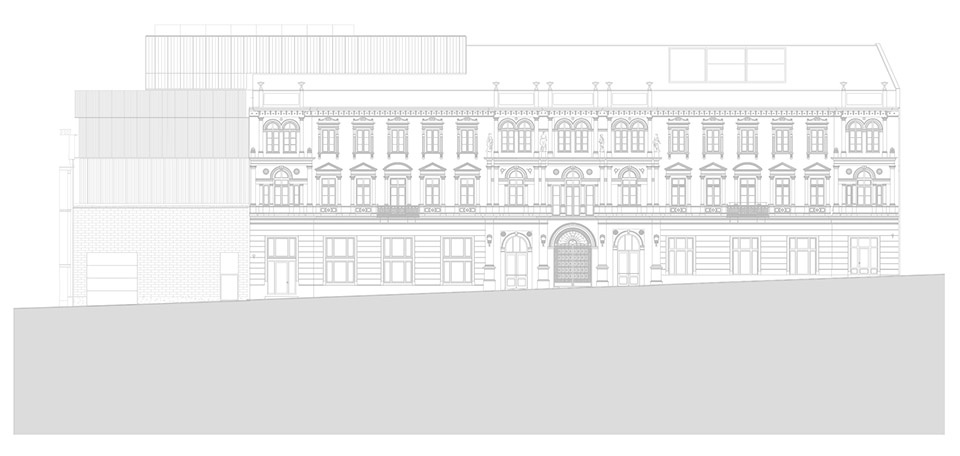
新建筑部分采用克制的当代建筑语言,与历史环境相协调。设计并非通过模仿或对比,而是通过“对话”实现新旧融合——现代部分延续历史的节奏与尺度,同时保持独立的身份。新立面采用竖向沟槽混凝土板,与原建筑立面呼应,庭院新翼楼在比例与窗洞设计上也呼应古典建筑。
The new volume was designed in a contemporary, restrained architectural language sensitive to its historical surroundings. The connection between “old and new” was conceived not through imitation or contrast, but through dialogue—where the modern part builds continuity without losing its own identity. The façade of the new structure, clad in fluted concrete panels, continues the rhythm and scale of the historic frontage. The new courtyard wings correspond with the classical architecture through their proportions and the composition of window openings.
▼现代部分延续历史的节奏与尺度,the modern part builds continuity without losing its own identity
▼在比例与窗洞设计上也呼应古典建筑,correspond with the classical architecture through their proportions and the composition of window openings
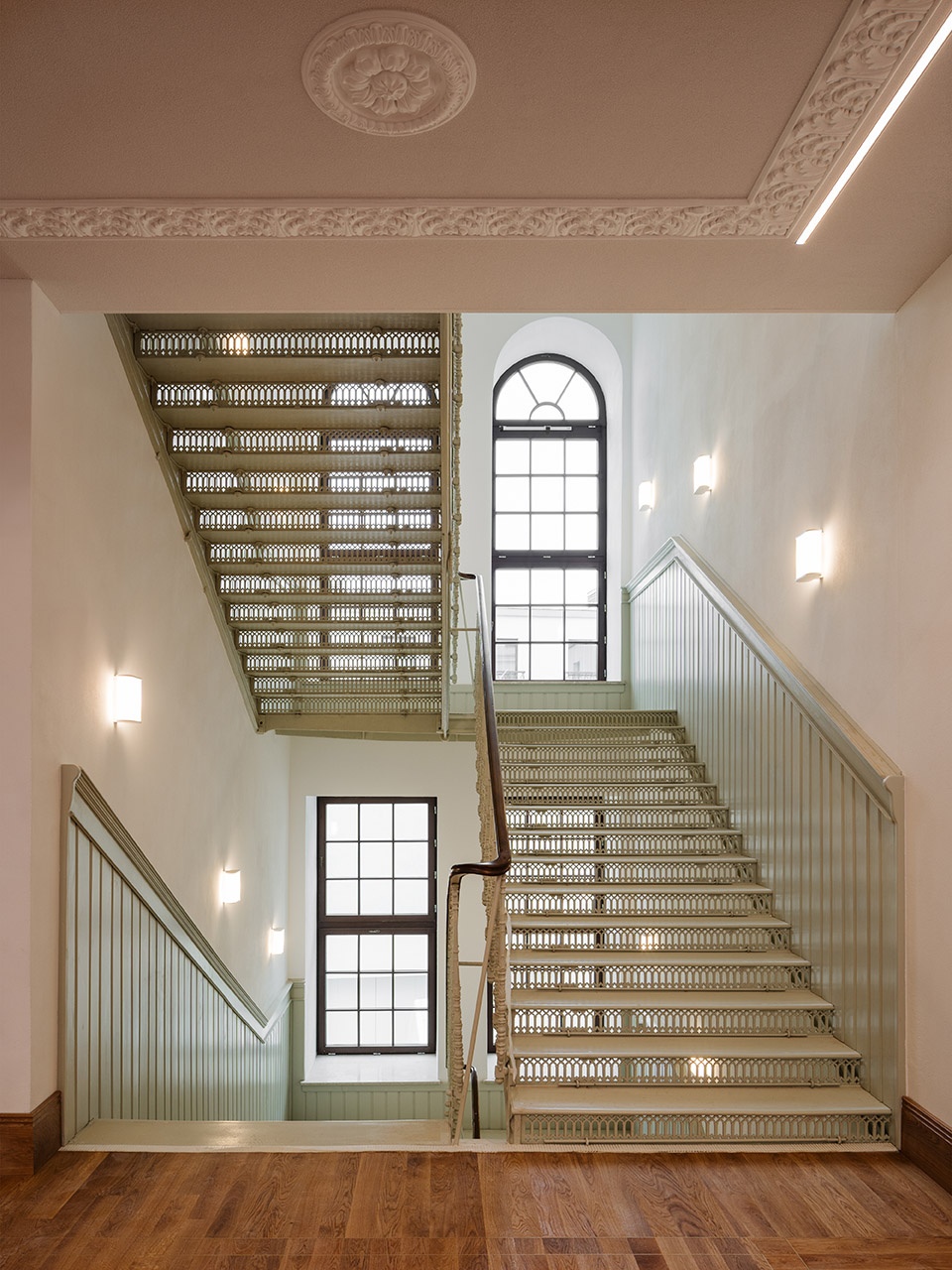
▼楼梯间,staircase
基尔采的新“城市庭院”Kielce Gains a New “Urban Courtyard”
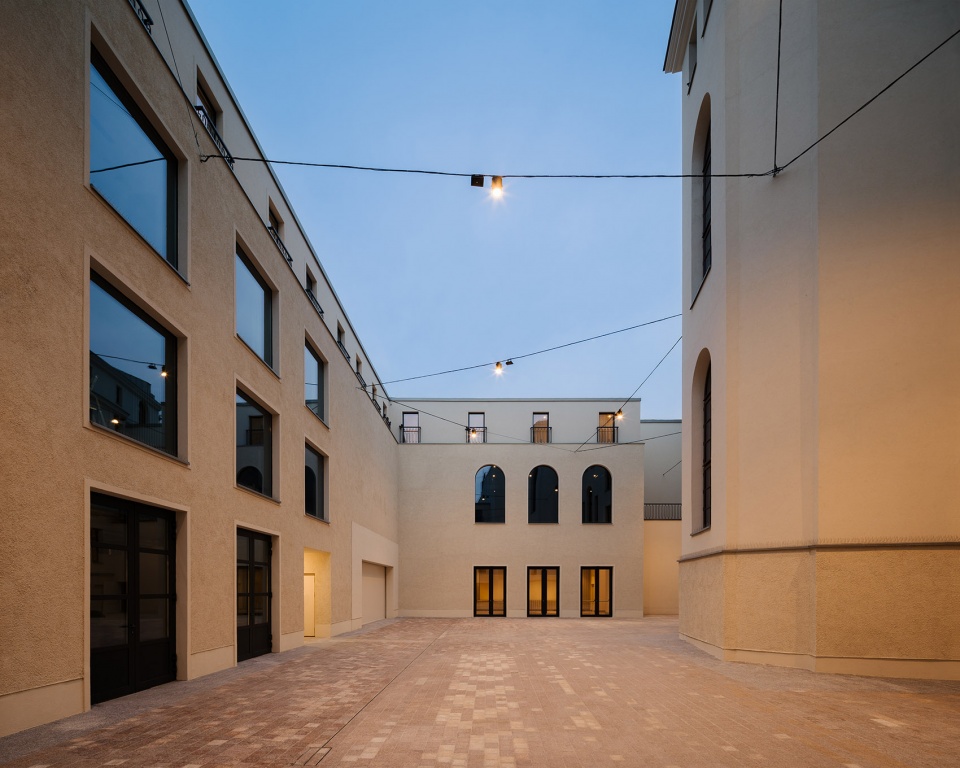
在近150年的时间里,热罗姆斯基剧院一直是基尔采城市记忆与文化身份的一部分。此次改造旨在赋予建筑新的生命,使其成为一个开放的、以社区为导向的文化场所。其中一个关键设计是将原本封闭的后台庭院向公众开放,打造一个新的“城市内部空间”。这一嵌入城市肌理的开放庭院如今可用于露天演出、工作坊和展览,为文化活动与社交聚会提供场所。新增的舞台窗户可直接面向庭院,让表演自然延伸至户外。
For nearly 150 years, the Żeromski Theatre has been an integral part of Kielce’s identity and collective memory. The revitalization project aimed to breathe new life into the historic building—expanding its programmatic potential and redefining it as a more open, community-oriented institution. One of the key gestures towards the city and its residents was opening the former backstage courtyard to the public. The newly created “urban interior,” embedded in the dense city fabric, now serves as a venue for open-air performances, workshops, and exhibitions. It provides space for cultural events and social gatherings beyond theatre hours. An additional stage window opens directly onto the courtyard, allowing performances to extend into the outdoor space.
▼嵌入城市肌理的开放庭院,“urban interior,” embedded in the dense city fabric
建筑师的愿景是让剧院在多个层面上成为一个包容且欢迎所有人的空间。建筑现已完全实现无障碍设计,适用于行动不便者、听障及视障人士。
The architects’ vision was to make the theatre a welcoming and inclusive space on multiple levels. The building is now fully accessible for people with reduced mobility, hearing impairments, and visual impairments.
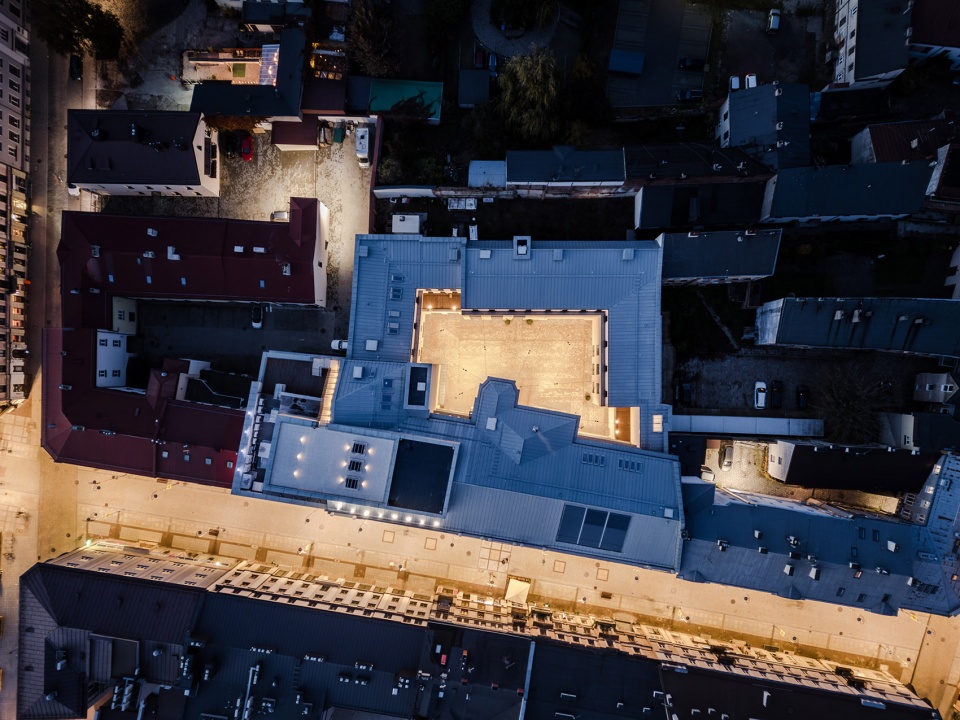
▼夜景鸟瞰,aerial view at night
国际认可Prestigious Nomination
WXCA 的建筑设计与工艺已获得国际认可。基尔采斯特凡·热罗姆斯基剧院被提名为2026年欧盟米斯·凡·德·罗奖(EU Mies van der Rohe Award)候选项目。该奖项自1988年设立,由欧盟与米斯·凡·德·罗基金会每两年联合颁发,是全球建筑界最具影响力与声望的奖项之一。这是WXCA第三次入围提名——此前他们曾凭借帕尔米里纪念博物馆(Palmiry Memorial Museum, 2013)和欧洲地质教育中心(European Centre for Geological Education, 2017)获提名。
The architectural craftsmanship of WXCA has now received international recognition. The Stefan Żeromski Theatre in Kielce has been nominated for the EU Mies van der Rohe Award 2026. Established in 1988 and presented biennially by the European Union and the Fundació Mies van der Rohe, the award is one of the most prestigious honours in the field of architecture worldwide. The Żeromski Theatre is the third WXCA project to receive a nomination. The studio was previously nominated in 2013 for the Palmiry Memorial Museum and in 2017 for the European Centre for Geological Education in Chęciny.
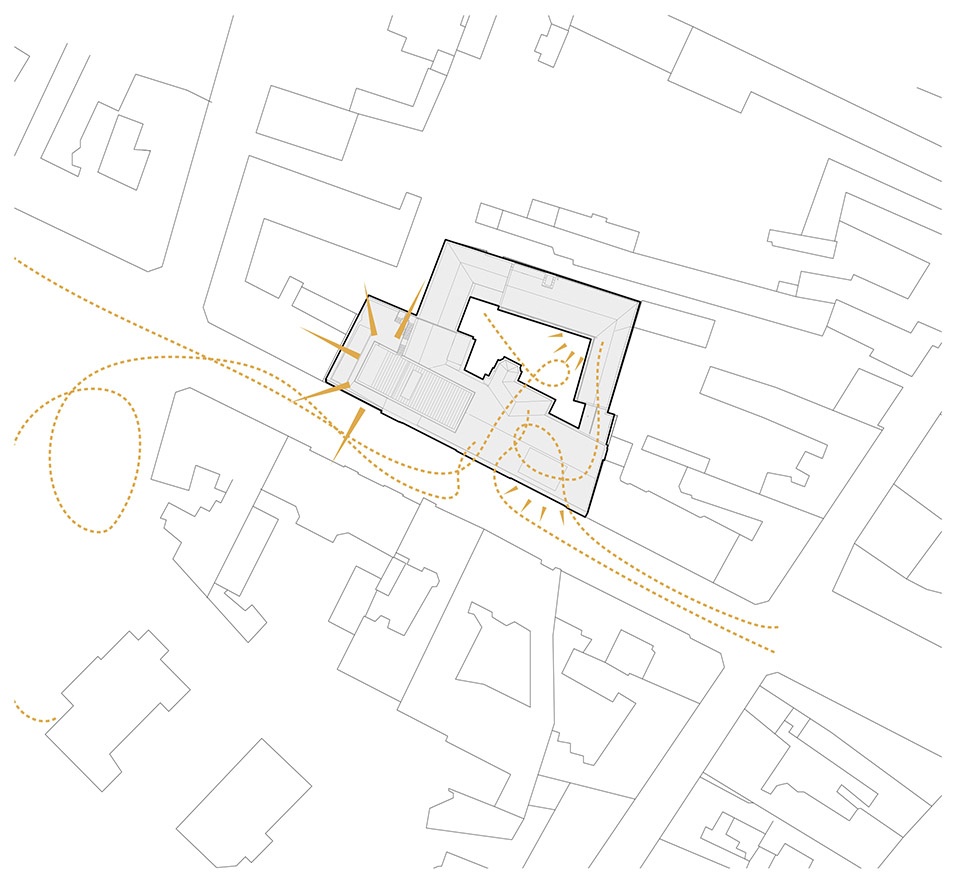
▼场地流线,site plan with circulation
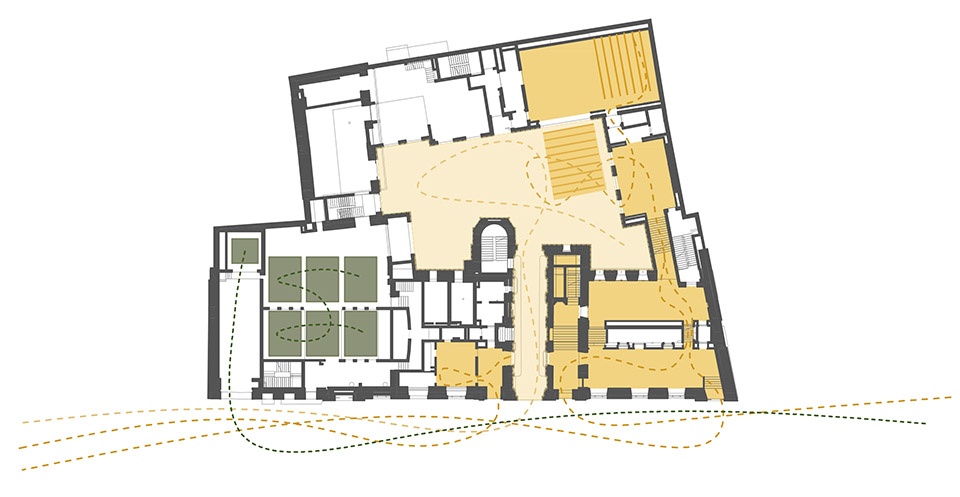
▼平面流线,plan with circulation
▼立面图,elevation