咏归川九寨度假酒店,九寨沟 / 杭州偲所设计 + 杭州澜廷设计
这不是民宿,也不是保护区,而是一处“时间的驿站”。
我们所能做的,只是把土地还给土地;
将岁月准备讲的故事,继续讲下去。
当客人离开,唯一需要带走的,是鞋底沾上的那0.3g火山灰——
那是云端村落送给世界的,最小、也最重的礼物。
This is not a guesthouse, nor a protected area—but a “waystation of time.”
All we have done is return the land to itself,
and continue the story that time has long been ready to tell.
When guests depart, the only thing they need to take with them
is the 0.3 grams of volcanic ash clinging to their soles—
the smallest, yet weightiest gift from this village in the clouds to the world.
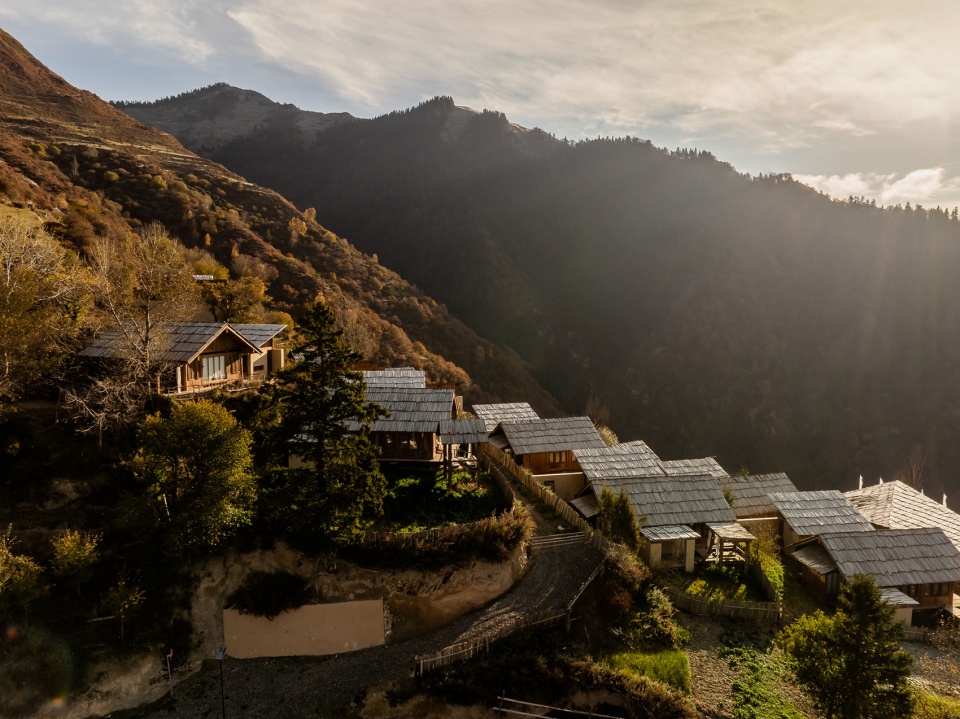
▼项目鸟瞰,Aerial view of the project
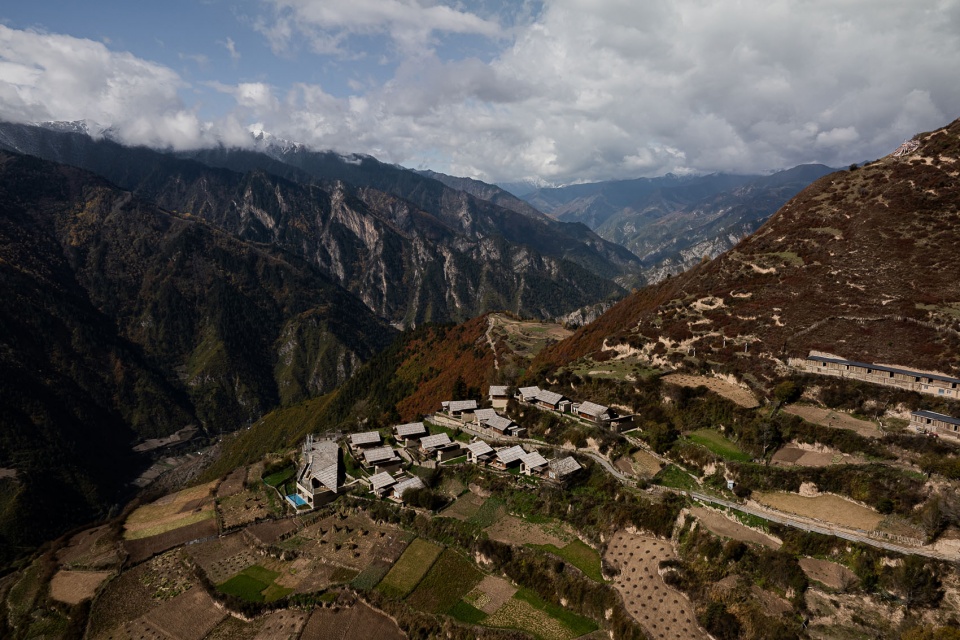
在九寨沟海拔3000米的脊线之上,藏着一个仅由八栋木屋组成的微型村落——中国最小的行政村。它像被风钉在云端,与云雾、冷杉、砾石共生。而我们要将这片特殊的土地设计为度假酒店。设计不是“改造”,而是一次“召回”:召回尘封土地的记忆、藏于山林木材的呼吸、深埋叠山时间的痕迹。让旧木再燃、让老屋再立、让山泉再唱。让每一根老木回归山坡,让每一道裂缝叙述风霜。
On a 3,000-meter-high ridge in Jiuzhaigou, nestled a micro-village of just eight wooden cabins — China’s smallest administrative village. It appears pinned against the sky by the wind, coexisting with clouds, fir trees, and gravel. And now, we are tasked with designing this unique land into a resort. Design here is not “renovation,” but a process of “recalling”: recalling the memory sealed within the dusty land, the breath hidden in the mountain forests and timber, and the traces of time buried in the layered mountains. Let aged wood be rekindled, let old houses rise again, let mountain springs sing once more. Let every piece of old timber return to the slopes, and let every crack tell the story of wind and frost.
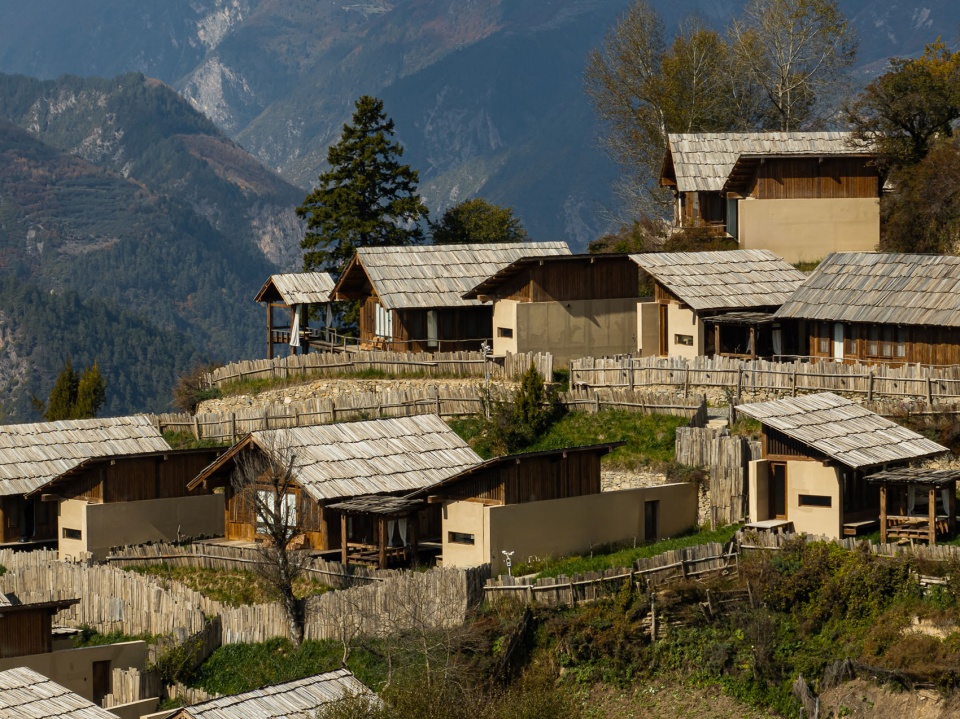
▼客房外景图,Exterior view of guest villa
本案设计理念:The design concept for this project:
一场面向自然本质的回归。大量使用木元素及木结构,不仅是形式的选择,更是精神的追求。我们摒弃浮华,让材料以其最原始的肌理与温度与人对话。空间因而成为一个会呼吸的生命体,弥漫着质朴、温馨与恬静的气息。
A return to the essential nature of the natural world. The extensive use of wood elements and timber structures is not merely a formal choice, but a spiritual pursuit. We reject extravagance, allowing materials to converse with people through their most primitive textures and warmth. Thus, the space becomes a breathing living entity, permeated with an atmosphere of simplicity, warmth, and tranquility.
▼晨光下的小屋,The guest villa in the dawn light
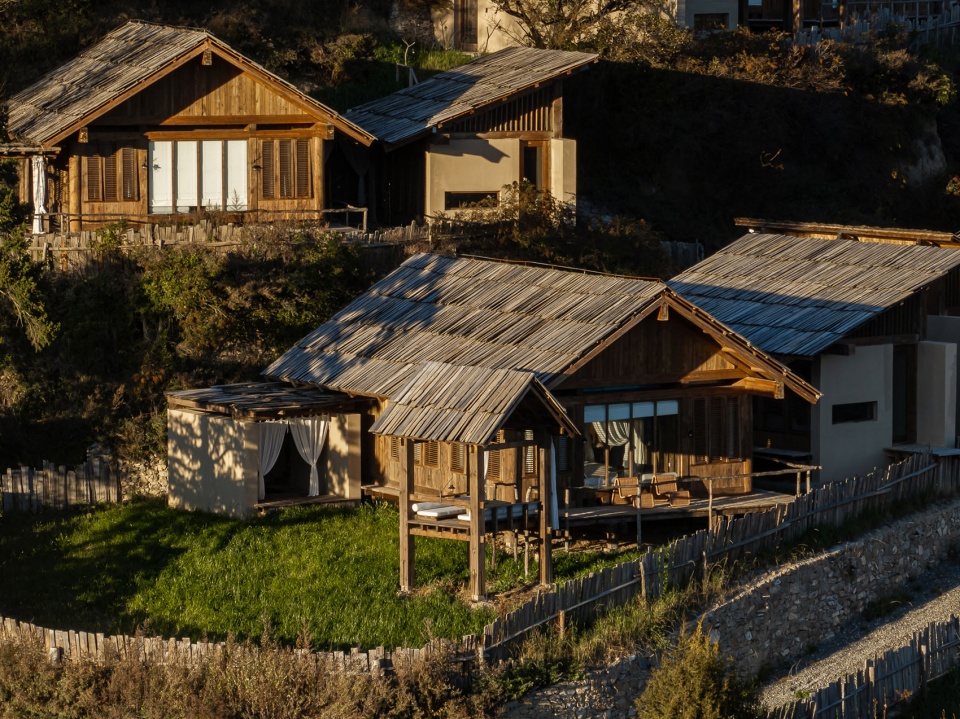
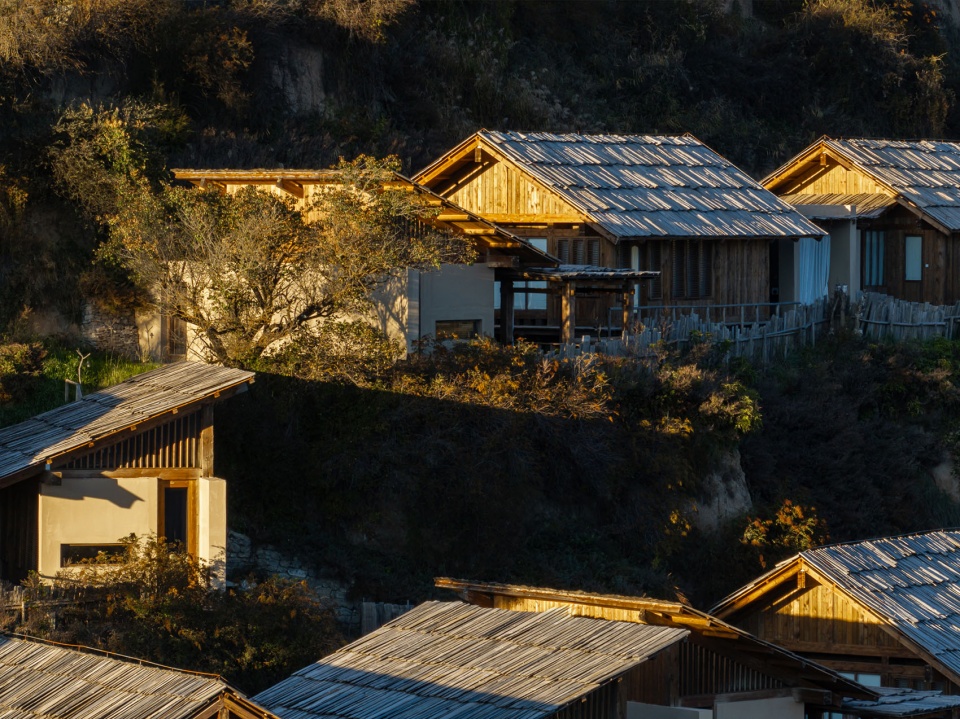
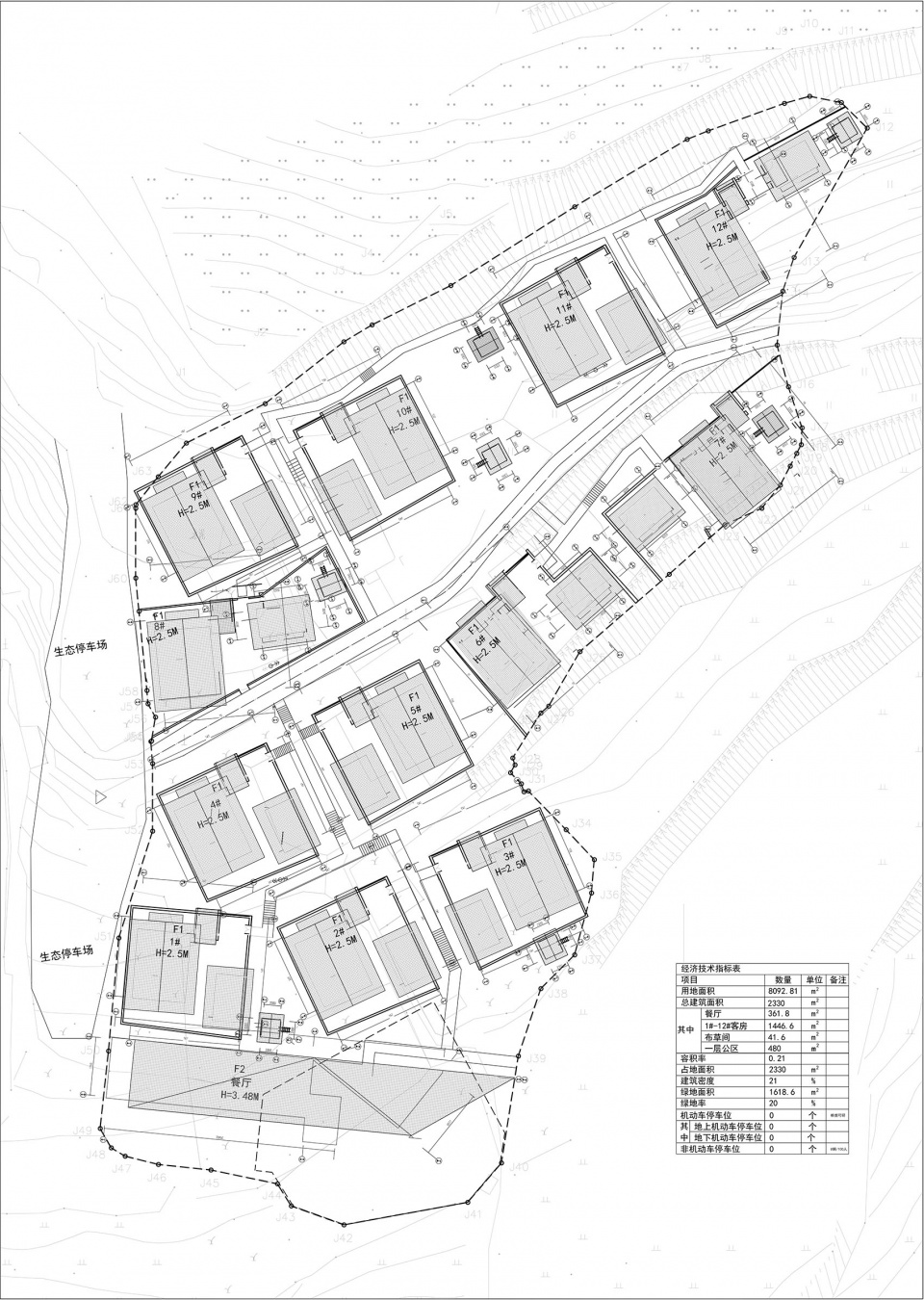
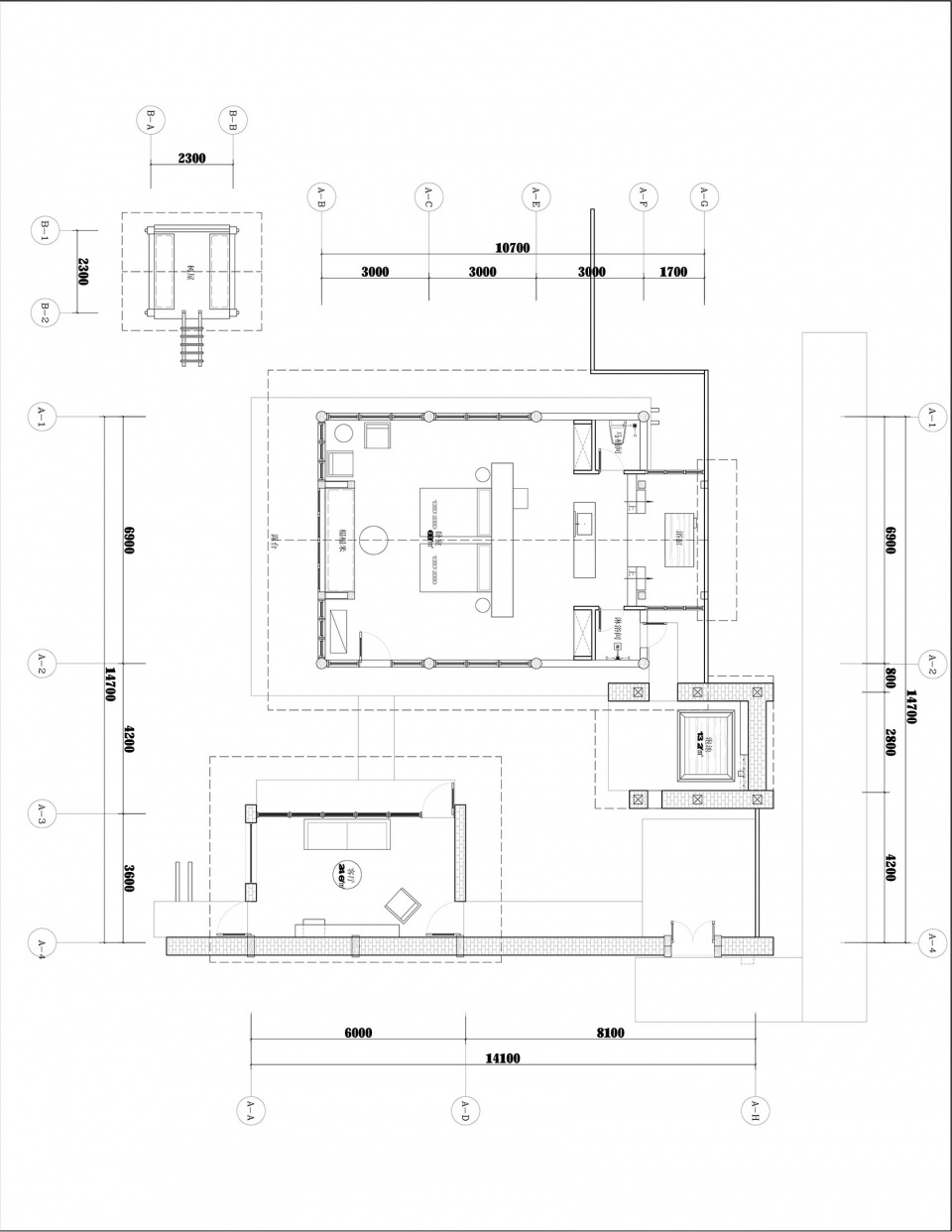
酒店共有12栋独栋客房,每栋占地面积150-180平方米不等,建筑面积80多平方米。我们把客房拆分成四个组团,客厅、卧室、泡池、茶亭各居其位,建筑风格融入藏式民居元素,保留木拓瓦片,整个酒店散发着天然质朴的气息。
The resort comprises 12 detached guest rooms, each covering a land area of 150–180 square meters with a built-up area of over 80 square meters.We have organized the villas into four distinct clusters, where the living room, bedroom, soaking pool, and tea pavilion are thoughtfully positioned as separate structures. The architectural style incorporates elements of Tibetan vernacular dwellings, preserving traditional wooden shingles and tile roofing. Throughout the property, an aura of natural simplicity and rustic tranquility prevails.
▼小屋细节和通道,The guest villa detail and access path
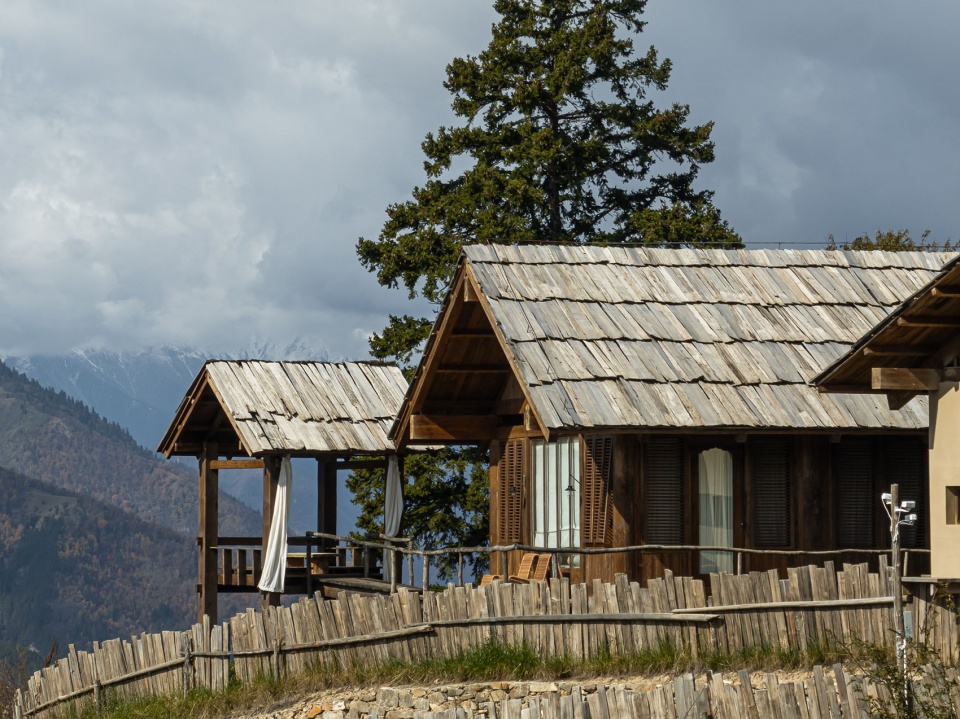
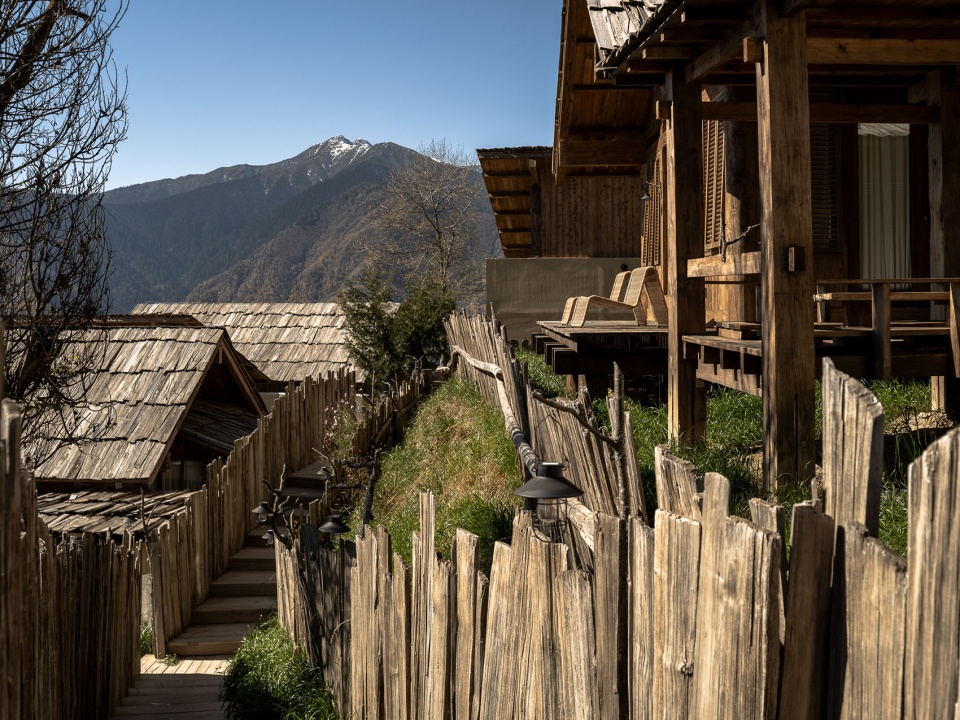
我们没有将套房视为一个单一的整体,而是将其构建为一个有节奏、有层次的空间序列,旨在逐步剥离都市的喧嚣。它不仅仅是空间的堆砌,而是一个引导住客从“观看”到“融入”,最终实现“天人合一”感受的旅程。
We refuse to see the suite as a monolithic whole, but instead conceive it as a rhythmic, layered sequence of spaces designed to gradually strip away the clamor of urban life.This is far more than a mere arrangement of rooms—it is a carefully choreographed journey that guides guests from observation to immersion, culminating in a profound sense of harmony between humanity and the natural world.
▼套房外景细部,The guest villa exterior detail
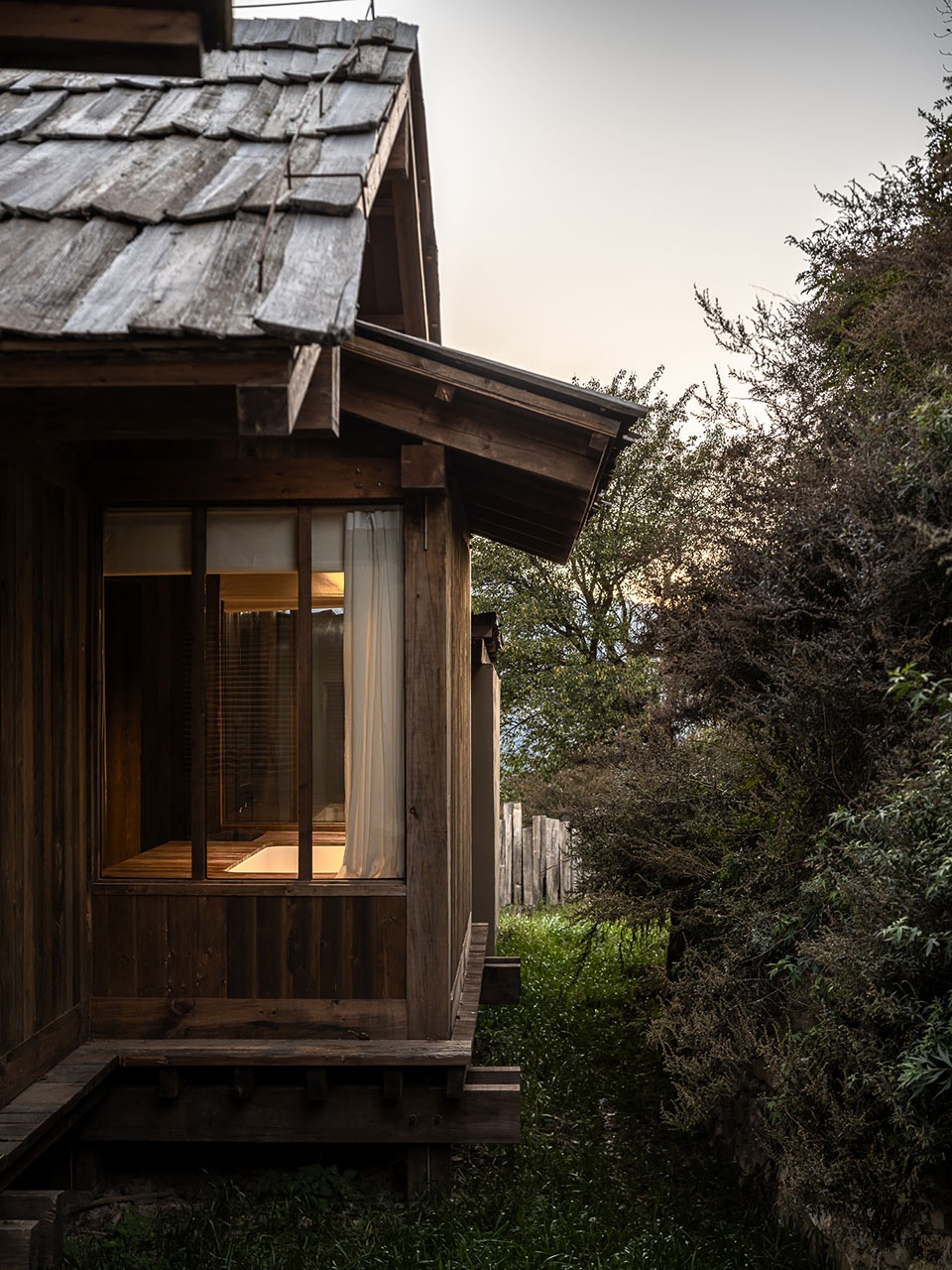
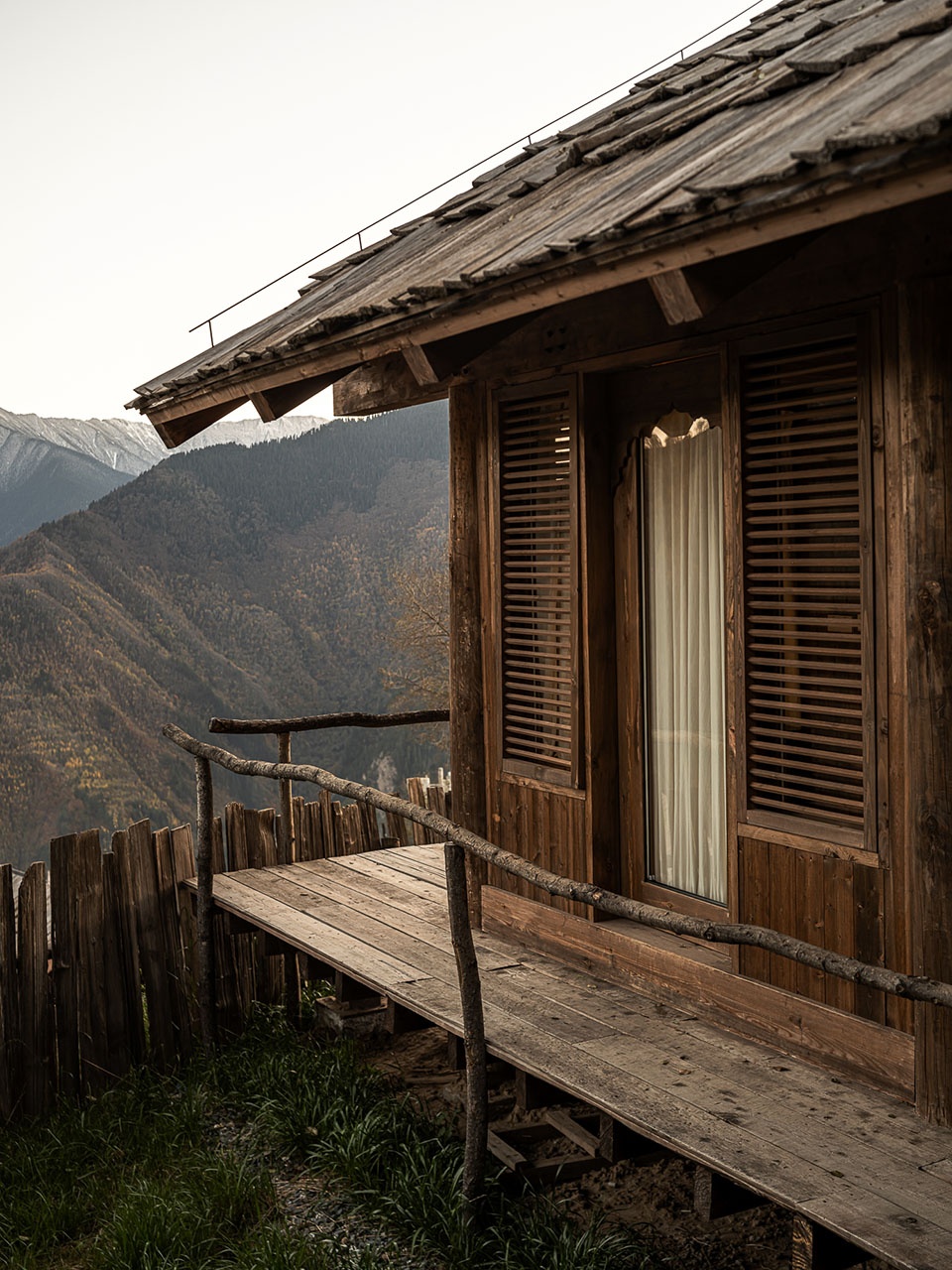
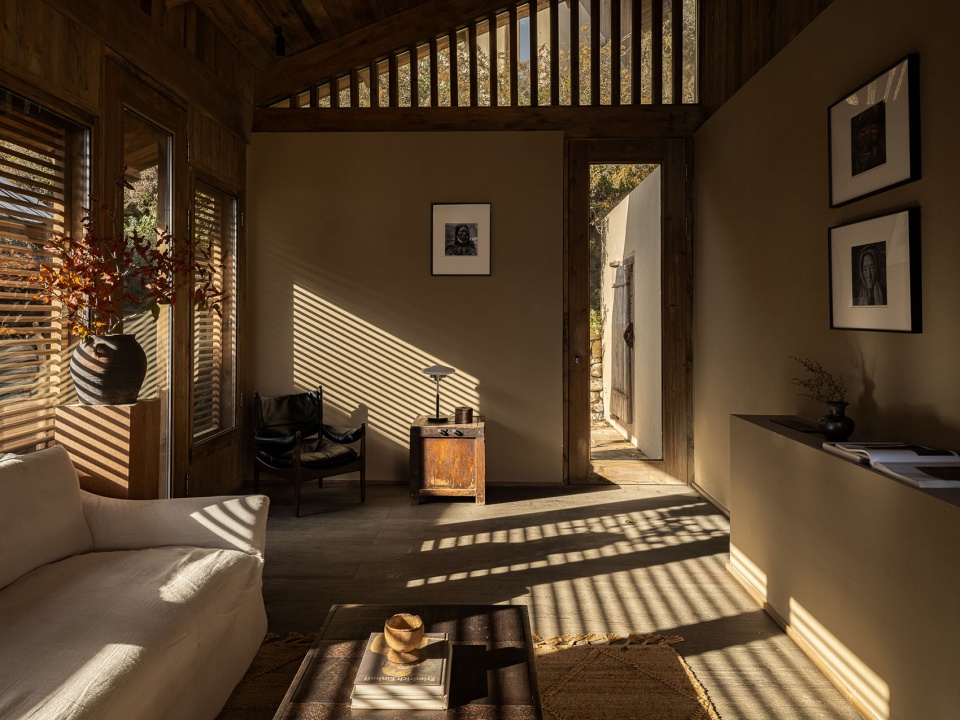
我们在套房内配备了独立的客厅,其作为私密的过渡区在此扮演了一个至关重要的角色。它不仅仅是一个功能区域,更是一个心理上的“庇护所”和“过渡空间”。稳定、围合和舒适的特性,可以为住客提供安全感和私密性,让住客在接触广阔自然之前得以安顿身心。
Within each suite, we have incorporated a separate living area that serves as a crucial transitional space. This is not merely a functional zone, but a psychological “sanctuary” and “threshold.” Its stable, enveloping, and comforting qualities provide guests with a profound sense of security and privacy, allowing them to settle both body and mind before fully immersing themselves in the vastness of nature.
▼客厅内部,Living room interior
▼客厅外景,Living room outside view
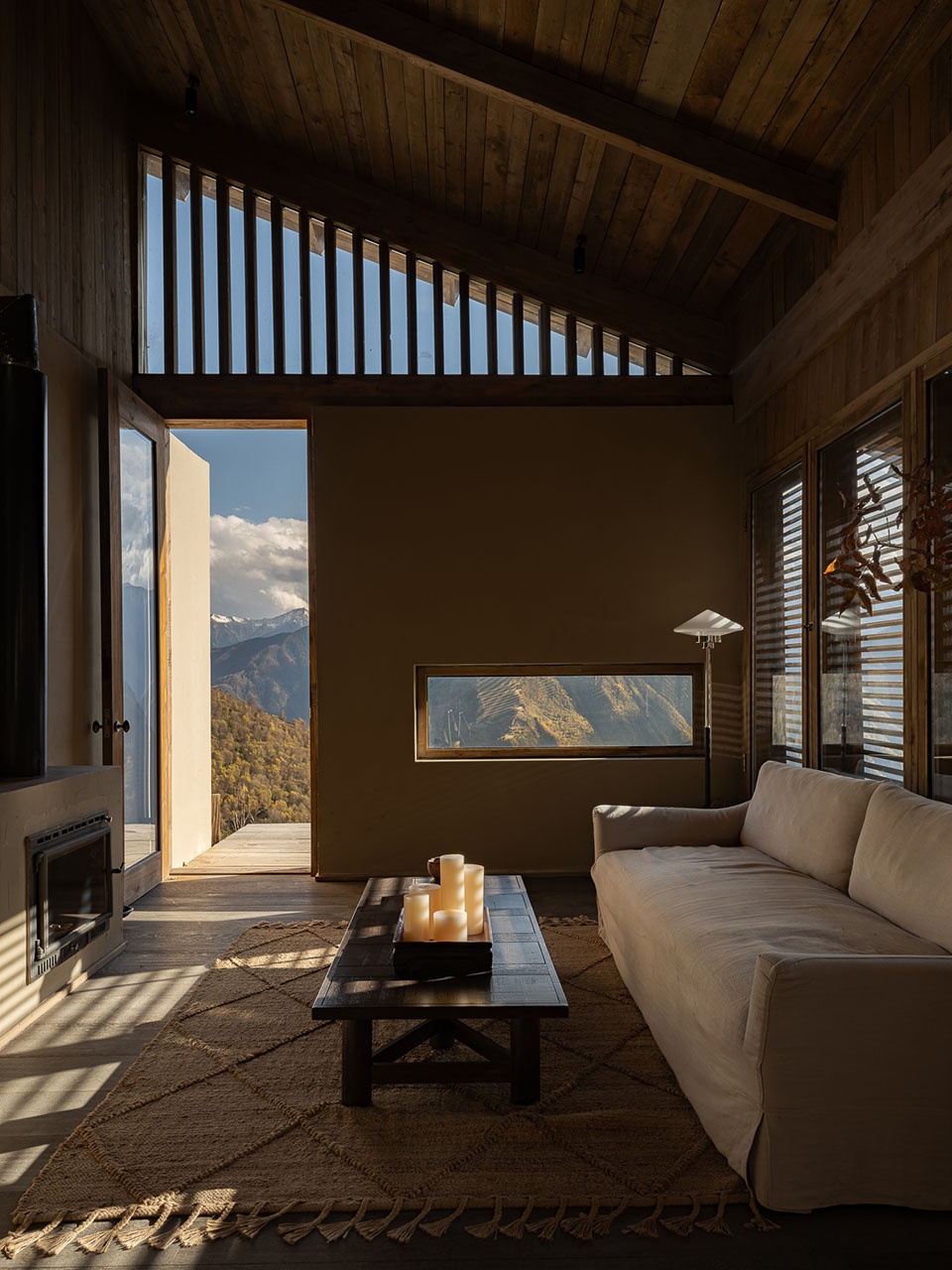
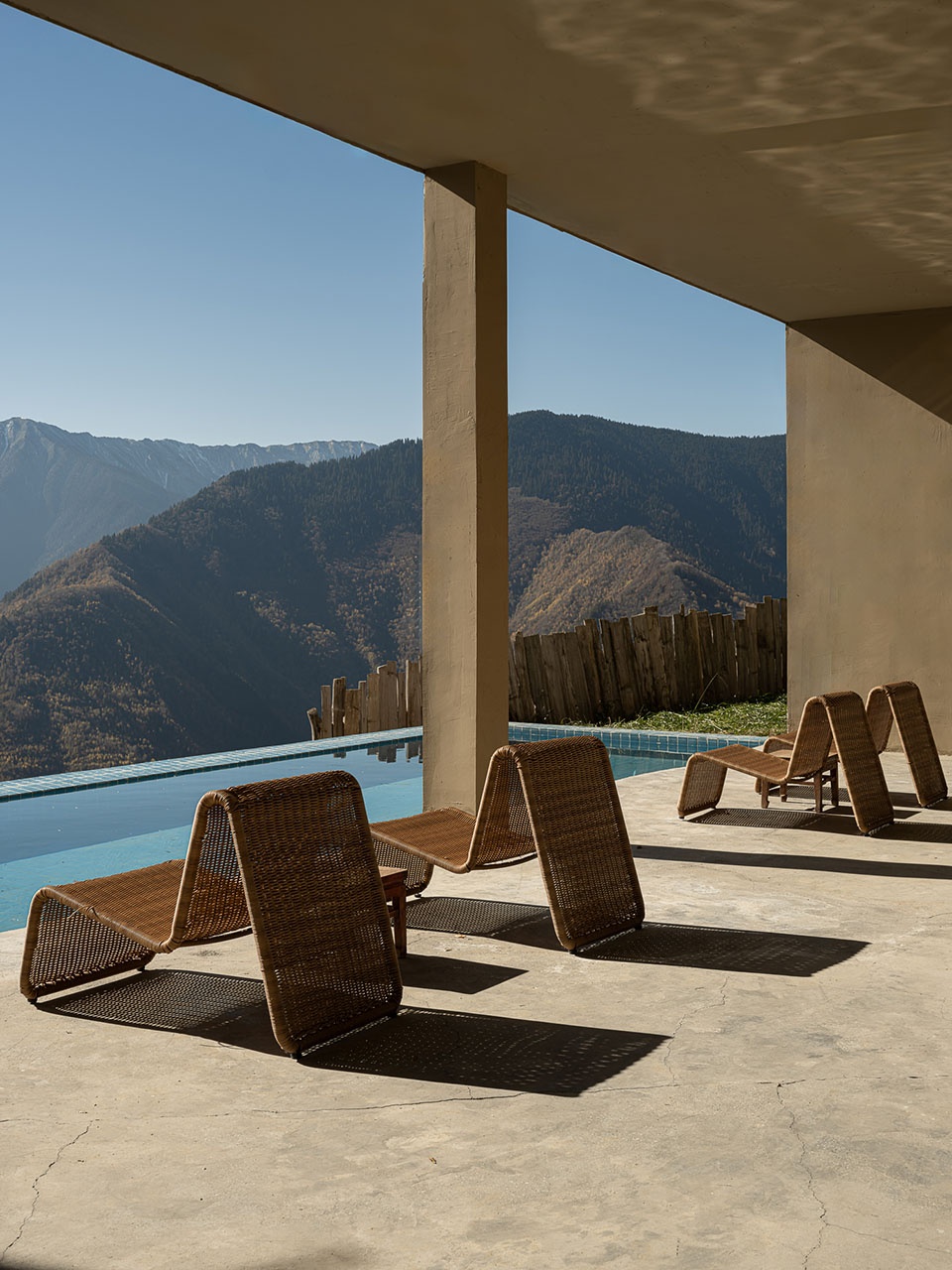
设计不是在“展示”自然,而是在“邀请”住客与自然互动。户外休闲区域的座椅朝向引导住客仰望星空;开放式的结构让风可以轻抚肌肤;周围植物的香气与声音不间断地渗透进来。享受多感官的、沉浸式的互动,让住客从一个被动的“观察者”转变为一个主动的“参与者”。
The architectural approach is conceived not as a presentation of nature, but as an invitation for active engagement with the natural environment. In the exterior leisure space, the directional arrangement of seating is intentionally calibrated to orient occupants toward celestial observation. The open structural framework facilitates tactile interaction with atmospheric elements, while botanical fragrances and ambient acoustics permeate the sensory field continuously. This orchestrated multisensory immersion facilitates a perceptual shift—transitioning the occupant from a passive spectator to an embodied participant within the ecological milieu.
▼茶亭,Tea pavilion
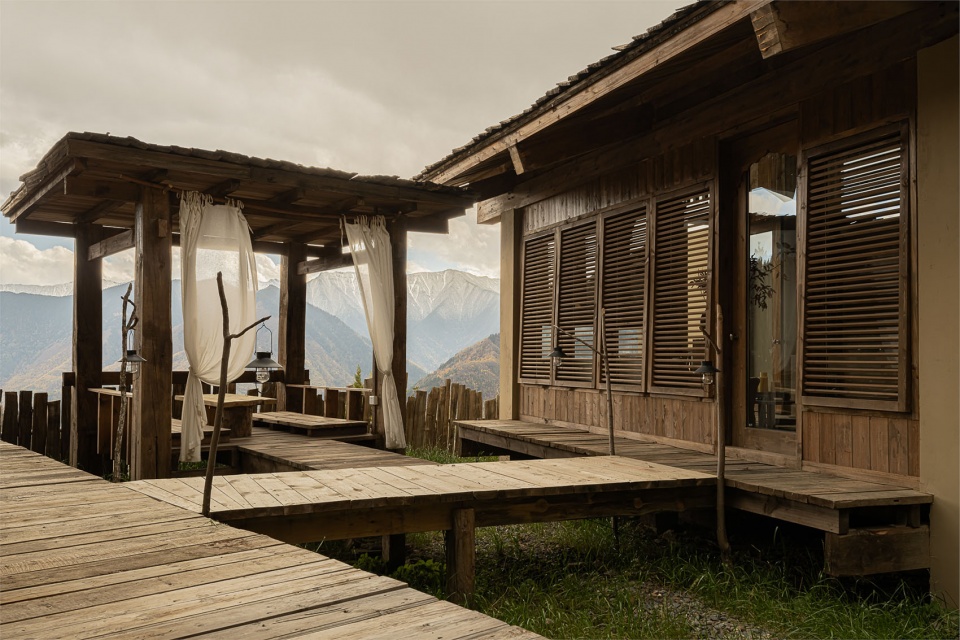
▼茶亭细部,Tea pavilion detail
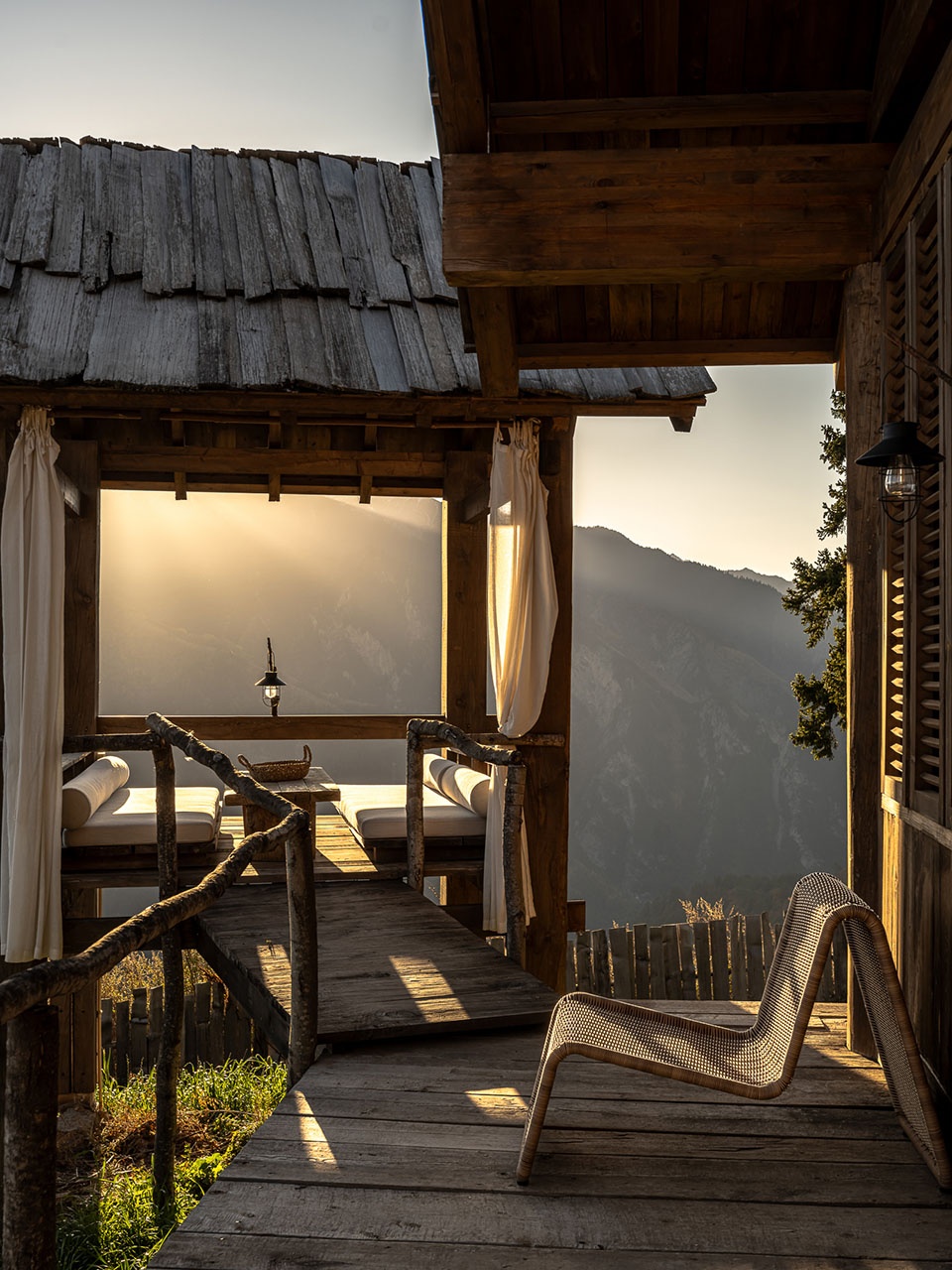
每间客房都是独一无二的隐世之所,保障绝对隐私与宁静。宽大的落地窗设计,将室外自然风光无缝引入室内,美景尽收眼底。足不出户,即可享受日出云雾、繁星夜空的自然奇观,收获身心复苏的独特入住体验。
Each guest unit constitutes a singular sanctuary of seclusion, ensuring absolute privacy and tranquility. The extensive glazing installations seamlessly integrate external landscapes into the interior visual field, framing panoramic natural vistas. Without departing from their quarters, occupants may experience diurnal and nocturnal phenomena—from matutinal cloud formations to celestial nocturnes—thereby attaining a distinctive rehabilitative sojourn that rejuvenates both corporeal and psychological states.
▼客房书桌望向窗外,View from desk to outside
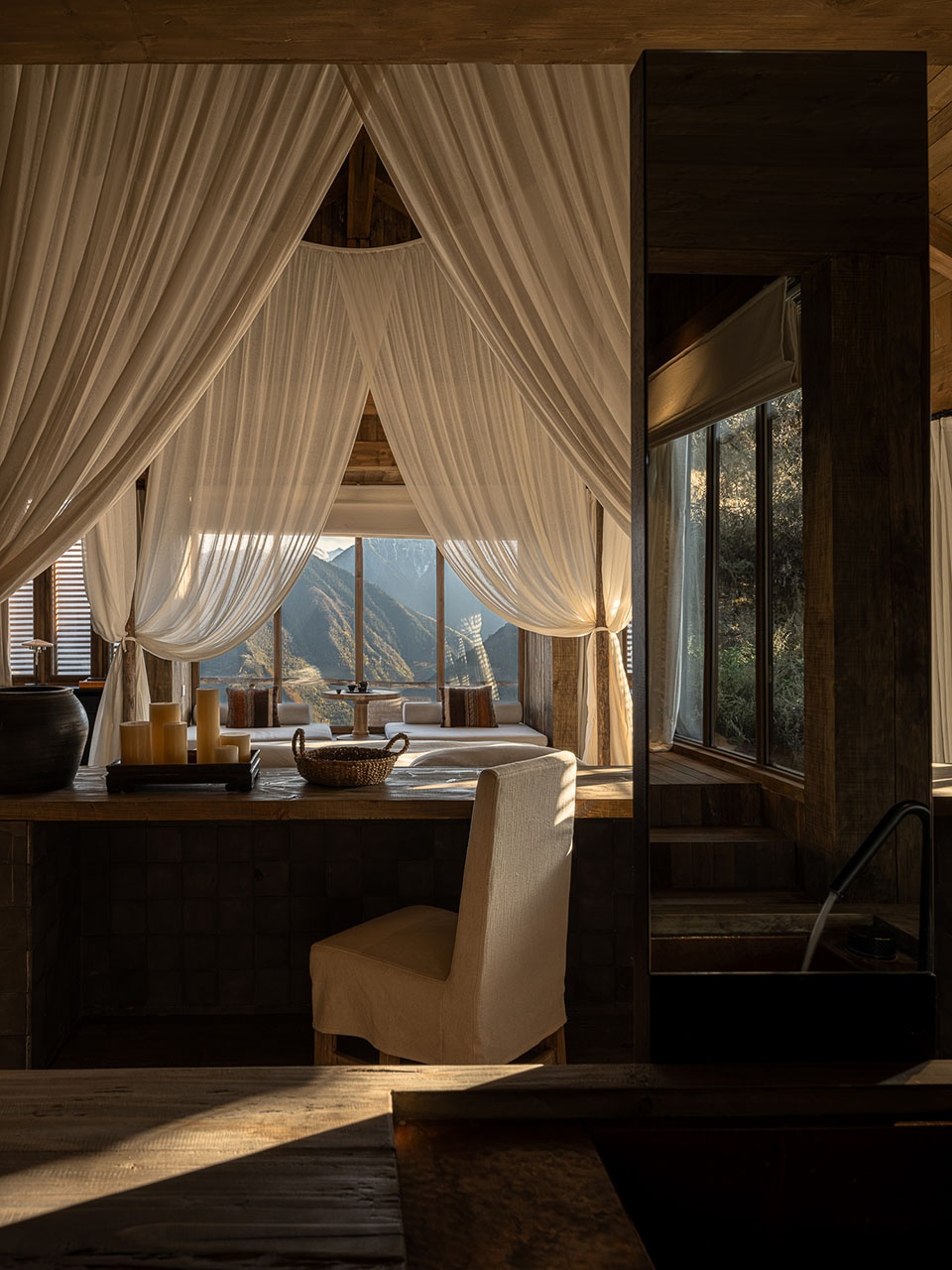
▼客房内部,Bedroom interior
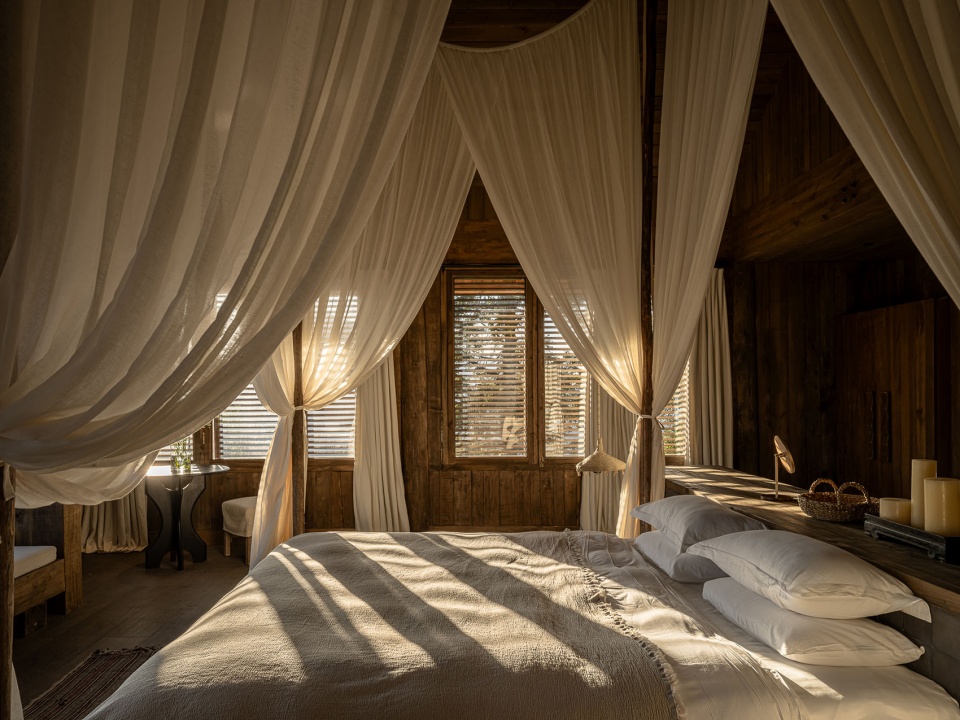
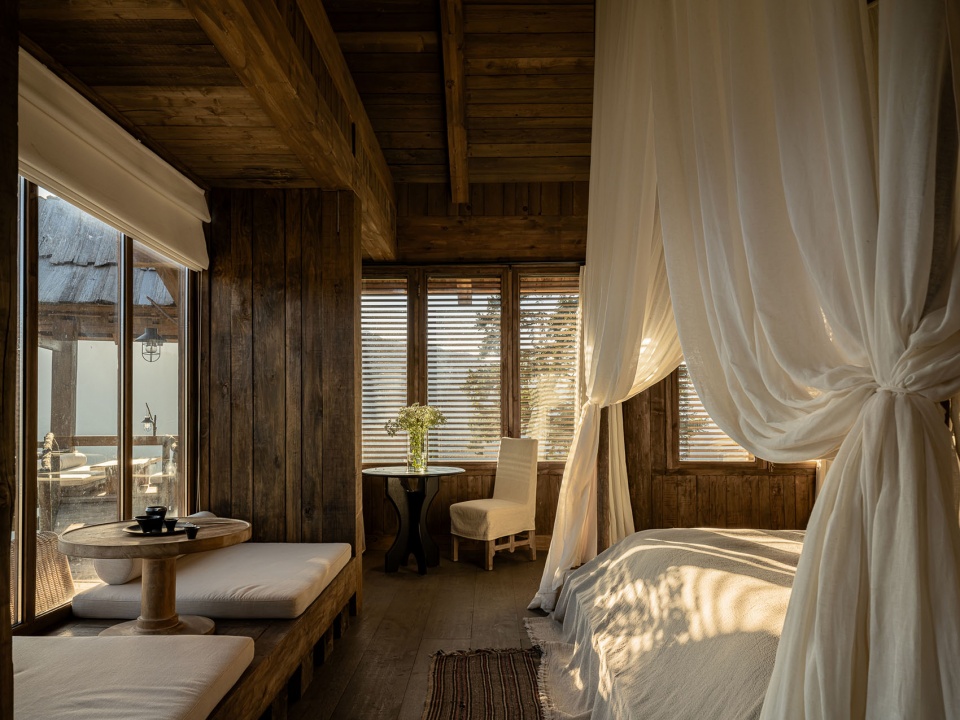
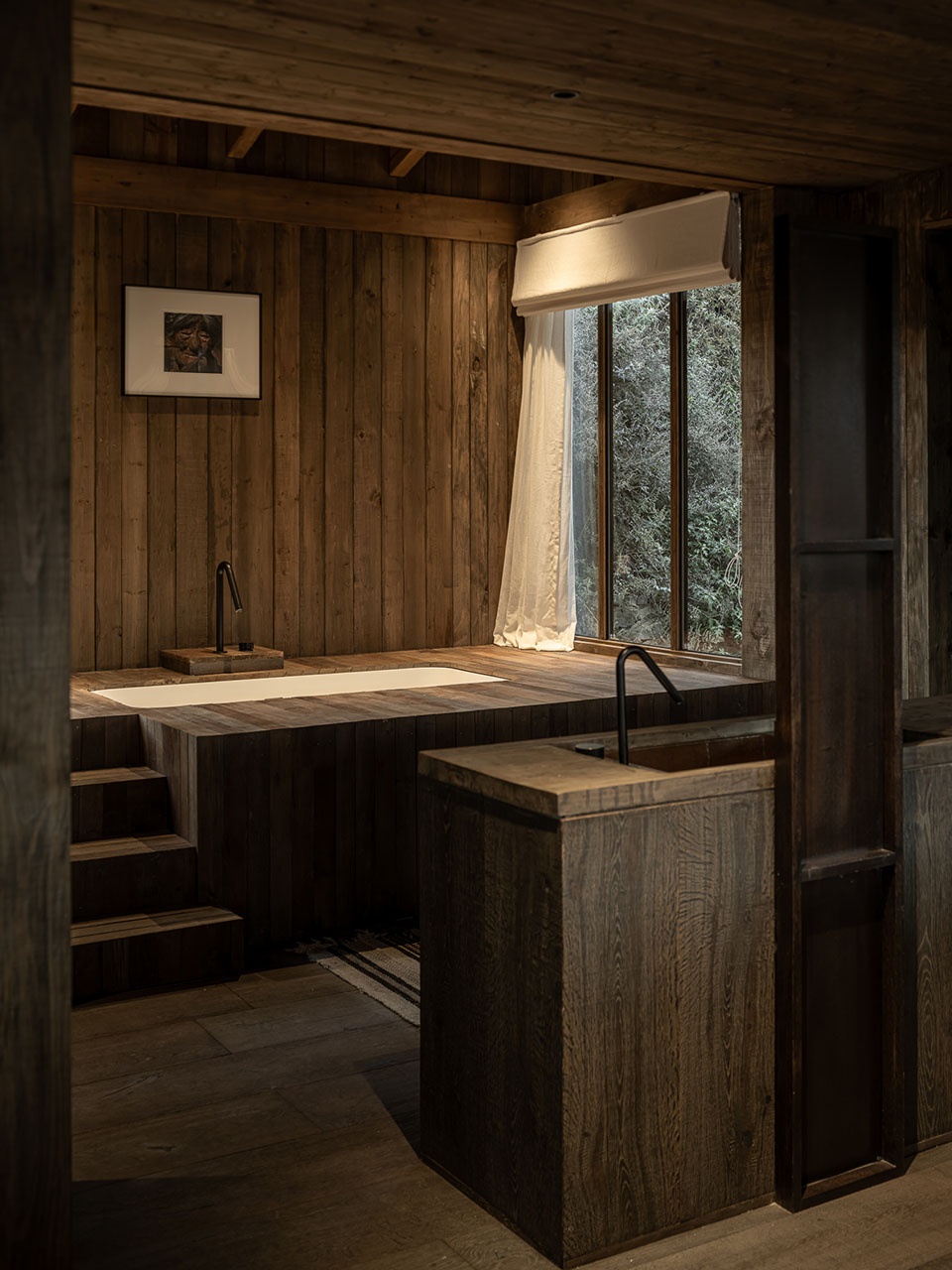
温润的木纹包裹着空间的每一处,连室内的泡池也由原木环抱。通过构建“木屋泡池”的诗意场景,强调设计与自然的共鸣,营造宁静治愈的氛围。在这里,身心与自然同频,舒适与恬静并存。
The gentle grain of wood wraps every corner of the space—even the indoor soaking pool is embraced by natural timber. By creating the poetic scene of a “wooden cabin soaking pool,” we emphasize the resonance between design and nature, fostering a tranquil and healing atmosphere. Here, mind and body sync with nature, while comfort and serenity coexist.
▼客房泡池,In-Villa soaking pool
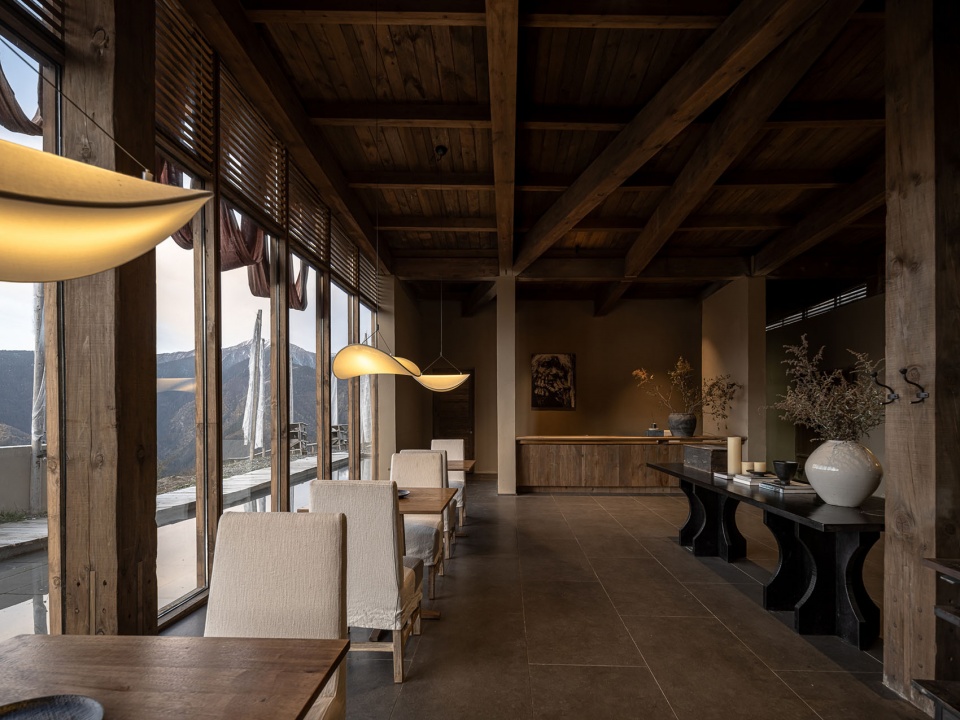
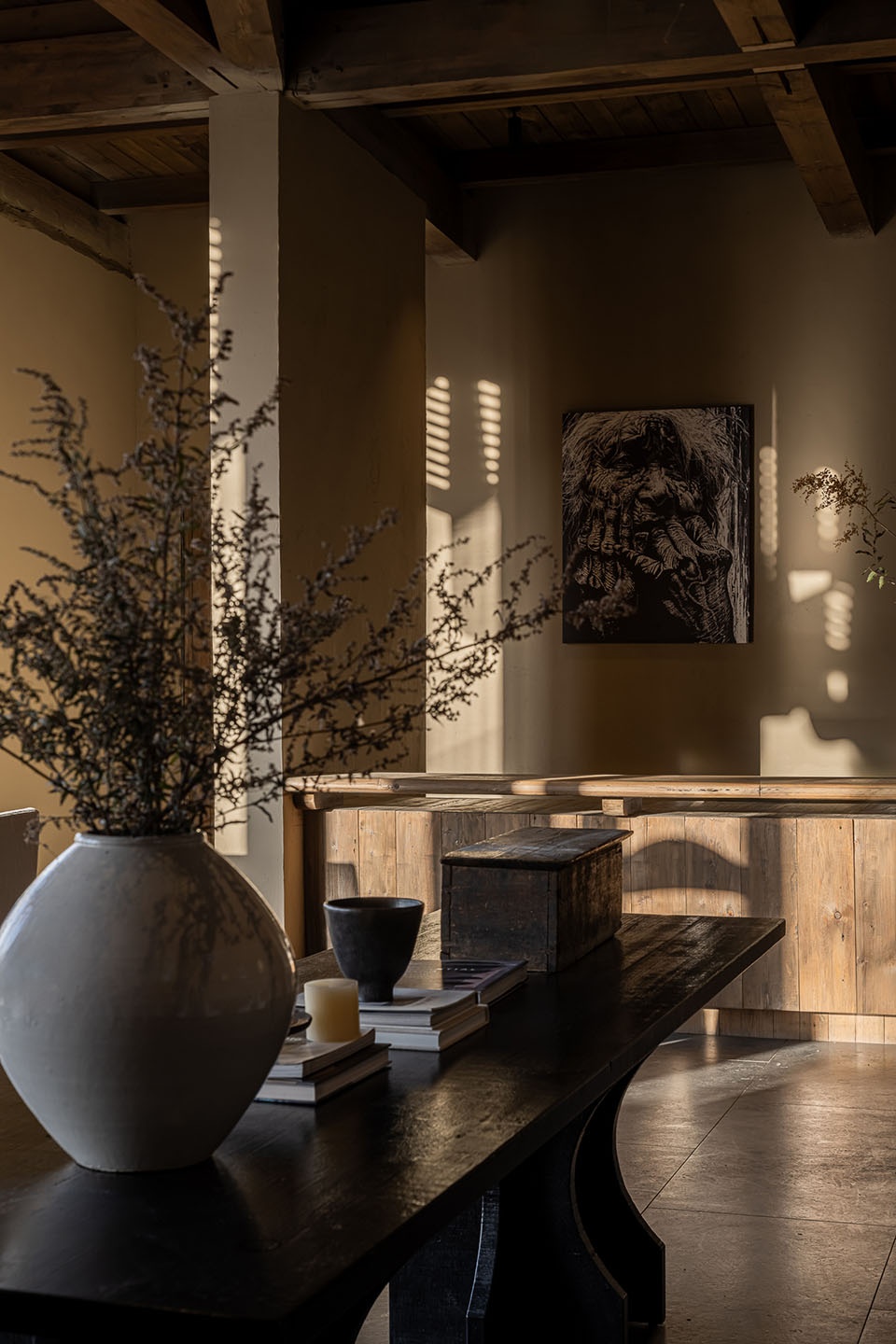
接待大厅的设计旨打造一座「温暖的时光容器」打破传统酒店的疏离感,创造一种如同回到「老宅客厅」般的亲切与松弛。顶面选用历经岁月洗礼的老木板,以其独特的纹理与色泽,奠定空间温厚的故事感;墙面采用肌理丰富的艺术涂料,以手工感的不完美,呼应自然与时光的痕迹。
The lobby is designed as a “vessel of warm memories,” breaking away from the coldness of traditional hotels to create the familiarity and ease of returning to an “old family living room.”Aged wooden panels line the ceiling, their unique grain and hue infusing the space with a sense of history. Walls finished in textured artisanal plaster echo the gentle marks of time and nature.
▼接待大厅内部,Lobby interior
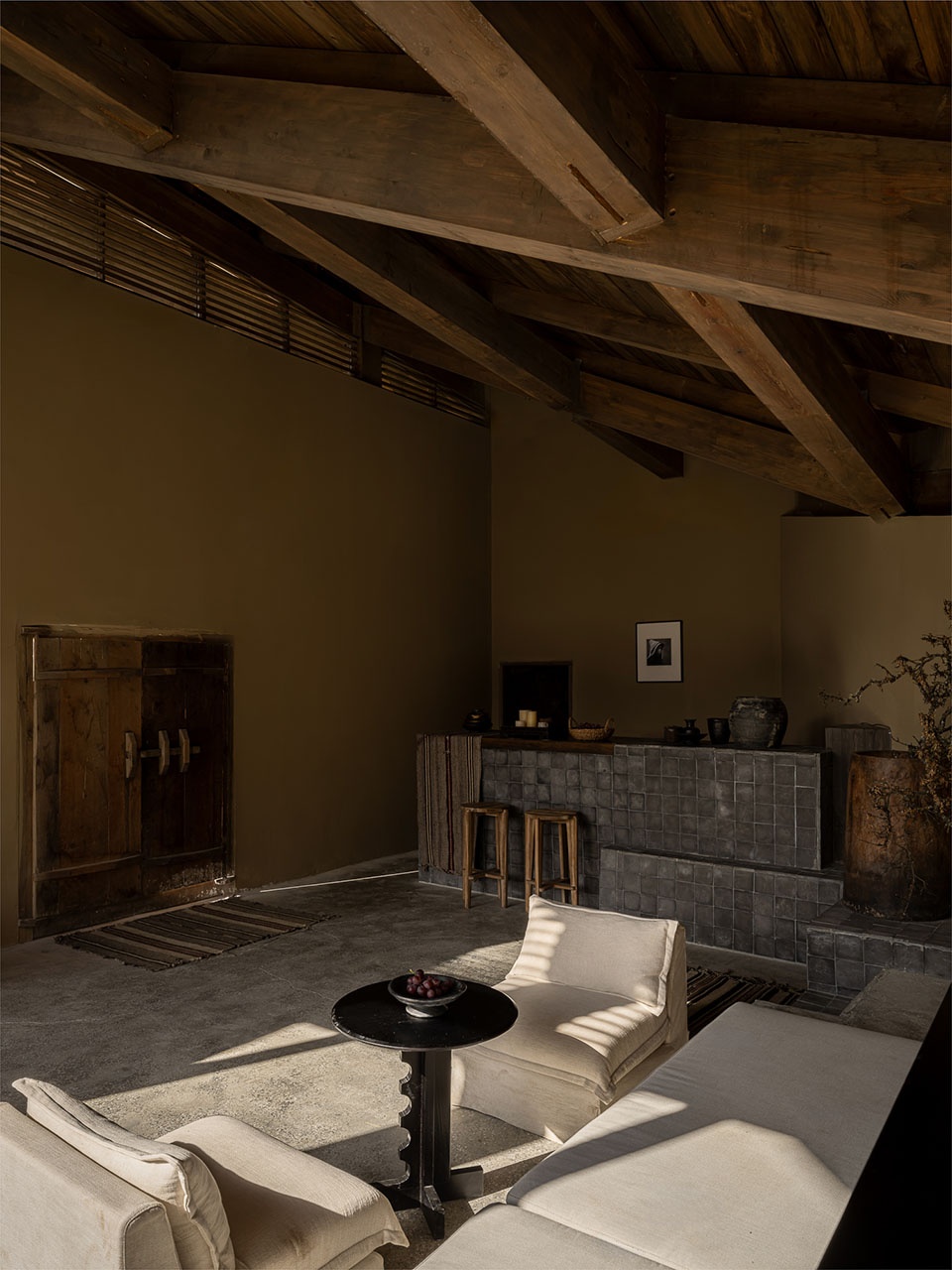
▼接待大厅休息区,Lobby lounge area
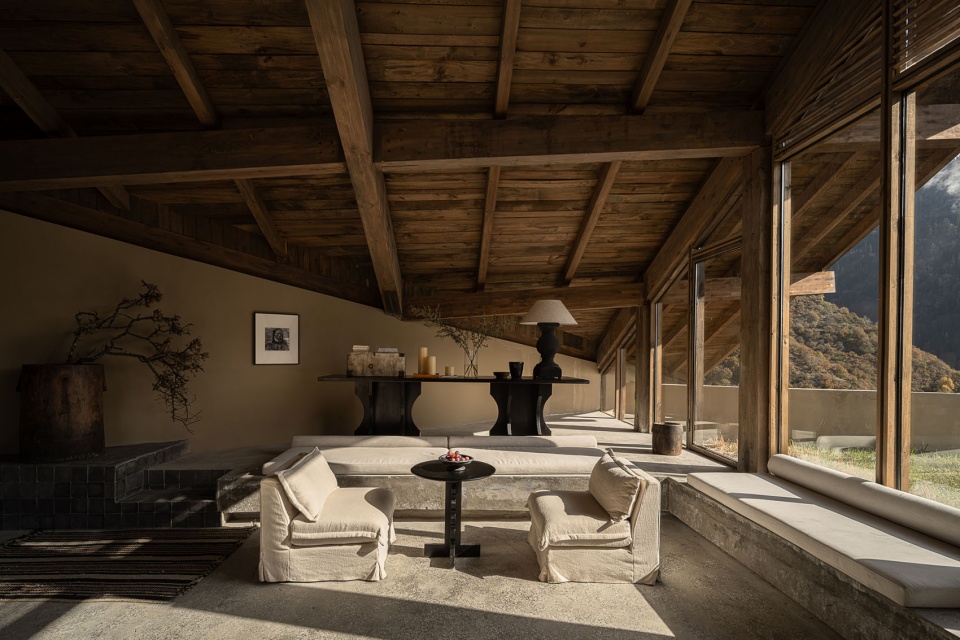
▼公区内部,Public area interior
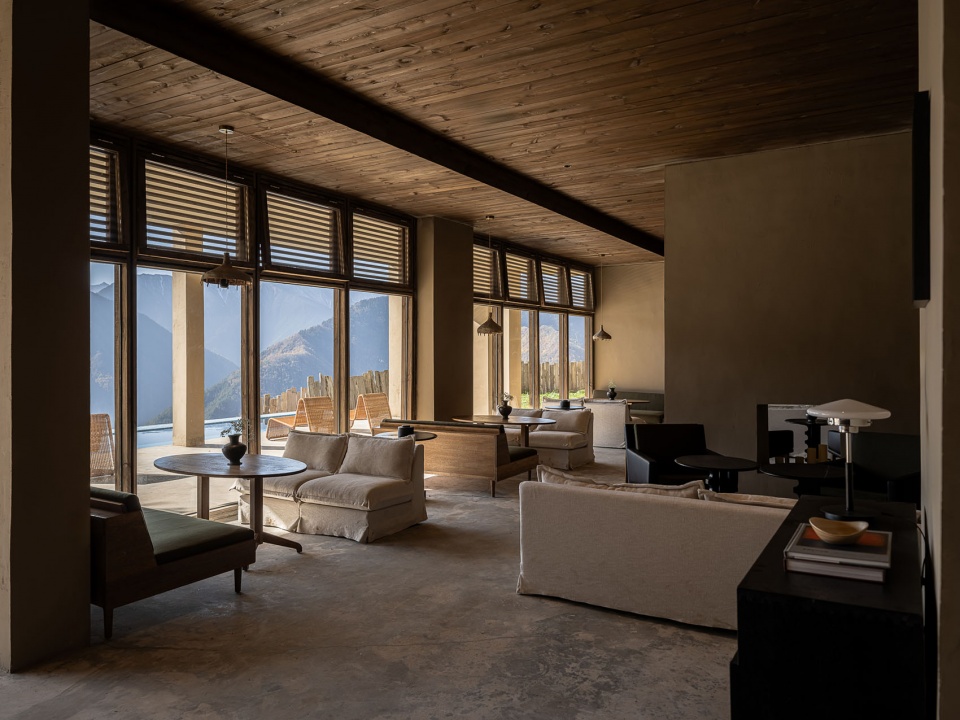
▼公区内部细节,Public area interior detail
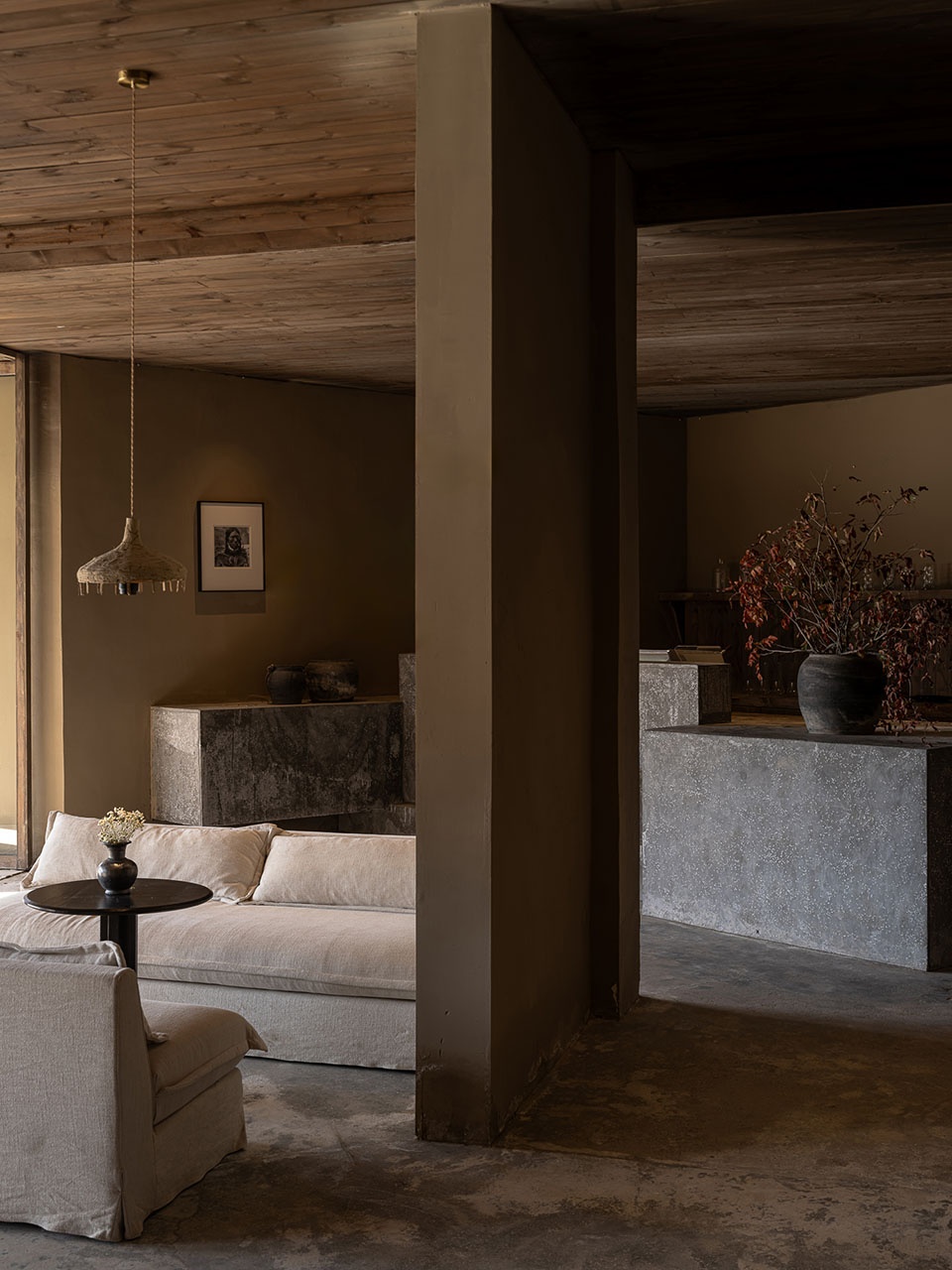
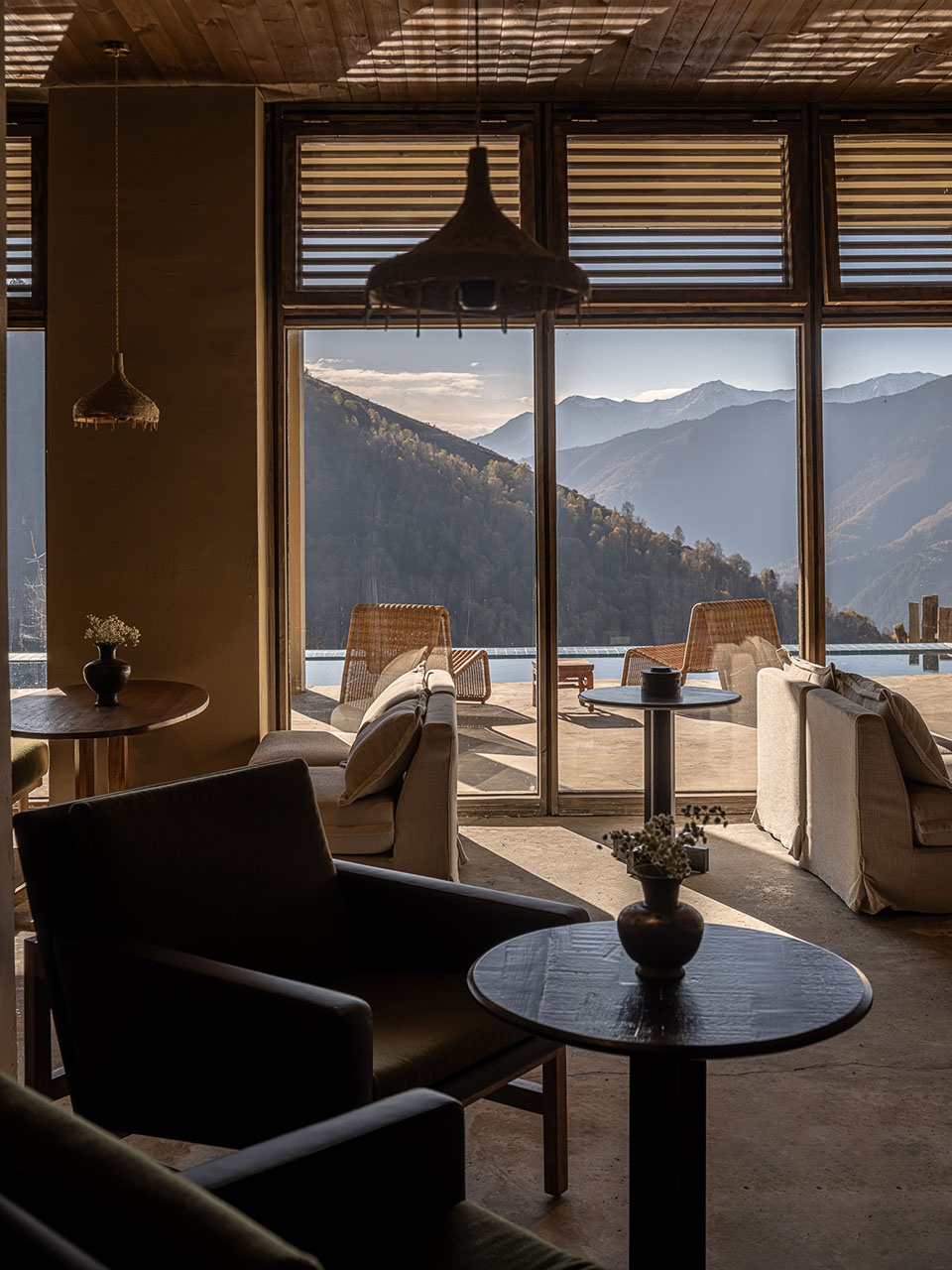
▼户外泳池,Outdoor swimming pool
▼餐厅内部,Restaurant interior
▼餐厅内部细节,Restaurant interior detail
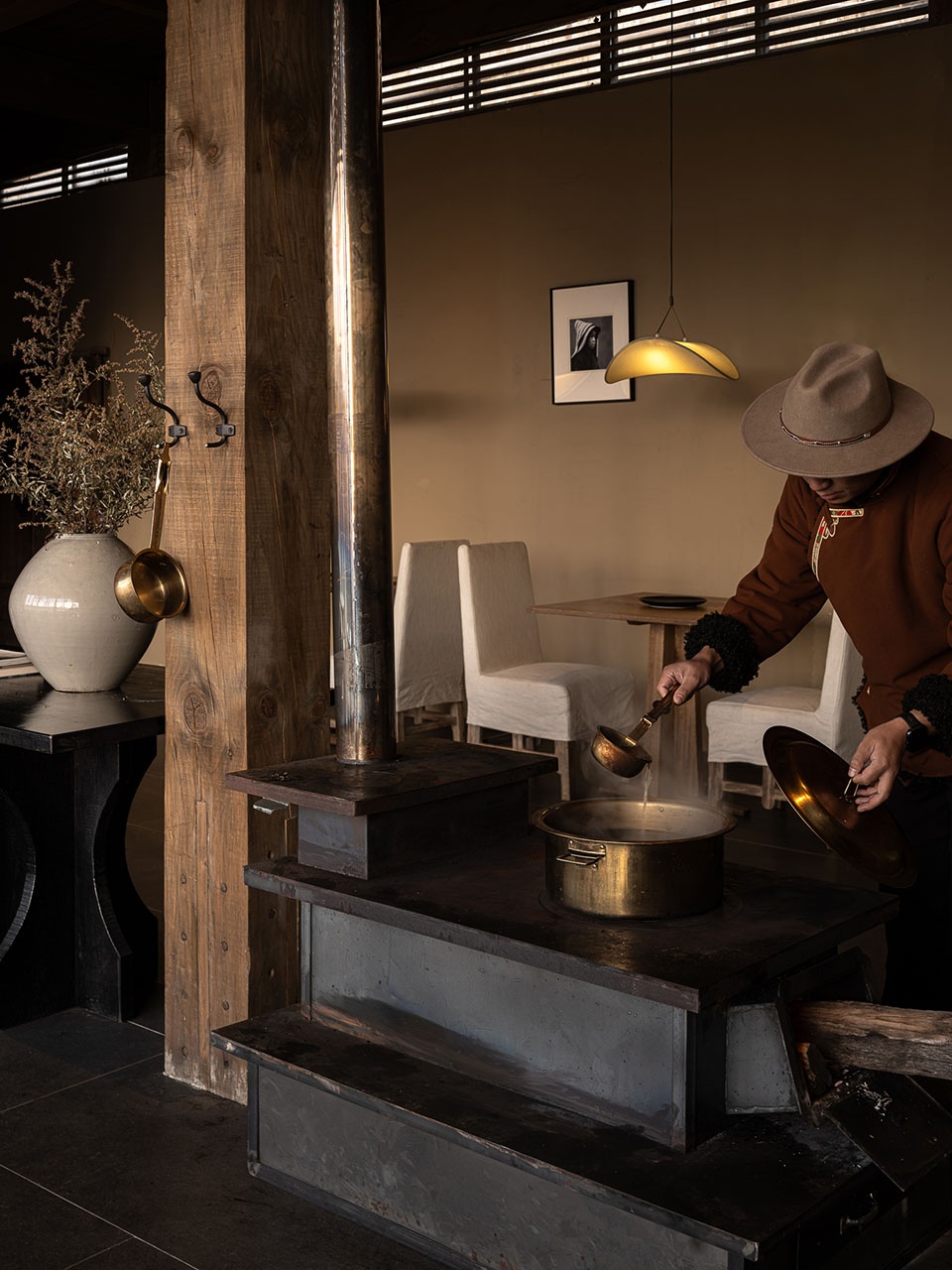
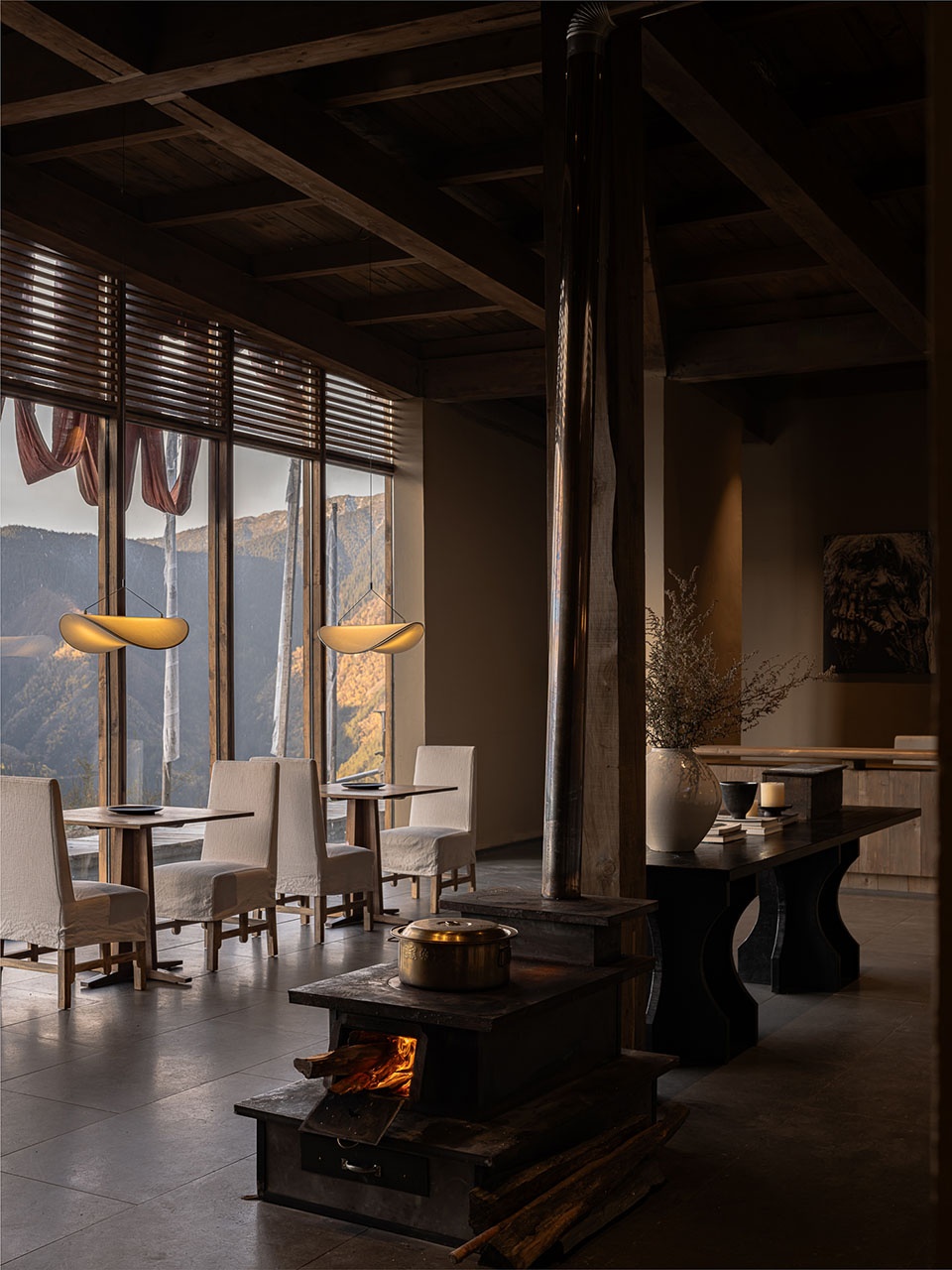
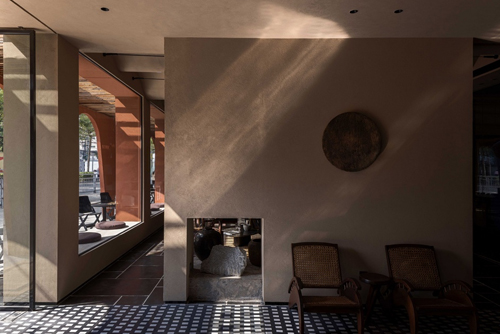
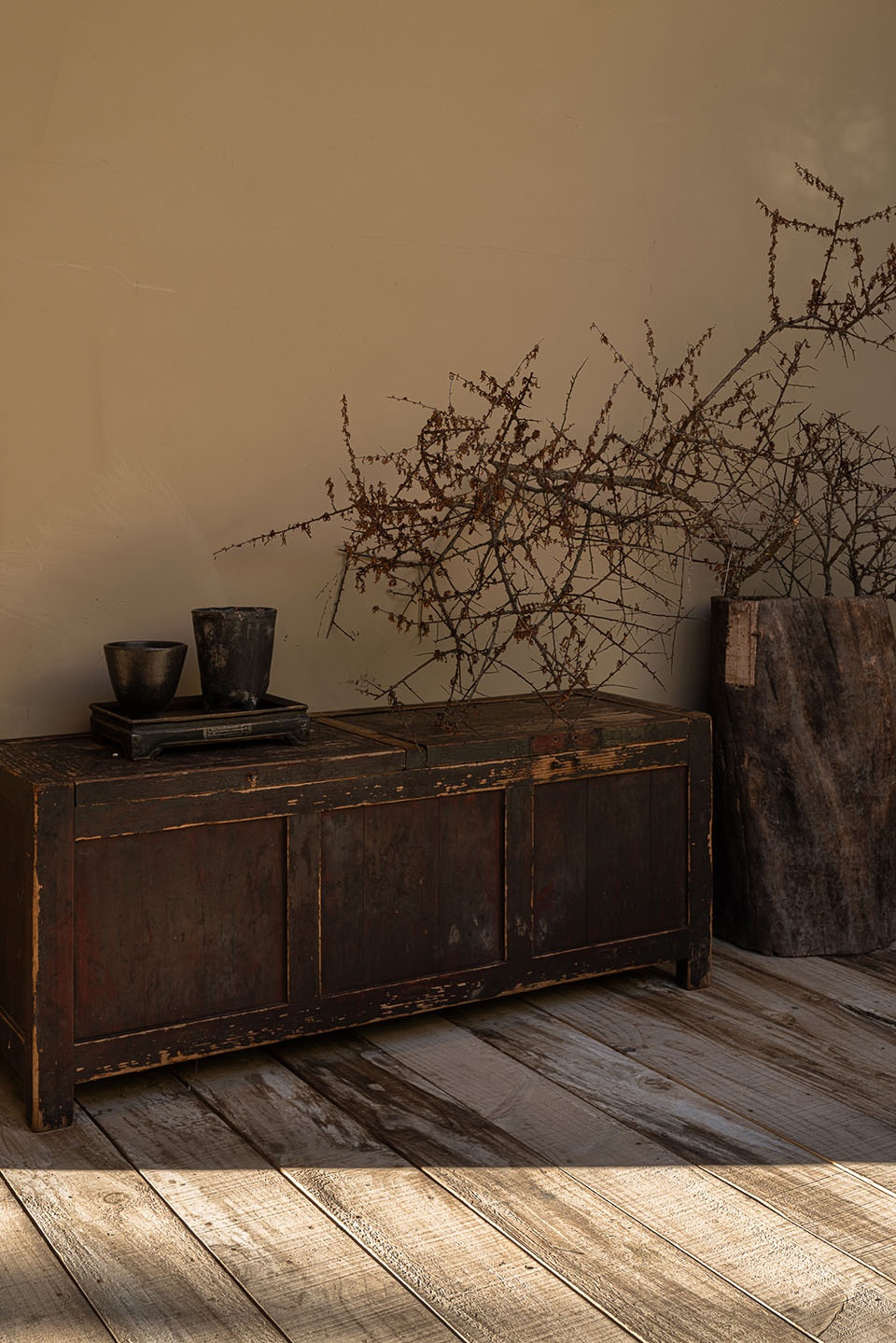
空间内全部采用质朴的老家具。每一件旧物都承载着过往的记忆与温度,它们不仅是功能器具,更是空间情感的链接点,营造亲切、轻松的初始入住感受。
The space is furnished entirely with rustic, aged furniture. Each piece carries memories and a sense of warmth—more than just functional objects, they serve as emotional anchors in the space, creating an immediate feeling of comfort and ease from the moment guests arrive.
▼老家具,Old furniture
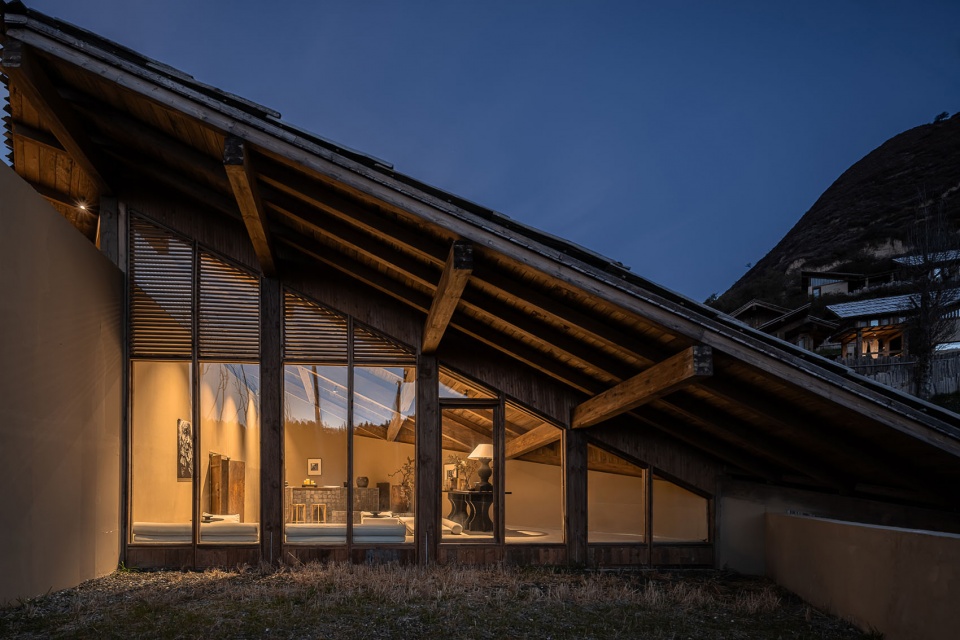
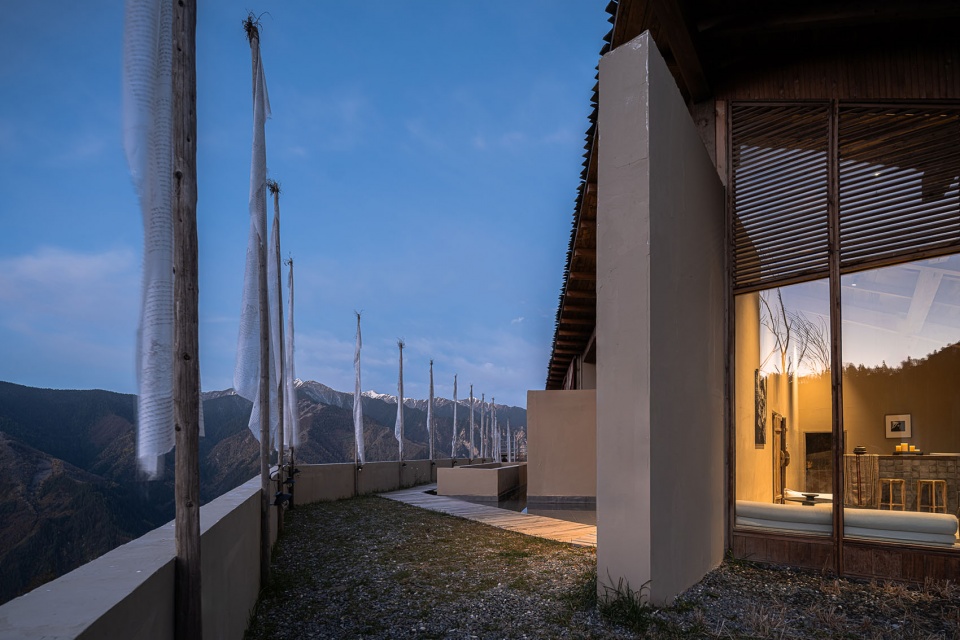
▼夜景,Night view
▼总平面图,Master plan
▼客房平面图,Floor plan of guest room
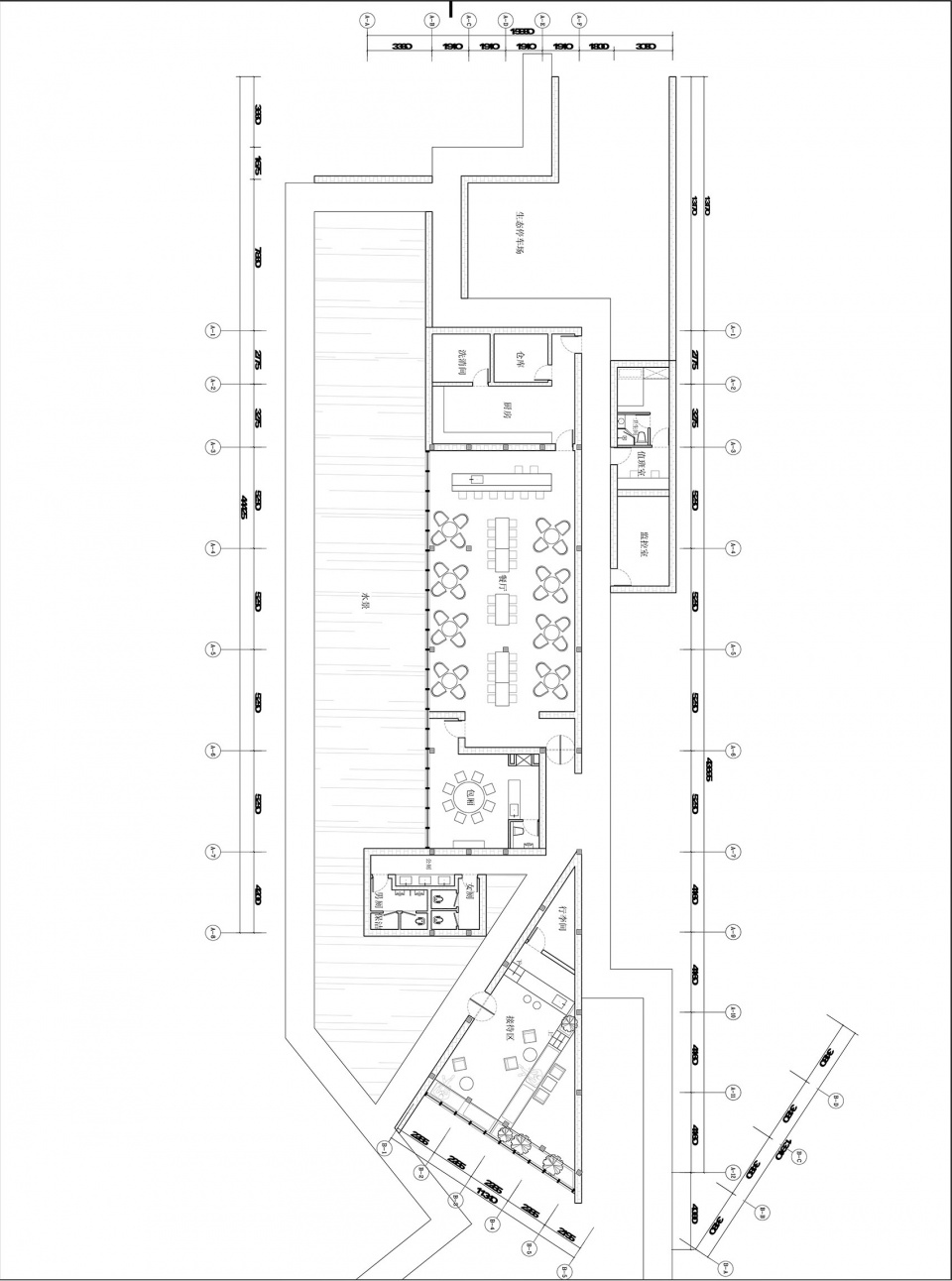
▼公区平面图,Floor plan of Public area
项目中文名:咏归川九寨度假酒店
项目英文名:Songtsm Travel Hotel Jiuzhai
公司名称:杭州偲所设计、杭州澜廷设计
Company Name: Hangzhou Thinking Design, Hangzhou Lanting Design
项目所在城市:九寨沟
Project Location: Jiuzhaigou
完工日期:2025 年
Completion Date: 2025
项目面积:8092.81㎡
Project Area: 8092.81 square meters (㎡)
主创设计师:吴小勇
Lead Designer: Wu Xiaoyong
摄影师: 普尤
Photographers: You Pu