Nuri别墅,哥斯达黎加 / Studio Saxe
概述Overview
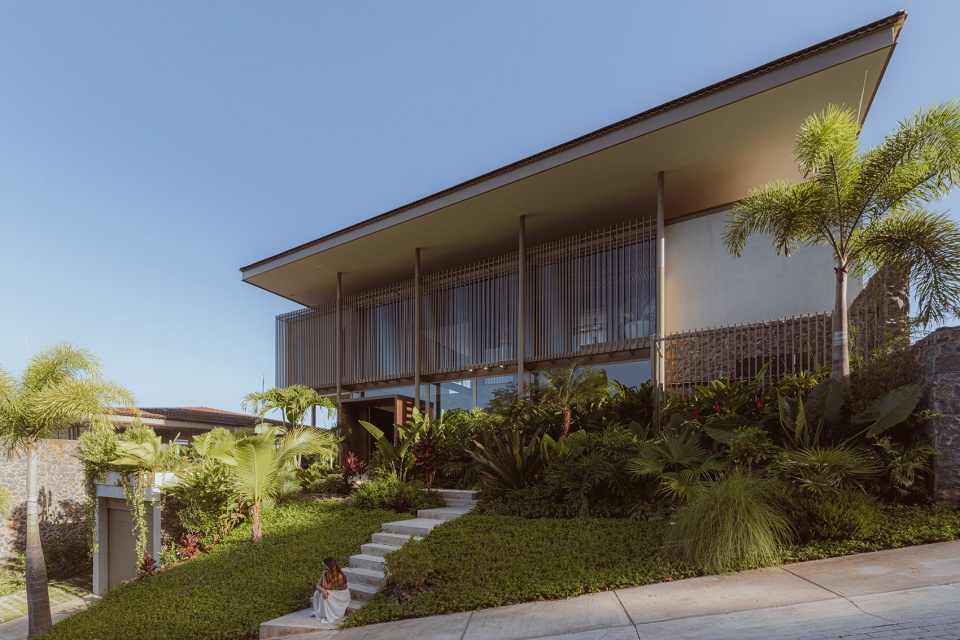
坐落于俯瞰太平洋的山坡上,Villa Nuri 是一座由景观、光线和自然气流塑造的住宅。我们将房屋设计为一种垂直体验,适应坡度,同时提升日常生活。坚实的基础将住宅固定在地形上,而上层则向外延展,框住海景,模糊了室内和室外之间的界限。这是一个种植阳台、悬臂游泳池和流动空间过渡在宁静和谐中交汇的地方。
Set on a hillside overlooking the Pacific Ocean, Villa Nuri is a home shaped by landscape, light, and the natural flow of air. We designed the house as a vertical experience that adapts to the slope while elevating daily life. A solid base anchors the home to the terrain, while an upper level opens outward to frame ocean views, blurring the boundaries between indoors and outdoors. This is a place where planted terraces, a cantilevered pool, and fluid spatial transitions come together in quiet harmony.
▼住宅概览,overview of the villa
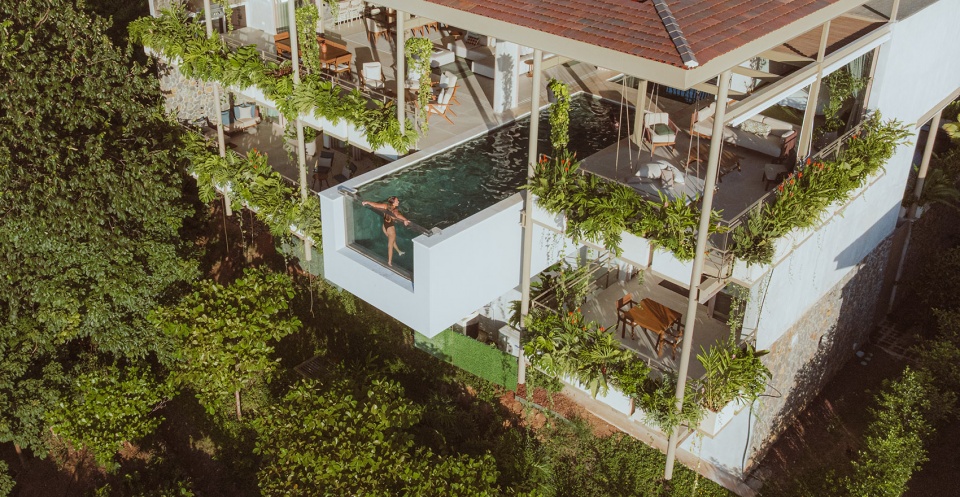
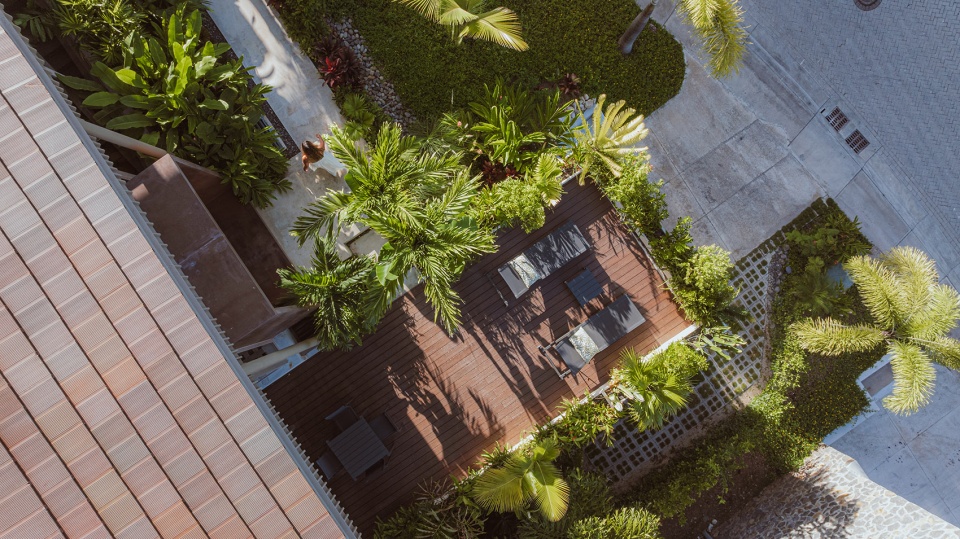
▼住宅鸟瞰,aerial view of the villa
概念Concept
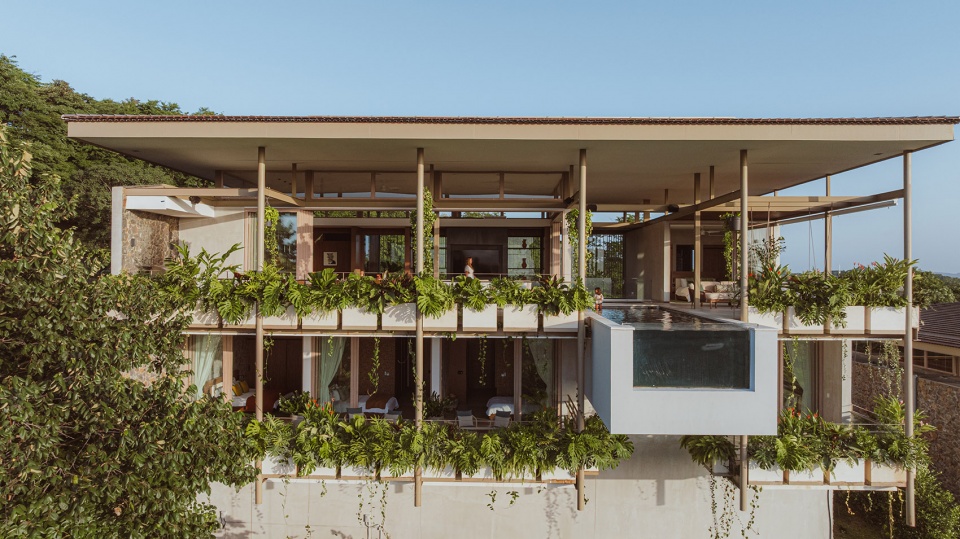
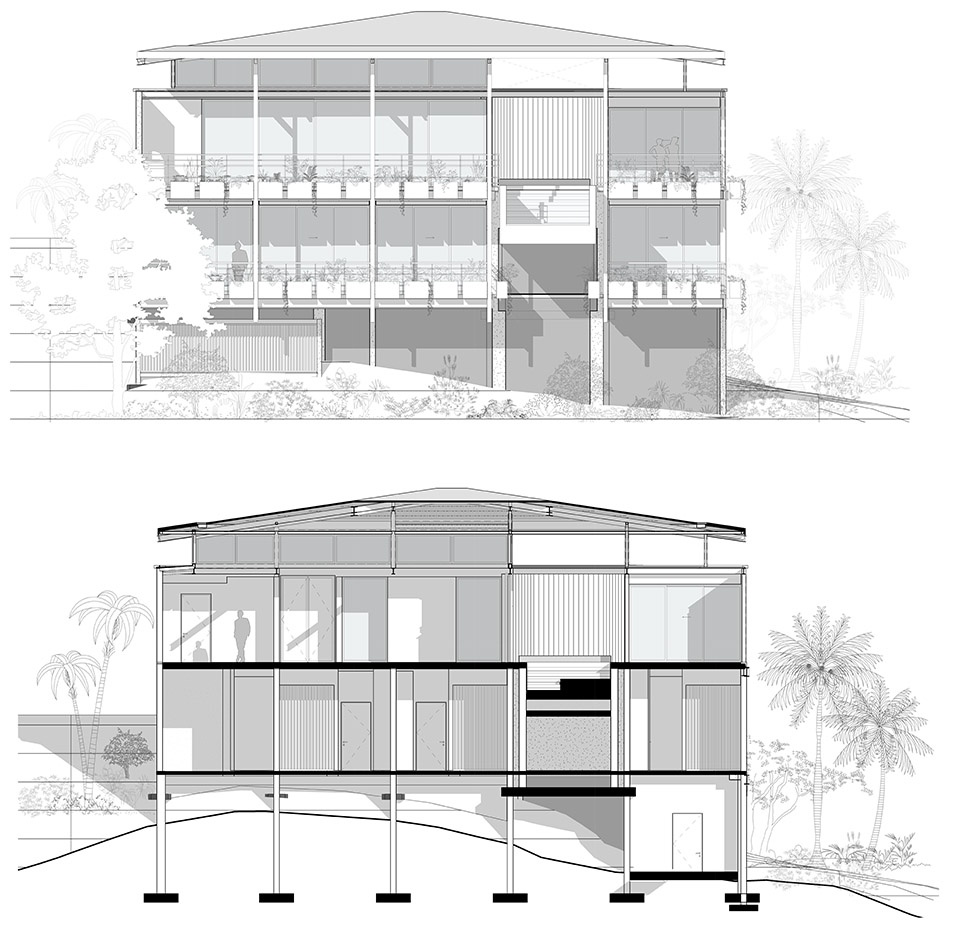
为了框住最强烈的海景,我们将所有社交区域、露台和主卧室布置在二楼。这使得建筑可以悬浮在景观之上,完全向地平线开放。上层下方是次卧,它们也因地形的自然坡度享有海景。更下方是服务区和车库,隐藏在结构的基础部分,将住宅牢牢固定在地形上。我们并没有与地形对抗,而是利用它创造了一个分层的构图,使建筑自然地与土地相融合,既感觉到被抬升,又深深扎根。
To frame the strongest views toward the ocean, we placed all social areas, terraces, and the main bedroom on the second floor. This allowed the architecture to hover above the landscape while opening fully toward the horizon. Below the upper level, we placed the secondary bedrooms on the middle floor, which also enjoys ocean views thanks to the natural slope of the site. Beneath that, the service areas and garage are tucked into the base of the structure, anchoring the home to the terrain. Rather than fighting the terrain, we used it to create a layered composition where architecture gently steps with the land and feels both elevated and rooted.
▼建筑悬浮在景观之上,the architecture to hover above the landscape
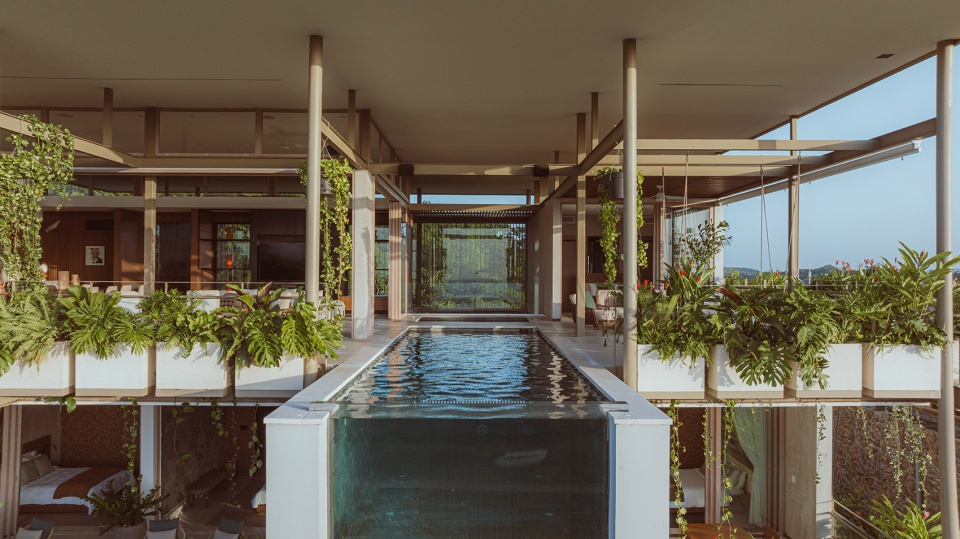
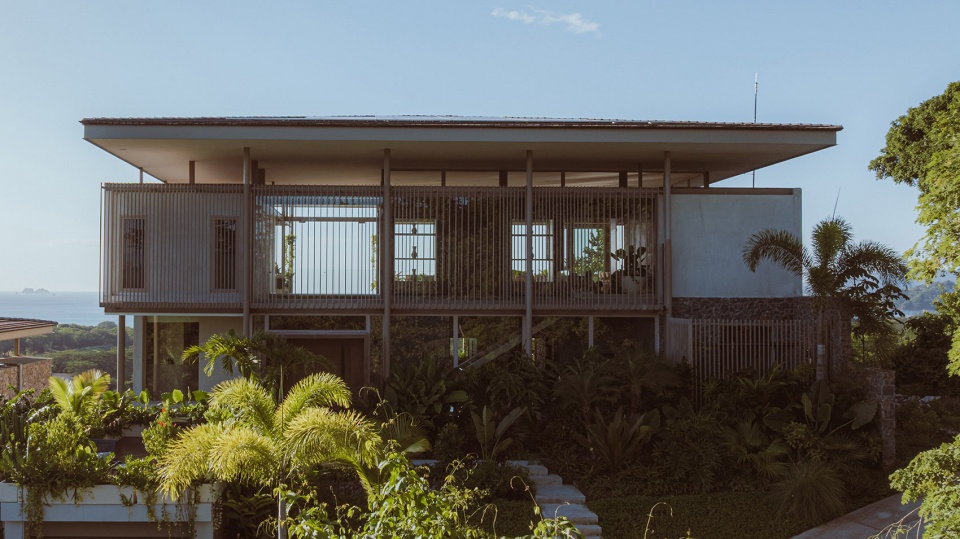
▼建筑悬浮在景观之上,the architecture to hover above the landscape
设计Design
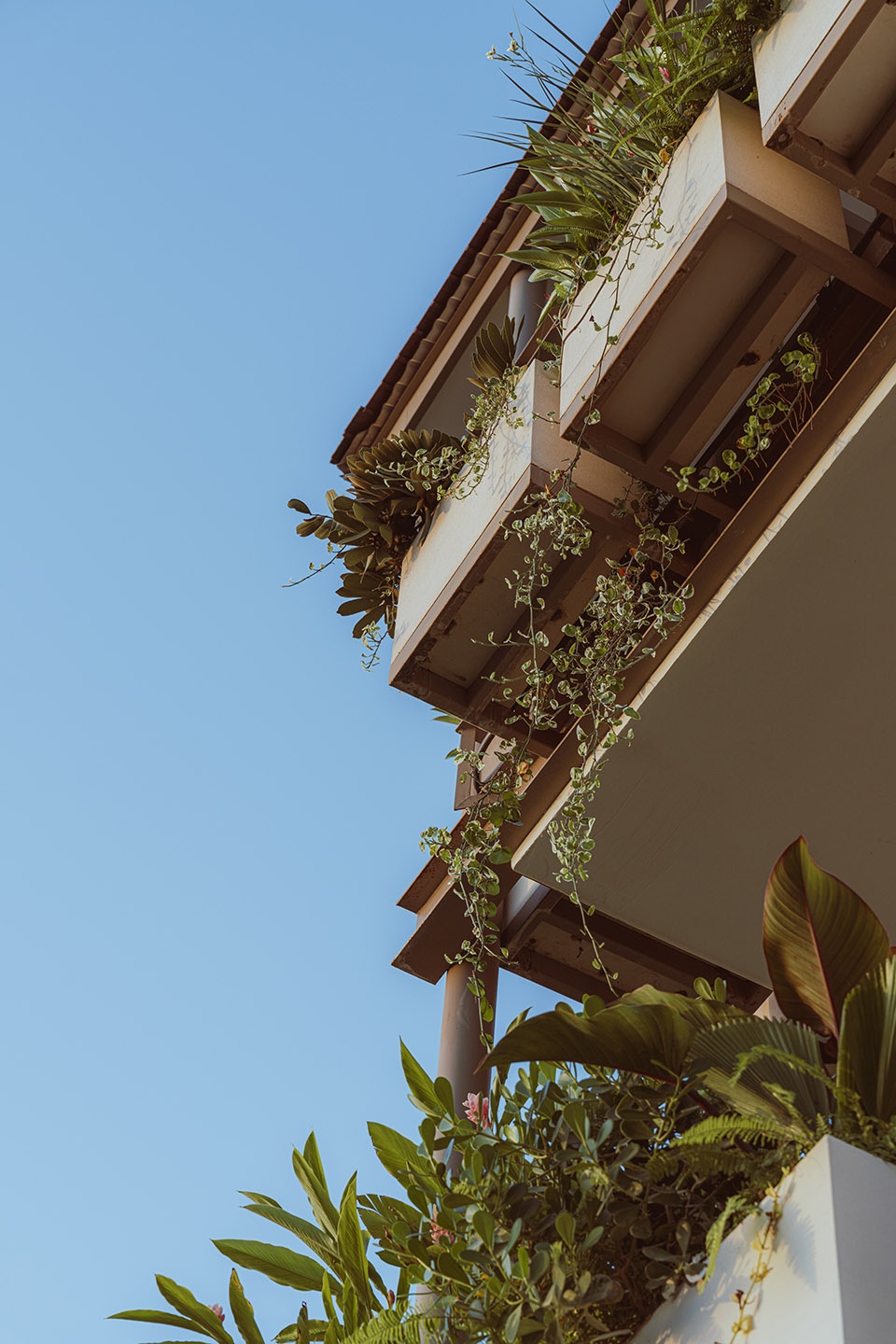
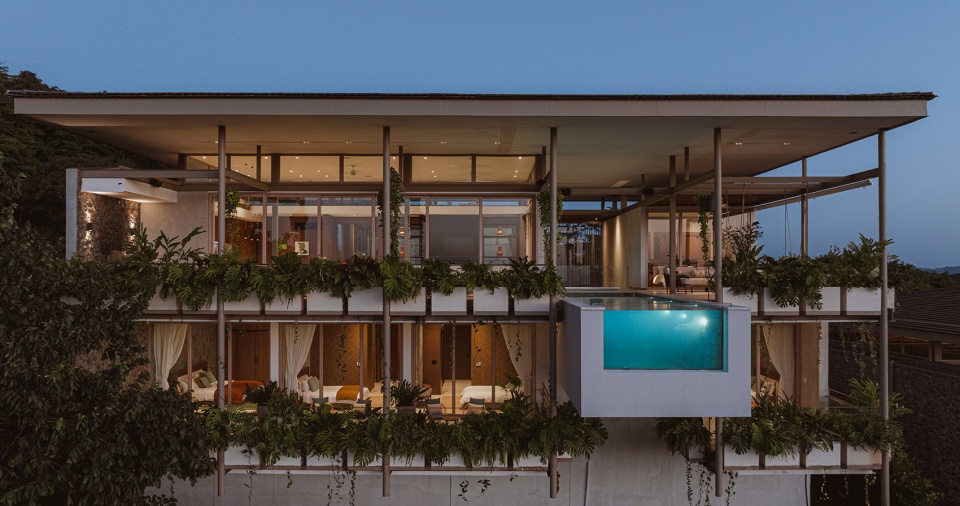
由于场地狭长且地形变化多样,我们必须考虑分层设计。我们创造了一个扎根的、水平的基础,随着坡度逐步上升,支撑着一个向四面八方开放的上层。这个二层成为了一个轻盈、透明的平台,容纳了生活空间、种植阳台以及看似漂浮在树冠中的悬臂游泳池。交叉通风、遮阳开口和开阔的视线创造了沉浸在景观中的感觉。随着建筑的上升,材料的使用也从更重的混凝土和石材过渡到更轻盈的木材和开放的钢结构框架,强化了上升的体验。
The site’s narrow shape and changing topography challenged us to think in levels. We created a grounded, horizontal base that steps with the slope and supports an upper floor that opens in all directions. This second level becomes a light, transparent platform that hosts living spaces, a planted terrace, and a cantilevered pool that appears to float in the canopy. Cross ventilation, shaded openings, and open sightlines create a sense of immersion in the landscape. As the architecture rises, the material palette transitions from heavier concrete and stone to lighter woods and open steel frames, reinforcing the experience of ascension.
▼逐步上升的空间,A gradually rising space
室内建筑Interior Architecture
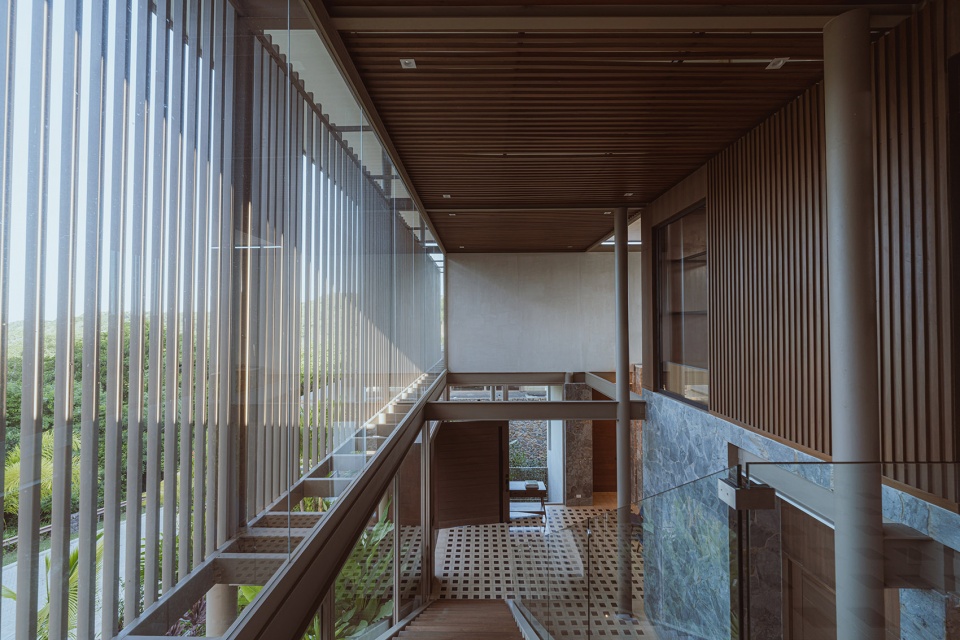
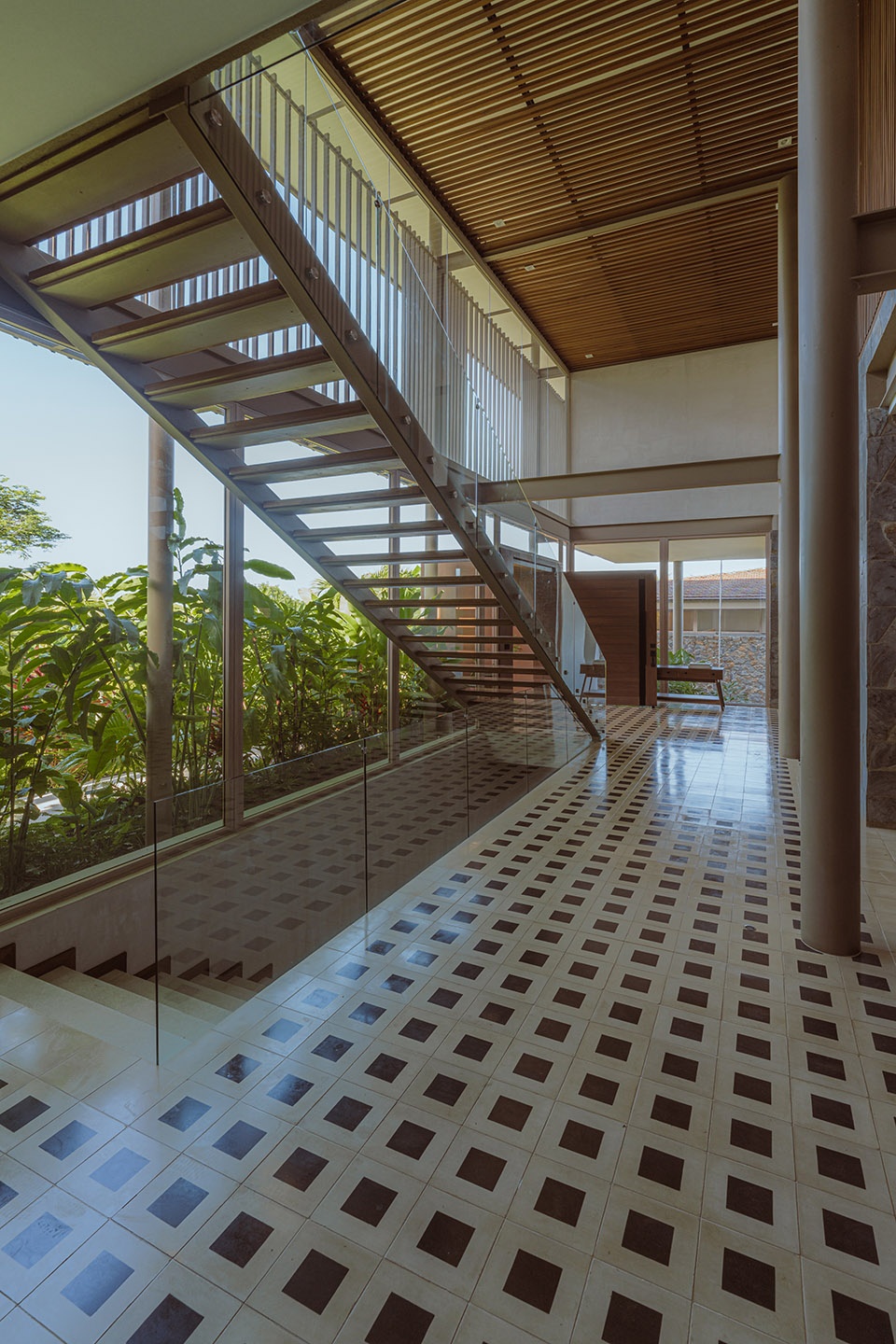
Villa Nuri的名字源自一个土著词语,它被想象成一个丛林中的巢穴,开放、私密、充满生气。由于房屋的开放性,鸟类常常穿过这里,且通过高挑的天花板和长长的通风走廊优先考虑自然通风。巧妙设置的开口使房子能够自然呼吸,保持全天舒适的温度。
Villa Nuri, named after an indigenous word, was imagined as a kind of nest in the jungle, open, personal, and alive. Birds frequently pass through the house due to its openness, and natural ventilation was prioritized through high ceilings and long, ventilated corridors. Carefully placed openings allow the house to breathe naturally, maintaining comfortable temperatures throughout the day.
▼长长的通风走廊,long, ventilated corridors
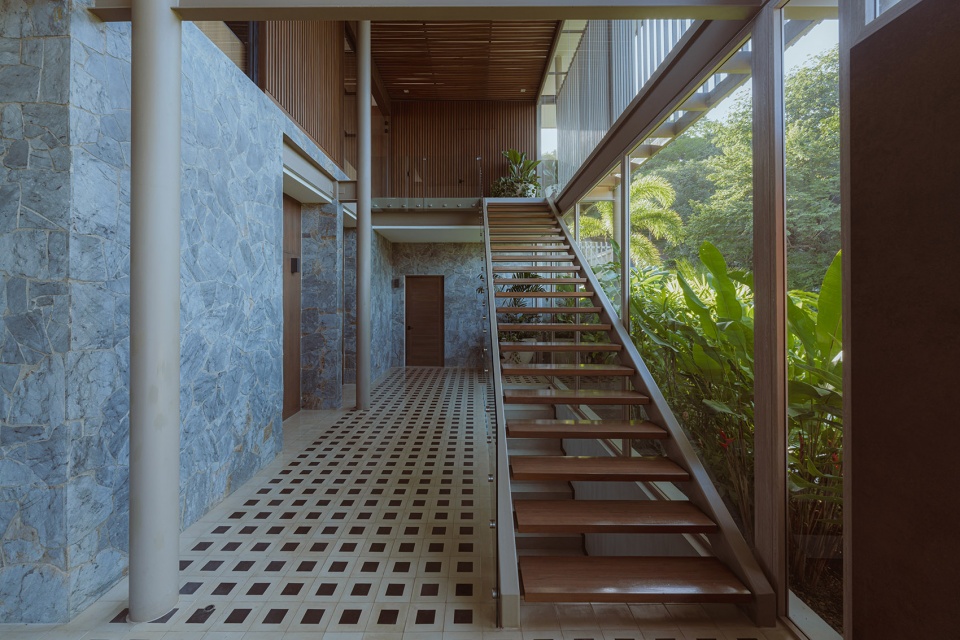
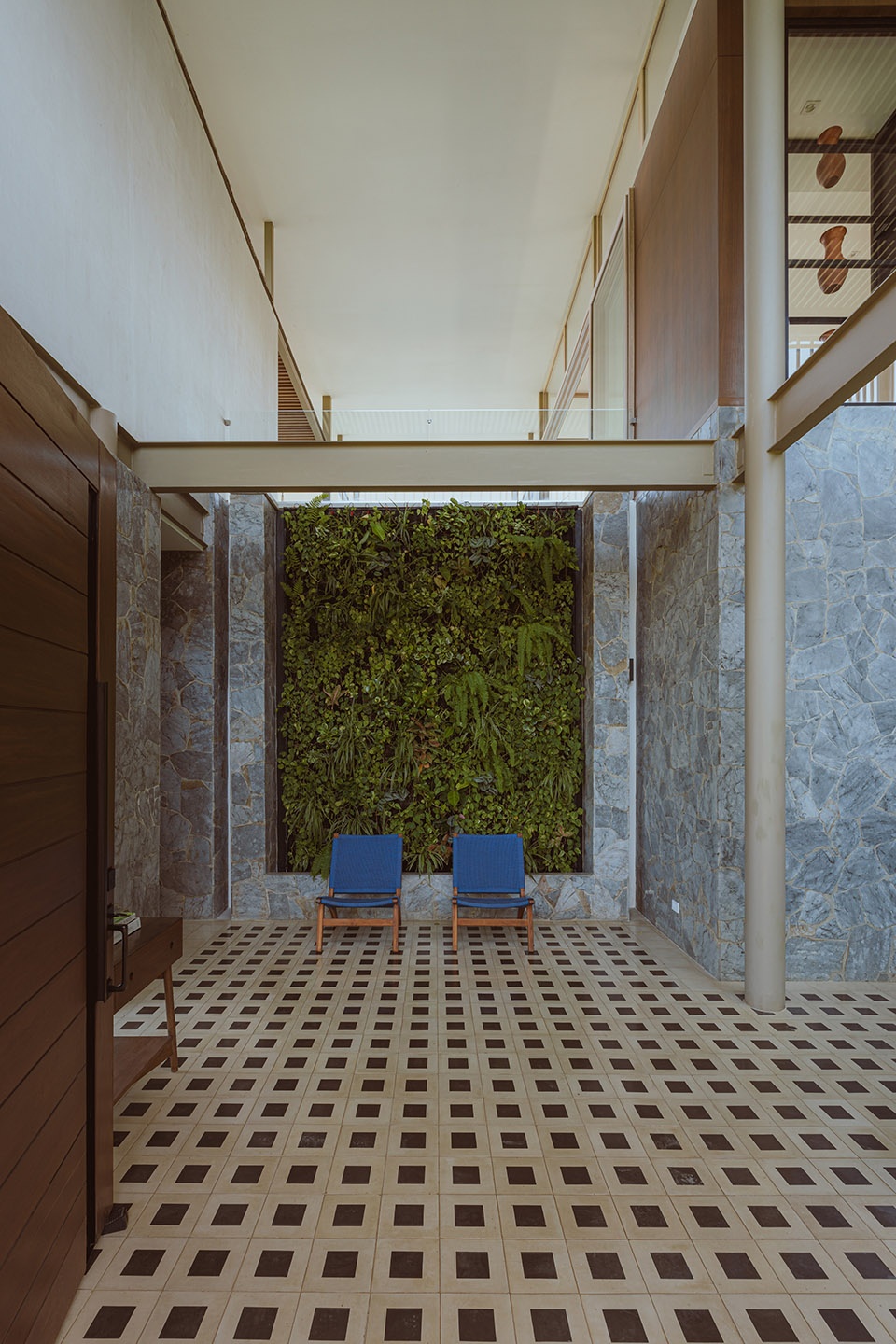
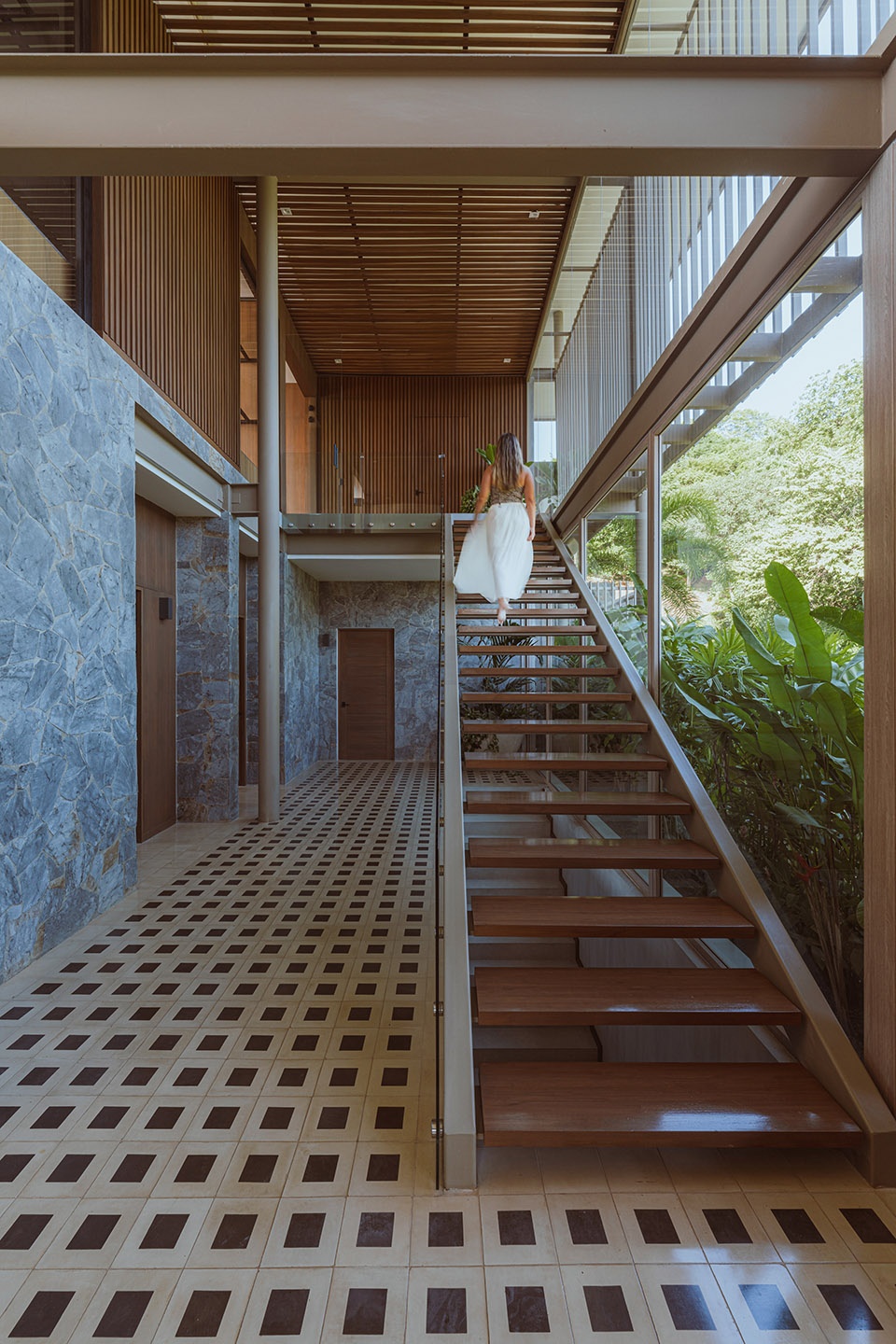
我们大胆采用了鲜明的表现手法和对比元素。入口处有一面绿植墙,迎接着访客,增强了室外与室内之间的过渡。我们在门厅使用了黑白瓷砖,呼应了哥斯达黎加传统住宅设计中常见的图案,将住宅与当地的工艺紧密联系。整座房子中,我们引入了充满活力的元素,如钴蓝色的扶手椅,反射出海洋与天空的颜色,故意将周围的景观框定在视野之中。每个空间都讲述着大自然、文化和舒适的故事,通过精心选择的材料和策划的体验将它们串联在一起。
We embraced bold gestures and contrasts. A living green wall greets visitors at the entrance, enhancing the transition from outdoors to indoors. We used black-and-white tiles in the foyer, echoing patterns traditionally used in Costa Rican residential design, grounding the home in local craft. Throughout the house, we introduced vibrant moments like cobalt blue armchairs that reflect the sea and sky to intentionally frame the surrounding landscape. Every space tells a story of nature, culture, and comfort, stitched together through thoughtful material choices and curated experiences.
▼住宅入口,entrance
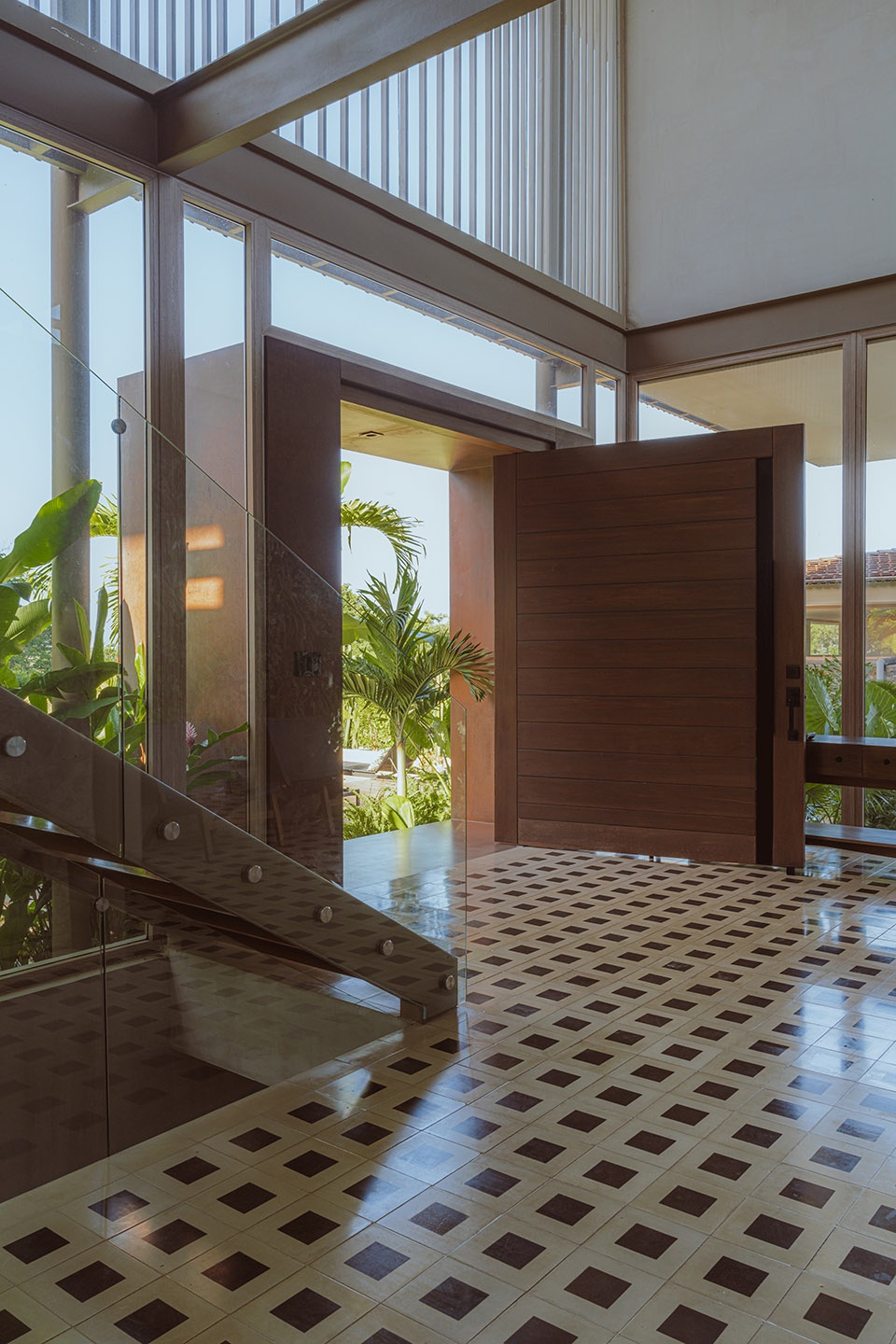
▼入口处绿植墙,A living green wall
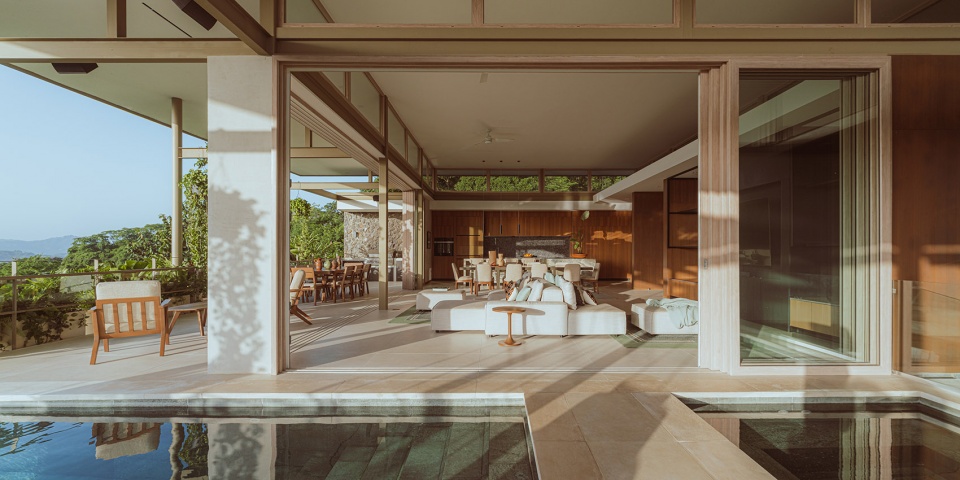
▼室内外空间之间的过渡,the transition between interior and exterior space
可持续性Sustainability
建筑师从一开始就设计房屋以实现被动性能,减少对环境的影响。天然石材和木材调节热量,而开口的布置则使得交叉通风成为可能,并控制太阳的照射。周围的植被自然地为房屋降温,创造了一个微气候,减少了机械系统的需求。太阳能电池板提供现场可再生能源,使房屋减少对电网的依赖,支持更具自给自足的生活方式。这些策略帮助房屋与周围环境保持更紧密的联系,提供了一种舒适且低影响的生活方式。
We designed the home to perform passively and reduce its environmental impact from the start. Natural stone and wood regulate heat, while openings are oriented to allow cross ventilation and control solar exposure. The surrounding vegetation cools the home naturally, creating a microclimate that reduces the need for mechanical systems. Solar panels provide renewable energy on-site, allowing the home to reduce reliance on the grid and support a more self-sufficient lifestyle. These strategies help the home feel more connected to its environment, allowing for a comfortable and low-impact way of living.
▼开口的布置使交叉通风成为可能,openings are oriented to allow cross ventilation and control solar exposure
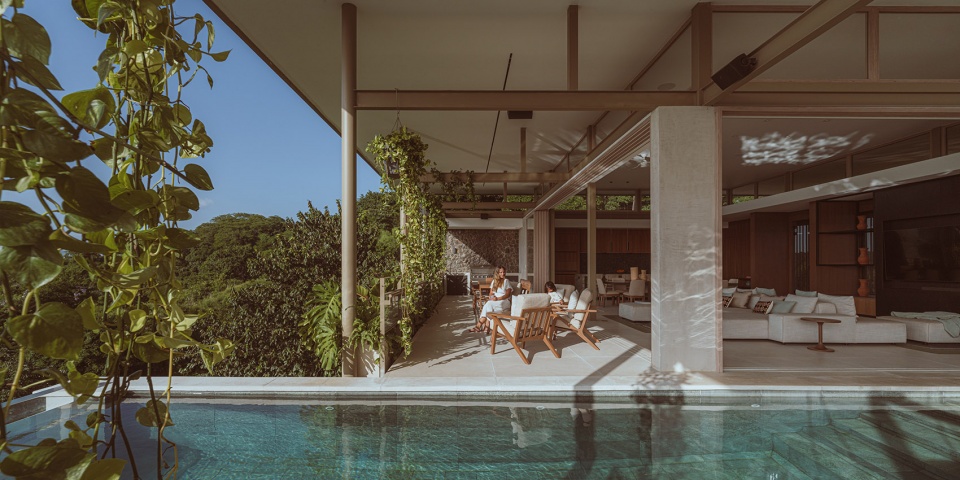
▼创造舒适的室内微气候,creates a comfortable micro-climate
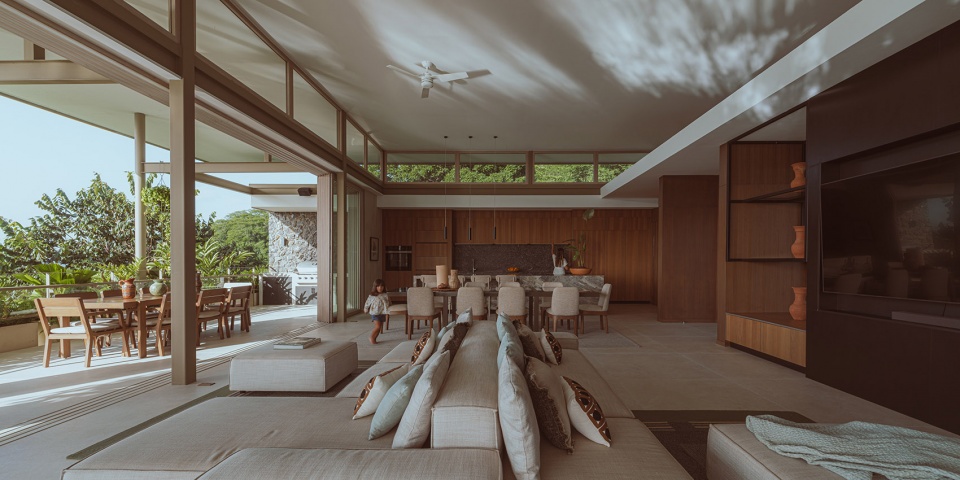
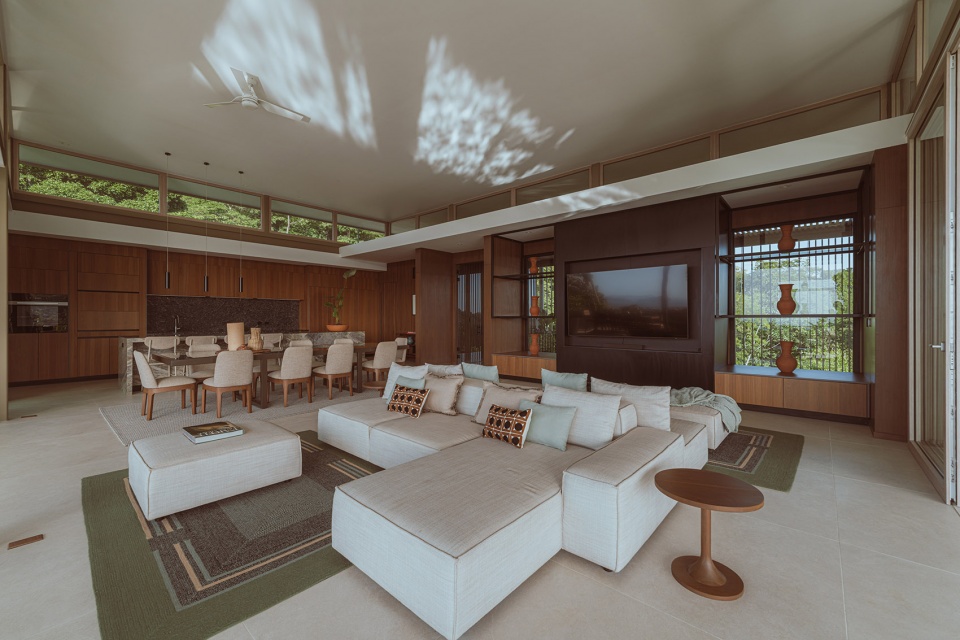
▼厨房空间,dining hall
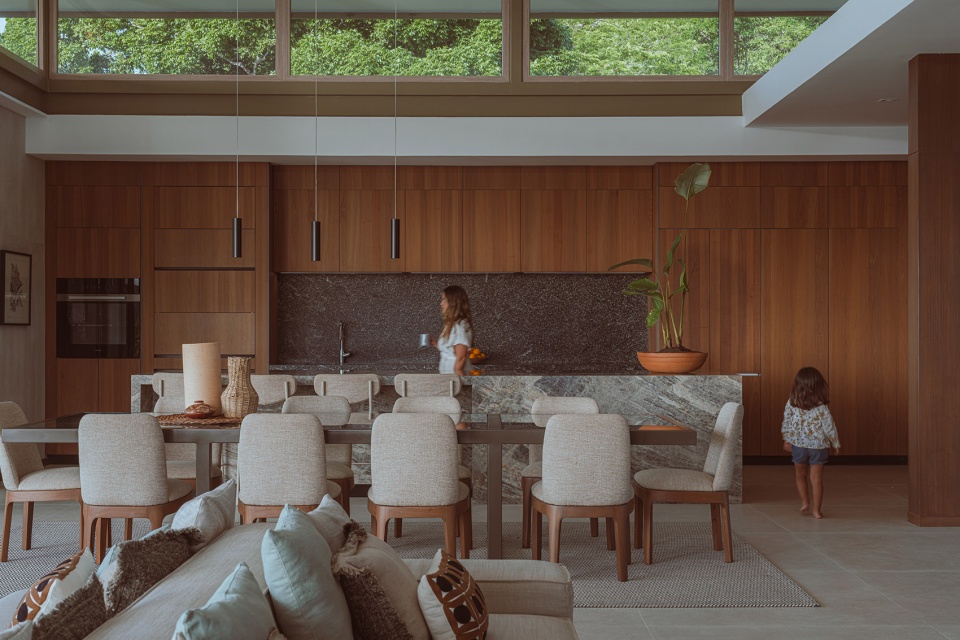
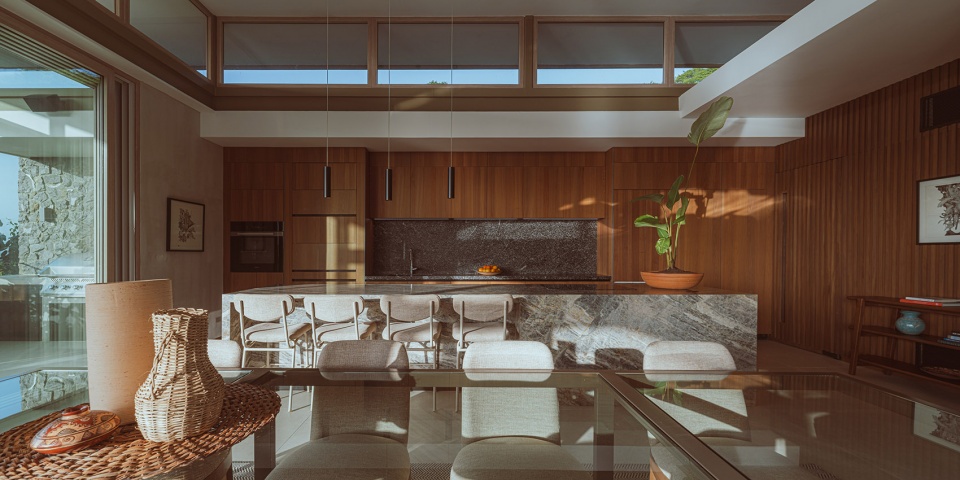
▼室内外空间的无缝过渡,the seamless transition between exterior and interior space
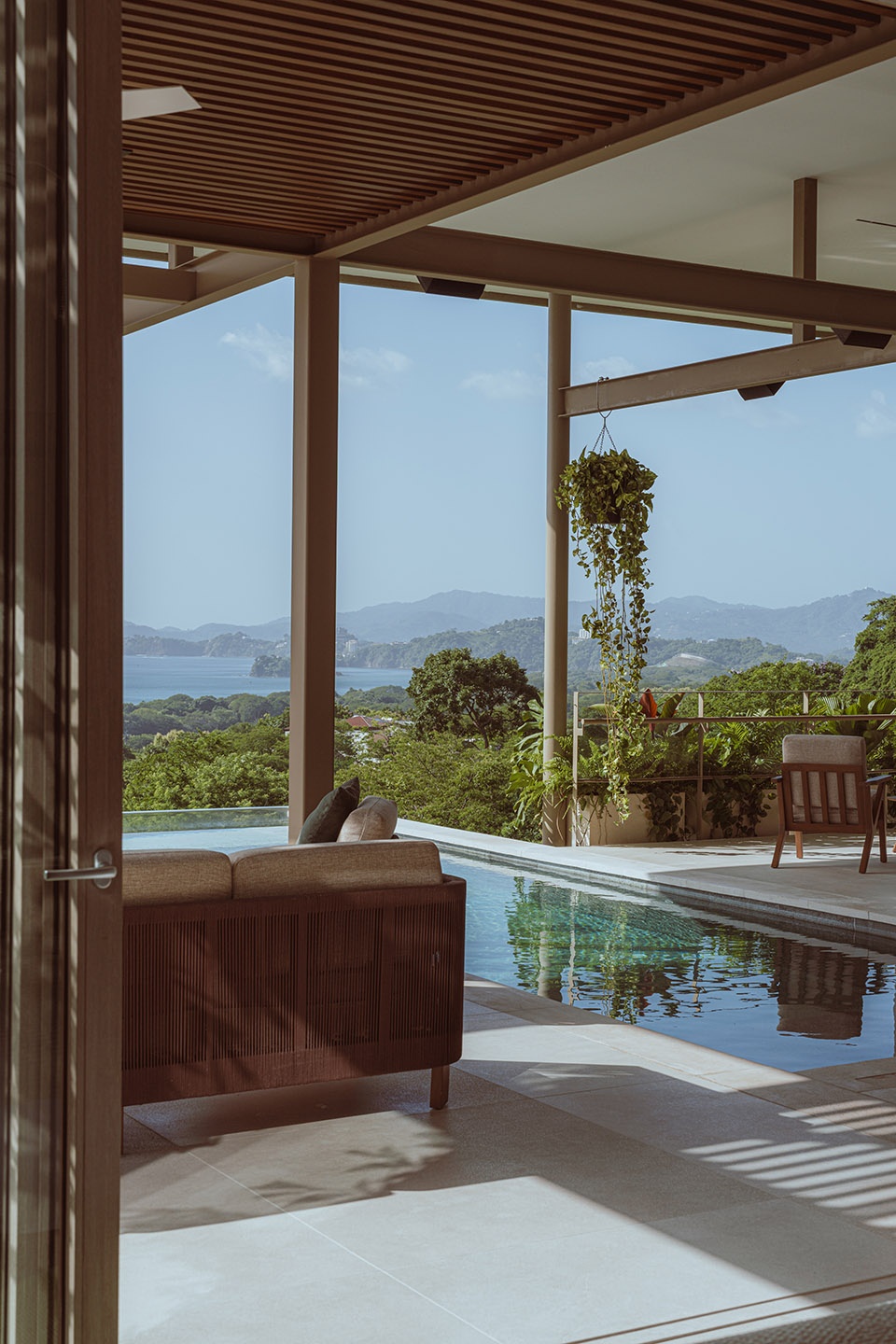
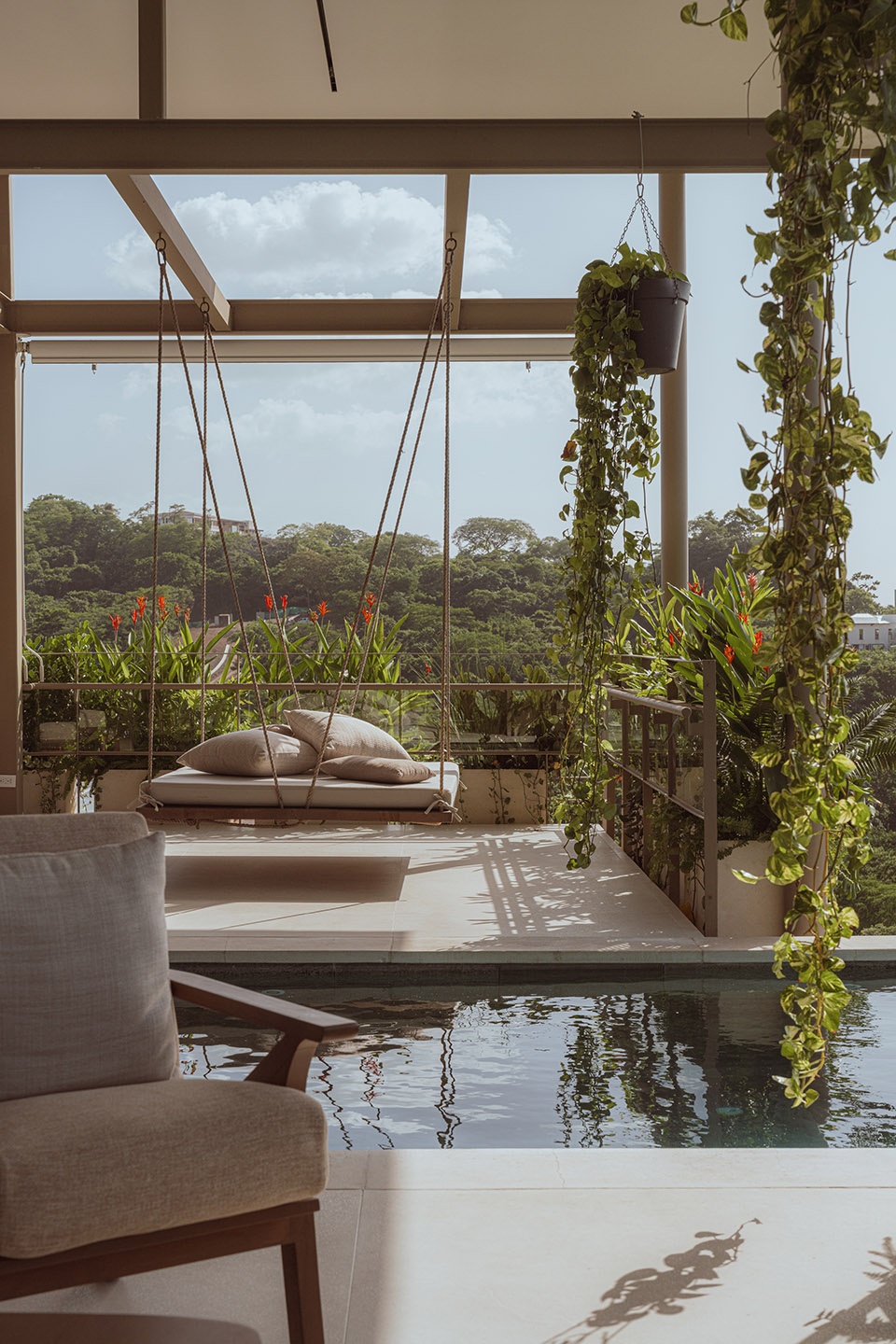
▼露台空间,terrace space
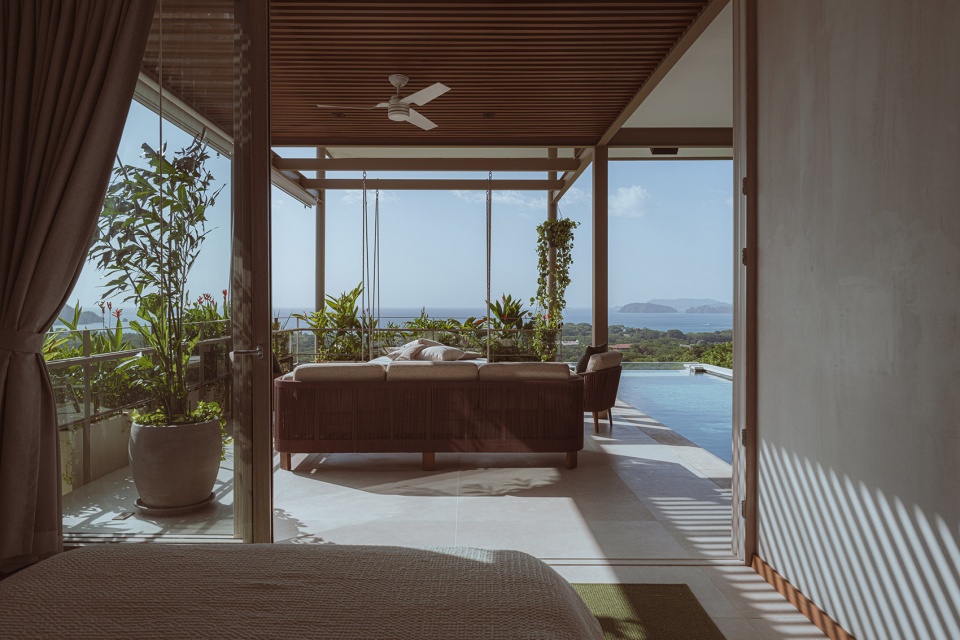
▼露台空间,terrace space
▼卧室空间,bedroom space
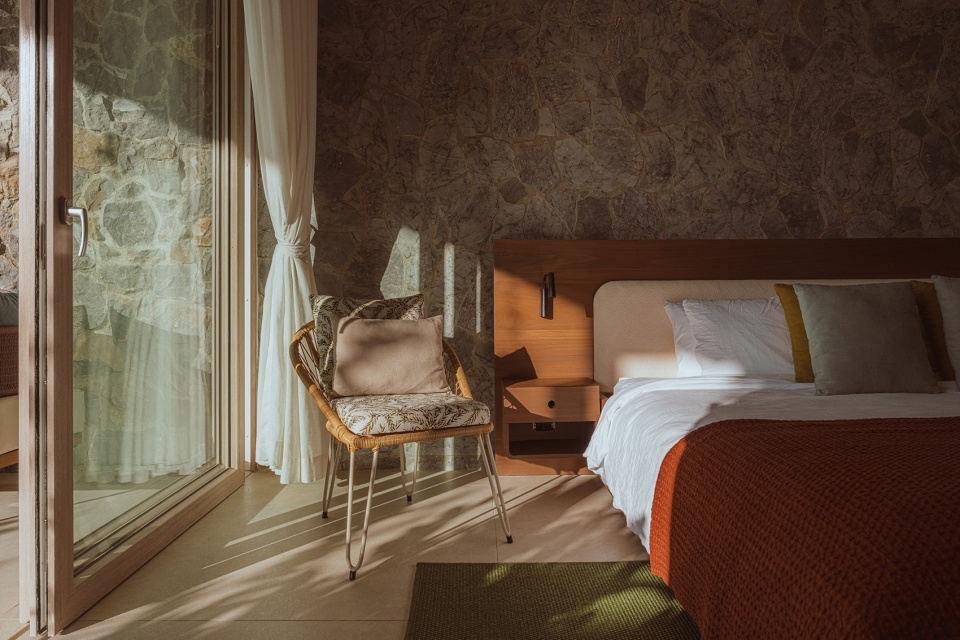
▼卧室空间,bedroom space
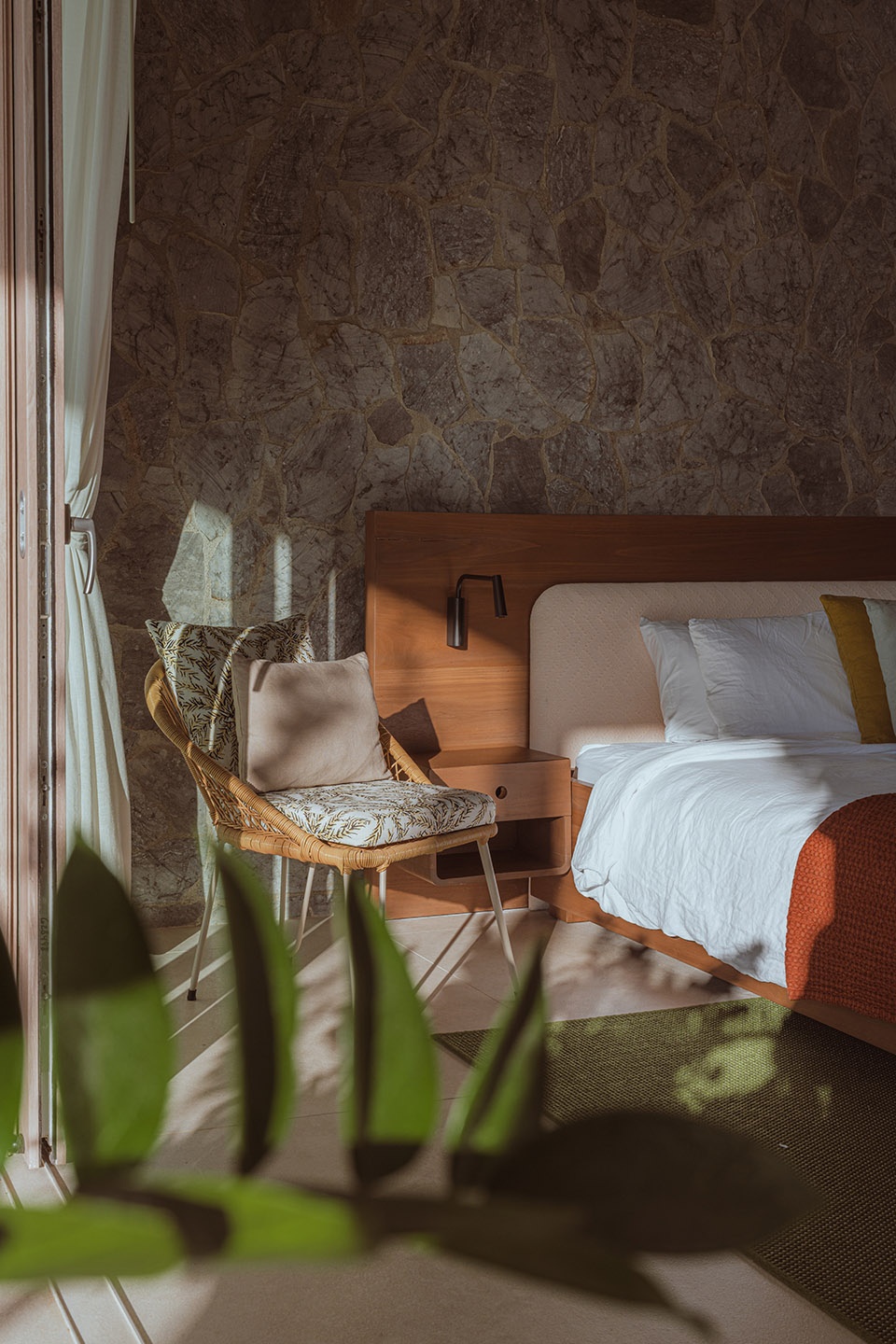
施工Construction
通过开发一种混合建筑系统,我们能够同时响应项目需求和地形挑战。坚实的混凝土基础容纳了车库、洗衣房和公共设施室,提供了稳定性并将住宅牢牢固定在山坡上。上方的预制钢结构支撑着更轻盈的体量,使我们能够创造面向一侧山脉、一侧海洋的开放立面。这一系统使得建筑施工更加高效和精准,同时根据功能、暴露度和氛围的不同,灵活调整房屋中的材料使用。
By developing a hybrid construction system, we were able to respond to both the program and the terrain. A solid concrete base houses the garage, laundry, and utility rooms, providing stability and anchoring the home to the hillside. Above, a prefabricated steel structure supports the lighter volumes, allowing us to create open facades that face the mountains on one side and the ocean on the other. This system made construction more efficient and precise while allowing us to shift materials throughout the house based on function, exposure, and atmosphere.
▼夜景,night view
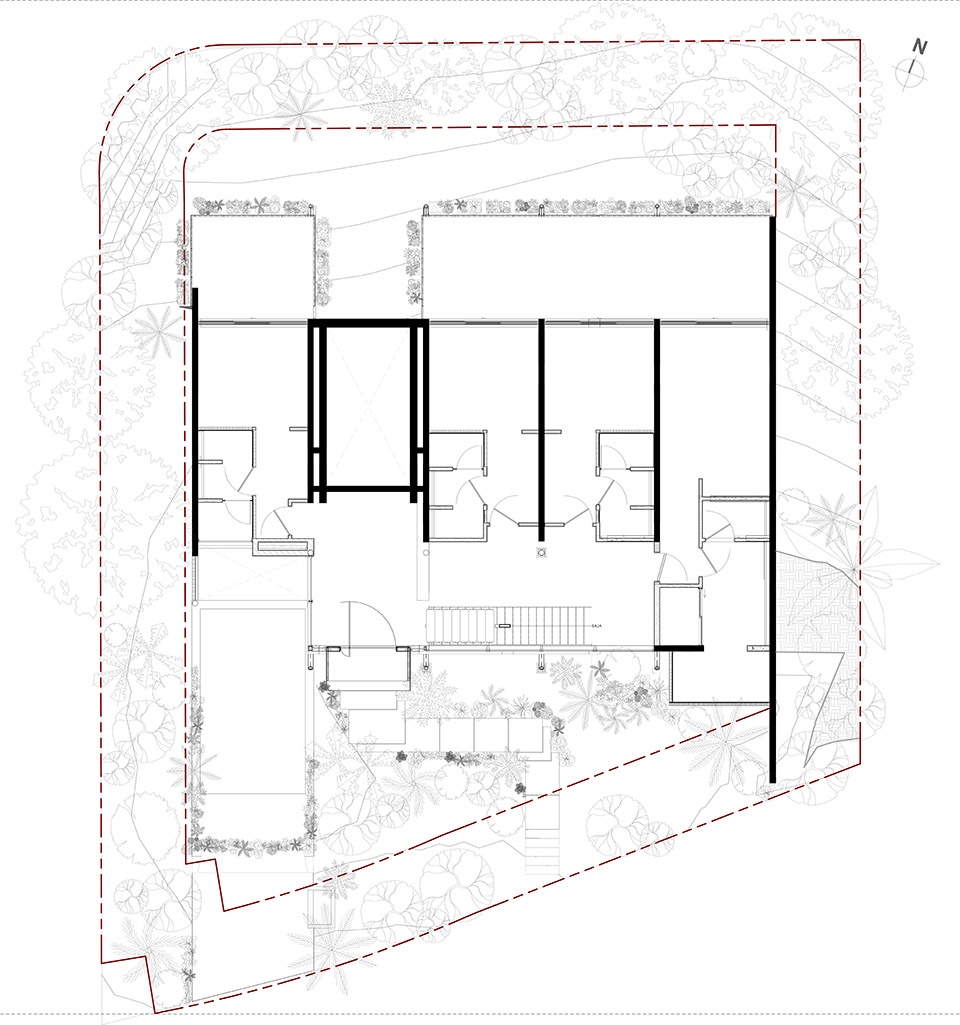
▼平面图,plan
▼立面图及剖面图,elevation and section
Architecture & Interior Architecture: Studio Saxe
Design Director: Benjamin Saxe
Location: Reserva Conchal, Guanacaste, Costa Rica
Area: 655m2
Date of Completion: 2025
Client: Private
Photography: Alvaro Fonseca – Depth Lens
Video: Production Alvaro Fonseca | Film/Edit Hansel Alfaro | Music Andres Soto Marin