海滨实验小学改造,深圳 / 厘米制造
▼校园鸟瞰,Campus aerial view
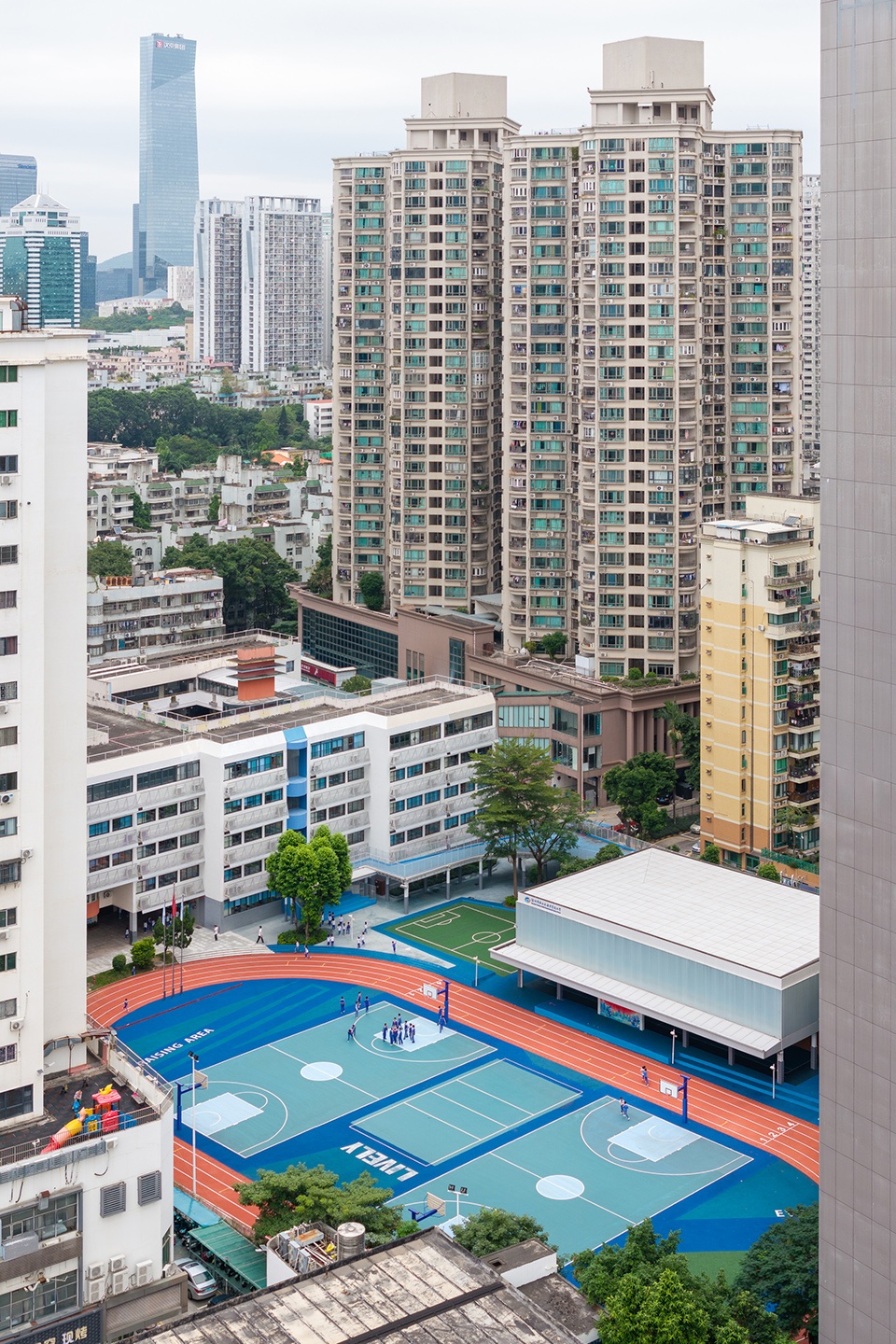
深圳南山区海滨实验小学作为南山区教育局直属的一所实验性学校,以及教育部授予深圳市的首个艺术特色学校,该校自1995年9月创建以来,历经岁月沉淀,其在长期的发展积淀中,既有校园空间与当代教育功能之间的适配性不足问题逐渐显现,亟待一场顺应教育发展的空间变革。为回应这一现实挑战,该校改造被纳入深圳市“百校焕新”行动计划,厘米制造受邀完成此次改造设计。
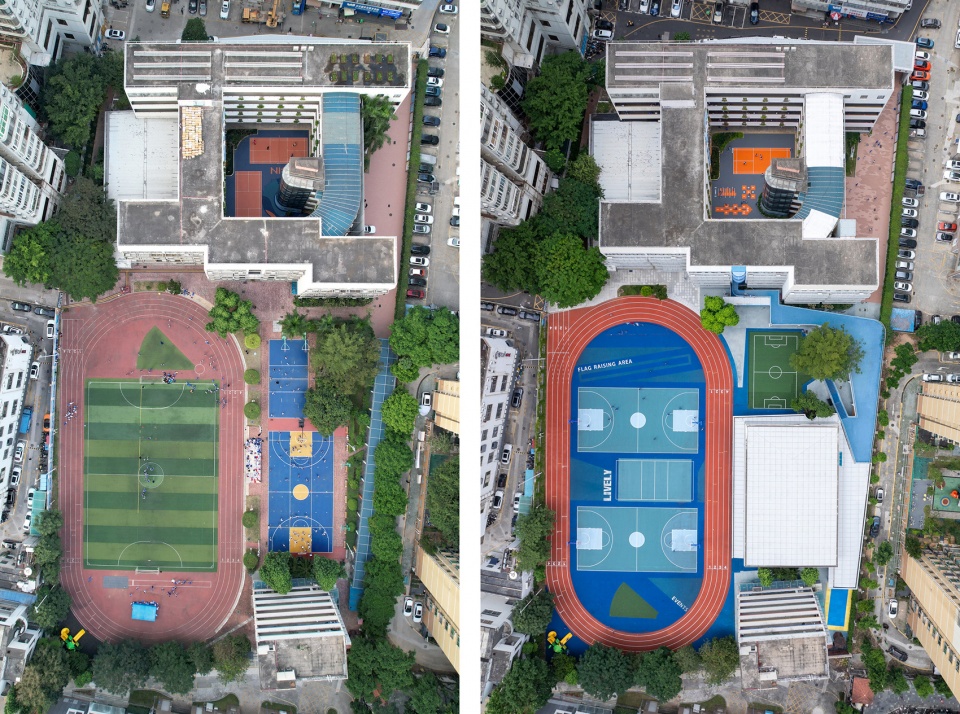
▼改造前后俯瞰对比,
Aerial comparison before and after renovation
Haibin Experimental Primary School in Nanshan District, Shenzhen, is a flagship school directly administered by the Nanshan District Education Bureau. It was also designated by the Ministry of Education as Shenzhen’s first institution with a specialized arts focus. Since its establishment in September 1995, the school has cultivated a rich history. However, over time, a significant misalignment emerged between its existing campus spaces and the demands of contemporary education, necessitating a spatial transformation that could keep pace with pedagogical evolution. In response to this challenge, the school was selected for inclusion in the ‘100 Campus Renewal Plan’. Subsequently, CM Design was invited to undertake this renovation project.
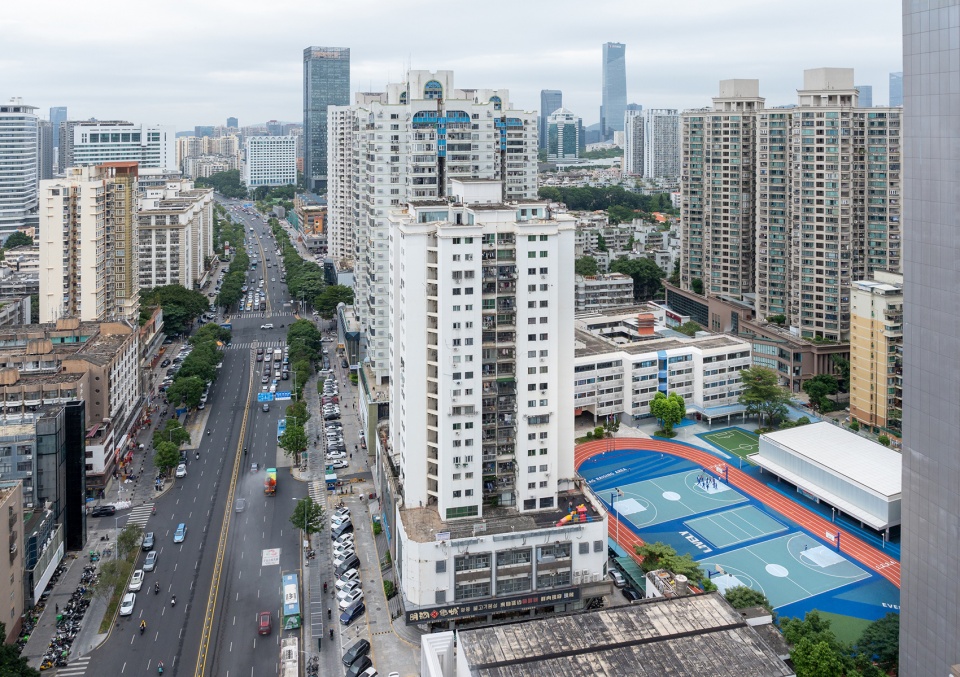
▼城市关系鸟瞰,Urban context aerial view
▼城市关系鸟瞰近景,Urban context aerial close view
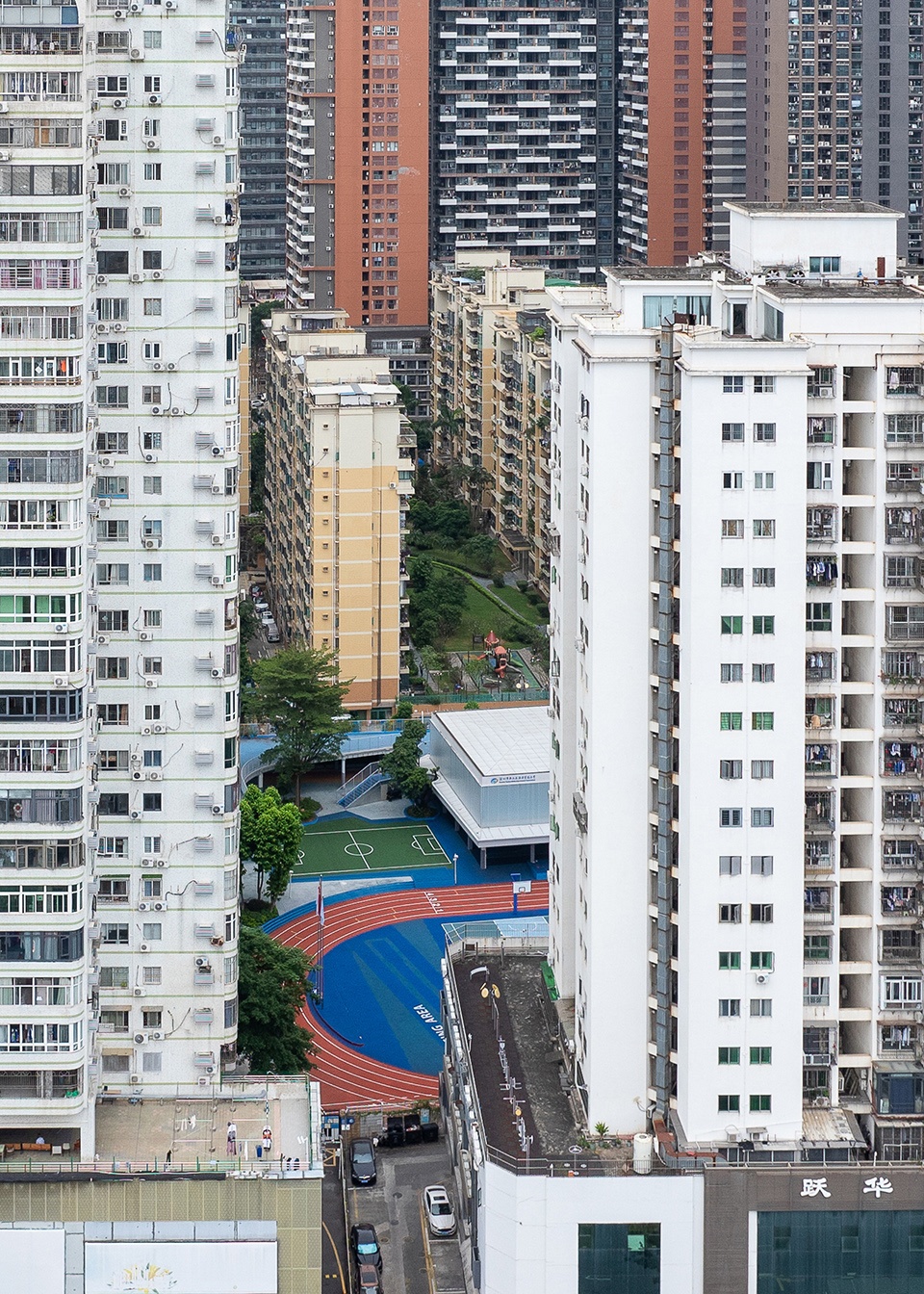
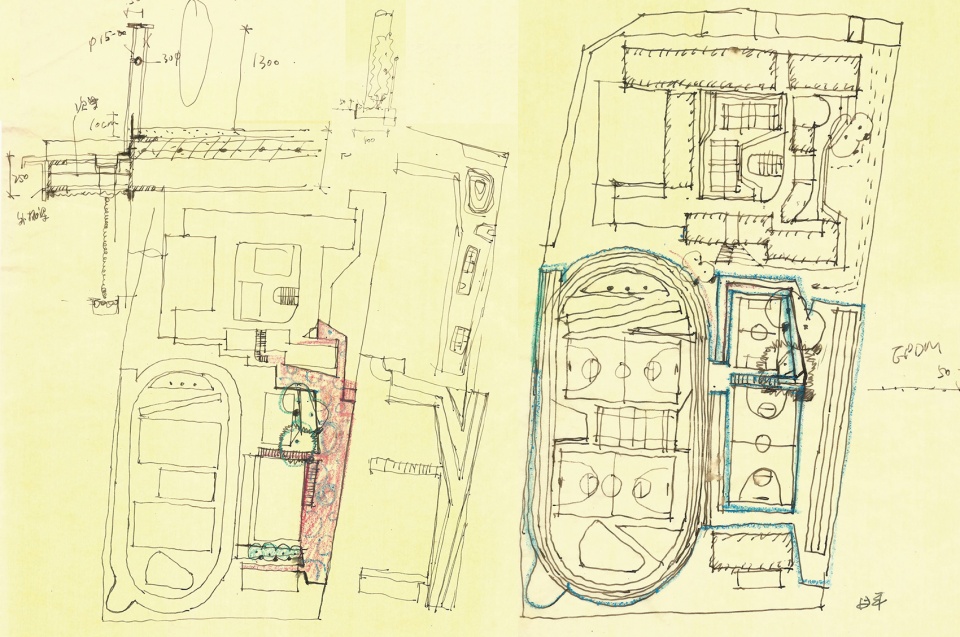
海滨实验小学地处南山生活核心区,毗邻南航大厦,坐落在历史悠久、文化厚重的学府路,邻近地铁12号线南山站。校园与周边社区紧密融合,生活气息浓厚且配套完善,其区位在尽享宜居氛围的同时,也身处城市发展与更新的前沿。校园北侧主入口和西侧入口均隐于住宅小区缝隙之中,整体布局以北侧井字形教学楼围合中心庭院,中部设有200米环形跑道及户外活动区,南侧则为教师宿舍楼和食堂。
▼草图,Sketch
▼校园轴测示意图,Campus axonometric diagram
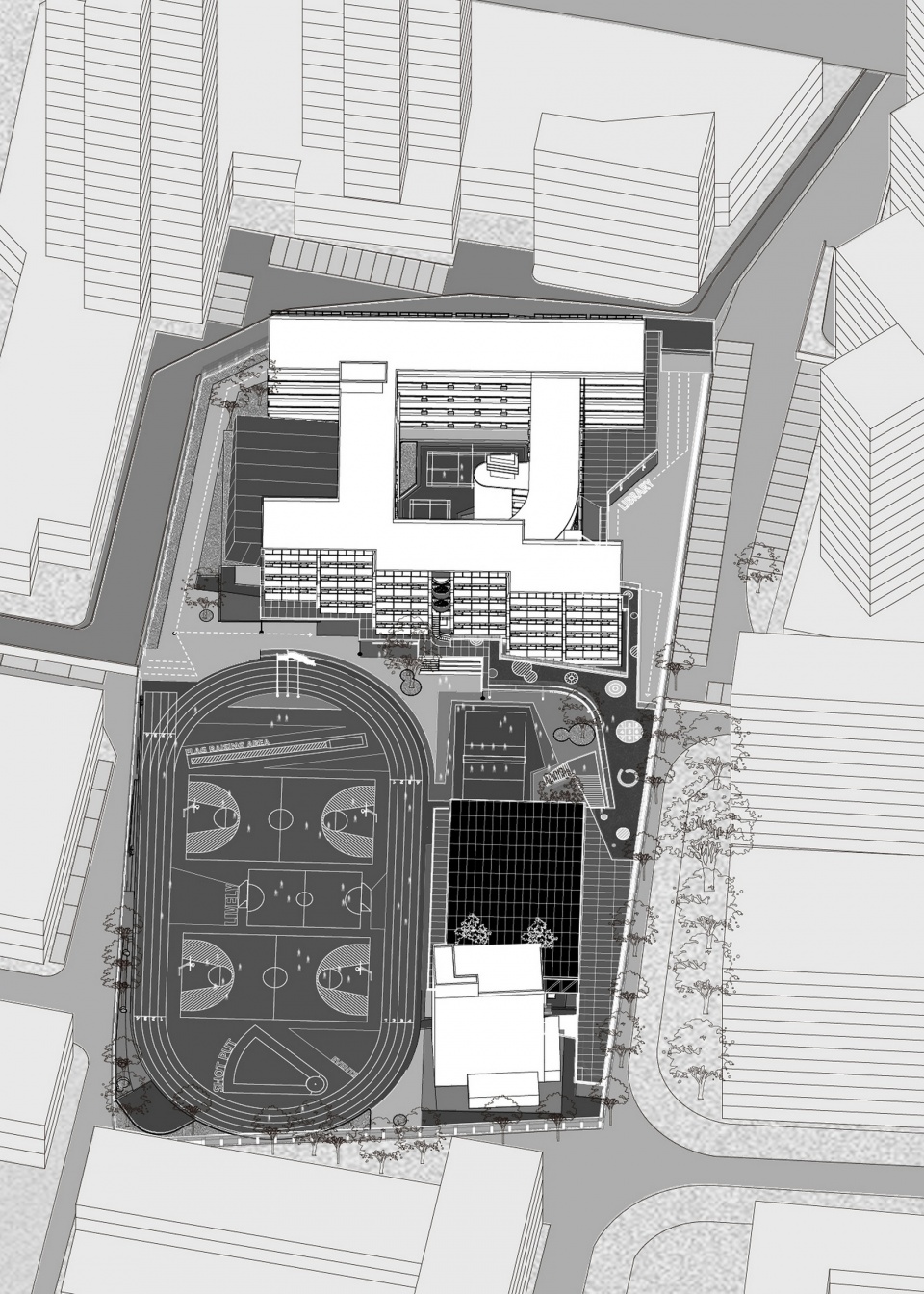
Haibin Experimental Primary School is located in the core residential area of Nanshan, adjacent to the China Southern Airlines Building. It sits on Xuefu Road, a street rich in history and culture, and is close to Nanshan Station on Metro Line 12. The campus is seamlessly integrated with the surrounding neighborhoods, boasting a vibrant living atmosphere and comprehensive amenities. Its location not only offers a highly livable environment but also places it at the forefront of urban development and renewal. The main entrance on the north side and the west entrance are both nestled between residential compounds. The overall layout features a grid-like teaching building on the north that encloses a central courtyard. A 200-meter circular running track and outdoor activity areas are situated in the middle zone, while the southern part accommodates the teachers’ dormitory and canteen.
▼校园主入口街景,Street view of the main campus entrance
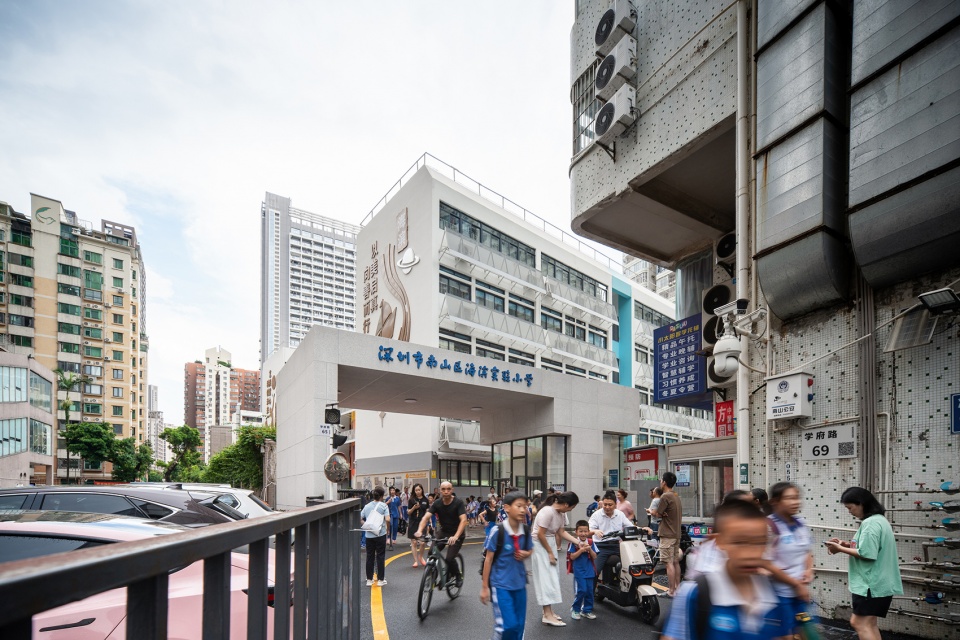
▼校园主入口,Main campus entrance
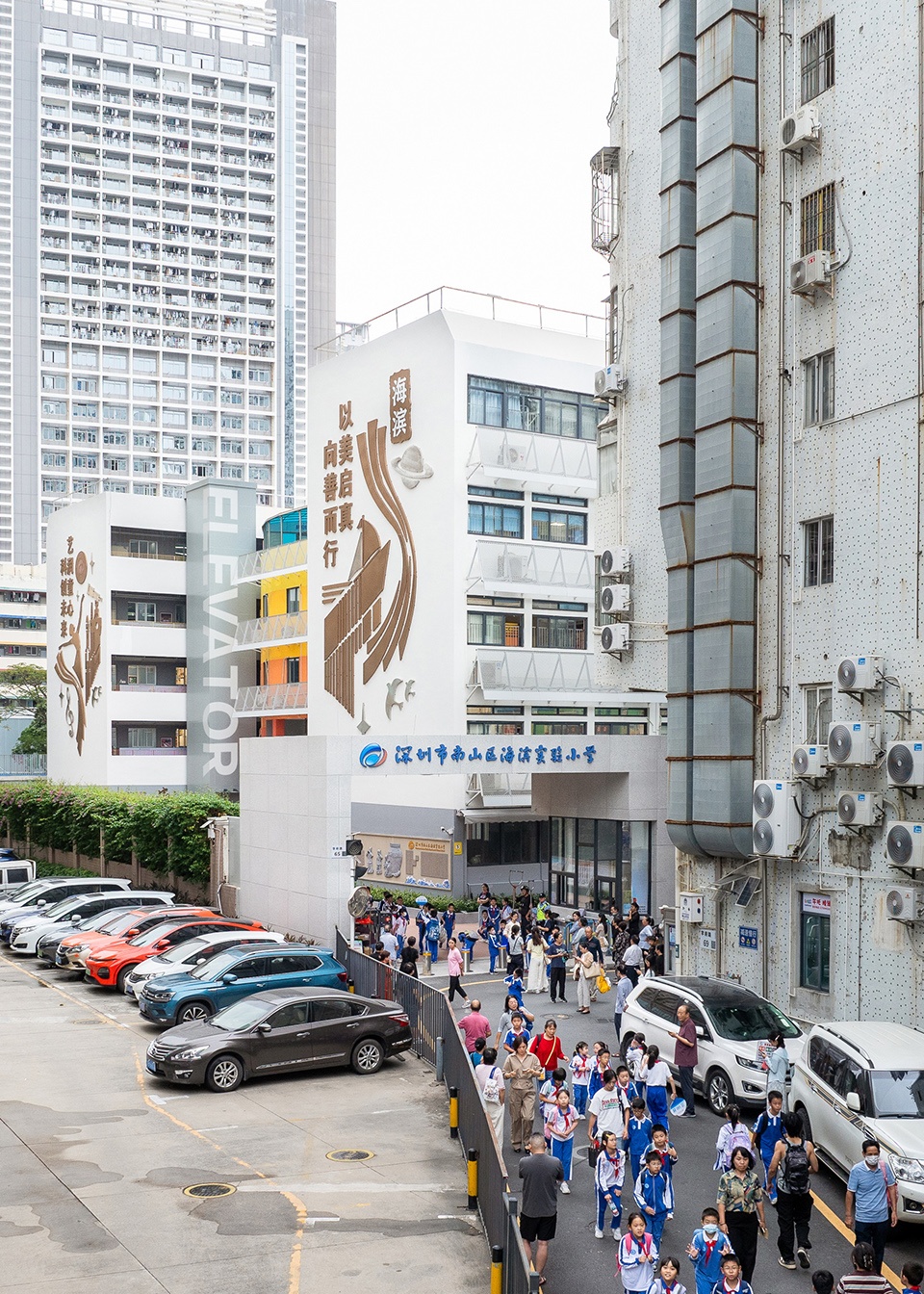
▼校园次入口,Secondary campus entrance
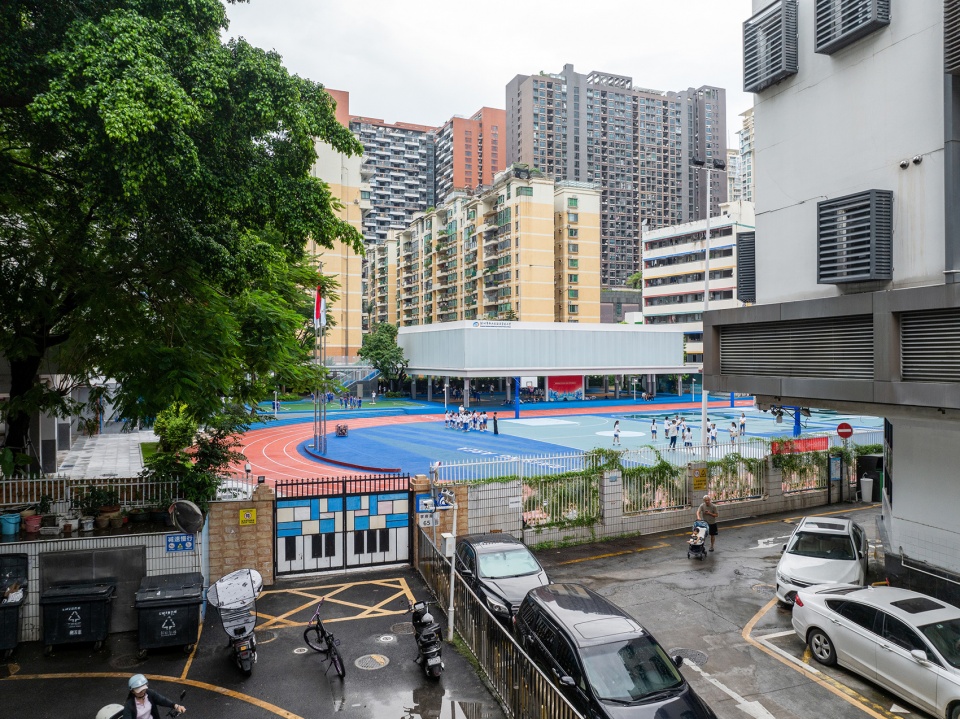
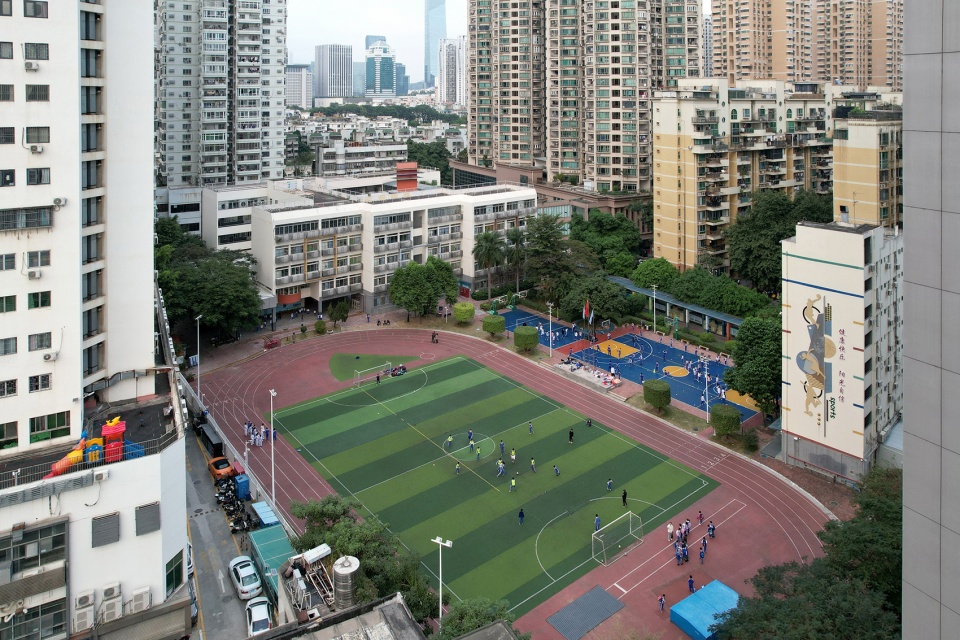
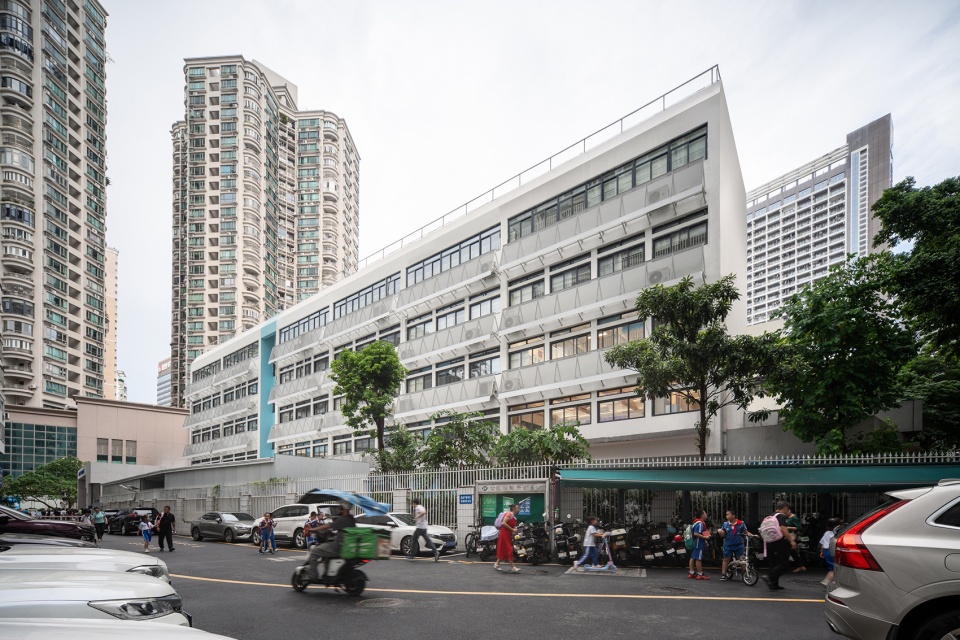
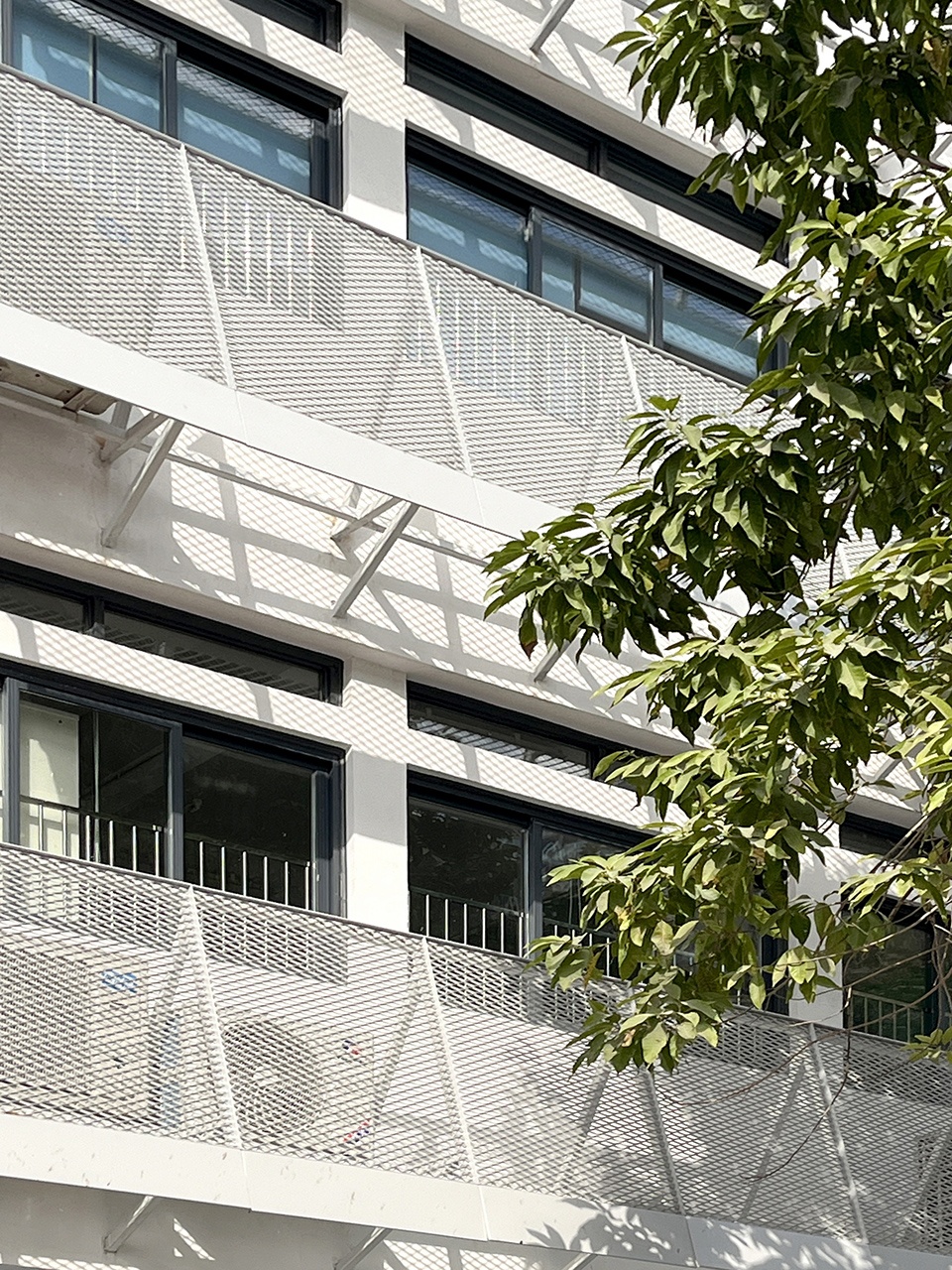
改造前的校园,存在诸多使用问题,主入口校门形象欠佳、空间局促;教学楼竖向交通仅靠楼梯,缺乏电梯衔接,过道花池存在易踩踏安全隐患;建筑外立面历经多次更改而显得杂乱;图书室偏居教学楼顶层,可达性差且图书转运不便;公共活动场地布局单一,操场跑道老旧破损,无法满足课外多元化的教学需求,雨天更对师生通行与户外课程活动造成诸多不便;与此同时,景观场地高差明显且与教学建筑界面过渡存在安全隐患。结合现状问题,厘米制造提出了针对性的改造策略。主入口校门经过重新设计,以更加开放、现代的姿态面向城市;在教学楼东立面增设竖向电梯,加强各楼层间的连接,对原有教学楼过道扶手和易踩踏的花池进行铁艺栏杆加高和艺术化色彩区分,兼顾安全与视觉通透;建筑立面则通过拉伸铝网遮阳板整合了外墙、门窗及空调机位等元素,消除了以往杂乱的视觉印象,形成简洁统一的立面形象;教学楼内部的功能优化调配则体现了人文关怀,图书室从顶层迁至建筑首层入口附近,并充分利用边角空间,极大提升了使用便捷性,首层还设置了艺术教室,营造出灵活开放的教学新场景。功能置换不仅优化了空间效率,更激发了建筑内部的活力,让教与学在更加自然、亲切的氛围中开展。
▼改造前校园鸟瞰,Campus aerial view before renovation
▼改造前校园主入口,Main campus entrance before renovation
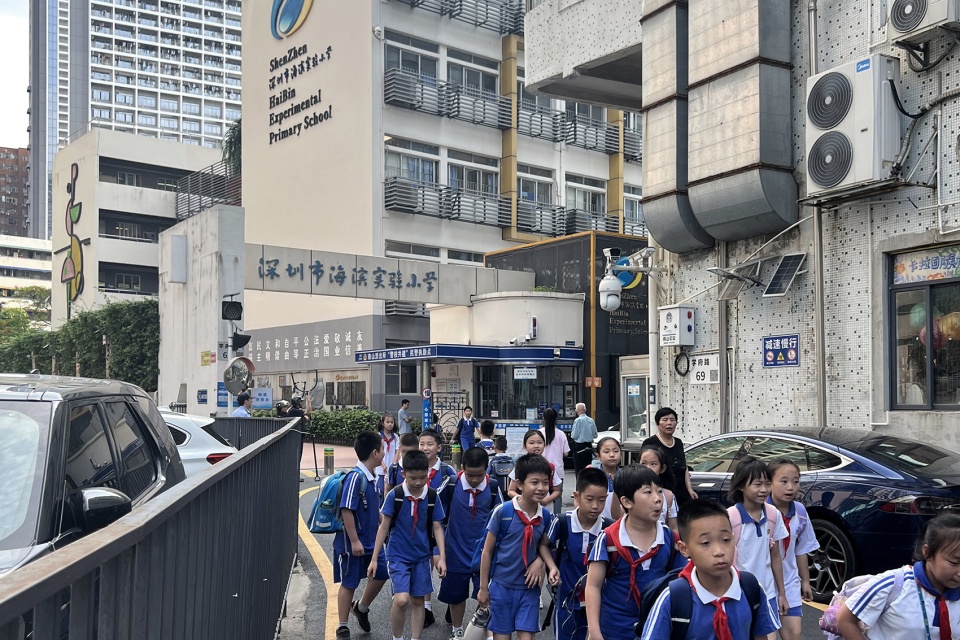
▼改造前教学楼南立面,
South façade of the teaching building before renovation
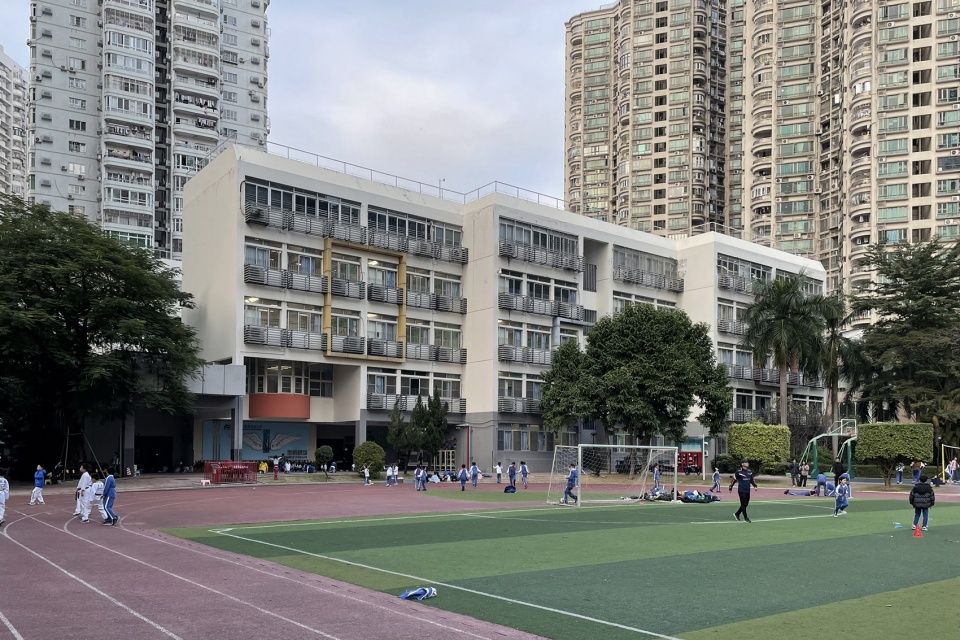
▼改造前校园户外活动场地,Outdoor activity area before renovation
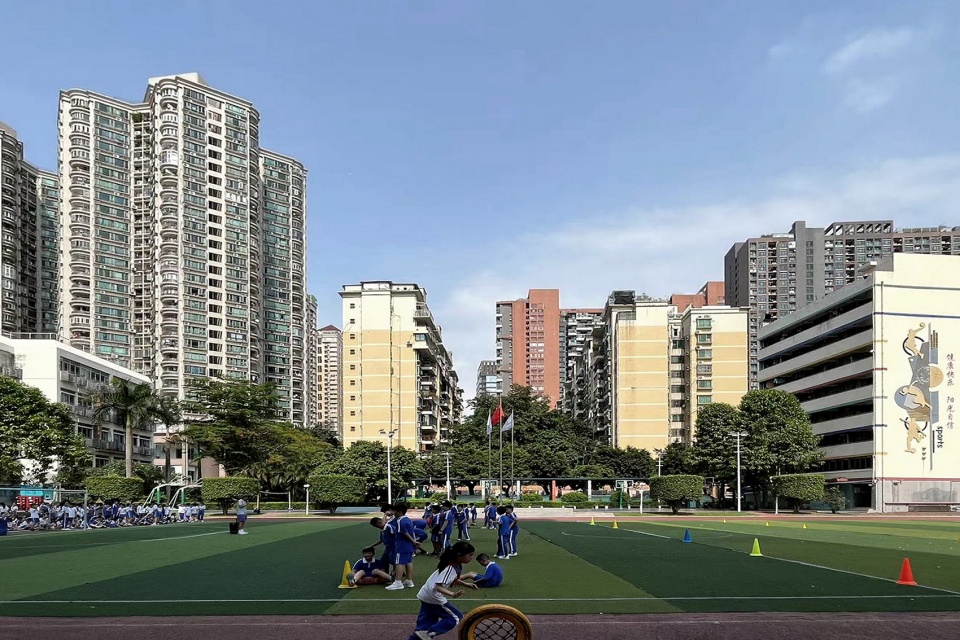
▼改造前校园户外活动场景,
Outdoor campus activity scene before renovation
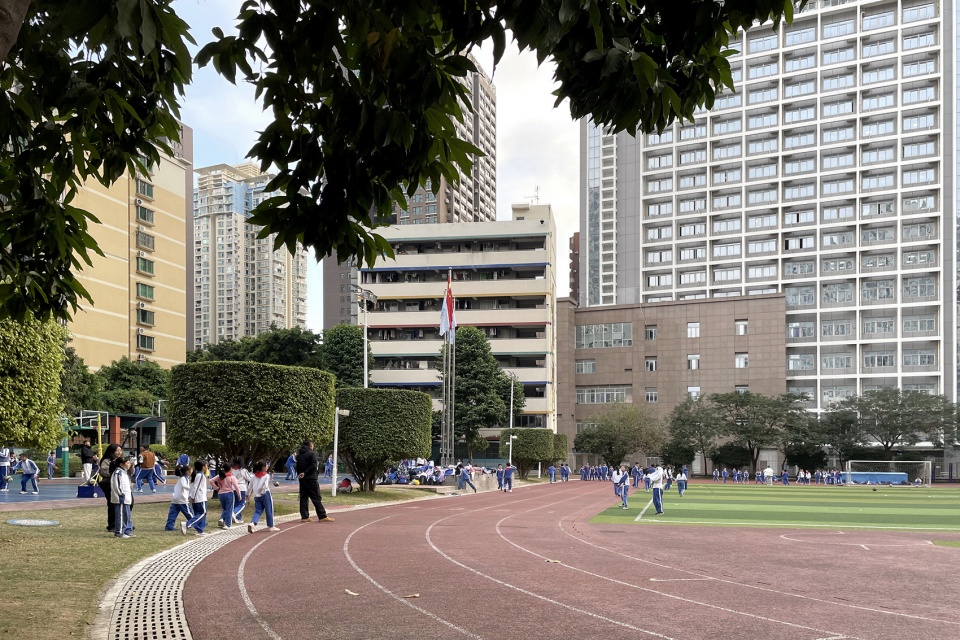
Before the renovation, the campus faced numerous issues. The main entrance was uninviting and occupied a cramped space. The main building’s vertical circulation relied solely on staircases, with no elevator access, while the planter boxes in the corridors posed a safety hazard as they were prone to being climbed on. The building facades appeared cluttered due to multiple alterations over the years. The library was isolated on the top floor, resulting in poor accessibility and inconvenience for transporting books. Public activity areas had a monotonous layout, and the track on the playground was old and worn-out, failing to meet the diverse needs of extracurricular activities. Furthermore, rainy weather significantly inconvenienced pedestrian circulation and outdoor classes. Additionally, the landscape had significant level changes, and the transition zones where it met the teaching building posed safety risks. In response to the existing issues, CM Design formulated targeted renovation strategies. The main gate was redesigned to present a more open and modern facade. A new elevator was added to the eastern façade to improve vertical connectivity between floors. The original handrails and planters, which were prone to being climbed on, were replaced with heightened wrought-iron railings. These feature an artistic color code, effectively balancing safety with visual transparency. The building’s exterior was unified using stretched aluminum mesh for sunshades, which integrate elements such as walls, windows, doors, and air conditioner units. This eliminated the previously cluttered appearance, creating a simple and cohesive image. The internal reconfiguration of the teaching building reflects a human-centered approach. The library was relocated from the top floor to an area near the first-floor entrance, making full use of corner spaces to significantly improve accessibility. An art classroom was also established on the first floor, fostering a flexible and open teaching environment. This functional reorganization not only optimized spatial efficiency but also revitalized the interior, allowing teaching and learning to unfold in a more natural and engaging atmosphere.
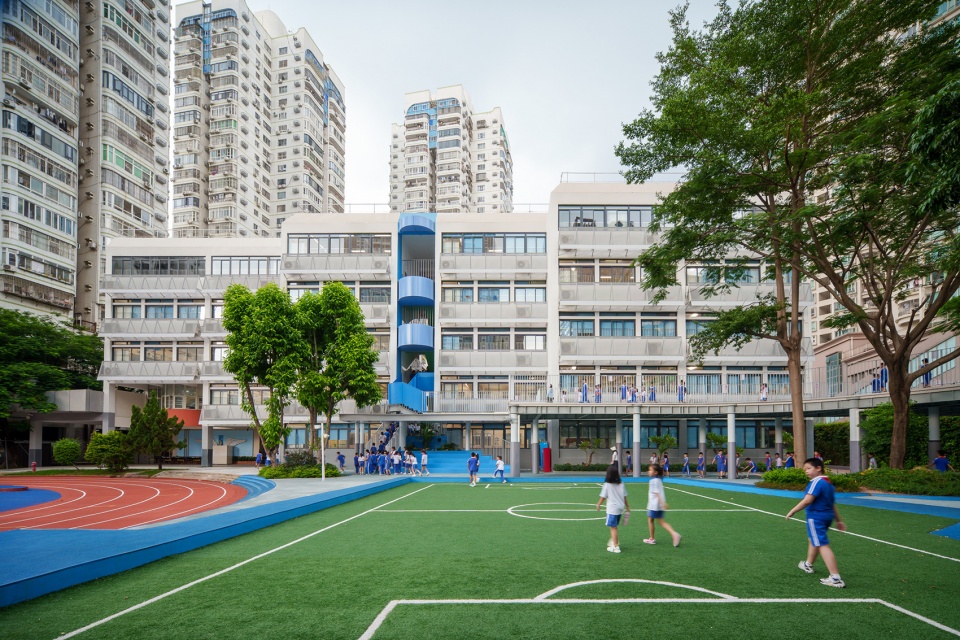
▼教学楼南立面和户外活动场地,South façade of teaching building and outdoor activity area
▼教学楼北立面,North elevation of the teaching building
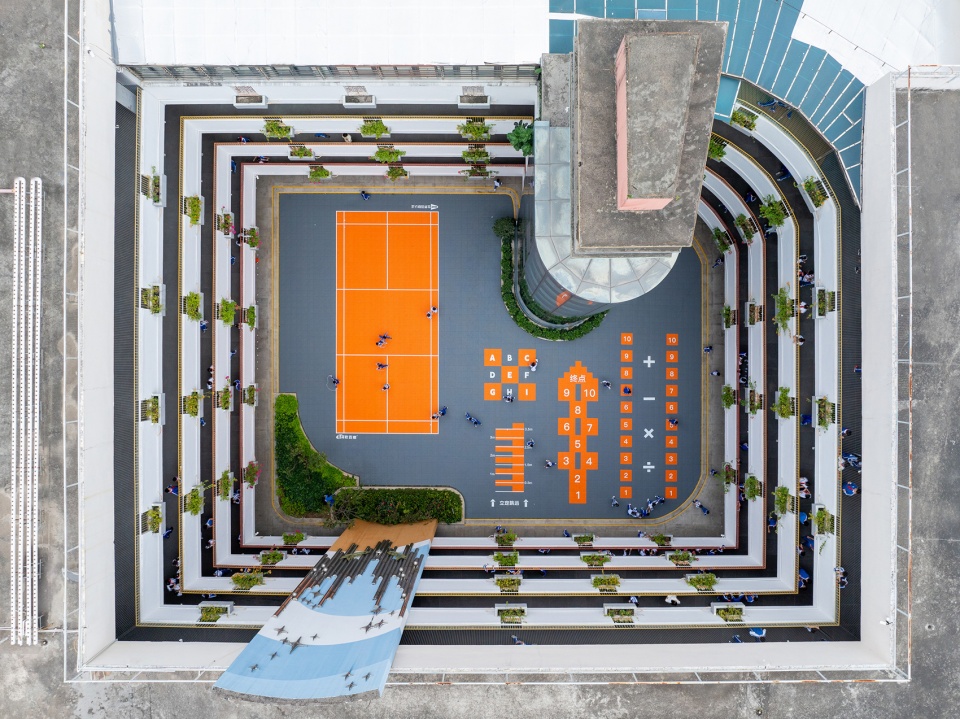
▼教学楼中庭俯瞰,Aerial view of the teaching building courtyard
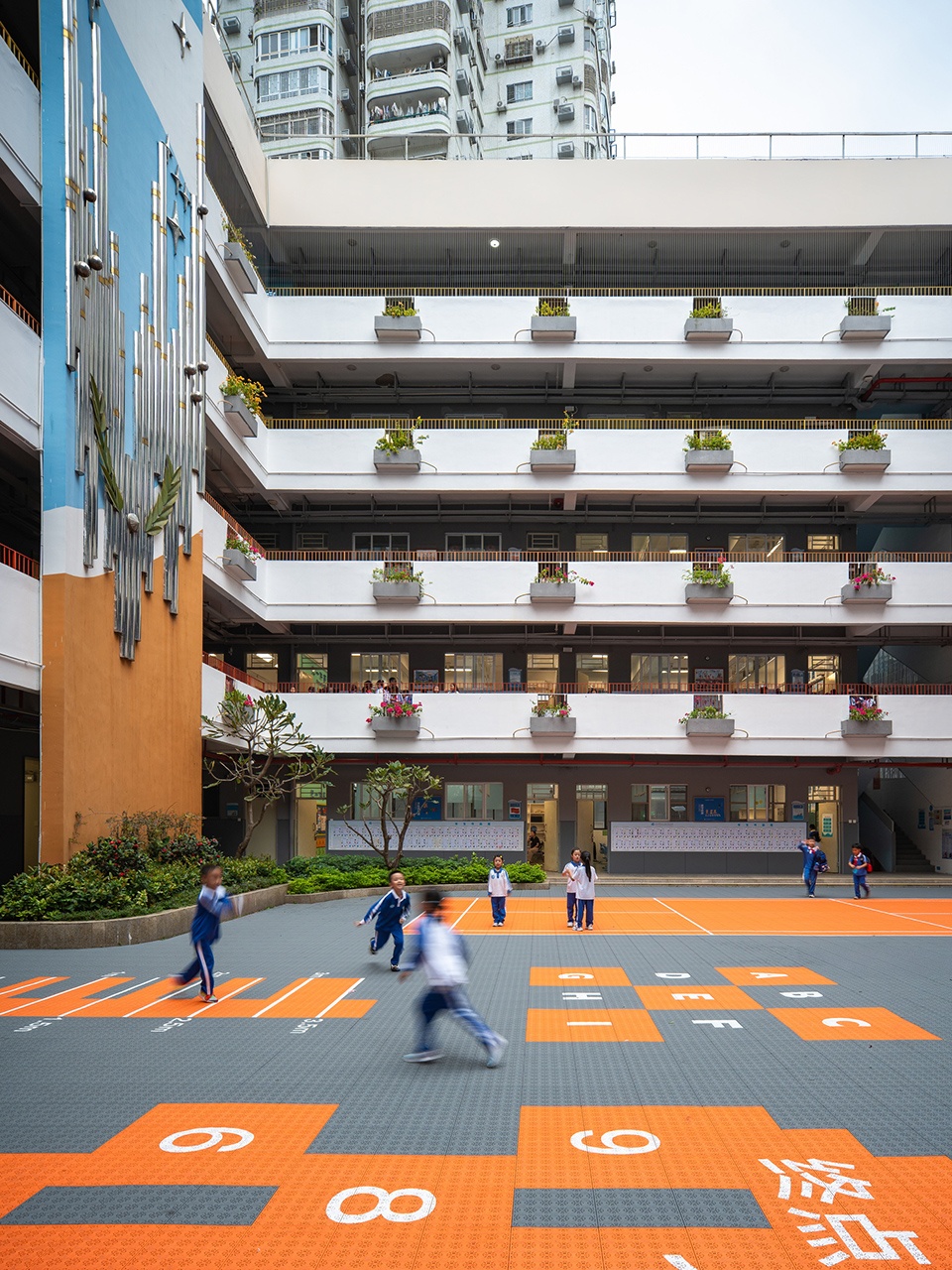
▼教学楼中庭,Teaching building courtyard
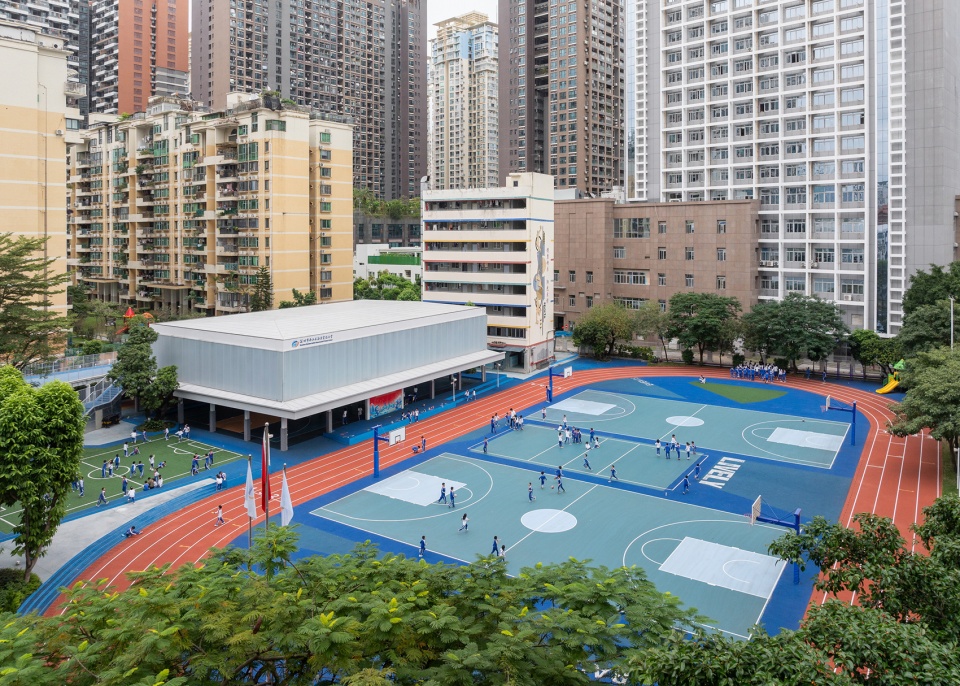
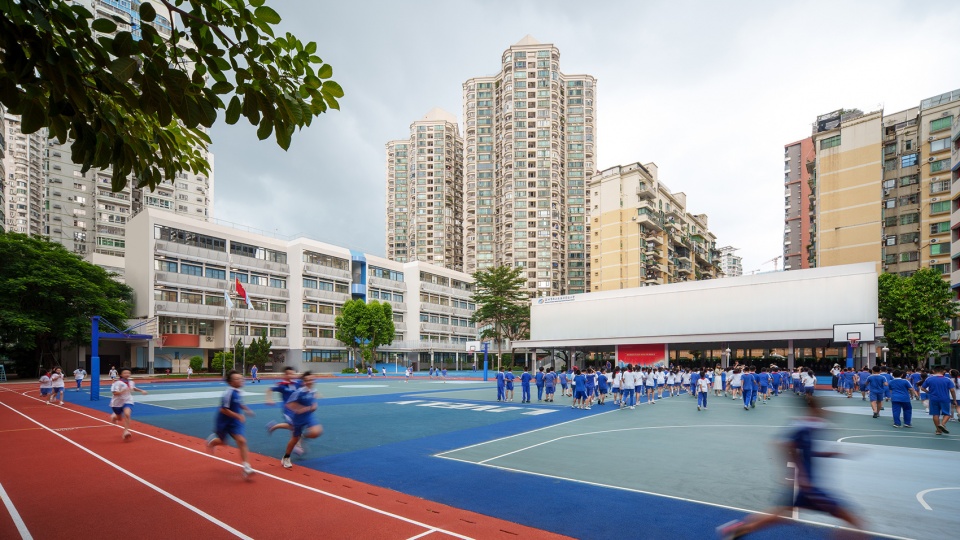
户外活动场地通过全面梳理,修复原有环形跑道,将跑道中央的足球场重新规划为两个标准篮球场和多功能活动区,场地东侧地势较高,原艺术长廊改为百米跑道,排球场则改造为下沉式五人制足球场与一座可供全天候使用的风雨操场。风雨操场整体采用钢结构顶棚与半透阳光板围合,底部架空处理保障通行与视觉通透。增加户外活动场地类型的同时,也为校篮球队训练提供了更专业优质的场地条件。
▼风雨篮球场爆炸分析图,
Exploded axonometric diagram of the all-weather basketball court
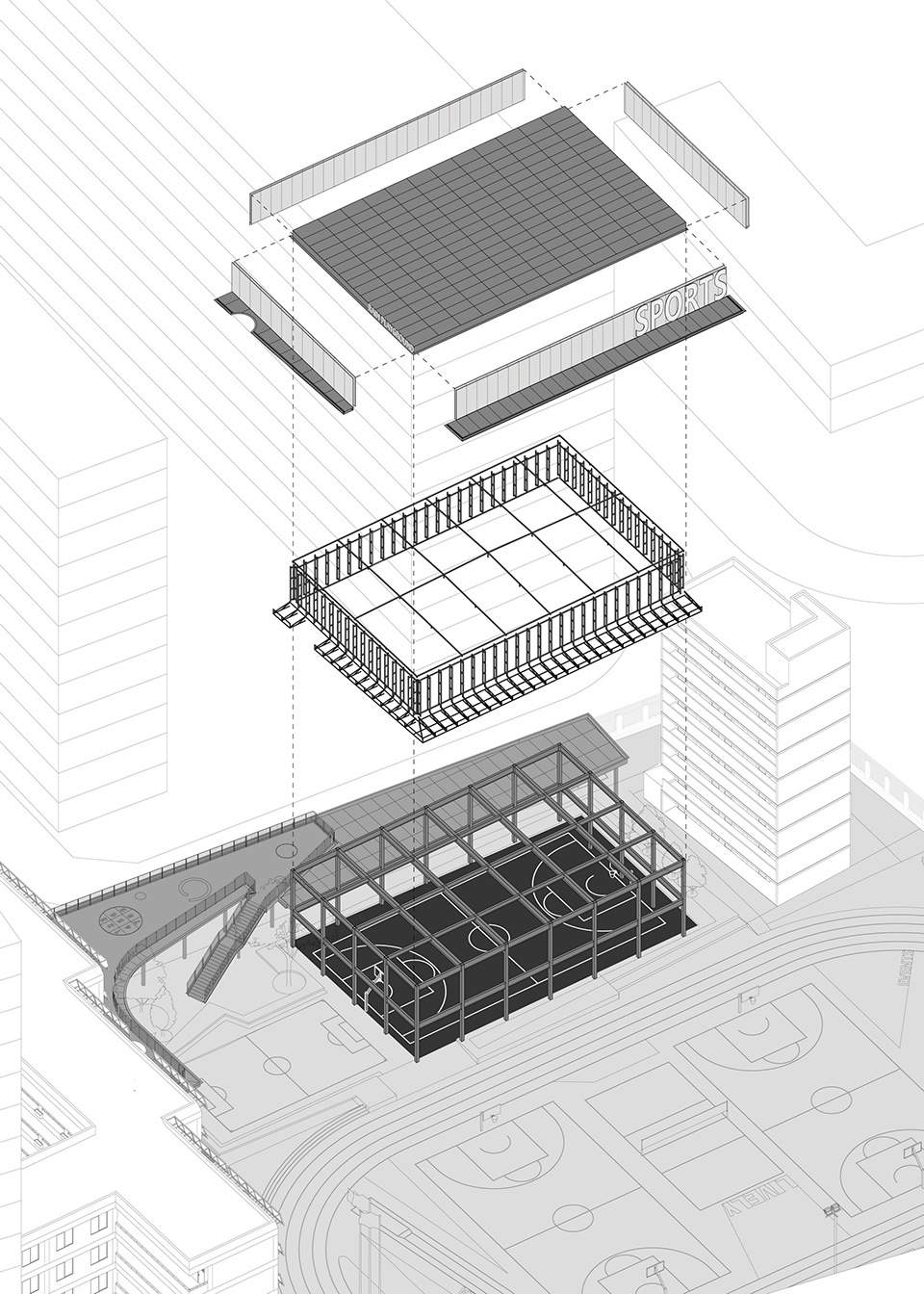
The outdoor activity areas underwent a comprehensive redesign. The original circular running track was repaired, while the football field inside the track was reconfigured into two standard basketball courts and a multi-functional activity zone. On the higher-elevation eastern side, the former art gallery was converted into a 100-meter straight running track. The volleyball court was transformed into a sunken five-a-side football pitch and an all-weather indoor sports hall. This indoor sports hall is fully enclosed by a steel-structured roof and semi-transparent polycarbonate panels, with a raised underside to ensure pedestrian flow and visual permeability. These changes not only diversified the types of outdoor activity spaces but also provided the school’s basketball team with more professional and higher-quality training facilities.
▼教学楼俯瞰户外活动区域,Outdoor activity area viewed from the teaching building
▼从教学楼南立面楼梯俯瞰校园户外活动场地,
Outdoor activity area viewed from the south stair of the teaching building
▼校园户外活动场景,Outdoor campus activity scene
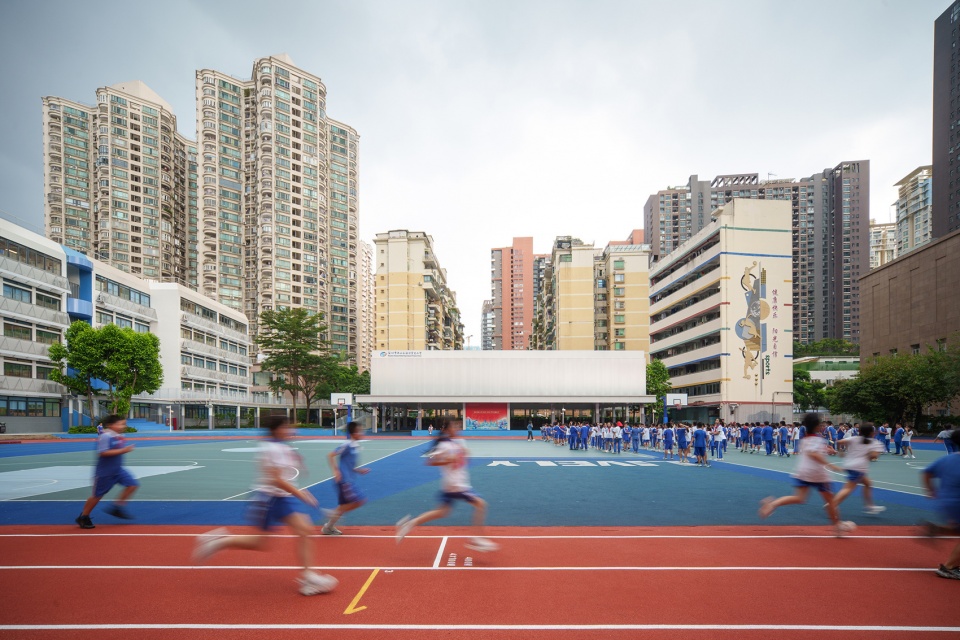
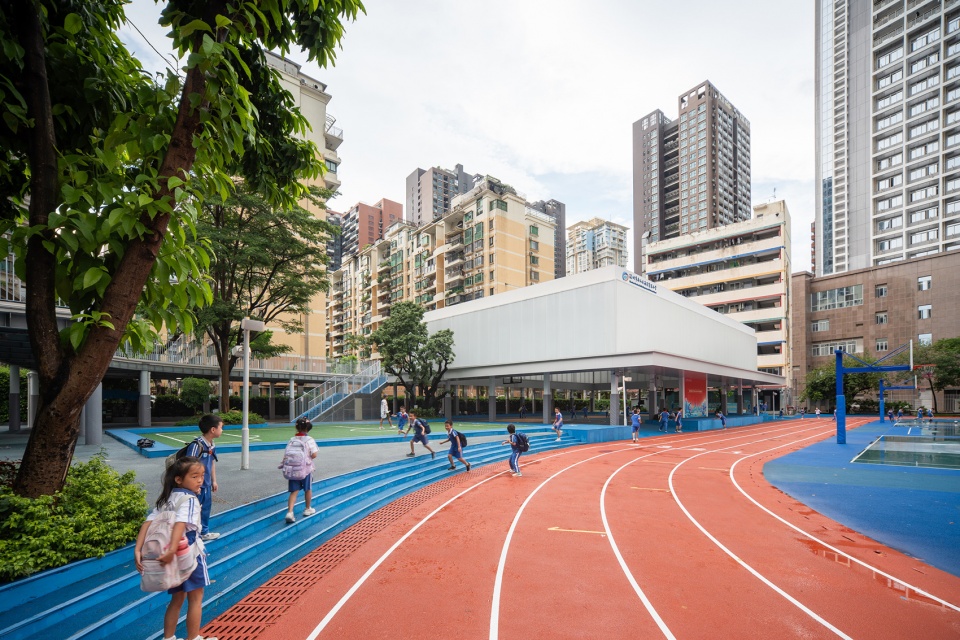
▼风雨篮球场,All-weather basketball court
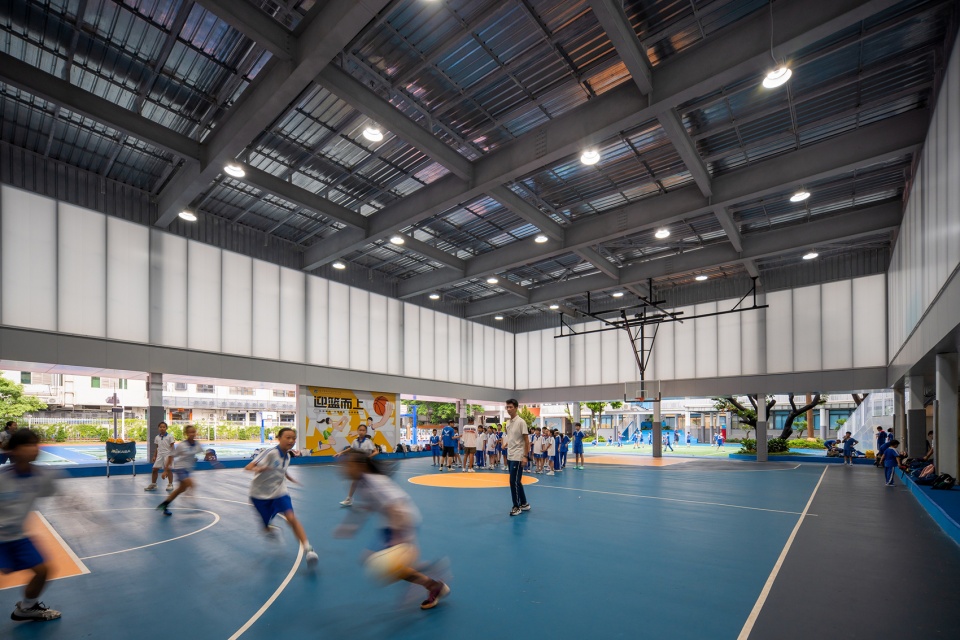
▼雨中的风雨篮球场,All-weather basketball court in the rain
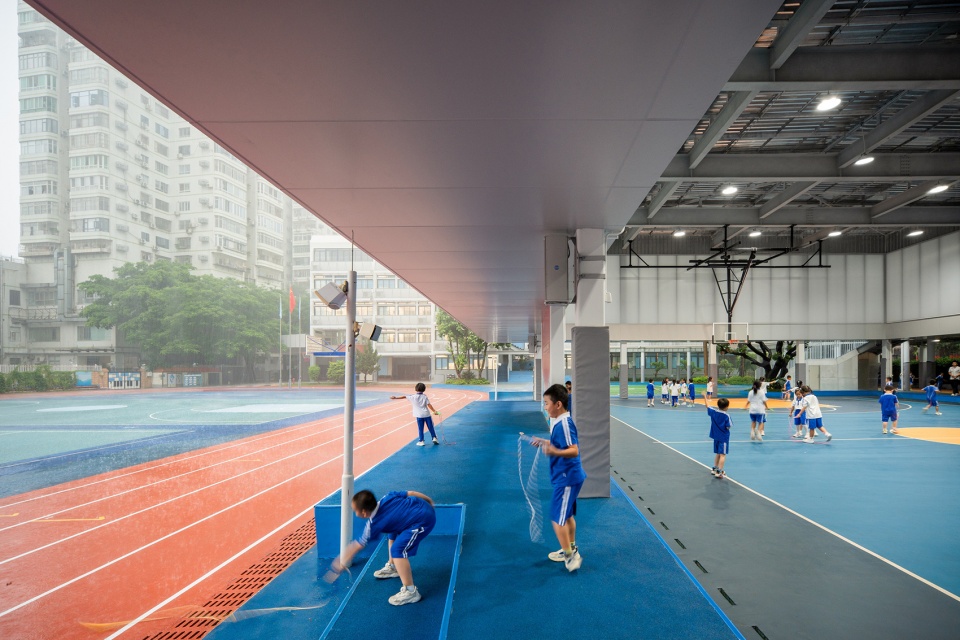
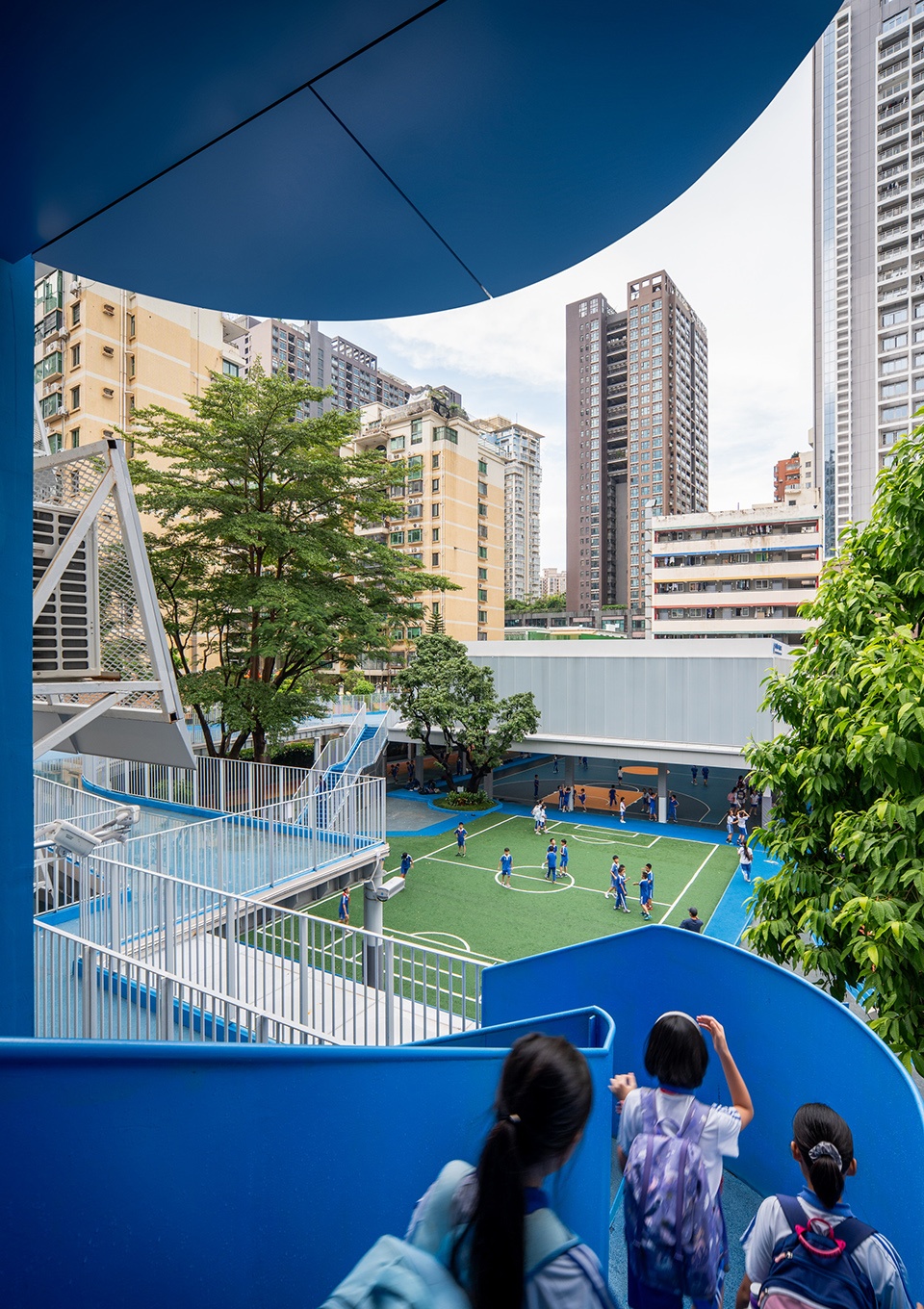
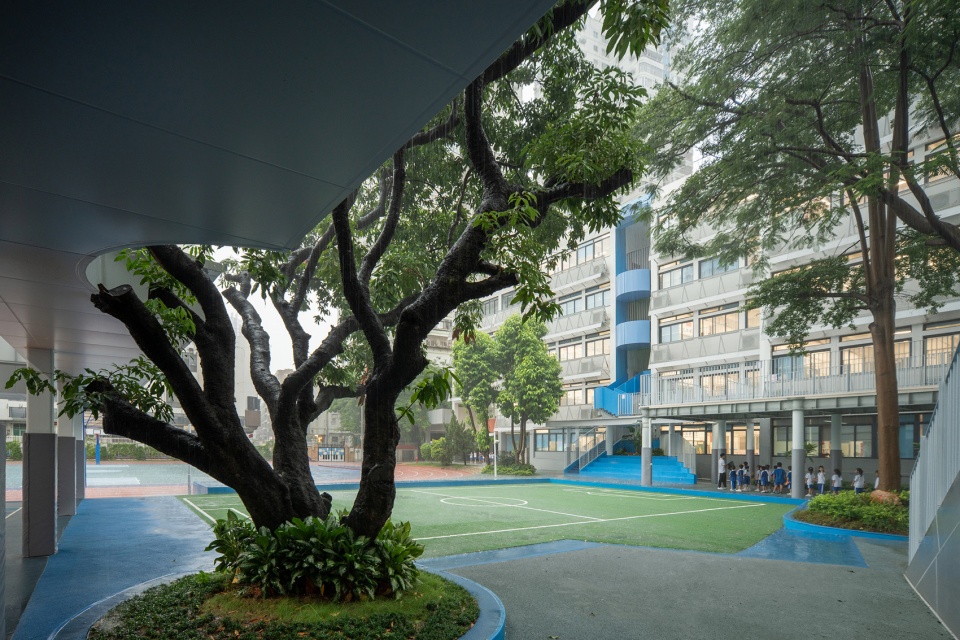
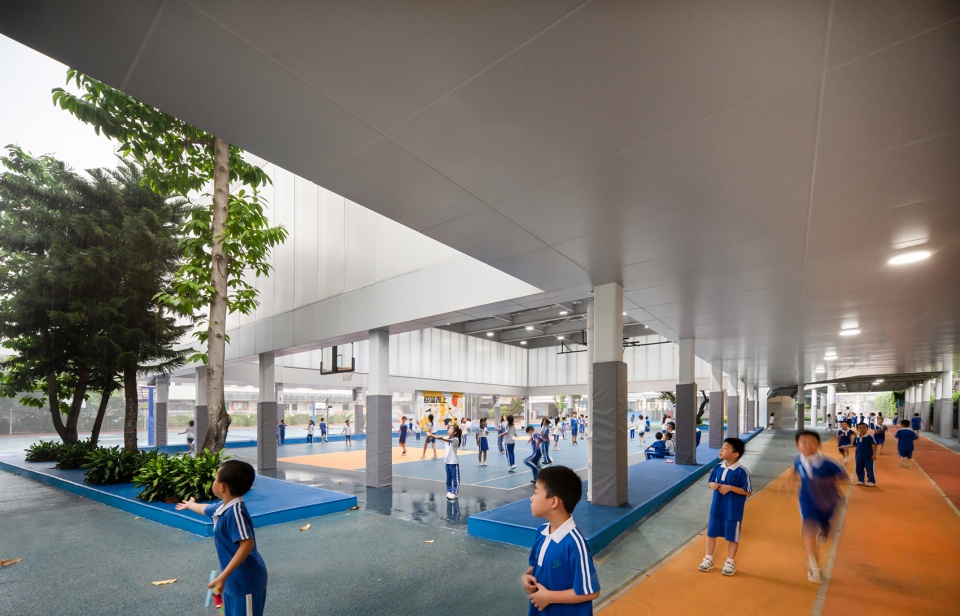
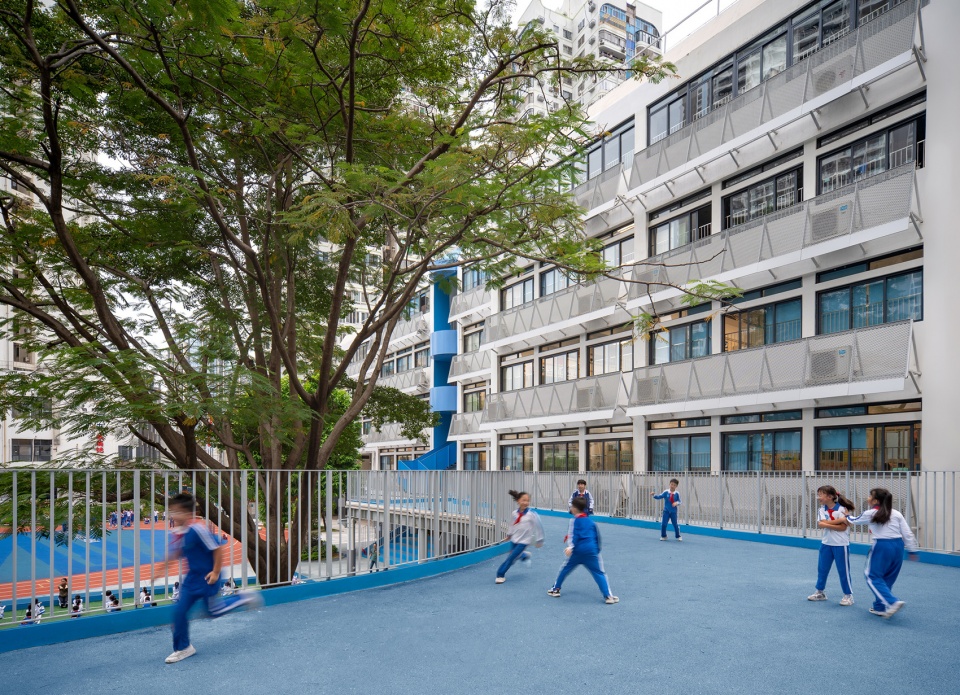
为满足户外活动场地遮阳避雨的功能需求,厘米制造通过构建连贯的廊架系统,从教学楼南侧延伸至五人制足球场,形成场地东侧半围合活动区域,并连接风雨操场和最南侧教师宿舍,不仅是一条便捷的通行路径,更成为连通各个功能区的空间纽带。特别是将户外教学活动结合在连廊系统之下,有效规避了高空坠物安全隐患,同时也形成了连续的半户外活动空间。此外,局部设置楼梯可上至连廊顶部,通过与教学楼南立面疏散楼梯的相连,进一步强化了校园内部的交通联系。整个连廊系统并非孤立存在,而是与建筑、景观、室内相互关联的有机整体。
To meet the functional needs for sun and rain shelter in outdoor activity areas, CM Design created a continuous canopy system. It extends from the south side of the teaching building to the five-a-side football pitch, forming a semi-enclosed activity zone on the eastern side of the site. This system also connects the indoor sports hall with the southernmost teachers’ dormitory, serving not only as a convenient passageway but also as a spatial link that integrates various functional areas. Notably, outdoor teaching activities are incorporated under this canopy system, effectively mitigating the safety hazard of falling objects from height. Simultaneously, it creates a continuous semi-outdoor activity space. Furthermore, strategically placed staircases provide access to the roof of the canopy. By connecting with the emergency staircases on the south façade of the teaching building, they further strengthen the internal circulation network within the campus. The entire canopy system does not exist in isolation; rather, it forms an integrated whole that interconnects with the architecture, landscape, and interior spaces.
▼雨中的风雨连廊景观,Canopy corridor landscape in the rain
▼雨中的风雨连廊跑道,Canopy corridor running track in the rain
▼风雨连廊二层活动场地,Second-floor activity space of the canopy corridor
▼从风雨连廊楼梯看户外活动场地,
Outdoor activity area viewed from the canopy corridor stair
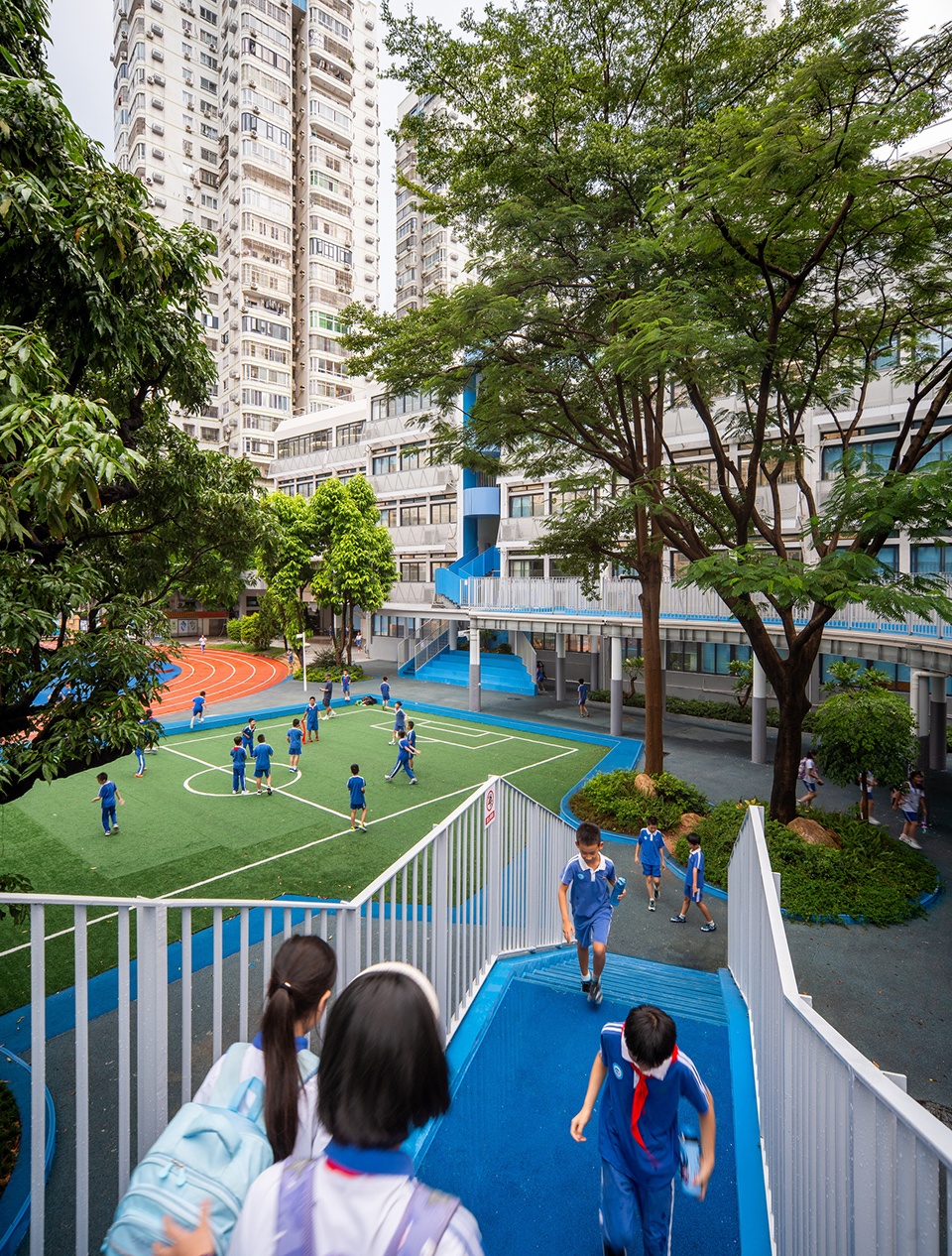
景观设计中保留并梳理场地乔木,利用场地高差沿运动场地边缘形成观赛看台、表演舞台和升旗台,打造凝聚校园文化的重要节点。蓝色调EPDM、硅PU等满足无障碍防滑地面材料整体调和景观场地。围墙边界爬藤植物与花圃的更新既美化了校园空间,也有效的软化新的校园边界。
▼施工过程,Construction process
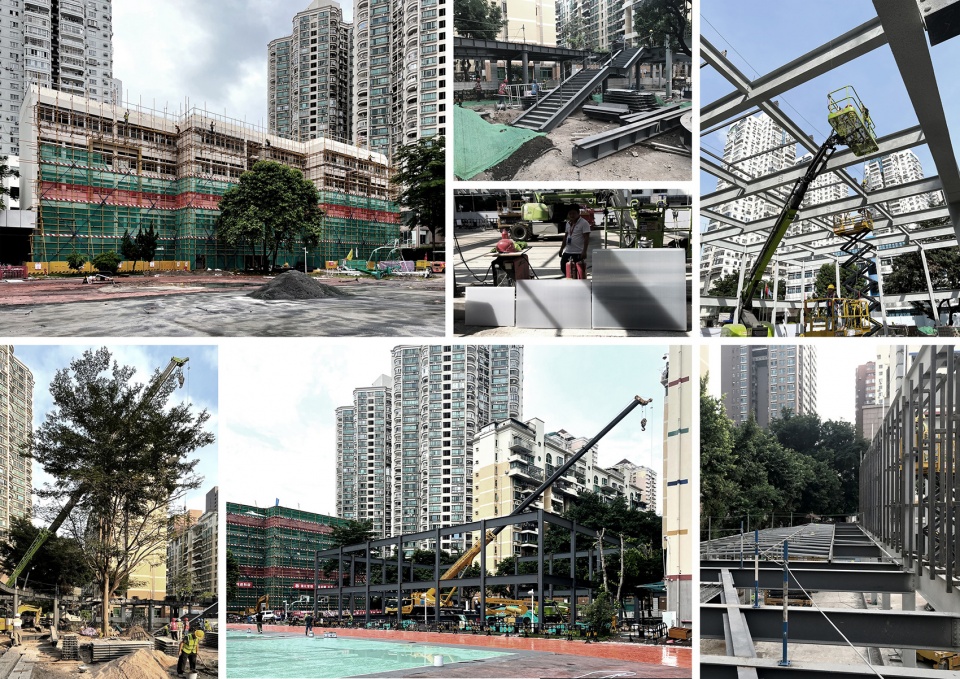
In the landscape design, existing trees on the site were preserved and strategically arranged. The site’s level changes were utilized to create bleacher-style seating, a performance stage, and a flag-raising platform along the edge of the sports field, forming a key node that embodies the campus culture. Simultaneously, blue-toned, seamless ground materials such as EPDM and silicone PU—selected for their slip-resistant and accessible properties—were applied throughout to create a cohesive and harmonious landscape setting. The renewal of climbing plants and flower beds along the perimeter walls not only beautifies the campus space but also effectively softens the new campus boundaries.
▼建筑立面细部,Façade detail
此次多维度焕新改造,通过空间赋能不仅可以提升了校园的空间品质,并重构了教学空间与育人理念的内在联系,实现了空间与教育理念的深度融合。使建筑空间与校园景观成为滋养特色教学的土壤。同时,空间介入有效回应了高密度城市语境下老旧校园更新的复杂诉求,为师生创造出一个安全、舒适、富有启示性的教学生活环境。
This multi-dimensional renewal project employs spatial empowerment, which has not only enhanced the quality of the campus environment but also reconstructed the intrinsic connection between educational spaces and the philosophy of holistic education. This achieves a deep integration of space and educational principles. It has transformed the architectural spaces and campus landscape into fertile ground that nurtures specialized teaching and learning. Simultaneously, this spatial intervention effectively addresses the complex demands of renovating aging campuses within the high-density urban context. It has created a safe, comfortable, and inspirational environment for teaching and daily life for both teachers and students.
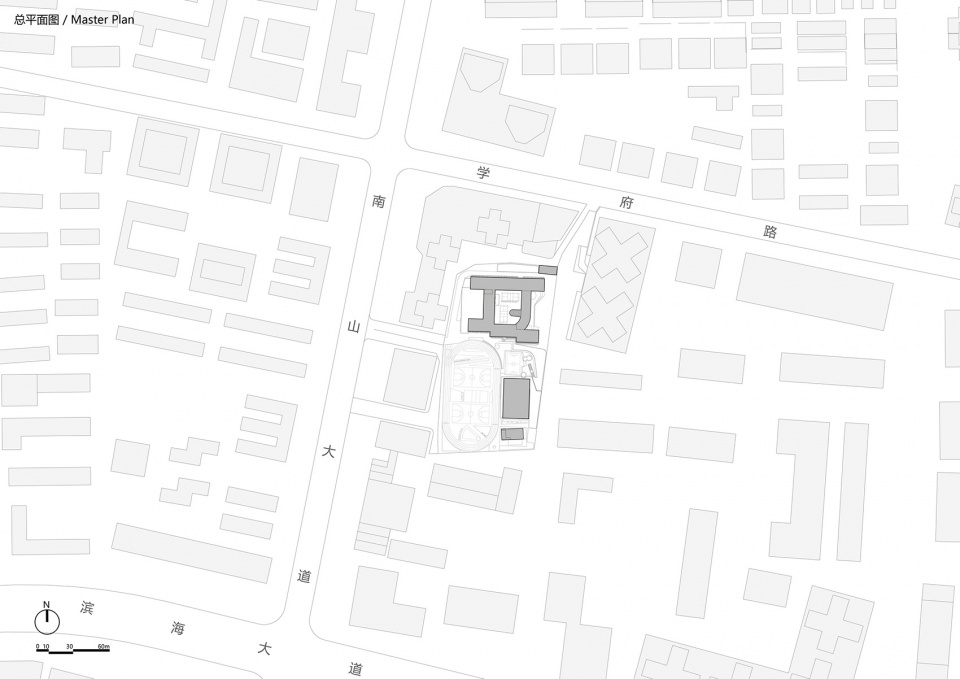
▼总平面图,Master plan
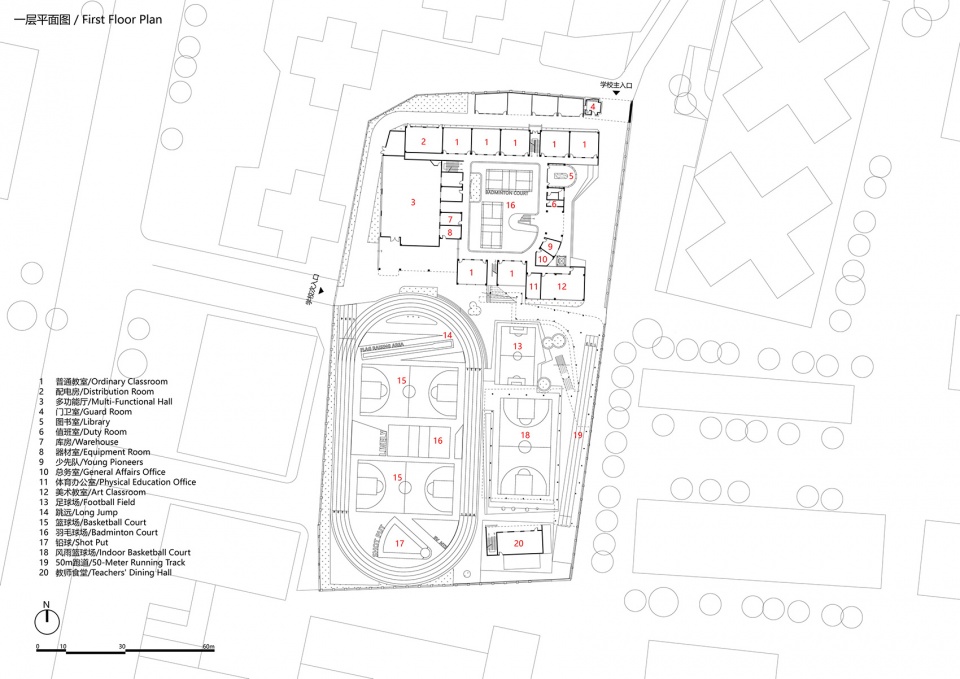
▼一层平面图,First floor plan
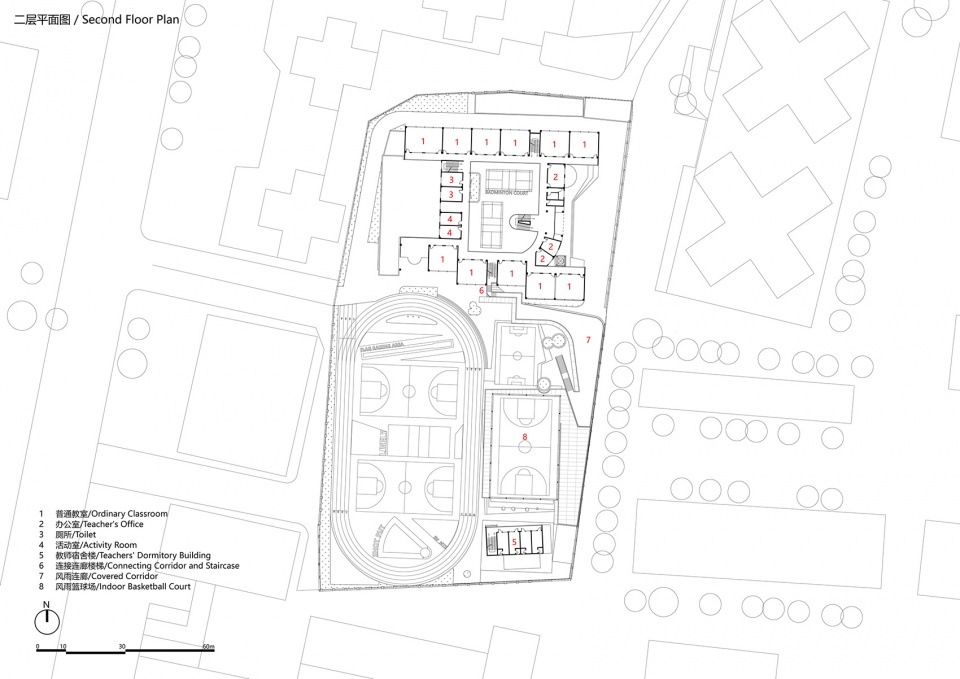
▼二层平面图,Second-floor plan
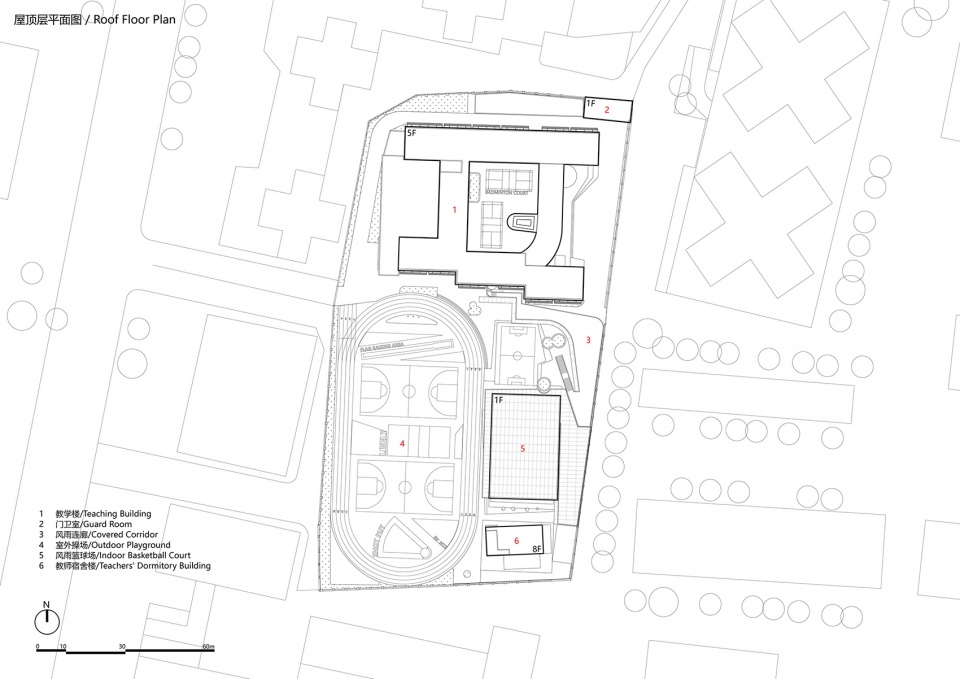
▼屋顶层平面图,Roof plan
Project Name: Shenzhen Nanshan District Hundred Schools Renewal – Haibin Experimental Primary School Renovation
Entrusted owner: Shenzhen Nanshan District Construction Works Bureau
Location: Nanshan District, Shenzhen
Concept Design: CM Design Co., Ltd., Shenzhen
Architect in Charge: Chen Danping
Project Architect: Qiu Chen
Project Manager: Li Lei
Design Team:Wang Zhen、 Zhu Liyin、Kuang Ranran、Yao Mingming、Lin Liqing、Chen Xiting
Project Photography: Zhang Chao、CM Design
Development Company: CITIC City Development Investment Group Co., Ltd.
Construction Document Design: Shenzhen Huasen Architectural & Engineering Design
Construction Company: Shenzhen Construction Engineering Group Co., Ltd.
Site Area: 11,207 m²
Above-Ground Floor Area: 8,639 m²
Design Period: 2023–2024
Construction Period:2024.7-8, 2025.7-8
Personnel Involved:
General Planner: Zhou Hongmei
Academic Planner: Zhu Jingxiang
Design Mentor: Wang Fangji
Organization: Yang Lijun, Dong Shuzan, Gao Xuexiang, Liu Jiajun, Zhao Zhikun, Lin Jiani, Yao Honggang, Li Bo (Nanshan District Construction Works Bureau); Yang Jun, Liu Xiaoning, Xu Qiancai, Deng Jianfei, Liu Xing (Nanshan District Education Bureau); He Yingjie (Hundred Schools Renewal Secretariat)