SaM&Jo眼镜空间,以色列 / YET Architecture
不同于眼镜零售空间惯常采用的语法——明亮灯光、白色货架与高度重复的陈列方式——这一设计选择从根本上拆解并摒弃了这种语言。这里没有成墙铺陈的产品,也没有令人眼花缭乱的选择压力。整个项目围绕三个核心概念展开:存在、间隔与注意力。
Rather than follow the typical grammar of eyewear retail—bright lights, white shelves, repetition—the design dismantles that language altogether. No walls of product. No overwhelming choice. Instead, the project is constructed around three ideas: presence, interval, and attention.
▼项目概览,Overview of the project
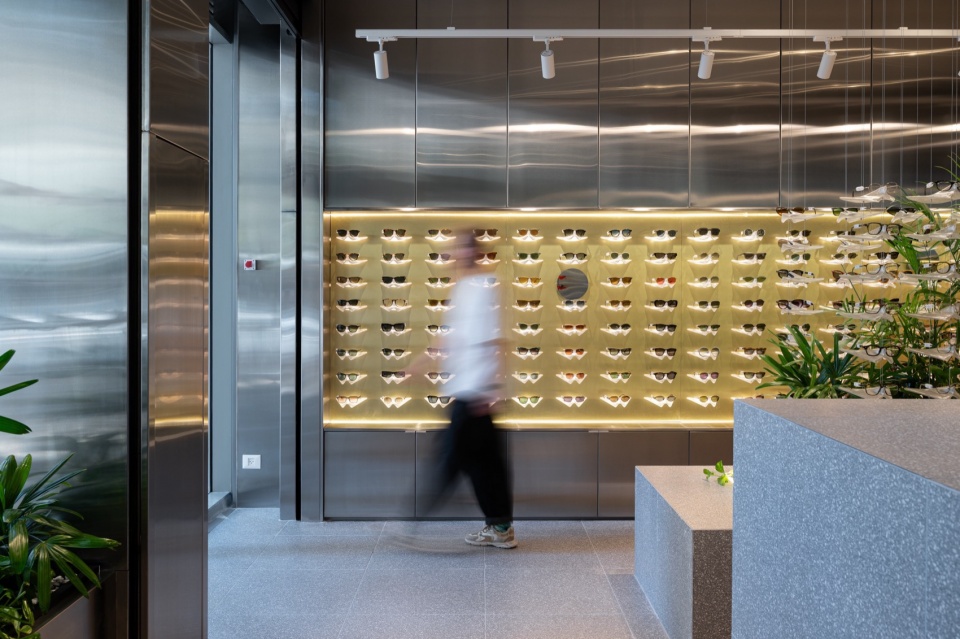
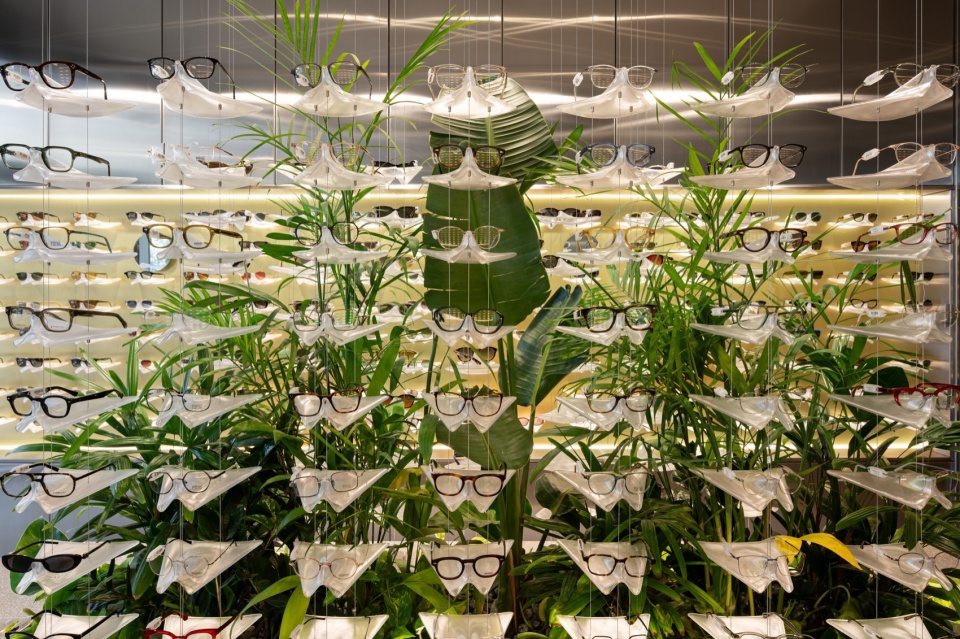
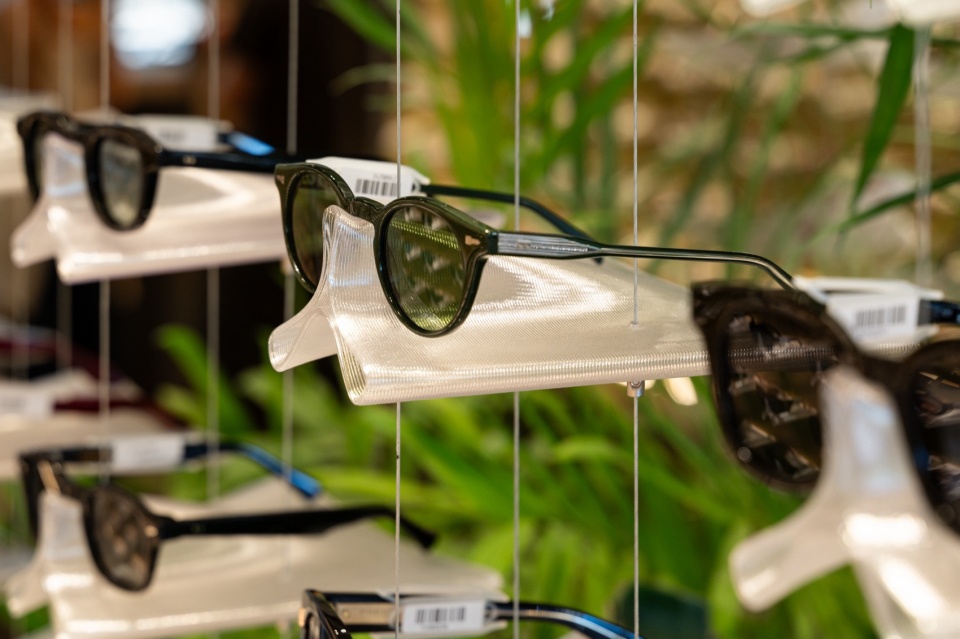
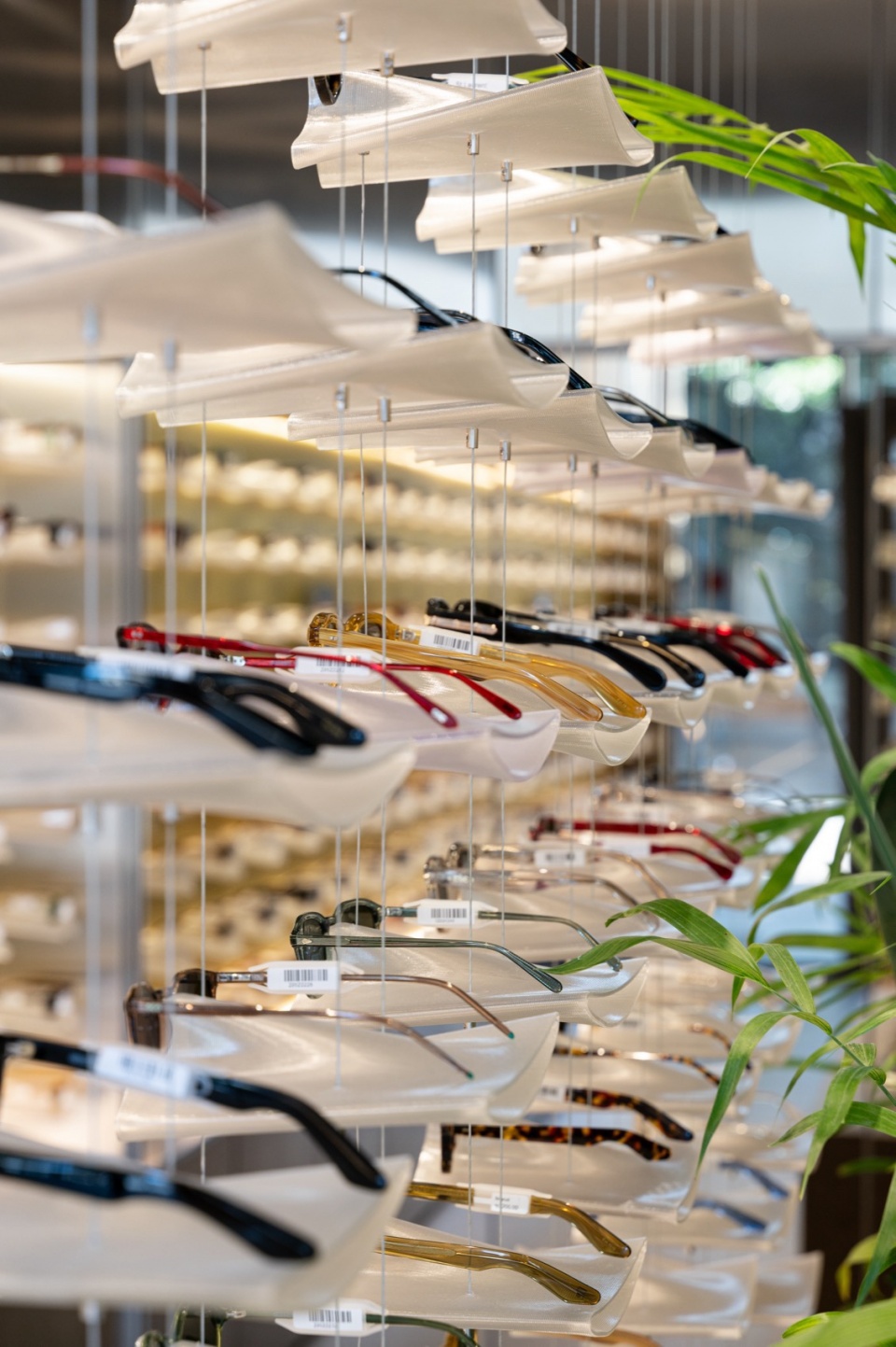
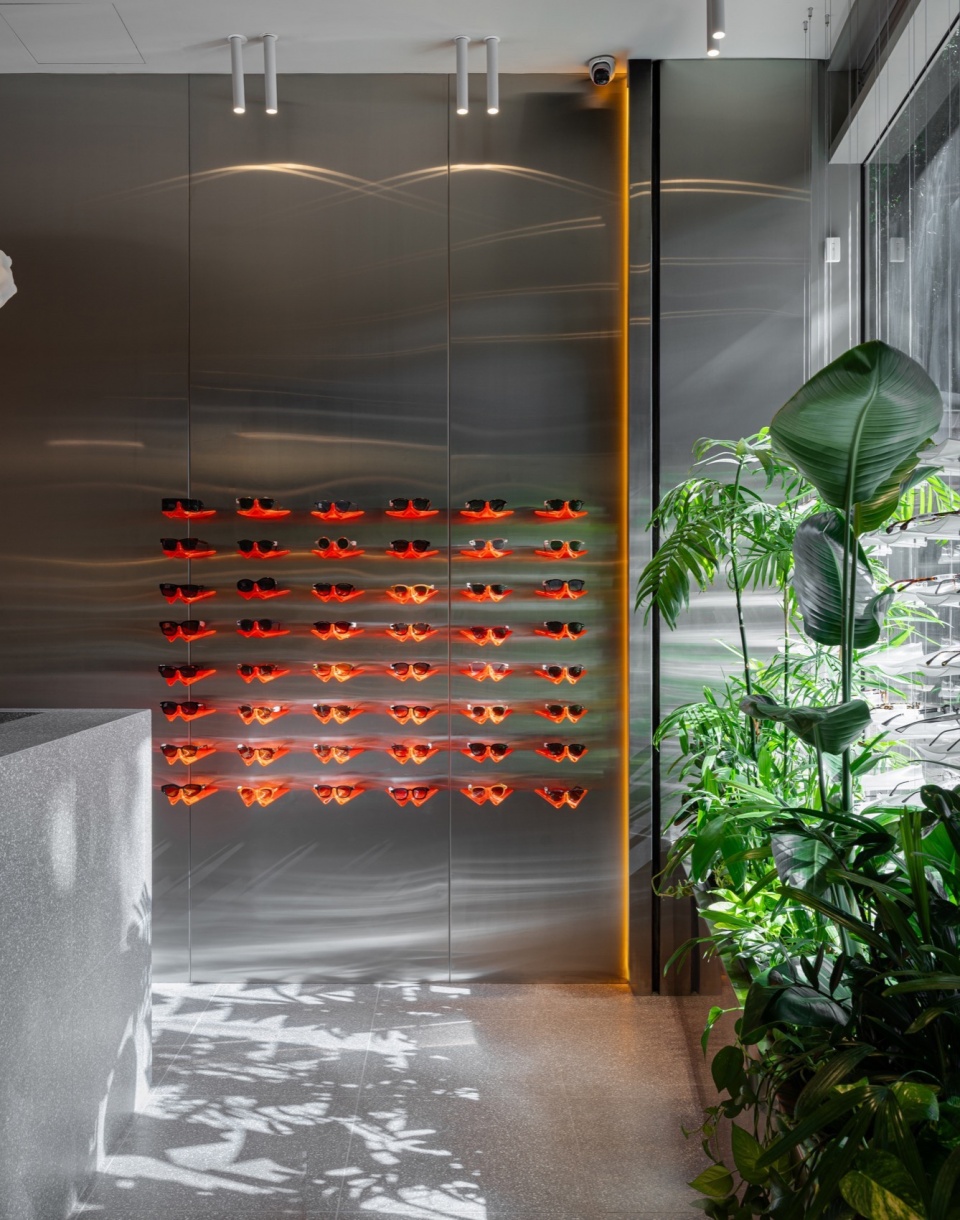
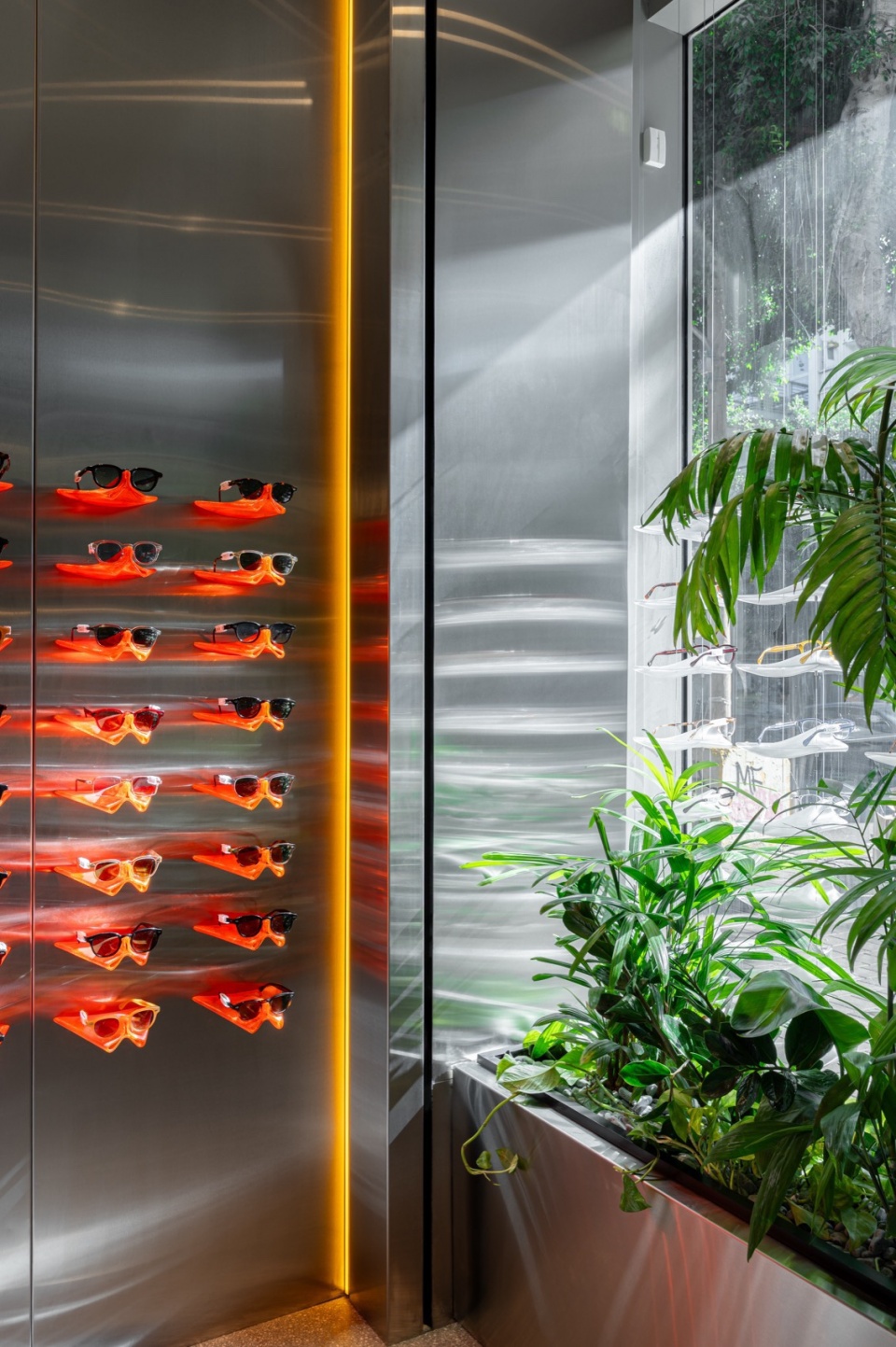
每一副太阳镜都被视作一个独立而完整的瞬间。它们分别陈列在为该空间量身定制的3D 打印支架上——这些支架由建筑师为项目反复打样、研发并制作——或悬浮于空中,或安装于墙面之上,每一次只呈现一件物品。这样的展示方式引导专注,让每一副镜架都能以自身的节奏被观看、被感知。没有堆叠,没有密集陈列,始终是一件一件地呈现。空间的节奏并不催促前行,而是放慢脚步,邀请人们停留。
Each pair of sunglasses is treated as a singular moment. Each pair of sunglasses is displayed on a custom 3D-printed holder (Developed and fabricated with architects through countless prototypes for the space)—either suspended in space or mounted on the wall—framing just one object at a time. The design invites focus, allowing each frame to be seen and felt on its own terms. No massing. Just one object at a time. The spatial rhythm of the shop doesn’t push you forward. It slows you, asking you to pause.
▼入口,Entrance
▼3D 打印展示架,3D-printed holder
▼展示方式引导专注,The design invites focus
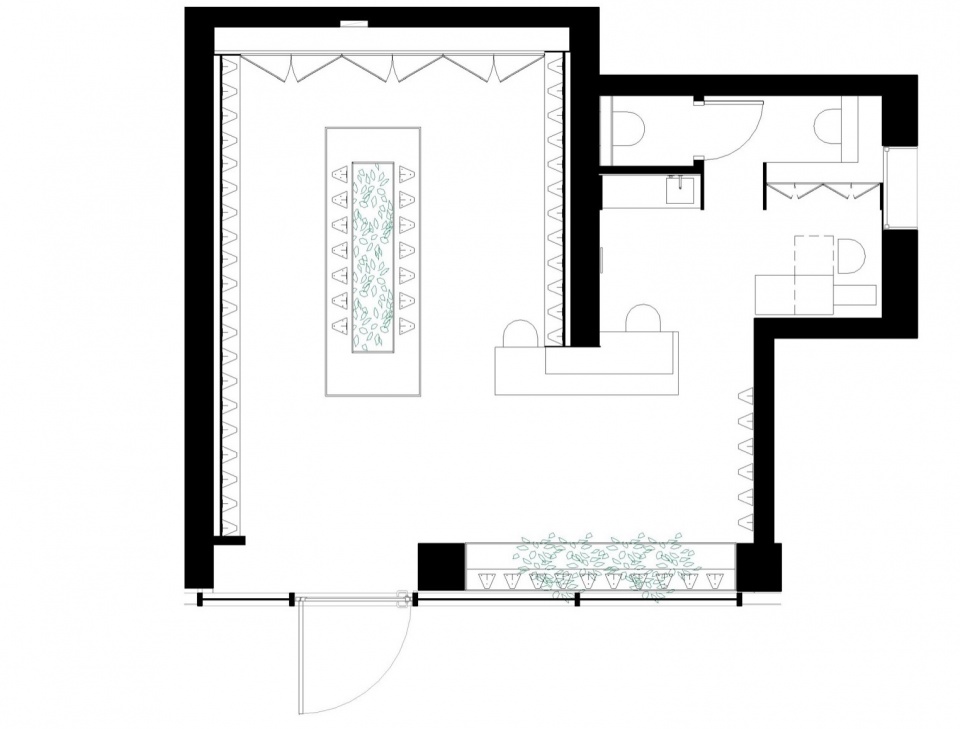
空间的核心是一座包覆水磨石的种植池。它作为一种空间过滤器存在——切分视线、柔化动线,并在同一时间内减少可被看到的物件数量。种植池不仅锚定了平面布局,也建立起一种行为逻辑:人们围绕它行走。它并非用来分隔空间,而是用来校准空间——引入节奏、制造间隔,并放慢访客的观看速度。
▼轴测图,Axon diagram
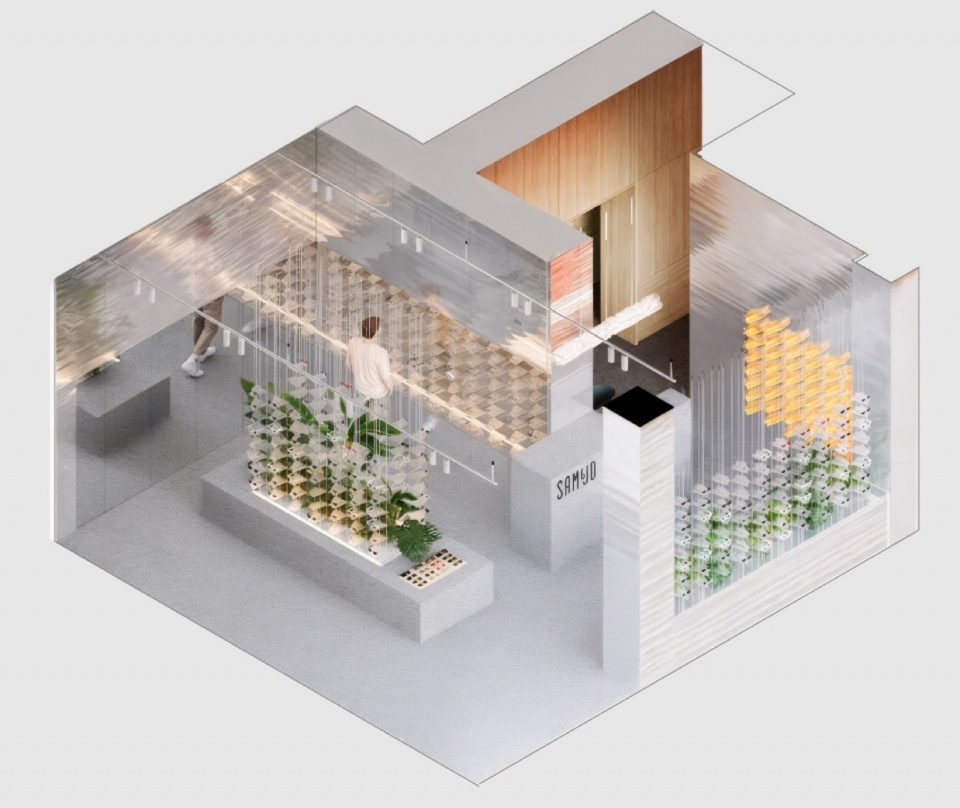
At the heart of the space is a terrazzo-clad planter. It operates as a spatial filter—breaking the field of view, softening circulation, and reducing the number of visible objects at once. It anchors the plan and establishes a behavioral logic: people move around it. The planter doesn’t divide—it calibrates. It introduces rhythm, creates intervals, and slows the visitor’s gaze.
▼中央种植池,Central planter
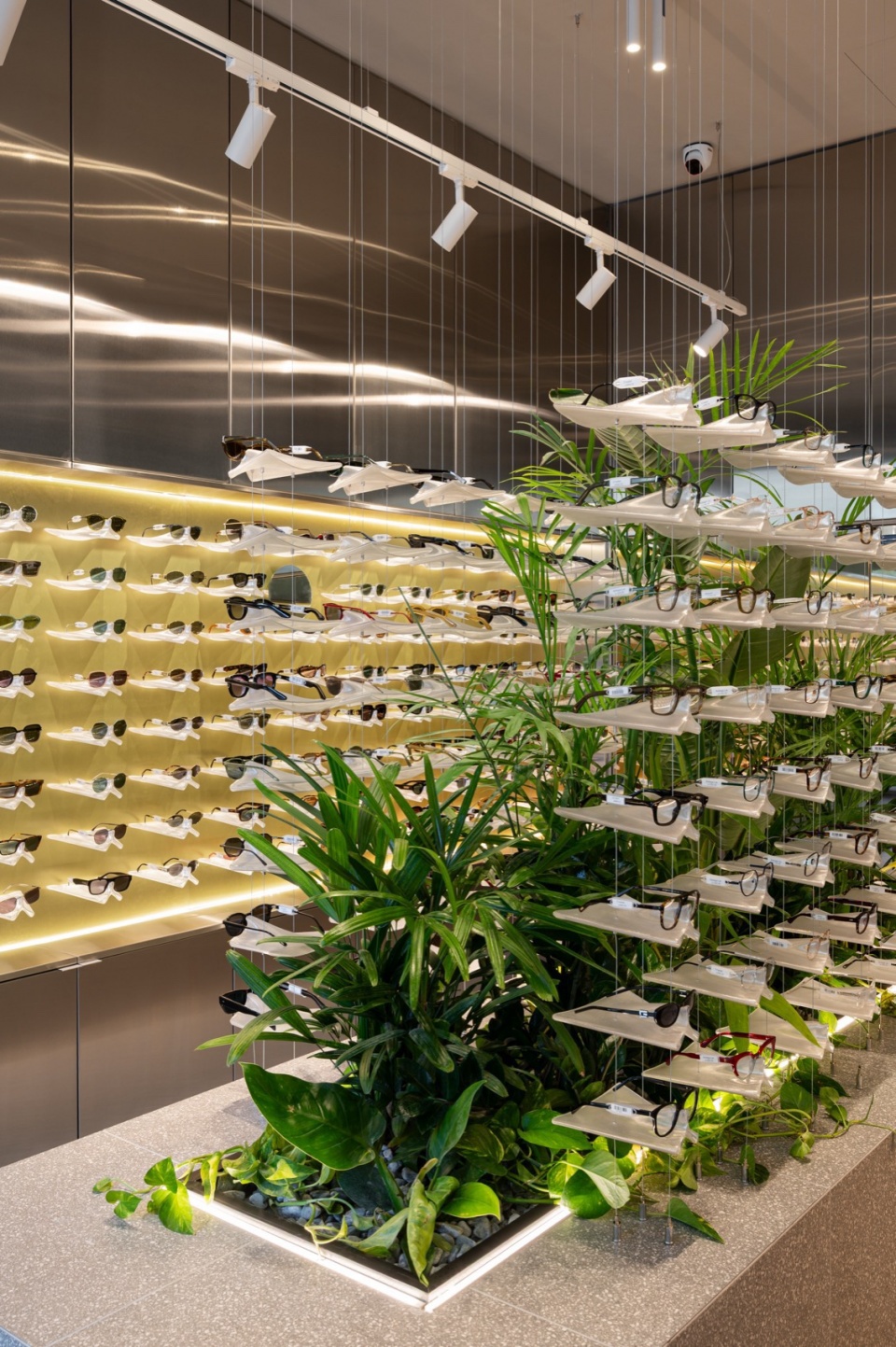
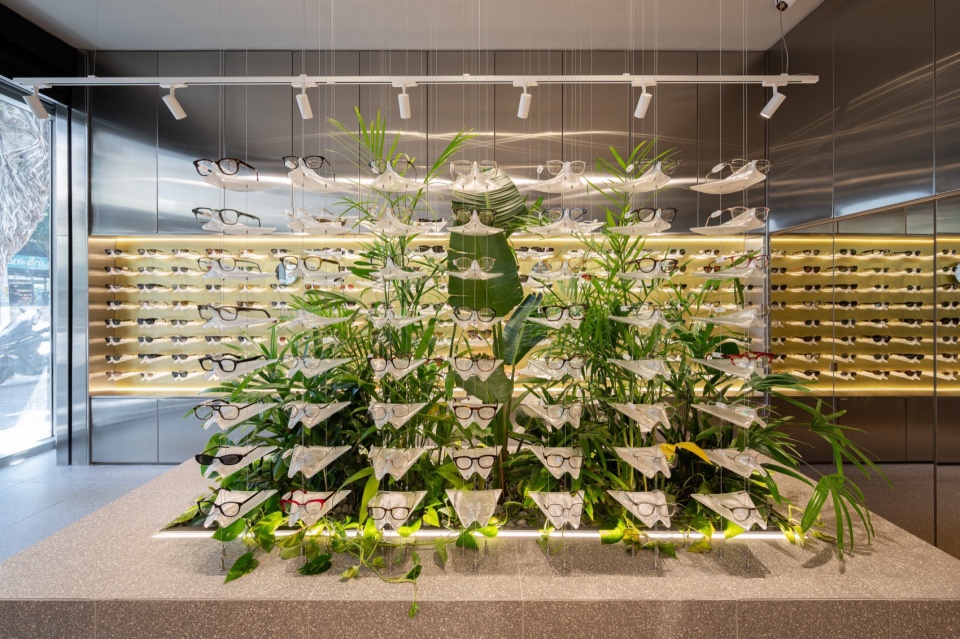
从种植池的两侧,眼镜仿佛向外“生长”——悬挂在几乎不可感知的纤细钢索之上。每一副镜架都悬浮在属于自己的空气框架中,与墙面、货架乃至环境噪音保持距离。种植池与悬浮支架共同构成一个完整的空间系统——一者有机,一者人为制造——协同运作,编排着注意力在空间中的流动方式。
From its flanks, glasses appear to grow outward—suspended on delicate cables that seem almost immaterial. Each pair hovers in its own frame of air, detached from the wall, from the shelf, from noise. Together, the planter and the suspended holders form a single spatial system—one organic, one fabricated—working in tandem to choreograph how attention moves.
▼完整的空间系统,Single spatial system
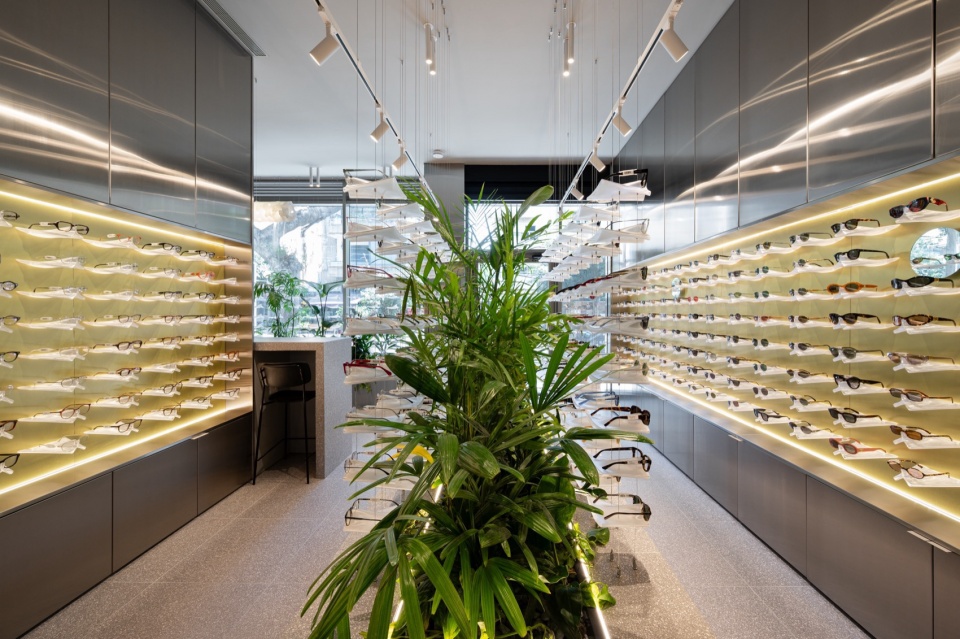
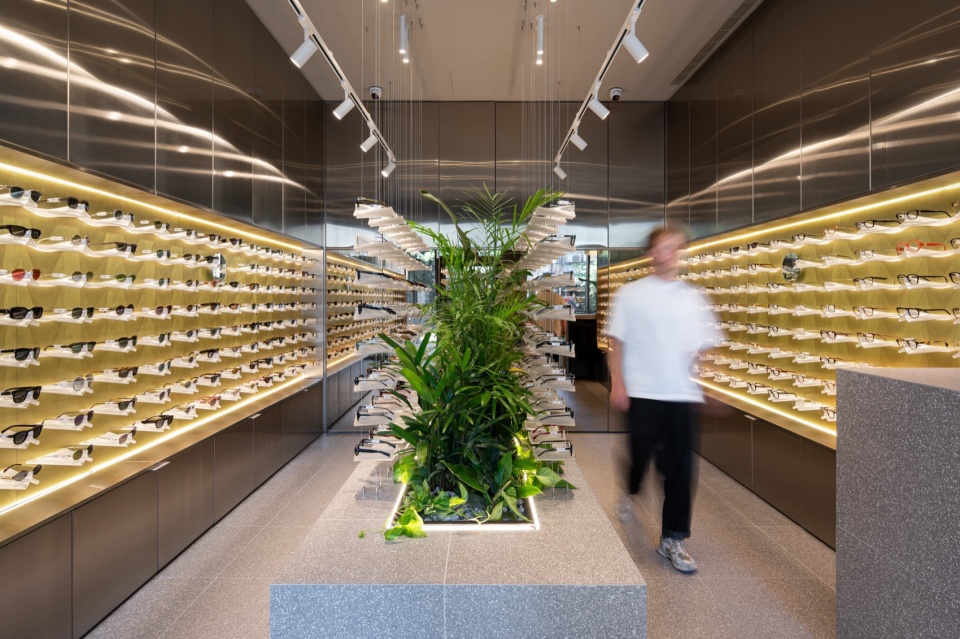
如同YET Architecture的许多项目一样,植物并非空间完成后的附加元素,而是设计的起点。它们塑造使用方式,也组织空间体验。在这里,植物还承担着对比的角色:在精密的网格体系之间,嵌入一种鲜活的存在感,以垂直的柔软性打破展示逻辑中惯常的水平秩序。
As with many YET Architecture projects, plants are not an afterthought, but a starting point. They shape use. They structure experience. In this case, they also establish contrast: a living presence held between grids of precision, a vertical softness that breaks the horizontal logic of display.
▼鲜活的植物元素,a living greenary
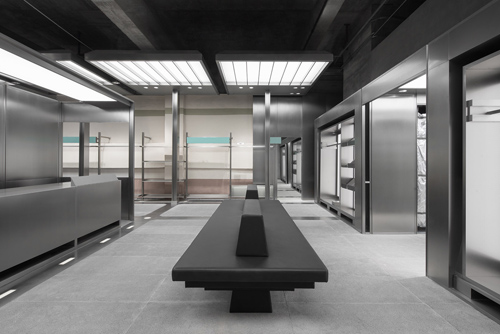
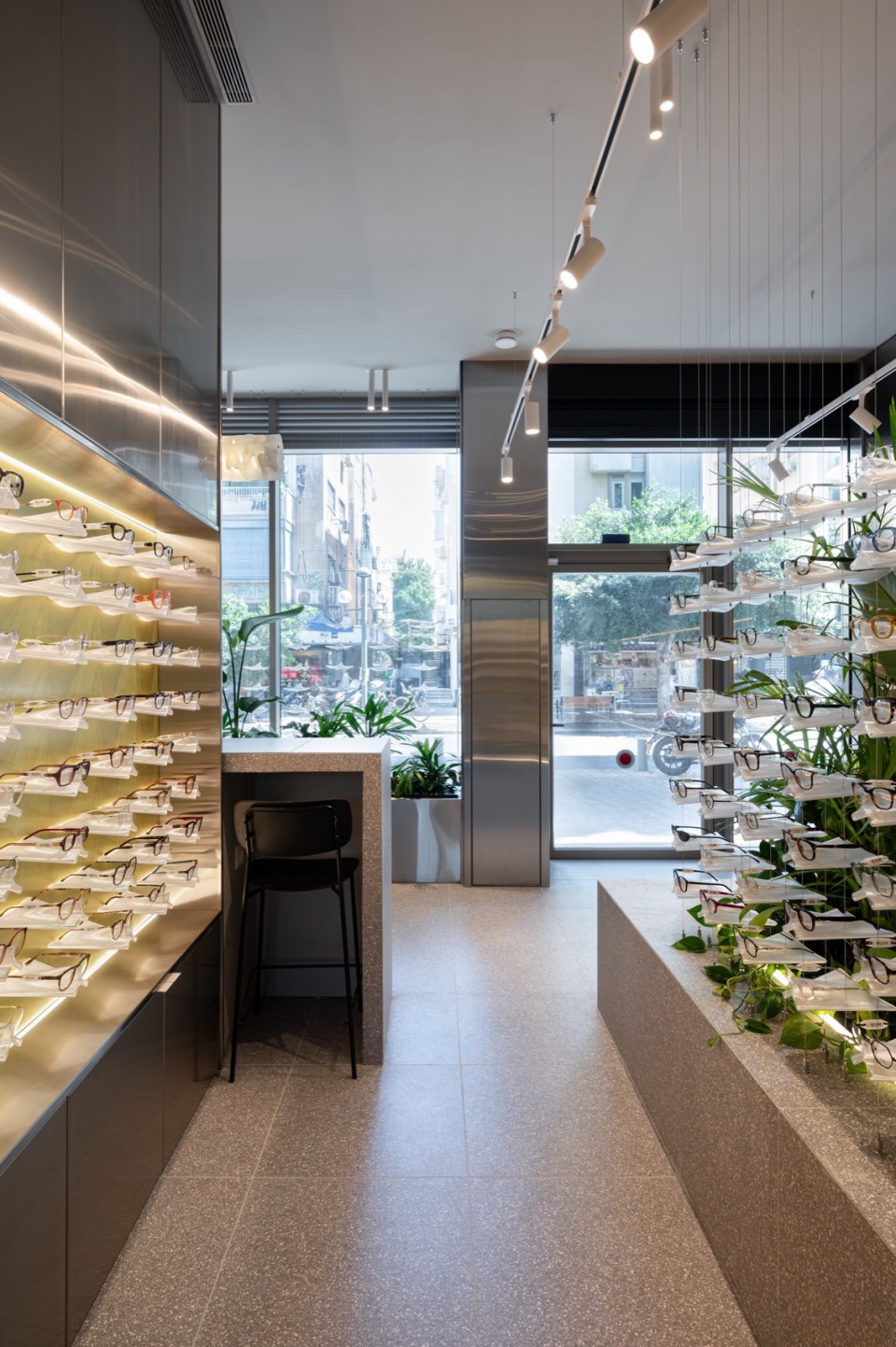
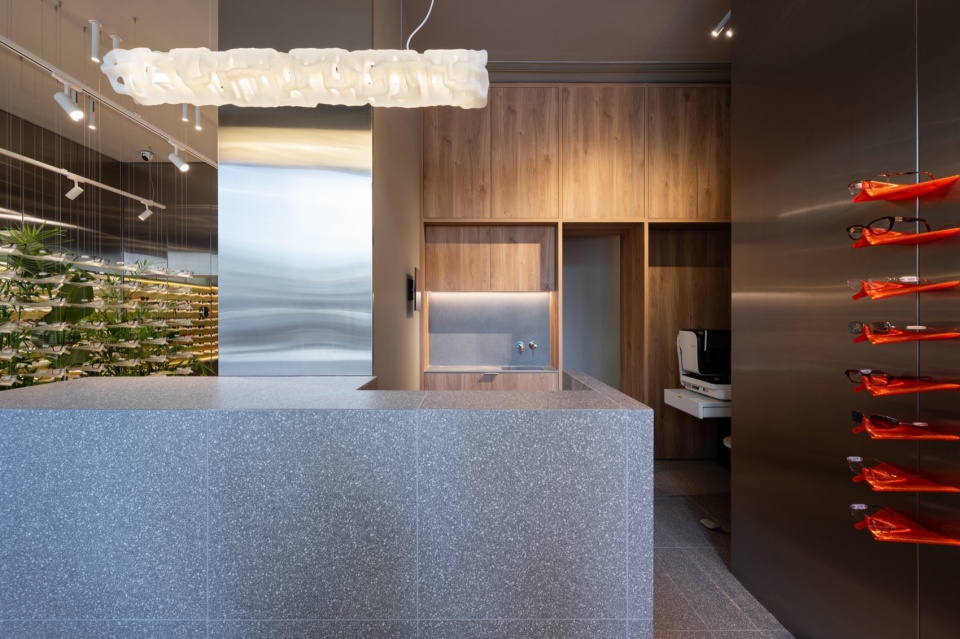
店铺被划分为两个彼此连通的空间,由一条连续的柜台加以区隔。一侧空间轻柔、明亮,以水磨石与不锈钢定义气质;另一侧则更为紧密厚重,橙色支架与木饰面形成包裹感。这种转换安静而克制,却经过精确控制。两种状态共同构成空间节奏——在松弛与压缩之间形成对照。
The store is divided into two connected rooms, separated by continuous counter. One side of the shop is soft, pale, defined by terrazzo and stainless steel. The other is denser—lined with orange holders and wooden cladding. The shift is quiet, but deliberate. Together, these two conditions generate a rhythm: a contrast between calm and compression.
▼不同的空间节奏,Space rhythm
▼柜台,Casher
材料的选择并非出于装饰,而是基于它们对光线与时间的回应能力。水磨石以克制的质感吸收光线,不锈钢则在不断变化的表面上反射并漫射光影。一面镜墙在视觉上将空间加倍,同时引入一种张力——既显露,又遮蔽。眼镜支架本身采用半透明 PETG 材料,由建筑师在内部制作完成,其微妙的透光性赋予镜架一种近乎悬浮的轻盈感。
Materials were selected not for decoration, but for their capacity to register light and time. Terrazzo absorbs light with a muted texture; stainless steel reflects and diffuses it across changing surfaces. A mirrored wall doubles the space and introduces a moment of friction—both revealing and hiding at once. The holders themselves are printed in translucent PETG, produced in-house by the architects. Their semi-opacity gives each frame a sense of lightness, almost like it’s hovering.
▼眼镜支架,Eyewear holder
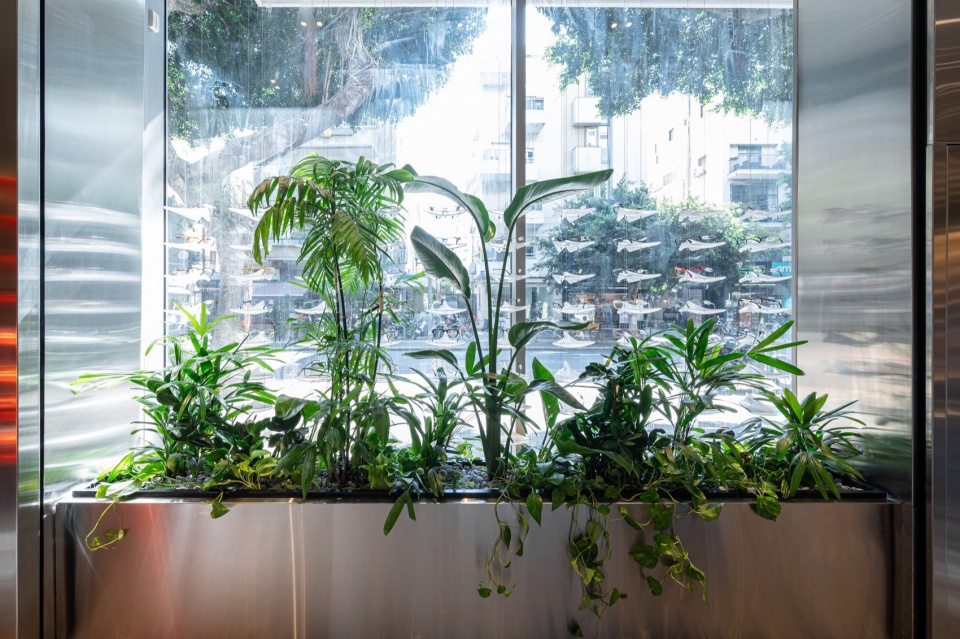
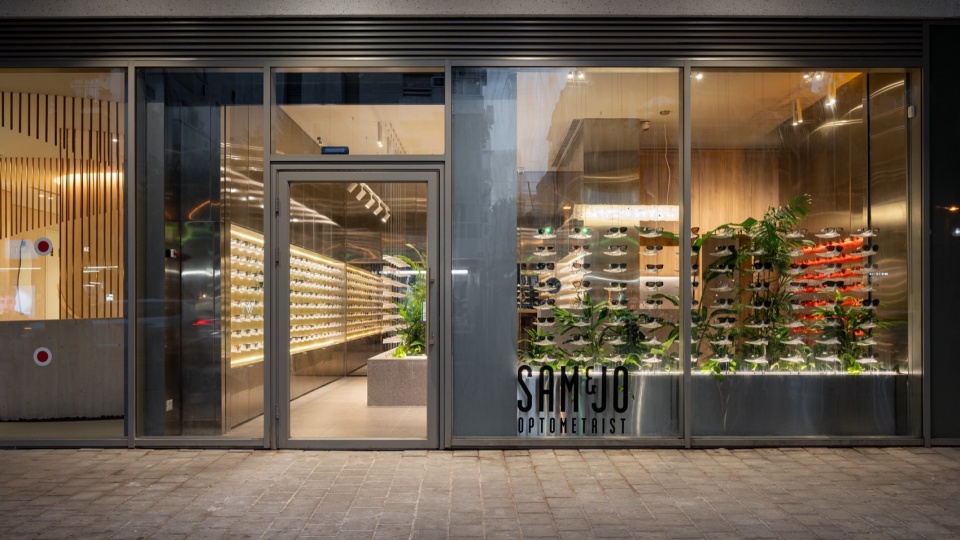
橱窗并未被视作传统意义上的展示界面,而是被当作室内空间逻辑的延伸。第二座由不锈钢框定的种植池锚定了街道视角,其上方,一系列太阳镜悬浮其间,同样由纤细、几乎隐形的钢索固定。即便卷帘关闭,这一装置依然部分可见,延续着室内的视觉节奏。设计的重要目标之一,是从任何角度都保持空间的完整性——即便在无人状态下,也能通过植物的存在与悬浮镜架的静止,传达空间的氛围。
The shop window is treated not as a display, but as an extension of the spatial logic within. A second planter, framed in stainless steel, anchors the view from the street, while a series of sunglasses hover above it—each suspended on thin, nearly invisible cables. Even when the shutter is closed, the arrangement remains partially visible, preserving the visual rhythm of the interior. It was important to maintain integrity from every angle—to allow the presence of plants and the stillness of the suspended frames to signal the atmosphere of the space, even in absence.
▼材质细部,Texture details
SaM&Jo并不是一家追求产品密度或零售效率的商店。它更像是一处建筑意义上的“静止空间”——设计退居幕后,注意力被重新聚焦;在这里,每一副镜架都成为一个事件,每一位访客的脚步,也不自觉地慢了下来。
SaM&Jo is not a store about product density or retail efficiency. It’s a space of architectural stillness—where design recedes, and attention sharpens. Where each frame becomes an event, and each visitor moves a little slower.
▼夜览,Nightview
▼平面图,Plan
Architects: Ilya Kotler, Anastasiya Kotler
Client: Sam and Jo
Photos by Alexander Peterson
Area 45 m2
Lighting and 3d printed objects by YET:FAB