Space House改造,伦敦 / Squire &Partners
Squire & Partners 为 Seaforth Land 与 QuadReal 精心完成了对位于伦敦科文特花园、被列为英国二级保护建筑(Grade II)的标志性项目 Space House 的修复与扩建。这一雄心勃勃的改造项目共打造约 25.5 万平方英尺 的高品质办公空间,首层设置灵活、当代的商业零售空间,并全面提升公共环境品质。此次更新在保护并强化建筑价值的同时,使人们得以再次在这座卓越的20世纪建筑之中及其周边工作与交流。
Squire & Partners has sensitively refurbished and extended the iconic Grade II-listed Space House in Covent Garden for Seaforth Land and QuadReal. The ambitious retrofit creates 255,000 sq ft of high-quality workspace, contemporary and flexible retail space at ground floor, and an improved public realm. The revitalisation of the landmark has preserved and enhanced the building to allow people to work and socialise in and around its outstanding 20th century architecture once more.
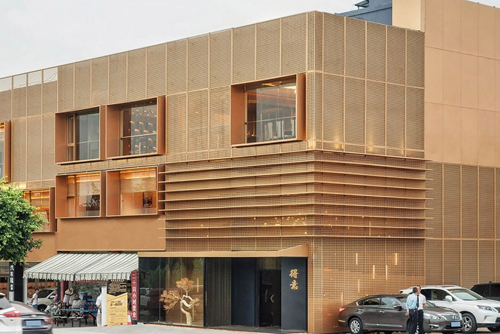
▼建筑外景,Exterior of the Building
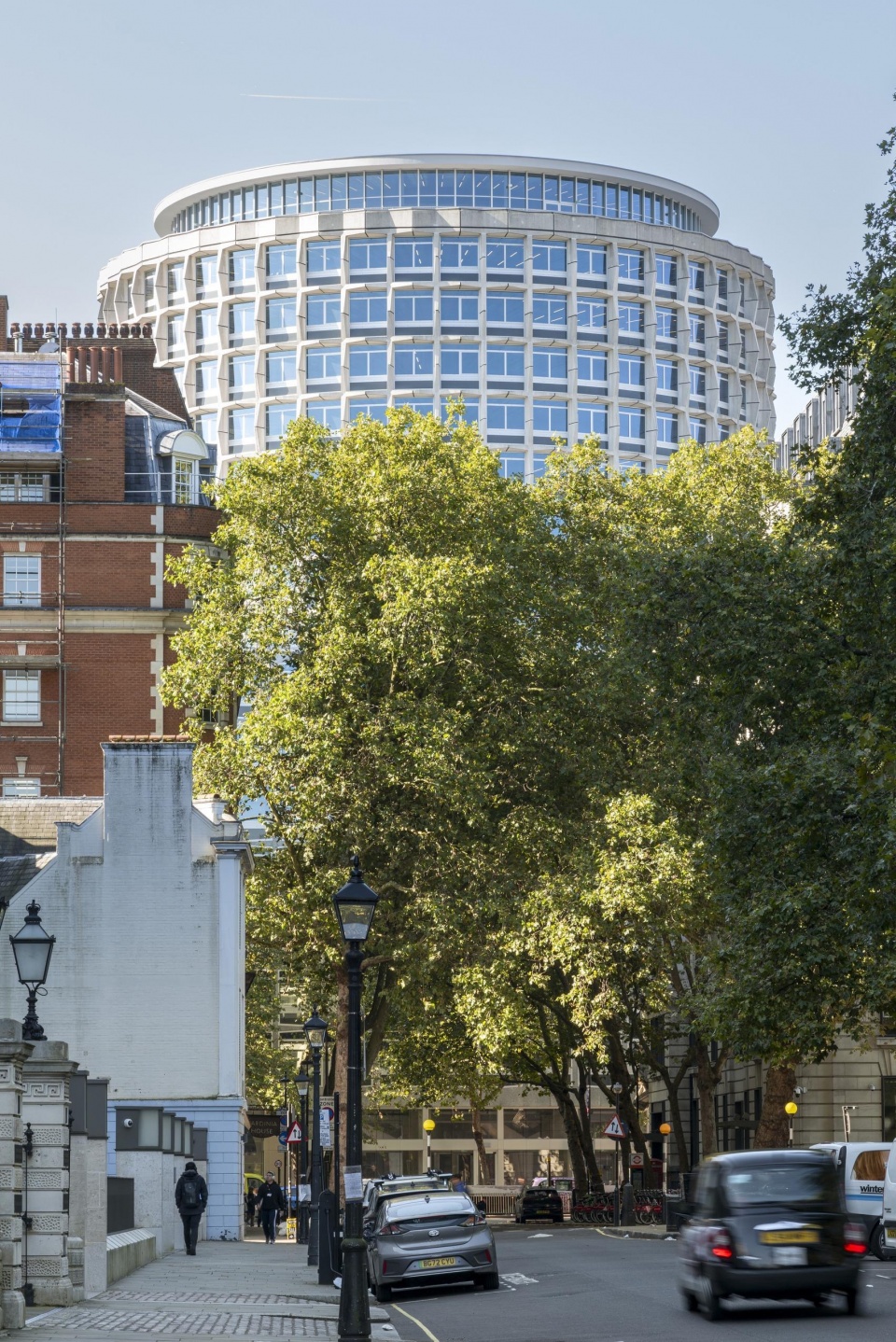
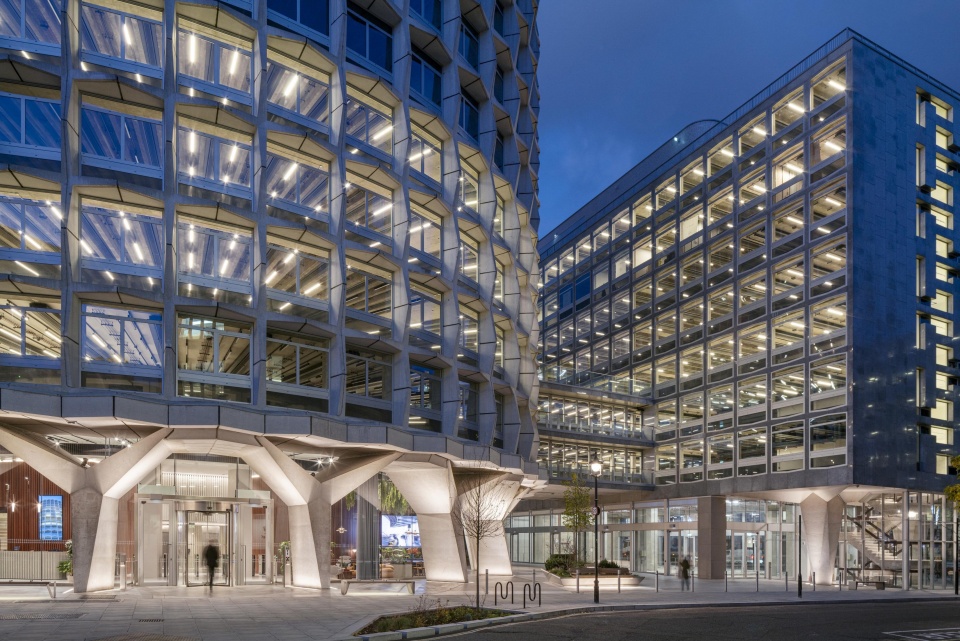
作为20世纪60年代商业地产热潮的象征,Space House 由 Richard Seifert and Partners 设计,以其富有创新性的建筑形态而闻名:一座具有预制十字形立面、由 Y 形柱支撑的圆柱形塔楼,一栋矩形体量建筑,以及二者之间的连接桥体,共同回应了周边复杂的城市环境。建筑建成于1968年,直至2019年一直由英国民航局独立使用。其间曾于1996年和2003年进行翻修。此次由 Squire & Partners 主导的改造,去除了历次加建与干预所叠加的层次,保留、呈现并强调原始建筑语言,同时通过新增体量回应当代办公环境的需求,与原有结构形成互补。
A symbol of the 1960s commercial property boom, Space House was designed by Richard Seifert and Partners and is known for its innovative architecture, with a distinctive cylindrical tower with a pre-cast cruciform façade sat on y-shaped columns, a rectilinear block, and connecting bridge which were designed as a response to the surrounding urban context. Built in 1968, Space House was inhabited exclusively by the Civil Aviation Authority until 2019. Having been refurbished in 1996 and again in 2003, Squire & Partners’ designs remove the layers of subsequent interventions to retain, expose, and celebrate the original architecture, whilst creating new, complementary additions to accommodate modern working environments.
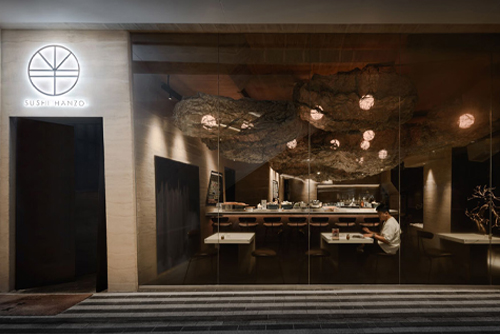
▼建筑街景,Building street view
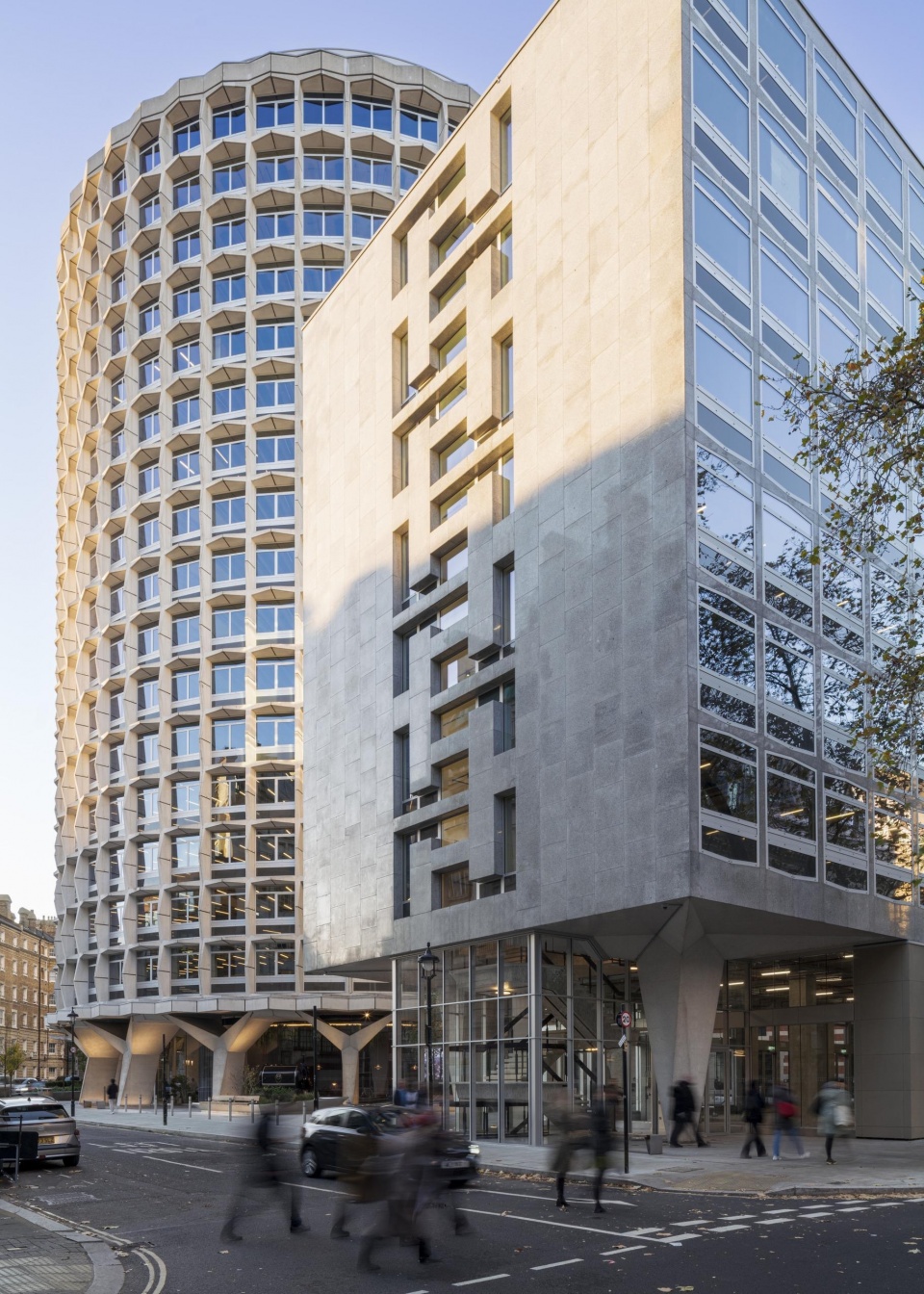
项目对既有建筑进行了重新构想:在塔楼之上新增两层办公空间,并为矩形体量建筑加建一层扩展。如今达17层的塔楼,其屋顶设备得以整合梳理,重申原始设计中简洁、退台式顶层的构想,同时新增一处 3,600 平方英尺 的屋顶露台。矩形建筑新设的第八层则配置会议空间与一处面向所有租户开放的俱乐部空间,包括酒吧及 5,000 平方英尺 的露台。进入塔楼后,使用者首先步入一处宽敞的双层挑高大堂与接待空间。塔楼内部每层约 10,000 平方英尺 的圆形无柱办公平面被自然光充分照亮,其中顶部十层可享有 360 度无遮挡城市景观。矩形体量建筑内则通过更为亲密的入口大堂,通往八层、每层约 8,000 平方英尺 的办公空间。连接两栋建筑的空中连桥在一、二层形成连续办公区域,并在三层设置花园露台。
The existing buildings have been reimagined, with two floors of office accommodation added to the tower and a single-storey extension to the block. The extension of the now 17-storey tower tidies up the existing rooftop plant, reinstating the original design intent for a clean set-back top floor, whilst creating a 3,600 sq ft roof terrace. The new eighth floor of the block provides meeting rooms and a Club House comprised of a bar and 5,000 sq ft terrace accessible to all tenants. Upon entering the tower, occupants are welcomed by a spacious double-height lobby and reception. The 10,000 sq ft circular, column-free floorplates are flooded with natural light, with the top ten floors offering unobstructed 360-degree views of the city. In the block, an intimate lobby leads to eight levels of 8,000 sq ft workspace floors. The sky bridge creates contiguous workspace on the first and second floors, and a garden terrace on the third.
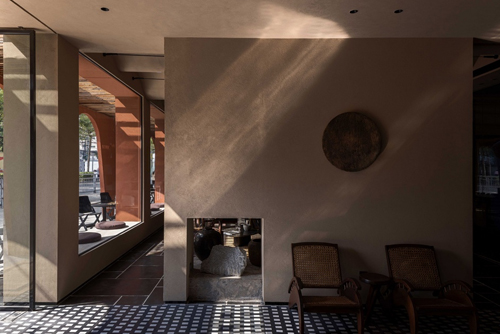
▼接待大厅休息区,Lobby lounge area
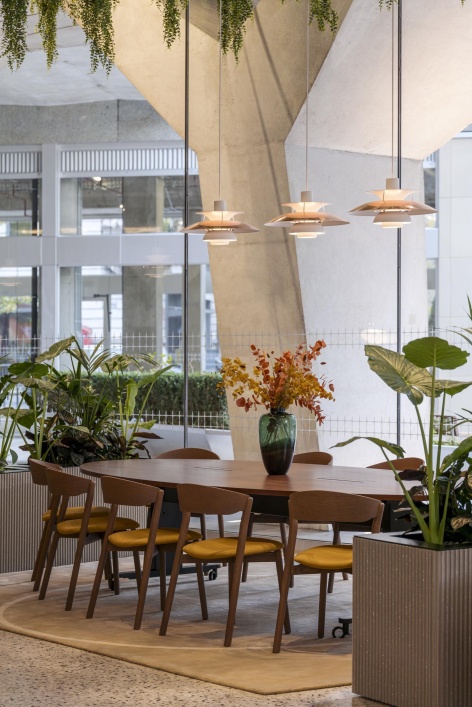
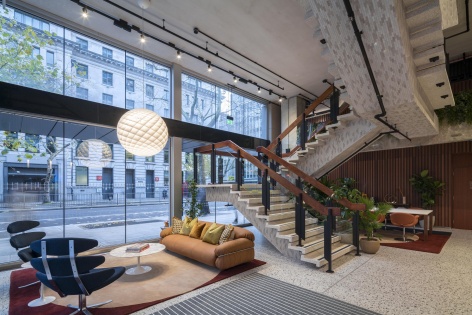
办公空间秉持平等与开放的理念,通过延展的视线轴线营造高度视觉联通性,支持协作式工作模式。办公区以阁楼式风格呈现,铺设抛光混凝土地面;公共区域则全面更新为水磨石地坪,同时保留楼梯核心筒中原有的马赛克饰面。建筑最初诞生于汽车文化盛行的时代,此次改造重新诠释了原有以车辆为中心的设计要素。其中一条通往地下的坡道被保留并转化为自行车专用通道,直达配套设施。原有停车场现已改造为可容纳 600 辆自行车 的大型自行车库,并配备淋浴、储物柜、烘干室与更衣空间。与此同时,双层地下空间通过开洞引入采光,形成 16,500 平方英尺 的灵活双层通高活动空间。
The egalitarian workspaces feature long sightlines, offering high levels of visual connectivity to support collaborative working. Designed in a loft style, offices feature polished concrete floors, whilst new terrazzo flooring has been installed throughout the common areas, with original mosaic tiling in the stair cores retained. Originally built in an era advanced by the popularity of the automobile, designs reinvent the car-centric elements of the building for the future. One of three ramps to the basement has been retained to create dedicated cycle access to end of journey facilities. The existing car park now provides expansive cycle storage for 600 bikes alongside showers, lockers, drying rooms, and changing facilities. Elsewhere, the two-storey basement is punctured with a void to deliver 16,500 sq ft of flexible double-height event space.
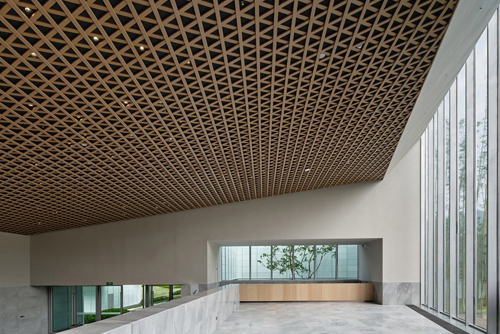
▼办公空间,Office space
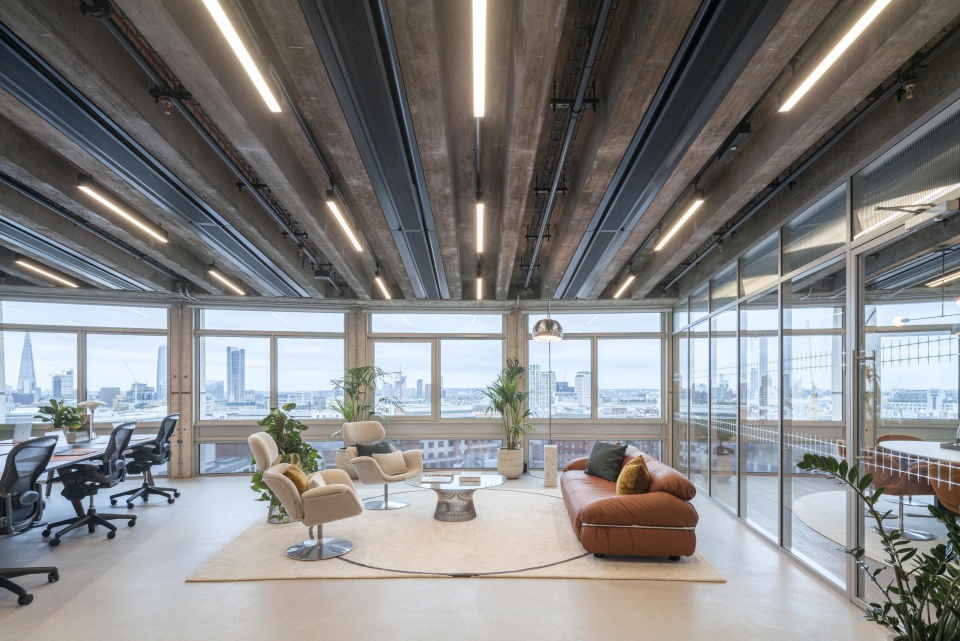
Space House 是英国规模最大的获得 BREEAM“杰出级”(Outstanding) 认证的二级保护建筑。原有立面深层次的构件肌理为建筑提供了被动遮阳,老化的外围护结构也已按现代标准进行更新。全新的高性能机电系统采用空气源热泵,供暖与制冷则通过定制冷梁实现,并巧妙嵌入既有的放射状天花格槽中。更新后的建筑为使用者提供高度互联、功能多样的数字化平台,并获得 Fitwel 二星 与 WiredScore 铂金级 认证。
Space House is the largest Grade-II listed building in the UK to achieve BREEAM ‘Outstanding’. The deep articulation of the existing façade provides passive shading measures, and dilapidated parts of the envelope have been replaced to meet modern standards. A new, high-performing services installation utilises air source heat pumps, and heating and cooling is provided by bespoke chilled beams, which are designed to fit seamlessly within the existing radial ceiling coffers. The revitalised building provides a highly connected and diverse digital platform for its occupiers, with Fitwel 2-star and Wired Score Platinum certification.
▼建筑立面,Building facade
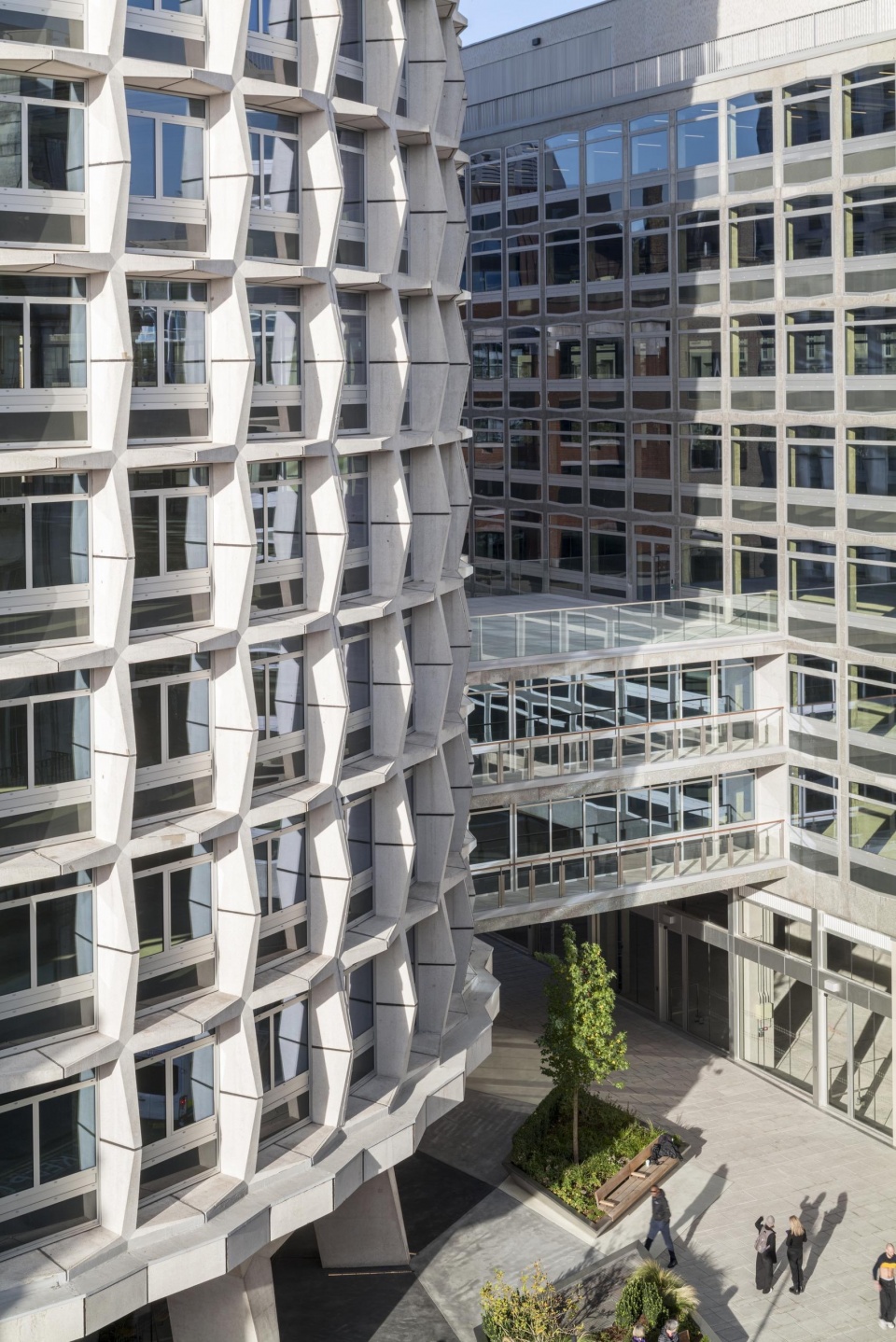
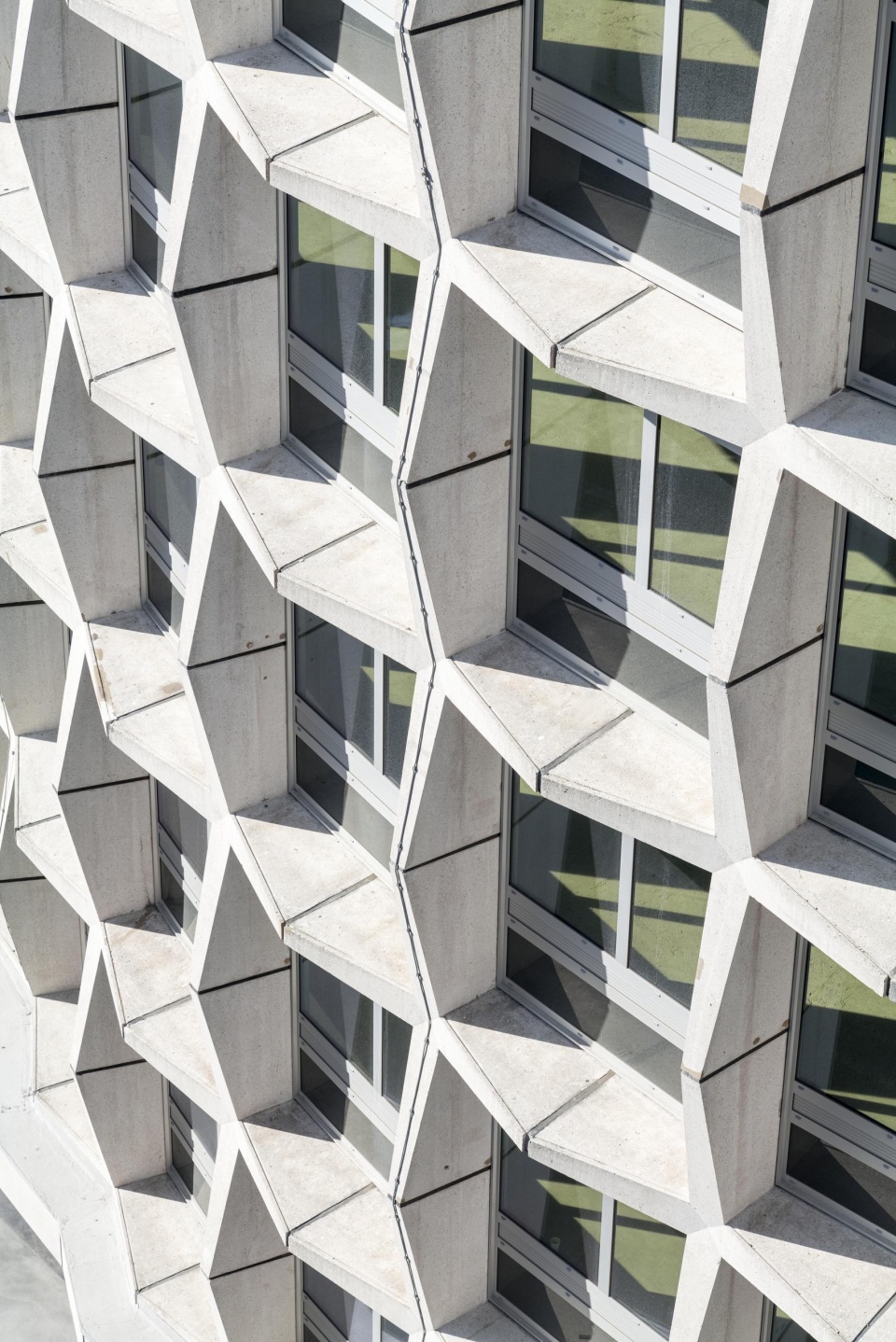
此前质量较差、作为私人停车场使用的公共空间也得到全面提升,强化了两栋建筑首层商业空间之间的联系。塔楼底部原有的加油站雨棚被围合改造为 The Filling Station Café,激活街道界面,并向公众开放。建筑明确而有力的体量关系与高度表达性的立面经受住了时间的考验,此次改造在尊重其粗野主义精神的同时,以可持续方式完成修复,并为未来办公建筑树立新标杆。面向下一代使用者需求所打造的明亮、宽敞且具民主性的空间,将持续延展这座建筑的生命力。
The existing poor quality public realm, previously used as a private car park, has been enhanced to provide links between the ground floor retail uses in the two buildings. An existing onsite petrol station canopy at the base of the tower has been enclosed to become The Filling Station café, activating the street level and opening it up to public use. The building’s purposeful massing and strongly articulated façade have stood the test of time and have been sustainably restored to respect its brutalist character, whilst setting the standard for the future of the workplace. The needs of tomorrow’s occupier have inspired the creation of bright, generous, and democratic space, which will prolong the life of the building for many years to come.
▼建筑结构,Building structure
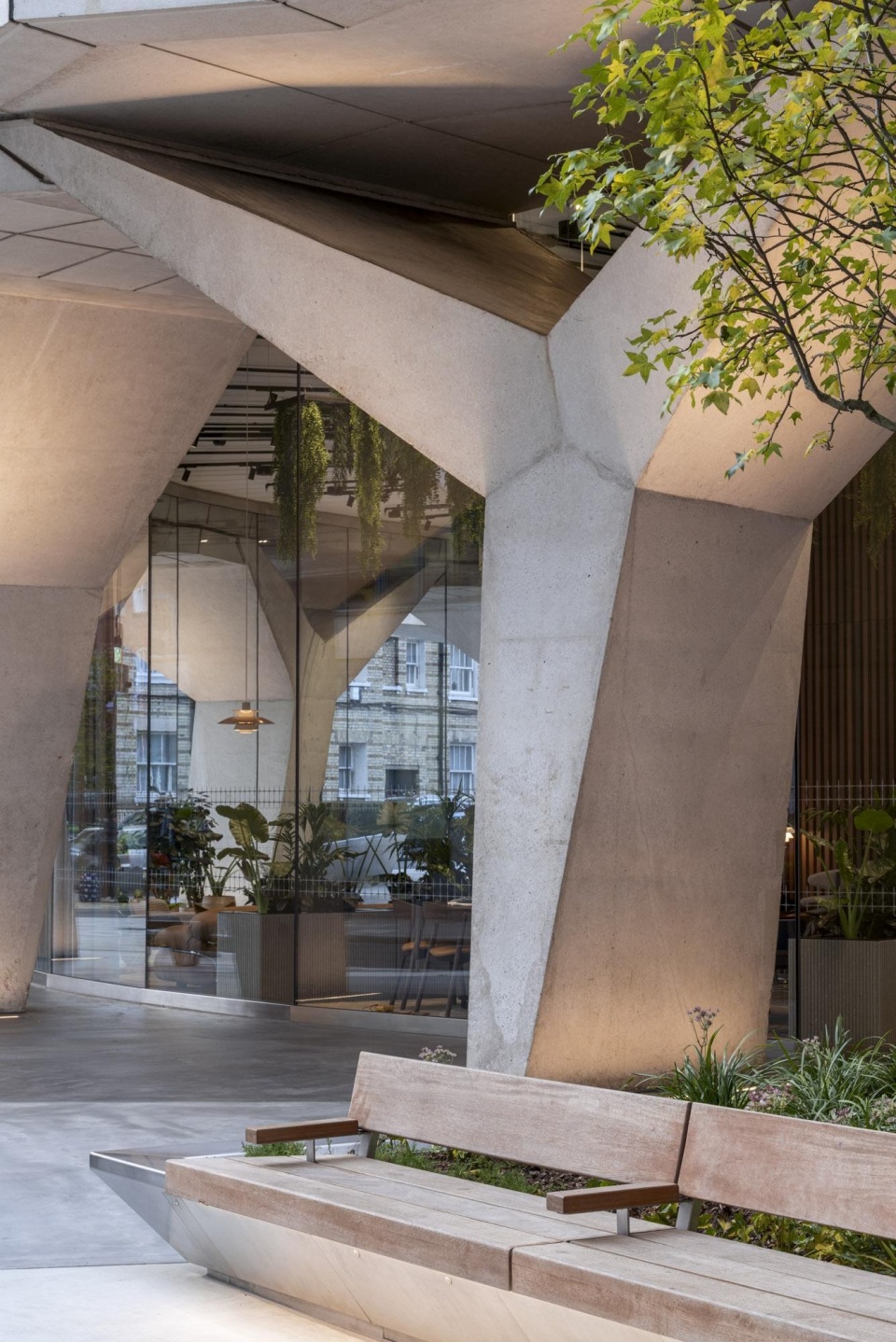
▼夜景,Night view
Technical sheet
Start on site Demolition works: July 2020
Construction works: April 2022
Planning granted: Nov 2019
Completion date: October 2024
No. of storeys: Tower – 16, Block – 7
Form of contract: Design Build
Construction cost: £110M
Construction cost/m2, £2,976.67/m2, (GEA divided by construction cost)
Estimated no. of occupants: Tower = 1,996 office occupants
Block = 680 office occupants
Project size
Post-Retrofit
Gross external floor area (GEA) 36,954m2 / 397 769 sqft
Gross internal floor area (GIA) 35,615.9m2 / 383 366 sqft / (Pre-Retrofit) 34,3420.3m2
Net internal floor area (NIA) 21,410.2m2 / 230,457 sqft
Tower typical office floor (NIA) 960m2
Block typical office (NIA) 751m2
Project Team
Architect: Squire & Partners
Interior designer: Squire & Partners
Development manager: Avison Young
Client: Seaforth Land and QuadReal
Structural engineer: Pell Frischmann
MEP and Sustainability: Atelier Ten
Quantity Surveyor: Gardiner & Theobald
Heritage consultant Donald Insall Associates
Landscape designer: Gustafson Porter + Bowman
Planning consultant: Gerald Eve
Project manager: Avison Young
Approved building inspector: Sweco
Main contractor: BAM Construction
Enabling + demolition works: Erith
Restoration contractor: Paye Stonework & Restoration
Other data
Overall Tower Building height from GF to roof: 59.497m
Typical Tower Diameter: 39.4m
New workspace area: 23,690m2 (an increase of 10% since pre-retrofit)
Bikes storage: 550 bikes
Wood in bannisters of restored staircases: Oak timber & Osmo oil