里斯本大学Ajuda校区学生宿舍,葡萄牙 / CVDB Arquitectos
位于里斯本大学Ajuda校区(Pólo da Ajuda – ULisboa)的学生宿舍项目,在高密度功能需求、有限用地面积以及立面最大高度控制等多重约束下展开设计。
The project for the Students Residence at Pólo da Ajuda – ULisboa was developed considering the density of the program combined with the limitations of the plot area and the maximum permissible facade height.
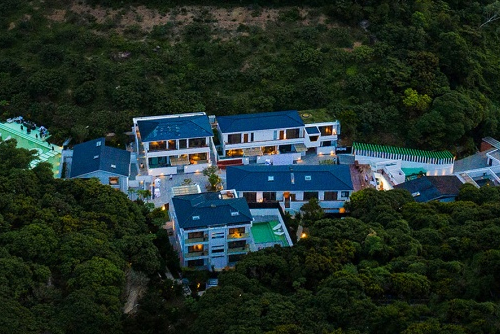
▼鸟瞰,aerial view
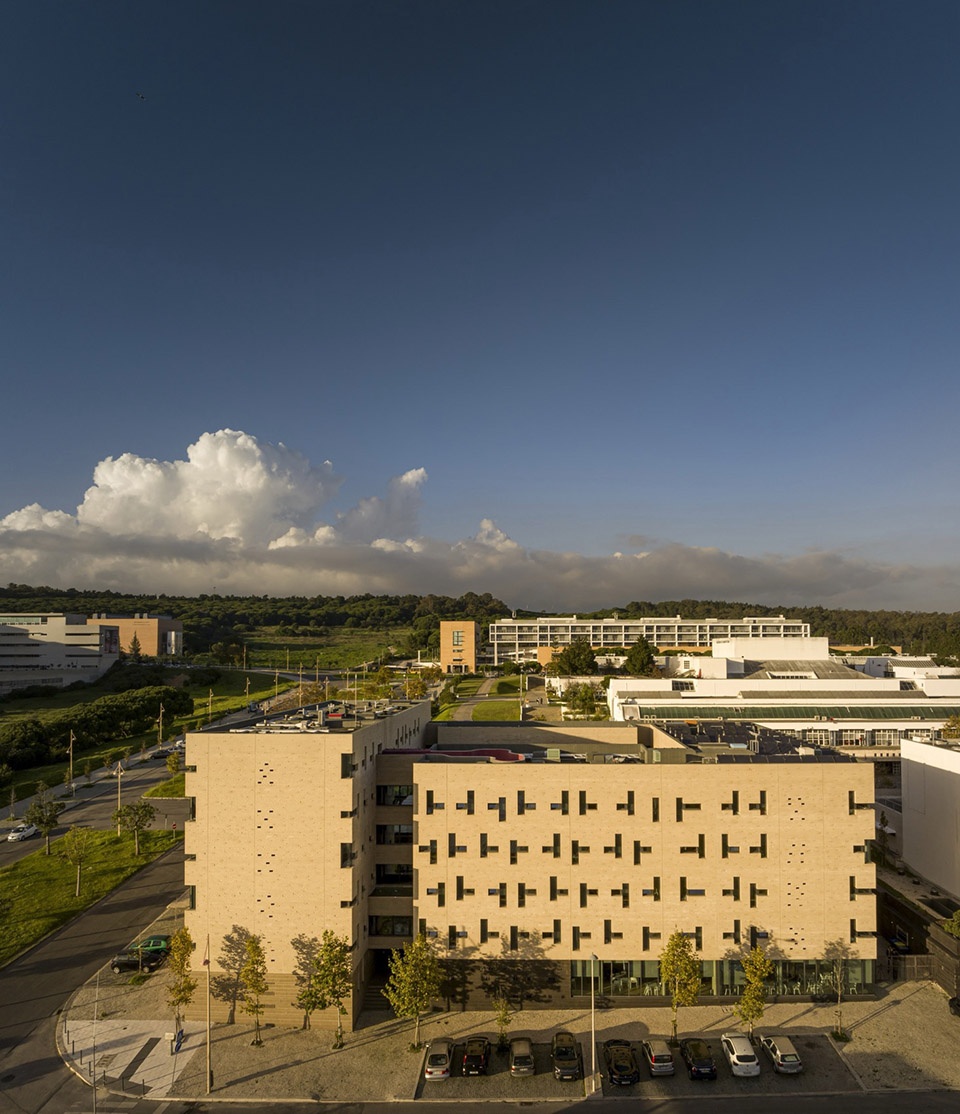
新建宿舍与既有食堂建筑之间设置了一条公共步行通道,连接基地南北两侧街道,强化校园内部与城市之间的开放联系。
Between the new building and the existing canteen building, a public path is created to connect the streets on the North and South of the site.
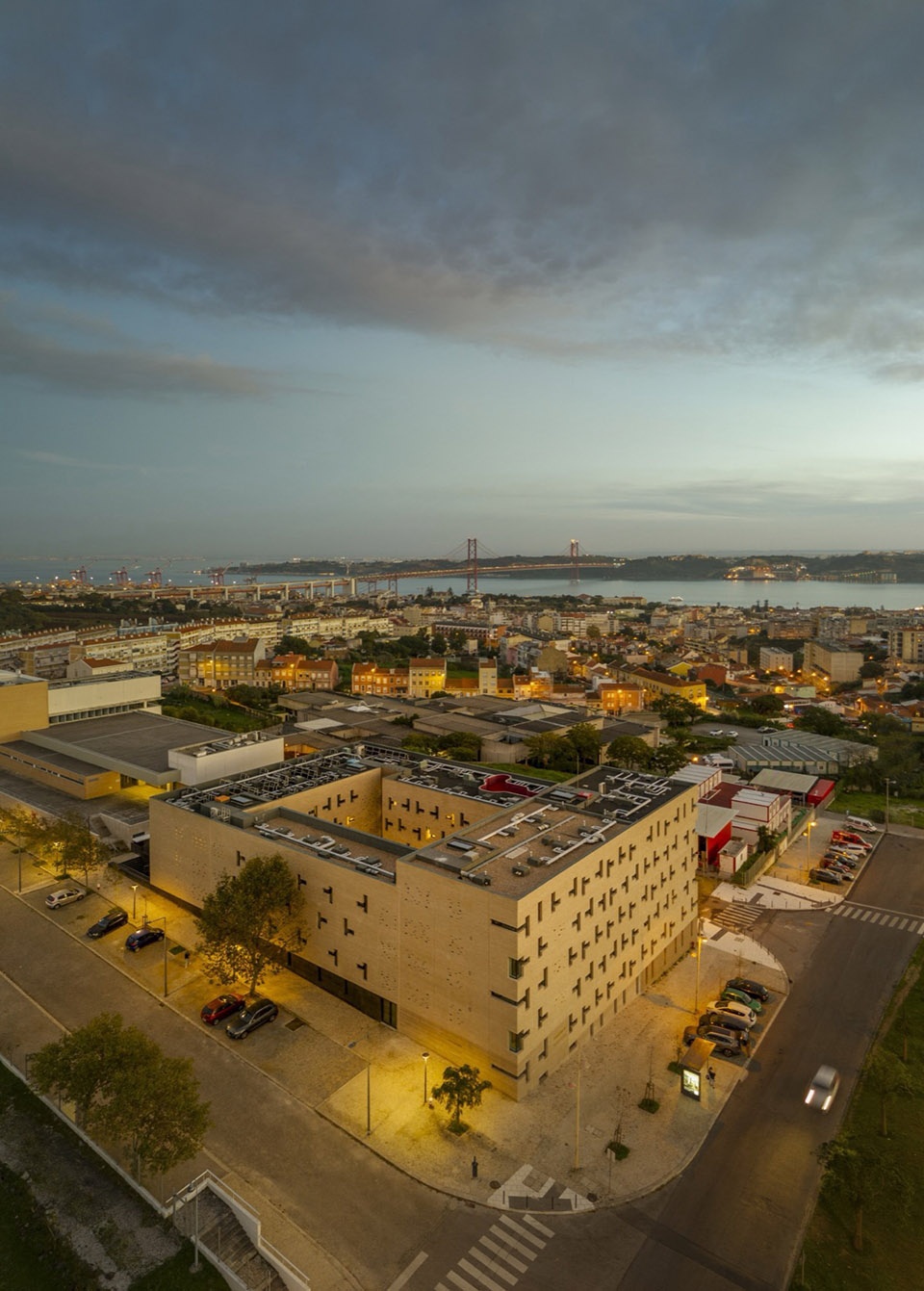
▼夜景鸟瞰,aerial view at night
▼立面,facade
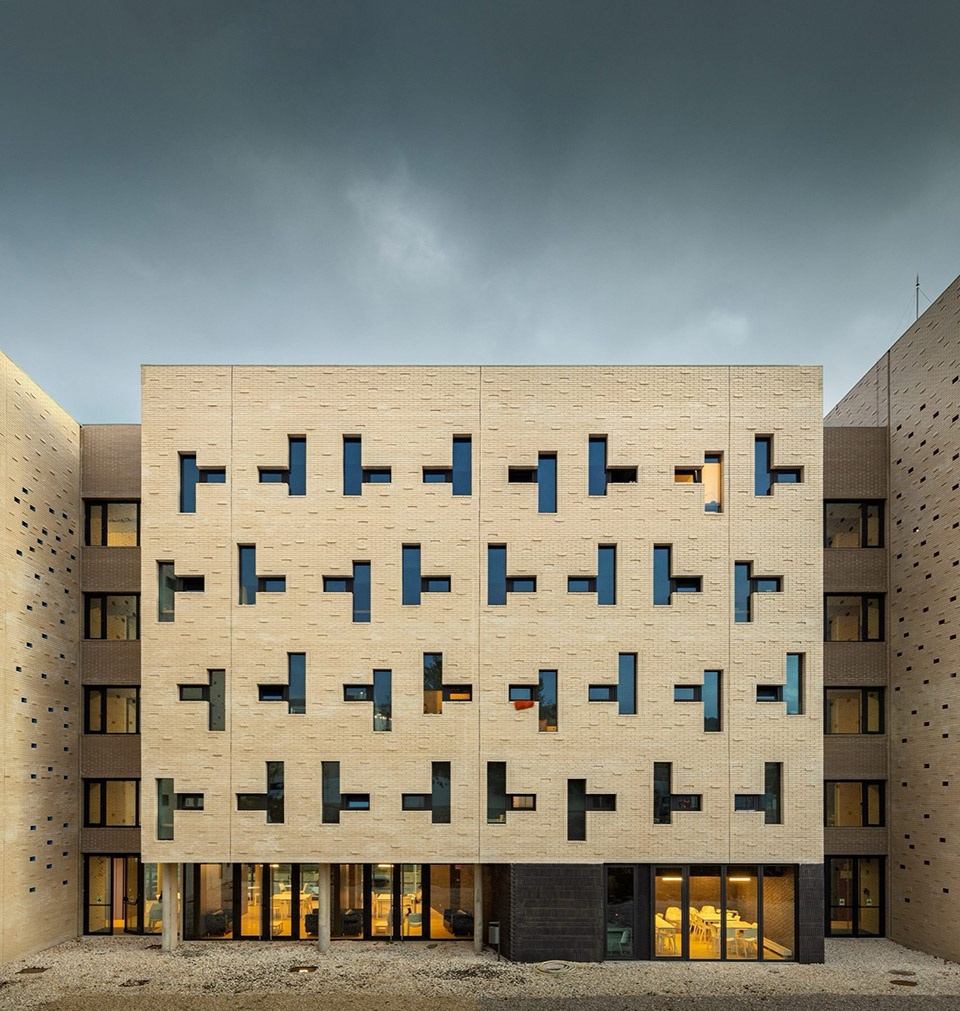
▼庭院立面,facade facing the courtyard
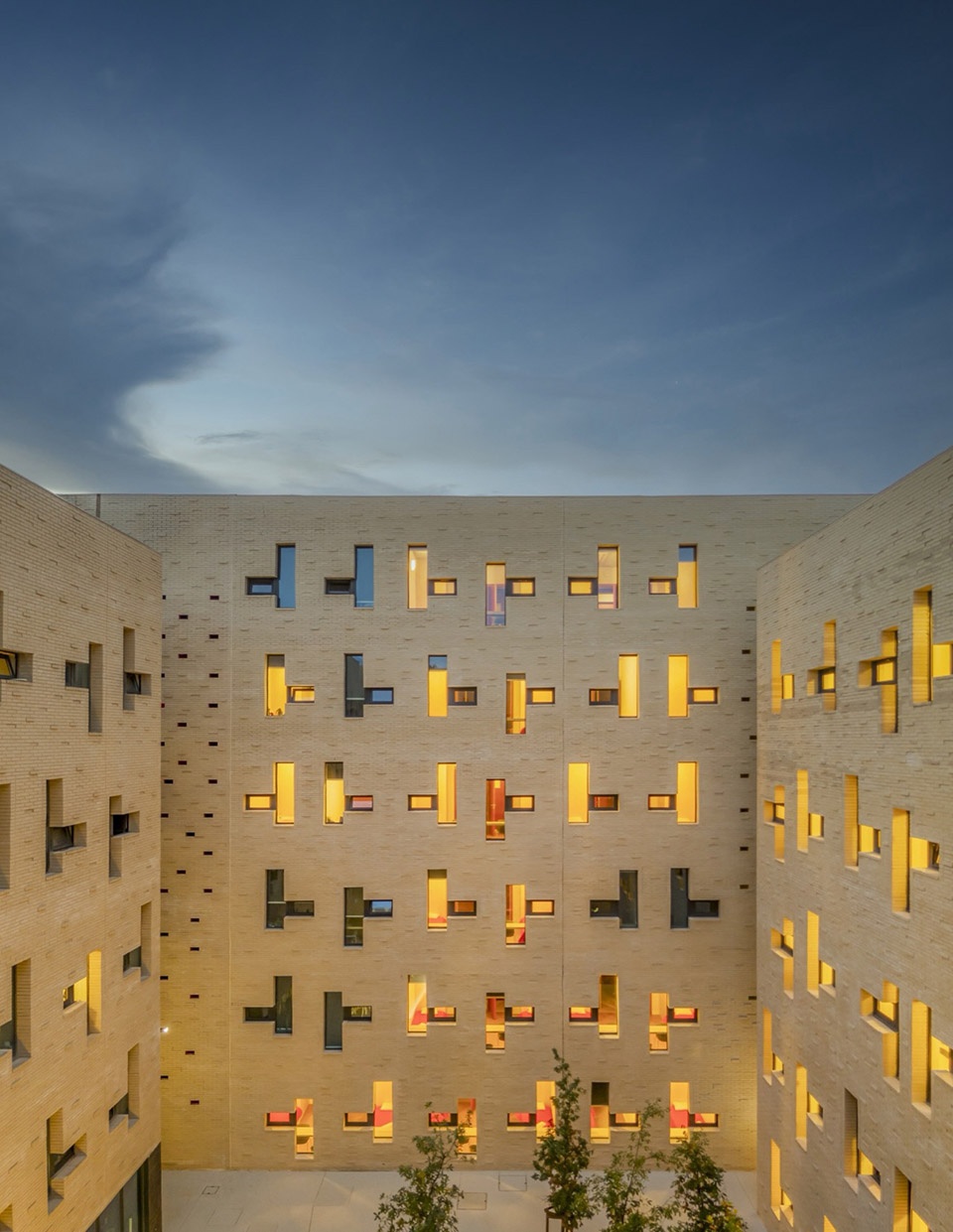
▼外观近景,closer exterior view
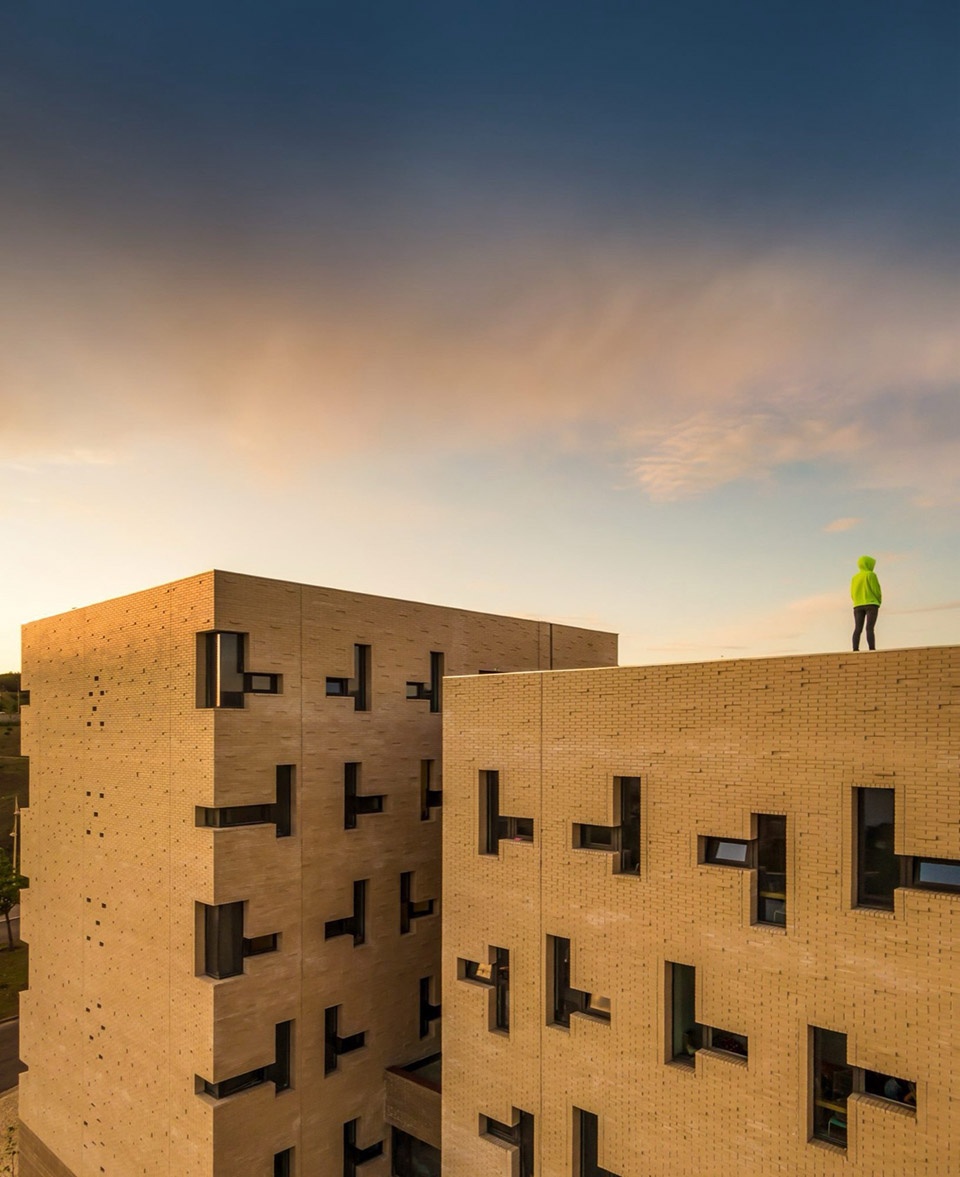
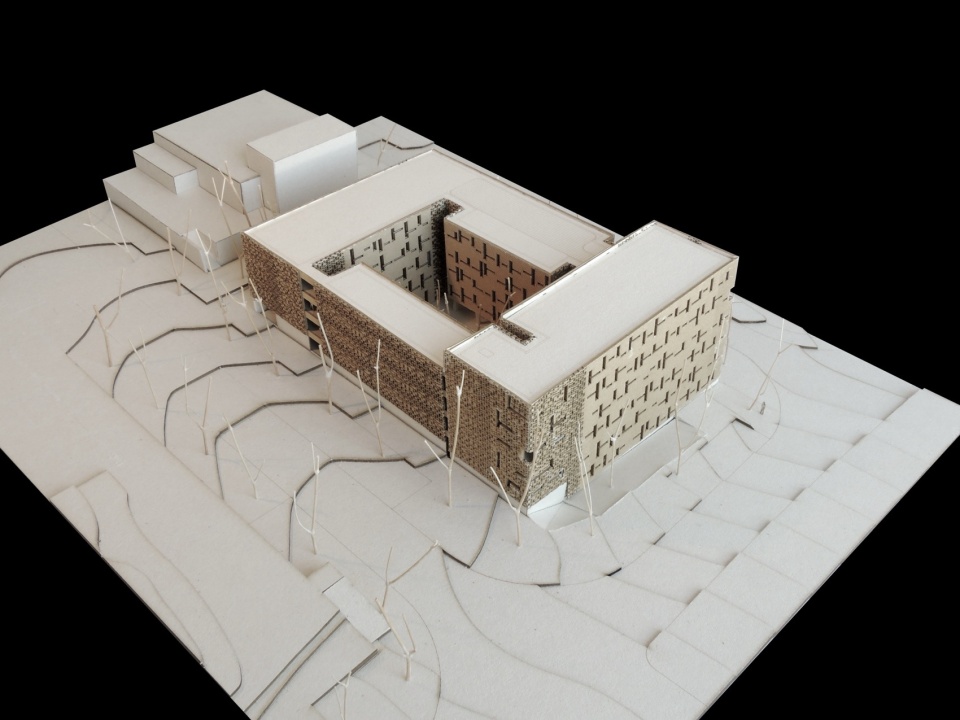
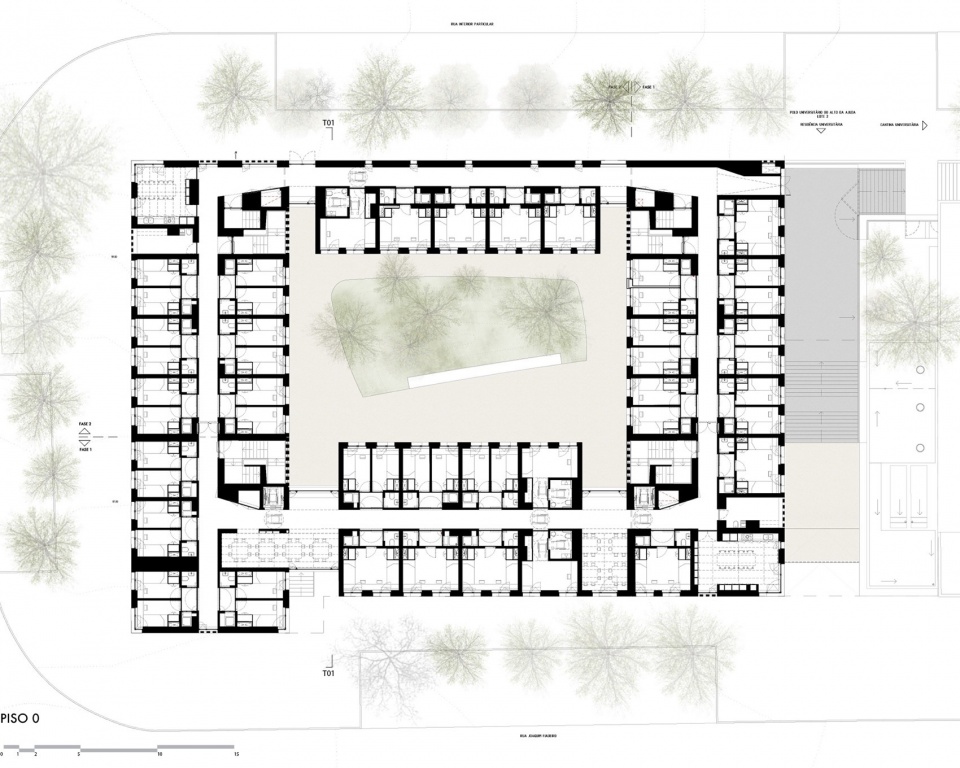
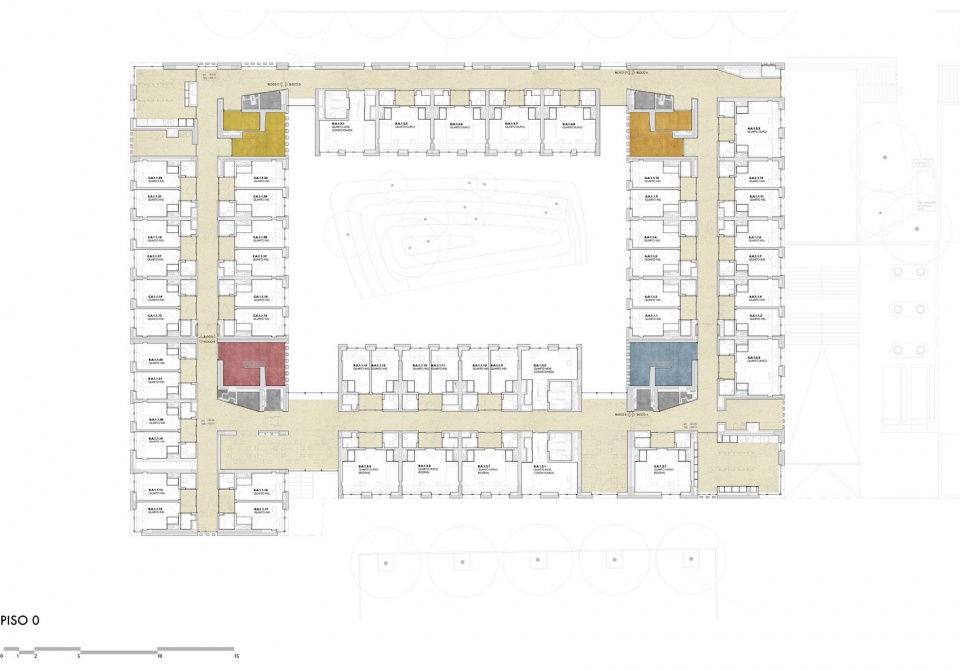
建筑围绕一个中央庭院展开布局,由三个彼此相连的体量构成,对应三个不同的建设阶段。每个体量在施工过程中均可独立运作;待全部阶段完成后,内部交通系统形成连续的“环形”动线。通过中央庭院的视觉穿透以及社交空间、学习室等公共内部空间的开放布局,建筑在视觉与空间层面削弱了高密度体量带来的压迫感,使整体更为通透。
▼分析图,analysis diagram
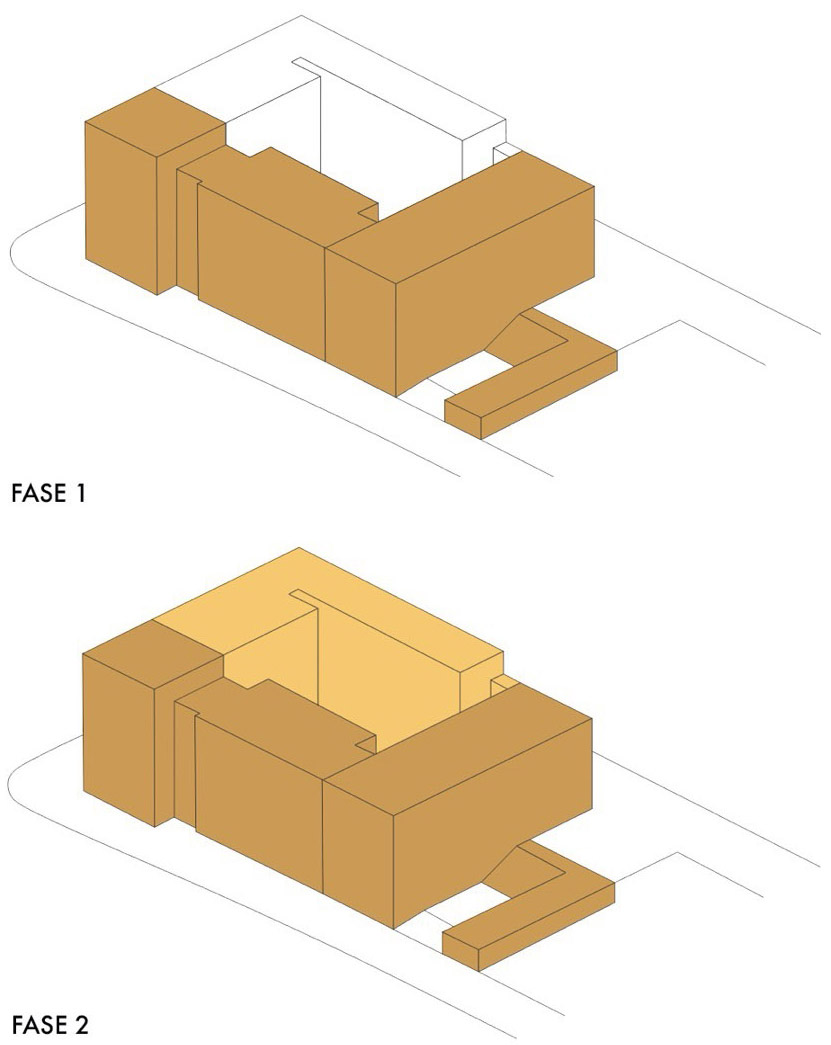
The implantation of the building is developed around a central courtyard. The building consists of three interconnected blocks, corresponding to three different phases of construction. Each block can function independently during the construction process. The circulation within the building is continuous, in “loop”, when all the construction phases are completed. The creation of visual crossings through the central courtyard and interior common use spaces, such as social and study rooms, contributes to dematerialize the compact condition of the building.
▼中央庭院,central courtyard
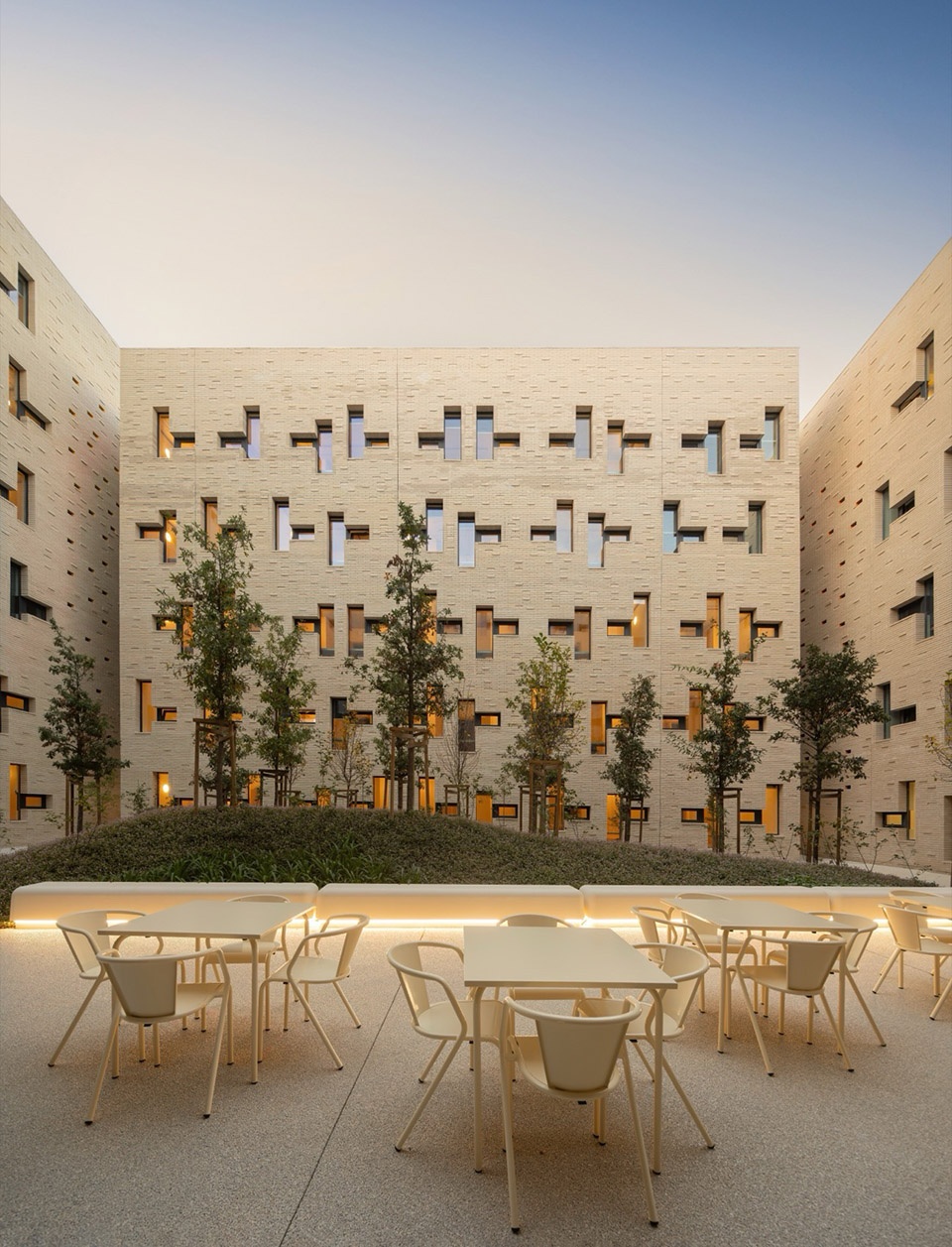
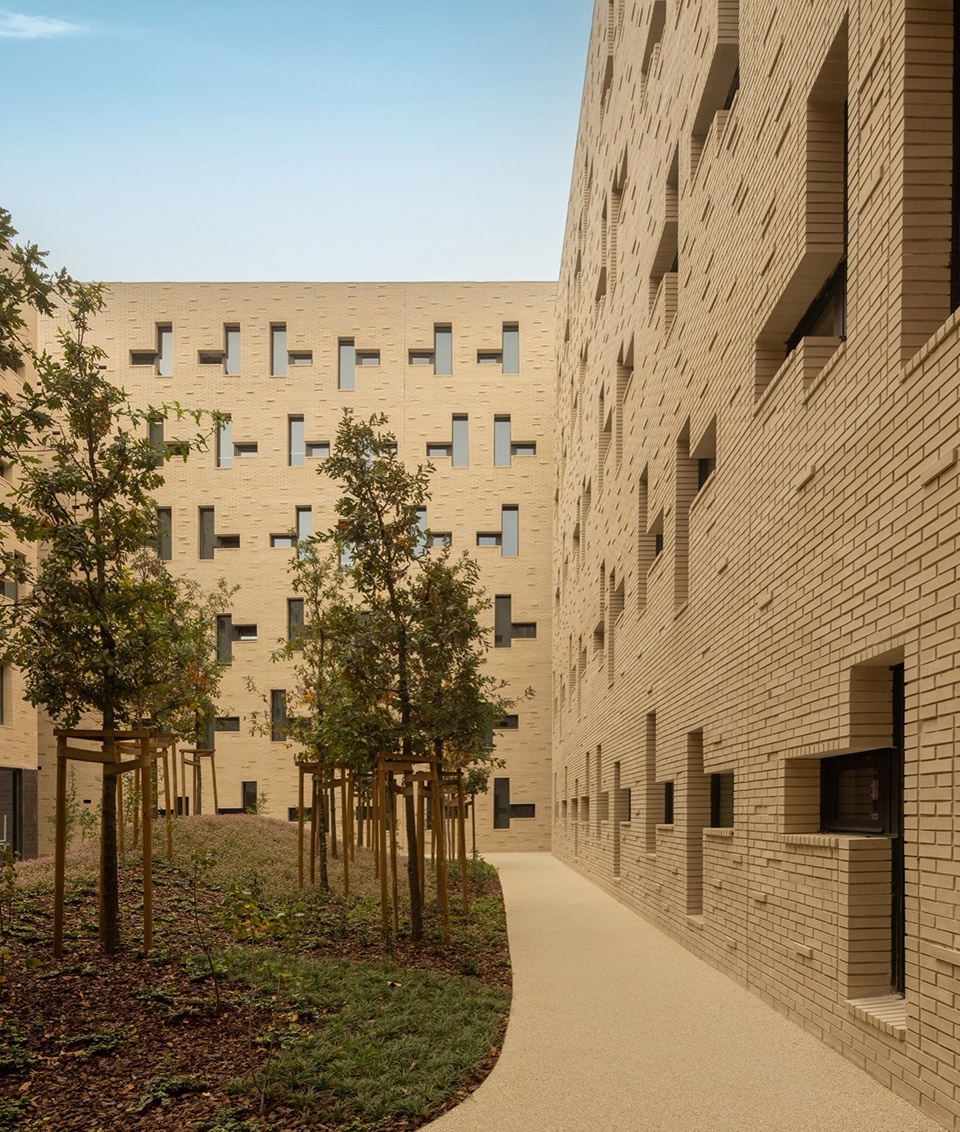
▼庭院步道,walkway of the courtyard
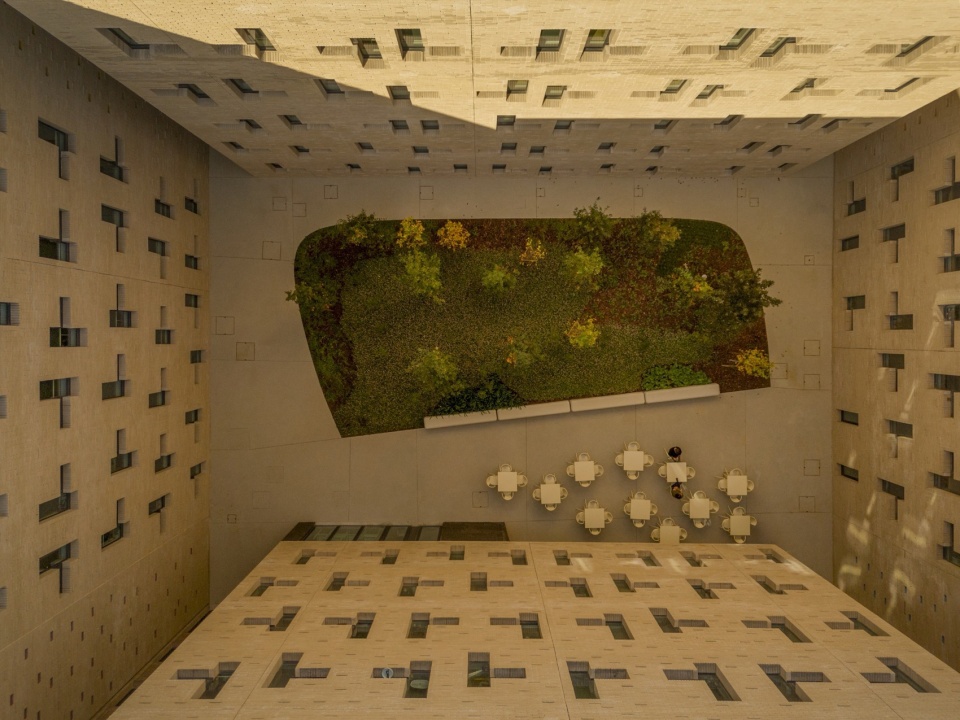
▼庭院顶视图,top view of the courtyard
项目以“单间宿舍”作为基本模块单元,通过不同组合生成各类居住单元及配套空间。这一模块化策略在面积控制与建造经济性方面实现了优化,提高了整体效率。
The project is based on the use of a modular unit, equivalent to a single room, to set all kinds of housing units and necessary spaces. This modular unit contributes for the optimization of the project considering the areas and the overall construction economy.
▼宿舍入口,entrance of the modular unit
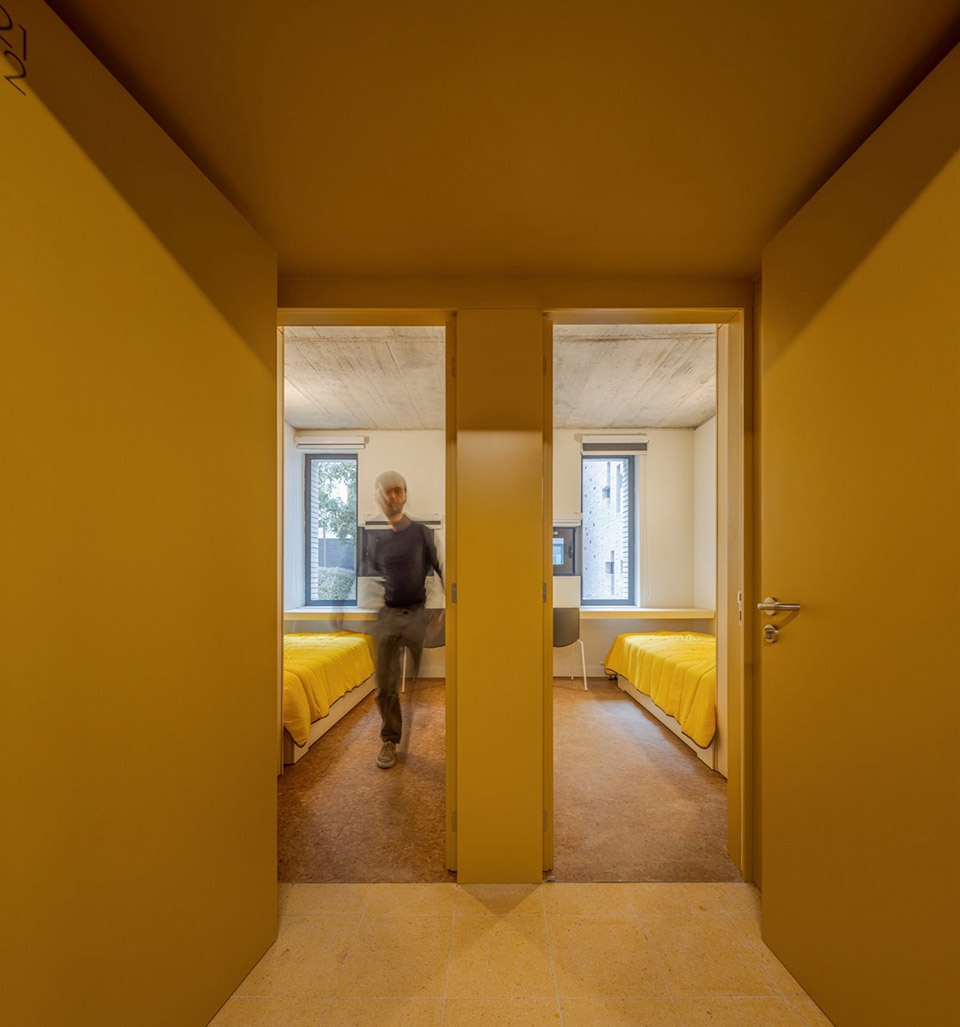
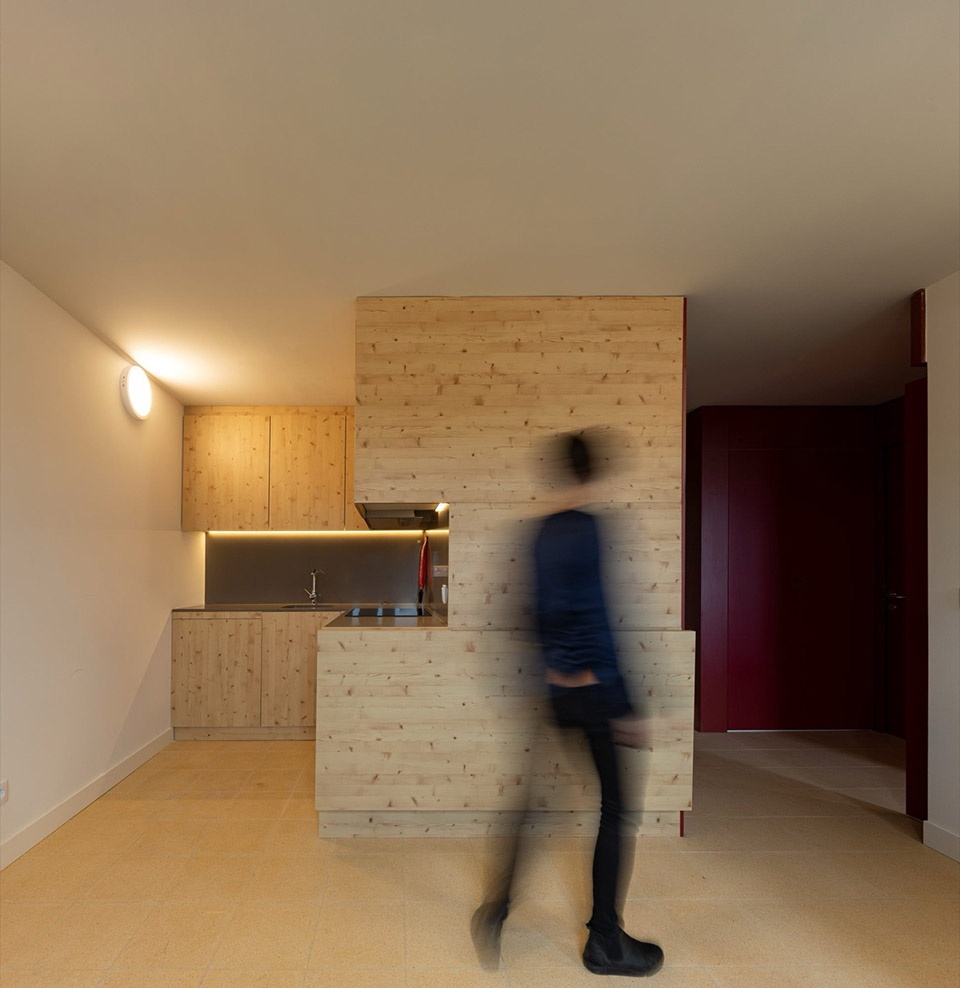
▼双人间,twin room
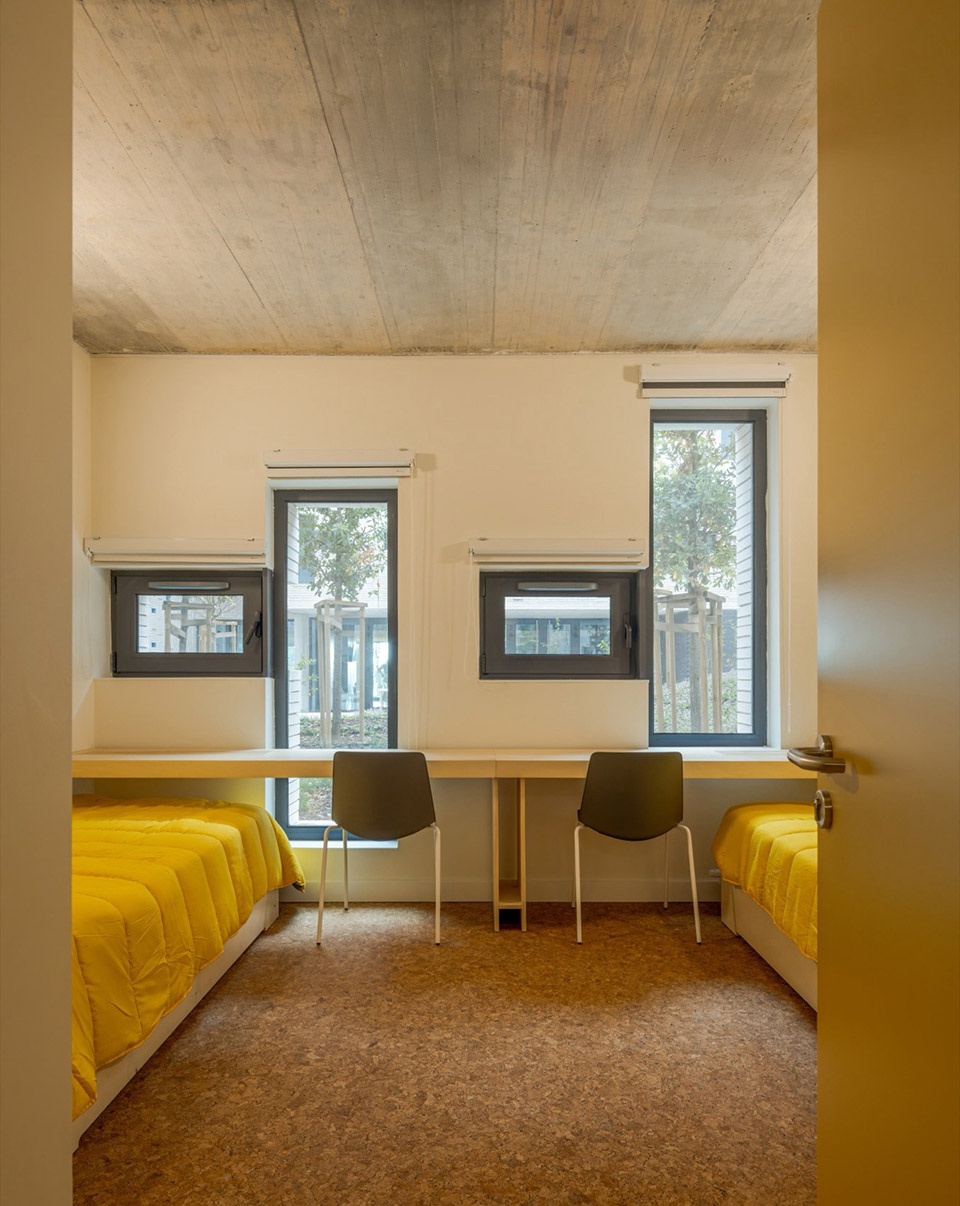
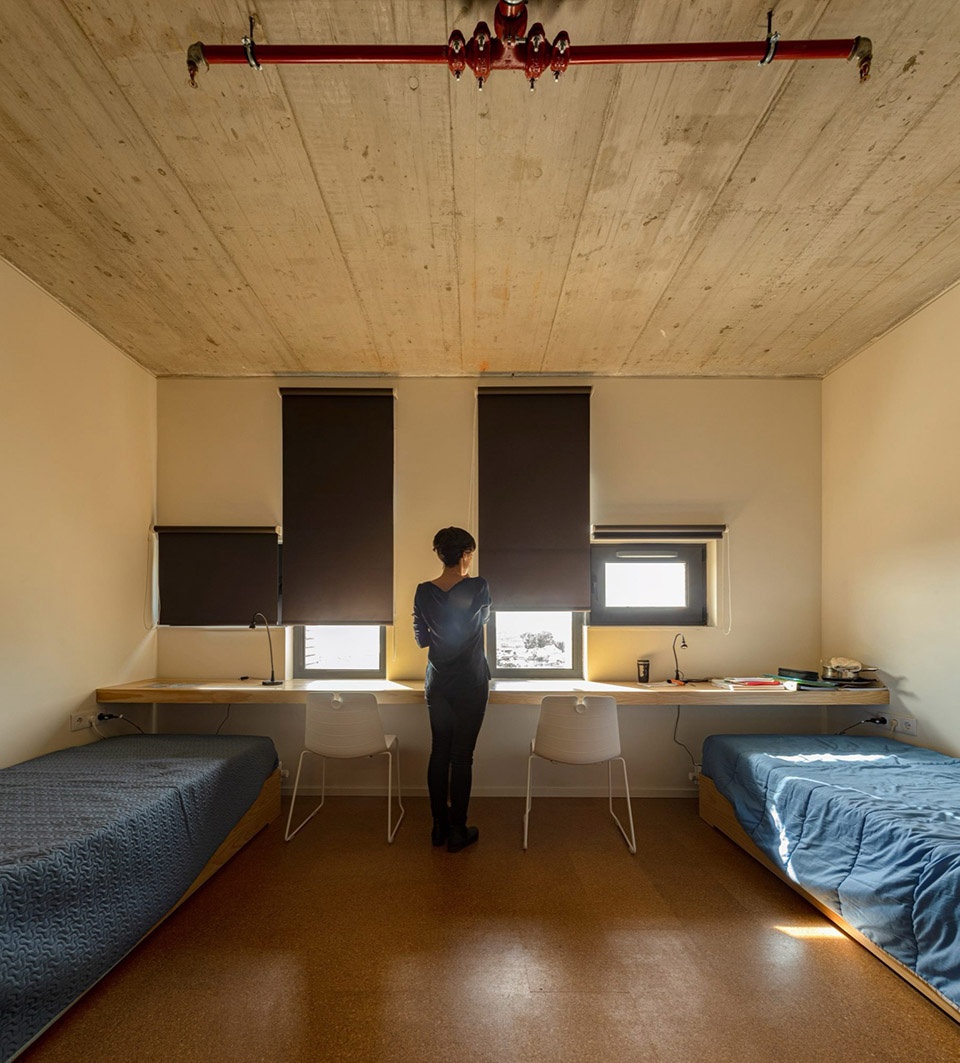
▼单人间,single room
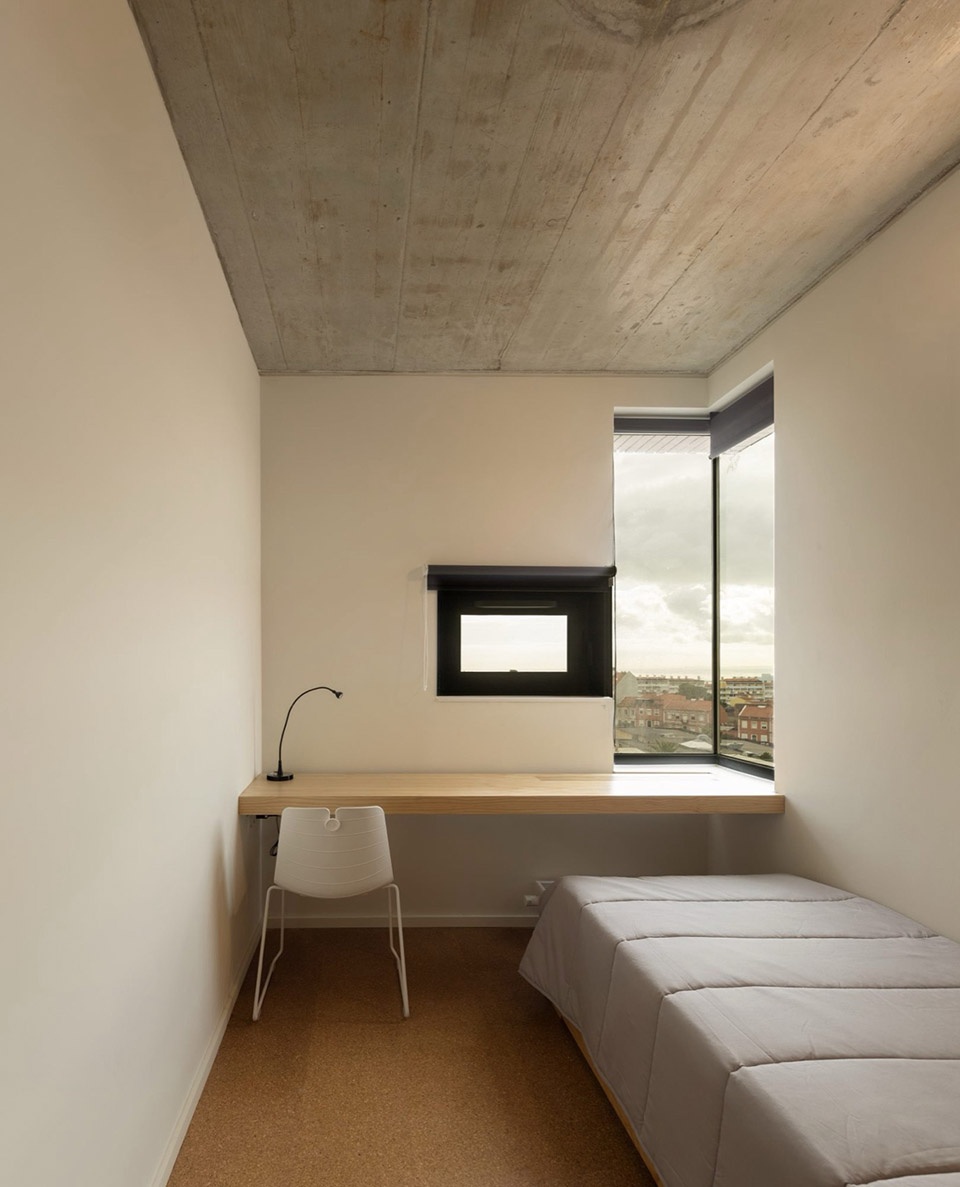
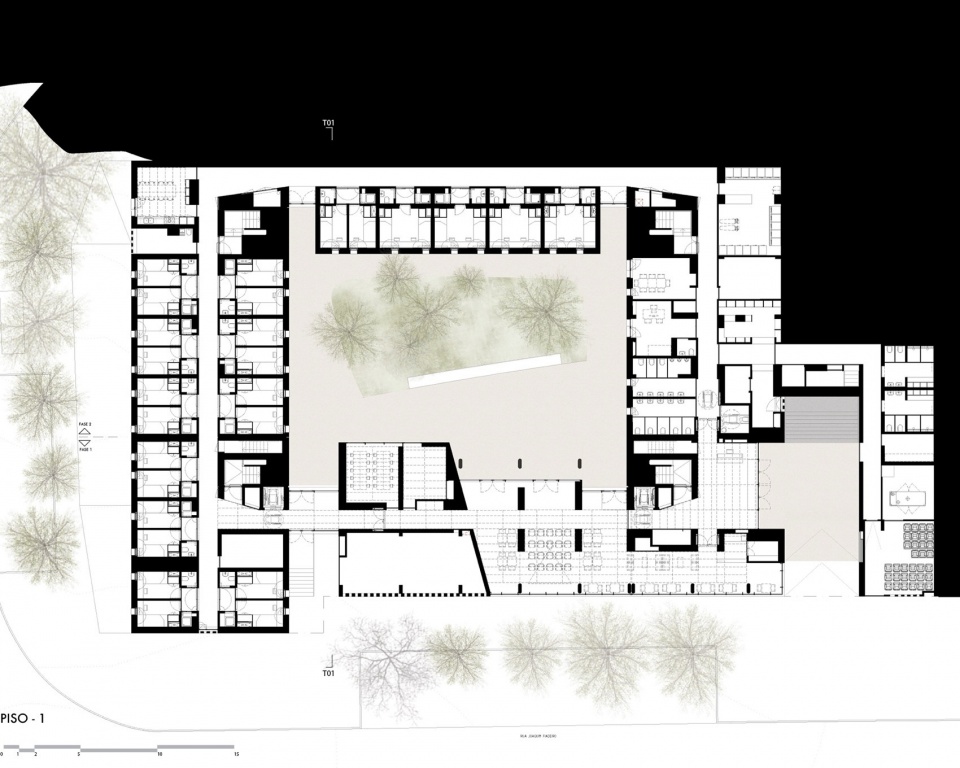
公共活动空间及支撑建筑功能运作的服务空间集中布置于首层。首层与基地南侧街道直接相连,并通过较高的视觉通透性,将街道与中央庭院在空间感受上联结起来。
The public areas and the service spaces that support the building functional dynamics are located on the ground floor. The ground floor has a connection with the street on the South of the site. This level is characterized by a visual permeability between the street and the courtyard.
▼餐厅/公共活动空间,canteen / public area
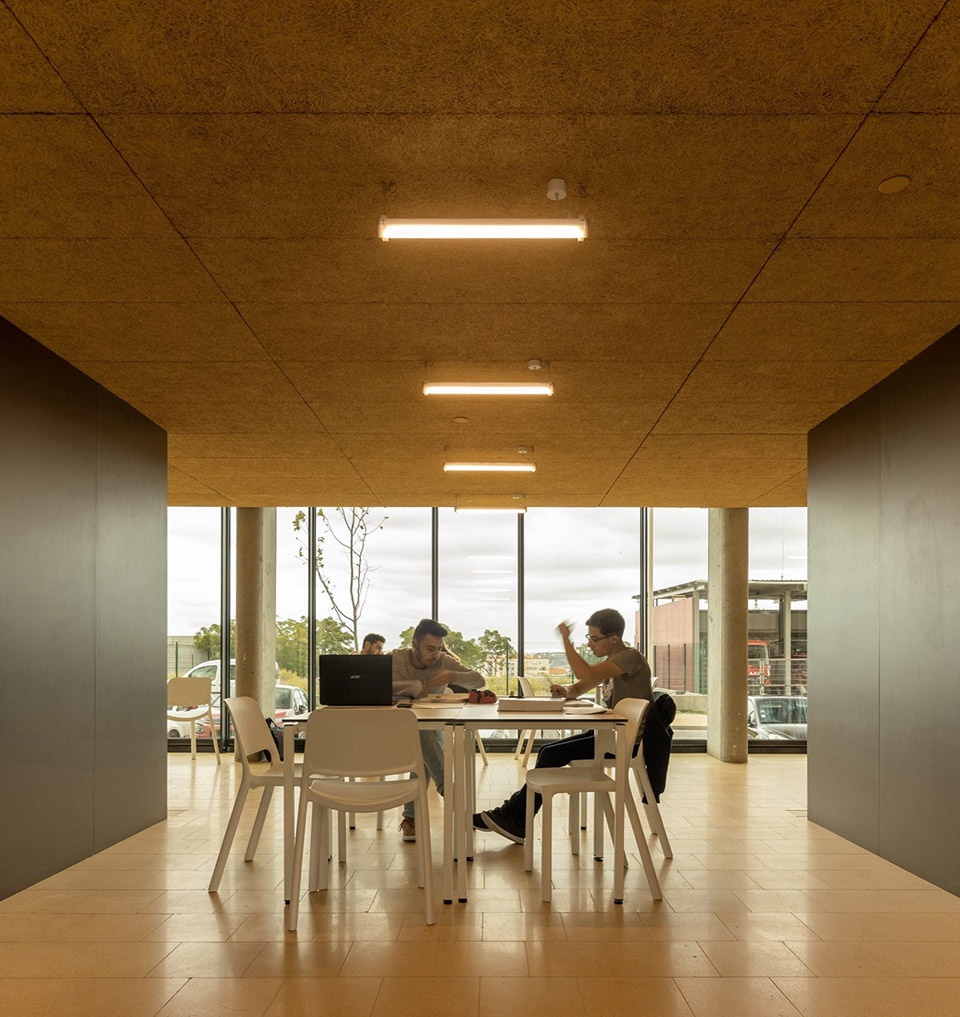
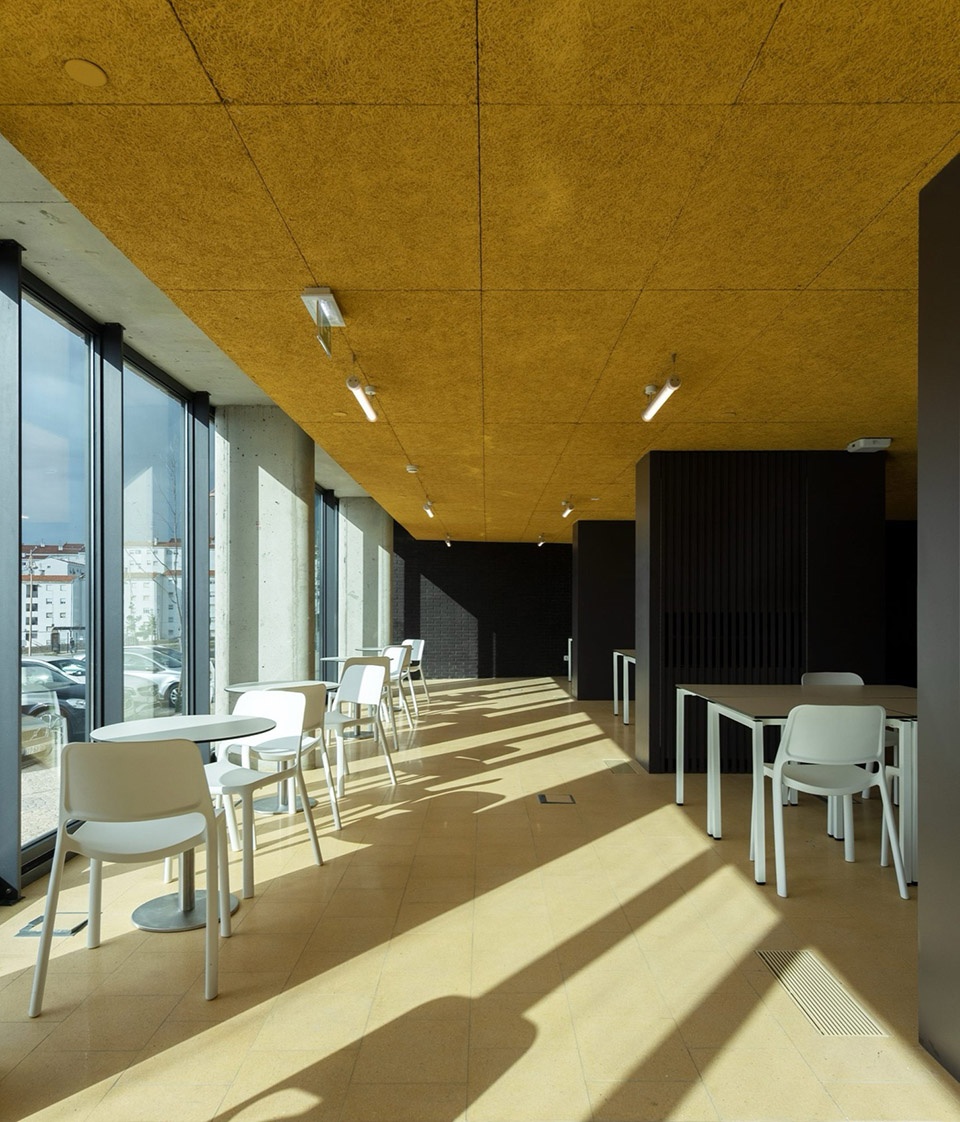
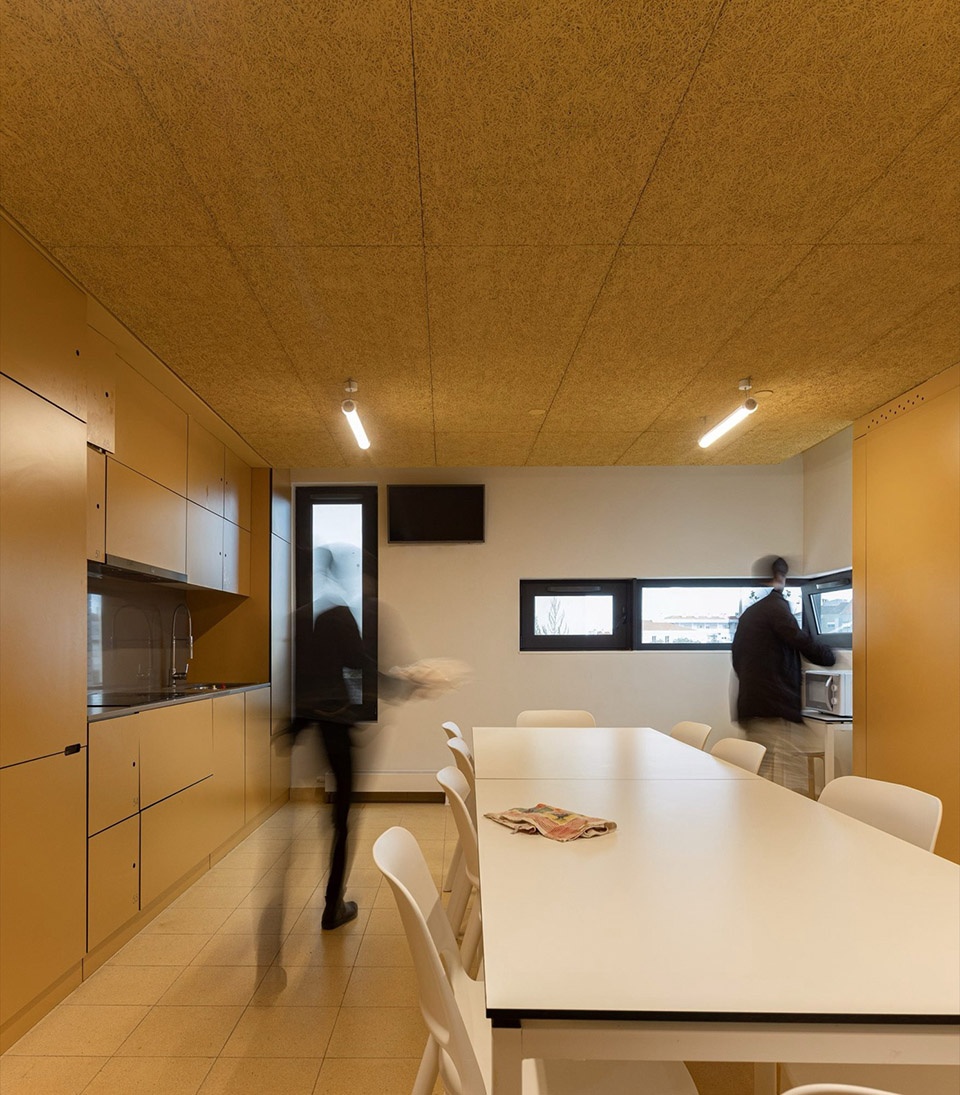
▼公共厨房,public kitchen
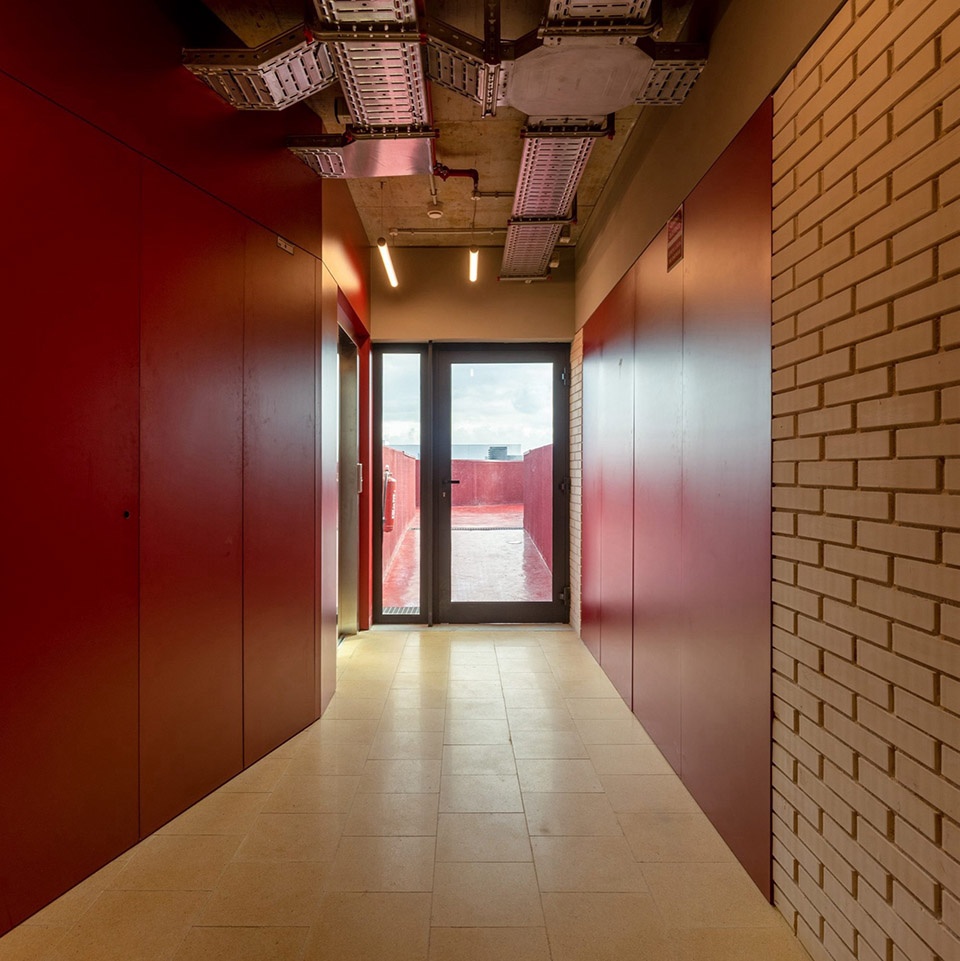
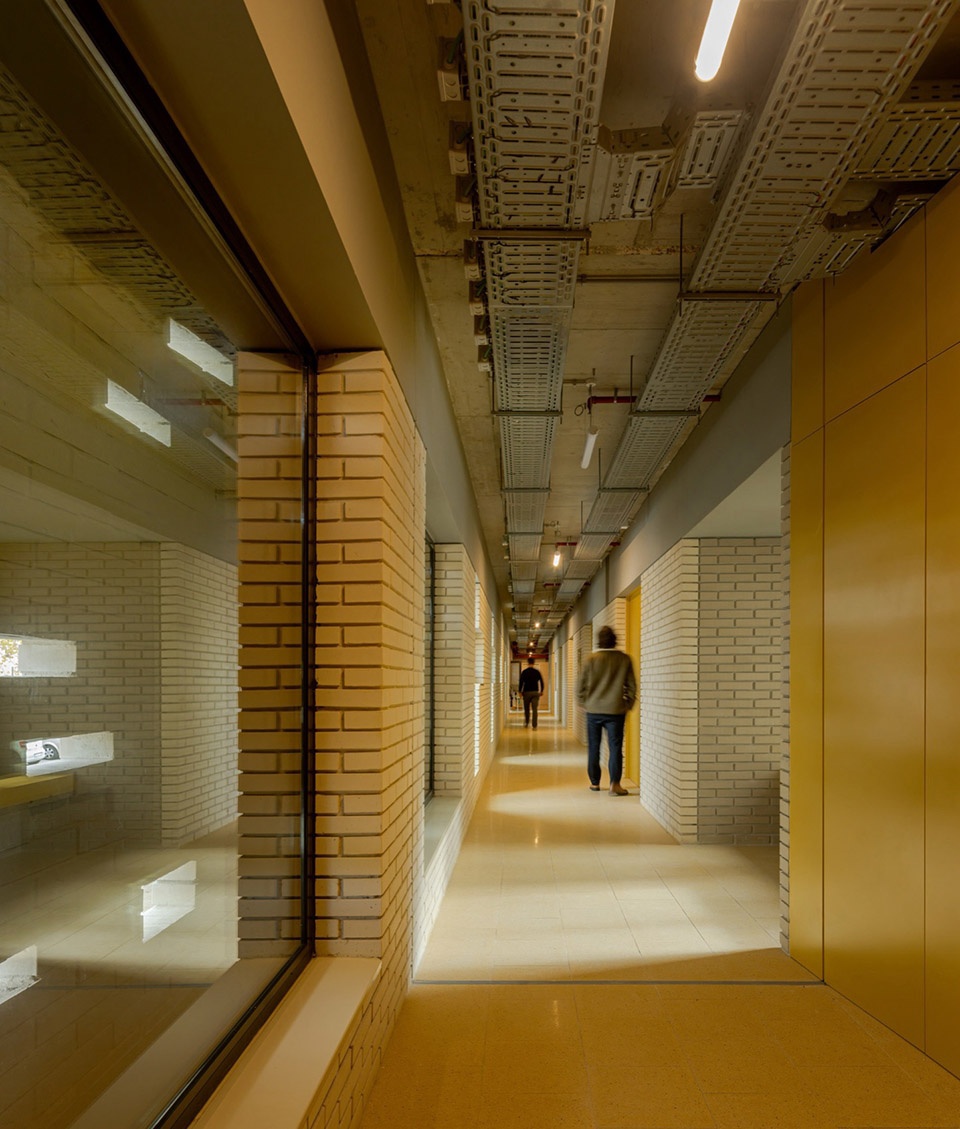
▼走廊,hallway
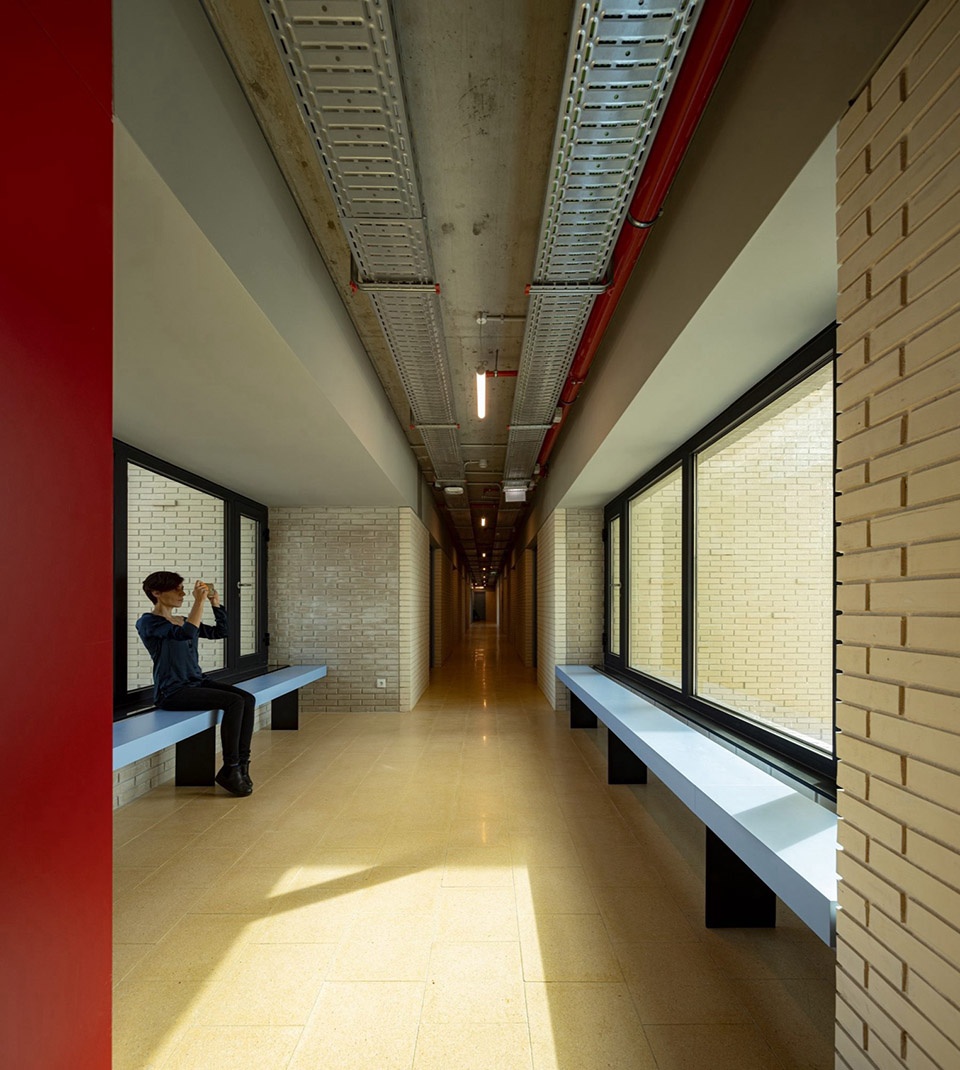
▼走廊,hallway
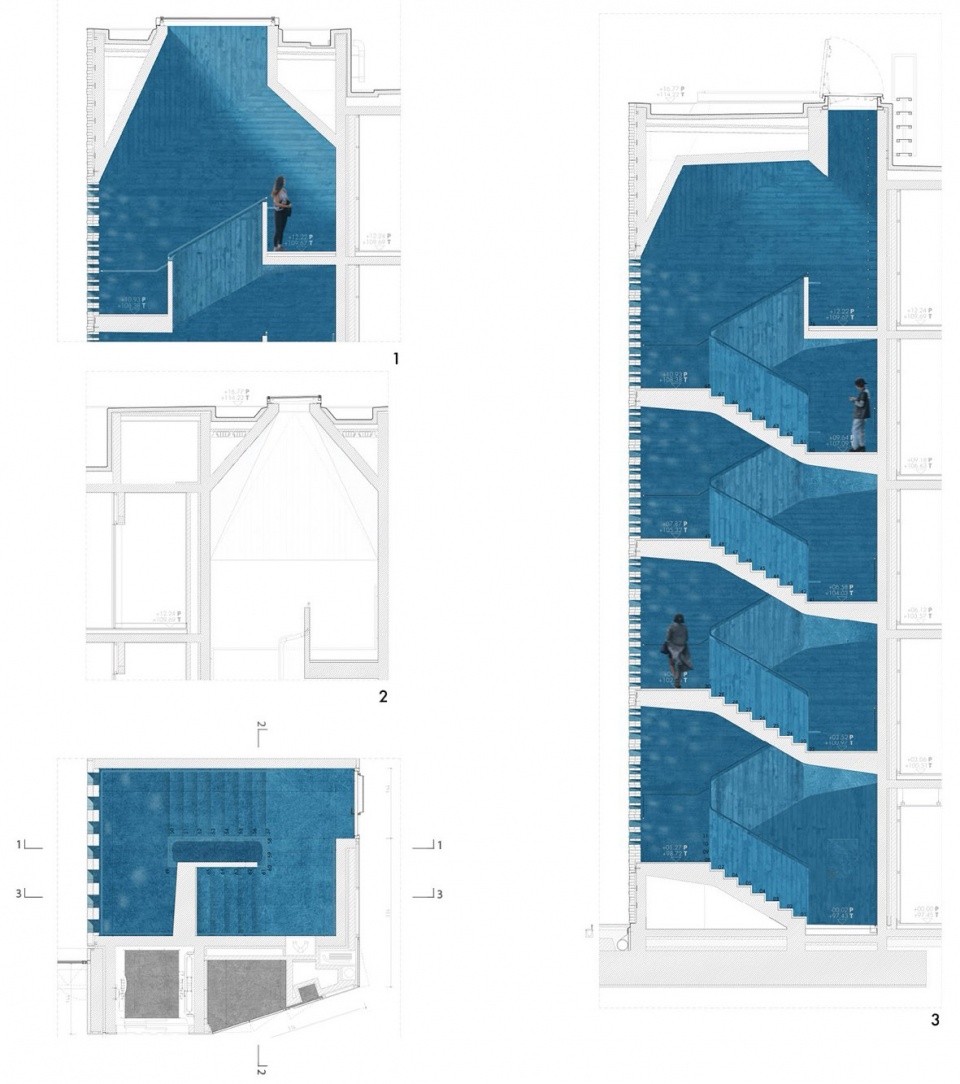
▼分析图,analysis diagram
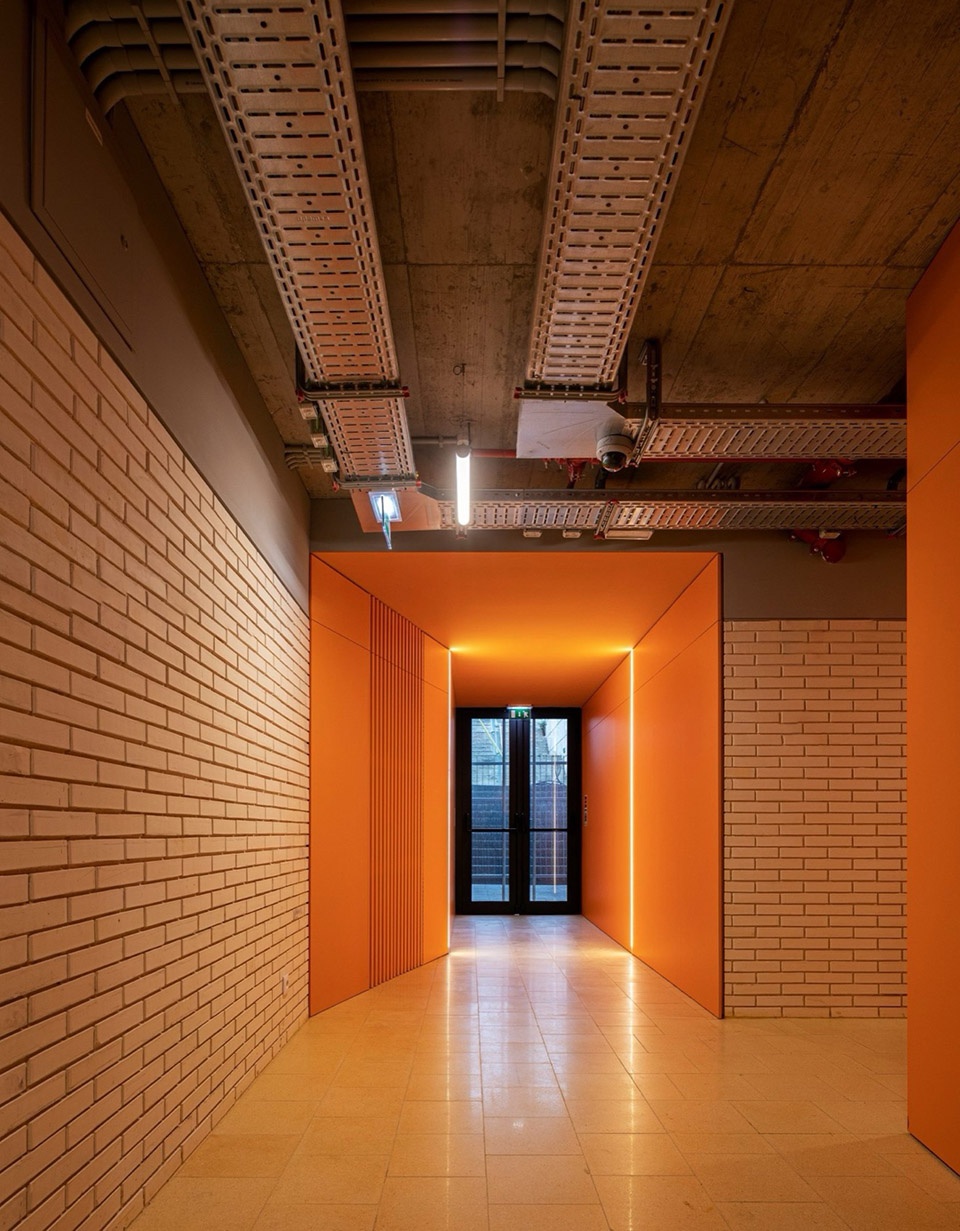
▼走廊,hallway
▼不同色彩的楼梯间,staircase in different color
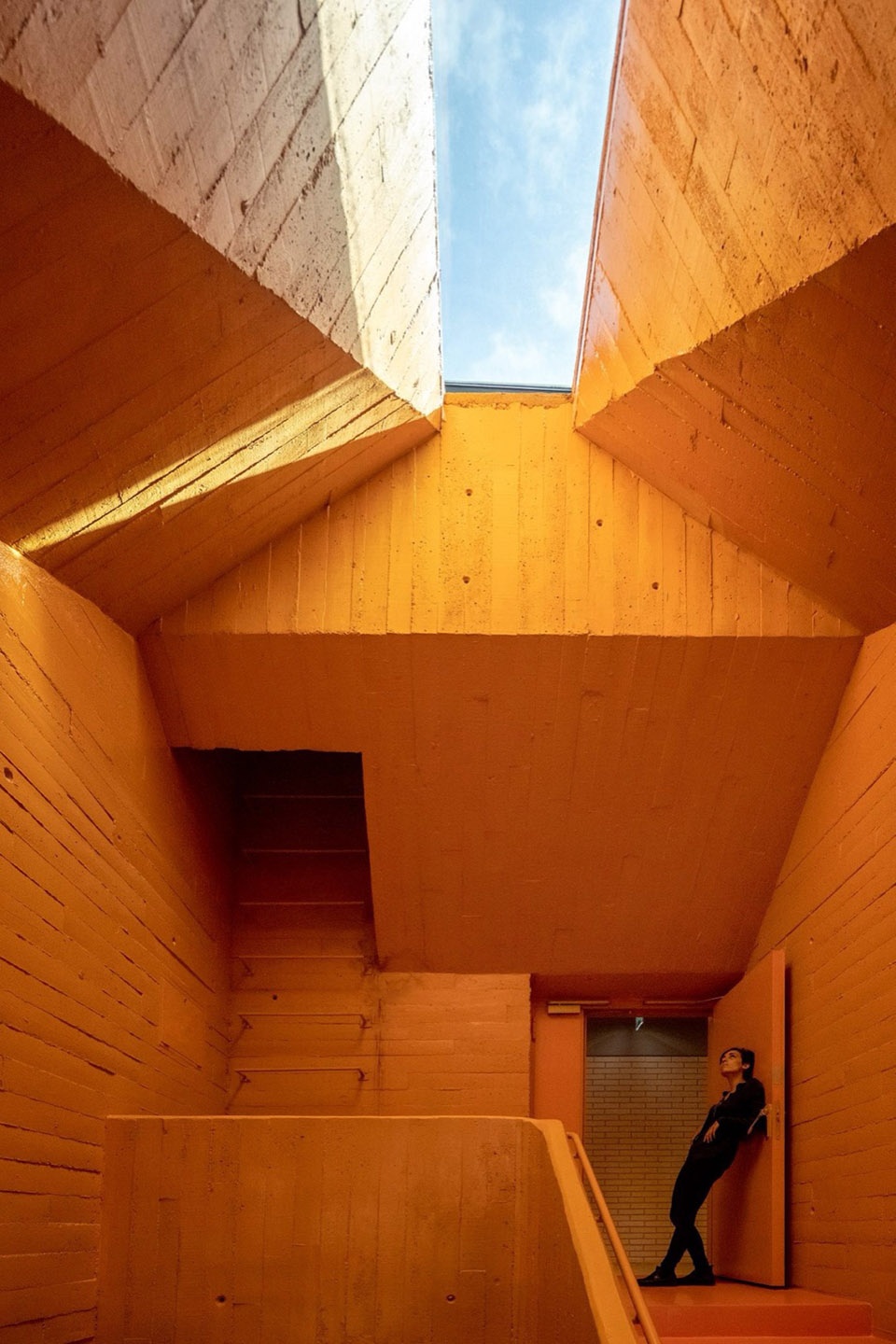
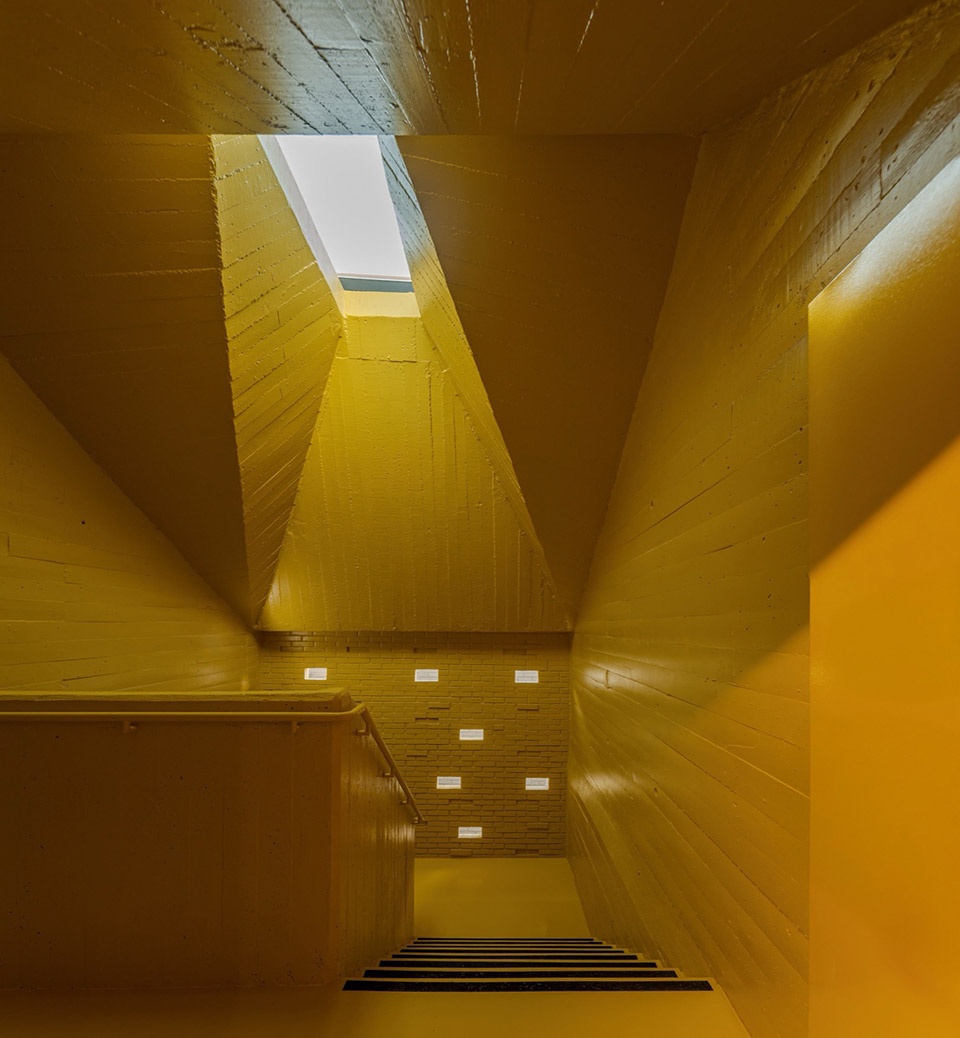
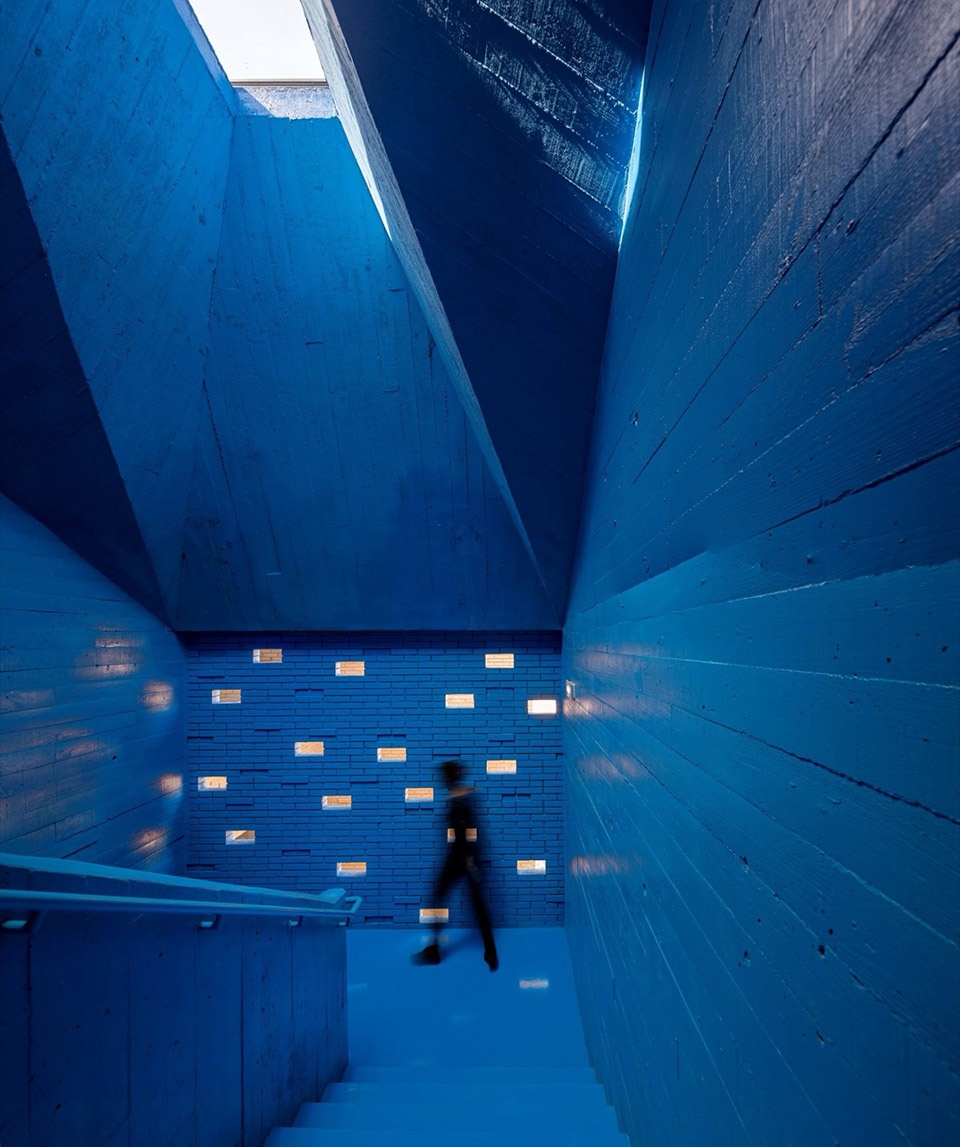
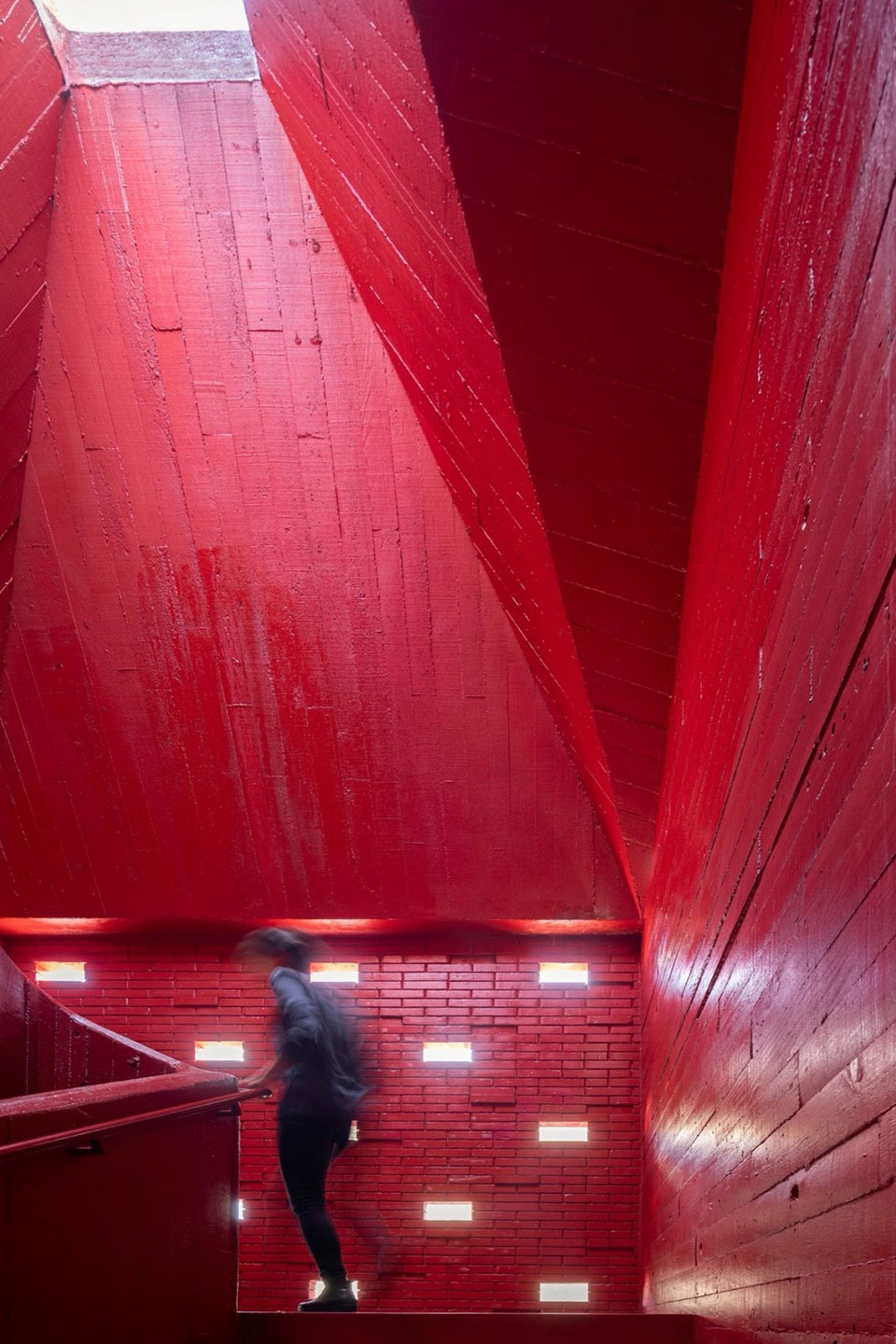
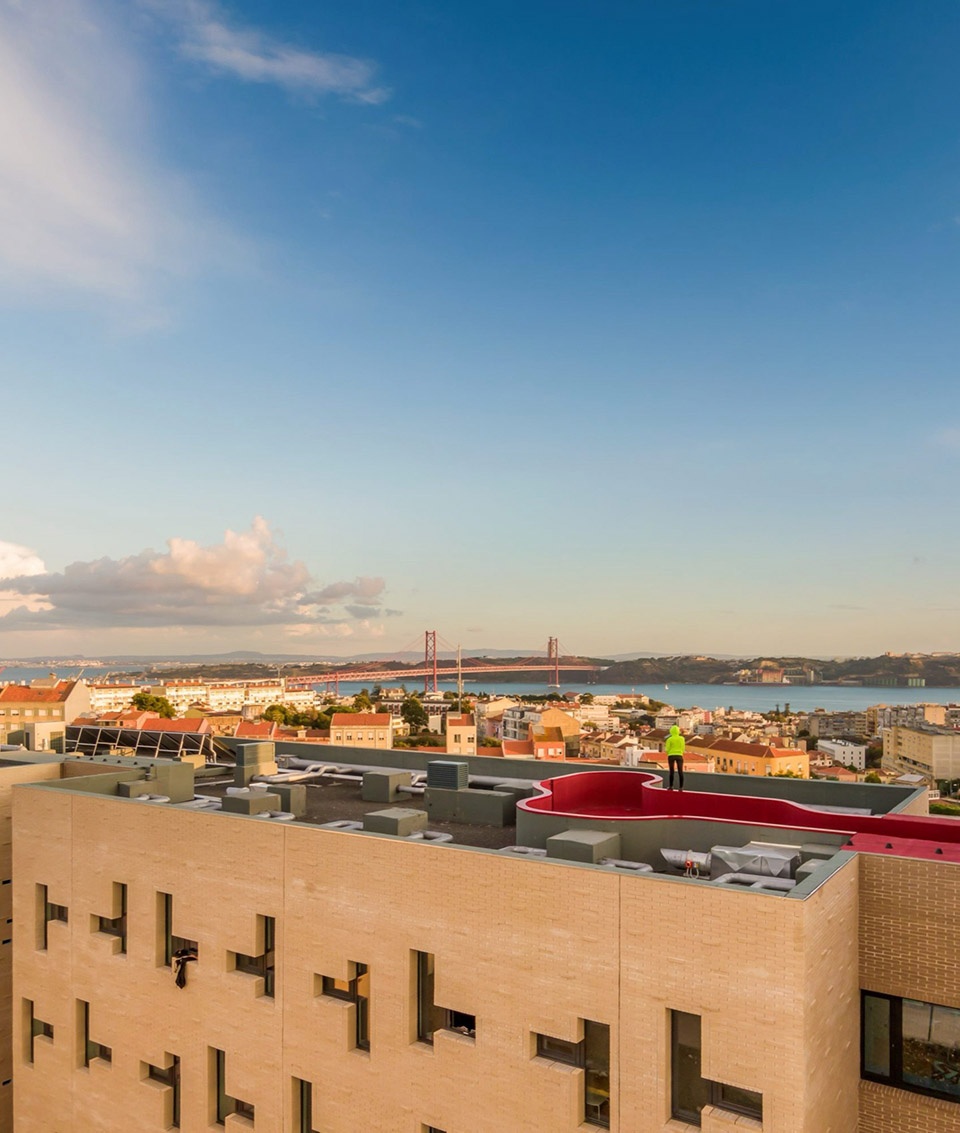
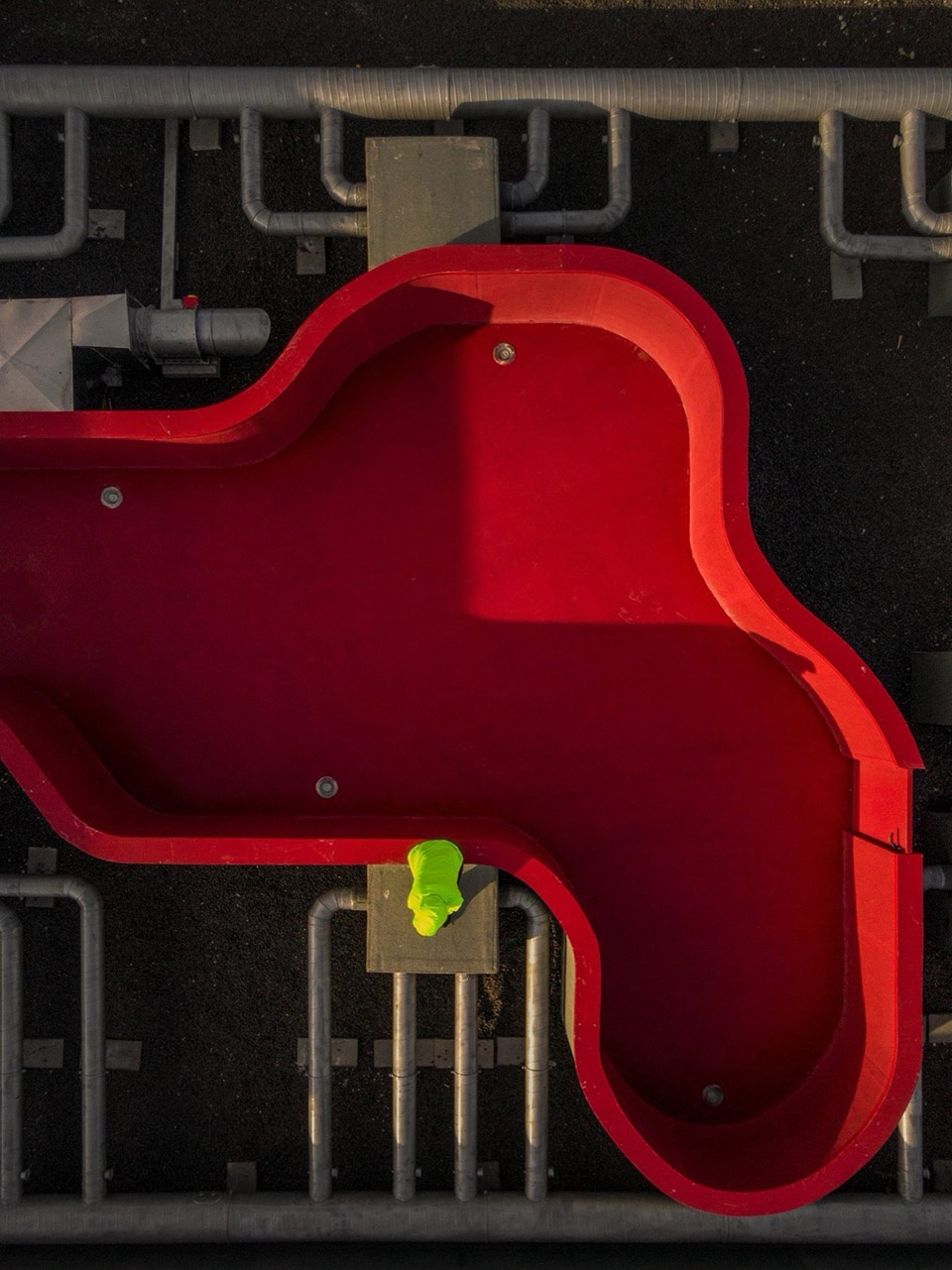
垂直交通空间布置在中央庭院内侧经过雕塑化处理的转角位置,形成清晰的交通节点。建筑顶部设有露台,可俯瞰城市景观与塔霍河入海口,为居住者提供开放的共享视野与休憩空间。
The vertical accesses are located near the sculpted corners of the inner central courtyard. There is a terrace on the top of the building that provides a view over the city and the Tagus estuary.
▼屋顶天台,rooftop terrace
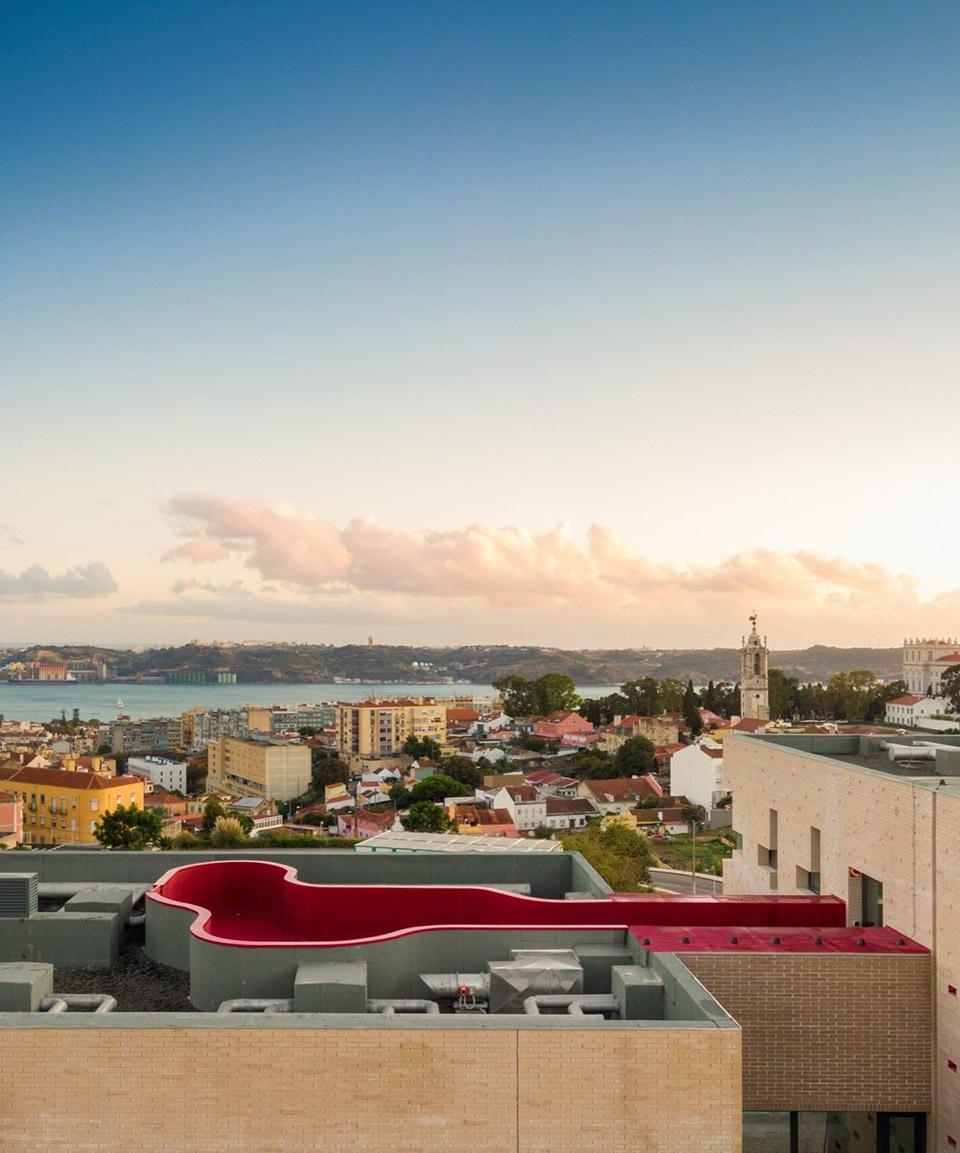
▼顶视图,top view of the terrace
▼模型,model
▼地下层平面图,level -1 plan
▼底层平面图,level 0 plan
▼标准层平面图,standard floor plan
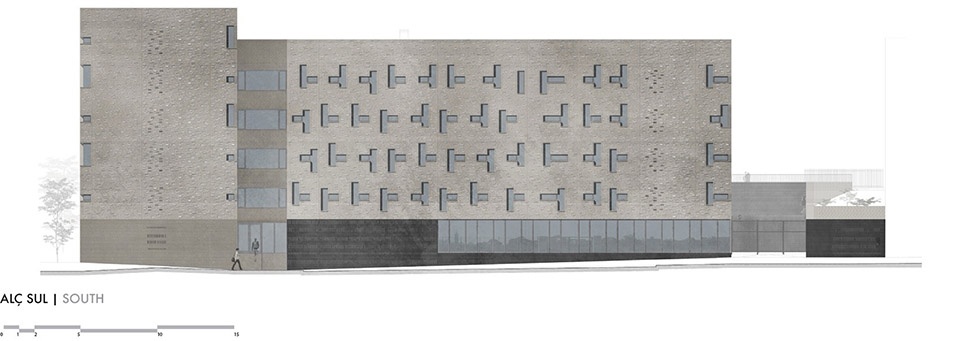
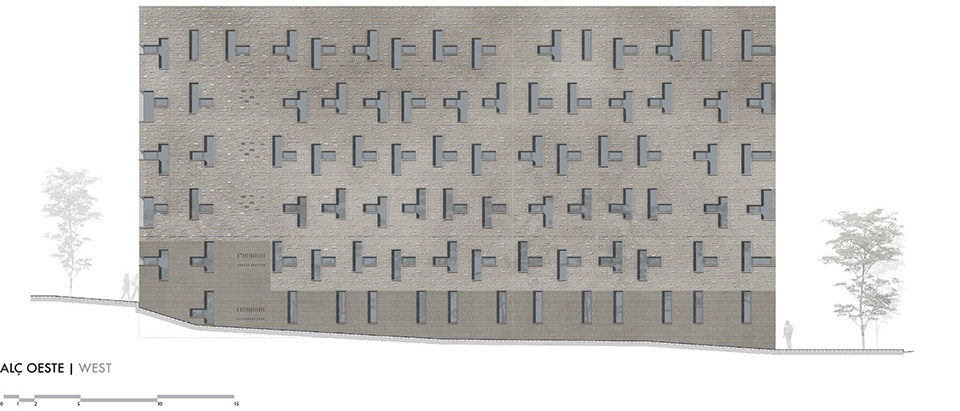
▼立面图,elevations
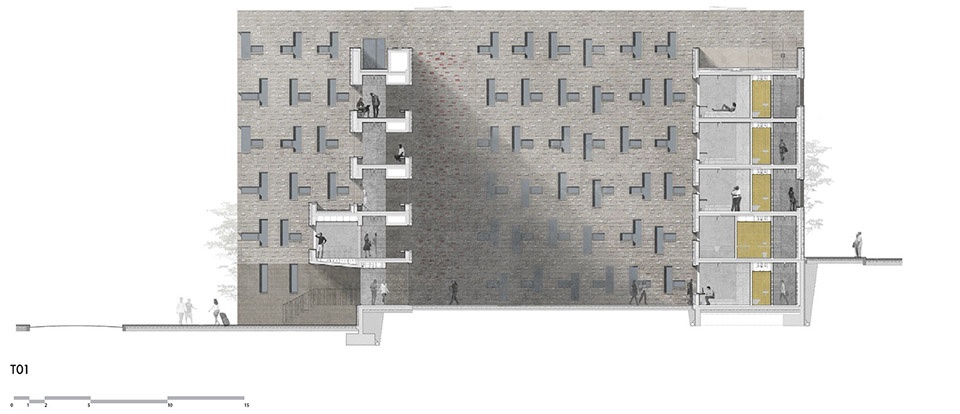
▼剖面图,section
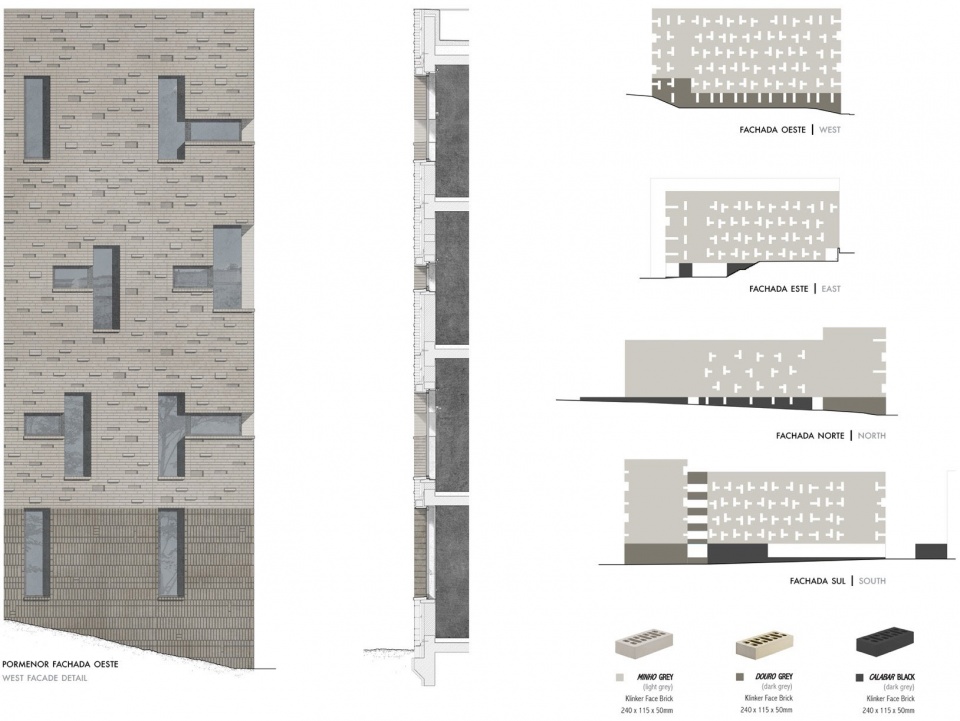
▼细部详图,construction details
EQUIPA|TEAM
CVDB Arquitectos, Rodolfo Reis e/and Joana Barrelas
ARQUITECTURA – AUTORIA E COORDENAÇÃO|ARCHITECTURE – AUTHORSHIP & COORDINATION
Cristina Veríssimo
Diogo Burnay
Rodolfo Reis
Joana Barrelas
ARQUITECTURA – COLABRAÇÃO|ARCHITECTURE – COLLABORATION
Tiago Filipe Santos
André Bengochea
Filipa Paisano
César Lindergrun
PAISAGISMO|LANDSCAPE ARCHITECTURE
Bound, Arquitectura Paisagista
ESPECIALIDADES|ENGINEERING
Projectual
LOCAL|LOCATION
Lisboa – Portugal
CLIENTE|CLIENT
Universidade de Lisboa|University of Lisbon
PROCEDIMENTO|PROCEDURE
Concurso Público Internacional – 1º Prémio|International Public Competition – 1st prize
CRONOLOGIA|CHRONOLOGY
Concurso|Competition – 2014
Projecto|Project – 2015
CRÉDITOS FOTOGRÁFICOS|PHOTOGRAPHY
Fernando Guerra FG|SG