日式住宅,日本 / Akio Isshiki Architects
我一直在思考,如果一座住宅能够跨越不同的国家、文化与时代,与人产生共鸣,它应当是什么样子。它既不是奢华铺陈的豪宅,也不是极简克制的白盒子。在我看来,那应当是一种能够静静吸纳所在场所气息,同时又保有一种超越时间的、普遍而恒久的美感的住宅。
I have been exploring what a house might be if it could resonate with people across different nations, cultures, and eras. It is neither a lavish, luxurious residence nor a minimalist white cube. Rather, I believe it is a house that quietly absorbs the atmosphere of its place while retaining a timeless and universal sense of beauty.
▼项目概览,Overview of the project
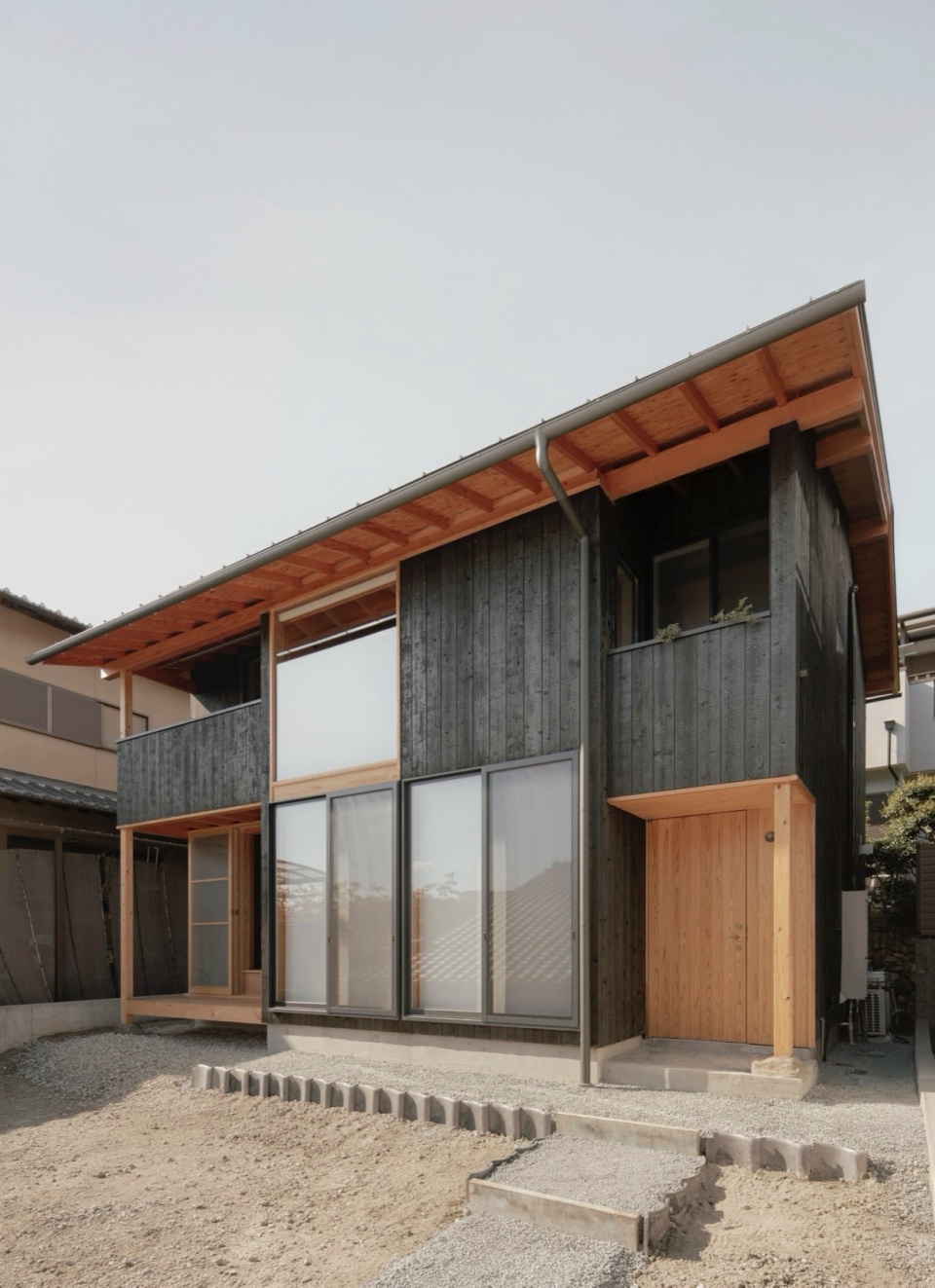
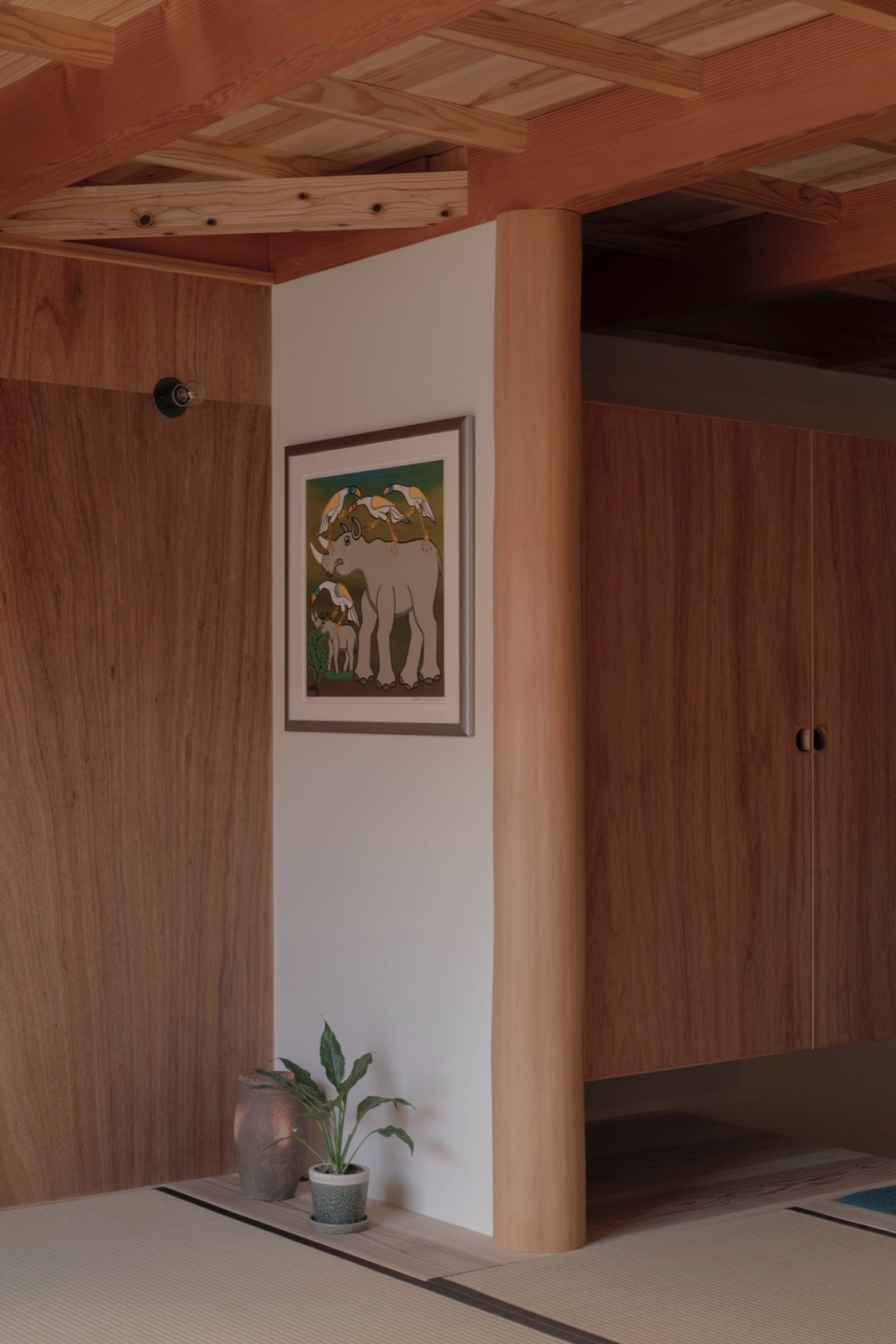
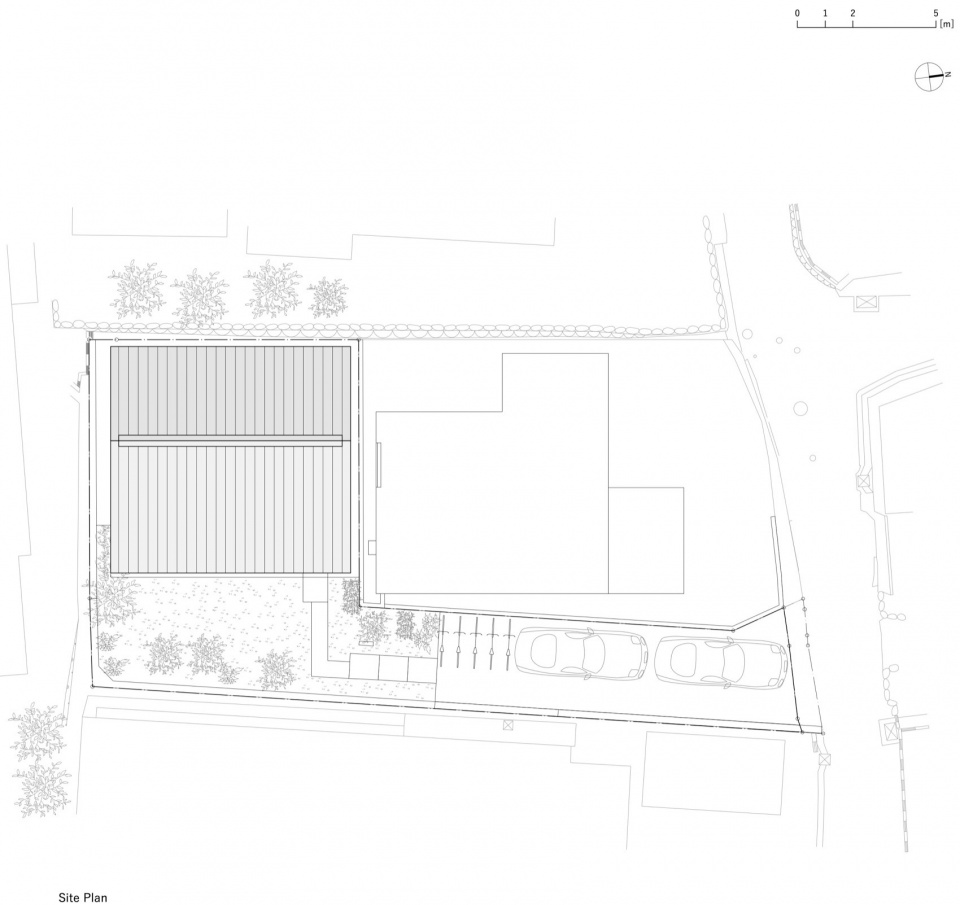
基地是一块旗杆形的狭长用地,周围既有传统的日本住宅,也有由开发商建造的当代住宅,呈现出时间不断更迭的状态。在有限的预算条件下,为一个五口之家设计一座适合此地的住宅时,我脑海中浮现的形象,是一座传统的日本住宅。通过真壁结构(shinkabe:日本传统做法,在室内显露柱与梁的结构方式),木结构框架被直接呈现,去除一切多余装饰,显得克制而纯粹。空间关系并非通过严密的分隔来定义,而是让室内与室外、房间与房间之间保持一种松弛而连续的联系。即便建筑面积不大,这种通透性也能让住宅显得开敞而不局促。在建筑成本不断上涨的当下,我认为重新审视传统日本住宅中蕴含的智慧,是最理性、也最现实的选择。
The site is a flagpole-shaped lot located amid a mixture of traditional Japanese houses and contemporary developer-built homes, a place that reflects an ongoing transition of time. With a limited budget, and in designing a house for a family of five suited to this place, the image I had in mind was that of a traditional Japanese house. Timber framing is exposed through shinkabe construction (shinkabe: a traditional Japanese method in which columns and beams are expressed on the interior), a stripped-down appearance free of excess. Spatial relationships allow inside and outside, and room and room, to remain loosely connected rather than rigidly separated. Even with a small floor area, such transparency makes the house feel open rather than confined. At a time when construction costs continue to rise, I believed that reconsidering the wisdom embedded in traditional Japanese houses was the most rational approach.
▼室内概览,Overview of the Interior
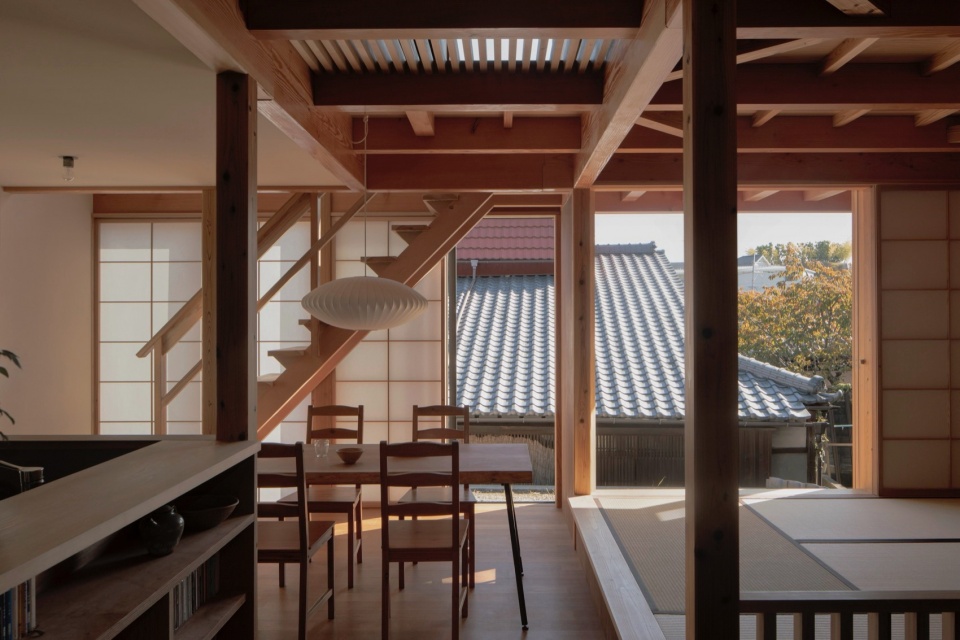
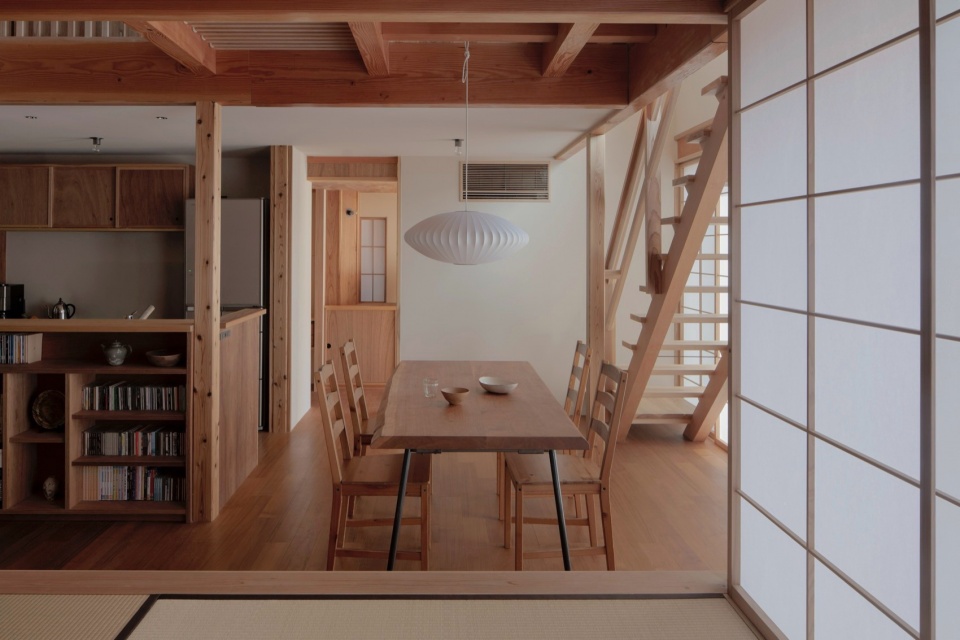
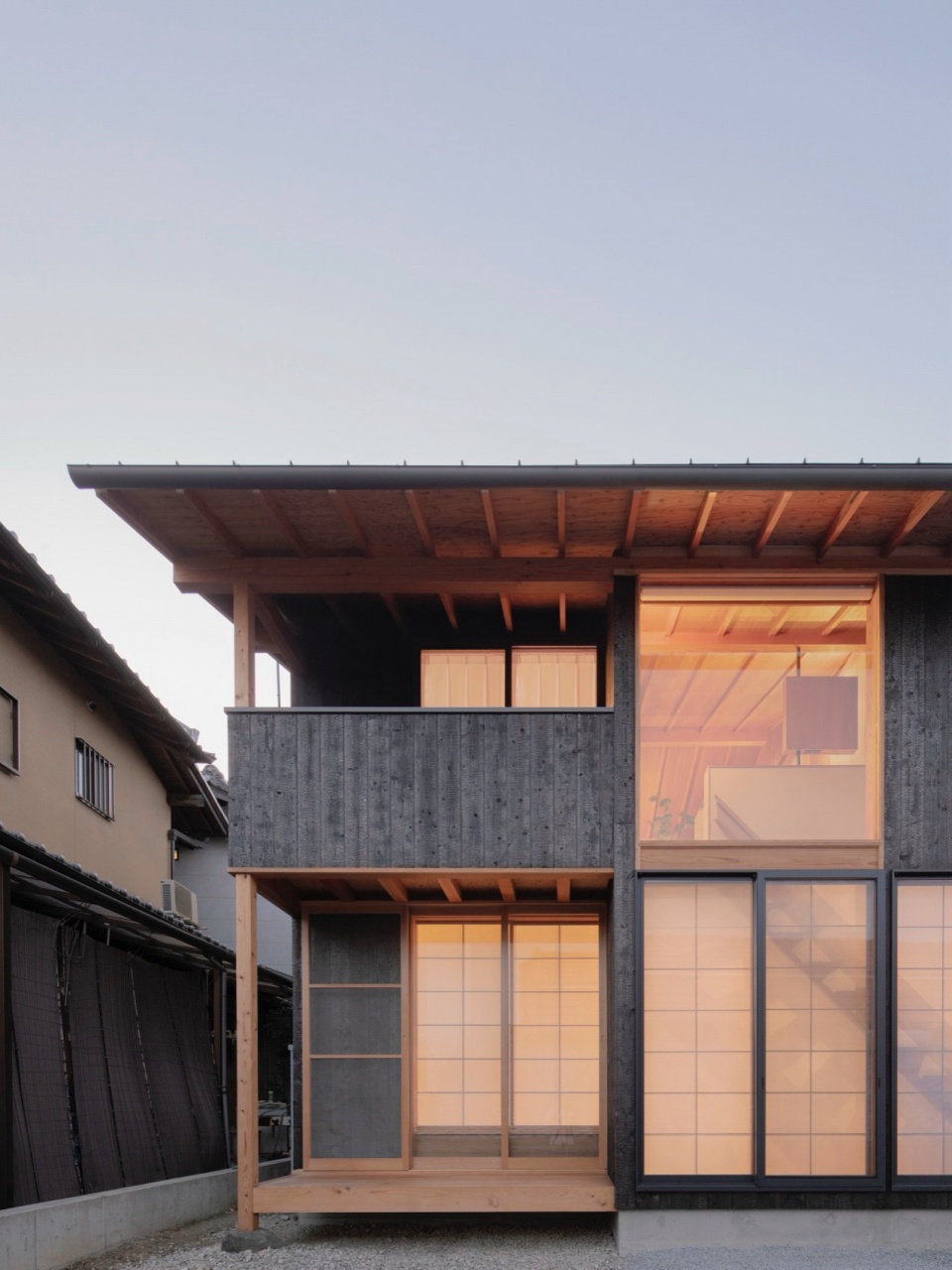
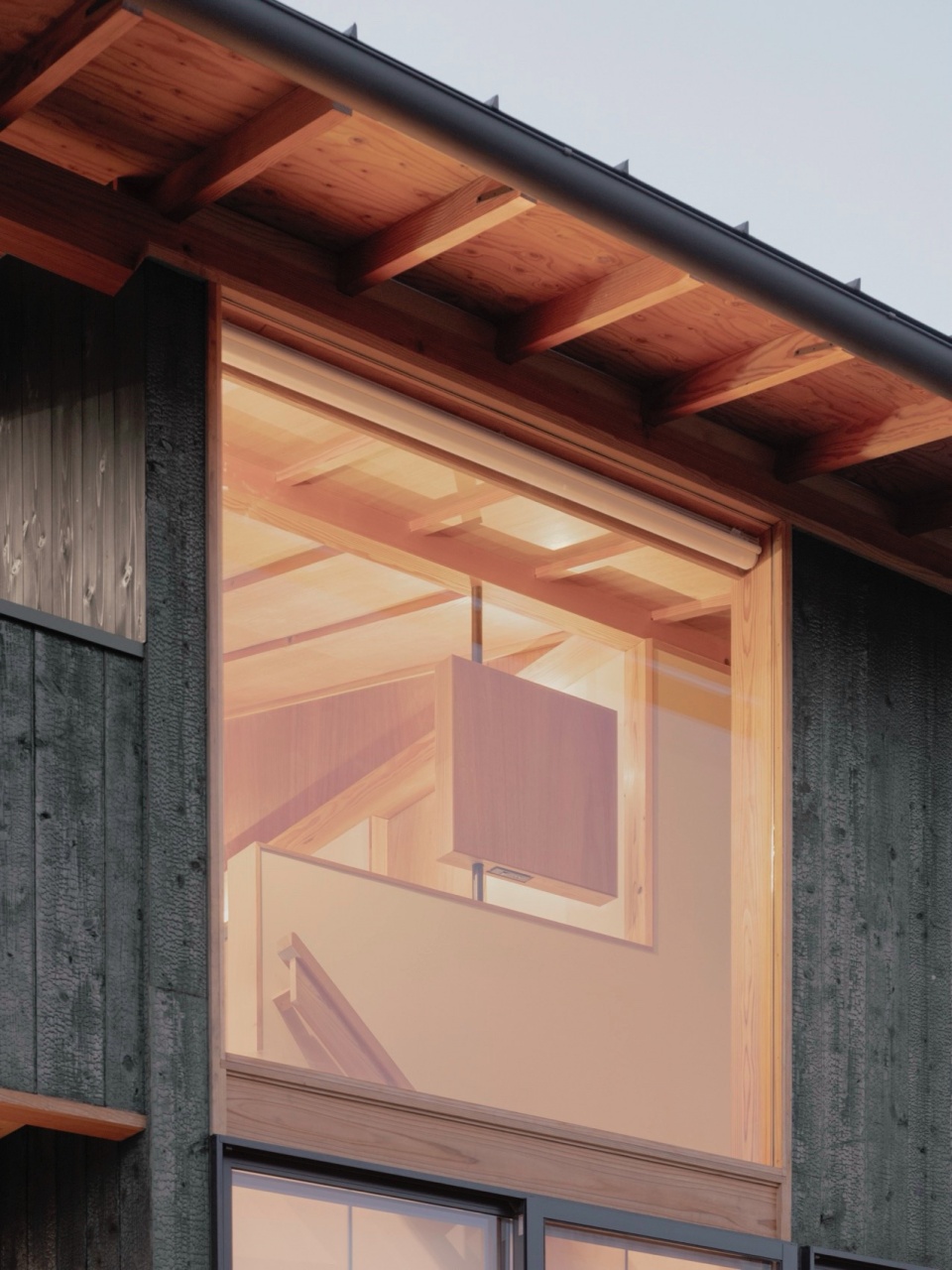
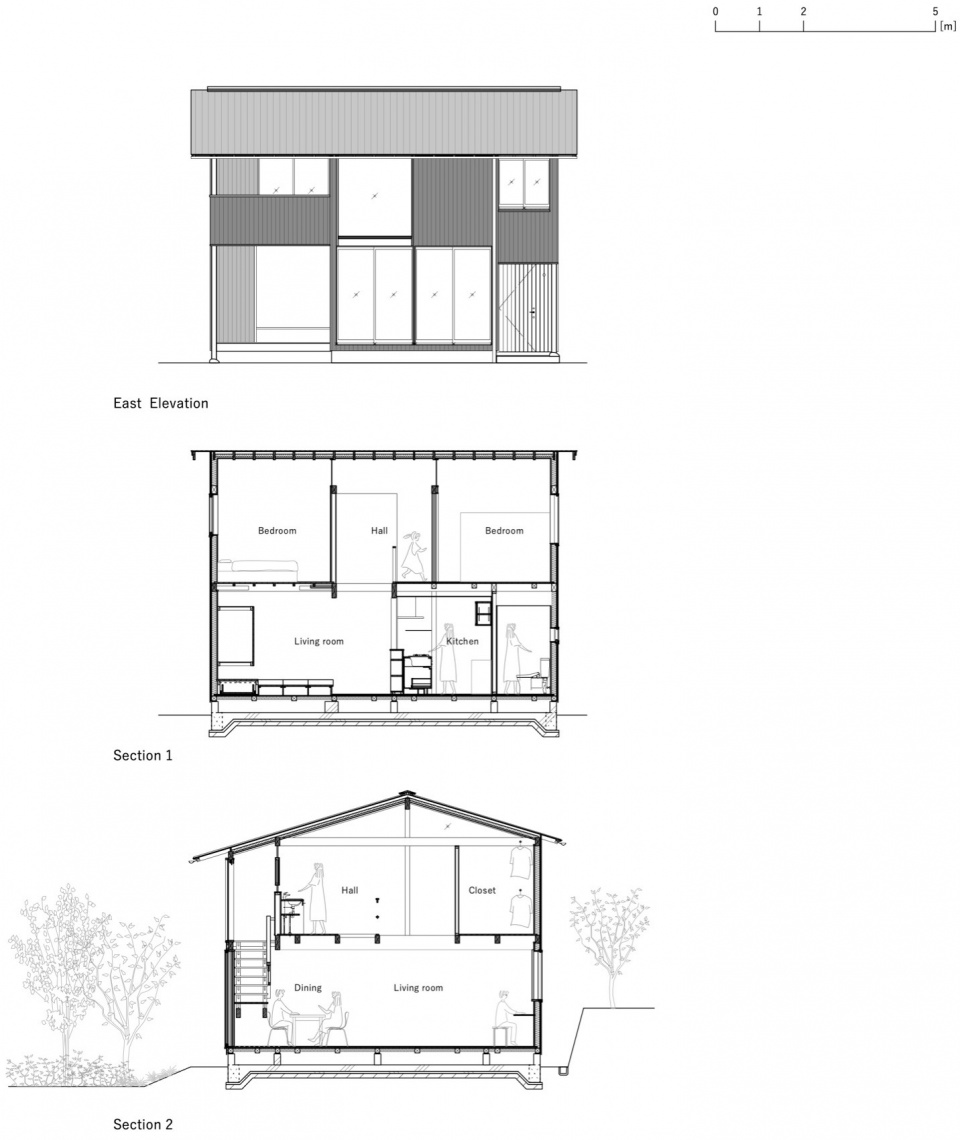
为了与周边环境相协调,建筑采用了简洁的两层山墙体量。外立面以烧杉木收边,呈现出克制而朴素的外观。在尽量压低层高的同时,结构被直接显露,二层的地板与一层的天花由同一层杉木板构成。通过这种方式,在减少材料与施工工序的同时,依然获得了空间上的开阔感。整体建材仅选用市场上易于获取的标准化产品,并尽量避免增加工种分化的复杂做法,而是优先采用能够由木匠一体完成的构造方式。
To harmonize with its surroundings, the building takes on a simple two-story gabled form. Its modest exterior is finished in charred cedar. While keeping floor heights low, the structure is exposed, and a single layer of cedar boards serves simultaneously as the second-floor flooring and the first-floor ceiling. In this way, a sense of openness is achieved while reducing both materials and construction processes. The construction materials were limited to readily available, standard products, and specifications that increase trade divisions were avoided in favor of materials that could be executed entirely by carpenters.
▼入口,Entrance
▼榻榻米客厅,Tatami living room
▼室内的木质色调,Interior wood tune
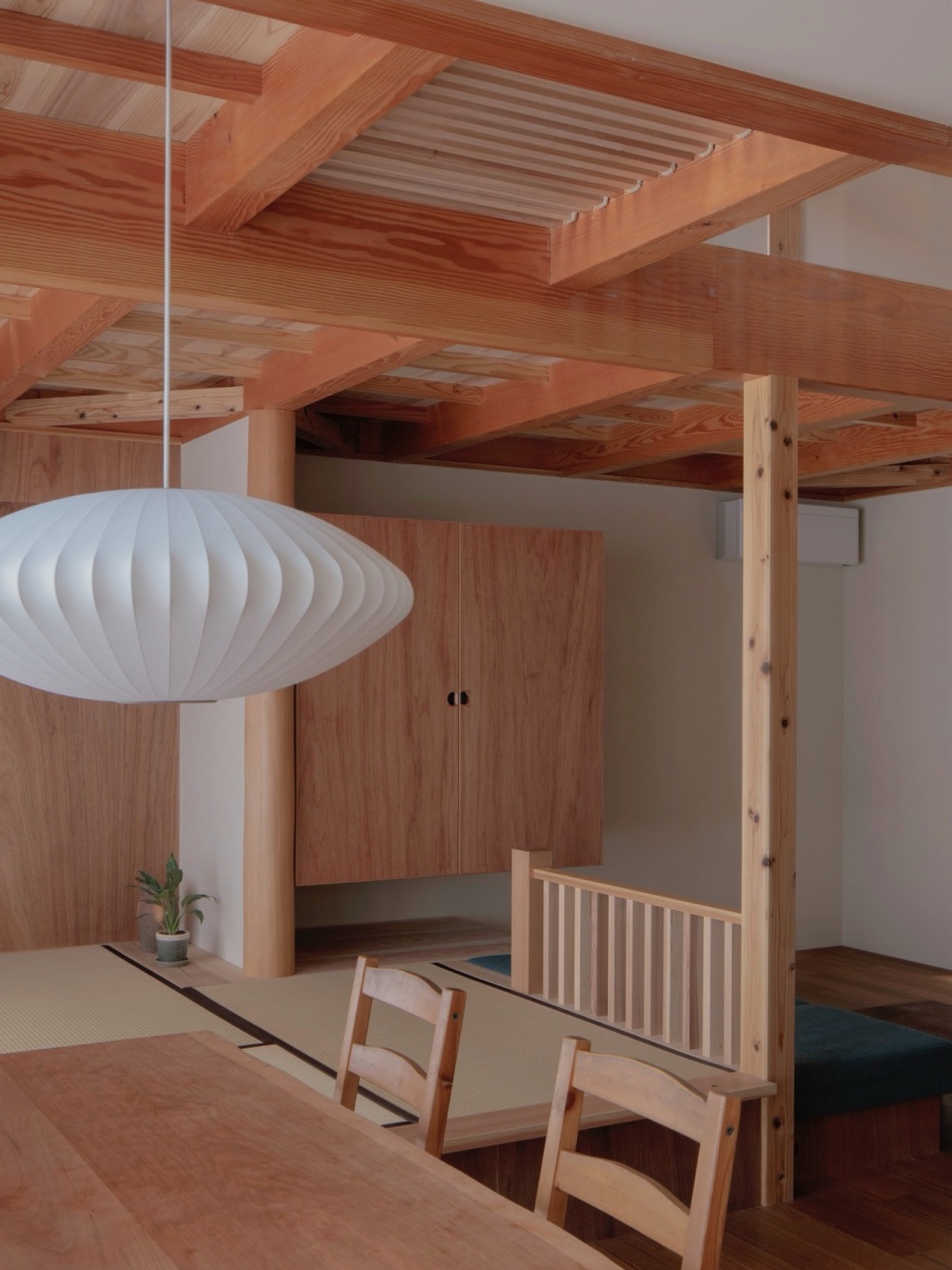
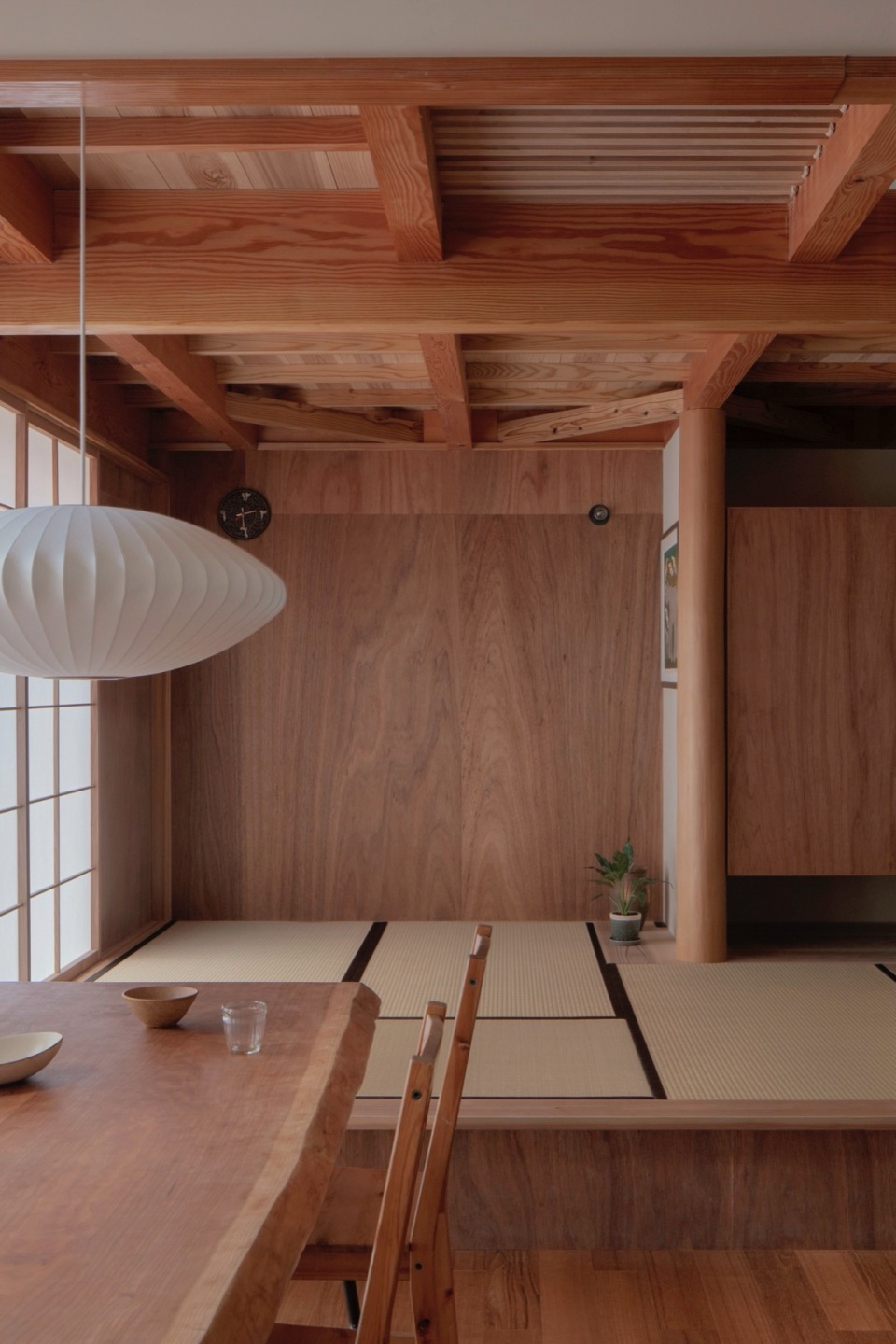
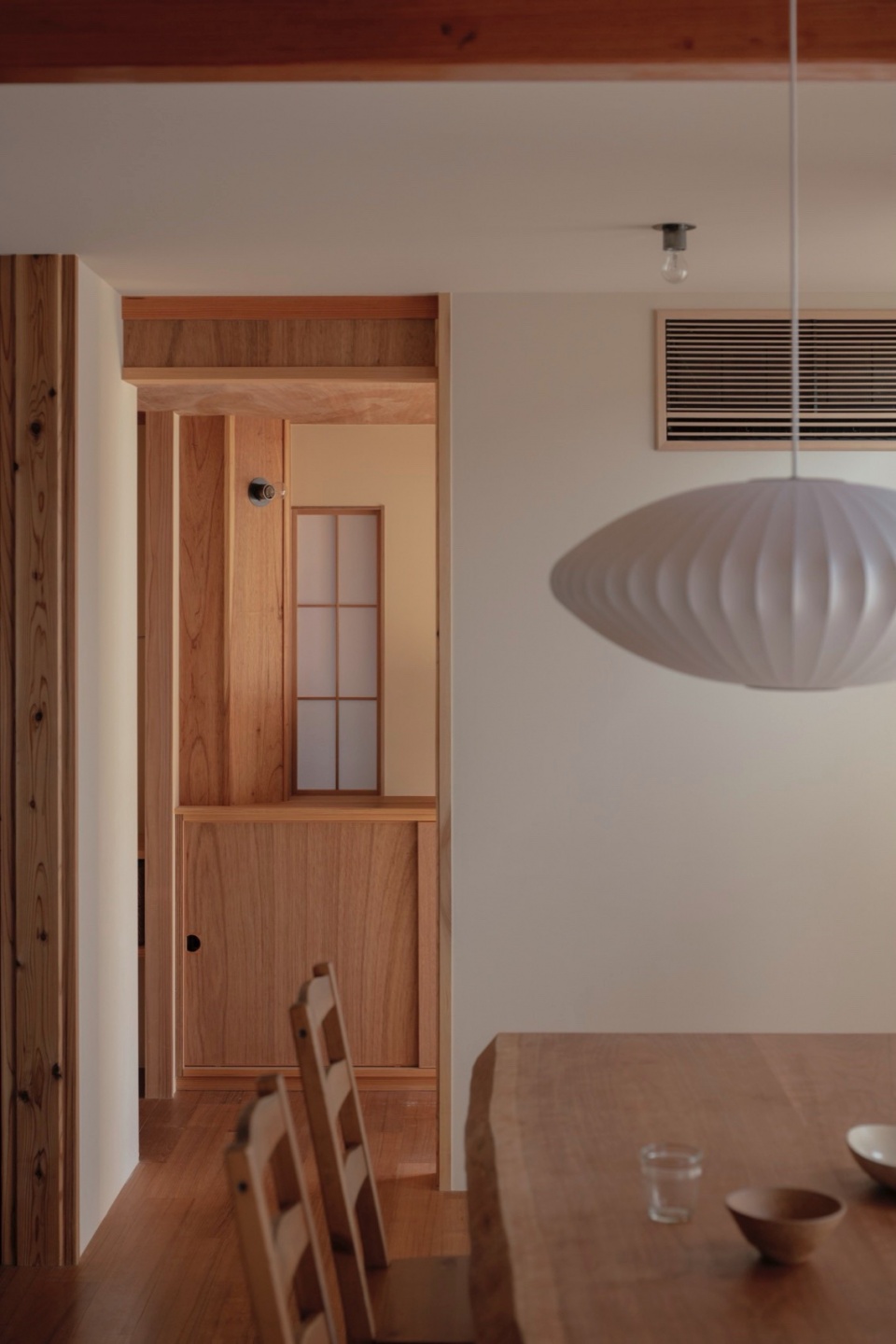
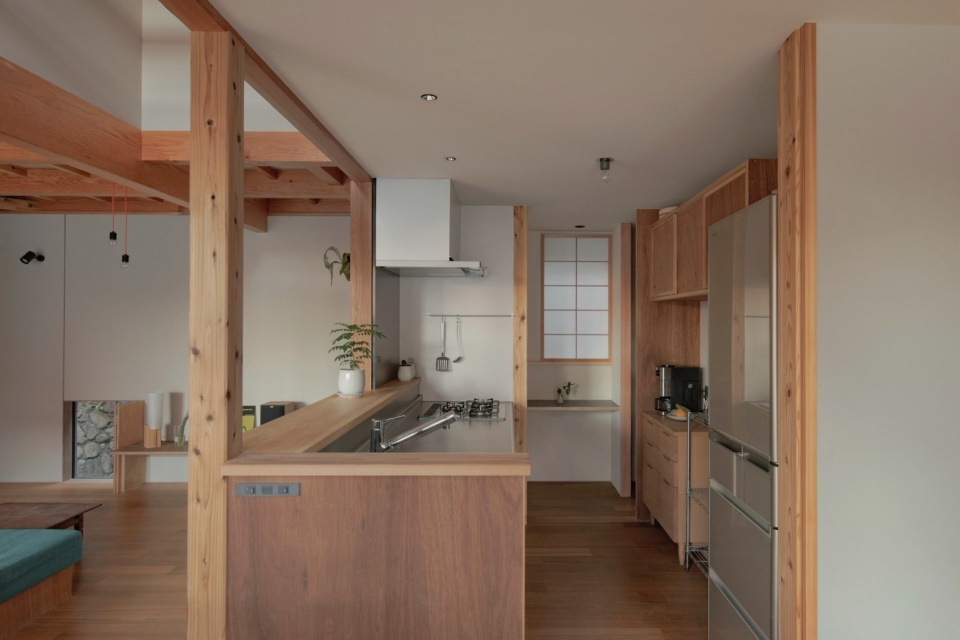
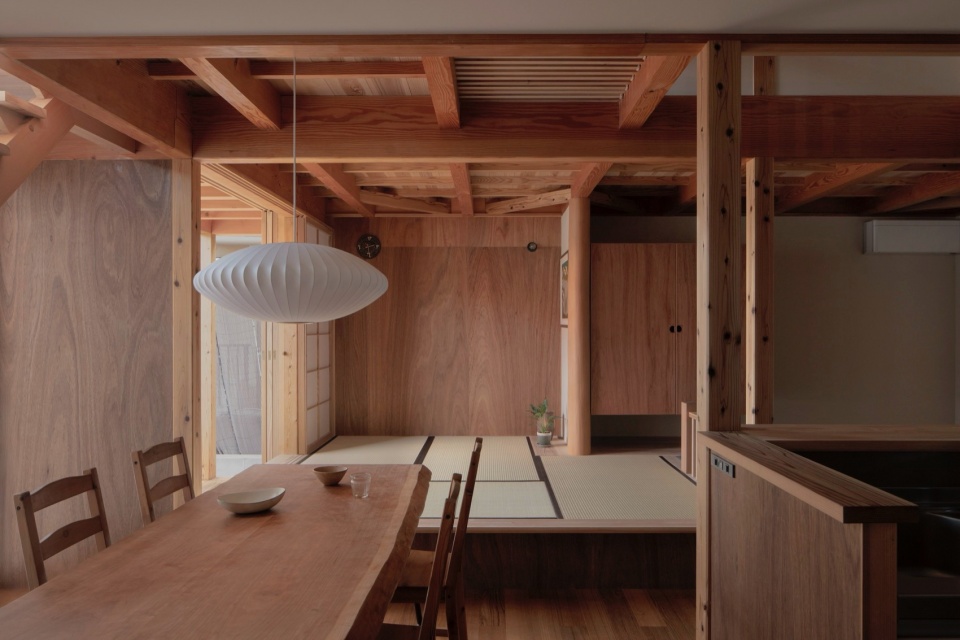
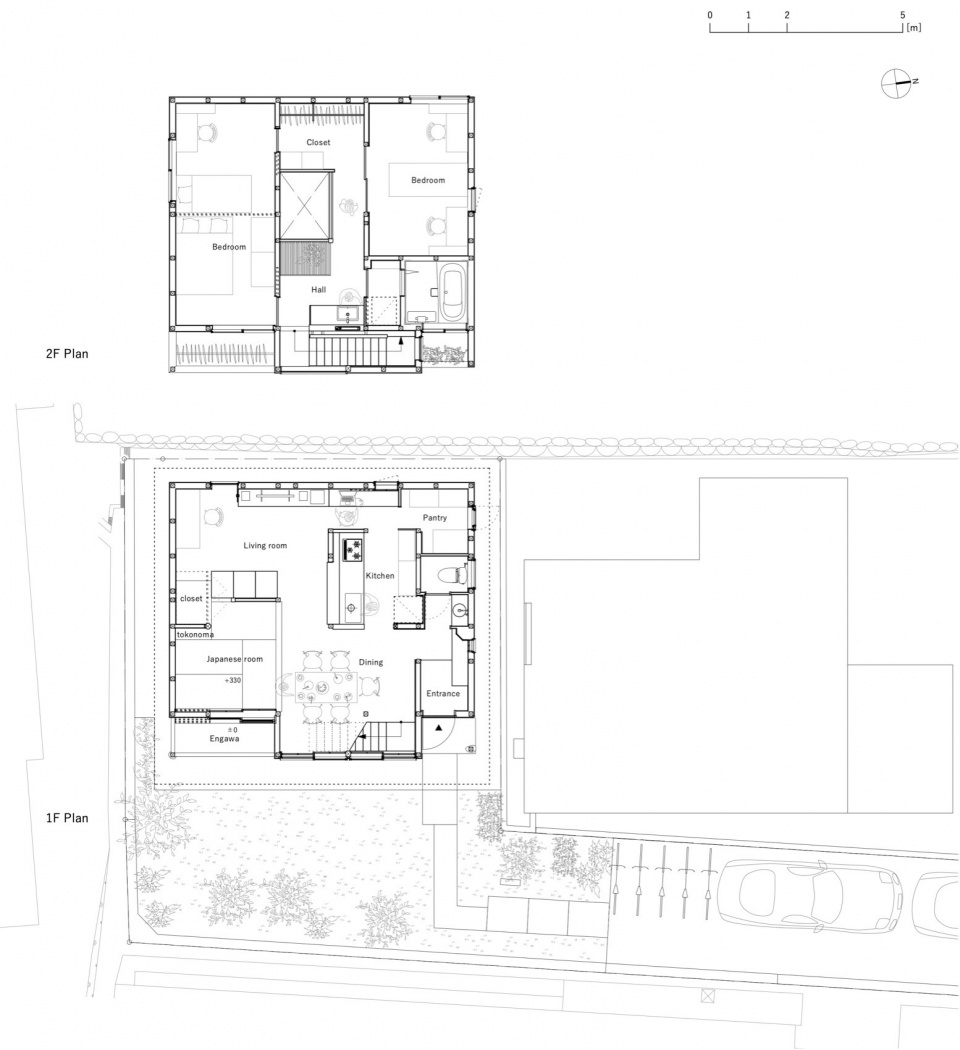
考虑到业主夫妇热爱烹饪,厨房与餐厅被安置在住宅的核心位置,其余生活功能则紧凑地围绕其展开。在东侧,场地地势向下延展,设计引入了大尺度的开口与缘侧(engawa:连接室内与庭院的狭长木平台),使人的感知自然向外延伸。这是一座希望让五口之家能够舒适生活、而不感到压迫或拘束的住宅。
For the couple, who enjoy cooking, the kitchen and dining room are placed at the center of the house, with other domestic functions compactly arranged around them. Toward the east, where the land drops, a large opening and an engawa veranda (engawa: a narrow wooden platform or corridor connecting interior and garden) are introduced, allowing one’s awareness to naturally extend outward. The house was conceived as a place where a family of five can live comfortably, without a sense of constraint.
▼厨房,Kitchen
▼餐厅,Restaurant
▼侧墙开口,Opening on the wall
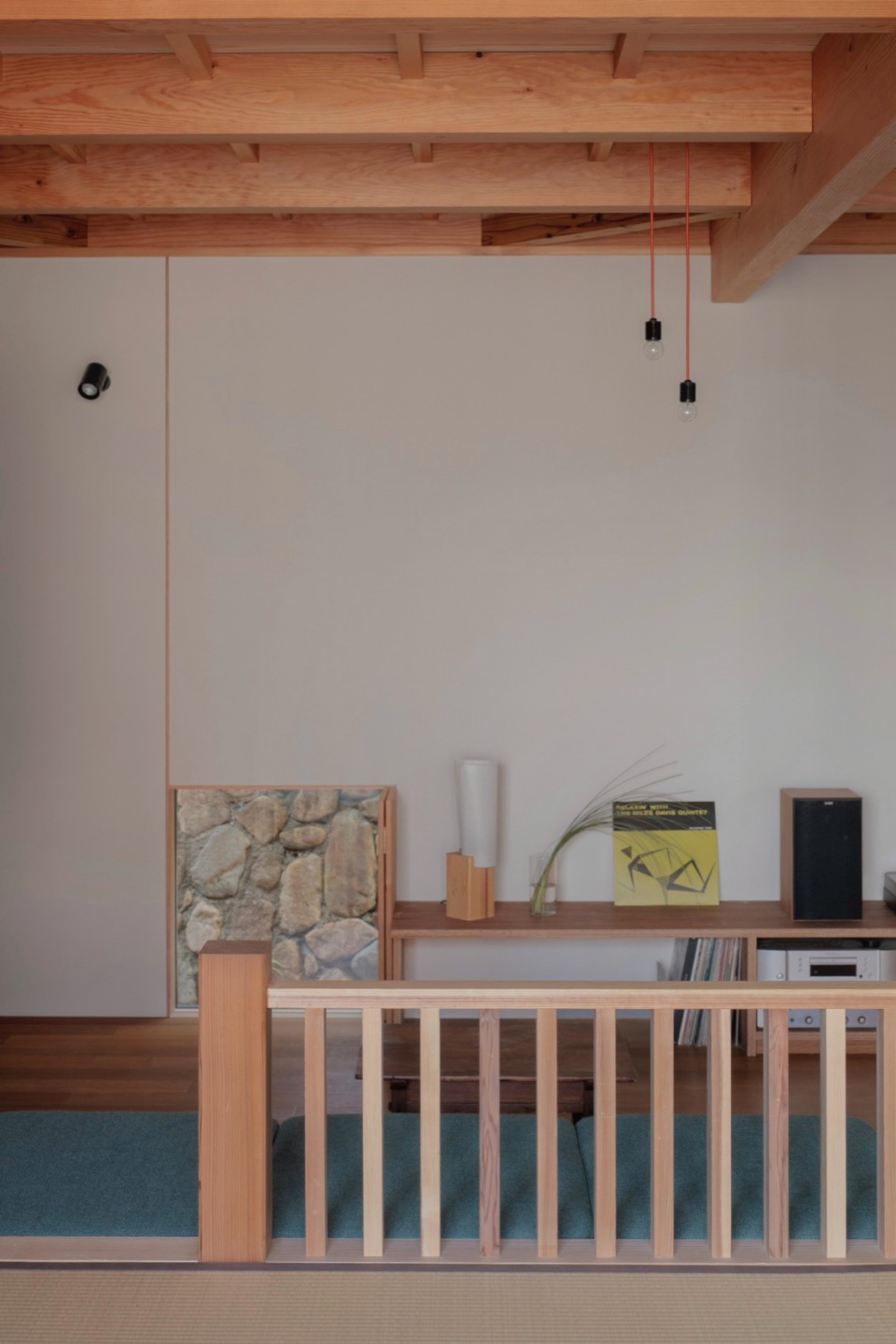
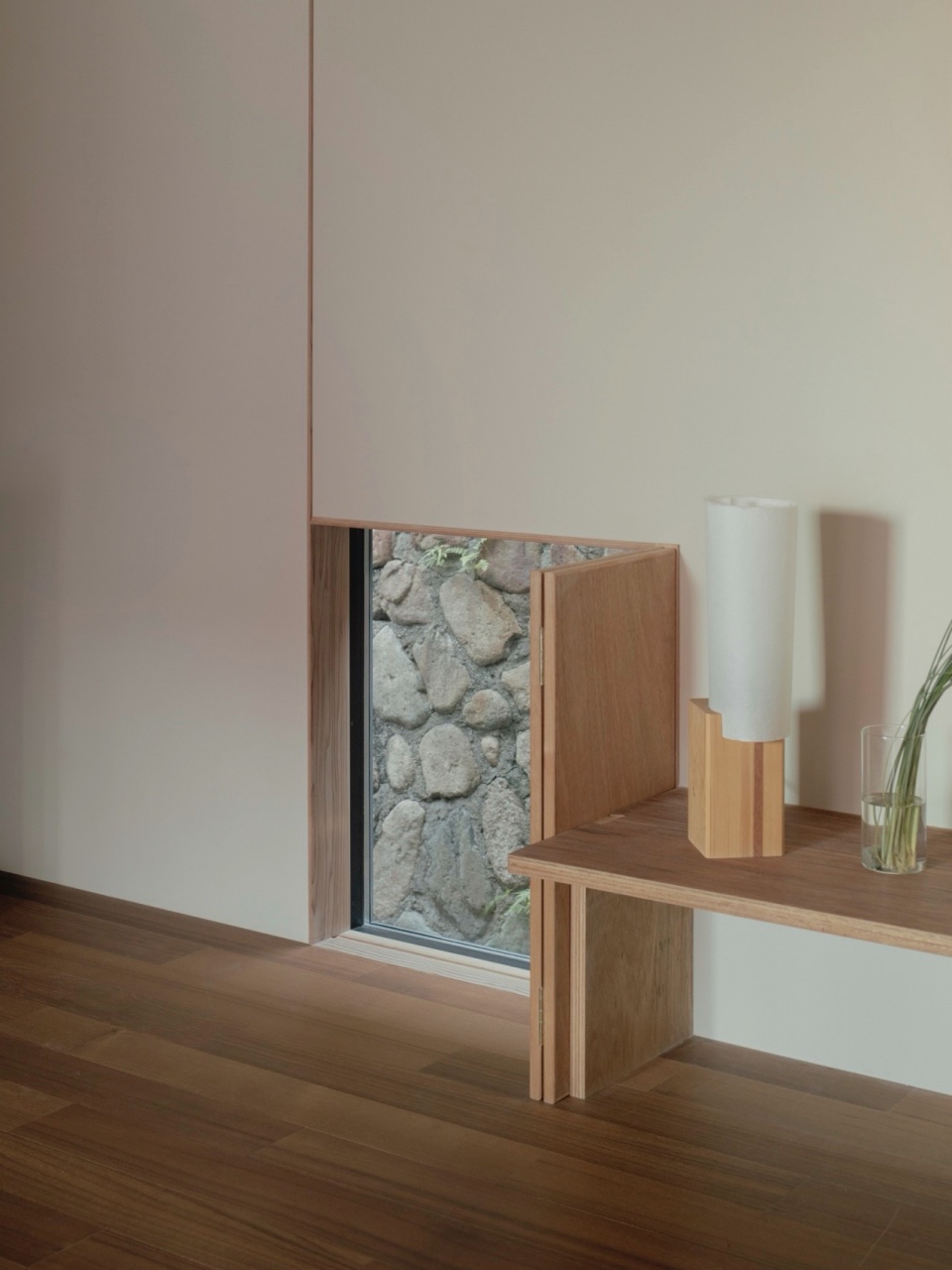
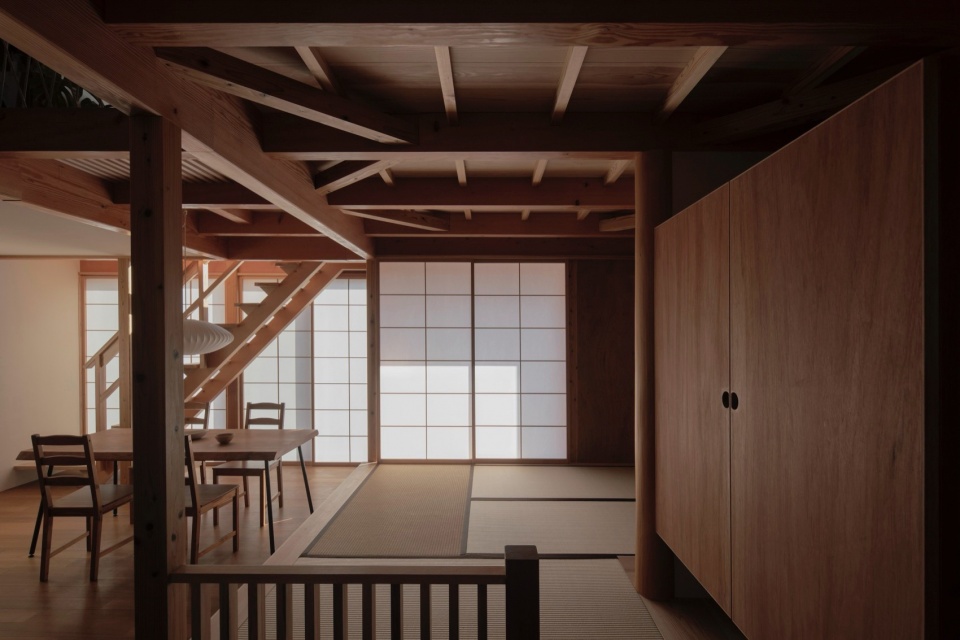
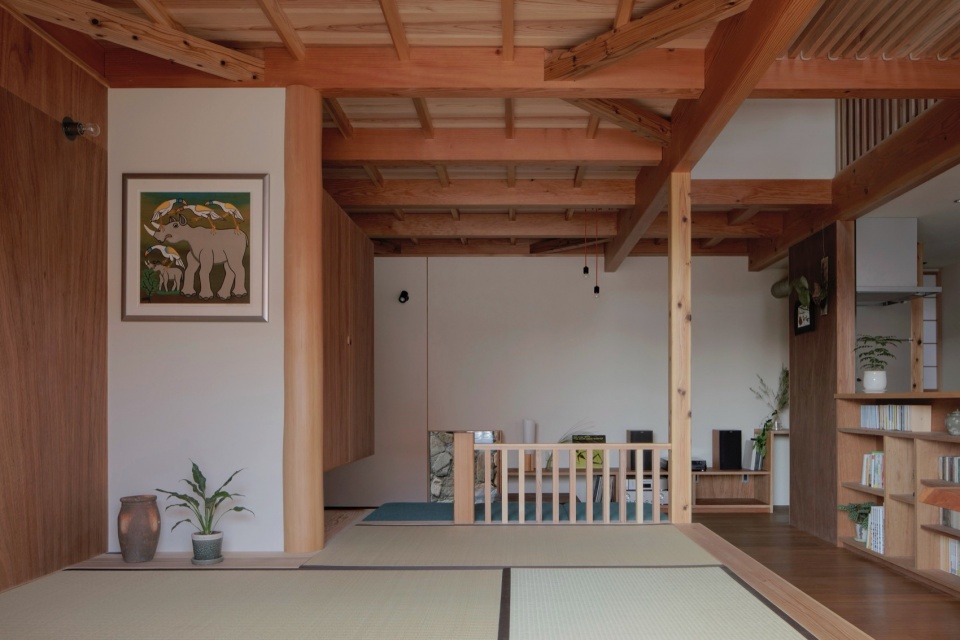
住宅所承载的各种要求——包括业主需求、性能标准与成本控制——均通过对日本居住感性的一种当代表达,被细致地调和在一起。在和室中,悬浮式的收纳柜与小型床之间(tokonoma:和室内用于陈设季节性花艺与艺术品的空间)与沙发相互交织,模糊了其与客厅、餐厅之间的界限。用于封闭地面窗的可折叠木板,可通过将把手卡入电视柜顶部预留的凹槽中进行收纳,使其仿佛成为一体化家具的一部分。这一装置的灵感源自传统日本建筑:某些功能只在需要时才显现,其余时间则融入空间或家具之中,体现出一种可移动、可兼用的智慧。
The various requirements placed on the house—such as client requests, performance, and cost—were carefully adjusted through a contemporary interpretation of the sensibilities of Japanese dwelling. In the Japanese-style room, a floating storage closet and a small tokonoma (tokonoma: a small space at the back of the Japanese-style room where seasonal flowers and art are displayed) intertwine with the sofa, blurring the boundary with the living and dining spaces. A foldable wooden panel used to close off a floor-level window can be stored by engaging its handle into a notch cut into the TV cabinet’s top, allowing it to act as if it were part of a single built-in piece of furniture. This device was inspired by traditional Japanese architecture, in which certain functions appear only when needed and otherwise blend into space or furniture, embracing mobility and dual-use.
▼餐厅与庭院,Dining area view
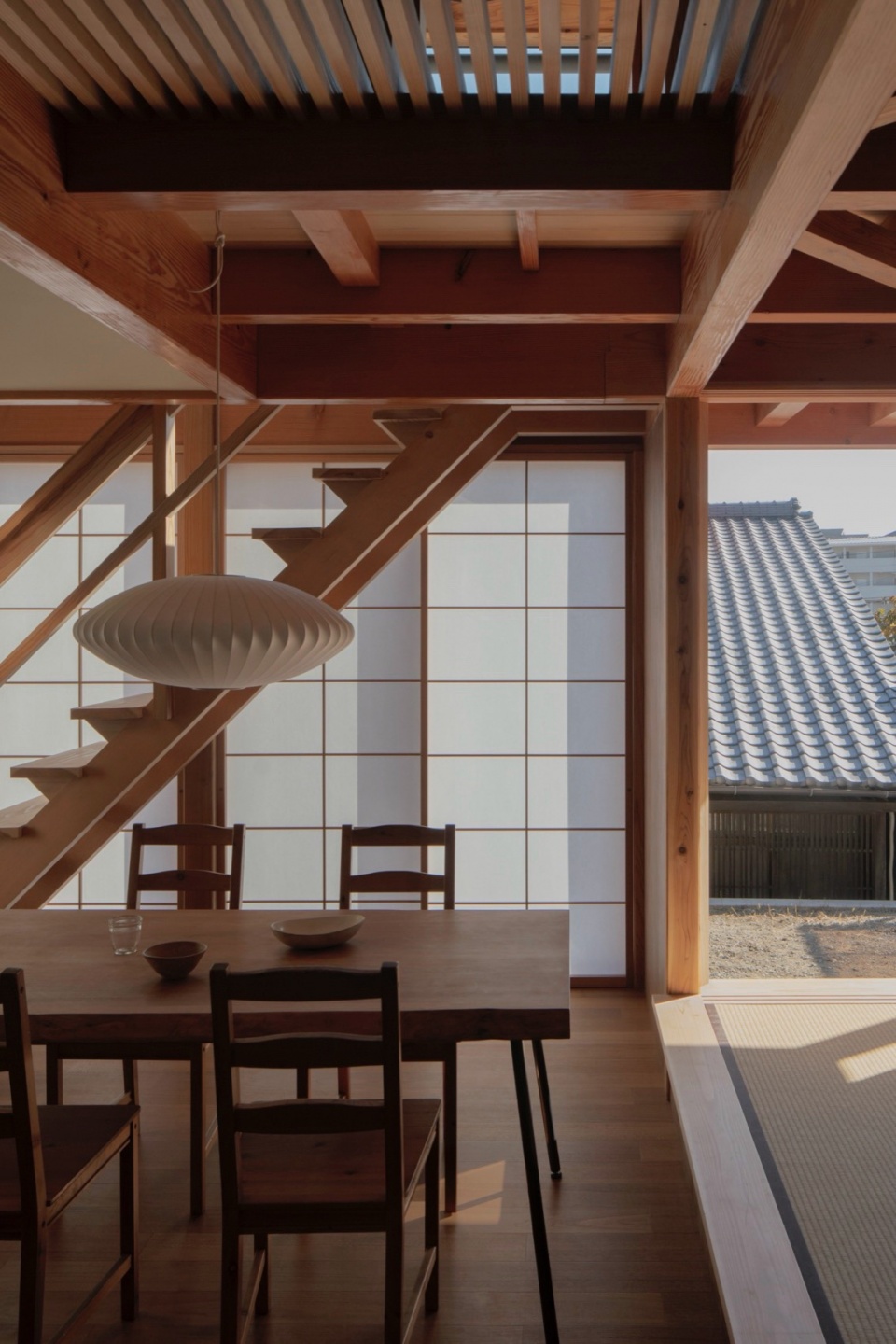
▼首层阶梯,Stairs
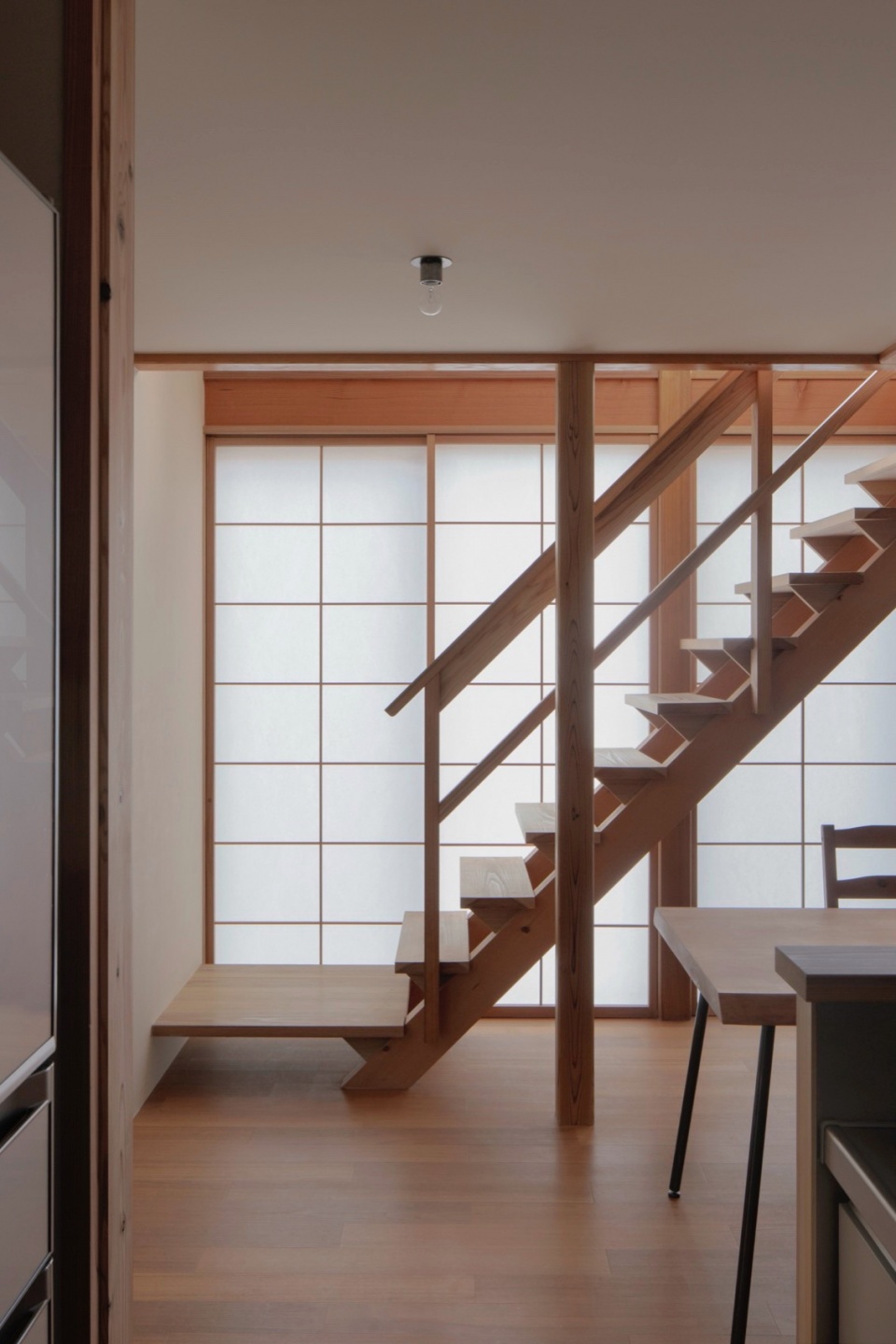
▼挑空空间,Double-height space
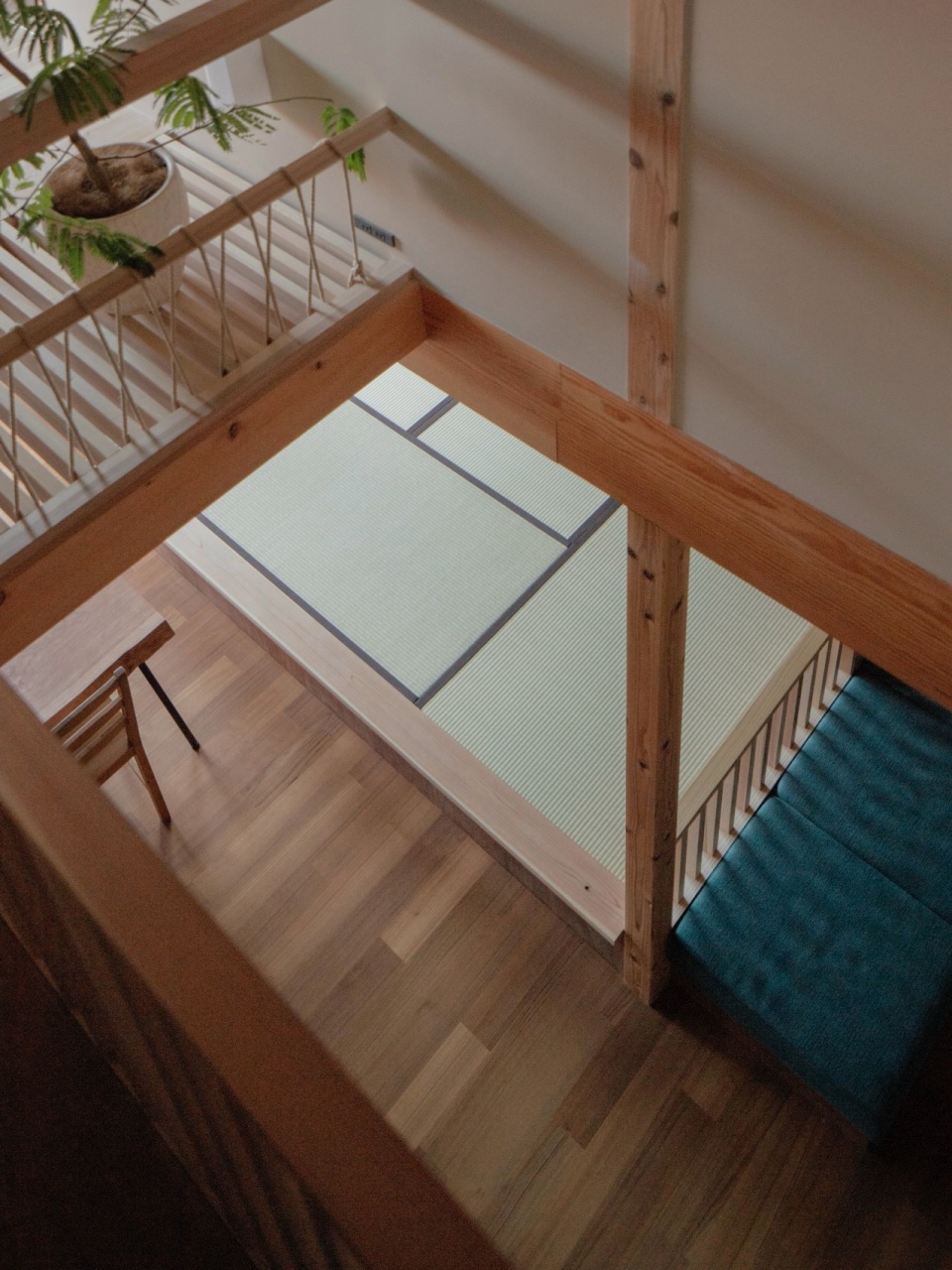
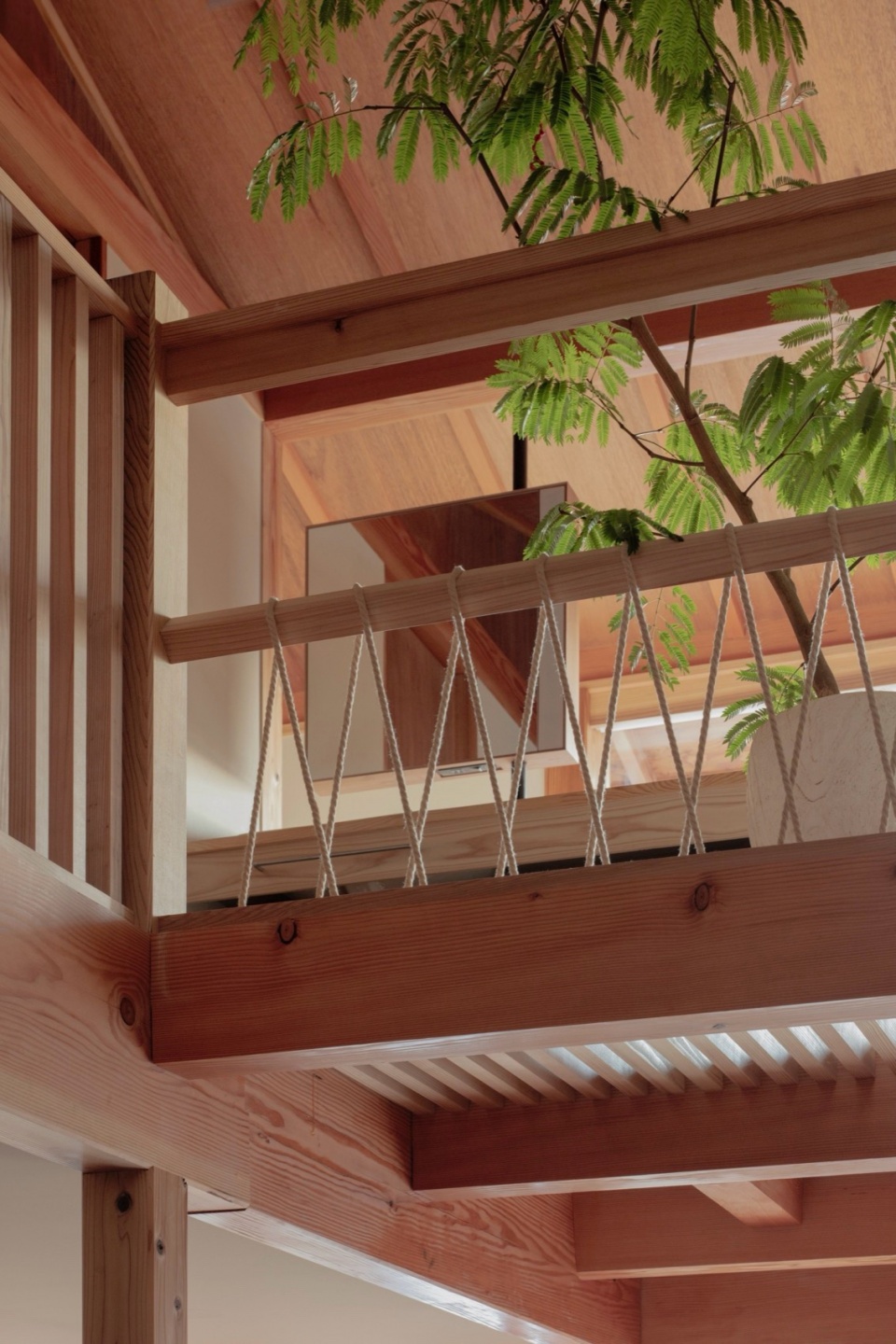
此外,在和室中,靠近柱子的障子竖向框架被省略,取而代之的是将硬木格栅直接附着在室内侧的推拉门边缘。在二层,柱与梁本身作为推拉门的框架,从而进一步减少了门框构件。这些操作强化了结构骨架的独立性,也更清晰地呈现出与真壁结构相关的构造表达。
Further, the vertical frameadjacent to the column in the Japanese-style room shoji (shoji: translucent sliding screens made of thin wooden lattices covered with washi) is omitted by attaching a hardwood screen to the edge of the interior-side sliding door. On the second floor, the columns and beams act as frames for the sliding doors, thereby eliminating part of the door frames. These operations enhance the independence of the structural skeleton and draw out a clear expression related to shinkabe construction.
▼二层公共空间,Public space
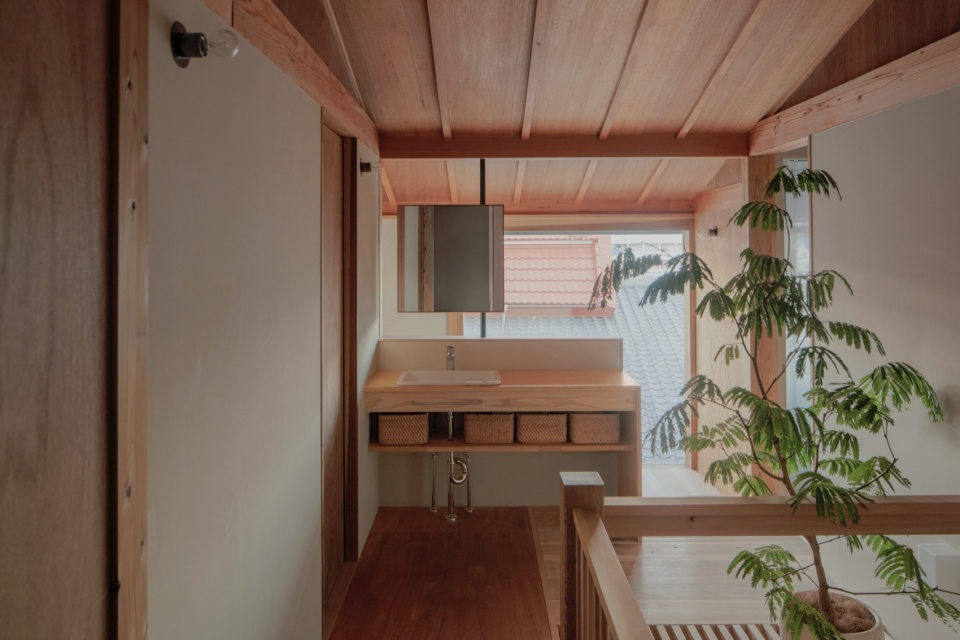
▼走廊,Corridor
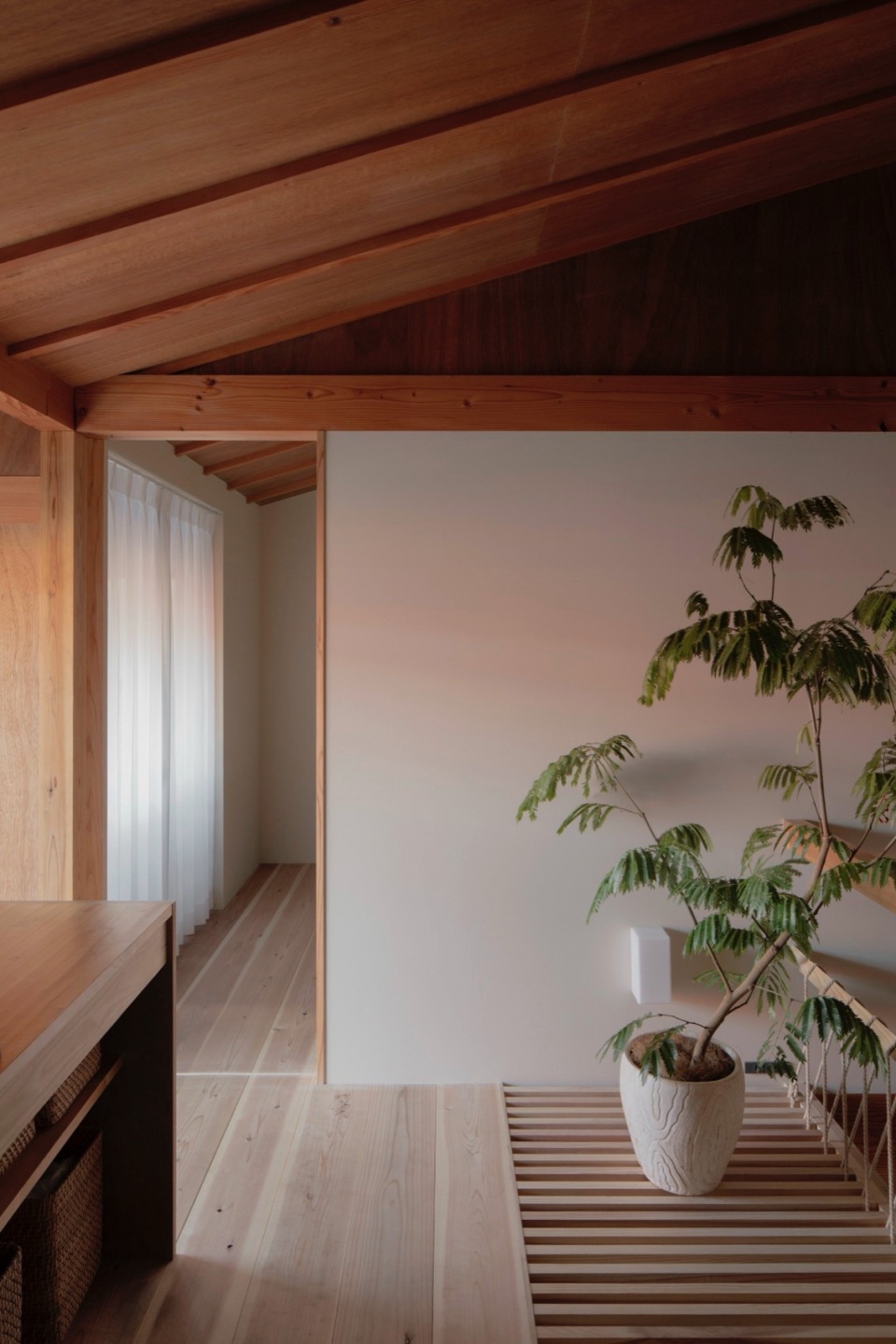
▼卫生间,Restroom
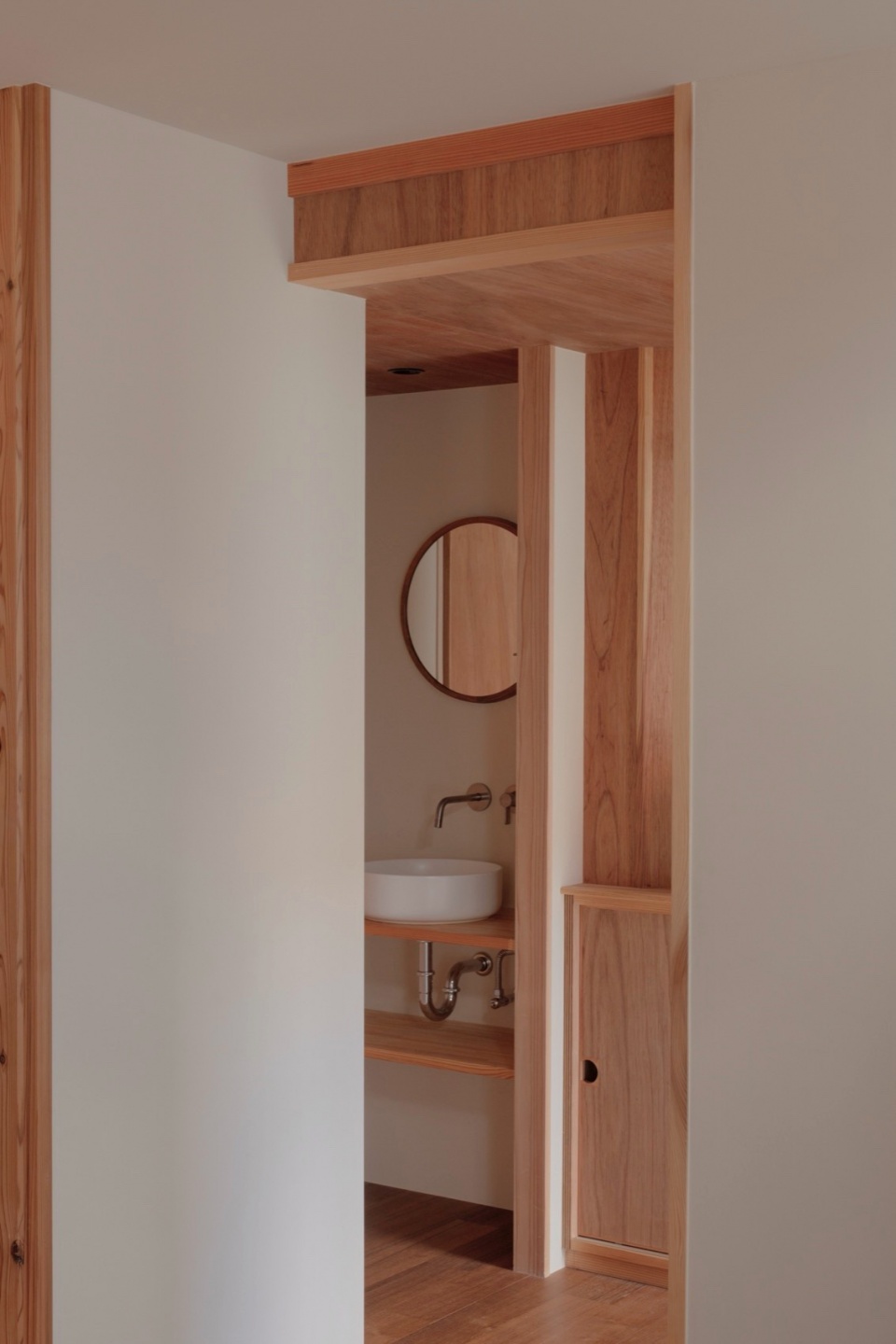
在当下,即便是在日本,选择日式住宅的人也已寥寥无几。榻榻米(tatami:以蔺草编织而成的传统地面材料)与床之间逐渐消失,住宅空间愈发封闭,人们感知四季变化的机会也随之减少。然而,洁净榻榻米所散发的静谧气息、榻榻米缘与障子格栅细线条所营造的微妙张力、透过和纸过滤而来的柔和光线与随风摇曳的树影,以及将室内外边界轻柔模糊、引入季节性微风的舒适缘侧——我相信,这些日本住宅所蕴含的美,是可以被不同文化所共享的。
Today, few people even in Japan choose a Japanese-style house. Tatami (tatami: a traditional floor finish made from woven rush grass) and tokonoma have gradually disappeared, and as houses become increasingly closed off, opportunities to experience the changing seasons are being lost. However, the quiet aura of clean tatami, the delicate tension created by the fine lines of tatami edging or shoji lattices, the gentle light filtered through washi paper with the subtle movement of leaf shadows, and the comfortable engawa that blurs the boundary between indoors and out while drawing seasonal breezes into the house—these elements of the Japanese house, I believe, possess a beauty that can be shared across cultures.
▼结构细部,Structure details
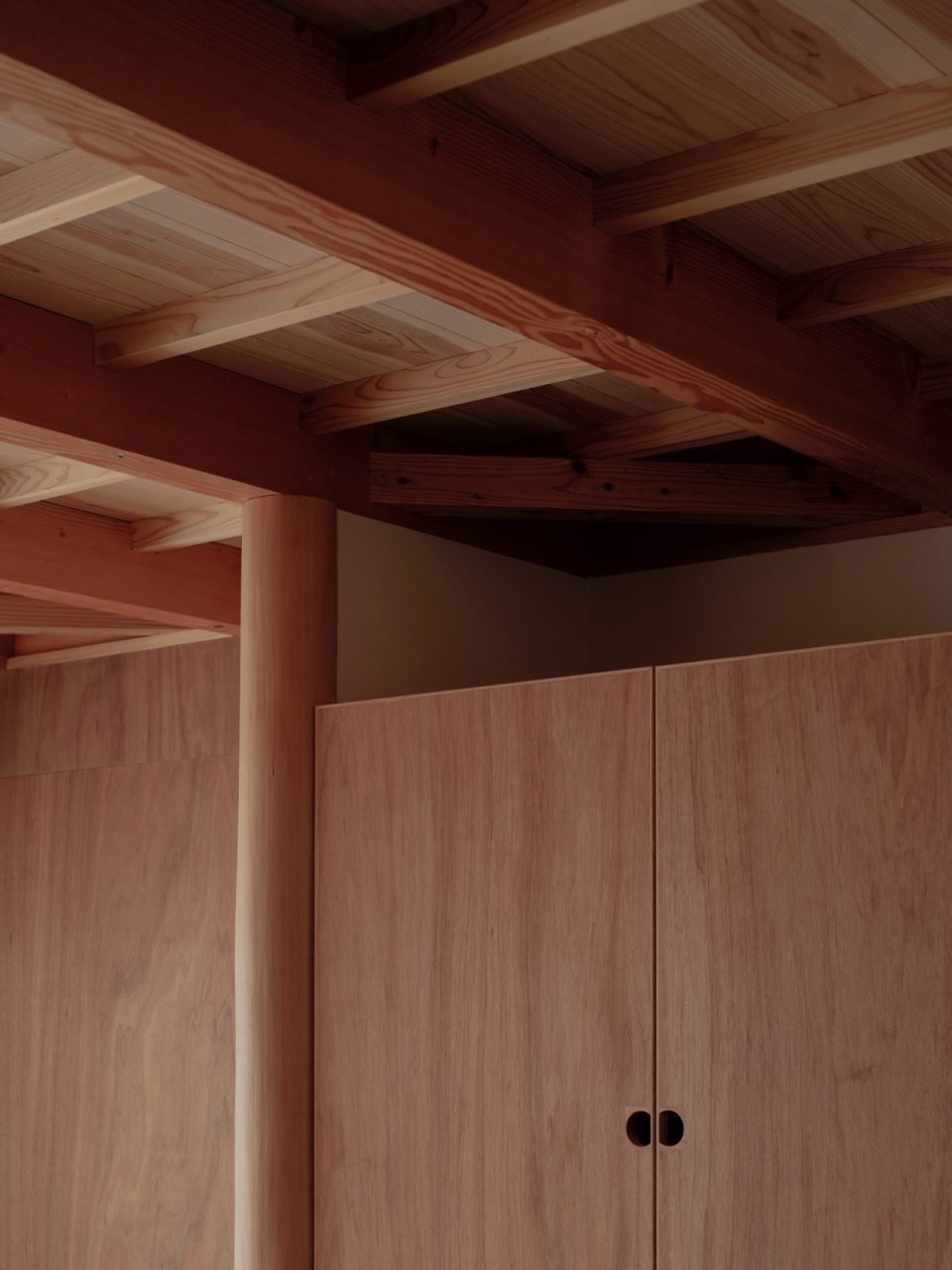
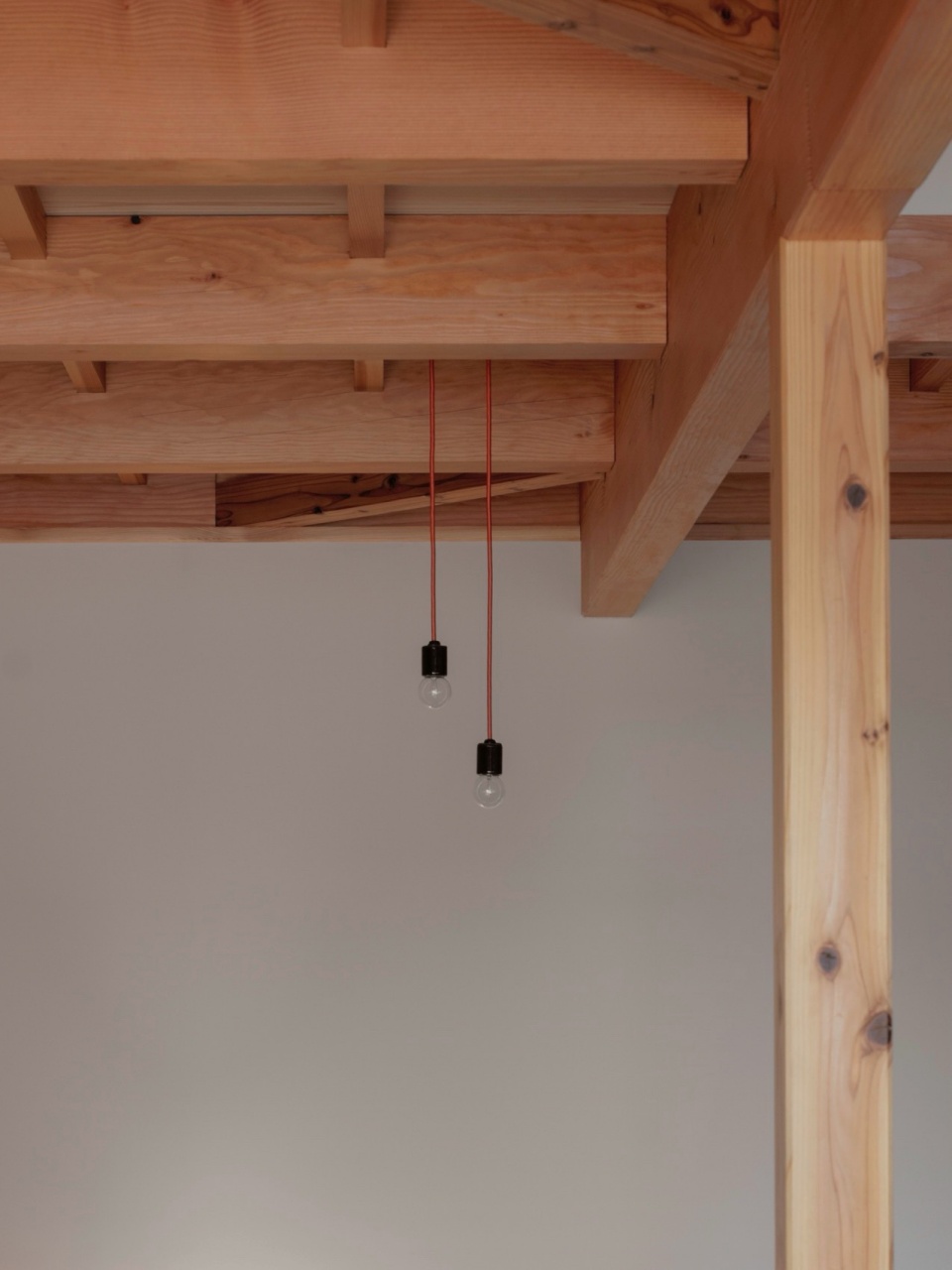
▼室内细部,Interior details
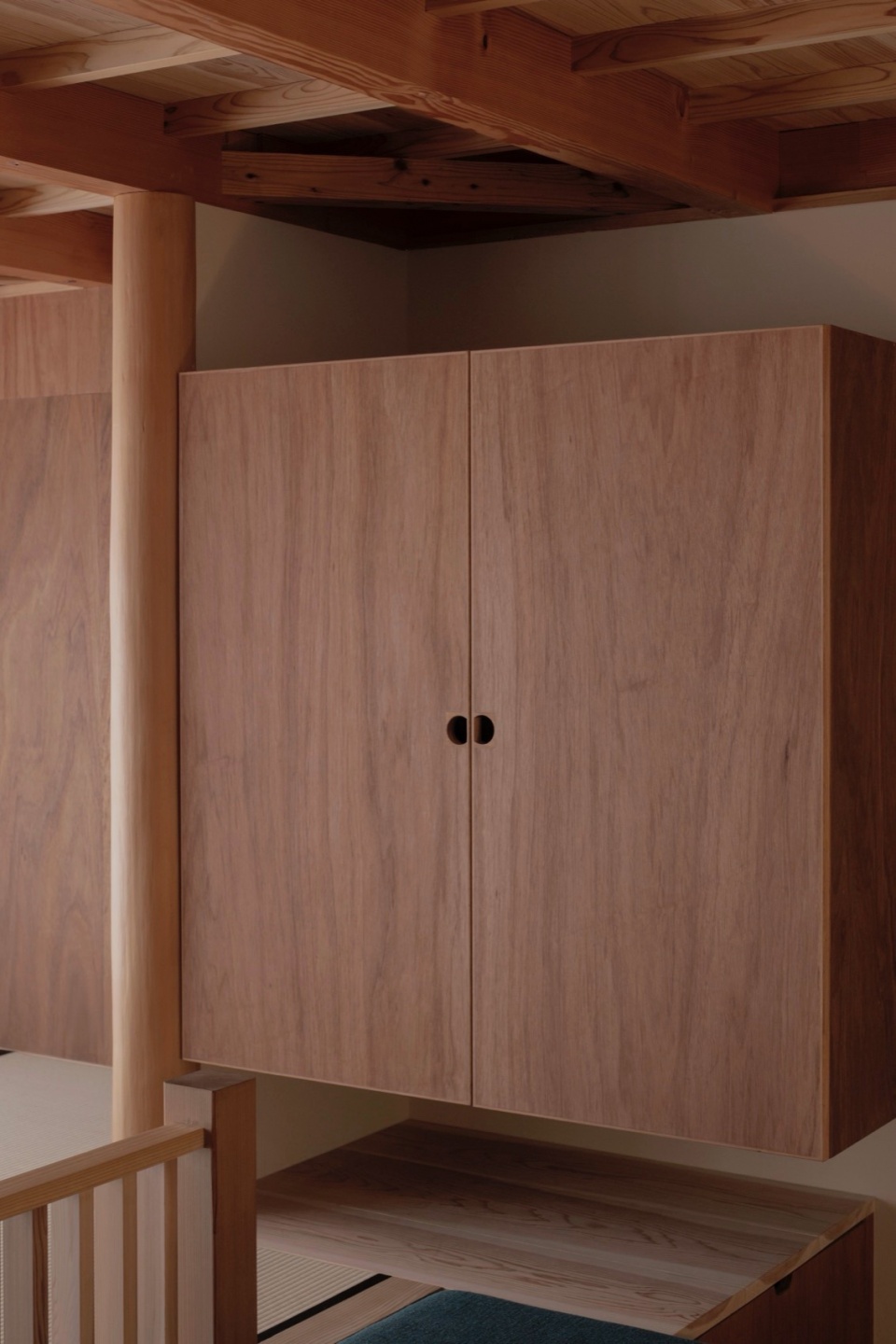
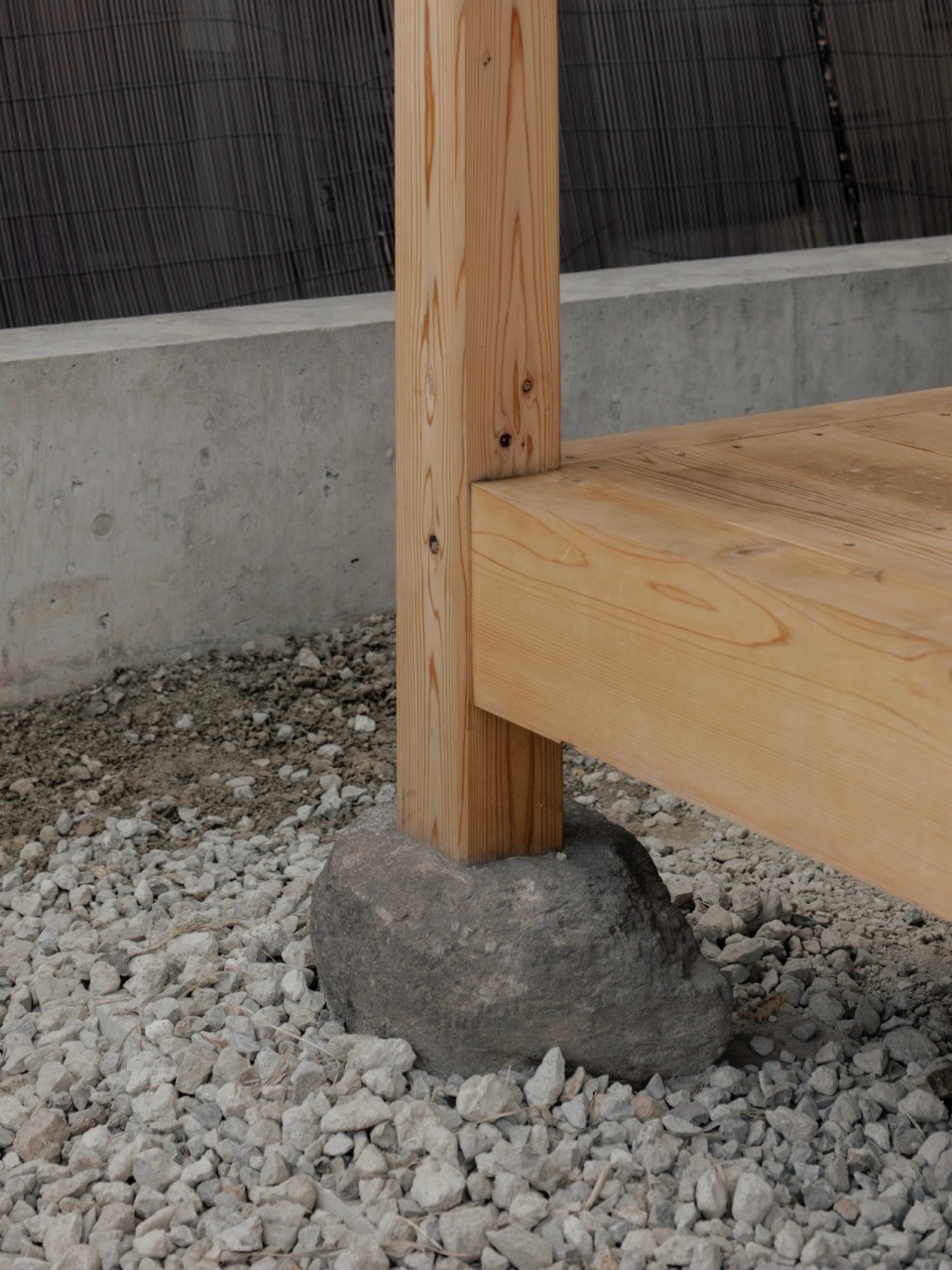
▼地基,Basement
同时,我也希望这些元素不要消失,而是能够被延续至未来。因此,与其营造一种装饰性或怀旧性的表达,我更希望创造一座朴素、简单,却兼具功能性与美感的住宅——一座为普通人而生的、中性的日本住宅,作为当代生活的一种新标准。
At the same time, I hope that such elements will not be lost but instead be carried forward into the future. For that reason, rather than creating something ornate or nostalgic, I aim to create a modest, simple, yet functional and beautiful dwelling: a neutral Japanese house for ordinary people, one that can stand as a new standard for contemporary living.
▼夜览,Night view
▼总平面图,Site plan
▼平面图,Floor plan
▼立面图 & 剖面图,Elevation & Section
Project Name: House in Saidera
Office Name: Akio Isshiki Architects
Office Website: https://akioisshiki.com
Contact email: info@akioisshiki.com
Instagram: @akioisshiki_architects
Firm Location: Japan, Akashi
Completion Year: 2025
Gross Built Area: 96m2
Project Location: Japan, Osaka
Program / Use: Residence
Photo Credits: Benjamin Hosking
Photographer’s Website: https://benhosking.com.au
Photographer’s e-mail: info@benhosking.com.au
Instagram: @benhoskingphotographer