菲利普·奥古斯特中学,法国 / MARS Architects
序言Preamble
打造孩子们接受教育的场所是一项艰巨的任务。然而,我们常常发现,这些空间正遭受着功能性乃至象征性的陈旧与落后。事实上,法国的学校建筑深受两个主要时期的烙印:一方面是19世纪,以“朱尔·费里”学校模式为代表;另一方面是战后年代,以“帕耶龙”模式为标志。尽管我们今天仍在继续建造新学校,但也有许多学校正从这些早期模式的基础上进行翻新、扩建或改造。菲利普·奥古斯特中学也不例外。它属于战后时期——那个分区、边界和无界空间盛行的时代,那个虚与实已失去联系的年代。在这个扩建项目中,都市性并非通过构建的建筑秩序来寻求,而是通过一种敏感的氛围——一种可以被称为“生理性”的氛围,因为它与生活环境深深相连。
Building the places where our children are educated is a demanding task. Too often, we find that these spaces suffer from obsolescence — both functional and symbolic. Indeed, school architecture in France is strongly marked by two major eras: on the one hand, the 19th century, with the “Jules Ferry” school model; on the other, the post-war years, with the “Pailleron” model. And while we continue to build new schools today, many are being renovated, extended, or transformed from these earlier models. The Philippe Auguste Middle School is no exception. It belongs to the post-war period — the era of zoning, edges, and boundless spaces, where emptiness and fullness have lost their connection. In this extension project, urbanity is not sought through a constructed, architectural order, but rather through a sensitive atmosphere — one that could be described as “physiological,” as it is deeply connected to a living environment.
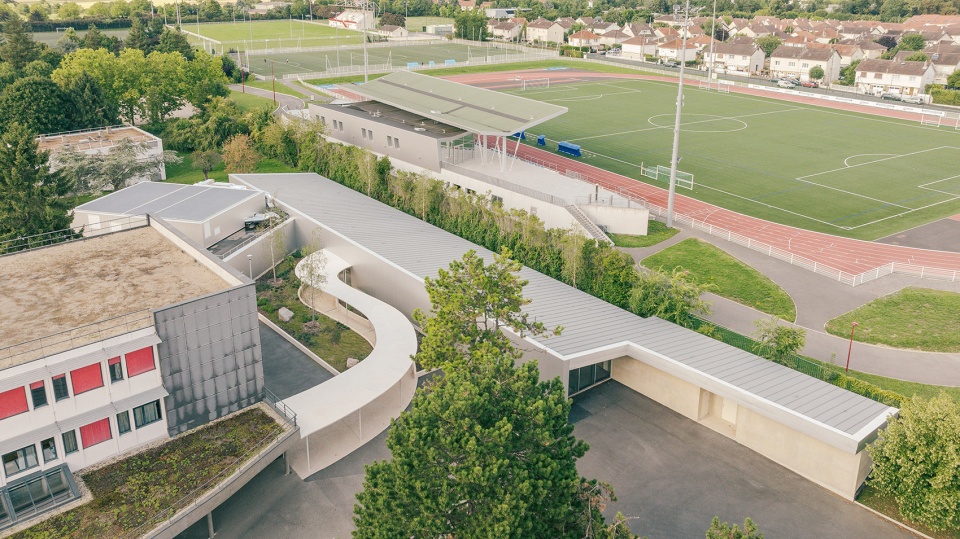
▼项目鸟瞰,Aerial view of the project
引言Introduction
菲利普·奥古斯特中学位于一个正在更新的街区中心,建于20世纪70年代末,如今在技术和功能上都显示出许多老化迹象。项目委托方瓦兹河谷省启动了一项全面的改造和扩建计划,旨在:将原食堂改造为教室;新建一座扩建部分,容纳新功能空间——例如新学生餐厅和更衣室——同时组织和明确各入口;通过当代且引人入胜的建筑设计手法提升学校形象;应对在正常运营的校园内进行施工这一主要限制条件。该项目是在现有建筑基础上,对建筑和景观空间进行重新规划这一更广泛举措的一部分,旨在恢复校园布局以及学生日常体验的连贯性和清晰度。
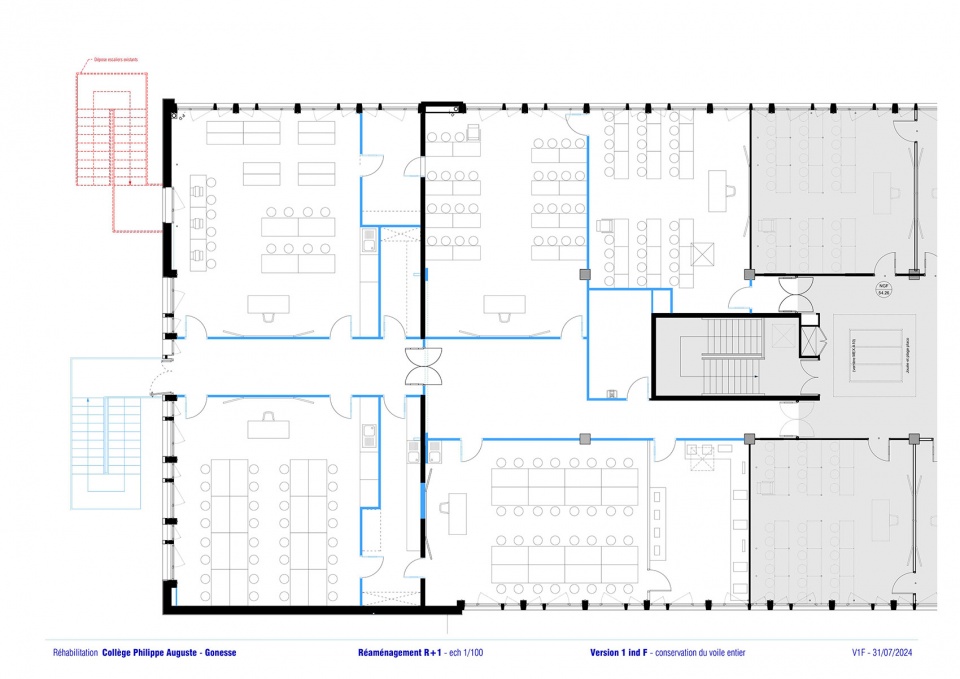
Located in the heart of a district undergoing renewal, the Philippe Auguste Middle School was built in the late 1970s and now shows many signs of deterioration, both technical and functional. The Val-d’Oise Department, the client, has launched an extensive restructuring and extension program that aims to: – Convert the former dining hall into classrooms; – Create an extension to accommodate new spaces — such as the new cafeteria and changing rooms for students — while organizing and clarifying access; – Enhance the school’s image through a contemporary and engaging architectural approach; – Address the major constraint of carrying out construction work on an occupied site. The project is part of a broader effort to requalify both built and landscaped spaces, restoring coherence and legibility to the campus layout and to students’ daily experience, while building upon the existing structures.
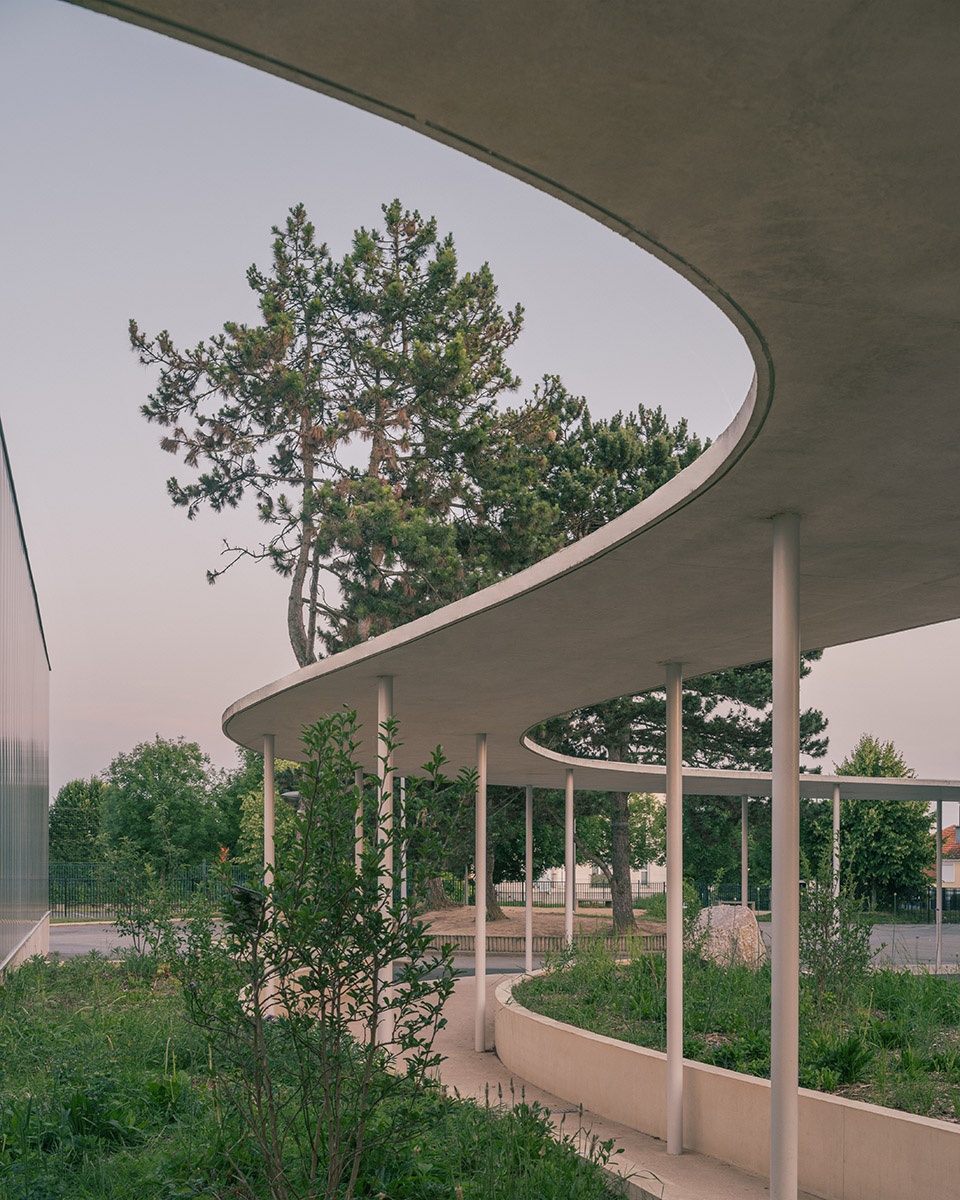
▼户外连廊,Outdoor coridor
建筑概念Architectural concept
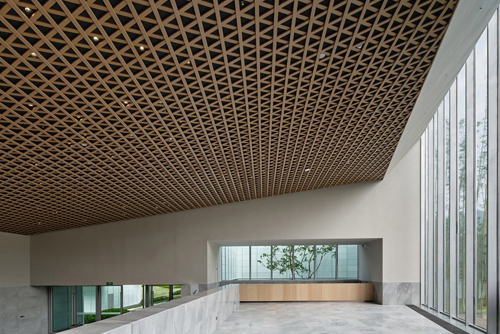
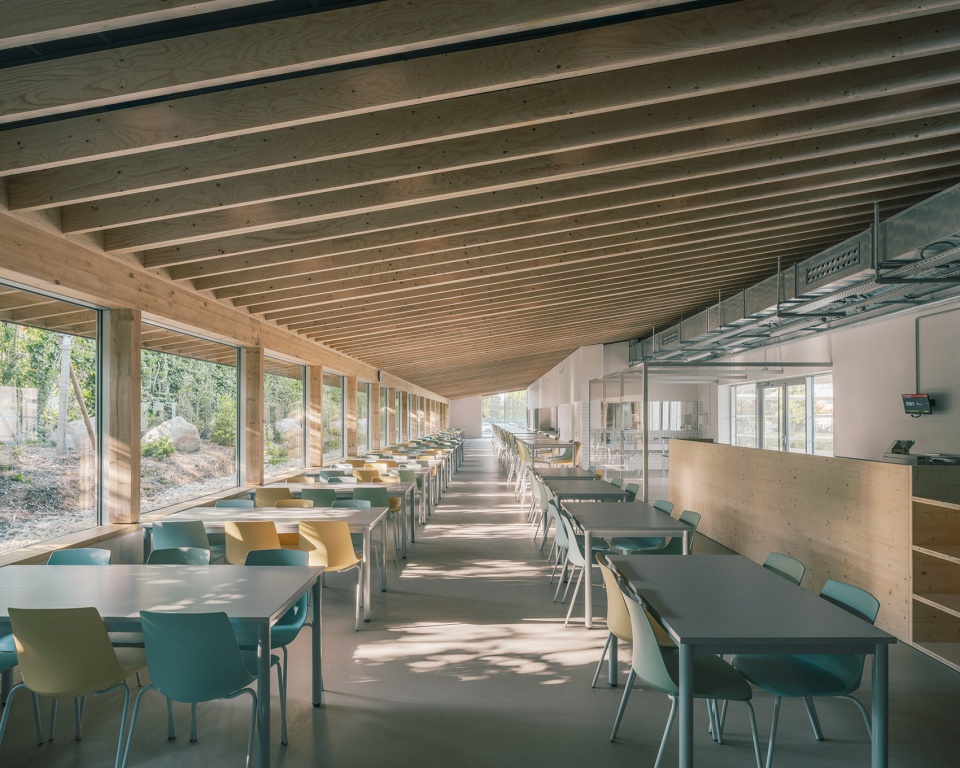
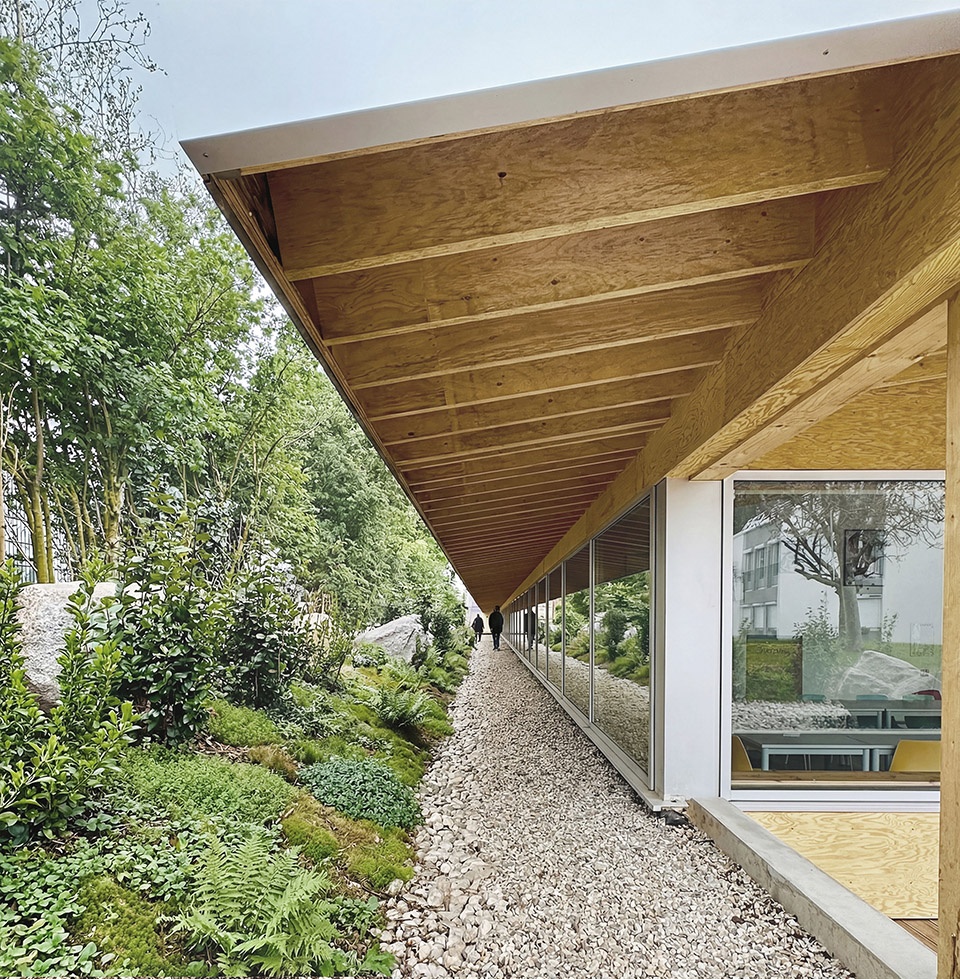
为了容纳越来越多的学生,项目包括建造一座独立的新餐厅。这样的布局释放了主楼的空间,可将其改造为更多教室。将餐厅迁至主教学楼之外,为构想新的空间序列提供了独特的机会。项目将这个功能设想为一个暂停的时刻——每个人日常生活中的一个“插曲”。场地几何形状受到很大限制。设计选择不是试图增加插入在校园和地块边界之间的餐厅体量的进深,而是强调其细长的形态。餐厅朝向场地的边缘,营造出一种远离周围活动的景观——一种宁静、独特的氛围。餐厅被构想为一个安静、开放且热情好客的空间,刻意与学校的其它部分区分开来。它与1970年代建筑典型的正交性形成对比,表达了体量上的微妙错位,并呈现出一个长条形的线性就餐空间,面向过滤光线的茂密植被开敞。
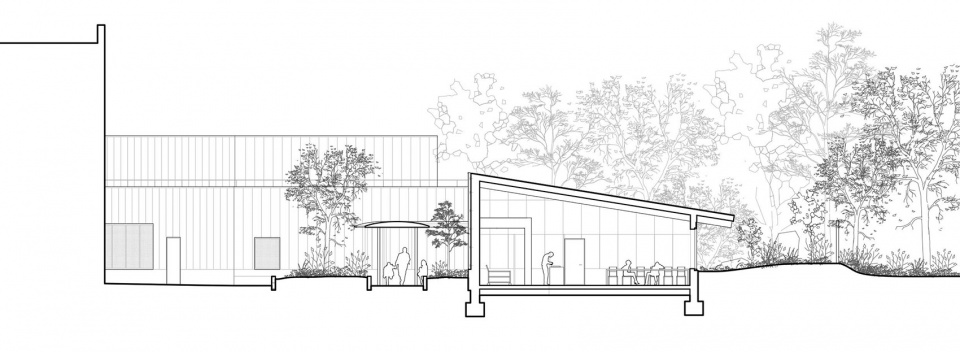
To accommodate the growing number of students, the project includes the creation of a new cafeteria housed in an independent building. This layout frees up space in the main building, which will be converted into additional teaching rooms. Relocating the cafeteria outside the main academic building offers a unique opportunity to imagine new spatial sequences. The project envisions this program as a moment of pause — a “parenthesis” in everyone’s day. The site’s geometry is highly constrained. Rather than attempting to give more depth to the cafeteria volume, inserted between the schoolyard and the property boundary, the design choice was to emphasize its elongated form. Oriented toward the edge of the site, the dining hall creates a landscape withdrawn from the surrounding activity — a calm, distinct atmosphere. Conceived as a quiet, open, and welcoming space, the cafeteria deliberately distinguishes itself from the rest of the school. It takes a counterpoint to the orthogonality characteristic of 1970s architecture, expressing a subtle shift in volumes and asserting a long, linear dining space that opens onto dense vegetation filtering the light.
▼餐厅,Restaurant
空间序列Sequence
该干预措施被构想为一连串的空间序列,在这些序列中,建筑与景观相互交织,以提升空间的整体品质。每个功能区域都伴有一个精心设计和衔接的户外空间,创造出一系列的空间时刻,构建并丰富了学生的日常体验。
The intervention is conceived as a succession of sequences in which architecture and landscape intertwine to enhance the overall quality of the spaces.Each functional program is accompanied by a carefully designed and articulated outdoor area, creating a series of spatial moments that structure and enrich the students’ daily experience.
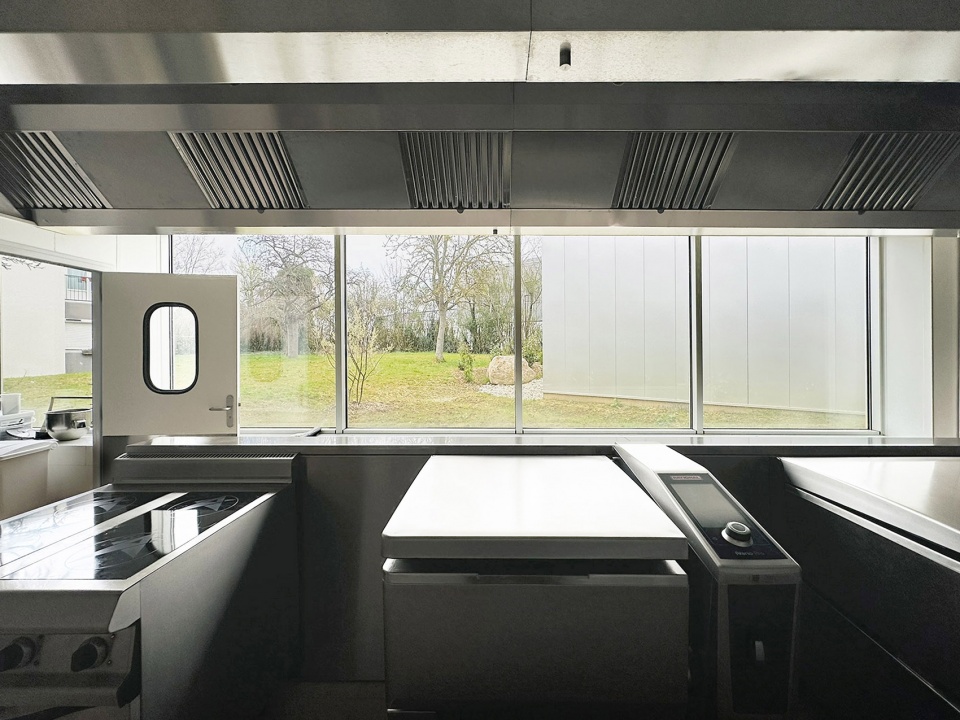
▼后厨,Kitchen
景观设计Landscaping
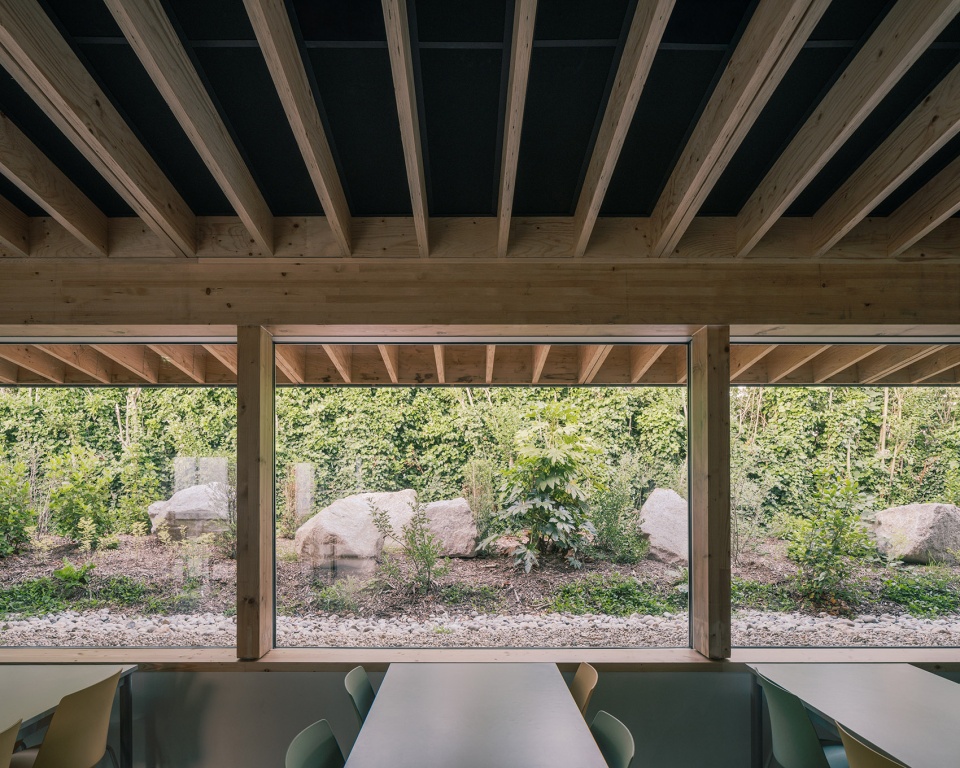
作为项目真正的核心线索,景观设计超越了单纯的陪衬作用,创造了一系列绿意盎然的氛围,陪伴学生度过整个午餐体验。建筑穿梭于一系列小型景观之中,以提供柔和、细腻的氛围:
• 餐厅东侧茂密的绿化带,
• 俯瞰教师就餐区的更开敞的景观,
• 以及沿入口序列进行的景观干预。
因此,餐厅的每个部分都与其独特的绿化环境展开对话。
A true guiding thread of the project, the landscape goes beyond mere accompaniment, creating a succession of planted atmospheres that accompany the students throughout their lunch experience. The architecture weaves through a series of small landscapes to offer gentle, nuanced atmospheres:
• the dense vegetated strip to the east of
the dining hall,
• the more open landscape overlooking
the teachers’ dining area,
• and the landscaped intervention along
the entrance sequence.
Each part of the cafeteria thus engages in
dialogue with its own distinctive vegetal environment.
▼窗户看到的景观,View from the window
雨篷Canopy
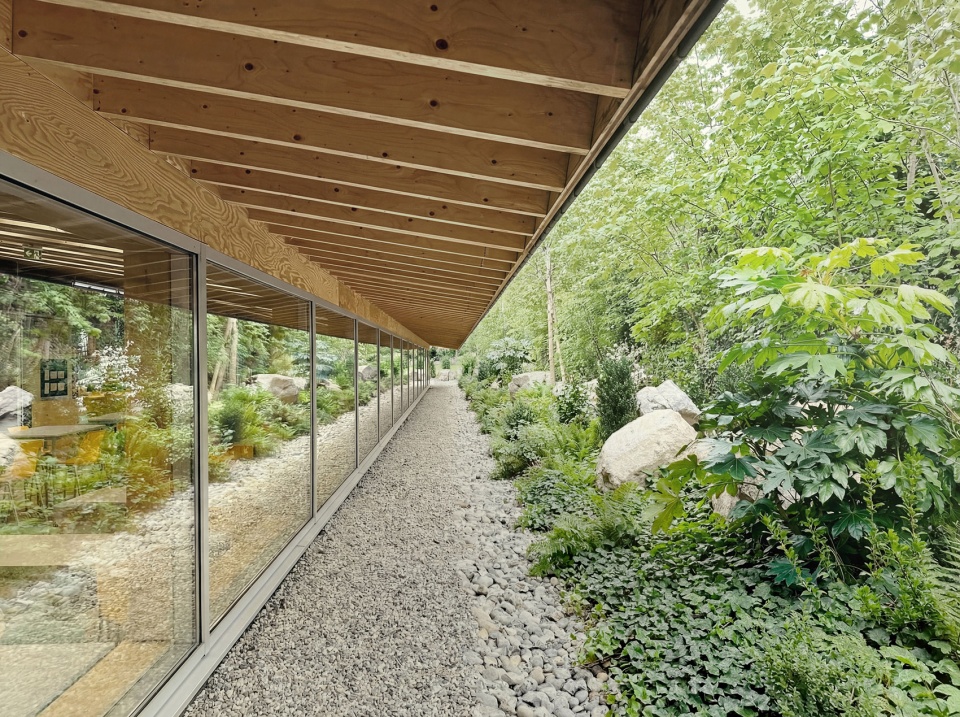
项目引入了一条有顶的走道,它蜿蜒起伏地穿过花园,让人可以欣赏到两侧的景观。学生在雨篷的遮蔽下等候,被宁静、绿意盎然的氛围所包围。它作为连接充满活力的庭院与更富沉思意味的用餐时刻的过渡空间。雨篷不仅仅是一个连接主风雨操场和校园的建筑元素;它标志着通往扩建部分的入口序列的第一步。它直接与景观设计融为一体,景观设计略微抬高,形成了砌体座位区。
The project introduces a covered walkway that weaves and undulates through a garden, inviting views of the landscape on both sides. Students wait in the shelter of the canopy, surrounded by a calm, planted atmosphere. It serves as a transitional space between the liveliness of the courtyard and the more contemplative moment of the meal. The canopy is not merely an architectural element connecting the main covered playground and the schoolyard; it marks the first step in the entry sequence leading to the extension. It is directly integrated with the landscaped design, which is slightly elevated to create masonry seating areas.
▼雨蓬,Canopy
餐厅Cafeteria and dining hall
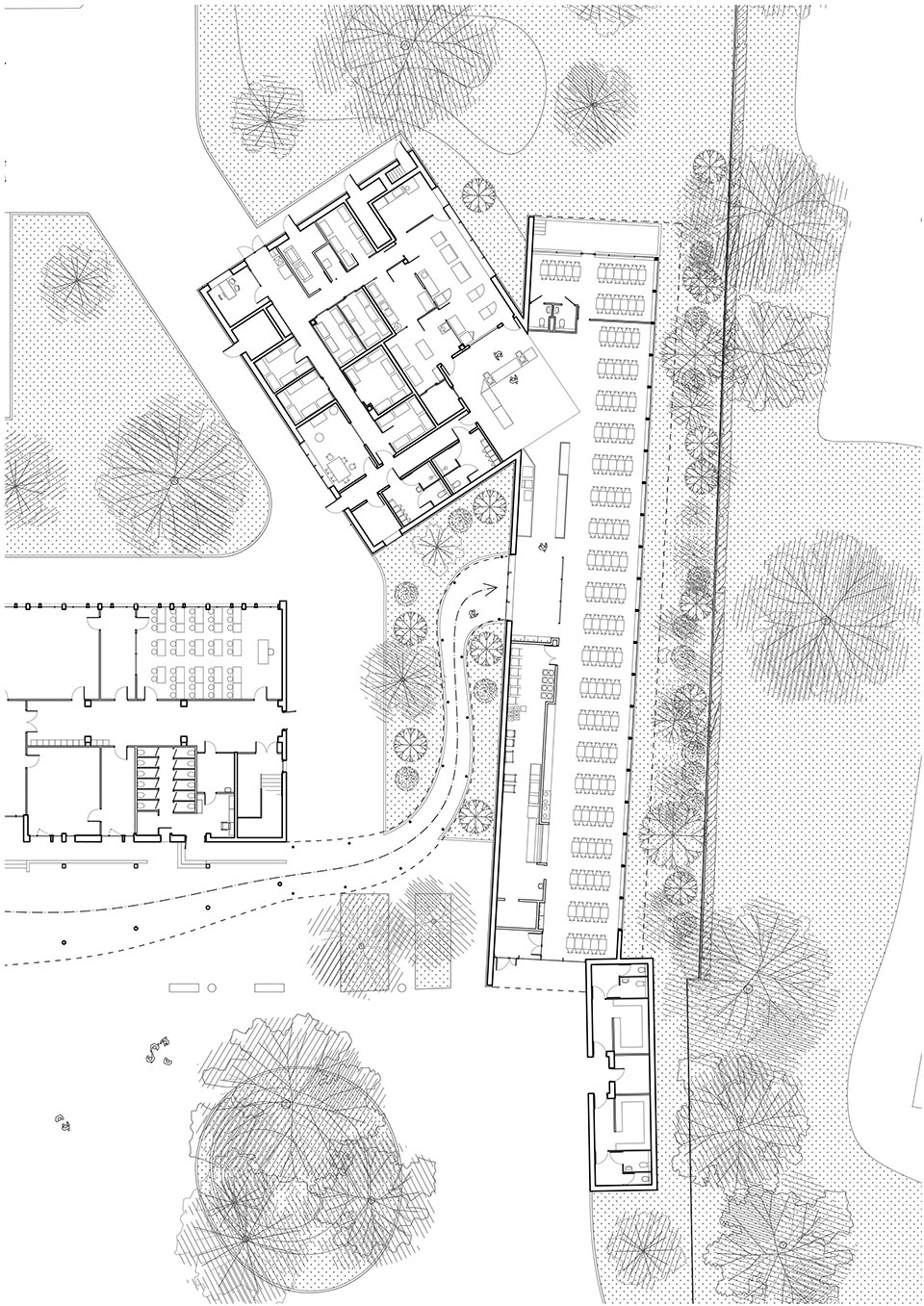
一旦进入建筑内部,序列通过洗手区展开,随后是一个安静的等候区,然后才到达自助取餐线。餐厅是一个长条形的线性空间,面向一个私密、隐蔽的花园开敞。它完全独立于学校的其它部分,提供了一个独特的休憩时刻。建筑的细长形态使得尽可能多的餐桌能够面向花园。教师休息室从学生就餐区延伸出来,占据了餐厅的东北端。它远离庭院,享有宁静的氛围,远离学生流线。
厨房后退于操场,位于与餐厅分开的独立体量内,朝向一个由两栋建筑错位形成的北向内院开敞,为员工提供了宜人的视野。位于餐厅南端的出口直接通向校园。
Once inside the building, the sequence unfolds through handwashing, followed by a calm waiting area before reaching the self-service line. The dining hall is a long, linear space that opens onto an intimate, secluded garden. Completely detached from the rest of the school, it offers a distinct moment apart. The slenderness of the building allows for the maximum number of tables to face the garden. Extending from the students‘ dining area, the teachers’ lounge occupies the north-eastern tip of the dining hall. Set apart from the courtyard, it benefits from a quiet atmosphere, away from the flow of students. Set back from the playground in a separate volume from the dining hall, the kitchen opens onto a north-facing patio, created by the offset between the two buildings, offering staff a pleasant view. The exit, located at the southern end of the dining hall, opens directly onto the courtyard.
▼总平面图,Master plan
▼教室平面图,Floor plan
▼剖面图,Section
Delivery:2025
Surface Cantine:1126 m²
Réhabilitation:520 m²
Cost:5 135 000 € HT
Client:Conseil départemental – Val-d’Oise
Architect:MARS Architects
Engineer: Structure Batiserf
Engineer: Fluids/Electricity Choulet
Economist C2P
Engineer: Acoustic Alternative
Landscaper:Lignes
Kitchen designer:Arwytec
The Road works: ADV