鄂州文化中心, 湖北 / 中信设计
作为鄂州市重要的公共文化建筑,鄂州文化中心不仅承担剧院与美术馆的复合功能,更被赋予展示荆楚文化精神、塑造城市公共生活的重要使命。
As an important public cultural building in Ezhou City, the Ezhou Cultural Center not only integrates the functions of a theater and an art gallery, but is also entrusted with the significant mission of showcasing the spirit of Chu culture and shaping the city’s public life.
▼项目鸟瞰,project overview
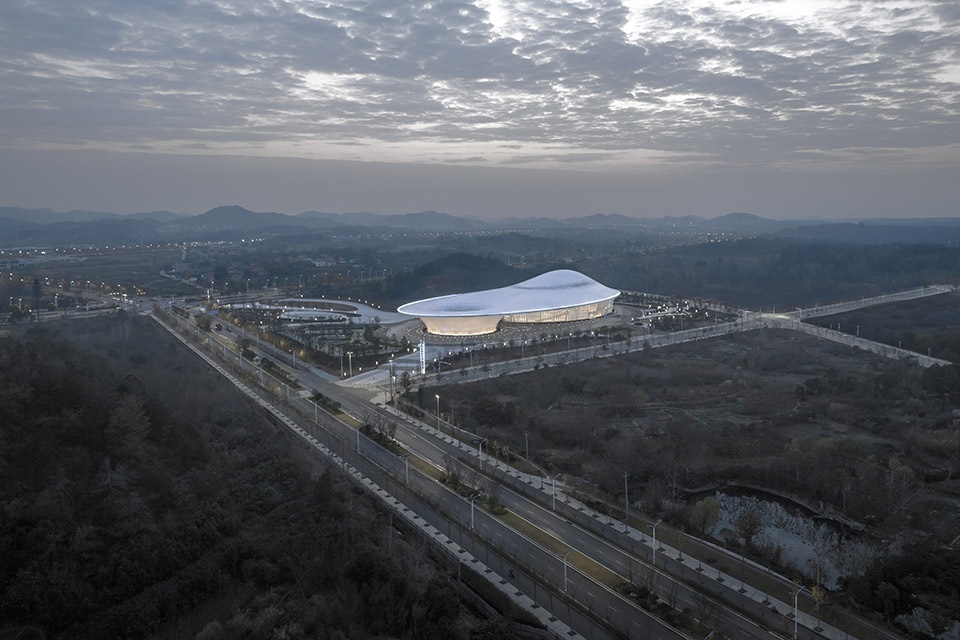
▼市民广场一侧鸟瞰,project overview
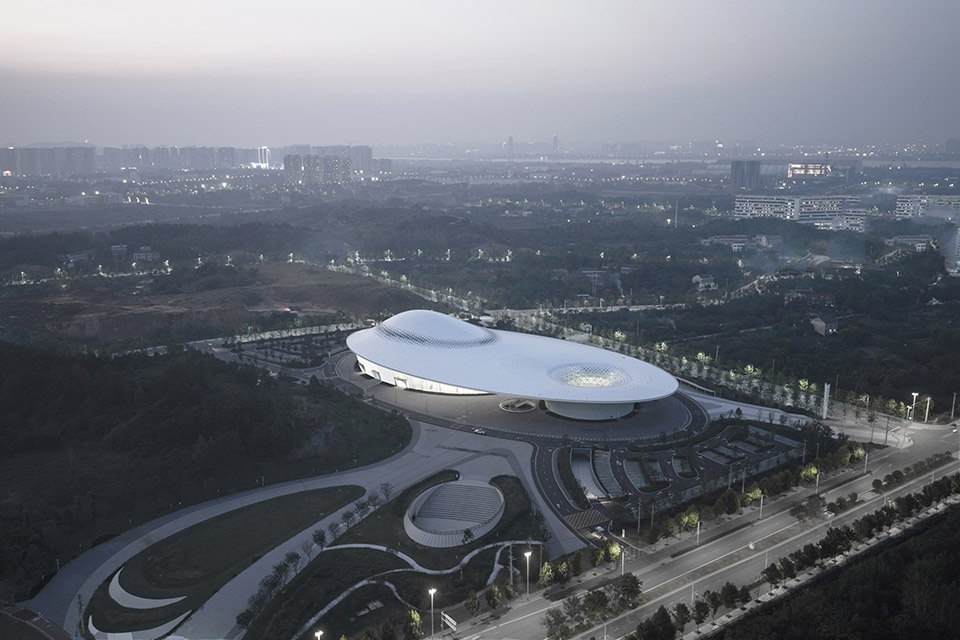
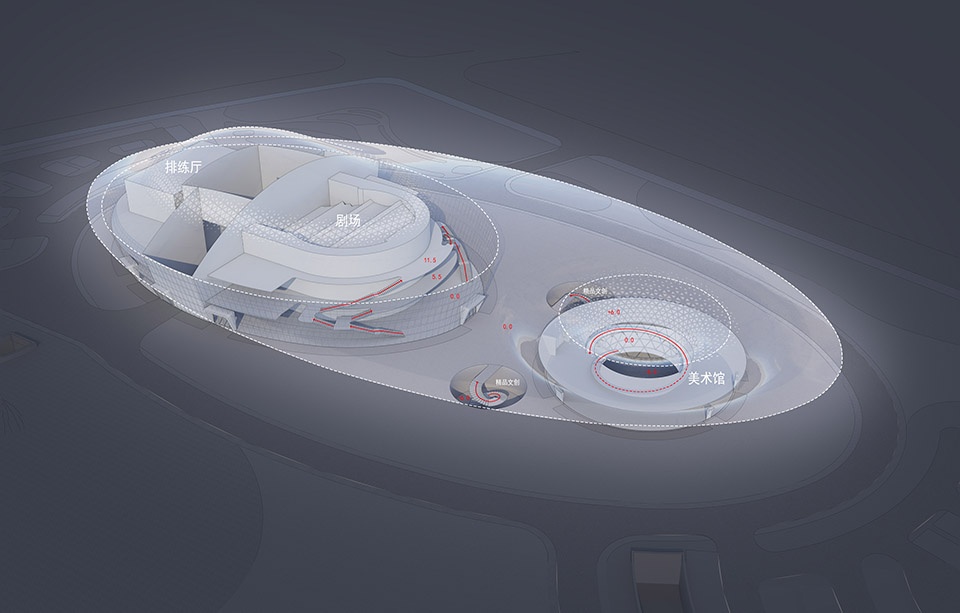
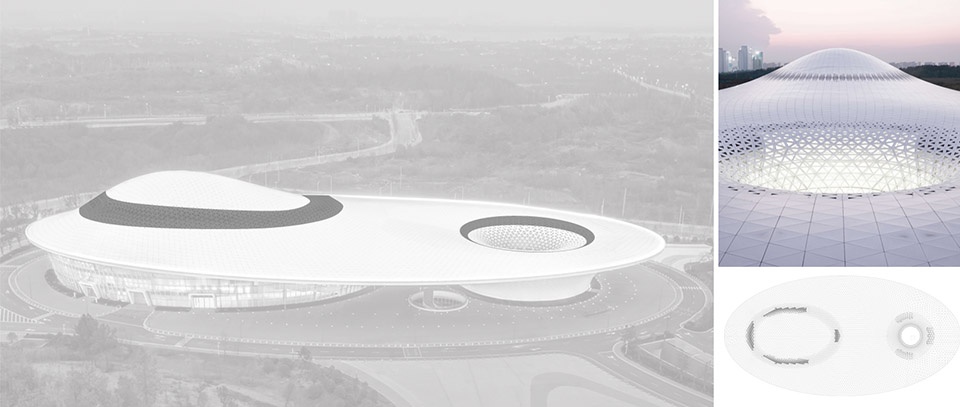
项目以“合一建构”为核心设计理念,试图在文化、技术与环境之间建立内在关联,使建筑成为一种整体生成的空间系统,而非简单的功能拼贴。建筑的构思源于荆楚地域特有的山水文脉。整体布局以“山水相依、虚实相生”为基本策略,将剧院与美术馆组织为“一凸一凹”的双体量关系:剧院以高耸而开放的空间形态回应楚地文化的恢宏气质,美术馆则以内向、沉静的展陈空间营造适于游赏与思考的氛围。
▼“一凸一凹”的双体量关系功能组成,function analysis model diagram
▼通透的剧场和内向的美术馆,sectional perspective view
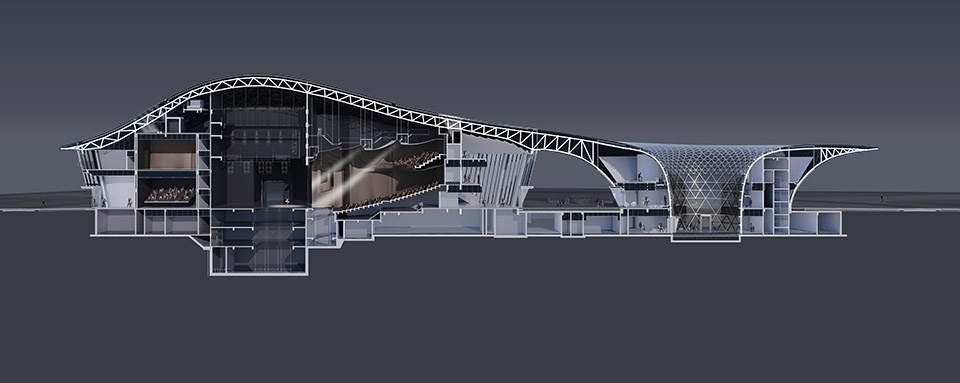
The project adopts ” unity construction” as its core design concept, aiming to establish an intrinsic connection among culture, technology and environment, making the building a holistic spatial system rather than a simple functional collage.The architectural concept is derived from the unique landscape and cultural heritage of the Chu region. The overall layout follows the basic strategy of “interdependent mountains and waters, and the coexistence of emptiness and reality”, organizing the theater and the art gallery into a dual volume relationship of “one protruding and one concave”: The theater presents a towering and open spatial form to respond to the grandeur of Chu culture, while the art gallery creates an inward and serene exhibition space to create an atmosphere suitable for viewing and contemplation.
▼“虚实相生”的建筑外观,architectural appearance
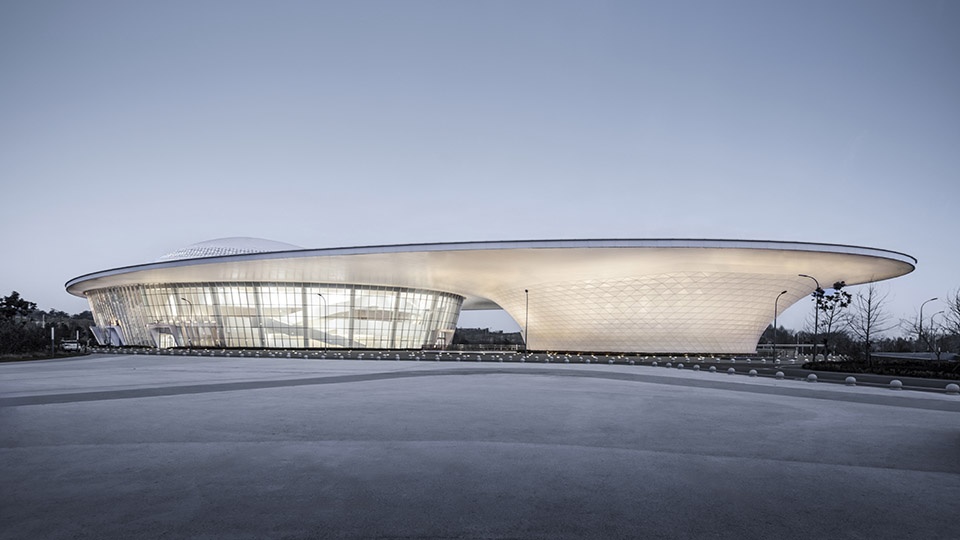
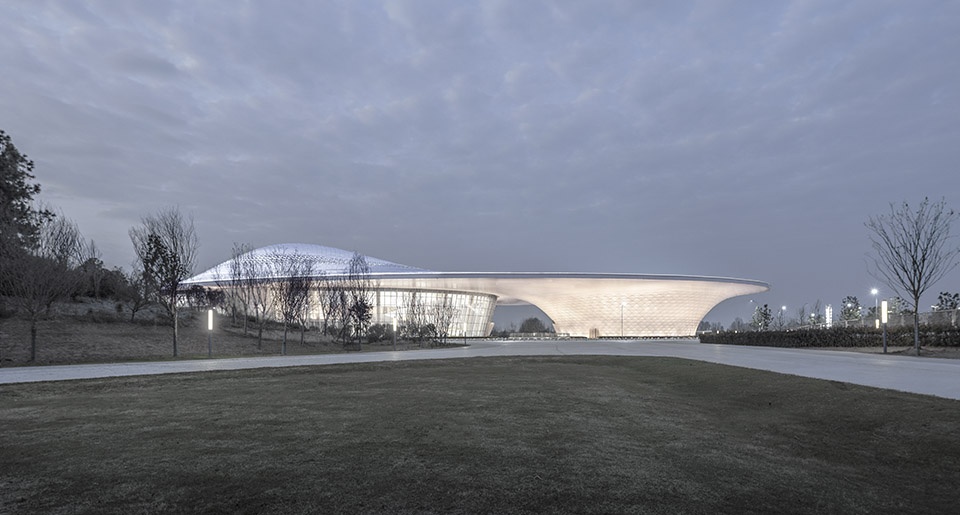
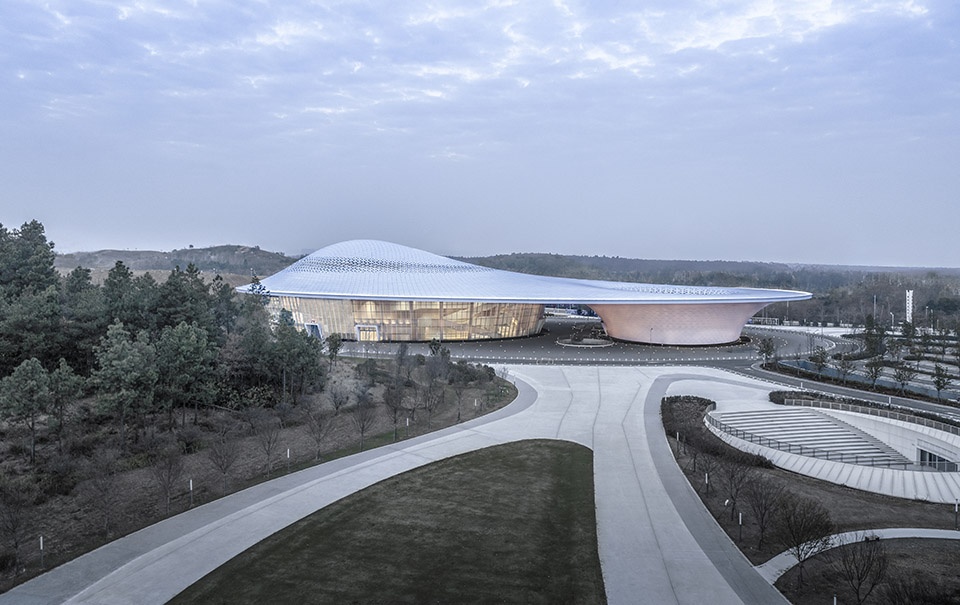
两者之间被有意留出一条贯通场地的公共通廊,既满足城市通行与集散需求,也形成面向市民开放的“文化客厅”,体现出荆楚文化兼容并蓄、通达开放的精神特质。
A dedicated public corridor was deliberately left between the two buildings to connect the site. This not only meets the needs of urban traffic and distribution, but also forms an “open cultural lounge” accessible to the public, embodying the spirit of inclusiveness and openness of the Chu culture.
▼贯通场地的公共通廊(人视),the public corridor
▼贯通场地的公共通廊(鸟瞰),the public corridor
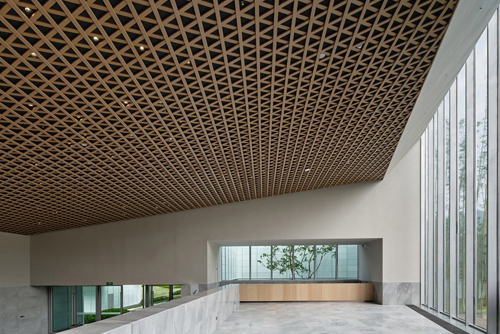
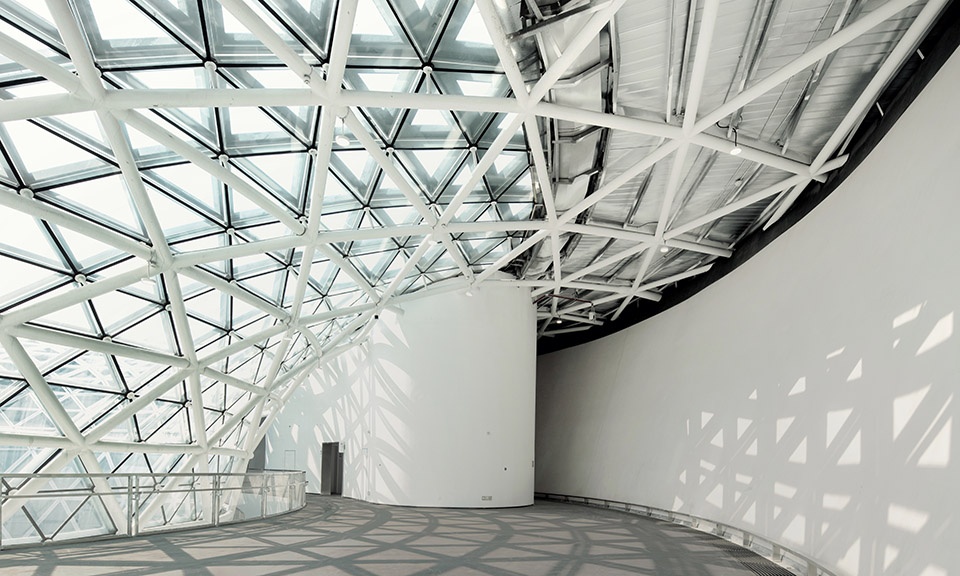
在文化表达上,设计并未停留于符号复刻,而是将地方非遗剪纸艺术转译为建筑的几何生成逻辑。外立面的点式玻璃幕墙、室内结构网架及屋面网壳,均采用统一的三角形几何划分体系,使装饰、结构与空间语言形成高度一致。光影穿透其间,建筑呈现出如剪纸般轻盈而富有层次的视觉效果,实现了传统民间艺术在当代建筑语境中的再生。
▼统一的三角形几何划分体系,geometric division system
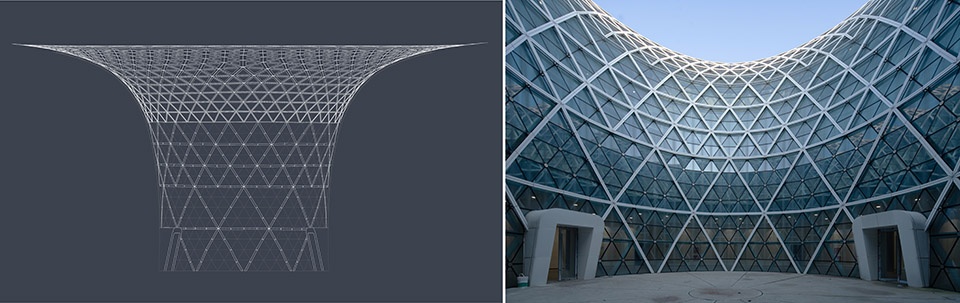
In terms of cultural expression, the design did not merely replicate symbols. Instead, it transformed the local intangible cultural heritage paper-cutting art into the geometric generation logic of architecture. The point-shaped glass curtain walls on the exterior facade, the structural grid in the interior, and the roof shell all adopt a unified triangular geometric division system, ensuring a high degree of consistency between decoration, structure, and spatial language. Light and shadow penetrate through them, and the building presents a visual effect like paper-cutting, being light and airy with rich layers, achieving the regeneration of traditional folk art in the contemporary architectural context.
▼美术馆室内幕墙局部,partial facade of the curtain wall
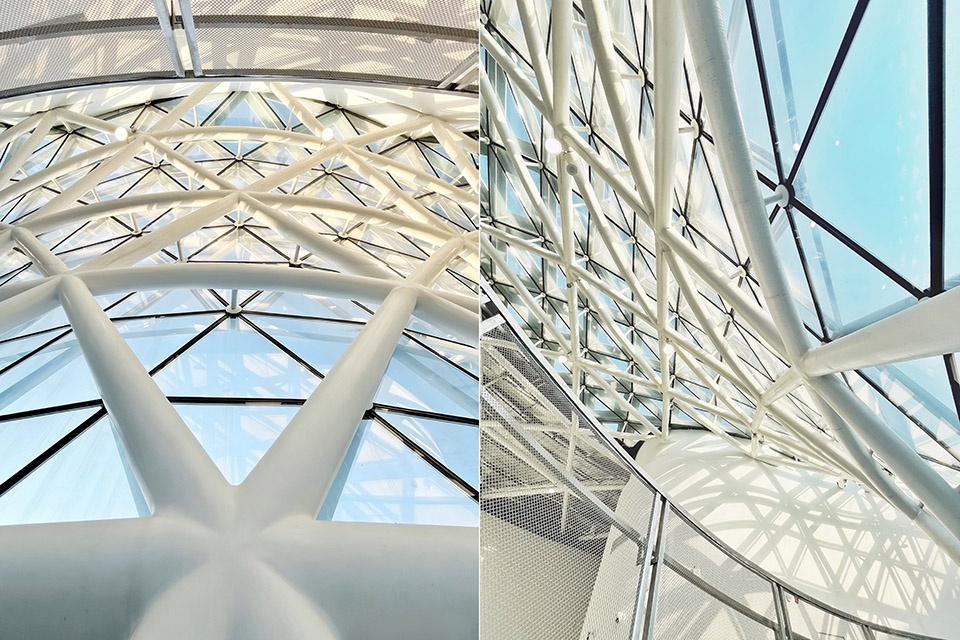
▼美术馆室外幕墙局部,partial facade of the curtain wall
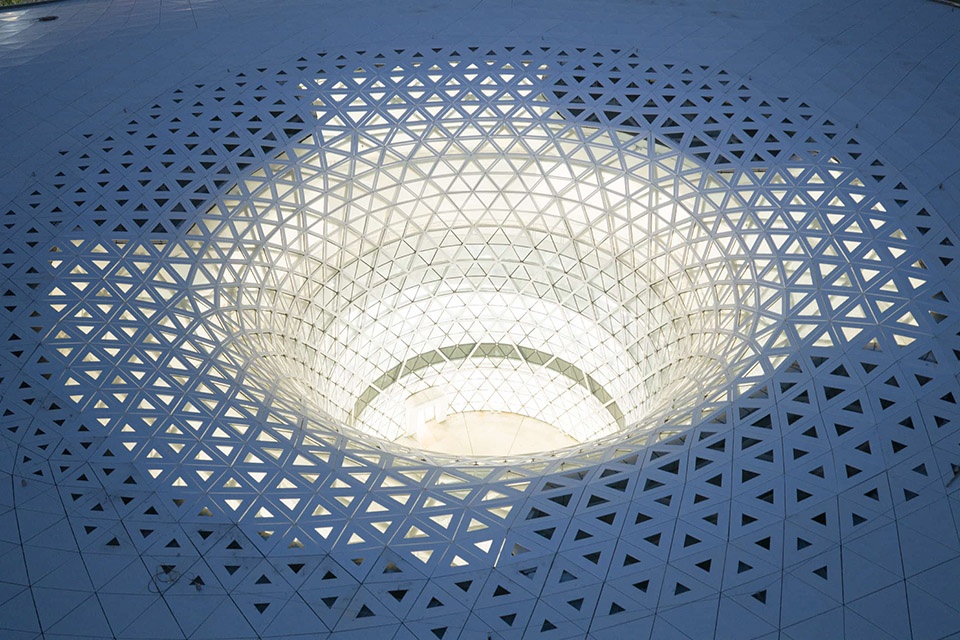
结构与技术的整合是项目的另一关键。剧院屋面采用起伏自然的网壳结构体系,形态并非附加设计,而是结构受力与空间需求共同生成的结果,体现出“形随结构而生”的建构逻辑。
▼实体模型,entity model
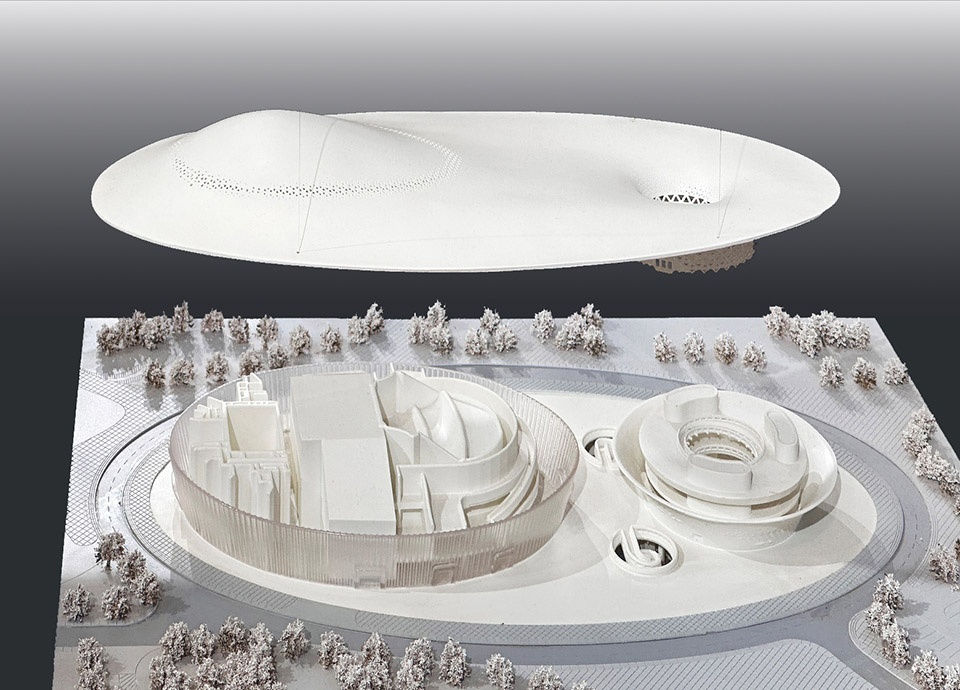
▼“形随结构而生”的建构逻辑,constructing logic
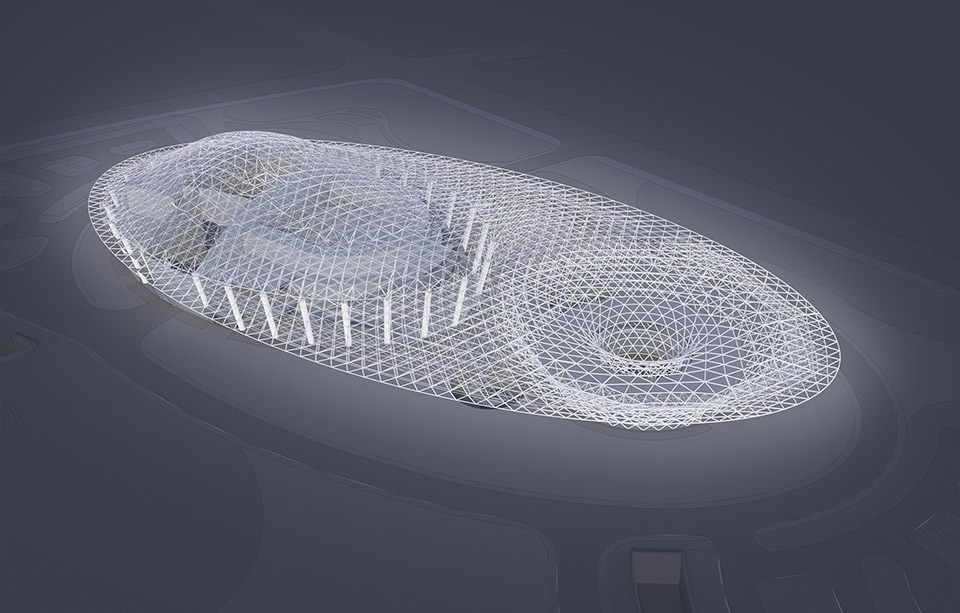
The integration of structure and technology is another key aspect of the project. The roof of the theater adopts a naturally undulating reticulated shell structure system. The shape is not an additional design but is the result of the combined force of the structure and the spatial requirements, embodying the construction logic of “form emerging from the structure”.
▼光影穿透其间,light and shadow
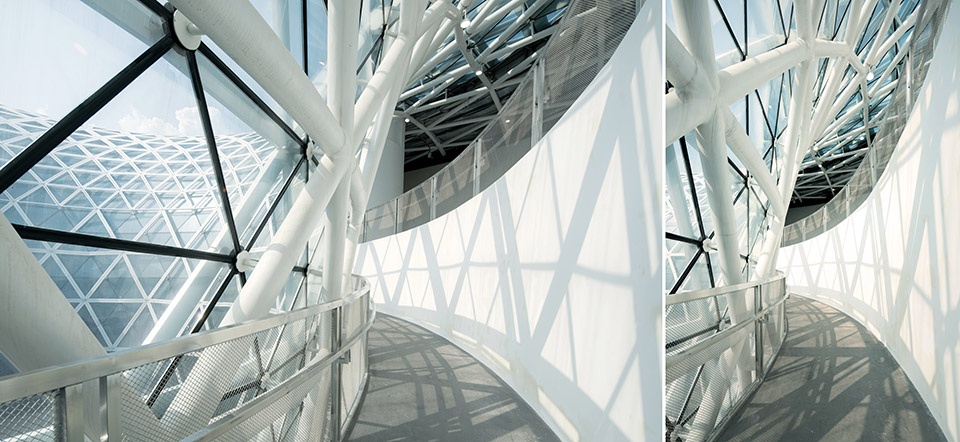
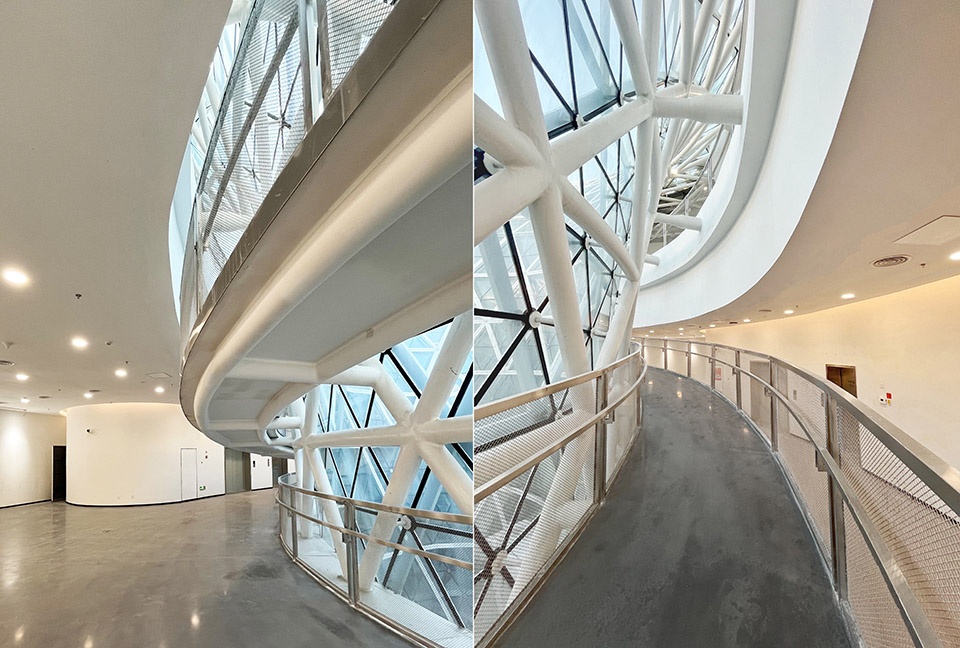
美术馆则围绕内庭设置连续螺旋坡道,结合花篮式单层网壳结构,形成流动而渐进的观展体验,延续了中国园林“步移景异”的空间传统。
▼结合花篮式单层网壳结构的螺旋坡道,spiral ramp
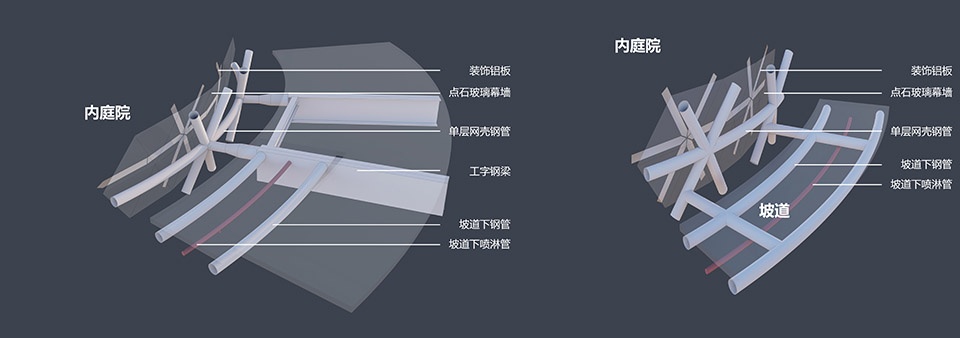
The art gallery features continuous spiral ramps surrounding the inner courtyard, combined with a flower-basket-shaped single-layer spherical shell structure, creating a flowing and progressive viewing experience. This design continues the spatial tradition of “changing scenery as you move” in Chinese gardens.
▼“步移景异”的螺旋坡道,spiral ramp
在设备系统处理上,项目强调“隐性技术”的整合策略。地送风、空调喷口、消防设施等均被系统性地纳入结构与界面之中,在保障建筑高效运行的同时,保持空间的纯净与完整。这种对技术的克制表达,使工程系统成为空间品质的支撑,而非干扰。
▼结合造型的蓄烟区布置,smoke storage area layout
In terms of the equipment system design, the project emphasizes the integration strategy of “hidden technologies”. The supply air system, air conditioning nozzles, fire protection facilities, etc. are all systematically incorporated into the structure and interface. This ensures the efficient operation of the building while maintaining the purity and integrity of the space. This restrained expression of technology makes the engineering system a support for the spatial quality rather than an interference.
▼美术馆展陈空间,exhibition space of the art museum
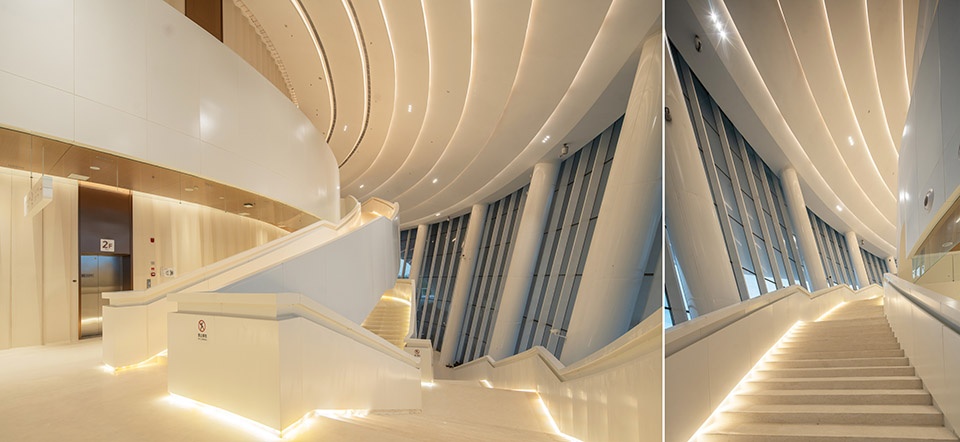
▼剧场观众前厅楼梯,the staircase
▼剧场观众前厅,the foyer of the theater for the audience
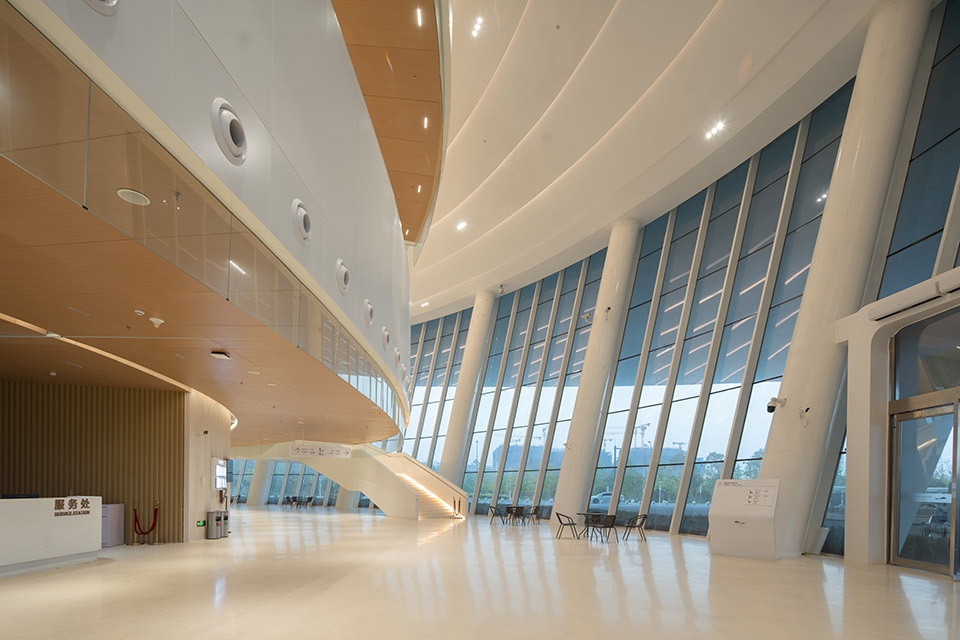
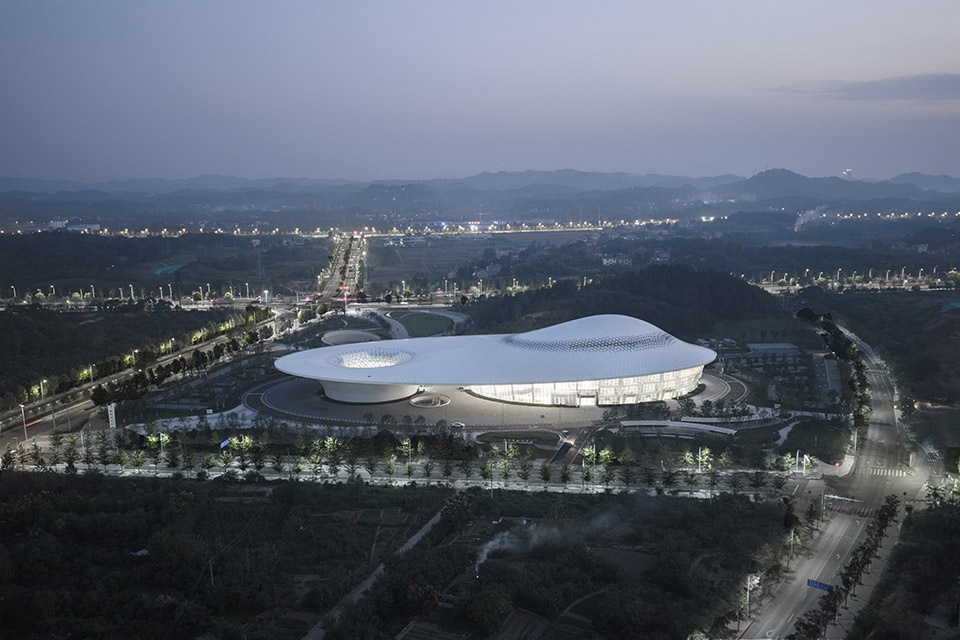
建筑最终自然地融入城市山水格局之中。一凸一凹的体量关系宛如山岭与湖泊的对话,通透的立面使内部活动与城市景观相互渗透。夜晚,灯光透过玻璃幕墙和三角格栅散射而出,建筑如同山水之间的明月和繁星,强化了场所精神与文化意境。
The building eventually seamlessly integrates into the urban landscape and mountain-water configuration. The contrast of protruding and recessed volumes is like a dialogue between mountains and lakes. The transparent facades allow the internal activities to blend with the urban landscape. At night, the lights spread out through the glass facades and triangular grilles, making the building resemble the moon and stars between the mountains and lakes, reinforcing the place spirit and cultural atmosphere.
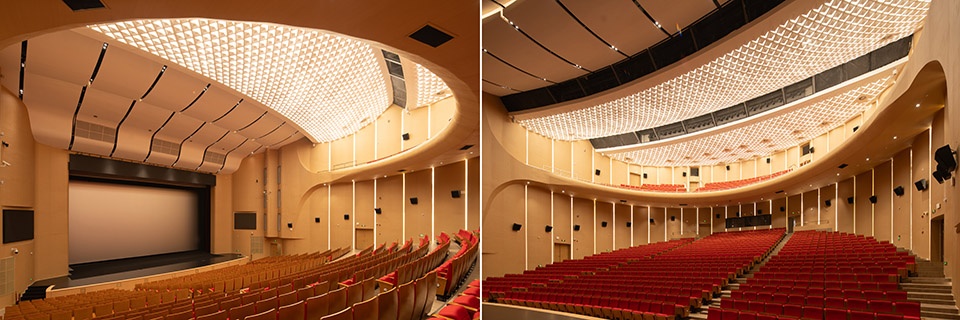
▼剧场观众厅,theater auditorium
▼融入城市山水格局,urban Scenery and Landscape
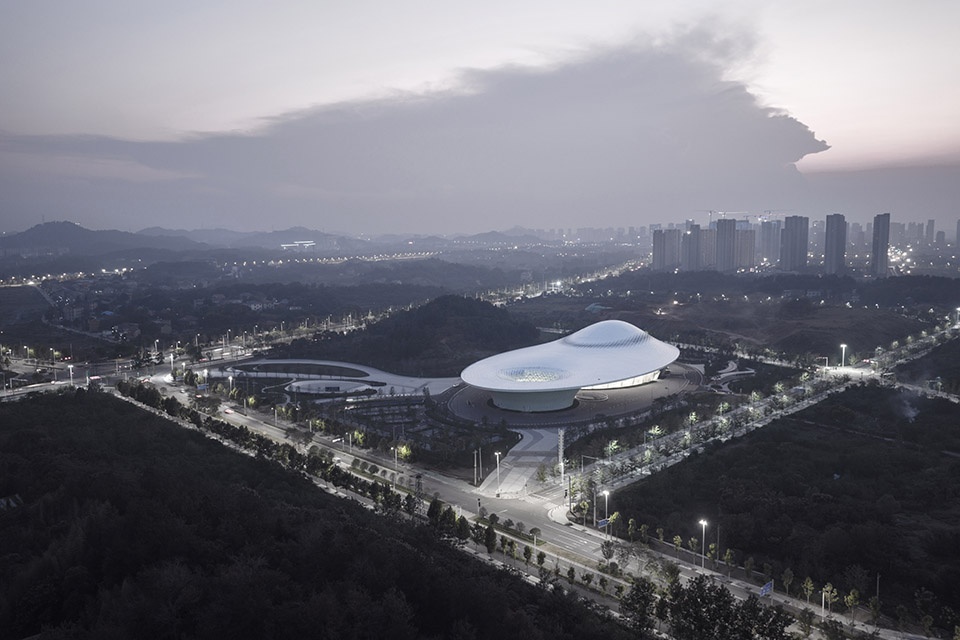
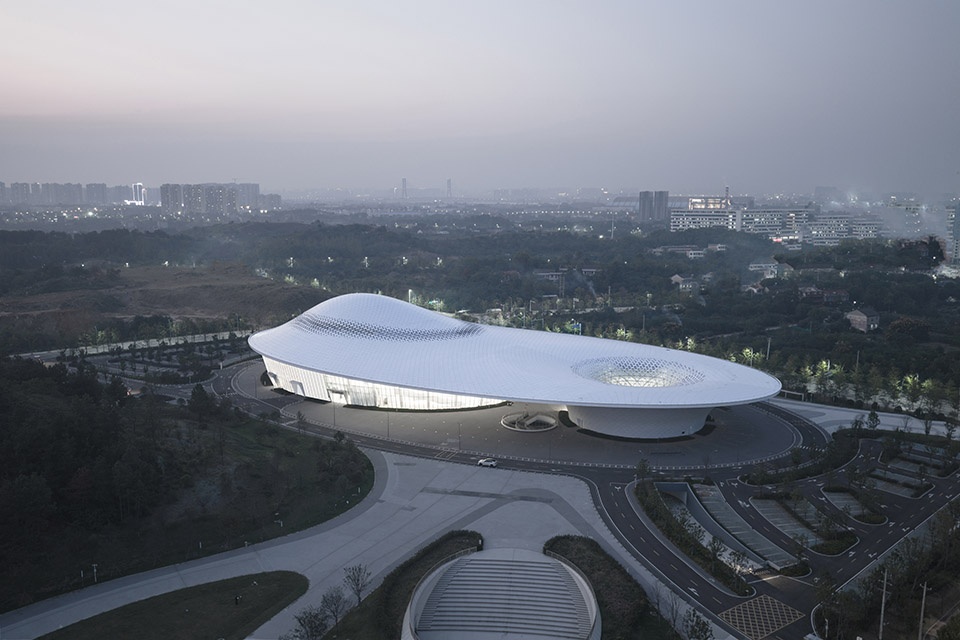
▼与城市景观相互渗透,urban landscape
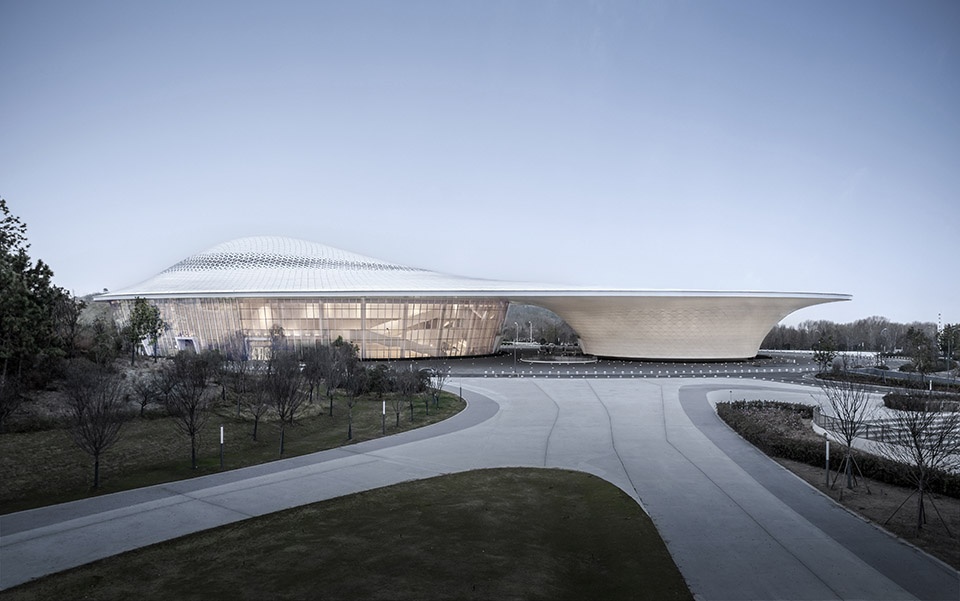
▼建筑如同山水之间的明月和繁星,the lights shine through the curtain wall
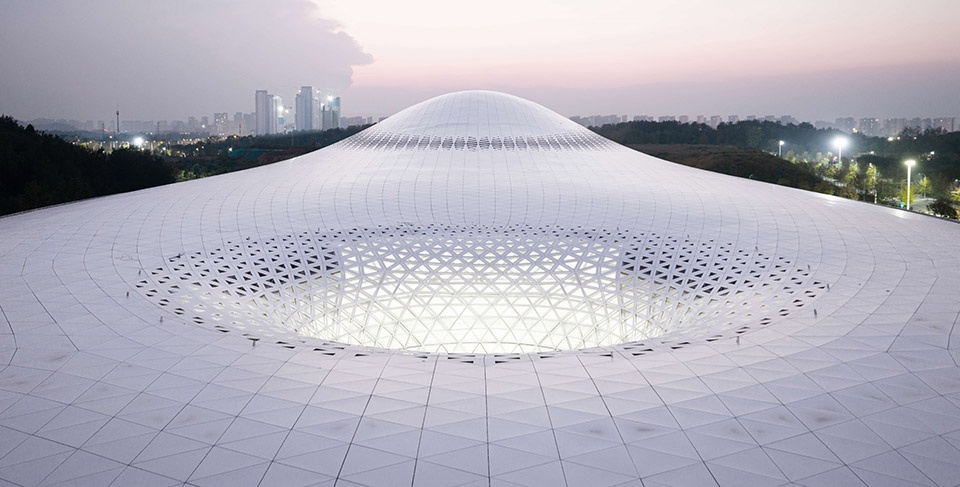
鄂州文化中心以“承文、合技、融境”三者协同的方式,完成了一次具有探索意义的公共建筑实践。它不仅回应了当代公共文化建筑对复合功能与技术整合的现实需求,更在山水语境中重建了具有文化深度与空间诗性的当代荆楚建筑表达。
The Ezhou Cultural Center achieved a pioneering public building practice through the coordinated approach of “preserving culture, integrating skills, and integrating the environment”. It not only met the practical demands of contemporary public cultural buildings for comprehensive functions and technological integration, but also reconstructed contemporary Jingchu architectural expression with cultural depth and spatial poetics in the landscape context.
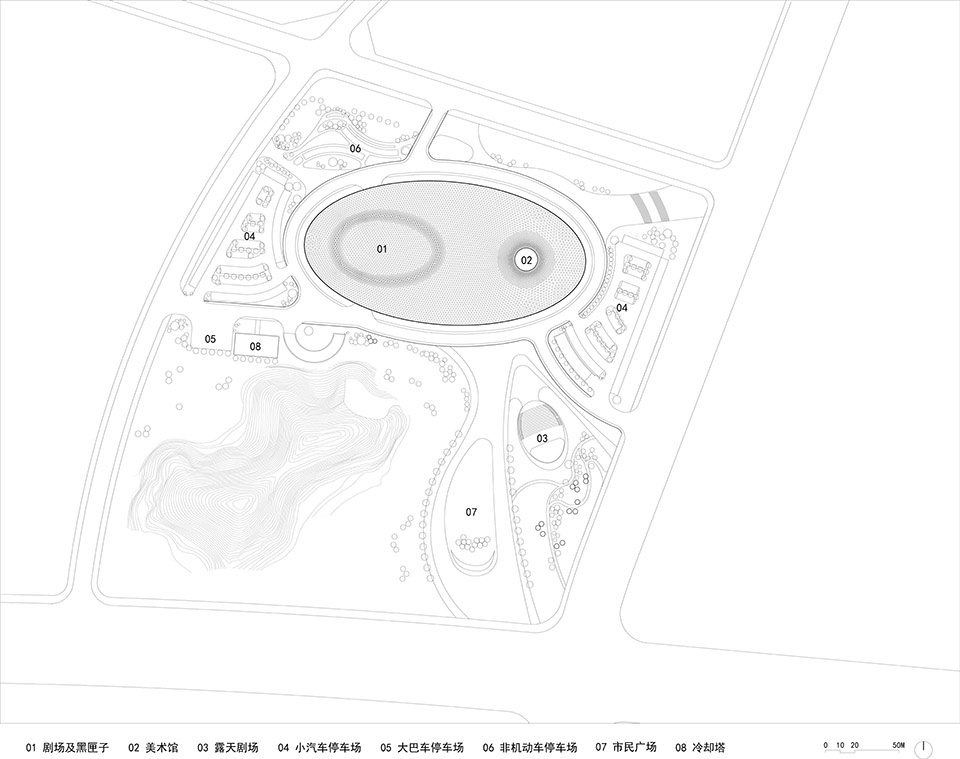
▼总图,master plan
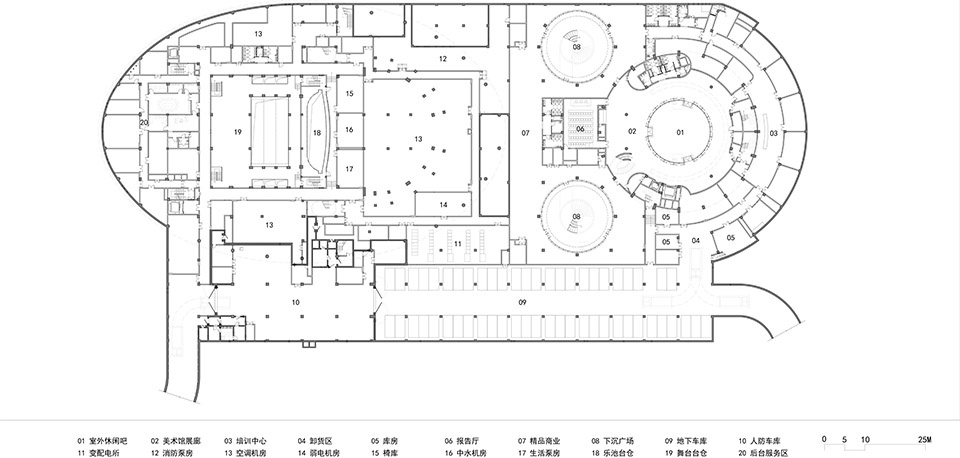
▼地下一层平面,basement floor plan
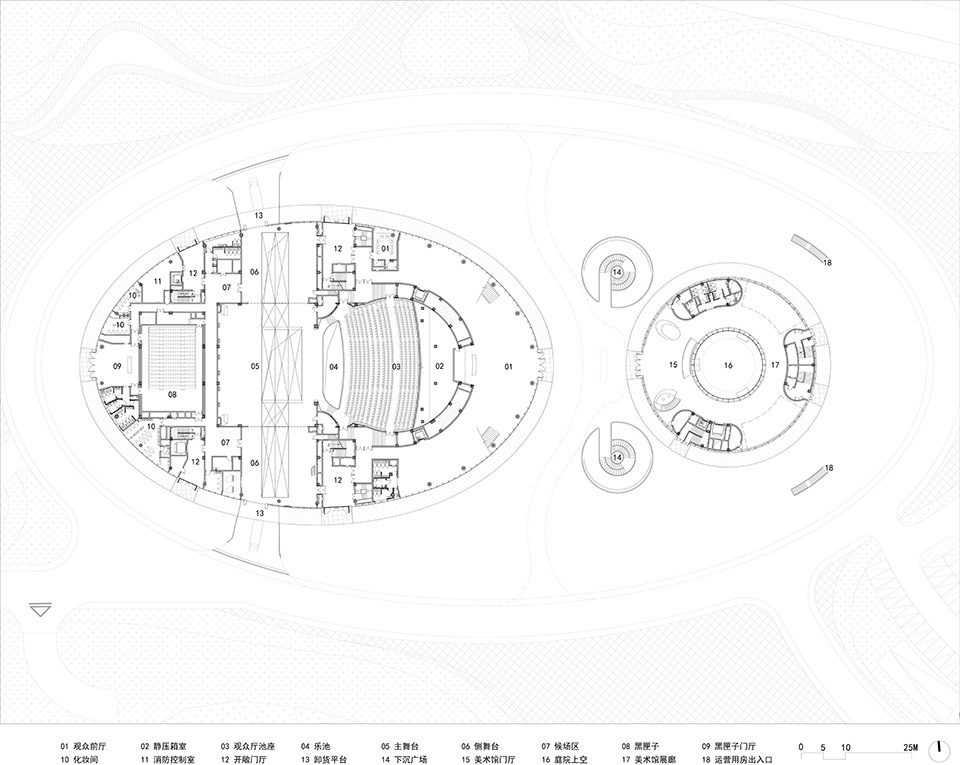
▼一层平面,first floor plan
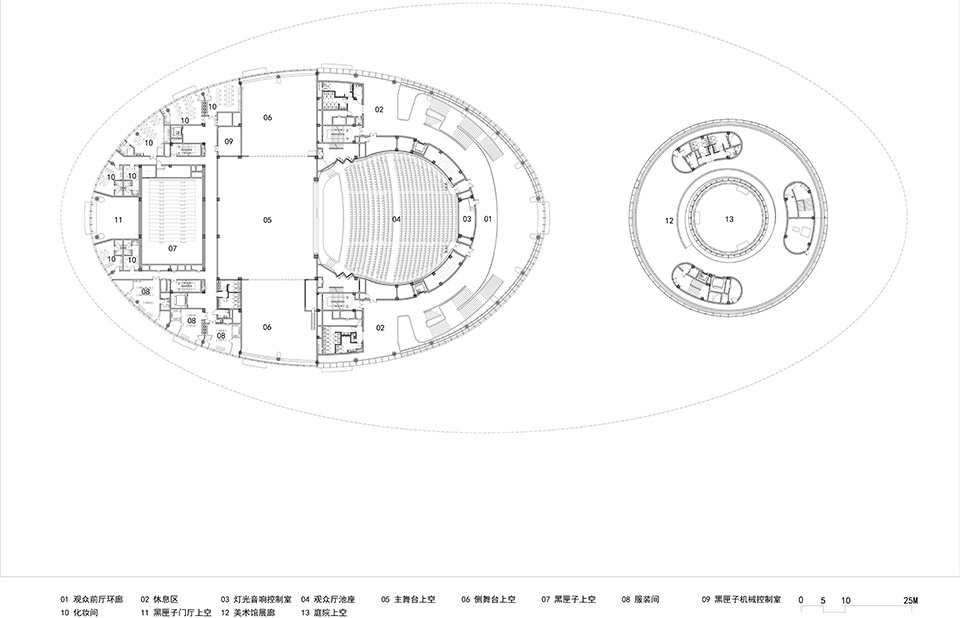
▼二层平面,2nd floor plan
▼三层平面,3rd floor plan
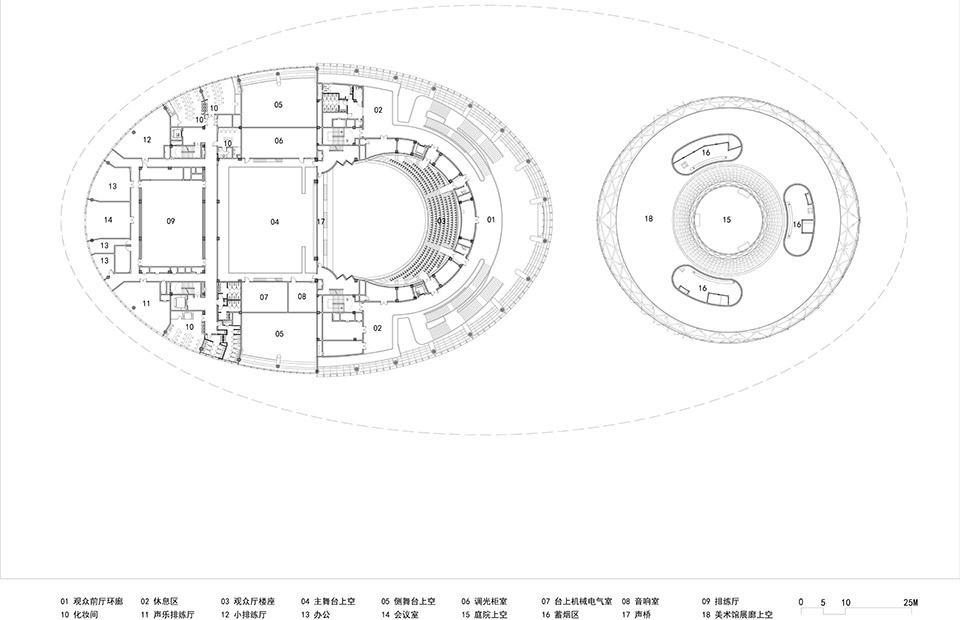
▼四层平面,4th floor plan
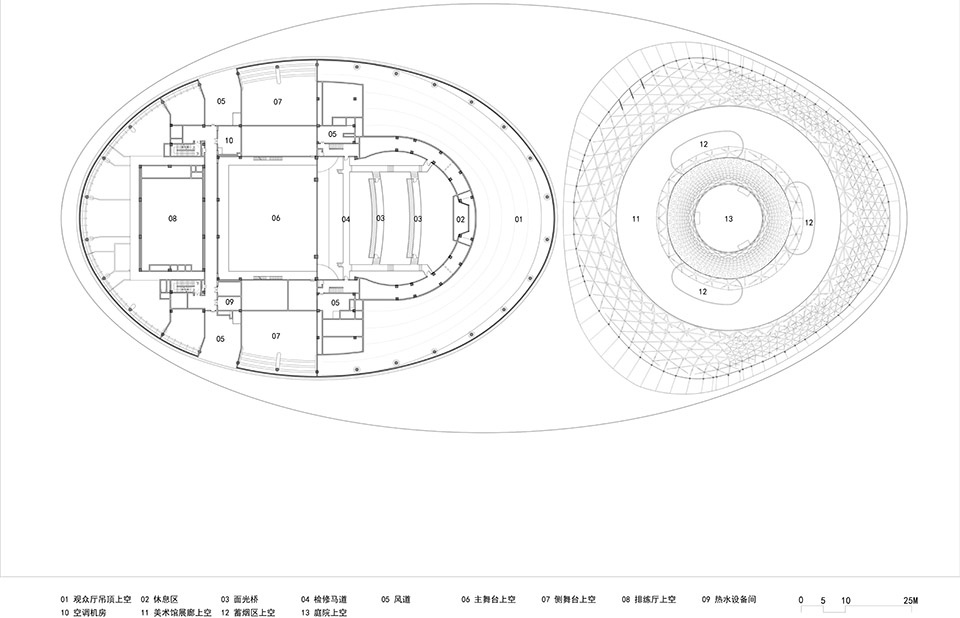
▼五层平面,5th floor plan
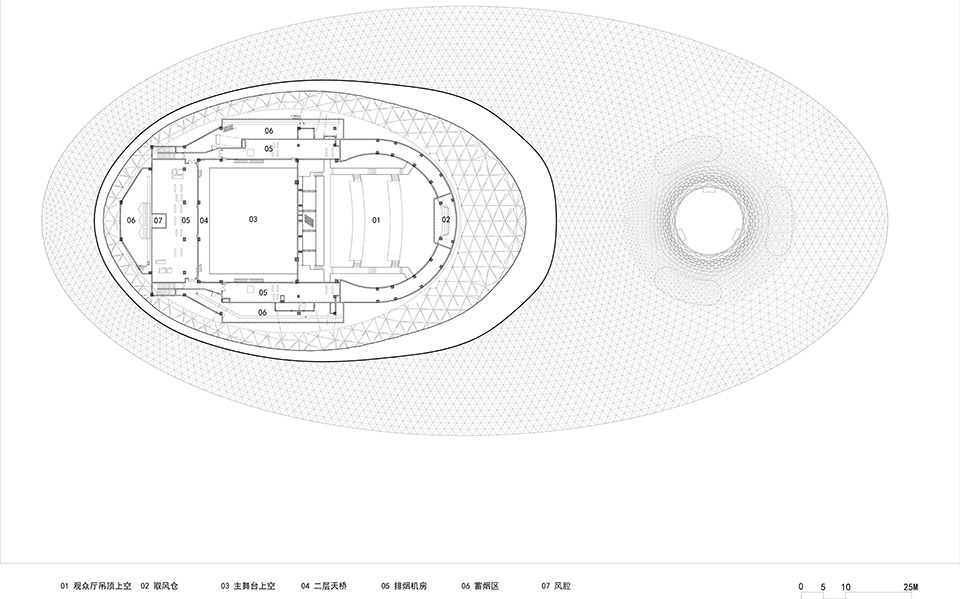
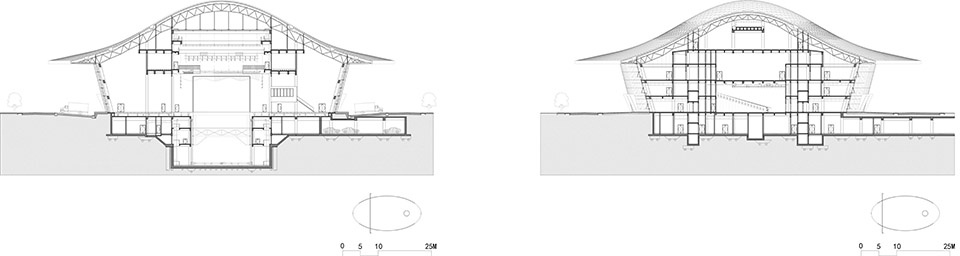
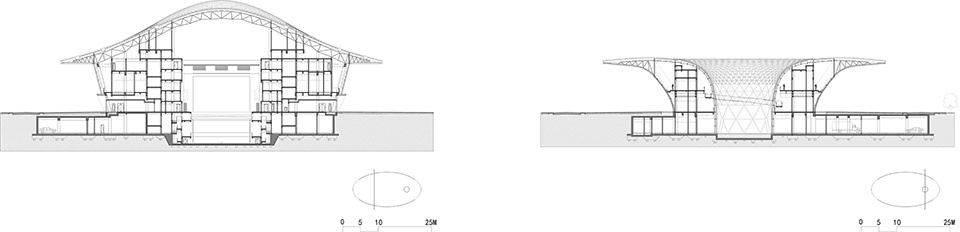
▼剖面图,sections
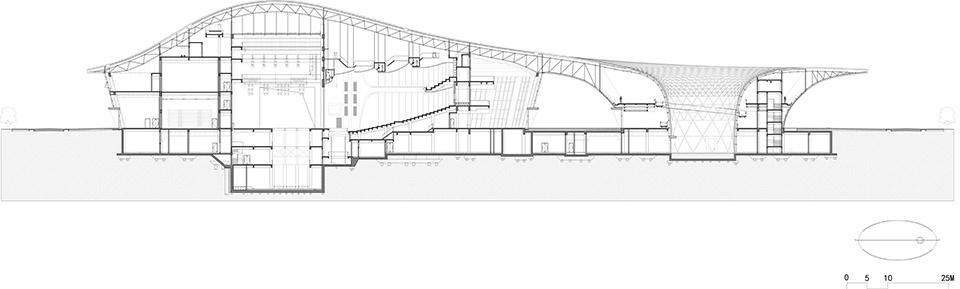
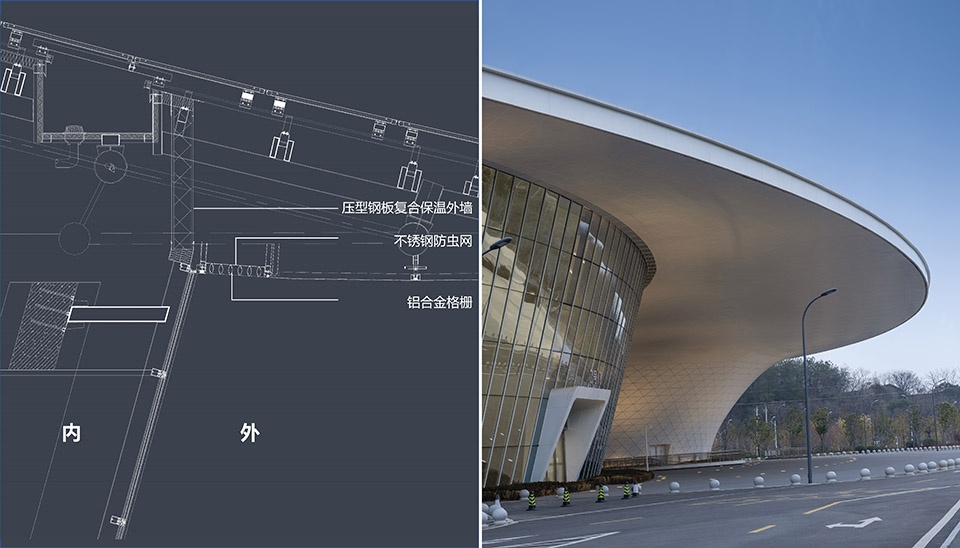
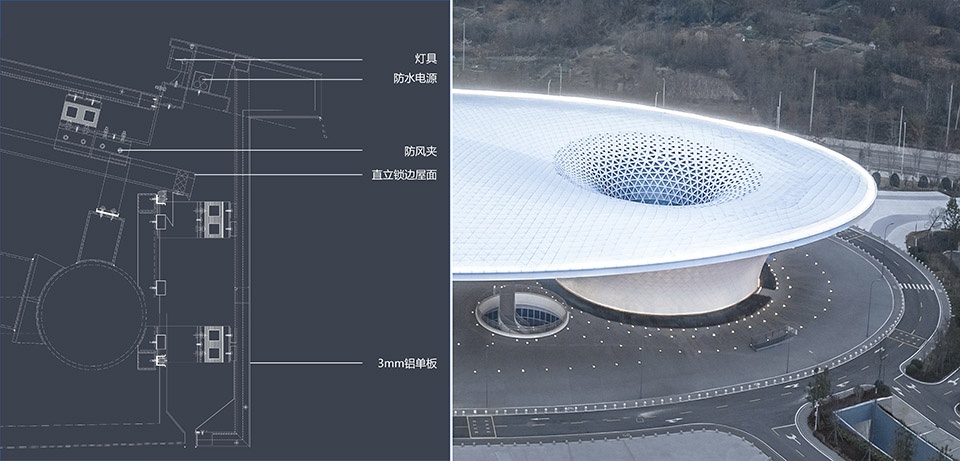
▼檐口泛光构造节点,construction of nodes method
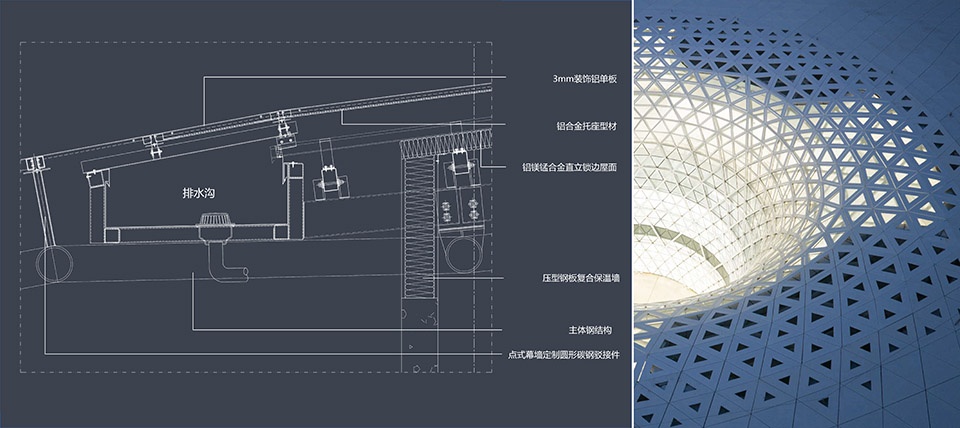
▼点式幕墙与金属屋面衔接构造节点,construction of nodes method
▼剧场檐口构造节点,construction of nodes method