苏州科技馆,江苏 / Perkins&Will
作为狮山广场文化集群压轴启幕的收官之作,这座公众期待已久的科技馆,彰显了苏州文脉昌炽和匠心制造的城市底蕴。建筑与景观在此和谐共生,生动诠释自然与科技的共生之境。万众瞩目之下,苏州又添一处重磅文化地标——由全球知名建筑事务所Perkins&Will打造的苏州科技馆,作为高新区的文化新引擎,致力于弘扬探索精神与创新力量。
The third and final component of a new cultural district, the museum reflects Suzhou’s status as a hub of intellectual inquiry and manufacturing. Architecture and landscape come together in a harmonious design that highlights the relationship between nature and technology. SUZHOU, China—One of China’s most anticipated cultural destinations has opened its doors to the public. The Suzhou Science and Technology Museum, designed by global firm Perkins&Will, is a new civic landmark in the city’s High-Tech District that celebrates discovery and innovation.
▼项目概览,project overview
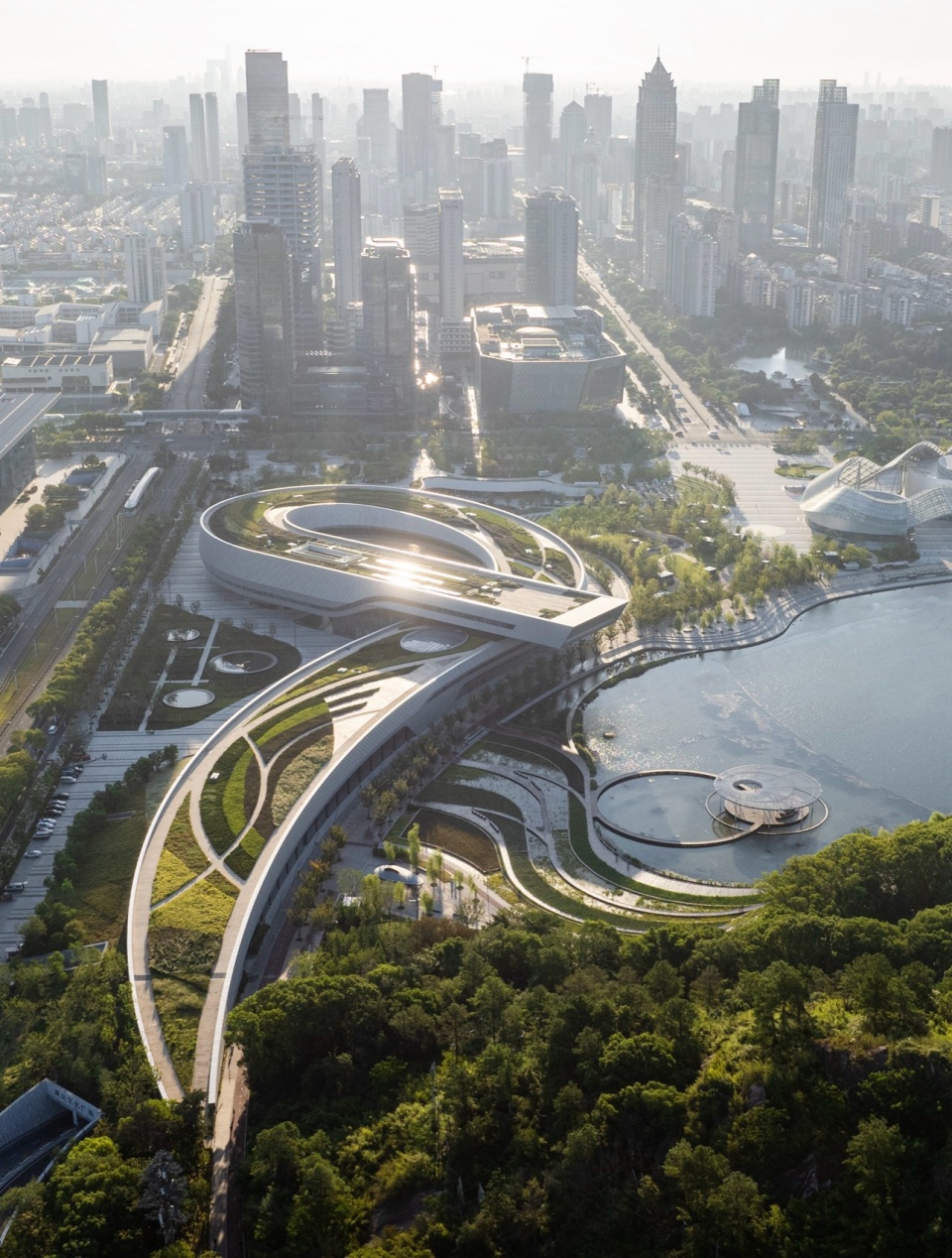
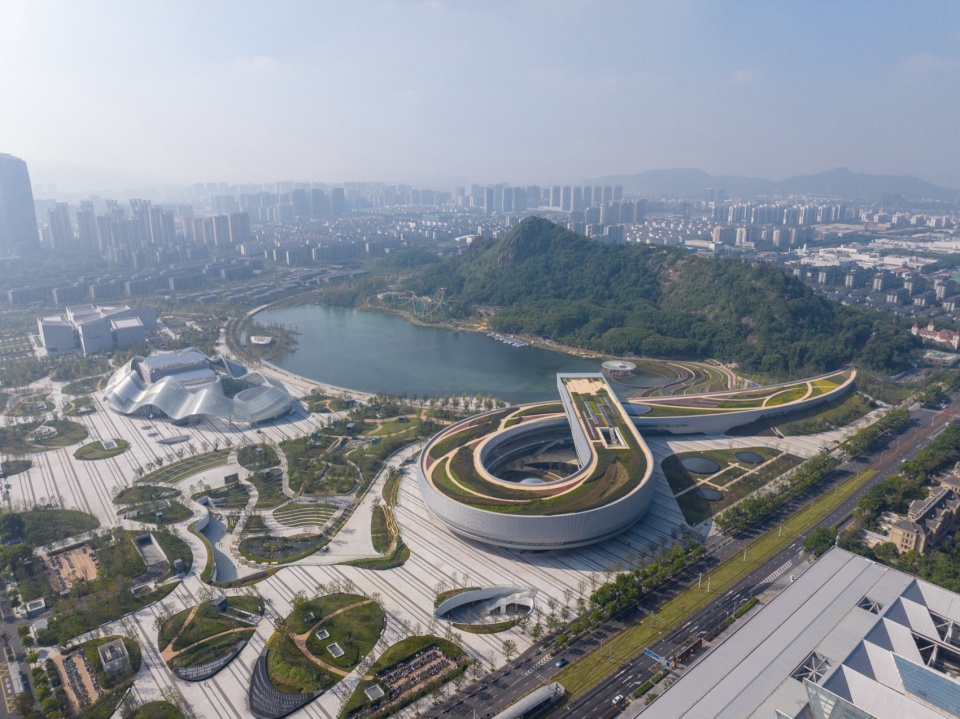
▼狮山广场文化集群鸟瞰,aerial view of the cultural district
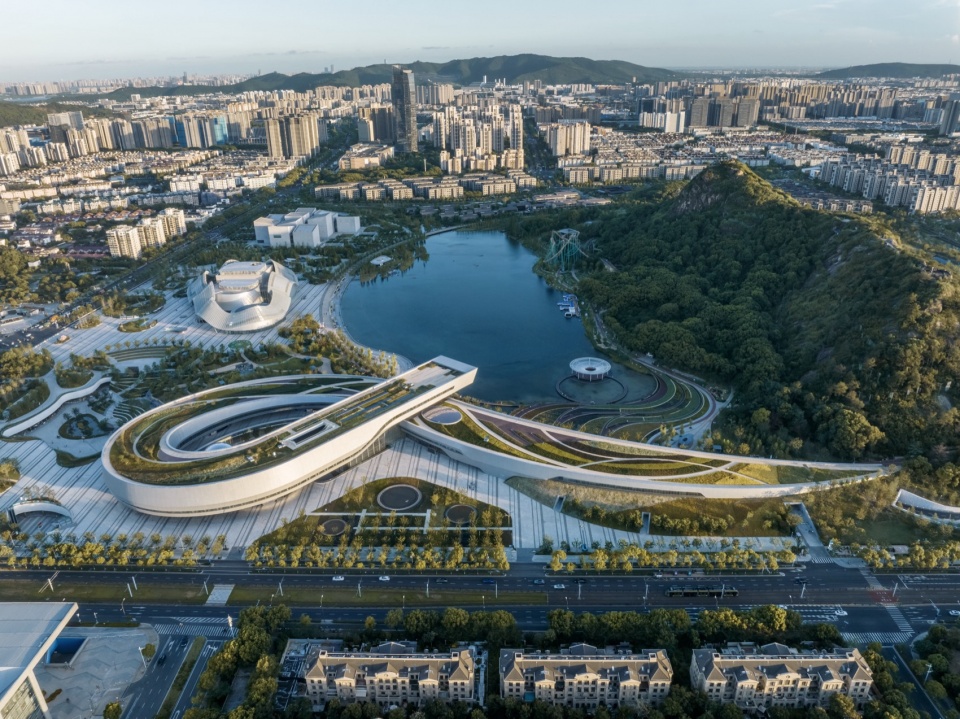
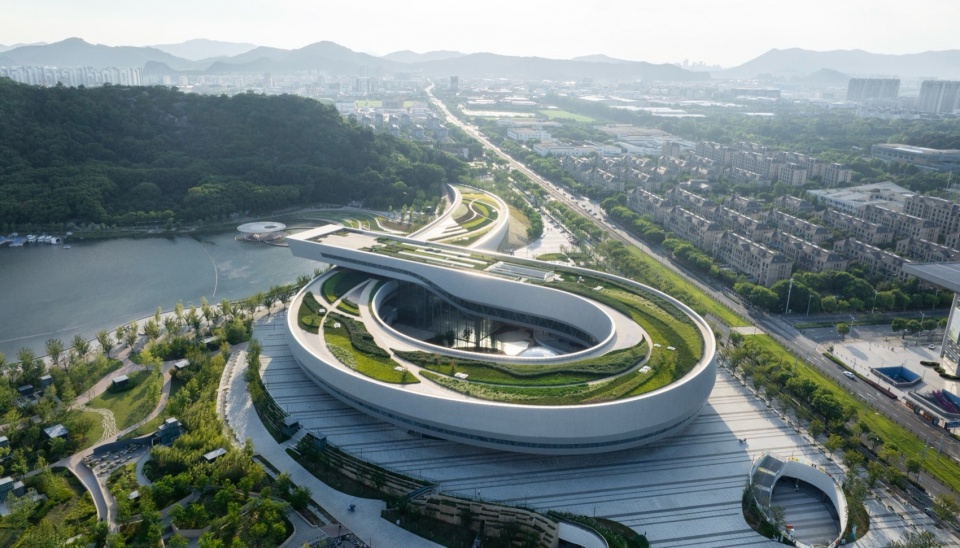
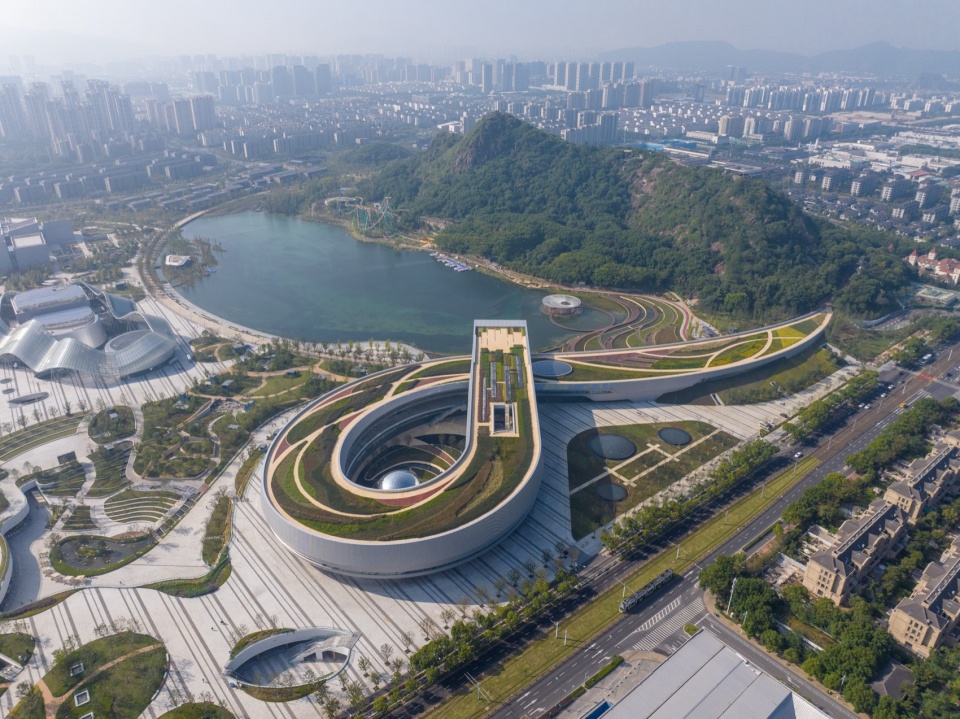
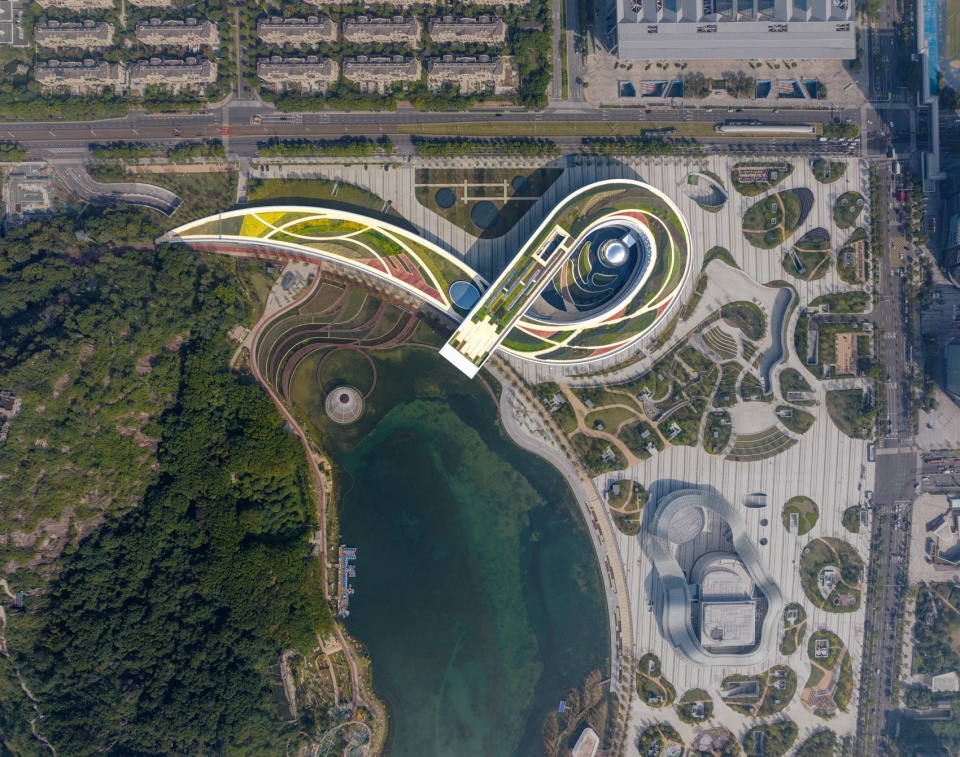
苏州素有园林之城与丝绸之乡的美誉,自古便是文化、匠心与山水的交融之地。苏州科技馆通过其富于想象力的设计致敬这一历史文脉——建筑宛若一条流动的丝带,自滨水绿意中自然生长绵延。
Suzhou, known internationally for its UNESCO-listed classical gardens and centuries-old silk tradition, has long intertwined culture, craft, and landscape. The museum honors this legacy through its evocative design, which conjures a flowing silk ribbon emerging organically from its verdant waterfront landscape.
▼项目鸟瞰,aerial view of the project
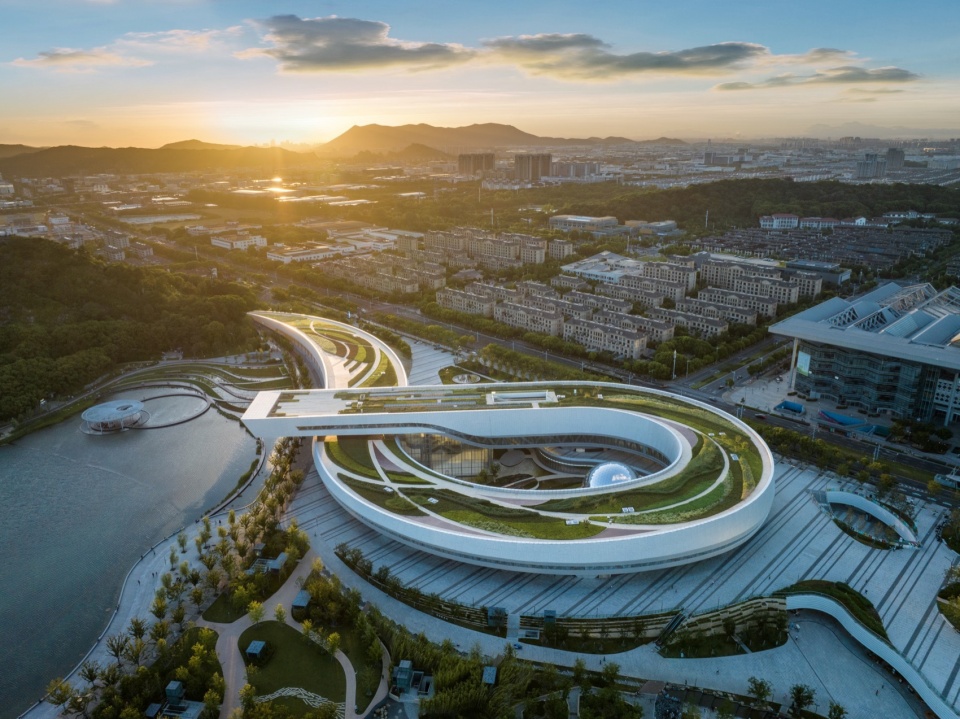
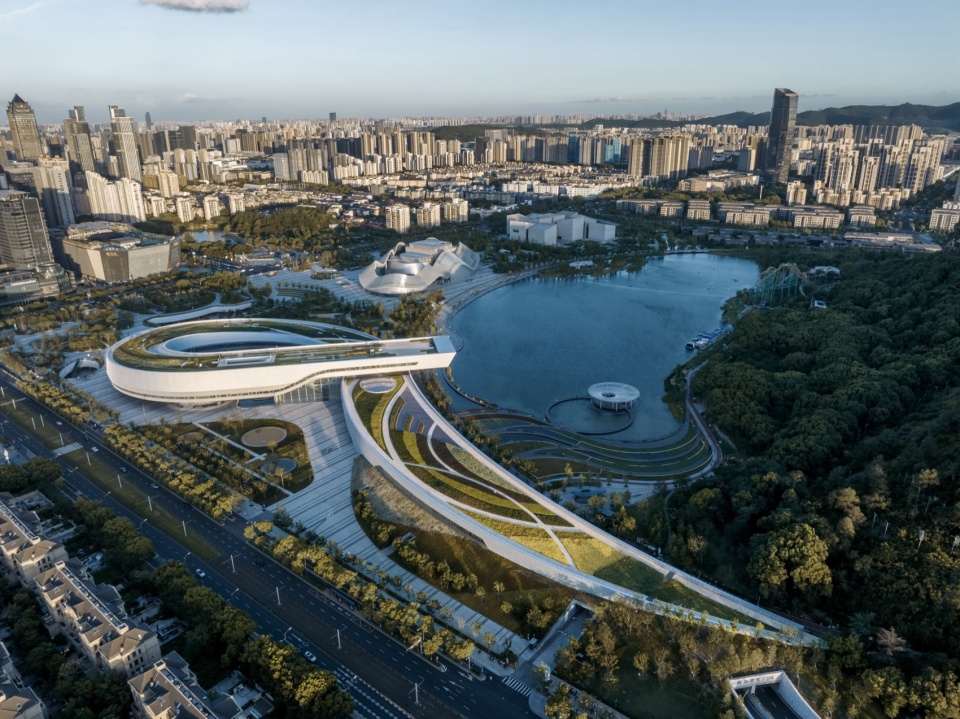
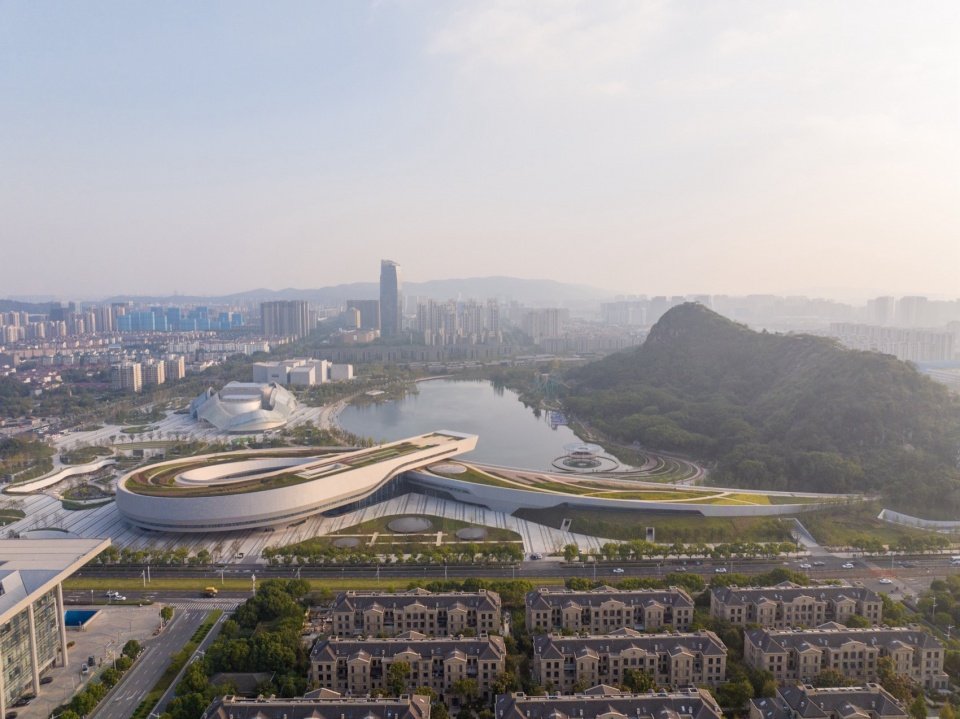
▼苏州科技馆坐落于狮子山脚下,the project located at the base of Shishan, or Lion Mountain
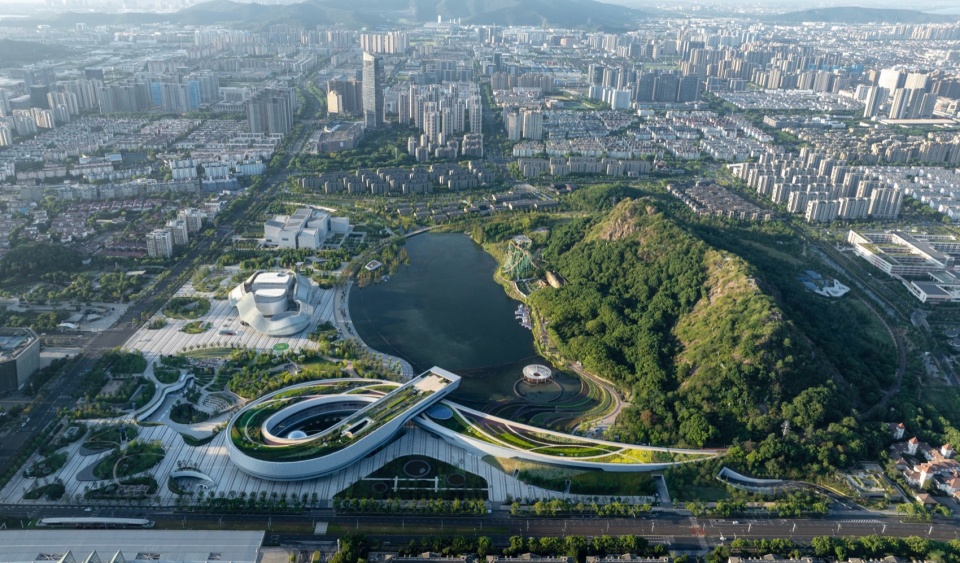
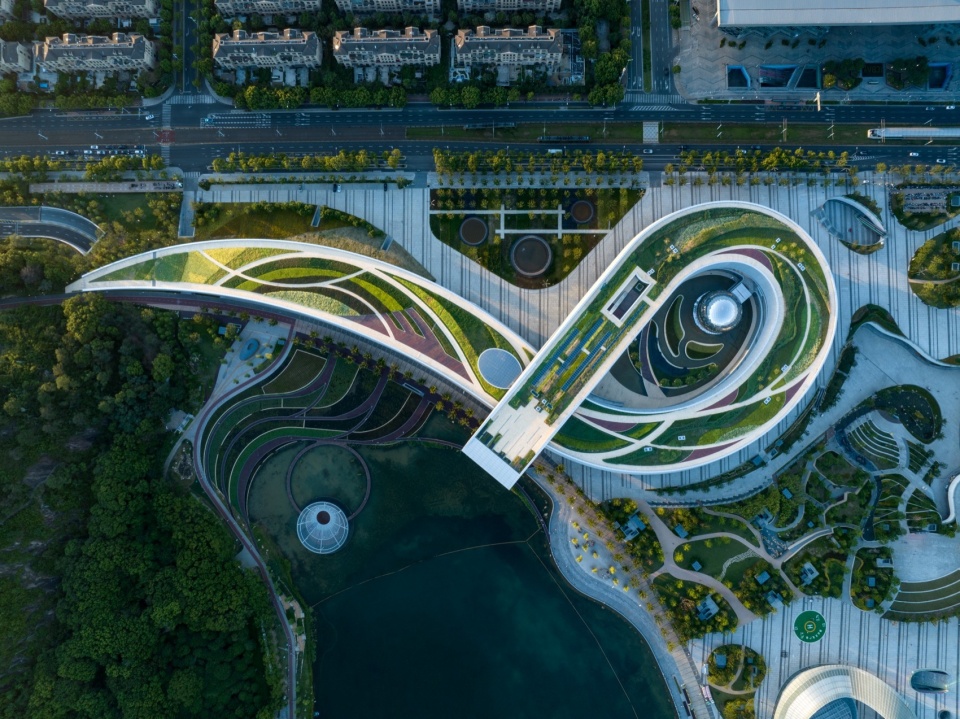
承载苏州城市与文化精神的超级平台A civic and cultural super platform for Suzhou
苏州科技馆坐落于狮子山脚下,是苏州市旧游乐园改造为多元文化景观区的重要举措之一。该馆与苏州博物馆西馆、苏州狮山大剧院同期统筹规划,共同构成更广泛的狮山片区文化格局。通过连续的公共空间与步行网络,科技馆与周边文化设施共享山水资源。
▼分析图,analysis diagram
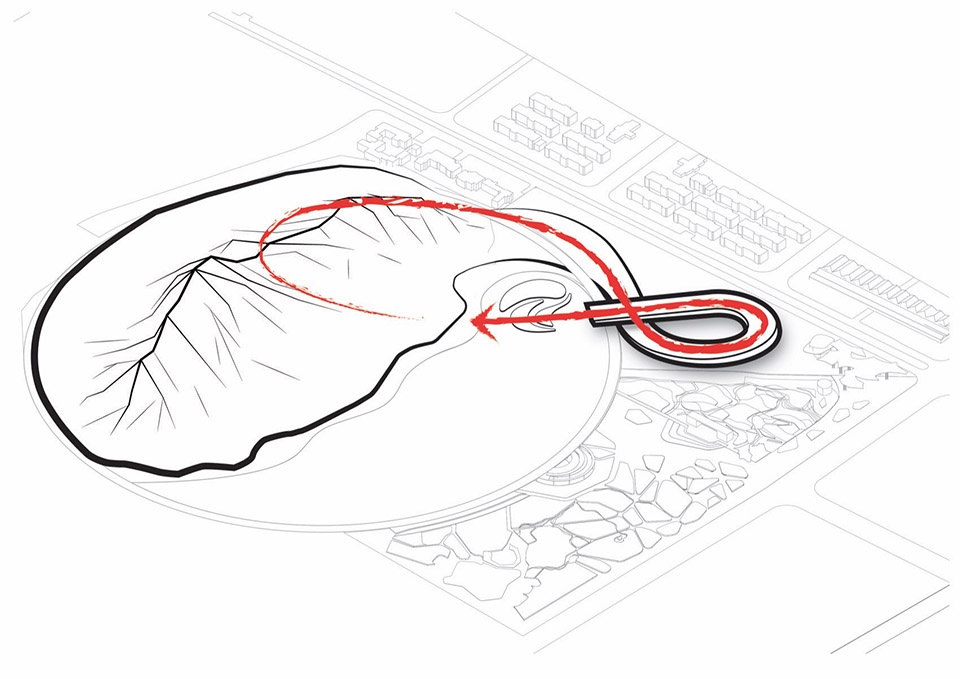
Located at the base of Shishan, or Lion Mountain, the museum supports a city-led redevelopment of a former amusement park into a multi-venue cultural landscape. Planned alongside the Suzhou Museum West and the Suzhou Lion Mountain Grand Theatre, and part of the broader Shishan district, the Suzhou Science and Technology Museum shares public space, pedestrian connections, and access to the mountain and water with its neighboring cultural destinations.
▼狮子山文化区鸟瞰,overview of Lion Mountain cultural area
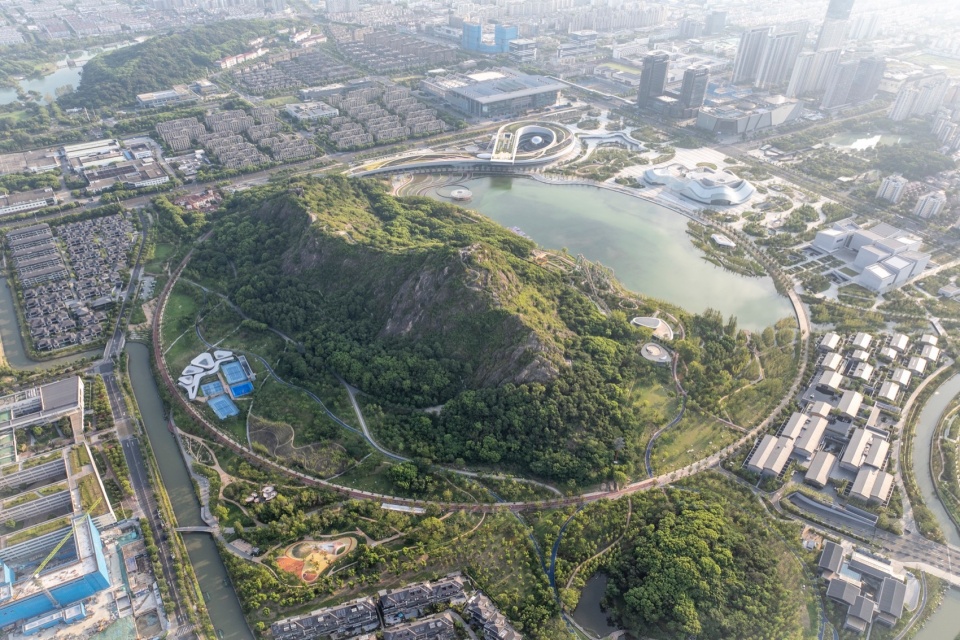
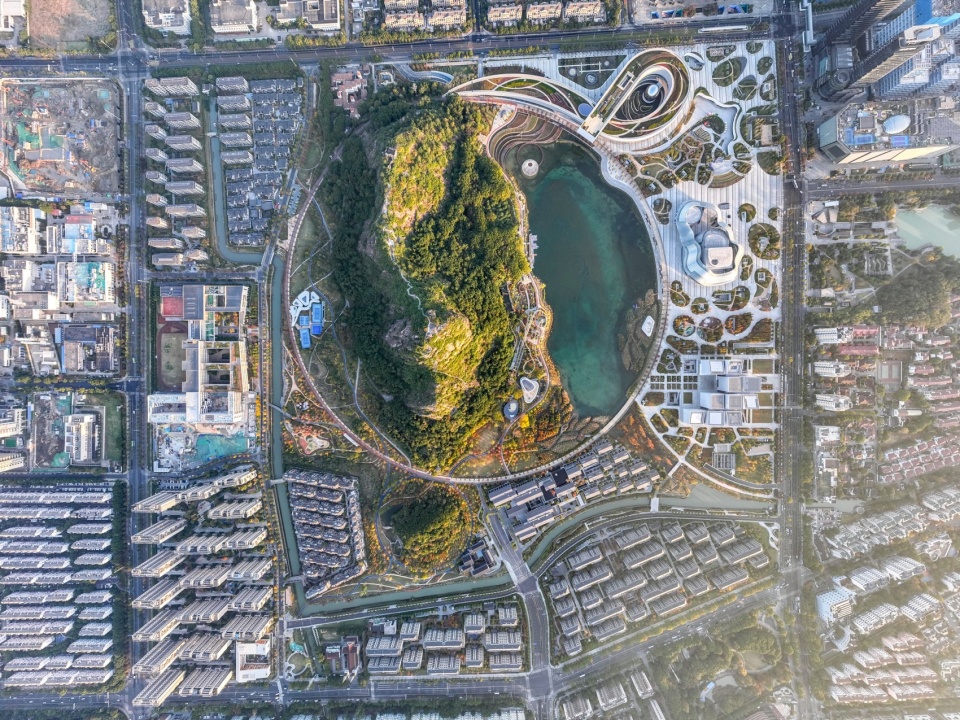
▼苏州科技馆以“玉如意”为灵感的建筑形态,the architectural form of the Suzhou Science and Technology Museum, inspired by the jade ruyi
如丝般流动的建筑Architecture that moves like silk
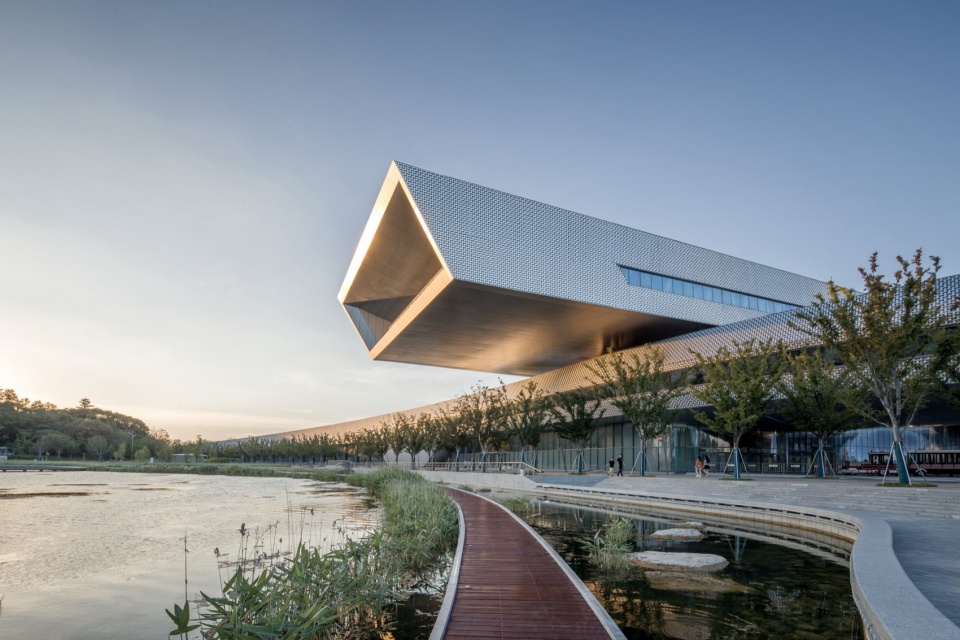
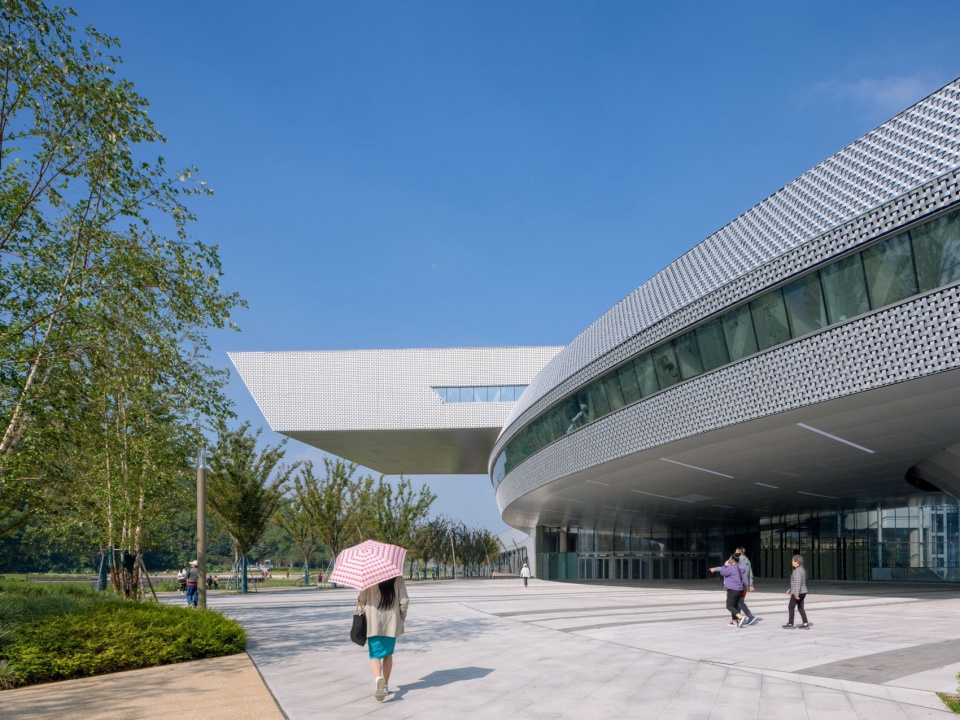
建筑设计灵感源自苏州悠久的丝绸生产历史。科技馆优雅地顺应湖岸曲线,从场地中缓缓升起并回旋成型,宛若一条丝带在空中舒展飘动。建筑由超大尺度的“蘑菇柱”支撑,主体仿佛漂浮于林荫覆盖的公共空间之上,使人们能够在水岸、花园与步道之间恣意穿行。建筑围合出一方下沉庭院,多个生态绿岛与倒影池交融其间。悬臂以如虹之势探向狮山,在视觉上将建筑与自然紧密相连。
▼草图,sketches
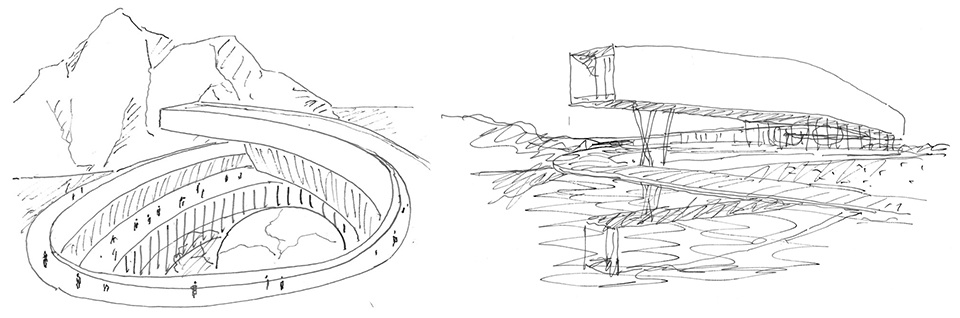
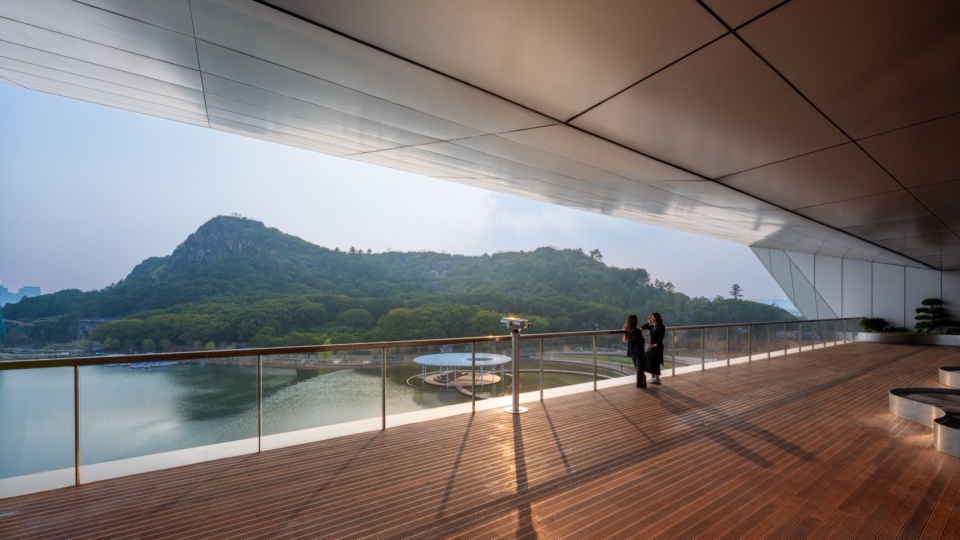
The design is inspired by Suzhou’s history of silk production. The museum gracefully traces the lake’s edge, rises from the landscape, and folds back on itself like a silk sash. Supported by oversized mushroom columns, the building hovers above shaded public space, allowing visitors to move freely between water, gardens, and pathways, and surrounds a sunken courtyard of additional gardens and reflective pools. It then extends outward in a dramatic cantilever toward Lion Mountain, visually linking the building to its natural setting.
▼滨水步道,river front walkway
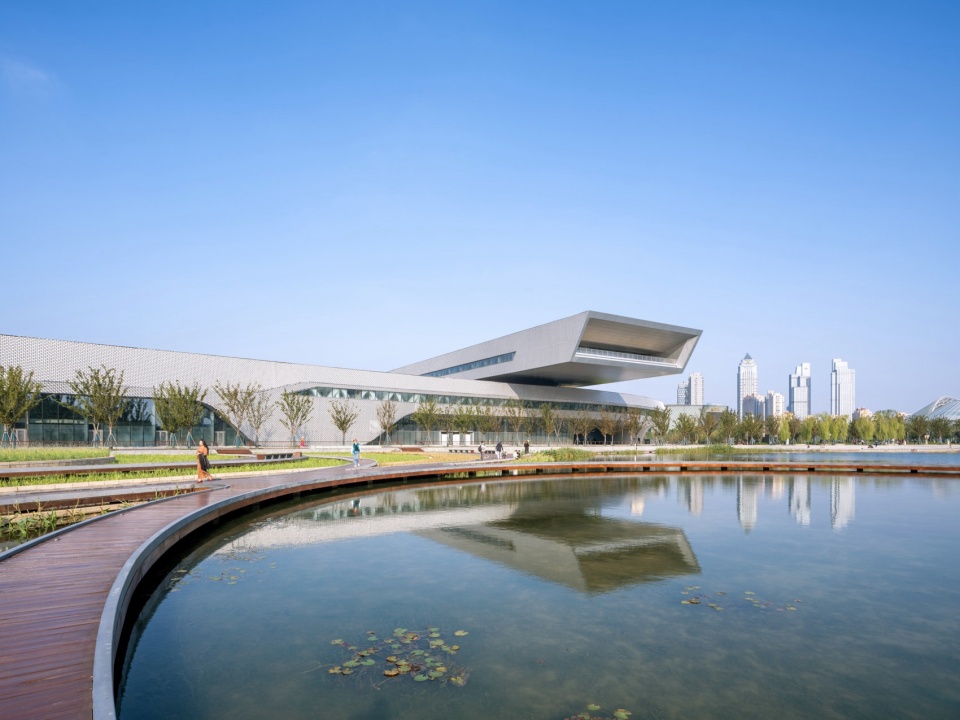
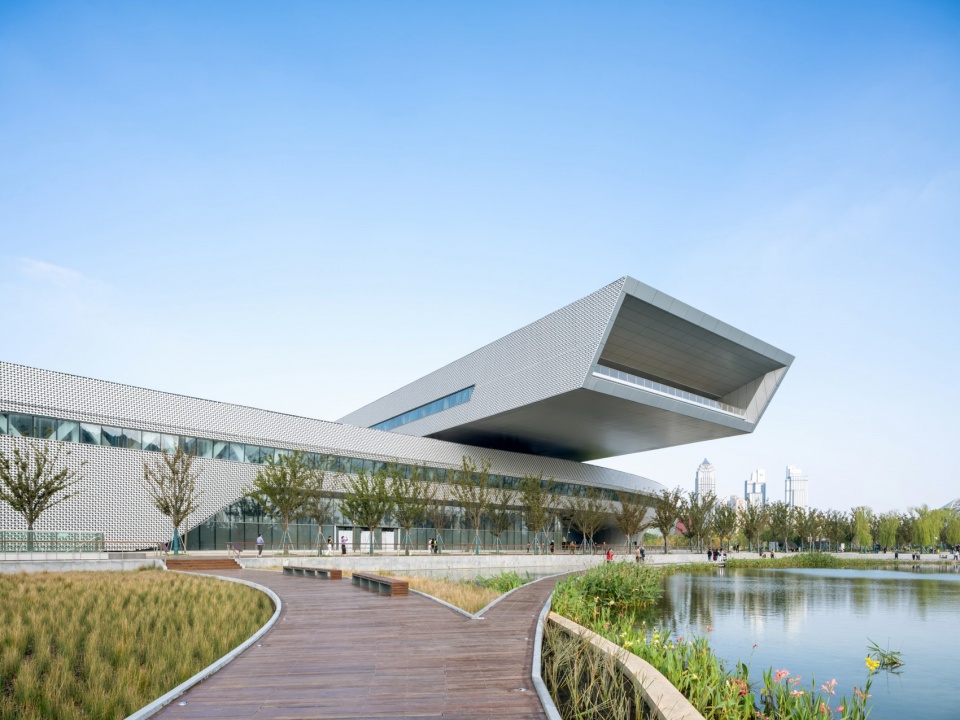
▼悬挑结构,cantilever structure
▼鸟瞰,aerial views
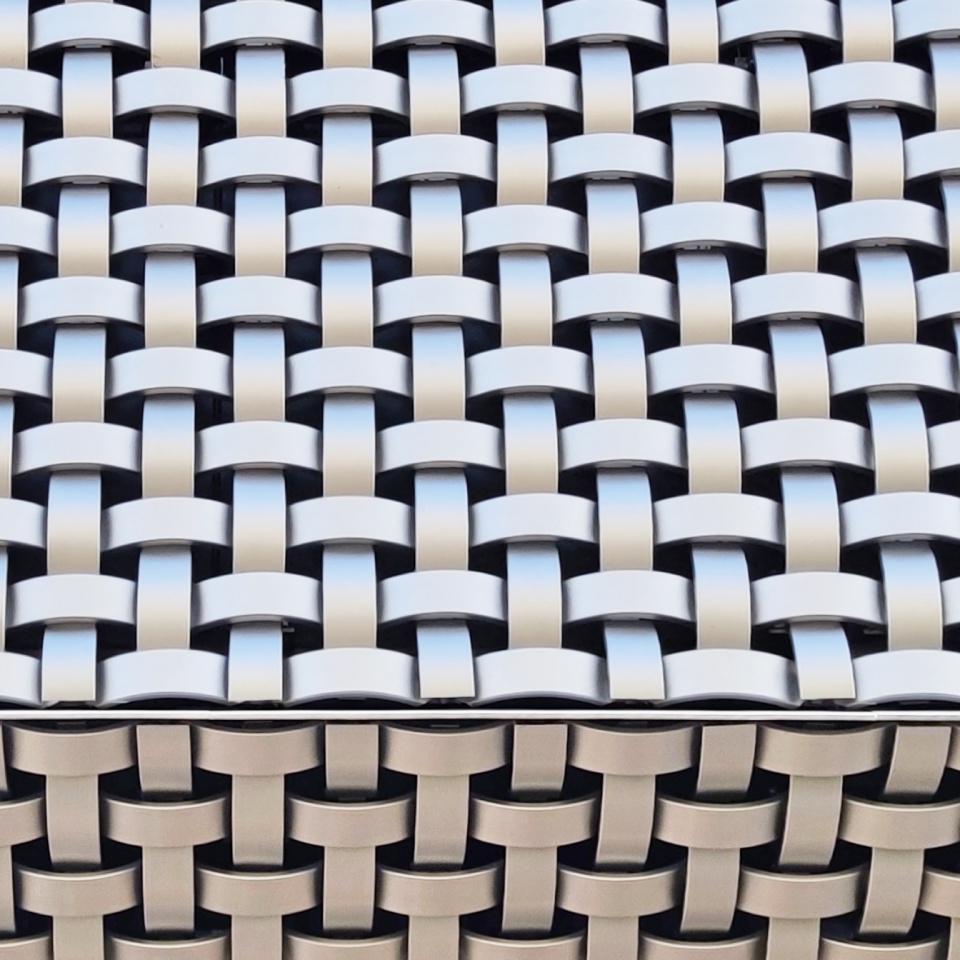
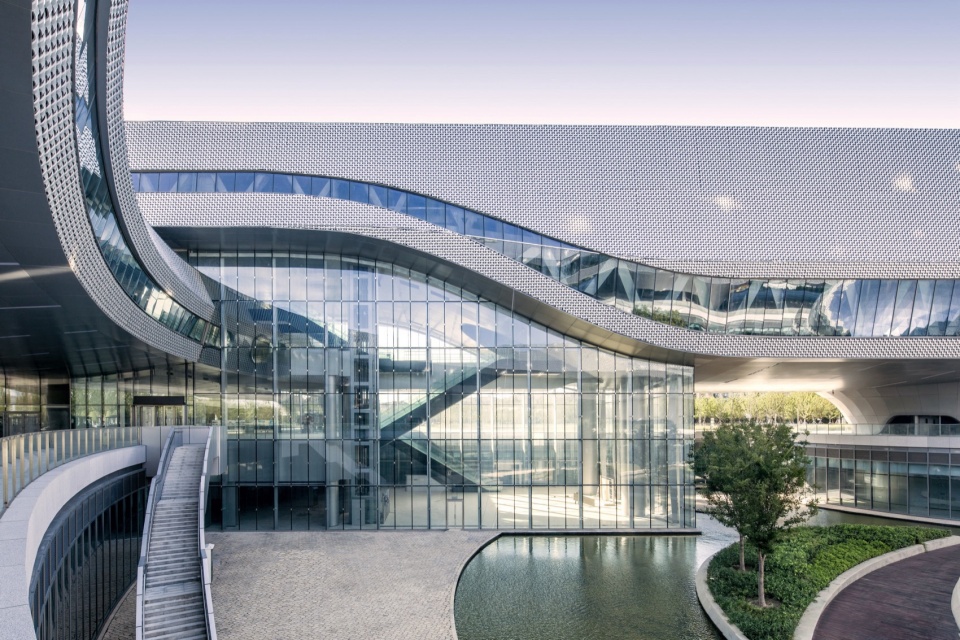
立面系统采用定制化编织铝板,以纵横交错的肌理排列,层叠流转,如丝线经纬交织。高性能喷涂赋予铝板柔和的光泽,夜幕降临,嵌于幕墙中的LED灯为建筑披上一层若隐若现的光晕。
A custom cladding system of convex aluminum panels repeats in a crisscross pattern, appearing to flow beneath one another, lending it a visual quality similar to woven fabric. A high-performance coating produces a soft, shimmering finish, and LEDs embedded within the cladding give the building a subtle glow after dark.
▼立面系统采用定制化编织铝板,a custom cladding system of convex aluminum panels repeats in a crisscross pattern
▼立面细部,details of the facade
亦馆亦园A museum that’s also a landscape
狮山蜿蜒而下的步道,与科技馆绿意盎然的屋顶花园自然衔接,屋顶曲折绵延的路径呼应着公园的柔美曲线。随着屋面的缓慢抬升,景观悄然从植被过渡至光伏板阵列,呈现从自然生态向技术创新的空间转换。
▼分析图,analysis diagram
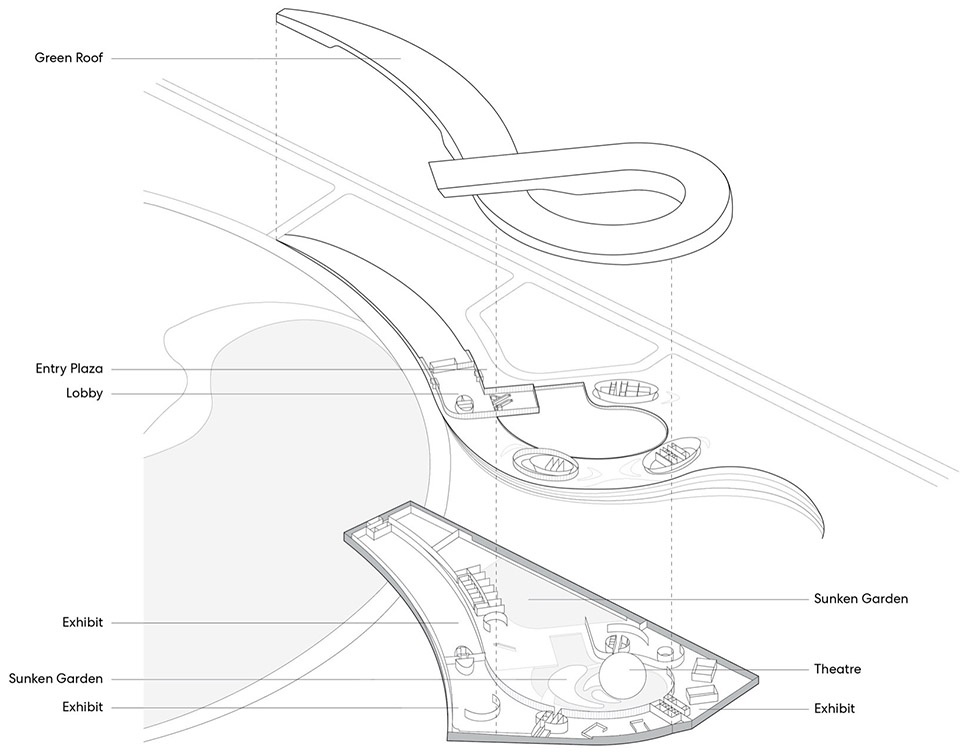
Visitors descending from Lion Mountain can step directly onto the museum’s fully planted roof, where curving paths mirror the park below. As the roof rises, the landscape gradually shifts from planting beds to photovoltaic panels, expressing a transition from natural systems to technological innovation.
▼中央庭院,central courtyard
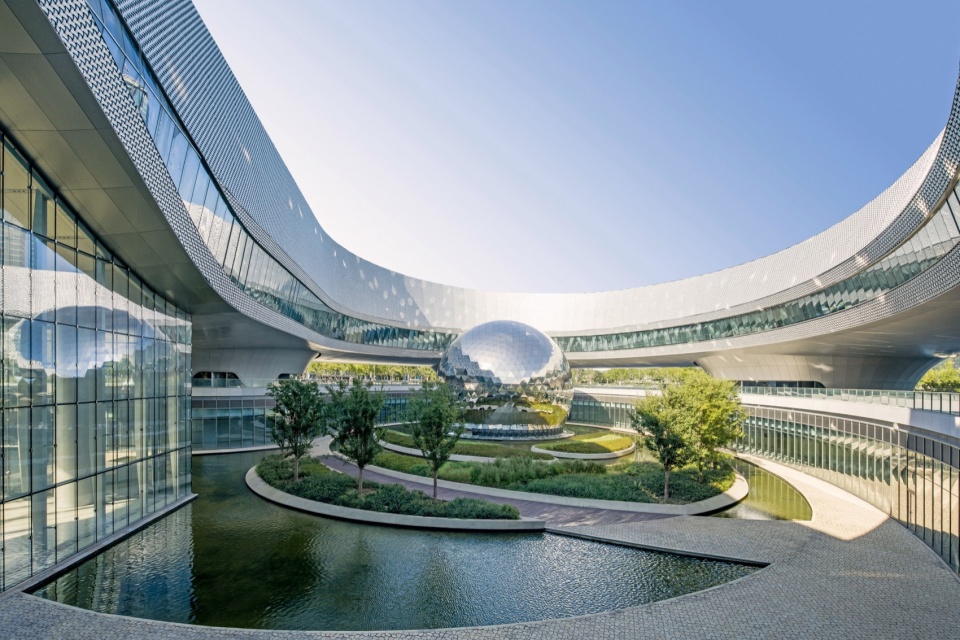
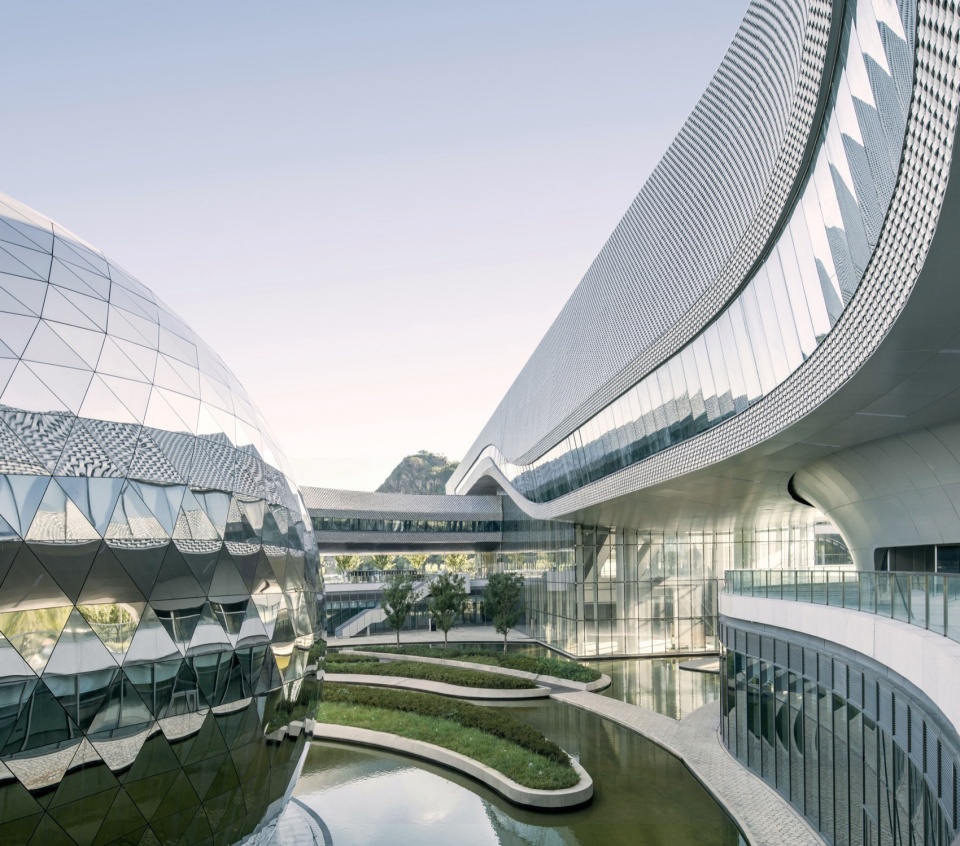
在地面层,雨水花园在场地径流汇入湖泊前进行收集与过滤;树木与植被构建起与周边道路及交通枢纽间的生态缓冲带。科技馆内部采用连续的环形流线组织展陈,借助自然光与向外延展的通透视野,引领访客徜徉于展厅之中。大量功能空间被置于地下景观之中,借助土壤的热稳定性优化建筑的环境性能,同时保持整体形象的开放与通透。
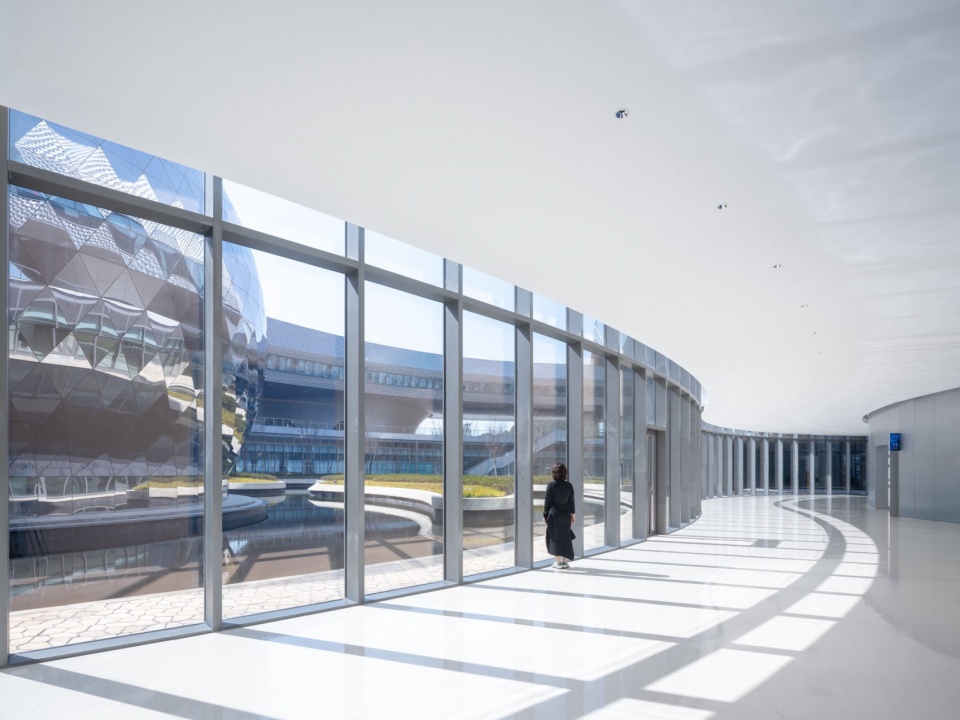
At ground level, rain gardens capture and filter stormwater before it reaches the lake, while trees and plantings buffer the site from surrounding roads and transit connections. Inside, the museum is organized as a continuous loop that guides visitors through exhibitions using daylight and long views outward. Much of the program is set within the landscape itself, using the earth’s thermal stability to support environmental performance while keeping the building visually open.
▼庭院立面,facade toward the garden
▼走廊,hallway
▼观景平台,viewing terrace
▼沉浸式媒体空间,immersive media space
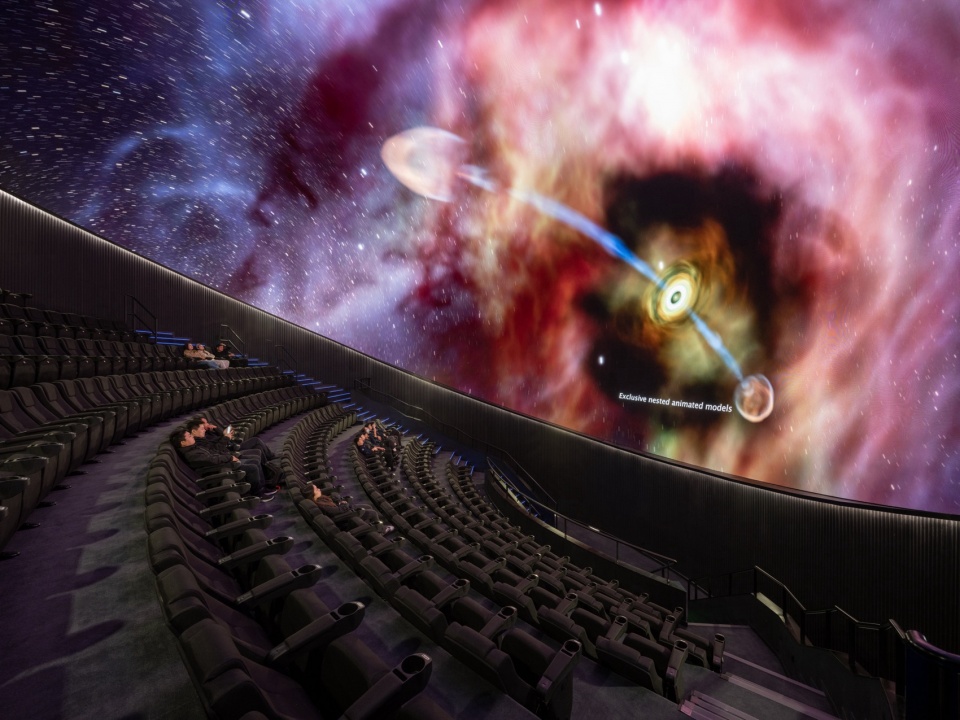
▼大厅,lobby
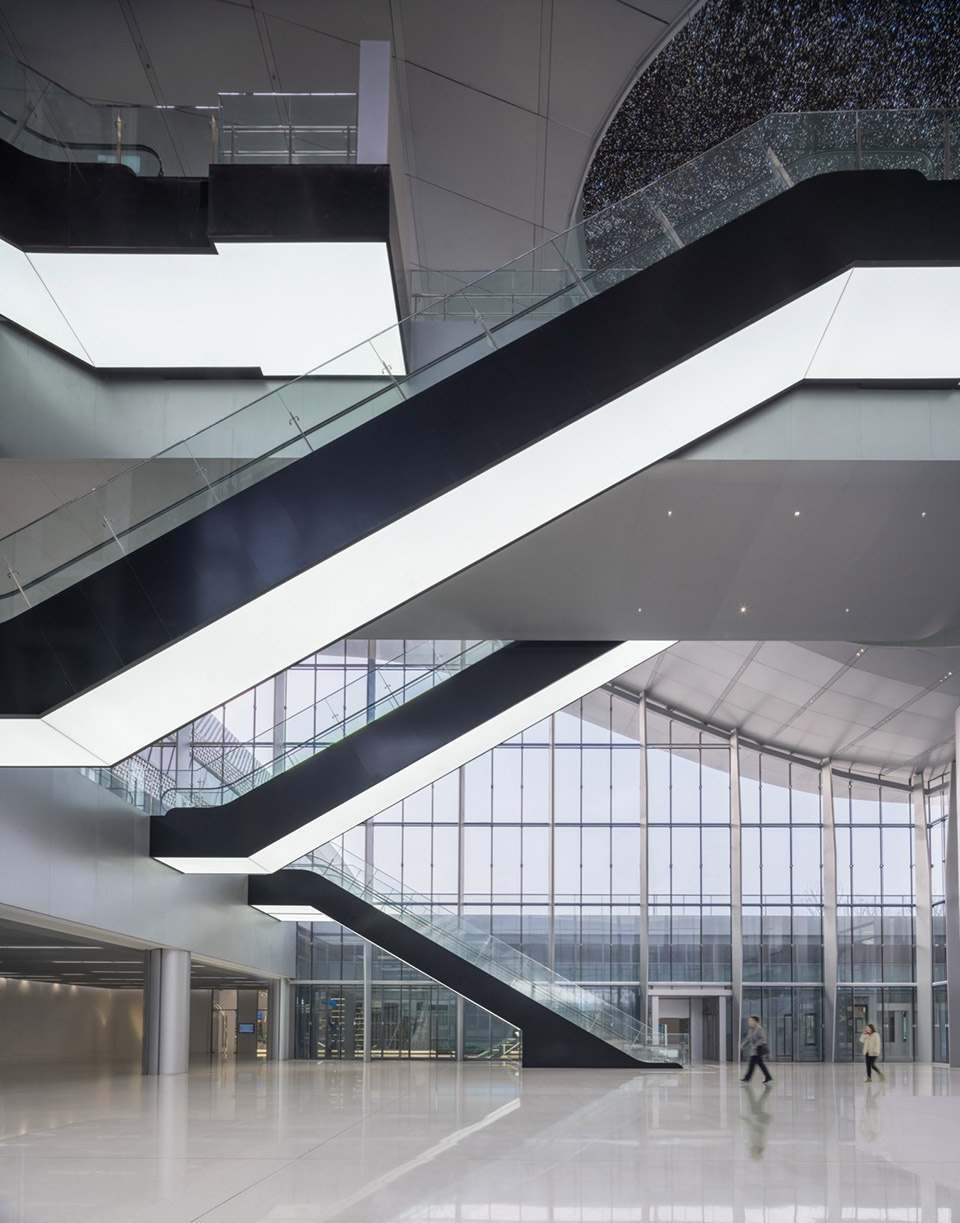
▼场地平面图,site plan
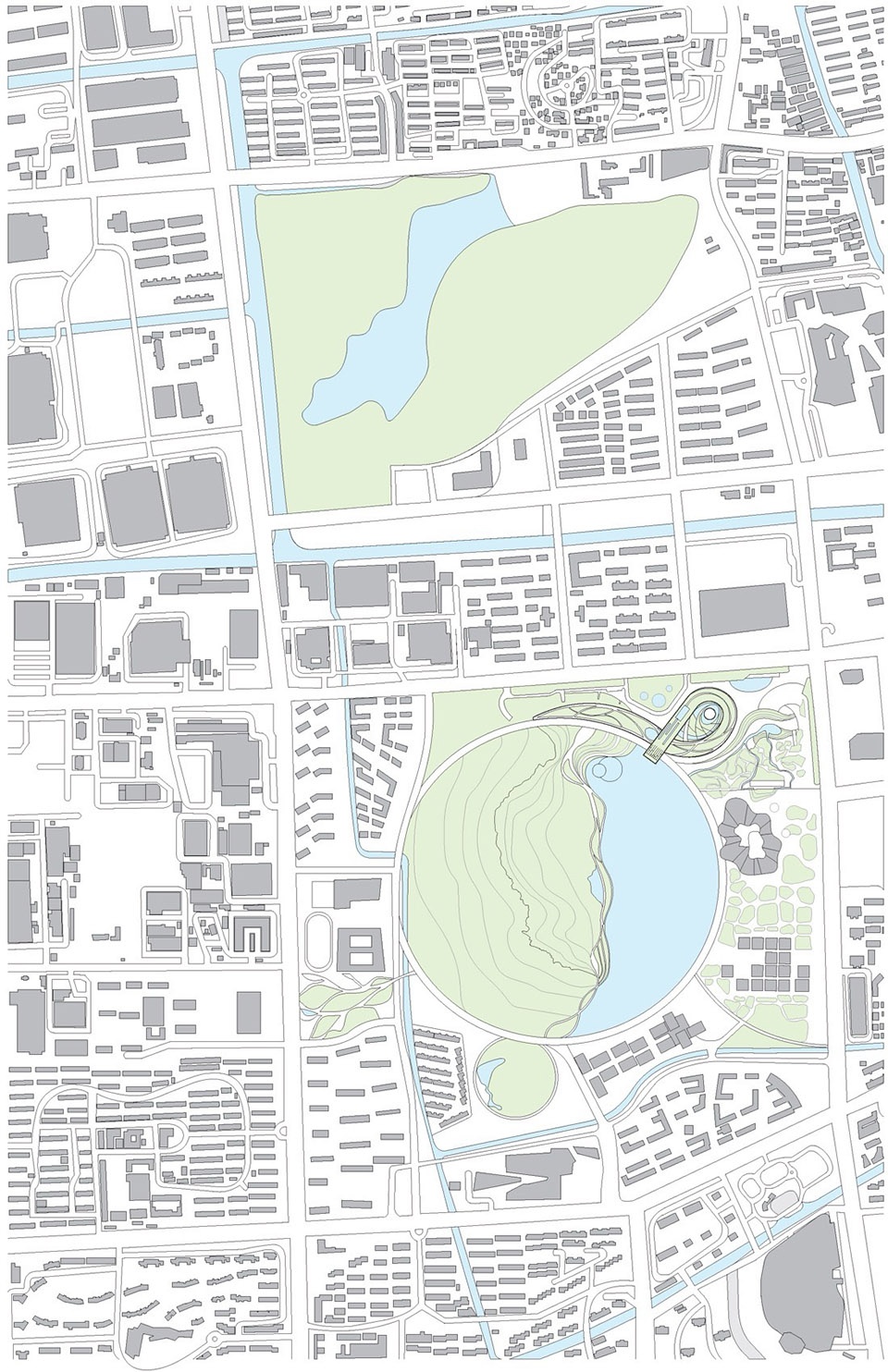
▼一层平面图,first floor plan
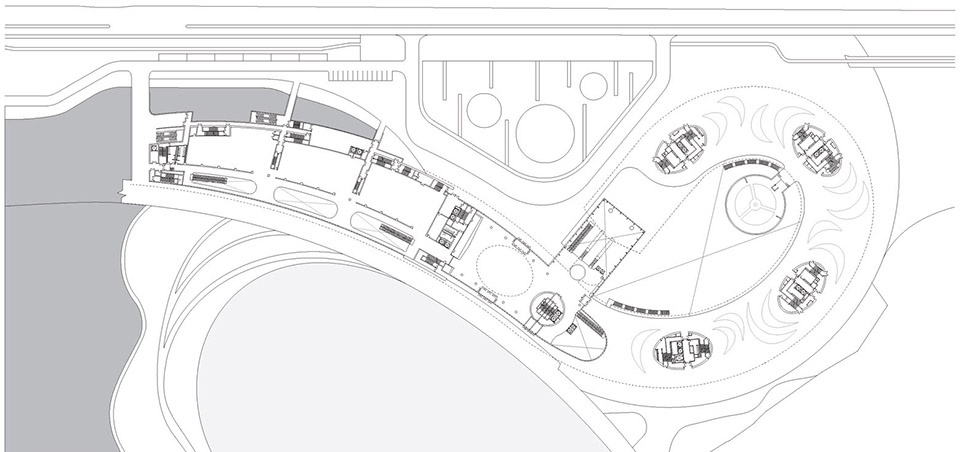
▼二层平面图,second floor plan
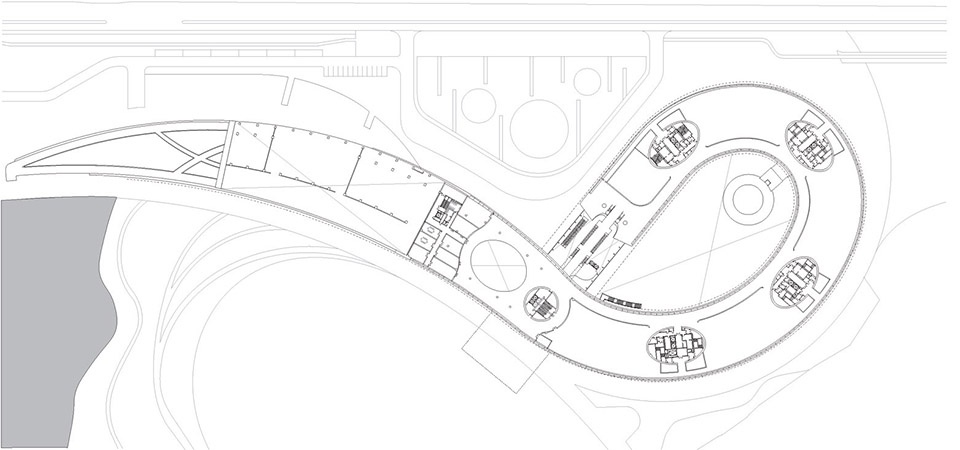
▼三层平面图,third floor plan
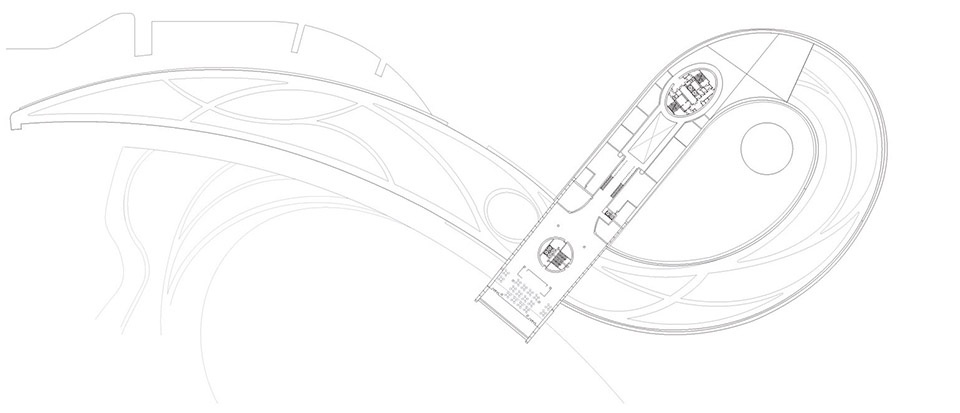
Project Name: Suzhou Science and Technology Museum
Client: Suzhou Cultural Investment Group
Project location: Suzhou, China
Architectural Design: Perkins&Will
Gross Built Area: 63,000㎡
Design Scope: Architectural Concept Design, Schematic Design, Design Development; Public Space Interior Concept Design, Schematic Design, Design Development; Landscape Concept Design, Schematic Design
Program: Exhibition, education, theatre
Project Team: Ralph Johnson (Design Director); Tom Mozina (Design Principal); Bill Doerge (Managing Principal); James Lu (Managing Principal); Vivian Chen (Senior Project Manager); Aashit Shah (Senior Project Architect); Marius Ronnett (Senior Project Architect); Zan Stewart (Landscape Design Lead); Tim Wolfe (Interior Design Lead); Luke Murphree (Landscape Designer); Neil Reindel (Designer); Ryan Fagre (Designer); Zhechen Yu (Designer); Mengyue Zhou (Designer); Chenjian Zheng (Designer); Huiping Huang (Project Manager); Arvin Fan (Designer); Leo Li (Senior Project Architect); Danny Mui (Designer)
Partners:
Local Architect, Structural & MEP Design: Tus-Design Group Co., Ltd
General Contractor: Suzhou Construction No.1 Group
Façade Contractor: JIANGHO
Public Space Interior Contractor: Suzhou Kelida Decoration Co., Ltd
Landscape LDI: AGL
Light Consultant: Beijing Tsinghua Tongheng Urban Planning & Design Institute
Photographer: ©RAWVISION studio, ©Chao Zhang, ©Xi Chen
Visual: Bezier VR