诗人之家,伊朗 / NextOffice
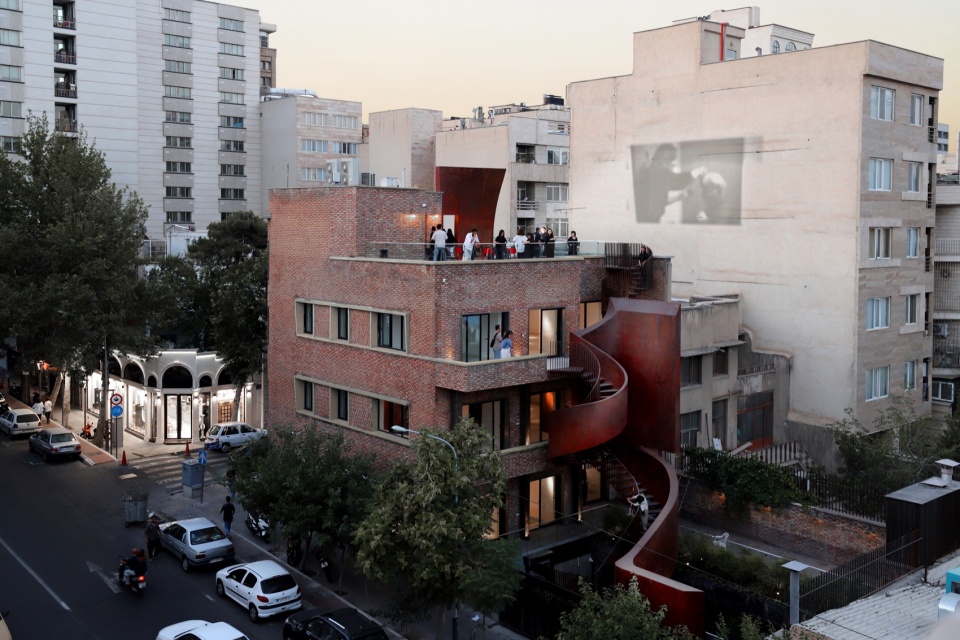
诗人之家(The Poet’s House)由 Next Office 设计完成,是对伊朗诗人、异见者艾哈迈德·沙姆卢(Ahmad Shamlou)旧居的修复与适应性再利用项目,将其改造为德黑兰市中心的一处文化中心。在保留原有砖砌立面与结构外壳的同时,项目在二层一面刻有沙姆卢手写诗句的墙体处引入了一项空间介入。这一元素被延展为一种概念性且半结构性的骨架——转化为一条三维的漫步路径,将房屋向城市打开。通过这种方式,原本私密的庭院被转化为一处公共开放空间,邀请访客走进诗人的生活、思想与精神遗产。
The Poet’s House by Next Office is the restoration and adaptive reuse of the former home of Iranian poet and dissident Ahmad Shamlou into a cultural center in downtown Tehran. While preserving the original brick façade and structural shell, the project introduces a spatial intervention along a second-floor wall bearing a handwritten poem by Shamlou. This element was extended into a conceptual and semi-structural backbone—transformed into a three-dimensional promenade that opens the house toward the city. Through this approach, the formerly private courtyard becomes a public open space that invites visitors into the life, thoughts, and legacy of the poet.
▼项目概览,overview of the project
▼建筑外观,building appearance
▼项目鸟瞰,aerial view of the project
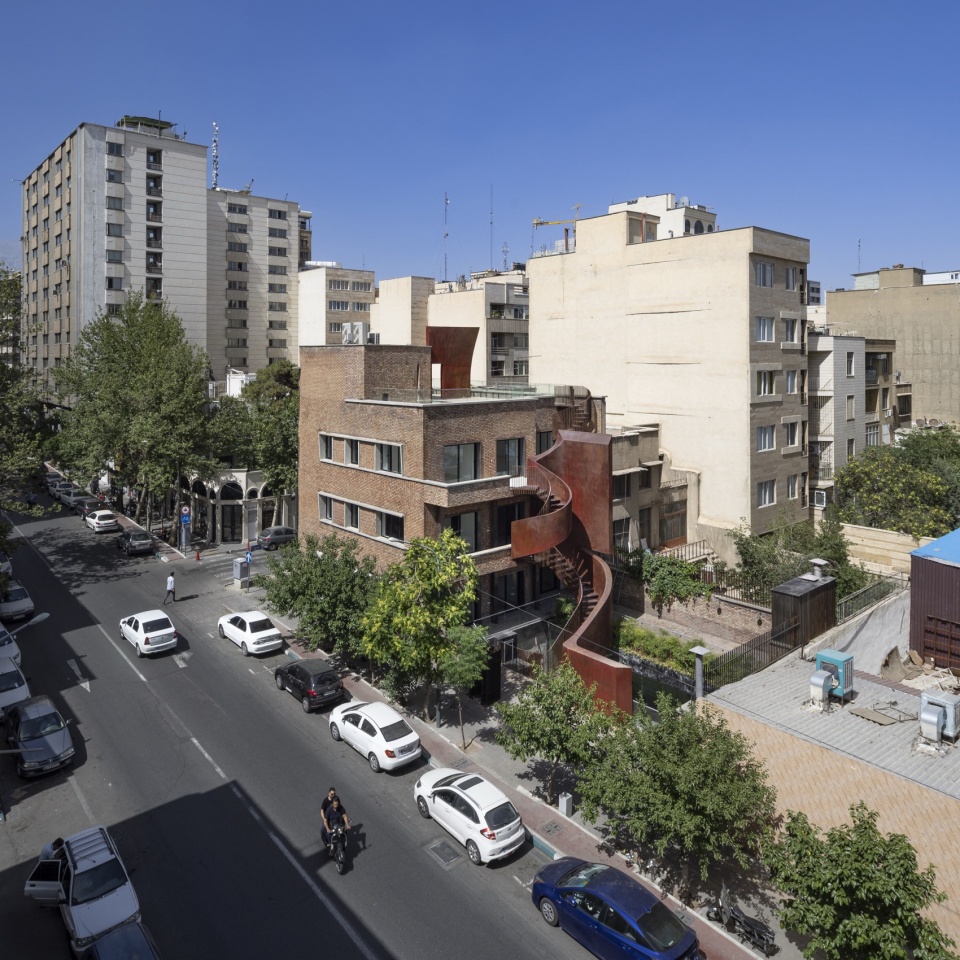
委托方是一位沙姆卢的崇敬者,希望保存诗人昔日的住宅,并将其转变为纪念其文学与政治遗产的公共空间。沙姆卢是一位积极参与政治的诗人,因其持不同政见曾多次入狱。即使在去世之后,他仍然是一位颇具争议的人物——他的墓碑曾多次被政府支持者破坏。
The client—a devotee of Shamlou—sought to preserve the poet’s former home and transform it into a public space commemorating his literary and political legacy. Shamlou, a politically engaged poet who was repeatedly imprisoned for his counter-viewpoints, remained a controversial figure even after his death, with his gravestone vandalized multiple times by government supporters.
▼一条三维的漫步路径,a three-dimensional promenade
▼结构外壳,structural shell
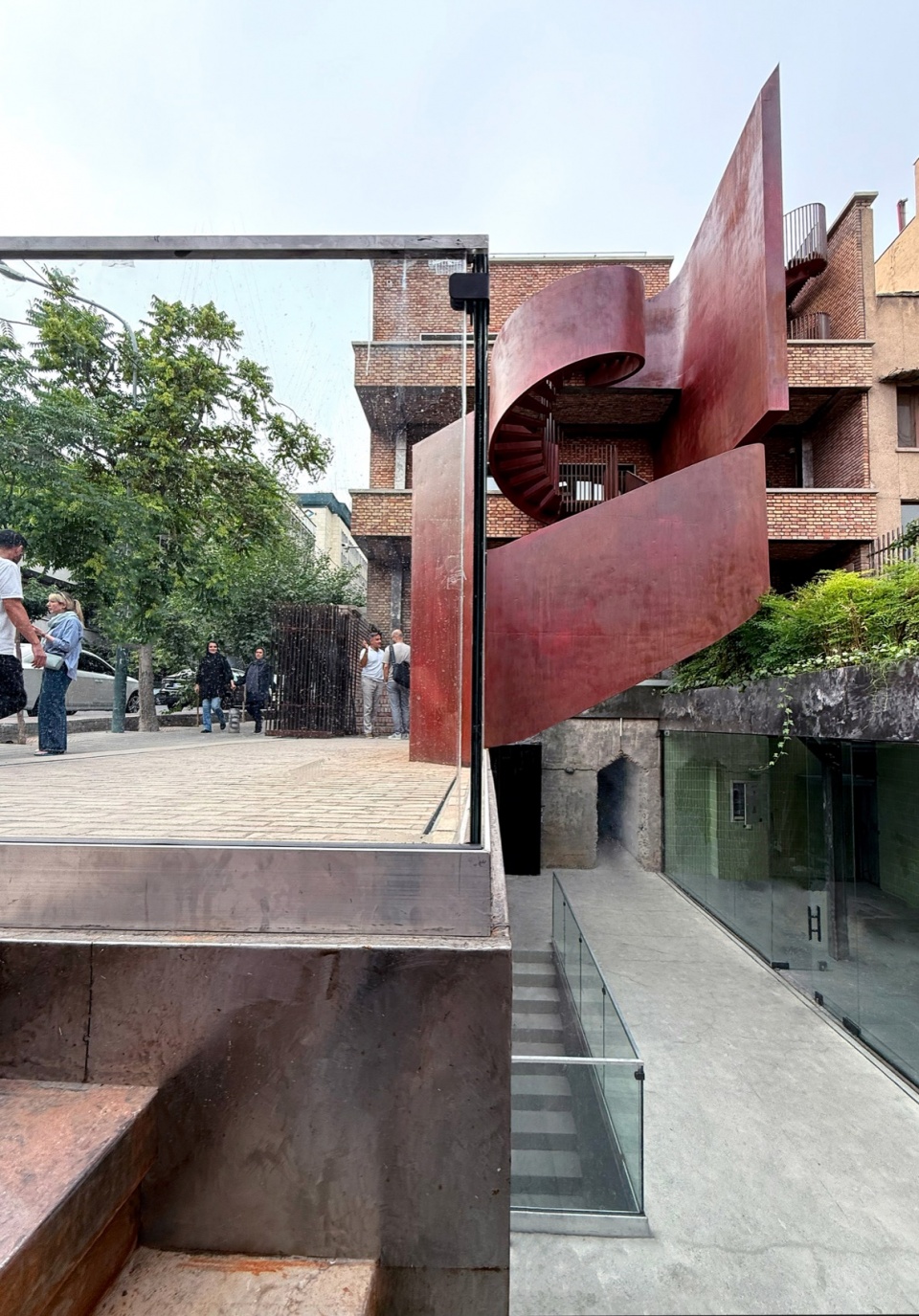
▼街景,street view
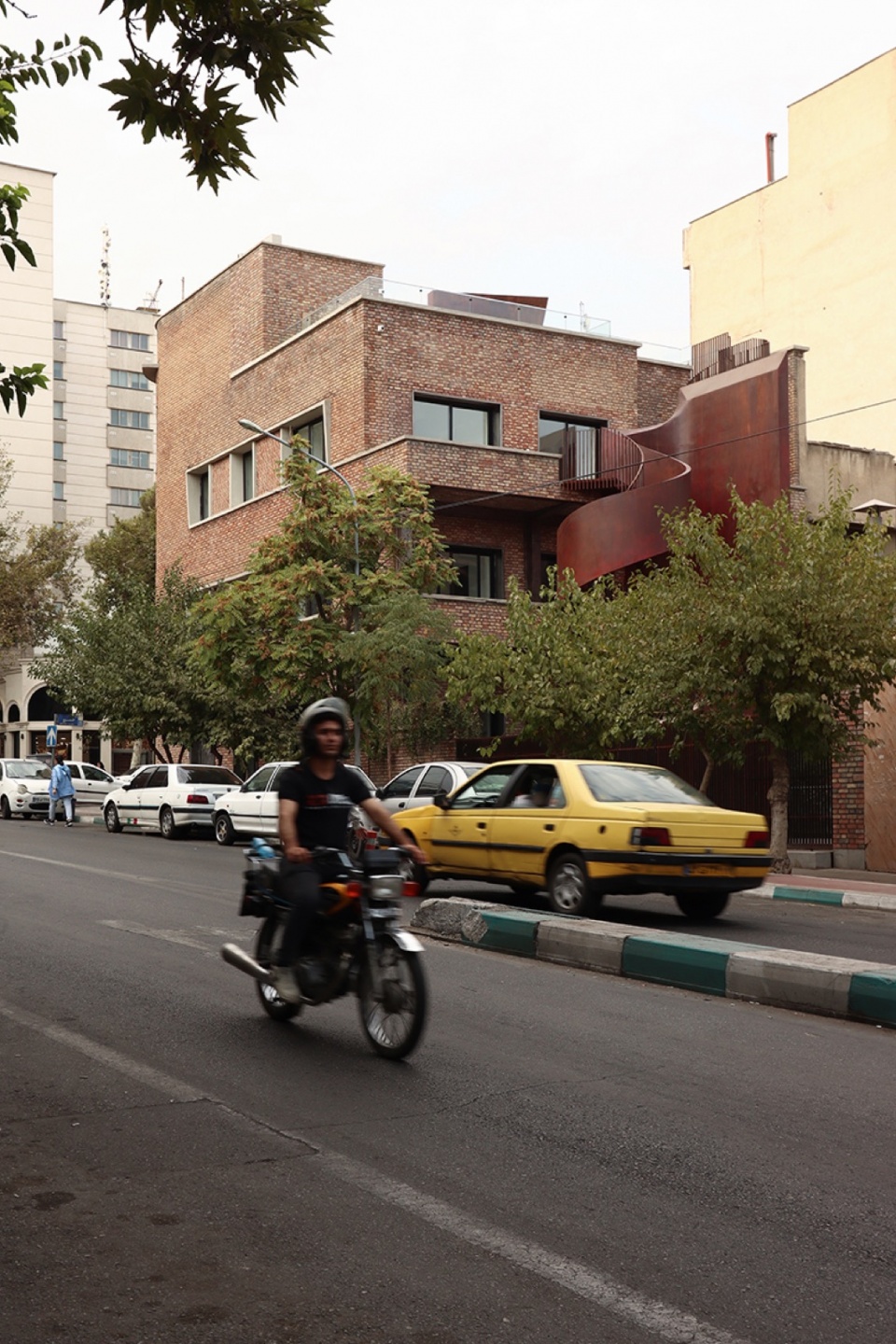
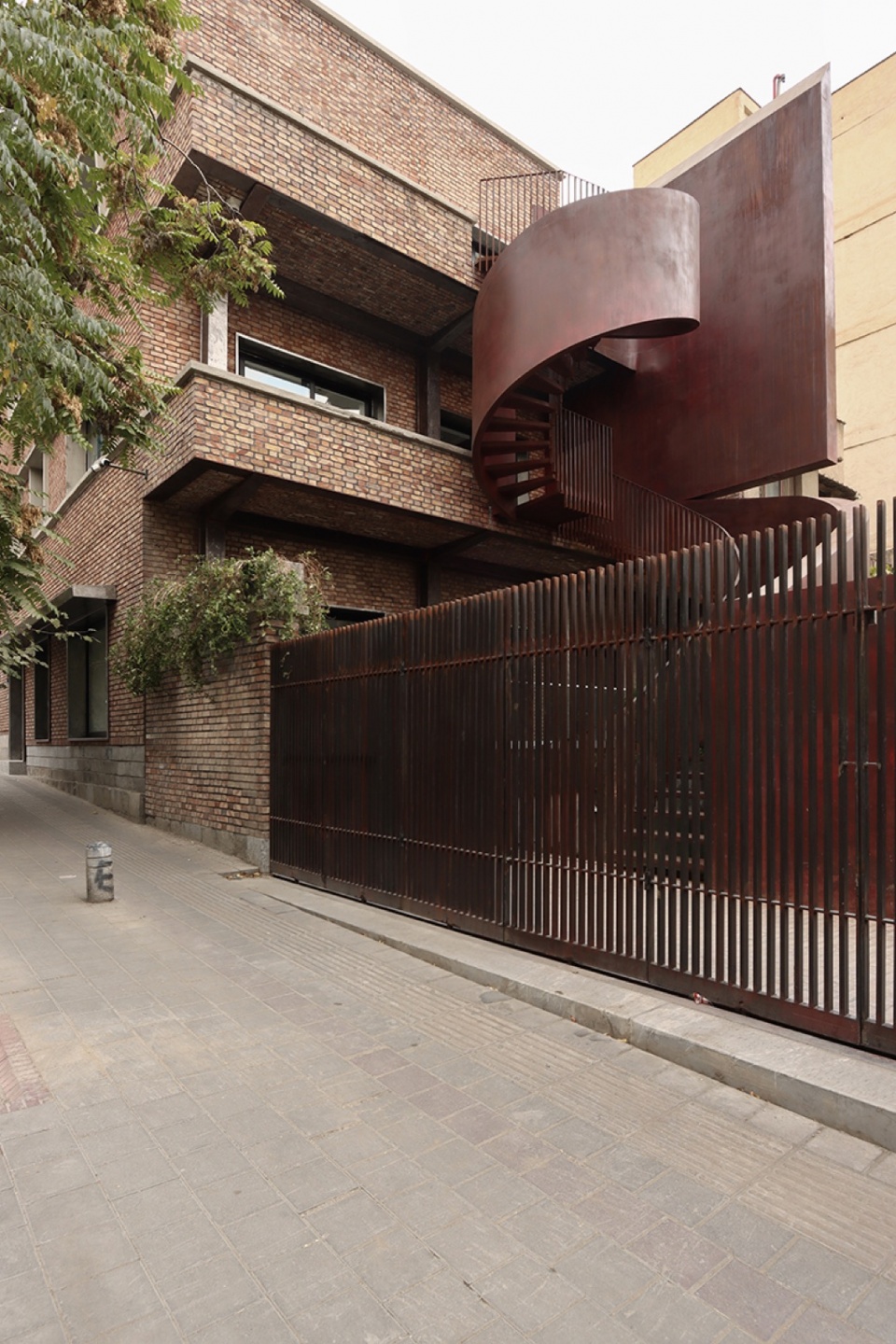
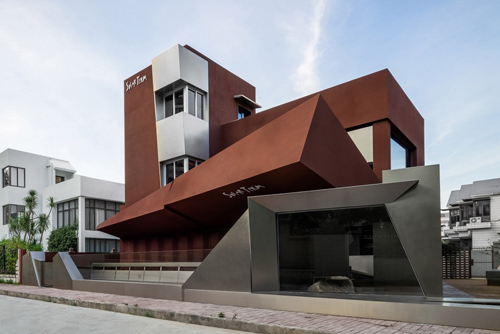
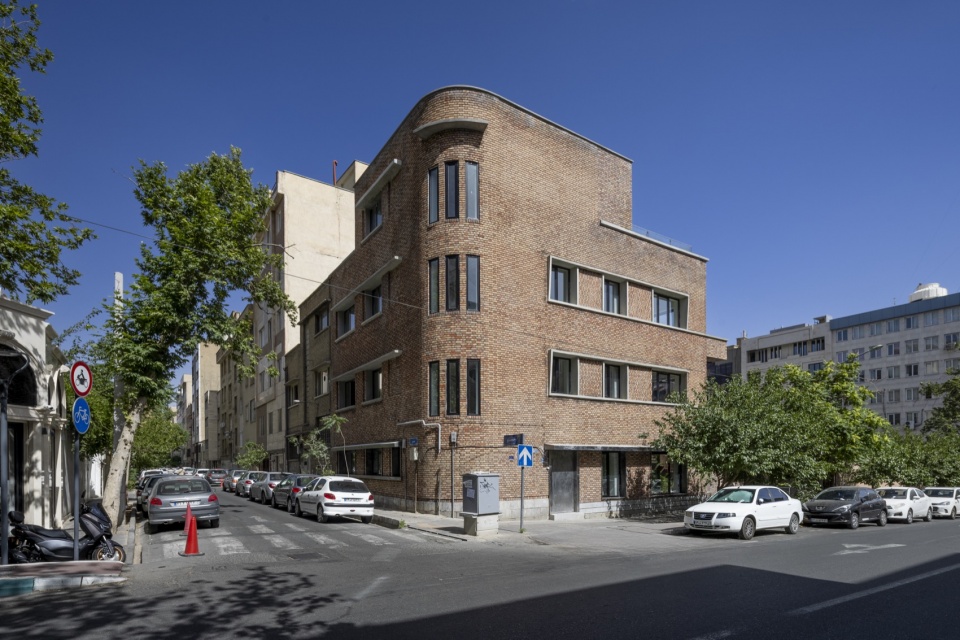
这座房屋本身是一栋被忽视的砖结构建筑,具有圆角与富有表现力的过梁细部,是德黑兰20世纪70年代建筑的典型特征。项目设想的功能包括展览空间、图书馆、书店、咖啡馆和餐厅,被设想为作家与沙姆卢读者的聚会之所,同时也作为一条非正式的城市参观路径,引导人们了解他的生平。
The house itself was a neglected brick building with rounded corners and expressive lintels, characteristic of Tehran’s 1970s architecture. The anticipated program included exhibition areas, a library, bookstore, café, and restaurant, envisioned as a hub for writers and Shamlou’s readers, along with an informal urban tour of his life.
▼室内概览,overview of the interior
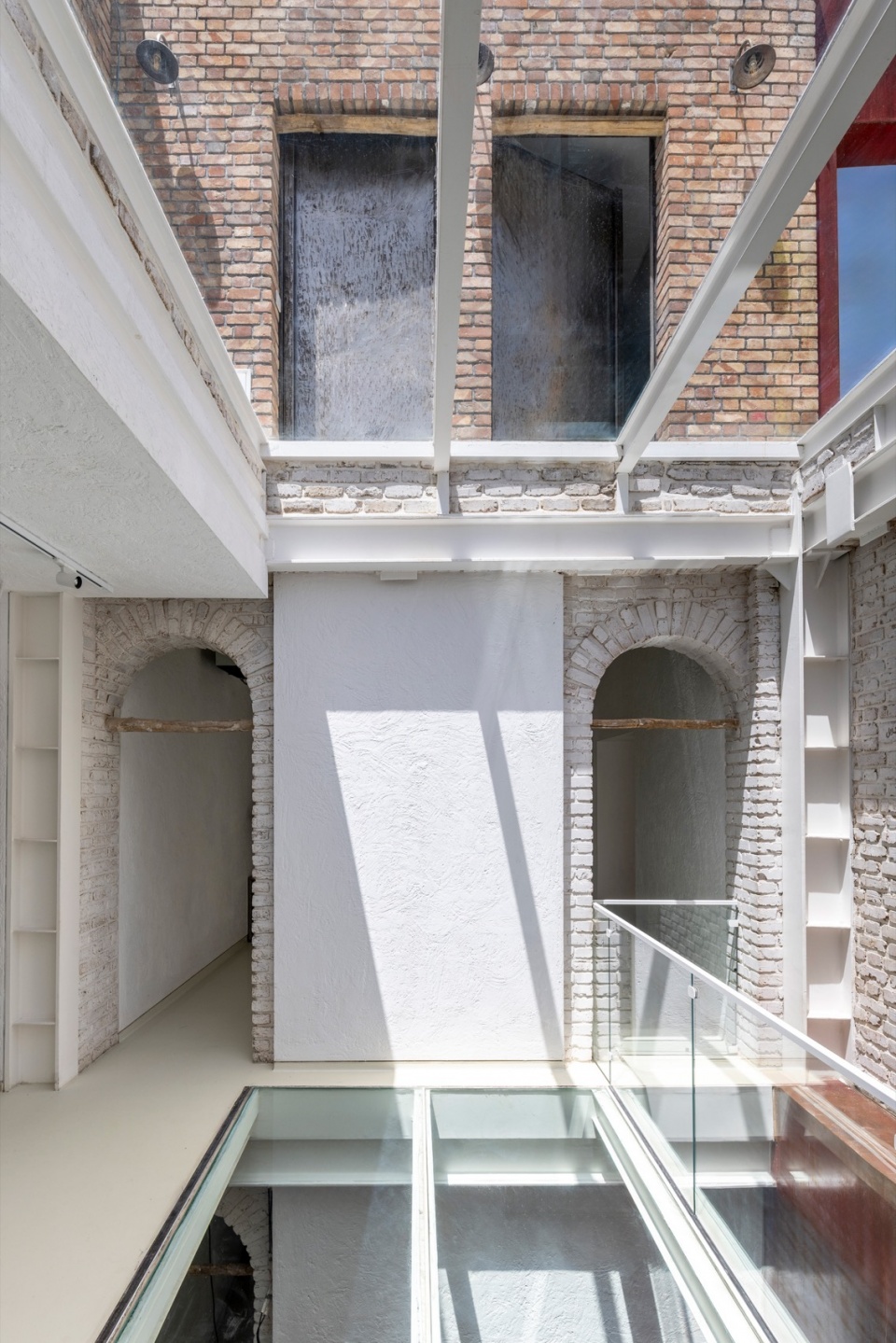
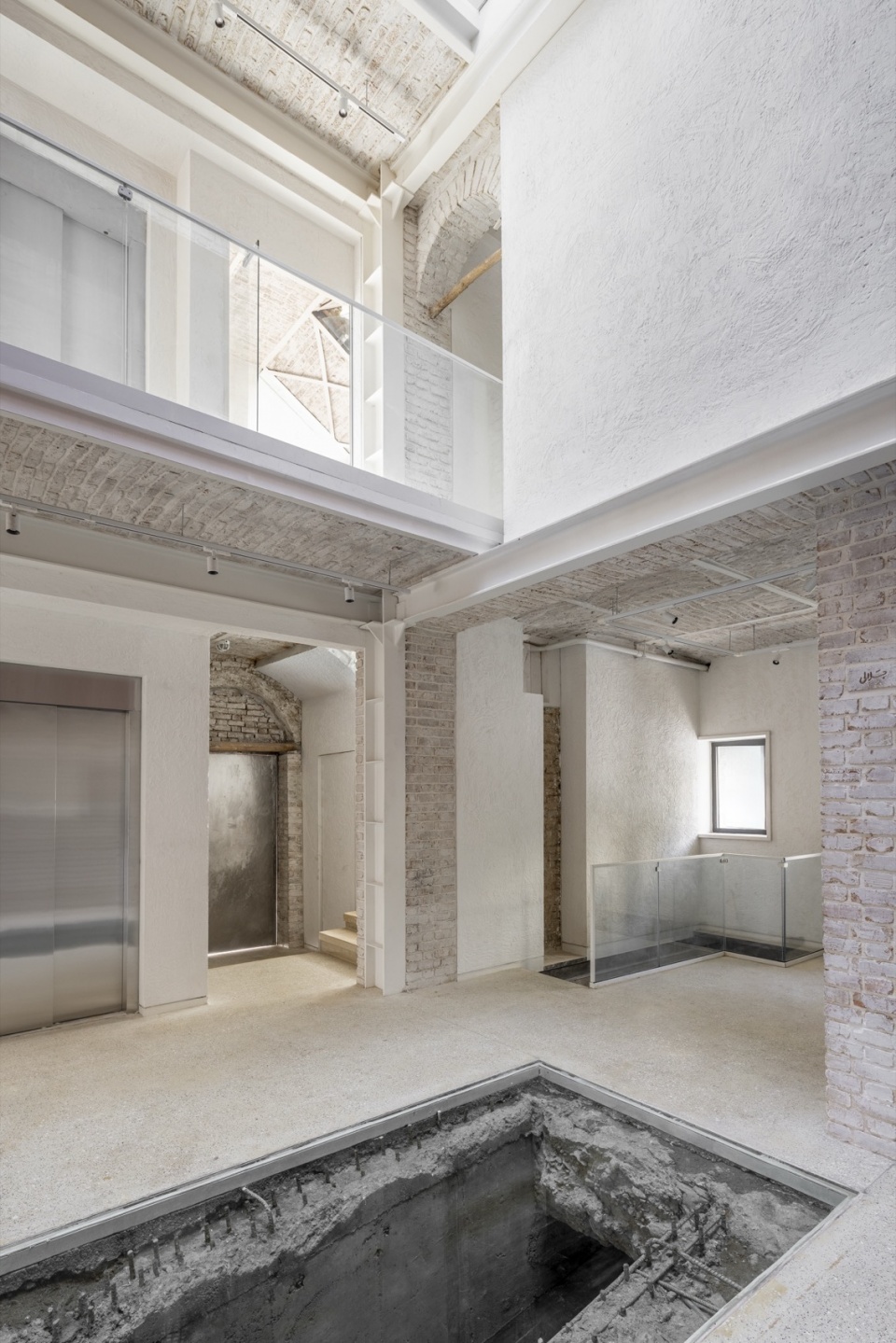
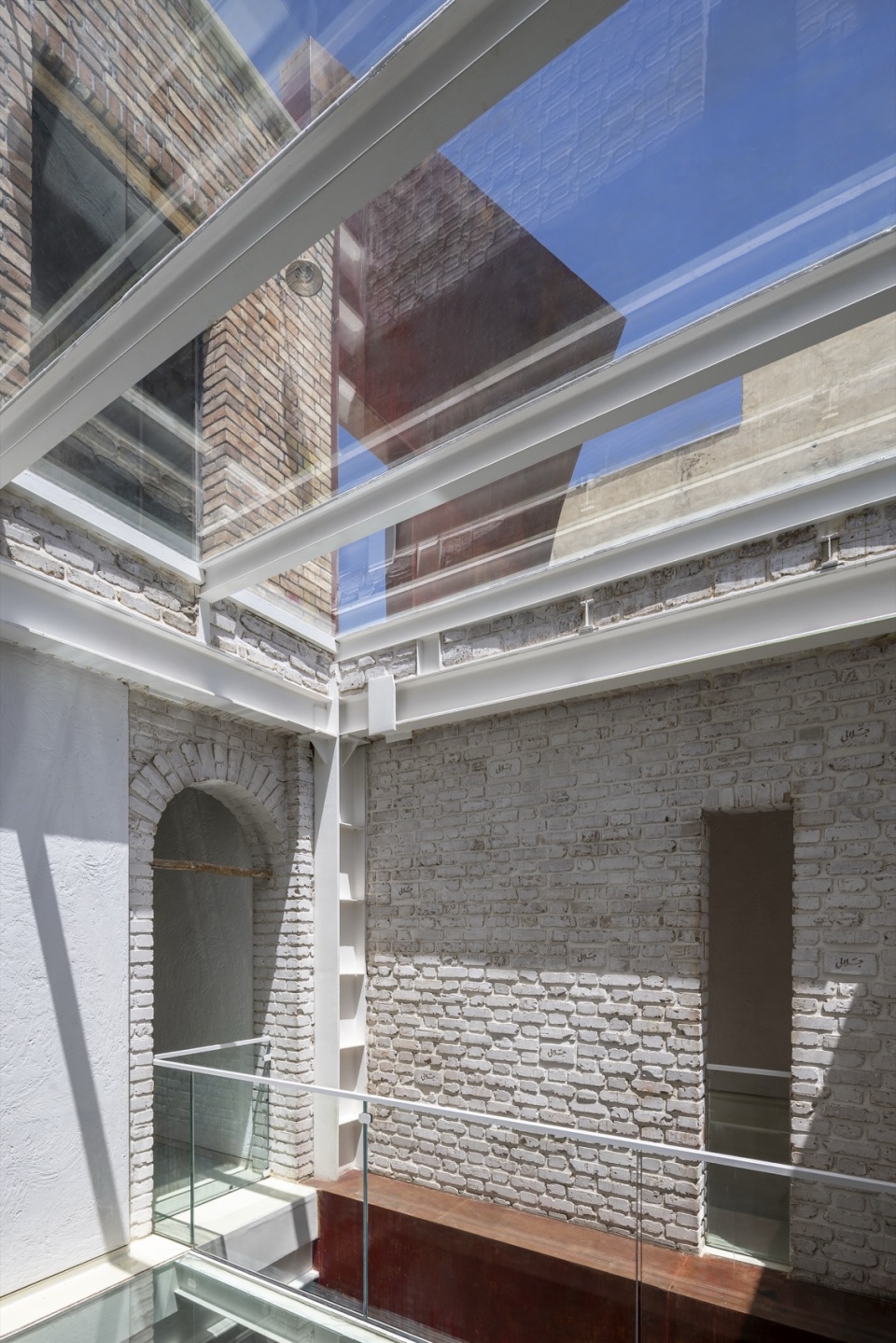
▼砖结构墙面,brick structure wall
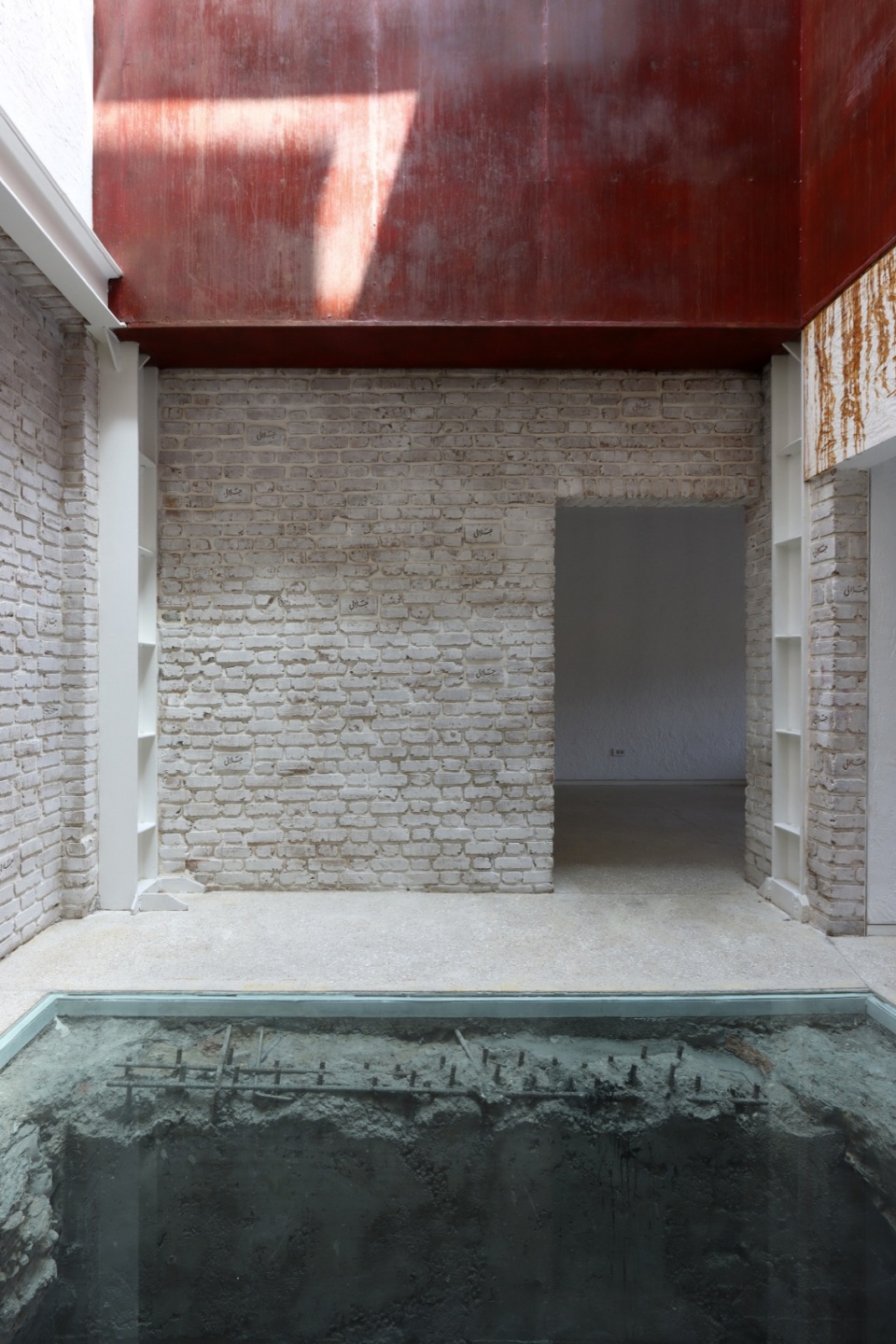
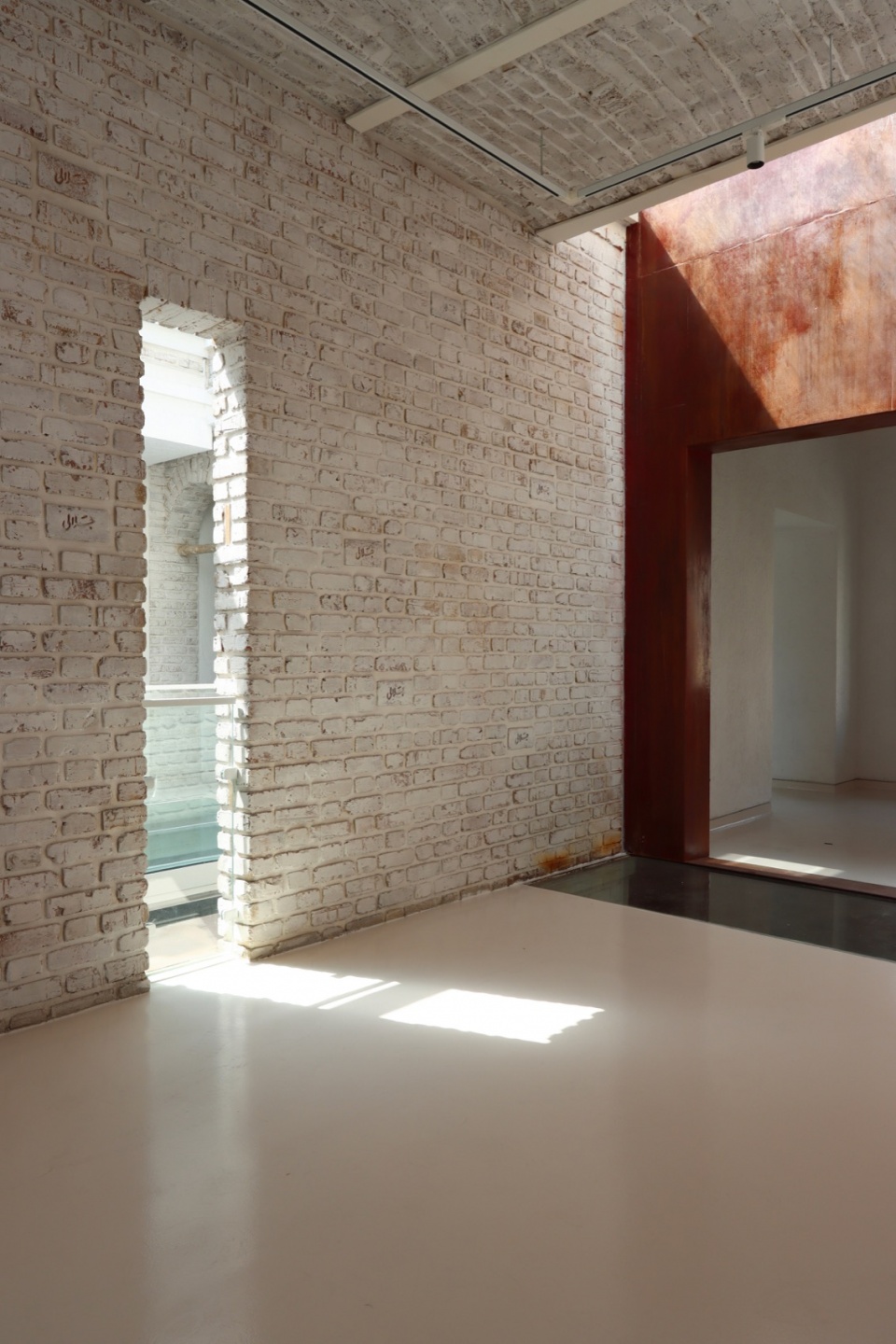
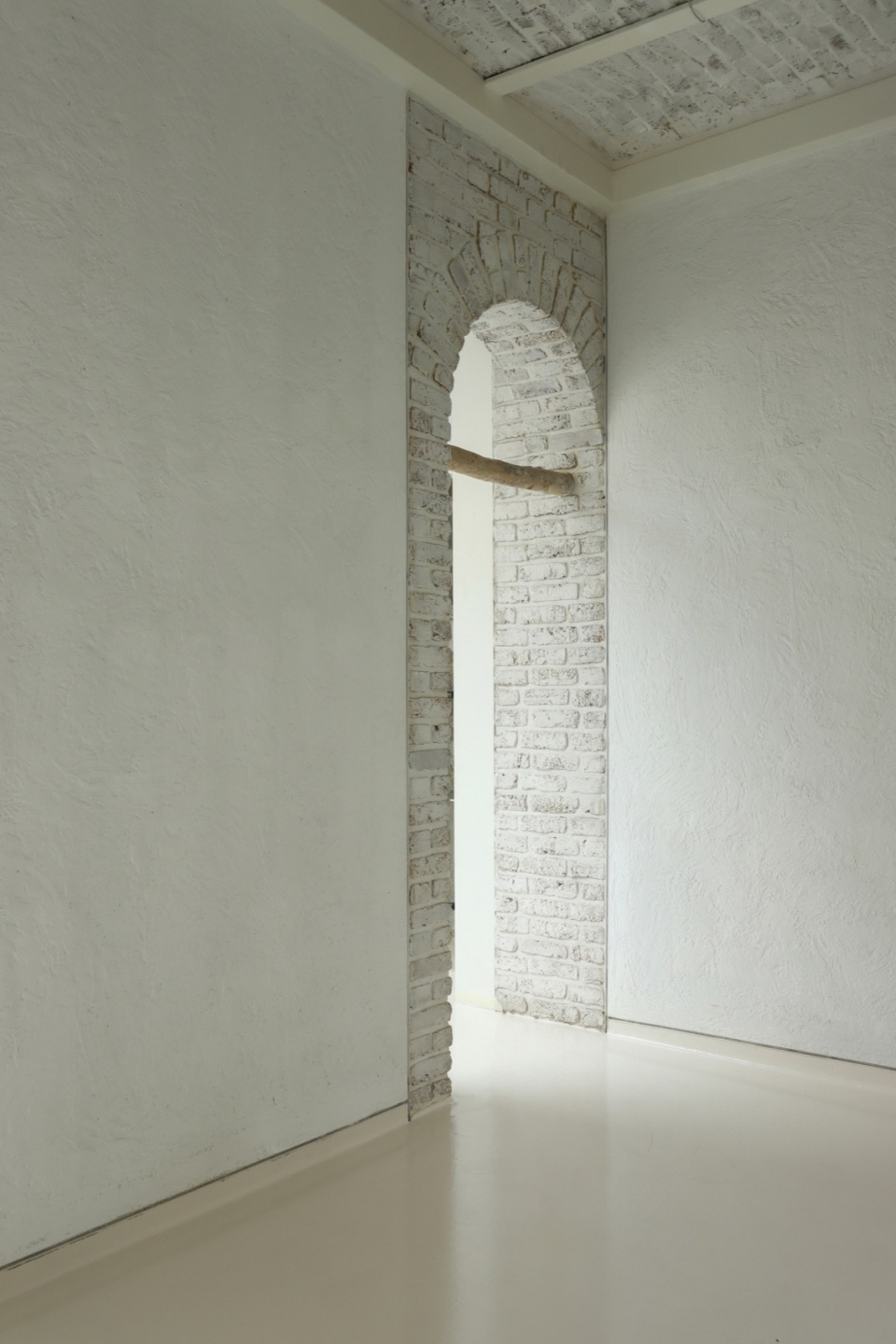
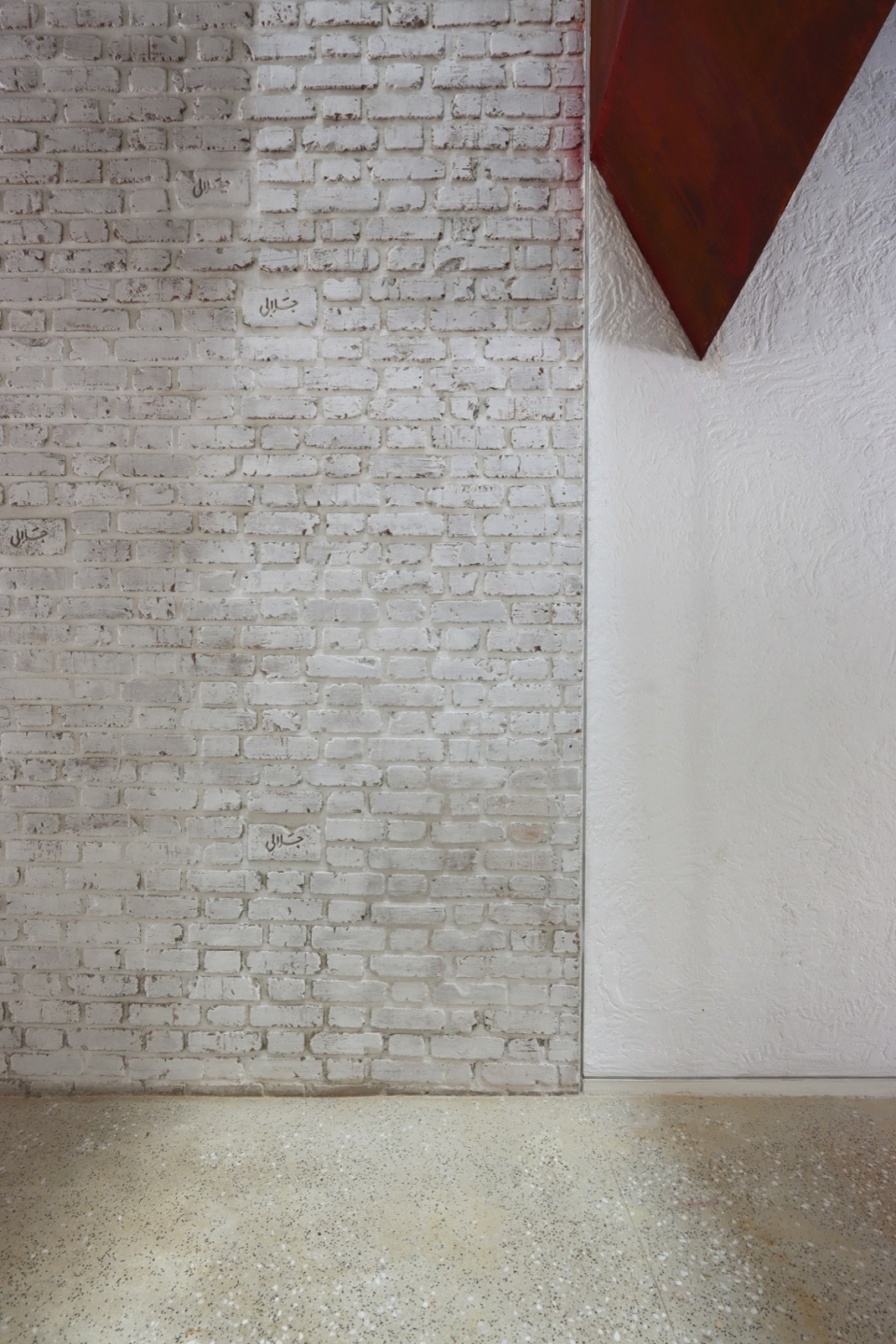
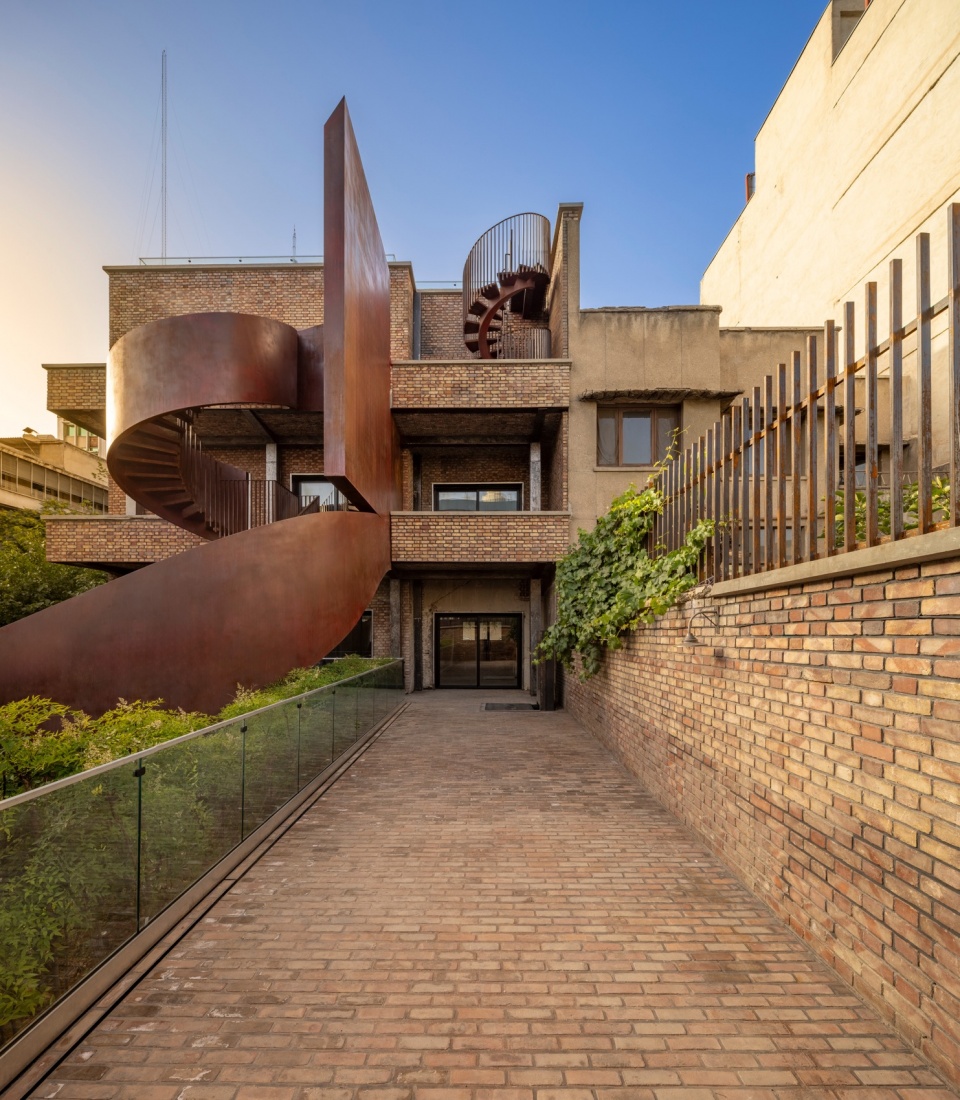
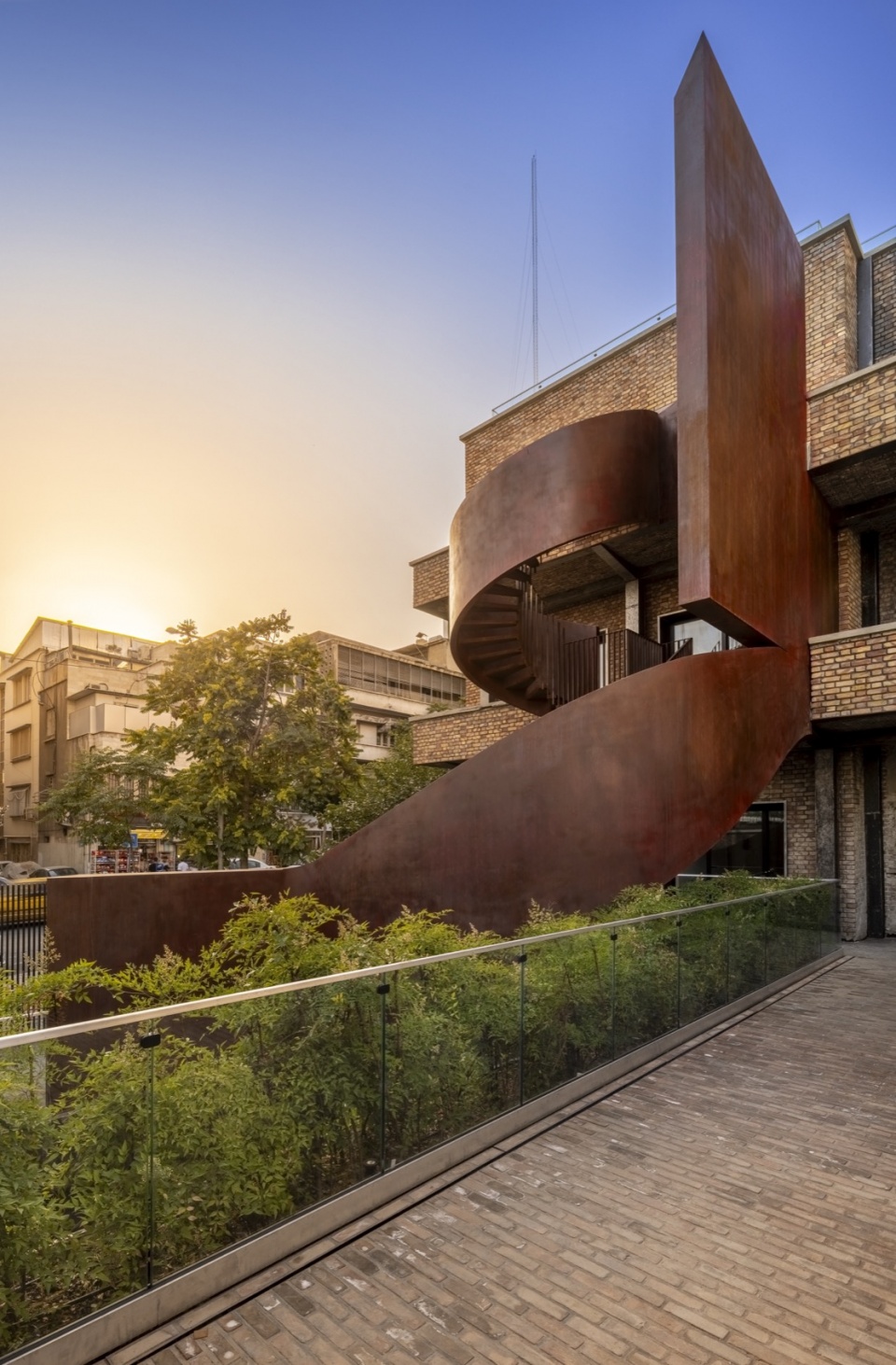
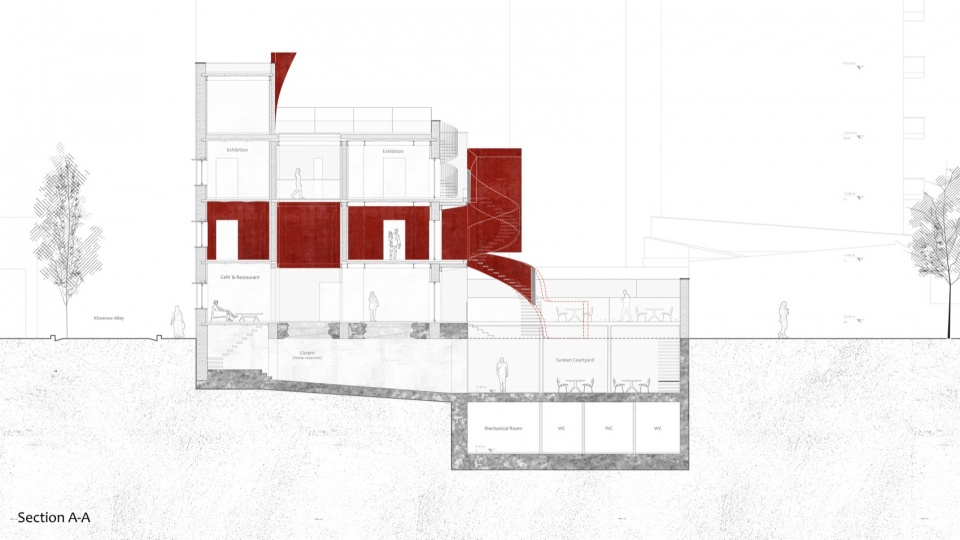
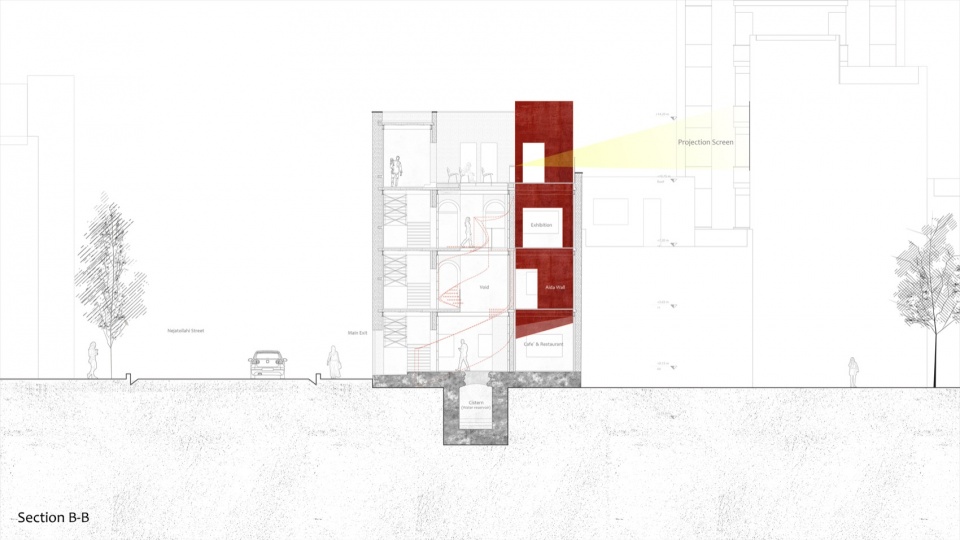
砖砌承重结构需要进行加固。我们没有掩盖这一需求,而是将其转化为建筑与结构的核心特征。在室内一面刻有沙姆卢写给其妻子兼缪斯艾达(Aida)的手写诗句的墙体处,新设计了一面钢结构墙体。这面墙在项目中被称为“艾达之墙”(Aida Wall)。
The brick load-bearing structure required reinforcement. Rather than concealing this necessity, we turned it into a central architectural-structural feature. A new steel wall was designed along the interior wall inscribed with a handwritten poem by Shamlou to his wife and muse, Aida— a wall that came to be known in the project as the “Aida Wall.”
▼艾达之墙,Aida Wall
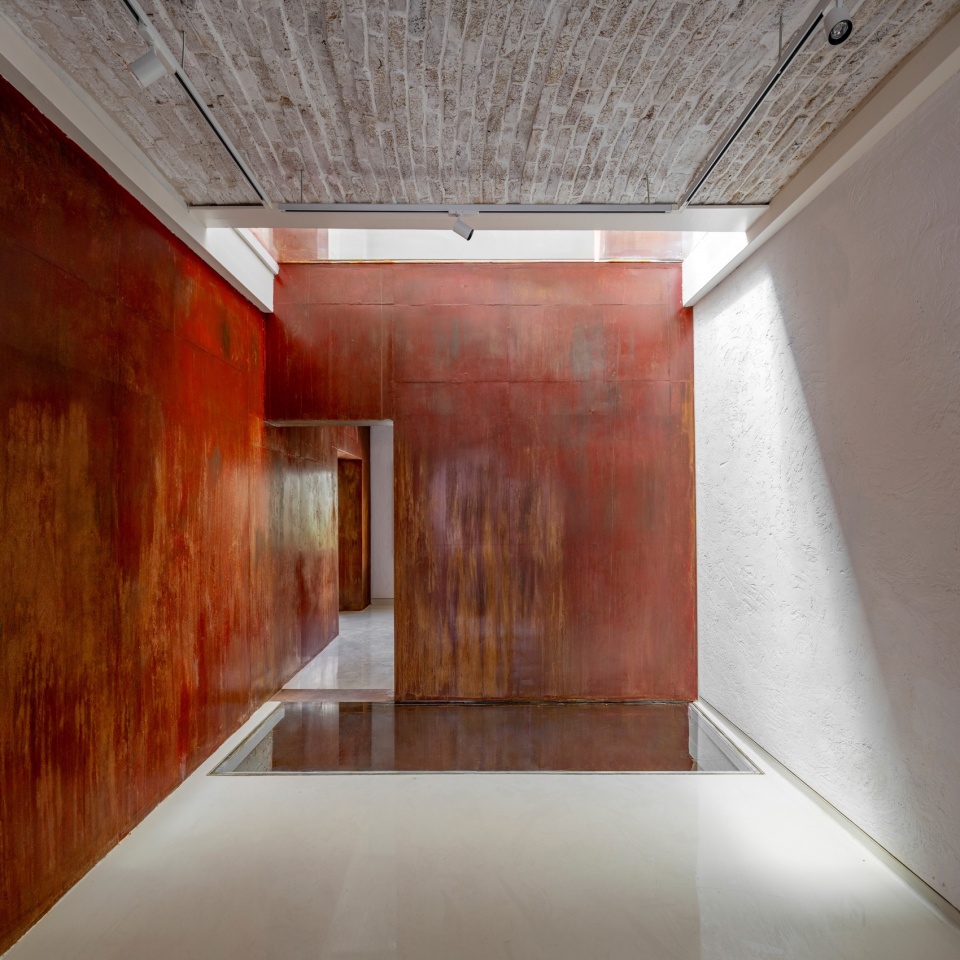
▼钢结构墙体,new steel wall
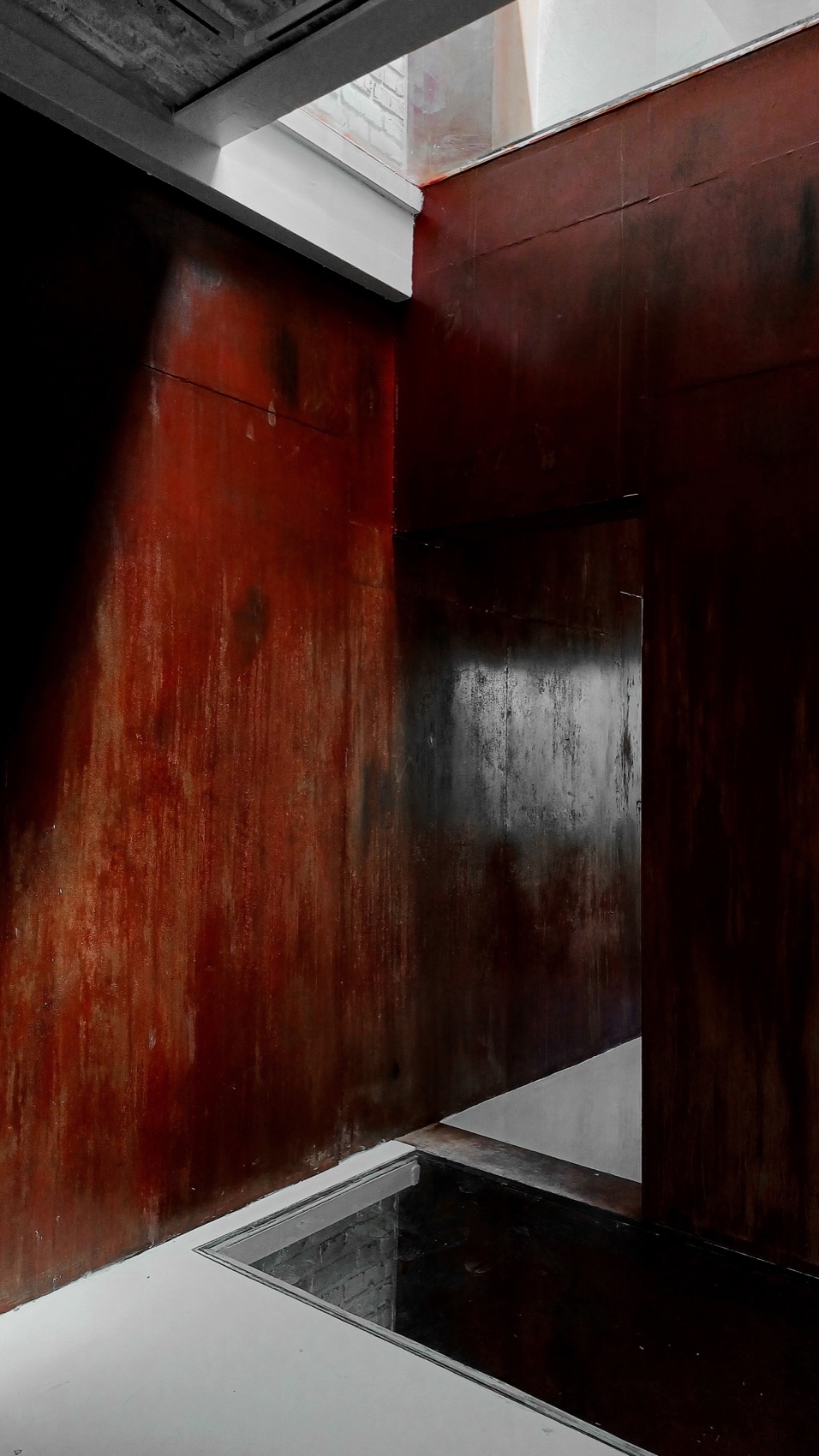
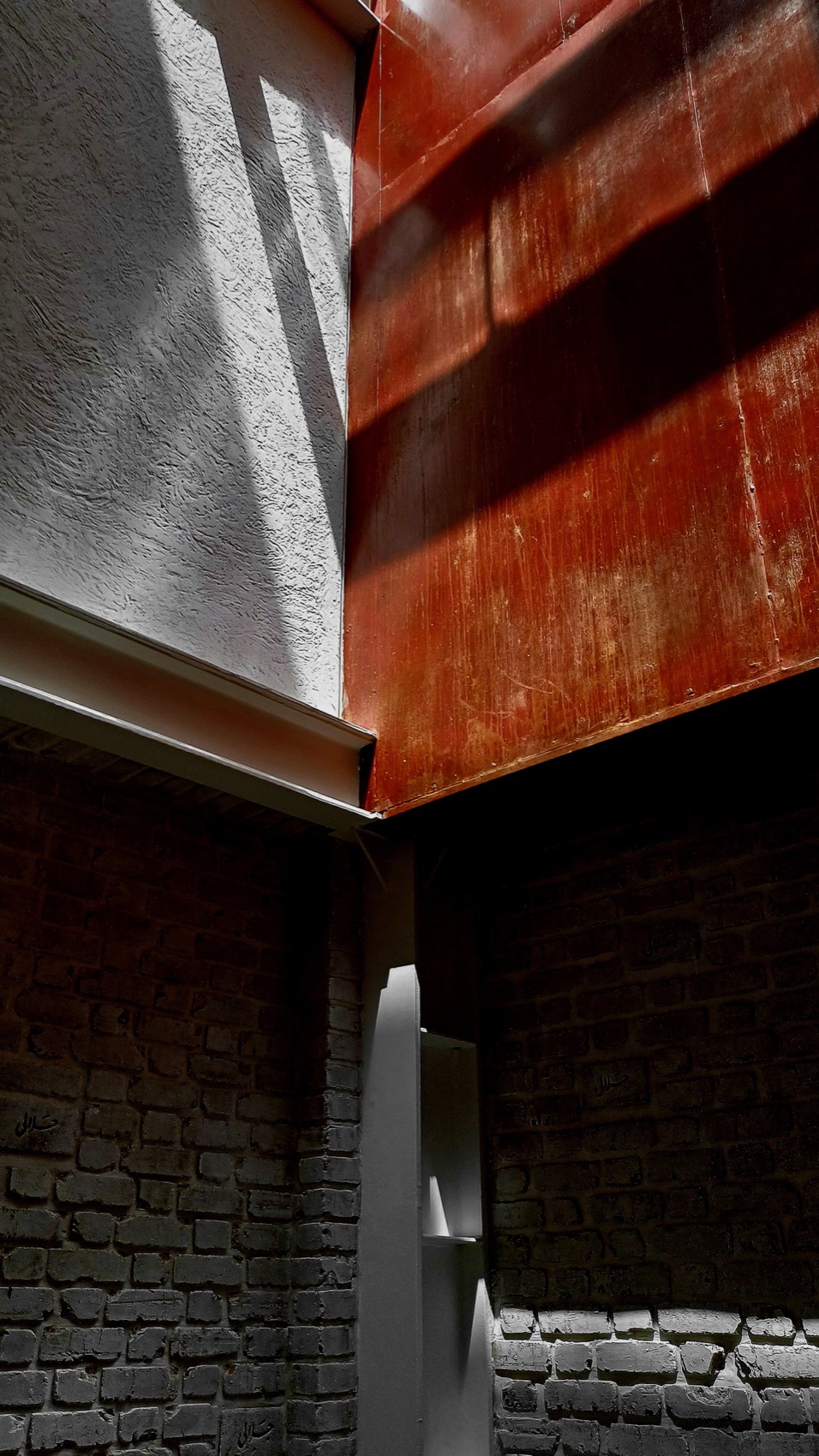
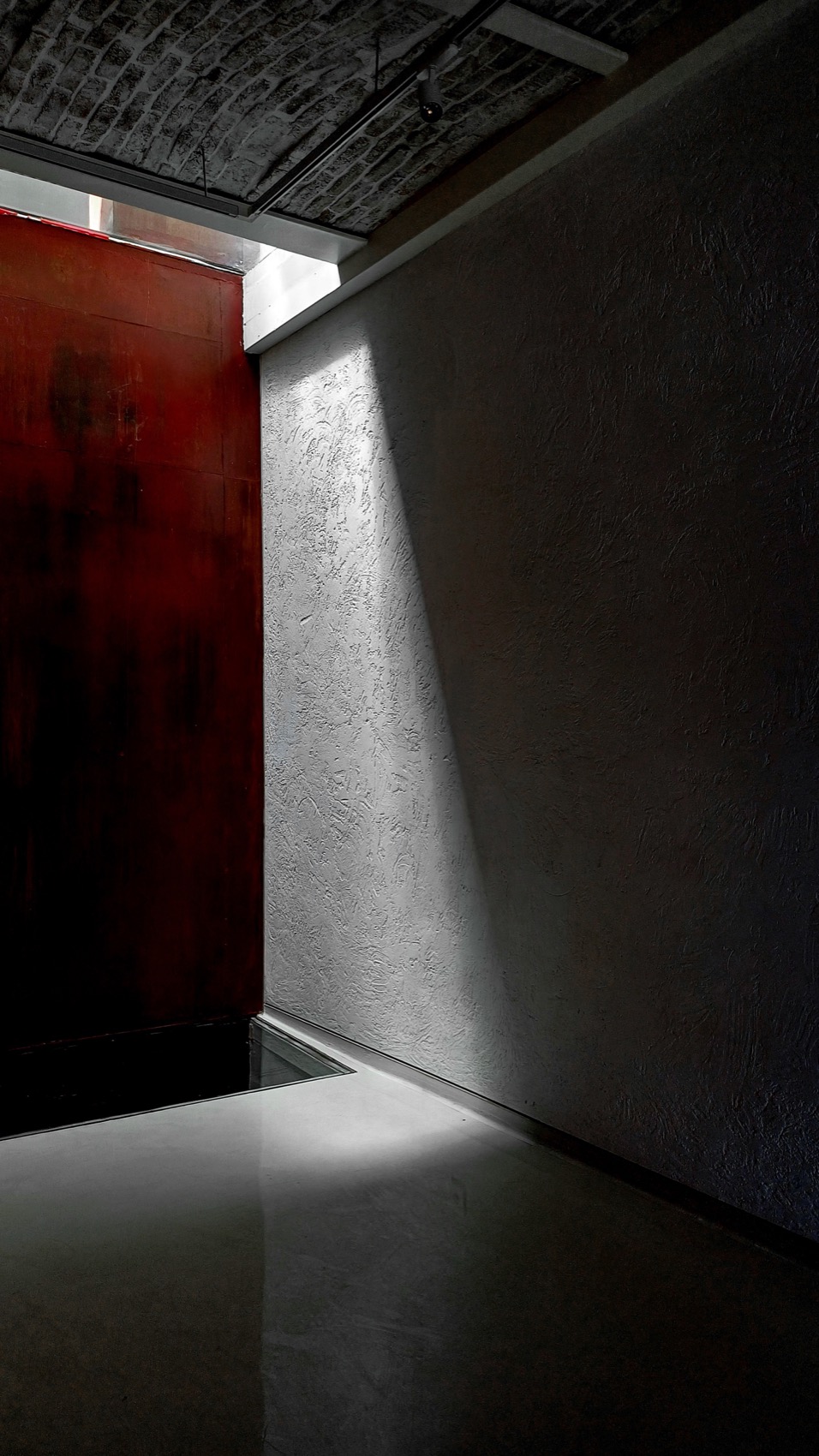
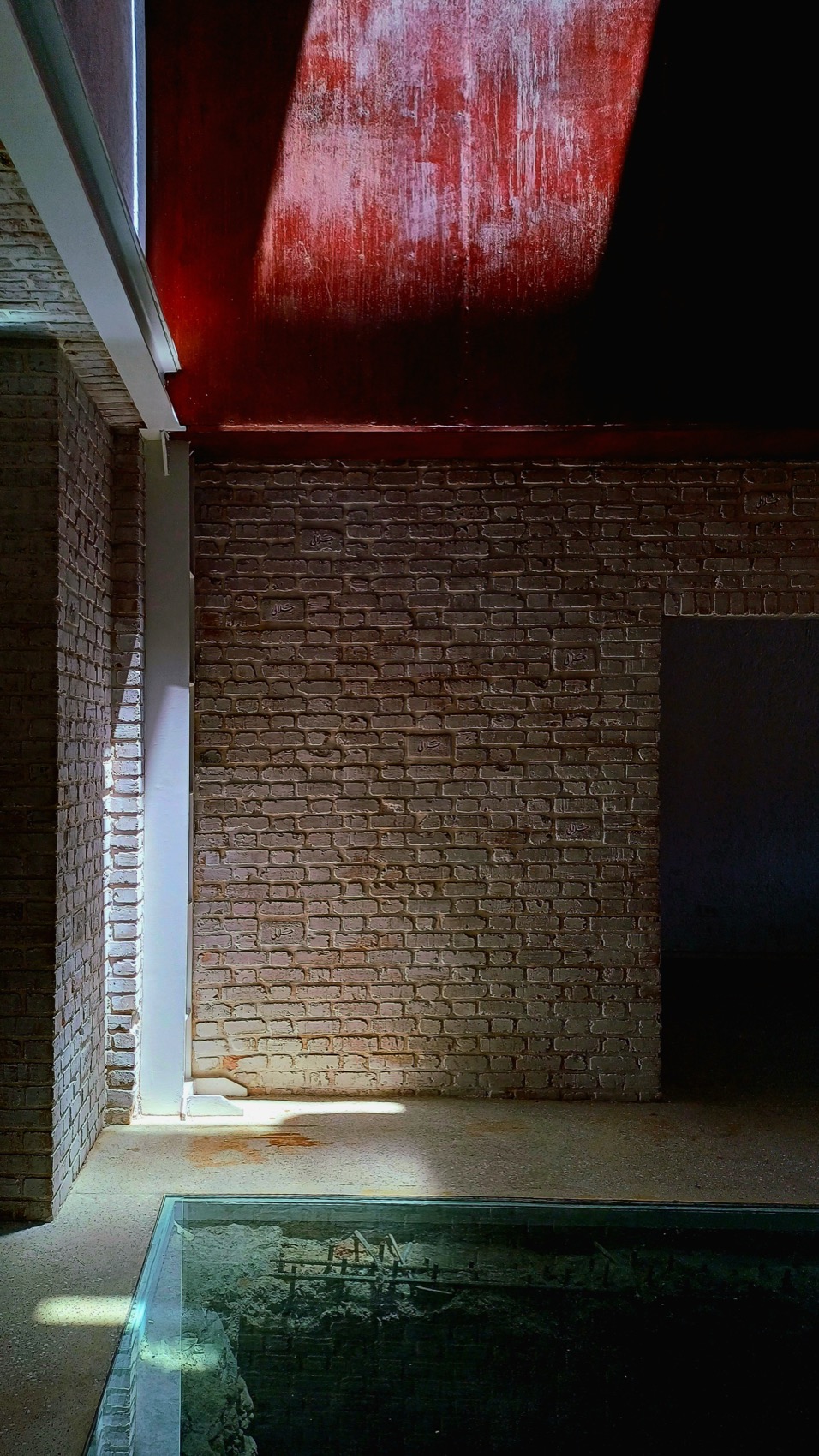
这一介入贯穿建筑体量,从庭院升起直达屋顶,并叠加在原有结构之上,在新旧之间形成持续的张力,呼应诗人反叛的精神以及他在伊朗文化史中的重要意义。
This intervention cuts through the building and rises from the courtyard to the rooftop, superimposing itself onto the generic structure to dramatize a constant tension between old and new, echoing the poet’s rebellious spirit and his significance in Iran’s cultural history.
▼圆角墙,corner wall
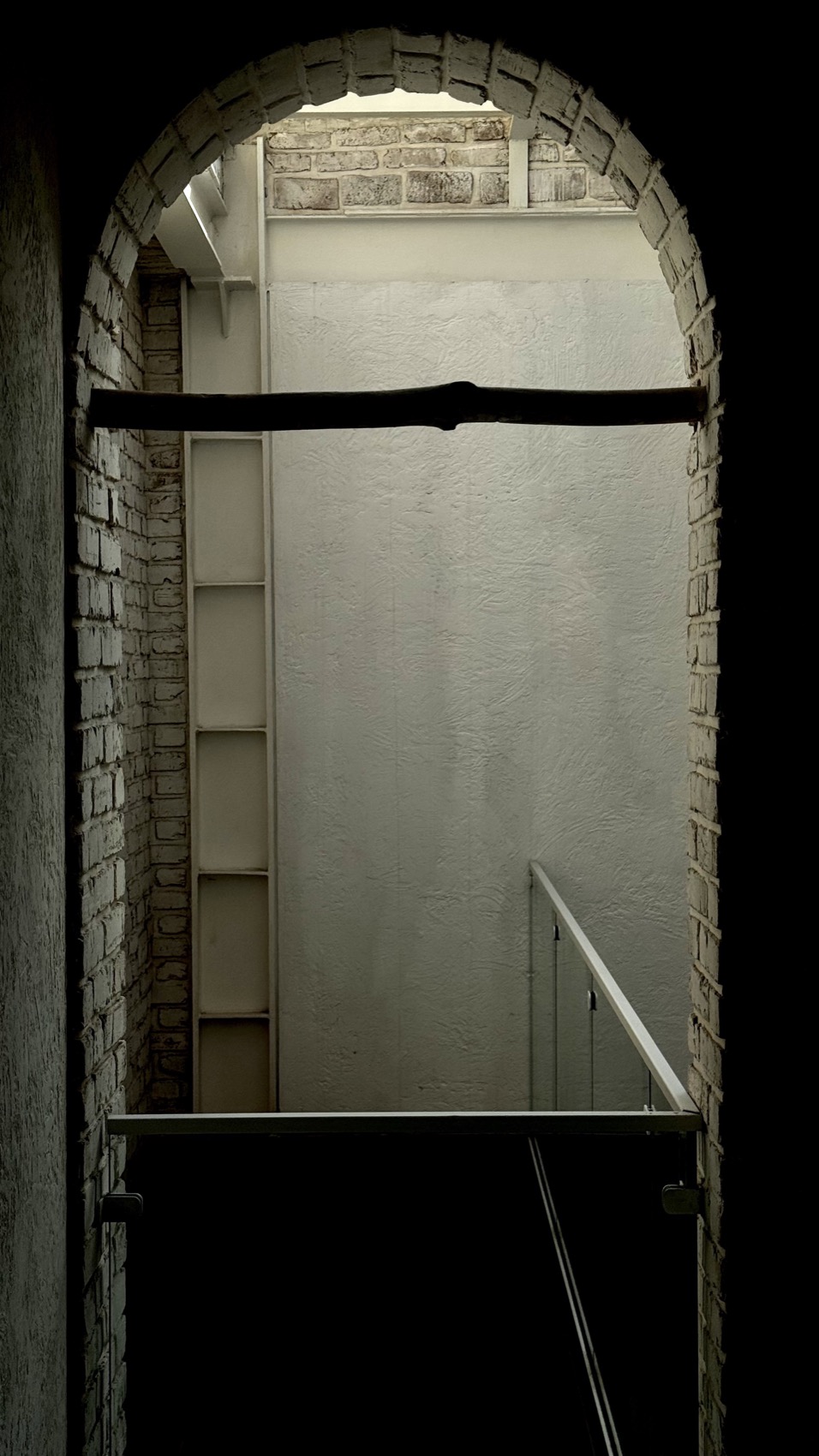
钢材因其随时间变化的质感与形式表现力而被选用——它可以被切割、呈现锯齿状、锈蚀或弯折。项目被设计为:在未来某一天,这一新的钢结构可以被移除,而原有建筑仍保持完整。通过这种方式,它在不抹去所承载记忆的前提下,对其所纪念的对象提出挑战并赋予其新的转化。
Steel was chosen for its aging quality and formal responsiveness, capable of being cut, jagged, rusty, or bent. The project was designed so that the new steel structure could one day be removed, leaving the original intact. In doing so, it challenges and transforms, without erasing, the memory it honors.
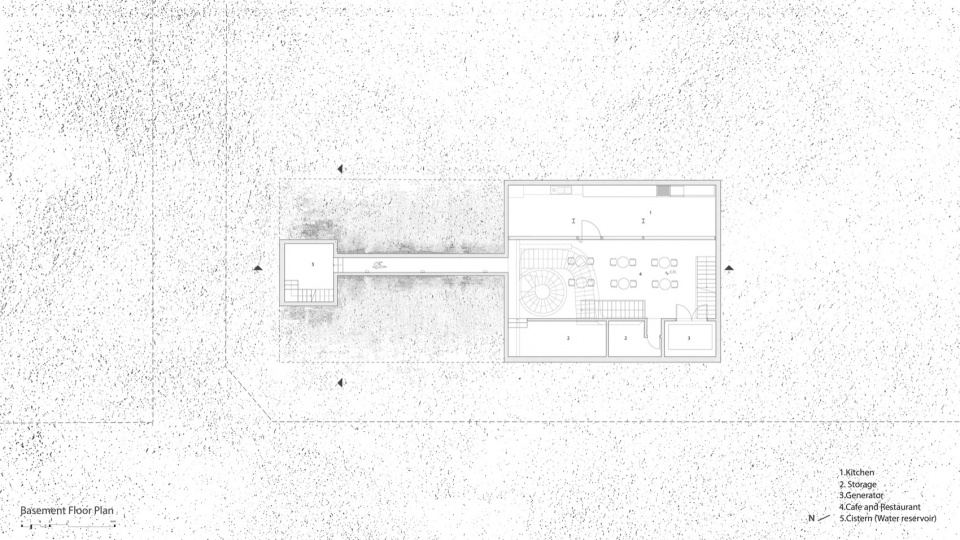
▼地下室平面,basement plan
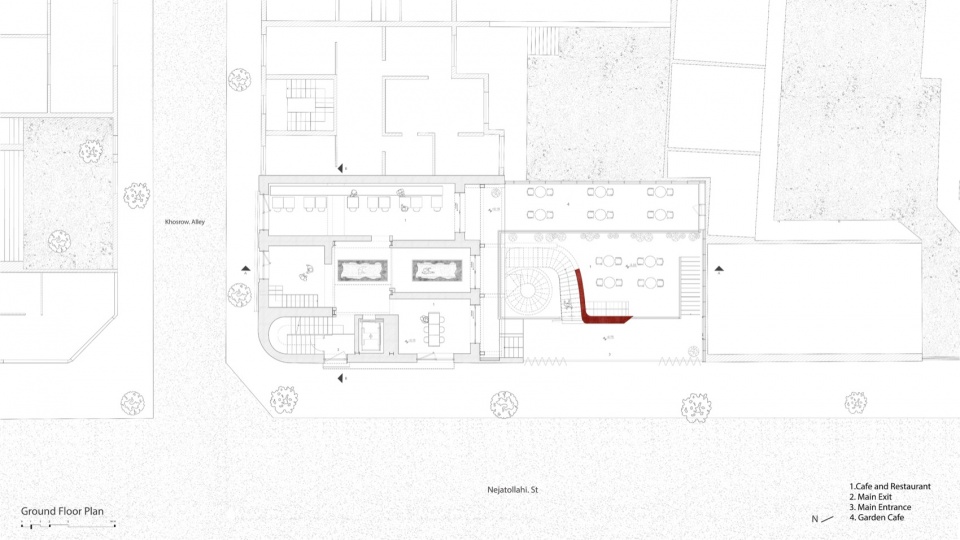
▼一层平面,ground floor plan
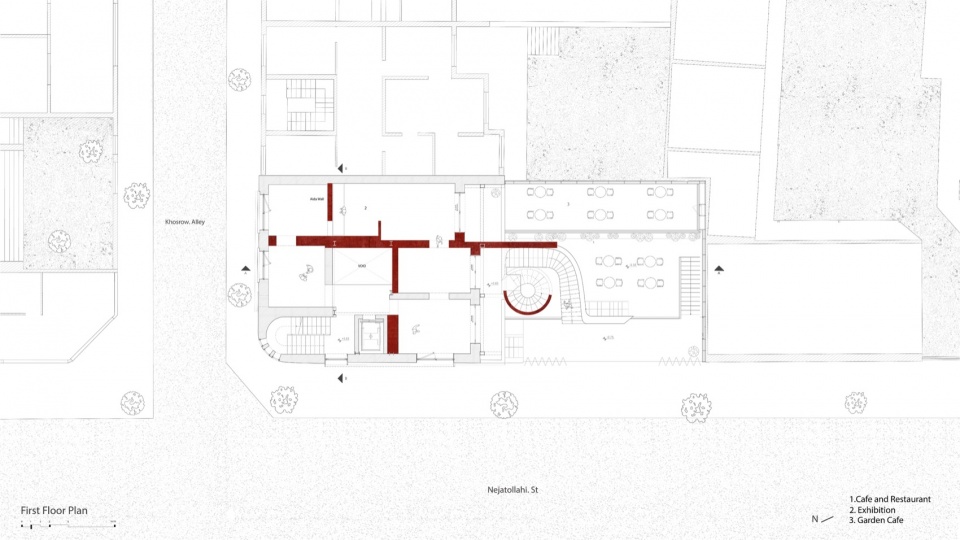
▼二层平面,first floor plan
▼剖面,section
Architects: NextOffice
Area: 900 m²
Year: 2025
Photographs: Parham Taghioff, Ehsan Hajirasouliha, Mohammad Afsarian, Mahdi_Kamboozia, NextOffice (As Listed on attached photos)
Lead Architect: Alireza Taghaboni
Design Team: Alireza Taghaboni, Elnaz Kharaghani, Hoodad Zoroufchiyan, Meysam Ebrahimi Moaghaddam, Roza Bemani, Ali Ghods, Farzad Farasat, Hadi Irani, Gelare Geranseresht, Negar Mansouri, Mohammad Motamedi, Elahe Babaei, Homa Asadi, Asal Karami, Shadi Bitaraf, Marziyeh Norouzi, Mohammad Amin Abedin, Soroush Attarzadeh, Ehsan Ahani, Saba Salehi, Mohammad Mardi, Ali Jahani
Structural Design: Bastan Pol
City: Tehran
Country: Iran