巢之教堂,圣保罗 / Felipe Caboclo Arquitetura
对于一位建筑师而言,每一个项目都始于一种“阅读”——阅读场地、光线、材料、意图,甚至那些无形之物:存在于空间与精神之间的内容。将世界加以理解,并转译为空间形式,或许是建筑中最细腻且持久的实践。而当这种转译触及神圣领域时,这一行为便进入另一维度——通过物质去寻找一种向上生长的语言。
For an architect, every project begins as an act of reading – reading the land, the light, the materials, the intentions, and even the intangible: that which dwells between space and spirit. To interpret the world and then translate it into form may be the most delicate and enduring exercise in architecture. And when that translation approaches the sacred, the gesture takes on another dimension – a search, through matter, for a language that ascends.
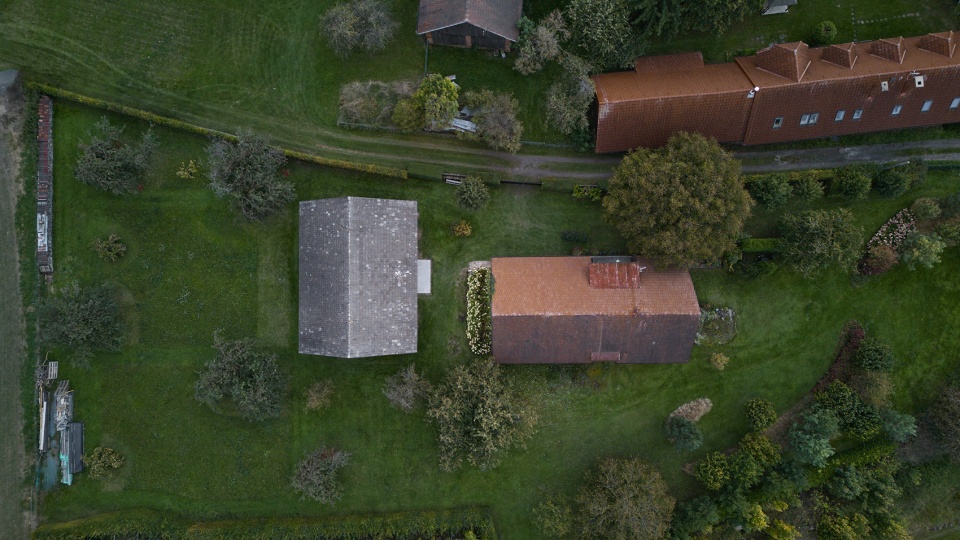
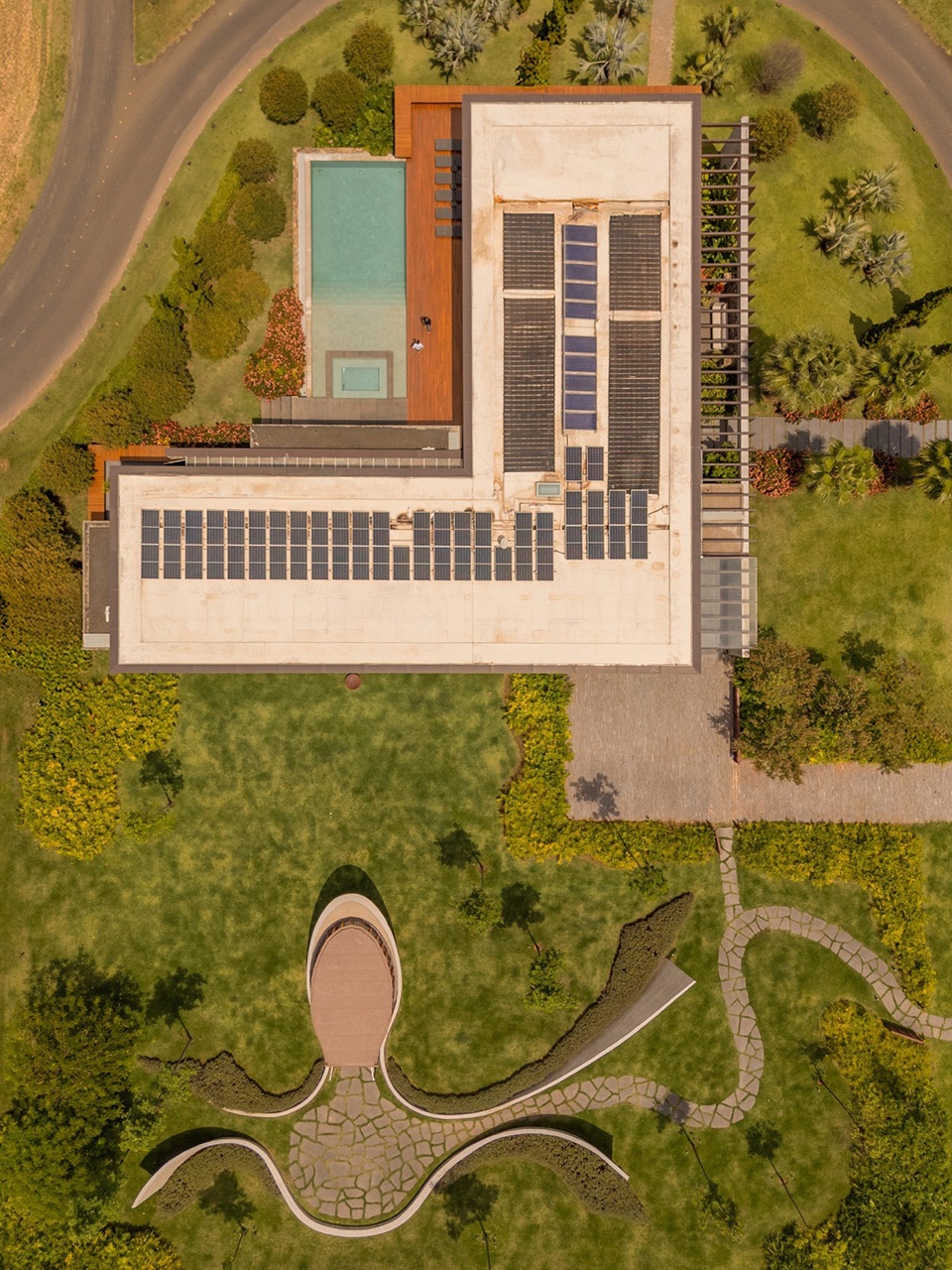
▼场地鸟瞰,aerial view of the site
巢之教堂源于一次难得的机会:为一处亲密尺度的宗教空间进行设计。该项目由巴西事务所 Felipe Caboclo Arquitetura 构思完成,它不仅是形式探索,更是一段情感叙事的自然展开。其起点可追溯至巢之住宅——一处位于圣保罗州伊图乡村的住宅,为一对已有子女与孙辈的夫妇所设计,作为家庭聚会、休憩与情感记忆生成的场所。
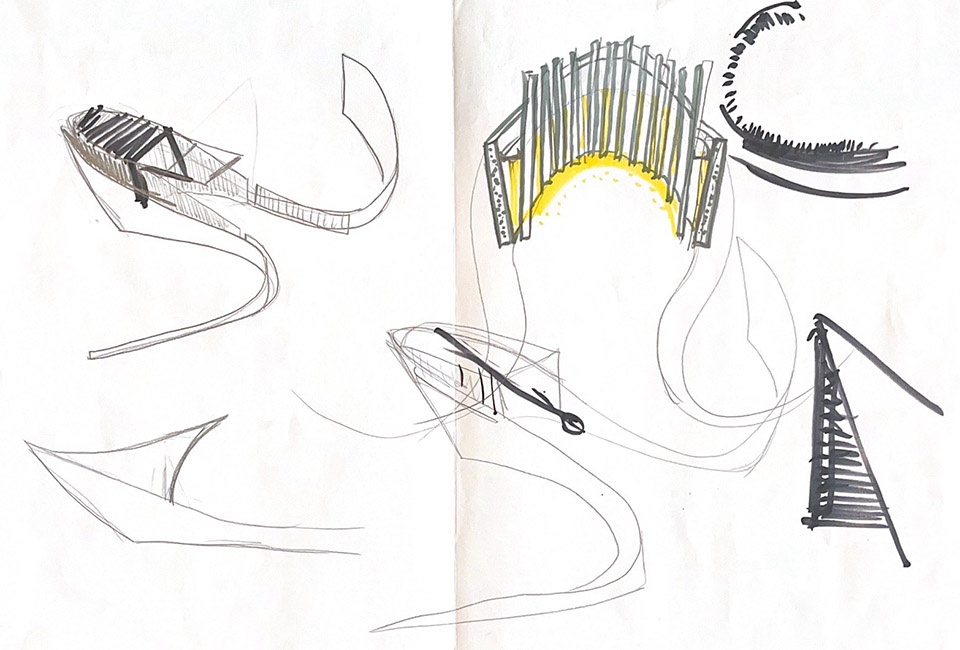
▼草图,sketches
Nest Chapel was born from a rare opportunity for an architect: to design a religious space of intimate scale. Conceived by Brazilian company Felipe Caboclo Arquitetura, the project emerged not merely as a formal exercise but as a natural unfolding of an emotional story. Its origins are intertwined with Nest House, a countryside residence designed for a couple who, with grown children and grandchildren, sought a family refuge in Itu, in São Paulo countryside – a place for gathering, rest, and the creation of emotional memory.
▼外观,exterior views
▼混凝土墙体,concrete wall
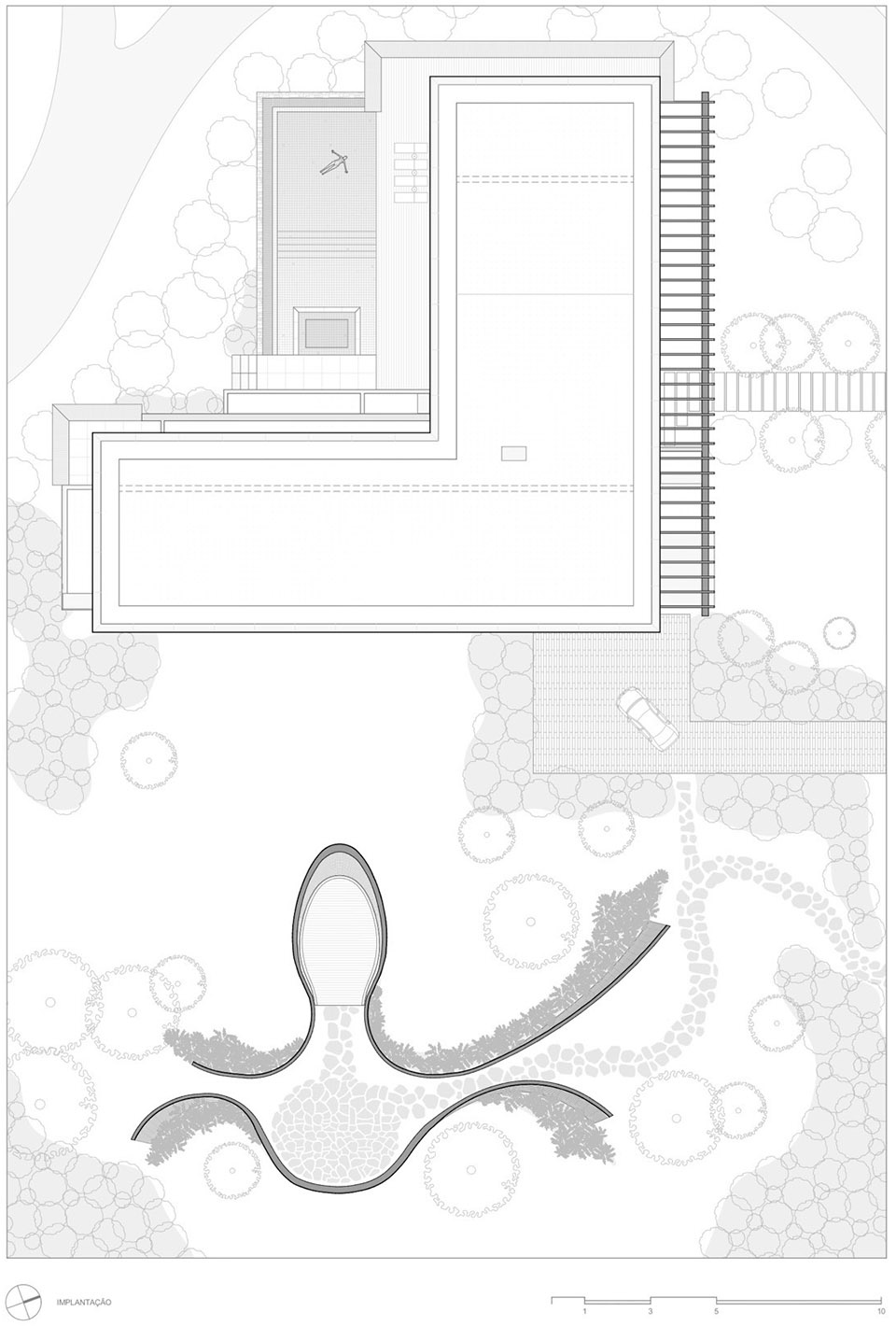
业主为住宅赋予的名称本身就概括了这一初衷:一个包容与庇护的“巢”。他们拥有两块相邻地块,每块约2000平方米。第一块用于建造住宅(设计始于2022年),而第二块则长期空置——直至对沉思与信仰空间的渴望,使其获得新的意义。在住宅设计过程中,业主表达了希望拥有一个祈祷、冥想与宗教聚会空间的愿望。最初提出的方案——如祈祷家具、花园附属空间或小房间——都未能满足她的期待,也未能传达所需的象征性。于是,一个更为自然的想法浮现:将邻近的空地转化为这一空间的载体。
The name chosen by the homeowners encapsulates that purpose: a shelter that welcomes and protects. The couple owned two adjacent lots, each measuring roughly 2,000 square meters. On the first, the new house was built, with design work beginning in 2022. The second, initially left unused, remained in silence – until the desire for a space of contemplation and faith transformed it into destiny. Throughout the development of the residential project, the homeowner expressed the desire for a space dedicated to prayer, reflection, and religious gatherings. The initial proposals—such as a prayer furniture piece, a garden annex, or a small room—did not fully meet her vision, nor did they convey the desired symbolism. Almost naturally, the idea arose to use the neighboring plot, a vacant space waiting for new meaning.
▼柔和的曲线环绕核心空间,soft curves encircle the core space
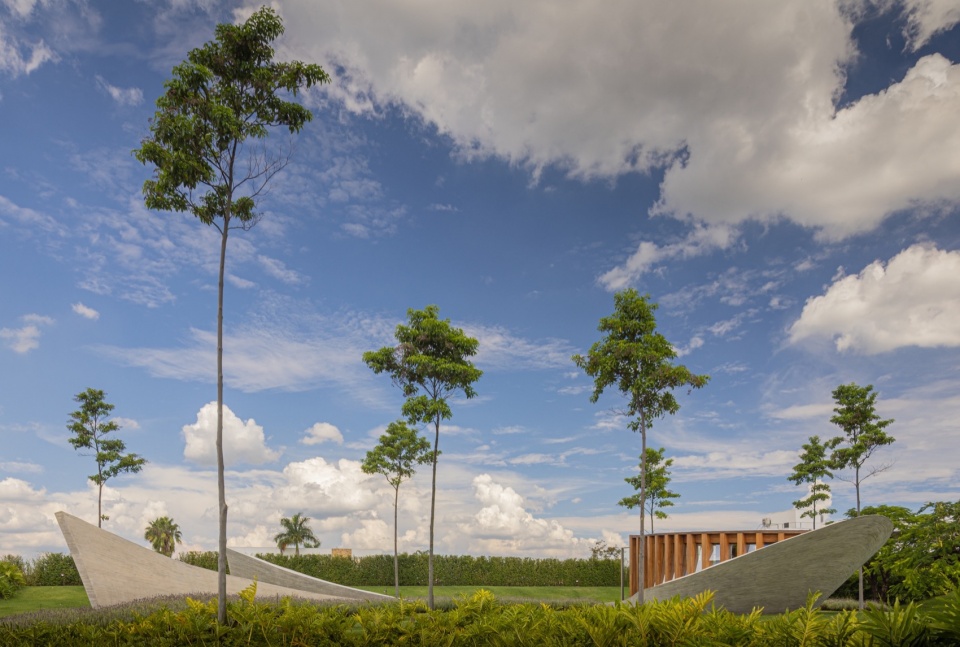
▼墙体呈双曲线般弯折,the wall curves in a hyperbolic manner
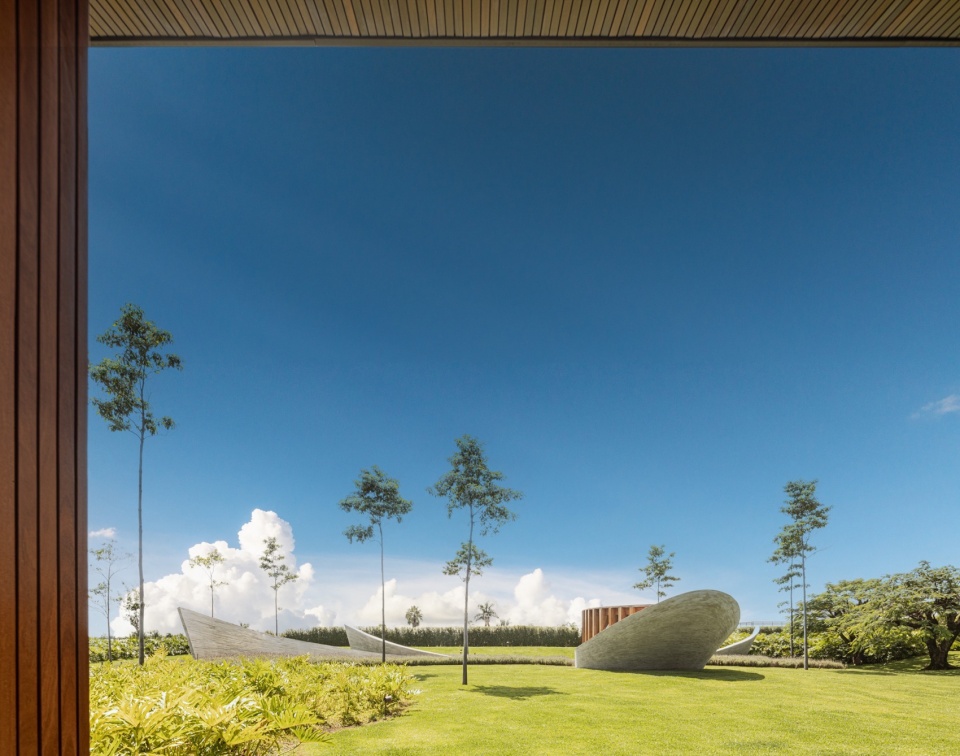
在这里,建筑师与业主共同找到了一个起点——一个超越日常生活、迈入精神领域的起点。如何设计一个神圣空间?这是指导 Felipe Caboclo 的核心问题。他意识到,答案并不来自技术规则,而源于记忆。他的思绪回溯至约25年前的大学时期,当时一位教授向他推荐了一本深刻影响其学术与个人成长的著作——《建筑:形式、空间与秩序》(1979),作者 Francis D.K. Ching。其中引用了勒·柯布西耶在《走向新建筑》(1923)中的一段话,长久回响于他的脑海:“你使用石、木与混凝土建造房屋与宫殿,那是建造……然而,当墙体以某种方式升起,使我为之感动,我便理解了你的意图……”
There, the architect and the homeowners found the starting point for something that would go beyond domestic use and enter the realm of the spiritual. How does one design a space for the sacred? This was the question guiding Felipe Caboclo. He understood that the answer would not come from technical rules, but from memory. His recollections led him back to his university years, about twenty-five years ago, when a professor introduced him to a book that would mark his formation – both academic and personal: Architecture: Form, Space and Order (1979), by Francis D.K. Ching. Within its pages, a passage from Le Corbusier’s Vers une Architecture (1923) had echoed in his mind ever since:“You employ stone, wood and concrete, and with these materials you build houses and palaces. That is construction. Ingenuity is at work. […] Suppose, however, that the walls rise toward heaven in such a way that I am moved. I perceive your intentions. Your mood was gentle, brutal, charming or noble. The stones you set up tell me so. You fix me to the place, and my eyes regard it. They behold something that expresses a thought. A thought which reveals itself without sound or sign, through forms arranged in order.”
▼仿佛从大地中生长而出的体量,the volume that emerges from the earth
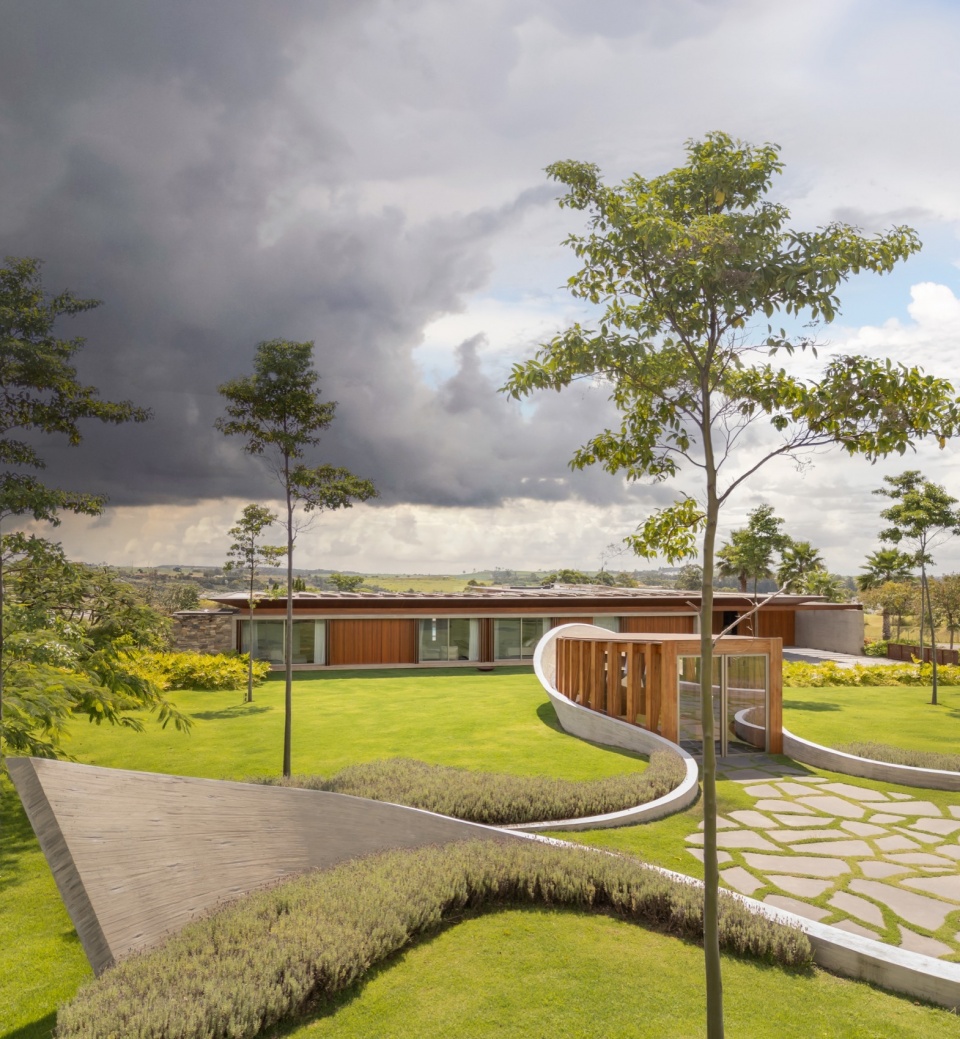
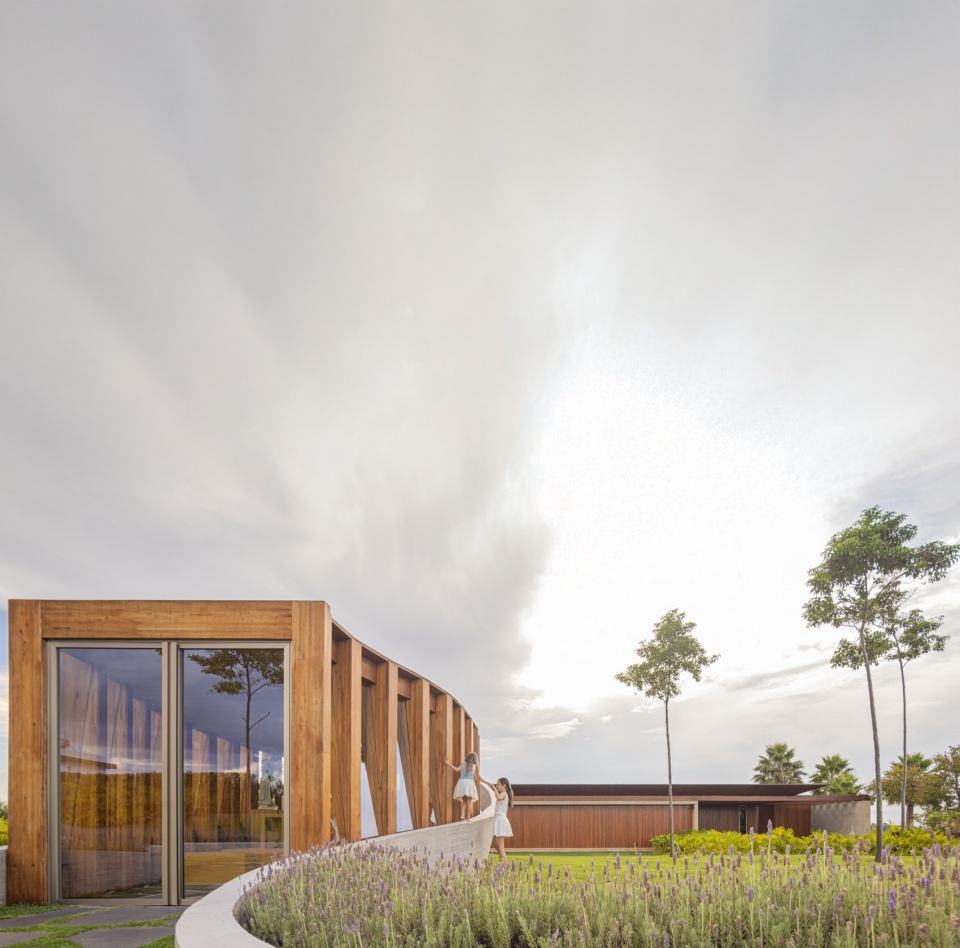
这些话成为一种无声的箴言。建筑师在每个项目中都在寻找这种能够触动人心的姿态——让材料超越功能,触及无形,使空间承载情感。当业主再次提出教堂的构想时,他意识到,是时候将这段思想具象化。项目中隐约可见对勒·柯布西耶的回应,也能感受到安藤忠雄混凝土教堂的克制精神,以及理查德·塞拉钢结构作品的张力。但在巢之教堂中,这些影响被柔化,融入圣保罗乡村的语境与项目自身的情感叙事之中。
Those words became a silent mantra. In each new project, the architect sought that same gesture – material elements that rise and move us, that transcend function to touch the intangible, endowing space with emotional meaning. When the couple revived the idea of a chapel, Felipe realized it was time to give concrete form to Le Corbusier’s reflection. There are discreet echoes of the concrete chapels of the Japanese master Tadao Ando, and of the sculptural power of the steel works by Richard Serra – structures that curve, create tension, and awaken the observer’s body. Yet in Nest Chapel, these influences are softened, filtered through the rural landscape of São Paulo’s countryside and through the emotional narrative that gave the project its soul.
▼顶视图,top view
▼教堂部分顶视图,top view of the chapel
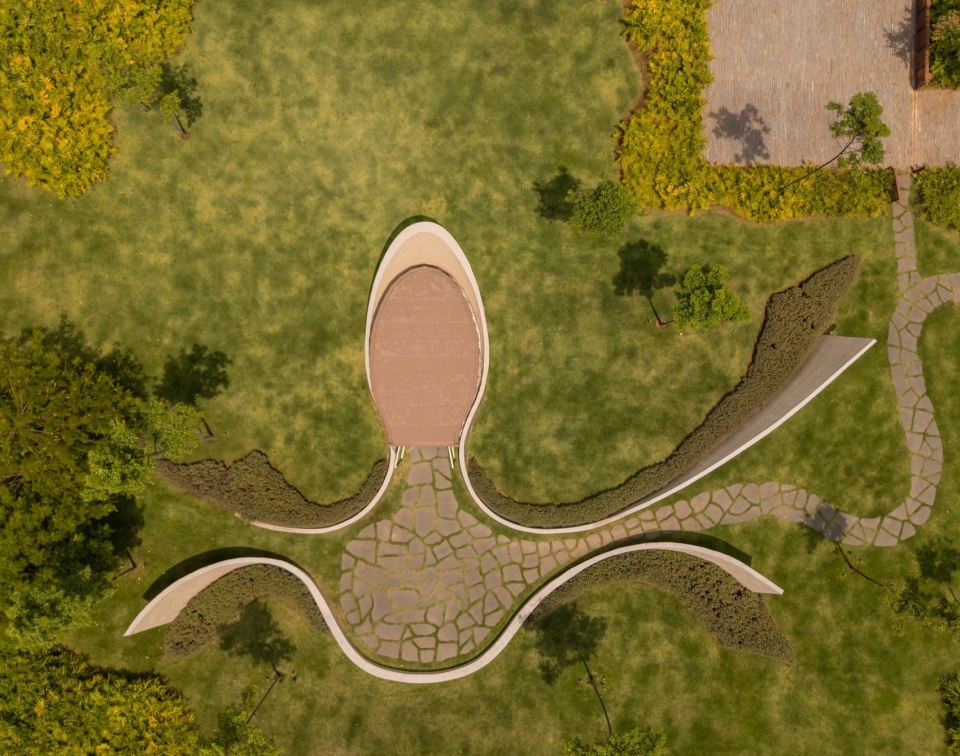
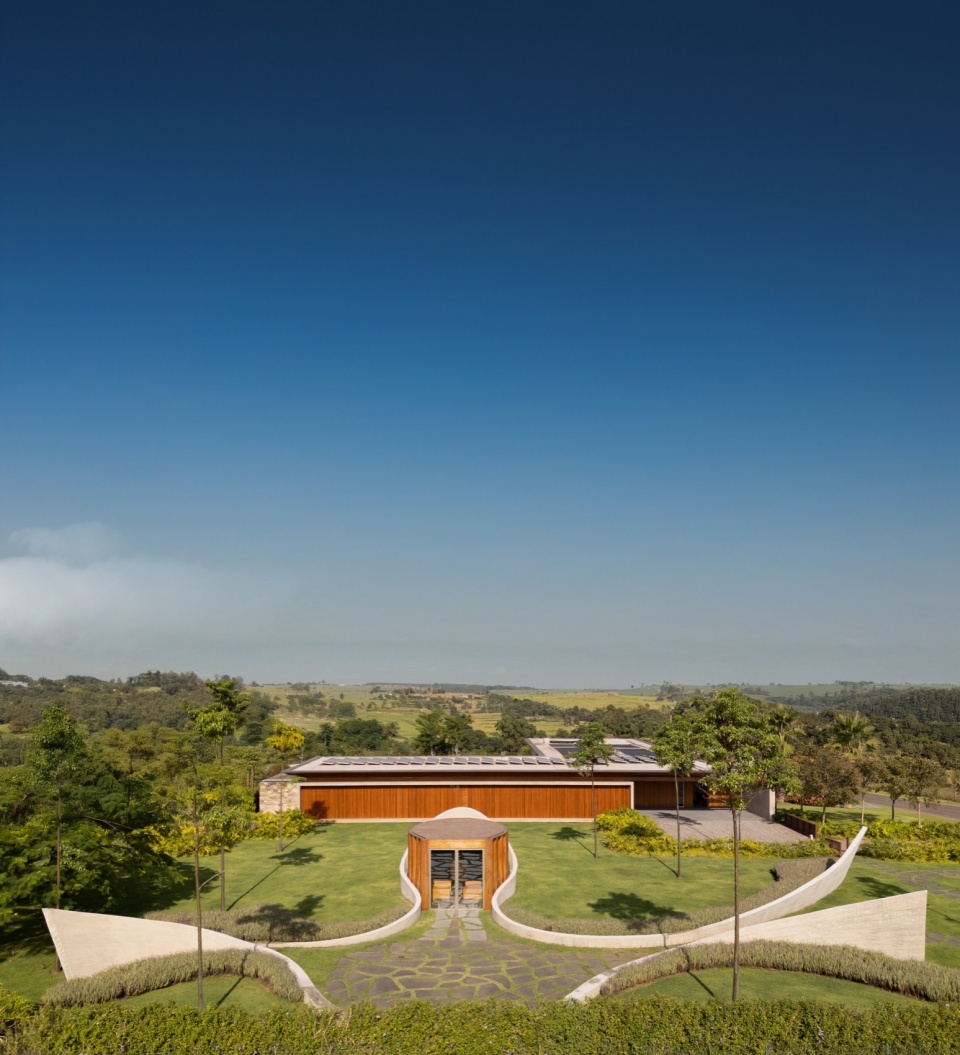
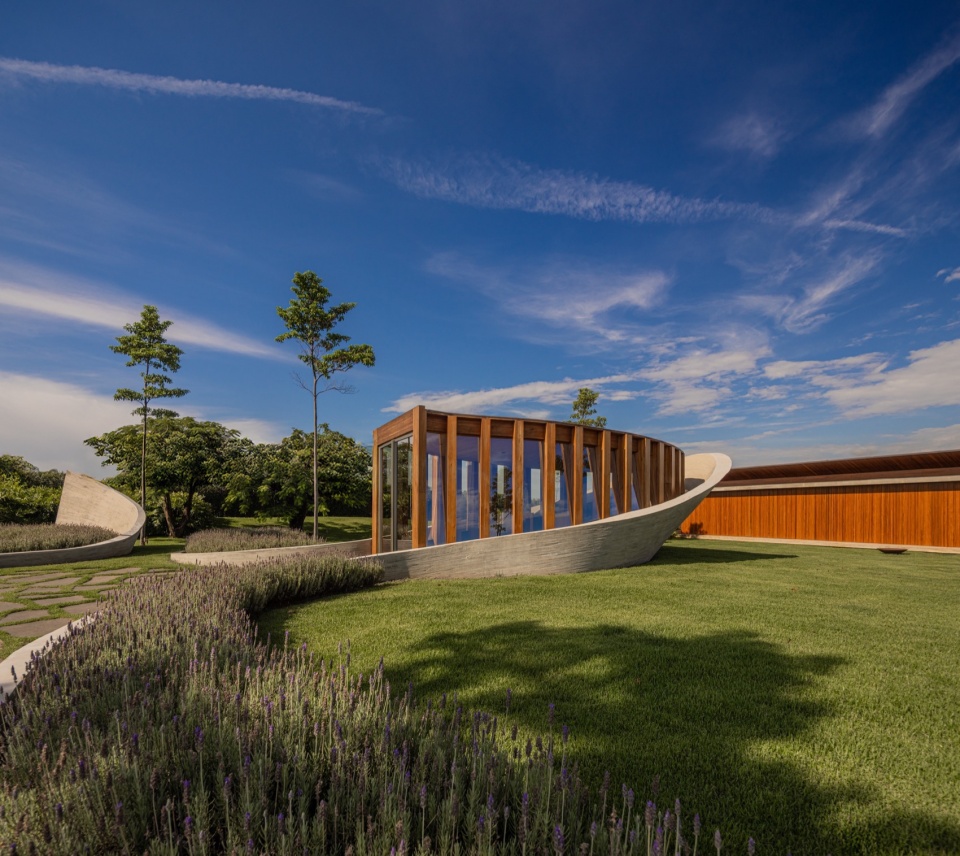
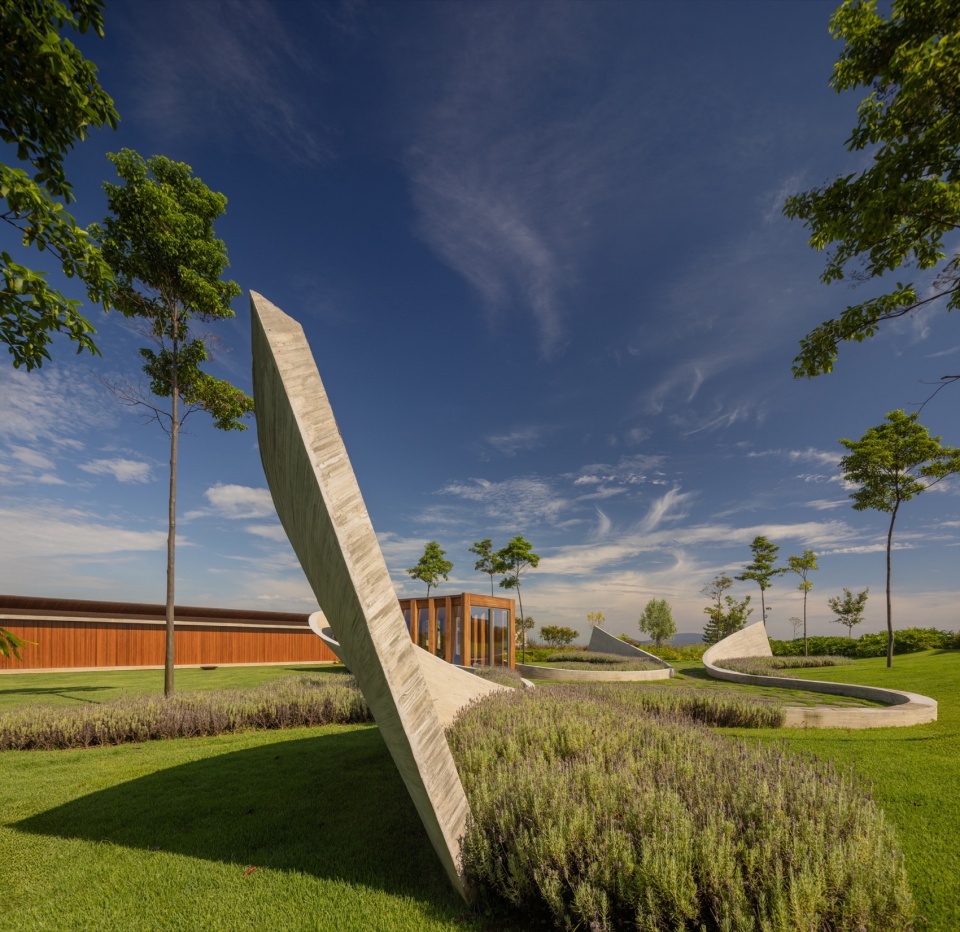
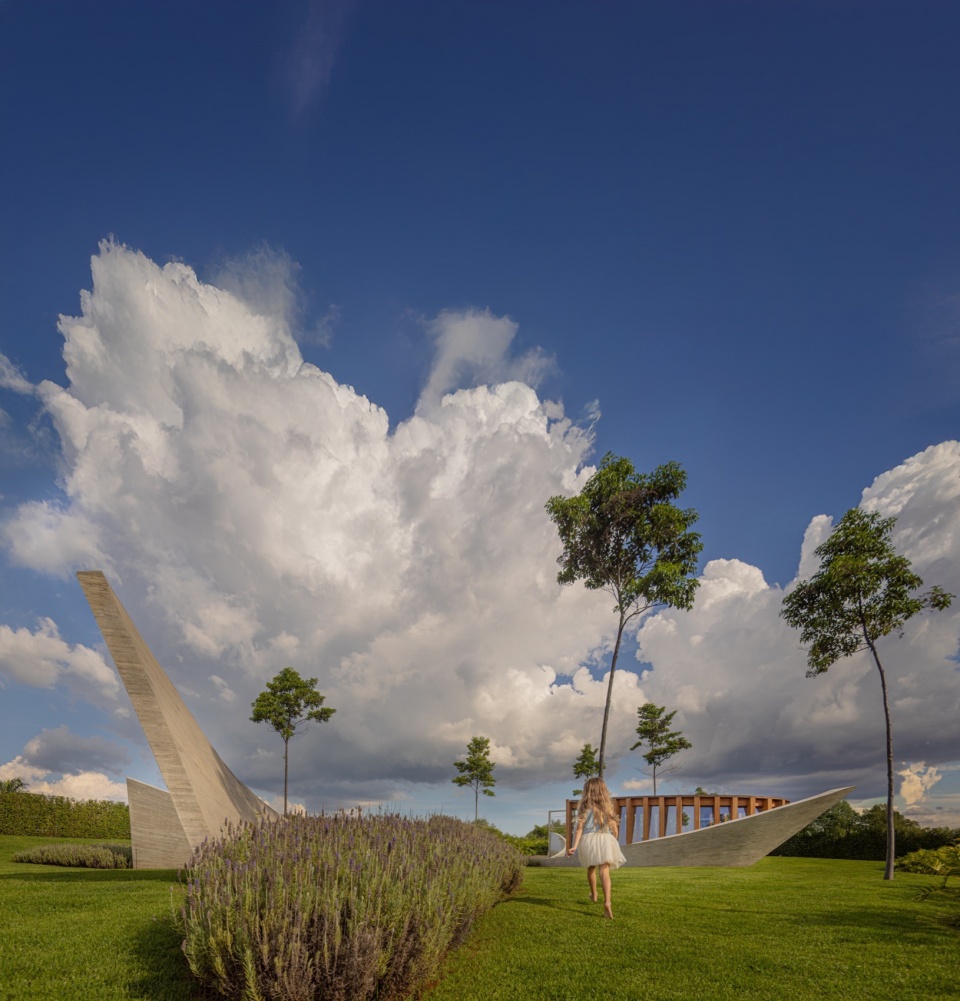
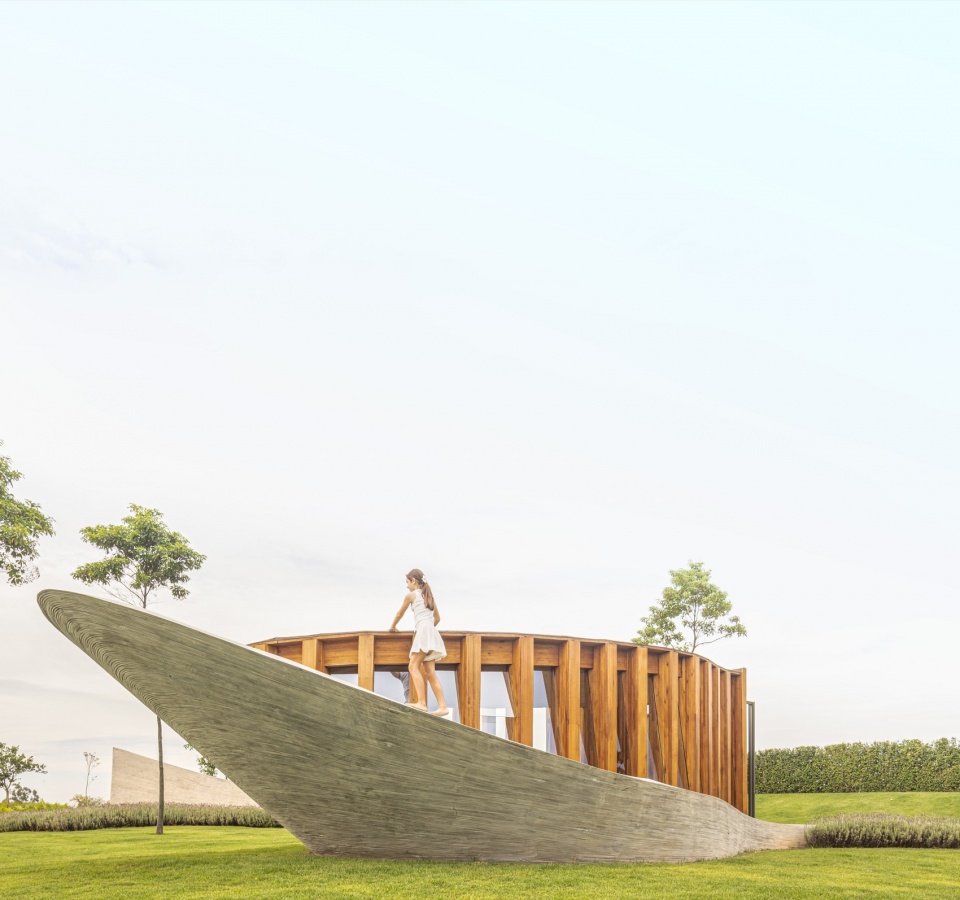
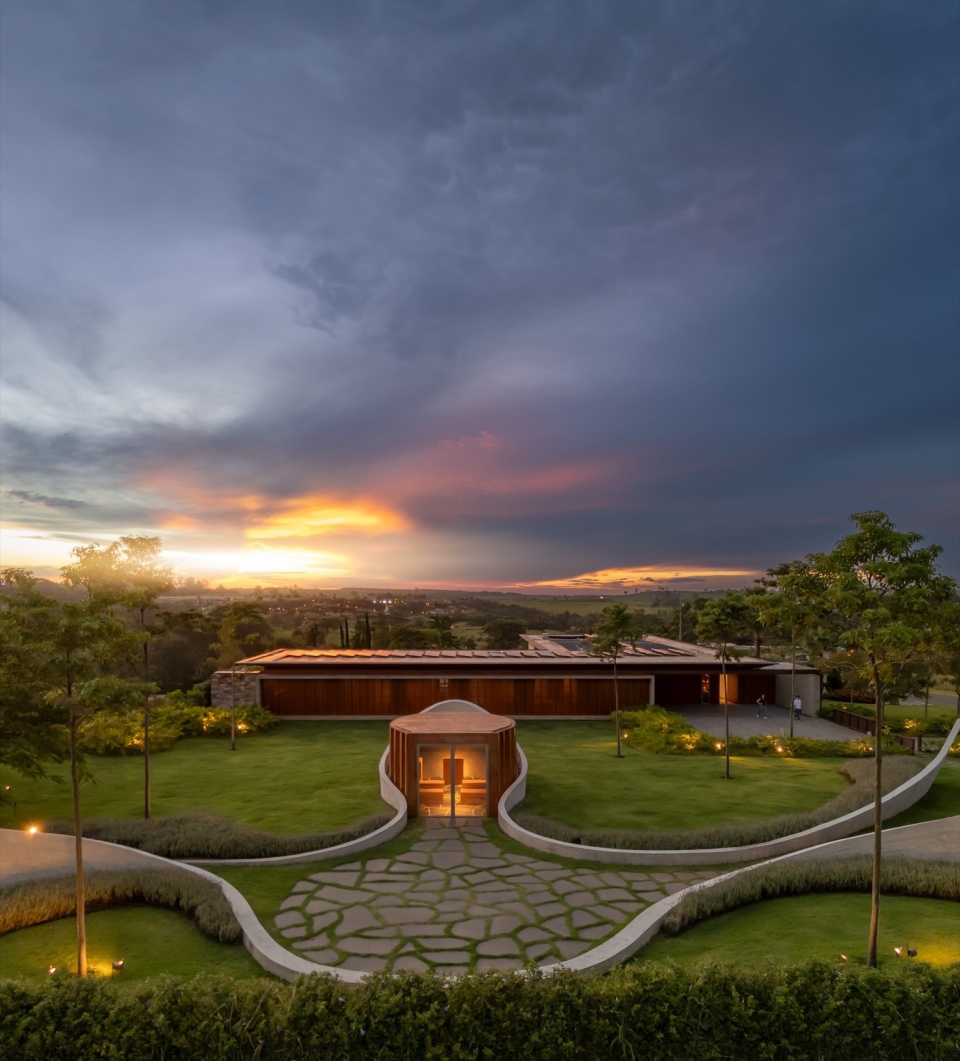
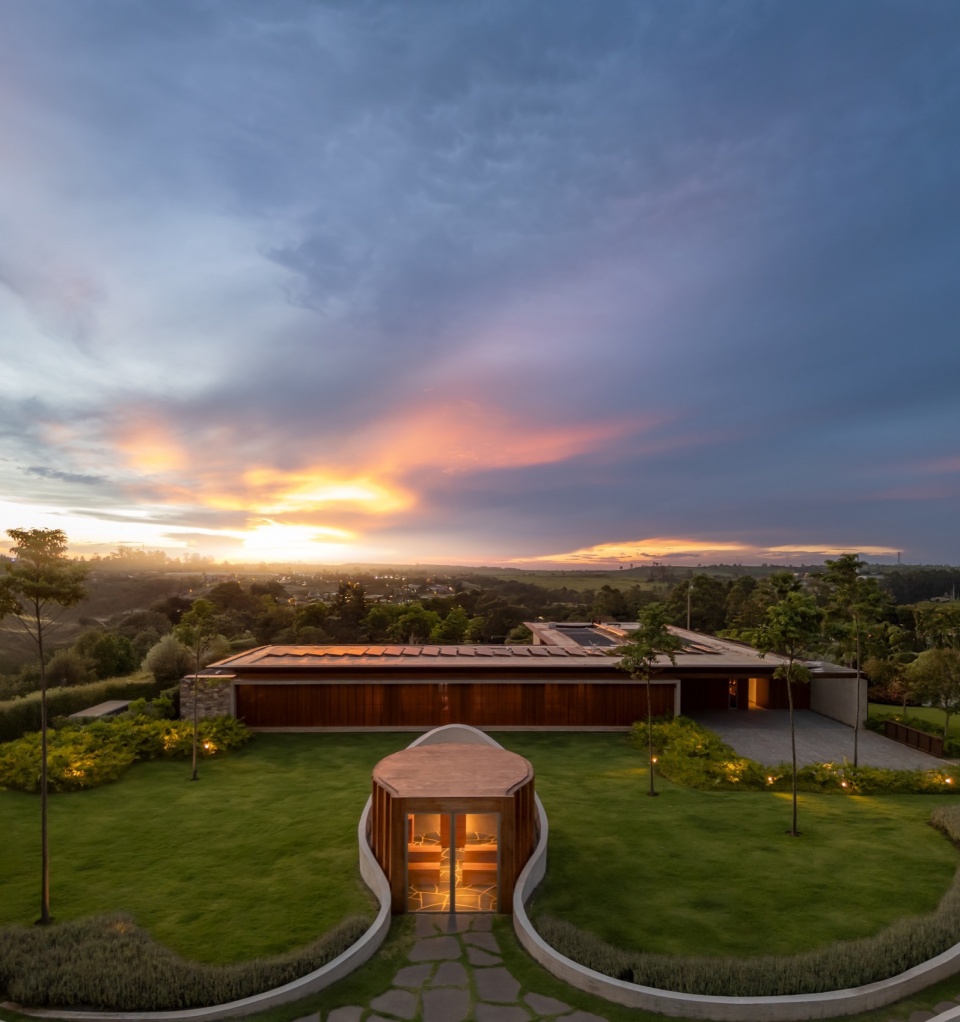
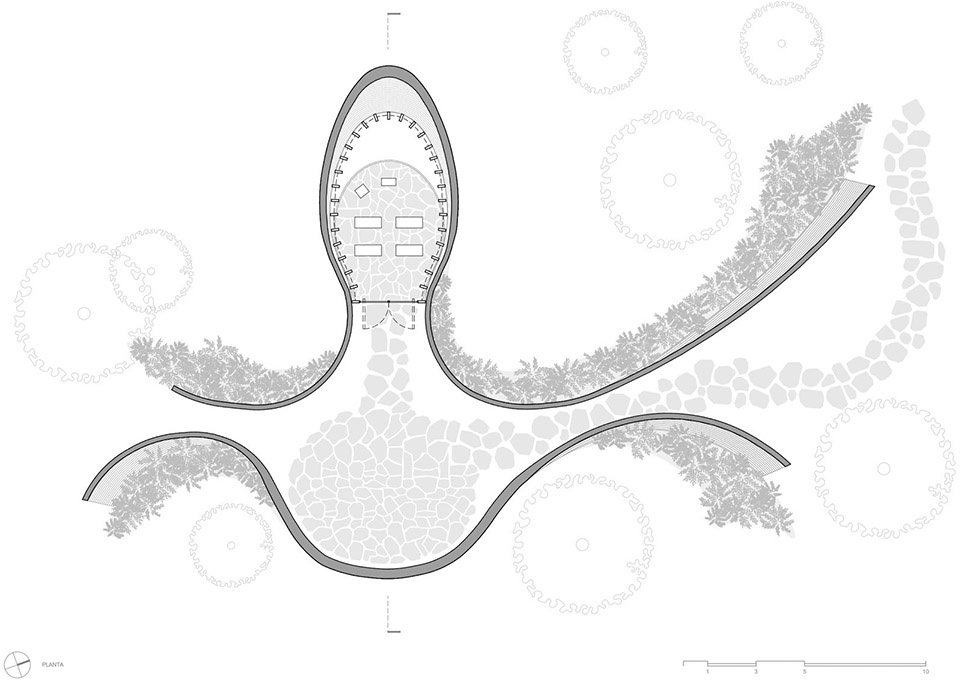
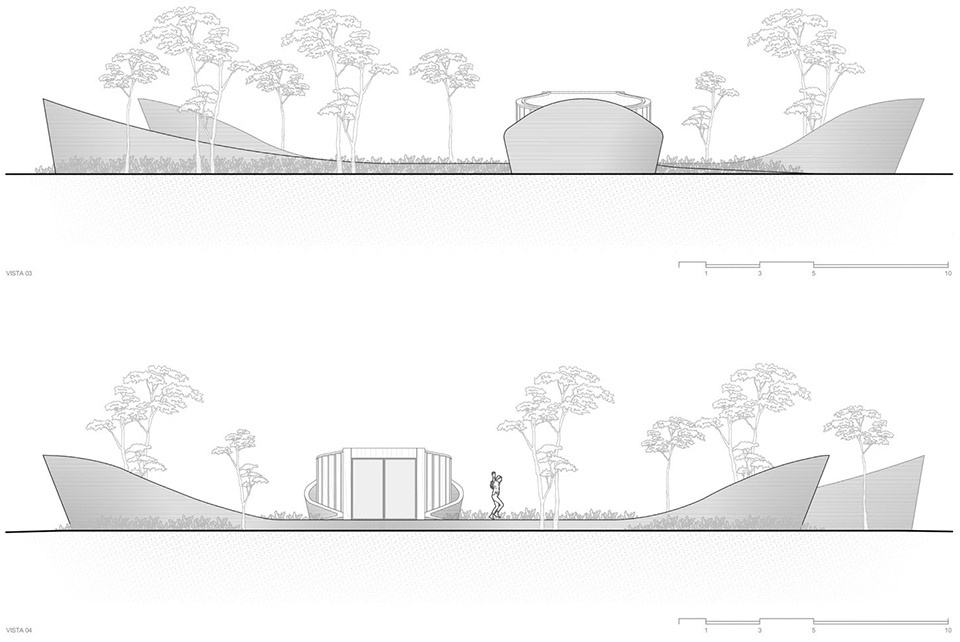
巢之教堂尺度虽小,却承载宏大意图。建筑位于开阔场地中央,由两面混凝土墙体构成,它们以柔和的曲线环绕核心空间,仿佛从大地中生长而出。这些墙体既定义结构,也引导路径,其起伏形成近似礼仪性的空间序列——一段引导停顿与沉思的行走体验。建筑的核心并不在终点,而在路径本身,它成为一种仪式。平面中,墙体呈双曲线般弯折;立面上,高度与倾角不断变化。空间由此逐渐收紧,最终在主空间中豁然展开,形成一种亲密尺度的“建筑漫步”。
▼草图,sketches
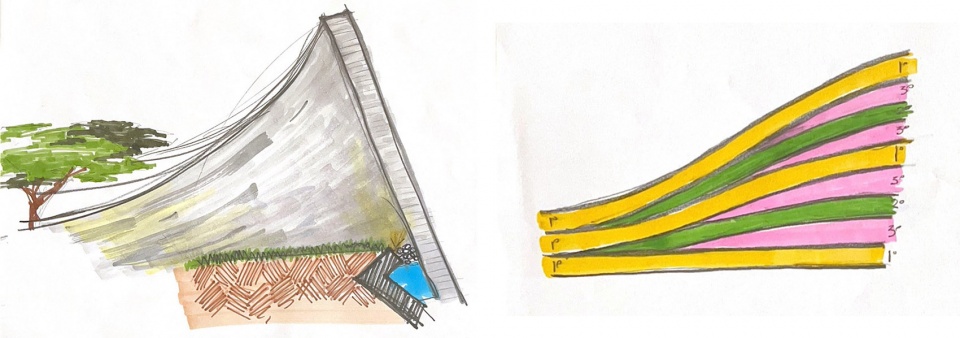
Nest Chapel is modest in scale but vast in intention. Set at the center of a generous site, the structure seems to emerge from the earth, composed of two concrete walls that twist gently around the core in intentional curves. These surfaces define the structure and trace the path. Their undulations create an almost liturgical movement – a walk that invites pause and reflection. For the architect, the essence of the work lies not in the destination, but in the journey itself – which becomes a ritual. In plan, the walls bend in a hyperbolic gesture; in elevation, they vary in height and inclination. They guide the gaze and the body through a narrowing passage that opens suddenly into the main space – a kind of promenade architecturale on an intimate scale.
▼半鸟瞰,half-aerial view
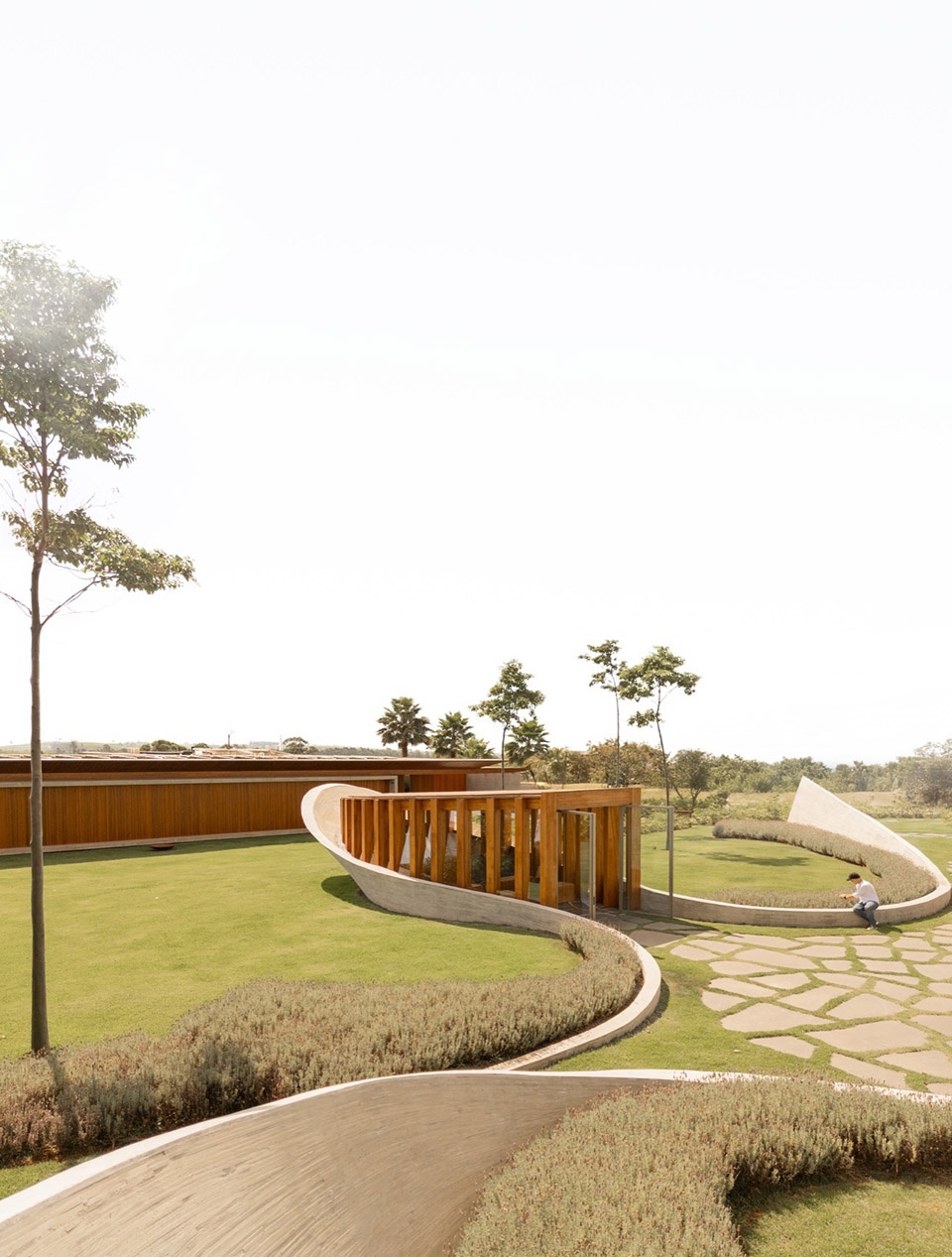
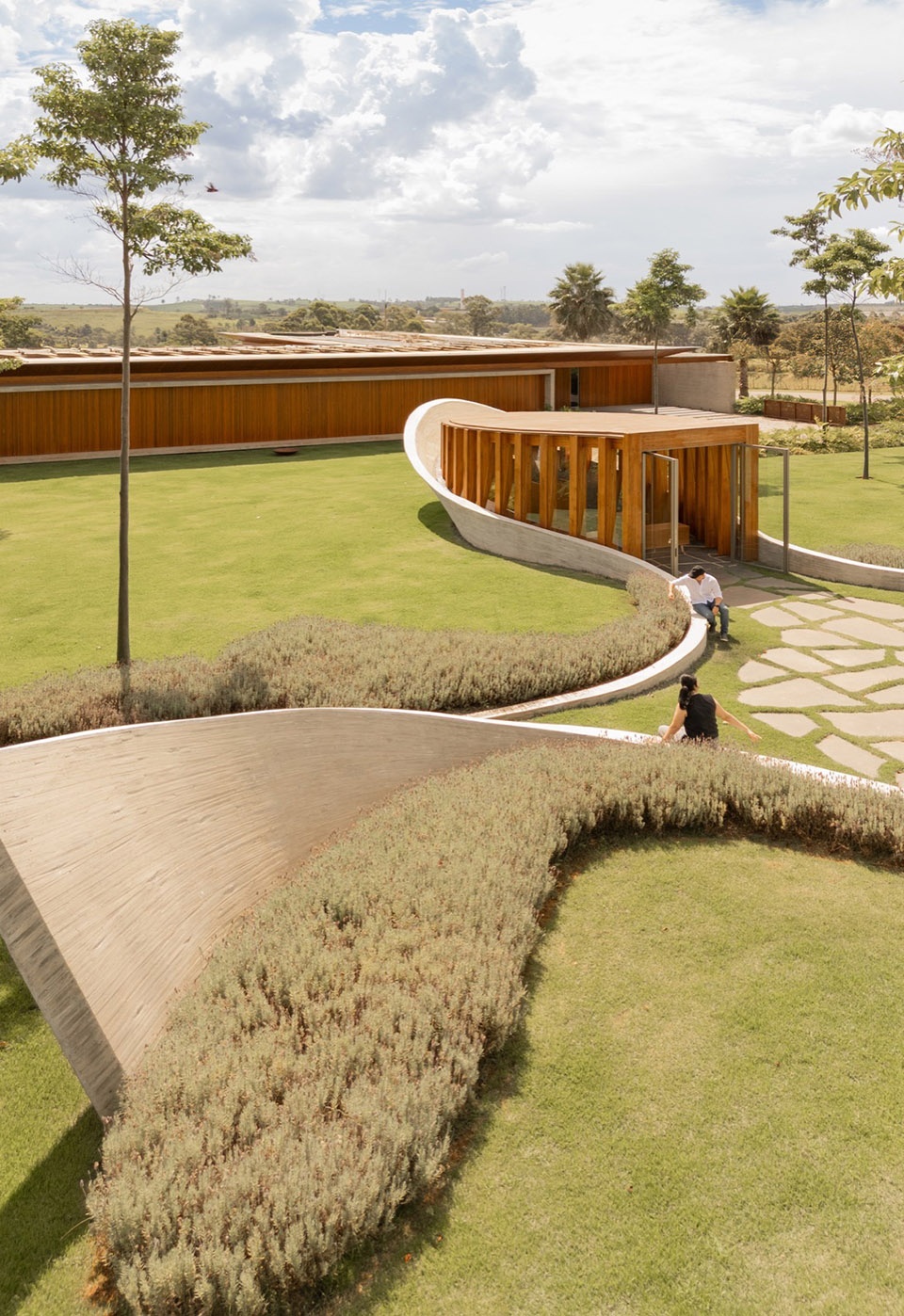
▼家庭聚会、休憩与情感记忆生成的场所,
a place for family gatherings, relaxation and the formation of emotional memories
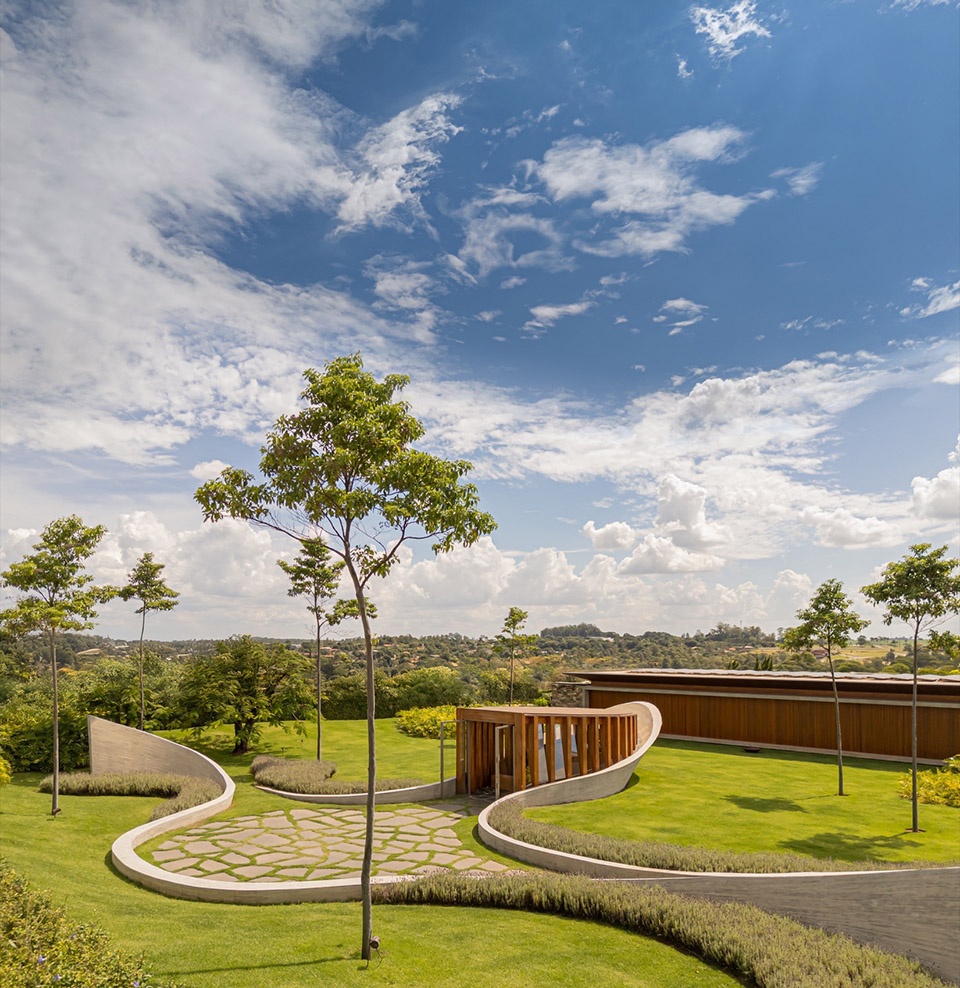
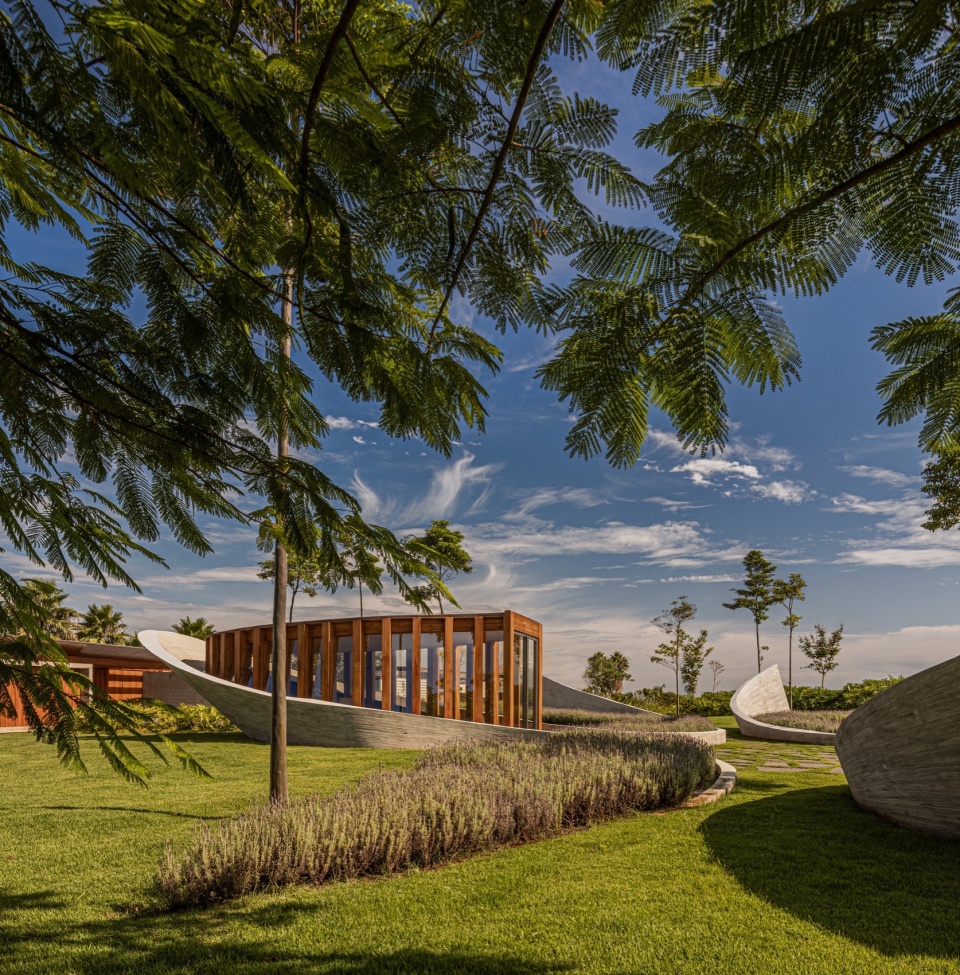
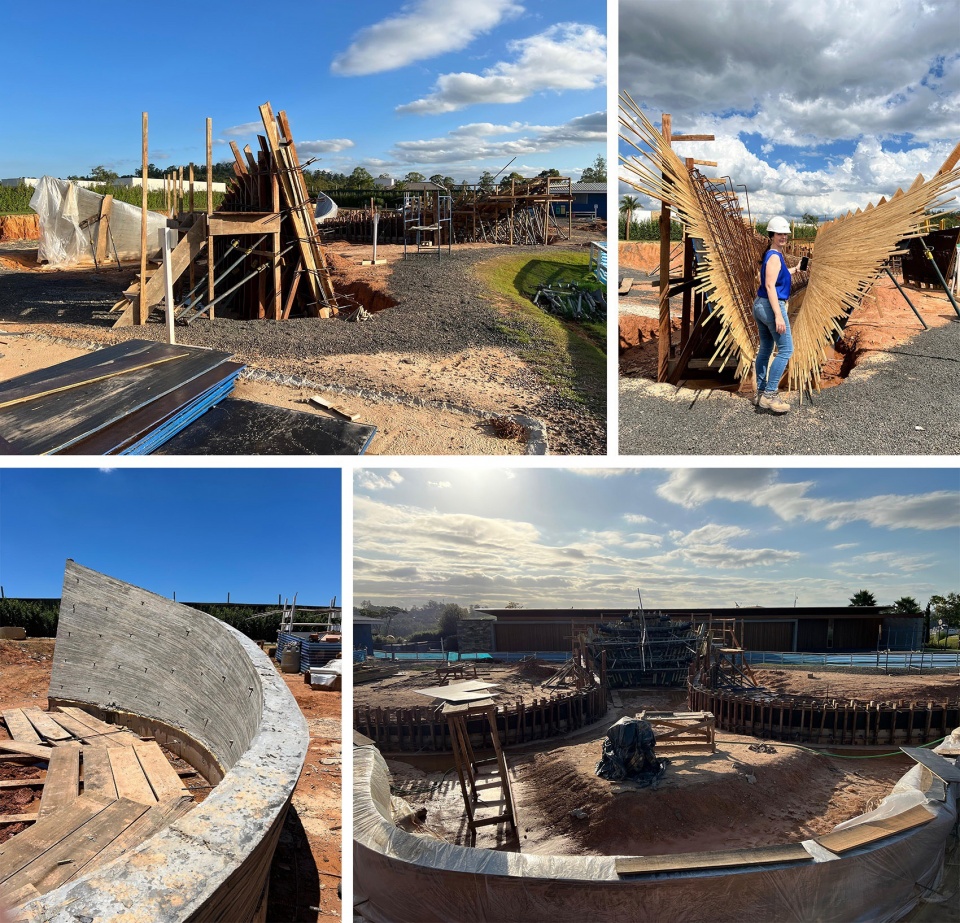
项目经历了数月的全尺度原型试验,直至在多重设计推敲与技术方案之间取得平衡。作为主要材料的混凝土,保留了塑形时所使用的5厘米宽木模板的印记,在其表面形成细腻的肌理,令人联想到产自伊图地区的沉积岩 Varvito——一种由细密层理历经千年叠加而成的岩石。这一如今保存在 Varvito 公园中的地质景观,启发建筑师追求一种能够显露手工痕迹、时间印记与不完美之美的材料表达。木模板由人工制作,意在将时间的流逝与物质的振动铭刻于混凝土表面。
The project underwent months of full-scale prototyping until it reached equilibrium between numerous studies and technical solutions. The main material, concrete, bears the imprint of the five-centimeter timber boards that shaped it, creating a subtle texture across the surface, evoking the layers of Varvito, a sedimentary rock native to Itu, formed over millennia by the superposition of fine strata. This geological landscape, preserved today at the Varvito Park, inspired the architect to seek a materiality that would reveal the trace of the hand, the mark of time, and the beauty of imperfection. The wooden forms were crafted manually, an attempt to inscribe the passage of time and the vibration of matter into the surface of the concrete.
▼亲密尺度的“建筑漫步”,
a kind of promenade architecturale on an intimate scale
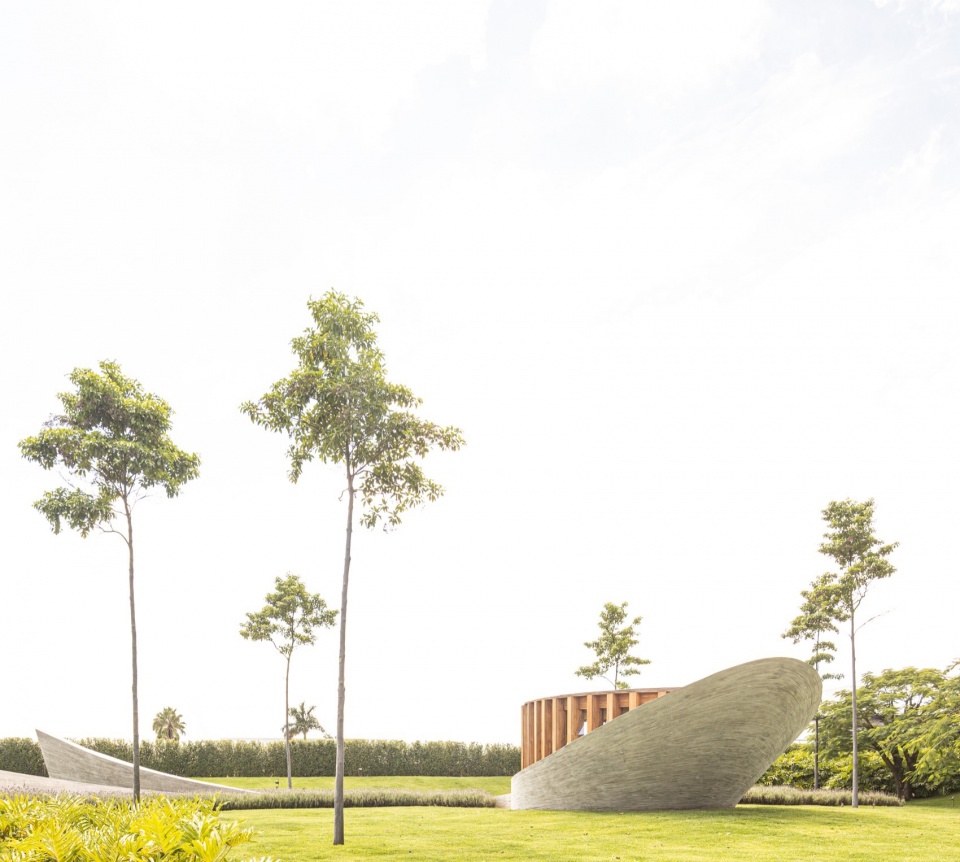
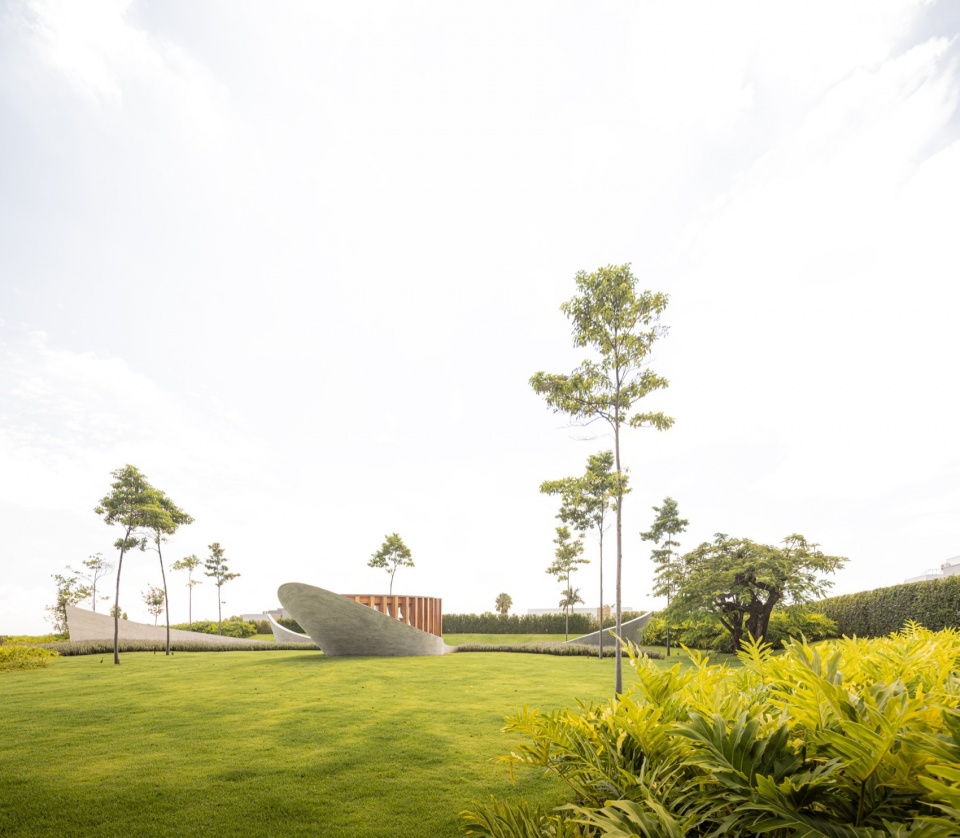
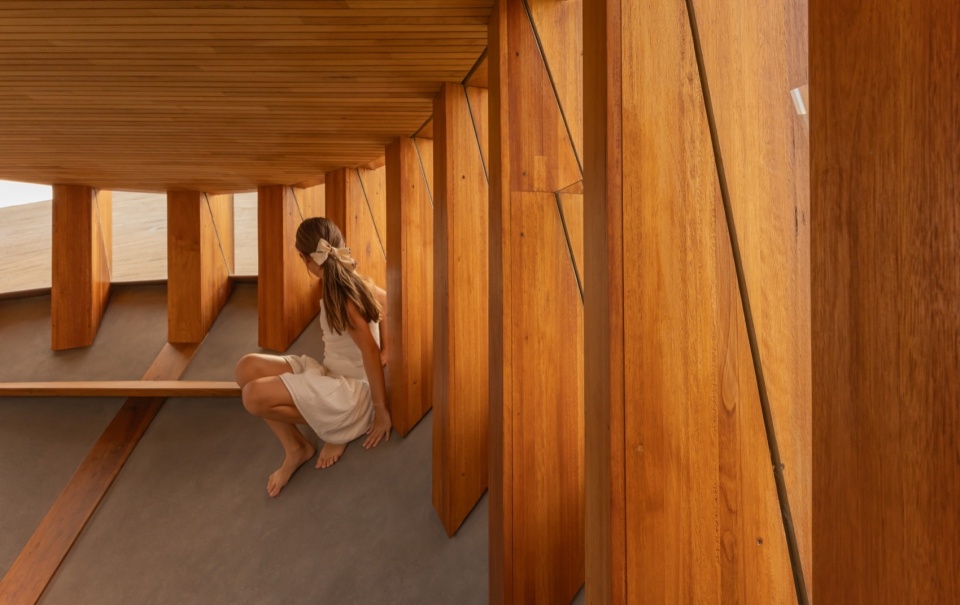
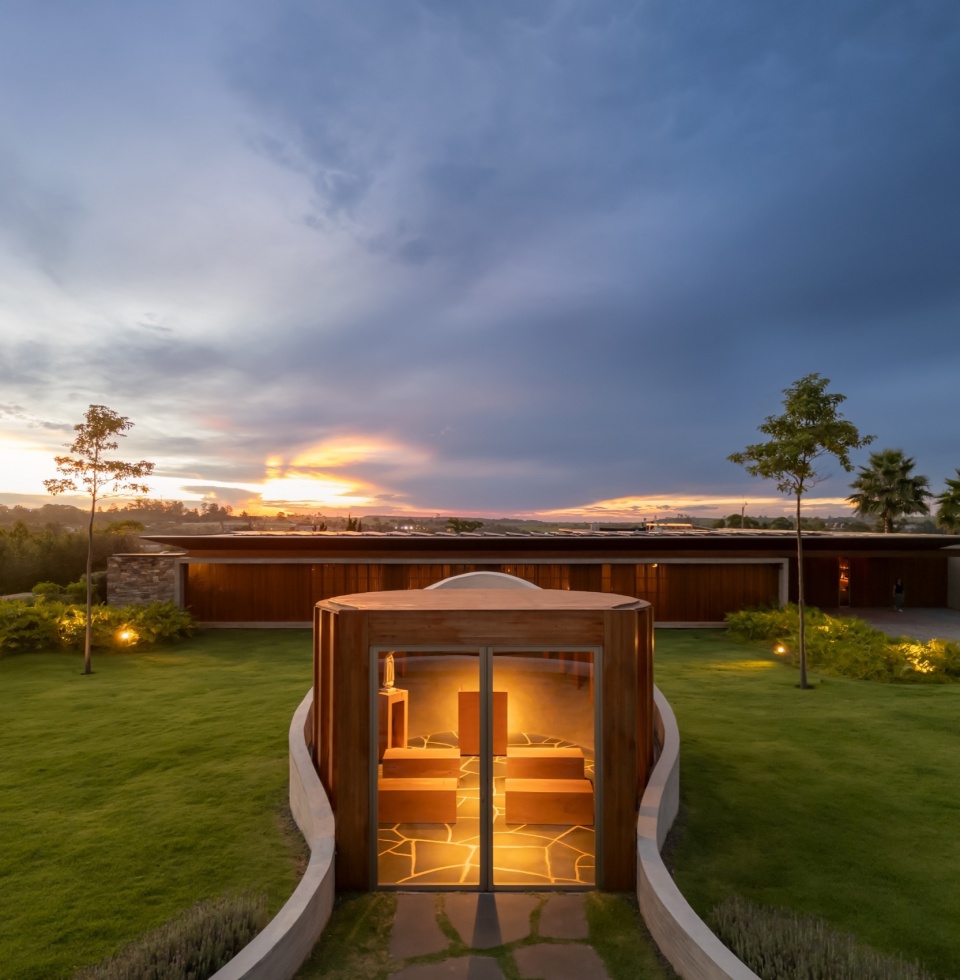
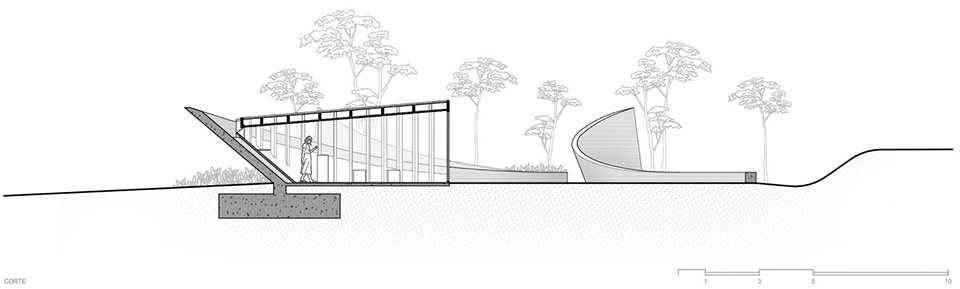
建筑中心为一处约10平方米的祈祷空间,由一组层压木构件围合而成。这些构件自地面升起,支撑并依附于弯曲的混凝土墙体,共同构成一个椭圆形体量。屋顶略微倾斜,采用木结构与防水层构建,内部覆以 Freijó 木条饰面,其微妙的坡度既将雨水导向外部,也将视线引向祭坛。
At the center lies the prayer space – around ten square meters – defined by a cluster of laminated timber elements that rise from the floor to rest upon the curved concrete walls. Together, they form an oval volume. The slightly inclined roof, built in timber with a waterproof membrane, is lined internally with Freijó wood slats. Its subtle slope channels rainwater outward while directing the gaze toward the altar.
▼场地后部为住宅,the rear part of the site located the house
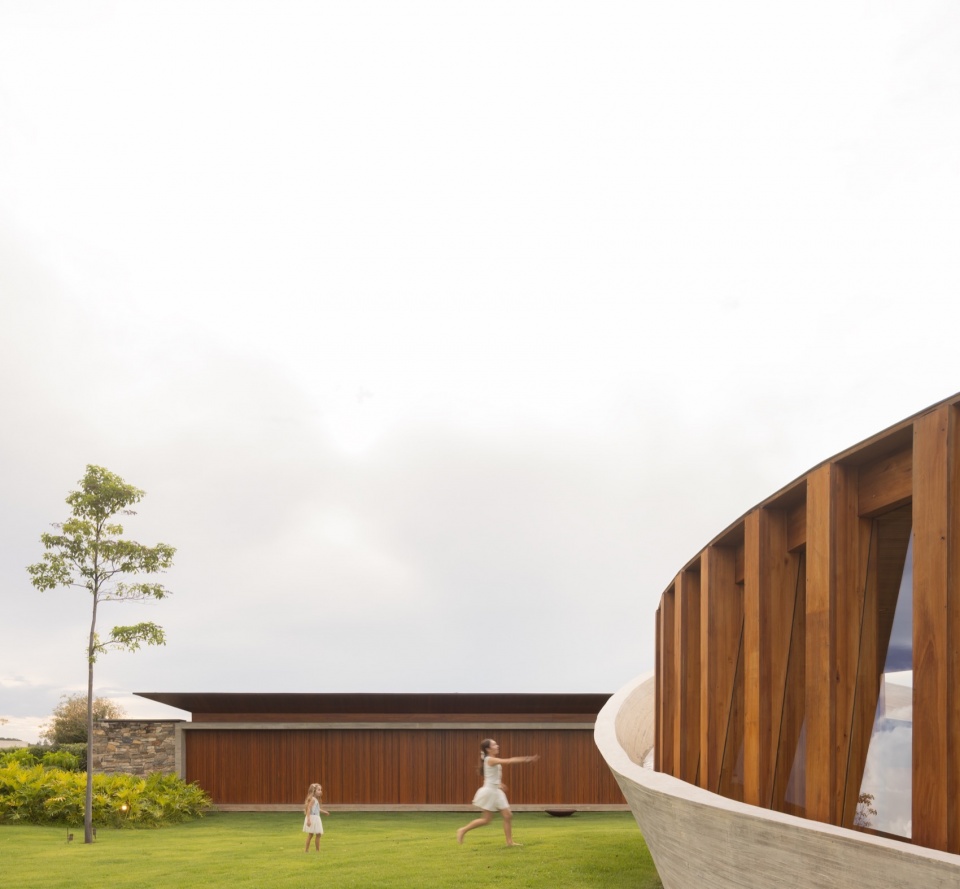
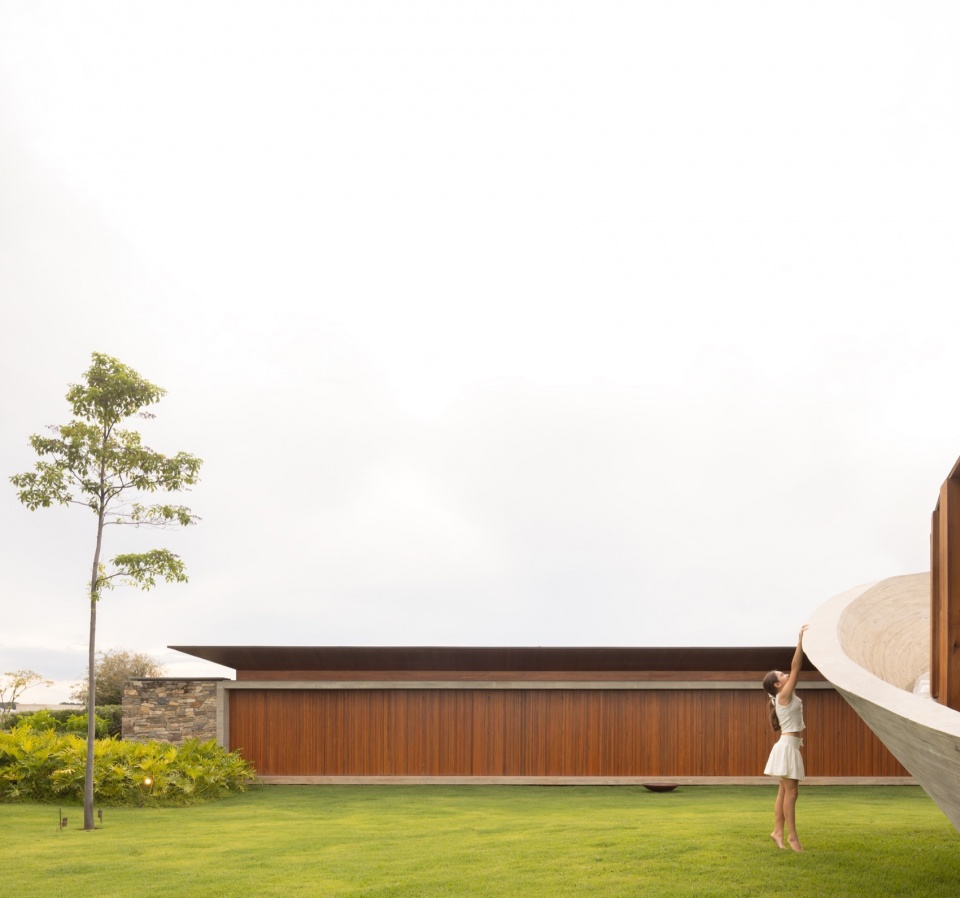
▼教堂外观,exterior view of the chapel
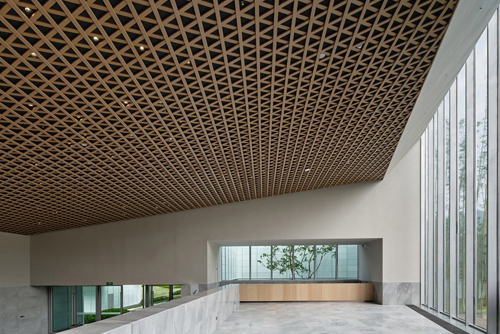
天花在色调与节奏上与整体结构保持协调。木材为混凝土提供温暖的对比关系。地面采用拉丝处理的圣加布里埃尔黑色花岗岩,以不规则拼石方式铺设,并从室内自然延伸至室外。延续勒·柯布西耶的精神,教堂通过与住宅相同的材料三元——混凝土、木材与石材——表达自身语言,同时在象征意义上向上指向神圣。
The ceiling, in tone and rhythm, harmonizes with the surrounding structure. Wood provides a warm counterpoint to the concrete. The floor – in brushed São Gabriel black granite, laid in a broken-stone pattern – extends seamlessly from the exterior. True to Le Corbusier’s spirit, the chapel reveals its voice through the same triad of materials that shapes the adjacent residence: concrete, wood, and stone – while metaphorically aspiring upward, toward the divine.
▼教堂内部,interior view of the chapel
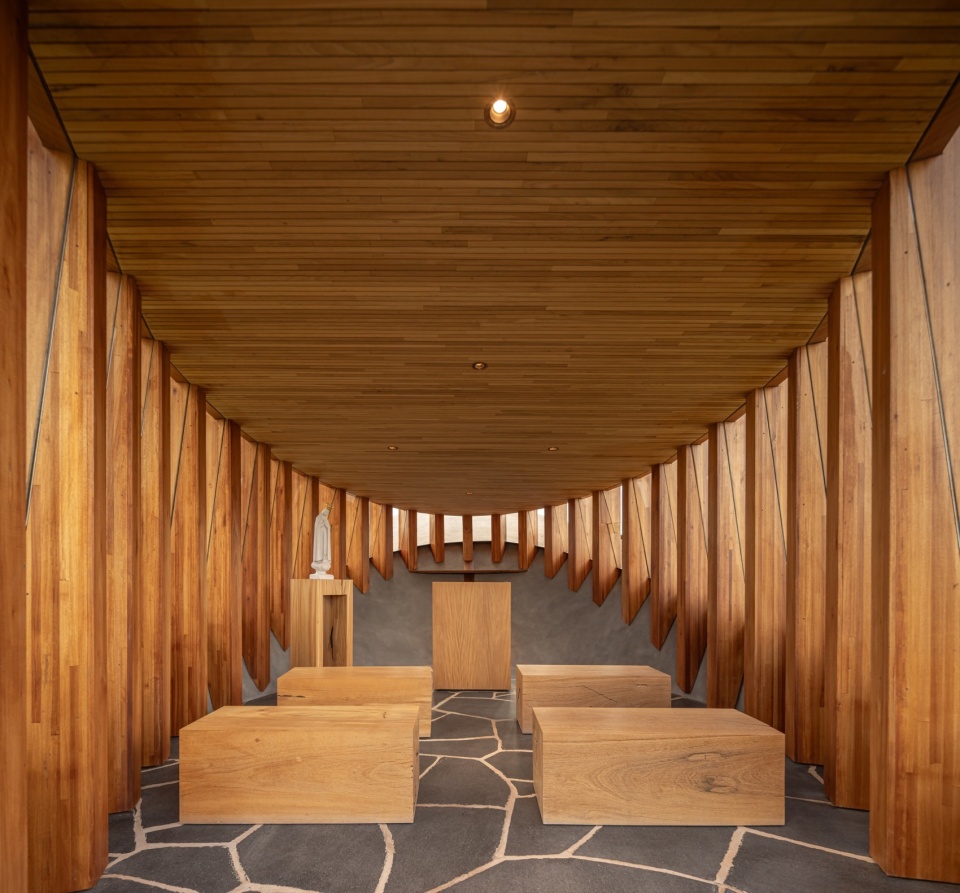
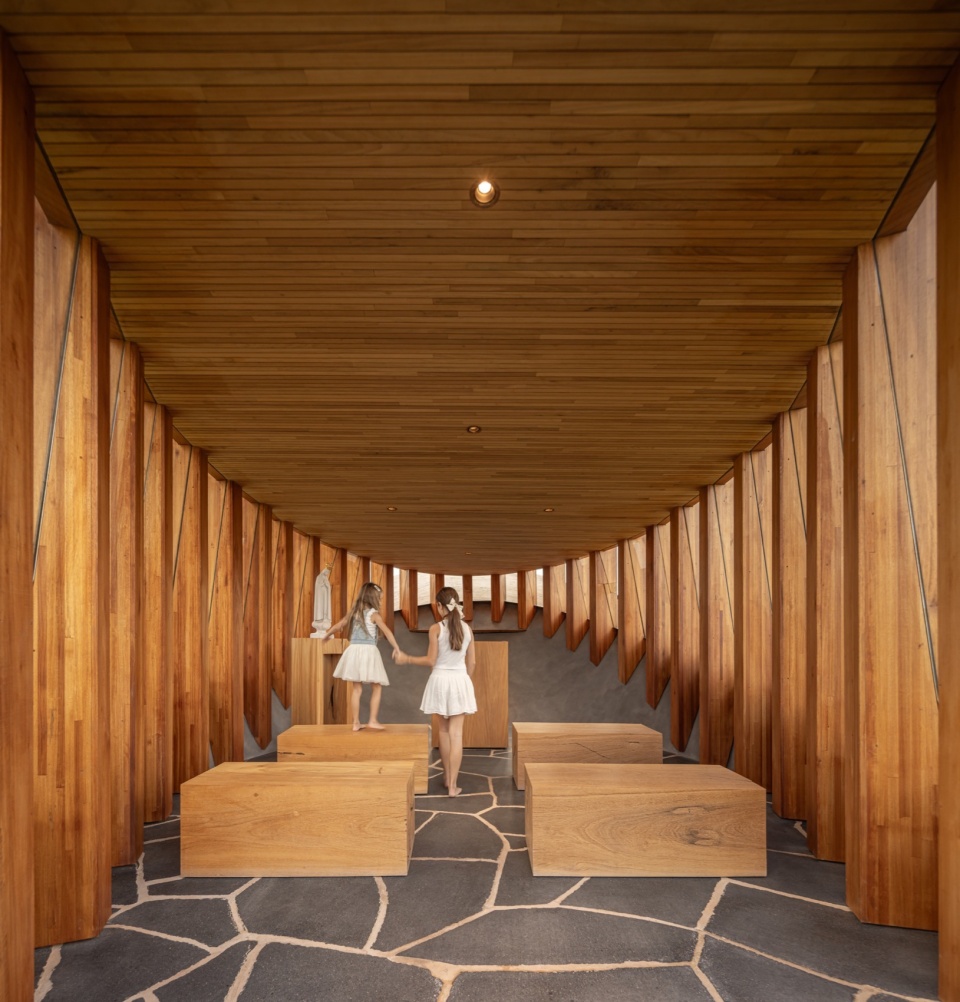
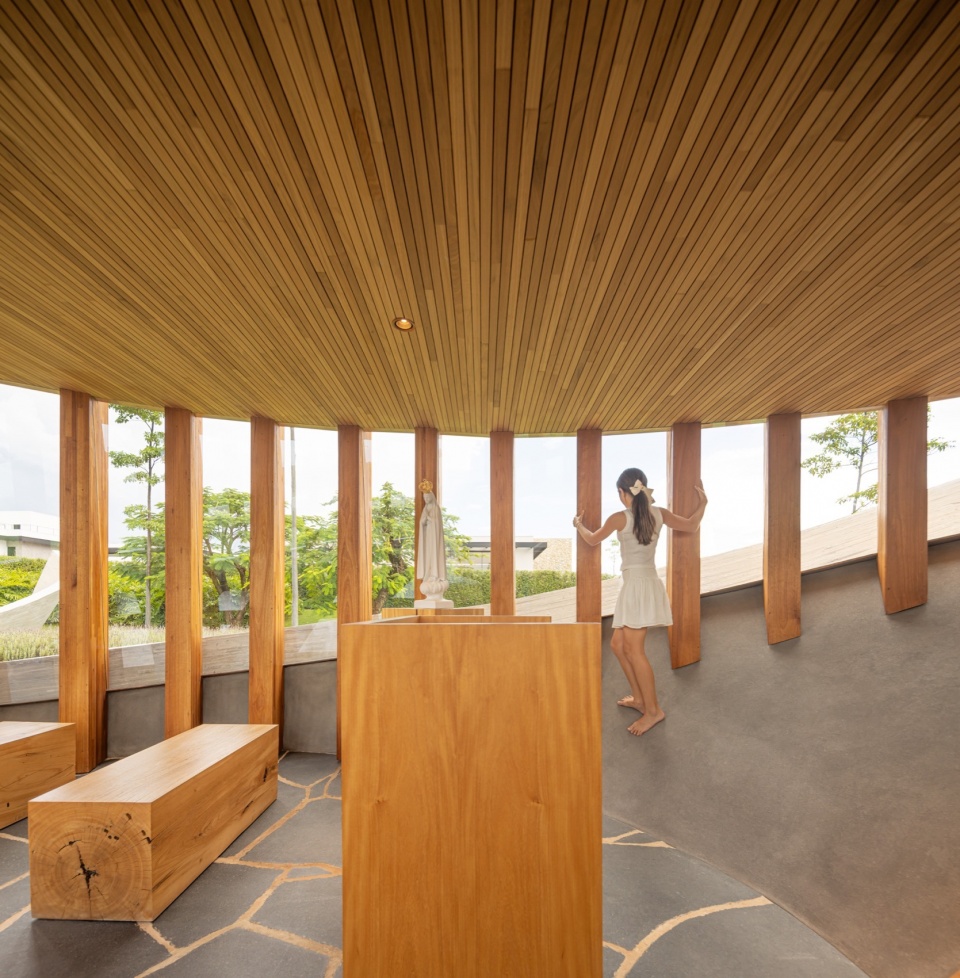
玻璃界面形成一系列固定面板,在保护核心空间的同时框定视野,使花园始终处于感知之中。两扇倾斜设置的可开启窗实现对流通风。与建筑整体一致,家具亦遵循克制原则:长椅、讲坛与圣像基座均由整块木材雕刻而成,几何纯粹而本质。
Glazed surfaces create a sequence of fixed panels that protect the core and frame the view, ensuring the garden is never lost from sight. Two operable panes, set at an angle, allow for cross ventilation. Like the architecture itself, the furniture follows a principle of restraint. The benches, pulpit, and the totem holding the saint were carved from solid wood, their geometry pure and elemental.
▼两扇倾斜设置的可开启窗实现对流通风,
two operable panes, set at an angle, allow for cross ventilation
▼细部,details
景观设计同样追求简洁:一条薰衣草小径环绕建筑。单一植物的选择带来色彩上的统一与完整的感官体验——通过气味、触感以及花朵在风中的律动。这一小型神圣空间的建造过程本身亦成为一段学习之旅:结构上的挑战转化为发现,施工现场成为技术与感性相互交织的实验场。教堂并不追求纪念性,而强调一种“在场”。神圣性在光与材料的对话中浮现,在厚重与轻盈的张力之间生成。这是一种由内而生的建筑——克制而富有象征意味。
The landscape design embraces simplicity: a path of lavender encircles the building. The choice of a single species creates chromatic unity and a complete sensory experience – through fragrance, texture, and the motion of flowers in the wind. The making of this small sacred space became, in itself, a journey of learning – where structural challenge turned into discovery and the construction site became a laboratory, intertwining technique and sensitivity. The chapel does not seek monumentality, but presence. The sacred emerges in the dialogue between light and matter, in the tension between density and lightness. It is an architecture that grows from within – a discreet, symbolic gesture.
▼夜景,night views
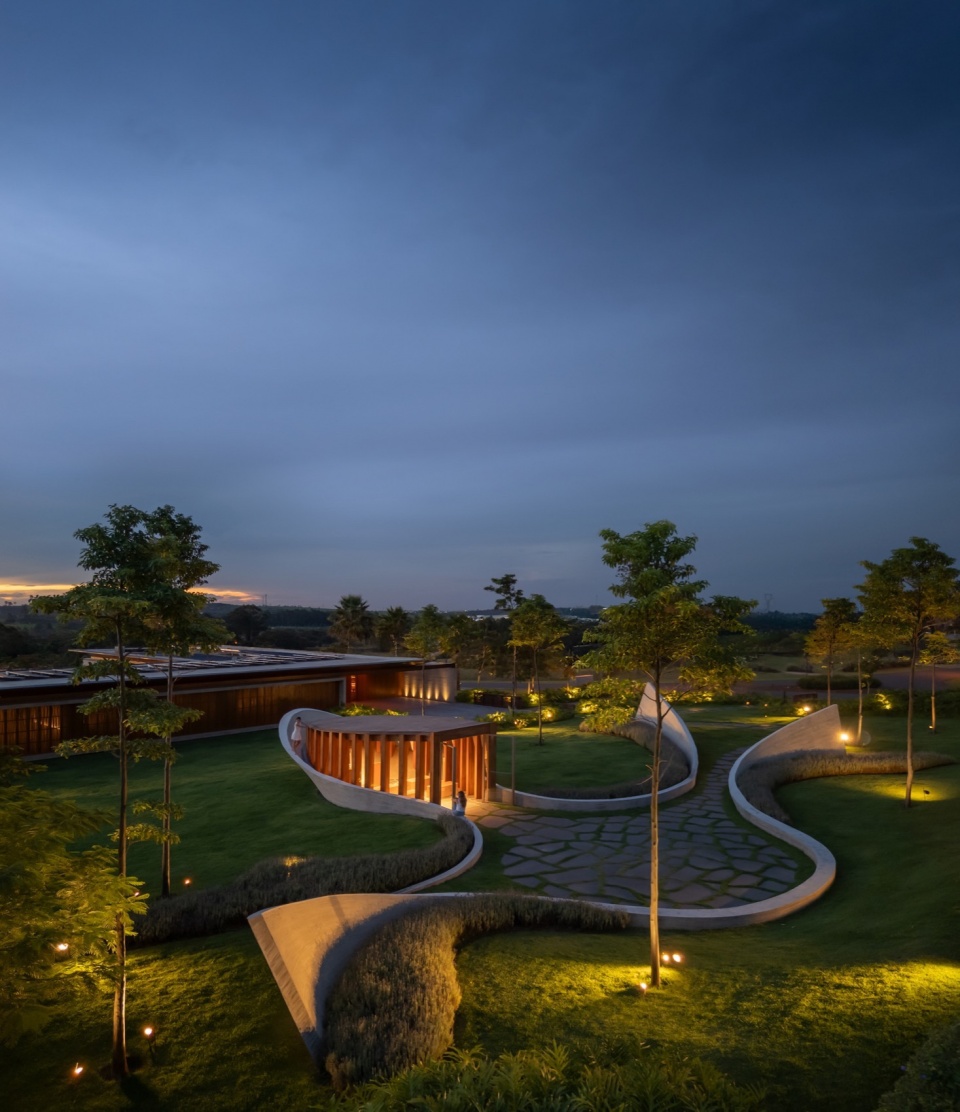
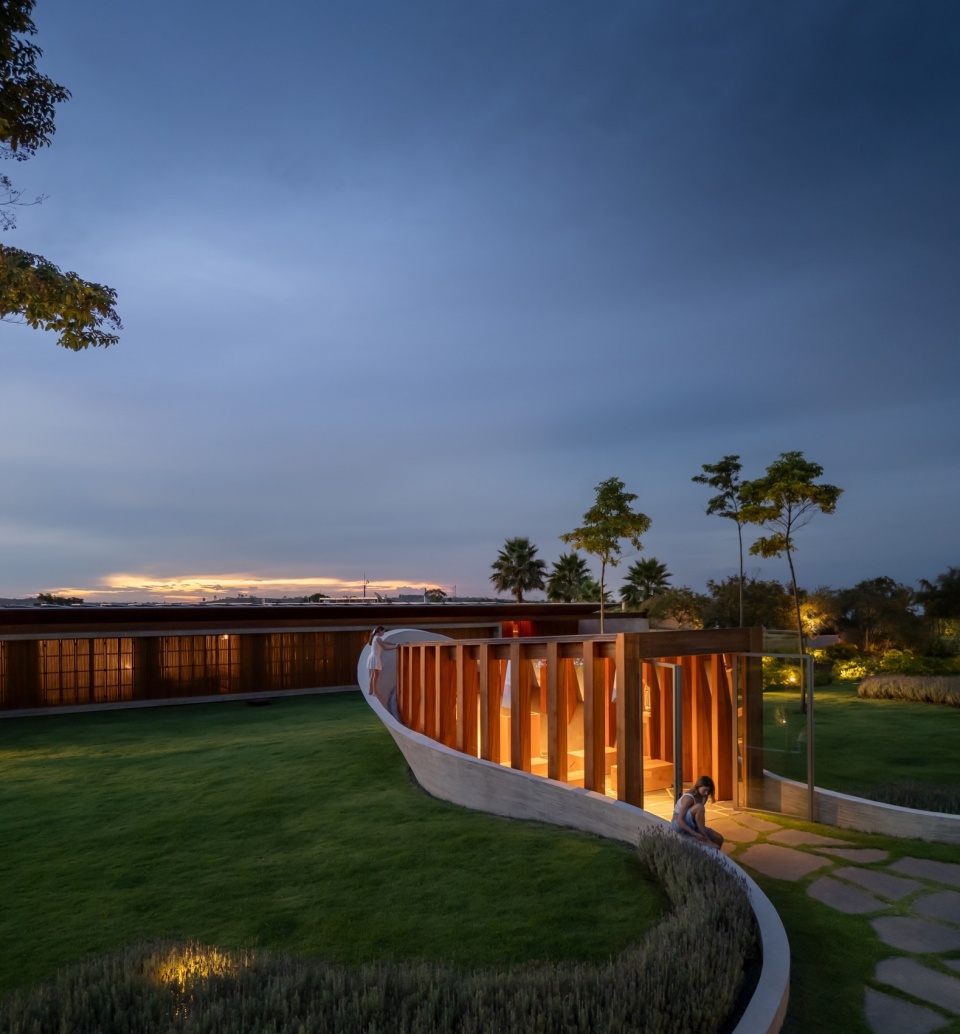
▼场地夜景,night views of the site
▼施工过程,construction process
▼总平面图,master plan
▼教堂平面图,plan of the chapel
▼立面图,elevations
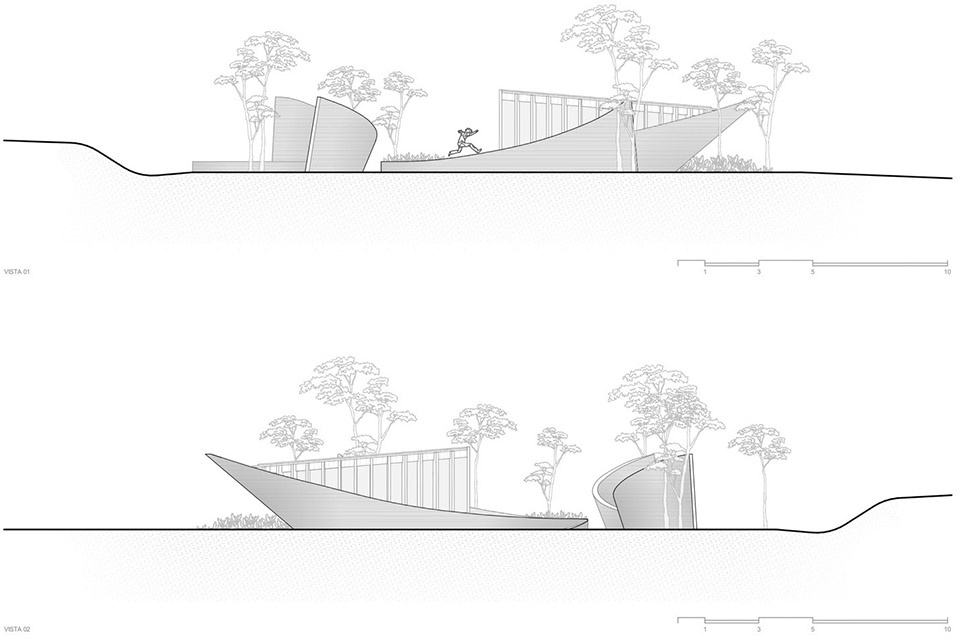
▼剖面图,sections
Data Sheet
Project: Nest Chapel
Location: Itu, São Paulo, Brazil
Area: 10 m²
Design year: 2022
Completion year: 2024
Architecture: Felipe Caboclo Arquitetura
Design Team: Felipe Caboclo, Oswaldo Pessano, Bianca Monti, Amana Roveri, Sylvia Pinheiro
Timber Structure: Rewood
Concrete Structure: Leão e Associados Engenharia de Estrutura
Structural Concrete Consulting: Gabriel Regino, Topseal
Construction company: Seripierri Engenharia
Lighting Design: Lightworks
Window Frames: Lumisystem
Stonework: Bellas Artes
Furniture: Atelier Pedro Petry
Photography: Fernando Guerra
Communications / Text: Matheus Pereira Comunicação