Mahindra & Mahindra汽车制造工作室,印度 / SJK Architects
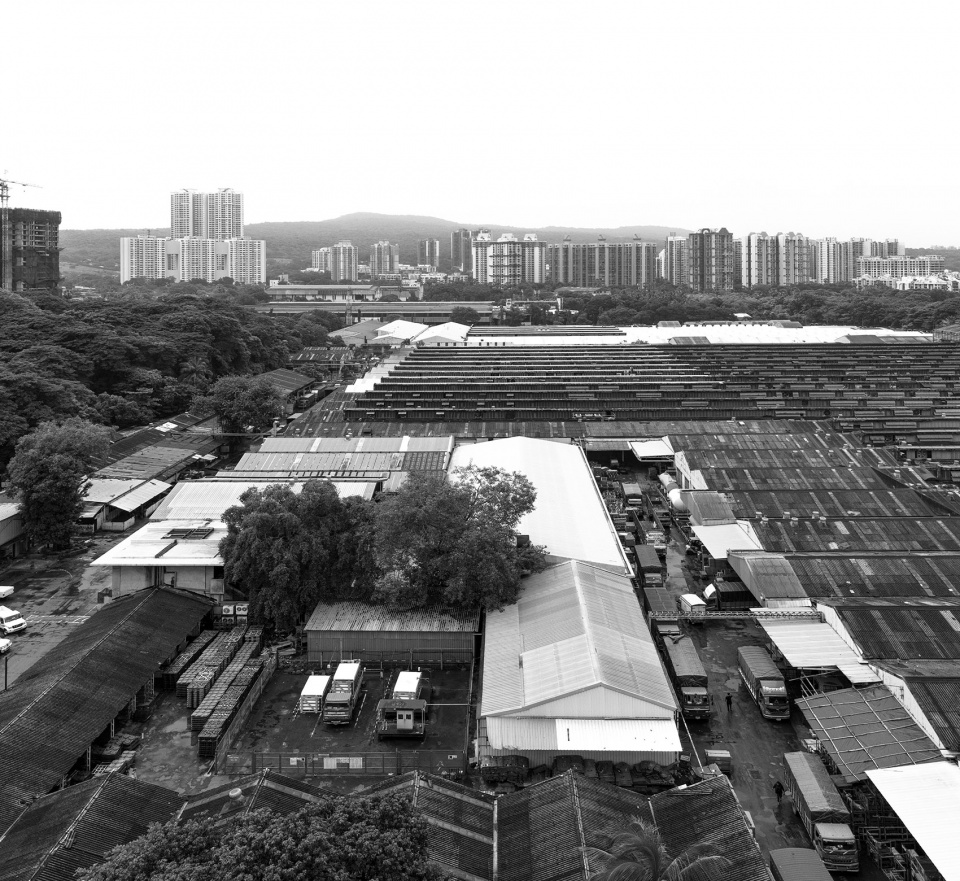
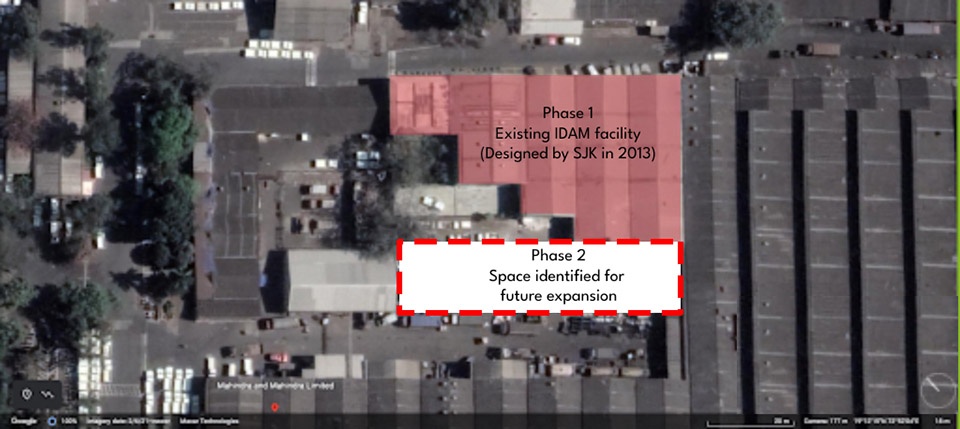
2013年,SJK Architects 在孟买坎迪瓦利一处占地64英亩的工厂园区内,为 Mahindra & Mahindra 汽车团队设计了一座设计工作室。空间被构想为激发创造力的场所——一种从工厂机械节奏中抽离的“庇护所”。手工抹灰的灰色墙面、混凝土地面与富有戏剧性的自然光,共同营造出更接近工作坊(atelier)而非工业厂房的氛围。
In 2013, SJK Architects designed a design studio for Mahindra & Mahindra’s automobile team within their 64-acre factory campus in Kandivali, Mumbai. The space was conceived as a place that would inspire creativity—a refuge from the mechanical rhythm of factory life, where hand-finished grey plaster walls, concrete floors, and dramatic natural light created an environment that felt more atelier-like than industrial shed.
▼工作室外观,exterior of the studio
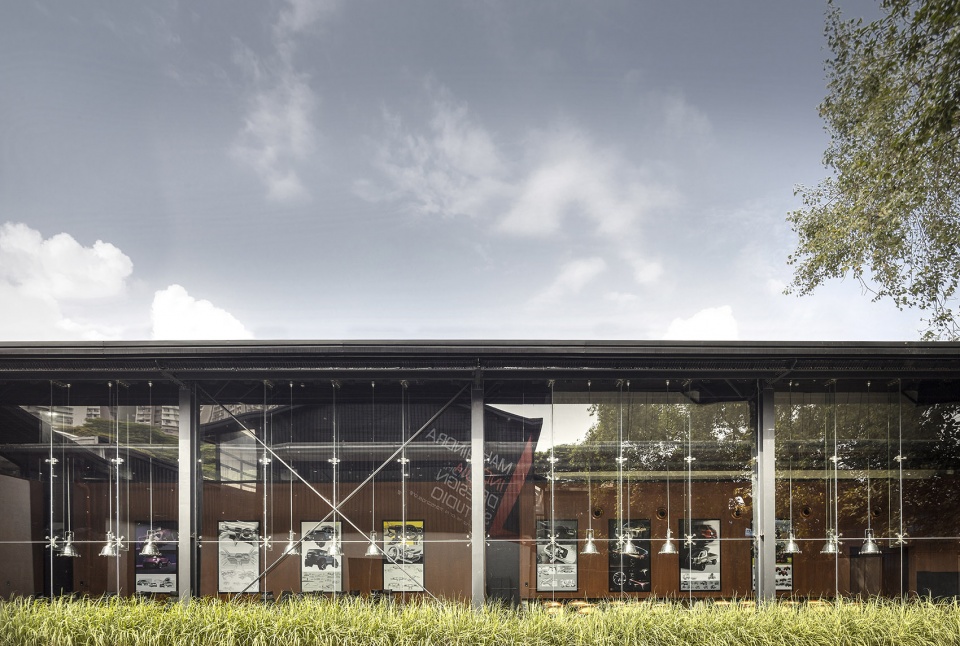
十二年后,事务所再次受委托进行扩建。公司规模显著增长,汽车行业发生演变,设计工具也彻底更新。任务看似直接:打造一个高度技术化的空间,用于1:1汽车原型制作,并引入印度首个德国机械臂。然而,真正的挑战更为复杂:如何在“手工质感与诗意表达”的一期,与“高度技术驱动”的二期之间建立联系?如何在工业厂房语汇的限制下,实现视觉与空间上的统一?又如何在紧张的时间与预算条件下完成这一切,而无法使用如耐候钢等赋予原有建筑特征的昂贵材料?
Twelve years later, the firm was commissioned again to design an extension. The company had grown significantly, the automobile industry had evolved, and the tools of the trade had transformed entirely. The brief was straightforward: create a highly tech-equipped space for 1:1 automobile prototyping, including a German robotic arm—the first of its kind in India. Yet the real challenge was far more complex: how do you bridge a highly crafted, poetic Phase 1 with a Phase 2 driven by intense technological demands? How do you integrate two phases visually and spatially when working within the constraints of an industrial shed vocabulary? And how do you do all of this on a tight timeline and budget that wouldn’t allow for expensive materials like Corten steel that gave the original structure its character?
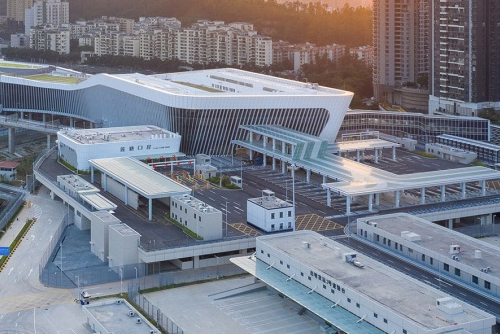
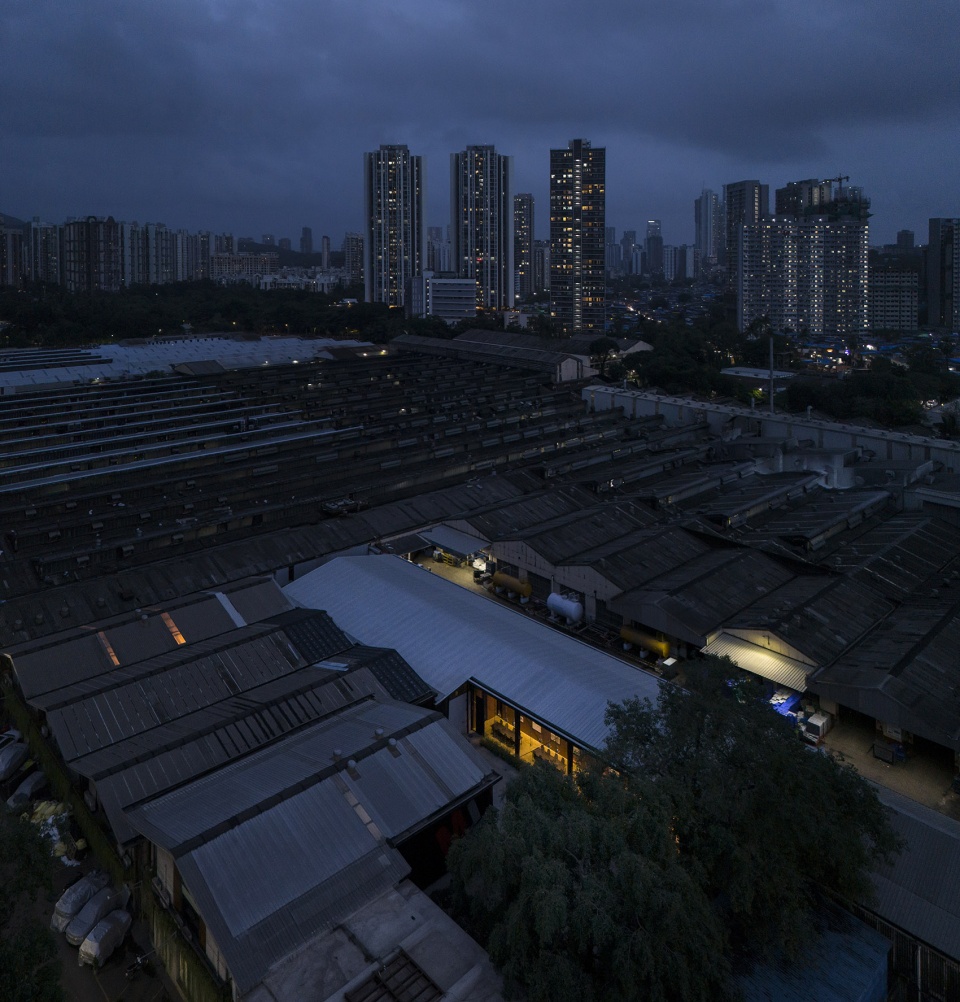
▼工厂园区鸟瞰,aerial view of the industrial campus
SJK Architects 的回应,是构建一个同时存在于“三个时态”的建筑:在材料与空间延续中回应过去,以技术精度服务当下,并通过可适应性预设未来。整个结构被设计为可拆解系统——当空间需求变化时,结构框架可整体拆卸并在其他场地再利用,从而大幅减少隐含碳排放与填埋废弃物。
SJK Architects’ response was to design a building that exists in three tenses at once: honouring the past through material and spatial continuity, serving the present with technical precision, and anticipating the future through adaptability. The entire structure is designed for disassembly; as and when spatial needs shift, the entire structural frame can be dismantled and materials reused elsewhere, drastically minimising embedded carbon emissions and landfill waste.
▼汽车工作室外观,Automobile Design Studio facade
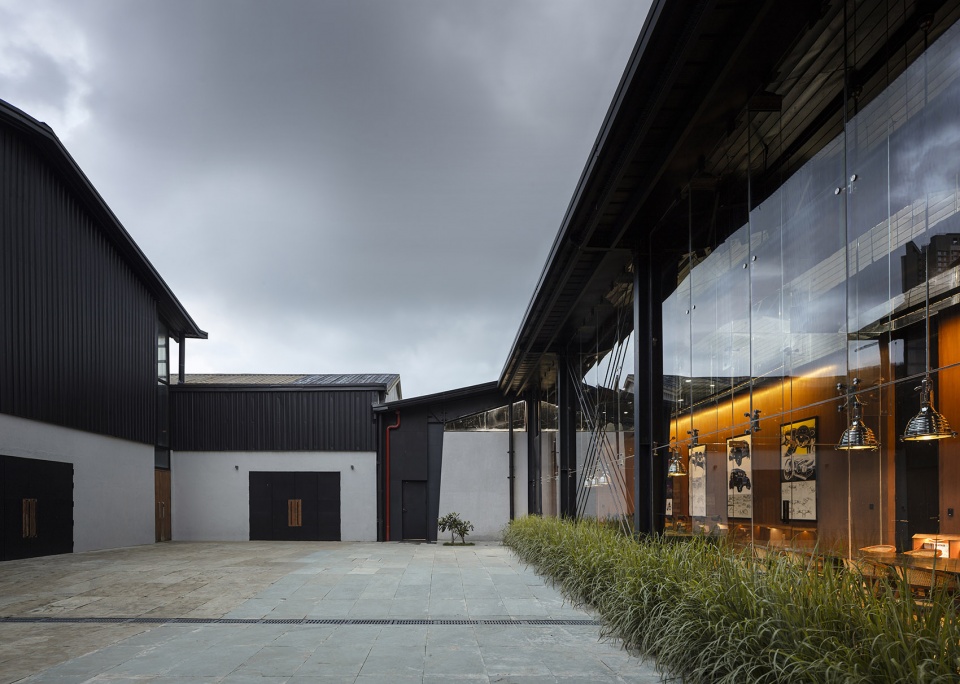
功能分区 Zoning
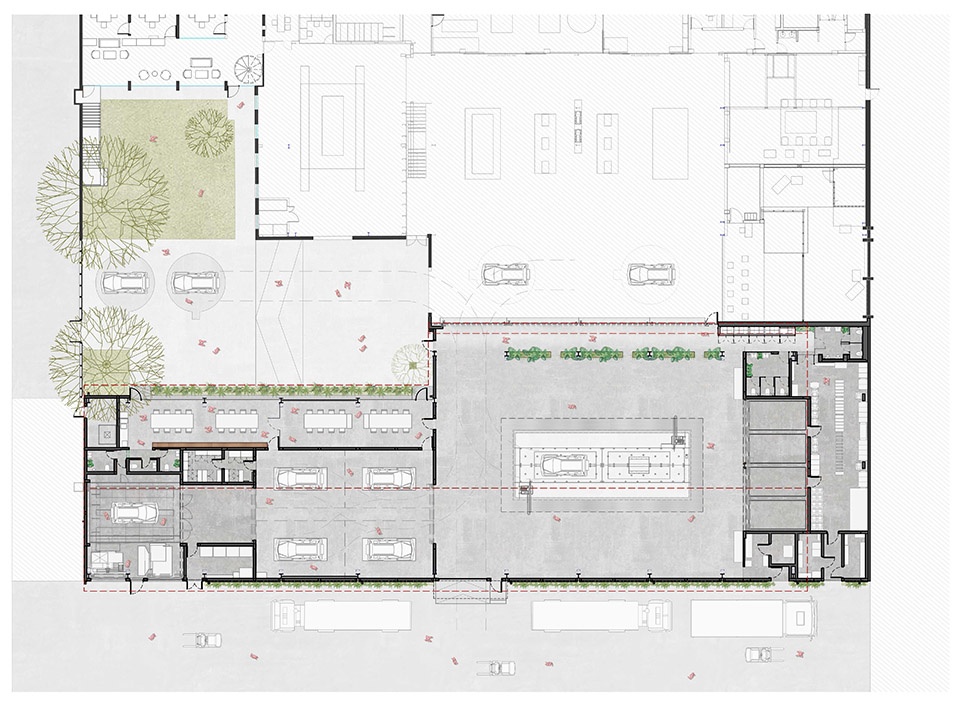
项目用地为21米×67米,位于现有设施南侧边缘,并沿原有庭院展开。该庭院被保留并拓宽,转化为景观化的公共交流空间。空间组织以一处8米×17米的中央“泥塑建模区”(Clay Bay)为核心,用于全尺寸车辆造型。需要封闭与可控光环境的功能——如喷漆房、调漆间与硬质建模区——布置在西侧;服务空间沿东侧既有工业厂房展开;面向庭院的一侧则布置茶水间、资料室与模型制作工位,充分利用自然采光与景观资源。
The 21 m by 67 m project site abuts the southern edge of the existing facility and extends along the edge of the original courtyard, which is retained and widened as a landscaped social space. The layout is anchored by a central 8 m by 17 m clay contouring area (Clay Bay) where full-scale vehicle modelling takes place. Functions requiring enclosure and controlled lighting—the paint booth, paint kitchen, and hard modelling area—are positioned towards the west. Service areas are planned towards the east, along existing industrial sheds. The courtyard-facing edge accommodates functions like the pantry, library, and model-makers’ work desks, which benefit from natural light and access to the landscape.
▼汽车工作室外观,Automobile Design Studio facade
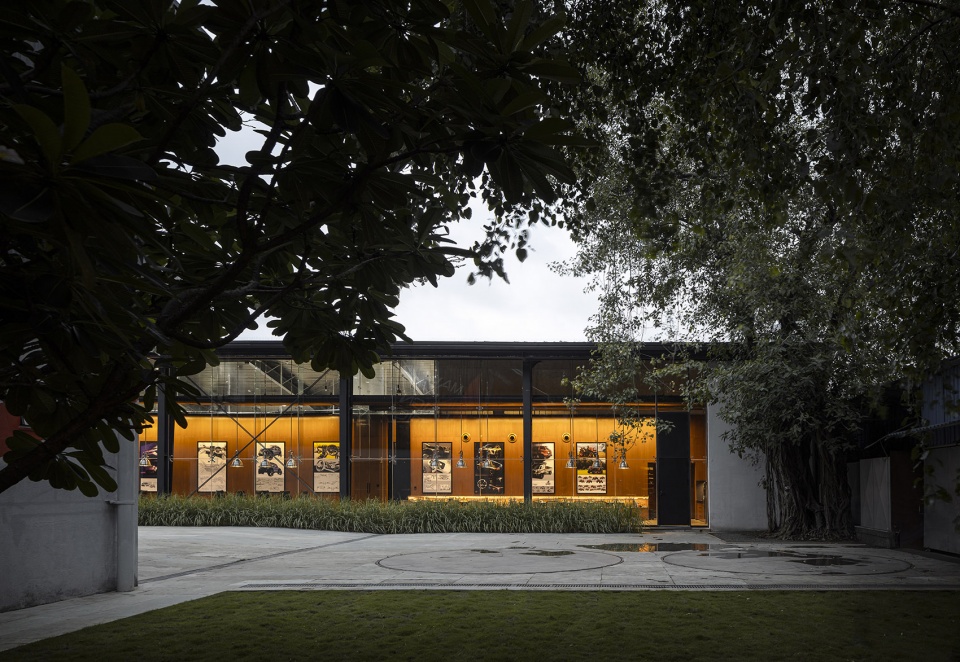
以黑色钢结构建立视觉统一 Creating Visual Unity Through a Sharp Black Steel Framework
一个锋利、清晰的黑色钢结构体系构成项目的视觉与结构骨架。结构被有意外露,每一个构件的比例与连接节点均经过精细设计,使其不仅承载功能,同时成为汽车设计过程的背景舞台。
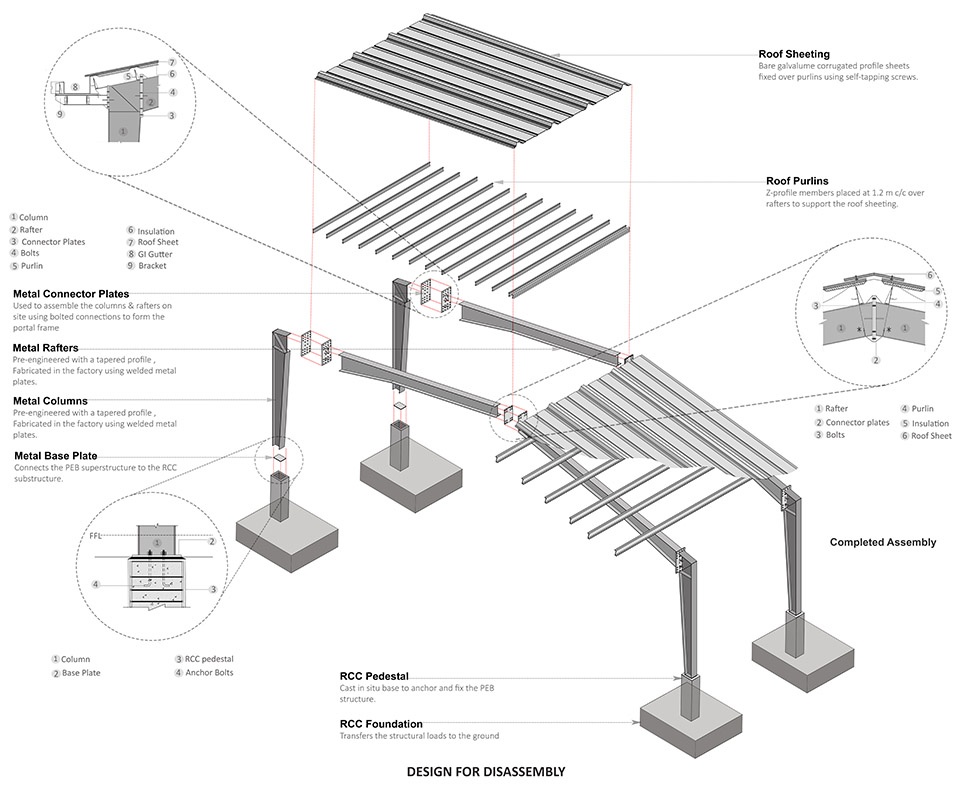
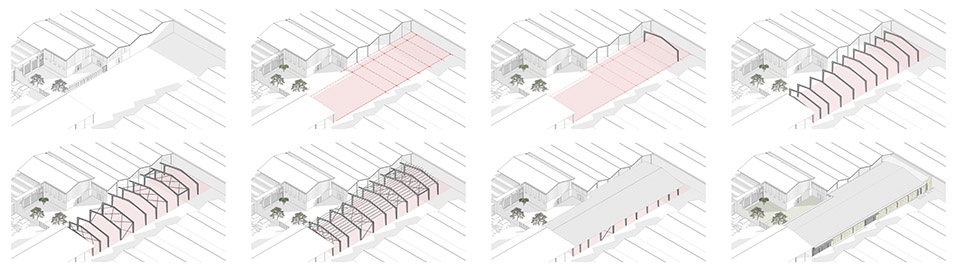
▼展示拆卸设计的分析图,Diagram showing design for disassembly
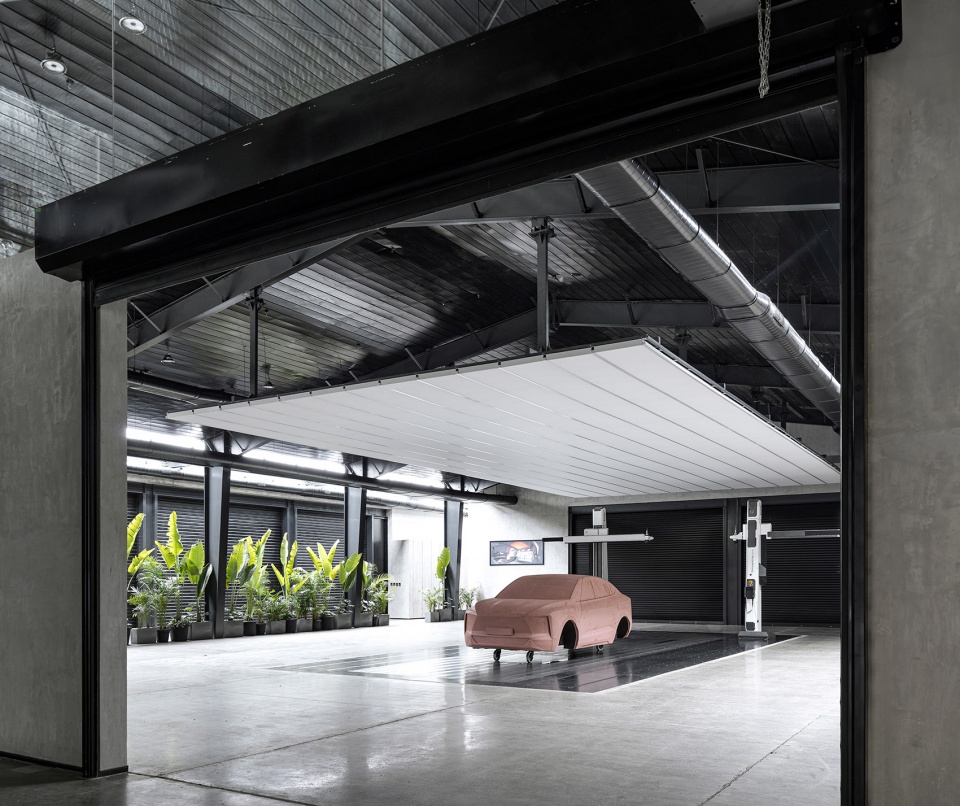
A sharp black steel framework establishes the project’s visual and structural backbone. The framework is exposed deliberately, each element proportioned and every connection detailed to create a visually appealing space that serves as the perfect backdrop to the act of creating well-designed automobiles.
▼锋利、清晰的黑色钢结构体系,a sharp black steel framework
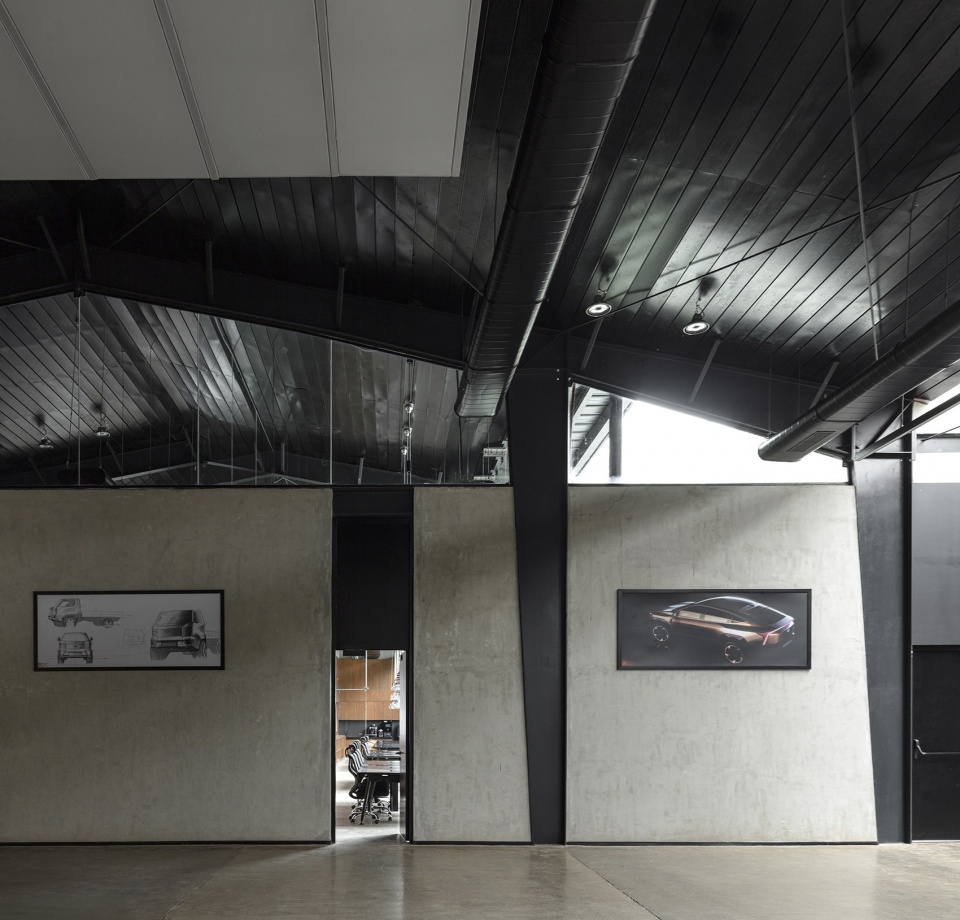
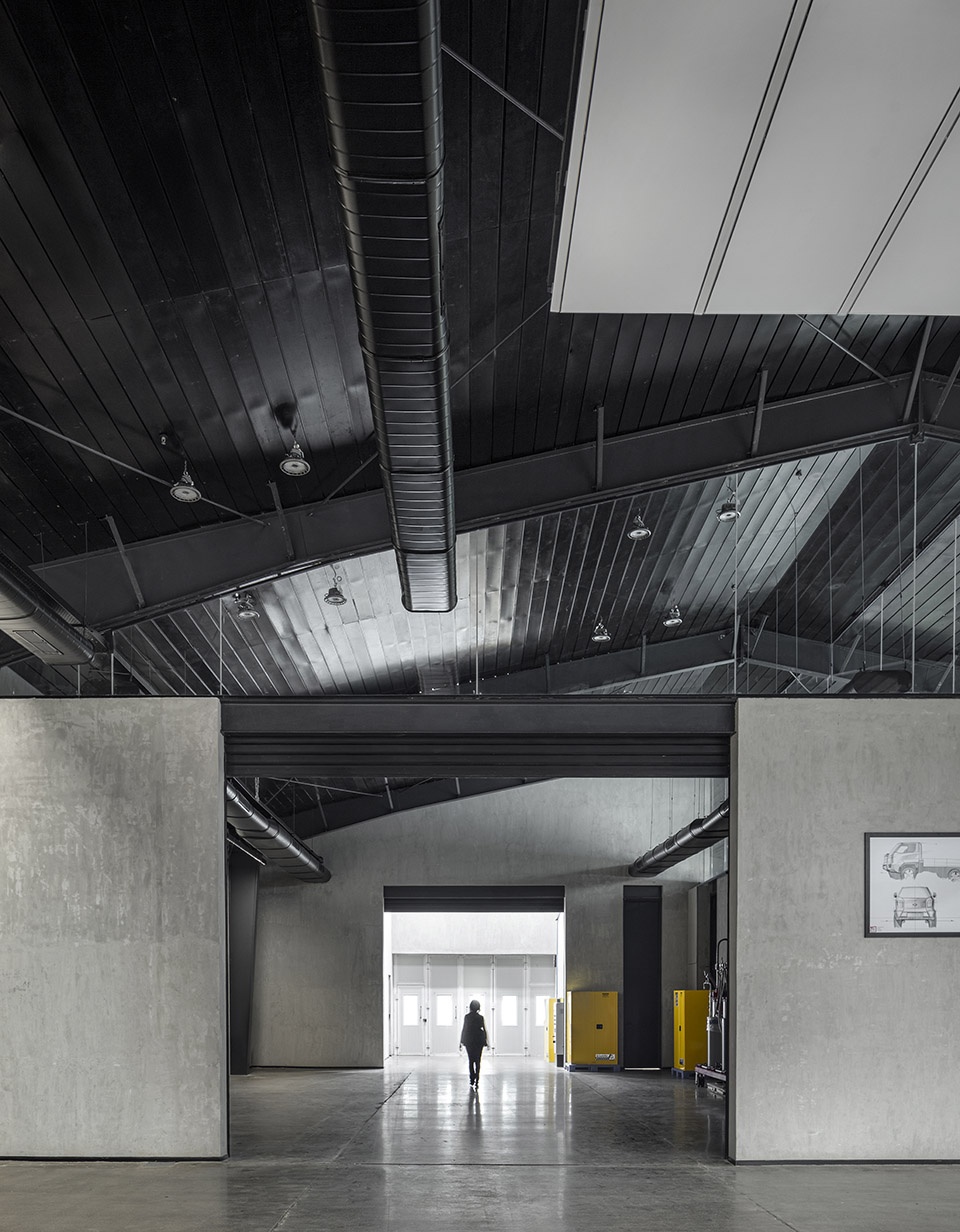
原有工作室的材料语言——黑钢、灰色水泥抹灰与混凝土——被延续至扩建部分。但差异体现在建造精度上:2013年的一期因技术条件限制,呈现出一定的手工误差;而扩建部分的钢结构则极为精确,采用工厂预制,达到毫米级精度。黑色喷涂的结构型材依据受力需求进行定制:受力集中处更为厚重,非关键部位则更为纤细,从而实现结构效率与视觉优雅的统一。机器精度与手工痕迹形成对话,技术演进亦成为材料记忆的延续。所有隔墙高度控制在4.3米,而非达到7.5米的整体高度,使黑色屋顶呈现为一个连续整体,覆盖新旧两部分。这一策略至关重要——它使得相隔十二年、技术路径不同的两期空间被统一为一个整体。
The original studio’s palette—black steel, grey cement plaster, concrete—carries forward into the extension. The difference emerges in the precision of execution. The original studio, built with the technology available in 2013, carried the subtle irregularities of older fabrication methods. The extension’s steel, by contrast, is razor-sharp. Pre-engineered off-site with millimetre precision, the black-painted structural profiles celebrate the evolution in construction technology. Each frame is custom-profiled to bear only required loads—thicker where forces concentrate, slimmer where they don’t—creating structural efficiency that doubles as visual elegance. Machine precision complements human touch; technical evolution honours material memory. All partition walls are held at 4.3 metres rather than rising to the full 7.5-metre height, ensuring the black-painted roof reads as one continuous canopy unifying both structures. This gesture proves critical: it makes the two phases—despite the twelve-year gap and different technological approaches—feel like one coherent whole.
▼黑钢、灰色水泥抹灰与混凝土,black steel, grey cement plaster, concrete
▼实现结构效率与视觉优雅的统一,
creating structural efficiency that doubles as visual elegance
通过庭院与“天光街道”连接两个阶段Bridging Two Phases Spatially Through Courtyard and Skylit Street
在工业厂房的限制条件下,设计通过两个关键空间动作实现整合。原有设计中的景观庭院被保留并加以拓宽,转化为连接新旧两部分的共享核心。这一室外空间在原本密集的工业园区中提供了一处“呼吸之所”,既承载非正式交流,也建立起两个阶段之间的视觉联系。
▼展示旧结构与新结构之间关系的分析图,Diagram showing relationship between the old and new structure
Working within industrial shed constraints, two crucial spatial gestures bridge the phases. The landscaped courtyard from the original design is retained and widened, transforming into a communal centre that anchors both old and new. This outdoor space provides breathing room in an otherwise dense industrial campus, offering a place for informal exchange and visual connection between the two phases.
▼天光街道,skylit street
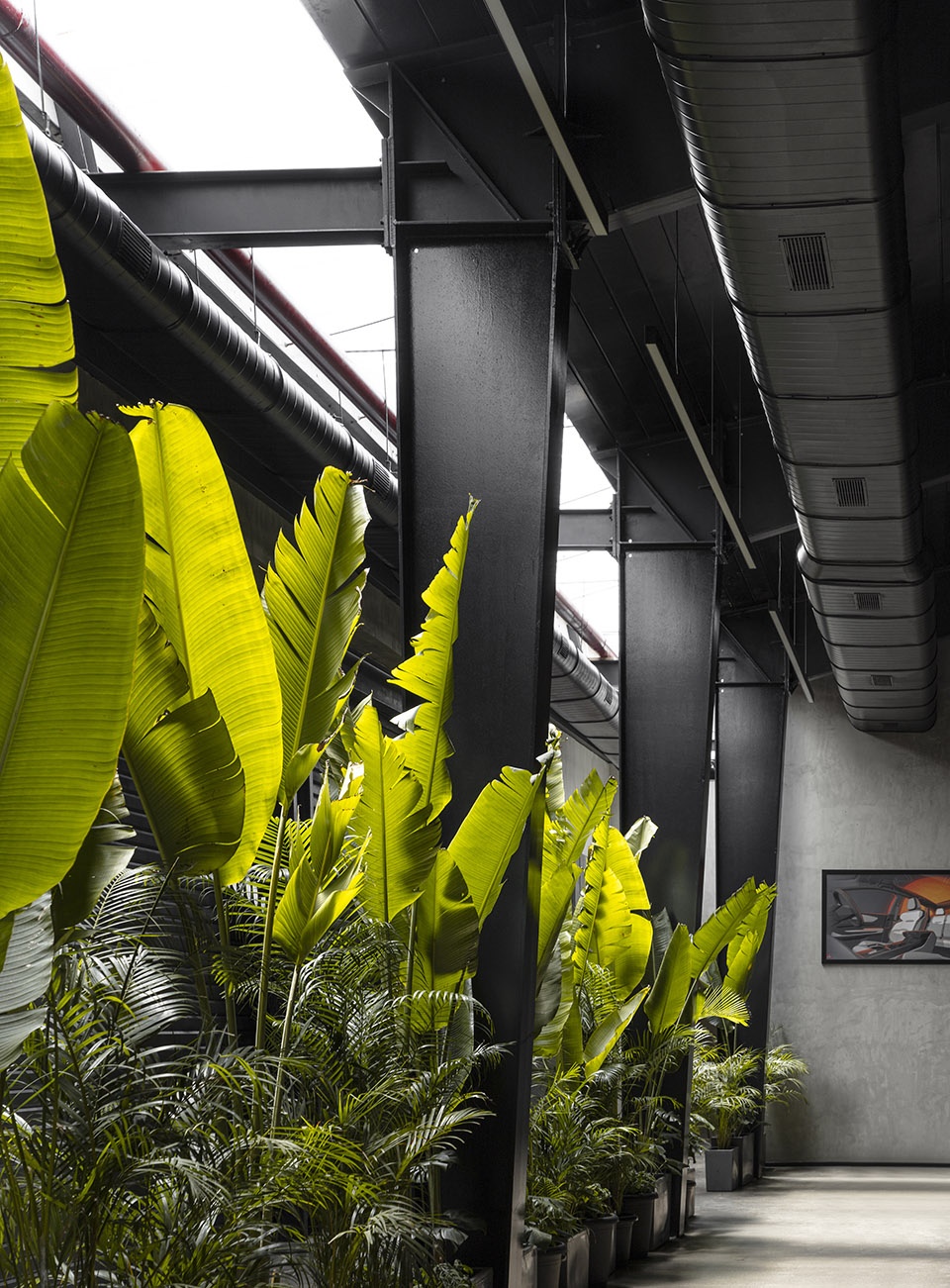
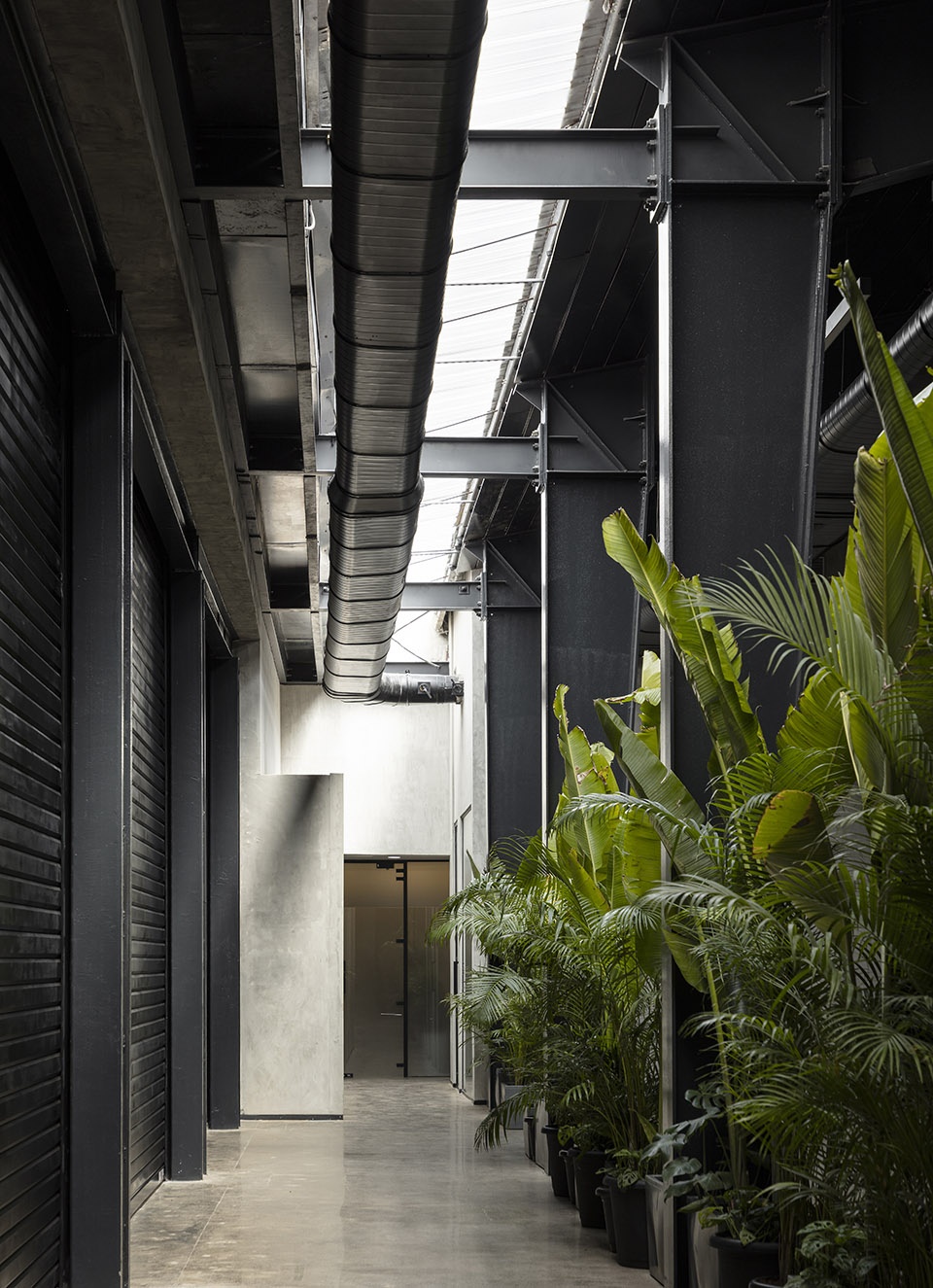
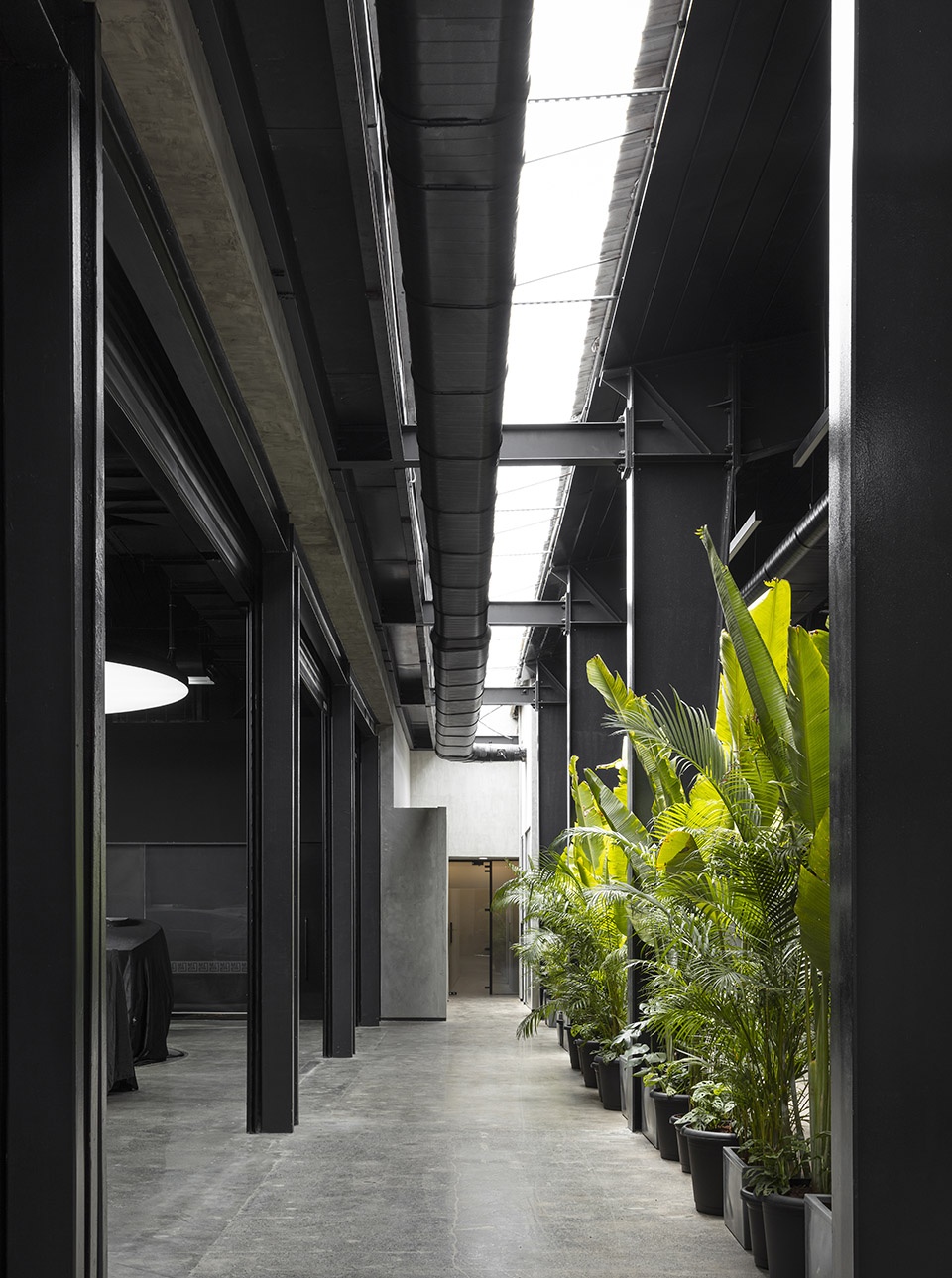
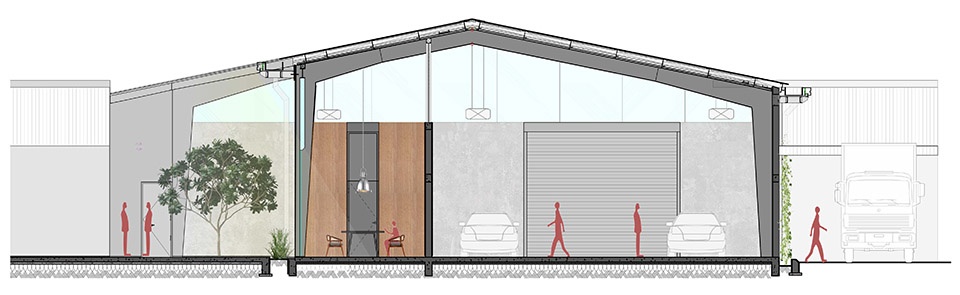
第二个策略更具戏剧性:在两栋建筑之间2.5米的缝隙中嵌入一条“连接街道”,其上覆盖连续天窗,两侧布置盆栽植物。这一充满光感的界面,将原本可能沦为功能性通道的空间,转化为富有体验感的场所。在一个几乎完全封闭的工业外壳中,光线的变化成为时间流逝的标记,使使用者重新感知自然节律。原工作室的南侧墙体(构成这条街道的一侧界面)被拆除,并以卷帘门替代,使两栋建筑在需要时可整合为一个完整、连续的工作空间。庭院与“天光街道”的共同作用,使新旧之间的界面被消隐,形成连续统一的空间体验。
The second gesture is more dramatic. A connecting street is carved into the 2.5-metre gap between structures, topped with a continuous skylight and lined with potted plants. This luminous threshold transforms what could have been a utilitarian corridor into a refreshing spatial experience. In an otherwise completely sealed-off shell, the changing quality of light in this space marks the passage of time through the day, reconnecting users with natural rhythms. The southern wall of the original studio (which forms one edge of the street) is demolished and replaced with rolling shutters, allowing the two buildings to function as one expansive workspace when needed. Together, the courtyard and skylit street create spatial continuity that makes the seam between old and new disappear.
▼使新旧之间的界面被消隐,makes the seam between old and new disappear
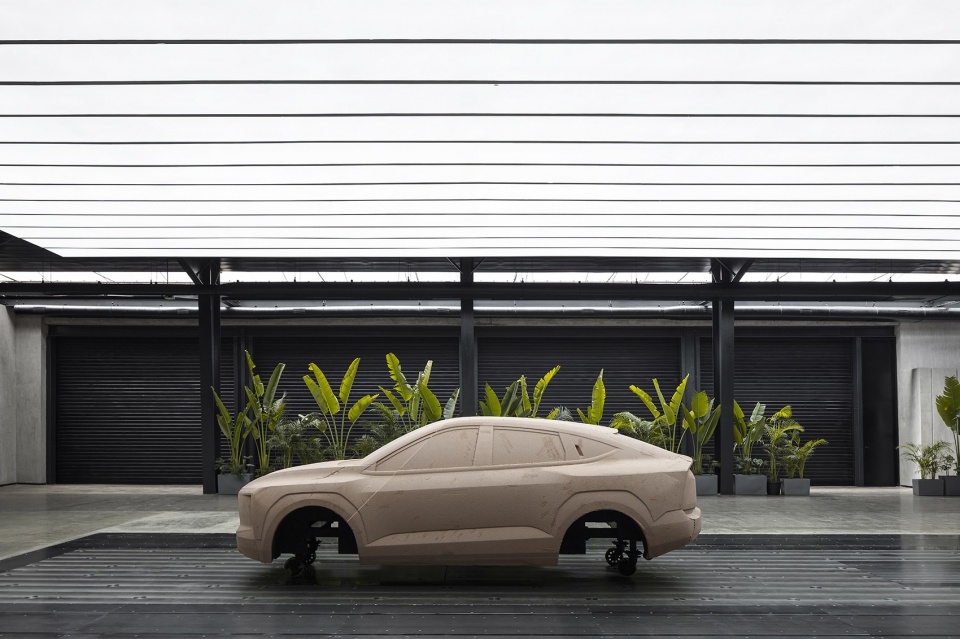
将技术需求转译为“电影感空间”Translating Technical Demands Into Cinematic Volumes
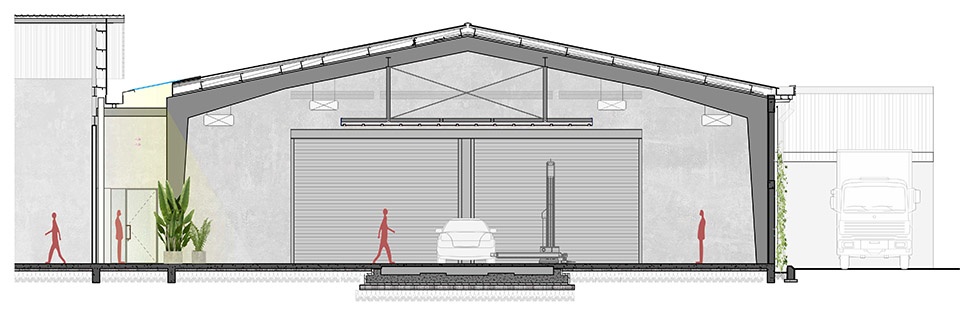
新工作室需满足SUV、厢式车及多功能车辆的全尺寸建模需求。通过与结构工程师协作,建筑实现了18米无柱跨度与7.5米净高——在场地与预算限制下的最大化空间条件。一个8米×17米的泥塑建模区(Clay Bay)位于空间核心,并设置6米净空范围,以确保车辆流线的顺畅运行。项目的关键在于:在整合高精度、高要求的技术系统——如线性光源与CNC机械臂——的同时,仍能保证人体舒适性与空间的启发性。
The new studio needed to accommodate full-scale modelling of SUVs, vans, and utility vehicles. Working with structural consultants, the architects have achieved an 18-metre column-free span and a 7.5-metre height—the maximum possible within site and budget constraints. An 8 m by 17m clay contouring area (the Clay Bay) sits at the centre, with a 6-metre clearance zone ensuring seamless vehicle movement. The crux of the project was integrating sharp and demanding technology—lines of light, CNC robotic arms—while ensuring human comfort and an inspiring environment.
▼“电影感空间”,cinematic volume
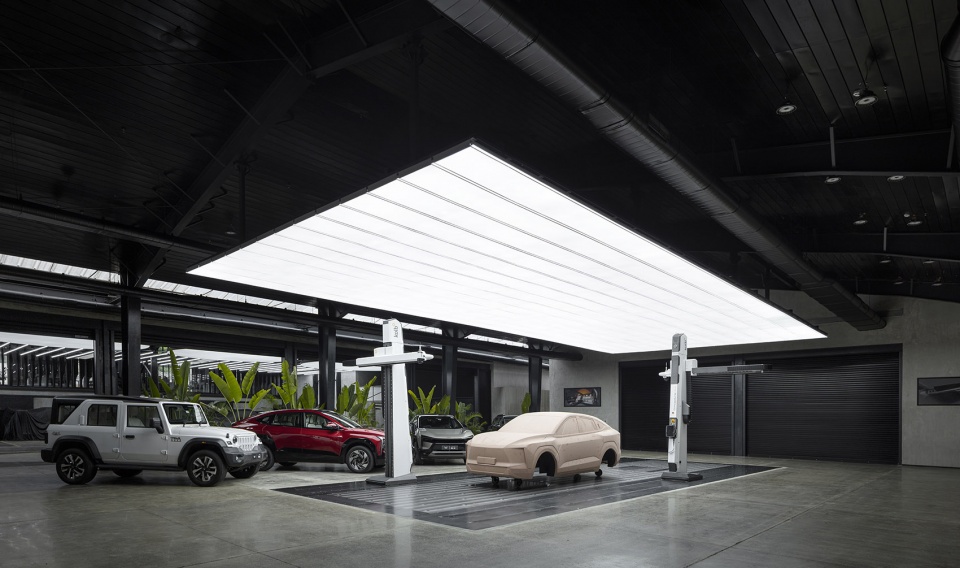
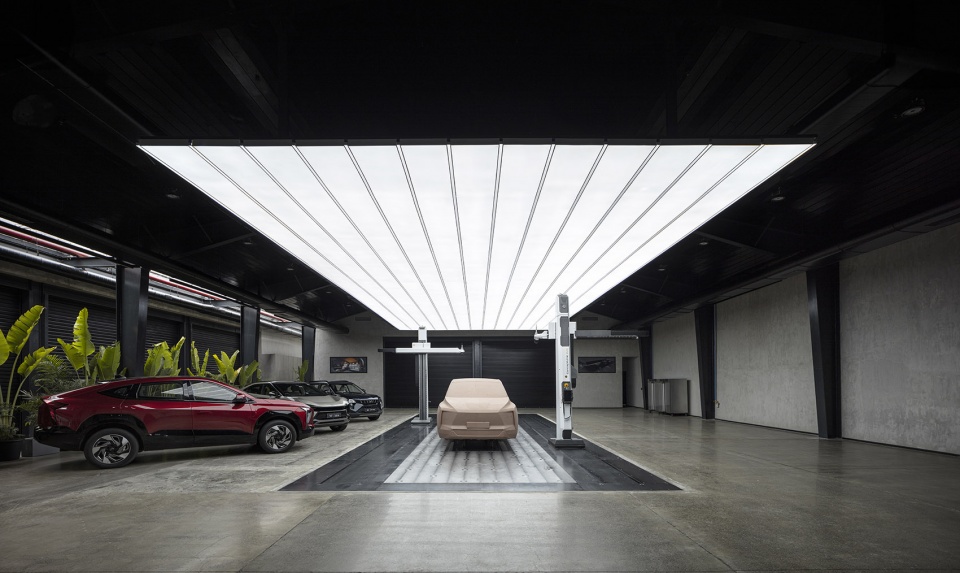
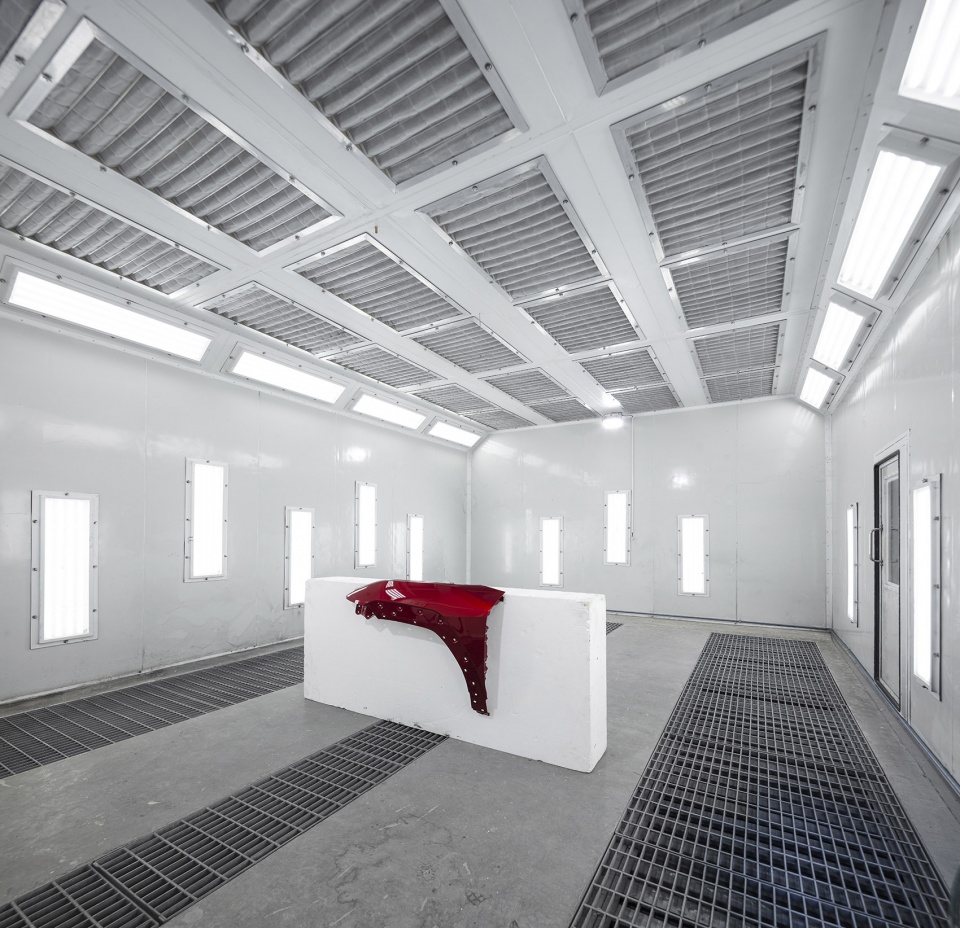
位于Clay Bay中的德国机械臂提出了最为严苛的技术条件。根据国际标准,该区域需构建为完全封闭的“黑盒”空间,彻底隔绝自然光,同时维持精确6500K色温的照明以及18–20°C的恒定温度。冷而均匀的光线有助于呈现日本高性能油泥上最细微的曲面变化,而严格的温控则确保材料性能的稳定。设计将这些技术要求转译为空间戏剧性表达:悬挂钢结构精确承载线性灯带,设备系统隐藏于顶面边缘之后,使整个顶部仿佛轻盈悬浮。黑与白的单色体系被强化为具有雕塑感的空间语言。最终,空间呈现出强烈的“电影感”——技术不再冰冷,而被重新演绎为诗意的创作舞台,在这里,精密设备成为激发创造力的背景与载体。
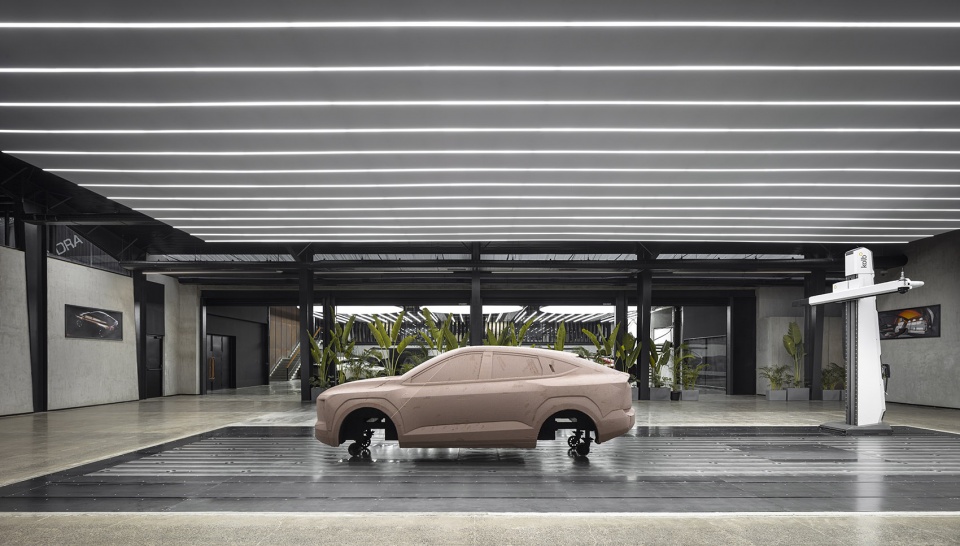
The German robotic arm in the Clay Bay area imposed the most exacting requirements. Global standards mandated a sealed black box eliminating all natural light, with lighting at precisely 6500K and temperatures between 18–20°C. The cool, even illumination was necessary to reveal the subtlest surface contours in the high-performance Japanese clay, while strict thermal control would protect the clay’s integrity. The design transforms these requirements into spatial drama. A suspended steel frame holds linear light strips at the exact colour temperature, while the supporting apparatus recedes behind ceiling edges, creating the illusion that the entire surface floats weightlessly above. The monochromatic palette of black and white becomes powerfully sculptural. As a result, the space feels cinematic—technical necessity reimagined as poetry, where precision technology becomes the stage for creative work.
▼黑与白的单色体系被强化为具有雕塑感的空间语言,The monochromatic palette of black and white becomes powerfully sculptural
在工业环境中引入“人性尺度” Humanising an Industrial Environment Through Scaled-Down Elements, Landscape, and Craft
设计通过将尺度回归至人体感知,并引入自然元素,使高度工业化的环境变得更加亲和。设有天窗的“街道”空间中布置了香茅种植带,为高强度的技术工作提供了一处必要的缓冲与放松之所。位于坡屋顶下方的高侧窗引入零星绿意,为使用者提供视觉上的“逃逸”,同时维持与外部环境的联系。
The design humanises a highly industrial environment by scaling elements down to human proportions and weaving in nature. The skylit street, with its lemongrass planters, offers a much-needed respite from the intensity of technical work. Clerestory windows positioned below the pitched roof offer glimpses of greenery—visual escapes that maintain connection with the outside world.
▼面向庭院的茶水间,the pantry facing the courtyard
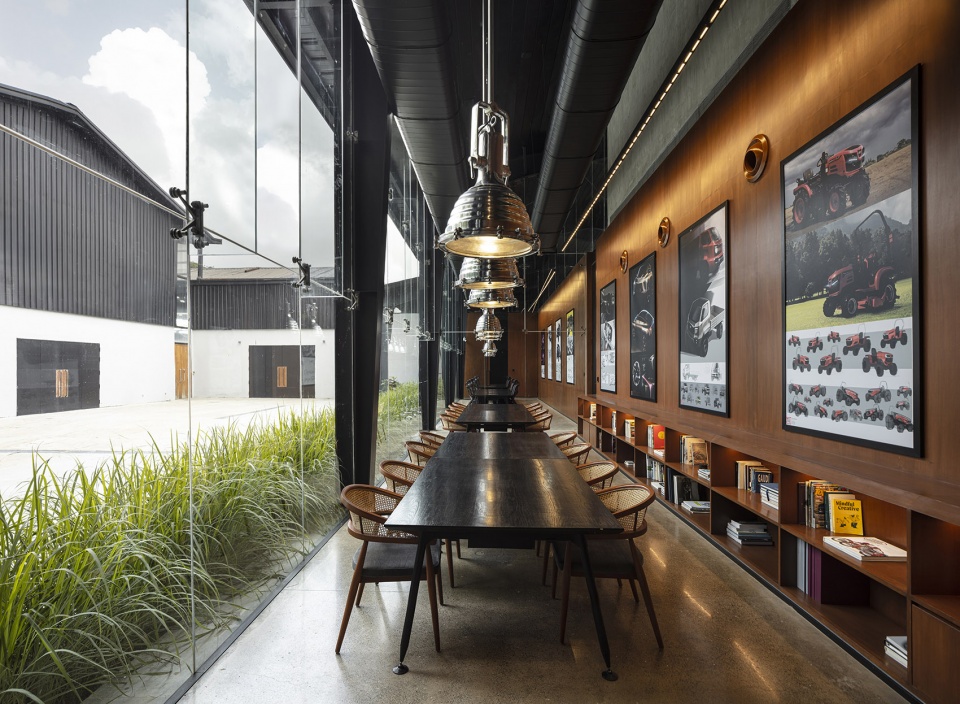
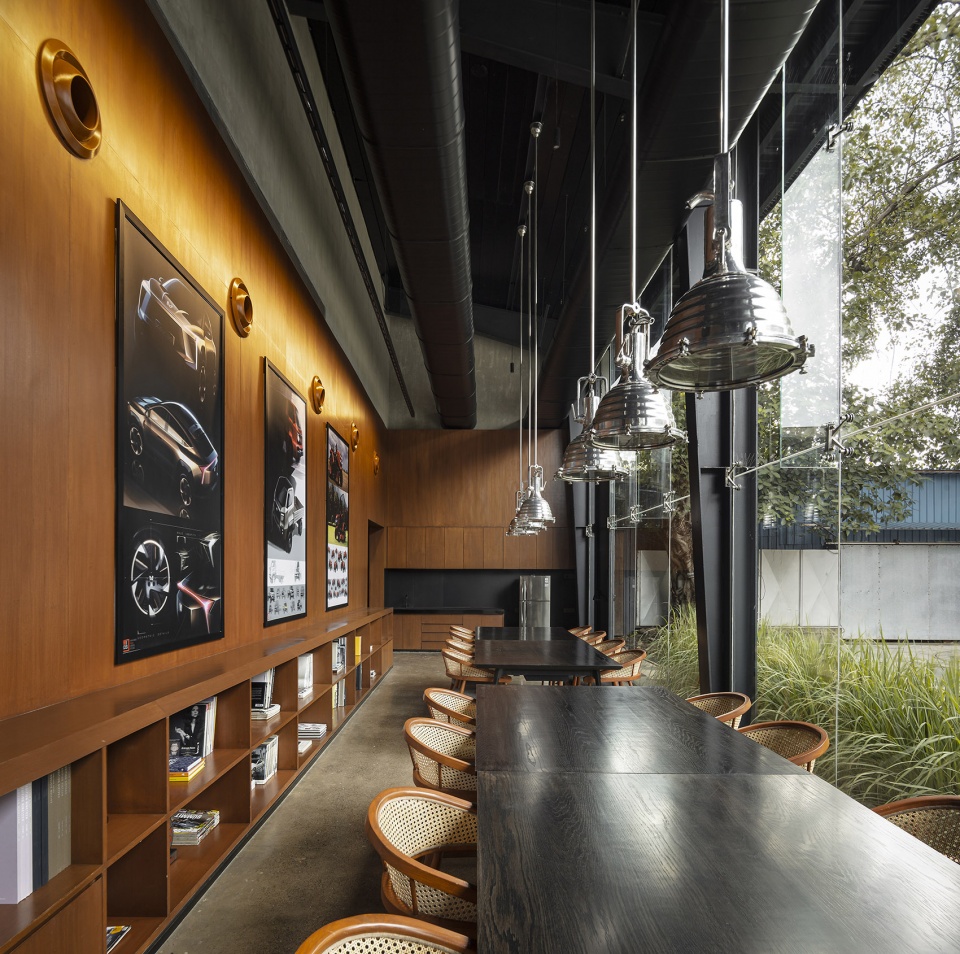
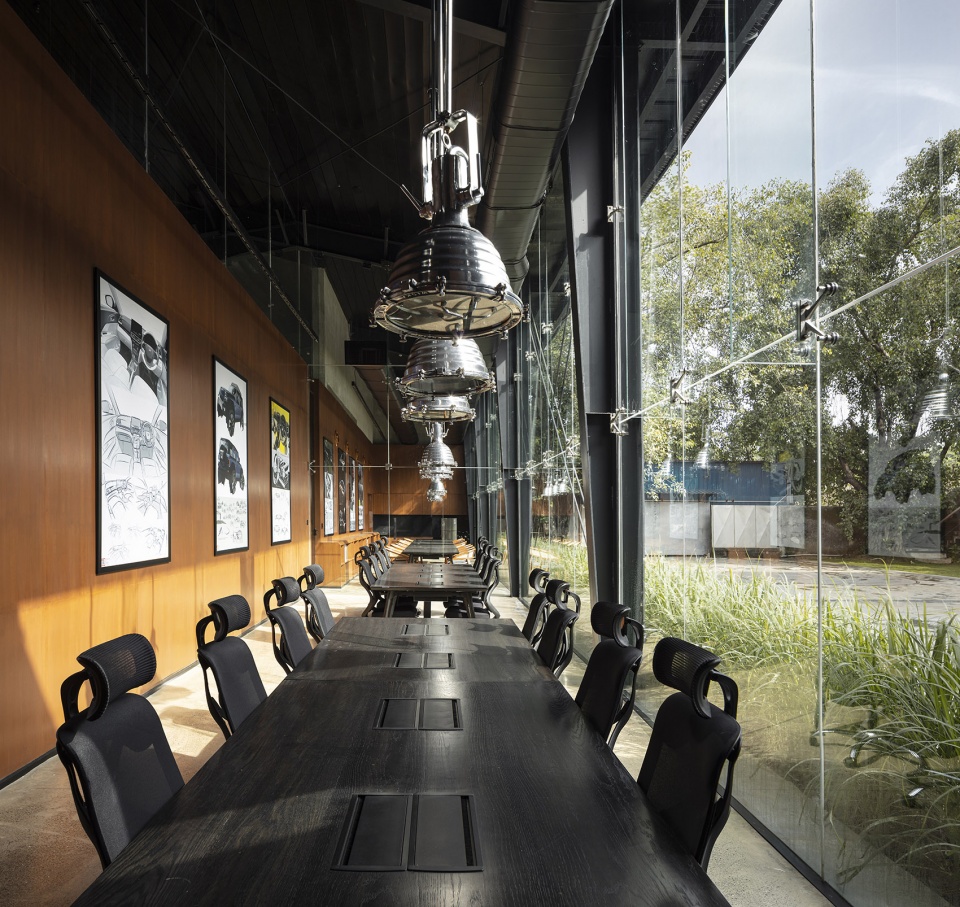
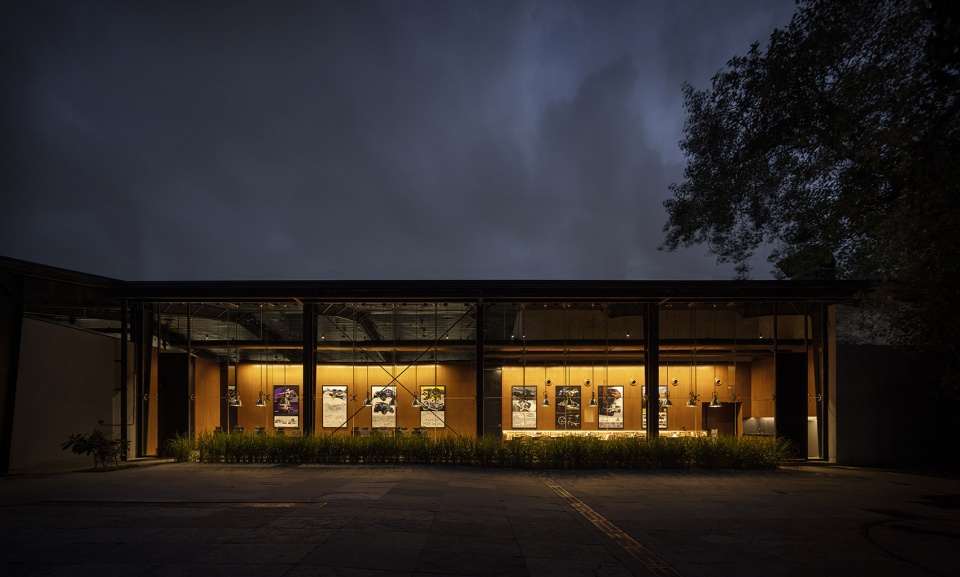
在北侧面向庭院的一侧,茶水间、资料室与模型制作工位等功能空间通过木质墙板、藤椅以及船舶风格的吊灯营造出温暖氛围。同时,密植的香茅形成一道葱郁且富有气味感知的边界。相对严苛的南侧界面——承受热量与车辆通行压力——则通过不锈钢索网支撑攀爬植物,形成一面可生长、可呼吸的“绿色立面”。值得一提的是,周边厂区的员工也自发参与植物的养护,使这种共享的空间关系超越了场地边界。
Along the northern courtyard-facing edge, where functions like the pantry, library, and model-makers’ desks reside, wooden wall panelling, cane chairs, and ship-style pendant lights are planned to infuse warmth. Furthermore, dense lemongrass planting creates a lush, fragrant boundary. On the harsh southern edge—exposed to heat and truck traffic—a stainless-steel cable trellis supports climbing creepers, creating a living wall that breathes and grows. Remarkably, employees from neighbouring facilities have begun tending these plants, cultivating shared stewardship beyond property lines.
▼面向庭院的茶水间,the pantry facing the courtyard
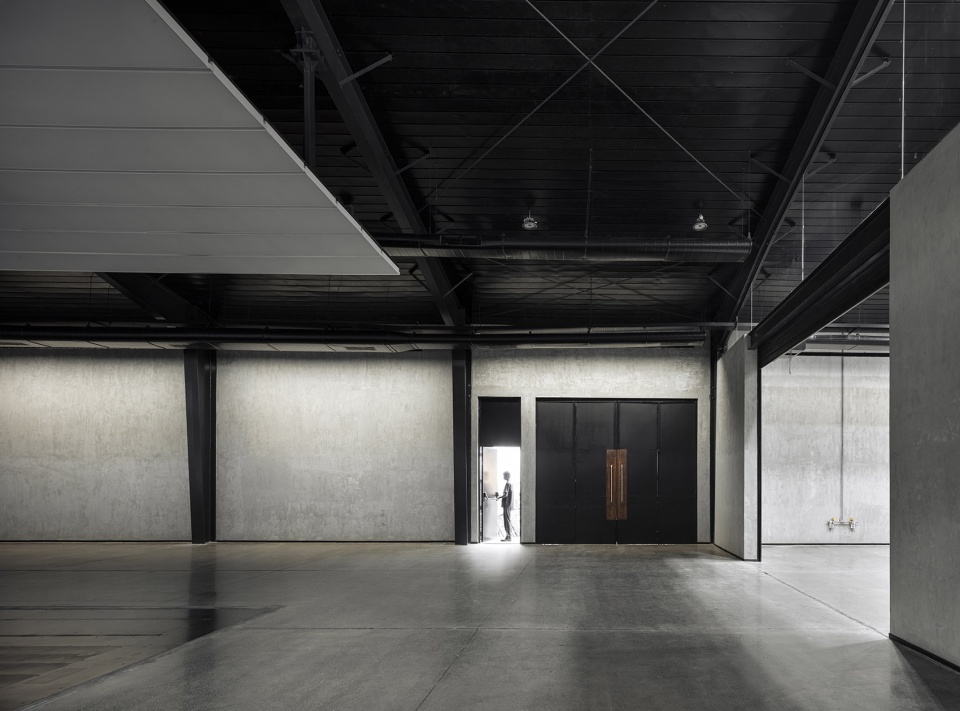
室内有意接纳“不完美”。手工抹灰的灰色水泥墙面呈现出细微差异,抛光混凝土地面保留颗粒质感,而经真空脱水处理的混凝土在地域气候影响下形成丰富的色调变化。这些源于人工的痕迹,与工业化完成的构件形成温暖对照——预制钢结构门架、自动卷帘门、德国钢板,以及张紧的Barrisol顶膜下的机械臂。高科技创新由此扎根于人类工艺的现实之中,使空间激发创造力,而非产生压迫感。
The interiors embrace imperfection deliberately. The hand-trowelled grey cement plaster carries subtle inconsistencies. The polished concrete floors reveal their grit. Tonal variations emerge from the vacuum-dewatered concrete shaped by regional climatic conditions. These human traces offer a warm counterpoint to the factory-finished elements—the pre-engineered steel portals, automated shutters, German steel plates, and robotic arm beneath a taut Barrisol ceiling. High-tech innovation remains grounded in the reality of human craft, ensuring the space inspires creativity rather than intimidating it.
▼抛光混凝土地面保留颗粒质感,the polished concrete floors reveal their grit
通过可拆卸设计预见未来需求Anticipating Future Needs Through Design for Disassembly
在细致平衡过去与当下的同时,设计也主动面向一个不确定的未来。整个结构被设定为“可拆解体系”,以便在需要时实现材料的再次利用。
▼传统钢铁结构 vs 预制钢铁结构,
Conventional steel structure vs prefabricated steel structure
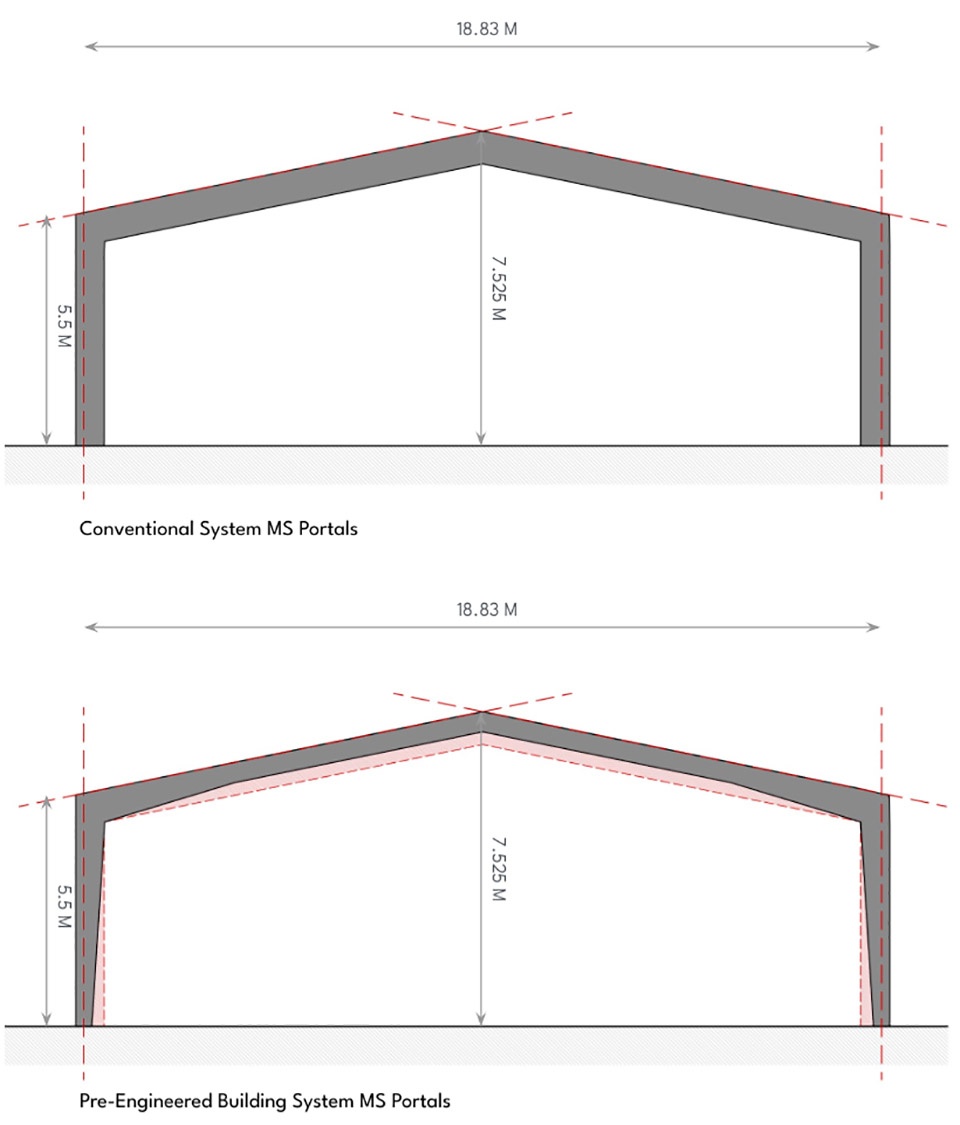
While the design carefully balances past and present, it also anticipates an uncertain future. The entire structure is designed for disassembly so materials can be reused elsewhere if and when needed.
▼预制钢结构,pre-engineered building system
扩建部分采用预制门式刚架体系:构件在工厂完成加工,并在现场于20天内完成组装。所有结构连接均采用螺栓连接而非焊接,从而避免焊接所带来的能耗与碳排放,同时确保结构可被完整拆解。当设施需要扩展、迁移或重组时,整体框架可以被拆除,并在其他场地重新使用。尽管墙体无法整体迁移,但其采用加气混凝土建造,可在后续的建筑或道路工程中被再利用。该策略显著减少了潜在的拆除废弃物以及新材料生产所带来的隐含碳排放。这一方法从根本上重新思考了建筑与时间的关系:建筑不再走向“过时”,而是被设计为持续演化的系统,将材料的循环性同时视为环境责任与设计美学。
The entire extension is designed as a pre-engineered portal frame fabricated off-site and assembled on-site in just 20 days. All structural connections are bolted rather than welded, avoiding the carbon emissions and energy demands of welding while enabling complete disassembly. Should the facility need to expand, relocate, or reconfigure, the entire frame can be dismantled and its materials reused elsewhere. While the walls cannot be relocated, they’re built in aerated concrete that can be repurposed in construction or roadworks. The design drastically reduces potential demolition waste and the embodied carbon associated with new material production. This approach fundamentally reimagines the relationship between building and time. Architecture is designed to evolve rather than become obsolete, treating material circularity as both an environmental imperative and design elegance.
▼夜景,night view
为多种未来而设计 // 可持续演变的建筑Designing for Multiple Futures // Architecture That Evolves
除了其直接的功能之外,该项目还满足了三个关键需求。对于建筑行业而言,它表明在印度的物质条件和预算限制范围内进行设计是可行的——每一个螺栓连接都能减少未来的浪费,同时又能实现当下的高效性。对于以技术发展为节奏进行运作的工业部门,它证明了建筑物之所以能持续发挥作用,正是因为它们被设计成可以改变的形态,从而避免了因功能性的建筑逐渐过时而成为拆除对象的情况。对于创意工作者而言,它提供了一个日常的工作环境,在这里高要求的技术不会主导人类的体验——天窗照亮的门槛能带来片刻的放松,手工打造的表面能强化数字的精确性,设计车辆的活动也能在本身就激发设计灵感的空间中展开。这个扩展部分描绘了一条路径,即建筑与它所服务的行业和人群一起不断发展。
Beyond its immediate function, the project addresses three critical needs. For the construction sector, it demonstrates that designing for disassembly works within India’s material realities and budget constraints—every bolted connection reducing future waste while enabling present efficiency. For industrial operations moving at technology’s pace, it proves buildings can remain useful precisely because they’re designed to transform, eliminating the obsolescence that turns functional structures into demolition candidates. And for the creative workforce, it offers a daily environment where demanding technology doesn’t dominate human experience—where skylit thresholds offer respite, where handcrafted surfaces ground digital precision, where the act of designing vehicles unfolds within space that itself inspires design. The extension charts a path where architecture evolves alongside the industries and people it serves.
▼夜景,night view
▼场地平面,site plan
▼平面图,plan
▼剖面图,section