Truly for You:居住关系的纵向延展 / 傅俣迪设计工作室
项目介绍Project Introduction
位于城市住宅区的三层私宅。原有的建筑体量完整、房间数量充足,但日常生活分布在不同楼层与空间之中,公共活动缺乏明确的聚合位置,使用关系呈现较为松散的状态。业主对于住宅的期待,建立在长期居住的前提上。日常生活中,阳光、自然以及人与人之间的相处被放在较为重要的位置。相比追逐外在标准,他们更在意空间是否舒适,关系是否自然,并愿意围绕这些判断对住宅的使用方式做出调整。
This is a three-storey private residence located in an urban residential neighbourhood. While the original structure remained intact and generously proportioned, everyday life was scattered across floors and rooms. Shared activities lacked a perceptible centre, and spatial relationships felt loosely defined. The homeowners’ expectations for the house are grounded in long-term living. In daily life, sunlight, nature, and interactions between people hold particular importance. Rather than pursuing external benchmarks, they place greater value on spatial comfort and the ease of everyday interactions, and are open to adjusting how the house is used over time.
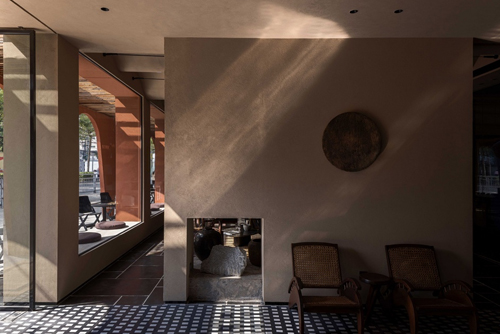
▼室内空间一览,Overview of interior space
项目理念Design Concept
改造围绕多层住宅中生活的组织方式,以及人在空间中的日常感受。生活在不同楼层中逐渐形成清晰的分布,公共活动在一层展开,日常起居向上延续,空间在时间中承载不同阶段的使用状态。
The renovation focuses on organising life within a multi-level house and refining everyday spatial experience. Activities settle into a clear vertical distribution: shared moments unfold on the ground floor, while domestic routines extend upward, allowing the house to accommodate different phases of use over time.
▼起居室,Living room
改造前 Before renovation
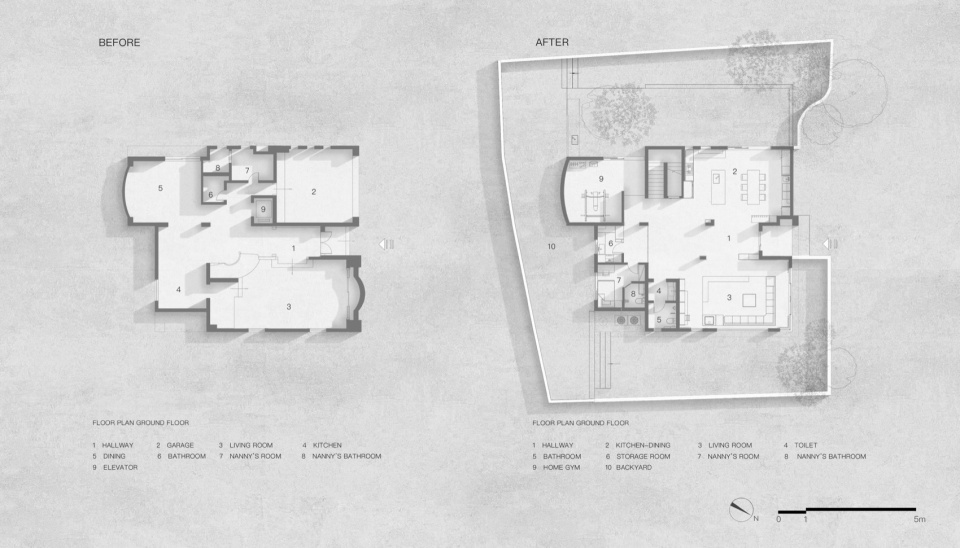
1·一层公共空间被门厅、楼梯与服务用房切割,客厅、餐厅与厨房分散布置,主要采光面被车库占据,公共活动难以形成连续使用。
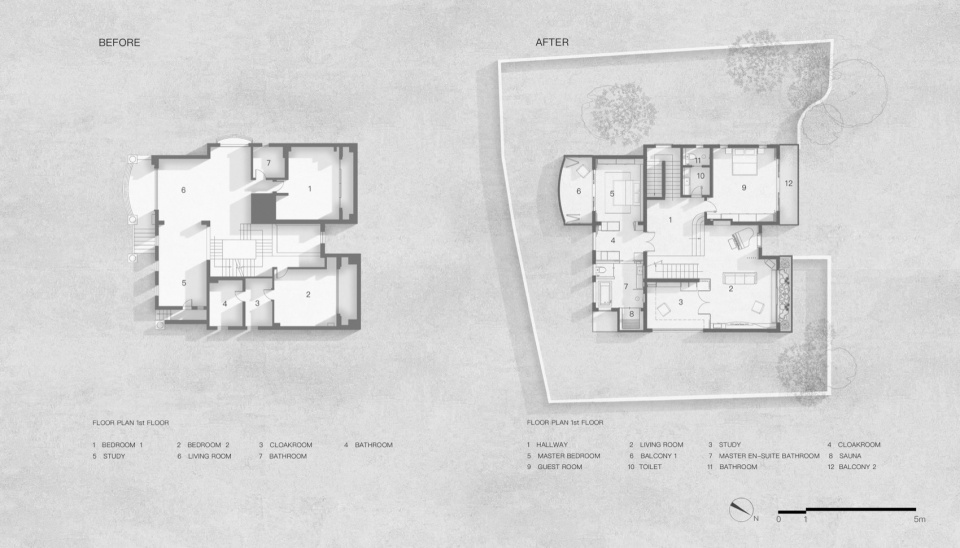
2·二层房间数量充足,但起居、工作与休息空间分布松散,主卧被拆解为多个独立空间,缺乏稳定的居住核心。
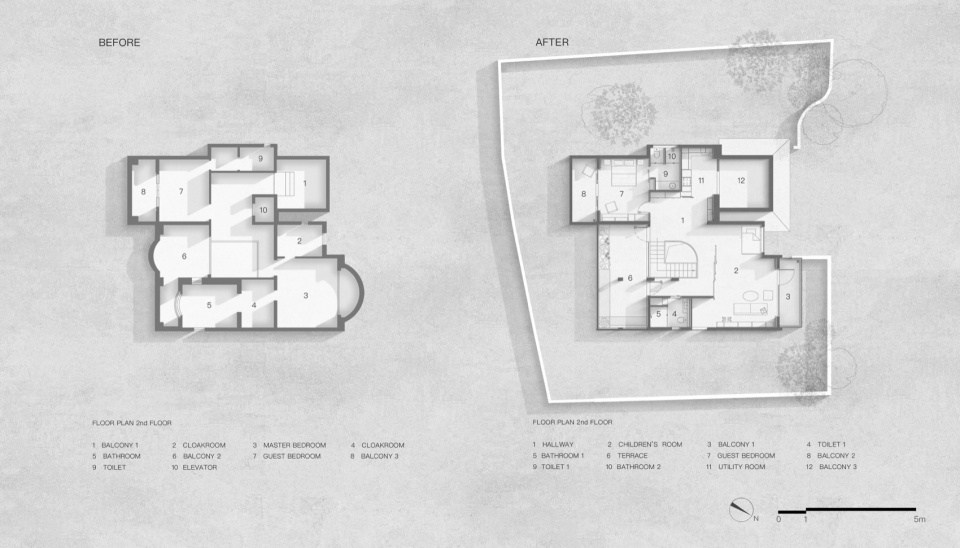
3·三层功能叠加明显,室内外关系薄弱,空间使用状态难以延续。
以纵向结构为线索,重组三层住宅的生活关系
On the ground floor, shared spaces were fragmented by the entrance hall, staircase, and service rooms. The living room, dining area, and kitchen were dispersed, while the primary daylight-facing zone was occupied by the garage, making continuous use of communal areas difficult.
The first floor offered a sufficient number of rooms, yet living, working, and sleeping areas were loosely arranged. The main bedroom was divided into several separate spaces, lacking a stable residential core.
On the second floor, overlapping functions and weak indoor–outdoor connections made sustained use difficult.
Reorganizing Daily Life Through Vertical Structure
改造后After renovation
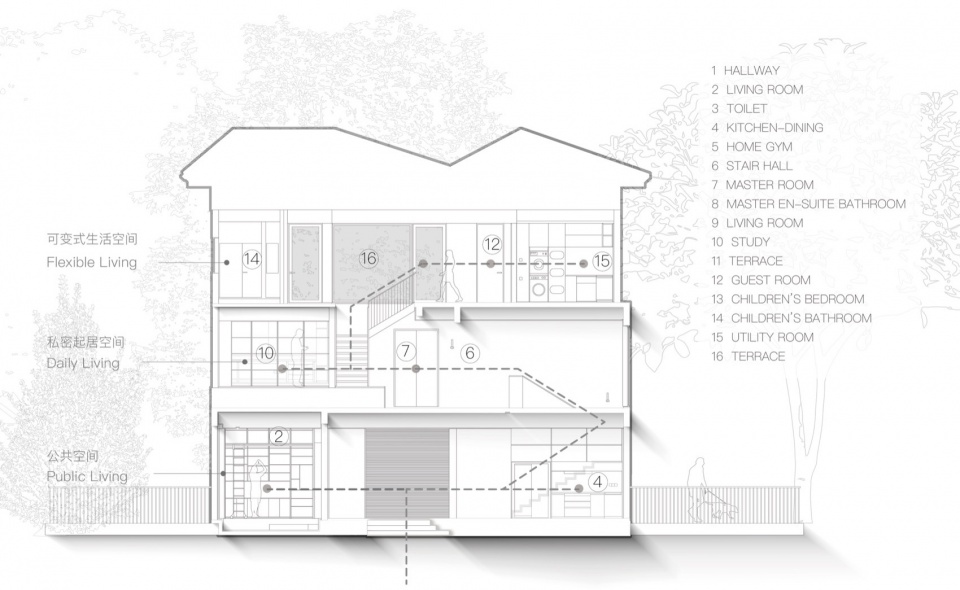
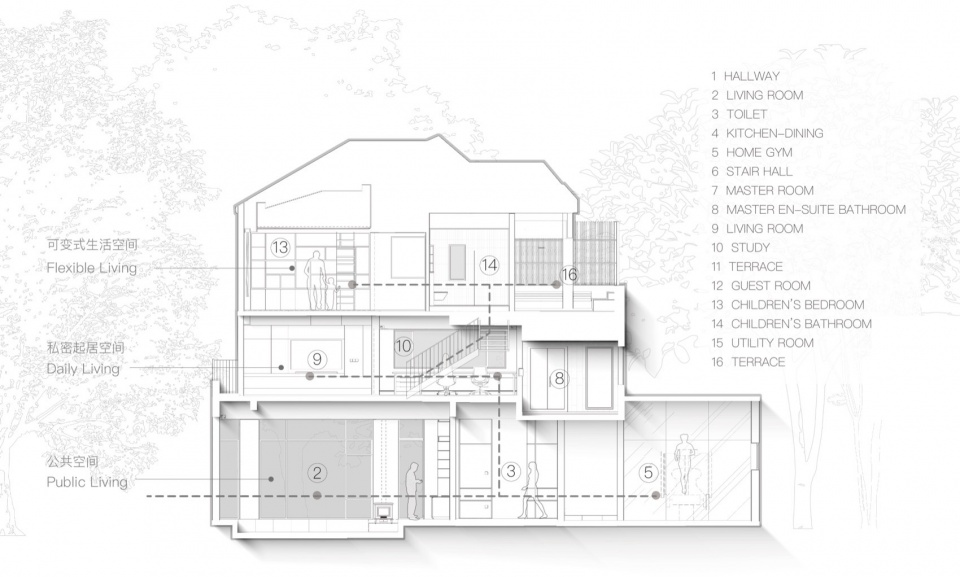
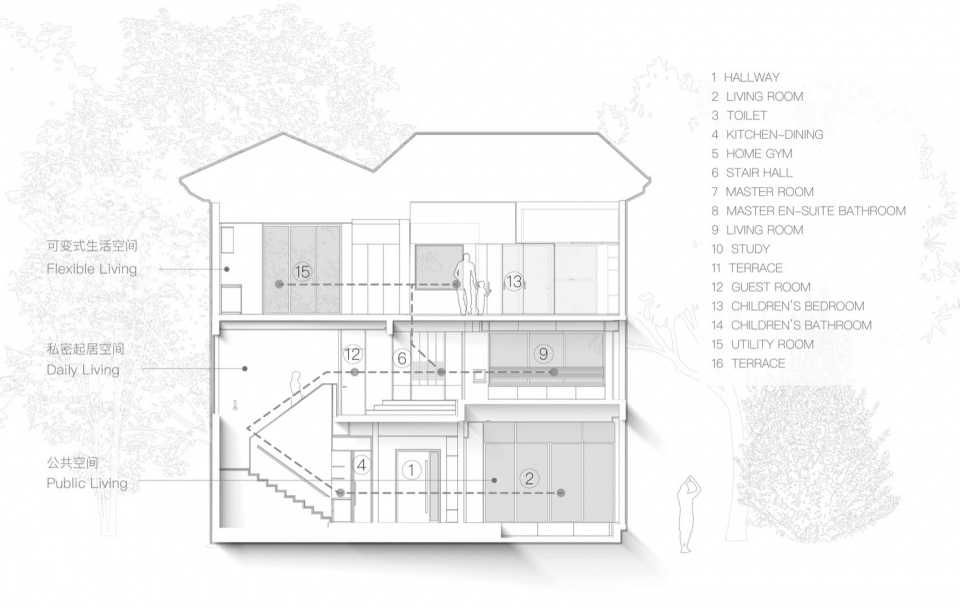
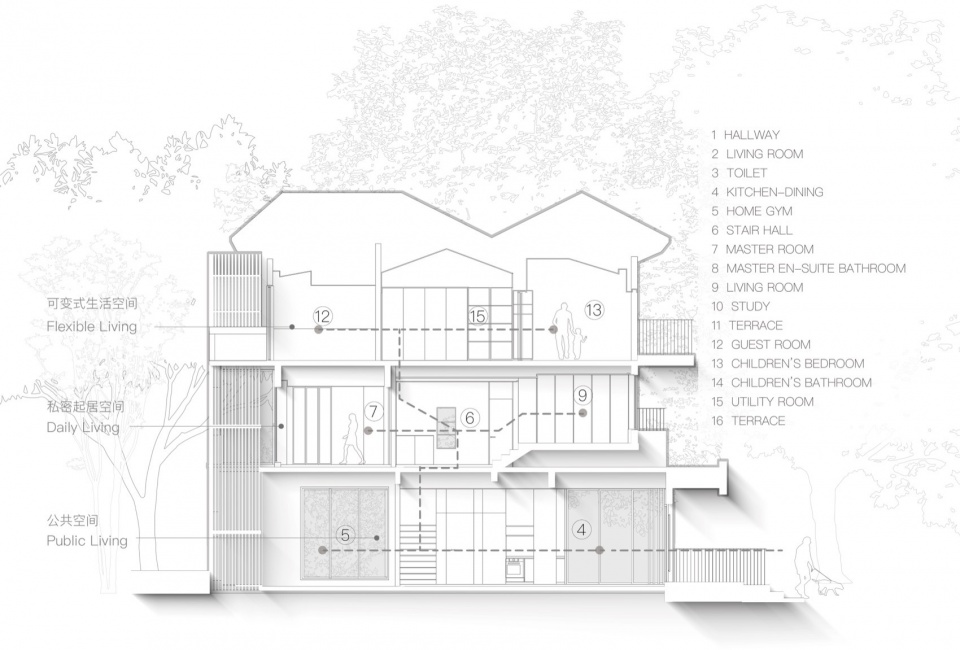
一层- 公共生活集中层:一层被整理为连续的公共平面,玄关、餐厨与下沉客厅沿同一动线展开。厨房与辅助空间被整合进带状区域,主要生活面与庭院形成直接联系。
二层 – 稳定而内敛的居住层:二层围绕主卧套间与起居空间建立清晰的居住结构,主卧、衣帽间与卫浴之间保持紧凑而有序的关系。书房与客卧分布在楼层另一侧,使不同空间在同一层中获得各自明确的位置。
三层 – 为时间保留余量的空间:三层保持相对开放的布局,活动空间、房间与露台之间形成直接联系。带独立卫浴的房间为这一层提供了持续调整的可能。
Ground Floor – Public Living: The ground floor is reorganised as a continuous public plane, with the entrance, kitchen-dining area and sunken living room arranged along a shared circulation line. Kitchen and ancillary functions are consolidated into a linear band, allowing the main living spaces to connect directly with the courtyard.
Second Floor – Private Living: The second floor establishes a clear residential structure around the primary suite and an internal sitting area. The bedroom, walk-in closet and bathroom are arranged in a compact sequence, while the study and guest room occupy the opposite side of the floor, giving each space a clearly defined place within the same level.
Third Floor – Space for Future Change: The third floor maintains a relatively open layout, with direct connections between the activity area, enclosed rooms and terrace. A room with an en-suite bathroom allows this level to remain open to future adjustment.
▼首层平面图,Ground floor plan (before and after)
▼二层平面图,first floor plan (before and after)
▼三层平面图,second floor plan (before and after)
一层Ground Floor
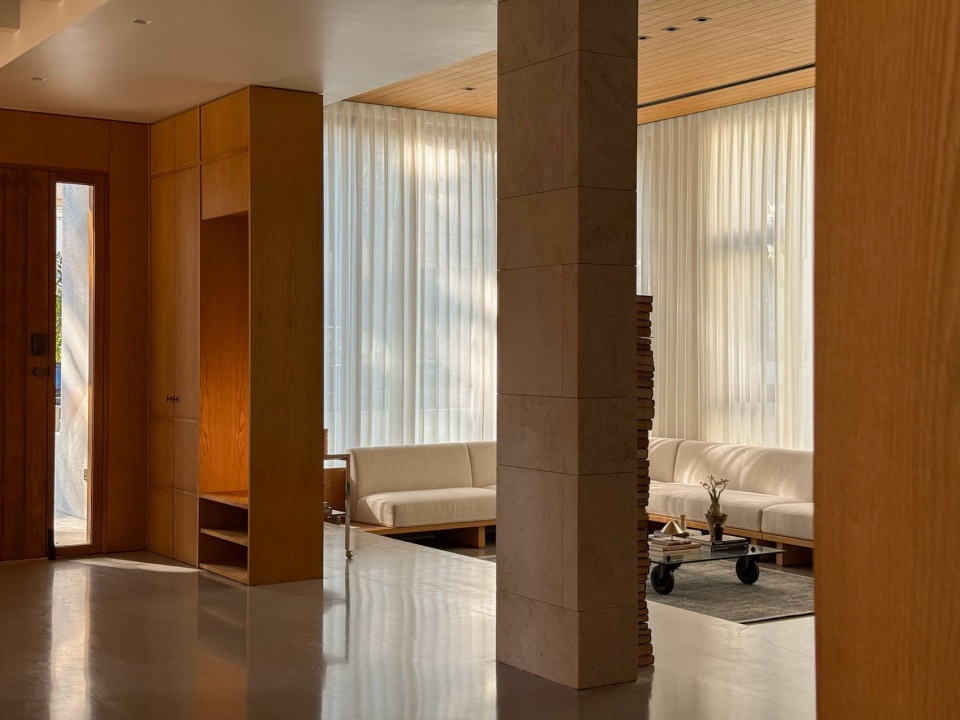
公共生活集中在一层展开,室内活动沿庭院一侧组织。客厅、餐厅与厨房以开放而松弛的关系彼此连接,使这一层成为公共活动展开的主要场所。
Public life unfolds on the ground floor, with interior activities organised along the courtyard. The living room, dining area, and kitchen are loosely connected through an open spatial relationship, allowing this level to become the primary setting for shared daily life.
▼玄关, Foyer
客厅|Living room
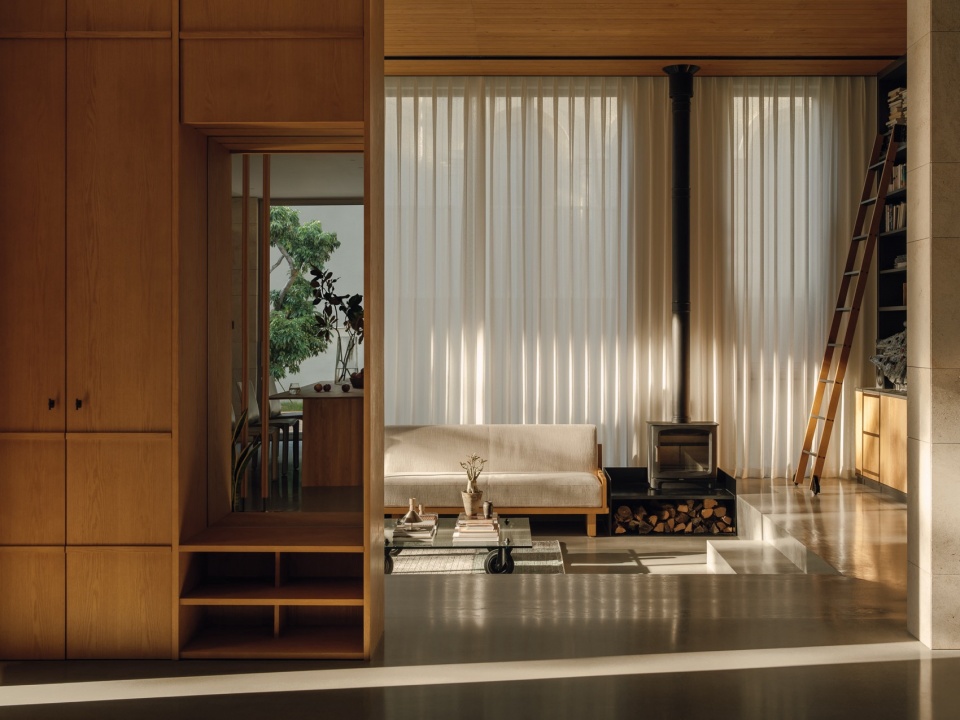
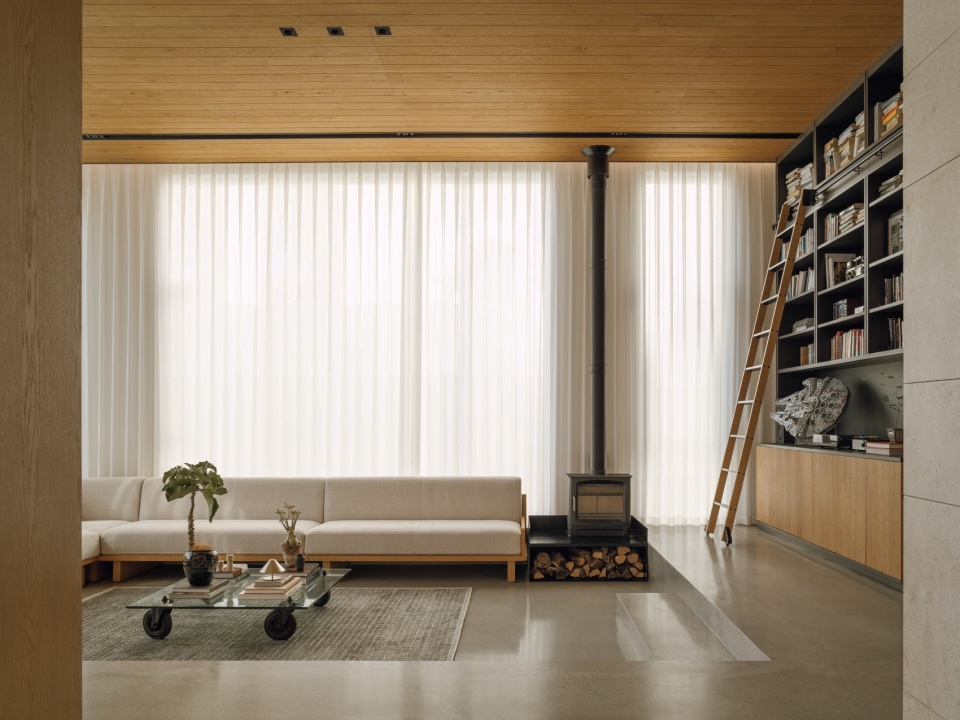
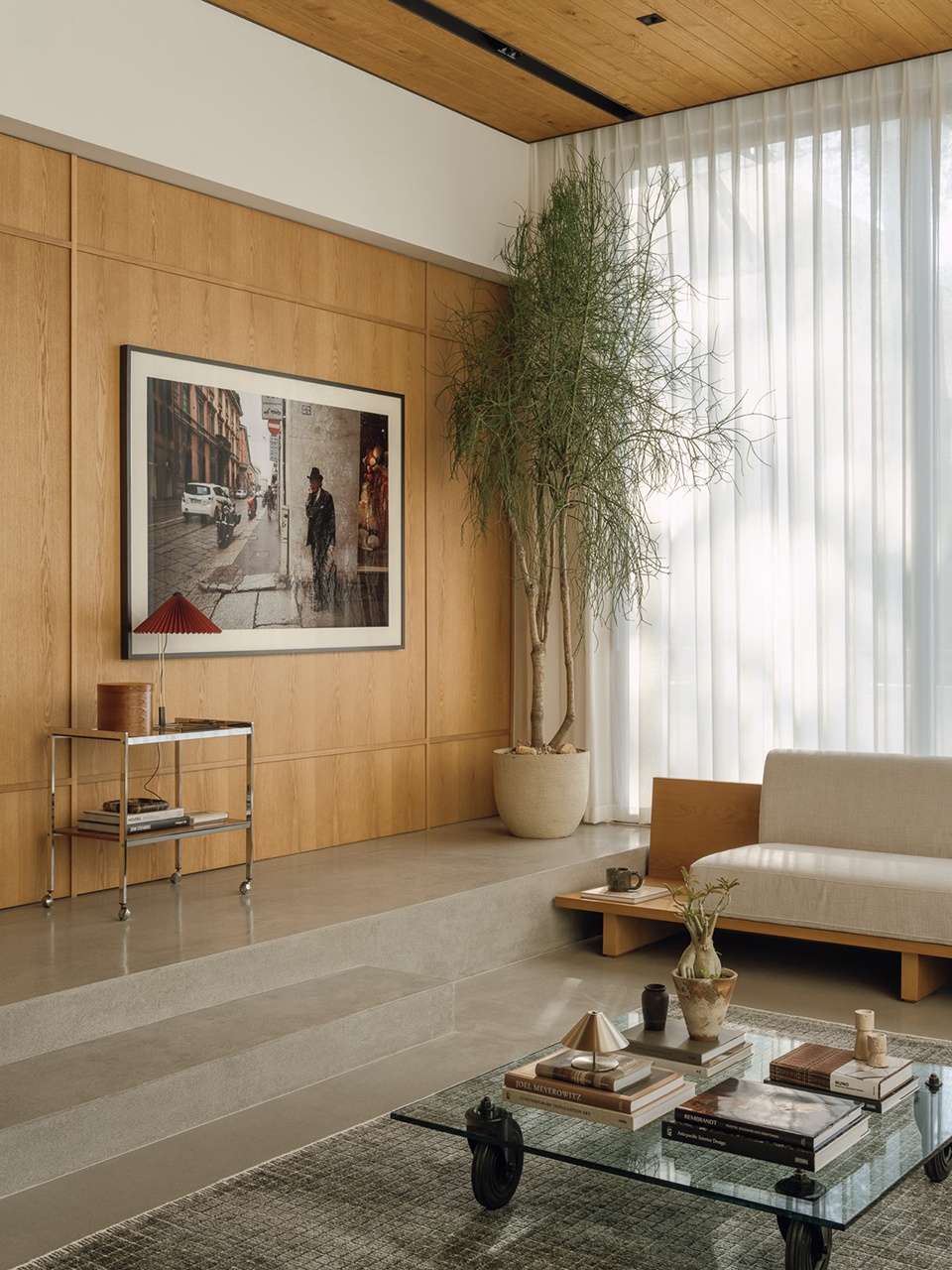
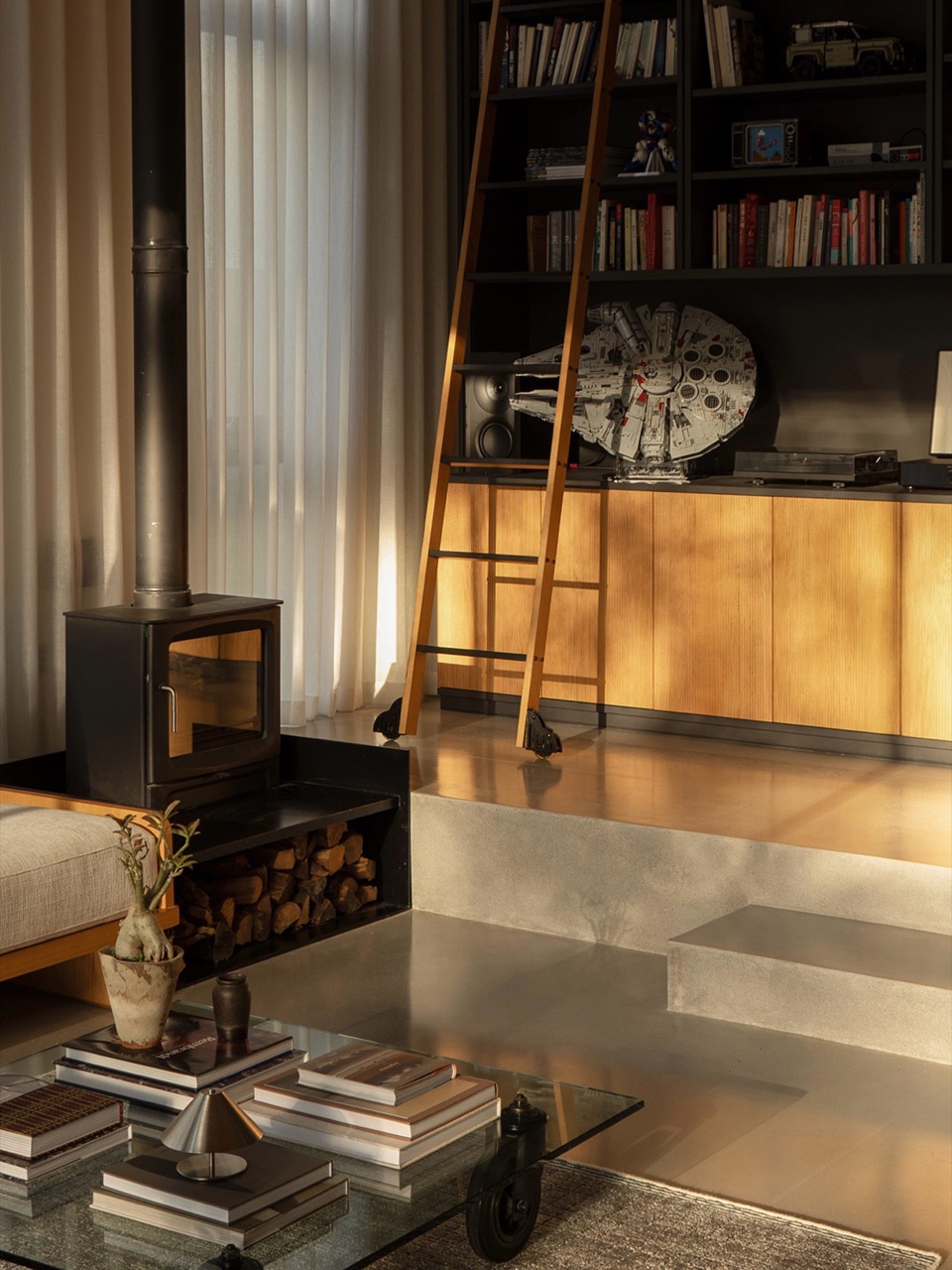
下沉客厅通过标高变化在开放平面中形成相对独立的活动区域,空间朝向庭院展开,光线被柔和引入,与公共空间内部形成清晰的层次关系。
A sunken living room creates a more focused activity zone through subtle level changes. Oriented toward the courtyard, it receives softened daylight and establishes a clear sense of spatial depth within the shared environment.
▼客厅,Living room
▼客厅,Living room
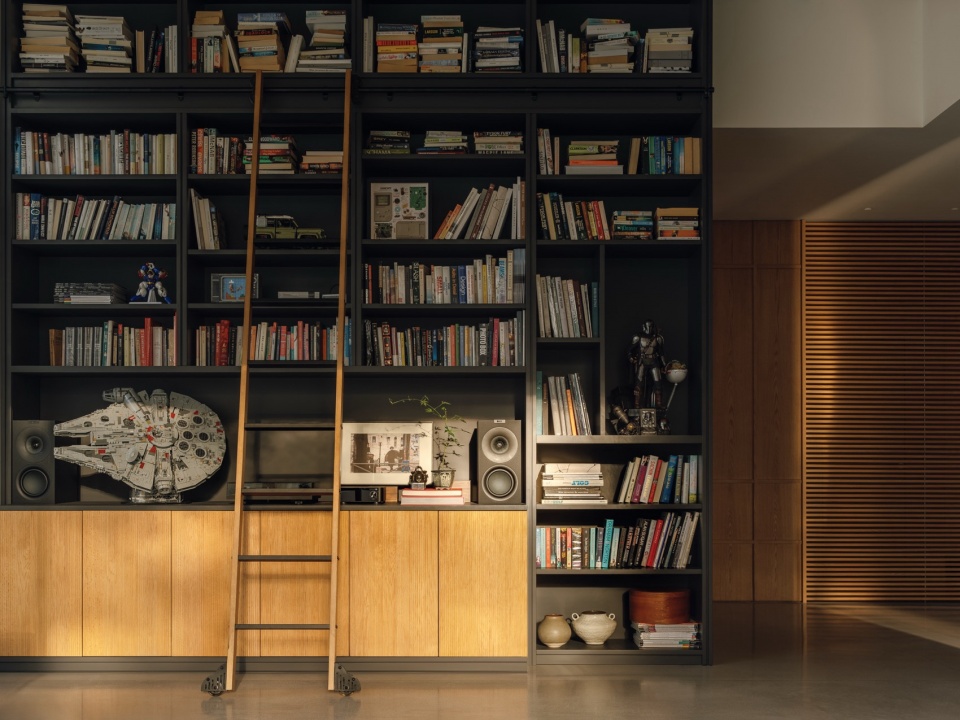
书架沿公共空间边界展开,承担收纳与空间组织的双重角色,阅读被自然地纳入日常路径中。
Bookshelves line the edge of the shared spaces, serving both storage and spatial organisation, while reading becomes part of everyday movement through the house.
▼书柜,Bookshelf
餐厨|Dining & Kitchen
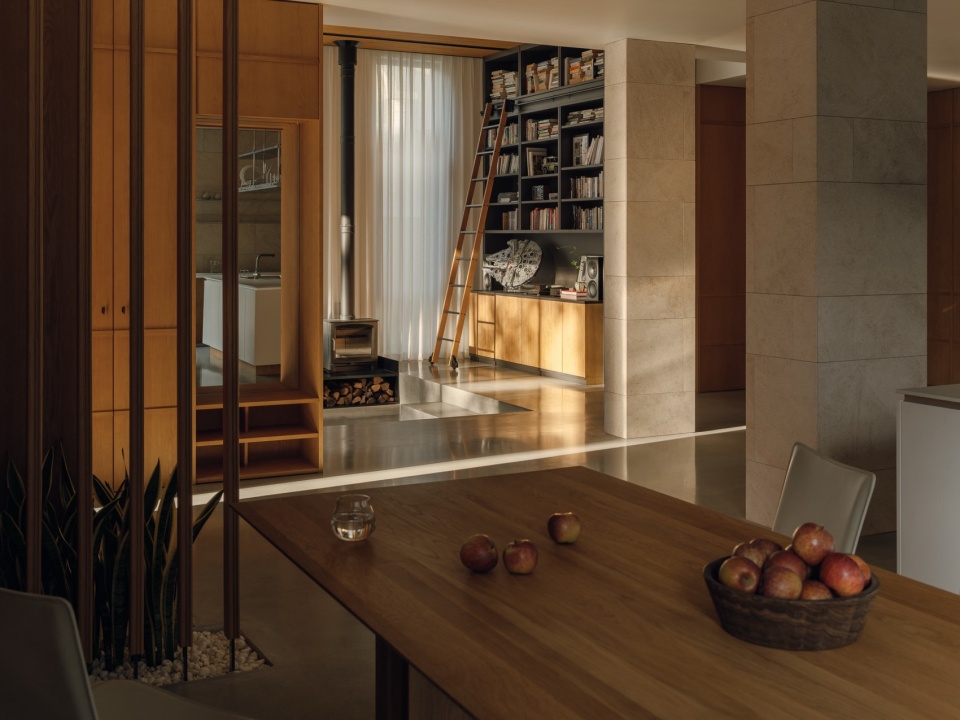
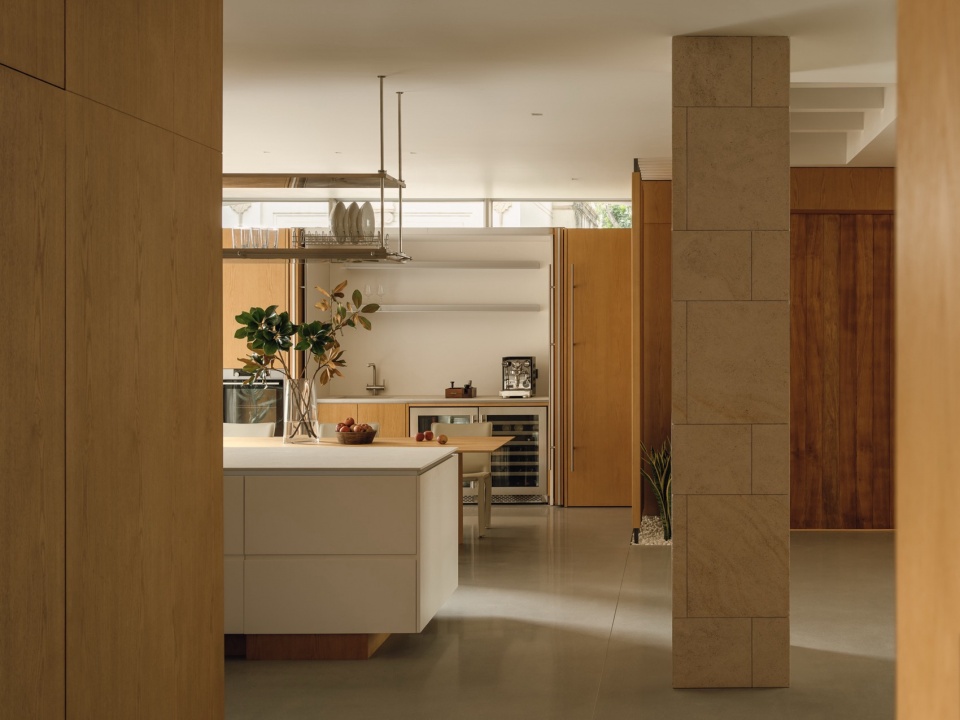
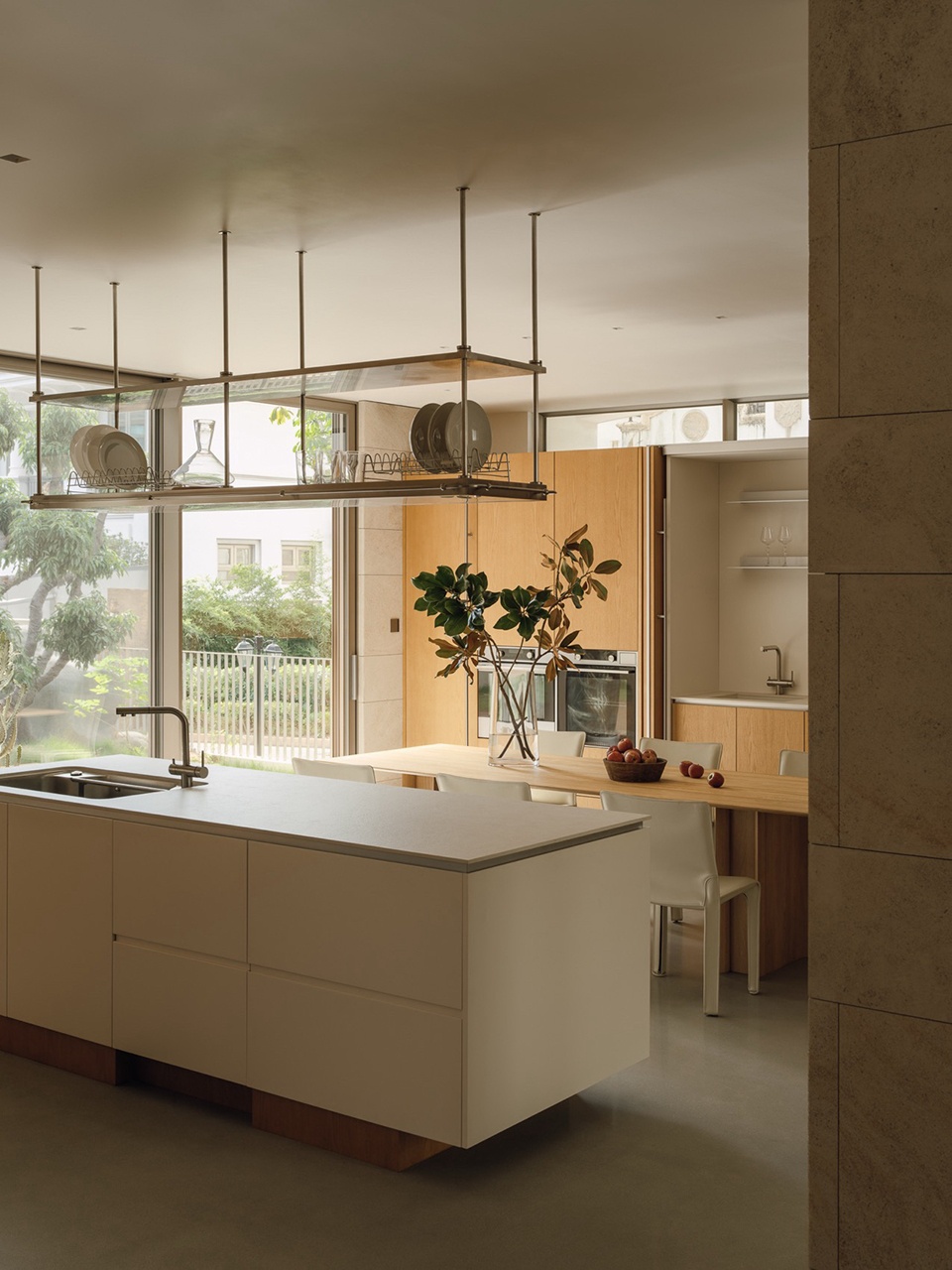
餐厨贴近自然采光,操作区推进内侧。木格栅在不封闭空间的前提下引入秩序,使餐厨区域保持连贯,并形成适度的界定。
The kitchen and dining area sit close to natural light, with cooking kept slightly further inside. Timber screens gently organise the space, keeping the kitchen and dining areas connected while giving them a clear yet unobtrusive edge.
▼餐厨,Dining & Kitchen
▼餐厨,Dining & Kitchen
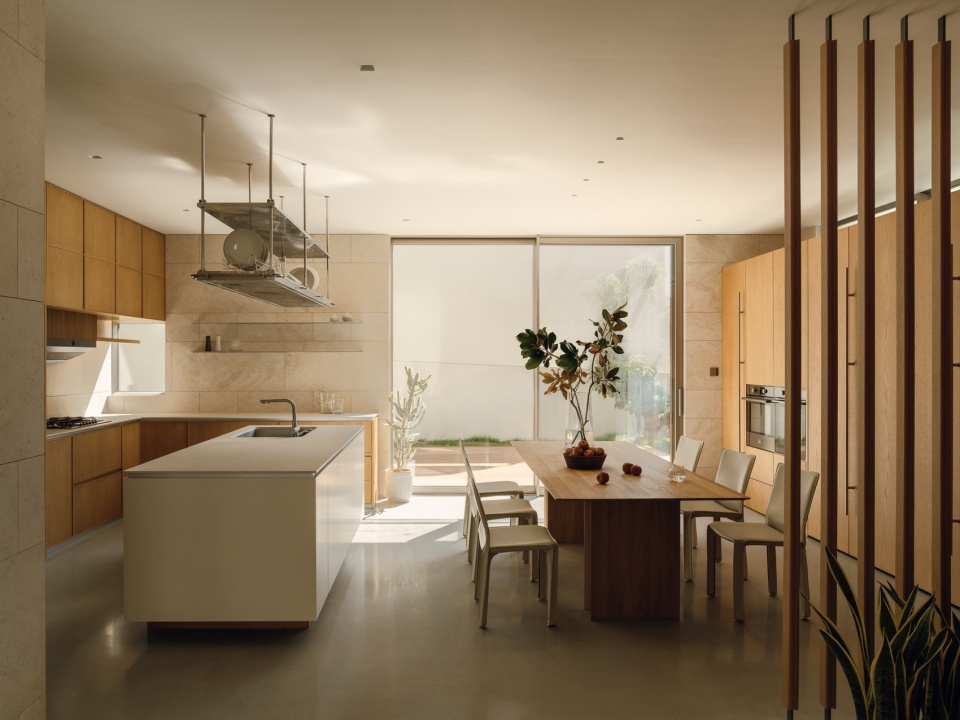
▼餐厨,Dining & Kitchen
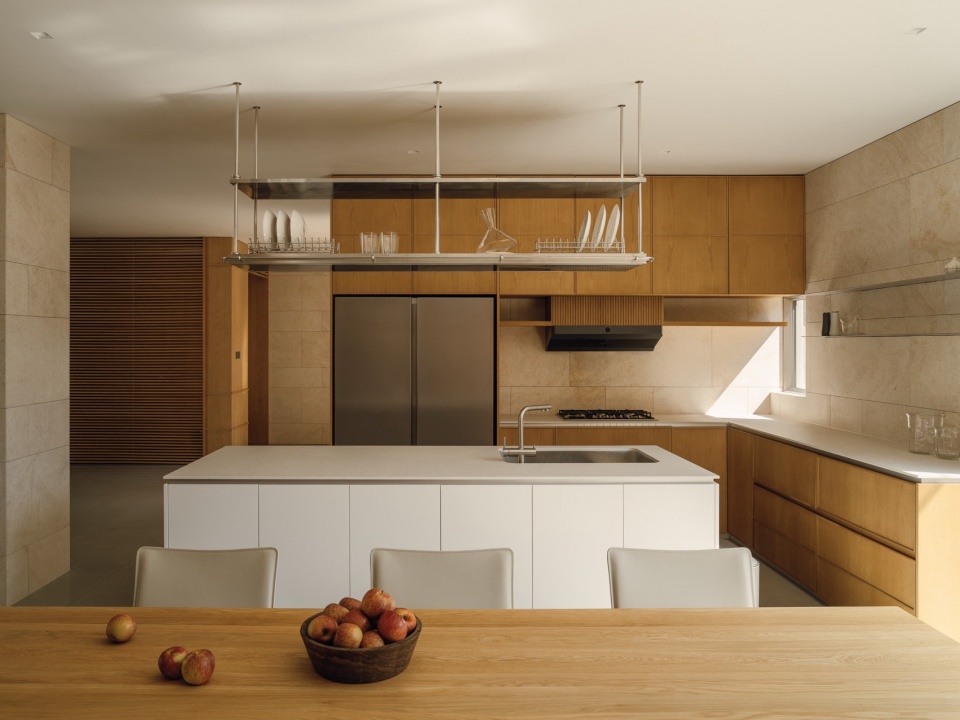
服务与辅助功能沿边界布置,主要活动区域保持连续而清晰的空间结构。
Service and support functions are placed along the perimeter, allowing the primary activity areas to remain continuous and spatially legible.
▼餐厨细节,Details of dining & kitchen
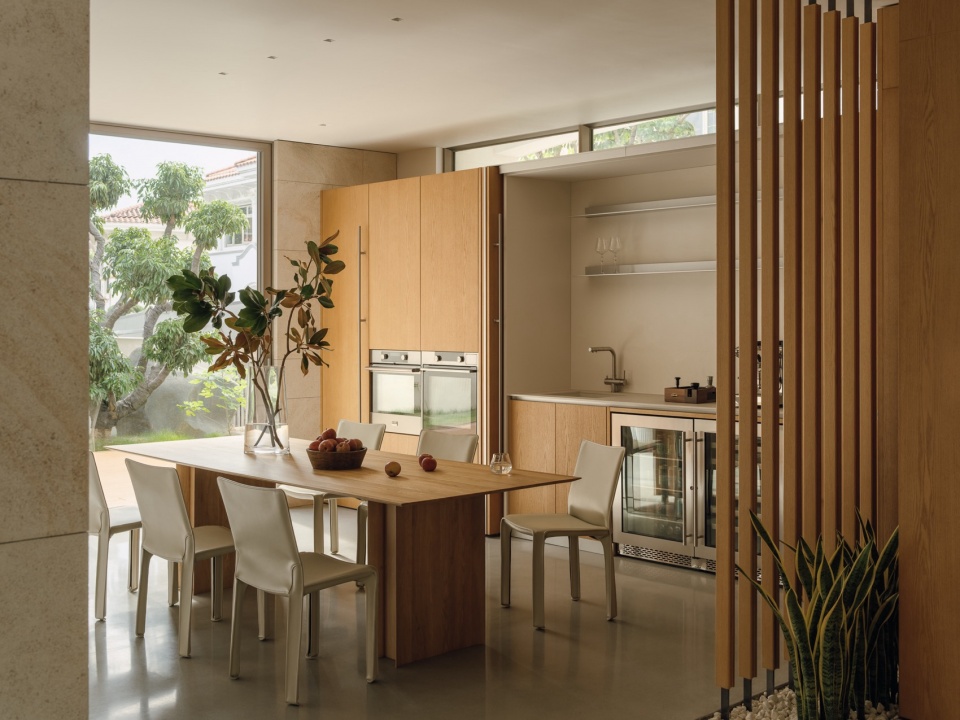
二层First Floor
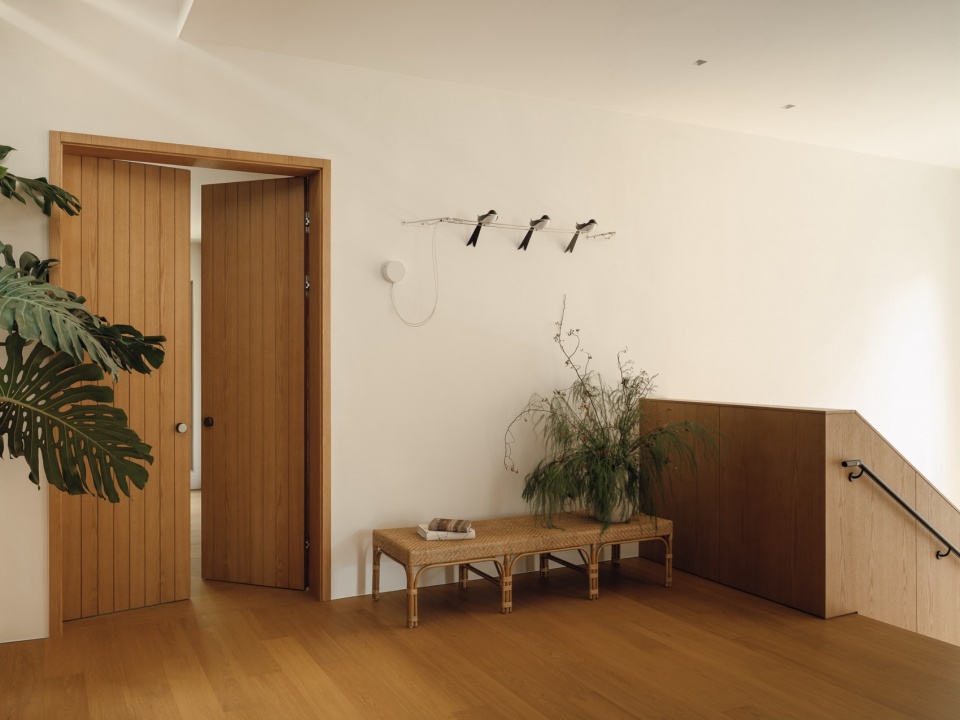
二层空间逐渐趋于安静,房间开始承载更为内敛的起居生活。家居起居室作为缓冲与连接,在不同房间之间形成自然的联系,也为日常使用带来更舒展的空间感受。
As the first floor becomes quieter, the rooms begin to support a more private and inward domestic life. The family living space serves as a place for pause and connection between rooms, creating a more open and relaxed sense of space for daily use.
▼中庭,Atrium
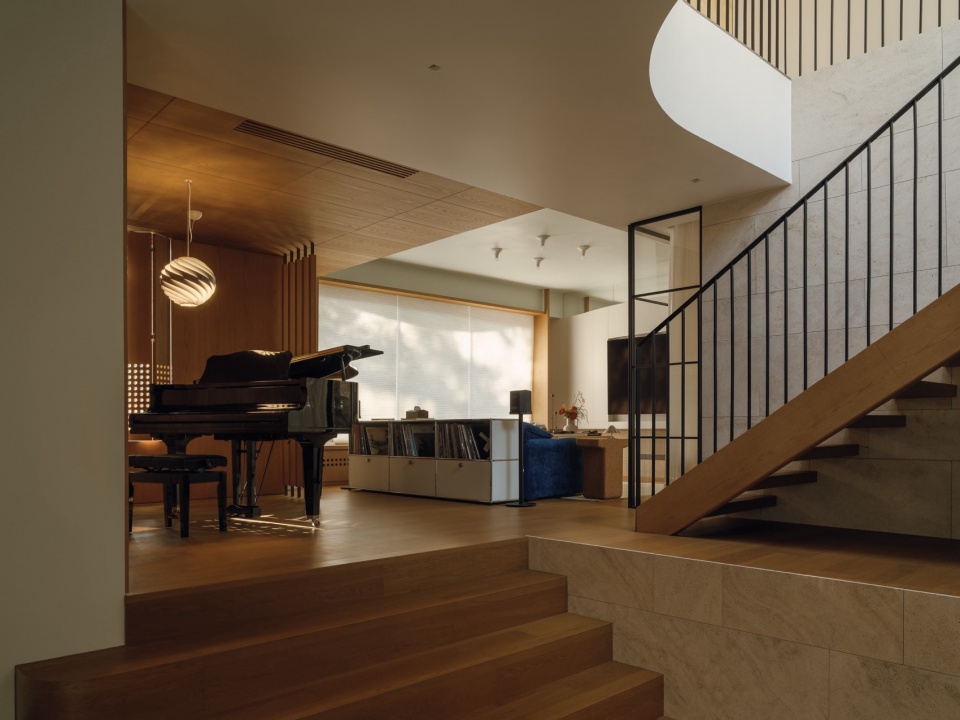
▼中庭,Atrium
主卧|Master bedroom
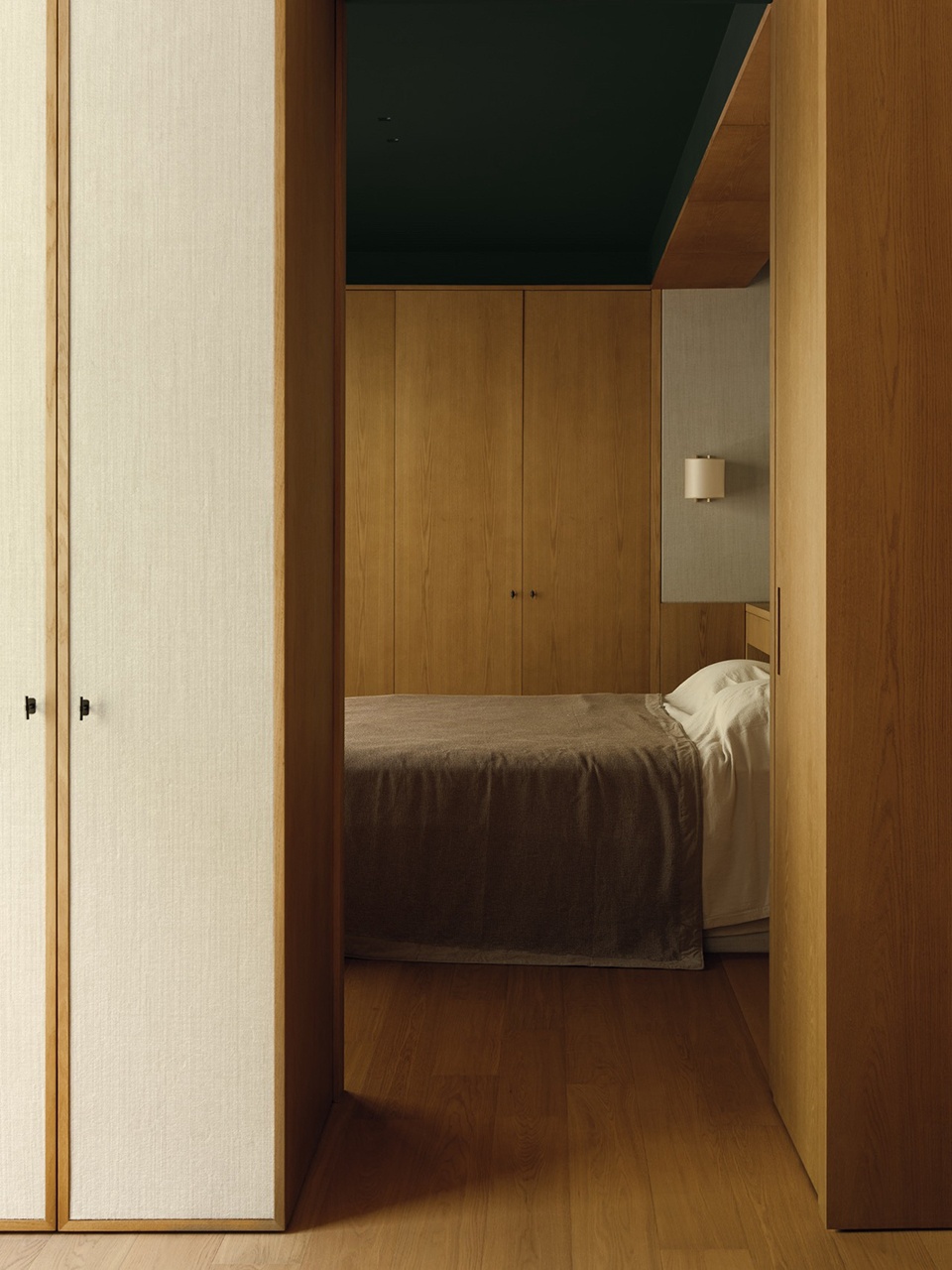
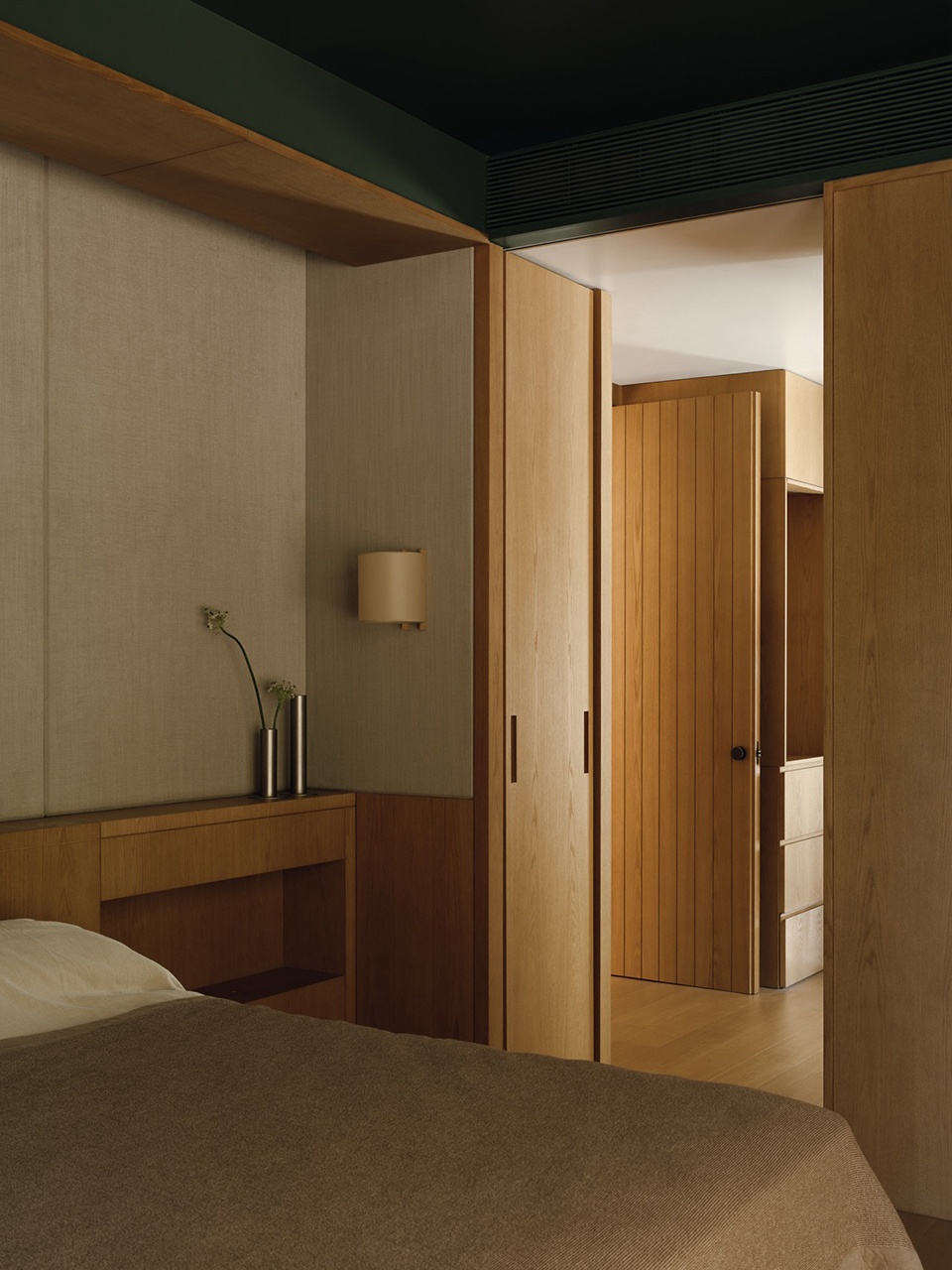
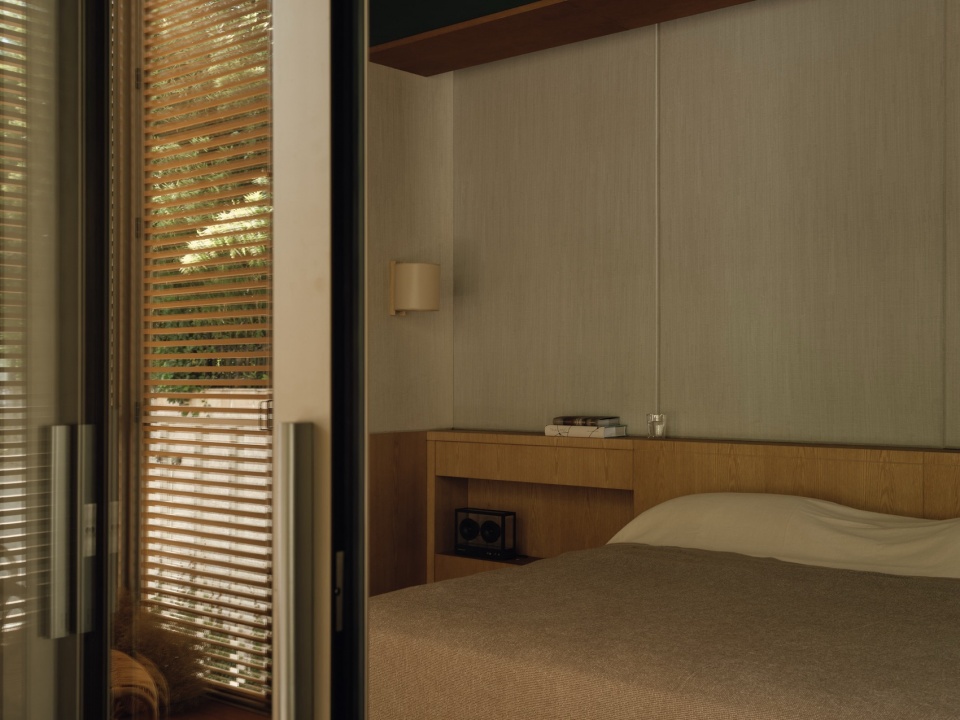
主卧与衣帽间、卫生间整合为连续使用的套间关系,集中在相对安静的一侧,动线简洁。
The master bedroom, wardrobe, and bathroom are combined into a continuous en-suite arrangement, located on the quieter side of the floor with clear and straightforward circulation.
▼主卧,Master bedroom
▼主卧,Master bedroom
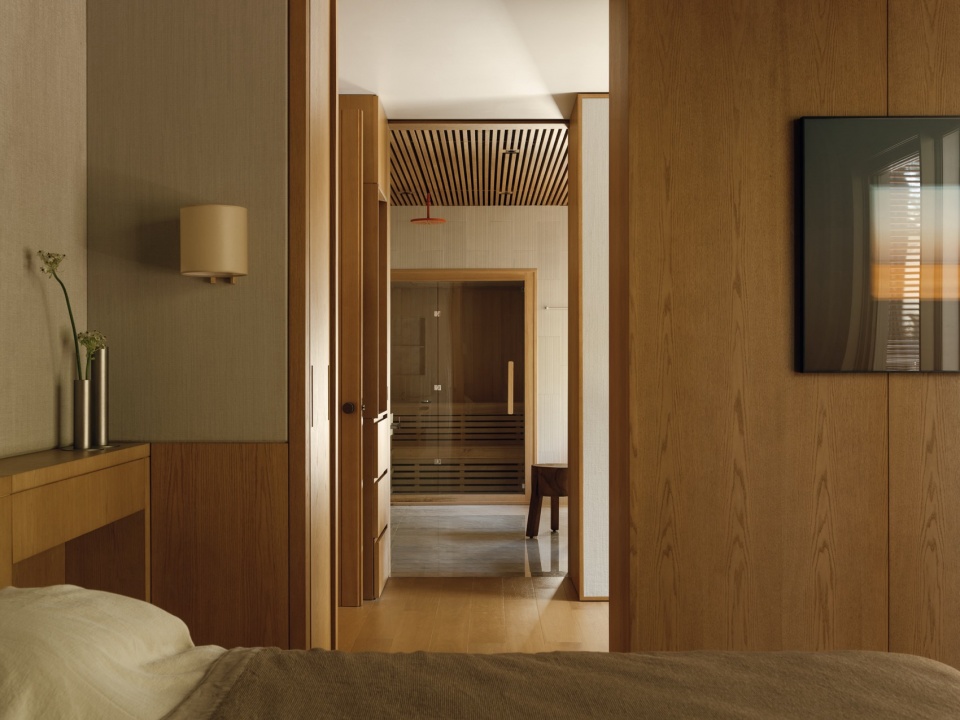
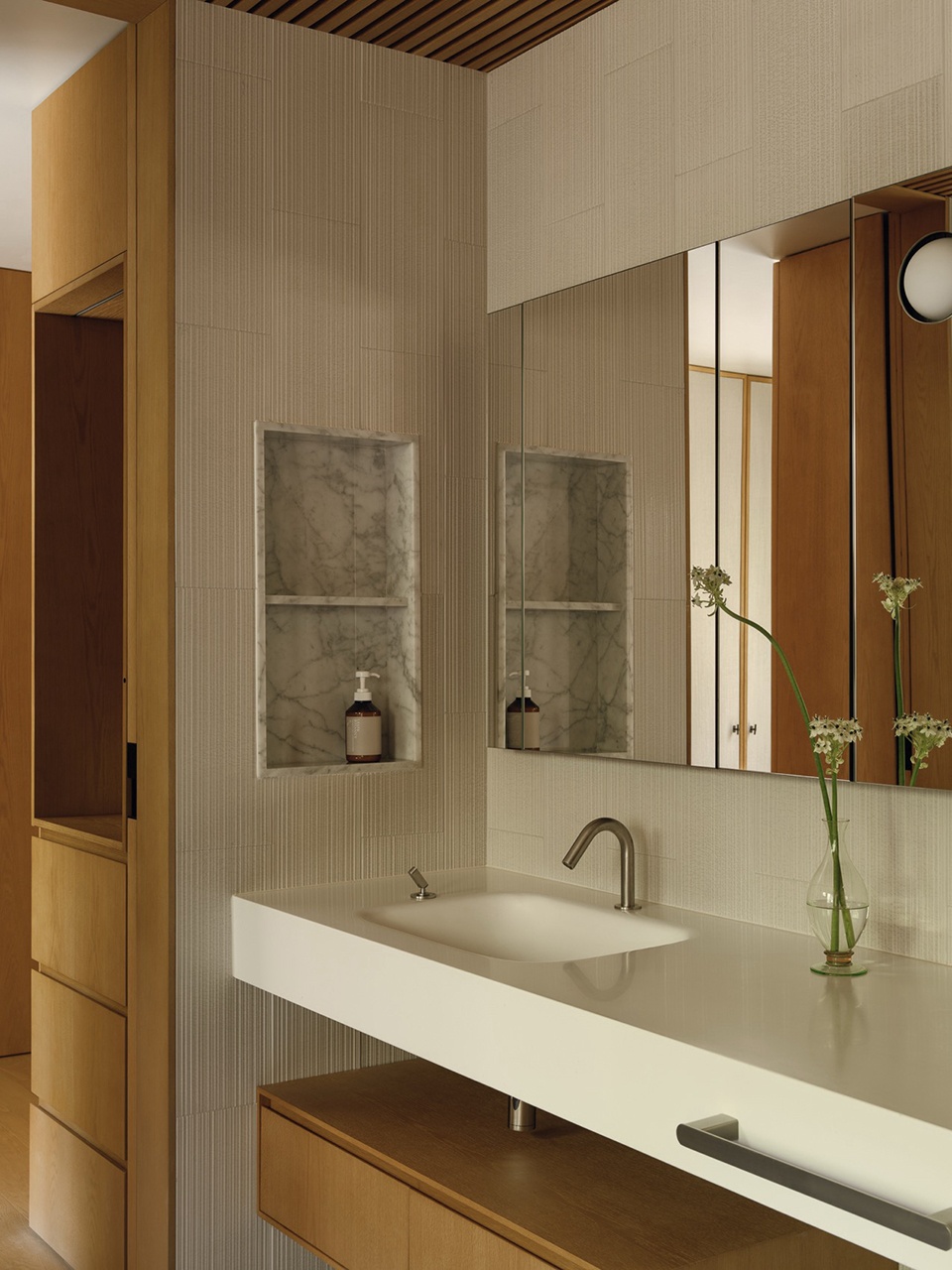
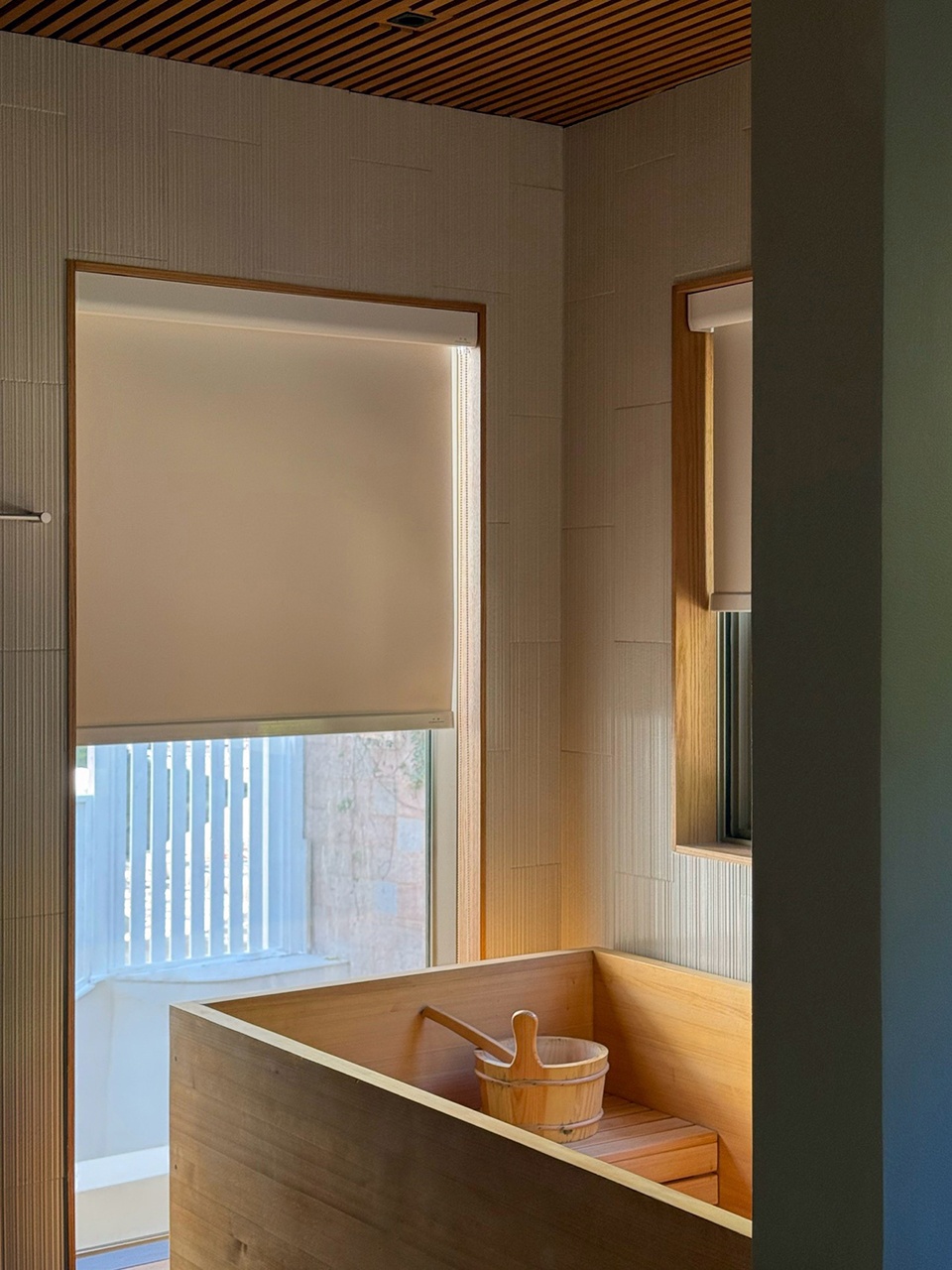
卫浴套间在连续空间中整合盥洗、淋浴、浴缸与桑拿功能,形成完整而私密的使用场景。
Within the en-suite bathroom,the washbasin, shower, bathtub, and sauna are arranged in a continuous spatial sequence, creating a complete and private setting for everyday use.
▼卧室望往卫浴套间,View to en-suite bathroom
▼盥洗区&沐浴区,Wash area & Bathing area
起居室|Living room
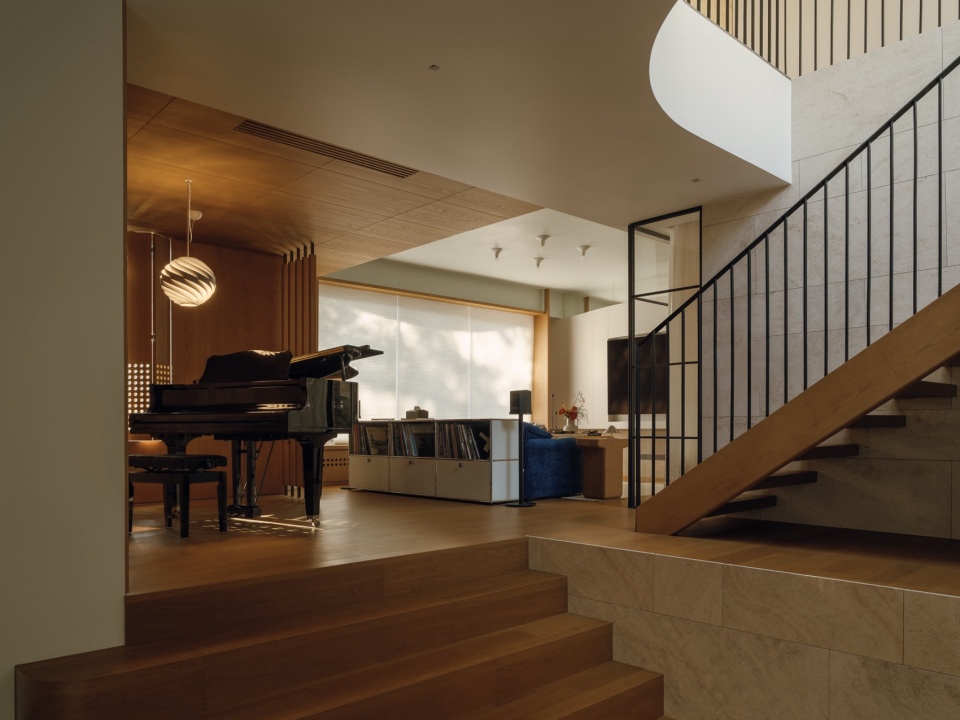
楼梯口被转化为可停留的起居空间,成为这一层的使用中心,也在公共与私密之间形成自然缓冲。
The stair landing is transformed into an inhabitable living space, becoming the functional centre of this level while forming a natural buffer between shared and private areas.
▼起居室,Living room
▼起居室,Living room
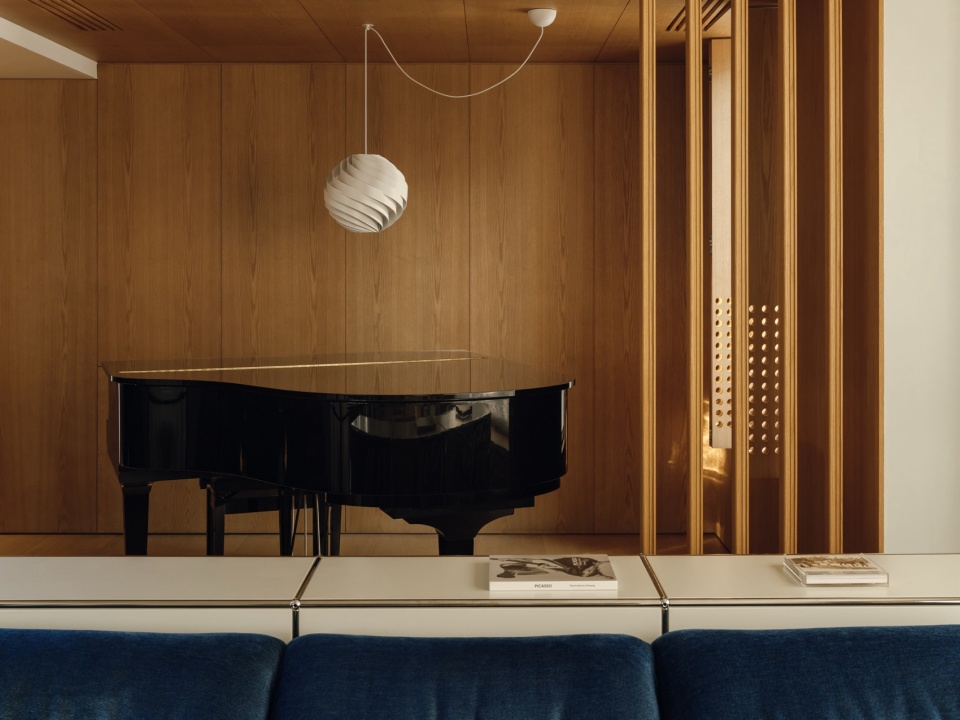
▼起居室,Living room
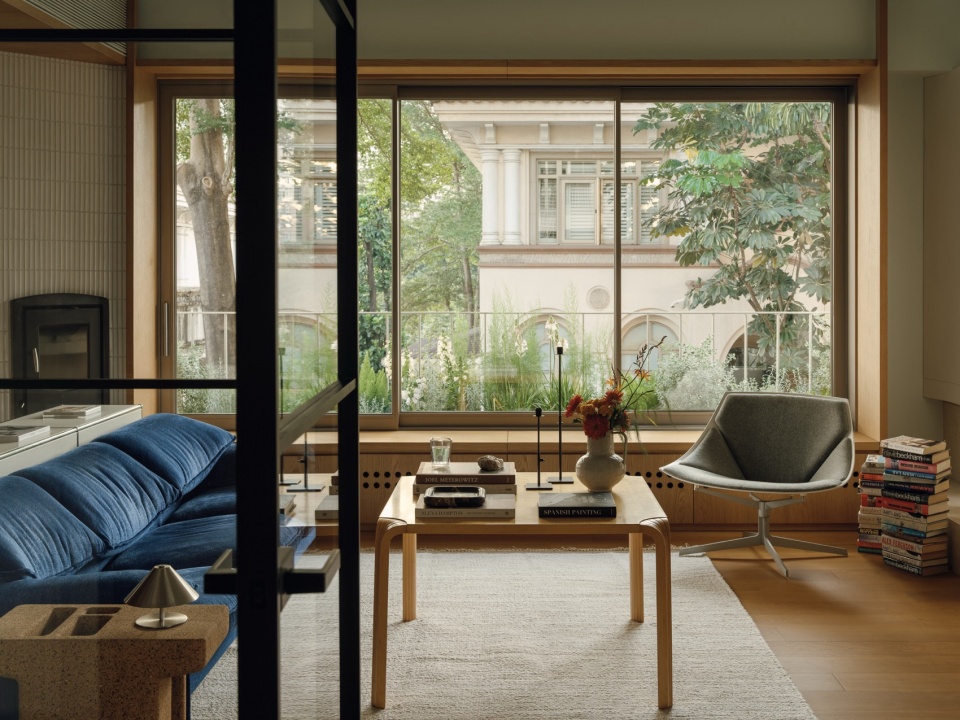
▼起居室细节,Details of living room
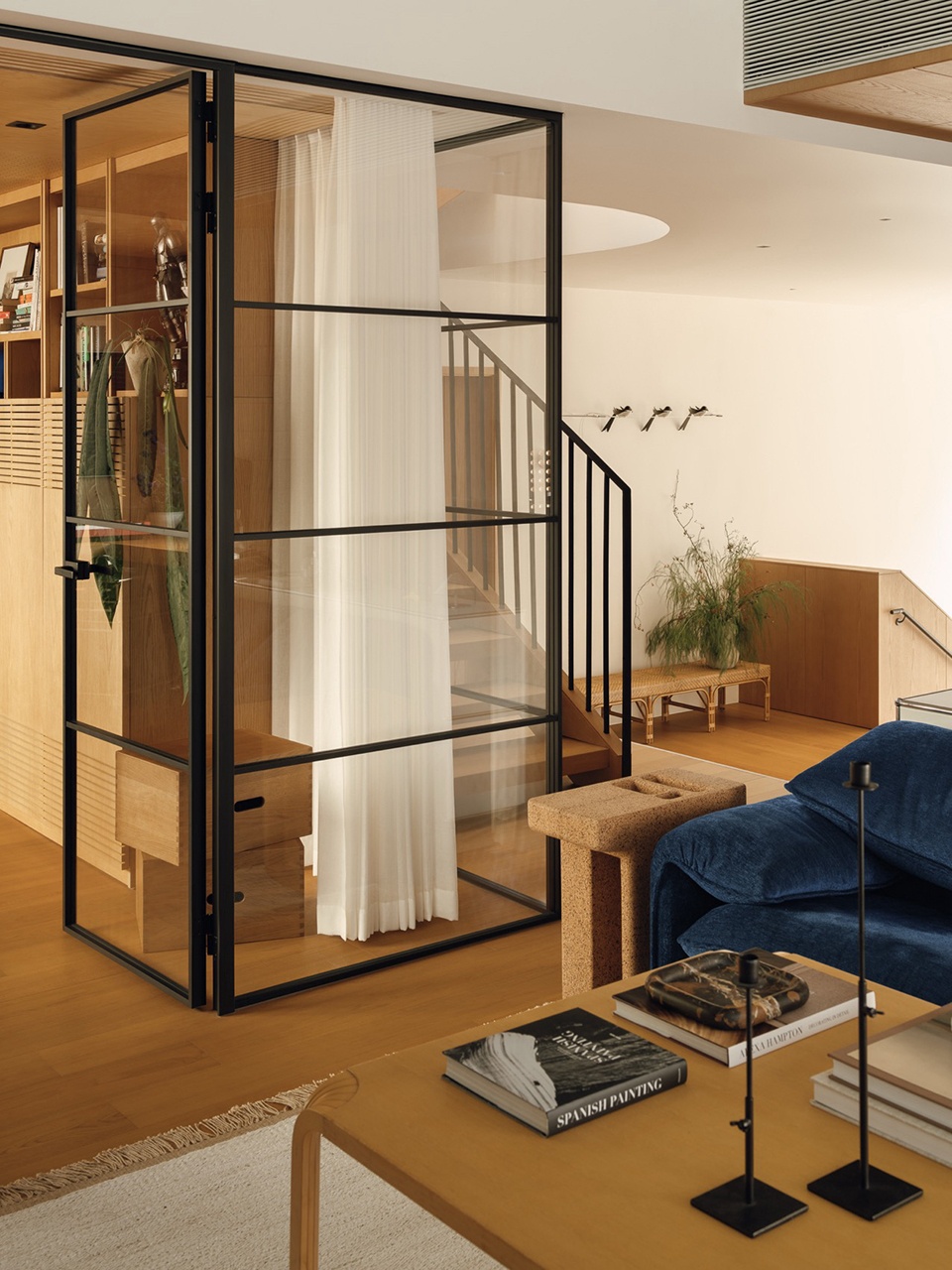
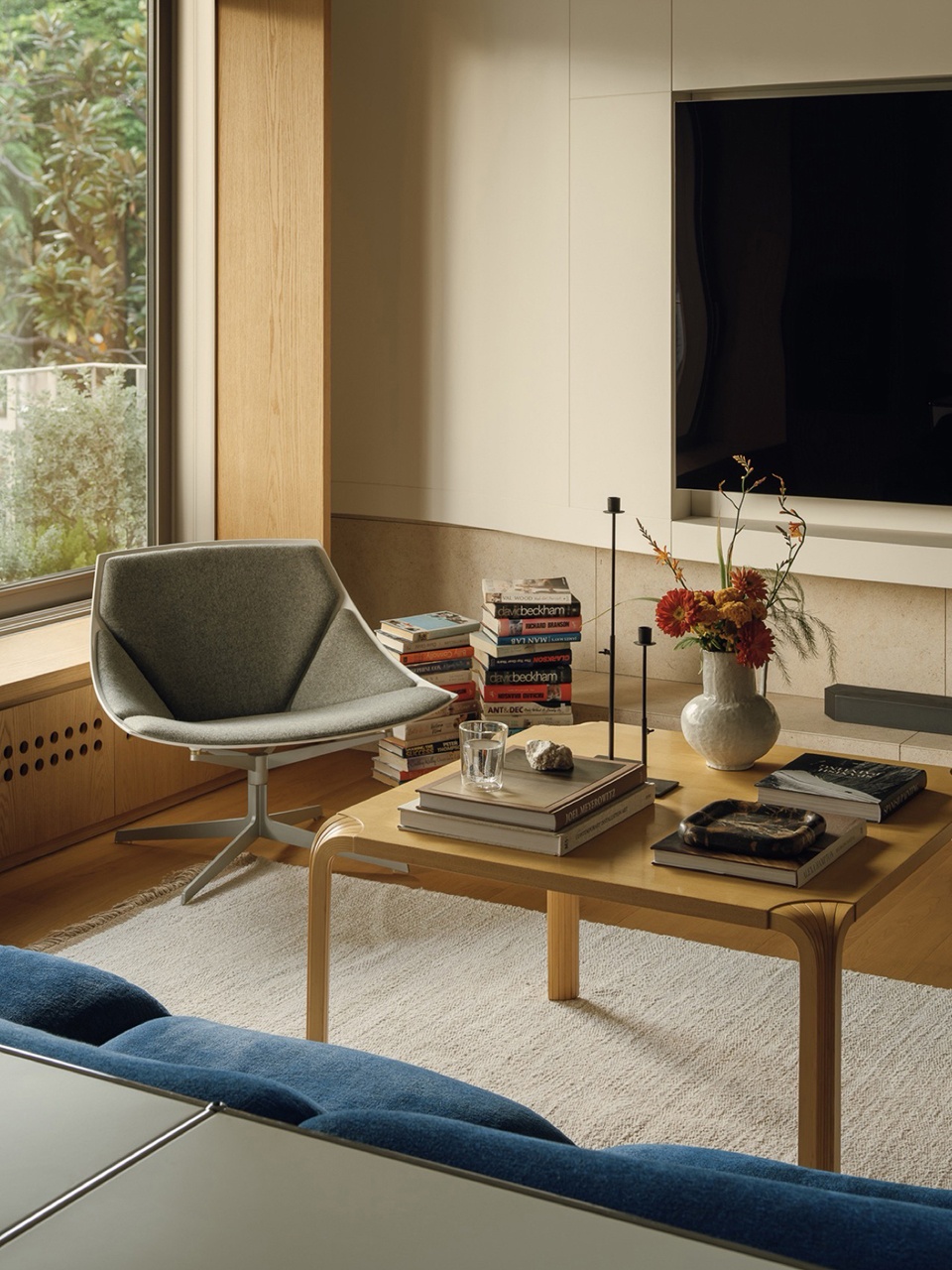
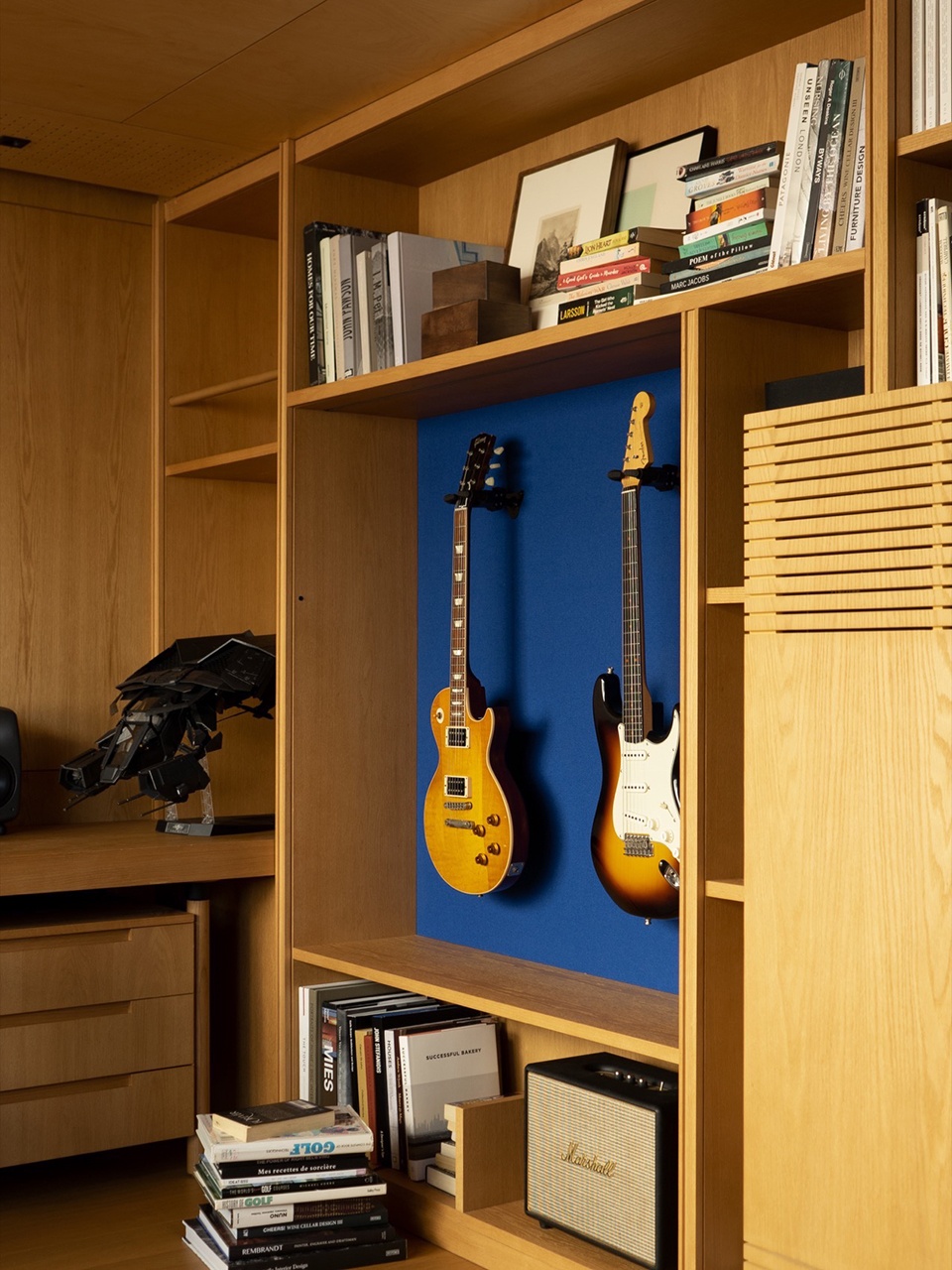
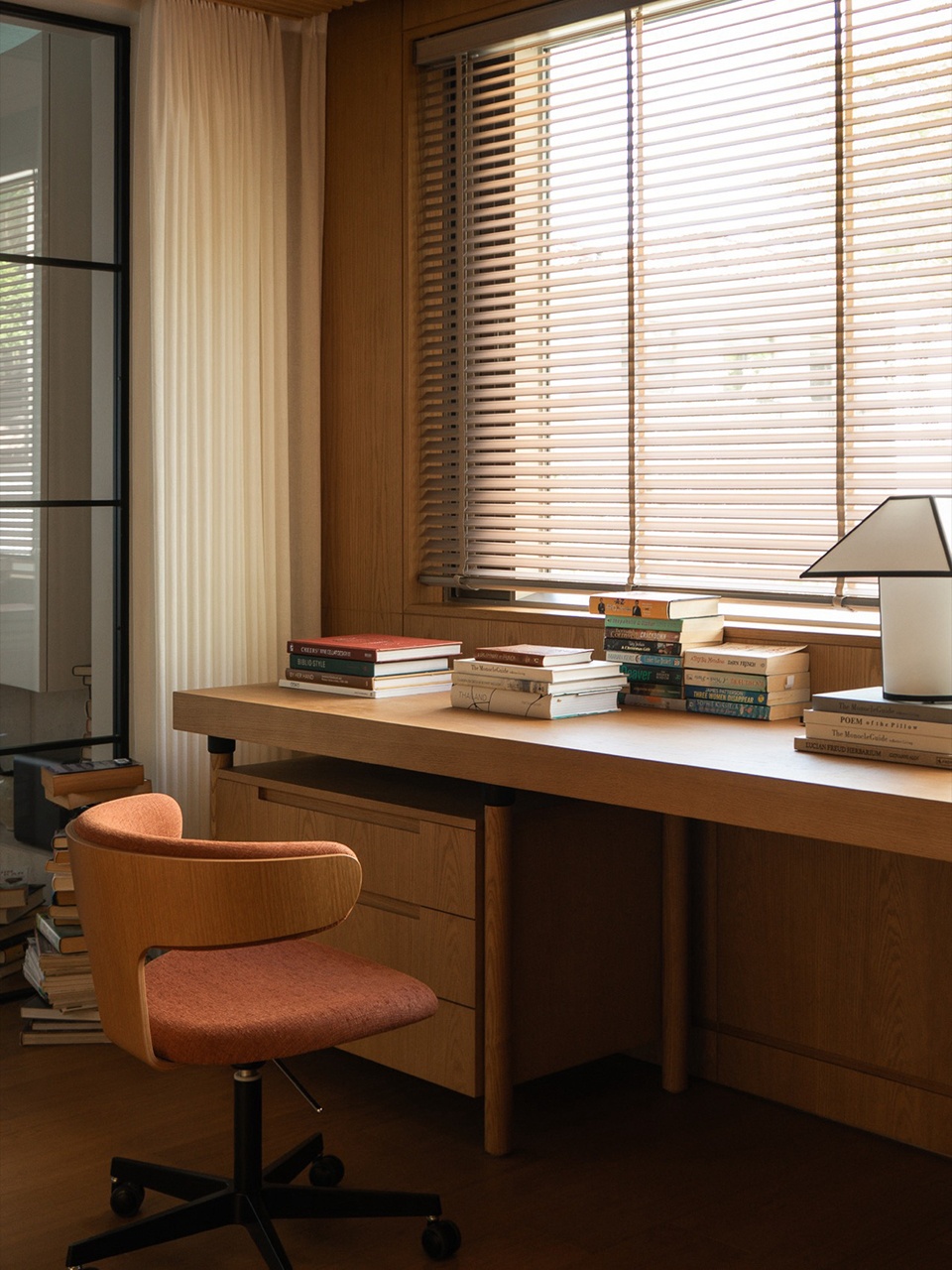
书房|Study
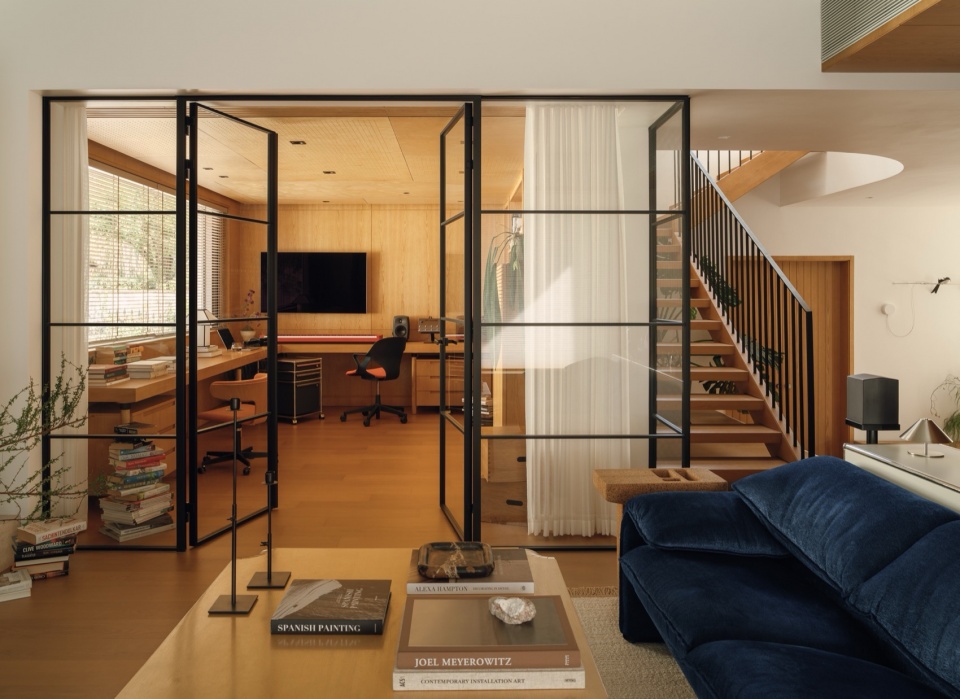
书房退居起居空间内侧,在不介入主要动线的前提下保持独立的使用状态。
The study is set to the inner side of the living area, maintaining an independent mode of use without interfering with the main circulation.
▼书房,Study
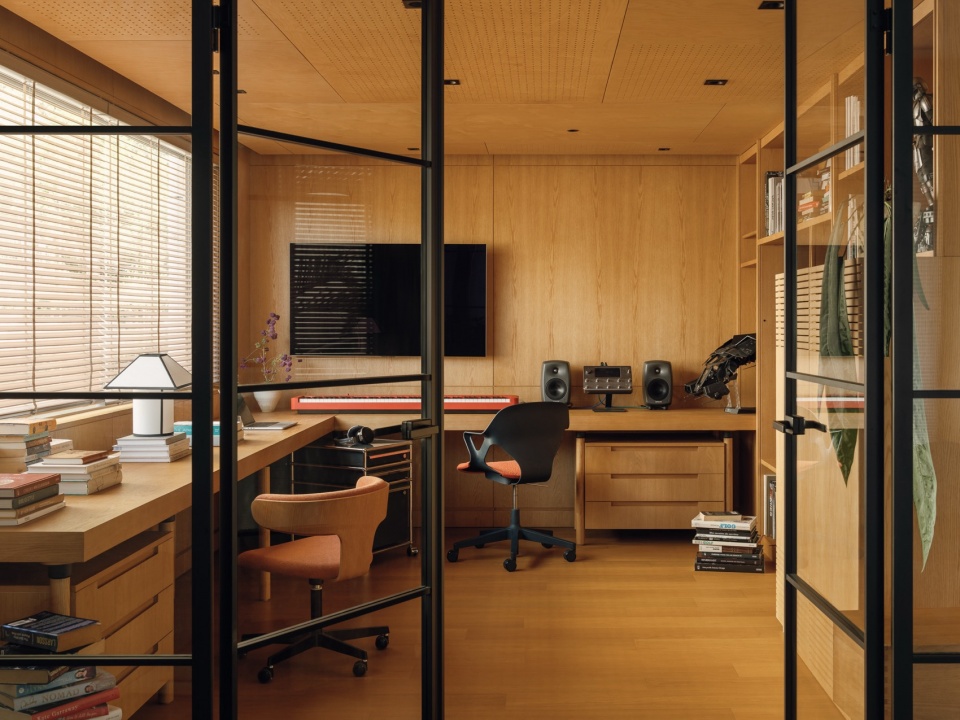
▼书房细节,Details of study
三层Second Floor
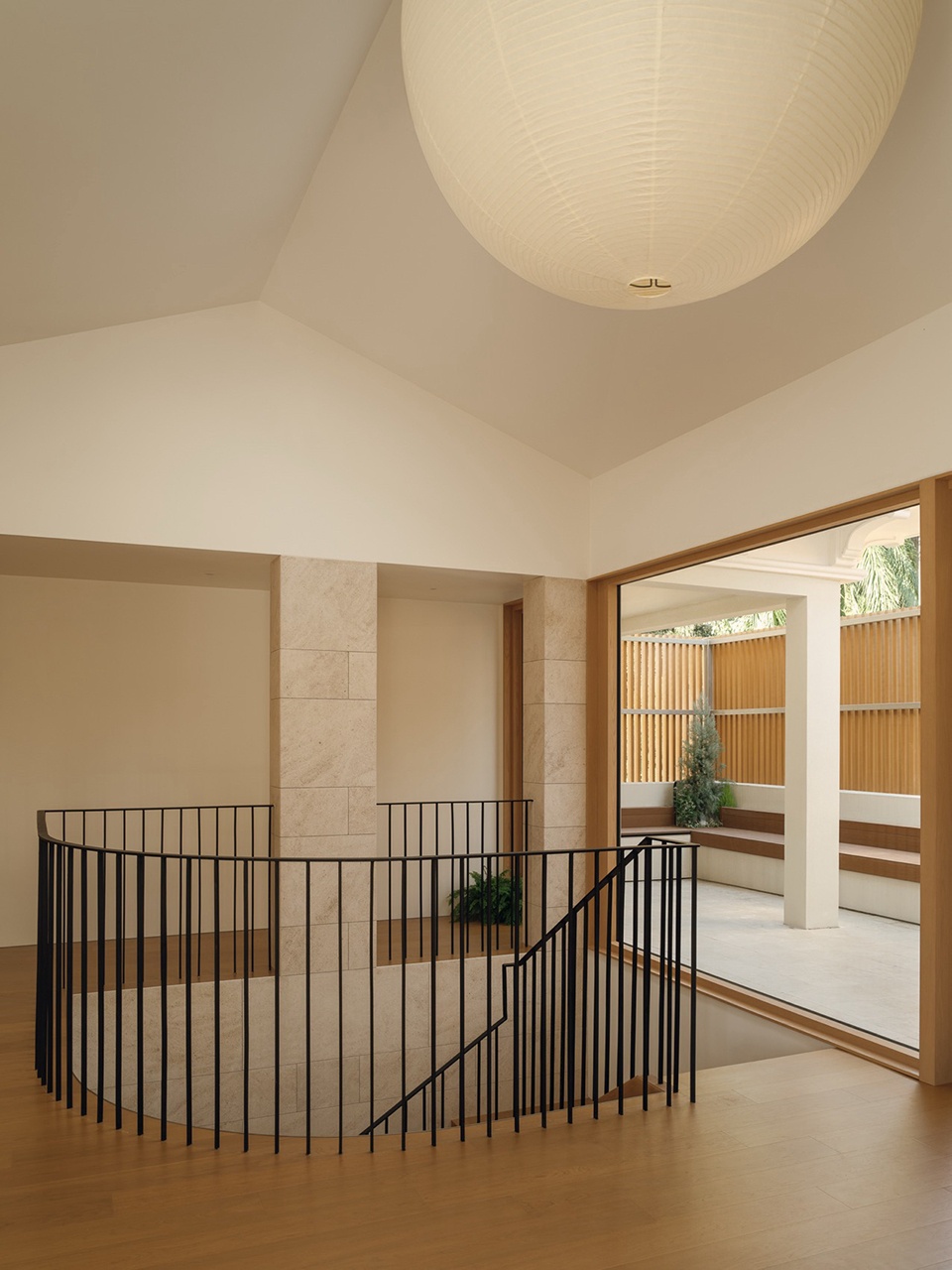
开放而可调整的生活空间:活动区域、房间与露台之间采用轻度界定,使空间结构能够适应不同阶段的使用需求。
The second floor maintains an open spatial relationship. Activity areas, rooms, and terraces are lightly defined, allowing the house to adapt to different phases of use.
▼三楼通道,Stair hall
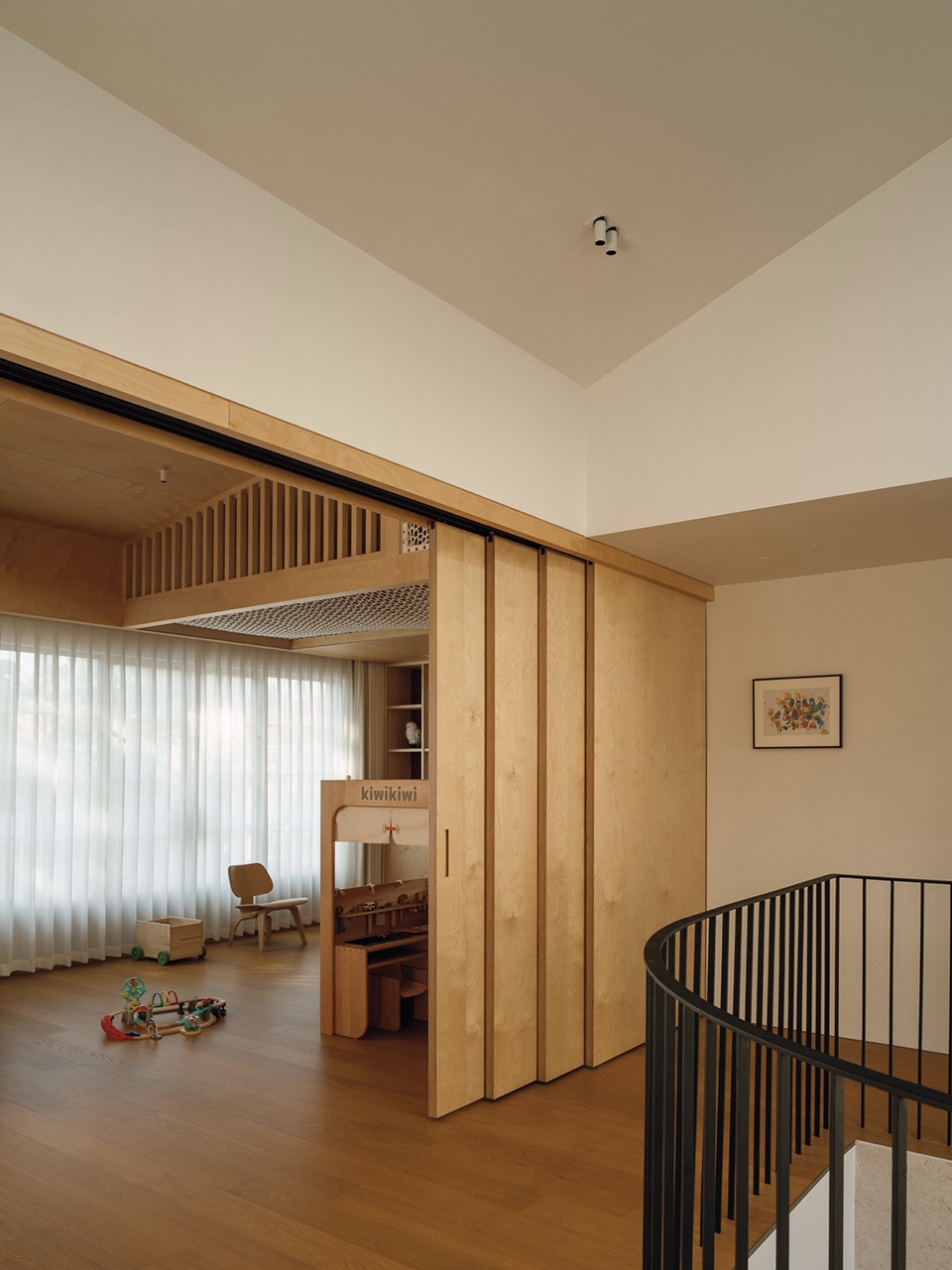
儿童房|Children’s room
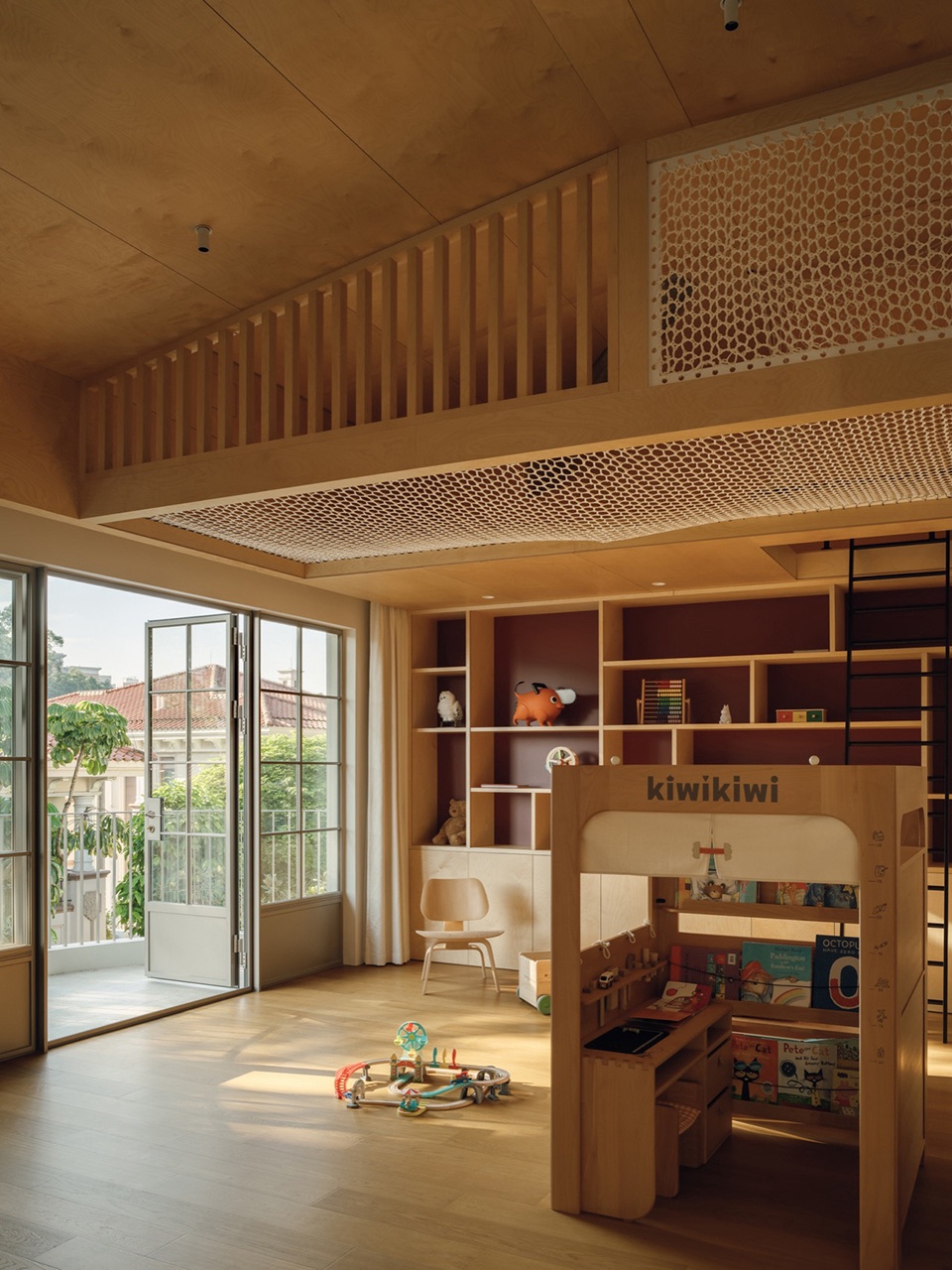
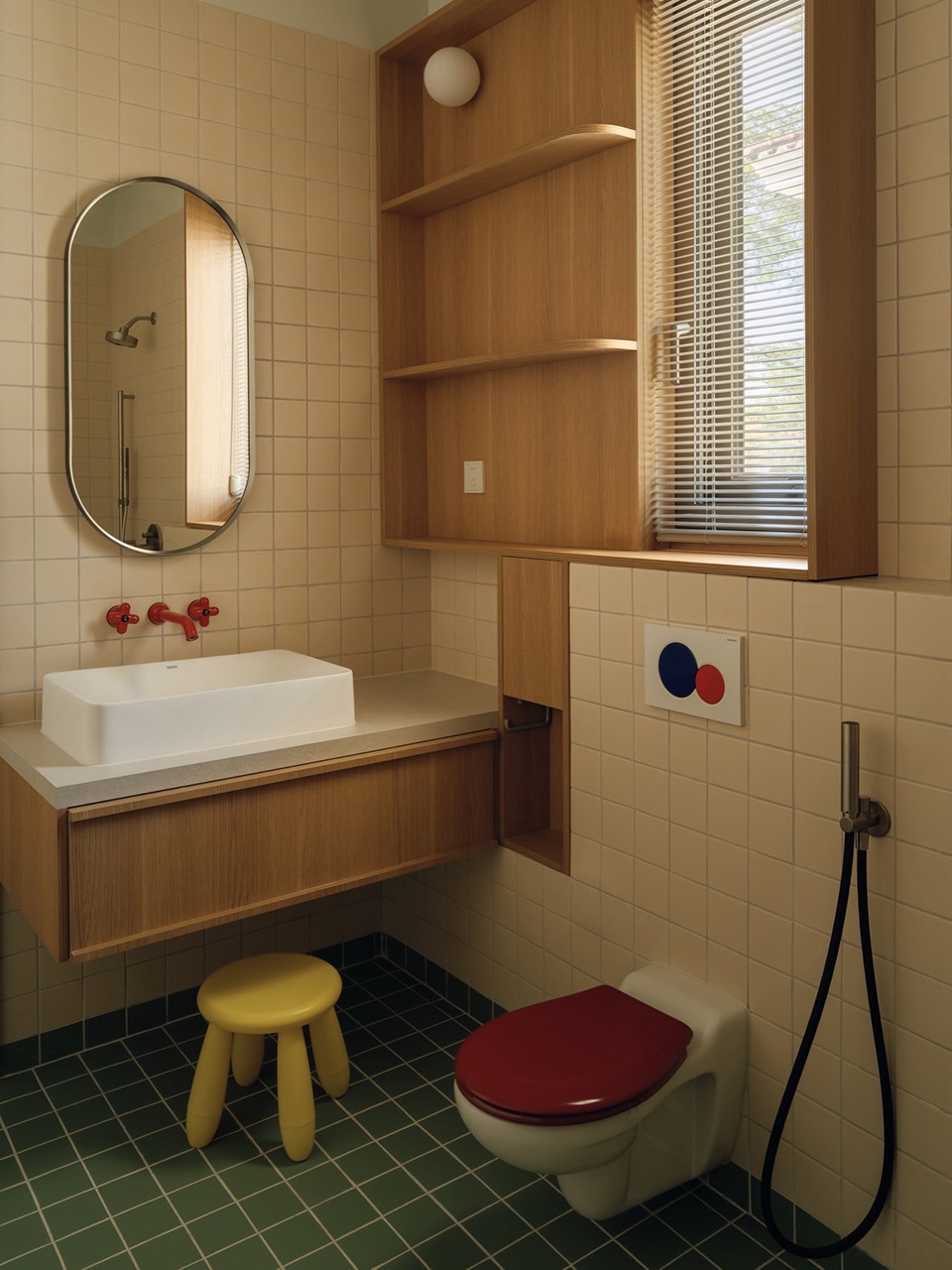
儿童房以木作界面构成稳定的空间背景,上下叠合的结构组织游戏空间。整片活动区域朝向自然采光展开.
The children’s room is defined by timber surfaces that create a stable spatial backdrop. A vertically layered arrangement organises areas for play, while the entire activity zone opens toward natural light.
▼儿童房与儿童房卫生间,Children’s room & Children’s bathroom
材料与细节Material Strategy
材质选择保持克制并通过尺度与触感为空间引入温度,而非依赖强烈的视觉对比。一层以水泥自流平为公共空间的基础材质,并通过实木吊顶与天然石材增强空间的稳定感;二层转为木质界面,空间触感随之温和而稳定;三层保持轻度完成度,减少固定处理,为未来的使用调整保留空间。
Material choices remain restrained, introducing warmth through scale and tactility. On the ground floor, cementitious flooring forms the base for shared spaces, complemented by solid timber ceilings and natural stone to reinforce a sense of stability. The second floor shifts to timber surfaces, where the tactile quality becomes softer and more settled. The third floor is kept lightly finished, with fewer fixed treatments, allowing flexibility for future adjustments.
▼客厅细节,Details of living room
▼客厅细节,Details of living room
▼餐厨细节,Details of dining & kitchen
居所的意义,随时间展开A Dwelling Unfolds Over Time
生活在多层空间中逐步形成清晰分布,公共活动在一层建立稳定的使用基础,上层空间回归更为安静的日常起居状态。既定的空间结构支持长期居住的使用需求,使住宅在当下与未来之间保持稳定而连贯的使用关系。
《Truly for You》一段关于居住状态的记录,正在发生。
Life gradually settles into a clear distribution across the multiple levels of the house. Shared activities establish a stable foundation on the ground floor, while the upper levels return to quieter everyday living. The spatial structure supports long-term habitation, allowing the house to maintain a consistent and continuous relationship between present use and future life.
Truly for You is a record of a lived condition, still unfolding.
▼剖面图,section
Project name: Truly for You: Vertical Continuity of Living Relationships
Project type: Interior design
Design: FUYUDI STUDIO
Website:
Contact e-mail: ftq82055689@126.com
Design year: 2023
Completion Year: 2025
Leader designer & Team: Fu Yudi Design Group
Project location: Tianhe District ,GuangZhou City
Gross built area: 500㎡
Photo credit: Tan Xiao/Song Yunyi
Materials: Terrazzo Flooring, Limestone