木匠之家,信阳 / 原初建筑
起点 Origins
郝堂村作为乡村振兴示范村,致力复苏本土传统匠艺,发起 “八大匠” 匠艺复兴计划 ,与村内的木匠、铁匠、篾匠等传统手艺人合作,通过老旧民居微更新与新空间营建相结合的方式,孵化系列特色工坊。让散落乡间的手工技艺重归日常、焕发生机。工坊既承载手工艺品展陈与文旅售卖功能,也定期为学校提供匠艺研学活动,在延续乡土技艺文脉、留存村落集体记忆的同时,为村民摸索可持续增收路径。
As a demonstration village for rural revitalization, Haotang Village is committed to reviving local traditional craftsmanship. It has launched the Eight Traditional Crafts Revival Program and partnered with local artisans such as carpenters, blacksmiths and bamboo weavers. By combining the micro-renovation of old residential houses with the construction of new spaces, a series of characteristic craft workshops have been fostered.This initiative brings scattered rural handicraft skills back into daily life and rejuvenates them. The workshops serve as venues for craft exhibition and cultural tourism sales, and regularly organize craft research and study activities for schools. While inheriting the context of local craftsmanship and preserving the collective memory of the village, they also explore a sustainable income growth path for villagers.
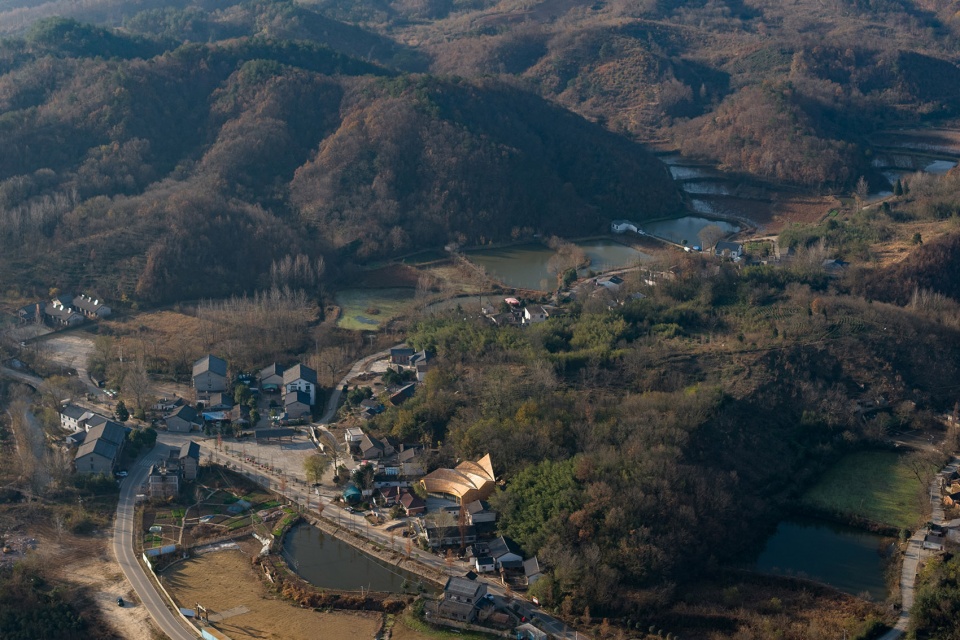
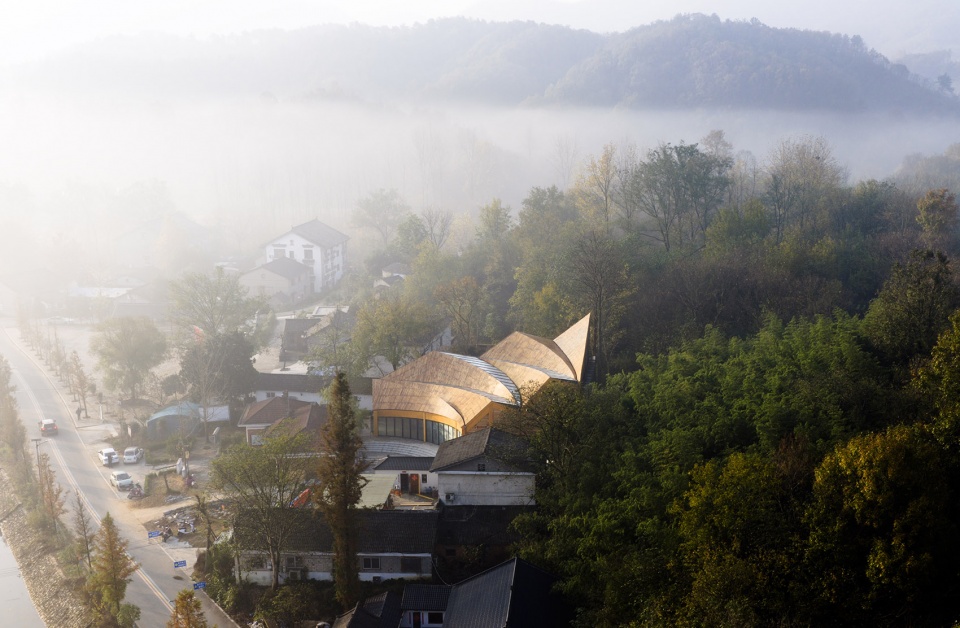
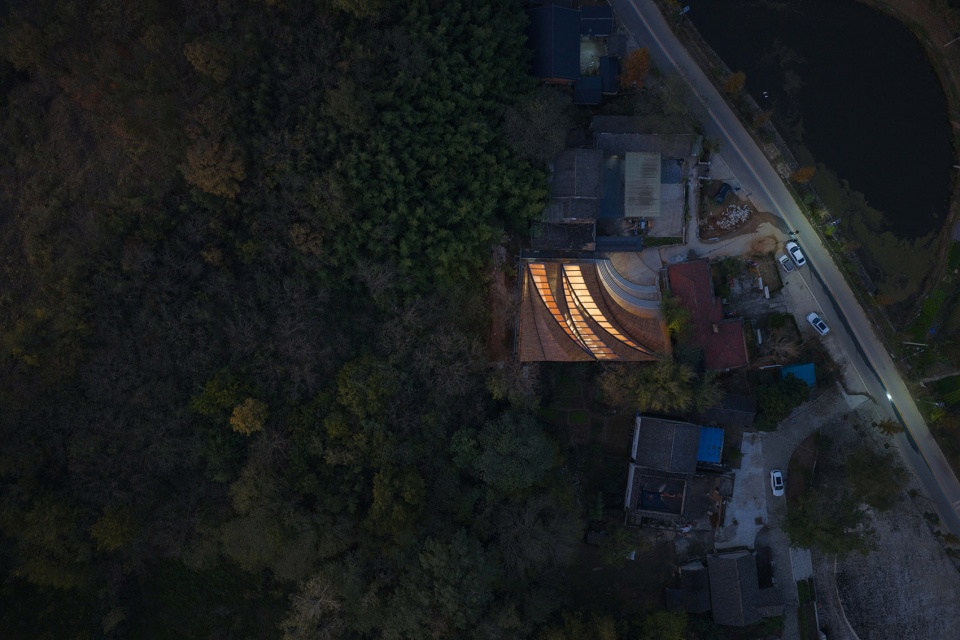
▼场地鸟瞰,aerial view of the site
场地 Site
现场踏勘木匠坊地块时循径入村,场地呈现典型豫南丘陵山水肌理,山势承续大别山北麓余脉脉络。木匠老张的宅屋坐落于村落入口,依山就势而建;自建的三层住宅南侧是原有的木工棚空间,作为传统工具与木料的收纳场地,也是木匠老张往日劳作的生活工坊。
During the site reconnaissance of the Carpenter’s Workshop plot, we entered the village along the path. The site features the typical hilly and landscape texture of southern Henan, with mountain terrain extending from the northern foot vein of the Dabie Mountains.Carpenter Zhang’s residence stands at the village entrance, built in harmony with the natural mountain terrain. To the south of his self-built three-story house lies the original woodworking shed. It has long served as a storage place for traditional tools and timber, as well as a daily workshop where Carpenter Zhang used to ply his craft.
▼场地鸟瞰,aerial view of the site
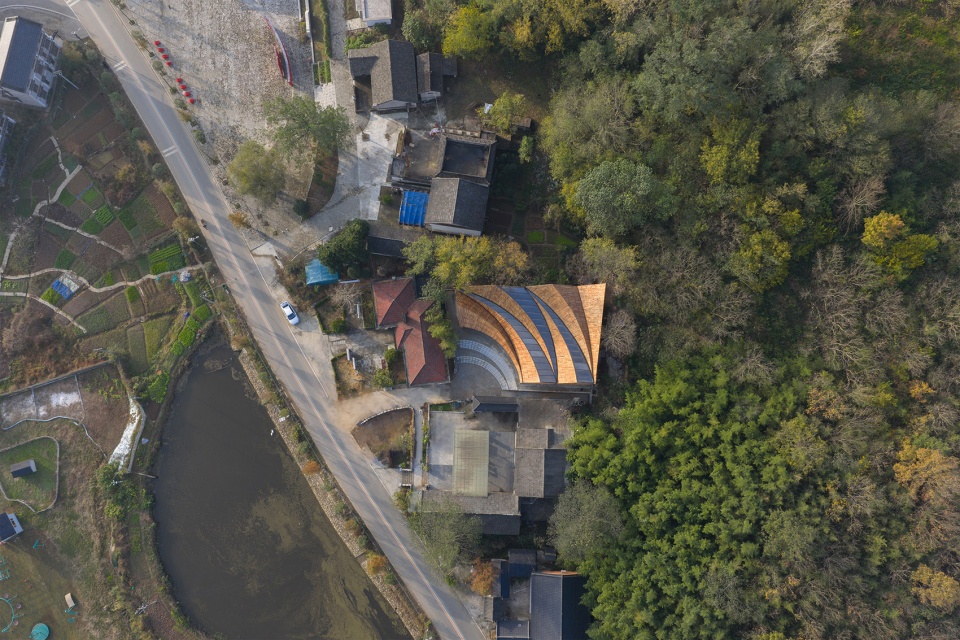
原有木工棚因年久失修,已沦为危房,匠人老张也多年未曾从事木作营生。步入院落之内,可真切感知豫南丘陵地貌的环抱地形特征,场地东侧被山体丘陵包裹、南侧毗邻村落民居,西侧被村卫生院建筑遮挡。整体形成一处内向而静谧的场所,由此生发设计思考:新建工坊应顺应山体脉络,以自然肌理为基底,消解场地高差,完成从山林腹地到村前道路的自然过渡,使建筑成为嵌入村落的一座轻盈木构容器。
▼概念草图,concept sketch
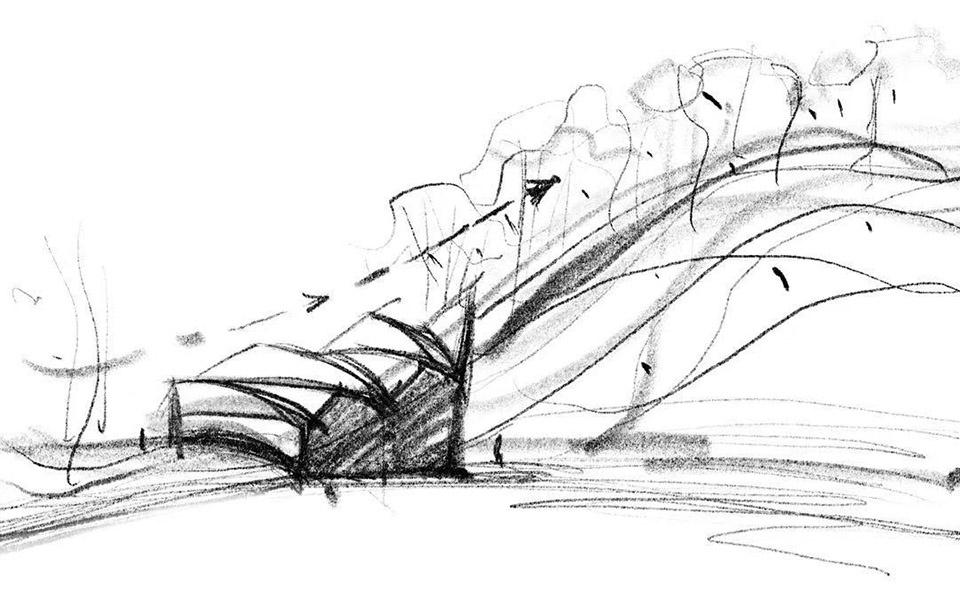
The original woodworking shed had fallen into disrepair over years and become a dilapidated building, and Carpenter Zhang had not engaged in woodworking for many years.Stepping into the courtyard, one can truly feel the enclosed terrain of the southern Henan hilly landscape. The site is embraced by hills on the east, adjacent to village dwellings on the south, and sheltered by the village health center building on the west. It forms an introverted and tranquil precinct.This inspires the design concept: the new workshop shall follow the mountain context, take natural texture as the base, reconcile the height difference of the site, and achieve a natural transition from the mountain hinterland to the village front road. The building is conceived as a lightweight timber structure vessel gently embedded into the village.
▼北侧半鸟瞰,North side semi-bird’s eye view
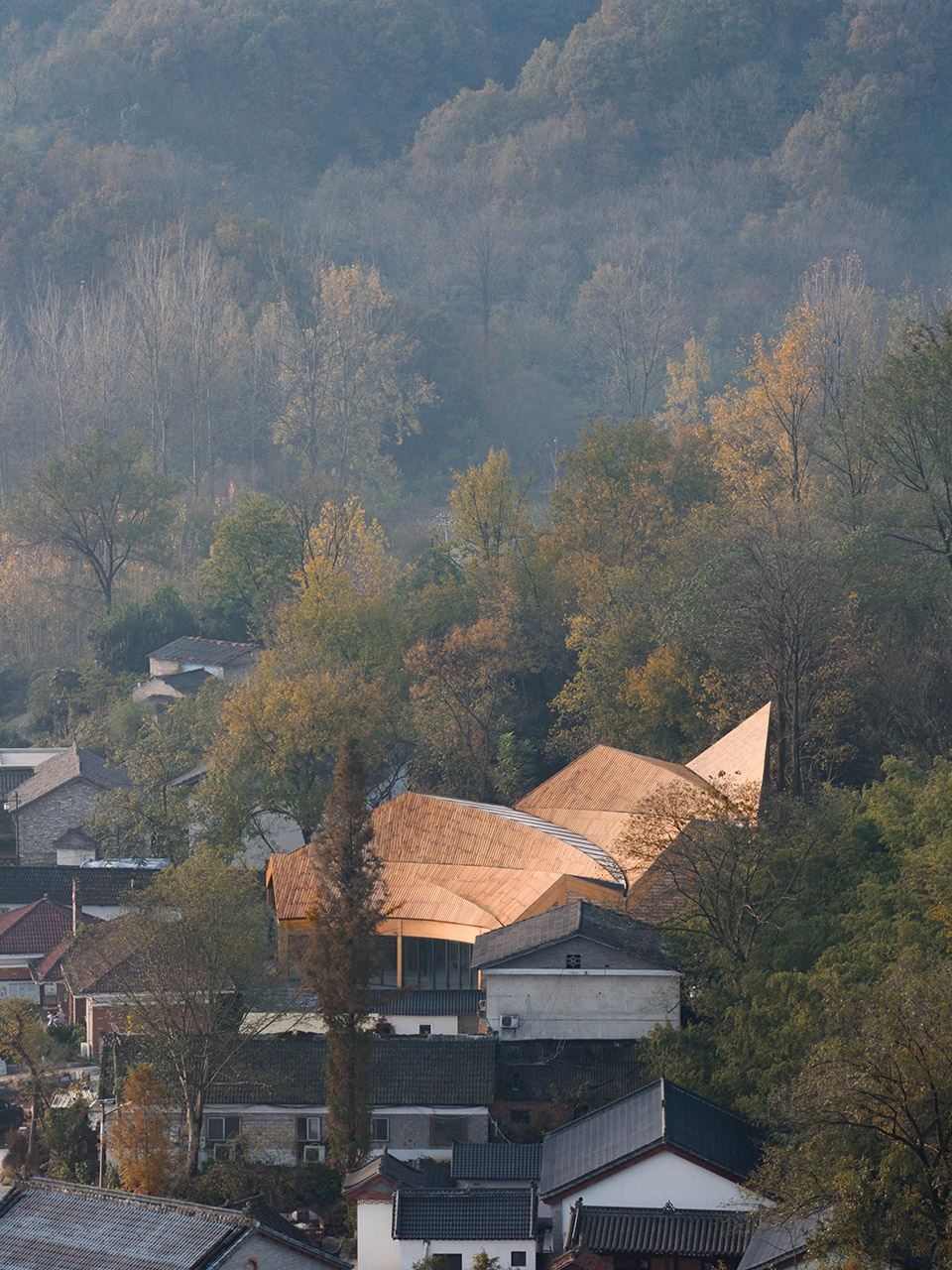
▼晨雾中的木匠之家与村落,The Carpenter’s Home and the Village in the Morning Mist
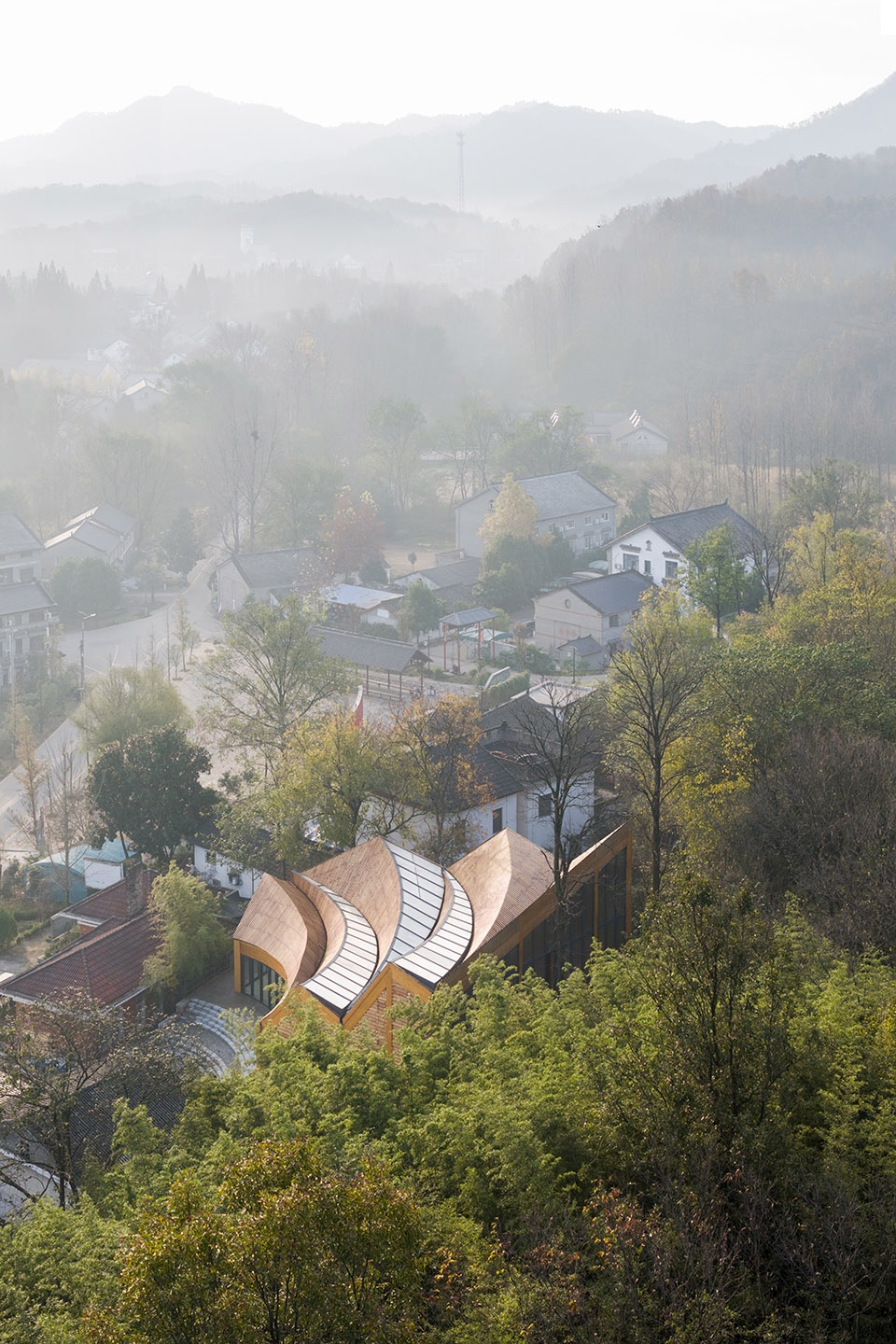
▼村落中的木匠之家,The carpenter’s home in the village
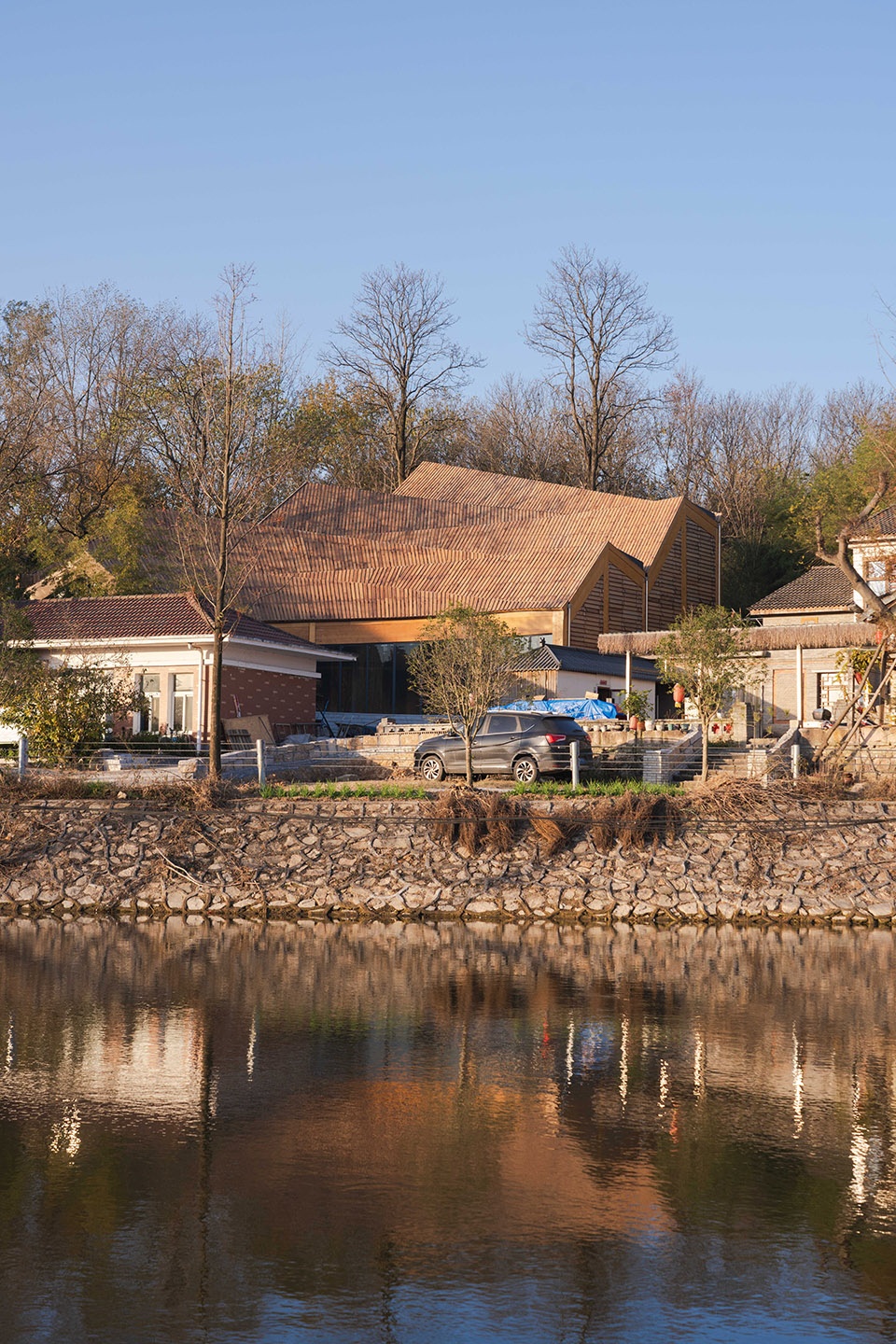
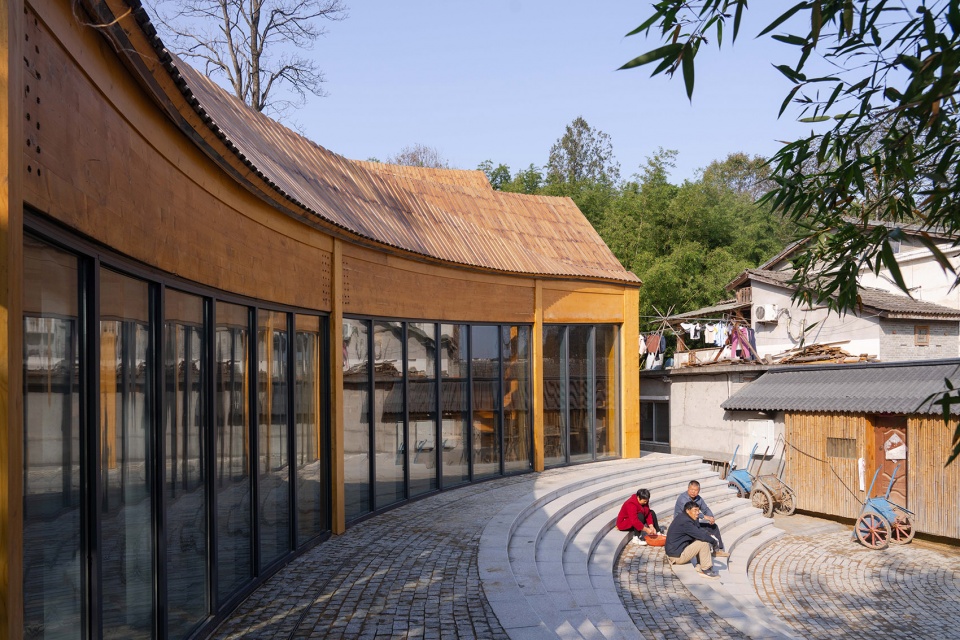
作为“八大匠”计划的核心实践,木匠坊承担着双重使命:既作为传统木作生产与研学的空间载体,也深度融入匠人的日常生活,成为连接村落、自然与外来访客的公共节点。
As a core practice of the “Eight Crafts” Initiative, the Carpenter’s Workshop undertakes a dual mission. It serves not only as a spatial carrier for traditional woodworking production and research study, but also blends deeply into the craftsman’s daily life, functioning as a public node connecting the village, nature and visiting tourists.
▼夏季屋顶与周围植被,Roof and surrounding vegetation in summer
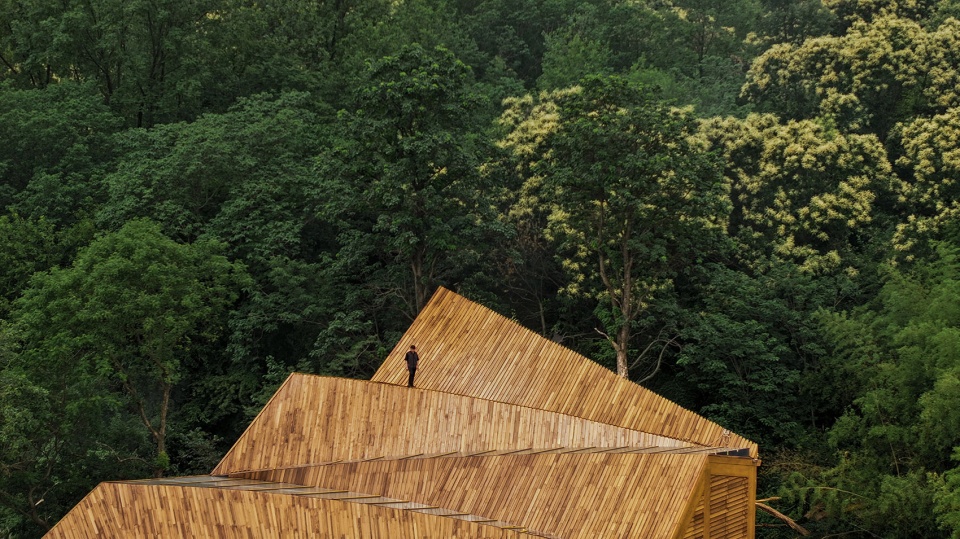
▼屋顶的几何边界,Geometric boundary of the roof
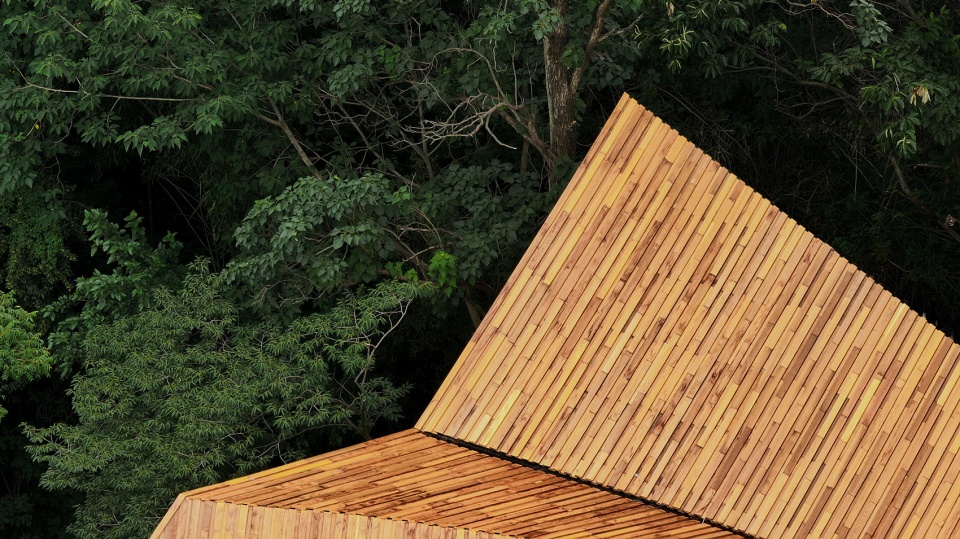
▼屋顶曲线延伸至地面,The roof curve extends to the ground
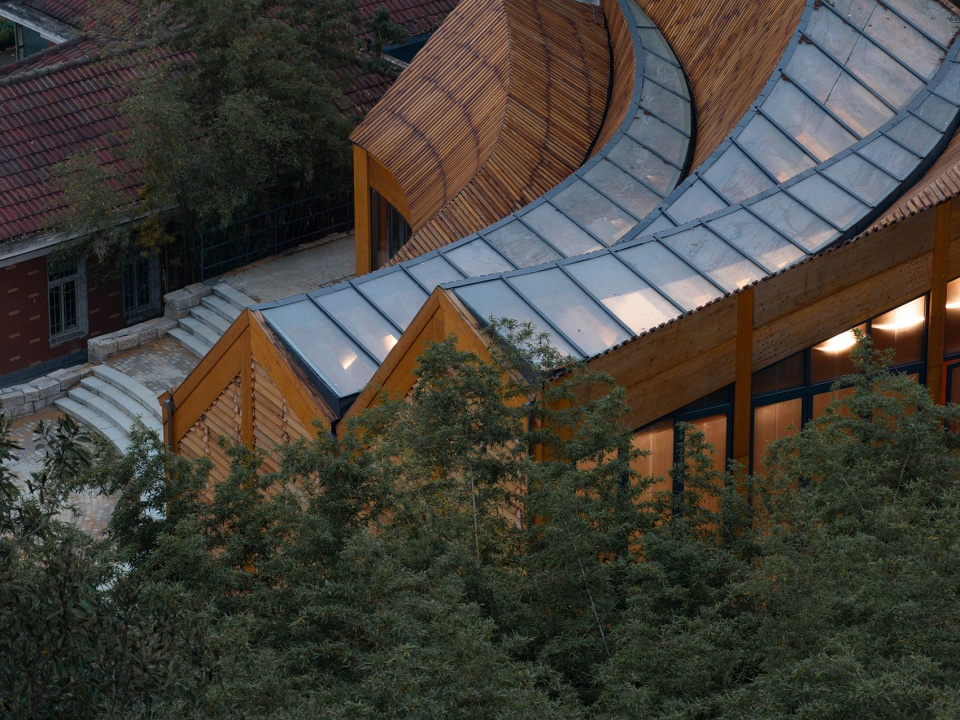
▼傍晚天窗的内透光,The internal light transmission of the skylight in the evening
因山塑形 Shaped by the Mountain
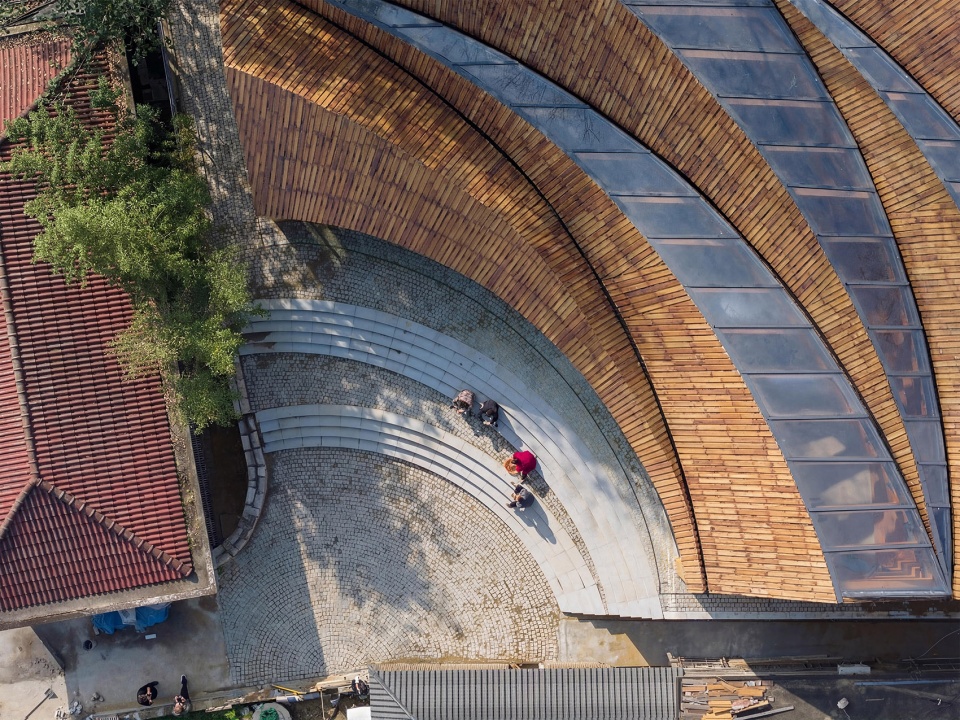
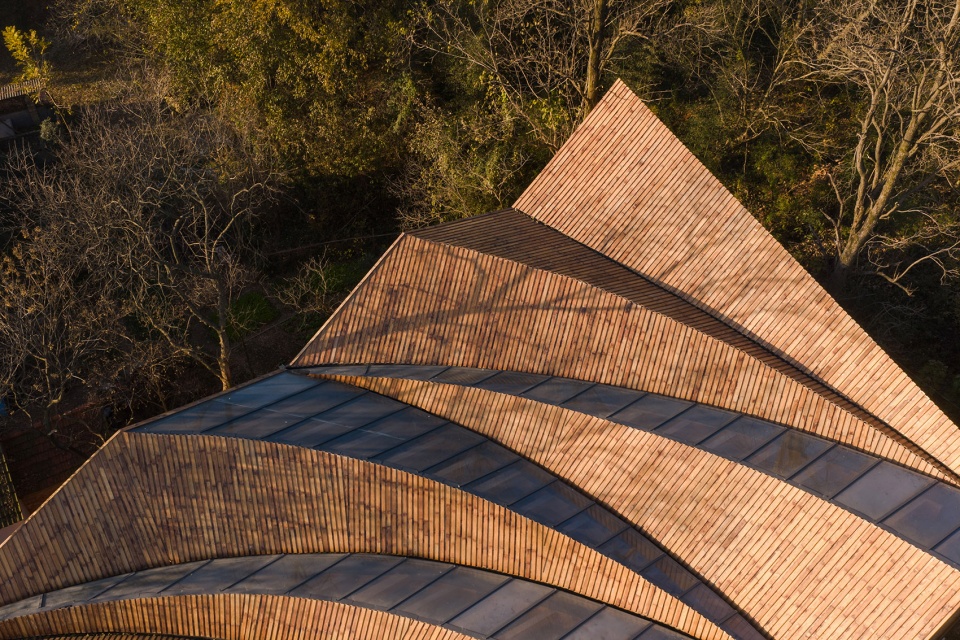
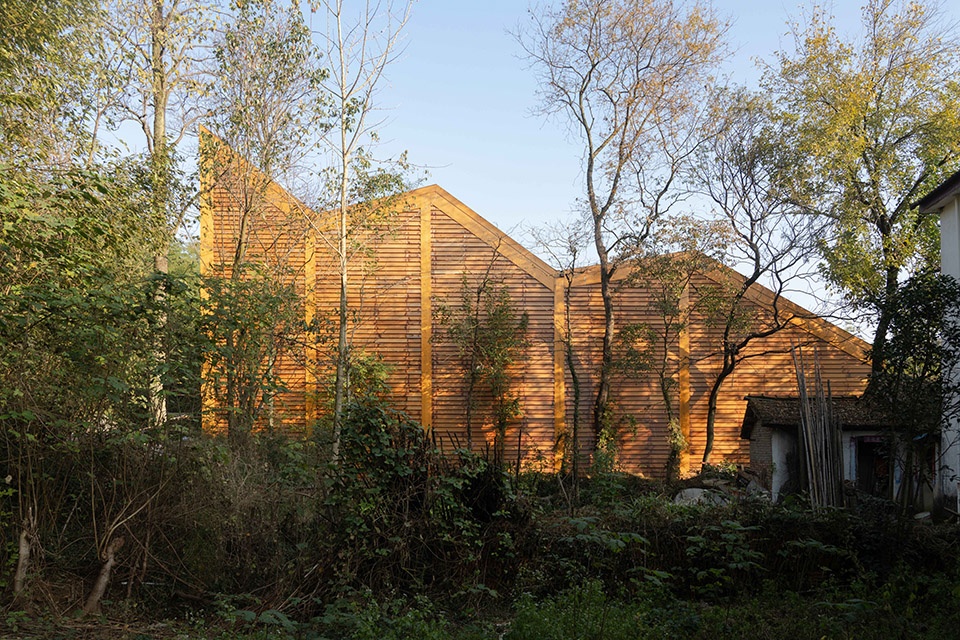
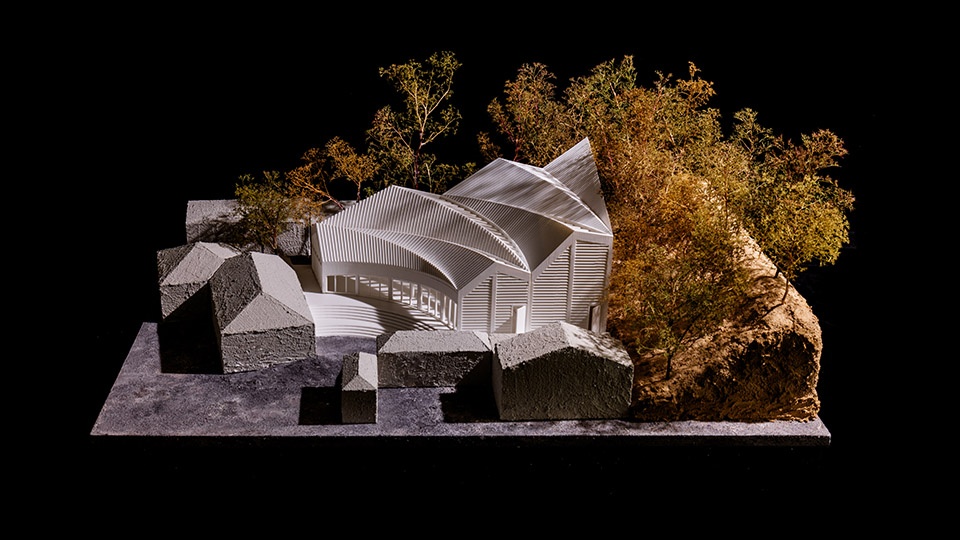
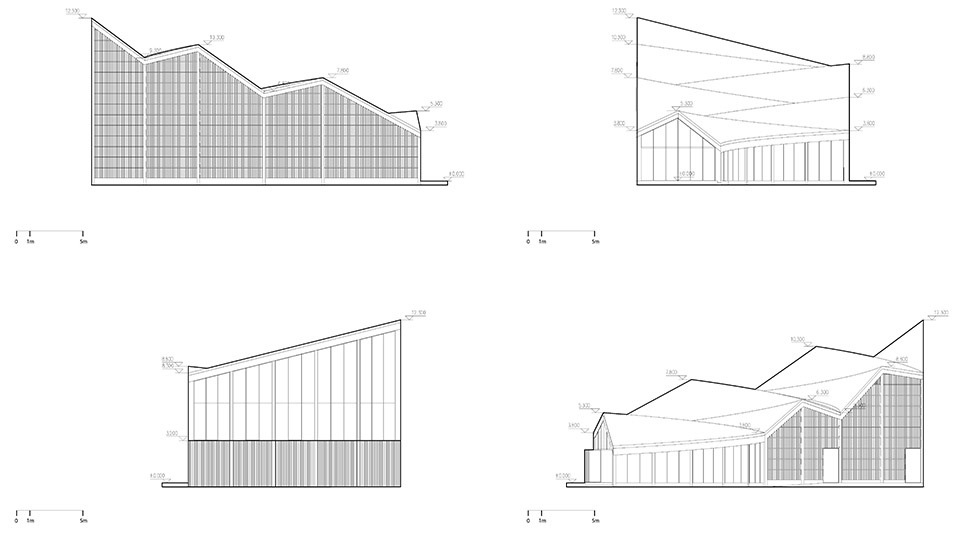
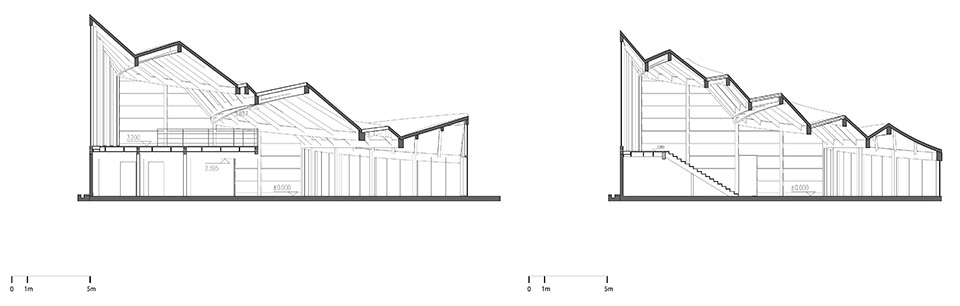
建筑以谦逊的姿态嵌入村落肌理,南北两侧紧临村舍,界定了建筑的边界形成垂直墙面。东侧山体起伏,建筑顺势回应场地地形,将屋顶视作山体向村落内部的延伸。12根胶合木曲梁自东向西依次降低,形成连续而舒展的空间韵律,并与西侧卫生院的场地高差建立自然过渡,使建筑在山体、村落与周边环境之间形成协调的空间关系。
▼概念草图,concept sketch

With a modest posture, the building is embedded into the spatial texture of the village. Closely adjacent to rural houses on its north and south sides, it defines its boundaries and forms vertical enclosing walls. To the east lies rolling mountain terrain, to which the building responds naturally by treating its roof as a gentle extension of the mountain ridge stretching into the village.Twelve glued curved timber beams gradually descend from east to west, creating a continuous and flowing spatial rhythm. They also reconcile the elevation difference with the village health center on the west, enabling the building to establish a harmonious spatial relationship among the mountain, the village and the surrounding environment.
▼屋顶正鸟瞰,The roof is under a bird’s-eye view
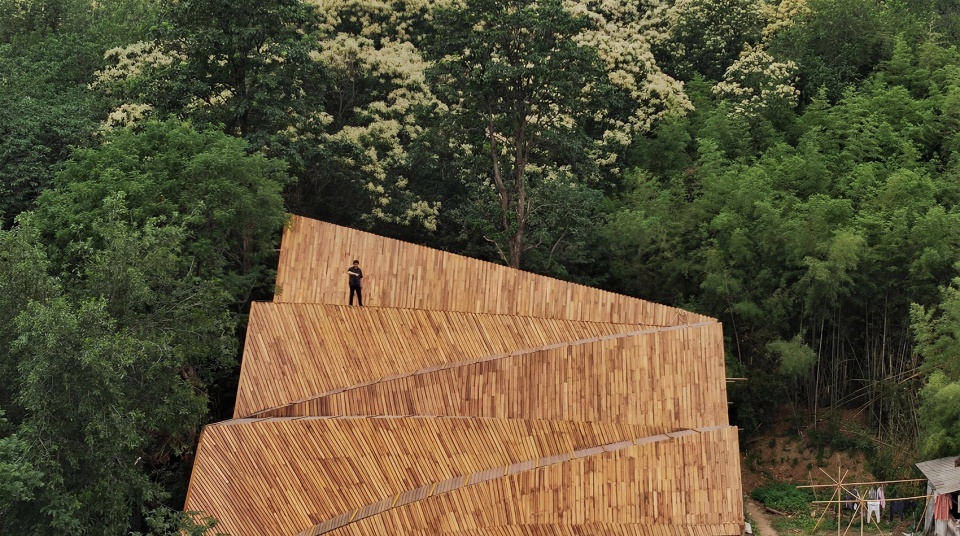
▼光影下的屋面曲线,Roof curves under light and shadow
▼弧形天窗的光影,The light and shadow of the curved skylight
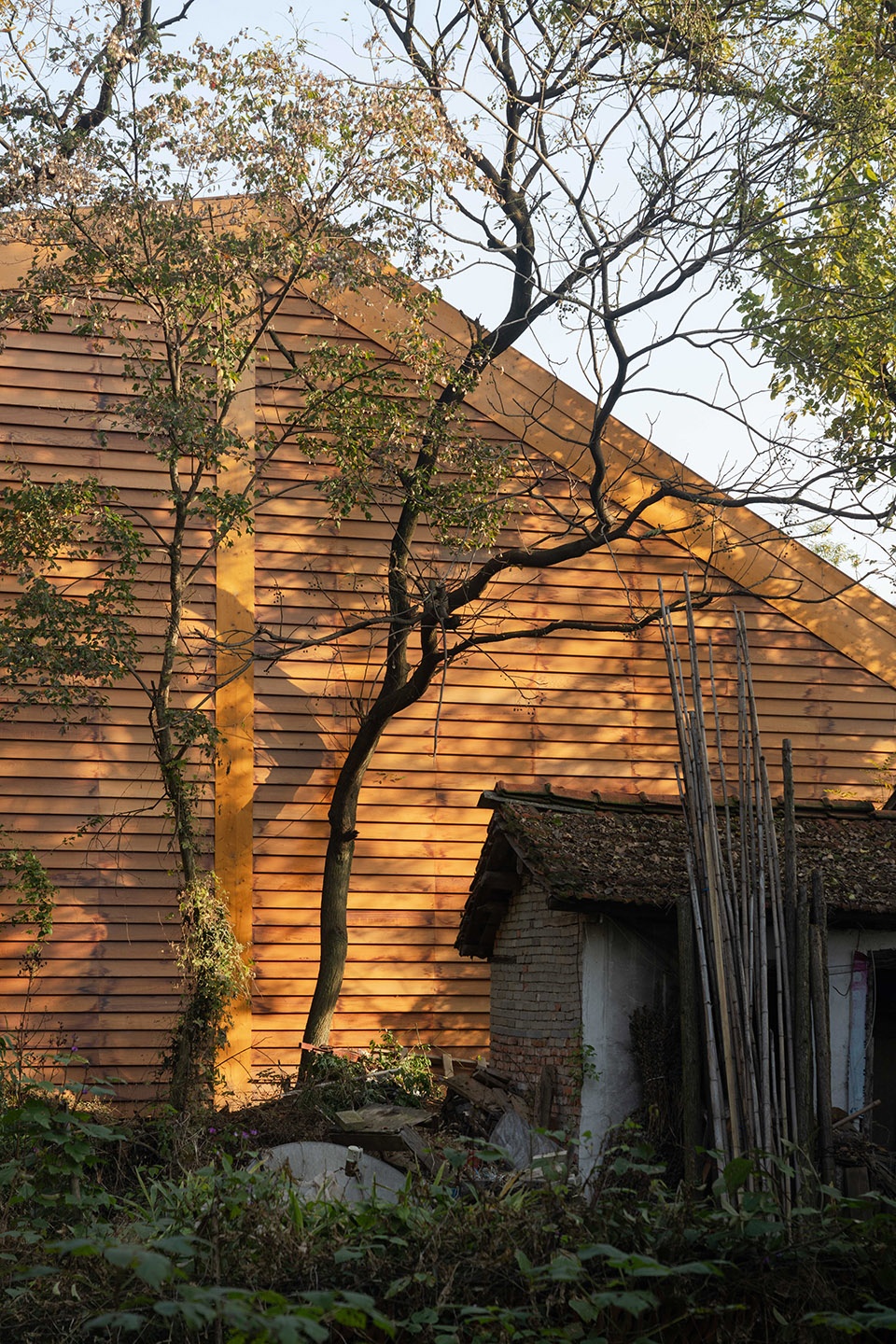
▼南侧的山墙与植物,The gable on the south side and the plants
▼邻居们台阶上的日常休息,Neighbors take their daily rest on the steps
▼前来上课的孩子们,The children who came to attend the class
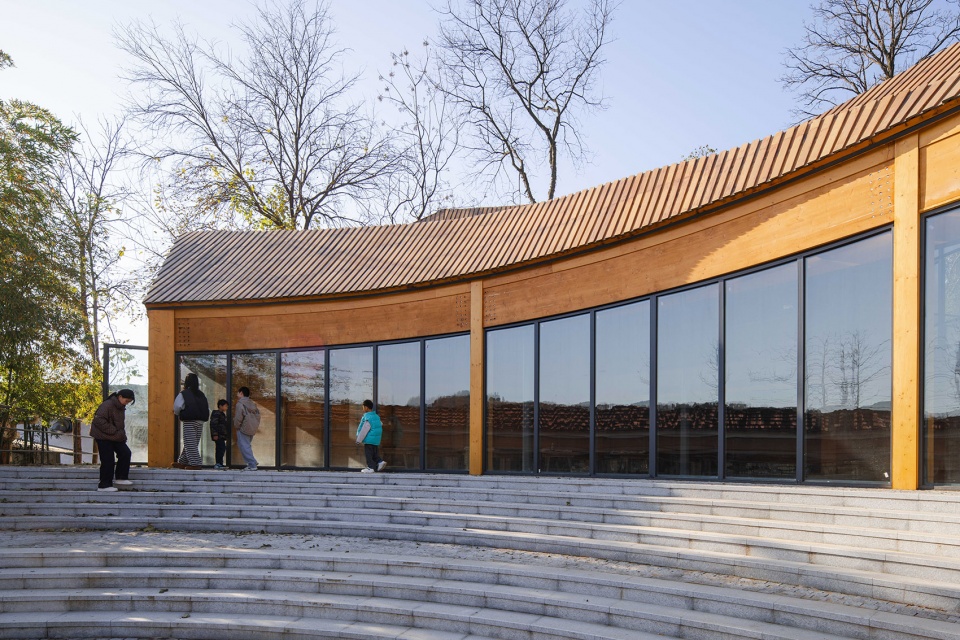
▼木匠之家的入口,The entrance to the carpenter’s home
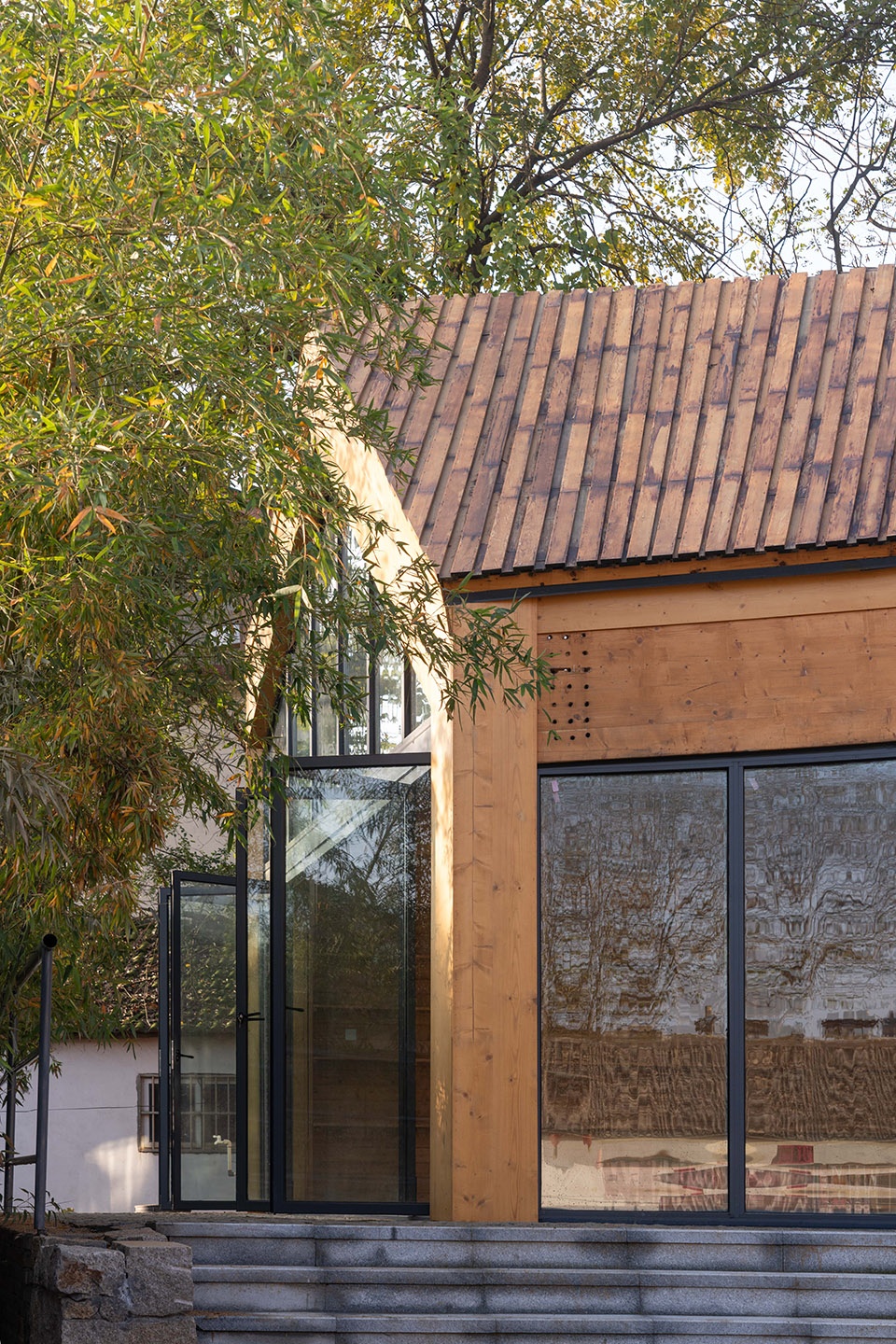
▼村落、树木和木构,Village, trees, and wooden structures
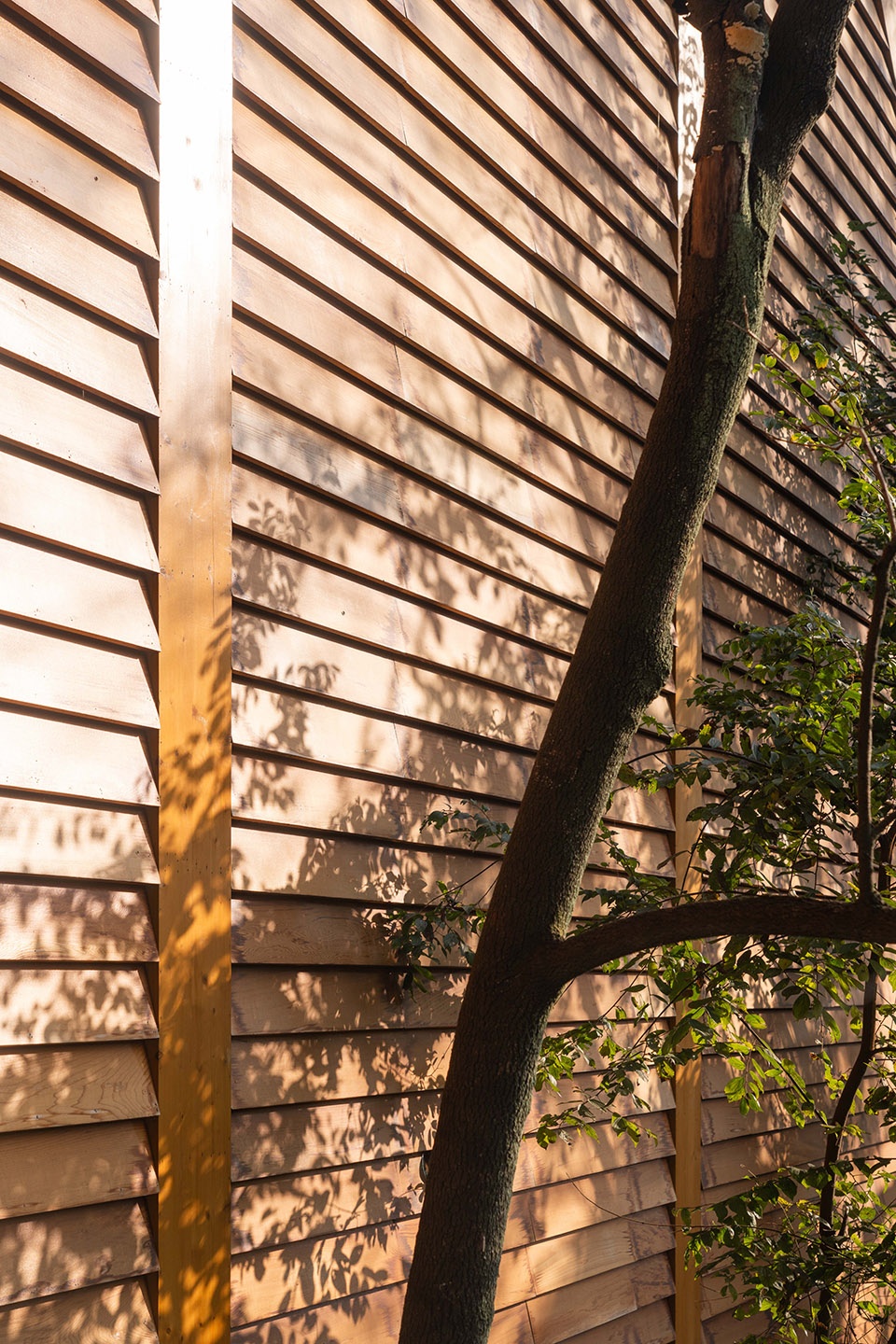
▼树木与外墙,Trees and exterior walls
木构建造 Timber Construction
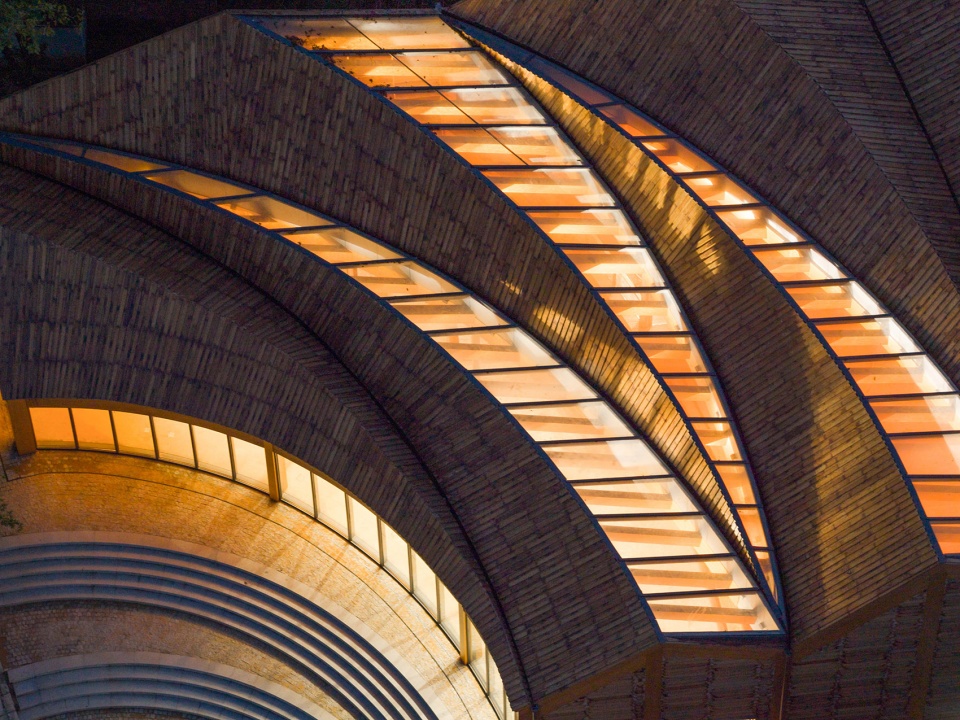
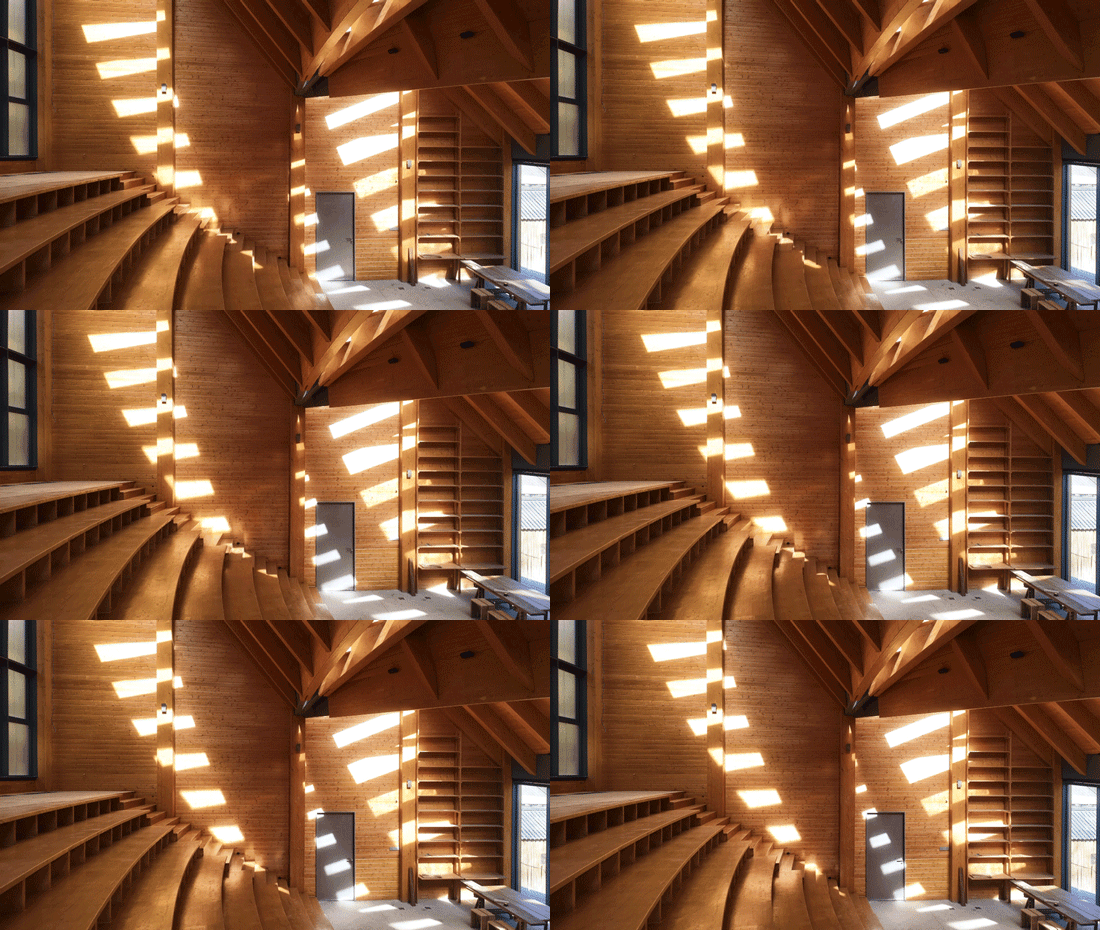
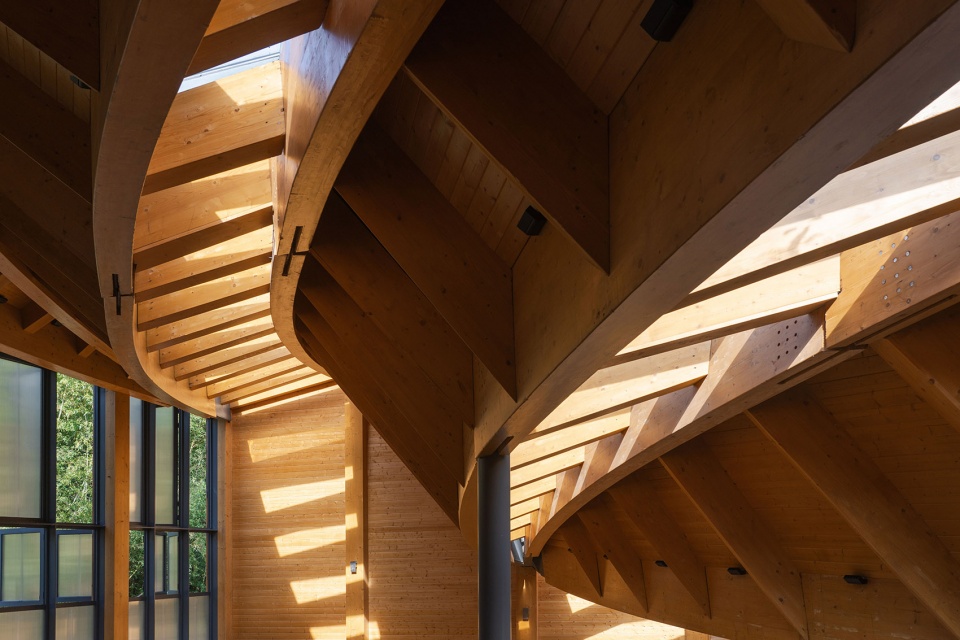
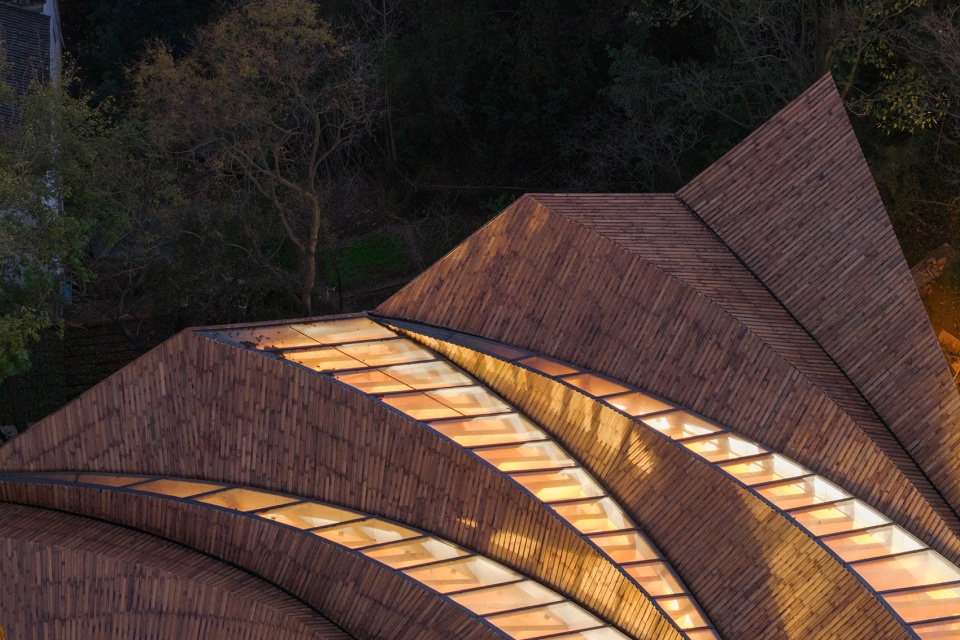
项目屋面采用双曲面胶合木结构,其起伏轮廓回应周边山势,与远山形成“形断意连”的空间对话。弧形天窗如山谷间的一道光缝,将自然光引入室内,随时间变化投射出多变的光影,在室内可以清晰感知时间的流动。经日照模拟优化后的天窗角度,保障工坊在日间主要依赖自然采光运行;经屋面过滤后的光线均匀漫射于室内,营造出温润而静谧的“匠作光域”。
The roof adopts a hyperbolic glued timber structure. Its undulating outline echoes the surrounding mountain terrain, forming a spatial dialogue of disconnected form yet connected spirit with distant mountains.The curved skylight resembles a light slit in the valley, introducing natural light into the interior. It casts shifting light and shadow over time, allowing people inside to clearly perceive the passage of time.Optimized through sunlight simulation, the skylight angle enables the workshop to rely mainly on natural daylight during operating hours. The light filtered through the roof diffuses evenly indoors, creating a mild, tranquil craft light realm for woodworking creation.
▼复杂的双曲屋顶结构,Complex hyperbolic roof structure
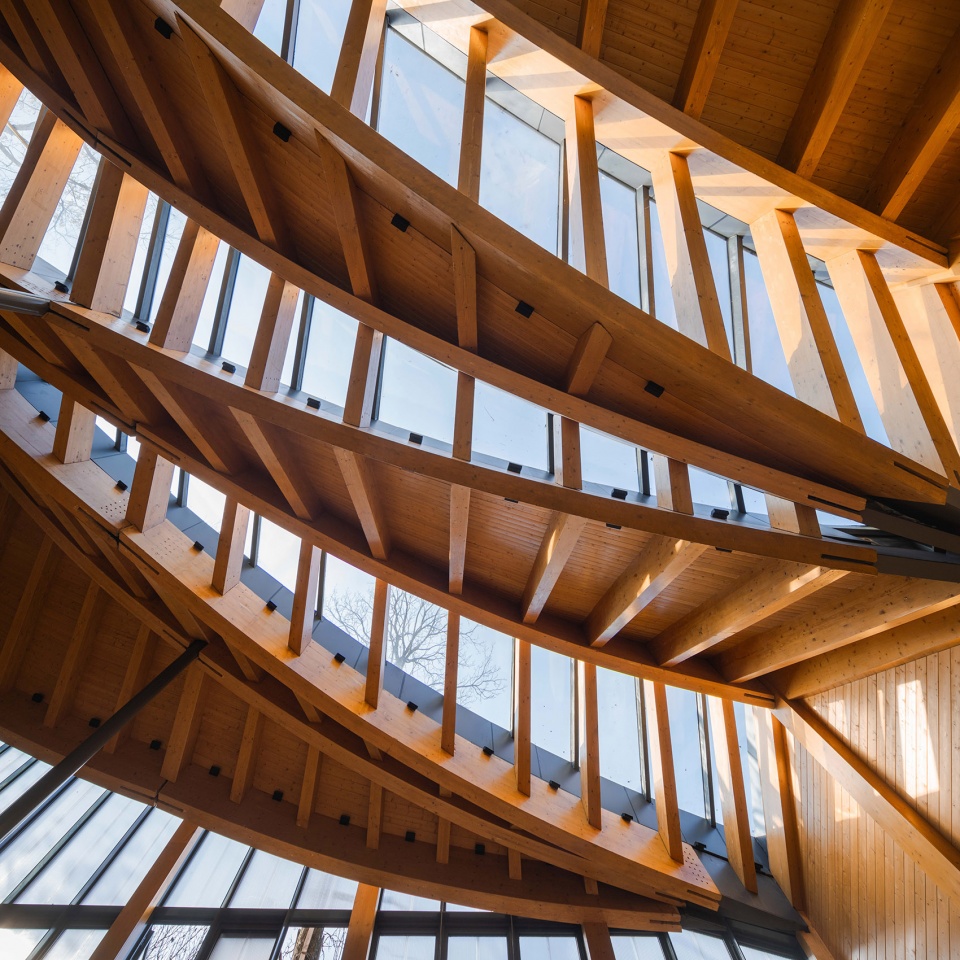
结构体系采用胶合木与钢节点的混合构造,最大弧梁跨度达26米。双曲面构件通过数字化建模完成参数控制,并在工厂预制加工,现场以模块化方式精准装配,实现了复杂形态与高效建造的统一。起伏的屋面不仅回应场地地形,也通过结构自身形成稳定体系,减少内部支撑对空间完整性的干扰。
▼光影变化延时摄影,Time-lapse photography of light and shadow changes
The structural system adopts a hybrid composition of glued timber and steel joints, with the maximum span of the curved beam reaching 26 meters.Parametric control of the hyperbolic components is realized through digital modeling. All components are prefabricated in the factory and precisely assembled on site in a modular manner, achieving the integration of complex architectural form and efficient construction.The undulating roof not only responds to the site terrain, but also forms a stable structural system by itself, reducing the interference of internal supports on the integrity of interior space.
▼清晨劳作的老张,Lao Zhang working in the early morning
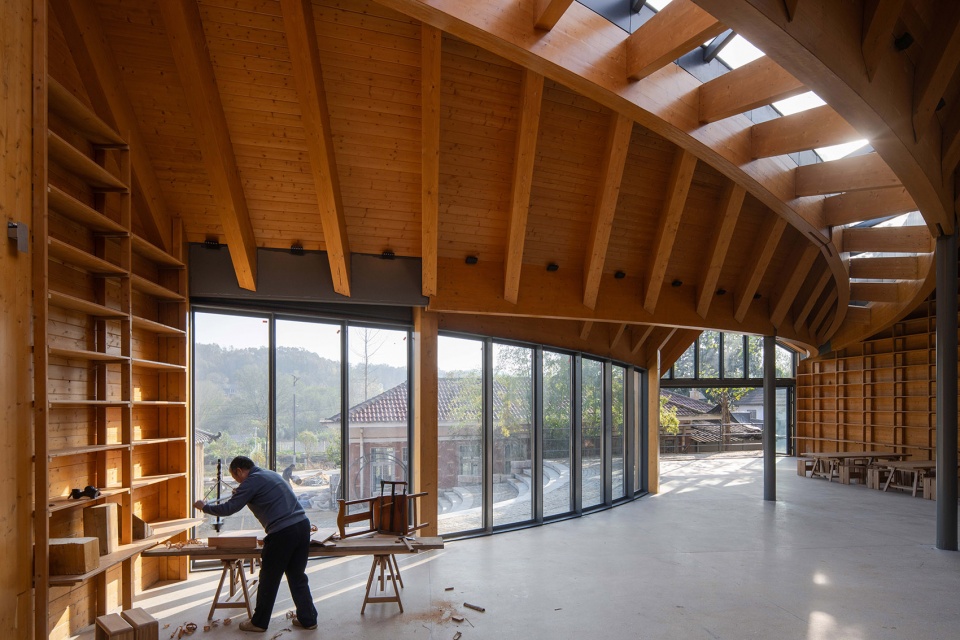
▼室内全景,indoor panorama
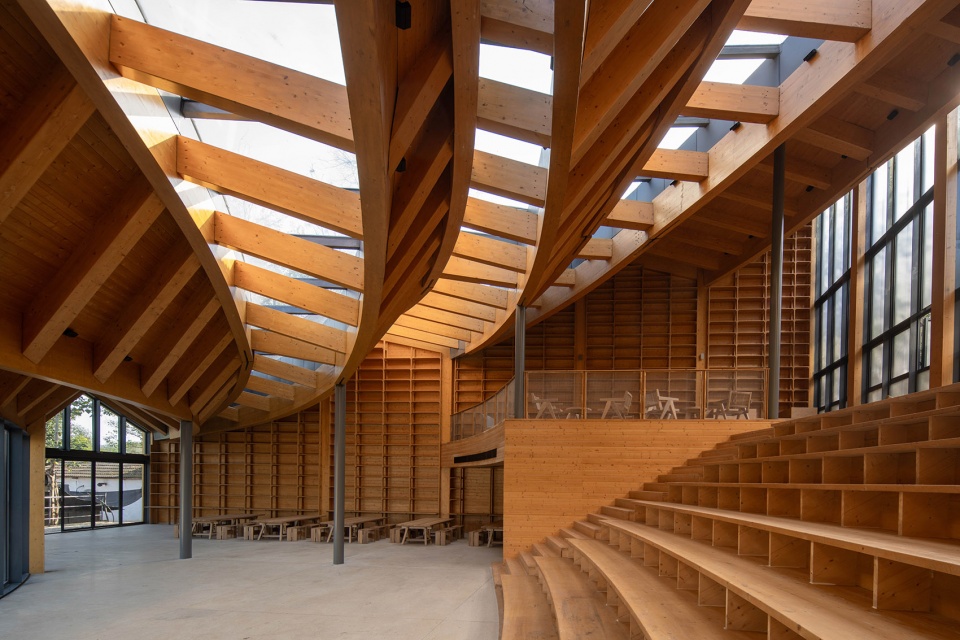
▼双曲胶合木梁与光影,Double-curved glued laminated timber beams and light and shadow
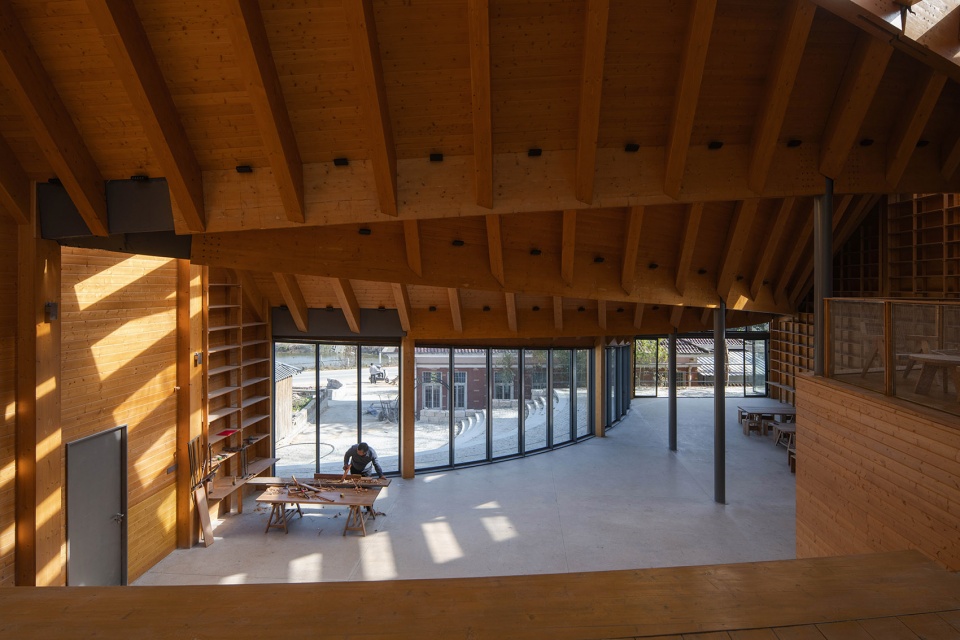
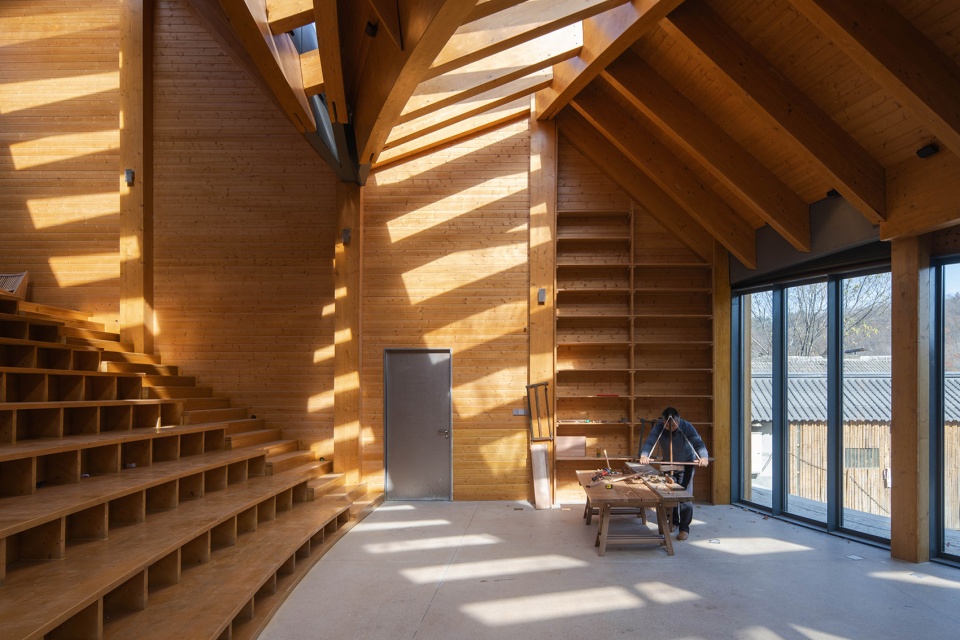
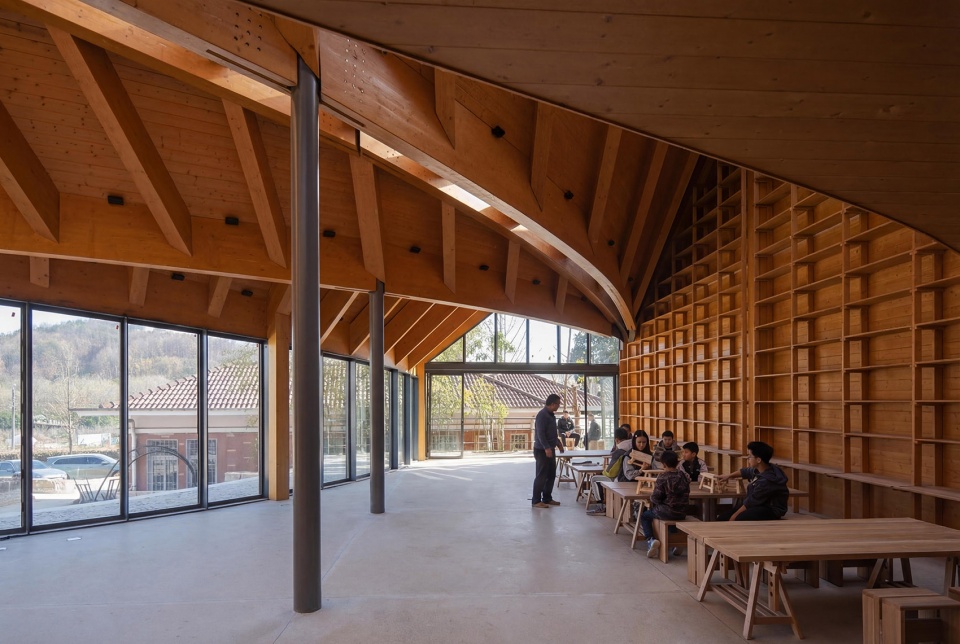
开放的室内空间可同时容纳两个班级规模的研学活动,突破了传统教室的封闭模式。可灵活组合的木作台满足从传统榫卯教学到现代木构实验的多样需求;墙体嵌入工具展示与材料样本系统,木刨、墨斗与胶合木截面并置,隐喻着木作技艺从传统到当代的延续与转译。
The open interior space can accommodate research and study activities for two classes simultaneously, breaking the enclosed mode of traditional classrooms.Flexibly combined woodworking workbenches meet diverse needs ranging from traditional mortise and tenon teaching to modern timber structure experiments. The walls are embedded with a display system for tools and material samples, where wooden planes, ink markers and glued timber sections are placed side by side. It metaphorically embodies the inheritance and reinterpretation of woodworking craftsmanship from tradition to the contemporary era.
▼做木工的老张,Lao Zhang is currently engaged in carpentry work
▼光影下工作的老张,Lao Zhang working under the light and shadow
▼木工研学课制作体验,Woodworking workshop experience
▼巨大的木构与展示架,Huge wooden structures and display racks
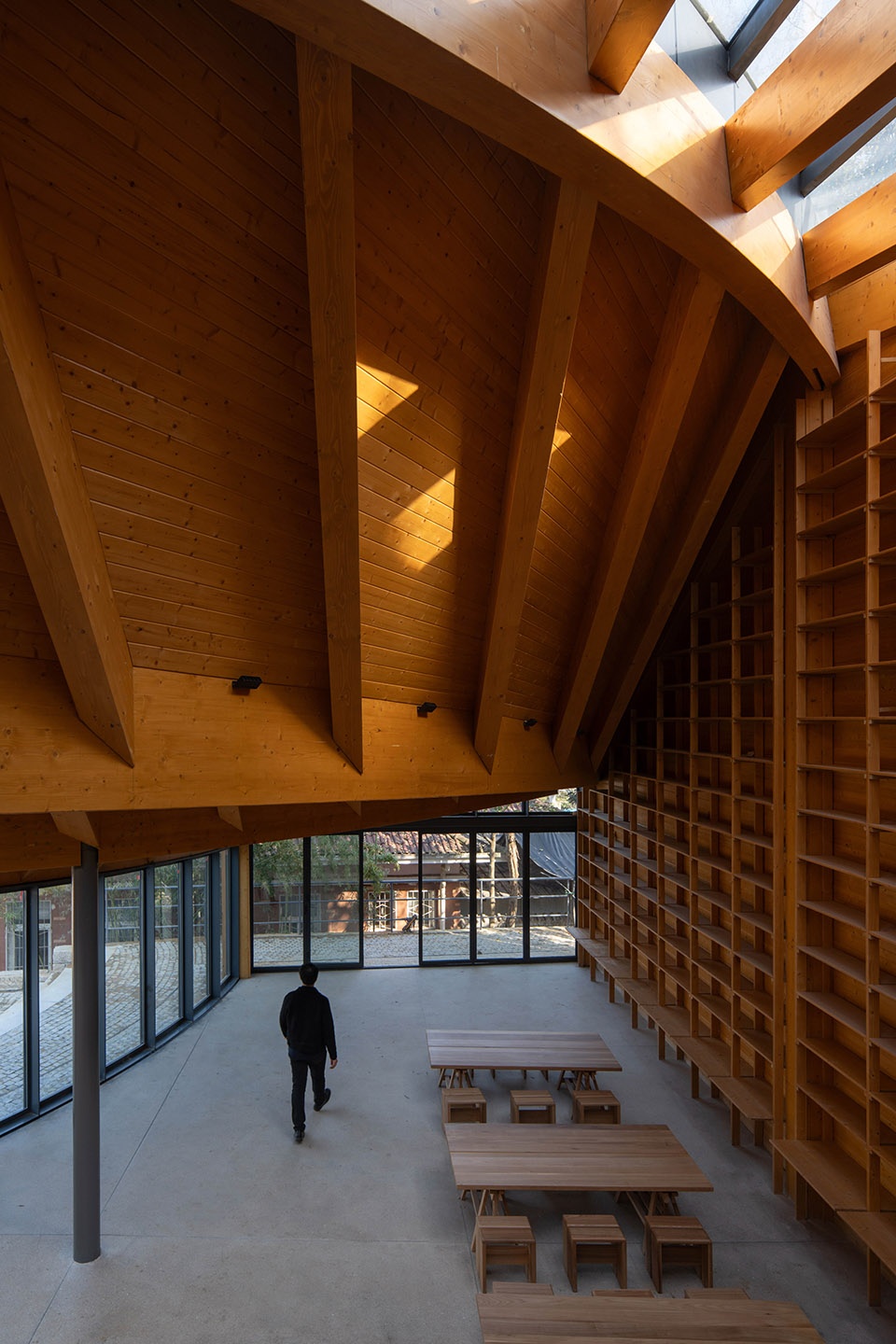
▼阳光下的木工研学课,Woodworking study class under the sunshine
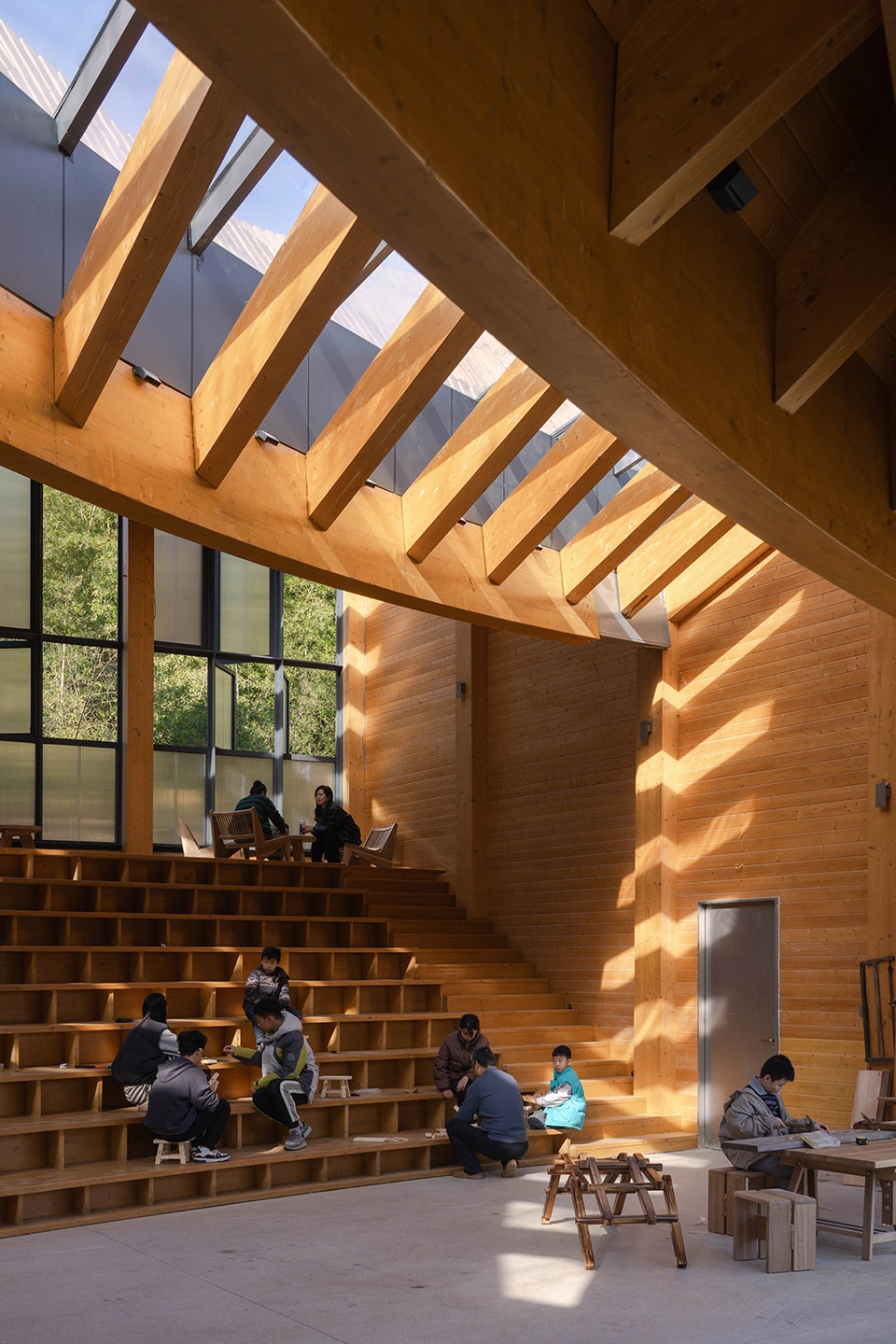
▼正午洒下的光斑,The light spots cast by the midday sun
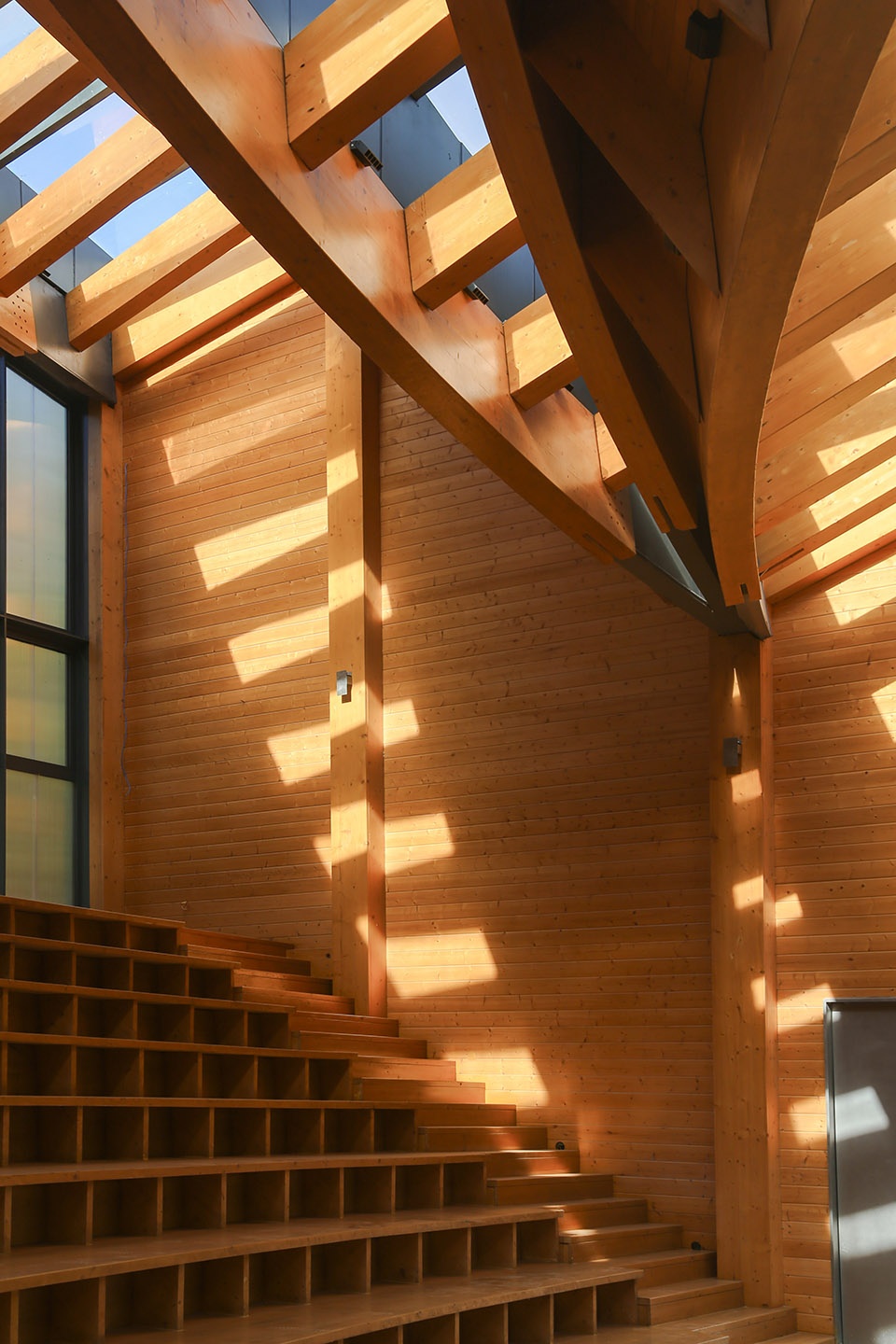
▼面向山坡打开的窗,window opening towards the hillside
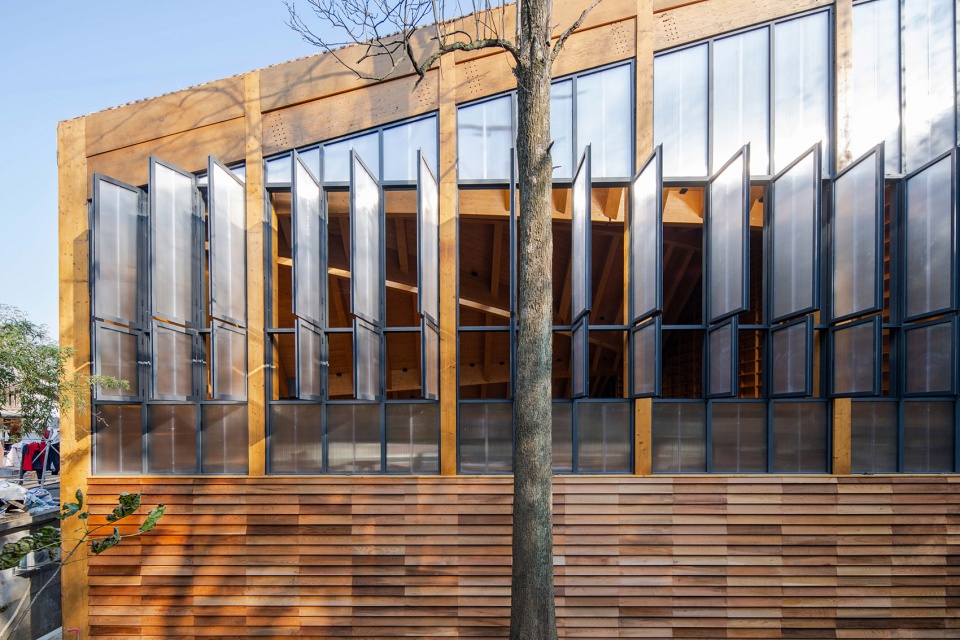
▼山坡上看向木匠之家,Looking down from the hillside towards the carpenter’s home
劳作与日常 Work & Daily Life
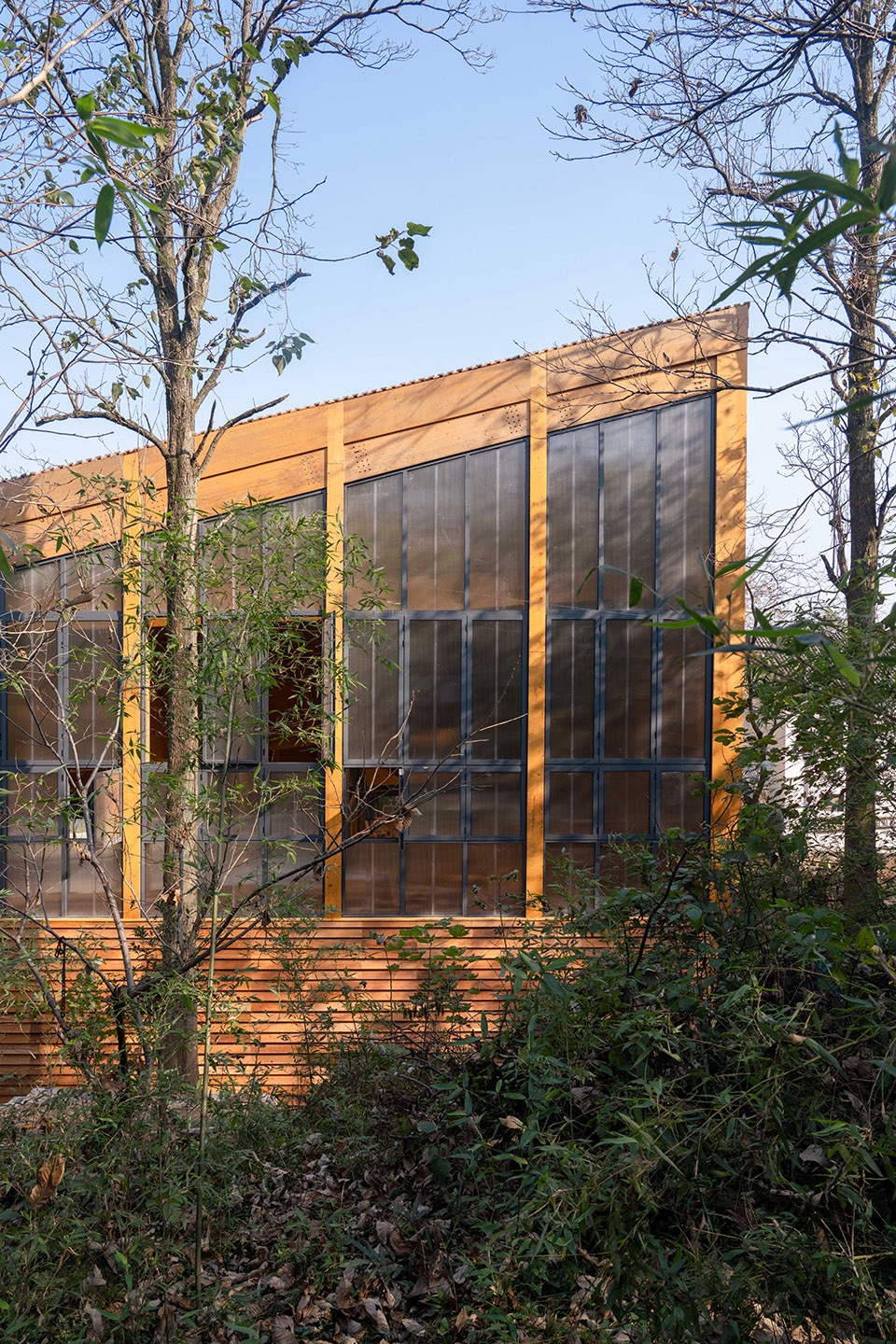
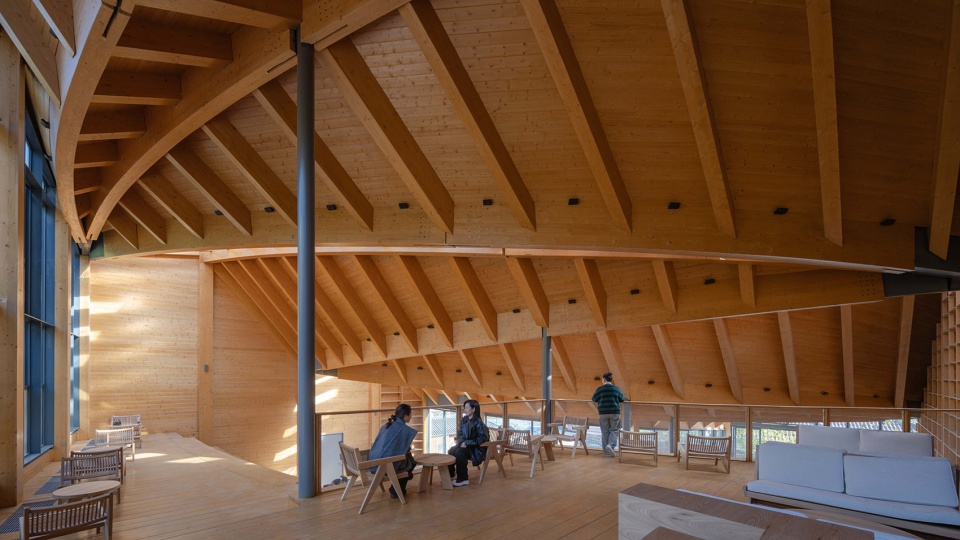
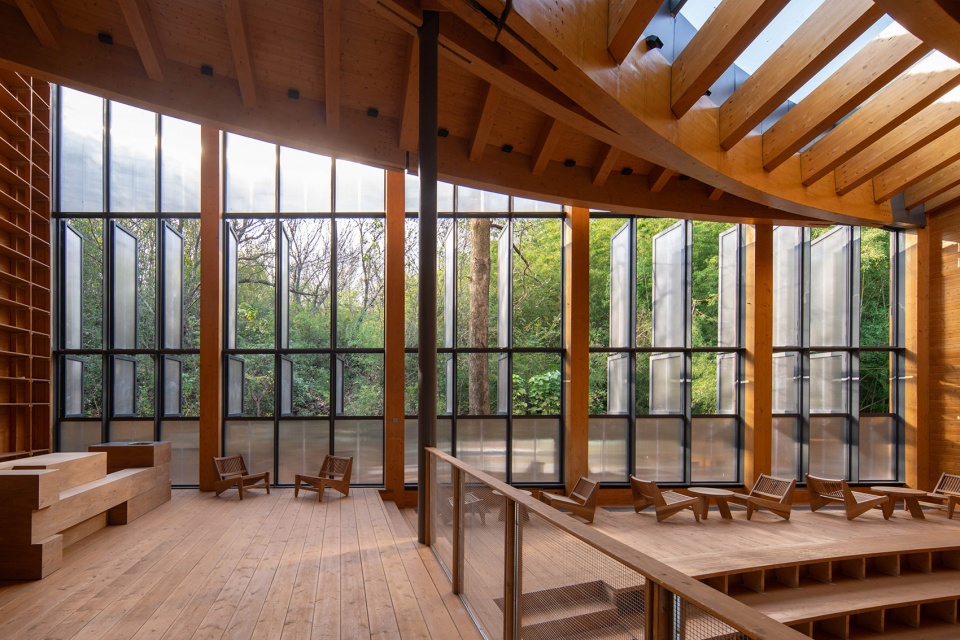
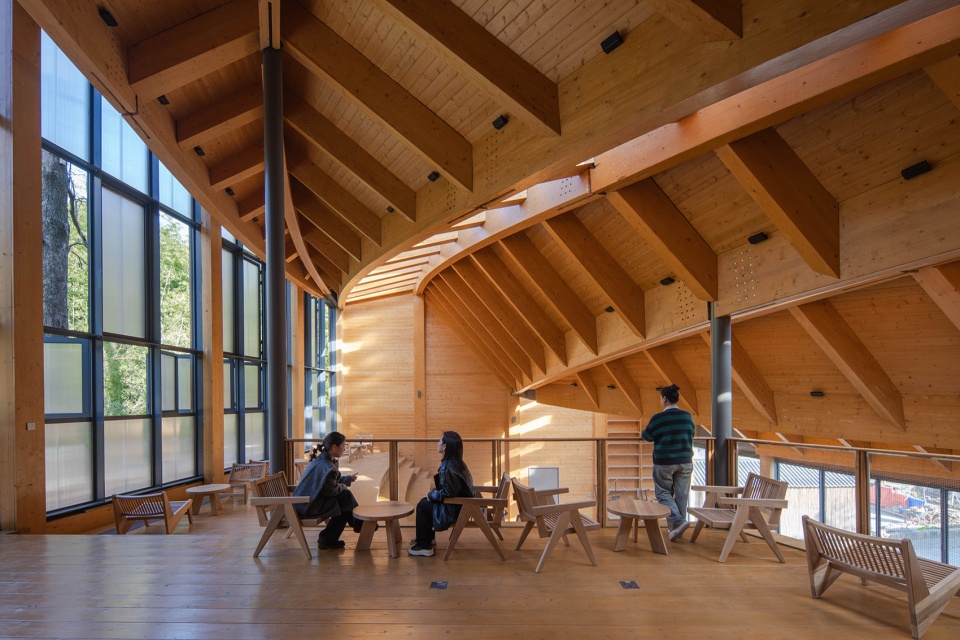
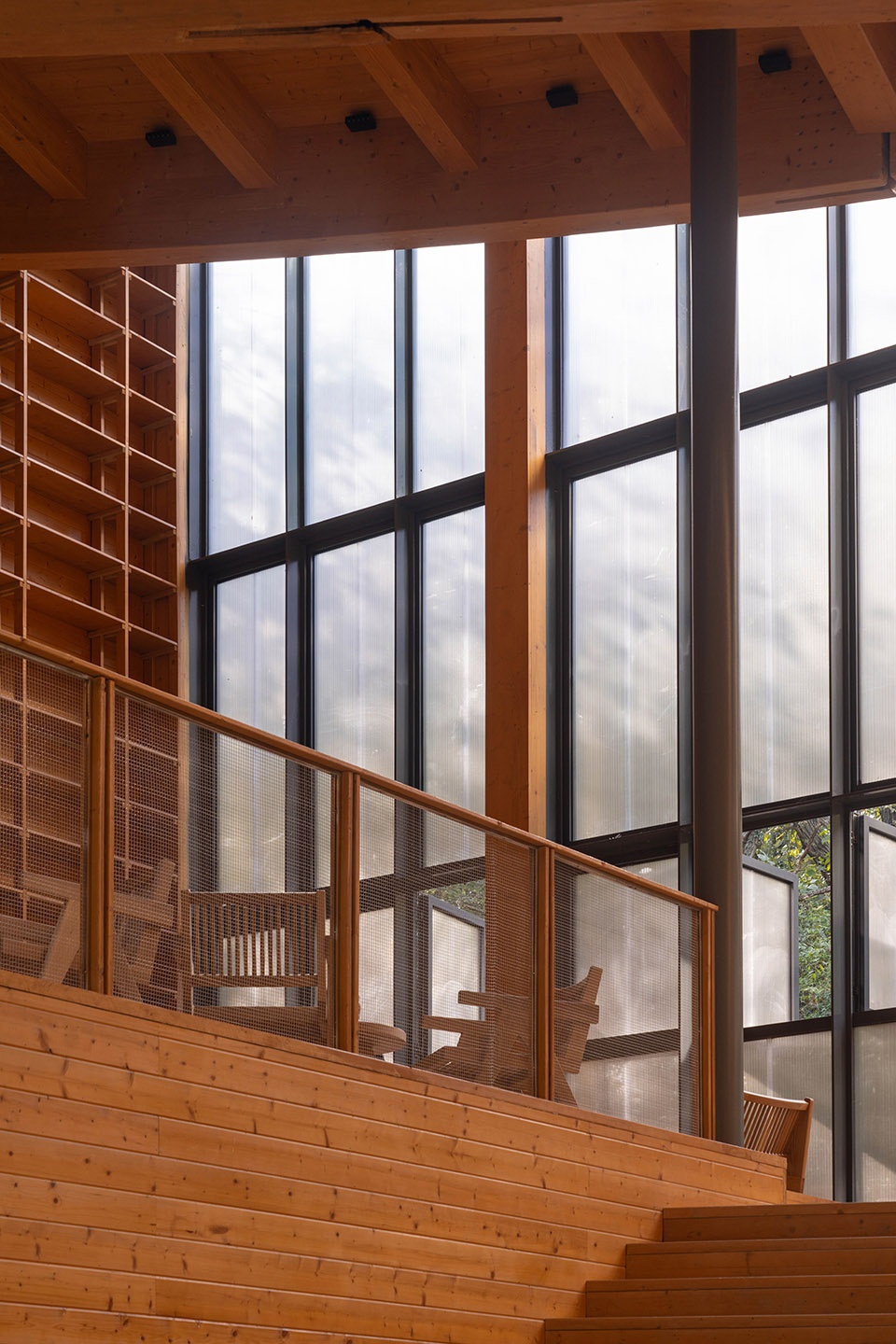
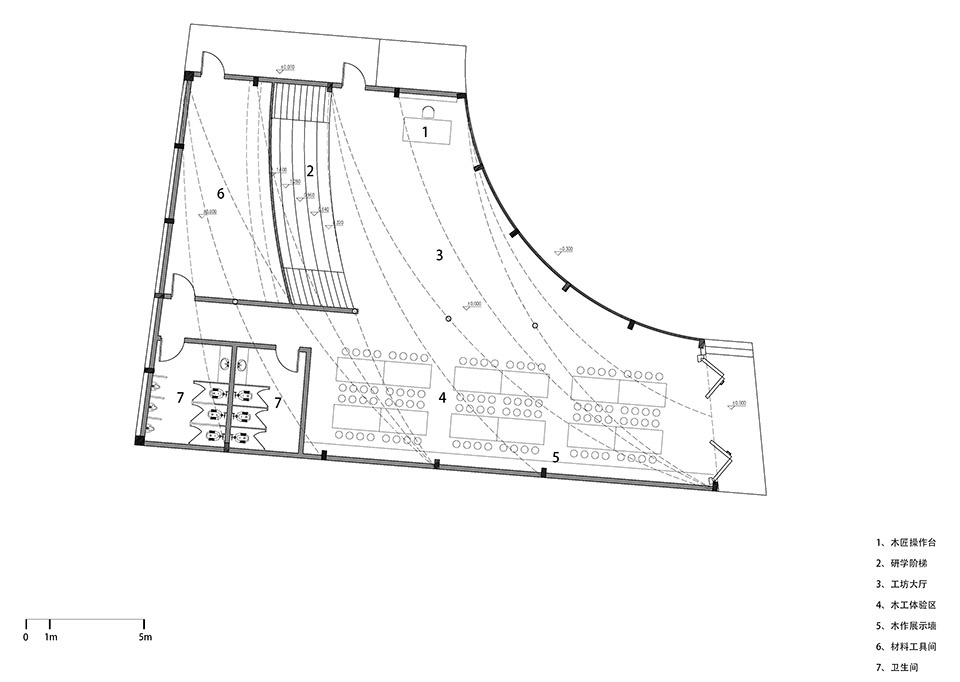
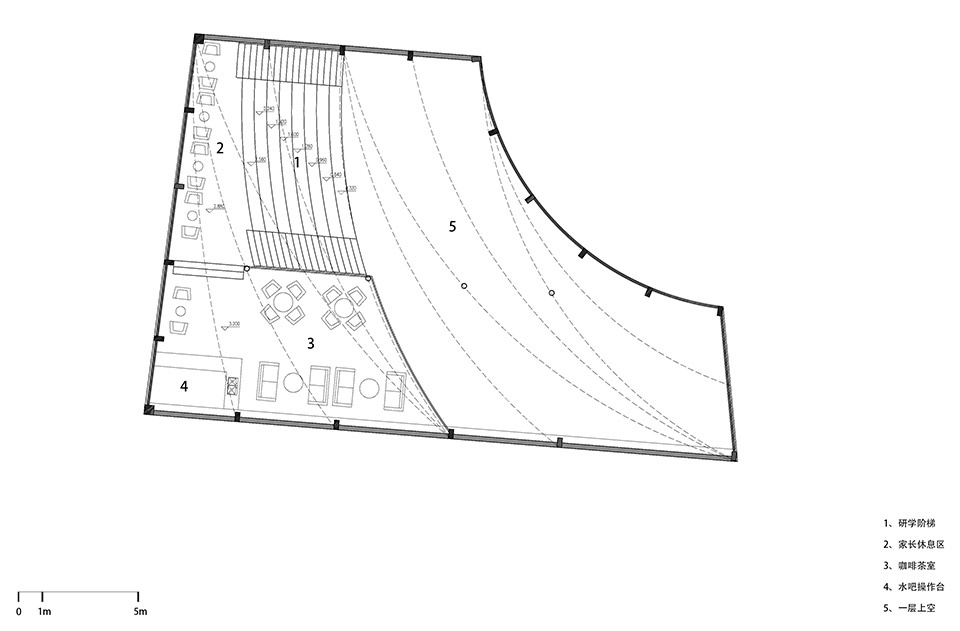
木匠之家并非单纯的展示性工坊,而是一个真实发生的劳作场所。空间的组织围绕木匠老张的日常展开:一层一侧延续传统木作生产的操作区域,保留手工劳作所需的尺度与秩序;另一侧面向村民与外来访客开放,承担研学、交流与展示功能。二层设置茶室,平时作为对外经营的公共空间,在研学活动期间则转化为家长等候与休憩场所。木作、教学与日常生活在同一屋檐下并置,使工坊既保持生产属性,也具备开放的公共性。
The Carpenter’s Home is not merely a display-oriented workshop, but a genuine place of daily craft labor. The spatial layout revolves around the daily life of Old Carpenter Zhang. On the ground floor, one side retains the operational area for traditional woodworking production, preserving the proper scale and orderly layout required for handmade craftsmanship. The other side is open to villagers and visitors, serving the functions of study tours, cultural communication and exhibition.A tea room is arranged on the second floor. It operates as a public commercial space on ordinary days and transforms into a lounge for parents to rest and wait during study tour events. Woodworking creation, educational workshops and everyday life coexist under one roof, endowing the workshop with both inherent production attributes and inclusive public openness.
▼巨大尺度的木结构屋顶,A wooden roof of immense scale
▼通透开敞的二层休息区,A spacious and open second-floor lounge area
▼二层茶室与咖啡,Second-floor tea room and coffee
当老张重新回到熟悉的工作台前,刨木、量尺、弹墨的声音再次成为空间的日常节奏;与此同时,孩子们围坐于木作台旁,学习榫卯、触摸材料、理解建造。传统匠艺不再只是被观看的文化遗产,而是在真实的劳作过程中被传授、被体验,并自然融入当代乡村生活之中。工坊由此成为连接代际、连接经验与知识的公共场所,让劳作、教学与日常生活得以有序共生。
When Carpenter Zhang returns to his familiar workbench, the sounds of planing wood, measuring with rulers and snapping ink lines once again become the daily rhythm of the space. Meanwhile, children gather around the woodworking benches to learn mortise-and-tenon joints, touch raw materials, and comprehend the logic of construction.Traditional craftsmanship is no longer merely a cultural heritage on display. Instead, it is passed down and experienced through authentic manual labor, naturally integrating into contemporary rural life.As a result, the workshop evolves into a public venue bridging generations, as well as connecting practical experience and theoretical knowledge, allowing craftsmanship labor, educational inheritance and daily life to coexist in harmonious order.
▼二层家长等候区,Parent waiting area on the second floor
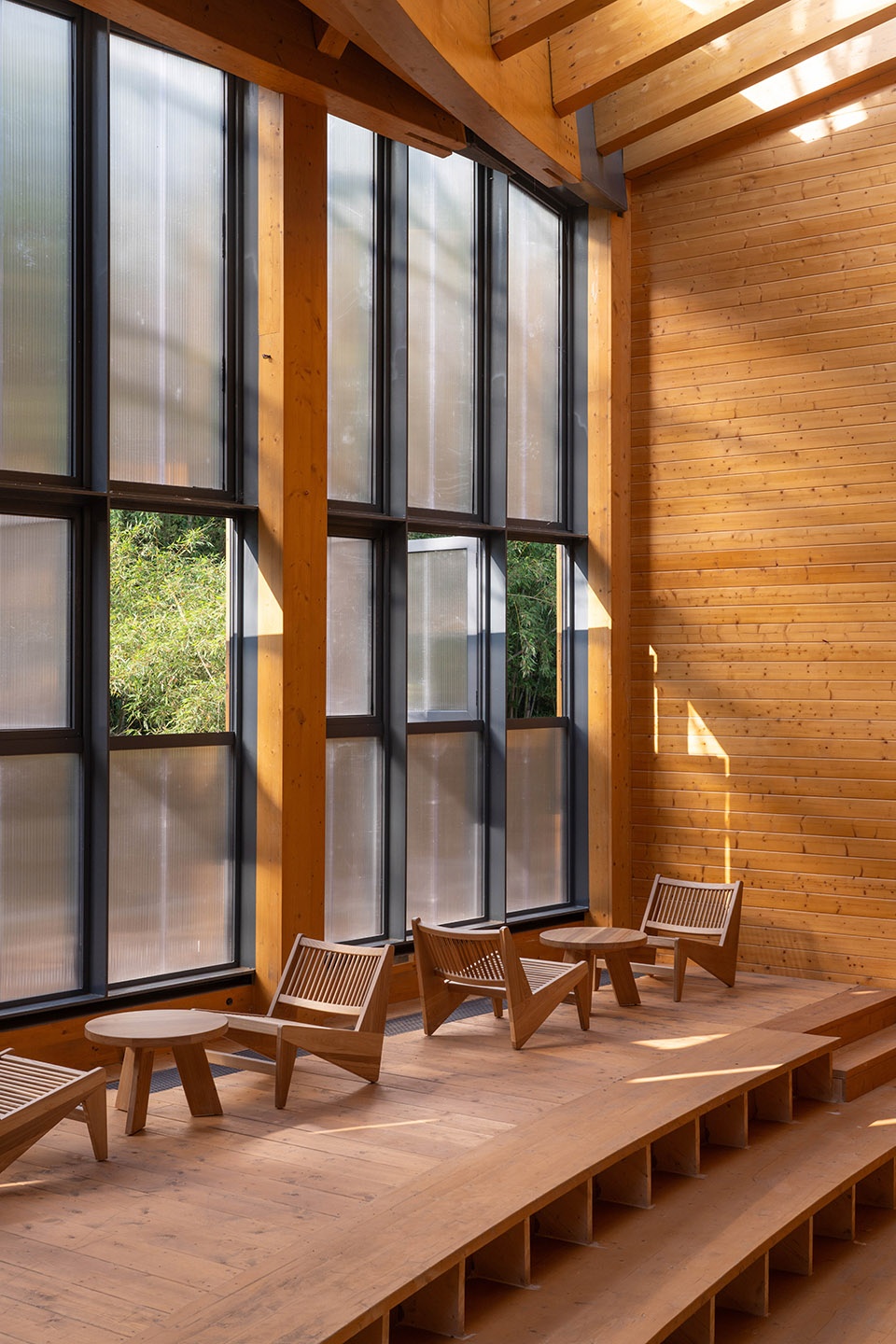
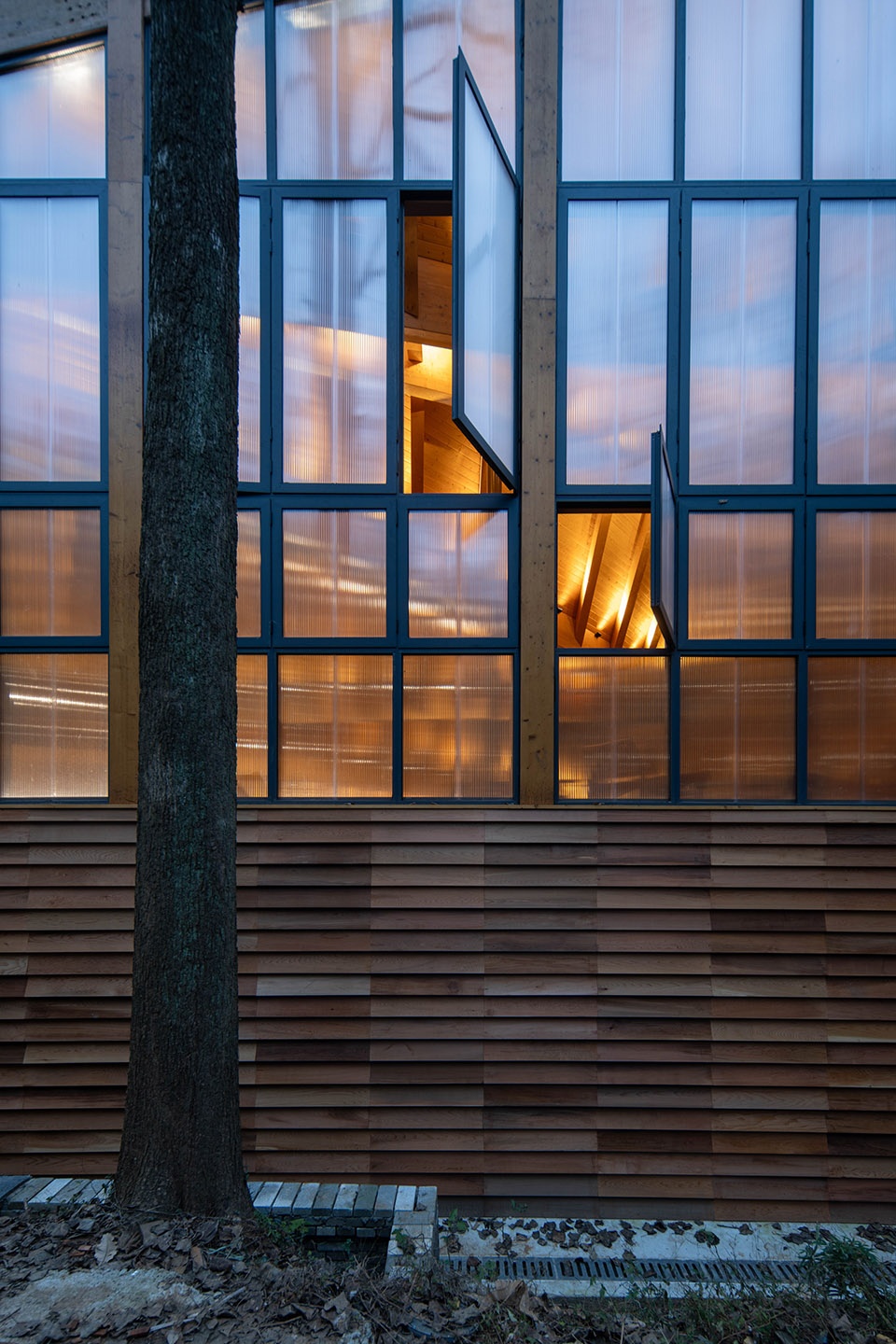
▼半透明的聚碳酸酯幕墙,Translucent polycarbonate curtain wall
结语 Conclusion
木匠之家试图突破既有乡建的形式范式,以一种更具想象力的方式回应土地、回应手艺、回应生活。它以当代木构为媒介,让传统木作重新回到乡村日常,使建筑不仅成为容纳活动的空间,更成为一种持续发生的生活方式。对于郝堂而言,它既是一处工坊,也是一座关于乡土记忆、匠人精神与未来乡村的木构容器。
The Carpenter’s Home seeks to break through the existing formal paradigms of rural construction, responding to the land, craftsmanship and daily life in a more imaginative way. With contemporary timber structure as its medium, it brings traditional woodworking back to rural daily life, making the building not only a space for accommodating activities, but also a continuously unfolding lifestyle. For Haotang Village, it is not only a craft workshop, but also a timber vessel embodying local memory, artisan spirit and the vision of the future countryside.
▼夜幕下的木匠之家,The Carpenter’s Home under the Night Sky
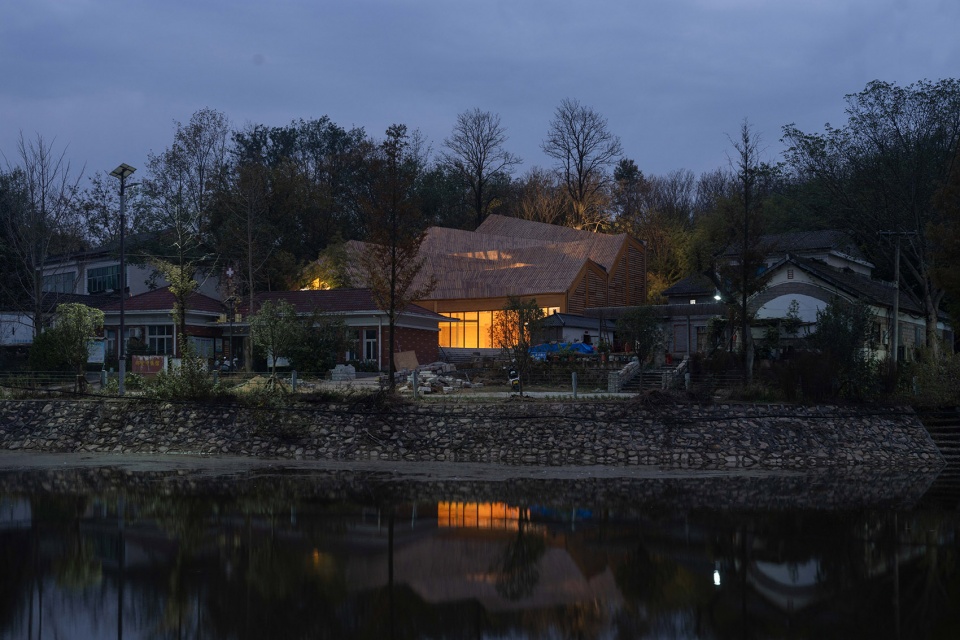
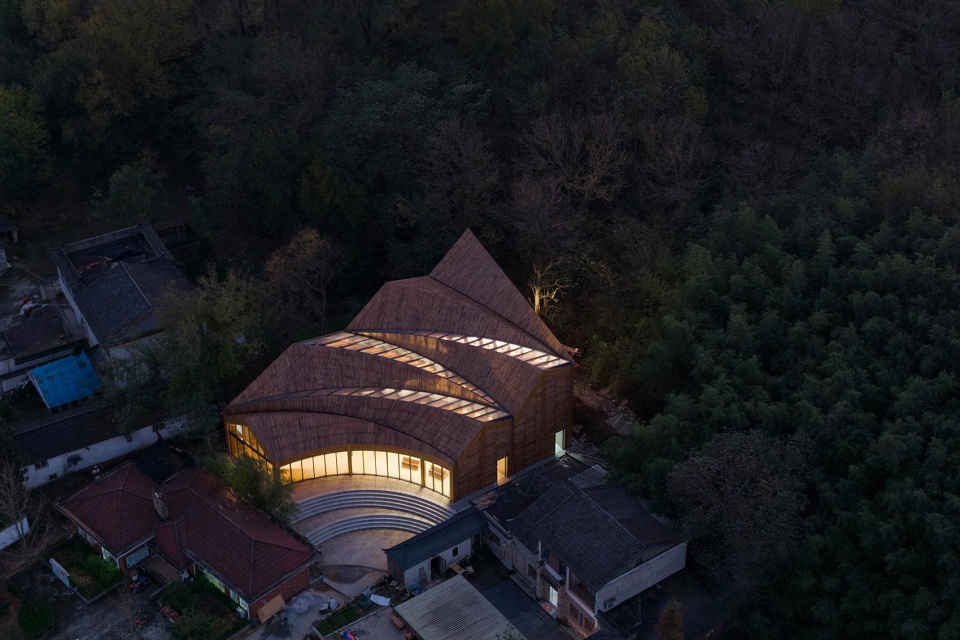
▼深夜的木匠之家,The carpenter’s home at midnight
▼若隐若现的胶合木结构,The glued wood structure is faintly visible
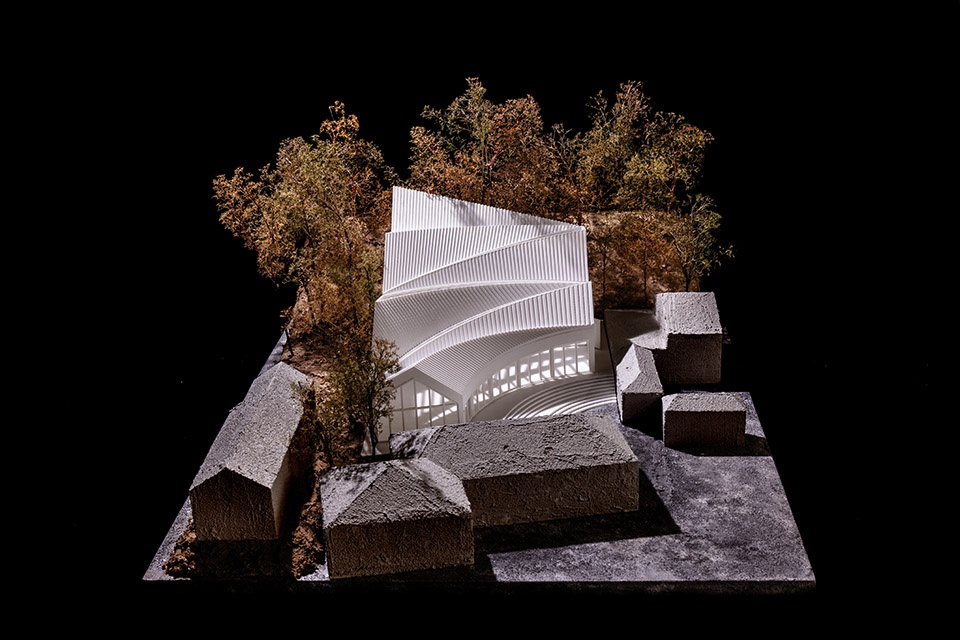
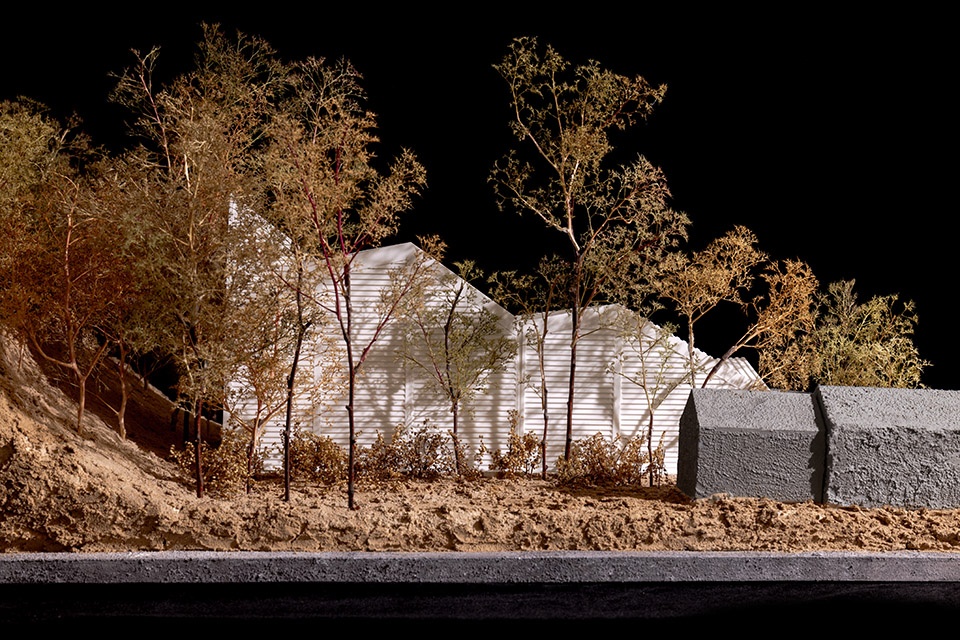
▼模型,model
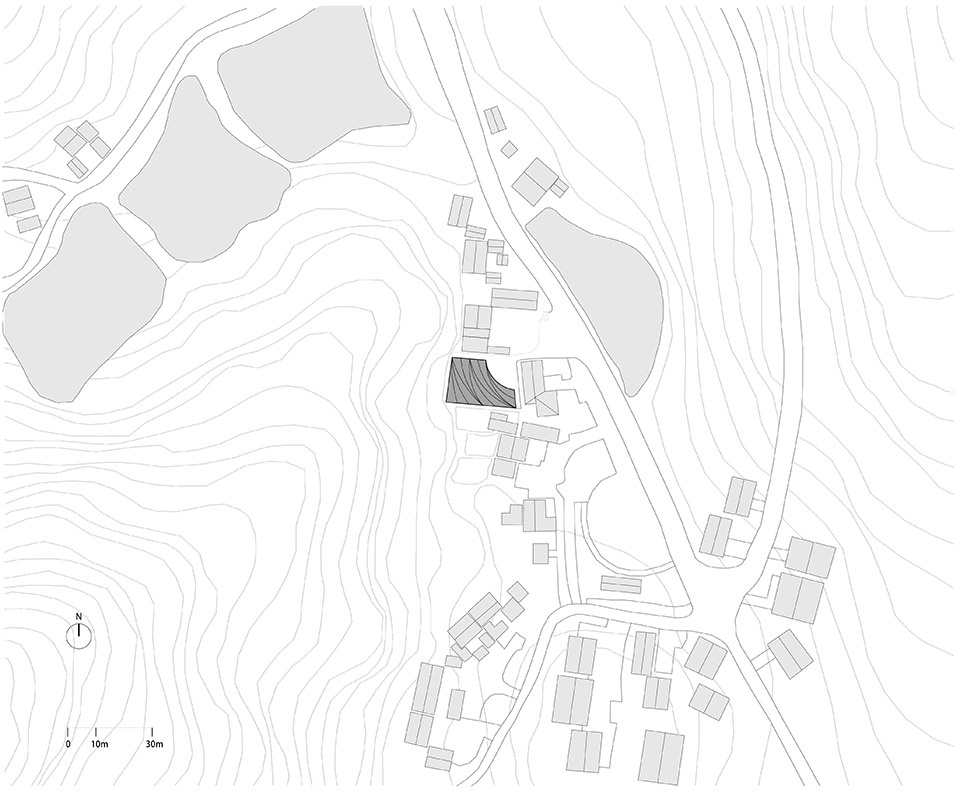
▼总平面图,site plan
▼首层平面图,ground floor plan
▼二层平面图,first floor plan
▼立面图,elevation
▼剖面图,section
Project Name: Carpenter’s Home
Design Firm: Primary Architects
Chief Architects: Xiang Huang, Songyan Mao
Architectural Design Team: Cong Liu, Zhiyan Lin,Xiaoxia Wang,Junjie Liu,Xiaofeng Zhang,Yao Lu
Grade A Design Institute: Zhongke Architectural Planning and Design Research Institute Wood Structure Detailed Design:Bowen Li
Construction Company: Shanxi Junchen Construction Co., Ltd.
Client: Xinyang Pingqiao District Juxing Agricultural Investment and Development Co., Ltd.
Project Location: Haotang Village, Pingqiao District, Xinyang City, Henan Province
Building Area: 405 square meters
Photographer: DONG Image
Video Production: Primary Architects
Design Time: January 2025
Completion Time: October 2025